




>Hororoka No edit summary |
Shivam Singh (talk | contribs) enhanced intro further and updated info |
||
| Line 1: | Line 1: | ||
''' | {{Short description|Form of Hindu devotional poetry}} | ||
'''Abhanga''' is a form of [[Hindu devotional movements|devotional]] [[poetry]] sung in praise of the [[Hinduism|Hindu]] god [[Vithoba|Vitthal]], also known as [[Vithoba]]. The word "abhang" comes from ''a'' for "non-" and ''bhanga'' for "ending" or "interrupting", in other words, a flawless, continuous process, in this case referring to a poem.<ref>Gowri Ramnarayan: [http://www.thehindu.com/arts/music/article870898.ece Eclectic range] at ''[[The Hindu]]'', 8 November 2010</ref> By contrast, the devotional songs known as [[Bhajan]]s focus on the inward journey. Abhangs are more exuberant expressions of the communitarian experience.<ref>Serish Nanisetti, Gowri Ramnarayan: [http://www.thehindu.com/arts/music/article857300.ece A mix of rhythm and melody] at ''[[The Hindu]]'', 7 November 2010</ref> Abhanga is considered a form of the [[ovi (poetry)|ovi]]. Abhangs are sung during pilgrimage to the temples of [[Pandharpur]], by the devotees.<ref>{{cite web|url=https://www.swarganga.org/articles/details.php?id=10|title=Articles – Devotional Music of Maharashtra – by Chaitanya Kunte|work=swarganga.org|access-date=22 May 2015|archive-date=24 December 2018|archive-url=https://web.archive.org/web/20181224195732/https://www.swarganga.org/articles/details.php?id=10|url-status=dead}}</ref><ref name="Novetzke2013">{{cite book|author=Christian Lee Novetzke|title=Religion and Public Memory: A Cultural History of Saint Namdev in India|pages=275, 279|date=13 August 2013|publisher=Columbia University Press|isbn=978-0-231-51256-5}}</ref> | |||
[[File:Abhang.jpg|thumb|alt=Abhang|Abhang]] | [[File:Abhang.jpg|thumb|alt=Abhang|Abhang]] | ||
==Practise== | ==Practise== | ||
[[Marathi language|Marathi]] ''[[bhajan]]s'' start with the ''naman'' (invocation of god), followed by the ''Roopancha Abhang'' (Portraying the physical beauty of god by personifying in the human form) and towards the end | [[Marathi language|Marathi]] ''[[bhajan]]s'' start with the ''naman'' (invocation of god), followed by the ''Roopancha Abhang'' (Portraying the physical beauty of god by personifying in the human form) and towards the end of the bhajan, spiritual and ethical messages are sung. | ||
Some famous musicians for Abhangs are [[Bhimsen Joshi]], [[Sudhir Phadke]], [[Suresh Wadkar]], [[Ranjani-Gayatri|Ranjani, Gayatri]], [[Aruna Sairam]] and [[Jitendra Abhisheki]]. It is a form of music performed by both classical and non-classical musicians.<ref>{{cite news|title=Concert conjures up magic of abhangs|url=http://www.thehindu.com/features/friday-review/music/concert-conjures-up-magic-of-abhangs/article2647381.ece|access-date=8 December 2014|agency=Hindu|publisher=Hindu|date=21 November 2011}}</ref> | Some famous musicians for Abhangs are [[Bhimsen Joshi]], [[Kishori Amonkar]], [[Sudhir Phadke]], [[Suresh Wadkar]], [[Ranjani-Gayatri|Ranjani, Gayatri]], [[Aruna Sairam]] and [[Jitendra Abhisheki]]. It is a form of music performed by both classical and non-classical musicians.<ref>{{cite news|title=Concert conjures up magic of abhangs|url=http://www.thehindu.com/features/friday-review/music/concert-conjures-up-magic-of-abhangs/article2647381.ece|access-date=8 December 2014|agency=Hindu|publisher=Hindu|date=21 November 2011}}</ref> | ||
It has become integral in [[Bhajan]] concerts across India. | It has become integral in [[Bhajan]] concerts across India. | ||
==History== | ==History== | ||
{{Unreferenced section|date=November 2024}} | |||
Bhakti Sampradaya or Namasankeerthana Sampradhaya was pioneered by [[Jñāneśvar]] around 1200. Around that time it was believed that [[Sanskrit]] was required to attain Godliness. Both Jñāneśvar and [[Namdev]] through their works, devotion and [[bhakti]] could initiate a [[sampradaya]] that did not attach importance to [[caste]] or creed but only devotion to [[Lord Panduranga]]. This was the birth of "Bhakti Sampradaya" wherein it was possible to attain Godliness merely through [[Bhakti]](devotion). This could be easily adopted and practised by the masses. Women and children were easily attracted to this new form of worship. Thus was born the Namasankirtana cult and Varkari Sampradaya. All these happened around places like [[Paithan]], [[Vithoba Temple, Pandharpur|Pandharpur]], Mangal Veda, [[Alandi]] and slowly spread to the entire Maharashtra. Other prominent singers were [[Varkari]] saints like [[Eknath]] and [[Tukaram]]. | |||
Tukaram was a seventeenth century poet who lived in the town of [[Dehu]], which is located near [[Pune]]. He was a popular poet and a leading figure in the [[Varkari Movement]] of the time, which sought to put the emphasis back on devotion and love towards God, in contrast to blind obedience of rituals and arcane religious practices. It is said that over 5000 Abhangas were written by Sant [[Tukaram]]. Many of them were devoted to the God [[Vitthal]] or [[Vithoba]], but mostly criticized social injustices of the time. | |||
Tukaram was a seventeenth century poet who lived in the town of [[Dehu]], which is located near [[Pune]]. He was a popular poet and a leading figure in the [[Varkari Movement]] of the time, which sought to put the emphasis back on devotion and love towards God, in contrast to blind obedience of rituals and arcane religious practices. It is said that over 5000 Abhangas were written by Sant Tukaram. Many of them were devoted to the God [[Vitthal]] or [[Vithoba]], but mostly criticized social injustices of the time. | |||
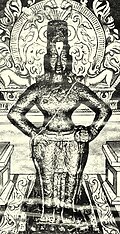
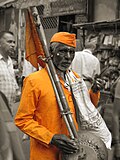
[[File:Syayambhuvithoba.jpg|thumbnail|A picture of the Syambhu Vithoba idol at the Pandharpur Temple]][[File:Tukaram 1832.jpg|thumbnail|This is the oldest available image of Tukaram, 1832 A.D. It was a cover to a handwritten manuscript of Tukaram's abhangs belonging to a Varkari Haibatbaba Arphalkar]][[File:Jnandev.jpg|thumbnail|Sant Dnyaneshwar]][[File:Namdev maharaj.JPG|thumbnail|Namdev]][[File:Palkhi 2008.jpg|thumbnail|A Varkari journeys from Alandi to Pandharpur. He carries a veena (lute) with saffron flag attached, and cymbals tied to strings in his hands.]] | [[File:Syayambhuvithoba.jpg|thumbnail|A picture of the Syambhu Vithoba idol at the Pandharpur Temple]][[File:Tukaram 1832.jpg|thumbnail|This is the oldest available image of Tukaram, 1832 A.D. It was a cover to a handwritten manuscript of Tukaram's abhangs belonging to a Varkari Haibatbaba Arphalkar]][[File:Jnandev.jpg|thumbnail|Sant Dnyaneshwar]][[File:Namdev maharaj.JPG|thumbnail|Namdev]][[File:Palkhi 2008.jpg|thumbnail|A Varkari journeys from Alandi to Pandharpur. He carries a veena (lute) with saffron flag attached, and cymbals tied to strings in his hands.]] | ||
==References== | ==References== | ||
| Line 21: | Line 22: | ||
==External links== | ==External links== | ||
* [https:// | * [https://web.archive.org/web/20131206060000/http://santeknath.org/home_english.html "Shanti Brahma" Shri Sant Eknath Maharaj] at http://santeknath.org | ||
* [https://web.archive.org/web/20150719010332/http://www.chembur.com/abhang/] | * [https://web.archive.org/web/20150719010332/http://www.chembur.com/abhang/] | ||
Latest revision as of 12:32, 2 August 2025
Abhanga is a form of devotional poetry sung in praise of the Hindu god Vitthal, also known as Vithoba. The word "abhang" comes from a for "non-" and bhanga for "ending" or "interrupting", in other words, a flawless, continuous process, in this case referring to a poem.[1] By contrast, the devotional songs known as Bhajans focus on the inward journey. Abhangs are more exuberant expressions of the communitarian experience.[2] Abhanga is considered a form of the ovi. Abhangs are sung during pilgrimage to the temples of Pandharpur, by the devotees.[3][4]

Practise[edit | edit source]
Marathi bhajans start with the naman (invocation of god), followed by the Roopancha Abhang (Portraying the physical beauty of god by personifying in the human form) and towards the end of the bhajan, spiritual and ethical messages are sung.
Some famous musicians for Abhangs are Bhimsen Joshi, Kishori Amonkar, Sudhir Phadke, Suresh Wadkar, Ranjani, Gayatri, Aruna Sairam and Jitendra Abhisheki. It is a form of music performed by both classical and non-classical musicians.[5]
It has become integral in Bhajan concerts across India.
History[edit | edit source]
 |
Bhakti Sampradaya or Namasankeerthana Sampradhaya was pioneered by Jñāneśvar around 1200. Around that time it was believed that Sanskrit was required to attain Godliness. Both Jñāneśvar and Namdev through their works, devotion and bhakti could initiate a sampradaya that did not attach importance to caste or creed but only devotion to Lord Panduranga. This was the birth of "Bhakti Sampradaya" wherein it was possible to attain Godliness merely through Bhakti(devotion). This could be easily adopted and practised by the masses. Women and children were easily attracted to this new form of worship. Thus was born the Namasankirtana cult and Varkari Sampradaya. All these happened around places like Paithan, Pandharpur, Mangal Veda, Alandi and slowly spread to the entire Maharashtra. Other prominent singers were Varkari saints like Eknath and Tukaram.
Tukaram was a seventeenth century poet who lived in the town of Dehu, which is located near Pune. He was a popular poet and a leading figure in the Varkari Movement of the time, which sought to put the emphasis back on devotion and love towards God, in contrast to blind obedience of rituals and arcane religious practices. It is said that over 5000 Abhangas were written by Sant Tukaram. Many of them were devoted to the God Vitthal or Vithoba, but mostly criticized social injustices of the time.


References[edit | edit source]
- ↑ Gowri Ramnarayan: Eclectic range at The Hindu, 8 November 2010
- ↑ Serish Nanisetti, Gowri Ramnarayan: A mix of rhythm and melody at The Hindu, 7 November 2010
- ↑ "Articles – Devotional Music of Maharashtra – by Chaitanya Kunte". swarganga.org. Archived from the original on 24 December 2018. Retrieved 22 May 2015.
- ↑ Christian Lee Novetzke (13 August 2013). Religion and Public Memory: A Cultural History of Saint Namdev in India. Columbia University Press. pp. 275, 279. ISBN 978-0-231-51256-5.
- ↑ "Concert conjures up magic of abhangs". Hindu. Hindu. 21 November 2011. Retrieved 8 December 2014.
External links[edit | edit source]
| Concepts |  | |
|---|---|---|
| Instruments | ||
| Genres | ||
| Semi-classical genres | ||
| Thaats | ||