|
|
| Line 1: |
Line 1: |
| | #REDIRECT [[Maurya Empire]] |
|
| |
|
| {{Infobox country | | {{Redirect category shell| |
| | conventional_long_name = Maurya Empire
| | {{R from move}} |
| | common_name = Mauryan Empire
| | {{R from nickname}} |
| | native_name =
| | {{R printworthy}} |
| | image_coat =
| |
| | era = [[Iron Age]] | |
| | government_type = [[Absolute monarchy]], as described in [[Kautilya]]'s ''[[Arthashastra]]''<br /> and [[Rajamandala]]<ref name="avari-2007">Avari, Burjor (2007). ''[https://books.google.com/books?id=Y1e2V_4Um10C India, the Ancient Past: A History of the Indian Sub-continent from C. 7000 BC to AD 1200] {{Webarchive|url=https://web.archive.org/web/20221123134054/https://books.google.com/books?id=Y1e2V_4Um10C |date=23 November 2022 }}'' Taylor & Francis. {{ISBN|0415356156}}. pp. 188-189.</ref>
| |
| | event_start = [[Conquest of the Nanda Empire]]
| |
| | year_start = 322 BCE
| |
| | year_end = 184 BCE
| |
| | event_end = Assassination of Brihadratha by [[Pushyamitra Shunga]]
| |
| | p2 = Nanda Empire
| |
| | flag_p2 = Nanda_Empire,_c.325_BCE.png
| |
| | p1 = Mahajanapadas
| |
| | flag_p1 = Mahajanapadas_(c._500_BCE).png
| |
| | s1 = Shunga Empire
| |
| | flag_s1 = SungaEmpireMap.jpg
| |
| | s2 = Satavahana dynasty
| |
| | flag_s2 = Map_of_the_Satavahanas.png
| |
| | s3 = Mahameghavahana dynasty
| |
| | flag_s3 = Map_of_the_Maha-Meghavahanas.png
| |
| | s4 = Indo-Scythians
| |
| | flag_s4 = Map_of_the_Indo-Scythians.png
| |
| | s5 = Indo-Greek Kingdom
| |
| | flag_s5 = Map_of_the_Indo-Greeks.png
| |
| | s6 = Vidarbha kingdom (Mauryan era)
| |
| | flag_s6 =
| |
| | image_map = Maurya Empire c.260 BCE.png
| |
| | image_map_caption = Maximum extent of the Maurya Empire, as shown by the location of [[Edicts of Ashoka|Ashoka's inscriptions]], and visualized by ASI ([[Archeological Survey Of India]]) based on ancient inscriptions, ancient Greecian , ancient Indian texts<ref>{{Cite book|url=http://archive.org/details/dli.calcutta.06445|title=Indian Historical Quarterly, Vol-13, Issue no.-1-4}}</ref>, modern archaeologist : [[Dougald J. W. O'Reilly]] <ref>https://books.google.nl/books?id=eyHTschgg50C&pg=PA178&redir_esc=y#v=onepage&q&f=false</ref>,old archeologist [[Myra Shackley]]<ref>{{Cite book|url=http://archive.org/details/atlasoftraveltou0000shac|title=Atlas of travel and tourism development|last=Shackley|first=Myra L.|date=2006|publisher=Amsterdam ; Boston : Elsevier|others=Internet Archive|isbn=978-0-7506-6348-9}}</ref>: modern historian : [[Upinder Singh]]<ref>https://archive.org/details/history-of-ancient-and-early-medeival-india-from-the-stone-age-to-the-12th-century-pdfdrive</ref>,[[Jackson J. Spielvogel]]<ref>{{Cite book|url=http://archive.org/details/westerncivilizat08edspie|title=Western civilization|last=Spielvogel|first=Jackson J.|date=2012|publisher=Boston, MA : Wadsworth Cengage Learning|others=Internet Archive|isbn=978-0-495-91329-0}}</ref><ref>https://books.google.nl/books?id=cCdmEAAAQBAJ&pg=PT143&redir_esc=y#v=onepage&q&f=false</ref>[[Hugh Bowden]]<ref>{{Cite book|url=http://archive.org/details/timesancientcivi0000unse|title=The Times ancient civilizations|date=2002|publisher=London : Times Books|others=Internet Archive|isbn=978-0-00-710859-6}}</ref>;old historians:[[John Haywood (British historian)|John Haywood]]<ref>{{Cite book|url=http://archive.org/details/atlasofworldhist00hayw|title=Atlas of world history|last=Haywood|first=John|date=1997|publisher=New York : Barnes & Noble Books|others=Internet Archive|isbn=978-0-7607-0687-9}}</ref>;[[ Patrick Karl O'Brien]]<ref>{{Cite book|url=http://archive.org/details/philipsatlasofwo0000unse_u6t7|title=Philip's Atlas of World History: From the Origins of Humanity to the Year 2000|date=1999|publisher=The Softback Preview|others=Internet Archive|isbn=978-0-540-07858-5}}</ref><ref>https://books.google.nl/books?id=ffZy5tDjaUkC&pg=PA46&redir_esc=y#v=onepage&q&f=false</ref>,[[H. C. Raychaudhuri]] <ref>https://www.routledge.com/India-The-Ancient-Past-A-History-of-the-Indian-Subcontinent-from-c-7000/Avari/p/book/9781138828216</ref>,[[John F. Cady]]<ref>{{Cite book|url=http://archive.org/details/southeastasiaits0000cady_v1t8|title=Southeast Asia: its historical development|last=Cady|first=John F. (John Frank)|date=1964|publisher=New York, McGraw-Hill|others=Internet Archive}}</ref>,[[Gerald Danzer]]<ref>{{Cite book|url=http://archive.org/details/atlasofworldhist0000danz|title=An atlas of world history|last=Danzer|first=Gerald A.|date=2000|publisher=Ann Arbor, MI : Borders Press|others=Internet Archive|isbn=978-0-681-46572-5}}</ref>,[[Vincent Arthur Smith]];<ref name="Smith1920">{{citation|last=Smith|first=Vincent Arthur|title=The Oxford History of India: From the Earliest Times to the End of 1911|url=https://books.google.com/books?id=p2gxAQAAMAAJ&pg=PA104%7Cyear=1920%7Cpublisher=Clarendon Press|pages=104–106}}</ref> [[Robert Roswell Palmer]]<ref>{{Cite book|url=http://archive.org/details/randmcnallyatla00rand|title=Rand McNally atlas of world history|last=Rand McNally and Company|last2=Palmer|first2=R. R. (Robert Roswell)|date=1965|publisher=Chicago|others=Internet Archive}}</ref>,[[Geoffrey Parker]]<ref>{{Cite book|url=http://archive.org/details/timescompacthist0000unse_g4l2|title=The Times compact history of the world|date=2008|publisher=London : Times Books|others=Internet Archive|isbn=978-0-00-726731-6}}</ref>,[[R. C. Majumdar]];<ref name="India1950">{{citation|last1=Majumdar|first1=R. C.|last2=Raychaudhuri|first2=H. C.|last3=Datta|first3=Kalikinkar|title=An Advanced History of India |url=https://books.google.com/books?id=MyIWMwEACAAJ%7Cedition=Second%7Cyear=1950%7Cpublisher=Macmillan & Company|page=104}}</ref> and historical geographer:[[Joseph E. Schwartzberg]].<ref name="dsal.uchicago.edu">Schwartzberg, Joseph E. [https://dsal.uchicago.edu/reference/schwartzberg/ ''A Historical Atlas of South Asia''] , 2nd ed. (University of Minnesota, 1992), Plate III.B.4b ([https://dsal.uchicago.edu/reference/schwartzberg/pager.html?object=055 p.18]) and Plate XIV.1a-c ([https://dsal.uchicago.edu/reference/schwartzberg/pager.html?object=182 p.145]) {{!}}url=https://dsal.uchicago.edu/reference/schwartzberg/ {{!}}date=26 January 2021</ref>
| |
| | |
| | capital = [[Pataliputra]]<br />(present-day [[Patna]])
| |
| | common_languages = [[Sanskrit]] (literary and academic),
| |
| [[Magadhi Prakrit]] (vernacular)
| |
| | religion = {{plainlist|
| |
| *[[Hinduism]]<ref>{{cite book|title= Ancient Indian History and Civilization|first= Sailendra |last= Nath sen |publisher= Routledge |year=1999 |page=164|isbn= 9788122411980 |url=https://books.google.com/books?id=Wk4_ICH_g1EC&q=maurya+dynasty+sen }}</ref><ref name="GF68">{{cite book |last1=Bronkhorst|first1=Johannes|last2=Flood |first2=Gavin|author-link1=Johannes Bronkhorst|author-link2=Gavin Flood|title=The Oxford History of Hinduism: Hindu Practice |date=July 2020|publisher=Oxford University Press |isbn=978-0-19-873350-8 |page=68 |url=https://books.google.com/books?id=fxT0DwAAQBAJ&pg=PA68 |language=en}}</ref><ref>{{cite book |last1=Omvedt |first1=Gail |title=Buddhism in India: Challenging Brahmanism and Caste |date=18 August 2003 |publisher=SAGE Publications |isbn=978-0-7619-9664-4 |page=119 |url=https://books.google.com/books?id=rSF8b5hbyP0C&pg=PT70 |language=en}}</ref>
| |
| *[[Jainism]]<ref>{{cite book |last1=Smith |first1=vincent A. |title=The Oxford History Of India Part. 1-3, Ed. 4th |date=1981 |publisher=Oxford University Press |page=99 |url=https://archive.org/details/in.ernet.dli.2015.99999/page/n121/mode/2up|quote="the only direct evidence throwing light ....is that of Jain tradition. ...it may be that he embraced Jainism towards the end of his reign. ...after much consideration I am inclined to accept the main facts as affirmed by tradition .... no alternative account exists."}}</ref><ref>{{Cite book|last=Dalrymple|first=William|url=https://books.google.com/books?id=Mc2IVc6obeAC&pg=PT21|title=Nine Lives: In Search of the Sacred in Modern India|date=2009-10-07|publisher=Bloomsbury Publishing|isbn=978-1-4088-0341-7|location=|pages=|language=en|quote="It was here, in the third century BC, that the first Emperor of India, Chandragupta Maurya, embraced the Jain religion and died through a self-imposed fast to the death,......"}}</ref><ref>{{cite book |last1=Keay |first1=John |title=India: A History |date=1981 |publisher=Open Road + Grove/Atlantic |isbn=978-0-8021-9550-0 |pages=85–86 |url=https://books.google.com/books?id=0IquM4BrJ4YC&pg=PT174 |language=en}}</ref>
| |
| *[[Buddhism]]<ref name="GF68"/><ref name="JDL">{{cite book |last1=Long |first1=Jeffery D.|author-link=Jeffery D. Long |title=Historical Dictionary of Hinduism |date=15 April 2020|publisher=Rowman & Littlefield |isbn=978-1-5381-2294-5 |page=255 |url=https://books.google.com/books?id=IWXRDwAAQBAJ&pg=PA255 |language=en}}</ref>
| |
| *[[Ājīvika|Ajivikism]]<ref name="GF68"/><ref name="JDL"/>
| |
| *[[Greek polytheism]]<br />[[Zoroastrianism]] (northwest)<ref>{{cite book |last1=Boyce |first1=Mary |last2=Grenet |first2=F. |title=A History of Zoroastrianism, Zoroastrianism under Macedonian and Roman Rule |date=January 1991 |publisher=BRILL |isbn=978-90-04-29391-5 |page=149 |url=https://books.google.com/books?id=Euh5DwAAQBAJ&pg=PA149 |language=en}}</ref>}}
| |
| | GDP_PPP =
| |
| | currency = [[Pana (Currency)|Panas]]
| |
| | title_leader = [[List of Magadha monarchs#House of Maurya|Emperor]]
| |
| | leader1 = [[Chandragupta Maurya|Chandragupta]]
| |
| | year_leader1 = 322–298 BCE
| |
| | leader2 = [[Bindusara]]
| |
| | year_leader2 = 298–272 BCE
| |
| | leader3 = [[Ashoka]]
| |
| | year_leader3 = 268–232 BCE
| |
| | leader4 = [[Dasharatha Maurya|Dasharatha]]
| |
| | year_leader4 = 232–224 BCE
| |
| | leader5 = [[Samprati]]
| |
| | year_leader5 = 224–215 BCE
| |
| | leader6 = [[Shalishuka]]
| |
| | year_leader6 = 215–202 BCE
| |
| | leader7 = [[Devavarman (Maurya)|Devavarman]]
| |
| | year_leader7 = 202–195 BCE
| |
| | leader8 = [[Shatadhanvan]]
| |
| | year_leader8 = 195–187 BCE
| |
| | leader9 = [[Brihadratha Maurya|Brihadratha]]
| |
| | year_leader9 = 187–184 BCE
| |
| | stat_year1 = 261 BCE
| |
| | stat_area1 = 3400000
| |
| | ref_area1 = <ref name="Taagepera132">{{cite journal|date=1979|title=Size and Duration of Empires: Growth-Decline Curves, 600 B.C. to 600 A.D.|jstor=1170959|journal=[[Social Science History]]|volume=3|issue=3/4|page=132|doi=10.2307/1170959|last1=Taagepera|first1=Rein}}</ref>{{break}}(low-end estimate of peak area)
| |
| | stat_year2 = 250 BCE
| |
| | stat_area2 = 5000000
| |
| | ref_area2 = <ref name="Turchin223">{{cite journal|last2=Adams|first2=Jonathan M.|last3=Hall|first3=Thomas D|date=December 2006|title=East-West Orientation of Historical Empires|url=http://jwsr.pitt.edu/ojs/index.php/jwsr/article/view/369/381|journal=Journal of World-Systems Research|volume=12|issue=2|page=223|issn=1076-156X|last1=Turchin|first1=Peter|access-date=16 September 2016|url-status=dead|archive-url=https://web.archive.org/web/20190520161830/http://jwsr.pitt.edu/ojs/index.php/jwsr/article/view/369/381|archive-date=20 May 2019|df=dmy-all}}</ref>{{break}}(high-end estimate of peak area)
| |
| }} | | }} |
|
| |
| {{Maurya}}
| |
| The '''Maurya Empire''', or the '''Mauryan Empire''', was a geographically extensive [[Iron Age]] historical power on the [[Indian subcontinent]] based in [[Magadha]]. Founded by [[Chandragupta Maurya]] in 322 BCE, and existing in loose-knit fashion until 185 BCE.<ref name="Dyson2018-lead-maurya">
| |
| {{citation
| |
| |last=Dyson|first=Tim|title=A Population History of India: From the First Modern People to the Present Day|url=https://books.google.com/books?id=3TRtDwAAQBAJ&pg=PA16|year=2018|publisher=Oxford University Press|isbn=978-0-19-882905-8|pages=16–17}} Quote: "Magadha power came to extend over the main cities and communication routes of the Ganges basin. Then, under Chandragupta Maurya (c.321–297 bce), and subsequently Ashoka his grandson, Pataliputra became the centre of the loose-knit Mauryan 'Empire' which during Ashoka's reign (c.268–232 bce) briefly had a presence throughout the main urban centres and arteries of the subcontinent, except for the extreme south."</ref> The Maurya Empire was centralized by the conquest of the [[Indo-Gangetic Plain]], and its capital city was located at [[Pataliputra]], modern [[Patna]]. Outside this imperial center, the empire's geographical extent depended on the loyalty of military commanders who controlled the armed cities that sprinkled it.<ref name="Ludden2013-lead-4"/>{{sfn|Hermann Kulke|2004|pp=xii, 448}}<ref>{{cite book | first1=Romila | last1=Thapar | title=A History of India, Volume 1 | publisher=Penguin Books | author-link=Romila Thapar | year=1990 | page=384 | isbn=0-14-013835-8}}</ref> During [[Ashoka]]'s rule ({{Circa|268|232 BCE}}) the empire briefly controlled the major urban hubs and arteries of the Indian subcontinent except those in the deep south.<ref name="Dyson2018-lead-maurya"/> It declined for about 50 years after Ashoka's rule, and dissolved in 185 BCE with the assassination of Brihadratha by [[Pushyamitra Shunga]] and the foundation of the [[Shunga Empire]] in Magadh.
| |
|
| |
| [[Chandragupta Maurya]] raised an army, with the assistance of [[Chanakya]], his teacher and the author of [[Arthashastra]],<ref>{{Cite book|title=India: A History|last=Keay|first=John|publisher=Grove Press|year=2000|isbn=978-0-8021-3797-5|pages=82}}</ref> and overthrew the [[Nanda Empire]] in {{circa|322 BCE}}, laying the foundation for the Maurya Empire. Chandragupta rapidly expanded his power west across central and western India by defeating the [[satrap]]s left by [[Alexander the Great]], and by 317 BCE the empire had fully occupied [[northwestern India]].{{sfn|R. K. Mookerji|1966|p=31}} The Mauryan Empire then defeated [[Seleucus I Nicator]], a [[Diadochi|diadochus]] and founder of the [[Seleucid Empire]], during the [[Seleucid–Mauryan war]], thus acquiring territory west of the [[Indus River]], [[Afghanistan]] and [[Balochistan]].<ref>[[Seleucus I]] ceded the territories of [[Arachosia]] (modern Kandahar), [[Gedrosia]] (modern Balochistan), and [[Paropamisadae]] (or [[Gandhara]]). [[Aria (satrapy)|Aria]] (modern [[Herat]]) "has been wrongly included in the list of ceded [[satrapy|satrapies]] by some scholars ... on the basis of wrong assessments of the passage of [[Strabo]] ... and a statement by [[Pliny]]{{dn|date=June 2023}}" (Raychaudhuri & Mukherjee 1996, p. 594).</ref>{{sfn|John D Grainger|2014|p=109|ps=: [[Seleucus I Nicator|Seleucus]] "must ... have held Aria", and furthermore, his "son [[Antiochus I Soter|Antiochos]] was active there fifteen years later".}}
| |
|
| |
| Under the Mauryas, internal and external trade, agriculture, and economic activities thrived and expanded across India due to the creation of a single and efficient system of finance, administration, and security. The Maurya dynasty built a precursor of the [[Grand Trunk Road]] from Pataliputra to [[Taxila]].<ref>{{Cite web|url=http://roadsandkingdoms.com/2016/dinner-on-the-grand-trunk-road/|title=Dinner on the Grand Trunk Road|last=Bhandari|first=Shirin|date=2016-01-05|publisher=Roads & Kingdoms|language=en-US|access-date=2016-07-19}}</ref>{{rs?|date=April 2023}} After the [[Kalinga War]], the Empire experienced nearly half a century of centralized rule under Ashoka the Great. Ashoka's embrace of [[Buddhism]] and sponsorship of Buddhist missionaries allowed for the expansion of that faith into [[Sri Lanka]], northwest India, and [[Central Asia]].{{sfn|Hermann Kulke|2004|p=67}}
| |
|
| |
| The population of South Asia during the Mauryan period has been estimated to be between 15 and 30 million.<ref name="Dyson2018-lead-maurya-4">
| |
| {{citation
| |
| |last=Dyson|first=Tim|title=A Population History of India: From the First Modern People to the Present Day|url=https://books.google.com/books?id=3TRtDwAAQBAJ&pg=PA24|year=2018|publisher=Oxford University Press|isbn=978-0-19-882905-8|page=24}} Quote: "Yet Sumit Guha considers that 20 million is an upper limit. This is because the demographic growth experienced in core areas is likely to have been less than that experienced in areas that were more lightly settled in the early historic period. The position taken here is that the population in Mauryan times (320–220 BCE) was between 15 and 30 million—although it may have been a little more, or it may have been a little less."</ref>
| |
| The Maurya period was marked by exceptional creativity in art, architecture, inscriptions and texts,<ref name="Ludden2013-lead-4">
| |
| {{citation
| |
| |last=Ludden
| |
| |first=David|title=India and South Asia: A Short History|url=https://books.google.com/books?id=EbFHAQAAQBAJ&pg=PA28|year=2013|publisher=Oneworld Publications|isbn=978-1-78074-108-6|pages=28–30}}
| |
| </ref> but also by the consolidation of [[caste]] in the Gangetic plain, and the declining rights of women in mainstream [[Indo-Aryan languages|Indo-Aryan speaking]] regions of India.<ref name="Dyson2018-lead-maurya-3">
| |
| {{citation
| |
| |last=Dyson|first=Tim|title=A Population History of India: From the First Modern People to the Present Day|url=https://books.google.com/books?id=3TRtDwAAQBAJ&pg=PA19|year=2018|publisher=Oxford University Press|isbn=978-0-19-882905-8|page=19}}</ref>
| |
| Archaeologically, the period of Mauryan rule in South Asia falls into the era of [[Northern Black Polished Ware]] (NBPW). The ''[[Arthashastra]]''<ref>"It is doubtful if, in its present shape, [the ''Arthashastra''] is as old as the time of the first Maurya", as it probably contains layers of text ranging from Maurya times till as late as the 2nd century CE. Nonetheless, "though a comparatively late work, it may be used ... to confirm and supplement the information gleaned from earlier sources". (Raychaudhuri & Mukherjee 1996, pp. 246–247)</ref> and the [[Edicts of Ashoka]] are the primary sources of written records of Mauryan times.{{cn|date=April 2023}} The [[Lion Capital of Ashoka]] at [[Sarnath]] is the national [[emblem]] of the [[Republic of India]].
| |
|
| |
| == Etymology ==
| |
|
| |
| The name "Maurya" does not occur in [[Edicts of Ashoka|Ashoka's inscriptions]], or the contemporary Greek accounts such as [[Megasthenes]]'s ''[[Indica (Megasthenes)|Indica]]'', but it is attested by the following sources:{{sfn|Irfan Habib|Vivekanand Jha|2004|p=14}}
| |
|
| |
| *The [[Junagadh rock inscription of Rudradaman]] (c. 150 CE) prefixes "Maurya" to the names Chandragupta and Ashoka.{{sfn|Irfan Habib|Vivekanand Jha|2004|p=14}}
| |
| * The [[Puranas]] (c. 4th century CE or earlier) use Maurya as a dynastic appellation.{{sfn|Irfan Habib|Vivekanand Jha|2004|p=14}}
| |
| * The Buddhist texts state that Chandragupta belonged to the "[[Moriya (tribe)|Moriya]]" clan of the Shakyas, the tribe to which [[Gautama Buddha]] belonged.{{sfn|Irfan Habib|Vivekanand Jha|2004|p=14}}
| |
| * The Jain texts state that Chandragupta was the son of a royal superintendent of peacocks (''mayura-poshaka'').{{sfn|Irfan Habib|Vivekanand Jha|2004|p=14}}
| |
| *[[Sangam literature|Tamil Sangam literature]] also designate them as '{{transliteration|ta|moriyar}}' and mention them after the [[Nanda Empire|Nandas]]<ref name="Singh 2008">{{Cite book|url=https://books.google.com/books?id=Pq2iCwAAQBAJ&q=mokur+sangam+poem&pg=PA385|title=A History of Ancient and Early Medieval India: From the Stone Age to the 12th Century|last=Singh|first=Upinder|date=2008|publisher=Pearson Education India|isbn=9788131716779|language=en}}</ref>
| |
| *[[Kuntala country|Kuntala]] inscription (from the town of Bandanikke, [[Mysore district|North Mysore]]) of 12th century AD chronologically mention Mauryya as one of the dynasties which ruled the region.<ref>{{Cite web|url=http://archive.org/details/in.ernet.dli.2015.107941|title=Annual Report Of Mysore 1886 To 1903|via=Internet Archive}}</ref>
| |
| *The Kalpasutra of the Jains mentions a Mauryaputra of the Kasyapa gotra, which shows that the Mauryas were regarded as high class folk who was the disciple of Mahavira.<ref>{{Cite book|url=http://archive.org/details/chandraguptamaur035072mbp|title=Chandragupta Maurya|last=Purushottam Lal Bhargava|publisher=The Upper India Publishing House Ltd Lucknow|others=BRAOU, Digital Library Of India}}</ref>
| |
| According to Kharavela' [[Hathigumpha inscription]] (2nd-1st century BC) mentions era of Maurya Empire as Muriya Kala (Mauryan era),<ref>{{cite book|url=https://archive.org/details/epigrahiaindicav014769mbp|title=Epigraphia Indica Vol.20|date=1920|publisher=Archaeological Survey of India|page=[https://archive.org/details/epigrahiaindicav014769mbp/page/n106 80]|language=en}}</ref> but this reading is disputed: other scholars—such as epigraphist [[D. C. Sircar]]—read the phrase as mukhiya-kala ("the principal art").<ref>{{cite book | chapter=The Satavahanas and the Chedis | author = [[D. C. Sircar]] | year = 1968 | title =The Age of Imperial Unity | editor = [[R. C. Majumdar]] | publisher = Bharatiya Vidya Bhavan | page = 215 | url = https://books.google.com/books?id=J1SgAAAAMAAJ}}</ref>
| |
|
| |
| According to the Buddhist tradition, the ancestors of the Maurya kings had settled in a region where peacocks (''mora'' in [[Pali language|Pali]]) were abundant. Therefore, they came to be known as "Moriyas", literally meaning, "belonging to the place of peacocks". According to another Buddhist account, these ancestors built a city called Moriya-nagara ("Moriya-city"), which was so called, because it was built with the "bricks coloured like peacocks' necks".{{sfn|R. K. Mookerji|1966|p=14}}
| |
|
| |
| The dynasty's connection to the peacocks, as mentioned in the Buddhist and Jain traditions, seems to be corroborated by archaeological evidence. For example, peacock figures are found on the [[Lauria Nandangarh#Pillar of Ashoka|Ashoka pillar at Nandangarh]] and several sculptures on the Great Stupa of [[Sanchi]]. Based on this evidence, modern scholars theorize that the peacock may have been the dynasty's emblem.{{sfn|R. K. Mookerji|1966|p=15}}
| |
|
| |
| Some later authors, such as [[Dhundhiraja of Svamimalai|Dhundhi-raja]] (an 18th-century commentator on the ''[[Mudrarakshasa]]'' and an annotator of the ''[[Vishnu Purana]]''), state that the word "Maurya" is derived from Mura and the mother of the first Maurya king. However, the Puranas themselves make no mention of Mura and do not talk of any relation between the Nanda and the Maurya dynasties.{{sfn|H. C. Raychaudhuri|1988|p=140}} Dhundiraja's derivation of the word seems to be his own invention: according to the Sanskrit rules, the derivative of the feminine name Mura ([[IAST]]: Murā) would be "Maureya"; the term "Maurya" can only be derived from the masculine "Mura".{{sfn|R. K. Mookerji|1966|p=8}}
| |
|
| |
| ==History==
| |
|
| |
| ===Founding===
| |
|
| |
| Prior to the Maurya Empire, the [[Nanda Empire]] ruled over a broad swathe of the Indian subcontinent. The Nanda Empire was a large, militaristic, and economically powerful empire due to conquering the [[Mahajanapadas]]. According to several legends, Chanakya travelled to [[Pataliputra]], [[Magadha]], the capital of the Nanda Empire where Chanakya worked for the Nandas as a minister. However, Chanakya was insulted by the Emperor [[Dhana Nanda]] when he informed them of Alexander's invasion. Chanakya swore revenge and vowed to destroy the Nanda Empire.<ref name="Namita20082">{{cite book|last1=Sugandhi|first1=Namita Sanjay|url=https://books.google.com/books?id=8bdULPF4gNYC&pg=PA88|title=Between the Patterns of History: Rethinking Mauryan Imperial Interaction in the Southern Deccan|year=2008|isbn=9780549744412|pages=88–89}}</ref> He had to flee in order to save his life and went to [[Taxila]], a notable center of learning, to work as a teacher. On one of his travels, Chanakya witnessed some young men playing a rural game practicing a pitched battle. One of the boys was none other than Chandragupta. Chanakya was impressed by the young Chandragupta and saw royal qualities in him as someone fit to rule.
| |
|
| |
| {{Continental Asia in 200 BCE|right|The Maurya Empire and contemporary Asian polities circa 200 BCE}}
| |
| Meanwhile, [[Alexander the Great]] was leading his Indian campaigns and ventured into Punjab. His army mutinied at the [[Beas River]] and refused to advance farther eastward when confronted by another army. Alexander returned to [[Babylon]] and re-deployed most of his troops west of the [[Indus River]]. Soon after Alexander died in Babylon in 323 BCE, his empire fragmented into independent kingdoms led by his generals.{{sfn|Kosmin|2014|p=31}}
| |
|
| |
| The Maurya Empire was established in the Magadha region under the leadership of Chandragupta Maurya and his mentor Chanakya. Chandragupta was taken to Taxila by Chanakya and was tutored about statecraft and governing. Requiring an army Chandragupta recruited and annexed local [[Gaṇasaṅgha|military republics]] such as the [[Yaudheya]]s that had resisted Alexander's Empire. The Mauryan army quickly rose to become the prominent regional power in the North West of the Indian subcontinent. The Mauryan army then conquered the satraps established by the [[Macedonia (ancient kingdom)|Macedonia ns]].<ref>{{cite book|title= Ancient Indian History and Civilization|first= Sailendra |last= Nath sen |publisher= Routledge |year=1999 |page=162|isbn= 9788122411980 |url=https://books.google.com/books?id=Wk4_ICH_g1EC&q=maurya+dynasty+sen
| |
| }}</ref> Ancient Greek historians [[Nearchus]], [[Onesictrius]], and [[Aristobolus]] have provided lot of information about the Mauryan empire.<ref>{{cite book|title= Ancient Indian History and Civilization|first= Sailendra |last= Nath sen |publisher= Routledge |year=1999 |page=130|isbn= 9788122411980 |url=https://books.google.com/books?id=Wk4_ICH_g1EC&q=maurya+dynasty+sen
| |
| }}</ref> The Greek generals [[Eudemus (general)|Eudemus]] and [[Peithon, son of Agenor|Peithon]] ruled in the Indus Valley until around 317 BCE, when Chandragupta Maurya (with the help of Chanakya, who was now his advisor) fought and drove out the Greek governors, and subsequently brought the Indus Valley under the control of his new seat of power in Magadha.{{sfn|R. K. Mookerji|1966|p=31}}
| |
|
| |
| Chandragupta Maurya's ancestry is shrouded in mystery and controversy. On one hand, a number of ancient Indian accounts, such as the drama ''[[Mudrarakshasa]]'' (''Signet ring of Rakshasa'' – ''Rakshasa'' was the prime minister of Magadha) by [[Vishakhadatta]], describe his royal ancestry and even link him with the Nanda family. A kshatriya clan known as the Mauryas are referred to in the earliest [[Buddhist texts]], [[Mahaparinibbana Sutta]]. However, any conclusions are hard to make without further historical evidence. Chandragupta first emerges in Greek accounts as "Sandrokottos". As a young man he is said to have met Alexander.<ref>:"Androcottus, when he was a stripling, saw Alexander himself, and we are told that he often said in later times that Alexander narrowly missed making himself master of the country, since its king was hated and despised on account of his baseness and low birth." [[Plutarch]] 62-3 [https://www.perseus.tufts.edu/cgi-bin/ptext?doc=Perseus%3Atext%3A1999.01.0243&layout=&loc=62.1 Plutarch 62-3] {{Webarchive|url=https://web.archive.org/web/20081028230118/http://www.perseus.tufts.edu/cgi-bin/ptext?doc=Perseus%3Atext%3A1999.01.0243&layout=&loc=62.1 |date=28 October 2008 }}</ref> Chanakya is said to have met the Nanda king, angered him, and made a narrow escape.<ref>:"He was of humble Indian to a change of rule." Justin XV.4.15 "Fuit hic humili quidem genere natus, sed ad regni potestatem maiestate numinis inpulsus. Quippe cum procacitate sua Nandrum regem offendisset, interfici a rege iussus salutem pedum ceieritate quaesierat. (Ex qua fatigatione cum somno captus iaceret, leo ingentis formae ad dormientem accessit sudoremque profluentem lingua ei detersit expergefactumque blande reliquit. Hoc prodigio primum ad spem regni inpulsus) contractis latronibus Indos ad nouitatem regni sollicitauit." [http://www.forumromanum.org/literature/justin/texte15.html Justin XV.4.15] {{webarchive|url=https://web.archive.org/web/20160201051124/http://www.forumromanum.org/literature/justin/texte15.html |date=1 February 2016 }}</ref>{{rs?|date=April 2023}}
| |
|
| |
| ==Empire Expansion==
| |
| ===Conquest of the Nanda Empire===
| |
| Historically reliable inscription details of Chandragupta's campaign against [[Nanda Empire]] are unavailable and but later written Buddhist, Jain, and Hindu texts which claim [[Magadha]] was ruled by the [[Nanda dynasty]], which, with [[Chanakya]]'s counsel, [[Chandragupta Maurya|Chandragupta]] conquered Nanda Empire.{{sfn|Thapar|2013|pp=362–364}}{{sfn|Sen|1895|pp=26–32}}{{sfn|Upinder Singh|2008|p=272}} The army of Chandragupta and Chanakya first conquered the Nanda outer territories, and finally besieged the Nanda capital '''Pataliputra'''. In contrast to the easy victory in Buddhist sources, the Hindu and Jain texts state that the campaign was bitterly fought because the Nanda dynasty had a powerful and well-trained army.{{sfn|Mookerji|1988|pp=28–33}}{{sfn|Sen|1895|pp=26–32}}
| |
|
| |
| The Buddhist ''Mahavamsa Tika'' and Jain ''Parishishtaparvan'' records Chandragupta's army unsuccessfully attacking the Nanda capital. {{sfn|Hemacandra|1998|pp=175–188}} Chandragupta and Chanakya then began a campaign at the frontier of the Nanda empire, gradually conquering various territories on their way to the Nanda capital.{{sfn|Mookerji|1988|p=33}} He then refined his strategy by establishing garrisons in the conquered territories, and finally besieged the Nanda capital Pataliputra. There [[Dhana Nanda]] accepted defeat.{{sfn|Malalasekera|2002|p=383}}{{sfn|Mookerji|1988|pp=33-34}} The conquest was fictionalised in ''Mudrarakshasa'' play, it contains narratives not found in other versions of the Chanakya-Chandragupta legend.[[Radha Kumud Mukherjee]] similarly considers Mudrakshasa play without historical basis.<ref>Chandragupta Maurya and His Times, Radhakumud Mookerji, Motilal Banarsidass Publ., 1966, p.26-27 {{cite book |url=https://books.google.com/books?id=i-y6ZUheQH8C&pg=PA27 |title=Chandragupta Maurya and His Times |access-date=2016-11-26 |url-status=live |archive-url=https://web.archive.org/web/20161127023139/https://books.google.fr/books?id=i-y6ZUheQH8C&pg=PA27 |archive-date=27 November 2016 |df=dmy-all |isbn=9788120804050 |last1=Mookerji |first1=Radhakumud |year=1966 }}</ref>
| |
|
| |
| These legends state that the Nanda king was defeated, deposed and exiled by some accounts, while Buddhist accounts claim he was killed.{{sfn|Mookerji|1988|p=34}} With the defeat of Dhana Nanda, Chandragupta Maurya founded the Maurya Empire.{{sfn|Roy|2012|p=62}}
| |
|
| |
| ===Conquest of the Eastern Seleucid Empire===
| |
|
| |
| Greek historians mentioned the result of [[Seleucid–Mauryan war]] where Seleucid Empire's eastern satrapies( [[Gedrosia]],[[Arachosia]], [[Aria]], and [[Paropamisadae]]) ceded to Mauryan Empire :
| |
| {{quote|text= " Seleucus crossed the Indus and waged war with Sandrocottus [Maurya], king of he Indians, who dwelt on the banks of that stream, until they came to an understanding with each other and contracted a marriage relationship. Some of these exploits were performed before the death of Antigonus and some afterward." |sign=<small>[[Appian]]</small>|source=''History of Rome'', The Syrian Wars [https://www.livius.org/sources/content/appian/appian-the-syrian-wars/appian-the-syrian-wars-11/ 55]}}<blockquote>" The geographical position of the tribes is as follows: along the Indus are the Paropamisadae, above whom lies the Paropamisus mountain: then, towards the south, the Arachoti: then next, towards the south, the Gedroseni, with the other tribes that occupy the seaboard; and the Indus lies, latitudinally, alongside all these places; and of these places, in part, some that lie along the Indus are held by Indians, although they formerly belonged to the Persians. Alexander [III 'the Great' of Macedon] took these away from the Arians and established settlements of his own, but [[Seleucus Nicator]] gave them to [[Sandrocottus]] [Chandragupta], upon terms of intermarriage and of receiving in exchange five hundred elephants. " — Strabo 15.2.9[https://penelope.uchicago.edu/Thayer/E/Roman/Texts/Strabo/15B*.html#2.9]</blockquote>
| |
|
| |
| Greecian historian Pliny also quoted a passage from Megasthanes work about Chandragupta Empire boundaries:
| |
| <blockquote>
| |
| Most geographers, in fact, do not look upon India as bounded by the river Indus, but add to it the four satrapies of the [[Gedrosia|Gedrose]], the [[Arachosia|Arachotë]], the [[Herat|Aria]], and the [[Paropamisadë]], the [[Kabul River|River Cophes]] thus forming the extreme boundary of India. According to other writers, however, all these territories, are reckoned as belonging to the country of the Aria.
| |
|
| |
| — Pliny, Natural History VI, 23[https://archive.today/20121210070738/http://perseus.mpiwg-berlin.mpg.de/cgi-bin/ptext?lookup=Plin.+Nat.+6.23][https://archive.org/details/naturalhistoryof21855plin/page/50/mode/1up]
| |
| </blockquote>
| |
| The conquest of the south by Chandragupta Maurya may also perhaps be inferred from the following statement of Plutarch. "The throne" in the context is the Magadhan throne, the occupation of which by Chandragupta is thus followed by two other events, viz., the defeat of Selucus, and the conquest of the remaining part of India not included in the Magadhan empire of the Nandas:
| |
|
| |
| <blockquote>"Not long afterwards Androkottos, who had by that time mounted the throne, presented Selukos with 500 elephants, and overran and subdued the whole of India with an army of 600,000."
| |
|
| |
| -Chapter LXII ,Life of Alexander, Plutarch[https://books.google.co.in/books?id=TXtEAQAAMAAJ&printsec=frontcover&source=gbs_ge_summary_r&cad=0#v=onepage&q&f=false]
| |
| </blockquote>
| |
|
| |
| Megasthenes defined the region that Chandragupta won from Seleucus as likely western side Gedrosia which shares boundaries with the Euphrates River, and eastern side Arachosia shares boundaries with the Indus. The northern frontier boundary formed by Hindukush mountain range:
| |
| <blockquote>
| |
| India, which is in shape quadrilateral, has its eastern as well as its 'western side bounded by the great sea, but on the northern side it is divided by Mount Hemôdos from that part of Skythia which is inhabited by those Skythians who are called the Sakai, while the fourth or western side is bounded by the river called the Indus.
| |
|
| |
| - Book I Fragment I , Indica, Megasthanes[https://archive.org/details/AncientIndiaAsDescribedByMegasthenesAndArrianByMccrindleJ.W/page/n39/mode/1up]
| |
| </blockquote>
| |
| [[File:SakastanMap.jpg|thumb|Satrapian provinces in northwestern India which ceaded to Chandragupta by Selucus due to [[Treaty of Indus]].]]
| |
| <blockquote>
| |
| Sandrokottos the king of the Indians, India forms the largest of the four parts into which Southorn Asia is divided, while the smallest part is that region which is included between the Euphrates and our own sea. The two remaining parts, which are separated from the others by the Euphrates and the Indus, and lie between these rivers...
| |
| India is bounded on its eastern side, right onwards to the south, by the great ocean; that its northern frontier is formed by the Kaukasos range(Hindukush Range) as far as the junction of that range with Tauros; and that the boundary.
| |
|
| |
| - Book I Fragment II , Indica, Megasthanes[https://archive.org/details/AncientIndiaAsDescribedByMegasthenesAndArrianByMccrindleJ.W/page/n54/mode/1up]
| |
| </blockquote>
| |
|
| |
| ====Treaty of the Indus====
| |
| The ancient historians Justin, Appian, and Strabo preserve the three main terms of the Treaty of the Indus<ref>{{Cite book|url=https://books.google.co.in/books?id=9UWdAwAAQBAJ&printsec=frontcover&source=gbs_ge_summary_r&cad=0#v=onepage&q&f=false|title=The Land of the Elephant Kings: Space, Territory, and Ideology in the Seleucid Empire|last=Kosmin|first=Paul J.|date=2014-06-23|publisher=Harvard University Press|isbn=978-0-674-72882-0|language=en}}</ref>:
| |
|
| |
| (i) Seleucus transferred to Chandragupta's kingdom the easternmost satrapies of his empire, certainly Gandhara, Parapamisadae, and the eastern parts of Gedrosia, Arachosia and Aria as far as Herat.
| |
|
| |
| (ii) Chandragupta gave Seleucus 500 Indian war elephants.
| |
|
| |
| (iii) The two kings were joined by some kind of marriage alliance (ἐπιγαμία οι κῆδος); most likely Chandragupta wed a female relative of Seleucus.
| |
| ====Other account====
| |
| *Tibbetan Lama Taranatha (1575–1634)
| |
|
| |
| <blockquote>Ashoka brought under his rule without bloodshed all the countries including those to the south of the Vindhya. And he conquered the northern Himalayas, the snowy ranges beyond Li-yul (Khotan)," the entire land of Jambudvipa bounded by seas on east, south and west, and also fifty small islands.
| |
|
| |
| -History Of Buddhism In India ,Taranatha<ref>https://archive.org/details/TaranathasHistoryOfBuddhismInIndia/page/n89/mode/2up</ref>
| |
| </blockquote>
| |
|
| |
| ===Conquest of the Saurashtra===
| |
| Chandragupta conquered Southern-Western part of India. Especially his conquest over Saurashtra and Sudarshana lake construction is preseved in later Satrapian king Rudradaman inscription:
| |
|
| |
| <blockquote>
| |
|
| |
| (L.8) Transliteration:
| |
| mauryasya rājyaḥ candra-guptasya rāṣṭriyena vaiśyena puṣpa-guptena kāritam śokasya mauryasya kṛte yavana-raj tuṣāra-saphenādhāyā
| |
|
| |
| (L.8) for the sake of ordered to be made by the Vaishya Pushyagupta, the provincial governor of the Maurya king [[Chandragupta Maurya|Chandragupta]]; adorned with conduits for [[Ashoka]] the Maurya by the [[Yavana]] king [[Tushaspha]] while governing; and by the conduit ordered to be made by him, constructed in a manner worthy of a king (and) seen in that breach.
| |
|
| |
|
| |
| —Junagadh rock inscription of Rudradaman<ref name="WB">[http://projectsouthasia.sdstate.edu/Docs/HISTORY/PRIMARYDOCS/EPIGRAPHY/JunagadhRockInscription.htm "Junagadh Rock Inscription of Rudradaman", ''Project South Asia''.]{{webarchive|url=https://web.archive.org/web/20090223182107/http://projectsouthasia.sdstate.edu/Docs/HISTORY/PRIMARYDOCS/EPIGRAPHY/JunagadhRockInscription.htm |date=23 February 2009 }}</ref> </blockquote>
| |
|
| |
| ===Conquest of the Kalinga===
| |
| [[Kalinga War]] plays a very important role in Mauryan history which changes a cruel Emperor Chanda-Ashoka to Priyadarshi Ashoka.
| |
|
| |
| <blockquote> "Beloved-of-the-Gods, King Priyadarsi(Ashoka)conquered the Kalingas eight years after his coronation. One hundred and fifty thousand were deported, one hundred thousand were killed and many more died (from other causes). After the Kalingas had been conquered, Beloved-of-the-Gods came to feel a strong inclination towards the Dharma, a love for the Dharma and for instruction in Dharma. Now Beloved-of-the-Gods feels deep remorse for having conquered the Kalingas. "</blockquote>
| |
| — Ashoka, Major Rock Edict No. 13[https://books.google.co.in/books?id=K4vHjbUtf_4C&pg=PT82&redir_esc=y#v=onepage&q&f=false]
| |
|
| |
| ===Boundaries sharing territories===
| |
|
| |
| Even though Ashoka defined the boundaries of his empire four times in various inscriptions (with same lines) but he never mentioned any inner hole or unconquered region inside his empire.This suggests that Ashoka's empire was likely contiguous, with no significant unconquered regions within its borders :
| |
|
| |
| <blockquote>
| |
| Sav[r]atravijite [De]va[nam]priyasaPriyadrashisa y[e] cha [a]mtayatha [Choda] PamdiyaSatiyaputro KeradaputroTambapamni…,
| |
| </blockquote>
| |
| -Second Rock-Edict: Shahbazgarhi[https://archive.org/details/dli.ministry.25989/page/51/mode/1up]
| |
| <blockquote>
| |
| Sav[a]ta vijitsi Devanampiyas[a] Piyadasis[a] lajine ye cha amta [a]tha Choda Pam[di]yaSatiyaputo Ke[lala]putoTamba[pa]mni..
| |
| </blockquote>
| |
| -Second Rock Edict: Kalsi[https://archive.org/details/dli.ministry.25989/page/28/mode/1up]
| |
| <blockquote>
| |
| sa[vatra vi]jitasi Devanapriyasa Priyadrashisarajine ye cha ataatha [Choda] Pa[mdiya] Sa[ti]ya[p]u[tra] Keralaputra [Tam]bapani..
| |
| </blockquote>
| |
| -Second Rock Edict: Mansehra[https://archive.org/details/dli.ministry.25989/page/71/mode/1up]
| |
| <blockquote>
| |
| Sav[r]atravijite [De]va[nam]priyasaPriyadrashisa Ye Ca anta ataChoda, Pandiya, Satiyaputo, Ketalaputo, Tam bapanni, Antiyogonaama, Yonalaja....
| |
| </blockquote> -Second Rock Edict :Girnar[https://archive.org/details/dli.ministry.25520/page/117/mode/1up]
| |
| '''—Translation:''' Everywhere in the conquered dominions of king Priyadarsin, the beloved-of the gods, and the dominions on the boarders as those of the Choda (the Colas), Pandiya (the Pandyas). Satiyaputo (The Satiyaputras) and the Ketalaputo (the Keralaputras), as far as Tamraparni, the Yavana king named Antiyogonaama (Antiyoka) and the other neighbouring kings of this king Antiyoka.
| |
|
| |
|
| |
| [[File:Ashoka Maurya Empire 250 BCE.jpg|thumb|Possible Mauryan Empire size according to details given in Ashoka Second Rock Edict of Shahbazgarhi , Kalsi ,Mansera and Girnar.]]
| |
|
| |
| ===Empire reconstruction from fragments===
| |
|
| |
| According to the account of Fa Hein who was the first Chinese pilgrim to visit India during 399 and 414 CE. His work "The travels of Fa-Hian (400 A.D.)"mentioned that Ashoka constructed 84,000 Buddhist stupas and pillars after destroying seven stupas that initially housed Buddha relics. Ashoka divided the relics from these seven stupas into 84,000 parts :
| |
|
| |
| <blockquote> " King Asoka having destroyed seven (of the original) pagodas, constructed 84,000 others. The very first which he built is the great tower which stands about three li to the south of this. city. In front of this pagoda is an impression of Buddha’s foot, (over which) they have raised a chapel, the gate of which faces the north. To the south of the tower is a stone pillar, about a chang and a half in girth (18 feet), and three cluing or so in height (35 feet). On the surface of this pillar is an inscription to the following effect: “King Asoka presented the whole of Jambudvipa to the priests of the four quarters, and redeemed it again with money, and tins he did three times.” Three or four hundred paces to the north of the pagoda is the spot where Asoka was horn (or resided). On this spot he raised the city of Ni-li, and in the midst of it erected a stone pillar, also about 35 feet in height, on the top of which he placed the figure of a lion, and also engraved an historical record on the pillar giving an account of the successive events connected with Ni-li, with the corresponding year, day, and month."
| |
|
| |
| ~Chapter XXVII , The travels of Fa-Hian (400 A.D)[https://www.wisdomlib.org/south-asia/book/the-travels-of-fa-hian/d/doc220127.html]</blockquote>
| |
|
| |
| <blockquote>
| |
| " When King Asoka was living he wished to destroy the eight towers and to build eighty-four thousand others. Having destroyed seven, he next proceeded to treat this one in the same way."
| |
|
| |
| ~Chapter XXIII ,The travels of Fa-Hian (400 A.D)[https://www.wisdomlib.org/south-asia/book/the-travels-of-fa-hian/d/doc220123.html]
| |
| </blockquote>
| |
|
| |
| Ashoka built one pillar beside every stupa :
| |
| <blockquote>
| |
| " In after times Asoka, wishing to discover the utmost depths to which these ladders went, employed men to dig down and examine into it. They went on digging till they came to the yellow spring (the earth's foundation), but yet had not come to the bottom. The king, deriving from this an increase of faith and reverence, forthwith built over the ladders a and facing the middle flight he placed a standing figure (of Buddha) sixteen feet high. Behind the vihara, he erected a stone pillar thirty cubits high, and on the top placed the figure of a lion. Within the pillar on the four sides are figures of Buddha; both within and without it is shining and bright as glass. It happened once that some heretical doctors had a contention with the Sramanas respecting this as a place of residence. Then the argument of the Sramanas failing, they all agreed to the following compact: "If this place properly belongs to the Sramanas, then there will he some supernatural proof given of it." Immediately on this the lion on the top of the pillar uttered a loud roar."
| |
| ~Chapter XVII, The travels of Fa-Hian (400 A.D)[https://www.wisdomlib.org/south-asia/book/the-travels-of-fa-hian/d/doc220117.html]
| |
| </blockquote>
| |
|
| |
| Ashoka commissioned the construction of 84,000 stupas for the preservation of Buddha's relics. However, over time, many of the Ashoka pillars , inscriptions and stupas have been subject to complete destruction and deterioration. According to the British historian Charles Allen, historical records of Ashoka were effectively cleansed to the extent that his name was largely forgotten for nearly two thousand years. However, very few mysterious stone monuments and inscriptions miraculously survived, preserving his historical legacy :
| |
|
| |
| <blockquote>" Pg.2 - Ashoka Maurya—or Ashoka the Great as he was later known—holds a special place in the history of Buddhism and India. At its height in around 250 BCE, his empire stretched across the Indian subcontinent to Kandahar in the east, and as far north as the Himalayas. Through his quest to govern by moral force alone, Ashoka transformed Buddhism from a minor sect into a major world religion, while simultaneously setting a new yardstick for government that had lasting implications for all of Asia. His bold experiment ended in tragedy, however, and in the tumult that followed the historical record was cleansed so effectively that his name was largely forgotten for almost two thousand years. Yet, a few mysterious stone monuments and inscriptions miraculously survived the purge. "<ref>{{Cite book|url=https://books.google.co.in/books?id=K4vHjbUtf_4C&printsec=frontcover&dq=inauthor:%22Charles+Allen%22&hl=en&newbks=1&newbks_redir=0&source=gb_mobile_search&ovdme=1&sa=X&redir_esc=y#v=onepage&q&f=false|title=Ashoka: The Search for India's Lost Emperor|last=Allen|first=Charles|date=2012-02-21|publisher=Little, Brown Book Group|isbn=978-1-4087-0388-5|language=en}}</ref> </blockquote>
| |
|
| |
| According to the Indian historian Ram Sharan Sharma, the Mauryans maintained a large army and implemented a strict judicial system to exercise control over tribal populations under their Empire :
| |
| <blockquote>
| |
| " Pg.355 The biggest fact of Maurya political history was the establishment of the Magadha Empire, which included the whole of India except the far south. This empire was established with the strength of the sword and it could be protected only with the strength of the sword. Strong military power was necessary for both external security and internal peace..The tribal people living inside the empire and on its borders were equally a cause of trouble. So for this, there was a huge permanent army and tight judicial system."<ref>{{Cite book|url=http://archive.org/details/in.ernet.dli.2015.401527|title=Prachin Bharat Me Rajneetik Vichar Avam Sansthae|last=Sharma|first=Ramsharan|date=1990}}</ref> </blockquote>
| |
|
| |
| Indian New Parliament already
| |
| have carved Mauryan Empire over mural which represents Indian integrity and glorious past: [https://compass.rauias.com/current-affairs/mural-in-new-parliament/][https://www.ndtv.com/india-news/government-reacts-on-row-over-akhand-bharat-mural-in-new-parliament-4089062]. Several historians have reconstructed the map of the Mauryan Empire based on details from Ashoka's inscriptions and accounts from Greek historians, among other sources. For example :
| |
| *ASI (Archeological Survey Of India) referenced rough map of Mauryan Empire :[https://archive.org/details/dli.calcutta.06445/page/n421/mode/1up]
| |
| *British Historian Geoffrey Parker created map on Mauryan Empire :[https://archive.org/details/timescompacthist0000unse_g4l2/page/29/mode/1up]
| |
| *British historian Patrick K. O'Brien created Mauryan Empire Map: [https://archive.org/details/philipsatlasofwo0000unse_u6t7/page/46/mode/1up] ,
| |
| *American historian Gerald Danzer created Mauryan Empire Map: [https://archive.org/details/atlasofworldhist0000danz/page/44/mode/1up]
| |
| *British Historian Charles Allen created Mauryan Empire Map: [https://www.google.co.in/books/edition/Ashoka/K4vHjbUtf_4C?hl=en&gbpv=1&pg=PT5&printsec=frontcover]
| |
|
| |
| ==Founding Emperors==
| |
| ===Chandragupta Maurya===
| |
| {{Main|Chandragupta Maurya}}
| |
| {{further|Seleucid–Mauryan war}}
| |
| [[File:Mauryan ruins of pillared hall at Kumrahar site of Pataliputra ASIEC 1912-13.jpg|thumb|[[Pataliputra]], capital of the Mauryas. Ruins of pillared hall at Kumrahar site.]]
| |
| [[File:Pataliputra capital, Bihar Museum, Patna, 3rd century BCE.jpg|thumb|The [[Pataliputra capital]], discovered at the [[Bulandi Bagh]] site of Pataliputra, 4th–3rd c. BCE.]]
| |
|
| |
| After the [[death of Alexander the Great]] in 323 BCE, Chandragupta led a [[Seleucid–Mauryan war|series of campaigns]] in 305 BCE to take [[satrapies]] in the Indus Valley and northwest India.<ref name="greenwood">{{cite book|url=https://books.google.com/books?id=JEvN6XwWTk8C&pg=PA252|title=From Polis to Empire, the Ancient World, C. 800 B.C.-A.D. 500|date=2002|publisher=Greenwood Publishing|isbn=0313309426|access-date=16 August 2019}}</ref> When Alexander's remaining forces were routed, returning westwards, Seleucus I Nicator fought to defend these territories. Not many details of the campaigns are known from ancient sources. Seleucus was defeated and retreated into the mountainous region of Afghanistan.<ref name=kistler>{{cite book |last1=Kistler |first1=John M. |title=War Elephants |date=2007 |publisher=University of Nebraska Press |isbn=978-0803260047 |page=67 |url=https://books.google.com/books?id=-5RHK4Ol15QC&pg=PA64 |access-date=16 August 2019}}</ref>
| |
|
| |
| The two rulers concluded a peace treaty in 303 BCE, including a marital alliance. Under its terms, Chandragupta received the satrapies of [[Paropamisadae]] ([[Kambojas|Kamboja]] and Gandhara) and [[Arachosia]] ([[Kandhahar]]) and [[Gedrosia]] ([[Balochistan]]). Seleucus I received the 500 [[war elephant]]s that were to have a decisive role in his victory against western [[Hellenistic]] kings at the [[Battle of Ipsus]] in 301 BCE. Diplomatic relations were established and several Greeks, such as the historian [[Megasthenes]], [[Deimakos]] and [[Dionysius (ambassador)|Dionysius]] resided at the Mauryan court.<ref>{{Cite book|last=s|first=deepak|url=https://books.google.com/books?id=r5NRDQAAQBAJ&q=Megasthenes%2C+Deimakos+and+Dionysius&pg=PA89|title=Indian civilization|date=2016-10-25|publisher=deepak shinde|language=en}}</ref>
| |
|
| |
| Megasthenes in particular was a notable Greek ambassador in the court of Chandragupta Maurya.{{sfn|Kosmin|2014|p=38}} His book ''Indika'' is a major literary source for information about the Mauryan Empire. According to [[Arrian]], ambassador Megasthenes (c. 350 – c. 290 BCE) lived in Arachosia and travelled to [[Pataliputra]].<ref>{{cite book |chapter-url=http://websfor.org/alexander/arrian/book5a.asp |chapter=Book 5 |title=Anabasis |title-link=Anabasis Alexandri |author-link=Arrian |author=Arrian |quote=Megasthenes lived with [[Sibyrtius]], satrap of Arachosia, and often speaks of his visiting [[Sandracottus]], the king of the Indians.}}</ref> Megasthenes' description of Mauryan society as freedom-loving gave Seleucus a means to avoid invasion, however, underlying Seleucus' decision was the improbability of success. In later years, Seleucus' successors maintained diplomatic relations with the Empire based on similar accounts from returning travellers.<ref name=greenwood />
| |
|
| |
| Chandragupta established a strong centralised state with an administration at Pataliputra, which, according to Megasthenes, was "surrounded by a wooden wall pierced by 64 gates and 570 towers". [[Claudius Aelianus|Aelian]], although not expressly quoting Megasthenes nor mentioning Pataliputra, described Indian palaces as superior in splendor to [[Persia]]'s [[Susa]] or [[Ecbatana]].<ref>"In the royal residences in India where the greatest of the kings of that country live, there are so many objects for admiration that neither [[Memnon (mythology)|Memnon]]'s city of [[Susa]] with all its extravagance, nor the magnificence of [[Ectabana]] is to be compared with them. ... In the parks, tame peacocks and pheasants are kept." [[Claudius Aelianus|Aelian]], ''Characteristics of animals'' [https://archive.org/details/L449AelianCharacteristicsOfAnimalsIII1217 book XIII, Chapter 18], also quoted in ''The Cambridge History of India'', Volume 1, p411</ref> The architecture of the city seems to have had many similarities with Persian cities of the period.<ref>Romila Thapar (1961), ''Aśoka and the decline of the Mauryas'', Volume 5, p.129, Oxford University Press. "The architectural closeness of certain buildings in Achaemenid Iran and Mauryan India have raised much comment. The royal palace at Pataliputra is the most striking example and has been compared with the palaces at Susa, Ecbatana, and Persepolis."</ref>
| |
|
| |
| Chandragupta's son [[Bindusara]] extended the rule of the Mauryan empire towards southern India. The famous [[Sri Lankan Tamil people|Tamil]] poet Mamulanar of the [[Sangam literature]] described how areas south of the [[Deccan Plateau]] which comprised Tamil country was invaded by the Maurya army using troops from Karnataka. Mamulanar states that Vadugar (people who resided in Andhra-Karnataka regions immediately to the north of Tamil Nadu) formed the vanguard of the Mauryan army.<ref name="Singh 2008"/>{{sfn|Upinder Singh|2008|p=331}} He also had a Greek ambassador at his court, named [[Deimachus]].{{sfn|Kosmin|2014|p=32}} According to [[Plutarch]], Chandragupta Maurya subdued all of India, and Justin also observed that Chandragupta Maurya was "in possession of India". These accounts are corroborated by Tamil sangam literature which mentions about Mauryan invasion with their south Indian allies and defeat of their rivals at Podiyil hill in [[Tirunelveli district]] in present-day [[Tamil Nadu]].<ref>{{Cite book|url=https://books.google.com/books?id=KItocaxbibUC&q=nanda+empire+extension&pg=PA157|title=Indian Civilization and Culture|last=Chatterjee|first=Suhas|date=1998|publisher=M.D. Publications |isbn=9788175330832|language=en}}</ref><ref>{{Cite book|url=https://books.google.com/books?id=LA91rqvCB2EC&q=podiyil+hill+maurya&pg=PA58|title=The Mauryan Polity|last=Dikshitar|first=V. R. Ramachandra|date=1993|publisher=Motilal Banarsidass|isbn=9788120810235|language=en}}</ref>
| |
|
| |
| Chandragupta renounced his throne and followed Jain teacher [[Bhadrabahu]].{{sfn|R. K. Mookerji|1966|pp=39–40}}{{sfn|Geoffrey Samuel|2010|pp=60}}{{sfn|Romila Thapar|2004|p=178}} He is said to have lived as an ascetic at [[Shravanabelagola]] for several years before fasting to death, as per the Jain practice of ''[[sallekhana]]''.{{sfn|R. K. Mookerji|1966|pp=39–41}}
| |
|
| |
| ===Bindusara===
| |
| {{Main|Bindusara}}
| |
| [[File:I42 1karshapana Maurya Bindusara MACW4165 1ar (8486583162).jpg|thumb|A silver coin of 1 [[karshapana]] of the Maurya empire, period of [[Bindusara]] Maurya about 297–272 BC, workshop of Pataliputra. '''Obv:''' Symbols with a sun. '''Rev:''' Symbol. '''Dimensions:''' 14 × 11 mm. '''Weight:''' 3.4 g.]]
| |
| Bindusara was born to [[Chandragupta Maurya|Chandragupta]], the founder of the Mauryan Empire. This is attested by several sources, including the various [[Puranas]] and the ''[[Mahavamsa]]''.{{sfn|Srinivasachariar|1974|p=lxxxvii}}{{full citation needed|date=April 2019}} He is attested by the Buddhist texts such as ''[[Dipavamsa]]'' and ''[[Mahavamsa]]'' ("Bindusaro"); the Jain texts such as ''Parishishta-Parvan''; as well as the Hindu texts such as ''[[Vishnu Purana]]'' ("Vindusara").<ref name="VAS_Asoka">{{cite book |url=https://archive.org/stream/asokabuddhistemp00smitiala#page/18/mode/2up |title=Asoka, the Buddhist emperor of India |author=Vincent Arthur Smith |year=1920 |publisher=Clarendon Press |location=Oxford |isbn=9788120613034 |pages=18–19 }}</ref><ref>{{cite journal |url=https://books.google.com/books?id=rlQOAAAAIAAJ&pg=PA10 |title= On the Early Life of Asoka |author=Rajendralal Mitra |journal=Proceedings of the Asiatic Society of Bengal |year=1878 |publisher=Asiatic Society of Bengal |page=10 |author-link= Rajendralal Mitra }}</ref> According to the 12th century Jain writer [[Hemachandra]]'s ''[[Parishishtaparvan|Parishishta-Parvan]]'', the name of Bindusara's mother was [[Durdhara]].<ref name="Rosalind_1993">{{cite book |chapter-url=https://books.google.com/books?id=Po9tUNX0SYAC&pg=PA204 |title=The Clever Adulteress and Other Stories: A Treasury of Jaina Literature |chapter=The Minister Cāṇakya, from the Pariśiṣtaparvan of Hemacandra|translator=Rosalind Lefeber |editor=[[Phyllis Granoff]] |author=Motilal Banarsidass |year=1993 |pages=204–206 |isbn=9788120811508 }}</ref> Some Greek sources also mention him by the name "Amitrochates" or its variations.{{sfn|Kosmin|2014|p=35}}{{sfn|Alain Daniélou|2003|p=108}}
| |
|
| |
| Historian [[Upinder Singh]] estimates that Bindusara ascended the throne around 297 BCE.{{sfn|Upinder Singh|2008|p=331}} Bindusara, just 22 years old, inherited a large empire that consisted of what is now, Northern, Central and Eastern parts of India along with parts of Afghanistan and [[Balochistan (region)|Baluchistan]]. Bindusara extended this empire to the southern part of India, as far as what is now known as [[Karnataka]]. He brought sixteen states under the Mauryan Empire and thus conquered almost all of the Indian peninsula (he is said to have conquered the 'land between the two seas' – the peninsular region between the [[Bay of Bengal]] and the [[Arabian Sea]]). Bindusara did not conquer the friendly [[Tamils|Tamil]] kingdoms of the [[Chola Dynasty|Cholas]], ruled by King [[Ilamcetcenni]], the [[Pandyas]], and [[Chera Dynasty|Cheras]]. Apart from these southern states, [[Kalinga (historical kingdom)|Kalinga]] (modern Odisha) was the only kingdom in India that did not form part of Bindusara's empire.{{sfn|Dineschandra Sircar|1971|p=167}} It was later conquered by his son [[Ashoka]], who served as the viceroy of [[Ujjaini]] during his father's reign, which highlights the importance of the town.<ref>{{cite book |url=https://books.google.com/books?id=-HeJS3nE9cAC&pg=PA152 |title=The Greeks in Bactria and India |author=William Woodthorpe Tarn |publisher=Cambridge University Press |year=2010 |isbn=9781108009416 |page=152 |author-link=William Woodthorpe Tarn }}</ref><ref>{{cite book |author=Mookerji Radhakumud |title=Asoka |url=https://books.google.com/books?id=uXyftdtE1ygC&pg=PA8 |year=1962 |publisher=Motilal Banarsidass |isbn=978-81-208-0582-8 |page=8 |url-status=live |archive-url=https://web.archive.org/web/20180510200953/https://books.google.com/books?id=uXyftdtE1ygC&pg=PA8 |archive-date=10 May 2018 |df=dmy-all }}</ref>
| |
|
| |
| Bindusara's life has not been documented as well as that of his father Chandragupta or of his son Ashoka. Chanakya continued to serve as prime minister during his reign. According to the medieval Tibetan scholar Taranatha who visited India, Chanakya helped Bindusara "to destroy the nobles and kings of the sixteen kingdoms and thus to become absolute master of the territory between the eastern and western oceans".{{sfn|Alain Daniélou|2003|p=109}} During his rule, the citizens of [[Taxila]] revolted twice. The reason for the first revolt was the maladministration of [[Susima]], his eldest son. The reason for the second revolt is unknown, but Bindusara could not suppress it in his lifetime. It was crushed by Ashoka after Bindusara's death.<ref name="EB_legends">{{cite book |url=https://archive.org/stream/legendsofindianb00burn#page/20/mode/2up |title=Legends of Indian Buddhism |author=Eugène Burnouf |publisher=E. P. Dutton |location=New York |year=1911 |pages=59 }}</ref>
| |
|
| |
| Bindusara maintained friendly diplomatic relations with the Hellenic world. [[Deimachus]] was the ambassador of [[Seleucid Empire|Seleucid]] emperor [[Antiochus I]] at Bindusara's court.{{sfn|S. N. Sen|1999|p=142}} [[Diodorus Siculus|Diodorus]] states that the king of Palibothra ([[Pataliputra]], the Mauryan capital) welcomed a Greek author, [[Iambulus]]. This king is usually identified as Bindusara.{{sfn|S. N. Sen|1999|p=142}} [[Pliny the Elder|Pliny]] states that the Egyptian king [[Ptolemy II Philadelphus|Philadelphus]] sent an envoy named [[Dionysius (ambassador)|Dionysius]] to India.<ref>"Three Greek ambassadors are known by name: Megasthenes, ambassador to Chandragupta; Deimachus, ambassador to [[Chandragupta Maurya|Chandragupta's]] son Bindusara; and Dyonisius, whom Ptolemy Philadelphus sent to the court of Ashoka, Bindusara's son", McEvilley, p.367</ref><ref>''India, the Ancient Past'', Burjor Avari, pp. 108–109</ref> According to Sailendra Nath Sen, this appears to have happened during Bindusara's reign.{{sfn|S. N. Sen|1999|p=142}}
| |
|
| |
| Unlike his father Chandragupta (who at a later stage converted to [[Jainism]]), Bindusara believed in the [[Ajivika]] sect. Bindusara's guru Pingalavatsa (Janasana) was a Brahmin<ref>Arthur Llewellyn Basham, ''History and doctrines of the Ājīvikas: a vanished Indian religion'', pp. 138, 146</ref> of the Ajivika sect. Bindusara's wife, Queen [[Shubhadrangi|Subhadrangi]] (Queen Dharma/ Aggamahesi) was a Brahmin<ref>Anukul Chandra Banerjee, ''Buddhism in comparative light'', p. 24</ref> also of the Ajivika sect from Champa (present Bhagalpur district). Bindusara is credited with giving several grants to Brahmin monasteries (''Brahmana-bhatto'').<ref>Beni Madhab Barua, Ishwar Nath Topa, ''Ashoka and his inscriptions'', Volume 1, p. 171</ref>
| |
|
| |
| Historical evidence suggests that Bindusara died in the 270s BCE. According to Upinder Singh, Bindusara died around 273 BCE.{{sfn|Upinder Singh|2008|p=331}} [[Alain Daniélou]] believes that he died around 274 BCE.{{sfn|Alain Daniélou|2003|p=109}} Sailendra Nath Sen believes that he died around 273–272 BCE, and that his death was followed by a four-year struggle of succession, after which his son [[Ashoka]] became the emperor in 269–268 BCE.{{sfn|S. N. Sen|1999|p=142}} According to the ''[[Mahavamsa]]'', Bindusara reigned for 28 years.<ref>{{cite book |url=https://books.google.com/books?id=JBbznHuPrTYC&pg=PA33 |title=Early Buddhism and the Bhagavadgita |author=Kashi Nath Upadhyaya |publisher=Motilal Banarsidass |year=1997 |isbn=9788120808805 |page=33 }}</ref> The ''[[Vayu Purana]]'', which names Chandragupta's successor as "Bhadrasara", states that he ruled for 25 years.<ref name="HHW_Vishnu">{{cite book |url=https://books.google.com/books?id=0943AQAAMAAJ&pg=PA188 |title=The Vishnu Purana |volume=IV |translator=[[Horace Hayman Wilson|H. H. Wilson]] |editor=[[Fitzedward Hall]] |publisher=Trübner & Co |year=1868 |pages=188 }}</ref>
| |
|
| |
| ===Ashoka===
| |
| {{Main|Ashoka}}
| |
| [[File:Sarnath capital.jpg|right|thumb|[[Lion Capital of Ashoka]] at [[Sarnath]]. c. 250 BCE.]]
| |
| [[File:Ashoka pillar at Vaishali, Bihar, India.jpg|thumb| Ashoka pillar at [[Vaishali (ancient city)|Vaishali]].]]
| |
| [[File:6thPillarOfAshoka.JPG|thumb|Fragment of the 6th Pillar [[Edicts of Ashoka|Edict of Ashoka]] (238 BCE), in [[Brāhmī script|Brahmi]], sandstone, [[British Museum]].]]
| |
| As a young prince, Ashoka ({{reign|272|232}} BCE) was a brilliant commander who crushed revolts in Ujjain and Taxila. As monarch he was ambitious and aggressive, re-asserting the Empire's superiority in southern and western India. But it was his conquest of [[Kalinga (historical kingdom)|Kalinga]] (262–261 BCE) which proved to be the pivotal event of his life. Ashoka used Kalinga to project power over a large region by building a fortification there and securing it as a possession.<ref>{{Cite book|title=The Archaeology of Early Historic South Asia: The Emergence of Cities and States|last1=Allchin|first1=F. R.|last2=Erdosy|first2=George|publisher=Cambridge University Press|year=1995|location=Cambridge|pages=306}}</ref> Although Ashoka's army succeeded in overwhelming Kalinga forces of royal soldiers and civilian units, an estimated 100,000 soldiers and civilians were killed in the furious warfare, including over 10,000 of Ashoka's own men. Hundreds of thousands of people were adversely affected by the destruction and fallout of war. When he personally witnessed the devastation, Ashoka began feeling remorse. Although the annexation of Kalinga was completed, Ashoka embraced the teachings of Buddhism, and renounced war and violence. He sent out missionaries to travel around Asia and spread Buddhism to other countries. He also propagated his own ''dhamma.''{{citation needed|date=August 2016}}
| |
|
| |
| Ashoka implemented principles of ''[[ahimsa]]'' by banning hunting and violent sports activity and ending indentured and forced labor (many thousands of people in war-ravaged Kalinga had been forced into hard labour and servitude). While he maintained a large and powerful army, to keep the peace and maintain authority, Ashoka expanded friendly relations with states across Asia and Europe, and he sponsored Buddhist missions. He undertook a massive public works building campaign across the country. Over 40 years of peace, harmony and prosperity made Ashoka one of the most successful and famous monarchs in Indian history. He remains an idealized figure of inspiration in modern India.{{citation needed|date=August 2016}}
| |
|
| |
| The [[Edicts of Ashoka]], set in stone, are found throughout the Subcontinent. Ranging from as far west as Afghanistan and as far south as Andhra ([[Nellore District]]), Ashoka's edicts state his policies and accomplishments. Although predominantly written in Prakrit, two of them were written in [[Greek language|Greek]], and one in both Greek and [[Aramaic]]. Ashoka's edicts refer to the Greeks, [[Kambojas]], and [[Gandhara]]s as peoples forming a frontier region of his empire. They also attest to Ashoka's having sent envoys to the Greek rulers in the West as far as the Mediterranean. The edicts precisely name each of the rulers of the [[Ancient Greece|Hellenic]] world at the time such as ''Amtiyoko'' ([[Antiochus II Theos|Antiochus]]), ''Tulamaya'' ([[Ptolemy II Philadelphus|Ptolemy]]), ''Amtikini'' ([[Antigonus II Gonatas|Antigonos]]), ''Maka'' ([[Magas of Cyrene|Magas]]) and ''Alikasudaro'' ([[Alexander II of Epirus|Alexander]]) as recipients of Ashoka's proselytism.{{citation needed|date=August 2016}} The Edicts also accurately locate their territory "600 yojanas away" (a yojanas being about 7 miles), corresponding to the distance between the center of India and Greece (roughly 4,000 miles).<ref>[[Edicts of Ashoka]], 13th Rock Edict, translation S. Dhammika.</ref>
| |
|
| |
| ===Decline===
| |
| Ashoka was followed for 50 years by a succession of weaker kings. He was succeeded by [[Dasharatha Maurya]], who was Ashoka's grandson. None of Ashoka's sons could ascend to the throne after him. [[Mahinda (Buddhist monk)|Mahinda]], his firstborn, became a Buddhist monk. [[Kunala|Kunala Maurya]] was blind and hence couldn't ascend to the throne; and Tivala, son of Kaurwaki, died even earlier than Ashoka. Little is known about another son, Jalauka.
| |
|
| |
| The empire lost many territories under Dasharatha, which were later reconquered by [[Samprati]], Kunala's son. Post Samprati, the Mauryas slowly lost many territories. In 180 BCE, [[Brihadratha Maurya]], was killed by his general [[Pushyamitra Shunga]] in a military parade without any heir. Hence, the great Maurya empire finally ended, giving rise to the [[Shunga Empire]].
| |
|
| |
| Reasons advanced for the decline include the succession of weak kings after Aśoka Maurya, the partition of the empire into two, the growing independence of some areas within the empire, such as that ruled by [[Sophagasenus]], a top-heavy administration where authority was entirely in the hands of a few persons, an absence of any national consciousness,<ref>{{cite book |url=https://www.oxfordscholarship.com/view/10.1093/acprof:oso/9780198077244.001.0001/acprof-9780198077244-chapter-7 |title=Aśoka and the Decline of the Mauryas |last=Thapar |first=Romila |date=2012 |publisher=Oxford Scholarship Online |isbn=9780198077244 |doi=10.1093/acprof:oso/9780198077244.003.0031}}</ref> the pure scale of the empire making it unwieldy, and invasion by the [[Greco-Bactrian Empire]].
| |
|
| |
| Some historians, such as [[H. C. Raychaudhuri]], have argued that Ashoka's pacifism undermined the "military backbone" of the Maurya empire. Others, such as [[Romila Thapar]], have suggested that the extent and impact of his pacifism have been "grossly exaggerated".{{sfn|Singh|2012|p=131, 143}}
| |
|
| |
| ====Shunga coup (185 BCE)====
| |
| Buddhist records such as the [[Ashokavadana]] write that the assassination of Brihadratha and the rise of the Shunga empire led to a wave of religious persecution for [[Buddhists]],<ref>According to the [[Ashokavadana]]</ref> and a resurgence of [[Hinduism]]. According to [[Sir John Marshall]],<ref>Sir John Marshall (1990), "A Guide to Sanchi", Eastern Book House, {{ISBN|81-85204-32-2}}, p. 38</ref> Pushyamitra may have been the main author of the persecutions, although later Shunga kings seem to have been more supportive of Buddhism. Other historians, such as [[Etienne Lamotte]]<ref>E. Lamotte, ''History of Indian Buddhism'', Institut Orientaliste, Louvain-la-Neuve 1988 (1958)</ref> and [[Romila Thapar]],<ref>Romila Thapar (1960), ''Aśoka and the Decline of the Mauryas'', Oxford University Press, p. 200</ref> among others, have argued that archaeological evidence in favour of the allegations of persecution of Buddhists are lacking, and that the extent and magnitude of the atrocities have been exaggerated.
| |
|
| |
| ====Establishment of the Indo-Greek Kingdom (180 BCE)====
| |
| {{Main|Indo-Greek Kingdom}}
| |
| The fall of the Mauryas left the [[Khyber Pass]] unguarded, and a wave of foreign invasion followed. The [[Greco-Bactrian Kingdom|Greco-Bactrian]] king, [[Demetrius I of Bactria|Demetrius]], capitalized on the break-up, and he conquered southern Afghanistan and parts of northwestern India around 180 BCE, forming the [[Indo-Greek Kingdom]]. The Indo-Greeks would maintain holdings on the trans-Indus region, and make forays into central India, for about a century. Under them, Buddhism flourished, and one of their kings, [[Menander I|Menander]], became a famous figure of Buddhism; he was to establish a new capital of Sagala, the modern city of [[Sialkot]]. However, the extent of their domains and the lengths of their rule are subject to much debate. Numismatic evidence indicates that they retained holdings in the subcontinent right up to the birth of Christ. Although the extent of their successes against indigenous powers such as the [[Shunga Empire|Shunga]]s, [[Satavahana]]s, and [[Kalinga (historical kingdom)|Kalinga]]s are unclear, what is clear is that Scythian tribes, renamed [[Indo-Scythians]], brought about the demise of the Indo-Greeks from around 70 BCE and retained lands in the trans-Indus, the region of [[Mathura, Uttar Pradesh|Mathura]], and Gujarat.{{citation needed|date=August 2016}}
| |
|
| |
| == Military ==
| |
| Megasthenes mentions military command consisting of six boards of five members each, (i) [[Navy]] (ii) military transport (iii) [[Infantry]] (iv) [[Cavalry]] with [[Catapults]] (v) [[Chariot|Chariot divisions]] and (vi) [[Elephant]]s.<ref>{{Cite book|last=Kangle|first=R. P.|url=https://books.google.com/books?id=dzxwTS0-nbUC&q=megasthenes+navy&pg=PA66|title=A Study|date=1986|publisher=Motilal Banarsidass Publ.|isbn=978-81-208-0041-0|language=en}}</ref>
| |
|
| |
| Historians theorise that the organisation of the Empire was in line with the extensive bureaucracy described by [[Chanakya]] in the [[Arthashastra]]: a sophisticated civil service governed everything from municipal hygiene to international trade. The expansion and defense of the empire was made possible by what appears to have been one of the largest armies in the world during the [[Iron Age]].<ref>{{cite book |last=Gabriel A |first=Richard |title=The Ancient World :Volume 1 of Soldiers' lives through history |url=https://books.google.com/books?id=HscIwvtkq2UC&pg=PA301 |date=30 November 2006 |publisher=Greenwood Publishing Group |page=28 |isbn=9780313333484 }}</ref> According to Megasthenes, the empire wielded a military of 600,000 infantry, 30,000 cavalry, 8,000 chariots and 9,000 war elephants besides followers and attendants.{{sfn|R. C. Majumdar|2003|p=107}}
| |
|
| |
| ==Administration==
| |
| [[File:MauryaStatuettes.jpg|thumb|Statuettes of the Mauryan era]]
| |
|
| |
| The Empire was divided into four provinces, with the imperial capital at [[Pataliputra]]. From Ashokan edicts, the names of the four provincial capitals are [[Tosali]] (in the east), [[Ujjain]] (in the west), [[Suvarnagiri]] (in the south), and [[Taxila]] (in the north). The head of the provincial administration was the ''Kumara'' (royal prince), who governed the provinces as king's representative. The ''kumara'' was assisted by Mahamatyas and council of ministers. This organizational structure was reflected at the imperial level with the Emperor and his ''Mantriparishad'' (Council of Ministers).{{citation needed|date=August 2016}}. The mauryans established a well developed coin minting system. Coins were mostly made of silver and copper. Certain gold coins were in circulation as well. The coins were widely used for trade and commerce<ref>{{cite book|title= Ancient Indian History and Civilization|first= Sailendra |last= Nath sen |publisher= Routledge |year=1999 |page=160|isbn= 9788122411980 |url=https://books.google.com/books?id=Wk4_ICH_g1EC&q=maurya+dynasty+sen
| |
| }}</ref>
| |
|
| |
| The economy of the empire has been described as, "a socialized monarchy", "a sort of state socialism", and the world's first welfare state.<ref name="Boesche2003">{{cite book|author=Roger Boesche|title=The First Great Political Realist: Kautilya and His Arthashastra|url=https://books.google.com/books?id=K85NA7Rg67wC&pg=PA67|year=2003|publisher=Lexington Books|isbn=978-0-7391-0607-5|pages=67–70}}</ref> Under the Mauryan system there was no private ownership of land as all land was owned by the king to whom tribute was paid by the by the laboring class. In return the emperor supplied the laborers with agricultural products, animals, seeds, tools, public infrastructure, and stored food in reserve for times of crisis.<ref name="Boesche2003" />
| |
|
| |
| === Local government ===
| |
| [[Arthashastra]] and [[Megasthenes]] accounts of [[Pataliputra]] describe the intricate municipal system formed by Maurya empire to govern its cities. A city counsel made up of thirty commissioners was divided into six committees or boards which governed the city. The first board fixed wages and looked after provided goods, second board made arrangement for foreign dignitaries, tourists and businessmen, third board made records and registrations, fourth looked after manufactured goods and sale of commodities, fifth board regulated trade, issued licenses and checked weights and measurements, sixth board collected sales taxes. Some cities such as Taxila had autonomy to issue their own coins. The city counsel had officers who looked after public welfare such as maintenance of roads, public buildings, markets, hospitals, educational institutions etc.<ref>{{Cite book|url=https://books.google.com/books?id=MazdaWXQFuQC&q=pataliputra+local+government+system&pg=SL1-PA262|title=Indian History|date=1988|publisher=Allied Publishers|isbn=9788184245684|language=en}}</ref> The official head of the village was Gramika (in towns [[Nagar Palika|Nagarika]]).<ref>{{Cite book|url=http://archive.org/details/in.ernet.dli.2015.172447|title=India As Described By Megasthenes|last=Narain Singh Kalota|date=1978}}</ref> The city counsel also had some magisterial powers. The taking of Census was regular process in the Mauryan administration. The village officials (Gramika) and municipal officials ([[Nagar Palika|Nagarika]]) were responsible enumerating different classes of people in the Mauryan empire such as traders, agriculturists, smiths, potters, carpenters etc. and also cattle, mostly for taxation purposes.<ref>{{Cite news|url=https://timesofindia.indiatimes.com/india/explained-the-politics-behind-the-caste-census-in-bihar/articleshow/96916420.cms|title=Explained: History and politics of caste census in Bihar | India News - Times of India|website=The Times of India}}</ref>{{better source needed|reason=ToI is not a reliable source for history; also see [[Wikipedia:Reliable_sources/Noticeboard/Archive_287#Times_of_India_RFC]]|date=January 2023}} These vocations consolidated as castes, a feature of Indian society that continues to influence the Indian politics till today.
| |
|
| |
| ==Economy==
| |
| {{see also|Economic history of India|Coinage of India}}
| |
| [[File:MauryanStatuette2ndCenturyBCE.jpg|thumb|left|upright|Maurya statuette, 2nd century BCE.]]
| |
| For the first time in [[South Asia]], political unity and military security allowed for a common economic system and enhanced trade and commerce, with increased agricultural productivity. The previous situation involving hundreds of kingdoms, many small armies, powerful regional chieftains, and internecine warfare, gave way to a disciplined central authority. Farmers were freed of tax and crop collection burdens from regional kings, paying instead to a nationally administered and strict-but-fair system of taxation as advised by the principles in the ''Arthashastra''. Chandragupta Maurya established a single currency across India, and a network of regional governors and administrators and a civil service provided justice and security for merchants, farmers and traders. The Mauryan army wiped out many gangs of bandits, regional private armies, and powerful chieftains who sought to impose their own supremacy in small areas. Although regimental in revenue collection, Maurya also sponsored many public works and waterways to enhance productivity, while internal trade in India expanded greatly due to new-found political unity and internal peace.{{citation needed|date=August 2016}}
| |
|
| |
| Under the Indo-Greek friendship treaty, and during Ashoka's reign, an international network of trade expanded. The [[Khyber Pass]], on the modern boundary of Pakistan and Afghanistan, became a strategically important port of trade and intercourse with the outside world. Greek states and Hellenic kingdoms in West Asia became important trade partners of India. Trade also extended through the [[Malay peninsula]] into Southeast Asia. India's exports included silk goods and textiles, spices and exotic foods. The external world came across new scientific knowledge and technology with expanding trade with the Mauryan Empire. Ashoka also sponsored the construction of thousands of roads, waterways, canals, hospitals, rest-houses and other public works. The easing of many over-rigorous administrative practices, including those regarding taxation and crop collection, helped increase productivity and economic activity across the Empire.{{citation needed|date=August 2016}}
| |
|
| |
| In many ways, the economic situation in the Mauryan Empire is analogous to the Roman Empire of several centuries later. Both had extensive trade connections and both had organizations similar to [[corporation]]s. While Rome had organizational entities which were largely used for public state-driven projects, Mauryan India had numerous private commercial entities. These existed purely for private commerce and developed before the Mauryan Empire itself.<ref>[https://ssrn.com/abstract=796464 ''The Economic History of the Corporate Form in Ancient India.''] {{webarchive|url=https://web.archive.org/web/20160204000202/https://ssrn.com/abstract=796464 |date=4 February 2016 }} [[University of Michigan]].</ref>
| |
|
| |
| {| class="wikitable" style="margin:0 auto;" align="center" colspan="1" cellpadding="3" style="font-size: 80%;"
| |
| |align=center colspan=1 style="background:#F4A460; font-size: 100%;"| '''Maurya Empire coinage'''
| |
| |-
| |
| |<gallery mode="packed" heights="100px">
| |
| Hoard of mostly Mauryan coins.jpg|Hoard of mostly Mauryan coins.
| |
| File:MauryanCoin.JPG|Silver punch mark coin of the Maurya empire, with symbols of wheel and elephant. 3rd century BCE.{{citation needed|date=July 2017}}
| |
| File:Mauryan coin with arched hill symbol on reverse.jpg|Mauryan coin with arched hill symbol on reverse.{{citation needed|date=July 2017}}
| |
| File:Mauryan Empire. Circa late 4th-2nd century BC.jpg|Mauryan Empire coin. Circa late 4th-2nd century BCE.{{citation needed|date=July 2017}}
| |
| Mauryan Empire. temp. Salisuka or later. Circa 207-194 BC.jpg|Mauryan Empire, Emperor [[Salisuka]] or later. Circa 207-194 BCE.<ref>[https://www.cngcoins.com/Coin.aspx?CoinID=304898 CNG Coins] {{webarchive|url=https://web.archive.org/web/20170827130159/https://www.cngcoins.com/Coin.aspx?CoinID=304898 |date=27 August 2017 }}</ref>
| |
| </gallery>
| |
| |}
| |
|
| |
| ==Religion==
| |
| Throughout the period of empire, [[Vedic]] was an important religion.<ref name="Nath sen 1999 164">{{cite book|title= Ancient Indian History and Civilization|first= Sailendra |last= Nath sen |publisher= Routledge |year=1999 |page=164|isbn= 9788122411980 |url=https://books.google.com/books?id=Wk4_ICH_g1EC&q=maurya+dynasty+sen}}</ref> The Mauryans favored Brahmanism as well as Jainism and Buddhism. Minor religious sects such as [[Ajivika]]s also received patronage. A number of [[List of Hindu texts|Hindu texts]] were written during the Mauryan period.<ref>{{cite book | last=Ray | first=A. | title=Towns and Cities of Medieval India: A Brief Survey | publisher=Taylor & Francis | year=2016 | isbn=978-1-351-99731-7 | url=https://books.google.com/books?id=4TslDwAAQBAJ | page=22}}</ref>
| |
|
| |
| [[File:Shravanabelagola2007 - 44.jpg|thumb|Bhadrabahu Cave, [[Shravanabelagola]] where [[Chandragupta Maurya|Chandragupta]] is said to have died]]
| |
| According to a Jain text from the 12th century, Chandragupta Maurya followed [[Jainism]] after retiring, when he renounced his throne and material possessions to join a wandering group of Jain monks and in his last days, he observed the rigorous but self-purifying Jain ritual of [[santhara]] (fast unto death), at [[Shravana Belgola]] in [[Karnataka]].{{sfn|R. K. Mookerji|1966|pp=39-41}}{{sfn|Romila Thapar|2004|p=178}}{{sfn|Hermann Kulke|2004|pp=64-65}}{{sfn|Geoffrey Samuel|2010|pp=60}} Nevertheless, it is possible that Chandragupta Maurya "did not give up the performance of sacrificial rites and was far from following the Jaina creed of ''Ahimsa'' or non-injury to animals."<ref name="India1960">{{citation|last1=Majumdar|first1=R. C.|author-link1=R. C. Majumdar|last2=Raychauduhuri|first2=H. C.|author-link2=H. C. Raychaudhuri|last3=Datta|first3=Kalikinkar|title=An Advanced History of India |url=https://books.google.com/books?id=MyIWMwEACAAJ|year=1960|publisher=Macmillan & Company Ltd; New York: St Martin's Press|location=London|quote=If the Jaina tradition is to be believed, Chandragupta was converted to the religion of Mahavira. He is said to have abdicated his throne and passed his last days at Sravana Belgola in Mysore. Greek evidence, however, suggests that the first Maurya did not give up the performance of sacrificial rites and was far from following the Jaina creed of ''Ahimsa'' or non-injury to animals. He took delight in hunting, a practice that was continued by his son and alluded to by his grandson in his eighth Rock Edict. It is, however, possible that in his last days he showed some predilection for Jainism ...}}</ref> [[Samprati]], the grandson of [[Ashoka]], also patronized Jainism. Samprati was influenced by the teachings of Jain monks like [[Suhastin]] and he is said to have built 125,000 [[derasar]]s across India.{{sfn|John Cort|2010|p=142}} Some of them are still found in the towns of Ahmedabad, Viramgam, Ujjain, and Palitana.{{citation needed|date=April 2019}} It is also said that just like Ashoka, Samprati sent messengers and preachers to Greece, [[Persia]] and the [[Middle East]] for the spread of Jainism, but, to date, no evidence has been found to support this claim.{{sfn|John Cort|2010|p=199}}<ref>{{cite book |last=Tukol |first=T. K. |author-link=T. K. Tukol |title=Jainism in South India |url=http://www.fas.harvard.edu/~pluralsm/affiliates/jainism/article/south.htm |url-status=live |archive-url=https://web.archive.org/web/20160304191052/http://www.fas.harvard.edu/~pluralsm/affiliates/jainism/article/south.htm |archive-date=4 March 2016 |df=dmy-all }}</ref>
| |
|
| |
| [[File:Sanchi2.jpg|thumb|The [[stupa]], which contained the relics of Buddha, at the center of the [[Sanchi]] complex was originally built by the Maurya Empire, but the balustrade around it is [[Sunga]], and the decorative gateways are from the later [[Satavahana]] period.]]
| |
| [[File:Taxila1.jpg|thumb|The [[Dharmarajika]] [[stupa]] in [[Taxila]], modern Pakistan, is also thought to have been established by Emperor [[Asoka]].]]
| |
|
| |
| The Buddhist texts ''[[Samantapasadika]]'' and ''[[Mahavamsa]]'' suggest that Bindusara followed Hindu Brahmanism, calling him a "''Brahmana bhatto''" ("monk of the Brahmanas").<ref name="SMH_2001">{{cite book |url=https://books.google.com/books?id=jOkQAQAAIAAJ |title=Buddhism in India and Sri Lanka (c. 300 BC to C. 600 AD) |author=S. M. Haldhar |publisher=Om |year=2001 |isbn=9788186867532 |page=38 }}</ref><ref>{{cite book |url=https://books.google.com/books?id=79w9AAAAMAAJ |title=Asoka and His Inscriptions |volume=1 |author=Beni Madhab Barua |author-link=Benimadhab Barua|year=1968 |page=171 }}</ref>
| |
|
| |
| [[Magadha]], the centre of the empire, was also the birthplace of Buddhism. Ashoka initially practised Brahmanism{{citation needed|date=July 2020}} but later followed Buddhism; following the [[Kalinga War]], he renounced expansionism and aggression, and the harsher injunctions of the ''[[Arthashastra]]'' on the use of force, intensive policing, and ruthless measures for tax collection and against rebels. Ashoka sent a mission led by his son [[Mahinda (buddhist monk)|Mahinda]] and daughter [[Sanghamitta]] to [[Sri Lanka]], whose king [[Devanampiya Tissa of Anuradhapura|Tissa]] was so charmed with Buddhist ideals that he adopted them himself and made Buddhism the state religion. Ashoka sent many Buddhist missions to [[West Asia]], Greece and [[South East Asia]], and commissioned the construction of monasteries and schools, as well as the publication of Buddhist literature across the empire. He is believed to have built as many as 84,000 stupas across India, such as [[Sanchi]] and [[Mahabodhi Temple]], and he increased the popularity of Buddhism in Afghanistan and [[Thailand]]. Ashoka helped convene the [[Buddhist Councils|Third Buddhist Council]] of India's and South Asia's Buddhist orders near his capital, a council that undertook much work of reform and expansion of the Buddhist religion. Indian merchants embraced Buddhism and played a large role in spreading the religion across the Mauryan Empire.<ref>Jerry Bentley, ''Old World Encounters: Cross-Cultural Contacts in Pre-Modern Times'' (New York: Oxford University Press), 46</ref>
| |
|
| |
| ==Society==
| |
| The population of South Asia during the Mauryan period has been estimated to be between 15 and 30 million.<ref name="Dyson2018-lead-maurya-4b">{{citation|last=Dyson|first=Tim|title=A Population History of India: From the First Modern People to the Present Day|url=https://books.google.com/books?id=3TRtDwAAQBAJ&pg=PA24|year=2018|publisher=Oxford University Press|isbn=978-0-19-882905-8|page=24}} Quote: "Yet Sumit Guha considers that 20 million is an upper limit. This is because the demographic growth experienced in core areas is likely to have been less than that experienced in areas that were more lightly settled in the early historic period. The position taken here is that the population in Mauryan times (320–220 bce) was between 15 and 30 million—although it may have been a little more, or it may have been a little less."</ref> According to Tim Dyson, the period of the Mauryan Empire saw the consolidation of [[Caste system in India|caste]] among the [[Vedic period|Indo-Aryan people]] who had settled in the Gangetic plain, increasingly meeting tribal people who were incorporated into their evolving caste-system, and the declining rights of women in the [[Indo-Aryan languages|Indo-Aryan speaking]] regions of India, though "these developments did not affect people living in large parts of the subcontinent."<ref name="Dyson2018-lead-maurya-3b">{{citation|last=Dyson|first=Tim|title=A Population History of India: From the First Modern People to the Present Day|url=https://books.google.com/books?id=3TRtDwAAQBAJ&pg=PA19|year=2018|publisher=Oxford University Press|isbn=978-0-19-882905-8|page=19}}</ref>
| |
|
| |
| ==Architectural remains==
| |
| {{Main|Edicts of Ashoka|Sanchi|Mauryan art}}
| |
| [[File:Barabar Caves 2.JPG|thumb|upright=1.2|Mauryan architecture in the [[Barabar Caves]]. [[Lomas Rishi Cave]]. 3rd century BCE.]]
| |
|
| |
| The greatest monument of this period, executed in the reign of [[Chandragupta Maurya]], was the old palace at Paliputra, modern [[Kumhrar]] in [[Patna]]. Excavations have unearthed the remains of the palace, which is thought to have been a group of several buildings, the most important of which was an immense pillared hall supported on a high substratum of timbers. The pillars were set in regular rows, thus dividing the hall into a number of smaller square bays. The number of columns is 80, each about {{formatnum:{{#expr:9.75-2.74 round 0}}}} meters high. According to the eyewitness account of [[Megasthenes]], the palace was chiefly constructed of timber, and was considered to exceed in splendour and magnificence the palaces of Susa and Ecbatana, its gilded pillars being adorned with golden vines and silver birds. The buildings stood in an extensive park studded with fish ponds and furnished with a great variety of ornamental trees and shrubs.<ref>"L'age d'or de l'Inde Classique", p23</ref>{{better source needed|date=August 2016}} Kauṭilya's [[Arthashastra]] also gives the method of palace construction from this period. Later fragments of stone pillars, including one nearly complete, with their round tapering shafts and smooth polish, indicate that Ashoka was responsible for the construction of the stone columns which replaced the earlier wooden ones.{{citation needed|date=August 2016}}
| |
|
| |
| [[File:Early stupa 6 meters in diameter with fallen umbrella on side in Chakpat near Chakdara.jpg|thumb|left|An early [[stupa]], 6 meters in diameter, with fallen umbrella on side. Chakpat, near [[Chakdara]]. Probably Maurya, 3rd century BCE.]]
| |
| During the Ashokan period, stonework was of a highly diversified order and comprised lofty free-standing pillars, railings of [[stupas]], lion thrones and other colossal figures. The use of stone had reached such great perfection during this time that even small fragments of stone art were given a high lustrous polish resembling fine enamel. This period marked the beginning of [[Buddhist architecture]]. Ashoka was responsible for the construction of several [[stupas]], which were large domes and bearing symbols of Buddha. The most important ones are located at [[Sanchi]], [[Bodhgaya]], [[Bharhut]], and possibly [[Amaravati Stupa]]. The most widespread examples of Mauryan architecture are the [[Pillars of Ashoka|Ashoka pillars]] and carved edicts of Ashoka, often exquisitely decorated, with more than 40 spread throughout the [[Indian subcontinent]].<ref>"L'age d'or de l'Inde Classique", p22</ref>{{better source needed|date=August 2016}}
| |
|
| |
| The peacock was a dynastic symbol of Mauryans, as depicted by Ashoka's pillars at Nandangarh and Sanchi Stupa.{{sfn|R. K. Mookerji|1966|p=15}}
| |
|
| |
| {| class="wikitable" style="margin:0 auto;" align="center" colspan="2" cellpadding="3" style="font-size: 80%; width: 100%;"
| |
| |align=center colspan=2 style="background:#F4A460; font-size: 100%;"| '''Maurya structures and decorations at [[Sanchi]]<br />(3rd century BCE)'''
| |
| |-
| |
| |align="center" style="font-size: 100%; width: 1%;"|[[File:Sanchi Great Stupa Mauryan configuration.jpg|250px]]<br />Approximate reconstitution of the Great Stupa at [[Sanchi]] under the [[Mauryan Empire|Mauryas]].
| |
| |
| |
| <gallery mode="packed" heights="200px">
| |
| File:Ashokan Pillar - Stupa 1 - Sanchi Hill 2013-02-21 4361.JPG|Remains of the [[Pillars of Ashoka|Ashokan Pillar]] in polished stone (right of the Southern Gateway).
| |
| File:Ashoka pillar remains near Southern Gateway Stupa 1 Sanchi.jpg|Remains of the shaft of the pillar of Ashoka, under a shed near the Southern Gateway.
| |
| Sanchi Ashoka pillar with schism edit in 1913.jpg|Pillar and its inscription (the "Schism Edict") upon discovery.
| |
| File:Sanchi_capital_right_side_view.jpg|The capital nowadays.<ref>Described in Marshall [https://archive.org/stream/in.ernet.dli.2015.532798 p.25-28 Ashoka pillar].</ref>
| |
| </gallery>
| |
| |}
| |
|
| |
| ==Natural history==
| |
| [[File:Patna Yakshas and inscriptions.jpg|thumb|The two [[Yaksha]]s, possibly 3rd century BCE, found in [[Pataliputra]]. The two [[Brahmi]] inscriptions starting with [[File:Gupta ashoka y.svg|14px]][[File:Gupta ashoka khe.jpg|12px]]... (''Yakhe...'' for "Yaksha...") are [[paleography|paleographically]] of a later date, circa 2nd century CE [[Kushan Empire|Kushan]].<ref>{{cite book |last1=Ramaprasad |first1=Chanda |title=Indian Antiquary A Journal Of Oriental Research Vol.48 |date=1919 |pages=[https://archive.org/details/in.ernet.dli.2015.532716/page/n296 25]-28 |url=https://archive.org/details/in.ernet.dli.2015.532716}}</ref>]]
| |
| The protection of animals in India was advocated by the time of the Maurya dynasty; being the first empire to provide a unified political entity in India, the attitude of the Mauryas towards forests, their denizens, and fauna in general is of interest.<ref>{{Cite book|title=Ashoka: The Search for India's Lost Emperor|last=Allen|first=Charles|publisher=Hachette Digital|year=2012|isbn=978-1-408-70388-5|location=London|pages=274}}</ref>
| |
|
| |
| The Mauryas firstly looked at forests as resources. For them, the most important forest product was the elephant. Military might in those times depended not only upon horses and men but also [[War elephants|battle-elephants]]; these played a role in the defeat of [[Seleucus I Nicator|Seleucus]], one of [[Alexander the Great|Alexander]]'s former generals. The Mauryas sought to preserve supplies of elephants since it was cheaper and took less time to catch, tame and train wild elephants than to raise them. [[Kautilya]]'s ''[[Arthashastra]]'' contains not only maxims on ancient statecraft, but also unambiguously specifies the responsibilities of officials such as the ''Protector of the Elephant Forests''.<ref name="IWH4">Rangarajan, M. (2001) India's Wildlife History, pp 7.</ref>
| |
|
| |
| {{blockquote|text=On the border of the forest, he should establish a forest for elephants guarded by foresters. The Office of the Chief Elephant Forester should with the help of guards protect the elephants in any terrain. The slaying of an elephant is punishable by death.|author=[[Kautilya]] |title=[[Arthashastra]]}}
| |
|
| |
| The Mauryas also designated separate forests to protect supplies of timber, as well as lions and tigers for skins. Elsewhere the ''Protector of Animals'' also worked to eliminate thieves, tigers and other predators to render the woods safe for grazing cattle.{{citation needed|date=August 2016}}
| |
|
| |
| The Mauryas valued certain forest tracts in strategic or economic terms and instituted curbs and control measures over them. They regarded all forest tribes with distrust and controlled them with bribery and political subjugation. They employed some of them, the food-gatherers or ''aranyaca'' to guard borders and trap animals. The sometimes tense and conflict-ridden relationship nevertheless enabled the Mauryas to guard their vast empire.<ref name="IWH5">Rangarajan, M. (2001) India's Wildlife History, pp 8.</ref>
| |
|
| |
| When [[Ashoka]] embraced Buddhism in the latter part of his reign, he brought about significant changes in his style of governance, which included providing protection to fauna, and even relinquished the royal hunt. He was the first ruler in history{{failed verification|date=September 2017}} to advocate [[Conservation (ethic)|conservation]] measures for wildlife and even had rules inscribed in stone edicts. The edicts proclaim that many followed the king's example in giving up the slaughter of animals; one of them proudly states:<ref name="IWH5"/>
| |
|
| |
| However, the edicts of Ashoka reflect more the desire of rulers than actual events; the mention of a 100 'panas' (coins) fine for poaching deer in royal hunting preserves shows that rule-breakers did exist. The legal restrictions conflicted with the practices freely exercised by the common people in hunting, felling, fishing and setting fires in forests.<ref name="IWH5"/>
| |
|
| |
| ==Contacts with the Hellenistic world==
| |
| [[File:MauryanRingstone.JPG|thumb|Mauryan ringstone, with standing goddess. Northwest Pakistan. 3rd Century BCE]]
| |
|
| |
| ===Foundation of the Empire===
| |
| Relations with the Hellenistic world may have started from the very beginning of the Maurya Empire. [[Plutarch]] reports that Chandragupta Maurya met with [[Alexander the Great]], probably around [[Taxila]] in the northwest:<ref name="RM16">{{cite book |last1=Mookerji |first1=Radhakumud |author-link1=Radha Kumud Mukherjee |title=Chandragupta Maurya and His Times |date=1966 |publisher=Motilal Banarsidass |isbn=9788120804050 |pages=16–17 |url=https://books.google.com/books?id=i-y6ZUheQH8C&pg=PA16 |language=en}}</ref>
| |
|
| |
| {{blockquote|Sandrocottus(Chandragupta), when he was a stripling, saw Alexander himself, and we are told that he often said in later times that Alexander narrowly missed making himself master of the country, since its king (Dhananda) was hated and despised on account of his baseness and low birth.| Plutarch 62-4<ref>{{Cite web|url=http://www.perseus.tufts.edu/hopper/text?doc=Perseus:text:1999.01.0243&redirect=true|title=Plutarch, Alexander, chapter 1, section 1|website=www.perseus.tufts.edu}}</ref><ref name="RM16"/>}}
| |
|
| |
| ===Reconquest of the Northwest (c. 317–316 BCE)===
| |
| Chandragupta ultimately occupied Northwestern India, in the territories formerly ruled by the Greeks, where he fought the satraps (described as "Prefects" in Western sources) left in place after Alexander (Justin), among whom may have been [[Eudemus (general)|Eudemus]], ruler in the western Punjab until his departure in 317 BCE or [[Peithon, son of Agenor]], ruler of the Greek colonies along the Indus until his departure for [[Babylon]] in 316 BCE.{{citation needed|date=August 2016}}
| |
|
| |
| {{blockquote|India, after the death of Alexander, had assassinated his prefects, as if shaking the burden of servitude. The author of this liberation was Sandracottos, but he had transformed liberation in servitude after victory, since, after taking the throne, he himself oppressed the very people he has liberated from foreign domination.| Justin XV.4.12–13<ref>"(Transitum deinde in Indiam fecit), quae post mortem Alexandri, ueluti ceruicibus iugo seruitutis excusso, praefectos eius occiderat. Auctor libertatis Sandrocottus fuerat, sed titulum libertatis post uictoriam in seruitutem uerterat; 14 siquidem occupato regno populum quem ab externa dominatione uindicauerat ipse seruitio premebat." [http://www.forumromanum.org/literature/justin/trad15.html Justin XV.4.12–13] {{webarchive|url=https://web.archive.org/web/20170420013859/http://www.forumromanum.org/literature/justin/trad15.html |date=20 April 2017 }}</ref>}}
| |
|
| |
| {{blockquote|Later, as he was preparing war against the prefects of Alexander, a huge wild elephant went to him and took him on his back as if tame, and he became a remarkable fighter and war leader. Having thus acquired royal power, Sandracottos possessed India at the time Seleucos was preparing future glory.|Justin XV.4.19<ref>"Molienti deinde bellum aduersus praefectos Alexandri elephantus ferus infinitae magnitudinis ultro se obtulit et ueluti domita mansuetudine eum tergo excepit duxque belli et proeliator insignis fuit. Sic adquisito regno Sandrocottus ea tempestate, qua Seleucus futurae magnitudinis fundamenta iaciebat, Indiam possidebat." [http://www.forumromanum.org/literature/justin/trad15.html Justin XV.4.19] {{webarchive|url=https://web.archive.org/web/20170420013859/http://www.forumromanum.org/literature/justin/trad15.html |date=20 April 2017 }}</ref>}}
| |
|
| |
| ===Conflict and alliance with Seleucus (305 BCE)===
| |
| {{Main|Seleucid–Mauryan war}}
| |
| [[File:Hellenistic world and Maurya Empire 281 BCE.png|thumb|right|A map showing the north western border of Maurya Empire, including its various neighboring states.]]
| |
| [[Seleucus I Nicator]], the Macedonian [[satrap]] of the Asian portion of Alexander's former empire, conquered and put under his own authority eastern territories as far as Bactria and the Indus ([[Appian]], ''History of Rome'', The Syrian Wars 55), until in 305 BCE he entered into a confrontation with Emperor Chandragupta:
| |
|
| |
| {{blockquote|Always lying in wait for the neighbouring nations, strong in arms and persuasive in council, he [Seleucus] acquired Mesopotamia, Armenia, 'Seleucid' Cappadocia, Persis, Parthia, Bactria, Arabia, Tapouria, Sogdia, Arachosia, Hyrcania, and other adjacent peoples that had been subdued by Alexander, as far as the river Indus, so that the boundaries of his empire were the most extensive in Asia after that of Alexander. The whole region from Phrygia to the Indus was subject to Seleucus. |[[Appian]], ''History of Rome'', "The Syrian Wars" 55<ref name="livius.org">{{cite web|url=https://www.livius.org/ap-ark/appian/appian_syriaca_11.html|title=Appian, The Syrian Wars 11|url-status=live|archive-url=https://web.archive.org/web/20071103154609/https://www.livius.org/ap-ark/appian/appian_syriaca_11.html|archive-date=3 November 2007|df=dmy-all}}</ref>}}
| |
|
| |
| Though no accounts of the conflict remain, it is clear that Seleucus fared poorly against the Indian Emperor as he failed to conquer any territory, and in fact was forced to surrender much that was already his. Regardless, Seleucus and Chandragupta ultimately reached a settlement and through a treaty sealed in 305 BCE, Seleucus, according to Strabo, ceded a number of territories to Chandragupta, including eastern Afghanistan and [[Balochistan]].{{citation needed|date=August 2016}}
| |
|
| |
| ====Marriage alliance====
| |
| [[File:Mauryan head from Sarnath.jpg|thumb|upright|Figure of a foreigner, found in [[Sarnath]], 3rd century BCE.<ref>{{cite book |last1=Bachhofer |first1=Ludwig |title=Early Indian Sculpture Vol. I |date=1929 |publisher=The Pegasus Press |location=Paris |pages=239–240 |url=https://indianculture.gov.in/rarebooks/early-indian-sculpture-vol-i |language=en}}</ref> This is a probable member of the West Asian [[Pahlava]] or [[Saka]] elite in the [[Gangetic plain]]s during the Mauryan period.<ref name="Gupta 122">Page 122: About the [[Masarh lion]]: "This particular example of a foreign model gets added support from the male heads of foreigners from Patna city and Sarnath since they also prove beyond doubt that a section of the elite in the Gangetic Basin was of foreign origin. However, as noted earlier, this is an example of the late Mauryan period since this is not the type adopted in any Ashoka pillar. We are, therefore, visualizing a historical situation in India in which the West Asian influence on Indian art was felt more in the late Mauryan than in the early Mauryan period. The term West Asia in this context stands for Iran and Afghanistan, where the Sakas and Pahlavas had their base-camps for eastward movement. The prelude to future inroads of the Indo-Bactrians in India had after all started in the second century B.C."... in {{cite book |last1=Gupta |first1=Swarajya Prakash |author-link=Swaraj Prakash Gupta|title=The Roots of Indian Art: A Detailed Study of the Formative Period of Indian Art and Architecture, Third and Second Centuries B.C., Mauryan and Late Mauryan |year=1980 |publisher=B.R. Publishing Corporation |isbn=978-0-391-02172-3 |pages=88, 122 |url=https://books.google.com/books?id=0lDqAAAAMAAJ |language=en}}.</ref><ref name="Gupta 318">According to Gupta [[:File:Mauryan head from Sarnath.jpg|this is]] a non-Indian face of a foreigner with a conical hat: "If there are a few faces which are nonIndian, such as one head from Sarnath with conical cap ( Bachhofer, Vol . I, Pl . 13 ), they are due to the presence of the foreigners their costumes, tastes and liking for portrait art and not their art styles." in {{cite book |last1=Gupta |first1=Swarajya Prakash |author-link=Swaraj Prakash Gupta|title=The Roots of Indian Art: A Detailed Study of the Formative Period of Indian Art and Architecture, Third and Second Centuries B.C., Mauryan and Late Mauryan |year=1980 |publisher=B.R. Publishing Corporation |isbn=978-0-391-02172-3 |page=318 |url=https://books.google.com/books?id=0lDqAAAAMAAJ |language=en}}</ref><ref>{{cite book |title=Annual Report 1907-08 |date=1911 |page=55 |url=https://archive.org/details/in.ernet.dli.2015.35434/page/n101/mode/2up}}</ref>]]
| |
| Chandragupta and [[Seleucus I Nicator|Seleucus]] concluded a peace treaty and a marriage alliance in 303 BCE. Chandragupta received vast territories and in a return gave Seleucus 500 [[war elephant]]s,{{sfn|R. C. Majumdar|2003|p=105}}<ref>Ancient India, (Kachroo, p.196)</ref><ref>''The Imperial Gazetteer of India'' (Hunter, p.167)</ref><ref>''The evolution of man and society'' (Darlington, p.223)</ref><ref>W. W. Tarn (1940). "Two Notes on Seleucid History: 1. Seleucus' 500 Elephants, 2. Tarmita", ''The Journal of Hellenic Studies'' '''60''', p. 84–94.</ref> a military asset which would play a decisive role at the [[Battle of Ipsus]] in 301 BCE.{{sfn|Kosmin|2014|p=37}} In addition to this treaty, Seleucus dispatched an ambassador, [[Megasthenes]], to Chandragupta, and later [[Deimakos]] to his son [[Bindusara]], at the Mauryan court at [[Pataliputra]] (modern [[Patna]] in [[Bihar state|Bihar]]). Later, [[Ptolemy II Philadelphus]], the ruler of [[Ptolemaic Egypt]] and contemporary of [[Ashoka]], is also recorded by [[Pliny the Elder]] as having sent an ambassador named [[Dionysius (ambassador)|Dionysius]] to the Mauryan court.<ref name="perseus.mpiwg-berlin.mpg.de">{{cite web|url=http://perseus.mpiwg-berlin.mpg.de/cgi-bin/ptext?lookup=Plin.+Nat.+6.21 |archive-url=https://web.archive.org/web/20130728023626/http://perseus.mpiwg-berlin.mpg.de/cgi-bin/ptext?lookup=Plin.%2BNat.%2B6.21 |url-status=dead |archive-date=28 July 2013 |title=Pliny the Elder, The Natural History (eds. John Bostock, H. T. Riley) }}</ref>{{better source needed|date=August 2016}}
| |
|
| |
| Mainstream scholarship asserts that Chandragupta received vast territory west of the Indus, including the [[Hindu Kush]], modern-day Afghanistan, and the [[Balochistan, Pakistan|Balochistan]] province of Pakistan.<ref>[[Vincent Arthur Smith|Vincent A. Smith]] (1998). ''Ashoka''. Asian Educational Services. {{ISBN|81-206-1303-1}}.</ref><ref>[[Walter Eugene Clark]] (1919). "The Importance of Hellenism from the Point of View of Indic-Philology", ''Classical Philology'' '''14''' (4), pp. 297–313.</ref> Archaeologically, concrete indications of Mauryan rule, such as the inscriptions of the [[Edicts of Ashoka]], are known as far as [[Kandahar]] in southern Afghanistan.
| |
|
| |
| {{blockquote|He (Seleucus) crossed the Indus and waged war with Sandrocottus [Maurya], king of the Indians, who dwelt on the banks of that stream, until they came to an understanding with each other and contracted a marriage relationship. | [[Appian]]| ''History of Rome'', The Syrian Wars [https://www.livius.org/ap-ark/appian/appian_syriaca_11.html 55]}}
| |
|
| |
| {{blockquote|After having made a treaty with him (Sandrakotos) and put in order the Orient situation, Seleucos went to war against [[Antigonus I Monophthalmus|Antigonus]].|[[Junianus Justinus]]|''Historiarum Philippicarum, libri XLIV'', [http://www.forumromanum.org/literature/justin/trad15.html XV.4.15]}}
| |
|
| |
| The treaty on "[[Epigamia]]" implies lawful marriage between Greeks and Indians was recognized at the State level, although it is unclear whether it occurred among dynastic rulers or common people, or both.{{citation needed|date=July 2009}}
| |
|
| |
| ====Exchange of presents====
| |
| Classical sources have also recorded that following their treaty, Chandragupta and Seleucus exchanged presents, such as when Chandragupta sent various [[aphrodisiac]]s to Seleucus:{{sfn|Kosmin|2014|p=35}}
| |
|
| |
| {{blockquote|And Theophrastus says that some contrivances are of wondrous efficacy in such matters [as to make people more amorous]. And Phylarchus confirms him, by reference to some of the presents which Sandrakottus, the king of the Indians, sent to Seleucus; which were to act like charms in producing a wonderful degree of affection, while some, on the contrary, were to banish love.|[[Athenaeus of Naucratis]], ''[[The deipnosophists]]'', Book I, chapter 32<ref>{{cite web|url=http://digicoll.library.wisc.edu/cgi-bin/Literature/Literature-idx?type=turn&entity=Literature000701860036&isize=M&pview=hide|title=Problem while searching in The Literature Collection|url-status=live|archive-url=https://web.archive.org/web/20070313151642/http://digicoll.library.wisc.edu/cgi-bin/Literature/Literature-idx?type=turn&entity=Literature000701860036&isize=M&pview=hide|archive-date=13 March 2007|df=dmy-all}}</ref>}}
| |
|
| |
| His son [[Bindusara]] 'Amitraghata' (Slayer of Enemies) also is recorded in Classical sources as having exchanged presents with [[Antiochus I]]:{{sfn|Kosmin|2014|p=35}}
| |
|
| |
| {{blockquote|text=But dried figs were so very much sought after by all men (for really, as [[Aristophanes]] says, "There's really nothing nicer than dried figs"), that even Amitrochates, the king of the Indians, wrote to [[Antiochus I Soter|Antiochus]], entreating him (it is [[Hegesander (historian)|Hegesander]] who tells this story) to buy and send him some sweet wine, and some dried figs, and a [[sophist]]; and that Antiochus wrote to him in answer, "The dry figs and the sweet wine we will send you; but it is not lawful for a sophist to be sold in Greece. |author=[[Athenaeus]] |title=''[[Deipnosophistae]]'' XIV.67<ref>{{cite web|url=http://digicoll.library.wisc.edu/cgi-bin/Literature/Literature-idx?type=goto&id=Literature.AthV3&isize=M&page=1044|title=The Literature Collection: The deipnosophists, or, Banquet of the learned of Athenæus (volume III): Book XIV|url-status=live|archive-url=https://web.archive.org/web/20071011201316/http://digicoll.library.wisc.edu/cgi-bin/Literature/Literature-idx?type=goto&id=Literature.AthV3&isize=M&page=1044|archive-date=11 October 2007|df=dmy-all}}</ref>}}
| |
|
| |
| ===Greek population in India===
| |
| [[File:AsokaKandahar.jpg|thumb|right|The [[Kandahar Edict of Ashoka]], a bilingual edict ([[Greek language|Greek]] and [[Aramaic]]) by king Ashoka, from [[Kandahar]]. [[Kabul]] Museum. (See image description page for translation.)]]
| |
|
| |
| An influential and large Greek population was present in the northwest of the Indian subcontinent under Ashoka's rule, possibly remnants of Alexander's conquests in the Indus Valley region. In the [[Edicts of Ashoka|Rock Edicts of Ashoka]], some of them inscribed in Greek, Ashoka states that the Greeks within his dominion were converted to Buddhism:
| |
| {{blockquote|Here in the king's dominion among the [[Yona|Greeks]], the [[Kambojas]], the Nabhakas, the Nabhapamkits, the Bhojas, the Pitinikas, the [[Andhra Pradesh|Andhras]] and the Palidas, everywhere people are following Beloved-of-the-Gods' instructions in [[Dharma]].|[[Edicts of Ashoka|(Rock Edict Number 13]])}}
| |
| {{blockquote|Now, in times past (officers) called [[Mahamatras]] of morality did not exist before. Mahdmatras of morality were appointed by me (when I had been) anointed thirteen years. These are occupied with all sects in establishing morality, in promoting morality, and for the welfare and happiness of those who are devoted to morality (even) among the [[Yona|Greeks]], [[Kambojas]] and [[Gandharas]], and whatever other western borderers (of mine there are).|([[Major Rock Edicts|Rock Edict Number 5]])}}
| |
|
| |
| Fragments of Edict 13 have been found in Greek, and a full Edict, written in both Greek and Aramaic, has been discovered in [[Kandahar]]. It is said to be written in excellent Classical Greek, using sophisticated philosophical terms. In this Edict, Ashoka uses the word [[Eusebeia]] ("[[Piety]]") as the Greek translation for the ubiquitous "[[Dharma]]" of his other Edicts written in [[Prakrit]]:{{npsn|date=August 2016}}
| |
|
| |
| {{blockquote|Ten years (of reign) having been completed, King Piodasses (Ashoka) made known (the doctrine of) Piety (''εὐσέβεια'', [[Eusebeia]]) to men; and from this moment he has made men more pious, and everything thrives throughout the whole world. And the king abstains from (killing) living beings, and other men and those who (are) huntsmen and fishermen of the king have desisted from hunting. And if some (were) intemperate, they have ceased from their intemperance as was in their power; and obedient to their father and mother and to the elders, in opposition to the past also in the future, by so acting on every occasion, they will live better and more happily. |Trans. by G.P. Carratelli {{usurped|[https://web.archive.org/web/20051103235517/http://www.afghanan.net/afghanistan/mauryans.htm]}} {{unreliable source?|date=August 2016}}}}
| |
|
| |
| ===Dhamma Vijaya to the West (c. 250 BCE)===
| |
| <gallery widths="200" heights="200">
| |
| AiKhanoumAndIndia.jpg|The distribution of the [[Edicts of Ashoka]].<ref>Reference: "India: The Ancient Past" p.113, Burjor Avari, Routledge, {{ISBN|0-415-35615-6}}</ref>
| |
| Asoka̠ Buddhist Missions.png|Map of the Buddhist missions during the reign of [[Ashoka]].
| |
| Territories conquered by the Dharma according to Ashoka.jpg|Territories "conquered by the Dharma" according to [[Major Rock Edicts|Major Rock Edict No. 13]] of Ashoka (260–218 BCE).{{sfn|Kosmin|2014|p=57}}<ref name=ME368>Thomas Mc Evilly "The shape of ancient thought", Allworth Press, New York, 2002, p.368</ref>
| |
| </gallery>
| |
| Also, in the [[Edicts of Ashoka]], Ashoka mentions the Hellenistic kings of the period as recipients of his Buddhist proselytism, although no Western historical record of this event remains:
| |
|
| |
| {{blockquote|The conquest by [[Dharma]] has been won here, on the borders, and even six hundred [[yojana]]s (5,400–9,600 km) away, where the Greek king [[Antiochus II Theos|Antiochos]] rules, beyond there where the four kings named [[Ptolemy II Philadelphus|Ptolemy]], [[Antigonus Gonatas|Antigonos]], [[Magas of Cyrene|Magas]] and [[Alexander II of Epirus|Alexander]] rule, likewise in the south among the [[Chola]]s, the [[Pandya]]s, and as far as [[Tamraparni]] ([[Sri Lanka]]). |[[Edicts of Ashoka]], 13th Rock Edict, S. Dhammika.{{npsn|date=August 2016}}}}
| |
|
| |
| Ashoka also encouraged the development of [[herbal medicine]], for men and animals, in their territories:
| |
|
| |
| {{blockquote|Everywhere within Beloved-of-the-Gods, King Piyadasi's [Ashoka's] domain, and among the people beyond the borders, the [[Chola]]s, the [[Pandya]]s, the Satiyaputras, the Keralaputras, as far as [[Tamraparni]] and where the Greek king [[Antiochus II Theos|Antiochos]] rules, and among the kings who are neighbors of Antiochos, everywhere has Beloved-of-the-Gods, King Piyadasi, made provision for two types of medical treatment: medical treatment for humans and medical treatment for animals. Wherever medical herbs suitable for humans or animals are not available, I have had them imported and grown. Wherever medical roots or fruits are not available I have had them imported and grown. Along roads I have had wells dug and trees planted for the benefit of humans and animals. |[[Edicts of Ashoka|2nd Rock Edict]]{{npsn|date=August 2016}}}}
| |
|
| |
| The Greeks in India even seem to have played an active role in the spread of Buddhism, as some of the emissaries of Ashoka, such as [[Dharmaraksita]], are described in [[Pāli|Pali]] sources as leading Greek ("[[Yona]]") Buddhist monks, active in Buddhist proselytism (the [[Mahavamsa]], XII<ref>''Mahavamsa'' [http://lakdiva.org/mahavamsa/chapters.html chapter XII] {{webarchive|url=https://web.archive.org/web/20060905050433/http://lakdiva.org/mahavamsa/chapters.html |date=5 September 2006 }}</ref>{{npsn|date=August 2016}}).
| |
|
| |
| ===Subhagasena and Antiochos III (206 BCE)===
| |
| {{Part of History of India|File:MET DT9196.jpg}}
| |
| [[Sophagasenus]] was an Indian [[Mauryan]] ruler of the 3rd century BCE, described in ancient Greek sources, and named Subhagasena or Subhashasena in [[Prakrit]]. His name is mentioned in the list of Mauryan princes. He may have been a grandson of [[Ashoka]], or [[Kunala]], the son of Ashoka. He ruled an area south of the [[Hindu Kush]], possibly in [[Gandhara]]. [[Antiochos III]], the [[Seleucid]] king, after having made peace with [[Euthydemus II|Euthydemus]] in [[Bactria]], went to India in 206 BCE and is said to have renewed his friendship with the Indian king there:
| |
|
| |
| {{blockquote|text=He (Antiochus) crossed the Caucasus and descended into India; renewed his friendship with Sophagasenus the king of the Indians; received more elephants, until he had a hundred and fifty altogether; and having once more provisioned his troops, set out again personally with his army: leaving Androsthenes of Cyzicus the duty of taking home the treasure which this king had agreed to hand over to him.|author=[[Polybius]] |title=[[The Histories (Polybius)|The Histories]], 11.39<ref>{{Cite web|url=http://www.perseus.tufts.edu/hopper/invalidquery.jsp?doc=Perseus:text:1999.01.0234:book=11:chapter=39|archive-url=https://web.archive.org/web/20080307194743/http://www.perseus.tufts.edu/cgi-bin/ptext?lookup=Plb.+11.39|url-status=dead|title=No document found|archive-date=7 March 2008|website=www.perseus.tufts.edu}}</ref>}}
| |
|
| |
| Fa-Hian, the Chinese Buddhist monk and traveler, mentioned Dharmavarddhana, who was believed to be Subhagsena by historians :
| |
| <blockquote>
| |
| From this, descending eastward, journeying for five days, we arrive at the country of Gandhara (Kien-to-wei). This is the place which Dharmavarddhana, the son of Asoka, governed. Buddha also in this country, when he was a Bodhisattva, gave his eyes in charity for the sake of a man. On this spot also they have raised a great stupa, adorned with silver and gold. The people of this country mostly study the Little Vehicle.
| |
|
| |
| ~Chapter X ,The travels of Fa-Hian (400 A.D.)
| |
| [https://www.wisdomlib.org/south-asia/book/the-travels-of-fa-hian/d/doc220110.html]
| |
| </blockquote>
| |
|
| |
| ==Timeline==
| |
|
| |
| *322 BCE: Chandragupta Maurya [[Conquest of the Nanda Empire|conquers the Nanda Empire]], founding Maurya dynasty.<ref>{{cite book|title=Buddhism in North India and Pakistan|author=D. C. Ahir|year=1998|page=121}}</ref>
| |
| *317–316 BCE: Chandragupta Maurya conquers the Northwest of the Indian subcontinent.
| |
| *305–303 BCE: Chandragupta Maurya gains territory by [[Seleucid–Mauryan war|defeating the Seleucid Empire]].
| |
| *298–269 BCE: Reign of Bindusara, Chandragupta's son. He conquers parts of Deccan, southern India.
| |
| *269–232 BCE: The Mauryan Empire reaches its height under Ashoka, Chandragupta's grandson.
| |
| *261 BCE: Ashoka [[Kalinga War|conquers the kingdom of Kalinga]].
| |
| *250 BCE: Ashoka builds Buddhist stupas and erects pillars bearing inscriptions.
| |
| *184 BCE: The empire collapses when Brihadratha, the last emperor, is killed by [[Pushyamitra Shunga]], a Mauryan general and the founder of the [[Shunga Empire]].
| |
|
| |
| == Sources of Mauryan History ==
| |
|
| |
| {| class=wikitable
| |
| |-
| |
| ! style="background: orange;" | Mauryan History Sources !! style="background: yellow;" | Authentic Names
| |
| |-
| |
| | Jain Scriptures ||
| |
| 1 - Brihatkalpa Sutra
| |
|
| |
| 2 - Brihatkathakosha
| |
|
| |
| 3 - Aradhana Satkathaprabandh
| |
|
| |
| 4 - Shri Chandravirachita Kathakosha
| |
|
| |
| 5 - Nemichandrakrita Kathakosha
| |
|
| |
| 6 - Parishishtaparvana
| |
|
| |
| 7 - Vividhtirthakalpa
| |
|
| |
| 8 - Punyashravakathakosha
| |
|
| |
| 9 - Nisitha Sutra
| |
| |-
| |
| | Buddhist Scriptures ||
| |
| 1 - Mahavansha
| |
|
| |
| 2 - Dipavansha
| |
|
| |
| 3 - Mahabodhivansha
| |
|
| |
| 4 - Tripitaka
| |
|
| |
| 5 - Divyavadana
| |
|
| |
| 6 - Ashokavadana
| |
|
| |
| 7 - Vinayapitaka
| |
|
| |
| 8 - Mahavansatika (Vansatthappakasini)
| |
|
| |
| 9 - Uttara Vihara Attakatha
| |
| |-
| |
| | Vedic Scriptures ||
| |
| 1 - Matsya Purana
| |
|
| |
| 2 - Vishnu Purana
| |
|
| |
| 3 - Bhagavata Purana
| |
|
| |
| 4 - Bhavishya Purana
| |
|
| |
| 5 - Brahmanda Purana
| |
|
| |
| 6 - Vayu Purana
| |
|
| |
| 7 - Kamandaka Neetisara
| |
| |-
| |
| | Inscriptions / Rock Edicts Evidence ||
| |
| 1 - Ashoka's Rock Edicts, Cave Inscriptions, Pillar Edicts
| |
|
| |
| 2 - Kharavela's Hathigumpha Rock Edicts
| |
|
| |
| 3 - Rudradaman Inscription of Junagarh
| |
| |-
| |
| | Ancient Historical Books ||
| |
| 1 - Arthashastra, Kautilya
| |
|
| |
| 2 - Mudrarakshasa, Vishakhadatta
| |
|
| |
| 3 - Mahabhashya, Patanjali
| |
|
| |
| 4 - Malavikagnimitram, Kalidasa
| |
|
| |
| 5 - Harshacharita, Banabhatta
| |
|
| |
| 6 - Rajatarangini, Kalhana
| |
|
| |
| 7 - Indica, Megasthenese
| |
|
| |
| 8 - Naturalis Historia, Pliny
| |
|
| |
| 9 - Epitome of Trogus, Justin
| |
|
| |
| 10 - Geographica, Strabo
| |
|
| |
| 11 - Anabasis Alexandri, Arrian
| |
|
| |
| 12 - The travels of Fa-Hian, Fa Hian
| |
|
| |
| |}
| |
|
| |
| ==In literature==
| |
| According to ''Vicarasreni'' of [[Merutunga]], Mauryans rose to power in 312 BC.{{sfn|Kailash Chand Jain|1991|p=85}}
| |
|
| |
| == List of rulers ==
| |
|
| |
| ;Rulers-
| |
| {| class="wikitable"
| |
| |- bgcolor=#cccccc
| |
| ! colspan=2 | Ruler!!Reign!!Notes
| |
| |-
| |
| |[[Chandragupta Maurya]]||[[File:Chandragupta Maurya and Bhadrabahu.png|100px]] ||322–297 BCE|| Founder of first Indian united empire.
| |
| |-
| |
| |[[Bindusara]]||[[File:I42 1karshapana Maurya Bindusara MACW4165 1ar (8486583162).jpg|100px]] ||297–273 BCE||Known for his foreign diplomacy and crushed of [[Vidarbha]] revolt.
| |
| |-
| |
| |[[Ashoka]]||[[File:Ashoka's visit to the Ramagrama stupa Sanchi Stupa 1 Southern gateway.jpg|100px]] ||268–232 BCE||Greatest emperor of dynasty. His son [[Kunala]] was blinded and died before his father. Ashoka was succeeded by his grandson. Also known for [[Kalinga War]] victory.
| |
| |-
| |
| |[[Dasharatha Maurya]]||[[File:Dasaratha Maurya inscription on entrance of Vadathika cave.jpg|100px]] ||232–224 BCE||Grandson of Ashoka.
| |
| |-
| |
| |[[Samprati]]||||224–215 BCE||Brother of Dasharatha.
| |
| |-
| |
| |[[Shalishuka]]||[[File:Mauryan Empire. temp. Salisuka or later. Circa 207-194 BC.jpg|100px]]||215–202 BCE||
| |
| |-
| |
| |[[Devavarman (Maurya)|Devavarman]]||||202–195 BCE||
| |
| |-
| |
| |[[Shatadhanvan]]||||195–187 BCE|| The Mauryan Empire had shrunk by the time of his reign
| |
| |-
| |
| |[[Brihadratha Maurya|Brihadratha]]||||187–184 BCE|| Assassinated by his Commander-in-chief [[Pushyamitra Shunga]] in 185 BCE.
| |
| |-
| |
| |}
| |
|
| |
| == Family tree ==
| |
|
| |
| {{Chart top|width=100%|collapsed=yes|Family tree of Maurya Emperors}}
| |
|
| |
| {{Tree chart/start|align=center|style=font-size:95%}}
| |
|
| |
| {{Tree chart|border=1| | | | | | | | | | | | | | | | | | | | | | |A01 | | | | | | | | | | | | | | | | | | | | | | |
| |
| A01='''[[Chandragupta Maurya|Chandragupta<br>Maurya]]'''<br><sup>(1)</sup><br><small>r. 324/1-297 BCE</small>|boxstyle_A01=border-color:#FFD700}}
| |
|
| |
| {{Tree chart|border=1| | | | | | | | | | | | | | | | | | | | | | | |!| | | | | | | | | | | | | | | | | | | | | | | |}}
| |
|
| |
| {{Tree chart|border=1| | | | | | | | | | | | | | | | | | | | | | |A01 | | | | | | | | | | | | | | | | | | | | | | |
| |
| A01='''[[Bindusara|Bindusara<br>Amitraghata]]'''<br><sup>(2)</sup><br><small>r. 297-273 BCE</small>|boxstyle_A01=border-color:#FFD700}}
| |
|
| |
| {{Tree chart|border=1| | | | | | | | | | | | | | | | | | | | | | | |!| | | | | | | | | | | | | | | | | | | | | | | |}}
| |
|
| |
| {{Tree chart|border=1| | | | | | | | | | | | | | | | | | | | | | |A01 | | | | | | | | | | | | | | | | | | | | | | |
| |
| A01='''[[Ashoka|Ashoka<br>the Great]]'''<br><sup>(3)</sup><br><small>r. 268-232 BCE</small>|boxstyle_A01=border-color:#FFD700}}
| |
|
| |
| {{Tree chart|border=1| | | | | | | | | | | | | | | | | | | | | |,|-|^|-|.| | | | | | | | | | | | | | | | | | | | | |}}
| |
|
| |
| {{Tree chart|border=1| | | | | | | | | | | | | | | | | | | | |A01 | |A02 | | | | | | | | | | | | | | | | | | | | |
| |
| A01=Child<br>of Ashoka|
| |
| A02=[[Kunala]]}}
| |
|
| |
| {{Tree chart|border=1| | | | | | | | | | | | | | | | | | | | | |!| | | |!| | | | | | | | | | | | | | | | | | | | | |}}
| |
|
| |
| {{Tree chart|border=1| | | | | | | | | | | | | | | | | | | | |A01 | |A02 | | | | | | | | | | | | | | | | | | | | |
| |
| A01='''[[Dasharatha Maurya|Dasharatha]]'''<br><sup>(4)</sup><br><small>r. 232-224 BCE</small>|boxstyle_A01=border-color:#FFD700|
| |
| A02='''[[Samprati]]'''<br><sup>(5)</sup><br><small>r. 224-215 BCE</small>|boxstyle_A02=border-color:#FFD700}}
| |
|
| |
| {{Tree chart|border=1| | | | | | | | | | | | | | | | | | | | | | | | | |!| | | | | | | | | | | | | | | | | | | | | |}}
| |
|
| |
| {{Tree chart|border=1| | | | | | | | | | | | | | | | | | | | | | | | |A01 | | | | | | | | | | | | | | | | | | | | |
| |
| A01='''[[Shalishuka]]'''<br><sup>(6)</sup><br><small>r. 215-202 BCE</small>|boxstyle_A01=border-color:#FFD700}}
| |
|
| |
| {{Tree chart|border=1| | | | | | | | | | | | | | | | | | | | | | | | | |!| | | | | | | | | | | | | | | | | | | | | |}}
| |
|
| |
| {{Tree chart|border=1| | | | | | | | | | | | | | | | | | | | | | | | |A01 | | | | | | | | | | | | | | | | | | | | |
| |
| A01='''[[Devavarman (Maurya)|Devavarman]]'''<br><sup>(7)</sup><br><small>r. 202-195 BCE</small>|boxstyle_A01=border-color:#FFD700}}
| |
|
| |
| {{Tree chart|border=1| | | | | | | | | | | | | | | | | | | | | | | | | |!| | | | | | | | | | | | | | | | | | | | | |}}
| |
|
| |
| {{Tree chart|border=1| | | | | | | | | | | | | | | | | | | | | | | | |A01 | | | | | | | | | | | | | | | | | | | | |
| |
| A01='''[[Shatadhanvan]]'''<br><sup>(8)</sup><br><small>r. 195-187 BCE</small>|boxstyle_A01=border-color:#FFD700}}
| |
|
| |
| {{Tree chart|border=1| | | | | | | | | | | | | | | | | | | | | | | | | |!| | | | | | | | | | | | | | | | | | | | | |}}
| |
|
| |
| {{Tree chart|border=1| | | | | | | | | | | | | | | | | | | | | | | | |A01 | | | | | | | | | | | | | | | | | | | | |
| |
| A01='''[[Brihadratha Maurya|Brihadratha]]'''<br><sup>(9)</sup><br><small>r. 187-184 BCE</small>|boxstyle_A01=border-color:#FFD700}}
| |
|
| |
| {{Tree chart/end}}
| |
|
| |
| {{Chart bottom}}
| |
|
| |
| ==See also==
| |
| * [[Magadha]]
| |
| *[[Pradyota dynasty]]
| |
| *[[Gupta Empire]]
| |
| *[[History of India]]
| |
| *[[List of Hindu empires and dynasties]]
| |
|
| |
| ==Notes==
| |
| {{reflist}}
| |
|
| |
| ===Sources===
| |
| {{refbegin|40em}}
| |
|
| |
| * {{cite book |author=Alain Daniélou |title=A Brief History of India |url=https://books.google.com/books?id=xlwoDwAAQBAJ&pg=PP1 |year=2003 |publisher=Simon and Schuster |isbn=978-1-59477-794-3 }}
| |
| * {{cite book |author=Arthur Llewellyn Basham |author-link=Arthur Llewellyn Basham |others=foreword by L. D. Barnett |title=History and doctrines of the Ājīvikas: a vanished Indian religion |url=https://books.google.com/books?id=5-cYAAAAIAAJ |edition=1 |year=1951 |publisher=Luzac |location=[[London]] }}
| |
| * Burton Stein (1998). ''A History of India'' (1st ed.), Oxford: Wiley-Blackwell.
| |
| * {{cite book |author=Geoffrey Samuel |year=2010 |title=The Origins of Yoga and Tantra. Indic Religions to the Thirteenth Century |publisher=Cambridge University Press }}
| |
| * {{cite book |author=H. C. Raychaudhuri |author-link=Hem Chandra Raychaudhuri |chapter=India in the Age of the Nandas |editor=K. A. Nilakanta Sastri |editor-link=K. A. Nilakanta Sastri |title=Age of the Nandas and Mauryas |edition=Second |chapter-url=https://books.google.com/books?id=YoAwor58utYC&pg=PA11 |year=1988 |orig-year=1967 |publisher=Motilal Banarsidass |location=Delhi |isbn=978-81-208-0466-1 }}
| |
| * {{cite book |author1=H. C. Raychaudhuri |author1-link=H C Raychaudhuri |author2=B. N. Mukherjee |year=1996 |title=Political History of Ancient India: From the Accession of Parikshit to the Extinction of the Gupta Dynasty |publisher=[[Oxford University Press]] }}
| |
| * {{cite book |author1=Hermann Kulke |author2=Dietmar Rothermund |title=A History of India |edition=4th |year=2004 |publisher=[[Routledge]] |location=[[London]] |isbn=0-415-15481-2 |ref={{harvid|Hermann Kulke|2004}}}}
| |
| * {{cite book |author1=Irfan Habib |author2=Vivekanand Jha |title=Mauryan India |series=A People's History of India |url=https://books.google.com/books?id=nUvGQgAACAAJ |year=2004 |publisher=Aligarh Historians Society / [[Tulika Books]] |isbn=978-81-85229-92-8 }}
| |
| * J. E. Schwartzberg (1992). ''A Historical Atlas of South Asia''. University of Oxford Press.
| |
| * John Keay (2000). ''India, a History''. New York: HarperCollins Publishers.
| |
| * {{cite book |author=John Cort |author-link=John E. Cort |title=Framing the Jina: Narratives of Icons and Idols in Jain History |url=https://books.google.com/books?id=MDBpq23-0QoC |publisher=[[Oxford University Press]] |year=2010 |isbn=978-0-19-538502-1 }}
| |
| * {{cite book |author=John D Grainger |title=Seleukos Nikator (Routledge Revivals): Constructing a Hellenistic Kingdom |url=https://books.google.com/books?id=0TXKAgAAQBAJ |year=2014 |publisher=Taylor & Francis |isbn=978-1-317-80098-9 }}
| |
| * {{citation |last=Hemacandra |translator=R.C.C. Fynes |title=The Lives of the Jain Elders |url=https://books.google.com/books?id=quNpKVqABGMC |year=1998 |publisher=Oxford University Press |isbn=978-0-19-283227-6}}
| |
| * {{cite book |author=Kailash Chand Jain |title=Lord Mahāvīra and His Times |url=https://books.google.com/books?id=8-TxcO9dfrcC |date=1991 |publisher=[[Motilal Banarsidass]] |isbn=978-81-208-0805-8 }}
| |
| * {{cite book |last1=Kosmin |first1=Paul J. |author-link=Paul J. Kosmin |title=The Land of the Elephant Kings: Space, Territory, and Ideology in Seleucid Empire |url=https://books.google.com/books?id=9UWdAwAAQBAJ |publisher=[[Harvard University Press]] |date=2014 |isbn=978-0-674-72882-0 }}
| |
| * {{citation |last=Malalasekera |first=Gunapala Piyasena |title=Encyclopaedia of Buddhism: Acala |url=https://books.google.com/books?id=5UfYAAAAMAAJ |year=2002 |publisher=Government of Ceylon}}
| |
| * {{cite book |author=R. K. Mookerji |author-link=Radha Kumud Mukherjee |title=Chandragupta Maurya and His Times |url=https://books.google.com/books?id=i-y6ZUheQH8C&pg=PA3 |year=1966 |publisher=Motilal Banarsidass |isbn=978-81-208-0405-0 }}
| |
| * {{citation |last=Mookerji |first=Radha Kumud |author-link=Radha Kumud Mukherjee |title=Chandragupta Maurya and his times |url=https://books.google.com/books?id=i-y6ZUheQH8C |edition=4th |year=1988 |orig-year=first published in 1966 |publisher=[[Motilal Banarsidass]] |isbn=81-208-0433-3}}
| |
| * {{cite book |author=R. C. Majumdar |author-link=R. C. Majumdar |title=Ancient India |url=https://books.google.com/books?id=XNxiN5tzKOgC |publisher=[[Motilal Banarsidass]] |year=2003 |orig-year=1952 |isbn=81-208-0436-8 }}
| |
| * {{citation |last=Roy |first=Kaushik |title=Hinduism and the Ethics of Warfare in South Asia: From Antiquity to the Present |publisher=Cambridge University Press |year=2012 |isbn=978-1-107-01736-8 |url=https://books.google.com/books?id=vRE3n1VwDTIC}}
| |
| * {{citation |last=Sen |first=R.K. |title=Journal of the Buddhist Text Society of India |chapter-url=https://books.google.com/books?id=r0ZBAQAAMAAJ |year=1895 |publisher=The Society |chapter=Origin of the Maurya of Magadha and of Chanakya}}
| |
| * {{cite book |author=S. N. Sen |title=Ancient Indian History and Civilization |url=https://books.google.com/books?id=Wk4_ICH_g1EC |year=1999 |publisher=New Age International |isbn=978-81-224-1198-0 }}
| |
| * {{cite book |author=Upinder Singh |title=A History of Ancient and Early Medieval India: From the Stone Age to the 12th Century |url=https://books.google.com/books?id=GW5Gx0HSXKUC |year=2008 |publisher=Pearson |isbn=978-81-317-1677-9 }}
| |
| * {{cite book |author=Romila Thapar |title=Early India: From the Origins to A.D. 1300 |url=https://books.google.com/books?id=-5irrXX0apQC |year=2004 |orig-year=first published by Penguin in 2002 |publisher=University of California Press |isbn=978-0-520-24225-8 }}
| |
| * {{citation |last=Thapar |first=Romila |author-link=Romila Thapar |title=The Past Before Us|url=https://books.google.com/books?id=aei9AAAAQBAJ |year=2013 |publisher=[[Harvard University Press]] |isbn=978-0-674-72651-2 }}
| |
| {{refend}}
| |
|
| |
| ==External links==
| |
|
| |
| *[https://www.livius.org/man-md/mauryas/mauryas.html Livius.org: Maurya dynasty]
| |
| *[http://www.kamat.com/kalranga/ancient/maurya.htm Extent of the Empire]
| |
| *[https://web.archive.org/web/20140328144411/http://www.cs.colostate.edu/~malaiya/ashoka.html Ashoka's Edicts]
| |
|
| |
| {{S-start}}
| |
| {{Succession box
| |
| | title = [[Magadha]]<br />Maurya Empire
| |
| | years =
| |
| | before = [[Nanda dynasty]]
| |
| | after = [[Shunga dynasty]]}}
| |
| {{S-end}}
| |
|
| |
| {{Middle kingdoms of India}}
| |
| {{Empires}}
| |
| {{Uttarakhand}}
| |
| {{Authority control}}
| |
|
| |
| {{DEFAULTSORT:Maurya Empire}}
| |
| [[Category:Maurya Empire| ]]
| |
| [[Category:Ancient empires and kingdoms of India]]
| |
| [[Category:Ancient Hindu kingdoms]]
| |
| [[Category:Iron Age countries in Asia]]
| |
| [[Category:Iron Age cultures of South Asia]]
| |
| [[Category:Dynasties of Bengal]]
| |
| [[Category:Former empires]]
| |
| [[Category:Ancient history of Pakistan]]
| |
| [[Category:Ancient history of Afghanistan]]
| |
| [[Category:Jain empires and kingdoms]]
| |
| [[Category:Buddhist dynasties of India]]
| |
| [[Category:Magadha]]
| |
| [[Category:Kingdoms of Bihar]]
| |
| [[Category:4th century BC in India]]
| |
| [[Category:3rd century BC in India]]
| |
| [[Category:2nd century BC in India]]
| |
| [[Category:320s BC establishments]]
| |
| [[Category:States and territories established in the 4th century BC]]
| |
| [[Category:States and territories disestablished in the 2nd century BC]]
| |
| [[Category:4th-century BC establishments in India]]
| |
| [[Category:2nd-century BC disestablishments]]
| |
| [[Category:Former monarchies of South Asia]]
| |
| [[Category:History of Nepal]]
| |
| [[Category:4th-century BC establishments in Nepal]]
| |
| [[Category:2nd-century BC disestablishments in Nepal]]
| |


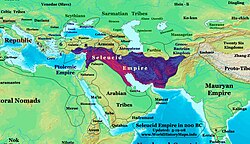

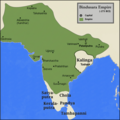
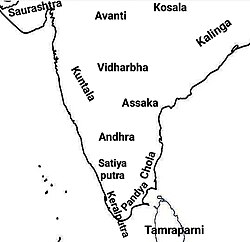


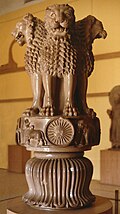
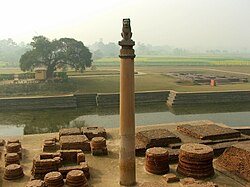
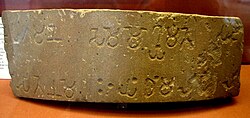
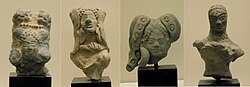
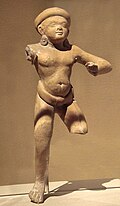
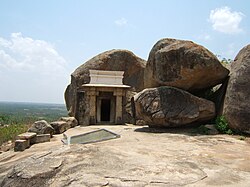
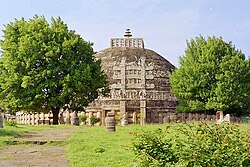
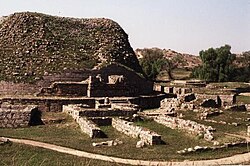
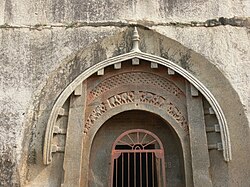

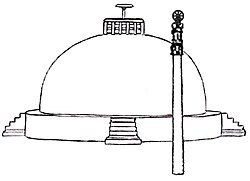


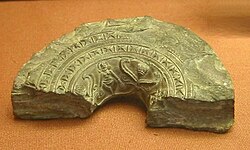

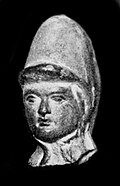


 This page is a redirect. The following categories are used to track and monitor this redirect: