


Rishank124 (talk | contribs) Structure improved and content revised |
CleanupBot (talk | contribs) m Robot: Replacing encoded entity with character |
||
| Line 2: | Line 2: | ||
{{for|people named Udasi|Udasi (surname)}} | {{for|people named Udasi|Udasi (surname)}} | ||
{{Infobox religious group | {{Infobox religious group | ||
|group=Udasipanth | |group=Udasipanth<br>{{Small|ਉਦਾਸੀਪੰਥ}} | ||
|founder = [[Sri Chand]] | |founder = [[Sri Chand]] | ||
|religions = [[Hinduism]] • [[Sikhism]] | |religions = [[Hinduism]] • [[Sikhism]] | ||
| Line 13: | Line 13: | ||
{{Udasi}} | {{Udasi}} | ||
'''Udasis''' ([[Gurmukhi]]: ਉਦਾਸੀ ਸੰਪਰਦਾ; ''udāsī saparadā'') ([[Devanagari]]: उदासी संप्रदाय), also spelt as '''Udasins | '''Udasis''' ([[Gurmukhi]]: ਉਦਾਸੀ ਸੰਪਰਦਾ; ''udāsī saparadā'') ([[Devanagari]]: उदासी संप्रदाय), also spelt as '''Udasins<ref name=":6">{{Cite web |last=Kalhoro |first=Zulfiqar Ali |date=14 December 2018 |title=Udasi Sikh Saints of Sindh |url=https://www.academia.edu/38014703 |website=Originally published on The Friday Times, republished on Academia.edu}}</ref>''', also known as '''Nanak Putras''' (meaning "sons of Nanak"),<ref name=":22">{{Cite journal |last1=Jabeen |first1=Asia |last2=Munir |first2=Mazhar |date=December 2021 |title=Refurbishment of Gurdwara Baba Bhuman Shah Dipalpur, District Okara |url=https://pjsr.com.pk/ojs/index.php/PJSR/article/download/279/105 |journal=Pakistan Journal of Social Research |volume=3 |issue=4 |pages=52–66 |doi=10.52567/pjsr.v3i4.279 |issn=2710-3129 |eissn=2710-3137 |doi-access=free |archive-date=2023-05-22 |access-date=2023-05-22 |archive-url=https://web.archive.org/web/20230522035656/https://pjsr.com.pk/ojs/index.php/PJSR/article/download/279/105 |url-status=dead }}</ref> are a religious [[Sects of Sikhism|sect]] of ascetic ''[[sadhu]]s'' centred in northern [[India]] who follow a tradition known as '''Udasipanth'''.<ref name=":5" /> Becoming custodians of Sikh shrines in the 18th century,<ref name="JSH_1993"/> they were notable interpreters and spreaders of the [[Sikhism#Philosophy and teachings|Sikh philosophy]] during that time.<ref name="PSLEF_2014">{{cite book |editor-first1=Pashaura |editor-last1=Singh |url=https://books.google.com/books?id=CzYeAwAAQBAJ&pg=PA376 |title=The Oxford Handbook of Sikh Studies |editor-first2=Louis E. |editor-last2=Fenech |publisher=OUP Oxford |year=2014 |isbn=978-0-19-100412-4 |pages=375–376}}</ref> However, their religious practices border on a syncretism of [[Sikhism]] and [[Hinduism]], and they did not conform to the [[Khalsa]] standards as ordained by [[Guru Gobind Singh]].<ref name="Fazal2014"/> When the Lahore [[Singh Sabha]] reformers, dominated by [[Tat Khalsa]] Sikhs, would hold them responsible for indulging in ritual practices antithetical to Sikhism, as well as personal vices and corruption, the Udasi [[mahant]]s were expelled from the Sikh shrines.<ref name="Fazal2014">{{cite book |author=Tanweer Fazal |title="Nation-state" and Minority Rights in India: Comparative Perspectives on Muslim and Sikh Identities |url=https://books.google.com/books?id=1WwtBAAAQBAJ&pg=PA113 |date=1 August 2014 |publisher=Routledge |isbn=978-1-317-75179-3 |pages=113 }}</ref><ref name=ks542>{{cite book|editor1=Pashaura Singh|editor2=Louis E. Fenech|title=The Oxford Handbook of Sikh Studies|url=https://books.google.com/books?id=CzYeAwAAQBAJ&pg=PT542|year=2014|publisher=Oxford University Press|isbn=978-0-19-100412-4|pages=542–543}}</ref><ref name="SinghFenech2014p28">{{cite book|editor1=Pashaura Singh|url=https://books.google.com/books?id=8I0NAwAAQBAJ&pg=PA28|title=The Oxford Handbook of Sikh Studies|editor2=Louis E. Fenech|publisher=Oxford University Press|year=2014|isbn=978-0-19-969930-8|pages=28–29, 73–76}}</ref> | ||
== Etymology == | == Etymology == | ||
Udasi and Udasin is derived from the Sanskrit word ''Udāsīn'', which means one who is indifferent to or disregardful of worldly attachments, a stoic, or a mendicant. | Udasi and Udasin is derived from the Sanskrit word ''Udāsīn'', which means one who is indifferent to or disregardful of worldly attachments, a stoic, or a mendicant.<ref name=":1">{{Cite book |title=The encyclopaedia of Sikhism |date=1992–1998 |publisher=Punjabi University |editor=Harbans Singh |isbn=0-8364-2883-8 |volume=4 |location=Patiala |page=377 |oclc=29703420}}</ref><ref name=":6" /> The word ''Udasi'' is derived from the Sanskrit word {{Lang|sa-latn|udasin}},<ref name="Oberoi1994p78">{{cite book |first=Harjot |last=Oberoi |url=https://books.google.com/books?id=1NKC9g2ayJEC&pg=PA78 |title=The Construction of Religious Boundaries: Culture, Identity, and Diversity in the Sikh Tradition |publisher=University of Chicago Press |year=1994 |isbn=978-0-226-61592-9 |pages=78–80}}</ref> meaning 'detached, journey', reflecting an approach to spiritual and temporal life,<ref name="PSLEF_2014" /> or from {{Lang|sa-latn|udas}} ('detachment'), signifying indifference to or renunciation of worldly concerns.<ref name="DNL_1995">{{cite book |author=David N. Lorenzen |url=https://books.google.com/books?id=rpSxJg_ehnIC&pg=PA57 |title=Bhakti Religion in North India: Community Identity and Political Action |publisher=SUNY Press |year=1995 |isbn=978-0-7914-2025-6 |pages=57 |author-link=David N. Lorenzen}}</ref> | ||
== History == | == History == | ||
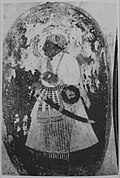
[[File:Fresco of Sri Chand from Akhara Bala-Nand, Amritsar.jpg|thumb|Fresco of Sri Chand from Akhara Bala-Nand, Amritsar]] | [[File:Fresco of Sri Chand from Akhara Bala-Nand, Amritsar.jpg|thumb|Fresco of Sri Chand from Akhara Bala-Nand, Amritsar]] | ||
According to myth, the sect was established in the [[Puranic chronology|Puranic]] age but historically speaking, the sect was founded by and based on the teachings of [[Guru Nanak]]'s elder son [[Sri Chand]] (1494–1629, other sources give a death year of 1643). | According to myth, the sect was established in the [[Puranic chronology|Puranic]] age but historically speaking, the sect was founded by and based on the teachings of [[Guru Nanak]]'s elder son [[Sri Chand]] (1494–1629, other sources give a death year of 1643).<ref name=":1" /> Sri Chand, contrary to his father's emphasis on participation in society, propagated ascetic renunciation and celibacy.<ref name="PSLEF_2014"/> Another Sikh tradition links the Udasis to [[Baba Gurditta]], the eldest son of [[Guru Hargobind]], and there is dispute on whether the Udasis originated with Sri Chand or Gurditta.{{sfn|Oberoi|1994|p=78}} Another viewpoint is that Sri Chand was the founder of the sect and passed the leadership to Baba Gurditta as his successor.''<ref name=":02">{{Cite book |title=The encyclopaedia of Sikhism |date=1992–1998 |publisher=Punjabi University |editor=Harbans Singh |isbn=0-8364-2883-8 |volume=2 |location=Patiala |pages=144–145 |oclc=29703420}}</ref>'' | ||
They maintain their own parallel line of gurus from Guru Nanak, followed by Sri Chand, followed by Gurditta. | They maintain their own parallel line of gurus from Guru Nanak, followed by Sri Chand, followed by Gurditta.<ref name="PSLEF_2014"/> They first came to prominence in the 17th century,<ref name="Oberoi1994p78"/> and gradually began to manage Sikh shrines and establishments in the 18th century,<ref name="JSH_1993"/> from where they espoused a model of Sikhism that diverged considerably from that of the [[Khalsa]].<ref name="Oberoi1994p78"/> The Udasis started receiving state-patronage from Sikh rulers in the late 18th century, with revenue-free land being bestowed to them.<ref name=":9">{{Cite book |last=Grewal |first=J. S. |title=The Sikhs of the Punjab |date=Oct 8, 1998 |publisher=Cambridge University Press |isbn=9780521637640 |pages=96–97}}</ref> This allowed the Udasis to establish their ''[[Akhara|akharas]]'', many of which were founded around the same time, such as the Brahm Buta near [[Golden Temple|Darbar Sahib]] in Amritsar.<ref name=":9" /> | ||
They would set up establishments across North India through to Benares, where they would come to be joined with monastic asceticism. | They would set up establishments across North India through to Benares, where they would come to be joined with monastic asceticism.<ref name="Oberoi1994p78" /> The combination of Hindu gods and the Sikh religious text indicated that the sect evolved over time under many historical influences and conditions,<ref name="PSLEF_2014" /> interpreting the message of [[Guru Granth Sahib]] in monistic [[Vedanta|Vedantic]] terms.{{sfn|Singh|Fenech|2014|p=376}}<ref name="JSG_1998" /> They were initially largely based in urban centers where they set up their establishments, or ''akharas'', only beginning to spread into rural areas during Sikh rule;<ref name="PSLEF_2014" /> before, they had around a dozen centres; by the end of Maharaja [[Ranjit Singh]]'s reign, the number had increased to around 250.<ref name="JSG_1998">{{cite book |author=J. S. Grewal |title=The Sikhs of the Punjab |url=https://archive.org/details/sikhsofpunjab0000grew |url-access=registration |year=1998 |publisher=Cambridge University Press |isbn=978-0-521-63764-0 |page=[https://archive.org/details/sikhsofpunjab0000grew/page/116 116] }}</ref> The Udasis widely propagated its form of Sikh philosophy, and during the 18th and early-19th centuries, their teachings attracted a large number of people to the Sikh fold.<ref name="PSLEF_2014" /> According to early [[Gurbilases|Gurbilas literature]] and some modern scholars, Guru Gobind Singh had employed a large number of armed, militant Udasi asectics prior to the construction of the forts of Anandpur Sahib. It has been posited that Guru Gobind Singh initiated the Khalsa in order to amalgamate the nirgun bhakti beliefs of the [[Ramanandi]]s and the martial traditions of the growing number of armed mahants.<ref>{{Cite book |last=Fenech |first=Louis E. |url=https://books.google.com/books?id=nPYTEAAAQBAJ&pg=PA65 |title=The Cherished Five in Sikh History |date=2021-01-14 |publisher=Oxford University Press |isbn=978-0-19-753286-7 |pages=65 |language=en}}</ref> | ||
Before the emergence of the [[Singh Sabha Movement]] in the late 19th century, they controlled important Sikh shrines, including the [[Golden Temple|Harimandir Sahib]], generally known also as the Golden Temple, for a short while. | Before the emergence of the [[Singh Sabha Movement]] in the late 19th century, they controlled important Sikh shrines, including the [[Golden Temple|Harimandir Sahib]], generally known also as the Golden Temple, for a short while.<ref name="Oberoi1994p78"/><ref name="DNL_1995"/> However, during the [[Akali movement]] of the 20th century, the [[Tat Khalsa]] Sikhs expelled them from the Sikh shrines, accusing them of vices and of indulging in ritual practices that were against the teachings of the Sikh gurus. The [[Sikh Gurdwaras Act, 1925|Sikh Gurdwara Reform Act, 1925]] defined the term "Sikh" in a way that excluded the syncretic groups like Udasis, [[Nanakpanthi]]s, and other groups who maintained transitional identities.<ref name="Fazal2014"/> Subsequently, the Udasis increasingly identified themselves as Hindus rather than Sikhs.<ref name="JSH_1993">{{cite book |author1=John Stratton Hawley |author2=Gurinder Singh Mann |title=Studying the Sikhs: Issues for North America |url=https://books.google.com/books?id=fWJGAECpClsC&pg=PA182 |year=1993 |publisher=SUNY Press |isbn=978-0-7914-1426-2 |page=182 }}</ref> | ||
== Practices == | == Practices == | ||
[[File:Fresco depicting a congregation of Udasis from the Sangalwala Akhara in Amritsar, Punjab.jpg|thumb|Fresco depicting a congregation of Udasis from the Sangalwala Akhara in Amritsar, Punjab]] | [[File:Fresco depicting a congregation of Udasis from the Sangalwala Akhara in Amritsar, Punjab.jpg|thumb|Fresco depicting a congregation of Udasis from the Sangalwala Akhara in Amritsar, Punjab]] | ||
According to 18th-century descriptions, they either cut or matted their hair under a turban, rather than knot it under a turban like Khalsas, and instead of the Khalsa emphasis on the ''[[panj kakkar]]'' garb and sporting arms, their dress code would include items such as a cap, a cotton bag, a flower rosary, a vessel made of dried pumpkin, a chain around the waist, ash to smear on their body, and a deerskin upon which to perform [[hatha yoga]], resulting in an extremely divergent appearance from Khalsa Sikhs in the eighteenth century. | According to 18th-century descriptions, they either cut or matted their hair under a turban, rather than knot it under a turban like Khalsas, and instead of the Khalsa emphasis on the ''[[panj kakkar]]'' garb and sporting arms, their dress code would include items such as a cap, a cotton bag, a flower rosary, a vessel made of dried pumpkin, a chain around the waist, ash to smear on their body, and a deerskin upon which to perform [[hatha yoga]], resulting in an extremely divergent appearance from Khalsa Sikhs in the eighteenth century.<ref name="Oberoi1994p78"/> In addition to not consider the Khalsa's [[Rehat Maryada]] to be binding on them,<ref name="DNL_1995"/> their modes of thought and attitude towards salvation also differed significantly. The Khalsa believed that salvation could be attained while taking part in society and pursuing secular objectives like political power and accumulation of resources like agrarian land, though this had to be accomplished within a particular framework of beliefs and spiritual practices, chief among which was the societal order and structure of the Khalsa. The Udasis considered secular pursuits to be incompatible with personal salvation, which was to be achieved only through renouncing the world,<ref name="Oberoi1994p78"/> espousing asceticism and a monastic traveler lifestyle. Udasis are known for their ''[[akhara]]s'' along with the [[Nirmala (sect)|Nirmala]] sect of Sikhism. | ||
The Udasis also worship the [[panchayatana puja|panchayatana]], the five Hindu deities: [[Shiva]], [[Vishnu]], [[Durga]], [[Ganesha]], and [[Surya]]. | The Udasis also worship the [[panchayatana puja|panchayatana]], the five Hindu deities: [[Shiva]], [[Vishnu]], [[Durga]], [[Ganesha]], and [[Surya]].<ref>{{cite book |author=James G. Lochtefeld |title=The Illustrated Encyclopedia of Hinduism: A-M |url=https://books.google.com/books?id=5kl0DYIjUPgC&pg=PA61 |year=2002 |publisher=The Rosen Publishing Group |isbn=978-0-8239-3179-8 |pages=61 }}</ref> | ||
== Factions == | == Factions == | ||
[[File:Painting of a "Naga" Udasi ascetic from a folio of a manuscript of the Silsilah-i-Jogiyan, ca.1800.jpg|thumb|Painting of a "Naga" Udasi ascetic from a folio of a manuscript of the Silsilah-i-Jogiyan, ca.1800]] | [[File:Painting of a "Naga" Udasi ascetic from a folio of a manuscript of the Silsilah-i-Jogiyan, ca.1800.jpg|thumb|Painting of a "Naga" Udasi ascetic from a folio of a manuscript of the Silsilah-i-Jogiyan, ca.1800]] | ||
There are various sub-sects within the Udasis, some of them being: | There are various sub-sects within the Udasis, some of them being:<ref name=":1" /> | ||
* [[Bhai Almast|Almast]] ''dhūāṅ''{{efn|The word ''dhūāṅ'' means hearth.}} | * [[Bhai Almast|Almast]] ''dhūāṅ''{{efn|The word ''dhūāṅ'' means hearth.}} | ||
| Line 44: | Line 44: | ||
* Naga (Nāngā), followers of this sect remain naked except for a brass chain worn around the waist. | * Naga (Nāngā), followers of this sect remain naked except for a brass chain worn around the waist. | ||
=== ''Ba | === ''Ba<u>kh</u>shishāṅ'' sects === | ||
[[File:'Suthrasahi, an order of Sikh ascetics', a painting from the Tashrih al-aqvam, circa 1825.jpg|thumb|'Suthrasahi, an order of Sikh ascetics', a painting from the ''Tashrih al-Aqvam'', circa 1825]] | [[File:'Suthrasahi, an order of Sikh ascetics', a painting from the Tashrih al-aqvam, circa 1825.jpg|thumb|'Suthrasahi, an order of Sikh ascetics', a painting from the ''Tashrih al-Aqvam'', circa 1825]] | ||
After the four ''dhūāṅs'', another sub-sect of Udasis emerged known as ''Ba | After the four ''dhūāṅs'', another sub-sect of Udasis emerged known as ''Ba<u>kh</u>shishāṅ.'' There were six prominent groups of this type, them namely being:<ref name=":1" /> | ||
* ''Bhagat Bhagvanie'' (followers of Bhagat Bhagvan) | * ''Bhagat Bhagvanie'' (followers of Bhagat Bhagvan) | ||
| Line 56: | Line 56: | ||
== Places of worship == | == Places of worship == | ||
{{anchor | Udasi akhara | Udasi Akhara}}[[File:Temple inside Udasi Akhada -KTM -11-Tripureswar by ST (6).JPG|thumb|350px|right|An Udasi shrine in [[Nepal]]]]Places of worship associated with Udasis are known as ''[[akhara]]s'' or ''[[Durbar (court)|darbars]]''. | {{anchor | Udasi akhara | Udasi Akhara}}[[File:Temple inside Udasi Akhada -KTM -11-Tripureswar by ST (6).JPG|thumb|350px|right|An Udasi shrine in [[Nepal]]]]Places of worship associated with Udasis are known as ''[[akhara]]s'' or ''[[Durbar (court)|darbars]]''.<ref name=":2" /><ref name=":8">{{Cite web |last=Kalhoro |first=Zulfiqar Ali |date=2023-03-04 |title=Temples And Darbars Of Garhi Yasin |url=https://www.thefridaytimes.com/2023/03/04/temples-and-darbars-of-garhi-yasin/ |access-date=2023-05-29 |website=The Friday Times - Naya Daur |language=en-US}}</ref> The latter term finds heavy usage in Sindh.<ref name=":8" /> The title of a leader of an Udasi akhara or darbar is ''[[mahant]]'', but some groups prefer to use the term ''[[Gaddi Nashin]]''.<ref>{{Cite journal |last=Singh |first=Bhupinder |date=October–December 2020 |title=Nanakpanthis |url=https://www.sikhinstitute.org/oct_2020/8_bhupinder.html |journal=Abstracts of Sikh Studies |publisher=Institute of Sikh Studies |volume=XXII |issue=4 |archive-date=2024-09-28 |access-date=2023-05-30 |archive-url=https://web.archive.org/web/20240928075215/https://www.sikhinstitute.org/oct_2020/8_bhupinder.html |url-status=dead }}</ref><ref name=":8" /> The term for a follower or student at an Udasi site is ''chela''.<ref name=":8" /> | ||
=== Akhara === | === Akhara === | ||
The word ''[[akhara]]'' is traditionally associated with wrestling but it implies a different meaning as used by Sikh sects like the Udasis and [[Nirmala (sect)|Nirmalas]]. | The word ''[[akhara]]'' is traditionally associated with wrestling but it implies a different meaning as used by Sikh sects like the Udasis and [[Nirmala (sect)|Nirmalas]].<ref name=":2">{{Cite news |last1=Teja |first1=Charanjit Singh |last2=Kumar |first2=Sunil |date=16 January 2021 |title=Dens of belief: Akharas of Amritsar |work=The Tribune |url=https://www.tribuneindia.com/news/amritsar/dens-of-belief-akharas-of-amritsar-198715 |archive-date=17 May 2023 |access-date=17 May 2023 |archive-url=https://web.archive.org/web/20230517185706/https://www.tribuneindia.com/news/amritsar/dens-of-belief-akharas-of-amritsar-198715 |url-status=dead }}</ref> Another word used for Udasi centres of spirituality is ''[[Dera (organization)|dera]]''.<ref name=":2" /> Traditionally, the Udasis claim Sri Chand as being the establisher of many akharas but historically, they first appeared in the mid-18th century when Mahant Nirvan Pritam Das established the Panchayti akhara in 1779, as per Sikh historian [[Kahn Singh Nabha]] in the ''[[Mahan Kosh]]''.<ref name=":2" /> Mahant Nirvan Pritam Das also founded ''akhara'' centres in Kashi Kankhal ([[Haridwar]]) and other places of [[Hindu pilgrimage sites|Indic pilgrimage sites]].<ref name=":2" /> | ||
Traditionally, there were four Udasi centres (''[[akhara]]s'' or ''dhuans'') with each controlling a certain preaching area; [[Nanakmatta]], [[Kashmir]], [[Malwa (Punjab)]] and [[Doaba]]. An Udasi akhara, named Dera Baba Bhuman Shah, dedicated to the Udasi saint [[Bhumman Shah|Bhuman Shah]] was formerly located in [[Behlolpur (Okara)|Behlolpur]] in [[Pakistan]] but it has since been abandoned since the [[Partition of India|1947 partition of India]]. | Traditionally, there were four Udasi centres (''[[akhara]]s'' or ''dhuans'') with each controlling a certain preaching area; [[Nanakmatta]], [[Kashmir]], [[Malwa (Punjab)]] and [[Doaba]]. An Udasi akhara, named Dera Baba Bhuman Shah, dedicated to the Udasi saint [[Bhumman Shah|Bhuman Shah]] was formerly located in [[Behlolpur (Okara)|Behlolpur]] in [[Pakistan]] but it has since been abandoned since the [[Partition of India|1947 partition of India]].<ref name=":22" /><ref>{{Cite book |last1=Kalra |first1=Virinder S. |title=Beyond Religion in India and Pakistan: Gender and Caste, Borders and Boundaries |last2=Purewal |first2=Navtej K. |publisher=Bloomsbury Publishing |year=2019 |isbn=9781350041769 |series=Bloomsbury Studies in Religion, Gender, and Sexuality |pages=59 |quote=Some members of the Watu family, large landholders in the area, told of how their elders would visit the haveli of Bhuman Shah, which was a large Udaasi Akhara (though now in a state of ruin) again perhaps 40 kilometres from Daud Bandegi.}}</ref> | ||
==== Amritsar ==== | ==== Amritsar ==== | ||
[[File:Photograph titled 'A Temple in Amritsar' taken in 1859 by Felice Beato. Identified as the original Udasi shrine of the Sangalwala Akhara in Amritsar.jpg|thumb|Photograph titled 'A Temple in Amritsar' taken in 1859 by [[Felice Beato]]. Identified as the original Udasi shrine of the Sangalwala Akhara in Amritsar.]] | [[File:Photograph titled 'A Temple in Amritsar' taken in 1859 by Felice Beato. Identified as the original Udasi shrine of the Sangalwala Akhara in Amritsar.jpg|thumb|Photograph titled 'A Temple in Amritsar' taken in 1859 by [[Felice Beato]]. Identified as the original Udasi shrine of the Sangalwala Akhara in Amritsar.]] | ||
At one point, there were a total of 12 Udasi ''akharas'' in the city of [[Amritsar]]. They are as follows: | At one point, there were a total of 12 Udasi ''akharas'' in the city of [[Amritsar]]. They are as follows:<ref name=":2" /><ref>{{Cite book |editor-last=Singh |editor-first=Harbans |title=The Encyclopaedia of Sikhism |publisher=Punjabi University, Patiala |year=1995 |isbn=9788173801006 |volume=1: A-D |pages=413–416}}</ref> | ||
* Akhara Tehal Das, now abandoned. | * Akhara Tehal Das, now abandoned. | ||
* Akhara Mahant Bala Nand, founded in 1775, rebuilt in 1888 as a three-storied structure by Mahant Bhishambar Prashad. It was a centre of [[Sanskrit]] learning until 1984. | * Akhara Mahant Bala Nand, founded in 1775, rebuilt in 1888 as a three-storied structure by Mahant Bhishambar Prashad. It was a centre of [[Sanskrit]] learning until 1984.<ref>{{Cite news |last=Kang |first=Kanwarjit Singh |date=10 September 2017 |title=Akhara murals gasp for a breath of air |work=The Tribune |url=https://www.tribuneindia.com/news/archive/arts/akhara-murals-gasp-for-a-breath-of-air-464791}}</ref> | ||
* Akhara Kashi Wala, founded by Mahant Narain Das in 1795, located near Darwaza Sultanvind. | * Akhara Kashi Wala, founded by Mahant Narain Das in 1795, located near Darwaza Sultanvind. | ||
* Akhara Shatte Wala, originally named Akhara Parag Das. | * Akhara Shatte Wala, originally named Akhara Parag Das. | ||
| Line 84: | Line 84: | ||
=== Structure and layout === | === Structure and layout === | ||
A ''deori'' is the gateway to site. | A ''deori'' is the gateway to site.<ref name=":22" /> A ''dhuna'' or ''dhuan'' refers to a hearth where Udasi followers practice [[Yoga|yogic]] activities and other religious practices, such as [[Dhyana in Hinduism|adhna]] and [[Yajna|yagya]].<ref name=":2" /> A ''dhuni'' refers to a campfire where a sacred fire occurs.<ref name=":6" /> Every Udasi place of worship contains a flag called a ''gerua'', which is the colour of red-ochre and topped with wings from a peacock.<ref name=":2" /> A ''thara'' is a place where sacred verses are recited.<ref name=":22" /> A ''[[Dharamshala (type of building)|dharamshala]]'' are guesthouses where pilgrims and visitors would stay.<ref name=":22" /> ''[[Langar (Sikhism)|Langar khana]]'' refers to the area where a free kitchen is carried out.<ref name=":22" /> | ||
== Music == | == Music == | ||
[[File:Narsingha or Ransingha ('war trumpets') Udasi Sikh Mahants await the Prince of Wales on his visit to Amritsar, ca.1905.jpg|thumb|Narsingha or Ransingha ('war trumpets') Udasi Sikh Mahants await the Prince of Wales on his visit to Amritsar, ca.1905.]] | [[File:Narsingha or Ransingha ('war trumpets') Udasi Sikh Mahants await the Prince of Wales on his visit to Amritsar, ca.1905.jpg|thumb|Narsingha or Ransingha ('war trumpets') Udasi Sikh Mahants await the Prince of Wales on his visit to Amritsar, ca.1905.]] | ||
The term ''Gawantaris'' refers to Udasi musicians. | The term ''Gawantaris'' refers to Udasi musicians.<ref name=":0">{{Cite news |last=Teja |first=Charanjit Singh |date=27 July 2019 |title=Meet the family that has been making musical instruments since eight generations |work=The Tribune |url=https://www.tribuneindia.com/news/archive/amritsar/meet-the-family-that-has-been-making-musical-instruments-since-eight-generations-809079 |access-date=10 August 2023}}</ref> A commonly played instrument of the Udasis is the ''[[Ransingha|Narasingha]]'' horn, used to inform the public about religious processions.<ref name=":0" /> | ||
== Literature == | == Literature == | ||
[[File:Folio of a manuscript of 'Matra Sahib', attributed to Sri Chand (5).jpg|thumb|Folio of a manuscript of ''Matra Sahib'', attributed to Sri Chand]] | [[File:Folio of a manuscript of 'Matra Sahib', attributed to Sri Chand (5).jpg|thumb|Folio of a manuscript of ''Matra Sahib'', attributed to Sri Chand]] | ||
An Udasi saint and direct descendant of Guru Nanak named Sukhbasi Ram Bedi (1758–1848) was responsible for authoring literary work in verse titled ''Guru Nanak Bans Prakash'' documenting the life of Guru Nanak and his descendants. | An Udasi saint and direct descendant of Guru Nanak named Sukhbasi Ram Bedi (1758–1848) was responsible for authoring literary work in verse titled ''Guru Nanak Bans Prakash'' documenting the life of Guru Nanak and his descendants.<ref name=":022">{{Cite journal |last=Singh |first=Bhupinder |date=October–December 2019 |title=Genealogy of Guru Nanak |url=https://sikhinstitute.org/oc_2019/colbhupindersingh.html |journal=Abstracts of Sikh Studies |publisher=Institute of Sikh Studies, Chandigarh |volume=21 |issue=4 |archive-date=2023-06-02 |access-date=2023-09-07 |archive-url=https://web.archive.org/web/20230602073320/https://sikhinstitute.org/oc_2019/colbhupindersingh.html |url-status=dead }}</ref> | ||
== Distribution == | == Distribution == | ||
| Line 103: | Line 103: | ||
{{Further information|Sikhism in Sindh}} | {{Further information|Sikhism in Sindh}} | ||
Sindh has a large number of people who may be best described as Udasis. | Sindh has a large number of people who may be best described as Udasis.<ref name=":4">{{Cite web |last=Kalhoro |first=Zulfiqar Ali |date=26 May 2013 |title=The Sikhs of Sindh |url=https://sikhchic.com/history/the_sikhs_of_sindh |website=Originally published on The Friday Times, republished on SikhChic}}</ref> The area of northern Sindh was especially influenced by Udasipanth.<ref name=":3">{{Cite web |last=Singh |first=Inderjeet |date=2017-03-24 |title=Sindhi Hindus & Nanakpanthis in Pakistan |url=http://www.sikhnet.com/news/sindhi-hindus-nanakpanthis-pakistan |access-date=2023-05-29 |website=SikhNet |language=en}}</ref> The Udasi temples of Sindh are known as [[Durbar (court)|''darbars'']].<ref name=":3" /><ref name=":6" /> It is said that Sri Chand himself visited [[Thatta District|Thatta]] in Sindh, where a darbar commemorates his stay.<ref name=":3" /> Sri Chand travelled to Sindh in the second half of the 16th century during the reign of the [[Tarkhan dynasty]].<ref name=":6" /> He established a dhuni (campfire) at [[Rohri]] and another at Faqir Jo Goth, the latter of which is around 5 kilometres from [[Thatta]].<ref name=":6" /> | ||
After the passing of Gurditta, the second Udasi leader, the leadership passed to four preachers, with Bhai Almast being one of these four. | After the passing of Gurditta, the second Udasi leader, the leadership passed to four preachers, with Bhai Almast being one of these four.<ref name=":6" /> Almast travelled to Sindh, where he conducted missionary activities and successfully converted many Sindhis to the Udasipanth.<ref name=":6" /> His place of residence was at Rohri, at the dhuni established by Sri Chand.<ref name=":6" /> Those newly converted appended ''Ram'' or ''Das'' to the end of their names.<ref name=":6" /> The ''mahants'' (who appended the prefix Bava or Bao, meaning "ascetic" at the beginning of their names and refer to their title of leadership as ''[[Gaddi Nashin|Gadhisar]]'') of the Baba Sri Chand Darbar (colloquially known as Raj Ghaat) in Faqir Jo Goth, such as the first mahant, Bava Balkram Das, conducted missionary activities in the area and faraway (even as distant as Nepal) as did his successors.<ref name=":6" /> His two successors, Bava Pooran Das and Bava Lachman Das, were not only missionaries but also masters at [[hatha yoga]].<ref name=":6" /> Sikhism became popularised in Sindh due to the missionary works of these Udasi saints.<ref>{{Cite book |last1=Takhar |first1=Opinderjit Kaur |title=Global Sikhs: Histories, Practices and Identities |last2=Jakobsh |first2=Doris R. |publisher=Taylor & Francis |year=2023 |isbn=9781000847352 |series=Routledge Critical Sikh Studies |quote=Unlike Sufi shrines, the Sindhi mandir has escaped academic attention in the tracing of pre-partition syncretic traditions partially because of the geographical boundaries of Sikh and Panjab studies. The history of Sikhism in Sindh and the appeal of particular forms of Sikhism among Sindhi mandir can provide a glimpse into the co-existence of Sikh and Hindu practices in the Sindhi mandir. It was Richard F. Burton who, in his book Sindh & the Races that Inhabit the Valley of the Indus (1851), "describes the curious mix of Hindu and Sikh practices among Sindhi Hindus". He observes that "they show a general tendency towards the faith of Nanak Shah, and that many castes have so intermingled the religion of the Sikhs with their original Hinduism, that we can scarcely discern the line of demarcation (1851)." The historical reason for the prevalence of these syncretic practices in Sindh was due to the Sindhis being introduced to Sikhism by the Udasi panth popularized by Guru Nanak's son Sri Chand whose followers are known as Nanakpanthi Sikhs in Sindh. Nanakpanth refers to Sikhs who follow the teachings of Guru Nanak without observing the five Ks prescribed for Khalsa Sikhs and do not find Hinduism as conflictual with Sikhism. Unlike Nanakpanthis who follow the rituals of Hinduism, performed idol worship and are Hindus except that they kept Guru Granth Sahib in their places of worship, new categories of sikhs in Sindh who describe themselves as Gursikhs claim to bow their heads only in front of the Guru Granth Sahib.}}</ref><ref name=":5">Jatt, Zahida. (2018). Devotion Transcending Regional Boundaries: An Exploration of the Origin, Adaption and Development of Udasipanth in Sindh. https://www.researchgate.net/publication/322343647_Devotion_Transcending_Regional_Boundaries_An_Exploration_of_the_Origin_Adaption_and_Development_of_Udasipanth_in_Sindh</ref><ref name=":4" /> Udasi temples in Sindh typically houses both the Guru Granth Sahib as well images of various Hindu deities.<ref>{{Cite book |last=Falzon |first=M. A. |url=https://books.google.com/books?id=Mzh7EAAAQBAJ&dq=sindhi+guru+granth+sahib&pg=PT23 |title=Selling Anything Anywhere: Sindhis and Global Trade |date=2022-07-25 |publisher=Penguin Random House India Private Limited |isbn=978-93-5492-578-8 |language=en}}</ref><ref name=":4" /> There is said to be an Udasi temple dedicated to a saint in every town and city of Sindh.<ref name=":6" /> During the reign of the [[Talpur dynasty|Talpur]] Mirs of [[Khairpur (princely state)|Khairpur]] (1783–1955), many Udasi darbars were constructed and Udasi saints were accepted to settle in the state.<ref name=":7">{{Cite web |last=Kalhoro |first=Zulfiqar Ali |date=21 December 2018 |title=Mirs and Minorities |url=https://www.academia.edu/38046277 |website=Originally published on The Friday Times, republished on Academia.edu}}</ref>[[File:Photograph of the Sadh Belo complex in Sindh, ca.1940.jpg|thumb|Photograph of the Sadh Belo complex in Sindh, ca.1940]]A darbar at Godhu Shah in Khairpur (known as the Godhu Shah Darbar, Nanga Darbar, or Gurpota Darbar) is believed to have been founded by a grandson of one of the Sikh gurus (''Gurpota'') whom became an Udasi under the guidance of a mahant, it is associated with the Nanga sect of Udasis.<ref name=":7" /> Another Udasi saint who spread the faith in Sindh was Rai Sahib Gokal Singh, who established a darbar in Gokalpur Kot in Garhi Yashin.<ref name=":8" /> Baba Wasti Ram, an Udasi saint, established a darbar in Garhi Yasin town.<ref name=":8" /> Baba Wasti Ram and his successors, Baba Khushi Ram Sahib (a talented mystic), Baba Agya Ram (established a darbar in Aurangabad village), and Baba Piyara Ram (established in a darbar in Maari village), spread the Udasi teachings in the [[Shikarpur District|Shikarpur]] area.<ref name=":8" /> One prominent Udasi saint, [[Bankhandi]], originally from either Nepal or near Delhi, was the founder of [[Sadh Belo]] in [[Sukkur District|Sukkur]], Sindh in 1823.<ref name=":13">{{Cite news |last=Memon |first=Sarfaraz |date=26 June 2022 |title=Sindh's Sadh Belo Temple |work=T-Magazine |url=https://tribune.com.pk/story/2363411/culture-and-hertiage}}</ref><ref name=":03">{{Cite web |last=Rasheed |first=Shaikh Abdul |date=2017-09-18 |title=Sadh Belo Temple the most frequented religious site |url=https://dailytimes.com.pk/116400/sadh-belo-temple-the-most-frequented-religious-site/ |access-date=2023-05-29 |website=Daily Times |language=}}</ref><ref name="auto2">{{Cite web |title=Sadhu Bela: Pakistan's temple island you won't forget |url=https://gulfnews.com/world/asia/pakistan/sadhu-bela-pakistans-temple-island-you-wont-forget-1.2177507 |website=gulfnews.com|date=22 February 2018 }}</ref><ref name="auto3">{{Cite web |last=Jatt |first=Zahida Rehman |date=June 12, 2018 |title=Sadh Belo temple: an abode of Udasipanth in Sindh |url=https://www.dawn.com/news/1413676 |website=dawn.com}}</ref> | ||
In recent times, veneration of the folk deity [[Jhulelal (Hinduism)|Jhulelal]] has crept into the practices of Udasi darbars in Sindh. | In recent times, veneration of the folk deity [[Jhulelal (Hinduism)|Jhulelal]] has crept into the practices of Udasi darbars in Sindh.<ref name=":6" /> The liberal attitude of Sindhi Muslims may have helped the Udasis take root in Sindh rather than being pushed out on the basis of religious intolerance and persecution.<ref name=":6" /> | ||
The most well-known Udasi darbars of Sindh are: | The most well-known Udasi darbars of Sindh are:<ref name=":6" /> | ||
* Baba Bankhandi Darbar at Sadh Belo, Sukkur | * Baba Bankhandi Darbar at Sadh Belo, Sukkur | ||
| Line 121: | Line 121: | ||
{{Further information|Sikhism in Bangladesh}} | {{Further information|Sikhism in Bangladesh}} | ||
[[File:Gurdwara Dhaka 1950 rear view.jpg|thumb|Photograph of ''[[Samadhi (shrine)|samadhs]]'' at the rear of Gurdwara Nanak Shahi, 1950. The gurdwara's establishment is traced to Udasis.]] | [[File:Gurdwara Dhaka 1950 rear view.jpg|thumb|Photograph of ''[[Samadhi (shrine)|samadhs]]'' at the rear of Gurdwara Nanak Shahi, 1950. The gurdwara's establishment is traced to Udasis.]] | ||
There are claims of [[Baba Gurditta]] visiting Bengal, where he established a ''manji'' in Shujatpur (presently the campus of [[University of Dhaka]]) which Gurditta traced to be the location in which Nanak resided during his stay in Bengal. | There are claims of [[Baba Gurditta]] visiting Bengal, where he established a ''manji'' in Shujatpur (presently the campus of [[University of Dhaka]]) which Gurditta traced to be the location in which Nanak resided during his stay in Bengal.<ref name="banglapedia2">{{Cite Banglapedia|article=Sikhs, The|author=Nasrin Akhter}}</ref> During the reign of [[Mughal emperor]] [[Jahangir]], [[Guru Hargobind]] dispatched Bhai Natha ([[Bhai Almast]]'s successor) to Bengal, who dug another well and also laid the foundation stone for the [[Gurdwara Nanak Shahi|Shujatpur Sikh Sangat]], a religious congregation.<ref name=":222">{{Cite book |last=Dhillon |first=Dalbir Singh |title=Sikhism: Origin and Development |publisher=Atlantic Publishers & Distributors |year=1988 |pages=137}}</ref><ref name="banglapedia2" /> Dalbir Singh Dhillon claims that the sixth guru had dispatched Bhai Almast to conduct missionary work in Bengal, whose original work was carried-on by Bhai Natha by the time of the ninth Sikh guru, Tegh Bahadur.<ref name=":222" /> Sangat Shutrashasi was a temple that belonged to the Suthrashahi sub-sect of the Udasi sect which was once located in Urdu Bazaar, but the Suthrashahi ''[[Sadhu|sadhus]]'' later destroyed it themselves.<ref name="banglapedia3">{{Cite Banglapedia|article=Sikhs, The|author=Nasrin Akhter}}</ref> | ||
== Leaders == | == Leaders == | ||
| Line 134: | Line 134: | ||
|- | |- | ||
|1. | |1. | ||
|[[Sri Chand]] | |[[Sri Chand]]<br>{{Small|(1494 – 1629)}} | ||
|[[File:Detail of Sri Chand from a painting depicting the ten Sikh Gurus with attendants (Bhai Bala, Bhai Mardana, Sri Chand, and possibly Lakhmi Das), Punjab, circa late 19th century (cropped).jpg|155x155px]] | |[[File:Detail of Sri Chand from a painting depicting the ten Sikh Gurus with attendants (Bhai Bala, Bhai Mardana, Sri Chand, and possibly Lakhmi Das), Punjab, circa late 19th century (cropped).jpg|155x155px]] | ||
|1494 – 1629 | |1494 – 1629 | ||
| | |<ref>{{Cite book |title=The encyclopaedia of Sikhism |date=1992–1998 |publisher=Punjabi University |editor=Harbans Singh |isbn=0-8364-2883-8 |volume=4 |location=Patiala |pages=377–379 |oclc=29703420 |quote=UDASI, an ascetical sect of the Sikhs founded by Sri Chand (1494-1629), the elder son of Guru Nanak.}}</ref> | ||
|- | |- | ||
|2. | |2. | ||
|[[Baba Gurditta]] | |[[Baba Gurditta]]<br>{{Small|(1613 – 1638)}} | ||
|[[File:Fresco painting of Baba Gurditta, the eldest son of the sixth Sikh guru, Guru Hargobind, and second leader of the Udasi sect succeeding Sri Chand, circa early 18th century.jpg|227x227px]] | |[[File:Fresco painting of Baba Gurditta, the eldest son of the sixth Sikh guru, Guru Hargobind, and second leader of the Udasi sect succeeding Sri Chand, circa early 18th century.jpg|227x227px]] | ||
|1629 – 1638 | |1629 – 1638 | ||
| | |<ref name=":02"/> | ||
|- | |- | ||
|3. | |3. | ||
|[[Bhai Almast|Almast]], Phūl, Goind (or Gondā) and [[Bhai Balu Hasna|Bālū Husnā]] | |[[Bhai Almast|Almast]], Phūl, Goind (or Gondā) and [[Bhai Balu Hasna|Bālū Husnā]]<br>{{Small|(four chief preachers appointed by Baba Gurditta for four new monastic seats)}} | ||
|[[File:Sin foto.svg|200x200px]] | |[[File:Sin foto.svg|200x200px]] | ||
|? | |? | ||
| | |<ref>{{Cite web |last=Kalhoro |first=Zulfiqar Ali |date=2021-02-18 |title=Samadhis of Pothohar |url=https://www.thefridaytimes.com/2021/02/19/samadhis-of-pothohar/ |access-date=2023-02-09 |website=The Friday Times - Naya Daur |language=en-US |quote=After the death of Baba Sri Chand, the guruship of the Udasipanth was transferred to Baba Gurditta and later to his four disciples Almast, Balu Hasne, Phul and Goinde – who preached the thought and ideology of their mentor in the Punjab and Sindh.}}</ref> | ||
|} | |} | ||
Latest revision as of 09:53, 22 March 2026
,_ca.1859%E2%80%9369.png) Portrait of two Udasi mendicants of Sikhism in Delhi, Shepherd & Robertson (possibly), ca.1859–69 | |
| Founder | |
|---|---|
| Sri Chand | |
| Regions with significant populations | |
| Punjab • Sindh • Uttarakhand • Uttar Pradesh • Orissa • Nepal | |
| Religions | |
| Hinduism • Sikhism | |
| Scriptures | |
| Guru Adi Granth Sahib • Hindu Granths |
Udasis (Gurmukhi: ਉਦਾਸੀ ਸੰਪਰਦਾ; udāsī saparadā) (Devanagari: उदासी संप्रदाय), also spelt as Udasins[1], also known as Nanak Putras (meaning "sons of Nanak"),[2] are a religious sect of ascetic sadhus centred in northern India who follow a tradition known as Udasipanth.[3] Becoming custodians of Sikh shrines in the 18th century,[4] they were notable interpreters and spreaders of the Sikh philosophy during that time.[5] However, their religious practices border on a syncretism of Sikhism and Hinduism, and they did not conform to the Khalsa standards as ordained by Guru Gobind Singh.[6] When the Lahore Singh Sabha reformers, dominated by Tat Khalsa Sikhs, would hold them responsible for indulging in ritual practices antithetical to Sikhism, as well as personal vices and corruption, the Udasi mahants were expelled from the Sikh shrines.[6][7][8]
Etymology[edit | edit source]
Udasi and Udasin is derived from the Sanskrit word Udāsīn, which means one who is indifferent to or disregardful of worldly attachments, a stoic, or a mendicant.[9][1] The word Udasi is derived from the Sanskrit word udasin,[10] meaning 'detached, journey', reflecting an approach to spiritual and temporal life,[5] or from udas ('detachment'), signifying indifference to or renunciation of worldly concerns.[11]
History[edit | edit source]

According to myth, the sect was established in the Puranic age but historically speaking, the sect was founded by and based on the teachings of Guru Nanak's elder son Sri Chand (1494–1629, other sources give a death year of 1643).[9] Sri Chand, contrary to his father's emphasis on participation in society, propagated ascetic renunciation and celibacy.[5] Another Sikh tradition links the Udasis to Baba Gurditta, the eldest son of Guru Hargobind, and there is dispute on whether the Udasis originated with Sri Chand or Gurditta.[12] Another viewpoint is that Sri Chand was the founder of the sect and passed the leadership to Baba Gurditta as his successor.[13]
They maintain their own parallel line of gurus from Guru Nanak, followed by Sri Chand, followed by Gurditta.[5] They first came to prominence in the 17th century,[10] and gradually began to manage Sikh shrines and establishments in the 18th century,[4] from where they espoused a model of Sikhism that diverged considerably from that of the Khalsa.[10] The Udasis started receiving state-patronage from Sikh rulers in the late 18th century, with revenue-free land being bestowed to them.[14] This allowed the Udasis to establish their akharas, many of which were founded around the same time, such as the Brahm Buta near Darbar Sahib in Amritsar.[14]
They would set up establishments across North India through to Benares, where they would come to be joined with monastic asceticism.[10] The combination of Hindu gods and the Sikh religious text indicated that the sect evolved over time under many historical influences and conditions,[5] interpreting the message of Guru Granth Sahib in monistic Vedantic terms.[15][16] They were initially largely based in urban centers where they set up their establishments, or akharas, only beginning to spread into rural areas during Sikh rule;[5] before, they had around a dozen centres; by the end of Maharaja Ranjit Singh's reign, the number had increased to around 250.[16] The Udasis widely propagated its form of Sikh philosophy, and during the 18th and early-19th centuries, their teachings attracted a large number of people to the Sikh fold.[5] According to early Gurbilas literature and some modern scholars, Guru Gobind Singh had employed a large number of armed, militant Udasi asectics prior to the construction of the forts of Anandpur Sahib. It has been posited that Guru Gobind Singh initiated the Khalsa in order to amalgamate the nirgun bhakti beliefs of the Ramanandis and the martial traditions of the growing number of armed mahants.[17]
Before the emergence of the Singh Sabha Movement in the late 19th century, they controlled important Sikh shrines, including the Harimandir Sahib, generally known also as the Golden Temple, for a short while.[10][11] However, during the Akali movement of the 20th century, the Tat Khalsa Sikhs expelled them from the Sikh shrines, accusing them of vices and of indulging in ritual practices that were against the teachings of the Sikh gurus. The Sikh Gurdwara Reform Act, 1925 defined the term "Sikh" in a way that excluded the syncretic groups like Udasis, Nanakpanthis, and other groups who maintained transitional identities.[6] Subsequently, the Udasis increasingly identified themselves as Hindus rather than Sikhs.[4]
Practices[edit | edit source]

According to 18th-century descriptions, they either cut or matted their hair under a turban, rather than knot it under a turban like Khalsas, and instead of the Khalsa emphasis on the panj kakkar garb and sporting arms, their dress code would include items such as a cap, a cotton bag, a flower rosary, a vessel made of dried pumpkin, a chain around the waist, ash to smear on their body, and a deerskin upon which to perform hatha yoga, resulting in an extremely divergent appearance from Khalsa Sikhs in the eighteenth century.[10] In addition to not consider the Khalsa's Rehat Maryada to be binding on them,[11] their modes of thought and attitude towards salvation also differed significantly. The Khalsa believed that salvation could be attained while taking part in society and pursuing secular objectives like political power and accumulation of resources like agrarian land, though this had to be accomplished within a particular framework of beliefs and spiritual practices, chief among which was the societal order and structure of the Khalsa. The Udasis considered secular pursuits to be incompatible with personal salvation, which was to be achieved only through renouncing the world,[10] espousing asceticism and a monastic traveler lifestyle. Udasis are known for their akharas along with the Nirmala sect of Sikhism.
The Udasis also worship the panchayatana, the five Hindu deities: Shiva, Vishnu, Durga, Ganesha, and Surya.[18]
Factions[edit | edit source]

There are various sub-sects within the Udasis, some of them being:[9]
- Almast dhūāṅ[lower-alpha 1]
- Phūl dhūāṅ
- Goind (or Gondā) dhūāṅ
- Bālū Husnā dhūāṅ
- Naga (Nāngā), followers of this sect remain naked except for a brass chain worn around the waist.
Bakhshishāṅ sects[edit | edit source]

After the four dhūāṅs, another sub-sect of Udasis emerged known as Bakhshishāṅ. There were six prominent groups of this type, them namely being:[9]
- Bhagat Bhagvanie (followers of Bhagat Bhagvan)
- Suthrashahie (followers of Suthrashah)
- Sangat Sahibie (followers of Sangat Sahib)
- Mihan Shahie or Mihall Dasie, so called after Mihan, the title conferred by Guru Tegh Bahadur on Ramdev
- Bakht Mallie (followers of Bakht Mall)
- Jit Mallie (followers of Jit Mall)
Places of worship[edit | edit source]
.JPG)
Places of worship associated with Udasis are known as akharas or darbars.[19][20] The latter term finds heavy usage in Sindh.[20] The title of a leader of an Udasi akhara or darbar is mahant, but some groups prefer to use the term Gaddi Nashin.[21][20] The term for a follower or student at an Udasi site is chela.[20]
Akhara[edit | edit source]
The word akhara is traditionally associated with wrestling but it implies a different meaning as used by Sikh sects like the Udasis and Nirmalas.[19] Another word used for Udasi centres of spirituality is dera.[19] Traditionally, the Udasis claim Sri Chand as being the establisher of many akharas but historically, they first appeared in the mid-18th century when Mahant Nirvan Pritam Das established the Panchayti akhara in 1779, as per Sikh historian Kahn Singh Nabha in the Mahan Kosh.[19] Mahant Nirvan Pritam Das also founded akhara centres in Kashi Kankhal (Haridwar) and other places of Indic pilgrimage sites.[19]
Traditionally, there were four Udasi centres (akharas or dhuans) with each controlling a certain preaching area; Nanakmatta, Kashmir, Malwa (Punjab) and Doaba. An Udasi akhara, named Dera Baba Bhuman Shah, dedicated to the Udasi saint Bhuman Shah was formerly located in Behlolpur in Pakistan but it has since been abandoned since the 1947 partition of India.[2][22]
Amritsar[edit | edit source]

At one point, there were a total of 12 Udasi akharas in the city of Amritsar. They are as follows:[19][23]
- Akhara Tehal Das, now abandoned.
- Akhara Mahant Bala Nand, founded in 1775, rebuilt in 1888 as a three-storied structure by Mahant Bhishambar Prashad. It was a centre of Sanskrit learning until 1984.[24]
- Akhara Kashi Wala, founded by Mahant Narain Das in 1795, located near Darwaza Sultanvind.
- Akhara Shatte Wala, originally named Akhara Parag Das.
- Akhara Brahm Buta, said to be the oldest akhara of the city. Sri Chand is said to have stayed here when he visited the city during the guruship of Guru Ram Das. Mahant Nirban Santokh Das was associated with this akhara.
- Akhara Bibbeksar, founded by Mahant Balak Nath, later shifted to Haridwar.
- Akhara Kashi Wala of Gheo Mandi, founded by Mahant Sharan Das during the first half of the 19th century. It was founded on land gifted by Maharaja Ranjit Singh that belonged to the village of Tung. It remains active as an Udasi spiritual centre.
- Sanglan Wala Akhara, founded by Mahant Pritam Das in 1788 in Bazaar Mai Sevan.
- Akhara Chitta, founded by Mahant Ganga Ram Viakarani in Bazaar Mai Sevan during the Sikh Misl period.
- Akhara Ghamand Das
- Akhara Mahant Prem Das
- Akhara Sarigalvala
- Akhara Karishivala, near Darwaza Ghi Mandi
- Akhara Babeksar
- Akhara Samadhiarivala
Structure and layout[edit | edit source]
A deori is the gateway to site.[2] A dhuna or dhuan refers to a hearth where Udasi followers practice yogic activities and other religious practices, such as adhna and yagya.[19] A dhuni refers to a campfire where a sacred fire occurs.[1] Every Udasi place of worship contains a flag called a gerua, which is the colour of red-ochre and topped with wings from a peacock.[19] A thara is a place where sacred verses are recited.[2] A dharamshala are guesthouses where pilgrims and visitors would stay.[2] Langar khana refers to the area where a free kitchen is carried out.[2]
Music[edit | edit source]
_Udasi_Sikh_Mahants_await_the_Prince_of_Wales_on_his_visit_to_Amritsar,_ca.1905.jpg)
The term Gawantaris refers to Udasi musicians.[25] A commonly played instrument of the Udasis is the Narasingha horn, used to inform the public about religious processions.[25]
Literature[edit | edit source]
.jpg)
An Udasi saint and direct descendant of Guru Nanak named Sukhbasi Ram Bedi (1758–1848) was responsible for authoring literary work in verse titled Guru Nanak Bans Prakash documenting the life of Guru Nanak and his descendants.[26]
Distribution[edit | edit source]
Today's Udasi are predominantly located in northwestern India, especially around Punjab, Haryana, Gujarat, and cities like Haridwar and New Delhi; they are divided into three major groups:
- Niya (New) Udasi Panchayati Akarda
- Bara (Big) Udasi Panchayati Akarda
- Nirmal Udasi Panachayati Akarda
In Sindh[edit | edit source]
Sindh has a large number of people who may be best described as Udasis.[27] The area of northern Sindh was especially influenced by Udasipanth.[28] The Udasi temples of Sindh are known as darbars.[28][1] It is said that Sri Chand himself visited Thatta in Sindh, where a darbar commemorates his stay.[28] Sri Chand travelled to Sindh in the second half of the 16th century during the reign of the Tarkhan dynasty.[1] He established a dhuni (campfire) at Rohri and another at Faqir Jo Goth, the latter of which is around 5 kilometres from Thatta.[1]
After the passing of Gurditta, the second Udasi leader, the leadership passed to four preachers, with Bhai Almast being one of these four.[1] Almast travelled to Sindh, where he conducted missionary activities and successfully converted many Sindhis to the Udasipanth.[1] His place of residence was at Rohri, at the dhuni established by Sri Chand.[1] Those newly converted appended Ram or Das to the end of their names.[1] The mahants (who appended the prefix Bava or Bao, meaning "ascetic" at the beginning of their names and refer to their title of leadership as Gadhisar) of the Baba Sri Chand Darbar (colloquially known as Raj Ghaat) in Faqir Jo Goth, such as the first mahant, Bava Balkram Das, conducted missionary activities in the area and faraway (even as distant as Nepal) as did his successors.[1] His two successors, Bava Pooran Das and Bava Lachman Das, were not only missionaries but also masters at hatha yoga.[1] Sikhism became popularised in Sindh due to the missionary works of these Udasi saints.[29][3][27] Udasi temples in Sindh typically houses both the Guru Granth Sahib as well images of various Hindu deities.[30][27] There is said to be an Udasi temple dedicated to a saint in every town and city of Sindh.[1] During the reign of the Talpur Mirs of Khairpur (1783–1955), many Udasi darbars were constructed and Udasi saints were accepted to settle in the state.[31]

A darbar at Godhu Shah in Khairpur (known as the Godhu Shah Darbar, Nanga Darbar, or Gurpota Darbar) is believed to have been founded by a grandson of one of the Sikh gurus (Gurpota) whom became an Udasi under the guidance of a mahant, it is associated with the Nanga sect of Udasis.[31] Another Udasi saint who spread the faith in Sindh was Rai Sahib Gokal Singh, who established a darbar in Gokalpur Kot in Garhi Yashin.[20] Baba Wasti Ram, an Udasi saint, established a darbar in Garhi Yasin town.[20] Baba Wasti Ram and his successors, Baba Khushi Ram Sahib (a talented mystic), Baba Agya Ram (established a darbar in Aurangabad village), and Baba Piyara Ram (established in a darbar in Maari village), spread the Udasi teachings in the Shikarpur area.[20] One prominent Udasi saint, Bankhandi, originally from either Nepal or near Delhi, was the founder of Sadh Belo in Sukkur, Sindh in 1823.[32][33][34][35]
In recent times, veneration of the folk deity Jhulelal has crept into the practices of Udasi darbars in Sindh.[1] The liberal attitude of Sindhi Muslims may have helped the Udasis take root in Sindh rather than being pushed out on the basis of religious intolerance and persecution.[1]
The most well-known Udasi darbars of Sindh are:[1]
- Baba Bankhandi Darbar at Sadh Belo, Sukkur
- Baba Sarup Das Darbar (alias Halani Darbar) at Naushero Feroz
- Khushi Ram Darbar at Rohri
- Samad Udasin at Shikarpur
- Chhat Darbar at Shikarpur
- Wadi Darbar at Pir Jo Goth
- Jumna Das Darbar
In Bengal[edit | edit source]

There are claims of Baba Gurditta visiting Bengal, where he established a manji in Shujatpur (presently the campus of University of Dhaka) which Gurditta traced to be the location in which Nanak resided during his stay in Bengal.[36] During the reign of Mughal emperor Jahangir, Guru Hargobind dispatched Bhai Natha (Bhai Almast's successor) to Bengal, who dug another well and also laid the foundation stone for the Shujatpur Sikh Sangat, a religious congregation.[37][36] Dalbir Singh Dhillon claims that the sixth guru had dispatched Bhai Almast to conduct missionary work in Bengal, whose original work was carried-on by Bhai Natha by the time of the ninth Sikh guru, Tegh Bahadur.[37] Sangat Shutrashasi was a temple that belonged to the Suthrashahi sub-sect of the Udasi sect which was once located in Urdu Bazaar, but the Suthrashahi sadhus later destroyed it themselves.[38]
Leaders[edit | edit source]
![[icon]](/wiki/File:Wiki_letter_w_cropped.svg) | This section needs expansion with: Please add more of the leaders of the Udasi sect. You can help by adding to it. (February 2023) |
| No. | Name
(Birth–Death) |
Portrait | Term | Reference(s) |
|---|---|---|---|---|
| 1. | Sri Chand (1494 – 1629) |
,_Punjab,_circa_late_19th_century_(cropped).jpg)
|
1494 – 1629 | [39] |
| 2. | Baba Gurditta (1613 – 1638) |

|
1629 – 1638 | [13] |
| 3. | Almast, Phūl, Goind (or Gondā) and Bālū Husnā (four chief preachers appointed by Baba Gurditta for four new monastic seats) |

|
? | [40] |
See also[edit | edit source]
- Dhanadeva – an ancient inscription found in an Udasi shrine
- Sects of Sikhism
- Sects of Hinduism
- Sadh Belo
- Sri Chand Darbar
Notes[edit | edit source]
- ↑ The word dhūāṅ means hearth.
References[edit | edit source]
- ↑ 1.00 1.01 1.02 1.03 1.04 1.05 1.06 1.07 1.08 1.09 1.10 1.11 1.12 1.13 1.14 1.15 Kalhoro, Zulfiqar Ali (14 December 2018). "Udasi Sikh Saints of Sindh". Originally published on The Friday Times, republished on Academia.edu.
- ↑ 2.0 2.1 2.2 2.3 2.4 2.5 Jabeen, Asia; Munir, Mazhar (December 2021). "Refurbishment of Gurdwara Baba Bhuman Shah Dipalpur, District Okara". Pakistan Journal of Social Research. 3 (4): 52–66. doi:10.52567/pjsr.v3i4.279. eISSN 2710-3137. ISSN 2710-3129. Archived from the original on 2023-05-22. Retrieved 2023-05-22.
- ↑ 3.0 3.1 Jatt, Zahida. (2018). Devotion Transcending Regional Boundaries: An Exploration of the Origin, Adaption and Development of Udasipanth in Sindh. https://www.researchgate.net/publication/322343647_Devotion_Transcending_Regional_Boundaries_An_Exploration_of_the_Origin_Adaption_and_Development_of_Udasipanth_in_Sindh
- ↑ 4.0 4.1 4.2 John Stratton Hawley; Gurinder Singh Mann (1993). Studying the Sikhs: Issues for North America. SUNY Press. p. 182. ISBN 978-0-7914-1426-2.
- ↑ 5.0 5.1 5.2 5.3 5.4 5.5 5.6 Singh, Pashaura; Fenech, Louis E., eds. (2014). The Oxford Handbook of Sikh Studies. OUP Oxford. pp. 375–376. ISBN 978-0-19-100412-4.
- ↑ 6.0 6.1 6.2 Tanweer Fazal (1 August 2014). "Nation-state" and Minority Rights in India: Comparative Perspectives on Muslim and Sikh Identities. Routledge. p. 113. ISBN 978-1-317-75179-3.
- ↑ Pashaura Singh; Louis E. Fenech, eds. (2014). The Oxford Handbook of Sikh Studies. Oxford University Press. pp. 542–543. ISBN 978-0-19-100412-4.
- ↑ Pashaura Singh; Louis E. Fenech, eds. (2014). The Oxford Handbook of Sikh Studies. Oxford University Press. pp. 28–29, 73–76. ISBN 978-0-19-969930-8.
- ↑ 9.0 9.1 9.2 9.3 Harbans Singh, ed. (1992–1998). The encyclopaedia of Sikhism. Vol. 4. Patiala: Punjabi University. p. 377. ISBN 0-8364-2883-8. OCLC 29703420.
- ↑ 10.0 10.1 10.2 10.3 10.4 10.5 10.6 Oberoi, Harjot (1994). The Construction of Religious Boundaries: Culture, Identity, and Diversity in the Sikh Tradition. University of Chicago Press. pp. 78–80. ISBN 978-0-226-61592-9.
- ↑ 11.0 11.1 11.2 David N. Lorenzen (1995). Bhakti Religion in North India: Community Identity and Political Action. SUNY Press. p. 57. ISBN 978-0-7914-2025-6.
- ↑ Oberoi 1994, p. 78.
- ↑ 13.0 13.1 Harbans Singh, ed. (1992–1998). The encyclopaedia of Sikhism. Vol. 2. Patiala: Punjabi University. pp. 144–145. ISBN 0-8364-2883-8. OCLC 29703420.
- ↑ 14.0 14.1 Grewal, J. S. (Oct 8, 1998). The Sikhs of the Punjab. Cambridge University Press. pp. 96–97. ISBN 9780521637640.
- ↑ Singh & Fenech 2014, p. 376.
- ↑ 16.0 16.1 J. S. Grewal (1998). The Sikhs of the Punjab. Cambridge University Press. p. 116. ISBN 978-0-521-63764-0.
- ↑ Fenech, Louis E. (2021-01-14). The Cherished Five in Sikh History. Oxford University Press. p. 65. ISBN 978-0-19-753286-7.
- ↑ James G. Lochtefeld (2002). The Illustrated Encyclopedia of Hinduism: A-M. The Rosen Publishing Group. p. 61. ISBN 978-0-8239-3179-8.
- ↑ 19.0 19.1 19.2 19.3 19.4 19.5 19.6 19.7 Teja, Charanjit Singh; Kumar, Sunil (16 January 2021). "Dens of belief: Akharas of Amritsar". The Tribune. Archived from the original on 17 May 2023. Retrieved 17 May 2023.
- ↑ 20.0 20.1 20.2 20.3 20.4 20.5 20.6 Kalhoro, Zulfiqar Ali (2023-03-04). "Temples And Darbars Of Garhi Yasin". The Friday Times - Naya Daur. Retrieved 2023-05-29.
- ↑ Singh, Bhupinder (October–December 2020). "Nanakpanthis". Abstracts of Sikh Studies. XXII (4). Institute of Sikh Studies. Archived from the original on 2024-09-28. Retrieved 2023-05-30.
- ↑ Kalra, Virinder S.; Purewal, Navtej K. (2019). Beyond Religion in India and Pakistan: Gender and Caste, Borders and Boundaries. Bloomsbury Studies in Religion, Gender, and Sexuality. Bloomsbury Publishing. p. 59. ISBN 9781350041769.
Some members of the Watu family, large landholders in the area, told of how their elders would visit the haveli of Bhuman Shah, which was a large Udaasi Akhara (though now in a state of ruin) again perhaps 40 kilometres from Daud Bandegi.
- ↑ Singh, Harbans, ed. (1995). The Encyclopaedia of Sikhism. Vol. 1: A-D. Punjabi University, Patiala. pp. 413–416. ISBN 9788173801006.
- ↑ Kang, Kanwarjit Singh (10 September 2017). "Akhara murals gasp for a breath of air". The Tribune.
- ↑ 25.0 25.1 Teja, Charanjit Singh (27 July 2019). "Meet the family that has been making musical instruments since eight generations". The Tribune. Retrieved 10 August 2023.
- ↑ Singh, Bhupinder (October–December 2019). "Genealogy of Guru Nanak". Abstracts of Sikh Studies. 21 (4). Institute of Sikh Studies, Chandigarh. Archived from the original on 2023-06-02. Retrieved 2023-09-07.
- ↑ 27.0 27.1 27.2 Kalhoro, Zulfiqar Ali (26 May 2013). "The Sikhs of Sindh". Originally published on The Friday Times, republished on SikhChic.
- ↑ 28.0 28.1 28.2 Singh, Inderjeet (2017-03-24). "Sindhi Hindus & Nanakpanthis in Pakistan". SikhNet. Retrieved 2023-05-29.
- ↑ Takhar, Opinderjit Kaur; Jakobsh, Doris R. (2023). Global Sikhs: Histories, Practices and Identities. Routledge Critical Sikh Studies. Taylor & Francis. ISBN 9781000847352.
Unlike Sufi shrines, the Sindhi mandir has escaped academic attention in the tracing of pre-partition syncretic traditions partially because of the geographical boundaries of Sikh and Panjab studies. The history of Sikhism in Sindh and the appeal of particular forms of Sikhism among Sindhi mandir can provide a glimpse into the co-existence of Sikh and Hindu practices in the Sindhi mandir. It was Richard F. Burton who, in his book Sindh & the Races that Inhabit the Valley of the Indus (1851), "describes the curious mix of Hindu and Sikh practices among Sindhi Hindus". He observes that "they show a general tendency towards the faith of Nanak Shah, and that many castes have so intermingled the religion of the Sikhs with their original Hinduism, that we can scarcely discern the line of demarcation (1851)." The historical reason for the prevalence of these syncretic practices in Sindh was due to the Sindhis being introduced to Sikhism by the Udasi panth popularized by Guru Nanak's son Sri Chand whose followers are known as Nanakpanthi Sikhs in Sindh. Nanakpanth refers to Sikhs who follow the teachings of Guru Nanak without observing the five Ks prescribed for Khalsa Sikhs and do not find Hinduism as conflictual with Sikhism. Unlike Nanakpanthis who follow the rituals of Hinduism, performed idol worship and are Hindus except that they kept Guru Granth Sahib in their places of worship, new categories of sikhs in Sindh who describe themselves as Gursikhs claim to bow their heads only in front of the Guru Granth Sahib.
- ↑ Falzon, M. A. (2022-07-25). Selling Anything Anywhere: Sindhis and Global Trade. Penguin Random House India Private Limited. ISBN 978-93-5492-578-8.
- ↑ 31.0 31.1 Kalhoro, Zulfiqar Ali (21 December 2018). "Mirs and Minorities". Originally published on The Friday Times, republished on Academia.edu.
- ↑ Memon, Sarfaraz (26 June 2022). "Sindh's Sadh Belo Temple". T-Magazine.
- ↑ Rasheed, Shaikh Abdul (2017-09-18). "Sadh Belo Temple the most frequented religious site". Daily Times. Retrieved 2023-05-29.
- ↑ "Sadhu Bela: Pakistan's temple island you won't forget". gulfnews.com. 22 February 2018.
- ↑ Jatt, Zahida Rehman (June 12, 2018). "Sadh Belo temple: an abode of Udasipanth in Sindh". dawn.com.
- ↑ 36.0 36.1 Nasrin Akhter (2012). "Sikhs, The". In Islam, Sirajul; Miah, Sajahan; Khanam, Mahfuza; Ahmed, Sabbir (eds.). Banglapedia: the National Encyclopedia of Bangladesh (Online ed.). Dhaka, Bangladesh: Banglapedia Trust, Asiatic Society of Bangladesh. ISBN 984-32-0576-6. OCLC 52727562. Retrieved 21 October 2026.
- ↑ 37.0 37.1 Dhillon, Dalbir Singh (1988). Sikhism: Origin and Development. Atlantic Publishers & Distributors. p. 137.
- ↑ Nasrin Akhter (2012). "Sikhs, The". In Islam, Sirajul; Miah, Sajahan; Khanam, Mahfuza; Ahmed, Sabbir (eds.). Banglapedia: the National Encyclopedia of Bangladesh (Online ed.). Dhaka, Bangladesh: Banglapedia Trust, Asiatic Society of Bangladesh. ISBN 984-32-0576-6. OCLC 52727562. Retrieved 21 October 2026.
- ↑ Harbans Singh, ed. (1992–1998). The encyclopaedia of Sikhism. Vol. 4. Patiala: Punjabi University. pp. 377–379. ISBN 0-8364-2883-8. OCLC 29703420.
UDASI, an ascetical sect of the Sikhs founded by Sri Chand (1494-1629), the elder son of Guru Nanak.
- ↑ Kalhoro, Zulfiqar Ali (2021-02-18). "Samadhis of Pothohar". The Friday Times - Naya Daur. Retrieved 2023-02-09.
After the death of Baba Sri Chand, the guruship of the Udasipanth was transferred to Baba Gurditta and later to his four disciples Almast, Balu Hasne, Phul and Goinde – who preached the thought and ideology of their mentor in the Punjab and Sindh.