|
|
| Line 1: |
Line 1: |
| {{about|the country in East Africa|the spider genus|Tanzania (spider)}}
| |
|
| |
| {{short description|Country in East Africa}}
| |
| {{EngvarB|date=July 2020}}
| |
| {{Use dmy dates|date=May 2021}}
| |
| {{Coord|6|S|35|E|display=title}}
| |
| {{Infobox country | | {{Infobox country |
| | conventional_long_name = United Republic of Tanzania | | | conventional_long_name = United Republic of Tanzania |
| | common_name = Tanzania
| | | native_name = {{native name|sw|Jamhuri ya Muungano wa Tanzania}} |
| | native_name = {{native name|sw|Jamhuri ya Muungano wa Tanzania}} | | | image_flag = Flag of Tanzania.svg |
| | image_flag = Flag of Tanzania.svg | | | image_coat = Coat of arms of Tanzania.svg |
| | image_coat = Coat of arms of Tanzania.svg | | | national_motto = {{native phrase|sw|"Uhuru na Umoja"|italics=off|nolink=on}}<br/>"[[Freedom and Unity]]" |
| | national_motto = {{native phrase|sw|"Uhuru na Umoja"}}<br />"[[Freedom and Unity]]" | | | national_anthem = ''[[Mungu ibariki Afrika]]''<br/>{{small|'God Bless Africa'}}<br/><center>[[File:National Anthem of Tanzania by US Navy Band.ogg]]</center> |
| | national_anthem = "[[Mungu ibariki Afrika]]"<br />(''"God Bless Africa"'')<br />{{parabr}}{{center|[[File:National Anthem of Tanzania by US Navy Band.ogg]]}} | | | image_map = Location Tanzania AU Africa.svg |
| | image_map = Tanzania (orthographic projection).svg | | | map_caption = {{map caption|countryprefix=|location_color=dark blue|region=the [[African Union]]|region_color=light blue}} |
| | map_caption = Location of Tanzania (dark green) in eastern Africa | | | image_map2 = Tanzania - Location Map (2013) - TZA - UNOCHA.svg |
| | image_map2 = File:Tanzania map-en.svg | | | capital = [[Dodoma]] ([[de jure]]) |
| | capital = [[Dodoma]] | | [[Dar es Salaam]] ([[de facto]]) |
| | largest_city = [[Dar es Salaam]] | | | largest_city = [[Dar es Salaam]] |
| | official_languages = {{hlist |[[Swahili language|Swahili]]|[[English language|English]]<ref name="Tanzania Ethnolgue">{{cite web|url=https://www.ethnologue.com/country/TZ/languages| title=Tanzania| work=Ethnologue| publisher=SIL International}}</ref>}} | | | official_languages = {{hlist|[[Swahili language|Swahili]]|[[English language|English]]}} |
| | languages_type = [[National language]] | | |regional_languages =[[Arabic language|Arabic]] {{small|(Zanzibar)}} |
| | languages = [[Swahili language|Swahili]]<ref name="Tanzania Ethnolgue"/> | | | languages_type = [[National language]] |
| | languages2_type = Other languages | | | languages = [[Swahili language|Swahili]] |
| | languages2 = [[Languages of Tanzania|Over 100 languages]], including: | | | languages2_type = Other languages |
| {{hlist |[[Arabic language|Arabic]]|[[Sukuma language|Sukuma]]|[[Bena language|Bena]]|[[Chaga languages|Chaga]]|[[Datooga language|Datooga]]|[[Digo language|Digo]]|[[Gogo language|Gogo]]|[[Haya language|Haya]]|[[Makonde language|Makonde]]|[[Sumbwa language|Sumbwa]]}} | | | languages2 = {{hlist|Sukuma|Nyamwezi|Chaga|Ha|Bena|Gogo|Haya|Dholuo|Makonde|Nyaturu|Maasai|Jita|Pare}} |
| | ethnic_groups = Over [[List of ethnic groups in Tanzania|100 ethnic groups]] | | | demonym = Tanzanian |
| | demonym = {{hlist|Tanzanian|}} | | | government_type = [[Unitary state|Unitary]] [[Presidential system|presidential]] [[republic]]<ref name="Lawrence2009">{{cite book | author=David Lawrence | title=Tanzania: The Land, Its People and Contemporary Life|url=https://books.google.com/books?id=qVDYbCfaPuQC&pg=PA146 | date=2009|publisher=Intercontinental Books|isbn=978-9987-9308-3-8 | page=146}}</ref><ref>{{cite web | url=https://tanzania-un.org/index.asp?pgid=56 | title=About the United Republic of Tanzania | publisher=[[Permanent Representative of Tanzania to the United Nations]] | accessdate=31 January 2015 | url-status=dead | archiveurl=https://web.archive.org/web/20110219043350/http://tanzania-un.org/index.asp?pgid=56 | archivedate=19 February 2011}}</ref> |
| | government_type = [[Unitary state|Unitary]] [[Dominant-party system|dominant-party]] [[Presidential system|presidential]] [[republic]] | | | leader_title1 = [[President of Tanzania|President]] |
| | leader_title1 = [[President of Tanzania|President]] | | | leader_name1 = [[Samia Hassan Suluhu]] |
| | leader_name1 = [[Samia Suluhu]] | | | leader_title2 = [[Vice-President of Tanzania|Vice President]] |
| | leader_title2 = [[Vice-President of Tanzania|Vice-President]] | | | leader_name2 = [[Philip Mpango]] |
| | leader_name2 = [[Philip Mpango]] | | | leader_title3 = [[Prime Minister of Tanzania|Prime Minister]] |
| | leader_title3 = [[Prime Minister of Tanzania|Prime Minister]] | | | leader_name3 = [[Kassim Majaliwa]] |
| | leader_name3 = [[Kassim Majaliwa]] | | | leader_title4 = [[Speaker of the National Assembly of Tanzania|Speaker]] |
| | leader_title4 = [[Speaker of the National Assembly of Tanzania|Speaker]] | | | leader_name4 = [[Job Ndugai]] |
| | leader_name4 = [[Job Ndugai]] | | | leader_title5 = [[Chief Justice of Tanzania|Chief Justice]] |
| | leader_title5 = [[Chief Justice of Tanzania|Chief Justice]] | | | leader_name5 = [[Ibrahim Hamis Juma]] |
| | leader_name5 = [[Ibrahim Hamis Juma]] | | | legislature = [[National Assembly (Tanzania)|National Assembly]] |
| | legislature = [[National Assembly (Tanzania)|National Assembly]] | | | sovereignty_type = Independence {{nobold|from the [[United Kingdom]]}} |
| | sovereignty_type = Independence {{nobold|from the [[United Kingdom]]}} | | | established_event1 = [[Tanganyika]] |
| | established_event1 = [[Tanganyika (1961–1964)|Tanganyika]] | | | established_date1 = 9 December 1961 |
| | established_date1 = 9 December 1961 | | | established_event2 = {{nowrap|[[People's Republic of Zanzibar and Pemba|Zanzibar and Pemba]]}} |
| | established_event2 = {{nowrap|[[People's Republic of Zanzibar|Zanzibar]]}} | | | established_date2 = 10 December 1963 |
| | established_date2 = 10 December 1963 | | | established_event3 = Merger |
| | established_event3 = Merger | | | established_date3 = 26 April 1964 |
| | established_date3 = 26 April 1964 | | | established_event4 = Current constitution |
| | established_event4 = Current constitution | | | established_date4 = 25 April 1977 |
| | established_date4 = 25 April 1977 | | | area_km2 = 947,303 |
| | area_km2 = 947,303 | | | area_rank = 31st |
| | area_rank = 31st | | | area_sq_mi = 365,756 |
| | area_sq_mi = 365,756<ref name="BFF"/> <!--Do not remove per [[WP:MOSNUM]]--> | | | percent_water = 6.4 |
| | percent_water = 6.4<ref name="BFF"/> | | | population_estimate = {{UN_Population|United Republic of Tanzania}}{{UN_Population|ref}} |
| | population_estimate = 61,193,226<ref>{{cite web |url=https://www.worldometers.info/world-population/tanzania-population/ |title=Tanzania Population |website=worldometers.info |access-date=29 June 2021}}</ref> | | | population_census = 44,928,923 |
| | population_census = 44,928,923<ref name="2012 census"/> | | | population_estimate_year = {{UN_Population|Year}} |
| | population_estimate_year = 2021 | | | population_estimate_rank = 28th |
| | population_estimate_rank = 24th | | | population_census_year = 2012 |
| | population_census_year = 2012 | | | population_density_km2 = 47.5 |
| | population_density_km2 = 47.5 | |
| | population_density_sq_mi = 123.1 <!--Do not remove per [[WP:MOSNUM]]--> | | | population_density_sq_mi = 123.1 <!--Do not remove per [[WP:MOSNUM]]--> |
| | population_density_rank = 157th | | | population_density_rank = |
| | GDP_PPP = $200.144 billion | | | GDP_PPP = $163.522 billion<ref name="IMF">[http://www.imf.org/external/pubs/ft/weo/2017/01/weodata/weorept.aspx?pr.x=56&pr.y=3&sy=2017&ey=2021&scsm=1&ssd=1&sort=country&ds=.&br=1&c=738&s=NGDPD%2CNGDPDPC%2CPPPGDP%2CPPPPC&grp=0&a= Tanzania]. IMF.org</ref> |
| | GDP_PPP_year = 2019
| | | GDP_PPP_year = 2017 |
| | GDP_PPP_per_capita = $3,574<ref name="imf.org">{{Cite web | url=https://www.imf.org/external/pubs/ft/weo/2019/01/weodata/weorept.aspx?pr.x=44&pr.y=15&sy=2017&ey=2024&scsm=1&ssd=1&sort=country&ds=.&br=1&c=738&s=NGDPD%2CPPPGDP%2CNGDPDPC%2CPPPPC&grp=0&a= |title = Report for Selected Countries and Subjects}}</ref>
| | | GDP_PPP_rank = |
| | GDP_nominal = $65.632 billion | | | GDP_PPP_per_capita = $3,296<ref name="IMF"/> |
| | GDP_nominal_year = 2019 | | | GDP_PPP_per_capita_rank = |
| | GDP_nominal_per_capita = $1,172<ref name="imf.org"/> | | | GDP_nominal = $51.194 billion<ref name="IMF"/> |
| | Gini = 40.5 | | | GDP_nominal_year = 2017 |
| | Gini_year = 2017 | | | GDP_nominal_per_capita = $1,032<ref name="IMF"/> |
| | Gini_change = increase <!--increase/decrease/steady--> | | | Gini = 37.8 |
| | Gini_ref = <ref>{{cite web | url=https://www.cia.gov/the-world-factbook/field/gini-index-coefficient-distribution-of-family-income/country-comparison | title=Gini Index coefficient| publisher=CIA Factbook | access-date=16 July 2021}}</ref> | | | Gini_year = 2012 |
| | Gini_rank = | | | Gini_change = <!--increase/decrease/steady--> |
| | HDI = 0.529<!--number only, between 0 and 1--> | | | Gini_ref = <ref>{{cite web | url=http://data.worldbank.org/indicator/SI.POV.GINI | title=GINI Index | publisher=The World Bank | accessdate=14 October 2014}}</ref> |
| | HDI_year = 2019<!-- Please use the year to which the data refers, not the publication year--> | | | Gini_rank = |
| | HDI_change = increase <!--increase/decrease/steady--> | | | HDI = 0.531<!--number only, between 0 and 1--> |
| | HDI_ref = <ref name="UNHDR">{{cite web|url=http://hdr.undp.org/en/content/2019-human-development-index-ranking|title=Human Development Report 2019|language=en|publisher=[[United Nations Development Programme]]|date=10 December 2019|access-date=10 December 2019|format=PDF|archive-date=22 March 2017|archive-url=https://web.archive.org/web/20170322121226/http://hdr.undp.org/sites/all/themes/hdr_theme/country-notes/ROU.pdf|url-status=dead}}</ref> | | | HDI_year = 2015<!-- Please use the year to which the data refers, not the publication year--> |
| | HDI_rank = 163rd | | | HDI_change = increase <!--increase/decrease/steady--> |
| | currency = [[Tanzanian shilling]]
| | |HDI_ref = <ref name="HDI">{{cite web|url=http://hdr.undp.org/sites/default/files/2016_human_development_report.pdf|title=2016 Human Development Report|year=2016|accessdate=21 March 2017|publisher=United Nations Development Programme}}</ref> |
| | currency_code = TZS | | | HDI_rank = 151st |
| | time_zone = [[East Africa Time]] | | | currency = [[Tanzanian shilling]] |
| | utc_offset = +3 | | | currency_code = TZS |
| | utc_offset_DST = | | | time_zone = [[East Africa Time|EAT]] |
| | time_zone_DST = | | | utc_offset = +3 |
| | drives_on = left | | | utc_offset_DST = |
| | iso3166code = TZ | | | time_zone_DST = |
| | calling_code = [[+255]]{{efn|+007 from Kenya and Uganda.}} | | | drives_on = [[Right- and left-hand traffic|left]] |
| | cctld = [[.tz]]
| | | iso3166code = TZ |
| | footnote_a = Revised to $41.33 billion<ref>{{Cite news |url=https://af.reuters.com/article/tanzaniaNews/idAFL6N0U312N20141219?sp=true |archive-url=https://web.archive.org/web/20141219160920/http://af.reuters.com/article/tanzaniaNews/idAFL6N0U312N20141219?sp=true |url-status=dead |archive-date=19 December 2014 |title=UPDATE 2-Tanzania's GDP expands by 32 pct after rebasing – officials |date=19 December 2014 |work=Reuters |access-date=19 December 2014}}</ref>
| | | calling_code = [[+255]]<ref name=c group=note>+007 from [[Kenya]] and [[Uganda]].</ref> |
| | footnote_b = Swahili and English are ''de facto'' official languages | | | cctld = [[.tz]] |
| | religion_year = 2020
| | | footnote_a = Revised to $41.33 billion<ref>{{cite web |url=https://af.reuters.com/article/tanzaniaNews/idAFL6N0U312N20141219?sp=true |title=UPDATE 2-Tanzania's GDP expands by 32 pct after rebasing – officials |date=19 December 2014 |work=Reuters |accessdate=19 December 2014 |archive-date=8 February 2018 |archive-url=https://web.archive.org/web/20180208123403/https://af.reuters.com/article/tanzaniaNews/idAFL6N0U312N20141219?sp=true |url-status=dead }}</ref> |
| | religion_ref = <ref>{{Cite web|url=http://www.globalreligiousfutures.org/countries/tanzania#/?affiliations_religion_id=0&affiliations_year=2020®ion_name=All+Countries&restrictions_year=2016|title=Religions in Tanzania | PEW-GRF|website=www.globalreligiousfutures.org}}</ref>
| | | religion = (2010 estimate)<ref>[https://www.cia.gov/library/publications/the-world-factbook/geos/tz.html CIA World Factbook] {{Webarchive|url=https://web.archive.org/web/20190511141909/https://www.cia.gov/library/publications/the-world-factbook/geos/tz.html |date=2019-05-11 }} 2010. Retrieved 23 May 2017.</ref><br>[[Christianity in Tanzania|Christianity]] 61.4%<br>[[Islam in Tanzania|Islam]] 35.2%<br>Folk Religion 1.8% <br>[[Irreligion in Africa|Irreligious]] 1.4%<br>Other 0.2% |
| | religion = {{ublist |item_style=white-space:nowrap;
| |
| | 63.1% [[Christianity in Tanzania|Christianity]]
| |
| | 34.1% [[Islam in Tanzania|Islam]]
| |
| | 1.5% [[Irreligion|No religion]]
| |
| | 1.2% [[Traditional African religions|Traditional faiths]]
| |
| | 0.1% Others
| |
| }}
| |
| | today =
| |
| | map_caption2 = Map of Tanzania
| |
| }}
| |
| '''Tanzania''' ({{IPAc-en|ˌ|t|æ|n|z|ə|ˈ|n|iː|ə}};<ref>{{cite web | url=https://dictionary.reference.com/browse/tanzania | title=Tanzania | Define Tanzania at Dictionary.com | website=Dictionary.reference.com | access-date=19 February 2014}}</ref><ref>{{cite web|url=https://en.oxforddictionaries.com/definition/tanzania|title=Tanzania|work=Oxford Dictionaries Online|access-date=28 October 2018}}</ref>{{efn|This approximates the [[Kiswahili]] pronunciation. However, {{IPAc-en|t|æ|n|ˈ|z|eɪ|n|i|ə}} is also heard in English.}} {{IPA-sw|tanzaˈni.a|lang}}), officially the '''United Republic of Tanzania''' ({{lang-sw|Jamhuri ya Muungano wa Tanzania}}), is a country in [[East Africa]] within the [[African Great Lakes]] region. It borders [[Uganda]] to the north; [[Kenya]] to the northeast; [[Comoro Islands]] and the Indian Ocean to the east; [[Mozambique]] and [[Malawi]] to the south; [[Zambia]] to the southwest; and [[Rwanda]], [[Burundi]], and the [[Democratic Republic of the Congo]] to the west. [[Mount Kilimanjaro]], Africa's highest mountain, is in northeastern Tanzania.
| |
| | |
| Many important [[hominid]] fossils have been found in Tanzania, such as 6-million-year-old [[Pliocene]] hominid fossils. The genus [[Australopithecus]] ranged all over Africa 4 to 2 million years ago; and the oldest remains of the genus ''[[Homo]]'' are found near [[Olduvai Gorge|Lake Olduvai]]. Following the rise of ''[[Homo erectus]]'' 1.8 million years ago, humanity spread all over the Old World, and later in the New World and Australia under the species ''[[Homo sapiens]]''. ''H. sapiens'' also overtook Africa and absorbed the older species of humanity.
| |
| | |
| Later in the Stone and Bronze Age, prehistoric migrations into Tanzania included [[South Cushitic languages|Southern Cushitic]] speakers who moved south from present-day Ethiopia;<ref name="Genetics"/> Eastern Cushitic people who moved into Tanzania from north of [[Lake Turkana]] about 2,000 and 4,000 years ago;<ref name="Genetics"/> and the [[Southern Nilotic languages|Southern Nilotes]], including the [[Datooga people|Datoog]], who originated from present-day South Sudan–Ethiopia border region between 2,900 and 2,400 years ago.<ref name="Genetics"/>{{rp|page 18}} These movements took place at about the same time as the settlement of the [[Bantu languages|Mashariki Bantu]] from West Africa in the [[Lake Victoria]] and [[Lake Tanganyika]] areas. They subsequently migrated across the rest of Tanzania between 2,300 and 1,700 years ago.<ref name="Genetics"/><ref name="auto">{{cite book | first=Christopher | last=Ehret | title=An African Classical Age: Eastern and Southern Africa in World History, 1000 B.C. to A.D. 400 | url=https://books.google.com/books?id=1i-IBmCeNhUC | date=2001 | publisher=University Press of Virginia | isbn=978-0-8139-2057-3}}</ref>
| |
| | |
| German rule began in mainland Tanzania during the late 19th century when Germany formed [[German East Africa]]. This was followed by British rule after [[World War I]]. The mainland was governed as [[Tanganyika (territory)|Tanganyika]], with the [[Zanzibar Archipelago]] remaining a separate colonial jurisdiction. Following their respective independence in 1961 and 1963, the two entities merged in 1964 to form the United Republic of Tanzania.<ref name="factbook">{{cite web | work=The World Factbook | publisher=Central Intelligence Agency | title=Tanzania | date=29 September 2021 | url=https://www.cia.gov/the-world-factbook/countries/tanzania/ }}</ref> The countries had joined the British [[Commonwealth of Nations|Commonwealth]] in 1961 and Tanzania is still a member of the Commonwealth as one republic.<ref name="auto1">{{Cite web|url=https://thecommonwealth.org/our-member-countries/united-republic-tanzania|title=United Republic of Tanzania | The Commonwealth|website=thecommonwealth.org|date=15 August 2013}}</ref>
| |
| | |
| The United Nations estimated Tanzania's population at {{#expr:{{formatnum:{{UN_Population|United Republic of Tanzania}}|R}}/1e6 round 2}} million, which is slightly smaller than South Africa and makes it the second most populous country located entirely south of the Equator. The population is composed of about 120 [[Ethnic groups|ethnic]],<ref name="East Africa Living Encyclopedia">{{cite encyclopedia | author=African Studies Center University of Pennsylvania | author-link=University of Pennsylvania | encyclopedia=East Africa Living Encyclopedia | title=Tanzania – Ethnic Groups| url=https://www.africa.upenn.edu/NEH/tethnic.htm }}</ref> [[Linguistic groups|linguistic]], and religious groups. The [[sovereign state]] of Tanzania is a [[Presidential system|presidential]] constitutional republic and since 1996 its official capital city has been [[Dodoma]] where the president's office, the [[National Assembly (Tanzania)|National Assembly]], and all government ministries are located.<ref>{{cite news|url=https://www.etsav.upc.es/personals/iphs2004/pdf/148_p.pdf|title=The planning of the new capital of Tanzania: Dodoma, an unfulfilled dream|first=Aloysius C.|last=Mosha|access-date=13 March 2013|archive-url=https://web.archive.org/web/20130712145006/http://www.etsav.upc.es/personals/iphs2004/pdf/148_p.pdf|archive-date=12 July 2013|url-status=dead|publisher=University of Botswana}}</ref> [[Dar es Salaam]], the former capital, retains most government offices and is the country's largest city, principal port, and leading commercial centre.<ref name="factbook" /><ref name="official_website">{{cite web|url=https://www.tanzania.go.tz/profilef.html|title=The Tanzania National Website: Country Profile|website=Tanzania.go.tz|archive-url=https://web.archive.org/web/20131125222553/http://www.tanzania.go.tz/profilef.html|archive-date=25 November 2013|url-status=dead|access-date=1 May 2010}}</ref><ref>{{cite web|url=https://www.tanzaniaports.com/index.php?option=com_content&view=article&id=100&Itemid=270|title=Dar es Salaam Port|publisher=Tanzaniaports.com|archive-url=https://web.archive.org/web/20140222180354/http://www.tanzaniaports.com/index.php?option=com_content&view=article&id=100&Itemid=270|archive-date=22 February 2014|url-status=dead|access-date=19 February 2014}}</ref> Tanzania is a [[Dominant-party system|''de facto'' one-party state]] with the [[Democratic socialism|democratic socialist]] [[Chama Cha Mapinduzi]] party in power.
| |
| | |
| Tanzania is mountainous and densely forested in the north-east, where [[Mount Kilimanjaro]] is located. Three of [[African Great Lakes|Africa's Great Lakes]] are partly within Tanzania. To the north and west lie [[Lake Victoria]], Africa's largest lake, and [[Lake Tanganyika]], the continent's deepest lake, known for its unique species of fish. To the south lies [[Lake Malawi]]. The eastern shore is hot and humid, with the [[Zanzibar Archipelago]] just offshore. The [[Menai Bay Conservation Area]] is Zanzibar's largest marine protected area. The [[Kalambo Falls]], located on the [[Kalambo River]] at the Zambian border, is the second highest uninterrupted [[waterfall]] in Africa.<ref name="Kalambo Falls">[http://www.britannica.com/EBchecked/topic/310022/Kalambo-Falls "Kalambo Falls"]. ''Encyclopædia Britannica''.</ref>
| |
| | |
| Christianity is the largest [[religion in Tanzania]], but there are also substantial [[Muslim]] and [[Animism|Animist]] minorities.<ref name="Pew Africa">[http://www.globalreligiousfutures.org/countries/tanzania#/?affiliations_religion_id=0&affiliations_year=2010®ion_name=All%20Countries&restrictions_year=2016 Religion in Tanzania], [[Pew Research Center]]</ref> Over 100 different [[Languages of Tanzania|languages are spoken in Tanzania]], making it the most linguistically diverse country in East Africa.<ref name=sim>{{cite book | first1=Ulrich | last1=Ammon | first2=Norbert | last2=Dittmar | first3=Klaus J. | last3=Mattheier | title=Sociolinguistics: An International Handbook of the Science of Language and Society | url=https://books.google.com/books?id=LMZm0w0k1c4C&pg=PA1967 | year=2006 | publisher=Walter de Gruyter | isbn=978-3-11-018418-1 | page=1967}}</ref> The country does not have a ''de jure'' official language,<ref name=expogr>{{Cite web|url=https://www.expogr.com/tanzania_country_information.php|title=Tanzania Country Information – All about Tanzania|website=expogr.com|access-date=26 April 2020}}</ref> although the national language is [[Swahili language|Swahili]].<ref name="tzgov">{{cite web | title=Tanzania Profile | url=https://tanzania.go.tz/home/pages/68 | website=Tanzania.go.tz | publisher=Tanzanian Government | access-date=23 July 2017 | url-status=dead | archive-url=https://web.archive.org/web/20170802124344/https://tanzania.go.tz/home/pages/68 | archive-date=2 August 2017 | df=dmy-all }}</ref> Swahili is used in [[parliamentary]] debate, in the lower courts, and as a medium of instruction in primary school. English is used in foreign trade, in diplomacy, in higher courts, and as a medium of instruction in secondary and higher education;<ref name=sim/> although the Tanzanian government is planning to discontinue English as the primary language of instruction, it will be available as an optional course.<ref name="afkinsider.com">{{cite news | url=https://afkinsider.com/88774/tanzania-ditches-english-education-overhaul-plan/ | agency=AFK Insider | title=Tanzania Ditches English In Education Overhaul Plan | date=17 February 2015 | access-date=23 February 2015}}</ref> Approximately 10 per cent of Tanzanians speak Swahili as a first language, and up to 90 per cent speak it as a [[second language]].<ref name=sim/>
| |
| | |
| ==Etymology==
| |
| The name "Tanzania" was created as a [[clipped compound]] of the names of the two states that unified to create the country: [[Tanganyika (1961–1964)|Tanganyika]] and [[People's Republic of Zanzibar|Zanzibar]].<ref>{{OEtymD|tanzania}}</ref> It consists of the first three letters of the names of the two states ("Tan" and "Zan") and the suffix, "ia" to form Tanzania.
| |
| | |
| The name "Tanganyika" is derived from the [[Swahili language|Swahili]] words ''tanga'' ("sail") and ''nyika'' ("uninhabited plain", "wilderness"), creating the phrase "sail in the wilderness". It is sometimes understood as a reference to [[Lake Tanganyika]].<ref>[http://home.frognet.net/~jaknouse/gaz-af.html John Knouse: A Political World Gazetteer: Africa] {{webarchive|url=https://web.archive.org/web/20110610213113/http://home.frognet.net/~jaknouse/gaz-af.html |date=10 June 2011 }} website accessed 1 May 2007.</ref>
| |
| | |
| The name of [[Zanzibar]] comes from "[[Zanj|zenji]]", the name for a local people (said to mean "black"), and the Arabic word "barr", which means coast or shore.<ref>{{OEtymD|zanzibar}}</ref>
| |
| | |
| ==History==
| |
| {{main|History of Tanzania|History of Zanzibar}}
| |
| | |
| [[File:Olduvai stone chopping tool (cropped).jpg|thumb|upright=1.1|right|A 1.8-million-year-old stone chopping tool discovered at [[Olduvai Gorge]] and on display at the [[British Museum]].]]
| |
| | |
| ===Ancient===
| |
| Tanzania is one of the oldest continuously inhabited areas on Earth. Traces of fossil remains of humans and hominids date back to the [[Quaternary]] era.
| |
| | |
| The indigenous populations of eastern Africa are thought to be the [[Hadza language|linguistically isolated]] [[Hadza people|Hadza]] and [[Sandawe people|Sandawe]] hunter-gatherers of Tanzania.<ref name="Genetics">{{cite journal | doi=10.1126/science.1172257 | title=The Genetic Structure and History of Africans and African Americans | journal=Science | volume=324 | issue=5930 | pages=1035–44 | year=2009 | pmid=19407144 | pmc=2947357 | last1=Tishkoff | first1=S. A. | last2=Reed | first2=F. A. | last3=Friedlaender | first3=F. R.| last4=Ehret | first4=C. | last5=Ranciaro | first5=A. | last6=Froment | first6=A. | last7=Hirbo | first7=J. B. | last8=Awomoyi | first8=A. A. | last9=Bodo | first9=J. M. | last10=Doumbo | first10=O. | last11=Ibrahim | first11 = M. | last12=Juma | first12=A. T. | last13=Kotze | first13=M. J. | last14=Lema | first14=G. | last15=Moore | first15=J. H. | last16=Mortensen | first16=H. | last17=Nyambo | first17=T. B. | last18=Omar | first18= S. A. | last19=Powell | first19=K. | last20=Pretorius | first20=G. S. | last21=Smith | first21=M. W. | last22=Thera | first22=M. A. | last23=Wambebe | first23=C. | last24=Weber | first24=J. L. | last25=Williams | first25=S. M.| bibcode=2009Sci...324.1035T }}</ref>{{rp|page 17}}
| |
| | |
| The first wave of migration was by [[South Cushitic languages|Southern Cushitic]] speakers who moved south from Ethiopia and Somalia into Tanzania. They are ancestral to the [[Iraqw language|Iraqw]], [[Gorowa language|Gorowa]], and [[Burunge language|Burunge]].<ref name="Genetics"/>{{rp|page 17}} Based on linguistic evidence, there may also have been two movements into Tanzania of Eastern Cushitic people at about 4,000 and 2,000 years ago, originating from north of [[Lake Turkana]].<ref name="Genetics"/>{{rp|pages 17–18}}
| |
| | |
| Archaeological evidence supports the conclusion that [[Southern Nilotic languages|Southern Nilotes]], including the [[Datooga people|Datoog]], moved south from the present-day South Sudan / Ethiopia border region into central northern Tanzania between 2,900 and 2,400 years ago.<ref name="Genetics"/>{{rp|page 18}}
| |
| | |
| These movements took place at approximately the same time as the settlement of the iron-making [[Bantu languages|Mashariki Bantu]] from West Africa in the [[Lake Victoria]] and [[Lake Tanganyika]] areas. They brought with them the west African planting tradition and the primary staple of [[yam (vegetable)|yams]]. They subsequently migrated out of these regions across the rest of Tanzania between 2,300 and 1,700 years ago.<ref name="Genetics"/><ref name="auto"/>
| |
| | |
| [[Eastern Nilotic languages|Eastern Nilotic]] peoples, including the [[Maasai people|Maasai]], represent a more recent migration from present-day South Sudan within the past 500 to 1,500 years.<ref name="Genetics"/><ref>{{cite book | first1=Phyllis | last1=Martin | first2=Patrick | last2=O'Meara | title=Africa | url=https://archive.org/details/africa00mart | url-access=registration | date=1995 | publisher=Indiana University Press | isbn=978-0-253-20984-9}}</ref>
| |
| | |
| The people of Tanzania have been associated with the production of iron and steel. The [[Pare people]] were the main producers of sought-after iron for peoples who occupied the mountain regions of north-eastern Tanzania.<ref>{{cite book | last1=Shoup | first1=John A. | title=Ethnic groups of Africa and the Middle East : an encyclopedia | date=2011 | publisher=ABC-CLIO | location=Santa Barbara, CA | isbn=978-1-59884-362-0 | page=67 | url=https://books.google.com/books?id=GN5yv3-U6goC&pg=PA67}}</ref> The [[Haya people]] on the western shores of [[Lake Victoria]] invented a type of high-heat [[blast furnace]], which allowed them to forge [[carbon steel]] at temperatures exceeding {{convert|1820|C}} more than 1,500 years ago.<ref>{{cite journal | pmid=17830304 | year=1978 | last1=Schmidt | first1=P. | title=Complex iron smelting and prehistoric culture in Tanzania | journal=Science | volume=201 | issue=4361
| |
| | pages=1085–89 | last2=Avery | first2=D.H. | doi=10.1126/science.201.4361.1085| bibcode=1978Sci...201.1085S | s2cid=37926350 }}</ref>
| |
| | |
| Travellers and merchants from the [[Persian Gulf]] and India have visited the east African coast since early in the first millennium AD.<ref>{{cite book | first=Kevin | last=Shillington | title=Encyclopedia of African History 3-Volume Set | url=https://books.google.com/books?id=umyHqvAErOAC&pg=PA1510 | date=2013 | publisher=Routledge | isbn=978-1-135-45670-2 | page=1510}}</ref> [[Islam]] was practised by some on the [[Swahili Coast]] as early as the eighth or ninth century A.D.<ref>[http://www.bbc.co.uk/worldservice/africa/features/storyofafrica/7chapter5.shtml "The Story of Africa"]. ''BBC World Service''.</ref>
| |
| | |
| ===Medieval===
| |
| Bantu-speakers built farming and trade villages along the Tanzanian coast from the outset of the first millennium. Archaeological finds at [[Fukuchani]], on the north-west coast of Zanzibar, indicate a settled agricultural and fishing community from the 6th century CE at the latest. The considerable amount of daub found indicates timber buildings, and shell beads, bead grinders, and iron slag have been found at the site. There is evidence for limited engagement in long-distance trade: a small amount of imported pottery has been found, less than 1% of total pottery finds, mostly from the Gulf and dated to the 5th to 8th century. The similarity to contemporary sites such as [[Mkokotoni]] and Dar es Salaam indicate a unified group of communities that developed into the first centre of coastal maritime culture. The coastal towns appear to have been engaged in Indian Ocean and inland African trade at this early period. Trade rapidly increased in importance and quantity beginning in the mid-8th century and by the close of the 10th century Zanzibar was one of the central Swahili trading towns.<ref>Horton, Mark and Middleton, Tom. "The Swahili: The Social Landscape of a Mercantile Community." (Oxford: Blackwell, 2010), 46.</ref>
| |
| | |
| Growth in Egyptian and Persian shipping from the Red Sea and the Persian Gulf revitalized Indian Ocean trade, particularly after the [[Fatimid Caliphate]] relocated to Fustat (Cairo). Swahili agriculturalists built increasingly dense settlements to tap into trade, these forming the earliest Swahili city-states. The Venda-Shona Kingdoms of [[Mapungubwe]] and Zimbabwe in South Africa and [[Zimbabwe]], respectively, became a major producer of gold around this same period. Economic, social, and religious power was increasingly vested in [[Kilwa Sultanate|Kilwa]], Tanzania's major medieval city-state. Kilwa controlled a number of smaller ports stretching down to modern-day Mozambique. [[Sofala]] became the major gold emporium and Kilwa grew rich off the trade, lying at the southern end of the Indian Ocean Monsoons. Kilwa's major rivals lay to the north, in modern-day Kenya, namely Mombasa and Malindi. Kilwa remained the major power in East Africa until the arrival of the Portuguese at the end of the 15th century.<ref>Campbell, Gwyn. "Africa and the Indian Ocean World from Early Times to Circa 1900." Cambridge University Press. 2019</ref>
| |
| | |
| ===Colonial===
| |
| {{Main|German East Africa|Tanganyika (territory)}}
| |
| [[File:City of Kilwa, 1572.jpg|thumb|left|A 1572 depiction of the city of [[Kilwa]], a [[UNESCO World Heritage Site]].]]
| |
| | |
| Claiming the coastal strip, [[Omani]] Sultan [[Said bin Sultan]] moved his capital to [[Zanzibar City]] in 1840. During this time, Zanzibar became the centre for the [[east African slave trade]].<ref>{{cite encyclopedia | url=https://www.britannica.com/blackhistory/article-24157 |title=Slavery | encyclopedia=Encyclopædia Britannica | url-status=dead | archive-url=https://web.archive.org/web/20141006131931/http://www.britannica.com/blackhistory/article-24157 | archive-date=6 October 2014 }}</ref> Between 65 and 90 per cent of the Arab-[[Swahili people|Swahili]] population of [[Zanzibar]] was enslaved.<ref>{{cite encyclopedia | url=https://www.britannica.com/EBchecked/topic/548305/slavery/24157/Slave-societies | title=Slave societies | encyclopedia=Encyclopædia Britannica | date=22 January 2014 | access-date=19 February 2014}}</ref> One of the most infamous slave traders on the East African coast was [[Tippu Tip]], who was the grandson of an enslaved African. The [[Nyamwezi people|Nyamwezi]] slave traders operated under the leadership of [[Msiri]] and [[Mirambo]].<ref>[http://www.bbc.co.uk/worldservice/africa/features/storyofafrica/9chapter3.shtml "The Story of Africa | BBC World Service"]. BBC.</ref> According to [[Timothy Insoll]], "Figures record the exporting of 718,000 slaves from the Swahili coast during the 19th century, and the retention of 769,000 on the coast."<ref>{{cite book | first=Junius P. | last=Rodriguez | title=The Historical Encyclopedia of World Slavery | url=https://archive.org/details/historicalencycl01rodr | url-access=registration | date=1997 | publisher=ABC-CLIO | isbn=978-0-87436-885-7}}</ref> In the 1890s, slavery was abolished.<ref>{{cite web | url=https://www.enchantingtravels.com/travel-blog/zanzibar-map-history | title=On The Zanzibar Map: Spices, Slaves And A Bit Of History | date=17 February 2015}}</ref>
| |
| | |
| [[File:Wilhelm Kuhnert Schlacht bei Mahenge 2.jpg|thumb|Battle during the [[Maji Maji Rebellion]] against [[German East Africa|German]] colonial rule in 1905.]]
| |
| | |
| In the late 19th century, Germany conquered the regions that are now Tanzania (minus Zanzibar) and incorporated them into [[German East Africa]] (GEA).<ref>{{Cite thesis|title=Early Political Discord in Kenya: European Settlers' Political Struggles in the East Africa Protectorate, 1902–1912|publisher=West Virginia University Libraries|first=Makhete|last=Fall|doi=10.33915/etd.5569|doi-access=free}}</ref> The Supreme Council of the [[Paris Peace Conference, 1919|1919 Paris Peace Conference]] awarded all of GEA to Britain on 7 May 1919, over the strenuous objections of Belgium.<ref name="Ends"/>{{rp|240}} The British [[Secretary of State for the Colonies|colonial secretary]], [[Alfred Milner, 1st Viscount Milner|Alfred Milner]], and Belgium's minister [[plenipotentiary]] to the conference, {{ill|Pierre Orts|fr}}, then negotiated the Anglo-Belgian agreement of 30 May 1919<ref name="Belgium"/>{{rp|618–9}} where Britain ceded the north-western GEA provinces of [[Ruanda-Urundi|Ruanda and Urundi]] to Belgium.<ref name="Ends">{{cite book | url=https://books.google.com/books?id=NQnpQNKeKKAC&pg=PA246 | title=Ends of British Imperialism: The Scramble for Empire, Suez, and Decolonization | author=William Roger Louis | publisher=I.B. Tauris | year=2006 | access-date=19 September 2017 | isbn=978-1-84511-347-6}}</ref>{{rp|246}} The conference's Commission on Mandates ratified this agreement on 16 July 1919.<ref name="Ends"/>{{rp|246–7}} The Supreme Council accepted the agreement on 7 August 1919.<ref name="Belgium">{{cite web | url=https://history.state.gov/historicaldocuments/frus1919Parisv07/pg_613 | title=PAPERS RELATING TO THE FOREIGN RELATIONS OF THE UNITED STATES, THE PARIS PEACE CONFERENCE, 1919 | publisher=United States Department of State | volume=7 | access-date=19 September 2017}}</ref>{{rp|612–3}} On 12 July 1919, the Commission on Mandates agreed that the small [[Kionga Triangle]] south of the [[Rovuma River]] would be given to [[Portuguese Mozambique]],<ref name="Ends"/>{{rp|243}} with it eventually becoming part of independent Mozambique. The commission reasoned that Germany had virtually forced Portugal to cede the triangle in 1894.<ref name="Ends"/>{{rp|243}} The [[Treaty of Versailles]] was signed on 28 June 1919, although the treaty did not take effect until 10 January 1920. On that date, the GEA was transferred officially to Britain, Belgium, and Portugal. Also on that date, "Tanganyika" became the name of the British territory.
| |
| | |
| During [[World War II]], about 100,000 people from Tanganyika joined the [[Allies of World War II|Allied forces]]<ref name="Heale">{{cite book | first1=Jay | last1=Heale | first2=Winnie | last2=Wong | title=Tanzania | url=https://books.google.com/books?id=9UhNJxHg14wC | year=2010 | publisher=Marshall Cavendish | isbn=978-0-7614-3417-7}}</ref> and were among the 375,000 Africans who fought with those forces.<ref name="MGT">[http://www.mgtrust.org/afr2.htm "African participants in the Second World War"]. mgtrust.org.</ref> Tanganyikans fought in units of the [[King's African Rifles]] during the [[East African campaign (World War II)|East African Campaign]] in Somalia and [[Ethiopian Empire|Abyssinia]] against the Italians, in Madagascar against the [[Vichy French]] during the [[Battle of Madagascar|Madagascar Campaign]], and in Burma against the [[Empire of Japan|Japanese]] during the [[Burma Campaign 1944–45|Burma Campaign]].<ref name="MGT"/> Tanganyika was an important source of food during this war, and its export income increased greatly compared to the pre-war years of the [[Great Depression]]<ref name="Heale"/> Wartime demand, however, caused increased commodity prices and massive inflation within the colony.<ref>[http://www.content.eisa.org.za/old-page/tanzania-british-rule-between-wars-1916-1945 "Tanzania: British rule between the Wars (1916–1945)"]. ''eisa.org.za''. {{webarchive|url=https://web.archive.org/web/20150204203753/http://www.content.eisa.org.za/old-page/tanzania-british-rule-between-wars-1916-1945 |date=4 February 2015 }}</ref>
| |
| | |
| In 1954, [[Julius Nyerere]] transformed an organisation into the politically oriented [[Tanganyika African National Union]] (TANU). TANU's main objective was to achieve national [[sovereignty]] for Tanganyika. A campaign to register new members was launched, and within a year, TANU had become the leading political organisation in the country. Nyerere became Minister of British-administered Tanganyika in 1960 and continued as prime minister when Tanganyika became independent in 1961.<ref>{{Cite journal|last=Mulenga|first=Derek C.|date=November 2001|title=Mwalimu Julius Nyerere: a critical review of his contributions to adult education and postcolonialism|journal=International Journal of Lifelong Education|volume=20|issue=6|pages=446–470|doi=10.1080/02601370110088436|s2cid=143740319|issn=0260-1370}}</ref>
| |
| | |
| ===Modern===
| |
| British rule came to an end on 9 December 1961. [[Elizabeth II]], who had acceded to the British throne in 1952, continued to reign through the first year of Tanganyika's independence, but now distinctly as [[Queen of Tanganyika]], represented by the [[governor general]].<ref name="Abstract"/>{{rp|page 6}} Tanganyika also joined the [[Commonwealth of Nations|British Commonwealth]] in 1961.<ref name="auto1"/> On 9 December 1962, Tanganyika became a democratic republic under an executive president.<ref name="Abstract"/>{{rp|page 6}}
| |
| | |
| After the [[Zanzibar Revolution]] overthrew the Arab dynasty in neighbouring [[Zanzibar]], accompanied with the slaughter of thousands of Arab Zanzibaris,<ref name="Zanzibar">{{cite news | title=Unveiling Zanzibar's unhealed wounds | url=http://news.bbc.co.uk/2/hi/8167390.stm | work=BBC News | date=25 July 2009}}</ref> which had become independent in 1963, the archipelago merged with mainland Tanganyika on 26 April 1964.<ref>{{cite web | url=http://www.vpo.go.tz/document_storage/historical_overview.pdf | title=Background history of The Union between Tanganyika and Zanzibar | publisher=Vice President's Office, United Republic of Tanzania | access-date=25 April 2013 | archive-url=https://web.archive.org/web/20130125124815/http://www.vpo.go.tz/document_storage/historical_overview.pdf | archive-date=25 January 2013 | url-status=dead | df=dmy-all }}</ref> The new country was then named the ''United Republic of Tanganyika and Zanzibar''.<ref>{{cite web|url=https://www.sahistory.org.za/dated-event/united-republic-tanganyika-and-zanzibar-renamed-united-republic-tanzania|title=The United Republic of Tanganyika and Zanzibar is renamed United Republic of Tanzania|publisher=South African History Online|access-date=10 February 2019}}</ref><ref>{{cite web|url=https://thecommonwealth.org/our-member-countries/united-republic-tanzania/history|title=United Republic of Tanzania : History|publisher=Commonwealth.org|access-date=10 February 2019}}</ref> On 29 October of the same year, the country was renamed the United Republic of Tanzania ("Tan" comes from Tanganyika and "Zan" from Zanzibar).<ref name="factbook"/> The union of the two hitherto separate regions was controversial among many Zanzibaris (even those sympathetic to the revolution) but was accepted by both the [[Nyerere]] government and the [[Revolutionary Government of Zanzibar]] owing to shared political values and goals.
| |
| | |
| Following Tanganyika's independence and unification with Zanzibar leading to the state of Tanzania, President Nyerere emphasised a need to construct a national identity for the citizens of the new country. To achieve this, Nyerere provided what is regarded as one of the most successful cases of ethnic repression and identity transformation in Africa.<ref>[[Pierre Englebert]] and Kevin C. Dunn, "Inside African Politics" 2013: 81</ref> With over 130 languages spoken within its territory, Tanzania is one of the most ethnically diverse countries in Africa. Despite this obstacle, ethnic divisions remained rare in Tanzania when compared to the rest of the continent, notably its immediate neighbour, Kenya. Furthermore, since its independence, Tanzania has displayed more political stability than most African countries, particularly due to Nyerere's ethnic repression methods.<ref>Henry Bienen and John Waterbury, "World Development Vol 17", 1989: 100</ref>
| |
| | |
| [[File:Arusha Declaration Monument.jpg|thumb|The [[Arusha Declaration Monument]]]]
| |
| In 1967, Nyerere's first presidency took a turn to the [[left politics|left]] after the [[Arusha Declaration]], which codified a commitment to socialism as well as [[Pan-Africanism]]. After the declaration, banks and many large industries were nationalised.
| |
| | |
| Tanzania was also aligned with China, which from 1970 to 1975 financed and helped build the {{convert|1860|km|mi|adj=mid|-long}} [[TAZARA Railway]] from Dar es Salaam to Zambia.<ref>{{cite book |first=Jamie |last=Monson | title=Africa's Freedom Railway: How a Chinese Development Project Changed Lives and Livelihoods in Tanzania | url=https://books.google.com/books?id=xeeDwcT51BcC&pg=PA23 | year=2009 | publisher=Indiana University Press | isbn=978-0-253-35271-2 | page=199}}</ref> Nonetheless, from the late 1970s, Tanzania's economy took a turn for the worse, in the context of an international economic crisis affecting both developed and developing economies.
| |
| | |
| In 1978, the neighboring [[Uganda]], under the leadership of Idi Amin, invaded Tanzania. This disastrous invasion would culminate in Tanzania invading Uganda with the aid of Ugandan rebels and deposing Idi Amin as a result. However, the war severely damaged Tanzania's economy.
| |
| | |
| From the mid-1980s, the regime financed itself by borrowing from the [[International Monetary Fund]] and underwent some reforms. Since then, Tanzania's gross domestic product per capita has grown and poverty has been reduced, according to a report by the World Bank.<ref>{{cite web | url=http://www.tanzaniagateway.org/docs/Tanzania_Country_Study_Full_Case.pdf | title=Tanzania's Economic Reforms – and Lessons Learned | first=Anna | last=Muganda | year=2004 | access-date=19 February 2014}}</ref>
| |
| | |
| In 1992, the [[Constitution of Tanzania]] was amended to allow multiple political parties.<ref>[http://www.princeton.edu/~pcwcr/reports/tanzania1992.html "Tanzania 1992"] {{Webarchive|url=https://web.archive.org/web/20141018235838/http://www.princeton.edu/~pcwcr/reports/tanzania1992.html |date=18 October 2014 }}. ''princeton.edu''.</ref> In Tanzania's first multi-party elections, held in 1995, the ruling [[Chama Cha Mapinduzi]] won 186 of the 232 elected seats in the National Assembly, and [[Benjamin Mkapa]] was elected as president.<ref>{{cite web|url=http://www.content.eisa.org.za/old-page/tanzania-1995-national-assembly-election-results|title="Tanzania: 1995 National Assembly election results".|url-status=dead|archive-url=https://web.archive.org/web/20150318222841/http://www.content.eisa.org.za/old-page/tanzania-1995-national-assembly-election-results|archive-date=18 March 2015}}</ref>
| |
| | |
| The presidents of Tanzania since Independence have been [[Julius Nyerere]] 1962–1985, [[Ali Hassan Mwinyi]] 1985–1995, [[Benjamin Mkapa]] 1995–2005 [[Jakaya Kikwete]] 2005–2015 [[John Magufuli]] 2015–2021 and [[Samia Hassan Suluhu]] since 2021.<ref>{{Cite web|title=Presidents Of Tanzania Since Independence|url=https://www.worldatlas.com/articles/presidents-of-tanzania-since-independence.html|access-date=2021-06-02|website=WorldAtlas|date=25 April 2017|language=en-US}}</ref> After the long tenure of president Nyerere, the Constitution has a term limit, a president can serve a maximum of two terms. Each term is five years.<ref>{{Cite web|title=Mgoya: Why I want presidential term limit scrapped in Tanzania|url=https://www.theeastafrican.co.ke/tea/news/east-africa/mgoya-why-i-want-presidential-term-limit-scrapped-in-tanzania-1427938|access-date=2021-06-02|website=The East African|date=6 July 2020|language=en}}</ref> Every president has represented the ruling party Chama cha Mapinduzi (CCM).<ref name="cfr.org">{{Cite web|title=Magufuli is Transforming Tanzania's Ruling Party From a "Benign Hegemon" Into a Malevolent One|url=https://www.cfr.org/blog/magufuli-transforming-tanzanias-ruling-party-benign-hegemon-malevolent-one|access-date=2021-06-02|website=Council on Foreign Relations|language=en}}</ref> President Magufuli won a landslide victory and re-election in October 2020. According to the opposition, the [[2020 Tanzanian general election|election]] was full of fraud and irregularities.<ref>{{Cite web|title=Magufuli wins re-election in Tanzania; opposition cries foul|url=https://www.aljazeera.com/news/2020/10/30/magufuli-wins-re-election-in-tanzania-says-electoral-commission|access-date=2021-06-02|website=www.aljazeera.com|language=en}}</ref>
| |
| | |
| On 17 March 2021, President [[John Magufuli]] died from heart complications whilst in office.<ref>{{Cite web|date=18 March 2021|title=John Magufuli: Tanzania's president dies aged 61|url=https://www.bbc.co.uk/news/world-africa-56437852|access-date=18 March 2021|website=BBC News}}</ref> Magufuli's vice president, [[Samia Suluhu Hassan]], became Tanzania's first female president.<ref name=":7">{{Cite web|date=18 March 2021|title=Samia Suluhu Hassan becomes President following death of John Magufuli|url=https://www.bbc.co.uk/news/world-africa-56444575|access-date=18 March 2021|website=BBC News}}</ref>
| |
| | |
| ==Geography==
| |
| {{Main|Geography of Tanzania|Zanzibar Archipelago}}
| |
| {{multiple image
| |
| |align = right
| |
| |direction = horizontal
| |
| |image1 = Elephant and Kilimanjaro.jpg
| |
| |caption1 = An elephant passing by the snow-capped [[Mount Kilimanjaro]].
| |
| |width1 = 180
| |
| |image2 = Ngorongoro Crater.jpg
| |
| |caption2 = [[Ngorongoro Crater]], the world's largest inactive and intact volcanic [[caldera]].
| |
| |width2 = 160
| |
| |header_align = centre
| |
| }}
| |
| | |
| At {{convert|947303|km2|mi2}},<ref name="BFF">{{Cite web|url=http://www.nbs.go.tz/nbs/takwimu/Statistical_Methods_and_Standards/Basic_Facts_and_Figures_on_Human_Settlements_2012_Tanzania_Mainland.zip|title="Basic Facts and Figures on Human Settlements, 2012", National Bureau of Statistics, Tanzania Ministry of Finance, 2013, page 1. Retrieved 10 November 2014}}</ref> Tanzania is the 13th largest country in Africa and the 31st largest in the world, ranked between the larger Egypt and smaller Nigeria.<ref name="Size">{{cite web | url=https://www.cia.gov/library/publications/the-world-factbook/rankorder/2147rank.html | title=CIA – The World Factbook – Rank Order – Area | publisher=Cia.gov | access-date=16 October 2014 | archive-date=9 February 2014 | archive-url=https://web.archive.org/web/20140209041128/https://www.cia.gov/library/publications/the-world-factbook/rankorder/2147rank.html | url-status=dead }}</ref> It borders Kenya and Uganda to the north; Rwanda, Burundi, and the Democratic Republic of the Congo to the west; and Zambia, Malawi, and Mozambique to the south. Tanzania is located on the eastern coast of Africa and has an Indian Ocean coastline approximately {{convert|1424|km|mi}} long.<ref>{{Cite web|url=http://www.fao.org/docrep/009/a0477e/a0477e13.htm|title=Country review: United Republic of Tanzania|date=December 2003|website=Fisheries and Aquaculture Depart, United Nations. (FAO)}}</ref> It also incorporates several offshore islands, including [[Unguja]] (Zanzibar), [[Pemba Island|Pemba]], and [[Mafia Island|Mafia]].<ref name="frame"/>{{rp|page 1245}} The country is the site of Africa's highest and lowest points: [[Mount Kilimanjaro]], at {{convert|5895|m|ft}} above sea level, and the floor of [[Lake Tanganyika]], at {{convert|1471|m|ft}} below sea level, respectively.<ref name="frame"/>{{rp|page 1245}}
| |
| | |
| [[File:Wildebeest Migration in Serengeti National Park, Tanzania.jpg|thumb|upright=1.05|Wildebeest migration in the [[Serengeti]]]]
| |
| Tanzania is mountainous and densely forested in the northeast, where Mount Kilimanjaro is located. Three of [[African Great Lakes|Africa's Great Lakes]] are partly within Tanzania. To the north and west lie [[Lake Victoria]], Africa's largest lake, and [[Lake Tanganyika]], the continent's deepest lake, known for its unique species of fish. To the southwest lies [[Lake Nyasa]]. Central Tanzania is a large plateau, with plains and arable land. The eastern shore is hot and humid, with the [[Zanzibar Archipelago]] just offshore.
| |
| | |
| [[Kalambo Falls]] in the southwestern region of [[Rukwa]] is the second highest uninterrupted waterfall in Africa, and is located near the southeastern shore of Lake Tanganyika on the border with Zambia.<ref name="Kalambo Falls"/> The [[Menai Bay Conservation Area]] is Zanzibar's largest marine protected area.
| |
| | |
| ===Climate===
| |
| [[File:Koppen-Geiger Map TZA present.svg|thumb|upright=1.75|Tanzania map of Köppen climate classification]]
| |
| {{Main|Climate of Tanzania}}
| |
| {{more citations needed|paragraph|date=February 2015}}
| |
| Climate varies greatly within Tanzania. In the highlands, temperatures range between {{convert|10|and|20|C|F}} during cold and hot seasons respectively. The rest of the country has temperatures rarely falling lower than {{convert|20|C}}. The hottest period extends between November and February ({{convert|25|-|31|C|F|1|disp=or}}) while the coldest period occurs between May and August ({{convert|15|-|20|C|F|disp=or}}). Annual temperature is {{convert|20|°C|°F|1}}. The climate is cool in high mountainous regions.
| |
| | |
| Tanzania has two major rainfall periods: one is [[Unimodality|uni-modal]] (October–April) and the other is bi-modal (October–December and March–May).<ref name=rain/> The former is experienced in southern, central, and western parts of the country, and the latter is found in the north from [[Lake Victoria]] extending east to the coast.<ref name=rain/> The bi-modal rainfall is caused by the seasonal migration of the [[Intertropical Convergence Zone]].<ref name=rain>{{cite journal | url=https://www.int-res.com/articles/cr2002/20/c020p031.pdf | title=Rainfall variability in Northern Tanzania in the March–May season (long rains) and its links to large-scale climate forcing | journal=Climate Research | volume=20 | pages=31–40 | author=Zorita, Eduardo | author2=Tilya, Faustine F.| date=12 February 2002 | access-date=16 October 2014 | doi=10.3354/cr020031| bibcode=2002ClRes..20...31Z | doi-access=free }}</ref>
| |
| | |
| [[Climate change in Tanzania]] is resulting in rising temperatures with a higher likelihood of intense rainfall events (resulting in flooding) and of dry spells (resulting in droughts).<ref>{{Cite web|title=Tanzania|url=https://www.climatelinks.org/countries/tanzania|access-date=27 November 2020|website=Climatelinks|language=en}}</ref><ref>{{Cite web|last=Future Climate for Africa|year=2017|title=Future Climate Projections for Tanzania|url=https://futureclimateafrica.org/wp-content/uploads/2017/08/fcfa_tanzania_climatebrief_web.pdf|website=Future Climate for Africa}}</ref> [[Climate change]] is already impacting the sectors in Tanzania of agriculture, water resources, health and energy. Sea level rise and changes in the quality of water are expected to impact fisheries and aquaculture.<ref>{{Cite web|title=Tanzania {{!}} UNDP Climate Change Adaptation|url=https://www.adaptation-undp.org/explore/eastern-africa/united-republic-tanzania|access-date=27 November 2020|website=www.adaptation-undp.org|language=en}}</ref>
| |
| | |
| Tanzania produced a [[National Adaptation Programme of Action|National Adaptation Programmes of Action]] (NAPAs) in 2007 as mandated by the [[United Nations Framework Convention on Climate Change]]. In 2012, Tanzania produced a National Climate Change Strategy in response to the growing concern of the negative impacts of climate change and climate variability on the country's social, economic and physical environment.<ref>{{Cite web|title=Tanzania: National climate change strategy - National Policy, Plans & Statements - PreventionWeb.net|url=https://www.preventionweb.net/english/policies/v.php?id=59982&cid=0|access-date=27 November 2020|website=preventionweb.net|archive-date=17 April 2021|archive-url=https://web.archive.org/web/20210417211255/https://www.preventionweb.net/english/policies/v.php?id=59982&cid=0|url-status=dead}}</ref>
| |
| | |
| ===Wildlife and conservation===
| |
| | |
| {{Main|Wildlife of Tanzania}}
| |
| {{See also|List of protected areas of Tanzania}}
| |
| [[File:Mannetjes masaigiraffe in de Serengeti, Tanzania, -12 januari 2013 a.jpg|thumb|The [[Masai giraffe]] is Tanzania's national animal]]
| |
| Tanzania contains around 20% of the species of Africa's enormous warm-blooded animal populace, found over its 21 National parks, reserves, 1 conservation area, and 3 marine parks. Spread over a zone of in excess of 42,000 square kilometres (16,000 sq. mi) and shaping around 38% of the nation's area.<ref name="Tanzania travel guide">{{cite web |title=Tanzania travel guide |url=https://www.zepisaafricansafaris.com/tanzania-travel-guide-everything-you-need-to-know/ |access-date=12 January 2021 |archive-date=1 December 2020 |archive-url=https://web.archive.org/web/20201201202741/https://www.zepisaafricansafaris.com/tanzania-travel-guide-everything-you-need-to-know/ |url-status=dead }}</ref><ref>{{cite book | first1=Ridwan | last1=Laher | first2=Korir | last2=SingíOei |title=Indigenous People in Africa.: Contestations, Empowerment and Group Rights | url=https://books.google.com/books?id=nZiyAwAAQBAJ&pg=PA57 | date=2014 | publisher=Africa Institute of South Africa | isbn=978-0-7983-0464-1 | page=57}}</ref> Tanzania has 21 national parks,<ref>{{cite web | url=https://www.tanzaniaparks.com/ | title=Home | publisher=Tanzania National Parks | access-date=16 October 2014 | url-status=dead | archive-url=https://web.archive.org/web/20141006085600/http://www.tanzaniaparks.com/ | archive-date=6 October 2014 | df=dmy-all }}</ref> plus a variety of game and forest reserves, including the [[Ngorongoro Conservation Area]]. In western Tanzania, [[Gombe Stream National Park]] is the site of [[Jane Goodall]]'s ongoing study of [[Common chimpanzee|chimpanzee]] behaviour, which started in 1960.<ref>{{cite web | url=https://www.tanzaniaparks.com/gombe.html | title=Gombe Stream National Park | publisher=Tanzania National Parks | access-date=16 October 2014 | url-status=dead | archive-url=https://web.archive.org/web/20141004004545/http://www.tanzaniaparks.com/gombe.html | archive-date=4 October 2014 | df=dmy-all }}</ref><ref>{{cite book | first1=Laura | last1=Riley | first2=William | last2=Riley | title=Nature's Strongholds: The World's Great Wildlife Reserves | url=https://archive.org/details/bub_gb_icMuBQhW4vgC | date= 2005 | publisher=Princeton University Press | isbn=978-0-691-12219-9}}</ref>
| |
| | |
| Tanzania is highly [[Biodiversity|biodiverse]] and contains a wide variety of animal habitats.<ref>{{cite book | author1=S. N. Stuart | first2=Martin | last2=Jenkins | title=Biodiversity in Sub-Saharan Africa and Its Islands: Conservation, Management, and Sustainable Use | url=https://archive.org/details/biodiversityinsu0000stua | url-access=registration | date=1990 | publisher=IUCN | isbn=978-2-8317-0021-2 | page=[https://archive.org/details/biodiversityinsu0000stua/page/204 204]}}</ref> On Tanzania's [[Serengeti]] plain, white-bearded [[wildebeest]] (''Connochaetes taurinus mearnsi''), other [[bovid]]s and zebra<ref>{{cite web |title=Serengeti wildebeest migration |url=https://www.expertafrica.com/tanzania/info/serengeti-wildebeest-migration |access-date=20 March 2019}}</ref> participate in a large-scale annual migration. Tanzania is home to about 130 [[amphibian]] and over 275 reptile species, many of them strictly [[Endemism|endemic]] and included in the [[International Union for Conservation of Nature]]'s Red Lists of countries.<ref>Edoarado Razzetti and Charles Andekia Msuya (2002) [http://www-3.unipv.it/webshi/images/files/tanzie2002.pdf "Introduction"] {{Webarchive|url=https://web.archive.org/web/20200716094052/http://www-3.unipv.it/webshi/images/files/tanzie2002.pdf |date=16 July 2020 }}, ''Field Guide to Amphibians and Reptiles of Arusha National Park''. Tanzania National Parks. p. 11</ref> Tanzania has the largest lion population in the world.<ref>{{Cite web|url=https://allafrica.com/stories/201908120146.html|title=Africa: Tanzania Has Largest Number of Lions in Africa, New Report Says|first=Edward Qorro in|last=Arusha|date=12 August 2019|website=allAfrica.com}}</ref>
| |
| | |
| Tanzania had a 2019 [[Forest Landscape Integrity Index]] mean score of 7.13/10, ranking it 54th globally out of 172 countries.<ref name="FLII-Supplementary">{{cite journal|last1=Grantham|first1=H. S.|last2=Duncan|first2=A.|last3=Evans|first3=T. D.|last4=Jones|first4=K. R.|last5=Beyer|first5=H. L.|last6=Schuster|first6=R.|last7=Walston|first7=J.|last8=Ray|first8=J. C.|last9=Robinson|first9=J. G.|last10=Callow|first10=M.|last11=Clements|first11=T.|last12=Costa|first12=H. M.|last13=DeGemmis|first13=A.|last14=Elsen|first14=P. R.|last15=Ervin|first15=J.|last16=Franco|first16=P.|last17=Goldman|first17=E.|last18=Goetz|first18=S.|last19=Hansen|first19=A.|last20=Hofsvang|first20=E.|last21=Jantz|first21=P.|last22=Jupiter|first22=S.|last23=Kang|first23=A.|last24=Langhammer|first24=P.|last25=Laurance|first25=W. F.|last26=Lieberman|first26=S.|last27=Linkie|first27=M.|last28=Malhi|first28=Y.|last29=Maxwell|first29=S.|last30=Mendez|first30=M.|last31=Mittermeier|first31=R.|last32=Murray|first32=N. J.|last33=Possingham|first33=H.|last34=Radachowsky|first34=J.|last35=Saatchi|first35=S.|last36=Samper|first36=C.|last37=Silverman|first37=J.|last38=Shapiro|first38=A.|last39=Strassburg|first39=B.|last40=Stevens|first40=T.|last41=Stokes|first41=E.|last42=Taylor|first42=R.|last43=Tear|first43=T.|last44=Tizard|first44=R.|last45=Venter|first45=O.|last46=Visconti|first46=P.|last47=Wang|first47=S.|last48=Watson|first48=J. E. M.|display-authors=1|title=Anthropogenic modification of forests means only 40% of remaining forests have high ecosystem integrity – Supplementary Material|journal=Nature Communications|volume=11|issue=1|year=2020|page=5978|issn=2041-1723|doi=10.1038/s41467-020-19493-3|pmid=33293507|pmc=7723057|doi-access=free}}</ref>
| |
| | |
| ==Politics==
| |
| {{Main|Politics of Tanzania}}
| |
| | |
| ===Government===
| |
| {{main|Constitution of Tanzania}}
| |
| Tanzania is a [[one party dominant state|one-party dominant state]] with the [[Chama Cha Mapinduzi]] (CCM) party in power. From its formation until 1992, it was the only legally permitted party in the country. This changed on 1 July 1992, when the constitution was amended.<ref name="Constitution"/>{{rp|§ 3}} It has held power since independence in 1961, and is the longest-serving ruling party in Africa.<ref name="cfr.org"/>
| |
| | |
| [[John Magufuli]] won the October 2015 presidential election and secured a two-thirds majority in parliament.<ref>{{Cite web | title=Tanzania's ruling party secures the presidency and a two-thirds majority in parliament | url=https://qz.com/536317/tanzanias-ruling-party-secures-the-presidency-and-a-two-thirds- it.majority-in-parliament/ | work=Quartz | access-date=30 October 2015}}</ref><ref>{{Cite news|date=2015-10-29|title=Tanzania poll: John Magufuli of CCM defeats Edward Lowassa|language=en-GB|work=BBC News|url=https://www.bbc.com/news/world-africa-34669468|access-date=2021-06-02}}</ref> The main opposition party in Tanzania since multiparty politics in 1992 is called [[Chadema|Chama cha Demokrasia na Maendeleo (Chadema)]] ([[Swahili language|Swahili]] for "Party for Democracy and Progress"). The leader of Chadema party is [[Freeman Mbowe]].<ref>{{Cite web|last=Reuters|first=Story by|title=Tanzania police arrest main opposition party leader ahead of protests|url=https://www.cnn.com/2020/11/02/africa/tanzania-opposition-leader-arrest-intl/index.html|access-date=2021-06-02|website=CNN}}</ref>
| |
| | |
| In Zanzibar, the country's semi-autonomous state, [[Alliance for Change and Transparency|The Alliance for Change and Transparency-Wazalendois]] (ACT-Wazalendo) is considered the main opposition political party. The constitution of Zanzibar requires the party that comes in second in the polls to join a coalition with the winning party. ACT-Wazalendo joined a coalition government with the islands' ruling party Chama Cha Mapinduzi in December 2020 after Zanzibar disputed [[2020 Zanzibari general election|elections]].<ref>{{cite web |url=https://apnews.com/article/constitutions-tanzania-elections-africa-dar-es-salaam-316350ec78b5299743309ebca78ba889 |title=Zanzibar's opposition party to join coalition government |last=Sultan |first=Ali |work=AP News |date=6 December 2020 |access-date=29 June 2021 }}</ref>
| |
| | |
| In November 2020, Magufuli once again was declared the winner for his second term as president. Election fraud was suspected. The national electoral commission announced that Magufuli received 84%, or about 12.5 million votes and the top opposition candidate, [[Tundu Lissu]] received 13%, about 1.9 million votes.<ref>{{cite web |url=https://www.bbc.com/news/world-africa-54759865 |title=Tanzania elections: Main opposition parties demand fresh vote |work=BBC News |date=31 October 2020 |access-date=29 June 2021 }}</ref>
| |
| | |
| In March 2021, it was announced that Magufuli had died whilst serving in office, meaning that his vice president, [[Samia Suluhu Hassan]], became the country's president.<ref name=":7" />
| |
| | |
| ===Executive===
| |
| {{multiple image
| |
| | caption_align = center
| |
| | align = right
| |
| | direction = horizontal
| |
| | image1 = Samia Suluhu Hassan in May 2017.jpg
| |
| | width1 = 125
| |
| | caption1 = [[Samia Suluhu|President Samia Suluhu Hassan]]
| |
| | image2 = Dr Philip Mpango.jpg
| |
| | width2 = 150
| |
| | caption2 = [[Philip Mpango|Vice-President Dr. Philip Mpango]]
| |
| | image3 = Kassim Majaliwa.jpg
| |
| | caption3 = [[Kassim Majaliwa|Prime Minister Kassim Majaliwa]]
| |
| | width3 = 110
| |
| }} | | }} |
| | [[File:locationTanzania.png|right|]] |
| | '''Tanzania''' is a country in [[East Africa]]. The official languages are [[Kiswahili]] and [[English language|English]]. It is next to Africa's biggest lake, [[Lake Victoria]]. |
|
| |
|
| The [[president of Tanzania]] and the [[List of Tanzania National Assembly members|members of the National Assembly]] are elected concurrently by direct popular vote for five-year terms.<ref name="Constitution"/>{{rp|§ 42(2)}} The [[Vice President of Tanzania|vice-president]] is elected for a five-year term at the same time as the president and on the same ticket.<ref name="Constitution"/>{{rp|§§ 47(2), 50(1)}} Neither the president nor the vice-president may be a member of the National Assembly.<ref name="Constitution"/>{{rp|§ 66(2)}} The president appoints a [[Prime Minister of Tanzania|prime minister]], subject to confirmation by the assembly, to serve as the government's leader in the assembly.<ref name="Constitution">{{cite web | url=https://www.judiciary.go.tz/downloads/constitution.pdf | archive-url=https://web.archive.org/web/20101217023916/http://www.judiciary.go.tz/downloads/constitution.pdf | url-status=dead | archive-date=17 December 2010 | title=Constitution of the United Republic of Tanzania | publisher=Judiciary of Tanzania | access-date=19 February 2014 }}</ref>{{rp|§§ 51(1)-(2), 52(2)}} The president selects her [[Cabinet of Tanzania|cabinet]] from assembly members.<ref name="Constitution"/>{{rp|§ 55}}
| | In 2017, there were about 54,000,000 people living in Tanzania.<ref>{{Cite web|url=https://www.cia.gov/library/publications/the-world-factbook/geos/tz.html|title=The World Factbook — Central Intelligence Agency|website=www.cia.gov|language=en|access-date=2018-02-06|archive-date=2019-05-11|archive-url=https://web.archive.org/web/20190511141909/https://www.cia.gov/library/publications/the-world-factbook/geos/tz.html|url-status=dead}}</ref> They are divided into 120 [[tribe]]s; none have more than 10% of the population. Tanzania is a multicultural society. There are many languages & religions in Tanzania; the main ones being [[Christianity]] and [[Arabic language|Arabic]]. |
| | |
| ===Legislature===
| |
| All [[Legislature|legislative]] power relating to mainland Tanzania and union matters is vested in the [[National Assembly of Tanzania|National Assembly]],<ref name="Constitution"/>{{rp|§ 64(1)}} which is unicameral and has a maximum of 357 members.<ref name="Edge"/> These include members elected to represent constituencies, the attorney general, five members elected by the [[Zanzibar]] house of representatives from among its own members, the special women's seats that constitute at least 30% of the seats that any party has in the assembly, the speaker of the assembly (if not otherwise a member of the assembly), and the persons (not more than ten) appointed by the president.<ref name="Constitution"/>{{rp|§ 66(1)}} The Tanzania Electoral Commission demarcates the mainland into constituencies in the number determined by the commission with the consent of the president.<ref name="Constitution"/>{{rp|§ 75}}
| |
|
| |
|
| ===Judiciary===
| | The president of the United Republic of Tanzania is Samia Suluhu Hassan. Tanzania is a member of the [[United Nations]], UNIDO, the [[World Bank]], the [[International Monetary Fund]], the [[Commonwealth of Nations]], the [[Non-Aligned Movement]], SADC, PTA, and the ADB. It is also signatory to the Lome Convention. |
| {{See also|Chief Justice of Tanzania}}
| |
| Tanzania's legal system is based on English [[common law]].<ref name="TZ court system"/> | |
|
| |
|
| Tanzania has a four-level judiciary.<ref name="TZ court system"/> The lowest-level courts on the Tanzanian mainland are the Primary Courts.<ref name="TZ court system"/> In Zanzibar, the lowest-level courts are the Kadhi's Courts for Islamic family matters and the Primary Courts for all other cases.<ref name="TZ court system"/> On the mainland, appeal is to either the District Courts or the Resident Magistrates Courts.<ref name="TZ court system"/> In Zanzibar, appeal is to the Kadhi's Appeal Courts for Islamic family matters and the Magistrates Courts for all other cases.<ref name="TZ court system"/> From there, appeal is to the [[High Court of Tanzania|High Court of Mainland Tanzania or Zanzibar]].<ref name="TZ court system"/> No appeal regarding Islamic family matters can be made from the High Court of Zanzibar.<ref name="TZ court system"/><ref name="Zanzibar Constitution"/>{{rp|§ 99(1)}} Otherwise, the final appeal is to the Court of Appeal of Tanzania.<ref name="TZ court system">{{cite web | url=http://www.nyulawglobal.org/globalex/Tanzania1.htm#_The_Judiciary | title=UPDATE: Guide to Tanzanian Legal System and Legal Research | authors=Christabel Manning and Seka Kasera | publisher=[[GlobaLex]] | access-date=16 October 2014}}</ref> | | Mainland Tanzania (formerly [[Tanganyika]]) received [[independence]] in December 1961, while [[Zanzibar]] gained her independence in January 1964, through a [[revolution]]. The two countries joined together to form the United Republic of Tanzania in April 1964. Until July 1992, Tanzania was a one-party state. Following a Presidential Commission, the country has started a multi-party political system. It has held successful general elections in 1995 and 2000. |
| | " |
|
| |
|
| The High Court of mainland Tanzania has three divisions – commercial, labour, and land<ref name="TZ court system"/> – and 15 geographic zones.<ref>{{cite web|url=http://www.comcourt.go.tz/comcourt/|title=Commercial Division — High Court of Tanzania|access-date=17 October 2014|archive-url=https://web.archive.org/web/20141223142716/http://www.comcourt.go.tz/comcourt/|archive-date=23 December 2014|url-status=dead}}</ref> The High Court of Zanzibar has an industrial division, which hears only labour disputes.<ref>[http://www.judiciaryzanzibar.go.tz/historical_background.php "Welcome to High Court of Zanzibar"]. ''judiciaryzanzibar.go.tz''. {{webarchive|url=https://web.archive.org/web/20150317235728/http://www.judiciaryzanzibar.go.tz/historical_background.php |date=17 March 2015 }}</ref>
| | Tanzania is home to the [[Serengeti]]. Many animals such as [[lion]]s and [[cheetah]]s live there. |
|
| |
|
| Mainland and union judges are appointed by the [[Chief Justice of Tanzania]],<ref>{{Cite web|url=http://unpan1.un.org/intradoc/groups/public/documents/un/unpan023291.pdf|title=UNITED REPUBLIC OF TANZANIA Public Administration Country Profile|date=January 2004|access-date=1 February 2019|archive-date=16 May 2018|archive-url=https://web.archive.org/web/20180516194348/http://unpan1.un.org/intradoc/groups/public/documents/un/unpan023291.pdf|url-status=dead}}</ref> except for those of the [[Appellate court|Court of Appeal]] and the High Court, who are appointed by the president of Tanzania.<ref name="Constitution"/>{{rp| §§ 109(1), 118(2)–(3)}}
| | == Regions == |
| | [[File:Tanzania regions.svg|right|thumb|250px|Regions of Tanzania]] |
| | Tanzania is divided into 26 Regions. 21 are on the mainland and five in [[Zanzibar]]. |
|
| |
|
| Tanzania is a party to the [[Rome Statute of the International Criminal Court]].<ref>{{Cite web|url=http://www.icc-cpi.int/en_menus/asp/states%20parties/african%20states/Pages/african%20states.aspx|archive-url=https://web.archive.org/web/20141011143613/http://www.icc-cpi.int/en_menus/asp/states%20parties/african%20states/Pages/african%20states.aspx|url-status=dead|title=African States, State Parties to the Rome Statute, International Criminal Court. Retrieved 21 October 2014|archive-date=11 October 2014}}</ref> | | Tanzania's regions are: [[Arusha Region|Arusha]]{{·}} [[Dar es Salaam Region|Dar es Salaam]]{{·}} [[Dodoma Region|Dodoma]]{{·}} [[Iringa Region|Iringa]]{{·}} [[Kagera Region|Kagera]]{{·}} [[Kigoma Region|Kigoma]]{{·}} [[Kilimanjaro Region|Kilimanjaro]]{{·}} [[Lindi Region|Lindi]]{{·}} [[Manyara Region|Manyara]]{{·}} [[Mara Region|Mara]]{{·}} [[Mbeya Region|Mbeya]]{{·}} [[Morogoro Region|Morogoro]]{{·}} [[Mtwara Region|Mtwara]]{{·}} [[Mwanza Region|Mwanza]]{{·}} [[Pemba North|Pemba North]]{{·}} [[Pemba South|Pemba South]]{{·}} [[Pwani Region|Pwani]]{{·}} [[Rukwa Region|Rukwa]]{{·}} [[Ruvuma Region|Ruvuma]]{{·}} [[Shinyanga Region|Shinyanga]]{{·}} [[Singida Region|Singida]]{{·}} [[Tabora Region|Tabora]]{{·}} [[Tanga Region|Tanga]]{{·}} [[Zanzibar Central/South Region|Zanzibar Central/South]]{{·}} [[Zanzibar North Region|Zanzibar North]]{{·}} [[Zanzibar Urban/West Region|Zanzibar Urban/West]] |
|
| |
|
| ===Zanzibar=== | | ==Related pages== |
| [[File:Spice Islands (Zanzibar highlighted) sv.svg|thumb|left|The semi-autonomous [[Zanzibar Archipelago]]]]
| | *[[List of rivers of Tanzania]] |
| | | *[[Tanzania at the Olympics]] |
| The legislative authority in Zanzibar over all non-union matters is vested in the [[House of Representatives (Zanzibar)|House of Representatives]] (per the Tanzania constitution)<ref name="Constitution"/>{{rp|§ 106(3)}} or the Legislative Council (per the Zanzibar constitution).
| | *[[Tanzania national football team]] |
| | |
| The Legislative Council has two parts: the president of Zanzibar and the House of Representatives.<ref name="Constitution"/>{{rp|§ 107(1)-(2)}}<ref name="Zanzibar Constitution"/>{{rp|§ 63(1)}} The president is Zanzibar's head of government and the chairman of the Revolutionary Council, in which the executive authority of Zanzibar is invested.<ref name="Zanzibar Constitution"/>{{rp|§§ 5A(2), 26(1)}} Zanzibar has two vice-presidents, with the first being from the main opposition party in the house.<ref name="Eisa">{{cite web | url=https://www.content.eisa.org.za/old-page/zanzibar-constitution | title=Zanzibar: Constitution | publisher=Electoral Institute for Sustainable Democracy in Africa | access-date=19 February 2014 | url-status=dead | archive-url=https://web.archive.org/web/20140225003002/http://www.content.eisa.org.za/old-page/zanzibar-constitution | archive-date=25 February 2014 | df=dmy-all }}</ref><ref name="Troubled">{{cite book | first=Markku | last=Suksi | title=Sub-State Governance through Territorial Autonomy: A Comparative Study in Constitutional Law of Powers, Procedures and Institutions | url=https://books.google.com/books?id=d7UUkiwi_9cC&pg=PA467 | date= 2011 | publisher=Springer Science & Business Media | isbn=978-3-642-20048-9 | page=467}}</ref> The second is from the party in power and is the leader of government business in the House.<ref name="Troubled"/>
| |
| | |
| The president and the members of the House of Representatives have five-year terms and can be elected for a second term.<ref name="Zanzibar Constitution"/>{{rp|§ 28(2)}}
| |
| | |
| The president selects ministers from members of the House of Representatives,<ref name="Zanzibar Constitution"/>{{rp|§ 42(2)}} with the ministers allocated according to the number of House seats won by political parties.<ref name="Eisa"/> The Revolutionary Council consists of the president, both vice-presidents, all ministers, the [[attorney general]] of Zanzibar, and other house members deemed fit by the president.<ref name="Eisa"/>
| |
| | |
| The House of Representatives is composed of elected members, ten members appointed by the president, all the regional commissioners of Zanzibar, the attorney general, and appointed female members whose number must be equal to 30 per cent of the elected members.<ref name="Zanzibar Constitution"/>{{rp|§§ 55(3), 64, 67(1)}} The House determines the number of its elected members<ref name="Zanzibar Constitution">[https://web.archive.org/web/20110904235537/http://zltb.go.tz/docs/Zanzibar-Constitution-1984.pdf The Constitution of Zanzibar]. zltb.go.tz. 2006.</ref>{{rp|§ 120(2)}} with the Zanzibar Electoral Commission determining the boundaries of each election constituency.<ref name="Zanzibar Constitution"/>{{rp|§ 120(1)}} In 2013, the House had 81 members: fifty elected members, five regional commissioners, the attorney general, ten members appointed by the president, and fifteen appointed female members.<ref name="Edge">{{cite web | url=https://globaledge.msu.edu/countries/tanzania/government | title=Tanzania: Government | publisher=Broad College of Business, Michigan State University | access-date=19 February 2014}}</ref>
| |
| | |
| ===Administrative subdivisions===
| |
| {{Main|Regions of Tanzania|Districts of Tanzania|Subdivisions of Tanzania}}
| |
| [[File:Tanzania, administrative divisions - de - colored (+details).svg|thumb|Regions of Tanzania]]
| |
| In 1972, local government on the mainland was abolished and replaced with direct rule from the central government. Local government, however, was reintroduced in the beginning of the 1980s, when the rural councils and rural authorities were re-established. Local government elections took place in 1983, and functioning councils started in 1984. In 1999, a Local Government Reform Programme was enacted by the [[National Assembly (Tanzania)|National Assembly]], setting "a comprehensive and ambitious agenda ... [covering] four areas: political decentralization, financial decentralization, administrative decentralization and changed central-local relations, with the mainland government having overriding powers within the framework of the Constitution."<ref name="Kunnat">{{cite web|url=https://www.tampere.fi/tiedostot/5nCY6QHaV/kuntajarjestelma_tansania_.pdf|archive-url=https://web.archive.org/web/20130418081535/https://www.tampere.fi/tiedostot/5nCY6QHaV/kuntajarjestelma_tansania_.pdf|url-status=dead|archive-date=18 April 2013|title= LOCAL GOVERNMENT SYSTEM IN TANZANIA|date=31 May 2006}}</ref>
| |
| | |
| As of 2016, Tanzania is divided into thirty-one [[Regions of Tanzania|regions]] (''mkoa''),<ref>{{cite news |last=Kilyinga |first=Nasongelya |url=http://allafrica.com/stories/201507100264.html |title=Enter Songwe Region as Six Districts Created |date=10 July 2015 |newspaper=[[Daily News (Tanzania)|Daily News]] |access-date=21 February 2017}}</ref><ref>{{cite news |last=Mwakyusa |first=Alvar |url=http://dailynews.co.tz/index.php/home-news/46650-songwe-is-new-region-with-four-districts |title=Songwe is new region – with four districts |date=4 February 2016 |archive-url=https://web.archive.org/web/20160205094519/http://dailynews.co.tz/index.php/home-news/46650-songwe-is-new-region-with-four-districts |archive-date=5 February 2016 |newspaper=Daily News |access-date=21 February 2017 |url-status=dead }}</ref> twenty-six on the mainland and five in [[Zanzibar]] (three on [[Unguja]], two on [[Pemba, Tanzania|Pemba]]).<ref>[https://web.archive.org/web/20130527015837/http://www.tanzania.go.tz/regionsf.html Regions]. tanzania.go.tz</ref> In 2012, the thirty former regions were divided into 169 [[Districts of Tanzania|districts]] (wilaya), also known as local government authorities. Of those districts, 34 were urban units, which were further classified as three city councils ([[Arusha]], [[Mbeya]], and [[Mwanza]]), nineteen municipal councils, and twelve town councils.<ref name="2012 census">{{Cite web|url=http://www.nbs.go.tz/nbs/takwimu/census2012/Census_General_Report.zip|title=''Population Distribution by Administrative Areas'', 2012 Population and Housing Census, National Bureau of Statistics, United Republic of Tanzania, 2013}}</ref>
| |
| | |
| The urban units have an autonomous city, municipal, or town council and are subdivided into wards and ''mtaa''. The non-urban units have an autonomous district council but are subdivided into village councils or township authorities (first level) and then into ''vitongoji''.<ref name="Kunnat"/>
| |
| | |
| The city of Dar es Salaam is unique because it has a city council whose area of jurisdiction overlaps three municipal councils. The mayor of the city council is elected by that council. The twenty-member city council is composed of eleven persons elected by the municipal councils, seven members of the National Assembly, and "Nominated members of parliament under 'Special Seats' for women". Each municipal council also has a mayor. "The City Council performs a coordinating role and attends to issues cutting across the three municipalities", including security and emergency services.<ref>{{cite web|url=http://www.dcc.go.tz/about-us/city-status.html |title=City Status |publisher=Dar Es Salaam City Council |url-status=dead |archive-url=https://web.archive.org/web/20131122230207/http://www.dcc.go.tz/about-us/city-status.html |archive-date=22 November 2013 }}</ref><ref>{{cite web |url=http://polis.parliament.go.tz/PAMS/docs/6-1999.pdf |title=Local Government (Urban Authorities) Act, 1982, amended 1999 |at=7A and 69A |publisher=Parliamentary On-line Information System |year=1999 |access-date=19 February 2014 |url-status=dead |archive-url=https://web.archive.org/web/20131022045450/http://polis.parliament.go.tz/PAMS/docs/6-1999.pdf |archive-date=22 October 2013 }}</ref> The city of Mwanza has a city council whose areal jurisdiction overlaps two municipal councils.
| |
| | |
| ===Foreign relations===
| |
| | |
| {{Main|Foreign relations of Tanzania}}
| |
| | |
| ====Bilateral relations====
| |
| [[File:Dmitry Medvedev with Jaka Mwambi.jpg|left|thumb|Tanzanian ambassador to Russia [[Jaka Mwambi]] presenting his credentials to the Russian President [[Dmitry Medvedev]]]]
| |
| [[File:Tanzanian Embassy Washington.JPG|thumb|upright|[[Embassy of Tanzania, Washington, D.C.|Tanzanian Embassy]] in [[West End, Washington, D.C.|West End]], Washington, D.C., USA]]
| |
| | |
| Apart from its border dispute with Malawi, Tanzania had cordial relations with its neighbours in 2012.<ref name=year>{{cite book|first1=Andreas|last1=Mehler|first2=Henning|last2=Melber|author3=Klaas van Walraven|title=Africa Yearbook Volume 9: Politics, Economy and Society South of the Sahara in 2012|url=https://books.google.com/books?id=Af9AAQAAQBAJ&pg=PA410|date=2013|publisher=Brill|isbn=978-90-04-25600-2|pages=410–}}</ref>
| |
| | |
| [[Malawi–Tanzania relations|Relations between Tanzania and Malawi]] have been tense because of a [[Lake Malawi#Tanzania–Malawi dispute|dispute]] over the countries' [[Lake Nyasa]] (Lake Malawi) border. An unsuccessful mediation regarding this issue took place in March 2014.<ref name="frame"/>{{rp|page 1250}}<ref name=year/><ref name="AllAfrica.com">{{cite news | title=Tanzania: After Two Days, No Agreement Over Lake Niassa | url=http://allafrica.com/stories/201403230009.html | work=[[AllAfrica.com]] | date=22 March 2014}}</ref> The two countries agreed in 2013 to ask the [[International Court of Justice]] (ICJ) to resolve the dispute should mediation be unsuccessful.<ref name="tvcnews.tv">[http://www.tvcnews.tv/?q=article/malawi-tanzania-agree-icj-over-lake-dispute "Malawi, Tanzania agree on ICJ over lake dispute | TVC NEWS"]. [[tvcnews.tv]]. {{webarchive|url=https://web.archive.org/web/20130817011355/http://www.tvcnews.tv/?q=article%2Fmalawi-tanzania-agree-icj-over-lake-dispute |date=17 August 2013 }}</ref> Malawi, but not Tanzania, has accepted the compulsory jurisdiction of the ICJ.<ref name="icj-cij.org">[http://www.icj-cij.org/jurisdiction/?p1=5&p2=1&p3=3 "Declarations Recognizing the Jurisdiction of the Court as Compulsory | International Court of Justice"] {{webarchive|url=https://web.archive.org/web/20140910101436/http://www.icj-cij.org/jurisdiction/?p1=5&p2=1&p3=3 |date=10 September 2014 }}. icj-cij.org.</ref>
| |
| | |
| [[Rwanda–Tanzania relations|Relations between Tanzania and Rwanda]] deteriorated in 2013 when Tanzanian President [[Jakaya Kikwete]] said that if the Democratic Republic of the Congo (DRC) could negotiate with some of its enemies, Rwanda should be able to do the same.<ref>Peter Fabricius (27 May 2013). [http://www.iol.co.za/news/africa/africa-fights-to-free-itself-of-malcontents-1.1522596 "Africa fights to free itself of malcontents"]. ''Independent Online''.</ref> Rwandan President [[Paul Kagame]] then expressed "contempt" for Kikwete's statement.<ref>[https://www.theeastafrican.co.ke/news/Kagame-hits-back-at-Kikwete-over-FDLR-spat/-/2558/1878194/-/80j0daz/-/index.html "Kagame speaks out on Kikwete's call for negotiations with FDLR rebels"] {{Webarchive|url=https://web.archive.org/web/20200219225250/https://www.theeastafrican.co.ke/news/Kagame-hits-back-at-Kikwete-over-FDLR-spat/-/2558/1878194/-/80j0daz/-/index.html |date=19 February 2020 }}. theeastafrican.co.ke.</ref> The tension was renewed in May 2014 when, in a speech to the Tanzanian [[National Assembly (Tanzania)|National Assembly]], Foreign Affairs Minister [[Bernard Membe]] renewed his claim that Rwandans were causing instability in the DRC. Rwandan Foreign Affairs Minister [[Louise Mushikiwabo]] responded, "As for Tanzania's foreign minister whose anti-Rwanda rant in parliament I heard, he would benefit from a lesson in the history of the region."<ref>[https://www.theeastafrican.co.ke/news/Kigali--Dar-face-off-again-over-DRC-conflict-/-/2558/2333010/-/qr5ogf/-/index.html "Kigali, Dar face off again over DRC conflict"] {{Webarchive|url=https://web.archive.org/web/20200610233950/https://www.theeastafrican.co.ke/news/Kigali--Dar-face-off-again-over-DRC-conflict-/-/2558/2333010/-/qr5ogf/-/index.html |date=10 June 2020 }}. theeastafrican.co.ke. 31 May 2014</ref>
| |
| | |
| Tanzania has maintained strong [[Tanzania-United Kingdom relations|relations]] with the United Kingdom since its independence; Britain remains the largest non-African importer of Tanzanian tea<ref>{{Cite web|url=https://oec.world/en/visualize/tree_map/hs92/export/tza/show/0902/2013/|title=Export destinations of Tea from Tanzania (2013)|website=The Observatory of Economic Complexity}}</ref> and other raw materials are exchanged. Britain remains a high contributor of tourists to Tanzania. Both are members of the [[Commonwealth of Nations]] and engage in strategic union in defence, security and ceremonial affairs; the Tanzanian [[High Commission of Tanzania, London|High Commission]] is in London and the British have a [[British High Commission, Dar es Salaam|High Commission]] in Dar es Salaam.
| |
| | |
| [[Tanzania–China relations]] have strengthened in recent years as trade between the two countries and Chinese investment in Tanzanian infrastructure have increased rapidly.<ref name="frame"/>{{rp|page 1250}}<ref>{{cite news | title=China's investment in Tanzania surges | url=http://www.thecitizen.co.tz/Business/China-s-investment-in-Tanzania-surges/-/1840414/2208290/-/y5lurxz/-/index.html | access-date=16 October 2014 | work=[[The Citizen (Tanzania)|The Citizen]] | agency=[[Agence France-Presse]] | date=15 February 2014 | archive-date=20 October 2014 | archive-url=https://web.archive.org/web/20141020112034/http://www.thecitizen.co.tz/Business/China-s-investment-in-Tanzania-surges/-/1840414/2208290/-/y5lurxz/-/index.html | url-status=dead }}</ref>
| |
| | |
| [[Tanzania–United States relations|Relations with the United States]] are well, with President [[Barack Obama]] [[List of presidential trips made by Barack Obama|visiting Tanzania]] in 2013.<ref>{{cite web | title=U.S. Relations With Tanzania | url=https://2009-2017.state.gov/r/pa/ei/bgn/2843.htm | publisher=[[U.S. Department of State]] | access-date=9 July 2014}}</ref><ref name=cnn>{{cite news | first1=Gabriella | last1=Schwarz | first2=Jessica | last2=Yellin | title=Obama in Tanzania, sees Africa as next global economic success | url=http://www.cnn.com/2013/07/01/world/africa/tanzania-obama/ | publisher=CNN | date=1 July 2013}}</ref>
| |
| | |
| Tanzania's relations with other donor countries, including Japan and members of the [[European Union]], are generally good, though donors are concerned about Tanzania's commitment to reducing government corruption.<ref name="frame"/>{{rp|page 1250}}<ref name=year/>
| |
| | |
| ====Multilateral relations====
| |
| Tanzania is a member of the [[East African Community]] (EAC), along with Uganda, Kenya, Rwanda, Burundi and South Sudan.<ref>{{cite web| title=East African Community: One People One Destiny| url=http://www.eac.int/| publisher=[[East African Community]]| access-date=10 July 2014| url-status=dead| archive-url=https://web.archive.org/web/20140705202327/http://www.eac.int/| archive-date=5 July 2014| df=dmy-all}}</ref> According to the East African Common Market Protocol of 2010, the free trade and free movement of people is guaranteed, including the right to reside in another member country for purposes of employment.<ref name="frame"/>{{rp|1250}}<ref>{{cite web | title=Annex on the Free Movement of Persons | url=http://www.eac.int/commonmarket/index.php?option=com_content&view=article&id=87&Itemid=137 | publisher=East African Community | access-date=21 October 2014 | url-status=dead | archive-url=https://web.archive.org/web/20141022044517/http://www.eac.int/commonmarket/index.php?option=com_content&view=article&id=87&Itemid=137 | archive-date=22 October 2014 | df=dmy-all }}</ref><ref>{{cite web | title=Annex on the Right of Residence | url=http://www.eac.int/commonmarket/index.php?option=com_content&view=article&id=90&Itemid=112 | publisher=[[East African Community]] | access-date=21 October 2014 | url-status=dead | archive-url=https://web.archive.org/web/20141022044423/http://www.eac.int/commonmarket/index.php?option=com_content&view=article&id=90&Itemid=112 | archive-date=22 October 2014 | df=dmy-all }}</ref> This protocol, however, has not been implemented because of work permit and other bureaucratic, legal, and financial obstacles.<ref>Marc Nkwame (2 October 2014) [https://archive.today/20150309124317/http://www.dailynews.co.tz/index.php/local-news/36660-regional-meeting-pushes-for-free-labour-movement "Regional Meeting Pushes for Free Labour Movement"]. ''Daily News''</ref>
| |
| | |
| Tanzania is also a member of the [[Southern African Development Community]] (SADC).<ref>{{cite web | title=Member States | url=http://www.sadc.int/member-states/ | publisher=[[Southern African Development Community]] | access-date=10 July 2014 | url-status=dead | archive-url=https://web.archive.org/web/20140708202316/http://www.sadc.int/member-states/ | archive-date=8 July 2014 | df=dmy-all }}</ref> The EAC, the SADC, and the [[Common Market for Eastern and Southern Africa]] agreed in June 2011 to negotiate the creation of a Tripartite Free Trade Area spanning 26 African countries, with a goal to complete the first phase of negotiations within 36 months.<ref>[http://www.comesa-eac-sadc-tripartite.org/node/106 "Declaration launching Tripartite FTA negotiations – English"] {{webarchive|url=https://web.archive.org/web/20141023142347/http://www.comesa-eac-sadc-tripartite.org/node/106 |date=23 October 2014 }}. comesa-eac-sadc-tripartite.org.</ref>
| |
| | |
| As of 31 October 2014, Tanzania was contributing 2,253 soldiers and other personnel to various United Nations peacekeeping operations.<ref>[https://www.un.org/en/peacekeeping/contributors/2014/oct14_1.pdf Contributions by Country], United Nations Peacekeeping, 31 October 2014</ref> The [[Tanzania People's Defence Force|Tanzanian military]] is participating along with South African and Malawian militaries in the [[United Nations Force Intervention Brigade]] (MONUSCO) in the Democratic Republic of the Congo (DRC). The [[United Nations Security Council]] authorised the force on 28 March 2013 to conduct targeted offensive operations to neutralise groups that threaten peace in the DRC.<ref>{{cite web | url=https://www.un.org/apps/news/story.asp?NewsID=44876 | title=Tanzanian troops arrive in eastern DR Congo as part of UN intervention brigade | publisher=United Nations | access-date=17 October 2014 | date=10 May 2013}}</ref> Tanzania was also participating in peacekeeping missions in the [[Darfur]] Region of Sudan ([[UNAMID]]); [[Abyei]], control of which is contested between South Sudan and Sudan ([[UNISFA]]); the Central African Republic (MINUSCA); Lebanon ([[UNIFIL]]); and South Sudan ([[UNMISS]]).<ref>[https://www.un.org/en/peacekeeping/contributors/2014/oct14_3.pdf UN Mission's Summary detailed by Country], United Nations Peacekeeping, 31 October 2014, p. 39 {{Webarchive|url=https://web.archive.org/web/20150627185820/http://www.un.org/en/peacekeeping/contributors/2014/oct14_3.pdf |date=27 June 2015 }}</ref>
| |
| | |
| In 2019, Tanzania signed the UN [[treaty on the Prohibition of Nuclear Weapons]].<ref>{{Cite web |url=https://treaties.un.org/Pages/ViewDetails.aspx?src=TREATY&mtdsg_no=XXVI-9&chapter=26&clang=_en |title=Chapter XXVI: Disarmament – No. 9 Treaty on the Prohibition of Nuclear Weapons |publisher=United Nations Treaty Collection |date=7 July 2017}}</ref>
| |
| | |
| ===Military===
| |
| [[File:FIB-training-22 (9311333487).jpg|thumb|FIB Tanzanian special forces during training]]
| |
| {{Main|Military of Tanzania}}
| |
| The [[Tanzania People's Defence Force]] (TPDF) (Kiswahili: Jeshi la Wananchi wa Tanzania (JWTZ)) is the armed forces of Tanzania, operating as a people's force under civilian control. It is composed of five branches or commands: Land Force (army), Air Force, Naval Command, National Service, Headquarter (MMJ).<ref>https://www.tpdf.mil.tz/</ref> Tanzanian citizens are able to volunteer for military service from 15 years of age, and 18 years of age for compulsory military service upon graduation from secondary school. Conscript service obligation was 2 years as of 2004.{{Needs update|date=October 2021}}
| |
| | |
| ===Human rights===
| |
| {{Main|Human rights in Tanzania|Persecution of people with albinism|LGBT rights in Tanzania}}
| |
| | |
| Throughout Tanzania, [[LGBT rights by country or territory|sex acts between men]] are illegal and carry a maximum penalty of life imprisonment.<ref>{{cite web | title=State Sponsored Homophobia 2016: A world survey of sexual orientation laws: criminalisation, protection and recognition | url=https://ilga.org/downloads/02_ILGA_State_Sponsored_Homophobia_2016_ENG_WEB_150516.pdf | work=[[International Lesbian, Gay, Bisexual, Trans and Intersex Association]] | date=17 May 2016 | url-status=dead | archive-url=https://web.archive.org/web/20171010135034/http://ilga.org/downloads/02_ILGA_State_Sponsored_Homophobia_2016_ENG_WEB_150516.pdf | archive-date=10 October 2017 | df=dmy-all }}</ref> According to a 2007 [[Pew Research Centre]] survey, 95 percent of Tanzanians believed that homosexuality should not be accepted by society.<ref>{{cite web|url=http://pewglobal.org/reports/pdf/258.pdf|title=Pew Global Attitudes Project|pages=35, 84, and 117|publisher=Pew Research Centre|access-date=15 July 2017|archive-url=https://web.archive.org/web/20100214225525/http://pewglobal.org/reports/pdf/258.pdf|archive-date=14 February 2010|url-status=dead}}</ref>
| |
| | |
| People with [[albinism]] living in Tanzania are often attacked, killed or mutilated because of superstitions related to the black-magical practice known as [[muti]] that say body parts of albinos have magical properties.<ref>"[https://www.bbc.com/news/world-africa-31849531 Tanzania albino murders: 'More than 200 witchdoctors' arrested]". BBC News. 12 March 2015.</ref> Tanzania has the highest occurrence of this human rights violation among 27 African countries where [[muti]] is known to be practised.<ref>Charlotte Baker (22 September 2017) [https://www.independent.co.uk/life-style/health-and-families/witchcraft-albino-trade-body-part-human-rights-un-sub-saharan-african-a7958946.html "The trade in body parts of people with albinism is driven by myths and international inaction"]. ''The Independent''</ref>
| |
| | |
| In December 2019, [[Amnesty International]] reported that the Tanzanian government annulled the right of NGOs as well as individuals to directly file any case against it at the Arusha-based African Court for Human and Peoples' Rights.<ref>{{cite web|url=https://www.amnesty.org/en/latest/news/2019/12/tanzania-withdrawal-of-individual-rights-to-african-court-will-deepen-repression/|title= Tanzania: Withdrawal of individual rights to African Court will deepen repression|date= 2 December 2019|access-date=2 December 2019|publisher=Amnesty International}}</ref>
| |
| | |
| ==Economy and infrastructure==
| |
| {{Main|Economy of Tanzania|Poverty in Tanzania}}
| |
| [[File:Tanzania Product Exports (2019).svg|thumb|upright=1.3|right|A proportional representation of Tanzania exports, 2019]]
| |
| | |
| | |
| {{As of|2021}}, according to the IMF, Tanzania's gross domestic product (GDP) was an estimated $71 billion (nominal), or $218.5 billion on a [[purchasing power parity]] (PPP) basis. GDP per capita (PPP) was $3,574.<ref>{{cite web|url=https://www.imf.org/external/pubs/ft/weo/2018/01/weodata/index.aspx|title=World Economic Outlook Database April 2018|website=imf.org}}</ref>
| |
| | |
| From 2009 through to 2013, Tanzania's per capita GDP (based on constant local currency) grew an average of 3.5% per year, higher than any other member of the [[East African Community]] (EAC) and exceeded by only nine countries in Sub-Saharan Africa: the Democratic Republic of the Congo, Ethiopia, Ghana, Lesotho, Liberia, Mozambique, Sierra Leone, Zambia, and Zimbabwe.<ref>[http://data.worldbank.org/indicator/NY.GDP.PCAP.KD.ZG "GDP per capita growth (annual %)"]. World Bank.</ref>
| |
| | |
| Tanzania's largest trading partners in 2017 for its US$5.3 billion in exports were India, Vietnam, South Africa, Switzerland, and China.<ref name="UND"/> Its imports totalled US$8.17 billion, with India, Switzerland, Saudi Arabia, China, and the United Arab Emirates being the biggest partners.<ref name="UND"/>
| |
| | |
| Tanzania weathered the [[Great Recession]], which began in late 2008 or early 2009, relatively well. Strong gold prices, bolstering the country's [[Mining industry of Tanzania|mining industry]], and Tanzania's poor integration into global markets helped to insulate the country from the downturn.<ref name="frame"/>{{rp|page 1250}} Since the recession ended, the Tanzanian economy has expanded rapidly thanks to strong tourism, telecommunications, and banking sectors.<ref name="frame"/>{{rp|page 1250}}
| |
| [[File:Bank of Tanzania before dusk.jpg|thumb|left|[[Bank of Tanzania]] Twin Towers]]
| |
| According to the [[United Nations Development Programme]], however, recent growth in the national economy has benefited only the "very few", leaving out the majority of the population.<ref>[http://www.tz.undp.org/content/tanzania/en/home/countryinfo "About Tanzania | UNDP in Tanzania"] {{Webarchive|url=https://web.archive.org/web/20141014230730/http://www.tz.undp.org/content/tanzania/en/home/countryinfo/ |date=14 October 2014 }}. undp.org.</ref> Tanzania's 2013 [[Global Hunger Index]] was worse than any other country in the EAC except Burundi.<ref name="GHI">[https://web.archive.org/web/20141106133439/http://www.ifpri.org/sites/default/files/publications/ghi13.pdf "2013 Global Hunger Index"]. International Food Policy Research Institute. October 2013</ref>{{rp|page 15}} The proportion of persons who were undernourished in 2010–12 was also worse than any other EAC country except Burundi.<ref name="GHI"/>{{rp|page 51}}
| |
| | |
| In 2020, the [[World Bank]] declared the rise of the Tanzanian economy from low income to lower [[middle income country]], as its [[GNI per capita]] increased from US$1,020 in 2018 to US$1,080 in 2019.<ref>{{cite web|url=https://blogs.worldbank.org/opendata/new-world-bank-country-classifications-income-level-2020-2021|title=New World Bank country classifications by income level: 2020–2021|publisher=World Bank|date=1 July 2020}}</ref><ref>{{cite web|url=https://www.thecitizen.co.tz/news/Tanzania-joins-middle-income-status-ahead-of-schedule/1840340-5586580-5p13b7z/index.html|title=Tanzania joins middle income status ahead of schedule|work=The Citizen|date=2 July 2020}}</ref>
| |
| | |
| ===Hunger and poverty===
| |
| Tanzania has made some progress towards reducing extreme hunger and malnutrition. The Global Hunger Index ranked the situation as "alarming" with a score of 42 in the year 2000; since then the GHI has declined to 29.5.<ref name="globalhungerindex.org">{{Cite web|url=https://www.globalhungerindex.org/tanzania.html|title=Tanzania|website=Global Hunger Index – Official Website of the Peer-Reviewed Publication|language=en|access-date=26 March 2019}}</ref> Children in rural areas suffer substantially higher rates of malnutrition and chronic hunger, although urban-rural disparities have narrowed as regards both stunting and underweight.<ref name="Tanzania UNDP">{{Cite web|url=https://www.tz.undp.org/content/tanzania/en/home/about-us.html|title=About us|website=UNDP}}</ref> Low rural sector productivity arises mainly from inadequate infrastructure investment; limited access to farm inputs, extension services and credit; limited technology as well as trade and marketing support; and heavy dependence on rain-fed agriculture and natural resources.<ref name="Tanzania UNDP"/>
| |
| | |
| Approximately 68 per cent of Tanzania's 61.1 million citizens live below the poverty line of $1.25 a day. 32 per cent of the population are malnourished.<ref name="globalhungerindex.org"/> The most prominent challenges Tanzania faces in poverty reduction are unsustainable harvesting of its natural resources, unchecked cultivation, climate change and water- source encroachment, according to the United Nations Development Programme (UNDP).<ref name="Tanzania">{{Cite web|url=https://www.heifer.org/about-us/where-we-work/tanzania.html|title=Tanzania|website=Heifer International}}</ref>
| |
| | |
| There are very few resources for Tanzanians in terms of credit services, infrastructure or availability to improved agricultural technologies, which further exacerbates hunger and poverty in the country according to the [[United Nations Development Programme|UNDP.]]<ref name="Tanzania"/> Tanzania ranks 159 out of 187 countries in poverty according to the United Nation's Human Development Index (2014).<ref name="Tanzania"/>
| |
| | |
| The 2019 [[World Bank]] report showed that in the last 10 years, poverty has reduced by 8 percentage points, from 34.4% in 2007 to 26.4% in 2018.<ref>{{cite web|url=https://www.worldbank.org/en/country/tanzania/publication/tanzanias-path-to-poverty-reduction-and-pro-poor-growth|title=Tanzania's Path to Poverty Reduction and Pro-Poor Growth|publisher=World Bank|date=1 December 2019}}</ref> A further report showed a reduction to 25.7% in 2020.<ref>{{cite web|url=https://www.ippmedia.com/en/news/tanzania-60-gdp-sharp-rise-poverty-cut|title=Tanzania at 60: GDP in sharp rise, poverty cut|work=IPP Media|date=November 12, 2021}}</ref>
| |
| | |
| ===Agriculture===
| |
| {{main|Agriculture in Tanzania}}
| |
| [[File:Tea fields, Tukuyu, Tanzania.jpg|thumb|Tea fields in Tukuyu]]
| |
| | |
| The Tanzanian economy is heavily based on agriculture, which in 2013 accounted for 24.5 per cent of gross domestic product,<ref name="Abstract">{{cite web|url=http://www.nbs.go.tz:80/nbs/Stastical%20Abstract/Statistical%20Abstract%20Report%202013.pdf|archive-url=https://web.archive.org/web/20161123044258/http://www.nbs.go.tz/nbs/Stastical%20Abstract/Statistical%20Abstract%20Report%202013.pdf|url-status=dead|archive-date=23 November 2016|title=Statistical Abstract 2013, National Bureau of Statistics|publisher=Tanzania Ministry of Finance|date=July 2014|access-date=23 October 2014}}</ref>{{rp|page 37}} provides 85% of exports,<ref name="factbook"/> and accounted for half of the employed workforce;<ref name="Abstract"/>{{rp|page 56}} The agricultural sector grew 4.3 per cent in 2012, less than half of the [[Millennium Development Goal]] target of 10.8%.<ref>{{cite web|url=http://www.mof.go.tz/mofdocs/news/latest%20news/MAIR%202012_13(upload).pdf|title=MKUKUTA Annual Implementation Report 2012/13|publisher=Tanzania Ministry of Finance|date=November 2013|page=11|access-date=1 November 2014|archive-date=1 November 2014|archive-url=https://web.archive.org/web/20141101230130/http://www.mof.go.tz/mofdocs/news/latest%20news/MAIR%202012_13(upload).pdf|url-status=dead}}</ref> 16.4 per cent of the land is [[Arable land|arable]],<ref>[http://data.worldbank.org/indicator/AG.LND.ARBL.ZS "Arable land (% of land area)"]. World Bank.</ref> with 2.4 per cent of the land planted with [[permanent crop]]s.<ref>[http://data.worldbank.org/indicator/AG.LND.CROP.ZS "Permanent cropland (% of land area)"]. World Bank. {{webarchive|url=https://web.archive.org/web/20150107032438/http://data.worldbank.org/indicator/AG.LND.CROP.ZS |date=7 January 2015 }}</ref> Tanzania's economy relies on farming, but climate change has impacted their farming.
| |
| | |
| Maize was the largest food crop on the Tanzania mainland in 2013 (5.17 million tonnes), followed by cassava (1.94 million tonnes), sweet potatoes (1.88 million tonnes), beans (1.64 million tonnes), bananas (1.31 million tonnes), rice (1.31 million tonnes), and millet (1.04 million tonnes).<ref name="Abstract"/>{{rp|page 58}} Sugar was the largest [[cash crop]] on the mainland in 2013 (296,679 tonnes), followed by cotton (241,198 tonnes), cashew nuts (126,000 tonnes), tobacco (86,877 tonnes), coffee (48,000 tonnes), sisal (37,368 tonnes), and tea (32,422 tonnes).<ref name="Abstract"/>{{rp|page 58}} Beef was the largest meat product on the mainland in 2013 (299,581 tonnes), followed by lamb/mutton (115,652 tonnes), chicken (87,408 tonnes), and pork (50,814 tonnes).<ref name="Abstract"/>{{rp|page 60}}
| |
| | |
| According to the 2002 National Irrigation Master Plan, 29.4 million hectares in Tanzania are suitable for irrigation farming; however, only 310,745 hectares were actually being irrigated in June 2011.<ref>{{cite web | url=https://www.ippmedia.com/frontend/index.php?l=36093 | title=Irrigation will give us more food by 2015 – govt | date=5 December 2011 | access-date=19 February 2014 | url-status=dead | archive-url=https://web.archive.org/web/20131022040833/http://www.ippmedia.com/frontend/index.php?l=36093 | archive-date=22 October 2013 | df=dmy-all }}</ref>
| |
| | |
| ===Industry, energy and construction===
| |
| {{Main|Energy in Tanzania|Water supply and sanitation in Tanzania|Natural resource and waste management in Tanzania}}
| |
| {{see also|List of companies of Tanzania}}
| |
| {{multiple image
| |
| |align= left
| |
| |direction= vertical
| |
| |width= 200
| |
| |image1= Williamson Diamond Mine, Mwazui, Tanzania.JPG
| |
| |caption1=[[Williamson diamond mine]]
| |
| |image2= Songo Songo Gas Plant.jpg
| |
| |caption2= [[Songo Songo Island|Songo Songo]] Gas Plant
| |
| |image3=
| |
| |caption3=
| |
| |header=
| |
| |header_align= centre
| |
| }}
| |
| | |
| Industry and construction is a major and growing component of the Tanzanian economy, contributing 22.2 per cent of GDP in 2013.<ref name="Abstract"/>{{rp|page 37}} This component includes mining and quarrying, manufacturing, electricity and natural gas, water supply, and construction.<ref name="Abstract"/>{{rp|page 37}} Mining contributed 3.3 per cent of GDP in 2013.<ref name="Abstract"/>{{rp|page 33}} The vast majority of the country's mineral export revenue comes from gold, accounting for 89 per cent of the value of those exports in 2013.<ref name="Abstract"/>{{rp|page 71}} It also exports sizeable quantities of gemstones, including [[diamonds]] and [[tanzanite]].<ref name="frame"/>{{rp|page 1251}} All of Tanzania's coal production, which totalled 106,000 short tons in 2012, is used domestically.<ref name="EIA"/>
| |
| | |
| Only 15 per cent of Tanzanians had access to electric power in 2011, however rising to 35.2 per cent in 2018.<ref name="data.worldbank.org">[http://data.worldbank.org/indicator/EG.ELC.ACCS.ZS "Access to electricity (% of population)"]. World Bank. {{webarchive|url=https://web.archive.org/web/20120412100001/http://data.worldbank.org/indicator/EG.ELC.ACCS.ZS |date=12 April 2012 }}</ref> The government-owned [[TANESCO|Tanzania Electric Supply Company Limited]] (TANESCO) dominates the electric supply industry in Tanzania.<ref>{{cite web |url=http://www.ewura.go.tz/newsite/index.php/2012-03-09-08-22-52/electricity |title=Electricity |archive-url=https://web.archive.org/web/20141023170705/http://www.ewura.go.tz/newsite/index.php/2012-03-09-08-22-52/electricity |archive-date=23 October 2014 |work=ewura.go.tz |date=9 March 2012}}</ref>{{efn|In 2020 access to electricity reached a high of 84.6 percent, the highest in East Africa.<ref>{{cite web |url=https://www.esi-africa.com/industry-sectors/transmission-and-distribution/tanzania-records-highest-percentage-in-access-to-electricity/ |title=Tanzania records highest percentage in access to electricity |website=ESI Africa |date=11 May 2020 |access-date=29 June 2021 }}</ref>}} The country generated 6.013 billion [[kilowatt hours]] (kWh) of electricity in 2013, a 4.2 per cent increase over the 5.771 billion kWh generated in 2012.<ref name="BudEx">{{cite web|url=http://www.mof.go.tz/mofdocs/budget/Budget%20Execution%20Report/BER%20January%20-%20March%202014%20Final.pdf|title="Quarterly Economic Review and Budget Execution Report for Fiscal Year 2013/14: January–March 2014", Tanzania Ministry of Finance, May 2014. Retrieved 11 November 2014|access-date=11 November 2014|archive-date=11 November 2014|archive-url=https://web.archive.org/web/20141111084258/http://www.mof.go.tz/mofdocs/budget/Budget%20Execution%20Report/BER%20January%20-%20March%202014%20Final.pdf|url-status=dead}}</ref>{{rp|page 4}} Generation increased by 63 per cent between 2005 and 2012;<ref name="2012Elec"/><ref>[http://www.iea.org/statistics/statisticssearch/report/?country=TANZANIA&product=electricityandheat&year=2005 "Tanzania: Electricity and Heat for 2005"]. iea.org. {{webarchive|url=https://web.archive.org/web/20141026122145/http://www.iea.org/statistics/statisticssearch/report/?year=2005&country=TANZANIA&product=ElectricityandHeat |date=26 October 2014 }}</ref> Almost 18 per cent of the electricity generated in 2012 was lost because of theft and transmission and distribution problems.<ref name="2012Elec">[http://www.iea.org/statistics/statisticssearch/report/?year=2012&country=TANZANIA&product=ElectricityandHeat "Tanzania: Electricity and Heat for 2012"] {{Webarchive|url=https://web.archive.org/web/20180828102429/http://www.iea.org/statistics/statisticssearch/report/?year=2012&country=TANZANIA&product=ElectricityandHeat |date=28 August 2018 }}. iea.org.</ref> The electrical supply varies, particularly when droughts disrupt hydropower electric generation; rolling blackouts are implemented as necessary.<ref name="frame"/>{{rp|page 1251}} The unreliability of the electrical supply has hindered the development of Tanzanian industry.<ref name="frame"/>{{rp|page 1251}} In 2013, 49.7 per cent of Tanzania's electricity generation came from natural gas, 28.9 per cent from hydroelectric sources, 20.4 per cent from thermal sources, and 1.0 per cent from outside the country.<ref name="BudEx"/>{{rp|page 5}} The government has built a {{convert|532|km}} gas pipeline from [[Mnazi Bay-Ruvuma Estuary Marine Park|Mnazi Bay]] to Dar es Salaam.<ref>ashery mkama. [http://www.dailynews.co.tz/index.php/biz/36257-gas-connection-to-dar-houses-faces-hurdles "DailyNews Online Edition"] {{webarchive|url=https://web.archive.org/web/20141029034136/http://www.dailynews.co.tz/index.php/biz/36257-gas-connection-to-dar-houses-faces-hurdles |date=29 October 2014 }}. ''DailyNews Online Edition''.</ref> This pipeline was expected to allow the country to double its electricity generation capacity to 3,000 megawatts by 2016.<ref>[https://web.archive.org/web/20141024091801/http://m.allafrica.com/stories/201409170608.html/ "Tanzania: Govt Signs Gas Supply Deal to Double Power Generation"]. allAfrica.com. 17 September 2014</ref> The government's goal is to increase capacity to at least 10,000 megawatts by 2025.<ref>{{cite web|url=http://www.gst.go.tz/images/TANZANIA%20ELECTRICITY%20SUPPLY%20INDUSTRY%20REFORM%20STRATEGY%20&%20ROADMAP.pdf|title=Electricity Supply Industry Reform Strategy and Roadmap 2014–2025, Tanzania Ministry of Energy and Minerals, 30 June 2014, page i. Retrieved 26 October 2014|url-status=dead|archive-url=https://web.archive.org/web/20150324111701/http://gst.go.tz/images/TANZANIA%20ELECTRICITY%20SUPPLY%20INDUSTRY%20REFORM%20STRATEGY%20%26%20ROADMAP.pdf|archive-date=24 March 2015}}</ref>
| |
| | |
| [[File:Nyerere Bridge - Kigamboni .jpg|thumb|Nyerere Bridge in Kigamboni, Dar es Salaam, is Tanzania's only suspension bridge.]]
| |
| | |
| According to [[PFC Energy]], 25 to 30 trillion cubic feet of recoverable natural gas resources have been discovered in Tanzania since 2010,<ref name="EIA">{{cite web | url=https://www.eia.gov/countries/country-data.cfm?fips=tz | title=International – U.S. Energy Information Administration (EIA)}}</ref> bringing the total reserves to over 43 trillion cubic feet by the end of 2013.<ref>{{cite web | url=https://www.tpdc-tz.com/OIL%20and%20GAS%20EXPLORATION.pdf | title=OIL and GAS EXPLORATION.pdf | access-date=9 April 2015 | url-status=dead | archive-url=https://web.archive.org/web/20151227104800/http://www.tpdc-tz.com/OIL%20and%20GAS%20EXPLORATION.pdf | archive-date=27 December 2015 | df=dmy-all }}</ref> The value of natural gas actually produced in 2013 was US$52.2 million, a 42.7 per cent increase over 2012.<ref name="Abstract"/>{{rp|page 73}}
| |
| | |
| Commercial production of gas from the Songo Songo Island field in the Indian Ocean commenced in 2004, thirty years after it was discovered there.<ref name="EABrief">{{cite web | url=https://www.eia.gov/countries/regions-topics2.cfm?fips=EEAE | title=International – U.S. Energy Information Administration (EIA) | url-status=dead | archive-url=https://web.archive.org/web/20150510163804/http://www.eia.gov/countries/regions-topics2.cfm?fips=EEAE | archive-date=10 May 2015 | df=dmy-all }}</ref><ref name="EWURA-Ng">[http://www.ewura.go.tz/newsite/index.php/2012-03-09-08-22-52/natural-gas "Natural Gas"] {{webarchive|url=https://web.archive.org/web/20141023143420/http://www.ewura.go.tz/newsite/index.php/2012-03-09-08-22-52/natural-gas |date=23 October 2014 }}. ''ewura.go.tz''. 9 March 2012</ref> Over 35 billion cubic feet of gas was produced from this field in 2013,<ref name="Abstract"/>{{rp|page 72}} with proven, probable, and possible reserves totalling 1.1 trillion cubic feet.<ref name="EWURA-Ng"/> The gas is transported by pipeline to Dar es Salaam.<ref name="EABrief"/> As of 27 August 2014, TANESCO owed the operator of this field, Orca Exploration Group Inc.<ref>[http://www.orcaexploration.com/pdfs/2014_Orca_Q2.pdf "2014 Q2 Report for the Quarter Ended June 30 2014 and 2013"] {{Webarchive|url=https://web.archive.org/web/20190617204030/http://www.orcaexploration.com/pdfs/2014_Orca_Q2.pdf |date=17 June 2019 }}, Orca Exploration Group Inc., p. 3</ref>
| |
| | |
| A newer natural gas field in Mnazi Bay in 2013 produced about one-seventh of the amount produced near Songo Songo Island<ref name="Abstract"/>{{rp|page 73}} but has proven, probable, and possible reserves of 2.2 trillion cubic feet.<ref name="EWURA-Ng"/> Virtually all of that gas is being used for electricity generation in [[Mtwara]].<ref name="EABrief"/>
| |
| | |
| The Ruvuma and Nyuna regions of Tanzania have been explored mostly by the discovery company that holds a 75 per cent interest, Aminex, and has shown to hold in excess of 3.5 trillion cubic feet of natural gas. A pipeline connecting offshore natural gas fields to Tanzania's commercial capital Dar es Salaam was completed at the end of April 2015.<ref>{{cite web | url=https://www.energyglobal.com/pipelines/project-news/01042015/Tanzania-gas-pipe-finished-but-not-in-service/ | title=Tanzania gas pipe: finished but not in service | access-date=9 April 2015| date=April 2015 }}</ref>
| |
| | |
| ===Tourism===
| |
| {{Main|Tourism in Tanzania}}
| |
| [[File:Uhuru Peak Mt. Kilimanjaro 1.JPG|thumb|The snowcapped [[Uhuru Peak]]]]
| |
| | |
| Travel and tourism contributed 17.5 per cent of Tanzania's gross domestic product in 2016<ref name=":1">{{Cite news | url=https://www.tanzaniainvest.com/tourism/tourist-arrivals-reach-2016 | title=Tanzania Tourist Arrivals Increase by 12.9% in 2016 to Reach 1,28 M – TanzaniaInvest | date=26 May 2017 | work=TanzaniaInvest | access-date=12 August 2017 | language=en-US}}</ref> and employed 11.0 per cent of the country's labour force (1,189,300 jobs) in 2013.<ref name="Knoema">[http://knoema.com/WTTC2013/world-travel-and-tourism-council-data-2013 "World Travel and Tourism Council Data, 2013"]. ''Knoema''.</ref> Overall receipts rose from US$1.74 billion in 2004 to US$4.48 billion in 2013,<ref name="Knoema"/> and receipts from international tourists rose from US$1.255 billion in 2010 to US$2 billion in 2016.<ref name=":1"/><ref>{{cite web | url=https://dtxtq4w60xqpw.cloudfront.net/sites/all/files/pdf/unwto_highlights14_en_hr_0.pdf | title=''UNWTO Tourism Highlights: 2014 Edition'', United Nations World Tourism Organization, page 11. Retrieved 17 November 2014 | url-status=dead | archive-url=https://web.archive.org/web/20150208040125/http://dtxtq4w60xqpw.cloudfront.net/sites/all/files/pdf/unwto_highlights14_en_hr_0.pdf | archive-date=8 February 2015 | df=dmy-all }}</ref> In 2016, 1,284,279 tourists arrived at Tanzania's borders compared to 590,000 in 2005.<ref name="UND">{{Cite web|url=https://atlas.media.mit.edu/en/profile/country/tza/|title=OEC – Tanzania (TZA) Exports, Imports, and Trade Partners|website=atlas.media.mit.edu|language=en|access-date=9 April 2019|archive-date=24 April 2019|archive-url=https://web.archive.org/web/20190424230123/https://atlas.media.mit.edu/en/profile/country/tza/|url-status=dead}}</ref> The vast majority of tourists visit [[Zanzibar]] or a "northern circuit" of [[Serengeti National Park]], the [[Ngorongoro Conservation Area]], [[Tarangire National Park]], [[Lake Manyara National Park]], and [[Mount Kilimanjaro]].<ref name="frame"/>{{rp|page 1252}} In 2013, the most visited national park was Serengeti (452,485 tourists), followed by Manyara (187,773) and Tarangire (165,949).<ref name="Abstract"/>{{rp|page xx}}
| |
| | |
| ===Banking===
| |
| The [[Bank of Tanzania]] is the [[central bank]] of Tanzania and is primarily responsible for maintaining price stability, with a subsidiary responsibility for issuing [[Tanzanian shilling]] notes and coins.<ref>{{cite web | url=http://www.bot-tz.org/AboutBOT/BOTFunction.asp | title=About the Bank — Primary Objective and Function of the Bank | publisher=Bank of Tanzania | access-date=19 February 2014 | archive-date=27 March 2014 | archive-url=https://web.archive.org/web/20140327044107/http://www.bot-tz.org/AboutBOT/BOTFunction.asp | url-status=dead }}</ref> At the end of 2013, the total assets of the Tanzanian banking industry were 19.5 trillion Tanzanian shillings, a 15 per cent increase over 2012.<ref>[https://www.bot-tz.org/BankingSupervision/Reports/DBS%2520ANNUAL%2520REPORT%25202013.pdf Annual Report 2013] {{webarchive|url=https://web.archive.org/web/20141005083304/http://www.bot-tz.org/BankingSupervision/Reports/DBS%20ANNUAL%20REPORT%202013.pdf |date=5 October 2014 }}. Directorate of Banking Supervision, Bank of Tanzania, p. 5</ref>
| |
| | |
| ===Transport===
| |
| {{Main|Transport in Tanzania}}
| |
| | |
| [[File:Trunk road Tanzania.jpg|thumb|One of the main trunk roads]]
| |
| [[File:Zanzibar Harbour.jpg|thumb|Zanzibar harbour]]
| |
| | |
| Most transport in Tanzania is by road, with road transport constituting over 75 per cent of the country's freight traffic and 80 per cent of its passenger traffic.<ref name="frame"/>{{rp|page 1252}} The {{convert|86500|km}} road system is in generally poor condition.<ref name="frame"/>{{rp|page 1252}} Tanzania has two railway companies: [[TAZARA]], which provides service between Dar es Salaam and [[Kapiri Mposhi]] (in a copper-mining district in Zambia), and [[Tanzania Railways Limited]], which connects Dar es Salaam with central and northern Tanzania.<ref name="frame"/>{{rp|page 1252}} Rail travel in Tanzania often entails slow journeys with frequent cancellations or delays, and the railways have a deficient safety record.<ref name="frame"/>{{rp|page 1252}}
| |
| | |
| In Dar es Salaam, there is a huge project of rapid buses, [[Dar Rapid Transit Agency|Dar Rapid Transit (DART)]] which connects suburbs of [[Dar es Salaam]] city. The development of the DART system consists of six phases and is funded by the African Development Bank, the World Bank and the Government of Tanzania. The first phase began in April 2012, and it was completed in December 2015 and launched operations in May 2016.<ref>{{cite web|url=https://www.tanzaniainvest.com/transport/dart-bus-rapid-transit-launch-dar|title=Dar Es Salaam Officially Launch Bus Rapid Transit System – TanzaniaInvest|date=27 January 2017}}</ref>
| |
| | |
| Tanzania has four international airports, along with over 120 small airports or landing strips. Airport infrastructure tends to be in poor condition.<ref name="frame" />{{rp|page 1253}} Airlines in Tanzania include [[Air Tanzania]], [[Precision Air]], [[Fastjet]], [[Coastal Aviation]], and [[ZanAir]].<ref name="frame" />{{rp|page 1253}}
| |
| | |
| ===Communications===
| |
| {{Main|Telecommunications in Tanzania}}
| |
| | |
| In 2013, the communications sector was the fastest growing in Tanzania, expanding 22.8 per cent; however, the sector accounted for only 2.4 per cent of gross domestic product that year.<ref name="BudEx"/>{{rp|page 2}}
| |
| | |
| As of 2011, Tanzania had 56 mobile telephone subscribers per 100 inhabitants, a rate slightly above the sub-Saharan average.<ref name="frame"/>{{rp|page 1253}} Very few Tanzanians have fixed-line telephones.<ref name="frame"/>{{rp|page 1253}} Approximately 12 per cent of Tanzanians used the internet {{As of|2011|lc=y}}, though this number is growing rapidly.<ref name="frame"/>{{rp|page 1253}} The country has a fibre-optic cable network that replaced unreliable satellite service, but internet bandwidth remains very low.<ref name="frame"/>{{rp|page 1253}}
| |
| | |
| === Water supply and sanitation ===
| |
| {{Main|Water supply and sanitation in Tanzania}}
| |
| | |
| [[File:Gross domestic expenditure on Research and Development GDP ratio in Southern Africa, 2012 or closest year.svg|thumb|Domestic expenditure on research in Southern Africa as a percentage of GDP, 2012 or closest year. Source: UNESCO Science Report: towards 2030 (2015), Figure 20.3]]
| |
| | |
| Water supply and sanitation in Tanzania has been characterised by decreasing access to [[improved water source]]s in the 2000s (especially in urban areas), steady access to some form of sanitation (around 93 per cent since the 1990s), intermittent water supplies, and generally low quality of service.<ref name="mowi">Ministry of Water and Irrigation [https://web.archive.org/web/20111006005638/http://www.maji.go.tz/modules/documents/index.php?action=downloadfile&filename=2009%20Water%20Sector%20Status%20Report.pdf&directory=Reports& Water Sector Status Report 2009] retrieved Feb 2010</ref> Many utilities are barely able to cover their operation and maintenance costs through revenues because of low tariffs and poor efficiency. There are significant [[Regions of Tanzania|regional]] differences, with the best performing utilities being [[Arusha]], [[Moshi, Tanzania|Moshi]], and [[Tanga, Tanzania|Tanga]].<ref name="pubexp">Caroline van den Berg, Eileen Burke, Leonard Chacha and Flora Kessy, [https://web.archive.org/web/20111006005715/http://www.maji.go.tz/modules/documents/index.php?action=downloadfile&filename=Public%20Expenditure%20Review%20Report%202009.pdf&directory=Reports& Public Expenditure Review of the Water Sector], September 2009</ref>
| |
| | |
| The government of Tanzania has embarked on a major sector reform process since 2002. An ambitious National Water Sector Development Strategy that promotes [[Integrated Water Resources Management]] and the development of urban and rural water supply was adopted in 2006. Decentralisation has meant that responsibility for water and sanitation service provision has shifted to local government authorities and is carried out by 20 urban utilities and about 100 district utilities, as well as by Community Owned Water Supply Organisations in rural areas.<ref name="mowi"/>
| |
| | |
| These reforms have been backed by a significant increase of the budget starting in 2006, when the water sector was included among the priority sectors of the National Strategy for Growth and Reduction of Poverty. The Tanzanian water sector remains heavily dependent on external donors, with 88 per cent of the available funds being provided by external donor organisations.<ref name="NWSDS">[http://www.maji.go.tz/modules/documents/index.php?&direction=0&order=&directory=Strategies National Water Sector Development Strategy 2006 to 2015]. Retrieved 23 February 2010 {{webarchive|url=https://archive.today/20130419000151/http://www.maji.go.tz/modules/documents/index.php?&direction=0&order=&directory=Strategies |date=19 April 2013 }}</ref> Results have been mixed. For example, a report by [[Deutsche Gesellschaft für Internationale Zusammenarbeit]] noted that "despite heavy investments brought in by the [[World Bank]] and the [[European Union]], (the utility serving [[Dar es Salaam]]) has remained one of the worst performing water entities in Tanzania."<ref name="GIZ">[[Gesellschaft für Internationale Zusammenarbeit]]:[http://www2.GIZ.de/dokumente/bib/GIZ2008-0361en-water-supply-sanitation.pdf Water Supply and Sanitation Sector Reforms in Kenya, Tanzania, Uganda and Zambia:Challenges and Lessons]{{dead link|date=December 2017 |bot=InternetArchiveBot |fix-attempted=yes }}, 2008, pp. 8–9</ref>
| |
| | |
| ===Economic statistics controversy===
| |
| | |
| Two articles in the ''Economist'' in July 2020 raised doubts about official claims of economic growth: "If Tanzania's economy grew by almost 7% in the fiscal year to the end of June 2019, why did tax revenue fall by 1%? And why has bank lending to companies slumped? Private data are bad, too. In 2019 sales at the biggest brewer fell by 5%. Sales of cement by the two biggest producers were almost flat. None of these things is likely if growth is storming ahead. The discrepancies are so large that it is hard to avoid the conclusion that the government is lying."<ref>{{cite news|url=https://www.economist.com/leaders/2020/07/23/tanzanias-statistics-smell-wrong|title=Tanzania's statistics smell wrong|newspaper=[[The Economist]]|date=23 July 2020}}</ref><ref>{{cite news|url=https://www.economist.com/middle-east-and-africa/2020/07/23/why-tanzanias-statistics-look-fishy|title=Why Tanzania's statistics look fishy|newspaper=[[The Economist]]|date=23 July 2020}}</ref>
| |
| | |
| Tim Staermose, a proponent of African investment, took issue with these data: "Some of these statements by ''The Economist'', based on the evidence I have gathered from primary sources – namely, the statutory financial reports that listed companies in Tanzania are legally obligated to release – are simply not true. Bank lending to companies as far as I can see has not, 'slumped.' The two biggest banks in Tanzania, which between them account for approximately 40% of the banking sector, both reported strong loan growth in 2019. ... As for cement sales being 'almost flat,' again, this is total nonsense. ... In 2019 Twiga sold 6% more cement by volume than it did in 2018. In the first six months of 2020, Twiga already sold 8% more cement than it had done by the same stage in 2019. Again, these numbers are very consistent with an economy that's reported to be growing at around 7% per annum. ... [On] the 5% fall in beer sales in 2019 ... the published 2019 annual report by Tanzania Breweries Limited (TBL) will tell you there were one-off circumstances that largely drove the decline ... [which] resulted in sales falling. But TBL's profits actually rose in 2019."<ref>{{cite web|url=https://globalvaluehunter.com/media-reports-tanzanias-economy-is-awful-truth-or-fake-news/|title=Media reports Tanzania's economy is awful – truth, or fake news?|work=[[Global Value Hunter]]|date=31 July 2020}}</ref>
| |
| | |
| == Food and nutrition ==
| |
| [[File:Pilua for many.jpg|thumb|left|A Tanzanian woman cooks Pilau rice dish wearing traditional [[Kanga (African garment)|Kanga]].]]
| |
| Poor nutrition remains a persistent problem within Tanzania and varies hugely throughout the country's regions. [[United States Agency for International Development|USAID]] reports that 16% of children are underweight and 34% experience stunted growth as a result of malnutrition.<ref name=":02">{{Cite web|url=https://www.usaid.gov/what-we-do/global-health/nutrition/countries/tanzania-nutrition-profile|title=Tanzania: Nutrition Profile|website=usaid.gov|language=en|access-date=18 October 2018|archive-url=https://web.archive.org/web/20181024113234/https://www.usaid.gov/what-we-do/global-health/nutrition/countries/tanzania-nutrition-profile|archive-date=24 October 2018|url-status=dead}}</ref> 10 regions house 58% of children suffering from stunted growth while 50% of acutely malnourished children can be found in 5 regions.<ref name=":3">{{Cite web|url=https://www.unicef.org/tanzania/nutrition.html|title=UNICEF Tanzania—Nutrition—The situation|website=unicef.org|access-date=28 October 2018|archive-date=2 January 2019|archive-url=https://web.archive.org/web/20190102192139/https://www.unicef.org/tanzania/nutrition.html|url-status=dead}}</ref> Over a 5-year period, the [[Mara Region|Mara]] district of Tanzania saw a 15% reduction in stunting in children under 5 years old, falling from 46% to 31% in 2005 and 2010 respectively. [[Dodoma]], on the other hand saw a 7% increase in the prevalence of stunting in this age group, rising from 50% in 2005 to 57% in 2010.<ref name=":6">{{Cite journal|year=2012|title=Tanzania Assessment for Scaling Up Nutrition|url=http://apps.who.int/nutrition/landscape_analysis/TanzaniaLandscapeAnalysisFinalReport.pdf?ua=1|archive-url=https://web.archive.org/web/20210302164752/https://apps.who.int/nutrition/landscape_analysis/TanzaniaLandscapeAnalysisFinalReport.pdf?ua=1|url-status=dead|archive-date=2 March 2021|via=Tanzania Food and Nutrition Centre}}</ref> Overall availability of food does not necessarily contribute to overall stunting figures. [[Iringa Region|Iringa]], [[Mbeya Region|Mbeya]] and [[Rukwa Region|Rukwa]] regions, where overall availability of food is considered acceptable still experience stunting incidences in excess of 50%. In some areas where food shortages are common such as in the [[Tabora Region|Tabora]] and [[Singida Region|Singida]] regions, stunting incidences remain comparatively less than those seen in Iringa, Mbeya and Rukwa.<ref name=":6" /> The Tanzania Food and Nutrition Centre attributes these discrepancies to variance in maternal malnutrition, poor infant feeding practices, hygiene practices and poor healthcare services.<ref name=":6" /> Periods of drought can have significant impacts on the production of crops in Tanzania. Drought in East Africa has resulted in massive increases in the prices of food staples such as maize and [[Commercial sorghum|sorghum]], crops crucial to the nutrition of the majority of Tanzania's population. From 2015 to 2017 the price of maize when bought wholesale more than tripled, from 400 [[Tanzanian shilling|Shillings]] per kilogram to 1,253 Shillings per kilogram.<ref name=":12">{{Cite news|url=https://www.reuters.com/article/tanzania-hunger-idUSL5N1GJ5CP|title=Survey finds most Tanzanians go hungry, despite government denials |work=Reuters|last=Makoye|first=Kizito|access-date=20 November 2018}}</ref>
| |
| [[File:Farmers harvesting rice.jpg|thumb|Farmers using a rice harvester to harvest rice in Igunga District, Tanzania]]
| |
| Tanzania remains heavily agricultural, with 80% of the total population engaging in subsistence farming.<ref name=":12"/> Rural areas are subjected to increased food shortages in comparison to urbanised areas, with a survey carried out within the country in 2017 finding 84% of people in rural areas suffering food shortages over a 3-month period compared to 64% of residents in cities.<ref name=":12" /> This disparity between rural and city nutrition can be attributed to various factors; increased nutritional needs due to manual labour, more limited access to food as a result of poor infrastructure, high-susceptibility to the damaging effects of nature and the "Agricultural Productivity Gap".<ref>{{Cite journal|last=Alphonce|first=Roselyne|year=2017|title=Addressing the mismatch between food and nutrition policies and needs in Tanzania|url=https://www.brookings.edu/wp-content/uploads/2017/10/erh-tanzania-policy-brief.pdf |journal=Brookings}}</ref> The Agricultural Productivity Gap postulates that "value added per worker" is often much lower within the agricultural sector than that found within non-agricultural sectors. Furthermore, allocation of labour within the agricultural sector is largely allocated ineffectively.<ref>{{Cite web|first1=Douglas |last1=Gollin |first2=David |last2=Lagakos |first3=Michael E. |last3=Waugh |name-list-style=amp|date=November 2013|title=The Agricultural Productivity Gap|url=https://www.nber.org/papers/w19628.pdf|publisher=National Bureau of Economic Research}}</ref>
| |
| | |
| === Programmes targeting hunger ===
| |
| USAID programmes focusing on nutrition operate within the [[Morogoro]], [[Dodoma]], [[Iringa]], [[Mbeya]], [[Manyara Region|Manyara]], [[Songwe Region|Songwe]] and [[Zanzibar]] regions of Tanzania. These "[[Feed the Future Initiative|Feed the Future]]" programmes heavily invest in nutrition, infrastructure, policy, capacity of institutions and agriculture which is identified by the organisation as a key area of economic growth in the country.<ref name=":02" /> A Tanzanian government led initiative "Kilimo Kwanza" or "Agriculture First" aims to encourage investment into agriculture within the private sector and hopes to improve agricultural processes and development within the country by seeking the knowledge of young people and the innovation that they can potentially provide.<ref name=":2">{{Cite journal|year=2012|title=African Human Development Report 2012|url=http://www.undp.org/content/dam/malawi/docs/general/Africa_HDR_EN_2012.pdf|pages=80, 93|via=United Nations Development Programme}}</ref> During the 1990s, around 25% of Tanzania's population were provided access to iodized oil aimed to target iodine deficiency within expecting mothers, as result of studies showing the negative effects of in-utero iodine deficiency on cognitive development in children. Research showed that children of mothers with access to the supplement achieved on average greater than a third of a year more education than those who did not.<ref name=":2" />
| |
| [[File:Food Items in World Food Programme Food Parcels.jpg|thumb|left|Example of a World Food Programme parcel]]
| |
| Programmes led by the [[World Food Programme]] operate within Tanzania. The Supplementary Feeding Programme (SFP) aims to target acute malnutrition by supplying blended food fortified with vitamins to pregnant women and mothers to children under 5 on a monthly basis.<ref name=":4">{{Cite news|url=https://www.wfp.org/stories/10-facts-about-hunger-tanzania|title=UN World Food Programme|access-date=8 November 2018|language=en|archive-url=https://web.archive.org/web/20181206102326/https://www.wfp.org/stories/10-facts-about-hunger-tanzania|archive-date=6 December 2018|url-status=dead}}</ref> Pregnant women and mothers to children under 2 have access to the Mother and Child Health and Nutrition Programme's "Super Cereal" which is supplied with the intent of reducing stunting in children.<ref name=":4" /> World Food Programme supplementation remains the main food source for Tanzania's refugees. Super Cereal, Vegetable Oil, Pulses and Salt are supplied as part of the Protracted Relief and Recovery Operation to meet the average persons minimum daily caloric requirement of 2,100 kcal.<ref name=":4" /> [[UNICEF]] state that continued investment in nutrition within Tanzania is of the utmost importance: Estimates predict that Tanzania stands to lose $20 billion by 2025 if nutrition within the country remains at its current level, however improvements in nutrition could produce a gain of around $4.7 billion<ref name=":3" />
| |
| | |
| Save the Children, with the help of UNICEF and [[Irish Aid]] funding created the Partnership for Nutrition in Tanzania (PANITA), in 2011. PANITA aims to use civil society organisations to target nutrition within the country. Alongside this, various sectors associated with nutrition are targeted such as agriculture, water, sanitation, education, economic development and social progress. PANITA is responsible for ensuring significant attention is given to nutrition in development plans and budgets created on national and regional levels within Tanzania. Since its conception, PANITA has grown from 94 to 306 participating civil society organisations nationwide.<ref name=":5">{{Cite web|url=https://tanzania.savethechildren.net/what-we-do/nutrition|title=Nutrition {{!}} Tanzania {{!}} Save the Children|website=tanzania.savethechildren.net|language=en|access-date=14 November 2018}}</ref> Agriculture within Tanzania is targeted by the Irish Aid led initiative Harnessing Agriculture for Nutrition Outcomes (HANO), which aims to merge nutrition initiatives with agriculture in the Lindi District of the country. The project aims to reduce stunting by 10% in children aged 0 to 23 months.<ref name=":5" />
| |
| | |
| ==Science and technology==
| |
| [[File:Researchers (HC) in Southern Africa per million inhabitants, 2013 or closest year.svg|thumb|Researchers (HC) in Southern Africa per million inhabitants, 2013 or closest year]]
| |
| | |
| {{Main|Science and technology in Tanzania}}
| |
| | |
| Tanzania's first "National Science and Technology Policy" was adopted in 1996. The objective of the government's "Vision 2025" (1998) document was to "transform the economy into a strong, resilient and competitive one, buttressed by science and technology".
| |
| | |
| Under the umbrella of the One UN Initiative, UNESCO and Tanzanian government departments and agencies formulated a series of proposals in 2008 for revising the "National Science and Technology Policy". The total reform budget of US$10 million was financed from the One UN fund and other sources. UNESCO provided support for mainstreaming science, technology, and innovation into the new "National Growth and Poverty Reduction Strategy" for the mainland and Zanzibar namely, Mkukuta II and Mkuza II, including in the field of tourism.
| |
| | |
| Tanzania's revised science policy was published in 2010. Entitled "National Research and Development Policy", it recognises the need to improve the process of prioritisation of research capacities, develop international co-operation in strategic areas of research and development, and improve planning for human resources. It also makes provisions for the establishment of a National Research Fund. This policy was, in turn, reviewed in 2012 and 2013.<ref name=":0">{{cite book | url=https://unesdoc.unesco.org/images/0023/002354/235406e.pdf | title=Southern Africa. In: UNESCO Science Report: towards 2030 | last1=Kraemer-Mbula | first1=Erika | last2=Scerri | first2=Mario | publisher=UNESCO | year=2015 | isbn=978-92-3-100129-1 | location=Paris | pages=535–565 | url-status=dead | archive-url=https://web.archive.org/web/20171010135440/http://unesdoc.unesco.org/images/0023/002354/235406e.pdf | archive-date=10 October 2017 | df=dmy-all }}</ref>
| |
| | |
| [[File:Seychelles and South Africa have the most publications per million inhabitants.svg|thumb|Scientific publications per million inhabitants in SADC countries in 2014. Source: UNESCO Science Report (2015), data from Thomson Reuters' Web of Science, Science Citation Index Expanded]]
| |
| | |
| In 2010, Tanzania devoted 0.38 per cent of GDP to research and development. The global average in 2013 was 1.7 per cent of GDP. Tanzania had 69 researchers (in head counts) per million population in 2010. In 2014, Tanzania counted 15 publications per million inhabitants in internationally catalogued journals, according to Thomson Reuters' Web of Science (Science Citation Index Expanded). The average for sub-Saharan Africa was 20 publications per million inhabitants and the global average 176 publications per million inhabitants. Tanzania was ranked 88th in the [[Global Innovation Index]] in 2020, up from 97th in 2019.<ref>{{Cite web|title=Release of the Global Innovation Index 2020: Who Will Finance Innovation?|url=https://www.wipo.int/global_innovation_index/en/2020/index.html|access-date=2021-09-02|website=www.wipo.int|language=en}}</ref><ref>{{Cite web|title=Global Innovation Index 2019|url=https://www.wipo.int/global_innovation_index/en/2019/index.html|access-date=2021-09-02|website=www.wipo.int|language=en}}</ref><ref>{{Cite web|title=RTD - Item|url=https://ec.europa.eu/newsroom/rtd/items/691898|access-date=2021-09-02|website=ec.europa.eu}}</ref><ref>{{Cite web|date=2013-10-28|title=Global Innovation Index|url=https://knowledge.insead.edu/entrepreneurship-innovation/global-innovation-index-2930|access-date=2021-09-02|website=INSEAD Knowledge|language=en}}</ref>
| |
| | |
| ==Demographics==
| |
| {{Main|Demographics of Tanzania}}
| |
| {|class="wikitable floatleft"
| |
| |+ Population in Tanzania{{UN_Population|ref}}
| |
| |-
| |
| ! scope="col" style="background:#cfb;"|Year
| |
| ! scope="col" style="background:#cfb;"|Million
| |
| |-
| |
| |1950 ||style="text-align:right;"|7.9
| |
| |-
| |
| |2000 ||style="text-align:right;"|35.1
| |
| |-
| |
| |{{UN_Population|Year}} ||style="text-align:right;"|{{#expr:{{formatnum:{{UN_Population|United Republic of Tanzania}}|R}}/1e6 round 1}}
| |
| |}
| |
| | |
| According to the 2012 census, the total population was 44,928,923.<ref name="2012 census"/> The under-15 age group represented 44.1 per cent of the population.<ref name="nbs1">{{cite web | url=http://www.nbs.go.tz/takwimu/references/Tanzania_in_figures2012.pdf | title=Tanzania in figures 2012 | page=7 | publisher=National Bureau of Statistics, Tanzania | date=June 2013 | access-date=19 February 2014 | url-status=dead | archive-url=https://web.archive.org/web/20131126120431/http://www.nbs.go.tz/takwimu/references/Tanzania_in_figures2012.pdf | archive-date=26 November 2013 | df=dmy-all }}</ref>
| |
| | |
| The population distribution in Tanzania is uneven. Most people live on the northern border or the eastern coast, with much of the remainder of the country being sparsely populated.<ref name="frame">Joseph Lake (2013) "Economy" in ''Africa South of the Sahara'', edited by Europa Publications and Iain Frame, Routledge. {{ISBN|1-85743-659-8}}</ref>{{rp|page 1252}} Density varies from {{convert|12|/km2}} in the [[Katavi Region]] to {{convert|3133|/km2}} in the [[Dar es Salaam Region]].<ref name="2012 census"/>{{rp|page 6}}
| |
| | |
| Approximately 70 per cent of the population is rural, although this percentage has been declining since at least 1967.<ref>Athuman Mtulya (26 September 2013) [http://www.thecitizen.co.tz/News/Report-reveals-rapid-rural--urban-migration-/-/1840392/2006950/-/m6w9qv/-/index.html "Report reveals rapid rural -urban migration"] {{Webarchive|url=https://web.archive.org/web/20180710194919/http://www.thecitizen.co.tz/News/Report-reveals-rapid-rural--urban-migration-/-/1840392/2006950/-/m6w9qv/-/index.html |date=10 July 2018 }}. thecitizen.co.tz.</ref> Dar es Salaam (population 4,364,541)<ref name=census2012>[https://web.archive.org/web/20131015224549/http://www.nbs.go.tz/sensa/PDF/Census%20General%20Report%20-%2029%20March%202013_Combined_Final%20for%20Printing.pdf 2012 Census General Report]. nbs.go.tz. March 2013</ref> is the largest city and commercial capital. [[Dodoma]] (population 410,956)<ref name=census2012/> is located in the centre of Tanzania, is the capital of the country, and hosts the [[National Assembly (Tanzania)|National Assembly]].
| |
| | |
| At the time of the foundation of the United Republic of Tanzania in 1964 the child mortality rate was 335 deaths per 1,000 live births. Since independence the rate of child deaths has declined to 62 per 1000 births.<ref>{{Cite web|url=https://childmortality.org/data/Tanzania|title=Child mortality in Tanzania}}{{Dead link|date=December 2021 |bot=InternetArchiveBot |fix-attempted=yes }}</ref>
| |
| {{Largest cities
| |
| | country = Tanzania
| |
| | stat_ref = [http://www.nbs.go.tz/sensa/PDF/Census%20General%20Report%20-%2029%20March%202013_Combined_Final%20for%20Printing.pdf 2012 Census General Report, March 2013 Combined Final for Printing]
| |
| | div_name = Region
| |
| | |
| | city_1 = Dar es Salaam
| |
| | div_1 = Dar es Salaam
| |
| | pop_1 = 4,364,541
| |
| | img_1 = Dar es Salaam before dusk.jpg
| |
| | |
| | city_2 = Mwanza
| |
| | div_2 = Mwanza Region{{!}}Mwanza
| |
| | pop_2 = 706,543
| |
| | img_2 = 2010-09-13 15-13-18 Tanzania Mwanza Mwanza.jpg
| |
| | |
| | city_3 = Arusha
| |
| | div_3 = Arusha Region{{!}}Arusha
| |
| | pop_3 = 416,442
| |
| | img_3 = Look at Mt. Meru Arusha Tanzania.jpg
| |
| | |
| | city_4 = Dodoma
| |
| | div_4 = Dodoma Region{{!}}Dodoma
| |
| | pop_4 = 410,956
| |
| | img_4 = Beautiful sunset in Dodoma University Tanzania.jpg
| |
| | |
| | city_5 = Mbeya
| |
| | div_5 = Mbeya Region{{!}}Mbeya
| |
| | pop_5 = 385,279
| |
| | |
| | city_6 = Morogoro
| |
| | div_6 = Morogoro Region{{!}}Morogoro
| |
| | pop_6 = 315,866
| |
| | |
| | city_7 = Tanga, Tanzania{{!}}Tanga
| |
| | div_7 = Tanga Region{{!}}Tanga
| |
| | pop_7 = 273,332
| |
| | |
| | city_8 = Kahama, Tanzania{{!}}Kahama
| |
| | div_8 = Shinyanga Region{{!}}Shinyanga
| |
| | pop_8 = 242,208
| |
| | |
| | city_9 = Tabora
| |
| | div_9 = Tabora Region{{!}}Tabora
| |
| | pop_9 = 226,999
| |
| | |
| | city_10 = Zanzibar City
| |
| | div_10 = Zanzibar West Region{{!}}Zanzibar West
| |
| | pop_10 = 223,033
| |
| | |
| }}
| |
| [[File:Hadzabe Hunters.jpg|thumb|The [[Hadza people|Hadza]] live as [[hunter-gatherers]].]]
| |
| | |
| The population consists of [[List of ethnic groups in Tanzania|about 125 ethnic groups]].<ref name=lev>{{cite book | first=David| last=Levinson|title=Ethnic Groups Worldwide: A Ready Reference Handbook | url=https://books.google.com/books?id=uwi-rv3VV6cC&pg=PA173 | date=1998 | publisher=Oryx Press | isbn=978-1-57356-019-1 | page=173}}</ref> The [[Sukuma people|Sukuma]], [[Nyamwezi people|Nyamwezi]], [[Chaga people|Chagga]], and [[Haya people|Haya]] peoples each have a population exceeding 1 million.<ref name="Otiso">{{cite book |first=Kefa M. |last=Otiso | title=Culture and Customs of Tanzania | url=https://books.google.com/books?id=90d9pKhSjAIC|date= 2013 | publisher=ABC-CLIO | isbn=978-0-313-08708-0}}</ref>{{rp|page 4}} Approximately 99 per cent of Tanzanians are of native [[Ethnic groups of Africa|African]] descent, with small numbers of Arab, European, and Asian descent.<ref name=lev/> The majority of Tanzanians, including the Sukuma and the Nyamwezi, are [[Bantu peoples|Bantu]].<ref>{{Cite news| url=https://2009-2017.state.gov/outofdate/bgn/tanzania/26492.htm| title=Tanzania (06/02)| newspaper=U.S. Department of State| access-date=17 January 2017| df=dmy-all}}</ref>
| |
| | |
| The population also includes people of Arab and [[Indians in Tanzania|Indian]] origin, and small European and [[Chinese people in Tanzania|Chinese]] communities.<ref>{{Cite news | url=https://www.bbc.co.uk/news/world-africa-12138811 | title=Tanzania orders Chinese out of Dar es Salaam market | date=7 January 2011 | access-date=19 February 2014| newspaper=BBC News }}</ref> Many also identify as [[Shirazi (ethnic group)|Shirazis]]. Thousands of Arabs and Indians were massacred during the [[Zanzibar Revolution]] of 1964.<ref name="Zanzibar"/> As of 1994, the Asian community numbered 50,000 on the mainland and 4,000 on Zanzibar. An estimated 70,000 Arabs and 10,000 Europeans lived in Tanzania.<ref name="pop">{{cite web | url=https://2009-2017.state.gov/outofdate/bgn/tanzania/127939.htm | title=Tanzania (08/09) | publisher=U.S. Department of State | access-date=19 February 2014 | df=dmy-all }}</ref>
| |
| | |
| Some [[albinos]] in Tanzania have been the victims of violence in recent years.<ref>[http://news.bbc.co.uk/2/hi/africa/7518049.stm "BBC NEWS | Africa | Living in fear: Tanzania's albinos"]. BBC.</ref><ref>[https://www.bbc.com/news/world-africa-27409965 "BBC News – Tanzanian witch doctors arrested over albino killing"]. BBC News.</ref><ref>[https://www.bbc.com/news/world-africa-21675536 "BBC News – UN's Navi Pillay condemns Tanzania attacks on albinos"]. BBC News.</ref><ref>[http://edition.cnn.com/2009/WORLD/africa/11/29/tanzania.albinos "Report: Scores of albinos in hiding after attacks"]. CNN. 29 November 2009</ref> Attacks are often to hack off the limbs of albinos in the perverse superstitious belief that possessing the bones of albinos will bring wealth. The country has banned witch doctors to try to prevent the practice, but it has continued and albinos remain targets.<ref name="cnn091015">{{cite web | url=https://edition.cnn.com/videos/us/2015/10/09/tanzania-albino-teen-los-angeles-bones-sidner-dnt-nr.cnn | title=Albino teen attacked for her body parts – CNN Video}}</ref>
| |
| | |
| According to 2010 Tanzanian government statistics, the [[total fertility rate]] in Tanzania was 5.4 children born per woman, with 3.7 in urban mainland areas, 6.1 in rural mainland areas, and 5.1 in Zanzibar.<ref name="DHS"/>{{rp|page 55}} For all women aged 45–49, 37.3 per cent had given birth to eight or more children, and for currently married women in that age group, 45.0 per cent had given birth to that many children.<ref name="DHS"/>{{rp|page 61}}
| |
| | |
| ===Religion===
| |
| | |
| {{Main|Religion in Tanzania|Christianity in Tanzania|Islam in Zanzibar}}
| |
| {{bar box
| |
| |float=right
| |
| |title=Religion in '''Tanzania''' (2014)
| |
| |width=250px
| |
| |bars=
| |
| {{bar percent|Christianity|DodgerBlue|61.4}}
| |
| {{bar percent|[[Islam]]|MediumSeaGreen|35.2}}
| |
| {{bar percent|[[Traditional African religion|Indigenous beliefs]]|red|1.8}}
| |
| {{bar percent|[[Irreligion|Other]]|yellow|1.6}}
| |
| |caption=Source: [[CIA World Factbook]].<ref name="factbook"/>
| |
| }}Official statistics on religion are unavailable because religious surveys were eliminated from government census reports after 1967.<ref>{{Cite book|title="Muslims in Tanzania: Quest for Equal Footing." In Justice Rights and Worship: Religion and Politics in Tanzania, edited by Rwekaza S. Mukandala, S. Yahya-Othman, S.S. Mushi and L. Ndumbaro, 129–64.|last=Liviga, Athumani, and Zubeda Tumbo-Masabo.|publisher=2006.|year=2006|isbn=9987411312|location=Dar es Salaam|pages=149–150}}</ref> Tanzania's religious field is dominated by Christianity and Islam as well as of different African Traditional Religions connected to ethnic customs. The word for religion in Swahili, ''dini,'' generally apply to the world religions of Christianity and [[Islam]] meaning that followers of African Traditional Religions are considered to be of "no religion". Religious belonging is often ambiguous, with some people adhering to multiple religious identities at the same time (for instance being Christian but also following African Traditional rituals) something which suggests that religious boundaries are flexible and contextual.<ref>{{Cite book|title="African Traditional Religion in Contemporary Tanzanian Society." In Justice Rights and Worship: Religion and Politics in Tanzania, edited by Rwekaza S. Mukandala, S. Yahya-Othman, S.S. Mushi and L. Ndumbaro, 97–114.|last=Masanja Patrick and Yussuf Lawi.|publisher=E & D Limited|year=2006|isbn=9987411312|location=Dar es Salaam}}</ref>
| |
| | |
| According to a 2014 estimate by the ''[[CIA World Factbook]]'', 61.4% of the population was Christian, 35.2% was Muslim, 1.8% practised traditional African religions, 1.4% were unaffiliated with any religion, and 0.2% followed other religions. Nearly the entire population of Zanzibar is Muslim.<ref name="factbook"/> Of Muslims, 16% are [[Ahmadiyya]], 20% are [[non-denominational Muslims]], 40% are [[Sunni]], 20 per cent are [[Shia]], and 4% are [[Sufism|Sufi]].<ref>Pew Forum on Religious & Public life. 9 August 2012. Retrieved 29 October 2013.</ref>
| |
| | |
| Within the Christian community the [[Catholic Church]] is the largest group (51% all Christians).<ref>{{Cite web|url=https://www.pewforum.org/2010/04/15/executive-summary-islam-and-christianity-in-sub-saharan-africa/|title=Tolerance and Tension: Islam and Christianity in Sub-Saharan Africa.|last=Pew Forum on Religion & Public Life|year=2010|website=PEW|access-date=21 January 2020}}</ref> Among the Protestants, the large number of [[Lutherans]] and [[Moravian Church|Moravians]] points to the German missionary past of the country, while the number of [[Anglicans]] point to the British missionary history of Tanganyika. A growing number have adopted [[Pentecostalism]], and [[Adventists]] likewise have an increasing presence because of external missionary activities from Scandinavia and the United States, especially during the first part of the 20th century.<ref>{{Cite book|title=A History of the Church in Africa|url=https://archive.org/details/historychurchafr00sund|url-access=limited|last=Sundkler, Bengt, and Christopher Steed.|publisher=Cambridge Univ. Press|year=2000|isbn=978-0521583428|location=Cambridge|pages=[https://archive.org/details/historychurchafr00sund/page/n1032 1013]}}</ref> All of them have had some influence in varying degrees from the Walokole movement ([[East African Revival]]), which has also been fertile ground for the spread of [[Charismatic Christianity|charismatic]] and Pentecostal groups.<ref>{{cite journal | first=Moritz | last=Fischer | title="The Spirit helps us in our weakness": Charismatization of Worldwide Christianity and the Quest for an Appropriate Pneumatology with Focus on the Evangelical Lutheran Church in Tanzania | journal=[[Journal of Pentecostal Theology]] | year=2011 | volume=20 | pages=96–121|doi=10.1163/174552511X554573}}</ref>
| |
| | |
| There are also active communities of other religious groups, primarily on the mainland, such as [[Buddhism|Buddhists]], [[Hinduism in Tanzania|Hindus]], and [[Baháʼí Faith|Bahá'ís]].<ref>{{cite web | url=https://2001-2009.state.gov/g/drl/rls/irf/2008/108395.htm | title=U.S. Department of State | publisher=state.gov | year=2008}}</ref>
| |
| | |
| ===Languages===
| |
| {{Main|Languages of Tanzania}}
| |
| [[File:Zanzibar door carved.jpg|thumb|upright|right|A carved door with Arabic calligraphy in Zanzibar]]
| |
| | |
| More than 100 [[Languages of Tanzania|languages are spoken in Tanzania]], making it the most linguistically diverse country in East Africa.<ref name=sim/> Among the languages spoken are all four of Africa's language families: [[Bantu languages|Bantu]], [[Cushitic languages|Cushitic]], [[Nilotic languages|Nilotic]], and [[Khoisan languages|Khoisan]].<ref name=sim/> There are no ''de jure'' official languages in Tanzania.<ref name="tzgov"/>
| |
| | |
| Swahili is used in parliamentary debate, in the lower courts, and as a medium of instruction in primary school. English is used in foreign trade, in diplomacy, in higher courts, and as a medium of instruction in secondary and higher education,<ref name=sim/> The Tanzanian government, however, has plans to discontinue English as a language of instruction.<ref name="afkinsider.com"/> In connection with his Ujamaa social policies, President Nyerere encouraged the use of Swahili to help unify the country's many ethnic groups.<ref name="Joshua A. Fishman Distinguished University Research Professor of Social Sciences Yeshiva University Emeritus 2001 361">{{cite book|author=Joshua A. Fishman Distinguished University Research Professor of Social Sciences Yeshiva University (Emeritus)|title=Handbook of Language & Ethnic Identity|url=https://books.google.com/books?id=ay0FmRjOLWMC&pg=PA361+|date= 2001|publisher=Oxford University Press|isbn=978-0-19-976139-5|pages=361–}}</ref> Approximately 10 per cent of Tanzanians speak Swahili as a first language, and up to 90 per cent speak it as a second language.<ref name=sim/> Many educated Tanzanians are trilingual, also speaking English.<ref name="Quintin Winks 2011 145">{{cite book|first=Quintin|last=Winks|title=Tanzania – Culture Smart!: The Essential Guide to Customs & Culture|url=https://books.google.com/books?id=5bM-AQAAQBAJ&pg=PT145|date=2011|publisher=Kuperard|isbn=978-1-85733-625-2|pages=145–}}</ref><ref name=bj>{{cite book|first1=Colin|last1=Baker|author2=Sylvia Prys Jones|title=Encyclopedia of Bilingualism and Bilingual Education|url=https://books.google.com/books?id=YgtSqB9oqDIC&pg=PA367|year=1998|publisher=Multilingual Matters|isbn=978-1-85359-362-8|pages=367–}}</ref><ref name="François Grosjean 1982 8">{{cite book|first=François|last=Grosjean|title=Life with Two Languages: An Introduction to Bilingualism|url=https://archive.org/details/lifewithtwolangu0000gros|url-access=registration|year=1982|publisher=Harvard University Press|isbn=978-0-674-53092-8|pages=[https://archive.org/details/lifewithtwolangu0000gros/page/8 8]–}}</ref> The widespread use and promotion of Swahili is contributing to the decline of smaller languages in the country.<ref name=sim/><ref name="Matthias Brenzinger 1992 86">{{cite book|first=Matthias|last=Brenzinger|title=Language Death: Factual and Theoretical Explorations with Special Reference to East Africa|url=https://books.google.com/books?id=iKHOeLDvUVgC&pg=PA86|year=1992|publisher=Walter de Gruyter|isbn=978-3-11-013404-9|pages=86–}}</ref> Young children increasingly speak Swahili as a first language, particularly in urban areas.<ref name="Elsevier">{{cite book|title=Concise Encyclopedia of Languages of the World|url=https://books.google.com/books?id=F2SRqDzB50wC&pg=PA1026|date=2010|publisher=Elsevier|isbn=978-0-08-087775-4|pages=1026–}}</ref> Ethnic community languages (ECL) other than Kiswahili are not allowed as a language of instruction. Nor are they taught as a subject, though they might be used unofficially in some cases in initial education. Television and radio programmes in an ECL are prohibited, and it is nearly impossible to get permission to publish a newspaper in an ECL. There is no department of local or regional African Languages and Literatures at the University of Dar es Salaam.<ref>{{cite journal | author=Henry R.T. Muzale | first2=Josephat M. | last2=Rugemalira | url=https://scholarspace.manoa.hawaii.edu/bitstream/handle/10125/1802/muzalesmall.pdf | title=Researching and Documenting the Languages of Tanzania | journal=Language Documentation and Conservation | volume=2 | issue=1 | date=June 2008 | pages=68–108}}</ref>
| |
| | |
| [[Arabic]] is co-official in [[Zanzibar]].
| |
| | |
| The [[Sandawe people]] speak a language that may be related to the [[Khoe languages]] of Botswana and Namibia, while the language of the [[Hadzabe people]], although it has similar [[click consonant]]s, is arguably a [[language isolate]].<ref>{{cite book | first=Roger | last=Blench | title=Archaeology, Language, and the African Past|url=https://books.google.com/books?id=uVc2AAAAQBAJ&pg=PA163 | date=2006 | publisher=Rowman Altamira | isbn=978-0-7591-1421-0 | page=163}}</ref> The language of the [[Iraqw people]] is Cushitic.<ref>[http://www.ethnologue.com/language/irk "Iraqw"]. ''Ethnologue''.</ref>
| |
| | |
| ===Education===
| |
| {{Main|Education in Tanzania}}
| |
| [[File:Nkrumah.JPG|thumb|right|Nkrumah Hall at the [[University of Dar es Salaam]]]]
| |
| | |
| In 2012, the literacy rate in Tanzania for persons aged 15 and over was estimated to be 67.8 per cent.<ref>{{cite web | url=https://www.unicef.org/infobycountry/tanzania_statistics.html | title=Tanzania, United Republic of – Statistics | publisher=UNICEF | access-date=15 October 2014 | archive-date=12 October 2014 | archive-url=https://web.archive.org/web/20141012155002/http://www.unicef.org/infobycountry/tanzania_statistics.html | url-status=dead }}</ref> Education is compulsory until children reach age 15.<ref name="worst">{{cite web | url=https://www.dol.gov/ilab/reports/child-labor/findings/2013TDA/tanzania.pdf | title=2013 Findings on the Worst Forms of Child Labor | publisher=U.S. Department of Labor | access-date=23 September 2017 | archive-url=https://web.archive.org/web/20170627081436/https://www.dol.gov/ilab/reports/child-labor/findings/2013TDA/tanzania.pdf | archive-date=27 June 2017 | url-status=dead }}</ref> In 2010, 74.1 per cent of children age 5 to 14 years were attending school.<ref name="worst"/> The primary school completion rate was 80.8 per cent in 2012.<ref name="worst"/>
| |
| | |
| ===Healthcare===
| |
| {{Main|Healthcare in Tanzania}}
| |
| {{As of|2012}}, life expectancy at birth was 61 years.<ref name=who/> The under-five mortality rate in 2012 was 54 per 1,000 live births.<ref name=who>{{cite web | title=United Republic of Tanzania: Health Profile | url=https://www.who.int/entity/gho/countries/tza.pdf | archive-url=https://wayback.archive-it.org/all/20131026102522/http://www.who.int/entity/gho/countries/tza.pdf | url-status=dead | archive-date=26 October 2013 | publisher=[[World Health Organization]] | access-date=15 October 2014 | date=May 2014 }}</ref> The [[maternal mortality]] rate in 2013 was estimated at 410 per 100,000 live births.<ref name=who/> [[premature death|Prematurity]] and [[malaria]] were tied in 2010 as the leading cause of death in children under 5 years old.<ref name="WHO World Health Statistics 2013">{{cite web | url=https://apps.who.int/iris/bitstream/10665/81965/1/9789241564588_eng.pdf | title=World Health Statistics | publisher=World Health Organization | year=2013 | access-date=15 October 2014 | url-status=dead | archive-url=https://web.archive.org/web/20141023061041/http://apps.who.int/iris/bitstream/10665/81965/1/9789241564588_eng.pdf | archive-date=23 October 2014 | df=dmy-all }}</ref> The other leading causes of death for these children were, in decreasing order, [[malaria]], [[diarrhoea]], HIV, and [[measles]].<ref name="WHO World Health Statistics 2013"/>
| |
| | |
| Malaria in Tanzania causes death and disease and has a "huge economic impact".<ref name="Progress">[http://www.rbm.who.int/ProgressImpactSeries/docs/report10-en.pdf "Focus on Mainland Tanzania", Roll Back Malaria Progress & Impact Series, The Roll Back Malaria Partnership, January 2012, accessed 19 October 2014] {{webarchive|url=https://web.archive.org/web/20130312022725/http://www.rbm.who.int/ProgressImpactSeries/docs/report10-en.pdf |date=12 March 2013 }}</ref>{{rp|page 13}} There were approximately 11.5 million cases of clinical malaria in 2008.<ref name="Progress"/>{{rp|page 12}} In 2007–08, malaria prevalence among children aged 6 months to 5 years was highest in the [[Kagera Region]] (41.1 per cent) on the western shore of Lake Victoria and lowest in the [[Arusha Region]] (0.1 per cent).<ref name="Progress"/>{{rp|page 12}}
| |
| | |
| According to the 2010 ''Tanzania Demographic and Health Survey 2010'', 15 per cent of Tanzanian women had undergone [[female genital mutilation]] (FGM)<ref name="DHS">[http://www.nbs.go.tz/nbs/takwimu/references/2010TDHS.pdf Tanzania Demographic and Health Survey 2010], National Bureau of Statistics, Tanzania Ministry of Health and Social Welfare, April 2011</ref>{{rp|page 295}} and 72 per cent of Tanzanian men had been circumcised.<ref name="DHS"/>{{rp|page 230}} FGM is most common in the [[Manyara Region|Manyara]], [[Dodoma Region|Dodoma]], [[Arusha Region|Arusha]], and [[Singida Region|Singida]] regions and nonexistent in [[Zanzibar]].<ref name="DHS"/>{{rp|page 296}} The prevalence of male circumcision was above 90 per cent in the eastern<ref name="cnn091015" /> ([[Dar es Salaam Region|Dar es Salaam]], [[Pwani Region|Pwani]], and [[Morogoro Region|Morogoro]] regions), northern ([[Kilimanjaro Region|Kilimanjaro]], [[Tanga Region|Tanga]], Arusha, and Manyara regions), and central areas (Dodoma and [[Singida Region|Singida]] regions) and below 50 per cent only in the southern highlands zone ([[Mbeya Region|Mbeya]], [[Iringa Region|Iringa]], and [[Rukwa Region|Rukwa]] regions).<ref name="DHS"/>{{rp|pages 6, 230}}
| |
| | |
| 2012 data showed that 53 per cent of the population used improved drinking water sources (defined as a source that "by nature of its construction and design, is likely to protect the source from outside contamination, in particular from faecal matter") and 12 per cent used improved sanitation facilities (defined as facilities that "likely hygienically separates human excreta from human contact" but not including facilities shared with other households or open to public use).<ref>[http://apps.who.int/gho/data/view.main.590 "Global Health Observatory Data Repository"]. World Health Organization.</ref>
| |
| | |
| ===Women===
| |
| [[File:Tanzanian tea farmers.jpg|thumb|300px|Tanzanian woman harvest tea leaves]]
| |
| {{Main|Women in Tanzania}}
| |
| Women and men have equality before the law.<ref name="cedaw">{{cite web |url=http://www.refworld.org/country,,CEDAW,,TZA,,56a88e944,0.html|title=Consideration of reports submitted by States parties under article 18 of the Convention, Seventh and eighth periodic reports of States parties due in 2014 : United Republic of Tanzania|author=<!--Not stated-->|date=3 December 2014|publisher=UN Committee on the Elimination of Discrimination Against Women (CEDAW)|access-date=17 October 2017}}</ref>
| |
| The government signed the [[Convention on the Elimination of All Forms of Discrimination against Women]] (CEDAW) in 1985.<ref name="cedaw"/>
| |
| Nearly 3 out of ten females reported having experienced [[sexual violence]] before the age of 18.
| |
| <ref name="cedaw"/> The prevalence of [[female genital mutilation]] has decreased.<ref name="cedaw"/>
| |
| School girls are reinstated back to school after delivery.<ref name="cedaw"/>
| |
| The Police Force administration strives to separate the Gender Desks from normal police operations to enhance confidentiality of the processing of women victims of abuse.<ref name="cedaw"/>
| |
| Most of the abuses and violence against women and children occurs at the family level.<ref name="cedaw"/>
| |
| The [[Constitution of Tanzania]] requires that women constitute at least 30% of all elected members of [[National Assembly (Tanzania)|National Assembly]].<ref name="cedaw"/> The gender differences in education and training have implications later in life of these women and girls.<ref name="cedaw"/>
| |
| Unemployment is higher for females than for males.<ref name="cedaw"/> The right of a female employee to [[maternity leave]] is guaranteed in labour law.<ref name="cedaw"/>
| |
| | |
| ==Culture==
| |
| {{Main|Culture of Tanzania}}
| |
| | |
| [[File:Judith Wambura,.jpg|thumb|[[Lady Jaydee|Judith Wambura (Lady Jaydee)]] is a popular [[Bongo Flava]] recording singer.]]
| |
| | |
| ===Literature===
| |
| {{Main|Tanzanian literature}}
| |
| | |
| Tanzania's literary culture is primarily oral.<ref name="Otiso"/>{{rp|page 68}} Major oral literary forms include folktales, poems, riddles, proverbs, and songs.<ref name="Otiso"/>{{rp|page 69}} The greatest part of Tanzania's recorded oral literature is in Swahili, even though each of the country's languages has its own oral tradition.<ref name="Otiso"/>{{rp|pages 68–9}} The country's oral literature has been declining because of the breakdown of the multigenerational social structure, making transmission of oral literature more difficult, and because increasing modernisation has been accompanied by the devaluation of oral literature.<ref name="Otiso"/>{{rp|page 69}}
| |
| | |
| Books in Tanzania are often expensive and hard to come by.<ref name="Otiso"/>{{rp|page 75}}<ref name="Doling">Tim Doling (1999) ''Tanzania Arts Directory''. Visiting Arts</ref>{{rp|page 16}} Most Tanzanian literature is in Swahili or English.<ref name="Otiso"/>{{rp|page 75}} Major figures in Tanzanian written literature include [[Shaaban Robert]] (considered the father of Swahili literature), Muhammed Saley Farsy, Faraji Katalambulla, Adam Shafi Adam, [[Muhammed Said Abdulla|Muhammed Said Abdalla]], Said Ahmed Mohammed Khamis, Mohamed Suleiman Mohamed, [[Euphrase Kezilahabi]], [[Gabriel Ruhumbika]], [[Ebrahim Hussein]], [[May Balisidya|May Materru Balisidya]], [[Fadhy Mtanga]], [[Abdulrazak Gurnah]], and [[Penina Muhando|Penina O. Mlama]].<ref name="Otiso"/>{{rp|pages 76–8}}
| |
| [[File:Amani-TT4798.jpg|A [[Tingatinga (painting)|Tingatinga]] painting|thumb]]
| |
| | |
| ===Painting and sculpture===
| |
| | |
| Two Tanzanian art styles have achieved international recognition.<ref name="Doling"/>{{rp|p. 17}} The [[Tingatinga (painting)|Tingatinga]] school of painting, founded by [[Edward Said Tingatinga]], consists of brightly coloured enamel paintings on canvas, generally depicting people, animals, or daily life.<ref name="Otiso"/>{{rp|p. 113}}<ref name="Doling"/>{{rp|p. 17}} After Tingatinga's death in 1972, other artists adopted and developed his style, with the genre now being the most important tourist-oriented style in East Africa.<ref name="Otiso"/>{{rp|p. 113}}<ref name="Doling"/>{{rp|p. 17}}
| |
| | |
| Historically, there were limited opportunities for formal European art training in Tanzania and many aspiring Tanzanian artists left the country to pursue their vocation.<ref name="Doling"/>{{rp|p. 17}}
| |
| | |
| ===Sports===
| |
| {{Main|Sport in Tanzania}}
| |
| [[File:Tanzania National Main Stadium Aerial.jpg|thumb|[[National Stadium (Tanzania)|National Stadium]] in [[Dar es Salaam]].]]
| |
| [[Association football|Football]] is very popular throughout the country.<ref name="Wairagala">{{cite book | first=Wakabi | last=Wairagala | title=Tanzania | url=https://books.google.com/books?id=tViQJkGh06YC&pg=PA36 | year=2004 | publisher=Gareth Stevens Pub. | isbn=978-0-8368-3119-1 | page=36}}</ref> The most popular [[Tanzanian Premier League|professional football clubs]] in Dar es Salaam are the [[Young Africans F.C.]] and [[Simba S.C.]]<ref>{{cite book | first=Annabel | last=Skinner | title=Tanzania & Zanzibar | url=https://books.google.com/books?id=yF5KZPlooGIC&pg=PA96 | year=2005 | publisher=New Holland Publishers | isbn=978-1-86011-216-4 | page=96}}</ref> The [[Tanzania Football Federation]] is the governing body for football in the country.
| |
| | |
| Other popular sports include [[basketball]], [[netball]], boxing, [[volleyball]], [[athletics (sport)|athletics]], and [[rugby union|rugby]].<ref name="Wairagala"/><ref>{{cite book|first=Bev|last=Pritchett|title=Tanzania in Pictures|url=https://books.google.com/books?id=GoKnbA1c1DsC&pg=PA53|date= 2007|publisher=Twenty-First Century Books|isbn=978-0-8225-8571-8|pages=53–}}</ref> The National Sports Council also known as Baraza la Michezo la Taifa is the governing body for sports in the country under the Ministry of Information, Youth, Sports and Culture.<ref>{{Cite web|url=https://www.tanzaniasports.com/sportbodies/nsc/|title=NSC|website=Tanzania Sports|date=October 2011|language=en-US|access-date=5 January 2020}}</ref>
| |
| | |
| ===Cinema===
| |
| Tanzania has a popular film industry known as "Bongo Movie". The music industry is known as "[[Bongo Flava]]" which is in itself also a niche genre of music in Tanzania.
| |
| | |
| ==See also==
| |
| {{portal|Africa|Tanzania}}
| |
| * [[Index of Tanzania-related articles]]
| |
| * [[Outline of Tanzania]]
| |
| * [[COVID-19 pandemic in Tanzania]]
| |
|
| |
|
| ==Notes== | | ==Notes== |
| {{notelist}}
| |
| {{Reflist|group=note}} | | {{Reflist|group=note}} |
|
| |
|
| ==References== | | ==References== |
| {{reflist}} | | {{Reflist}} |
|
| |
|
| == Sources == | | ==External links== |
| * {{Free-content attribution | | * [http://annamap.com/tanzania/ New map of Tanzania] |
| | title = UNESCO Science Report: towards 2030
| |
| | publisher = UNESCO
| |
| | page numbers =
| |
| | source =
| |
| | documentURL = http://unesdoc.unesco.org/images/0023/002354/235406e.pdf
| |
| | license statement URL =
| |
| | license = CC BY-SA IGO. 3.0
| |
| }}
| |
|
| |
|
| ==External links==
| | {{commonscat}} |
| {{sisterlinks|Tanzania|voy=Tanzania}}
| | {{Africa}} |
| * {{official website}}
| |
| * {{Wikiatlas|Tanzania}}
| |
| * {{osmrelation-inline|195270}}
| |
| * {{curlie|Regional/Africa/Tanzania}}
| |
| * [https://web.archive.org/web/20190715192340/http://opendata.go.tz/ Basic Statistics of Tanzania] published as [[Open data]] by the National Bureau of Statistics
| |
| * [https://www.exploretanzaniatours.com/ Tanzania tourism Portal] {{Webarchive|url=https://web.archive.org/web/20201128052729/https://www.exploretanzaniatours.com/ |date=28 November 2020 }}.
| |
|
| |
|
| {{Tanzania topics}}
| | {{Commonwealth nations}} |
| {{Navboxes
| |
| |title= Articles related to Tanzania
| |
| |list1=
| |
| {{Regions of Tanzania}}
| |
| {{Countries of Africa}}
| |
| {{Somali Plate}}
| |
| {{Countries and territories bordering the Indian Ocean}}
| |
| {{Southern African Development Community}}
| |
| {{African Union}}
| |
| {{Commonwealth of Nations}} | |
| {{Former German colonies}}
| |
| }} | |
| {{Authority control}} | | {{Authority control}} |
|
| |
|
| [[Category:Tanzania| ]]<!--please leave the empty space as standard-->
| | [[Category:1964 establishments in Africa]] |
| [[Category:1964 establishments in Tanzania]] | |
| [[Category:Republics in the Commonwealth of Nations]]
| |
| [[Category:Countries in Africa]]
| |
| [[Category:East African countries]]
| |
| [[Category:English-speaking countries and territories]]
| |
| [[Category:Least developed countries]] | | [[Category:Least developed countries]] |
| [[Category:Member states of the African Union]]
| | [[Category:States and territories established in the 1960s]] |
| [[Category:Member states of the Commonwealth of Nations]]
| | [[Category:Tanzania| ]] |
| [[Category:Current member states of the United Nations]]
| |
| [[Category:States and territories established in 1964]] | |
| [[Category:Swahili-speaking countries and territories]] | |


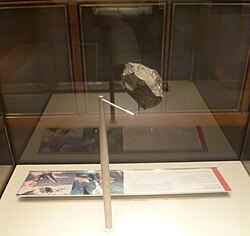
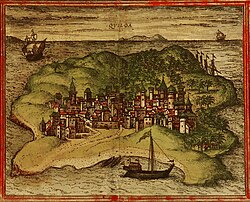
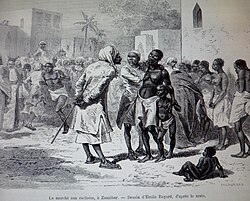
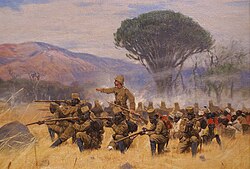
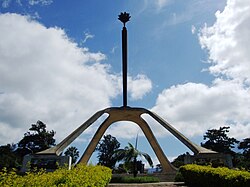
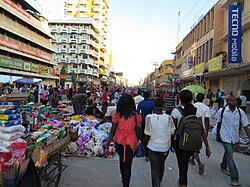
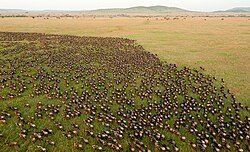
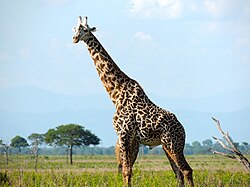
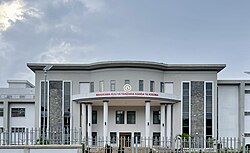

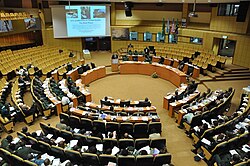
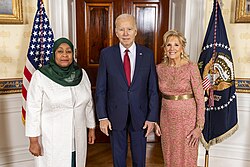
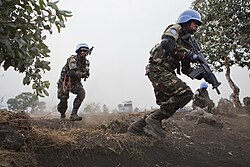
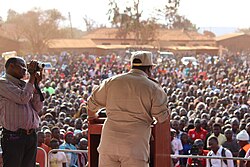
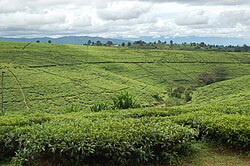
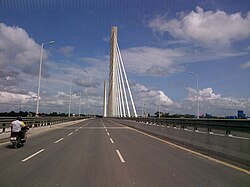
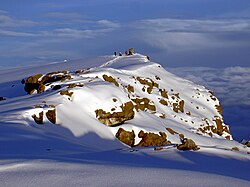
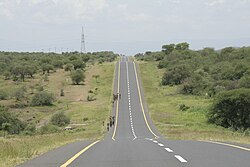
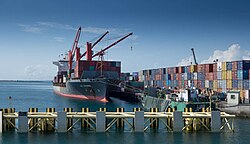
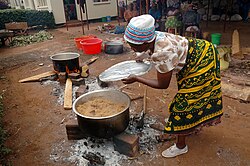
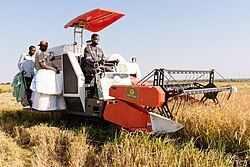
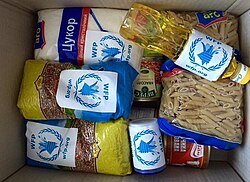
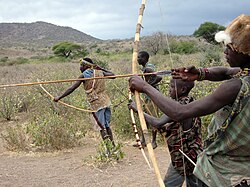
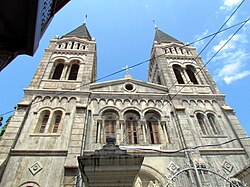
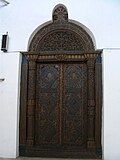
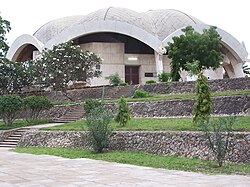
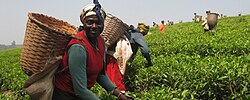
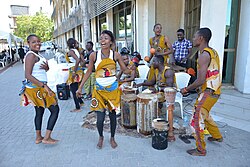
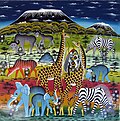
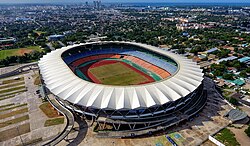


_-_TZA_-_UNOCHA.svg)
 0.531[8]
