


m Removed empty portal template using script |
m minor edit |
||
| Line 1: | Line 1: | ||
{{short description| | {{short description|Species of grass cultivated as a food crop}} | ||
{{redirect|Corn|other uses|Corn (disambiguation)|and|Maize (disambiguation)}} | |||
{{Distinguish|Maze}} | {{Distinguish|Maze}} | ||
{{pp-semi-indef|small=yes}} | |||
{{ | {{good article}} | ||
{{Use mdy dates|date=January 2016}} | {{Use mdy dates|date=January 2016}} | ||
{{Speciesbox | {{Speciesbox | ||
| name = Maize | |name = Maize | ||
| image = Koeh-283.jpg | |image = Koeh-283.jpg | ||
| image_caption = | |image_caption = Includes male and female flowers | ||
| genus = Zea (plant) | |image_alt = [[Botanical illustration]] showing male and female flowers | ||
| species = mays | |genus = Zea (plant) | ||
| authority = [[Carl Linnaeus|L.]] | |species = mays | ||
|status = LC | |||
|status_system = IUCN3.1 | |||
|status_ref = <ref>{{cite journal |last1=Contreras |first1=A. |last2=Ruíz Corral |first2=J. A. |last3=Menjívar |first3=J. |last4=Aragón Cuevas |first4=F. |last5=González Ledesma |first5=M. |last6=Sánchez |first6=J. J. |date=2019 |title=Zea mays |journal=IUCN Red List of Threatened Species 2019: E.T77726273A77726310 |doi=10.2305/IUCN.UK.2019-2.RLTS.T77726273A77726310.en |doi-access=free }}</ref> | |||
|authority = [[Carl Linnaeus|L.]] | |||
}} | }} | ||
'''Maize''' ({{IPAc-en|m|eɪ|z}}; '''''Zea mays'''''), also known as '''corn'''<!--see Names section--> in [[North American English]], is a tall stout [[Poaceae|grass]] that produces [[cereal grain]]. The leafy [[Plant stem|stalk]] of the plant gives rise to male [[inflorescence]]s or tassels which produce [[pollen]], and female inflorescences called [[ear (botany)|ears]]. The ears yield grain, known as [[Corn kernels|kernels]] or seeds. In modern commercial varieties, these are usually yellow or white; other varieties can be of many colors. Maize was domesticated by [[indigenous peoples of Mexico|indigenous peoples in southern Mexico]] about 9,000 years ago from wild [[teosinte]].<ref>Lohse, Jon C., Molly Morgan, John G. Jones, et al. “Early Maize in the Maya Area.” Latin American Antiquity 33, no. 4 (2022): 677–92. https://www-jstor-org.muhlenberg.idm.oclc.org/stable/27362456. | |||
</ref> Native Americans planted it alongside [[bean]]s and [[Cucurbita|squash]]es in the [[Three Sisters (agriculture)|Three Sisters]] [[polyculture]]. That is, those three vegetables were the main staple crops of the time.<!--Lead is only a summary, don't add 'new' materials or citations up here, thanks!--> | |||
Maize relies on humans for its propagation. Since the [[Columbian exchange]], it has become a [[staple food]] in many parts of the world, with the [[List of most valuable crops and livestock products|total production of maize surpassing]] that of [[wheat]] and<!--separately--> [[rice]]. Much maize is used for [[animal feed]], whether as grain (fodder) or as the whole plant, which can either be baled as forage or made into the more palatable [[silage]]. Sugar-rich varieties called [[sweet corn]] are grown for human consumption, while [[field corn]] varieties are used for animal feed, for uses such as [[cornmeal]] or [[masa]], [[corn starch]], [[corn syrup]], pressing into [[corn oil]], alcoholic beverages like [[bourbon whiskey]], and as chemical feedstocks including [[Corn ethanol|ethanol]] and other [[biofuel]]s. | |||
Maize | Maize is cultivated throughout the world; a greater weight of maize is produced each year than any other grain. In 2020, world production was 1.1 billion tonnes. It is afflicted by many [[Pest (organism)|pests]] and [[List of maize diseases|diseases]]; two major [[insect]] pests, [[European corn borer]] and [[Diabrotica|corn rootworms]], have each caused annual losses of a billion dollars in the United States. Modern [[plant breeding]] has greatly increased output and qualities such as nutrition, drought tolerance, and tolerance of pests and diseases. Much maize is now [[genetically modified]]. | ||
As a food, maize is used to make a wide variety of dishes including Mexican [[tortilla]]s and [[tamale]]s, Italian [[polenta]], and American [[hominy]] [[grits]]. Maize [[protein]] is low in some [[essential amino acid]]s, and the [[Niacin (nutrient)|niacin]] it contains only becomes available if [[nixtamalization|freed by alkali treatment]]. In pre-Columbian [[Mesoamerica]], maize was deified as [[Maya maize god|a maize god]] and depicted in sculptures. | |||
== | == Description == | ||
= | {{Dark mode invert|image=y|[[File:Maize plant diagram, large labels.svg|frameless|right|upright=0.8|alt=Parts of a maize plant]]}} | ||
[[File: | |||
Maize is a [[ | Maize is a tall [[Annual plant|annual]] grass with a single stem, ranging in height from {{convert|1.2|to|4|m|ft|abbr=on|0}}.<ref name="Solaimalai Anantharaju 2020 ch.6">{{cite book |last1=Solaimalai |first1=A. |title=Maize Crop: Improvement, Production, Protection and Post Harvest Technology |last2=Anantharaju |first2=P. |last3=Irulandi |first3=S. |last4=Theradimani |first4=M. |date=2020-05-10 |publisher=[[CRC Press]] |isbn=978-1-000-17695-7 |chapter=6. Growth and Development Stages |chapter-url=https://books.google.com/books?id=T7XjDwAAQBAJ&pg=PT60}}</ref> The long narrow leaves arise from the [[node (botany)|node]]s or joints, alternately on opposite sides on the stalk.<ref name="Solaimalai Anantharaju 2020 ch.6" /> Maize is [[monoecious]], with separate male and female flowers on the same plant.<ref name="Solaimalai Anantharaju 2020 ch.6" /> At the top of the stem is the tassel, an [[inflorescence]] of male flowers; their anthers release pollen, which is [[Anemophily|dispersed by wind]].<ref name="Solaimalai Anantharaju 2020 ch.6" /> The female inflorescence, some way down the stem from the tassel, is first seen as a silk, a bundle of soft [[Stigma (botany)|tubular hairs]], one for the [[carpel]] in each female flower, which develops into a kernel (often called a seed. Botanically, as in all grasses, it is a fruit, fused with the seed coat to form a [[caryopsis]])<ref>{{cite web |title=Caryopsis |url=http://www.merriam-webster.com/dictionary/caryopsis |access-date=January 9, 2024 |publisher=[[Merriam-Webster]]}}</ref> when it is pollinated.<ref name="Solaimalai Anantharaju 2020 ch.6" /> A whole female inflorescence develops into an ear or [[corncob]], enveloped by multiple leafy layers or husks.<ref name="Solaimalai Anantharaju 2020 ch.6" /> The {{vanchor|Ear leaf|text=ear leaf}} is the leaf most closely associated with a particular developing ear. This leaf and those above it contribute over three quarters of the carbohydrate ([[starch]]) that fills the grain.<ref name="USA-IA-ext-fung">{{cite web |title=Before applying fungicides to corn: Stop! Look! Consider! |url=http://crops.extension.iastate.edu/encyclopedia/applying-fungicides-corn-stop-look-consider |access-date=2021-07-24 |website=Integrated Crop Management |publisher=[[Iowa State University Extension]]}}</ref> | ||
The grains are usually yellow or white in modern varieties; other varieties have orange, red, brown, [[blue corn|blue]], [[purple corn|purple]], or black grains. They are arranged in 8 to 32 rows around the cob; there can be up to 1200 grains on a large cob.<ref name="Davidson 2014">{{cite book |last=Davidson |first=Alan |title=The Oxford Companion to Food |date=2014 |publisher=[[Oxford University Press]] |isbn=978-0-19-967733-7 |edition=3rd |pages=484–486 |chapter=Maize}}</ref> Yellow maizes derive their color from [[carotenoid]]s; red maizes are colored by [[anthocyanin]]s and [[phlobaphene]]s; and orange and green varieties may contain combinations of these pigments.<ref name="Chatham Paulsmeyer Juvik 2019">{{cite journal |last1=Chatham |first1=Laura A. |last2=Paulsmeyer |first2=Michael |last3=Juvik |first3=John A. |date=2019 |title=Prospects for economical natural colorants: insights from maize |journal=Theoretical and Applied Genetics |volume=132 |issue=11 |pages=2927–2946, and Figure 1 |doi=10.1007/s00122-019-03414-0 |pmid=31451836 |s2cid=201729476}}</ref> | |||
Maize has short-day [[photoperiodism]], meaning that it requires nights of a certain length to flower. Flowering further requires [[growing degree day|enough warm days]] above {{convert|10|°C|°F|abbr=on}}. The control of flowering is set genetically; the physiological mechanism involves the [[phytochrome]] system. Tropical cultivars can be problematic if grown in higher latitudes, as the longer days can make the plants grow tall instead of setting seed before winter comes. On the other hand, growing tall rapidly could be convenient for producing biofuel.<ref name="Solaimalai Anantharaju 2020 ch.6" /> | |||
Immature maize shoots accumulate a powerful antibiotic substance, 2,4-dihydroxy-7-methoxy-1,4-benzoxazin-3-one ([[DIMBOA]]), which provides a measure of protection against a wide range of pests.<ref name="Smith2012">{{Cite journal |last1=Smith |first1=C. Michael |last2=Clement |first2=Stephen L. |year=2012 |title=Molecular Bases of Plant Resistance to Arthropods |journal=Annual Review of Entomology |volume=57 |issue=1 |pages=309–328 |doi=10.1146/annurev-ento-120710-100642 |pmid=21910639}}</ref> Because of its shallow roots, maize is susceptible to droughts, intolerant of nutrient-deficient soils, and prone to being uprooted by severe winds.<ref>{{cite web |date=October 2, 2008 |title=Corn Stalk Lodging |url=http://www.dekalb.ca/content/pdf/corn_stalk_lodging.pdf |archive-url=https://web.archive.org/web/20090225054032/http://www.dekalb.ca/content/pdf/corn_stalk_lodging.pdf |archive-date=February 25, 2009 |access-date=February 23, 2009 |publisher=[[Monsanto Company|Monsanto]] Imagine}}</ref> | |||
The pollen is an [[allergen]], but most of it falls within a few meters of the tassel and the risk is largely restricted to farm workers.<ref>{{cite journal |last1=Oldenburg |first1=Marcus |last2=Petersen |first2=Arnd |last3=Baur |first3=Xaver |date=2011 |title=Maize pollen is an important allergen in occupationally exposed workers |journal=Journal of Occupational Medicine and Toxicology |volume=6 |issue=1 |page=32 |doi=10.1186/1745-6673-6-32 |pmc=3269392 |pmid=22165847 |doi-access=free}}</ref> | |||
<gallery class="center" mode="nolines" heights="200" widths="150"> | |||
File:Corntassel 7095.jpg |Many small male flowers make up the tassel. | |||
File:Cornsilk 7091.jpg |Female inflorescence, with young [[corn silk|silk]] | |||
File:GreenCorn.JPG |Stalks, ears and silk | |||
File:ZeaMays.jpg |Full-grown maize plants | |||
File:Klip kukuruza uzgojen u Međimurju (Croatia).JPG |Mature maize ear on a stalk | |||
</gallery> | |||
<gallery mode="packed" heights="150"> | |||
File:Männliche Blüte einer Maispflanze 2009-08-19.JPG |Male flowers | |||
File:Corn blooming.jpg |Mature silk | |||
</gallery> | |||
== Genetics == | |||
[[ | [[File:GEM corn.jpg|thumb|Exotic varieties are collected to add [[genetic diversity]] when [[crop breeding|selectively breeding]] new domestic [[strain (biology)|strain]]s. ]] | ||
Maize is [[diploid]] with 20 [[chromosome]]s. 83% of [[Allele|allelic]] variation within the genome derives from its teosinte ancestors, primarily due to the freedom of ''Zea'' species to [[outcross]].<ref name="Back-to-the-Wild">{{cite journal |last1=Wani |first1=Shabir Hussain |last2=Samantara |first2=Kajal |last3=Razzaq |first3=Ali |last4=Kakani |first4=Grihalakshmi |last5=Kumar |first5=Pardeep |title=Back to the wild: mining maize (''Zea mays'' L.) disease resistance using advanced breeding tools |journal=[[Molecular Biology Reports]]|date=June 2022 |volume=49 |issue=6 |pages=5787–5803 |doi=10.1007/s11033-021-06815-x |pmid=35064401 |s2cid=254834535 }}</ref> [[Barbara McClintock]] used maize to validate her [[transposon]] theory of "jumping genes", for which she won the 1983 [[Nobel Prize in Physiology or Medicine]].<ref>{{cite news |url=https://www.washingtonpost.com/wp-dyn/content/article/2009/11/19/AR2009111903190.html |title=Scientists have high hopes for corn genome |first=David |last=Brown |newspaper=[[The Washington Post]] |date=November 20, 2009}}</ref> Maize remains an important [[model organism]] for genetics and [[developmental biology]].<ref name="Strable Scanlon 2009">{{cite journal |last1=Strable |first1=Josh |last2=Scanlon |first2=Michael J. |title=Maize (Zea mays): A Model Organism for Basic and Applied Research in Plant Biology |journal=Cold Spring Harbor Protocols |volume=2009 |issue=10 |date=2009 |issn=1940-3402 |doi=10.1101/pdb.emo132 |article-number=pdb.emo132|pmid=20147033 }}</ref> The [[MADS-box]] motif is involved in the development of maize flowers.<ref name="Friedman-et-al-2004">{{cite journal |date=October 2004 |publisher=[[John Wiley & Sons]]|last1=Friedman |first1=William E. |last2=Moore |first2=Richard C. |last3=Purugganan |first3=Michael D. |title=The evolution of plant development |journal=[[American Journal of Botany]] |volume=91 |issue=10 |pages=1726–1741 |doi=10.3732/ajb.91.10.1726 |pmid=21652320 |bibcode=2004AmJB...91.1726F |doi-access=free|id=[[Botanical Society of America]]}}</ref> | |||
Maize | The Maize Genetics and Genomics Database is funded by the [[United States Department of Agriculture]] (USDA) to support maize research.<ref>{{Cite web |url=https://www.maizegdb.org/ |title=Welcome to MaizeGDB |website=MaizeGDB |access-date=11 January 2024}}</ref> The [[International Maize and Wheat Improvement Center]] maintains a large collection of maize accessions tested and cataloged for insect resistance.<ref name="Breeding-Towards">{{cite journal |last1=Prasanna |first1=Boddupalli M. |last2=Bruce |first2=Anani |last3=Beyene |first3=Yoseph |last4=Makumbi |first4=Dan |last5=Gowda |first5=Manje |last6=Asim |first6=Muhammad |last7=Martinelli |first7=Samuel |last8=Head |first8=Graham P. |last9=Parimi |first9=Srinivas |title=Host plant resistance for fall armyworm management in maize: relevance, status and prospects in Africa and Asia |journal=[[Theoretical and Applied Genetics]] |date=November 2022 |volume=135 |issue=11 |pages=3897–3916 |doi=10.1007/s00122-022-04073-4 |pmid=35320376 |pmc=9729323}}</ref> In 2005, the U.S. [[National Science Foundation]], the USDA, and the [[United States Department of Energy|Department of Energy]] formed a consortium to sequence the maize [[genome]]. The resulting [[DNA]] sequence data was deposited immediately into [[GenBank]], a public repository for genome-sequence data.<ref>{{cite web |url=http://www.maizesequence.org/index.html |title=Welcome to MaizeSequence.org |publisher=MaizeSequence.org |access-date=12 March 2024 |archive-date=27 September 2013 |archive-url=https://web.archive.org/web/20130927170408/http://www.maizesequence.org/index.html }}</ref> Sequencing of the maize genome was completed in 2008.<ref>{{cite news |url=https://www.reuters.com/article/rbssIndustryMaterialsUtilitiesNews/idUSN2632641520080226 |title=Researchers sequence genome of maize, a key crop |newspaper=Reuters |access-date=October 6, 2014 |date=2008-02-26}}</ref> In 2009, the consortium published results of its sequencing effort.<ref>{{cite journal |doi=10.1126/science.1178534 |title=The B73 Maize Genome: Complexity, Diversity, and Dynamics |year=2009 |last1=Schnable |first1=P. S. |last2=Ware |first2=D. |last3=Fulton |first3=R. S. |last4=Stein |first4=J. C.|last5=Wei |first5=F. |display-authors=etal |journal=[[Science (journal)|Science]]|volume=326 |issue=5956 |pages=1112–1115 |pmid=19965430 |bibcode=2009Sci...326.1112S |s2cid=21433160 |url=https://lib.dr.iastate.edu/cgi/viewcontent.cgi?article=1206&context=stat_las_pubs}}</ref> The genome, 85% of which is composed of [[transposon]]s, contains 32,540 genes. Much of it has been duplicated and reshuffled by [[Helitron (biology)|helitrons]], a group of [[transposable element]]s within maize's DNA.<ref>{{cite journal |last1=Feschotte |first1=C. |last2=Pritham |first2=E. |title=A cornucopia of Helitrons shapes the maize genome |journal=[[Proceedings of the National Academy of Sciences]] |volume=106 |issue=47 |pages=19747–19748 |year=2009 |pmid=19926864 |pmc=2785235 |doi=10.1073/pnas.0910273106 |bibcode=2009PNAS..10619747F |doi-access=free}}</ref> | ||
== | == Taxonomy == | ||
=== External phylogeny === | |||
The | The maize [[genus]] ''Zea'' is relatively closely related to [[sorghum]], both being in the [[PACMAD clade]] of Old World grasses, and much more distantly to [[rice]] and [[wheat]], which are in the other major group of grasses, the [[BOP clade]]. It is closely related to ''[[Tripsacum]]'', gamagrass.<ref name="Gaut Le Thierry dEnnequin Peek Sawkins 2000">{{cite journal |last1=Gaut |first1=Brandon S. |last2=Le Thierry d'Ennequin |first2=Maud |last3=Peek |first3=Andrew S. |last4=Sawkins |first4=Mark C. |date=2000-06-20 |title=Maize as a model for the evolution of plant nuclear genomes |journal=Proceedings of the National Academy of Sciences |volume=97 |issue=13 |pages=7008–7015 |bibcode=2000PNAS...97.7008G |doi=10.1073/pnas.97.13.7008 |pmc=34377 |pmid=10860964 |doi-access=free}}</ref> | ||
{{clade|style=font-size:100%;line-height:100% | |||
|label1=(Part of [[Poaceae]]) | |||
|1={{clade | |||
|label1= [[BOP clade]] | |||
|1={{clade | |||
|1={{clade | |||
|1=various grasses e.g. [[fescue]], [[ryegrass]] | |||
|2={{clade | |||
|1=''[[Hordeum]]'' (barley) | |||
|2=''[[Triticum]]'' (wheat) | |||
}} | |||
}} | |||
|2=''[[Oryza]]'' (rice) | |||
}} | |||
|label2= [[PACMAD clade]] | |||
|2={{clade | |||
|1=''[[Pennisetum]]'' (fountaingrasses) | |||
|2={{clade | |||
|1=''[[Sorghum]]'' (sorghum) | |||
|2={{clade | |||
|1=''[[Tripsacum]]'' (gamagrass) | |||
|label2=''[[Zea (plant)|Zea]]'' | |||
|2={{clade | |||
|1='''''Zea mays''''' (maize) | |||
|2=other ''[[Zea (plant)|Zea]]'' species ([[teosinte]]s) | |||
}} | |||
}} | |||
}} | |||
}} | |||
}} | |||
}} | |||
=== Maize and teosinte === | |||
{{See also|Teosinte#Origin_of_maize_and_interaction_with_teosintes|l1=Origin of maize and interaction with teosintes}} | |||
[[File:Cornselection.jpg|thumb|upright=0.6|Teosinte (left), maize-teosinte hybrid (middle), maize (right)]] | |||
Maize is the [[crop domestication|domesticated variant]] of the four species of [[teosinte]]s, which are its [[crop wild relative]]s.<ref name="corn">{{cite journal |last1=Whipple |first1=Clinton J. |last2=Kebrom |first2=Tesfamichael H. |last3=Weber |first3=Allison L. |last4=Yang |first4=Fang |last5=Hall |first5=Darren |last6=Meeley |first6=Robert |last7=Schmidt |first7=Robert |last8=Doebley |first8=John |last9=Brutnell |first9=Thomas P. |last10=Jackson |first10=David P. |display-authors=5 |date=16 August 2011 |title=grassy tillers1 promotes apical dominance in maize and responds to shade signals in the grasses |journal=Proceedings of the National Academy of Sciences |volume=108 |issue=33 |pages=E506-12 |doi=10.1073/pnas.1102819108 |pmc=3158142 |pmid=21808030 |doi-access=free}}</ref> Teosinte was likely used by hunter-gatherers because it added security to their food supply, being that it was adaptable to changes in climate and environment. <ref>Lohse, Jon C., Molly Morgan, John G. Jones, et al. “Early Maize in the Maya Area.” Latin American Antiquity 33, no. 4 (2022): 677–92. https://www-jstor-org.muhlenberg.idm.oclc.org/stable/27362456. | |||
</ref> | |||
The teosinte origin theory was proposed by the Russian botanist [[Nikolai Ivanovich Vavilov]] in 1931, and the American [[Nobel Prize]]-winner [[George Beadle]] in 1932.<ref name="wilkes">{{cite book |last=Wilkes |first=Garrison |title=Corn: Origin, History, Technology, and Production |date=8 March 2004 |publisher=[[John Wiley & Sons]] |isbn=978-0-471-41184-0 |editor1-last=Smith |editor1-first=C. Wayne |pages=3–63 |chapter=Chapter 1.1 Corn, strange and marvelous: but is a definitive origin known? |editor2-last=Betrán |editor2-first=Javier |editor3-last=Runge |editor3-first=E. C. A. |chapter-url={{google books |plainurl=y |id=eDJ3NjHh8H8C}}}}</ref>{{rp|10}} The two plants have dissimilar appearance, maize having a single tall stalk with multiple leaves and teosinte being a short, bushy plant. The difference between the two is largely controlled by differences in just two genes, called grassy tillers-1 (''gt1'', {{UniProt|A0A317YEZ1}}) and teosinte branched-1 (''tb1'', {{UniProt|Q93WI2}}).<ref name="corn" /> In the late 1930s, [[Paul Mangelsdorf]] suggested that domesticated maize was the result of a hybridization event between an unknown wild maize and a species of ''[[Tripsacum]]'', a related genus; this has been refuted by modern [[genetic testing]].<!--Wilkes p.40--><ref name="wilkes" /> | |||
{{Anchor |Zea mays subsp. parviglumis |Zea mays ssp. parviglumis |parviglumis }} | |||
In 2004, [[John Doebley]] identified Balsas teosinte, ''Zea mays'' subsp. ''parviglumis'', native to the [[Balsas River]] valley in Mexico's southwestern highlands, as the [[crop wild relative]] genetically most similar to modern maize.<ref>{{cite journal |last=Doebley |first=John F. |author-link=John Doebley |year=2004 |title=The genetics of maize evolution |url=http://teosinte.wisc.edu/pdfs/DoebleyAnnRev2004.pdf |journal=[[Annual Review of Genetics]] |volume=38 |pages=37–59 |doi=10.1146/annurev.genet.38.072902.092425 |pmid=15568971 |archive-url=https://web.archive.org/web/20100612073112/http://teosinte.wisc.edu/pdfs/DoebleyAnnRev2004.pdf |archive-date=June 12, 2010 |access-date=May 30, 2010}}</ref><ref name="Wu-et-al-2011">{{cite journal |last1=Wu |first1=Chi-Chih |last2=Diggle |first2=Pamela K. |last3=Friedman |first3=William E. |date=September 2011 |title=Female gametophyte development and double fertilization in Balsas teosinte, ''Zea mays'' subsp. ''parviglumis'' (Poaceae) |journal=Sexual Plant Reproduction |volume=24 |issue=3 |pages=219–229 |doi=10.1007/s00497-011-0164-1 |pmid=21380710 |s2cid=8045294}}</ref> The middle part of the short Balsas River valley is the likely location of early domestication. Stone milling tools with maize residue have been found in an 8,700 year old layer of deposits in a cave not far from [[Iguala, Guerrero]].<ref name="Ranere">{{cite journal |last1=Ranere |first1=Anthony J. |last2=Piperno |first2=Dolores R. |last3=Holst |first3=Irene |last4=Dickau |first4=Ruth |last5=Iriarte |first5=José |year=2009 |title=The cultural and chronological context of early Holocene maize and squash domestication in the Central Balsas River Valley, Mexico |journal=[[Proceedings of the National Academy of Sciences]] |volume=106 |issue=13 |pages=5014–5018 |bibcode=2009PNAS..106.5014R |doi=10.1073/pnas.0812590106 |pmc=2664064 |pmid=19307573 |doi-access=free}}<br />{{cite journal |last1=Ranere |first1=Anthony J. |last2=Piperno |first2=Dolores R. |last3=Holst |first3=Irene |last4=Dickau |first4=Ruth |last5=Iriarte |first5=José |year=2009 |title=Starch grain and phytolith evidence for early ninth millennium B.P. maize from the Central Balsas River Valley, Mexico |journal=[[Proceedings of the National Academy of Sciences]] |volume=106 |issue=13 |pages=5019–5024 |bibcode=2009PNAS..106.5019P |doi=10.1073/pnas.0812525106 |pmc=2664021 |pmid=19307570 |doi-access=free}}</ref> Doebley and colleagues showed in 2002 that maize had been domesticated only once, about 9,000 years ago, and then spread throughout the Americas.<ref name="Mat">{{cite journal |last1=Matsuoka |first1=Y. |last2=Vigouroux |first2=Y. |last3=Goodman |first3=M. M. |last4=Sanchez G. |first4=J. |last5=Buckler |first5=E. |last6=Doebley |first6=J. |display-authors=3 |year=2002 |title=A single domestication for maize shown by multilocus microsatellite genotyping |journal=[[Proceedings of the National Academy of Sciences]] |volume=99 |issue=9 |pages=6080–4 |bibcode=2002PNAS...99.6080M |doi=10.1073/pnas.052125199 |pmc=122905 |pmid=11983901 |doi-access=free}}</ref> | |||
Maize | Maize pollen dated to 7,300 years ago from [[San Andrés (Mesoamerican site)|San Andres, Tabasco]] has been found on the Caribbean coast.<ref name="Ranere" /> A primitive corn was being grown in southern Mexico, Central America, and northern South America 7,000 years ago. Archaeological remains of early maize ears, found at [[Guila Naquitz Cave]] in the [[Oaxaca Valley]], are roughly 6,250 years old; the oldest ears from caves near [[Tehuacán, Puebla|Tehuacan]], Puebla, are 5,450 years old.<ref name="Roney 2009">{{cite journal |last=Roney |first=John |date=Winter 2009 |title=The Beginnings of Maize Agriculture |journal=Archaeology Southwest |volume=23 |issue=1 |page=4}}</ref> | ||
=== Spreading to the north === | |||
Around 4,500 years ago, maize began to spread to the north. Maize was first cultivated at several sites in New Mexico and Arizona about 4,100 years ago.<ref name="Roney 2009" /> During the first millennium AD, maize cultivation spread more widely in the areas north. In particular, the large-scale adoption of maize agriculture and consumption in eastern North America took place about A.D. 900. Native Americans cleared large forest and grassland areas for the new crop.<ref>{{cite journal |last1=Emerson |first1=Thomas E. |last2=Hedman |first2=Kristin M. |last3=Simon |first3=Mary L. |date=2005 |title=Marginal Horticulturalists or Maize Agriculturalists? Archaeobotanical, Paleopathological, and Isotopic Evidence Relating to Langford Tradition Maize Consumption |journal=Midcontinental Journal of Archaeology |volume=30 |issue=1 |pages=67–118 |doi=10.1179/mca.2005.003 |jstor=20708222 |s2cid=129150225}}</ref> The rise in maize cultivation 500 to 1,000 years ago in what is now the [[southeastern U.S.]] corresponded with a decline of freshwater [[mussel]]s, which are very sensitive to environmental changes.<ref>{{cite journal |last1=Peacock |first1=Evan |last2=Haag |first2=Wendell R. |last3=Warren |first3=Melvin L. Jr |year=2005 |title=Prehistoric decline in freshwater mussels coincident with the advent of maize agriculture |url=https://www.srs.fs.usda.gov/pubs/ja/ja_peacock001.pdf |journal=[[Conservation Biology (journal)|Conservation Biology]] |volume=19 |issue=2 |pages=547–551 |bibcode=2005ConBi..19..547P |doi=10.1111/j.1523-1739.2005.00036.x |s2cid=3679709}}</ref> | |||
=== Names === | |||
{{ | The name ''maize'' derives from the Spanish form {{lang|es|maíz}} of the [[Taíno language|Taíno]] {{lang|tnq|mahis}}.<ref>{{OED|maize, n. (and adj.)}}</ref> The Swedish botanist [[Carl Linnaeus]] used the common name maize as the species epithet in ''Zea mays''.<ref name="Ranum">{{cite journal |last1=Ranum |first1=Peter |last2=Peña-Rosas |first2=Juan Pablo |last3=Garcia-Casal |first3=Maria Nieves |date=April 2014 |title=Global maize production, utilization, and consumption |journal=[[Annals of the New York Academy of Sciences]] |volume=1312 |issue=1 |pages=105–112 |bibcode=2014NYASA1312..105R |doi=10.1111/nyas.12396 |pmid=24650320 |s2cid=4640742 |doi-access=free}}</ref> The name ''maize'' is preferred in formal, scientific, and international usage as a [[common name]] because it refers specifically to this one grain, unlike ''corn'', which has a complex variety of meanings that vary by context and geographic region.<ref name="Ensminger">{{cite book |last=Ensminger |first=Audrey H. |title=Foods and Nutrition Encyclopedia, 2nd ed. |publisher=[[CRC Press]] |year=1994 |isbn=978-0-8493-8980-1 |page=[{{google books |plainurl=y |id=XMA9gYIj-C4C|page=479}} 479] |quote=The word "maize" is preferred in international usage because in many countries the term "corn", the name by which the plant is known in the United States, is synonymous with the leading cereal grain; thus, in England "corn" refers to wheat, and in Scotland and Ireland it refers to oats.}}</ref> Most countries primarily use the term ''maize'', and the name ''corn'' is used mainly in the U.S. and a handful of other English-speaking countries.<ref name="OxfordEncyclopedia">{{cite book |last=McLellan Plaisted |first=Susan |url=https://www.oxfordreference.com/display/10.1093/acref/9780199734962.001.0001/acref-9780199734962-e-0218 |title=The Oxford Encyclopedia of Food and Drink in America |date=2013 |publisher=[[Oxford University Press]] |isbn=978-0-19-973922-6 |editor-last1=Smith |editor-first1=Andrew |edition=2nd |location=New York |chapter=Corn |quote=The use of the word "corn" for what is termed "maize" by most other countries is peculiar to the United States. Europeans who were accustomed to the names "wheat corn", "barley corn", and "rye corn" for other small-seeded cereal grains referred to the unique American grain maize as "Indian corn." The term was shortened to just "corn", which has become the American word for the plant of American genesis. |access-date=15 February 2023}}</ref><!--<ref>{{cite web |title=Grain |url=https://education.nationalgeographic.org/resource/grain/ |publisher=[[National Geographic]] |access-date=27 February 2023 |quote=In most countries, the grain of the ''Zea mays'' plant is called maize. In the United States, it's called corn.}}</ref>--><ref name="Espinoza 2015">{{cite web |last=Espinoza |first=Mauricio |date=April 1, 2015 |title='All Corn Is the Same,' and Other Foolishness about America's King of Crops |url=https://cfaes.osu.edu/news/articles/'all-corn-is-the-same'-and-other-foolishness-about-america's-king-crops |url-status=live |archive-url=https://web.archive.org/web/20201203073514/https://cfaes.osu.edu/news/articles/'all-corn-is-the-same'-and-other-foolishness-about-america's-king-crops |archive-date=December 3, 2020 |access-date=21 September 2022 |publisher=[[Ohio State University]]: College of Food, Agricultural, and Environmental Sciences}}</ref> In countries that primarily use the term ''maize'', the word ''corn'' may denote any [[cereal]] crop, varying geographically with the local [[staple food|staple]],<ref name="OED_corn">{{OED|corn, n.1}}</ref> such as wheat in England and oats in Scotland or Ireland.<ref name="Ensminger" /> The usage of ''corn'' for maize started as a shortening of "[[Flint corn|Indian corn]]" in 18th-century North America.<!--<ref name=OED_corn/>--><ref name="Mencken">{{cite book |last1=Mencken |first1=H. L. |title=The American language: an inquiry into the development of English in the United States |date=1984 |publisher=[[Alfred A. Knopf]] |isbn=0-394-40075-5 |edition=4th |location=New York |page=122 |quote=Corn, in orthodox English, means grain for human consumption, especially wheat, e.g., the Corn Laws. The earliest settlers, following this usage, gave the name of Indian corn to what the Spaniards, following the Indians themselves, had called maiz. . . . But gradually the adjective fell off, and by the middle of the Eighteenth Century maize was simply called corn and grains in general were called breadstuffs. Thomas Hutchinson, discoursing to George III in 1774, used corn in this restricted sense speaking of "rye and corn mixed." "What corn?" asked George. "Indian corn," explained Hutchinson, "or as it is called in authors, maize."}}</ref><!--<ref>{{cite book |url={{google books |plainurl=y |id=uW2rM_6I3gMC|page=109}} |title=The English Language in Canada: Status, History and Comparative Analysis |publisher=[[Cambridge University Press]] |last=Boberg |first=Charles |year=2010 |page=109 |isbn=978-1-139-49144-0}}</ref>--> | ||
The historian of food Betty Fussell writes in an article on the history of the word ''corn'' in North America that "[t]o say the word ''corn'' is to plunge into the tragi-farcical mistranslations of language and history".<ref name="Fussell1999">{{cite journal |last1=Fussell |first1=Betty |date=1999 |title=Translating Maize into Corn: The Transformation of America's Native Grain |journal=Social Research |volume=66 |issue=1 |pages=41–65 |jstor=40971301 |id={{Gale|A54668866}} {{ProQuest|209670587}} |quote=To say the word "corn" is to plunge into the tragi-farcical mistranslations of language and history. If only the British had followed Columbus in phoneticizing the Taino word mahiz, which the Arawaks named their staple grain, we wouldn't be in the same linguistic pickle we're in today, where I have to explain to someone every year that when Biblical Ruth "stood in tears amid the alien corn" she was standing in a wheat field. But it was a near thing even with the Spaniards, when we read in Columbus' Journals that the grain "which the Indians called maiz... the Spanish called panizo.' The Spanish term was generic for the cereal grains they knew - wheat, millet, barley, oats - as was the Italian term polenta, from Latin pub. As was the English term "corn", which covered grains of all kinds, including grains of salt, as in "corned beef". <br/> French linguistic imperialism, by way of a Parisian botanist in 1536, provided the term Turcicum frumentum, which the British quickly translated into "Turkey wheat", "Turkey corn", and "Indian corn". By Turkey or Indian, they meant not a place but a condition, a savage rather than a civilized grain, with which the Turks concurred, calling it kukuruz, meaning barbaric.}}</ref> Similar to the British usage, the Spanish referred to maize as {{lang|es|panizo}}, a generic term for cereal grains, as did Italians with the term {{lang|it|polenta}}. The British later referred to maize as Turkey wheat, Turkey corn, or Indian corn; Fussell comments that "they meant not a place but a condition, a savage rather than a civilized grain".<ref name="Fussell1999" /> | |||
International groups such as the [[Centre for Agriculture and Bioscience International]] consider ''maize'' the preferred common name.<ref>{{cite journal |date=2019 |title=''Zea mays'' (maize) |url=https://www.cabi.org/isc/datasheet/57417 |journal=CABI Compendium |publisher=[[Centre for Agriculture and Bioscience International]] |volume=CABI Compendium |doi=10.1079/cabicompendium.57417 |url-access=subscription |access-date=16 September 2022}}</ref> The word ''maize'' is used by the UN's [[Food and Agriculture Organization]],<ref>{{cite web |title=Maize |url=https://www.fao.org/land-water/databases-and-software/crop-information/maize/en/ |access-date=16 September 2022 |publisher=[[Food and Agriculture Organization]]}}</ref> and in the names of the [[International Maize and Wheat Improvement Center]] of Mexico, the Indian Institute of Maize Research,<ref>{{cite web |title=Overview – ICAR-Indian Institute of Maize Research |url=https://iimr.icar.gov.in/overview/ |archive-url=https://web.archive.org/web/20221005162737/https://iimr.icar.gov.in/overview/ |archive-date=October 5, 2022 |access-date=16 September 2022}}</ref> the Maize Association of Australia,<ref>{{cite web |title=Maize Association - Maize Association Australia |url=https://www.maizeaustralia.com.au/ |access-date=16 September 2022}}</ref> the National Maize Association of Nigeria,<ref>{{cite web |title=The Maize Association of Nigeria honors IITA for supporting the nation's agriculture |url=https://www.iita.org/news-item/the-maize-association-of-nigeria-honors-iita-for-supporting-the-nations-agriculture/ |access-date=16 September 2022 |publisher=[[International Institute of Tropical Agriculture]]}}</ref> the National Maize Association of Ghana,<ref>{{cite web |date=18 March 2016 |title=SARD-SC Maize component supports the launch of the Ghana Maize Association |url=http://bulletin.iita.org/sard-sc-maize-component-supports-the-launch-of-the-ghana-maize-association/ |access-date=10 March 2024 |publisher=[[International Institute of Tropical Agriculture]]}}</ref> the Maize Trust of South Africa,<ref>{{cite web |last1=Du Plessis |first1=Leon |title=THE MAIZE TRUST: Custodian of the maize industry |url=https://www.grainsa.co.za/the-maize-trust:-custodian-of-the-maize-industry |access-date=10 March 2024 |publisher=Grain SA}}</ref> and the Zimbabwe Seed Maize Association.<ref name="Rusike Donovan 1995">{{cite journal |last1=Rusike |first1=Joseph |last2=Donovan |first2=Philip A |date=1995 |title=The maize seed industry in Zimbabwe |journal=Development Southern Africa |volume=12 |issue=2 |pages=189–196 |doi=10.1080/03768359508439804 |issn=0376-835X}}</ref> | |||
== Cultivation == | |||
=== Pre-Columbian development === | |||
[[File:Museo Nacional de Antropología - MAÍZ.jpg|thumb|Ancient Mesoamerican relief sculpture of maize, [[National Museum of Anthropology (Mexico)|National Museum of Anthropology of Mexico]] ]] | |||
[[ | Maize [[cultigen|requires human intervention]] for its propagation. The kernels of its naturally-propagating [[teosinte]] ancestor fall off the cob on their own, while those of [[domesticated]] maize do not.<ref name="Benz 2001">{{cite journal |last=Benz |first=B. F. |year=2001 |title=Archaeological evidence of teosinte domestication from Guilá Naquitz, Oaxaca |journal=[[Proceedings of the National Academy of Sciences]] |volume=98 |issue=4 |pages=2104–2106 |bibcode=2001PNAS...98.2104B |doi=10.1073/pnas.98.4.2104 |issn=0027-8424 |pmc=29389 |pmid=11172083 |doi-access=free}}</ref> All maize arose from a single domestication in southern Mexico about 9,000 years ago. The oldest surviving maize types are those of the Mexican highlands. Maize spread from this region to the lowlands and over the Americas along two major paths.<ref name="Mat" /> The centre of domestication was most likely the [[Balsas River]] valley of south-central Mexico.<ref name="ReferenceA">{{cite journal |last1=Piperno |first1=Dolores R. |date=October 2011 |title=The Origins of Plant Cultivation and Domestication in the New World Tropics: Patterns, Process, and New Developments |journal=Current Anthropology |volume=52 |issue=S4 |pages=S453–S470 |doi=10.1086/659998 |s2cid=83061925 |quote=Recent studies in the Central Balsas River Valley of Mexico, maize's postulated cradle of origin, document the presence of maize phytoliths and starch grains at 8700 BP, the earliest date recorded for the crop (Piperno et al. 2009; Ranere et al. 2009). A large corpus of data indicates that it was dispersed into lower Central America by 7600 BP and had moved into the inter-Andean valleys of Colombia between 7000 and 6000 BP. Given the number of Cauca Valley, Colombia, sites that demonstrate early maize, it is likely that the inter-Andean valleys were a major dispersal route for the crop after it entered South America |doi-access=free}}</ref> Maize reached highland Ecuador at least 8000 years ago.<ref name="Pagán-JiménezGuachamín-Tello2015">{{cite journal |last1=Pagán-Jiménez |first1=Jaime R. |last2=Guachamín-Tello |first2=Ana M. |last3=Romero-Bastidas |first3=Martha E. |last4=Constantine-Castro |first4=Angelo R. |date=June 2016 |title=Late ninth millennium B.P. use of ''Zea mays'' L. at Cubilán area, highland Ecuador, revealed by ancient starches |journal=[[Quaternary International]] |volume=404 |pages=137–155 |bibcode=2016QuInt.404..137P |doi=10.1016/j.quaint.2015.08.025}}</ref> It reached lower Central America by 7,600 years ago, and the valleys of the Colombian [[Andes]] between 7,000 and 6,000 years ago.<ref name="ReferenceA" /> | ||
The | The earliest maize plants grew a single, small ear per plant.<ref name="Davidson 2014" /> The [[Olmec]] and [[Maya peoples|Maya]] cultivated maize in numerous varieties throughout [[Mesoamerica]]; they cooked, ground and processed it through [[nixtamalization]].<ref name="Roney 2009" /> By 3000 years ago, maize was central to Olmec culture, including their calendar, language, and myths.<ref name="Fussell1999" /> | ||
The | The [[Mapuche]] people of [[Zona Sur|south-central Chile]] cultivated maize along with [[quinoa]] and [[potatoes]] in [[Pre-Columbian era|pre-Hispanic]] times.<ref name="Dille2007">{{cite journal |last1=Dillehay |first1=Tom D. |author-link=Tom Dillehay |last2=Pino Quivira |first2=Mario |author-link2=Mario Pino Quivira |last3=Bonzani |first3=Renée |last4=Silva |first4=Claudia |last5=Wallner |first5=Johannes |last6=Le Quesne |first6=Carlos |year=2007 |title=Cultivated wetlands and emerging complexity in south-central Chile and long distance effects of climate change |url=http://www.dendrocronologia.cl/pubs/2007_Dillehay(AncientCultivatedWetlands).pdf |journal=[[Antiquity (journal)|Antiquity]] |volume=81 |issue=314 |pages=949–960 |doi=10.1017/s0003598x00096034 |s2cid=59480757}}</ref> Before the expansion of the [[Inca Empire]], maize was traded and transported as far south as 40° S in Melinquina, [[Lácar Department]], Argentina<!-- by between 650 and 980 years ago-->, probably brought across the Andes from Chile.<ref name="PerezErre2011">{{cite journal |last1=Pérez |first1=Alberto E. |last2=Erra |first2=Georgina |date=2011 |title=Identificación de maiz de vasijas recuperadas de la Patagonia noroccidental argentina |trans-title=Identifying maize residues in pottery vessels in northwestern Patagonia, Argentina |journal=[[Magallania]] |language=es |volume=39 |issue=2 |pages=309–316 |doi=10.4067/S0718-22442011000200022 |hdl=11336/42613 |doi-access=free |hdl-access=free}}</ref> | ||
=== Columbian exchange === | |||
{{further|Columbian exchange}} | |||
[[File:The Florentine Codex- Agriculture.tiff|thumb|upright=0.8|Cultivation of maize, illustrated in the 16th-century ''[[Florentine Codex]]'' ]] | |||
[[ | After the arrival of Europeans in 1492, Spanish settlers consumed maize, and explorers and traders [[Columbian Exchange|carried it back to Europe]]. Spanish settlers much preferred [[wheat]] bread to maize. Maize flour could not be substituted for wheat for communion bread, since in [[Christianity|Christian]] belief at that time only wheat could undergo [[transubstantiation]] and be transformed into the body of Christ.<ref name="Earle 2012">{{cite book |last=Earle |first=Rebecca |author-link=Rebecca Earle |title=The Body of the Conquistador: Food, Race, and the Colonial Experience in Spanish America, 1492–1700 |publisher=[[Cambridge University Press]] |year=2012 |pages=17, 144, 151}}</ref> | ||
Maize spread to the rest of the world because of its ability to grow in diverse climates. It was cultivated in Spain just a few decades after Columbus's voyages and then spread to Italy, [[West Africa]], the [[Philippines]] and elsewhere.<ref name="Earle 2012" /><ref name="Salazar2016">{{cite journal |last1=Salazar |first1=A.M. |last2=Pascual |first2=C.B. |last3=Caasi-Lit |first3=M.T. |last4=Pentecostes |first4=K.Z. |last5=Dumalag |first5=P.Y. |last6=Ladia |first6=V.A., Jr. |last7=Paril |first7=J.F. |date=2016 |title=Breeding Potential of Philippine Traditional Maize Varieties |url=https://sabraojournal.org/wp-content/uploads/2018/01/SABRAO-J-Breed-Genet-48-2-154-161-Salazar-1.pdf |journal=SABRAO Journal of Breeding and Genetics |volume=48 |issue=2 |pages=154–161}}</ref> By the 17th century, it was a common peasant food in Southern Europe. By the 18th century, it was the chief food of the southern French and Italian peasantry, especially as [[polenta]] in Italy.<ref>{{cite journal |last=Langer |first=William L. |year=1975 |title=American Foods and Europe's Population Growth 1750–1850 |journal=[[Journal of Social History]] |volume=8 |issue=2 |pages=51–66 |doi=10.1353/jsh/8.2.51 |jstor=3786266}}</ref> | |||
When maize was introduced into Western farming systems, it was welcomed for its productivity. However, a widespread problem of malnutrition soon arose wherever it had become a [[staple food]].<ref name="pellagra_mystery">{{cite web |date=December 2001 |title=The origins of maize: the puzzle of pellagra |url=http://www.eufic.org/web/article.asp?cust=1&lng=en&sid=4&did=16&artid=103 |archive-url=https://web.archive.org/web/20060927074332/http://www.eufic.org/web/article.asp?cust=1&lng=en&sid=4&did=16&artid=103 |archive-date=September 27, 2006 |access-date=September 14, 2006 |work=Understanding Food |publisher=The European Food Information Council}}</ref> Indigenous Americans had learned to soak maize in [[alkali]]-water{{snd}}made with ashes and [[calcium oxide|lime]]{{snd}}since at least 1200–1500 BC, creating the process of [[nixtamalization]]. They did this to liberate the corn hulls, but coincidentally it also liberated the B-vitamin [[Niacin (nutrient)|niacin]], the lack of which caused [[pellagra]].<ref name="StallerCarrasco2009">{{cite book |last1=Staller |first1=John |url={{google books |plainurl=y |id=FJrr9i6HRp0C|page=317}} |title=Pre-Columbian Foodways: Interdisciplinary Approaches to Food, Culture, and Markets in Ancient Mesoamerica |last2=Carrasco |first2=Michael |date=24 November 2009 |publisher=[[Springer Science & Business Media]] |isbn=978-1-4419-0471-3 |page=317}}</ref> Once alkali processing and dietary variety were understood and applied, pellagra disappeared in the developed world. The development of high-[[lysine]] maize and the promotion of a more balanced diet have contributed to its demise. Pellagra still exists in food-poor areas and refugee camps where people survive on donated maize.<ref name="Thompson2016">{{cite book |last1=Thompson |first1=Janice J. |title=The Science of Nutrition |last2=Manore |first2=Melinda |last3=Vaughan |first3=Linda |date=15 January 2016 |publisher=[[Pearson Education]] |isbn=978-0-13-429880-1 |pages=292–321 |chapter=Nutrients involved in energy metabolism |chapter-url={{google books |plainurl=y |id=pbd5CwAAQBAJ |page=292}}}}</ref> | |||
=== Conventional breeding === | |||
Maize breeding in prehistory resulted in large plants producing large ears. Modern [[plant breeding|breeding]] began with individuals who selected highly productive varieties in their fields and then sold seed to other farmers. James L. Reid was one of the earliest and most successful, developing Reid's Yellow Dent in the 1860s. These early efforts were based on [[Selection methods in plant breeding based on mode of reproduction|mass selection]] (a row of plants is grown from seeds of one parent), and the choosing of plants after pollination (which means that only the female parents are known). Later breeding efforts included ear to row selection (C. G. Hopkins c. 1896), hybrids made from selected [[inbred]] lines (G. H. Shull, 1909), and the highly successful [[double cross hybrid]]s using four inbred lines ([[Donald F. Jones|D. F. Jones]] c. 1918, 1922). University-supported breeding programs were especially important in developing and introducing modern hybrids.<ref name="Jugen">{{cite book |last1=Jugenheimer |first1=Robert W. |title=Hybrid Maize Breeding and Seed Production |date=1958 |publisher=[[Food and Agriculture Organization]] |location=Rome |chapter=Agricultural Development Paper #62}}</ref> | |||
Maize | |||
Since the 1940s, the best strains of maize have been first-generation hybrids made from inbred strains that have been optimized for specific traits, such as yield, nutrition, drought, pest and disease tolerance. Both conventional cross-breeding and genetic engineering have succeeded in increasing output and reducing the need for cropland, pesticides, water and fertilizer. There is conflicting evidence to support the hypothesis that maize yield potential has increased over the past few decades. This suggests that changes in yield potential are associated with leaf angle, lodging resistance, tolerance of high plant density, disease/pest tolerance, and other agronomic traits rather than increase of yield potential per individual plant.<ref>{{cite journal |last1=Duvick |first1=D. N. |last2=Cassman |first2=K. G. |title=Post-green-revolution trends in yield potential of temperate maize in the north-central United States |journal=[[Crop Science (journal)|Crop Science]] |volume=39 |pages=1622–1630 |year=2009 |url=http://crop.scijournals.org/cgi/content/abstract/39/6/1622 |issue=6 |s2cid=39657597 |archive-url=https://web.archive.org/web/20091115003659/http://crop.scijournals.org/cgi/content/abstract/39/6/1622 |archive-date=November 15, 2009 |doi=10.2135/cropsci1999.3961622x|url-access=subscription }}</ref> | |||
Certain varieties of maize have been bred to produce many ears; these are the source of the "[[baby corn]]" used as a vegetable in [[Asian cuisine]].<ref>{{Cite book |last=Maiti |first=Ratikanta |url=https://books.google.com/books?id=8_m7aIfR7xEC&pg=PA52 |title=Crop Plant Anatomy |date=2012 |publisher=CABI |isbn=978-1-78064-174-4 |page=52}}</ref><ref name="Lopes Nóbrega Pacheco Cruz-Silva 2016">{{cite journal |last1=Lopes |first1=Adelmary Prestes |last2=Nóbrega |first2=Lucia Helene Pereira |last3=Pacheco |first3=Fabio Palczewski |last4=Cruz-Silva |first4=Claudia Tatiana Araujo da |title=Maize varieties for baby corn yield and post-harvest quality under organic cropping |journal=Bioscience Journal |volume=32 |issue=2 |date=2016 |doi=10.14393/BJ-v32n2a2016-26230 |pages=298–307}}</ref> A fast-flowering variety named mini-maize was developed to aid scientific research, as multiple generations can be obtained in a single year.<ref>{{Cite journal |last1=McCaw |first1=Morgan E |last2=Wallace |first2=Jason G |last3=Albert |first3=Patrice S |last4=Buckler |first4=Edward S |last5=Birchler |first5=James A |date=2016-09-01 |title=Fast-Flowering Mini-Maize: Seed to Seed in 60 Days |journal=Genetics |volume=204 |issue=1 |pages=35–42 |doi=10.1534/genetics.116.191726 |issn=1943-2631 |pmc=5012399 |pmid=27440866}}</ref> One strain called olotón has evolved a symbiotic relationship with [[Nitrogen fixation|nitrogen-fixing]] microbes, which provides the plant with 29%–82% of its nitrogen.<ref>{{cite journal |doi=10.1371/journal.pbio.2006352 |title=Nitrogen fixation in a landrace of maize is supported by a mucilage-associated diazotrophic microbiota |year=2018 |last1=Van Deynze |first1=Allen |last2=Zamora |first2=Pablo |last3=Delaux |first3=Pierre-Marc |last4=Heitmann |first4=Cristobal |last5=Jayaraman |first5=Dhileepkumar |display-authors=etal |journal=PLOS Biology |volume=16 |issue=8 |article-number=e2006352 |pmid=30086128 |pmc=6080747 |doi-access=free }}</ref> The [[International Maize and Wheat Improvement Center]] (CIMMYT) operates a conventional breeding program to provide optimized strains. The program began in the 1980s.<ref name="cimmyt">{{cite web |url=https://www.cimmyt.org/about/ |title=About us |publisher=[[International Maize and Wheat Improvement Center|CIMMYT]] |access-date=12 March 2024}}</ref> Hybrid seeds are distributed in Africa by its Drought Tolerant Maize for Africa project.<ref>{{cite web |title=Drought Tolerant Maize for Africa (DTMA) |date=June 17, 2022 |url=https://www.cimmyt.org/projects/drought-tolerant-maize-for-africa-dtma/ |publisher=CIMMYT |access-date=12 March 2024}}</ref> | |||
Tropical [[landrace]]s remain an important and underused source of resistance alleles – both those [[plant disease resistance|for disease]] and [[plant defense against herbivory|for herbivores]]. Such alleles can then be [[introgressed]] into productive varieties.<ref name="Chakradhar-et-al-2017"/> Rare alleles for this purpose were discovered by Dao and Sood, both in 2014.<ref name="Chakradhar-et-al-2017">{{cite journal |last1=Chakradhar |first1=Thammineni |last2=Hindu |first2=Vemuri |last3=Reddy |first3=Palakolanu Sudhakar |title=Genomic-based-breeding tools for tropical maize improvement |journal=Genetica |date=December 2017 |volume=145 |issue=6 |pages=525–539 |doi=10.1007/s10709-017-9981-y |pmid=28875394 |s2cid=24074330 |url=http://oar.icrisat.org/10349/1/10.1007%252Fs10709-017-9981-y.pdf }}</ref> In 2018, Zerka Rashid of CIMMYT used its [[association mapping]] panel, developed for tropical drought tolerance traits. to find new [[genome|genomic]] regions providing [[sorghum downy mildew resistance]], and to further characterize known [[differentially methylated region]]s.<ref name="Rashid Singh Vemuri Zaidi 2018">{{cite journal |last1=Rashid |first1=Zerka |last2=Singh |first2=Pradeep Kumar |last3=Vemuri |first3=Hindu |last4=Zaidi |first4=Pervez Haider |last5=Prasanna |first5=Boddupalli Maruthi |last6=Nair |first6=Sudha Krishnan |title=Genome-wide association study in Asia-adapted tropical maize reveals novel and explored genomic regions for sorghum downy mildew resistance |journal=Scientific Reports |volume=8 |issue=1 |date=2018-01-10 |page=366 |issn=2045-2322 |pmid=29321632 |pmc=5762920 |doi=10.1038/s41598-017-18690-3|bibcode=2018NatSR...8..366R }}</ref> | |||
=== Genetic engineering === | |||
{{Main|Transgenic maize}} | {{Main|Transgenic maize}} | ||
[[Genetically modified maize]] was one of the 26 [[genetically engineered food]] crops grown commercially in 2016.<ref name="James-2016">{{Cite web |url=http://www.isaaa.org/resources/publications/briefs/52/executivesummary/default.asp |title=Global Status of Commercialized Biotech/GM Crops: 2016 – ISAAA Brief 52-2016 |last=James |first=Clive |date=2016 |publisher=ISAAA |archive-url=https://web.archive.org/web/20170504055752/http://www.isaaa.org/resources/publications/briefs/52/executivesummary/default.asp|archive-date=2017-05-04|access-date=2017-08-26}}</ref><ref>[http://www.isaaa.org/resources/publications/briefs/43/executivesummary/default.asp ISAAA Brief 43-2011]: Executive Summary, retrieved September 9, 2012</ref> The vast majority of this is [[Bt maize]]. Genetically modified maize has been grown since 1997 in the United States and Canada;<ref name="Ostry-et-al-2015" /> by 2016, 92% of the U.S. maize crop was genetically modified.<ref name="James-2016"/> As of 2011, herbicide-tolerant maize and insect-resistant maize varieties were each grown in over 20 countries.<ref>{{cite web |url=http://www.isaaa.org/resources/publications/pocketk/2/default.asp |title=ISAAA Pocket K No. 2: Plant Products of Biotechnology, 2018 |access-date=January 9, 2024 |url-status=live |archive-date=January 30, 2023 |archive-url=https://web.archive.org/web/20230130235541/https://www.isaaa.org/resources/publications/pocketk/2/default.asp}}</ref> | |||
In September 2000, up to $50 million worth of food products were recalled due to the presence of [[StarLink corn recall|Starlink]] genetically modified corn, which had been approved only for animal consumption.<ref>{{cite news |last=Pollack |first=Andrew |date=September 23, 2000 |url=https://www.nytimes.com/2000/09/23/business/kraft-recalls-taco-shells-with-bioengineered-corn.html |title=Kraft Recalls Taco Shells With Bioengineered Corn |newspaper=[[The New York Times]] }}</ref> | |||
== | === Growing === | ||
Because it is cold-intolerant, in the [[Temperate climate|temperate zones]] maize must be planted in the spring. Its [[root]] system is generally shallow, so the plant is dependent on soil moisture. As a plant that uses [[C4 carbon fixation|{{C4}} carbon fixation]], maize is a considerably more water-efficient crop than plants that use [[C3 carbon fixation|{{C3}} carbon fixation]] such as [[alfalfa]] and [[soybean]]s. Maize is most sensitive to drought at the time of silk emergence, when the flowers are ready for pollination. In the United States, a good harvest was traditionally predicted if the maize was "knee-high by the [[Independence Day (United States)|Fourth of July]]", although modern [[Hybrid (biology)|hybrids]] generally exceed this growth rate. Maize used for [[silage]] is harvested while the plant is green and the fruit immature. Sweet corn is harvested in the "milk stage", after pollination but before starch has formed, between late summer and early to mid-autumn. Field maize is left in the field until very late in the autumn to thoroughly dry the grain, and may, in fact, sometimes not be harvested until winter or even early spring. The importance of sufficient soil moisture is shown in many parts of Africa, where periodic [[drought]] regularly causes maize crop failure and consequent [[famine]]. Although it is grown mainly in wet, hot climates, it can thrive in cold, hot, dry or wet conditions, meaning that it is an extremely versatile crop.<ref>{{cite book |last=Fernandez-Armesto |first=Felipe |year=2011 |title=The World: A History |page=470 |publisher=Penguin Academics |location=London |isbn=978-0-205-75930-9}}</ref> | |||
Maize was planted by the [[Indigenous peoples of the Americas|Native Americans]] in small hills of soil, in the [[polyculture]] system called the [[Three Sisters (agriculture)|Three Sisters]].<ref>{{Cite web |last=Hill |first=Christina Gish |date=2020-11-20 |title=Returning the 'three sisters' – corn, beans and squash – to Native American farms nourishes people, land and cultures |url=http://theconversation.com/returning-the-three-sisters-corn-beans-and-squash-to-native-american-farms-nourishes-people-land-and-cultures-149230 |access-date=2021-01-09 |website=The Conversation}}</ref> Maize provided support for [[bean]]s; the beans provided nitrogen derived from nitrogen-fixing [[rhizobia]] bacteria which live on the roots of beans and other [[legume]]s; and [[Cucurbita|squashes]] provided ground cover to stop weeds and inhibit evaporation by providing shade over the soil.<ref name=Mann_2011>{{cite book |title=1491: New Revelations of the Americas Before Columbus |edition=2nd |author-link=Charles C. Mann |first=Charles C. |last=Mann |chapter=Cotton (or Anchovies) and Maize |pages=[https://archive.org/details/149100char/page/225 225–229] |date=July 2011 |publisher=[[Vintage Books]] |isbn=978-1-4000-3205-1 |location=New York |title-link=1491: New Revelations of the Americas Before Columbus}}</ref> | |||
<gallery mode=packed heights=150> | |||
File:Plàntules moresc 2012.JPG|Seedlings three weeks after sowing | |||
File:Corn Zea mays Plant Row 2000px.jpg|Young stalks | |||
File:Maispflanze.jpg|Mature plants showing ears | |||
File:Corn in regional NSW, Australia, 2022.jpg|Established [[broadacre]] maize seed crop | |||
</gallery> | |||
=== Harvesting === | |||
{{ | Sweet corn, harvested earlier than maize grown for grain, grows to maturity in a period of from 60 to 100 days according to variety. An extended sweet corn harvest, picked at the milk stage, can be arranged either by planting [[List of sweetcorn varieties|a selection of varieties]] that ripen earlier and later, or by planting different areas at fortnightly intervals.<ref>{{cite web |title=Growing Home Garden Sweet Corn |url=https://extension.uga.edu/publications/detail.html?number=C905&title=growing-home-garden-sweet-corn#Maturity |publisher=[[University of Georgia]] Extension |access-date=9 March 2024}}</ref> | ||
Maize harvested as a grain crop can be kept in the field a relatively long time, even months, after the crop is ready to harvest; it can be harvested and stored in the husk leaves if kept dry.<ref name="Wayne">{{cite book |last1=Smith |first1=C. Wayne |url=https://books.google.com/books?id=eDJ3NjHh8H8C&pg=PA802 |title=Corn: Origin, History, Technology, and Production |last2=Betrán |first2=Javier |last3=Runge |first3=Edward C. A. |date=2004-03-08 |publisher=[[John Wiley & Sons]] |page=802 |isbn=978-0-471-41184-0}}</ref> | |||
According to the U.S. Department of Agriculture, in the four decades from 1855 to 1894 the amount of labor required to produce one bushel of maize declined from four hours and thirty four minutes to only forty-one minutes.<ref>George K. Holmes, "Supply and Wages of Farm Labor" ''Yearbook of the United States Department of Agriculture: 1910'' (1911) pp. 190-191 [https://archive.org/details/yoa1910/page/196/mode/1up?view=theater online]</ref> Before 1940, most maize in North America was harvested by hand. This involved a large number of workers and associated social events (husking or shucking [[communal work|bees]]). From the 1850s onward, some machinery became available to partially mechanize the processes, such as one- and two-row mechanical pickers (picking the ear, leaving the [[corn stover|stover]]) and corn binders, which are [[reaper-binder]]s designed specifically for maize. The latter produce [[sheaf (agriculture)|sheaves]] that can be [[stook|shocked]]. By hand or mechanical picker, the entire ear is harvested, which requires a separate operation of a maize sheller to remove the kernels from the ear. Whole ears of maize were often stored in [[corn crib]]s, sufficient for some livestock feeding uses. Today corn cribs with whole ears, and corn binders, are less common because most modern farms harvest the grain from the field with a [[combine harvester]] and store it in [[silo#Bins|bins]]. The combine with a corn head (with points and snap rolls instead of a reel) does not cut the stalk; it simply pulls the stalk down. The stalk continues downward and is crumpled into a mangled pile on the ground, where it usually is left to become [[organic matter]] for the [[soil]]. The ear of maize is too large to pass between slots in a plate as the snap rolls pull the stalk away, leaving only the ear and husk to enter the machinery. The combine separates the husk and the cob, keeping only the kernels.<ref>{{Cite book |last1=Brown |first1=Robert C. |author1-link=Robert C. Brown (engineer) |last2=Brown |first2=Tristan R. |url=https://books.google.com/books?id=SENOAgAAQBAJ&pg=PT114 |title=Biorenewable Resources: Engineering New Products from Agriculture |date=2013-12-06 |publisher=Wiley |isbn=978-1-118-52492-3 |at=PT114}}</ref> | |||
[[ | |||
<gallery mode=packed heights=120> | |||
File:Iowa harvest 2009.jpg|Harvesting maize, Iowa | |||
File:Maissipelto Rantasalmi.jpg|Harvesting maize, Finland | |||
File:MyanmarCorn3.jpg|Hand-picking maize, Myanmar | |||
File:Africa Food Security 11 (10665081134).jpg|Dehusking maize by hand, [[Malawi]] | |||
</gallery> | |||
=== Grain storage === | |||
Drying is vital to prevent or at least reduce damage by [[mould]] fungi, which contaminate the grain with [[mycotoxin]]s. ''[[Aspergillus]]'' and ''[[Fusarium]]'' spp. are the most common mycotoxin sources, and accordingly important in agriculture.<ref name="Ostry-et-al-2015">{{cite journal |last1=Ostrý |first1=Vladimír |last2=Malíř |first2=František |last3=Pfohl-Leszkowicz |first3=Annie |title=Comparative data concerning aflatoxin contents in Bt maize and non-Bt isogenic maize in relation to human and animal health – a review |journal=Acta Veterinaria Brno|date=2015 |volume=84 |issue=1 |pages=47–53 |doi=10.2754/avb201585010047 |doi-access=free }}</ref> If the moisture content of the harvested grain is too high, [[grain drying|grain dryers]] are used to reduce the moisture content by blowing heated air through the grain. This can require large amounts of energy in the form of combustible gases ([[propane]] or [[natural gas]]) and electricity to power the blowers.<ref name="Van Devender 2011">{{cite web |last=Van Devender |first=Karl |title=Grain Drying Concepts and Options |publisher=[[University of Arkansas]] Division of Agriculture |date=July 2011 |url=http://www.uaex.edu/publications/pdf/FSA-1072.pdf |access-date=December 15, 2013 |archive-date=June 1, 2016 |archive-url=https://web.archive.org/web/20160601162852/http://www.uaex.edu/publications/pdf/FSA-1072.pdf}}</ref> | |||
=== Production === | |||
{{further|Corn production in the United States}} | |||
Maize is widely cultivated throughout the world, and a greater weight of maize is produced each year than any other grain.<ref name="global">{{cite web |title=International Grains Council Market Report 28 November 2013 |url=http://www.igc.int/downloads/gmrsummary/gmrsumme.pdf |author=International Grains Council (international organization)|year=2013 |author-link=International Grains Council (international organization)}}</ref> In 2020, total world production was 1.16 billion [[tonne]]s, led by the U.S. with 31.0% of the total (table). China produced 22.4% of the global total.<ref name="fao.org">{{Cite web |url=http://www.fao.org/faostat/en/#data/QC |title=FAOSTAT |publisher=FAO}}</ref> | |||
{{Infobox agricultural production | |||
|year = 2020 | |||
|plant = maize | |||
|country1 = {{USA}} | |||
|amount1 =360.3 | |||
|country2 ={{CHN}} | |||
|amount2 =260.7 | |||
|country3 ={{BRA}} | |||
|amount3 =104.0 | |||
|country4 ={{ARG}} | |||
|amount4 =58.4 | |||
|country5 ={{UKR}} | |||
|amount5 =30.3 | |||
|country6 ={{IND}} | |||
|amount6 =30.2 | |||
|country7 ={{MEX}} | |||
|amount7 =27.4 | |||
|country8 ={{IDN}} | |||
|amount8 =22.5 | |||
|country9 ={{ZAF}} | |||
|amount9 =15.3 | |||
|country10 ={{RUS}} | |||
|amount10 =13.9 | |||
|world =1162.4 | |||
|source = [[FAOSTAT]]<ref>{{cite web |title=Maize production in 2017, Crops/Regions/Production Quantity from pick lists |url=http://www.fao.org/faostat/en/#data/QC |publisher=United Nations, Food and Agriculture Organization, Statistics Division (FAOSTAT) |date=2018 |access-date=15 March 2020}}</ref><ref name="fao.org"/> | |||
}} | |||
<gallery mode="packed" heights="225"> | |||
File:Production of maize (2023).svg|Production of maize (2023) | |||
File:World production of primary crops by main commodities.svg|Maize (pink strip) is the second most widely produced primary crop, after [[sugarcane]], and the first among grain crops.<ref>{{Cite book |last=FAO |url=https://openknowledge.fao.org/handle/20.500.14283/cd4313en |title=World Food and Agriculture – Statistical Yearbook 2025 |date=2025 |publisher=FAO |isbn=978-92-5-140174-3 |language=English |doi=10.4060/cd4313en}}</ref> | |||
</gallery> | |||
=== | === Pests === | ||
[[File:NCLB disease cycle.JPG|thumb|upright=1.75|Disease cycle of [[Northern corn leaf blight]] ]] | |||
{{further|List of maize diseases}} | |||
Many [[Pest (organism)|pest]]s can affect maize growth and development, including invertebrates, weeds, and pathogens.<ref>{{cite web |title=Corn Pests |url=https://extension.usu.edu/pests/ipm/notes_ag/veg-list-corn |publisher=[[Utah State University]] |access-date=11 January 2024}}</ref><ref>{{cite book |editor1-last=Mueller |editor1-first=Daren |editor2-last=Pope |editor2-first=Rich |title=Corn Field Guide |date=2009 |publisher=[[Iowa State University]] Extension |url=https://crops.extension.iastate.edu/files/icm/corn-field-guide.pdf |access-date=11 January 2024 |archive-date=January 11, 2024 |archive-url=https://web.archive.org/web/20240111163925/https://crops.extension.iastate.edu/files/icm/corn-field-guide.pdf }}</ref> | |||
== | Maize is susceptible to a large number of fungal, bacterial, and viral [[plant disease]]s. Those of economic importance include diseases of the leaf, smuts such as [[corn smut]], ear rots and stalk rots.<ref>{{cite web |title=Diseases and Disorders of Corn |url=https://www.gov.mb.ca/agriculture/crops/crop-management/grain-corn/corn-diseases-and-disorders.html |publisher=[[Manitoba|Province of Manitoba]] - Agriculture |access-date=11 January 2024}}</ref> [[Northern corn leaf blight]] damages maize throughout its range, whereas [[banded leaf and sheath blight]] is a problem in Asia.<ref>{{cite web |last1=Wise |first1=Kiersten |title=Diseasees of Corn: Northern Corn Leaf Blight |url=http://www.extension.purdue.edu/extmedia/BP/BP-84-W.pdf |publisher=[[Purdue University]] |access-date=11 January 2024}}</ref><ref name="Juroszek von Tiedemann 2013">{{cite journal |last1=Juroszek |first1=Peter |last2=von Tiedemann |first2=Andreas |title=Climatic changes and the potential future importance of maize diseases: a short review |journal=Journal of Plant Diseases and Protection |date=2013 |volume=120 |issue=2 |pages=49–56 |doi=10.1007/BF03356454 |bibcode=2013JPDP..120...49J |s2cid=87234896 |url=https://www.researchgate.net/publication/295797868}}</ref> Some fungal diseases of maize produce potentially dangerous [[mycotoxin]]s such as [[aflatoxin]].<ref name="Ostry-et-al-2015"/> In the United States, major diseases include [[Phyllachora maydis|tar spot]], [[Xanthomonas vasicola|bacterial leaf streak]], [[gray leaf spot]], northern corn leaf blight, and [[Clavibacter nebraskensis|Goss's wilt]]; in 2022, the most damaging disease was tar spot, which caused losses of 116.8 million [[bushels]].<ref>{{cite web |title=Corn Disease Loss Estimates From the United States and Ontario, Canada — 2022 |url=https://cropprotectionnetwork.org/publications/corn-disease-loss-estimates-from-the-united-states-and-ontario-canada-2022 |website=cropprotectionnetwork.org |access-date=11 January 2024}}</ref> | ||
Maize sustains a billion dollars' worth of losses annually in the U.S. from each of two major insect [[Pest (organism)|pests]], namely the [[European corn borer]] or ECB (''Ostrinia nubilalis'') and corn rootworms (''[[Diabrotica]] spp'') [[western corn rootworm]], [[northern corn rootworm]], and [[southern corn rootworm]].<ref>Hodgson, Erin W. (2008) [[Utah State University]] Extension and Utah Plant Pest Diagnostic Laboratory. [http://extension.usu.edu/files/publications/factsheet/western-corn-rootworm.pdf Western corn rootworm]</ref><ref>{{cite web |last=Ostlie |first=K.R. |display-authors=etal |publisher=[[University of Minnesota]] Extension Office |url=http://www.extension.umn.edu/distribution/cropsystems/dc7055.html#ch1 |title=Bt Corn & European Corn Borer: Long-Term Success Through Resistance Management |archive-url=https://web.archive.org/web/20130928064604/http://www.extension.umn.edu/distribution/cropsystems/dc7055.html#ch1 |archive-date=September 28, 2013}}</ref><ref name="CPNInsects2021">{{cite web |last1=Reisig |first1=Dominic |last2=Kesheimer |first2=Katelyn |last3=Bateman |first3=Nick |last4=Studebaker |first4=Glenn |last5=Meyer |first5=Ron |display-authors=etal |title=Corn Invertebrate Loss Estimates from the United States and Ontario, Canada — 2021 |url=https://cropprotectionnetwork.org/publications/corn-invertebrate-loss-estimates-from-the-united-states-and-ontario-canada-2021 |access-date=11 January 2024 |doi=10.31274/cpn-20220722-0 |date=22 July 2022|s2cid=251087338 }}</ref> Another serious pest is the [[fall armyworm]] (''Spodoptera frugiperda'').<ref>{{Cite web |url=http://entnemdept.ufl.edu/creatures/field/fall_armyworm.htm |title=fall armyworm, Spodoptera frugiperda (J.E. Smith) |website=entnemdept.ufl.edu |access-date=2017-11-14}}</ref> | |||
[[ | The [[maize weevil]] (''Sitophilus zeamais'') is a serious pest of stored grain.<ref name=agric>{{cite web |url=http://agspsrv34.agric.wa.gov.au/ento/pestweb/Query1_1.idc?ID=-1055010548 |title=PestWeb | Greater Rice Weevil |publisher=Agspsrv34.agric.wa.gov.au |access-date=2010-07-29 |archive-date=2011-09-28 |archive-url=https://web.archive.org/web/20110928035624/http://agspsrv34.agric.wa.gov.au/ento/pestweb/Query1_1.idc?ID=-1055010548 }}</ref> The Northern armyworm, Oriental armyworm or Rice ear-cutting caterpillar (''[[Mythimna separata]]'') is a major pest of maize in Asia.<ref>{{cite journal |last1=Thakur |first1=J. N. |last2=Rawat |first2=U. S. |last3=Pawar |first3=A. D. |title=First Record of Armyworm, ''Mythimna separata'' (Haworth) as a serious pest of maize in Kullu (HP) India and recommendations for its integrated management |journal=Tropical Pest Management |volume=33 |issue=2 |pages=173–175 |doi=10.1080/09670878709371141 |year=1987}}</ref> | ||
[[ | |||
[[ | [[Nematode]]s too are pests of maize. It is likely that every maize plant harbors some nematode [[Parasitism|parasites]], and populations of ''[[Pratylenchus]]'' lesion nematodes in the roots can be "enormous". The effects on the plants include stunting, sometimes of whole fields, sometimes in patches, especially when there is also water stress and poor control of weeds.<ref name="Norton 1983">{{cite journal |last=Norton |first=Don C. |title=Maize Nematode Problems |journal=Plant Disease |date=March 1983 |volume=67 |issue=3 |pages=253–256 |doi=10.1094/PD-67-253 |bibcode=1983PlDis..67..253N |url=https://www.apsnet.org/publications/plantdisease/backissues/Documents/1983Articles/PlantDisease67n03_253.PDF}}</ref> | ||
Many plants, both [[Monocotyledon|monocot]]s (grasses) such as ''[[Echinochloa crus-galli]]'' (barnyard grass) and [[Dicotyledon|dicot]]s (forbs) such as ''[[Chenopodium]]'' and ''[[Amaranth]]us'' may compete with maize and reduce crop yields. Control may involve mechanical weed removal, flame weeding, or herbicides.<ref name="Meissle Mouron Musa">{{cite journal |last1=Meissle |first1=Michael |last2=Mouron |first2=Patrik |last3=Musa |first3=Tomke |display-authors=etal |title=Pests, pesticide use and alternative options in European maize production: Current status and future prospects |journal=Journal of Applied Entomology |volume=134 |issue=5 |year=2010 |pages=357–375 |doi=10.1111/j.1439-0418.2009.01491.x |s2cid=73606627 |url=https://arpi.unipi.it/bitstream/11568/710064/3/Paper%202009-11-11.doc |hdl=11568/710064 |hdl-access=free }}</ref> | |||
<gallery mode=packed heights=150> | |||
File:Northern corn leaf blight.JPG|[[Northern corn leaf blight]] | |||
File:Symptoms corncobs destruction caused by Ostrinia nubilalis (cropped).JPG|Corncob damage by European corn borer | |||
File:European Corn Borer (15350098570).jpg|Caterpillar of [[European corn borer]] in maize | |||
</gallery> | |||
== Uses == | |||
{{anchor|Food}} | |||
=== Culinary === | |||
{{Cookbook|Corn}}{{further|List of maize dishes}} | |||
Maize and [[cornmeal]] (ground dried maize) constitute a [[staple food]] in many regions of the world.<ref name="Davidson 2014"/> Maize is used to produce the food ingredient [[cornstarch]].<ref>{{cite web |url=http://www.merriam-webster.com/dictionary/cornstarch |title=Cornstarch |publisher=Merriam-Webster |access-date=2016-05-14 |url-status=live |archive-url=https://web.archive.org/web/20160304081317/http://www.merriam-webster.com/dictionary/cornstarch |archive-date=2016-03-04 }}</ref> Maize starch can be [[hydrolysis|hydrolyzed]] and [[enzyme|enzymatically]] treated to produce [[high fructose corn syrup]], a sweetener.<ref>{{cite web |url=http://www.aaf-eu.org/factsheet-on-glucose-fructose-syrups-and-isoglucose/ |title=Factsheet on Glucose Fructose Syrups and Isoglucose |author=European Starch Association |work=AAF |date=10 June 2013 |access-date=January 11, 2024 |archive-date=June 3, 2014 |archive-url=https://web.archive.org/web/20140603234139/http://www.aaf-eu.org/factsheet-on-glucose-fructose-syrups-and-isoglucose/ }}</ref> Maize may be fermented and distilled to produce [[Bourbon whiskey]].<ref name=bstreet>Kiniry, Laura. "[http://www.smithsonianmag.com/arts-culture/where-bourbon-really-got-its-name-and-more-tips-on-americas-native-spirit-145879/?no-ist Where Bourbon Really Got Its Name and More Tips on America's Native Spirit]". ''Smithsonian.com''. June 13, 2013.</ref> [[Corn oil]] is extracted from the [[Germ (grain)|germ]] of the grain.<ref name="corn dot org">Corn Refiners Association. [http://www.corn.org/wp-content/uploads/2009/12/CornOil.pdf Corn Oil] {{Webarchive|url=https://web.archive.org/web/20190412091052/https://corn.org/wp-content/uploads/2009/12/CornOil.pdf |date=2019-04-12 }} 5th Edition. 2006</ref> | |||
In prehistoric times, Mesoamerican women used a ''[[metate]]'' quern to grind maize into cornmeal. Nursing mothers also used maize as a weaning gruel for their children. <ref>Lohse, Jon C., Molly Morgan, John G. Jones, et al. “Early Maize in the Maya Area.” Latin American Antiquity 33, no. 4 (2022): 677–92. https://www-jstor-org.muhlenberg.idm.oclc.org/stable/27362456. | |||
</ref> | |||
After ceramic vessels were invented the Olmec people began to cook maize together with beans, improving the nutritional value of the staple meal. Although maize naturally contains [[Niacin (nutrient)|niacin]], an important nutrient, it is not [[bioavailable]] without the process of [[nixtamalization]]. The Maya used nixtamal meal to make porridges and tamales.<ref>{{cite book |last=Pilcher |first=Jeffrey M. |chapter=Maize and the Making of Mexico |title=Planet taco: a global history of Mexican food |year=2012 |publisher=[[Oxford University Press]] |page=27 |isbn=978-0-19-974006-2}}</ref> | |||
Maize is a staple of [[Mexican cuisine]]. [[Masa]] (''nixtamal'') is the main ingredient for [[tortilla]]s, [[atole]] and many other dishes of Central American food. It is the main ingredient of [[corn tortilla]], [[tamale]]s, [[atole]] and the dishes based on these<!--, like [[taco]]s, [[quesadilla]]s, [[chilaquiles]], [[enchilada]]s, and [[tostada (tortilla)|tostadas]]-->.<ref name="Davidson 2014 Mexico">{{cite book |last=Davidson |first=Alan |chapter=Mexico |title=The Oxford Companion to Food |publisher=[[Oxford University Press]] |date=2014 |edition=3rd |isbn=978-0-19-967733-7 |pages=516–517}}</ref> | |||
The corn smut fungus, known as ''[[huitlacoche]]'', which grows on maize, is a Mexican delicacy.<ref>{{cite book |last=Peterson |first=James |title=Vegetables, Revised: The Most Authoritative Guide to Buying, Preparing, and Cooking, with More than 300 Recipes |page=184 |publisher=[[Random House]] |year=2012 |isbn=978-1-60774-205-0 |url=https://books.google.com/books?id=u05nDDNQ7TAC&dq=huitlacoche+delicacy+in+mexico&pg=PA184}}</ref> | |||
Coarse maize meal is made into a thick [[porridge]] in many cultures: from the [[polenta]] of Italy, the ''angu'' of Brazil, the ''[[mămăligă]]'' of Romania, to [[Mush (cornmeal)|cornmeal mush]] in the U.S. (or [[hominy]] [[grits]] in the Southern U.S.) or the food called [[mieliepap]] in South Africa and sadza, nshima, ugali and other names in other parts of Africa. Introduced into Africa by the Portuguese in the 16th century, maize has become Africa's most important staple food crop.<ref>{{cite web |last=Nweke |first=Felix I. |url=http://www.fao.org/docrep/009/a0154e/A0154E02.HTM |title=The cassava transformation in Africa |publisher=[[Food and Agriculture Organization]] |access-date=8 January 2024}}</ref> | |||
[[ | |||
[[Sweet corn]], a genetic variety that is high in sugars and low in starch, is eaten in the unripe state as [[corn on the cob]].<ref name="Nielsen 2007">{{cite book |last=Nielsen |first=L. Michelle |title=The Biography of Corn |year=2007 |publisher=Crabtree Publishing |page=27 |isbn=978-0-7787-2491-9 |url=https://books.google.com/books?id=rCUaWVFfquMC&pg=PA27 }}</ref> | |||
<gallery class="center" mode="nolines" heights="200" widths="200"> | |||
File:Corn, the food of the nation, US Food Administration poster, 1918.jpg|Poster of corn-based foods,<br/>[[U.S. Food Administration]], 1918 | |||
File:Summer corn (48286638996).jpg|Semi-peeled corn on the cob | |||
File:ChiapasTamale2.JPG|Mexican [[tamales]] | |||
File:Polenta.jpg|One way of serving Italian [[polenta]] | |||
</gallery> | |||
=== Nutritional value === | === Nutritional value === | ||
{{see also|Pellagra|Nixtamalization}} | |||
{{nutritionalvalue | {{nutritionalvalue | ||
| name = Sweetcorn, yellow, raw<br />(seeds only)<br /><sub>''Note: assuming [[nixtamalization|freed]] niacin''</sub> | |name = Sweetcorn, yellow, raw<br />(seeds only)<br /><sub>''Note: assuming [[nixtamalization|freed]] niacin''</sub> | ||
| kJ = 360 | |kJ = 360 | ||
| water = 75.96 g | |water = 75.96 g | ||
| protein = 3.27 g | |protein = 3.27 g | ||
| fat = 1.35 g | |fat = 1.35 g | ||
| carbs = 18.7 g | |carbs = 18.7 g | ||
| fiber = 2 g | |fiber = 2 g | ||
| sugars = 6.26 g | |sugars = 6.26 g | ||
| starch = 5.7 g | |starch = 5.7 g | ||
| iron_mg = 0.52 | |iron_mg = 0.52 | ||
| magnesium_mg = 37 | |magnesium_mg = 37 | ||
| phosphorus_mg = 89 | |phosphorus_mg = 89 | ||
| potassium_mg = 270 | |potassium_mg = 270 | ||
| zinc_mg = 0.46 | |zinc_mg = 0.46 | ||
| manganese_mg = 0.163 | |manganese_mg = 0.163 | ||
| vitC_mg = 6.8 | |vitC_mg = 6.8 | ||
| thiamin_mg = 0.155 | |thiamin_mg = 0.155 | ||
| riboflavin_mg = 0.055 | |riboflavin_mg = 0.055 | ||
| niacin_mg = 1.77 | |niacin_mg = 1.77 | ||
| pantothenic_mg = 0.717 | |pantothenic_mg = 0.717 | ||
| folate_ug = 42 | |folate_ug = 42 | ||
| vitB6_mg = 0.093 | |vitB6_mg = 0.093 | ||
| vitA_ug = 9 | |vitA_ug = 9 | ||
| lutein_ug = 644 | |lutein_ug = 644 | ||
| tryptophan = 0.023 g | |tryptophan = 0.023 g | ||
| threonine = 0.129 g | |threonine = 0.129 g | ||
| isoleucine = 0.129 g | |isoleucine = 0.129 g | ||
| leucine = 0.348 g | |leucine = 0.348 g | ||
| lysine = 0.137 g | |lysine = 0.137 g | ||
| methionine = 0.067 g | |methionine = 0.067 g | ||
| cystine = 0.026 g | |cystine = 0.026 g | ||
| phenylalanine = 0.150 g | |phenylalanine = 0.150 g | ||
| tyrosine = 0.123 g | |tyrosine = 0.123 g | ||
| valine = 0.185 g | |valine = 0.185 g | ||
| arginine = 0.131 g | |arginine = 0.131 g | ||
| histidine = 0.089 g | |histidine = 0.089 g | ||
| alanine = 0.295 g | |alanine = 0.295 g | ||
| aspartic acid = 0.244 g | |aspartic acid = 0.244 g | ||
| glutamic acid = 0.636 g | |glutamic acid = 0.636 g | ||
| glycine = 0.127 g | |glycine = 0.127 g | ||
| proline = 0.292 g | |proline = 0.292 g | ||
| serine = 0.153 g | |serine = 0.153 g | ||
| source_usda = 1 | |source_usda = 1 | ||
| note = [https://fdc.nal.usda.gov | |note = [https://fdc.nal.usda.gov/food-details/169998/nutrients Link to USDA Database entry]<br/>One ear of medium size (6-3/4" to 7-1/2" long)<br/>maize has 90 grams of seeds. | ||
}} | }} | ||
Raw, yellow, sweet maize kernels are composed of 76% water, 19% [[carbohydrates]], 3% [[protein]], and 1% [[fat]] | Raw, yellow, sweet maize kernels are composed of 76% water, 19% [[carbohydrates]], 3% [[protein (nutrient)|protein]], and 1% [[fat]]. In a 100-[[gram]] serving, maize kernels provide 86 [[calories]] and are a good source (10–19% of the [[Daily Value]]) of the [[B vitamins]], [[thiamin]], [[Niacin (nutrient)|niacin]] (if [[nixtamalization|freed]]), [[pantothenic acid]] (B5) and [[folate]].<ref>{{Cite web|url=https://fdc.nal.usda.gov/food-details/169998/nutrients|title=FoodData Central|website=fdc.nal.usda.gov|access-date=January 15, 2021|archive-date=April 3, 2019|archive-url=https://web.archive.org/web/20190403171801/https://fdc.nal.usda.gov/fdc-app.html#/food-details/169998/nutrients|url-status=live}}</ref> Maize has suboptimal amounts of the [[essential amino acid]]s [[tryptophan]] and [[lysine]], which accounts for its lower status as a protein source.<ref name="UNFAO-1992">{{cite web |url=http://www.fao.org/docrep/t0395e/T0395E0c.htm |title=Chapter 8: Improvement of maize diets; from corporate document: Maize in human nutrition |publisher=[[Food and Agriculture Organization]] |date=1992 |access-date=5 June 2017}}</ref> The proteins of beans and legumes complement those of maize.<ref name="UNFAO-1992" /> | ||
=== Animal feed === | |||
{{See also|Corn stover#Uses}} | {{See also|Corn stover#Uses}} | ||
Maize is a major source of | |||
Maize is a major source of [[animal feed]]. As a grain crop, the dried [[corn kernel|kernels]] are used as feed. They are often kept on the [[corncob|cob]] for storage in a [[corn crib]], or they may be shelled off for storage in a [[grain bin]]. When the grain is used for feed, the rest of the plant (the [[corn stover]]) can be used later as [[fodder]], [[bedding (animals)|bedding]] (litter), or [[soil conditioner]]. When the whole plant (grain plus stalks and leaves) is used for fodder, it is usually [[forage harvester|chopped]] and made into [[silage]], as this is more digestible and more palatable to ruminants than the dried form.<ref>{{cite web |last1=Heuzé |first1=V. |last2=Tran |first2=G. |last3=Edouard |first3=N. |last4=Lebas |first4=F. |title=Maize silage |publisher=Feedipedia, a programme by INRA, CIRAD, AFZ and FAO |url=https://www.feedipedia.org/node/13883 |date=June 22, 2017}}</ref> Traditionally, maize was gathered into [[stook|shocks]] after harvesting, where it dried further. It could then be stored for months until fed to livestock. Silage can be made in [[silo]]s or in silage wrappers. In the tropics, maize is harvested year-round and fed as green forage to the animals.<ref>{{cite web |last1=Heuzé |first1=V. |last2=Tran |first2=G. |last3=Edouard |first3=N. |last4=Lebas |first4=F. |title=Maize green forage |publisher=Feedipedia, a programme by INRA, CIRAD, AFZ and FAO |url=https://www.feedipedia.org/node/358 |date=June 21, 2017}}</ref> [[Baler|Baled]] cornstalks offer an alternative to [[hay]] for [[animal feed]], alongside direct [[grazing]] of maize grown for this purpose.<ref>{{cite web |url=https://extension.illinois.edu/beef-cattle/baled-cornstalks |title=Baled Cornstalks |publisher=[[University of Illinois Urbana-Champaign]] |access-date=28 December 2023}}</ref> | |||
<gallery mode=packed heights=150> | |||
File:Corn By-Product Used for Livestock Feed.jpg|Cattle wait alongside a fence as a truck distributes a grain feed composed of maize by-products into troughs. | |||
File:Bales from corn stems 01.jpg|Baled cornstalks | |||
</gallery> | |||
=== Chemicals === | === Chemicals === | ||
Starch from maize can be made into [[plastics]], [[fabric]]s, [[adhesive]]s, and many other chemical products.<ref>{{cite web |title=Corn Starch |url=https://corn.org/wp-content/uploads/2013/12/StarchBooklet2013.pdf |publisher=Corn Refiners Association |access-date=9 January 2024 |date=2013}}</ref> [[Corn steep liquor]], a plentiful watery byproduct of maize [[wet milling]] process, is used in the [[biochemistry|biochemical industry]] and research as a culture medium to grow [[microorganism]]s.<ref>{{cite journal |last1=Liggett |first1=R. Winston |last2=Koffler |first2=H. |journal=[[Bacteriological Reviews]] |date=December 1948 |volume=12 |issue=4 |pages=297–311 |title=Corn steep liquor in microbiology |pmc=180696 |pmid=16350125 |doi=10.1128/MMBR.12.4.297-311.1948}}</ref> | |||
=== Biofuel === | |||
{{See also|Corn ethanol|Corn stover}} | {{See also|Corn ethanol|Corn stover}} | ||
Maize is | Feed maize is being used for heating; specialized [[pellet stove|corn stoves]] (similar to [[wood fuel|wood stoves]]) use either feed maize or wood pellets to generate heat. Maize cobs can be used as a [[biomass]] fuel source. Home-heating furnaces which use maize kernels as a fuel have a large hopper that feeds the kernels into the fire.<ref>{{Cite news |url=http://news.nationalgeographic.com/news/energy/2015/03/150301-corn-stoves/ |archive-url=https://web.archive.org/web/20150303022706/http://news.nationalgeographic.com/news/energy/2015/03/150301-corn-stoves/ |archive-date=March 3, 2015 |title=Corn for Home Heat: A Green Idea That Never Quite Popped |date=2015-03-02 |access-date=2017-07-07}}</ref> Maize is used as a feedstock for the production of [[ethanol fuel]].<ref>{{cite journal |last1=Torres |first1=Andres F. |last2=Slegers |first2=Petronella M. |last3=Noordam-Boot |first3=Cornelie M. M. |last4=Dolstra |first4=Oene |last5=Vlaswinkel |first5=Louis |last6=van Boxtel |first6=Anton J. B. |last7=Visser |first7=Richard G. F. |last8=Trindade |first8=Luisa M. |display-authors=3 |title=Maize feedstocks with improved digestibility reduce the costs and environmental impacts of biomass pretreatment and saccharification |journal=Biotechnology for Biofuels |date=December 2016 |volume=9 |issue=1 |page=63 |doi=10.1186/s13068-016-0479-0 |pmc=4791978 |pmid=26981155 |doi-access=free |bibcode=2016BB......9...63T }}</ref> The price of food is indirectly affected by the use of maize for biofuel production: such use increases the demand, and therefore the price of maize.<ref>{{cite news |last=Clayton |first=Mark |title=As global food costs rise, are biofuels to blame? |newspaper=[[Christian Science Monitor]] |date=January 28, 2008 |url=https://www.csmonitor.com/Money/2008/0128/p03s03-usec.html |access-date=October 6, 2014}}</ref> A pioneering [[biomass gasification]] power plant in Strem, [[Burgenland]], Austria, started operating in 2005. It would be possible to create [[Diesel fuel|diesel]] from the biogas by the [[Fischer Tropsch]] method.<ref>{{Cite web |last1=Hermann |first1=Hofbauer |last2=Reinhard |first2=R. |last3=Klaus |first3=Bosch |last4=Reinhard |first4=K. |last5=Christian |first5=Aichernig |date=January 2002 |title=Biomass CHP plant Güssing - A success story |url=https://www.researchgate.net/publication/242422623 |publisher=Ministry of Economy and Labour and of the Federal States of Niederösterreich and Burgenland |s2cid=56073239}}</ref> | ||
<gallery mode=packed heights=150> | |||
File:Haase anaerobic digester.JPG|Farm-based maize silage [[Anaerobic digestion|digester]] near [[Neumünster]], Germany, 2007, using whole maize plants, not just the grain. The green tarpaulin top cover is held up by the biogas stored in the digester. | |||
</gallery> | |||
== In human culture == | |||
In Mesoamerica, maize is seen as a vital force, deified as a [[Maya maize god|maize god]], usually female.<ref>{{cite book |last=Bassie |first=Karen |year=2002 |chapter=Corn Deities and the Complementary Male/Female Principle |title=Ancient Maya Gender Identity and Relations |editor1=Lowell S. Gustafson |editor2=Amelia N. Trevelyan |pages=169–190 |publisher=Bergin&Garvey |location=Westport, Conn. and London |url=http://www.mesoweb.com/features/bassie/corn/ |access-date=2007-12-05 |archive-date=2009-07-10 |archive-url=https://web.archive.org/web/20090710180840/http://www.mesoweb.com/features/bassie/corn/ |url-status=live }}</ref> In the U.S., maize ears are carved into [[column capital]]s in the [[U.S. Capitol]] building.<ref>{{cite web |title=Corncob or Cornstalk Columns and Capitals |url=https://www.aoc.gov/explore-capitol-campus/art/corncob-or-cornstalk-columns-and-capitals |website=Architect of the Capitol |access-date=11 January 2024}}</ref> The [[Corn Palace]] in Mitchell, South Dakota, uses cobs and ears of colored maize to implement a mural design that is recycled annually.<ref>{{cite web|title=Corn Palace History |website=City of Mitchell |url=http://www.cityofmitchell.org/palace/rent.htm |access-date=2007-10-15 |archive-url=https://web.archive.org/web/20070929180750/http://www.cityofmitchell.org/palace/rent.htm |archive-date=2007-09-29 }}</ref> The concrete ''[[Field of Corn]]'' sculpture in [[Dublin, Ohio]] depicts hundreds of ears of corn in a grassy field.<ref>{{cite web |title=From oddity to cherished Dublin icon, 'Field of Corn' celebrates 25 years |last=Gordon |first=Ken |url=https://www.dispatch.com/news/20190928/from-oddity-to-cherished-dublin-icon-field-of-corn-celebrates-25-years |date=September 28, 2019 |work=[[The Columbus Dispatch]] |archive-url=https://web.archive.org/web/20190930070612/https://www.dispatch.com/news/20190928/from-oddity-to-cherished-dublin-icon-field-of-corn-celebrates-25-years |archive-date=September 30, 2019 |access-date=December 21, 2021}}</ref> A maize stalk with two ripe ears is depicted on the [[Obverse and reverse|reverse]] of the Croatian 1 [[Croatian kuna|lipa]] coin, minted since 1993.<ref>[http://www.hnb.hr/ Croatian National Bank]. [http://www.hnb.hr/novcan/ekovanic.htm?tsfsg=a89719a221b101407a7b882421d5f621 Kuna and Lipa, Coins of Croatia] {{webarchive |url=https://web.archive.org/web/20090622012116/http://www.hnb.hr/novcan/ekovanic.htm?tsfsg=a89719a221b101407a7b882421d5f621 |date=June 22, 2009}}: [http://www.hnb.hr/novcan/kovanice/e1lipa.htm?tsfsg=dd58a2499ab048a6770b27c3017b7ec2 1 Lipa Coin] {{webarchive|url=https://web.archive.org/web/20110628203927/http://www.hnb.hr/novcan/kovanice/e1lipa.htm?tsfsg=dd58a2499ab048a6770b27c3017b7ec2 |date=June 28, 2011}}. Retrieved on March 31, 2009.</ref> | |||
Maize kernels have sometimes denoted [[cowardice]], as maize is fed to chickens, which symbolise cowards. In the months before the [[1973 Chilean coup d'etat]] anti-[[Salvador Allende|Allende]] protestors threw maize at military barracks in a call to depose him.<ref>[https://www.memoriachilena.gob.cl/602/w3-article-97031.html Proeza], [[Memoria Chilena]]. In Spanish.</ref><ref>[https://www.elmostrador.cl/noticias/opinion/2013/01/23/no-vayan-de-nuevo-a-tirar-maiz/ «No vayan de nuevo a tirar maíz»]. 2013. ''[[El Mostrador]]''.</ref> | |||
<gallery mode=packed heights=175> | |||
File:Mochica Corn.jpg|Maize sculpture, [[Moche culture]], 300 AD, [[Larco Museum]], [[Lima]], Peru | |||
File:Mayan - Stucco Portrait Head - Walters 20092026 - Three Quarter Right.jpg|Stucco head of the [[Maya maize god]] from Campeche, Mexico, 550–850 AD | |||
Maize | File:Young Corn God MET DT9945.jpg|[[Jaina Island]] ceramic statuette of the young [[Maya maize god]] emerging from an ear of corn, 600–900 AD | ||
File:Aztecs storing maize.jpg|[[Aztecs]] storing maize,<br/>''[[Florentine Codex]]'', 1540/1585 | |||
File:CornWaterTower.JPG|[[Water tower]] in [[Rochester, Minnesota]] being painted as an ear of maize, 2008 | |||
</gallery> | |||
|[[ | |||
== See also == | == See also == | ||
{{ | * {{anl|Blue corn}} | ||
* | * {{anl|Dent corn}} | ||
* | * {{anl|Detasseling}} | ||
* | * {{anl|Flint corn}} | ||
* | * {{anl|Glass Gem Corn|Glass gem corn}} | ||
* | * {{anl|Post-harvest losses (grains)}} | ||
* {{anl|Purple corn}} | |||
* [[Push–pull technology]] – Pest control strategy for maize and [[sorghum]] | |||
* {{anl|Zein}} | |||
* [[Push–pull technology]] | |||
* | |||
{{ | |||
== References == | == References == | ||
{{Reflist|30em}} | |||
== Further reading == | |||
* Byerlee, Derek. "The globalization of hybrid maize, 1921–70." ''[[Journal of Global History]]'' 15.1 (2020): 101–122. | |||
* Byerlee, Derek. "The globalization of hybrid maize, 1921–70." ''Journal of Global History'' 15.1 (2020): 101–122. | |||
* Clampitt, Cynthia. ''Maize: How Corn Shaped the U.S. Heartland'' (2015) | * Clampitt, Cynthia. ''Maize: How Corn Shaped the U.S. Heartland'' (2015) | ||
* {{cite book |first=Duccio |last=Bonavia |title=Maize: Origin, Domestication, and Its Role in the Development of Culture |url={{google books |plainurl=y |id=TciIlddPBasC}} |date=13 May 2013 |publisher=[[Cambridge University Press]] |isbn=978-1-107-02303-1 |ref=none}} | |||
* {{cite book|first=Duccio |last=Bonavia|title=Maize: Origin, Domestication, and Its Role in the Development of Culture|url={{google books |plainurl=y |id=TciIlddPBasC}}|date=13 May 2013|publisher=Cambridge University Press|isbn=978-1-107-02303-1}} | |||
== External links == | == External links == | ||
{{Commons}} | {{Commons category|Zea mays}} | ||
{{Wikispecies|Zea mays | {{Wikispecies|Zea mays}} | ||
{{Wiktionary}} | |||
* [http://www.maizegdb.org/ Maize Genetics and Genomics Database] | * [http://www.maizegdb.org/ Maize Genetics and Genomics Database] | ||
* [http://maizecoop.cropsci.uiuc.edu/ Maize Genetics Cooperation Stock Center] | * [http://maizecoop.cropsci.uiuc.edu/ Maize Genetics Cooperation Stock Center] | ||
* {{GRIN}} | * {{GRIN}} | ||
{{ | {{Corn}} | ||
{{Cereals}} | {{Cereals}} | ||
{{Model Organisms}} | {{Model Organisms}} | ||
{{Bioenergy}} | {{Bioenergy}} | ||
{{Portal bar|Food|Agriculture|Plants|Mesoamerica|Mexico|Guatemala|Energy}} | |||
{{Taxonbar|from=Q11575}} | {{Taxonbar|from=Q11575}} | ||
{{Authority control}} | {{Authority control}} | ||
[[Category:Maize| ]] | [[Category:Maize|Maize]] | ||
[[Category:Zea (plant)]] | [[Category:Zea (plant)]] | ||
[[Category:Agriculture in Mesoamerica]] | [[Category:Agriculture in Mesoamerica]] | ||
[[Category:Crops originating from Mexico]] | |||
[[Category:Demulcents]] | [[Category:Demulcents]] | ||
[[Category:Energy crops]] | [[Category:Energy crops]] | ||
[[Category:Flora of Mexico]] | |||
[[Category:Flora of Guatemala]] | [[Category:Flora of Guatemala]] | ||
[[Category:Fruit vegetables]] | [[Category:Fruit vegetables]] | ||
[[Category:Grasses of Mexico]] | [[Category:Grasses of Mexico]] | ||
| Line 639: | Line 431: | ||
[[Category:Staple foods]] | [[Category:Staple foods]] | ||
[[Category:Tropical agriculture]] | [[Category:Tropical agriculture]] | ||
[[Category:Botanical taxa named by Carl Linnaeus]] | |||
[[Category:Plants described in 1753]] | [[Category:Plants described in 1753]] | ||
[[Category:Symbols of Illinois]] | [[Category:Symbols of Illinois]] | ||
Latest revision as of 01:37, 17 March 2026
| Maize | |
|---|---|

| |
| Includes male and female flowers | |
Scientific classification 
| |
| : | [[Template:Taxonomy/Zea (plant)]] |
| Species: | |
| Binomial name | |
| Template:Taxonomy/Zea (plant)Zea mays | |
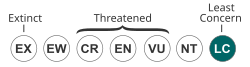
Maize (/meɪz/; Zea mays), also known as corn in North American English, is a tall stout grass that produces cereal grain. The leafy stalk of the plant gives rise to male inflorescences or tassels which produce pollen, and female inflorescences called ears. The ears yield grain, known as kernels or seeds. In modern commercial varieties, these are usually yellow or white; other varieties can be of many colors. Maize was domesticated by indigenous peoples in southern Mexico about 9,000 years ago from wild teosinte.[2] Native Americans planted it alongside beans and squashes in the Three Sisters polyculture. That is, those three vegetables were the main staple crops of the time.
Maize relies on humans for its propagation. Since the Columbian exchange, it has become a staple food in many parts of the world, with the total production of maize surpassing that of wheat and rice. Much maize is used for animal feed, whether as grain (fodder) or as the whole plant, which can either be baled as forage or made into the more palatable silage. Sugar-rich varieties called sweet corn are grown for human consumption, while field corn varieties are used for animal feed, for uses such as cornmeal or masa, corn starch, corn syrup, pressing into corn oil, alcoholic beverages like bourbon whiskey, and as chemical feedstocks including ethanol and other biofuels.
Maize is cultivated throughout the world; a greater weight of maize is produced each year than any other grain. In 2020, world production was 1.1 billion tonnes. It is afflicted by many pests and diseases; two major insect pests, European corn borer and corn rootworms, have each caused annual losses of a billion dollars in the United States. Modern plant breeding has greatly increased output and qualities such as nutrition, drought tolerance, and tolerance of pests and diseases. Much maize is now genetically modified.
As a food, maize is used to make a wide variety of dishes including Mexican tortillas and tamales, Italian polenta, and American hominy grits. Maize protein is low in some essential amino acids, and the niacin it contains only becomes available if freed by alkali treatment. In pre-Columbian Mesoamerica, maize was deified as a maize god and depicted in sculptures.
Description[edit | edit source]
Maize is a tall annual grass with a single stem, ranging in height from 1.2 to 4 m (4 to 13 ft).[3] The long narrow leaves arise from the nodes or joints, alternately on opposite sides on the stalk.[3] Maize is monoecious, with separate male and female flowers on the same plant.[3] At the top of the stem is the tassel, an inflorescence of male flowers; their anthers release pollen, which is dispersed by wind.[3] The female inflorescence, some way down the stem from the tassel, is first seen as a silk, a bundle of soft tubular hairs, one for the carpel in each female flower, which develops into a kernel (often called a seed. Botanically, as in all grasses, it is a fruit, fused with the seed coat to form a caryopsis)[4] when it is pollinated.[3] A whole female inflorescence develops into an ear or corncob, enveloped by multiple leafy layers or husks.[3] The Template:Vanchor is the leaf most closely associated with a particular developing ear. This leaf and those above it contribute over three quarters of the carbohydrate (starch) that fills the grain.[5]
The grains are usually yellow or white in modern varieties; other varieties have orange, red, brown, blue, purple, or black grains. They are arranged in 8 to 32 rows around the cob; there can be up to 1200 grains on a large cob.[6] Yellow maizes derive their color from carotenoids; red maizes are colored by anthocyanins and phlobaphenes; and orange and green varieties may contain combinations of these pigments.[7]
Maize has short-day photoperiodism, meaning that it requires nights of a certain length to flower. Flowering further requires enough warm days above 10 °C (50 °F). The control of flowering is set genetically; the physiological mechanism involves the phytochrome system. Tropical cultivars can be problematic if grown in higher latitudes, as the longer days can make the plants grow tall instead of setting seed before winter comes. On the other hand, growing tall rapidly could be convenient for producing biofuel.[3]
Immature maize shoots accumulate a powerful antibiotic substance, 2,4-dihydroxy-7-methoxy-1,4-benzoxazin-3-one (DIMBOA), which provides a measure of protection against a wide range of pests.[8] Because of its shallow roots, maize is susceptible to droughts, intolerant of nutrient-deficient soils, and prone to being uprooted by severe winds.[9]
The pollen is an allergen, but most of it falls within a few meters of the tassel and the risk is largely restricted to farm workers.[10]
-
 Many small male flowers make up the tassel.
 -
 Female inflorescence, with young silk
 -
 Stalks, ears and silk
 -
 Full-grown maize plants
 -
 Mature maize ear on a stalk


.JPG)
-
 Male flowers
 -
 Mature silk


Genetics[edit | edit source]

Maize is diploid with 20 chromosomes. 83% of allelic variation within the genome derives from its teosinte ancestors, primarily due to the freedom of Zea species to outcross.[11] Barbara McClintock used maize to validate her transposon theory of "jumping genes", for which she won the 1983 Nobel Prize in Physiology or Medicine.[12] Maize remains an important model organism for genetics and developmental biology.[13] The MADS-box motif is involved in the development of maize flowers.[14]
The Maize Genetics and Genomics Database is funded by the United States Department of Agriculture (USDA) to support maize research.[15] The International Maize and Wheat Improvement Center maintains a large collection of maize accessions tested and cataloged for insect resistance.[16] In 2005, the U.S. National Science Foundation, the USDA, and the Department of Energy formed a consortium to sequence the maize genome. The resulting DNA sequence data was deposited immediately into GenBank, a public repository for genome-sequence data.[17] Sequencing of the maize genome was completed in 2008.[18] In 2009, the consortium published results of its sequencing effort.[19] The genome, 85% of which is composed of transposons, contains 32,540 genes. Much of it has been duplicated and reshuffled by helitrons, a group of transposable elements within maize's DNA.[20]
Taxonomy[edit | edit source]
External phylogeny[edit | edit source]
The maize genus Zea is relatively closely related to sorghum, both being in the PACMAD clade of Old World grasses, and much more distantly to rice and wheat, which are in the other major group of grasses, the BOP clade. It is closely related to Tripsacum, gamagrass.[21]
Maize and teosinte[edit | edit source]

Maize is the domesticated variant of the four species of teosintes, which are its crop wild relatives.[22] Teosinte was likely used by hunter-gatherers because it added security to their food supply, being that it was adaptable to changes in climate and environment. [23] The teosinte origin theory was proposed by the Russian botanist Nikolai Ivanovich Vavilov in 1931, and the American Nobel Prize-winner George Beadle in 1932.[24]:10 The two plants have dissimilar appearance, maize having a single tall stalk with multiple leaves and teosinte being a short, bushy plant. The difference between the two is largely controlled by differences in just two genes, called grassy tillers-1 (gt1, Template:UniProt) and teosinte branched-1 (tb1, Template:UniProt).[22] In the late 1930s, Paul Mangelsdorf suggested that domesticated maize was the result of a hybridization event between an unknown wild maize and a species of Tripsacum, a related genus; this has been refuted by modern genetic testing.[24]
In 2004, John Doebley identified Balsas teosinte, Zea mays subsp. parviglumis, native to the Balsas River valley in Mexico's southwestern highlands, as the crop wild relative genetically most similar to modern maize.[25][26] The middle part of the short Balsas River valley is the likely location of early domestication. Stone milling tools with maize residue have been found in an 8,700 year old layer of deposits in a cave not far from Iguala, Guerrero.[27] Doebley and colleagues showed in 2002 that maize had been domesticated only once, about 9,000 years ago, and then spread throughout the Americas.[28]
Maize pollen dated to 7,300 years ago from San Andres, Tabasco has been found on the Caribbean coast.[27] A primitive corn was being grown in southern Mexico, Central America, and northern South America 7,000 years ago. Archaeological remains of early maize ears, found at Guila Naquitz Cave in the Oaxaca Valley, are roughly 6,250 years old; the oldest ears from caves near Tehuacan, Puebla, are 5,450 years old.[29]
Spreading to the north[edit | edit source]
Around 4,500 years ago, maize began to spread to the north. Maize was first cultivated at several sites in New Mexico and Arizona about 4,100 years ago.[29] During the first millennium AD, maize cultivation spread more widely in the areas north. In particular, the large-scale adoption of maize agriculture and consumption in eastern North America took place about A.D. 900. Native Americans cleared large forest and grassland areas for the new crop.[30] The rise in maize cultivation 500 to 1,000 years ago in what is now the southeastern U.S. corresponded with a decline of freshwater mussels, which are very sensitive to environmental changes.[31]
Names[edit | edit source]
The name maize derives from the Spanish form maíz of the Taíno mahis.[32] The Swedish botanist Carl Linnaeus used the common name maize as the species epithet in Zea mays.[33] The name maize is preferred in formal, scientific, and international usage as a common name because it refers specifically to this one grain, unlike corn, which has a complex variety of meanings that vary by context and geographic region.[34] Most countries primarily use the term maize, and the name corn is used mainly in the U.S. and a handful of other English-speaking countries.[35][36] In countries that primarily use the term maize, the word corn may denote any cereal crop, varying geographically with the local staple,[37] such as wheat in England and oats in Scotland or Ireland.[34] The usage of corn for maize started as a shortening of "Indian corn" in 18th-century North America.[38]
The historian of food Betty Fussell writes in an article on the history of the word corn in North America that "[t]o say the word corn is to plunge into the tragi-farcical mistranslations of language and history".[39] Similar to the British usage, the Spanish referred to maize as panizo, a generic term for cereal grains, as did Italians with the term polenta. The British later referred to maize as Turkey wheat, Turkey corn, or Indian corn; Fussell comments that "they meant not a place but a condition, a savage rather than a civilized grain".[39]
International groups such as the Centre for Agriculture and Bioscience International consider maize the preferred common name.[40] The word maize is used by the UN's Food and Agriculture Organization,[41] and in the names of the International Maize and Wheat Improvement Center of Mexico, the Indian Institute of Maize Research,[42] the Maize Association of Australia,[43] the National Maize Association of Nigeria,[44] the National Maize Association of Ghana,[45] the Maize Trust of South Africa,[46] and the Zimbabwe Seed Maize Association.[47]
Cultivation[edit | edit source]
Pre-Columbian development[edit | edit source]

Maize requires human intervention for its propagation. The kernels of its naturally-propagating teosinte ancestor fall off the cob on their own, while those of domesticated maize do not.[48] All maize arose from a single domestication in southern Mexico about 9,000 years ago. The oldest surviving maize types are those of the Mexican highlands. Maize spread from this region to the lowlands and over the Americas along two major paths.[28] The centre of domestication was most likely the Balsas River valley of south-central Mexico.[49] Maize reached highland Ecuador at least 8000 years ago.[50] It reached lower Central America by 7,600 years ago, and the valleys of the Colombian Andes between 7,000 and 6,000 years ago.[49]
The earliest maize plants grew a single, small ear per plant.[6] The Olmec and Maya cultivated maize in numerous varieties throughout Mesoamerica; they cooked, ground and processed it through nixtamalization.[29] By 3000 years ago, maize was central to Olmec culture, including their calendar, language, and myths.[39]
The Mapuche people of south-central Chile cultivated maize along with quinoa and potatoes in pre-Hispanic times.[51] Before the expansion of the Inca Empire, maize was traded and transported as far south as 40° S in Melinquina, Lácar Department, Argentina, probably brought across the Andes from Chile.[52]
Columbian exchange[edit | edit source]
After the arrival of Europeans in 1492, Spanish settlers consumed maize, and explorers and traders carried it back to Europe. Spanish settlers much preferred wheat bread to maize. Maize flour could not be substituted for wheat for communion bread, since in Christian belief at that time only wheat could undergo transubstantiation and be transformed into the body of Christ.[53]
Maize spread to the rest of the world because of its ability to grow in diverse climates. It was cultivated in Spain just a few decades after Columbus's voyages and then spread to Italy, West Africa, the Philippines and elsewhere.[53][54] By the 17th century, it was a common peasant food in Southern Europe. By the 18th century, it was the chief food of the southern French and Italian peasantry, especially as polenta in Italy.[55]
When maize was introduced into Western farming systems, it was welcomed for its productivity. However, a widespread problem of malnutrition soon arose wherever it had become a staple food.[56] Indigenous Americans had learned to soak maize in alkali-water – made with ashes and lime – since at least 1200–1500 BC, creating the process of nixtamalization. They did this to liberate the corn hulls, but coincidentally it also liberated the B-vitamin niacin, the lack of which caused pellagra.[57] Once alkali processing and dietary variety were understood and applied, pellagra disappeared in the developed world. The development of high-lysine maize and the promotion of a more balanced diet have contributed to its demise. Pellagra still exists in food-poor areas and refugee camps where people survive on donated maize.[58]
Conventional breeding[edit | edit source]
Maize breeding in prehistory resulted in large plants producing large ears. Modern breeding began with individuals who selected highly productive varieties in their fields and then sold seed to other farmers. James L. Reid was one of the earliest and most successful, developing Reid's Yellow Dent in the 1860s. These early efforts were based on mass selection (a row of plants is grown from seeds of one parent), and the choosing of plants after pollination (which means that only the female parents are known). Later breeding efforts included ear to row selection (C. G. Hopkins c. 1896), hybrids made from selected inbred lines (G. H. Shull, 1909), and the highly successful double cross hybrids using four inbred lines (D. F. Jones c. 1918, 1922). University-supported breeding programs were especially important in developing and introducing modern hybrids.[59]
Since the 1940s, the best strains of maize have been first-generation hybrids made from inbred strains that have been optimized for specific traits, such as yield, nutrition, drought, pest and disease tolerance. Both conventional cross-breeding and genetic engineering have succeeded in increasing output and reducing the need for cropland, pesticides, water and fertilizer. There is conflicting evidence to support the hypothesis that maize yield potential has increased over the past few decades. This suggests that changes in yield potential are associated with leaf angle, lodging resistance, tolerance of high plant density, disease/pest tolerance, and other agronomic traits rather than increase of yield potential per individual plant.[60]
Certain varieties of maize have been bred to produce many ears; these are the source of the "baby corn" used as a vegetable in Asian cuisine.[61][62] A fast-flowering variety named mini-maize was developed to aid scientific research, as multiple generations can be obtained in a single year.[63] One strain called olotón has evolved a symbiotic relationship with nitrogen-fixing microbes, which provides the plant with 29%–82% of its nitrogen.[64] The International Maize and Wheat Improvement Center (CIMMYT) operates a conventional breeding program to provide optimized strains. The program began in the 1980s.[65] Hybrid seeds are distributed in Africa by its Drought Tolerant Maize for Africa project.[66]
Tropical landraces remain an important and underused source of resistance alleles – both those for disease and for herbivores. Such alleles can then be introgressed into productive varieties.[67] Rare alleles for this purpose were discovered by Dao and Sood, both in 2014.[67] In 2018, Zerka Rashid of CIMMYT used its association mapping panel, developed for tropical drought tolerance traits. to find new genomic regions providing sorghum downy mildew resistance, and to further characterize known differentially methylated regions.[68]
Genetic engineering[edit | edit source]
Genetically modified maize was one of the 26 genetically engineered food crops grown commercially in 2016.[69][70] The vast majority of this is Bt maize. Genetically modified maize has been grown since 1997 in the United States and Canada;[71] by 2016, 92% of the U.S. maize crop was genetically modified.[69] As of 2011, herbicide-tolerant maize and insect-resistant maize varieties were each grown in over 20 countries.[72]
In September 2000, up to $50 million worth of food products were recalled due to the presence of Starlink genetically modified corn, which had been approved only for animal consumption.[73]
Growing[edit | edit source]
Because it is cold-intolerant, in the temperate zones maize must be planted in the spring. Its root system is generally shallow, so the plant is dependent on soil moisture. As a plant that uses [[C4 carbon fixation|Template:C4 carbon fixation]], maize is a considerably more water-efficient crop than plants that use [[C3 carbon fixation|Template:C3 carbon fixation]] such as alfalfa and soybeans. Maize is most sensitive to drought at the time of silk emergence, when the flowers are ready for pollination. In the United States, a good harvest was traditionally predicted if the maize was "knee-high by the Fourth of July", although modern hybrids generally exceed this growth rate. Maize used for silage is harvested while the plant is green and the fruit immature. Sweet corn is harvested in the "milk stage", after pollination but before starch has formed, between late summer and early to mid-autumn. Field maize is left in the field until very late in the autumn to thoroughly dry the grain, and may, in fact, sometimes not be harvested until winter or even early spring. The importance of sufficient soil moisture is shown in many parts of Africa, where periodic drought regularly causes maize crop failure and consequent famine. Although it is grown mainly in wet, hot climates, it can thrive in cold, hot, dry or wet conditions, meaning that it is an extremely versatile crop.[74]
Maize was planted by the Native Americans in small hills of soil, in the polyculture system called the Three Sisters.[75] Maize provided support for beans; the beans provided nitrogen derived from nitrogen-fixing rhizobia bacteria which live on the roots of beans and other legumes; and squashes provided ground cover to stop weeds and inhibit evaporation by providing shade over the soil.[76]
-
 Seedlings three weeks after sowing
 -
 Young stalks
 -
 Mature plants showing ears
 -
 Established broadacre maize seed crop


Harvesting[edit | edit source]
Sweet corn, harvested earlier than maize grown for grain, grows to maturity in a period of from 60 to 100 days according to variety. An extended sweet corn harvest, picked at the milk stage, can be arranged either by planting a selection of varieties that ripen earlier and later, or by planting different areas at fortnightly intervals.[77] Maize harvested as a grain crop can be kept in the field a relatively long time, even months, after the crop is ready to harvest; it can be harvested and stored in the husk leaves if kept dry.[78]
According to the U.S. Department of Agriculture, in the four decades from 1855 to 1894 the amount of labor required to produce one bushel of maize declined from four hours and thirty four minutes to only forty-one minutes.[79] Before 1940, most maize in North America was harvested by hand. This involved a large number of workers and associated social events (husking or shucking bees). From the 1850s onward, some machinery became available to partially mechanize the processes, such as one- and two-row mechanical pickers (picking the ear, leaving the stover) and corn binders, which are reaper-binders designed specifically for maize. The latter produce sheaves that can be shocked. By hand or mechanical picker, the entire ear is harvested, which requires a separate operation of a maize sheller to remove the kernels from the ear. Whole ears of maize were often stored in corn cribs, sufficient for some livestock feeding uses. Today corn cribs with whole ears, and corn binders, are less common because most modern farms harvest the grain from the field with a combine harvester and store it in bins. The combine with a corn head (with points and snap rolls instead of a reel) does not cut the stalk; it simply pulls the stalk down. The stalk continues downward and is crumpled into a mangled pile on the ground, where it usually is left to become organic matter for the soil. The ear of maize is too large to pass between slots in a plate as the snap rolls pull the stalk away, leaving only the ear and husk to enter the machinery. The combine separates the husk and the cob, keeping only the kernels.[80]
-
 Harvesting maize, Iowa
 -
 Harvesting maize, Finland
 -
 Hand-picking maize, Myanmar
 -
 Dehusking maize by hand, Malawi


.jpg)
Grain storage[edit | edit source]
Drying is vital to prevent or at least reduce damage by mould fungi, which contaminate the grain with mycotoxins. Aspergillus and Fusarium spp. are the most common mycotoxin sources, and accordingly important in agriculture.[71] If the moisture content of the harvested grain is too high, grain dryers are used to reduce the moisture content by blowing heated air through the grain. This can require large amounts of energy in the form of combustible gases (propane or natural gas) and electricity to power the blowers.[81]
Production[edit | edit source]
Maize is widely cultivated throughout the world, and a greater weight of maize is produced each year than any other grain.[82] In 2020, total world production was 1.16 billion tonnes, led by the U.S. with 31.0% of the total (table). China produced 22.4% of the global total.[83]
| Top maize producers | |
|---|---|
| in 2020 | |
| Numbers in million tonnes | |
1.  United States United States | 360.3 (31%) |
2.  China China | 260.7 (22.43%) |
3.  Brazil Brazil | 104 (8.95%) |
4.  Argentina Argentina | 58.4 (5.02%) |
5.  Ukraine Ukraine | 30.3 (2.61%) |
6.  India India | 30.2 (2.6%) |
7.  Mexico Mexico | 27.4 (2.36%) |
8.  Indonesia Indonesia | 22.5 (1.94%) |
9.  South Africa South Africa | 15.3 (1.32%) |
10.  Russia Russia | 13.9 (1.2%) |
| World total | 1162.4 |
| Source: FAOSTAT[84][83] | |
-
 Production of maize (2023)
 -
![Maize (pink strip) is the second most widely produced primary crop, after sugarcane, and the first among grain crops.[85]](https://upload.wikimedia.org/wikipedia/commons/7/72/World_production_of_primary_crops_by_main_commodities.svg?utm_source=commons.wikimedia.org&utm_campaign=imageinfo&utm_content=original)
.svg)
![Maize (pink strip) is the second most widely produced primary crop, after sugarcane, and the first among grain crops.[85]](/wiki/File:World_production_of_primary_crops_by_main_commodities.svg)
Pests[edit | edit source]

Many pests can affect maize growth and development, including invertebrates, weeds, and pathogens.[86][87]
Maize is susceptible to a large number of fungal, bacterial, and viral plant diseases. Those of economic importance include diseases of the leaf, smuts such as corn smut, ear rots and stalk rots.[88] Northern corn leaf blight damages maize throughout its range, whereas banded leaf and sheath blight is a problem in Asia.[89][90] Some fungal diseases of maize produce potentially dangerous mycotoxins such as aflatoxin.[71] In the United States, major diseases include tar spot, bacterial leaf streak, gray leaf spot, northern corn leaf blight, and Goss's wilt; in 2022, the most damaging disease was tar spot, which caused losses of 116.8 million bushels.[91]
Maize sustains a billion dollars' worth of losses annually in the U.S. from each of two major insect pests, namely the European corn borer or ECB (Ostrinia nubilalis) and corn rootworms (Diabrotica spp) western corn rootworm, northern corn rootworm, and southern corn rootworm.[92][93][94] Another serious pest is the fall armyworm (Spodoptera frugiperda).[95] The maize weevil (Sitophilus zeamais) is a serious pest of stored grain.[96] The Northern armyworm, Oriental armyworm or Rice ear-cutting caterpillar (Mythimna separata) is a major pest of maize in Asia.[97]
Nematodes too are pests of maize. It is likely that every maize plant harbors some nematode parasites, and populations of Pratylenchus lesion nematodes in the roots can be "enormous". The effects on the plants include stunting, sometimes of whole fields, sometimes in patches, especially when there is also water stress and poor control of weeds.[98]
Many plants, both monocots (grasses) such as Echinochloa crus-galli (barnyard grass) and dicots (forbs) such as Chenopodium and Amaranthus may compete with maize and reduce crop yields. Control may involve mechanical weed removal, flame weeding, or herbicides.[99]
-

-
 Corncob damage by European corn borer
 -
 Caterpillar of European corn borer in maize

.JPG)
.jpg)
Uses[edit | edit source]
Culinary[edit | edit source]
Maize and cornmeal (ground dried maize) constitute a staple food in many regions of the world.[6] Maize is used to produce the food ingredient cornstarch.[100] Maize starch can be hydrolyzed and enzymatically treated to produce high fructose corn syrup, a sweetener.[101] Maize may be fermented and distilled to produce Bourbon whiskey.[102] Corn oil is extracted from the germ of the grain.[103]
In prehistoric times, Mesoamerican women used a metate quern to grind maize into cornmeal. Nursing mothers also used maize as a weaning gruel for their children. [104] After ceramic vessels were invented the Olmec people began to cook maize together with beans, improving the nutritional value of the staple meal. Although maize naturally contains niacin, an important nutrient, it is not bioavailable without the process of nixtamalization. The Maya used nixtamal meal to make porridges and tamales.[105] Maize is a staple of Mexican cuisine. Masa (nixtamal) is the main ingredient for tortillas, atole and many other dishes of Central American food. It is the main ingredient of corn tortilla, tamales, atole and the dishes based on these.[106] The corn smut fungus, known as huitlacoche, which grows on maize, is a Mexican delicacy.[107]
Coarse maize meal is made into a thick porridge in many cultures: from the polenta of Italy, the angu of Brazil, the mămăligă of Romania, to cornmeal mush in the U.S. (or hominy grits in the Southern U.S.) or the food called mieliepap in South Africa and sadza, nshima, ugali and other names in other parts of Africa. Introduced into Africa by the Portuguese in the 16th century, maize has become Africa's most important staple food crop.[108]
Sweet corn, a genetic variety that is high in sugars and low in starch, is eaten in the unripe state as corn on the cob.[109]
-
 Poster of corn-based foods,
U.S. Food Administration, 1918 -
 Semi-peeled corn on the cob
 -
 Mexican tamales
 -
 One way of serving Italian polenta

.jpg)


Nutritional value[edit | edit source]
Raw, yellow, sweet maize kernels are composed of 76% water, 19% carbohydrates, 3% protein, and 1% fat. In a 100-gram serving, maize kernels provide 86 calories and are a good source (10–19% of the Daily Value) of the B vitamins, thiamin, niacin (if freed), pantothenic acid (B5) and folate.[110] Maize has suboptimal amounts of the essential amino acids tryptophan and lysine, which accounts for its lower status as a protein source.[111] The proteins of beans and legumes complement those of maize.[111]
Animal feed[edit | edit source]
Maize is a major source of animal feed. As a grain crop, the dried kernels are used as feed. They are often kept on the cob for storage in a corn crib, or they may be shelled off for storage in a grain bin. When the grain is used for feed, the rest of the plant (the corn stover) can be used later as fodder, bedding (litter), or soil conditioner. When the whole plant (grain plus stalks and leaves) is used for fodder, it is usually chopped and made into silage, as this is more digestible and more palatable to ruminants than the dried form.[112] Traditionally, maize was gathered into shocks after harvesting, where it dried further. It could then be stored for months until fed to livestock. Silage can be made in silos or in silage wrappers. In the tropics, maize is harvested year-round and fed as green forage to the animals.[113] Baled cornstalks offer an alternative to hay for animal feed, alongside direct grazing of maize grown for this purpose.[114]
-
 Cattle wait alongside a fence as a truck distributes a grain feed composed of maize by-products into troughs.
 -
 Baled cornstalks


Chemicals[edit | edit source]
Starch from maize can be made into plastics, fabrics, adhesives, and many other chemical products.[115] Corn steep liquor, a plentiful watery byproduct of maize wet milling process, is used in the biochemical industry and research as a culture medium to grow microorganisms.[116]
Biofuel[edit | edit source]
Feed maize is being used for heating; specialized corn stoves (similar to wood stoves) use either feed maize or wood pellets to generate heat. Maize cobs can be used as a biomass fuel source. Home-heating furnaces which use maize kernels as a fuel have a large hopper that feeds the kernels into the fire.[117] Maize is used as a feedstock for the production of ethanol fuel.[118] The price of food is indirectly affected by the use of maize for biofuel production: such use increases the demand, and therefore the price of maize.[119] A pioneering biomass gasification power plant in Strem, Burgenland, Austria, started operating in 2005. It would be possible to create diesel from the biogas by the Fischer Tropsch method.[120]
-
 Farm-based maize silage digester near Neumünster, Germany, 2007, using whole maize plants, not just the grain. The green tarpaulin top cover is held up by the biogas stored in the digester.

In human culture[edit | edit source]
In Mesoamerica, maize is seen as a vital force, deified as a maize god, usually female.[121] In the U.S., maize ears are carved into column capitals in the U.S. Capitol building.[122] The Corn Palace in Mitchell, South Dakota, uses cobs and ears of colored maize to implement a mural design that is recycled annually.[123] The concrete Field of Corn sculpture in Dublin, Ohio depicts hundreds of ears of corn in a grassy field.[124] A maize stalk with two ripe ears is depicted on the reverse of the Croatian 1 lipa coin, minted since 1993.[125]
Maize kernels have sometimes denoted cowardice, as maize is fed to chickens, which symbolise cowards. In the months before the 1973 Chilean coup d'etat anti-Allende protestors threw maize at military barracks in a call to depose him.[126][127]
-

-
 Stucco head of the Maya maize god from Campeche, Mexico, 550–850 AD
 -
 Jaina Island ceramic statuette of the young Maya maize god emerging from an ear of corn, 600–900 AD
 -

-
 Water tower in Rochester, Minnesota being painted as an ear of maize, 2008


See also[edit | edit source]
- Template:Anl
- Template:Anl
- Template:Anl
- Template:Anl
- Template:Anl
- Template:Anl
- Template:Anl
- Push–pull technology – Pest control strategy for maize and sorghum
- Template:Anl
References[edit | edit source]
- ↑ Contreras, A.; Ruíz Corral, J. A.; Menjívar, J.; Aragón Cuevas, F.; González Ledesma, M.; Sánchez, J. J. (2019). "Zea mays". IUCN Red List of Threatened Species 2019: E.T77726273A77726310. doi:10.2305/IUCN.UK.2019-2.RLTS.T77726273A77726310.en.
- ↑ Lohse, Jon C., Molly Morgan, John G. Jones, et al. “Early Maize in the Maya Area.” Latin American Antiquity 33, no. 4 (2022): 677–92. https://www-jstor-org.muhlenberg.idm.oclc.org/stable/27362456.
- ↑ 3.0 3.1 3.2 3.3 3.4 3.5 3.6 Solaimalai, A.; Anantharaju, P.; Irulandi, S.; Theradimani, M. (May 10, 2020). "6. Growth and Development Stages". Maize Crop: Improvement, Production, Protection and Post Harvest Technology. CRC Press. ISBN 978-1-000-17695-7.
- ↑ "Caryopsis". Merriam-Webster. Retrieved January 9, 2024.
- ↑ "Before applying fungicides to corn: Stop! Look! Consider!". Integrated Crop Management. Iowa State University Extension. Retrieved July 24, 2021.
- ↑ 6.0 6.1 6.2 Davidson, Alan (2014). "Maize". The Oxford Companion to Food (3rd ed.). Oxford University Press. pp. 484–486. ISBN 978-0-19-967733-7.
- ↑ Chatham, Laura A.; Paulsmeyer, Michael; Juvik, John A. (2019). "Prospects for economical natural colorants: insights from maize". Theoretical and Applied Genetics. 132 (11): 2927–2946, and Figure 1. doi:10.1007/s00122-019-03414-0. PMID 31451836. S2CID 201729476.
- ↑ Smith, C. Michael; Clement, Stephen L. (2012). "Molecular Bases of Plant Resistance to Arthropods". Annual Review of Entomology. 57 (1): 309–328. doi:10.1146/annurev-ento-120710-100642. PMID 21910639.
- ↑ "Corn Stalk Lodging" (PDF). Monsanto Imagine. October 2, 2008. Archived from the original (PDF) on February 25, 2009. Retrieved February 23, 2009.
- ↑ Oldenburg, Marcus; Petersen, Arnd; Baur, Xaver (2011). "Maize pollen is an important allergen in occupationally exposed workers". Journal of Occupational Medicine and Toxicology. 6 (1): 32. doi:10.1186/1745-6673-6-32. PMC 3269392. PMID 22165847.
- ↑ Wani, Shabir Hussain; Samantara, Kajal; Razzaq, Ali; Kakani, Grihalakshmi; Kumar, Pardeep (June 2022). "Back to the wild: mining maize (Zea mays L.) disease resistance using advanced breeding tools". Molecular Biology Reports. 49 (6): 5787–5803. doi:10.1007/s11033-021-06815-x. PMID 35064401. S2CID 254834535.
- ↑ Brown, David (November 20, 2009). "Scientists have high hopes for corn genome". The Washington Post.
- ↑ Strable, Josh; Scanlon, Michael J. (2009). "Maize (Zea mays): A Model Organism for Basic and Applied Research in Plant Biology". Cold Spring Harbor Protocols. 2009 (10) pdb.emo132. doi:10.1101/pdb.emo132. ISSN 1940-3402. PMID 20147033.
- ↑ Friedman, William E.; Moore, Richard C.; Purugganan, Michael D. (October 2004). "The evolution of plant development". American Journal of Botany. 91 (10). John Wiley & Sons: 1726–1741. Bibcode:2004AmJB...91.1726F. doi:10.3732/ajb.91.10.1726. PMID 21652320. Botanical Society of America.
- ↑ "Welcome to MaizeGDB". MaizeGDB. Retrieved January 11, 2024.
- ↑ Prasanna, Boddupalli M.; Bruce, Anani; Beyene, Yoseph; Makumbi, Dan; Gowda, Manje; Asim, Muhammad; Martinelli, Samuel; Head, Graham P.; Parimi, Srinivas (November 2022). "Host plant resistance for fall armyworm management in maize: relevance, status and prospects in Africa and Asia". Theoretical and Applied Genetics. 135 (11): 3897–3916. doi:10.1007/s00122-022-04073-4. PMC 9729323. PMID 35320376.
- ↑ "Welcome to MaizeSequence.org". MaizeSequence.org. Archived from the original on September 27, 2013. Retrieved March 12, 2024.
- ↑ "Researchers sequence genome of maize, a key crop". Reuters. February 26, 2008. Retrieved October 6, 2014.
- ↑ Schnable, P. S.; Ware, D.; Fulton, R. S.; Stein, J. C.; Wei, F.; et al. (2009). "The B73 Maize Genome: Complexity, Diversity, and Dynamics". Science. 326 (5956): 1112–1115. Bibcode:2009Sci...326.1112S. doi:10.1126/science.1178534. PMID 19965430. S2CID 21433160.
- ↑ Feschotte, C.; Pritham, E. (2009). "A cornucopia of Helitrons shapes the maize genome". Proceedings of the National Academy of Sciences. 106 (47): 19747–19748. Bibcode:2009PNAS..10619747F. doi:10.1073/pnas.0910273106. PMC 2785235. PMID 19926864.
- ↑ Gaut, Brandon S.; Le Thierry d'Ennequin, Maud; Peek, Andrew S.; Sawkins, Mark C. (June 20, 2000). "Maize as a model for the evolution of plant nuclear genomes". Proceedings of the National Academy of Sciences. 97 (13): 7008–7015. Bibcode:2000PNAS...97.7008G. doi:10.1073/pnas.97.13.7008. PMC 34377. PMID 10860964.
- ↑ 22.0 22.1 Whipple, Clinton J.; Kebrom, Tesfamichael H.; Weber, Allison L.; Yang, Fang; Hall, Darren; et al. (August 16, 2011). "grassy tillers1 promotes apical dominance in maize and responds to shade signals in the grasses". Proceedings of the National Academy of Sciences. 108 (33): E506-12. doi:10.1073/pnas.1102819108. PMC 3158142. PMID 21808030.
- ↑ Lohse, Jon C., Molly Morgan, John G. Jones, et al. “Early Maize in the Maya Area.” Latin American Antiquity 33, no. 4 (2022): 677–92. https://www-jstor-org.muhlenberg.idm.oclc.org/stable/27362456.
- ↑ 24.0 24.1 Wilkes, Garrison (March 8, 2004). "Chapter 1.1 Corn, strange and marvelous: but is a definitive origin known?". In Smith, C. Wayne; Betrán, Javier; Runge, E. C. A. (eds.). Corn: Origin, History, Technology, and Production. John Wiley & Sons. pp. 3–63. ISBN 978-0-471-41184-0.
- ↑ Doebley, John F. (2004). "The genetics of maize evolution" (PDF). Annual Review of Genetics. 38: 37–59. doi:10.1146/annurev.genet.38.072902.092425. PMID 15568971. Archived from the original (PDF) on June 12, 2010. Retrieved May 30, 2010.
- ↑ Wu, Chi-Chih; Diggle, Pamela K.; Friedman, William E. (September 2011). "Female gametophyte development and double fertilization in Balsas teosinte, Zea mays subsp. parviglumis (Poaceae)". Sexual Plant Reproduction. 24 (3): 219–229. doi:10.1007/s00497-011-0164-1. PMID 21380710. S2CID 8045294.
- ↑ 27.0 27.1 Ranere, Anthony J.; Piperno, Dolores R.; Holst, Irene; Dickau, Ruth; Iriarte, José (2009). "The cultural and chronological context of early Holocene maize and squash domestication in the Central Balsas River Valley, Mexico". Proceedings of the National Academy of Sciences. 106 (13): 5014–5018. Bibcode:2009PNAS..106.5014R. doi:10.1073/pnas.0812590106. PMC 2664064. PMID 19307573.
Ranere, Anthony J.; Piperno, Dolores R.; Holst, Irene; Dickau, Ruth; Iriarte, José (2009). "Starch grain and phytolith evidence for early ninth millennium B.P. maize from the Central Balsas River Valley, Mexico". Proceedings of the National Academy of Sciences. 106 (13): 5019–5024. Bibcode:2009PNAS..106.5019P. doi:10.1073/pnas.0812525106. PMC 2664021. PMID 19307570. - ↑ 28.0 28.1 Matsuoka, Y.; Vigouroux, Y.; Goodman, M. M.; et al. (2002). "A single domestication for maize shown by multilocus microsatellite genotyping". Proceedings of the National Academy of Sciences. 99 (9): 6080–4. Bibcode:2002PNAS...99.6080M. doi:10.1073/pnas.052125199. PMC 122905. PMID 11983901.
- ↑ 29.0 29.1 29.2 Roney, John (Winter 2009). "The Beginnings of Maize Agriculture". Archaeology Southwest. 23 (1): 4.
- ↑ Emerson, Thomas E.; Hedman, Kristin M.; Simon, Mary L. (2005). "Marginal Horticulturalists or Maize Agriculturalists? Archaeobotanical, Paleopathological, and Isotopic Evidence Relating to Langford Tradition Maize Consumption". Midcontinental Journal of Archaeology. 30 (1): 67–118. doi:10.1179/mca.2005.003. JSTOR 20708222. S2CID 129150225.
- ↑ Peacock, Evan; Haag, Wendell R.; Warren, Melvin L. Jr (2005). "Prehistoric decline in freshwater mussels coincident with the advent of maize agriculture" (PDF). Conservation Biology. 19 (2): 547–551. Bibcode:2005ConBi..19..547P. doi:10.1111/j.1523-1739.2005.00036.x. S2CID 3679709.
- ↑ "maize, n. (and adj.)". Oxford English Dictionary (Online ed.). Oxford University Press. Template:OEDsub
- ↑ Ranum, Peter; Peña-Rosas, Juan Pablo; Garcia-Casal, Maria Nieves (April 2014). "Global maize production, utilization, and consumption". Annals of the New York Academy of Sciences. 1312 (1): 105–112. Bibcode:2014NYASA1312..105R. doi:10.1111/nyas.12396. PMID 24650320. S2CID 4640742.
- ↑ 34.0 34.1 Ensminger, Audrey H. (1994). Foods and Nutrition Encyclopedia, 2nd ed. CRC Press. p. 479. ISBN 978-0-8493-8980-1.
The word "maize" is preferred in international usage because in many countries the term "corn", the name by which the plant is known in the United States, is synonymous with the leading cereal grain; thus, in England "corn" refers to wheat, and in Scotland and Ireland it refers to oats.
- ↑ McLellan Plaisted, Susan (2013). "Corn". In Smith, Andrew (ed.). The Oxford Encyclopedia of Food and Drink in America (2nd ed.). New York: Oxford University Press. ISBN 978-0-19-973922-6. Retrieved February 15, 2023.
The use of the word "corn" for what is termed "maize" by most other countries is peculiar to the United States. Europeans who were accustomed to the names "wheat corn", "barley corn", and "rye corn" for other small-seeded cereal grains referred to the unique American grain maize as "Indian corn." The term was shortened to just "corn", which has become the American word for the plant of American genesis.
- ↑ Espinoza, Mauricio (April 1, 2015). "'All Corn Is the Same,' and Other Foolishness about America's King of Crops". Ohio State University: College of Food, Agricultural, and Environmental Sciences. Archived from the original on December 3, 2020. Retrieved September 21, 2022.
- ↑ "corn, n.1". Oxford English Dictionary (Online ed.). Oxford University Press. Template:OEDsub
- ↑ Mencken, H. L. (1984). The American language: an inquiry into the development of English in the United States (4th ed.). New York: Alfred A. Knopf. p. 122. ISBN 0-394-40075-5.
Corn, in orthodox English, means grain for human consumption, especially wheat, e.g., the Corn Laws. The earliest settlers, following this usage, gave the name of Indian corn to what the Spaniards, following the Indians themselves, had called maiz. . . . But gradually the adjective fell off, and by the middle of the Eighteenth Century maize was simply called corn and grains in general were called breadstuffs. Thomas Hutchinson, discoursing to George III in 1774, used corn in this restricted sense speaking of "rye and corn mixed." "What corn?" asked George. "Indian corn," explained Hutchinson, "or as it is called in authors, maize."
- ↑ 39.0 39.1 39.2 Fussell, Betty (1999). "Translating Maize into Corn: The Transformation of America's Native Grain". Social Research. 66 (1): 41–65. JSTOR 40971301. Template:Gale ProQuest 209670587.
To say the word "corn" is to plunge into the tragi-farcical mistranslations of language and history. If only the British had followed Columbus in phoneticizing the Taino word mahiz, which the Arawaks named their staple grain, we wouldn't be in the same linguistic pickle we're in today, where I have to explain to someone every year that when Biblical Ruth "stood in tears amid the alien corn" she was standing in a wheat field. But it was a near thing even with the Spaniards, when we read in Columbus' Journals that the grain "which the Indians called maiz... the Spanish called panizo.' The Spanish term was generic for the cereal grains they knew - wheat, millet, barley, oats - as was the Italian term polenta, from Latin pub. As was the English term "corn", which covered grains of all kinds, including grains of salt, as in "corned beef".
French linguistic imperialism, by way of a Parisian botanist in 1536, provided the term Turcicum frumentum, which the British quickly translated into "Turkey wheat", "Turkey corn", and "Indian corn". By Turkey or Indian, they meant not a place but a condition, a savage rather than a civilized grain, with which the Turks concurred, calling it kukuruz, meaning barbaric. - ↑ "Zea mays (maize)". CABI Compendium. CABI Compendium. Centre for Agriculture and Bioscience International. 2019. doi:10.1079/cabicompendium.57417. Retrieved September 16, 2022.
- ↑ "Maize". Food and Agriculture Organization. Retrieved September 16, 2022.
- ↑ "Overview – ICAR-Indian Institute of Maize Research". Archived from the original on October 5, 2022. Retrieved September 16, 2022.
- ↑ "Maize Association - Maize Association Australia". Retrieved September 16, 2022.
- ↑ "The Maize Association of Nigeria honors IITA for supporting the nation's agriculture". International Institute of Tropical Agriculture. Retrieved September 16, 2022.
- ↑ "SARD-SC Maize component supports the launch of the Ghana Maize Association". International Institute of Tropical Agriculture. March 18, 2016. Retrieved March 10, 2024.
- ↑ Du Plessis, Leon. "THE MAIZE TRUST: Custodian of the maize industry". Grain SA. Retrieved March 10, 2024.
- ↑ Rusike, Joseph; Donovan, Philip A (1995). "The maize seed industry in Zimbabwe". Development Southern Africa. 12 (2): 189–196. doi:10.1080/03768359508439804. ISSN 0376-835X.
- ↑ Benz, B. F. (2001). "Archaeological evidence of teosinte domestication from Guilá Naquitz, Oaxaca". Proceedings of the National Academy of Sciences. 98 (4): 2104–2106. Bibcode:2001PNAS...98.2104B. doi:10.1073/pnas.98.4.2104. ISSN 0027-8424. PMC 29389. PMID 11172083.
- ↑ 49.0 49.1 Piperno, Dolores R. (October 2011). "The Origins of Plant Cultivation and Domestication in the New World Tropics: Patterns, Process, and New Developments". Current Anthropology. 52 (S4): S453–S470. doi:10.1086/659998. S2CID 83061925.
Recent studies in the Central Balsas River Valley of Mexico, maize's postulated cradle of origin, document the presence of maize phytoliths and starch grains at 8700 BP, the earliest date recorded for the crop (Piperno et al. 2009; Ranere et al. 2009). A large corpus of data indicates that it was dispersed into lower Central America by 7600 BP and had moved into the inter-Andean valleys of Colombia between 7000 and 6000 BP. Given the number of Cauca Valley, Colombia, sites that demonstrate early maize, it is likely that the inter-Andean valleys were a major dispersal route for the crop after it entered South America
- ↑ Pagán-Jiménez, Jaime R.; Guachamín-Tello, Ana M.; Romero-Bastidas, Martha E.; Constantine-Castro, Angelo R. (June 2016). "Late ninth millennium B.P. use of Zea mays L. at Cubilán area, highland Ecuador, revealed by ancient starches". Quaternary International. 404: 137–155. Bibcode:2016QuInt.404..137P. doi:10.1016/j.quaint.2015.08.025.
- ↑ Dillehay, Tom D.; Pino Quivira, Mario; Bonzani, Renée; Silva, Claudia; Wallner, Johannes; Le Quesne, Carlos (2007). "Cultivated wetlands and emerging complexity in south-central Chile and long distance effects of climate change" (PDF). Antiquity. 81 (314): 949–960. doi:10.1017/s0003598x00096034. S2CID 59480757.
- ↑ Pérez, Alberto E.; Erra, Georgina (2011). "Identificación de maiz de vasijas recuperadas de la Patagonia noroccidental argentina" [Identifying maize residues in pottery vessels in northwestern Patagonia, Argentina]. Magallania (in español). 39 (2): 309–316. doi:10.4067/S0718-22442011000200022. hdl:11336/42613.
- ↑ 53.0 53.1 Earle, Rebecca (2012). The Body of the Conquistador: Food, Race, and the Colonial Experience in Spanish America, 1492–1700. Cambridge University Press. pp. 17, 144, 151.
- ↑ Salazar, A.M.; Pascual, C.B.; Caasi-Lit, M.T.; Pentecostes, K.Z.; Dumalag, P.Y.; Ladia, V.A., Jr.; Paril, J.F. (2016). "Breeding Potential of Philippine Traditional Maize Varieties" (PDF). SABRAO Journal of Breeding and Genetics. 48 (2): 154–161.
{{cite journal}}: CS1 maint: multiple names: authors list (link) - ↑ Langer, William L. (1975). "American Foods and Europe's Population Growth 1750–1850". Journal of Social History. 8 (2): 51–66. doi:10.1353/jsh/8.2.51. JSTOR 3786266.
- ↑ "The origins of maize: the puzzle of pellagra". Understanding Food. The European Food Information Council. December 2001. Archived from the original on September 27, 2006. Retrieved September 14, 2006.
- ↑ Staller, John; Carrasco, Michael (November 24, 2009). Pre-Columbian Foodways: Interdisciplinary Approaches to Food, Culture, and Markets in Ancient Mesoamerica. Springer Science & Business Media. p. 317. ISBN 978-1-4419-0471-3.
- ↑ Thompson, Janice J.; Manore, Melinda; Vaughan, Linda (January 15, 2016). "Nutrients involved in energy metabolism". The Science of Nutrition. Pearson Education. pp. 292–321. ISBN 978-0-13-429880-1.
- ↑ Jugenheimer, Robert W. (1958). "Agricultural Development Paper #62". Hybrid Maize Breeding and Seed Production. Rome: Food and Agriculture Organization.
- ↑ Duvick, D. N.; Cassman, K. G. (2009). "Post-green-revolution trends in yield potential of temperate maize in the north-central United States". Crop Science. 39 (6): 1622–1630. doi:10.2135/cropsci1999.3961622x. S2CID 39657597. Archived from the original on November 15, 2009.
- ↑ Maiti, Ratikanta (2012). Crop Plant Anatomy. CABI. p. 52. ISBN 978-1-78064-174-4.
- ↑ Lopes, Adelmary Prestes; Nóbrega, Lucia Helene Pereira; Pacheco, Fabio Palczewski; Cruz-Silva, Claudia Tatiana Araujo da (2016). "Maize varieties for baby corn yield and post-harvest quality under organic cropping". Bioscience Journal. 32 (2): 298–307. doi:10.14393/BJ-v32n2a2016-26230.
- ↑ McCaw, Morgan E; Wallace, Jason G; Albert, Patrice S; Buckler, Edward S; Birchler, James A (September 1, 2016). "Fast-Flowering Mini-Maize: Seed to Seed in 60 Days". Genetics. 204 (1): 35–42. doi:10.1534/genetics.116.191726. ISSN 1943-2631. PMC 5012399. PMID 27440866.
- ↑ Van Deynze, Allen; Zamora, Pablo; Delaux, Pierre-Marc; Heitmann, Cristobal; Jayaraman, Dhileepkumar; et al. (2018). "Nitrogen fixation in a landrace of maize is supported by a mucilage-associated diazotrophic microbiota". PLOS Biology. 16 (8) e2006352. doi:10.1371/journal.pbio.2006352. PMC 6080747. PMID 30086128.
- ↑ "About us". CIMMYT. Retrieved March 12, 2024.
- ↑ "Drought Tolerant Maize for Africa (DTMA)". CIMMYT. June 17, 2022. Retrieved March 12, 2024.
- ↑ 67.0 67.1 Chakradhar, Thammineni; Hindu, Vemuri; Reddy, Palakolanu Sudhakar (December 2017). "Genomic-based-breeding tools for tropical maize improvement" (PDF). Genetica. 145 (6): 525–539. doi:10.1007/s10709-017-9981-y. PMID 28875394. S2CID 24074330.
- ↑ Rashid, Zerka; Singh, Pradeep Kumar; Vemuri, Hindu; Zaidi, Pervez Haider; Prasanna, Boddupalli Maruthi; Nair, Sudha Krishnan (January 10, 2018). "Genome-wide association study in Asia-adapted tropical maize reveals novel and explored genomic regions for sorghum downy mildew resistance". Scientific Reports. 8 (1): 366. Bibcode:2018NatSR...8..366R. doi:10.1038/s41598-017-18690-3. ISSN 2045-2322. PMC 5762920. PMID 29321632.
- ↑ 69.0 69.1 James, Clive (2016). "Global Status of Commercialized Biotech/GM Crops: 2016 – ISAAA Brief 52-2016". ISAAA. Archived from the original on May 4, 2017. Retrieved August 26, 2017.
- ↑ ISAAA Brief 43-2011: Executive Summary, retrieved September 9, 2012
- ↑ 71.0 71.1 71.2 Ostrý, Vladimír; Malíř, František; Pfohl-Leszkowicz, Annie (2015). "Comparative data concerning aflatoxin contents in Bt maize and non-Bt isogenic maize in relation to human and animal health – a review". Acta Veterinaria Brno. 84 (1): 47–53. doi:10.2754/avb201585010047.
- ↑ "ISAAA Pocket K No. 2: Plant Products of Biotechnology, 2018". Archived from the original on January 30, 2023. Retrieved January 9, 2024.
- ↑ Pollack, Andrew (September 23, 2000). "Kraft Recalls Taco Shells With Bioengineered Corn". The New York Times.
- ↑ Fernandez-Armesto, Felipe (2011). The World: A History. London: Penguin Academics. p. 470. ISBN 978-0-205-75930-9.
- ↑ Hill, Christina Gish (November 20, 2020). "Returning the 'three sisters' – corn, beans and squash – to Native American farms nourishes people, land and cultures". The Conversation. Retrieved January 9, 2021.
- ↑ Mann, Charles C. (July 2011). "Cotton (or Anchovies) and Maize". 1491: New Revelations of the Americas Before Columbus (2nd ed.). New York: Vintage Books. pp. 225–229. ISBN 978-1-4000-3205-1.
- ↑ "Growing Home Garden Sweet Corn". University of Georgia Extension. Retrieved March 9, 2024.
- ↑ Smith, C. Wayne; Betrán, Javier; Runge, Edward C. A. (March 8, 2004). Corn: Origin, History, Technology, and Production. John Wiley & Sons. p. 802. ISBN 978-0-471-41184-0.
- ↑ George K. Holmes, "Supply and Wages of Farm Labor" Yearbook of the United States Department of Agriculture: 1910 (1911) pp. 190-191 online
- ↑ Brown, Robert C.; Brown, Tristan R. (December 6, 2013). Biorenewable Resources: Engineering New Products from Agriculture. Wiley. PT114. ISBN 978-1-118-52492-3.
- ↑ Van Devender, Karl (July 2011). "Grain Drying Concepts and Options" (PDF). University of Arkansas Division of Agriculture. Archived from the original (PDF) on June 1, 2016. Retrieved December 15, 2013.
- ↑ International Grains Council (international organization) (2013). "International Grains Council Market Report 28 November 2013" (PDF).
- ↑ 83.0 83.1 "FAOSTAT". FAO.
- ↑ "Maize production in 2017, Crops/Regions/Production Quantity from pick lists". United Nations, Food and Agriculture Organization, Statistics Division (FAOSTAT). 2018. Retrieved March 15, 2020.
- ↑ FAO (2025). World Food and Agriculture – Statistical Yearbook 2025. FAO. doi:10.4060/cd4313en. ISBN 978-92-5-140174-3.
- ↑ "Corn Pests". Utah State University. Retrieved January 11, 2024.
- ↑ Mueller, Daren; Pope, Rich, eds. (2009). Corn Field Guide (PDF). Iowa State University Extension. Archived from the original (PDF) on January 11, 2024. Retrieved January 11, 2024.
- ↑ "Diseases and Disorders of Corn". Province of Manitoba - Agriculture. Retrieved January 11, 2024.
- ↑ Wise, Kiersten. "Diseasees of Corn: Northern Corn Leaf Blight" (PDF). Purdue University. Retrieved January 11, 2024.
- ↑ Juroszek, Peter; von Tiedemann, Andreas (2013). "Climatic changes and the potential future importance of maize diseases: a short review". Journal of Plant Diseases and Protection. 120 (2): 49–56. Bibcode:2013JPDP..120...49J. doi:10.1007/BF03356454. S2CID 87234896.
- ↑ "Corn Disease Loss Estimates From the United States and Ontario, Canada — 2022". cropprotectionnetwork.org. Retrieved January 11, 2024.
- ↑ Hodgson, Erin W. (2008) Utah State University Extension and Utah Plant Pest Diagnostic Laboratory. Western corn rootworm
- ↑ Ostlie, K.R.; et al. "Bt Corn & European Corn Borer: Long-Term Success Through Resistance Management". University of Minnesota Extension Office. Archived from the original on September 28, 2013.
- ↑ Reisig, Dominic; Kesheimer, Katelyn; Bateman, Nick; Studebaker, Glenn; Meyer, Ron; et al. (July 22, 2022). "Corn Invertebrate Loss Estimates from the United States and Ontario, Canada — 2021". doi:10.31274/cpn-20220722-0. S2CID 251087338. Retrieved January 11, 2024.
- ↑ "fall armyworm, Spodoptera frugiperda (J.E. Smith)". entnemdept.ufl.edu. Retrieved November 14, 2017.
- ↑ "PestWeb | Greater Rice Weevil". Agspsrv34.agric.wa.gov.au. Archived from the original on September 28, 2011. Retrieved July 29, 2010.
- ↑ Thakur, J. N.; Rawat, U. S.; Pawar, A. D. (1987). "First Record of Armyworm, Mythimna separata (Haworth) as a serious pest of maize in Kullu (HP) India and recommendations for its integrated management". Tropical Pest Management. 33 (2): 173–175. doi:10.1080/09670878709371141.
- ↑ Norton, Don C. (March 1983). "Maize Nematode Problems" (PDF). Plant Disease. 67 (3): 253–256. Bibcode:1983PlDis..67..253N. doi:10.1094/PD-67-253.
- ↑ Meissle, Michael; Mouron, Patrik; Musa, Tomke; et al. (2010). "Pests, pesticide use and alternative options in European maize production: Current status and future prospects". Journal of Applied Entomology. 134 (5): 357–375. doi:10.1111/j.1439-0418.2009.01491.x. hdl:11568/710064. S2CID 73606627.
- ↑ "Cornstarch". Merriam-Webster. Archived from the original on March 4, 2016. Retrieved May 14, 2016.
- ↑ European Starch Association (June 10, 2013). "Factsheet on Glucose Fructose Syrups and Isoglucose". AAF. Archived from the original on June 3, 2014. Retrieved January 11, 2024.
- ↑ Kiniry, Laura. "Where Bourbon Really Got Its Name and More Tips on America's Native Spirit". Smithsonian.com. June 13, 2013.
- ↑ Corn Refiners Association. Corn Oil Archived 2019-04-12 at the Wayback Machine 5th Edition. 2006
- ↑ Lohse, Jon C., Molly Morgan, John G. Jones, et al. “Early Maize in the Maya Area.” Latin American Antiquity 33, no. 4 (2022): 677–92. https://www-jstor-org.muhlenberg.idm.oclc.org/stable/27362456.
- ↑ Pilcher, Jeffrey M. (2012). "Maize and the Making of Mexico". Planet taco: a global history of Mexican food. Oxford University Press. p. 27. ISBN 978-0-19-974006-2.
- ↑ Davidson, Alan (2014). "Mexico". The Oxford Companion to Food (3rd ed.). Oxford University Press. pp. 516–517. ISBN 978-0-19-967733-7.
- ↑ Peterson, James (2012). Vegetables, Revised: The Most Authoritative Guide to Buying, Preparing, and Cooking, with More than 300 Recipes. Random House. p. 184. ISBN 978-1-60774-205-0.
- ↑ Nweke, Felix I. "The cassava transformation in Africa". Food and Agriculture Organization. Retrieved January 8, 2024.
- ↑ Nielsen, L. Michelle (2007). The Biography of Corn. Crabtree Publishing. p. 27. ISBN 978-0-7787-2491-9.
- ↑ "FoodData Central". fdc.nal.usda.gov. Archived from the original on April 3, 2019. Retrieved January 15, 2021.
- ↑ 111.0 111.1 "Chapter 8: Improvement of maize diets; from corporate document: Maize in human nutrition". Food and Agriculture Organization. 1992. Retrieved June 5, 2017.
- ↑ Heuzé, V.; Tran, G.; Edouard, N.; Lebas, F. (June 22, 2017). "Maize silage". Feedipedia, a programme by INRA, CIRAD, AFZ and FAO.
- ↑ Heuzé, V.; Tran, G.; Edouard, N.; Lebas, F. (June 21, 2017). "Maize green forage". Feedipedia, a programme by INRA, CIRAD, AFZ and FAO.
- ↑ "Baled Cornstalks". University of Illinois Urbana-Champaign. Retrieved December 28, 2023.
- ↑ "Corn Starch" (PDF). Corn Refiners Association. 2013. Retrieved January 9, 2024.
- ↑ Liggett, R. Winston; Koffler, H. (December 1948). "Corn steep liquor in microbiology". Bacteriological Reviews. 12 (4): 297–311. doi:10.1128/MMBR.12.4.297-311.1948. PMC 180696. PMID 16350125.
- ↑ "Corn for Home Heat: A Green Idea That Never Quite Popped". March 2, 2015. Archived from the original on March 3, 2015. Retrieved July 7, 2017.
- ↑ Torres, Andres F.; Slegers, Petronella M.; Noordam-Boot, Cornelie M. M.; et al. (December 2016). "Maize feedstocks with improved digestibility reduce the costs and environmental impacts of biomass pretreatment and saccharification". Biotechnology for Biofuels. 9 (1): 63. Bibcode:2016BB......9...63T. doi:10.1186/s13068-016-0479-0. PMC 4791978. PMID 26981155.
- ↑ Clayton, Mark (January 28, 2008). "As global food costs rise, are biofuels to blame?". Christian Science Monitor. Retrieved October 6, 2014.
- ↑ Hermann, Hofbauer; Reinhard, R.; Klaus, Bosch; Reinhard, K.; Christian, Aichernig (January 2002). "Biomass CHP plant Güssing - A success story". Ministry of Economy and Labour and of the Federal States of Niederösterreich and Burgenland. S2CID 56073239.
- ↑ Bassie, Karen (2002). "Corn Deities and the Complementary Male/Female Principle". In Lowell S. Gustafson; Amelia N. Trevelyan (eds.). Ancient Maya Gender Identity and Relations. Westport, Conn. and London: Bergin&Garvey. pp. 169–190. Archived from the original on July 10, 2009. Retrieved December 5, 2007.
- ↑ "Corncob or Cornstalk Columns and Capitals". Architect of the Capitol. Retrieved January 11, 2024.
- ↑ "Corn Palace History". City of Mitchell. Archived from the original on September 29, 2007. Retrieved October 15, 2007.
- ↑ Gordon, Ken (September 28, 2019). "From oddity to cherished Dublin icon, 'Field of Corn' celebrates 25 years". The Columbus Dispatch. Archived from the original on September 30, 2019. Retrieved December 21, 2021.
- ↑ Croatian National Bank. Kuna and Lipa, Coins of Croatia Archived June 22, 2009, at the Wayback Machine: 1 Lipa Coin Archived June 28, 2011, at the Wayback Machine. Retrieved on March 31, 2009.
- ↑ Proeza, Memoria Chilena. In Spanish.
- ↑ «No vayan de nuevo a tirar maíz». 2013. El Mostrador.
Further reading[edit | edit source]
- Byerlee, Derek. "The globalization of hybrid maize, 1921–70." Journal of Global History 15.1 (2020): 101–122.
- Clampitt, Cynthia. Maize: How Corn Shaped the U.S. Heartland (2015)
- Bonavia, Duccio (May 13, 2013). Maize: Origin, Domestication, and Its Role in the Development of Culture. Cambridge University Press. ISBN 978-1-107-02303-1.
External links[edit | edit source]
- Maize Genetics and Genomics Database
- Maize Genetics Cooperation Stock Center
- [{{#property:P1421|}} "{{#Property:P225}}"]. Germplasm Resources Information Network (GRIN). Agricultural Research Service (ARS), United States Department of Agriculture (USDA).
{{citation}}: Check|url=value (help)
Template:Corn Template:Cereals Template:Model Organisms Template:Bioenergy
- Good articles
- IUCN Red List least concern species
- Articles containing Spanish-language text
- Maize
- Zea (plant)
- Agriculture in Mesoamerica
- Crops originating from Mexico
- Demulcents
- Energy crops
- Flora of Mexico
- Flora of Guatemala
- Fruit vegetables
- Grasses of Mexico
- Plant models
- Pre-Columbian Native American cuisine
- Post-Columbian Native American cuisine
- Pre-Columbian Southwest cuisine
- Staple foods
- Tropical agriculture
- Botanical taxa named by Carl Linnaeus
- Plants described in 1753
- Symbols of Illinois