



Ajay Kumar (talk | contribs) Created a new article |
imported>DeniceEstep0398 quick enhance citations based on references and updated info for consistency |
||
| Line 1: | Line 1: | ||
{{ | {{Short description|American think tank}} | ||
{{ | {{Use American English|date=November 2025}} | ||
{{ | {{Use mdy dates|date=January 2025}} | ||
{{Infobox organization | {{Infobox organization | ||
| name = The Brookings Institution | | name = The Brookings Institution | ||
| image = | | image = The Brookings Institution (53822779298).jpg | ||
| caption = The Brookings Institution building near [[Dupont Circle]] in [[Washington, D.C.]] | | caption = The Brookings Institution building near [[Dupont Circle]] in [[Washington, D.C.]] | ||
| abbreviation = Brookings | | abbreviation = Brookings | ||
| former_name = Institute for Government Research | | former_name = Institute for Government Research | ||
| formation = {{start date and age|1916}} | | formation = {{start date and age|1916}} | ||
| type = [[Public policy]] | | logo = Brookings logo small.svg | ||
| tax_id = 53-0196577 | | type = [[Public policy]] think tank | ||
| headquarters = 1775 [[Massachusetts Avenue (Washington, D.C.)|Massachusetts Avenue]], N.W. | | tax_id = 53-0196577 | ||
| location = [[Washington, D.C.]], U.S. | | headquarters = 1775 [[Massachusetts Avenue (Washington, D.C.)|Massachusetts Avenue]], N.W. | ||
| coordinates = {{ | | location = [[Washington, D.C.]], U.S. | ||
| leader_title = President | | coordinates = {{Coord|38|54|33|N|77|02|27|W|region:US-DC_type:landmark|display=inline, title}} | ||
| leader_name = | | founder = [[Robert S. Brookings]] | ||
| budget = | | leader_title = President | ||
| endowment = $ | | leader_name = [[Cecilia Rouse]] | ||
| revenue = $ | | budget = | ||
| revenue_year = | | endowment = $538 million (2023)<ref name=propublica>{{cite web |title=Brookings Institution - Nonprofit Explorer |url=https://projects.propublica.org/nonprofits/organizations/530196577 |website=ProPublica |access-date=2025-03-18 |language=en |date=2013-05-09}}</ref> | ||
| expenses = $ | | revenue = $89.4 million<ref name=propublica/> | ||
| expenses_year = | | revenue_year = 2023 | ||
| website = {{ | | expenses = $98.8 million<ref name=propublica/> | ||
| expenses_year = 2023 | |||
| website = {{URL|https://www.brookings.edu/|brookings.edu}} | |||
}} | }} | ||
Brookings | '''The Brookings Institution''', often stylized as '''Brookings''',<ref>{{Cite web |title=Brookings |url=https://www.brookings.edu/ |access-date=May 6, 2022 |website=Brookings |language=en-US |archive-date=March 10, 2022 |archive-url=https://web.archive.org/web/20220310190629/https://www.brookings.edu/ |url-status=live }}</ref> is an American [[think tank]] in [[Washington, D.C.]] The institution conducts research and education in the [[social science]]s, primarily in [[economics]] and [[tax policy]], metropolitan policy, [[governance]], [[foreign policy]], [[global economy]], and [[economic development]].<ref>{{cite encyclopedia |url=https://www.britannica.com/topic/Brookings-Institution |title=Brookings Institution |encyclopedia=[[Encyclopædia Britannica]] |access-date=February 11, 2017 |archive-date=October 10, 2017 |archive-url=https://web.archive.org/web/20171010132518/https://www.britannica.com/topic/Brookings-Institution |url-status=live }}</ref><ref name="RSB">{{cite web |url=http://www.brookings.edu/about/RobertSBrookings_bio.aspx |title=Robert Somers Brookings |publisher=Brookings Institution |access-date=April 29, 2010 |url-status=dead |archive-url=https://archive.today/20121212145724/http://www.brookings.edu/about/RobertSBrookings_bio.aspx |archive-date=December 12, 2012}}</ref> | ||
Brookings states that its staff "represent diverse points of view" and describes itself as nonpartisan.<ref name="research">{{cite web|date=June 25, 2003|title=Brookings Research|url=https://www.brookings.edu/about/Research.aspx|access-date=June 24, 2020 |publisher=Brookings Institution}}</ref> Media outlets have variously described Brookings as [[Centrism in the United States|centrist]],<ref name="NYT4"/> [[Conservatism in the United States|conservative]],<ref name="FAIR" /> [[Modern liberalism in the United States|liberal]],<ref>{{cite web|url=https://www.usnews.com/news/articles/2011/03/03/think-tank-employees-tend-to-support-democrats |title=Think Tank Employees Tend to Support Democrats|work=[[U.S. News & World Report]] |date=March 3, 2011|access-date=February 14, 2016|last=Kurtzleben|first=Danielle}}</ref> [[center-right]],<ref name="FAIR91">{{cite web|first=Lawrence|last=Soley|url=http://fair.org/extra-online-articles/Brookings:-Stand-In-for-the-Left|title=Brookings: Stand-In for the Left|work=Extra!|publisher= Fairness and Accuracy in Reporting (FAIR)|date=1991}}</ref> and [[center-left]].<ref name="center-left">{{cite news |url=https://www.washingtonpost.com/business/economy/sanders-to-propose-canceling-entire-16-trillion-in-us-student-loan-debt-escalating-democratic-policy-battle/2019/06/23/1eed053a-9561-11e9-aadb-74e6b2b46f6a_story.html |title=Sanders proposes canceling entire $1.6 trillion in U.S. student loan debt, escalating Democratic policy battle |lang=en-US |last=Stein |first=Jeff |newspaper=[[The Washington Post]] |date=June 24, 2019 |access-date=November 18, 2022}}</ref> An academic analysis of congressional records from 1993 to 2002 found that Brookings was cited by conservative politicians almost as often as by liberal politicians, earning a score of 53 on a 1–100 scale (with 100 representing the most liberal score).<ref name="sscnet">{{cite journal|last1=Groseclose|first1=Tim|last2=Milyo|first2=Jeffrey|date=November 2005|title=A Measure of Media Bias|journal=[[The Quarterly Journal of Economics]]|volume=120|issue=4|pages=1191–1237|doi=10.1162/003355305775097542|s2cid=54066953 |doi-access=}}</ref> The same study found Brookings to be the most frequently cited think tank by U.S. media and politicians.<ref name="sscnet"/> | |||
Brookings | The [[University of Pennsylvania]]'s ''Global Go To Think Tank Index Report'' named Brookings "Think Tank of the Year – Top Think Tank in the World" every year from its first edition in 2008 through 2015, and again from 2017 through its last edition in 2020.<ref>{{cite web|date=January 28, 2021|title=TTCSP Global Go To Think Tank Index Reports|url=https://repository.upenn.edu/think_tanks/|url-status=live|access-date=February 3, 2017 |publisher=[[University of Pennsylvania]]|archive-url=https://web.archive.org/web/20110524154528/http://repository.upenn.edu:80/think_tanks/ |archive-date=May 24, 2011 }}</ref><ref>{{cite web |last=Humphrey |first=Lonya |title=Public Policy Research Think Tanks: Top Think Tanks – Worldwide (US and non-US)<!-- Guides: Public Policy Research Think Tanks: Home --> |url=https://guides.library.upenn.edu/c.php?g=1035991&p=7509972<!-- https://guides.library.upenn.edu/publicpolicyresearchthinktanks/publicpolicyresearchthinktanks --> |access-date=September 3, 2025 |website=Guides at Penn Libraries |publisher=University of Pennsylvania|date=October 13, 2025|archive-url=https://web.archive.org/web/20260321111843/https://guides.library.upenn.edu/c.php?g=1035991&p=7509972|archive-date=March 21, 2026|url-status=live}}</ref> As of 2025, Brookings is the most cited think tank in the world.<ref>{{Cite web |title=Think Tank Alert Rankings|url=https://thinktankalert.com/rankings |website=Think Tank Albert|access-date=2025-06-26}}</ref><ref>{{Cite news |title=Brookings Institution |url=https://data.isiscb.org/isis/authority/CBA000132535/ |access-date=2025-08-09 |website=Isis Current Bibliography|publisher=History of Science Society}}</ref> | ||
==History== | ==History== | ||
=== | ===20th century=== | ||
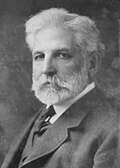
[[File:Robert S. Brookings.jpg|thumb| | [[File:Robert S. Brookings.jpg|thumb|[[Robert S. Brookings]], who founded the Brookings Institution in 1916]] | ||
Brookings was founded in 1916 as the Institute for Government Research (IGR), with the mission of becoming "the first private organization devoted to analyzing public policy issues at the national level."<ref>{{cite web|url= https://www.brookings.edu/about/history|title=Brookings Institution History|publisher=Brookings Institution| website= Brookings.edu|access-date=February 11, 2017|date=2001- | Brookings was founded in 1916 as the Institute for Government Research (IGR), with the mission of becoming "the first private organization devoted to analyzing public policy issues at the national level."<ref>{{cite web|url=https://www.brookings.edu/about/history|title=Brookings Institution History|publisher=Brookings Institution|website=Brookings.edu|access-date=February 11, 2017|date=November 30, 2001|archive-date=July 31, 2016|archive-url=https://web.archive.org/web/20160731184136/http://www.brookings.edu/about/history|url-status=live}}</ref> The organization was founded on March 13, 1916, and began operations on October 1, 1916.<ref>{{Cite journal|last=Willoughby|first=W. F.|date=1918|title=The Institute for Government Research|url=https://www.cambridge.org/core/product/identifier/S0003055400013605/type/journal_article|journal=American Political Science Review|language=en|volume=12|issue=1|pages=49–62|doi=10.2307/1946341|jstor=1946341|s2cid=147043158 |issn=0003-0554|url-access=subscription}}</ref> Its stated mission is to "provide innovative and practical recommendations that advance three broad goals: strengthen American democracy; foster the economic and social welfare, security, and opportunity of all Americans; and secure a more open, safe, prosperous, and cooperative international system."<ref name="about">{{cite web |title=About Brookings |url=https://www.brookings.edu/about.aspx |url-status=dead |archive-url=https://web.archive.org/web/20100430053631/http://www.brookings.edu/about.aspx |archive-date=April 30, 2010 |access-date=April 29, 2010 |website=Brookings.edu |publisher=Brookings Institution}}</ref> | ||
The Institution's founder, philanthropist [[Robert S. Brookings]] (1850–1932), originally created three organizations: the Institute for Government Research, the Institute of Economics with funds from the [[Carnegie Corporation]], and the Robert Brookings Graduate School affiliated with [[Washington University in St. Louis]]. The three were merged into the Brookings Institution on December 8, 1927.<ref name=RSB/><ref name=Critchlow>{{cite book|last=Critchlow|first=Donald T.| title= The Brookings Institution, 1916–1952: Expertise and the Public Interest in a Democratic Society |url=https://archive.org/details/brookingsinstitu00crit|url-access=registration|location= DeKalb, Illinois|publisher=Northern Illinois University Press|year=1985|isbn=9780875801032}}</ref> During the [[Great Depression in the United States]], economists at Brookings embarked on a large-scale study commissioned by President [[Franklin D. Roosevelt]] to understand its underlying causes. Brookings's first president, [[Harold G. Moulton]], and other Brookings scholars later led an effort to oppose Roosevelt's [[National Recovery Administration]] because they thought it impeded economic recovery.<ref>{{cite web| url= http://www.brookings.edu/lib/depression.htm|title=Brookings History: The Depression|publisher=Brookings Institution| website= Brookings.edu|access-date=February 11, 2017| archive-url= https://web.archive.org/web/20070712105512/http://www.brookings.edu/lib/depression.htm|archive-date=July 12, 2007}}</ref> | |||
With the U.S. entry into [[World War II]] in 1941, Brookings researchers turned their attention to aiding the administration with a series of studies on mobilization. In 1948, Brookings was asked to submit a plan for administering the European Recovery Program. The resulting organization scheme assured that the [[Marshall Plan]] was run carefully and on a businesslike basis.<ref>{{cite web| url= http://www.brookings.edu/lib/war.htm|title=Brookings History: War and Readjustment| archive-url= https://web.archive.org/web/20070712105725/http://www.brookings.edu/lib/war.htm|archive-date=July 12, 2007}}</ref> In 1952, Robert Calkins succeeded Moulton as Brookings's president. He secured grants from the [[Rockefeller Foundation]] and the [[Ford Foundation]] and reorganized Brookings around the Economic Studies, Government Studies, and Foreign Policy Programs. In 1957, Brookings moved from Jackson Avenue to a new research center near [[Dupont Circle]] in Washington, D.C.<ref>{{cite web|url=http://www.brookings.edu/lib/academic.htm|title=Brookings History: Academic Prestige| archive-url= https://web.archive.org/web/20070814201129/http://www.brookings.edu/lib/academic.htm|archive-date=August 14, 2007}}</ref> | |||
In 1967, [[Kermit Gordon]] assumed Brookings's presidency. He began a series of studies of program choices for the federal budget in 1969 titled "Setting National Priorities".<ref>{{Cite news |date=September 16, 1976 |title=Leonard Silk |language=en-US |work=The New York Times |url=https://www.nytimes.com/1976/09/16/archives/leonard-silk-setting-better-priorities-setting-better-priorities-on.html |access-date=May 21, 2023 |issn=0362-4331 |archive-date=May 24, 2023 |archive-url=https://web.archive.org/web/20230524042016/https://www.nytimes.com/1976/09/16/archives/leonard-silk-setting-better-priorities-setting-better-priorities-on.html |url-status=live }}</ref> He also expanded the Foreign Policy Studies Program to include research about national security and defense. After [[Richard Nixon]] was elected president in the [[1968 United States presidential election]], the relationship between Brookings and the [[White House]] deteriorated. At one point, Nixon aide [[Charles Colson]] proposed a firebombing of the institution.<ref>{{Cite book|last1=Woodward |first1= Bob| last2= Bernstein |first2=Carl |date=June 1974 |title= All the President's Men |url=https://archive.org/details/allpresidentsme00bern |url-access=registration |publisher=Simon & Schuster |page= [https://archive.org/details/allpresidentsme00bern/page/324 324]}}</ref> [[G. Gordon Liddy]] and the [[White House Plumbers]] actually made a plan to firebomb the headquarters and steal classified files, but it was canceled because the [[Presidency of Richard Nixon|Nixon administration]] refused to pay for a [[fire engine]] as a getaway vehicle.<ref>{{cite book |last=Dobbs |first=Michael |title=King Richard : Nixon and Watergate : an American tragedy |publication-place=New York |date=2021 |isbn=978-0-385-35009-9 |oclc=1176325912}}</ref> Yet throughout the 1970s, Brookings was offered more federal research contracts than it could handle.<ref>{{cite web |url=http://www.brookings.edu/lib/doubts.htm |title=Brookings History: National Doubts and Confusion |archive-url=https://web.archive.org/web/20070814201228/http://www.brookings.edu/lib/doubts.htm |archive-date=August 14, 2007}}</ref> | |||
In 1976, after Gordon died, [[Gilbert Y. Steiner]], director of the governmental studies program, was appointed the fourth president of the Brookings Institution by the board of trustees.<ref name="gs">{{Cite journal|last1=Derthick|first1=Martha|last2=Nivola|first2=Pietro S.|date=July 2006|title=Gilbert Yale Steiner|journal=PS: Political Science & Politics|language=en|volume=39|issue=3|pages=551–554|doi=10.1017/S1049096506210813|issn=1537-5935|doi-access=free}}</ref><ref>{{Cite web|last=Dews|first=Fred|date=November 6, 2017|title=Profiles of Brookings's leaders since 1927|url=https://www.brookings.edu/blog/brookings-now/2017/11/06/profiles-of-brookings-leaders-since-1927/|access-date=July 6, 2021|website=Brookings Institution|archive-date=March 4, 2021|archive-url=https://web.archive.org/web/20210304141929/https://www.brookings.edu/blog/brookings-now/2017/11/06/profiles-of-brookings-leaders-since-1927/|url-status=live}}</ref> As director of the governmental studies program, Steiner brought in numerous scholars whose research ranges from administrative reform to urban policy, not only enhancing the program's visibility and influence in Washington and nationally, but also producing works that have arguably survived as classics in the field of political science.<ref name="gs"/><ref>{{Cite news|date=March 11, 2021|title=Gilbert Steiner|url=https://www.washingtonpost.com/archive/local/2006/03/11/gilbert-steiner/870c45b3-13c7-4514-bf91-feed3858534e/|access-date=July 6, 2021|newspaper=The Washington Post}}</ref> | |||
By the 1980s, Brookings faced an increasingly competitive and ideologically charged intellectual environment.<ref>{{cite web |url=https://www.theatlantic.com/past/docs/politics/polibig/eastidea.htm |title=Ideas Move Nations |last=Easterbrook |first=Gregg |date=January 1, 1986 |work=[[The Atlantic]] |access-date=December 30, 2017 |archive-date=June 14, 2023 |archive-url=https://web.archive.org/web/20230614175928/https://www.theatlantic.com/past/docs/politics/polibig/eastidea.htm |url-status=live }}</ref> The need to reduce the [[United States federal budget|federal budget deficit]] became a major research theme, as did problems with [[National security of the United States|national security]] and government inefficiency. Bruce MacLaury,<ref>{{cite web| url= http://www.federalreservehistory.org/People/DetailView/179| title= Bruce K. MacLaury| website= federalreservehistory.org| access-date=February 11, 2017| archive-date=January 20, 2017| archive-url= https://web.archive.org/web/20170120151509/http://www.federalreservehistory.org/People/DetailView/179| url-status=dead}}</ref> Brookings's fifth president, also established the Center for Public Policy Education to develop workshop conferences and public forums to broaden the audience for research programs.<ref>{{cite web|url=http://www.brookings.edu/lib/agendas.htm|title=Brookings History: Setting New Agendas| archive-url= https://web.archive.org/web/20070712105446/http://www.brookings.edu/lib/agendas.htm|archive-date=July 12, 2007}}</ref> An academic analysis of congressional records from 1993 to 2002 found that Brookings was cited by conservative politicians almost as often as by liberal politicians, earning a score of 53 on a 1–100 scale, with 100 representing the most liberal score.<ref name="sscnet">{{cite journal|last1=Groseclose|first1=Tim|last2=Milyo|first2=Jeffrey|date=November 2005|title=A Measure of Media Bias|journal=[[The Quarterly Journal of Economics]]|volume=120|issue=4|pages=1191–1237|doi=10.1162/003355305775097542|s2cid=54066953 |doi-access=}}</ref> The same study found Brookings to be the most frequently cited think tank by U.S. media and politicians.<ref name=sscnet/> | |||
[[ | In 1995, [[Michael Armacost]] became the sixth president of the Brookings Institution and led an effort to refocus its mission heading into the 21st century.<ref>{{cite web |url= https://apps.carleton.edu/media_relations/press_releases/?story_id=684273|title=Former U.S. Ambassador and Veteran Diplomat to Deliver Convocation|date=November 1, 2010 |publisher=Carleton|access-date=July 16, 2018}}</ref> Under his direction, Brookings created several interdisciplinary research centers, such as the Center on Urban and Metropolitan Policy, now the Metropolitan Policy Program led by [[Bruce J. Katz]],<ref>{{cite web |url=https://www.brookings.edu/center/centennial-scholar-initiative/ |title=Centennial Scholar Initiative |publisher=Brookings Institution |access-date=December 30, 2017 |archive-date=June 14, 2023 |archive-url=https://web.archive.org/web/20230614175934/https://www.brookings.edu/center/centennial-scholar-initiative/ |url-status=live }}</ref> which brought attention to the strengths of cities and metropolitan areas; and the Center for Northeast Asian Policy Studies, which brings together specialists from different Asian countries to examine regional problems.<ref>{{cite web | url= https://theconversation.com/profiles/bates-gill-408202|title=Bates Gill |date=September 14, 2017 |work= [[The Conversation (website)|The Conversation]] |access-date=July 9, 2018}}</ref> | ||
===21st century=== | |||
[[File:Dmitry Medvedev in the United States 14 April 2010-10.jpeg|thumb|Former Russian President [[Dmitry Medvedev]] speaking at the Brookings Institution in April 2010]] | |||
[[File:José María Figueres speaking at Brookings Institution.jpg|thumb|[[José María Figueres]], former [[president of Costa Rica]], speaking at Brookings Institution in March 2012]] | |||
In 2002, [[Strobe Talbott]] became president of Brookings.<ref>{{cite web |url=https://news.northwestern.edu/stories/2017/october/strobe-talbott-first-distinguished-visitor-buffett-institute/ |title=Strobe Talbott to be first distinguished visitor at Buffett Institute |date=October 13, 2017 |publisher=[[Northwestern University]] |access-date=July 16, 2018 |archive-date=June 3, 2024 |archive-url=https://web.archive.org/web/20240603184640/https://news.northwestern.edu/stories/2017/october/strobe-talbott-first-distinguished-visitor-buffett-institute/ |url-status=live}}</ref> Shortly thereafter, Brookings launched the [[Center for Middle East Policy|Saban Center for Middle East Policy]] and the John L. Thornton China Center. In 2006, Brookings announced the establishment of the Brookings-Tsinghua Center in Beijing. In July 2007, Brookings announced the creation of the Engelberg Center for Health Care Reform to be directed by senior fellow [[Mark McClellan]],<ref>{{cite news |url=https://www.washingtonpost.com/news/wonk/wp/2018/05/16/fda-reverses-course-on-a-4-2-million-no-bid-grant-to-a-former-commissioner/ |title=FDA reserves course on a 4.2 Million no-bid grant to a former commissioner |date=May 16, 2018 |newspaper=[[The Washington Post]] |access-date=June 16, 2018}}</ref> and in October 2007 the creation of the Brookings Doha Center directed by fellow [[Hady Amr]] in [[Qatar]].<ref>{{cite web |url=https://berkleycenter.georgetown.edu/interviews/a-second-discussion-with-hady-amr-director-brookings-institute-doha-center-qatar |title=A Second Discussion with Hady Amr, Director, Brookings Institute Doha Center, Qatar |date=October 15, 2007 |publisher=[[Berkley Center for Religion, Peace, and World Affairs]] |access-date=July 9, 2018 |archive-date=June 5, 2024 |archive-url=https://web.archive.org/web/20240605171719/https://berkleycenter.georgetown.edu/interviews/a-second-discussion-with-hady-amr-director-brookings-institute-doha-center-qatar |url-status=live }}</ref> During this period, the funding of Brookings by foreign governments and corporations came under public scrutiny. In 2011, Talbott inaugurated the Brookings India Office.<ref>{{Cite news|url=http://www.business-standard.com/article/opinion/tea-with-bs-strobe-talbott-president-brookings-institution-113042600957_1.html|title=Tea with BS: Strobe Talbott|last=Datta|first=Kanika|date=April 26, 2013|work=Business Standard India|access-date=November 15, 2017|archive-date=September 13, 2024|archive-url=https://web.archive.org/web/20240913233202/https://www.business-standard.com/article/opinion/tea-with-bs-strobe-talbott-president-brookings-institution-113042600957_1.html|url-status=live}}</ref><ref>{{Cite web|url=https://www.brookings.in/|title=Brookings India|website=Brookings India|language=en-US|access-date=November 15, 2017|archive-date=November 15, 2017|archive-url=https://web.archive.org/web/20171115184109/https://www.brookings.in/|url-status=dead}}</ref> | |||
In October 2017, former general [[John R. Allen]] became the eighth president of Brookings.<ref>{{cite web|url=https://www.brookings.edu/news-releases/john-r-allen-named-next-brookings-institution-president/|publisher=Brookings Institution|title=John R. Allen named next Brookings Institution president|date=October 4, 2017|access-date=September 13, 2024|archive-date=March 26, 2023|archive-url=https://web.archive.org/web/20230326030106/https://www.brookings.edu/news-releases/john-r-allen-named-next-brookings-institution-president/|url-status=live}}</ref> Allen resigned on June 12, 2022, amid an FBI foreign lobbying investigation.<ref name="allen">{{cite web|url=https://www.msn.com/en-us/news/politics/brookings-president-resigns-amid-fbi-foreign-lobbying-probe/ar-AAYnl1s|publisher=MSN|title=Brookings president resigns amid FBI foreign lobbying probe|date=June 12, 2022|access-date=September 13, 2024|archive-date=August 16, 2022|archive-url=https://web.archive.org/web/20220816040906/https://www.msn.com/en-us/news/politics/brookings-president-resigns-amid-fbi-foreign-lobbying-probe/ar-AAYnl1s|url-status=live}}</ref> As of June 30, 2019, Brookings had an endowment of $377.2 million.<ref>{{cite web|url=https://www.nacubo.org/-/media/Nacubo/Documents/EndowmentFiles/2019-NTSE-Endowment-Market-Values--FINAL-January-30-2020.ashx|title=U.S. and Canadian Institutions Listed by Fiscal Year (FY) 2019 Endowment Market Value and Change in Endowment Market Value from FY 2018 to FY 2019|publisher=National Association of College and University Business Officers and TIAA|access-date=February 28, 2020|archive-date=January 30, 2020|archive-url=https://web.archive.org/web/20200130175444/https://www.nacubo.org/-/media/Nacubo/Documents/EndowmentFiles/2019-NTSE-Endowment-Market-Values--FINAL-January-30-2020.ashx|url-status=live}}</ref> Brookings operated three international centers: in [[Doha]], Qatar (Brookings Doha Center); [[Beijing]], China (Brookings-Tsinghua Center for Public Policy); and [[New Delhi]], India (Brookings India). In 2020 and 2021, the Institution announced it was separating entirely from its centers in Doha and New Delhi, and transitioning its center in Beijing to an informal partnership with [[Tsinghua University]], known as Brookings-Tsinghua China.<ref>{{Cite press release |title=The Brookings Institution transitions from foreign centers to focus on digital and global engagement |url=https://www.brookings.edu/news-releases/brookings-institution-transitions-from-foreign-centers-to-focus-on-digital-and-global-engagement/ |publisher=The Brookings Institution |date=September 29, 2021 |access-date=June 12, 2022 |archive-date=June 14, 2023 |archive-url=https://web.archive.org/web/20230614202618/https://www.brookings.edu/news-releases/brookings-institution-transitions-from-foreign-centers-to-focus-on-digital-and-global-engagement/ |url-status=live }}</ref> | |||
[[ | |||
In | |||
==Publications== | ==Publications== | ||
Brookings as an institution produces an Annual Report.<ref name="annualreport">{{cite web|title=Brookings Annual Report|url=http://www.brookings.edu/about-us/annual-report|url-status=live|access-date=2021 | Brookings as an institution produces an Annual Report.<ref name="annualreport">{{cite web|title=Brookings Annual Report|url=http://www.brookings.edu/about-us/annual-report|url-status=live|access-date=September 10, 2021|website=Brookings.edu|date=July 22, 2016|publisher=Brookings Institution|archive-url=https://web.archive.org/web/20160814092820/https://www.brookings.edu/about-us/annual-report/ |archive-date=August 14, 2016 }}</ref> The Brookings Institution Press publishes books and journals from the institution's own research as well as authors outside the organization.<ref>{{cite web|url=http://www.brookings.edu/press.aspx|title=Brookings Institution Press|website=Brookings.edu|access-date=April 29, 2010|archive-date=April 29, 2010|archive-url=https://web.archive.org/web/20100429213039/http://www.brookings.edu/press.aspx|url-status=live}}</ref> The books and journals it publishes include ''[[Brookings Papers on Economic Activity]]'',<ref>{{cite web|url=https://www.brookings.edu/about-bpea|title=About BPEA|publisher=Brookings Institution|website=Brookings.edu|access-date=January 27, 2017|date=August 15, 2016|archive-date=September 8, 2020|archive-url=https://web.archive.org/web/20200908092747/https://www.brookings.edu/about-bpea/|url-status=live}}</ref> ''Brookings Review'' (1982–2003, {{ISSN|0745-1253}}),<ref>{{cite web | url=https://www.researchgate.net/journal/0745-1253_The_Brookings_review | title=The Brookings review Journal | access-date=March 13, 2017 | archive-date=March 13, 2017 | archive-url=https://web.archive.org/web/20170313125105/https://www.researchgate.net/journal/0745-1253_The_Brookings_review | url-status=live }}</ref><ref>{{cite web | url=https://www.jstor.org/journal/brookrev | title=The Brookings Review on JSTOR | publisher=[[JSTOR]] | access-date=March 13, 2017 | archive-date=March 13, 2017 | archive-url=https://web.archive.org/web/20170313140140/https://www.jstor.org/journal/brookrev | url-status=live }}</ref> ''America Unbound: The Bush Revolution in Foreign Policy'', ''Globalphobia: Confronting Fears about Open Trade'', ''India: Emerging Power'', ''Through Their Eyes'', ''Taking the High Road'', ''Masses in Flight'', US Public Policy Regarding Sovereign Wealth Fund Investment in the United States<ref name= Rebuilding>{{Cite web|url=http://www.richardakimballjr.com/wp-content/uploads/2014/12/Richard_A_-Kimball_Jr_Brookings_Rebuilding_America_Governance.pdf|title=Rebuilding America: The Role of Foreign Capital and Global Public Investors|first1=Darrell M.|last1=West|first2=Rick|last2=Kimball|first3=Raffiq|last3=Nathoo|first4=Daniel|last4=Zwirn | ||
|first5=Vijaya|last5=Ramat|first6=Gordon M.|last6=Goldstein|first7=Joel H.|last7=Moser|date=December 1, 2014|work=RichardAKimballJr.com|access-date=January 27, 2017|publisher=Governance Studies, Brookings Institution|archive-date=May 20, 2017|archive-url=https://web.archive.org/web/20170520115540/http://www.richardakimballjr.com/wp-content/uploads/2014/12/Richard_A_-Kimball_Jr_Brookings_Rebuilding_America_Governance.pdf|url-status=dead}}</ref> and ''Stalemate''. In addition, books, papers, articles, reports, policy briefs and opinion pieces are produced by Brookings research programs, centers, projects and, for the most part, by experts.<ref>{{cite web|url=http://brookingspress.typepad.com/bipblog|title=Brookings Press Blog| publisher= Brookingspress.typepad.com|access-date=April 29, 2010| url-status= dead| archive-url= https://web.archive.org/web/20071013165854/http://brookingspress.typepad.com/bipblog/|archive-date=October 13, 2007}}</ref><ref>{{cite web|url=http://www.brookings.edu/press/books.aspx|title=Brookings Institution Press: Books|publisher=Brookings Institution|website=Brookings.edu|access-date=April 29, 2010|archive-date=March 6, 2008|archive-url=https://web.archive.org/web/20080306174241/http://www.brookings.edu/press/books.aspx|url-status=live}}</ref> Brookings also cooperates with The Lawfare Institute in publishing the online multimedia publication ''[[Lawfare (website)|Lawfare]]''.<ref>{{Cite web|title=Lawfare: Hard National Security Choices|url=https://www.lawfaremedia.org/|access-date=July 5, 2020|archive-date=September 13, 2024|archive-url=https://web.archive.org/web/20240913233205/https://www.lawfaremedia.org/|url-status=live}}</ref> | |||
==Policy influence== | ==Policy influence== | ||
Brookings traces its history to 1916 and has contributed to the creation of the [[United Nations]], the [[Marshall Plan]], and the [[Congressional Budget Office]], as well as to the development of influential policies for [[deregulation]], broad-based [[tax reform]], [[welfare reform]], and [[United States foreign aid|foreign aid]].<ref name="Brookings Institution History">{{cite web|url=http://www.brookings.edu/about/History.aspx|title=Brookings Institution History| url-status= dead| archive-url= https://web.archive.org/web/20100213071830/http://www.brookings.edu/about/History.aspx|archive-date=2010 | Brookings traces its history to 1916 and has contributed to the creation of the [[United Nations]], the [[Marshall Plan]], and the [[Congressional Budget Office]], as well as to the development of influential policies for [[deregulation]], broad-based [[tax reform]], [[welfare reform]], and [[United States foreign aid|foreign aid]].<ref name="Brookings Institution History">{{cite web|url=http://www.brookings.edu/about/History.aspx|title=Brookings Institution History| url-status= dead| archive-url= https://web.archive.org/web/20100213071830/http://www.brookings.edu/about/History.aspx|archive-date=February 13, 2010}}</ref> The annual think tank index published by ''Foreign Policy'' ranks it the number one think tank in the U.S.<ref name="Foreign Policy: The Think Tank Index">{{cite web|url=https://foreignpolicy.com/story/cms.php?story_id=4598&page=1|title=Foreign Policy: The Think Tank Index| archive-url= https://web.archive.org/web/20090520061336/http://www.foreignpolicy.com/story/cms.php?story_id=4598&page=1 |archive-date=May 20, 2009}}</ref> and the Global Go To Think Tank Index believes it is the number one such tank in the world.<ref>{{cite web|url=http://www.gotothinktank.com/wp-content/uploads/2012/01/2011GlobalGoToThinkTanksReport-UNEditionWITHOUTLETTER.pdf| title= Global Go To Think Tank Index, 2011|date=January 23, 2012|access-date=October 10, 2012| url-status= dead| archive-url= https://web.archive.org/web/20130506171629/http://www.gotothinktank.com/wp-content/uploads/2012/01/2011GlobalGoToThinkTanksReport-UNEditionWITHOUTLETTER.pdf|archive-date=May 6, 2013}}</ref> Moreover, in spite of an overall decline in the number of times information or opinions developed by think tanks are cited by U.S. media, of the 200 most prominent think tanks in the U.S., the Brookings Institution's research remains the most frequently cited.<ref name=fairreport>{{cite web| url= http://fair.org/extra/study-finds-first-drop-in-think-tank-cites/| title= Study Finds First Drop in Think Tank Cites| first= Michael| last= Dolny| work= Extra!| publisher= Fairness and Accuracy in Reporting (FAIR)| date=May–June 2006| access-date=September 13, 2024| archive-date=May 24, 2023| archive-url= https://web.archive.org/web/20230524181139/https://fair.org/extra/study-finds-first-drop-in-think-tank-cites/| url-status=live}}</ref><ref name=mediabias>{{cite web|url=http://www.sscnet.ucla.edu/polisci/faculty/groseclose/Media.Bias.8.htm|title=A Measure of Media Bias|archive-url=https://web.archive.org/web/20081122230358/http://www.sscnet.ucla.edu/polisci/faculty/groseclose/Media.Bias.8.htm|archive-date=November 22, 2008|first1=Tim|last1=Groseclose|first2=Jeff|last2=Milyo|url-status=dead|date=December 2004}}</ref> | ||
In a 1997 survey of congressional staff and journalists, Brookings ranked as the most influential and first in credibility among 27 think tanks considered.<ref name=standford>{{cite journal| url= http://www.ssireview.org/pdf/2005SP_feature_rich.pdf|title=War of Ideas: Why Mainstream and Liberal Foundations and the Think Tanks they Support are Losing in the War of Ideas in American Politics| first= Andrew| last= Rich| journal=Stanford Social Innovation Review|publisher=Stanford University|date=Spring 2006}}</ref> Yet "Brookings and its researchers are not so concerned, in their work, in affecting the ideological direction of the nation" and rather tend "to be staffed by researchers with strong academic credentials".<ref name=standford/> Along with the [[Council on Foreign Relations]] and [[Carnegie Endowment for International Peace]], Brookings is generally considered one of the most influential policy institutes in the U.S.<ref name=FAIR2>{{cite web| first= Michael| last= Dolny| url=http://www.gotothinktank.com/2011-global-tank-index|title=The Incredible Shrinking Think Tank| work= gotothinktank.com |publisher= Fairness and Accuracy in Reporting (FAIR)|date=April 2008| archive-url= https://web.archive.org/web/20120122090517/http://www.gotothinktank.com/2011-global-tank-index|archive-date=January 22, 2012}}</ref> | In a 1997 survey of congressional staff and journalists, Brookings ranked as the most influential and first in credibility among 27 think tanks considered.<ref name=standford>{{cite journal| url= http://www.ssireview.org/pdf/2005SP_feature_rich.pdf| title= War of Ideas: Why Mainstream and Liberal Foundations and the Think Tanks they Support are Losing in the War of Ideas in American Politics| first= Andrew| last= Rich| journal=Stanford Social Innovation Review| publisher= Stanford University| date=Spring 2006| access-date=August 7, 2007| archive-date=September 28, 2007| archive-url= https://web.archive.org/web/20070928093008/http://www.ssireview.org/pdf/2005SP_feature_rich.pdf| url-status= live}}</ref> Yet "Brookings and its researchers are not so concerned, in their work, in affecting the ideological direction of the nation" and rather tend "to be staffed by researchers with strong academic credentials".<ref name=standford/> Along with the [[Council on Foreign Relations]] and [[Carnegie Endowment for International Peace]], Brookings is generally considered one of the most influential policy institutes in the U.S.<ref name="FAIR2">{{cite web| first= Michael| last= Dolny| url=http://www.gotothinktank.com/2011-global-tank-index|title=The Incredible Shrinking Think Tank| work= gotothinktank.com |publisher= Fairness and Accuracy in Reporting (FAIR)|date=April 2008| archive-url= https://web.archive.org/web/20120122090517/http://www.gotothinktank.com/2011-global-tank-index|archive-date=January 22, 2012}}</ref> | ||
==Political stance== | ==Political stance== | ||
As a [[501(c)(3)]] nonprofit organization, Brookings describes itself as independent and nonpartisan. A 2005 UCLA study concluded it was "centrist" because it was referenced as an authority almost equally by both conservative and liberal politicians in congressional records from 1993 to 2002.<ref name= sscnet/> ''[[The New York Times]]'' has called Brookings liberal, liberal-centrist, and centrist.<ref name= "NYT3">{{cite news|url=https://www.nytimes.com/2008/11/16/world/americas/16iht-gitmo.1.17859399.html|work=The New York Times|title=Closing Guantánamo may not be easy|first=William|last=Glaberson|date=November 16, 2008 | As a [[501(c)(3)]] nonprofit organization, Brookings describes itself as independent and nonpartisan. A 2005 UCLA study concluded it was "centrist" because it was referenced as an authority almost equally by both conservative and liberal politicians in congressional records from 1993 to 2002.<ref name= sscnet/> ''[[The New York Times]]'' has called Brookings liberal, liberal-centrist, and centrist.<ref name= "NYT3">{{cite news|url=https://www.nytimes.com/2008/11/16/world/americas/16iht-gitmo.1.17859399.html|work=The New York Times|title=Closing Guantánamo may not be easy|first=William|last=Glaberson|date=November 16, 2008|access-date=September 13, 2024|archive-date=June 22, 2024|archive-url=https://web.archive.org/web/20240622160913/https://www.nytimes.com/2008/11/16/world/americas/16iht-gitmo.1.17859399.html|url-status=live}}</ref><ref name="NYT4">{{cite news|url=https://www.nytimes.com/2005/06/14/politics/14heritage.html|title=Next Generation of Conservatives (By the Dormful)|first=Jason|last=DeParle|work=The New York Times|date=June 14, 2005|access-date=September 13, 2024|archive-date=April 15, 2015|archive-url=https://web.archive.org/web/20150415135022/http://www.nytimes.com/2005/06/14/politics/14heritage.html|url-status=live}}</ref><ref>{{cite news|url=https://www.nytimes.com/2000/09/24/business/economic-view-friedman-and-keynes-trading-pedestals.html|title=ECONOMIC VIEW; Friedman And Keynes, Trading Pedestals|first=Tom|last=Redburn|work=The New York Times|date=September 24, 2000|access-date=September 13, 2024|archive-date=June 22, 2024|archive-url=https://web.archive.org/web/20240622160909/https://www.nytimes.com/2000/09/24/business/economic-view-friedman-and-keynes-trading-pedestals.html|url-status=live}}</ref><ref>{{cite news| url=https://www.nytimes.com/2006/01/13/nyregion/13ROBINSON.html| title= Marshall A. Robinson, 83, Former Foundation Chief, Dies| first=Wolfgang| last= Saxon| work= The New York Times| date=January 13, 2006| access-date=September 13, 2024 |archive-date=October 18, 2015| archive-url= https://web.archive.org/web/20151018092843/http://www.nytimes.com/2006/01/13/nyregion/13ROBINSON.html| url-status= live}}</ref><ref>{{cite news |url=https://www.nytimes.com/1999/09/08/us/air-force-s-newest-jet-fighter-is-in-fierce-fight-in-capitol.html|title=Air Force's Newest Jet Fighter Is in Fierce Fight, in Capitol|first=Elizabeth|last=Becker|work=The New York Times|date=September 8, 1999|access-date=September 13, 2024|archive-date=February 24, 2024|archive-url=https://web.archive.org/web/20240224093928/https://www.nytimes.com/1999/09/08/us/air-force-s-newest-jet-fighter-is-in-fierce-fight-in-capitol.html|url-status=live}}</ref><ref>{{cite news|url=https://www.nytimes.com/2006/02/20/opinion/20mon2.html|title=The Way to Save|work=The New York Times|date=February 20, 2006}}</ref> ''[[The Washington Post]]'' has called Brookings centrist, liberal, and center-left.<ref>{{cite news|url=https://www.washingtonpost.com/wp-dyn/content/article/2009/12/08/AR2009120803928.html|title=Mr. Obama's Jobs Plan|newspaper=The Washington Post|date=December 9, 2009|access-date=September 13, 2024|archive-date=March 26, 2023|archive-url=https://web.archive.org/web/20230326030526/https://www.washingtonpost.com/wp-dyn/content/article/2009/12/08/AR2009120803928.html|url-status=live}}</ref><ref>{{cite news|url=https://www.washingtonpost.com/wp-dyn/content/article/2007/06/20/AR2007062002342_pf.html|title=Stumping for Attention To Deficit Disorder|first=Lori|last=Montgomery|newspaper=The Washington Post|date=June 21, 2007|access-date=September 13, 2024|archive-date=March 26, 2023|archive-url=https://web.archive.org/web/20230326030509/https://www.washingtonpost.com/wp-dyn/content/article/2007/06/20/AR2007062002342_pf.html|url-status=live}}</ref><ref>{{cite news|url=https://www.washingtonpost.com/wp-dyn/content/blog/2006/11/13/BL2006111300496_pf.html|title=The Unbelievable Karl Rove|first=Dan|last=Froomkin|newspaper=The Washington Post|date=November 13, 2006|access-date=September 13, 2024|archive-date=January 22, 2022|archive-url=https://web.archive.org/web/20220122013135/https://www.washingtonpost.com/wp-dyn/content/blog/2006/11/13/BL2006111300496_pf.html|url-status=live}}</ref><ref>{{cite news|url=https://www.washingtonpost.com/archive/politics/2002/04/15/2003-budget-completes-big-jump-in-spending/6e0ea5bc-be85-44a9-acb4-809c5b03299c|title=2003 Budget Completes Big Jump in Spending|first=Glenn|last=Kessler|newspaper=The Washington Post|date=April 15, 2002|access-date=September 13, 2024|archive-date=November 14, 2020|archive-url=https://web.archive.org/web/20201114213630/https://www.washingtonpost.com/archive/politics/2002/04/15/2003-budget-completes-big-jump-in-spending/6e0ea5bc-be85-44a9-acb4-809c5b03299c/|url-status=live}}</ref><ref name="center-left"/> The ''[[Los Angeles Times]]'' called Brookings liberal-leaning and centrist while noting that it didn't believe such labels mattered.<ref>{{cite web|url=http://latimesblogs.latimes.com/readers/2008/05/left-leaning-or.html|work=[[Los Angeles Times]]|title=Left-leaning' or 'Nonpartisan'?|date=May 13, 2008|access-date=January 27, 2017|archive-date=October 10, 2017|archive-url=https://web.archive.org/web/20171010130529/http://latimesblogs.latimes.com/readers/2008/05/left-leaning-or.html|url-status=live}}</ref><ref>{{cite news| url= http://www.latimes.com/business/la-na-stimulus17jan17,0,2412219.story?page=1|title=Parties Suggest They'd Yield for Stimulus Pact|first1=Maura|last1=Reynolds|first2=Richard|last2=Simon|work=Los Angeles Times|date=January 17, 2008| access-date=January 27, 2017}}</ref><ref>{{cite news|url=http://articles.latimes.com/2008/02/02/news/fg-alqaeda2|archive-url=https://archive.today/20120709132628/http://articles.latimes.com/2008/02/02/news/fg-alqaeda2|url-status=dead|archive-date=July 9, 2012| title= U.S. Won't Say Who Killed Militant|first=Josh|last=Meyer|work=Los Angeles Times|date=February 2, 2008}}</ref> | ||
Brookings's | In 1977, ''[[Time (magazine)|Time]]'' magazine called Brookings the "nation's pre-eminent liberal think tank".<ref>{{cite magazine|url=http://content.time.com/time/magazine/article/0,9171,915490,00.html|title=The Other Think Tank|magazine=[[Time (magazine)|Time]]|date=September 19, 1977|access-date=September 13, 2024|archive-date=June 14, 2023|archive-url=https://web.archive.org/web/20230614175930/https://content.time.com/time/magazine/article/0,9171,915490,00.html|url-status=live}}</ref> ''[[Newsweek]]'' has called it centrist,<ref>{{cite news|url=http://www.newsweek.com/blogs/the-gaggle/2010/05/25/economists-agree-unemployment-will-stay-high-through-november.html|title=Economists Agree: Unemployment Will Stay High Through November|work=[[Newsweek]]|date=May 25, 2010|access-date=July 12, 2010|archive-date=September 9, 2012|archive-url=https://archive.today/20120909123354/http://www.newsweek.com/blogs/the-gaggle/2010/05/25/economists-agree-unemployment-will-stay-high-through-november.html|url-status=live}}</ref> and ''[[Politico (newspaper)|Politico]]'' has used the term "center-left".<ref>{{cite news|first=Reid J.|last=Epstein|url=https://www.politico.com/story/2011/11/huntsman-speaks-atbrookings-068366|title=Jon Huntsman veers campaign to Brookings|work=Politico|date=November 14, 2011|access-date=November 15, 2011|archive-date=November 16, 2011|archive-url=https://web.archive.org/web/20111116182122/http://www.politico.com/news/stories/1111/68366.html|url-status=live}}</ref> The [[Progressivism in the United States|progressive]],<ref>{{cite web | url=https://fair.org/about/ | title=What's FAIR? | date=April 28, 2017 | website=Fairness & Accuracy in Reporting | access-date=December 14, 2018 | archive-date=January 9, 2019 | archive-url=https://web.archive.org/web/20190109050115/https://fair.org/about/ | url-status=dead }}</ref> left-leaning media watchdog group [[Fairness and Accuracy in Reporting]] has called Brookings "centrist",<ref name="fairreport" /><ref name="FAIR02">{{cite web|first=Michael|last=Dolny|url=http://fair.org/extra/think-tanks-in-a-time-of-crisis/|title=Think Tanks in a Time of Crisis|work=Extra!|publisher=Fairness and Accuracy in Reporting (FAIR)|date=March–April 2002|access-date=September 13, 2024|archive-date=October 22, 2022|archive-url=https://web.archive.org/web/20221022112639/https://fair.org/extra/think-tanks-in-a-time-of-crisis/|url-status=live}}</ref> "conservative",<ref name="FAIR">{{cite web| first= Sam| last= Husseini| url= http://fair.org/extra/brookings-the-establishments-think-tank/|title=Brookings: The Establishment's Think Tank |publisher=Fairness and Accuracy in Reporting (FAIR)|date=November–December 1998|access-date=February 11, 2017 |archive-date=March 16, 2017 |archive-url=https://web.archive.org/web/20170316092719/http://fair.org/extra/brookings-the-establishments-think-tank/ |url-status=live}}</ref> and "center-right".<ref name="FAIR91">{{cite web|first=Lawrence|last=Soley|url=http://fair.org/extra-online-articles/Brookings:-Stand-In-for-the-Left|title=Brookings: Stand-In for the Left|work=Extra!|publisher= Fairness and Accuracy in Reporting (FAIR)|date=1991}}</ref> [[Matthew Yglesias]], a former writer and editor at ''[[The Atlantic]]'', and [[Glenn Greenwald]] at ''[[Salon (website)|Salon]]'' have argued that Brookings foreign policy scholars were overly supportive of [[Foreign policy of the George W. Bush administration|Bush administration policies abroad]].<ref name="yglesias">{{cite news|url=https://www.theatlantic.com/politics/archive/2007/08/very-serious-indeed/45957|title= Very Serious Indeed| first= Matthew|last=Yglesias|work=[[The Atlantic]]|date=August 24, 2007}}</ref><ref name="greenwald070812">{{cite web|last=Greenwald|first=Glenn|author-link=Glenn Greenwald|date=August 12, 2007|title=The Truth Behind the Pollack-O'Hanlon Trip to Iraq|url=http://www.salon.com/2007/08/12/ohanlon_2|website=Salon|access-date=January 27, 2017|archive-date=November 29, 2016|archive-url=https://web.archive.org/web/20161129071206/http://www.salon.com/2007/08/12/ohanlon_2/|url-status=live}}</ref> Citing Greenwald, FAIR questioned whether Brookings should be considered right-wing "extremist" instead of "a 'liberal' think tank".<ref name="FAIR09">{{cite web | url=https://fair.org/media_criticism/brookings-institute-liberal-centrist-or-extremist/ | title=Brookings Institution: 'Liberal,' Centrist… or Extremist? | date= 2009-05-26| website=Fairness & Accuracy in Reporting | access-date=2021-10-06}}</ref> | ||
Brookings scholars have served in [[Republican Party (United States)|Republican]] and [[Democratic Party (United States)|Democratic]] administrations, including [[Mark McClellan]],<ref>{{cite web |url=http://www.brookings.edu/experts/mcclellanm.aspx |title=Mark B. McClellan |url-status=dead |archive-url=https://web.archive.org/web/20120314090442/http://www.brookings.edu/experts/mcclellanm.aspx |archive-date=March 14, 2012 |publisher=Brookings Institution |website=Brookings.edu |access-date=August 27, 2013}}</ref> Ron Haskins,<ref>{{cite web|url=http://www.brookings.edu/experts/haskinsr.aspx|title=Ron Haskins|publisher=Brookings Institution|website=Brookings.edu|access-date=August 27, 2013|archive-date=March 6, 2008|archive-url=https://web.archive.org/web/20080306021041/http://www.brookings.edu/experts/haskinsr.aspx|url-status=live}}</ref> and [[Martin Indyk]].<ref>{{cite web|url= http://www.brookings.edu/experts/indykm.aspx|title=Martin S. Indyk|publisher=Brookings Institution| website= Brookings.edu|access-date=August 27, 2013| url-status= dead| archive-url= https://web.archive.org/web/20130826025531/http://www.brookings.edu/experts/indykm.aspx|archive-date=August 26, 2013}}</ref><ref>{{cite web|url=http://www.brookings.edu/experts.aspx|title=The Brookings Institution Experts|publisher=Brookings Institution|website=Brookings.edu|access-date=August 27, 2013|archive-date=March 6, 2008|archive-url=https://archive.today/20080306020055/http://www.brookings.edu/experts.aspx|url-status=live}}</ref> Brookings's board of trustees is composed of 53 trustees and more than three dozen honorary trustees, including [[Kenneth Duberstein]], a former chief of staff to Ronald Reagan. Aside from political figures, the board of trustees includes leaders in business and industry, including [[Haim Saban]], [[Robert Bass]], [[Hanzade Doğan Boyner]], [[Paul L. Cejas]], [[W. Edmund Clark]], [[Abby Joseph Cohen]], [[Betsy Cohen]], [[Susan Crown]], [[Arthur B. Culvahouse Jr.]], [[Jason Cummins]], [[Paul Desmarais Jr.]], [[Kenneth M. Duberstein]], [[Glenn Hutchins]], and [[Phil Knight|Philip H. Knight]] (chairman emeritus of [[Nike, Inc]]).<ref>{{cite web|url=https://www.brookings.edu/about-us/board-of-trustees/|title=Board Of Trustees|website=Brookings.edu|access-date=April 25, 2017|date=July 22, 2016|archive-date=June 9, 2017|archive-url=https://web.archive.org/web/20170609015545/https://www.brookings.edu/about-us/board-of-trustees/|url-status=live}}</ref> | |||
==Presidents== | ==Presidents== | ||
Since its incorporation as the Brookings Institution in 1927, it has been led by accomplished academics and public servants. Brookings has had | Since its incorporation as the Brookings Institution in 1927, it has been led by accomplished academics and public servants. Brookings has had eleven presidents, including three in acting capacity.<ref>{{Cite web|last=Dews|first=Fred|date=November 6, 2017|title=Profiles of Brookings's leaders since 1927|url=https://www.brookings.edu/blog/brookings-now/2017/11/06/profiles-of-brookings-leaders-since-1927/|url-status=live|access-date=July 6, 2021|website=Brookings Institution|archive-url=https://web.archive.org/web/20210304141929/https://www.brookings.edu/blog/brookings-now/2017/11/06/profiles-of-brookings-leaders-since-1927/ |archive-date=March 4, 2021 }}</ref> The current president is [[Cecilia Rouse]], who replaced acting President Amy Liu, who began serving in January 2024.<ref>{{Cite web|title=Brookings Institution Announces Dr. Cecilia Rouse as President|url=https://www.brookings.edu/news/brookings-institution-announces-dr-cecilia-rouse-as-president/|access-date=April 6, 2024|website=Brookings|archive-date=August 27, 2024|archive-url=https://web.archive.org/web/20240827051540/https://www.brookings.edu/news/brookings-institution-announces-dr-cecilia-rouse-as-president/|url-status=live}}</ref> | ||
* [[Harold G. Moulton]], 1927–1952 | * [[Harold G. Moulton]], 1927–1952 | ||
* Robert D. Calkins, 1952–1967 | * Robert D. Calkins, 1952–1967 | ||
| Line 98: | Line 82: | ||
* [[Michael Armacost]], 1995–2002 | * [[Michael Armacost]], 1995–2002 | ||
* [[Strobe Talbott]], 2002–2017 | * [[Strobe Talbott]], 2002–2017 | ||
* [[John R. Allen]], 2017–2022<ref>{{cite news |last1=Mazzetti |first1=Mark |title=Brookings Institution Puts President on Leave Amid Lobbying Inquiry |url=https://www.nytimes.com/2022/06/08/us/politics/john-allen-brookings-institution.html |work=The New York Times |date=8 | * [[John R. Allen]], 2017–2022<ref>{{cite news |last1=Mazzetti |first1=Mark |title=Brookings Institution Puts President on Leave Amid Lobbying Inquiry |url=https://www.nytimes.com/2022/06/08/us/politics/john-allen-brookings-institution.html |work=The New York Times |date=June 8, 2022 |access-date=September 13, 2024 |archive-date=January 17, 2024 |archive-url=https://web.archive.org/web/20240117071325/https://www.nytimes.com/2022/06/08/us/politics/john-allen-brookings-institution.html |url-status=live }}</ref> | ||
* [[Ted Gayer]] (acting), 2022–2022<ref>{{Cite web |last=Risotto |first=Andrea |date=June 12, 2022 |title=News Release Brookings Leadership Update |url=https://www.brookings.edu/news-releases/brookings-leadership-update/ |access-date=June 16, 2022 |website=www.brookings.edu}}</ref> | * [[Ted Gayer]] (acting), 2022–2022<ref>{{Cite web |last=Risotto |first=Andrea |date=June 12, 2022 |title=News Release Brookings Leadership Update |url=https://www.brookings.edu/news-releases/brookings-leadership-update/ |access-date=June 16, 2022 |website=www.brookings.edu |archive-date=June 16, 2022 |archive-url=https://web.archive.org/web/20220616110930/https://www.brookings.edu/news-releases/brookings-leadership-update/ |url-status=live }}</ref> | ||
* Amy Liu (acting), 2022–2023<ref>{{Cite web |date=2022 | * Amy Liu (acting), 2022–2023<ref>{{Cite web |date=July 5, 2022 |title=Amy Liu appointed interim president of Brookings |url=https://www.brookings.edu/news-releases/amy-liu-appointed-interim-president-of-brookings/ |access-date=July 5, 2022 |website=Brookings |language=en-US |archive-date=September 13, 2024 |archive-url=https://web.archive.org/web/20240913234226/https://www.brookings.edu/news/amy-liu-appointed-interim-president-of-brookings/ |url-status=live }}</ref> | ||
* [[Cecilia Rouse]], | * [[Cecilia Rouse]], 2024–present<ref>{{Cite web |title=Dr. Cecilia Rouse talks about being appointed Brookings's ninth President |url=https://www.brookings.edu/articles/dr-cecilia-rouse-talks-about-being-appointed-brookings-ninth-president/ |access-date=July 5, 2023 |website=Brookings |language=en-US |archive-date=April 24, 2024 |archive-url=https://web.archive.org/web/20240424094815/https://www.brookings.edu/articles/dr-cecilia-rouse-talks-about-being-appointed-brookings-ninth-president/ |url-status=live }}</ref> | ||
== | ==Staff== | ||
Brookings staff's union, Brookings United, was formed in 2021.<ref>{{Cite news |last=Rainey |first=Rebecca |date=April 13, 2021 |title=Unions eye Brookings, Urban Institute as push to organize think tanks grows |url=https://www.politico.com/news/2021/04/13/unions-brookings-urban-institute-organized-labor-481116 |access-date=February 26, 2025 |work=[[Politico]]}}</ref> It is affiliated with the Nonprofit Professional Employees Union (NPEU), a local of the [[International Federation of Professional and Technical Engineers]].<ref>{{Cite web |date=2021-09-27 |title=The Brookings Institution Formally Recognizes Staff Union |url=https://npeu.org/news/2021/9/27/the-brookings-institution-formally-recognizes-staff-union |access-date=2025-02-26 |website=Nonprofit Professional Employees Union |language=en-US}}</ref> In 2024, the ratification of a 3-year [[Collective agreement|collective bargaining agreement]] (CBA) was reached.<ref>{{Cite web |title=The Brookings Institution and Brookings United Staff Union Reach Landmark Three-Year Agreement |url=https://www.brookings.edu/news/the-brookings-institution-and-brookings-united-staff-union-reach-landmark-three-year-agreement/ |access-date=2025-02-26 |website=Brookings Institution |language=en-US}}</ref> | |||
==Research programs== | ==Research programs== | ||
=== Center for Middle East Policy=== | === Center for Middle East Policy=== | ||
In 2002, the Brookings Institution established the | In 2002,<ref name="SabanAboutUs">{{cite news |title=About Us |publisher=Brookings Center for Middle East Policy |url=https://www.brookings.edu/about-the-center-for-middle-east-policy/ |accessdate=October 3, 2022 |archive-date=May 29, 2024 |archive-url=https://web.archive.org/web/20240529234252/https://www.brookings.edu/about-the-center-for-middle-east-policy/ |url-status=live }}</ref> the Brookings Institution established the '''Center for Middle East Policy''' (CMEP, formerly the '''Saban Center for Middle East Policy''') "to promote a better understanding of the policy choices facing American decision-makers in the Middle East".<ref>{{Cite book |last=Pollack |first=Kenneth M. |url=https://books.google.com/books?id=Pz2Vjjq5IGwC |title=A Switch in Time: A New Strategy for America in Iraq |date=February 1, 2007 |publisher=Rowman & Littlefield |isbn=978-0-8157-7150-0 |pages=123 |language=en |access-date=September 13, 2024 |archive-date=September 28, 2023 |archive-url=https://web.archive.org/web/20230928183458/https://books.google.com/books?id=Pz2Vjjq5IGwC |url-status=live }}</ref> The center was launched in May 2002 "with a special address by His Majesty King [[Abdullah II bin al-Hussein]] of the Hashemite Kingdom of [[Jordan]] to a select audience of policymakers in Washington, D.C."<ref name="SabanAboutUs"/> | ||
The center was originally named after American-[[Israel]]i film and television producer [[Haim Saban]]. Saban, according to the center<ref name="SabanAboutUs"/> and its parent organization,<ref name="BrookingsInstitute2002-02-09">{{cite news | |||
|first= | |||
|last= | |||
|authorlink= | |||
|url=http://www.brookings.edu/media/NewsReleases/2002/20020509saban.aspx | |||
|title=Brookings Announces New Saban Center for Middle East Policy | |||
|publisher=Brookings Institution | |||
|location= | |||
|date=February 9, 2002 | |||
|accessdate=May 7, 2008 | |||
|archive-date=March 3, 2016 | |||
|archive-url=https://web.archive.org/web/20160303174348/http://www.brookings.edu/media/NewsReleases/2002/20020509saban.aspx | |||
|url-status=live | |||
}}</ref> "made a generous initial grant and pledged additional funds to endow the Center." According to a press release from Saban's charitable foundation,<ref name="SabanFamilyFoundation2003-06-23">{{cite news | |||
|first= | |||
|last= | |||
|authorlink= | |||
|url=http://findarticles.com/p/articles/mi_m0EIN/is_2003_June_23/ai_103998774 | |||
|title=Saban Family Foundation Announces $100 Million in Charitable Gifts; Major Gifts Made To Research, Healthcare and Education Organizations In The U.S. and Israel | |||
|publisher=Find Articles | |||
|location= | |||
|date=June 23, 2003 | |||
|accessdate=July 27, 2008 | |||
|archive-date=December 27, 2008 | |||
|archive-url=https://web.archive.org/web/20081227140441/http://findarticles.com/p/articles/mi_m0EIN/is_2003_June_23/ai_103998774 | |||
|url-status=live | |||
}}</ref> Saban "donated $13 million for the establishment of the Saban Center for Middle East Policy at the Brookings Institution." Saban, according to the center,<ref name="SabanAboutUs"/> ascribed his involvement to his "abiding interest in promoting [[Arab-Israeli peace]] and preserving American interests in the Middle East" that led him to fund the center.<ref name="SabanAboutUs"/> Some critics have charged that various sources of funding for the center have influenced its outlook, but the center has dismissed such allegations, saying that in all cases the donors respected the center's independence.<ref>{{cite news |title= Mediator Martin Indyk Describes Collapse of Peace Talks |url= http://forward.com/articles/206301/mediator-martin-indyk-describes-collapse-of-peace/ |author= Ron Kampeas |newspaper= The Forward |date=September 23, 2014 |access-date=September 13, 2024 |archive-date=April 2, 2015 |archive-url= https://web.archive.org/web/20150402150510/http://forward.com/articles/206301/mediator-martin-indyk-describes-collapse-of-peace/ |url-status=live}}</ref> | |||
[[John Mearsheimer]] and [[Stephen Walt]], in their 2006 article,<ref name="Mearsheimer2006-03-23">{{cite news|first=John|last=Mearsheimer|author2=Stephen Walt|authorlink=John Mearsheimer|url=http://www.lrb.co.uk/v28/n06/mear01_.html|title=The Israel Lobby|publisher=The London Review of Books|location=|date=March 23, 2006|access-date=May 7, 2008|archive-date=August 15, 2009|archive-url=https://web.archive.org/web/20090815015205/http://www.lrb.co.uk/v28/n06/mear01_.html|url-status=live}}</ref> wrote: "To be sure, the Saban Centre occasionally hosts Arab scholars and exhibits some diversity of opinion. Saban Center fellows ... often endorse the idea of a two-state settlement between Israel and the Palestinians. But Saban Center publications never question US support for Israel and rarely, if ever, offer significant criticism of key Israeli policies."<ref>The Israel Lobby and US Foreign Policy, John J. Mearsheimer and Stephen M Walt, Allen Lane (UK Edition), p176-7</ref> Some Saban Center fellows have responded by criticizing the authors' scholarship and expansive definition of "Israel lobby". [[Martin Indyk]] stated that their "notion of a loosely aligned group of people that all happen to be working assiduously for Israel is indeed a cabal.... And this cabal includes anyone that has anything positive to say about Israel... And what does this cabal do? It 'distorts' American foreign policy, it 'bends' it, all these words are used to suggest that this cabal is doing something anti-American."<ref>{{Cite web |last=Beckerman |first=Gal |date=2006-10-06 |title=Scholars Debate ‘Israel Lobby’ Article |url=https://forward.com/news/4845/scholars-debate-e2-80-98israel-lobby-e2-80-99-article/ |url-status=live |archive-url=https://web.archive.org/web/20150407045956/http://forward.com/articles/4845/scholars-debate-eisrael-lobbye-article/#ixzz2RFkROuiL |archive-date=2015-04-07 |access-date=2025-06-09 |website=The Forward |language=en}}</ref> Another fellow wrote that the authors' book "will pale in comparison [to other academic works] because the only way it can become an esteemed classic is if its underlying thesis is correct: that a domestic political lobby drives U.S. policy in the Middle East. If that were true, then the ruckus raised by The Israeli Lobby would establish the book as a classic. But it isn't true. Domestic politics and lobbying do matter when it comes to matters of tone and timing, but as [[Aaron David Miller]], a veteran American peace-process diplomat, puts it...: "I can't remember a single decision of consequence American peace process advisers made, or one we didn't, that was directly tied to some lobbyist's call, letter, or pressure tactic."<ref>{{Cite web |last=Rabinovich |first=Itamar |date=2008-03-01 |title=Testing the "Israel Lobby" Thesis |url=https://www.brookings.edu/articles/testing-the-israel-lobby-thesis/ |url-status=live |archive-url=https://web.archive.org/web/20121008034657/http://www.brookings.edu/research/articles/2008/03/israel-rabinovich |archive-date=2012-10-08 |access-date=2025-06-09 |website=Brookings |language=en-US}}</ref> | |||
In a September 17, 2014, article in [[Tablet (magazine)|''Tablet'']], [[Lee Smith (journalist)|Lee Smith]] criticized the center for accepting substantial donations from the Qatari government, "a foreign government that, in addition to its well-documented role as a funder of Sunni terror outfits throughout the Middle East, is the main patron of Hamas—which happens to be the mortal enemy of both the State of Israel and Mahmoud Abbas' Fatah party." He suggested that the donations influenced the center's research analysis and Martin Indyk's statements as a State Department official and peace mediator.<ref>{{cite news |url=http://tabletmag.com/jewish-news-and-politics/184713/martin-indyk-qatar |title=How Peace Negotiator Martin Indyk Cashed a Big, Fat $14.8 Million Check From Qatar |author=Lee Smith |newspaper=Tablet |date=September 17, 2014 |access-date=September 13, 2024 |archive-date=September 14, 2021 |archive-url=https://web.archive.org/web/20210914110953/https://www.tabletmag.com/jewish-news-and-politics/184713/martin-indyk-qatar |url-status=live }}</ref> Brookings responded: "A review of publications and media appearances by our scholars in Doha and in Washington—all of which are available at Brookings.edu—demonstrate the same independence of thinking and objective, fact-based analysis about Qatar as on every other topic of our research. Our agreements with Qatar specifically protect the independence of our scholarship in all respects." Smith thanked the think tank for its response, but said it did "not satisfactorily address the key issues [his] article raises."<ref>{{cite news |url=http://tabletmag.com/scroll/185831/brookings-responds-to-tablet-piece-on-qatar-funding |title=Brookings Responds to Tablet Piece on Qatar Funding |newspaper=Tablet |date=October 2, 2014 |access-date=September 13, 2024 |archive-date=December 3, 2021 |archive-url=https://web.archive.org/web/20211203013455/https://www.tabletmag.com/scroll/185831/brookings-responds-to-tablet-piece-on-qatar-funding |url-status=live }}</ref> | |||
====People==== | |||
* Natan Sachs, Director and Fellow | |||
* [[Daniel L. Byman]], Senior Fellow | |||
*[[Shadi Hamid]], Senior Fellow | |||
* Suzanne Maloney, Senior Fellow, and Vice President for Foreign Policy, Brookings | |||
* Chris Meserole, Fellow | |||
* [[Bruce Riedel]], Senior Fellow | |||
===Brookings-Tsinghua Center for Public Policy=== | ===Brookings-Tsinghua Center for Public Policy=== | ||
| Line 122: | Line 145: | ||
}} | }} | ||
In 2006, the Brookings Institution established the Brookings-Tsinghua Center (BTC) for Public Policy as a partnership between the Brookings Institution in Washington, DC and [[Tsinghua University]]'s [[School of Public Policy and Management]] in [[Beijing]], | In 2006, the Brookings Institution established the Brookings-Tsinghua Center (BTC) for Public Policy as a partnership between the Brookings Institution in Washington, DC and [[Tsinghua University]]'s [[School of Public Policy and Management]] in [[Beijing]], China. The Center seeks to produce research in areas of fundamental importance for China's development and for US–China relations.<ref>{{Cite web|title=About the Brookings-Tsinghua Center for Public Policy|url=http://www.brookings.edu/about/centers/brookings-tsinghua/about|publisher=Brookings Institution|website=Brookings.edu|access-date=December 11, 2015|archive-date=July 29, 2016|archive-url=https://web.archive.org/web/20160729020041/http://www.brookings.edu/about/centers/brookings-tsinghua/about|url-status=live}}</ref> The BTC was directed by Qi Ye until 2019.<ref>{{Cite web|title=Brookings-Tsinghua Center|url=http://www.brookings.edu/about/centers/brookings-tsinghua|publisher=Brookings Institution|website=Brookings.edu|access-date=December 11, 2015|archive-date=September 13, 2024|archive-url=https://web.archive.org/web/20240913234224/https://www.brookings.edu/centers/brookings-tsinghua-center/|url-status=live}}</ref> | ||
===21st Century Defense Initiative=== | ===21st Century Defense Initiative=== | ||
[[File:US Navy 070403-N-0696M-015 Chief of Naval Operations (CNO) Adm. Mike Mullen speaks at the Brookings Institution on the Navy's effort to formulate a new maritime strategy.jpg|thumb|Adm. [[Michael Mullen]] speaks at the Brookings Institution]] | [[File:US Navy 070403-N-0696M-015 Chief of Naval Operations (CNO) Adm. Mike Mullen speaks at the Brookings Institution on the Navy's effort to formulate a new maritime strategy.jpg|thumb|Adm. [[Michael Mullen]] speaks at the Brookings Institution in April 2007.]] | ||
The 21st Century Defense Initiative (21CDI) is aimed at producing research, analysis, and outreach that address three core issues: the future of war, the future of U.S. defense needs and priorities, and the future of the US defense system.<ref>{{cite web|url=http://www.brookings.edu/projects/21defense.aspx|title=21st Century Defense Initiative| publisher=Brookings Institution|website=Brookings.edu|access-date=2010 | The 21st Century Defense Initiative (21CDI) is aimed at producing research, analysis, and outreach that address three core issues: the future of war, the future of U.S. defense needs and priorities, and the future of the US defense system.<ref>{{cite web|url=http://www.brookings.edu/projects/21defense.aspx|title=21st Century Defense Initiative| publisher=Brookings Institution|website=Brookings.edu|access-date=April 29, 2010}}</ref> The Initiative draws on the knowledge from regional centers, including the Center on the United States and Europe, the Center for Northeast Asian Policy Studies, the Thornton China Center, and the [[Center for Middle East Policy]], allowing the integration of regional knowledge.<ref name="21st Century">{{cite web|url=http://www.brookings.edu/projects/21defense/about.aspx|title=About the 21st Century Defense Initiative at Brookings|publisher=Brookings Institution|website=Brookings.edu|access-date=November 1, 2011|archive-date=September 25, 2011|archive-url=https://web.archive.org/web/20110925134614/http://www.brookings.edu/projects/21defense/about.aspx|url-status=live}}</ref> [[P. W. Singer]], author of ''[[Wired for War]]'', serves as Director of the 21st Century Defense Initiative, and [[Michael E. O'Hanlon|Michael O'Hanlon]] serves as Director of Research.<ref name="21st Century" /> Senior Fellow [[Stephen P. Cohen]] and [[Vanda Felbab-Brown]]<ref>{{cite web|url=http://www.brookings.edu/experts/felbabbrownv.aspx|title=Vanda Felbab-Brown|publisher=Brookings Institution|website=Brookings.edu|access-date=August 27, 2013|archive-date=December 3, 2009|archive-url=https://web.archive.org/web/20091203202316/http://www.brookings.edu/experts/felbabbrownv.aspx|url-status=live}}</ref> are also affiliated with 21CDI.<ref>{{cite web|url=http://www.brookings.edu/projects/21defense/experts.aspx|title=21st Century Defense Initiative: Experts|publisher=Brookings Institution|website=Brookings.edu|access-date=November 1, 2011|archive-date=September 25, 2011|archive-url=https://web.archive.org/web/20110925134746/http://www.brookings.edu/projects/21defense/experts.aspx|url-status=live}}</ref> | ||
The Initiative draws on the knowledge from regional centers, including the Center on the United States and Europe, the Center for Northeast Asian Policy Studies, the Thornton China Center, and the [[Center for Middle East Policy]], allowing the integration of regional knowledge.<ref name="21st Century">{{cite web|url=http://www.brookings.edu/projects/21defense/about.aspx|title=About the 21st Century Defense Initiative at Brookings|publisher=Brookings Institution|website=Brookings.edu|access-date=November 1, 2011}}</ref> | |||
[[P. W. Singer]], author of ''[[Wired for War]]'', serves as Director of the 21st Century Defense Initiative, and [[Michael E. O'Hanlon|Michael O'Hanlon]] serves as Director of Research.<ref name="21st Century"/> Senior Fellow [[Stephen P. Cohen]] and [[Vanda Felbab-Brown]]<ref>{{cite web|url=http://www.brookings.edu/experts/felbabbrownv.aspx|title=Vanda Felbab-Brown|publisher=Brookings Institution| website= Brookings.edu| access-date=2013- | |||
===WashU at Brookings=== | ===WashU at Brookings=== | ||
Under MacLaury's leadership in the 1980s, the Center for Public Policy Education (CPPE) was formed to develop workshop conferences and public forums to broaden the audience for research programs. In 2005, the center was renamed the Brookings Center for Executive Education (BCEE), which was shortened to Brookings Executive Education (BEE) with the launch of a partnership with the [[Olin Business School]] at [[Washington University in St. Louis]]. The academic partnership is now known as "[[Washington University in St. Louis|WashU]] at Brookings".<ref>{{Cite web|url=https://www.brookings.edu/aboutexeced/|title=About WashU at Brookings|date=May 13, 2016|website=Brookings|language=en-US|access-date=August 19, 2019}}</ref> | Under MacLaury's leadership in the 1980s, the Center for Public Policy Education (CPPE) was formed to develop workshop conferences and public forums to broaden the audience for research programs. In 2005, the center was renamed the Brookings Center for Executive Education (BCEE), which was shortened to Brookings Executive Education (BEE) with the launch of a partnership with the [[Olin Business School]] at [[Washington University in St. Louis]]. The academic partnership is now known as "[[Washington University in St. Louis|WashU]] at Brookings".<ref>{{Cite web|url=https://www.brookings.edu/aboutexeced/|title=About WashU at Brookings|date=May 13, 2016|website=Brookings|language=en-US|access-date=August 19, 2019|archive-date=August 19, 2019|archive-url=https://web.archive.org/web/20190819145503/https://www.brookings.edu/aboutexeced/|url-status=live}}</ref> | ||
== | ==Notable centers== | ||
* [[Center for Middle East Policy]] | * [[Center for Middle East Policy]] | ||
* [[Center for Universal Education]] | * [[Center for Universal Education]] | ||
* [[Tax Policy Center|Urban-Brookings Tax Policy Center]] | * [[Tax Policy Center|Urban-Brookings Tax Policy Center]] | ||
==Funding controversies== | |||
A 2014 investigation by ''[[The New York Times]]'' found Brookings to be among more than a dozen Washington, D.C.–based research groups and think tanks to have received payments from foreign governments while encouraging American government officials to support policies aligned with those foreign governments' agendas.<ref name="fp">{{Cite news|url=https://www.nytimes.com/2014/09/07/us/politics/foreign-powers-buy-influence-at-think-tanks.html|title=Foreign Powers Buy Influence at Think Tanks|last=Lipton|first=Eric|author-link=Eric Lipton|date=September 6, 2014|work=The New York Times|access-date=September 17, 2014|archive-date=November 5, 2014|archive-url=https://web.archive.org/web/20141105155347/http://www.nytimes.com/2014/09/07/us/politics/foreign-powers-buy-influence-at-think-tanks.html|url-status=live}}</ref> ''The Times'' published documents showing that Brookings accepted grants from [[Norway]] with specific policy requests and helped it gain access to U.S. government officials, as well as other "deliverables".<ref>{{Cite news|url=https://www.nytimes.com/interactive/2014/09/07/us/07thinktank-docs5.html|title=Longstanding Partners: Norway and Brookings|date=September 6, 2014|work=The New York Times|access-date=September 17, 2014|archive-date=September 13, 2024|archive-url=https://web.archive.org/web/20240913234225/https://www.nytimes.com/interactive/2014/09/07/us/07thinktank-docs5.html|url-status=live}}</ref><ref name="hn">{{Cite news|url=https://www.nytimes.com/interactive/2014/09/07/us/07thinktank-docs6.html|title=The High North, Climate Change and Norway|date=September 6, 2014|work=The New York Times|access-date=September 17, 2014|archive-date=October 23, 2014|archive-url=https://web.archive.org/web/20141023233203/http://www.nytimes.com/interactive/2014/09/07/us/07thinktank-docs6.html|url-status=live}}</ref> In June 2014, Norway agreed to make an additional $4 million donation to Brookings.<ref name="fp"/> Several legal specialists who examined the documents told the paper that the language of the transactions "appeared to necessitate Brookings filing as a foreign agent" under the [[Foreign Agent Registration Act]].<ref name="hn"/> | |||
A 2014 investigation by ''The New York Times'' found Brookings to be among more than a dozen Washington research groups and think tanks to have received payments from foreign governments while encouraging American government officials to support policies aligned with those foreign governments' agendas.<ref name=" | |||
The | The [[government of Qatar]] was named by ''The New York Times'' as "the single biggest foreign donor to Brookings", reportedly contributing $14.8 million over a four-year period. A former visiting fellow at a Brookings affiliate in [[Qatar]] reportedly said that "he had been told during his job interview that he could not take positions critical of the Qatar government in papers".<ref name="fp"/> Brookings officials denied any connection between the views of their funders and their scholars' work, citing reports that questioned the Qatari government's education reform efforts and criticized its support of militants in Syria. But Brookings officials reportedly acknowledged that they meet with Qatari government officials regularly.<ref name="fp"/> | ||
In 2018, ''[[The Washington Post]]'' reported that Brookings accepted funding from [[Huawei]] from 2012 to 2018.<ref>{{Cite news|url=https://www.washingtonpost.com/opinions/2018/12/08/chinese-companys-surprising-ties-brookings-institution/|title=Huawei's surprising ties to the Brookings Institution|last=Stone Fish|first=Isaac|date=December 7, 2018|newspaper=[[The Washington Post]]|access-date=August 4, 2019}}</ref> A report by the [[Center for International Policy]]'s [[Center for International Policy#Foreign Influence Transparency Initiative|Foreign Influence Transparency Initiative]] of the top 50 think tanks on the [[University of Pennsylvania]]'s [[Think Tanks and Civil Societies Program#Global Go To Think Tank Index|Global Go-To Think Tanks]] rating index found that between 2014 and 2018, Brookings received the third-highest amount of funding from outside the United States compared to other think tanks, with a total of more than $27 million.<ref>{{cite report|last=Freeman|first=Ben|date=January 2020|title=Foreign Funding of Think Tanks in America|publisher=[[Center for International Policy]] |page=12 |url=https://static.wixstatic.com/ugd/3ba8a1_4f06e99f35d4485b801f8dbfe33b6a3f.pdf|access-date=September 6, 2020|archive-url=https://web.archive.org/web/20200901175135/https://static.wixstatic.com/ugd/3ba8a1_4f06e99f35d4485b801f8dbfe33b6a3f.pdf|archive-date=September 1, 2020 | In 2018, ''[[The Washington Post]]'' reported that Brookings accepted funding from [[Huawei]] from 2012 to 2018.<ref>{{Cite news|url=https://www.washingtonpost.com/opinions/2018/12/08/chinese-companys-surprising-ties-brookings-institution/|title=Huawei's surprising ties to the Brookings Institution|last=Stone Fish|first=Isaac|date=December 7, 2018|newspaper=[[The Washington Post]]|access-date=August 4, 2019|archive-date=December 8, 2018|archive-url=https://web.archive.org/web/20181208040628/https://www.washingtonpost.com/opinions/2018/12/08/chinese-companys-surprising-ties-brookings-institution/|url-status=live}}</ref> A report by the [[Center for International Policy]]'s [[Center for International Policy#Foreign Influence Transparency Initiative|Foreign Influence Transparency Initiative]] of the top 50 think tanks on the [[University of Pennsylvania]]'s [[Think Tanks and Civil Societies Program#Global Go To Think Tank Index|Global Go-To Think Tanks]] rating index found that between 2014 and 2018, Brookings received the third-highest amount of funding from outside the United States compared to other think tanks, with a total of more than $27 million.<ref>{{cite report|last=Freeman|first=Ben|date=January 2020|title=Foreign Funding of Think Tanks in America|publisher=[[Center for International Policy]] |page=12 |url=https://static.wixstatic.com/ugd/3ba8a1_4f06e99f35d4485b801f8dbfe33b6a3f.pdf|access-date=September 6, 2020|archive-url=https://web.archive.org/web/20200901175135/https://static.wixstatic.com/ugd/3ba8a1_4f06e99f35d4485b801f8dbfe33b6a3f.pdf|archive-date=September 1, 2020}}</ref> In 2022, Brookings president [[John R. Allen]] resigned amid an [[FBI]] probe into lobbying on behalf of Qatar.<ref>{{cite web |author1=Suderman, Alan |author2=Mustian, Jim |title=Brookings president resigns amid FBI foreign lobbying probe |url=https://apnews.com/article/nato-qatar-middle-east-persian-gulf-tensions-government-and-politics-2675f368b31728030f0770d71cbe80c6 |website=AP |date=June 13, 2022 |access-date=September 13, 2024 |archive-date=April 2, 2024 |archive-url=https://web.archive.org/web/20240402005201/https://apnews.com/article/nato-qatar-middle-east-persian-gulf-tensions-government-and-politics-2675f368b31728030f0770d71cbe80c6 |url-status=live }}</ref> | ||
In 2022, Brookings president [[John R. Allen]] resigned amid an FBI probe into lobbying on behalf of Qatar.<ref>{{cite web |author1=Suderman, Alan |author2=Mustian, Jim |title=Brookings president resigns amid FBI foreign lobbying probe |url=https://apnews.com/article/nato-qatar-middle-east-persian-gulf-tensions-government-and-politics-2675f368b31728030f0770d71cbe80c6 |website=AP |date=13 | |||
==Buildings== | ==Buildings== | ||
The main building of the Institution was erected in 1959 on 1775 Massachusetts Avenue. In 2009, Brookings acquired a building across the street, a former mansion built by the Ingalls family in 1922 on a design by [[Jules Henri de Sibour]].<ref>{{cite news |url=https://www.washingtonpost.com/gdpr-consent/?destination=%2farchive%2frealestate%2f1979%2f11%2f24%2ftrusting-in-preservation%2ff2ca6c36-5cff-4812-aeb5-4cbd0fc0c460%2f%3f|title=Trusting in Preservation |date=November 24, 1979 |newspaper=[[The Washington Post]] |access-date=July 9, 2018 | The main building of the Institution was erected in 1959 on 1775 Massachusetts Avenue. In 2009, Brookings acquired a building across the street, a former mansion built by the Ingalls family in 1922 on a design by [[Jules Henri de Sibour]].<ref>{{cite news |url=https://www.washingtonpost.com/gdpr-consent/?destination=%2farchive%2frealestate%2f1979%2f11%2f24%2ftrusting-in-preservation%2ff2ca6c36-5cff-4812-aeb5-4cbd0fc0c460%2f%3f |title=Trusting in Preservation |date=November 24, 1979 |newspaper=[[The Washington Post]] |access-date=July 9, 2018 |archive-date=December 23, 2019 |archive-url=https://web.archive.org/web/20191223073434/https://www.washingtonpost.com/gdpr-consent/?destination=%2farchive%2frealestate%2f1979%2f11%2f24%2ftrusting-in-preservation%2ff2ca6c36-5cff-4812-aeb5-4cbd0fc0c460%2f%3f |url-status=live }}</ref> | ||
==See also== | ==See also== | ||
| Line 233: | Line 181: | ||
* Abelson, Donald E. ''Do Think Tanks Matter?: Assessing the Impact of Public Policy Institutes'' (2009). | * Abelson, Donald E. ''Do Think Tanks Matter?: Assessing the Impact of Public Policy Institutes'' (2009). | ||
* Weidenbaum, Murray L. ''The Competition of Ideas: The World of the Washington Think Tanks'' (2011). | * Weidenbaum, Murray L. ''The Competition of Ideas: The World of the Washington Think Tanks'' (2011). | ||
* Boyd, Paxton F.''Do Think Tanks Matter?: Assessing the Impact of Public Policy Institutes'' (2009). | * Boyd, Paxton F. ''Do Think Tanks Matter?: Assessing the Impact of Public Policy Institutes'' (2009). | ||
* Shpilsky, Benjamin E. | * Shpilsky, Benjamin E. ''Do Think Tanks Matter: Assessing the Impact of Public Policy Institutes'' (2009). | ||
{{refend}} | |||
==External links== | ==External links== | ||
{{Commons category | {{Commons category}} | ||
{{Library resources box}} | {{Library resources box}} | ||
* {{official website | * {{official website}} | ||
* {{ | * {{ProPublicaNonprofitExplorer|530196577}} | ||
{{Authority control}} | {{Authority control}} | ||
| Line 247: | Line 196: | ||
[[Category:1916 establishments in Washington, D.C.]] | [[Category:1916 establishments in Washington, D.C.]] | ||
[[Category:Dupont Circle]] | [[Category:Dupont Circle]] | ||
[[Category:Educational organizations established in 1916]] | |||
[[Category:Embassy Row]] | [[Category:Embassy Row]] | ||
[[Category:Foreign policy and strategy think tanks in the United States]] | [[Category:Foreign policy and strategy think tanks in the United States]] | ||
[[Category:Massachusetts Avenue (Washington, D.C.)]] | |||
[[Category:Nonpartisan organizations in the United States]] | [[Category:Nonpartisan organizations in the United States]] | ||
[[Category:Research institutes established in 1916]] | [[Category:Research institutes established in 1916]] | ||
[[Category:Political and economic think tanks in the United States]] | [[Category:Political and economic think tanks in the United States]] | ||
[[Category:Think tanks based in Washington, D.C.]] | [[Category:Think tanks based in Washington, D.C.]] | ||
Latest revision as of 16:54, 21 March 2026
 | |
.jpg) The Brookings Institution building near Dupont Circle in Washington, D.C. | |
| Abbreviation | Brookings |
|---|---|
| Formation | 1916 |
| Founder | Robert S. Brookings |
| Type | Public policy think tank |
| 53-0196577 | |
| Headquarters | 1775 Massachusetts Avenue, N.W. |
| Location |
|
| Coordinates | 38°54′33″N 77°02′27″W / 38.90917°N 77.04083°W |
President | Cecilia Rouse |
Revenue (2023) | $89.4 million[1] |
| Expenses (2023) | $98.8 million[1] |
| Endowment | $538 million (2023)[1] |
| Website | brookings.edu |
Formerly called | Institute for Government Research |
The Brookings Institution, often stylized as Brookings,[2] is an American think tank in Washington, D.C. The institution conducts research and education in the social sciences, primarily in economics and tax policy, metropolitan policy, governance, foreign policy, global economy, and economic development.[3][4]
Brookings states that its staff "represent diverse points of view" and describes itself as nonpartisan.[5] Media outlets have variously described Brookings as centrist,[6] conservative,[7] liberal,[8] center-right,[9] and center-left.[10] An academic analysis of congressional records from 1993 to 2002 found that Brookings was cited by conservative politicians almost as often as by liberal politicians, earning a score of 53 on a 1–100 scale (with 100 representing the most liberal score).[11] The same study found Brookings to be the most frequently cited think tank by U.S. media and politicians.[11]
The University of Pennsylvania's Global Go To Think Tank Index Report named Brookings "Think Tank of the Year – Top Think Tank in the World" every year from its first edition in 2008 through 2015, and again from 2017 through its last edition in 2020.[12][13] As of 2025, Brookings is the most cited think tank in the world.[14][15]
History[edit | edit source]
20th century[edit | edit source]

Brookings was founded in 1916 as the Institute for Government Research (IGR), with the mission of becoming "the first private organization devoted to analyzing public policy issues at the national level."[16] The organization was founded on March 13, 1916, and began operations on October 1, 1916.[17] Its stated mission is to "provide innovative and practical recommendations that advance three broad goals: strengthen American democracy; foster the economic and social welfare, security, and opportunity of all Americans; and secure a more open, safe, prosperous, and cooperative international system."[18]
The Institution's founder, philanthropist Robert S. Brookings (1850–1932), originally created three organizations: the Institute for Government Research, the Institute of Economics with funds from the Carnegie Corporation, and the Robert Brookings Graduate School affiliated with Washington University in St. Louis. The three were merged into the Brookings Institution on December 8, 1927.[4][19] During the Great Depression in the United States, economists at Brookings embarked on a large-scale study commissioned by President Franklin D. Roosevelt to understand its underlying causes. Brookings's first president, Harold G. Moulton, and other Brookings scholars later led an effort to oppose Roosevelt's National Recovery Administration because they thought it impeded economic recovery.[20]
With the U.S. entry into World War II in 1941, Brookings researchers turned their attention to aiding the administration with a series of studies on mobilization. In 1948, Brookings was asked to submit a plan for administering the European Recovery Program. The resulting organization scheme assured that the Marshall Plan was run carefully and on a businesslike basis.[21] In 1952, Robert Calkins succeeded Moulton as Brookings's president. He secured grants from the Rockefeller Foundation and the Ford Foundation and reorganized Brookings around the Economic Studies, Government Studies, and Foreign Policy Programs. In 1957, Brookings moved from Jackson Avenue to a new research center near Dupont Circle in Washington, D.C.[22]
In 1967, Kermit Gordon assumed Brookings's presidency. He began a series of studies of program choices for the federal budget in 1969 titled "Setting National Priorities".[23] He also expanded the Foreign Policy Studies Program to include research about national security and defense. After Richard Nixon was elected president in the 1968 United States presidential election, the relationship between Brookings and the White House deteriorated. At one point, Nixon aide Charles Colson proposed a firebombing of the institution.[24] G. Gordon Liddy and the White House Plumbers actually made a plan to firebomb the headquarters and steal classified files, but it was canceled because the Nixon administration refused to pay for a fire engine as a getaway vehicle.[25] Yet throughout the 1970s, Brookings was offered more federal research contracts than it could handle.[26]
In 1976, after Gordon died, Gilbert Y. Steiner, director of the governmental studies program, was appointed the fourth president of the Brookings Institution by the board of trustees.[27][28] As director of the governmental studies program, Steiner brought in numerous scholars whose research ranges from administrative reform to urban policy, not only enhancing the program's visibility and influence in Washington and nationally, but also producing works that have arguably survived as classics in the field of political science.[27][29]
By the 1980s, Brookings faced an increasingly competitive and ideologically charged intellectual environment.[30] The need to reduce the federal budget deficit became a major research theme, as did problems with national security and government inefficiency. Bruce MacLaury,[31] Brookings's fifth president, also established the Center for Public Policy Education to develop workshop conferences and public forums to broaden the audience for research programs.[32] An academic analysis of congressional records from 1993 to 2002 found that Brookings was cited by conservative politicians almost as often as by liberal politicians, earning a score of 53 on a 1–100 scale, with 100 representing the most liberal score.[11] The same study found Brookings to be the most frequently cited think tank by U.S. media and politicians.[11]
In 1995, Michael Armacost became the sixth president of the Brookings Institution and led an effort to refocus its mission heading into the 21st century.[33] Under his direction, Brookings created several interdisciplinary research centers, such as the Center on Urban and Metropolitan Policy, now the Metropolitan Policy Program led by Bruce J. Katz,[34] which brought attention to the strengths of cities and metropolitan areas; and the Center for Northeast Asian Policy Studies, which brings together specialists from different Asian countries to examine regional problems.[35]
21st century[edit | edit source]


In 2002, Strobe Talbott became president of Brookings.[36] Shortly thereafter, Brookings launched the Saban Center for Middle East Policy and the John L. Thornton China Center. In 2006, Brookings announced the establishment of the Brookings-Tsinghua Center in Beijing. In July 2007, Brookings announced the creation of the Engelberg Center for Health Care Reform to be directed by senior fellow Mark McClellan,[37] and in October 2007 the creation of the Brookings Doha Center directed by fellow Hady Amr in Qatar.[38] During this period, the funding of Brookings by foreign governments and corporations came under public scrutiny. In 2011, Talbott inaugurated the Brookings India Office.[39][40]
In October 2017, former general John R. Allen became the eighth president of Brookings.[41] Allen resigned on June 12, 2022, amid an FBI foreign lobbying investigation.[42] As of June 30, 2019, Brookings had an endowment of $377.2 million.[43] Brookings operated three international centers: in Doha, Qatar (Brookings Doha Center); Beijing, China (Brookings-Tsinghua Center for Public Policy); and New Delhi, India (Brookings India). In 2020 and 2021, the Institution announced it was separating entirely from its centers in Doha and New Delhi, and transitioning its center in Beijing to an informal partnership with Tsinghua University, known as Brookings-Tsinghua China.[44]
Publications[edit | edit source]
Brookings as an institution produces an Annual Report.[45] The Brookings Institution Press publishes books and journals from the institution's own research as well as authors outside the organization.[46] The books and journals it publishes include Brookings Papers on Economic Activity,[47] Brookings Review (1982–2003, ISSN 0745-1253),[48][49] America Unbound: The Bush Revolution in Foreign Policy, Globalphobia: Confronting Fears about Open Trade, India: Emerging Power, Through Their Eyes, Taking the High Road, Masses in Flight, US Public Policy Regarding Sovereign Wealth Fund Investment in the United States[50] and Stalemate. In addition, books, papers, articles, reports, policy briefs and opinion pieces are produced by Brookings research programs, centers, projects and, for the most part, by experts.[51][52] Brookings also cooperates with The Lawfare Institute in publishing the online multimedia publication Lawfare.[53]
Policy influence[edit | edit source]
Brookings traces its history to 1916 and has contributed to the creation of the United Nations, the Marshall Plan, and the Congressional Budget Office, as well as to the development of influential policies for deregulation, broad-based tax reform, welfare reform, and foreign aid.[54] The annual think tank index published by Foreign Policy ranks it the number one think tank in the U.S.[55] and the Global Go To Think Tank Index believes it is the number one such tank in the world.[56] Moreover, in spite of an overall decline in the number of times information or opinions developed by think tanks are cited by U.S. media, of the 200 most prominent think tanks in the U.S., the Brookings Institution's research remains the most frequently cited.[57][58]
In a 1997 survey of congressional staff and journalists, Brookings ranked as the most influential and first in credibility among 27 think tanks considered.[59] Yet "Brookings and its researchers are not so concerned, in their work, in affecting the ideological direction of the nation" and rather tend "to be staffed by researchers with strong academic credentials".[59] Along with the Council on Foreign Relations and Carnegie Endowment for International Peace, Brookings is generally considered one of the most influential policy institutes in the U.S.[60]
Political stance[edit | edit source]
As a 501(c)(3) nonprofit organization, Brookings describes itself as independent and nonpartisan. A 2005 UCLA study concluded it was "centrist" because it was referenced as an authority almost equally by both conservative and liberal politicians in congressional records from 1993 to 2002.[11] The New York Times has called Brookings liberal, liberal-centrist, and centrist.[61][6][62][63][64][65] The Washington Post has called Brookings centrist, liberal, and center-left.[66][67][68][69][10] The Los Angeles Times called Brookings liberal-leaning and centrist while noting that it didn't believe such labels mattered.[70][71][72]
In 1977, Time magazine called Brookings the "nation's pre-eminent liberal think tank".[73] Newsweek has called it centrist,[74] and Politico has used the term "center-left".[75] The progressive,[76] left-leaning media watchdog group Fairness and Accuracy in Reporting has called Brookings "centrist",[57][77] "conservative",[7] and "center-right".[9] Matthew Yglesias, a former writer and editor at The Atlantic, and Glenn Greenwald at Salon have argued that Brookings foreign policy scholars were overly supportive of Bush administration policies abroad.[78][79] Citing Greenwald, FAIR questioned whether Brookings should be considered right-wing "extremist" instead of "a 'liberal' think tank".[80]
Brookings scholars have served in Republican and Democratic administrations, including Mark McClellan,[81] Ron Haskins,[82] and Martin Indyk.[83][84] Brookings's board of trustees is composed of 53 trustees and more than three dozen honorary trustees, including Kenneth Duberstein, a former chief of staff to Ronald Reagan. Aside from political figures, the board of trustees includes leaders in business and industry, including Haim Saban, Robert Bass, Hanzade Doğan Boyner, Paul L. Cejas, W. Edmund Clark, Abby Joseph Cohen, Betsy Cohen, Susan Crown, Arthur B. Culvahouse Jr., Jason Cummins, Paul Desmarais Jr., Kenneth M. Duberstein, Glenn Hutchins, and Philip H. Knight (chairman emeritus of Nike, Inc).[85]
Presidents[edit | edit source]
Since its incorporation as the Brookings Institution in 1927, it has been led by accomplished academics and public servants. Brookings has had eleven presidents, including three in acting capacity.[86] The current president is Cecilia Rouse, who replaced acting President Amy Liu, who began serving in January 2024.[87]
- Harold G. Moulton, 1927–1952
- Robert D. Calkins, 1952–1967
- Kermit Gordon, 1967–1976
- Gilbert Y. Steiner (acting), 1976–1977
- Bruce K. MacLaury, 1977–1995
- Michael Armacost, 1995–2002
- Strobe Talbott, 2002–2017
- John R. Allen, 2017–2022[88]
- Ted Gayer (acting), 2022–2022[89]
- Amy Liu (acting), 2022–2023[90]
- Cecilia Rouse, 2024–present[91]
Staff[edit | edit source]
Brookings staff's union, Brookings United, was formed in 2021.[92] It is affiliated with the Nonprofit Professional Employees Union (NPEU), a local of the International Federation of Professional and Technical Engineers.[93] In 2024, the ratification of a 3-year collective bargaining agreement (CBA) was reached.[94]
Research programs[edit | edit source]
Center for Middle East Policy[edit | edit source]
In 2002,[95] the Brookings Institution established the Center for Middle East Policy (CMEP, formerly the Saban Center for Middle East Policy) "to promote a better understanding of the policy choices facing American decision-makers in the Middle East".[96] The center was launched in May 2002 "with a special address by His Majesty King Abdullah II bin al-Hussein of the Hashemite Kingdom of Jordan to a select audience of policymakers in Washington, D.C."[95]
The center was originally named after American-Israeli film and television producer Haim Saban. Saban, according to the center[95] and its parent organization,[97] "made a generous initial grant and pledged additional funds to endow the Center." According to a press release from Saban's charitable foundation,[98] Saban "donated $13 million for the establishment of the Saban Center for Middle East Policy at the Brookings Institution." Saban, according to the center,[95] ascribed his involvement to his "abiding interest in promoting Arab-Israeli peace and preserving American interests in the Middle East" that led him to fund the center.[95] Some critics have charged that various sources of funding for the center have influenced its outlook, but the center has dismissed such allegations, saying that in all cases the donors respected the center's independence.[99]
John Mearsheimer and Stephen Walt, in their 2006 article,[100] wrote: "To be sure, the Saban Centre occasionally hosts Arab scholars and exhibits some diversity of opinion. Saban Center fellows ... often endorse the idea of a two-state settlement between Israel and the Palestinians. But Saban Center publications never question US support for Israel and rarely, if ever, offer significant criticism of key Israeli policies."[101] Some Saban Center fellows have responded by criticizing the authors' scholarship and expansive definition of "Israel lobby". Martin Indyk stated that their "notion of a loosely aligned group of people that all happen to be working assiduously for Israel is indeed a cabal.... And this cabal includes anyone that has anything positive to say about Israel... And what does this cabal do? It 'distorts' American foreign policy, it 'bends' it, all these words are used to suggest that this cabal is doing something anti-American."[102] Another fellow wrote that the authors' book "will pale in comparison [to other academic works] because the only way it can become an esteemed classic is if its underlying thesis is correct: that a domestic political lobby drives U.S. policy in the Middle East. If that were true, then the ruckus raised by The Israeli Lobby would establish the book as a classic. But it isn't true. Domestic politics and lobbying do matter when it comes to matters of tone and timing, but as Aaron David Miller, a veteran American peace-process diplomat, puts it...: "I can't remember a single decision of consequence American peace process advisers made, or one we didn't, that was directly tied to some lobbyist's call, letter, or pressure tactic."[103]
In a September 17, 2014, article in Tablet, Lee Smith criticized the center for accepting substantial donations from the Qatari government, "a foreign government that, in addition to its well-documented role as a funder of Sunni terror outfits throughout the Middle East, is the main patron of Hamas—which happens to be the mortal enemy of both the State of Israel and Mahmoud Abbas' Fatah party." He suggested that the donations influenced the center's research analysis and Martin Indyk's statements as a State Department official and peace mediator.[104] Brookings responded: "A review of publications and media appearances by our scholars in Doha and in Washington—all of which are available at Brookings.edu—demonstrate the same independence of thinking and objective, fact-based analysis about Qatar as on every other topic of our research. Our agreements with Qatar specifically protect the independence of our scholarship in all respects." Smith thanked the think tank for its response, but said it did "not satisfactorily address the key issues [his] article raises."[105]
People[edit | edit source]
- Natan Sachs, Director and Fellow
- Daniel L. Byman, Senior Fellow
- Shadi Hamid, Senior Fellow
- Suzanne Maloney, Senior Fellow, and Vice President for Foreign Policy, Brookings
- Chris Meserole, Fellow
- Bruce Riedel, Senior Fellow
Brookings-Tsinghua Center for Public Policy[edit | edit source]
| Brookings Institution |
|---|
In 2006, the Brookings Institution established the Brookings-Tsinghua Center (BTC) for Public Policy as a partnership between the Brookings Institution in Washington, DC and Tsinghua University's School of Public Policy and Management in Beijing, China. The Center seeks to produce research in areas of fundamental importance for China's development and for US–China relations.[106] The BTC was directed by Qi Ye until 2019.[107]
21st Century Defense Initiative[edit | edit source]
_Adm._Mike_Mullen_speaks_at_the_Brookings_Institution_on_the_Navy%27s_effort_to_formulate_a_new_maritime_strategy.jpg)
The 21st Century Defense Initiative (21CDI) is aimed at producing research, analysis, and outreach that address three core issues: the future of war, the future of U.S. defense needs and priorities, and the future of the US defense system.[108] The Initiative draws on the knowledge from regional centers, including the Center on the United States and Europe, the Center for Northeast Asian Policy Studies, the Thornton China Center, and the Center for Middle East Policy, allowing the integration of regional knowledge.[109] P. W. Singer, author of Wired for War, serves as Director of the 21st Century Defense Initiative, and Michael O'Hanlon serves as Director of Research.[109] Senior Fellow Stephen P. Cohen and Vanda Felbab-Brown[110] are also affiliated with 21CDI.[111]
WashU at Brookings[edit | edit source]
Under MacLaury's leadership in the 1980s, the Center for Public Policy Education (CPPE) was formed to develop workshop conferences and public forums to broaden the audience for research programs. In 2005, the center was renamed the Brookings Center for Executive Education (BCEE), which was shortened to Brookings Executive Education (BEE) with the launch of a partnership with the Olin Business School at Washington University in St. Louis. The academic partnership is now known as "WashU at Brookings".[112]
Notable centers[edit | edit source]
Funding controversies[edit | edit source]
A 2014 investigation by The New York Times found Brookings to be among more than a dozen Washington, D.C.–based research groups and think tanks to have received payments from foreign governments while encouraging American government officials to support policies aligned with those foreign governments' agendas.[113] The Times published documents showing that Brookings accepted grants from Norway with specific policy requests and helped it gain access to U.S. government officials, as well as other "deliverables".[114][115] In June 2014, Norway agreed to make an additional $4 million donation to Brookings.[113] Several legal specialists who examined the documents told the paper that the language of the transactions "appeared to necessitate Brookings filing as a foreign agent" under the Foreign Agent Registration Act.[115]
The government of Qatar was named by The New York Times as "the single biggest foreign donor to Brookings", reportedly contributing $14.8 million over a four-year period. A former visiting fellow at a Brookings affiliate in Qatar reportedly said that "he had been told during his job interview that he could not take positions critical of the Qatar government in papers".[113] Brookings officials denied any connection between the views of their funders and their scholars' work, citing reports that questioned the Qatari government's education reform efforts and criticized its support of militants in Syria. But Brookings officials reportedly acknowledged that they meet with Qatari government officials regularly.[113]
In 2018, The Washington Post reported that Brookings accepted funding from Huawei from 2012 to 2018.[116] A report by the Center for International Policy's Foreign Influence Transparency Initiative of the top 50 think tanks on the University of Pennsylvania's Global Go-To Think Tanks rating index found that between 2014 and 2018, Brookings received the third-highest amount of funding from outside the United States compared to other think tanks, with a total of more than $27 million.[117] In 2022, Brookings president John R. Allen resigned amid an FBI probe into lobbying on behalf of Qatar.[118]
Buildings[edit | edit source]
The main building of the Institution was erected in 1959 on 1775 Massachusetts Avenue. In 2009, Brookings acquired a building across the street, a former mansion built by the Ingalls family in 1922 on a design by Jules Henri de Sibour.[119]
See also[edit | edit source]
References[edit | edit source]
Citations[edit | edit source]
- ↑ 1.0 1.1 1.2 "Brookings Institution - Nonprofit Explorer". ProPublica. May 9, 2013. Retrieved March 18, 2025.
- ↑ "Brookings". Brookings. Archived from the original on March 10, 2022. Retrieved May 6, 2022.
- ↑ "Brookings Institution". Encyclopædia Britannica. Archived from the original on October 10, 2017. Retrieved February 11, 2017.
- ↑ 4.0 4.1 "Robert Somers Brookings". Brookings Institution. Retrieved April 29, 2010.
{{cite web}}: CS1 maint: deprecated archival service (link) - ↑ "Brookings Research". Brookings Institution. June 25, 2003. Retrieved June 24, 2020.
- ↑ 6.0 6.1 DeParle, Jason (June 14, 2005). "Next Generation of Conservatives (By the Dormful)". The New York Times. Archived from the original on April 15, 2015. Retrieved September 13, 2024.
- ↑ 7.0 7.1 Husseini, Sam (November–December 1998). "Brookings: The Establishment's Think Tank". Fairness and Accuracy in Reporting (FAIR). Archived from the original on March 16, 2017. Retrieved February 11, 2017.
- ↑ Kurtzleben, Danielle (March 3, 2011). "Think Tank Employees Tend to Support Democrats". U.S. News & World Report. Retrieved February 14, 2016.
- ↑ 9.0 9.1 Soley, Lawrence (1991). "Brookings: Stand-In for the Left". Extra!. Fairness and Accuracy in Reporting (FAIR).
- ↑ 10.0 10.1 Stein, Jeff (June 24, 2019). "Sanders proposes canceling entire $1.6 trillion in U.S. student loan debt, escalating Democratic policy battle". The Washington Post. Retrieved November 18, 2022.
- ↑ 11.0 11.1 11.2 11.3 11.4 Groseclose, Tim; Milyo, Jeffrey (November 2005). "A Measure of Media Bias". The Quarterly Journal of Economics. 120 (4): 1191–1237. doi:10.1162/003355305775097542. S2CID 54066953.
- ↑ "TTCSP Global Go To Think Tank Index Reports". University of Pennsylvania. January 28, 2021. Archived from the original on May 24, 2011. Retrieved February 3, 2017.
- ↑ Humphrey, Lonya (October 13, 2025). "Public Policy Research Think Tanks: Top Think Tanks – Worldwide (US and non-US)". Guides at Penn Libraries. University of Pennsylvania. Archived from the original on March 21, 2026. Retrieved September 3, 2025.
- ↑ "Think Tank Alert Rankings". Think Tank Albert. Retrieved June 26, 2025.
- ↑ "Brookings Institution". Isis Current Bibliography. History of Science Society. Retrieved August 9, 2025.
- ↑ "Brookings Institution History". Brookings.edu. Brookings Institution. November 30, 2001. Archived from the original on July 31, 2016. Retrieved February 11, 2017.
- ↑ Willoughby, W. F. (1918). "The Institute for Government Research". American Political Science Review. 12 (1): 49–62. doi:10.2307/1946341. ISSN 0003-0554. JSTOR 1946341. S2CID 147043158.
- ↑ "About Brookings". Brookings.edu. Brookings Institution. Archived from the original on April 30, 2010. Retrieved April 29, 2010.
- ↑ Critchlow, Donald T. (1985). The Brookings Institution, 1916–1952: Expertise and the Public Interest in a Democratic Society. DeKalb, Illinois: Northern Illinois University Press. ISBN 9780875801032.
- ↑ "Brookings History: The Depression". Brookings.edu. Brookings Institution. Archived from the original on July 12, 2007. Retrieved February 11, 2017.
- ↑ "Brookings History: War and Readjustment". Archived from the original on July 12, 2007.
- ↑ "Brookings History: Academic Prestige". Archived from the original on August 14, 2007.
- ↑ "Leonard Silk". The New York Times. September 16, 1976. ISSN 0362-4331. Archived from the original on May 24, 2023. Retrieved May 21, 2023.
- ↑ Woodward, Bob; Bernstein, Carl (June 1974). All the President's Men. Simon & Schuster. p. 324.
- ↑ Dobbs, Michael (2021). King Richard : Nixon and Watergate : an American tragedy. New York. ISBN 978-0-385-35009-9. OCLC 1176325912.
{{cite book}}: CS1 maint: location missing publisher (link) - ↑ "Brookings History: National Doubts and Confusion". Archived from the original on August 14, 2007.
- ↑ 27.0 27.1 Derthick, Martha; Nivola, Pietro S. (July 2006). "Gilbert Yale Steiner". PS: Political Science & Politics. 39 (3): 551–554. doi:10.1017/S1049096506210813. ISSN 1537-5935.
- ↑ Dews, Fred (November 6, 2017). "Profiles of Brookings's leaders since 1927". Brookings Institution. Archived from the original on March 4, 2021. Retrieved July 6, 2021.
- ↑ "Gilbert Steiner". The Washington Post. March 11, 2021. Retrieved July 6, 2021.
- ↑ Easterbrook, Gregg (January 1, 1986). "Ideas Move Nations". The Atlantic. Archived from the original on June 14, 2023. Retrieved December 30, 2017.
- ↑ "Bruce K. MacLaury". federalreservehistory.org. Archived from the original on January 20, 2017. Retrieved February 11, 2017.
- ↑ "Brookings History: Setting New Agendas". Archived from the original on July 12, 2007.
- ↑ "Former U.S. Ambassador and Veteran Diplomat to Deliver Convocation". Carleton. November 1, 2010. Retrieved July 16, 2018.
- ↑ "Centennial Scholar Initiative". Brookings Institution. Archived from the original on June 14, 2023. Retrieved December 30, 2017.
- ↑ "Bates Gill". The Conversation. September 14, 2017. Retrieved July 9, 2018.
- ↑ "Strobe Talbott to be first distinguished visitor at Buffett Institute". Northwestern University. October 13, 2017. Archived from the original on June 3, 2024. Retrieved July 16, 2018.
- ↑ "FDA reserves course on a 4.2 Million no-bid grant to a former commissioner". The Washington Post. May 16, 2018. Retrieved June 16, 2018.
- ↑ "A Second Discussion with Hady Amr, Director, Brookings Institute Doha Center, Qatar". Berkley Center for Religion, Peace, and World Affairs. October 15, 2007. Archived from the original on June 5, 2024. Retrieved July 9, 2018.
- ↑ Datta, Kanika (April 26, 2013). "Tea with BS: Strobe Talbott". Business Standard India. Archived from the original on September 13, 2024. Retrieved November 15, 2017.
- ↑ "Brookings India". Brookings India. Archived from the original on November 15, 2017. Retrieved November 15, 2017.
- ↑ "John R. Allen named next Brookings Institution president". Brookings Institution. October 4, 2017. Archived from the original on March 26, 2023. Retrieved September 13, 2024.
- ↑ "Brookings president resigns amid FBI foreign lobbying probe". MSN. June 12, 2022. Archived from the original on August 16, 2022. Retrieved September 13, 2024.
- ↑ "U.S. and Canadian Institutions Listed by Fiscal Year (FY) 2019 Endowment Market Value and Change in Endowment Market Value from FY 2018 to FY 2019". National Association of College and University Business Officers and TIAA. Archived from the original on January 30, 2020. Retrieved February 28, 2020.
- ↑ "The Brookings Institution transitions from foreign centers to focus on digital and global engagement" (Press release). The Brookings Institution. September 29, 2021. Archived from the original on June 14, 2023. Retrieved June 12, 2022.
- ↑ "Brookings Annual Report". Brookings.edu. Brookings Institution. July 22, 2016. Archived from the original on August 14, 2016. Retrieved September 10, 2021.
- ↑ "Brookings Institution Press". Brookings.edu. Archived from the original on April 29, 2010. Retrieved April 29, 2010.
- ↑ "About BPEA". Brookings.edu. Brookings Institution. August 15, 2016. Archived from the original on September 8, 2020. Retrieved January 27, 2017.
- ↑ "The Brookings review Journal". Archived from the original on March 13, 2017. Retrieved March 13, 2017.
- ↑ "The Brookings Review on JSTOR". JSTOR. Archived from the original on March 13, 2017. Retrieved March 13, 2017.
- ↑ West, Darrell M.; Kimball, Rick; Nathoo, Raffiq; Zwirn, Daniel; Ramat, Vijaya; Goldstein, Gordon M.; Moser, Joel H. (December 1, 2014). "Rebuilding America: The Role of Foreign Capital and Global Public Investors" (PDF). RichardAKimballJr.com. Governance Studies, Brookings Institution. Archived from the original (PDF) on May 20, 2017. Retrieved January 27, 2017.
- ↑ "Brookings Press Blog". Brookingspress.typepad.com. Archived from the original on October 13, 2007. Retrieved April 29, 2010.
- ↑ "Brookings Institution Press: Books". Brookings.edu. Brookings Institution. Archived from the original on March 6, 2008. Retrieved April 29, 2010.
- ↑ "Lawfare: Hard National Security Choices". Archived from the original on September 13, 2024. Retrieved July 5, 2020.
- ↑ "Brookings Institution History". Archived from the original on February 13, 2010.
- ↑ "Foreign Policy: The Think Tank Index". Archived from the original on May 20, 2009.
- ↑ "Global Go To Think Tank Index, 2011" (PDF). January 23, 2012. Archived from the original (PDF) on May 6, 2013. Retrieved October 10, 2012.
- ↑ 57.0 57.1 Dolny, Michael (May–June 2006). "Study Finds First Drop in Think Tank Cites". Extra!. Fairness and Accuracy in Reporting (FAIR). Archived from the original on May 24, 2023. Retrieved September 13, 2024.
- ↑ Groseclose, Tim; Milyo, Jeff (December 2004). "A Measure of Media Bias". Archived from the original on November 22, 2008.
- ↑ 59.0 59.1 Rich, Andrew (Spring 2006). "War of Ideas: Why Mainstream and Liberal Foundations and the Think Tanks they Support are Losing in the War of Ideas in American Politics" (PDF). Stanford Social Innovation Review. Stanford University. Archived (PDF) from the original on September 28, 2007. Retrieved August 7, 2007.
- ↑ Dolny, Michael (April 2008). "The Incredible Shrinking Think Tank". gotothinktank.com. Fairness and Accuracy in Reporting (FAIR). Archived from the original on January 22, 2012.
- ↑ Glaberson, William (November 16, 2008). "Closing Guantánamo may not be easy". The New York Times. Archived from the original on June 22, 2024. Retrieved September 13, 2024.
- ↑ Redburn, Tom (September 24, 2000). "ECONOMIC VIEW; Friedman And Keynes, Trading Pedestals". The New York Times. Archived from the original on June 22, 2024. Retrieved September 13, 2024.
- ↑ Saxon, Wolfgang (January 13, 2006). "Marshall A. Robinson, 83, Former Foundation Chief, Dies". The New York Times. Archived from the original on October 18, 2015. Retrieved September 13, 2024.
- ↑ Becker, Elizabeth (September 8, 1999). "Air Force's Newest Jet Fighter Is in Fierce Fight, in Capitol". The New York Times. Archived from the original on February 24, 2024. Retrieved September 13, 2024.
- ↑ "The Way to Save". The New York Times. February 20, 2006.
- ↑ "Mr. Obama's Jobs Plan". The Washington Post. December 9, 2009. Archived from the original on March 26, 2023. Retrieved September 13, 2024.
- ↑ Montgomery, Lori (June 21, 2007). "Stumping for Attention To Deficit Disorder". The Washington Post. Archived from the original on March 26, 2023. Retrieved September 13, 2024.
- ↑ Froomkin, Dan (November 13, 2006). "The Unbelievable Karl Rove". The Washington Post. Archived from the original on January 22, 2022. Retrieved September 13, 2024.
- ↑ Kessler, Glenn (April 15, 2002). "2003 Budget Completes Big Jump in Spending". The Washington Post. Archived from the original on November 14, 2020. Retrieved September 13, 2024.
- ↑ "Left-leaning' or 'Nonpartisan'?". Los Angeles Times. May 13, 2008. Archived from the original on October 10, 2017. Retrieved January 27, 2017.
- ↑ Reynolds, Maura; Simon, Richard (January 17, 2008). "Parties Suggest They'd Yield for Stimulus Pact". Los Angeles Times. Retrieved January 27, 2017.
- ↑ Meyer, Josh (February 2, 2008). "U.S. Won't Say Who Killed Militant". Los Angeles Times.
{{cite news}}: CS1 maint: deprecated archival service (link) - ↑ "The Other Think Tank". Time. September 19, 1977. Archived from the original on June 14, 2023. Retrieved September 13, 2024.
- ↑ "Economists Agree: Unemployment Will Stay High Through November". Newsweek. May 25, 2010. Retrieved July 12, 2010.
{{cite news}}: CS1 maint: deprecated archival service (link) - ↑ Epstein, Reid J. (November 14, 2011). "Jon Huntsman veers campaign to Brookings". Politico. Archived from the original on November 16, 2011. Retrieved November 15, 2011.
- ↑ "What's FAIR?". Fairness & Accuracy in Reporting. April 28, 2017. Archived from the original on January 9, 2019. Retrieved December 14, 2018.
- ↑ Dolny, Michael (March–April 2002). "Think Tanks in a Time of Crisis". Extra!. Fairness and Accuracy in Reporting (FAIR). Archived from the original on October 22, 2022. Retrieved September 13, 2024.
- ↑ Yglesias, Matthew (August 24, 2007). "Very Serious Indeed". The Atlantic.
- ↑ Greenwald, Glenn (August 12, 2007). "The Truth Behind the Pollack-O'Hanlon Trip to Iraq". Salon. Archived from the original on November 29, 2016. Retrieved January 27, 2017.
- ↑ "Brookings Institution: 'Liberal,' Centrist… or Extremist?". Fairness & Accuracy in Reporting. May 26, 2009. Retrieved October 6, 2021.
- ↑ "Mark B. McClellan". Brookings.edu. Brookings Institution. Archived from the original on March 14, 2012. Retrieved August 27, 2013.
- ↑ "Ron Haskins". Brookings.edu. Brookings Institution. Archived from the original on March 6, 2008. Retrieved August 27, 2013.
- ↑ "Martin S. Indyk". Brookings.edu. Brookings Institution. Archived from the original on August 26, 2013. Retrieved August 27, 2013.
- ↑ "The Brookings Institution Experts". Brookings.edu. Brookings Institution. Retrieved August 27, 2013.
{{cite web}}: CS1 maint: deprecated archival service (link) - ↑ "Board Of Trustees". Brookings.edu. July 22, 2016. Archived from the original on June 9, 2017. Retrieved April 25, 2017.
- ↑ Dews, Fred (November 6, 2017). "Profiles of Brookings's leaders since 1927". Brookings Institution. Archived from the original on March 4, 2021. Retrieved July 6, 2021.
- ↑ "Brookings Institution Announces Dr. Cecilia Rouse as President". Brookings. Archived from the original on August 27, 2024. Retrieved April 6, 2024.
- ↑ Mazzetti, Mark (June 8, 2022). "Brookings Institution Puts President on Leave Amid Lobbying Inquiry". The New York Times. Archived from the original on January 17, 2024. Retrieved September 13, 2024.
- ↑ Risotto, Andrea (June 12, 2022). "News Release Brookings Leadership Update". www.brookings.edu. Archived from the original on June 16, 2022. Retrieved June 16, 2022.
- ↑ "Amy Liu appointed interim president of Brookings". Brookings. July 5, 2022. Archived from the original on September 13, 2024. Retrieved July 5, 2022.
- ↑ "Dr. Cecilia Rouse talks about being appointed Brookings's ninth President". Brookings. Archived from the original on April 24, 2024. Retrieved July 5, 2023.
- ↑ Rainey, Rebecca (April 13, 2021). "Unions eye Brookings, Urban Institute as push to organize think tanks grows". Politico. Retrieved February 26, 2025.
- ↑ "The Brookings Institution Formally Recognizes Staff Union". Nonprofit Professional Employees Union. September 27, 2021. Retrieved February 26, 2025.
- ↑ "The Brookings Institution and Brookings United Staff Union Reach Landmark Three-Year Agreement". Brookings Institution. Retrieved February 26, 2025.
- ↑ 95.0 95.1 95.2 95.3 95.4 "About Us". Brookings Center for Middle East Policy. Archived from the original on May 29, 2024. Retrieved October 3, 2022.
- ↑ Pollack, Kenneth M. (February 1, 2007). A Switch in Time: A New Strategy for America in Iraq. Rowman & Littlefield. p. 123. ISBN 978-0-8157-7150-0. Archived from the original on September 28, 2023. Retrieved September 13, 2024.
- ↑ "Brookings Announces New Saban Center for Middle East Policy". Brookings Institution. February 9, 2002. Archived from the original on March 3, 2016. Retrieved May 7, 2008.
- ↑ "Saban Family Foundation Announces $100 Million in Charitable Gifts; Major Gifts Made To Research, Healthcare and Education Organizations In The U.S. and Israel". Find Articles. June 23, 2003. Archived from the original on December 27, 2008. Retrieved July 27, 2008.
- ↑ Ron Kampeas (September 23, 2014). "Mediator Martin Indyk Describes Collapse of Peace Talks". The Forward. Archived from the original on April 2, 2015. Retrieved September 13, 2024.
- ↑ Mearsheimer, John; Stephen Walt (March 23, 2006). "The Israel Lobby". The London Review of Books. Archived from the original on August 15, 2009. Retrieved May 7, 2008.
- ↑ The Israel Lobby and US Foreign Policy, John J. Mearsheimer and Stephen M Walt, Allen Lane (UK Edition), p176-7
- ↑ Beckerman, Gal (October 6, 2006). "Scholars Debate 'Israel Lobby' Article". The Forward. Archived from the original on April 7, 2015. Retrieved June 9, 2025.
- ↑ Rabinovich, Itamar (March 1, 2008). "Testing the "Israel Lobby" Thesis". Brookings. Archived from the original on October 8, 2012. Retrieved June 9, 2025.
- ↑ Lee Smith (September 17, 2014). "How Peace Negotiator Martin Indyk Cashed a Big, Fat $14.8 Million Check From Qatar". Tablet. Archived from the original on September 14, 2021. Retrieved September 13, 2024.
- ↑ "Brookings Responds to Tablet Piece on Qatar Funding". Tablet. October 2, 2014. Archived from the original on December 3, 2021. Retrieved September 13, 2024.
- ↑ "About the Brookings-Tsinghua Center for Public Policy". Brookings.edu. Brookings Institution. Archived from the original on July 29, 2016. Retrieved December 11, 2015.
- ↑ "Brookings-Tsinghua Center". Brookings.edu. Brookings Institution. Archived from the original on September 13, 2024. Retrieved December 11, 2015.
- ↑ "21st Century Defense Initiative". Brookings.edu. Brookings Institution. Retrieved April 29, 2010.
- ↑ 109.0 109.1 "About the 21st Century Defense Initiative at Brookings". Brookings.edu. Brookings Institution. Archived from the original on September 25, 2011. Retrieved November 1, 2011.
- ↑ "Vanda Felbab-Brown". Brookings.edu. Brookings Institution. Archived from the original on December 3, 2009. Retrieved August 27, 2013.
- ↑ "21st Century Defense Initiative: Experts". Brookings.edu. Brookings Institution. Archived from the original on September 25, 2011. Retrieved November 1, 2011.
- ↑ "About WashU at Brookings". Brookings. May 13, 2016. Archived from the original on August 19, 2019. Retrieved August 19, 2019.
- ↑ 113.0 113.1 113.2 113.3 Lipton, Eric (September 6, 2014). "Foreign Powers Buy Influence at Think Tanks". The New York Times. Archived from the original on November 5, 2014. Retrieved September 17, 2014.
- ↑ "Longstanding Partners: Norway and Brookings". The New York Times. September 6, 2014. Archived from the original on September 13, 2024. Retrieved September 17, 2014.
- ↑ 115.0 115.1 "The High North, Climate Change and Norway". The New York Times. September 6, 2014. Archived from the original on October 23, 2014. Retrieved September 17, 2014.
- ↑ Stone Fish, Isaac (December 7, 2018). "Huawei's surprising ties to the Brookings Institution". The Washington Post. Archived from the original on December 8, 2018. Retrieved August 4, 2019.
- ↑ Freeman, Ben (January 2020). Foreign Funding of Think Tanks in America (PDF) (Report). Center for International Policy. p. 12. Archived from the original (PDF) on September 1, 2020. Retrieved September 6, 2020.
- ↑ Suderman, Alan; Mustian, Jim (June 13, 2022). "Brookings president resigns amid FBI foreign lobbying probe". AP. Archived from the original on April 2, 2024. Retrieved September 13, 2024.
- ↑ "Trusting in Preservation". The Washington Post. November 24, 1979. Archived from the original on December 23, 2019. Retrieved July 9, 2018.
Sources[edit | edit source]
- Abelson, Donald E. Do Think Tanks Matter?: Assessing the Impact of Public Policy Institutes (2009).
- Weidenbaum, Murray L. The Competition of Ideas: The World of the Washington Think Tanks (2011).
- Boyd, Paxton F. Do Think Tanks Matter?: Assessing the Impact of Public Policy Institutes (2009).
- Shpilsky, Benjamin E. Do Think Tanks Matter: Assessing the Impact of Public Policy Institutes (2009).
External links[edit | edit source]
| Library resources about Brookings Institution |
{{URL|example.com|optional display text}}- Template:ProPublicaNonprofitExplorer
- Pages using the JsonConfig extension
- Brookings Institution
- 1916 establishments in Washington, D.C.
- Dupont Circle
- Educational organizations established in 1916
- Embassy Row
- Foreign policy and strategy think tanks in the United States
- Massachusetts Avenue (Washington, D.C.)
- Nonpartisan organizations in the United States
- Research institutes established in 1916
- Political and economic think tanks in the United States
- Think tanks based in Washington, D.C.