


File:Oxcart-train1947.jpg

Original file (387 × 257 pixels, file size: 27 KB, MIME type: image/jpeg)

Rural Sikhs in a long ox-cart train heading towards India. Margaret Bourke-White. 1947. The migration was a "massive exercise in human misery," wrote Bourke-White later. Downloaded from BBC Web Site by Fowler&fowler«Talk» 13:33, 24 April 2007 (UTC)
Fair Use Rationale
Although this image, Oxcart-train1947.jpg, may be subject to copyright, I (Fowler&fowler«Talk» 13:33, 24 April 2007 (UTC)) feel it is covered by the U.S. fair use laws because:
- it is a low resolution copy of the original;
- the image is significant because it is of one of the most famous images of the partition of British India taken by photographer Margaret Bourke-White for Life Magazine.
- the image is not available in the public domain.
- the image being used only in the wikipedia page Partition of India and is being used only for educational reasons and not for profit;

- To illustrate the subject in question
- Where no free equivalent is available or could be created that would adequately give the same information
- On the English-language Wikipedia, hosted on servers in the United States by the non-profit Wikimedia Foundation,
qualifies as fair use under United States copyright law. Any other uses of this image, on Wikipedia or elsewhere, may be copyright infringement. See Wikipedia:Non-free content and Wikipedia:Copyrights.
Fair use
//en.wikipedia.org/wiki/File:Oxcart-train1947.jpg

- Please add a detailed non-free use rationale for each article the image is used in, which must also declare compliance with the other parts of the non-free content criteria, as well as the source of the work and copyright information.
- For example non-free use rationales, see Wikipedia:Use rationale examples.
- Template:Non-free use rationale may be helpful for stating the rationale.
- This tag is not a sufficient claim of fair use.
|image has rationale=yes as a parameter to the license template.Fair Use Rationale
Although this image, Oxcart-train1947.jpg, may be subject to copyright, I (Fowler&fowler«Talk» 13:33, 24 April 2007 (UTC)) feel it is covered by the U.S. fair use laws because:
- it is a low resolution copy of the original;
- the image is significant because it is of one of the most famous images of the partition of British India taken by photographer Margaret Bourke-White for Life Magazine.
- the image is not available in the public domain.
- the image being used only in the wikipedia page Partition of India and is being used only for educational reasons and not for profit;
- To illustrate the subject in question
- Where no free equivalent is available or could be created that would adequately give the same information
- On the English-language Wikipedia, hosted on servers in the United States by the non-profit Wikimedia Foundation,
qualifies as fair use under United States copyright law. Any other uses of this image, on Wikipedia or elsewhere, may be copyright infringement. See Wikipedia:Non-free content and Wikipedia:Copyrights.
Fair use
//en.wikipedia.org/wiki/File:Oxcart-train1947.jpg
- Please add a detailed non-free use rationale for each article the image is used in, which must also declare compliance with the other parts of the non-free content criteria, as well as the source of the work and copyright information.
- For example non-free use rationales, see Wikipedia:Use rationale examples.
- Template:Non-free use rationale may be helpful for stating the rationale.
- This tag is not a sufficient claim of fair use.
|image has rationale=yes as a parameter to the license template.File history
Click on a date/time to view the file as it appeared at that time.
| Date/Time | Thumbnail | Dimensions | User | Comment | |
|---|---|---|---|---|---|
| current | 11:32, 15 January 2018 | 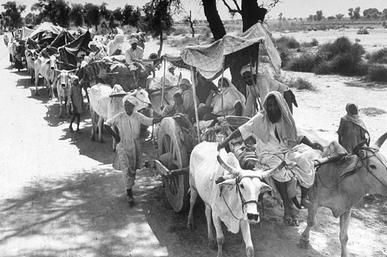 | 387 × 257 (27 KB) | smartcommons-wikipedia-en>Theo's Little Bot | Reduce size of non-free image (BOT - disable) |
File usage
The following page uses this file:
