

No edit summary Tags: Mobile edit Mobile web edit |
No edit summary Tags: Mobile edit Mobile web edit |
||
| Line 15: | Line 15: | ||
{{See|Meitei culture}} | {{See|Meitei culture}} | ||
===Daily life=== | ===Daily life=== | ||
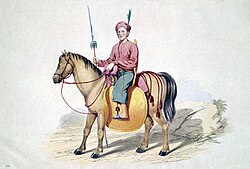
[[File:Manipuri_1.jpg|thumb]] | |||
Most people in Ancient Manipur were engaged in agricultural activities and fishing activities. Only a few were traders and merchants. However, commercial activities were restricted to only a few groups of people, who were given permission by the monarchs. | Most people in Ancient Manipur were engaged in agricultural activities and fishing activities. Only a few were traders and merchants. However, commercial activities were restricted to only a few groups of people, who were given permission by the monarchs. | ||
==References== | ==References== | ||
{{Reflist}} | {{Reflist}} | ||
Revision as of 19:50, 12 May 2021

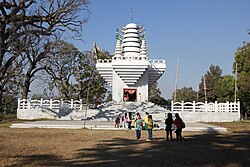
Ancient Manipur, also known as Antique Kangleipak[1], was a civilization flourished in the central plains of the present day Manipur, India.[2][3][4][5][6] The Kangla served as the foremost capital city of the realm since time immemorial till the late 19th century AD.[7] It had its earliest recorded evidence of the existence of monarchy right from the reign of Emperor "Tangcha Leelaa Pakhangba" (1445 BC-1405 BC).[8][9]
History

The earliest recorded history of the existence of monarchy starts with the reign of Tangja Leela Pakhangba in 1445 BC.[10]
The game of polo was invented by King Ningthou Kangba (1405 BC- 1359 BC). This remarkable achievement was recorded in the Kangbalon and the Kangjeirol, two of the old manuscripts of Ancient Meitei language.[11]
Geography
.jpg)
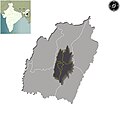
The territory of the antique realm is majorly mountainous, though the central plains is the main place where civilization flourished and was mainly concentrated.[12][13]
Language

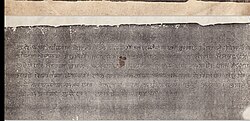
Due to regional variation, though various dialects existed, the Ancient Meitei language was the main principal language of the antique realm.[14][15] The Wakoklon Heelel Thilen Salai Amailon Pukok Puya was written in 1398 BC (3400 years ago), as verified by the National Archives of India, New Delhi.[16]
Culture
Daily life

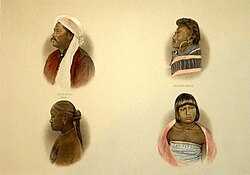
Most people in Ancient Manipur were engaged in agricultural activities and fishing activities. Only a few were traders and merchants. However, commercial activities were restricted to only a few groups of people, who were given permission by the monarchs.
References
- ↑ http://kanglaonline.com/2012/04/ancient-name-of-manipur/?amp=1
- ↑ https://www.imphaltimes.com/it-articles/item/5532-is-32-000-years-of-meitei-civilization-a-sign-of-tribalism
- ↑ http://e-pao.net/epSubPageExtractor.asp?src=reviews.books.Review_Kangleipak_The_Cradle_Of_Man
- ↑ https://themanipurpage.tripod.com/history/puwarimeitei.html#1.GEOGRAPHIC%20LOCATION%20OF%20MANIPUR
- ↑ https://themanipurpage.tripod.com/history/puwarimeitei.html#(i)%20The%20Ancient%20(before%20christ)
- ↑ https://themanipurpage.tripod.com/history/puwarimeitei.html#(ii).%20The%20Early%20Period
- ↑ http://www.e-pao.net/epSubPageExtractor.asp?src=manipur.Kangla.Kangla_The_ancient_Capital_of_Manipur
- ↑ https://themanipurpage.tripod.com/history/meiteikings.html
- ↑ https://themanipurpage.tripod.com/history/puwarimeitei.html#Main%20Source
- ↑ https://themanipurpage.tripod.com/history/meiteikings.html
- ↑ https://themanipurpage.tripod.com/history/sagolkangjei.html
- ↑ http://e-pao.net/epSubPageExtractor.asp?src=manipur.History_of_Manipur.Discovery_of_Kangleipak_8
- ↑ http://e-pao.net/epSubPageExtractor.asp?src=news_section.opinions.The_Puya_and_Cheitharol_Kumbaba
- ↑ http://e-pao.net/epSubPageExtractor.asp?src=news_section.opinions.The_Puya_and_Cheitharol_Kumbaba
- ↑ https://themanipurpage.tripod.com/history/puwarimeitei.html#2.HISTORICAL%20DOCUMENTS
- ↑ http://paochelsalaitaret.net/puya/puyaproof.pdf