



.jpg)
_underway.jpg)
_with_a_Sea_King_helicopter_during_Indo-Pakistani_war_of_1971.jpg)
_and_INS_Viraat_(R22)_in_the_Arabian_Sea.jpg)


.JPG)
_during_Exercise_Malabar_2017.jpg)
_and_INS_Vikramaditya_(R33)_during_joint_exercise.jpg)


.jpg)
.jpg)
_at_sea.jpg)

.jpg)
.jpg)


add info |
add info |
||
| Line 58: | Line 58: | ||
The dramatic change in the Indian Navy's capabilities and stance was emphatically demonstrated during the [[Indo-Pakistani War of 1971]]. Under the command of Admiral [[Sardarilal Mathradas Nanda]], the navy successfully enforced a [[naval blockade]] of [[West Pakistan|West]] and [[East Pakistan]].{{Sfn|Hiranandani|2000|p=111}} Pakistan's lone long-range [[submarine]] {{ship|PNS|Ghazi}} was sunk following an attack by the [[destroyer]] {{INS|Rajput|1942|6}} off the coast of [[Visakhapatnam]] in the midnight of 3–4 December 1971.<ref name="Maritime Awareness and Pakistan Navy - Defence Journal">{{cite web|author1=Commander Muhammad Azam Khan (retd.)|title=Maritime Awareness and Pakistan Navy|url=http://www.defencejournal.com/2000/mar/maritime.htm|website=Defence Journal|access-date=25 June 2017|archive-url=https://web.archive.org/web/20160309235258/http://www.defencejournal.com/2000/mar/maritime.htm|archive-date=9 March 2016|url-status=dead}}</ref>{{Sfn|Hiranandani|2000|p=142–143}} On 4 December, the Indian Navy successfully executed [[Operation Trident (1971)|Operation Trident]], a devastating attack on the Pakistan Naval Headquarters of [[Karachi]] that sank a minesweeper, a destroyer and an ammunition supply ship. | The dramatic change in the Indian Navy's capabilities and stance was emphatically demonstrated during the [[Indo-Pakistani War of 1971]]. Under the command of Admiral [[Sardarilal Mathradas Nanda]], the navy successfully enforced a [[naval blockade]] of [[West Pakistan|West]] and [[East Pakistan]].{{Sfn|Hiranandani|2000|p=111}} Pakistan's lone long-range [[submarine]] {{ship|PNS|Ghazi}} was sunk following an attack by the [[destroyer]] {{INS|Rajput|1942|6}} off the coast of [[Visakhapatnam]] in the midnight of 3–4 December 1971.<ref name="Maritime Awareness and Pakistan Navy - Defence Journal">{{cite web|author1=Commander Muhammad Azam Khan (retd.)|title=Maritime Awareness and Pakistan Navy|url=http://www.defencejournal.com/2000/mar/maritime.htm|website=Defence Journal|access-date=25 June 2017|archive-url=https://web.archive.org/web/20160309235258/http://www.defencejournal.com/2000/mar/maritime.htm|archive-date=9 March 2016|url-status=dead}}</ref>{{Sfn|Hiranandani|2000|p=142–143}} On 4 December, the Indian Navy successfully executed [[Operation Trident (1971)|Operation Trident]], a devastating attack on the Pakistan Naval Headquarters of [[Karachi]] that sank a minesweeper, a destroyer and an ammunition supply ship. | ||
The attack also irreparably damaged another destroyer and oil storage tanks at the Karachi port.<ref name="1971 War: The First Missile Attack on Karachi">{{cite web|author1=Vice Admiral G. M. Hiranandani (retd.)|author-link1=Gulab Mohanlal Hiranandani|title=1971 War: The First Missile Attack on Karachi|url=http://www.indiandefencereview.com/interviews/1971-war-the-first-missile-attack-on-karachi/|website=Indian Defence Review|access-date=25 June 2017|archive-url=https://web.archive.org/web/20170217084537/http://www.indiandefencereview.com/interviews/1971-war-the-first-missile-attack-on-karachi/|archive-date=17 February 2017|date=11 July 2015|url-status=dead}}</ref> To commemorate this, 4 December is celebrated as the Navy Day.<ref name="In 1971 Navy Day">{{cite web|title=In 1971, The Indian Navy Attempted One of the World's Most Daring War Strategies on Karachi|url=https://www.scoopwhoop.com/In-1971-The-Indian-Navy-Attemped-One-Of-The-Worlds-Most-Daring-War-Strategies-On-Karachi/|website=Scoop Whoop|access-date=25 June 2017|language=En|date=9 July 2016|archive-url=https://web.archive.org/web/20161209141754/https://www.scoopwhoop.com/In-1971-The-Indian-Navy-Attemped-One-Of-The-Worlds-Most-Daring-War-Strategies-On-Karachi/|archive-date=9 December 2016}}</ref> This was followed by [[Operation Python]] on 8 December 1971, further deprecating the Pakistan Navy's capabilities.<ref name="1971 War: The First Missile Attack on Karachi"/> | The attack also irreparably damaged another destroyer and oil storage tanks at the Karachi port.<ref name="1971 War: The First Missile Attack on Karachi">{{cite web|author1=Vice Admiral G. M. Hiranandani (retd.)|author-link1=Gulab Mohanlal Hiranandani|title=1971 War: The First Missile Attack on Karachi|url=http://www.indiandefencereview.com/interviews/1971-war-the-first-missile-attack-on-karachi/|website=Indian Defence Review|access-date=25 June 2017|archive-url=https://web.archive.org/web/20170217084537/http://www.indiandefencereview.com/interviews/1971-war-the-first-missile-attack-on-karachi/|archive-date=17 February 2017|date=11 July 2015|url-status=dead}}</ref> To commemorate this, 4 December is celebrated as the Navy Day.<ref name="In 1971 Navy Day">{{cite web|title=In 1971, The Indian Navy Attempted One of the World's Most Daring War Strategies on Karachi|url=https://www.scoopwhoop.com/In-1971-The-Indian-Navy-Attemped-One-Of-The-Worlds-Most-Daring-War-Strategies-On-Karachi/|website=Scoop Whoop|access-date=25 June 2017|language=En|date=9 July 2016|archive-url=https://web.archive.org/web/20161209141754/https://www.scoopwhoop.com/In-1971-The-Indian-Navy-Attemped-One-Of-The-Worlds-Most-Daring-War-Strategies-On-Karachi/|archive-date=9 December 2016}}</ref> This was followed by [[Operation Python]] on 8 December 1971, further deprecating the Pakistan Navy's capabilities.<ref name="1971 War: The First Missile Attack on Karachi"/> Indian frigate {{INS|Khukri|F149|6}}, commanded by Captain M. N. Mulla was sunk by {{ship|PNS|Hangor|S131|6}}, while {{INS|Kirpan|1959|6}} was damaged on the west coast.<ref name="The sinking of INS Kukhri">{{cite web|author1=Russell Phillips|title=The sinking of INS Kukhri|url=https://www.russellphillipsbooks.co.uk/the-sinking-of-ins-khukri/|website=Russell Phillips Books|access-date=25 June 2017|date=3 June 2013}}</ref> In the [[Bay of Bengal]], the [[aircraft carrier]] {{INS|Vikrant|R11|6}} was deployed to successfully enforce the [[naval blockade]] on East Pakistan. [[Hawker Sea Hawk|Sea Hawk]] and the [[Breguet Alizé|Alizé]] aircraft from INS ''Vikrant'' sank numerous gunboats and Pakistani [[merchant marine]] ships.<ref name=un-report>{{cite web|title=Items in India/Pakistan/Bangladesh – Report of the high level consultants mission to Bangladesh |url=http://archives-trim.un.org/webdrawer/rec/423368/view/Items-in-IndiaPakistanBangladesh%20-%20general%20-%20report%20of%20the%20high%20level%20consultants%20mission%20to%20Bangladesh%20MarchApril%201972.pdf |publisher=United Nations |access-date=26 July 2011 |url-status=dead |archive-url=https://web.archive.org/web/20110728142411/http://archives-trim.un.org/webdrawer/rec/423368/view/Items-in-IndiaPakistanBangladesh%20-%20general%20-%20report%20of%20the%20high%20level%20consultants%20mission%20to%20Bangladesh%20MarchApril%201972.PDF |archive-date=28 July 2011 }}</ref> To demonstrate its solidarity as an ally of Pakistan, the United States sent [[Task Force 74]] centred around the aircraft carrier {{USS|Enterprise|CVN-65|6}} into the Bay of Bengal. In retaliation, [[Soviet Navy]] submarines trailed the American task force, which moved away from the Indian Ocean towards Southeast Asia to avert a confrontation.<ref name="COLD WAR GAMES - BRakshak">{{cite web|author1=Vice Admiral Swaraj Prakash (retd.)|title=Cold War Games|url=http://www.bharat-rakshak.com/NAVY/History/1971War/Games.html|website=Bharat Rakshak|access-date=25 June 2017|archive-url=https://web.archive.org/web/20060915093344/http://www.bharat-rakshak.com/NAVY/History/1971War/Games.html|archive-date=15 September 2006}}</ref> | ||
Revision as of 14:05, 4 May 2021

The Indian Navy is the naval part of the Indian Armed Forces.
In 2010, the Indian Navy had 58,350 personnel, around 170 ships and 180 aircraft.[1] It is the world's fourth largest navy in terms of personnel.
The Indian Navy traces its origins back to the East India Company's Marine which was founded in 1612 to protect British merchant shipping in the region. In 1793, the British East India Company established its rule over eastern part of the Indian subcontinent i.e. Bengal, but it was not until 1830 that the colonial navy was titled as His Majesty's Indian Navy. When India became a republic in 1950, the Royal Indian Navy as it had been named since 1934 was renamed to Indian Navy.
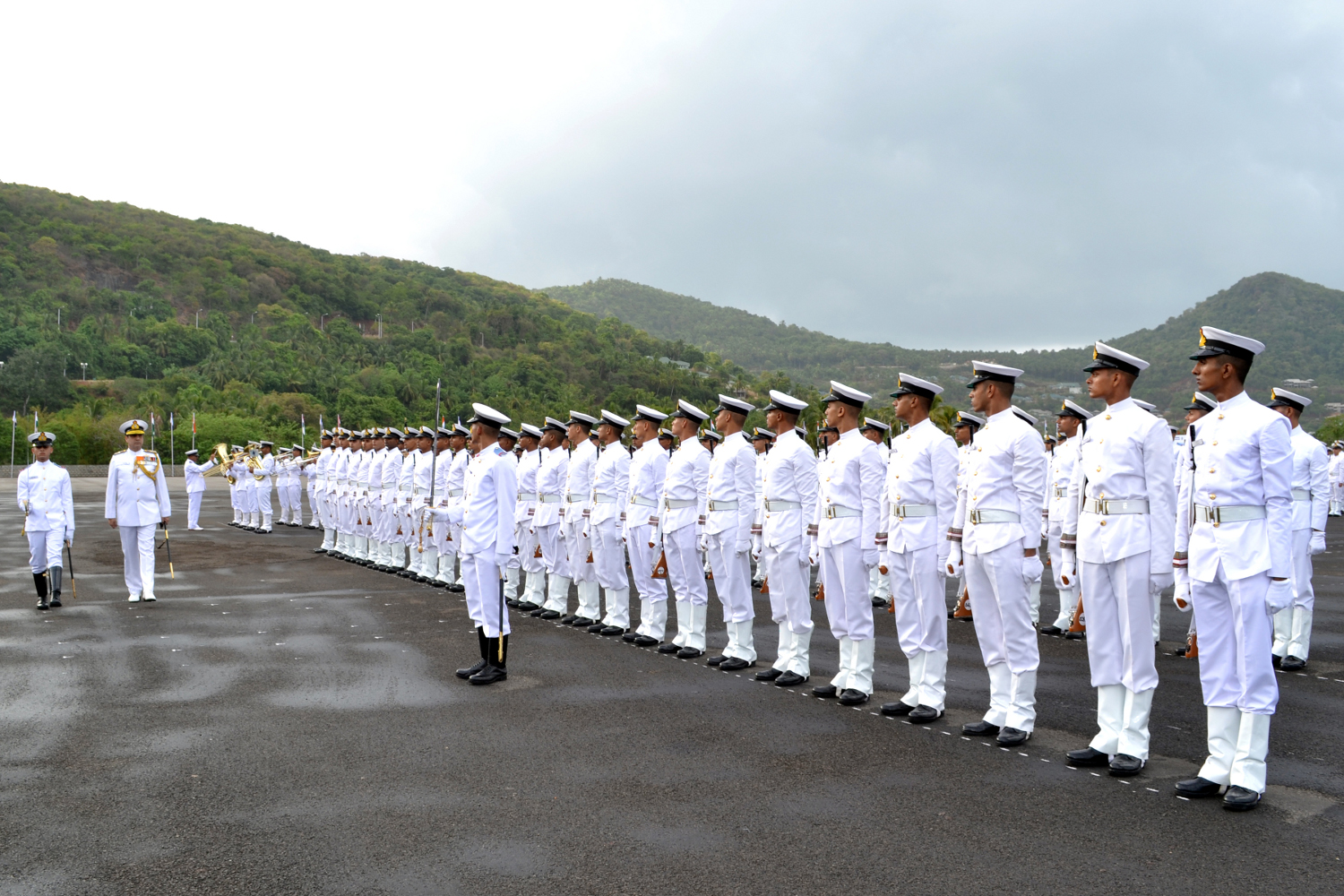
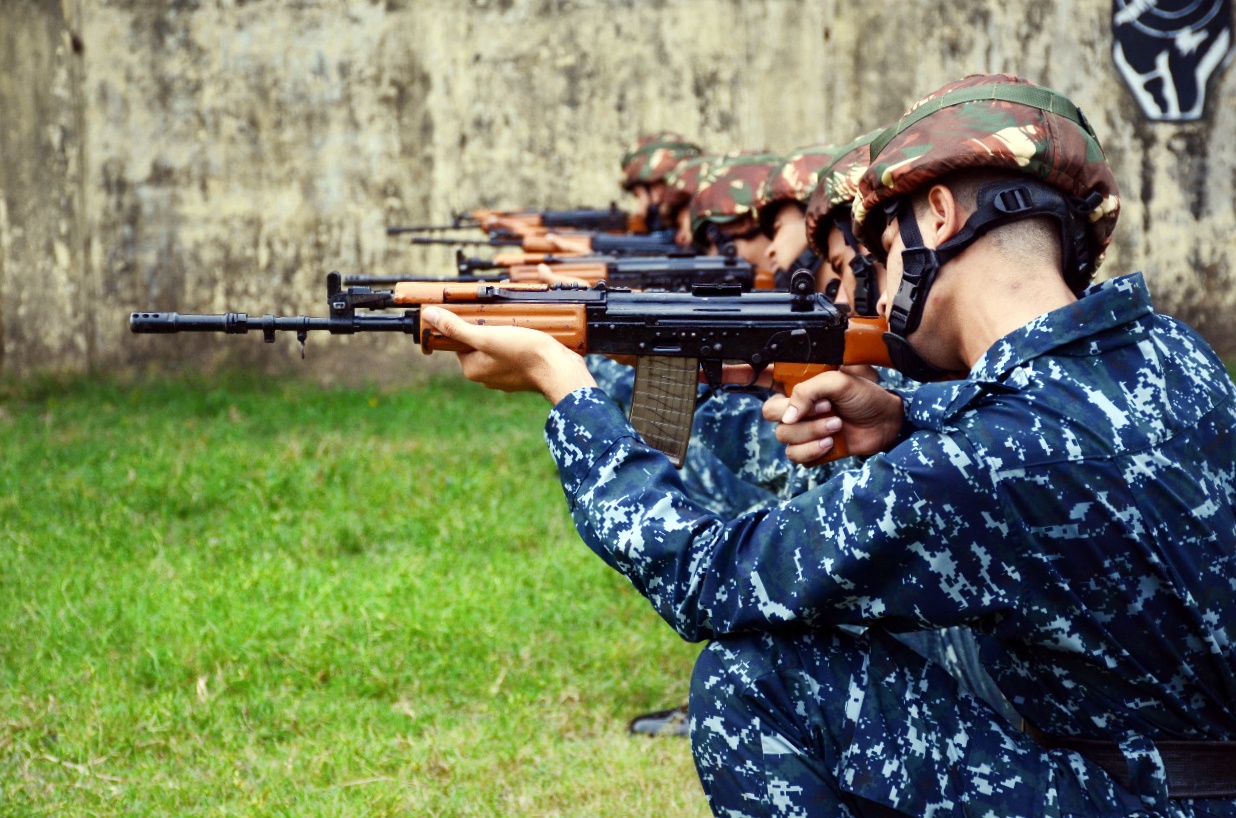
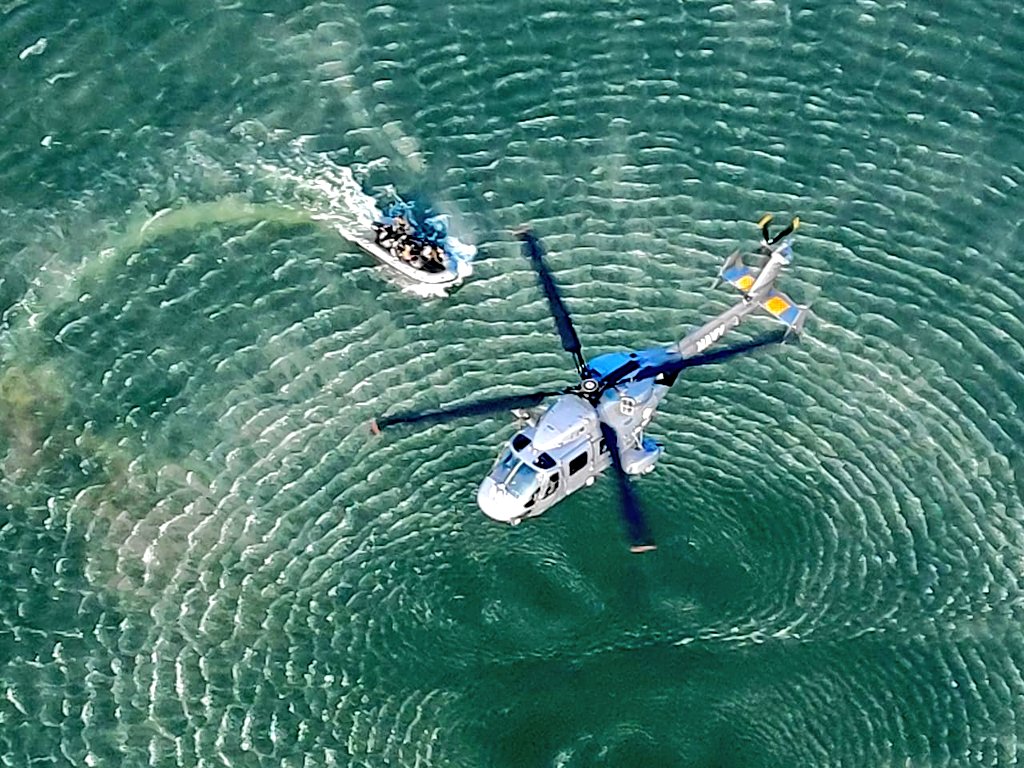
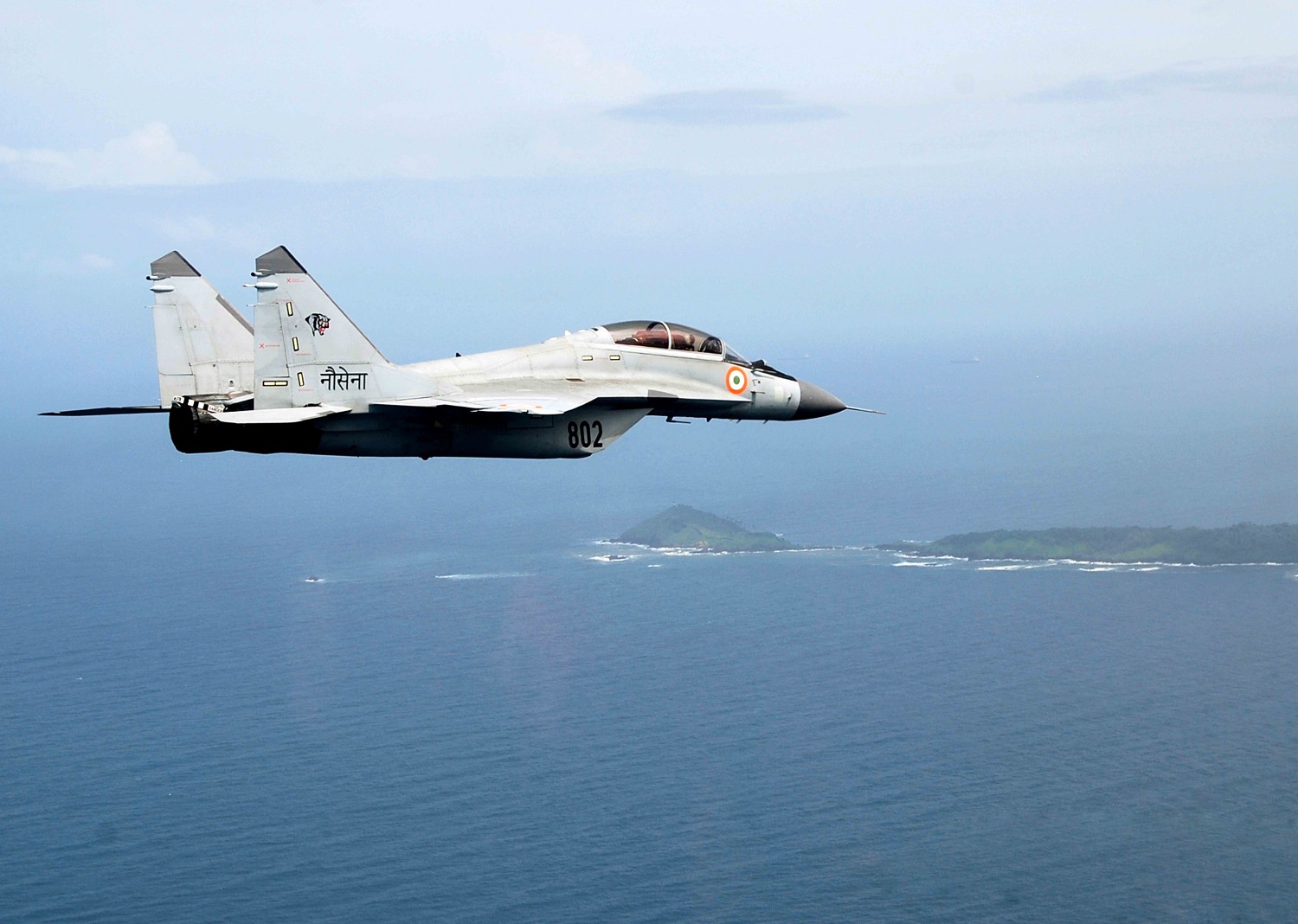
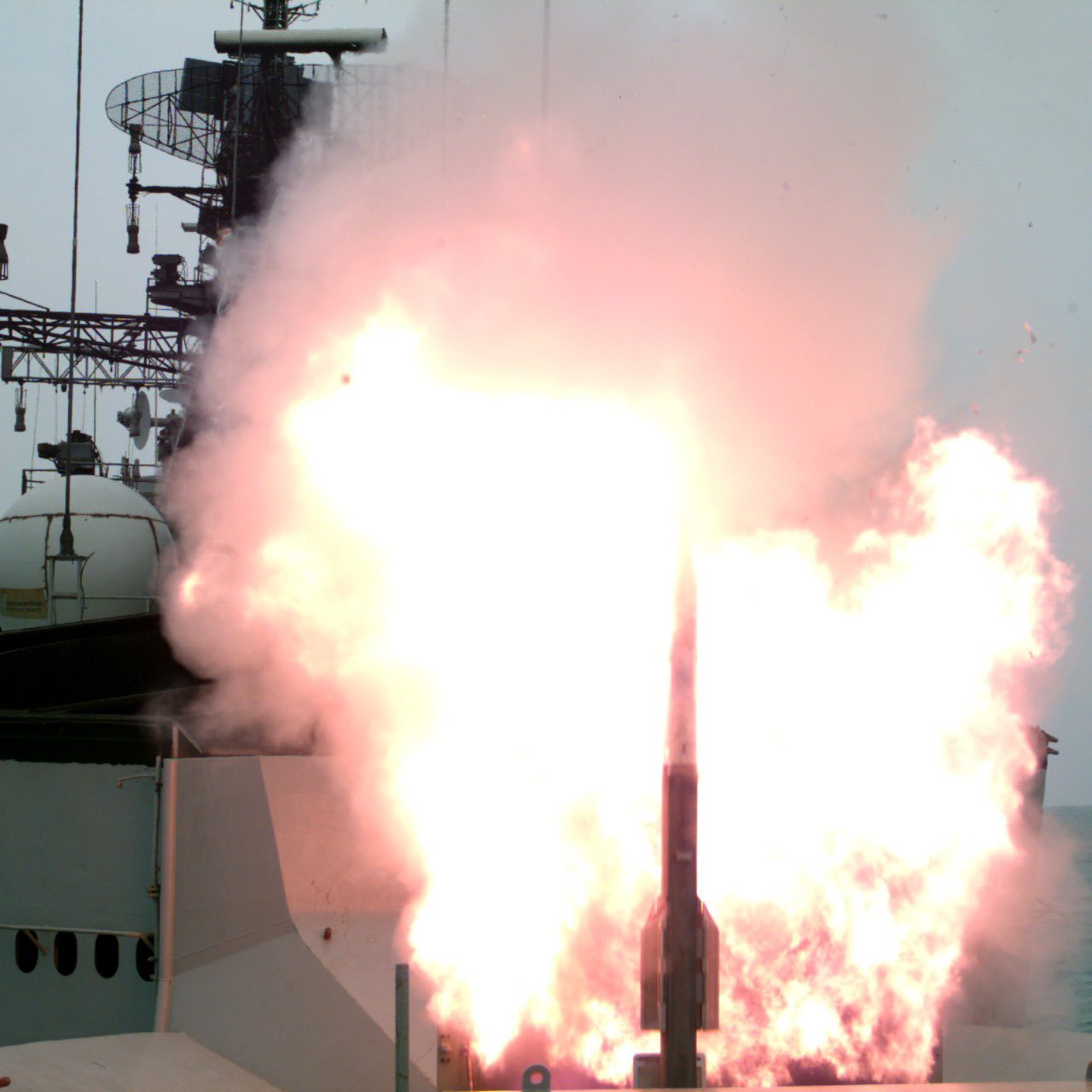
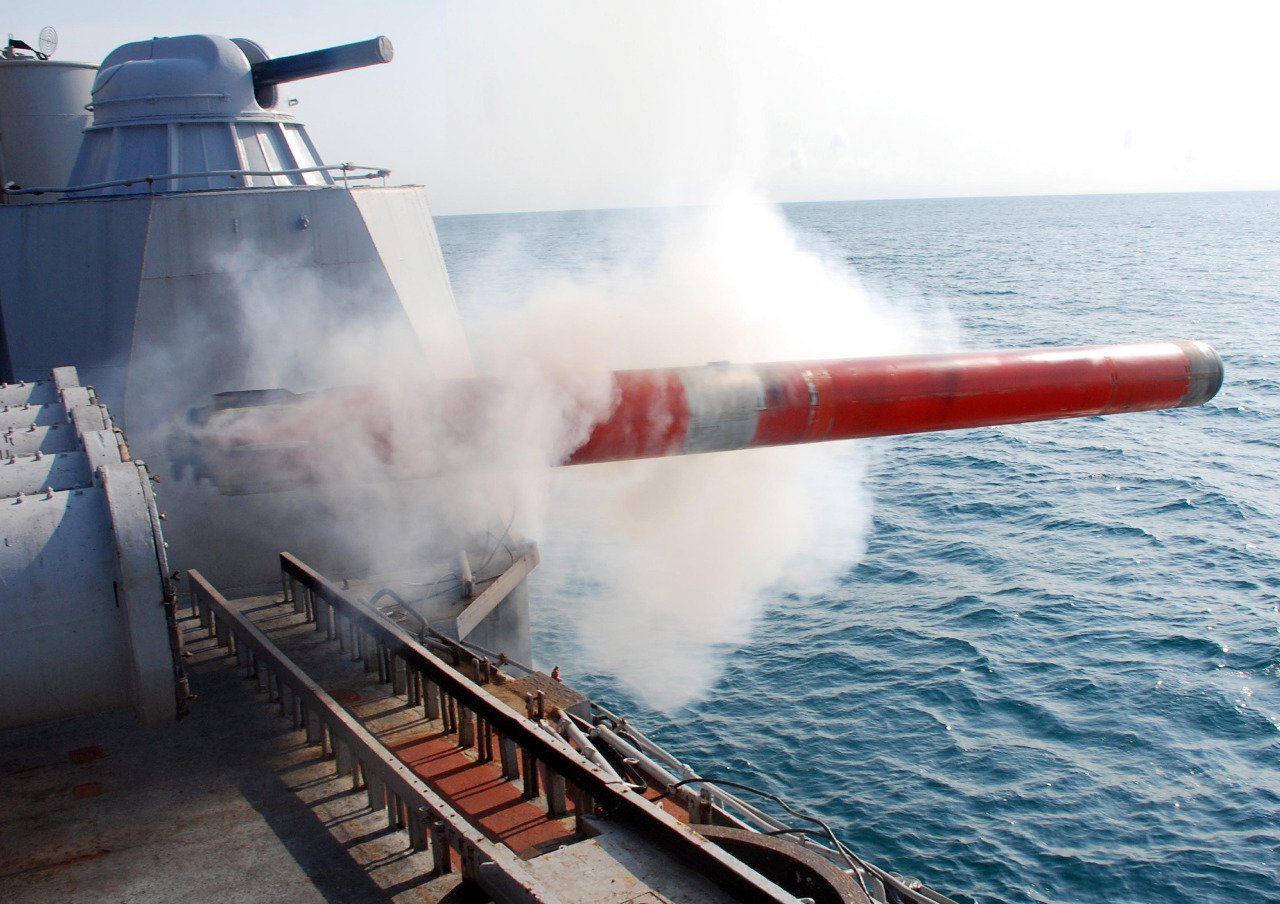
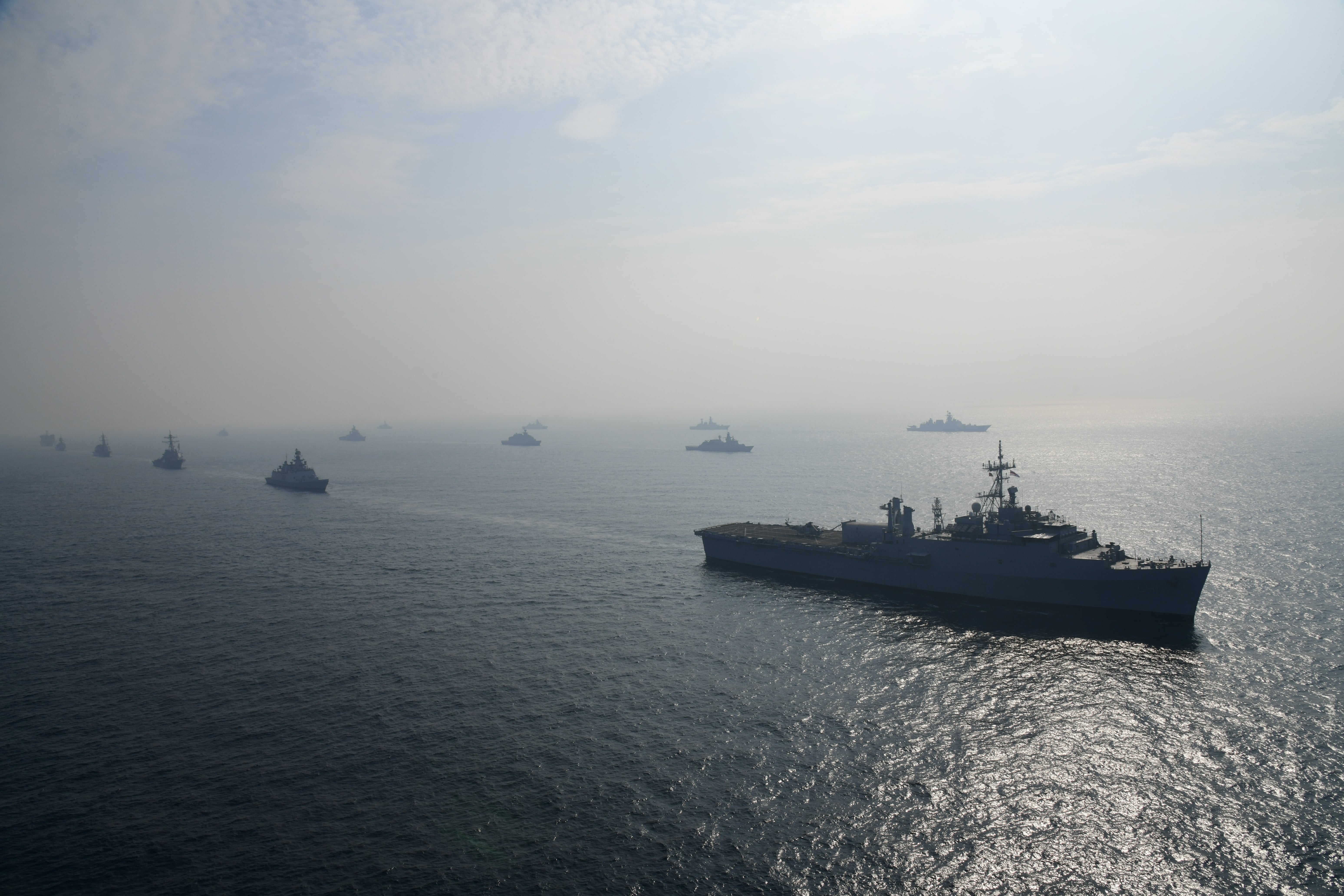
The primary objective of the navy is to safeguard the nation's maritime borders, and in conjunction with other Armed Forces of the union, act to deter or defeat any threats or aggression against the territory, people or maritime interests of India, both in war and peace. Through joint exercises, goodwill visits and humanitarian missions, including disaster relief, Indian Navy promotes bilateral relations between nations.
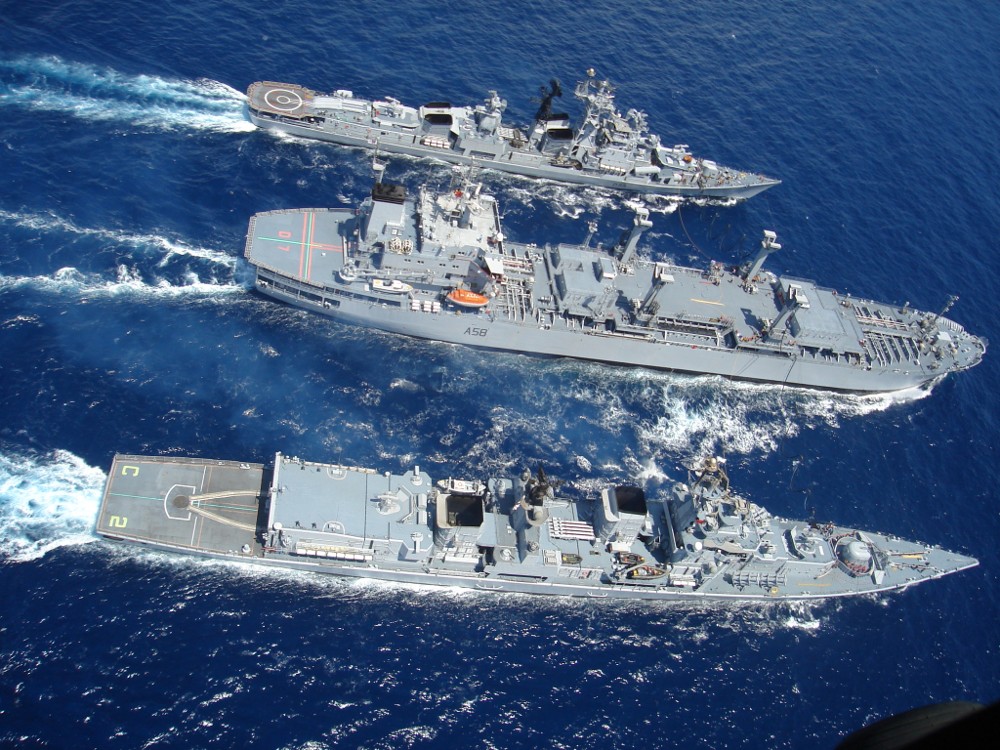
As of June 2019, Indian Navy has 67,252 active[2] and 55,000 reserve personnel in service and has a fleet of 150 ships and submarines, and 300 aircraft.[3][4]As of October 2020, the operational fleet consists of 1 aircraft carrier active and 1 more on sea trials, 1 amphibious transport dock, 8 landing ship tanks, 10 destroyers, 14 frigates, 1 nuclear-powered attack submarine, 1 ballistic missile submarine, 15 conventionally-powered attack submarines and more on sea trials, 24 corvettes, one mine countermeasure vessel, 4 fleet tankers and numerous other auxiliary vessels, small patrol boats and sophisticated ships. It is considered as a multi-regional power projection blue-water navy.[5][6]
History
Early maritime history

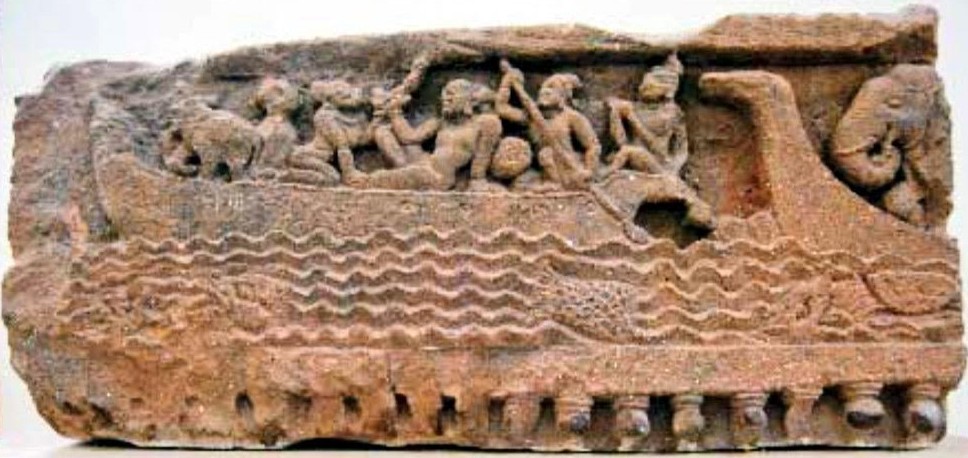
The maritime history of India dates back to 6,000 years with the birth of art of the navigation and navigating during the Indus Valley Civilisation.[7] A Kutch mariner's log book from 19th century recorded that the first tidal dock India has been built at Lothal around 2300 BC during the Indus Valley Civilisation, near the present day harbour of Mangrol on the Gujarat coast. The Rig Veda, credits Varuna, the Hindu god of water and the celestial ocean,[8] with knowledge of the ocean routes and describes the use of ships having hundred oars in the naval expeditions by Indians. There are also references to the side wings of a ship called Plava, which stabilizes the vessel during storms. Plava is considered to be the precursor of modern-day stabilizers.[9] The first use of mariner's compass, called as Matsya Yantra, was recorded in 4 and 5 AD.[10]

Alexander the Great during his conquest over India, built a harbour at Patala. His army retreated to Mesopotamia on the ships built at Sindh. In the later of his conquest, records show that the Emperor of Maurya Empire, Chandragupta Maurya, as a part of war office, established an Admiralty Division under the Superintendent of Ships. Many historians from ancient India recorded the Indian trade relations with many countries, and even with countries as far as Java and Sumatra. There were also references to the trade routes of countries in the Pacific and Indian Ocean. India also had trade relations with the Greeks and the Romans. At one instance Roman historian Gaius Plinius Secundus mentioned of Indian traders carrying away large masses of gold and silver from Rome, in payment for skins, precious stones, clothes, indigo, sandalwood, herbs, perfumes, and spices.[9]
During 5–10 AD, the Kalinga Empire conquered Western Java, Sumatra and Malaya. The Andaman and Nicobar Islands served as an important halt point for trade ships en route to these nations and as well as China. During 844–848 AD the daily revenue from these nations was expected to be around 200 maunds (8 tonnes (7.9 long tons; 8.8 short tons)) of gold. During 984–1042 AD, under the reign of Raja Raja Chola I, Rajendra Chola I and Kulothunga Chola I, the naval expedition by Chola dynasty captured lands of Burma, Sumatra, Sri Lanka, and Malaya, and simultaneously repressing pirate activities by Sumatran warlords.[9][11]
During 14th and 15th centuries, Indian shipbuilding skills and their maritime ability was sophisticated enough to produce ships with a capacity to carry over hundred men. Ships also had compartments included in their design, so that even if one compartment was damaged, the ship would remain afloat. These features of were developed by Indians even before Europeans were aware of the idea.[9]
However, by the end of thirteenth century Indian naval power had started to decline, and had reached its low by the time the Portuguese entered India. Soon after they set foot in India, the Portuguese started to hunt down all Asian vessels not permitting their trade. Amidst this, in 1529, a naval war at Bombay Harbour resulted in the surrender of Thane, Karanja, and Bandora. By 1534, the Portuguese took complete control over the Bombay Harbour. The Zamorin of Calicut challenged the Portuguese trade when Vasco da Gama refused to pay the customs levy as per the trade agreement. This resulted in two major naval wars, the first one—Battle of Cochin, was fought in 1504, and the second engagement happened four years later off Diu. Both these wars, exposed the weakness of Indian maritime power and simultaneously helped the Portuguese to gain mastery over the Indian waters.[9]
In the later seventeenth century Indian naval power observed remarkable revival. The alliance of the Moghuls and the Sidis of Janjira was marked as a major power on the west coast. On the southern front, the 1st Sovereign of the Maratha Empire, Chhatrapati Shivaji Maharaj, started creating his own fleet. His fleet was commanded by notable admirals like Sidhoji Gujar and Kanhoji Angre. The Maratha Navy under the leadership of Angre kept the English, Dutch and Portuguese away from the Konkan coast. However, the Marathas witnessed remarkable decline in their naval capabilities following the death of Angre in 1729.[9] In 1892 the Marine was rechristened the Royal Indian Marine, and by the end of the 19th century it operated over fifty ships. The Marine participated in World War I with a fleet of patrol vessels, troop carriers, and minesweepers. In 1928, D. N. Mukherji was the first Indian to be granted a commission, in the rank of an Engineer Sub-lieutenant. Also in 1928, the RIM was accorded combatant status, which entitled it to be considered a true fighting force and to fly the White Ensign of the Royal Navy.[12] In 1934, the Marine was upgraded to a full naval force, thus becoming the Royal Indian Navy (RIN), and was presented the King's colours in recognition of its services to the British Crown.[13]
1612 origins to independence
The origins of the Indian Navy date to 1612, when an English vessel under the command of Captain Best encountered the Portuguese. Although the Portuguese were defeated, this incident along with the trouble caused by the pirates to the merchant vessels, forced the British to maintain fleet near Surat, Gujarat. East India Company (HEIC) formed a naval arm, and the first squadron of fighting ships reached the Gujarat coast on 5 September 1612. Their objective was to protect British merchant shipping off the Gulf of Cambay and up the Narmada and Tapti rivers. As the HEIC continued to expand its rule and influence over different parts of India, the responsibility of Company's Marine increased too.[13]
Over time, the British predominantly operated from Bombay, and in 1686, the HEIC's naval arm was renamed the Bombay Marine. At times the Bombay Marine engaged Dutch, French, Maratha, and Sidi vessels. Much later, it was also involved in the First Anglo-Burmese War of 1824. In 1834, the Bombay Marine became Her Majesty's Indian Navy. The Navy saw action in the First Opium War of 1840 and in the Second Anglo-Burmese War in 1852. Due to some unrecorded reasons, the Navy's name reverted to the Bombay Marine from 1863 to 1877, after which it was named Her Majesty's Indian Marine. At that time, the Marine operated in two divisions—the Eastern Division at Calcutta under the Superintendent of Bay of Bengal, and the Western Division at Bombay Superintendent of Arabian Sea.[13]
During the early stages of World War II, the tiny Royal Indian Navy consisted of five sloops, one survey vessel, one depot ship, one patrol vessel and numerous assorted small craft; personnel strength was at only 114 officers and 1,732 sailors.[14] The onset of war led to an expansion in numbers of vessels and personnel. By June 1940, the navy had doubled its number in terms of both personnel and material, and expanded nearly six times of its pre-war strength by 1942.[15] The navy was actively involved in operations during the war around the world and was heavily involved in operations around the Indian Ocean, including convoy escorts, mine-sweeping and supply, as well as supporting amphibious assaults.[13]
.jpg)
When hostilities ceased in August 1945, the Royal Indian Navy had expanded to a personnel strength of over 25,000 officers and sailors. Its fleet comprised seven sloops, four frigates, four corvettes, fourteen minesweepers, sixteen trawlers, two depot ships, thirty auxiliary vessels, one hundred and fifty landing craft, two hundred harbour craft and several offensive and defensive motor launches.[16] During World War II the Navy suffered two hundred and seventy five casualties—twenty seven officers, two warrant officers and 123 ratings killed in action, two ratings missing in action and a further 14 officers, two warrant officers and 123 ratings wounded. [17] For their role in the war, the officers and ratings of the Navy received the following honours and decorations—a KBE (Mil.), a knighthood, a CB (Mil.), 10 CIEs, two DSOs, a CBE, 15 DSCs, an OBE, 28 DSMs, eight OBIs, two IOMs, 16 BEMs, 10 Indian Defence Service Medals, a Royal Humane Society Medal, 105 mentions in dispatches and 118 assorted commendations.[18] Immediately after the war, the navy underwent a rapid, large-scale demobilisation of vessels and personnel.
From the inception of India's naval force, some senior Indian politicians had voiced concerns about the degree of "Indianisation" of the Navy and its subordination to the Royal Navy in all important aspects.[19] On the eve of WWII, the RIN had no Indian senior line officers and only a single Indian senior engineer officer.[20] Even by the war's end, the Navy remained a predominantly British-officered service; in 1945, no Indian officer held a rank above engineer commander and only a few Indian officers in the executive branch held substantive senior line officer rank.[21] This situation, coupled with inadequate levels of training and discipline, poor communication between officers and ratings, instances of racial discrimination and the ongoing trials of ex-Indian National Army personnel ignited the Royal Indian Navy mutiny by Indian ratings in 1946.[22] A total of 78 ships, 20 shore establishments and 20,000 sailors were involved in the strike, which spread over much of India. After the strike began, the sailors received encouragement and support from the Communist Party in India; unrest spread from the naval ships, and led to student and worker hartals in Bombay. The strike ultimately failed as the sailors did not receive substantial support from either the Indian Army or from political leaders in Congress or the Muslim League.[23] On 21 July 1947, H.M.S. Choudhry and Bhaskar Sadashiv Soman, both of whom would eventually command the Pakistani and Indian Navies, respectively, became the first Indian RIN officers to attain the acting rank of captain.[24]
Independence to the end of the 20th century
Following independence and the partition of India on 15 August 1947, the RIN's depleted fleet of ships and remaining personnel were divided between the newly independent Dominion of India and Dominion of Pakistan. 21 percent of the Navy's officer cadre and 47 percent of its sailors opted to join the portion of the fleet which became the Royal Pakistan Navy. The Indian share of the Navy consisted of 32 vessels along with 11,000 personnel. Effective from the same date, all British officers were compulsorily retired from the Navy and its reserve components, with Indian officers being promoted to replace British senior officers.[25] However, a number of British flag and senior officers were invited to continue serving in the RIN,[26] as only nine of the Navy's Indian commissioned officers had more than 10 years' service, with the majority of them only having served from five to eight years.[27] Rear Admiral John Talbot Savignac Hall headed the Navy as its first Commander-in-Chief (C-in-C) post-Independence.[13] In May 1948, Captain Ajitendu Chakraverti became the first Indian officer to be appointed to the rank of commodore.[28] When India became a republic on 26 January 1950, the Royal prefix was dropped and the name Indian Navy was officially adopted. The prefix for naval vessels was changed from His Majesty's Indian Ship (HMIS) to Indian Naval Ship (INS).[13] At the same time, the imperial crown in insignia was replaced with the Lion Capital of Ashoka and the Union Jack in the canton of the White Ensign was replaced with the Indian Tricolour.[29]
By 1955, the Navy had largely overcome its post-Independence personnel shortfalls.[25] During the early years following independence, many British officers continued to serve in the Navy on secondment from the Royal Navy, due to the post-Independence retirement or transfer of many experienced officers to the Royal or the Pakistan navies.[25] The first C-in-C of the Navy was Admiral Sir Edward Parry who took over from Hall in 1948 and handed over to Admiral Sir Charles Thomas Mark Pizey in 1951. Admiral Pizey also became the first Chief of the Naval Staff in 1955, and was succeeded by Vice Admiral Sir Stephen Hope Carlill the same year[13] The pace of "Indianising" continued steadily through the 1950s. By 1952, senior Naval appointments had begun to be filled by Indian officers,[30] and by 1955, basic training for naval cadets was entirely conducted in India.[31] In 1956, Ram Dass Katari became the first Indian flag officer, and was appointed the first Indian Commander of the Fleet on 2 October.[32] On 22 April 1958, Vice Admiral Katari assumed the command of the Indian Navy from Carlill as the first Indian Chief of Staff of the Indian Navy.[33] With the departure in 1962 of the last British officer on secondment to the Navy, Commodore David Kirke, the Chief of Naval Aviation, the Indian Navy finally became an entirely Indian service.[34]
The first engagement in action of the Indian Navy was against the Portuguese Navy during the liberation of Goa in 1961. Operation Vijay followed years of escalating tension due to Portuguese refusal to relinquish its colonies in India. On 21 November 1961, Portuguese troops fired on the passenger liner Sabarmati near Anjadip Island, killing one person and injuring another. During Operation Vijay, the Indian Navy supported troop landings and provided fire support. The cruiser INS Delhi sank one Portuguese patrol boat,[35] while frigates INS Betwa and INS Beas destroyed the Portuguese frigate NRP Afonso de Albuquerque.[36] The 1962 Sino-Indian War was largely fought over the Himalayas and the Navy had only a defensive role in the war.[37]
_underway.jpg)
At the outbreak of Indo-Pakistani War of 1965, the Navy had one aircraft carrier, two cruisers, nineteen destroyers and frigates, and one tanker. Of these twenty-ships ten were under refit. The others were largely involved coastal patrols. During the war, the Pakistani Navy attacked the Indian coastal city of Dwarka, although there were no military resources in the area. While this attack was insignificant, India deployed naval resources to patrol the coast and deter further bombardment.[38] Following these wars in the 1960s, India resolved to strengthen the profile and capabilities of its Armed Forces.[39]
_with_a_Sea_King_helicopter_during_Indo-Pakistani_war_of_1971.jpg)
The dramatic change in the Indian Navy's capabilities and stance was emphatically demonstrated during the Indo-Pakistani War of 1971. Under the command of Admiral Sardarilal Mathradas Nanda, the navy successfully enforced a naval blockade of West and East Pakistan.[40] Pakistan's lone long-range submarine PNS Ghazi was sunk following an attack by the destroyer INS Rajput off the coast of Visakhapatnam in the midnight of 3–4 December 1971.[41][42] On 4 December, the Indian Navy successfully executed Operation Trident, a devastating attack on the Pakistan Naval Headquarters of Karachi that sank a minesweeper, a destroyer and an ammunition supply ship.
The attack also irreparably damaged another destroyer and oil storage tanks at the Karachi port.[43] To commemorate this, 4 December is celebrated as the Navy Day.[44] This was followed by Operation Python on 8 December 1971, further deprecating the Pakistan Navy's capabilities.[43] Indian frigate INS Khukri, commanded by Captain M. N. Mulla was sunk by PNS Hangor, while INS Kirpan was damaged on the west coast.[45] In the Bay of Bengal, the aircraft carrier INS Vikrant was deployed to successfully enforce the naval blockade on East Pakistan. Sea Hawk and the Alizé aircraft from INS Vikrant sank numerous gunboats and Pakistani merchant marine ships.[46] To demonstrate its solidarity as an ally of Pakistan, the United States sent Task Force 74 centred around the aircraft carrier Template:USS into the Bay of Bengal. In retaliation, Soviet Navy submarines trailed the American task force, which moved away from the Indian Ocean towards Southeast Asia to avert a confrontation.[47]
Aircraft carriers
_Malabar_07.jpg)
Currently, the Indian Navy has one aircraft carrier. Two more are being built and will enter service by 2012 and 2015.
The carrier that the Indian Navy currently uses is called INS Viraat. INS Viraat was bought by India from the United Kingdom in 1986.[48]
References
- ↑ "India - Navy". www.globalsecurity.org.
- ↑ "Strength of Defence Forces". pib.gov.in. 24 July 2019. Retrieved 16 October 2019.
- ↑ Dutta, Amrita Nayak (2020-11-18). "Hit by budget crunch, Indian Navy now plans to buy 2 Landing Platform Docks instead of 4". ThePrint. Retrieved 2020-11-27.
[...] current strength of 150 ships and submarines.
- ↑ "FAQ | Department Of Defence". www.mod.gov.in. Retrieved 2020-11-27.
Q 1. What are the current Force Levels of the Indian Navy? [...] Ans. The Indian Navy's present force level comprises about 150 ships and submarines. [...]
- ↑ Todd, Daniel; Lindberg, Michael (1996). Navies and Shipbuilding Industries: The Strained Symbiosis. Greenwood Publishing Group. pp. 56–57. ISBN 9780275953102. Retrieved 30 November 2015.
- ↑ Kirchberger, Sarah (2015). Assessing China's Naval Power: Technological Innovation, Economic Constraints, and Strategic Implications. Heidelberg: Springer. p. 60. ISBN 9783662471272. OCLC 911616881.
- ↑ "Interesting facts about India". India. Government of India. Archived from the original on 6 December 2007. Retrieved 17 June 2017.
- ↑ Sen 1999, p. 48.
- ↑ Findlay 2009, p. 67.
- ↑ Singh 1986, pp. 45–46.
- ↑ Singh 1986, pp. 32–33.
- ↑ Singh 1986, pp. 34.
- ↑ Singh 1986, pp. 37.
- ↑ Singh 1986, pp. 142–143.
- ↑ Singh 1986, pp. 142.
- ↑ Singh 1986, pp. 46–47.
- ↑ Singh 1986, pp. 105–110.
- ↑ Meyer, John M. (13 December 2016). "The Royal Indian Navy Mutiny of 1946: Nationalist Competition and Civil-Military Relations in Postwar India". Journal of Imperial and Commonwealth History. 45: 46–69. doi:10.1080/03086534.2016.1262645. S2CID 159800201.
- ↑ "Higher Ranks for Indian Officers of the R.I.N." (PDF). Press Information Bureau of India - Archive. 21 July 1947. Retrieved 26 January 2020.
- ↑ 25.0 25.1 25.2 Singh 1992, pp. 240–241.
- ↑ Singh 1992, pp. 246.
- ↑ "Nationalisation of Armed Forces" (PDF). Press Information Bureau of India - Archive. 20 December 1947. Retrieved 4 January 2021.
- ↑ "Press Note" (PDF). Press Information Bureau of India - Archive. 8 May 1948. Retrieved 8 March 2020.
- ↑ "New Designs of Crests and Badges in the Services" (PDF). Press Information Bureau of India – Archive. Archived (PDF) from the original on 8 August 2017.
- ↑ Singh 1992, pp. 242.
- ↑ Singh 1992, pp. 254.
- ↑ Singh 1992, pp. 250.
- ↑ Stewart 2009, p. 185.
- ↑ Singh 1992, pp. 243.
- ↑ "Goa Operations 1961". Indian Navy. Archived from the original on 5 September 2005. Retrieved 22 June 2017.
- ↑ Shah 2015, p. 89.
- ↑ Hiranandani 2000, p. 33.
- ↑ Hiranandani 2000, p. 40–41.
- ↑ Hiranandani 2000, p. 111.
- ↑ Hiranandani 2000, p. 142–143.
- ↑ 43.0 43.1 Vice Admiral G. M. Hiranandani (retd.) (11 July 2015). "1971 War: The First Missile Attack on Karachi". Indian Defence Review. Archived from the original on 17 February 2017. Retrieved 25 June 2017.
- ↑ Russell Phillips (3 June 2013). "The sinking of INS Kukhri". Russell Phillips Books. Retrieved 25 June 2017.
- ↑ "Items in India/Pakistan/Bangladesh – Report of the high level consultants mission to Bangladesh" (PDF). United Nations. Archived from the original (PDF) on 28 July 2011. Retrieved 26 July 2011.
- ↑ Vice Admiral Swaraj Prakash (retd.). "Cold War Games". Bharat Rakshak. Archived from the original on 15 September 2006. Retrieved 25 June 2017.
- ↑ Students' Britannica India. Popular Prakashan. 2000. p. 20. ISBN 978-0-85229-760-5.
 | This military-related article is a stub. You can help Bharatpedia by expanding it. |