{{Short description|Historical Indian land grant to Brahmins}}
{{Italic title}}
{{Redirect|Agrahara}}
{{Redirect|Agrahara}}
{{Use dmy dates|date=August 2020}}
{{Use dmy dates|date=August 2020}}
Line 5:
Line 7:
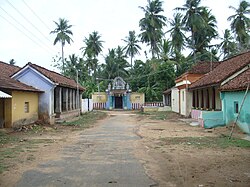
[[File:Bhaskararajapuram agraharam.jpg|thumb|right|200px| An ''Agraharam'' in [[Thanjavur District]], [[Tamil Nadu]]]]
[[File:Bhaskararajapuram agraharam.jpg|thumb|right|200px| An ''Agraharam'' in [[Thanjavur District]], [[Tamil Nadu]]]]
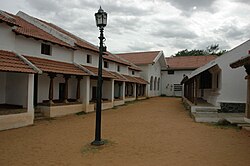
[[File:Agraharam.jpg|right|thumb|An Agraharam from [[Tirunelveli]] assembled within the [[DakshinaChitra]] museum.]]
[[File:Agraharam.jpg|right|thumb|An Agraharam from [[Tirunelveli]] assembled within the [[DakshinaChitra]] museum.]]
An '''''Agraharam''''' or '''''Agrahara''''' was a grant of land and royal income from it, typically by a king or a noble family in [[India]], for religious purposes, particularly to [[Brahmin]]s to maintain temples in that land or a pilgrimage site and to sustain their families.<ref name="Talbot2001p89">{{cite book|author=Cynthia Talbot|title=Precolonial India in Practice: Society, Region, and Identity in Medieval Andhra|url=https://books.google.com/books?id=pfAKljlCJq0C|year=2001|publisher=Oxford University Press|isbn=978-0-19-803123-9|pages=89, 161, 169}}</ref><ref>AA Macdonnell, [http://dsalsrv02.uchicago.edu/cgi-bin/app/macdonell_query.py?page=9 A practical Sanskrit dictionary with transliteration, accentuation, and etymological analysis throughout] London: Oxford University Press, page 9</ref> Agraharams were also known as '''Chaturvedimangalams''' in ancient times. They were also known as ghatoka, and boya.{{cn|date=October 2017}} Agraharams were built and maintained by dynasties such as the [[Cholas]] and [[Pallavas]].
An '''''Agraharam''''' ({{Langx|Ta|அக்கிரகாரம் or அக்ரஹாரம்|Akkirakāram resp. Akrahāram}} or {{Langx|Sa|𑌅𑌗𑍍𑌰𑌹𑌾𑌰|Agrahāra}}) was a grant of land and royal income from it, typically by a king or a noble family in ancient [[Tamilakam]] and in modern times in southern part of [[India]], for religious purposes, particularly to [[Brahmin]]s to maintain temples in that land or a pilgrimage site and to sustain their families.<ref name="Talbot2001p89">{{cite book|author=Cynthia Talbot|title=Precolonial India in Practice: Society, Region, and Identity in Medieval Andhra|url=https://books.google.com/books?id=pfAKljlCJq0C|year=2001|publisher=Oxford University Press|isbn=978-0-19-803123-9|pages=89, 161, 169}}</ref><ref>AA Macdonnell, [http://dsalsrv02.uchicago.edu/cgi-bin/app/macdonell_query.py?page=9 A practical Sanskrit dictionary with transliteration, accentuation, and etymological analysis throughout]{{Dead link|date=September 2025 |bot=InternetArchiveBot }} London: Oxford University Press, page 9</ref> Agraharams were also known as {{Langx|ta|சதுர்வேதி மங்கலம்|Caturvēti Maṅkalam}} in ancient times. They were also known as ghatoka, and boya. Agraharams were built and maintained by dynasties such as the [[Pandya dynasty|Pandya]], [[Cholas]], [[Kadamba dynasty|Kadambas]], [[Pallavas]], [[Vijayanagara Empire|Vijayanagara]] and other [[Deccan Plateau|Deccan]] dynasties since ancient times.<ref>{{Cite web |date=2021-03-05 |title=Sanskrit Education and Literature in Ancient and Medieval Tamil Nadu – DK Printworld (P) Ltd. |url=https://dkprintworld.com/product/sanskrit-education-and-literature-in-ancient-and-medieval-tamil-nadu/ |access-date=2023-04-08 |language=en-GB |archive-date=8 April 2023 |archive-url=https://web.archive.org/web/20230408102157/https://dkprintworld.com/product/sanskrit-education-and-literature-in-ancient-and-medieval-tamil-nadu/ |url-status=dead }}</ref>
The name originates from the fact that the agraharams have lines of houses on either side of the road and the temple to the village god at the centre, thus resembling a garland around the temple. According to the traditional [[Hindu architecture|Hindu practice of architecture]] and town-planning, an agraharam is held to be two rows of houses running north–south on either side of a road at one end of which would be a temple to [[Shiva]] and at the other end, a temple to [[Vishnu]]. An example is [[Vadiveeswaram]] in [[Tamil Nadu]].
They were known by different names in different parts of India, like Sāsana in Odisha.
The name Agraharam originates from the fact that the agraharams have lines of houses on either side of the road and the temple to the village god at the centre, thus resembling a garland around the temple. According to the traditional [[Hindu architecture|Hindu practice of architecture]] and town-planning, an agraharam is held to be two rows of houses running north–south on either side of a road at one end of which would be a temple to [[Shiva]] and at the other end, a temple to [[Vishnu]]. An example is [[Vadiveeswaram]] in [[Tamil Nadu]].
With Brahmins taking up professions in urban areas and some migrating abroad, Agraharams are vanishing fast. Many of the traditional houses are giving way to concrete structures and commercial buildings. Agraharams were started in south India during the Pallava period since they followed [[Veda]]s. Initially the Agraharam was maintained fully using royal patronage but later the Agraharam become a self-sustaining economy.
With Brahmins taking up professions in urban areas and some migrating abroad, Agraharams are vanishing fast. Many of the traditional houses are giving way to concrete structures and commercial buildings. Agraharams were started in south India during the Pallava period since they followed [[Veda]]s. Initially, the Agraharam was maintained fully using royal patronage but later the Agraharam become a self-sustaining economy.
== History ==
== History ==
The earliest existing description of an ''agraharam'' has been found in a 3rd-century AD Sangam Age work called ''[[Perumpāṇāṟṟuppaṭai]]''.<ref name="srinivasaiyengar">{{cite book | title=History of the Tamils from the Earliest Times to 600 A. D.|author= P. T. Srinivasa Iyengar| author-link= P. T. Srinivasa Iyengar | year=1929|pages=388–389}}</ref>
An early example of an existing description of an ''agraharam'' has been found in a 3rd-century CE [[Sangam literature|Sangam poem]] called ''[[Perumpāṇāṟṟuppaṭai]]''.<ref name="srinivasaiyengar">{{cite book |author=P. T. Srinivasa Iyengar |author-link=P. T. Srinivasa Iyengar |title=History of the Tamils from the Earliest Times to 600 A. D. |year=1929 |pages=388–389}}</ref><ref name="govindhanar1996">{{cite book |author=K. Govindhanar |url=https://www.tamilvu.org/library/nationalized/pdf/17-kagovindan/perumpanattrupadai_vilakkaurai.pdf |title=பெரும்பாணாற்றுப்படை – விளக்கவுரை |publisher=எழிலகம் |year=1996 |isbn=81-85703-17-5 |location=Chennai |page=131 |language=Ta |archive-url=https://web.archive.org/web/20240615205051/https://www.tamilvu.org/library/nationalized/pdf/17-kagovindan/perumpanattrupadai_vilakkaurai.pdf |archive-format=PDF |archive-date=15 Jun 2024 |url-status=live}}</ref> The poem is composed in the '''Akaval''' meter and consists of 500 lines.<ref>{{cite book|author=Kamil Zvelebil|title=The Smile of Murugan: On Tamil Literature of South India|url=https://books.google.com/books?id=degUAAAAIAAJ|year=1973|publisher=BRILL|isbn=90-04-03591-5 |pages=56–57}}</ref>
{{quotation|The houses had in front of them, a shed with short legs to which were tied fat calves; the houses were washed with cowdung and had idols (inside them). Domestic fowl and dogs did not approach them. It was the village of the guardians of the Veda who teach its sounds to the parrots with the bent mouth. If you (bard) reach (the place), fair faced bangled ladies who are as chaste as (Arundhathi) the little star which shines in the north of the bright, broad sky, will after sunset feed you on the well-cooked rice named after the bird (explained by the commentator as the rice called ''irasanam'') along with slices of citron boiled in butter taken, from the buttermilk derived from red cows and scented with the leaves of the karuvembu, and mixed with pepper-powder, and the sweet-smelling tender fruit plucked from the tall mango tree and pickled<ref name="srinivasaiyengar" />}}
'''(1) Iyengar's Version — in ''Akaval'' meter'''
{{blockquote|செழுங்கன் றியாத்த சிறுதாட் பந்தர்ப்
பைஞ்சேறு மெழுகிய படிவ நன்னகர்<br />
மனையூறை கோழியொடு ஞமலி தன்னுது<br />
வளைவாய்க் கிள்ளை மறைவிளி பயிற்று<br />
மறைகாப் பாள ருறைபதிச் சேப்பீற்<br />
பெருநல் வானத்து வடவயின் விளங்குஞ்<br />
சிறுமீன் புரையுங் கற்பி னறுநுதல்<br />
வளைக்கை மகடூஉ வயினரறிக் தட்ட<br />
சுடர்க்கடைப் பறவைப் பெயர்ப்படு வத்தஞ்<br />
சேதா நறுமோர் வெண்ணெயின் மாதுளத்<br />
துருப்புறு பசுங்காய்ப் போழொடு கறிகலந்து<br />
கஞ்சக நறுமுறி யளைஇப் பைந்துணர்<br />
நெடுமரக் கொக்கி னறுவடி விதிர்த்த<br />
தகைமாண் காடியின் வகைபடப் பெறுகுவிர்.
Ceḻuṅkaṉ ṟiyātta ciṟutāṭ pantarp
paiñcēṟu meḻukiya paṭiva naṉṉakar<br />
maṉaiyūṟai kōḻiyoṭu ñamali taṉṉutu<br />
vaḷaivāyk kiḷḷai maṟaiviḷi payiṟṟu<br />
maṟaikāp pāḷar uṟaipatic cēppīṟ<br />
perunal vāṉattu vaṭavayiṉ viḷaṅkuñ<br />
ciṟumīṉ puraiyuṅ kaṟpiṉ naṟunutal<br />
vaḷaikkai makaṭū'u vayiṉaraṟik taṭṭa<br />
cuṭarkkaṭaip paṟavaip peyarppaṭu vattañ<br />
cētā naṟumōr veṇṇeyiṉ mātuḷat<br />
turuppuṟu pacuṅkāyp pōḻoṭu kaṟikalantu<br />
kañcaka naṟumuṟi yaḷai'ip paintuṇar<br />
neṭumarak kokkiṉ naṟuvaṭi vitirtta<br />
takaimāṇ kāṭiyiṉ vakaipaṭap peṟukuvir.|author=P. T. Srinivasa Iyengar quotes the original author {{Langx|ta|உருத்திரங் கண்ணனார்|Uruttiraṅ Kaṇṇaṉār|links=no|label=none}}|title={{Langx|ta|பெரும்பான்|Perumpāṉ|links=no|label=none}} II (297-310)|source=<ref name="srinivasaiyengar" />}}
'''(2) Iyengar's Translation'''
{{blockquote|The houses had in front of them, a shed with short legs to which were tied fat calves; the houses were washed with cowdung and had idols (inside them). Domestic fowl and dogs did not approach them. It was the village of the guardians of the Veda who teach its sounds to the parrots with the bent mouth. If you (bard) reach (the place), fair faced bangled ladies who are as chaste as (Arundhathi) the little star which shines in the north of the bright, broad sky, will after sunset feed you on the well-cooked rice named after the bird (explained by the commentator as the rice called ''irasanam'') along with slices of citron boiled in butter taken, from the buttermilk derived from red cows and scented with the leaves of the karuvembu, and mixed with pepper-powder, and the sweet-smelling tender fruit plucked from the tall mango tree and pickled.|author=P. T. Srinivasa Iyengar|source=<ref name="srinivasaiyengar" />}}
'''(3) Modern editorial Tamil rendering (Govindhanar, 1996)'''
takaimāṇ kāṭiyiṉ vakai paṭap peṟukuvir.|author=K. Govindhanar|title={{Langx|ta|பெரும்பான்|Perumpāṉ|links=no|label=none}} II (297-310)|source=<ref name="govindhanar1996" />}}
== Places with the name ''Agraharam'' or ''Agrahara'' ==
== Places with the name ''Agraharam'' or ''Agrahara'' ==
Line 27:
Line 96:
* Chennupalli Agraharam, in Ballikurva mandal of [[Prakasam district]]
* Chennupalli Agraharam, in Ballikurva mandal of [[Prakasam district]]
* Chintapalli agraharam, in Pentapadu mandal of West Godavari district
* Chintapalli agraharam, in Pentapadu mandal of West Godavari district
* Kotha Agraharam, in S.Rayavaram mandal of [[Vishakhapatnam district]]
* Kotha Agraharam, in S.Rayavaram mandal of [[Vishakhapatnam district]]
* Tirumala Samudra Agraharam (T S Agraharam) in palamaner Mandal of chittoor district
* Tirumala Samudra Agraharam (T S Agraharam) in palamaner Mandal of chittoor district
Line 56:
Line 125:
* [[Agrahara Valagerehalli]], in Channapatna taluk of Bangalore Rural district
* [[Agrahara Valagerehalli]], in Channapatna taluk of Bangalore Rural district
* [[Konappana Agrahara]], town in [[Anekal taluk]] adjoining [[Electronics City]]
* [[Konappana Agrahara]], town in [[Anekal taluk]] adjoining [[Electronics City]]
* [[Konena Agrahara]]
* [[Rupena Agrahara]]
* [[Rupena Agrahara]]
Line 61:
Line 131:
* [[Annalagraharam]], village in [[Kumbakonam taluk]] of [[Thanjavur district]]
* [[Annalagraharam]], village in [[Kumbakonam taluk]] of [[Thanjavur district]]
* [[Ganapathi Agraharam]], village in Thanjavur district
* [[Ganapathi Agraharam]], village in [[Thanjavur district]]
* Bommasamudram Agraharam, village in Vasan Nagar, [[Tiruchirappalli district]]
* [[Pallipalayam Agraharam]], village in [[Namakkal district]]
* [[Pallipalayam Agraharam]], village in [[Namakkal district]]
* [[Devakottai|Devakottai Silambani Agraharam]]
* [[Devakottai|Devakottai Silambani Agraharam]], located in [[Sivaganga district]]
* [[Thiruvattar]] Agraharam in [[Kanyakumari]] district adjascent to [[Adikesava Perumal Temple, Kanyakumari]] which is home to successors of [[Tuluva Brahmin]] priests employed by the erstwhile [[Travancore royal family]] in [[Trivandrum]]
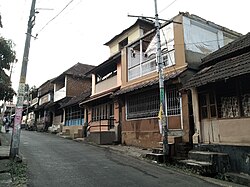
*[[File:Kunnamkulam Angadi 07.jpg|thumb|Kunnamkulam Angady]]There is a famous Agraharam in [[Thiruvananthapuram]], called [[Valiyasala Mahadeva Temple|Valiya Sala]] which is the lengthiest Agraharam in India.
*[[File:Kunnamkulam Angadi 07.jpg|thumb|Kunnamkulam Angady]]There is a famous Agraharam in [[Thiruvananthapuram]], called [[Valiyasala Mahadeva Temple|Valiya Sala]] which is the lengthiest Agraharam in India.
*[[Agraharams]] in [[Palakkad]] district are around 96. When the villages are counted in the municipal area, there are around 18 of them. The concept is similar with houses in row on both sides and a temple at one end. They may differ in shapes - some are in straight line, some are T-shaped and few have multiple temples within the village.
*[[Agraharams]] in [[Palakkad]] district are around 96. When the villages are counted in the municipal area, there are around 18 of them. The concept is similar with houses in row on both sides and a temple at one end. They may differ in shapes – some are in straight line, some are T-shaped and few have multiple temples within the village.
* There are several other [[Agraharams]] in [[Trivandrum]] city including the ones in and around [[Padmanabhaswamy Temple]], [[East Fort]], [[Karamana]] and [[Ulloor]].
== Notes ==
== Notes ==
Line 74:
Line 147:
==External links==
==External links==
*[http://www.kuzhalmannamagraharam.info/ Kuzhalmannam Agraharam, one among agraharams of [[Palakkad]] where [[Kerala]] [[Iyers]] live.]
*[http://www.kuzhalmannamagraharam.info/ Kuzhalmannam Agraharam], one among agraharams of [[Palakkad]] where [[Kerala]] [[Iyers]] live.
An Agraharam (Tamil: அக்கிரகாரம் or அக்ரஹாரம், romanized: Akkirakāram resp. Akrahāram or Sanskrit: 𑌅𑌗𑍍𑌰𑌹𑌾𑌰, romanized: Agrahāra) was a grant of land and royal income from it, typically by a king or a noble family in ancient Tamilakam and in modern times in southern part of India, for religious purposes, particularly to Brahmins to maintain temples in that land or a pilgrimage site and to sustain their families.[1][2] Agraharams were also known as Tamil: சதுர்வேதி மங்கலம், romanized: Caturvēti Maṅkalam in ancient times. They were also known as ghatoka, and boya. Agraharams were built and maintained by dynasties such as the Pandya, Cholas, Kadambas, Pallavas, Vijayanagara and other Deccan dynasties since ancient times.[3]
They were known by different names in different parts of India, like Sāsana in Odisha.
The name Agraharam originates from the fact that the agraharams have lines of houses on either side of the road and the temple to the village god at the centre, thus resembling a garland around the temple. According to the traditional Hindu practice of architecture and town-planning, an agraharam is held to be two rows of houses running north–south on either side of a road at one end of which would be a temple to Shiva and at the other end, a temple to Vishnu. An example is Vadiveeswaram in Tamil Nadu.
With Brahmins taking up professions in urban areas and some migrating abroad, Agraharams are vanishing fast. Many of the traditional houses are giving way to concrete structures and commercial buildings. Agraharams were started in south India during the Pallava period since they followed Vedas. Initially, the Agraharam was maintained fully using royal patronage but later the Agraharam become a self-sustaining economy.
An early example of an existing description of an agraharam has been found in a 3rd-century CE Sangam poem called Perumpāṇāṟṟuppaṭai.[4][5] The poem is composed in the Akaval meter and consists of 500 lines.[6]
— P. T. Srinivasa Iyengar quotes the original author உருத்திரங் கண்ணனார், Uruttiraṅ Kaṇṇaṉār, பெரும்பான், Perumpāṉ II (297-310), [4]
(2) Iyengar's Translation
The houses had in front of them, a shed with short legs to which were tied fat calves; the houses were washed with cowdung and had idols (inside them). Domestic fowl and dogs did not approach them. It was the village of the guardians of the Veda who teach its sounds to the parrots with the bent mouth. If you (bard) reach (the place), fair faced bangled ladies who are as chaste as (Arundhathi) the little star which shines in the north of the bright, broad sky, will after sunset feed you on the well-cooked rice named after the bird (explained by the commentator as the rice called irasanam) along with slices of citron boiled in butter taken, from the buttermilk derived from red cows and scented with the leaves of the karuvembu, and mixed with pepper-powder, and the sweet-smelling tender fruit plucked from the tall mango tree and pickled.
There are a number of places in Andhra Pradesh named agraharam. These places may have originated as Bramhin-populated villages. Examples of such settlements include:
Kunnamkulam AngadyThere is a famous Agraharam in Thiruvananthapuram, called Valiya Sala which is the lengthiest Agraharam in India.
Agraharams in Palakkad district are around 96. When the villages are counted in the municipal area, there are around 18 of them. The concept is similar with houses in row on both sides and a temple at one end. They may differ in shapes – some are in straight line, some are T-shaped and few have multiple temples within the village.