





m Removed empty portal template using script |
m slightly rework information based on references and improved wording for clarity |
||
| Line 1: | Line 1: | ||
{{short description|State of Australia}} | {{short description|State of Australia}} | ||
{{ | {{Redirect|South Australian|the newspaper|The South Australian{{!}}''The South Australian''|the ship|South Australian (clipper ship){{!}}''South Australian'' (clipper ship)}} | ||
{{for-multi|the southern region of Australia|Southern Australia|other uses|South Australia (disambiguation)}} | |||
{{Use Australian English|date=November 2013}} | {{Use Australian English|date=November 2013}} | ||
{{Infobox | {{Infobox political division | ||
| name | | name = South Australia | ||
| settlement_type | | native_name = | ||
| image_flag | | settlement_type = [[States and territories of Australia|State]] | ||
| flag_size | | image_flag = Flag of South Australia.svg | ||
| flag_link | | flag_size = 130px | ||
| | | flag_link = Flag of South Australia | ||
| | | image_seal = South Australian Coat of Arms.svg | ||
| | | seal_size = 100px | ||
| nickname | | seal_type = Coat of arms | ||
| image_map | | seal_link = Coat of arms of South Australia | ||
| | | motto = | ||
| map_caption | | nickname = {{hlist|The Festival State|The Wine State}} | ||
| image_map = {{Australian state map|Map=South Australia in Australia.svg|align=center|border=none|width=300px}} | |||
| subdivision_type | | map_caption = Location of South Australia in Australia<br />{{coord|30|S|135|E|type:adm1st_region:AU-SA|display=inline,titles do fd}} | ||
| subdivision_name | | subdivision_type = Country | ||
| | | subdivision_name = [[Australia]] | ||
| | | established_title = Before federation | ||
| | | established_date = [[British colonisation of South Australia|Province of South Australia]] | ||
| | | established_title2 = [[South Australia Act 1834|Settlement]] | ||
| | | established_date2 = 15 August 1834 | ||
| established_title3 = [[Letters Patent establishing the Province of South Australia|Declared as Province]] | |||
| established_date3 = 19 February 1836 | |||
| | | established_title4 = [[Responsible government]] | ||
| | | established_date4 = 22 April 1857 | ||
| | | established_title5 = [[Federation of Australia|Federation]] | ||
| | | established_date5 = 1 January 1901 | ||
| | | demonym = {{plainlist| | ||
| | * South Australian | ||
| | * [[Croweater]] (colloquial)<ref>{{cite web |url=http://www.abc.net.au/newsradio/txt/s1381253.htm |publisher=ABC NewsRadio |title=Wordwatch: Croweater |access-date=11 October 2011 |archive-url=https://web.archive.org/web/20050915013033/http://www.abc.net.au/newsradio/txt/s1381253.htm |archive-date=15 September 2005}}</ref> | ||
| | * South Aussie}} | ||
| | | capital = [[Adelaide]] | ||
| | | largest_city = capital | ||
| | | coordinates = | ||
| admin_center_type = Administration | |||
| | | admin_center = [[Local government areas of South Australia|74 local government areas]] | ||
| government_type = [[Federated state|Federated]] parliamentary [[constitutional monarchy]] | |||
| | | leader_title1 = [[Monarchy of Australia|Monarch]] | ||
| | | leader_name1 = {{Current Australian monarch |Charles III}} | ||
| | | leader_title2 = [[Governor of South Australia|Governor]] | ||
| | | leader_name2 = [[Frances Adamson]] | ||
| | | leader_title3 = [[Premier of South Australia|Premier]] | ||
| | | leader_name3 = [[Peter Malinauskas]] ([[Australian Labor Party (South Australian Branch)|ALP]]) | ||
| | | leader_title4 = [[Chief Justice]] | ||
| leader_name4 = [[Laura Stein]] | |||
| legislature = [[Parliament of South Australia]] | |||
| | | upper_house = [[South Australian Legislative Council|Legislative Council]] | ||
[[South Australian Legislative Council|Legislative Council]] | | lower_house = [[South Australian House of Assembly|House of Assembly]] | ||
[[South Australian House of Assembly|House of Assembly]] | | judiciary = [[Supreme Court of South Australia]] | ||
| | | national_representation = [[Parliament of Australia]] | ||
| | | national_representation_type1 = [[Australian Senate|Senate]] | ||
| national_representation1 = [[List of senators from South Australia|12 senators]] (of 76) | |||
| national_representation_type2 = [[House of Representatives (Australia)|House of Representatives]] | |||
| | | national_representation2 = [[List of electoral divisions in South Australia|10 seats]] (of 150) | ||
| area_land_km2 = 984321<ref>{{cite web | url=https://www.ga.gov.au/scientific-topics/national-location-information/dimensions/area-of-australia-states-and-territories | title=Area of Australia - States and Territories | date=27 June 2014 }}</ref> | |||
| area_rank = 4th | |||
| area_rank_link = States and territories of Australia#Statistics | |||
| | | elevation_max_m = 1435 | ||
| | | elevation_max_point = [[Mount Woodroffe]] | ||
| | | elevation_min_m = -16 | ||
| area_rank | | elevation_min_point = [[Lake Eyre|Kati Thanda–Lake Eyre]] | ||
| elevation_max_m | | population_estimate = 1,902,300<ref name=ABSPop>{{cite web|url=https://www.abs.gov.au/statistics/people/population/national-state-and-territory-population/latest-release|title=National, state and territory population – June 2025|publisher=Australian Bureau of Statistics|date=18 December 2025|accessdate=31 January 2026|archive-date=28 January 2026|archive-url=https://web.archive.org/web/20260128095539/https://www.abs.gov.au/statistics/people/population/national-state-and-territory-population/latest-release|url-status=live}}</ref> | ||
| elevation_max_point | | population_estimate_rank = 5th | ||
| elevation_min_m | | population_rank_link = States and territories of Australia#Statistics | ||
| elevation_min_point | | population_estimate_year = June 2025 | ||
| | | population_density_km2 = 1.93 | ||
| | | population_density_sq_mi = 0.75 | ||
| population_density_rank = 6th | |||
| population_density_rank_link = States and territories of Australia#Statistics | |||
| GDP_nominal = AU$108.334 billion<ref name="gspref">{{cite web|url=https://www.abs.gov.au/statistics/economy/national-accounts/australian-national-accounts-state-accounts/latest-release |title=5220.0 – Australian National Accounts: State Accounts, 2019–20 |publisher=Australian Bureau of Statistics |date=20 November 2020 |access-date=20 January 2021}}</ref> | |||
| GDP_nominal_type = [[List of Australian states and territories by gross state product|GSP]] | |||
| GDP_nominal_year = 2020 | |||
| | | GDP_nominal_rank = 5th | ||
| | | GDP_nominal_rank_link = List of Australian states and territories by gross state product | ||
| | | GDP_nominal_per_capita = AU$61,582 | ||
| | | GDP_nominal_per_capita_rank = 7th | ||
| | | GDP_nominal_per_capita_rank_link = List of Australian states and territories by gross state product | ||
| | | HDI = 0.944<!--number only--> | ||
| | | HDI_year = 2024<!-- Please use the year to which the data refers, not the publication year--> | ||
| HDI_change = increase | |||
| HDI_ref = <ref name="GlobalDataLab">{{cite web|url=https://hdi.globaldatalab.org/areadata/shdi/|title=Sub-national HDI – Area Database – Global Data Lab|website=hdi.globaldatalab.org|language=en|access-date=11 November 2025}}</ref> | |||
| HDI_rank = 6th (equal) | |||
| | | HDI_rank_link = List of Australian states and territories by Human Development Index | ||
| | | utc_offset_list = {{ublist|[[UTC+09:30]] ([[Australian Central Standard Time|ACST]])|[[UTC+08:45]] ([[Border Village]]; DST not observed)}} | ||
| | | timezone_DST = [[Australian Central Daylight Time|ACDT]] | ||
| website | | utc_offset_DST = +10:30 | ||
| | | calling_code = | ||
| postal_code_type = [[Postcodes in Australia#Allocation|Postal abbreviation]] | |||
| postal_code = SA | |||
| website = {{URL|sa.gov.au}} | |||
| iso_code = [[ISO 3166-2:AU|AU–SA]] | |||
{{Infobox place symbols| embedded=Yes | |||
| mammal = [[Southern hairy-nosed wombat]]<br />''(Lasiorhinus latifrons'') | | mammal = [[Southern hairy-nosed wombat]]<br />''(Lasiorhinus latifrons'') | ||
| bird = [[Piping shrike]] ([[Australian magpie]]) | | bird = [[Piping shrike]] ([[Australian magpie]]) | ||
| Line 99: | Line 104: | ||
| colour = Red, blue, and gold | | colour = Red, blue, and gold | ||
}} | }} | ||
}} | |languages_type=Languages|languages=[[South Australian English]], [[Barossa German]]}} | ||
'''South Australia''' (abbreviated as '''SA''') is a [[States and territories of Australia|state]] in the southern central part of [[Australia]] | '''South Australia''' (commonly abbreviated as '''SA''') is a [[States and territories of Australia|state]] in the southern central part of [[Australia]]. With a total land area of {{convert|984314|km2|sqmi|0}},<ref>[https://www.ga.gov.au/scientific-topics/national-location-information/dimensions/area-of-australia-states-and-territories Area of Australia - States and Territories] Geoscience Australia. Retrieved 9 January 2022.</ref> it is the fourth-largest of Australia's states and territories by area, which includes some of the most [[arid]] parts of the continent. With 1.9 million people as of June 2025,<ref name=ABSPop/> it is the [[List of first-level administrative divisions by area|17th-largest subdivision in the world]] and the fifth-largest in [[Australasia]]. It is the second-most highly centralised state in the nation after [[Western Australia]], with more than 67% of South Australians living in the capital [[Adelaide]] or its environs. Other population centres in the state are relatively small; with [[Mount Gambier]] being the second-largest centre, with a population of 26,878.<ref>{{Cite web |title=2021 Mount Gambier, Census All persons QuickStats {{!}} Australian Bureau of Statistics |url=https://abs.gov.au/census/find-census-data/quickstats/2021/LGA44620 |access-date=2024-01-01 |website=abs.gov.au}}</ref> | ||
South Australia shares borders with all the other mainland states. It is bordered to the west by [[Western Australia]], to the north by the [[Northern Territory]], to the north-east by [[Queensland]], to the east by [[New South Wales]], and to the south-east by [[Victoria (state)|Victoria]]. To the south, its border is the ocean, the [[Great Australian Bight]].{{refn|group="N"|Most Australians describe the body of water south of the continent as the [[Southern Ocean]], rather than the [[Indian Ocean]] as officially defined by the [[International Hydrographic Organization]] (IHO). In the year 2000, a vote of IHO member nations defined the term "Southern Ocean" as applying only to the waters between [[Antarctica]] and [[60th parallel south|60 degrees south]] latitude.}} | |||
The state comprises less than 6.7% of the Australian population and ranks fifth in population among the six states and two territories. The majority of its people reside in greater Metropolitan Adelaide. Most of the remainder are settled in fertile areas along the south-eastern coast and [[Murray River|River Murray]]. The state's colonial origins are unique in Australia as [[British Province of South Australia|a freely settled, planned British province]],<ref>{{cite web |url=http://www.sapolicehistory.org/history.html |title=South Australian Police Historical Society Inc |archive-url=https://web.archive.org/web/20111001014654/http://www.sapolicehistory.org/history.html |archive-date=1 October 2011 |access-date=13 September 2011 }}</ref> rather than as a [[convictism in Australia|convict]] settlement. Colonial government commenced on 28 December 1836, when the members of the council were sworn in near the [[Old Gum Tree]].<ref name="historyhub">{{cite web |last1=Anderson |first1=Margaret |title=The first reading of the proclamation |url=https://sahistoryhub.history.sa.gov.au/events/the-first-reading-of-the-proclamation |work=[[History Trust of South Australia]] |date=12 December 2013 |access-date=5 September 2021}}</ref> | |||
As with the rest of the continent, the region has a long history of [[Aboriginal Australians|human occupation]] by numerous | As with the rest of the continent, the region has a long history of [[Aboriginal Australians|human occupation]] by numerous groups and languages. The [[South Australian Company]] established a temporary settlement at [[Kingscote, South Australia|Kingscote]], [[Kangaroo Island]], on 26 July 1836, five months before Adelaide was founded.<ref name="Kangaroo Island">{{cite web |url=http://www.kangarooisland.sa.gov.au/site/page.cfm |title=Kangaroo Island Council – Welcome |publisher=[[Kangaroo Island Council]] |access-date=10 August 2010 |archive-url=https://web.archive.org/web/20100809121105/http://www.kangarooisland.sa.gov.au/site/page.cfm |archive-date=9 August 2010 |url-status=dead }}</ref> The guiding principle behind settlement was that of ''systematic colonisation'', a theory espoused by [[Edward Gibbon Wakefield]] that was later employed by the [[New Zealand Company]].<ref>{{cite web|title=The Wakefield Model of Systematic Colonisation in South Australia|work=[[University of South Australia]]|date=2008|url=http://search.ror.unisa.edu.au/record/UNISA_ALMA2171701690001831/media/digital/open/9915951887301831/12146718360001831/13146717500001831/pdf}}{{Dead link|date=March 2020 |bot=InternetArchiveBot |fix-attempted=yes }}</ref> The goal was to establish the province as a centre of civilisation for free immigrants, promising civil liberties and religious tolerance. Although its history has been marked by periods of economic hardship, South Australia has remained politically innovative and culturally vibrant. Today, it is known for its fine wine and numerous cultural festivals. The state's economy is dominated by the agricultural, manufacturing and mining industries. | ||
==History== | ==History== | ||
{{Main|History of South Australia}} | {{Main|History of South Australia}} | ||
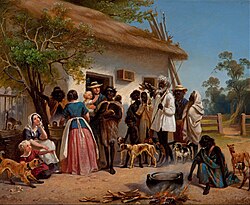
Evidence of human activity in South Australia dates back as far as 20,000 years, with [[flint]] mining activity and rock art in the [[Koonalda Cave]] on the [[Nullarbor Plain]]. In addition wooden spears and tools were made in an area now covered in [[peat]] [[bog]] in the South East. [[Kangaroo Island]] was inhabited long before the island was cut off by [[Sea level rise|rising sea levels]].<ref>R.J. Lampert (1979): Aborigines. '''In''' Tyler, M.J., [[Charles Rowland Twidale|Twidale, C.R.]] & Ling, J.K. (Eds) ''Natural History of Kangaroo Island.'' Royal Society of South Australia Inc. {{ISBN|0-9596627-1-5}}</ref> | [[File:Alexander Schramm - A scene in South Australia - Google Art Project.jpg|thumb|upright=0.95|left|European settlers with Aboriginal Australians, 1850]] | ||
The first recorded European sighting of the South Australian coast was in 1627 when the Dutch ship the ''Gulden Zeepaert'', captained by [[François Thijssen]], examined and mapped a section of the coastline as far east as the [[Nuyts Archipelago]]. Thijssen named the whole of the country eastward of the Leeuwin "Nuyts Land", after a distinguished passenger on board; the Hon. Pieter Nuyts | |||
Evidence of human activity in South Australia dates back as far as 20,000 years, with [[flint]] mining activity and rock art in the [[Koonalda Cave]] on the [[Nullarbor Plain]]. In addition wooden spears and tools were made in an area now covered in [[peat]] [[bog]] in the South East. [[Kangaroo Island]] was inhabited long before the island was cut off by [[Sea level rise|rising sea levels]].<ref>R.J. Lampert (1979): Aborigines. '''In''' Tyler, M.J., [[Charles Rowland Twidale|Twidale, C.R.]] & Ling, J.K. (Eds) ''Natural History of Kangaroo Island.'' Royal Society of South Australia Inc. {{ISBN|0-9596627-1-5}}</ref> According to [[mitochondrial DNA]] research, Aboriginal people reached [[Eyre Peninsula]] 49,000-45,000 years ago from both the east (clockwise, along the coast, from northern Australia) and the west (anti-clockwise).<ref>[[Ghil'ad Zuckermann|Zuckermann, Ghil'ad]] (2020), [[Revivalistics|''Revivalistics: From the Genesis of Israeli to Language Reclamation in Australia and Beyond'']], [https://global.oup.com/academic/product/revivalistics-9780199812790 Oxford University Press]. {{ISBN|9780199812790}} / {{ISBN|9780199812776}}</ref>{{rp|189}} | |||
The first recorded European sighting of the South Australian coast was in 1627 when the Dutch ship the ''Gulden Zeepaert'', captained by [[François Thijssen]], examined and mapped a section of the coastline as far east as the [[Nuyts Archipelago]]. Thijssen named the whole of the country eastward of the Leeuwin "Nuyts Land", after a distinguished passenger on board; the Hon. [[Pieter Nuyts]]].<ref>{{Citation | |||
| author1=Australian Geographical Society. | | author1=Australian Geographical Society. | ||
| author2=Australian National Publicity Association. | | author2=Australian National Publicity Association. | ||
| Line 122: | Line 131: | ||
}}</ref> | }}</ref> | ||
The coastline of South Australia was first mapped by [[Matthew Flinders]] and [[Nicolas Baudin]] in 1802, excepting the inlet later named the [[Port River|Port Adelaide River]] which was first discovered in 1831 by Captain [[Collet Barker]] and later accurately charted in 1836–37 by Colonel [[William Light]], leader of the South Australian | The coastline of South Australia was first mapped by [[Matthew Flinders]] and [[Nicolas Baudin]] in 1802, excepting the inlet later named the [[Port River|Port Adelaide River]] which was first discovered in 1831 by Captain [[Collet Barker]] and later accurately charted in 1836–37 by Colonel [[William Light]], leader of the South Australian Colonisation Commissioners' 'First Expedition' and first Surveyor-General of South Australia. | ||
The land which now forms the state of South Australia was claimed for Britain in 1788 as part of the colony of [[New South Wales]]. Although the new colony included almost two-thirds of the continent, early settlements were all on the eastern coast and only a few intrepid explorers ventured this far west. It took more than forty years before any serious proposal to establish settlements in the south-western portion of New South Wales were put forward. | The land which now forms the state of South Australia was claimed for Britain in 1788 as part of the colony of [[New South Wales]]. Although the new colony included almost two-thirds of the continent, early settlements were all on the eastern coast and only a few intrepid explorers ventured this far west. It took more than forty years before any serious proposal to establish settlements in the south-western portion of New South Wales were put forward. | ||
On 15 August 1834, the British Parliament passed the [[South Australia Act 1834]] (''Foundation Act''), which empowered His Majesty to erect and establish a province or provinces in southern Australia. The act stated that the land between 132° and 141° east longitude and from 26° south latitude to the southern ocean would be allotted to the colony, and it would be convict-free.<ref>{{cite web|url=http://www.foundingdocs.gov.au/resources/transcripts/sa1_doc_1834.pdf |title=Transcript of the South Australia Act, 1834 |publisher=Museum of Australian Democracy at Old Parliament House|access-date=27 December 2018}}</ref> | On 15 August 1834, the [[British Parliament]] passed the [[South Australia Act 1834]] (''Foundation Act''), which empowered His Majesty to erect and establish a province or provinces in southern Australia. The act stated that the land between 132° and 141° east longitude and from 26° south latitude to the southern ocean would be allotted to the intended colony, and it would be convict-free.<ref>{{cite web |url=http://www.foundingdocs.gov.au/resources/transcripts/sa1_doc_1834.pdf |title=Transcript of the South Australia Act, 1834 |publisher=Museum of Australian Democracy at Old Parliament House|access-date=27 December 2018}}</ref> | ||
[[File:S. T. Gill - Sturt's Overland Expedition leaving Adelaide, 10th August, 1844 - Google Art Project.jpg|thumb | [[File:S. T. Gill - Sturt's Overland Expedition leaving Adelaide, 10th August, 1844 - Google Art Project.jpg|thumb|240px|[[Charles Sturt]]'s expedition leaving Adelaide for central Australia, 1844]] | ||
In contrast to the rest of Australia, ''[[terra nullius]]'' did not apply to the new province. The [[Letters Patent]],<ref name="Letters Patent establishing the Province of South Australia 19 February 1836 (UK)">{{Cite web | url=https://www.foundingdocs.gov.au/item-sdid-38.html | | In contrast to the rest of Australia, ''[[terra nullius]]'' did not apply to the new province. The [[Letters Patent]],<ref name="Letters Patent establishing the Province of South Australia 19 February 1836 (UK)">{{Cite web | url=https://www.foundingdocs.gov.au/item-sdid-38.html |work=Documenting Democracy |title=Letters Patent establishing the Province of South Australia 19 February 1836 (UK) |access-date=31 July 2025}}</ref> which used the enabling provisions of the South Australia Act 1834 to fix the boundaries of the Province of South Australia, provided that "nothing in those our Letters Patent shall affect or be construed to affect the rights of any Aboriginal Natives of the said Province to the actual occupation and enjoyment in their own Persons or in the Persons of their Descendants of any Lands therein now actually occupied or enjoyed by such Natives."<ref name="Letters Patent establishing the Province of South Australia 19 February 1836 (UK)"/> Although the patent guaranteed land rights under force of law for the indigenous inhabitants, it was ignored by the South Australian Company authorities and squatters.<ref>{{Cite book| last = Ngadjuri Walpa Juri Lands and Heritage Association |date = n.d. | title = Gnadjuri | publisher=SASOSE Council Inc | isbn = 978-0-646-42821-5 }}</ref> Despite strong reference to the rights of the native population in the initial proclamation by the Governor, there were many conflicts and deaths in the [[Australian frontier wars|Australian Frontier Wars]] in South Australia. | ||
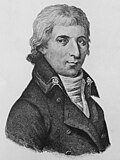
[[File:Nicolas Baudin 2.jpeg|thumb|right|upright|[[Nicolas Baudin]], who mapped the coastline of South Australia, along with Matthew Flinders]] | [[File:Nicolas Baudin 2.jpeg|thumb|right|upright|[[Nicolas Baudin]], who mapped the coastline of South Australia, along with [[Matthew Flinders]]]] | ||
Survey was required before settlement of the province, and the | Survey was required before settlement of the province, and the Colonisation Commissioners for South Australia appointed William Light as the leader of its 'First Expedition', tasked with examining 1500 miles of the South Australian coastline and selecting the best site for the capital, and with then planning and surveying the site of the city into one-acre Town Sections and its surrounds into 134-acre Country Sections. | ||
Eager to commence the establishment of their whale and seal fisheries, the South Australian Company sought, and obtained, the Commissioners' permission to send Company ships to South Australia, in advance of the surveys and ahead of the Commissioners' colonists. | Eager to commence the establishment of their whale and seal fisheries, the South Australian Company sought, and obtained, the Commissioners' permission to send Company ships to South Australia, in advance of the surveys and ahead of the Commissioners' colonists. | ||
| Line 140: | Line 149: | ||
The commencement of colonial government was proclaimed on 28 December 1836, now known as [[Proclamation Day (South Australia)|Proclamation Day]]. | The commencement of colonial government was proclaimed on 28 December 1836, now known as [[Proclamation Day (South Australia)|Proclamation Day]]. | ||
South Australia is the only Australian state to have never received British convicts. | South Australia is the only Australian state to have never received British convicts. However, some emancipated or escaped convicts or expirees made their own way there, and constituted 1–2% of the early population.<ref>Sendziuk, P. (2012): No convicts here: reconsidering South Australia's foundation myth. '''In:''' Foster, R. & Sendziuk, P. (Eds.) ''Turning points: chapters in South Australian history.'' Wakefield Press. {{ISBN|978 1 74305 119 1}}</ref> The plan for the province was that it would be an experiment in reform, addressing the problems perceived in British society. There was to be religious freedom and no established religion. Sales of land to colonists created an Emigration Fund to pay the costs of transferring a poor young labouring population to South Australia. In early 1838 the colonists became concerned after it was reported that convicts who had escaped from the eastern states may make their way to South Australia. The [[South Australia Police]] was formed in April 1838 to protect the community and enforce government regulations. Their principal role was to run the first temporary gaol, a two-room hut.<ref>{{Cite web|url=http://www.environment.sa.gov.au/adelaidegaol/free-settlement.html|archive-url=https://web.archive.org/web/20091024014707/http://www.environment.sa.gov.au/adelaidegaol/free-settlement.html|url-status=dead|title=History of Adelaide Gaol|archive-date=24 October 2009|access-date=19 November 2020}}</ref> | ||
The plan for the province was that it would be an experiment in reform, addressing the problems perceived in British society. There was to be religious freedom and no established religion. Sales of land to colonists created an Emigration Fund to pay the costs of transferring a poor young labouring population to South Australia. In early 1838 the colonists became concerned after it was reported that convicts who had escaped from the eastern states may make their way to South Australia. The [[South Australia Police]] was formed in April 1838 to protect the community and enforce government regulations. Their principal role was to run the first temporary gaol, a two-room hut.<ref>{{Cite web|url=http://www.environment.sa.gov.au/adelaidegaol/free-settlement.html|archive-url=https://web.archive.org/web/20091024014707/http://www.environment.sa.gov.au/adelaidegaol/free-settlement.html|url-status=dead|title=History of Adelaide Gaol|archive-date=24 October 2009|access-date=19 November 2020}}</ref> | |||
The current [[flag of South Australia]] was adopted on 13 January 1904, and is a British blue ensign [[Defacement (flag)|defaced]] with the state badge. The badge is described as a [[piping shrike]] with wings outstretched on a yellow disc. The state badge is believed to have been designed by Robert Craig of Adelaide's [[School of Design (Adelaide)|School of Design]]. | The current [[flag of South Australia]] was adopted on 13 January 1904, and is a British blue ensign [[Defacement (flag)|defaced]] with the state badge. The badge is described as a [[piping shrike]] with wings outstretched on a yellow disc. The state badge is believed to have been designed by Robert Craig of Adelaide's [[School of Design (Adelaide)|School of Design]]. | ||
| Line 148: | Line 155: | ||
==Geography== | ==Geography== | ||
{{Main|Geography of South Australia}} | {{Main|Geography of South Australia}} | ||
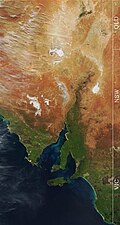
[[File:Eastern South Australia Satellite Photo.jpg|thumb | |||
The terrain consists largely of arid and semi-arid rangelands, with several low [[mountain range]]s. The most important (but not tallest) is the [[Mount Lofty Ranges|Mount Lofty]]-[[Flinders Ranges]] system, which extends north about {{convert|800|km|mi}} from [[Cape Jervis (headland)|Cape Jervis]] to the northern end of [[Lake Torrens]]. The highest point in the state is not in those ranges; [[Mount Woodroffe]] ({{convert|1435|m|ft|0}}) is in the [[Musgrave Ranges]] in the extreme northwest of the state.<ref>{{cite web |url=http://www.ga.gov.au/education/facts/landforms/highmtns.htm#state |title=Highest Mountains |publisher=[[Geoscience Australia]] |access-date=28 May 2006 |archive-url=https://web.archive.org/web/20060421195512/http://www.ga.gov.au/education/facts/landforms/highmtns.htm#state |archive-date = 21 April 2006}}</ref> The south-western portion of the state consists of the sparsely inhabited [[Nullarbor Plain]], fronted by the cliffs of the [[Great Australian Bight]]. Features of the coast include [[Spencer Gulf]] and the [[Eyre Yorke Block|Eyre and Yorke Peninsulas]] that surround it. | [[File:Eastern South Australia Satellite Photo.jpg|thumb|upright=0.7|A satellite image of eastern South Australia. Note the dry lakes (white patches) in the north.]] | ||
[[File:Vignoble barossa automne.jpg|thumb| | |||
The terrain consists largely of arid and semi-arid rangelands, with several low [[mountain range]]s. The most important (but not tallest) is the [[Mount Lofty Ranges|Mount Lofty]]-[[Flinders Ranges]] system, which extends north about {{convert|800|km|mi}} from [[Cape Jervis (headland)|Cape Jervis]] to the northern end of [[Lake Torrens]]. The highest point in the state is not in those ranges; [[Mount Woodroffe]] ({{convert|1435|m|ft|0}}) is in the [[Musgrave Ranges]] in the extreme northwest of the state.<ref>{{cite web |url=http://www.ga.gov.au/education/facts/landforms/highmtns.htm#state |title=Highest Mountains |publisher=[[Geoscience Australia]] |access-date=28 May 2006 |archive-url=https://web.archive.org/web/20060421195512/http://www.ga.gov.au/education/facts/landforms/highmtns.htm#state |archive-date = 21 April 2006}}</ref> | |||
[[File: | |||
The principal industries and exports of South Australia are wheat, wine and wool.<ref>{{Cite book|url=https://books.google.com/books?id=vNj-OKU4CFwC&q=South+Australia+are+wheat%2C+wine+and+wool.|title=Australian Agriculture: Its History and Challenges|last=Henzell|first=Ted|date=2007|publisher=Csiro Publishing|isbn=9780643993426|language=en}}</ref> More than half of Australia's wines are produced in the South Australian wine regions which principally include | The south-western portion of the state consists of the sparsely inhabited [[Nullarbor Plain]], fronted by the cliffs of the [[Great Australian Bight]]. Features of the coast include [[Spencer Gulf]] and the [[Eyre Yorke Block|Eyre and Yorke Peninsulas]] that surround it. The [[Temperate Grassland of South Australia]] is situated to the east of [[Gulf St Vincent]]. | ||
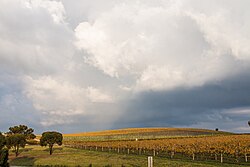
[[File:Vignoble barossa automne.jpg|thumb|The [[Barossa Valley (wine)|Barossa Valley]], northeast of Adelaide. South Australia's wine industry is the largest in Australia.<ref>{{cite web |title=South Australia |url=http://www.wineaustralia.com/australia/Default.aspx?tabid=176 |publisher=Wine Australia |access-date=24 June 2011 |archive-url=https://web.archive.org/web/20110409203807/http://www.wineaustralia.com/Australia/Default.aspx?tabid=176 |archive-date=9 April 2011 |url-status=dead }}</ref>]] | |||
[[File:South Australia Köppen.svg|thumb|The different [[Köppen climate classification|Köppen climate types]] in South Australia]] | |||
The principal industries and exports of South Australia are wheat, wine and wool.<ref>{{Cite book|url=https://books.google.com/books?id=vNj-OKU4CFwC&q=South+Australia+are+wheat%2C+wine+and+wool.|title=Australian Agriculture: Its History and Challenges|last=Henzell|first=Ted|date=2007|publisher=Csiro Publishing|isbn=9780643993426|language=en}}</ref> More than half of Australia's wines are produced in the South Australian wine regions which principally include [[Barossa Valley (wine)|Barossa Valley]], [[Clare Valley wine region|Clare Valley]], [[McLaren Vale]], [[Coonawarra wine region|Coonawarra]], the [[Riverland wine region|Riverland]] and the [[Adelaide Hills wine region|Adelaide Hills]]. ''See [[South Australian wine]].'' | |||
===South Australian boundaries=== | ===South Australian boundaries=== | ||
{{Further|South Australian borders}} | {{Further|South Australian borders}} | ||
South Australia has boundaries with every other Australian mainland state and territory except the [[Australian Capital Territory]] and the [[Jervis Bay Territory]].<!-- There are MANY territories that SA does NOT have a border with. --> The [[Western Australia border]] has a history involving the | South Australia has boundaries with every other Australian mainland state and territory except the [[Australian Capital Territory]] and the [[Jervis Bay Territory]].<!-- There are MANY territories that SA does NOT have a border with. --> The [[Western Australia border]] has a history involving the South Australian government astronomer, G.F. Dodwell, and the [[Western Australian Government Astronomer]], [[Harold Curlewis|H.B. Curlewis]], marking the border on the ground in the 1920s. | ||
In 1863, that part of New South Wales to the north of South Australia was annexed to South Australia, by letters patent, as the "Northern Territory of South Australia", which became shortened to the Northern Territory | In 1863, that part of New South Wales to the north of South Australia was annexed to South Australia, by letters patent, as the "Northern Territory of South Australia", which became shortened to the Northern Territory on [[Territorial evolution of Australia#6 July 1863|6 July 1863]].<ref>[[Territorial evolution of Australia#6 July 1863|Territorial evolution of Australia – 6 July 1863]]</ref> The Northern Territory was handed to the federal government in 1911 and became a separate territory. | ||
According to Australian maps, South Australia's south coast is flanked by the [[Southern Ocean]], but official international consensus defines the Southern Ocean as extending north from the pole only to 60°S or 55°S, at least 17 degrees of latitude further south than the most southern point of South Australia. Thus the south coast is officially adjacent to the south-most portion of the Indian Ocean. ''See [[Southern Ocean#Existence and definitions|Southern Ocean: Existence and definitions]]''. | According to Australian maps, South Australia's south coast is flanked by the [[Southern Ocean]], but official international consensus defines the Southern Ocean as extending north from the pole only to 60°S or 55°S, at least 17 degrees of latitude further south than the most southern point of South Australia. Thus the south coast is officially adjacent to the south-most portion of the Indian Ocean. ''See [[Southern Ocean#Existence and definitions|Southern Ocean: Existence and definitions]]''. | ||
<gallery> | |||
File:Flinders ranges pastoral land.JPG|Arid land in the [[Flinders Ranges]] | |||
File:Second Valley 2.JPG|The rugged coastline of [[Second Valley, South Australia|Second Valley]], located on the [[Fleurieu Peninsula]] | |||
</gallery> | |||
===Climate=== | ===Climate=== | ||
The southern part of the state has a [[Mediterranean climate]], while the rest of the state has either an [[desert climate|arid]] or [[semi-arid climate]].<ref>{{cite web | title = Climate and Weather | work = Government of South Australia | publisher = Atlas South Australia | date = 28 April 2004 | url = http://www.atlas.sa.gov.au/go/resources/atlas-of-south-australia-1986/environment-resources/climate-and-weather | access-date = 6 December 2009 | url-status = dead | archive-url = https://web.archive.org/web/20100315233707/http://www.atlas.sa.gov.au/go/resources/atlas-of-south-australia-1986/environment-resources/climate-and-weather | archive-date = 15 March 2010 | df = dmy-all }}</ref> South Australia's main temperature range is {{convert|29|C|F|0}} in January and {{convert|15|C|F|0|abbr=on}} in July. | The southern part of the state has a [[Mediterranean climate]], while the rest of the state has either an [[desert climate|arid]] or [[semi-arid climate]].<ref>{{cite web | title = Climate and Weather | work = Government of South Australia | publisher = Atlas South Australia | date = 28 April 2004 | url = http://www.atlas.sa.gov.au/go/resources/atlas-of-south-australia-1986/environment-resources/climate-and-weather | access-date = 6 December 2009 | url-status = dead | archive-url = https://web.archive.org/web/20100315233707/http://www.atlas.sa.gov.au/go/resources/atlas-of-south-australia-1986/environment-resources/climate-and-weather | archive-date = 15 March 2010 | df = dmy-all }}</ref> South Australia's main temperature range is {{convert|29|C|F|0}} in January and {{convert|15|C|F|0|abbr=on}} in July. | ||
The highest maximum temperature was | The highest maximum temperature ever recorded was {{convert|50.7|C|F|1|abbr=on}} at [[Oodnadatta, South Australia|Oodnadatta]] on 2 January 1960, which is the highest official temperature recorded in Australia. The lowest minimum temperature was {{convert|-8.2|C|F|1|abbr=on}} at [[Yongala, South Australia|Yongala]] on 20 July 1976.<ref>{{cite web |url=http://www.bom.gov.au/climate/extreme/records/national.pdf |title=Rainfall and Temperature Records: National |publisher=[[Bureau of Meteorology (Australia)|Bureau of Meteorology]] |access-date=14 November 2009 }}</ref> The region's overall dry weather is owed to the [[Australian High]] on the Great Australian Bight. | ||
{{Weather box | {{Weather box | ||
|width=auto | |width=auto | ||
| Line 180: | Line 196: | ||
|Jun record high C = 34.0 | |Jun record high C = 34.0 | ||
|Jul record high C = 34.2 | |Jul record high C = 34.2 | ||
|Aug record high C = | |Aug record high C = 39.4 | ||
|Sep record high C = 41.5 | |Sep record high C = 41.5 | ||
|Oct record high C = 45.4 | |Oct record high C = 45.4 | ||
| Line 204: | Line 220: | ||
==Economy== | ==Economy== | ||
{{See also| | {{See also|Economy of Australia}} | ||
[[File:Flindersmed.jpg|thumb|right|[[Flinders Medical Centre]]. The health care sector is a major employer in South Australia's economy.]] | |||
As of 2016, South Australia had 746,105 people employed out of a total workforce of 806,593, giving an unemployment rate of 7.5%. South Australia's largest employment sector is health care and social assistance, making up 14.8% of the state's total employment, followed by retail (10.7%), education and training (8.6%), manufacturing (8%), and construction (7.6%).<ref name="abs.gov.au">{{cite web|url=https://dbr.abs.gov.au/region.html?lyr=ste&rgn=4|title= Region summary: South Australia|access-date=10 October 2022|website=[[Australian Bureau of Statistics]]}}</ref> South Australia's economy relies on exports more than any other state in Australia.<ref>{{Cite news|url=https://dfat.gov.au/about-us/publications/Documents/australias-trade-by-state-and-territory-2013-14.pdf|title=Australia's Trade by State and Territory 2013–14|date=February 2015|work=Australia Unlimited|access-date=28 February 2017|archive-url=https://web.archive.org/web/20151106014726/http://dfat.gov.au/about-us/publications/Documents/australias-trade-by-state-and-territory-2013-14.pdf|archive-date=6 November 2015|url-status=dead}}</ref> | |||
South Australia's [[credit rating]] was upgraded to AAA by [[Standard & Poor's]] in September 2004 and to AAA by [[Moody's]] in November 2004, the highest credit ratings achievable by any company or sovereign. The state had previously lost these ratings in the State Bank collapse. However, in 2012 Standard & Poor's downgraded the state's credit rating to AA+ due to declining revenues, new spending initiatives and a weaker than expected budgetary outlook.<ref name=pu12>{{cite news|last1=Puddy|first1=Rebecca|title=South Australia loses AAA rating in credit rating downgrade|url=http://www.theaustralian.com.au/national-affairs/state-politics/return-to-surplus-deferred-in-lean-south-australian-budget/story-e6frgczx-1226377225636|access-date=1 September 2015|newspaper=The Australian|date=31 May 2012}}</ref> | |||
South Australia receives the least amount of federal funding for its local road network of all states on a per capita and a per kilometre basis.<ref>{{cite web |url=http://www.aph.gov.au/house/committee/efpa/localgovt/submissions/sub308.pdf |title=Inquiry into Local Government and Cost Shifting |access-date=11 June 2007 |publisher=[[Australian House of Representatives]] |year=2003 |archive-url=https://web.archive.org/web/20070710045501/http://www.aph.gov.au/house/committee/efpa/localgovt/submissions/sub308.pdf |archive-date=10 July 2007}}</ref> | |||
South Australia | [[File:Twilight Upon Wheat Fields (139677885).jpeg|thumb|Wheat fields at [[Nuriootpa, South Australia|Nuriootpa]]. Agriculture is a large industry for the state.]] | ||
[[File:CSIRO ScienceImage 4438 Sunflower crop.jpg|thumb|upright=0.7|right|Sunflower crop in the Adelaide Hills]] | |||
During 2019–20: South Australia's gross state product (GSP) fell 1.4% in chain volume (real) terms (nationally, gross domestic product (GDP) fell 0.3%).<ref>{{Cite web|title=Gross State Product|url=https://www.treasury.sa.gov.au/__data/assets/pdf_file/0010/322966/GSP-GDP,-2019-20.pdf|url-status=dead|website=Treasury South Australia|access-date=28 October 2021|archive-date=18 August 2021|archive-url=https://web.archive.org/web/20210818215419/https://www.treasury.sa.gov.au/__data/assets/pdf_file/0010/322966/GSP-GDP,-2019-20.pdf}}</ref> South Australia came out of the [[COVID-19 recession]] better than the other Australian states, with the economy growing by 3.9% in the 2020–21 financial year. This was the first time since the [[Australian Bureau of Statistics]] began collecting data in 1990 that South Australia had outperformed the other states. The recovery was driven in part by growth in the agricultural sector, which increased its production by almost 24% thanks to the end of a drought.<ref>{{cite web|url=https://www.smh.com.au/politics/federal/the-little-economies-that-could-sa-and-tasmania-lead-the-nation-20211119-p59afd.html|title=The little economies that could: SA and Tasmania lead the nation|last=Wright|first=Shane|date=19 November 2021|access-date=10 October 2022|website=[[The Sydney Morning Herald]]}}</ref> | |||
South Australia | ===Agriculture=== | ||
==== Cereals, legumes and oilseeds ==== | |||
[[Wheat]], [[barley]], [[oats]], [[rye]], [[peas]], [[beans]], [[chickpeas]], [[lentils]] and [[canola]] are grown in South Australia.<ref>{{cite web |last1=Lewis |first1=Dave |title="Crop and Pasture Report South Australia, 2021-22 Harvest" |url=https://www.pir.sa.gov.au/__data/assets/pdf_file/0006/406815/attachment-a-pirsa-crop-and-pasture-report-harvest-2021-22-jan.pdf |website=Government of South Australia, Department of Primary Industries and Regions |publisher=South Australian Department of Primary Industries and Regions (PIRSA) |access-date=17 November 2022}}</ref> | |||
==== Fruit and vegetables ==== | |||
[[Apples]], [[pears]], [[cherries]] and [[strawberries]] are grown in the [[Adelaide Hills]].<ref name="SA Horticulture"/> [[Tomatoes]], [[capsicums]], [[cucumbers]], [[brassicas]], [[lettuce]] and [[carrots]] are grown on the Northern Adelaide Plains at [[Virginia, South Australia|Virginia]].<ref name="SA Horticulture"/> [[Almonds]], [[citrus]] and [[stone fruit]] are grown in the [[Riverland]].<ref name="SA Horticulture"/> [[Potatoes]], [[onions]] and carrots are grown in the [[Murray Mallee]] region.<ref name="SA Horticulture"/> Potatoes are grown on [[Kangaroo Island]].<ref name="SA Horticulture">{{cite web |title=Horticulture in South Australia |url=https://pir.sa.gov.au/__data/assets/pdf_file/0005/340376/Horticulture_in_South_Australia.pdf |website=Department of Primary Industries and Regions (PIRSA) |publisher=The Department of Primary Industries and Regions (PIRSA) |access-date=15 January 2023 }}{{Dead link|date=July 2025 |bot=InternetArchiveBot |fix-attempted=yes }}</ref> | |||
==== Viticulture ==== | |||
{{main|South Australian wine}} | |||
South Australia produces more than half of all Australian wine, including almost 80% of Australia's premium wines.<ref name="SA Viticulture">{{cite web |title=Grape and wine |url=https://www.pir.sa.gov.au/primary_industry/grape_and_wine |website=Department of Primary Industries and Regions (PIRSA) |date=14 May 2022 |publisher=The Department of Primary Industries and Regions (PIRSA) |access-date=16 January 2023}}</ref> | |||
===Energy=== | ===Energy=== | ||
{{main|Energy in South Australia}} | {{main|Energy in South Australia}} | ||
South Australia has the lead over other Australian states for its commercialisation and commitment to [[renewable energy]]. It is now the leading producer of [[Wind power in South Australia|wind power]] in Australia.<ref name="Wind Energy - How it works">{{cite web|title=Wind Energy – How it works|url=http://www.cleanenergycouncil.org.au/cec/technologies/wind.html|publisher=Clearenergycouncil|access-date=6 October 2011|url-status=dead|archive-url=https://web.archive.org/web/20110621044310/http://www.cleanenergycouncil.org.au/cec/technologies/wind.html|archive-date=21 June 2011}}</ref> Renewable energy is a growing source of electricity in South Australia, and there is potential for growth from this particular industry of the state's economy. The [[Hornsdale Power Reserve]] is a bank of grid-connected batteries adjacent to the [[Hornsdale Wind Farm]] in South Australia's Mid-North region. At the time of construction in late 2017, it was billed as the largest lithium-ion battery in the world.<ref>{{cite web |url=http://hornsdalepowerreserve.com.au/ |title=Hornsdale Power Reserve |access-date=4 December 2017}}</ref> | South Australia has the lead over other Australian states for its commercialisation and commitment to [[renewable energy]]. It is now the leading producer of [[Wind power in South Australia|wind power]] in Australia.<ref name="Wind Energy - How it works">{{cite web|title=Wind Energy – How it works|url=http://www.cleanenergycouncil.org.au/cec/technologies/wind.html|publisher=Clearenergycouncil|access-date=6 October 2011|url-status=dead|archive-url=https://web.archive.org/web/20110621044310/http://www.cleanenergycouncil.org.au/cec/technologies/wind.html|archive-date=21 June 2011}}</ref> Renewable energy is a growing source of electricity in South Australia, and there is potential for growth from this particular industry of the state's economy. The [[Hornsdale Power Reserve]] is a bank of grid-connected batteries adjacent to the [[Hornsdale Wind Farm]] in South Australia's Mid-North region. At the time of construction in late 2017, it was billed as the largest lithium-ion battery in the world.<ref>{{cite web |url=http://hornsdalepowerreserve.com.au/ |title=Hornsdale Power Reserve |access-date=4 December 2017}}</ref> | ||
=== | ===Mining=== | ||
The [[Olympic Dam, South Australia|Olympic Dam]] mine near [[Roxby Downs, South Australia|Roxby Downs]] in northern South Australia is the largest deposit of [[uranium]] in the world, possessing more than a third of the world's low-cost recoverable reserves and 70% of Australia's. The mine, owned and operated by [[BHP]], presently accounts for 9% of global uranium production.<ref>{{cite web |url=https://www.bloomberg.com/apps/news?pid=newsarchive&sid=aPGvMTxVcp2k&refer=australia | title = Australia, China Sign Agreements for Uranium Trade (Update5) | author1 = Gemma Daley | author2 = Tan Hwee Ann | publisher = Bloomberg | date = 3 April 2006 | access-date = 27 April 2012 }}</ref><ref>{{cite web |url=http://www.ga.gov.au/ausgeonews/ausgeonews200512/uranium.jsp | publisher = AusGeo News | date = December 2005 | title = Why Australia has so much uranium | author1 = Ian Lambert | author2 = Subhash Jaireth | author3 = Aden McKay | author4 = Yanis Miezitis | access-date = 27 April 2012}}</ref> The Olympic Dam mine is also the world's fourth-largest remaining copper deposit, and the world's fifth largest gold deposit.<ref>{{Cite news|url=https://www.reuters.com/article/bhpbilliton-olympicdam-idUSSYD52655220091021|title=FACTBOX-BHP Billiton's huge Olympic Dam mine|date=21 October 2009|work=Reuters|access-date=24 May 2019|language=en|archive-url=https://web.archive.org/web/20190524154213/https://www.reuters.com/article/bhpbilliton-olympicdam/factbox-bhp-billitons-huge-olympic-dam-mine-idUSSYD52655220091021|archive-date=24 May 2019|url-status=live}}</ref> There was a proposal to vastly expand the operations of the mine, making it the largest open-cut mine in the world,<ref>[https://archive.today/20120910000234/http://www.skynews.com.au/finance/article.aspx?id=736400&vId= Sky News Australia – Finance Article<!-- Bot generated title -->]</ref> but in 2012 the BHP Billiton board decided not to go ahead with it at that time due to then lower commodity prices.<ref>[http://www.abc.net.au/news/2012-08-22/bhp-billiton-profit-falls-a-third/4215638 BHP shelves Olympic Dam as profit falls a third]. [[ABC News (Australia)|ABC News]], 22 August 2012. Retrieved on 16 July 2013.</ref> | The [[Olympic Dam, South Australia|Olympic Dam]] mine near [[Roxby Downs, South Australia|Roxby Downs]] in northern South Australia is the largest deposit of [[uranium]] in the world, possessing more than a third of the world's low-cost recoverable reserves and 70% of Australia's. The mine, owned and operated by [[BHP]], presently accounts for 9% of global uranium production.<ref>{{cite web |url=https://www.bloomberg.com/apps/news?pid=newsarchive&sid=aPGvMTxVcp2k&refer=australia | title = Australia, China Sign Agreements for Uranium Trade (Update5) | author1 = Gemma Daley | author2 = Tan Hwee Ann | publisher = Bloomberg | date = 3 April 2006 | access-date = 27 April 2012 }}</ref><ref>{{cite web |url=http://www.ga.gov.au/ausgeonews/ausgeonews200512/uranium.jsp | publisher = AusGeo News | date = December 2005 | title = Why Australia has so much uranium | author1 = Ian Lambert | author2 = Subhash Jaireth | author3 = Aden McKay | author4 = Yanis Miezitis | access-date = 27 April 2012}}</ref> The Olympic Dam mine is also the world's fourth-largest remaining copper deposit, and the world's fifth largest gold deposit.<ref>{{Cite news|url=https://www.reuters.com/article/bhpbilliton-olympicdam-idUSSYD52655220091021|title=FACTBOX-BHP Billiton's huge Olympic Dam mine|date=21 October 2009|work=Reuters|access-date=24 May 2019|language=en|archive-url=https://web.archive.org/web/20190524154213/https://www.reuters.com/article/bhpbilliton-olympicdam/factbox-bhp-billitons-huge-olympic-dam-mine-idUSSYD52655220091021|archive-date=24 May 2019|url-status=live}}</ref> There was a proposal to vastly expand the operations of the mine, making it the largest open-cut mine in the world,<ref>[https://archive.today/20120910000234/http://www.skynews.com.au/finance/article.aspx?id=736400&vId= Sky News Australia – Finance Article<!-- Bot generated title -->]</ref> but in 2012 the BHP Billiton board decided not to go ahead with it at that time due to then lower commodity prices.<ref>[http://www.abc.net.au/news/2012-08-22/bhp-billiton-profit-falls-a-third/4215638 BHP shelves Olympic Dam as profit falls a third]. [[ABC News (Australia)|ABC News]], 22 August 2012. Retrieved on 16 July 2013.</ref> | ||
=== | The remote town of [[Coober Pedy]] produces more [[opal]] than anywhere else in the world. Opal was first discovered near the town in 1915, and the town became the site of an opal rush, enticing immigrants from southern and eastern Europe in the aftermath of [[World War II]].<ref>{{cite web|url=https://www.gemsociety.org/article/opal-mining-coober-pedy/|title=Opal Mining in Coober Pedy: History and Methods|last=Shang|first=Phoebe|access-date=16 October 2022|website=[[International Gem Society|IGS]]}}</ref> | ||
[[ | |||
===Education and research=== | |||
Higher education and research in Adelaide forms an important part of South Australia's economy. The [[Government of South Australia|South Australian Government]] and educational institutions have attempted to position Adelaide as ''Australia's education hub'' and have marketed it as a ''Learning City''.<ref name="eduhub">{{cite news |first=Verity |last=Edwards |title=Education attracts record numbers |work=The Weekend Australian |date=3 May 2008}}</ref> The number of international students studying in Adelaide has increased rapidly in recent years to 30,726 in 2015, of which 1,824 were secondary school students.<ref name="thecity">{{cite news |first=Amelia |last=Broadstock |title=International Uni student numbers a billion dollar boom for Adelaide |work=The City Messenger |date=6 May 2015}}</ref> Foreign institutions have been attracted to set up campuses to increase its attractiveness as an education hub.<ref name="UCL">{{cite news |first=Lucy |last=Hodges |url=https://www.independent.co.uk/news/education/higher/brave-new-territory-university-college-london-to-open-a-branch-in-australia-835571.html |title=Brave new territory: University College London to open a branch in Australia |work=The Independent (UK) |date=29 May 2008 |access-date=23 August 2017 |archive-url=https://web.archive.org/web/20110317175924/http://www.independent.co.uk/news/education/higher/brave-new-territory-university-college-london-to-open-a-branch-in-australia-835571.html |archive-date=17 March 2011 |url-status=live }}</ref><ref>{{cite web|url=http://www.heinz.cmu.edu.au/about-heinz-australia/index.aspx |title=About Heinz Australia: Carnegie Mellon Heinz College |publisher=Carnegie Mellon University |url-status=dead |archive-url=https://web.archive.org/web/20110410081304/http://www.heinz.cmu.edu.au/about-heinz-australia/index.aspx |archive-date=10 April 2011 }}</ref> Adelaide is the birthplace of three Nobel laureates, [[List of Australian Nobel laureates#Australian laureates by birthplace|more than any other Australian city]]: physicist [[William Lawrence Bragg]] and pathologists [[Howard Florey]] and [[Robin Warren]], all of whom completed secondary and tertiary education at [[St Peter's College, Adelaide|St Peter's College]] and the [[University of Adelaide]]. | |||
Adelaide is home to research institutes, including the [[Royal Institution of Australia]], established in 2009 as a counterpart to the two-hundred-year-old [[Royal Institution]] of Great Britain.<ref>{{cite news |first=Verity |last=Edwards |title=RI Australia plugs into world science |work=The Weekend Australian |date=3 May 2008}}</ref> Most of the research organisations are clustered in the Adelaide metropolitan area: | |||
* The east end of [[North Terrace, Adelaide|North Terrace]]: [[SA Pathology]];<ref>[http://www.imvs.sa.gov.au/wps/wcm/connect/SA+Pathology+Internet+Content/IMVS/About+Us/History/ History] {{Webarchive|url=https://web.archive.org/web/20110116192755/http://www.imvs.sa.gov.au/wps/wcm/connect/SA+Pathology+Internet+Content/IMVS/About+Us/History/ |date=16 January 2011 }}, [http://www.imvs.sa.gov.au/wps/wcm/connect/SA+Pathology+Internet+Content/IMVS/About+Us/Our+Research/ Our research] {{Webarchive|url=https://web.archive.org/web/20110116192806/http://www.imvs.sa.gov.au/wps/wcm/connect/SA+Pathology+Internet+Content/IMVS/About+Us/Our+Research/ |date=16 January 2011 }}, Institute of Medical and Veterinary Science</ref> [[Hanson Institute]];<ref>[http://www.hansoninstitute.sa.gov.au/ About us] {{Webarchive|url=https://web.archive.org/web/20080725031302/http://www.hansoninstitute.sa.gov.au/ |date=25 July 2008 }}, [http://www.hansoninstitute.sa.gov.au/aboutus/history.php History] {{Webarchive|url=https://web.archive.org/web/20080725031302/http://www.hansoninstitute.sa.gov.au/ |date=25 July 2008 }}, Hanson Institute</ref> [[National Wine Centre of Australia|National Wine Centre]]. | |||
* The west end of North Terrace: [[South Australian Health and Medical Research Institute]] (SAHMRI), located next to the [[Royal Adelaide Hospital]]. | |||
* The [[Waite Research Precinct]]: [[South Australian Research and Development Institute|SARDI]] Head Office and Plant Research Centre; [[Australian Wine Research Institute|AWRI]];<ref>[http://www.awri.com.au/ The Australian Wine Research Institute (AWRI)] {{Webarchive|url=https://web.archive.org/web/20101225174859/https://www.awri.com.au/ |date=25 December 2010 }}, awri.com.au</ref> [[Australian Centre for Plant Functional Genomics|ACPFG]];<ref>[http://www.acpfg.com.au/ Australian Centre for Plant Functional Genomics (ACPFG)] {{Webarchive|url=https://web.archive.org/web/20101218142922/http://www.acpfg.com.au/ |date=18 December 2010 }}, acpfg.com.au</ref> [[CSIRO]] research laboratories.<ref name="CSIROWaite">{{cite web | title=Waite Campus, Urrbrae | website=CSIRO | date=6 September 2019 | url=https://www.csiro.au/en/Locations/SA/Urrbrae | access-date=6 September 2019 | archive-url=https://web.archive.org/web/20190906061825/https://www.csiro.au/en/Locations/SA/Urrbrae | archive-date=6 September 2019 | url-status=live }}</ref> SARDI also has establishments at [[Glenside, South Australia|Glenside]]<ref>{{cite web |url=http://www.sardi.sa.gov.au/about_us_2/facilities/glenside_laboratories |title=Livestock – Glenside Laboratories |access-date=6 January 2011 |archive-url=https://web.archive.org/web/20110219151446/http://www.sardi.sa.gov.au/about_us_2/facilities/glenside_laboratories |archive-date=19 February 2011 |url-status=live }}</ref> and [[West Beach, South Australia|West Beach]].<ref>{{cite web |url=http://www.sardi.sa.gov.au/about_us_2/facilities/sa_aquatic_sciences_centre/sa_aquatic_sciences_centre |title=SARDI |access-date=6 January 2011 |archive-url=https://web.archive.org/web/20110219154303/http://www.sardi.sa.gov.au/about_us_2/facilities/sa_aquatic_sciences_centre/sa_aquatic_sciences_centre |archive-date=19 February 2011 |url-status=live }}</ref> | |||
* [[Edinburgh, South Australia]]: [[Defence Science and Technology Organisation|DSTO]]; [[BAE Systems]] (Australia); [[Lockheed Martin]] Australia Electronic Systems. | |||
* [[Technology Park Adelaide|Technology Park]] ([[Mawson Lakes, South Australia|Mawson Lakes]]): BAE Systems; [[Optus]]; [[Raytheon]]; [[Topcon]]; Lockheed Martin Australia Electronic Systems. | |||
* Research Park at [[Thebarton, South Australia|Thebarton]]: businesses involved in materials engineering, biotechnology, environmental services, information technology, industrial design, laser/optics technology, health products, engineering services, radar systems, telecommunications and petroleum services. | |||
* Science Park (adjacent to Flinders University): Playford Capital. | |||
* The [[Basil Hetzel]] Institute for Translational Health Research<ref>{{cite web |title=A great of the SA science world |url=https://www.adelaidenow.com.au/news/south-australia/a-great-of-the-sa-science-world/news-story/9338949922d55092230a3a77e2b749c9 |website=The Advertiser|location=Adelaide |date=24 May 2012 |access-date=9 March 2019 |archive-url=https://web.archive.org/web/20181215223914/https://www.adelaidenow.com.au/news/south-australia/a-great-of-the-sa-science-world/news-story/9338949922d55092230a3a77e2b749c9 |archive-date=15 December 2018 |url-status=live }}</ref> in [[Woodville, South Australia|Woodville]] the research arm of the [[Queen Elizabeth Hospital, Adelaide]] | |||
* The [[The Joanna Briggs Institute|Joanna Briggs Institute]], a global research collaboration for evidence-based healthcare with its headquarters in North Adelaide. | |||
<gallery mode="packed"> | |||
File:Bonython Hall.jpg| The Mitchell Building and Bonython Hall, [[University of Adelaide]] | |||
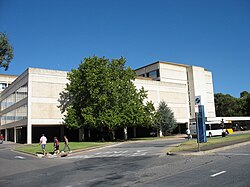
File:Hawke Building, UniSA.jpg| The Hawke Building, part of the [[University of South Australia|UniSA]], City West Campus | |||
File:Flinders from hill 3.jpg| [[Flinders University]] buildings from the campus hills | |||
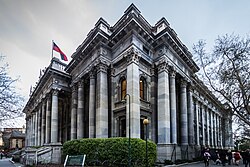
File:Torrens Building, Victoria Square.jpg| Torrens University | |||
File:SAHMRI.jpg|The [[South Australian Health and Medical Research Institute]] (SAHMRI) | |||
</gallery> | |||
==Government== | ==Government== | ||
{{Main|Government of South Australia}} | {{Main|Government of South Australia}} | ||
[[File:Parliament House, South Australia.jpg|upright=1.15|right|thumb|[[Parliament House, Adelaide]]]] | [[File:Parliament House, South Australia.jpg|upright=1.15|right|thumb|[[Parliament House, Adelaide]]]] | ||
South Australia is a [[constitutional monarchy]] with | South Australia is a [[constitutional monarchy]] with {{Current Australian monarch |King |Charles III}} as sovereign, and the [[Governor of South Australia]] as his representative.<ref>{{cite AustLII|HCA|31|1907|litigants=[[R v Governor of South Australia; Ex parte Vardon]] |parallelcite=[http://www.austlii.edu.au/au/cases/cth/HCA/1907/31.pdf (1907) 4 CLR 1497] |courtname=auto}}.</ref> It is a state of the [[Commonwealth of Australia]]. The [[bicameral]] [[Parliament of South Australia]] consists of the [[lower house]] known as the [[South Australian House of Assembly|House of Assembly]] and the [[upper house]] known as the [[South Australian Legislative Council|Legislative Council]]. [[South Australian state elections|General elections]] are held every four years, the last being the [[2022 South Australian state election|2022 election]]. | ||
Initially, the [[Governor of South Australia]] held almost total power, derived from the letters patent of the imperial government to create the colony. He was accountable only to the British [[Colonial Office]], and thus democracy did not exist in the colony. A new body was created to advise the governor on the administration of South Australia in 1843 called the Legislative Council.<ref>{{cite web |url=http://www.parliament.sa.gov.au/about/1_1_1_legcouncil.shtm |title=Legislative Council 1843–1856 |access-date=28 May 2006 |publisher=[[Parliament of South Australia]] |year=2005 |url-status=dead |archive-url=https://web.archive.org/web/20060825143657/http://www.parliament.sa.gov.au/about/1_1_1_legcouncil.shtm |archive-date=25 August 2006 | Initially, the [[Governor of South Australia]] held almost total power, derived from the letters patent of the imperial government to create the colony. He was accountable only to the British [[Colonial Office]], and thus democracy did not exist in the colony. A new body was created to advise the governor on the administration of South Australia in 1843 called the Legislative Council.<ref>{{cite web |url=http://www.parliament.sa.gov.au/about/1_1_1_legcouncil.shtm |title=Legislative Council 1843–1856 |access-date=28 May 2006 |publisher=[[Parliament of South Australia]] |year=2005 |url-status=dead |archive-url=https://web.archive.org/web/20060825143657/http://www.parliament.sa.gov.au/about/1_1_1_legcouncil.shtm |archive-date=25 August 2006 }}</ref> It consisted of three representatives of the British Government and four colonists appointed by the governor. The governor retained total executive power. | ||
In 1851, the Imperial Parliament enacted the [[Australian Colonies Government Act]], which allowed for the election of representatives to each of the colonial legislatures and the drafting of a constitution to properly create representative and responsible government in South Australia. Later that year, propertied male colonists were allowed to vote for 16 members on a new 24 seat Legislative Council. Eight members continued to be appointed by the governor. | In 1851, the Imperial Parliament enacted the [[Australian Colonies Government Act]], which allowed for the election of representatives to each of the colonial legislatures and the drafting of a constitution to properly create representative and responsible government in South Australia. Later that year, propertied male colonists were allowed to vote for 16 members on a new 24 seat Legislative Council. Eight members continued to be appointed by the governor. | ||
| Line 252: | Line 293: | ||
The main responsibility of this body was to draft a constitution for South Australia. The body drafted the most democratic constitution ever seen in the British Empire and provided for universal manhood [[suffrage]].<ref>{{cite web|author=Change name |url=http://www.aec.gov.au/Elections/australian_electoral_history/righttovote.htm |title=The Right to Vote in Australia |publisher=Australian Electoral Commission |date=28 January 2011 |access-date=17 July 2016}}</ref> It created the bicameral [[Parliament of South Australia]]. For the first time in the colony, the executive was elected by the people, and the colony used the [[Westminster system]], where the government is the party or coalition that exerts a majority in the House of Assembly. The Legislative Council remained a predominantly conservative chamber elected by property owners. | The main responsibility of this body was to draft a constitution for South Australia. The body drafted the most democratic constitution ever seen in the British Empire and provided for universal manhood [[suffrage]].<ref>{{cite web|author=Change name |url=http://www.aec.gov.au/Elections/australian_electoral_history/righttovote.htm |title=The Right to Vote in Australia |publisher=Australian Electoral Commission |date=28 January 2011 |access-date=17 July 2016}}</ref> It created the bicameral [[Parliament of South Australia]]. For the first time in the colony, the executive was elected by the people, and the colony used the [[Westminster system]], where the government is the party or coalition that exerts a majority in the House of Assembly. The Legislative Council remained a predominantly conservative chamber elected by property owners. | ||
{| class="toccolours" cellpadding="0" cellspacing="0" style="float:right; margin-right:.5em; margin-top:.4em; margin-left:0.5em; font-size:90% | {| class="toccolours" cellpadding="0" cellspacing="0" style="float:right; margin-right:.5em; margin-top:.4em; margin-left:0.5em; font-size:90%" | ||
|- | |- | ||
! colspan="3" style="background:#cef; text-align:center;"| Composition of the [[Parliament of South Australia]] | ! colspan="3" style="background:#cef; text-align:center;"| Composition of the [[Parliament of South Australia]] (2022) | ||
|- style="background:#ccc; vertical-align:top;" | |- style="background:#ccc; vertical-align:top;" | ||
![[List of political parties in Australia|Party]] | ![[List of political parties in Australia|Party]] | ||
![[South Australian House of Assembly|House]] | ![[South Australian House of Assembly|House]] | ||
![[South Australian Legislative Council|Council]] | ![[South Australian Legislative Council|Council]] | ||
|- | |||
| style="text-align:center; background:#f66;"|[[Australian Labor Party (South Australian Branch)|Labor]] | |||
| style="text-align:center;"|27 | |||
| style="text-align:center;"|9 | |||
|- | |- | ||
| style="text-align:center; background:#00bfff;"|[[Liberal Party of Australia (South Australian Division)|Liberal]] | | style="text-align:center; background:#00bfff;"|[[Liberal Party of Australia (South Australian Division)|Liberal]] | ||
| style="text-align:center;"| | | style="text-align:center;"|16 | ||
| style="text-align:center;"|8 | | style="text-align:center;"|8 | ||
|- | |- | ||
| Line 277: | Line 318: | ||
|- | |- | ||
| style="text-align:center; background:#ccf;"|[[Independent (politics)|Independent]] | | style="text-align:center; background:#ccf;"|[[Independent (politics)|Independent]] | ||
| style="text-align:center;"| | | style="text-align:center;"|4 | ||
| style="text-align:center;"| | | style="text-align:center;"|0 | ||
|- | |- | ||
| style="text-align:center; background:# | | style="text-align:center; background:#ffad33;"|[[Pauline Hanson's One Nation|One Nation]] | ||
| style="text-align:center;"|0 | | style="text-align:center;"|0 | ||
| style="text-align:center;"|1 | | style="text-align:center;"|1 | ||
| Line 291: | Line 332: | ||
|} | |} | ||
[[Women's suffrage in Australia]] took a leap forward – enacted in 1895 and taking effect from the [[1896 South Australian colonial election|1896 colonial election]], South Australia was the first in Australia and only the second in the world after [[New Zealand]] to allow women to vote, and the first in the world to allow women to stand for election.<ref>{{cite web |url=https://www.parliament.sa.gov.au/education/teachers/Documents/Women's%20Petition%20Photograph.pdf |title=Women's Suffrage Petition 1894: parliament.sa.gov.au |access-date=17 July 2016 |archive-url=https://web.archive.org/web/20110329160732/http://www.parliament.sa.gov.au/education/teachers/Documents/Women%27s%20Petition%20Photograph.pdf |archive-date=29 March 2011 |url-status=dead }}</ref> In 1897 [[Catherine Helen Spence]] was the first woman in Australia to be a candidate for political office when she was nominated to be one of South Australia's delegates to the conventions that drafted the constitution. South Australia became an original state of the Commonwealth of Australia on 1 January 1901. | [[Women's suffrage in Australia]] took a leap forward – [[Constitutional Amendment (Adult Suffrage) Act 1894|enacted in 1895]] and taking effect from the [[1896 South Australian colonial election|1896 colonial election]], South Australia was the first government in Australia and only the second in the world after [[New Zealand]] to allow women to vote, and the first in the world to allow women to stand for election.<ref>{{cite web |url=https://www.parliament.sa.gov.au/education/teachers/Documents/Women's%20Petition%20Photograph.pdf |title=Women's Suffrage Petition 1894: parliament.sa.gov.au |access-date=17 July 2016 |archive-url=https://web.archive.org/web/20110329160732/http://www.parliament.sa.gov.au/education/teachers/Documents/Women%27s%20Petition%20Photograph.pdf |archive-date=29 March 2011 |url-status=dead }}</ref> In 1897 [[Catherine Helen Spence]] was the first woman in Australia to be a candidate for political office when she was nominated to be one of South Australia's delegates to the conventions that drafted the constitution. South Australia became an original state of the Commonwealth of Australia on 1 January 1901. | ||
Although the lower house had universal suffrage, the upper house, the Legislative Council, remained the exclusive domain of property owners until the [[Australian Labor Party|Labor]] government of [[Don Dunstan]] managed to achieve reform of the chamber in 1973. Property qualifications were removed and the Council became a body elected via [[proportional representation]] by a single state-wide electorate.<ref>{{cite book|last=Dunstan |first=Don |year=1981 |title=Felicia: The political memoirs of Don Dunstan |publisher=Griffin Press Limited |pages=214–215 |isbn=0-333-33815-4}}</ref> | Although the lower house had universal suffrage, the upper house, the Legislative Council, remained the exclusive domain of property owners until the [[Australian Labor Party|Labor]] government of [[Don Dunstan]] managed to achieve reform of the chamber in 1973. Property qualifications were removed and the Council became a body elected via [[proportional representation]] by a single state-wide electorate.<ref>{{cite book|last=Dunstan |first=Don |year=1981 |title=Felicia: The political memoirs of Don Dunstan |publisher=Griffin Press Limited |pages=214–215 |isbn=0-333-33815-4}}</ref> | ||
| Line 297: | Line 338: | ||
===Local government=== | ===Local government=== | ||
South Australia is | {{Further|Local government areas of South Australia}} | ||
Local government in South Australia is established by the ''Constitution Act 1934'' (SA), the ''Local Government Act 1999'' (SA), and the ''Local Government (Elections) Act 1999'' (SA).<ref name="lga">{{cite web|url=https://www.lga.sa.gov.au/sa-councils/about-local-government/local-government-in-sa|title=Local government in SA|access-date=6 October 2022|website=Local Government Association of South Australia|date=6 February 2020 }}</ref> South Australia contains [[Local government areas of South Australia|68 councils and 6 Aboriginal and outback communities]].<ref>{{cite web|url=https://www.lga.sa.gov.au/sa-councils/councils-listing|title=SA councils list & map|access-date=6 October 2022|website=Local Government Association of South Australia|date=15 August 2022 }}</ref> Local councils, elected on a four-yearly basis, are responsible for local roads and stormwater management, waste collection, planning and development, fire prevention and hazard management, dog and cat management and control, parking control, public health and food inspections, and other services for their local communities.<ref name="lga"/> Councils have the power to raise revenue for their activities, which is mostly achieved through "council rates", a tax based on property valuations. Council rates make up about 70% of council revenue, but account for less than 4% of total taxes paid by Australians.<ref>{{cite web|url=https://www.lga.sa.gov.au/sa-councils/sa-council-services/council-rates|title=Council rates|access-date=6 October 2022|website=Local Government Association of South Australia|date=11 July 2022 }}</ref> | |||
==Demographics== | ==Demographics== | ||
{{See also|Demographics of Australia|List of | {{See also|Demographics of Australia|List of places in South Australia by population}} | ||
{| class="wikitable" style="float:right" | |||
|+Country of Birth (2016)<ref name="quickstats.censusdata.abs.gov.au">{{Cite web|url=https://quickstats.censusdata.abs.gov.au/census_services/getproduct/census/2016/communityprofile/4?opendocument|title=2016 Census Community Profiles: South Australia|website=quickstats.censusdata.abs.gov.au|access-date=19 November 2020|archive-date=1 October 2020|archive-url=https://web.archive.org/web/20201001200330/https://quickstats.censusdata.abs.gov.au/census_services/getproduct/census/2016/communityprofile/4?opendocument|url-status=dead}}</ref><ref name="censusdata.abs.gov.au">{{Cite web |title=South Australia (4) 984274.9 sq Kms |url=http://www.censusdata.abs.gov.au/CensusOutput/copsub2016.NSF/All%20docs%20by%20catNo/2016~Community%20Profile~4/$File/GCP_4.zip?OpenElement |url-status=deviated |archive-url=https://web.archive.org/web/20180424014440/http://www.censusdata.abs.gov.au/CensusOutput/copsub2016.NSF/All%20docs%20by%20catNo/2016~Community%20Profile~4/$File/GCP_4.zip?OpenElement |archive-date=2018-04-24 |access-date=2023-09-16 |website=www.censusdata.abs.gov.au}}</ref> | |||
! Birthplace{{refn|group="N"|In accordance with the Australian Bureau of Statistics source, England, Scotland, China and the Special Administrative Regions of [[Hong Kong]] and [[Macau]] are listed separately}} !! Population | |||
{| class="wikitable" style="float:right | |||
|+Country of Birth (2016)<ref name="quickstats.censusdata.abs.gov.au">{{Cite web|url=https://quickstats.censusdata.abs.gov.au/census_services/getproduct/census/2016/communityprofile/4?opendocument|title=2016 Census Community Profiles: South Australia|website=quickstats.censusdata.abs.gov.au|access-date=19 November 2020}}</ref><ref name="censusdata.abs.gov.au">http://www.censusdata.abs.gov.au/CensusOutput/copsub2016.NSF/All%20docs%20by%20catNo/2016~Community%20Profile~4/$File/GCP_4.zip?OpenElement</ref> | |||
! Birthplace{{refn|group="N"|In accordance with the Australian Bureau of Statistics source, England, Scotland, China | |||
|- | |- | ||
| Australia || 1,192,546 | | Australia || 1,192,546 | ||
| Line 341: | Line 376: | ||
| Afghanistan || 6,313 | | Afghanistan || 6,313 | ||
|} | |} | ||
[[File:Adelaide skyline, December 2022.jpg|left|thumb|[[Adelaide]] is the largest metropolitan area in the state.]] | |||
[[File:ABS-3101.0-AustralianDemographicStatistics-EstimatedResidentPopulationStatesTerritories-EstimatedResidentPopulation-Persons-SouthAustralia-A2060846R.svg|thumb|The estimated resident population since 1981]] | |||
As of June 2025 the population of South Australia was 1,902,300.<ref name=ABSPop/> | |||
A majority of the state's population lives within [[Greater Adelaide]]'s metropolitan area which had an estimated population of | |||
1,333,927 in June 2017.<ref name=ABSCapitalPop>{{cite web|title=3218.0 – Regional Population Growth, Australia, 2016–17: Main Features|url=http://www.abs.gov.au/AUSSTATS/[email protected]/Lookup/3218.0Main+Features12016-17|website=Australian Bureau of Statistics|date=24 April 2018|access-date=13 October 2018}} Estimated resident population, 30 June 2017.</ref> Other significant population centres include [[Mount Gambier]] (29,505),<ref name=ABSSUA>{{cite web|title=3218.0 – Regional Population Growth, Australia, 2016–17: Population Estimates by Significant Urban Area, 2007 to 2017|url=http://www.abs.gov.au/AUSSTATS/[email protected]/DetailsPage/3218.02016-17|website=Australian Bureau of Statistics|date=24 April 2018|access-date=12 October 2018}} Estimated resident population, 30 June 2017.</ref> [[Victor Harbor, South Australia|Victor Harbor]]-[[Goolwa, South Australia|Goolwa]] (26,334),<ref name=ABSSUA/> [[Whyalla]] (21,976),<ref name=ABSSUA/> [[Murray Bridge, South Australia|Murray Bridge]] (18,452),<ref name=ABSSUA/> [[Port Lincoln]] (16,281),<ref name=ABSSUA/> [[Port Pirie]] (14,267),<ref name=ABSSUA/> and [[Port Augusta]] (13,957).<ref name=ABSSUA/> | |||
At the 2016 census, the most commonly nominated ancestries were:{{refn|group="N"|As a percentage of 1,227,355 persons who nominated their ancestry at the 2016 census.}}<ref>{{Cite web|url=https://quickstats.censusdata.abs.gov.au/census_services/getproduct/census/2016/communityprofile/4GADE?opendocument|title=2016 Census Community Profiles: Greater Adelaide|website=quickstats.censusdata.abs.gov.au|access-date=19 November 2020}}</ref> <!-- Only ancestries with >1% are listed. Do not use the QuickStats data from ABS for ancestries. Use the full ancestry data series (eg from ABS Community Profiles series) as the QuickStats data shows each ancestry as a percentage of all ancestry responses (where each person can list up to two, thus a far greater number than the total population) while the full data series in the ABS Community Profiles show the percentage of people nominating a given ancestry as a percentage of the population who nominated an ancestry --> | ===Ancestry and immigration=== | ||
At the 2016 census, the most commonly nominated ancestries were:{{refn|group="N"|As a percentage of 1,227,355 persons who nominated their ancestry at the 2016 census.}}<ref>{{Cite web|url=https://quickstats.censusdata.abs.gov.au/census_services/getproduct/census/2016/communityprofile/4GADE?opendocument|title=2016 Census Community Profiles: Greater Adelaide|website=quickstats.censusdata.abs.gov.au|access-date=19 November 2020|archive-date=22 June 2019|archive-url=https://web.archive.org/web/20190622062053/https://quickstats.censusdata.abs.gov.au/census_services/getproduct/census/2016/communityprofile/4GADE%3Fopendocument|url-status=dead}}</ref> <!-- Only ancestries with >1% are listed. Do not use the QuickStats data from ABS for ancestries. Use the full ancestry data series (eg from ABS Community Profiles series) as the QuickStats data shows each ancestry as a percentage of all ancestry responses (where each person can list up to two, thus a far greater number than the total population) while the full data series in the ABS Community Profiles show the percentage of people nominating a given ancestry as a percentage of the population who nominated an ancestry --> | |||
{{columns-list|colwidth=13em| | {{columns-list|colwidth=13em| | ||
* [[English Australians|English]] (40.5%) | * [[English Australians|English]] (40.5%) | ||
* [[Australians|Australian]] (35.5%){{refn|group="N"|The Australian Bureau of Statistics has stated that most who nominate "Australian" as their ancestry are part of the [[Anglo-Celtic Australian|Anglo-Celtic]] group.<ref>{{cite web|url=http://www.abs.gov.au/Ausstats/[email protected]/94713ad445ff1425ca25682000192af2/49f609c83cf34d69ca2569de0025c182!OpenDocument|title=Feature Article – Ethnic and Cultural Diversity in Australia (Feature Article)|first=c=AU; o=Commonwealth of Australia; ou=Australian Bureau of|last=Statistics|website= | * [[Australians|Australian]] (35.5%){{refn|group="N"|The Australian Bureau of Statistics has stated that most who nominate "Australian" as their ancestry are part of the [[Anglo-Celtic Australian|Anglo-Celtic]] group.<ref>{{cite web|url=http://www.abs.gov.au/Ausstats/[email protected]/94713ad445ff1425ca25682000192af2/49f609c83cf34d69ca2569de0025c182!OpenDocument|title=Feature Article – Ethnic and Cultural Diversity in Australia (Feature Article)|first=c=AU; o=Commonwealth of Australia; ou=Australian Bureau of|last=Statistics|website=Australian Bureau of Statistics|date=January 1995}}</ref>}} | ||
* [[Scottish Australians|Scottish]] (8.9%) | * [[Scottish Australians|Scottish]] (8.9%) | ||
* [[Irish Australians|Irish]] (8.5%) | * [[Irish Australians|Irish]] (8.5%) | ||
| Line 365: | Line 406: | ||
===Language=== | ===Language=== | ||
At the 2016 census, 78.2% of the population spoke only [[Australian English|English]] at home. The other languages most commonly spoken at home were [[Italian language|Italian]] (1.7%), [[Standard Mandarin]] (1.7%), Greek (1.4%) [[Vietnamese language|Vietnamese]] (1.1%), and [[Cantonese]] (0.6%).<ref name="quickstats.censusdata.abs.gov.au"/><ref name="censusdata.abs.gov.au"/> | At the 2016 census, 78.2% of the population spoke only [[Australian English|English]] at home. The other languages most commonly spoken at home were [[Italian language|Italian]] (1.7%), [[Standard Mandarin]] (1.7%), [[Greek language|Greek]] (1.4%), [[Vietnamese language|Vietnamese]] (1.1%), and [[Cantonese]] (0.6%).<ref name="quickstats.censusdata.abs.gov.au"/><ref name="censusdata.abs.gov.au"/> | ||
=== Religion === | === Religion === | ||
At the [[2016 Australian census|2016 census]], overall 53.9% of responses identified some variant of [[Christianity]]. 9% of respondents chose not to state a religion. The most commonly nominated responses were [[Irreligion|'No Religion']] (35.4%), [[Roman Catholic|Catholicism]] (18%), [[Anglican Church of Australia|Anglicanism]] (10%) and [[Uniting Church in Australia|Uniting Church]] (7.1%).<ref name="quickstats.censusdata.abs.gov.au"/><ref name="censusdata.abs.gov.au"/> | At the [[2016 Australian census|2016 census]], overall 53.9% of responses identified some variant of [[Christianity]]. 9% of respondents chose not to state a religion. The most commonly nominated responses were [[Irreligion|'No Religion']] (35.4%), [[Roman Catholic|Catholicism]] (18%), [[Anglican Church of Australia|Anglicanism]] (10%) and [[Uniting Church in Australia|Uniting Church]] (7.1%).<ref name="quickstats.censusdata.abs.gov.au"/><ref name="censusdata.abs.gov.au"/> | ||
South Australia was the first Australian colony not to have an official state religion,<ref name="religion beginnings">{{cite web|url=https://www.samemory.sa.gov.au/site/page.cfm?u=1452|title=Religion : Beginnings|access-date=14 October 2022|website=SA Memory|date=23 May 2006 }}</ref> and the colony became attractive to people who had experienced religious discrimination, including [[Methodism|Methodists]] and [[Unitarianism|Unitarians]]. South Australia also had thousands of [[Prussia]]n [[Old Lutherans|Old Lutheran]] immigrants, some of whom established their own form of Lutheranism. As a result, the [[Lutheran Church of Australia]] remains separate from the German Lutheran church to this day.<ref>{{cite web|url=https://www.samemory.sa.gov.au/site/page.cfm?u=1455|title=Religion : Diversity|access-date=14 October 2022|website=SA Memory|date=7 December 2005 }}</ref> South Australia was the location of the first Muslim mosque in Australia.<ref name="religion beginnings"/> | |||
Most of the state's original colonists were Christian, but of many denominations, most with their own meeting place in the city square. Adelaide has been known as the "City of Churches" since at least 1868.<ref>{{cite news |url=http://nla.gov.au/nla.news-article158931161 |title=The Week's News |newspaper=[[Adelaide Observer]] |volume=XXVI |issue=1389 |location=South Australia |date=16 May 1868 |access-date=12 April 2023 |page=9 |via=National Library of Australia}} Earlier instances may be found without capital "C"s.</ref> Some of the oldest remaining buildings in the city are churches.<ref>{{cite web|url=https://www.samemory.sa.gov.au/site/page.cfm?u=1454|title=Religion : City of churches|access-date=14 October 2022|website=SA Memory|date=7 December 2005 }}</ref> | |||
==Education== | ==Education== | ||
| Line 376: | Line 421: | ||
{{See also|List of schools in South Australia}} | {{See also|List of schools in South Australia}} | ||
On 1 January 2009, the school leaving age was raised to 17 (having previously been 15 and then 16).<ref>{{Cite news |url=http://www.news.com.au/story/0,10117,19215505-1246,00.html |access-date=28 May 2006 |publisher=[[News Corp (2013–present)|News Corp]] |work=[[The Advertiser (Adelaide)|The Advertiser]] |date=22 May 2006 |title=School leaving age to be raised |first=Michael |last=Owen |archive-url=https://web.archive.org/web/20070914172408/http://www.news.com.au/story/0%2C10117%2C19215505-1246%2C00.html |archive-date=14 September 2007 |url-status=dead | On 1 January 2009, the school leaving age was raised to 17 (having previously been 15 and then 16).<ref>{{Cite news |url=http://www.news.com.au/story/0,10117,19215505-1246,00.html |access-date=28 May 2006 |publisher=[[News Corp (2013–present)|News Corp]] |work=[[The Advertiser (Adelaide)|The Advertiser]] |date=22 May 2006 |title=School leaving age to be raised |first=Michael |last=Owen |archive-url=https://web.archive.org/web/20070914172408/http://www.news.com.au/story/0%2C10117%2C19215505-1246%2C00.html |archive-date=14 September 2007 |url-status=dead }}</ref> Education is compulsory for all children until age 17, unless they are working or undergoing other training. The majority of students stay on to complete their [[South Australian Certificate of Education]] (SACE). School education is the responsibility of the South Australian government, but the public and private education systems are funded jointly by it and the [[Government of Australia|Commonwealth Government]]. | ||
The South Australian Government provides, to schools on a per student basis, 89% of the total Government funding while the Commonwealth contributes 11%. Since the early 1970s, it has been an ongoing controversy<ref>{{cite web |url=http://www.aeufederal.org.au/Debates/ReidPaper.html |title = The Redefinition of Public Education |archive-url=https://web.archive.org/web/20080215174248/http://www.aeufederal.org.au/Debates/ReidPaper.html |archive-date = 15 February 2008 |access-date =12 July 2010}}</ref> that 68% of Commonwealth funding (increasing to 75% by 2008) goes to private schools that are attended by 32% of the states students.<ref>{{cite web |url=http://cms.curriculum.edu.au/anr2008/ch2_student.htm |archive-url=https://web.archive.org/web/20131016092136/http://cms.curriculum.edu.au/anr2008/ch2_student.htm |url-status=dead |archive-date=16 October 2013 |work=Ministerial Council National Report on Schooling in Australia |title=Chapter 2: Resourcing Australia's schools }}</ref> Private schools often counter this by saying that they receive less State Government funding than public schools, and in 2004 the main private school funding came from the Australian government, not the state government.<ref>{{cite web |url=http://www.onlineopinion.com.au/view.asp?article=2119 |title=Government funding should encourage private schools not penalise them |author=Bill Daniels |date=12 April 2004 |access-date=16 February 2010}}</ref> | |||
On 14 June 2013, South Australia became the third Australian state to sign up to the Australian Federal Government's [[Gonski Report#Education|Gonski Reform Program]]. This will see funding for primary and secondary education to South Australia increased by $1.1 billion before 2019.<ref>{{cite web|title=South Australia signs up to Federal Government's Gonski education reforms|website=[[Australian Broadcasting Corporation]]|url=http://www.abc.net.au/news/2013-06-14/sa-signs-up-to-gonski-education-reforms/4753742|date=14 June 2013}}</ref> | |||
The academic year in South Australia generally runs from the end of January until mid-December for primary and secondary schools. The SA schools operate on a four-term basis. Schools are closed for the South Australia public holidays.<ref>{{Cite web |title=SA School Holidays, Public Holidays & School Terms 2022 - 2023 |url=https://schoolholidays.com.au/school-holiday-dates-in-sa |access-date=12 March 2022 |website=School Holidays |language=en}}</ref> | |||
===Tertiary=== | ===Tertiary=== | ||
[[File:Adelaideunientrance.jpg|right|upright=1.15|thumb|[[University of Adelaide]]]] | [[File:Adelaideunientrance.jpg|right|upright=1.15|thumb|[[University of Adelaide]]]] | ||
There are | There are two public and two private universities in South Australia. The two public universities are [[Adelaide University]](merged in 2026 from the [[University of Adelaide]] and [[University of South Australia|UniSA]]) and [[Flinders University]] (est. 1966). The two private universities are [[Torrens University Australia]] (est. 2013), and [[CQUniversity Australia|CQUniversity]]'s Adelaide Campus.<ref>{{Cite web |last=Australia |first=Government of South |title=Universities |url=https://www.sa.gov.au/topics/education-and-learning/university |access-date=2026-03-16 |website=www.sa.gov.au |language=en-AU}}</ref> All four have their main campus in the Adelaide metropolitan area: Adelaide University on [[North Terrace, Adelaide|North Terrace]] in the [[Adelaide city centre|city]]; Flinders at [[Bedford Park, South Australia|Bedford Park]]; Torrens University on Wakefield St in the city; and CQUniversity's Adelaide Campus in [[Wayville, South Australia|Wayville]]. | ||
The University of Adelaide is part of the Group of Eight, a company of Australia's eight leading research universities.<ref name="guide to universities">{{cite web|url=https://insiderguides.com.au/universities-in-adelaide/|title=A Guide to Universities in Adelaide|last=Craddock|first=Alex|date=30 September 2019|access-date=14 October 2022|website=Insider Guides}}</ref> As of 2022, it is ranked by the Times Higher Education World University Rankings as one of the top 100 universities in the world.<ref>{{cite web|url=https://www.abc.net.au/news/2022-10-12/times-higher-education-world-university-rankings-list-australian/101529166|title=What's the best university in the world? What's the best Australian uni? Here's what the World University Rankings list says|date=12 October 2022|access-date=14 October 2022|website=[[ABC News (Australia)|ABC News]]}}</ref> It was the first university in Australia to admit women to academic courses, doing so in 1881.<ref name="guide to universities"/> In 2018, the University of Adelaide and the University of South Australia announced plans to merge, but these plans did not at that time come to fruition due in part to disagreements over what to name the new university and which of the university's vice-chancellors would become the vice-chancellor of the amalgamated university. The two institutions have since agreed merger terms.<ref>{{cite web|url=https://www.abc.net.au/news/2021-01-21/documents-shed-light-on-university-of-adelaide-sa-failed-merger/12960276|title=University of Adelaide, UniSA merger proposal failed after uncertainty over name and leadership|last=Siebert|first=Bension|website=[[Australian Broadcasting Corporation]] |date=21 January 2021|access-date=14 October 2022}}</ref> | |||
There are also private higher education providers in Adelaide which offer tertiary degrees, such as [[Tabor (Australia)|Tabor College]], Millswood;<ref>{{Cite web |title=Tabor College - ADELAIDE {{!}} ONLINE |url=https://tabor.edu.au/ |access-date=2026-03-16 |website=Tabor College |language=en-AU}}</ref> and pathway colleges such as [[Eynesbury College]].<ref>{{Cite web |title=SATAC - Participating institutions |url=https://www.satac.edu.au/institutions}}</ref><ref>{{Cite web |title=Home |url=https://www.eynesbury.edu.au/ |access-date=2026-03-16 |website=Eynesbury College |language=en-AU}}</ref> | |||
====Vocational education==== | ====Vocational education==== | ||
{{main|TAFE South Australia}} | {{main|TAFE South Australia}} | ||
Tertiary vocational education is provided by a range of Registered Training Organisations (RTOs) which are regulated at Commonwealth level. The range of RTOs delivering education include public, private and 'enterprise' providers i.e. employing organisations who run an RTO for their own employees or members. | Tertiary vocational education is provided by a range of Registered Training Organisations (RTOs) which are regulated at Commonwealth level. The range of RTOs delivering education include public, private and 'enterprise' providers i.e. employing organisations who run an RTO for their own employees or members. | ||
| Line 394: | Line 447: | ||
==Transport== | ==Transport== | ||
{{Main|Transport in South Australia}} | {{Main|Transport in South Australia}} | ||
{{More citations needed section|date=October 2022}} | |||
[[File:SouthAustraliaRoads.png|thumb|Major highways in South Australia]] | [[File:SouthAustraliaRoads.png|thumb|Major highways in South Australia]] | ||
| Line 404: | Line 459: | ||
South Australia has four interstate rail connections, to [[Perth]] via the Nullarbor Plain, to [[Darwin, Northern Territory|Darwin]] through the centre of the continent, to New South Wales through [[Broken Hill]], and to [[Melbourne]]–which is the closest capital city to Adelaide. | South Australia has four interstate rail connections, to [[Perth]] via the Nullarbor Plain, to [[Darwin, Northern Territory|Darwin]] through the centre of the continent, to New South Wales through [[Broken Hill]], and to [[Melbourne]]–which is the closest capital city to Adelaide. | ||
Rail transport | Rail transport was important for many mines in the north of the state. | ||
The capital Adelaide has a commuter rail network made of electric and diesel electric powered multiple units, with | The capital Adelaide has a commuter rail network made of electric and diesel electric powered multiple units, with 7 lines between them. | ||
===Roads=== | ===Roads=== | ||
| Line 413: | Line 468: | ||
===Air transport=== | ===Air transport=== | ||
[[Adelaide Airport]] provides regular flights to other capitals, major South Australian towns and many international locations. The airport also has daily flights to several Asian hub airports. Adelaide Metro<ref>{{Cite web|url=https://adelaidemetro.com.au/timetables/buses|title=Adelaide Metro | [[Adelaide Airport]] provides regular flights to other capitals, major South Australian towns and many international locations. The airport also has daily flights to several Asian hub airports. Adelaide Metro<ref>{{Cite web|url=https://adelaidemetro.com.au/timetables/buses|title=Adelaide Metro|date=12 February 2020|publisher=Service SA|access-date=19 November 2020|work=adelaidemetro.com.au}}</ref> buses J1 and J1X connect to the city (approx. 30 minutes travel time), as well as other services to other parts of Adelaide. Standard fares apply and tickets may be purchased from a ticket machine at the airport bus stop. Maximum charge (September 2016) for Metroticket is $5.30; off-peak and seniors discounts may apply. | ||
[[File:Waikerie ferry, Riverland 1.JPG|thumb|A ferry crossing the Murray River towards the town of [[Waikerie, South Australia]]]] | [[File:Waikerie ferry, Riverland 1.JPG|thumb|A ferry crossing the Murray River towards the town of [[Waikerie, South Australia]]]] | ||
| Line 422: | Line 477: | ||
South Australia has a container port at [[Port Adelaide]]. There are also numerous important ports along the coast for minerals and grains. | South Australia has a container port at [[Port Adelaide]]. There are also numerous important ports along the coast for minerals and grains. | ||
The passenger terminal at Port Adelaide | The passenger terminal at Port Adelaide intermittently plays host to an array of cruise liners. | ||
Kangaroo Island is dependent on the Sea Link ferry service between [[Cape Jervis (headland)|Cape Jervis]] and [[Penneshaw]]. | Kangaroo Island is dependent on the Sea Link ferry service between [[Cape Jervis (headland)|Cape Jervis]] and [[Penneshaw]]. | ||
| Line 428: | Line 483: | ||
=={{anchor|culture}}Cultural life== | =={{anchor|culture}}Cultural life== | ||
{{see also|Adelaide#Cultural life|Department of the Premier and Cabinet (South Australia)#Arts and culture|List of festivals in Australia#South Australia}} | {{see also|Adelaide#Cultural life|Department of the Premier and Cabinet (South Australia)#Arts and culture|List of festivals in Australia#South Australia}} | ||
South Australia has been known as "the Festival State" for many years, for its abundance of arts and [[gastronomic]] festivals.<ref>{{cite | South Australia has been known as "the Festival State" for many years, for its abundance of arts and [[gastronomic]] festivals.<ref>{{cite web|publisher=[[The Adelaide Review]]|url=https://www.adelaidereview.com.au/features/is-south-australia-still-festival-state-festival-flux-flow/|title=Is South Australia still the Festival State?|first=Ilona|last=Wallace|date=31 March 2015|access-date=4 September 2019}}</ref> While much of the arts scene is concentrated in Adelaide, the state government has supported regional arts actively since the 1990s. One of the manifestations of this was the creation of [[Country Arts SA]], created in 1992.<ref name=laidlaw>{{cite web|url=https://www.michellelensink.com/laidlaw_hon_diana|website=Hon. Michelle Lensink MLC|title=Laidlaw, Hon. Diana|date=26 November 2003|first=Michelle|last=Lensink|access-date=4 September 2019|archive-date=7 August 2020|archive-url=https://web.archive.org/web/20200807102548/https://www.michellelensink.com/laidlaw_hon_diana|url-status=dead}}</ref> | ||
[[Diana Laidlaw]] did much to further the arts in South Australia during her term as Arts Minister from 1993 to 2002, and after [[Mike Rann]] assumed government in 2002, he created a strategic plan in 2004 (updated 2007) which included furthering and promoting the arts in South Australia under the topic heading "Objective 4: | [[Diana Laidlaw]] did much to further the arts in South Australia during her term as Arts Minister from 1993 to 2002, and after [[Mike Rann]] assumed government in 2002, he created a strategic plan in 2004 (updated 2007) which included furthering and promoting the arts in South Australia under the topic heading "Objective 4: | ||
Fostering Creativity and Innovation".<ref>{{cite document|title=South Australia'S Strategic Plan 2007|publisher=Government of South Australia|date=2007}}</ref><ref>{{cite web|url=https://history.sa.gov.au/blog/finding-the-next-wave-innovation-and-its-discontent/|title= Finding the Next Wave: Innovation and its Discontents|series= University of Adelaide Cultural Oration 2017|first=Greg |last=Mackie|author-link=Greg Mackie|date=13 July 2017|access-date=4 September 2019}}</ref> | Fostering Creativity and Innovation".<ref>{{cite document|title=South Australia'S Strategic Plan 2007|publisher=Government of South Australia|date=2007}}</ref><ref>{{cite web|url=https://history.sa.gov.au/blog/finding-the-next-wave-innovation-and-its-discontent/|title= Finding the Next Wave: Innovation and its Discontents|series= University of Adelaide Cultural Oration 2017|first=Greg |last=Mackie|author-link=Greg Mackie|date=13 July 2017|access-date=4 September 2019}}</ref> | ||
In September 2019, with the arts portfolio now subsumed within the [[Department of the Premier and Cabinet (South Australia)|Department of the Premier and Cabinet]] (DPC) after the election of [[Steven Marshall]] as Premier, and the 2004 strategic plan having been deleted from the website in 2018,<ref>{{cite news|publisher=The Advertiser|website=AdelaideNow|url=https://www.adelaidenow.com.au/news/south-australia/expremier-mike-ranns-vision-for-south-australia-purged-after-14-years-by-new-ruling-liberals/news-story/7426eeab1f56078a971d5a823b411971|title=Ex-premier Mike Rann's vision for South Australia purged after 14 years by new ruling Liberals|date=9 June 2018|first=Matt|last=Smith|access-date=4 September 2019}}</ref> the "''Arts and Culture Plan, South Australia 2019–2024''" was created by the | In September 2019, with the arts portfolio now subsumed within the [[Department of the Premier and Cabinet (South Australia)|Department of the Premier and Cabinet]] (DPC) after the election of [[Steven Marshall]] as Premier, and the 2004 strategic plan having been deleted from the website in 2018,<ref>{{cite news|publisher=The Advertiser|website=AdelaideNow|url=https://www.adelaidenow.com.au/news/south-australia/expremier-mike-ranns-vision-for-south-australia-purged-after-14-years-by-new-ruling-liberals/news-story/7426eeab1f56078a971d5a823b411971|title=Ex-premier Mike Rann's vision for South Australia purged after 14 years by new ruling Liberals|date=9 June 2018|first=Matt|last=Smith|access-date=4 September 2019}}</ref> the "''Arts and Culture Plan, South Australia 2019–2024''" was created by the department.<ref>{{cite web|url=https://www.dpc.sa.gov.au/responsibilities/arts-and-culture/arts-plan|title=Arts and Culture Plan South Australia 2019–2024|access-date=4 September 2019|archive-date=2 September 2019|archive-url=https://web.archive.org/web/20190902215804/https://www.dpc.sa.gov.au/responsibilities/arts-and-culture/arts-plan|url-status=dead}}</ref> Marshall said when launching the plan: "The arts sector in South Australia is already very strong but it's been operating without a plan for 20 years".<ref>{{cite news|publisher=InDaily|url=https://indaily.com.au/arts-and-culture/2019/09/02/marshall-considering-concert-hall-as-part-of-new-arts-plan/|title=Marshall "considering" concert hall as part of new arts plan|date=2 September 2019|first=Stephanie|last=Richards|access-date=4 September 2019}}</ref> However the plan does not signal any new government support, even after the government's {{AUD|31.9 million}} cuts to arts funding when [[Arts South Australia]] was absorbed into DPC in 2018. Specific proposals within the plan include an "Adelaide in 100 Objects" walking tour, a new shared ticketing system for small to medium arts bodies, a five-year-plan to revitalise regional art centres, creation of an arts-focussed high school, and a new venue for the [[Adelaide Symphony Orchestra]].<ref>{{cite journal|url=https://www.adelaidereview.com.au/arts/south-australia-arts-plan-review/|title=New Arts Plan and review suggest arts sector learns to live with less government support|journal=The Adelaide Review|date=2 September 2019|first=Walter |last=Marsh|access-date=7 September 2019}}</ref> | ||
South Australia has a [[Public library|public library system]], and [[State Library of South Australia|state library]]. Some [[List of libraries in South Australia#Public libraries|public libraries in South Australia]] in rural areas are joint school and community libraries. | |||
<ref>{{cite web |last1=KPPM Organisational Strategists |first1=KPPM |date=2012 |title=Review of School Community Libraries Future Models of Service Delivery |url=http://www.libraries.sa.gov.au/webdata/resources/files/School%20Community%20Libraries%20Review%202012.pdf |access-date=11 February 2018 |publisher=State Library of South Australia |archive-date=23 March 2018 |archive-url=https://web.archive.org/web/20180323113113/http://www.libraries.sa.gov.au/webdata/resources/files/School%20Community%20Libraries%20Review%202012.pdf |url-status=dead }}</ref> | |||
==Sport== | ==Sport== | ||
| Line 440: | Line 499: | ||
===Australian rules football=== | ===Australian rules football=== | ||
[[File:McLeodMarkcrop.jpg|thumb| | [[File:McLeodMarkcrop.jpg|thumb|The [[Showdown (AFL)|Showdown]], a [[local derby]] between South Australia's two AFL teams {{AFL Ade}} and {{AFL PA}}]] | ||
[[ | |||
South Australia fields two teams in the [[Australian Football League]] (AFL) | [[Australian rules football]] is the most popular spectator sport in South Australia. In 2006, South Australians had the highest attendance rate for the sport of any state, with 31% of South Australians attending a match in the previous twelve months.<ref>{{cite web|url=https://www.abs.gov.au/AUSSTATS/[email protected]/Lookup/4174.0Main+Features12005-06?OpenDocument=|title=4174.0 - Sports Attendance, Australia, 2005-06|date=25 January 2007|access-date=1 October 2022|website=[[Australian Bureau of Statistics]]}}</ref> South Australia fields two teams in the [[Australian Football League]] (AFL): the [[Adelaide Football Club]] and [[Port Adelaide Football Club]]. The two teams have an intense rivalry called the [[Showdown (AFL)|Showdown]].<ref name="Culture War">{{cite web|url=https://indaily.com.au/sport/football/2021/08/06/culture-war-getting-the-lowdown-on-showdown/|title=Culture war: getting the lowdown on Showdown|last=Rucci|first=Michelangelo|date=6 August 2021|access-date=1 October 2022|website=InDaily}}</ref> The traditional home of Australian rules football in South Australia was [[Football Park]] in the western suburb of [[West Lakes, South Australia|West Lakes]], which was the home ground of both AFL teams until 2013. Since 2014, both teams have used [[Adelaide Oval]], near the city centre, as their home ground.<ref>{{cite web|url=https://www.abc.net.au/news/2014-09-29/adelaide-oval-success-boosts-afl-crowd-figures/5777552|title=Adelaide Oval success boosts AFL crowd figures|date=29 September 2014|access-date=1 October 2022|website=ABC.net.au}}</ref> | ||
The [[South Australian National Football League]] (SANFL), which was the premier league in the state before the advent of the Australian Football League, is a popular local league comprising ten teams: Sturt, Port Adelaide, Adelaide, West Adelaide, South Adelaide, North Adelaide, Norwood, Woodville/West Torrens, Glenelg and Central District. | The [[South Australian National Football League]] (SANFL), which was the premier league in the state before the advent of the Australian Football League, is a popular local league comprising ten teams: Sturt, Port Adelaide, Adelaide, West Adelaide, South Adelaide, North Adelaide, Norwood, Woodville/West Torrens, Glenelg and Central District. | ||
The [[ | The [[Adelaide Footy League]] comprises 68 member clubs playing over 110 matches per week across ten senior divisions and three junior divisions. It is one of Australia's largest and strongest Australian rules football associations.<ref>{{cite web |url-status=dead |url=http://www.saafl.asn.au/ |title=South Australian Amateur Football League |archive-url=https://web.archive.org/web/20090702020422/http://www.saafl.asn.au/ |archive-date=2 July 2009 |access-date=5 July 2009}}</ref> | ||
===Cricket=== | ===Cricket=== | ||
[[Cricket]] is the most popular summer sport in South Australia and | [[Cricket]] has a long history in South Australia, with the first matches being played in 1839. Regular club matches were organised following the establishment of the [[South Australian Cricket Association]] (SACA) in 1871.<ref>{{cite web |last1=Whimpress |first1=Bernard |title=Cricket |url=https://sahistoryhub.history.sa.gov.au/subjects/cricket |website=SA History Hub |access-date=22 February 2024 |language=en |date=14 February 2022}}</ref> Presently, SACA governs the [[South Australian Premier Cricket]] competition in addition to all forms of domestic cricket in the state. Cricket is the most popular summer sport in South Australia, with 39,000 club players at both junior and senior levels in 2023.<ref>{{cite web |title=ANNUAL REPORT 2022/23 |url=https://resources.saca.pulselive.com/saca/document/2023/08/31/6aa66a65-9329-4b41-8085-1779eaac6f71/SACA-Annual-Report-2022_23-A4-102513-Web.pdf |website=SACA |access-date=22 February 2024 |date=31 August 2023}}</ref> | ||
At the professional level, the [[South Australia cricket team]] represent the state in men's competitions including the [[Sheffield Shield]] and [[One-Day Cup (Australia)|One-Day Cup]]. The [[South Australia women's cricket team]] represent the state in the [[Women's National Cricket League]]. South Australia also hosts the [[Adelaide Strikers]] in the [[Twenty20]] [[Big Bash League]] and their [[Adelaide Strikers (WBBL)|women's team]] in the [[Women's Big Bash League]]. Matches are held at [[Adelaide Oval]] and [[Karen Rolton Oval]] in the [[Adelaide Parklands]]. | |||
International cricket is also held in South Australia, with matches being played at Adelaide Oval. The venue was used to host matches in both the men's [[1992 Cricket World Cup]] and [[2015 Cricket World Cup]]. Adelaide Oval also saw use during the [[2022 ICC Men's T20 World Cup]]. Outside of Adelaide, international cricket has also been played in [[Berri, South Australia]] with [[Berri Oval]] hosting a singular match during the 1992 Cricket World Cup. | |||
===Association football=== | ===Association football=== | ||
[[Adelaide United FC|Adelaide United]] represents South Australia in soccer in the men's [[A-League]] and women's [[W-League (Australia)|W-League]]. The club's home ground is [[Hindmarsh Stadium]] (Coopers Stadium), but | [[Adelaide United FC|Adelaide United]] represents South Australia in soccer in the men's [[A-League]] and women's [[W-League (Australia)|W-League]]. The club's home ground is [[Hindmarsh Stadium]] (Coopers Stadium), but previously played occasional games at Adelaide Oval. | ||
The club was founded in 2003 and are the [[2015–16 A-League|2015–16 season]] champions of the [[A-League]]. The club was also premier in the inaugural 2005–06 A-League season, finishing 7 points clear of the rest of the competition, before finishing 3rd in the finals. Adelaide United was also a Grand Finalist in the 2006–07 and 2008–09 seasons. Adelaide is the only A-League club to have progressed past the group stages of the [[Asian Champions League]] on more than one occasion.<ref>{{cite web |url=http://www.footballaustralia.com.au/adelaideunited/news-display/Reds-finalise-squad-for-ACL-Knockout-Stage/48711 |title=Reds finalise squad for ACL Knockout Stage – Adelaide United FC 2013 |website= | The club was founded in 2003 and are the [[2015–16 A-League|2015–16 season]] champions of the [[A-League]]. The club was also premier in the inaugural 2005–06 A-League season, finishing 7 points clear of the rest of the competition, before finishing 3rd in the finals. Adelaide United was also a Grand Finalist in the 2006–07 and 2008–09 seasons. Adelaide is the only A-League club to have progressed past the group stages of the [[Asian Champions League]] on more than one occasion.<ref>{{cite web |url=http://www.footballaustralia.com.au/adelaideunited/news-display/Reds-finalise-squad-for-ACL-Knockout-Stage/48711 |title=Reds finalise squad for ACL Knockout Stage – Adelaide United FC 2013 |website=Football Australia |access-date=16 July 2013 |archive-url=https://web.archive.org/web/20131203151635/http://www.footballaustralia.com.au/adelaideunited/news-display/Reds-finalise-squad-for-ACL-Knockout-Stage/48711 |archive-date=3 December 2013 |date=24 August 2012}}</ref> | ||
[[Adelaide City FC|Adelaide City]] remains South Australia's most successful club, having won three [[National Soccer League]] titles and three [[NSL Cup]]s. City was the first side from South Australia to ever win a continental title when it claimed the [[1987 Oceania Club Championship]] and it has also won a record 17 [[National Premier Leagues South Australia|South Australian championships]] and 17 [[FFSA Federation Cup|Federation Cups]]. | [[Adelaide City FC|Adelaide City]] remains South Australia's most successful club, having won three [[National Soccer League]] titles and three [[NSL Cup]]s. City was the first side from South Australia to ever win a continental title when it claimed the [[1987 Oceania Club Championship]] and it has also won a record 17 [[National Premier Leagues South Australia|South Australian championships]] and 17 [[FFSA Federation Cup|Federation Cups]]. | ||
| Line 462: | Line 524: | ||
===Basketball=== | ===Basketball=== | ||
Basketball also has a big following in South Australia, with the [[Adelaide 36ers]] playing in the [[Adelaide Entertainment Centre]]. The 36ers have won four championships in the last 20 years in the [[National Basketball League (Australia)|National Basketball League]]. The [[Adelaide Entertainment Centre]], located in [[Hindmarsh, South Australia|Hindmarsh]], is the home of basketball in the state. | Basketball also has a big following in South Australia, with the [[Adelaide 36ers]] playing in the [[Adelaide Entertainment Centre]]. The 36ers have won four championships in the last 20 years in the [[National Basketball League (Australia)|National Basketball League]]. The [[Adelaide Entertainment Centre]], located in [[Hindmarsh, South Australia|Hindmarsh]], is the home of basketball in the state. | ||
Mount Gambier also has a national basketball team – the Mount Gambier Pioneers. The Pioneers play at the Icehouse ( | Mount Gambier also has a national basketball team – the Mount Gambier Pioneers. The Pioneers play at the Icehouse (Bern Bruning Basketball Stadium), which seats over 1,000 people and is also home to the Mount Gambier Basketball Association. The Pioneers won the South Conference in 2003 and the Final in 2003; this team was rated second in the top five teams to have ever played in the league. In 2012, the club entered its 25th season, with a roster of 10 senior players (two imports) and three development squad players. | ||
=== | ===Motorsport=== | ||
Australia's premier | Australia's premier motorsport series, the [[Supercars Championship]], has visited South Australia each year since 1999. South Australia's Supercars event, the [[Adelaide 500]], is staged on the [[Adelaide Street Circuit]], a temporary track laid out through the streets and parklands to the east of the [[Adelaide city centre]]. Attendance for the 2022 event totalled 258,200.<ref>{{cite web |date=3 March 2023 |title=Adelaide 500 drives all-time record |url=https://www.premier.sa.gov.au/media-releases/news-items/adelaide-500-drives-all-time-record |url-status=live |archive-url=https://web.archive.org/web/20231103025148/https://www.premier.sa.gov.au/media-releases/news-items/adelaide-500-drives-all-time-record |archive-date=3 November 2023 |access-date=13 January 2024 |website=Premier of South Australia}}</ref> An earlier version of the [[Adelaide Street Circuit]] played host to the [[Australian Grand Prix]], a round of the [[FIA Formula One World Championship]], each year from 1985 to 1995. | ||
[[Mallala Motor Sport Park]], a permanent circuit located near the town of [[Mallala, South Australia|Mallala]], 58 km north of Adelaide, caters for both state and national level motor sport throughout the year. | [[Mallala Motor Sport Park]], a permanent circuit located near the town of [[Mallala, South Australia|Mallala]], 58 km north of Adelaide, caters for both state and national level motor sport throughout the year. | ||
[[The Bend Motorsport Park]] | [[The Bend Motorsport Park]] is another permanent circuit, located just outside of [[Tailem Bend, South Australia|Tailem Bend]].<ref>{{cite web |url-status=dead |url=https://www.murrayvalleystandard.com.au/story/3777170/park-named-the-bend/ |title=The Bend Motorsport Park: Tailem Bend raceway, former SA Motorsport Park and Mitsibushi test track, has new official name |archive-url=https://web.archive.org/web/20180629131149/https://www.murrayvalleystandard.com.au/story/3777170/park-named-the-bend/ |archive-date=29 June 2018 |website=Murray Valley Standard |date=8 March 2016 |first=Peri |last=Strathearn}}</ref> | ||
===Rugby league=== | |||
{{main|Rugby league in South Australia}} | |||
The state [[rugby league]] federation is the [[South Australian Rugby League]].<ref>{{cite web|url=http://sarl.leaguenet.com.au/|title=LeagueNet - South Australian Rugby League|access-date=3 December 2023|archive-date=9 September 2016|archive-url=https://web.archive.org/web/20160909060911/http://sarl.leaguenet.com.au/|url-status=dead}}</ref> The game traces its roots in the state back to the 1940s, when the Port Adelaide [[rugby union]] team split in four, and defected to [[rugby league]]. | |||
South Australia's only professional rugby league team, the [[Adelaide Rams]], had a short but eventful existence. After debuting in the [[Super League (Australia)|Super League]] competition in [[1997 Super League (Australia) season|1997]], in [[National Rugby League season 1998|1998]] they were selected to join the 20-team [[National Rugby League]]; however they were to be axed from the 1999 season as part of a rationalisation of teams (from 20 to 14) in the competition. | |||
At present however, the [[South Australian Rugby League]] still operates a local semi-professional competition consisting of both junior and adult teams from across Adelaide. | |||
[[Adelaide Oval]] hosted [[State of Origin series]] games in both [[2020 State of Origin series|2020]] and [[2023 State of Origin series|2023]], with the latter drawing a state record rugby league attendance of 48,613. | |||
===Other sports=== | ===Other sports=== | ||
Sixty-three percent of South Australian children took part in organised sports in 2002–2003.<ref>[http://www.abs.gov.au/AUSSTATS/[email protected]/DetailsPage/4901.0Apr%202003?OpenDocument Children's Participation in Cultural and Leisure Activities], April 2003, Australian Bureau of Statistics. Retrieved 14 January 2013.</ref> | [[File:Be active tour.jpg|right|thumb|[[Tour Down Under]] at [[Angaston, South Australia|Angaston]]. South Australia has hosted the event since 1999.]] | ||
Sixty-three percent of South Australian children took part in organised sports in 2002–2003.<ref>"[http://www.abs.gov.au/AUSSTATS/[email protected]/DetailsPage/4901.0Apr%202003?OpenDocument Children's Participation in Cultural and Leisure Activities]", April 2003, Australian Bureau of Statistics. Retrieved 14 January 2013.</ref> | |||
The [[ATP Adelaide]] was a tennis tournament held from 1972 to 2008 that then moved to Brisbane | The [[ATP Adelaide]] was a tennis tournament held from 1972 to 2008 that then moved to Brisbane. Since 2020, South Australia has hosted the [[Adelaide International (tennis)|Adelaide International]] tennis tournament. Also, the [[Royal Adelaide Golf Club]] has hosted nine editions of the [[Australian Open (golf)|Australian Open]], with the most recent being in 1998. | ||
The state has hosted the [[Tour Down Under]] cycle race since 1999.<ref>{{cite web |url=http://www.abc.net.au/news/2015-03-11/what-sa-gained-by-losing-the-grand-prix/6288836 |title=Victoria may gloat about poaching the Grand Prix, but SA gained a lot by losing it |last=Keane |first=Daniel |date=12 March 2015 |website=[[abc.net.au]] |access-date=21 January 2017}}</ref> | The state has hosted the [[Tour Down Under]] cycle race since 1999.<ref>{{cite web |url=http://www.abc.net.au/news/2015-03-11/what-sa-gained-by-losing-the-grand-prix/6288836 |title=Victoria may gloat about poaching the Grand Prix, but SA gained a lot by losing it |last=Keane |first=Daniel |date=12 March 2015 |website=[[abc.net.au|ABC News]] |access-date=21 January 2017}}</ref> | ||
==Places== | ==Places== | ||
| Line 495: | Line 568: | ||
* [[Kangaroo Island]] | * [[Kangaroo Island]] | ||
* [[Limestone Coast]] | * [[Limestone Coast]] | ||
* [[McLaren Vale]] | |||
* [[Murraylands]] | * [[Murraylands]] | ||
* [[Nullarbor Plain]] | * [[Nullarbor Plain]] | ||
| Line 505: | Line 579: | ||
* [[Light River (South Australia)|Light River]] | * [[Light River (South Australia)|Light River]] | ||
* [[Marne River (South Australia)|Marne River]] | * [[Marne River (South Australia)|Marne River]] | ||
* [[Murray River]] | * [[Murray River|River Murray]] | ||
* [[Onkaparinga River]] | * [[Onkaparinga River]] | ||
* [[Port River]] | * [[Port River]] | ||
| Line 522: | Line 596: | ||
'''Islands''' | '''Islands''' | ||
* [[Entrance Island | * [[Entrance Island (South Australia)|Entrance Island]] | ||
* [[Flinders Island (South Australia)|Flinders Island]] | * [[Flinders Island (South Australia)|Flinders Island]] | ||
* [[Granite Island (South Australia)|Granite Island]] | * [[Granite Island (South Australia)|Granite Island]] | ||
| Line 545: | Line 619: | ||
* [[Eyre Highway]] | * [[Eyre Highway]] | ||
* [[Flinders Highway, South Australia|Flinders Highway]] | * [[Flinders Highway, South Australia|Flinders Highway]] | ||
* [[Lincoln Highway | * [[Lincoln Highway, South Australia|Lincoln Highway]] | ||
* [[Main North Road]] | * [[Main North Road]] | ||
* [[Mallee Highway]] | * [[Mallee Highway]] | ||
| Line 554: | Line 628: | ||
* [[Sturt Highway]] | * [[Sturt Highway]] | ||
* [[South Eastern Freeway]] | * [[South Eastern Freeway]] | ||
* [[Southern Expressway ( | * [[Southern Expressway (Adelaide)|Southern Expressway]] | ||
|} | |} | ||
==Crime== | ==Crime== | ||
{{main|Crime in South Australia}}'''Crime in South Australia''' is managed by the [[South Australia Police]] (SAPOL), various state and federal courts in the [[Judiciary of Australia|criminal justice system]] and the state [[Department for Correctional Services (South Australia)|Department for Correctional Services]], which administers the [[Punishment in Australia|prisons]] and [[remand centre]]. | {{main|Crime in South Australia}} | ||
'''Crime in South Australia''' is managed by the [[South Australia Police]] (SAPOL), various state and federal courts in the [[Judiciary of Australia|criminal justice system]] and the state [[Department for Correctional Services (South Australia)|Department for Correctional Services]], which administers the [[Punishment in Australia|prisons]] and [[remand centre]]. | |||
Crime statistics for all categories of offence in the state are provided on the SAPOL website, in the form of rolling 12-month totals.<ref>{{Cite web | Crime statistics for all categories of offence in the state are provided on the SAPOL website, in the form of rolling 12-month totals.<ref>{{Cite web |title=Crime statistics|url=https://www.police.sa.gov.au/about-us/crime-statistics-map|access-date=20 December 2020|website=South Australia Police|language=en-au}}</ref> Crime statistics from the 2017–18 national [[Australian Bureau of Statistics|ABS]] Crime Victimisation Survey show that between 2008–09 and 2017–18, the rate of victimisation in South Australia declined for assault and most household crime types.<ref>{{Cite web|date=13 February 2019|title=Main Features - South Australia|url=https://www.abs.gov.au/ausstats/[email protected]/Lookup/by%20Subject/4530.0~2017-18~Main%20Features~South%20Australia~27|access-date=20 December 2020|website=Australian Bureau of Statistics|language=en}}</ref> | ||
In 2013 [[Adelaide]] was ranked the safest capital city in Australia.<ref>{{Cite web|title=Adelaide's nation's safest city, according to Suncorp study - Adelaide Now|url=https://www.adelaidenow.com.au/news/south-australia/adelaides-nations-safest-city-according-to-suncorp-survey/story-e6frea83-1226554685466}}</ref> | In 2013, [[Adelaide]] was ranked the safest capital city in Australia.<ref>{{Cite web|title=Adelaide's nation's safest city, according to Suncorp study - Adelaide Now|url=https://www.adelaidenow.com.au/news/south-australia/adelaides-nations-safest-city-according-to-suncorp-survey/story-e6frea83-1226554685466|access-date=20 December 2020|archive-date=10 July 2015|archive-url=https://web.archive.org/web/20150710232616/http://www.adelaidenow.com.au/news/south-australia/adelaides-nations-safest-city-according-to-suncorp-survey/story-e6frea83-1226554685466|url-status=dead}}</ref> | ||
==See also== | ==See also== | ||
{{Portal|South Australia|Australia|Oceania|Geography}} | |||
* [[Australia]] | * [[Australia]] | ||
* [[Outline of Australia]] | * [[Outline of Australia]] | ||
* <!-- [[Bibliography of Australia]] --> | * <!-- [[Bibliography of Australia]] --> | ||
* [[Adelaide]] | * [[Adelaide]] | ||
| Line 599: | Line 674: | ||
{{reflist|group="N"}} | {{reflist|group="N"}} | ||
== | ==References== | ||
{{reflist}} | {{reflist}} | ||
==Further reading== | ==Further reading== | ||
{{refbegin}} | {{refbegin}} | ||
* | |||
* Jauncey, Dorothy et al. ''South Australian Words'', [[Oxford University Press]] (2004) {{ISBN|0-19-551770-9}} | |||
* {{cite | * {{cite news| last = Jaensch| first = Dean| title = Community access to the electoral processes in South Australia since 1850| year = 2002| publisher = South Australian State Electoral Office| url = https://www.ecsa.sa.gov.au/component/edocman/community-access-to-the-electoral-processes-in-south-australia-since-1850/download}}{{Dead link|date=December 2021 |bot=InternetArchiveBot |fix-attempted=yes }} | ||
* Pike, Douglas. (1967) ''Paradise of Dissent: South Australia 1829-1857'' (Melbourne UP, 2nd edition) | * Pike, Douglas. (1967) ''Paradise of Dissent: South Australia 1829-1857'' (Melbourne UP, 2nd edition) | ||
* {{cite book |url=https://historicalsocietysa.com/wp-content/uploads/2020/06/A-GLOSSARY-OF-LOCAL-GOVERNMENT-AREAS-IN-SA-1840-1985.pdf |title=A Glossery of Local Government Areas in South Australia, 1840-1985 |first1=E. Jane |last1=Robbins |first2=John R. |last2=Robbins|date=1987 |publisher=Historical Society of South Australia |access-date=2 March 2021}} | |||
* Prest, Wilfrid, et al. (2001) ''The Wakefield Companion to South Australian History'' (2nd ed) | |||
* {{cite book |url=https://historicalsocietysa.com/wp-content/uploads/2020/06/A-GLOSSARY-OF-LOCAL-GOVERNMENT-AREAS-IN-SA-1840-1985.pdf |title=A Glossery of Local Government Areas in South Australia, 1840-1985 |first1=E. Jane |last1=Robbins |first2=John R. |last2=Robbins |date=1987 |publisher=Historical Society of South Australia |access-date=2 March 2021 }} | |||
* {{cite book| last1 = Sendziuk| first1 = Paul| last2 = Foster| first2 = Robert |title = A History of South Australia | year = 2018 |publisher= [[Cambridge University Press]]| isbn =9781107623651}} | * {{cite book| last1 = Sendziuk| first1 = Paul| last2 = Foster| first2 = Robert |title = A History of South Australia | year = 2018 |publisher= [[Cambridge University Press]]| isbn =9781107623651}} | ||
{{refend}} | |||
{{ | ===Older books=== | ||
* {{cite book| last = Bull| first = John Wrathall| title = Early Experiences of Life in South Australia and an Extended Colonial History| publisher = E.S. Wigg & son, pub.| place = Adelaide| year = 1884| url = https://books.googleusercontent.com/books/content?req=AKW5Qacgkl5I-4oeqdPld0nPuKy5RAsxTWH_pg6cCDSx3vx54rdMZVzlJeCAFfCD0KudmuAoldpcNU6A1OnkBjhKHQRM2Lq2iNV0VzHxOT9Mw0gvP29Fyy8L0bXqKLnzesF7ZpQjffpoItnD1lBjvTGRj2F4ohc63mcii4hiLeHhxrGk6Ern8nIUaqxaXKEq5KdrKy5bsLZWVCO8iWQk-WNW2ORioEbnqFiZeEPcjE1LYWedXz5u9QWTPryjgOgS3v1pTzmfWD8qngUG4CtdAeqEHA7zriK_-X5e67ZBmCAlXWonccI_Alg}} | |||
* {{cite book| last = Stow| first = Jefferson Pickman| title = South Australia: Its History, Productions, and Natural Resources| publisher = E. Spiller, government printer| place = Adelaide| year = 1884| url = https://books.googleusercontent.com/books/content?req=AKW5QadS4ZFNc_9F7N771hvsXlcgYHRvZc5H4Bf6hiR0l5CrrBUtGQfnHdUQVYF5jk7gkFtKyhlRcwyznwHE3JnmyGW08bqhaqweEl5e3BpxDZ2ZXgHhgFRvByDyIvkacL_G2tgEHhX2bwgpP9eNgPWtjKZyvyHDIRp_BIXWiV-qQ-p3CJEoJ02cqn4wrmIaRkTFGWxAWUKS3Q9Vnc9vhtEXVOIFlHFabT8gpGnyXQBnJhlHBwujbQMawM3LWZcijZd_OSxyHTLZdft5Ro42q6SrazIFGoQVBeE2oJmvH5zlVflX0KoMT5w}} | |||
* {{cite book| last = Finniss| first = B.T.| title = The Constitutional History of South Australia During Twenty-One Years from the Foundation of the Settlement in 1836 to the Inauguration of Responsible Government in 1857| publisher = W.C. Rigby| place = Adelaide| year = 1886| url = http://classic.austlii.edu.au/au/journals/AUColLawMon/1886/1.pdf}} | |||
* {{cite book| last = Hodder| first = Edwin| title = The history of South Australia from its foundation to the year of its jubilee: Vol I| publisher = S. Low, Marston & Company, Limited| place = London| year = 1893| url = https://archive.org/download/historysouthaus01hoddgoog/historysouthaus01hoddgoog.pdf}} | |||
* {{cite book| last = Hodder| first = Edwin| title = The history of South Australia from its foundation to the year of its jubilee: Vol II| publisher = S. Low, Marston & Company, Limited| place = London| year = 1893| url = https://archive.org/download/historysouthaus02hoddgoog/historysouthaus02hoddgoog.pdf}} | |||
* {{cite book| last = Pascoe| first = J.J.| title = History of Adelaide and vicinity : with a general sketch of the province of South Australia and biographies of representative men| publisher = Hussey & Gillingham| place = Adelaide| year = 1901| isbn = 9780858720329| url = https://archive.org/details/historyofadelaid00pascuoft}} | |||
* {{cite book| last = Blacket| first = John| title = History of South Australia: a romantic and successful experiment in colonization| publisher = Hussey & Gillingham Limited| place = Adelaide| year = 1911| url = https://archive.org/download/historyofsouthau00blaciala/historyofsouthau00blaciala.pdf}} | |||
==External links== | ==External links== | ||
* {{Commons-inline | * [https://guides.slsa.sa.gov.au/southaustralianhistory "South Australian History: Home"], Comprehensive guide to online library resources for historical topics.. | ||
* {{wikivoyage | |||
* {{Commons-inline}} | |||
* {{wikivoyage inline|South Australia}} | |||
* {{osmrelation|2316596}} | * {{osmrelation|2316596}} | ||
* [http://www.sa.gov.au/ sa.gov.au] | * [http://www.sa.gov.au/ sa.gov.au] | ||
* [https://web.archive.org/web/20150122233030/http://www.sa.gov.au/about-sa/state-emblems-and-insignia Official Insignia and Emblems Page] | * [https://web.archive.org/web/20150122233030/http://www.sa.gov.au/about-sa/state-emblems-and-insignia Official Insignia and Emblems Page] | ||
* [https://web.archive.org/web/20141013113231/http://www.sa.gov.au/topics/water-energy-and-environment/climate-change/tackling-climate-change/south-australia-s-greenhouse-strategy South Australia's greenhouse (climate change) strategy (2007–2020)] | * [https://web.archive.org/web/20141013113231/http://www.sa.gov.au/topics/water-energy-and-environment/climate-change/tackling-climate-change/south-australia-s-greenhouse-strategy South Australia's greenhouse (climate change) strategy (2007–2020)] | ||
* [http://www.chariot.net.au/~littoral/index.htm Ground Truth – towards an Environmental History of South Australia] | * [http://www.chariot.net.au/~littoral/index.htm Ground Truth – towards an Environmental History of South Australia]. {{Webarchive|url=https://web.archive.org/web/20011007103642/http://www.chariot.net.au/~littoral/index.htm |date=7 October 2001 }}. | ||
<!-- * [http://www.adelaidefootball.com.au/ Channel 9 Adelaide Football League] | <!-- * [http://www.adelaidefootball.com.au/ Channel 9 Adelaide Football League] | ||
* [http://www.saca.com.au/ South Australian Cricket Association] | * [http://www.saca.com.au/ South Australian Cricket Association] | ||
| Line 637: | Line 719: | ||
{{Australia topics}} | {{Australia topics}} | ||
{{Authority control}} | {{Authority control}} | ||
{{Use dmy dates|date= | {{Use dmy dates|date=May 2022}} | ||
[[Category:South Australia| ]] | [[Category:South Australia| ]] | ||
[[Category:States and territories of Australia]] | [[Category:States and territories of Australia]] | ||
[[Category:States and territories established in 1836]] | [[Category:States and territories established in 1836]] | ||
[[Category:1836 establishments in Australia]] | [[Category:1836 establishments in Australia]] | ||
Latest revision as of 09:31, 17 March 2026
South Australia | |
|---|---|
Nickname(s):
| |
| Template:Australian state map Location of South Australia in Australia 30°S 135°E / 30°S 135°E | |
| Country | Australia |
| Before federation | Province of South Australia |
| Settlement | 15 August 1834 |
| Declared as Province | 19 February 1836 |
| Responsible government | 22 April 1857 |
| Federation | 1 January 1901 |
| Capital and largest city | Adelaide |
| Administration | 74 local government areas |
| Languages | South Australian English, Barossa German |
| Demonym(s) | |
| Government | Federated parliamentary constitutional monarchy |
• Monarch | Template:Current Australian monarch |
• Governor | Frances Adamson |
• Premier | Peter Malinauskas (ALP) |
| Laura Stein | |
| Legislature | Parliament of South Australia |
| Legislative Council | |
| House of Assembly | |
| Parliament of Australia | |
• Senate | 12 senators (of 76) |
| 10 seats (of 150) | |
| Area | |
• Land | 984,321[2] km2 (380,048 sq mi) |
| Highest elevation | 1,435 m (4,708 ft) |
| Lowest elevation | −16 m (−52 ft) |
| Population | |
• June 2025 estimate | 1,902,300[3] (5th) |
• Density | 1.93/km2 (5.0/sq mi) (6th) |
| GDP (nominal) | 2020 estimate |
• Total | AU$108.334 billion[4] (5th) |
• Per capita | AU$61,582 (7th) |
| HDI (2024) |  0.944[5] 0.944[5]very high · 6th (equal) |
| Time zone |
|
• Summer (DST) | UTC+10:30 (ACDT) |
| Postal abbreviation | SA |
| ISO 3166 code | AU–SA |
| Symbols | |
| Mammal | Southern hairy-nosed wombat (Lasiorhinus latifrons) |
| Bird | Piping shrike (Australian magpie) |
| Fish | Leafy seadragon (Phycodurus eques) |
| Flower | Sturt's Desert Pea (Swainsona formosa) |
| Fossil | Spriggina floundersi |
| Mineral | Bornite, Opal as Gem |
| Colour | Red, blue, and gold |
| Website | sa |


South Australia (commonly abbreviated as SA) is a state in the southern central part of Australia. With a total land area of 984,314 square kilometres (380,046 sq mi),[6] it is the fourth-largest of Australia's states and territories by area, which includes some of the most arid parts of the continent. With 1.9 million people as of June 2025,[3] it is the 17th-largest subdivision in the world and the fifth-largest in Australasia. It is the second-most highly centralised state in the nation after Western Australia, with more than 67% of South Australians living in the capital Adelaide or its environs. Other population centres in the state are relatively small; with Mount Gambier being the second-largest centre, with a population of 26,878.[7]
South Australia shares borders with all the other mainland states. It is bordered to the west by Western Australia, to the north by the Northern Territory, to the north-east by Queensland, to the east by New South Wales, and to the south-east by Victoria. To the south, its border is the ocean, the Great Australian Bight.[N 1]
The state comprises less than 6.7% of the Australian population and ranks fifth in population among the six states and two territories. The majority of its people reside in greater Metropolitan Adelaide. Most of the remainder are settled in fertile areas along the south-eastern coast and River Murray. The state's colonial origins are unique in Australia as a freely settled, planned British province,[8] rather than as a convict settlement. Colonial government commenced on 28 December 1836, when the members of the council were sworn in near the Old Gum Tree.[9]
As with the rest of the continent, the region has a long history of human occupation by numerous groups and languages. The South Australian Company established a temporary settlement at Kingscote, Kangaroo Island, on 26 July 1836, five months before Adelaide was founded.[10] The guiding principle behind settlement was that of systematic colonisation, a theory espoused by Edward Gibbon Wakefield that was later employed by the New Zealand Company.[11] The goal was to establish the province as a centre of civilisation for free immigrants, promising civil liberties and religious tolerance. Although its history has been marked by periods of economic hardship, South Australia has remained politically innovative and culturally vibrant. Today, it is known for its fine wine and numerous cultural festivals. The state's economy is dominated by the agricultural, manufacturing and mining industries.
History[edit | edit source]

Evidence of human activity in South Australia dates back as far as 20,000 years, with flint mining activity and rock art in the Koonalda Cave on the Nullarbor Plain. In addition wooden spears and tools were made in an area now covered in peat bog in the South East. Kangaroo Island was inhabited long before the island was cut off by rising sea levels.[12] According to mitochondrial DNA research, Aboriginal people reached Eyre Peninsula 49,000-45,000 years ago from both the east (clockwise, along the coast, from northern Australia) and the west (anti-clockwise).[13]:189
The first recorded European sighting of the South Australian coast was in 1627 when the Dutch ship the Gulden Zeepaert, captained by François Thijssen, examined and mapped a section of the coastline as far east as the Nuyts Archipelago. Thijssen named the whole of the country eastward of the Leeuwin "Nuyts Land", after a distinguished passenger on board; the Hon. Pieter Nuyts].[14]
The coastline of South Australia was first mapped by Matthew Flinders and Nicolas Baudin in 1802, excepting the inlet later named the Port Adelaide River which was first discovered in 1831 by Captain Collet Barker and later accurately charted in 1836–37 by Colonel William Light, leader of the South Australian Colonisation Commissioners' 'First Expedition' and first Surveyor-General of South Australia.
The land which now forms the state of South Australia was claimed for Britain in 1788 as part of the colony of New South Wales. Although the new colony included almost two-thirds of the continent, early settlements were all on the eastern coast and only a few intrepid explorers ventured this far west. It took more than forty years before any serious proposal to establish settlements in the south-western portion of New South Wales were put forward.
On 15 August 1834, the British Parliament passed the South Australia Act 1834 (Foundation Act), which empowered His Majesty to erect and establish a province or provinces in southern Australia. The act stated that the land between 132° and 141° east longitude and from 26° south latitude to the southern ocean would be allotted to the intended colony, and it would be convict-free.[15]

In contrast to the rest of Australia, terra nullius did not apply to the new province. The Letters Patent,[16] which used the enabling provisions of the South Australia Act 1834 to fix the boundaries of the Province of South Australia, provided that "nothing in those our Letters Patent shall affect or be construed to affect the rights of any Aboriginal Natives of the said Province to the actual occupation and enjoyment in their own Persons or in the Persons of their Descendants of any Lands therein now actually occupied or enjoyed by such Natives."[16] Although the patent guaranteed land rights under force of law for the indigenous inhabitants, it was ignored by the South Australian Company authorities and squatters.[17] Despite strong reference to the rights of the native population in the initial proclamation by the Governor, there were many conflicts and deaths in the Australian Frontier Wars in South Australia.

Survey was required before settlement of the province, and the Colonisation Commissioners for South Australia appointed William Light as the leader of its 'First Expedition', tasked with examining 1500 miles of the South Australian coastline and selecting the best site for the capital, and with then planning and surveying the site of the city into one-acre Town Sections and its surrounds into 134-acre Country Sections.
Eager to commence the establishment of their whale and seal fisheries, the South Australian Company sought, and obtained, the Commissioners' permission to send Company ships to South Australia, in advance of the surveys and ahead of the Commissioners' colonists.
The company's settlement of seven vessels and 636 people was temporarily made at Kingscote on Kangaroo Island, until the official site of the capital was selected by William Light, where the City of Adelaide is currently located. The first immigrants arrived at Holdfast Bay (near the present day Glenelg) in November 1836.
The commencement of colonial government was proclaimed on 28 December 1836, now known as Proclamation Day.
South Australia is the only Australian state to have never received British convicts. However, some emancipated or escaped convicts or expirees made their own way there, and constituted 1–2% of the early population.[18] The plan for the province was that it would be an experiment in reform, addressing the problems perceived in British society. There was to be religious freedom and no established religion. Sales of land to colonists created an Emigration Fund to pay the costs of transferring a poor young labouring population to South Australia. In early 1838 the colonists became concerned after it was reported that convicts who had escaped from the eastern states may make their way to South Australia. The South Australia Police was formed in April 1838 to protect the community and enforce government regulations. Their principal role was to run the first temporary gaol, a two-room hut.[19]
The current flag of South Australia was adopted on 13 January 1904, and is a British blue ensign defaced with the state badge. The badge is described as a piping shrike with wings outstretched on a yellow disc. The state badge is believed to have been designed by Robert Craig of Adelaide's School of Design.
Geography[edit | edit source]

The terrain consists largely of arid and semi-arid rangelands, with several low mountain ranges. The most important (but not tallest) is the Mount Lofty-Flinders Ranges system, which extends north about 800 kilometres (500 mi) from Cape Jervis to the northern end of Lake Torrens. The highest point in the state is not in those ranges; Mount Woodroffe (1,435 metres (4,708 ft)) is in the Musgrave Ranges in the extreme northwest of the state.[20]
The south-western portion of the state consists of the sparsely inhabited Nullarbor Plain, fronted by the cliffs of the Great Australian Bight. Features of the coast include Spencer Gulf and the Eyre and Yorke Peninsulas that surround it. The Temperate Grassland of South Australia is situated to the east of Gulf St Vincent.


The principal industries and exports of South Australia are wheat, wine and wool.[22] More than half of Australia's wines are produced in the South Australian wine regions which principally include Barossa Valley, Clare Valley, McLaren Vale, Coonawarra, the Riverland and the Adelaide Hills. See South Australian wine.
South Australian boundaries[edit | edit source]
South Australia has boundaries with every other Australian mainland state and territory except the Australian Capital Territory and the Jervis Bay Territory. The Western Australia border has a history involving the South Australian government astronomer, G.F. Dodwell, and the Western Australian Government Astronomer, H.B. Curlewis, marking the border on the ground in the 1920s.
In 1863, that part of New South Wales to the north of South Australia was annexed to South Australia, by letters patent, as the "Northern Territory of South Australia", which became shortened to the Northern Territory on 6 July 1863.[23] The Northern Territory was handed to the federal government in 1911 and became a separate territory.
According to Australian maps, South Australia's south coast is flanked by the Southern Ocean, but official international consensus defines the Southern Ocean as extending north from the pole only to 60°S or 55°S, at least 17 degrees of latitude further south than the most southern point of South Australia. Thus the south coast is officially adjacent to the south-most portion of the Indian Ocean. See Southern Ocean: Existence and definitions.
-
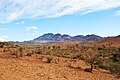 Arid land in the Flinders Ranges
 -
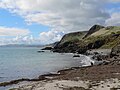 The rugged coastline of Second Valley, located on the Fleurieu Peninsula


Climate[edit | edit source]
The southern part of the state has a Mediterranean climate, while the rest of the state has either an arid or semi-arid climate.[24] South Australia's main temperature range is 29 °C (84 °F) in January and 15 °C (59 °F) in July. The highest maximum temperature ever recorded was 50.7 °C (123.3 °F) at Oodnadatta on 2 January 1960, which is the highest official temperature recorded in Australia. The lowest minimum temperature was −8.2 °C (17.2 °F) at Yongala on 20 July 1976.[25] The region's overall dry weather is owed to the Australian High on the Great Australian Bight.
| Climate data for South Australia | |||||||||||||
|---|---|---|---|---|---|---|---|---|---|---|---|---|---|
| Month | Jan | Feb | Mar | Apr | May | Jun | Jul | Aug | Sep | Oct | Nov | Dec | Year |
| Record high °C (°F) | 50.7 (123.3) |
48.2 (118.8) |
46.5 (115.7) |
42.1 (107.8) |
36.5 (97.7) |
34.0 (93.2) |
34.2 (93.6) |
39.4 (102.9) |
41.5 (106.7) |
45.4 (113.7) |
47.9 (118.2) |
49.9 (121.8) |
50.7 (123.3) |
| Record low °C (°F) | 0.2 (32.4) |
0.8 (33.4) |
−2.2 (28.0) |
−3.5 (25.7) |
−6.6 (20.1) |
−8.1 (17.4) |
−8.2 (17.2) |
−6.6 (20.1) |
−4.5 (23.9) |
−4.4 (24.1) |
−2.4 (27.7) |
−0.5 (31.1) |
−8.2 (17.2) |
| Source: Bureau of Meteorology[26] | |||||||||||||
Economy[edit | edit source]

As of 2016, South Australia had 746,105 people employed out of a total workforce of 806,593, giving an unemployment rate of 7.5%. South Australia's largest employment sector is health care and social assistance, making up 14.8% of the state's total employment, followed by retail (10.7%), education and training (8.6%), manufacturing (8%), and construction (7.6%).[27] South Australia's economy relies on exports more than any other state in Australia.[28]
South Australia's credit rating was upgraded to AAA by Standard & Poor's in September 2004 and to AAA by Moody's in November 2004, the highest credit ratings achievable by any company or sovereign. The state had previously lost these ratings in the State Bank collapse. However, in 2012 Standard & Poor's downgraded the state's credit rating to AA+ due to declining revenues, new spending initiatives and a weaker than expected budgetary outlook.[29]
South Australia receives the least amount of federal funding for its local road network of all states on a per capita and a per kilometre basis.[30]
.jpeg)

During 2019–20: South Australia's gross state product (GSP) fell 1.4% in chain volume (real) terms (nationally, gross domestic product (GDP) fell 0.3%).[31] South Australia came out of the COVID-19 recession better than the other Australian states, with the economy growing by 3.9% in the 2020–21 financial year. This was the first time since the Australian Bureau of Statistics began collecting data in 1990 that South Australia had outperformed the other states. The recovery was driven in part by growth in the agricultural sector, which increased its production by almost 24% thanks to the end of a drought.[32]
Agriculture[edit | edit source]
Cereals, legumes and oilseeds[edit | edit source]
Wheat, barley, oats, rye, peas, beans, chickpeas, lentils and canola are grown in South Australia.[33]
Fruit and vegetables[edit | edit source]
Apples, pears, cherries and strawberries are grown in the Adelaide Hills.[34] Tomatoes, capsicums, cucumbers, brassicas, lettuce and carrots are grown on the Northern Adelaide Plains at Virginia.[34] Almonds, citrus and stone fruit are grown in the Riverland.[34] Potatoes, onions and carrots are grown in the Murray Mallee region.[34] Potatoes are grown on Kangaroo Island.[34]
Viticulture[edit | edit source]
South Australia produces more than half of all Australian wine, including almost 80% of Australia's premium wines.[35]
Energy[edit | edit source]
South Australia has the lead over other Australian states for its commercialisation and commitment to renewable energy. It is now the leading producer of wind power in Australia.[36] Renewable energy is a growing source of electricity in South Australia, and there is potential for growth from this particular industry of the state's economy. The Hornsdale Power Reserve is a bank of grid-connected batteries adjacent to the Hornsdale Wind Farm in South Australia's Mid-North region. At the time of construction in late 2017, it was billed as the largest lithium-ion battery in the world.[37]
Mining[edit | edit source]
The Olympic Dam mine near Roxby Downs in northern South Australia is the largest deposit of uranium in the world, possessing more than a third of the world's low-cost recoverable reserves and 70% of Australia's. The mine, owned and operated by BHP, presently accounts for 9% of global uranium production.[38][39] The Olympic Dam mine is also the world's fourth-largest remaining copper deposit, and the world's fifth largest gold deposit.[40] There was a proposal to vastly expand the operations of the mine, making it the largest open-cut mine in the world,[41] but in 2012 the BHP Billiton board decided not to go ahead with it at that time due to then lower commodity prices.[42]
The remote town of Coober Pedy produces more opal than anywhere else in the world. Opal was first discovered near the town in 1915, and the town became the site of an opal rush, enticing immigrants from southern and eastern Europe in the aftermath of World War II.[43]
Education and research[edit | edit source]
Higher education and research in Adelaide forms an important part of South Australia's economy. The South Australian Government and educational institutions have attempted to position Adelaide as Australia's education hub and have marketed it as a Learning City.[44] The number of international students studying in Adelaide has increased rapidly in recent years to 30,726 in 2015, of which 1,824 were secondary school students.[45] Foreign institutions have been attracted to set up campuses to increase its attractiveness as an education hub.[46][47] Adelaide is the birthplace of three Nobel laureates, more than any other Australian city: physicist William Lawrence Bragg and pathologists Howard Florey and Robin Warren, all of whom completed secondary and tertiary education at St Peter's College and the University of Adelaide.
Adelaide is home to research institutes, including the Royal Institution of Australia, established in 2009 as a counterpart to the two-hundred-year-old Royal Institution of Great Britain.[48] Most of the research organisations are clustered in the Adelaide metropolitan area:
- The east end of North Terrace: SA Pathology;[49] Hanson Institute;[50] National Wine Centre.
- The west end of North Terrace: South Australian Health and Medical Research Institute (SAHMRI), located next to the Royal Adelaide Hospital.
- The Waite Research Precinct: SARDI Head Office and Plant Research Centre; AWRI;[51] ACPFG;[52] CSIRO research laboratories.[53] SARDI also has establishments at Glenside[54] and West Beach.[55]
- Edinburgh, South Australia: DSTO; BAE Systems (Australia); Lockheed Martin Australia Electronic Systems.
- Technology Park (Mawson Lakes): BAE Systems; Optus; Raytheon; Topcon; Lockheed Martin Australia Electronic Systems.
- Research Park at Thebarton: businesses involved in materials engineering, biotechnology, environmental services, information technology, industrial design, laser/optics technology, health products, engineering services, radar systems, telecommunications and petroleum services.
- Science Park (adjacent to Flinders University): Playford Capital.
- The Basil Hetzel Institute for Translational Health Research[56] in Woodville the research arm of the Queen Elizabeth Hospital, Adelaide
- The Joanna Briggs Institute, a global research collaboration for evidence-based healthcare with its headquarters in North Adelaide.
-
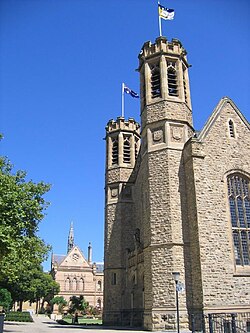 The Mitchell Building and Bonython Hall, University of Adelaide
 -
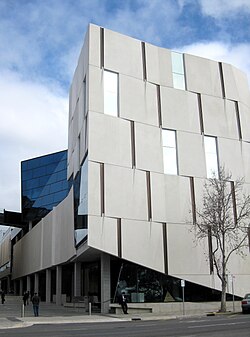 The Hawke Building, part of the UniSA, City West Campus
 -
 Flinders University buildings from the campus hills
 -
 Torrens University
 -
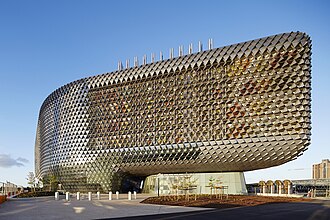


Government[edit | edit source]

South Australia is a constitutional monarchy with Template:Current Australian monarch as sovereign, and the Governor of South Australia as his representative.[57] It is a state of the Commonwealth of Australia. The bicameral Parliament of South Australia consists of the lower house known as the House of Assembly and the upper house known as the Legislative Council. General elections are held every four years, the last being the 2022 election.
Initially, the Governor of South Australia held almost total power, derived from the letters patent of the imperial government to create the colony. He was accountable only to the British Colonial Office, and thus democracy did not exist in the colony. A new body was created to advise the governor on the administration of South Australia in 1843 called the Legislative Council.[58] It consisted of three representatives of the British Government and four colonists appointed by the governor. The governor retained total executive power.
In 1851, the Imperial Parliament enacted the Australian Colonies Government Act, which allowed for the election of representatives to each of the colonial legislatures and the drafting of a constitution to properly create representative and responsible government in South Australia. Later that year, propertied male colonists were allowed to vote for 16 members on a new 24 seat Legislative Council. Eight members continued to be appointed by the governor.

The main responsibility of this body was to draft a constitution for South Australia. The body drafted the most democratic constitution ever seen in the British Empire and provided for universal manhood suffrage.[59] It created the bicameral Parliament of South Australia. For the first time in the colony, the executive was elected by the people, and the colony used the Westminster system, where the government is the party or coalition that exerts a majority in the House of Assembly. The Legislative Council remained a predominantly conservative chamber elected by property owners.
| Composition of the Parliament of South Australia (2022) | ||
|---|---|---|
| Party | House | Council |
| Labor | 27 | 9 |
| Liberal | 16 | 8 |
| SA-BEST | 0 | 2 |
| Greens | 0 | 2 |
| Independent | 4 | 0 |
| One Nation | 0 | 1 |
| Total | 47 | 22 |
| Source: Electoral Commission SA | ||
Women's suffrage in Australia took a leap forward – enacted in 1895 and taking effect from the 1896 colonial election, South Australia was the first government in Australia and only the second in the world after New Zealand to allow women to vote, and the first in the world to allow women to stand for election.[60] In 1897 Catherine Helen Spence was the first woman in Australia to be a candidate for political office when she was nominated to be one of South Australia's delegates to the conventions that drafted the constitution. South Australia became an original state of the Commonwealth of Australia on 1 January 1901.
Although the lower house had universal suffrage, the upper house, the Legislative Council, remained the exclusive domain of property owners until the Labor government of Don Dunstan managed to achieve reform of the chamber in 1973. Property qualifications were removed and the Council became a body elected via proportional representation by a single state-wide electorate.[61] Since the following 1975 South Australian state election, no one party has had control of the state's upper house with the balance of power controlled by a variety of minor parties and independents.
Local government[edit | edit source]
Local government in South Australia is established by the Constitution Act 1934 (SA), the Local Government Act 1999 (SA), and the Local Government (Elections) Act 1999 (SA).[62] South Australia contains 68 councils and 6 Aboriginal and outback communities.[63] Local councils, elected on a four-yearly basis, are responsible for local roads and stormwater management, waste collection, planning and development, fire prevention and hazard management, dog and cat management and control, parking control, public health and food inspections, and other services for their local communities.[62] Councils have the power to raise revenue for their activities, which is mostly achieved through "council rates", a tax based on property valuations. Council rates make up about 70% of council revenue, but account for less than 4% of total taxes paid by Australians.[64]
Demographics[edit | edit source]
| Birthplace[N 2] | Population |
|---|---|
| Australia | 1,192,546 |
| England | 97,392 |
| India | 27,594 |
| China | 24,610 |
| Italy | 18,544 |
| Vietnam | 14,337 |
| New Zealand | 12,937 |
| Philippines | 12,465 |
| Scotland | 11,993 |
| Germany | 10,119 |
| Greece | 8,682 |
| Malaysia | 7,749 |
| South Africa | 6,610 |
| Afghanistan | 6,313 |


As of June 2025 the population of South Australia was 1,902,300.[3] A majority of the state's population lives within Greater Adelaide's metropolitan area which had an estimated population of 1,333,927 in June 2017.[67] Other significant population centres include Mount Gambier (29,505),[68] Victor Harbor-Goolwa (26,334),[68] Whyalla (21,976),[68] Murray Bridge (18,452),[68] Port Lincoln (16,281),[68] Port Pirie (14,267),[68] and Port Augusta (13,957).[68]
Ancestry and immigration[edit | edit source]
At the 2016 census, the most commonly nominated ancestries were:[N 3][69]
28.9% of the population was born overseas at the 2016 census. The five largest groups of overseas-born were from England (5.8%), India (1.6%), China (1.5%), Italy (1.1%) and Vietnam (0.9%).[65][66]
2% of the population, or 34,184 people, identified as Indigenous Australians (Aboriginal Australians and Torres Strait Islanders) in 2016.[N 5][65][66]
Language[edit | edit source]
At the 2016 census, 78.2% of the population spoke only English at home. The other languages most commonly spoken at home were Italian (1.7%), Standard Mandarin (1.7%), Greek (1.4%), Vietnamese (1.1%), and Cantonese (0.6%).[65][66]
Religion[edit | edit source]
At the 2016 census, overall 53.9% of responses identified some variant of Christianity. 9% of respondents chose not to state a religion. The most commonly nominated responses were 'No Religion' (35.4%), Catholicism (18%), Anglicanism (10%) and Uniting Church (7.1%).[65][66]
South Australia was the first Australian colony not to have an official state religion,[71] and the colony became attractive to people who had experienced religious discrimination, including Methodists and Unitarians. South Australia also had thousands of Prussian Old Lutheran immigrants, some of whom established their own form of Lutheranism. As a result, the Lutheran Church of Australia remains separate from the German Lutheran church to this day.[72] South Australia was the location of the first Muslim mosque in Australia.[71]
Most of the state's original colonists were Christian, but of many denominations, most with their own meeting place in the city square. Adelaide has been known as the "City of Churches" since at least 1868.[73] Some of the oldest remaining buildings in the city are churches.[74]
Education[edit | edit source]
Primary and secondary[edit | edit source]
On 1 January 2009, the school leaving age was raised to 17 (having previously been 15 and then 16).[75] Education is compulsory for all children until age 17, unless they are working or undergoing other training. The majority of students stay on to complete their South Australian Certificate of Education (SACE). School education is the responsibility of the South Australian government, but the public and private education systems are funded jointly by it and the Commonwealth Government.
The South Australian Government provides, to schools on a per student basis, 89% of the total Government funding while the Commonwealth contributes 11%. Since the early 1970s, it has been an ongoing controversy[76] that 68% of Commonwealth funding (increasing to 75% by 2008) goes to private schools that are attended by 32% of the states students.[77] Private schools often counter this by saying that they receive less State Government funding than public schools, and in 2004 the main private school funding came from the Australian government, not the state government.[78]
On 14 June 2013, South Australia became the third Australian state to sign up to the Australian Federal Government's Gonski Reform Program. This will see funding for primary and secondary education to South Australia increased by $1.1 billion before 2019.[79]
The academic year in South Australia generally runs from the end of January until mid-December for primary and secondary schools. The SA schools operate on a four-term basis. Schools are closed for the South Australia public holidays.[80]
Tertiary[edit | edit source]

There are two public and two private universities in South Australia. The two public universities are Adelaide University(merged in 2026 from the University of Adelaide and UniSA) and Flinders University (est. 1966). The two private universities are Torrens University Australia (est. 2013), and CQUniversity's Adelaide Campus.[81] All four have their main campus in the Adelaide metropolitan area: Adelaide University on North Terrace in the city; Flinders at Bedford Park; Torrens University on Wakefield St in the city; and CQUniversity's Adelaide Campus in Wayville.
The University of Adelaide is part of the Group of Eight, a company of Australia's eight leading research universities.[82] As of 2022, it is ranked by the Times Higher Education World University Rankings as one of the top 100 universities in the world.[83] It was the first university in Australia to admit women to academic courses, doing so in 1881.[82] In 2018, the University of Adelaide and the University of South Australia announced plans to merge, but these plans did not at that time come to fruition due in part to disagreements over what to name the new university and which of the university's vice-chancellors would become the vice-chancellor of the amalgamated university. The two institutions have since agreed merger terms.[84]
There are also private higher education providers in Adelaide which offer tertiary degrees, such as Tabor College, Millswood;[85] and pathway colleges such as Eynesbury College.[86][87]
Vocational education[edit | edit source]
Tertiary vocational education is provided by a range of Registered Training Organisations (RTOs) which are regulated at Commonwealth level. The range of RTOs delivering education include public, private and 'enterprise' providers i.e. employing organisations who run an RTO for their own employees or members.
The largest public provider of vocational education is TAFE South Australia which is made up of colleges throughout the state, many of these in rural areas, providing tertiary education to as many people as possible. In South Australia, TAFE is funded by the state government and run by the South Australian Department of Further Education, Employment, Science and Technology (DFEEST). Each TAFE SA campus provides a range of courses with its own specialisation.
Transport[edit | edit source]
 | This section needs more citations. (October 2022) |

Historical transport in South Australia[edit | edit source]
After settlement, the major form of transport in South Australia was ocean transport. Limited land transport was provided by horses and bullocks. In the mid 19th century, the state began to develop a widespread rail network, although a coastal shipping network continued until the post war period.
Roads began to improve with the introduction of motor transport. By the late 19th century, road transport dominated internal transport in South Australia.
Railway[edit | edit source]
South Australia has four interstate rail connections, to Perth via the Nullarbor Plain, to Darwin through the centre of the continent, to New South Wales through Broken Hill, and to Melbourne–which is the closest capital city to Adelaide.
Rail transport was important for many mines in the north of the state.
The capital Adelaide has a commuter rail network made of electric and diesel electric powered multiple units, with 7 lines between them.
Roads[edit | edit source]

South Australia has extensive road networks linking towns and other states. Roads are also the most common form of transport within the major metropolitan areas with car transport predominating. Public transport in Adelaide is mostly provided by buses and trams with regular services throughout the day.
Air transport[edit | edit source]
Adelaide Airport provides regular flights to other capitals, major South Australian towns and many international locations. The airport also has daily flights to several Asian hub airports. Adelaide Metro[88] buses J1 and J1X connect to the city (approx. 30 minutes travel time), as well as other services to other parts of Adelaide. Standard fares apply and tickets may be purchased from a ticket machine at the airport bus stop. Maximum charge (September 2016) for Metroticket is $5.30; off-peak and seniors discounts may apply.

River transport[edit | edit source]
The River Murray was formerly an important trade route for South Australia, with paddle steamers linking inland areas and the ocean at Goolwa.
Sea transport[edit | edit source]
South Australia has a container port at Port Adelaide. There are also numerous important ports along the coast for minerals and grains.
The passenger terminal at Port Adelaide intermittently plays host to an array of cruise liners.
Kangaroo Island is dependent on the Sea Link ferry service between Cape Jervis and Penneshaw.
Cultural life[edit | edit source]
South Australia has been known as "the Festival State" for many years, for its abundance of arts and gastronomic festivals.[89] While much of the arts scene is concentrated in Adelaide, the state government has supported regional arts actively since the 1990s. One of the manifestations of this was the creation of Country Arts SA, created in 1992.[90]
Diana Laidlaw did much to further the arts in South Australia during her term as Arts Minister from 1993 to 2002, and after Mike Rann assumed government in 2002, he created a strategic plan in 2004 (updated 2007) which included furthering and promoting the arts in South Australia under the topic heading "Objective 4: Fostering Creativity and Innovation".[91][92]
In September 2019, with the arts portfolio now subsumed within the Department of the Premier and Cabinet (DPC) after the election of Steven Marshall as Premier, and the 2004 strategic plan having been deleted from the website in 2018,[93] the "Arts and Culture Plan, South Australia 2019–2024" was created by the department.[94] Marshall said when launching the plan: "The arts sector in South Australia is already very strong but it's been operating without a plan for 20 years".[95] However the plan does not signal any new government support, even after the government's A$31.9 million cuts to arts funding when Arts South Australia was absorbed into DPC in 2018. Specific proposals within the plan include an "Adelaide in 100 Objects" walking tour, a new shared ticketing system for small to medium arts bodies, a five-year-plan to revitalise regional art centres, creation of an arts-focussed high school, and a new venue for the Adelaide Symphony Orchestra.[96]
South Australia has a public library system, and state library. Some public libraries in South Australia in rural areas are joint school and community libraries.
Sport[edit | edit source]
Australian rules football[edit | edit source]

Australian rules football is the most popular spectator sport in South Australia. In 2006, South Australians had the highest attendance rate for the sport of any state, with 31% of South Australians attending a match in the previous twelve months.[98] South Australia fields two teams in the Australian Football League (AFL): the Adelaide Football Club and Port Adelaide Football Club. The two teams have an intense rivalry called the Showdown.[99] The traditional home of Australian rules football in South Australia was Football Park in the western suburb of West Lakes, which was the home ground of both AFL teams until 2013. Since 2014, both teams have used Adelaide Oval, near the city centre, as their home ground.[100]
The South Australian National Football League (SANFL), which was the premier league in the state before the advent of the Australian Football League, is a popular local league comprising ten teams: Sturt, Port Adelaide, Adelaide, West Adelaide, South Adelaide, North Adelaide, Norwood, Woodville/West Torrens, Glenelg and Central District.
The Adelaide Footy League comprises 68 member clubs playing over 110 matches per week across ten senior divisions and three junior divisions. It is one of Australia's largest and strongest Australian rules football associations.[101]
Cricket[edit | edit source]
Cricket has a long history in South Australia, with the first matches being played in 1839. Regular club matches were organised following the establishment of the South Australian Cricket Association (SACA) in 1871.[102] Presently, SACA governs the South Australian Premier Cricket competition in addition to all forms of domestic cricket in the state. Cricket is the most popular summer sport in South Australia, with 39,000 club players at both junior and senior levels in 2023.[103]
At the professional level, the South Australia cricket team represent the state in men's competitions including the Sheffield Shield and One-Day Cup. The South Australia women's cricket team represent the state in the Women's National Cricket League. South Australia also hosts the Adelaide Strikers in the Twenty20 Big Bash League and their women's team in the Women's Big Bash League. Matches are held at Adelaide Oval and Karen Rolton Oval in the Adelaide Parklands.
International cricket is also held in South Australia, with matches being played at Adelaide Oval. The venue was used to host matches in both the men's 1992 Cricket World Cup and 2015 Cricket World Cup. Adelaide Oval also saw use during the 2022 ICC Men's T20 World Cup. Outside of Adelaide, international cricket has also been played in Berri, South Australia with Berri Oval hosting a singular match during the 1992 Cricket World Cup.
Association football[edit | edit source]
Adelaide United represents South Australia in soccer in the men's A-League and women's W-League. The club's home ground is Hindmarsh Stadium (Coopers Stadium), but previously played occasional games at Adelaide Oval.
The club was founded in 2003 and are the 2015–16 season champions of the A-League. The club was also premier in the inaugural 2005–06 A-League season, finishing 7 points clear of the rest of the competition, before finishing 3rd in the finals. Adelaide United was also a Grand Finalist in the 2006–07 and 2008–09 seasons. Adelaide is the only A-League club to have progressed past the group stages of the Asian Champions League on more than one occasion.[104]
Adelaide City remains South Australia's most successful club, having won three National Soccer League titles and three NSL Cups. City was the first side from South Australia to ever win a continental title when it claimed the 1987 Oceania Club Championship and it has also won a record 17 South Australian championships and 17 Federation Cups.
West Adelaide became the first South Australian club to be crowned Australian champion when it won the 1978 National Soccer League title. Like City, it now competes in the National Premier Leagues South Australia and the two clubs contest the Adelaide derby.
Basketball[edit | edit source]
Basketball also has a big following in South Australia, with the Adelaide 36ers playing in the Adelaide Entertainment Centre. The 36ers have won four championships in the last 20 years in the National Basketball League. The Adelaide Entertainment Centre, located in Hindmarsh, is the home of basketball in the state.
Mount Gambier also has a national basketball team – the Mount Gambier Pioneers. The Pioneers play at the Icehouse (Bern Bruning Basketball Stadium), which seats over 1,000 people and is also home to the Mount Gambier Basketball Association. The Pioneers won the South Conference in 2003 and the Final in 2003; this team was rated second in the top five teams to have ever played in the league. In 2012, the club entered its 25th season, with a roster of 10 senior players (two imports) and three development squad players.
Motorsport[edit | edit source]
Australia's premier motorsport series, the Supercars Championship, has visited South Australia each year since 1999. South Australia's Supercars event, the Adelaide 500, is staged on the Adelaide Street Circuit, a temporary track laid out through the streets and parklands to the east of the Adelaide city centre. Attendance for the 2022 event totalled 258,200.[105] An earlier version of the Adelaide Street Circuit played host to the Australian Grand Prix, a round of the FIA Formula One World Championship, each year from 1985 to 1995.
Mallala Motor Sport Park, a permanent circuit located near the town of Mallala, 58 km north of Adelaide, caters for both state and national level motor sport throughout the year.
The Bend Motorsport Park is another permanent circuit, located just outside of Tailem Bend.[106]
Rugby league[edit | edit source]
The state rugby league federation is the South Australian Rugby League.[107] The game traces its roots in the state back to the 1940s, when the Port Adelaide rugby union team split in four, and defected to rugby league.
South Australia's only professional rugby league team, the Adelaide Rams, had a short but eventful existence. After debuting in the Super League competition in 1997, in 1998 they were selected to join the 20-team National Rugby League; however they were to be axed from the 1999 season as part of a rationalisation of teams (from 20 to 14) in the competition.
At present however, the South Australian Rugby League still operates a local semi-professional competition consisting of both junior and adult teams from across Adelaide.
Adelaide Oval hosted State of Origin series games in both 2020 and 2023, with the latter drawing a state record rugby league attendance of 48,613.
Other sports[edit | edit source]

Sixty-three percent of South Australian children took part in organised sports in 2002–2003.[108]
The ATP Adelaide was a tennis tournament held from 1972 to 2008 that then moved to Brisbane. Since 2020, South Australia has hosted the Adelaide International tennis tournament. Also, the Royal Adelaide Golf Club has hosted nine editions of the Australian Open, with the most recent being in 1998.
The state has hosted the Tour Down Under cycle race since 1999.[109]
Places[edit | edit source]
Crime[edit | edit source]
Crime in South Australia is managed by the South Australia Police (SAPOL), various state and federal courts in the criminal justice system and the state Department for Correctional Services, which administers the prisons and remand centre.
Crime statistics for all categories of offence in the state are provided on the SAPOL website, in the form of rolling 12-month totals.[110] Crime statistics from the 2017–18 national ABS Crime Victimisation Survey show that between 2008–09 and 2017–18, the rate of victimisation in South Australia declined for assault and most household crime types.[111]
In 2013, Adelaide was ranked the safest capital city in Australia.[112]
See also[edit | edit source]
- Australia
- Outline of Australia
- Adelaide
- Country Fire Service
- Proclamation Day: 28 December 1836
- South Australian Ambulance Service
- South Australian English
- Symbols of South Australia
Food and drink[edit | edit source]
Lists[edit | edit source]
- List of amphibians of South Australia
- List of cities and towns in South Australia
- List of festivals in Australia#South Australia
- List of films shot in Adelaide
- List of highways in South Australia
- List of people from Adelaide
- Local Government Areas of South Australia
- List of public art in South Australia
- Tourist attractions in South Australia
Notes[edit | edit source]
- ↑ Most Australians describe the body of water south of the continent as the Southern Ocean, rather than the Indian Ocean as officially defined by the International Hydrographic Organization (IHO). In the year 2000, a vote of IHO member nations defined the term "Southern Ocean" as applying only to the waters between Antarctica and 60 degrees south latitude.
- ↑ In accordance with the Australian Bureau of Statistics source, England, Scotland, China and the Special Administrative Regions of Hong Kong and Macau are listed separately
- ↑ As a percentage of 1,227,355 persons who nominated their ancestry at the 2016 census.
- ↑ The Australian Bureau of Statistics has stated that most who nominate "Australian" as their ancestry are part of the Anglo-Celtic group.[70]
- ↑ 5.0 5.1 Of any ancestry. Includes those identifying as Aboriginal Australians or Torres Strait Islanders. Indigenous identification is separate to the ancestry question on the Australian Census and persons identifying as Aboriginal or Torres Strait Islander may identify any ancestry.
References[edit | edit source]
- ↑ "Wordwatch: Croweater". ABC NewsRadio. Archived from the original on 15 September 2005. Retrieved 11 October 2011.
- ↑ "Area of Australia - States and Territories". 27 June 2014.
- ↑ 3.0 3.1 3.2 "National, state and territory population – June 2025". Australian Bureau of Statistics. 18 December 2025. Archived from the original on 28 January 2026. Retrieved 31 January 2026.
- ↑ "5220.0 – Australian National Accounts: State Accounts, 2019–20". Australian Bureau of Statistics. 20 November 2020. Retrieved 20 January 2021.
- ↑ "Sub-national HDI – Area Database – Global Data Lab". hdi.globaldatalab.org. Retrieved 11 November 2025.
- ↑ Area of Australia - States and Territories Geoscience Australia. Retrieved 9 January 2022.
- ↑ "2021 Mount Gambier, Census All persons QuickStats | Australian Bureau of Statistics". abs.gov.au. Retrieved 1 January 2024.
- ↑ "South Australian Police Historical Society Inc". Archived from the original on 1 October 2011. Retrieved 13 September 2011.
- ↑ Anderson, Margaret (12 December 2013). "The first reading of the proclamation". History Trust of South Australia. Retrieved 5 September 2021.
- ↑ "Kangaroo Island Council – Welcome". Kangaroo Island Council. Archived from the original on 9 August 2010. Retrieved 10 August 2010.
- ↑ "The Wakefield Model of Systematic Colonisation in South Australia". University of South Australia. 2008.[permanent dead link]
- ↑ R.J. Lampert (1979): Aborigines. In Tyler, M.J., Twidale, C.R. & Ling, J.K. (Eds) Natural History of Kangaroo Island. Royal Society of South Australia Inc. ISBN 0-9596627-1-5
- ↑ Zuckermann, Ghil'ad (2020), Revivalistics: From the Genesis of Israeli to Language Reclamation in Australia and Beyond, Oxford University Press. ISBN 9780199812790 / ISBN 9780199812776
- ↑ Australian Geographical Society.; Australian National Publicity Association.; Australian National Travel Association. (1934), Walkabout, Australian National Travel Association, retrieved 7 January 2019
- ↑ "Transcript of the South Australia Act, 1834" (PDF). Museum of Australian Democracy at Old Parliament House. Retrieved 27 December 2018.
- ↑ 16.0 16.1 "Letters Patent establishing the Province of South Australia 19 February 1836 (UK)". Documenting Democracy. Retrieved 31 July 2025.
- ↑ Ngadjuri Walpa Juri Lands and Heritage Association (n.d.). Gnadjuri. SASOSE Council Inc. ISBN 978-0-646-42821-5.
- ↑ Sendziuk, P. (2012): No convicts here: reconsidering South Australia's foundation myth. In: Foster, R. & Sendziuk, P. (Eds.) Turning points: chapters in South Australian history. Wakefield Press. ISBN 978 1 74305 119 1
- ↑ "History of Adelaide Gaol". Archived from the original on 24 October 2009. Retrieved 19 November 2020.
- ↑ "Highest Mountains". Geoscience Australia. Archived from the original on 21 April 2006. Retrieved 28 May 2006.
- ↑ "South Australia". Wine Australia. Archived from the original on 9 April 2011. Retrieved 24 June 2011.
- ↑ Henzell, Ted (2007). Australian Agriculture: Its History and Challenges. Csiro Publishing. ISBN 9780643993426.
- ↑ Territorial evolution of Australia – 6 July 1863
- ↑ "Climate and Weather". Government of South Australia. Atlas South Australia. 28 April 2004. Archived from the original on 15 March 2010. Retrieved 6 December 2009.
- ↑ "Rainfall and Temperature Records: National" (PDF). Bureau of Meteorology. Retrieved 14 November 2009.
- ↑ "Official records for Australia in January". Daily Extremes. Bureau of Meteorology. 1 July 2017. Retrieved 7 July 2017.
- ↑ "Region summary: South Australia". Australian Bureau of Statistics. Retrieved 10 October 2022.
- ↑ "Australia's Trade by State and Territory 2013–14" (PDF). Australia Unlimited. February 2015. Archived from the original (PDF) on 6 November 2015. Retrieved 28 February 2017.
- ↑ Puddy, Rebecca (31 May 2012). "South Australia loses AAA rating in credit rating downgrade". The Australian. Retrieved 1 September 2015.
- ↑ "Inquiry into Local Government and Cost Shifting" (PDF). Australian House of Representatives. 2003. Archived from the original (PDF) on 10 July 2007. Retrieved 11 June 2007.
- ↑ "Gross State Product" (PDF). Treasury South Australia. Archived from the original (PDF) on 18 August 2021. Retrieved 28 October 2021.
- ↑ Wright, Shane (19 November 2021). "The little economies that could: SA and Tasmania lead the nation". The Sydney Morning Herald. Retrieved 10 October 2022.
- ↑ Lewis, Dave. ""Crop and Pasture Report South Australia, 2021-22 Harvest"" (PDF). Government of South Australia, Department of Primary Industries and Regions. South Australian Department of Primary Industries and Regions (PIRSA). Retrieved 17 November 2022.
- ↑ 34.0 34.1 34.2 34.3 34.4 "Horticulture in South Australia" (PDF). Department of Primary Industries and Regions (PIRSA). The Department of Primary Industries and Regions (PIRSA). Retrieved 15 January 2023.[permanent dead link]
- ↑ "Grape and wine". Department of Primary Industries and Regions (PIRSA). The Department of Primary Industries and Regions (PIRSA). 14 May 2022. Retrieved 16 January 2023.
- ↑ "Wind Energy – How it works". Clearenergycouncil. Archived from the original on 21 June 2011. Retrieved 6 October 2011.
- ↑ "Hornsdale Power Reserve". Retrieved 4 December 2017.
- ↑ Gemma Daley; Tan Hwee Ann (3 April 2006). "Australia, China Sign Agreements for Uranium Trade (Update5)". Bloomberg. Retrieved 27 April 2012.
- ↑ Ian Lambert; Subhash Jaireth; Aden McKay; Yanis Miezitis (December 2005). "Why Australia has so much uranium". AusGeo News. Retrieved 27 April 2012.
- ↑ "FACTBOX-BHP Billiton's huge Olympic Dam mine". Reuters. 21 October 2009. Archived from the original on 24 May 2019. Retrieved 24 May 2019.
- ↑ Sky News Australia – Finance Article
- ↑ BHP shelves Olympic Dam as profit falls a third. ABC News, 22 August 2012. Retrieved on 16 July 2013.
- ↑ Shang, Phoebe. "Opal Mining in Coober Pedy: History and Methods". IGS. Retrieved 16 October 2022.
- ↑ Edwards, Verity (3 May 2008). "Education attracts record numbers". The Weekend Australian.
- ↑ Broadstock, Amelia (6 May 2015). "International Uni student numbers a billion dollar boom for Adelaide". The City Messenger.
- ↑ Hodges, Lucy (29 May 2008). "Brave new territory: University College London to open a branch in Australia". The Independent (UK). Archived from the original on 17 March 2011. Retrieved 23 August 2017.
- ↑ "About Heinz Australia: Carnegie Mellon Heinz College". Carnegie Mellon University. Archived from the original on 10 April 2011.
- ↑ Edwards, Verity (3 May 2008). "RI Australia plugs into world science". The Weekend Australian.
- ↑ History Archived 16 January 2011 at the Wayback Machine, Our research Archived 16 January 2011 at the Wayback Machine, Institute of Medical and Veterinary Science
- ↑ About us Archived 25 July 2008 at the Wayback Machine, History Archived 25 July 2008 at the Wayback Machine, Hanson Institute
- ↑ The Australian Wine Research Institute (AWRI) Archived 25 December 2010 at the Wayback Machine, awri.com.au
- ↑ Australian Centre for Plant Functional Genomics (ACPFG) Archived 18 December 2010 at the Wayback Machine, acpfg.com.au
- ↑ "Waite Campus, Urrbrae". CSIRO. 6 September 2019. Archived from the original on 6 September 2019. Retrieved 6 September 2019.
- ↑ "Livestock – Glenside Laboratories". Archived from the original on 19 February 2011. Retrieved 6 January 2011.
- ↑ "SARDI". Archived from the original on 19 February 2011. Retrieved 6 January 2011.
- ↑ "A great of the SA science world". The Advertiser. Adelaide. 24 May 2012. Archived from the original on 15 December 2018. Retrieved 9 March 2019.
- ↑ R v Governor of South Australia; Ex parte Vardon [1907] HCA 31, (1907) 4 CLR 1497, High Court (Australia).
- ↑ "Legislative Council 1843–1856". Parliament of South Australia. 2005. Archived from the original on 25 August 2006. Retrieved 28 May 2006.
- ↑ Change name (28 January 2011). "The Right to Vote in Australia". Australian Electoral Commission. Retrieved 17 July 2016.
- ↑ "Women's Suffrage Petition 1894: parliament.sa.gov.au" (PDF). Archived from the original (PDF) on 29 March 2011. Retrieved 17 July 2016.
- ↑ Dunstan, Don (1981). Felicia: The political memoirs of Don Dunstan. Griffin Press Limited. pp. 214–215. ISBN 0-333-33815-4.
- ↑ 62.0 62.1 "Local government in SA". Local Government Association of South Australia. 6 February 2020. Retrieved 6 October 2022.
- ↑ "SA councils list & map". Local Government Association of South Australia. 15 August 2022. Retrieved 6 October 2022.
- ↑ "Council rates". Local Government Association of South Australia. 11 July 2022. Retrieved 6 October 2022.
- ↑ 65.0 65.1 65.2 65.3 65.4 "2016 Census Community Profiles: South Australia". quickstats.censusdata.abs.gov.au. Archived from the original on 1 October 2020. Retrieved 19 November 2020.
- ↑ 66.0 66.1 66.2 66.3 66.4 "South Australia (4) 984274.9 sq Kms". www.censusdata.abs.gov.au. Archived from the original on 24 April 2018. Retrieved 16 September 2023.
- ↑ "3218.0 – Regional Population Growth, Australia, 2016–17: Main Features". Australian Bureau of Statistics. 24 April 2018. Retrieved 13 October 2018. Estimated resident population, 30 June 2017.
- ↑ 68.0 68.1 68.2 68.3 68.4 68.5 68.6 "3218.0 – Regional Population Growth, Australia, 2016–17: Population Estimates by Significant Urban Area, 2007 to 2017". Australian Bureau of Statistics. 24 April 2018. Retrieved 12 October 2018. Estimated resident population, 30 June 2017.
- ↑ "2016 Census Community Profiles: Greater Adelaide". quickstats.censusdata.abs.gov.au. Archived from the original on 22 June 2019. Retrieved 19 November 2020.
- ↑ Statistics, c=AU; o=Commonwealth of Australia; ou=Australian Bureau of (January 1995). "Feature Article – Ethnic and Cultural Diversity in Australia (Feature Article)". Australian Bureau of Statistics.
{{cite web}}: CS1 maint: multiple names: authors list (link) - ↑ 71.0 71.1 "Religion : Beginnings". SA Memory. 23 May 2006. Retrieved 14 October 2022.
- ↑ "Religion : Diversity". SA Memory. 7 December 2005. Retrieved 14 October 2022.
- ↑ "The Week's News". Adelaide Observer. Vol. XXVI, no. 1389. South Australia. 16 May 1868. p. 9. Retrieved 12 April 2023 – via National Library of Australia. Earlier instances may be found without capital "C"s.
- ↑ "Religion : City of churches". SA Memory. 7 December 2005. Retrieved 14 October 2022.
- ↑ Owen, Michael (22 May 2006). "School leaving age to be raised". The Advertiser. News Corp. Archived from the original on 14 September 2007. Retrieved 28 May 2006.
- ↑ "The Redefinition of Public Education". Archived from the original on 15 February 2008. Retrieved 12 July 2010.
- ↑ "Chapter 2: Resourcing Australia's schools". Ministerial Council National Report on Schooling in Australia. Archived from the original on 16 October 2013.
- ↑ Bill Daniels (12 April 2004). "Government funding should encourage private schools not penalise them". Retrieved 16 February 2010.
- ↑ "South Australia signs up to Federal Government's Gonski education reforms". Australian Broadcasting Corporation. 14 June 2013.
- ↑ "SA School Holidays, Public Holidays & School Terms 2022 - 2023". School Holidays. Retrieved 12 March 2022.
- ↑ Australia, Government of South. "Universities". www.sa.gov.au. Retrieved 16 March 2026.
- ↑ 82.0 82.1 Craddock, Alex (30 September 2019). "A Guide to Universities in Adelaide". Insider Guides. Retrieved 14 October 2022.
- ↑ "What's the best university in the world? What's the best Australian uni? Here's what the World University Rankings list says". ABC News. 12 October 2022. Retrieved 14 October 2022.
- ↑ Siebert, Bension (21 January 2021). "University of Adelaide, UniSA merger proposal failed after uncertainty over name and leadership". Australian Broadcasting Corporation. Retrieved 14 October 2022.
- ↑ "Tabor College - ADELAIDE | ONLINE". Tabor College. Retrieved 16 March 2026.
- ↑ "SATAC - Participating institutions".
- ↑ "Home". Eynesbury College. Retrieved 16 March 2026.
- ↑ "Adelaide Metro". adelaidemetro.com.au. Service SA. 12 February 2020. Retrieved 19 November 2020.
- ↑ Wallace, Ilona (31 March 2015). "Is South Australia still the Festival State?". The Adelaide Review. Retrieved 4 September 2019.
- ↑ Lensink, Michelle (26 November 2003). "Laidlaw, Hon. Diana". Hon. Michelle Lensink MLC. Archived from the original on 7 August 2020. Retrieved 4 September 2019.
- ↑ "South Australia'S Strategic Plan 2007". Government of South Australia. 2007.
{{cite journal}}: Cite journal requires|journal=(help) - ↑ Mackie, Greg (13 July 2017). "Finding the Next Wave: Innovation and its Discontents". University of Adelaide Cultural Oration 2017. Retrieved 4 September 2019.
- ↑ Smith, Matt (9 June 2018). "Ex-premier Mike Rann's vision for South Australia purged after 14 years by new ruling Liberals". AdelaideNow. The Advertiser. Retrieved 4 September 2019.
- ↑ "Arts and Culture Plan South Australia 2019–2024". Archived from the original on 2 September 2019. Retrieved 4 September 2019.
- ↑ Richards, Stephanie (2 September 2019). "Marshall "considering" concert hall as part of new arts plan". InDaily. Retrieved 4 September 2019.
- ↑ Marsh, Walter (2 September 2019). "New Arts Plan and review suggest arts sector learns to live with less government support". The Adelaide Review. Retrieved 7 September 2019.
- ↑ KPPM Organisational Strategists, KPPM (2012). "Review of School Community Libraries Future Models of Service Delivery" (PDF). State Library of South Australia. Archived from the original (PDF) on 23 March 2018. Retrieved 11 February 2018.
- ↑ "4174.0 - Sports Attendance, Australia, 2005-06". Australian Bureau of Statistics. 25 January 2007. Retrieved 1 October 2022.
- ↑ Rucci, Michelangelo (6 August 2021). "Culture war: getting the lowdown on Showdown". InDaily. Retrieved 1 October 2022.
- ↑ "Adelaide Oval success boosts AFL crowd figures". ABC.net.au. 29 September 2014. Retrieved 1 October 2022.
- ↑ "South Australian Amateur Football League". Archived from the original on 2 July 2009. Retrieved 5 July 2009.
- ↑ Whimpress, Bernard (14 February 2022). "Cricket". SA History Hub. Retrieved 22 February 2024.
- ↑ "ANNUAL REPORT 2022/23" (PDF). SACA. 31 August 2023. Retrieved 22 February 2024.
- ↑ "Reds finalise squad for ACL Knockout Stage – Adelaide United FC 2013". Football Australia. 24 August 2012. Archived from the original on 3 December 2013. Retrieved 16 July 2013.
- ↑ "Adelaide 500 drives all-time record". Premier of South Australia. 3 March 2023. Archived from the original on 3 November 2023. Retrieved 13 January 2024.
- ↑ Strathearn, Peri (8 March 2016). "The Bend Motorsport Park: Tailem Bend raceway, former SA Motorsport Park and Mitsibushi test track, has new official name". Murray Valley Standard. Archived from the original on 29 June 2018.
- ↑ "LeagueNet - South Australian Rugby League". Archived from the original on 9 September 2016. Retrieved 3 December 2023.
- ↑ "Children's Participation in Cultural and Leisure Activities", April 2003, Australian Bureau of Statistics. Retrieved 14 January 2013.
- ↑ Keane, Daniel (12 March 2015). "Victoria may gloat about poaching the Grand Prix, but SA gained a lot by losing it". ABC News. Retrieved 21 January 2017.
- ↑ "Crime statistics". South Australia Police. Retrieved 20 December 2020.
- ↑ "Main Features - South Australia". Australian Bureau of Statistics. 13 February 2019. Retrieved 20 December 2020.
- ↑ "Adelaide's nation's safest city, according to Suncorp study - Adelaide Now". Archived from the original on 10 July 2015. Retrieved 20 December 2020.
Further reading[edit | edit source]
- Jauncey, Dorothy et al. South Australian Words, Oxford University Press (2004) ISBN 0-19-551770-9
- Jaensch, Dean (2002). "Community access to the electoral processes in South Australia since 1850". South Australian State Electoral Office.[permanent dead link]
- Pike, Douglas. (1967) Paradise of Dissent: South Australia 1829-1857 (Melbourne UP, 2nd edition)
- Prest, Wilfrid, et al. (2001) The Wakefield Companion to South Australian History (2nd ed)
- Robbins, E. Jane; Robbins, John R. (1987). A Glossery of Local Government Areas in South Australia, 1840-1985 (PDF). Historical Society of South Australia. Retrieved 2 March 2021.
- Sendziuk, Paul; Foster, Robert (2018). A History of South Australia. Cambridge University Press. ISBN 9781107623651.
Older books[edit | edit source]
- Bull, John Wrathall (1884). Early Experiences of Life in South Australia and an Extended Colonial History. Adelaide: E.S. Wigg & son, pub.
- Stow, Jefferson Pickman (1884). South Australia: Its History, Productions, and Natural Resources. Adelaide: E. Spiller, government printer.
- Finniss, B.T. (1886). The Constitutional History of South Australia During Twenty-One Years from the Foundation of the Settlement in 1836 to the Inauguration of Responsible Government in 1857 (PDF). Adelaide: W.C. Rigby.
- Hodder, Edwin (1893). The history of South Australia from its foundation to the year of its jubilee: Vol I (PDF). London: S. Low, Marston & Company, Limited.
- Hodder, Edwin (1893). The history of South Australia from its foundation to the year of its jubilee: Vol II (PDF). London: S. Low, Marston & Company, Limited.
- Pascoe, J.J. (1901). History of Adelaide and vicinity : with a general sketch of the province of South Australia and biographies of representative men. Adelaide: Hussey & Gillingham. ISBN 9780858720329.
- Blacket, John (1911). History of South Australia: a romantic and successful experiment in colonization (PDF). Adelaide: Hussey & Gillingham Limited.
External links[edit | edit source]
- "South Australian History: Home", Comprehensive guide to online library resources for historical topics..
- Template:Wikivoyage inline
- Template:Osmrelation
- sa.gov.au
- Official Insignia and Emblems Page
- South Australia's greenhouse (climate change) strategy (2007–2020)
- Ground Truth – towards an Environmental History of South Australia. Archived 7 October 2001 at the Wayback Machine.
Template:South Australia Template:Government of South Australia Template:States and territories of Australia Template:Australia topics