

->Quebec99 m Fix duplicate ref names – You can help! |
m minor improved formatting after review and added references after review |
||
| Line 1: | Line 1: | ||
{{Use dmy dates|date=June 2024}} | |||
{{Use Indian English|date=June 2024}} | |||
{{Infobox royalty | {{Infobox royalty | ||
| embed = | | embed = | ||
| Line 15: | Line 17: | ||
| reign = 335-350 CE<ref name="KKSK2">{{cite book |last1=Cribb |first1=Joe |last2=Donovan |first2=Peter |title=Kushan, Kushano-Sasanian, and Kidarite Coins A Catalogue of Coins From the American Numismatic Society by David Jongeward and Joe Cribb with Peter Donovan |date=2014 |page=4 |url=https://www.academia.edu/11049999 |language=en}}</ref> | | reign = 335-350 CE<ref name="KKSK2">{{cite book |last1=Cribb |first1=Joe |last2=Donovan |first2=Peter |title=Kushan, Kushano-Sasanian, and Kidarite Coins A Catalogue of Coins From the American Numismatic Society by David Jongeward and Joe Cribb with Peter Donovan |date=2014 |page=4 |url=https://www.academia.edu/11049999 |language=en}}</ref> | ||
| reign-type = | | reign-type = | ||
| coronation = | | coronation = 335 CE | ||
| cor-type = | | cor-type = | ||
| predecessor = [[Shaka I]] | | predecessor = [[Shaka I]] | ||
| Line 64: | Line 66: | ||
| birth_name = | | birth_name = | ||
| birth_date = | | birth_date = 297 CE | ||
| birth_place = | | birth_place = | ||
| death_date = <!-- {{death date and age|YYYY|MM|DD|YYYY|MM|DD|df=y}} --> | | death_date = <!-- {{death date and age|YYYY|MM|DD|YYYY|MM|DD|df=y}} --> | ||
| death_place = | | death_place = | ||
| burial_date = | | burial_date = 350 CE | ||
| burial_place = | | burial_place = | ||
| spouse = | | spouse = | ||
| Line 95: | Line 97: | ||
}} | }} | ||
{{Kushan rulers}} | {{Kushan rulers}} | ||
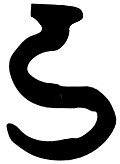
'''Kipunada''' ([[Brahmi script]]: <sup>[[File:Gupta ashoka ki.jpg| | '''Kipunada''' ([[Brahmi script]]: <sup>[[File:Gupta ashoka ki.jpg|10px]]</sup>[[File:Gupta ashoka pu.jpg|10px]][[File:Gupta gujarat nn.svg|10px]][[File:Gupta gujarat dh.svg|14px]] ''Ki-pu-ṇa-dha''), also '''Kipanadha''', was probably the last ruler of the [[Kushan Empire]] around 335-350 CE.<ref name="KKSK2" /> He is known for his gold coinage.<ref>{{cite book|url=https://books.google.com/books?id=0HS6kktipb8C&pg=PA15|title=Heritage World Coin Auctions Long Beach Signature Auction Catalog #378|publisher=Ivy Press |page=15|isbn=978-1-932899-79-5|date=May 2005}}</ref> He succeeded [[Shaka I]]. Kipunada was probably only a local ruler in the area stretching from [[Waisa]] to [[Taxila]], in northwestern [[Punjab]], and he may have been a subject of [[Gupta Empire|Gupta]] Emperor [[Samudragupta]].<ref>{{cite book |last1=Rezakhani |first1=Khodadad |title=From the Kushans to the Western Turks |date=2017 |page=203 |url=https://www.academia.edu/32671225 |language=en}}</ref> | ||
== Gupta and Kidarite successors == | == Gupta and Kidarite successors == | ||
The coins of Kipunada in Central and Western Punjab were followed by peculiar coins minted locally in Punjab, with the name "Samudra" on them ([[Gupta script]]:[[File:Gupta ashoka s.svg|13px]][[File:Gupta allahabad mu.jpg|11px]][[File:Gupta allahabad dr.jpg|12px]]), presumably connected to the [[Gupta Empire]] ruler [[Samudragupta]].<ref name="Cribb101" /><ref name="EE" /> Soon after this, coinage was issued in Punjab by [[Kidarites|Kidarite Hun]] rulers known as [[Kirada]], [[Peroz III Kushanshah|Peroz]] and then the famous [[Kidara]], who occupied the territory formerly held by the Kushans.<ref name="Cribb101">{{cite journal |last1=Cribb |first1=Joe |title=The Kidarites, the numismatic evidence.pdf |journal=Coins, Art and Chronology II, Edited by M. Alram et Al. |url=https://www.academia.edu/38112559 |language=en|page=101}}</ref><ref name="EE">"In the Punjab the stylistic progression of the gold series from Kushan to Kidarite is clear: imitation staters were issued first in the name of Samudragupta, then by Kirada, 'Peroz' and finally Kidara" in {{cite book |last1=Errington |first1=Elizabeth |last2=Curtis |first2=Vesta Sarkhosh |title=From Persepolis to the Punjab: Exploring Ancient Iran, Afghanistan and Pakistan |date=2007 |publisher=British Museum Press |isbn=978-0-7141-1165-0 |page=88 |url=https://books.google.com/books?id=x2cuAQAAIAAJ |language=en}}</ref><ref>{{cite book |last1=Rezakhani |first1=Khodadad |title=ReOrienting the Sasanians: East Iran in Late Antiquity |date=2017 |publisher=Edinburgh University Press |isbn=978-1-4744-0030-5 |page=85 |url=https://books.google.com/books?id=bjRWDwAAQBAJ&pg=PA85 |language=en}}</ref> | The coins of Kipunada in Central and Western Punjab were followed by peculiar coins minted locally in Punjab, with the name "Samudra" on them ([[Gupta script]]:[[File:Gupta ashoka s.svg|13px]][[File:Gupta allahabad mu.jpg|11px]][[File:Gupta allahabad dr.jpg|12px]]), presumably connected to the [[Gupta Empire]] ruler [[Samudragupta]].<ref name="Cribb101" /><ref name="EE" /> Soon after this, coinage was issued in Punjab by [[Kidarites|Kidarite Hun]] rulers known as [[Kirada]], [[Peroz III Kushanshah|Peroz]] and then the famous [[Kidara]], who occupied the territory formerly held by the Kushans.<ref name="Cribb101">{{cite journal |last1=Cribb |first1=Joe |title=The Kidarites, the numismatic evidence.pdf |journal=Coins, Art and Chronology II, Edited by M. Alram et Al. |url=https://www.academia.edu/38112559 |language=en|page=101}}</ref><ref name="EE">"In the Punjab the stylistic progression of the gold series from Kushan to Kidarite is clear: imitation staters were issued first in the name of Samudragupta, then by Kirada, 'Peroz' and finally Kidara" in {{cite book |last1=Errington |first1=Elizabeth |last2=Curtis |first2=Vesta Sarkhosh |title=From Persepolis to the Punjab: Exploring Ancient Iran, Afghanistan and Pakistan |date=2007 |publisher=British Museum Press |isbn=978-0-7141-1165-0 |page=88 |url=https://books.google.com/books?id=x2cuAQAAIAAJ |language=en}}</ref> | ||
Kipunada lost his independence directly to the invading [[Hunas]] who had invaded northern [[India]] and acted as a local ruler of [[Taxila]] (alongside [[Mahi (Kushan)|Mahi]] and [[Shaka (Kushan)|Shaka]]) under the suzerainty of the [[Gupta Empire|Gupta emperors]], while still using the coinage style of the [[Kushan Empire|Great Kushans]].<ref>"The last Kushan rulers, known mainly through their coinage, are known under the names Mahi, Shaka, and Kipunandha (Jongeward and Cribb 2015: 174–8). These rulers acted mainly as local authorities in the Taxila region, under the overall suzerainty of the Gupta emperors, while maintaining the coinage style of the Great Kushans in greatly reduced values. As far as East Iran is concerned, Kushan rule essentially ceased to exist following the death of Kanishka II, in effect being reduced to local rule in northern India, already dominated by the Gupta emperor Samudragupta (Dani 1996: 169). The later Kushan king Kipunandha probably lost his independence directly to the Huna tribes who invaded northern India in the late fourth century (Errington and Curtis 2007: 71; Cribb 2010: | |||
112–13)." {{cite book |last1=Rezakhani |first1=Khodadad |title=ReOrienting the Sasanians East Iran in Late Antiquity |date=2017 |publisher=Edinburgh University Press |isbn=978-1-4744-0030-5 |page=70 |url=https://books.google.com/books?id=bjRWDwAAQBAJ&pg=PA85 |language=en}}</ref> The Kushano-Sasanian sites, including the coins, extended to Gandhara due to Shapur II's protection of the eastern borders of his [[Sasanian Empire]] against the invading Huns/Chionites. His treaties with the Huns resulted in: allowing them to join the Sasanian troops, treating them as allies and allowing his direct control over the east. The Kushano-Sasanian coin series issued by [[Kidara]] and a certain Pērōz, in [[Tokharistan]] and [[Gandhara]] continued.<ref>{{cite book |last1=Rezakhani |first1=Khodadad |title=ReOrienting the Sasanians: East Iran in Late Antiquity |date=2017 |publisher=Edinburgh University Press |isbn=978-1-4744-0030-5 |page=85 |url=https://books.google.com/books?id=bjRWDwAAQBAJ&pg=PA85 |language=en}}</ref> Evidently, [[Kidara I]] was the [[Kushan Empire|Kushan]] king who submitted to the Gupta king [[Samudragupta]] and accepted [[Gupta Empire|Gupta]] suzerainty.<ref name="HCCA166">{{harvnb|Dani |Litvinsky |Zamir Safi|1996|pp=[https://books.google.com/books?id=883OZBe2sMYC&pg=PA165 165]–[https://books.google.com/books?id=883OZBe2sMYC&pg=PA166 166]}}</ref><ref>"The two coin types discussed here are clearly related to the [[Kidarites|Kidarite Huns]] by their designs and by the inscription ΚΙΔΑΡΑ | |||
([[Kidara I|Kidara]] in [[Bactrian language|Bactrian script]], as written on Kidara’s Bactrian gold issues, Cribb 2010, pp. 109–110; p. 126, type 6A; p. 140, fig. no. 13) on one type, but curiously they have not been seen before among the many published Kidarite issues. All three pieces include in their inscription the title devaputra (son of the gods) written in [[Brahmi script]]. This title was used by the [[Kushan Empire|Kushan]] kings and in the inscription of [[Samudragupta]] from [[Allahabad Pillar|Allahabad (line 23)]] was used to identify the Kushan king submitting to the Gupta king dēvaputra shāhi shāhānushāhi." {{cite journal |last1=Cribb |first1=Joe |last2=Singh |first2=Karan |title=Two Curious Kidarite Coin Types From 3rd Century Kashmir |journal=JONS |volume=230 |date=Winter 2017 |page=3 |url=https://www.academia.edu/36983254}}</ref> | |||
<gallery widths="200px" heights="100px" perrow="4"> | <gallery widths="200px" heights="100px" perrow="4"> | ||
| Line 106: | Line 112: | ||
{{S-start}} | {{S-start}} | ||
{{Succession box|title=[[Kushan]] Ruler|years= | {{Succession box|title=[[Kushan Empire|Kushan]] Ruler|years={{Circa|335}}-350 CE<ref name="KKSK2" />|before=[[Shaka I]]|after=[[Gupta Empire]]/<br />[[Kidarites]]<br />([[Kirada]])}} | ||
{{s-end}} | {{s-end}} | ||
{{Kushans}} | {{Kushans}} | ||
| Line 112: | Line 118: | ||
== Notes == | == Notes == | ||
{{reflist}} | {{reflist}} | ||
==Sources== | |||
*{{cite book |last1=Dani |first1=Ahmad Hasan |last2=Litvinsky |first2=Boris Abramovich |last3=Zamir Safi |first3=M. H. |title=Eastern Kushans, Kidarines in Gandhara and Kashmir, and Later Hephthalites |year=1996 |pages=163–184 |url=https://books.google.com/books?id=883OZBe2sMYC&pg=PA163}} | |||
== External links == | == External links == | ||
| Line 119: | Line 128: | ||
{{authority control}} | {{authority control}} | ||
[[Category:Kushan | [[Category:Kushan emperors]] | ||
[[Category:4th-century Indian monarchs]] | [[Category:4th-century Indian monarchs]] | ||
[[Category:Vassal rulers of the Gupta Empire]] | |||
{{Asia-royal-stub}} | {{Asia-royal-stub}} | ||
Latest revision as of 01:57, 16 March 2026
| Kipunada | |
|---|---|
| Kushan Ruler | |
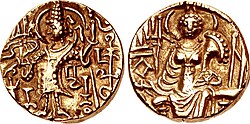
 Coin of Kipunada. Circa 335-350 CE. Obverse: Kipunada standing left, sacrificing over altar. To the right, name vertically in Brahmi script in monogrammic form: Ki-pu-ṇa    . .Under the ruler's arm: Bacharnatha      . .Reverse: Ardoxsho enthroned facing, holding investiture garland and cornucopia.[1] | |
| Reign | 335-350 CE[2] |
| Coronation | 335 CE |
| Predecessor | Shaka I |
| Successor | Kidarites |
| Born | 297 CE |
| Burial | 350 CE |
Template:Kushan rulers
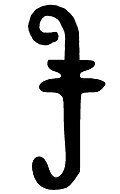
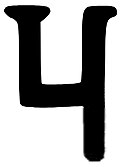
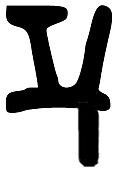
Kipunada (Brahmi script:  Ki-pu-ṇa-dha), also Kipanadha, was probably the last ruler of the Kushan Empire around 335-350 CE.[2] He is known for his gold coinage.[3] He succeeded Shaka I. Kipunada was probably only a local ruler in the area stretching from Waisa to Taxila, in northwestern Punjab, and he may have been a subject of Gupta Emperor Samudragupta.[4]
Gupta and Kidarite successors[edit | edit source]
The coins of Kipunada in Central and Western Punjab were followed by peculiar coins minted locally in Punjab, with the name "Samudra" on them (Gupta script:

 ), presumably connected to the Gupta Empire ruler Samudragupta.[5][6] Soon after this, coinage was issued in Punjab by Kidarite Hun rulers known as Kirada, Peroz and then the famous Kidara, who occupied the territory formerly held by the Kushans.[5][6]
Kipunada lost his independence directly to the invading Hunas who had invaded northern India and acted as a local ruler of Taxila (alongside Mahi and Shaka) under the suzerainty of the Gupta emperors, while still using the coinage style of the Great Kushans.[7] The Kushano-Sasanian sites, including the coins, extended to Gandhara due to Shapur II's protection of the eastern borders of his Sasanian Empire against the invading Huns/Chionites. His treaties with the Huns resulted in: allowing them to join the Sasanian troops, treating them as allies and allowing his direct control over the east. The Kushano-Sasanian coin series issued by Kidara and a certain Pērōz, in Tokharistan and Gandhara continued.[8] Evidently, Kidara I was the Kushan king who submitted to the Gupta king Samudragupta and accepted Gupta suzerainty.[9][10]
-
![Local coin minted in the Punjab area with the name "Samudra" ( Sa-mu-dra, under the king's left arm), presumably Samudragupta, immediately followed those of Kipunada.[6][5]](/w/images/smartcommons/thumbs/commons/6/65/Samudra_Gandhara_coin%2C_Punjabi_mint_Circa_CE_350-375.jpg/199px-Samudra_Gandhara_coin%2C_Punjabi_mint_Circa_CE_350-375.jpg) Local coin minted in the Punjab area with the name "Samudra" (
Local coin minted in the Punjab area with the name "Samudra" (

 Sa-mu-dra, under the king's left arm), presumably Samudragupta, immediately followed those of Kipunada.[6][5]
 -
![The next coins were those of Kidarite Hun kings, starting with Kirada ( Ki-ra-da under the king's left arm), who ruled circa 350 CE.[6][5]](/w/images/smartcommons/thumbs/commons/f/fa/HUNNIC_TRIBES%2C_Kidarites_Kirada_Circa_340-345.jpg/196px-HUNNIC_TRIBES%2C_Kidarites_Kirada_Circa_340-345.jpg)
![Local coin minted in the Punjab area with the name "Samudra" ( Sa-mu-dra, under the king's left arm), presumably Samudragupta, immediately followed those of Kipunada.[6][5]](/wiki/File:Samudra_Gandhara_coin,_Punjabi_mint_Circa_CE_350-375.jpg)
![The next coins were those of Kidarite Hun kings, starting with Kirada ( Ki-ra-da under the king's left arm), who ruled circa 350 CE.[6][5]](/wiki/File:HUNNIC_TRIBES,_Kidarites_Kirada_Circa_340-345.jpg)


| Preceded by Shaka I |
Kushan Ruler c. 335-350 CE[2] |
Succeeded by Gupta Empire/ Kidarites (Kirada) |
Notes[edit | edit source]
- ↑ CNG Coins
- ↑ 2.0 2.1 2.2 Cribb, Joe; Donovan, Peter (2014). Kushan, Kushano-Sasanian, and Kidarite Coins A Catalogue of Coins From the American Numismatic Society by David Jongeward and Joe Cribb with Peter Donovan. p. 4.
- ↑ Heritage World Coin Auctions Long Beach Signature Auction Catalog #378. Ivy Press. May 2005. p. 15. ISBN 978-1-932899-79-5.
- ↑ Rezakhani, Khodadad (2017). From the Kushans to the Western Turks. p. 203.
- ↑ 5.0 5.1 5.2 5.3 Cribb, Joe. "The Kidarites, the numismatic evidence.pdf". Coins, Art and Chronology II, Edited by M. Alram et Al.: 101.
- ↑ 6.0 6.1 6.2 6.3 "In the Punjab the stylistic progression of the gold series from Kushan to Kidarite is clear: imitation staters were issued first in the name of Samudragupta, then by Kirada, 'Peroz' and finally Kidara" in Errington, Elizabeth; Curtis, Vesta Sarkhosh (2007). From Persepolis to the Punjab: Exploring Ancient Iran, Afghanistan and Pakistan. British Museum Press. p. 88. ISBN 978-0-7141-1165-0.
- ↑ "The last Kushan rulers, known mainly through their coinage, are known under the names Mahi, Shaka, and Kipunandha (Jongeward and Cribb 2015: 174–8). These rulers acted mainly as local authorities in the Taxila region, under the overall suzerainty of the Gupta emperors, while maintaining the coinage style of the Great Kushans in greatly reduced values. As far as East Iran is concerned, Kushan rule essentially ceased to exist following the death of Kanishka II, in effect being reduced to local rule in northern India, already dominated by the Gupta emperor Samudragupta (Dani 1996: 169). The later Kushan king Kipunandha probably lost his independence directly to the Huna tribes who invaded northern India in the late fourth century (Errington and Curtis 2007: 71; Cribb 2010: 112–13)." Rezakhani, Khodadad (2017). ReOrienting the Sasanians East Iran in Late Antiquity. Edinburgh University Press. p. 70. ISBN 978-1-4744-0030-5.
- ↑ Rezakhani, Khodadad (2017). ReOrienting the Sasanians: East Iran in Late Antiquity. Edinburgh University Press. p. 85. ISBN 978-1-4744-0030-5.
- ↑ Dani, Litvinsky & Zamir Safi 1996, pp. 165–166
- ↑ "The two coin types discussed here are clearly related to the Kidarite Huns by their designs and by the inscription ΚΙΔΑΡΑ (Kidara in Bactrian script, as written on Kidara’s Bactrian gold issues, Cribb 2010, pp. 109–110; p. 126, type 6A; p. 140, fig. no. 13) on one type, but curiously they have not been seen before among the many published Kidarite issues. All three pieces include in their inscription the title devaputra (son of the gods) written in Brahmi script. This title was used by the Kushan kings and in the inscription of Samudragupta from Allahabad (line 23) was used to identify the Kushan king submitting to the Gupta king dēvaputra shāhi shāhānushāhi." Cribb, Joe; Singh, Karan (Winter 2017). "Two Curious Kidarite Coin Types From 3rd Century Kashmir". JONS. 230: 3.
Sources[edit | edit source]
- Dani, Ahmad Hasan; Litvinsky, Boris Abramovich; Zamir Safi, M. H. (1996). Eastern Kushans, Kidarines in Gandhara and Kashmir, and Later Hephthalites. pp. 163–184.
External links[edit | edit source]
 | This biography of a member of an Asian royal house is a stub. You can help Bharatpedia by expanding it. |