

Ajay Kumar (talk | contribs) Created a new article |
cleanup content further and corrected details for consistency |
||
| Line 1: | Line 1: | ||
{{Short description|Species of flowering plant}} | {{Short description|Species of flowering plant}} | ||
{{Distinguish|Bahera|text=[[Bahera]], a town in the state of [[Bihar]], India}} | {{Distinguish|Bahera|text=[[Bahera]], a town in the state of [[Bihar]], India}} | ||
{{ | {{Speciesbox | ||
|image = Terminalia bellirica.jpg | |image = Terminalia bellirica.jpg | ||
|status = LC | |status = LC | ||
|status_system = IUCN3.1 | |status_system = IUCN3.1 | ||
|status_ref = <ref name=IUCN>{{cite iucn | author = Plummer, J. | title = ''Terminalia bellirica'' | | |status_ref = <ref name=IUCN>{{cite iucn | author = Plummer, J. | title = ''Terminalia bellirica'' | article-number = e.T61989645A61989649 | doi = 10.2305/IUCN.UK.2021-2.RLTS.T61989645A61989649.en | year = 2021 | access-date = 6 February 2023}}</ref> | ||
|genus = Terminalia | |genus = Terminalia | ||
|species = bellirica | |species = bellirica | ||
| Line 11: | Line 11: | ||
}} | }} | ||
'''''Terminalia bellirica''''', known as | '''''Terminalia bellirica''''', known as '''bahera''', '''beleric''' or '''bastard myrobalan''',<ref name=EPPO>{{cite web |title=''Terminalia bellirica'' |url=https://gd.eppo.int/taxon/TEMBL |publisher=[[European and Mediterranean Plant Protection Organization]] (EPPO) |access-date=17 July 2025}}</ref> is a large deciduous tree in the family [[Combretaceae]]. It is common on the plains and lower hills in [[South Asia|South]] and [[Southeast Asia]], where it is also grown as an [[street tree|avenue tree]]. The [[basionym]] is ''Myrobalanus bellirica'' Gaertn. (Fruct. Sem. Pl. 2: 90, t. 97. 1791). [[William Roxburgh]] transferred ''M. bellirica'' to ''Terminalia'' as "''T. bellerica'' (Gaertn.) Roxb.". This spelling error is now widely used, causing confusion. The correct name is ''Terminalia bellirica'' (Gaertn.) Roxb.<ref>[http://www.ipni.org/ipni/idPlantNameSearch.do?id=170982-1 IPNI database]</ref> | ||
== Leaves and seeds == | == Leaves and seeds == | ||
[[File:Bahera (Terminalia bellirica) fruits.jpg|thumb|left|Bahera (''Terminalia bellirica'') fruits]] | [[File:Bahera (Terminalia bellirica) fruits.jpg|thumb|left|Bahera (''Terminalia bellirica'') fruits]] | ||
The [[Leaf|leaves]] are about 15 cm long and crowded toward the ends of the branches. It is considered a good fodder for cattle. ''Terminalia bellirica'' seeds have an oil content of 40%, whose [[fatty | The [[Leaf|leaves]] are about 15 cm long and crowded toward the ends of the branches. It is considered a good fodder for cattle. ''Terminalia bellirica'' seeds have an oil content of 40%, whose [[fatty acid]] [[methyl]] [[ester]] meets all of the major [[biodiesel]] requirements in the US (ASTM D 6751-02, ASTM PS 121-99), Germany (DIN V 51606) and European Union (EN 14214).<ref>{{cite journal | doi=10.1016/j.biombioe.2005.05.001 | volume=29 | title=Prospects and potential of fatty acid methyl esters of some non-traditional seed oils for use as biodiesel in India | journal=Biomass and Bioenergy | year=2005 | pages=293–302| last1=Mohibbeazam | first1=M. | last2=Waris | first2=A. | last3=Nahar | first3=N. | issue=4 | bibcode=2005BmBe...29..293M }}</ref> The seeds are called '''bedda nuts'''.<ref>{{cite web |url=http://www.cabicompendium.org/NamesLists/FC/Full/TEM_BE.htm |title=Terminalia bellirica |website=www.cabicompendium.org |archive-url=https://web.archive.org/web/20071222105413/http://www.cabicompendium.org/NamesLists/FC/Full/TEM_BE.htm |archive-date=2007-12-22}}</ref> | ||
[[File:Terminalia bellirica 2.jpg|thumb|''Terminalia bellirica'' saplings]] | [[File:Terminalia bellirica 2.jpg|thumb|''Terminalia bellirica'' saplings]] | ||
The [[seed|kernels]] are eaten by the [[Lodha people]] of the [[Indian subcontinent]] for their [[Psychoactive drug|mind-altering]] qualities.<ref>D. C. Pal, S. K. Jain, "Notes on Lodha medicine in Midnapur District, West Bengal, India", Economic Botany, October–December 1989, Volume 43, Issue 4, pp 464-470</ref> | The [[seed|kernels]] are eaten by the [[Lodha people]] of the [[Indian subcontinent]] for their [[Psychoactive drug|mind-altering]] qualities.<ref>D. C. Pal, S. K. Jain, "Notes on Lodha medicine in Midnapur District, West Bengal, India", Economic Botany, October–December 1989, Volume 43, Issue 4, pp 464-470</ref> | ||
The nuts of the tree are rounded but with five flatter sides. It seems that are used as dice in the epic poem [[Mahabharata]] and in [[Rigveda]] book 10 hymn 34. A handful of nuts would be cast on a gaming board and the players would have to call whether an odd or even number of nuts had been thrown.<ref>{{cite book|last=Bennett|first=Deborah|title=Randomness|year=1999|publisher=Harvard University Press|location=Boston|isbn=0-674-10746-2| | The nuts of the tree are rounded but with five flatter sides. It seems that are used as dice in the epic poem [[Mahabharata]] and in [[Rigveda]] book 10 hymn 34. A handful of nuts would be cast on a gaming board and the players would have to call whether an odd or even number of nuts had been thrown.<ref>{{cite book|last=Bennett|first=Deborah|title=Randomness|year=1999|publisher=Harvard University Press|location=Boston|isbn=0-674-10746-2|page=24|url=https://books.google.com/books?id=CdgPEhJh5tUC&q=editions:CdgPEhJh5tUC}}</ref> In the [[Nala]], King Rituparna demonstrates his ability to count large numbers instantaneously by counting the number of nuts on an entire bough of a tree.<ref>{{cite web|title=Nala & Damayanti 5: Nala learns the science of numbers|url=http://mathormagic.com/nala_learns_the_science_of_numbers_from_king_rituparna|archive-url=https://web.archive.org/web/20110112073539/http://mathormagic.com/nala_learns_the_science_of_numbers_from_king_rituparna|url-status=usurped|archive-date=January 12, 2011|work=Math or Magic|access-date=12 February 2011}}</ref> | ||
== Medicinal use == | == Medicinal use == | ||
In traditional Indian [[Ayurveda|Ayurvedic]] medicine, | In traditional Indian [[Ayurveda|Ayurvedic]] medicine, beleric is known as "bibhitaki" ([[Marathi language|Marathi]]: "behada" or "bhenda") (''Terminalia bellirica''). Its fruit is used in the popular Indian herbal [[rasayana]] treatment [[triphala]]. In [[Sanskrit]] it is called ''bibhītaka'' बिभीतक. In India, [[Neemuch]], a town in the Malwa region of [[Madhya Pradesh]] is a major trading centre of skinless baheda and entire fruits of ''T. bellirica''. The fruits are widely collected in the wild in the Malwa region of Madhya Pradesh.{{citation needed|date=January 2022}} | ||
According to Dymock, Warden, Hooper: Pharmacographia Indica (1890): | According to Dymock, Warden, Hooper: ''Pharmacographia Indica'' (1890): | ||
<blockquote> | <blockquote>This tree, in Sanskrit Bibhita and Bibhitaka (fearless), is avoided by the Hindus of Northern India, who will not sit in its shade, as it is supposed to be inhabited by demons. Two varieties of ''T. belerica'' are found in India, one with nearly globular fruit, 1/2 to 3/4 inch in diameter, the other with ovate and much larger fruit. The pulp of the fruit (Beleric myrobalan) is considered by ayurvedic physicians to be astringent and laxative, and is prescribed with salt and long pepper in infections of the throat and chest. As a constituent of the triphala (three fruits), i.e., emblic, beleric and chebulic myrobalans, it is employed in a great number of diseases, and the kernel is sometimes used as an external application to inflamed parts. On account of its medicinal properties the tree bears the Sanskrit synonym of Anila-ghnaka, or "wind-killing." According to the [[Nighantu]]s the kernels are narcotic.<ref>''Pharmacographia Indica. History of the Principal Drugs of Vegetable Origin, Met with in British India'', by William Dymock, 1890. pp. 5, 6 [https://www.biodiversitylibrary.org/item/36339#16]</ref></blockquote> | ||
In the [[Charaka Samhita]], the ancient Ayurvedic text, | In the [[Charaka Samhita]], the ancient Ayurvedic text, bibhitaki fruits are mentioned as having qualities to alleviate disease, and bestow longevity, intellectual prowess and strength. There are several "rasaayan" described in the Charaka Samhita, that use bibhitaki. | ||
A description of the Fourth Amalaka Rasaayan, which includes bibhitaki as one of the fruits: "By this treatment, the sages regained youthfulness and attained disease-free life of many hundred years, and endowed with the strength of physique, intellect and senses, practiced penance with utmost devotion."<ref>{{Cite book|title=Caraka Samhita|last=Sharma|first=P. V.|publisher=Chaukhamba Orientalia|year=1998|isbn=81-7637-011-8}}</ref> | |||
By this treatment, the sages regained youthfulness and attained disease-free life of many hundred years, and endowed with the strength of physique, intellect and senses, practiced penance with utmost devotion.<ref>{{Cite book|title=Caraka Samhita|last=Sharma|first=P. V.|publisher=Chaukhamba Orientalia|year=1998|isbn=81-7637-011-8}}</ref> | |||
== Gallery == | == Gallery == | ||
| Line 48: | Line 44: | ||
==External links== | ==External links== | ||
{{Commons category|Terminalia bellirica}} | |||
*{{cite book |last=Caldecott |first=Todd |year=2006 |title=Ayurveda: The Divine Science of Life |publisher=Elsevier/Mosby |isbn=0-7234-3410-7 }} Contains a detailed monograph on Terminalia belerica (Bibhitaki) as well as a discussion of health benefits and usage in clinical practice. Available online at https://web.archive.org/web/20110515075816/http://www.toddcaldecott.com/index.php/herbs/learning-herbs/389-bibhitaki | *{{cite book |last=Caldecott |first=Todd |year=2006 |title=Ayurveda: The Divine Science of Life |publisher=Elsevier/Mosby |isbn=0-7234-3410-7 }} Contains a detailed monograph on Terminalia belerica (Bibhitaki) as well as a discussion of health benefits and usage in clinical practice. Available online at https://web.archive.org/web/20110515075816/http://www.toddcaldecott.com/index.php/herbs/learning-herbs/389-bibhitaki | ||
Latest revision as of 04:28, 16 November 2025
| Terminalia bellirica | |
|---|---|

| |
Scientific classification 
| |
| : | [[Template:Taxonomy/Terminalia]] |
| Species: | Template:Taxonomy/TerminaliaT. bellirica
|
| Binomial name | |
| Template:Taxonomy/TerminaliaTerminalia bellirica | |
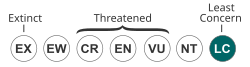
Terminalia bellirica, known as bahera, beleric or bastard myrobalan,[2] is a large deciduous tree in the family Combretaceae. It is common on the plains and lower hills in South and Southeast Asia, where it is also grown as an avenue tree. The basionym is Myrobalanus bellirica Gaertn. (Fruct. Sem. Pl. 2: 90, t. 97. 1791). William Roxburgh transferred M. bellirica to Terminalia as "T. bellerica (Gaertn.) Roxb.". This spelling error is now widely used, causing confusion. The correct name is Terminalia bellirica (Gaertn.) Roxb.[3]
Leaves and seeds[edit | edit source]
_fruits.jpg)
The leaves are about 15 cm long and crowded toward the ends of the branches. It is considered a good fodder for cattle. Terminalia bellirica seeds have an oil content of 40%, whose fatty acid methyl ester meets all of the major biodiesel requirements in the US (ASTM D 6751-02, ASTM PS 121-99), Germany (DIN V 51606) and European Union (EN 14214).[4] The seeds are called bedda nuts.[5]

The kernels are eaten by the Lodha people of the Indian subcontinent for their mind-altering qualities.[6]
The nuts of the tree are rounded but with five flatter sides. It seems that are used as dice in the epic poem Mahabharata and in Rigveda book 10 hymn 34. A handful of nuts would be cast on a gaming board and the players would have to call whether an odd or even number of nuts had been thrown.[7] In the Nala, King Rituparna demonstrates his ability to count large numbers instantaneously by counting the number of nuts on an entire bough of a tree.[8]
Medicinal use[edit | edit source]
In traditional Indian Ayurvedic medicine, beleric is known as "bibhitaki" (Marathi: "behada" or "bhenda") (Terminalia bellirica). Its fruit is used in the popular Indian herbal rasayana treatment triphala. In Sanskrit it is called bibhītaka बिभीतक. In India, Neemuch, a town in the Malwa region of Madhya Pradesh is a major trading centre of skinless baheda and entire fruits of T. bellirica. The fruits are widely collected in the wild in the Malwa region of Madhya Pradesh.[citation needed]
According to Dymock, Warden, Hooper: Pharmacographia Indica (1890):
This tree, in Sanskrit Bibhita and Bibhitaka (fearless), is avoided by the Hindus of Northern India, who will not sit in its shade, as it is supposed to be inhabited by demons. Two varieties of T. belerica are found in India, one with nearly globular fruit, 1/2 to 3/4 inch in diameter, the other with ovate and much larger fruit. The pulp of the fruit (Beleric myrobalan) is considered by ayurvedic physicians to be astringent and laxative, and is prescribed with salt and long pepper in infections of the throat and chest. As a constituent of the triphala (three fruits), i.e., emblic, beleric and chebulic myrobalans, it is employed in a great number of diseases, and the kernel is sometimes used as an external application to inflamed parts. On account of its medicinal properties the tree bears the Sanskrit synonym of Anila-ghnaka, or "wind-killing." According to the Nighantus the kernels are narcotic.[9]
In the Charaka Samhita, the ancient Ayurvedic text, bibhitaki fruits are mentioned as having qualities to alleviate disease, and bestow longevity, intellectual prowess and strength. There are several "rasaayan" described in the Charaka Samhita, that use bibhitaki.
A description of the Fourth Amalaka Rasaayan, which includes bibhitaki as one of the fruits: "By this treatment, the sages regained youthfulness and attained disease-free life of many hundred years, and endowed with the strength of physique, intellect and senses, practiced penance with utmost devotion."[10]
Gallery[edit | edit source]
-
 Trunk of T. bellirica
 -
 Fruit of T. bellirica
 -
 A fallen fruit
 -
 T. bellirica tree
_trunk_at_23_Mile,_Duars,_WB_W_IMG_59023.jpg)
_hanging_fruit_at_23_Mile,_Duars,_WB_W_IMG_5902.jpg)
_fallen_fruit_at_23_Mile,_Duars,_WB_W_IMG_5900.jpg)

References[edit | edit source]
- ↑ Plummer, J. (2021). "Terminalia bellirica". IUCN Red List of Threatened Species. 2021 e.T61989645A61989649. doi:10.2305/IUCN.UK.2021-2.RLTS.T61989645A61989649.en. Retrieved 6 February 2023.
- ↑ "Terminalia bellirica". European and Mediterranean Plant Protection Organization (EPPO). Retrieved 17 July 2025.
- ↑ IPNI database
- ↑ Mohibbeazam, M.; Waris, A.; Nahar, N. (2005). "Prospects and potential of fatty acid methyl esters of some non-traditional seed oils for use as biodiesel in India". Biomass and Bioenergy. 29 (4): 293–302. Bibcode:2005BmBe...29..293M. doi:10.1016/j.biombioe.2005.05.001.
- ↑ "Terminalia bellirica". www.cabicompendium.org. Archived from the original on 2007-12-22.
- ↑ D. C. Pal, S. K. Jain, "Notes on Lodha medicine in Midnapur District, West Bengal, India", Economic Botany, October–December 1989, Volume 43, Issue 4, pp 464-470
- ↑ Bennett, Deborah (1999). Randomness. Boston: Harvard University Press. p. 24. ISBN 0-674-10746-2.
- ↑ "Nala & Damayanti 5: Nala learns the science of numbers". Math or Magic. Archived from the original on January 12, 2011. Retrieved 12 February 2011.
- ↑ Pharmacographia Indica. History of the Principal Drugs of Vegetable Origin, Met with in British India, by William Dymock, 1890. pp. 5, 6 [1]
- ↑ Sharma, P. V. (1998). Caraka Samhita. Chaukhamba Orientalia. ISBN 81-7637-011-8.
External links[edit | edit source]
- Caldecott, Todd (2006). Ayurveda: The Divine Science of Life. Elsevier/Mosby. ISBN 0-7234-3410-7. Contains a detailed monograph on Terminalia belerica (Bibhitaki) as well as a discussion of health benefits and usage in clinical practice. Available online at https://web.archive.org/web/20110515075816/http://www.toddcaldecott.com/index.php/herbs/learning-herbs/389-bibhitaki