


Ajay Kumar (talk | contribs) Created a new article |
m Expanded content with additional details |
||
| Line 1: | Line 1: | ||
{{ | {{Short description|Israelite kingdom in the Southern Levant}} | ||
{{Redirect|Kingdom of Judea|the Judean polity of the 2nd and 1st centuries BCE|Hasmonean | {{Redirect|Kingdom of Judea|the Judean polity of the 2nd and 1st centuries BCE|Hasmonean Judea|the mountainous southern part of the historic Land of Israel|Judea}} | ||
{{Distinguish|Tribe of Judah}} | {{Distinguish|Tribe of Judah}} | ||
{{Infobox country | {{Infobox country | ||
| conventional_long_name = Kingdom of Judah | | conventional_long_name = Kingdom of Judah | ||
| common_name = Judah | | common_name = Judah | ||
| native_name = | | native_name = {{lang|obm|𐤉𐤄𐤃}} | ||
| image_coat = Lmlk-seal impression-h2d-gg22 2003-02-21.jpg | | image_coat = Lmlk-seal impression-h2d-gg22 2003-02-21.jpg | ||
| symbol_type = [[LMLK seal]] | | symbol_type = [[LMLK seal]] (around 700 BCE) | ||
| image_map = Kingdoms | | image_map = File:Edward Weller, The Kingdoms of Judah and Israel (FL36012236 3897579) (cropped).jpg | ||
| | | map_caption = ''The Kingdoms of Judah and Israel'', produced by [[Edward Weller (cartographer)|Edward Weller]] c. 1890 | ||
| capital = [[Jerusalem]] | | capital = [[Jerusalem]] | ||
| religion = [[Yahwism]] | | religion = {{hlist|[[Yahwism]] (Early Judaism)|[[Canaanite religion]]|[[Folk religion]]<ref name=Unearthed>{{cite book |title=The Bible Unearthed: Archaeology's New Vision of Ancient Israel and the Origin of Sacred Texts |url=https://archive.org/details/bibleunearthedar00silb |url-access=limited |first1=Israel |last1=Finkelstein |first2=Neil Asher |last2=Silberman |publisher=The Free Press |year=2001 |pages=[https://archive.org/details/bibleunearthedar00silb/page/n252 240]–243 |isbn=978-0-743-22338-6}}</ref>}} | ||
| demonym = Judahite | | demonym = [[Jews|Judahite, Judean]] | ||
| government_type = [[Monarchy]] | | government_type = [[Monarchy]] | ||
| status = Kingdom | | status = Kingdom | ||
| year_end = | | life_span = {{circa|930|587 BCE}} <!--[[MOS:YEARRANGE]]--> | ||
| year_start = | | year_end = {{cx|587 BCE}} | ||
{{ | | year_start = {{cx|930 BCE}}<ref>{{Cite book |last1=Pioske |first1=Daniel |chapter=David's Jerusalem: The Early 10th Century BCE Part I: An Agrarian Community |title= David's Jerusalem: Between Memory and History |page=180 |volume=45 |publisher=Routledge |year=2015 |isbn=978-1-317-54891-1 |chapter-url= https://books.google.com/books?id=IrKgBgAAQBAJ |series= Routledge Studies in Religion}}</ref> | ||
</ref> | |||
| common_languages = [[Biblical Hebrew]] | | common_languages = [[Biblical Hebrew]] | ||
| title_leader = [[Kings of Israel and Judah|King]] | | title_leader = [[Kings of Israel and Judah|King]] | ||
| year_leader1 = | | year_leader1 = {{circa|931–913 BCE}} | ||
| leader1 = [[Rehoboam]] | | leader1 = [[Rehoboam]] (first) | ||
| year_leader2 = | | year_leader2 = {{circa|597–587 BCE}} | ||
| leader2 = [[Zedekiah]] | | leader2 = [[Zedekiah]] (last) | ||
| event_start = [[Jeroboam's Revolt]] | | event_start = [[Jeroboam's Revolt]] | ||
| event_end = [[Siege of Jerusalem (587 BC)|Siege of Jerusalem]] | | event_end = [[Siege of Jerusalem (587 BC)|Siege of Jerusalem]] | ||
| p1 = Kingdom of Israel (united monarchy){{!}}Kingdom of Israel - united monarchy (?) | |||
| s1 = Yehud (Babylonian province) | | s1 = Yehud (Babylonian province) | ||
| era = [[Iron Age]] | | era = [[Iron Age]] | ||
}} | }} | ||
The '''Kingdom of Judah''' | The '''Kingdom of Judah'''{{efn|{{langx|he|{{Script/Hebr|יְהוּדָה}}}} {{tlit|he|Yəhūdā}}; {{langx|akk|𒅀𒌑𒁲}} {{tlit|akk|Ya'údi}} [{{tlit|akk|ia-ú-di}}]; {{langx|arc|𐤁𐤉𐤕𐤃𐤅𐤃}} {{tlit|arc|Bēyt [[David|Dāwīḏ]]}} '[[House of David]]'}} was an [[Israelites|Israelite]] kingdom of the [[Southern Levant]] during the [[Iron Age]]. Centered in the highlands to the west of the [[Dead Sea]], the kingdom's capital was [[Jerusalem]].<ref>{{Cite journal |last=Finkelstein |first=Israel |year=2001 |title=The Rise of Jerusalem and Judah: the Missing Link |journal=Levant |volume=33 |issue=1 |pages=105–115 |doi=10.1179/lev.2001.33.1.105 |issn=0075-8914 |s2cid=162036657}}</ref> It was ruled by the [[Davidic line]] for four centuries.<ref>{{Cite book |last=Lemaire |first=André |title=The Oxford Illustrated History of the Holy Land |date=2018 |publisher=Oxford University Press |others=Robert G. Hoyland, H. G. M. Williamson |isbn=978-0-19-872439-1 |edition=1st |pages=61–85 |chapter=Israel and Judah |oclc=1017604304}}</ref> [[Jews]] are named after Judah, and primarily descend from people who lived in the region.<ref name="Spielvogel" /><ref name="Ostrer">{{Cite book |title=Legacy: a Genetic History of the Jewish People. |publisher=Oxford University Press |others=Harry Ostrer |year=2012 |isbn=978-1-280-87519-9}}</ref><ref name="Adams 1840">{{Cite book |last=Adams |first=Hannah |title=The history of the Jews: from the destruction of Jerusalem to the present time |publisher=Sold at the London Society House and by Duncan and Malcom, and Wertheim |year=1840 |oclc=894671497}}</ref> | ||
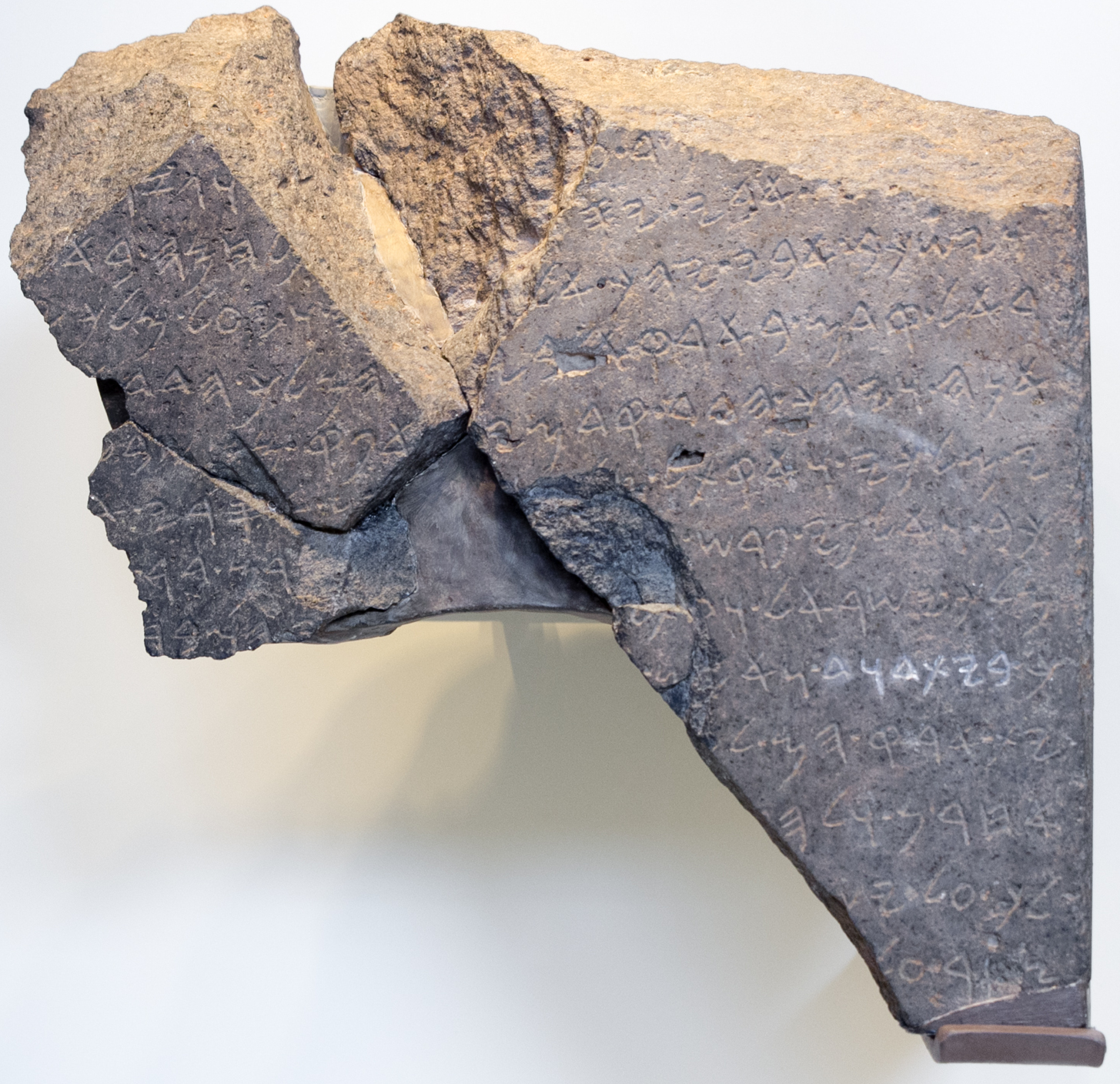
The [[Hebrew Bible]] depicts the Kingdom of Judah as | The [[Hebrew Bible]] depicts the Kingdom of Judah as one of the two successor states of the [[Kingdom of Israel (united monarchy)|United Kingdom of Israel]], a term denoting the united monarchy under biblical kings [[Saul]], [[David]], and [[Solomon]] and covering the territory of Judah and [[Kingdom of Israel (Samaria)|Israel]]. However, during the 1980s, [[Biblical minimalism|some biblical scholars]] began to argue that the archaeological evidence for an extensive kingdom before the late 8th century BCE is too weak, and that the methodology used to obtain the evidence is flawed.<ref name="fink2012">{{cite journal|last1=Finkelstein|first1=Israel|last2=Fantalkin|first2=Alexander|date=May 2012|title=Khirbet Qeiyafa: an unsensational archaeological and historical interpretation|url=http://archaeology.tau.ac.il/wp-content/uploads/2013/04/Qeiyafa_Unsensational_Interpretation.pdf|journal=Tel Aviv|volume=39|pages=38–63|doi=10.1179/033443512x13226621280507|s2cid=161627736|access-date=12 June 2018|ref=finkelsteinfantalkin2012}}</ref> In the 10th and early 9th centuries BCE, the territory of Judah might have been limitedly populated, comprising some fortified sites and many unfortified rural settlements.<ref name="mazar">{{cite journal |last=Mazar |first=Amihai |title=Archaeology and the Biblical Narrative: The Case of the United Monarchy |url=https://www.academia.edu/2503754 |journal=One God – One Cult – One Nation. Archaeological and Biblical Perspectives, Edited by Reinhard G. Kratz and Hermann Spieckermann in Collaboration with Björn Corzilius and Tanja Pilger, (Beihefte zur Zeitschrift für die Alttestamentliche Wissenschaft 405) |location=Berlin/ New York |pages=29–58 |access-date=12 October 2018}}</ref> The [[Tel Dan Stele]], discovered in 1993, shows that the kingdom existed in some form by the middle of the 9th century BCE,<ref name="Grabbe">{{Cite book |last=Grabbe |first=Lester L. |url=https://books.google.com/books?id=kcVmBAEo5rcC&pg=PA333 |title=Ahab Agonistes: The Rise and Fall of the Omri Dynasty |date=2007-04-28 |publisher=Bloomsbury |isbn=978-0-567-25171-8 |quote=The Tel Dan inscription generated a good deal of debate and a flurry of articles when it first appeared, but it is now widely regarded (a) as genuine and (b) as referring to the Davidic dynasty and the Aramaic kingdom of Damascus.}}</ref><ref name="Cline">{{Cite book |last=Cline |first=Eric H. |url=https://books.google.com/books?id=uGzRCwAAQBAJ&pg=PA61 |title=Biblical Archaeology: A Very Short Introduction |date=2009-09-28 |publisher=Oxford University Press |isbn=978-0-199-71162-8 |quote=Today, after much further discussion in academic journals, it is accepted by most archaeologists that the inscription is not only genuine but that the reference is indeed to the House of David, thus representing the first allusion found anywhere outside the Bible to the biblical David.}}</ref><ref name="NWSem">{{Cite book |last=Mykytiuk |first=Lawrence J. |url=https://books.google.com/books?id=eprY1Qd0veAC&pg=PA113 |title=Identifying Biblical Persons in Northwest Semitic Inscriptions of 1200–539 B.C.E. |year=2004 |publisher=Society of Biblical Lit |isbn=978-1-589-83062-2 |quote=Some unfounded accusations of forgery have had little or no effect on the scholarly acceptance of this inscription as genuine.}}</ref> but it does not indicate the extent of its power. Recent excavations at [[Khirbet Qeiyafa]], however, support the existence of a centrally organized and urbanized kingdom by the 10th century BCE, according to the excavators.{{sfn|Garfinkel|2025|p=48|ps=: "There was clearly a wave of urbanism in the norther part of the kingdom of Judah during the early tenth century BCE. Fortified cities were constructed on the borders and on every main road leading into the kingdom. Khirbet Qeiyafa protected the road coming from the west, from Gath in the Elah Valley. Beth-Shemesh protected the road coming from the west, from Ekron in the Sorek Valley. Tell en-Nasbeh, on the King's Road, protected the kingdom on its north. Khirbet ed-Dawwara, with its excellent view to the east and south, protected the northeastern side of the kingdom of Judah."}}<ref>{{cite web|url=http://www.hadashot-esi.org.il/report_detail_eng.aspx?id=1989|title=Journal 124: Khirbat Qeiyafa preliminary report|last1=Garfinkel|first1=Yossi|last2=Ganor|first2=Sa'ar|date=19 April 2012|website=Hadashot Arkheologiyot: Excavations and Surveys in Israel|publisher=Israel Antiquities Authority|archive-url=https://web.archive.org/web/20120623021750/http://www.hadashot-esi.org.il/report_detail_eng.aspx?id=1989|archive-date=23 June 2012|access-date=12 June 2018|ref=garfinkel2012|last3=Hasel|first3=Michael}}</ref><ref>{{cite journal |last=Garfinkel |first=Yosef |date=May–June 2011 |title=The Birth & Death of Biblical Minimalism |url=http://www.bib-arch.org/bar/article.asp?PubID=BSBA&Volume=37&Issue=03&ArticleID=06&Page=0&UserID=0& |journal=Biblical Archaeology Review |volume=37 |issue=3 |archive-url=https://web.archive.org/web/20110908074705/http://www.bib-arch.org/bar/article.asp?PubID=BSBA&Volume=37&Issue=03&ArticleID=06&Page=0&UserID=0& |archive-date=2011-09-08 |access-date=2012-07-05}}</ref> | ||
In the 7th century BCE, the kingdom's population increased greatly, prospering under [[Neo-Assyrian Empire|Assyrian]] [[ | In the 7th century BCE, the kingdom's population increased greatly, prospering under [[Neo-Assyrian Empire|Neo-Assyrian]] [[vassal]]age despite [[Hezekiah#Assyrian invasion|Hezekiah's revolt]] against the Assyrian king [[Sennacherib]].<ref>{{cite book |url=https://books.google.com/books?id=2kSovzudhFUC |title=A History of the Jewish People |editor-first=Haim Hillel |editor-last=Ben-Sasson |editor-link=H. H. Ben-Sasson |publisher=Harvard University Press |year=1976 |isbn=978-0-674-39731-6 |page=142 |quote=Sargon's heir, Sennacherib (705–681), could not deal with Hezekiah's revolt until he gained control of Babylon in 702 BCE. |access-date=12 October 2018}}</ref> [[Josiah]] took advantage of the political vacuum that resulted from Assyria's decline and the emergence of [[Twenty-sixth Dynasty of Egypt|Saite Egyptian]] rule over the area to enact his religious reforms. The [[Deuteronomist|Deuteronomistic history]], which recounts the history of [[Israelites|the people of Israel]] from [[Joshua]] to [[Josiah]] and expresses a worldview based on the legal principles found in the [[Book of Deuteronomy]], is assumed to have been written during this same time period and emphasizes the significance of upholding them.<ref name=":2">{{Cite book |last=Lipschits |first=Oded |title=The Fall and Rise of Jerusalem: Judah under Babylonian Rule |year=2005 |publisher=Penn State University Press |isbn=978-1-575-06297-6 |pages=361–367 |doi=10.5325/j.ctv1bxh5fd }}</ref> | ||
With the final fall of the Neo-Assyrian Empire in 605 BCE, competition emerged between Saite Egypt and the [[Neo-Babylonian Empire]] over control of the [[Levant]], ultimately resulting in Judah's rapid decline. The early 6th century BCE saw a wave of Egyptian-backed [[Judah's revolts against Babylon|Judahite rebellions against Babylonian rule]] being crushed. In 587 BCE, [[Nebuchadnezzar II]] engaged in a [[Siege of Jerusalem (587 BC)|siege of Jerusalem]], ultimately destroying the city and ending the kingdom.{{sfn|Lipiński|2020|p=94}}<ref name=":2" /> A large number of Judeans were [[Babylonian captivity|exiled to Babylonia]], and the fallen kingdom was then [[Yehud (Babylonian province)|annexed as a Babylonian province]].<ref name=":2" /> | |||
After the fall of Babylon to the [[Achaemenid Empire]], the Achaemenid king [[Cyrus the Great]] permitted the Jewish exiles to return to their homeland and re-establish their communal and religious institutions under Persian overlordship. Although the restored community enjoyed a [[Yehud Medinata|degree of autonomy]], full Jewish political independence was not achieved again until nearly four centuries later, in the aftermath of the [[Maccabean Revolt]], with the emergence of the [[Hasmonean Judea|Hasmonean kingdom of Judea]]. | |||
== Geography == | |||
The Kingdom of Judah was located in the [[Judaean Mountains|Judean Mountains]], stretching from [[Jerusalem]] to [[Hebron]] and into the [[Negev|Negev Desert]]. The central ridge, ranging from forested and shrubland-covered mountains gently sloping towards the hills of the [[Shephelah]] in the west, to the dry and arid landscapes of the [[Judaean Desert]] descending into the [[Jordan Valley]] to the east, formed the kingdom's core.{{sfn|Hardin|2014|p=743}} | |||
The northern border of Judah extended east–west from the northwestern shore of the [[Dead Sea]], passing near [[Jericho]] to the area of [[Gezer]]. To the west, the border ran from Gezer across the Shephelah to [[Beersheba]] in the northern Negev. In the east, Judah's boundaries followed the Arabah to the western shore of the Dead Sea. In prosperous periods, Judah's influence expanded, stretching southward to Beersheba and beyond, including [[Kadesh (biblical)|Kadesh Barnea]] and likely [[Kuntillet Ajrud]]. Its influence possibly extended to the [[Gulf of Aqaba|Gulf of Eilat]] in the south,{{sfn|Hardin|2014|p=743}} as well as the [[Israeli coastal plain|Coastal Plain]] in the west in [[Mesad Hashavyahu]] fortress. | |||
== Archaeological record == | == Archaeological record == | ||
{{See also|Biblical archaeology|Biblical archaeology school|The | {{See also|Biblical archaeology|Biblical archaeology school|Historicity of the Bible}} | ||
The formation of the Kingdom of Judah is a subject of heavy debate among scholars, with a dispute emerging between [[biblical minimalism|biblical minimalists]] and [[biblical maximalism|biblical maximalists]] on this particular topic.<ref>{{Cite web|title=Maximalists and Minimalists|url=https://www.livius.org/articles/theory/maximalists-and-minimalists/|access-date=2021-07-18|website=livius.org}}</ref> Due to geopolitical factors like security issues, isolation, and political changes, the core area of the Kingdom of Judah on the south-central highlands has seen limited archaeological exploration compared to regions west of the [[Jordan River]]. Few excavations and surveys have been conducted there, creating a notable knowledge gap compared to the extensively-studied [[Shephelah]] to the west, which has undergone systematic surveys and numerous scientific excavations.{{sfn|Faust|2018|p=337}} | |||
While it is generally agreed that the narratives of [[David]] and [[Solomon]] in the 10th century BCE tell little about the origins of Judah, currently, there is no consensus as to whether Judah developed as a split from a unified kingdom Israel (as the Bible claims) or independently.{{sfn|Katz|2015|p=27}}<ref>{{Cite journal|last=Mazar|first=Amihai|year=2010|title=Archaeology and the Biblical Narrative: The Case of the United Monarchy|url=https://www.academia.edu/2503754|journal=Archaeological and Biblical Perspectives|quote="For conservative approaches defining the United Monarchy as a state "from Dan to Beer Sheba" including "conquered kingdoms" (Ammon, Moab, Edom) and "spheres of influence" in Geshur and Hamath cf. e.g., Ahlström (1993), 455–542; Meyers (1998); Lemaire (1999); Masters (2001); Stager (2003); Rainey (2006), 159–168; Kitchen (1997); Millard (1997; 2008). For a total denial of the historicity of the United Monarchy cf. e.g., Davies (1992), 67–68; others suggested a 'chiefdom' comprising a small region around Jerusalem, cf. Knauf (1997), 81–85; Niemann (1997), 252–299 and Finkelstein (1999). For a 'middle of the road' approach suggesting a United Monarchy of larger territorial scope though smaller than the biblical description cf. e.g., Miller (1997); Halpern (2001), 229–262; Liverani (2005), 92–101. The latter recently suggested a state comprising the territories of Judah and Ephraim during the time of David, which subsequently was enlarged to include areas of northern Samaria and influence areas in the Galilee and Transjordan. Na'aman (1992; 1996) once accepted the basic biography of David as authentic and later rejected the United Monarchy as a state, cf. id. (2007), 401–402."}}</ref> Some scholars suggested that Jerusalem, the kingdom's capital, did not emerge as a significant administrative center until the end of the 8th century BCE. Before then, the archaeological evidence suggests its population was too small to sustain a viable kingdom.{{sfn|Moore|Kelle|2011|p=302}} Other scholars argue that recent discoveries and [[Radiocarbon dating|radiocarbon tests]] in the [[City of David (archaeological site)|City of David]] seem to indicate that Jerusalem was already a significant city by the 10th century BCE.{{sfn|Sergi|2023|pp=187–195, 197}}<ref>{{cite journal |title=Radiocarbon chronology of Iron Age Jerusalem reveals calibration offsets and architectural developments |journal=Proceedings of the National Academy of Sciences |last1=Regev |first1=Johanna |date=2024-04-29 |issue=19 |volume=121 |article-number=e2321024121 |last2=Gadot |first2=Yuval |doi=10.1073/pnas.2321024121 |issn=0027-8424 |pmid=38683984 |last3=Uziel |first3=Joe |last4=Chalaf |first4=Ortal |last5=Shalev |first5=Yiftah |last6=Roth |first6=Helena |last7=Shalom |first7=Nitsan |last8=Szanton |first8=Nahshon |last9=Bocher |first9=Efrat |last10=Pearson |first10=Charlotte L. |last11=Brown |first11=David M. |last12=Mintz |first12=Eugenia |last13=Regev |first13=Lior |last14=Boaretto |first14=Elisabetta|doi-access=free |pmc=11087761 |bibcode=2024PNAS..12121024R }}</ref> | |||
Much of the debate revolves around whether the archaeological discoveries conventionally dated to the 10th century should instead be dated to the 9th century, as proposed by [[Israel Finkelstein]].{{sfn|Finkelstein|Silberman|2002}} Recent archaeological discoveries by [[Eilat Mazar]] in Jerusalem and [[Yosef Garfinkel]] in [[Khirbet Qeiyafa]] have been interpreted as supporting the existence of the United Monarchy, but the datings and identifications are not universally accepted.<ref name="Zachary">{{Cite journal|last=Thomas|first=Zachary|date=2016-04-22|title=Debating the United Monarchy: Let's See How Far We've Come|journal=Biblical Theology Bulletin: Journal of Bible and Culture|volume=46|issue=2|pages=59–69|doi=10.1177/0146107916639208|issn=0146-1079|s2cid=147053561}}</ref><ref>{{Cite news|title=Crying King David: Are the ruins found in Israel really his palace?|language=en|newspaper=Haaretz|url=https://www.haaretz.com/archaeology/.premium-crying-king-david-not-his-palace-1.5324620|access-date=2021-07-18|quote=Not all agree that the ruins found in Khirbet Qeiyafa are of the biblical town Sha'arayim, let alone the palace of ancient Israel's most famous king}}</ref> | |||
[[File:JRSLM_300116_Tel_Dan_Stele_01.jpg|thumb|[[Tel Dan stele|Tel Dan Stele]], with the | [[File:JRSLM_300116_Tel_Dan_Stele_01.jpg|thumb|[[Tel Dan stele|Tel Dan Stele]], with the word(s) "House of David" highlighted (9th century BCE)]] | ||
The | The Tel Dan stele shows a historical "[[Davidic line|House of David]]" ruled a kingdom south of the lands of [[Samaria]] in the 9th century BCE,{{sfn|Pioske|2015|p=180}} and attestations of several Judean kings from the 8th century BCE have been discovered,<ref>Corpus of West Semitic Stamp Seals. N. Avigad and B. Sass. Jerusalem: The Israel Academy of Sciences and Humanities, 1997, nos. 4 and 3 respectively; Identifying Biblical Persons in Northwest Semitic Inscriptions of 1200–539 BCE Lawrence J. Mykytiuk. SBL Academia Biblica 12. Atlanta, 2004, 153–59, 219.</ref> but they do little to indicate how developed the state actually was. The [[Nimrud Tablet K.3751]], dated c. 733 BCE, is the earliest known record of the name "Judah" (written in [[Assyrian cuneiform]] as Ya'uda or KUR.ia-ú-da-a-a),<ref name="Pitcher">{{cite book|url=https://books.google.com/books?id=tu02muKUVJ0C&pg=PA229|title=The Pitcher is Broken: Memorial Essays for Gösta W. Ahlström|publisher=Bloomsbury Publishing|year=1995|isbn=978-0-567-63671-3|editor1-last=Holloway|editor1-first=Steven W.|quote=For Israel, the description of the battle of Qarqar in the Kurkh Monolith of Shalmaneser III (mid-ninth century) and for Judah, a Tiglath-pileser III text mentioning (Jeho-) Ahaz of Judah (IIR67 = K. 3751), dated 734–733, are the earliest published to date.|access-date=12 October 2018|editor2-last=Handy|editor2-first=Lowell K.}}</ref> while an earlier reference to a Judahite envoy seems to appear in a wine list from [[Nimrud]] dated to the 780s BCE.<ref>{{Cite journal |title=Samaria and Judah in an Early 8th-Century Assyrian Wine List |journal=Tel Aviv |url=https://www.academia.edu/43169801 |last=Na'aman |first=Nadav |issue=1 |volume=46 |pages=12–20 |doi=10.1080/03344355.2019.1586380 |year=2019 |s2cid=166481059 |issn=0334-4355}}</ref> | ||
=== Jerusalem === | === Jerusalem === | ||
[[File:עיר_דוד_2.JPG|thumb|[[Stepped Stone Structure]] seen from the [[Large Stone Structure]]]] | [[File:עיר_דוד_2.JPG|thumb|[[Stepped Stone Structure]] seen from the [[Large Stone Structure]]]] | ||
The status of Jerusalem in the 10th century BCE is a major subject of debate.<ref name="mazar" /> The oldest part of Jerusalem and its original urban core are the City of David, which does show evidence of significant Israelite residential activity around the 10th century.{{sfn|Sergi|2023|p=197}} Some unique administrative structures such as the [[Stepped Stone Structure]] and the [[Large Stone Structure]], which originally formed one structure, contain material culture dated to Iron I.<ref name="mazar" /> On account of | The status of Jerusalem in the 10th century BCE is a major subject of debate.<ref name="mazar" /> The oldest part of Jerusalem and its original urban core are the [[City of David (archaeological site)|City of David]], which does show evidence of significant Israelite residential activity around the 10th century.{{sfn|Sergi|2023|p=197}} Some unique administrative structures such as the [[Stepped Stone Structure]] and the [[Large Stone Structure]], which originally formed one structure, contain material culture dated to Iron I.<ref name="mazar" /> On account of an alleged lack of settlement activity in the 10th century BCE, Israel Finkelstein argues that Jerusalem was then a small country village in the Judean hills, not a national capital, and Ussishkin argues that the city was entirely uninhabited. [[Amihai Mazar]] contends that if the Iron I / Iron II A dating of administrative structures in the City of David are correct, which he believes to be the case, "Jerusalem was a rather small town with a mighty citadel, which could have been a center of a substantial regional polity."<ref name="mazar" /> [[William G. Dever]] argues that Jerusalem was a small and fortified city, probably inhabited only by the royal court, priests and clerks.<ref>{{Cite book|last=Dever|first=William G.|url=https://books.google.com/books?id=39HoDwAAQBAJ|title=Has Archaeology Buried the Bible?|date=2020-08-18|publisher=Wm. B. Eerdmans Publishing|isbn=978-1-4674-5949-5|language=en}}</ref> [[Avraham Faust]] and Zev Farber argue that Jerusalem was significantly large when compared with most highland sites in ancient Israel, and contained fortifications and public buildings.{{sfn|Faust|Farber|2025|p=83|ps=: "There is now no question that pottery from this period (Iron IIA) was found in practically every excavation area in the City of David, including down the (eastern) slopes toward the Kidron, as well as in the Ophel.<sup>52</sup> And since the Ophel was not only fortified but probably also had public buildings, the Temple Mount must have been incorporated within the boundaries of the city – otherwise the Ophel would be defenseless. This means that Jerusalem's area was some 16.5 hectares, suggesting that it was very large when compared with other sites in Judah at the time. In fact, it was quite large in comparison to most highland sites in Israel throughout history.<sup>53</sup>"}} | ||
=== Literacy === | === Literacy === | ||
A [[Tel Arad#Ostraca|collection of military orders]] found in the ruins of a [[Tel Arad|military fortress]] in the [[Negev]] dating to the period of the Kingdom of Judah indicates widespread literacy, based on the inscriptions, the ability to read and write extended throughout the chain of command from commanders to petty officers. According to Professor Eliezer Piasetsky, who participated in analyzing the texts, "Literacy existed at all levels of the administrative, military and priestly systems of Judah. Reading and writing were not limited to a tiny elite." That indicates the presence of a substantial educational infrastructure in Judah at the time.<ref>Pileggi, Tamar (12 April 2016). [https://www.timesofisrael.com/new-look-at-ancient-shards-suggests-bible-even-older-than-thought "New Look at Ancient Shards Suggests Bible Even Older than Thought."] {{Webarchive|url=https://web.archive.org/web/20181210204240/https://www.timesofisrael.com/new-look-at-ancient-shards-suggests-bible-even-older-than-thought/ |date=2018-12-10 }} ''[[Times of Israel]]''. Retrieved from TimesofIsrael.com, 30 January 2019.</ref> | A [[Tel Arad#Ostraca|collection of military orders]] found in the ruins of a [[Tel Arad|military fortress]] in the [[Negev]] dating to the period of the Kingdom of Judah indicates widespread literacy, based on the inscriptions, the ability to read and write extended throughout the chain of command from commanders to petty officers. According to Professor Eliezer Piasetsky, who participated in analyzing the texts, "Literacy existed at all levels of the administrative, military and priestly systems of Judah. Reading and writing were not limited to a tiny elite." That indicates the presence of a substantial educational infrastructure in Judah at the time.<ref>Pileggi, Tamar (12 April 2016). [https://www.timesofisrael.com/new-look-at-ancient-shards-suggests-bible-even-older-than-thought "New Look at Ancient Shards Suggests Bible Even Older than Thought."] {{Webarchive|url=https://web.archive.org/web/20181210204240/https://www.timesofisrael.com/new-look-at-ancient-shards-suggests-bible-even-older-than-thought/ |date=2018-12-10}} ''[[Times of Israel]]''. Retrieved from TimesofIsrael.com, 30 January 2019.</ref> | ||
Archaeological research near the [[Gihon Spring]] in the City of David has revealed many anepigraphical [[Bulla (seal)|bullae]] (that is, bullae bearing only iconography, no inscriptions) dated to the 11th/10th–9th centuries BCE which feature "papyrus lines" on their backs. It has been argued that these seals provide evidence that [[Papyrus|papyrus texts]] were written and used in Jerusalem already from the 10th (perhaps 11th) century BCE onwards.{{sfn|Richelle|2024|p=116}} | |||
In October 2025, the discovery of a fragment measuring approximately 2.5 cm containing 20 visible characters, dated between the 7th and 8th centuries BC and made of ceramic material from the Tigris basin, was presented to the press. The small fragment bears an expiry date and the words “he who holds the reins”, a title known in the Assyrian administration as exclusive to a royal messenger. According to scholars, it is a reminder for the collection of a tribute. This attests to the tense relations between the Kingdom of Judah and the Assyrians described in 2 Kings 18–19, 2 Chronicles 32, Isaiah 36–37, with reference to Hezekiah's rebellion.<ref>[https://www.gov.il/en/pages/rare-evidence-for-royal-assyrian-court-communication-to-the-king-of-judah-uncovered-in-jerusalem-22-oct-2025 Rare evidence for royal Assyrian court communication to the king of Judah uncovered in Jerusalem] </ref><ref>[https://www.israelnationalnews.com/news/416623 First time in Jerusalem: Assyrian inscription from the First Temple period discovered] </ref> | |||
=== LMLK | === LMLK seals === | ||
{{Further|LMLK seal}} | {{Further|LMLK seal}} | ||
[[File:Lmlk_Seals_-_Hecht_Museum,_Israel_1.JPG|thumb|Storage jars handles marked with LMLK seals, [[Hecht Museum]]]] | [[File:Lmlk_Seals_-_Hecht_Museum,_Israel_1.JPG|thumb|Storage jars handles marked with LMLK seals, [[Hecht Museum]]]] | ||
[[LMLK | [[LMLK seal]]s are archaic Hebrew [[stamp seal]]s on the handles of large storage jars dating from the reign of King [[Hezekiah]] (circa 700 BCE) discovered mostly in and around [[Jerusalem]]. Several complete jars were found ''[[in situ]]'' buried under a [[destruction layer]] caused by [[Sennacherib]] at [[Tel Lachish]].<ref>Ussishkin (2004), ''The Renewed Archaeological Excavations at Lachish'', p. 89 ("As the work of the renewed excavations developed it became clear that the destruction of Level III must be assigned to Sennacherib's attack in 701 BCE.").</ref> None of the original seals has been found, but some 2,000 impressions made by at least 21 seal types have been published.<ref>{{Cite web|title=The LMLK Research Website|url=http://www.lmlk.com/research/|website=www.lmlk.com}}</ref> | ||
LMLK stands for the Hebrew letters ''[[lamedh]] [[mem]] lamedh [[kaph]]'' ( | LMLK stands for the Hebrew letters ''[[lamedh]] [[mem]] lamedh [[kaph]]'' ({{langx|he|לְמֶלֶךְ|ləmeleḵ|links=no}}), which can be translated as: | ||
* "[belonging] to the king" [of Judah] | * "[belonging] to the king" [of Judah] | ||
* "[belonging] to King" (name of a person or deity) | * "[belonging] to King" (name of a person or deity) | ||
| Line 67: | Line 79: | ||
=== Everyday life === | === Everyday life === | ||
According to a 2022 study, traces of [[vanilla]] found in wine jars in Jerusalem might indicate that the local elite enjoyed wine flavored with vanilla during the 7–6th centuries BCE. Until very recently, vanilla was not at all known to be available to the Old World. Archeologists suggested that this discovery might be related to an international trade route that crossed the [[Negev]] during that period, probably under Assyrian and later, Egyptian rule.<ref name=":0">{{Cite journal |last1=Amir |first1=A. |last2=Finkelstein |first2=I. |last3=Shalev |first3=Y. |last4=Uziel |first4=J. |last5=Chalaf |first5=O. |last6=Freud |first6=L. |last7=Neumann |first7=R. |last8=Gadot |first8=Y. |year=2022 |title=Residue analysis evidence for wine enriched with vanilla consumed in Jerusalem on the eve of the Babylonian destruction in 586 BCE. PLoS ONE 17(3) |journal=PLOS ONE |volume=17 |issue=3 | | According to a 2022 study, traces of [[vanilla]] found in wine jars in Jerusalem might indicate that the local elite enjoyed wine flavored with vanilla during the 7–6th centuries BCE. Until very recently, vanilla was not at all known to be available to the Old World. Archeologists suggested that this discovery might be related to an international trade route that crossed the [[Negev]] during that period, probably under Assyrian and later, [[Third Intermediate Period of Egypt|Third Intermediate Period]] Egyptian rule.<ref name=":0">{{Cite journal |last1=Amir |first1=A. |last2=Finkelstein |first2=I. |last3=Shalev |first3=Y. |last4=Uziel |first4=J. |last5=Chalaf |first5=O. |last6=Freud |first6=L. |last7=Neumann |first7=R. |last8=Gadot |first8=Y. |year=2022 |title=Residue analysis evidence for wine enriched with vanilla consumed in Jerusalem on the eve of the Babylonian destruction in 586 BCE. PLoS ONE 17(3) |journal=PLOS ONE |volume=17 |issue=3 |article-number=e0266085 |doi=10.1371/journal.pone.0266085 |pmid=35349581 |pmc=8963535 |doi-access=free}}</ref> | ||
=== Cities === | === Cities === | ||
According to [[Yosef Garfinkel]], the fortified cities of the Kingdom of Judah during the 10th century BCE | According to [[Yosef Garfinkel]], the fortified cities of the Kingdom of Judah during the 10th century BCE were located at [[Khirbet Qeiyafa]], [[Tell en-Nasbeh]], Khirbet el-Dawwara (by [[Halhul]]), [[Tel Beit Shemesh]], and Tell Lachish.<ref>{{Cite journal |title=Early City Planning in the Kingdom of Judah: Khirbet Qeiyafa, Beth Shemesh 4, Tell en-Naṣbeh, Khirbet ed-Dawwara, and Lachish V |journal=Jerusalem Journal of Archaeology |last=Garfinkel |first=Yosef |volume=4 |pages=87–107 |doi=10.52486/01.00004.4 |year=2023|s2cid=258896023 |doi-access=free }}</ref> Likewise, the site of [[Tel Rumeida]] ([[Tel Rumeida#Archaeology|ancient Hebron]]) was also a fortified Judahite city throughout the 10th-6th centuries BCE.<ref>{{cite book |title=Urbanism in the Iron Age Levant and Beyond |last=Chadwick |first=Jeffrey R. |publisher=Mohr Siebeck |year=2025 |isbn=978-3-16-164199-2 |page=99 |editor-last=Maeir |editor-first=Aren M. |series=Research on Israel and Aram in Biblical Times |volume=VII |chapter=Hebron in Iron Ages I–II: Finds of the American expedition to Hebron (Tell er-Rumeide) |editor-last2=Albaz |editor-first2=Shira |editor-last3=Berlejung |editor-first3=Angelika}}</ref> | ||
The sites of [[Tel Motza]] and [[Eglon (biblical place)|Tel Eton]] were also urban centers of the Kingdom of Judah in the 10th and 9th centuries BCE.<ref>{{cite journal |title=Moẓa during the 10th–9th Centuries BCE: The Results of Excavation Seasons 1993, 2002, and 2003 and their Reflection in a Wider Judahite Context |journal=Jerusalem Journal of Archaeology |last=Greenhut |first=Zvi |volume=1 |pages=180–202 |year=2021 |doi=10.52486/01.00001.7 |issn=2788-8819 |doi-access=free}}</ref><ref>{{cite book |title=Le-maʿan Ziony: Essays in Honor of Ziony Zevit |last=Faust |first=Avraham |publisher=Wipf and Stock Publishers |year=2017 |isbn=978-1-4982-0691-4 |pages=27–28 |editor-last=Greenspahn |editor-first=Frederick E. |chapter=Tel 'Eton and the History of the Shephelah during the Iron Age |editor-last2=Rendsburg |editor-first2=Gary A. |chapter-url=https://books.google.com/books?id=TWZUDgAAQBAJ&pg=PA27 }}</ref> Meanwhile, [[Tel Burna]] (identified as biblical [[Libnah]]) was a Judahite city that became fortified by a [[casemate wall]] around the 9th century BCE.<ref>{{cite book |title=Urbanism in the Iron Age Levant and Beyond |last=Shai |first=Itzick |publisher=Mohr Siebeck |year=2025 |isbn=978-3-16-164199-2 |pages=263–275 |editor-last=Maeir |editor-first=Aren M. |series=Research on Israel and Aram in Biblical Times |volume=VII |chapter=A Hierarchical Settlement Pattern on the Western Border of the Kingdom of Judah: A View from Tel Burna |editor-last2=Albaz |editor-first2=Shira |editor-last3=Berlejung |editor-first3=Angelika}}</ref> | |||
[[Tel Be'er Sheva]], believed to be the site of the ancient biblical town of [[Beersheba#Iron Age Israelite town| | [[Tel Be'er Sheva]], believed to be the site of the ancient biblical town of [[Beersheba#Iron Age Israelite town|Be'er-sheba]], was the main Judahite center in the [[Negev]] in the 9th and 8th centuries BCE.<ref name=":1">{{Cite book |last=Rocca |first=Samuel |title=The fortifications of ancient Israel and Judah, 1200–586 BC |date=2010 |publisher=Osprey |others=Adam Hook |isbn=978-1-84603-508-1 |location=Oxford |pages=29–40 |oclc=368020822}}</ref> | ||
=== Forts === | === Forts === | ||
The [[Judaean Mountains]] and [[Shephelah]] have seen the discovery of several Judahite fortresses and towers. The fortifications had a large central courtyard surrounded by [[ | The [[Judaean Mountains]] and [[Shephelah]] have seen the discovery of several Judahite fortresses and towers. The fortifications had a large central courtyard surrounded by [[casemate wall]]s with chambers on the outside wall, and they were square or rectangular in shape.<ref name=":1" /> [[Khirbet Abu et-Twein]], which is situated on the Judaean Mountains between modern day [[Bat Ayin]] and [[Jab'a]], is one of the most noteworthy fortresses from the period. Great views of the Shepehla, including the Judahite towns of Azekah, Socho, Goded, Lachish, and Maresha, could be seen from this fort.<ref>{{Cite journal |last1=מזר |first1=עמיחי |last2=Mazar |first2=A. |date=1981 |title=The Excavations at Khirbet Abu et-Twein and the System of Iron Age Fortresses in Judah (Pls. לט–מה) / החפירות בח'רבת אבו א-תוין ומערך המצודות הישראליות בהרי יהודה |journal=Eretz-Israel: Archaeological, Historical and Geographical Studies / ארץ-ישראל: מחקרים בידיעת הארץ ועתיקותיה |volume=טו |pages=229–249 |jstor=23619437 |issn=0071-108X}}</ref> | ||
In the northern Negev, [[Tel Arad]] served as a key administrative and military stronghold. It protected the route from the Judaean Mountains to the [[Arabah]] and on to [[Moab]] and [[Edom]]. It underwent numerous renovations and extensions. There are several other Judahite forts in the Negev, including [[Horvat Uza|Hurvat Uza]], Tel Ira, Aroer, Tel Masos, and Tel Malhata. The main Judahite fortification in the [[Judaean Desert]] was found at [[Vered Yeriho]]; it protected the road from [[Jericho]] to the [[Dead Sea]].<ref name=":1" /> A few freestanding, elevated, isolated guard towers of the period were found around Jerusalem; towers of this type were discovered in the [[French Hill (neighborhood)|French Hill]] and south to [[Giloh]].<ref name=":1" /> | In the northern Negev, [[Tel Arad]] served as a key administrative and military stronghold. It protected the route from the Judaean Mountains to the [[Arabah]] and on to [[Moab]] and [[Edom]]. It underwent numerous renovations and extensions. There are several other Judahite forts in the Negev, including [[Horvat Uza|Hurvat Uza]], Tel Ira, Aroer, [[Tel Masos]], and {{ill|Tel Malhata|fr|Tel Malhata}}. The main Judahite fortification in the [[Judaean Desert]] was found at [[Vered Yeriho]]; it protected the road from [[Jericho]] to the [[Dead Sea]].<ref name=":1" /> A few freestanding, elevated, isolated guard towers of the period were found around Jerusalem; towers of this type were discovered in the [[French Hill (neighborhood)|French Hill]] and south to [[Giloh]].<ref name=":1" /> | ||
It is clear from the position of Judaean strongholds that one of their primary purposes was to facilitate communications via [[Smoke signal|fire signals]] across the Kingdom, a method well-documented in the Book of Jeremiah and the Lachish letters.<ref name=":1" /> | It is clear from the position of Judaean strongholds that one of their primary purposes was to facilitate communications via [[Smoke signal|fire signals]] across the Kingdom, a method well-documented in the Book of Jeremiah and the Lachish letters.<ref name=":1" /> | ||
== Biblical narrative == | == Biblical narrative == | ||
| Line 87: | Line 101: | ||
{{History of Israel}} | {{History of Israel}} | ||
According to the biblical account, the [[Kingdom of Israel (united monarchy)|United Kingdom of Israel]] was founded by [[Saul]] during the late-11th century BCE, and reached its peak during the rule of [[David]] and [[Solomon]]. After the death of Solomon circa 930 BCE, the Israelites gathered in [[Shechem]] for the coronation of Solomon's son and successor, [[Rehoboam]]. Before the coronation took place, the northern tribes, led by [[Jeroboam]], asked the new king to reduce the heavy taxes and labor requirements that his father Solomon had imposed. Rehoboam rejected their petition: | According to the biblical account, the [[Kingdom of Israel (united monarchy)|United Kingdom of Israel]] was founded by [[Saul]] during the late-11th century BCE, and reached its peak during the rule of [[David]] and [[Solomon]]. After the death of Solomon circa 930 BCE, the Israelites gathered in [[Shechem]] for the coronation of Solomon's son and successor, [[Rehoboam]]. Before the coronation took place, the northern tribes, led by [[Jeroboam]], asked the new king to reduce the heavy taxes and labor requirements that his father Solomon had imposed. Rehoboam rejected their petition: "I will add to your yoke: my father hath chastised you with whips, I will chastise you with scorpions" ({{Bibleverse|1 Kings|12:11}}). As a result, [[Jeroboam's Revolt|ten of the tribes rebelled against Rehoboam]] and proclaimed Jeroboam their king, forming the northern [[Kingdom of Israel (Samaria)|Kingdom of Israel]]. At first, only the [[tribe of Judah]] remained loyal to the [[Davidic line|House of David]], but the [[tribe of Benjamin]] soon joined Judah. Both kingdoms, Judah in the south and Israel in the north, co-existed uneasily after the split until the destruction of the [[Kingdom of Israel (Samaria)|Kingdom of Israel]] by [[Assyria]] in 722/721. | ||
=== Relations with the Kingdom of Israel === | === Relations with the Kingdom of Israel === | ||
For the first 60 years, the kings of Judah tried to re-establish their authority over Israel, and there was [[Jeroboam's Revolt|perpetual war]] between them. Israel and Judah | For the first 60 years, the kings of Judah tried to re-establish their authority over Israel, and there was [[Jeroboam's Revolt|perpetual war]] between them. Israel and Judah warred throughout [[Rehoboam]]'s 17-year reign. Rehoboam built elaborate defenses and strongholds, along with fortified cities. In the fifth year of Rehoboam's reign, [[Shishak]], who is identified as the [[pharaoh]] [[Shoshenq I]] of the [[22nd Dynasty of Egypt]], brought a vast army and took many cities. In the [[sack of Jerusalem (10th century BC)|sack of Jerusalem (10th century BCE)]], Rehoboam gave them all of the treasures out of the temple as a tribute and Judah became a vassal state of Egypt. | ||
Rehoboam's son and successor, [[Abijah of Judah]], continued his father's efforts to bring Israel under his control. He fought the [[Battle of Mount Zemaraim]] against [[Jeroboam]] of Israel and was victorious with a heavy loss of life on the Israel side. According to the [[Books of Chronicles]], Abijah and his people defeated them with a great slaughter, so that 500,000 chosen men of Israel fell slain,<ref>{{bibleverse|2|Chronicles|13:17|HE}}</ref> and Jeroboam posed little threat to Judah for the rest of his reign | Rehoboam's son and successor, [[Abijah of Judah]], continued his father's efforts to bring Israel under his control. He fought the [[Battle of Mount Zemaraim]] against [[Jeroboam]] of Israel and was victorious with a heavy loss of life on the Israel side. According to the [[Books of Chronicles]], Abijah and his people defeated them with a great slaughter, so that 500,000 chosen men of Israel fell slain,<ref>{{bibleverse|2|Chronicles|13:17|HE}}</ref> and Jeroboam posed little threat to Judah for the rest of his reign. The border of the [[tribe of Benjamin]] was restored to the original tribal border.<ref>{{bibleverse|2|Chronicles|13:20|HE}}</ref> | ||
[[Abijah]]'s son and successor, [[Asa of Judah]], maintained peace for the first 35 years of his reign,<ref name="ReferenceA">{{bibleverse|2|Chronicles|16:1|HE}}</ref> and he revamped and reinforced the fortresses | [[Abijah of Judah|Abijah]]'s son and successor, [[Asa of Judah]], maintained peace for the first 35 years of his reign,<ref name="ReferenceA">{{bibleverse|2|Chronicles|16:1|HE}}</ref> and he revamped and reinforced the fortresses initially built by his grandfather, Rehoboam. [[II Chronicles]] states that at the [[Battle of Zephath]], the Egyptian-backed chieftain [[Zerah]] the Ethiopian and his million men and 300 chariots were defeated by Asa's 580,000 men in the Valley of Zephath near [[Maresha]].<ref>{{bibleverse|2|Chronicles|14:9–15|HE}}</ref> The Bible does not state whether Zerah was a pharaoh or a general of the army. The Ethiopians were pursued to [[Gerar]], in the coastal plain, where they stopped out of sheer exhaustion. The resulting peace kept Judah free from Egyptian incursions until the time of [[Josiah]], some centuries later. | ||
In his 36th year, Asa was confronted by [[Baasha of Israel]],<ref name="ReferenceA" /> who built a fortress at Ramah on the border, less than ten miles from Jerusalem. The capital | [[File:Palestine from 720 BC to the exile of Judah (Smith, 1915).jpg|thumb|Palestine from 720 BC to the exile of Judah.]] | ||
In his 36th year, Asa was confronted by [[Baasha of Israel]],<ref name="ReferenceA" /> who built a fortress at Ramah on the border, less than ten miles from Jerusalem. The capital came under pressure, and the military situation was precarious. Asa took gold and silver from the Temple and sent them to [[Ben-Hadad I]], the king of [[Aram-Damascus]], in exchange for the Damascene king cancelling his peace treaty with Baasha. Ben-Hadad attacked Ijon, Dan and many important cities of the [[tribe of Naphtali]], and Baasha was forced to withdraw from Ramah.<ref>{{bibleverse|2|Chronicles|16:2–6|HE}}</ref> Asa tore down the unfinished fortress and used its raw materials to fortify [[Geba (city)|Geba]] and [[Mizpah in Benjamin]] on his side of the border.<ref>{{bibleverse|2|Chronicles|16:1–7|HE}}</ref> | |||
Asa's successor, [[Jehoshaphat]], changed the policy towards Israel and instead pursued alliances and | Asa's successor, [[Jehoshaphat]], changed the policy towards Israel and instead pursued alliances and cooperation with it. The alliance with [[Ahab]] was based on marriage. The alliance led to disaster for the kingdom with the Battle of [[Ramoth-Gilead]] according to [[1 Kings 22]]. He then allied with [[Ahaziah of Israel]] to carry on maritime commerce with [[Ophir]]. However, the fleet equipped at [[Ezion-Geber]] was immediately wrecked. A new fleet was fitted out without the cooperation of the king of Israel. Although it was successful, the trade was not prosecuted.<ref>{{bibleverse|2|Kings|20:35–37|HE}}</ref><ref>{{bibleverse|1|Kings|22:48–49|HE}}</ref> He joined [[Jehoram of Israel]] in a war against the [[Moab]]ites, who were under tribute to Israel. This war was successful, and the Moabites were subdued. However, on seeing [[Mesha]]'s act of offering his son in a [[human sacrifice]] on the walls of [[Kir of Moab]] (now [[al-Karak]]) filled Jehoshaphat with horror, he withdrew and returned to his land.<ref>{{bibleverse|2|Kings|3:4–27|HE}}</ref> | ||
[[Jehoshaphat]]'s successor, [[Jehoram of Judah]], formed an alliance with Israel by marrying [[Athaliah]], the daughter of | [[Jehoshaphat]]'s successor, [[Jehoram of Judah]], formed an alliance with Israel by marrying [[Athaliah]], the daughter of Ahab. Despite the alliance with the stronger northern kingdom, Jehoram's rule of Judah was shaky. [[Edom]] revolted, and he was forced to acknowledge its independence. A raid by [[Philistines]] and [[Arabs]] or perhaps [[Old South Arabian|South Arabia]]ns looted the king's house and carried off all of his family except for his youngest son, [[Ahaziah of Judah]]. | ||
=== Clash of empires === | === Clash of empires === | ||
[[File:LMLK,_Ezekiah_seals.jpg|thumb|"To [[Hezekiah]], son of [[Ahaz]], king of Judah" – [[Seal (emblem)|royal seal]] found at the [[Ophel]] excavations in Jerusalem]] | [[File:LMLK,_Ezekiah_seals.jpg|thumb|"To [[Hezekiah]], son of [[Ahaz]], king of Judah" – [[Seal (emblem)|royal seal]] found at the [[Ophel]] excavations in Jerusalem]] | ||
After [[Hezekiah]] became the sole ruler in c. 715 BCE, he formed alliances with [[Ashkelon]] and [[Ancient Egypt|Egypt]] and made a stand against [[Assyria]] by refusing to pay tribute.<ref name="Peter255">{{cite book |first=Peter J. |last=Leithart |author-link=Peter J. Leithart |url=https://books.google.com/books?id=_HD8W7he3dUC |title=1 & 2 Kings (Brazos Theological Commentary on the Bible) |pages=255–256 |publisher=[[Baker Publishing Group]] |year=2006 |isbn=978-1-4412-3560-2 |access-date=12 October 2018}}</ref><ref>{{bibleverse||Isaiah|30–31|HE}}; {{bibleverse-nb||Isaiah|36:6–9|HE}}</ref> In response, [[Sennacherib]] of Assyria attacked the fortified cities of Judah.<ref>{{bibleverse|2|Kings|18:13|HE}}</ref> Hezekiah paid three hundred talents of silver and thirty talents of gold to Assyria, which required him to empty the temple and royal treasury of silver and strip the gold from the doorposts of [[Solomon's Temple]].<ref>{{bibleverse|2|Kings|18:14–16|HE}}</ref><ref name="Peter255" /> However, [[Assyrian Siege of Jerusalem|Sennacherib besieged Jerusalem]]<ref>James B. Pritchard | After [[Hezekiah]] became the sole ruler in c. 715 BCE, he formed alliances with [[Ashkelon]] and [[Ancient Egypt|Egypt]] and made a stand against [[Assyria]] by refusing to pay tribute.<ref name="Peter255">{{cite book |first=Peter J. |last=Leithart |author-link=Peter J. Leithart |url=https://books.google.com/books?id=_HD8W7he3dUC |title=1 & 2 Kings (Brazos Theological Commentary on the Bible) |pages=255–256 |publisher=[[Baker Publishing Group]] |year=2006 |isbn=978-1-4412-3560-2 |access-date=12 October 2018}}</ref><ref>{{bibleverse||Isaiah|30–31|HE}}; {{bibleverse-nb||Isaiah|36:6–9|HE}}</ref> In response, [[Sennacherib]] of Assyria attacked the fortified cities of Judah.<ref>{{bibleverse|2|Kings|18:13|HE}}</ref> Hezekiah paid three hundred talents of silver and thirty talents of gold to Assyria, which required him to empty the temple and royal treasury of silver and strip the gold from the doorposts of [[Solomon's Temple]].<ref>{{bibleverse|2|Kings|18:14–16|HE}}</ref><ref name="Peter255" /> However, [[Assyrian Siege of Jerusalem|Sennacherib besieged Jerusalem]]<ref>{{cite book|editor-first1=James B. |editor-last1=Pritchard|title=Ancient Near Eastern Texts Related to the Old Testament|location=Princeton, NJ|publisher=Princeton University Press|year=1965|pages=287–88}}</ref><ref>{{bibleverse|2|Kings|18:17|HE}}</ref> in 701 BCE though the city was never taken. | ||
[[File:Jerusalem-Broad-Wall-770.jpg|thumb|[[Broad Wall (Jerusalem)|Broad Wall]], built during the reign of king Hezekiah (late-8th century BCE)]] | [[File:Jerusalem-Broad-Wall-770.jpg|thumb|[[Broad Wall (Jerusalem)|Broad Wall]], built during the reign of king Hezekiah (late-8th century BCE)]] | ||
During the long reign of [[Manasseh of Judah|Manasseh]] (c. 687/686 – 643/642 BCE),<ref name="Thiele">{{cite book |first=Edwin |last=Thiele |title=The Mysterious Numbers of the Hebrew Kings |edition= | During the long reign of [[Manasseh of Judah|Manasseh]] (c. 687/686 – 643/642 BCE),<ref name="Thiele">{{cite book |first=Edwin |last=Thiele |title=The Mysterious Numbers of the Hebrew Kings |edition=New Revised|location=New York |publisher=Macmillan |orig-date=1951 |year=1994|isbn=978-0-8254-3825-7}}</ref> Judah was a vassal of Assyrian rulers: Sennacherib and his successors, [[Esarhaddon]]{{sfn|Bright|2000|p=311}} and [[Ashurbanipal]] after 669 BCE. Manasseh is listed as being required to provide materials for [[Esarhaddon]]'s building projects and as one of a number of vassals who assisted [[Ashurbanipal]]'s campaign against Egypt.{{sfn|Bright|2000|p=311}}[[File:Shiloach.jpg|thumb|[[Siloam inscription]] found in the [[Siloam tunnel]], Jerusalem]] | ||
[[File:Capture_of_Lachish_-_booty_and_exiles.jpg|thumb|The Assyrian [[Lachish reliefs]], depicting the [[Siege of Lachish|capture of Lachish]] (c. 701 BCE). Assyrian soldiers carry off booty from the city, and Judean prisoners are taken into exile with their goods and animals. ]]When [[Josiah]] became king of Judah in c. 641/640 BCE,<ref name="Thiele" /> the international situation was in flux. To the east, the [[Neo-Assyrian Empire]] was beginning to disintegrate, the [[Neo-Babylonian Empire]] had not yet risen to replace it and [[Egypt]] to the west was still recovering from Assyrian rule. In the power vacuum, Judah could govern itself for the time being without foreign intervention. However, in the spring of 609 BCE, [[Pharaoh]] [[Necho II]] personally led a sizable army up to the [[Euphrates]] to aid the [[Assyrian people|Assyrians]].<ref name="Coogan261">{{ | [[File:Capture_of_Lachish_-_booty_and_exiles.jpg|thumb|The Assyrian [[Lachish reliefs]], depicting the [[Siege of Lachish|capture of Lachish]] (c. 701 BCE). Assyrian soldiers carry off booty from the city, and Judean prisoners are taken into exile with their goods and animals. ]]When [[Josiah]] became king of Judah in c. 641/640 BCE,<ref name="Thiele" /> the international situation was in flux. To the east, the [[Neo-Assyrian Empire]] was beginning to disintegrate, the [[Neo-Babylonian Empire]] had not yet risen to replace it and [[Egypt]] to the west was still recovering from Assyrian rule. In the power vacuum, Judah could govern itself for the time being without foreign intervention. However, in the spring of 609 BCE, [[Pharaoh]] [[Necho II]] personally led a sizable army up to the [[Euphrates]] to aid the [[Assyrian people|Assyrians]].<ref name="Coogan261">{{bibleverse|2Kings|23:29|9}} | ||
*{{cite book |last=Coogan |first=Michael David |author-link=Michael Coogan |title=The Oxford History of the Biblical World |url=https://books.google.com/books?id=zFhvECwNQD0C&pg=PA261 |year=2001 |publisher=Oxford University Press |isbn=978-0-19-513937-2 |page=261 |access-date=12 October 2018}}</ref> Taking the [[Via Maris|coastal route]] into [[Syria (region)|Syria]] at the head of a large army, Necho passed the low tracts of [[Philistia]] and [[Sharon plain|Sharon]]. However, the passage over the ridge of hills, which shuts in on the south the great [[Jezreel Valley]], was blocked by the Judean army, led by Josiah, who may have considered that the Assyrians and the Egyptians were weakened by the death of Pharaoh [[Psamtik I]] only a year earlier (610 BCE).<ref name="Coogan261" /> Presumably in an attempt to help the Babylonians, Josiah attempted to block the advance at [[Megiddo (place)|Megiddo]], where a fierce [[battle of Megiddo (609 BC)|battle was fought]] and Josiah was killed.<ref>{{bibleverse|2|Kings|23:29|HE}}, {{bibleverse|2|Chronicles|35:20–24|HE}}</ref> Necho then joined forces with the Assyrian [[Ashur-uballit II]], and they crossed the Euphrates and lay siege to [[Harran]]. The combined forces failed to hold the city after capturing it temporarily, and Necho retreated back to northern [[Syria (region)|Syria]]. The event also marked the disintegration of the Assyrian Empire. | *{{cite book |last=Coogan |first=Michael David |author-link=Michael Coogan |title=The Oxford History of the Biblical World |url=https://books.google.com/books?id=zFhvECwNQD0C&pg=PA261 |year=2001 |publisher=Oxford University Press |isbn=978-0-19-513937-2 |page=261 |access-date=12 October 2018}}</ref> Taking the [[Via Maris|coastal route]] into [[Syria (region)|Syria]] at the head of a large army, Necho passed the low tracts of [[Philistia]] and [[Sharon plain|Sharon]]. However, the passage over the ridge of hills, which shuts in on the south the great [[Jezreel Valley]], was blocked by the Judean army, led by Josiah, who may have considered that the Assyrians and the Egyptians were weakened by the death of Pharaoh [[Psamtik I]] only a year earlier (610 BCE).<ref name="Coogan261" /> Presumably in an attempt to help the Babylonians, Josiah attempted to block the advance at [[Megiddo (place)|Megiddo]], where a fierce [[battle of Megiddo (609 BC)|battle was fought]] and Josiah was killed.<ref>{{bibleverse|2|Kings|23:29|HE}}, {{bibleverse|2|Chronicles|35:20–24|HE}}</ref> Necho then joined forces with the Assyrian [[Ashur-uballit II]], and they crossed the Euphrates and lay siege to [[Harran]]. The combined forces failed to hold the city after capturing it temporarily, and Necho retreated back to northern [[Syria (region)|Syria]]. The event also marked the disintegration of the Assyrian Empire. | ||
On his return march to [[Ancient Egypt|Egypt]] in 608 BCE, Necho found that [[Jehoahaz of Judah|Jehoahaz]] had been selected to succeed his father, Josiah.<ref>{{bibleverse|2|Kings|23:31|HE}}</ref> Necho deposed Jehoahaz, who had been king for only three months, and replaced him with his older brother, [[Jehoiakim]]. Necho imposed on Judah a levy of a hundred [[Talent (measurement)|talents]] of silver (about 3{{fraction|3|4}} tons or about 3.4 metric tons) and a talent of gold (about {{convert|34|kg}}). Necho then took [[Jehoahaz of Judah|Jehoahaz]] back to Egypt as his prisoner,<ref>{{bibleverse|2|Chronicles|36:1–4|HE}}</ref> never to return. | On his return march to [[Ancient Egypt|Egypt]] in 608 BCE, Necho found that [[Jehoahaz of Judah|Jehoahaz]] had been selected to succeed his father, Josiah.<ref>{{bibleverse|2|Kings|23:31|HE}}</ref> Necho deposed Jehoahaz, who had been king for only three months, and replaced him with his older brother, [[Jehoiakim]]. Necho imposed on Judah a levy of a hundred [[Talent (measurement)|talents]] of silver (about 3{{fraction|3|4}} tons or about 3.4 metric tons) and a talent of gold (about {{convert|34|kg}}). Necho then took [[Jehoahaz of Judah|Jehoahaz]] back to Egypt as his prisoner,<ref>{{bibleverse|2|Chronicles|36:1–4|HE}}</ref> never to return. | ||
[[Jehoiakim]] ruled originally as a vassal of the Egyptians by paying a heavy tribute. However, when the Egyptians were defeated by the Babylonians at [[Battle of Carchemish|Carchemish]] in 605 BCE, Jehoiakim changed allegiances to pay tribute to [[Nebuchadnezzar II of Babylon]]. In 601 BCE, in the fourth year of his reign, Nebuchadnezzar attempted to invade Egypt but was repulsed with heavy losses. The failure led to numerous rebellions among the states of the [[Levant]] that owed allegiance to Babylon. Jehoiakim also stopped paying tribute to Nebuchadnezzar<ref>{{cite web |url= http://www.drshirley.org/hist/hist05.html |title= The Divided Monarchy – ca. 931–586 BC |author= Dr. Shirley Rollinson |access-date=12 October 2018}}</ref> and took a pro-Egyptian position. Nebuchadnezzar soon dealt with the rebellions. According to the [[Babylonian Chronicles]], after invading "the land of Hatti (Syria/Palestine)"<ref>No 24 WA21946, The Babylonian Chronicles, The British Museum</ref><ref>{{cite book |first= Geoffrey |last= Wigoder |title= The Illustrated Dictionary & Concordance of the Bible |publisher= Sterling Publishing Company, Inc. |year= 2006}}</ref> in 599 BCE, he laid [[Siege of Jerusalem (597 BC)|siege to Jerusalem]]. Jehoiakim died in 598 BCE<ref>{{cite book |first= Dan |last= Cohn-Sherbok |title= The Hebrew Bible |publisher= Continuum International |year= 1996 |page=x |isbn= 978-0-304-33703-3}}</ref> during the siege and was succeeded by his son [[Jeconiah]] at an age of either eight or eighteen. | [[Jehoiakim]] ruled originally as a vassal of the Egyptians by paying a heavy tribute. However, when the Egyptians were defeated by the Babylonians at [[Battle of Carchemish|Carchemish]] in 605 BCE, Jehoiakim changed allegiances to pay tribute to [[Nebuchadnezzar II of Babylon]]. In 601 BCE, in the fourth year of his reign, Nebuchadnezzar attempted to invade Egypt but was repulsed with heavy losses. The failure led to numerous rebellions among the states of the [[Levant]] that owed allegiance to Babylon. Jehoiakim also stopped paying tribute to Nebuchadnezzar<ref>{{cite web |url= http://www.drshirley.org/hist/hist05.html |title= The Divided Monarchy – ca. 931–586 BC |author= Dr. Shirley Rollinson |access-date=12 October 2018}}</ref> and took a pro-Egyptian position. Nebuchadnezzar soon dealt with the rebellions. According to the [[Babylonian Chronicles]], after invading "the land of Hatti (Syria/Palestine)"<ref>No 24 WA21946, The Babylonian Chronicles, The British Museum</ref><ref>{{cite book |first= Geoffrey |last= Wigoder |title= The Illustrated Dictionary & Concordance of the Bible |publisher= Sterling Publishing Company, Inc. |year= 2006}}</ref> in 599 BCE, he laid [[Siege of Jerusalem (597 BC)|siege to Jerusalem]]. Jehoiakim died in 598 BCE<ref>{{cite book |first= Dan |last= Cohn-Sherbok |title= The Hebrew Bible |publisher= Continuum International |year= 1996 |page=x |isbn= 978-0-304-33703-3}}</ref> during the siege and was succeeded by his son [[Jeconiah]] at an age of either eight or eighteen.{{sfn|Roberts|2016|p=210}} The city fell about three months later,<ref>{{cite book |first= Philip J. |last= King |title= Jeremiah: An Archaeological Companion |publisher =Westminster John Knox Press |year= 1993 |page= 23}}</ref><ref>{{bibleverse|2|Chronicles|36:9|HE}}</ref> on 2 [[Adar]] (March 16) 597 BCE. Nebuchadnezzar pillaged both Jerusalem and the [[Temple of Jerusalem|Temple]] and carted all of his spoils to Babylon. [[Jeconiah]] and his court and other prominent citizens and craftsmen, along with a sizable portion of the Jewish population of Judah, numbering about 10,000<ref>{{cite book |title= The Oxford History of the Biblical World |editor-first= Michael D. |editor-last= Coogan |publisher= Oxford University Press |year= 1999 |page= 350}}</ref> were deported from the land and [[Babylonian Captivity|dispersed]] throughout the [[Babylonian Empire]].<ref>{{bibleverse|2|Kings|24:14|HE}}</ref> Among them was [[Ezekiel]]. Nebuchadnezzar appointed [[Zedekiah]], Jehoiakim's brother, the king of the reduced kingdom, who was made a tributary of Babylon. | ||
=== Destruction and dispersion === | === Destruction and dispersion === | ||
[[File:Tissot_The_Flight_of_the_Prisoners.jpg|thumb|300x300px|''The Flight of the Prisoners'' (1896) by [[James Tissot]]; the exile of the [[Jews]] from Jerusalem to [[Babylon]]]] | [[File:Tissot_The_Flight_of_the_Prisoners.jpg|thumb|300x300px|''The Flight of the Prisoners'' (1896) by [[James Tissot]]; the exile of the [[Jews]] from Jerusalem to [[Babylon]]]] | ||
Despite the strong remonstrances of [[Jeremiah]] and others, Zedekiah revolted against Nebuchadnezzar by ceasing to pay tribute to him and entered an alliance with Pharaoh [[Apries|Hophra]]. In 589 BCE, Nebuchadnezzar II returned to Judah and again [[Siege of Jerusalem (587 BC)|besieged Jerusalem]]. Many Jews fled to surrounding [[Moab]], [[Ammon]], [[Edom]] and other countries to seek refuge.<ref>{{bibleverse||Jeremiah|40:11–12|HE}}</ref> The city fell after a siege, which lasted either eighteen or thirty months,<ref>{{cite journal |last1=Malamat |first1=Abraham |title=The Last Kings of Judah and the Fall of Jerusalem: An Historical – Chronological Study |journal=Israel Exploration Journal |year=1968 |volume=18 |issue=3 |pages=137–156 |jstor=27925138 |quote=The discrepancy between the length of the siege according to the regnal years of Zedekiah (years 9–11), on the one hand, and its length according to Jehoiachin's exile (years 9–12), on the other, can be cancelled out only by supposing the former to have been reckoned on a Tishri basis, and the latter on a Nisan basis. The difference of one year between the two is accounted for by the fact that the termination of the siege fell in the summer, between Nisan and Tishri, already in the 12th year according to the reckoning in Ezekiel, but still in Zedekiah's 11th year which was to end only in Tishri.}}</ref> and Nebuchadnezzar again pillaged both Jerusalem and the Temple<ref name="Ezra">{{bibleverse||Ezra|5:14|HE}}</ref> and then destroyed both.<ref>{{bibleverse||Jeremiah|52:10–13|HE}}</ref> After killing all of Zedekiah's sons, Nebuchadnezzar took Zedekiah to Babylon<ref>{{bibleverse||Jeremiah|52:10–11|HE}}</ref> and so put an end to the independent Kingdom of Judah. According to the [[Book of Jeremiah]], in addition to those killed during the siege, some 4,600 people were deported after the fall of Judah.<ref name="Jer52">{{bibleverse||Jeremiah|52:29–30|HE}}</ref> By 586 BCE, much of Judah had been devastated, and the former kingdom had suffered a steep decline of both its economy and its population.<ref name="Grabbe2004">{{cite book |last=Grabbe |first=Lester L. |author-link=Lester L. Grabbe |title=A History of the Jews and Judaism in the Second Temple Period |publisher=T&T Clark International |year=2004 |url=https://books.google.com/books?id=VK2fEzruIn0C |isbn=978-0-567-08998-4 |page=28}}</ref> | Despite the strong remonstrances of [[Jeremiah]] and others, Zedekiah [[Judah's revolts against Babylon|revolted against]] Nebuchadnezzar by ceasing to pay tribute to him and entered an alliance with Pharaoh [[Apries|Hophra]]. In 589 BCE, Nebuchadnezzar II returned to Judah and again [[Siege of Jerusalem (587 BC)|besieged Jerusalem]]. Many Jews fled to surrounding [[Moab]], [[Ammon]], [[Edom]] and other countries to seek refuge.<ref>{{bibleverse||Jeremiah|40:11–12|HE}}</ref> The city fell after a siege, which lasted either eighteen or thirty months,<ref>{{cite journal |last1=Malamat |first1=Abraham |title=The Last Kings of Judah and the Fall of Jerusalem: An Historical – Chronological Study |journal=Israel Exploration Journal |year=1968 |volume=18 |issue=3 |pages=137–156 |jstor=27925138 |quote=The discrepancy between the length of the siege according to the regnal years of Zedekiah (years 9–11), on the one hand, and its length according to Jehoiachin's exile (years 9–12), on the other, can be cancelled out only by supposing the former to have been reckoned on a Tishri basis, and the latter on a Nisan basis. The difference of one year between the two is accounted for by the fact that the termination of the siege fell in the summer, between Nisan and Tishri, already in the 12th year according to the reckoning in Ezekiel, but still in Zedekiah's 11th year which was to end only in Tishri.}}</ref> and Nebuchadnezzar again pillaged both Jerusalem and the Temple<ref name="Ezra">{{bibleverse||Ezra|5:14|HE}}</ref> and then destroyed both.<ref>{{bibleverse||Jeremiah|52:10–13|HE}}</ref> After killing all of Zedekiah's sons, Nebuchadnezzar took Zedekiah to Babylon<ref>{{bibleverse||Jeremiah|52:10–11|HE}}</ref> and so put an end to the independent Kingdom of Judah. According to the [[Book of Jeremiah]], in addition to those killed during the siege, some 4,600 people were deported after the fall of Judah.<ref name="Jer52">{{bibleverse||Jeremiah|52:29–30|HE}}</ref> By 586 BCE, much of Judah had been devastated, and the former kingdom had suffered a steep decline of both its economy and its population.<ref name="Grabbe2004">{{cite book |last=Grabbe |first=Lester L. |author-link=Lester L. Grabbe |title=A History of the Jews and Judaism in the Second Temple Period |publisher=T&T Clark International |year=2004 |url=https://books.google.com/books?id=VK2fEzruIn0C |isbn=978-0-567-08998-4 |page=28}}</ref> | ||
==Aftermath== | ==Aftermath== | ||
===Babylonian Yehud=== | ===Babylonian Yehud=== | ||
Jerusalem apparently remained uninhabited for much of the 6th century,<ref name="Grabbe2004" /> and the centre of gravity shifted to Benjamin, the relatively unscathed northern section of the kingdom, where the town of [[Mizpah in Benjamin|Mizpah]] became the capital of the new Babylonian province of [[Yehud (Babylonian province)|Yehud]] for the remnant of the Jewish population in a part of the former kingdom.{{sfn|Davies|2009}} That was standard Babylonian practice. When the Philistine city of [[Ashkelon]] was conquered in 604 BCE, the political, religious and economic elite (but not the bulk of the population) was banished and the administrative centre shifted to a new location.{{sfn|Lipschitz|2005|p=48}} | Jerusalem apparently remained uninhabited for much of the 6th century BCE,<ref name="Grabbe2004" /> and the centre of gravity shifted to Benjamin, the relatively unscathed northern section of the kingdom, where the town of [[Mizpah in Benjamin|Mizpah]] became the capital of the new Babylonian province of [[Yehud (Babylonian province)|Yehud]] for the remnant of the Jewish population in a part of the former kingdom.{{sfn|Davies|2009}} That was standard Babylonian practice. When the Philistine city of [[Ashkelon]] was conquered in 604 BCE, the political, religious and economic elite (but not the bulk of the population) was banished and the administrative centre shifted to a new location.{{sfn|Lipschitz|2005|p=48}} | ||
[[Gedaliah]] was appointed governor of the Yehud province, supported by a [[Babylonia]]n guard. The administrative centre of the province was [[Mizpah in Benjamin]],<ref>{{bibleverse|2|Kings|25:22–24|HE}}, {{bibleverse||Jeremiah|40:6–8|HE}}</ref> not Jerusalem. On hearing of the appointment, many of the Judeans who had taken refuge in surrounding countries were persuaded to return to Judah.<ref>{{cite book |url=https://books.google.com/books?id=kgvsheE1xFEC&q=Gedaliah+return&pg=PT124 |title=The Prophetic Literature: Interpreting Biblical Texts Series |first=Marvin A. |last=Sweeney |publisher=Abingdon Press |year=2010|isbn=978-1-4267-3003-0 }}</ref> However, Gedaliah was soon assassinated by a member of the royal house, and the Chaldean soldiers killed. The population that was left in the land and those who had returned fled to Egypt for fear a Babylonian reprisal, under the leadership of Yohanan ben [[Kareah]]. They ignored the urging of the prophet [[Jeremiah]] against the move.<ref>{{bibleverse|2|Kings|25:26|HE}}, {{bibleverse||Jeremiah|43:5–7|HE}}</ref> In Egypt, the refugees settled in [[Migdol]], [[Tahpanhes]], [[Noph]] and [[Pathros]],<ref>{{bibleverse||Jeremiah|44:1|HE}}</ref> and Jeremiah went with them as a moral guardian. | [[Gedaliah]] was appointed governor of the Yehud province, supported by a [[Babylonia]]n guard. The administrative centre of the province was [[Mizpah in Benjamin]],<ref>{{bibleverse|2|Kings|25:22–24|HE}}, {{bibleverse||Jeremiah|40:6–8|HE}}</ref> not Jerusalem. On hearing of the appointment, many of the Judeans who had taken refuge in surrounding countries were persuaded to return to Judah.<ref>{{cite book |url=https://books.google.com/books?id=kgvsheE1xFEC&q=Gedaliah+return&pg=PT124 |title=The Prophetic Literature: Interpreting Biblical Texts Series |first=Marvin A. |last=Sweeney |publisher=Abingdon Press |year=2010|isbn=978-1-4267-3003-0 }}</ref> However, Gedaliah was soon assassinated by a member of the royal house, and the Chaldean soldiers killed. The population that was left in the land and those who had returned fled to Egypt for fear a Babylonian reprisal, under the leadership of Yohanan ben [[Kareah]]. They ignored the urging of the prophet [[Jeremiah]] against the move.<ref>{{bibleverse|2|Kings|25:26|HE}}, {{bibleverse||Jeremiah|43:5–7|HE}}</ref> In Egypt, the refugees settled in [[Migdol]], [[Tahpanhes]], [[Noph]] and [[Pathros]],<ref>{{bibleverse||Jeremiah|44:1|HE}}</ref> and possibly [[Elephantine]], and Jeremiah went with them as a moral guardian. | ||
===Exile | ===Exile to Babylon=== | ||
{{Further|Babylonian captivity}} | {{Further|Babylonian captivity}} | ||
The numbers that were deported to Babylon and that made their way to Egypt and the remnant that remained in the land and in surrounding countries are subject to academic debate. The [[Book of Jeremiah]] reports that 4,600 were exiled to [[Babylonia]].<ref name="Jer52" /> The [[Books of Kings]] suggest that it was 10,000 and later 8,000. | The numbers that were deported to Babylon and that made their way to Egypt and the remnant that remained in the land and in surrounding countries are subject to academic debate. The [[Book of Jeremiah]] reports that 4,600 were exiled to [[Babylonia]].<ref name="Jer52" /> The two [[Books of Kings]] suggest that it was 10,000 and later 8,000. | ||
===Yehud | ===Persian Yehud and Hellenistic period=== | ||
{{Main|Yehud Medinata}} | {{Main|Yehud Medinata}} | ||
<!---Fusion: this is part biblical and part historical and does not quite fit under "biblical"---> | <!---Fusion: this is part biblical and part historical and does not quite fit under "biblical"---> | ||
In 539 BCE, the [[Achaemenid Empire]] conquered Babylonia and allowed the exiles to return to [[Yehud Medinata]] and to rebuild the Temple, which was completed in the sixth year of Darius (515 BCE)<ref>{{bibleverse||Ezra|6:15|HE}}</ref> under [[Zerubbabel]], the grandson of the second to last king of Judah, [[Jeconiah]]. Yehud Medinata was a peaceful part of the Achaemenid Empire until its fall in c. 333 BCE to [[Alexander the Great]]. | In 539 BCE, the [[Achaemenid Empire]] conquered Babylonia and allowed the exiles to return to [[Yehud Medinata]] and to rebuild the Temple, which was completed in the sixth year of Darius (515 BCE)<ref>{{bibleverse||Ezra|6:15|HE}}</ref> under [[Zerubbabel]], the grandson of the second to last king of Judah, [[Jeconiah]]. Yehud Medinata was a peaceful part of the Achaemenid Empire until its fall in c. 333 BCE to [[Alexander the Great]]. Judean independence was reestablished after the [[Maccabean revolt]], and the establishment of the [[Hasmonean Kingdom]] in the 2nd century BCE. | ||
[[Jews]] are named after Judah, and primarily descend from people who lived in the former Kingdom.<ref name="Spielvogel">{{Cite book |last=Spielvogel |first=Jackson J. |title=Western Civilization: Volume A: To 1500 |publisher=Wadsworth Publishing |year=2008 |isbn=978-0-495-50288-3 |page=36 |quote=The people of Judah survived, eventually becoming known as the Jews and giving their name to Judaism, the religion of Yahweh, the Israelite God.}}</ref><ref name="Ostrer"/><ref name="Adams 1840"/> | |||
== Religion == | == Religion == | ||
The major theme of the Hebrew Bible's narrative is the loyalty of Judah, especially its kings, to [[Yahweh]], which it states is the God of [[Israelites|Israel]]. Accordingly, all of the kings of Israel (except to some extent [[Jehu]]) and many of the kings of Judah were "bad" in terms of the biblical narrative by failing to enforce [[monotheism]]. Of the "good" kings, [[Hezekiah]] (727–698 BCE) is noted for his efforts at stamping out [[idolatry]] (in his case, the worship of [[Baal]] and [[Asherah]], among other traditional Near Eastern divinities),<ref name="Borowski">{{cite web |last=Borowski |first=Oded |title=''Hezekiah's Reforms and the Revolt against Assyria'' |url=http://scholar.cc.emory.edu/scripts/ASOR/BA/Borowski.html | The major theme of the Hebrew Bible's narrative is the loyalty of Judah, especially its kings, to [[Yahweh]], which it states is the God of [[Israelites|Israel]]. Accordingly, all of the kings of Israel (except to some extent [[Jehu]]) and many of the kings of Judah were "bad" in terms of the biblical narrative by failing to enforce [[monotheism]]. Of the "good" kings, [[Hezekiah]] (727–698 BCE) is noted for his efforts at stamping out [[idolatry]] (in his case, the worship of [[Baal]] and [[Asherah]], among other traditional Near Eastern divinities),<ref name="Borowski">{{cite web |last=Borowski |first=Oded |title=''Hezekiah's Reforms and the Revolt against Assyria'' |url=http://scholar.cc.emory.edu/scripts/ASOR/BA/Borowski.html |archive-url=https://web.archive.org/web/19970723115326/http://scholar.cc.emory.edu/scripts/ASOR/BA/Borowski.html |archive-date=23 July 1997 |access-date=12 October 2018}}, Emory University, 1997</ref> but his successors, [[Manasseh of Judah]] (698–642 BCE) and Amon (642–640 BCE), revived idolatry, which drew down on the kingdom the anger of Yahweh. King [[Josiah]] (640–609 BCE) returned to the worship of Yahweh alone, but his efforts were too late, and Israel's unfaithfulness caused God to permit the kingdom's destruction by the [[Neo-Babylonian Empire]] in the [[Siege of Jerusalem (587 BC)|Siege of Jerusalem (587/586 BCE)]]. | ||
It is now widely agreed among academic scholars that the Books of Kings are not an accurate portrayal of religious attitudes in Judah or Israel of the time.<ref>{{cite book |last=Handy |first=Lowell K. |title=The Triumph of Elohim |date=1995 |publisher=W. B. Eerdmans |isbn=978-0-8028-4161-2 |editor-last=Edelman |editor-first=Diana Vikander |location=Grand Rapids, Michigan |page=27 |chapter=The Appearance of Pantheon in Judah |quote=It is fairly well established by now that the narrative of the book of Kings cannot be taken as an accurate reflection of the religious world of the nations of Judah and Israel.1{...}1 The historicity of certain sections of the narrative has been questioned for a long time within scholarly circles, even though the majority of the text is accepted to be historically trustworthy; this is particularly true of aspects of the depiction of the northern kingdom, Israel. |access-date=13 January 2020 |chapter-url=https://archive.org/details/triumphofelohimf00edel/page/26 |via=[[Internet Archive]]}}</ref><ref>{{cite book |author=James Alan Montgomery |url=https://archive.org/details/criticalexegetic10montuoft/page/41 |title=A Critical and Exegetical Commentary of the Book of Kings |publisher=[[T&T Clark|T. & T. Clark]] |year=1951 |page=41 |quote=The remaining Prophetical Stories of the North are midrash in the current sense of the word, of dubious historical value. |author-link=James Alan Montgomery |via=[[Internet Archive]]}}</ref> | It is now widely agreed among academic scholars that the [[Books of Kings]] are not an accurate portrayal of religious attitudes in Judah or Israel of the time.<ref>{{cite book |last=Handy |first=Lowell K. |title=The Triumph of Elohim |date=1995 |publisher=W. B. Eerdmans |isbn=978-0-8028-4161-2 |editor-last=Edelman |editor-first=Diana Vikander |location=Grand Rapids, Michigan |page=27 |chapter=The Appearance of Pantheon in Judah |quote=It is fairly well established by now that the narrative of the book of Kings cannot be taken as an accurate reflection of the religious world of the nations of Judah and Israel.1{...}1 The historicity of certain sections of the narrative has been questioned for a long time within scholarly circles, even though the majority of the text is accepted to be historically trustworthy; this is particularly true of aspects of the depiction of the northern kingdom, Israel. |access-date=13 January 2020 |chapter-url=https://archive.org/details/triumphofelohimf00edel/page/26 |via=[[Internet Archive]]}}</ref><ref>{{cite book |author=James Alan Montgomery |url=https://archive.org/details/criticalexegetic10montuoft/page/41 |title=A Critical and Exegetical Commentary of the Book of Kings |publisher=[[T&T Clark|T. & T. Clark]] |year=1951 |page=41 |quote=The remaining Prophetical Stories of the North are midrash in the current sense of the word, of dubious historical value. |author-link=James Alan Montgomery |via=[[Internet Archive]]}}</ref> Nevertheless, epigraphic evidence attests to Yahweh's prominence within Judahite religion.{{sfn|Lemaire|2024|pp=44–46}} | ||
Evidence of cannabis residues has been found on two altars in [[Tel Arad]] dating to the 8th century BC. Researchers believe that cannabis may have been used for [[Entheogenic use of cannabis|ritualistic psychoactive purposes]] in Judah.<ref name="Arad">{{cite journal |author1=Eran Arie |author2=Baruch Rosen |author3=Dvory Namdar |year=2020 |title=Cannabis and Frankincense at the Judahite Shrine of Arad |journal=Tel Aviv |volume=47 |issue=1 |pages=5–28 |doi=10.1080/03344355.2020.1732046 |doi-access=free}}</ref> | Evidence of cannabis residues has been found on two altars in [[Tel Arad]] dating to the 8th century BC. Researchers believe that cannabis may have been used for [[Entheogenic use of cannabis|ritualistic psychoactive purposes]] in Judah.<ref name="Arad">{{cite journal |author1=Eran Arie |author2=Baruch Rosen |author3=Dvory Namdar |year=2020 |title=Cannabis and Frankincense at the Judahite Shrine of Arad |journal=Tel Aviv |volume=47 |issue=1 |pages=5–28 |doi=10.1080/03344355.2020.1732046 |doi-access=free}}</ref> | ||
== Economy == | |||
Judah's traditional economy was a traditional mediterranean subsistence.{{Sfn|Finkelstein|Gadot|Langgut|2021|p=12}} The kingdom's economy transformed under Assyrian influence, shifting from subsistence farming to a system where each region focused on specific agricultural products.{{Sfn|Finkelstein|Gadot|Langgut|2021|p=12}} | |||
The highlands west and north of Jerusalem, and likely to the south as well, were known for [[viticulture]].{{Sfn|Finkelstein|Gadot|Langgut|2021|p=12}} The Late Iron Age saw a surge in rural activity across the Soreq and Rephaim Valleys, with 65 sites identified and excavated.{{Sfn|Finkelstein|Gadot|Langgut|2021|pp=5–8, 12}} These sites formed a four-tiered hierarchy, including large administrative centers like Tel Moza, smaller villages, isolated buildings and farms, and agro-production spots like wine presses. The Nahal Shmuel area, in particular, became a key center for wine production, with 57 documented wine presses, while further north in [[Gibeon (ancient city)|Gibeon]], the largest concentration of wine storage cellars, 63 in total, was found, used for aging wine.{{Sfn|Finkelstein|Gadot|Langgut|2021|pp=5–8, 12}} | |||
==See also== | ==See also== | ||
| Line 147: | Line 169: | ||
* [[List of artifacts in biblical archaeology]] | * [[List of artifacts in biblical archaeology]] | ||
* [[List of Jewish states and dynasties]] | * [[List of Jewish states and dynasties]] | ||
* [[ | * [[United Kingdom of Israel]], the kingdom before the split | ||
* [[Kingdom of Israel (Samaria)|Kingdom of Israel]], the Northern Kingdom | * [[Kingdom of Israel (Samaria)|Kingdom of Israel]], the Northern Kingdom | ||
* [[Hasmonean Judea]], the Second Temple-era kingdom | |||
* [[Israel]], the modern country | * [[Israel]], the modern country | ||
== Notes == | |||
{{Notelist}} | |||
==References== | ==References== | ||
===Citations=== | ===Citations=== | ||
{{Reflist}} | {{Reflist}} | ||
===Sources=== | ===Sources=== | ||
{{refbegin| | {{refbegin|35em}} | ||
* {{Cite book|last=Albertz|first=Rainer|title=A History of Israelite Religion, Volume I: From the Beginnings to the End of the Monarchy|publisher=Westminster John Knox Press|year=1994|orig- | * {{Cite book|last=Albertz|first=Rainer|title=A History of Israelite Religion, Volume I: From the Beginnings to the End of the Monarchy|publisher=Westminster John Knox Press|year=1994|orig-date=Vanderhoek & Ruprecht 1992|url=https://books.google.com/books?id=yvZUWbTftSgC&pg=PA145|isbn=978-0-664-22719-7}} | ||
* {{Cite book|last=Albertz|first=Rainer|title=A History of Israelite Religion, Volume II: From the Exile to the Maccabees|publisher=Westminster John Knox Press|year=1994|orig- | * {{Cite book|last=Albertz|first=Rainer|title=A History of Israelite Religion, Volume II: From the Exile to the Maccabees|publisher=Westminster John Knox Press|year=1994|orig-date=Vanderhoek & Ruprecht 1992|url=https://books.google.com/books?id=exjyhvRy7YUC|isbn=978-0-664-22720-3}} | ||
* {{Cite book|editor-last=Amit|editor-first=Yaira|editor-last2=Zvi|editor-first2=Ehud Ben|display-editors=1|title=Essays on Ancient Israel in its Near Eastern Context: A Tribute to Nadav Na'aman|publisher=Eisenbrauns|year=2006|url=https://books.google.com/books?id=Ku4OKVrEd4MC&pg=PA467|isbn=978-1-57506-128-3}} | * {{Cite book|editor-last=Amit|editor-first=Yaira|editor-last2=Zvi|editor-first2=Ehud Ben|display-editors=1|title=Essays on Ancient Israel in its Near Eastern Context: A Tribute to Nadav Na'aman|publisher=Eisenbrauns|year=2006|url=https://books.google.com/books?id=Ku4OKVrEd4MC&pg=PA467|isbn=978-1-57506-128-3}} | ||
* {{Cite book|last=Barstad|first=Hans M.| | * {{Cite book|last=Barstad|first=Hans M.|author-link=Hans M. Barstad|title=History and the Hebrew Bible|publisher=Mohr Siebeck|year=2008|url=https://books.google.com/books?id=zqJxkKy-cMMC|isbn=978-3-16-149809-1}} | ||
* {{Cite book|last=Ben-Sasson|first=H.H.|title=A History of the Jewish People|publisher=Harvard University Press|year=1976|isbn=978-0-674-39731-6}} | * {{Cite book|last=Ben-Sasson|first=H.H.|title=A History of the Jewish People|publisher=Harvard University Press|year=1976|isbn=978-0-674-39731-6}} | ||
* {{Cite book|editor-last1=Blenkinsopp|editor-first1=Joseph|editor-last2=Lipschits|editor-first2=Oded|title=Judah and the Judeans in the Neo-Babylonian Period|publisher=Eisenbrauns|year=2003|isbn=978-1-57506-073-6|url=https://books.google.com/books?id=R65fhpcUFcgC}} | * {{Cite book|editor-last1=Blenkinsopp|editor-first1=Joseph|editor-last2=Lipschits|editor-first2=Oded|title=Judah and the Judeans in the Neo-Babylonian Period|publisher=Eisenbrauns|year=2003|isbn=978-1-57506-073-6|url=https://books.google.com/books?id=R65fhpcUFcgC}} | ||
* {{Cite book|last=Blenkinsopp|first=Joseph|title=Judaism, the First Phase: The Place of Ezra and Nehemiah in the Origins of Judaism|publisher=Eerdmans|year=2009|isbn=978-0-8028-6450-5|url=https://books.google.com/books?id=m1V1DeBS6P0C}} | * {{Cite book|last=Blenkinsopp|first=Joseph|title=Judaism, the First Phase: The Place of Ezra and Nehemiah in the Origins of Judaism|publisher=Eerdmans|year=2009|isbn=978-0-8028-6450-5|url=https://books.google.com/books?id=m1V1DeBS6P0C}} | ||
* {{Cite book|last= | * {{Cite book|last=Bright|first=John|author-link=John Bright|title=A History of Israel|publisher=Westminster John Knox Press|year=2000|isbn=978-0-664-22068-6|url=https://books.google.com/books?id=0VG67yLs-LAC}} | ||
* {{Cite book|editor-last=Coogan|editor-first=Michael D.|title=The Oxford History of the Biblical World|publisher=Oxford University Press|year=1998|isbn=978-0-19-513937-2|url=https://books.google.com/books?id=zFhvECwNQD0C}} | * {{Cite book|editor-last=Coogan|editor-first=Michael D.|title=The Oxford History of the Biblical World|publisher=Oxford University Press|year=1998|isbn=978-0-19-513937-2|url=https://books.google.com/books?id=zFhvECwNQD0C}} | ||
* {{Cite EB1911 |wstitle=Judah |first=Stanley Arthur |last=Cook |volume=15 |page=535 |short=1 |noicon=1}} | * {{Cite EB1911 |wstitle=Judah |first=Stanley Arthur |last=Cook |volume=15 |page=535 |short=1 |noicon=1}} | ||
* {{Cite book|last=Davies|first=Philip R.|title=In Search of Ancient Israel|publisher=Sheffield|year=1992|url=https://books.google.com/books?id=pMcM8GGO_n8C|isbn=978-1-85075-737-5}} | * {{Cite book|last=Davies|first=Philip R.|title=In Search of Ancient Israel|publisher=Sheffield|year=1992|url=https://books.google.com/books?id=pMcM8GGO_n8C|isbn=978-1-85075-737-5}} | ||
* {{Cite journal|last=Davies |first=Philip R. |title=The Origin of Biblical Israel |journal=Journal of Hebrew Scriptures |issue=47 |volume=9 |year=2009 |url=http://www.arts.ualberta.ca/JHS/Articles/article_47.htm | * {{Cite journal|last=Davies |first=Philip R. |title=The Origin of Biblical Israel |journal=Journal of Hebrew Scriptures |issue=47 |volume=9 |year=2009 |url=http://www.arts.ualberta.ca/JHS/Articles/article_47.htm |archive-url=https://web.archive.org/web/20080528230034/http://www.arts.ualberta.ca/JHS/Articles/article_47.htm |archive-date=2008-05-28 }} | ||
* {{Cite book|last=Dever|first=William|title=What Did the Biblical Writers Know, and When Did They Know It?|publisher=Eerdmans|year=2001|url=https://books.google.com/books?id=6-VxwC5rQtwC|isbn=978-0-8028-2126-3}} | * {{Cite book|last=Dever|first=William|title=What Did the Biblical Writers Know, and When Did They Know It?|publisher=Eerdmans|year=2001|url=https://books.google.com/books?id=6-VxwC5rQtwC|isbn=978-0-8028-2126-3}} | ||
* {{Cite book|last=Dever|first=William|title=Who Were the Early Israelites and Where Did They Come From?|publisher=Eerdmans|year=2003|url=https://books.google.com/books?id=8WkbUkKeqcoC|isbn=978-0-8028-0975-9}} | * {{Cite book|last=Dever|first=William|title=Who Were the Early Israelites and Where Did They Come From?|publisher=Eerdmans|year=2003|url=https://books.google.com/books?id=8WkbUkKeqcoC|isbn=978-0-8028-0975-9}} | ||
| Line 182: | Line 201: | ||
* {{Cite book|editor-last=Edelman|editor-first=Diana|title=The Triumph of Elohim: From Yahwisms to Judaisms|publisher=Kok Pharos|year=1995|url=https://books.google.com/books?id=bua2dMa9fJ4C|isbn=978-90-390-0124-0}} | * {{Cite book|editor-last=Edelman|editor-first=Diana|title=The Triumph of Elohim: From Yahwisms to Judaisms|publisher=Kok Pharos|year=1995|url=https://books.google.com/books?id=bua2dMa9fJ4C|isbn=978-90-390-0124-0}} | ||
* {{Cite book |title=The Oxford Handbook of the Historical Books of the Hebrew Bible |last=Evans |first=Paul S. |publisher=Oxford University Press |year=2020 |isbn=978-0-19-026116-0 |pages=109–129 |editor-last=Kelle |editor-first=Brad E. |chapter=The Later Monarchy in History and Biblical Historiography |editor-last2=Strawn |editor-first2=Brent A. |chapter-url=https://books.google.com/books?id=7y4DEAAAQBAJ&pg=PA109}} | * {{Cite book |title=The Oxford Handbook of the Historical Books of the Hebrew Bible |last=Evans |first=Paul S. |publisher=Oxford University Press |year=2020 |isbn=978-0-19-026116-0 |pages=109–129 |editor-last=Kelle |editor-first=Brad E. |chapter=The Later Monarchy in History and Biblical Historiography |editor-last2=Strawn |editor-first2=Brent A. |chapter-url=https://books.google.com/books?id=7y4DEAAAQBAJ&pg=PA109}} | ||
* {{cite book |title=The Social Archaeology of the Levant: From Prehistory to the Present |last=Faust |first=Avraham |publisher=Cambridge University Press |year=2018 |isbn=978-1-108-66824-8 |pages=337–353 |editor-last=Yasur-Landau |editor-first=Assaf |chapter=A Social Archaeology of the Kingdom of Judah: Tenth–Sixth Centuries BCE |editor-last2=Cline |editor-first2=Eric H. |editor-last3=Rowan |editor-first3=Yorke |chapter-url=https://www.academia.edu/42380972}} | |||
* {{Cite book |title=The Bible's First Kings: Uncovering the Story of Saul, David, and Solomon |last1=Faust |first1=Avraham |publisher=Cambridge University Press |year=2025 |isbn=978-1-009-52633-3 |url=https://books.google.com/books?id=xqCu0AEACAAJ |last2=Farber |first2=Zev I.}} | |||
* Farber Zev I. and Wright Jacob L., [https://web.archive.org/web/20250205100912/https://www.sbl-site.org/assets/pdfs/pubs/9780884143482_OA.pdf Archaeology and History of Eighth-Century Judah], ANEM 23, 2018 SBL Press 2018 (from the Official [http://www.sbl-site.org SBL website]) | |||
* {{Cite book|last1=Finkelstein|first1=Israel|last2=Silberman|first2=Neil Asher|title=The Bible Unearthed|year=2002|publisher=Simon and Schuster|url=https://books.google.com/books?id=lu6ywyJr0CMC|isbn=978-0-7432-2338-6}} | * {{Cite book|last1=Finkelstein|first1=Israel|last2=Silberman|first2=Neil Asher|title=The Bible Unearthed|year=2002|publisher=Simon and Schuster|url=https://books.google.com/books?id=lu6ywyJr0CMC|isbn=978-0-7432-2338-6}} | ||
* {{Cite book|last1=Finkelstein|first1=Israel|last2=Mazar|first2=Amihay|last3=Schmidt|first3=Brian B.|title=The Quest for the Historical Israel|publisher=Society of Biblical Literature|year=2007|url=https://books.google.com/books?id=jpbngoKHg8gC|isbn=978-1-58983-277-0}} | * {{Cite book|last1=Finkelstein|first1=Israel|last2=Mazar|first2=Amihay|last3=Schmidt|first3=Brian B.|title=The Quest for the Historical Israel|publisher=Society of Biblical Literature|year=2007|url=https://books.google.com/books?id=jpbngoKHg8gC|isbn=978-1-58983-277-0}} | ||
* {{cite journal |author1-first=Israel |author1-last=Finkelstein |author2-first=Yuval |author2-last=Gadot |author3-first=Dafna |author3-last=Langgut |title=The Unique Specialised Economy of Judah under Assyrian Rule and its Impact on the Material Culture of the Kingdom |journal=Palestine Exploration Quarterly |year=2021 |volume=154 |issue=4 |pages=261–279 |doi=10.1080/00310328.2021.1949531}} | |||
* {{cite book |title=The Archaeology of the Kingdom of Judah |last=Garfinkel |first=Yosef |publisher=SBL Press |year=2025 |isbn=978-1-62837-775-0 |url=https://books.google.com/books?id=rIuaEQAAQBAJ}} | |||
* {{Cite book|last=Golden|first=Jonathan Michael|title=Ancient Canaan and Israel: An Introduction|publisher=Oxford University Press|date=2004a|url=https://books.google.com/books?id=EResmS5wOnkC|isbn=978-0-19-537985-3}} | * {{Cite book|last=Golden|first=Jonathan Michael|title=Ancient Canaan and Israel: An Introduction|publisher=Oxford University Press|date=2004a|url=https://books.google.com/books?id=EResmS5wOnkC|isbn=978-0-19-537985-3}} | ||
* {{Cite book|last=Golden|first=Jonathan Michael|title=Ancient Canaan and Israel: New Perspectives|publisher=ABC-CLIO|date=2004b|url=https://books.google.com/books?id=yTMzJAKowyEC&pg=PA62|isbn=978-1-57607-897-6}} | * {{Cite book|last=Golden|first=Jonathan Michael|title=Ancient Canaan and Israel: New Perspectives|publisher=ABC-CLIO|date=2004b|url=https://books.google.com/books?id=yTMzJAKowyEC&pg=PA62|isbn=978-1-57607-897-6}} | ||
* {{Cite book |title=The Oxford Handbook of the Archaeology of the Levant: c. 8000-332 BCE |last=Hardin |first=James W. |publisher=Oxford University Press |year=2014 |isbn=978-0-19- | * {{Cite book |title=The Oxford Handbook of the Archaeology of the Levant: c. 8000-332 BCE |last=Hardin |first=James W. |publisher=Oxford University Press |year=2014 |isbn=978-0-19-166254-6 |pages=743–756 |editor-last=Steiner |editor-first=Margreet L. |chapter=Judah During the Iron Age II Period |editor-last2=Killebrew |editor-first2=Ann E. |chapter-url=https://books.google.com/books?id=B29oAgAAQBAJ&pg=PA768}} | ||
* {{Cite book|last=Katz|first=Reinhard Gregor|title=Historical and Biblical Israel|publisher=Oxford University Press|year=2015|isbn=978-0-19-872877-1|url=https://books.google.com/books?id=sSXYCgAAQBAJ}} | * {{Cite book|last=Katz|first=Reinhard Gregor|title=Historical and Biblical Israel|publisher=Oxford University Press|year=2015|isbn=978-0-19-872877-1|url=https://books.google.com/books?id=sSXYCgAAQBAJ}} | ||
* {{Cite book|last=Killebrew|first=Ann E.|title=Biblical Peoples and Ethnicity: An Archaeological Study of Egyptians, Canaanites, and Early Israel, 1300–1100 B.C.E.|publisher=Society of Biblical Literature|year=2005|url=https://books.google.com/books?id=VtAmmwapfVAC|isbn=978-1-58983-097-4}} | * {{Cite book|last=Killebrew|first=Ann E.|title=Biblical Peoples and Ethnicity: An Archaeological Study of Egyptians, Canaanites, and Early Israel, 1300–1100 B.C.E.|publisher=Society of Biblical Literature|year=2005|url=https://books.google.com/books?id=VtAmmwapfVAC|isbn=978-1-58983-097-4}} | ||
* {{Cite book|last1=King|first1=Philip J.|last2=Stager|first2=Lawrence E.|title=Life in Biblical Israel|publisher=Westminster John Knox Press|year=2001|isbn=978-0-664-22148-5|url=https://books.google.com/books?id=OtOhypZz_pEC}} | * {{Cite book|last1=King|first1=Philip J.|last2=Stager|first2=Lawrence E.|title=Life in Biblical Israel|publisher=Westminster John Knox Press|year=2001|isbn=978-0-664-22148-5|url=https://books.google.com/books?id=OtOhypZz_pEC}} | ||
* {{Cite book|last=Kuhrt|first=Amélie|title=The Ancient Near East c. 3000–330 BC|publisher=Routledge|year=1995|isbn=978-0-415-16763-5|url=https://books.google.com/books?id=V_sfMzRPTgoC}} | * {{Cite book|last=Kuhrt|first=Amélie|title=The Ancient Near East c. 3000–330 BC|publisher=Routledge|year=1995|isbn=978-0-415-16763-5|url=https://books.google.com/books?id=V_sfMzRPTgoC}} | ||
* {{cite journal |title=Judahite Hebrew Epigraphy and Cult |journal=Jerusalem Journal of Archaeology |last=Lemaire |first=André |volume=7 |pages=43–72 |doi=10.52486/01.00007.3 |year=2024 |issn=2788-8819 |doi-access=free}} | |||
* {{Cite book|last=Lemche|first=Niels Peter|title=The Israelites in History and Tradition|publisher=Westminster John Knox Press|year=1998|isbn=978-0-664-22727-2|url=https://books.google.com/books?id=JIoY7PagAOAC}} | * {{Cite book|last=Lemche|first=Niels Peter|title=The Israelites in History and Tradition|publisher=Westminster John Knox Press|year=1998|isbn=978-0-664-22727-2|url=https://books.google.com/books?id=JIoY7PagAOAC}} | ||
* {{Cite book|last=Levy|first=Thomas E.|title=The Archaeology of Society in the Holy Land|publisher=Continuum International Publishing|year=1998|isbn=978-0-8264-6996-0|url=https://books.google.com/books?id=-etsKv-4V2oC}} | * {{Cite book|last=Levy|first=Thomas E.|title=The Archaeology of Society in the Holy Land|publisher=Continuum International Publishing|year=1998|isbn=978-0-8264-6996-0|url=https://books.google.com/books?id=-etsKv-4V2oC}} | ||
| Line 196: | Line 221: | ||
* {{Cite book|last=Lipschitz|first=Oded|title=The Fall and Rise of Jerusalem|publisher=Eisenbrauns|year=2005|isbn=978-1-57506-095-8|url=https://books.google.com/books?id=78nRWgb-rp8C}} | * {{Cite book|last=Lipschitz|first=Oded|title=The Fall and Rise of Jerusalem|publisher=Eisenbrauns|year=2005|isbn=978-1-57506-095-8|url=https://books.google.com/books?id=78nRWgb-rp8C}} | ||
* {{Cite book|last=McNutt|first=Paula|title=Reconstructing the Society of Ancient Israel|publisher=Westminster John Knox Press|year=1999|isbn=978-0-664-22265-9|url=https://books.google.com/books?id=hd28MdGNyTYC&pg=PA33}} | * {{Cite book|last=McNutt|first=Paula|title=Reconstructing the Society of Ancient Israel|publisher=Westminster John Knox Press|year=1999|isbn=978-0-664-22265-9|url=https://books.google.com/books?id=hd28MdGNyTYC&pg=PA33}} | ||
* {{Cite book|last=Middlemas|first=Jill Anne|title=The Troubles of Templeless Judah|publisher=Oxford University Press|year=2005|isbn=978-0-19-928386-6|url=https://books.google.com/books?id=Jrpx-op_-XkC | * {{Cite book|last=Middlemas|first=Jill Anne|title=The Troubles of Templeless Judah|publisher=Oxford University Press|year=2005|isbn=978-0-19-928386-6|url=https://books.google.com/books?id=Jrpx-op_-XkC}} | ||
* {{Cite book|last1=Miller|first1=James Maxwell|last2=Hayes|first2=John Haralson|title=A History of Ancient Israel and Judah|publisher=Westminster John Knox Press|year=1986|isbn=978-0-664-21262-9|url=https://books.google.com/books?id=uDijjc_D5P0C}} | * {{Cite book|last1=Miller|first1=James Maxwell|last2=Hayes|first2=John Haralson|title=A History of Ancient Israel and Judah|publisher=Westminster John Knox Press|year=1986|isbn=978-0-664-21262-9|url=https://books.google.com/books?id=uDijjc_D5P0C}} | ||
* {{Cite book|last=Miller|first=Robert D.|title=Chieftains of the Highland Clans: A History of Israel in the 12th and 11th Centuries B.C.|publisher=Eerdmans|year=2005|isbn=978-0-8028-0988-9|url=https://books.google.com/books?id=Gtm7NtK87poC}} | * {{Cite book|last=Miller|first=Robert D.|title=Chieftains of the Highland Clans: A History of Israel in the 12th and 11th Centuries B.C.|publisher=Eerdmans|year=2005|isbn=978-0-8028-0988-9|url=https://books.google.com/books?id=Gtm7NtK87poC}} | ||
* {{cite book |last1=Moore |first1=Megan Bishop |last2=Kelle |first2=Brad E. |title=Biblical History and Israel's Past |year=2011 |publisher=Eerdmans |url= https://books.google.com/books?id=Qjkz_8EMoaUC&pg=PA19 |isbn=978-0-8028-6260-0 }} | * {{cite book |last1=Moore |first1=Megan Bishop |last2=Kelle |first2=Brad E. |title=Biblical History and Israel's Past |year=2011 |publisher=Eerdmans |url= https://books.google.com/books?id=Qjkz_8EMoaUC&pg=PA19 |isbn=978-0-8028-6260-0 }} | ||
* {{ | * {{cite journal |title=Literacy in the Kingdom of Judah: A Typology of Approaches and a Criticism of Quantitative Perspectives |journal=Jerusalem Journal of Archaeology |last=Richelle |first=Matthieu |volume=7 |pages=100–126 |doi=10.52486/01.00007.6 |year=2024 |issn=2788-8819 |doi-access=free}} | ||
* {{Cite book |title=The Wiley Blackwell Companion to Ancient Israel |last=Roberts |first=J. J. M. |publisher=John Wiley & Sons |year=2016 |isbn=978-0-470-65677-8 |pages=197–212 |editor-last=Niditch |editor-first=Susan |chapter=The Divided Monarchy |chapter-url=https://books.google.com/books?id=-eMACgAAQBAJ&pg=PA197}} | * {{Cite book |title=The Wiley Blackwell Companion to Ancient Israel |last=Roberts |first=J. J. M. |publisher=John Wiley & Sons |year=2016 |isbn=978-0-470-65677-8 |pages=197–212 |editor-last=Niditch |editor-first=Susan |chapter=The Divided Monarchy |chapter-url=https://books.google.com/books?id=-eMACgAAQBAJ&pg=PA197}} | ||
* {{Cite book |title=The Two Houses of Israel: State Formation and the Origins of Pan-Israelite Identity |last=Sergi |first=Omer |publisher=SBL Press |year=2023 |isbn=978-1-62837-345-5 |url=https://books.google.com/books?id=4nLMEAAAQBAJ}} | * {{Cite book |title=The Two Houses of Israel: State Formation and the Origins of Pan-Israelite Identity |last=Sergi |first=Omer |publisher=SBL Press |year=2023 |isbn=978-1-62837-345-5 |url=https://books.google.com/books?id=4nLMEAAAQBAJ}} | ||
| Line 210: | Line 235: | ||
== External links == | == External links == | ||
{{Commons category-inline}} | * {{Commons category-inline}} | ||
{{Israelites}} | {{Israelites}} | ||
| Line 220: | Line 245: | ||
[[Category:Kingdom of Judah| ]] | [[Category:Kingdom of Judah| ]] | ||
[[Category:586 BC]] | [[Category:586 BC]] | ||
[[Category:Ancient Israel and Judah| ]] | [[Category:Ancient Israel and Judah| ]] | ||
[[Category:Ancient Levant]] | [[Category:Ancient Levant]] | ||
Latest revision as of 09:46, 18 February 2026
Kingdom of Judah 𐤉𐤄𐤃 | |||||||||
|---|---|---|---|---|---|---|---|---|---|
| c. 930 – c. 587 BCE | |||||||||
 LMLK seal (around 700 BCE)
| |||||||||
_(cropped).jpg) The Kingdoms of Judah and Israel, produced by Edward Weller c. 1890 | |||||||||
| Status | Kingdom | ||||||||
| Capital | Jerusalem | ||||||||
| Common languages | Biblical Hebrew | ||||||||
| Religion |
| ||||||||
| Demonym | Judahite, Judean | ||||||||
| Government | Monarchy | ||||||||
| King | |||||||||
• c. 931–913 BCE | Rehoboam (first) | ||||||||
• c. 597–587 BCE | Zedekiah (last) | ||||||||
| Historical era | Iron Age | ||||||||
| Template:Cx[2] | |||||||||
| Template:Cx | |||||||||
| |||||||||

The Kingdom of Judah[lower-alpha 1] was an Israelite kingdom of the Southern Levant during the Iron Age. Centered in the highlands to the west of the Dead Sea, the kingdom's capital was Jerusalem.[3] It was ruled by the Davidic line for four centuries.[4] Jews are named after Judah, and primarily descend from people who lived in the region.[5][6][7]
The Hebrew Bible depicts the Kingdom of Judah as one of the two successor states of the United Kingdom of Israel, a term denoting the united monarchy under biblical kings Saul, David, and Solomon and covering the territory of Judah and Israel. However, during the 1980s, some biblical scholars began to argue that the archaeological evidence for an extensive kingdom before the late 8th century BCE is too weak, and that the methodology used to obtain the evidence is flawed.[8] In the 10th and early 9th centuries BCE, the territory of Judah might have been limitedly populated, comprising some fortified sites and many unfortified rural settlements.[9] The Tel Dan Stele, discovered in 1993, shows that the kingdom existed in some form by the middle of the 9th century BCE,[10][11][12] but it does not indicate the extent of its power. Recent excavations at Khirbet Qeiyafa, however, support the existence of a centrally organized and urbanized kingdom by the 10th century BCE, according to the excavators.[13][14][15]
In the 7th century BCE, the kingdom's population increased greatly, prospering under Neo-Assyrian vassalage despite Hezekiah's revolt against the Assyrian king Sennacherib.[16] Josiah took advantage of the political vacuum that resulted from Assyria's decline and the emergence of Saite Egyptian rule over the area to enact his religious reforms. The Deuteronomistic history, which recounts the history of the people of Israel from Joshua to Josiah and expresses a worldview based on the legal principles found in the Book of Deuteronomy, is assumed to have been written during this same time period and emphasizes the significance of upholding them.[17]
With the final fall of the Neo-Assyrian Empire in 605 BCE, competition emerged between Saite Egypt and the Neo-Babylonian Empire over control of the Levant, ultimately resulting in Judah's rapid decline. The early 6th century BCE saw a wave of Egyptian-backed Judahite rebellions against Babylonian rule being crushed. In 587 BCE, Nebuchadnezzar II engaged in a siege of Jerusalem, ultimately destroying the city and ending the kingdom.[18][17] A large number of Judeans were exiled to Babylonia, and the fallen kingdom was then annexed as a Babylonian province.[17]
After the fall of Babylon to the Achaemenid Empire, the Achaemenid king Cyrus the Great permitted the Jewish exiles to return to their homeland and re-establish their communal and religious institutions under Persian overlordship. Although the restored community enjoyed a degree of autonomy, full Jewish political independence was not achieved again until nearly four centuries later, in the aftermath of the Maccabean Revolt, with the emergence of the Hasmonean kingdom of Judea.
Geography[edit | edit source]
The Kingdom of Judah was located in the Judean Mountains, stretching from Jerusalem to Hebron and into the Negev Desert. The central ridge, ranging from forested and shrubland-covered mountains gently sloping towards the hills of the Shephelah in the west, to the dry and arid landscapes of the Judaean Desert descending into the Jordan Valley to the east, formed the kingdom's core.[19]
The northern border of Judah extended east–west from the northwestern shore of the Dead Sea, passing near Jericho to the area of Gezer. To the west, the border ran from Gezer across the Shephelah to Beersheba in the northern Negev. In the east, Judah's boundaries followed the Arabah to the western shore of the Dead Sea. In prosperous periods, Judah's influence expanded, stretching southward to Beersheba and beyond, including Kadesh Barnea and likely Kuntillet Ajrud. Its influence possibly extended to the Gulf of Eilat in the south,[19] as well as the Coastal Plain in the west in Mesad Hashavyahu fortress.
Archaeological record[edit | edit source]
The formation of the Kingdom of Judah is a subject of heavy debate among scholars, with a dispute emerging between biblical minimalists and biblical maximalists on this particular topic.[20] Due to geopolitical factors like security issues, isolation, and political changes, the core area of the Kingdom of Judah on the south-central highlands has seen limited archaeological exploration compared to regions west of the Jordan River. Few excavations and surveys have been conducted there, creating a notable knowledge gap compared to the extensively-studied Shephelah to the west, which has undergone systematic surveys and numerous scientific excavations.[21]
While it is generally agreed that the narratives of David and Solomon in the 10th century BCE tell little about the origins of Judah, currently, there is no consensus as to whether Judah developed as a split from a unified kingdom Israel (as the Bible claims) or independently.[22][23] Some scholars suggested that Jerusalem, the kingdom's capital, did not emerge as a significant administrative center until the end of the 8th century BCE. Before then, the archaeological evidence suggests its population was too small to sustain a viable kingdom.[24] Other scholars argue that recent discoveries and radiocarbon tests in the City of David seem to indicate that Jerusalem was already a significant city by the 10th century BCE.[25][26]
Much of the debate revolves around whether the archaeological discoveries conventionally dated to the 10th century should instead be dated to the 9th century, as proposed by Israel Finkelstein.[27] Recent archaeological discoveries by Eilat Mazar in Jerusalem and Yosef Garfinkel in Khirbet Qeiyafa have been interpreted as supporting the existence of the United Monarchy, but the datings and identifications are not universally accepted.[28][29]

The Tel Dan stele shows a historical "House of David" ruled a kingdom south of the lands of Samaria in the 9th century BCE,[30] and attestations of several Judean kings from the 8th century BCE have been discovered,[31] but they do little to indicate how developed the state actually was. The Nimrud Tablet K.3751, dated c. 733 BCE, is the earliest known record of the name "Judah" (written in Assyrian cuneiform as Ya'uda or KUR.ia-ú-da-a-a),[32] while an earlier reference to a Judahite envoy seems to appear in a wine list from Nimrud dated to the 780s BCE.[33]
Jerusalem[edit | edit source]

The status of Jerusalem in the 10th century BCE is a major subject of debate.[9] The oldest part of Jerusalem and its original urban core are the City of David, which does show evidence of significant Israelite residential activity around the 10th century.[34] Some unique administrative structures such as the Stepped Stone Structure and the Large Stone Structure, which originally formed one structure, contain material culture dated to Iron I.[9] On account of an alleged lack of settlement activity in the 10th century BCE, Israel Finkelstein argues that Jerusalem was then a small country village in the Judean hills, not a national capital, and Ussishkin argues that the city was entirely uninhabited. Amihai Mazar contends that if the Iron I / Iron II A dating of administrative structures in the City of David are correct, which he believes to be the case, "Jerusalem was a rather small town with a mighty citadel, which could have been a center of a substantial regional polity."[9] William G. Dever argues that Jerusalem was a small and fortified city, probably inhabited only by the royal court, priests and clerks.[35] Avraham Faust and Zev Farber argue that Jerusalem was significantly large when compared with most highland sites in ancient Israel, and contained fortifications and public buildings.[36]
Literacy[edit | edit source]
A collection of military orders found in the ruins of a military fortress in the Negev dating to the period of the Kingdom of Judah indicates widespread literacy, based on the inscriptions, the ability to read and write extended throughout the chain of command from commanders to petty officers. According to Professor Eliezer Piasetsky, who participated in analyzing the texts, "Literacy existed at all levels of the administrative, military and priestly systems of Judah. Reading and writing were not limited to a tiny elite." That indicates the presence of a substantial educational infrastructure in Judah at the time.[37]
Archaeological research near the Gihon Spring in the City of David has revealed many anepigraphical bullae (that is, bullae bearing only iconography, no inscriptions) dated to the 11th/10th–9th centuries BCE which feature "papyrus lines" on their backs. It has been argued that these seals provide evidence that papyrus texts were written and used in Jerusalem already from the 10th (perhaps 11th) century BCE onwards.[38]
In October 2025, the discovery of a fragment measuring approximately 2.5 cm containing 20 visible characters, dated between the 7th and 8th centuries BC and made of ceramic material from the Tigris basin, was presented to the press. The small fragment bears an expiry date and the words “he who holds the reins”, a title known in the Assyrian administration as exclusive to a royal messenger. According to scholars, it is a reminder for the collection of a tribute. This attests to the tense relations between the Kingdom of Judah and the Assyrians described in 2 Kings 18–19, 2 Chronicles 32, Isaiah 36–37, with reference to Hezekiah's rebellion.[39][40]
LMLK seals[edit | edit source]

LMLK seals are archaic Hebrew stamp seals on the handles of large storage jars dating from the reign of King Hezekiah (circa 700 BCE) discovered mostly in and around Jerusalem. Several complete jars were found in situ buried under a destruction layer caused by Sennacherib at Tel Lachish.[41] None of the original seals has been found, but some 2,000 impressions made by at least 21 seal types have been published.[42]
LMLK stands for the Hebrew letters lamedh mem lamedh kaph (Script error: The function "langx" does not exist.), which can be translated as:
- "[belonging] to the king" [of Judah]
- "[belonging] to King" (name of a person or deity)
- "[belonging] to the government" [of Judah]
- "[to be sent] to the King"
Everyday life[edit | edit source]
According to a 2022 study, traces of vanilla found in wine jars in Jerusalem might indicate that the local elite enjoyed wine flavored with vanilla during the 7–6th centuries BCE. Until very recently, vanilla was not at all known to be available to the Old World. Archeologists suggested that this discovery might be related to an international trade route that crossed the Negev during that period, probably under Assyrian and later, Third Intermediate Period Egyptian rule.[43]
Cities[edit | edit source]
According to Yosef Garfinkel, the fortified cities of the Kingdom of Judah during the 10th century BCE were located at Khirbet Qeiyafa, Tell en-Nasbeh, Khirbet el-Dawwara (by Halhul), Tel Beit Shemesh, and Tell Lachish.[44] Likewise, the site of Tel Rumeida (ancient Hebron) was also a fortified Judahite city throughout the 10th-6th centuries BCE.[45]
The sites of Tel Motza and Tel Eton were also urban centers of the Kingdom of Judah in the 10th and 9th centuries BCE.[46][47] Meanwhile, Tel Burna (identified as biblical Libnah) was a Judahite city that became fortified by a casemate wall around the 9th century BCE.[48]
Tel Be'er Sheva, believed to be the site of the ancient biblical town of Be'er-sheba, was the main Judahite center in the Negev in the 9th and 8th centuries BCE.[49]
Forts[edit | edit source]
The Judaean Mountains and Shephelah have seen the discovery of several Judahite fortresses and towers. The fortifications had a large central courtyard surrounded by casemate walls with chambers on the outside wall, and they were square or rectangular in shape.[49] Khirbet Abu et-Twein, which is situated on the Judaean Mountains between modern day Bat Ayin and Jab'a, is one of the most noteworthy fortresses from the period. Great views of the Shepehla, including the Judahite towns of Azekah, Socho, Goded, Lachish, and Maresha, could be seen from this fort.[50]
In the northern Negev, Tel Arad served as a key administrative and military stronghold. It protected the route from the Judaean Mountains to the Arabah and on to Moab and Edom. It underwent numerous renovations and extensions. There are several other Judahite forts in the Negev, including Hurvat Uza, Tel Ira, Aroer, Tel Masos, and Tel Malhata. The main Judahite fortification in the Judaean Desert was found at Vered Yeriho; it protected the road from Jericho to the Dead Sea.[49] A few freestanding, elevated, isolated guard towers of the period were found around Jerusalem; towers of this type were discovered in the French Hill and south to Giloh.[49]
It is clear from the position of Judaean strongholds that one of their primary purposes was to facilitate communications via fire signals across the Kingdom, a method well-documented in the Book of Jeremiah and the Lachish letters.[49]
Biblical narrative[edit | edit source]
Jeroboam's revolt and the partition of the United Monarchy[edit | edit source]
Template:History of Palestine Template:History of Israel
According to the biblical account, the United Kingdom of Israel was founded by Saul during the late-11th century BCE, and reached its peak during the rule of David and Solomon. After the death of Solomon circa 930 BCE, the Israelites gathered in Shechem for the coronation of Solomon's son and successor, Rehoboam. Before the coronation took place, the northern tribes, led by Jeroboam, asked the new king to reduce the heavy taxes and labor requirements that his father Solomon had imposed. Rehoboam rejected their petition: "I will add to your yoke: my father hath chastised you with whips, I will chastise you with scorpions" (1 Kings 12:11). As a result, ten of the tribes rebelled against Rehoboam and proclaimed Jeroboam their king, forming the northern Kingdom of Israel. At first, only the tribe of Judah remained loyal to the House of David, but the tribe of Benjamin soon joined Judah. Both kingdoms, Judah in the south and Israel in the north, co-existed uneasily after the split until the destruction of the Kingdom of Israel by Assyria in 722/721.
Relations with the Kingdom of Israel[edit | edit source]
For the first 60 years, the kings of Judah tried to re-establish their authority over Israel, and there was perpetual war between them. Israel and Judah warred throughout Rehoboam's 17-year reign. Rehoboam built elaborate defenses and strongholds, along with fortified cities. In the fifth year of Rehoboam's reign, Shishak, who is identified as the pharaoh Shoshenq I of the 22nd Dynasty of Egypt, brought a vast army and took many cities. In the sack of Jerusalem (10th century BCE), Rehoboam gave them all of the treasures out of the temple as a tribute and Judah became a vassal state of Egypt.
Rehoboam's son and successor, Abijah of Judah, continued his father's efforts to bring Israel under his control. He fought the Battle of Mount Zemaraim against Jeroboam of Israel and was victorious with a heavy loss of life on the Israel side. According to the Books of Chronicles, Abijah and his people defeated them with a great slaughter, so that 500,000 chosen men of Israel fell slain,[51] and Jeroboam posed little threat to Judah for the rest of his reign. The border of the tribe of Benjamin was restored to the original tribal border.[52]
Abijah's son and successor, Asa of Judah, maintained peace for the first 35 years of his reign,[53] and he revamped and reinforced the fortresses initially built by his grandfather, Rehoboam. II Chronicles states that at the Battle of Zephath, the Egyptian-backed chieftain Zerah the Ethiopian and his million men and 300 chariots were defeated by Asa's 580,000 men in the Valley of Zephath near Maresha.[54] The Bible does not state whether Zerah was a pharaoh or a general of the army. The Ethiopians were pursued to Gerar, in the coastal plain, where they stopped out of sheer exhaustion. The resulting peace kept Judah free from Egyptian incursions until the time of Josiah, some centuries later.
.jpg)
In his 36th year, Asa was confronted by Baasha of Israel,[53] who built a fortress at Ramah on the border, less than ten miles from Jerusalem. The capital came under pressure, and the military situation was precarious. Asa took gold and silver from the Temple and sent them to Ben-Hadad I, the king of Aram-Damascus, in exchange for the Damascene king cancelling his peace treaty with Baasha. Ben-Hadad attacked Ijon, Dan and many important cities of the tribe of Naphtali, and Baasha was forced to withdraw from Ramah.[55] Asa tore down the unfinished fortress and used its raw materials to fortify Geba and Mizpah in Benjamin on his side of the border.[56]
Asa's successor, Jehoshaphat, changed the policy towards Israel and instead pursued alliances and cooperation with it. The alliance with Ahab was based on marriage. The alliance led to disaster for the kingdom with the Battle of Ramoth-Gilead according to 1 Kings 22. He then allied with Ahaziah of Israel to carry on maritime commerce with Ophir. However, the fleet equipped at Ezion-Geber was immediately wrecked. A new fleet was fitted out without the cooperation of the king of Israel. Although it was successful, the trade was not prosecuted.[57][58] He joined Jehoram of Israel in a war against the Moabites, who were under tribute to Israel. This war was successful, and the Moabites were subdued. However, on seeing Mesha's act of offering his son in a human sacrifice on the walls of Kir of Moab (now al-Karak) filled Jehoshaphat with horror, he withdrew and returned to his land.[59]
Jehoshaphat's successor, Jehoram of Judah, formed an alliance with Israel by marrying Athaliah, the daughter of Ahab. Despite the alliance with the stronger northern kingdom, Jehoram's rule of Judah was shaky. Edom revolted, and he was forced to acknowledge its independence. A raid by Philistines and Arabs or perhaps South Arabians looted the king's house and carried off all of his family except for his youngest son, Ahaziah of Judah.
Clash of empires[edit | edit source]

After Hezekiah became the sole ruler in c. 715 BCE, he formed alliances with Ashkelon and Egypt and made a stand against Assyria by refusing to pay tribute.[60][61] In response, Sennacherib of Assyria attacked the fortified cities of Judah.[62] Hezekiah paid three hundred talents of silver and thirty talents of gold to Assyria, which required him to empty the temple and royal treasury of silver and strip the gold from the doorposts of Solomon's Temple.[63][60] However, Sennacherib besieged Jerusalem[64][65] in 701 BCE though the city was never taken.

During the long reign of Manasseh (c. 687/686 – 643/642 BCE),[66] Judah was a vassal of Assyrian rulers: Sennacherib and his successors, Esarhaddon[67] and Ashurbanipal after 669 BCE. Manasseh is listed as being required to provide materials for Esarhaddon's building projects and as one of a number of vassals who assisted Ashurbanipal's campaign against Egypt.[67]


When Josiah became king of Judah in c. 641/640 BCE,[66] the international situation was in flux. To the east, the Neo-Assyrian Empire was beginning to disintegrate, the Neo-Babylonian Empire had not yet risen to replace it and Egypt to the west was still recovering from Assyrian rule. In the power vacuum, Judah could govern itself for the time being without foreign intervention. However, in the spring of 609 BCE, Pharaoh Necho II personally led a sizable army up to the Euphrates to aid the Assyrians.[68] Taking the coastal route into Syria at the head of a large army, Necho passed the low tracts of Philistia and Sharon. However, the passage over the ridge of hills, which shuts in on the south the great Jezreel Valley, was blocked by the Judean army, led by Josiah, who may have considered that the Assyrians and the Egyptians were weakened by the death of Pharaoh Psamtik I only a year earlier (610 BCE).[68] Presumably in an attempt to help the Babylonians, Josiah attempted to block the advance at Megiddo, where a fierce battle was fought and Josiah was killed.[69] Necho then joined forces with the Assyrian Ashur-uballit II, and they crossed the Euphrates and lay siege to Harran. The combined forces failed to hold the city after capturing it temporarily, and Necho retreated back to northern Syria. The event also marked the disintegration of the Assyrian Empire.
On his return march to Egypt in 608 BCE, Necho found that Jehoahaz had been selected to succeed his father, Josiah.[70] Necho deposed Jehoahaz, who had been king for only three months, and replaced him with his older brother, Jehoiakim. Necho imposed on Judah a levy of a hundred talents of silver (about 3Template:Fraction tons or about 3.4 metric tons) and a talent of gold (about 34 kilograms (75 lb)). Necho then took Jehoahaz back to Egypt as his prisoner,[71] never to return.
Jehoiakim ruled originally as a vassal of the Egyptians by paying a heavy tribute. However, when the Egyptians were defeated by the Babylonians at Carchemish in 605 BCE, Jehoiakim changed allegiances to pay tribute to Nebuchadnezzar II of Babylon. In 601 BCE, in the fourth year of his reign, Nebuchadnezzar attempted to invade Egypt but was repulsed with heavy losses. The failure led to numerous rebellions among the states of the Levant that owed allegiance to Babylon. Jehoiakim also stopped paying tribute to Nebuchadnezzar[72] and took a pro-Egyptian position. Nebuchadnezzar soon dealt with the rebellions. According to the Babylonian Chronicles, after invading "the land of Hatti (Syria/Palestine)"[73][74] in 599 BCE, he laid siege to Jerusalem. Jehoiakim died in 598 BCE[75] during the siege and was succeeded by his son Jeconiah at an age of either eight or eighteen.[76] The city fell about three months later,[77][78] on 2 Adar (March 16) 597 BCE. Nebuchadnezzar pillaged both Jerusalem and the Temple and carted all of his spoils to Babylon. Jeconiah and his court and other prominent citizens and craftsmen, along with a sizable portion of the Jewish population of Judah, numbering about 10,000[79] were deported from the land and dispersed throughout the Babylonian Empire.[80] Among them was Ezekiel. Nebuchadnezzar appointed Zedekiah, Jehoiakim's brother, the king of the reduced kingdom, who was made a tributary of Babylon.
Destruction and dispersion[edit | edit source]

Despite the strong remonstrances of Jeremiah and others, Zedekiah revolted against Nebuchadnezzar by ceasing to pay tribute to him and entered an alliance with Pharaoh Hophra. In 589 BCE, Nebuchadnezzar II returned to Judah and again besieged Jerusalem. Many Jews fled to surrounding Moab, Ammon, Edom and other countries to seek refuge.[81] The city fell after a siege, which lasted either eighteen or thirty months,[82] and Nebuchadnezzar again pillaged both Jerusalem and the Temple[83] and then destroyed both.[84] After killing all of Zedekiah's sons, Nebuchadnezzar took Zedekiah to Babylon[85] and so put an end to the independent Kingdom of Judah. According to the Book of Jeremiah, in addition to those killed during the siege, some 4,600 people were deported after the fall of Judah.[86] By 586 BCE, much of Judah had been devastated, and the former kingdom had suffered a steep decline of both its economy and its population.[87]
Aftermath[edit | edit source]
Babylonian Yehud[edit | edit source]
Jerusalem apparently remained uninhabited for much of the 6th century BCE,[87] and the centre of gravity shifted to Benjamin, the relatively unscathed northern section of the kingdom, where the town of Mizpah became the capital of the new Babylonian province of Yehud for the remnant of the Jewish population in a part of the former kingdom.[88] That was standard Babylonian practice. When the Philistine city of Ashkelon was conquered in 604 BCE, the political, religious and economic elite (but not the bulk of the population) was banished and the administrative centre shifted to a new location.[89]
Gedaliah was appointed governor of the Yehud province, supported by a Babylonian guard. The administrative centre of the province was Mizpah in Benjamin,[90] not Jerusalem. On hearing of the appointment, many of the Judeans who had taken refuge in surrounding countries were persuaded to return to Judah.[91] However, Gedaliah was soon assassinated by a member of the royal house, and the Chaldean soldiers killed. The population that was left in the land and those who had returned fled to Egypt for fear a Babylonian reprisal, under the leadership of Yohanan ben Kareah. They ignored the urging of the prophet Jeremiah against the move.[92] In Egypt, the refugees settled in Migdol, Tahpanhes, Noph and Pathros,[93] and possibly Elephantine, and Jeremiah went with them as a moral guardian.
Exile to Babylon[edit | edit source]
The numbers that were deported to Babylon and that made their way to Egypt and the remnant that remained in the land and in surrounding countries are subject to academic debate. The Book of Jeremiah reports that 4,600 were exiled to Babylonia.[86] The two Books of Kings suggest that it was 10,000 and later 8,000.
Persian Yehud and Hellenistic period[edit | edit source]
In 539 BCE, the Achaemenid Empire conquered Babylonia and allowed the exiles to return to Yehud Medinata and to rebuild the Temple, which was completed in the sixth year of Darius (515 BCE)[94] under Zerubbabel, the grandson of the second to last king of Judah, Jeconiah. Yehud Medinata was a peaceful part of the Achaemenid Empire until its fall in c. 333 BCE to Alexander the Great. Judean independence was reestablished after the Maccabean revolt, and the establishment of the Hasmonean Kingdom in the 2nd century BCE.
Jews are named after Judah, and primarily descend from people who lived in the former Kingdom.[5][6][7]
Religion[edit | edit source]
The major theme of the Hebrew Bible's narrative is the loyalty of Judah, especially its kings, to Yahweh, which it states is the God of Israel. Accordingly, all of the kings of Israel (except to some extent Jehu) and many of the kings of Judah were "bad" in terms of the biblical narrative by failing to enforce monotheism. Of the "good" kings, Hezekiah (727–698 BCE) is noted for his efforts at stamping out idolatry (in his case, the worship of Baal and Asherah, among other traditional Near Eastern divinities),[95] but his successors, Manasseh of Judah (698–642 BCE) and Amon (642–640 BCE), revived idolatry, which drew down on the kingdom the anger of Yahweh. King Josiah (640–609 BCE) returned to the worship of Yahweh alone, but his efforts were too late, and Israel's unfaithfulness caused God to permit the kingdom's destruction by the Neo-Babylonian Empire in the Siege of Jerusalem (587/586 BCE).
It is now widely agreed among academic scholars that the Books of Kings are not an accurate portrayal of religious attitudes in Judah or Israel of the time.[96][97] Nevertheless, epigraphic evidence attests to Yahweh's prominence within Judahite religion.[98]
Evidence of cannabis residues has been found on two altars in Tel Arad dating to the 8th century BC. Researchers believe that cannabis may have been used for ritualistic psychoactive purposes in Judah.[99]
Economy[edit | edit source]
Judah's traditional economy was a traditional mediterranean subsistence.[100] The kingdom's economy transformed under Assyrian influence, shifting from subsistence farming to a system where each region focused on specific agricultural products.[100]
The highlands west and north of Jerusalem, and likely to the south as well, were known for viticulture.[100] The Late Iron Age saw a surge in rural activity across the Soreq and Rephaim Valleys, with 65 sites identified and excavated.[101] These sites formed a four-tiered hierarchy, including large administrative centers like Tel Moza, smaller villages, isolated buildings and farms, and agro-production spots like wine presses. The Nahal Shmuel area, in particular, became a key center for wine production, with 57 documented wine presses, while further north in Gibeon, the largest concentration of wine storage cellars, 63 in total, was found, used for aging wine.[101]
See also[edit | edit source]
- Kings of Judah
- List of artifacts in biblical archaeology
- List of Jewish states and dynasties
- United Kingdom of Israel, the kingdom before the split
- Kingdom of Israel, the Northern Kingdom
- Hasmonean Judea, the Second Temple-era kingdom
- Israel, the modern country
Notes[edit | edit source]
- ↑ Script error: The function "langx" does not exist. Template:Tlit; Script error: The function "langx" does not exist. Template:Tlit [[[:Template:Tlit]]]; Script error: The function "langx" does not exist. Template:Tlit 'House of David'
References[edit | edit source]
Citations[edit | edit source]
- ↑ Finkelstein, Israel; Silberman, Neil Asher (2001). The Bible Unearthed: Archaeology's New Vision of Ancient Israel and the Origin of Sacred Texts. The Free Press. pp. 240–243. ISBN 978-0-743-22338-6.
- ↑ Pioske, Daniel (2015). "David's Jerusalem: The Early 10th Century BCE Part I: An Agrarian Community". David's Jerusalem: Between Memory and History. Routledge Studies in Religion. Vol. 45. Routledge. p. 180. ISBN 978-1-317-54891-1.
- ↑ Finkelstein, Israel (2001). "The Rise of Jerusalem and Judah: the Missing Link". Levant. 33 (1): 105–115. doi:10.1179/lev.2001.33.1.105. ISSN 0075-8914. S2CID 162036657.
- ↑ Lemaire, André (2018). "Israel and Judah". The Oxford Illustrated History of the Holy Land. Robert G. Hoyland, H. G. M. Williamson (1st ed.). Oxford University Press. pp. 61–85. ISBN 978-0-19-872439-1. OCLC 1017604304.
- ↑ 5.0 5.1 Spielvogel, Jackson J. (2008). Western Civilization: Volume A: To 1500. Wadsworth Publishing. p. 36. ISBN 978-0-495-50288-3.
The people of Judah survived, eventually becoming known as the Jews and giving their name to Judaism, the religion of Yahweh, the Israelite God.
- ↑ 6.0 6.1 Legacy: a Genetic History of the Jewish People. Harry Ostrer. Oxford University Press. 2012. ISBN 978-1-280-87519-9.
{{cite book}}: CS1 maint: others (link) - ↑ 7.0 7.1 Adams, Hannah (1840). The history of the Jews: from the destruction of Jerusalem to the present time. Sold at the London Society House and by Duncan and Malcom, and Wertheim. OCLC 894671497.
- ↑ Finkelstein, Israel; Fantalkin, Alexander (May 2012). "Khirbet Qeiyafa: an unsensational archaeological and historical interpretation" (PDF). Tel Aviv. 39: 38–63. doi:10.1179/033443512x13226621280507. S2CID 161627736. Retrieved 12 June 2018.
- ↑ 9.0 9.1 9.2 9.3 Mazar, Amihai. "Archaeology and the Biblical Narrative: The Case of the United Monarchy". One God – One Cult – One Nation. Archaeological and Biblical Perspectives, Edited by Reinhard G. Kratz and Hermann Spieckermann in Collaboration with Björn Corzilius and Tanja Pilger, (Beihefte zur Zeitschrift für die Alttestamentliche Wissenschaft 405). Berlin/ New York: 29–58. Retrieved 12 October 2018.
- ↑ Grabbe, Lester L. (2007-04-28). Ahab Agonistes: The Rise and Fall of the Omri Dynasty. Bloomsbury. ISBN 978-0-567-25171-8.
The Tel Dan inscription generated a good deal of debate and a flurry of articles when it first appeared, but it is now widely regarded (a) as genuine and (b) as referring to the Davidic dynasty and the Aramaic kingdom of Damascus.
- ↑ Cline, Eric H. (2009-09-28). Biblical Archaeology: A Very Short Introduction. Oxford University Press. ISBN 978-0-199-71162-8.
Today, after much further discussion in academic journals, it is accepted by most archaeologists that the inscription is not only genuine but that the reference is indeed to the House of David, thus representing the first allusion found anywhere outside the Bible to the biblical David.
- ↑ Mykytiuk, Lawrence J. (2004). Identifying Biblical Persons in Northwest Semitic Inscriptions of 1200–539 B.C.E. Society of Biblical Lit. ISBN 978-1-589-83062-2.
Some unfounded accusations of forgery have had little or no effect on the scholarly acceptance of this inscription as genuine.
- ↑ Garfinkel 2025, p. 48: "There was clearly a wave of urbanism in the norther part of the kingdom of Judah during the early tenth century BCE. Fortified cities were constructed on the borders and on every main road leading into the kingdom. Khirbet Qeiyafa protected the road coming from the west, from Gath in the Elah Valley. Beth-Shemesh protected the road coming from the west, from Ekron in the Sorek Valley. Tell en-Nasbeh, on the King's Road, protected the kingdom on its north. Khirbet ed-Dawwara, with its excellent view to the east and south, protected the northeastern side of the kingdom of Judah."
- ↑ Garfinkel, Yossi; Ganor, Sa'ar; Hasel, Michael (19 April 2012). "Journal 124: Khirbat Qeiyafa preliminary report". Hadashot Arkheologiyot: Excavations and Surveys in Israel. Israel Antiquities Authority. Archived from the original on 23 June 2012. Retrieved 12 June 2018.
- ↑ Garfinkel, Yosef (May–June 2011). "The Birth & Death of Biblical Minimalism". Biblical Archaeology Review. 37 (3). Archived from the original on 2011-09-08. Retrieved 2012-07-05.
- ↑ Ben-Sasson, Haim Hillel, ed. (1976). A History of the Jewish People. Harvard University Press. p. 142. ISBN 978-0-674-39731-6. Retrieved 12 October 2018.
Sargon's heir, Sennacherib (705–681), could not deal with Hezekiah's revolt until he gained control of Babylon in 702 BCE.
- ↑ 17.0 17.1 17.2 Lipschits, Oded (2005). The Fall and Rise of Jerusalem: Judah under Babylonian Rule. Penn State University Press. pp. 361–367. doi:10.5325/j.ctv1bxh5fd. ISBN 978-1-575-06297-6.
- ↑ Lipiński 2020, p. 94.
- ↑ 19.0 19.1 Hardin 2014, p. 743.
- ↑ "Maximalists and Minimalists". livius.org. Retrieved 2021-07-18.
- ↑ Faust 2018, p. 337.
- ↑ Katz 2015, p. 27.
- ↑ Mazar, Amihai (2010). "Archaeology and the Biblical Narrative: The Case of the United Monarchy". Archaeological and Biblical Perspectives.
For conservative approaches defining the United Monarchy as a state "from Dan to Beer Sheba" including "conquered kingdoms" (Ammon, Moab, Edom) and "spheres of influence" in Geshur and Hamath cf. e.g., Ahlström (1993), 455–542; Meyers (1998); Lemaire (1999); Masters (2001); Stager (2003); Rainey (2006), 159–168; Kitchen (1997); Millard (1997; 2008). For a total denial of the historicity of the United Monarchy cf. e.g., Davies (1992), 67–68; others suggested a 'chiefdom' comprising a small region around Jerusalem, cf. Knauf (1997), 81–85; Niemann (1997), 252–299 and Finkelstein (1999). For a 'middle of the road' approach suggesting a United Monarchy of larger territorial scope though smaller than the biblical description cf. e.g., Miller (1997); Halpern (2001), 229–262; Liverani (2005), 92–101. The latter recently suggested a state comprising the territories of Judah and Ephraim during the time of David, which subsequently was enlarged to include areas of northern Samaria and influence areas in the Galilee and Transjordan. Na'aman (1992; 1996) once accepted the basic biography of David as authentic and later rejected the United Monarchy as a state, cf. id. (2007), 401–402.
- ↑ Moore & Kelle 2011, p. 302.
- ↑ Sergi 2023, pp. 187–195, 197.
- ↑ Regev, Johanna; Gadot, Yuval; Uziel, Joe; Chalaf, Ortal; Shalev, Yiftah; Roth, Helena; Shalom, Nitsan; Szanton, Nahshon; Bocher, Efrat; Pearson, Charlotte L.; Brown, David M.; Mintz, Eugenia; Regev, Lior; Boaretto, Elisabetta (2024-04-29). "Radiocarbon chronology of Iron Age Jerusalem reveals calibration offsets and architectural developments". Proceedings of the National Academy of Sciences. 121 (19) e2321024121. Bibcode:2024PNAS..12121024R. doi:10.1073/pnas.2321024121. ISSN 0027-8424. PMC 11087761. PMID 38683984.
- ↑ Finkelstein & Silberman 2002.
- ↑ Thomas, Zachary (2016-04-22). "Debating the United Monarchy: Let's See How Far We've Come". Biblical Theology Bulletin: Journal of Bible and Culture. 46 (2): 59–69. doi:10.1177/0146107916639208. ISSN 0146-1079. S2CID 147053561.
- ↑ "Crying King David: Are the ruins found in Israel really his palace?". Haaretz. Retrieved 2021-07-18.
Not all agree that the ruins found in Khirbet Qeiyafa are of the biblical town Sha'arayim, let alone the palace of ancient Israel's most famous king
- ↑ Pioske 2015, p. 180.
- ↑ Corpus of West Semitic Stamp Seals. N. Avigad and B. Sass. Jerusalem: The Israel Academy of Sciences and Humanities, 1997, nos. 4 and 3 respectively; Identifying Biblical Persons in Northwest Semitic Inscriptions of 1200–539 BCE Lawrence J. Mykytiuk. SBL Academia Biblica 12. Atlanta, 2004, 153–59, 219.
- ↑ Holloway, Steven W.; Handy, Lowell K., eds. (1995). The Pitcher is Broken: Memorial Essays for Gösta W. Ahlström. Bloomsbury Publishing. ISBN 978-0-567-63671-3. Retrieved 12 October 2018.
For Israel, the description of the battle of Qarqar in the Kurkh Monolith of Shalmaneser III (mid-ninth century) and for Judah, a Tiglath-pileser III text mentioning (Jeho-) Ahaz of Judah (IIR67 = K. 3751), dated 734–733, are the earliest published to date.
- ↑ Na'aman, Nadav (2019). "Samaria and Judah in an Early 8th-Century Assyrian Wine List". Tel Aviv. 46 (1): 12–20. doi:10.1080/03344355.2019.1586380. ISSN 0334-4355. S2CID 166481059.
- ↑ Sergi 2023, p. 197.
- ↑ Dever, William G. (2020-08-18). Has Archaeology Buried the Bible?. Wm. B. Eerdmans Publishing. ISBN 978-1-4674-5949-5.
- ↑ Faust & Farber 2025, p. 83: "There is now no question that pottery from this period (Iron IIA) was found in practically every excavation area in the City of David, including down the (eastern) slopes toward the Kidron, as well as in the Ophel.52 And since the Ophel was not only fortified but probably also had public buildings, the Temple Mount must have been incorporated within the boundaries of the city – otherwise the Ophel would be defenseless. This means that Jerusalem's area was some 16.5 hectares, suggesting that it was very large when compared with other sites in Judah at the time. In fact, it was quite large in comparison to most highland sites in Israel throughout history.53"
- ↑ Pileggi, Tamar (12 April 2016). "New Look at Ancient Shards Suggests Bible Even Older than Thought." Archived 2018-12-10 at the Wayback Machine Times of Israel. Retrieved from TimesofIsrael.com, 30 January 2019.
- ↑ Richelle 2024, p. 116.
- ↑ Rare evidence for royal Assyrian court communication to the king of Judah uncovered in Jerusalem
- ↑ First time in Jerusalem: Assyrian inscription from the First Temple period discovered
- ↑ Ussishkin (2004), The Renewed Archaeological Excavations at Lachish, p. 89 ("As the work of the renewed excavations developed it became clear that the destruction of Level III must be assigned to Sennacherib's attack in 701 BCE.").
- ↑ "The LMLK Research Website". www.lmlk.com.
- ↑ Amir, A.; Finkelstein, I.; Shalev, Y.; Uziel, J.; Chalaf, O.; Freud, L.; Neumann, R.; Gadot, Y. (2022). "Residue analysis evidence for wine enriched with vanilla consumed in Jerusalem on the eve of the Babylonian destruction in 586 BCE. PLoS ONE 17(3)". PLOS ONE. 17 (3) e0266085. doi:10.1371/journal.pone.0266085. PMC 8963535. PMID 35349581.
- ↑ Garfinkel, Yosef (2023). "Early City Planning in the Kingdom of Judah: Khirbet Qeiyafa, Beth Shemesh 4, Tell en-Naṣbeh, Khirbet ed-Dawwara, and Lachish V". Jerusalem Journal of Archaeology. 4: 87–107. doi:10.52486/01.00004.4. S2CID 258896023.
- ↑ Chadwick, Jeffrey R. (2025). "Hebron in Iron Ages I–II: Finds of the American expedition to Hebron (Tell er-Rumeide)". In Maeir, Aren M.; Albaz, Shira; Berlejung, Angelika (eds.). Urbanism in the Iron Age Levant and Beyond. Research on Israel and Aram in Biblical Times. Vol. VII. Mohr Siebeck. p. 99. ISBN 978-3-16-164199-2.
- ↑ Greenhut, Zvi (2021). "Moẓa during the 10th–9th Centuries BCE: The Results of Excavation Seasons 1993, 2002, and 2003 and their Reflection in a Wider Judahite Context". Jerusalem Journal of Archaeology. 1: 180–202. doi:10.52486/01.00001.7. ISSN 2788-8819.
- ↑ Faust, Avraham (2017). "Tel 'Eton and the History of the Shephelah during the Iron Age". In Greenspahn, Frederick E.; Rendsburg, Gary A. (eds.). Le-maʿan Ziony: Essays in Honor of Ziony Zevit. Wipf and Stock Publishers. pp. 27–28. ISBN 978-1-4982-0691-4.
- ↑ Shai, Itzick (2025). "A Hierarchical Settlement Pattern on the Western Border of the Kingdom of Judah: A View from Tel Burna". In Maeir, Aren M.; Albaz, Shira; Berlejung, Angelika (eds.). Urbanism in the Iron Age Levant and Beyond. Research on Israel and Aram in Biblical Times. Vol. VII. Mohr Siebeck. pp. 263–275. ISBN 978-3-16-164199-2.
- ↑ 49.0 49.1 49.2 49.3 49.4 Rocca, Samuel (2010). The fortifications of ancient Israel and Judah, 1200–586 BC. Adam Hook. Oxford: Osprey. pp. 29–40. ISBN 978-1-84603-508-1. OCLC 368020822.
- ↑ מזר, עמיחי; Mazar, A. (1981). "The Excavations at Khirbet Abu et-Twein and the System of Iron Age Fortresses in Judah (Pls. לט–מה) / החפירות בח'רבת אבו א-תוין ומערך המצודות הישראליות בהרי יהודה". Eretz-Israel: Archaeological, Historical and Geographical Studies / ארץ-ישראל: מחקרים בידיעת הארץ ועתיקותיה. טו: 229–249. ISSN 0071-108X. JSTOR 23619437.
- ↑ 2 Chronicles 13:17
- ↑ 2 Chronicles 13:20
- ↑ 53.0 53.1 2 Chronicles 16:1
- ↑ 2 Chronicles 14:9–15
- ↑ 2 Chronicles 16:2–6
- ↑ 2 Chronicles 16:1–7
- ↑ 2 Kings 20:35–37
- ↑ 1 Kings 22:48–49
- ↑ 2 Kings 3:4–27
- ↑ 60.0 60.1 Leithart, Peter J. (2006). 1 & 2 Kings (Brazos Theological Commentary on the Bible). Baker Publishing Group. pp. 255–256. ISBN 978-1-4412-3560-2. Retrieved 12 October 2018.
- ↑ Isaiah 30–31; 36:6–9
- ↑ 2 Kings 18:13
- ↑ 2 Kings 18:14–16
- ↑ Pritchard, James B., ed. (1965). Ancient Near Eastern Texts Related to the Old Testament. Princeton, NJ: Princeton University Press. pp. 287–88.
- ↑ 2 Kings 18:17
- ↑ 66.0 66.1 Thiele, Edwin (1994) [1951]. The Mysterious Numbers of the Hebrew Kings (New Revised ed.). New York: Macmillan. ISBN 978-0-8254-3825-7.
- ↑ 67.0 67.1 Bright 2000, p. 311.
- ↑ 68.0 68.1 2Kings 23:29
- Coogan, Michael David (2001). The Oxford History of the Biblical World. Oxford University Press. p. 261. ISBN 978-0-19-513937-2. Retrieved 12 October 2018.
- ↑ 2 Kings 23:29, 2 Chronicles 35:20–24
- ↑ 2 Kings 23:31
- ↑ 2 Chronicles 36:1–4
- ↑ Dr. Shirley Rollinson. "The Divided Monarchy – ca. 931–586 BC". Retrieved 12 October 2018.
- ↑ No 24 WA21946, The Babylonian Chronicles, The British Museum
- ↑ Wigoder, Geoffrey (2006). The Illustrated Dictionary & Concordance of the Bible. Sterling Publishing Company, Inc.
- ↑ Cohn-Sherbok, Dan (1996). The Hebrew Bible. Continuum International. p. x. ISBN 978-0-304-33703-3.
- ↑ Roberts 2016, p. 210.
- ↑ King, Philip J. (1993). Jeremiah: An Archaeological Companion. Westminster John Knox Press. p. 23.
- ↑ 2 Chronicles 36:9
- ↑ Coogan, Michael D., ed. (1999). The Oxford History of the Biblical World. Oxford University Press. p. 350.
- ↑ 2 Kings 24:14
- ↑ Jeremiah 40:11–12
- ↑ Malamat, Abraham (1968). "The Last Kings of Judah and the Fall of Jerusalem: An Historical – Chronological Study". Israel Exploration Journal. 18 (3): 137–156. JSTOR 27925138.
The discrepancy between the length of the siege according to the regnal years of Zedekiah (years 9–11), on the one hand, and its length according to Jehoiachin's exile (years 9–12), on the other, can be cancelled out only by supposing the former to have been reckoned on a Tishri basis, and the latter on a Nisan basis. The difference of one year between the two is accounted for by the fact that the termination of the siege fell in the summer, between Nisan and Tishri, already in the 12th year according to the reckoning in Ezekiel, but still in Zedekiah's 11th year which was to end only in Tishri.
- ↑ Ezra 5:14
- ↑ Jeremiah 52:10–13
- ↑ Jeremiah 52:10–11
- ↑ 86.0 86.1 Jeremiah 52:29–30
- ↑ 87.0 87.1 Grabbe, Lester L. (2004). A History of the Jews and Judaism in the Second Temple Period. T&T Clark International. p. 28. ISBN 978-0-567-08998-4.
- ↑ Davies 2009.
- ↑ Lipschitz 2005, p. 48.
- ↑ 2 Kings 25:22–24, Jeremiah 40:6–8
- ↑ Sweeney, Marvin A. (2010). The Prophetic Literature: Interpreting Biblical Texts Series. Abingdon Press. ISBN 978-1-4267-3003-0.
- ↑ 2 Kings 25:26, Jeremiah 43:5–7
- ↑ Jeremiah 44:1
- ↑ Ezra 6:15
- ↑ Borowski, Oded. "Hezekiah's Reforms and the Revolt against Assyria". Archived from the original on 23 July 1997. Retrieved 12 October 2018., Emory University, 1997
- ↑ Handy, Lowell K. (1995). "The Appearance of Pantheon in Judah". In Edelman, Diana Vikander (ed.). The Triumph of Elohim. Grand Rapids, Michigan: W. B. Eerdmans. p. 27. ISBN 978-0-8028-4161-2. Retrieved 13 January 2020 – via Internet Archive.
It is fairly well established by now that the narrative of the book of Kings cannot be taken as an accurate reflection of the religious world of the nations of Judah and Israel.1{...}1 The historicity of certain sections of the narrative has been questioned for a long time within scholarly circles, even though the majority of the text is accepted to be historically trustworthy; this is particularly true of aspects of the depiction of the northern kingdom, Israel.
- ↑ James Alan Montgomery (1951). A Critical and Exegetical Commentary of the Book of Kings. T. & T. Clark. p. 41 – via Internet Archive.
The remaining Prophetical Stories of the North are midrash in the current sense of the word, of dubious historical value.
- ↑ Lemaire 2024, pp. 44–46.
- ↑ Eran Arie; Baruch Rosen; Dvory Namdar (2020). "Cannabis and Frankincense at the Judahite Shrine of Arad". Tel Aviv. 47 (1): 5–28. doi:10.1080/03344355.2020.1732046.
- ↑ 100.0 100.1 100.2 Finkelstein, Gadot & Langgut 2021, p. 12.
- ↑ 101.0 101.1 Finkelstein, Gadot & Langgut 2021, pp. 5–8, 12.
Sources[edit | edit source]
- Albertz, Rainer (1994) [Vanderhoek & Ruprecht 1992]. A History of Israelite Religion, Volume I: From the Beginnings to the End of the Monarchy. Westminster John Knox Press. ISBN 978-0-664-22719-7.
- Albertz, Rainer (1994) [Vanderhoek & Ruprecht 1992]. A History of Israelite Religion, Volume II: From the Exile to the Maccabees. Westminster John Knox Press. ISBN 978-0-664-22720-3.
- Amit, Yaira; et al., eds. (2006). Essays on Ancient Israel in its Near Eastern Context: A Tribute to Nadav Na'aman. Eisenbrauns. ISBN 978-1-57506-128-3.
- Barstad, Hans M. (2008). History and the Hebrew Bible. Mohr Siebeck. ISBN 978-3-16-149809-1.
- Ben-Sasson, H.H. (1976). A History of the Jewish People. Harvard University Press. ISBN 978-0-674-39731-6.
- Blenkinsopp, Joseph; Lipschits, Oded, eds. (2003). Judah and the Judeans in the Neo-Babylonian Period. Eisenbrauns. ISBN 978-1-57506-073-6.
- Blenkinsopp, Joseph (2009). Judaism, the First Phase: The Place of Ezra and Nehemiah in the Origins of Judaism. Eerdmans. ISBN 978-0-8028-6450-5.
- Bright, John (2000). A History of Israel. Westminster John Knox Press. ISBN 978-0-664-22068-6.
- Coogan, Michael D., ed. (1998). The Oxford History of the Biblical World. Oxford University Press. ISBN 978-0-19-513937-2.
- Cook, Stanley Arthur (1911). "Judah". Encyclopædia Britannica. Vol. 15 (11th ed.). p. 535.
- Davies, Philip R. (1992). In Search of Ancient Israel. Sheffield. ISBN 978-1-85075-737-5.
- Davies, Philip R. (2009). "The Origin of Biblical Israel". Journal of Hebrew Scriptures. 9 (47). Archived from the original on 2008-05-28.
- Dever, William (2001). What Did the Biblical Writers Know, and When Did They Know It?. Eerdmans. ISBN 978-0-8028-2126-3.
- Dever, William (2003). Who Were the Early Israelites and Where Did They Come From?. Eerdmans. ISBN 978-0-8028-0975-9.
- Dever, William (2017). Beyond the Texts: An Archaeological Portrait of Ancient Israel and Judah. SBL Press. ISBN 978-0-88414-217-1.
- Dunn, James D.G.; Rogerson, John W., eds. (2003). Eerdmans commentary on the Bible. Eerdmans. ISBN 978-0-8028-3711-0.
- Edelman, Diana, ed. (1995). The Triumph of Elohim: From Yahwisms to Judaisms. Kok Pharos. ISBN 978-90-390-0124-0.
- Evans, Paul S. (2020). "The Later Monarchy in History and Biblical Historiography". In Kelle, Brad E.; Strawn, Brent A. (eds.). The Oxford Handbook of the Historical Books of the Hebrew Bible. Oxford University Press. pp. 109–129. ISBN 978-0-19-026116-0.
- Faust, Avraham (2018). "A Social Archaeology of the Kingdom of Judah: Tenth–Sixth Centuries BCE". In Yasur-Landau, Assaf; Cline, Eric H.; Rowan, Yorke (eds.). The Social Archaeology of the Levant: From Prehistory to the Present. Cambridge University Press. pp. 337–353. ISBN 978-1-108-66824-8.
- Faust, Avraham; Farber, Zev I. (2025). The Bible's First Kings: Uncovering the Story of Saul, David, and Solomon. Cambridge University Press. ISBN 978-1-009-52633-3.
- Farber Zev I. and Wright Jacob L., Archaeology and History of Eighth-Century Judah, ANEM 23, 2018 SBL Press 2018 (from the Official SBL website)
- Finkelstein, Israel; Silberman, Neil Asher (2002). The Bible Unearthed. Simon and Schuster. ISBN 978-0-7432-2338-6.
- Finkelstein, Israel; Mazar, Amihay; Schmidt, Brian B. (2007). The Quest for the Historical Israel. Society of Biblical Literature. ISBN 978-1-58983-277-0.
- Finkelstein, Israel; Gadot, Yuval; Langgut, Dafna (2021). "The Unique Specialised Economy of Judah under Assyrian Rule and its Impact on the Material Culture of the Kingdom". Palestine Exploration Quarterly. 154 (4): 261–279. doi:10.1080/00310328.2021.1949531.
- Garfinkel, Yosef (2025). The Archaeology of the Kingdom of Judah. SBL Press. ISBN 978-1-62837-775-0.
- Golden, Jonathan Michael (2004a). Ancient Canaan and Israel: An Introduction. Oxford University Press. ISBN 978-0-19-537985-3.
- Golden, Jonathan Michael (2004b). Ancient Canaan and Israel: New Perspectives. ABC-CLIO. ISBN 978-1-57607-897-6.
- Hardin, James W. (2014). "Judah During the Iron Age II Period". In Steiner, Margreet L.; Killebrew, Ann E. (eds.). The Oxford Handbook of the Archaeology of the Levant: c. 8000-332 BCE. Oxford University Press. pp. 743–756. ISBN 978-0-19-166254-6.
- Katz, Reinhard Gregor (2015). Historical and Biblical Israel. Oxford University Press. ISBN 978-0-19-872877-1.
- Killebrew, Ann E. (2005). Biblical Peoples and Ethnicity: An Archaeological Study of Egyptians, Canaanites, and Early Israel, 1300–1100 B.C.E. Society of Biblical Literature. ISBN 978-1-58983-097-4.
- King, Philip J.; Stager, Lawrence E. (2001). Life in Biblical Israel. Westminster John Knox Press. ISBN 978-0-664-22148-5.
- Kuhrt, Amélie (1995). The Ancient Near East c. 3000–330 BC. Routledge. ISBN 978-0-415-16763-5.
- Lemaire, André (2024). "Judahite Hebrew Epigraphy and Cult". Jerusalem Journal of Archaeology. 7: 43–72. doi:10.52486/01.00007.3. ISSN 2788-8819.
- Lemche, Niels Peter (1998). The Israelites in History and Tradition. Westminster John Knox Press. ISBN 978-0-664-22727-2.
- Levy, Thomas E. (1998). The Archaeology of Society in the Holy Land. Continuum International Publishing. ISBN 978-0-8264-6996-0.
- Lipiński, Edward (2020). A History of the Kingdom of Jerusalem and Judah. Orientalia Lovaniensia Analecta. Vol. 287. Peeters. ISBN 978-90-429-4212-7.
- Lipschitz, Oded (2005). The Fall and Rise of Jerusalem. Eisenbrauns. ISBN 978-1-57506-095-8.
- McNutt, Paula (1999). Reconstructing the Society of Ancient Israel. Westminster John Knox Press. ISBN 978-0-664-22265-9.
- Middlemas, Jill Anne (2005). The Troubles of Templeless Judah. Oxford University Press. ISBN 978-0-19-928386-6.
- Miller, James Maxwell; Hayes, John Haralson (1986). A History of Ancient Israel and Judah. Westminster John Knox Press. ISBN 978-0-664-21262-9.
- Miller, Robert D. (2005). Chieftains of the Highland Clans: A History of Israel in the 12th and 11th Centuries B.C. Eerdmans. ISBN 978-0-8028-0988-9.
- Moore, Megan Bishop; Kelle, Brad E. (2011). Biblical History and Israel's Past. Eerdmans. ISBN 978-0-8028-6260-0.
- Richelle, Matthieu (2024). "Literacy in the Kingdom of Judah: A Typology of Approaches and a Criticism of Quantitative Perspectives". Jerusalem Journal of Archaeology. 7: 100–126. doi:10.52486/01.00007.6. ISSN 2788-8819.
- Roberts, J. J. M. (2016). "The Divided Monarchy". In Niditch, Susan (ed.). The Wiley Blackwell Companion to Ancient Israel. John Wiley & Sons. pp. 197–212. ISBN 978-0-470-65677-8.
- Sergi, Omer (2023). The Two Houses of Israel: State Formation and the Origins of Pan-Israelite Identity. SBL Press. ISBN 978-1-62837-345-5.
- Silberman, Neil Asher; Small, David B., eds. (1997). The Archaeology of Israel: Constructing the Past, Interpreting the Present. Sheffield Academic Press. ISBN 978-1-85075-650-7.
- Soggin, Alberto J. (1999). An Introduction to the History of Israel and Judah. Hymns Ancient and Modern Ltd. ISBN 978-0-334-02788-1.
- Van der Toorn, Karel (1996). Family Religion in Babylonia, Syria, and Israel. Brill. ISBN 978-90-04-10410-5.
- Zevit, Ziony (2001). The Religions of Ancient Israel: A Synthesis of Parallactic Approaches. Continuum. ISBN 978-0-8264-6339-5.
External links[edit | edit source]
Template:Israelites Template:IsraeliteKings Template:Ancient states and regions of the Levant