

Expanded article with relevant info |
|||
| Line 1: | Line 1: | ||
{{ | {{Short description|Species of fig}} | ||
{{Distinguish|text=Sycamore trees ''[[Platanus]]'' and ''[[Acer pseudoplatanus]]''}} | |||
{{Use dmy dates|date=October 2016}} | {{Use dmy dates|date=October 2016}} | ||
{{Speciesbox | {{Speciesbox | ||
| Line 6: | Line 7: | ||
|status = LC | |status = LC | ||
|status_system = IUCN3.1 | |status_system = IUCN3.1 | ||
|status_ref = | |status_ref = <ref name="iucn status 19 November 2021">{{cite iucn |author=Botanic Gardens Conservation International (BGCI). |author2=IUCN SSC Global Tree Specialist Group |date=2019 |title=''Ficus sycomorus'' |volume=2019 |article-number=e.T146188430A146199148 |doi=10.2305/IUCN.UK.2019-2.RLTS.T146188430A146199148.en |access-date=19 November 2021}}</ref> | ||
|genus = Ficus (plant) | |genus = Ficus (plant) | ||
|parent = Ficus subg. Sycomorus | |parent = Ficus subg. Sycomorus | ||
| Line 15: | Line 16: | ||
}} | }} | ||
'''''Ficus sycomorus''''', called the '''sycamore fig''' or the '''fig-mulberry''' (because the leaves resemble those of the [[mulberry]]), '''sycamore''', or '''sycomore''', is a [[ficus|fig]] species that has been cultivated since ancient times. | '''''Ficus sycomorus''''', called the '''sycamore fig''' or the '''fig-mulberry''' (because the leaves resemble those of the [[mulberry]]), '''sycamore''', or '''sycomore''', is a [[ficus|fig]] species that has been cultivated since ancient times.<ref name="Zohary"/> | ||
== Description == | |||
''Ficus sycomorus'' grows to {{Convert|20|m}} tall and has a considerable spread, with a dense round crown of spreading branches. The [[Bark (botany)|bark]] is green-yellow to orange and exfoliates in papery strips to reveal the yellow inner bark. Like all other figs, it contains a [[latex]]. The [[leaves]] are heart-shaped with a round apex, {{Convert|14|cm|frac=4}} long by 10&nbsp;cm wide, and arranged spirally around the twig. They are dark green above and lighter with prominent yellow veins below, and both surfaces are rough to the touch. The petiole is {{Convert|0.5–3|cm|abbr=on|frac=8}} long and pubescent. | |||
''Ficus sycomorus'' | |||
Flowering and fruiting occurs year-round, starting in April or later depending on variety, peaking from July to December. The [[fruit]] is a large edible fig, 2–3&nbsp;cm in diameter, ripening from buff-green to yellow or red. It is borne in thick clusters on long branchlets or the leaf axil. It is sometimes separated into five successive "crops".<ref name=":0" /> | |||
== Etymology == | |||
The specific name came into English in the 14th century as ''sicamour'', derived from Old French ''sagremore, sicamor''. This in turn derives from Latin {{lang|la|sycomorus}}, from [[Ancient Greek]] {{lang|grc|σῡκόμορος}} ({{translit|grc|sykómoros}}) 'fig-mulberry'. The Greek name may be from the Greek tree-names {{translit|grc|sykón}} '[[fig]]' and {{translit|grc|moron}} '[[mulberry]]', or it may derive from the Hebrew name for the mulberry, {{translit|he|shiqmah}}.<ref>{{cite web |title=Sycamore (n.) |url=https://www.etymonline.com/word/sycamore |website=Online Etymology Dictionary |access-date=30 November 2024}}</ref> | |||
The name ''[[sycamore]]'' spelled with an A has also been used for unrelated trees: the great maple, ''[[Acer pseudoplatanus]]'', or plane trees, ''[[Platanus]]''. The spelling "sycomore", with an O rather than an A as the second vowel is, if used, specific to ''F.&nbsp;sycomorus''.<ref>{{cite web | url=http://www.merriam-webster.com/dictionary/sycomore | title=sycomore | work=Merriam-Webster.com | access-date=2016-10-30}}</ref><ref>{{cite web | url=http://www.collinsdictionary.com/dictionary/english/sycamore | access-date=2016-10-30 | title=sycamore | work=Collins English Dictionary }}</ref> | |||
== Distribution and habitat == | |||
''Ficus sycomorus'' is native to [[Africa]] south of the [[Sahel]] and north of the [[Tropic of Capricorn]], excluding the central-west [[rainforest]] areas. It grows naturally in [[Lebanon]]; in the southern [[Arabian Peninsula]]; in [[Cyprus]]; in very localised areas in [[Madagascar]]; and in [[Israel]], [[Palestinian territories|Palestine]] and [[Egypt]]. In its native habitat, the tree is usually found in rich soils along rivers and in mixed woodlands.{{Citation needed|date=May 2020}} | |||
==Cultivation== | ==Cultivation== | ||
Although this species of fig requires the presence of the [[symbiotic]] [[wasp]] ''[[Ceratosolen]] arabicus'' to reproduce sexually, and this insect is extinct in Egypt, Zohay and Hopf have no doubt that Egypt was "the principal area of sycamore fig development." | Two major varieties are known in Egypt. Roumi (also called Falaki or Turki), which has more horizontally spread branches, stouter shoots and petioles, more densely spaced leaves that are wider than they are long, and larger, flatter, broad pink fruits; and Kelabi (also called Arabi or Beledi), which has more vertical branches, is more slender, has smaller leaves and has smaller yellowish pear shaped fruits.<ref name=":0">{{cite journal |last1=Brown |first1=Thomas W. |last2=Walsingham |first2=F. G. |title=The Sycamore Fig In Egypt|journal=Journal of Heredity |url=https://academic.oup.com/jhered/article-abstract/8/1/3/835258?redirectedFrom=PDF |volume=8 |issue=1 |pages=3–12 |doi=10.1093/jhered/8.1.3 |year=1917 |url-access=subscription }}</ref> | ||
In modern history, many Egyptians would once a year (on the day of a particular saint) make a ring of bruises and cuts around the base of their sycamore trees.{{why|date=March 2024}}<ref name=":0"/> | |||
According to [[botany|botanists]] [[Daniel Zohary]] and Maria Hopf, cultivation of this species was "almost exclusively" by the [[ancient Egypt]]ians.<ref name="Zohary" /> Remains of ''F. sycomorus'' begin to appear in predynastic times and occur in quantity from the start of the [[third millennium BC]]. It was the ancient Egyptian [[tree of life]].<ref>{{cite book |title=Death and salvation in ancient Egypt |first1=Jan |last1=Assmann |first2=David |last2=Lorton |others=translated by David Lorton |page=171 |publisher=Cornell University Press |year=2005 |isbn=978-0-8014-4241-4}}</ref> Zohary and Hopf note that "the fruit and the timber, and sometimes even the twigs, are richly represented in the [[tomb]]s of the Egyptian Early, Middle and Late Kingdoms."<ref name="Zohary"/> In numerous cases the parched fruiting bodies, known as [[Syconium|sycons]], "bear characteristic gashing marks indicating that this art, which induces ripening, was practised in Egypt in ancient times."<ref name="Zohary">{{cite book |first1=Daniel |last1=Zohary |first2=Maria |last2=Hopf |title=Domestication of plants in the Old World |edition=fourth |publisher=Oxford University Press |year=2012 |pages=130–131}}</ref> | |||
Although this species of fig requires the presence of the [[symbiotic]] [[wasp]] ''[[Ceratosolen]] arabicus'' to reproduce sexually, and this insect is extinct in Egypt, Zohay and Hopf have no doubt that Egypt was "the principal area of sycamore fig development."<ref name="Zohary"/> Some of the caskets of mummies in [[Egypt]] are made from the wood of this tree. In tropical areas where the wasp is common, complex mini-ecosystems involving the wasp, nematodes,<ref name="Susoy 2016">{{cite journal |last1=Susoy |first1=Vladislav |last2=Herrmann |first2=Matthias |last3=Kanzaki |first3=Natsumi |last4=Kruger |first4=Meike |last5=Nguyen |first5=Chau N. |last6=Rödelsperger |first6=Christian |last7=Röseler |first7=Waltraud |last8=Weiler |first8=Christian |last9=Giblin-Davis |first9=Robin M. |last10=Ragsdale |first10=Erik J. |last11=Sommer |first11=Ralf J. |title=Large-scale diversification without genetic isolation in nematode symbionts of figs |journal=Science Advances |year=2016 |volume=2 |issue=1 |article-number=e1501031 |doi=10.1126/sciadv.1501031 |pmid=26824073 |pmc=4730855 |bibcode=2016SciA....2E1031S }}</ref><ref name="Kruger 2021">{{cite journal |last1=Kruger |first1=Meike S. |last2=Kanzaki |first2=Natsumi |last3=Giblin-Davis |first3=Robin M. |last4=Greeff |first4=Jaco M. |title=Molecular diversity and relationships of fig associated nematodes from South Africa |journal=PLOS ONE |date=10 August 2021 |volume=16 |issue=8 |article-number=e0255451 |doi=10.1371/journal.pone.0255451 |pmid=34375357 |pmc=8354458 |bibcode=2021PLoSO..1655451K |doi-access=free }}</ref> other parasitic wasps, and various larger predators revolve around the life cycle of the fig. The trees' random production of fruit in such environments assures its constant attendance by the insects and animals which form this ecosystem. | |||
Sycamores were often planted around artificial pools in ancient Egyptian gardens.<ref name=":2">{{citation |chapter=The Sycamore in Ancient Egypt |first1=Mohammed F. |last1=Azzazy |first2=Azza |last2=Ezzat |title= Liber Amicorum–Speculum Siderum: Nūt Astrophoros Archaeopress Egyptology |date=2016 |publisher= Archaeopress |isbn= 978-1-78491-523-0}}.</ref> | |||
The sycamore tree was brought to Israel by [[Philistines]] during the Iron Age, along with [[opium poppy]] and [[cumin]].<ref>{{cite news |url=https://www.sciencedaily.com/releases/2015/08/150828112741.htm |title=Philistines introduced sycamore, cumin and opium poppy into Israel during the Iron Age |newspaper=Science daily |date=28 August 2015 |access-date=25 October 2015}}.</ref><ref>{{Citation |title=Nature |journal=Scientific Reports |date=25 August 2015 |volume=5 |issue=1 |article-number=13308 |doi=10.1038/srep13308 |last1=Frumin |first1=Suembikya |last2=Maeir |first2=Aren M. |last3=Kolska Horwitz |first3=Liora |last4=Weiss |first4=Ehud |pmid=26304818 |pmc=4642518}}.</ref> These sycamore trees used to be numerous in western [[Beirut]], lending their name to the neighborhood of Gemmayzeh (({{lang|ar|الْجُمَّيْزَة}} {{transliteration|ar|DIN|al-Ǧummayzah}}), "sycamore fig").<ref>{{cite web |url=http://labnehandfacts.com/media/discoverlebanon/gemmayzeh-name-origins/ |title=Gemmmayzeh name origins |date=25 July 2019}}</ref> However, the trees have largely disappeared from this area.<ref>{{cite news |url=https://www.dailystar.com.lb/News/Lebanon-News/2005/Aug-31/6628-gemmayzeh-changing-new-habits-come-to-an-old-quarter.ashx |newspaper=[[The Daily Star (Lebanon)|The Daily Star]] |access-date=16 November 2021 |date= 31 August 2005 |title=Gemmayzeh changing: new habits come to an old quarter |first1=Jim |last1=Quilty |first2=Leila |last2=Diab |quote=... named after a sycamore tree that was once a landmark here.}}</ref> | |||
===Gardens=== | ===Gardens=== | ||
==In | In the [[Near East]] ''F. sycomorus'' is an orchard and [[ornamental tree]] of great importance and extensive use. It has wide-spreading branches and [[shade tree|affords shade]]. | ||
===Judaism and Christianity=== | |||
In the [[Bible]], the sycomore is | == In culture == | ||
=== Judaism and Christianity === | |||
[[File:CairoVirginTree.jpg|alt=CairoVirginTree|thumb|The "Tree of the Virgin" in Egypt.]] | |||
In the [[Hebrew Bible]], the sycomore is mentioned seven times ({{langx|hbo|שִׁקְמָה|shiqmā}}; Strong's number 8256) and once in the [[New Testament]] ({{langx|grc-x-koine|συκομoραία|sykomoraia}} or {{lang|grc|συκομορέα}} {{transliteration|grc|ALA-LC|sykomorea}};<ref>{{LSJ|sukomore/a|συκομορέα|ref}}.</ref> Strong's number 4809). It was a popular and valuable fruit tree in [[Jericho]] and [[Canaan]].<ref name="moldenke 106 108">{{cite book |last=Moldenke |first=Harold N. |title=Plants of the Bible |date=1952 |publisher= Chronica Botanica Company |location=Waltham, Massachusetts USA |pages=106–108}}</ref> | |||
: | In [[El Matareya, Cairo|El Matareya]], there is a sycamore known as the Tree of the Virgin, which serves as a pilgrimage site. It is not the same tree; instead, when the previous tree that stands in this spot dies, a new one is planted from cuttings of the old tree.<ref>{{Cite web |date=2016-12-18 |title=The Virgin's Tree in Egypt: A Story of Survival |url=https://www.photorientalist.org/exhibitions/egypts-virgin-tree-story-survival/article/ |access-date=2024-02-24 |website=Photorientalist |language=en-US}}</ref> It is said that the Holy Family took refuge in this tree.<ref>{{Cite news |last=Sachs |first=Susan |date=2001-12-26 |title=Cairo Journal; A Tree Drooping With Its Ancient Burden of Faith |url=https://www.nytimes.com/2001/12/26/world/cairo-journal-a-tree-drooping-with-its-ancient-burden-of-faith.html |access-date=2024-02-24 |work=The New York Times |language=en-US |issn=0362-4331}}</ref> The [[Pope of the Coptic Orthodox Church|Coptic pope]] Theophilus also recounted that [[Joseph (Bible)|Joseph]] had a walking stick, which an infant [[Jesus]] broke. When Joseph buried the pieces of the stick, a sycamore grew forth and provided shelter.<ref>{{Cite web |last=El-Aref |first=Nevine |title=Virgin Mary Site Inaugurated |url=https://english.ahram.org.eg/NewsContent/50/1207/476492/AlAhram-Weekly/Heritage/Virgin-Mary-site-inaugurated.aspx}}</ref> | ||
=== Other religions === | |||
In Ancient Egypt, the sycamore was associated with the goddesses [[Hathor]], [[Isis]], and [[Nut (goddess)|Nut]]. In the case of the latter, prayers exist referring to the "sycamore of Nut", and asking for water and breath. These goddesses were sometimes depicted as trees, sometimes standing in front of them with vessels of water, or sometimes as a tree with human body parts, such as an arm or breast. It was the most significant depicted life giving tree in ancient Egypt.<ref name=":1">{{Cite journal |last=R. Osborne |first=William |title=The Tree of Life in Ancient Egypt and the Book of Proverbs |journal=Journal of Ancient Near Eastern Religions}}</ref> Sycamores are referenced in ancient Egyptian love poetry as a meeting place for lovers.<ref name=":1" /><ref name=":2"/> There are references to twin sycamores of [[turquoise]] in funerary contexts which [[Ra]] comes forth from, indicating they likely face east,<ref name=":1"/> or are located on the eastern horizon.<ref name=":2"/> | |||
In modern Egyptian folklore, the sycamore retains an association with mysticism and magic. In the story "It Serves Me Right!", it is used to represent the Tree of Lifespans. The fruit from this tree dries up at the end of a life, but is fresh when one still has more life to live. Therefore, the inhabitants of a land found at the bottom of a well in the story only eat the dry, bad sycamore fruits and leave the good ones alone.<ref>{{Cite book |last=El-Shamy |first=Hasan |title=Folktales of Egypt |date=1980 |publisher=The University of Chicago Press |isbn=0-226-20624-6 |pages=87–93}}</ref> | |||
In [[Kikuyu people|Kikuyu religion]], the sycomore is a sacred tree. All sacrifices to [[Ngai]] (or Murungu), the supreme creator, were performed under the tree. The name of the Kikuyu tribe is derived from the name of the tree in Kikuyu (''Mũkũyũ''). Some of those ceremonies carried out under the tree are still observed.<ref>{{Cite web |url= https://mukuyu.wordpress.com/2008/11/13/origins/ |title= Gikuyu Origins |date= 13 November 2008 |access-date= 9 April 2015 |website= Mukuyu }}</ref><ref>{{Cite book |title= African Religions and Philosophy |last= Mbiti |first= John |publisher= Oxford University Press |year= 1990 }}</ref> | |||
In [[Kikuyu people|Kikuyu | |||
==Gallery== | ==Gallery== | ||
<gallery mode="packed" heights="200"> | |||
File:Ficus sycomorus - Leaves.jpg|Leaves | File:Ficus sycomorus - Leaves.jpg|Leaves | ||
File:Ficus sycomorus - Stem with fruits.jpg|Trunk with unripe fruit | File:Ficus sycomorus - Stem with fruits.jpg|Trunk with unripe fruit | ||
File:Sycamore fruits.jpg|Fruit | File:Sycamore fruits.jpg|Fruit | ||
File:Sycomore in Ethiopia.jpg|In Ethiopia | File:Sycomore in Ethiopia.jpg|In Ethiopia | ||
</gallery> | |||
==See also== | ==See also== | ||
* ''[[Ficus vasta]]'' | |||
* [[Sycamine]] | * [[Sycamine]] | ||
== | == References == | ||
{{Reflist}} | {{Reflist}} | ||
==External links== | ==External links== | ||
*[http://www.figweb.org/Ficus/Subgenus_Sycomorus/Section_Sycomorus/Subsection_Sycomorus/Ficus_sycomorus_sycomorus.htm Figweb.org - ''Ficus sycomorus''] | {{Commons category|Ficus sycomorus}} | ||
*PBS ''[[Nature (TV series)|Nature]]'' documentary: ''The Queen of Trees'' (on the | * [http://www.figweb.org/Ficus/Subgenus_Sycomorus/Section_Sycomorus/Subsection_Sycomorus/Ficus_sycomorus_sycomorus.htm Figweb.org - ''Ficus sycomorus''] | ||
**[https://www.pbs.org/wnet/nature/queenoftrees/index.html pbs.org: ''The Queen of Trees''] | * PBS ''[[Nature (TV series)|Nature]]'' documentary: ''The Queen of Trees'' (on the sycamore fig in Kenya) | ||
**[https://www.pbs.org/wnet/nature/php/search.php?search=search&keywords=queen&show_title=none pbs.org/wnet/nature: Sycamore fig in Kenya] | **[https://web.archive.org/web/20060408122418/http://www.pbs.org/wnet/nature/queenoftrees/index.html pbs.org: ''The Queen of Trees''] | ||
**[https://web.archive.org/web/20070929222501/http://www.pbs.org/wnet/nature/php/search.php?search=search&keywords=queen&show_title=none pbs.org/wnet/nature: Sycamore fig in Kenya] | |||
{{WestAfricanPlants|Ficus sycomorus}} | {{WestAfricanPlants|Ficus sycomorus}} | ||
{{Taxonbar|from=Q750217}} | {{Taxonbar|from=Q750217}} | ||
[[Category:Ficus|sycomorus]] | [[Category:Ficus|sycomorus]] | ||
[[Category:Flora of Africa]] | [[Category:Flora of Africa]] | ||
[[Category:Flora of Cyprus]] | [[Category:Flora of Cyprus]] | ||
[[Category:Flora of Lebanon]] | [[Category:Flora of Lebanon]] | ||
[[Category:Flora of Palestine (region)]] | [[Category:Flora of Palestine (region)]] | ||
[[Category:Flora of the Arabian Peninsula]] | [[Category:Flora of the Arabian Peninsula]] | ||
[[Category: | [[Category:Fruit trees]] | ||
[[Category:Fruits originating in Africa]] | [[Category:Fruits originating in Africa]] | ||
[[Category:Fruits originating in Asia]] | [[Category:Fruits originating in Asia]] | ||
[[Category:Garden plants of Africa]] | [[Category:Garden plants of Africa]] | ||
[[Category:Garden plants of Asia]] | [[Category:Garden plants of Asia]] | ||
[[Category:Ornamental trees]] | [[Category:Ornamental trees]] | ||
[[Category: | [[Category:Plants described in 1753]] | ||
[[Category:Plants in the Bible]] | [[Category:Plants in the Bible]] | ||
[[Category:Botanical taxa named by Carl Linnaeus]] | |||
Revision as of 09:05, 15 March 2026
| Ficus sycomorus | |
|---|---|

| |
| Leaves and syconia of Ficus sycomorus | |
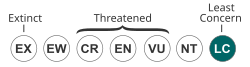 Least Concern (IUCN 3.1)<ref name="iucn status 19 November 2021">Botanic Gardens Conservation International (BGCI).; IUCN SSC Global Tree Specialist Group (2019). "Ficus sycomorus". IUCN Red List of Threatened Species. 2019 e.T146188430A146199148. doi:10.2305/IUCN.UK.2019-2.RLTS.T146188430A146199148.en. Retrieved 19 November 2021.</ref> | |
Scientific classification 
| |
| : | [[Template:Taxonomy/Ficus subg. Sycomorus]] |
| Species: | Template:Taxonomy/Ficus (plant)F. sycomorus
|
| Binomial name | |
| Template:Taxonomy/Ficus (plant)Ficus sycomorus | |

| |
Ficus sycomorus, called the sycamore fig or the fig-mulberry (because the leaves resemble those of the mulberry), sycamore, or sycomore, is a fig species that has been cultivated since ancient times.<ref name="Zohary"/>
Description
Ficus sycomorus grows to 20 metres (66 ft) tall and has a considerable spread, with a dense round crown of spreading branches. The bark is green-yellow to orange and exfoliates in papery strips to reveal the yellow inner bark. Like all other figs, it contains a latex. The leaves are heart-shaped with a round apex, 14 centimetres (5+1⁄2 in) long by 10 cm wide, and arranged spirally around the twig. They are dark green above and lighter with prominent yellow veins below, and both surfaces are rough to the touch. The petiole is 0.5–3 cm (1⁄4–1+1⁄8 in) long and pubescent.
Flowering and fruiting occurs year-round, starting in April or later depending on variety, peaking from July to December. The fruit is a large edible fig, 2–3 cm in diameter, ripening from buff-green to yellow or red. It is borne in thick clusters on long branchlets or the leaf axil. It is sometimes separated into five successive "crops".<ref name=":0" />
Etymology
The specific name came into English in the 14th century as sicamour, derived from Old French sagremore, sicamor. This in turn derives from Latin sycomorus, from Ancient Greek σῡκόμορος (sykómoros) 'fig-mulberry'. The Greek name may be from the Greek tree-names sykón 'fig' and moron 'mulberry', or it may derive from the Hebrew name for the mulberry, shiqmah.<ref>"Sycamore (n.)". Online Etymology Dictionary. Retrieved 30 November 2024.</ref>
The name sycamore spelled with an A has also been used for unrelated trees: the great maple, Acer pseudoplatanus, or plane trees, Platanus. The spelling "sycomore", with an O rather than an A as the second vowel is, if used, specific to F. sycomorus.<ref>"sycomore". Merriam-Webster.com. Retrieved 30 October 2016.</ref><ref>"sycamore". Collins English Dictionary. Retrieved 30 October 2016.</ref>
Distribution and habitat
Ficus sycomorus is native to Africa south of the Sahel and north of the Tropic of Capricorn, excluding the central-west rainforest areas. It grows naturally in Lebanon; in the southern Arabian Peninsula; in Cyprus; in very localised areas in Madagascar; and in Israel, Palestine and Egypt. In its native habitat, the tree is usually found in rich soils along rivers and in mixed woodlands.[citation needed]
Cultivation
Two major varieties are known in Egypt. Roumi (also called Falaki or Turki), which has more horizontally spread branches, stouter shoots and petioles, more densely spaced leaves that are wider than they are long, and larger, flatter, broad pink fruits; and Kelabi (also called Arabi or Beledi), which has more vertical branches, is more slender, has smaller leaves and has smaller yellowish pear shaped fruits.<ref name=":0">Brown, Thomas W.; Walsingham, F. G. (1917). "The Sycamore Fig In Egypt". Journal of Heredity. 8 (1): 3–12. doi:10.1093/jhered/8.1.3.</ref>
In modern history, many Egyptians would once a year (on the day of a particular saint) make a ring of bruises and cuts around the base of their sycamore trees.[why?]<ref name=":0"/>
According to botanists Daniel Zohary and Maria Hopf, cultivation of this species was "almost exclusively" by the ancient Egyptians.<ref name="Zohary" /> Remains of F. sycomorus begin to appear in predynastic times and occur in quantity from the start of the third millennium BC. It was the ancient Egyptian tree of life.<ref>Assmann, Jan; Lorton, David (2005). Death and salvation in ancient Egypt. translated by David Lorton. Cornell University Press. p. 171. ISBN 978-0-8014-4241-4.</ref> Zohary and Hopf note that "the fruit and the timber, and sometimes even the twigs, are richly represented in the tombs of the Egyptian Early, Middle and Late Kingdoms."<ref name="Zohary"/> In numerous cases the parched fruiting bodies, known as sycons, "bear characteristic gashing marks indicating that this art, which induces ripening, was practised in Egypt in ancient times."<ref name="Zohary">Zohary, Daniel; Hopf, Maria (2012). Domestication of plants in the Old World (fourth ed.). Oxford University Press. pp. 130–131.</ref>
Although this species of fig requires the presence of the symbiotic wasp Ceratosolen arabicus to reproduce sexually, and this insect is extinct in Egypt, Zohay and Hopf have no doubt that Egypt was "the principal area of sycamore fig development."<ref name="Zohary"/> Some of the caskets of mummies in Egypt are made from the wood of this tree. In tropical areas where the wasp is common, complex mini-ecosystems involving the wasp, nematodes,<ref name="Susoy 2016">Susoy, Vladislav; Herrmann, Matthias; Kanzaki, Natsumi; Kruger, Meike; Nguyen, Chau N.; Rödelsperger, Christian; Röseler, Waltraud; Weiler, Christian; Giblin-Davis, Robin M.; Ragsdale, Erik J.; Sommer, Ralf J. (2016). "Large-scale diversification without genetic isolation in nematode symbionts of figs". Science Advances. 2 (1) e1501031. Bibcode:2016SciA....2E1031S. doi:10.1126/sciadv.1501031. PMC 4730855. PMID 26824073.</ref><ref name="Kruger 2021">Kruger, Meike S.; Kanzaki, Natsumi; Giblin-Davis, Robin M.; Greeff, Jaco M. (10 August 2021). "Molecular diversity and relationships of fig associated nematodes from South Africa". PLOS ONE. 16 (8) e0255451. Bibcode:2021PLoSO..1655451K. doi:10.1371/journal.pone.0255451. PMC 8354458. PMID 34375357.</ref> other parasitic wasps, and various larger predators revolve around the life cycle of the fig. The trees' random production of fruit in such environments assures its constant attendance by the insects and animals which form this ecosystem.
Sycamores were often planted around artificial pools in ancient Egyptian gardens.<ref name=":2">Azzazy, Mohammed F.; Ezzat, Azza (2016), "The Sycamore in Ancient Egypt", Liber Amicorum–Speculum Siderum: Nūt Astrophoros Archaeopress Egyptology, Archaeopress, ISBN 978-1-78491-523-0.</ref>
The sycamore tree was brought to Israel by Philistines during the Iron Age, along with opium poppy and cumin.<ref>"Philistines introduced sycamore, cumin and opium poppy into Israel during the Iron Age". Science daily. 28 August 2015. Retrieved 25 October 2015..</ref><ref>Frumin, Suembikya; Maeir, Aren M.; Kolska Horwitz, Liora; Weiss, Ehud (25 August 2015), "Nature", Scientific Reports, 5 (1) 13308, doi:10.1038/srep13308, PMC 4642518, PMID 26304818.</ref> These sycamore trees used to be numerous in western Beirut, lending their name to the neighborhood of Gemmayzeh ((الْجُمَّيْزَة al-Ǧummayzah), "sycamore fig").<ref>"Gemmmayzeh name origins". 25 July 2019.</ref> However, the trees have largely disappeared from this area.<ref>Quilty, Jim; Diab, Leila (31 August 2005). "Gemmayzeh changing: new habits come to an old quarter". The Daily Star. Retrieved 16 November 2021. ... named after a sycamore tree that was once a landmark here.
</ref>
Gardens
In the Near East F. sycomorus is an orchard and ornamental tree of great importance and extensive use. It has wide-spreading branches and affords shade.
In culture
Judaism and Christianity

In the Hebrew Bible, the sycomore is mentioned seven times (Biblical Hebrew: שִׁקְמָה, romanized: shiqmā; Strong's number 8256) and once in the New Testament (Koine Greek: συκομoραία, romanized: sykomoraia or συκομορέα sykomorea;<ref>Template:LSJ.</ref> Strong's number 4809). It was a popular and valuable fruit tree in Jericho and Canaan.<ref name="moldenke 106 108">Moldenke, Harold N. (1952). Plants of the Bible. Waltham, Massachusetts USA: Chronica Botanica Company. pp. 106–108.</ref>
In El Matareya, there is a sycamore known as the Tree of the Virgin, which serves as a pilgrimage site. It is not the same tree; instead, when the previous tree that stands in this spot dies, a new one is planted from cuttings of the old tree.<ref>"The Virgin's Tree in Egypt: A Story of Survival". Photorientalist. 18 December 2016. Retrieved 24 February 2024.</ref> It is said that the Holy Family took refuge in this tree.<ref>Sachs, Susan (26 December 2001). "Cairo Journal; A Tree Drooping With Its Ancient Burden of Faith". The New York Times. ISSN 0362-4331. Retrieved 24 February 2024.</ref> The Coptic pope Theophilus also recounted that Joseph had a walking stick, which an infant Jesus broke. When Joseph buried the pieces of the stick, a sycamore grew forth and provided shelter.<ref>El-Aref, Nevine. "Virgin Mary Site Inaugurated".</ref>
Other religions
In Ancient Egypt, the sycamore was associated with the goddesses Hathor, Isis, and Nut. In the case of the latter, prayers exist referring to the "sycamore of Nut", and asking for water and breath. These goddesses were sometimes depicted as trees, sometimes standing in front of them with vessels of water, or sometimes as a tree with human body parts, such as an arm or breast. It was the most significant depicted life giving tree in ancient Egypt.<ref name=":1">R. Osborne, William. "The Tree of Life in Ancient Egypt and the Book of Proverbs". Journal of Ancient Near Eastern Religions.</ref> Sycamores are referenced in ancient Egyptian love poetry as a meeting place for lovers.<ref name=":1" /><ref name=":2"/> There are references to twin sycamores of turquoise in funerary contexts which Ra comes forth from, indicating they likely face east,<ref name=":1"/> or are located on the eastern horizon.<ref name=":2"/>
In modern Egyptian folklore, the sycamore retains an association with mysticism and magic. In the story "It Serves Me Right!", it is used to represent the Tree of Lifespans. The fruit from this tree dries up at the end of a life, but is fresh when one still has more life to live. Therefore, the inhabitants of a land found at the bottom of a well in the story only eat the dry, bad sycamore fruits and leave the good ones alone.<ref>El-Shamy, Hasan (1980). Folktales of Egypt. The University of Chicago Press. pp. 87–93. ISBN 0-226-20624-6.</ref>
In Kikuyu religion, the sycomore is a sacred tree. All sacrifices to Ngai (or Murungu), the supreme creator, were performed under the tree. The name of the Kikuyu tribe is derived from the name of the tree in Kikuyu (Mũkũyũ). Some of those ceremonies carried out under the tree are still observed.<ref>"Gikuyu Origins". Mukuyu. 13 November 2008. Retrieved 9 April 2015.</ref><ref>Mbiti, John (1990). African Religions and Philosophy. Oxford University Press.</ref>
Gallery
<gallery mode="packed" heights="200"> File:Ficus sycomorus - Leaves.jpg|Leaves File:Ficus sycomorus - Stem with fruits.jpg|Trunk with unripe fruit File:Sycamore fruits.jpg|Fruit File:Sycomore in Ethiopia.jpg|In Ethiopia </gallery>
See also
References
External links
- Figweb.org - Ficus sycomorus
- PBS Nature documentary: The Queen of Trees (on the sycamore fig in Kenya)
- IUCN Red List least concern species
- Articles containing Ancient Greek (to 1453)-language text
- Articles containing Koine Greek-language text
- Ficus
- Flora of Africa
- Flora of Cyprus
- Flora of Lebanon
- Flora of Palestine (region)
- Flora of the Arabian Peninsula
- Fruit trees
- Fruits originating in Africa
- Fruits originating in Asia
- Garden plants of Africa
- Garden plants of Asia
- Ornamental trees
- Plants described in 1753
- Plants in the Bible
- Botanical taxa named by Carl Linnaeus