


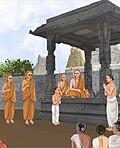

new edition information Tags: Visual edit nowiki added bad external references removed |
Terrence5904 (talk | contribs) edit |
||
| Line 1: | Line 1: | ||
{{Short description|Hindu monastery in Tamil Nadu, India}}{{Use dmy dates|date=October 2016}} {{Use Indian English|date=October 2016}} | {{Short description|Hindu monastery in Tamil Nadu, India}} | ||
{{Infobox organization|name=Kanchi Kamakoti Peetham | {{Use dmy dates|date=October 2016}} | ||
{{Use Indian English|date=October 2016}} | |||
{{Infobox organization | |||
| name = Kanchi Kamakoti Peetham | |||
| image = Kamakoti Vimana Gopuram.jpg | |||
| caption = Moolamnaya Sarvajna Sri Kanchi Kamakoti Peetam | |||
| founder = | |||
| type = Religious | |||
| location = [[Kanchipuram]], Tamil Nadu, India | |||
| leader_title = First Jagadguru | |||
| leader_name = [[Adi Shankara]] (disputed) | |||
| leader_title2 = Present Jagadguru | |||
| leader_name2 = [[Vijayendra Saraswati Swamigal|Vijayendra Saraswati]] | |||
| leader_title3 = Successor | |||
| leader_name3 = [[Satya Chandrashekharendra Saraswati]] | |||
| affiliations = [[Hinduism]] | |||
| website = {{URL|http://www.kamakoti.org/}} | |||
}} | |||
'''Sri Kanchi Kamakoti Peetham''', also called the '''Sri Kanchi Matham''' or the '''Moolamnaya Sarvagnya Peetham''',<ref group=web>{{Cite web |title=About the Peetham |url=https://www.kamakoti.org/peeth/aboutpeetham.html |access-date=2022-09-24 |website=www.kamakoti.org}}</ref> is a [[Hinduism|Hindu]] religious center of [[Sanskrit and Vedic learning|Vedic learning]], located in [[Kanchipuram]], Tamil Nadu. It is located near the [[Kamakshi Amman Temple]] of the [[Shaktism]] tradition, which also contains a shrine dedicated to the alleged final resting place (disputed) of the [[Advaita Vedanta]] teacher [[Adi Shankara]].{{sfn|Krishna|2006|p=100}} | |||
[[File:Jagadguru Shankara Vijayendra Saraswati.jpg|thumb|Jagadguru [[Vijayendra Saraswati Swamigal|Vijayendra Saraswathi Swamigal]], the 70th and Current Peetadhipathi of Kanchi Kamakoti Peetam]] | |||
The | The matha-tradition attributes its founding to [[Adi Shankara]], but this and the reliability of the matha's succession list has been questioned.{{sfn|Suthren Hirst|2005|p=25}}{{sfn|Clark|2006|p=224}} According to the Sri Kanchi math tradition, the matha was founded at Kanchipuram, and shifted south to the temple city of [[Kumbakonam]] in the mid-18th century due to the on-going wars, when there was warfare in the region, and returned to Kanchipuram in the 19th century.{{sfn|Dalal|2010|p=192}} | ||
Historically, the Kanchi Math was established as the Kumbakonam Mutt in 1821 as a branch of the [[Sringeri Sharada Peetham|Sringeri Mutt]], and became involved with the Kamakshi temple in Kanchipuram in 1839,{{sfnp|Sunil|1987}} "set[ing] up shop in Kanchipuram at the turn of the last [19th] century."<ref group=web name="Guruswamy"/> | |||
The peetham gained a good reputation under the leadership of Sri [[Chandrashekharendra Saraswati VIII]] (born 20 May 1894; 68th Shankaracharya 1907 – 8 January 1994), who was regarded as an ''avatara purusha'', a realised seer.<ref group=web name="T.M.Krishna_scroll.in_2018"/> The peetham lost authority and standing under the leadership of Sri [[Jayendra Saraswati]] (born 1935; appointed successor 1954; 69th Shankaracharya 3 January 1994 - 28 February 2018), who favoured an outreach to a broader audience beyond the Brahmins, but was implicated and later given a clean chit by the courts in a murder-trial.<ref group=web name="T.M.Krishna_scroll.in_2018"/> He was succeeded in February 2018 by [[Vijayendra Saraswati Swamigal|Vijayendra Saraswathi Shankaracharya Swamigal]]. | |||
== Establishment == | |||
[[File:Adishankara.jpg|thumb|A digital art of Jagadguru Adi Shankaracharya offering discourses at the [[Kamakshi Amman Temple]] in [[Kanchipuram]].]] | |||
The | ===Traditional accounts=== | ||
The founding of Kanchi Kamakoti Peetam is traditionally attributed by its adherents to Adi Shankara.{{sfn|Suthren Hirst|2005|p=25}}{{efn|See also {{Cite web |title=Sri Shankaracharya and his connection with Kanchipuram |url=https://sriadishankarastutis.org/wp-content/uploads/files/Shri-Shankaracharya-and-His-Connection-With-Kanchipuram.pdf |archive-url=}}}} According to the Kanchi matha's tradition, Adi Shankara was born in 509 BCE and died in 477 BCE,{{sfn|Dalal|2010|p=376}} and founded Kanchi Kamakoti Peetham in 482 BCE.<ref>{{Cite web |title=The Traditional Age of Sri Sankaracharya and The Mathas {{!}} PDF {{!}} Indian Religions {{!}} Religious Comparison |url=https://www.scribd.com/document/280916745/The-Traditional-Age-of-Sri-Sankaracharya-and-the-Mathas |access-date=2024-05-28 |website=Scribd |language=en}}</ref> The chronology stated in Kanchi matha texts recognizes five major Shankaras: Adi, Kripa, Ujjvala, Muka and Abhinava. According to the Kanchi matha tradition, it is "Abhinava Shankara" that western scholarship recognizes as the Advaita scholar Adi Shankara.{{sfn|Dalal|2010|p=376}} | |||
According to the Sri Kanchi matha documents, the ''matha'' relocated completely to Kumbakonam in the mid-18th century to escape wars and persecution,{{sfn|Dalal|2010|p=192}}<ref group=web>{{Cite web |author =N. Ramesan | title=Preceptors of Advaita 59 SRI KAMAKOTI PITHA OF SRI |url=https://www.kamakoti.org/kamakoti/articles/Preceptors%20of%20Advaita%20-%2059.html |access-date=2024-05-28 |website=www.kamakoti.org}}</ref> returning to Kanchi in the 19th century.{{sfn|Dalal|2010|p=192}} According to Jonathan Bader and other scholars, the monastic tradition gives "fear of Muslim atrocities" from Nawab of Arcot, Mysore's Hyder Ali and Tipu Sultan as the reason, but the details remain unclear.{{sfn|Bader|2000|p=289–290}}{{sfn|Kasturi|Madhavan|2007|pp=173–174}}{{sfn|Sarasvati|Mahadevan|2003|pp=436–437}} | |||
== Sankararaman murder case == | According to [[T. A. Gopinatha Rao]], copperplate inscriptions show that the matha was located at Kanchipuram until 1686 CE,{{sfn|Rao|1916|p=2}} and relocated to Kumbakonam, Tanjore, in the 18th century.{{sfn|Rao|1916|p=3}} Sharma disputes Rao's interpretations of the copper plates, arguing that the dating is dubious, and that most plates do not refer to Kanchi Kamakoti Peetham at all.{{sfn|Sharma|1987|p=59-72}} According to Rao, based on the oldest record found in the respective mathas (1291 and 1346 respectively), Kanchipuram matha ''may'' be older than Sringeri Pitham.{{sfn|Rao|1916|p=6}} | ||
===Disputed chronology=== | |||
[[File:68th Peetadhipathi Kanakabisekham.jpg|thumb|Kanakabhishekam (ceremonial shower of gold coins donated by devotees) of the 68th Jagadguru [[Chandrashekharendra Saraswati VIII]], also known as ''Mahaperiyava'' being performed by his successor, the 69th Jagadguru [[Jayendra Saraswathi|Jayendra Saraswathi Swamigal]]. At his feet is the 70th Jagadguru [[Vijayendra Saraswati Swamigal]]. Together, all three were considered the trinity of the Kanchi Kamakoti Peetham.]] | |||
The foundation-story of Kanchi Kamakoti Peetham, and it's chronology of Shankaracharyas, is widely disputed.{{sfn|Scheifinger|2016|p=106}}{{sfn|Suthren Hirst|2005|p=25}} [[Sringeri matha]] rejects the claims of Kanchi Kamakoti Peetam, and does not count it among the mathas established by Shankara.{{sfn|Dalal|2014|loc="Kanchipuram"}} | |||
Modern scholarship places Shankara in the 8th century CE, and the story of the four cardinal mathas founded by Shankara dates from the 16th century, putting in question the founding stories of all those mathas,{{sfn|Clark|2006|p=224}} though Christopher Fuller and David Smith regard the Kanchi Shankaracharyas as his "spiritual descendants."{{sfn|Scheifinger|2016|p=106}} According to Sunil, the history of Kanchi Kamakoti Peetham has been rewritten in the 20th century, when Chandrashekharendra Saraswati was the Paramacharya.{{sfnp|Sunil|1987|p=13}} | |||
===Historical account=== | |||
Historically, the Kanchi Math was established as the Kumbakonam Mutt in 1821 by the [[Thanjavur Maratha kingdom|Maratha king of Tanjore]], [[Serfoji II|Serfoji II Bhonsle]],{{sfn|Sharma|1987|p=17}}{{sfnp|Sunil|1987|p=374-382}}{{efn|name="Sunil_1987"|See also:<br>* Vidyasankar Sundaresan (3 August 1994), [https://www.advaita-vedanta.org/avhp/alt_hindu_msg.html ''Real history of the Kanchi math'']<br>* Vidyasankar Sundaresan (sept 6, 2000), [https://list.indology.info/pipermail/indology/2000-September/022632.html ''kanchi Shankara Mutt'']}}<ref group=web name="Guruswamy"/> as a branch of the [[Sringeri Sharada Peetham|Sringeri Mutt]].{{sfnp|Sunil|1987}}<ref group=web name="Guruswamy"/> It became an [[apostate]] [[Schism#Hinduism|schismatic]] institution in 1839 when the Kumbakonam Mutt applied for permission to the English Collector of Arcot to perform the "[[kumbhabhishekham]]" of the [[Kamakshi Amman Temple|Kamakshi temple in Kanchipuram]].{{sfn|Sharma|1987|p=18}} In 1842, the [[East India Company]] headquartered at [[Fort William, India|Fort William, Calcutta]] appointed the head of the mutt as the sole trustee of the Kamakshi temple, despite the protests of the traditional priests of the Kamakshi temple, which are well documented and preserved.{{sfn|Sharma|1987|p=18}}{{sfn|Veeramani|1988|p=217}}<ref group=web name="Guruswamy">{{Cite web|last=Guruswamy|first=Mohan|date=2021-11-30|title=Mohan Guruswamy {{!}} The Kumbakonam of the Kanchi Shankaracharya|url=https://www.deccanchronicle.com/opinion/columnists/291121/mohan-guruswamy-the-kumbakonam-of-the-kanchi-shankaracharya.html|access-date=2022-01-04|website=Deccan Chronicle|language=en}}</ref><ref group=web>{{Cite web|date=2018-03-01|title=ஆதி சங்கரர் நிறுவியதா காஞ்சி சங்கரமடம்? - முரண்படும் தகவல்கள்|url=https://www.bbc.com/tamil/india-43233728|access-date=2022-01-04|website=BBC News தமிழ்|language=ta}}</ref> Mohan Guruswamy recalls, | |||
{{blockquote|My own ancestral village, Nagavedu, is a few miles from Kanchipuram. I remember my father telling me that his father was a young man when the Kanchi Shankaracharya set up shop in Kanchipuram at the turn of the last century. He also said that his father always referred, and as did others in the area, to this new Shankaracharya as the Kumbakonam Shankaracharya. This is a nice play on the word Kumbakonam for in colloquial Tamil it is also used to refer to a shady deal.<ref group=web name="Guruswamy"/>}} | |||
==20th-21st century== | |||
===Tensions in the temple leadership=== | |||
Under the leadership of Sri [[Chandrashekharendra Saraswati VIII]] (born 20 May 1894; 68th pontiff 1907 – 8 January 1994), who was regarded as an ''avatara purusha'', a realised seer,<ref group=web name="T.M.Krishna_scroll.in_2018">T.M. Krishna (Mar 04, 2018), [https://scroll.in/article/870688/jayendra-saraswathi-redefined-kanchi-mutts-role-but-never-earned-the-stature-of-his-forerunners ''Jayendra Saraswathi redefined Kanchi Mutt's role – but did not earn the stature of his predecessor''], scroll.in</ref> the peetham gained a significant role as a traditional center of religious studies, focusing on male Brahmin students.<ref group=web name="T.M.Krishna_scroll.in_2018"/> | |||
His successor Sri [[Jayendra Saraswati]] was appointed as successor in 1954,<ref group=web name="TIE_2018">[https://indianexpress.com/article/who-is/who-was-sri-jayendra-saraswathi-dead-successor-kanchi-peetam-5081186/ ''Who was Sri Jayendra Saraswathi?''], The Indian Express, February 28, 2018</ref> and succeeded him at 3 January 1994, staying in office until his death at 28 February 2018. Jayendra favoured an outreach to a broader audience beyond the Brahmins, propagating Hindu-values and lifestyle in general,<ref group=web name="T.M.Krishna_scroll.in_2018"/> leading to tensions between Chandrashekharendra and Jayendra.<ref group=web name="T.M.Krishna_scroll.in_2018"/>{{sfnp|Sunil|1987}} Due to these tensions, in August 1987 Jayendra disappeared for a couple of days, apparently withdrawing from the temple leadership, but returning just a couple of days later and eventually succeeding Chandrashekharendra Saraswati.<ref group=web name="T.M.Krishna_scroll.in_2018"/>{{sfnp|Sunil|1987}}<ref group=web name="TIE_2018"/> Jayendra broadened the scope of the peetham, supporting "schools, colleges, hospitals, and rural programmes."<ref group=web name="T.M.Krishna_scroll.in_2018"/> He opposed Christian conversion efforts by active oureach toward the poor and down-throdden, visiting slums and poor neighborhoods.<ref group=web name="T.M.Krishna_scroll.in_2018"/> Jayendra was also politically involved, maintaining contacts with the [[Rashtriya Swayamsevak Sangh]], [[Vishwa Hindu Parishad]], [[Bharatiya Janata Party]] and the [[All India Anna Dravida Munnetra Kazhagam]].<ref group=web name="T.M.Krishna_scroll.in_2018"/> | |||
===Sankararaman murder case (2004)=== | |||
{{main|Sankararaman murder case}} | {{main|Sankararaman murder case}} | ||
== Chronological list of Shankaracharyas == | In 2004, Jayendra Saraswathi and his junior [[Vijayendra Saraswati]] were arrested in connection with the [[Sankararaman murder case]] on [[Diwali]] day.<ref group=web name="Subramani_2018_ToI">{{cite news|author=A. Subramani|url=https://timesofindia.indiatimes.com/city/chennai/kanchi-seer-jayendra-saraswathi-a-spiritual-colossus-till-his-arrest-in-2004/articleshow/63106383.cms|title=Kanchi seer Jayendra Saraswathi, a spiritual colossus till his arrest in 2004, dies - Times of India ►|website=[[The Times of India]]|date=28 February 2018 |access-date=1 March 2018}}</ref> The court said that the complainant failed to support the prosecution and he was given bail. The trial went on till 2013 when he was acquitted by the court,<ref>{{cite news|url=https://timesofindia.indiatimes.com/india/Kanchi-seer-Sri-Jayendra-Saraswathi-others-acquitted-in-auditor-assault-case/articleshow/52039635.cms|title=Kanchi seer Sri Jayendra Saraswathi, others acquitted in auditor assault case - Times of India ►|website=[[The Times of India]]|date=May 2016 |access-date=1 March 2018}}</ref> but the murder trial negatively impacted both his standing and his role in society,<ref group=web name="T.M.Krishna_scroll.in_2018"/> and the image and influence the Kanchi Mutt.<ref group=web name="T.M.Krishna_scroll.in_2018"/><ref group=web name="Subramani_2018_ToI"/> | ||
According to the Peetham, the chronological list of Guru Paramapara of the matham is follows:<ref>{{cite web|title=History of the Kanchi Sankaracharya Math and Acharaparampara|url=http://www.kamakoti.org/peeth/origin.html|website=www.kamakoti.org|access-date=1 November 2016}}</ref> | |||
==Religious center== | |||
===Vedic studies=== | |||
The matha offers Vedic studies to male Brahmin students in a number of ''[[pathasala]]s''.{{sfn|Cenkner|1995|p=117–121}} Under the leadership of Jayendra Saraswati, the peetham took a more liberal stance, also reaching out to a non-Brahmin audience. | |||
===Cultural preservation=== | |||
The Kanchi monastery, along with other monasteries across India, has been an important preserver and source of historic palm leaf manuscripts.<ref>{{cite book|author=National Mission for Manuscripts (India)|title=National Mission for Manuscripts: Report of the Third Year, 7 February 2005 - 7 February 2006|url=https://books.google.com/books?id=ADk_IFkV4WIC|year= 2006|publisher= National Mission for Manuscripts|pages= 42–43}}</ref><ref>{{cite book|author= Saṃskr̥ta Āyoga|title=Report of the Sanskrit Commission, 1956-1957| url= https://books.google.com/books?id=R7CvAAAAIAAJ|year= 1958|publisher= Manager of Publications, Government of India|page=63}}</ref> | |||
==Chronological list of Shankaracharyas== | |||
According to the Peetham, the chronological list of Guru Paramapara of the matham is follows:<ref>{{cite web|title=History of the Kanchi Sankaracharya Math and Acharaparampara|url=http://www.kamakoti.org/peeth/origin.html|website=www.kamakoti.org|access-date=1 November 2016}}</ref> | |||
{{Div col|small=yes}} | {{Div col|small=yes}} | ||
# | # Sri [[Adi Shankaracharya]] (482 BCE–477 BCE) | ||
# | # Sri [[Sureshwaracharya]] (477 BCE–407 BCE) | ||
# | # Sri Sarvajnatmanendra Saraswati (407 BCE–367 BCE)<ref>{{cite book|author=Encyclopedia of Indian Philosophies|title=Advaita Vedānta from 800 to 1200|year=2006|publisher=Motilal Banarsidass Publishers|isbn=978-81-208-3061-5 |page=435}}</ref> | ||
# | # Sri Satyabodhendra Saraswati (367 BCE–268 BCE)<ref>{{cite web|title=Schools of Philosophy|url=http://www.hindupedia.com/en/Schools_of_Philosophy|website=hindupedia.com|access-date=1 November 2016}}</ref> | ||
# Sri Jnanandendra Saraswati (268 BCE–205 BCE) | # Sri Jnanandendra Saraswati (268 BCE–205 BCE) | ||
# Sri | # Sri Shuddhanandendra Saraswati (205 BCE–124 BCE) | ||
# Sri | # Sri Anandaghanendra Saraswati (124 BCE–55 BCE) | ||
# Sri | # Sri Kaivalyananda Yogendra Saraswati (55 BCE–28 CE) | ||
# Sri | # Sri Kripashankarendra Saraswati (28 CE–69 CE) | ||
# Sri | # Sri Sureshwara Saraswati (69 CE–127 CE) | ||
# Sri | # Sri Shivananda Chidghanendra Saraswati (127 CE–172 CE) | ||
# Sri | # Sri Chandrashekharendra Saraswati I (172–235) | ||
# Sri Satchidghanendra Saraswati (235–272) | # Sri Satchidghanendra Saraswati (235–272) | ||
# Sri Vidyaghanendra Saraswati (272–317) | # Sri Vidyaghanendra Saraswati (272–317) | ||
# Sri Gangadharendra Saraswati (317–329) | # Sri Gangadharendra Saraswati (317–329) | ||
# Sri | # Sri Ujjwala Shankarendra Saraswati (329–367) | ||
# Sri | # Sri Sadashivendra Saraswati (367–375) | ||
# Sri Shankarananda Saraswati (375–385) | # Sri Shankarananda Saraswati (375–385) | ||
# Sri Martanda Vidyaghanendra Saraswati (385–398) | # Sri Martanda Vidyaghanendra Saraswati (385–398) | ||
# Sri | # Sri Mukhashankarendra Saraswati (398–437) | ||
# Sri | # Sri Chandrashekharendra Saraswati II (437–447) | ||
# Sri Bodhendra Saraswati (447–481) | # Sri Bodhendra Saraswati I (447–481) | ||
# Sri Satchisukhendra Saraswati (481–512) | # Sri Satchisukhendra Saraswati (481–512) | ||
# Sri Chitsukhendra Saraswati (512–527) | # Sri Chitsukhendra Saraswati (512–527) | ||
| Line 61: | Line 105: | ||
# Sri Chidanandaghanendra Saraswati (668–672) | # Sri Chidanandaghanendra Saraswati (668–672) | ||
# Sri Satchidananda Saraswati (672–692) | # Sri Satchidananda Saraswati (672–692) | ||
# Sri | # Sri Chandrashekharendra Saraswati III (692–710) | ||
# Sri Chitsukhendra Saraswati (710–737) | # Sri Chitsukhendra Saraswati (710–737) | ||
# Sri Chitsukhanandendra Saraswati (737–758) | # Sri Chitsukhanandendra Saraswati (737–758) | ||
# Sri Vidyaghanendra Saraswati III (758–788) | # Sri Vidyaghanendra Saraswati III (758–788) | ||
# Sri Abhinava | # Sri Abhinava Shankarendra Saraswati (788–840) | ||
# Sri | # Sri Satchidvilasendra Saraswati (840–873) | ||
# Sri Mahadevendra Saraswati II (873–915) | # Sri Mahadevendra Saraswati II (873–915) | ||
# Sri Gangadharendra Saraswati II (915–950) | # Sri Gangadharendra Saraswati II (915–950) | ||
| Line 72: | Line 116: | ||
# Sri Anandaghanendra Saraswati (978–1014) | # Sri Anandaghanendra Saraswati (978–1014) | ||
# Sri Purnabhodhendra Saraswati II (1014–1040) | # Sri Purnabhodhendra Saraswati II (1014–1040) | ||
# Sri | # Sri Paramashivendra Saraswati I (1040–1061) | ||
# Sri | # Sri Chandranandabhodhendra Saraswati (1061–1098) | ||
# Sri | # Sri Chandrashekharendra Saraswati IV (1098–1166) | ||
# Sri Advaitanandabodhendra Saraswati (1166–1200) | # Sri Advaitanandabodhendra Saraswati (1166–1200) | ||
# Sri Mahadevendra Saraswati III (1200–1247) | # Sri Mahadevendra Saraswati III (1200–1247) | ||
# Sri Chandrachudendra Saraswati I (1247–1297) | # Sri Chandrachudendra Saraswati I (1247–1297) | ||
# Sri | # Sri Vidyatirthendra Saraswati (1297–1385) | ||
# Sri | # Sri Shankaranandendra Saraswati (1385–1417) | ||
# Purnananda | # Purnananda Sadashivendra Saraswati (1417–1498) | ||
# [[Vyasachala Mahadevendra Saraswati]] (1498–1507) | # [[Vyasachala Mahadevendra Saraswati]] (1498–1507) | ||
# | # Chandrachudendra Saraswati II (1507–1524) | ||
# Sri Sarvajna | # Sri Sarvajna Sadashivabodhendra Saraswati (1524–1539) | ||
# Sri | # Sri Paramashivendra Saraswati II (1539–1586) | ||
# [[ | # [[Atmabodhendra Saraswati]] (1586–1638) | ||
# [[Bodhendra | # [[Bodhendra Saraswati II]] (1638–1692) | ||
# Sri Advaitatma | # Sri Advaitatma Prakashendra Saraswati (1692–1704) | ||
# Sri Mahadevendra Saraswati IV (1704–1746) | # Sri Mahadevendra Saraswati IV (1704–1746) | ||
# Sri | # Sri Chandrashekharendra Saraswati V (1746–1783) | ||
# Sri Mahadevendra Saraswati V (1783–1813) | # Sri Mahadevendra Saraswati V (1783–1813) | ||
# Sri Chandrasekharendra Saraswati VI (1813–1851) | # Sri Chandrasekharendra Saraswati VI (1813–1851) | ||
# | # Sudarshana Mahadevendra Saraswati (1851–1891) | ||
# Sri Chandrasekharendra Saraswati VII | # Sri Chandrasekharendra Saraswati VII (1891 – 7 February 1907) | ||
# [[Mahadevendra | # Sri [[Mahadevendra Saraswati V]] (7 February 1907 – 13 February 1907) | ||
# [[ | # Sri [[Chandrashekharendra Saraswati VIII]] (born 20 May 1894; pontiff 1907 – 8 January 1994) | ||
# [[Jayendra Saraswathi]] (3 January 1994 – 28 February 2018) | # Sri [[Jayendra Saraswathi|Jayendra Saraswati]] (born 18 July 1935; appointed as successor 1954; pontif 3 January 1994 – 28 February 2018) | ||
# [[Vijayendra Saraswati Swamigal| | # Sri [[Vijayendra Saraswati Swamigal|Vijayendra Saraswati]] (28 February 2018 – Present){{sfn|Meena|1974|p=46}}<ref group=web>{{cite news |title=Leaders mourn Kanchi seer Jayendra Saraswathi's death |url=https://www.thehindu.com/news/national/tamil-nadu/kanchi-seer-jayendra-saraswathi-passes-away/article22875781.ece |newspaper=The Hindu |date=28 February 2018 |access-date=12 July 2019}}</ref> | ||
# Sri [[Satya Chandrashekharendra Saraswati]] (born 2001; appointed as successor 2025) | |||
{{Div col end}} | {{Div col end}} | ||
<gallery> | <gallery> | ||
File:Maha periyava.jpg|68th Shankaracharya Sri [[Chandrashekarendra Saraswati|Chandrashekharendra Saraswati]] Mahaswamigal | File:Maha periyava.jpg|68th Shankaracharya Sri [[Chandrashekarendra Saraswati|Chandrashekharendra Saraswati]] Mahaswamigal | ||
File:Jayendra Saraswathi Swamigal.jpg|69th Shankaracharya Sri [[Jayendra Saraswathi]] Mahaswamigal | File:Jayendra Saraswathi Swamigal.jpg|69th Shankaracharya Sri [[Jayendra Saraswathi]] Mahaswamigal | ||
File: | File:Shri Shankara Vijayendra Saraswathi Mahaswamy.jpg|70th Shankaracharya Sri [[Vijayendra Saraswati Swamigal|Vijayendra Saraswathi]] Mahaswamigal | ||
File:Sri Satya Chandrasekarendra Saraswathi Mahaswamy.jpg|71th Shankaracharya Sri [[Satya Chandrashekharendra Saraswati]] Mahaswamigal | |||
</gallery> | </gallery> | ||
== | ==Sankararaman murder case== | ||
{{main|Sankararaman murder case}} | |||
In 2004, Jagadguru Sri Jayendra Saraswathi Mahaswamigal and his junior Vijayendra Saraswati were arrested in connection with the [[Sankararaman murder case]] on [[Diwali]] day.<ref>{{cite news|url=https://timesofindia.indiatimes.com/city/chennai/kanchi-seer-jayendra-saraswathi-a-spiritual-colossus-till-his-arrest-in-2004/articleshow/63106383.cms|title=Kanchi seer Jayendra Saraswathi, a spiritual colossus till his arrest in 2004, dies - Times of India ►|website=[[The Times of India]]|date=28 February 2018 |access-date=1 March 2018}}</ref> The court said that the complainant failed to support the prosecution and he was given bail. The trial went on till 2013 when he was acquitted by the court.<ref>{{cite news|url=https://timesofindia.indiatimes.com/india/Kanchi-seer-Sri-Jayendra-Saraswathi-others-acquitted-in-auditor-assault-case/articleshow/52039635.cms|title=Kanchi seer Sri Jayendra Saraswathi, others acquitted in auditor assault case - Times of India ►|website=[[The Times of India]]|date=May 2016 |access-date=1 March 2018}}</ref> | |||
== | ==Notes== | ||
{{notelist}} | |||
== | ==References== | ||
{{Reflist|30em}} | |||
; Printed sources | ==Sources== | ||
;Printed sources | |||
{{refbegin}} | {{refbegin}} | ||
<!-- B --> | <!-- B --> | ||
* {{cite book|last=Bader|first=Jonathan Bader| | * {{cite book|last =Bader | first =Jonathan Bader | year =2000 | title =Conquest of the Four Quarters: Traditional Accounts of the Life of Śaṅkara | publisher =Aditya Prakashan | isbn =978-81-7742-002-9 | url =https://books.google.com/books?id=Q6XWAAAAMAAJ}} | ||
<!-- C --> | <!-- C --> | ||
* {{cite book|last=Cenkner|first=William| | * {{cite book|last =Cenkner | first =William | year =1995 | title =A Tradition of Teachers: Śaṅkara and the Jagadgurus Today | publisher =Motilal Banarsidass | isbn =978-81-208-0932-1 | url =https://books.google.com/books?id=LsD9oPZA2OMC}} | ||
* {{Citation|last=Clark|first=Matthew|year=2006|title=The Daśanāmī-saṃnyāsīs. The Integration Of Ascetic Lineages Into An Order|publisher=BRILL}} | * {{Citation | last =Clark | first =Matthew | year =2006 | title =The Daśanāmī-saṃnyāsīs. The Integration Of Ascetic Lineages Into An Order | publisher =BRILL}} | ||
<!-- D --> | <!-- D --> | ||
* {{Citation|last=Dalal|first=Roshen|year=2010|title=Hinduism: An Alphabetical Guide|publisher=Penguin|isbn=978-0-14-341421-6|url=https://books.google.com/books?id=DH0vmD8ghdMC&pg=PA376}} | * {{Citation | last =Dalal | first =Roshen | year =2010 | title =Hinduism: An Alphabetical Guide|publisher=Penguin |isbn=978-0-14-341421-6 | url =https://books.google.com/books?id=DH0vmD8ghdMC&pg=PA376}} | ||
* {{Citation|last=Dalal|first=Roshen|year=2014|title=Hinduism: An Alphabetical Guide|publisher=Penguin UK}} | * {{Citation | last =Dalal | first =Roshen | year =2014 | title =Hinduism: An Alphabetical Guide | publisher =Penguin UK}} | ||
<!-- K --> | <!-- K --> | ||
* {{cite book|last1=Kasturi|first1=Prema|url=https://books.google.com/books?id=_HwMAQAAMAAJ | * {{cite book|last1 =Kasturi | first1 =Prema | last2=Madhavan | first2 =Chithra |year=2007|title=South India heritage: an introduction|url= https://books.google.com/books?id=_HwMAQAAMAAJ|publisher=East West|isbn=978-81-88661-64-0|pages=173–174}} | ||
* {{cite book|last=Krishna|first=Nanditha| | * {{cite book|last =Krishna | first =Nanditha | year =2006 | title =Kanchipuram: a heritage of art and religion | publisher =Aiyar Foundation | isbn =978-81-901484-1-2 | url =https://books.google.com/books?id=d18MAQAAMAAJ}} | ||
<!-- M --> | <!-- M --> | ||
* {{cite book|last=Meena|first=V.|title=Temples in South India|publisher=Harikumar Arts| | * {{cite book | last =Meena | first =V. | year =1974 | title =Temples in South India | publisher =Harikumar Arts| location =Kanniyakumari | edition =1st}} | ||
<!-- R --> | <!-- R --> | ||
* {{Citation|last=Rao|first=T. A. Gopinatha|year=1916|title=Copperplate Inscriptions of the Kamakothi Pita|publisher=The Law Printing House|url=https://kamakotikosh.org/books/copper-plate-inscriptions-of-the-kamakoti-pitha/}} | * {{Citation | last =Rao | first =T. A. Gopinatha | year =1916 | title =Copperplate Inscriptions of the Kamakothi Pita | publisher =The Law Printing House |url =https://kamakotikosh.org/books/copper-plate-inscriptions-of-the-kamakoti-pitha/}} | ||
<!-- S --> | <!-- S --> | ||
* {{cite book|last1=Sarasvati|first1=Jayēdra | * {{cite book|last1 =Sarasvati | first1 =Jayēdra | last2=Mahadevan | first2 =T. M. P. | year =2003 | title =Preceptors of Advaita | publisher =Samata Books | isbn =9788185208510 | url =https://books.google.com/books?id=OMLWAAAAMAAJ}} | ||
* {{cite book|last=Scheifinger|first=Heinz|title=Indian Transnationalism Online: New Perspectives on Diaspora | * {{cite book |last =Scheifinger | first =Heinz | date =23 May 2016| chapter =Online Connections, Online Yatras | editor1 =Ajaya Kumar Sahoo | editor2 =Johannes G. de Kruijf | title =Indian Transnationalism Online: New Perspectives on Diaspora | publisher =Routledge | isbn =978-1-317-11740-7 | chapter-url =https://books.google.com/books?id=5i83DAAAQBAJ&pg=PA106}} | ||
* {{Citation|last=Sharma|first=Varanasi Rajgopal|year=1987|title=Kanchi Kamakoti Math - A Myth|publisher=Ganga-Tunga Prakashan}} | * {{Citation | last =Sharma | first =Varanasi Rajgopal | year =1987 | title =Kanchi Kamakoti Math - A Myth | publisher =Ganga-Tunga Prakashan | url =https://archive.org/details/KanchiKamakotiMathAMyth}} | ||
* {{cite | * {{cite journal | last =Sunil | first =K. P. | title =The Curious Case of the Missing Monk | journal =The Illustrated Weekly of India |date=September 13, 1987 |volume=108| issue = 26-49 | url =https://archive.org/details/in.ernet.dli.2015.110088}} | ||
* {{cite book| last =Suthren Hirst | first =Jacqueline G. | year =2005| title =Samkara's Advaita Vedanta: A Way of Teaching | publisher = Routledge | isbn =978-1-134-25441-5 | url =https://books.google.com/books?id=YsN-AgAAQBAJ}} | |||
<!-- V --> | <!-- V --> | ||
* {{Citation|last=Veeramani|first=K.|year=1988|title=Kanchi Sankarachariar, Saint Or Sectarian?|publisher=Dravidar Kazhagam}} | * {{Citation | last =Veeramani | first =K. | year =1988 | title =Kanchi Sankarachariar, Saint Or Sectarian? | publisher =Dravidar Kazhagam}} | ||
{{refend}} | {{refend}} | ||
; Web-sources | ;Web-sources | ||
{{reflist|group=web}} | |||
== External links == | ==External links== | ||
*{{official website|http://www.kamakoti.org/}} | |||
{{coord|12.843214|79.700834|display=title}} | |||
{{Hinduism footer small}} | |||
[[Category:Hindu monasteries in India]] | [[Category:Hindu monasteries in India]] | ||
[[Category:Hinduism in Tamil Nadu]] | [[Category:Hinduism in Tamil Nadu]] | ||
[[Category:Advaita Vedanta]] | [[Category:Advaita Vedanta]] | ||
Latest revision as of 05:30, 22 December 2025
 Moolamnaya Sarvajna Sri Kanchi Kamakoti Peetam | |
| Type | Religious |
|---|---|
| Location |
|
First Jagadguru | Adi Shankara (disputed) |
Present Jagadguru | Vijayendra Saraswati |
Successor | Satya Chandrashekharendra Saraswati |
| Affiliations | Hinduism |
| Website | www |
Sri Kanchi Kamakoti Peetham, also called the Sri Kanchi Matham or the Moolamnaya Sarvagnya Peetham,[web 1] is a Hindu religious center of Vedic learning, located in Kanchipuram, Tamil Nadu. It is located near the Kamakshi Amman Temple of the Shaktism tradition, which also contains a shrine dedicated to the alleged final resting place (disputed) of the Advaita Vedanta teacher Adi Shankara.[1]

The matha-tradition attributes its founding to Adi Shankara, but this and the reliability of the matha's succession list has been questioned.[2][3] According to the Sri Kanchi math tradition, the matha was founded at Kanchipuram, and shifted south to the temple city of Kumbakonam in the mid-18th century due to the on-going wars, when there was warfare in the region, and returned to Kanchipuram in the 19th century.[4]
Historically, the Kanchi Math was established as the Kumbakonam Mutt in 1821 as a branch of the Sringeri Mutt, and became involved with the Kamakshi temple in Kanchipuram in 1839,[5] "set[ing] up shop in Kanchipuram at the turn of the last [19th] century."[web 2]
The peetham gained a good reputation under the leadership of Sri Chandrashekharendra Saraswati VIII (born 20 May 1894; 68th Shankaracharya 1907 – 8 January 1994), who was regarded as an avatara purusha, a realised seer.[web 3] The peetham lost authority and standing under the leadership of Sri Jayendra Saraswati (born 1935; appointed successor 1954; 69th Shankaracharya 3 January 1994 - 28 February 2018), who favoured an outreach to a broader audience beyond the Brahmins, but was implicated and later given a clean chit by the courts in a murder-trial.[web 3] He was succeeded in February 2018 by Vijayendra Saraswathi Shankaracharya Swamigal.
Establishment[edit | edit source]

Traditional accounts[edit | edit source]
The founding of Kanchi Kamakoti Peetam is traditionally attributed by its adherents to Adi Shankara.[2][lower-alpha 1] According to the Kanchi matha's tradition, Adi Shankara was born in 509 BCE and died in 477 BCE,[6] and founded Kanchi Kamakoti Peetham in 482 BCE.[7] The chronology stated in Kanchi matha texts recognizes five major Shankaras: Adi, Kripa, Ujjvala, Muka and Abhinava. According to the Kanchi matha tradition, it is "Abhinava Shankara" that western scholarship recognizes as the Advaita scholar Adi Shankara.[6]
According to the Sri Kanchi matha documents, the matha relocated completely to Kumbakonam in the mid-18th century to escape wars and persecution,[4][web 4] returning to Kanchi in the 19th century.[4] According to Jonathan Bader and other scholars, the monastic tradition gives "fear of Muslim atrocities" from Nawab of Arcot, Mysore's Hyder Ali and Tipu Sultan as the reason, but the details remain unclear.[8][9][10]
According to T. A. Gopinatha Rao, copperplate inscriptions show that the matha was located at Kanchipuram until 1686 CE,[11] and relocated to Kumbakonam, Tanjore, in the 18th century.[12] Sharma disputes Rao's interpretations of the copper plates, arguing that the dating is dubious, and that most plates do not refer to Kanchi Kamakoti Peetham at all.[13] According to Rao, based on the oldest record found in the respective mathas (1291 and 1346 respectively), Kanchipuram matha may be older than Sringeri Pitham.[14]
Disputed chronology[edit | edit source]

The foundation-story of Kanchi Kamakoti Peetham, and it's chronology of Shankaracharyas, is widely disputed.[15][2] Sringeri matha rejects the claims of Kanchi Kamakoti Peetam, and does not count it among the mathas established by Shankara.[16]
Modern scholarship places Shankara in the 8th century CE, and the story of the four cardinal mathas founded by Shankara dates from the 16th century, putting in question the founding stories of all those mathas,[3] though Christopher Fuller and David Smith regard the Kanchi Shankaracharyas as his "spiritual descendants."[15] According to Sunil, the history of Kanchi Kamakoti Peetham has been rewritten in the 20th century, when Chandrashekharendra Saraswati was the Paramacharya.[17]
Historical account[edit | edit source]
Historically, the Kanchi Math was established as the Kumbakonam Mutt in 1821 by the Maratha king of Tanjore, Serfoji II Bhonsle,[18][19][lower-alpha 2][web 2] as a branch of the Sringeri Mutt.[5][web 2] It became an apostate schismatic institution in 1839 when the Kumbakonam Mutt applied for permission to the English Collector of Arcot to perform the "kumbhabhishekham" of the Kamakshi temple in Kanchipuram.[20] In 1842, the East India Company headquartered at Fort William, Calcutta appointed the head of the mutt as the sole trustee of the Kamakshi temple, despite the protests of the traditional priests of the Kamakshi temple, which are well documented and preserved.[20][21][web 2][web 5] Mohan Guruswamy recalls,
My own ancestral village, Nagavedu, is a few miles from Kanchipuram. I remember my father telling me that his father was a young man when the Kanchi Shankaracharya set up shop in Kanchipuram at the turn of the last century. He also said that his father always referred, and as did others in the area, to this new Shankaracharya as the Kumbakonam Shankaracharya. This is a nice play on the word Kumbakonam for in colloquial Tamil it is also used to refer to a shady deal.[web 2]
20th-21st century[edit | edit source]
Tensions in the temple leadership[edit | edit source]
Under the leadership of Sri Chandrashekharendra Saraswati VIII (born 20 May 1894; 68th pontiff 1907 – 8 January 1994), who was regarded as an avatara purusha, a realised seer,[web 3] the peetham gained a significant role as a traditional center of religious studies, focusing on male Brahmin students.[web 3]
His successor Sri Jayendra Saraswati was appointed as successor in 1954,[web 6] and succeeded him at 3 January 1994, staying in office until his death at 28 February 2018. Jayendra favoured an outreach to a broader audience beyond the Brahmins, propagating Hindu-values and lifestyle in general,[web 3] leading to tensions between Chandrashekharendra and Jayendra.[web 3][5] Due to these tensions, in August 1987 Jayendra disappeared for a couple of days, apparently withdrawing from the temple leadership, but returning just a couple of days later and eventually succeeding Chandrashekharendra Saraswati.[web 3][5][web 6] Jayendra broadened the scope of the peetham, supporting "schools, colleges, hospitals, and rural programmes."[web 3] He opposed Christian conversion efforts by active oureach toward the poor and down-throdden, visiting slums and poor neighborhoods.[web 3] Jayendra was also politically involved, maintaining contacts with the Rashtriya Swayamsevak Sangh, Vishwa Hindu Parishad, Bharatiya Janata Party and the All India Anna Dravida Munnetra Kazhagam.[web 3]
Sankararaman murder case (2004)[edit | edit source]
In 2004, Jayendra Saraswathi and his junior Vijayendra Saraswati were arrested in connection with the Sankararaman murder case on Diwali day.[web 7] The court said that the complainant failed to support the prosecution and he was given bail. The trial went on till 2013 when he was acquitted by the court,[22] but the murder trial negatively impacted both his standing and his role in society,[web 3] and the image and influence the Kanchi Mutt.[web 3][web 7]
Religious center[edit | edit source]
Vedic studies[edit | edit source]
The matha offers Vedic studies to male Brahmin students in a number of pathasalas.[23] Under the leadership of Jayendra Saraswati, the peetham took a more liberal stance, also reaching out to a non-Brahmin audience.
Cultural preservation[edit | edit source]
The Kanchi monastery, along with other monasteries across India, has been an important preserver and source of historic palm leaf manuscripts.[24][25]
Chronological list of Shankaracharyas[edit | edit source]
According to the Peetham, the chronological list of Guru Paramapara of the matham is follows:[26]
- Sri Adi Shankaracharya (482 BCE–477 BCE)
- Sri Sureshwaracharya (477 BCE–407 BCE)
- Sri Sarvajnatmanendra Saraswati (407 BCE–367 BCE)[27]
- Sri Satyabodhendra Saraswati (367 BCE–268 BCE)[28]
- Sri Jnanandendra Saraswati (268 BCE–205 BCE)
- Sri Shuddhanandendra Saraswati (205 BCE–124 BCE)
- Sri Anandaghanendra Saraswati (124 BCE–55 BCE)
- Sri Kaivalyananda Yogendra Saraswati (55 BCE–28 CE)
- Sri Kripashankarendra Saraswati (28 CE–69 CE)
- Sri Sureshwara Saraswati (69 CE–127 CE)
- Sri Shivananda Chidghanendra Saraswati (127 CE–172 CE)
- Sri Chandrashekharendra Saraswati I (172–235)
- Sri Satchidghanendra Saraswati (235–272)
- Sri Vidyaghanendra Saraswati (272–317)
- Sri Gangadharendra Saraswati (317–329)
- Sri Ujjwala Shankarendra Saraswati (329–367)
- Sri Sadashivendra Saraswati (367–375)
- Sri Shankarananda Saraswati (375–385)
- Sri Martanda Vidyaghanendra Saraswati (385–398)
- Sri Mukhashankarendra Saraswati (398–437)
- Sri Chandrashekharendra Saraswati II (437–447)
- Sri Bodhendra Saraswati I (447–481)
- Sri Satchisukhendra Saraswati (481–512)
- Sri Chitsukhendra Saraswati (512–527)
- Sri Satchidanandaghanendra Saraswati (527–548)
- Sri Prajnaghanendra Saraswati (548–565)
- Sri Chidvilasendra Saraswati (565–577)
- Sri Mahadevendra Saraswati I (577–601)
- Sri Purnabhodhendra Saraswati (601–618)
- Sri Bhodhendra Saraswati II (618–655)
- Sri Brahmanandaghanendra Saraswati (655–668)
- Sri Chidanandaghanendra Saraswati (668–672)
- Sri Satchidananda Saraswati (672–692)
- Sri Chandrashekharendra Saraswati III (692–710)
- Sri Chitsukhendra Saraswati (710–737)
- Sri Chitsukhanandendra Saraswati (737–758)
- Sri Vidyaghanendra Saraswati III (758–788)
- Sri Abhinava Shankarendra Saraswati (788–840)
- Sri Satchidvilasendra Saraswati (840–873)
- Sri Mahadevendra Saraswati II (873–915)
- Sri Gangadharendra Saraswati II (915–950)
- Sri Brahmanandaghanendra Saraswati (950–978)
- Sri Anandaghanendra Saraswati (978–1014)
- Sri Purnabhodhendra Saraswati II (1014–1040)
- Sri Paramashivendra Saraswati I (1040–1061)
- Sri Chandranandabhodhendra Saraswati (1061–1098)
- Sri Chandrashekharendra Saraswati IV (1098–1166)
- Sri Advaitanandabodhendra Saraswati (1166–1200)
- Sri Mahadevendra Saraswati III (1200–1247)
- Sri Chandrachudendra Saraswati I (1247–1297)
- Sri Vidyatirthendra Saraswati (1297–1385)
- Sri Shankaranandendra Saraswati (1385–1417)
- Purnananda Sadashivendra Saraswati (1417–1498)
- Vyasachala Mahadevendra Saraswati (1498–1507)
- Chandrachudendra Saraswati II (1507–1524)
- Sri Sarvajna Sadashivabodhendra Saraswati (1524–1539)
- Sri Paramashivendra Saraswati II (1539–1586)
- Atmabodhendra Saraswati (1586–1638)
- Bodhendra Saraswati II (1638–1692)
- Sri Advaitatma Prakashendra Saraswati (1692–1704)
- Sri Mahadevendra Saraswati IV (1704–1746)
- Sri Chandrashekharendra Saraswati V (1746–1783)
- Sri Mahadevendra Saraswati V (1783–1813)
- Sri Chandrasekharendra Saraswati VI (1813–1851)
- Sudarshana Mahadevendra Saraswati (1851–1891)
- Sri Chandrasekharendra Saraswati VII (1891 – 7 February 1907)
- Sri Mahadevendra Saraswati V (7 February 1907 – 13 February 1907)
- Sri Chandrashekharendra Saraswati VIII (born 20 May 1894; pontiff 1907 – 8 January 1994)
- Sri Jayendra Saraswati (born 18 July 1935; appointed as successor 1954; pontif 3 January 1994 – 28 February 2018)
- Sri Vijayendra Saraswati (28 February 2018 – Present)[29][web 8]
- Sri Satya Chandrashekharendra Saraswati (born 2001; appointed as successor 2025)
-
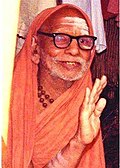 68th Shankaracharya Sri Chandrashekharendra Saraswati Mahaswamigal
 -
 69th Shankaracharya Sri Jayendra Saraswathi Mahaswamigal
 -
 70th Shankaracharya Sri Vijayendra Saraswathi Mahaswamigal
 -
 71th Shankaracharya Sri Satya Chandrashekharendra Saraswati Mahaswamigal


Sankararaman murder case[edit | edit source]
In 2004, Jagadguru Sri Jayendra Saraswathi Mahaswamigal and his junior Vijayendra Saraswati were arrested in connection with the Sankararaman murder case on Diwali day.[30] The court said that the complainant failed to support the prosecution and he was given bail. The trial went on till 2013 when he was acquitted by the court.[31]
Notes[edit | edit source]
- ↑ See also "Sri Shankaracharya and his connection with Kanchipuram" (PDF).
- ↑ See also:
* Vidyasankar Sundaresan (3 August 1994), Real history of the Kanchi math
* Vidyasankar Sundaresan (sept 6, 2000), kanchi Shankara Mutt
References[edit | edit source]
- ↑ Krishna 2006, p. 100.
- ↑ 2.0 2.1 2.2 Suthren Hirst 2005, p. 25.
- ↑ 3.0 3.1 Clark 2006, p. 224.
- ↑ 4.0 4.1 4.2 Dalal 2010, p. 192.
- ↑ 5.0 5.1 5.2 5.3 Sunil (1987).
- ↑ 6.0 6.1 Dalal 2010, p. 376.
- ↑ "The Traditional Age of Sri Sankaracharya and The Mathas | PDF | Indian Religions | Religious Comparison". Scribd. Retrieved 28 May 2024.
- ↑ Bader 2000, p. 289–290.
- ↑ Kasturi & Madhavan 2007, pp. 173–174.
- ↑ Sarasvati & Mahadevan 2003, pp. 436–437.
- ↑ Rao 1916, p. 2.
- ↑ Rao 1916, p. 3.
- ↑ Sharma 1987, p. 59-72.
- ↑ Rao 1916, p. 6.
- ↑ 15.0 15.1 Scheifinger 2016, p. 106.
- ↑ Dalal 2014, "Kanchipuram".
- ↑ Sunil (1987), p. 13.
- ↑ Sharma 1987, p. 17.
- ↑ Sunil (1987), p. 374-382.
- ↑ 20.0 20.1 Sharma 1987, p. 18.
- ↑ Veeramani 1988, p. 217.
- ↑ "Kanchi seer Sri Jayendra Saraswathi, others acquitted in auditor assault case - Times of India ►". The Times of India. May 2016. Retrieved 1 March 2018.
- ↑ Cenkner 1995, p. 117–121.
- ↑ National Mission for Manuscripts (India) (2006). National Mission for Manuscripts: Report of the Third Year, 7 February 2005 - 7 February 2006. National Mission for Manuscripts. pp. 42–43.
- ↑ Saṃskr̥ta Āyoga (1958). Report of the Sanskrit Commission, 1956-1957. Manager of Publications, Government of India. p. 63.
- ↑ "History of the Kanchi Sankaracharya Math and Acharaparampara". www.kamakoti.org. Retrieved 1 November 2016.
- ↑ Encyclopedia of Indian Philosophies (2006). Advaita Vedānta from 800 to 1200. Motilal Banarsidass Publishers. p. 435. ISBN 978-81-208-3061-5.
- ↑ "Schools of Philosophy". hindupedia.com. Retrieved 1 November 2016.
- ↑ Meena 1974, p. 46.
- ↑ "Kanchi seer Jayendra Saraswathi, a spiritual colossus till his arrest in 2004, dies - Times of India ►". The Times of India. 28 February 2018. Retrieved 1 March 2018.
- ↑ "Kanchi seer Sri Jayendra Saraswathi, others acquitted in auditor assault case - Times of India ►". The Times of India. May 2016. Retrieved 1 March 2018.
Sources[edit | edit source]
- Printed sources
- Bader, Jonathan Bader (2000). Conquest of the Four Quarters: Traditional Accounts of the Life of Śaṅkara. Aditya Prakashan. ISBN 978-81-7742-002-9.
- Cenkner, William (1995). A Tradition of Teachers: Śaṅkara and the Jagadgurus Today. Motilal Banarsidass. ISBN 978-81-208-0932-1.
- Clark, Matthew (2006), The Daśanāmī-saṃnyāsīs. The Integration Of Ascetic Lineages Into An Order, BRILL
- Dalal, Roshen (2010), Hinduism: An Alphabetical Guide, Penguin, ISBN 978-0-14-341421-6
- Dalal, Roshen (2014), Hinduism: An Alphabetical Guide, Penguin UK
- Kasturi, Prema; Madhavan, Chithra (2007). South India heritage: an introduction. East West. pp. 173–174. ISBN 978-81-88661-64-0.
- Krishna, Nanditha (2006). Kanchipuram: a heritage of art and religion. Aiyar Foundation. ISBN 978-81-901484-1-2.
- Meena, V. (1974). Temples in South India (1st ed.). Kanniyakumari: Harikumar Arts.
- Rao, T. A. Gopinatha (1916), Copperplate Inscriptions of the Kamakothi Pita, The Law Printing House
- Sarasvati, Jayēdra; Mahadevan, T. M. P. (2003). Preceptors of Advaita. Samata Books. ISBN 9788185208510.
- Scheifinger, Heinz (23 May 2016). "Online Connections, Online Yatras". In Ajaya Kumar Sahoo; Johannes G. de Kruijf (eds.). Indian Transnationalism Online: New Perspectives on Diaspora. Routledge. ISBN 978-1-317-11740-7.
- Sharma, Varanasi Rajgopal (1987), Kanchi Kamakoti Math - A Myth, Ganga-Tunga Prakashan
- Sunil, K. P. (13 September 1987). "The Curious Case of the Missing Monk". The Illustrated Weekly of India. 108 (26–49).
- Suthren Hirst, Jacqueline G. (2005). Samkara's Advaita Vedanta: A Way of Teaching. Routledge. ISBN 978-1-134-25441-5.
- Veeramani, K. (1988), Kanchi Sankarachariar, Saint Or Sectarian?, Dravidar Kazhagam
- Web-sources
- ↑ "About the Peetham". www.kamakoti.org. Retrieved 24 September 2022.
- ↑ 2.0 2.1 2.2 2.3 2.4 Guruswamy, Mohan (30 November 2021). "Mohan Guruswamy | The Kumbakonam of the Kanchi Shankaracharya". Deccan Chronicle. Retrieved 4 January 2022.
- ↑ 3.00 3.01 3.02 3.03 3.04 3.05 3.06 3.07 3.08 3.09 3.10 3.11 T.M. Krishna (Mar 04, 2018), Jayendra Saraswathi redefined Kanchi Mutt's role – but did not earn the stature of his predecessor, scroll.in
- ↑ N. Ramesan. "Preceptors of Advaita 59 SRI KAMAKOTI PITHA OF SRI". www.kamakoti.org. Retrieved 28 May 2024.
- ↑ "ஆதி சங்கரர் நிறுவியதா காஞ்சி சங்கரமடம்? - முரண்படும் தகவல்கள்". BBC News தமிழ் (in தமிழ்). 1 March 2018. Retrieved 4 January 2022.
- ↑ 6.0 6.1 Who was Sri Jayendra Saraswathi?, The Indian Express, February 28, 2018
- ↑ 7.0 7.1 A. Subramani (28 February 2018). "Kanchi seer Jayendra Saraswathi, a spiritual colossus till his arrest in 2004, dies - Times of India ►". The Times of India. Retrieved 1 March 2018.
- ↑ "Leaders mourn Kanchi seer Jayendra Saraswathi's death". The Hindu. 28 February 2018. Retrieved 12 July 2019.