



>DEFCON5 Removed puffery MOS:PUFFERY + WP:BOOSTER |
No edit summary |
||
| Line 1: | Line 1: | ||
{{Short description|Medical college in Madhya Pradesh, India}} | |||
{{Multiple issues| | |||
{{advert|date=January 2018}} | |||
{{More citations needed|date=April 2024}} | |||
}} | |||
{{Use dmy dates|date=November 2018}} | {{Use dmy dates|date=November 2018}} | ||
{{Use Indian English|date=November 2018}} | {{Use Indian English|date=November 2018}} | ||
{{Infobox university | {{Infobox university | ||
|name | |name = Gandhi Medical College, Bhopal | ||
|native_name | |native_name = | ||
|caption | |caption = | ||
|motto | |motto = असतो मा सद्गमय | ||
|mottoeng | |mottoeng = Lead us from Untruth to Truth | ||
|established | |established = {{start date and age|1956}} | ||
|type | |type = Autonomous body (since 1997) controlled by Gandhi Medical College Society, Department of Medical Education, Government of Madhya Pradesh | ||
|endowment | |endowment = | ||
|dean | |dean = Dr. Kavita N. Singh | ||
|students | |students = 250 per year (undergraduate) | ||
|city | |city =[[Bhopal]] | ||
|state | |state =[[Bhopal, India|Madhya Pradesh]] | ||
|country | |country =[[India]] | ||
|campus | |campus = | ||
|free_label | |free_label = | ||
|free | |free = | ||
|website | |website =[http://gmcbhopal.net gmcbhopal.net] | ||
| | |image = Logo-GMC-Bhopal.png | ||
|staff = | |||
|staff | |faculty = | ||
|faculty | |profess = | ||
|profess | |affiliations = [[Madhya Pradesh Medical Science University]] | ||
|affiliations | |||
}} | }} | ||
'''Gandhi Medical College''' ({{ | '''Gandhi Medical College''' ({{langx|hi|गाँधी चिकित्सा महाविद्यालय, भोपाल }}, '''GMC''') is a [[public university|public]] [[medical school]] in [[Bhopal]], [[Madhya Pradesh]], [[India]]. It was established in 1956.<ref>{{cite web|url=https://timesofindia.indiatimes.com/city/bhopal/AIIMS-Bhopal-students-to-get-lessons-in-Hindi/articleshow/16346378.cms|title=AIIMS Bhopal students to get lessons in Hindi - Times of India|website=The Times of India}}</ref> | ||
==Location== | ==Location== | ||
Gandhi Medical College is located in the Fatehgarh area on Sultania Road in Bhopal, Madhya Pradesh. The college is situated on the ground [[Fatehgarh Fort]] once stood. | |||
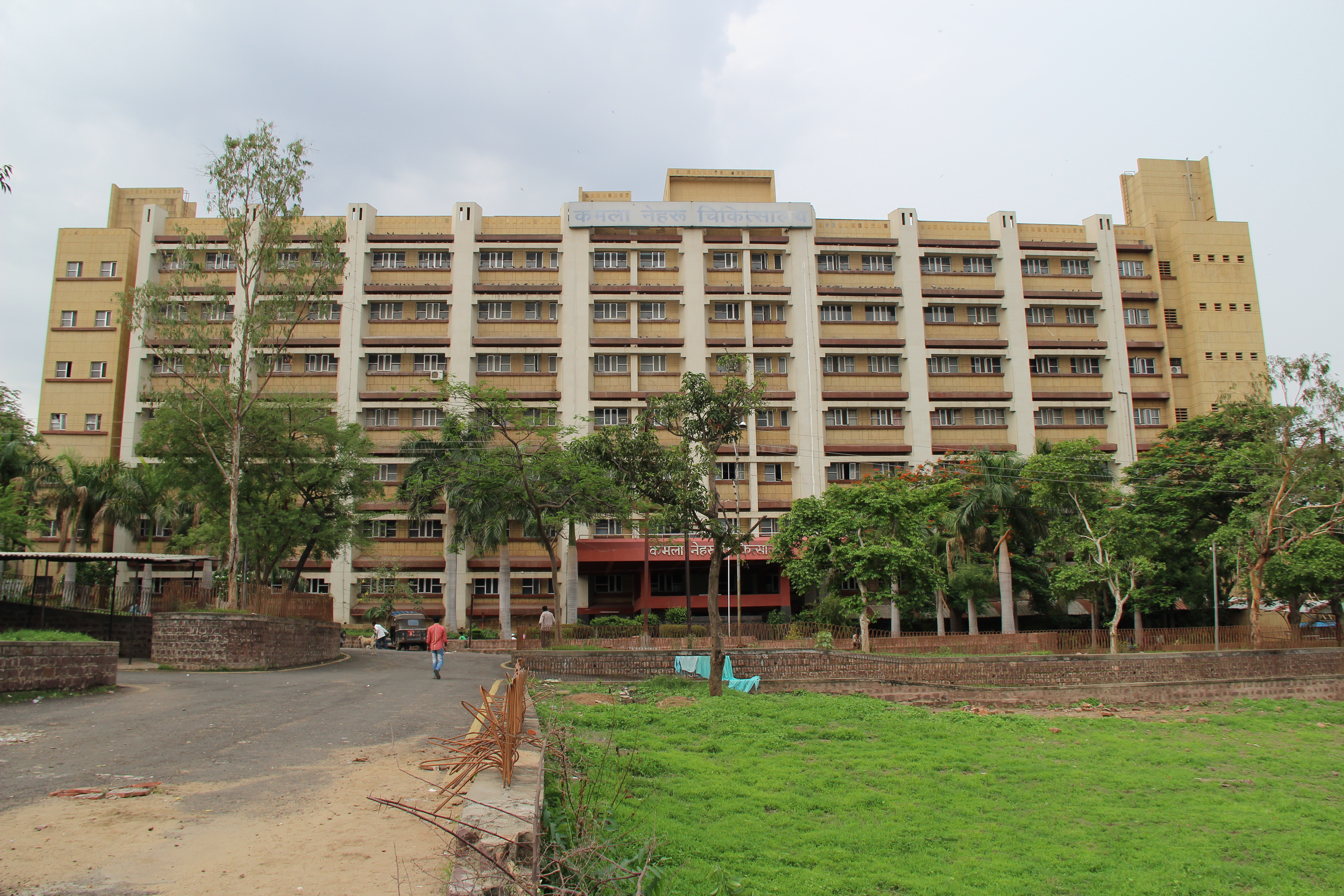
[[File:GMC and KN Hospital.jpg|thumb|center|GMC at Upper Lake]] | [[File:GMC and KN Hospital.jpg|thumb|center|GMC at Upper Lake]] | ||
==History== | ==History== | ||
Gandhi Medical College, Bhopal was inaugurated on 13 August 1955 by Pt. [[Lal Bahadur Shastri]]. The college started its functioning in the building of the Polytechnic College with its first batch of 50 students and two departments: Anatomy and Physiology. The first Principal in 1955 was Dr. S.C. Sinha. The boys hostel was in the present Jehanuma Palace Hotel and the girls hostel was bracketed with the MLB college girls hostel at Banganga. | Gandhi Medical College, Bhopal was inaugurated on 13 August 1955 by Pt. [[Lal Bahadur Shastri]]. The college started its functioning in the building of the Polytechnic College with its first batch of 50 students and two departments: Anatomy and Physiology. The first Principal in 1955 was Dr. S.C. Sinha. The boys hostel was in the present Jehanuma Palace Hotel and the girls hostel was bracketed with the MLB college girls hostel at Banganga. | ||
[[File:GMC | [[File:GMC Bhopal.jpg|thumb|GMC Bhopal]] | ||
After one year the foundation of an independent building was laid by Union Minister of Home Shri [[Govind Ballabh Pant]] on 15 September 1956. It took seven years to complete the | After one year the foundation of an independent building was laid by Union Minister of Home Shri [[Govind Ballabh Pant]] on 15 September 1956. It took seven years to complete the construction. This finished building, housed in the historic [[Fort of Fatehgarh]], was inaugurated by the first Prime Minister of India Pt. [[Jawaharlal Nehru]], on 13 March 1963. Also in attendance were Begum Sajida Sultan of Bhopal, Governor Shri H.V. Pataskar, Chief Minister Shri B.R. Mandloi, Health Minister Mr. M.P. Dubey and Principal Dr. R.P. Singh. | ||
[[File:Inauguration of Lady Lansdowne Hospital for women, now known as the Sultania Zanana Hospital.jpg|thumbnail|center|Inauguration of Lady Lansdowne Hospital for women, now known as the Sultania Zanana Hospital]] | [[File:Inauguration of Lady Lansdowne Hospital for women, now known as the Sultania Zanana Hospital.jpg|thumbnail|center|Inauguration of Lady Lansdowne Hospital for women, now known as the Sultania Zanana Hospital]] | ||
The foundation stone of the surgical and medical wards (Kamla Nehru Block known as KNB wards) was laid by [[Rajkumari Amrit Kaur]] the then Union Health Minister on 6 March 1955. | The foundation stone of the surgical and medical wards (Kamla Nehru Block known as KNB wards) was laid by [[Rajkumari Amrit Kaur]] the then Union Health Minister on 6 March 1955. The foundation stone of the boys' hostel was laid by King of Nepal Maharaj Mahendra Bir Vikram Shah Deo on 18 November 1955. | ||
Hospitals for men and women were established as Prince of Wales Hospital | Hospitals for men and women were established as Prince of Wales Hospital and Lady Linlithgo Lansdowne Hospital respectively. The hospital changed names with change of reigns. Prince of Wales Hospital became Hamidia Hospital and Lady Linlithgo became Sultania Zanana Hospital. Both remain part of Gandhi Medical College today. [[Margaret Stott Bhore|Lady Bhore]] Centre opposite Fire Brigade, Fatehgarh caters to antenatal and child welfare activities in addition to preventive and social medical counseling. | ||
== Campus == | == Campus == | ||
The campus building is housed in Fort of Fatehgarh which was inaugurated by the first Prime Minister of India Pt. [[Jawaharlal Nehru]].<ref name=GMC_History>{{cite web|title=Gandhi Medical College|url=http://gmcbhopal.net/history.asp|access-date=28 March 2012|archive-date=7 April 2012|archive-url=https://web.archive.org/web/20120407064933/http://gmcbhopal.net/history.asp|url-status=dead}}</ref> | |||
The campus building is housed in Fort of Fatehgarh which was inaugurated by the first Prime Minister of India Pt. [[Jawaharlal Nehru]].<ref name=GMC_History>{{cite web|title=Gandhi Medical College|url=http://gmcbhopal.net/history.asp|access-date=28 March 2012}}</ref> | |||
The campus houses: | The campus houses: | ||
* Main college building | * Main college building | ||
* Hamidia | [[File:GMC_Bhopal.jpg|thumb|right|Main Building(Front view)]] | ||
[[File:GMC_Bhopal_South_Side.jpg|thumb|right|Main Building (South Face)]] | |||
* Hamidia Hospital | |||
* Kamla Nehru Hospital | * Kamla Nehru Hospital | ||
[[File:Kamla_Nehru_Hospital.jpg|thumb|right|Kamla Nehru Hospital (Main Entrance)]] | |||
* Regional Institute of Ophthalmology | * Regional Institute of Ophthalmology | ||
* NIREH | * NIREH | ||
[[File:National_Institute_For_Research_in_Environmental_Health.jpg|thumb|right]] | |||
* Central Pathology lab | * Central Pathology lab | ||
* Blood Bank | * Blood Bank | ||
* Rain Basera (for patients and their relatives stay) | * Rain Basera (for patients and their relatives stay) | ||
* | * One canteen: JDA Canteen | ||
* Hostels | * Hostels (A-H Blocks) | ||
* Animal House | * Animal House | ||
* Guest House | * Guest House | ||
* Lake view Cricket Ground (under construction) | * Lake view Cricket Ground (under construction) | ||
* Lawn Tennis court | * Lawn Tennis court | ||
* Badminton court | * Badminton court | ||
* Sports complex which houses separate gym for Boys and Girls along with a multi-activity hall and table tennis arena. | * Sports complex which houses separate gym for Boys and Girls along with a multi-activity hall and table tennis arena. | ||
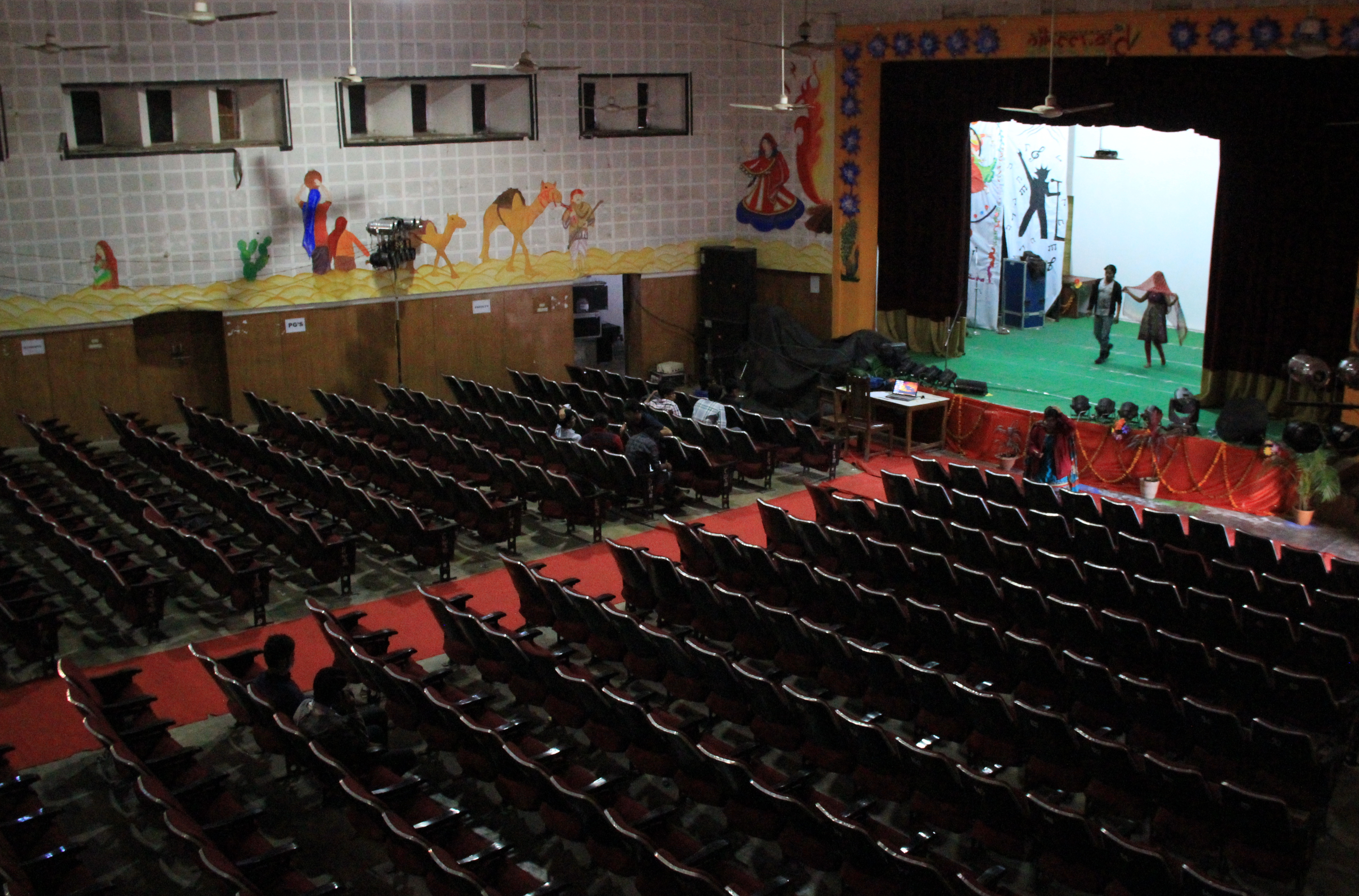
*Central Auditorium | |||
[[File:GMC, Bhopal Central Auditorium.jpg|thumb|right|GMC, Bhopal Central Auditorium]] | [[File:GMC, Bhopal Central Auditorium.jpg|thumb|right|GMC, Bhopal Central Auditorium]] | ||
* Central | *Central library | ||
* Four lecture theatres | *Four state of the art lecture theatres (New) | ||
* | *Four Old Lecture Theatres | ||
* | *Labs -Biochemistry, Pathology, Anatomy, Microbiology, Physiology,Forensic. | ||
It is recognized by the Medical Council of India & State Paramedical Council of Madhya Pradesh, and affiliated to the Madhya Pradesh Medical Science University located at Jabalpur, Bhopal. | |||
== Departments == | == Departments == | ||
Departments are distributed between the main college building, Kamla Nehru And Hamidia Hospital | |||
* [[Anatomy]] | * [[Anatomy]] | ||
* [[Physiology]] | * [[Physiology]] | ||
| Line 176: | Line 111: | ||
* [[Dentistry]] | * [[Dentistry]] | ||
* [[Oncology]] | * [[Oncology]] | ||
==Hospitals and institutes== | |||
The following hospitals and institutes are under the medical college: | |||
* [[Hamidia Hospital]] | |||
* Sultania Zanana Hospital | |||
* [[Kamla Nehru Hospital]] | |||
* [[Regional Institute of Ophthalmology]] | |||
* National Institute For Research in Environmental Health | |||
* Cardiac Science Center | |||
* Medico-Legal Institute | |||
* Trauma & emergency Center | |||
* State Virology Laboratory | |||
==Administration== | ==Administration== | ||
Executive committee - Gandhi Medical College Society <ref>Gandhi Medical College Society is an autonomous body registered with Registrar Firms and Society Govt. of M.P. Registration No. 4243 dated: 04.01.1997.</ref> | Executive committee - Gandhi Medical College Society <ref>Gandhi Medical College Society is an autonomous body registered with Registrar Firms and Society Govt. of M.P. Registration No. 4243 dated: 04.01.1997.</ref> | ||
* Governing body - Gandhi Medical College Society, Department of Medical Education, Government of Madhya Pradesh.<ref name=GMC_About>{{cite web|title=Gandhi Medical College|url=http://gmcbhopal.net/aboutUs.asp|access-date=28 March 2012}}</ref> | * Governing body - Gandhi Medical College Society, Department of Medical Education, Government of Madhya Pradesh.<ref name=GMC_About>{{cite web|title=Gandhi Medical College|url=http://gmcbhopal.net/aboutUs.asp|access-date=28 March 2012|archive-date=12 February 2012|archive-url=https://web.archive.org/web/20120212133403/http://gmcbhopal.net/aboutUs.asp|url-status=dead}}</ref> | ||
==Admissions== | ==Admissions== | ||
Admission to the MBBS course is through [[National Eligibility cum Entrance Test (Undergraduate)|National Eligibility cum Entrance Test-UG]] (NEET-UG) and direct nominees of Govt. of India.<ref name=GMC_Courses>{{cite web|title=Gandhi Medical College|url=http://gmcbhopal.net/courses.asp|access-date=28 March 2012|archive-date=7 April 2012|archive-url=https://web.archive.org/web/20120407092148/http://gmcbhopal.net/courses.asp|url-status=dead}}</ref> | |||
Admission to post-graduate courses (MS/MD) is through [[National Eligibility cum Entrance Test (Postgraduate)|NEET-PG]] and in-service candidates of Govt. of Madhya Pradesh.<ref name=GMC_Courses/> | |||
Admission to post-graduate courses (MS/MD) is through NEET-PG and in-service candidates of Govt. of Madhya Pradesh.<ref name=GMC_Courses/> | |||
==Medico-Legal Institute== | ==Medico-Legal Institute== | ||
The survey committee constituted in 1964 by the government of India considered that essential mission of a | The survey committee constituted in 1964 by the government of India considered that essential mission of a Medico-Legal institute should be to train the medical jurists. The Mudalier committee in 1962 recommended the creation of a separate cadre of specially trained medical jurists to look after the work of the state. The government of Madhya Pradesh created the 'First Medico-legal Institute in India' at its capital city Bhopal in 1977. | ||
The Medico-legal Institute played a role in the management of the [[Bhopal disaster]], when a poisonous gas (MIC, methyl isocyanate) leaked from one of the storage tanks of the Union Carbide factory on the night of 2–3 December 1984. Postmortem examinations were conducted and steps were taken to preserve bodily tissues and fluids for the further chemical examination in order to determine what gas/gases have been inhaled by the people. | |||
The Medico-legal Institute played a | |||
Postmortem examinations were conducted | |||
==National Institute for Research in Environmental Health== | ==National Institute for Research in Environmental Health== | ||
[[File:National Institute For Research in Environmental Health.jpg|thumb|National Institute for Research in Environmental Health]] | [[File:National Institute For Research in Environmental Health.jpg|thumb|National Institute for Research in Environmental Health]] | ||
National Institute for Research in Environmental Health (NIREH), Bhopal, is one of the permanent institutes of the Indian Council of Medical Research (ICMR), a government of India's apex autonomous organization for bio-medical research in the country. | |||
National Institute for Research in Environmental Health (NIREH), Bhopal, is one of the permanent institutes of the Indian Council of Medical Research (ICMR), a government of | |||
Focused research on methyl isocynate (MIC) affected population of Bhopal in the areas of | Focused research on methyl isocynate (MIC) affected population of Bhopal in the areas of: | ||
* Respiratory disease | * Respiratory disease | ||
* Eye related diseases | * Eye related diseases | ||
| Line 229: | Line 154: | ||
* Second generation children related medical issues | * Second generation children related medical issues | ||
* Rehabilitation | * Rehabilitation | ||
NIREH will have a clinical research wing having the following departments: | |||
* General Medicine | * General Medicine | ||
* Respiratory Medicine/Pulmonary Medicine | * Respiratory Medicine/Pulmonary Medicine | ||
| Line 244: | Line 166: | ||
* Epidemiology/Community Medicine | * Epidemiology/Community Medicine | ||
The following facilities are in the process of being established at NIREH as part of its | |||
development: | development: | ||
* Molecular Biology Laboratory | * Molecular Biology Laboratory | ||
| Line 257: | Line 179: | ||
==Bhopal gas tragedy== | ==Bhopal gas tragedy== | ||
Gandhi Medical College and Hamidia Hospital played a crucial role in emergency response and care after the [[Bhopal Disaster]]. | Gandhi Medical College and Hamidia Hospital played a crucial role in emergency response and care after the [[Bhopal Disaster]]. | ||
A regional institute of ophthalmology was established here after the disaster for the patients | A regional institute of ophthalmology was established here after the disaster for the patients with eye problems due to MIC. | ||
Studies performed in the institute: | Studies performed in the institute: | ||
* Health Effects of the Toxic Gas Leak from the Union Carbide Methyl Isocyanate Plant in Bhopal. Technical report on Population Based Long Term, Epidemiological Studies (1985–1994). Bhopal Gas Disaster Research Centre, Gandhi Medical College, Bhopal (2003?) Contains the studies performed by the Indian Council of Medical Research (ICMR) | * Health Effects of the Toxic Gas Leak from the Union Carbide Methyl Isocyanate Plant in Bhopal. Technical report on Population Based Long Term, Epidemiological Studies (1985–1994). Bhopal Gas Disaster Research Centre, Gandhi Medical College, Bhopal (2003?) Contains the studies performed by the Indian Council of Medical Research (ICMR) | ||
* An Epidemiological Study of Symptomatic Morbidities in Communities Living Around Solar Evaporation Ponds And Behind Union Carbide Factory, Bhopal. Department of Community Medicine, Gandhi Medical College, Bhopal | * An Epidemiological Study of Symptomatic Morbidities in Communities Living Around Solar Evaporation Ponds And Behind Union Carbide Factory, Bhopal. Department of Community Medicine, Gandhi | ||
Medical College, Bhopal "2009" | |||
==References== | ==References== | ||
| Line 270: | Line 192: | ||
== External links == | == External links == | ||
* [http://www.gmcbhopal.net gmcbhopal.net]- Official website of GMC, Bhopal. | * [http://www.gmcbhopal.net gmcbhopal.net] {{Webarchive|url=https://web.archive.org/web/20121105051742/http://www.gmcbhopal.net/ |date=5 November 2012 }}- Official website of GMC, Bhopal. | ||
* [http://www.alumniofgmc.com Website for alumni of GMC]. | * [http://www.alumniofgmc.com Website for alumni of GMC]. | ||
| Line 282: | Line 204: | ||
[[Category:Medical colleges in Madhya Pradesh]] | [[Category:Medical colleges in Madhya Pradesh]] | ||
[[Category:1956 establishments in Madhya Pradesh]] | [[Category:1956 establishments in Madhya Pradesh]] | ||
[[Category: | [[Category:Universities and colleges established in 1956]] | ||
Latest revision as of 20:46, 19 February 2026
 | This article has multiple issues. Please help improve it or discuss these issues on the talk page. (Learn how and when to remove these template messages)
|

 | |
| Motto | असतो मा सद्गमय |
|---|---|
Motto in English | Lead us from Untruth to Truth |
| Type | Autonomous body (since 1997) controlled by Gandhi Medical College Society, Department of Medical Education, Government of Madhya Pradesh |
| Established | 1956 |
| Dean | Dr. Kavita N. Singh |
| Students | 250 per year (undergraduate) |
| Location | , , |
| Affiliations | Madhya Pradesh Medical Science University |
| Website | gmcbhopal.net |
Gandhi Medical College (Script error: The function "langx" does not exist., GMC) is a public medical school in Bhopal, Madhya Pradesh, India. It was established in 1956.[1]
Location[edit | edit source]
Gandhi Medical College is located in the Fatehgarh area on Sultania Road in Bhopal, Madhya Pradesh. The college is situated on the ground Fatehgarh Fort once stood.

History[edit | edit source]
Gandhi Medical College, Bhopal was inaugurated on 13 August 1955 by Pt. Lal Bahadur Shastri. The college started its functioning in the building of the Polytechnic College with its first batch of 50 students and two departments: Anatomy and Physiology. The first Principal in 1955 was Dr. S.C. Sinha. The boys hostel was in the present Jehanuma Palace Hotel and the girls hostel was bracketed with the MLB college girls hostel at Banganga.

After one year the foundation of an independent building was laid by Union Minister of Home Shri Govind Ballabh Pant on 15 September 1956. It took seven years to complete the construction. This finished building, housed in the historic Fort of Fatehgarh, was inaugurated by the first Prime Minister of India Pt. Jawaharlal Nehru, on 13 March 1963. Also in attendance were Begum Sajida Sultan of Bhopal, Governor Shri H.V. Pataskar, Chief Minister Shri B.R. Mandloi, Health Minister Mr. M.P. Dubey and Principal Dr. R.P. Singh.

The foundation stone of the surgical and medical wards (Kamla Nehru Block known as KNB wards) was laid by Rajkumari Amrit Kaur the then Union Health Minister on 6 March 1955. The foundation stone of the boys' hostel was laid by King of Nepal Maharaj Mahendra Bir Vikram Shah Deo on 18 November 1955.
Hospitals for men and women were established as Prince of Wales Hospital and Lady Linlithgo Lansdowne Hospital respectively. The hospital changed names with change of reigns. Prince of Wales Hospital became Hamidia Hospital and Lady Linlithgo became Sultania Zanana Hospital. Both remain part of Gandhi Medical College today. Lady Bhore Centre opposite Fire Brigade, Fatehgarh caters to antenatal and child welfare activities in addition to preventive and social medical counseling.
Campus[edit | edit source]
The campus building is housed in Fort of Fatehgarh which was inaugurated by the first Prime Minister of India Pt. Jawaharlal Nehru.[2] The campus houses:
- Main college building

- Hamidia Hospital
- Kamla Nehru Hospital

- Regional Institute of Ophthalmology
- NIREH

- Central Pathology lab
- Blood Bank
- Rain Basera (for patients and their relatives stay)
- One canteen: JDA Canteen
- Hostels (A-H Blocks)
- Animal House
- Guest House
- Lake view Cricket Ground (under construction)
- Lawn Tennis court
- Badminton court
- Sports complex which houses separate gym for Boys and Girls along with a multi-activity hall and table tennis arena.
- Central Auditorium

- Central library
- Four state of the art lecture theatres (New)
- Four Old Lecture Theatres
- Labs -Biochemistry, Pathology, Anatomy, Microbiology, Physiology,Forensic.
It is recognized by the Medical Council of India & State Paramedical Council of Madhya Pradesh, and affiliated to the Madhya Pradesh Medical Science University located at Jabalpur, Bhopal.
Departments[edit | edit source]
Departments are distributed between the main college building, Kamla Nehru And Hamidia Hospital
- Anatomy
- Physiology
- Biochemistry
- Pharmacology
- Pathology
- Microbiology
- Forensic Medicine
- Community Medicine
- Ophthalmology
- Otolaryngology (ENT)
- Anesthesiology
- Surgery
- Medicine
- Pediatrics
- Obstetrics & Gynaecology
- Orthopedics
- Radiology
- Gastroenterology
- Skin V D
- TB Chest
- Cardiology
- Pediatric Surgery
- Cardiothoracic Surgery
- Burn & Plastic Surgery
- Psychiatry
- Dentistry
- Oncology
Hospitals and institutes[edit | edit source]
The following hospitals and institutes are under the medical college:
- Hamidia Hospital
- Sultania Zanana Hospital
- Kamla Nehru Hospital
- Regional Institute of Ophthalmology
- National Institute For Research in Environmental Health
- Cardiac Science Center
- Medico-Legal Institute
- Trauma & emergency Center
- State Virology Laboratory
Administration[edit | edit source]
Executive committee - Gandhi Medical College Society [3]
- Governing body - Gandhi Medical College Society, Department of Medical Education, Government of Madhya Pradesh.[4]
Admissions[edit | edit source]
Admission to the MBBS course is through National Eligibility cum Entrance Test-UG (NEET-UG) and direct nominees of Govt. of India.[5]
Admission to post-graduate courses (MS/MD) is through NEET-PG and in-service candidates of Govt. of Madhya Pradesh.[5]
Medico-Legal Institute[edit | edit source]
The survey committee constituted in 1964 by the government of India considered that essential mission of a Medico-Legal institute should be to train the medical jurists. The Mudalier committee in 1962 recommended the creation of a separate cadre of specially trained medical jurists to look after the work of the state. The government of Madhya Pradesh created the 'First Medico-legal Institute in India' at its capital city Bhopal in 1977.
The Medico-legal Institute played a role in the management of the Bhopal disaster, when a poisonous gas (MIC, methyl isocyanate) leaked from one of the storage tanks of the Union Carbide factory on the night of 2–3 December 1984. Postmortem examinations were conducted and steps were taken to preserve bodily tissues and fluids for the further chemical examination in order to determine what gas/gases have been inhaled by the people.
National Institute for Research in Environmental Health[edit | edit source]
National Institute for Research in Environmental Health (NIREH), Bhopal, is one of the permanent institutes of the Indian Council of Medical Research (ICMR), a government of India's apex autonomous organization for bio-medical research in the country.
Focused research on methyl isocynate (MIC) affected population of Bhopal in the areas of:
- Respiratory disease
- Eye related diseases
- Kidney diseases
- Cancer
- Genetic disorders
- Congenital disorders
- Mental and neurological health
- Women related medical issues
- Second generation children related medical issues
- Rehabilitation
NIREH will have a clinical research wing having the following departments:
- General Medicine
- Respiratory Medicine/Pulmonary Medicine
- Ophthalmology
- Paediatrics
- Obstetrics & Gynecology
- Psychiatry/Mental Health
- Neurology
- Radio diagnosis
- Epidemiology/Community Medicine
The following facilities are in the process of being established at NIREH as part of its development:
- Molecular Biology Laboratory
- Microbiology Laboratory
- Biochemistry Laboratory
- Pathology Laboratory
- Haematology Laboratory
- PFT Laboratory
- Central Equipment Facility
- Department of Epidemiology including biostatistics and computing programming
- Database relating to research on toxic gas exposure and environmental contamination
Bhopal gas tragedy[edit | edit source]
Gandhi Medical College and Hamidia Hospital played a crucial role in emergency response and care after the Bhopal Disaster.
A regional institute of ophthalmology was established here after the disaster for the patients with eye problems due to MIC.
Studies performed in the institute:
- Health Effects of the Toxic Gas Leak from the Union Carbide Methyl Isocyanate Plant in Bhopal. Technical report on Population Based Long Term, Epidemiological Studies (1985–1994). Bhopal Gas Disaster Research Centre, Gandhi Medical College, Bhopal (2003?) Contains the studies performed by the Indian Council of Medical Research (ICMR)
- An Epidemiological Study of Symptomatic Morbidities in Communities Living Around Solar Evaporation Ponds And Behind Union Carbide Factory, Bhopal. Department of Community Medicine, Gandhi
Medical College, Bhopal "2009"
References[edit | edit source]
- ↑ "AIIMS Bhopal students to get lessons in Hindi - Times of India". The Times of India.
- ↑ "Gandhi Medical College". Archived from the original on 7 April 2012. Retrieved 28 March 2012.
- ↑ Gandhi Medical College Society is an autonomous body registered with Registrar Firms and Society Govt. of M.P. Registration No. 4243 dated: 04.01.1997.
- ↑ "Gandhi Medical College". Archived from the original on 12 February 2012. Retrieved 28 March 2012.
- ↑ 5.0 5.1 "Gandhi Medical College". Archived from the original on 7 April 2012. Retrieved 28 March 2012.
External links[edit | edit source]
- gmcbhopal.net Archived 5 November 2012 at the Wayback Machine- Official website of GMC, Bhopal.
- Website for alumni of GMC.