


Created page with "{{Short description|Undergraduate college of Harvard University in Cambridge, Massachusetts}} {{Infobox university |name = Harvard College |image_name = Shield of..." |
Naveed Aslam (talk | contribs) updated |
||
| Line 1: | Line 1: | ||
{{Short description|Undergraduate college of Harvard University in | {{Short description|Undergraduate college of Harvard University in Massachusetts}} | ||
{{Use mdy dates|date=December 2023}} | |||
{{Use American English|date=December 2023}} | |||
{{Infobox university | {{Infobox university | ||
| image_name = Shield of Harvard College.svg | |||
|image_name | | image_upright = 0.7 | ||
|image_upright = 0.7 | | established = {{start date and age|1636}} | ||
|established | | type = [[Private university|Private]] [[undergraduate education|undergraduate]] [[college]] | ||
|type | | parent = [[Harvard University]] | ||
|dean | | dean = [[David Deming (economist)|David Deming]] | ||
|city | | city = [[Cambridge, Massachusetts|Cambridge]] | ||
|state | | state = [[Massachusetts]] | ||
|country | | country = United States | ||
|students | | coordinates = {{Coord|42.374|-71.117|scale:10000_region:US-MA|display=title,inline}} | ||
|campus | | students = 6,755<ref name=CDS-B>{{cite web |title=Common Data Set 2019–2020 |url=https://oir.harvard.edu/files/huoir/files/harvard_cds_2019-2020.pdf |department=Office of Institutional Research |publisher=Harvard University |access-date=23 June 2020 |archive-date=26 June 2020 |archive-url=https://web.archive.org/web/20200626231608/https://oir.harvard.edu/files/huoir/files/harvard_cds_2019-2020.pdf |url-status=live }}</ref> | ||
|website | | campus = Urban | ||
| website = {{URL|https://college.harvard.edu}} | |||
}} | }} | ||
'''Harvard College''' is the [[undergraduate education|undergraduate]] | '''Harvard College''' is the [[undergraduate education|undergraduate]] [[college]] within the [[Harvard Faculty of Arts and Sciences|Faculty of Arts and Sciences]] at [[Harvard University]]. | ||
and | |||
The college offers [[Bachelor of Arts]] and [[Bachelor of Science]] degree programs. It is highly selective, with 3.5 percent of applicants being offered admission as of 2023.<ref>{{cite news|title=Record-Low 4.59 Percent of Applicants Accepted to Harvard Class of 2022|url=https://www.thecrimson.com/article/2018/3/29/harvard-regular-admissions-2022////|access-date=16 September 2019|newspaper=The Harvard Crimson|date=29 March 2018|archive-date=9 November 2020|archive-url=https://web.archive.org/web/20201109012050/https://www.thecrimson.com/article/2018/3/29/harvard-regular-admissions-2022/|url-status=dead}}</ref><ref>{{cite news|title=Record-Low 4.5 Percent of Harvard College Applicants Accepted to Class of 2023|url=https://www.thecrimson.com/article/2019/3/29/2023-admit-numbers/|access-date=16 September 2019|newspaper=The Harvard Crimson|date=29 March 2019|archive-date=12 November 2020|archive-url=https://web.archive.org/web/20201112021052/https://www.thecrimson.com/article/2019/3/29/2023-admit-numbers/|url-status=live}}</ref> Harvard College students participate in over 450 extracurricular organizations and nearly all live on campus.<ref name="organization">{{cite web |title=Student Activities |url=https://college.harvard.edu/life-at-harvard/student-activities |url-status=live |archive-url=https://web.archive.org/web/20201024061830/https://college.harvard.edu/life-at-harvard/student-activities |archive-date=24 October 2020 |access-date=7 December 2019}}</ref> First-year students reside in or near [[Harvard Yard]] while upperclass students reside in other on-campus housing.{{TOC limit|limit=3}} | |||
Harvard College students participate in | |||
{{TOC limit|limit=3}} | |||
==History== | ==History== | ||
{{Main|History of Harvard University}} | {{Main|History of Harvard University}} | ||
[[File:View of the ancient buildings belonging to Harvard College, Cambridge, Mass (NYPL b12349145-422857).jpg|thumb | [[File:Harvard_Old_College.jpg|thumb|Harvard College's first building, as imagined by historian [[Samuel Eliot Morison]]<ref>[https://hollisarchives.lib.harvard.edu/repositories/4/archival_objects/1178880 Clipping from The Harvard Bulletin, on discovery of southeast corner of original Harvard College building during subway excavations], 1910. Records of early Harvard buildings, 1710-1969, UAI 15.10.5, Box: 1, Folder: 8. Harvard University Archives</ref>]] | ||
[[File:View of the ancient buildings belonging to Harvard College, Cambridge, Mass (NYPL b12349145-422857).jpg|thumb|Harvard during the [[Colonial history of the United States|colonial era]]]] | |||
Harvard College was founded in 1636 by vote of the [[Massachusetts General Court|Great and General Court]] of the [[Massachusetts Bay Colony]]. Two years later, the college became home to North America's first known [[printing press]], carried by the ship {{ship||John of London|ship|2}}.<ref name="FirstPrintingPress">{{cite web|title=The instrument behind New England's first literary flowering|date=8 March 2012 |url=http://news.harvard.edu/gazette/story/2012/03/harvard’s-first-impressions/|publisher=Harvard University|access-date=2014-01-18|archive-date=2016-07-11|archive-url=https://web.archive.org/web/20160711053519/http://news.harvard.edu/gazette/story/2012/03/harvard%E2%80%99s-first-impressions/|url-status=live}}</ref><ref name="UHullMHSC">{{cite web|title=Rowley and Ezekiel Rogers, The First North American Printing Press|url=http://www.hull.ac.uk/mhsc/FarHorizons/Documents/EzekielRogers.pdf|publisher=Maritime Historical Studies Centre, University of Hull|access-date=2014-01-18|archive-date=2013-01-23|archive-url=https://web.archive.org/web/20130123223546/http://www.hull.ac.uk/mhsc/FarHorizons/Documents/EzekielRogers.pdf|url-status=live}}</ref> In 1639 the college (heretofore unnamed){{refn|{{cite web|archive-date=2007-02-05|url=http://www.news.harvard.edu/guide/commu/index.html|archive-url=https://web.archive.org/web/20070205041058/http://www.news.harvard.edu/guide/commu/index.html|title=The Harvard Guide. The Harvard Community. Cambridge. |quote=Cambridge was founded in 1630 as Newtowne. In 1637, the tiny village was designated as the location of the then-unnamed college, which would be named Harvard the following year.}} }} was named Harvard College in honor of deceased [[Charlestown, Massachusetts|Charlestown]] minister [[John Harvard (clergyman)|John Harvard]] (1607–1638) who had bequeathed to the school his entire library and half of his monetary estate. | |||
Harvard's first | Harvard's first [[President_of_Harvard_University#Presidents_of_Harvard|Headmaster]] was [[Nathaniel Eaton]] (1610–1674); in 1639, he also became its first instructor to be dismissed, for overstrict discipline.<ref name="Samuel Eliot Morison 1986">Samuel Eliot Morison, ''Three Centuries of Harvard, 1636–1936'' (1986)</ref> The school's first students were graduated in 1642. | ||
The school's first students were graduated in 1642. | |||
The [[Harvard Indian College]] was established, with the capacity for four or five Native Americans, and in 1665 [[Caleb Cheeshahteaumuck]] ({{circa|1643}}–1666) "from the [[Wampanoag]] … did graduate from Harvard, the first Indian to do so in the colonial period."<ref>Monaghan, E. J., 2005, p. 55, 59</ref><!--this seems awkward here but I don't know where else to put it, and I don't think it should be dropped--> | |||
[[ | The [[University of Oxford]] and [[University of Cambridge]], two of the oldest and most prestigious universities in the [[English language|English-speaking world]], have long been structured with individual colleges as part of the larger university and with each college including an association of scholars that shared room and board. Harvard's founders may have envisioned it as the first in a series of sibling colleges replicating the Oxford and Cambridge model, which would eventually constitute a university, though no further colleges materialized in the [[Colonial history of the United States|colonial]] era. The [[Indian College]] was active from 1640 to no later than 1693, but it was a minor addition not operated in federation with Harvard according to the English model. Harvard began granting higher degrees in the late eighteenth century, and it was increasingly styled Harvard University, even as Harvard College was increasingly thought of as the university's undergraduate division in particular. | ||
Harvard College is currently responsible for undergraduate admissions, advising, housing, student life, athletics, and other undergraduate matters except instruction, which is the purview of the [[Harvard Faculty of Arts and Sciences]]. The body known as the [[President and Fellows of Harvard College]] retains its traditional name despite having governance of the entire university. [[Radcliffe College]], established in 1879, originally paid Harvard faculty to repeat their lectures for women.<ref>{{cite book |first=Sally |last=Schwager |chapter=Taking up the Challenge: The Origins of Radcliffe |title=Yards and Gates: Gender in Harvard and Radcliffe History |editor=Laurel Thatcher Ulrich|location=New York |publisher=Palgrave Macmillan |year=2004 |isbn=1403960984 |pages=87–115}}</ref> | |||
Since the 1970s, Harvard has been responsible for undergraduate matters for women, though women's Harvard diplomas were countersigned by the President of Radcliffe until a final merger in 1999.<ref>{{cite report |title=Radcliffe Enters Historic Merger With Harvard |work=The Harvard Crimson|url=http://www.thecrimson.com/article/1999/4/21/radcliffe-enters-historic-merger-with-harvard |access-date=May 6, 2016}}</ref> | Since the 1970s, Harvard has been responsible for undergraduate matters for women, though women's Harvard diplomas were countersigned by the President of Radcliffe until a final merger in 1999.<ref>{{cite report |title=Radcliffe Enters Historic Merger With Harvard |work=The Harvard Crimson |url=http://www.thecrimson.com/article/1999/4/21/radcliffe-enters-historic-merger-with-harvard |access-date=May 6, 2016 |date= |archive-date=October 11, 2017 |archive-url=https://web.archive.org/web/20171011031437/http://www.thecrimson.com/article/1999/4/21/radcliffe-enters-historic-merger-with-harvard/ |url-status=live }}</ref> | ||
== Admissions == | == Admissions == | ||
[[File:Massachusetts Hall, Harvard University.JPG|thumb|[[Massachusetts Hall (Harvard University)|Massachusetts Hall]], built in 1720, is the oldest surviving building on the Harvard campus.]] | |||
| | |||
Admission is based on academic prowess, extracurricular activities, and personal qualities. For the undergraduate class of 2025, Harvard had 57,435 applications and accepted 1,968 (3.4% acceptance rate). For the undergraduate class of 2023, the middle 50% range of [[SAT]] scores of enrolled freshmen was 710–770 for reading and writing and 750–800 for math, while the middle 50% range of the [[ACT (test)|ACT]] composite score was 33–35. The average high school [[Academic grading in the United States|grade point average (GPA)]] was 4.18.<ref name=CDS-B/> The acceptance rate for transfer students has been approximately 1%.<ref>{{cite web |last1=Menz |first1=Petey |title=The Real 1%: Harvard Admits 15 Transfer Students |url=https://www.thecrimson.com/article/2012/6/21/transfer-admissions-one-percent/ |website=The Harvard Crimson |access-date=14 June 2021 |archive-date=9 April 2021 |archive-url=https://web.archive.org/web/20210409190443/https://www.thecrimson.com/article/2012/6/21/transfer-admissions-one-percent/ |url-status=live }}</ref> Harvard consistently ranks first in the enrollment of recipients of the [[National Merit Scholarship Program|National Merit $2,500 Scholarship]]; it enrolled 207 such scholars in the Class of 2022.<ref>{{cite web|title=NMSC 2018–2019 Annual Report|url=https://www.nationalmerit.org/s/1758/images/gid2/editor_documents/annual_report.pdf?gid=2&pgid=61|publisher=National Merit Scholarship Corporation}}</ref> | |||
| | |||
| | |||
| | |||
| | |||
| | Harvard College ended its [[early admission]]s program in 2007, but for the class of 2016 and beyond, an early action program was reintroduced.<ref>{{cite news|url=https://www.nytimes.com/2006/09/12/education/12harvard.html|title=Harvard Ends Early Admission|newspaper=[[The New York Times]]|first1=Alan|last1=Finder|first2=Karen W.|last2=Arenson|date=September 12, 2006|access-date=August 1, 2020|archive-date=November 21, 2020|archive-url=https://web.archive.org/web/20201121084219/https://www.nytimes.com/2006/09/12/education/12harvard.html|url-status=live}}</ref> | ||
| | The freshman class that entered in the fall of 2017 was the first to be majority (50.8%) nonwhite.<ref>{{cite news |last=Fernandes |first=Deirdre |url=https://www.bostonglobe.com/metro/2017/08/02/harvard-incoming-class-majority-nonwhite/5yOoqrsQ4SePRRNFemuQ2M/story.html |title=The majority of Harvard's incoming class is nonwhite |work=[[The Boston Globe]] |date=August 3, 2017 |access-date=August 4, 2017 |archive-date=November 11, 2020 |archive-url=https://web.archive.org/web/20201111234150/https://www.bostonglobe.com/metro/2017/08/02/harvard-incoming-class-majority-nonwhite/5yOoqrsQ4SePRRNFemuQ2M/story.html |url-status=live }}</ref> | ||
| | |||
| | |||
| | |||
| | |||
A federal lawsuit alleges that Harvard's admissions policies discriminate against Asian Americans, who tend to be overrepresented among students with high academic achievement.<ref>{{cite news |title=Harvard's Ongoing Anti-Asian-American Micro-Aggression |url=https://www.nationalreview.com/2018/06/harvard-admissions-policies-unfair-to-asian-americans/ |access-date=2018-07-17 |work=National Review |date=2018-06-19 |archive-date=2019-03-23 |archive-url=https://web.archive.org/web/20190323102430/https://www.nationalreview.com/2018/06/harvard-admissions-policies-unfair-to-asian-americans/ |url-status=live }}</ref><ref>{{cite news |title=A lawsuit reveals how peculiar Harvard's definition of merit is |url=https://www.economist.com/news/united-states/21744884-universitys-reputation-fairness-and-impartiality-emerges-bruised-lawsuit-reveals |access-date=2018-07-17 |newspaper=The Economist |archive-date=2018-07-17 |archive-url=https://web.archive.org/web/20180717124757/https://www.economist.com/news/united-states/21744884-universitys-reputation-fairness-and-impartiality-emerges-bruised-lawsuit-reveals |url-status=live }}</ref> | |||
A 2019 district court decision in the case (which has since been appealed) found no evidence of explicit racial bias but did not rule out a small amount of [[implicit bias]].<ref>{{cite news |title=Harvard Won a Key Affirmative Action Battle. But the War's Not Over. |url=https://www.nytimes.com/2019/10/02/us/harvard-admissions-lawsuit.html |access-date=December 14, 2019 |work=[[The New York Times]] |date=October 2, 2019 |archive-date=December 14, 2019 |archive-url=https://web.archive.org/web/20191214213823/https://www.nytimes.com/2019/10/02/us/harvard-admissions-lawsuit.html |url-status=live }}</ref> Harvard has implemented more implicit bias training for its admissions staff in accordance with the court's recommendations.<ref>{{Cite web |url=https://www.wbur.org/radioboston/2019/10/02/harvard-case-reactions |title=Local Reaction To The Ruling In The Harvard Admission's Case |date=October 2, 2019 |access-date=2020-08-01 |archive-date=2019-12-29 |archive-url=https://web.archive.org/web/20191229221404/https://www.wbur.org/radioboston/2019/10/02/harvard-case-reactions |url-status=live }}</ref><ref>{{cite news |title=In Wake of Admissions Lawsuit Decision, Khurana Agrees Harvard Must Become Aware of Biases |url=https://www.thecrimson.com/article/2019/10/23/khurana-admissions-decision/ |access-date=29 December 2019 |newspaper=The Crimson |date=23 October 2019 |archive-date=1 August 2020 |archive-url=https://web.archive.org/web/20200801123811/https://www.thecrimson.com/article/2019/10/23/khurana-admissions-decision/ |url-status=live }}</ref> In addition, Harvard's [[legacy preferences|admissions preference for children of alumni]], employees, and donors has been criticized as favoring white and wealthy candidates.<ref name="The Wall Street Journal">{{cite news|url=https://www.wsj.com/public/resources/documents/golden3.htm|title=Admissions Preferences Given to Alumni Children Draws Fire|last=Golden|first=Daniel|date=January 15, 2003|newspaper=The Wall Street Journal|access-date=August 1, 2020|archive-date=August 12, 2018|archive-url=https://web.archive.org/web/20180812112300/https://www.wsj.com/public/resources/documents/golden3.htm|url-status=live}}</ref><ref>{{cite book|title=The Price of Admission: How America's Ruling Class Buys Its Way into Elite Colleges—and Who Gets Left Outside the Gates|last=Golden|first=Daniel|year=2006|publisher=Crown Publishers |isbn=1-4000-9796-7|url=https://archive.org/details/priceofadmission00gold_0}}</ref><ref>{{cite web |last1=Todd |first1=Sarah |title=A new statistic reveals the startling privilege of white kids admitted to Harvard |url=https://qz.com/1713033/at-harvard-43-percent-of-white-students-are-legacies-or-athletes/ |website=Quartz |date=24 September 2019 |access-date=19 June 2020 |archive-date=12 November 2020 |archive-url=https://web.archive.org/web/20201112015718/https://qz.com/1713033/at-harvard-43-percent-of-white-students-are-legacies-or-athletes/ |url-status=live }}</ref> | |||
The median family income of Harvard students is $168,800, with 53% of students coming from the top 10% highest-earning families and 20% from the bottom 60%.<ref name="NYT mobility index">{{cite news |last1=Aisch |first1=Gregor |last2=Buchanan |first2=Larry |last3=Cox |first3=Amanda |last4=Quealy |first4=Kevin |title=Economic diversity and student outcomes at Harvard |url=https://www.nytimes.com/interactive/projects/college-mobility/harvard-university |access-date=9 August 2020 |work=[[The New York Times]] |date=18 January 2017 |archive-date=9 December 2020 |archive-url=https://web.archive.org/web/20201209172714/https://www.nytimes.com/interactive/projects/college-mobility/harvard-university |url-status=live }}</ref> | |||
As of 2024, Harvard College tuition was about $57,000 and total costs about $83,000.<ref>{{Cite web |title=Tuition and Fees |url=https://registrar.fas.harvard.edu/tuition-and-fees |access-date=2024-08-31 |website=registrar.fas.harvard.edu |language=en}}</ref> However, Harvard offers one of the most generous financial aid programs in the United States, with [[need-blind admission]] and 100% of financial need met for all students. Families with incomes below $85,000 pay nothing for their children to attend, while families earning up to $150,000 pay no more than 10% of their annual incomes. Financial aid is solely based on need; no merit or athletic scholarships are offered.<ref name="Costs and Tuition">{{cite web|url=https://college.harvard.edu/financial-aid/how-aid-works|title=How Aid Works|access-date=December 8, 2019|archive-date=December 12, 2020|archive-url=https://web.archive.org/web/20201212024808/https://college.harvard.edu/financial-aid/how-aid-works|url-status=live}}</ref> | |||
However, Harvard offers one of the most generous financial aid programs in the United States, with [[need-blind admission]] and 100% of financial need met for all students. | |||
Families with incomes below $ | |||
Financial aid is solely based on need; no merit or athletic scholarships are offered.<ref name="Costs and Tuition">{{cite web|url=https://college.harvard.edu/financial-aid/how-aid-works|title=How Aid Works|access-date=December 8, 2019}}</ref> | |||
==Academics== | ==Academics== | ||
The four-year, full-time undergraduate program has a [[liberal arts education|liberal arts and sciences]] focus.<ref name="Carnegie">{{cite web|url=http://carnegieclassifications.iu.edu/lookup/view_institution.php?unit_id=166027|title=Carnegie Classifications – Harvard University|publisher=The Carnegie Foundation for the Advancement of Teaching|access-date=August 28, 2010|archive-date=August 7, 2020|archive-url=https://web.archive.org/web/20200807163149/https://carnegieclassifications.iu.edu/lookup/view_institution.php?unit_id=166027|url-status=live}}</ref><ref name = "liberal"/> To graduate in the usual four years, undergraduates normally take four courses per semester.<ref>{{cite book|url=https://handbook.fas.harvard.edu/book/bachelor-arts-and-bachelor-science-degrees|title=The Bachelor of Arts and Bachelor of Science Degrees|publisher=Harvard College|access-date=December 8, 2019|archive-date=December 7, 2019|archive-url=https://web.archive.org/web/20191207214304/https://handbook.fas.harvard.edu/book/bachelor-arts-and-bachelor-science-degrees|url-status=live}}</ref> | |||
Midway through the second year, most undergraduates join one of fifty [[academic major]]s; many also declare a [[academic minor|minor]] (secondary field). Joint majors (combining the requirements of two majors) and special majors (of the student's own design) are also possible.<ref name = liberal>{{cite web|url=https://college.harvard.edu/academics/liberal-arts-sciences|title=Liberal Arts & Sciences|publisher=Harvard College|access-date=December 16, 2019|archive-date=October 5, 2021|archive-url=https://web.archive.org/web/20211005022949/https://college.harvard.edu/academics/liberal-arts-sciences|url-status=live}}</ref> | |||
Most majors lead to the ''Artium Baccalaureus'' (AB). Some award the ''Scientiae Baccalaureus'' (SB). There are also dual degree programs permitting students to earn both a Harvard AB and a Master of Music (MM) from either the [[New England Conservatory of Music]] or the [[Berklee College of Music]] over five years.<ref>{{cite web|url=https://college.harvard.edu/academics/liberal-arts-sciences/dual-degree-music-programs|title=Dual Degree Music Programs|publisher=Harvard College|access-date=December 16, 2019|archive-date=December 7, 2019|archive-url=https://web.archive.org/web/20191207214311/https://college.harvard.edu/academics/liberal-arts-sciences/dual-degree-music-programs|url-status=live}}</ref> | |||
In most majors, an honors degree requires advanced coursework and/or a senior thesis.<ref>{{cite web|url=http://isites.harvard.edu/icb/icb.do?keyword=k69286&pageid=icb.page343095|archive-url=https://wayback.archive-it.org/all/20101205233358/http://isites.harvard.edu/icb/icb.do?keyword=k69286&pageid=icb.page343095|url-status=dead|archive-date=December 5, 2010|title=Academic Information: The Concentration Requirement|work=Handbook for Students|publisher=Harvard College|access-date=August 28, 2010|df=mdy-all}}</ref> | |||
In most majors, an honors degree requires advanced coursework and a senior thesis.<ref>{{cite web|url=http://isites.harvard.edu/icb/icb.do?keyword=k69286&pageid=icb.page343095|archive-url=https://wayback.archive-it.org/all/20101205233358/http://isites.harvard.edu/icb/icb.do?keyword=k69286&pageid=icb.page343095|url-status=dead|archive-date=December 5, 2010|title=Academic Information: The Concentration Requirement|work=Handbook for Students|publisher=Harvard College|access-date=August 28, 2010|df=mdy-all}}</ref> | |||
Harvard College students must take a course in each of four General Education categories (Aesthetics and Culture; Ethics and Civics; Histories, Societies, Individuals; Science and Technology in Society)<ref name = "req">{{cite web|url=https://gened.fas.harvard.edu/requirements|title=Requirements|access-date=November 22, 2019}}</ref> as well as a course in each of three academic divisions (Arts and Humanities; Social Sciences; Science and Engineering and Applied Science). They must also fulfill foreign language, expository writing, and quantitative reasoning with data requirements.<ref name = "req"/> | Harvard College students must take a course in each of four General Education categories (Aesthetics and Culture; Ethics and Civics; Histories, Societies, Individuals; Science and Technology in Society)<ref name = "req">{{cite web|url=https://gened.fas.harvard.edu/requirements|title=Requirements|access-date=November 22, 2019|archive-date=December 13, 2019|archive-url=https://web.archive.org/web/20191213174126/https://gened.fas.harvard.edu/requirements|url-status=live}}</ref> as well as a course in each of three academic divisions (Arts and Humanities; Social Sciences; Science and Engineering and Applied Science). They must also fulfill foreign language, expository writing, and quantitative reasoning with data requirements.<ref name = "req"/> Exposure to a range of intellectual areas in parallel with pursuit of a chosen major in depth fulfills the injunction of former Harvard president [[Abbott Lawrence Lowell]] that liberal education should produce "men who know a little of everything and something well".{{refn|{{cite book|first=Harry R.|last=Lewis|title=Excellence Without a Soul: Does Liberal Education Have a Future?|url=https://books.google.com/books?id=4vnSP2RMjMgC&pg=PA48|year=2007 |publisher=PublicAffairs|isbn=9781586485375|page=48}}}} | ||
Exposure to a range of intellectual areas in parallel with pursuit of a chosen major in depth fulfills the injunction of former Harvard president [[Abbott Lawrence Lowell]] that liberal education should produce "men who know a little of everything and something well".{{refn|{{cite book|first=Harry R.|last=Lewis|title=Excellence Without a Soul: Does Liberal Education Have a Future?|url=https://books.google.com/books?id=4vnSP2RMjMgC&pg=PA48|year=2007 |publisher=PublicAffairs|isbn=9781586485375|page=48}}}} | |||
Some introductory courses have large enrollments, but most courses are small: the median class size is 12 students.<ref>{{cite web|url=https://college.harvard.edu/resources/faq/how-large-are-classes|title=How large are classes?|publisher=Harvard College |access-date=December 16, 2019}}</ref> | Some introductory courses have large enrollments, but most courses are small: the median class size is 12 students.<ref>{{cite web|url=https://college.harvard.edu/resources/faq/how-large-are-classes|title=How large are classes?|publisher=Harvard College|access-date=December 16, 2019|archive-date=April 14, 2021|archive-url=https://web.archive.org/web/20210414135247/https://college.harvard.edu/resources/faq/how-large-are-classes|url-status=live}}</ref> Funding and faculty mentorship for research is available in all disciplines for undergraduates at all levels.<ref name = undergrad>{{cite web | url=https://college.harvard.edu/academics/research | title=Research | publisher=Harvard College | access-date=December 16, 2019 | archive-date=December 7, 2019 | archive-url=https://web.archive.org/web/20191207214303/https://college.harvard.edu/academics/research | url-status=live }}</ref> | ||
Funding and faculty mentorship for research is available in all disciplines for undergraduates at all levels.<ref name = undergrad>{{cite web | url=https://college.harvard.edu/academics/research | title=Research | publisher=Harvard College | access-date=December 16, 2019}}</ref> | |||
== Student life == | == Student life == | ||
===House system===<!-- This section is linked from [[Harvard University]] and articles in individual houses--> | ===<span class="anchor" id="house_system"></span>House system=== | ||
[[File:HarvardYard.jpg|thumb | <!-- This section is linked from [[Harvard University]] and articles in individual houses--> | ||
[[File:HarvardYard.jpg|thumb|alt=grass under trees with some buildings in the background|Harvard College's freshman dormitories in [[Harvard Yard]]]] | |||
[[File:Lowell House belltower.JPG|thumb|[[Lowell House]]]] | |||
Nearly all undergraduates live on campus, for the first year in dormitories in or near [[Harvard Yard]] and later in the upperclass houses—administrative subdivisions of the college as well as living quarters, providing a sense of community in what might otherwise be a socially incohesive and administratively daunting university environment. Each house is presided over by two faculty deans, while its | Nearly all undergraduates live on campus, for the first year in dormitories in or near [[Harvard Yard]] and later in the upperclass houses—administrative subdivisions of the college as well as living quarters, providing a sense of community in what might otherwise be a socially incohesive and administratively daunting university environment.{{cn|date=May 2025}} Each house is presided over by two faculty deans, while its Allston Burr Resident Dean — an Assistant Dean of the college who is usually an appointed lecturer or a junior faculty member in the Faculty of Arts and Sciences — supervises undergraduates' day-to-day academic and disciplinary well-being. | ||
The faculty deans and resident dean are assisted by other members of the Senior [[Common Room (university)#United States|Common Room]]—select graduate students (tutors), faculty, and university officials brought into voluntary association with each house. The faculty deans and resident dean reside in the house, as do resident tutors. Terms like tutor, Senior Common Room, and Junior Common Room reflect a debt to the [[residential college]] systems at Oxford and Cambridge from which Harvard's system took inspiration.<ref name="Harvard College ResLife 2008">{{cite web| author = Harvard College Office of Residential Life| title = History of the House System| year = 2008| url = http://www.orl.fas.harvard.edu/icb/icb.do?keyword=k11447&tabgroupid=icb.tabgroup17718| access-date = 2008-04-20}}{{dead link|date=March 2018 |bot=InternetArchiveBot |fix-attempted=yes }}</ref> | The faculty deans and resident dean are assisted by other members of the Senior [[Common Room (university)#United States|Common Room]]—select graduate students (tutors), faculty, and university officials brought into voluntary association with each house. The faculty deans and resident dean reside in the house, as do resident tutors. Terms like tutor, Senior Common Room, and Junior Common Room reflect a debt to the [[residential college|constituent college]] systems at Oxford and Cambridge from which Harvard's system took inspiration.<ref name="Harvard College ResLife 2008">{{cite web| author = Harvard College Office of Residential Life| title = History of the House System| year = 2008| url = http://www.orl.fas.harvard.edu/icb/icb.do?keyword=k11447&tabgroupid=icb.tabgroup17718| access-date = 2008-04-20}}{{dead link|date=March 2018 |bot=InternetArchiveBot |fix-attempted=yes }}</ref> | ||
The houses were created by President Lowell in the 1930s to combat what he saw as pernicious social stratification engendered by the private, off-campus living arrangements of many undergraduates at that time. Lowell's solution was to provide every man—Harvard was male-only at the time—with on-campus accommodations throughout his time at the college; Lowell also saw great benefits in other features of the house system, such as the relaxed discussions—academic or otherwise—which he hoped would take place among undergraduates and members of the Senior Common Room over meals in each house's dining hall.<ref> | The houses were created by President Lowell in the 1930s to combat what he saw as pernicious social stratification engendered by the private, off-campus living arrangements of many undergraduates at that time. Lowell's solution was to provide every man—Harvard was male-only at the time—with on-campus accommodations throughout his time at the college; Lowell also saw great benefits in other features of the house system, such as the relaxed discussions—academic or otherwise—which he hoped would take place among undergraduates and members of the Senior Common Room over meals in each house's dining hall.<ref>{{cite book | author = Morison, Samuel Eliot |title = Three Centuries of Harvard: 1636–1936 | url = https://archive.org/details/threecenturiesof00mori | url-access = registration | year = 1936 |pages = [https://archive.org/details/threecenturiesof00mori/page/476 476–478]|publisher = Cambridge, Mass., Harvard University Press }}</ref> | ||
{{cite book | author = Morison, Samuel Eliot |title = Three Centuries of Harvard: 1636–1936 | url = https://archive.org/details/threecenturiesof00mori | url-access = registration | year = 1936 |pages = [https://archive.org/details/threecenturiesof00mori/page/476 476–478]}}</ref> | |||
How students come to live in particular houses has changed greatly over time. Under the original "draft" system, masters (now called "faculty deans") negotiated privately over the assignment of students.{{Citation needed|date=October 2011}} From the 1960s to the mid-1990s, each student ranked the houses according to personal preference, with a lottery resolving the oversubscription of more popular houses. Today, groups of one to eight freshmen form a block which is then assigned, essentially at random, to an upperclass house. | |||
The nine "River Houses" are south of Harvard Yard, near the [[Charles River]]: [[Adams House (Harvard University)|Adams]], [[Dunster House|Dunster]], [[Eliot House|Eliot]], [[Kirkland House|Kirkland]], [[Leverett House|Leverett]], [[Lowell House|Lowell]], [[Mather House (Harvard University)|Mather]], [[Quincy House (Harvard)|Quincy]], and [[Winthrop House|Winthrop]]. Their construction was financed largely by a 1928 gift from [[Yale]] alumnus [[Edward Harkness]], who, frustrated in his attempts to initiate a similar project at his alma mater, eventually offered $11 million to Harvard.{{efn|<ref name="bethell" /><ref name="gifts28-29">"Gifts – 1928–1929" (Press release). Harvard University News Office. June 20, 1929. HU 37.5, Harvard University Archives, Cambridge, Massachusetts "This figure [of gifts and legacies received during the year] includes $5,444,000 received from E. S. Harkness to defray the expenses of constructing the first Harvard houses."</ref> | |||
Harkness' gift was anonymous, at least at first. "I have forgotten the gentleman's name", Harvard's President Lowell told the faculty in making the initial announcement. "I told him I would."{{refn|{{cite book|title=The Faculty of Arts and Sciences at Harvard University, 1686–1933|author=John B. Fox Jr.|year=2007|page=142|publisher=President and Fellows of Harvard College}} }} }}<ref>{{cite magazine |title=Harkness and History |magazine=Harvard Magazine |date=November 2013 |url=http://harvardmagazine.com/2013/11/harkness-and-history |access-date=11 November 2015 |archive-date=27 May 2015 |archive-url=https://web.archive.org/web/20150527210112/http://harvardmagazine.com/2013/11/harkness-and-history |url-status=live }}</ref> | |||
Harkness' gift was anonymous, at least at first. "I have forgotten the gentleman's name, | |||
}}<ref>{{cite magazine |title=Harkness and History |magazine=Harvard Magazine |date=November 2013 |url=http://harvardmagazine.com/2013/11/harkness-and-history |access-date=11 November 2015 | |||
Construction of the first houses began in 1929,<ref name="bethell">{{cite book | title=Harvard Observed: An Illustrated History of the University in the Twentieth Century | publisher=Harvard University Press | author=Bethell, John | year=1998 | location=Cambridge | pages=[https://archive.org/details/harvardobservedi00beth/page/102 102–103] | isbn=9780674377332 | url-access=registration | url=https://archive.org/details/harvardobservedi00beth/page/102 }}</ref> | Construction of the first houses began in 1929,<ref name="bethell">{{cite book | title=Harvard Observed: An Illustrated History of the University in the Twentieth Century | publisher=Harvard University Press | author=Bethell, John | year=1998 | location=Cambridge | pages=[https://archive.org/details/harvardobservedi00beth/page/102 102–103] | isbn=9780674377332 | url-access=registration | url=https://archive.org/details/harvardobservedi00beth/page/102 }}</ref> but the land on which they were built had been assembled decades before. After graduating from Harvard in 1895, [[Edward W. Forbes]] found himself inspired by the Oxford and Cambridge systems during two years of study in England; on returning to the United States he set out to acquire the land between Harvard Yard and the Charles River that was not already owned by Harvard or an associated entity. By 1918, that ambition had been largely fulfilled and the assembled land transferred to Harvard.<ref>Lowe, Charles U. "The Forbes Story of the Harvard Riverside Associates: How Harvard Acquired the Land on which Lowell House was Built", February 20, 2002.[http://lowell.harvard.edu/house/Forbes/new_forbes.shtml lowell.harvard.edu] {{webarchive|url=https://web.archive.org/web/20100409220638/http://lowell.harvard.edu/house/Forbes/new_forbes.shtml |date=2010-04-09 }}</ref><ref>Sacks, Benjamin J. "Harvard's 'Constructed Utopia' and the Culture of Deception: the Expansion toward the Charles River, 1902–1932", ''The New England Quarterly'' 84.2 (June 2011): 286–317.[http://www.mitpressjournals.org/doi/abs/10.1162/TNEQ_a_00090] {{Webarchive|url=https://web.archive.org/web/20190418074458/https://www.mitpressjournals.org/doi/abs/10.1162/TNEQ_a_00090|date=2019-04-18}}</ref> | ||
but the land on which they were built had been assembled decades before. After graduating from Harvard in 1895, [[Edward W. Forbes]] found himself inspired by the Oxford and Cambridge systems during two years of study in England; on returning to the United States he set out to acquire the land between Harvard Yard and the Charles River that was not already owned by Harvard or an associated entity. By 1918, that ambition had been largely fulfilled and the assembled land transferred to Harvard.<ref>Lowe, Charles U. "The Forbes Story of the Harvard Riverside Associates: How Harvard Acquired the Land on which Lowell House was Built, | |||
The three | The three [[Radcliffe Quadrangle (Harvard)|Quad Houses]], [[Cabot House|Cabot]], [[Currier House (Harvard College)|Currier]], and [[Pforzheimer House]], enjoy a residential setting half a mile northwest of Harvard Yard. These were built by [[Radcliffe College]] and housed [[Radcliffe College]] students until the Harvard and Radcliffe residential systems merged in 1977.<ref>Sofen, Adam A. "Radcliffe Enters Historic Merger With Harvard, April 21, 1999.[http://www.thecrimson.harvard.edu/article/1999/4/21/radcliffe-enters-historic-merger-with-harvard/] {{Webarchive|url=https://web.archive.org/web/20110717064757/http://www.thecrimson.harvard.edu/article/1999/4/21/radcliffe-enters-historic-merger-with-harvard/|date=2011-07-17}}</ref> A thirteenth house, Dudley Community, formerly called [[Dudley House (Harvard College)|Dudley House]], is nonresidential but fulfills the administrative and social functions provided to on-campus residents by the other twelve houses for undergraduate students living in the Dudley Co-op, many of the undergraduate students living off-campus (which are small in number), and the Visiting Undergraduate Students who study at Harvard for a term or year. Harvard's residential houses are paired with Yale's residential colleges in sister relationships. | ||
=== Student government === | === Student government === | ||
{{Main|Harvard Undergraduate Council}} | {{Main|Harvard Undergraduate Council}} | ||
The Harvard Undergraduate Council (UC) | |||
The Harvard Undergraduate Council (UC) was the student government of Harvard College until it was abolished by a student referendum in 2022.<ref>{{Cite web |title=Harvard Students Vote Overwhelmingly to Dissolve Undergraduate Council in Favor of New Student Government {{!}} News {{!}} The Harvard Crimson |url=https://www.thecrimson.com/article/2022/4/1/uc-referendum-results-yes-wins/ |access-date=2022-05-23 |website=www.thecrimson.com}}</ref> It was replaced by the Harvard Undergraduate Association (HUA).<ref>{{Cite web |title=Estabine and Johnson Elected as First Co-Presidents of the Harvard Undergraduate Association {{!}} News {{!}} The Harvard Crimson |url=https://www.thecrimson.com/article/2022/5/1/hua-election-results-2022/ |access-date=2022-05-23 |website=www.thecrimson.com}}</ref> | |||
=== Athletics === | === Athletics === | ||
{{Main|Harvard Crimson}} | {{Main|Harvard Crimson}} | ||
[[File:Bright Hockey Center, Harvard.JPG|thumb|The [[Cornell–Harvard hockey rivalry]] match | [[File:Bright Hockey Center, Harvard.JPG|thumb|The [[Cornell–Harvard hockey rivalry]] match in 2006]] | ||
[[File:Harvard stadium 2009h.JPG|thumb|[[Harvard Stadium]], home of [[Harvard Crimson]] and the [[Boston Cannons]]]] | |||
Harvard | The [[Harvard Crimson]] fields 42 intercollegiate sports teams in the [[National Collegiate Athletic Association|NCAA]] [[Division I (NCAA)|Division I]] [[Ivy League]], more than any other [[Division I (NCAA)|NCAA Division I]] college in the country.<ref>{{cite web |url=http://www.gocrimson.com/sports/fh/2012-13/releases/2012080853mnlh |title=Harvard : Women's Rugby Becomes 42nd Varsity Sport at Harvard University |publisher=Gocrimson.com |date=August 9, 2012 |access-date=July 5, 2013 |archive-date=September 29, 2013 |archive-url=https://web.archive.org/web/20130929092318/http://www.gocrimson.com/sports/fh/2012-13/releases/2012080853mnlh |url-status=dead }}</ref> Every two years, the Harvard and Yale [[track and field]] teams come together to compete against a combined [[Oxford University|Oxford]] and [[Cambridge University|Cambridge]] team in the oldest continuous international amateur competition in the world.<ref>{{cite web|title=Yale and Harvard Defeat Oxford/Cambridge Team|url=http://www.yalebulldogs.com/sports/w-track/recaps/041009aac.html|publisher=Yale University Athletics|access-date=September 13, 2011|archive-url=https://web.archive.org/web/20111013022655/http://www.yalebulldogs.com/sports/w-track/recaps/041009aac.html|archive-date=October 13, 2011|url-status=dead}}</ref> As with other Ivy League universities, Harvard does not offer [[athletic scholarship]]s.<ref>{{cite web |url=http://www.hno.harvard.edu/guide/students/stu6.html|title=The Harvard Guide: Financial Aid at Harvard|publisher=Harvard University|date=September 2, 2006|access-date=August 29, 2010 |archive-url=https://web.archive.org/web/20060902182731/http://www.hno.harvard.edu/guide/students/stu6.html|archive-date=September 2, 2006}}</ref> | ||
[[ | Harvard's athletic rivalry with [[Yale Bulldogs|Yale]] is intense in every sport in which they meet, coming to a climax each fall in the annual [[American football|football]] meeting, which dates back to 1875 and is usually called simply "[[Harvard–Yale football rivalry|The Game]]". While Harvard's football team is no longer one of the best as it was in football's early days, both Harvard and Yale have influenced the way the game is played. In 1903, [[Harvard Stadium]] introduced a new era into football with the first permanent reinforced concrete stadium of its kind in the country.<ref>{{cite web|url=http://www.newsdial.com/sports/football/football-history.html|title=History of American Football|publisher=Newsdial.com|access-date=August 29, 2010|archive-date=September 25, 2010|archive-url=https://web.archive.org/web/20100925234346/http://newsdial.com/sports/football/football-history.html|url-status=live}}</ref><ref>Nelson, David M., ''Anatomy of a Game: Football, the Rules, and the Men Who Made the Game'', 1994, pp. 127–128</ref> | ||
Even older than Harvard{{ndash}}Yale football rivalry, the Harvard–Yale Regatta is held each June on the [[Thames River (Connecticut)|Thames River]] in eastern Connecticut. The Harvard crew is typically considered to be one of the top teams in the country in [[rowing (sport)|rowing]]. Other sports in which Harvard teams are particularly strong are [[Harvard Crimson men's ice hockey|men's ice hockey]], [[squash (sport)|squash]], and men's and women's [[fencing]]. Harvard's men's ice hockey team won the school's first NCAA Championship in any team sport in 1989, and Harvard also won the [[Intercollegiate Sailing Association National Championships]] in 2003. Harvard was the first Ivy League school to win an NCAA Championship in a women's sport when its women's lacrosse team won in 1990.<ref>{{cite magazine |url=https://harvardmagazine.com/2015/06/25-year-anniversary-womens-lacrosse-national-championship|title=Teammates for Life|magazine=Harvard Magazine|date=June 5, 2015|access-date=December 15, 2019}}</ref> | Even older than Harvard{{ndash}}Yale football rivalry, the Harvard–Yale Regatta is held each June on the [[Thames River (Connecticut)|Thames River]] in eastern Connecticut. The Harvard crew is typically considered to be one of the top teams in the country in [[rowing (sport)|rowing]]. Other sports in which Harvard teams are particularly strong are [[Harvard Crimson men's ice hockey|men's ice hockey]], [[squash (sport)|squash]], and men's and women's [[fencing]]. Harvard's men's ice hockey team won the school's first NCAA Championship in any team sport in 1989, and Harvard also won the [[Intercollegiate Sailing Association National Championships]] in 2003. Harvard was the first Ivy League school to win an NCAA Championship in a women's sport when its women's lacrosse team won in 1990.<ref>{{cite magazine|url=https://harvardmagazine.com/2015/06/25-year-anniversary-womens-lacrosse-national-championship|title=Teammates for Life|magazine=Harvard Magazine|date=June 5, 2015|access-date=December 15, 2019|archive-date=December 15, 2019|archive-url=https://web.archive.org/web/20191215173700/https://harvardmagazine.com/2015/06/25-year-anniversary-womens-lacrosse-national-championship|url-status=live}}</ref> | ||
The school color is [[crimson]], which is also the name of Harvard's sports teams and the student newspaper, ''[[The Harvard Crimson]]''. The color was unofficially adopted (in preference to [[magenta]]) by an 1875 vote of the student body, although the association with some form of red can be traced back to 1858, when [[Charles William Eliot]], a young graduate student who would later become Harvard's 21st and longest-serving president (1869–1909), bought red bandanas for his crew so they could more easily be distinguished by spectators at a regatta.{{ | The school color is [[crimson]], which is also the name of Harvard's sports teams and the student newspaper, ''[[The Harvard Crimson]]''. The color was unofficially adopted (in preference to [[magenta]]) by an 1875 vote of the student body, although the association with some form of red can be traced back to 1858, when [[Charles William Eliot]], a young graduate student who would later become Harvard's 21st and longest-serving president (1869–1909), bought red bandanas for his crew so they could more easily be distinguished by spectators at a regatta.<ref>{{cite web|url=https://www.thecrimson.com/article/2002/4/11/harvard-explained-why-is-crimson-harvards/|title=Harvard Explained}}</ref> | ||
==== Fight songs ==== | ==== Fight songs ==== | ||
[[File:Harvard Rowing Crew at Henley 2004 -2.JPG|thumb | [[File:Harvard Rowing Crew at Henley 2004 -2.JPG|thumb|Harvard men's eight crew at [[Henley Royal Regatta|Henley]] in 2004; founded in 1852, the [[Harvard–Yale Regatta]] is the oldest intercollegiate athletic rivalry in the United States.]] | ||
Harvard has several fight songs, the most played of which, especially at football, are "[[Ten Thousand Men of Harvard]]" and "[[Harvardiana]]". While "[[Fair Harvard]]" is actually the [[alma mater (song)|alma mater]], "Ten Thousand Men" is better known outside the university. The [[Harvard University Band]] performs these fight songs and other cheers at football and hockey games. These were parodied by Harvard alumnus [[Tom Lehrer]] in his song "[[Fight Fiercely, Harvard]]", which he composed while an undergraduate. | Harvard has several fight songs, the most played of which, especially at football, are "[[Ten Thousand Men of Harvard]]" and "[[Harvardiana (song)|Harvardiana]]". While "[[Fair Harvard]]" is actually the [[alma mater (song)|alma mater]], "Ten Thousand Men" is better known outside the university. The [[Harvard University Band]] performs these fight songs and other cheers at football and hockey games. These were parodied by Harvard alumnus [[Tom Lehrer]] in his song "[[Fight Fiercely, Harvard]]", which he composed while an undergraduate. | ||
====Athletics history==== | ====Athletics history==== | ||
By the late 19th century, critics of intercollegiate athletics, including Harvard president [[Charles William Eliot]], believed that sports had become over-commercialized and took students away from their studies. They called for limitations on all sports. | By the late 19th century, critics of intercollegiate athletics, including Harvard president [[Charles William Eliot]], believed that sports had become over-commercialized and took students away from their studies. They called for limitations on all sports. This opposition prompted Harvard's athletic committee to target "minor" sports—basketball and hockey—for reform in order to deflect attention from the major sports: football, baseball, track, and crew. The committee made it difficult for the basketball team to operate by denying financial assistance and limiting the number of overnight away games in which the team could participate. | ||
This opposition prompted Harvard's athletic committee to target "minor" sports—basketball and hockey—for reform in order to deflect attention from the major sports: football, baseball, track, and crew. The committee made it difficult for the basketball team to operate by denying financial assistance and limiting the number of overnight away games in which the team could participate. | |||
=== Student organizations === | === Student organizations === | ||
{{main|List of Harvard College undergraduate organizations}} | {{main|List of Harvard College undergraduate organizations}} | ||
Harvard has more than 450 undergraduate student organizations.<ref name = organization/><ref>{{Cite web |title=List of Student Organizations |url=http://osl.fas.harvard.edu/student-organizations |publisher=Harvard College |access-date=13 January 2016 |work=[[The President and Fellows of Harvard College]]}}</ref> | Harvard has more than 450 undergraduate student organizations.<ref name = organization/><ref>{{Cite web |title=List of Student Organizations |url=http://osl.fas.harvard.edu/student-organizations |publisher=Harvard College |access-date=13 January 2016 |work=[[The President and Fellows of Harvard College]] |archive-date=12 January 2016 |archive-url=https://web.archive.org/web/20160112221123/http://osl.fas.harvard.edu/student-organizations |url-status=live }}</ref> | ||
The [[Phillips Brooks House Association]] acts as an umbrella service organization. | The [[Phillips Brooks House Association]] acts as an umbrella service organization. | ||
==Notable alumni== | ==Notable alumni== | ||
{{See also|List of Harvard University people}} | {{See also|List of Harvard University people}} | ||
<gallery class="center" classes="center" mode="nolines" caption="Notable alumni include:"> | <gallery class="center" classes="center" mode="nolines" caption="Notable alumni include:"> | ||
Cotton Mather.jpg|Minister, author, and pamphleteer [[Cotton Mather]] (AB,{{nbsp}}1678) | Cotton Mather by Peter Pelham.jpg|Minister, author, and pamphleteer [[Cotton Mather]] (AB,{{nbsp}}1678) | ||
John Adams Portrait.jpg|US president [[John Adams]]<ref>{{cite web |last1=Barzilay |first1=Karen N. |title=The Education of John Adams |url=https://www.masshist.org/object-of-the-month/objects/the-education-of-john-adams-2007-06-01 |publisher=Massachusetts Historical Society |access-date=20 September 2020 |archive-date=2021-07-26 |archive-url=https://web.archive.org/web/20210726202845/https://www.masshist.org/object-of-the-month/objects/the-education-of-john-adams-2007-06-01 |url-status=live }}</ref> (AB,{{nbsp}}1755) | |||
John Quincy Adams.jpg|US president [[John Quincy Adams]]<ref>{{cite web |title=John Quincy Adams |url=https:// | John Quincy Adams.jpg|US president [[John Quincy Adams]]<ref>{{cite web |title=John Quincy Adams |url=https://bidenwhitehouse.archives.gov/about-the-white-house/presidents/john-quincy-adams/ |publisher=The White House |access-date=21 September 2020 |archive-date=5 October 2021 |archive-url=https://web.archive.org/web/20211005104815/https://www.whitehouse.gov/about-the-white-house/presidents/john-quincy-adams/ |url-status=live }}</ref><ref>{{cite web |last1=Hogan |first1=Margaret A. |title=John Quincy Adams: Life Before the Presidency |date=4 October 2016 |url=https://millercenter.org/president/jqadams/life-before-the-presidency |publisher=Miller Center |access-date=21 September 2020 |archive-date=12 August 2021 |archive-url=https://web.archive.org/web/20210812123606/https://millercenter.org/president/jqadams/life-before-the-presidency |url-status=live }}</ref> (AB,{{nbsp}}1787) | ||
Ralph Waldo Emerson ca1857 retouched.jpg |Philosopher and poet [[Ralph Waldo Emerson]] (AB,{{nbsp}}1821) | Ralph Waldo Emerson ca1857 retouched.jpg |Philosopher and poet [[Ralph Waldo Emerson]] (AB,{{nbsp}}1821) | ||
Benjamin D. Maxham - Henry David Thoreau - Restored - greyscale - straightened.jpg |Naturalist, poet and philosopher [[Henry David Thoreau]] (AB,{{nbsp}}1837) | Benjamin D. Maxham - Henry David Thoreau - Restored - greyscale - straightened.jpg |Naturalist, poet and philosopher [[Henry David Thoreau]] (AB,{{nbsp}}1837) | ||
Oliver Wendell Holmes Jr circa 1930-edit.jpg|US supreme court justice [[Oliver Wendell Holmes Jr.]] (AB,{{nbsp}}1861) | Oliver Wendell Holmes Jr circa 1930-edit.jpg|US supreme court justice [[Oliver Wendell Holmes Jr.]] (AB,{{nbsp}}1861) | ||
Charles Sanders Peirce.jpg |Philosopher and mathematician [[Charles Sanders Peirce]] (AB,{{nbsp}}1862) | Charles Sanders Peirce.jpg |Philosopher and mathematician [[Charles Sanders Peirce]] (AB,{{nbsp}}1862) | ||
President Theodore Roosevelt, 1904.jpg|US president and Nobel laureate in peace [[Theodore Roosevelt]]<ref>{{cite web |title=Theodore Roosevelt - Biographical |url=https://www.nobelprize.org/prizes/peace/1906/roosevelt/biographical/ |publisher=Nobel Foundation |access-date=21 September 2020}}</ref> (AB,{{nbsp}}1880) | President Theodore Roosevelt, 1904.jpg|US president and Nobel laureate in peace [[Theodore Roosevelt]]<ref>{{cite web |title=Theodore Roosevelt - Biographical |url=https://www.nobelprize.org/prizes/peace/1906/roosevelt/biographical/ |publisher=Nobel Foundation |access-date=21 September 2020 |archive-date=5 September 2021 |archive-url=https://web.archive.org/web/20210905033556/https://www.nobelprize.org/prizes/peace/1906/roosevelt/biographical/ |url-status=live }}</ref> (AB,{{nbsp}}1880) | ||
Franklin D. Roosevelt - Portrait by Jacob H. Perskie.png|US president [[Franklin D. Roosevelt]]<ref>{{cite web |last1=Leuchtenburg |first1=William E. |title=Franklin D. Roosevelt: Life Before the Presidency |date=4 October 2016 |url=https://millercenter.org/president/fdroosevelt/life-before-the-presidency |publisher=Miller Center |access-date=21 September 2020 |archive-date=13 August 2021 |archive-url=https://web.archive.org/web/20210813025557/https://millercenter.org/president/fdroosevelt/life-before-the-presidency |url-status=live }}</ref> (AB,{{nbsp}}1903) | |||
Helen Keller circa 1920 - restored.jpg|Author, political activist, and lecturer [[Helen Keller]] (AB,{{nbsp}}1904, Radcliffe College) | Helen Keller circa 1920 - restored.jpg|Author, political activist, and lecturer [[Helen Keller]] (AB,{{nbsp}}1904, Radcliffe College) | ||
Thomas Stearns Eliot by Lady Ottoline Morrell (1934).jpg|Poet and Nobel laureate in literature [[T. S. Eliot]] (AB,{{nbsp}}1909) | Thomas Stearns Eliot by Lady Ottoline Morrell (1934).jpg|Poet and Nobel laureate in literature [[T. S. Eliot]] (AB,{{nbsp}}1909) | ||
JROppenheimer-LosAlamos.jpg|Physicist [[J. Robert Oppenheimer]] (AB,{{nbsp}}1925) | JROppenheimer-LosAlamos.jpg|Physicist [[J. Robert Oppenheimer]] (AB,{{nbsp}}1925) | ||
Leonard Bernstein by Jack Mitchell.jpg|Composer [[Leonard Bernstein]] (AB,{{nbsp}}1939) | Leonard Bernstein by Jack Mitchell (high quality).jpg|Composer [[Leonard Bernstein]] (AB,{{nbsp}}1939) | ||
John F. Kennedy, White House color photo portrait.jpg|US president [[John F. Kennedy]]<ref>{{cite web |last1=J. Selverstone |first1=Marc |title=John F. Kennedy: Life Before the Presidency |url=https://millercenter.org/president/kennedy/life-before-the-presidency |publisher=Miller Center |access-date=21 September 2020}}</ref> (AB,{{nbsp}}1940) | John F. Kennedy, White House color photo portrait.jpg|US president [[John F. Kennedy]]<ref>{{cite web |last1=J. Selverstone |first1=Marc |title=John F. Kennedy: Life Before the Presidency |date=4 October 2016 |url=https://millercenter.org/president/kennedy/life-before-the-presidency |publisher=Miller Center |access-date=21 September 2020 |archive-date=12 August 2021 |archive-url=https://web.archive.org/web/20210812190501/https://millercenter.org/president/kennedy/life-before-the-presidency |url-status=live }}</ref> (AB,{{nbsp}}1940) | ||
Henry Kissinger Shankbone Metropolitan Opera 2009.jpg|US secretary of state and Nobel laureate in peace [[Henry Kissinger]] (AB,{{nbsp}}1950) | Henry Kissinger Shankbone Metropolitan Opera 2009.jpg|US secretary of state and Nobel laureate in peace [[Henry Kissinger]] (AB,{{nbsp}}1950) | ||
Al Gore, Vice President of the United States, official portrait 1994.jpg|US vice president and Nobel laureate in peace [[Al Gore]] (AB,{{nbsp}}1969) | Al Gore, Vice President of the United States, official portrait 1994.jpg|US vice president and Nobel laureate in peace [[Al Gore]] (AB,{{nbsp}}1969) | ||
Chuck Schumer official photo.jpg|US senate majority leader [[Chuck Schumer]] (AB,{{nbsp}}1971) | Chuck Schumer official photo.jpg|US senate majority leader [[Chuck Schumer]] (AB,{{nbsp}}1971) | ||
Benazir Bhutto.jpg|11th Prime Minister of Pakistan [[Benazir Bhutto]] (AB,{{nbsp}}1973, Radcliffe College) | Benazir Bhutto.jpg|11th and 13th Prime Minister of Pakistan [[Benazir Bhutto]] (AB,{{nbsp}}1973, Radcliffe College) | ||
Cornel West by Gage Skidmore.jpg|Philosopher, political activist, and social critic [[Cornel West]] (AB,{{nbsp}}1973) | Cornel West by Gage Skidmore.jpg|Philosopher, political activist, and social critic [[Cornel West]] (AB,{{nbsp}}1973) | ||
Merrick Garland.jpg|US attorney general [[Merrick Garland]] (AB,{{nbsp}}1974) | Merrick Garland.jpg|US attorney general [[Merrick Garland]] (AB,{{nbsp}}1974) | ||
Ben Bernanke official portrait.jpg|Federal Reserve chair [[Ben Bernanke]] (AB,{{nbsp}}1975) | Ben Bernanke official portrait.jpg|Federal Reserve chair [[Ben Bernanke]] (AB,{{nbsp}}1975) | ||
Official roberts CJ.jpg|US supreme court chief justice [[John Roberts]] (AB,{{nbsp}}1976) | Official roberts CJ.jpg|US supreme court chief justice [[John Roberts]] (AB,{{nbsp}}1976) | ||
Bill Gates June 2015.jpg|Microsoft founder [[Bill Gates]] (1977){{efn|name="nodegree"| | Bill Gates June 2015.jpg|Microsoft founder [[Bill Gates]] (1977){{efn|name="nodegree"|Harvard College "social" class year: did not graduate.}} | ||
Secretary Blinken's Official Department Photo.jpg|US secretary of state [[Antony Blinken]] (AB,{{nbsp}}1984) | Secretary Blinken's Official Department Photo.jpg|US secretary of state [[Antony Blinken]] (AB,{{nbsp}}1984) | ||
Mark Zuckerberg F8 2019 Keynote (32830578717) (cropped).jpg|Facebook | Mark Zuckerberg F8 2019 Keynote (32830578717) (cropped).jpg|Facebook co-founder [[Mark Zuckerberg]] (2006){{efn|name="nodegree"}} | ||
Jeremy Lin 2012 Shankbone.JPG|Basketball player [[Jeremy Lin]] (AB,{{nbsp}}2010) | Jeremy Lin 2012 Shankbone (cropped).JPG|Basketball player [[Jeremy Lin]] (AB,{{nbsp}}2010) | ||
</gallery> | </gallery> | ||
| Line 392: | Line 158: | ||
==Further reading== | ==Further reading== | ||
* {{ | * {{Cite book |last=King|first=M. |author-link=Moses King |date=1884 |title=Harvard and Its Surroundings |url={{google books|xAhwXaU5nwoC|plainurl=y}} |location=Cambridge, MA |publisher=Moses King |oclc=1425462364}} | ||
* {{ | * {{Cite book |last=Monaghan |first=E. Jennifer |date=2005 |title=Learning to Read and Write in Colonial America |url=https://archive.org/details/learningtoreadwr0000mona/page |url-access=subscription |series=Studies in Print Culture and the History of the Book |location=Amherst, MA and Boston; Worcester |publisher=University of Massachusetts Press; American Antiquarian Society |isbn=9781558494862 |oclc=1409464395}} | ||
==External links== | ==External links== | ||
{{Commons | {{Commons}} | ||
{{ | * {{Official website}} | ||
* {{ | * {{Cite EB1911|wstitle=Harvard College|short=x}} | ||
{{ | {{Harvard}} | ||
{{Authority control}} | {{Authority control}} | ||
[[Category:1636 establishments in Massachusetts]] | [[Category:1636 establishments in the Massachusetts Bay Colony]] | ||
[[Category:Educational institutions established in the 1630s]] | [[Category:Educational institutions established in the 1630s]] | ||
[[Category:Harvard Faculty of Arts and Sciences]] | |||
[[Category:Harvard Square]] | [[Category:Harvard Square]] | ||
[[Category:Harvard University|College]] | [[Category:Harvard University|College]] | ||
Latest revision as of 01:58, 15 March 2026
 | |
| Type | Private undergraduate college |
|---|---|
| Established | 1636 |
Parent institution | Harvard University |
| Dean | David Deming |
| Students | 6,755[1] |
| Location | , , United States 42°22′26″N 71°07′01″W / 42.374°N 71.117°W |
| Campus | Urban |
| Website | college |
Harvard College is the undergraduate college within the Faculty of Arts and Sciences at Harvard University.
The college offers Bachelor of Arts and Bachelor of Science degree programs. It is highly selective, with 3.5 percent of applicants being offered admission as of 2023.[2][3] Harvard College students participate in over 450 extracurricular organizations and nearly all live on campus.[4] First-year students reside in or near Harvard Yard while upperclass students reside in other on-campus housing.
History[edit | edit source]

.jpg)
Harvard College was founded in 1636 by vote of the Great and General Court of the Massachusetts Bay Colony. Two years later, the college became home to North America's first known printing press, carried by the ship John of London.[6][7] In 1639 the college (heretofore unnamed)[8] was named Harvard College in honor of deceased Charlestown minister John Harvard (1607–1638) who had bequeathed to the school his entire library and half of his monetary estate.
Harvard's first Headmaster was Nathaniel Eaton (1610–1674); in 1639, he also became its first instructor to be dismissed, for overstrict discipline.[9] The school's first students were graduated in 1642.
The Harvard Indian College was established, with the capacity for four or five Native Americans, and in 1665 Caleb Cheeshahteaumuck (c. 1643–1666) "from the Wampanoag … did graduate from Harvard, the first Indian to do so in the colonial period."[10]
The University of Oxford and University of Cambridge, two of the oldest and most prestigious universities in the English-speaking world, have long been structured with individual colleges as part of the larger university and with each college including an association of scholars that shared room and board. Harvard's founders may have envisioned it as the first in a series of sibling colleges replicating the Oxford and Cambridge model, which would eventually constitute a university, though no further colleges materialized in the colonial era. The Indian College was active from 1640 to no later than 1693, but it was a minor addition not operated in federation with Harvard according to the English model. Harvard began granting higher degrees in the late eighteenth century, and it was increasingly styled Harvard University, even as Harvard College was increasingly thought of as the university's undergraduate division in particular.
Harvard College is currently responsible for undergraduate admissions, advising, housing, student life, athletics, and other undergraduate matters except instruction, which is the purview of the Harvard Faculty of Arts and Sciences. The body known as the President and Fellows of Harvard College retains its traditional name despite having governance of the entire university. Radcliffe College, established in 1879, originally paid Harvard faculty to repeat their lectures for women.[11] Since the 1970s, Harvard has been responsible for undergraduate matters for women, though women's Harvard diplomas were countersigned by the President of Radcliffe until a final merger in 1999.[12]
Admissions[edit | edit source]

Admission is based on academic prowess, extracurricular activities, and personal qualities. For the undergraduate class of 2025, Harvard had 57,435 applications and accepted 1,968 (3.4% acceptance rate). For the undergraduate class of 2023, the middle 50% range of SAT scores of enrolled freshmen was 710–770 for reading and writing and 750–800 for math, while the middle 50% range of the ACT composite score was 33–35. The average high school grade point average (GPA) was 4.18.[1] The acceptance rate for transfer students has been approximately 1%.[13] Harvard consistently ranks first in the enrollment of recipients of the National Merit $2,500 Scholarship; it enrolled 207 such scholars in the Class of 2022.[14]
Harvard College ended its early admissions program in 2007, but for the class of 2016 and beyond, an early action program was reintroduced.[15] The freshman class that entered in the fall of 2017 was the first to be majority (50.8%) nonwhite.[16]
A federal lawsuit alleges that Harvard's admissions policies discriminate against Asian Americans, who tend to be overrepresented among students with high academic achievement.[17][18]
A 2019 district court decision in the case (which has since been appealed) found no evidence of explicit racial bias but did not rule out a small amount of implicit bias.[19] Harvard has implemented more implicit bias training for its admissions staff in accordance with the court's recommendations.[20][21] In addition, Harvard's admissions preference for children of alumni, employees, and donors has been criticized as favoring white and wealthy candidates.[22][23][24]
The median family income of Harvard students is $168,800, with 53% of students coming from the top 10% highest-earning families and 20% from the bottom 60%.[25]
As of 2024, Harvard College tuition was about $57,000 and total costs about $83,000.[26] However, Harvard offers one of the most generous financial aid programs in the United States, with need-blind admission and 100% of financial need met for all students. Families with incomes below $85,000 pay nothing for their children to attend, while families earning up to $150,000 pay no more than 10% of their annual incomes. Financial aid is solely based on need; no merit or athletic scholarships are offered.[27]
Academics[edit | edit source]
The four-year, full-time undergraduate program has a liberal arts and sciences focus.[28][29] To graduate in the usual four years, undergraduates normally take four courses per semester.[30]
Midway through the second year, most undergraduates join one of fifty academic majors; many also declare a minor (secondary field). Joint majors (combining the requirements of two majors) and special majors (of the student's own design) are also possible.[29] Most majors lead to the Artium Baccalaureus (AB). Some award the Scientiae Baccalaureus (SB). There are also dual degree programs permitting students to earn both a Harvard AB and a Master of Music (MM) from either the New England Conservatory of Music or the Berklee College of Music over five years.[31]
In most majors, an honors degree requires advanced coursework and/or a senior thesis.[32]
Harvard College students must take a course in each of four General Education categories (Aesthetics and Culture; Ethics and Civics; Histories, Societies, Individuals; Science and Technology in Society)[33] as well as a course in each of three academic divisions (Arts and Humanities; Social Sciences; Science and Engineering and Applied Science). They must also fulfill foreign language, expository writing, and quantitative reasoning with data requirements.[33] Exposure to a range of intellectual areas in parallel with pursuit of a chosen major in depth fulfills the injunction of former Harvard president Abbott Lawrence Lowell that liberal education should produce "men who know a little of everything and something well".[34]
Some introductory courses have large enrollments, but most courses are small: the median class size is 12 students.[35] Funding and faculty mentorship for research is available in all disciplines for undergraduates at all levels.[36]
Student life[edit | edit source]
House system[edit | edit source]


Nearly all undergraduates live on campus, for the first year in dormitories in or near Harvard Yard and later in the upperclass houses—administrative subdivisions of the college as well as living quarters, providing a sense of community in what might otherwise be a socially incohesive and administratively daunting university environment.[citation needed] Each house is presided over by two faculty deans, while its Allston Burr Resident Dean — an Assistant Dean of the college who is usually an appointed lecturer or a junior faculty member in the Faculty of Arts and Sciences — supervises undergraduates' day-to-day academic and disciplinary well-being.
The faculty deans and resident dean are assisted by other members of the Senior Common Room—select graduate students (tutors), faculty, and university officials brought into voluntary association with each house. The faculty deans and resident dean reside in the house, as do resident tutors. Terms like tutor, Senior Common Room, and Junior Common Room reflect a debt to the constituent college systems at Oxford and Cambridge from which Harvard's system took inspiration.[37]
The houses were created by President Lowell in the 1930s to combat what he saw as pernicious social stratification engendered by the private, off-campus living arrangements of many undergraduates at that time. Lowell's solution was to provide every man—Harvard was male-only at the time—with on-campus accommodations throughout his time at the college; Lowell also saw great benefits in other features of the house system, such as the relaxed discussions—academic or otherwise—which he hoped would take place among undergraduates and members of the Senior Common Room over meals in each house's dining hall.[38]
How students come to live in particular houses has changed greatly over time. Under the original "draft" system, masters (now called "faculty deans") negotiated privately over the assignment of students.[citation needed] From the 1960s to the mid-1990s, each student ranked the houses according to personal preference, with a lottery resolving the oversubscription of more popular houses. Today, groups of one to eight freshmen form a block which is then assigned, essentially at random, to an upperclass house.
The nine "River Houses" are south of Harvard Yard, near the Charles River: Adams, Dunster, Eliot, Kirkland, Leverett, Lowell, Mather, Quincy, and Winthrop. Their construction was financed largely by a 1928 gift from Yale alumnus Edward Harkness, who, frustrated in his attempts to initiate a similar project at his alma mater, eventually offered $11 million to Harvard.[lower-alpha 1][42]
Construction of the first houses began in 1929,[39] but the land on which they were built had been assembled decades before. After graduating from Harvard in 1895, Edward W. Forbes found himself inspired by the Oxford and Cambridge systems during two years of study in England; on returning to the United States he set out to acquire the land between Harvard Yard and the Charles River that was not already owned by Harvard or an associated entity. By 1918, that ambition had been largely fulfilled and the assembled land transferred to Harvard.[43][44]
The three Quad Houses, Cabot, Currier, and Pforzheimer House, enjoy a residential setting half a mile northwest of Harvard Yard. These were built by Radcliffe College and housed Radcliffe College students until the Harvard and Radcliffe residential systems merged in 1977.[45] A thirteenth house, Dudley Community, formerly called Dudley House, is nonresidential but fulfills the administrative and social functions provided to on-campus residents by the other twelve houses for undergraduate students living in the Dudley Co-op, many of the undergraduate students living off-campus (which are small in number), and the Visiting Undergraduate Students who study at Harvard for a term or year. Harvard's residential houses are paired with Yale's residential colleges in sister relationships.
Student government[edit | edit source]
The Harvard Undergraduate Council (UC) was the student government of Harvard College until it was abolished by a student referendum in 2022.[46] It was replaced by the Harvard Undergraduate Association (HUA).[47]
Athletics[edit | edit source]


The Harvard Crimson fields 42 intercollegiate sports teams in the NCAA Division I Ivy League, more than any other NCAA Division I college in the country.[48] Every two years, the Harvard and Yale track and field teams come together to compete against a combined Oxford and Cambridge team in the oldest continuous international amateur competition in the world.[49] As with other Ivy League universities, Harvard does not offer athletic scholarships.[50]
Harvard's athletic rivalry with Yale is intense in every sport in which they meet, coming to a climax each fall in the annual football meeting, which dates back to 1875 and is usually called simply "The Game". While Harvard's football team is no longer one of the best as it was in football's early days, both Harvard and Yale have influenced the way the game is played. In 1903, Harvard Stadium introduced a new era into football with the first permanent reinforced concrete stadium of its kind in the country.[51][52]
Even older than Harvard–Yale football rivalry, the Harvard–Yale Regatta is held each June on the Thames River in eastern Connecticut. The Harvard crew is typically considered to be one of the top teams in the country in rowing. Other sports in which Harvard teams are particularly strong are men's ice hockey, squash, and men's and women's fencing. Harvard's men's ice hockey team won the school's first NCAA Championship in any team sport in 1989, and Harvard also won the Intercollegiate Sailing Association National Championships in 2003. Harvard was the first Ivy League school to win an NCAA Championship in a women's sport when its women's lacrosse team won in 1990.[53]
The school color is crimson, which is also the name of Harvard's sports teams and the student newspaper, The Harvard Crimson. The color was unofficially adopted (in preference to magenta) by an 1875 vote of the student body, although the association with some form of red can be traced back to 1858, when Charles William Eliot, a young graduate student who would later become Harvard's 21st and longest-serving president (1869–1909), bought red bandanas for his crew so they could more easily be distinguished by spectators at a regatta.[54]
Fight songs[edit | edit source]

Harvard has several fight songs, the most played of which, especially at football, are "Ten Thousand Men of Harvard" and "Harvardiana". While "Fair Harvard" is actually the alma mater, "Ten Thousand Men" is better known outside the university. The Harvard University Band performs these fight songs and other cheers at football and hockey games. These were parodied by Harvard alumnus Tom Lehrer in his song "Fight Fiercely, Harvard", which he composed while an undergraduate.
Athletics history[edit | edit source]
By the late 19th century, critics of intercollegiate athletics, including Harvard president Charles William Eliot, believed that sports had become over-commercialized and took students away from their studies. They called for limitations on all sports. This opposition prompted Harvard's athletic committee to target "minor" sports—basketball and hockey—for reform in order to deflect attention from the major sports: football, baseball, track, and crew. The committee made it difficult for the basketball team to operate by denying financial assistance and limiting the number of overnight away games in which the team could participate.
Student organizations[edit | edit source]
Harvard has more than 450 undergraduate student organizations.[4][55] The Phillips Brooks House Association acts as an umbrella service organization.
Notable alumni[edit | edit source]
- Notable alumni include:
-
 Minister, author, and pamphleteer Cotton Mather (AB, 1678)
 -
![US president John Adams[56] (AB, 1755)](https://upload.wikimedia.org/wikipedia/commons/7/75/John_Adams_Portrait.jpg?utm_source=commons.wikimedia.org&utm_campaign=imageinfo&utm_content=original)
-
![US president John Quincy Adams[57][58] (AB, 1787)](/w/images/smartcommons/thumbs/commons/6/64/John_Quincy_Adams.jpg/98px-John_Quincy_Adams.jpg)
-
 Philosopher and poet Ralph Waldo Emerson (AB, 1821)
 -
 Naturalist, poet and philosopher Henry David Thoreau (AB, 1837)
 -
 US supreme court justice Oliver Wendell Holmes Jr. (AB, 1861)
 -
 Philosopher and mathematician Charles Sanders Peirce (AB, 1862)
 -
![US president and Nobel laureate in peace Theodore Roosevelt[59] (AB, 1880)](/w/images/smartcommons/thumbs/commons/1/19/President_Theodore_Roosevelt%2C_1904.jpg/91px-President_Theodore_Roosevelt%2C_1904.jpg)
-
![US president Franklin D. Roosevelt[60] (AB, 1903)](https://upload.wikimedia.org/wikipedia/commons/4/42/Franklin_D._Roosevelt_-_Portrait_by_Jacob_H._Perskie.png?utm_source=commons.wikimedia.org&utm_campaign=imageinfo&utm_content=original)
-
 Author, political activist, and lecturer Helen Keller (AB, 1904, Radcliffe College)
 -
 Poet and Nobel laureate in literature T. S. Eliot (AB, 1909)
 -
 Physicist J. Robert Oppenheimer (AB, 1925)
 -
 Composer Leonard Bernstein (AB, 1939)
 -
![US president John F. Kennedy[61] (AB, 1940)](/w/images/smartcommons/thumbs/commons/c/c3/John_F._Kennedy%2C_White_House_color_photo_portrait.jpg/92px-John_F._Kennedy%2C_White_House_color_photo_portrait.jpg)
-
 US secretary of state and Nobel laureate in peace Henry Kissinger (AB, 1950)
 -
 US vice president and Nobel laureate in peace Al Gore (AB, 1969)
 -
 US senate majority leader Chuck Schumer (AB, 1971)
 -
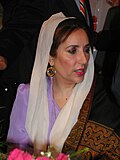 11th and 13th Prime Minister of Pakistan Benazir Bhutto (AB, 1973, Radcliffe College)
 -
 Philosopher, political activist, and social critic Cornel West (AB, 1973)
 -
 US attorney general Merrick Garland (AB, 1974)
 -
 Federal Reserve chair Ben Bernanke (AB, 1975)
 -
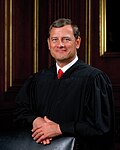 US supreme court chief justice John Roberts (AB, 1976)
 -
![Microsoft founder Bill Gates (1977)[lower-alpha 2]](/w/images/smartcommons/thumbs/commons/1/19/Bill_Gates_June_2015.jpg/85px-Bill_Gates_June_2015.jpg) Microsoft founder Bill Gates (1977)[lower-alpha 2]
Microsoft founder Bill Gates (1977)[lower-alpha 2] -
 US secretary of state Antony Blinken (AB, 1984)
 -
![Facebook co-founder Mark Zuckerberg (2006)[lower-alpha 2]](/w/images/smartcommons/thumbs/commons/1/18/Mark_Zuckerberg_F8_2019_Keynote_%2832830578717%29_%28cropped%29.jpg/90px-Mark_Zuckerberg_F8_2019_Keynote_%2832830578717%29_%28cropped%29.jpg) Facebook co-founder Mark Zuckerberg (2006)[lower-alpha 2]
Facebook co-founder Mark Zuckerberg (2006)[lower-alpha 2] -
 Basketball player Jeremy Lin (AB, 2010)

![US president John Adams[56] (AB, 1755)](/wiki/File:John_Adams_Portrait.jpg)
![US president John Quincy Adams[57][58] (AB, 1787)](/wiki/File:John_Quincy_Adams.jpg)


![US president and Nobel laureate in peace Theodore Roosevelt[59] (AB, 1880)](/wiki/File:President_Theodore_Roosevelt,_1904.jpg)
![US president Franklin D. Roosevelt[60] (AB, 1903)](/wiki/File:Franklin_D._Roosevelt_-_Portrait_by_Jacob_H._Perskie.png)

.jpg)

.jpg)
![US president John F. Kennedy[61] (AB, 1940)](/wiki/File:John_F._Kennedy,_White_House_color_photo_portrait.jpg)


![Microsoft founder Bill Gates (1977)[lower-alpha 2]](/wiki/File:Bill_Gates_June_2015.jpg)

![Facebook co-founder Mark Zuckerberg (2006)[lower-alpha 2]](/wiki/File:Mark_Zuckerberg_F8_2019_Keynote_(32830578717)_(cropped).jpg)
.JPG)
Footnotes[edit | edit source]
References[edit | edit source]
- ↑ 1.0 1.1 "Common Data Set 2019–2020" (PDF). Office of Institutional Research. Harvard University. Archived (PDF) from the original on June 26, 2020. Retrieved June 23, 2020.
- ↑ "Record-Low 4.59 Percent of Applicants Accepted to Harvard Class of 2022". The Harvard Crimson. March 29, 2018. Archived from the original on November 9, 2020. Retrieved September 16, 2019.
- ↑ "Record-Low 4.5 Percent of Harvard College Applicants Accepted to Class of 2023". The Harvard Crimson. March 29, 2019. Archived from the original on November 12, 2020. Retrieved September 16, 2019.
- ↑ 4.0 4.1 "Student Activities". Archived from the original on October 24, 2020. Retrieved December 7, 2019.
- ↑ Clipping from The Harvard Bulletin, on discovery of southeast corner of original Harvard College building during subway excavations, 1910. Records of early Harvard buildings, 1710-1969, UAI 15.10.5, Box: 1, Folder: 8. Harvard University Archives
- ↑ "The instrument behind New England's first literary flowering". Harvard University. March 8, 2012. Archived from the original on July 11, 2016. Retrieved January 18, 2014.
- ↑ "Rowley and Ezekiel Rogers, The First North American Printing Press" (PDF). Maritime Historical Studies Centre, University of Hull. Archived (PDF) from the original on January 23, 2013. Retrieved January 18, 2014.
- ↑ "The Harvard Guide. The Harvard Community. Cambridge". Archived from the original on February 5, 2007.
Cambridge was founded in 1630 as Newtowne. In 1637, the tiny village was designated as the location of the then-unnamed college, which would be named Harvard the following year.
- ↑ Samuel Eliot Morison, Three Centuries of Harvard, 1636–1936 (1986)
- ↑ Monaghan, E. J., 2005, p. 55, 59
- ↑ Schwager, Sally (2004). "Taking up the Challenge: The Origins of Radcliffe". In Laurel Thatcher Ulrich (ed.). Yards and Gates: Gender in Harvard and Radcliffe History. New York: Palgrave Macmillan. pp. 87–115. ISBN 1403960984.
- ↑ Radcliffe Enters Historic Merger With Harvard. The Harvard Crimson (Report). Archived from the original on October 11, 2017. Retrieved May 6, 2016.
- ↑ Menz, Petey. "The Real 1%: Harvard Admits 15 Transfer Students". The Harvard Crimson. Archived from the original on April 9, 2021. Retrieved June 14, 2021.
- ↑ "NMSC 2018–2019 Annual Report" (PDF). National Merit Scholarship Corporation.
- ↑ Finder, Alan; Arenson, Karen W. (September 12, 2006). "Harvard Ends Early Admission". The New York Times. Archived from the original on November 21, 2020. Retrieved August 1, 2020.
- ↑ Fernandes, Deirdre (August 3, 2017). "The majority of Harvard's incoming class is nonwhite". The Boston Globe. Archived from the original on November 11, 2020. Retrieved August 4, 2017.
- ↑ "Harvard's Ongoing Anti-Asian-American Micro-Aggression". National Review. June 19, 2018. Archived from the original on March 23, 2019. Retrieved July 17, 2018.
- ↑ "A lawsuit reveals how peculiar Harvard's definition of merit is". The Economist. Archived from the original on July 17, 2018. Retrieved July 17, 2018.
- ↑ "Harvard Won a Key Affirmative Action Battle. But the War's Not Over". The New York Times. October 2, 2019. Archived from the original on December 14, 2019. Retrieved December 14, 2019.
- ↑ "Local Reaction To The Ruling In The Harvard Admission's Case". October 2, 2019. Archived from the original on December 29, 2019. Retrieved August 1, 2020.
- ↑ "In Wake of Admissions Lawsuit Decision, Khurana Agrees Harvard Must Become Aware of Biases". The Crimson. October 23, 2019. Archived from the original on August 1, 2020. Retrieved December 29, 2019.
- ↑ Golden, Daniel (January 15, 2003). "Admissions Preferences Given to Alumni Children Draws Fire". The Wall Street Journal. Archived from the original on August 12, 2018. Retrieved August 1, 2020.
- ↑ Golden, Daniel (2006). The Price of Admission: How America's Ruling Class Buys Its Way into Elite Colleges—and Who Gets Left Outside the Gates. Crown Publishers. ISBN 1-4000-9796-7.
- ↑ Todd, Sarah (September 24, 2019). "A new statistic reveals the startling privilege of white kids admitted to Harvard". Quartz. Archived from the original on November 12, 2020. Retrieved June 19, 2020.
- ↑ Aisch, Gregor; Buchanan, Larry; Cox, Amanda; Quealy, Kevin (January 18, 2017). "Economic diversity and student outcomes at Harvard". The New York Times. Archived from the original on December 9, 2020. Retrieved August 9, 2020.
- ↑ "Tuition and Fees". registrar.fas.harvard.edu. Retrieved August 31, 2024.
- ↑ "How Aid Works". Archived from the original on December 12, 2020. Retrieved December 8, 2019.
- ↑ "Carnegie Classifications – Harvard University". The Carnegie Foundation for the Advancement of Teaching. Archived from the original on August 7, 2020. Retrieved August 28, 2010.
- ↑ 29.0 29.1 "Liberal Arts & Sciences". Harvard College. Archived from the original on October 5, 2021. Retrieved December 16, 2019.
- ↑ The Bachelor of Arts and Bachelor of Science Degrees. Harvard College. Archived from the original on December 7, 2019. Retrieved December 8, 2019.
- ↑ "Dual Degree Music Programs". Harvard College. Archived from the original on December 7, 2019. Retrieved December 16, 2019.
- ↑ "Academic Information: The Concentration Requirement". Handbook for Students. Harvard College. Archived from the original on December 5, 2010. Retrieved August 28, 2010.
- ↑ 33.0 33.1 "Requirements". Archived from the original on December 13, 2019. Retrieved November 22, 2019.
- ↑ Lewis, Harry R. (2007). Excellence Without a Soul: Does Liberal Education Have a Future?. PublicAffairs. p. 48. ISBN 9781586485375.
- ↑ "How large are classes?". Harvard College. Archived from the original on April 14, 2021. Retrieved December 16, 2019.
- ↑ "Research". Harvard College. Archived from the original on December 7, 2019. Retrieved December 16, 2019.
- ↑ Harvard College Office of Residential Life (2008). "History of the House System". Retrieved April 20, 2008.[permanent dead link]
- ↑ Morison, Samuel Eliot (1936). Three Centuries of Harvard: 1636–1936. Cambridge, Mass., Harvard University Press. pp. 476–478.
- ↑ 39.0 39.1 Bethell, John (1998). Harvard Observed: An Illustrated History of the University in the Twentieth Century. Cambridge: Harvard University Press. pp. 102–103. ISBN 9780674377332.
- ↑ "Gifts – 1928–1929" (Press release). Harvard University News Office. June 20, 1929. HU 37.5, Harvard University Archives, Cambridge, Massachusetts "This figure [of gifts and legacies received during the year] includes $5,444,000 received from E. S. Harkness to defray the expenses of constructing the first Harvard houses."
- ↑ John B. Fox Jr. (2007). The Faculty of Arts and Sciences at Harvard University, 1686–1933. President and Fellows of Harvard College. p. 142.
- ↑ "Harkness and History". Harvard Magazine. November 2013. Archived from the original on May 27, 2015. Retrieved November 11, 2015.
- ↑ Lowe, Charles U. "The Forbes Story of the Harvard Riverside Associates: How Harvard Acquired the Land on which Lowell House was Built", February 20, 2002.lowell.harvard.edu Archived 2010-04-09 at the Wayback Machine
- ↑ Sacks, Benjamin J. "Harvard's 'Constructed Utopia' and the Culture of Deception: the Expansion toward the Charles River, 1902–1932", The New England Quarterly 84.2 (June 2011): 286–317.[1] Archived 2019-04-18 at the Wayback Machine
- ↑ Sofen, Adam A. "Radcliffe Enters Historic Merger With Harvard, April 21, 1999.[2] Archived 2011-07-17 at the Wayback Machine
- ↑ "Harvard Students Vote Overwhelmingly to Dissolve Undergraduate Council in Favor of New Student Government | News | The Harvard Crimson". www.thecrimson.com. Retrieved May 23, 2022.
- ↑ "Estabine and Johnson Elected as First Co-Presidents of the Harvard Undergraduate Association | News | The Harvard Crimson". www.thecrimson.com. Retrieved May 23, 2022.
- ↑ "Harvard : Women's Rugby Becomes 42nd Varsity Sport at Harvard University". Gocrimson.com. August 9, 2012. Archived from the original on September 29, 2013. Retrieved July 5, 2013.
- ↑ "Yale and Harvard Defeat Oxford/Cambridge Team". Yale University Athletics. Archived from the original on October 13, 2011. Retrieved September 13, 2011.
- ↑ "The Harvard Guide: Financial Aid at Harvard". Harvard University. September 2, 2006. Archived from the original on September 2, 2006. Retrieved August 29, 2010.
- ↑ "History of American Football". Newsdial.com. Archived from the original on September 25, 2010. Retrieved August 29, 2010.
- ↑ Nelson, David M., Anatomy of a Game: Football, the Rules, and the Men Who Made the Game, 1994, pp. 127–128
- ↑ "Teammates for Life". Harvard Magazine. June 5, 2015. Archived from the original on December 15, 2019. Retrieved December 15, 2019.
- ↑ "Harvard Explained".
- ↑ "List of Student Organizations". The President and Fellows of Harvard College. Harvard College. Archived from the original on January 12, 2016. Retrieved January 13, 2016.
- ↑ Barzilay, Karen N. "The Education of John Adams". Massachusetts Historical Society. Archived from the original on July 26, 2021. Retrieved September 20, 2020.
- ↑ "John Quincy Adams". The White House. Archived from the original on October 5, 2021. Retrieved September 21, 2020.
- ↑ Hogan, Margaret A. (October 4, 2016). "John Quincy Adams: Life Before the Presidency". Miller Center. Archived from the original on August 12, 2021. Retrieved September 21, 2020.
- ↑ "Theodore Roosevelt - Biographical". Nobel Foundation. Archived from the original on September 5, 2021. Retrieved September 21, 2020.
- ↑ Leuchtenburg, William E. (October 4, 2016). "Franklin D. Roosevelt: Life Before the Presidency". Miller Center. Archived from the original on August 13, 2021. Retrieved September 21, 2020.
- ↑ J. Selverstone, Marc (October 4, 2016). "John F. Kennedy: Life Before the Presidency". Miller Center. Archived from the original on August 12, 2021. Retrieved September 21, 2020.
Further reading[edit | edit source]
- King, M. (1884). Harvard and Its Surroundings. Cambridge, MA: Moses King. OCLC 1425462364.
- Monaghan, E. Jennifer (2005). Learning to Read and Write in Colonial America. Studies in Print Culture and the History of the Book. Amherst, MA and Boston; Worcester: University of Massachusetts Press; American Antiquarian Society. ISBN 9781558494862. OCLC 1409464395.
External links[edit | edit source]
{{URL|example.com|optional display text}}- . Encyclopædia Britannica (11th ed.). 1911.
| Arts and Sciences |
| ||||||||||||||
|---|---|---|---|---|---|---|---|---|---|---|---|---|---|---|---|
| Business | |||||||||||||||
| Design | |||||||||||||||
| Divinity |
| ||||||||||||||
| Education |
| ||||||||||||||
| Government | |||||||||||||||
| Law | |||||||||||||||
| Medicine | |||||||||||||||
| Public Health |
| ||||||||||||||
| Museums and arboretum | |||||||||||||||
| Cambridge campus | |||||||||||||||
| Centers and institutes | |||||||||||||||
| People | |||||||||||||||
| Athletics |
| ||||||||||||||
| Miscellaneous |
| ||||||||||||||

