
imported>DaxServer Reverting edit(s) by 210.89.59.63 (talk) to rev. 1029494696 by DaxServer: Vandalism (RW 16.1) |
fix |
||
| Line 1: | Line 1: | ||
{{Short description|none}} <!-- This short description is INTENTIONALLY "none" - please see WP:SDNONE before you consider changing it! --> | |||
{{Use dmy dates|date=May 2019}} | {{Use dmy dates|date=May 2019}} | ||
{{Use Indian English|date=May 2019}} | {{Use Indian English|date=May 2019}} | ||
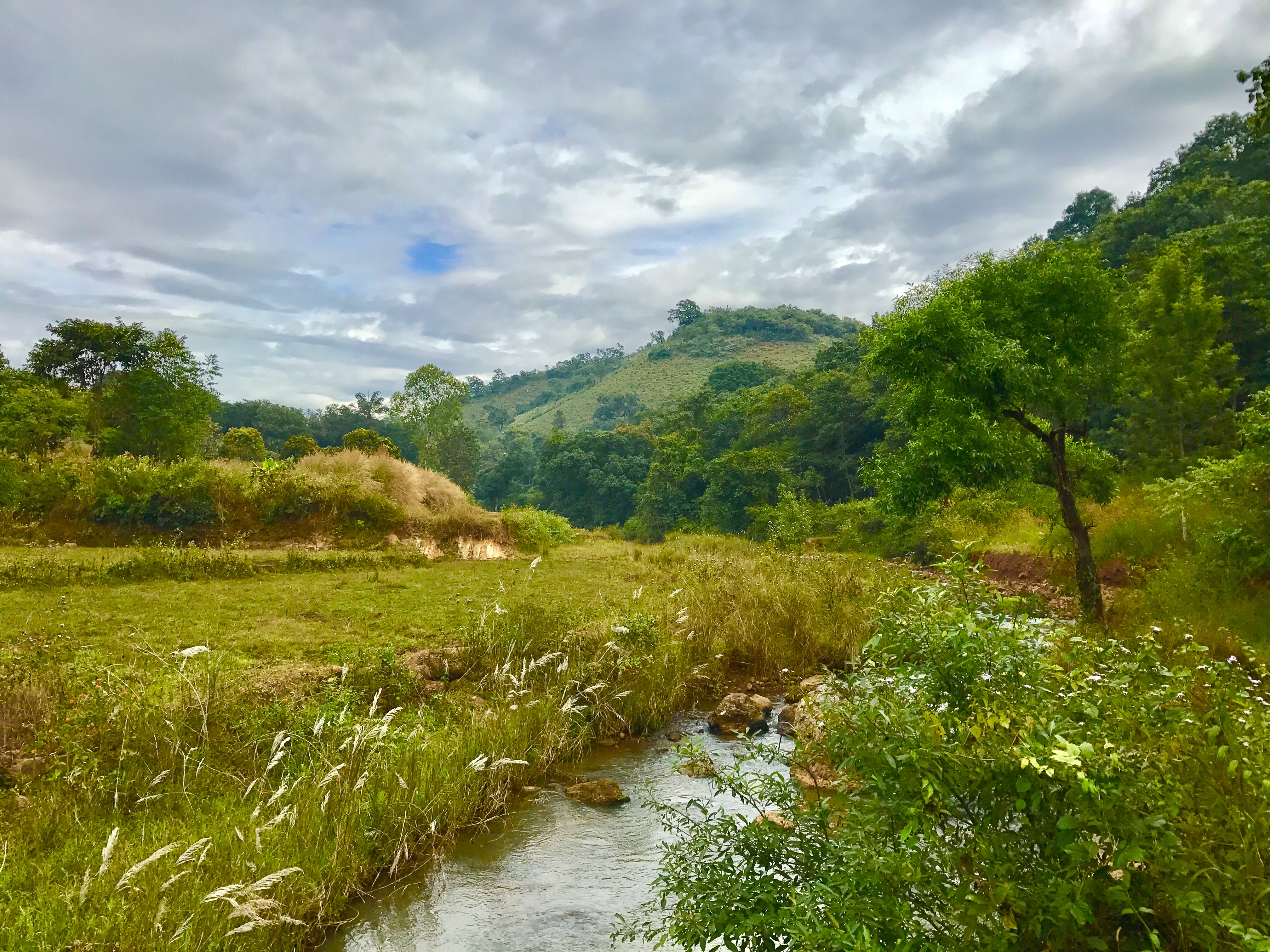
The state of [[Andhra Pradesh]] is considered one of the rich bio-diversified states in [[India]]. Natural vegetation (flora) and animal life (fauna) depend mainly on climate, relief, and soil. Krishna and Godavari are the two largest rivers flowing through the state. The [[Andhra Pradesh Forest Department]] deals with protection, conservation and management of [[forests]].<ref name="0:">{{cite web|title=District-wise forest cover|url=http://forest.ap.nic.in/About.htm|website=Andhra Pradesh Forest Department|accessdate=23 June 2016|archiveurl=https://web.archive.org/web/20151028005159/http://forest.ap.nic.in/About.htm|archivedate=28 October 2015|date=28 October 2015}}</ref> | The state of [[Andhra Pradesh]] is considered one of the rich 123 bio-diversified states in [[India]]. Natural vegetation (flora) and animal life (fauna) depend mainly on climate, relief, and soil. Krishna and Godavari are the two largest rivers flowing through the state. The [[Andhra Pradesh Forest Department]] deals with protection, conservation and management of [[forests]].<ref name="0:">{{cite web|title=District-wise forest cover|url=http://forest.ap.nic.in/About.htm|website=Andhra Pradesh Forest Department|accessdate=23 June 2016|archiveurl=https://web.archive.org/web/20151028005159/http://forest.ap.nic.in/About.htm|archivedate=28 October 2015|date=28 October 2015}}</ref> | ||
[[File:Sri Venkateswara National Park Tirumala Hills 01.jpg|thumb|Sri Venkateswara National Park Tirumala Hills]] | [[File:Sri Venkateswara National Park Tirumala Hills 01.jpg|thumb|Sri Venkateswara National Park Tirumala Hills]] | ||
[[File:Nallamala Hills near Srisailam 01.jpg|thumb|Nallamala Hills near Srisailam]] | [[File:Nallamala Hills near Srisailam 01.jpg|thumb|Nallamala Hills near Srisailam]] | ||
== Natural vegetation == | == Natural vegetation == | ||
The total forest cover of Andhra Pradesh is | The total forest cover of Andhra Pradesh is 37,258 km<sup>2</sup>.<ref>{{Cite web| title=Andhra Pradesh | url=https://fsi.nic.in/isfr19/vol2/isfr-2019-vol-ii-andhra-pradesh.pdf | archive-url=https://web.archive.org/web/20210306105522/https://fsi.nic.in/isfr19/vol2/isfr-2019-vol-ii-andhra-pradesh.pdf | archive-date=2021-03-06}}</ref> The [[Eastern Ghats]] region is home to dense tropical forests, while the vegetation becomes sparse as the Ghats give way to the [[Deccan Plateau]], where shrub vegetation is more common. | ||
[[File: View on Simhachalam Hill during a rainy day.jpg|thumb|Grassland on Simhachalam Hills]] | [[File: View on Simhachalam Hill during a rainy day.jpg|thumb|Grassland on Simhachalam Hills]] | ||
[[File: Dry deciduous Jungles at Ramatheertham 04.jpg|thumb|Dry deciduous Jungles at Ramatheertham]] | [[File: Dry deciduous Jungles at Ramatheertham 04.jpg|thumb|Dry deciduous Jungles at Ramatheertham]] | ||
== ''Fauna'' == | == ''Fauna'' == | ||
The varied diversity of fauna includes [[Bengal tiger]], [[Indian leopard]], | The varied diversity of fauna includes [[Bengal tiger]], [[Indian leopard]], dholes, blackbucks, sambars, and sea turtles. The dense forests in mountains offer habitat to the wildlife. The state government declared certain areas as wildlife sanctuaries and national parks.<ref name=":0">{{Cite web|url=http://forest.ap.nic.in/About.htm |title=Andhra Forest Department |date=2015-10-28 |access-date=2016-06-16 |url-status=unfit |archiveurl=https://web.archive.org/web/20151028005159/http://forest.ap.nic.in/About.htm |archivedate=28 October 2015 }}</ref> | ||
[[File: Kondapalli Reserve Forest.jpg|thumb|Kondapalli Reserve Forest, Krishna District]] | [[File: Kondapalli Reserve Forest.jpg|thumb|Kondapalli Reserve Forest, Krishna District]] | ||
[[File: Valley near lambasinghi.jpg|thumb|A Valley near lambasinghi]] | [[File: Valley near lambasinghi.jpg|thumb|A Valley near lambasinghi]] | ||
| Line 19: | Line 20: | ||
=== Wildlife sanctuaries === | === Wildlife sanctuaries === | ||
[[File:Kambhalakonda EDC Vizag.jpg|thumbnail|[[Kambalakonda Wildlife Sanctuary]], [[Visakhapatnam]]]] | [[File:Kambhalakonda EDC Vizag.jpg|thumbnail|[[Kambalakonda Wildlife Sanctuary]], [[Visakhapatnam |Visakhapatnam City]]]] | ||
[[File:Coringa Reserve Forest Park Mangrove Forest 90.jpg|thumb|Coringa Wildlife Sanctuary a Mangrove Forest]] | [[File:Coringa Reserve Forest Park Mangrove Forest 90.jpg|thumb|Coringa Wildlife Sanctuary a Mangrove Forest]] | ||
[[Kambalakonda Wildlife Sanctuary]] is situated on [[National Highway 5 (India | [[Kambalakonda Wildlife Sanctuary]] is situated on [[National Highway 5 (India, old numbering)|NH 5]], surrounded by the Eastern Ghats on three sides and the Bay of Bengal on the fourth. It houses [[Indira Gandhi Zoological Park]]. The park has almost eighty species with [[primates]], [[carnivores]], [[mammals]], [[ungulates]], [[reptiles]] and [[birds]]. These include [[rhesus monkey]]s, baboons, panthers, tigers, [[wolves]], wild dogs, pythons, tortoises, monitor lizards, elephant, bison, sambar deer, [[peacocks]], [[ducks]] and [[macaws]].<ref name=":0" /> | ||
[[Papikonda Wildlife Sanctuary]] is located in [[East Godavari district|East Godavari]], [[West Godavari district|West Godavari]] in an area of {{convert|591|km2|mi2|abbr=on}}. Fauna found in this sanctuary are tigers, | [[Papikonda Wildlife Sanctuary]] is located in [[East Godavari district|East Godavari]], [[West Godavari district|West Godavari]] in an area of {{convert|591|km2|mi2|abbr=on}}. Fauna found in this sanctuary are tigers, leopards, [[gaur]], [[cheetal]], [[chowsingha]], sambar, [[blackbuck]], mouse deer, barking deer, sloth bears, wild dogs, elephants, jackals, wild boar, marsh crocodiles and a variety of birds.<ref name=papikonda>{{cite web|title=PAPIKONDA Wildlife Sanctuary|url=http://forest.ap.nic.in/WL%20PAPIKONDA.htm|publisher=AP forest department|accessdate=28 June 2014|archive-url=https://web.archive.org/web/20140125021421/http://forest.ap.nic.in/WL%20PAPIKONDA.htm|archive-date=25 January 2014|url-status=dead}}</ref> | ||
[[Coringa Wildlife Sanctuary]] is located in [[East Godavari district]] in an area of {{convert|235.70|km2|mi2|abbr=on}}. It has the rare, endangered [[Smooth-coated otter|smooth Indian otter]], [[fishing cat]] and [[Saltwater crocodile|estuarine crocodile]]. Other fauna are jackals, marine turtles, seagulls, storks, ducks and flamingos.<ref name=Coringa>{{cite web|title=Coringa Wildlife Sanctuary|url=http://forest.ap.nic.in/WL%20CORINGA.htm|publisher=AP forest deparmtnet|accessdate=28 June 2014|url-status=dead|archiveurl=https://web.archive.org/web/20140125005418/http://forest.ap.nic.in/WL%20CORINGA.htm|archivedate=25 January 2014}}</ref> | [[Coringa Wildlife Sanctuary]] is located in [[East Godavari district]] in an area of {{convert|235.70|km2|mi2|abbr=on}}. It has the rare, endangered [[Smooth-coated otter|smooth Indian otter]], [[fishing cat]] and [[Saltwater crocodile|estuarine crocodile]]. Other fauna are jackals, marine turtles, seagulls, storks, ducks and flamingos.<ref name=Coringa>{{cite web|title=Coringa Wildlife Sanctuary|url=http://forest.ap.nic.in/WL%20CORINGA.htm|publisher=AP forest deparmtnet|accessdate=28 June 2014|url-status=dead|archiveurl=https://web.archive.org/web/20140125005418/http://forest.ap.nic.in/WL%20CORINGA.htm|archivedate=25 January 2014}}</ref> | ||
| Line 37: | Line 38: | ||
[[Sri Lankamalleswara Wildlife Sanctuary]] is located in [[Kadapa District]] of [[Andhra Pradesh]]. It covers an area of 464.42 km<sup>2</sup> is managed by the [[Andhra Pradesh Forest Department]]<ref>Andhra Pradesh Forest Department.[http://forest.ap.nic.in/WL%20LANKAMALLESWARA.htm Sri Lankamalleshwara Wildlife Sanctuary] {{Webarchive|url=https://web.archive.org/web/20140125021540/http://forest.ap.nic.in/WL%20LANKAMALLESWARA.htm |date=25 January 2014 }}.</ref> | [[Sri Lankamalleswara Wildlife Sanctuary]] is located in [[Kadapa District]] of [[Andhra Pradesh]]. It covers an area of 464.42 km<sup>2</sup> is managed by the [[Andhra Pradesh Forest Department]]<ref>Andhra Pradesh Forest Department.[http://forest.ap.nic.in/WL%20LANKAMALLESWARA.htm Sri Lankamalleshwara Wildlife Sanctuary] {{Webarchive|url=https://web.archive.org/web/20140125021540/http://forest.ap.nic.in/WL%20LANKAMALLESWARA.htm |date=25 January 2014 }}.</ref> | ||
[[Koundinya Wildlife Sanctuary]] is located in [[Chittoor district]] of [[Andhra Pradesh]]. It is only one Asian elephant reserve in [[Andhra Pradesh]]. The sanctuary is bordered by the state of [[Tamil Nadu]]. | [[Koundinya Wildlife Sanctuary]] is located in [[Chittoor district]] of [[Andhra Pradesh]]. It is only one [[Asian elephant]] reserve in [[Andhra Pradesh]]. The sanctuary is bordered by the state of [[Tamil Nadu]]. | ||
=== Bird sanctuaries === | === Bird sanctuaries === | ||
Latest revision as of 09:50, 19 October 2025
The state of Andhra Pradesh is considered one of the rich 123 bio-diversified states in India. Natural vegetation (flora) and animal life (fauna) depend mainly on climate, relief, and soil. Krishna and Godavari are the two largest rivers flowing through the state. The Andhra Pradesh Forest Department deals with protection, conservation and management of forests.[1]


Natural vegetation[edit | edit source]
The total forest cover of Andhra Pradesh is 37,258 km2.[2] The Eastern Ghats region is home to dense tropical forests, while the vegetation becomes sparse as the Ghats give way to the Deccan Plateau, where shrub vegetation is more common.


Fauna[edit | edit source]
The varied diversity of fauna includes Bengal tiger, Indian leopard, dholes, blackbucks, sambars, and sea turtles. The dense forests in mountains offer habitat to the wildlife. The state government declared certain areas as wildlife sanctuaries and national parks.[3]


National parks and zoo parks[edit | edit source]
Indira Gandhi Zoological Park is located in Visakhapatnam. It is one of the largest zoos of India, spread over an area of 625 acres (253 ha). It was named after Indira Gandhi, the former Prime Minister of India and was opened in 1977. There are eighty species with 800 animals. Hippopotamus and crocodiles are the special animals conserved.[3]
Wildlife sanctuaries[edit | edit source]


Kambalakonda Wildlife Sanctuary is situated on NH 5, surrounded by the Eastern Ghats on three sides and the Bay of Bengal on the fourth. It houses Indira Gandhi Zoological Park. The park has almost eighty species with primates, carnivores, mammals, ungulates, reptiles and birds. These include rhesus monkeys, baboons, panthers, tigers, wolves, wild dogs, pythons, tortoises, monitor lizards, elephant, bison, sambar deer, peacocks, ducks and macaws.[3]
Papikonda Wildlife Sanctuary is located in East Godavari, West Godavari in an area of 591 km2 (228 sq mi). Fauna found in this sanctuary are tigers, leopards, gaur, cheetal, chowsingha, sambar, blackbuck, mouse deer, barking deer, sloth bears, wild dogs, elephants, jackals, wild boar, marsh crocodiles and a variety of birds.[4]
Coringa Wildlife Sanctuary is located in East Godavari district in an area of 235.70 km2 (91.00 sq mi). It has the rare, endangered smooth Indian otter, fishing cat and estuarine crocodile. Other fauna are jackals, marine turtles, seagulls, storks, ducks and flamingos.[5]
Krishna Wildlife Sanctuary is a wildlife sanctuary and estuary located in Krishna district of Andhra Pradesh. The sanctuary is home for reptiles like the garden lizard, the wall lizard, tortoises and snakes.[6]
Rollapadu Wildlife Sanctuary is a wildlife sanctuary located in Kurnool district of Andhra Pradesh in an area 6.14 km2 (2.37 sq mi). It is the only habitat in the state for the rare and highly endangered great Indian bustard. The blackbuck, wolf, jackal, bonnet macaque, Russell's viper and cobra are also found.[7]
Sri Penusila Narasimha Wildlife Sanctuary is located in the Nellore District of Andhra Pradesh. It covers an area of 1030.85 km2 is managed by the Andhra Pradesh Forest Department[8]
Gundla Brahmeswara Wildlife Sanctuary is located in Kurnool and Prakasam Districts of Andhra Pradesh. It covers an area of 1194 km2 is managed by the Andhra Pradesh Forest Department.[9] The last surviving pristine forests of Nallamalai tract, it is rich in plants of ethnobotanical value.
Sri Lankamalleswara Wildlife Sanctuary is located in Kadapa District of Andhra Pradesh. It covers an area of 464.42 km2 is managed by the Andhra Pradesh Forest Department[10]
Koundinya Wildlife Sanctuary is located in Chittoor district of Andhra Pradesh. It is only one Asian elephant reserve in Andhra Pradesh. The sanctuary is bordered by the state of Tamil Nadu.
Bird sanctuaries[edit | edit source]
.jpg)
Atapaka Bird Sanctuary, also known as Kolleru Wildlife Sanctuary (see also Kolleru Bird Sanctuary), is a largest freshwater lake located in West Godavari district of Andhra Pradesh. The sanctuary falls under Kaikalur Forest Range. It is one of the Ramsar convention wetland sites, spread over an area of 308.55 km2 (119.13 sq mi).[11][12][13]
Telineelapuram and Telukunchi Bird Sanctuaries are located in Srikakulam district of Andhra Pradesh. Every year, over 3,000 pelicans and painted storks visit from Siberia to these villages during September and stay until March.[14][15]
Pulicat Lake Bird Sanctuary is a famous 481 km2 Protected area in Nellore District of Andhra Pradesh state. Pulicat Lake is the second largest brackish-water ecosystem in India. Central location is: 13°34′N 80°12′E. 327.33 km2 is managed by the Andhra Pradesh Forest Department[16] and 153.67 km2 is managed by the Tamil Nadu Forest Department. 108 km2 is national park area. Rainfall ranges from 800 to 2000 mm. Temperature varies from 14 °C to 33 °C. Altitude ranges from 100’ MSL to 1200’ MSL.
See also[edit | edit source]
References[edit | edit source]
- ↑ "District-wise forest cover". Andhra Pradesh Forest Department. 28 October 2015. Archived from the original on 28 October 2015. Retrieved 23 June 2016.
- ↑ "Andhra Pradesh" (PDF). Archived from the original (PDF) on 6 March 2021.
- ↑ 3.0 3.1 3.2 "Andhra Forest Department". 28 October 2015. Archived from the original on 28 October 2015. Retrieved 16 June 2016.
- ↑ "PAPIKONDA Wildlife Sanctuary". AP forest department. Archived from the original on 25 January 2014. Retrieved 28 June 2014.
- ↑ "Coringa Wildlife Sanctuary". AP forest deparmtnet. Archived from the original on 25 January 2014. Retrieved 28 June 2014.
- ↑ Gupta, Harsh K.; Parasher-Sen, Aloka & Balasubramanian, Dorairajan (2000). Deccan Heritage. Hyderabad, India: Universities Press. pp. 50–51. ISBN 978-81-7371-285-2.
- ↑ "Rollapadu Wildlife Sanctuary". AP forest department. Retrieved 28 June 2014.
- ↑ Andhra Pradesh Forest Department.Sri Penusula Narasimha Wildlife Sanctuary
- ↑ Andhra Pradesh Forest Department.Gundla Brahmeswara Wildlife Sanctuary
- ↑ Andhra Pradesh Forest Department.Sri Lankamalleshwara Wildlife Sanctuary Archived 25 January 2014 at the Wayback Machine.
- ↑ "Kolleru Wildlife Sanctuary". AP forest department. Archived from the original on 25 January 2014. Retrieved 28 June 2014.
- ↑ "Atapaka sanctuary". The Hindu. Retrieved 28 June 2014.
- ↑ "Pelicans breed in Kolleru lake". Times of India. Retrieved 28 June 2014.
- ↑ "Sites – Important Bird Areas (IBAs)". BirdLife International. Retrieved 1 July 2014.
- ↑ Sumit Bhattacharjee (10 April 2006). "A 12,000 km flight from Siberia". The Hindu. Archived from the original on 20 April 2006. Retrieved 1 July 2014.
- ↑ Andhra Pradesh Forest Department, PULICAT Wildlife Sanctuary Archived 2014-01-25 at the Wayback Machine