|
|
| Line 1: |
Line 1: |
| {{short description|States and dominions ruled by the United Kingdom}} | | {{Infobox country |
| {{pp-vandalism|small=yes}} | | | native_name = '''British Empire''' |
| <!-- This page has been automatically assigned the correct protection templates by [[User:Lowercase sigmabot]]. If the protection templates are wrong, please fix them. Thanks. -->
| | *{{lang-sco|Breetish Empire}} |
| | | *{{lang-gd|Ìmpireachd Bhreatainn}} |
| {{Use British English|date=August 2016}} | | *{{lang-ga|Impireacht na Breataine}} |
| {{Use dmy dates|date=November 2020}} | | *{{lang-cy|Yr Ymerodraeth Brydeinig}} |
| <!-- Do not add extra information to infobox - it deliberately only contains the flag and map. Do not add countries to the map that are not considered part of the British Empire by reliable sources. -->{{Infobox country
| | *{{lang-kw|Emperoureth Breten Veur}} |
| |name = '''British Empire''' | | | name = |
| |image_flag = Flag of Great Britain (1707-1800).svg | | | image_flag = Flag of Great Britain (1707-1800).svg |
| |image_flag2 = [[File:Flag of the United Kingdom.svg|145px]] | | | image_flag2 = Flag of the United Kingdom (3-5).svg |
| |flag_type = Left: [[Flag of Great Britain]] ([[Acts of Union 1707|1707–1801]])<br />Right: [[Flag of the United Kingdom]] ([[Acts of Union 1800|1801–present]]) | | | flag_type = [[Union Flag]] ''or'' Union Jack<br/>Left: [[Acts of Union 1707|1707–1801]]; Right: [[Act of Union 1800|1801–present]] |
| |image_map = [[File:The British Empire.png|300px]] | | | image_map = [[File:The British Empire.png|300px]] |
| |map_caption = All areas of the world that were ever part of the British Empire. Current [[British Overseas Territories]] have their names underlined in red. | | | map_caption = All areas of the world that were ever part of the British Empire. Current [[British Overseas Territories]] have their names underlined in red. |
| | <!--Do not add extra information to infobox - it deliberately only contains the flag and map. Do not add countries to the map that are not considered part of the British Empire by reliable sources.-->| demonym = [[Briton]], [[British]] |
| }} | | }} |
| | The '''British Empire''' was made up of the [[Crown colony|colonies]], [[protectorate]]s, [[League of Nations mandate|mandates]] and other [[Dependent territory|territories]] which were controlled by the [[United Kingdom]]. |
|
| |
|
| The '''British Empire''' was composed of the [[dominion]]s, [[Crown colony|colonies]], [[protectorate]]s, [[League of Nations mandate|mandates]], and other [[Dependent territory|territories]] ruled or administered by the [[United Kingdom]] and its predecessor states. It began with the [[English overseas possessions|overseas possessions]] and [[trading post]]s established by [[Kingdom of England|England]] between the late 16th and early 18th centuries.
| | It began with the overseas colonies and [[trading post]]s set up by [[Kingdom of England|England]] between the late 16th and early 18th centuries. At its height, it was the largest empire in history, and the world's most powerful [[superpower]] for more than a century.<ref name=Ferguson>{{Cite book |last=Ferguson, Niall 2004. |title=Empire, The rise and demise of the British world order and the lessons for global power |year=2003 |url=https://archive.org/details/empirerisedemise0000ferg |publisher=Basic Books |isbn=0-465-02328-2}}</ref> |
| At its height it was the [[List of largest empires|largest empire in history]] and, for over a century, was the foremost global power.{{sfn|Ferguson|2004b}} By 1913 the British Empire held sway over 412 million people, {{Percentage|412,000,000|1,791,020,000|% = per cent}} of the world population at the time,<ref>[[#refMaddison2001|Maddison 2001]], p. 97: "The total population of the Empire was 412 million [in 1913]"; [[#refMaddison2001|Maddison 2001]], pp. 241: "[World population in 1913 (in thousands):] 1 791 020".</ref> and by 1920 it covered {{convert|35500000|km2|sqmi|-5|abbr=on}},<ref>[[British Empire#refTaagepera1997|Taagepera]], p. 502.</ref> {{Percentage|35,500,000|148,940,000|% = per cent}} of the Earth's total land area. As a result, its [[Westminster system|constitutional]], [[Common law|legal]], [[English language|linguistic]], and [[Culture of the United Kingdom|cultural]] legacy is widespread. At the peak of its power, it was described as "[[the empire on which the sun never sets]]", as the sun was always shining on at least one of its territories.<ref>[[#refJackson2013|Jackson]], pp. 5–6.</ref> | |
| | |
| During the [[Age of Discovery]] in the 15th and 16th centuries, [[Portuguese Empire|Portugal]] and [[Spanish Empire|Spain]] pioneered European exploration of the globe, and in the process established large overseas empires. Envious of the great wealth these empires generated,<ref>[[#refRusso2012|Russo 2012]], p. 15 chapter 1 'Great Expectations': "The dramatic rise in Spanish fortunes sparked both envy and fear among northern, mostly Protestant, Europeans.".</ref> England, [[French colonial empire|France]], and the [[Dutch Empire|Netherlands]] began to establish colonies and trade networks of their own in the Americas and [[Asia]]. A series of wars in the 17th and 18th centuries with the Netherlands and France left England ([[Kingdom of Great Britain|Britain]], following the [[Acts of Union 1707|1707 Act of Union]] with Scotland) the dominant [[Colonialism|colonial power]] in [[North America]]. Britain became the dominant power in the [[Indian subcontinent]] after the [[East India Company]]'s [[Bengal Subah#British colonization|conquest]] of [[Mughal Bengal]] at the [[Battle of Plassey]] in 1757.
| |
| | |
| The [[American Revolutionary War|American War of Independence]] resulted in Britain losing some of its oldest and most populous colonies in North America by 1783. British attention then turned towards Asia, Africa, and the Pacific. After the defeat of France in the [[Napoleonic Wars]] (1803–1815), Britain emerged as the principal naval and imperial power of the 19th century and expanded its imperial holdings. The period of relative peace (1815–1914) during which the British Empire became the global [[hegemon]] was later described as {{lang|la|"[[Pax Britannica]]"}} ("British Peace"). Alongside the formal control that Britain exerted over its colonies, its dominance of much of world trade meant that it effectively [[Informal empire|controlled the economies of many regions]], such as Asia and Latin America.<ref name="auto">[[#refOHBEv3|Porter]], p. 8.</ref><ref name="ReferenceC">[[#refMarshall|Marshall]], pp. 156–57.</ref> Increasing degrees of autonomy were granted to its white [[Settler colonialism|settler colonies]], some of which were reclassified as [[Dominion|Dominions]].
| |
| | |
| By the start of the 20th century, [[German Empire|Germany]] and the [[United States]] had begun to challenge Britain's economic lead. Military and economic tensions between Britain and Germany were major causes of the [[World War I|First World War]], during which Britain relied heavily on its empire. The conflict placed enormous strain on its military, financial, and manpower resources. Although the empire achieved its largest territorial extent immediately after World War I, Britain was no longer the world's preeminent industrial or military power. In the [[World War II|Second World War]], Britain's colonies in East Asia and Southeast Asia were occupied by the [[Empire of Japan]]. Despite the final victory of Britain and its allies, the damage to British prestige helped accelerate the decline of the empire. [[British_Raj|India]], Britain's most valuable and populous possession, achieved [[Indian independence movement|independence]] as part of a larger [[decolonisation]] movement, in which Britain granted independence to most territories of the empire. The [[Suez Crisis]] of 1956 confirmed Britain's decline as a global power, and the [[Handover of Hong Kong|transfer of Hong Kong to China]] on 1 July 1997 marked for many the end of the British Empire.<ref name="Brendon-Empire-end"/><ref name="refohbev594"/> Fourteen [[British Overseas Territories|overseas territories]] remain under British sovereignty. After independence, many former British colonies joined the [[Commonwealth of Nations]], a free association of independent states. Fifteen of these, including the United Kingdom, [[Commonwealth realm|retain a common monarch]], currently Queen [[Elizabeth II]].
| |
| | |
| == Origins (1497–1583) ==
| |
| [[File:Matthew-BristolHarbour-Aug2004.jpg|thumb|upright|A replica of the ''[[Matthew (ship)|Matthew]]'', [[John Cabot]]'s ship used for his second voyage to the [[New World]]]]
| |
| The foundations of the British Empire were laid when [[Kingdom of England|England]] and [[Kingdom of Scotland|Scotland]] were separate kingdoms. In 1496, King [[Henry VII of England]], following the successes of [[Spanish Empire|Spain]] and [[Portuguese Empire|Portugal]] in overseas exploration, commissioned [[John Cabot]] to lead an expedition to discover a route to Asia via the North Atlantic.{{sfn|Ferguson|2004b|p=3}} Cabot sailed in 1497, five years after the [[Voyages of Christopher Columbus|first voyage of Christopher Columbus]], and made landfall on the coast of [[Newfoundland (island)|Newfoundland]]. He believed he had reached Asia,<ref>[[#refAndrews1985|Andrews 1985]], p. 45.</ref> and there was no attempt to found a colony. Cabot led another voyage to the Americas the following year but he did not return from this voyage and it is unknown what happened to his ships.{{sfn|Ferguson|2004b|p=4}}
| |
| | |
| No further attempts to establish English colonies in the Americas were made until well into the reign of Queen [[Elizabeth I of England|Elizabeth I]], during the last decades of the 16th century.<ref>[[#refOHBEv1|Canny]], p. 35.</ref> In the meantime, [[Henry VIII]]'s 1533 [[Statute in Restraint of Appeals]] had declared "that this realm of England is an Empire".<ref>[[#refKoebner1953|Koebner]], pp. 29–52.</ref> The [[English Reformation|Protestant Reformation]] turned [[England]] and [[Catholic Church|Catholic]] Spain into implacable enemies.{{sfn|Ferguson|2004b|p=3}} In 1562, Elizabeth I encouraged the [[privateer]]s [[John Hawkins (naval commander)|John Hawkins]] and [[Francis Drake]] to engage in slave-raiding attacks against Spanish and Portuguese ships off the coast of West Africa<ref>[[#refThomas|Thomas]], pp. 155–58</ref> with the aim of establishing an [[Atlantic slave trade]]. This effort was rebuffed and later, as the [[Anglo-Spanish War (1585)|Anglo-Spanish Wars]] intensified, Elizabeth I gave her blessing to further privateering raids against Spanish ports in the Americas and shipping that was returning across the Atlantic, [[Spanish treasure fleet|laden with treasure]] from the [[New World]].{{sfn|Ferguson|2004b|p=7}} At the same time, influential writers such as [[Richard Hakluyt]] and [[John Dee]] (who was the first to use the term "British Empire")<ref>[[#refOHBEv1|Canny]], p. 62.</ref> were beginning to press for the establishment of England's own empire. By this time, Spain had become the dominant power in the Americas and was exploring the Pacific Ocean, Portugal had established trading posts and forts from the coasts of [[Africa]] and [[Brazil]] to [[China]], and France had begun to settle the [[Saint Lawrence River]] area, later to become [[New France]].<ref>[[#refLloyd1996|Lloyd]], pp. 4–8.</ref>
| |
| | |
| Although England tended to trail behind Portugal, Spain, and France in establishing overseas colonies, it carried out its first modern colonisation, referred to as the [[Ulster Plantation]], in 16th century Ireland by settling English Protestants in Ulster. England had already colonised part of the country following the [[Norman invasion of Ireland]] in 1169.<ref>[[#refOHBEv1|Canny]], p. 7.</ref><ref>[[#refKenny|Kenny]], p. 5.</ref> Several people who helped establish the Ulster Plantations later played a part in the early colonisation of North America, particularly a group known as the West Country men.<ref>[[#refTaylor2001|Taylor]], pp. 119,123.</ref>
| |
| | |
| == English overseas possessions (1583–1707) ==
| |
| {{Main|English overseas possessions}}
| |
| | |
| In 1578, Elizabeth I granted a patent to [[Humphrey Gilbert]] for discovery and overseas exploration.<ref>{{cite web |url=http://avalon.law.yale.edu/16th_century/humfrey.asp |title=Letters Patent to Sir Humfrey Gylberte June 11, 1578 |publisher=[[Avalon Project]] |access-date=8 February 2021 |archive-date=21 March 2021 |archive-url=https://web.archive.org/web/20210321194846/https://avalon.law.yale.edu/16th_century/humfrey.asp |url-status=live }}</ref><ref>[[#refAndrews1985|Andrews]], p. 187.</ref> That year, Gilbert sailed for the [[Caribbean]] with the intention of engaging in [[piracy]] and establishing a colony in North America, but the expedition was aborted before it had crossed the Atlantic.<ref>[[#refAndrews1985|Andrews]], p. 188.</ref><ref>[[#refOHBEv1|Canny]], p. 63.</ref> In 1583, he embarked on a second attempt. On this occasion, he formally claimed the harbour of the island of Newfoundland, although no settlers were left behind. Gilbert did not survive the return journey to England and was succeeded by his half-brother, [[Walter Raleigh]], who was granted his own patent by Elizabeth in 1584. Later that year, Raleigh founded the [[Roanoke Colony]] on the coast of present-day [[North Carolina]], but lack of supplies caused the colony to fail.<ref>[[#refOHBEv1|Canny]], pp. 63–64.</ref>
| |
| | |
| In 1603, [[James VI of Scotland]] ascended (as James I) to the English throne and in 1604 negotiated the [[Treaty of London (1604)|Treaty of London]], ending hostilities with Spain. Now at peace with its main rival, English attention shifted from preying on other nations' colonial infrastructures to the business of establishing its own overseas colonies.<ref>[[#refOHBEv1|Canny]], p. 70.</ref> The British Empire began to take shape during the early 17th century, with the [[British colonization of the Americas|English settlement]] of North America and the smaller islands of the Caribbean, and the establishment of [[Joint-stock company|joint-stock companies]], most notably the [[East India Company]], to administer colonies and overseas trade. This period, until the loss of the [[Thirteen Colonies]] after the [[American Revolutionary War|American War of Independence]] towards the end of the 18th century, has been referred to by some historians as the "First British Empire".<ref>[[#refOHBEv1|Canny]], p. 34.</ref>
| |
| | |
| === Americas, Africa and the slave trade ===
| |
| {{Main|British colonisation of the Americas|British America|Thirteen Colonies|Atlantic slave trade}}
| |
| [[File:Tobacco cultivation (Virginia, ca. 1670).jpg|thumb|left|African slaves working in 17th-century [[Colony of Virginia|Virginia]], by an unknown artist, 1670]]
| |
| The Caribbean initially provided England's most important and lucrative colonies,<ref>[[#refJames2001|James]], p. 17.</ref> but not before several attempts at colonisation failed. An attempt to establish a colony in [[British Guiana|Guiana]] in 1604 lasted only two years and failed in its main objective to find gold deposits.<ref>[[#refOHBEv1|Canny]], p. 71.</ref> Colonies in [[Saint Lucia|St Lucia]] (1605) and [[Grenada]] (1609) rapidly folded, but settlements were successfully established in [[Saint Kitts|St. Kitts]] (1624), [[Barbados]] (1627) and [[Nevis]] (1628).<ref>[[#refOHBEv1|Canny]], p. 221.</ref> The colonies soon adopted the system of [[Plantation|sugar plantations]] successfully used by the Portuguese in [[Colonial Brazil|Brazil]], which depended on slave labour, and—at first—Dutch ships, to sell the slaves and buy the sugar.<ref>[[#refLloyd1996|Lloyd]], pp. 22–23.</ref> To ensure that the increasingly healthy profits of this trade remained in English hands, Parliament [[Navigation Acts|decreed]] in 1651 that only English ships would be able to ply their trade in English colonies. This led to hostilities with the [[Dutch Republic|United Dutch Provinces]]—a series of [[Anglo-Dutch Wars]]—which would eventually strengthen England's position in the Americas at the expense of the Dutch.<ref>[[#refLloyd1996|Lloyd]], p. 32.</ref> In 1655, England annexed the island of [[Jamaica]] from the Spanish, and in 1666 succeeded in colonising the [[The Bahamas|Bahamas]].<ref>[[#refLloyd1996|Lloyd]], pp. 33, 43.</ref>
| |
| | |
| England's first permanent settlement in the Americas was founded in 1607 in [[Jamestown, Virginia|Jamestown]], led by Captain [[John Smith (explorer)|John Smith]] and managed by the [[London Company|Virginia Company]]. [[Bermuda]] was settled and claimed by England as a result of the 1609 shipwreck of the Virginia Company's [[Sea Venture|flagship]], and in 1615 was turned over to the newly formed [[Somers Isles Company]].<ref>[[#refLloyd1996|Lloyd]], pp. 15–20.</ref> The Virginia Company's charter was revoked in 1624 and direct control of Virginia was assumed by the Crown, thereby founding the [[Colony of Virginia]].<ref>[[#refAndrews1985|Andrews]], pp. 316, 324–26.</ref> The [[London and Bristol Company]] was created in 1610 with the aim of creating a permanent settlement on Newfoundland, but was largely unsuccessful.<ref>[[#refAndrews1985|Andrews]], pp. 20–22.</ref> In 1620, [[Plymouth Colony|Plymouth]] was founded as a haven for [[Puritan]] religious separatists, later known as the [[Pilgrims (Plymouth Colony)|Pilgrim]]s.<ref>[[#refJames2001|James]], p. 8.</ref> Fleeing from [[religious persecution]] would become the motive of many English would-be colonists to risk the arduous [[Transatlantic crossing|trans-Atlantic voyage]]: [[Province of Maryland|Maryland]] was founded as a haven for Roman Catholics (1634), [[Colony of Rhode Island and Providence Plantations|Rhode Island]] (1636) as a colony tolerant of all religions and Connecticut (1639) for [[Congregational church|Congregationalists]]. The [[Province of Carolina]] was founded in 1663. With the surrender of [[Fort Amsterdam]] in 1664, England gained control of the Dutch colony of [[New Netherland]], renaming it [[New York City|New York]]. This was formalised in negotiations following the Second Anglo-Dutch War, in exchange for [[Suriname]].<ref>[[#refLloyd1996|Lloyd]], p. 40.</ref> In 1681, the colony of [[Province of Pennsylvania|Pennsylvania]] was founded by [[William Penn]]. The American colonies were less financially successful than those of the Caribbean, but had large areas of good agricultural land and attracted far larger numbers of English emigrants who preferred their temperate climates.{{sfn|Ferguson|2004b|pp=72–73}}<!-- Insert some discussion of interaction with Native Indians here -->
| |
| | |
| In 1670, [[Charles II of England|Charles II]] incorporated by [[royal charter]] the [[Hudson's Bay Company]] (HBC), granting it a monopoly on the [[North American fur trade|fur trade]] in the area known as [[Rupert's Land]], which would later form a large proportion of the [[Canada|Dominion of Canada]]. Forts and trading posts established by the HBC were frequently the subject of attacks by the French, who had established their own fur trading colony in adjacent New France.<ref name="buckner25">[[#refBuckner2008|Buckner]], p. 25.</ref>
| |
| | |
| Two years later, the [[Royal African Company]] was inaugurated, receiving from King Charles a monopoly of the trade to supply slaves to the British colonies of the Caribbean.<ref>[[#refLloyd1996|Lloyd]], p. 37.</ref> From the outset, [[slavery]] was the basis of the Empire in the West Indies. Until the abolition of its slave trade in 1807, Britain transported a third of all slaves shipped across the Atlantic—3.5 million Africans.{{sfn|Ferguson|2004b|p=62}} To facilitate this trade, forts were established on the coast of West Africa, such as [[Kunta Kinteh Island|James Island]], [[Jamestown, Ghana|Accra]] and [[Bunce Island]]. In the British Caribbean, the percentage of the population of African descent rose from 25 per cent in 1650 to around 80 per cent in 1780, and in the Thirteen Colonies from 10 per cent to 40 per cent over the same period (the majority in the southern colonies).<ref>[[#refOHBEv1|Canny]], p. 228.</ref> For the slave traders, the trade was extremely profitable, and became a major economic mainstay for such western [[City status in the United Kingdom|British cities]] as [[Bristol]], [[Glasgow]] and [[Liverpool]], which formed the third corner of the [[triangular trade]] with Africa and the Americas. For the transported, harsh and unhygienic conditions on the slaving ships and poor diets meant that the average [[mortality rate]] during the [[Middle Passage]] was one in seven.<ref>[[#refOHBEv2|Marshall]], pp. 440–64.</ref>
| |
| | |
| ===Rivalry with other European empires===
| |
| [[File:Fort St. George, Chennai.jpg|thumb|right|[[Fort St. George, India|Fort St. George]] was founded at [[Chennai|Madras]] in 1639.]]
| |
| | |
| At the end of the 16th century, England and the Netherlands began to challenge Portugal's monopoly of trade with Asia, forming private joint-stock companies to finance the voyages—the English, later British, East India Company and the [[Dutch East India Company]], chartered in 1600 and 1602 respectively. The primary aim of these companies was to tap into the lucrative [[spice trade]], an effort focused mainly on two regions: the [[Malay Archipelago|East Indies archipelago]], and an important hub in the trade network, India. There, they competed for trade supremacy with Portugal and with each other.<ref>[[#refLloyd1996|Lloyd]], p. 13.</ref> Although England eclipsed the Netherlands as a colonial power, in the short term the Netherlands' more advanced financial system{{sfn|Ferguson|2004b|p=19}} and the three Anglo-Dutch Wars of the 17th century left it with a stronger position in Asia. Hostilities ceased after the [[Glorious Revolution]] of 1688 when the Dutch [[William III of England|William of Orange]] ascended the English throne, bringing peace between the Netherlands and England. A deal between the two nations left the spice trade of the East Indies archipelago to the Netherlands and the textiles industry of India to England, but textiles soon overtook spices in terms of profitability.{{sfn|Ferguson|2004b|p=19}}
| |
| | |
| Peace between England and the Netherlands in 1688 meant the two countries entered the [[Nine Years' War]] as allies, but the conflict—waged in Europe and overseas between France, Spain and the Anglo-Dutch alliance—left the English a stronger colonial power than the Dutch, who were forced to devote a larger proportion of their [[military budget]] to the costly land war in Europe.<ref>[[#refOHBEv1|Canny]], p. 441.</ref> The death of [[Charles II of Spain]] in 1700 and his bequeathal of Spain and its colonial empire to [[Philip V of Spain]], a grandson of the [[Louis XIV of France|King of France]], raised the prospect of the unification of France, Spain and their respective colonies, an unacceptable state of affairs for England and the other powers of Europe.<ref name="shennan11"/> In 1701, England, Portugal and the Netherlands sided with the [[Holy Roman Empire]] against Spain and France in the [[War of the Spanish Succession]], which lasted for thirteen years.<ref name="shennan11"/>
| |
| | |
| ==Scottish attempt to expand overseas==
| |
| {{Main|Scottish colonization of the Americas}}
| |
| In 1695, the [[Parliament of Scotland]] granted a charter to the [[Company of Scotland]], which established a settlement in 1698 on the [[Isthmus of Panama]]. Besieged by neighbouring Spanish colonists of [[New Kingdom of Granada|New Granada]], and afflicted by [[malaria]], the colony was abandoned two years later. The [[Darien scheme]] was a financial disaster for Scotland—a quarter of Scottish capital<ref>[[#refMagnusson2003|Magnusson]], p. 531.</ref> was lost in the enterprise—and ended Scottish hopes of establishing its own overseas empire. The episode had major political consequences, helping to persuade the government of Scotland of the merits of turning the [[personal union]] with England into a political and economic one.<ref>[[#refMacaulay1979|Macaulay]], p. 509.</ref>
| |
| | |
| == "First" British Empire (1707–1783) ==
| |
| [[File:Clive.jpg|thumb|left|[[Robert Clive]]'s victory at the [[Battle of Plassey]] established the [[East India Company]] as a military as well as a commercial power.]]
| |
| The 18th century saw the [[Acts of Union 1707|newly united]] Great Britain rise to be the world's dominant colonial power, with France becoming its main rival on the imperial stage.<ref>[[#refPagden2003|Pagden]], p. 90.</ref> Great Britain, Portugal, the Netherlands, and the Holy Roman Empire continued the War of the Spanish Succession, which lasted until 1714 and was concluded by the [[Treaty of Utrecht]]. Philip V of Spain renounced his and his descendants' claim to the French throne, and Spain lost its empire in Europe.<ref name="shennan11">[[#refShennan1995|Shennan]], pp. 11–17.</ref> The British Empire was territorially enlarged: from France, Britain gained Newfoundland and [[Acadia]], and from Spain [[Gibraltar]] and [[Menorca]]. Gibraltar became a critical naval base and allowed Britain to control the Atlantic entry and exit point to the [[Mediterranean Sea|Mediterranean]]. Spain ceded the rights to the lucrative ''[[asiento]]'' (permission to sell African slaves in Spanish America) to Britain.<ref>[[#refJames2001|James]], p. 58.</ref> With the outbreak of the Anglo-Spanish [[War of Jenkins' Ear]] in 1739, Spanish privateers attacked British merchant shipping along the [[Triangle Trade]] routes. In 1746, the Spanish and British began peace talks, with the King of Spain agreeing to stop all attacks on British shipping; however, in the [[Treaty of Madrid (5 October 1750)|Treaty of Madrid]] Britain lost its slave-trading rights in South and Central America.<ref>[[#refAnderson1801|Anderson]], p. 277.</ref>
| |
| | |
| In the East Indies, British and Dutch merchants continued to compete in spices and textiles. With textiles becoming the larger trade, by 1720, in terms of sales, the British company had overtaken the Dutch.{{sfn|Ferguson|2004b|p=19}} During the middle decades of the 18th century, there were [[Carnatic Wars|several outbreaks of military conflict]] on the [[Indian subcontinent]], as the English East India Company and its [[French East India Company|French counterpart]], struggled alongside local rulers to fill the vacuum that had been left by the decline of the [[Mughal Empire]]. The [[Battle of Plassey]] in 1757, in which the British defeated the [[Nawab of Bengal]] and his French allies, left the British East India Company in control of [[Bengal]] and as the major military and political power in India.<ref>[[#refSmith1998|Smith]], p. 17.</ref> France was left control of its [[French India|enclaves]] but with military restrictions and an obligation to support British [[client state]]s, ending French hopes of controlling India.<ref>[[#refSekhara2004|Bandyopādhyāẏa]], pp. 49–52</ref> In the following decades the British East India Company gradually increased the size of the territories under its control, either ruling directly or via local rulers under the threat of force from the [[Presidency Armies]], the vast majority of which was composed of Indian [[sepoy]]s, led by British officers.<ref>[[#refSmith1998|Smith]], pp. 18–19.</ref> The British and French struggles in India became but one theatre of the global [[Seven Years' War]] (1756–1763) involving France, Britain, and the other major European powers.<ref name="buckner25"/>
| |
| | |
| The signing of the [[Treaty of Paris (1763)|Treaty of Paris of 1763]] had important consequences for the future of the British Empire. In North America, France's future as a colonial power effectively ended with the recognition of British claims to Rupert's Land,<ref name="buckner25"/> and the ceding of New France to Britain (leaving a sizeable [[French Canadian|French-speaking population]] under British control) and [[Louisiana (New France)|Louisiana]] to Spain. Spain ceded Florida to Britain. Along with its victory over France in India, the Seven Years' War therefore left Britain as the world's most powerful [[maritime power]].<ref name="refpagden1">[[#refPagden2003|Pagden]], p. 91.</ref>
| |
| | |
| === Loss of the Thirteen American Colonies ===
| |
| {{Main|American Revolutionary War}} | |
| [[File:British America.png|thumb|upright=1.2|British territories in the Americas, 1763–1776, extending much further than the [[Thirteen Colonies]] on the Atlantic coast]]
| |
| During the 1760s and early 1770s, relations between the Thirteen Colonies and Britain became increasingly strained, primarily because of resentment of the British Parliament's attempts to govern and tax American colonists without their consent.{{sfn|Ferguson|2004b|p=84}} This was summarised at the time by the slogan "[[No taxation without representation]]", a perceived violation of the guaranteed [[Rights of Englishmen]]. The [[American Revolution]] began with a rejection of Parliamentary authority and moves towards self-government. In response, Britain sent troops to reimpose direct rule, leading to the outbreak of war in 1775. The following year, in 1776, the [[United States Declaration of Independence|United States declared independence]]. The entry of [[France in the American Revolutionary War|French]] and [[Spain and the American Revolutionary War|Spanish forces]] into the war tipped the military balance in the Americans' favour and after a decisive defeat at [[Siege of Yorktown|Yorktown]] in 1781, Britain began negotiating peace terms. American independence was acknowledged at the [[Peace of Paris (1783)|Peace of Paris]] in 1783.<ref>[[#refMarshall|Marshall]], pp. 312–23.</ref>
| |
| | |
| The loss of such a large portion of [[British America]], at the time Britain's most populous overseas possession, is seen by some historians as the event defining the transition between the "first" and "second" empires,<ref>[[#refOHBEv1|Canny]], p. 92.</ref> in which Britain shifted its attention away from the Americas to Asia, the Pacific and later Africa. [[Adam Smith]]'s ''[[The Wealth of Nations|Wealth of Nations]]'', published in 1776, had argued that colonies were redundant, and that [[free trade]] should replace the old [[Mercantilism|mercantilist]] policies that had characterised the first period of colonial expansion, dating back to the [[protectionism]] of Spain and Portugal.<ref name="refpagden1"/><ref>[[#refJames2001|James]], p. 120.</ref> The growth of trade between the newly independent [[United States]] and Britain after 1783 seemed to confirm Smith's view that political control was not necessary for economic success.<ref>[[#refJames2001|James]], p. 119.</ref><ref>[[#refOHBEv2|Marshall]], p. 585.</ref>
| |
| | |
| The war to the south influenced British policy in Canada, where between 40,000 and 100,000<ref>[[#refZolberg2006|Zolberg]], p. 496.</ref> defeated [[Loyalist (American Revolution)|Loyalists]] had migrated from the new United States following independence.<ref>[[#refGames2002|Games]], pp. 46–48.</ref> The 14,000 Loyalists who went to the [[Saint John River (New Brunswick)|Saint John]] and [[Saint Croix River (Maine – New Brunswick)|Saint Croix river]] valleys, then part of [[Nova Scotia]], felt too far removed from the provincial government in Halifax, so London split off [[New Brunswick]] as a separate colony in 1784.<ref>[[#refKelley2010|Kelley & Trebilcock]], p. 43.</ref> The [[Constitutional Act of 1791]] created the provinces of [[Upper Canada]] (mainly English speaking) and [[Lower Canada]] (mainly [[French language|French-speaking]]) to defuse tensions between the French and British communities, and implemented governmental systems similar to those employed in Britain, with the intention of asserting imperial authority and not allowing the sort of popular control of government that was perceived to have led to the American Revolution.<ref>[[#refSmith1998|Smith]], p. 28.</ref>
| |
| | |
| Tensions between Britain and the United States escalated again during the [[Napoleonic Wars]], as Britain tried to cut off American trade with France and boarded American ships to [[Impressment|impress]] men into the Royal Navy. The US declared war, the [[War of 1812]], and invaded Canadian territory. In response, Britain invaded the US, but the pre-war boundaries were reaffirmed by the 1814 [[Treaty of Ghent]], ensuring Canada's future would be separate from that of the United States.<ref>[[#refLatimer|Latimer]], pp. 8, 30–34, 389–92.</ref><ref>[[#refOHBEv2|Marshall]], pp. 388.</ref>
| |
| | |
| == Rise of the "Second" British Empire (1783–1815) ==
| |
| | |
| === Exploration of the Pacific ===
| |
| [[File:Captainjamescookportrait.jpg|thumb|left|upright|[[James Cook]]'s mission was to find the alleged southern continent ''[[Terra Australis]]''.]]
| |
| | |
| Since 1718, [[penal transportation|transportation]] to the American colonies had been a penalty for various offences in Britain, with approximately one thousand convicts transported per year.<ref>[[#refSmith1998|Smith]], p. 20.</ref> Forced to find an alternative location after the loss of the Thirteen Colonies in 1783, the British government turned to Australia.<ref>[[#refSmith1998|Smith]], pp. 20–21.</ref> The [[New Holland (Australia)|coast of Australia]] had been discovered for Europeans by the Dutch [[Janszoon voyage of 1605–06|in 1606]],<ref name="autogenerated1">[[#refMulligan2001|Mulligan & Hill]], pp. 20–23.</ref> but there was no attempt to colonise it. In 1770 [[James Cook]] charted the eastern coast while on a scientific [[First voyage of James Cook|voyage]], claimed the continent for Britain, and named it [[New South Wales]].<ref>[[#refPeters2006|Peters]], pp. 5–23.</ref> In 1778, [[Joseph Banks]], Cook's [[Botany|botanist]] on the voyage, presented evidence to the government on the suitability of [[Botany Bay]] for the establishment of a [[Penal colony|penal settlement]], and in 1787 the first shipment of [[Convicts in Australia|convicts]] set sail, arriving in 1788.<ref>[[#refJames2001|James]], p. 142.</ref> Unusually, [[Australia]] was claimed through proclamation. [[Indigenous Australians]] were considered too uncivilised to require treaties,<ref>[[#refMacintyre2009|Macintyre]], pp. 33–34.</ref><ref>[[#refBroome2010|Broome]], p. 18.</ref> and colonisation brought disease and violence that together with the deliberate dispossession of land and culture were devastating to these peoples.<ref>[[#refPascoe2018|Pascoe]]</ref><ref>[[#refMcKenna2002|McKenna]], pp. 28–29.</ref> Britain continued to transport convicts to New South Wales until 1840, to Tasmania until 1853 and to Western Australia until 1868.<ref>[[#refBrock2011|Brock]], p. 159.</ref> The Australian colonies became profitable exporters of wool and gold,<ref>[[#refFieldhouse1999|Fieldhouse]], pp. 145–49</ref> mainly because of gold rushes in Victoria, making its capital [[Melbourne]] for a time the richest city in the world.<ref>[[#refCervero1998|Cervero]], p. 320</ref>
| |
| | |
| During his voyage, Cook visited New Zealand, known to Europeans due to the 1642 voyage of Dutch explorer [[Abel Tasman]], and claimed both the [[North Island|North]] and the [[South Island|South]] islands for the British crown in 1769 and 1770 respectively. Initially, interaction between the indigenous [[Māori people|Māori]] population and Europeans was limited to the trading of goods. European settlement increased through the early decades of the 19th century, with numerous trading stations established, especially in the North. In 1839, the [[New Zealand Company]] announced plans to buy large tracts of land and establish colonies in New Zealand. On 6 February 1840, Captain [[William Hobson]] and around 40 Maori chiefs signed the [[Treaty of Waitangi]].<ref>[[#refSmith1998|Smith]], p. 45.</ref> This treaty is considered to be New Zealand's founding document,<ref>{{cite web|url=http://www.nzhistory.govt.nz/politics/treaty/waitangi-day|title=Waitangi Day|website=nzhistory.govt.nz |publisher=[[New Zealand Ministry for Culture and Heritage]]|access-date=13 December 2008|archive-url=https://web.archive.org/web/20081220020659/http://www.nzhistory.net.nz/politics/treaty/waitangi-day|archive-date=20 December 2008|url-status=live}}</ref> but differing interpretations of the Maori and English versions of the text<ref>[[#refOHBEv3|Porter]], p. 579.</ref> have meant that it continues to be a source of dispute.<ref>[[#refMeinSmith|Mein Smith]], p. 49.</ref>
| |
| | |
| === War with Napoleonic France ===
| |
| {{Main|Napoleonic Wars}}
| |
| [[File:Battle of Waterloo 1815.PNG|thumb|upright=1.5|The [[Battle of Waterloo]] in 1815 ended in the defeat of [[Napoleon]] and marked the beginning of ''[[Pax Britannica]]''.]]
| |
| Britain was challenged again by France under Napoleon, in a struggle that, unlike previous wars, represented a contest of ideologies between the two nations.<ref>[[#refJames2001|James]], p. 152.</ref> It was not only Britain's position on the world stage that was at risk: Napoleon threatened to invade Britain itself, just as his armies had overrun many countries of [[continental Europe]].<ref>[[#refJames2001|James]], p. 151.</ref>
| |
| | |
| The Napoleonic Wars were therefore ones in which Britain invested large amounts of capital and resources to win. French ports were blockaded by the [[Royal Navy]], which won a decisive victory over a Franco-Spanish fleet at [[Battle of Trafalgar|Trafalgar]] in 1805. Overseas colonies were attacked and occupied, including those of the Netherlands, which was annexed by Napoleon in 1810. France was finally defeated by a coalition of European armies in 1815.<ref>[[#refLloyd1996|Lloyd]], pp. 115–118.</ref> Britain was again the beneficiary of peace treaties: France ceded the [[United States of the Ionian Islands|Ionian Islands]], [[Malta Protectorate|Malta]] (which it had occupied in 1797 and 1798 respectively), [[British Mauritius|Mauritius]], [[St Lucia]], the [[Seychelles]], and [[Tobago]]; Spain ceded [[Trinidad]]; the Netherlands ceded [[Guyana]] and the [[Cape Colony]]. Britain returned [[Guadeloupe]], [[Martinique]], [[French Guiana]], and [[Réunion]] to France, and [[Java]] and [[Suriname]] to the Netherlands, while gaining control of [[Sri Lanka|Ceylon]] (1795–1815) and [[British Administration of Heligoland|Heligoland]].<ref name="refjames165">[[#refJames2001|James]], p. 165.</ref><!--Aruba and Curaçao were returned as well I think-->
| |
| | |
| === Abolition of slavery ===
| |
| {{Main|Abolitionism in the United Kingdom}}
| |
| | |
| With the advent of the [[Industrial Revolution]], goods produced by slavery became less important to the [[Economy of the United Kingdom|British economy]].<ref>{{cite web|url=http://abolition.e2bn.org/slavery_111.html|title=Why was Slavery finally abolished in the British Empire?|publisher=The Abolition Project|access-date=31 December 2016|archive-url=https://web.archive.org/web/20161126120021/http://abolition.e2bn.org/slavery_111.html|archive-date=26 November 2016|url-status=live}}</ref> Added to this was the cost of suppressing regular [[slave rebellion]]s. With support from the British [[Abolitionism in the United Kingdom|abolitionist]] movement, [[Parliament of the United Kingdom|Parliament]] enacted the [[Slave Trade Act 1807|Slave Trade Act]] in 1807, which abolished the [[History of slavery|slave trade]] in the empire. In 1808, [[Sierra Leone Colony]] was designated an official British colony for freed slaves.<ref>[[#refOHBEv3|Porter]], p. 14.</ref> Parliamentary reform in 1832 saw the influence of the [[West India Committee]] decline. The [[Slavery Abolition Act 1833|Slavery Abolition Act]], passed the following year, abolished slavery in the British Empire on 1 August 1834, finally bringing the Empire into line with the law in the UK (with the exception of the territories administered by the East India Company and Ceylon, where slavery was ended in 1844). Under the Act, slaves were granted full emancipation after a period of four to six years of "apprenticeship".<ref>[[#refHinks|Hinks]], p. 129.</ref> Facing further opposition from abolitionists, the apprenticeship system was abolished in 1838.<ref>{{Cite web|url=http://historicengland.org.uk/research/inclusive-heritage/the-slave-trade-and-abolition/sites-of-memory/ending-slavery/slavery-after-1807/|title=Slavery After 1807|publisher=Historic England|language=en|access-date=24 November 2019|quote=As a result of public pressure apprenticeships were abolished early, in 1838.|archive-date=15 August 2021|archive-url=https://web.archive.org/web/20210815132941/https://historicengland.org.uk/research/inclusive-heritage/the-slave-trade-and-abolition/sites-of-memory/ending-slavery/slavery-after-1807/|url-status=live}}</ref> The British government compensated slave-owners.<ref>{{cite web |url=http://www.pdavis.nl/Legis_07.htm |title=Slavery Abolition Act 1833; Section XXIV |publisher=pdavis |date=28 August 1833 |access-date=3 June 2008 |archive-date=24 May 2008 |archive-url=https://web.archive.org/web/20080524010152/http://www.pdavis.nl/Legis_07.htm |url-status=live }}</ref><ref name=Manning>{{Cite news|author=Sanchez Manning|url=https://www.independent.co.uk/news/uk/home-news/britains-colonial-shame-slave-owners-given-huge-payouts-after-abolition-8508358.html|title=Britain's colonial shame: Slave-owners given huge payouts after|date=24 February 2013|work=[[The Independent]]|access-date=11 February 2018|archive-date=12 December 2019|archive-url=https://web.archive.org/web/20191212052103/https://www.independent.co.uk/news/uk/home-news/britains-colonial-shame-slave-owners-given-huge-payouts-after-abolition-8508358.html|url-status=live}}</ref>
| |
| | |
| == Britain's imperial century (1815–1914) ==
| |
| {{See also|Timeline of British diplomatic history#1815–1860|Industrial Revolution|Victorian era}}
| |
| | |
| Between 1815 and 1914, a period referred to as Britain's "imperial century" by some historians,<ref>[[#refHyam2002|Hyam]], p. 1.</ref><ref>[[#refSmith1998|Smith]], p. 71.</ref> around {{convert|10|e6sqmi|e6km2|abbr=unit}} of territory and roughly 400 million people were added to the British Empire.<ref>[[#refParsons|Parsons]], p. 3.</ref> Victory over Napoleon left Britain without any serious international rival, other than [[The Great Game|Russia in Central Asia]].<ref name="#refOHBEv3|Porter, p. 401">[[#refOHBEv3|Porter]], p. 401.</ref> Unchallenged at sea, Britain adopted the role of global policeman, a state of affairs later known as the ''[[Pax Britannica]]'',<ref name="ReferenceB">[[#refOHBEv3|Porter]], p. 332.</ref><ref>[[#refJohnston2008|Johnston]], pp. 508–10.</ref><ref>[[#refSondhaus2004|Sondhaus]], p. 9.</ref> and a foreign policy of "[[splendid isolation]]".<ref>[[#refLee1994|Lee 1994]], pp. 254–57.</ref> Alongside the formal control it exerted over its own colonies, Britain's dominant position in world trade meant that it effectively controlled the economies of many countries, such as China, Argentina and [[Thailand|Siam]], which has been described by some historians as an "[[Informal empire|Informal Empire]]".<ref name="auto"/><ref name="ReferenceC"/>
| |
| | |
| [[File:Victoria Disraeli cartoon.jpg|thumb|upright|An 1876 political cartoon of [[Benjamin Disraeli]] (1804–1881) making [[Queen Victoria]] [[Emperor of India|Empress of India]]. The caption reads "New crowns for old ones!"]]
| |
| British imperial strength was underpinned by the [[Steamboat|steamship]] and the [[Telegraphy|telegraph]], new technologies invented in the second half of the 19th century, allowing it to control and defend the empire. By 1902, the British Empire was linked together by a network of telegraph cables, called the [[All Red Line]].<ref>[[#refDalziel2006|Dalziel]], pp. 88–91.</ref>
| |
| | |
| === East India Company rule and the British Raj in India ===
| |
| {{See also|Company rule in India|British Raj}}
| |
| | |
| The East India Company drove the expansion of the British Empire in Asia. The Company's army had first joined forces with the Royal Navy during the Seven Years' War, and the two continued to co-operate in arenas outside India: the eviction of the French from Egypt (1799),<ref>[[#refMori2014|Mori]], p. 178.</ref> the capture of [[Invasion of Java (1811)|Java]] from the Netherlands (1811), the acquisition of [[History of Penang#Founding of Penang|Penang Island]] (1786), [[Founding of modern Singapore|Singapore]] (1819) and [[Anglo-Dutch Treaty of 1824|Malacca]] (1824), and the defeat of [[First Anglo-Burmese War|Burma]] (1826).<ref name="#refOHBEv3|Porter, p. 401"/>
| |
| | |
| From its base in India, the Company had been engaged in an increasingly profitable opium export trade to China since the 1730s. This trade, illegal since it was outlawed by China in 1729, helped reverse the trade imbalances resulting from the British imports of tea, which saw large outflows of silver from Britain to China.<ref>[[#refMartin2007|Martin]], pp. 146–48.</ref> In 1839, the confiscation by the Chinese authorities at [[Guangzhou|Canton]] of 20,000 chests of opium led Britain to attack China in the [[First Opium War]], and resulted in the seizure by Britain of [[British Hong Kong|Hong Kong Island]], at that time a minor settlement, and other [[Concessions in China|Treaty Ports]] including [[Shanghai International Settlement|Shanghai]].<ref>[[#refJanin1999|Janin]], p. 28.</ref>
| |
| | |
| During the late 18th and early 19th centuries, the British Crown began to assume an increasingly large role in the affairs of the Company. A series of Acts of Parliament were passed, including the [[Regulating Act of 1773]], [[Pitt's India Act]] of 1784 and the [[Charter Act of 1813]] which regulated the Company's affairs and established the sovereignty of the Crown over the territories that it had acquired.<ref>[[#refKeay|Keay]], p. 393</ref> The Company's eventual end was precipitated by the [[Indian Rebellion of 1857|Indian Rebellion]] in 1857, a conflict that had begun with the mutiny of sepoys, Indian troops under British officers and discipline.<ref>[[#refParsons|Parsons]], pp. 44–46.</ref> The rebellion took six months to suppress, with heavy loss of life on both sides. The following year the British government dissolved the Company and assumed direct control over India through the [[Government of India Act 1858]], establishing the [[British Raj]], where an appointed [[Governor-General of India|governor-general]] administered India and Queen Victoria was crowned the [[Emperor of India|Empress of India]].<ref>[[#refSmith1998|Smith]], pp. 50–57.</ref> India became the empire's most valuable possession, "the Jewel in the Crown", and was the most important source of Britain's strength.<ref name=Brown5>[[#refOHBEv4|Brown]], p. 5.</ref>
| |
| | |
| A series of serious crop failures in the late 19th century led to [[Famine in India|widespread famines]] on the subcontinent in which it is estimated that over 15 million people died. The East India Company had failed to implement any coordinated policy to deal with the famines during its period of rule. Later, under direct British rule, commissions were set up after each famine to investigate the causes and implement new policies, which took until the early 1900s to have an effect.<ref>[[#refMarshall|Marshall]], pp. 133–34.</ref>
| |
| | |
| === Rivalry with Russia ===
| |
| {{Main|The Great Game}}
| |
| [[File:Relief of the Light Brigade.png|thumb|British cavalry charging against Russian forces at [[Battle of Balaclava|Balaclava]] in 1854]]
| |
| During the 19th century, Britain and the [[Russian Empire]] vied to fill the power vacuums that had been left by the declining [[Ottoman Empire]], [[Qajar dynasty]] and [[Qing dynasty]]. This rivalry in Central Asia came to be known as the "Great Game".<ref>[[#refHopkirk1992|Hopkirk]], pp. 1–12.</ref> As far as Britain was concerned, defeats inflicted by Russia on [[Russo-Persian War (1826–1828)|Persia]] and [[Russo-Turkish War (1828–1829)|Turkey]] demonstrated its imperial ambitions and capabilities and stoked fears in Britain of an overland invasion of India.<ref>[[#refJames2001|James]], p. 181.</ref> In 1839, Britain moved to pre-empt this by invading [[Afghanistan]], but the [[First Anglo-Afghan War]] was a disaster for Britain.<ref name="refjames182">[[#refJames2001|James]], p. 182.</ref>
| |
| | |
| When Russia invaded the Turkish [[Balkans]] in 1853, fears of Russian dominance in the Mediterranean and the Middle East led Britain and France to invade the [[Crimean Peninsula]] to destroy Russian naval capabilities.<ref name="refjames182"/> The ensuing [[Crimean War|Crimean War (1854–1856)]], which involved new techniques of modern warfare,<ref>[[#refRoyle2000|Royle]], preface.</ref> was the only [[World war|global war]] fought between Britain and another [[Imperialism|imperial power]] during the ''Pax Britannica'' and was a resounding defeat for Russia.<ref name="refjames182"/> The situation remained unresolved in Central Asia for two more decades, with Britain annexing [[Baluchistan (Chief Commissioner's Province)|Baluchistan]] in 1876 and Russia annexing [[Kyrgyzstan|Kirghizia]], [[Kazakhstan]], and [[Turkmenistan]]. For a while, it appeared that another war would be inevitable, but the two countries reached an agreement on their respective [[Sphere of influence|spheres of influence]] in the region in 1878 and on all outstanding matters in 1907 with the signing of the [[Anglo-Russian Entente]].<ref>[[#refWilliams1966|Williams]], pp. 360–373.</ref> The destruction of the [[Imperial Russian Navy|Russian Navy]] by the Japanese at the [[Battle of Port Arthur]] during the [[Russo-Japanese War]] of 1904–1905 limited its threat to the British.<ref name="hodge47">[[#refhodge47|Hodge]], p. 47.</ref>
| |
| | |
| === Cape to Cairo ===
| |
| [[File:Punch Rhodes Colossus.png|thumb|''[[The Rhodes Colossus]]''—[[Cecil Rhodes]] spanning "Cape to Cairo"]]
| |
| | |
| The Dutch East India Company had founded the Cape Colony on the southern tip of Africa in 1652 as a way station for its ships travelling to and from its colonies in the [[Indies|East Indies]]. Britain formally acquired the colony, and its large [[Afrikaner]] (or [[Boer]]) population in 1806, having occupied it in 1795 to prevent its falling into French hands during the [[Flanders Campaign]].<ref>[[#refSmith1998|Smith]], p. 85.</ref> British immigration began to rise after 1820, and pushed thousands of Boers, resentful of British rule, northwards to found their own—mostly short-lived—independent republics, during the [[Great Trek]] of the late 1830s and early 1840s.<ref>[[#refSmith1998|Smith]], pp. 85–86.</ref> In the process the [[Voortrekkers]] clashed repeatedly with the British, who had their own agenda with regard to colonial expansion in South Africa and to the various native African polities, including those of the [[Sotho people|Sotho]] and the [[Zulu people|Zulu]] nations. Eventually, the Boers established two republics that had a longer lifespan: the [[South African Republic]] or Transvaal Republic (1852–1877; 1881–1902) and the [[Orange Free State]] (1854–1902).<ref>[[#refLloyd1996|Lloyd]], pp. 168, 186, 243.</ref> In 1902 Britain occupied both republics, concluding a treaty with the two [[Boer Republics]] following the [[Second Boer War]] (1899–1902).<ref>[[#refLloyd1996|Lloyd]], p. 255.</ref>
| |
| | |
| In 1869 the [[Suez Canal]] opened under [[Napoleon III of France|Napoleon III]], linking the Mediterranean with the Indian Ocean. Initially the Canal was opposed by the British;<ref>[[#refTilby2009|Tilby]], p. 256.</ref> but once opened, its strategic value was quickly recognised and became the "jugular vein of the Empire".<ref>[[#refRoger1986|Roger 1986]], p. 718.</ref> In 1875, the [[Conservative Party (UK)|Conservative]] government of [[Benjamin Disraeli]] bought the indebted Egyptian ruler [[Isma'il Pasha]]'s 44 per cent shareholding in the Suez Canal for £4 million (equivalent to £{{formatprice|{{inflation|UK|4000000|1875|r=-7}}}} in {{Inflation-year|index=UK}}). Although this did not grant outright control of the strategic waterway, it did give Britain leverage. Joint Anglo-French financial control over Egypt ended in outright British occupation in 1882.{{sfn|Ferguson|2004b|pp=230–33}} Although Britain controlled Egypt into the 20th century, it was officially part of the Ottoman Empire and not part of the British Empire. The French were still majority shareholders and attempted to weaken the British position,<ref>[[#refJames2001|James]], p. 274.</ref> but a compromise was reached with the 1888 [[Convention of Constantinople]], which made the Canal officially neutral territory.<ref>{{cite web|title=Treaties |url=http://www.mfa.gov.eg/MFA_Portal/en-GB/Foreign_Policy/Treaties/Convention+Respecting+the+Free+Navigation+of+the+Suez+Maritime+Canal.htm |publisher=Egypt Ministry of Foreign Affairs |access-date=20 October 2010 |archive-url=https://web.archive.org/web/20100915095412/http://www.mfa.gov.eg/MFA_Portal/en-GB/Foreign_Policy/Treaties/CONVENTION%2BRESPECTING%2BTHE%2BFREE%2BNAVIGATION%2BOF%2BTHE%2BSUEZ%2BMARITIME%2BCANAL.htm |archive-date=15 September 2010 |url-status=dead }}</ref>
| |
| | |
| With competitive French, [[Belgian colonial empire|Belgian]] and Portuguese activity in the lower [[Congo River]] region undermining orderly colonisation of tropical Africa, the [[Berlin Conference]] of 1884–85 was held to regulate the competition between the European powers in what was called the "[[Scramble for Africa]]" by defining "effective occupation" as the criterion for international recognition of territorial claims.<ref>[[#refHerbst2000|Herbst]], pp. 71–72.</ref> The scramble continued into the 1890s, and caused Britain to reconsider its decision in 1885 to withdraw from [[Sudan]]. A joint force of British and Egyptian troops defeated the [[Mahdist War|Mahdist Army]] in 1896 and rebuffed an attempted French invasion [[Fashoda Incident|at Fashoda]] in 1898. Sudan was nominally made an [[Anglo-Egyptian Sudan|Anglo-Egyptian condominium]], but a British colony in reality.<ref>[[#Vandervort1998|Vandervort]], pp. 169–83.</ref>
| |
| | |
| British gains in Southern and East Africa prompted Cecil Rhodes, pioneer of British expansion in Southern Africa, to urge a "[[Cape to Cairo Railway|Cape to Cairo]]" railway linking the strategically important Suez Canal to the mineral-rich south of the continent.<ref>[[#refJames2001|James]], p. 298.</ref> During the 1880s and 1890s, Rhodes, with his privately owned [[British South Africa Company]], [[company rule in Rhodesia|occupied and annexed]] territories named after him, [[Rhodesia (name)|Rhodesia]].<ref>[[#refLloyd1996|Lloyd]], p. 215.</ref>
| |
| | |
| === Changing status of the white colonies ===
| |
| The path to independence for the white colonies of the British Empire began with the 1839 [[Report on the Affairs of British North America|Durham Report]], which proposed unification and self-government for Upper and Lower Canada, as a solution to political unrest which had erupted in [[Rebellions of 1837|armed rebellions]] in 1837.<ref>[[#refSmith1998|Smith]], pp. 28–29.</ref> This began with the passing of the [[Act of Union 1840|Act of Union]] in 1840, which created the [[Province of Canada]]. [[Responsible government]] was first granted to Nova Scotia in 1848, and was soon extended to the other British North American colonies. With the passage of the [[British North America Act, 1867]] by the [[British Parliament]], the Province of Canada, New Brunswick and Nova Scotia were formed into Canada, a confederation enjoying full self-government with the exception of [[international relations]].<ref>[[#refOHBEv3|Porter]], p. 187</ref> Australia and New Zealand achieved similar levels of self-government after 1900, with the Australian colonies [[federation of Australia|federating in 1901]].<ref>[[#refSmith1998|Smith]], p. 30.</ref> The term "dominion status" was officially introduced at the [[1907 Imperial Conference]].<ref name="rhodes5"/>
| |
| | |
| The last decades of the 19th century saw concerted [[political campaign]]s for Irish [[home rule]]. Ireland had been united with Britain into the United Kingdom of Great Britain and Ireland with the [[Act of Union 1800]] after the [[Irish Rebellion of 1798]], and had suffered a severe [[Great Famine (Ireland)|famine]] between 1845 and 1852. Home rule was supported by the British [[Prime Minister of the United Kingdom|Prime minister]], [[William Ewart Gladstone|William Gladstone]], who hoped that Ireland might follow in Canada's footsteps as a Dominion within the empire, but his 1886 [[Government of Ireland Bill 1886|Home Rule bill]] was defeated in Parliament. Although the bill, if passed, would have granted Ireland less autonomy within the UK than the Canadian provinces had within their own federation,<ref>[[#refLloyd1996|Lloyd]], p. 213</ref> many MPs feared that a partially independent Ireland might pose a security threat to Great Britain or mark the beginning of the break-up of the empire.<ref name="James, p. 315">[[#refJames2001|James]], p. 315.</ref> A [[Irish Government Bill 1893|second Home Rule bill]] was defeated for similar reasons.<ref name="James, p. 315"/> A [[Home Rule Act 1914|third bill]] was passed by Parliament in 1914, but not implemented because of the outbreak of the [[First World War]] leading to the 1916 [[Easter Rising]].<ref>[[#refSmith1998|Smith]], p. 92.</ref>
| |
| | |
| == World wars (1914–1945) ==
| |
| [[File:The Empire Needs Men WWI.jpg|thumb|upright|A poster urging men from countries of the British Empire to enlist]]
| |
| By the turn of the 20th century, fears had begun to grow in Britain that it would no longer be able to defend the [[metropole]] and the entirety of the empire while at the same time maintaining the policy of "splendid isolation".<ref>[[#refOBrien|O'Brien]], p. 1.</ref> Germany was rapidly rising as a military and industrial power and was now seen as the most likely opponent in any future war. Recognising that it was overstretched in the Pacific<ref>[[#refOHBEv4|Brown]], p. 667.</ref> and threatened at home by the [[Imperial German Navy]], Britain [[Anglo-Japanese Alliance|formed an alliance with Japan]] in 1902 and with its old enemies [[Entente cordiale|France]] and Russia in 1904 and 1907, respectively.<ref>[[#refLloyd1996|Lloyd]], p. 275.</ref>
| |
| | |
| === First World War ===
| |
| {{Main|History of the United Kingdom during the First World War}}
| |
| | |
| Britain's fears of war with Germany were realised in 1914 with the outbreak of the First World War. Britain quickly invaded and occupied most of Germany's overseas colonies in Africa. In the Pacific, Australia and New Zealand occupied [[German New Guinea]] and [[German Samoa]] respectively. Plans for a post-war division of the Ottoman Empire, which had joined the war on Germany's side, were secretly drawn up by Britain and France under the 1916 [[Sykes–Picot Agreement]]. This agreement was not divulged to the [[Hussein bin Ali, Sharif of Mecca|Sharif of Mecca]], who the British had been encouraging to launch an Arab revolt against their Ottoman rulers, giving the impression that Britain was supporting the creation of an independent Arab state.<ref name="Brown494-495">[[#refOHBEv4|Brown]], pp. 494–95.</ref>
| |
| | |
| The British declaration of war on Germany and its allies committed the colonies and Dominions, which provided invaluable military, financial and material support. Over 2.5 million men served in the armies of the [[Dominion]]s, as well as many thousands of volunteers from the Crown colonies.<ref>[[#refMarshall|Marshall]], pp. 78–79.</ref> The contributions of Australian and New Zealand troops during the 1915 [[Gallipoli Campaign]] against the Ottoman Empire had a great impact on the national consciousness at home and marked a watershed in the transition of Australia and New Zealand from colonies to nations in their own right. The countries continue to commemorate this occasion on [[Anzac Day]]. Canadians viewed the [[Battle of Vimy Ridge]] in a similar light.<ref>[[#refLloyd1996|Lloyd]], p. 277.</ref> The important contribution of the Dominions to the [[war effort]] was recognised in 1917 by the British Prime Minister [[David Lloyd George]] when he invited each of the Dominion Prime Ministers to join an [[Imperial War Cabinet]] to co-ordinate imperial policy.<ref>[[#refLloyd1996|Lloyd]], p. 278.</ref>
| |
| | |
| Under the terms of the concluding [[Treaty of Versailles]] signed in 1919, the empire reached its greatest extent with the addition of {{convert|1800000|sqmi|km2}} and 13 million new subjects.{{sfn|Ferguson|2004b|p=315}} The colonies of Germany and the Ottoman Empire were distributed to the Allied powers as [[League of Nations mandate]]s. Britain gained control of [[Mandatory Palestine|Palestine]], [[Emirate of Transjordan|Transjordan]], [[Kingdom of Iraq (Mandate administration)|Iraq]], parts of [[British Cameroons|Cameroon]] and [[British Togoland|Togoland]], and [[Tanganyika (territory)|Tanganyika]]. The Dominions themselves acquired mandates of their own: the [[Union of South Africa]] gained South West Africa (modern-day [[Namibia]]), Australia gained [[Territory of New Guinea|New Guinea]], and New Zealand [[Western Samoa Trust Territory|Western Samoa]]. [[History of Nauru#World War I to World War II|Nauru]] was made a combined mandate of Britain and the two Pacific Dominions.<ref>[[#refFox2008|Fox]], pp. 23–29, 35, 60.</ref>
| |
| | |
| {{clear}}
| |
| | |
| === Inter-war period ===
| |
| [[File:British Empire 1921.png|thumb|upright=1.8|left|The British Empire at its territorial peak in 1921]]
| |
| The changing world order that the war had brought about, in particular the growth of the United States and Japan as naval powers, and the rise of independence movements in India and Ireland, caused a major reassessment of British imperial policy.<ref>[[#refGoldstein|Goldstein]], p. 4.</ref> Forced to choose between alignment with the United States or Japan, Britain opted not to renew its Japanese alliance and instead signed the 1922 [[Washington Naval Treaty]], where Britain accepted naval parity with the United States.<ref name="reflouis302">[[#refLouis2006|Louis]], p. 302.</ref> This decision was the source of much debate in Britain during the 1930s<ref>[[#refLouis2006|Louis]], p. 294.</ref> as militaristic governments took hold in Germany and Japan helped in part by the [[Great Depression]], for it was feared that the empire could not survive a simultaneous attack by both nations.<ref>[[#refLouis2006|Louis]], p. 303.</ref> The issue of the empire's security was a serious concern in Britain, as it was vital to the British economy.<ref>[[#refLee1996|Lee 1996]], p. 305.</ref>
| |
| | |
| In 1919, the frustrations caused by delays to [[Irish Home Rule movement|Irish home rule]] led the MPs of [[Sinn Féin]], a pro-independence party that had won a majority of the Irish seats in the [[1918 Irish general election|1918 British general election]], to establish an [[Dáil Éireann (Irish Republic)|independent parliament]] in Dublin, at which [[Irish Declaration of Independence|Irish independence was declared]]. The [[Irish Republican Army]] simultaneously began a [[guerrilla warfare|guerrilla war]] against the British administration.<ref>[[#refOHBEv4|Brown]], p. 143.</ref> The [[Irish War of Independence]] ended in 1921 with a stalemate and the signing of the [[Anglo-Irish Treaty]], creating the [[Irish Free State]], a Dominion within the British Empire, with effective internal independence but still constitutionally linked with the British Crown.<ref>[[#refSmith1998|Smith]], p. 95.</ref> [[Northern Ireland]], consisting of six of the 32 [[Counties of Ireland|Irish counties]] which had been established as a devolved region under the 1920 [[Government of Ireland Act 1920|Government of Ireland Act]], immediately exercised its option under the treaty to retain its existing status within the United Kingdom.<ref>[[#refMagee|Magee]], p. 108.</ref>
| |
| | |
| [[File:ImperialConference.jpg|thumb|right|[[George V]] with British and Dominion prime ministers at the [[1926 Imperial Conference]]]]
| |
| A similar struggle began in India when the [[Government of India Act 1919]] failed to satisfy the demand for independence.{{sfn|Ferguson|2004b|p=330}} Concerns over communist and foreign plots following the [[Ghadar conspiracy]] ensured that war-time strictures were renewed by the [[Rowlatt Act]]s. This led to tension,<ref name="refjames416">[[#refJames2001|James]], p. 416.</ref> particularly in the [[Punjab region]], where repressive measures culminated in the [[Jallianwala Bagh massacre|Amritsar Massacre]]. In Britain, public opinion was divided over the morality of the massacre, between those who saw it as having saved India from anarchy, and those who viewed it with revulsion.<ref name="refjames416"/> The [[non-cooperation movement]] was called off in March 1922 following the [[Chauri Chaura incident]], and discontent continued to simmer for the next 25 years.<ref>[[#refLow1966|Low]], pp. 241–259.</ref>
| |
| | |
| In 1922, Egypt, which had been declared a British [[protectorate]] at the outbreak of the First World War, was [[Unilateral Declaration of Egyptian Independence|granted formal independence]], though it continued to be a British client state until 1954. [[British Army|British troops]] remained stationed in Egypt until the signing of the [[Anglo-Egyptian treaty of 1936|Anglo-Egyptian Treaty]] in 1936,<ref>[[#refSmith1998|Smith]], p. 104.</ref> under which it was agreed that the troops would withdraw but continue to occupy and defend the Suez Canal zone. In return, Egypt was assisted in joining the [[League of Nations]].<ref>[[#refOHBEv4|Brown]], p. 292.</ref> Iraq, a British mandate since 1920, gained membership of the League in its own right after achieving independence from Britain in 1932.<ref>[[#refSmith1998|Smith]], p. 101.</ref> In Palestine, Britain was presented with the problem of mediating between the Arabs and increasing numbers of Jews. The [[Balfour Declaration]], which had been incorporated into the terms of the mandate, stated that a national home for the Jewish people would be established in Palestine, and Jewish immigration allowed up to a limit that would be determined by the mandatory power.<ref>[[#refLouis2006|Louis]], p. 271.</ref> This led to increasing conflict with the Arab population, who openly [[1936–39 Arab revolt in Palestine|revolted in 1936]]. As the threat of war with Germany increased during the 1930s, Britain judged the support of Arabs as more important than the establishment of a Jewish homeland, and shifted to a pro-Arab stance, limiting Jewish immigration and in turn triggering a [[Jewish insurgency in Palestine|Jewish insurgency]].<ref name="Brown494-495"/>
| |
| | |
| The right of the Dominions to set their own foreign policy, independent of Britain, was recognised at the [[1923 Imperial Conference]].<ref>[[#refMcIntyre|McIntyre]], p. 187.</ref> Britain's request for military assistance from the Dominions at the outbreak of the [[Chanak Crisis]] the previous year had been turned down by Canada and South Africa, and Canada had refused to be bound by the [[Treaty of Lausanne (1923)|1923 Treaty of Lausanne]].<ref>[[#refOHBEv4|Brown]], p. 68.</ref><ref>[[#refMcIntyre|McIntyre]], p. 186.</ref> After pressure from the Irish Free State and South Africa, the [[1926 Imperial Conference]] issued the [[Balfour Declaration of 1926]], declaring the Dominions to be "autonomous Communities within the British Empire, equal in status, in no way subordinate one to another" within a "British Commonwealth of Nations".<ref>[[#refOHBEv4|Brown]], p. 69.</ref> This declaration was given legal substance under the 1931 [[Statute of Westminster 1931|Statute of Westminster]].<ref name="rhodes5">[[#refRhodes2009|Rhodes, Wanna & Weller]], pp. 5–15.</ref> The parliaments of Canada, Australia, New Zealand, the Union of South Africa, the Irish Free State and [[Dominion of Newfoundland|Newfoundland]] were now independent of British legislative control, they could nullify [[Law of the United Kingdom|British laws]] and Britain could no longer pass laws for them without their consent.<ref>[[#refTurpin2007|Turpin & Tomkins]], p. 48.</ref> Newfoundland reverted to colonial status in 1933, suffering from financial difficulties during the Great Depression.<ref>[[#refLloyd1996|Lloyd]], p. 300.</ref> In 1937 the Irish Free State introduced a [[Constitution of Ireland|republican constitution]] renaming itself ''Ireland''.<ref>[[#refGalligan1995|Galligan]], p. 122.</ref>
| |
| | |
| === Second World War ===
| |
| {{Main|British Empire in World War II}}
| |
| [[File:El Alamein 1942 - British infantry.jpg|left|thumb|During the [[World War II|Second World War]], the [[Eighth Army (United Kingdom)|Eighth Army]] was made up of units from many different countries in the British Empire and Commonwealth; it fought in [[North African campaign|North African]] and [[Italian Campaign (World War II)|Italian]] campaigns.]]
| |
| | |
| Britain's declaration of war against [[Nazi Germany]] in September 1939 included the Crown colonies and India but did not automatically commit the Dominions of Australia, Canada, New Zealand, Newfoundland and South Africa. All soon declared war on Germany. While Britain continued to regard Ireland as still within the British Commonwealth, Ireland chose to remain [[Irish neutrality during World War II|legally neutral]] throughout [[The Emergency (Ireland)|the war]].<ref>[[#refLloyd1996|Lloyd]], pp. 313–14.</ref>
| |
| | |
| After the [[Battle of France|Fall of France]] in June 1940, Britain and the empire stood alone against Germany, until the [[German invasion of Greece]] on 7 April 1941. British Prime Minister [[Winston Churchill]] successfully lobbied President [[Franklin D. Roosevelt]] for [[military aid]] from the United States, but Roosevelt was not yet ready to ask [[United States Congress|Congress]] to commit the country to war.<ref>[[#refGilbert2005|Gilbert]], p. 234.</ref> In August 1941, Churchill and Roosevelt met and signed the [[Atlantic Charter]], which included the statement that "the rights of all peoples to choose the [[form of government]] under which they live" should be respected. This wording was ambiguous as to whether it referred to European countries invaded by Germany and Italy, or the peoples colonised by European nations, and would later be interpreted differently by the British, Americans, and nationalist movements.<ref name="reflloyd316">[[#refLloyd1996|Lloyd]], p. 316.</ref><ref>[[#refJames2001|James]], p. 513.</ref>
| |
| | |
| For Churchill, the entry of the United States into the war was the "greatest joy".<ref>[[#refChurchill1950|Churchill]], p. 539.</ref> He felt that Britain was now assured of victory,<ref>[[#refGilbert2005|Gilbert]], p. 244.</ref> but failed to recognise that the "many disasters, immeasurable costs and tribulations [which he knew] lay ahead"<ref>[[#refChurchill1950|Churchill]], p. 540.</ref> in December 1941 would have permanent consequences for the future of the empire. The manner in which British forces were rapidly defeated in the Far East irreversibly harmed Britain's standing and prestige as an imperial power,<ref>[[#refLouis2006|Louis]], p. 337.</ref><ref>[[#refOHBEv4|Brown]], p. 319.</ref> including, particularly, the [[Battle of Singapore|Fall of Singapore]], which had previously been hailed as an impregnable fortress and the eastern equivalent of Gibraltar.<ref>[[#refJames2001|James]], p. 460.</ref> The realisation that Britain could not defend its entire empire pushed Australia and New Zealand, which now appeared threatened by Japanese forces, into closer ties with the United States and, ultimately, the 1951 [[ANZUS|ANZUS Pact]].<ref name="reflloyd316"/> The war weakened the empire in other ways: undermining Britain's control of politics in India, inflicting long term economic damage, and irrevocably changing geopolitics by pushing the Soviet Union and the United States to the centre of the global stage.<ref>[[#refDarwin2012|Darwin]], p. 340.</ref>
| |
| | |
| == Decolonisation and decline (1945–1997) ==
| |
| {{Anchor|Decolonisation|Decolonization|Decline}}
| |
| Though Britain and the empire emerged victorious from the Second World War, the effects of the conflict were profound, both at home and abroad. Much of Europe, a continent that had dominated the world for several centuries, was in ruins, and host to the armies of the United States and the Soviet Union, who now held the balance of global power.<ref>[[#refAbernethy2000|Abernethy]], p. 146.</ref> Britain was left essentially bankrupt, with insolvency only averted in 1946 after the negotiation of [[Anglo-American loan|a $US 4.33 billion loan]] from the United States,<ref>[[#refOHBEv4|Brown]], p. 331.</ref> the last installment of which was repaid in 2006.<ref name="GT-DEX-2006-33">{{cite news|url=http://news.bbc.co.uk/2/hi/uk_news/magazine/4757181.stm|title=What's a little debt between friends?|work=BBC News|date=10 May 2006|access-date=20 November 2008|archive-url=https://web.archive.org/web/20100610152357/http://news.bbc.co.uk/2/hi/uk_news/magazine/4757181.stm|archive-date=10 June 2010|url-status=live}}</ref> At the same time, anti-colonial movements were on the rise in the colonies of European nations. The situation was complicated further by the increasing [[Cold War]] rivalry of the United States and the Soviet Union. In principle, both nations were opposed to European colonialism. In practice, American [[anti-communism]] prevailed over [[anti-imperialism]], and therefore the United States supported the continued existence of the British Empire to keep Communist expansion in check.<ref>[[#refLevine|Levine]], p. 193.</ref> At first British politicians believed it would be possible to maintain Britain's role as a world power at the head of a re-imagined Commonwealth,<ref>[[#refDarwin2012|Darwin]], p. 343.</ref> but by 1960 they were forced to recognise that there was an irresistible "[[Wind of Change (speech)|wind of change]]" blowing. Their priorities changed to maintaining an extensive zone of British influence<ref>[[#refDarwin2012|Darwin]], p. 366.</ref> and ensuring that stable, non-Communist governments were established in former colonies. In this context, while other European powers such as France and Portugal<ref>[[#refAbernethy2000|Abernethy]], p. 148.</ref> waged costly and unsuccessful wars to keep their empires intact, Britain generally adopted a policy of peaceful disengagement from its colonies. In reality, this was rarely peaceable or altruistic. Between 1945 and 1965, the number of people under British rule outside the UK itself fell from 700 million to 5 million, 3 million of whom were in Hong Kong.<ref>[[#refOHBEv4|Brown]], p. 330.</ref>
| |
| | |
| === Initial disengagement ===
| |
| [[File:Emergency trains crowded with desperate refugees.jpg|thumb|right|About 14.5 million people lost their homes as a result of the [[partition of India]] in 1947.]]
| |
| The pro-decolonisation [[Labour Party (UK)|Labour]] government, elected at the [[1945 United Kingdom general election|1945 general election]] and led by [[Clement Attlee]], moved quickly to tackle the most pressing issue facing the empire: [[Indian independence movement|Indian independence]].<ref>[[#refLloyd1996|Lloyd]], p. 322.</ref> India's two major political parties—the [[Indian National Congress]] (led by [[Mahatma Gandhi]]) and the [[All-India Muslim League|Muslim League]] (led by [[Muhammad Ali Jinnah]])—had been campaigning for independence for decades, but disagreed as to how it should be implemented. Congress favoured a unified secular Indian state, whereas the League, fearing domination by the Hindu majority, desired a separate [[Islamic state]] for Muslim-majority regions. Increasing [[Civil disorder|civil unrest]] and the [[Royal Indian Navy mutiny|mutiny]] of the [[History of the Indian Navy|Royal Indian Navy]] during 1946 led Attlee to promise independence no later than 30 June 1948. When the urgency of the situation and risk of civil war became apparent, the newly appointed (and last) Viceroy, [[Louis Mountbatten, 1st Earl Mountbatten of Burma|Lord Mountbatten]], hastily brought forward the date to 15 August 1947.<ref>[[#refSmith1998|Smith]], p. 67.</ref> The borders drawn by the British to broadly [[Partition of India|partition India]] into Hindu and Muslim areas left tens of millions as minorities in the newly independent states of India and [[Pakistan]].<ref>[[#refLloyd1996|Lloyd]], p. 325.</ref> Millions of Muslims crossed from India to Pakistan and Hindus vice versa, and violence between the two communities cost hundreds of thousands of lives. Burma, which had been administered as part of the British Raj, and Sri Lanka gained their independence the following year in 1948. India, Pakistan and Sri Lanka became members of the Commonwealth, while Burma chose not to join.<ref>[[#refMcIntyre|McIntyre]], pp. 355–356.</ref>
| |
|
| |
|
| The British Mandate in Palestine, where an Arab majority lived alongside a Jewish minority, presented the British with a similar problem to that of India.<ref>[[#refLloyd1996|Lloyd]], p. 327.</ref> The matter was complicated by large numbers of [[Jewish refugees]] seeking to be admitted to Palestine following the [[The Holocaust|Holocaust]], while Arabs were opposed to the creation of a Jewish state. Frustrated by the intractability of the problem, attacks by Jewish paramilitary organisations and the increasing cost of maintaining its military presence, Britain announced in 1947 that it would withdraw in 1948 and leave the matter to the United Nations to solve.<ref>[[#refLloyd1996|Lloyd]], p. 328.</ref> The [[United Nations General Assembly|UN General Assembly]] subsequently voted for a [[United Nations Partition Plan for Palestine|plan to partition Palestine]] into a Jewish and an Arab state. It was immediately followed by the outbreak of a [[1947–1948 civil war in Mandatory Palestine|civil war]] between the Arabs and Jews of Palestine, and British forces withdrew amid the fighting. The British Mandate for Palestine officially terminated at midnight on 15 May 1948 as the State of [[Israel]] declared independence and the [[1948 Arab–Israeli War|1948 Arab-Israeli War]] broke out, during which the territory of the former Mandate was partitioned between Israel and the surrounding Arab states. Amid the fighting, British forces continued to withdraw from Israel, with the last British troops departing from [[Haifa]] on 30 June 1948.<ref>{{Cite web|url=https://www.nam.ac.uk/explore/conflict-Palestine |title=The British Army in Palestine |publisher=National Army Museum |access-date=25 June 2019|archive-url=https://web.archive.org/web/20190629135915/https://www.nam.ac.uk/explore/conflict-Palestine|archive-date=29 June 2019|url-status=live}}</ref>
| | [[Slavery]] was used by European powers in the [[Americas]], Britain included. Millions of [[black people]] were captured from [[Africa]] and forced to work in colonies of European empires.<ref>{{Cite journal|last=Walvin|first=James|date=2011-12-01|title=Why Did the British Abolish the Slave Trade? Econocide Revisited|url=https://doi.org/10.1080/0144039X.2011.625777|journal=Slavery & Abolition|volume=32|issue=4|pages=583–588|doi=10.1080/0144039X.2011.625777|s2cid=145248305|issn=0144-039X}}</ref> However, England was the first of the European powers to ban slavery, and used the [[Royal Navy]] to reinforce its ban. |
|
| |
|
| Following the surrender of Japan in the Second World War, anti-Japanese [[resistance movement]]s in Malaya turned their attention towards the British, who had moved to quickly retake control of the colony, valuing it as a source of rubber and tin.<ref name="ReferenceA">[[#refLloyd1996|Lloyd]], p. 335.</ref> The fact that the guerrillas were primarily Malayan-Chinese Communists meant that the British attempt to quell the uprising was supported by the Muslim Malay majority, on the understanding that once the insurgency had been quelled, independence would be granted.<ref name="ReferenceA"/> The [[Malayan Emergency]], as it was called, began in 1948 and lasted until 1960, but by 1957, Britain felt confident enough to grant independence to the [[Federation of Malaya]] within the Commonwealth. In 1963, the 11 states of the federation together with Singapore, Sarawak and [[Crown Colony of North Borneo|North Borneo]] joined to form [[Malaysia]], but in 1965 Chinese-majority [[Singapore]] was expelled from the union following tensions between the Malay and Chinese populations and became an independent city-state.<ref>[[#refLloyd1996|Lloyd]], p. 364.</ref> [[Brunei]], which had been a British protectorate since 1888, declined to join the union.<ref>[[#refLloyd1996|Lloyd]], p. 396.</ref>
| | By 1922, more than 458 million people lived in the British Empire, which was more than one fifth of the world's population at that time.<ref>Maddison, Angus 2001. ''The world economy: a millennial perspective''. Organisation for Economic Co-operation and Development, p98, 242. {{ISBN|92-64-18608-5}}</ref> The empire was larger than {{convert|33700000|km2|sqmi|-3|abbr=on}}, almost a quarter of the Earth's total land area.<ref name=Ferguson/><sup>p15</sup> Since it was so large, the British Empire has left a large [[Common law|legal]], [[English language|linguistic]] and [[cultural heritage]]. Like the [[Spanish Empire]] before it, the British Empire was often said to be "the empire on which the sun never sets" because it was so large that the sun was always shining somewhere in the empire. The Empire controlled land on every inhabited continent. |
|
| |
|
| === Suez and its aftermath ===
| | England, [[French colonial empire|France]], and the [[Dutch Empire|Netherlands]] began to make colonies and [[trade network]]s of their own in the Americas and Asia.<ref name=Ferguson/><sup>p2</sup> England fought and won some wars in the 17th and 18th centuries against the Netherlands and France. After these wars, England (and then, after the [[Acts of Union 1707|union between England and Scotland]] in 1707, [[Kingdom of Great Britain|Great Britain]]) became the main [[Colonialism|colonial power]] in North America and India. |
| {{Main|Suez Crisis}}
| |
| [[File:Anthony Eden (retouched).jpg|thumb|upright|left|[[Anthony Eden|Eden]]'s decision to invade [[Egypt]] in 1956 revealed Britain's post-war weaknesses.]] | |
| In 1951, the Conservative Party returned to power in Britain, under the leadership of Winston Churchill. Churchill and the Conservatives believed that Britain's position as a world power relied on the continued existence of the empire, with the base at the Suez Canal allowing Britain to maintain its pre-eminent position in the Middle East in spite of the loss of India. Churchill could not ignore [[Gamal Abdel Nasser|Gamal Abdul Nasser]]'s new revolutionary [[Politics of Egypt|government of Egypt]] that had [[Egyptian Revolution of 1952|taken power in 1952]], and the following year it was agreed that British troops would withdraw from the Suez Canal zone and that Sudan would be granted self-determination by 1955, with independence to follow.<ref>[[#refOHBEv4|Brown]], pp. 339–40.</ref> Sudan was [[History of Sudan (1956–69)|granted independence]] on 1 January 1956.<ref>[[#refJames2001|James]], p. 572.</ref>
| |
|
| |
|
| In July 1956, Nasser unilaterally nationalised the Suez Canal. The response of [[Anthony Eden]], who had succeeded Churchill as Prime Minister, was to collude with France to engineer an Israeli attack on [[Republic of Egypt (1953–58)|Egypt]] that would give Britain and France an excuse to intervene militarily and retake the canal.<ref>[[#refJames2001|James]], p. 581.</ref> Eden infuriated US President [[Dwight D. Eisenhower]] by his lack of consultation, and Eisenhower refused to back the invasion.{{sfn|Ferguson|2004b|p=355}} Another of Eisenhower's concerns was the possibility of a wider war with the [[Soviet Union]] after it threatened to intervene on the Egyptian side. Eisenhower applied [[leverage (finance)|financial leverage]] by threatening to sell US reserves of the [[Pound sterling|British pound]] and thereby precipitate a collapse of the British currency.{{sfn|Ferguson|2004b|p=356}} Though the invasion force was militarily successful in its objectives,<ref>[[#refJames2001|James]], p. 583.</ref> UN intervention and US pressure forced Britain into a humiliating withdrawal of its forces, and Eden resigned.<ref>[[#refCombs2008|Combs]], pp. 161–63.</ref><ref>{{cite news|title=Suez Crisis: Key players|url=http://news.bbc.co.uk/2/hi/5195582.stm|work=BBC News|access-date=19 October 2010|date=21 July 2006|archive-url=https://www.webcitation.org/65C1Vdp52?url=http://news.bbc.co.uk/2/hi/5195582.stm|archive-date=4 February 2012|url-status=live}}</ref>
| | When Britain gave [[Hong Kong]] back to China on 1 July 1997, it marked the effective end of the British Empire. Britain still has some [[overseas territories]]. |
|
| |
|
| The [[Suez Crisis]] very publicly exposed Britain's limitations to the world and confirmed Britain's decline on the world stage and its end as a first-rate power,<ref>{{cite news |url=https://www.theguardian.com/politics/2001/mar/14/past.education1 |work=The Guardian |first=Derek |last=Brown |title=1956: Suez and the end of empire |date=14 March 2001 |access-date=19 December 2018 |archive-url=https://web.archive.org/web/20181219192810/https://www.theguardian.com/politics/2001/mar/14/past.education1 |archive-date=19 December 2018 |url-status=live }}</ref><ref>{{cite news |url=http://news.bbc.co.uk/1/hi/world/middle_east/5199392.stm |work=BBC News |first=Paul |last=Reynolds |title=Suez: End of empire |date=24 July 2006 |access-date=19 December 2018 |archive-url=https://web.archive.org/web/20170830213512/http://news.bbc.co.uk/1/hi/world/middle_east/5199392.stm |archive-date=30 August 2017 |url-status=live}}</ref> demonstrating that henceforth it could no longer act without at least the acquiescence, if not the full support, of the United States.<ref>[[#refOHBEv4|Brown]], p. 342.</ref><ref>[[#refSmith1998|Smith]], p. 105.</ref><ref>[[#refBurk2008|Burk]], p. 602.</ref> The events at Suez wounded British [[Patriotism|national pride]], leading one [[Member of Parliament (United Kingdom)|Member of Parliament]] (MP) to describe it as "Britain's [[Battle of Waterloo|Waterloo]]"<ref name="#refOHBEv4|Brown, p. 343">[[#refOHBEv4|Brown]], p. 343.</ref> and another to suggest that the country had become an "American [[Satellite state|satellite]]".<ref>[[#refJames2001|James]], p. 585.</ref> [[Margaret Thatcher]] later described the mindset she believed had befallen Britain's political leaders after Suez where they "went from believing that Britain could do anything to an almost neurotic belief that Britain could do nothing", from which Britain did not recover until the successful recapture of the [[Falkland Islands]] from Argentina in 1982.<ref>{{Cite news|url=http://www.economist.com/node/7218678|title=An affair to remember|date=27 July 2006|newspaper=The Economist|issn=0013-0613|access-date=25 June 2016|url-status=dead|archive-url=https://web.archive.org/web/20160508124844/http://www.economist.com/node/7218678|archive-date=8 May 2016}}</ref>
| | == New empire == |
| | When the [[Thirteen Colonies]] became [[Independence|independent]] in the [[American Revolutionary War|American War of Independence]], the British Empire lost some of its oldest and most important colonies. But it kept colonies in what are now [[Canada]] and [[Florida]], as well as the [[Caribbean]]. It still had colonies and businesses in Asia, Africa, and the Pacific too. After defeating [[First French Empire|Napoleonic France]] in 1815, Britain became the world's only [[superpower]] for more than a century. The empire became even larger. |
|
| |
|
| While the Suez Crisis caused British power in the Middle East to weaken, it did not collapse.<ref>[[#refSmith1998|Smith]], p. 106.</ref> Britain again deployed its armed forces to the region, intervening in [[Muscat and Oman|Oman]] ([[Jebel Akhdar War|1957]]), [[Jordan]] ([[United Nations Security Council Resolution 127|1958]]) and [[Sheikhdom of Kuwait|Kuwait]] ([[Operation Vantage|1961]]), though on these occasions with American approval,<ref>[[#refJames2001|James]], p. 586.</ref> as the new Prime Minister [[Harold Macmillan]]'s foreign policy was to remain firmly aligned with the United States.<ref name="#refOHBEv4|Brown, p. 343"/> Although Britain granted Kuwait independence in 1961, it continued to maintain a military presence in the Middle East for another decade. On 16 January 1968, a few weeks after the [[Pound sterling#Bretton Woods|devaluation of the pound]], Prime Minister [[Harold Wilson]] and his [[Secretary of State for Defence|Defence Secretary]] [[Denis Healey]] announced that British troops would be withdrawn from major military bases [[East of Suez]], which included the ones in the Middle East, and primarily from Malaysia and Singapore by the end of 1971, instead of 1975 as earlier planned.<ref>[[#refPham2010|Pham 2010]]</ref> By that time over 50,000 British military personnel were still stationed in the Far East, including 30,000 in Singapore.<ref>[[#refGurtov1970|Gurtov]], p. 42.</ref> The British granted independence to the [[Maldives]] in 1965 but continued to station a garrison there until 1976, withdrew from [[South Yemen|Aden]] in 1967, and granted independence to [[Bahrain]], [[Qatar]], and the [[United Arab Emirates]] in 1971.<ref>[[#refLloyd1996|Lloyd]], pp. 370–71.</ref>
| | The empire continued to expand during the 19th century. The empire would force the Chinese to give them the island of Hong Kong following the [[Opium Wars]] during the middle of the 19th century. During the [[Scramble for Africa]], Britain gained much of Africa, especially in the south. |
|
| |
|
| === Wind of change ===
| | By the start of the 20th century, the economies of [[German Empire|Germany]] and the [[United States]] had begun catching up to Britain, especially in their [[industrialisation]]. Britain allowed Canada, [[Australia]], [[New Zealand]] and [[South Africa]] to be "self-governing dominions" by the time of the [[First World War]]. They could create their own laws in most matters, and became independent countries in 1931. |
| {{Main|Decolonisation of Africa}}
| |
| {{Further|Wind of Change (speech)}}
| |
| [[File:British Decolonisation in Africa.png|thumb|British decolonisation in Africa. By the end of the 1960s, all but [[Rhodesia]] (the future Zimbabwe) and the South African mandate of South West Africa (Namibia) had achieved recognised independence.]] | |
|
| |
|
| Macmillan gave a speech in [[Cape Town]], South Africa in February 1960 where he spoke of "the wind of change blowing through this continent".<ref>[[#refJames2001|James]], p. 616.</ref> Macmillan wished to avoid the same kind of [[Algerian War|colonial war]] that France was fighting in [[French Algeria|Algeria]], and under his premiership decolonisation proceeded rapidly.<ref>[[#refLouis2006|Louis]], p. 46.</ref> To the three colonies that had been granted independence in the 1950s—Sudan, the [[Gold Coast (British colony)|Gold Coast]] and Malaya—were added nearly ten times that number during the 1960s.<ref>[[#refLloyd1996|Lloyd]], pp. 427–33.</ref>
| | The First World War weakened [[Europe]]. Though the British Empire had been the most powerful economy before the war, it was quickly surpassed by the [[United States]] as the greatest [[industry|industrial]] power after the war. In the [[Second World War]], [[Empire of Japan|Japan]] took the colonies of Britain and other European countries in [[Southeast Asia|South-East Asia]]. The [[Allies of World War II|allies]] eventually defeated Japan and took back their colonies, but Britain's [[wikt:prestige|prestige]] in Asia was damaged. This caused the empire to [[wikt:decline|decline]] more quickly.<ref>Brown, Judith M. & Louis, Wm. Roger (eds) 2001. ''Oxford history of the British Empire: the twentieth century''. Oxford University Press. {{ISBN|978-0-19-924679-3}}</ref> |
|
| |
|
| Britain's remaining colonies in Africa, except for [[self-governing colony|self-governing]] [[Southern Rhodesia]], were all granted independence by 1968. British withdrawal from the southern and eastern parts of Africa was not a peaceful process. Kenyan independence was preceded by the eight-year [[Mau Mau uprising]], in which tens of thousands of suspected rebels were interned by the colonial government in detention camps.<ref>{{Cite news|url=https://www.bbc.com/news/world-africa-49363653|title=The Kenyan school where the UK held Mau Mau rebels|last=Zane|first=Damian|date=27 August 2019|access-date=24 November 2019|language=en-GB|archive-date=3 December 2019|archive-url=https://web.archive.org/web/20191203072257/https://www.bbc.com/news/world-africa-49363653|url-status=live}}</ref> In [[Rhodesia]], the 1965 [[Rhodesia's Unilateral Declaration of Independence|Unilateral Declaration of Independence]] by the white minority resulted in a [[Rhodesian Bush War|civil war]] that lasted until the [[Lancaster House Agreement]] of 1979, which set the terms for recognised independence in 1980, as the new nation of [[Zimbabwe]].<ref>[[#refJames2001|James]], pp. 618–21.</ref>
| | The [[British Raj]] included the whole of the [[Indian subcontinent]].<ref>The Raj was never a colony, because it was never intended or used as a place of settlement.</ref> The independence of the two states of [[India]] and [[Pakistan]] in 1947 was the first and most important step in [[decolonisation]]. In the following decade, Britain also gave independence to most of the territories of the British Empire. While doing this, the colonial government hid and destroyed many documents about the empire that they thought might get them in trouble.<ref>{{Cite web|last=Milmo|first=Cahal|date=2013-11-29|title=Revealed: How British Empire's dirty secrets went up in smoke in the colonies|url=https://www.independent.co.uk/news/uk/home-news/revealed-how-british-empire-s-dirty-secrets-went-smoke-colonies-8971217.html|url-status=live|archive-url=|archive-date=|access-date=2020-11-18|website=The Independent|language=en|quote=The so-called “migrated archive” details the extraordinary lengths to which the Colonial Office went to withhold information from its former subjects in at least 23 countries and territories in the 1950s and 1960s. Among the documents is a memo from London that required all secret documents held abroad to be vetted by a [[Special Branch]] or [[MI5]] liaison officer to ensure that any papers which might “embarrass” Britain or show “[[racial prejudice]] or religious bias” were destroyed or sent home.}}</ref> After the UK transferred [[Hong Kong]] back to [[China]] in 1997, the British Empire was essentially over.<ref name="Brendon-Empire-end">Brendon, Piers 2007. ''The decline and fall of the British Empire, 1781–1997''. New York: Random House, p660. {{ISBN|0-224-06222-0}}</ref><ref name="Prince-Charles-Empire-End">{{Cite news|url=http://news.bbc.co.uk/2/hi/uk_news/4740684.stm|title=Charles' diary lays thoughts bare|publisher=BBC News|accessdate=13 December 2008 |date=22 February 2006}}</ref><ref>Brown, Judith M. 1994. ''Modern India: the origins of an Asian democracy''. Oxford University Press, p594. {{ISBN|978-0-19-873113-9}}</ref><ref name="BBC-Empire-End">{{Cite web|url=http://www.bbc.co.uk/history/british/modern/endofempire_overview_07.shtml |
| | |title=BBC – History – Britain, the Commonwealth and the end of Empire |
| | |publisher=BBC News|accessdate=13 December 2008}}</ref> However, Britain still controls some [[British Overseas Territories|overseas territories]]. After they were given independence, many countries which used to be British colonies joined the [[Commonwealth of Nations]]. [[:en:States headed by Elizabeth II|Fifteen Commonwealth countries]] have the same [[head of state]], Queen [[Elizabeth II]], and are [[Commonwealth realm]]s. |
|
| |
|
| In [[Cyprus]], a guerrilla war waged by the [[Greek Cypriots|Greek Cypriot]] organisation [[EOKA]] against British rule, was ended in 1959 by the [[London and Zürich Agreements]], which resulted in Cyprus being granted independence in 1960. The UK retained the military bases of [[Akrotiri and Dhekelia]] as sovereign base areas. The [[List of islands in the Mediterranean|Mediterranean]] colony of [[Malta (island)|Malta]] was amicably granted independence from the UK in 1964 and became the country of [[Malta]], though the idea had been raised in 1955 of [[1956 Maltese United Kingdom integration referendum|integration with Britain]].<ref>[[#refSpringhall2001|Springhall]], pp. 100–02.</ref>
| | == Abolition of slavery == |
| | The [[Slavery Abolition Act 1833|Slavery Abolition Act]] abolished slavery in the British Empire on 1 August 1834. In the territories administered by the [[East India Company]] and [[Ceylon]], slavery was ended in 1844. |
|
| |
|
| Most of the UK's Caribbean territories achieved independence after the departure in 1961 and 1962 of Jamaica and Trinidad from the [[West Indies Federation]], established in 1958 in an attempt to unite the British Caribbean colonies under one government, but which collapsed following the loss of its two largest members.<ref name="knight14">[[#refKnight1989|Knight & Palmer]], pp. 14–15.</ref> Jamaica attained independence in 1962, as did [[Trinidad and Tobago]]. Barbados achieved independence in 1966 and the remainder of the eastern Caribbean islands, including the [[Bahamas]], in the 1970s and 1980s,<ref name="knight14"/> but [[Anguilla]] and the [[Turks and Caicos Islands]] opted to revert to British rule after they had already started on the path to independence.<ref>[[#refClegg2005|Clegg]], p. 128.</ref> The [[British Virgin Islands]],<ref>[[#refLloyd1996|Lloyd]], p. 428.</ref> The [[Cayman Islands]] and [[Montserrat]] opted to retain ties with Britain,<ref>[[#refJames2001|James]], p. 622.</ref> while Guyana achieved independence in 1966. Britain's last colony on the American mainland, [[British Honduras]], became a self-governing colony in 1964 and was renamed [[Belize]] in 1973, achieving full independence in 1981. A [[Belizean-Guatemalan territorial dispute|dispute with Guatemala]] over claims to Belize was left unresolved.<ref>[[#refLloyd1996|Lloyd]], pp. 401, 427–29.</ref>
| | Parliamentary reform in 1832 saw the influence of the East India Company decline. Under the 1833 Act, slaves were granted full [[emancipation]] after a period of four to six years of "apprenticeship".<ref>[[#refHinks|Hinks]], p. 129.</ref> Facing further opposition from abolitionists, the apprenticeship system was abolished in 1838.<ref>{{Cite web|url=http://historicengland.org.uk/research/inclusive-heritage/the-slave-trade-and-abolition/sites-of-memory/ending-slavery/slavery-after-1807/|title=Slavery After 1807 {{!}} Historic England|website=historicengland.org.uk|language=en|access-date=24 November 2019|quote=As a result of public pressure apprenticeships were abolished early, in 1838.}}</ref> |
|
| |
|
| British territories in the Pacific acquired independence in the 1970s beginning with [[Fiji]] in 1970 and ending with [[Vanuatu]] in 1980. Vanuatu's independence was delayed because of political conflict between English and French-speaking communities, as the islands had been jointly administered as a [[Condominium (international law)|condominium]] with France.<ref>[[#refMacdonald1994|Macdonald]], pp. 171–91.</ref> Fiji, [[Papua New Guinea]], [[Solomon Islands]] and [[Tuvalu]] became [[Commonwealth realm]]s.<ref>[[#refMcIntyrePacific|McIntyre]], p. 35.</ref>
| | The British government compensated slave-owners.<ref>{{cite web|url=http://www.pdavis.nl/Legis_07.htm |title=Slavery Abolition Act 1833; Section XXIV|date=28 August 1833|access-date=3 June 2008}}</ref><ref name=Manning>{{Cite news|author=Sanchez Manning|url=https://www.independent.co.uk/news/uk/home-news/britains-colonial-shame-slave-owners-given-huge-payouts-after-abolition-8508358.html|title=Britain's colonial shame: Slave-owners given huge payouts after|date=24 February 2013|work=[[The Independent]]|access-date=11 February 2018}}</ref> |
| | |
| {{clear}}
| |
| | |
| === End of empire<!-- This is a turn of phrase, please do not change to say "the" empire or add quotation marks around it to suggest it is a specific quote from a specific source--> ===
| |
| {{See also|Falklands War|Transfer of sovereignty over Hong Kong}}
| |
| By 1981, aside from a scattering of islands and outposts, the process of decolonisation that had begun after the Second World War was largely complete. In 1982, Britain's resolve in defending its remaining overseas territories was tested when Argentina invaded the Falkland Islands, acting on a long-standing claim that dated back to the Spanish Empire.<ref>[[#refJames2001|James]], pp. 624–25.</ref> Britain's successful military response to retake the islands during the ensuing [[Falklands War]] contributed to reversing the downward trend in Britain's status as a world power.<ref>[[#refJames2001|James]], p. 629.</ref>
| |
| | |
| The 1980s saw Canada, Australia, and New Zealand sever their final constitutional links with Britain. Although granted legislative independence by the Statute of Westminster 1931, vestigial constitutional links had remained in place. The British Parliament retained the power to amend key Canadian constitutional statutes, meaning that effectively an act of the British Parliament was required to make certain changes to the Canadian Constitution.<ref>[[#refGérin-Lajoie1951|Gérin-Lajoie]]</ref> The British Parliament had the power to pass laws extending to Canada at Canadian request. Although no longer able to pass any laws that would apply as Australian Commonwealth law, the British Parliament retained the power to legislate for the individual [[States and territories of Australia|Australian states]]. With regard to New Zealand, the British Parliament retained the power to pass legislation applying to New Zealand with the New Zealand Parliament's consent. In 1982, the last legal link between Canada and Britain was severed by the [[Canada Act 1982]], which was passed by the British parliament, formally [[patriation|patriating]] the Canadian Constitution. The act ended the need for British involvement in changes to the Canadian constitution.<ref name="refohbev594">[[#refOHBEv4|Brown]], p. 594.</ref> Similarly, the [[Australia Act 1986]] (effective 3 March 1986) severed the constitutional link between Britain and the Australian states, while New Zealand's [[Constitution Act 1986]] (effective 1 January 1987) reformed the constitution of New Zealand to sever its constitutional link with Britain.<ref>[[#refOHBEv4|Brown]], p. 689.</ref>
| |
| | |
| On 1 January 1984, Brunei, Britain's last remaining Asian protectorate, was granted independence.<ref>{{cite news |last=Trumbull |first=Robert |date=1 January 1984 |title=Borneo Sultanate Now Independent |url=https://www.nytimes.com/1984/01/01/world/boreno-sultanate-now-independent.html |work=The New York Times |access-date=15 July 2020 |archive-date=15 July 2020 |archive-url=https://web.archive.org/web/20200715221145/https://www.nytimes.com/1984/01/01/world/boreno-sultanate-now-independent.html |url-status=live }}</ref> Independence had been delayed due to the opposition of the [[List of sultans of Brunei|Sultan]], who had preferred British protection.<ref>[[#refBrown1984|Brown]], p. 202.</ref>
| |
| | |
| In September 1982 the Prime Minister, Margaret Thatcher, travelled to Beijing to negotiate with the Chinese Communist government, on the future of Britain's last major and most populous overseas territory, Hong Kong.<ref>[[#refBrendon|Brendon]], p. 654.</ref> Under the terms of the 1842 [[Treaty of Nanking]] and 1860 [[Convention of Peking]], [[Hong Kong Island]] and [[Kowloon Peninsula]] had been respectively ceded to Britain ''in perpetuity'', but the majority of the colony consisted of the [[New Territories]], which had been acquired under a [[Convention for the Extension of Hong Kong Territory|99-year lease in 1898]], due to expire in 1997.<ref>[[#refJoseph2010|Joseph]], p. 355.</ref><ref>[[#refRothermund2006|Rothermund]], p. 100.</ref> Thatcher, seeing parallels with the Falkland Islands, initially wished to hold Hong Kong and proposed British administration with Chinese sovereignty, though this was rejected by China.<ref>[[#refBrendon|Brendon]], pp. 654–55.</ref> A deal was reached in 1984—under the terms of the [[Sino-British Joint Declaration]], Hong Kong would become a [[special administrative region of the People's Republic of China]].<ref>[[#refBrendon|Brendon]], p. 656.</ref> The [[Hong Kong handover ceremony|handover ceremony]] in 1997 marked for many,<ref name="Brendon-Empire-end">[[#refBrendon|Brendon]], p. 660.</ref> including [[Charles, Prince of Wales]], who was in attendance, "the end of Empire".<ref name="refohbev594"/>
| |
| | |
| == Legacy ==
| |
| [[File:Location of the BOTs.svg|thumb|The fourteen [[British Overseas Territories]]]]
| |
| | |
| Britain retains sovereignty over 14 territories outside the British Isles. In 1983, the [[British Nationality Act 1981]] renamed the existing Crown Colonies as "British Dependent Territories",{{NoteTag|Schedule 6 of the [[British Nationality Act 1981]]<ref>{{cite web |url = http://www.legislation.gov.uk/ukpga/1981/61/schedule/6/enacted |title=British Nationality Act 1981, Schedule 6 |publisher=legislation.gov.uk |access-date=18 March 2019 |archive-url = https://web.archive.org/web/20190401094630/http://www.legislation.gov.uk/ukpga/1981/61/schedule/6/enacted |archive-date=1 April 2019 |url-status=live }}</ref> reclassified the remaining Crown colonies as "British Dependent Territories". The Act entered into force on 1 January 1983<ref>{{cite web |url = http://www.legislation.gov.uk/uksi/1982/933/made |title = The British Nationality Act 1981 (Commencement) Order 1982 |publisher=legislation.gov.uk |access-date=18 March 2019 |archive-url = https://web.archive.org/web/20190401134239/http://www.legislation.gov.uk/uksi/1982/933/made |archive-date=1 April 2019 |url-status=live }}</ref>}} and in 2002 they were renamed the [[British Overseas Territories]].<ref name="FAC">[[#refGapes2008|Gapes]], pp. 145–47</ref> Most former British colonies and protectorates are members of the Commonwealth of Nations, a [[voluntary association]] of equal members, comprising a population of around 2.2 billion people.<ref>[http://thecommonwealth.org/about-us The Commonwealth – About Us] {{Webarchive|url=https://web.archive.org/web/20130927182840/http://thecommonwealth.org/about-us |date=27 September 2013 }}; Online September 2014</ref> Fifteen Commonwealth realms voluntarily continue to share the British monarch, Queen Elizabeth II, as their head of state. These fifteen nations are distinct and equal legal entities – the [[Monarchy of the United Kingdom|United Kingdom]], [[Monarchy of Australia|Australia]], [[Monarchy of Canada|Canada]], [[Monarchy of New Zealand|New Zealand]], [[Monarchy of Antigua and Barbuda|Antigua and Barbuda]], [[Monarchy of the Bahamas|The Bahamas]], [[Monarchy of Belize|Belize]], [[Monarchy of Grenada|Grenada]], [[Monarchy of Jamaica|Jamaica]], [[Monarchy of Papua New Guinea|Papua New Guinea]], [[Monarchy of Saint Kitts and Nevis|Saint Kitts and Nevis]], [[Monarchy of Saint Lucia|Saint Lucia]], [[Monarchy of Saint Vincent and the Grenadines|Saint Vincent and the Grenadines]], [[Monarchy of the Solomon Islands|Solomon Islands]] and [[Monarchy of Tuvalu|Tuvalu]].<ref>{{cite web |url = http://www.thecommonwealth.org/Internal/150757/head_of_the_commonwealth/ |title=Head of the Commonwealth |publisher=Commonwealth Secretariat |access-date=9 October 2010 |archive-url = https://web.archive.org/web/20100706045334/http://www.thecommonwealth.org/Internal/150757/head_of_the_commonwealth/ |archive-date=6 July 2010 }}</ref>
| |
| | |
| Decades, and in some cases centuries, of British rule and emigration have left their mark on the independent nations that arose from the British Empire. The empire established the use of the [[English language]] in regions around the world. Today it is the primary language of up to 460 million people and is spoken by about 1.5 billion as a first, second or foreign language.<ref>[[#refHogg|Hogg]], p. 424 chapter 9 ''English Worldwide'' by [[David Crystal]]: "approximately one in four of the worlds population are capable of communicating to a useful level in English".</ref> Individual and team sports developed in Britain, particularly [[association football|football]], [[cricket]], [[lawn tennis]], and [[golf]] were exported.<ref>[[#refTorkildsen2005|Torkildsen]], p. 347.</ref> British [[missionary|missionaries]] who travelled around the globe often in advance of soldiers and civil servants spread [[Protestantism]] (including [[Anglicanism]]) to all continents. The British Empire provided refuge for religiously persecuted continental Europeans for hundreds of years.<ref>[[#refPestan2009|Pestan]], p. 185.</ref>
| |
| | |
| [[File:കുട്ടികൾ ക്രിക്കറ്റ് കളിക്കുന്നു.jpg|thumb|upright|[[Cricket]] being played in [[India]]. Sports developed in Britain or the former empire continue to be viewed and played.]]
| |
| Political boundaries drawn by the British did not always reflect homogeneous ethnicities or religions, contributing to conflicts in formerly colonised areas. The British Empire was responsible for large migrations of peoples. Millions left the British Isles, with the founding settler populations of the United States, Canada, Australia and New Zealand coming mainly from Britain and Ireland. Tensions remain between the white settler populations of these countries and their indigenous minorities, and between white settler minorities and indigenous majorities in South Africa and Zimbabwe. Settlers in [[Ireland]] from Great Britain have left their mark in the form of divided [[Irish nationalism|nationalist]] and [[Unionism in Ireland|unionist]] communities in Northern Ireland. Millions of people moved to and from British colonies, with large numbers of [[Non-resident Indian and person of Indian origin|Indians]] emigrating to other parts of the empire, such as Malaysia and Fiji, and Chinese people to Malaysia, Singapore and the Caribbean.<ref>[[#refMarshall|Marshall]], p. 286.</ref> The demographics of Britain itself were changed after the Second World War owing to [[Immigration to the United Kingdom since 1922#Post-war immigration (1945–1983)|immigration to Britain]] from its former colonies.<ref>[[#refDalziel2006|Dalziel]], p. 135.</ref>
| |
| | |
| In the 19th century, [[List of British innovations and discoveries|innovation in Britain]] led to revolutionary changes in manufacturing, the development of [[factory system]]s, and the growth of transportation by railway and steamship.<ref>[[#refWalker1993|Walker]], pp. 187–188.</ref> British colonial architecture, such as in churches, railway stations and government buildings, can be seen in many cities that were once part of the British Empire.<ref>[[#refMarshall|Marshall]], pp. 238–40.</ref> The British choice of system of measurement, the [[Imperial units|imperial system]], continues to be used in some countries in various ways. The convention of [[Right- and left-hand traffic|driving on the left-hand side of the road]] has been retained in much of the former empire.<ref>[[#refParsons|Parsons]], p. 1.</ref>
| |
| | |
| The [[Westminster system]] of parliamentary democracy has served as the template for the governments for many former colonies,<ref>[[#refGo2007|Go]], pp. 92–94.</ref><ref>{{cite web|date=2 December 2013|title=How the Westminster Parliamentary System was exported around the World|url=http://www.cam.ac.uk/research/features/how-the-westminster-parliamentary-system-was-exported-around-the-world|access-date=16 December 2013|publisher=University of Cambridge|archive-date=16 December 2013|archive-url=https://web.archive.org/web/20131216190945/http://www.cam.ac.uk/research/features/how-the-westminster-parliamentary-system-was-exported-around-the-world|url-status=live}}</ref> and [[English law|English common law]] for legal systems.{{sfn|Ferguson|2004b|p=307}} International commercial contracts are often based on English common law.<ref>[[#refCuniberti2014|Cuniberti]], p. 455.</ref> The British [[Judicial Committee of the Privy Council]] still serves as the highest court of appeal for twelve former colonies.<ref>[[#refYoung2020|Young]], p. 20.</ref>
| |
| | |
| == Notes ==
| |
| {{NoteFoot}}
| |
| | |
| == See also ==
| |
| {{div col |colwidth = 20em }}
| |
| * [[List of British Empire-related topics]]
| |
| * [[Historiography of the British Empire]]
| |
| * [[Demographics of the British Empire]]
| |
| * [[Economy of the British Empire]]
| |
| * [[Territorial evolution of the British Empire]]
| |
| * [[History of the foreign relations of the United Kingdom]]
| |
| * [[Historical flags of the British Empire and the overseas territories]]
| |
| {{div col end}}
| |
|
| |
|
| == References == | | == References == |
| {{Reflist}} | | {{reflist}} |
| | |
| === Works cited ===
| |
| {{refbegin|30em}}
| |
| * {{cite book |first=David |last=Abernethy |title=The Dynamics of Global Dominance, European Overseas Empires 1415–1980 |publisher=Yale University Press |year=2000 |isbn=978-0-300-09314-8 |url=https://books.google.com/books?id=ennqNS1EOuMC |ref=refAbernethy2000 |access-date=22 July 2009 |archive-date=14 December 2011 |archive-url=https://web.archive.org/web/20111214082531/http://books.google.com/books?id=ennqNS1EOuMC |url-status=live }}
| |
| *{{cite book|last=Anderson|first=Adam; Combe, William|title=An Historical and Chronological Deduction of the Origin of Commerce, from the Earliest Accounts|year=1801|publisher=J Archer|ref=refAnderson1801}}
| |
| * {{cite book |first=Kenneth |last=Andrews |title=Trade, Plunder and Settlement: Maritime Enterprise and the Genesis of the British Empire, 1480–1630 |publisher=Cambridge University Press |year=1984 |isbn=978-0-521-27698-6 |url=https://archive.org/details/tradeplundersett0000andr |url-access=registration |ref=refAndrews1985 |access-date=22 July 2009 }}
| |
| * {{cite book |last=Bandyopādhyāẏa |first=Śekhara |title=From Plassey to partition: a history of modern India |year=2004|isbn=978-81-250-2596-2|ref=refSekhara2004|publisher=Orient Longman}}
| |
| * {{cite book |first=Piers|last=Brendon|author-link=Piers Brendon|title=The Decline and Fall of the British Empire, 1781–1997 |publisher=Random House|year=2007|isbn=978-0-224-06222-0|ref=refBrendon}}
| |
| * {{cite book|first=W.R.|last=Brock|title=Britain and the Dominions|date=2011|url=http://www.cambridge.org/gb/knowledge/isbn/item6480148/?site_locale=en_GB|publisher=Cambridge University Press|isbn=9781107688339|ref=refBrock2011|access-date=26 August 2012|archive-date=9 March 2013|archive-url=https://web.archive.org/web/20130309165846/http://www.cambridge.org/gb/knowledge/isbn/item6480148/?site_locale=en_GB|url-status=live}}
| |
| * {{cite book |last1=Broome |first1=Richard |title=Aboriginal Australians: A history since 1788 |date=2010 |publisher=Allen & Unwin |isbn=978-1-74176-554-0 |url=https://books.google.com/books?id=prDiOdI4H9IC |ref=refBroome2010 |access-date=17 January 2021 |archive-date=18 August 2021 |archive-url=https://web.archive.org/web/20210818055212/https://books.google.com/books?id=prDiOdI4H9IC |url-status=live }}
| |
| * {{cite journal |last1=Brown |first1=D. E. |title=Brunei on the Morrow of Independence |journal=Far Eastern Survey |date=1 February 1984 |volume=24 |issue=2 |pages=201–208 |doi=10.2307/2644439 |jstor=2644439 |url=https://online.ucpress.edu/as/article-abstract/24/2/201/22046/Brunei-on-the-Morrow-of-Independence |access-date=15 November 2011 |ref=refBrown1984 |archive-date=15 November 2020 |archive-url=https://web.archive.org/web/20201115063626/https://online.ucpress.edu/as/article-abstract/24/2/201/22046/Brunei-on-the-Morrow-of-Independence |url-status=live }}
| |
| * {{cite book |first=Judith |last=Brown |author-link=Judith M. Brown |title=The Twentieth Century, The Oxford History of the British Empire Volume IV |publisher=Oxford University Press |year=1998 |isbn=978-0-19-924679-3 |url=https://books.google.com/books?id=CpSvK3An3hwC |ref=refOHBEv4 |access-date=22 July 2009 |archive-date=3 January 2014 |archive-url=https://web.archive.org/web/20140103114315/http://books.google.com/books?id=CpSvK3An3hwC |url-status=live }}
| |
| * {{cite book |last=Louis |first=Roger |title=The British Empire in the Middle East, 1945–1951: Arab Nationalism, the United States, and Postwar Imperialism |year=1986 |publisher=Oxford University Press |isbn=978-0-19-822960-5 |url=https://books.google.com/books?id=ATQQ0FMS1FQC&pg=PA718 |ref=refRoger1986 |access-date=24 August 2012 |archive-date=18 April 2021 |archive-url=https://web.archive.org/web/20210418015514/https://books.google.com/books?id=ATQQ0FMS1FQC&pg=PA718 |url-status=live }}
| |
| * {{cite book|first=Phillip|last=Buckner|title=Canada and the British Empire|publisher=Oxford University Press|year=2008|isbn=978-0-19-927164-1|url=https://books.google.com/books?id=SJA7OIinf4MC|ref=refBuckner2008|access-date=22 July 2009|archive-date=16 August 2021|archive-url=https://web.archive.org/web/20210816035421/https://books.google.com/books?id=SJA7OIinf4MC|url-status=live}}
| |
| * {{cite book|first=Kathleen|last=Burk|author-link=Kathleen Burk|title=Old World, New World: Great Britain and America from the Beginning|publisher=Atlantic Monthly Press|year=2008|isbn=978-0-87113-971-9|url=https://archive.org/details/oldworldnewworld00kath|url-access=registration|ref=refBurk2008|access-date=22 January 2012}}
| |
| * {{cite book|first=Nicholas|last=Canny|title=The Origins of Empire, The Oxford History of the British Empire Volume I|publisher=Oxford University Press|year=1998|isbn=978-0-19-924676-2|url=https://books.google.com/books?id=eQHSivGzEEMC|ref=refOHBEv1|access-date=22 July 2009|archive-date=18 January 2016|archive-url=https://web.archive.org/web/20160118181126/https://books.google.com/books?id=eQHSivGzEEMC|url-status=live}}
| |
| * {{cite book |last=Cervero |first=Robert B. |author-link=Robert Cervero |title=The Transit Metropolis: A Global Inquiry |publisher=Island Press |year=1998 |isbn=978-1-55963-591-2 |ref=refCervero1998}}
| |
| * {{cite book |first=Winston|last=Churchill|title=The Second World War, The Grand Alliance, Volume III |publisher=Cassell & Co Ltd |year=1950|isbn=978-0-30-492114-0|ref=refChurchill1950}}
| |
| * {{cite book |last=Clegg |first=Peter |title=Extended Statehood in the Caribbean |year=2005|publisher=Rozenberg Publishers|isbn=978-90-5170-686-4 |editor1=de Jong, Lammert |editor2=Kruijt, Dirk |ref=refClegg2005 |chapter = The UK Caribbean Overseas Territories }}
| |
| * {{cite book |last=Combs |first=Jerald A. |title=The History of American Foreign Policy: From 1895 |year=2008 |publisher=M.E. Sharpe |isbn=978-0-7656-2056-9 |ref=refCombs2008 |url-access=registration |url=https://archive.org/details/historyofamerica0003comb }}
| |
| * {{cite journal |last=Cuniberti |first=Gilles |title=The International Market for Contracts: The Most Attractive Contract Laws |journal=Nw. J. Int'l L. & Bus. |date=8 October 2014 |volume=34 |issue=3 |url=http://scholarlycommons.law.northwestern.edu/njilb/vol34/iss3/3 |ref=refCuniberti2014 |access-date=30 October 2020 |archive-date=25 September 2020 |archive-url=https://web.archive.org/web/20200925072209/https://scholarlycommons.law.northwestern.edu/njilb/vol34/iss3/3/ |url-status=live }}
| |
| * {{cite book|first=Nigel|last=Dalziel|title=The Penguin Historical Atlas of the British Empire|publisher=Penguin|year=2006|isbn=978-0-14-101844-7|url=https://books.google.com/books?id=u0wUAQAAIAAJ|ref=refDalziel2006|access-date=22 July 2009|archive-date=14 May 2015|archive-url=https://web.archive.org/web/20150514173848/https://books.google.com/books?id=u0wUAQAAIAAJ|url-status=live}}
| |
| * {{cite book |first=John |last=Darwin |author-link=John Darwin (historian) |title=Unfinished Empire, The Global Expansion of Britain |publisher=Penguin |year=2012 |isbn=978-1-846-14089-1 |url=https://books.google.com/books?id=GHA7oAWZCmIC |ref=refDarwin2012 |access-date=26 November 2020 |archive-date=18 April 2021 |archive-url=https://web.archive.org/web/20210418000302/https://books.google.com/books?id=GHA7oAWZCmIC |url-status=live }}
| |
| * {{cite book |first=Saul |last=David |author-link=Saul David |title=The Indian Mutiny |publisher=Penguin |year=2003 |isbn=978-0-670-91137-0 |url=https://books.google.com/books?id=H2KOAAAACAAJ |ref=refDavid2003 |access-date=22 July 2009 |archive-date=3 January 2014 |archive-url=https://web.archive.org/web/20140103083707/http://books.google.com/books?id=H2KOAAAACAAJ |url-status=live }}
| |
| * {{cite book |last=Elkins |first=Caroline |title=Imperial Reckoning: The Untold Story of Britain's Gulag in Kenya |year=2005 |publisher=Owl Books |isbn=978-0-8050-8001-8 |ref=none}}
| |
| * {{cite book |first=Niall |last=Ferguson |author-link=Niall Ferguson |title=Colossus: The Price of America's Empire |publisher=Penguin |year=2004a |isbn=978-1-59420-013-7 |ref=none |url-access=registration |url=https://archive.org/details/colossuspriceofa00ferg }}
| |
| * {{cite book |first=Niall |last=Ferguson |author-link=Niall Ferguson |title=Empire: The Rise and Demise of the British World Order and the Lessons for Global Power |publisher=Basic Books |year=2004b |isbn=978-0-465-02329-5 |url=https://archive.org/details/empire00nial }}
| |
| * {{cite book |last=Fieldhouse |first=David Kenneth |title=The West and the Third World: trade, colonialism, dependence, and development |year=1999 |publisher=Blackwell Publishing |isbn=978-0-631-19439-2 |ref=refFieldhouse1999}}
| |
| * {{cite book |last=Fox |first=Gregory H. |title=Humanitarian Occupation |year=2008|publisher=Cambridge University Press|isbn=978-0-521-85600-3|ref=refFox2008}}
| |
| * {{cite book |last1=Galligan |first1=Brian |title=A Federal Republic: Australia's Constitutional System of Government |date=1995 |publisher=Cambridge University Press |isbn=9781139084932 |url=https://www.cambridge.org/core/books/federal-republic/D866D777B09A02F2F300ED6A6E5F74C6 |doi=10.1017/CBO9781139084932 |ref=refGalligan1995 |access-date=8 February 2021 |archive-date=20 February 2021 |archive-url=https://web.archive.org/web/20210220101950/https://www.cambridge.org/core/books/federal-republic/D866D777B09A02F2F300ED6A6E5F74C6 |url-status=live }}
| |
| * {{cite book |last=Games|first=Alison |title=The British Atlantic world, 1500–1800 |year=2002 |publisher=Palgrave Macmillan |isbn=978-0-333-96341-8 |ref=refGames2002 |editor1=Armitage, David |editor2=[[Michael Braddick|Braddick, Michael J]] }}
| |
| * {{cite journal| last=Gérin-Lajoie |first=Paul |year=1951 |title=Constitutional Amendment in Canada |journal=The Canadian Journal of Economics and Political Science |publisher=Blackwell Publishing on behalf of Canadian Economics Association |volume=17 |issue=6 |pages=389–394 |doi=10.2307/137699 |jstor=137699 |ref=refGérin-Lajoie1951}}
| |
| * {{cite book |title=HC Paper 147-II House of Commons Foreign Affairs Committee: Overseas Territories, Volume II |publisher=The Stationery Office |year=2008 |isbn=978-0-215-52150-7 |url=https://publications.parliament.uk/pa/cm200708/cmselect/cmfaff/147/147ii.pdf |ref=refGapes2008 |access-date=21 November 2017 |last=Gapes |first=Mike |archive-date=26 October 2016 |archive-url=https://web.archive.org/web/20161026074009/http://www.publications.parliament.uk/pa/cm200708/cmselect/cmfaff/147/147ii.pdf |url-status=live }}
| |
| * {{cite book|first=Sir Martin|last=Gilbert|author-link=Martin Gilbert|title=Churchill and America|isbn=978-0-7432-9122-4|publisher=Simon and Schuster|year=2005|url=https://books.google.com/books?id=vF7wGAzgwfQC|ref=refGilbert2005|access-date=22 July 2009|archive-date=3 January 2014|archive-url=https://web.archive.org/web/20140103103058/http://books.google.com/books?id=vF7wGAzgwfQC|url-status=live}}
| |
| * {{cite book|last=Go|first=Julian|title=Constitutionalism and political reconstruction|date=2007|publisher=Brill|isbn=978-90-04-15174-1|editor1-last=Arjomand|editor1-first=Saïd Amir|chapter=A Globalizing Constitutionalism?, Views from the Postcolony, 1945-2000|chapter-url=https://books.google.com/books?id=kYmmnYKEvE0C&pg=PA94|ref=refGo2007|access-date=30 October 2020|archive-date=1 August 2020|archive-url=https://web.archive.org/web/20200801015306/https://books.google.com/books?id=kYmmnYKEvE0C&lpg=PA93&pg=PA94|url-status=live}}
| |
| * {{cite book |first=Erik |last=Goldstein |title=The Washington Conference, 1921–22: Naval Rivalry, East Asian Stability and the Road to Pearl Harbor |publisher=Routledge |year=1994 |isbn=978-0-7146-4559-9 |url=https://books.google.com/books?id=dDmJPPGjfJMC |ref=refGoldstein |access-date=22 July 2009 |archive-date=3 January 2014 |archive-url=https://web.archive.org/web/20140103084704/http://books.google.com/books?id=dDmJPPGjfJMC |url-status=live }}
| |
| * {{cite book|last=Goodlad|first=Graham David|title=British foreign and imperial policy, 1865–1919|publisher=Psychology Press|year=2000|isbn=978-0-415-20338-8|url=https://books.google.com/books?id=clnBkEo7za4C|ref=refGoodlad|access-date=18 September 2010|archive-date=13 May 2011|archive-url=https://web.archive.org/web/20110513025006/http://books.google.com/books?id=clnBkEo7za4C|url-status=live}}
| |
| * {{cite book |last=Gurtov |first=Melvin |title=Southeast Asia Tomorrow |publisher=The Johns Hopkins Press |year=1970 |ref=refGurtov1970}}
| |
| * {{cite book |last1=Hendry |first1=Ian |url=https://books.google.com/books?id=CoNeDwAAQBAJ |title=British Overseas Territories Law |last2=Dickson |first2=Susan |date=2018-06-14 |publisher=Bloomsbury Publishing |isbn=978-1-5099-1871-3 |language=en |ref=refHendry2018 |access-date=29 November 2020 |archive-date=15 August 2021 |archive-url=https://web.archive.org/web/20210815132947/https://books.google.com/books?id=CoNeDwAAQBAJ |url-status=live }}
| |
| * {{cite book |last=Herbst|first=Jeffrey Ira |author-link=Jeffrey Herbst |title=States and power in Africa: comparative lessons in authority and control |year=2000|publisher=Princeton University Press|isbn=0-691-01027-7|ref=refHerbst2000}}
| |
| * {{cite book|first=Peter|last=Hinks|title=Encyclopedia of antislavery and abolition|publisher=Greenwood Publishing Group|year=2007|isbn=978-0-313-33143-5|url=https://books.google.com/books?id=_SeZrcBqt-YC|ref=refHinks|access-date=1 August 2010|archive-date=11 February 2017|archive-url=https://web.archive.org/web/20170211101846/https://books.google.com/books?id=_SeZrcBqt-YC|url-status=live}}
| |
| * {{cite book|last=Hodge|first=Carl Cavanagh|title=Encyclopedia of the Age of Imperialism, 1800–1914|publisher=Greenwood Publishing Group|year=2007|isbn=978-0-313-33404-7|url=https://books.google.com/books?id=-hOkx7Gi4OoC|ref=refhodge47|access-date=22 July 2009|archive-date=15 August 2021|archive-url=https://web.archive.org/web/20210815132949/https://books.google.com/books?id=-hOkx7Gi4OoC|url-status=live}}
| |
| * {{cite book|first=Richard|last=Hogg|title=A History of the English Language|publisher=Cambridge University Press|year=2008|isbn=978-0-521-66227-7|url=https://books.google.com/books?id=U5FDi8WksqYC|ref=refHogg|access-date=13 April 2010|archive-date=27 July 2020|archive-url=https://web.archive.org/web/20200727135512/https://books.google.com/books?id=U5FDi8WksqYC|url-status=live}}
| |
| * {{cite book |first=Peter|last=Hopkirk|author-link=Peter Hopkirk |title=The Great Game: The Struggle for Empire in Central Asia|publisher=[[Kodansha International]]|year=2002|isbn=978-4-7700-1703-1|ref=refHollowell2002|title-link=The Great Game: The Struggle for Empire in Central Asia}}
| |
| * {{cite book|first=Jonathan|last=Hollowell|title=Britain Since 1945|url=https://books.google.com/books?id=VxQxFMV_3IUC|publisher=Blackwell Publishing|year=1992|isbn=978-0-631-20968-3|ref=refHopkirk1992|access-date=11 May 2020|archive-date=27 July 2020|archive-url=https://web.archive.org/web/20200727141659/https://books.google.com/books?id=VxQxFMV_3IUC|url-status=live}}
| |
| * {{cite book|first=Ronald|last=Hyam|title=Britain's Imperial Century, 1815–1914: A Study of Empire and Expansion|publisher=Palgrave Macmillan|year=2002|isbn=978-0-7134-3089-9|url=https://books.google.com/books?id=2eMoHQAACAAJ|ref=refHyam2002|access-date=22 July 2009|archive-date=3 January 2014|archive-url=https://web.archive.org/web/20140103082759/http://books.google.com/books?id=2eMoHQAACAAJ|url-status=live}}
| |
| * {{cite book |last=Jackson|first=Ashley |title=The British Empire: A Very Short Introduction |year=2013|publisher=OUP|isbn=978-0-19-960541-5|ref=refJackson2013}}
| |
| * {{cite book|first=Lawrence|last=James|author-link=Lawrence James|title=The Rise and Fall of the British Empire|year=2001|publisher=Abacus|isbn=978-0-312-16985-5|url=https://books.google.com/books?id=4DMS3r_BxOYC|ref=refJames2001|access-date=22 July 2009|archive-date=23 August 2021|archive-url=https://web.archive.org/web/20210823200524/https://books.google.com/books?id=4DMS3r_BxOYC|url-status=live}}
| |
| * {{cite book |last=Janin |first=Hunt |title=The India–China opium trade in the nineteenth century |year=1999|publisher=McFarland|isbn=978-0-7864-0715-6 |ref=refJanin1999}}
| |
| * {{cite book |last1=Johnston |first1=Douglas M. |last2=Reisman |first2=W. Michael |title=The Historical Foundations of World Order |date=2008 |publisher=Martinus Nijhoff Publishers |isbn=978-90-474-2393-5 |url=https://books.google.com/books?id=dVuwCQAAQBAJ&pg=PA508 |ref=refJohnston2008 |access-date=8 November 2020 |archive-date=18 April 2021 |archive-url=https://web.archive.org/web/20210418004923/https://books.google.com/books?id=dVuwCQAAQBAJ&pg=PA508 |url-status=live }}
| |
| * {{cite book |last=Joseph |first=William A. |title = Politics in China |year=2010|publisher=Oxford University Press|isbn=978-0-19-533530-9|ref=refJoseph2010}}
| |
| * {{cite book |last=Keay|first=John|author-link = John Keay|title=The Honourable Company|year=1991|publisher=Macmillan Publishing Company|ref=refKeay}}
| |
| * {{cite book |last1=Kelley |first1=Ninette |last2=Trebilcock |first2 = Michael |title=The Making of the Mosaic |edition = 2nd |year=2010 |publisher=University of Toronto Press |isbn=978-0-8020-9536-7 |ref=refKelley2010 }}
| |
| * {{cite book |first=Kevin |last=Kenny |title=Ireland and the British Empire |publisher=Oxford University Press |year=2006 |isbn=978-0-19-925184-1 |url=https://books.google.com/books?id=qhW7-vYt8PsC |ref=refKenny |access-date=22 July 2009 |archive-date=3 January 2014 |archive-url=https://web.archive.org/web/20140103115542/http://books.google.com/books?id=qhW7-vYt8PsC |url-status=live }}
| |
| * {{cite book |last1=Knight |first1=Franklin W. |last2=Palmer |first2 = Colin A. |title=The Modern Caribbean |year=1989 |publisher=University of North Carolina Press |isbn=978-0-8078-1825-1 |ref=refKnight1989 }}
| |
| * {{cite journal |journal=Historical Research |issn=1468-2281 |first=Richard |last=Koebner |title=The Imperial Crown of This Realm: Henry VIII, Constantine the Great, and Polydore Vergil |volume=26 |issue=73 |date=May 1953 |pages=29–52 |doi=10.1111/j.1468-2281.1953.tb02124.x |ref=refKoebner1953}}
| |
| * {{cite book |first=Jon |last=Latimer |author-link=Jon Latimer |title=War with America |publisher=Harvard University Press |year=2007 |isbn=978-0-674-02584-4 |url=https://books.google.com/books?id=wneIGAAACAAJ |ref=refLatimer |access-date=22 July 2009 |archive-date=3 January 2014 |archive-url=https://web.archive.org/web/20140103115859/http://books.google.com/books?id=wneIGAAACAAJ |url-status=live }}
| |
| * {{cite book |last=Lee |first=Stephen J. |title=Aspects of British political history, 1815–1914 |year=1994|publisher=Routledge|isbn=978-0-415-09006-3|ref=refLee1994}}
| |
| * {{cite book |last=Lee |first=Stephen J. |title = Aspects of British political history, 1914–1995 |year=1996|publisher=Routledge|isbn=978-0-415-13102-5|ref=refLee1996}}
| |
| * {{cite book |first=Philippa |last=Levine |title=The British Empire: Sunrise to Sunset |publisher=Pearson Education Limited |year=2007 |isbn=978-0-582-47281-5 |url=https://books.google.com/books?id=igb1-UL5Pd0C |ref=refLevine |access-date=19 August 2010 |archive-date=13 May 2011 |archive-url=https://web.archive.org/web/20110513024801/http://books.google.com/books?id=igb1-UL5Pd0C |url-status=live }}
| |
| * {{cite book|first=Trevor Owen|last=Lloyd|title=The British Empire 1558–1995|publisher=Oxford University Press|year=1996|isbn=978-0-19-873134-4|url=https://books.google.com/books?id=gIBgQgAACAAJ|ref=refLloyd1996|access-date=22 July 2009|archive-date=17 August 2021|archive-url=https://web.archive.org/web/20210817070455/https://books.google.com/books?id=gIBgQgAACAAJ|url-status=live}}
| |
| * {{cite book |first=Wm. Roger |last=Louis |title=Ends of British Imperialism: The Scramble for Empire, Suez and Decolonization |publisher=I.B. Tauris |year=2006 |isbn=978-1-84511-347-6 |url=https://books.google.com/books?id=NQnpQNKeKKAC |ref=refLouis2006 |access-date=22 July 2009 |archive-date=22 February 2017 |archive-url=https://web.archive.org/web/20170222045215/https://books.google.com/books?id=NQnpQNKeKKAC |url-status=live }}
| |
| * {{cite journal|last=Low|first=D.A.|title=The Government of India and the First Non-Cooperation Movement – 1920–1922|journal=The Journal of Asian Studies|date=February 1966|volume=25|issue=2|pages=241–259|doi=10.2307/2051326|jstor=2051326 |ref=refLow1966}}
| |
| * {{cite book |first=Thomas|last=Macaulay|author-link=Thomas Babington Macaulay, 1st Baron Macaulay |title=The History of England from the Accession of James the Second |title-link=The History of England from the Accession of James the Second |publisher=Penguin|year=1848|isbn=978-0-14-043133-9|ref=refMacaulay1979 }}
| |
| * {{cite book |last=Macdonald|first=Barrie |title=Tides of history: the Pacific Islands in the twentieth century |year=1994|publisher=University of Hawaii Press|isbn=978-0-8248-1597-4|editor1=Howe, K.R. |editor2=Kiste, Robert C. |editor3=Lal, Brij V|chapter=Britain|ref=refMacdonald1994}}
| |
| * {{cite book |last1=Macintyre |first1=Stuart |title=A Concise History of Australia |date=2009 |publisher=Cambridge University Press |isbn=978-0-521-51608-2 |url=https://books.google.com/books?id=jfKcFdz7gF8C |ref=refMacintyre2009 |access-date=17 January 2021 |archive-date=17 August 2021 |archive-url=https://web.archive.org/web/20210817231128/https://books.google.com/books?id=jfKcFdz7gF8C |url-status=live }}
| |
| * {{cite book|first=W. David|last=McIntyre|title=The Commonwealth of Nations|publisher=University of Minnesota Press|year=1977|isbn=978-0-8166-0792-1|url=https://archive.org/details/commonwealthofna0000mcin|url-access=registration|ref=refMcIntyre|access-date=22 July 2009}}
| |
| * {{cite book|first=W. David|last=McIntyre|title=Winding up the British Empire in the Pacific Islands|publisher=Oxford University Press|year=2016|isbn=978-0-19-251361-8|url=https://books.google.com/books?id=MqzSAgAAQBAJ|ref=refMcIntyrePacific|access-date=12 February 2018|archive-date=12 December 2019|archive-url=https://web.archive.org/web/20191212052205/https://books.google.com/books?id=MqzSAgAAQBAJ|url-status=live}}
| |
| * {{cite book|first=Iain|last=McLean|title=Rational Choice and British Politics: An Analysis of Rhetoric and Manipulation from Peel to Blair|publisher=Oxford University Press|year=2001|isbn=978-0-19-829529-7|url=https://books.google.com/books?id=_O_ADWrESYQC|ref=refMcLean2001|access-date=22 July 2009|archive-date=3 January 2014|archive-url=https://web.archive.org/web/20140103095546/http://books.google.com/books?id=_O_ADWrESYQC|url-status=live}}
| |
| * {{cite book|first=Angus|last=Maddison|title=The World Economy: A Millennial Perspective|publisher=Organisation for Economic Co-operation and Development|year=2001|isbn=978-92-64-18608-8|url=http://theunbrokenwindow.com/Development/MADDISON%20The%20World%20Economy--A%20Millennial.pdf|ref=refMaddison2001|access-date=22 July 2009|archive-date=11 November 2020|archive-url=https://web.archive.org/web/20201111170118/http://theunbrokenwindow.com/Development/MADDISON%20The%20World%20Economy--A%20Millennial.pdf|url-status=live}}
| |
| * {{cite book|first=John|last=Magee|title=Northern Ireland: Crisis and Conflict|publisher=Taylor & Francis|year=1974|url=https://books.google.com/books?id=S5c9AAAAIAAJ|isbn=978-0-7100-7947-3|ref=refMagee|access-date=22 July 2009|archive-date=3 January 2014|archive-url=https://web.archive.org/web/20140103115553/http://books.google.com/books?id=S5c9AAAAIAAJ|url-status=live}}
| |
| * {{cite book|first=Magnus|last=Magnusson|author-link=Magnus Magnusson|title=Scotland: The Story of a Nation|publisher=Grove Press|year=2003|isbn=978-0-8021-3932-0|url=https://books.google.com/books?id=sEV4zgXOJLsC|ref=refMagnusson2003|access-date=22 July 2009|archive-date=3 January 2014|archive-url=https://web.archive.org/web/20140103091200/http://books.google.com/books?id=sEV4zgXOJLsC|url-status=live}}
| |
| * {{cite book |first=P.J. |last=Marshall |title=The Eighteenth Century, The Oxford History of the British Empire Volume II |publisher=Oxford University Press |year=1998 |isbn=978-0-19-924677-9 |url=https://books.google.com/books?id=G3_GI-K7aWAC |ref=refOHBEv2 |access-date=22 July 2009 |archive-date=3 January 2014 |archive-url=https://web.archive.org/web/20140103114709/http://books.google.com/books?id=G3_GI-K7aWAC |url-status=live }}
| |
| * {{cite book |first=P.J. |last=Marshall |title=The Cambridge Illustrated History of the British Empire |publisher=Cambridge University Press |year=1996 |isbn=978-0-521-00254-7 |url=https://books.google.com/books?id=S2EXN8JTwAEC |ref=refMarshall |access-date=22 July 2009 |archive-date=11 May 2021 |archive-url=https://web.archive.org/web/20210511045531/https://books.google.com/books?id=S2EXN8JTwAEC |url-status=live }}
| |
| * {{cite book |last=Martin|first=Laura C. |title=Tea: the drink that changed the world|year=2007|publisher=Tuttle Publishing|isbn=978-0-8048-3724-8|ref=refMartin2007}}
| |
| * {{cite book |last1=McKenna |first1=Mark |title=Looking for Blackfellas' Point: An Australian History of Place |date=2002 |publisher=UNSW Press |isbn=978-0-86840-644-2 |url=https://books.google.com/books?id=mYQuQw3jL9kC |ref=McKenna2002 |access-date=17 January 2021 |archive-date=18 April 2021 |archive-url=https://web.archive.org/web/20210418013544/https://books.google.com/books?id=mYQuQw3jL9kC |url-status=live }}
| |
| * {{cite book|first=Philippa|last=Mein Smith|title=A Concise History of New Zealand|publisher=Cambridge University Press|year=2005|url=https://books.google.com/books?id=wisr4OGPjwoC|isbn=978-0-521-54228-9|ref=refMeinSmith|access-date=22 July 2009|archive-date=14 May 2015|archive-url=https://web.archive.org/web/20150514174101/https://books.google.com/books?id=wisr4OGPjwoC|url-status=live}}
| |
| * {{cite book |last1=Mulligan|first1=Martin |last2 = Hill |first2 = Stuart |title=Ecological pioneers|year=2001|publisher=Cambridge University Press|isbn=978-0-521-81103-3|ref=refMulligan2001}}
| |
| * {{cite book |last=Mori|first=Jennifer|title=Britain in the Age of the French Revolution: 1785 - 1820|year=2014|publisher=Routledge|isbn=978-1-317-89189-5|ref=refMori2014}}
| |
| * {{cite book|first=Phillips Payson|last=O'Brien|title=The Anglo–Japanese Alliance, 1902–1922|publisher=Routledge|year=2004|isbn=978-0-415-32611-7|url=https://books.google.com/books?id=LNbDqOzSvpkC|ref=refOBrien|access-date=22 July 2009|archive-date=3 January 2014|archive-url=https://web.archive.org/web/20140103085651/http://books.google.com/books?id=LNbDqOzSvpkC|url-status=live}}
| |
| * {{cite book|first=Anthony|last=Pagden|author-link=Anthony Pagden|title=Peoples and Empires: A Short History of European Migration, Exploration, and Conquest, from Greece to the Present|publisher=Modern Library|year=2003|isbn=978-0-8129-6761-6|url=https://books.google.com/books?id=-RCeAAAACAAJ|ref=refPagden2003|access-date=22 July 2009|archive-date=16 August 2021|archive-url=https://web.archive.org/web/20210816153546/https://books.google.com/books?id=-RCeAAAACAAJ|url-status=live}}
| |
| * {{cite book |first=Timothy H. |last=Parsons |title=The British Imperial Century, 1815–1914: A World History Perspective |publisher=Rowman & Littlefield |year=1999 |isbn=978-0-8476-8825-8 |url=https://books.google.com/books?id=81ZlzUsO8EYC |ref=refParsons |access-date=22 July 2009 |archive-date=3 January 2014 |archive-url=https://web.archive.org/web/20140103111133/http://books.google.com/books?id=81ZlzUsO8EYC |url-status=live }}
| |
| * {{cite book |last1=Pascoe |first1=Bruce |title=Dark Emu: Aboriginal Australia and the Birth of Agriculture |date=2018 |publisher=Magabala Books |isbn=978-1-925768-95-4 |url=https://books.google.com/books?id=6iZuDwAAQBAJ |ref=refPascoe2018 |access-date=17 January 2021 |archive-date=14 August 2021 |archive-url=https://web.archive.org/web/20210814154636/https://books.google.com/books?id=6iZuDwAAQBAJ |url-status=live }}
| |
| * {{cite book |last=Pestan |first=Carla Gardina |title=Protestant Empire: Religion and the Making of the British Atlantic World |publisher=University of Pennsylvania Press |year=2009 |isbn=978-0-8122-4150-1 |url=https://books.google.com/books?id=tCikDMZCTwgC&pg=PA185 |ref=refPestan2009 |access-date=27 January 2021 |archive-date=18 April 2021 |archive-url=https://web.archive.org/web/20210418014228/https://books.google.com/books?id=tCikDMZCTwgC&pg=PA185 |url-status=live }}
| |
| * {{cite book |last=Peters|first=Nonja |title=The Dutch down under, 1606–2006 |year=2006|publisher=University of Western Australia Press|ref=refPeters2006|isbn=978-1-920694-75-3}}
| |
| * {{cite book |last=Pham|first=P.L.|title=Ending 'East of Suez': The British Decision to Withdraw from Malaysia and Singapore, 1964–1968|year=2010|publisher=Oxford University Press|isbn=978-0-19-958036-1 |ref=refPham2010}}
| |
| * {{cite book|first=Andrew|last=Porter|title=The Nineteenth Century, The Oxford History of the British Empire Volume III|publisher=Oxford University Press|year=1998|isbn=978-0-19-924678-6|url=https://books.google.com/books?id=oo3F2X8IDeEC|ref=refOHBEv3|access-date=22 July 2009|archive-date=11 May 2021|archive-url=https://web.archive.org/web/20210511045527/https://books.google.com/books?id=oo3F2X8IDeEC|url-status=live}}
| |
| * {{cite book |last1=Rhodes |first1=R.A.W. |title=Comparing Westminster |year=2009|publisher=Oxford University Press|isbn=978-0-19-956349-4|ref=refRhodes2009|author2=Wanna, John |author3=Weller, Patrick }}
| |
| * {{cite book |last=Rothermund|first=Dietmar |title=The Routledge companion to decolonization |year=2006|publisher=Routledge|isbn=978-0-415-35632-9|ref=refRothermund2006}}
| |
| * {{cite book |last=Russo|first=Jean |title=Planting an Empire: The Early Chesapeake in British North America |year=2012|publisher=JHU Press|isbn=978-1-4214-0694-7|ref=refRusso2012}}
| |
| * {{cite book|first=Trevor|last=Royle|title=Crimea: The Great Crimean War, 1854–1856|publisher=Palgrave Macmillan|year=2000|isbn=978-1-4039-6416-8|url=https://books.google.com/books?id=MrBnHQAACAAJ|ref=refRoyle2000|access-date=22 July 2009|archive-date=16 August 2021|archive-url=https://web.archive.org/web/20210816142609/https://books.google.com/books?id=MrBnHQAACAAJ|url-status=live}}
| |
| * {{cite book |last=Shennan |first=J.H. |title=International relations in Europe, 1689–1789 |year=1995|publisher=Routledge|isbn=978-0-415-07780-4|ref=refShennan1995}}
| |
| * {{cite book|first=Simon|last=Smith|title=British Imperialism 1750–1970|publisher=Cambridge University Press|year=1998|isbn=978-3-12-580640-5|url=https://archive.org/details/britishimperiali00smit|url-access=registration|ref=refSmith1998|access-date=22 July 2009}}
| |
| * {{cite book |last=Songhaus |first=L. |title=Navies in Modern World History |publisher=Reaktion Books |year=2004 |isbn=1-86189-202-0 |ref=refSondhaus2004}}
| |
| * {{cite book|last=Springhall|first=John|title=Decolonization since 1945: the collapse of European overseas empires|url=https://archive.org/details/decolonizationsi00john|url-access=registration|year=2001|publisher=Palgrave|isbn=978-0-333-74600-4|ref=refSpringhall2001}}
| |
| * {{cite journal|date=September 1997|title=Expansion and Contraction Patterns of Large Polities: Context for Russia|journal=[[International Studies Quarterly]]|volume=41|issue=3|doi=10.1111/0020-8833.00053|author=Rein Taagepera|pages=475–504|author-link=Rein Taagepera|jstor=2600793|url=http://www.escholarship.org/uc/item/3cn68807|access-date=28 December 2018|archive-url=https://web.archive.org/web/20181119114740/https://escholarship.org/uc/item/3cn68807|archive-date=19 November 2018|url-status=live|ref=refTaagepera1997}}
| |
| * {{cite book|first=Alan|last=Taylor|author-link=Alan Taylor (historian)|title=American Colonies, The Settling of North America|publisher=Penguin|year=2001|isbn=978-0-14-200210-0|url=https://archive.org/details/americancolonies00tayl|url-access=registration|ref=refTaylor2001|access-date=22 July 2009}}
| |
| * {{cite book|first=Hugh|last=Thomas|author-link=Hugh Thomas (writer)|title=The Slave Trade: The History of The Atlantic Slave Trade|publisher=Picador, Phoenix/Orion|year=1997|isbn=978-0-7538-2056-8|url=https://books.google.com/books?id=mRFTZ3iz_ncC|ref=refThomas|access-date=22 July 2009|archive-date=16 August 2021|archive-url=https://web.archive.org/web/20210816090000/https://books.google.com/books?id=mRFTZ3iz_ncC|url-status=live}}
| |
| * {{cite book |last=Tilby|first=A. Wyatt|author-link = A. Wyatt Tilby |title=British India 1600–1828 |year=2009|publisher=BiblioLife|isbn=978-1-113-14290-0|ref=refTilby2009}}
| |
| * {{cite book |last=Torkildsen|first=George |title=Leisure and recreation management |year=2005|publisher=Routledge|isbn=978-0-415-30995-0|ref=refTorkildsen2005}}
| |
| * {{cite book |last1=Turpin |first1=Colin |last2=Tomkins |first2 = Adam |title=British government and the constitution |edition = 6th |year=2007 |publisher=Cambridge University Press |isbn=978-0-521-69029-4 |ref=refTurpin2007 }}
| |
| * {{cite book |last=Vandervort|first=Bruce|title=Wars of imperial conquest in Africa, 1830–1914 |year=1998|publisher=University College London Press|isbn=978-1-85728-486-7|ref=refVandervort1998}}
| |
| * {{cite book |last=Walker |first=William |title=National innovation systems: a comparative analysis |date=1993 |publisher=Oxford University Press |isbn=0-19-507617-6 |editor1-last=Nelson |editor1-first=Richard R. |chapter=National Innovation Systems: Britain |ref=refWalker1993 |chapter-url=https://books.google.com/books?id=YFDGjgxc2CYC&pg=PA187}}<!-- Author profile: https://www.st-andrews.ac.uk/intrel/people/index.php/wbw.html-->
| |
| * {{cite journal|last=Williams|first=Beryl J.|s2cid=162474899|title=The Strategic Background to the Anglo-Russian Entente of August 1907|journal=The Historical Journal|year=1966|volume=9 |jstor=2637986|doi=10.1017/S0018246X00026698|issue=3 |pages=360–373|ref=refWilliams1966}}
| |
| * {{cite book |last1=Young |first1=Harold A. |title=The Judicial Committee of the Privy Council and the Caribbean Court of Justice: Navigating Independence and Changing Political Environments |date=2020 |publisher=Rowman & Littlefield |isbn=978-1-4985-8695-5 |url=https://books.google.com/books?id=jijxDwAAQBAJ |ref=refYoung2020 |access-date=27 January 2021 |archive-date=24 March 2021 |archive-url=https://web.archive.org/web/20210324132207/https://books.google.com/books?id=jijxDwAAQBAJ |url-status=live }}
| |
| * {{cite book|last=Zolberg|first=Aristide R. |title = A nation by design: immigration policy in the fashioning of America |year=2006|publisher=Russell Sage|isbn=978-0-674-02218-8|ref=refZolberg2006}}
| |
| {{Refend}}
| |
|
| |
|
| == External links == | | == External links == |
| {{Spoken Wikipedia|En-British Empire-article.oga|date=2014-03-07}} | | {{wikisource}} |
| {{Library resources box|onlinebooks=yes}}
| | * [http://en.citizendium.org/wiki/British_Empire British Empire] -Citizendium |
| *[https://exchange.umma.umich.edu/resources/23653 Collection: "British Empire"] from the [[University of Michigan Museum of Art]] | |
| | |
| {{Territories of the British Empire}}
| |
| {{Navboxes
| |
| |list =
| |
| {{History of Europe}}
| |
| {{Empires}}
| |
| {{Black British topics}}
| |
| }}
| |
| {{Subject bar|portal1 = British Empire|portal2 = History|portal3 = Monarchy|commons=yes |commons-search=Category:British Empire|q = y|q-search = British Empire|voy=yes |s=yes |s-search=Category:British Empire}}
| |
| | |
| {{Authority control}}
| |
|
| |
|
| [[Category:British Empire| ]]<!--please leave the empty space as standard--> | | [[Category:British Empire| ]] |
| [[Category:Former empires]] | | [[Category:History of Pakistan]] |
| [[Category:Imperialism]]
| | [[Category:History of Canada]] |
| [[Category:Victorian era]]
| | [[Category:British India]] |
| [[Category:1583 establishments in the British Empire]]
| |
| [[Category:States and territories established in 1583]]
| |
| [[Category:States and territories disestablished in 1997]]
| |
| [[Category:Overseas empires]]
| |
| [[Category:History of the United Kingdom]] | |
| [[Category:Former countries in Ireland]] | |
| [[Category:Historical transcontinental empires]]
| |


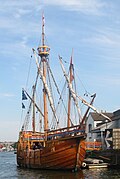


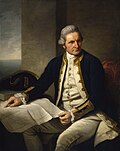


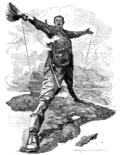

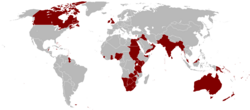

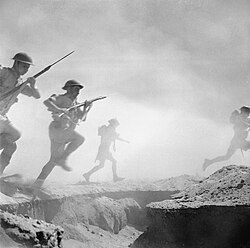

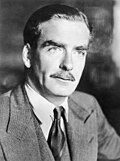

.svg)
.svg)
