|
|
| Line 1: |
Line 1: |
| {{lowercase title}} | | {{lowercase}} |
| {{short description|Line of smartphones designed and marketed by Apple Inc.}} | | {{Multiple issues|update=yes|complex=yes}} |
| | |
| {{Infobox information appliance | | {{Infobox information appliance |
| | name = iPhone | | | name = iPhone |
| | logo = [[File:IPhone Logo 2016.svg|150px]] | | | logo = [[File:IPhone Logo 2016.svg|150px]] |
| | image = [[File:IPhone 12 Pro Gold.svg|186px]] | | | image = [[File:IPhone 14 Pro vector.svg|186px]] |
| | caption = The front face of an [[iPhone 12 Pro]] in Gold | | | caption = The front face of an [[iPhone 14 Pro]] in Deep Purple |
| | developer = [[Apple Inc.]] | | | developer = [[Apple Inc.]] |
| | manufacturer = [[Foxconn]], [[Pegatron]], [[Wistron]] <br />([[contract manufacturer]]s) | | | manufacturer = [[Foxconn]], [[Pegatron]], [[Wistron]] <br />([[contract manufacturer]]s) |
| Line 12: |
Line 13: |
| | power = {{Collapsible list | | | power = {{Collapsible list |
| | title = Built-in rechargeable<br />[[lithium-ion battery]] | | | title = Built-in rechargeable<br />[[lithium-ion battery]] |
| | 1 = '''1st gen:''' {{nowrap|3.7 [[Volt|V]] 5.18 [[Kilowatt hour|W·h]] (1400}} [[ampere hour|mA·h]]) | | | 1 = '''2G:''' {{nowrap|3.7 [[Volt|V]] 5.18 [[Kilowatt hour|W·h]] (1400}} [[ampere hour|mA·h]]) |
| | 2 = '''3G:''' {{nowrap|3.7 V}} {{nowrap|4.12 W·h}} (1150 mA·h) | | | 2 = '''3G:''' {{nowrap|3.7 V}} {{nowrap|4.12 W·h}} (1150 mA·h) |
| | 3 = '''3GS''' {{nowrap|3.7 V}} {{nowrap|4.51 W·h}} (1219 mA·h) | | | 3 = '''3GS''' {{nowrap|3.7 V}} {{nowrap|4.51 W·h}} (1219 mA·h) |
| | 4 = '''4:''' {{nowrap|3.7 V}} {{nowrap|5.25 W·h}} (1420 mA·h) | | | 4 = '''4:''' {{nowrap|3.7 V}} {{nowrap|5.25 W·h}} (1420 mA·h) |
| | 5 = '''4S:''' {{nowrap|3.7 V}} {{nowrap|5.3 W·h}} (1432 mA·h) | | | 5 = '''4S:''' {{nowrap|3.7 V}} {{nowrap|5.3 W·h}} (1432 mA·h) |
| | 6 = '''5:''' {{nowrap|3.8 V}} {{nowrap|5.45 W·h}} (1440 mA·h) | | | 6 = '''5:''' {{nowrap|3.8 V}} {{nowrap|5.45 W·h}} (1440 mA·h) |
| | 7 = '''5C:''' {{nowrap|3.8 V}} {{nowrap|5.73 W·h}} (1510 mA·h) | | | 7 = '''5C:''' {{nowrap|3.8 V}} {{nowrap|5.73 W·h}} (1510 mA·h) |
| | 8 = '''5S:''' {{nowrap|3.8 V}} {{nowrap|5.92 W·h}} (1560 mA·h) | | | 8 = '''5S:''' {{nowrap|3.8 V}} {{nowrap|5.92 W·h}} (1560 mA·h) |
| | 9 = '''6:''' {{nowrap|3.82 V}} {{nowrap|6.91 W·h}} (1810 mA·h) | | | 9 = '''6:''' {{nowrap|3.82 V}} {{nowrap|6.91 W·h}} (1810 mA·h) |
| | 10 = '''6 Plus:''' {{nowrap|3.82 V}} {{nowrap|11.1 W·h}} (2915 mA·h) | | | 10 = '''6 Plus:''' {{nowrap|3.82 V}} {{nowrap|11.1 W·h}} (2915 mA·h) |
| | 11 = '''6S:''' {{nowrap|3.82 V}} {{nowrap|6.55 W·h}} (1715 mA·h) | | | 11 = '''6S:''' {{nowrap|3.82 V}} {{nowrap|6.55 W·h}} (1715 mA·h) |
| | 12 = '''6S Plus:''' {{nowrap|3.8 V}} {{nowrap|10.45 W·h}} (2750 mA·h) | | | 12 = '''6S Plus:''' {{nowrap|3.8 V}} {{nowrap|10.45 W·h}} (2750 mA·h) |
| | 13 = '''SE (1st):''' {{nowrap|3.82 V}} {{nowrap|6.21 W·h}} (1624 mA·h) | | | 13 = '''SE (1st):''' {{nowrap|3.82 V}} {{nowrap|6.21 W·h}} (1624 mA·h) |
| | 14 = '''7:''' {{nowrap|3.8 V}} {{nowrap|7.45 W·h}} (1960 mA·h) | | | 14 = '''7:''' {{nowrap|3.8 V}} {{nowrap|7.45 W·h}} (1960 mA·h) |
| | 15 = '''7 Plus:''' {{nowrap|3.82 V}} {{nowrap|11.10 W·h}} (2900 mA·h) | | | 15 = '''7 Plus:''' {{nowrap|3.82 V}} {{nowrap|11.10 W·h}} (2900 mA·h) |
| | 16 = '''8''' and '''SE (2nd):''' {{nowrap|3.82 V}} {{nowrap|6.96 W·h}} (1821 mA·h) | | | 16 = '''8''' and '''SE (2nd):''' {{nowrap|3.82 V}} {{nowrap|6.96 W·h}} (1821 mA·h) |
| | 17 = '''8 Plus:''' {{nowrap|3.82 V}} {{nowrap|10.28 W·h}} (2691 mA·h) | | | 17 = '''8 Plus:''' {{nowrap|3.82 V}} {{nowrap|10.28 W·h}} (2691 mA·h) |
| | 18 = '''X:''' {{nowrap|3.81 V}} {{nowrap|10.35 W·h}} (2716 mA·h) | | | 18 = '''X:''' {{nowrap|3.81 V}} {{nowrap|10.35 W·h}} (2716 mA·h) |
| | 19 = '''XS:''' {{nowrap|3.81 V}} {{nowrap|10.13 W·h}} (2658 mA·h) | | | 19 = '''XS:''' {{nowrap|3.81 V}} {{nowrap|10.13 W·h}} (2658 mA·h) |
| | 20 = '''XS Max:''' {{nowrap|3.8V}} {{nowrap|12.08 W·h}} (3174 mA·h) | | | 20 = '''XS Max:''' {{nowrap|3.8V}} {{nowrap|12.08 W·h}} (3174 mA·h) |
| | 21 = '''XR:''' {{nowrap|3.81 V}} {{nowrap|11.21 W·h}} (2942 mA·h) | | | 21 = '''XR:''' {{nowrap|3.81 V}} {{nowrap|11.21 W·h}} (2942 mA·h) |
| | 22 = '''11 Pro:''' {{nowrap|3.83 V}} {{nowrap|11.67 W·h}} (3046 mA·h) | | | 22 = '''11 Pro:''' {{nowrap|3.83 V}} {{nowrap|11.67 W·h}} (3046 mA·h) |
| | 23 = '''11 Pro Max:''' {{nowrap|3.79 V}} {{nowrap|15.04 W·h}} (3969 mA·h) | | | 23 = '''11 Pro Max:''' {{nowrap|3.79 V}} {{nowrap|15.04 W·h}} (3969 mA·h) |
| | 24 = '''11:''' {{nowrap|3.83 V}} {{nowrap|11.91 W·h}} (3110 mA·h) | | | 24 = '''11:''' {{nowrap|3.83 V}} {{nowrap|11.91 W·h}} (3110 mA·h) |
| | 25 = '''12 and 12 Pro:''' {{nowrap|3.83 V}} {{nowrap|10.78 W·h}} (2,815 mA·h) | | | 25 = '''12 and 12 Pro:''' {{nowrap|3.83 V}} {{nowrap|10.78 W·h}} (2,815 mA·h) |
| }} | | }} |
| | soc = {{Collapsible list | | | soc = {{Collapsible list |
| | title = Chips used | | | title = Chips used |
| | 1 = '''1st gen''' and '''3G:''' [[S5L8900]] | | | 1 = '''2G''' and '''3G:''' [[S5L8900]] |
| | 2 = '''3GS:''' [[S5PC100]] | | | 2 = '''3GS:''' [[S5PC100]] |
| | 3 = '''4:''' [[Apple A4]] | | | 3 = '''4:''' [[Apple A4]] |
| Line 52: |
Line 53: |
| | 11 = '''XR / XS / XS Max:''' [[Apple A12 Bionic]] | | | 11 = '''XR / XS / XS Max:''' [[Apple A12 Bionic]] |
| | 12 = '''11 / 11 Pro / 11 Pro Max''' and '''SE (2nd):''' [[Apple A13 Bionic]] | | | 12 = '''11 / 11 Pro / 11 Pro Max''' and '''SE (2nd):''' [[Apple A13 Bionic]] |
| | 13 = '''12 / 12 mini / 12 Pro / 12 Pro Max:''' [[Apple A14 Bionic]] | | | 13 = '''12 / 12 mini / 12 Pro / 12 Pro Max:''' [[Apple A14 Bionic]] |
| | | 14 = '''13 / 13 mini / 13 Pro / 13 Pro Max / 14 / 14 Plus:''' and '''SE (3rd):''' [[Apple A15]] Bionic |
| | | 15 = '''14 Pro / 14 Pro Max:''' [[Apple A16]] Bionic |
| }} | | }} |
| | cpu = {{Collapsible list | | | cpu = {{Collapsible list |
| Line 59: |
Line 62: |
| | 2 = '''3GS:''' 600 MHz [[ARM Cortex-A8]]<ref>{{cite web|url=http://www.anandtech.com/show/2782/2 |title=The iPhone 3GS Hardware Exposed & Analyzed |publisher=AnandTech |access-date=June 13, 2013}}</ref> | | | 2 = '''3GS:''' 600 MHz [[ARM Cortex-A8]]<ref>{{cite web|url=http://www.anandtech.com/show/2782/2 |title=The iPhone 3GS Hardware Exposed & Analyzed |publisher=AnandTech |access-date=June 13, 2013}}</ref> |
| | 3 = '''4:''' 800 MHz [[ARM Cortex-A8]]<ref>{{cite web|url=http://www.ifixit.com/Teardown/iPhone-4-Teardown/3130/2 |title=iPhone 4 Teardown – Page 2 |publisher=iFixit |access-date=June 13, 2013|date=June 24, 2010 }}</ref> | | | 3 = '''4:''' 800 MHz [[ARM Cortex-A8]]<ref>{{cite web|url=http://www.ifixit.com/Teardown/iPhone-4-Teardown/3130/2 |title=iPhone 4 Teardown – Page 2 |publisher=iFixit |access-date=June 13, 2013|date=June 24, 2010 }}</ref> |
| | 4 = '''4S:''' 800 MHz [[multi-core processor|dual-core]] [[ARM Cortex-A9]]<ref>{{cite web |first=Amar |last=Toor |title=Benchmarks clock iPhone 4S' A5 CPU at 800MHz, show major GPU upgrade over iPhone 4 |url=https://www.engadget.com/2011/10/11/benchmarks-clock-iphone-4s-a5-cpu-at-800mhz-show-major-gpu-upg/ |work=[[Engadget]] |date=October 11, 2011 |access-date=March 23, 2017}}</ref> | | | 4 = '''4S:''' 800 MHz [[multi-core processor|dual-core]] [[ARM Cortex-A9]]<ref>{{cite web |first=Amar |last=Toor |title=Benchmarks clock iPhone 4S' A5 CPU at 800 MHz, show major GPU upgrade over iPhone 4 |url=https://www.engadget.com/2011/10/11/benchmarks-clock-iphone-4s-a5-cpu-at-800mhz-show-major-gpu-upg/ |work=[[Engadget]] |date=October 11, 2011 |access-date=March 23, 2017}}</ref> |
| | 5 = '''5 / 5C:''' 1.3 GHz dual-core Apple A6 | | | 5 = '''5 / 5C:''' 1.3 GHz dual-core Apple A6 |
| | 6 = '''5S:''' 1.3 GHz 64-bit dual-core Apple A7 | | | 6 = '''5S:''' 1.3 GHz 64-bit dual-core Apple A7 |
| | 7 = '''6 / 6 Plus:''' 1.4 GHz 64-bit dual-core Apple A8 | | | 7 = '''6 / 6 Plus:''' 1.4 GHz 64-bit dual-core Apple A8 |
| | 8 = '''6S / 6S Plus''' and '''SE (1st):''' 1.85 GHz 64-bit dual-core Apple A9 | | | 8 = '''6S / 6S Plus''' and '''SE (1st):''' 1.85 GHz 64-bit dual-core Apple A9 |
| | 9 = '''7 / 7 Plus:''' 2.34 GHz 64-bit quad-core Apple A10 Fusion (2× Hurricane + 2× Zephyr)<ref name="iPhone 7 & 7 Plus">{{cite web | url=http://www.gsmarena.com/compare.php3?idPhone1=8064&idPhone2=8065| publisher= GSMArena| title=iPhone 7 & 7 Plus| access-date=January 14, 2017}}</ref> | | | 9 = '''7 / 7 Plus:''' 2.34 GHz 64-bit quad-core Apple A10 Fusion (2× Hurricane + 2× Zephyr)<ref name="iPhone 7 & 7 Plus">{{cite web | url=http://www.gsmarena.com/compare.php3?idPhone1=8064&idPhone2=8065| publisher= GSMArena| title=iPhone 7 & 7 Plus| access-date=January 14, 2017}}</ref> |
| | 10 = '''8 / 8 Plus / X:''' 2.39 GHz 64-bit hexa-core Apple A11 Bionic (2× Monsoon + 4× Mistral) | | | 10 = '''8 / 8 Plus / X:''' 2.39 GHz 64-bit hexa-core Apple A11 Bionic (2× Monsoon + 4× Mistral) |
| | 11 = '''XR / XS / XS Max:''' 2.49 64-bit hexa-core Apple A12 Bionic | | | 11 = '''XR / XS / XS Max:''' 2.49 64-bit hexa-core Apple A12 Bionic |
| | 12 = '''11 / 11 Pro / 11 Pro Max''' and '''SE (2nd):''' 2.65 64-bit hexa-core Apple A13 Bionic | | | 12 = '''11 / 11 Pro / 11 Pro Max''' and '''SE (2nd):''' 2.65 64-bit hexa-core Apple A13 Bionic |
| | 13 = '''12 Mini / 12 / 12 Pro / 12 Pro Max:''' 3.10 64-bit hexa-core Apple A14 Bionic | | | 13 = '''12 Mini / 12 / 12 Pro / 12 Pro Max:''' 3.10 64-bit hexa-core Apple A14 Bionic |
| | | 14 = '''13 Mini / 13 / 13 Pro / 13 Pro Max:''' 3.23 64-bit hexa-core Apple A15 Bionic |
| }} | | }} |
| | memory = {{Collapsible list | | | memory = {{Collapsible list |
| | title = Memory | | | title = Memory |
| | 1 = '''1st gen''' and '''3G:''' 128 [[megabyte|MB]] [[LPDDR]] [[Random-access memory|RAM]] (137 MHz) | | | 1 = '''1st gen''' and '''3G:''' 128 [[megabyte|MB]] [[LPDDR]] [[Random-access memory|RAM]] (137 MHz) |
| | 2 = '''3GS:''' {{nowrap|256 MB}} LPDDR RAM (200 MHz) | | | 2 = '''3GS:''' {{nowrap|256 MB}} LPDDR RAM (200 MHz) |
| | 3 = '''4:''' {{nowrap|512 MB}} [[LPDDR2]] RAM (200 MHz) | | | 3 = '''4:''' {{nowrap|512 MB}} [[LPDDR2]] RAM (200 MHz) |
| Line 82: |
Line 86: |
| | 9 = '''7 Plus''': 3 GB [[LPDDR4]] RAM | | | 9 = '''7 Plus''': 3 GB [[LPDDR4]] RAM |
| | 10 = '''8 Plus, X, XR''' and '''SE (2nd):''' 3 GB LPDDR4X RAM | | | 10 = '''8 Plus, X, XR''' and '''SE (2nd):''' 3 GB LPDDR4X RAM |
| | 11 = '''XS / XS Max, 11, 11 Pro / 11 Pro Max''' and '''12 Mini / 12:''' 4 GB LPDDR4X RAM | | | 11 = '''XS, XS Max, 11, 11 Pro, 11 Pro Max, 12, 12 Mini, 13, 13 Mini:''' 4 GB LPDDR4X RAM |
| | 12 = '''12 Pro / 12 Pro Max''' 6 GB LPDDR4X RAM | | | 12 = '''12 Pro, 12 Pro Max, 13 Pro, 13 Pro Max:''' 6 GB LPDDR4X RAM |
| }} | | }} |
| | storage = 4, 8, 16, 32, 64, 128, 256 or 512 GB{{efn|name=storageunits|1 GB {{=}} 1 billion bytes, 1 TB {{=}} 1 trillion bytes}} [[flash memory]]<ref>{{cite web|url=https://www.apple.com/iphone/specs.html |title=iPhone 5 – View all the technical specifications |publisher=Apple Inc. |access-date=June 13, 2013}}</ref> | | | storage = 4, 8, 16, 32, 64, 128, 256, 512 GB or 1 TB [[flash memory]]<ref>{{cite web|url=https://www.apple.com/iphone/specs.html |title=iPhone 5 – View all the technical specifications |publisher=Apple Inc. |access-date=June 13, 2013}}</ref> |
| | display = {{Collapsible list | | | display = {{Collapsible list |
| | title = Display | | | title = Display |
| | 1 = '''1st gen''' and '''3G:''' | | | 1 = '''1st gen''' and '''3G:''' |
| | 2 = {{convert|3.5|in|mm|abbr=on}} | | | 2 = {{convert|3.5|in|mm|abbr=on}} |
| | 3 = 3:2 [[display aspect ratio|aspect ratio]], scratch-resistant<ref name="jun18PressRelease">{{cite press release|publisher=Apple Inc.|date=June 18, 2007|url=https://www.apple.com/pr/library/2007/06/18iphone.html|title=iPhone Delivers Up to Eight Hours of Talk Time|url-status=dead|archive-url=https://web.archive.org/web/20110521200837/http://www.apple.com/pr/library/2007/06/18iphone.html|archive-date=May 21, 2011|df=mdy-all}}</ref> glossy glass covered screen, 262,144-color ([[Color depth|18-bit]]) [[Liquid crystal display#Twisted nematic (TN)|TN]] LCD, 480 × 320 [[pixel|px]] ([[HVGA]]) at 163 [[pixel density|ppi]], 200:1 [[contrast ratio]] | | | 3 = 3:2 [[display aspect ratio|aspect ratio]], scratch-resistant<ref name="jun18PressRelease">{{cite press release|publisher=Apple Inc.|date=June 18, 2007|url=https://www.apple.com/pr/library/2007/06/18iphone.html|title=iPhone Delivers Up to Eight Hours of Talk Time|url-status=dead|archive-url=https://web.archive.org/web/20110521200837/http://www.apple.com/pr/library/2007/06/18iphone.html|archive-date=May 21, 2011|df=mdy-all}}</ref> glossy glass covered screen, 262,144-color ([[Color depth|18-bit]]) [[Liquid crystal display#Twisted nematic (TN)|TN]] LCD, 480 × 320 [[pixel|px]] ([[HVGA]]) at 163 [[pixel density|ppi]], 200:1 [[contrast ratio]] |
| | 4 = '''3GS:''' | | | 4 = '''3GS:''' |
| | 5 = In addition to prior, features a fingerprint-resistant [[lipophobicity|oleophobic]] coating,<ref>{{cite web|first=Eric|last=Slivka|url=http://www.macrumors.com/2009/06/10/more-wwdc-tidbits-iphone-3g-s-oleophobic-screen-find-my-iphone-live|title=More WWDC Tidbits: iPhone 3G S Oleophobic Screen, "Find My iPhone" Live lLP|work=Mac Rumors|date=June 10, 2009|access-date=July 3, 2009}}</ref> and 262,144-color (18-bit) TN LCD with hardware spatial dithering<ref name=edepot>{{cite web|url=http://www.edepot.com/iphone.html|title=iPhone Secrets and iPad Secrets and iPod Touch Secrets|author=Po-Han Lin|work=Technology Depot|access-date=December 8, 2011}}</ref> | | | 5 = In addition to prior, features a fingerprint-resistant [[lipophobicity|oleophobic]] coating,<ref>{{cite web|first=Eric|last=Slivka|url=http://www.macrumors.com/2009/06/10/more-wwdc-tidbits-iphone-3g-s-oleophobic-screen-find-my-iphone-live|title=More WWDC Tidbits: iPhone 3G S Oleophobic Screen, "Find My iPhone" Live lLP|work=Mac Rumors|date=June 10, 2009|access-date=July 3, 2009}}</ref> and 262,144-color (18-bit) TN LCD with hardware spatial dithering<ref name=edepot>{{cite web|url=http://www.edepot.com/iphone.html|title=iPhone Secrets and iPad Secrets and iPod Touch Secrets|author=Po-Han Lin|work=Technology Depot|access-date=December 8, 2011}}</ref> |
| | 6 = '''4''' and '''4S:''' | | | 6 = '''4''' and '''4S:''' |
| | 7 = {{convert|3.5|in|mm|abbr=on}}; 3:2 aspect ratio, [[aluminosilicate]] glass covered 16,777,216-color (24-bit) [[In-plane switching|IPS]] LCD screen, 960 × 640 px at 326 [[pixels per inch|ppi]], 800:1 contrast ratio, 500 [[luminance|{{frac|cd|m²}}]] max brightness | | | 7 = {{convert|3.5|in|mm|abbr=on}}; 3:2 aspect ratio, [[aluminosilicate]] glass covered 16,777,216-color (24-bit) [[In-plane switching|IPS]] LCD screen, 960 × 640 px at 326 [[pixels per inch|ppi]], 800:1 contrast ratio, 500 [[luminance|{{frac|cd|m²}}]] max brightness |
| | 8 = '''5 / 5C / 5S / SE (1st):''' | | | 8 = '''5 / 5C / 5S / SE (1st):''' |
| | 9 = {{convert|4.0|in|mm|abbr=on}}; 16:9 aspect ratio; 1136 × 640 px screen resolution at 326 ppi | | | 9 = {{convert|4.0|in|mm|abbr=on}}; 16:9 aspect ratio; 1136 × 640 px screen resolution at 326 ppi |
| | 10 = '''6 / 6S / 7 / 8 / SE (2nd):''' | | | 10 = '''6 / 6S / 7 / 8 / SE (2nd):''' |
| | 11 = {{convert|4.7|in|mm|abbr=on}}; 16:9 aspect ratio; 1334 × 750 px screen resolution at 326 ppi | | | 11 = {{convert|4.7|in|mm|abbr=on}}; 16:9 aspect ratio; 1334 × 750 px screen resolution at 326 ppi |
| | 12 = '''6 Plus / 6S Plus / 7 Plus / 8 Plus:''' | | | 12 = '''6 Plus / 6S Plus / 7 Plus / 8 Plus:''' |
| | 13 = {{convert|5.5|in|mm|abbr=on}}; 16:9 aspect ratio; 1920 × 1080 px screen resolution at 401 ppi | | | 13 = {{convert|5.5|in|mm|abbr=on}}; 16:9 aspect ratio; 1920 × 1080 px screen resolution at 401 ppi |
| | 14 = '''X / XS / 11 Pro:''' | | | 14 = '''X / XS / 11 Pro:''' |
| | 15 = {{convert|5.8|in|mm|abbr=on}}; ≈19.5:9 aspect ratio; OLED screen, 2436 × 1125 px screen resolution at 458 ppi | | | 15 = {{convert|5.8|in|mm|abbr=on}}; ≈19.5:9 aspect ratio; OLED screen, 2436 × 1125 px screen resolution at 458 ppi |
| | 16 = '''XS Max / 11 Pro Max:''' | | | 16 = '''XS Max / 11 Pro Max:''' |
| | 17 = {{convert|6.5|in|mm|abbr=on}}; ≈19.5:9 aspect ratio; OLED screen, 2688 × 1242 px screen resolution at 458 ppi | | | 17 = {{convert|6.5|in|mm|abbr=on}}; ≈19.5:9 aspect ratio; OLED screen, 2688 × 1242 px screen resolution at 458 ppi |
| | 18 = '''XR / 11:''' | | | 18 = '''XR / 11:''' |
| | 19 = {{convert|6.1|in|mm|abbr=on}}; ≈19.5:9 aspect ratio; 1792 × 828 px screen resolution at 326 ppi | | | 19 = {{convert|6.1|in|mm|abbr=on}}; ≈19.5:9 aspect ratio; 1792 × 828 px screen resolution at 326 ppi |
| | 20 = '''12 mini:''' | | | 20 = '''12 mini / 13 mini:''' |
| | 21 = {{convert|5.4|in|mm|abbr=on}}; ≈19.5:9 aspect ratio; OLED screen, 2340 × 1080 px screen resolution at 476 ppi | | | 21 = {{convert|5.4|in|mm|abbr=on}}; ≈19.5:9 aspect ratio; OLED screen, 2340 × 1080 px screen resolution at 476 ppi |
| | 22 = '''12 / 12 Pro:''' | | | 22 = '''12 / 12 Pro / 13 / 13 Pro / 14 / 14 Pro:''' |
| | 23 = {{convert|6.1|in|mm|abbr=on}}; ≈19.5:9 aspect ratio; OLED screen, 2532 × 1170 px screen resolution at 460 ppi | | | 23 = {{convert|6.1|in|mm|abbr=on}}; ≈19.5:9 aspect ratio; OLED screen, 2532 × 1170 px screen resolution at 460 ppi |
| | 24 = '''12 Pro Max:''' | | | 24 = '''12 Pro Max / 13 Pro Max / 14 Plus / 14 Pro Max:''' |
| | 25 = {{convert|6.7|in|mm|abbr=on}}; ≈19.5:9 aspect ratio; OLED screen, 2778 × 1284 px screen resolution at 458 ppi | | | 25 = {{convert|6.7|in|mm|abbr=on}}; ≈19.5:9 aspect ratio; OLED screen, 2778 × 1284 px screen resolution at 458 ppi |
| }} | | }} |
| | graphics = {{Collapsible list | | | graphics = {{Collapsible list |
| Line 119: |
Line 123: |
| | 2 = [[PowerVR]] [[PowerVR#MBX|MBX]] Lite 3D [[graphics processing unit|GPU]]<ref name="GPUmbx">{{cite web|url=http://www.eetimes.com/news/semi/showArticle.jhtml?articleID=200900740|title=Update: UK graphics specialist confirms that iPhone design win|work=[[EE Times]]|access-date=July 8, 2007|archive-url=https://www.webcitation.org/68DyboxOh?url=http://eetimes.com/electronics-news/4188648/IPhone-code-trail-points-to-MBX-graphics-core|archive-date=June 6, 2012|url-status=dead}}</ref> (103 MHz) | | | 2 = [[PowerVR]] [[PowerVR#MBX|MBX]] Lite 3D [[graphics processing unit|GPU]]<ref name="GPUmbx">{{cite web|url=http://www.eetimes.com/news/semi/showArticle.jhtml?articleID=200900740|title=Update: UK graphics specialist confirms that iPhone design win|work=[[EE Times]]|access-date=July 8, 2007|archive-url=https://www.webcitation.org/68DyboxOh?url=http://eetimes.com/electronics-news/4188648/IPhone-code-trail-points-to-MBX-graphics-core|archive-date=June 6, 2012|url-status=dead}}</ref> (103 MHz) |
| | 3 = '''3GS:''' PowerVR [[PowerVR#Series 5 (SGX)|SGX535]] GPU | | | 3 = '''3GS:''' PowerVR [[PowerVR#Series 5 (SGX)|SGX535]] GPU |
| | 4 = (150 MHz)<ref name="3G_S_Processor">{{cite web|url=http://www.anandtech.com/gadgets/showdoc.aspx?i=3579&p=2|title=The iPhone 3GS Hardware Exposed & Analyzed|last=Shimpi|first=Anand|date=June 10, 2009|work=AnandTech|access-date=June 10, 2009}}<br />{{cite news|url=https://www.wired.com/gadgetlab/2009/06/t-mobile-accidentally-posts-secret-iphone-3g-s-specs|title=Gadget Lab Hardware News and Reviews T-Mobile Accidentally Posts Secret iPhone 3G S Specs|last=Sorrel|first=Charlie|date=June 10, 2009|work=[[Wired (magazine)|Wired]]|access-date=June 14, 2009}}</ref><ref name="4_Processor">{{cite web|url=http://www.ifixit.com/Teardown/Apple-A4-Teardown/2204/3|title=Apple A4 Teardown|date=June 10, 2009|work=ifixit.com|access-date=September 9, 2010}}</ref> | | | 4 = (150 MHz)<ref name="3G_S_Processor">{{cite web|url=http://www.anandtech.com/gadgets/showdoc.aspx?i=3579&p=2|title=The iPhone 3GS Hardware Exposed & Analyzed|last=Shimpi|first=Anand|date=June 10, 2009|work=AnandTech|access-date=June 10, 2009}}<br />{{cite news|url=https://www.wired.com/gadgetlab/2009/06/t-mobile-accidentally-posts-secret-iphone-3g-s-specs|title=Gadget Lab Hardware News and Reviews T-Mobile Accidentally Posts Secret iPhone 3G S Specs|last=Sorrel|first=Charlie|date=June 10, 2009|magazine=[[Wired (magazine)|Wired]]|access-date=June 14, 2009}}</ref><ref name="4_Processor">{{cite web|url=http://www.ifixit.com/Teardown/Apple-A4-Teardown/2204/3|title=Apple A4 Teardown|date=June 10, 2009|work=ifixit.com|access-date=September 9, 2010}}</ref> |
| | 5 = '''4:''' PowerVR [[PowerVR#Series 5 (SGX)|SGX535]] GPU (200 MHz)<ref name="3G_S_Processor" /><ref name="4_Processor" /> | | | 5 = '''4:''' PowerVR [[PowerVR#Series 5 (SGX)|SGX535]] GPU (200 MHz)<ref name="3G_S_Processor" /><ref name="4_Processor" /> |
| | 6 = '''4S:''' PowerVR [[PowerVR#Series 5 (SGX)|SGX543MP2]] (2-core) GPU | | | 6 = '''4S:''' PowerVR [[PowerVR#Series 5 (SGX)|SGX543MP2]] (2-core) GPU |
| Line 126: |
Line 130: |
| | 9 = '''6 / 6 Plus:''' PowerVR GX6450 (4-core) GPU | | | 9 = '''6 / 6 Plus:''' PowerVR GX6450 (4-core) GPU |
| | 10 = '''6S / 6S Plus''' and '''SE (1st):''' PowerVR GT7600 (6-core) GPU<ref>{{cite web|url=http://www.anandtech.com/show/9686/the-apple-iphone-6s-and-iphone-6s-plus-review/5|title=A9's GPU: Imagination PowerVR GT7600 – The Apple iPhone 6s and iPhone 6s Plus Review |work=AnandTech |date=November 2, 2015 |access-date=November 4, 2015}}</ref> | | | 10 = '''6S / 6S Plus''' and '''SE (1st):''' PowerVR GT7600 (6-core) GPU<ref>{{cite web|url=http://www.anandtech.com/show/9686/the-apple-iphone-6s-and-iphone-6s-plus-review/5|title=A9's GPU: Imagination PowerVR GT7600 – The Apple iPhone 6s and iPhone 6s Plus Review |work=AnandTech |date=November 2, 2015 |access-date=November 4, 2015}}</ref> |
| | 11 = '''7 / 7 Plus:''' PowerVR Series 7XT Plus (6-core) GPU<ref name="iPhone 7 & 7 Plus"/> | | | 11 = '''7 / 7 Plus:''' PowerVR Series 7XT Plus (6-core) GPU<ref name="iPhone 7 & 7 Plus" /> |
| | 12 = '''8 / 8 Plus / X:''' Apple-designed (3-core) GPU | | | 12 = '''8 / 8 Plus / X:''' Apple-designed (3-core) GPU |
| | 13 = '''XR and XS through iPhone 12 and 12 Pro:''' Apple-designed (4-core) GPU | | | 13 = '''XR and XS through iPhone 12 and 12 Pro:''' Apple-designed (4-core) GPU |
| | | 14 = '''iPhone 13 mini and 13:''' Apple-designed (4-core) GPU |
| | | 15 = '''iPhone 13 Pro and 13 Pro Max:''' Apple-designed (5-core) GPU |
| }} | | }} |
| | sound = {{flatlist| | | | sound = {{flatlist| |
| Line 134: |
Line 140: |
| * stereo speaker (iPhone 7 and up) | | * stereo speaker (iPhone 7 and up) |
| * microphone | | * microphone |
| * 3.5 mm [[Phone connector (audio)|stereo audio jack]] (until the iPhone SE (1st generation)) | | * 3.5 mm [[Phone connector (audio)|stereo audio jack]] (until the iPhone SE (1st generation)) |
| * [[Lightning (connector)|Lightning]] port (requires iOS 10 or later) | | * [[Lightning (connector)|Lightning]] port (requires iOS 10 or later) |
| }} | | }} |
| Line 145: |
Line 151: |
| | 3 = '''5''', '''5C''', and '''5S:'''<br /> | | | 3 = '''5''', '''5C''', and '''5S:'''<br /> |
| [[Wi-Fi]] ([[IEEE 802.11|802.11]] [[IEEE 802.11a-1999|a]]/[[IEEE 802.11b-1999|b]]/[[IEEE 802.11g-2003|g]]/[[IEEE 802.11n-2009|n]]) | | [[Wi-Fi]] ([[IEEE 802.11|802.11]] [[IEEE 802.11a-1999|a]]/[[IEEE 802.11b-1999|b]]/[[IEEE 802.11g-2003|g]]/[[IEEE 802.11n-2009|n]]) |
| | 4 = '''6 / 6 Plus''', '''6S / 6S Plus''', '''SE''', '''7 / 7 Plus''', and '''8 / 8 Plus / X:'''<br /> | | | 4 = '''6 / 6 Plus''', '''6S / 6S Plus''', '''SE''', '''7 / 7 Plus''', '''8 / 8 Plus''', and '''X / XR / XS / XS Pro:'''<br /> |
| [[Wi-Fi]] ([[IEEE 802.11|802.11]] [[IEEE 802.11a-1999|a]]/[[IEEE 802.11b-1999|b]]/[[IEEE 802.11g-2003|g]]/[[IEEE 802.11n-2009|n]]/[[IEEE 802.11ac|ac]]) | | [[Wi-Fi]] ([[IEEE 802.11|802.11]] [[IEEE 802.11a-1999|a]]/[[IEEE 802.11b-1999|b]]/[[IEEE 802.11g-2003|g]]/[[IEEE 802.11n-2009|n]]/[[IEEE 802.11ac|ac]]) |
| | 5 = <!--- This is a blank placeholder. NO CONTENT goes in this parameter. ---> | | | 5 = '''SE (2nd)''', '''11 / 11 Pro / 11 Pro Max''', '''12 / 12 Mini / 12 Pro / 12 Pro Max''', and '''13 / 13 Mini / 13 Pro / 13 Pro Max:'''<br /> |
| | 6 = '''1st gen''', '''3G''', '''3GS''', and '''4:'''<br /> | | [[Wi-Fi]] ([[IEEE 802.11|802.11]] [[IEEE 802.11a-1999|a]]/[[IEEE 802.11b-1999|b]]/[[IEEE 802.11g-2003|g]]/[[IEEE 802.11n-2009|n]]/[[IEEE 802.11ac|ac]]/[[IEEE 802.11ax|ax]]) |
| | | 6 = <!--- This is a blank placeholder. NO CONTENT goes in this parameter. ---> |
| | | 7 = '''1st gen''', '''3G''', '''3GS''', and '''4:'''<br /> |
| [[Bluetooth v2.1+EDR|Bluetooth 2.1 + EDR]] | | [[Bluetooth v2.1+EDR|Bluetooth 2.1 + EDR]] |
| | 7 = '''4S''', '''5''', '''5C''', '''5S''', and '''6 / 6 Plus:'''<br /> | | | 8 = '''4S''', '''5''', '''5C''', '''5S''', and '''6 / 6 Plus:'''<br /> |
| [[Bluetooth v4.0|Bluetooth 4.0]] | | [[Bluetooth v4.0|Bluetooth 4.0]] |
| | 8 = '''6S / 6S Plus''', '''SE (1st)''' and '''7 / 7 Plus:'''<br /> | | | 9 = '''6S / 6S Plus''', '''SE (1st)''' and '''7 / 7 Plus:'''<br /> |
| [[Bluetooth v4.2|Bluetooth 4.2]] | | [[Bluetooth v4.2|Bluetooth 4.2]] |
| | 9 = '''8 and X through iPhone 12 and 12 Pro:'''<br /> | | | 10 = '''8 and X through iPhone 12 and 12 Pro:'''<br /> |
| [[Bluetooth 5.0]] | | [[Bluetooth 5.0]] |
| }} | | }} |
| Line 160: |
Line 168: |
| '''[[GSM]] models also include:''' | | '''[[GSM]] models also include:''' |
| {{flatlist| | | {{flatlist| |
| * [[LTE (telecommunication)|LTE]] [[LTE frequency bands|700, 2100]] MHz | | * [[LTE (telecommunication)|LTE]] [[LTE frequency bands|700, 2100]] MHz |
| * {{allow wrap|[[Universal Mobile Telecommunications System|UMTS]] / [[High-Speed Downlink Packet Access|HSDPA]]/[[Evolved HSPA|HSPA+]] / [[Dual-Cell HSDPA|DC-HSDPA]]}} [[UMTS frequency bands|850, 900, 1900, 2100]] MHz | | * {{allow wrap|[[Universal Mobile Telecommunications System|UMTS]] / [[High-Speed Downlink Packet Access|HSDPA]]/[[Evolved HSPA|HSPA+]] / [[Dual-Cell HSDPA|DC-HSDPA]]}} [[UMTS frequency bands|850, 900, 1900, 2100]] MHz |
| * {{allow wrap|[[GSM]] / [[Enhanced Data Rates for GSM Evolution|EDGE]]}} [[GSM frequency bands|850, 900, 1800, 1900]] MHz | | * {{allow wrap|[[GSM]] / [[Enhanced Data Rates for GSM Evolution|EDGE]]}} [[GSM frequency bands|850, 900, 1800, 1900]] MHz |
| '''[[code division multiple access|CDMA]] model also includes:''' | | '''[[code division multiple access|CDMA]] model also includes:''' |
| * [[LTE (telecommunication)|LTE]] [[LTE frequency bands|700]] MHz | | * [[LTE (telecommunication)|LTE]] [[LTE frequency bands|700]] MHz |
| * [[code division multiple access|CDMA]]/[[Evolution-Data Optimized|EV-DO Rev. A]] [[Multi-band device|800, 1900]] MHz | | * [[code division multiple access|CDMA]]/[[Evolution-Data Optimized|EV-DO Rev. A]] [[Multi-band device|800, 1900]] MHz |
| * {{allow wrap|[[Universal Mobile Telecommunications System|UMTS]] / [[High-Speed Downlink Packet Access|HSDPA]]/[[Evolved HSPA|HSPA+]]/[[Dual-Cell HSDPA|DC-HSDPA]]}} [[UMTS frequency bands|850, 900, 1900, 2100]] MHz | | * {{allow wrap|[[Universal Mobile Telecommunications System|UMTS]] / [[High-Speed Downlink Packet Access|HSDPA]]/[[Evolved HSPA|HSPA+]]/[[Dual-Cell HSDPA|DC-HSDPA]]}} [[UMTS frequency bands|850, 900, 1900, 2100]] MHz |
| * {{allow wrap|[[GSM]] / [[Enhanced Data Rates for GSM Evolution|EDGE]]}} [[GSM frequency bands|850, 900, 1800, 1900]] MHz | | * {{allow wrap|[[GSM]] / [[Enhanced Data Rates for GSM Evolution|EDGE]]}} [[GSM frequency bands|850, 900, 1800, 1900]] MHz |
| }} | | }} |
| | dimensions = {{Collapsible list | | | dimensions = {{Collapsible list |
| Line 246: |
Line 254: |
| | 74 = {{convert|160.8|mm|in|abbr=on}} H | | | 74 = {{convert|160.8|mm|in|abbr=on}} H |
| | 75 = {{convert|78.1|mm|in|abbr=on}} W | | | 75 = {{convert|78.1|mm|in|abbr=on}} W |
| | 76 = {{convert|7.4|mm|in|abbr=on}} | | | 76 = {{convert|7.4|mm|in|abbr=on}} D |
| }} | | }} |
| | weight = {{Collapsible list | | | weight = {{Collapsible list |
| Line 283: |
Line 291: |
| * [[List of iOS and iPadOS devices|Comparison]] | | * [[List of iOS and iPadOS devices|Comparison]] |
| }} | | }} |
| | website = {{URL|apple.com/iphone/}} | | | website = {{URL|https://www.apple.com/iphone/|apple.com/iphone/}} |
| | releasedate = {{Collapsible list | | | releasedate = {{Collapsible list |
| | title = June 29, 2007 | | | title = Depends on model |
| | 1 = '''[[IPhone (1st generation)|iPhone (1st Generation)]]''': {{Start date|2007|06|29}} | | | 1 = '''[[IPhone (1st generation)|1st]]''': {{Start date|2007|06|29}} |
| | 2 = '''[[iPhone 3G|3G]]:''' {{Start date|2008|07|11}} | | | 2 = '''[[iPhone 3G|3G]]:''' {{Start date|2008|07|11}} |
| | 3 = '''[[iPhone 3GS|3GS]]''': {{Start date|2009|06|19}} | | | 3 = '''[[iPhone 3GS|3GS]]''': {{Start date|2009|06|19}} |
| Line 305: |
Line 313: |
| | 18 = '''[[iPhone 12|12]]''' and '''[[iPhone 12 Pro|12 Pro]]''': {{Start date|2020|10|23}} | | | 18 = '''[[iPhone 12|12]]''' and '''[[iPhone 12 Pro|12 Pro]]''': {{Start date|2020|10|23}} |
| | 19 = '''[[iPhone 12|12 Mini]]''' and '''[[iPhone 12 Pro|12 Pro Max]]''': {{Start date|2020|11|13}} | | | 19 = '''[[iPhone 12|12 Mini]]''' and '''[[iPhone 12 Pro|12 Pro Max]]''': {{Start date|2020|11|13}} |
| | | 20 = '''[[iPhone 13|13]]''', '''[[iPhone 13|13 Mini]]''', '''[[iPhone 13 Pro|13 Pro]]''', and '''[[iPhone 13 Pro|13 Pro Max]]''': {{Start date|2021|09|24}} |
| | | 21 = '''[[iPhone SE (3rd generation)|SE (3rd)]]''': {{Start date|2022|03|18}} |
| | | 22 = '''[[iPhone 14|14]]''', '''[[iPhone 14 Pro|14 Pro]]''', and '''[[iPhone 14 Pro|14 Pro Max]]''': {{Start date|2022|09|16}} |
| | | 23 = '''[[iPhone 14|14 Plus]]''': {{Start date|2022|10|07}} |
| }} | | }} |
| | unitssold = 2.2 Billion (as of November 1, 2018)<ref name="Lifewire">{{cite news|url=https://www.lifewire.com/how-many-iphones-have-been-sold-1999500|title= How Many iPhones have been sold |work= Lifewire |access-date= July 27, 2019}}</ref> | | | discontinuation_date = {{Collapsible list |
| | | title = Depends on model |
| | | 1 = '''[[iPhone (1st generation)|1st]]''': {{Start date|2008|06|09}} |
| | | 2 = '''[[iPhone 3G|3G]]:''' {{Start date|2010|08|09}} |
| | | 3 = '''[[iPhone 3GS|3GS]]''': {{Start date|2012|09|12}} |
| | | 4 = '''[[iPhone 4|4]]''': {{Start date|2013|09|10}} |
| | | 5 = '''[[iPhone 4S|4S]]''': {{Start date|2014|09|09}} |
| | | 6 = '''[[iPhone 5|5]]''': {{Start date|2013|09|10}} |
| | | 7 = '''[[iPhone 5C|5C]]''': {{Start date|2015|09|09}} |
| | | 8 = '''[[iPhone 5S|5S]]''': {{Start date|2016|03|21}} |
| | | 9 = '''[[iPhone 6|6 / 6 Plus]]''': {{Start date|2016|09|07}} |
| | | 10 = '''[[iPhone 6S|6S / 6S Plus]]''': {{Start date|2018|09|12}} |
| | | 11 = '''[[iPhone SE (1st generation)|SE (1st)]]''': {{Start date|2018|09|12}} |
| | | 12 = '''[[iPhone 7|7 / 7 Plus]]''': {{Start date|2019|09|10}} |
| | | 13 = '''[[iPhone 8|8 / 8 Plus]]''': {{Start date|2020|04|15}} |
| | | 14 = '''[[iPhone X|X]]''': {{Start date|2018|09|12}} |
| | | 15 = '''[[iPhone XS|XS / XS Max]]''': {{Start date|2019|09|10}} |
| | | 16 = '''[[iPhone XR|XR]]''': {{Start date|2021|09|14}} |
| | | 17 = '''[[iPhone 11 Pro|11 Pro / 11 Pro Max]]''': {{Start date|2020|10|13}} |
| | | 18 = '''[[iPhone 12 Pro|12 Pro]], [[iPhone 12 Pro|12 Pro Max]]''': {{Start date|2021|09|14}} |
| | | 19 = '''[[iPhone SE (2nd generation)|SE (2nd)]]''': {{Start date|2022|03|08}} |
| | | 20 = '''[[iPhone 12 mini|12 mini]], [[iPhone 13 Pro|13 Pro / 13 Pro Max]]''': {{Start date|2022|09|07}} |
| | }} |
| | | unitssold = 2.2 billion (as of November 1, 2018)<ref name="Lifewire">{{cite news|url=https://www.lifewire.com/how-many-iphones-have-been-sold-1999500|title= How Many iPhones have been sold |work= Lifewire |access-date= July 27, 2019}}</ref> |
| | service = {{flatlist| | | | service = {{flatlist| |
| * [[iTunes Store]] | | * [[iTunes Store]] |
| Line 318: |
Line 353: |
| }} | | }} |
|
| |
|
| The '''iPhone''' is a line of [[smartphone]]s designed and marketed by [[Apple Inc.]] that use Apple's [[iOS]] [[mobile operating system]]. The [[iPhone (1st generation)|first-generation iPhone]] was announced by former Apple [[Chief executive officer|CEO]] [[Steve Jobs]] on January 9, 2007. Since then Apple has annually released new iPhone models and iOS updates. As of November 1, 2018, more than 2.2 billion iPhones had been sold. | | The '''iPhone''' is a series of [[smartphone]]s made by [[Apple Inc.|Apple Inc]] since 2007. It does many things that a [[computer]] can do, but is small enough to fit in someone's hand. It is a [[mobile phone]], meaning that it makes calls and sends [[text message]]s but [[Wireless|without wires]]. There're many types of iPhones, such as the model iPhone X. |
| | |
| The iPhone has a [[user interface]] built around a [[multi-touch]] screen. It connects to [[cellular network]]s or [[Wi-Fi]], and can make [[Telephone call|calls]], [[web browser|browse the web]], [[camera phone|take pictures]], [[portable media player|play music]] and send and receive [[email]]s and [[text messaging|text messages]]. Since the iPhone's launch further features have been added, including larger screen sizes, [[video camera|shooting video]], [[waterproofing]], the ability to install third-party [[mobile app]]s through an [[app store]], and many [[Computer accessibility|accessibility]] features. Up to 2017, iPhones used a layout with a single button on the front panel that returns the user to the [[Springboard (iPhone)|home screen]]. Since 2017, more expensive iPhone models have switched to a nearly [[Screen bezel|bezel]]-less front screen design with app switching activated by [[gesture recognition]].
| |
| | |
| The iPhone is one of the two largest smartphone [[Computing platform|platforms]] in the world alongside [[Android (operating system)|Android]], forming a large part of the [[Luxury goods|luxury market]]. The iPhone has generated large profits for Apple, making it one of the world's [[List of public corporations by market capitalization|most valuable publicly traded companies]]. The first-generation iPhone was described as "revolutionary" and a "game-changer" for the mobile phone industry and subsequent models have also garnered praise. The iPhone has been credited with popularizing the smartphone and [[slate phone|slate form factor]], and with creating a large market for smartphone apps, or "[[Mobile app development|app economy]]". {{As of|2017|1}}, Apple's [[App Store (iOS)|App Store]] contained more than 2.2 million applications for the iPhone.
| |
| | |
| ==History and availability==
| |
| ===History===
| |
| | |
| {{Main|History of the iPhone}}
| |
| | |
| Development of what was to become the iPhone began in 2004, when Apple started to gather a team of 1,000 employees led by hardware engineer [[Tony Fadell]], software engineer [[Scott Forstall]] and design engineer Sir [[Jonathan Ive]]<ref name=":0">Gladwell, Malcolm (November 14, 2011). [http://www.newyorker.com/reporting/2011/11/14/111114fa_fact_gladwell?currentPage=2 "The Tweaker: The real genius of Steve Jobs."] ''[[The New Yorker]]''. p. 2</ref> to work on the highly confidential "Project Purple."<ref>{{Cite web|last=|first=|date=|title=The Secret Origin Story of the IPHONE. An exclusive excerpt from the book "The One Device: The secret history of the iPhone"|url=https://www.theverge.com/2017/6/13/15782200/one-device-secret-history-iphone-brian-merchant-book-excerpt|access-date=|website=The Verge|page=|publication-date=2017}}</ref><ref name="RWW12">{{cite web|last=Rowinski|first=Dan|date=August 7, 2012|title=4 Real Secrets We've Learned So Far About Apple|url=http://www.readwriteweb.com/mobile/2012/08/4-real-secrets-weve-learned-so-far-about-apple.php|url-status=dead|archive-url=https://web.archive.org/web/20120808131222/http://www.readwriteweb.com/mobile/2012/08/4-real-secrets-weve-learned-so-far-about-apple.php|archive-date=August 8, 2012|access-date=October 25, 2012|work=Readwriteweb.com}}</ref>
| |
| | |
| Apple CEO [[Steve Jobs]] steered the original focus away from a tablet (which Apple eventually revisited in the form of the [[iPad]]) towards a phone.<ref>{{cite news|last=Murtazin|first=Eldar|date=June 20, 2010|title=Apple's Phone: From 1980s' Sketches to iPhone. Part 3|work=Mobile-review|url=http://mobile-review.com/articles/2010/iphone-history3-en.shtml|access-date=March 27, 2011}}</ref> Apple created the device during a secretive collaboration with Cingular Wireless (which became [[AT&T Mobility]]) at the time—at an estimated development cost of US$150 million<!-- Wired, page 3 --> over thirty months.<ref name="Wired_Untold">{{cite news|date=January 9, 2008|title=The Untold Story: How the iPhone Blew Up the Wireless Industry|work=[[Wired (magazine)|Wired]]|url=http://archive.wired.com/gadgets/wireless/magazine/16-02/ff_iphone?currentPage=all|url-status=dead|archive-url=https://web.archive.org/web/20150213101032/http://archive.wired.com/gadgets/wireless/magazine/16-02/ff_iphone?currentPage=all|archive-date=February 13, 2015}}</ref>
| |
| | |
| According to [[Steve Jobs]], the "i" word in "iMac" (and therefore "iPod", "iPhone" and "iPad") stands for internet, individual, instruct, inform, and inspire.<ref>{{cite web|date=February 18, 2016|title=iPhone: What the "i" in Apple's handset names for|url=https://www.independent.co.uk/life-style/gadgets-and-tech/news/iphone-apple-name-imac-i-internet-phone-handset-a6881701.html|access-date=November 12, 2017|work=Andrew Griffin|publisher=The Independent}}</ref><ref>{{cite web|last=Wei|first=Will|date=September 7, 2016|title=The meaning of the 'i' in 'iPhone' — as explained by Steve Jobs|url=http://www.businessinsider.com/what-i-means-iphone-2016-9|access-date=November 12, 2017|work=[[Business Insider]]}}</ref>
| |
| | |
| Apple rejected the "[[design by committee]]" approach that had yielded the [[Motorola ROKR E1]], a largely unsuccessful collaboration with [[Motorola]]. Among other deficiencies, the ROKR E1's firmware limited storage to only 100 [[iTunes]] songs to avoid competing with Apple's [[iPod nano]].<ref>{{cite news|last=Andreescu|first=Alex|date=September 27, 2005|title=iPod nano: The End of the Motorola-Apple Story – Ed Zander, Motorola CEO: "Screw the nano"|work=[[Softpedia]]|url=http://news.softpedia.com/news/iPod-nano-The-End-of-the-Motorola-Apple-Story-9409.shtml|access-date=June 5, 2010}}</ref><ref>{{cite web|last=Rojas|first=Peter|date=September 8, 2005|title=It's official: ROKR E1 iTunes phone can only store max. 100 tracks|url=https://www.engadget.com/2005/09/08/its-official-rokr-e1-itunes-phone-can-only-store-max-100/|access-date=March 23, 2017|work=[[Engadget]]}}</ref>
| |
|
| |
|
| Cingular gave Apple the liberty to develop the iPhone's hardware and software in-house<ref name="CNN secrets">{{cite news|last=Lewis|first=Peter|date=January 12, 2007|title=How Apple kept its iPhone secrets|publisher=CNN|url=https://money.cnn.com/2007/01/10/commentary/lewis_fortune_iphone.fortune/index.htm|access-date=January 11, 2009}}</ref><ref>{{cite news|last=Vogelstein|first=Fred|date=January 9, 2008|title=The Untold Story: How the iPhone Blew Up the Wireless Industry|work=[[Wired (magazine)|Wired]]|url=https://www.wired.com/gadgets/wireless/magazine/16-02/ff_iphone|access-date=January 10, 2008}}</ref> and even paid Apple a fraction of its monthly service revenue (until the iPhone 3G),<ref>{{cite web|last=Cheng|first=Jacqui|date=June 9, 2008|title=AT&T remains sole iPhone carrier in US, revenue sharing axed (Updated)|url=https://arstechnica.com/apple/2008/06/att-remains-sole-iphone-carrier-in-us-revenue-sharing-axed/|access-date=March 23, 2017|work=[[Ars Technica]]}}</ref> in exchange for four years of exclusive U.S. sales, until 2011.<ref name="arstechnica.com">{{cite web|last=Brodkin|first=Jon|date=June 29, 2017|title=With iPhone, Apple showed AT&T and Verizon who's boss|url=https://arstechnica.com/apple/2017/06/with-iphone-apple-showed-att-and-verizon-whos-boss/|work=[[Ars Technica]]}}</ref>
| | The iPhone can access the [[Internet]] as well, either using a [[cellular network]] or over [[Wi-Fi]]. Like an [[iPod]], it plays [[music]] and [[videos]] that have been downloaded from the Internet directly, or which have been put on it by connecting it to a [[personal computer]], which is called syncing. It also has a [[calendar]] and 1, 2 or 3 built-in [[camera]]s. A user can make it do many other things, such as run [[video game]]s, by downloading [[mobile app|apps]] from the [[App Store (iOS)|App Store]]. |
|
| |
|
| Jobs unveiled the [[iPhone (1st generation)|iPhone]] to the public on January 9, 2007, at the [[Macworld Conference & Expo|Macworld]] 2007 convention at the [[Moscone Center]] in San Francisco.<ref>{{cite web|last=Farber|first=Dan|date=January 9, 2014|title=When iPhone met world, 7 years ago today|url=https://www.cnet.com/news/when-iphone-met-world-7-years-ago-today/|access-date=March 23, 2017|publisher=[[CNET]]}}</ref> The two initial models, a 4 GB{{efn|name=storageunits}} model priced at US$499 and an 8 GB model at US$599 (both requiring a two-year contract), went on sale in the United States on June 29, 2007, at 6:00 pm local time, while hundreds of customers lined up outside the stores nationwide.<ref name="AppleQ32007">{{cite press release|url=https://images.apple.com/pr/pdf/q307data_sum.pdf|title=Apple Inc. Q3 2007 Unaudited Summary Data|access-date=June 6, 2008|date=July 25, 2007|publisher=Apple Inc.|quote=Consists of iPhones and Apple-branded and third-party iPhone accessories.|url-status=dead|archive-url=https://web.archive.org/web/20080529133618/http://images.apple.com/pr/pdf/q307data_sum.pdf|archive-date=May 29, 2008|df=mdy-all}}</ref> The passionate reaction to the launch of the iPhone resulted in sections of the media dubbing it the 'Jesus phone'.<ref>{{cite news|last=Mackenzie|first=Iain|date=January 26, 2010|title=Speculation that Apple may launch touchscreen 'iSlate'|publisher=BBC|url=http://www.bbc.co.uk/newsbeat/article/10005038/speculation-that-apple-may-launch-touchscreen-islate|access-date=September 27, 2011}}</ref><ref>{{cite news|date=July 5, 2007|title=Where would Jesus queue?|work=The Economist|url=http://www.economist.com/node/9443542|access-date=September 27, 2011}}</ref> Following this successful release in the US, the first generation iPhone was made available in the UK, France, and Germany in November 2007, and Ireland and Austria in the spring of 2008.
| | The iPhone doesn't have as many buttons as other well-known phones in the early days, such as those made by companies like [[Motorola]] and [[Nokia]]. Instead, it had a [[touch screen]] that covers much of the front of the phone. People control the phone by [[touch]]ing things that appear on the [[touchscreen|screen]] with a finger or two. This technology is called [[multi-touch]], and involves tapping, dragging, and even typing on a [[keyboard (computer)|keyboard]] picture shown on the screen. |
|
| |
|
| [[File:iPhone 3G Availability.svg|thumb|Worldwide iPhone availability:{{legend|#305ba3|iPhone available since its original release}}{{legend|#7e98ce|iPhone available since the release of iPhone 3G}}{{legend|#52cf0a|Coming soon}}]] | | All iPhones run on a [[mobile operating system]] which Apple calls "[[iOS]]". A new version of iOS comes out every year, each having more features than the one before. Each new iPhone comes with the latest version of iOS, and older iPhones usually also get a [[software update]] to the latest version. The more-recent iPhones, such as the [[iPhone 13]] and variants of it, use [[iOS 15]] and came out in September 2021. |
| On July 11, 2008, Apple released the [[iPhone 3G]] in twenty-two countries, including the original six.<ref name="iPhone 3G launch countries">{{cite web|url=http://ipod.about.com/od/iphone3g/a/iphone_3g_rel.htm|title=Initial iPhone 3G Country Availability List|last=Costello|first=Sam|work=about.com|access-date=January 11, 2009}}</ref> Apple released the iPhone 3G in upwards of eighty countries and territories.<!-- A precise number would be great! --><ref name=3G_countries>{{cite web|url=https://www.apple.com/iphone/countries/|archive-url=https://web.archive.org/web/20080721021512/http://www.apple.com/iphone/countries/|url-status=dead|archive-date=July 21, 2008|title=iPhone 3G Coming to countries everywhere|publisher=Apple Inc.|access-date=April 12, 2009}}</ref> Apple announced the [[iPhone 3GS]] on June 8, 2009, along with plans to release it later in June, July, and August, starting with the US, Canada and major European countries on June 19. Many would-be users objected to the iPhone's cost,<ref name="NPD demographics"/> and 40% of users had household incomes over US$100,000.<ref name="Nielsen demographics" />
| |
|
| |
|
| [[File:First iPhone Macworld 2007 DSCF1286.agr.jpg|thumb|228x228px|First iPhone on display under glass at the January 2007 Macworld show|left]]The back of the original first-generation iPhone was made of aluminum with a black plastic accent. The iPhone 3G and 3GS feature a full plastic back to increase the strength of the [[GSM]] signal.<ref>{{cite web |title=Apple, AT&T mum on iPhone 3G issues |url=https://www.cnet.com/news/apple-at-t-mum-on-iphone-3g-issues/ |publisher=[[CNET]] |date=August 19, 2008 |access-date=March 23, 2017}}</ref> The iPhone 3G was available in an 8 GB black model, or a black or white option for the 16 GB model. The iPhone 3GS was available in both colors, regardless of storage capacity.
| | As of November 1, 2018, more than 2.2 billion iPhones had been sold. |
|
| |
|
| The iPhone 4 has an [[aluminosilicate]] glass front and back with a [[stainless steel]] edge that serves as the [[Antenna (radio)|antennas]]. It was at first available in black; the white version was announced, but not released until April 2011, 10 months later.
| | == Historical information == |
| | [[Image:Apple iPhone.jpg|thumb|200px|iPhone and iPhone plus]] |
| | There have been ten types of iPhone models. |
|
| |
|
| Users of the iPhone 4 reported dropped/disconnected telephone calls when holding their phones in a certain way. This became known as [[antennagate]].<ref>Ionescu, Daniel. (July 17, 2010) [http://www.pcworld.com/article/201297/apples_iphone_4_antennagate_timeline.html Apple's iPhone 4 Antennagate Timeline]. PCWorld. Retrieved November 6, 2011.</ref>
| | The first iPhone, [[IPhone (1st generation)|iPhone 2G]] was released on June 29, 2007. In the first month on sale (Jul 2007), it sold 2.315 million units.<ref>{{Cite book|url=https://www.worldcat.org/oclc/225870383|title=Guinness world records 2009|date=2008|others=Craig Glenday, Guinness World Records Limited|isbn=978-1-904994-37-4|location=[London]|oclc=225870383}}</ref> On July 11, 2008, the [[iPhone 3G]] was released which, hence the name, got upgraded with 3G wireless internet. On June 17, 2009, Apple released the [[iPhone 3GS]] which featured a compass and a 3.2-megapixel video camera. On June 24, 2010, a new version of the iPhone, the [[iPhone 4]], was released. It has the [[FaceTime|Face Time]]-camera included, which is placed on the screen side and allows taking self-portraits while looking at the viewfinder. The Face Time-camera is less advanced than the back camera, but can be used for video-telephony, where the members of the talking can see each other on the screen. Additionally, it has an updated [[operating system]] that allows quicker navigation of all the features. This operating system is called [[IOS]]. The iPhone 4 also has more [[pixel]]s (326 ppi; 960×640) on the screen than previous version of the iPhone, which makes all features such as pictures and videos look sharper. A minor upgrade to the iPhone 4 was the [[iPhone 4S]]. It came on October 14, 2011, and had a new feature called [[Siri (software)|Siri]], which is a voice activation system. Additionally, it is able to record videos in [[1080p]]-FullHD-resolution, which is 2.25× times higher than [[720p]], so that each still frame from the video contains more details. This makes it possible to see smaller items on the footage in a sharper, clearer way. Additionally, it allows zooming into the video to see more details. |
|
| |
|
| On January 11, 2011, [[Verizon Wireless|Verizon]] announced during a media event that it had reached an agreement with Apple and would begin selling a [[CDMA2000|CDMA]] [[iPhone 4]]. Verizon said it would be available for pre-order on February 3, with a release set for February 10.<ref>{{cite news|url=http://voices.washingtonpost.com/fasterforward/2011/01/liveblog_the_verizon_iphone.html|work=The Washington Post|title=Liveblog: The Verizon iPhone}}</ref><ref>{{cite news|url=https://www.wsj.com/articles/SB10001424052748703791904576075681886276172 |work=[[The Wall Street Journal]]|first=Shayndi|last=Raice|title=Verizon Unwraps iPhone|date=January 12, 2011}}</ref> In February 2011, the Verizon iPhone accounted for 4.5% of all iPhone [[Impression (online media)|ad impressions]] in the U.S. on Millennial Media's mobile ad network.<ref name="VB ad network">{{cite web|url=https://venturebeat.com/2011/03/18/report-verizon-iphone-snagged-4-5-of-iphone-mobile-ad-impressions-in-feb|title=Report: Verizon iPhone snagged 4.5% of iPhone mobile ad impressions in February|last=Hardawar|first=Devindra|work=Venturebeat.com|date=March 18, 2011|access-date=March 24, 2011}}</ref>
| | The [[iPhone 5]] was released on September 21, 2012. The most noticeable change is its bigger 4 [[inch]] screen, which had the same pixel density and the same width on the short axis, but it was taller ('''1136×'''640 pixels). On September 10, 2013, two new iPhones called the 5C and 5S were announced. They were released on September 20, 2013. The [[iPhone 5S]] has a new unlocking system called Touch ID which reads your fingerprint. The [[iPhone 5C]] is a cheaper model of the iPhone 5S which is also the first iPhone available in different colors that aren't black and white. The internal hardware specifications (which means, capabilities) of the iPhone 5C are identical to the iPhone 5. Only the size of the battery has increased by 51 mAh, (1456→1507 mAh<ref name="GSMArena"><!--links will be added later--> GSMArena specifications</ref>), and the design, which deviant from the Apple standard design language, which means, that it looks and feels distinguishable (different) than the other iPhones. Like iPhone 6, the design does not allow the iPhone 5C to stand like a [[domino]] stone. |
|
| |
|
| From 2007 to 2011, Apple spent $647 million on advertising for the iPhone in the US.<ref name=RWW12/>
| | The [[iPhone 6]] and [[iPhone 6 Plus]] were released on September 19, 2014. They both have bigger screens than the iPhone 5, measuring at 4.7 inches and 5.5 inches, respectively. The [[iPhone 6S]] and [[iPhone 6S Plus]] were released on September 25, 2015. They both come in a new color, Rose Gold. |
|
| |
|
| On Tuesday, September 27, Apple sent invitations for a press event to be held October 4, 2011, at 10:00 am at the [[Cupertino, California|Cupertino]] headquarters to announce details of the next generation iPhone, which turned out to be [[iPhone 4S]]. Over 1 million 4S models were sold in the first 24 hours after its release in October 2011.<ref>[https://www.apple.com/pr/library/2011/10/10iPhone-4S-Pre-Orders-Top-One-Million-in-First-24-Hours.html Press Info – iPhone 4S Pre-Orders Top One Million in First 24 Hours]. Apple (October 10, 2011). Retrieved November 6, 2011.</ref> Due to large volumes of the iPhone being manufactured and its high selling price, Apple became the largest mobile handset vendor in the world by revenue, in 2011, surpassing long-time leader [[Nokia]].<ref name="eon.businesswire.com">{{cite press release|url=http://eon.businesswire.com/news/eon/20110421005965/en/Apple/Nokia/revenues|title=Strategy Analytics: Apple Becomes World's Largest Handset Vendor by Revenue in the first quarter of 2011|date=April 21, 2011|url-status=dead|archive-url=https://web.archive.org/web/20120111133615/http://eon.businesswire.com/news/eon/20110421005965/en/Apple/Nokia/revenues|archive-date=January 11, 2012|df=mdy-all}}</ref> American carrier [[C Spire Wireless]] announced that it would be carrying the iPhone 4S on October 19, 2011.<ref name="cspire">{{cite news|url=https://money.cnn.com/2011/10/19/technology/cspire_iphone|title=Tiny regional carrier C Spire lands iPhone 4S|last=Goldman|first=David|date=October 19, 2011|publisher=CNN|access-date=October 18, 2011}}</ref>
| | The iPhone 7 and iPhone 7 Plus were released on September 16, 2016. |
|
| |
|
| In January 2012, Apple reported its best quarterly earnings ever, with 53% of its revenue coming from the sale of 37 million iPhones, at an [[average selling price]] of nearly $660. The average selling price has remained fairly constant for most of the phone's lifespan, hovering between $622 and $660.<ref name="Jordan">{{cite web|last=Jordan|first=Golson|title=iPhone Average Selling Price Remains Steady Even With Free 3GS Offer|url=http://www.macrumors.com/2012/01/26/iphone-average-selling-price-remains-steady-even-with-free-3gs-offer/|publisher=MacRumors|access-date=September 6, 2012|date=January 26, 2012}}</ref> The production price of the iPhone 4S was estimated by [[IHS Inc.|IHS iSuppli]], in October 2011, to be $188, $207 and $245, for the 16 GB, 32 GB and 64 GB models, respectively.<ref>{{cite web|last=Hesseldahl|first=Arik|title=Apple's iPhone 4S Cracked Open, Money Spills Out|url=http://allthingsd.com/20111019/apples-iphone-4s-cracked-open-money-spills-out/|publisher=AllThingsD|access-date=September 6, 2012|date=October 19, 2011}}</ref> Labor costs are estimated at between $12.50 and $30 per unit, with workers on the iPhone assembly line making $1.78 an hour.<ref>{{cite web |first=Eric |last=Mack |title=iPhone manufacturing costs revealed? |url=https://www.cnet.com/news/iphone-manufacturing-costs-revealed/ |publisher=[[CNET]] |date=February 22, 2012 |access-date=March 23, 2017}}</ref>
| | The iPhone 8, 8 Plus, and X were released in 2017 respectively. |
|
| |
|
| In February 2012, [[ComScore]] reported that 12.4% of U.S. mobile subscribers used an iPhone.<ref name=post2>{{cite news|title=comScore Reports December 2011 US Mobile Subscriber Market Share|date=February 2, 2012|url=http://www.comscore.com/Press_Events/Press_Releases/2012/2/comScore_Reports_December_2011_U.S._Mobile_Subscriber_Market_Share}}</ref> Approximately 6.4 million iPhones are active in the U.S. alone.<ref name="Nielsen demographics"/>
| | The iPhone XR, XS, and XS Max were released in 2018 respectively. |
|
| |
|
| On September 12, 2012, Apple announced the iPhone 5. It has a {{convert|4|in|mm}} display, up from its predecessors' {{convert|3.5|in|mm}} screen. The device comes with the same 326 pixels per inch found in the iPhone 4 and 4S. The iPhone 5 has the [[system on a chip|SoC]] A6 processor, the chip is 22% smaller than the iPhone 4S' A5 and is twice as fast, doubling the graphics performance of its predecessor. The device is 18% thinner than the iPhone 4S, measuring {{convert|7.6|mm|in|1}}, and is 20% lighter at {{convert|112|g|oz|0}}.
| | The iPhone 11, 11 Pro, and 11 Pro Max were released in 2019 respectively. |
|
| |
|
| On July 6, 2013, it was reported that Apple was in talks with Korean mobile carrier [[SK Telecom]] to release the next generation iPhone with LTE Advanced technology.<ref name="hngn 5S rumor 1">{{cite web|url=http://www.hngn.com/articles/7048/20130705/iphone-5S-release-date-rumors-new-phone-will-4g-lte.htm|title=iPhone 5S Release Date Rumors: New Phone Will Have 4G LTE Advanced Capabilities : Tech : Headlines & Global News|publisher=Hngn.com|date=July 5, 2013|access-date=July 30, 2013}}</ref>
| | The iPhone SE (2nd gen), 12 mini, 12, 12 Pro and 12 Pro Max were released in 2020 respectively. |
|
| |
|
| On July 22, 2013, the company's suppliers said that Apple is testing out larger screens for the iPhone and iPad. "Apple has asked for prototype smartphone screens larger than {{convert|4|in|mm}} and has also asked for screen designs for a new tablet device measuring slightly less than {{convert|13|in|mm}} diagonally, they said."<ref>{{cite web |first=Darrell |last=Etherington |title=Apple Reportedly Testing Bigger iPhone And iPad Screens, Starting Production On New 9.7" iPad |url=https://techcrunch.com/2013/07/22/apple-reportedly-testing-bigger-iphone-and-ipad-screens-starting-production-on-new-9-7-ipad/ |publisher=[[TechCrunch]] |date=July 22, 2013 |access-date=March 23, 2017}}</ref>
| | The iPhone 13 mini, 13, 13 Pro and 13 Pro Max were released in 2021 respectively. |
|
| |
|
| On September 10, 2013, Apple unveiled two new iPhone models during a press event in Cupertino. The iPhone 5C, a mid-range-priced version of the handset that is designed to increase accessibility due to its price is available in five colors (green, blue, yellow, pink, and white) and is made of plastic. The iPhone 5S comes in three colors (black, white, and gold) and the home button is replaced with a fingerprint scanner (Touch ID). Both phones shipped on September 20, 2013.<ref name="cbc two phones released 1">{{cite news|url=http://www.cbc.ca/news/technology/story/2013/09/10/technology-apple-iphone-event.html|title=Apple unveils 2 new iPhones including cheaper model|publisher=[[CBC News]]|date=September 10, 2013|access-date=September 10, 2013}}</ref>
| | The iPhone SE (3rd gen), 14, 14 Plus, 14 Pro and 14 Pro Max were released in 2022 respectively.<!--Simplify the years above please. |
| | iPhones had a design feature, which allows them to stand like a domino, except iPhone 5c. --> |
|
| |
|
| On September 9, 2014, Apple revealed the iPhone 6 and the iPhone 6 Plus at an event in Cupertino. Both devices had a larger screen than their predecessor, at {{convert|4.7|in|mm}} and {{convert|5.5|in|mm}} respectively.<ref>{{cite news |first1=Dominic |last1=Rushe |first2=Alex |last2=Hern |first3=Samuel |last3=Gibbs |first4=Stuart |last4=Dredge |title=The Apple Watch, iPhone 6 and iPhone 6 Plus – as it happened |url=https://www.theguardian.com/technology/live/2014/sep/09/apple-announcement-iphone-6-iwatch-ios8-event-live |work=[[The Guardian]] |date=September 9, 2014 |access-date=March 23, 2017}}</ref>
| | == Carriers == |
|
| |
|
| After the iPhone 6 and 6 Plus was released, some users started complaining about the 6 and 6 Plus bending from normal use. This trend became known as "Bendgate",<ref>{{Cite web|last=Sacco|first=Al|date=2014-09-29|title=Apple (Mostly) Not to Blame in iPhone 6 Plus 'Bendgate' Fiasco|url=https://www.cio.com/article/2688437/apple-mostly-not-to-blame-in-iphone-6-plus-bendgate-fiasco.html|access-date=2021-05-28|website=CIO|language=en}}</ref> which later started "Touch Disease." However, they released the iPhone 6S and 6S Plus, a more bend ressistant iPhone than the 6 and 6 Plus, to solve this issue.
| | In most places, the iPhone is only allowed with carriers (cellphone service providers) that Apple has an agreement with. Someone who buys an iPhone also signs a [[contract]] with the carrier, which is an agreement to pay for their services. A [[Mobile phone#Networks and payment|mobile phone contract]] usually lasts for one or two years, and the person buying the phone pays the carrier every month. At first, they pay less than the iPhone is worth because they will pay the rest later through fees as part of their contract. The contract also says the iPhone may only be used on their network. However, some people do not like that, so they unlock their iPhone so it can be used with other carriers. |
|
| |
|
| On September 7, 2016, Apple unveiled the [[iPhone 7|iPhone 7 and 7 Plus]], which added water and dust resistance, improved system and graphics performance, a new dual-camera setup on the Plus model, new color options, and featured the removal of the 3.5 mm headphone jack from the iPhone.<ref>{{cite web |first=Dan |last=Seifert |title=iPhone 7 and 7 Plus announced with water resistance, dual cameras, and no headphone jack |url=https://www.theverge.com/2016/9/7/12758236/apple-iphone-7-announced-features-price-release-date |website=[[The Verge]] |date=September 7, 2016 |access-date=March 23, 2017}}</ref>
| | == Jailbreaking == |
|
| |
|
| On September 12, 2017, Apple officially unveiled the iPhone 8 and 8 Plus, which features a new glass design, camera improvements, a True Tone display, wireless charging, and improved system performance. It also unveiled the iPhone X, which features a near bezel-less design, a facial recognition feature dubbed "Face ID" with facial tracking used for Animojis, an OLED screen with the highest pixel density on an iPhone, a new telephoto lens which works better in low light conditions, and improved cameras for AR.<ref>{{Cite news|url=https://www.apple.com/newsroom/2017/09/the-future-is-here-iphone-x/|title=The future is here: iPhone X|work=Apple Inc. |access-date=2017-09-14}}</ref>
| | Some people "jailbreak" their iPhones to allow them to do more things. Apple does not allow many of these changes. In hopes of discouraging this, Apple voids the [[warranty]] when an iPhone is "unlocked" or "jailbroken." Though in August 2011 jailbreaking was declared legal. |
|
| |
|
| On September 12, 2018, Apple officially unveiled the iPhone XS, XS Max<ref>{{Cite news|url=https://www.apple.com/newsroom/2018/09/iphone-xs-and-iphone-xs-max-bring-the-best-and-biggest-displays-to-iphone/|title=iPhone Xs and iPhone Xs Max bring the best and biggest displays to iPhone|work=Apple Inc. |access-date=2018-09-12}}</ref> and XR<ref>{{Cite news|url=https://www.apple.com/newsroom/2018/09/apple-introduces-iphone-xr/|title=Apple introduces iPhone XR|work=Apple Inc. |access-date=2018-09-12}}</ref> at the Steve Jobs theater at [[Apple Park]]. The XS and XS Max feature an improved Super Retina Display with Dolby Vision and HDR10 support with the XS Max featuring a larger {{convert|6.5|in|mm}} display, improved cameras with Smart HDR, and the A12 Bionic chip. The iPhone XS and XS Max are [[IP Code|IP68]] water, liquid, and dust resistant which allow the devices to be submerged in up to 2 meters for a duration of 30 minutes, while iPhone XR retained the IP67 certification found in the first-generation iPhone X and also features an IPS LCD display instead of the OLED displays found in the higher-end models. The iPhone XS/XS Max's IP68 certifications were tested using various [[liquid]]s such as [[Water chlorination|chlorinated-water]], saltwater, [[tea]], [[wine]], [[beer]], and [[juices]]. Apple also announced the fourth generation of Apple Watch, the [[Apple Watch Series 4]].
| | == Apps == |
|
| |
|
| On September 10, 2019, Apple officially unveiled the iPhone 11 at [[Steve Jobs Theater]],<ref>{{Cite web|url=http://social.techcrunch.com/2019/08/29/apple-will-unveil-the-next-iphone-september-10/|title=Apple will unveil the next iPhone September 10|website=TechCrunch|access-date=2019-08-29}}</ref><ref>{{cite press release | title=Apple introduces dual camera iPhone 11 | website=Apple Inc. | date=September 10, 2019 | url=https://www.apple.com/newsroom/2019/09/apple-introduces-dual-camera-iphone-11/ | access-date=September 15, 2019}}</ref><ref name="highlights">{{cite press release | title=Highlights from Apple's keynote event | website=Apple Inc. | date=September 10, 2019 | url=https://www.apple.com/newsroom/2019/09/highlights-from-apples-keynote-event/ | access-date=September 14, 2019}}</ref> along with the iPhone 11 Pro and the iPhone 11 Pro Max.<ref>{{Cite web|url=https://www.businessinsider.com/apple-iphone-11-cheaper-xr-despite-trump-china-tariffs-2019-9|title=Apple's new iPhone 11 is $50 cheaper than last year's model, despite Trump's planned tariffs on Chinese imports|date=September 11, 2019|website=Business Insider}}</ref><ref>{{cite press release | title=iPhone 11 Pro and iPhone 11 Pro Max: the most powerful and advanced smartphones | website=Apple Inc. | date=September 10, 2019 | url=https://www.apple.com/newsroom/2019/09/iphone-11-pro-and-iphone-11-pro-max-the-most-powerful-and-advanced-smartphones/ | access-date=September 4, 2019}}</ref><ref name="highlights" />
| | Apple made a [[Software Development Kit]] for the iPhone, which lets people make their own software for it. However, the software cannot be sold without Apple's permission. The software that is made is sold at the [[App Store (iOS)|App Store]]. More than a million apps are available to buy. |
| | |
| The iPhone 12 and 12 Pro series were virtually announced on October 13, 2020, featuring a refreshed design, Super Retina XDR Displays across all models, and [[5G]] connectivity.<ref>{{Cite web|title=Apple announces iPhone 12 and iPhone 12 mini: A new era for iPhone with 5G|url=https://www.apple.com/newsroom/2020/10/apple-announces-iphone-12-and-iphone-12-mini-a-new-era-for-iphone-with-5g/|access-date=2021-01-09|website=Apple Newsroom|language=en-US}}</ref>
| |
| ==Production==
| |
| Up to the [[iPhone 4]], all iPhone models, as well as other [[iOS device]]s were manufactured exclusively by [[Foxconn]], based in [[Taiwan]]. In 2011, after [[Tim Cook]] became CEO of the company, Apple changed its outsourcing strategy, for the first time increasing its supply partners. The [[iPhone 4s]] in 2012 was the first model to be manufactured simultaneously by two stand-alone companies: Foxconn and [[Pegatron]], both based in Taiwan. Although Foxconn is still responsible for the larger share of production, Pegatron's orders have been slowly increased, with the company being tasked with producing a part of the [[iPhone 5C]] line in 2013, and 30% of the [[iPhone 6]] devices in 2014. The 6 Plus model was produced solely by Foxconn.<ref>{{cite web|title=Taiwan's Pegatron to get most iPhone 6S orders in 2015: brokerage|url=http://focustaiwan.tw/news/aeco/201412020006.aspx|publisher=Focus Taiwan|access-date=December 9, 2014}}</ref> In 2019, there were reports stating that some of Foxconn's managers had used rejected parts to build iPhones, and that Apple was investigating the issue.<ref>{{Cite web|url=https://9to5mac.com/2019/12/18/iphones-made-from-rejected-parts/|title=$43M fraud by Foxconn managers selling iPhones made from rejected parts|first=Ben|last=Lovejoy|date=December 18, 2019|website=9to5Mac}}</ref> In [[India]], Apple contracts [[Wistron]], a Taiwan-based manufacturer with a plant located near [[Bangalore]], to assemble iPhones to sell in the region.<ref>{{cite news |title=Arrests as Indian workers ransack iPhone plant over wages |url=https://www.bbc.com/news/world-asia-india-55296433 |work=BBC News |date=December 14, 2020}}</ref>
| |
|
| |
|
| | == Emergency alerts == |
| | Another feature that is being added to almost every iPhone in the world is an Emergency Alert notification system. For most countries, the standard Emergency warning signal will sound in an event of a worldwide disaster. It consists of {{Audio|Emergency Alert System Attention Signal 20s.ogg|"two-tone"}} of 853hz and 960hz sine waves which will signal in a pattern.<ref>{{cite web |title=Government Emergency Alerts |url=https://support.apple.com/en-us/HT202743 |website=Apple |accessdate=23 July 2022}}</ref> |
| ==Models== | | ==Models== |
| {{See also|List of iOS devices#iPhone}} | | {| class="wikitable" |
| 29 different iPhone models have been produced. The models in '''bold''' are devices of the latest generation:
| | |- |
| | !Model |
| | !Image |
| | !Storage space |
| | !style="width:60%"|Changes |
| | !Connection |
| | !Original release date |
| | !Original pricing ([[United States dollar|USD]]) |
| | !Minimum OS to sync<!-- This area is SIMPLY for MINIMUM operating systems required, not a full list of compatible ones --> |
| | |- |
| | ![[Original iPhone|Original]] |
| | | style="text-align:center;"|[[File:IPhone.svg|50px]] |
| | |4, 8, 16 GB |
| | |First model with many multimedia features such as Safari (either Wi-Fi or 2G), Music, Camera, and more. |
| | |USB |
| | |29 June 2007 |
| | |$499, $699, $899 |
| | |<small>Mac: [[Mac OS X v10.4|10.4]]/[[Mac OS X v10.5|10.5]]<br />Windows: [[Windows XP|XP]]/[[Windows Vista|Vista]]</small> |
| | |- |
| | ![[iPhone 3G|3G]] |
| | | style="text-align:center;"|[[File:IPhone 3G.png|50px]] |
| | |8, 16 GB |
| | |Featured a GPS, 3G (faster internet) and a new, black plastic back rather than the metal back on the previous iPhone. A white model was also released. |
| | |USB |
| | |11 July 2008 |
| | |$499, $699, $899 |
| | |<small>Mac: [[Mac OS X v10.5|10.5]]<br />Windows: [[Windows XP|XP]]/[[Windows Vista|Vista]]</small> |
| | |- |
| | ![[iPhone 3GS|3GS]] |
| | | style="text-align:center;"|[[File:IPhone 3G.png|50px]] |
| | |8, 16, 32 GB |
| | |Featured video recording and a compass. |
| | |USB |
| | |19 June 2009 |
| | |$599, $799, $999 |
| | |<small>Mac: [[Mac OS X v10.5|10.5]]/[[Mac OS X v10.6|10,6]]<br />Windows: [[Windows XP|XP]]/[[Windows Vista|Vista]]/[[Windows 7|7]]</small> |
| | |- |
| | ![[iPhone 4|4]] |
| | | style="text-align:center;"|[[File:IPhone 4S No shadow.png|50px]] |
| | |8, 16, 32 GB |
| | |Totally redesigned with a glass back instead of plastic, and a metal band around the edge of the phone. Features a camera facing the user for "FaceTime" video calling and a much better screen and camera. |
| | |USB |
| | |24 June 2010 |
| | |$599, $699, $799 |
| | |<small>Mac: [[Mac OS X v10.6|10.6]]/[[Mac OS X v10.7|10.7]]<br />Windows: [[Windows 7]]</small> |
| | |- |
| | ![[iPhone 4S|4S]] |
| | | style="text-align:center;"|[[File:IPhone 4S No shadow.png|50px]] |
| | |8, 16, 32, 64 GB |
| | |Features an 8 megapixel camera and a voice assistant named Siri so people can speak to their iPhone. |
| | |USB |
| | |14 October 2011 |
| | |$599, $699, $799 |
| | |<small>Mac: [[Mac OS X v10.6|10.6]]/[[Mac OS X v10.7|10.7]]/[[Mac OS X 10.8|10.8]]<br />Windows: [[Windows 7]]</small> |
| | |- |
| | ![[iPhone 5|5]] |
| | | style="text-align:center;"|[[File:IPhone 5.png|50px]] |
| | |16, 32, 64 GB |
| | |Features a taller 4" screen, rather than the traditional 3.5" screen, 4G/LTE (super-fast internet), and a new charging/synchronising cable called Lightning. It is also much thinner than the previous iPhones. It has a [[32-bit]] [[Apple A6]] chip. |
| | |USB |
| | |21 September 2012 |
| | |$649, $749, $849 |
| | |<small>Mac: [[OS X 10.7|10.7]]/[[OS X v10.8|10.8]]<br />Windows: [[Windows 7|7]]/[[Windows 8|8]]</small> |
| | |- |
| | ![[iPhone 5C|5C]] |
| | | style="text-align:center;"|[[File:IPhone 5C (blue).svg|frameless|103x103px]] |
| | |16, 32 GB |
| | |A colorful iPhone 5 with a FaceTime HD front camera and more cellular LTE bands. |
| | |USB |
| | |20 September 2013 |
| | |$549, $649 |
| | |<small>Mac: [[OS X 10.7|10.7]]/[[OS X v10.8|10.8]]<br />Windows: [[Windows 7|7]]/[[Windows 8|8]]</small> |
| | |- |
| | ![[iPhone 5S|5S]] |
| | | style="text-align:center;"|[[File:IPhone 5s.png|50px]] |
| | |16, 32, 64 GB |
| | |It has new features such a slow-motion 120fps camera, a [[fingerprint sensor]] called Touch ID, and a [[64-bit]] [[Apple A7]] chip. |
| | |USB |
| | |20 September 2013 |
| | |$649, $749, $849 |
| | |<small>Mac: [[OS X 10.7|10.7]]/[[OS X v10.8|10.8]]<br />Windows: [[Windows 7|7]]/[[Windows 8|8]]</small> |
| | |- |
| | ![[iPhone 6|6]] |
| | | style="text-align:center;"|[[File:IPhone6 silver frontface.png|60px]] |
| | |16, 64, 128 GB |
| | | It has a bigger screen, measuring at 4.7 inches. It also has an [[Apple A8]] processor and [[Apple M8]] motion coprocessor. |
| | | USB |
| | | 19 September 2014 |
| | | $649, $749, $849 |
| | | <small>Mac: [[OS X 10.6|10.6]]/[[OS X 10.7|10.7]]<br />Windows: [[Windows 7|7]]/[[Windows 8|8]]</small> |
| | |- |
| | ![[iPhone 6 Plus|6 Plus]] |
| | | style="text-align:center;"|[[File:IPhone6 silver frontface.png|70px]] |
| | | 16, 64, 128 GB |
| | | Like the iPhone 6, it has a bigger and sharper screen, measuring at 5.5 inches. It also has the [[Apple A8]] processor and [[Apple M8]] motion coprocessor. Additionally, older models, that were sold shortly after release, are capable of being bent. They are flexible like the [[LG G Flex]] series smartphones by [[LG electronics]]. |
| | | USB |
| | | 19 September 2014 |
| | | $749, $849, $949 |
| | | <small>Mac: [[OS X 10.6|10.6]]/[[OS X 10.7|10.7]]<br />Windows: [[Windows 7|7]]/[[Windows 8|8]]</small> |
| | |- |
| | ![[iPhone 6S|6S]] |
| | | style="text-align:center;"|[[File:IPhone 6s vector.svg|60px]] |
| | |16, 32, 64, 128 GB |
| | | It has a "3D Touch" touchscreen, where if you press harder, it can do other things. That's because the force-touch-screen is capable of detecting, with what power you push the screen. It has an [[Apple A9]] processor and [[Apple M9]] motion co-processor, which runs faster than the predecessors. But the difference can not be noticed in the practical usage, which is, because the predecessors were that fast, that a difference of milleseconds is barely noticeable. |
| | | Apple-Lighting to USB-A |
| | | 25 September 2015 |
| | | $649, $749, $849 |
| | | <small>Mac: [[OS X 10.8.5|10.8.5]]+<br />Windows: [[Windows 7|7]]+</small> |
| | |- |
| | ![[iPhone 6S Plus|6S Plus]] |
| | | style="text-align:center;"|[[File:IPhone_6s_Plus_vector.svg|70px]] |
| | | 16, 32, 64, 128 GB |
| | | Like the iPhone 6S, but with the same size as the iPhone 6 Plus. The screen is sharper (401 ppi), and has a higher screen resolution ([[1080p]]). It is the first iPhone, that can use optical image stabilization (physical camera movement compensation by moving the lens in the opposite direction of hand movement) for video.s |
| | | Apple-Lighting to USB-A |
| | | 25 September 2015 |
| | | $749, $849, $949 |
| | | <small>Mac: [[OS X 10.8.5|10.8.5]]+<br />Windows: [[Windows 7|7]]+</small> |
| | |- |
| | ![[iPhone SE|SE (1st)]] |
| | | style="text-align:center;"|[[File:iPhone SE in silver.png|50px]] |
| | | 16, 64 GB |
| | | It is the same as an iPhone 5S, but with the same internal hardware as an iPhone 6S/6S Plus |
| | | Apple-Lighting to USB-A |
| | | 31 March 2016 |
| | | $399, $499 |
| | | <small>Mac: [[OS X 10.8.5|10.8.5]]+<br />Windows: [[Windows 7|7]]+</small> |
| | |- |
| | ![[iPhone 7|7]] |
| | | style="text-align:center;"|[[File:IPhone 7 Jet Black.svg|60px]] |
| | | 32, 128, 256 GB |
| | | Pretty much the same as an iPhone 6S, but with improved hardware and without an earphone port. it is also water resistant. |
| | | Apple-Lighting to USB-A |
| | | 16 September 2016 |
| | | $649, $749, $849 |
| | | <small>Mac: TBA+<br />Windows: TBA+</small> |
| | |- |
| | ![[iPhone 7 Plus|7 Plus]] |
| | | style="text-align:center;"|[[File:IPhone 7 Plus Jet Black.svg|70px]] |
| | | 32, 64, 128, 256 GB |
| | | Pretty much the same as an iPhone 6S Plus, but with improved hardware and without an earphone port. It is also water resistant. |
| | | Apple-Lighting to USB-A |
| | | 16 September 2016 |
| | | $769, $869, $969 |
| | | <small>Mac: TBA+<br />Windows: TBA+</small> |
| | |- |
| | ![[iPhone 8|8]] |
| | | style="text-align:center;"|[[File:iPhone 8 vector.svg|60px]] |
| | | 64, 256 GB |
| | | Addition of wireless charging, a faster processor, and improved cameras and displays |
| | | Apple-Lighting to USB-A, wireless |
| | | 22 September 2017 |
| | |$699, |
|
| |
|
| ===Current devices===
| | $849, |
| {{col-start}}
| | |- |
| {{col-break}}
| | ![[iPhone 8|8 Plus]] |
| * [[iPhone XR]] (2018–present)
| | | style="text-align:center;"|[[File:iPhone 8 plus vector.svg|70px]] |
| * [[iPhone 11]] (2019–present)
| | | 64, 256 GB |
| * [[iPhone SE (2nd generation)|iPhone SE (2nd)]] (2020–present)
| | | Addition of wireless charging, a faster processor, and improved cameras and displays |
| * '''[[iPhone 12]]''' (2020–present)
| | | Apple-Lighting to USB-A, wireless |
| * '''[[iPhone 12|iPhone 12 Mini]]''' (2020–present)
| | | 22 September 2017 |
| * '''[[iPhone 12 Pro]]''' (2020–present)
| | |$799, |
| * '''[[iPhone 12 Pro|iPhone 12 Pro Max]]''' (2020–present)
| |
| {{col-end}}
| |
|
| |
|
| ===Past devices===
| | $949 |
| {{col-start}}
| | |- |
| {{col-break}}
| | ![[iPhone X|X]] |
| * [[iPhone (1st generation)|iPhone]] (2007–2008)
| | | style="text-align:center;"|[[File:IPhone X vector.svg|62px]] |
| * [[iPhone 3G]] (2008–2010)
| | | 64, 256 GB |
| * [[iPhone 3GS]] (2009–2012)
| | | [[OLED]] display, dual cameras with improved depth sensing, and a face recognition unlock system called Face ID |
| * [[iPhone 4]] (2010–2013)
| | | Apple-Lighting to USB-A, wireless |
| * [[iPhone 4S]] (2011–2014)
| | | 3 November 2017 |
| * [[iPhone 5]] (2012–2013)
| | |$999, |
| * [[iPhone 5C]] (2013–2015)
| |
| * [[iPhone 5S]] (2013–2016)
| |
| * [[iPhone 6]] (2014–2016)
| |
| * [[iPhone 6 Plus]] (2014–2016)
| |
| * [[iPhone 6S]] (2015–2018)
| |
| * [[iPhone 6S Plus]] (2015–2018)
| |
| {{col-break}}
| |
| * [[iPhone SE (1st generation)|iPhone SE (1st)]] (2016–2018)
| |
| * [[iPhone 7]] (2016–2019)
| |
| * [[iPhone 7 Plus]] (2016–2019)
| |
| * [[iPhone 8]] (2017–2020)
| |
| * [[iPhone 8 Plus]] (2017–2020)
| |
| * [[iPhone X]] (2017–2018)
| |
| * [[iPhone XS]] (2018–2019)
| |
| * [[iPhone XS Max]] (2018–2019)
| |
| * [[iPhone 11 Pro]] (2019–2020)
| |
| * [[iPhone 11 Pro|iPhone 11 Pro Max]] (2019–2020)
| |
| {{col-end}}
| |
|
| |
|
| {{Wide image|IPhone size comparison.svg|900px|A comparison of iPhone sizes from the iPhone 5S to the iPhone 12.}}
| | $1149 |
| == Software ==
| | |- |
| {{Main|iOS|iOS version history}}
| | ![[iPhone XS|XS]] |
| | | style="text-align:center;"|[[File:IPhone_XS_Gold.svg|62px]] |
| | | 64 GB, 256 GB, 512 GB |
| | | Now available in gold, like the older models. |
| | | Apple-Lighting to USB-A, wireless |
| | | September 21, 2018 |
| | | $999, |
|
| |
|
| == iPhone Upgrade Program ==
| | $1149, |
| The iPhone Upgrade Program is a 24-month program designed for consumers to be able to get the latest iPhone every year, without paying the whole price up-front. The program consists of "low monthly payments", where consumers will gradually pay for the iPhone they have over a 24-month period, with an opportunity to switch (upgrade) to the new iPhone after 12 months of payment have passed. Once 12 months have passed, consumers can trade their current iPhone with a new one, and the payments are transferred from the old device to the new device, and the program "restarts" with a new 24-month period.<ref name="iPhone Upgrade Program"/>
| |
|
| |
|
| Additional features of the program include unlocked handsets, which means consumers are free to pick the network carrier they want, and two-year AppleCare+ protection, which includes "hardware repairs, software support, and coverage for up to two incidents of accidental damage".<ref name="iPhone Upgrade Program">{{cite web |title=iPhone Upgrade Program |url=https://www.apple.com/shop/iphone/iphone-upgrade-program |publisher=[[Apple Inc.]] |access-date=November 28, 2016}}</ref><ref>{{cite web | last=Cole | first=Lauren Lyons | title=Apple's iPhone X starts at $999 — and there's a smarter way to buy it | work=Business Insider | date=October 26, 2017 | url=http://www.businessinsider.com/apple-iphone-upgrade-program-2017-8 | access-date=December 31, 2017}}</ref>
| | $1349 |
| | |- |
| | ![[iPhone XS|XS Max]] |
| | | style="text-align:center;"|[[File:IPhone_XS_Max_Silver.svg|74px]] |
| | | 64 GB, 256 GB, 512 GB |
| | | Now available in gold, like the older models. |
| | | Apple-Lighting to USB-A, wireless |
| | | September 21, 2018 |
| | | $1099, |
|
| |
|
| Criticism of the program includes the potential endless cycle of payments, with ''[[The Huffington Post]]''{{'}}s Damon Beres writing, "Complete the full 24-month payment cycle, and you're stuck with an outdated phone. Upgrade every 12 months, and you'll never stop owing Apple money for iPhones". Additionally, the program is limited to just the iPhone hardware; cell phone service from a network operator is not included.<ref>{{cite web |first=Damon |last=Beres |title=Apple Could Trap You Forever With Its New 'Upgrade Program' |url=http://www.huffingtonpost.com/entry/apple-upgrade-plan-trap_us_55f719cfe4b063ecbfa52b95 |work=[[The Huffington Post]] |date=September 16, 2015 |access-date=November 28, 2016}}</ref>
| | $1249, |
|
| |
|
| ==Intellectual property==
| | $1449 |
| Apple has filed more than 200 [[patent application]]s related to the technology behind the iPhone.<ref>{{cite news|last=Ishimaru |first=Heather |url=http://abclocal.go.com/kgo/story?section=news/business&id=4920783 |archive-url=https://web.archive.org/web/20090206203752/http://abclocal.go.com/kgo/story?section=news%2Fbusiness&id=4920783 |url-status=dead |archive-date=February 6, 2009 |title=Apple Options Not An Issue At Macworld |publisher=[[KGO-TV|abc7news.com]] |date=January 9, 2007 |access-date=January 11, 2007 |df=mdy-all }}</ref><ref>{{cite web|url=https://www.apple.com/support/iphone/features/|publisher=Apple Inc.|title=iPhone – Features – High Technology|access-date=June 6, 2008}}</ref>
| | |- |
| | ![[iPhone XR|XR]] |
| | | style="text-align:center;"|[[File:IPhone_XR_Blue.svg|67px]] |
| | | 64 GB, 128 GB, 256 GB |
| | | Available in color. See iPhone 5c. |
| | | Apple-Lighting to USB-A, wireless |
| | | October 26, 2018 |
| | | $749, |
|
| |
|
| LG Electronics claimed the design of the iPhone was copied from the [[LG Prada]]. Woo-Young Kwak, head of LG Mobile Handset R&D Center, said at a press conference: "we consider that Apple copied Prada phone after the design was unveiled when it was presented in the iF Design Award and won the prize in September 2006."<ref name="am">{{cite news|url=http://www.applematters.com/article/the-iphone-lawsuits/|title=The iPhone Lawsuits|work=Apple Matters|first=Aaron|last=Wright|date=February 20, 2007|access-date=June 25, 2007}}</ref> Conversely, the iPhone has also inspired its own share of high-tech clones.<ref>{{cite web|url=http://blogs.consumerreports.org/electronics/2008/04/send-in-the-icl.html|title=Send in the iClones|last=Gikas|first=Mike|date=April 8, 2008|work=[[Consumer Reports]]|access-date=June 10, 2009|url-status=dead|archive-url=https://web.archive.org/web/20090609115114/http://blogs.consumerreports.org/electronics/2008/04/send-in-the-icl.html|archive-date=June 9, 2009|df=mdy-all}}</ref>
| | $799, |
|
| |
|
| On September 3, 1993, [[Infogear]] filed for the U.S. trademark "I PHONE"<ref name="IPhoneReg96">{{cite web|url=http://tarr.uspto.gov/servlet/tarr?regser=serial&entry=74431935|title=Trademark Applications and Registrations Retrieval, serial number 74431935 (I PHONE)|publisher=[[United States Patent and Trademark Office]]|date=January 12, 2007|access-date=June 6, 2008}}</ref> and on March 20, 1996, applied for the trademark "IPhone".<ref name="CiscoSuesAppleOver">{{cite news|last=Berlind |first=David |url=http://blogs.zdnet.com/Berlind/?p=284 |archive-url=https://web.archive.org/web/20070210041453/http://blogs.zdnet.com/Berlind/?p=284 |url-status=dead |archive-date=February 10, 2007 |title=On the eve of a new phone, Apple appears to want in on the Cisco "iPhone" trademark |date=January 7, 2007 |access-date=January 10, 2009 |df=mdy-all }}</ref> "I Phone" was registered in March 1998,<ref name="IPhoneReg96" /> and "IPhone" was registered in 1999.<ref name="CiscoSuesAppleOver" /> Since then, the I PHONE mark had been abandoned.<ref name="IPhoneReg96" /> Infogear trademarks cover "communications terminals comprising computer hardware and software providing integrated telephone, data communications and personal computer functions" (1993 filing),<ref name="IPhoneReg96" /> and "computer hardware and software for providing integrated telephone communication with computerized global information networks" (1996 filing).<ref>{{cite web|url=http://tarr.uspto.gov/servlet/tarr?regser=serial&entry=75076573|title=Trademark Applications and Registrations Retrieval, serial number 75076573 (IPHONE)|publisher=[[United States Patent and Trademark Office]]|date=July 31, 2006|access-date=June 6, 2008}}</ref>
| | $899 |
| | |- |
| | ![[iPhone 11|11]] |
| | | style="text-align:center;"|[[File:IPhone_11_White.svg|67px]] |
| | | 64 GB, 128 GB, 256 GB |
| | | Also available in color, just like the iPhone XR. |
| | | Apple-Lighting to USB-A, wireless |
| | | September 20, 2019 |
| | | $699, |
|
| |
|
| In 2000, Infogear filed an infringement claim against the owners of the iPhones.com domain name.<ref name="InfogearTechnologyV">{{cite web|url=http://www.arb-forum.com/domains/decisions/94369.htm |archive-url=https://web.archive.org/web/20000817014541/http://www.arb-forum.com/domains/decisions/94369.htm |url-status=dead |archive-date=August 17, 2000 |title=InfoGear Technology Corporation v iPhones |publisher=National Arbitration Forum |date=April 13, 2000 |access-date=June 6, 2008 |df=mdy-all }}</ref> The owners of the iPhones.com domain name challenged the infringement claim in the Northern District Court of California. In June 2000, Cisco Systems acquired Infogear, including the [[Linksys iPhone|iPhone]] trademark.<ref name="CiscoFacesiPhone">{{cite news|last=Kawamoto|first=Dawn|url=http://news.zdnet.com/2100-9595_22-6153865.html|title=Cisco faces iPhone trademark challenge in Canada|publisher=[[ZDNet]]|date=January 26, 2007|access-date=June 6, 2008|archive-url=https://web.archive.org/web/20080424032521/http://news.zdnet.com/2100-9595_22-6153865.html |archive-date=April 24, 2008}}</ref> In September 2000, Cisco Systems settled with the owners of iPhones.com and allowed the owners to keep the iPhones.com domain name along with intellectual property rights to use any designation of the iPhones.com domain name for the sale of cellular phones, cellular phones with Internet access (WAP PHONES), handheld PDAs, storage devices, computer equipment (hardware/software), and digital cameras (hardware/software). The intellectual property rights were granted to the owners of the iPhones.com domain name by Cisco Systems in September 2000.
| | $749, |
|
| |
|
| In October 2002, Apple applied for the "iPhone" trademark in the United Kingdom, Australia, Singapore, and the European Union. A Canadian application followed in October 2004, and a New Zealand application in September 2006. As of October 2006, only the Singapore and Australian applications had been granted.
| | $849 |
| | |- |
| | ![[iPhone 11 Pro|11 Pro]] |
| | | style="text-align:center;"|[[File:IPhone_11_Pro_Midnight_Green.svg|62px]] |
| | | 64 GB, 256 GB, 512 GB |
| | | Has 3 rear cameras. |
| | | Apple-Lighting to USB-A, wireless |
| | | September 20, 2019 |
| | | $999, |
|
| |
|
| In September 2006, a company called Ocean Telecom Services applied for an "iPhone" trademark in the United States, United Kingdom, and Hong Kong, following a filing in Trinidad and Tobago.<ref>{{cite web|url=http://www.ipo.gov.uk/tm/t-find/t-find-number?detailsrequested=C&trademark=E5341301|archive-url=http://webarchive.nationalarchives.gov.uk/20080911023553/http://www.ipo.gov.uk/tm/t-find/t-find-number?detailsrequested=C&trademark=E5341301|url-status=dead|archive-date=September 11, 2008|title=Case details for Community Trade Mark E5341301|publisher=[[Intellectual Property Office (United Kingdom)|UK Intellectual Property Office]]|access-date=June 6, 2008}}</ref> As the Ocean Telecom trademark applications use exactly the same wording as the New Zealand application of Apple, it is assumed that Ocean Telecom is applying on behalf of Apple.<ref>{{cite web|url=http://10layers.com/2006/10/apple-filing-for-iphone-trademarks-worldwide/|title=Apple filing for iPhone trademarks worldwide|work=10layers.com|date=October 17, 2006|access-date=January 28, 2007|archive-url=https://web.archive.org/web/20070113014820/http://10layers.com/2006/10/apple-filing-for-iphone-trademarks-worldwide/|archive-date=January 13, 2007}}</ref> The Canadian application was opposed in August 2005, by a Canadian company called [[Comwave]] who themselves applied for the trademark three months later. Comwave has been selling VoIP devices called iPhone since 2004.<ref name="CiscoFacesiPhone" />
| | $1149, |
|
| |
|
| Shortly after Steve Jobs' January 9, 2007 announcement that Apple would be selling a product called iPhone in June 2007, Cisco issued a statement that it had been negotiating trademark licensing with Apple and expected Apple to agree to the final documents that had been submitted the night before.<ref name="AppleHelloiPhone">{{cite news|author-link=Owen Thomas (journalist)|last=Thomas|first=Owen|url=https://money.cnn.com/2007/01/09/technology/apple_jobs/index.htm|title=Apple: Hello, iPhone|publisher=CNN|date=January 9, 2007|access-date=January 27, 2007}}</ref> On January 10, 2007, Cisco announced it had filed a lawsuit against Apple over the infringement of the trademark iPhone, seeking an injunction in federal court to prohibit Apple from using the name.<ref name="CiscoTrademark">{{cite press release|url=http://newsroom.cisco.com/dlls/2007/corp_011007.html |archive-url=https://web.archive.org/web/20070112065035/http://newsroom.cisco.com/dlls/2007/corp_011007.html |url-status=dead |archive-date=January 12, 2007 |title=Cisco Sues Apple for Trademark Infringement |publisher=[[Cisco Systems]] |date=January 10, 2007 |access-date=June 6, 2008 |df=mdy-all }}</ref> In February 2007, Cisco claimed that the trademark lawsuit was a "minor skirmish" that was not about money, but about interoperability.<ref>{{cite web |title=Report: Cisco CEO calls iPhone suit 'minor skirmish' |url=https://www.cnet.com/news/report-cisco-ceo-calls-iphone-suit-minor-skirmish/ |publisher=[[CNET]] |date=February 24, 2007 |access-date=March 23, 2017}}</ref>
| | $1349 |
| | |- |
| | ![[iPhone 11 Pro|11 Pro Max]] |
| | | style="text-align:center;"|[[File:IPhone_11_Pro_Max_Midnight_Green.svg|74px]] |
| | | 64 GB, 256 GB, 512 GB |
| | | Has 3 rear cameras. |
| | | Apple-Lighting to USB-A, wireless |
| | | September 20, 2019 |
| | | $1049, |
|
| |
|
| On February 2, 2007, Apple and Cisco announced that they had agreed to temporarily suspend litigation while they held settlement talks,<ref>{{cite news|url=http://seattletimes.nwsource.com/html/businesstechnology/2003552200_iphone02.html|title=Cisco, Apple decide to talk over iPhone|first=May|last=Wong|agency=Associated Press|work=[[The Seattle Times]]|date=February 2, 2007|access-date=June 6, 2008}}</ref> and subsequently announced on February 20, 2007, that they had reached an agreement. Both companies will be allowed to use the "iPhone" name<ref>{{cite news|url=https://www.wsj.com/articles/SB117211001262715655|title=Apple, Cisco Reach Accord Over iPhone|first=Nick|last=Wingfield|work=The Wall Street Journal|date=February 22, 2007|access-date=June 6, 2008}}</ref> in exchange for "exploring interoperability" between their security, consumer, and business communications products.<ref>{{cite press release|url=https://www.apple.com/pr/library/2007/02/21iphone.html|title=Cisco and Apple Reach Agreement on iPhone Trademark|publisher=Apple Inc.|date=February 21, 2007|access-date=April 1, 2008|url-status=dead|archive-url=https://web.archive.org/web/20080325220021/http://www.apple.com/pr/library/2007/02/21iphone.html|archive-date=March 25, 2008|df=mdy-all}}</ref>
| | $1249, |
|
| |
|
| On October 22, 2009, [[Nokia]] filed a lawsuit against Apple for infringement of its GSM, UMTS and WLAN patents. Nokia alleges that Apple has been violating ten Nokia patents since the iPhone initial release.<ref name="nokia-lawsuit">{{cite web|url=http://www.nokia.com/press/press-releases/showpressrelease?newsid=1349562|title=Nokia sues Apple in Delaware District Court for infringement of Nokia GSM, UMTS and WLAN patents|publisher=Nokia|date=October 22, 2009|access-date=October 24, 2009}}</ref>
| | $1449 |
| | |- |
| | ![[iPhone SE (2nd generation)|SE (2020)]] |
| | | style="text-align:center;"|[[File:IPhone_SE_(2nd_generation)_white_vector.svg|60px]] |
| | | 64 GB, 128 GB, 256 GB |
| | | Looks like the iPhone 8, but has the A13 chip. |
| | | Apple-Lighting to USB-A, wireless |
| | | April 24, 2020 |
| | | $399, |
|
| |
|
| In December 2010, [[Reuters]] reported that some iPhone and [[iPad]] users were suing [[Apple Inc.]] because some applications were passing user information to third-party advertisers without permission. Some makers of the applications such as Textplus4, [[Paper Toss]], [[The Weather Channel]], [[Dictionary.com]], Talking Tom Cat and Pumpkin Maker have also been named as co-defendants in the lawsuit.<ref name="Thomson Reuters">{{cite news|url=https://www.reuters.com/article/idUSTRE6BR1Y820101228|title=IPhone and iPad users sue Apple over privacy issues|date=December 28, 2010|work=Reuters|access-date=December 28, 2010}}</ref>
| | $449, |
|
| |
|
| In August 2012, Apple won a [[Apple Inc. v. Samsung Electronics Co.|smartphone patent lawsuit]] in the U.S. against [[Samsung Electronics|Samsung]], the world's largest maker of smartphones;<ref>{{cite news|url=https://www.nytimes.com/2012/08/25/technology/a-verdict-that-alters-an-industry.html|newspaper=[[The New York Times]]|title=A Verdict That Alters an Industry|date=August 24, 2012|first1=Brian X.|last1=Chen}}</ref> however, on December 6, 2016, [[Supreme Court of the United States|SCOTUS]] reversed the decision that awarded nearly $400 million to Apple and returned the case to Federal Circuit court to define the appropriate legal standard to define "article of manufacture" because it is not the smartphone itself but could be just the case and screen to which the design patents relate.<ref>{{cite web|last1=Mann|first1=Ronald|title=Opinion analysis: Justices tread narrow path in rejecting $400 million award for Samsung's infringement of Apple's cellphone design patents|url=http://www.scotusblog.com/2016/12/opinion-analysis-justices-tread-narrow-path-in-rejecting-400-million-award-for-samsungs-infringement-of-apples-cellphone-design-patents/#more-249662|website=SCOTUS Blog|access-date=December 14, 2016}}</ref>
| | $549 |
| | |- |
| | ![[IPhone 12|12 mini]] |
| | |style="text-align:center;"|[[File:IPhone 12 Mini Blue.svg|56px]] |
| | |64 GB, 128 GB, 256 GB |
| | |Smaller than iPhone 12. Also has 5G. |
| | |Apple-Lighting to USB-A, wireless |
| | |November 13, 2020 |
| | |$699, $749, $849 |
| | |- |
| | ![[IPhone 12|12]] |
| | |style="text-align:center;"|[[File:IPhone 12 Blue.svg|66px]] |
| | |64 GB, 128 GB, 256 GB |
| | |The design of iPhone 4. Also has 5G. |
| | |Apple-Lighting to USB-A, wireless |
| | |October 23, 2020 |
| | |$799, $849, $949 |
| | |- |
| | ![[IPhone 12 Pro|12 Pro]] |
| | |style="text-align:center;"|[[File:IPhone 12 Pro Gold.svg|66px]] |
| | |128 GB, 256 GB, 512 GB |
| | |Comes with LiDAR and 5G. |
| | |Apple-Lighting to USB-A, wireless |
| | |October 23, 2020 |
| | |$999, $1099, $1299 |
| | |- |
| | ![[IPhone 12 Pro|12 Pro Max]] |
| | |style="text-align:center;"|[[File:IPhone 12 Pro Max.png|81px]] |
| | |128 GB, 256 GB, 512 GB |
| | |Comes with LiDAR and 5G. |
| | |Apple-Lighting to USB-A, wireless |
| | |November 13, 2020 |
| | |$1099, $1199, $1399 |
| | |- |
| | ![[IPhone 13|13 mini]] |
| | |style="text-align:center;"|[[File:IPhone 13 vector.svg|56px]] |
| | |128 GB, 256 GB, 512 GB |
| | | |
| | |Apple-Lighting to USB-A, wireless |
| | |September 24, 2021 |
| | |$699, |
|
| |
|
| In March 2013, an Apple patent for a wraparound display was revealed.<ref>{{cite news| url= http://www.3news.co.nz/Apple-seeks-patent-for-wraparound-display/tabid/412/articleID/292656/Default.aspx| work= 3 News NZ| title= Apple seeks patent for wraparound displayl| date= April 2, 2013| access-date= April 1, 2013| archive-url= https://web.archive.org/web/20130730170724/http://www.3news.co.nz/Apple-seeks-patent-for-wraparound-display/tabid/412/articleID/292656/Default.aspx| archive-date= July 30, 2013| url-status= dead}}</ref>
| | $799, |
|
| |
|
| ==Restrictions==
| | $999 |
| {{see also|Hardware restrictions#Apple devices}}
| | |- |
| Apple tightly controls certain aspects of the iPhone. According to [[Jonathan Zittrain]], the emergence of [[Proprietary hardware|closed devices]] like the iPhone have made computing more [[proprietary software|proprietary]] than early versions of [[Microsoft Windows]].<ref>{{cite web|first=Brian|last=Braiker|title=A Killer Product: Will closed devices like Apple's iPhone murder the Web?|date=May 2, 2008|url=http://www.newsweek.com/id/135150|access-date=June 16, 2009|quote=Through historical accident, we've ended up with a global network that pretty much allows anybody to communicate with anyone else at any time. Devices could be reprogrammed by them at any time, including code written by other people, so you don't have to be a nerd to get the benefits of reprogramming it. [But] this is a historical accident. Now, I see a movement away from that framework—even though it doesn't feel like a movement away. [For example,] an iPhone can only be changed by Steve Jobs or soon, with the software development kit, by programmers that he personally approves that go through his iPhone apps store. Or whimsical applications that run on the Facebook platform or the new Google apps. These are controllable by their vendors in ways that Bill Gates never dreamed of controlling Windows applications. [...] That's the ironic thing. Bill Gates is Mr. Proprietary. But for my purposes, even under the standard Windows operating system from 1990, 1991, you write the code, you can hand it to somebody else and they can run it. Bill Gates has nothing to say about it. So it's funny to think that by moving in Steve Jobs's direction it actually ends up far more proprietary.}}</ref>
| | ![[IPhone 13|13]] |
| | |style="text-align:center;"|[[File:IPhone 13 vector.svg|frameless|66px]] |
| | |128 GB, 256 GB, 512 GB |
| | | |
| | |Apple-Lighting to USB-A, wireless |
| | |September 24, 2021 |
| | |$799, |
| | $899, |
|
| |
|
| The [[hacker (hobbyist)|hacker]] community has found many workarounds, most of which are disallowed by Apple and make it difficult or impossible to obtain warranty service.<ref>{{cite web|url=http://www.iphonealley.com/news/do-iphone-hacks-void-your-warranty|title=Do iPhone Hacks Void Your Warranty?|last=Johnston|first=Michael|date=October 20, 2007|work=iPhone Alley|access-date=May 14, 2009|url-status=dead|archive-url=https://web.archive.org/web/20100607043644/http://www.iphonealley.com/news/do-iphone-hacks-void-your-warranty|archive-date=June 7, 2010|df=mdy-all}}</ref> "[[iOS jailbreaking|Jailbreaking]]" allows users to install apps not available on the App Store or modify basic functionality. SIM unlocking allows the iPhone to be used on a different carrier's network.<ref>{{cite web|url=http://www.macworld.com/article/132675/2008/03/iphone_sdk_jailbreak.html|title=iPhone hackers look to an uncertain future|last=Moren|first=Dan|date=May 28, 2008|work=Macworld|access-date=May 25, 2009}}</ref> However, in the United States, Apple cannot void an iPhone's warranty unless it can show that a problem or component failure is linked to the installation or placement of an after-market item such as unauthorized applications, because of the [[Federal Trade Commission]]'s [[Magnuson-Moss Warranty Act of 1975]].<ref>[http://eshop.macsales.com/Search/displayFAQDetails.cfm?ID=656 FAQ Details]. Eshop.macsales.com (March 27, 2013). Retrieved on July 30, 2013.</ref>
| | $1099 |
| | |- |
| | ![[IPhone 13 Pro|13 Pro]] |
| | |style="text-align:center;"|[[File:IPhone 13 vector.svg|frameless|66px]] |
| | |128 GB, 256 GB, 512 GB, 1 TB |
| | | |
| | |Apple-Lighting to USB-A, wireless |
| | |September 24, 2021 |
| | |$999, |
| | $1099, |
|
| |
|
| Users can set restrictions or parental controls<ref>{{Cite news|url=https://support.apple.com/en-us/HT201304|title=How to use parental controls on your child's iPhone, iPad, and iPod touch|work=Apple Support|access-date=2018-05-30}}</ref> on apps that can be downloaded or used within the iPhone. The restrictions area requires a password.<ref name="restrictions">{{cite web|url=http://support.apple.com/kb/ht4213|title=IOS Understanding Restrictions|publisher=Apple Inc.|access-date=September 26, 2012}}</ref>
| | $1299, |
|
| |
|
| ===Activation===
| | $1499 |
| The iPhone normally prevents access to its media player and web features unless it has also been activated as a phone with an authorized carrier. On July 3, 2007, [[Jon Lech Johansen]] reported on his blog that he had successfully bypassed this requirement and unlocked the iPhone's other features with a combination of custom software and modification of the iTunes binary. He published the software and offsets for others to use.<ref>{{cite news|url=http://nanocr.eu/2007/07/03/iphone-without-att/|title=iPhone Independence Day|work=nanocr.eu|first=Jon Lech|last=Johansen|author-link=Jon Lech Johansen|date=July 3, 2007|access-date=June 6, 2008}}</ref>
| | |- |
| | ![[IPhone 13 Pro|13 Pro Max]] |
| | |style="text-align:center;"|[[File:IPhone 13 vector.svg|frameless|76px]] |
| | |128 GB, 256 GB, 512 GB, 1 TB |
| | | |
| | |Apple-Lighting to USB-A, wireless |
| | |September 24, 2021 |
| | |$1099, |
| | $1199, |
|
| |
|
| Unlike the first generation iPhone, the iPhone 3G must be activated in the store in most countries.<ref>{{cite news|url=http://www.maclife.com/article/iphone_3g_in_store_activation_only|title=iPhone 3G – In-Store Activation Only|work=[[MacLife]]|first=Roberto|last=Baldwin|date=June 9, 2008|access-date=June 13, 2008}}</ref> This makes the iPhone 3G more difficult, but not impossible, to hack. The need for in-store activation, as well as the huge number of first-generation iPhone and [[iPod Touch]] users upgrading to iPhone OS 2.0, caused a worldwide [[Web server#Overload causes|overload]] of Apple's [[server (computing)|servers]] on July 11, 2008, the day on which both the iPhone 3G and iPhone OS 2.0 updates as well as [[MobileMe]] were released. After the update, devices were required to connect to Apple's servers to authenticate it, causing many devices to be temporarily unusable.<ref>{{cite news|url=https://www.nytimes.com/2008/07/12/business/12iphone.html|title=iPhone Users Plagued by Software Problems|work=The New York Times|first=John|last=Markoff|author-link=John Markoff|date=July 12, 2008|access-date=July 13, 2008}}</ref>
| | $1399, |
|
| |
|
| Users on the [[O2 (United Kingdom)|O2]] network in the United Kingdom, however, can buy the phone online and activate it via iTunes as with the previous model.<ref>{{cite web|url=http://store.apple.com/uk/browse/home/shop_iphone/family/iphone|title=iPhone 3G|publisher=Apple Store (UK)|access-date=May 14, 2009}}{{Unreliable source?|date=December 2017}}</ref> Even where not required, vendors usually offer activation for the buyer's convenience. In the US, Apple has begun to offer free shipping on both the iPhone 3G and the iPhone 3GS (when available), reversing the in-store activation requirement. [[Best Buy]] and [[Walmart]] will also sell the iPhone.<ref name="Buy iPhone">{{cite web|url=https://www.apple.com/iphone/buy/|title=Apple – iPhone – Buy iPhone 3G|publisher=Apple Inc.|access-date=June 14, 2009}}{{verify source|date=April 2012}}</ref>
| | $1599 |
| | |- |
| | ![[iPhone SE (3rd generation)|SE (2022)]] |
| | |[[File:IPhone SE (3rd generation) vector.svg|frameless|152x152px]] |
| | |64 GB, 128 GB, 256 GB |
| | |It is the same as an iPhone SE (2nd generation), but with an A15 chip and 5G. |
| | |Apple-Lighting to USB-A, wireless |
| | |March 18, 2022 |
| | |$429, |
| | $479, |
|
| |
|
| ===Unapproved third-party software and jailbreaking===
| | $579 |
| {{See also|iOS jailbreaking|iPhone Dev Team}}
| | |} |
|
| |
|
| The iPhone's operating system is designed to only run software that has an Apple-approved [[code signing|cryptographic signature]]. This restriction can be overcome by "jailbreaking" the phone,<ref>{{cite web |first=Tom |last=Krazit |title=iPhone jailbreak for the masses released |url=https://www.cnet.com/news/iphone-jailbreak-for-the-masses-released/ |publisher=[[CNET]] |date=October 29, 2007 |access-date=March 23, 2017}}</ref> which involves replacing the iPhone's [[firmware]] with a slightly modified version that does not enforce the signature check. Doing so may be a circumvention of Apple's [[technical protection measures]].<ref>{{cite news|url=https://www.wired.com/politics/onlinerights/commentary/circuitcourt/2007/08/circuitcourt_0829|title=Legal or Not, IPhone Hacks Might Spur Revolution|last=Granick|first=Jennifer|date=August 28, 2007|work=Wired|access-date=May 14, 2009}}</ref> Apple, in a statement to the [[United States Copyright Office]] in response to [[Electronic Frontier Foundation]] (EFF) lobbying for a DMCA exception for this kind of hacking, claimed that jailbreaking the iPhone would be [[copyright infringement]] due to the necessary modification of system software.<ref>{{cite web |first=Tom |last=Krazit |title=Apple: iPhone jailbreaking violates our copyright |url=https://www.cnet.com/news/apple-iphone-jailbreaking-violates-our-copyright/ |publisher=[[CNET]] |date=February 13, 2009 |access-date=March 23, 2017}}</ref> However, in 2010, Jailbreaking was declared officially legal in the United States by the [[Digital Millennium Copyright Act|DMCA]].<ref>{{Cite web|url=https://www.redmondpie.com/jailbreak-unlock-iphone-officially-legal/|title=Jailbreaking and Unlocking is Now Officially Legal in United States|first=Tweet Subscribe to our RSS|last=Feed !|date=July 26, 2010}}</ref> Jailbroken iPhones may be susceptible to computer viruses, but few such incidents have been reported.<ref>[http://www.abc.net.au/news/stories/2009/11/09/2737673.htm Australian admits creating first iPhone virus], Brigid Andersen, [[ABC Online]], November 9, 2009. Retrieved November 10, 2009.</ref><ref>{{Cite web|url=https://www.computerworld.com/article/2521171/jailbreaking-puts-iphone-owners-at-risk--says-researcher.html|title=Jailbreaking puts iPhone owners at risk, says researcher|first=Gregg|last=Keizer|date=November 9, 2009|website=Computerworld}}</ref>
| | ==Timeline== |
| | | {{Timeline of iOS models}} |
| iOS and [[Android (operating system)|Android]] 2.3.3 'Gingerbread' may be set up to dual boot on a jailbroken iPhone with the help of [[OpeniBoot]] or iDroid.<ref>{{cite web|url=http://www.pcworld.com/article/196595/how_to_install_android_on_your_iphone.html|title=How to Install Android on Your iPhone|last=Wang|first=David|work=[[PC World]]|date=May 19, 2010}}</ref><ref>{{cite web|url=http://www.idroidproject.org|archive-url=https://web.archive.org/web/20110714041446/http://www.idroidproject.org/|url-status=dead|archive-date=July 14, 2011|title=iDroid Project Wiki|work=Idroidproject.org|access-date=August 8, 2011}}</ref>
| |
| | |
| In 2007, 2010, and 2011, developers released a series of tools called [[JailbreakMe]] that used security vulnerabilities in Mobile Safari rendering to [[iOS jailbreaking|jailbreak]] the device (which allows users to install any compatible software on the device instead of only App Store apps).<ref>{{cite web |first=Ben |last=Wilson |title=One-step method for adding third-party apps to iPhone 1.1.1, iPod Touch debuts |url=https://www.cnet.com/news/one-step-method-for-adding-third-party-apps-to-iphone-1-1-1-ipod-touch-debuts/ |publisher=[[CNET]] |date=December 5, 2008 |access-date=March 23, 2017}}</ref><ref>{{cite web |first=Sean |last=Hollister |title=Official: iPhone 4 jailbreak hits from iPhone Dev Team (updated with video) |url=https://www.engadget.com/2010/08/01/official-iphone-4-jailbreak-hits-from-iphone-dev-team/ |work=[[Engadget]] |date=August 1, 2010 |access-date=March 23, 2017}}</ref><ref name="jailbreakme-informationweek">{{cite news|title=Apple iOS Zero-Day PDF Vulnerability Exposed |author=Mathew J. Schwartz |url=http://www.informationweek.com/news/231001147 |archive-url=https://web.archive.org/web/20110710123801/http://www.informationweek.com/news/231001147 |url-status=dead |archive-date=July 10, 2011 |newspaper=InformationWeek |date=July 7, 2011 |access-date=October 23, 2011 |df=mdy-all }}</ref> Each of these exploits were quickly fixed by iOS updates from Apple. Theoretically these flaws could have also been used for malicious purposes.<ref>{{cite news|url=http://www.news-record.com/content/2011/07/08/article/security_holes_discovered_in_iphones_ipads|title=Security holes discovered in iPhones, iPads|last=Robertson|first=Jordan|work=[[News & Record]]|agency=[[Associated Press]]|date=July 8, 2011|access-date=July 9, 2011|url-status=dead|archive-url=https://web.archive.org/web/20110711154914/http://www.news-record.com/content/2011/07/08/article/security_holes_discovered_in_iphones_ipads|archive-date=July 11, 2011|df=mdy-all}}</ref>
| |
| | |
| In July 2011, Apple released iOS 4.3.5 (4.2.10 for CDMA iPhone) to fix a security vulnerability with certificate validation.<ref>{{cite web | first=Lex | last=Friedman | title=Apple releases iOS 4.3.5 to fix certificate validation | website=Macworld | date=July 25, 2011 | url=https://www.macworld.com/article/1161328/ios435.html | access-date=January 19, 2017}}</ref>
| |
| | |
| Following the release of the iPhone 5S model, a group of German hackers called the [[Chaos Computer Club]] announced on September 21, 2013, that they had bypassed Apple's new Touch ID fingerprint sensor by using "easy everyday means." The group explained that the security system had been defeated by photographing a fingerprint from a glass surface and using that captured image as verification. The spokesman for the group stated: "We hope that this finally puts to rest the illusions people have about fingerprint biometrics. It is plain stupid to use something that you can't change and that you leave everywhere every day as a security token."<ref>{{cite web |first=Steven |last=Musil |title=Hackers claim to have defeated Apple's Touch ID print sensor |url=https://www.cnet.com/news/hackers-claim-to-have-defeated-apples-touch-id-print-sensor/ |publisher=[[CNET]] |date=September 22, 2013 |access-date=March 23, 2017}}</ref><ref name="name=touch-ccc">{{cite web | title=Chaos Computer Club breaks Apple TouchID | publisher=Chaos Computer Club | author=Frank | url=http://www.ccc.de/en/updates/2013/ccc-breaks-apple-touchid | date=September 21, 2013 | access-date=December 31, 2017}}</ref>
| |
| | |
| ===SIM unlocking===
| |
| | |
| ====United States====
| |
| [[File:IPhone sim slot.jpg|thumb|[[iPhone 5S]] shown with the [[Subscriber Identity Module|SIM]] tray partially ejected and SIM ejector tool in the eject hole.]]
| |
| | |
| Most iPhones were and are still{{citation needed|date=December 2017}} sold with a [[SIM lock]], which restricts the use of the phone to one particular carrier, a common practice with subsidized [[GSM]] phones. Unlike most GSM phones, however, the phone cannot be officially unlocked by entering a code.{{citation needed|date=December 2017}} The locked/unlocked state is maintained on Apple's servers{{citation needed|date=December 2017}} per [[International Mobile Equipment Identity|IMEI]] and is set when the iPhone is activated.<ref>{{cite web|title=How to unlock your iPhone|url=https://support.apple.com/en-us/HT201328|publisher=Apple Inc.|access-date=November 10, 2016}}</ref>{{failed verification|reason=Doesn't mention code or where locked/unlocked state is stored|date=December 2017}}
| |
| | |
| While the iPhone was initially [[AT&T, the iPhone, and Tying of Smartphones and Service Providers|sold in the U.S. only on the AT&T network]] with a SIM lock in place, various hackers have found methods to "[[Unlock phone|unlock]]" the phone from a specific network.<ref>{{cite web|url=http://www.macworld.com/article/1060045/iphone_sim_unlocking.html|title=Unlocking an iPhone|last=Farivar|first=Cyrus|date=November 14, 2007|work=Macworld|access-date=May 25, 2009}}</ref> Although AT&T, Sprint, T-Mobile and Verizon are the only authorized iPhone carriers in the United States{{citation needed|date=December 2017}}, unlocked iPhones can be used with other carriers.<ref name=bw>{{cite news|url=http://www.businessweek.com/technology/content/sep2008/tc2008091_106953.htm |archive-url=https://web.archive.org/web/20080904125629/http://www.businessweek.com/technology/content/sep2008/tc2008091_106953.htm |url-status=dead |archive-date=September 4, 2008 |title=What's Hot: Used Apple iPhones: After the iPhone 3G launch, consumers want the original, hackable iPhone, and vendors are springing up to sell them—for a premium |last=Kharif |first=Olga |work=BusinessWeek |date=September 2, 2008 |access-date=March 17, 2009 |df=mdy-all }}{{failed verification|reason=More carriers are authorized https://support.apple.com/en-us/HT204039|date=December 2017}}</ref> For example, an unlocked iPhone may be used on the T-Mobile network in the U.S. but, while an unlocked iPhone is compatible with T-Mobile's ''voice'' network, it may not be able to make use of 3G or 4G functionality (i.e. no mobile web or e-mail, etc.).<ref name="AppleInsider, January 11, 2012">[http://www.appleinsider.com/articles/12/01/11/t_mobile_ceo_says_frequency_band_issue_is_key_reason_for_lack_of_iphone.html T-Mobile CEO says frequency band issue is 'key reason' for lack of iPhone]. Appleinsider.com. Retrieved January 19, 2012.</ref> {{failed verification|reason=Article doesn't say no mobile web or e-mail. Article does say some can take "advantage of 3G speeds". (AFAIK, any iPhone on T-mobile can do mobile web and e-mail, just not always over 3G or better.)|date=September 2013}} More than a quarter of the original first generation iPhones sold in the U.S. were not registered with AT&T. Apple speculates that they were likely shipped overseas and unlocked, a lucrative market before the iPhone 3G's worldwide release.<ref name="NPD demographics">{{cite web|url=http://www.npd.com/press/releases/press_090622.html|title=iPhone 3G Price Decrease Addresses Key Reason Consumers Exhibit Purchase Resistance|date=June 22, 2009|publisher=[[NPD Group]]|access-date=June 27, 2009}}</ref><ref>{{cite news|url=http://news.bbc.co.uk/1/hi/business/7214873.stm|publisher=[[BBC News]]|date=January 28, 2008|title=Quarter of US iPhones 'unlocked'}}</ref>
| |
| | |
| On March 26, 2009, AT&T in the United States began selling the iPhone without a contract, though still SIM-locked to their network.<ref>{{cite web |first=Tom |last=Krazit |title=AT&T: No-contract iPhones coming next week |url=https://www.cnet.com/news/at-t-no-contract-iphones-coming-next-week/ |publisher=[[CNET]] |date=March 19, 2009 |access-date=March 23, 2017}}</ref> The up-front purchase price of such iPhone units is often twice as expensive as those bundled with contracts.<ref>{{cite news|url=http://www.pcretailmag.com/news/29052/Orange-to-sell-iPhone-SIM-free-for-749|archive-url=https://web.archive.org/web/20080117165605/http://www.pcretailmag.com/news/29052/Orange-to-sell-iPhone-SIM-free-for-749|url-status=dead|archive-date=January 17, 2008|title=Orange to sell iPhone SIM-free for €749|date=November 29, 2007|access-date=January 6, 2008|work=PC Retail Magazine}}</ref>
| |
| | |
| Outside of the United States, policies differ, especially in U.S. territories and insular areas like [[Guam]]; [[GTA Teleguam]] was the exclusive carrier for the iPhone since its introduction, as none of the four U.S. carriers (AT&T, Sprint, T-Mobile, and Verizon) have a presence in the area.<ref>[https://web.archive.org/web/20091212205317/http://www.gta.net/guam-cell-phones/phones/iPhone/overview iPhone overview] from GTA TeleGuam</ref> Since 2013, [[Docomo Pacific]] ended GTA's exclusivity starting with the iPhone 5.<ref>{{cite web|url=http://www.docomopacific.com/mobile/iphone|title=iPhone overview|publisher=[[Docomo Pacific]]|access-date=February 20, 2017}}</ref>
| |
| | |
| Beginning April 8, 2012, AT&T began offering a factory SIM unlock option (which Apple calls a "whitelisting", allowing it to be used on any carrier the phone supports) for iPhone owners.<ref>{{Cite web|url=https://www.att.com/support/|title=AT&T Customer Service & Support - AT&T Official Site|website=AT&T}}</ref>
| |
| | |
| It has been reported that all of the Verizon 4G LTE phones come factory unlocked. After such discovery, Verizon announced that all of their 4G LTE phones, including iPhones, would remain unlocked. This is due to the regulations that the FCC has placed on the 700 MHz C-Block spectrum,{{citation needed|date=December 2017}} which is used by Verizon.<ref>[https://archive.today/20130411110410/http://m.nbcnews.com/technology/gadgetbox/verizon-wireless-says-iphone-5-wont-be-relocked-1B6078242 Verizon Wireless says iPhone 5 won't be 'relocked' ]. NBC Nnws.com (September 24, 2012). Retrieved on July 10, 2013.{{failed verification|reason=Doesn't mention 700 MHz spectrum.|date=December 2017}}</ref> [[Apple Inc.|Apple]] loses more [[money]] than it makes on repair services in the US.<ref>{{Cite news|url=https://www.bbc.com/news/technology-50505342|title=Apple 'loses money on phone repairs'|date=2019-11-21|access-date=2019-11-25|language=en-GB}}</ref>
| |
| | |
| ====Other countries====
| |
| In the United Kingdom, [[O2 (United Kingdom)|O2]], [[EE (telecommunications company)|EE]], [[Hutchison 3G|3]], [[Vodafone UK|Vodafone]], and [[Tesco Mobile]] sell the device under subsidized contracts, or for use on a pay as you go. They are locked to the network initially, though they can usually be unlocked either after a certain period of contract length has passed, or for a small fee (with the exception of the [[Hutchison 3G|3]] network, which will unlock the device at any time for no charge).<ref>{{Cite web|url=https://www.ofcom.org.uk/phones-telecoms-and-internet/advice-for-consumers/advice/mobile-phone-locking-and-unlocking|title=Mobile phone locking and unlocking|date=December 12, 2019|website=Ofcom}}</ref> However, all current versions of iPhone are available for purchase [[SIM-free]] from the Apple Store or Apple's Online Store, consequently, they are unlocked for use on any GSM network too.<ref name="iPhone is sold SIM-free and a customer can choose carrier.">{{cite web|url=http://store.apple.com/uk/browse/home/shop_iphone/family/iphone|title=Buy iPhone 4 and iPhone 3GS|publisher=Apple Inc.|access-date=August 6, 2011}}{{Unreliable source?|date=December 2017}}</ref>
| |
| | |
| In Canada, all iPhones purchased for full retail price at an [[Apple Store]] or online at apple.com come unlocked which allows customer selection of carriers. iPhones sold in [[Canada]] purchased through mobile carries such as [[Telus Mobility|TELUS]], [[Rogers Wireless|Rogers]], or [[Bell Mobility|Bell]] were locked to their respective networks and unlocking required visiting a carrier store and paying an unlocking fee. Third-party methods to unlock iPhones existed but were highly unreliable and sometimes rendered phones unusable.{{Citation needed|date=April 2020}} However, in 2017 the [[Canadian Radio-television and Telecommunications Commission|CRTC]] abolished SIM-locking and required that all mobile devices sold after December 1, 2017, come unlocked.<ref>{{Cite web|url=https://www.cbc.ca/news/business/crtc-wireless-code-cellphone-1.4161711|title=CRTC bans cellphone unlocking fees, orders all new devices be unlocked |last=Harris|first=Sophia Harris|date=16 June 2017 |website=CBC|access-date=2018-12-16}}</ref> The [[Canadian Radio-television and Telecommunications Commission|CRTC]] also mandated that carriers must offer unlocking services of existing devices for free to consumers, regardless of whether or not they had purchased the phone themselves. In Australia, the three major carriers ([[Optus]], [[Telstra]] and [[Vodafone Australia|Vodafone]])<ref name="Apple Store Australia">{{cite web|url=http://store.apple.com/au/browse/home/shop_iphone/family/iphone|title=iPhone 3G & iPhone 3GS – Apple Store (Australia)|publisher=Apple Inc.|access-date=May 19, 2010}}{{Unreliable source?|date=December 2017}}</ref> offer legitimate unlocking, now at no cost for all iPhone devices, both current and prior models.
| |
| | |
| Internationally, policies vary, but many carriers sell the iPhone unlocked for full retail price.<ref name="Carrier unlocking list" />
| |
| | |
| === Prevention of repair ===
| |
| {{expand section|date=April 2021}}
| |
| Apple takes numerous measures that make third-party repairs difficult. Only Apple and service providers / independent repair providers explicitly authorized by Apple are able to perform genuine replacements.<ref>{{Cite web|title=About genuine iPhone displays|url=https://support.apple.com/en-us/HT210321|access-date=2021-06-01|website=Apple Support|language=en}}</ref>
| |
| | |
| In the past (with models as early as the [[iPhone 6]]), there have been reports such as denial of operation if the home button is detected to have been tampered with, upon which an ''Error 53'' is indicated instead.<ref>{{cite web |last1=Macro |first1=Ashleigh |title=Apple apologises, releases fix for iPhones bricked by Error 53 |url=https://www.macworld.co.uk/feature/what-is-iphone-error-53-3634865/ |website=Macworld UK |date=2018-07-26}}</ref> There have also been issues caused by swapping a display made by one manufacturer with one made by another, as Apple uses multiple suppliers for its displays.<ref>{{Cite web|title=SOLVED: How do you fix the iPhone 7 ghost touch issue after screen replacement - iPhone 7|url=https://www.ifixit.com/Answers/View/415186/How+do+you+fix+the+iPhone+7+ghost+touch+issue+after+screen+replacement|access-date=2021-06-01|website=iFixit|language=en}}</ref>
| |
| | |
| In more recent models (starting with the [[iPhone XR]]), Apple displays non-removable warnings if the battery, display, or camera is replaced by a third party.<ref>{{Cite web|title=iOS 14.4 Will Introduce Warning on iPhones With Non-Genuine Cameras|url=https://www.macrumors.com/2021/01/14/ios-14-4-non-genuine-camera-warning/|access-date=2021-06-01|website=MacRumors|language=en}}</ref> Additionally, features are disabled upon detection of a "non-genuine" replacement such as disabling true tone or hiding the battery health feature. [[iFixit]] notes that a proprietary, cloud-linked System Configuration tool is required to "complete" a part repair, meaning that even replacing a genuine part with another genuine part will fail Apple's "genuine parts" check unless said tool is used.<ref>{{Cite web|date=2021-06-01|title=Is This the End of the Repairable iPhone?|url=https://www.ifixit.com/News/45921/is-this-the-end-of-the-repairable-iphone|access-date=2021-06-01|website=iFixit|language=en}}</ref>
| |
| | |
| ==Legal battles over brand name==
| |
| In [[Mexico]], the trademark iFone was registered in 2003 by a communications systems and services company, iFone.<ref>{{Cite news|url=https://appadvice.com/appnn/2012/11/apple-losing-the-battle-over-the-iphone-brand-name-in-mexico|title=Apple Losing The Battle Over The iPhone Brand Name In Mexico|last=Author|first=AppAdvice Staff|date=2012-11-02|work=AppAdvice|access-date=2018-05-30}}</ref> Apple tried to gain control over its brand name, but a Mexican court denied the request. The case began in 2009, when the Mexican firm sued Apple. The [[Supreme Court (Mexico)|Supreme Court of Mexico]] upheld that iFone is the rightful owner and held that Apple iPhone is a trademark violation.<ref>{{cite news|title=Mexican Supreme Court upholds iFone ruling|url=http://www.worldipreview.com/news/mexican-supreme-court-upholds-ifone-ruling|access-date=November 11, 2013|newspaper=WIPR|date=March 19, 2013}}{{Subscription required}}</ref>
| |
| | |
| In [[Brazil]], the brand IPHONE was registered in 2000 by the company then called Gradiente Eletrônica S.A., now IGB Eletrônica S.A. According to the filing, Gradiente foresaw the revolution in the convergence of voice and data over the Internet at the time.<ref name=reuters-2012>{{cite news|url=https://www.reuters.com/article/snippet-idUSL1E8NI2BR20121218|title=STXNEWS LATAM-Brazil's IGB says registered brand 'IPHONE' in Brazil-filing|date=December 18, 2012|work=Reuters|access-date=February 5, 2013}}</ref> The final battle over the brand name concluded in 2008. On December 18, 2012, IGB launched its own line of Android smartphones under the tradename to which it has exclusive rights in the local market.<ref name=reuters-2012/> In February 2013, the Brazilian Patent and Trademark Office (known as "Instituto Nacional da Propriedade Industrial") issued a ruling that Gradiente Eletrônica, not Apple, owned the "iPhone" mark in Brazil. The "iPhone" term was registered by Gradiente in 2000, seven years before Apple's release of its first iPhone. This decision came three months after Gradiente Eletrônica launched a lower-cost smartphone using the iPhone brand.<ref>{{cite news|last=Vergara del Carril|first=Marcos|title=Apple is Fighting Back in Brazilian Courts to Get its iPhone Trademark|url=http://www.natlawreview.com/article/apple-fighting-back-brazilian-courts-to-get-its-iphone-trademark|access-date=November 6, 2013|newspaper=[[National Law Review]]|date=October 11, 2013|author2=Sheppard, Mullin, Richter & Hampton LLP}}</ref> In June 2014, Apple won, for the second time, the right to use the brand name in Brazil. The court ruling determined that the Gradiente's registration does not own exclusive rights on the brand. Although Gradiente intended to appeal, with the decision Apple can use freely the brand without paying royalties to the Brazilian company.<ref>{{cite news|title=Apple volta a vencer Gradiente em ação pela marca iPhone (English: ''Apple defeats Gradiente again in lawsuit for the iPhone brand'') |url=http://veja.abril.com.br/noticia/vida-digital/apple-vence-gradiente-na-justica-e-pode-usar-marca-iphone-no-brasil/ |archive-url=https://web.archive.org/web/20150414060613/http://veja.abril.com.br/noticia/vida-digital/apple-vence-gradiente-na-justica-e-pode-usar-marca-iphone-no-brasil |url-status=dead |archive-date=April 14, 2015 |access-date=August 27, 2015 |newspaper=Veja |df=mdy-all }}</ref>
| |
| | |
| In the [[Philippines]], Solid Group launched the [[MyPhone]] brand in 2007. Stylized as "my|phone", Solid Broadband filed a trademark application of that brand. Apple later filed a trademark case at the Intellectual Property Office of the Philippines (IPOPHL) against Solid Broadband's MyPhone for "confusingly similar" to the iPhone and that it may likely "deceive" or "cause confusion" among consumers. Apple lost the trademark battle to Solid Group in a 2015 decision made by IPO director Nathaniel Arevalo, who also reportedly said that it was unlikely that consumers would be confused between the "iPhone" and the "MyPhone". "This is a case of a giant trying to claim more territory than what it is entitled to, to the great prejudice of a local 'Pinoy Phone' merchant who has managed to obtain a significant foothold in the mobile phone market through the marketing and sale of innovative products under a very distinctive trademark", Arevalo later added.<ref>{{cite news |last=Beltran |first=Sam |title=iPhone vs. MyPhone: Apple Loses in Trademark Case |url=http://www.wheninmanila.com/iphone-vs-myphone-apple-loses-in-trademark-case/ |access-date=June 4, 2015|date=June 3, 2015 |work=[[When In Manila]]}}</ref><ref>{{cite news |last=Gonzales |first=Yuji |title=Apple Loses Trademark Case vs PH's MyPhone|url=http://technology.inquirer.net/42511/apple-loses-trademark-case-vs-phs-myphone |access-date=June 4, 2015 |newspaper=[[Philippine Daily Inquirer]] |date=June 2, 2015}}</ref>
| |
| | |
| ==Privacy issues==
| |
| ===Location tracking controversies===
| |
| Around April 20, 2011, a [[hidden file and hidden directory|hidden]] [[encryption|unencrypted]] file on the iPhone and other iOS devices was widely discussed in the media.<ref>{{cite web|url=http://blog.csvance.com/?p=136|title=Consolidated.db: Final Thoughts|last=Vance|first=Christopher|date=April 20, 2011|access-date=April 25, 2011|archive-url=https://web.archive.org/web/20110424034023/http://blog.csvance.com/?p=136|archive-date=April 24, 2011|url-status=dead}}</ref><ref name="Wired1">{{cite news|url=https://www.wired.com/gadgetlab/2011/04/iphone-tracks|title=iPhone Tracks Your Every Move, and There's a Map for That|work=Wired|date=April 20, 2011|access-date=April 22, 2011|author=Chen, Brian X.}}</ref> It was alleged that the file, labeled "consolidated.db", constantly stores the iPhone user's movement by approximating geographic locations calculated by [[Mobile phone tracking|triangulating nearby cell phone towers]], a technology proven to be inaccurate at times.<ref name="O'Reilly">{{cite web|url=http://radar.oreilly.com/2011/04/more-iphone-tracking-research.html|title=Additional iPhone tracking research|publisher=[[O'Reilly Media]]|date=April 24, 2011|access-date=April 25, 2011|author=Warden, Pete}}</ref> The file was released with the June 2010 update of Apple [[iOS4]] and may contain almost a year's worth of data. Previous versions of iOS stored similar information in a file called "h-cells.plist".<ref>{{cite web|url=http://alexlevinson.wordpress.com/2011/04/21/3-major-issues-with-the-latest-iphone-tracking-discovery|title=3 Major Issues with the Latest iPhone Tracking "Discovery"|last=Levinson|first=Alex|date=April 21, 2011|access-date=April 25, 2011}}</ref>
| |
| | |
| [[F-Secure]] discovered that the data is transmitted to Apple twice a day and postulate that Apple is using the information to construct their global location database similar to the ones constructed by Google and [[Skyhook Wireless|Skyhook]] through [[wardriving]].<ref>{{cite web|url=http://www.f-secure.com/weblog/archives/00002145.html|title=Actually, iPhone sends your location to Apple twice a day|last=Hyppönen|first=Mikko|author-link=Mikko Hyppönen|date=April 21, 2011|access-date=April 25, 2011 }}</ref> Nevertheless, unlike the [[Google]] "Latitude" application, which performs a similar task on [[Android (operating system)|Android]] phones, the file is not dependent upon signing a specific [[End-user license agreement|EULA]] or even the user's knowledge, but it is stated in the 15,200 word-long [[terms and conditions]] of the iPhone that "Apple and [their] partners and licensees may collect, use, and share precise location data, including the real-time geographic location of [the user's] Apple computer or device".<ref>{{cite news |first=Charles |last=Arthur |title=iPhone keeps record of everywhere you go |url=https://www.theguardian.com/technology/2011/apr/20/iphone-tracking-prompts-privacy-fears |work=[[The Guardian]] |date=April 20, 2011 |access-date=March 23, 2017}}</ref>
| |
| | |
| The file is also automatically copied onto the user's computer once synchronized with the iPhone. An [[open-source software|open-source application]] named "iPhoneTracker", which turns the data stored in the file into a visual map, was made available to the public in April 2011.<ref name="GitHub">{{cite web|url=https://petewarden.github.com/iPhoneTracker|title=iPhone Tracker|work=[[GitHub]]|access-date=April 22, 2011|author=Allan, Alasdair|author2=Warden, Pete}}</ref> While the file cannot be erased without [[iOS jailbreaking|jailbreaking]] the phone, it can be encrypted.<ref name="Time">{{cite news|url=http://techland.time.com/2011/04/22/how-to-encrypt-your-iphones-location-data-consolidated-db|title=How to Encrypt The Location Data of your iPhone (Consolidated.db)|work=Time|date=April 22, 2011|access-date=April 22, 2011|author=Aamoth, Doug}}</ref>
| |
| | |
| Apple gave an official response on their web site on April 27, 2011,<ref name="Apple-location-FAQ">{{cite press release|url=https://www.apple.com/pr/library/2011/04/27location_qa.html|date=April 27, 2011|access-date=June 7, 2011|publisher=Apple Inc.|title=Apple Q&A on Location Data|url-status=dead|archive-url=https://web.archive.org/web/20110607035322/http://www.apple.com/pr/library/2011/04/27location_qa.html|archive-date=June 7, 2011|df=mdy-all}}</ref> after questions were submitted by users, the [[Associated Press]] and others. Apple clarified that the data is a small portion of their crowd-sourced location database cache of Wi-Fi hotspots and cell towers which is downloaded from Apple into the iPhone for making location services faster than with only GPS, therefore the data does not represent the locations of the iPhone. The volume of data retained was an error. Apple issued an update for iOS (version [[IOS version history#4.3.3|4.3.3]], or [[IOS version history#4.2.8|4.2.8]] for the CDMA iPhone 4) which reduced the size of the cache, stopped it being backed up to iTunes, and erased it entirely whenever location services were turned off.<ref name="Apple-location-FAQ" /> The upload to Apple can also be selectively disabled from "System services", "Cell Network Search." Regardless, in July 2014, a report on state-owned China Central Television labeled the iPhone a "national security concern."<ref name="iPhoneChina">{{cite news|title=Influential China TV alleges iPhone exposing 'state secrets'|url=http://www.beijingnews.net/index.php/sid/223727225/scat/3a8a80d6f705f8cc/ht/Influential-China-TV-alleges-iPhone-exposing-state-secrets|access-date=July 10, 2014|work=Beijing News.Net}}</ref>
| |
| | |
| The "Frequent Locations" feature found in "Settings" under "Location Services" stores commonly visited locations locally on the device.<ref>{{cite web|title=About privacy and Location Services in iOS 8 and later|url=https://support.apple.com/en-us/HT203033|website=Apple|access-date = September 4, 2018}}</ref> This feature is said to help the accuracy of the GPS and Apple Maps since it can log information about the locations the user has frequently visited. However, this feature also keeps track of the number of times that the user has been to that location, the dates, and the exact times. Media outlets have publicized instructions on how this can be disabled for concerned users.<ref>{{cite web|title = Your iPhone Knows Exactly Where You've Been And This Is How To See It|url = https://www.buzzfeed.com/jimwaterson/your-iphone-knows-exactly-where-youve-been-and-this-is-how-t |website = BuzzFeed|access-date = October 27, 2015}}</ref>
| |
| | |
| ===Transmission of private and technical data===
| |
| A privacy experiment conducted by the Washington Post determined that the iPhone transmitted a host of personal data without the user's knowledge or consent, including phone number, email, exact location, device model and [[IP address]], to "a dozen marketing companies, research firms and other personal data guzzlers" via 5,400 hidden app trackers.<ref>{{Cite news|last=Fowler|first=Geoffrey A.|title=Perspective {{!}} It's the middle of the night. Do you know who your iPhone is talking to?|language=en-US|work=[[The Washington Post]]|url=https://www.washingtonpost.com/technology/2019/05/28/its-middle-night-do-you-know-who-your-iphone-is-talking/|access-date=2020-09-16|issn=0190-8286}}</ref> Some of the information shared with third parties was found to be in violation of the apps' own privacy regulations.<ref>{{Cite web|last=Lakshmanan|first=Ravie|date=2019-05-29|title=Your iPhone is leaking personal info to tracking companies|url=https://thenextweb.com/apps/2019/05/29/your-iphone-is-leaking-personal-info-to-tracking-companies/|access-date=2020-09-16|website=The Next Web|language=en-us}}</ref>
| |
| | |
| ===Encryption and intelligence agency access===
| |
| It was revealed as a part of the [[2013 mass surveillance disclosures]] that the American and British intelligence agencies, the [[National Security Agency]] (NSA) and the [[Government Communications Headquarters]] (GCHQ) have access to the user data in iPhones, BlackBerrys, and Android phones, respectively. They can read almost all smartphone information, including SMS, location, emails, and notes.<ref name="spiegel20130907">{{cite news|url=http://www.spiegel.de/international/world/a-920971.html|title= Privacy Scandal: NSA Can Spy on Smart Phone Data|date=September 7, 2013|access-date=September 7, 2013|author=<!--Staff writer(s); no by-line.-->}}</ref>
| |
| | |
| According to an article in ''[[The New York Times]]'' titled "Signaling Post-Snowden Era, New iPhone Locks Out N.S.A.", Apple has developed a new encryption method for iOS 8, described as "so deep that Apple could no longer comply with government warrants asking for customer information to be extracted from devices."<ref name="postsnowden">{{cite news|url=https://www.nytimes.com/2014/09/27/technology/iphone-locks-out-the-nsa-signaling-a-post-snowden-era-.html|title= Signaling Post-Snowden Era, New iPhone Locks Out N.S.A.|date=September 27, 2014|access-date=September 27, 2014|author1=David E Sanger |author2=Brian X Chen |work=The New York Times}}</ref>
| |
| | |
| Throughout 2015, prosecutors in the United States argued for the U.S. government to be able to compel decryption of iPhone contents.<ref>{{cite web|url=https://www.wired.com/2015/07/manhattan-da-iphone-crypto-foiled-cops-74-times/|title=Manhattan DA: iPhone Crypto Locked Out Cops 74 Times|date=July 8, 2015|work=[[Wired (magazine)|Wired]]}}</ref><ref>{{cite web|url=https://online.wsj.com/articles/encrypted-smartphones-challenge-investigators-1444692995|title=Encrypted Smartphones Challenge Investigators|last=Zakrzewski|first=Cat|date=October 12, 2015|work=[[The Wall Street Journal]]}}</ref><ref>{{cite web|url=http://appleinsider.com/articles/15/08/12/prosecutors-press-on-with-think-of-the-children-campaign-against-encryption-in-ios-android|title=Prosecutors press on with 'think of the children' campaign against encryption in iOS, Android|date=August 12, 2015|work=AppleInsider}}</ref><ref>{{cite web|url=https://www.bloomberg.com/news/articles/2015-11-18/n-y-prosecutor-calls-for-phone-access-in-wake-of-paris-attacks|title=Apple, Google Urged to Crack Encrypted Phones in Terror Probes|author1=Tiffany Kary |author2=Chris Dolmetsch |date=November 18, 2015|work=[[Bloomberg News]]}}</ref> After the [[2015 San Bernardino attack]], the [[FBI]] recovered an [[iPhone 5C]] that was issued to one of the shooters by his employer, and [[iCloud]] backups of that phone from a month and a half before the shooting. (The shooters had destroyed their personal phones.) The U.S. government attempted to obtain a court order under the [[All Writs Act]] compelling Apple to produce an [[IPSW]] file that would allow investigators to [[brute force attack|brute force]] the device passcode.<ref>{{cite web|url=https://www.bloomberg.com/news/articles/2016-02-19/secret-memo-details-u-s-s-broader-strategy-to-crack-phones|title=Secret Memo Details U.S.'s Broader Strategy to Crack Phones|author1=Michael Riley |author2=Jordan Robertson |date=February 19, 2016|work=[[Bloomberg News]]}}</ref><ref>{{cite web |first=Cyrus |last=Farivar |title=Judge: Apple must help FBI unlock San Bernardino shooter's iPhone |url=https://arstechnica.com/tech-policy/2016/02/judge-apple-must-help-fbi-unlock-san-bernardino-shooters-iphone/ |work=[[Ars Technica]] |date=February 17, 2016 |access-date=March 23, 2017}}</ref><ref>{{cite web|url=http://www.nbcnews.com/storyline/san-bernardino-shooting/judge-forces-apple-help-unlock-san-bernardino-shooter-iphone-n519701|title=Judge Forces Apple to Help Unlock San Bernardino Shooter iPhone|last=Blankstein|first=Andrew|work=NBC News|date=February 16, 2016}}</ref> [[Tim Cook]] responded on the company's website, outlining a need for encryption, arguing that if they produce a [[backdoor (computing)|backdoor]] for one device, it would inevitably be used to compromise the privacy of other iPhone users.<ref>{{cite web|url=https://www.apple.com/customer-letter/|archive-url=https://web.archive.org/web/20160217084120/http://www.apple.com/customer-letter/|archive-date=February 17, 2016|title=A Message to Our Customers|quote=The United States government has demanded that Apple take an unprecedented step which threatens the security of our customers. We oppose this order, which has implications far beyond the legal case at hand.|author=Tim Cook}}</ref> On February 19, Apple communicated to journalists that the password for the Apple ID for the iPhone had been changed within a day of the government obtaining it, preventing Apple from producing a workaround that would only target older devices.<ref>{{cite web|url=https://venturebeat.com/2016/02/19/apple-fbi-timeline/|title=Apple vs. FBI: A timeline of the iPhone encryption case |last =Novet|first =Jordan|work=VentureBeat|access-date=February 20, 2017}}</ref> ''See'' [[FBI–Apple encryption dispute]].
| |
| | |
| The GrayKey, manufactured by [[Grayshift]], can unlock iPhones, even if they are disabled.<ref>{{cite web|url=https://blog.malwarebytes.com/security-world/2018/03/graykey-iphone-unlocker-poses-serious-security-concerns/|title=GrayKey iPhone unlocker device |access-date=March 15, 2018}}</ref><ref>{{cite news |publisher=[[Vice Media]] |url=https://motherboard.vice.com/en_us/article/wjken4/leaked-emails-cops-hiding-graykey-grayshift-phone-hacking-emails |title=Leaked Emails Show Cops Trying to Hide Emails About Phone Hacking Tools |first=Joseph |last=Cox |date=July 5, 2018 |quote=Leaked emails from one of these communities showed how some members were confident that Grayshift, the company behind the GrayKey product, had already found a workaround to a new security feature from Apple called USB Restricted Mode.}}</ref> As a countermeasure, Apple implemented USB Restricted Mode.<ref>{{cite web|url=https://www.macrumors.com/2018/06/14/grayshift-usb-restricted-mode-solution/|title=Grayshift usb restricted mode solution |access-date=September 21, 2018}}</ref>
| |
| | |
| {{as of|2016|April|}}, Apple's [[privacy policy]] addresses requests from government agencies for access to customers' data: "Apple has never worked with any government agency from any country to create a 'backdoor' in any of our products or services. We have also never allowed any government access to our servers. And we never will."<ref>{{cite web|url=https://www.apple.com/privacy/government-information-requests/|title=Privacy – Government Information Requests |publisher=Apple Inc.|access-date=April 23, 2016}}</ref> In 2015 the [[Electronic Frontier Foundation]] awarded Apple five out of five stars "commend[ing] Apple for its strong stance regarding user rights, transparency, and privacy."<ref>{{cite web|url=https://www.eff.org/who-has-your-back-government-data-requests-2015|title=Who Has Your Back? Government Data Requests 2015|website=Electronic Frontier Foundation|access-date=April 23, 2016}}</ref>
| |
| | |
| Apple iOS in combination with their specific hardware uses [[crypto-shredding]] when activating the "Erase all content and settings" by [[wiktionary:en:obliterate|obliterating]] all the keys in '[[wiktionary:en:efface|effaceable]] storage'. This renderes all user data on the device cryptographically inaccessible.<ref>{{Cite web|url=https://uit.stanford.edu/security/data-sanitization|title=Data Sanitization | University IT|website=uit.stanford.edu}}</ref>
| |
| | |
| == Reception and legacy==
| |
| The original iPhone has been described as "revolutionary",<ref>{{cite news |first=David |last=Pogue |title=The iPhone Matches Most of Its Hype |url=https://www.nytimes.com/2007/06/27/technology/circuits/27pogue.html |website=[[The New York Times]] |date=June 27, 2007 |access-date=March 23, 2017}}</ref> a "game-changer" for the mobile phone industry,<ref>{{cite web |first=Dan |last=Farber |title=When iPhone met world, 7 years ago today |url=https://www.cnet.com/news/when-iphone-met-world-7-years-ago-today/ |publisher=[[CNET]] |date=January 9, 2014 |access-date=May 28, 2017}}</ref><ref>{{cite web |first=Mike |last=Elgan |title=How iPhone Changed the World |url=http://www.cultofmac.com/103229/how-iphone-changed-the-world/ |website=Cult of Mac |date=July 2, 2011 |access-date=May 28, 2017}}</ref><ref>{{cite web |first=Lauren |last=Goode |title=The original iPhone changed phones as we knew them, but iPhone 4S was a game-changer, too |url=https://www.theverge.com/2017/1/16/14286168/iphone-4s-launch-bigger-than-first-iphone-siri-icloud-camera |website=[[The Verge]] |date=January 16, 2017 |access-date=May 28, 2017}}</ref><ref>{{cite web |first=Galen |last=Gruman |title=5 years of iPhone: Evolution of a game-changer |url=http://www.networkworld.com/article/2289719/smartphones/5-years-of-iphone--evolution-of-a-game-changer.html |website=Networkworld |publisher=[[International Data Group]] |date=January 10, 2012 |access-date=May 28, 2017}}</ref> and has been credited with helping to make Apple one of the world's most valuable publicly traded companies by 2011.<ref>{{cite web |first=Adam |last=Satariano |title=Apple Surpasses Exxon as World's Most Valuable Company Before Retreating |url=https://www.bloomberg.com/news/2011-08-09/apple-rises-from-near-bankruptcy-to-become-most-valuable-company.html |archive-url=https://web.archive.org/web/20110810082324/http://www.bloomberg.com/news/2011-08-09/apple-rises-from-near-bankruptcy-to-become-most-valuable-company.html |work=[[Bloomberg News]] |date=August 10, 2011 |archive-date=August 10, 2011 |access-date=May 28, 2017}}</ref> Newer iterations have also received praise, such as being called "the best phone",<ref>{{cite web |first=Nilay |last=Patel |title=iPhone 6S Review |url=https://www.theverge.com/2015/9/22/9368415/apple-iphone-6s-iphone-6s-plus-review |website=[[The Verge]] |date=September 22, 2015 |access-date=March 23, 2017}}</ref> although in more recent years this has often not been the case.<ref>{{Cite web|url=https://www.androidauthority.com/apple-fast-charging-storage-1028543/|title=Apple shouldn't be praised for doing the bare minimum|date=September 12, 2019|website=Android Authority}}</ref>
| |
| | |
| The iPhone attracts users of all ages,<ref name="Nielsen demographics"/> and besides consumer use, the iPhone has also been adopted for [[Mobile business intelligence|business purposes]].<ref>{{Cite news|url=https://www.informationweek.com/early-signs-of-iphone-adoption-in-business/d/d-id/1057082|title=Early Signs Of iPhone Adoption In Business - InformationWeek|work=InformationWeek|access-date=2018-05-30}}</ref> Research has shown that iPhones are commonly associated with wealth, and that the average iPhone user has 40% more annual income than the average Android user.<ref>{{Cite web|url=https://www.comscore.com/ita/Public-Relations/Infographics/iPhone-Users-Earn-Higher-Income-Engage-More-on-Apps-than-Android-Users|title=iPhone Users Earn Higher Income, Engage More on Apps than Android Users|website=Comscore, Inc.}}</ref><ref>{{Cite web|url=https://gizmodo.com/want-to-appear-rich-buy-an-iphone-1827431776|title=Want to Appear Rich? Buy an iPhone|website=Gizmodo}}</ref> Women are more likely than men to own an iPhone.<ref>{{cite news|url=https://www.telegraph.co.uk/technology/apple/iphone/11335574/Women-more-likely-to-own-an-iPhone-than-men.html|url-access=registration|title=Women more likely to own an iPhone than men|first=Rhiannon|last=Williams|date=January 9, 2015|newspaper=[[The Daily Telegraph]]}}</ref>
| |
| | |
| Before the release of the iPhone, handset manufacturers such as [[Nokia]] and [[Motorola Mobility|Motorola]] were enjoying record sales of [[feature phone|cell phones]] based more on fashion and brand rather than technological innovation.<ref>{{cite news|author1=Peter Burrows |author2=Olga Kharif |url=https://www.bloomberg.com/news/articles/2013-03-04/apple-s-planned-iwatch-could-be-more-profitable-than-tv|title=Apple's Planned 'IWatch' Could Be More Profitable Than TV|work=[[Bloomberg News]] |date=March 4, 2013 |access-date=February 8, 2016}}</ref> The smartphone market, dominated at the time by [[BlackBerry OS]] and [[Windows Mobile]] devices, was a "staid, corporate-led smartphone paradigm" focused on enterprise needs. Phones at the time were designed around carrier and business limits which were conservative with regards to bandwidth usage and battery life.<ref name="ReferenceA">{{cite news|author=Sean Silcoff, Jacquie Mcnish And Steve Ladurantaye |url=https://www.theglobeandmail.com/report-on-business/the-inside-story-of-why-blackberry-is-failing/article14563602/?page=all |title=How BlackBerry blew it: The inside story |work=The Globe and Mail |access-date=February 3, 2014 |location=Toronto |date=November 6, 2013}}</ref><ref name="BlackBerry lost empire">{{cite web |first=Jesse |last=Hicks |title=Research, no motion: How the BlackBerry CEOs lost an empire |url=https://www.theverge.com/2012/2/21/2789676/rim-blackberry-mike-lazaridis-jim-balsillie-lost-empire |website=[[The Verge]] |date=February 21, 2012 |access-date=March 23, 2017}}</ref> Phones were sold in a very large number of models, often segmented by marketing strategy, confusing customers and sapping engineering resources.<ref name="When Dilbert came to Nokia">{{cite web|last1=Orlowski|first1=Andrew|title=When Dilbert came to Nokia|url=https://www.theregister.co.uk/2010/10/14/nokia_dilbert/|website=The Register|access-date=August 2, 2015}}</ref><ref>{{cite web|last1=Orlowski|first1=Andrew|title=Why I want the iPhone to succeed|url=https://www.theregister.co.uk/2007/01/10/iphone_where_is_the_market/|date=October 1, 2007|quote=I've seen the established players become lazy and complacent, go down blind alleys, or standardize on horrible designs and feature sets. So the iPhone should focus minds wonderfully – it should raise the bar for everyone.}}</ref> For example, phones marketed at business were often deliberately stripped of cameras or the ability to play music and games.<ref name=theglobeandmail.com /> Apple's approach was to deliberately simplify its product line by offering just one model a year for all customers while making it an expensive, high-end product.
| |
| | |
| Apple's marketing, building on successful iPod campaigns, helped the phone become a mass-market product with many buyers on launch day. Some market research has found that, compared to other products, a greater proportion of iPhone users are female.<ref name="Women more likely to own an iPhone than men">{{cite news|last1=Williams|first1=Rhiannon|title=Women more likely to own an iPhone than men|url=https://www.telegraph.co.uk/technology/apple/iphone/11335574/Women-more-likely-to-own-an-iPhone-than-men.html|website=Daily Telegraph|access-date=August 15, 2015|location=London|date=January 9, 2015}}</ref> In 2012, ''[[Ars Technica]]'' wrote that Apple had avoided the kind of "patronizing" marketing that competitors used to sell low-quality, high-priced products to women.<ref>{{cite web |first=Casey |last=Johnston |title=Does this smartphone make me look stupid? Meet the "ladyphones" |url=https://arstechnica.com/gadgets/2012/03/does-this-smartphone-make-me-look-stupid-meet-the-ladyphones/ |work=[[Ars Technica]] |date=March 13, 2012 |access-date=March 23, 2017}}</ref>
| |
| | |
| When then-CEO of [[Research in Motion]] [[Mike Lazaridis]] pried open an iPhone, his impression was of a Mac stuffed into a cellphone, as it used much more memory and processing power than the smartphones on the market at the time.<ref name="ReferenceA"/><ref name="BlackBerry lost empire"/> With its [[Capacitive touchscreen#Capacitive|capacitive touchscreen]] and consumer-friendly design, the iPhone fundamentally changed the mobile industry; [[Steve Jobs]] proclaimed in 2007 that the phone was not just a communication tool but a way of life.<ref name="Symbian_collapse">{{cite web|url=http://pixelstech.net/article/1359363948_Why_does_Symbian_collapse_ |title=Why does Symbian collapse? |publisher=Pixelstech.net |access-date=June 13, 2013}}</ref>
| |
| | |
| The dominant mobile operating systems at the time such as [[Symbian]], [[BlackBerry OS]], and [[Windows Mobile]] were not designed to handle tasks beyond communication and basic functions. These operating systems never focused on applications and developers, and due to infighting among manufacturers as well as the complexity of developing on their low-memory hardware, they never developed a thriving [[Apple ecosystem|ecosystem]] like Apple's [[App Store (iOS)|App Store]] or [[Android (operating system)|Android]]'s [[Google Play]].<ref name="Symbian_collapse"/><ref>{{cite news|last=Streitfeld|first=David|title=As Boom Lures App Creators, Tough Part Is Making a Living|url=https://www.nytimes.com/2012/11/18/business/as-boom-lures-app-creators-tough-part-is-making-a-living.html|access-date=April 2, 2013|newspaper=The New York Times|date=November 17, 2012}}</ref> [[iPhone OS]] (renamed iOS in 2010) was designed with capabilities such as multitasking and graphics to meet future consumer demands.<ref name="theglobeandmail.com">{{cite news|url=https://www.theglobeandmail.com/globe-investor/rims-long-road-to-reinvent-the-blackberry/article7901031/ |title=RIM's long road to reinvent the BlackBerry |work=The Globe and Mail |access-date=June 13, 2013 |location=Toronto |date=January 28, 2013}}</ref> Many services were provided by mobile carriers, who often extensively customized devices. Meanwhile, Apple's decision to base its OS on [[OS X]] had the unexpected benefit of allowing OS X developers to rapidly expand into iOS development.<ref>{{cite web |first=John |last=Siracusa |title=Let a million iPhones bloom |url=https://arstechnica.com/staff/2007/07/let-a-million-iphones-bloom/ |website=[[Ars Technica]] |date=July 2, 2007 |access-date=March 23, 2017}}</ref> Rival manufacturers have been forced to spend more on software and development costs to catch up to the iPhone. The iPhone's success has led to a decline in sales of high-end fashion phones and business-oriented smartphones such as [[Vertu]] and [[BlackBerry]], as well as Nokia.<ref name="Symbian_collapse"/><ref name="businessweek.com">{{cite web|url=http://www.businessweek.com/stories/2008-06-16/the-iphones-impact-on-rivalsbusinessweek-business-news-stock-market-and-financial-advice |title=The iPhone's Impact on Rivals |work=Businessweek |date=June 16, 2008 |access-date=June 13, 2013}}</ref> Nokia realised the limitations of its operating system Symbian and attempted to develop a more advanced system, Maemo, without success. It ultimately agreed to a technology-sharing deal and then a takeover from Microsoft.<ref name="This is how a Helsingin Sanomat journalist tried to save Nokia">{{cite web|last1=Malkavaara|first1=Lauri|title=This is how a Helsingin Sanomat journalist tried to save Nokia|url=http://www.hs.fi/kuukausiliite/a1381288411564|website=[[Helsingin Sanomat]]|access-date=December 2, 2015|date=October 9, 2013}}</ref>
| |
| | |
| Before the iPhone, "Handsets were viewed largely as cheap, disposable lures, massively subsidized to snare subscribers and lock them into using the carriers' proprietary services." However, ''[[Wired (magazine)|Wired]]'' wrote, "Apple retained complete control over the design, manufacturing, and marketing of the iPhone", meaning that it and not the carrier would control the software updates, and by extension security patches. By contrast, Google has allowed carriers and OEMs to dictate the "pace of upgrades and pre-load phones with their own software on top of [[Android (operating system)|Android]]". As a result, many Android OEMs often lag months behind Google's release of the next iteration of Android; although [[Google Nexus]] and [[Google Pixel|Pixel]] devices are guaranteed two years of operating system updates and a third additional year for security. However, Apple has supported older iterations of iPhones for over four years.<ref name="arstechnica.com"/> Some of the newer generations of iPhone have hit six years of support.<ref>{{Cite web|title=These Are the iPhones That Can Upgrade to iOS 14|url=https://ios.gadgethacks.com/how-to/these-are-iphones-can-upgrade-ios-14-0315141/|access-date=2020-06-12|website=Gadget Hacks|language=en}}</ref>
| |
| | |
| === Sales ===
| |
| <div class=floatright>
| |
| Apple sold 6.1 million first generation iPhone units over five quarters.<ref name="2009_Q1_PR">{{cite press release|url=https://www.apple.com/pr/library/2009/01/21results.html|title=Apple Reports First Quarter Results|publisher=Apple Inc.|date=January 21, 2009|url-status=dead|archive-url=https://web.archive.org/web/20090623022830/http://www.apple.com/pr/library/2009/01/21results.html|archive-date=June 23, 2009|df=mdy-all}}</ref> Apple had achieved a 1.1% worldwide mobile phone share for the year 2008;<ref>{{Cite web|url=https://arstechnica.com/gadgets/2009/01/iphone-passes-1-percent-goal-for-2008-looking-good-for-2009/|title=iPhone passes 1 percent goal for 2008, looking good for 2009|first=Chris|last=Foresman|date=January 30, 2009|website=Ars Technica}}</ref> in the smartphone market it held an 8.2% share.<ref>{{Cite web|url=https://www.macrumors.com/2010/02/23/gartner-iphone-sales-double-in-2009-as-apple-claims-third-place-in-smartphone-sales/|title=Gartner: iPhone Sales Double in 2009 as Apple Claims Third Place in Smartphone Sales|website=MacRumors}}</ref> Sales in the fourth quarter of 2008 temporarily surpassed those of [[Research In Motion]]'s (RIM) [[BlackBerry]] sales of 5.2 million units, which briefly made Apple the third largest mobile phone manufacturer by revenue, after [[Nokia]] and [[Samsung]]<ref>{{cite web|url=http://www.appleinsider.com/articles/08/10/21/apple_iphone_3g_sales_surpass_rims_blackberry.html|title=Apple iPhone 3G sales surpass RIM's Blackberry|publisher=[[AppleInsider]]|date=October 21, 2008}}</ref> (however, some of this income is [[deferral|deferred]]<ref name="2009_Q2_PR">{{cite press release|url=https://www.apple.com/pr/library/2009/04/22results.html|title=Apple Reports Second Quarter Results|publisher=Apple Inc.|date=April 22, 2009|url-status=dead|archive-url=https://web.archive.org/web/20110521104112/http://www.apple.com/pr/library/2009/04/22results.html|archive-date=May 21, 2011|df=mdy-all}} For additional sales information, see the [[commons:File:iPhone sales per quarter.svg#Data and references|table of quarterly sales]].</ref>). Numbers were lower in the first three quarters of 2009 until the fourth quarter surpassed sales of Q4 2008.<ref>{{Cite web|title=Apple reports fiscal Q4 earnings: $1.67b profit, Mac sales way up, iPod sales down, 'great new products' for 2010|url=https://www.engadget.com/2009-10-19-apple-reports-fiscal-q4-earnings-1-67b-profit-mac-sales-way-u.html|access-date=2021-03-26|website=Engadget|language=en-US}}</ref> Recorded sales grew steadily thereafter, and by the end of [[fiscal year]] 2010, a total of 73.5 million iPhones had been sold.<ref>{{cite news|url=http://www.mobilecrunch.com/2010/10/18/apple-sold-14-1-million-iphones-last-quarter-over-70-million-since-launch/|title=Apple sold 14.1 million iPhones last quarter, over 70 million since launch|last=Kumparak|first=Greg|date=October 18, 2010|publisher=MobileCrunch|access-date=October 18, 2010}}</ref>
| |
| | |
| By 2010, the iPhone had a market share of barely 4% of all cell phones; however, Apple pulled in more than 50% of the total profit that global cellphone sales generated.<ref>{{cite news|url=http://www.economist.com/node/18114689?story_id=18114689|title=Nokia at the crossroads: Blazing platforms|last=The Economist|date=February 10, 2011|access-date=February 18, 2011}}</ref> Apple sold 14.1{{nbsp}}million iPhones in the third quarter of 2010, representing a 91% unit growth over the year-ago quarter, which was well ahead of [[International Data Corporation|IDC]]'s latest published estimate of 64% growth for the global smartphone market in the September quarter. Apple's sales surpassed that of [[Research in Motion]]'s 12.1{{nbsp}}million [[BlackBerry]] units sold in their most recent quarter ended August 2010.<ref>Ng, Gary (October 18, 2010). [http://www.iphoneincanada.ca/news/apple-q4-results-14m-iphones-sold-jobs-blasts-rim/ "Apple 2010 Q4 Results: 14.1M iPhone Sold, Jobs Blasts RIM"]. iPhone in Canada.</ref> In the United States market alone for the third quarter of 2010, while there were 9.1{{nbsp}}million Android-powered smartphones shipped for 43.6% of the market, Apple iOS was the number two phone operating system with 26.2% but the 5.5{{nbsp}}million iPhones sold made it the most popular single device.<ref>{{cite news|last=Chen |first=Brian X. |url=https://www.wired.com/gadgetlab/2010/11/iphone-android-marketshare |title=iPhone Wins Phone Popularity Contest, Android Dominates OS |work=[[Wired (magazine)|Wired]]|access-date=June 13, 2013 |date=November 1, 2010}}</ref>
| |
| | |
| On March 2, 2011, at the [[iPad 2]] launch event, Apple announced that they had sold 100 million iPhones worldwide.<ref name=post>{{cite news|title=Apple: 100 Million iPhones Sold|publisher=Mashable|date=March 2, 2011|url=http://mashable.com/2011/03/02/100-million-iphones}}</ref> As a result of the success of the iPhone sales volume and high selling price, headlined by the [[iPhone 4S]], Apple became the largest mobile handset vendor in the world by revenue in 2011, surpassing long-time leader [[Nokia]].<ref name="eon.businesswire.com"/> While the [[Samsung Galaxy S II]] proved more popular than the iPhone 4S in parts of Europe, the iPhone 4S was dominant in the United States.<ref>{{cite web |first=Tarmo |last=Virki |title=New iPhone? No thanks, say cash-conscious Europeans |url=https://www.reuters.com/article/us-smartphones-europe-idUSTRE7BL0FU20111222 |website=[[Reuters]] |publisher=[[Thomson Reuters]] |date=December 22, 2011 |access-date=March 27, 2017}}</ref> By 2012, the two-year-old iPhone 4 had outsold the original iPhone, iPhone 3G and iPhone 3GS models put together.<ref>{{Cite web|url=http://www.macworld.co.uk/ipad-iphone/news/index.cfm?newsid=3374452|title=Analyst: Apple will sell more than 263 million of next iPhone|date=August 7, 2012|website=Macworld}}</ref>
| |
| | |
| In January 2012, Apple reported its best quarterly earnings ever, with 53% of its revenue coming from the sale of 37 million iPhones, at an [[average selling price]] of nearly $660. The average selling price has remained fairly constant for most of the phone's lifespan, hovering between $622 and $660.<ref name="Jordan"/>
| |
| | |
| For the eight largest phone manufacturers in Q1 2012, according to [[Horace Dediu]] at Asymco, Apple and Samsung combined to take 99% of industry profits (HTC took the remaining 1%, while RIM, LG, Sony Ericsson, Motorola, and Nokia all suffered losses), with Apple earning 73 cents out of every dollar earned by the phone makers. As the industry profits grew from $5.3{{nbsp}}billion in the first quarter of 2010 to $14.4{{nbsp}}billion in the first quarter of 2012 (quadruple the profits in 2007),<ref>{{cite web |first=Daniel |last=Cooper |title=Visualized: Apple and Samsung occupy the 99 percent... of phone profits |url=https://www.engadget.com/2012/05/04/apple-samsung-99-percent-profits/ |publisher=[[Engadget]] |date=May 4, 2012 |access-date=March 23, 2017}}</ref><ref>{{cite web |first=Jeff |last=Blagdon |title=Apple and Samsung scoop up 99 percent of handset profits |url=https://www.theverge.com/2012/5/4/2998403/apple-samsung-99-percent-profit-asymco |website=[[The Verge]] |date=May 4, 2012 |access-date=March 23, 2017}}</ref> Apple had managed to increase its share of these profits. This is due to increasing carrier subsidies and the high selling prices of the iPhone, which had a negative effect on the wireless carriers (AT&T Mobility, Verizon, and Sprint) who have seen their EBITDA service margins drop as they sold an increasing number of iPhones.<ref>Goldman, David. (February 8, 2012) [https://money.cnn.com/2012/02/08/technology/iphone_carrier_subsidy/index.htm Apple's subsidy makes iPhone a nightmare for carriers – Feb. 8, 2012]. Money.cnn.com. Retrieved on July 10, 2013.</ref><ref>[https://www.theglobeandmail.com/report-on-business/international-business/sprint-nextel-apple-drinks-the-juice/article544696/ Sprint Nextel: Apple drinks the juice]. ''The Globe and Mail''. Retrieved on July 10, 2013.</ref><ref>Gustin, Sam. (February 8, 2012) [http://business.time.com/2012/02/08/how-apples-iphone-actually-hurts-att-verizon-and-sprint/ How Apple's iPhone Actually Hurts AT&T, Verizon and Sprint | TIME.com]. Business.time.com. Retrieved on July 10, 2013.</ref>
| |
| | |
| In the fourth quarter of 2012, the [[iPhone 5]] and [[iPhone 4S]] were the best-selling handsets with sales of 27.4{{nbsp}}million (13% of smartphones worldwide) and 17.4{{nbsp}}million units, respectively, with the [[Samsung Galaxy S III]] in third with 15.4{{nbsp}}million. According to Strategy Analytics' data, this was "an impressive performance, given the iPhone portfolio's premium pricing", adding that the Galaxy S III's global popularity "appears to have peaked" (the Galaxy S III was touted as an iPhone-killer by some in the press when it was released<ref>[http://business.financialpost.com/2012/06/26/review-is-samsung-galaxy-s3-an-apple-iphone-killer/ Is Samsung Galaxy S3 an Apple iPhone killer? | FP Tech Desk | Financial Post]. Business.financialpost.com (June 26, 2012). Retrieved on July 10, 2013.</ref><ref>[http://www.foxnews.com/tech/2013/03/11/everything-need-to-know-about-samsung-galaxy-s4/ Everything you need to know about the Samsung Galaxy S4]. Fox News (March 11, 2013). Retrieved on July 10, 2013.</ref>). While Samsung has led in worldwide sales of smartphones, Apple's iPhone line has still managed to top Samsung's smartphone offerings in the United States,<ref>[http://gigaom.com/2013/02/01/with-18m-iphones-sold-during-q4-apple-outsells-samsung-in-u-s/ With 18M iPhones sold during Q4, Apple outsells Samsung in U.S. – Tech News and Analysis]. Gigaom.com (February 1, 2013). Retrieved on July 10, 2013.</ref> with 21.4% share and 37.8% in that market, respectively. iOS grew 3.5% to 37.8%, while Android slid 1.3% to fall to a 52.3% share.<ref>[http://gigaom.com/2013/03/06/comscore-android-still-top-us-smartphone-os-but-iphone-top-smartphone-and-ios-gaining/ Comscore: Android still top US smartphone OS, but iPhone top smartphone and iOS gaining – Tech News and Analysis]. Gigaom.com (March 6, 2013). Retrieved on July 10, 2013.</ref>
| |
| | |
| The continued top popularity of the iPhone despite growing Android competition was also attributed to Apple being able to deliver [[iOS]] updates over the air, while [[Android (operating system)|Android]] updates are frequently impeded by carrier testing requirements and hardware tailoring, forcing consumers to purchase a new Android smartphone to get the latest version of that OS.<ref>{{cite web |first=Natasha |last=Lomas |title=iPhone Brand Outshines Samsung's Galaxy As iPhone 5 Becomes Best-Selling Smartphone Globally In Q4, iPhone 4S 2nd – Analyst |url=https://techcrunch.com/2013/02/20/iphone-brand-outshines-samsungs-galaxy-as-iphone-5-becomes-best-selling-smartphone-globally-in-q4-iphone-4s-2nd-analyst/ |work=[[TechCrunch]] |date=February 20, 2013 |access-date=March 23, 2017}}</ref> However, by 2013, Apple's market share had fallen to 13.1%, due to the surging popularity of the Android offerings.<ref>{{cite web |title=Apple's smartphone market share slips |url=https://www.usatoday.com/story/tech/2013/07/26/apples-smartphone-market-share-slips/2589047/ |work=[[USA Today]] |date=July 26, 2013 |access-date=March 23, 2017}}</ref>
| |
| | |
| Apple announced on September 1, 2013, that its iPhone trade-in program would be implemented at all of its 250 specialty stores in the US. For the program to become available, customers must have a valid contract and must purchase a new phone, rather than simply receive a credit to be used at a later date. A significant part of the program's goal is to increase the number of customers who purchase iPhones at Apple stores rather than carrier stores.<ref>{{cite web|title=Apple Rolls Out iPhone Trade-In Program Nationwide|url=http://mashable.com/2013/08/30/apple-iphone-trade-ins/|work=Mashable|publisher=Mashable|access-date=September 1, 2013|last=Fiegerman|first=Seth|date=September 1, 2013}}</ref>
| |
| | |
| On September 20, 2013, the sales date of the iPhone 5S and 5C models, the longest ever queue was observed at the New York City flagship Apple store, in addition to prominent queues in San Francisco, and Canada; however, locations throughout the world were identified for the anticipation of corresponding consumers.<ref>{{cite web |first=Darrell |last=Etherington |title=Apple's iPhone 5s And 5c Launch Draws Big Crowds, Including Biggest Ever Line At NYC Flagship Store |url=https://techcrunch.com/2013/09/20/apples-iphone-5s-and-5c-launch-draws-big-crowds-including-biggest-ever-line-at-nyc-flagship-store/ |publisher=[[TechCrunch]] |date=September 20, 2013 |access-date=March 23, 2017}}</ref> Apple also increased production of the gold-colored iPhone 5S by an additional one-third due to the particularly strong demand that emerged.<ref>{{cite news|title=Apple Suppliers to Boost Gold iPhone Production|url=https://blogs.wsj.com/digits/2013/09/19/apple-suppliers-to-boost-gold-iphone-production/|access-date=September 20, 2013|newspaper=The Wall Street Journal|date=September 19, 2013|last=Osawa|first=Juro|author2=Lorraine Luk}}</ref> Apple had decided to introduce a gold model after finding that gold was seen as a popular sign of a luxury product among [[China|Chinese]] customers.<ref name="Cook Says Chinese Tastes Considered in Apple Product Designs">{{cite news|last1=Chan & Chen|title=Cook Says Chinese Tastes Considered in Apple Product Designs|url=https://www.bloomberg.com/news/articles/2015-06-22/cook-says-chinese-tastes-considered-in-apple-product-designs|work=[[Bloomberg News]]|access-date=August 15, 2015|date=June 22, 2015}}</ref>
| |
| | |
| Apple released its opening weekend sales results for the 5C and 5S models, showing an all-time high for the product's sales figures, with nine{{nbsp}}million handsets sold—the previous record was set in 2012, when five{{nbsp}}million handsets were sold during the opening weekend of the 5 model. This was the first time that Apple has simultaneously launched two models and the inclusion of China in the list of markets contributed to the record sales result.<ref>{{cite news|title=Apple polishes forecast after selling 9{{nbsp}}million new iPhones|url=https://www.reuters.com/article/us-apple-iphone-idUSBRE98J0LD20130923|access-date=September 24, 2013|newspaper=Reuters|date=September 23, 2013|last=Gupta|first=Poornima|author2=Jennifer Saba}}</ref> Apple also announced that, {{as of|2013|September|23|lc=y|df=US}}, 200{{nbsp}}million devices were running the iOS 7 update, making it the "fastest software upgrade in history."<ref>{{cite web |first=Darrell |last=Etherington |title=Apple's iPhone 5s And iPhone 5c Sell 9M Units Over Opening Weekend, Topping 5M For iPhone 5 Last Year |url=https://techcrunch.com/2013/09/23/apples-iphone-5s-and-iphone-5c-sell-9m-units-over-opening-weekend-topping-5m-for-iphone-5-last-year/ |work=[[TechCrunch]] |date=September 23, 2013 |access-date=March 23, 2017}}</ref>
| |
| | |
| An [[Apple Store]] located at the [[Christiana Mall]] in [[Newark, Delaware]], claimed the highest iPhones sales figures in November 2013. The store's high sales results are due to the absence of a [[sales tax]] in the state of [[Delaware]].<ref name=lat111413>{{cite news |last=Rodriguez|first=Salvador|access-date=November 21, 2013|title=Why an Apple store in Delaware is No. 1 in iPhone sales|work=[[Los Angeles Times]]|date=November 14, 2013|url=http://www.latimes.com/business/technology/la-fi-tn-apple-store-delaware-iphone-sales-20131114,0,6755659.story#axzz2lLXBvpWu}}</ref>
| |
| | |
| The finalization of a deal between Apple and China Mobile, the world's largest mobile network, was announced in late December 2013. The multi-year agreement provides iPhone access to over 760{{nbsp}}million China Mobile subscribers.<ref>{{cite news |title=Apple signs deal to open connection between iPhones and China Mobile |url=https://www.theguardian.com/technology/2013/dec/22/apple-iphone-china-mobile-deal |work=[[The Guardian]] |date=December 22, 2013 |access-date=March 23, 2017}}</ref>
| |
| | |
| In the first quarter of 2014, Apple reported that it had sold 51{{nbsp}}million iPhones, an all-time quarterly record, compared to 47.8{{nbsp}}million in the year-ago quarter.<ref>{{cite web |first=Darrell |last=Etherington |title=Apple's 51M iPhones, 26M iPads And 4.8M Macs In Q1 2014 Set A Record, But Growth Slows |url=https://techcrunch.com/2014/01/27/apple-q1-2014-iphone-ipad-mac/ |work=[[TechCrunch]] |date=January 27, 2014 |access-date=June 30, 2017}}</ref><ref>{{cite web |first=Andrew |last=Cunningham |title=Apple breaks revenue, iPhone, and iPad records in Q1 of 2014 |url=https://arstechnica.com/apple/2014/01/apple-breaks-revenue-iphone-and-ipad-records-in-q1-of-2014/ |work=[[Ars Technica]] |date=January 27, 2014 |access-date=June 30, 2017}}</ref>
| |
| | |
| On July 27, 2016, Apple had announced that that have sold their 1 billionth iPhone.<ref>{{Cite web|title=Apple celebrates one billion iPhones|url=https://www.apple.com/newsroom/2016/07/apple-celebrates-one-billion-iphones/|access-date=2021-03-18|website=Apple Newsroom|language=en-US}}</ref>
| |
| | |
| During Apple's earnings call on January 27, 2021, [[Tim Cook]] said that there are now 1 billion iPhones active.<ref>{{Cite web|last=Kastrenakes|first=Jacob|date=2021-01-27|title=Apple says there are now over 1 billion active iPhones|url=https://www.theverge.com/2021/1/27/22253162/iphone-users-total-number-billion-apple-tim-cook-q1-2021|access-date=2021-03-18|website=The Verge|language=en}}</ref>
| |
| | |
| ==See also==
| |
| * [[History of the iPhone]]
| |
| * [[Newton (platform)]], an early personal digital assistant and the first tablet platform developed by Apple
| |
| * [[Pocket-sized computer]]
| |
| * {{portal-inline|Telephones}}
| |
| | |
| ==Notes==
| |
| {{Notelist|30em}}
| |
|
| |
|
| ==References== | | ==References== |
| {{Reflist|30em}} | | {{Reflist}} |
| | |
| ==External links==
| |
| {{Sister project links|iPhone}}
| |
| * {{official website|https://www.apple.com/iphone|iPhone}} – Official Site, Apple
| |
| * [http://support.apple.com/specs/#iphone Technical specifications (all models)] at [[Apple Inc.]]
| |
| * {{YouTube|6uW-E496FXg|Video of Jobs launching the iPhone at Macworld 2007}}
| |
| * [https://news.cnet.com/8301-13579_3-57520121-37/digging-for-rare-earths-the-mines-where-iphones-are-born Digging for rare earths: The mines where iPhones are born] at [[CNET News]], September 26, 2012
| |
| * [https://techengage.com/evolution-of-iphone/ Evolution of iPhone] at TechEngage, February 3, 2021
| |
|
| |
|
| {{Authority control}}
| | == External links == |
| | * [https://www.apple.com/iphone/ Apple iPhone] - Official website |
| | * [https://www.gadgetbridge.com/news/the-all-new-ipad-air-powered-by-m1-chipset-announced-india-price-details/ iphone SE 2022 model] |
|
| |
|
| | {{Apple Nav}} |
| | {{authority control}} |
| | [[Category:Messaging]] |
| [[Category:IPhone| ]] | | [[Category:IPhone| ]] |
| [[Category:Computer-related introductions in 2007]]
| |
| [[Category:Digital audio players]]
| |
| [[Category:IOS]]
| |
| [[Category:ITunes]]
| |
| [[Category:Mobile phones introduced in 2007]]
| |
| [[Category:Smartphones]]
| |


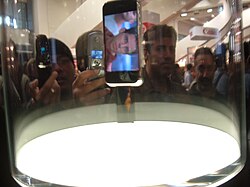
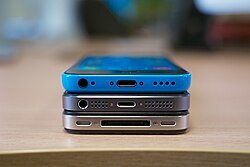
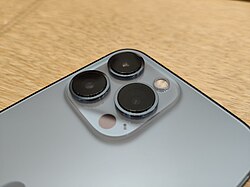
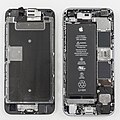


 "two-tone" (help·info) of 853hz and 960hz sine waves which will signal in a pattern.[17]


.svg)


_white_vector.svg)


_vector.svg)