|
|
| Line 1: |
Line 1: |
| {{short description|Country in north-west Europe; part of the United Kingdom}}
| |
| {{About|the country|other uses|Scotland (disambiguation)}}
| |
| {{pp-vandalism|small=yes}}
| |
| {{pp-move-indef|small=yes}}
| |
| {{Use British English|date=December 2016}}
| |
| {{Use dmy dates|date=November 2021}}
| |
| {{Infobox UK country | | {{Infobox UK country |
| | native_name = {{native name|sco|Scotland|nbsp=omit}}<br />{{native name|gd|Alba|nbsp=omit}} | | | native_name = {{native name|sco|Scotland|nbsp=omit}}<br>{{native name|gd|Alba|nbsp=omit}} |
| | image_flag = Flag of Scotland.svg | | | image_flag = [[File:Flag of Scotland.svg|x80px|border]] |
| | image_coat = Royal Arms of the Kingdom of Scotland.svg | | | image_coat = Royal Arms of the Kingdom of Scotland.svg |
| | | symbol_width = x100px |
| | symbol_type = [[Royal Arms of Scotland|Royal Arms]] | | | symbol_type = [[Royal Arms of Scotland|Royal Arms]] |
| | national_motto = {{native phrase|sco|"[[In My Defens God Me Defend]]"|italics=off|parensize=90%|nbsp=omit}}<br />{{smaller|"In my defence God me defend"}} | | | national_motto = {{native phrase|sco|"[[In My Defens God Me Defend]]"|italics=off|parensize=90%|nbsp=omit}}{{ref label|footnote_a|a}}<br />{{smaller|"In my defence God me defend"}} |
| | national_anthem = [[National anthem of Scotland|Various]] | | | national_anthem = [[National anthem of Scotland|Various]]{{ref label|footnote_b|b}}<br /> |
| | status = [[Countries of the United Kingdom|Country]] | | | status = [[Countries of the United Kingdom|Country]] |
| | capital = [[Edinburgh]]<br />{{smaller|{{coord|55|57|11|N|3|11|20|W|display=inline}}}} | | | capital = [[Edinburgh]]<br />{{smaller|{{coord|55|57|11|N|3|11|20|W|display=inline}}}} |
| | largest_city = [[Glasgow]]<br />{{smaller|{{coord|55|51|40|N|4|15|00|W|type:city_region:GB|display=inline}}}} | | | largest_city = [[Glasgow]] |
| | languages_type = Recognised languages
| | | languages_type = Official languages{{ref label|footnote_c|c}} |
| | languages = | | | languages = |
| {{unbulleted list|style=white-space:nowrap; | | {{unbulleted list|style=white-space:nowrap; |
| | [[Scottish English|English]] | | | [[Scottish English|English]] |
| | [[Scots language|Scots]] | | | [[Scots]] |
| | [[Scottish Gaelic]] | | | [[Scottish Gaelic]] |
| | [[British Sign Language]] | | | [[British Sign Language]]<ref name="Scottish official languages">{{cite web |title=FACT: SCOTLAND'S OFFICIAL LANGUAGES ARE ENGLISH, SCOTS, GAELIC & BRITISH SIGN LANGUAGE |url=https://www.scotland.org/about-scotland/facts/scotlands-languages |website=Scotland.org |access-date=April 29, 2022}}</ref> |
| }} | | }} |
| | languages2_sub = yes | | | languages2_sub = yes |
| Line 27: |
Line 22: |
| | titlestyle = background:transparent;text-align:left;font-weight:normal;font-size:100%; | | | titlestyle = background:transparent;text-align:left;font-weight:normal;font-size:100%; |
| | title = List of ethnicities| | | | title = List of ethnicities| |
| | 96.0% White | | | 96.0% [[White people|White]] |
| | 2.7% Asian | | | 2.7% [[Asian people|Asian]] |
| | 0.7% Black | | | 0.7% [[Black people|Black]] |
| | 0.4% Mixed | | | 0.4% [[Mixed people|Mixed]] |
| | 0.2% Arab | | | 0.2% [[Arab]] |
| | 0.1% other<ref name="ethnicity"/> | | | 0.1% other |
| }} | | }} |
| | ethnic_groups_year = 2011 | | | ethnic_groups_year = 2011 |
| | religion = 53.8% [[Christianity in Scotland|Christianity]]<br />—32.4% [[Church of Scotland]]<br />—15.9% [[Catholic Church in Scotland|Roman Catholic]]<br />—5.5% [[Religion in Scotland#Christianity|Other Christian]]<br />36.7% [[Irreligion in the United Kingdom|No religion]]<br />1.4% [[Islam in Scotland|Islam]]<br />0.3% [[Hinduism in Scotland|Hinduism]]<br />0.2% [[Buddhism in Scotland|Buddhism]]<br />0.2% [[Sikhism in Scotland|Sikhism]]<br />0.1% [[History of the Jews in Scotland|Judaism]]<br />0.3% [[Religion in Scotland|Other]]<ref>Other religion{{Cite web|url=https://www.gov.scot/publications/analysis-religion-2001-census/pages/2/|title=Analysis of Religion in the 2001 Census - gov.scot|website=www.gov.scot|access-date=8 October 2019}}</ref><ref>{{Cite web|url=https://www.scotlandscensus.gov.uk/documents/censusresults/release2a/scotland/KS209SCb.pdf|title=Scotland's Census 2011 – National Records of Scotland|last=Scotland's Census|date=27 March 2011|website=Scotland's Census|access-date=8 October 2019}}</ref><ref>{{Cite web|url=https://www.scotlandscensus.gov.uk/documents/2011-census-key-results-from-releases-2a-to-2d/|title=2011 Census: Key Results from Releases 2A to 2D|website=Scotland's Census}}</ref> | | | religion = {{Collapsible list |
| | demonym = {{hlist |Scots|[[Scottish people|Scottish]]}} | | |titlestyle = background:transparent;text-align:left;font-weight:normal;font-size:100%; |
| | |title = List of religions| 32.4% [[Church of Scotland]]<br> 15.9% [[Catholic Church in Scotland|Roman Catholic]]<br> 5.5% [[Religion in Scotland#Christianity|Other Christian]]<br>1.4% [[Islam]]<br>0.3% [[Hinduism]]<br>0.2% [[Buddhism]]<br>0.2% [[Sikhism]]<br>0.1% [[Judaism]]<br> 0.3% [[Religion in Scotland|Other]]<br>36.7% [[Irreligion in the United Kingdom|No religion]]<ref>Other religion{{Cite web|url=https://www.gov.scot/publications/analysis-religion-2001-census/pages/2/|title=Analysis of Religion in the 2001 Census - gov.scot|website=www.gov.scot|access-date=8 October 2019}}</ref><ref>{{Cite web|url=https://www.scotlandscensus.gov.uk/documents/censusresults/release2a/scotland/KS209SCb.pdf|title=Scotland's Census 2011 – National Records of Scotland|last=Scotland's Census|date=27 March 2011|website=Scotland's Census|access-date=8 October 2019}}</ref><ref>{{cite web | url=https://www.scotlandscensus.gov.uk/documents/censusresults/release2a/rel2A_Religion_detailed_Scotland.pdf | title=2011 Census: Key Results from Releases 2A to 2D }}</ref>}} |
| | | demonym = {{hlist |Scots{{ref label|footnote_d|d}}|[[Scottish people|Scottish]]}} |
| | type = | | | type = |
| | legal_jurisdiction = [[Scots law|Scotland]] | | | legal_jurisdiction = [[Scots law|Scotland]] |
| | government_type = [[Scottish devolution|Devolved]] [[Parliament|parliamentary legislature]] within a [[constitutional monarchy]] | | | government_type = [[Scottish devolution|Devolved]] [[Parliament|parliamentary legislature]] within a [[constitutional monarchy]]{{ref label|footnote_e|e}} |
| | monarch = [[Elizabeth II]]<!--The name of the current monarch remains "Elizabeth II". A consensus on this has been reached NUMEROUS times on the discussion page; please take any disagreement there. DO ''not'' EDITWAR.--> | | | monarch = [[Charles III]] |
| | prime_minister = [[Boris Johnson]] | | | prime_minister = [[Boris Johnson]] |
| | first_minister = [[Nicola Sturgeon]] | | | first_minister = [[Nicola Sturgeon]] |
| Line 65: |
Line 62: |
| | percent_water = 3.00% | | | percent_water = 3.00% |
| | population_rank = | | | population_rank = |
| | population_estimate = {{increaseNeutral}} 5,463,300<ref name="ONS-pop-ests-June2018"/> | | | population_estimate = {{increase}} 5,463,300 |
| | population_estimate_year = 2019 | | | population_estimate_year = 2019 |
| | population_census = 5,313,600<ref name=autogenerated3>{{cite web|url=http://www.gro-gov.scot/statistics/theme/population/estimates/mid-year/2012/index.html|title= Population estimates by sex, age and administrative area, Scotland, 2011 and 2012 |date=8 August 2013 |publisher=National Records of Scotland |access-date=8 August 2013}}</ref> | | | population_census = 5,313,600<ref name=autogenerated3>{{cite web|url=http://www.gro-gov.scot/statistics/theme/population/estimates/mid-year/2012/index.html|title= Population estimates by sex, age and administrative area, Scotland, 2011 and 2012 |date=8 August 2013 |publisher=National Records of Scotland |access-date=8 August 2013}}</ref> |
| Line 73: |
Line 70: |
| | population_density_rank = | | | population_density_rank = |
| | GDP_nominal_per_capita_rank = | | | GDP_nominal_per_capita_rank = |
| | GDP_nominal = £166 billion <br />(${{To USD|166|GBR|year=2019|round=yes}}B)<ref>{{cite web|url=https://www.ons.gov.uk/economy/grossdomesticproductgdp/bulletins/regionaleconomicactivitybygrossdomesticproductuk/1998to2019/pdf|title=Regional economic activity by gross domestic product, UK: 1998 to 2019, UK- Office for National Statistics|first=Trevor |last=Fenton|website=www.ons.gov.uk}}</ref> | | | GDP_nominal = £166.8 billion<ref>{{Cite web|url=https://www.scottish-enterprise.com/learning-zone/research-and-publications/components-folder/research-and-publications-listings/scottish-economic-statistics/|title=Scottish Economic Statistics January 2021|website=www.scottish-enterprise.com}}</ref> |
| | GDP_nominal_rank = | | | GDP_nominal_rank = |
| | GDP_nominal_year = 2019 | | | GDP_nominal_year = 2020 |
| | GDP_nominal_per_capita = £30,560<br />(${{To USD|30560|GBR|year=2019|round=yes}}) | | | GDP_nominal_per_capita = £30,530 <br/> ($44,000)<ref>{{Cite web|url=https://fraserofallander.org/scottish-gdp-guide/|title=A Guide to Scottish GDP|first=Adam|last=McGeoch|website=Fraser of Allander Institute}}</ref> |
| | | GVA = £138 billion<ref name=GVA>{{cite web |title=Regional gross value added (income approach), UK: 1997 to 2017, December 2015 |url=https://www.ons.gov.uk/economy/grossvalueaddedgva/bulletins/regionalgrossvalueaddedbalanceduk/1998to2017/pdf|author=Office for National Statistics |access-date=24 April 2017}}</ref> |
| | | GVA_rank = |
| | | GVA_year = 2017 |
| | | GVA_per_capita = £25,500<ref name=GVA/> |
| | Gini_year = | | | Gini_year = |
| | Gini_change = <!--increase/decrease/steady--> | | | Gini_change = <!--increase/decrease/steady--> |
| Line 82: |
Line 83: |
| | Gini_ref = | | | Gini_ref = |
| | Gini_rank = | | | Gini_rank = |
| | HDI_year = 2019 | | | HDI_year = 2018 |
| | HDI_change = <!--increase/decrease/steady--> | | | HDI_change = <!--increase/decrease/steady--> |
| | HDI = 0.925<!--number only--> | | | HDI = 0.913<!--number only--> |
| | HDI_ref =<ref>{{Cite web|url=https://hdi.globaldatalab.org/areadata/shdi/|title=Sub-national HDI – Area Database – Global Data Lab|website=hdi.globaldatalab.org|language=en|access-date=21 July 2021}}</ref> | | | HDI_ref =<ref>{{Cite web|url=https://hdi.globaldatalab.org/areadata/shdi/|title=Sub-national HDI – Area Database – Global Data Lab|website=hdi.globaldatalab.org|language=en|access-date=13 September 2018}}</ref> |
| | HDI_rank = 4th | | | HDI_rank = 4th |
| | cctld = [[.scot]] | | | cctld = [[.scot]] {{ref label|footnote_f|f}} |
| | patron_saints = | | | patron_saints = |
| {{unbulleted list |style=white-space:nowrap; | | {{unbulleted list |style=white-space:nowrap; |
| Line 94: |
Line 95: |
| | [[Saint Columba]]<ref>{{cite web |website=Catholic Online |title=St Columba |url=http://www.catholic.org/saints/saint.php?saint_id=419 |access-date=15 November 2011}}</ref> | | | [[Saint Columba]]<ref>{{cite web |website=Catholic Online |title=St Columba |url=http://www.catholic.org/saints/saint.php?saint_id=419 |access-date=15 November 2011}}</ref> |
| }} | | }} |
| |religion_year=2011}}<!-- | | | footnote_a = {{note|footnote_a}} Often shown abbreviated as "In Defens". |
| | | footnote_b = {{note|footnote_b}} See [[National anthem of Scotland]]. |
| | | footnote_c = {{note|footnote_c}} Scotland has no official language. English is the main language by custom and usage, with Scots, Scottish Gaelic and British Sign Language also recognised as the main linguistic groups in Scotland, according to the Scottish Government.<ref>{{Cite web|url=https://www.gov.scot/policies/languages/|title=Languages - gov.scot|website=www.gov.scot}}</ref> Both Scots and Scottish Gaelic are officially recognised as [[regional language]]s under the [[European Charter for Regional or Minority Languages]].{{larger|<ref>{{cite web |url=http://www.gov.scot/Topics/ArtsCultureSport/gaelic/gaelic-english/17910/europeancharter |title=European Charter for Regional or Minority Languages |website=[[Scottish Government]] |access-date=23 October 2011}}{{dead link|date=December 2016}}</ref>}} Under the [[Gaelic Language (Scotland) Act 2005]], [[Bòrd na Gàidhlig]] is tasked with securing Gaelic as an [[official language]] of Scotland.{{larger|<ref>Macleod, Angus [http://www.timesonline.co.uk/tol/news/uk/article384045.ece "Gaelic given official status"] (22 April 2005) ''[[The Times]]''. London. Retrieved 2 August 2007.</ref>}} British Sign Language is officially recognised as language under the British Sign Language (Scotland) Act 2015.{{larger|<ref name="British Sign Language">{{cite news|url=http://www.heraldscotland.com/news/13876863.Scotland_becomes_first_part_of_UK_to_recognise_signing_for_deaf_as_official_language/|title=Scotland becomes first part of UK to recognise signing for deaf as official language |newspaper=Herald Scotland |year=2015|access-date=17 January 2016}}</ref>}} |
| | | footnote_d = {{note|footnote_d}} Historically, the use of "[[Scotch (adjective)|Scotch]]" as an adjective comparable to "Scottish" or "Scots" was commonplace. Modern use of the term describes ''products'' of Scotland (usually food or drink-related). |
| | | footnote_e = {{note|footnote_e}} The head of state of the United Kingdom is the monarch (currently King Charles III, since 2022). Scotland has limited self-government within the UK as well as representation in the UK Parliament. Certain executive and legislative powers have been devolved to, respectively, the [[Scottish Government]] and the [[Scottish Parliament]]. |
| | | footnote_f = {{note|footnote_e}} .scot is not a [[ccTLD]], but a [[GeoTLD]], open to use by all people in Scotland and related to Scotland. [[.uk]] as part of the [[United Kingdom]] is also used. [[ISO 3166-1]] is [[Great Britain|GB]], but [[.gb]] is unused. |
| | |religion_year=2011}} |
| | [[File:Scotland map.png|thumb|right|Map of Scotland]] |
|
| |
|
| Please DO ''not'' change "part of the United Kingdom" to "constituent country" or similar without getting consensus on the talk page first, as the wording has been decided on multiple occasions.
| | '''Scotland''' ({{lang-sco|Scotland}}, {{lang-gd|[[Alba]]}} {{IPA-gd|ˈal̪ˠapə||Alba-gd.ogg}}) is one of the [[Countries of the United Kingdom|four countries]] of the [[United Kingdom]]. Scotland is the northern third of [[Great Britain]] (an island in the [[North Atlantic Ocean]]). Many other islands in the [[British Isles]] are also part of Scotland. To the south of Scotland is [[England]], the [[North Sea]] is to the east, the [[Atlantic Ocean]] is to the west and the [[Irish Sea]] is to the south-west. |
|
| |
|
| -->
| | The [[capital city]] of Scotland is [[Edinburgh]] on the east coast, but the biggest city is [[Glasgow]] on the west coast. Other cities in Scotland are [[Aberdeen]], [[Dundee]], [[Inverness]], [[Perth, Scotland|Perth]] and [[Stirling]]. About five million people live in Scotland. Most of the population lives in the Central Belt, an area between the [[Scottish Highlands]] and the [[Scottish Lowlands]]. |
| '''Scotland''' ({{lang-sco|Scotland}}, {{lang-gd|[[Alba]]}} {{IPA-gd|ˈal̪ˠapə||Alba-gd.ogg}}) is a [[Countries of the United Kingdom|country]] that is part of the [[United Kingdom]]. Covering the northern third of the island of [[Great Britain]],<ref name="Stats 1">{{cite web|url=http://www.ons.gov.uk/ons/guide-method/geography/beginner-s-guide/administrative/the-countries-of-the-uk/index.html|title=The Countries of the UK|publisher=[[Office for National Statistics]] |access-date=24 June 2012|date=6 April 2010}}</ref><ref name="Country">{{cite web |url=http://www.number10.gov.uk/Page823 |title=Countries within a country |access-date=24 August 2008 |website=10 Downing Street |quote=The United Kingdom is made up of four countries: England, Scotland, Wales and Northern Ireland|archive-url=https://web.archive.org/web/20100416083521/http://www.number10.gov.uk/Page823|archive-date=16 April 2010}}</ref><ref>{{cite web |url=http://www.iso.org/iso/newsletter_i-9.pdf |title=ISO 3166-2 Newsletter Date: 28 November 2007 No I-9. "Changes in the list of subdivision names and code elements" (Page 11) |access-date=31 May 2008 |website=[[International Organization for Standardization]] codes for the representation of names of countries and their subdivisions – Part 2: Country subdivision codes |quote=SCT Scotland ''country''}}</ref> [[mainland]] Scotland has a {{convert|96|mi|km|adj=on|abbr=off}} [[Anglo-Scottish border|border]] with [[England]] to the southeast and is otherwise surrounded by the [[Atlantic Ocean]] to the north and west, the [[North Sea]] to the northeast and the [[Irish Sea]] to the south. The country also contains more than 790 [[Islands of Scotland|islands]],<ref name="Scottish Executive">{{cite web |title=Scottish Executive Resources |website=Scotland in Short |url=http://www.gov.scot/Resource/Doc/923/0010669.pdf |date=17 February 2007 |publisher=Scottish Executive |access-date=14 September 2006}}</ref> principally in the [[archipelago]]s of the [[Hebrides]] and the [[Northern Isles]]. Most of the population, including the capital [[Edinburgh]], is concentrated in the [[Central Belt]] – the plain between the [[Scottish Highlands]] and the [[Southern Uplands]] – in the [[Scottish Lowlands]].
| |
|
| |
|
| Scotland is divided into 32 [[Subdivisions of Scotland|administrative subdivisions]] or local authorities, known as council areas.<ref name="cosla.gov.uk">{{cite web|url=http://www.cosla.gov.uk/scottish-local-government|title=Scottish Local Government|website=Cosla.gov.uk|access-date=3 January 2019|archive-url=https://web.archive.org/web/20190113100338/http://www.cosla.gov.uk/scottish-local-government|archive-date=13 January 2019|url-status=dead}}</ref> [[Glasgow|Glasgow City]] is the largest council area in terms of population, with [[Highland (council area)|Highland]] being the largest in terms of area. Limited self-governing power, covering matters such as education, social services and roads and transportation, is devolved from the Scottish Government to each subdivision.<ref name="cosla.gov.uk" /> Scotland is the second-largest country in the United Kingdom, and accounted for 8.3% of the population in 2012.<ref>{{Cite news|url=https://www.bbc.com/news/uk-scotland-24866266|title=Scotland in numbers|work=BBC News|date=25 November 2013}}</ref> | | Unlike most of Great Britain, most of Scotland was not part of the [[Roman Empire]] (only the southern half of Scotland -then named Caledonia- was under roman control for a century) and did not become part of [[Anglo-Saxon England]]. In the [[Middle Ages]] and the [[Early Modern Period]], Scotland was an [[independent]] [[kingdom]]. The [[Kingdom of Scotland]] started in the 9th century AD. The kingdom started to share a king with the [[Kingdom of England]] and the [[Kingdom of Ireland]] in 1603. In that year, the king of Scotland [[inherited]] the two kingdoms of [[Elizabeth I]], and [[James VI of Scotland]] became the first king of the whole British Isles. In 1707, the [[parliament of Scotland]] joined with the [[parliament of England]] to become the [[Parliament of Great Britain]]. This formed the [[United Kingdom of Great Britain]]. This kingdom joined with the Kingdom of Ireland in 1801 to make the modern United Kingdom. |
|
| |
|
| The [[Kingdom of Scotland]] emerged as an independent [[sovereign state]] in the 9th century and continued to exist until 1707. By inheritance in 1603, [[James VI of Scotland]] became king of [[Kingdom of England|England]] and [[Kingdom of Ireland|Ireland]], thus forming a [[personal union]] of the [[Union of the Crowns|three kingdoms]]. Scotland subsequently entered into a [[political union]] with the Kingdom of England on 1 May 1707 to create the new [[Kingdom of Great Britain]].<ref name=Keay/><ref name=Mackie/> The union also created the [[Parliament of Great Britain]], which succeeded both the [[Parliament of Scotland]] and the [[Parliament of England]]. In 1801, the Kingdom of Great Britain entered into a political union with the Kingdom of Ireland to create the [[United Kingdom of Great Britain and Ireland]] (in 1922, the [[Irish Free State]] seceded from the United Kingdom, leading to the latter being [[Royal and Parliamentary Titles Act 1927|officially renamed]] the United Kingdom of Great Britain and [[Northern Ireland]] in 1927).<ref>{{cite web |title=Parliament and Ireland|publisher=The Houses of Parliament|url=http://www.parliament.uk/about/living-heritage/evolutionofparliament/legislativescrutiny/parliamentandireland/|location=London |access-date=26 December 2016}}</ref>
| | Throughout its history Scotland has had its own legal system ([[Scots law]]), church (the [[Church of Scotland]]), schools, and culture.<ref name="administrative control">Devine, T. M. (1999), ''The Scottish Nation 1700–2000'', P.288–289, {{ISBN|0-14-023004-1}} ''"created a new and powerful ''local state'' run by the Scottish bourgeoisie and reflecting their political and religious values. It was this local state, rather than a distant and usually indifferent Westminster authority, that in effect routinely governed Scotland"''</ref> Since 1999, Scotland has had its own [[parliament]], the [[Scottish Parliament]]. It was [[devolution|devolved]] from the [[British parliament]]. The [[Scottish people]] have [[Representation (politics)|representation]] in both parliaments. The Scottish Government and the [[British Government]] both govern Scotland. On 18 September 2014, a [[referendum]] on [[independence]] from the United Kingdom took place. A majority (55%) voted to stay in the United Kingdom.<ref name="bbc-result">{{cite news|date=19 September 2014|title=In maps: How close was the Scottish referendum vote?|agency=BBC News|url=https://www.bbc.co.uk/news/uk-scotland-scotland-politics-29255449|accessdate=8 December 2014}}</ref><ref>{{cite web|date=21 March 2013|title=Scotland: Independence Referendum Date Set|url=http://news.sky.com/story/1067962/scotland-names-the-day-for-independence-vote|accessdate=4 May 2013|publisher=BSkyB}}</ref> |
|
| |
|
| Within Scotland, the [[monarchy of the United Kingdom]] has continued to use a variety of styles, titles and other royal symbols of statehood specific to the pre-union Kingdom of Scotland. The [[Scots law|legal system within Scotland]] has also remained separate from those of [[English law|England and Wales]] and [[Northern Ireland law|Northern Ireland]]; Scotland constitutes a distinct jurisdiction in both public and private law.<ref>Collier, J. G. (2001) [http://assets.cambridge.org/052178/2600/sample/0521782600ws.pdf ''Conflict of Laws (Third edition)''](pdf) [[Cambridge University Press]]. "For the purposes of the English [[conflict of laws]], every country in the world which is not part of [[England and Wales]] is a foreign country and its foreign laws. This means that not only totally foreign independent countries such as France or Russia ... are foreign countries but also [[British Colonies]] such as the [[Falkland Islands]]. Moreover, the other parts of the United Kingdom{{spaced ndash}}Scotland and Northern Ireland{{spaced ndash}}are foreign countries for present purposes, as are the other [[British Islands]], the [[Isle of Man]], [[Jersey]] and [[Guernsey]]."</ref> The continued existence of legal, [[Education in Scotland|educational]], [[Religion in Scotland|religious]] and other institutions distinct from those in the remainder of the UK have all contributed to the continuation of [[Culture of Scotland|Scottish culture]] and [[Scottish national identity|national identity]] since the 1707 [[Political union#Incorporating union|incorporating]] union with England.<ref name="administrative control">Devine, T. M. (1999), ''The Scottish Nation 1700–2000'', P.288–289, {{ISBN|0-14-023004-1}} ''"created a new and powerful ''local state'' run by the Scottish bourgeoisie and reflecting their political and religious values. It was this local state, rather than a distant and usually indifferent Westminster authority, that in effect routinely governed Scotland"''</ref>
| | The [[Flag of Scotland]] is blue with a white diagonal cross (a [[saltire]]). This is the cross of [[Saint Andrew]], who is the [[patron saint]] of Scotland. Other symbols used for Scotland are the [[thistle]] and the [[unicorn]]. An image of a red [[lion]] "rampant" (standing on its back legs) on a gold background with a red border is the [[traditional]] [[coat of arms]] of the Scots [[monarchy]]. |
|
| |
|
| In 1999, a [[Scottish Parliament]] was re-established, in the form of a [[Devolution in the United Kingdom|devolved]] [[unicameral legislature]] comprising 129 [[Member of the Scottish Parliament|members]], having authority over many areas of [[domestic policy]].<ref>{{cite web|url=https://www.gov.uk/guidance/devolution-settlement-scotland |title=Devolution Settlement, Scotland |publisher=gov.uk |access-date=7 May 2017 }}</ref> The head of the [[Scottish Government]] is the [[first minister of Scotland]], who is supported by the [[deputy first minister of Scotland]].<ref>{{cite web|url=https://www.gov.scot/about/who-runs-government/cabinet-and-ministers/|title=Cabinet and ministers|website=Gov.scot|access-date=3 January 2019}}</ref> Scotland is represented in the [[United Kingdom Parliament]] by 59 [[Member of Parliament (United Kingdom)|MPs]]. Scotland is also a member of the [[British–Irish Council]],<ref>{{cite web|url=http://www.britishirishcouncil.org/member-administrations/scotland-alba |title=Scotland / Alba |publisher=British-Irish Council |access-date=4 May 2013|date=7 December 2011 }}</ref> sending five members of the Scottish Parliament to the [[British–Irish Parliamentary Assembly]],<ref>{{cite web|url=http://www.britishirish.org/members-2/ |title=Members |publisher=British-Irish Parliamentary Assembly |access-date=1 August 2018}}</ref> as well as being part of the [[Joint Ministerial Committee (UK)|Joint Ministerial Committee]], represented by the first minister.<ref>{{Cite web|url=https://www.instituteforgovernment.org.uk/explainers/devolution-joint-ministerial-committee|title=StackPath|website=www.instituteforgovernment.org.uk}}</ref>
| | == Geography == |
| {{TOC limit|3}}
| | The [[mainland]] of Scotland makes up {{frac|1|3}} of the size of the Great Britain, and is to the [[northwest]] of mainland [[Europe]]. |
|
| |
|
| == Etymology == | | The size of the land of Scotland is 78,772[[km]]² (30,414 [[mile|sq mi]]).<ref name=Whitaker>''Whitaker's Almanack'' (1991) London. J. Whitaker and Sons.</ref> Scotland's only land border is with England, and runs for 96 [[kilometres]] (60 [[mile|mi]]) across. The [[Atlantic Ocean]] borders the west coast and the [[North Sea]] is to the east. The island of [[Ireland]] is only 30 [[kilometre]]s (20 [[miles|mi]]) from the southern part of [[Kintyre]],<ref>[http://www.britannica.com/place/North-Channel-strait North Channel], Encyclopædia Britannica. Retrieved 2016-05-02.</ref> [[Norway]] is 305 kilometres (190 mi) to the east and the [[Faroe Islands]] are 270 kilometres (168 mi) to the north. Scotland's land also includes several islands, including the [[Inner Hebrides|Inner]] and [[Outer Hebrides]] off the west coast and the [[archipelago]]es of [[Orkney Islands|Orkney]] and [[Shetland]] to the north of the mainland. |
| {{main|Etymology of Scotland}}
| |
|
| |
|
| ''Scotland'' comes from ''[[Scoti]]'', the Latin name for the [[Gaels]]. [[Philip Freeman]] has speculated on the likelihood of a group of raiders adopting a name from an [[Indo-European root]], *''skot'', citing the parallel in Greek ''skotos'' (σκότος), meaning "darkness, gloom".<ref>P. Freeman, ''Ireland and the Classical World'', Austin, 2001, pp. [https://books.google.be/books?id=ZSHhfOM-5AEC&pg=PA93 93].</ref> The [[Late Latin]] word ''[[Scotia]]'' ("land of the Gaels") was initially used to refer to Ireland,<ref>{{cite book|url=https://books.google.com/books?id=2RlF7sq48n4C&pg=PA16 |title=The History Of Ireland|access-date=17 September 2014|isbn=9781113155177|last1=Gwynn|first1=Stephen|date=July 2009}}</ref> and likewise in early [[Old English language|Old English]] ''Scotland'' was used for Ireland.<ref>Lemke, Andreas: [https://www.univerlag.uni-goettingen.de/bitstream/handle/3/isbn-978-3-86395-189-4/GSEP8_lemke.pdf?sequence=1 The Old English Translation of Bede's ''Historia Ecclesiastica Gentis Anglorum'' in its Historical and Cultural Context], Chapter II: The ''OEHE'': The Material Evidence; page 71 (Universitätsdrucke Göttingen, 2015)</ref> By the 11th century at the latest, ''Scotia'' was being used to refer to (Gaelic-speaking) Scotland north of the [[River Forth]], alongside ''Albania'' or ''Albany'', both derived from the Gaelic ''[[Alba]]''.<ref name="Brewer">{{cite book | last = Ayto | first = John |author2=Ian Crofton | title = Brewer's Britain & Ireland: The History, Culture, Folklore and Etymology of 7500 Places in These Islands | publisher=WN | isbn = 978-0-304-35385-9 | year = 2005 }}</ref> The use of the words ''Scots'' and ''Scotland'' to encompass all of what is now Scotland became common in the [[Scotland in the Late Middle Ages|Late Middle Ages]].<ref name=Keay/>
| | Compared to the other areas of the islands of Great Britain and Ireland, Scotland is sparsely populated, most especially the north-western half of it. The main geographical feature that dictates this is the [[Highland Boundary Fault]] which roughly splits the country in half from the southwest to the northeast. |
|
| |
|
| == Prehistory ==
| | To the north and west of the Highland Boundary Fault are the more mountainous [[Scottish Highlands]] and islands, and this half of the country contains less than 5% of the total population. To the south and east of the Highland Boundary Fault is the [[Scottish Lowlands]], which contain the vast majority (about 75%) of the Scottish population, and 3 of the 4 biggest cities ([[Glasgow]] which is 1st, [[Edinburgh]] which is 2nd, and Dundee which is 4th). Below the lowlands are the Southern Uplands which are hilly, but not as hilly at the Highlands. They are less densely populated than the lowlands, but still a lot more dense than the highlands and islands. |
| {{Main|Prehistoric Scotland}}
| |
| {{see also|Timeline of prehistoric Scotland}}Repeated glaciations, which covered the entire land mass of modern Scotland, destroyed any traces of human habitation that may have existed before the [[Mesolithic period]]. It is believed the first post-glacial groups of [[hunter-gatherer]]s arrived in Scotland around 12,800 years ago, as the ice sheet retreated after the [[Last glacial period|last glaciation]].<ref>The earliest known evidence is a flint arrowhead from [[Islay]]. See Moffat, Alistair (2005) ''Before Scotland: The Story of Scotland Before History''. London. Thames & Hudson. Page 42.</ref> At the time, Scotland was covered in forests, had more bog-land, and the main form of transport was by water.<ref name="Forsyth" />{{rp|9}} These settlers began building the first known permanent houses on Scottish soil around 9,500 years ago, and the first villages around 6,000 years ago. The well-preserved village of [[Skara Brae]] on the mainland of [[Orkney]] dates from this period. [[Neolithic]] habitation, burial, and ritual sites are particularly common and well preserved in the [[Northern Isles]] and [[Western Isles]], where a lack of trees led to most structures being built of local stone.<ref>{{cite book|last=Pryor|first=Francis|title=Britain BC|publisher=HarperPerennial|year=2003|isbn=978-0-00-712693-4|location=London|pages=98–104 & 246–250|author-link=Francis Pryor}}</ref> Evidence of sophisticated pre-Christian belief systems is demonstrated by sites such as the [[Callanish Stones]] on [[Isle of Lewis|Lewis]] and the [[Maes Howe]] on [[Orkney]], which were built in the third millennium BC.<ref name="short" />{{rp|38}}
| |
|
| |
|
| == History ==
| | Located within the central part of the lowlands is the "Central Belt", a rectangle of land roughly 88 kilometres (55 miles) from West to East and 48 kilometres (30 miles) North to South. About half of the population of Scotland lives within these roughly 4,530 square kilometres (or 1,750 square miles), which is a little more than 2% of the total land area of Scotland. This is the area between Scotland’s two largest cities - Glasgow, at the Central Belt’s Western end, and Edinburgh, at the Central Belt’s Eastern end. This area is geographically bound by two bays of water – the Firth of Clyde to the West and the Firth of Forth to the East. It is the most fertile Earth in Scotland, which is why it is so population-dense, compared to the rest of the country. |
| {{main|History of Scotland}}
| |
|
| |
|
| === Early ===
| | [[File:Basic_Population_Distribution_of_Scotland.png|thumb|250px]] |
| {{main|Scotland during the Roman Empire|Roman Britain|Pictland}}
| |
| [[File:Skara Brae house 1 5.jpg|thumb|The exposed interior of a house at [[Skara Brae]]]] | |
| The first written reference to Scotland was in 320 BC by Greek sailor [[Pytheas]], who called the northern tip of Britain "Orcas", the source of the name of the Orkney islands.<ref name="Forsyth" />{{rp|10}} During the first millennium BC, the society changed dramatically to a chiefdom model, as consolidation of settlement led to the concentration of wealth and underground stores of surplus food.<ref name="Forsyth" />{{rp|11}}
| |
|
| |
|
| The [[Roman conquest of Britain]] was never completed, and most of modern Scotland was not brought under Roman political control.<ref name=":4">{{Citation|last1=Richmond|first1=Ian Archibald|last2=Millett|first2=Martin|year=2012|editor-last=Hornblower|editor-first=Simon|editor2-last=Spawforth|editor2-first=Antony|editor3-last=Eidinow|editor3-first=Esther|title=Caledonia|url=https://www.oxfordreference.com/view/10.1093/acref/9780199545568.001.0001/acref-9780199545568-e-1258|access-date=16 November 2020|work=Oxford Classical Dictionary|language=en|doi=10.1093/acref/9780199545568.001.0001|isbn=9780199545568|edition=4th online}}</ref> The first Roman incursion into Scotland occurred in 79 AD, when [[Gnaeus Julius Agricola|Agricola]] invaded Scotland; he defeated a Caledonian army at the [[Battle of Mons Graupius]] in 83 AD.<ref name="Forsyth" />{{rp|12}} After the Roman victory, Roman forts were briefly set along the [[Gask Ridge]] close to the [[Highland Boundary Fault|Highland line]], but by three years after the battle, the Roman armies had withdrawn to the [[Southern Uplands]].<ref>Hanson, William S. ''The Roman Presence: Brief Interludes'', in Edwards, Kevin J. & Ralston, Ian B.M. (Eds) (2003). ''Scotland After the Ice Age: Environment, Archeology and History, 8000 BC—AD 1000.'' Edinburgh. Edinburgh University Press.</ref> Remains of Roman forts established in the 1st century have been found as far north as the [[Moray Firth]].<ref name=":4" /> By the reign of the [[Roman emperor]] [[Trajan]] ({{Reign|98|117}}), Roman control had lapsed to Britain south of a line between the [[River Tyne]] and the [[Solway Firth]].<ref name=":8">{{Citation|last=Millett|first=Martin J.|title=Britain, Roman|url=https://www.oxfordreference.com/view/10.1093/acref/9780199545568.001.0001/acref-9780199545568-e-1178|work=The Oxford Classical Dictionary|year=2012|editor-last=Hornblower|editor-first=Simon|editor2-last=Spawforth|editor2-first=Antony|editor3-last=Eidinow|editor3-first=Esther|edition=4th online|publisher=Oxford University Press|language=en|doi=10.1093/acref/9780199545568.001.0001|isbn=978-0-19-954556-8|access-date=16 November 2020}}</ref> Along this line, Trajan's successor [[Hadrian]] ({{Reign|117|138}}) erected [[Hadrian's Wall]] in northern England<ref name="Forsyth" />{{rp|12}} and the ''[[Limes Britannicus]]'' became the northern border of the Roman Empire.<ref>Robertson, Anne S. (1960). ''The Antonine Wall''. Glasgow Archaeological Society.</ref><ref>{{cite news |last1=Keys |first1=David |title=Ancient Roman 'hand of god' discovered near Hadrian's Wall sheds light on biggest combat operation ever in UK |url=https://www.independent.co.uk/news/uk/home-news/hand-of-god-ancient-roman-hadrians-wall-sculpture-bronze-found-latest-a8419131.html |access-date=6 July 2018 |agency=Independent |date=27 June 2018}}</ref> The Roman influence on the southern part of the country was considerable, and they introduced [[Christianity]] to Scotland.<ref name="Forsyth" />{{rp|13–14}}<ref name="short" />{{rp|38}} | | The tallest mountain in Scotland is [[Ben Nevis]], which is also the tallest mountain in the [[British Isles]].<ref>[http://visit-fortwilliam.co.uk/ben-nevis-in-fort-william-the-most-popular-mountain-in-the-uk Visit Fort William - About Ben Nevis] Accessed 7/11/11</ref> |
|
| |
|
| The [[Antonine Wall]] was built from 142 at the order of Hadrian's successor [[Antoninus Pius]] ({{Reign|138|161}}), defending the Roman part of Scotland from the unadministered part of the island, north of a line between the [[Firth of Clyde]] and the [[Firth of Forth]]. The successful [[Roman invasion of Caledonia 208–210]] was undertaken by emperors of the imperial [[Severan dynasty]] in response to the breaking of treaty by the Caledonians in 197,<ref name=":4" /> but permanent conquest of the whole of Great Britain was forestalled by the death of the senior emperor [[Septimius Severus]] ({{Reign|193|211}}) while on campaign at [[Eboracum]] ([[York]]), and the Caledonians were again in revolt in 210–211.<ref name=":4" /> Forts erected by the [[Roman army]] of the Severan campaign were placed near those established by Agricola and were clustered at the mouths of the [[glens]] in the Highlands.<ref name=":4" />
| | == History == |
| | | [[File:EdinburghCastle.jpg|thumb|[[Edinburgh Castle]] stands on an [[extinct volcano]]]] |
| To the Roman historians [[Tacitus]] and [[Cassius Dio]], the [[Scottish Highlands]] and the area north of the [[River Forth]] was called [[Caledonia]].<ref name=":4" /> According to Cassius Dio, the inhabitants of Caledonia were the [[Caledonians]] and the [[Maeatae]].<ref name=":4" /> Other ancient authors used the adjective "Caledonian" to pertain to anywhere in northern or inland Britain, often mentioning the region's people and animals, its cold climate, its pearls, and a noteworthy region of wooden hills ({{Lang-la|saltus}}) which the 2nd-century AD Roman philosopher [[Ptolemy]], in his [[Geography (Ptolemy)|''Geography'']], described as being south-west of the [[Beauly Firth]].<ref name=":4" /> The name Caledonia is echoed in the place names of [[Dunkeld]], [[Rohallion]], and [[Schiehallion]].<ref name=":4" />
| | {{Multiple image |
| | | | image1 = SterlingBridge.jpg |
| The [[Great Conspiracy]] against Roman rule in Britain in the later 4th century, in which the [[Scoti]] participated, was defeated by the [[Comes Theodosius|''comes'' Theodosius]]. The formation of a new province, called [[Valentia (Roman Britain)|Valentia]] after the reigning emperor [[Valens]] ({{Reign|364|378}}), which may have been in Scotland, resulted.<ref name=":8" /> Roman military government was withdrawn from the island altogether by the early 5th century, resulting in the [[Anglo-Saxon settlement of Britain]] and the immigration of the [[Saxons]] to southern Scotland and the rest of eastern Great Britain.<ref name=":8" />
| | | caption1 = Stirling Bridge going across the [[River Forth]] |
| | | | image2 = Stirlingcastle.jpg |
| === Middle Ages ===
| | | caption2 = Stirling Castle on an [[extinct volcano]] |
| {{main|Scotland in the Early Middle Ages|Scotland in the High Middle Ages|Scotland in the Late Middle Ages}}
| | | header = [[Stirling]] |
| {{multiple image|align=left| | total_width = 400
| |
| |image1= Early Medieval Scotland areas.png|caption1=Political divisions in early medieval Scotland
| |
| |image2=Kingdom of Mann and the Isles-en.svg|caption2=Norse kingdoms at the end of the eleventh century}}
| |
| Beginning in the sixth century, the area that is now Scotland was divided into three areas: [[Pictland]], a patchwork of small lordships in central Scotland;<ref name="Forsyth" />{{rp|25–26}} the [[Anglo-Saxon]] [[Kingdom of Northumbria]], which had conquered southeastern Scotland;<ref name="Forsyth" />{{rp|18–20}} and [[Dál Riata]], founded by settlers from Ireland, bringing Gaelic language and culture with them.<ref name="Forsyth" />{{rp|20}} These societies were based on the family unit and had sharp divisions in wealth, although the vast majority were poor and worked full-time in [[subsistence agriculture]]. The Picts kept slaves (mostly captured in war) through the ninth century.<ref name="Forsyth" />{{rp|26–27}}
| |
| | |
| Gaelic influence over Pictland and Northumbria was facilitated by the large number of [[Celtic Church|Gaelic-speaking clerics]] working as missionaries.<ref name="Forsyth" />{{rp|23–24}} Operating in the sixth century on the island of [[Iona]], [[Saint Columba]] was one of the earliest and best-known missionaries.<ref name="short">{{cite book |last1=Houston |first1=Rab |title=Scotland: A Very Short Introduction |date=2008 |publisher=[[Oxford University Press]] |location=Oxford |isbn=9780191578861 |language=en}}</ref>{{rp|39}} The [[Vikings]] began to raid Scotland in the eighth century. Although the raiders sought slaves and luxury items, their main motivation was to acquire land. The oldest [[Norse Scotland|Norse]] settlements were in northwest Scotland, but they eventually conquered many areas along the coast. [[Old Norse]] entirely displaced Gaelic in the [[Northern Isles]].<ref name="Forsyth" />{{rp|29–30}}
| |
| | |
| In the ninth century, the Norse threat allowed a Gael named [[Kenneth I of Scotland|Cináed mac Ailpín]] (Kenneth I) to seize power over Pictland, establishing a royal dynasty to which the modern monarchs trace their lineage, and marking the beginning of the end of Pictish culture.<ref name="Forsyth" />{{rp|31–32}}<ref>{{cite book|chapter=Kenneth mac Alpin|last=Brown|first=Dauvit|editor=M. Lynch|title=The Oxford Companion to Scottish History|publisher=[[Oxford University Press]]|location=Oxford|page=359|year=2001|isbn=978-0-19-211696-3}}</ref> The kingdom of Cináed and his descendants, called Alba, was Gaelic in character but existed on the same area as Pictland. By the end of the tenth century, the [[Pictish language]] went extinct as its speakers shifted to Gaelic.<ref name="Forsyth" />{{rp|32–33}} From a base in eastern Scotland north of the [[River Forth]] and south of the [[River Spey]], the kingdom expanded first southwards, into the former Northumbrian lands, and northwards into [[Province of Moray|Moray]].<ref name="Forsyth" />{{rp|34–35}} Around the turn of the millennium, there was a centralization in agricultural lands and the first towns began to be established.<ref name="Forsyth" />{{rp|36–37}}
| |
| | |
| In the twelfth and thirteenth centuries, much of Scotland was under the control of a single ruler. Initially, Gaelic culture predominated, but immigrants from France, England and Flanders steadily created a more diverse society, with the Gaelic language starting to be replaced by Scots. Altogether, a modern nation-state emerged from this. At the end of this period, war against England started the growth of a [[Scottish nationalism|Scottish national consciousness]].{{r|Stringer|p=37-39}}<ref name="Barrell 2000">{{cite book |last1=Barrell |first1=A. D. M. |title=Medieval Scotland |date=2000 |publisher=Cambridge University Press |location=Cambridge |isbn=978-0-521-58602-3}}</ref>{{rp|at=ch 1}} [[David I of Scotland|David I]] (1124–53) and his successors centralized royal power<ref name="Stringer" />{{rp|41–42}} and united mainland Scotland, capturing regions such as Moray, [[Galloway]], and [[Caithness]], although he did not succeed at extending his power over the [[Hebrides]], which had been ruled by various [[Scottish clans]] following the death of [[Somerled]] in 1164.<ref name="Stringer" />{{rp|48–49}} The system of [[feudalism]] was consolidated, with both Anglo-Norman incomers and native Gaelic chieftains being granted land in exchange for serving the king.<ref name="Stringer" />{{rp|53–54}} The complex relationship with Scotland's southern neighbour over this period is characterised by Scottish kings making successful and unsuccessful attempts to exploit English political turmoil, followed by the longest period of peace between Scotland and England in the mediaeval period: from 1217{{ndash}}1296.{{r|Stringer|p=45-46}}
| |
| | |
| [[File:The Wallace Monument Aerial, Stirling.jpg|thumb|250px|The [[Wallace Monument]] commemorates [[William Wallace]], the 13th-century Scottish hero.]] | |
| The death of [[Alexander III of Scotland|Alexander III]] in March 1286 broke the succession line of Scotland's kings. [[Edward I of England]] arbitrated between various claimants for the Scottish crown. In return for surrendering Scotland's nominal independence, [[John Balliol]] was pronounced king in 1292.<ref name="Stringer" />{{rp|47}}<ref>{{cite web |url=http://www.nationalarchives.gov.uk/utk/scotland/conquered.htm |title=Scotland Conquered, 1174–1296 |publisher=National Archives}}</ref> In 1294, Balliol and other Scottish lords refused Edward's demands to serve in his army against the French. Scotland and France sealed a treaty on 23 October 1295, known as the [[Auld Alliance]]. War ensued, and John was deposed by Edward who took personal control of Scotland. [[Andrew Moray]] and [[William Wallace]] initially emerged as the principal leaders of the resistance to English rule in the [[Wars of Scottish Independence]],<ref>{{cite web |url=http://www.nationalarchives.gov.uk/utk/scotland/regained.htm |title=Scotland Regained, 1297–1328 |publisher=National Archives of the United Kingdom}}</ref> until [[Robert the Bruce]] was crowned king of Scotland in 1306.<ref>{{cite book|title=King Robert the Bruce|first=A. F.|last=Murison|edition=reprint 2005|publisher=Kessinger Publishing|year=1899|isbn=978-1-4179-1494-4|page=30|url=https://books.google.com/books?id=iMEMc45g9s8C}}</ref> Victory at the [[Battle of Bannockburn]] in 1314 proved the Scots had regained control of their kingdom. In 1320 the world's first documented declaration of independence, the [[Declaration of Arbroath]], won the support of [[Pope John XXII]], leading to the legal recognition of Scottish sovereignty by the English Crown.
| |
| <ref name="Brown" />{{rp|70, 72}}
| |
| | |
| A civil war between the [[Bruce dynasty]] and their long-term rivals of the [[House of Comyn]] and [[House of Balliol]] lasted until the middle of the 14th century. Although the Bruce faction was successful, [[David II of Scotland|David II's]] lack of an heir allowed his half-nephew [[Robert II of Scotland|Robert II]], the [[Lord High Steward of Scotland]], to come to the throne and establish the [[House of Stewart]].<ref name="Brown" />{{rp|77}} The Stewarts ruled Scotland for the remainder of the [[Middle Ages]]. The country they ruled experienced greater prosperity from the end of the 14th century through the Scottish Renaissance to the [[Scottish Reformation|Reformation]],<ref name=Mason>{{cite book |last1=Mason |first1=Roger |editor1-last=Wormald |editor1-first=Jenny|editor-link=Jenny Wormald |title=Scotland: A History |chapter-url=https://archive.org/details/scotland00jenn |chapter-url-access=registration |date=2005|chapter=Renaissance and Reformation: The Sixteenth Century|publisher=Oxford University Press |location=Oxford |isbn=9780199601646 |language=en}}</ref>{{rp|93}} despite the effects of the [[Black Death]] in 1349<ref name="Brown" />{{rp|76}} and increasing division between [[Scottish Highlands|Highlands]] and [[Scottish Lowlands|Lowlands]].<ref name="Brown" />{{rp|78}} Multiple truces reduced warfare on the southern border.<ref name="Brown" />{{rp|76, 83}}
| |
| | |
| ===Early modern period===
| |
| {{main|Scotland in the early modern period}}
| |
| | |
| ==== 16th century ====
| |
| [[File:Portrait of King James I & VI (1618-1620).jpg|thumb|right|upright|[[James VI and I|James VI]] succeeded to the English and Irish thrones in 1603.]]
| |
| | |
| The [[Treaty of Perpetual Peace]] was signed in 1502 by [[James IV of Scotland]] and [[Henry VII of England]]. James married Henry's daughter, [[Margaret Tudor]].<ref>{{cite web | url =http://www.bbc.co.uk/scotland/history/articles/james_iv/| title =James IV, King of Scots 1488–1513| publisher =BBC}}</ref> James invaded England in support of France under the terms of the Auld Alliance and became the last British monarch to die in battle, at [[Battle of Flodden|Flodden]] in 1513.<ref>{{cite web | url =http://www.britannica.com/EBchecked/topic/210431/Battle-of-Flodden| title =Battle of Flodden, (Sept. 9, 1513) | website =Encyclopædia Britannica}}</ref> In 1560, the [[Treaty of Edinburgh]] brought an end to the Anglo-French conflict and recognized the Protestant [[Elizabeth I]] as Queen of England.<ref name="Mason" />{{rp|112}} The [[Parliament of Scotland]] met and immediately adopted the [[Scots Confession]], which signalled the [[Scottish Reformation]]'s sharp break from papal authority and Roman Catholic teaching.<ref name="short" />{{rp|44}} The Catholic [[Mary, Queen of Scots]] was forced to abdicate in 1567.<ref>{{cite web | url =http://www.nationalarchives.gov.uk/utk/scotland/religion.htm| title =Religion, Marriage and Power in Scotland, 1503–1603| publisher =The National Archives of the United Kingdom}}</ref>
| |
| | |
| ==== 17th century ====
| |
| In 1603, [[James VI and I|James VI, King of Scots]] inherited the thrones of the [[Kingdom of England]] and the [[Kingdom of Ireland]] in the [[Union of the Crowns]], and moved to London.<ref>{{cite book |title=Chronology of Scottish History|publisher=Geddes & Grosset |isbn=978-1-85534-380-1 |last=Ross |first=David |year=2002 |quote='''1603:''' James VI becomes [[James I of England]] in the [[Union of the Crowns]], and leaves Edinburgh for London |page=56}}</ref> The first [[Union Jack]] was designed at James's behest, to be flown in addition to the [[Flag of Scotland|St Andrew's Cross]] on Scots vessels at sea. James VI and I intended to create a single kingdom of Great Britain, but was thwarted in his attempt to do so by the [[Parliament of England]], which supported the wrecking proposal that a full legal union be sought instead, a proposal to which the Scots Parliament would not assent, causing the king to withdraw the plan.<ref>{{Cite web|title=On this Day: 21 November 1606: The proposed union between England and Scotland {{!}} History of Parliament Online|url=https://www.historyofparliamentonline.org/periods/stuarts/day-21-november-1606-proposed-union-between-england-and-scotland|access-date=16 November 2020|website=www.historyofparliamentonline.org}}</ref>
| |
| | |
| With the exception of a short period under [[the Protectorate]], Scotland remained a separate state in the 17th century, but there was considerable conflict between the crown and the [[Covenanters]] over the form of [[Presbyterian church governance|church government]].<ref name="Wormald" />{{rp|124}} The military was strengthened, allowing the imposition of royal authority on the western Highland clans. The 1609 [[Statutes of Iona]] compelled the cultural integration of Hebridean clan leaders.<ref>{{cite book|last1=Devine|first1=T M|title=The Scottish Clearances: A History of the Dispossessed, 1600–1900|date=2018|publisher=Allen Lane|isbn=978-0241304105|location=London}}</ref>{{rp|37–40}} In 1641 and again in 1643, the Parliament of Scotland unsuccessfully sought a union with England which was "federative" and not "incorporating", in which Scotland would retain a separate parliament.<ref name=":5">{{Cite web|title=BBC – History – British History in depth: Acts of Union: The creation of the United Kingdom|url=http://www.bbc.co.uk/history/british/empire_seapower/acts_of_union_01.shtml|access-date=16 November 2020|website=www.bbc.co.uk|language=en-GB}}</ref> The issue of union split the parliament in 1648.<ref name=":5" />
| |
| | |
| After the execution of the Scottish king at [[Whitehall]] in 1649, amid the [[Wars of the Three Kingdoms]] and [[Scotland in the Wars of the Three Kingdoms|its events in Scotland]], [[Oliver Cromwell]], the victorious [[Lord Protector]], imposed the British Isles' first written constitution – the [[Instrument of Government]] – on Scotland in 1652 as part of the republican [[Commonwealth of England, Scotland, and Ireland]].<ref name=":5" /> The Protectorate Parliament was the first Westminster parliament to include representatives nominally from Scotland. The monarchy of the [[House of Stuart]] was resumed with the [[Restoration in Scotland]] in 1660.
| |
| | |
| The Parliament of Scotland sought a commercial union with England in 1664; the proposal was rejected in 1668.<ref name=":5" /> In 1670 the Parliament of England rejected a proposed political union with Scotland.<ref name=":5" /> English proposals along the same lines were abandoned in 1674 and in 1685.<ref name=":5" /> The [[Battle of Altimarlach]] in 1680 was the last significant clan battle fought between [[Scottish clan|highland clans]].<ref>"''[https://books.google.com/books?id=3amnMPTPP5MC&pg=PA41 Dictionary of Battles and Sieges: A-E]''". Dennis E. Showalter (2007). Springer. p.41</ref> After the fall and flight into exile of the Catholic Stuart king, [[James VII and II]] the [[Glorious Revolution in Scotland]] and the [[Convention of Estates (1689)|Convention of Estates]] replaced the House of Stuart in favour of [[William III of England|William III]] and [[Mary II of England|Mary II]] who was Mary Stuart.<ref name="Wormald" />{{rp|142}} The Scots Parliament rejected proposals for a political union in 1689.<ref name=":5" /> [[Jacobitism]], the political support for the exiled Catholic Stuart dynasty, remained a threat to the security of the British state under the Protestant [[House of Orange]] and the succeeding [[House of Hanover]] until the defeat of the [[Jacobite rising of 1745]].<ref name=":5" />
| |
| | |
| In common with countries such as France, Norway, Sweden and Finland, Scotland experienced [[Seven ill years|famine]]s during the 1690s. Mortality, reduced childbirths and increased emigration reduced the population of parts of the country about 10–15%.<ref>{{cite book|last=Cullen|first=Karen J.|url=https://books.google.com/books?id=6oOCfHxQDtwC&pg=PA152|title=Famine in Scotland: The 'ill Years' of The 1690s|date=15 February 2010|publisher=Edinburgh University Press|isbn=978-0748638871|pages=152–3}}</ref> In 1698, the [[Company of Scotland]] attempted a project to secure a trading colony on the [[Isthmus of Panama]]. Almost every Scottish landowner who had money to spare is said to have invested in the [[Darien scheme]].<ref name=":6">{{cite web|title=Why did the Scottish parliament accept the Treaty of Union?|url=http://www.scottishaffairs.org/backiss/pdfs/sa52/Sa52_Scott.pdf|url-status=dead|archive-url=https://web.archive.org/web/20111003123611/http://www.scottishaffairs.org/backiss/pdfs/sa52/Sa52_Scott.pdf|archive-date=3 October 2011|access-date=1 May 2013|publisher=Scottish Affairs}}</ref><ref name=":7">{{cite web|title=Popular Opposition to the Ratification of the Treaty of Anglo-Scottish Union in 1706–7|url=https://scottishhistorysociety.com/popular-opposition-to-the-ratification-of-the-treaty-of-anglo-scottish-union-in-1706-7/|access-date=23 March 2017|website=scottishhistorysociety.com|publisher=Scottish Historical Society}}</ref>
| |
| | |
| After another proposal from the English House of Lords was rejected in 1695, and a further Lords motion was voted down in the House of Commons in 1700, the Parliament of Scotland again rejected union in 1702.<ref name=":5" /> The failure of the Darien Scheme bankrupted the landowners who had invested, though not the burghs. Nevertheless, the nobles' bankruptcy, along with the threat of an English invasion, played a leading role in convincing the Scots elite to back a union with England.<ref name=":6" /><ref name=":7" /> On 22 July 1706, the [[Treaty of Union]] was agreed between representatives of the [[Parliament of Scotland|Scots Parliament]] and the [[Parliament of England]]. The following year, twin [[Acts of Union 1707|Acts of Union]] were passed by both parliaments to create the united [[Kingdom of Great Britain]] with effect from 1 May 1707<ref name="Mackie" /> with popular opposition and anti-union riots in [[Edinburgh]], [[Glasgow]], and elsewhere.<ref name="1707 protests">{{cite book|last=Devine|first=T. M.|title=The Scottish Nation 1700–2000|publisher=Penguin Books|year=1999|isbn=978-0-14-023004-8|page=9|quote=From that point on anti-union demonstrations were common in the capital. In November rioting spread to the south west, that stronghold of strict Calvinism and covenanting tradition. The Glasgow mob rose against union sympathisers in disturbances that lasted intermittently for over a month}}</ref><ref>{{cite web|year=2007|title=Act of Union 1707 Mob unrest and disorder|url=http://www.parliament.uk/actofunion/06_03_mob.html|archive-url=https://web.archive.org/web/20080101193416/http://www.parliament.uk/actofunion/06_03_mob.html|archive-date=1 January 2008|access-date=23 December 2007|publisher=The House of Lords|location=London}}</ref> The newly formed [[Parliament of Great Britain]] rejected proposals from the [[Parliament of Ireland]] that the third kingdom be incorporated in the union.<ref name=":5" />
| |
| | |
| ==== 18th century ====
| |
| | |
| [[File:The Battle of Culloden.jpg|thumb|left|[[David Morier]]'s depiction of the [[Battle of Culloden]] - ''[[An Incident in the Rebellion of 1745]]'']]
| |
| | |
| With trade tariffs with England abolished, trade blossomed, especially with [[Colonial America]]. The clippers belonging to the Glasgow [[Tobacco Lords]] were the fastest ships on the route to [[Virginia]]. Until the [[American War of Independence]] in 1776, Glasgow was the world's premier tobacco port, dominating world trade.<ref>{{Cite journal |title=The Tobacco Lords: A study of the Tobacco Merchants of Glasgow and their Activities |journal=The Virginia Magazine of History and Biography|volume=84|issue=1|pages=100–102|jstor=4248011|last1=Robert|first1=Joseph C|year=1976}}</ref> The disparity between the wealth of the merchant classes of the Scottish Lowlands and the ancient clans of the Scottish Highlands grew, amplifying centuries of division.
| |
| | |
| The deposed [[Jacobitism|Jacobite Stuart]] claimants had remained popular in the Highlands and north-east, particularly amongst non-[[Presbyterian]]s, including Roman Catholics and [[Episcopalian Protestants]]. Two major Jacobite risings launched in [[Jacobite rising of 1715|1715]] and [[Jacobite rising of 1745|1745]] failed to remove the [[House of Hanover]] from the British throne. The threat of the Jacobite movement to the United Kingdom and its monarchs effectively ended at the [[Battle of Culloden]], Great Britain's last [[pitched battle]].
| |
| | |
| The [[Scottish Enlightenment]] and the [[Industrial Revolution]] turned Scotland into an intellectual, commercial and industrial powerhouse<ref>"[http://www.uiowa.edu/%7Ec008224b/scotline2.htm Some Dates in Scottish History from 1745 to 1914] {{webarchive|url=https://web.archive.org/web/20131031090022/http://www.uiowa.edu/~c008224b/scotline2.htm |date=31 October 2013 }}", The University of Iowa.</ref> — so much so [[Voltaire]] said "We look to Scotland for all our ideas of civilisation."<ref>{{cite web | url =http://www.ltscotland.org.uk/scottishenlightenment/scotland/index.asp| title =Enlightenment Scotland| publisher =Learning and Teaching Scotland}}</ref> With the demise of Jacobitism and the advent of the Union, thousands of Scots, mainly Lowlanders, took up numerous positions of power in politics, civil service, the army and navy, trade, economics, colonial enterprises and other areas across the nascent [[British Empire]]. Historian Neil Davidson notes "after 1746 there was an entirely new level of participation by Scots in political life, particularly outside Scotland." Davidson also states "far from being 'peripheral' to the British economy, Scotland – or more precisely, the Lowlands – lay at its core."<ref>{{cite book | title =The Origins of Scottish Nationhood | author =Neil Davidson(2000)| publisher =Pluto Press| location =London | pages =94–95}}</ref>
| |
| | |
| In the Highlands, clan chiefs gradually started to think of themselves more as commercial landlords than leaders of their people. These social and economic changes included the first phase of the [[Highland Clearances]] and, ultimately, the demise of clanship.<ref name="Devine 1994">{{cite book|last1=Devine|first1=T M|title=Clanship to Crofters' War: The social transformation of the Scottish Highlands|date=1994|publisher=Manchester University Press|isbn=978-0-7190-9076-9|edition=2013}}</ref>{{rp|32–53, ''passim''}}
| |
| | |
| === 19th century ===
| |
| {{Main|Scotland in the modern era}}
| |
| [[File:Tourists posing at the National Monument of Scotland.jpg|thumb|right|The [[National Monument of Scotland]] on [[Calton Hill]] in Edinburgh is the national memorial to Scottish soldiers lost in the [[Napoleonic Wars]]]]
| |
| The [[Scottish Reform Act 1832]] increased the number of Scottish MPs and widened the franchise to include more of the middle classes.<ref name=Devine&Finlay1996pp64-5>T. M. Devine and R. J. Finlay, ''Scotland in the Twentieth Century'' (Edinburgh: Edinburgh University Press, 1996), pp. 64–5.</ref> From the mid-century, there were increasing calls for Home Rule for Scotland and the post of [[Secretary of State for Scotland]] was revived.<ref>F. Requejo and K-J Nagel, ''Federalism Beyond Federations: Asymmetry and Processes of Re-symmetrization in Europe'' (Aldershot: Ashgate, 2011), p. 39.</ref> Towards the end of the century Prime Ministers of Scottish descent included [[William Gladstone]],<ref name=Quinault2007>R. Quinault, "Scots on Top? Tartan Power at Westminster 1707–2007", ''History Today'', 2007 57(7): 30–36. {{ISSN|0018-2753}} Fulltext: [[Ebsco]].</ref> and [[Archibald Primrose, 5th Earl of Rosebery|the Earl of Rosebery]].<ref>K. Kumar, ''The Making of English National Identity'' (Cambridge: Cambridge University Press, 2003), p. 183.</ref> In the late 19th century the growing importance of the working classes was marked by [[Keir Hardie]]'s success in the [[Mid Lanarkshire by-election, 1888]], leading to the foundation of the [[Scottish Labour Party (1888)|Scottish Labour Party]], which was absorbed into the [[Independent Labour Party]] in 1895, with Hardie as its first leader.<ref>D. Howell, ''British Workers and the Independent Labour Party, 1888–1906'' (Manchester: Manchester University Press, 1984), p. 144.</ref>
| |
| | |
| Glasgow became one of the largest cities in the world and known as "the [[Second City of the Empire]]" after London.<ref>J. F. MacKenzie, "The second city of the Empire: Glasgow – imperial municipality", in F. Driver and D. Gilbert, eds, ''Imperial Cities: Landscape, Display and Identity'' (2003), pp. 215–23.</ref> After 1860, the Clydeside shipyards specialised in steamships made of iron (after 1870, made of steel), which rapidly replaced the wooden sailing vessels of both the merchant fleets and the battle fleets of the world. It became the world's pre-eminent shipbuilding centre.<ref name=Shields1949>J. Shields, ''Clyde Built: a History of Ship-Building on the River Clyde'' (1949).</ref> The industrial developments, while they brought work and wealth, were so rapid that housing, town-planning, and provision for public health did not keep pace with them, and for a time living conditions in some of the towns and cities were notoriously bad, with overcrowding, high infant mortality, and growing rates of tuberculosis.<ref>C. H. Lee, ''Scotland and the United Kingdom: the Economy and the Union in the Twentieth Century'' (1995), p. 43.</ref>
| |
| | |
| [[File:Sir Henry Raeburn - Portrait of Sir Walter Scott.jpg|thumb|left|upright|[[Walter Scott]], whose [[Waverley Novels]] helped define Scottish identity in the 19th century]]
| |
| While the Scottish Enlightenment is traditionally considered to have concluded toward the end of the 18th century,<ref name="Magnusson">{{Citation|last=M. Magnusson |title=Review of James Buchan, ''Capital of the Mind: how Edinburgh Changed the World'' |journal=New Statesman |date=10 November 2003 |url=http://www.newstatesman.com/200311100040 |archive-url=https://www.webcitation.org/5z3JQonlV?url=http://www.newstatesman.com/200311100040 |archive-date=29 May 2011 |url-status=dead }}</ref> disproportionately large Scottish contributions to British science and letters continued for another 50 years or more, thanks to such figures as the physicists [[James Clerk Maxwell]] and [[William Thomson, 1st Baron Kelvin|Lord Kelvin]], and the engineers and inventors [[James Watt]] and [[William Murdoch]], whose work was critical to the technological developments of the Industrial Revolution throughout Britain.<ref>E. Wills, ''Scottish Firsts: a Celebration of Innovation and Achievement'' (Edinburgh: Mainstream, 2002).</ref> In literature, the most successful figure of the mid-19th century was [[Walter Scott]]. His first prose work, ''[[Waverley (novel)|Waverley]]'' in 1814, is often called the first historical novel.<ref>{{Citation |author=K. S. Whetter |year=2008 |title=Understanding Genre and Medieval Romance |page=28|publisher=Ashgate }}</ref> It launched a highly successful career that probably more than any other helped define and popularise Scottish cultural identity.<ref>{{Citation |author=N. Davidson |year=2000 |title=The Origins of Scottish Nationhood |page=136 |publisher=Pluto Press }}</ref> In the late 19th century, a number of Scottish-born authors achieved international reputations, such as [[Robert Louis Stevenson]], [[Arthur Conan Doyle]], [[J. M. Barrie]] and [[George MacDonald]].<ref>{{Citation|title=Cultural Profile: 19th and early 20th century developments |journal=Visiting Arts: Scotland: Cultural Profile |url=http://www.culturalprofiles.net/scotland/Directories/Scotland_Cultural_Profile/-5402.html |archive-url=https://www.webcitation.org/62yP6lcz7?url=http://www.culturalprofiles.net/scotland/Directories/Scotland_Cultural_Profile/-5402.html |archive-date=5 November 2011 |url-status=dead }}</ref> Scotland also played a major part in the development of art and architecture. The [[Glasgow School]], which developed in the late 19th century, and flourished in the early 20th century, produced a distinctive blend of influences including the [[Celtic Revival]] the [[Arts and Crafts movement]], and [[Japonism]], which found favour throughout the [[modern art]] world of continental Europe and helped define the [[Art Nouveau]] style. Proponents included architect and artist [[Charles Rennie Mackintosh]].<ref>Stephan Tschudi-Madsen, ''The Art Nouveau Style: a Comprehensive Guide'' (Courier Dover, 2002), pp. 283–4.</ref>
| |
| | |
| This period saw a process of rehabilitation for Highland culture. In the 1820s, as part of the [[Romanticism|Romantic revival]], [[tartan]] and the [[kilt]] were adopted by members of the social elite, not just in Scotland, but across Europe,<ref>J. L. Roberts, [https://books.google.com/books?id=WlnNUCS4R_MC&pg=PA193&dq=clans+tartan+laws+jacobite&hl=En&ei=nJoTTry1IMGq8QODnbX8Bw&sa=X&oi=book_result&ct=book-thumbnail&resnum=5&ved=0CEgQ6wEwBA#v=onepage&q&f=false ''The Jacobite Wars''], pp. 193–5.</ref><ref name=Sievers2007>M. Sievers, [https://books.google.com/books?id=_U-5sq5MDBQC&pg=PA23&dq=tartan+highland+romantic&hl=En&ei=JqATTq_bD5Gy8QOpk7H8Bw&sa=X&oi=book_result&ct=book-thumbnail&resnum=5&sqi=2&ved=0CEIQ6wEwBA#v=onepage&q=tartan%20highland%20romantic&f=false ''The Highland Myth as an Invented Tradition of 18th and 19th century and Its Significance for the Image of Scotland''] (GRIN Verlag, 2007), pp. 22–5.</ref> prompted by the popularity of Macpherson's [[Ossian]] cycle<ref>P. Morère, ''Scotland and France in the Enlightenment'' (Bucknell University Press, 2004), pp. 75–6.</ref><ref>William Ferguson, [https://books.google.com/books?id=nPpp6ED8c3EC&pg=PA227&dq=ossian+macpherson&hl=En&ei=UaIUTrLIAYGq8APf5tz7Bw&sa=X&oi=book_result&ct=book-thumbnail&resnum=6&ved=0CEkQ6wEwBQ#v=onepage&q=ossian%20macpherson&f=false ''The identity of the Scottish Nation: an Historic Quest''] (Edinburgh: Edinburgh University Press, 1998), p. 227.</ref> and then Walter Scott's Waverley novels.<ref>Divine, ''Scottish Nation'' pp. 292–95.</ref> The Highlands remained poor and the only part of mainland Britain with a recurrent famine. A small range of products were exported from the region, which had negligible industrial production and a continued population growth that tested the subsistence agriculture. These problems, and the desire to improve agriculture and profits were the driving forces of the ongoing [[Highland Clearances]], in which many of the population of the Highlands suffered eviction as lands were enclosed, principally so that they could be used for sheep farming. The first phase of the clearances followed patterns of agricultural change throughout Britain. The second phase was driven by overpopulation, the [[Highland Potato Famine]] and the collapse of industries that had relied on the wartime economy of the Napoleonic Wars.<ref>E. Richards, ''The Highland Clearances: People, Landlords and Rural Turmoil'' (2008).</ref> The population of Scotland grew steadily in the 19th century, from 1,608,000 in the census of 1801 to 2,889,000 in 1851 and 4,472,000 in 1901.<ref>A. K. Cairncross, ''The Scottish Economy: A Statistical Account of Scottish Life by Members of the Staff of Glasgow University'' (Glasgow: Glasgow University Press, 1953), p. 10.</ref> Even with the development of industry, there were not enough good jobs. As a result, during the period 1841–1931, about 2 million Scots migrated to North America and Australia, and another 750,000 Scots relocated to England.<ref name=Huston&Knox2001pxxxii>R. A. Houston and W. W. Knox, eds, ''The New Penguin History of Scotland'' (Penguin, 2001), p. xxxii.</ref>
| |
| | |
| [[File:Disruption forming Free Kirk.jpg|thumb|right|upright=1.6|The Disruption Assembly; painted by [[David Octavius Hill]]]]
| |
| After prolonged years of struggle in the Kirk, the Evangelicals gained control of the [[General Assembly of the Church of Scotland|General Assembly]] in 1834 and passed the Veto Act, which allowed congregations to reject unwanted "intrusive" presentations to livings by patrons. The following "Ten Years' Conflict" of legal and political wrangling ended in defeat for the non-intrusionists in the civil courts. The result was a schism from the church by some of the non-intrusionists led by Dr [[Thomas Chalmers]], known as the Great [[Disruption of 1843]]. Roughly a third of the clergy, mainly from the North and Highlands, formed the separate [[Free Church of Scotland (1843–1900)|Free Church of Scotland]].<ref name=Robb1990>G. Robb, "Popular Religion and the Christianization of the Scottish Highlands in the Eighteenth and Nineteenth Centuries", ''Journal of Religious History'', 1990, 16(1): 18–34.</ref> In the late 19th century growing divisions between fundamentalist Calvinists and theological liberals resulted in a further split in the Free Church as the rigid Calvinists broke away to form the [[Free Presbyterian Church of Scotland|Free Presbyterian Church]] in 1893.<ref name=Koch2006p416-7>J. T. Koch, ''Celtic Culture: a Historical Encyclopedia, Volumes 1–5'' (ABC-CLIO, 2006), pp. 416–7.</ref> [[Catholic emancipation]] in 1829 and the influx of large numbers of Irish immigrants, particularly after the famine years of the late 1840s, mainly to the growing lowland centres like Glasgow, led to a transformation in the fortunes of Catholicism. In 1878, despite opposition, a Roman Catholic ecclesiastical hierarchy was restored to the country, and Catholicism became a significant denomination within Scotland.<ref name=Koch2006p416-7/>
| |
| | |
| Industrialisation, urbanisation and the Disruption of 1843 all undermined the tradition of parish schools. From 1830 the state began to fund buildings with grants; then from 1846 it was funding schools by direct sponsorship; and in 1872 Scotland moved to a system like that in England of state-sponsored largely free schools, run by local school boards.<ref name=Devine2001p91-100>T. M. Devine, ''The Scottish Nation'', pp. 91–100.</ref> The historic [[University of Glasgow]] became a leader in British higher education by providing the educational needs of youth from the urban and commercial classes, as opposed to the upper class.<ref>Paul L. Robertson, "The Development of an Urban University: Glasgow, 1860–1914", ''History of Education Quarterly'', Winter 1990, vol. 30 (1), pp. 47–78.</ref> [[The University of St Andrews]] pioneered the admission of women to Scottish universities. From 1892 Scottish universities could admit and graduate women and the numbers of women at Scottish universities steadily increased until the early 20th century.<ref name=Rayner-Canham2008>M. F. Rayner-Canham and G. Rayner-Canham, ''Chemistry was Their Life: Pioneering British Women Chemists, 1880–1949'', (Imperial College Press, 2008), p. 264.</ref>
| |
| [[File:-Spying in Glenfeshie- MET DP148525.jpg|left|thumb|Deer stalkers on Glenfeshie Estate spying with [[Monocular|monoculars]], ca. 1858]]
| |
| Caused by the advent of [[refrigeration]] and imports of lamb, mutton and wool from overseas, the 1870s brought with them a collapse of sheep prices and an abrupt halt in the previous sheep farming boom.<ref name=":0">{{Cite book|title=Managing Scotland's environment|url=https://archive.org/details/managingscotland00warr|url-access=limited|last=Warren|first=Charles R.|publisher=Edinburgh University Press|year=2009|isbn=9780748630639|edition=2nd ed., completely rev. and updated|location=Edinburgh|pages=[https://archive.org/details/managingscotland00warr/page/n73 45] ff., 179 ff|oclc=647881331}}</ref> Land prices subsequently plummeted, too, and accelerated the process of the so-called "Balmoralisation" of Scotland, an era in the second half of the 19th century that saw an increase in tourism and the establishment of large estates dedicated to [[Hunting|field sports]] like [[deer stalking]] and [[Driven grouse shooting|grouse shooting]], especially in the Scottish Highlands.<ref name=":0" /><ref name=":1">{{Cite book|title=Lairds, Land and Sustainability: Scottish Perspectives on Upland Management|last=Glass|first=Jayne|publisher=Edinburgh University Press|year=2013|isbn=9780748685882|location=Edinburgh|pages=45 ff., 77 f|oclc=859160940}}</ref> The process was named after [[Balmoral estate]], purchased by Queen Victoria in 1848, that fuelled the romanticisation of upland Scotland and initiated an influx of the newly wealthy acquiring similar estates in the following decades.<ref name=":0" /><ref name=":1" /> In the late 19th century just 118 people owned half of Scotland, with nearly 60 per cent of the whole country being part of shooting estates.<ref name=":0" /> While their relative importance has somewhat declined due to changing recreational interests throughout the 20th century, deer stalking and grouse shooting remain of prime importance on many private estates in Scotland.<ref name=":0" /><ref>{{Cite journal|last1=Wightman|first1=A.|last2=Higgins|first2=P.|last3=Jarvie|first3=G.|last4=Nicol|first4=R.|date=2002|title=The Cultural Politics of Hunting: Sporting Estates and Recreational Land Use in the Highlands and Islands of Scotland|journal=Culture, Sport, Society|language=en|volume=5|issue=1|pages=53–70|doi=10.1080/713999852|s2cid=144048546|issn=1461-0981}}</ref>
| |
| | |
| === 20th century ===
| |
| [[File:The Cooperation of the Allied Forces on the Western Front, 1914-1918 Q7179.jpg|thumb|[[Douglas Haig]] and [[Ferdinand Foch]] inspecting the [[Gordon Highlanders]], 1918]]
| |
| Scotland played a major role in the [[History of the United Kingdom during the First World War|British effort]] in the [[First World War]]. It especially provided manpower, ships, machinery, fish and money.<ref>Richard J. Finlay, ''Modern Scotland 1914–2000'' (2006), pp 1–33</ref> With a population of 4.8 million in 1911, Scotland sent over half a million men to the war, of whom over a quarter died in combat or from disease, and 150,000 were seriously wounded.<ref>R. A. Houston and W. W. J. Knox, eds. ''The New Penguin History of Scotland'' (2001) p 426.[https://books.google.com/books?id=VI5nAAAAMAAJ&q=casualties] [[Niall Ferguson]] points out in "The Pity of War" that the proportion of enlisted Scots who died was third highest in the war behind Serbia and Turkey and a much higher proportion than in other parts of the UK.[https://books.google.com/books?ei=AJtPTtinKseKhQfUufnzBg&ct=result&id=QrYhAQAAIAAJ&dq=niall+ferguson&q=enlisted] [http://news.scotsman.com/worldwarone/39Savage-Scots39-wish-you-weren39t.6487746.jp]</ref> [[Field Marshal (United Kingdom)|Field Marshal]] [[Douglas Haig|Sir Douglas Haig]] was Britain's commander on the Western Front.
| |
| | |
| The war saw the emergence of a radical movement called "[[Red Clydeside]]" led by militant trades unionists. Formerly a [[Liberal Party (UK)|Liberal]] stronghold, the industrial districts switched to [[Labour Party (UK)|Labour]] by 1922, with a base among the [[Irish Catholic]] working-class districts. Women were especially active in building neighbourhood solidarity on housing issues. The "Reds" operated within the Labour Party with little influence in Parliament and the mood changed to passive despair by the late 1920s.<ref>Iain McLean, ''The Legend of Red Clydeside'' (1983)</ref>
| |
| | |
| The shipbuilding industry expanded by a third and expected renewed prosperity, but instead, a serious depression hit the economy by 1922 and it did not fully recover until 1939. The interwar years were marked by economic stagnation in rural and urban areas, and high unemployment.<ref>Finlay, ''Modern Scotland 1914–2000'' (2006), pp 34–72</ref> Indeed, the war brought with it deep social, cultural, economic, and political dislocations. Thoughtful Scots pondered their declension, as the main social indicators such as poor health, bad housing, and long-term mass unemployment, pointed to terminal social and economic stagnation at best, or even a downward spiral. Service abroad on behalf of the Empire lost its allure to ambitious young people, who left Scotland permanently. The heavy dependence on obsolescent heavy industry and mining was a central problem, and no one offered workable solutions. The despair reflected what Finlay (1994) describes as a widespread sense of hopelessness that prepared local business and political leaders to accept a new orthodoxy of centralised government economic planning when it arrived during the [[Second World War]].<ref>Richard J. Finlay, "National identity in Crisis: Politicians, Intellectuals and the 'End of Scotland', 1920–1939", ''History'', June 1994, Vol. 79 Issue 256, pp 242–59</ref>
| |
| | |
| During the Second World War, Scotland was targeted by [[Nazi Germany]] largely due to its factories, shipyards, and coal mines.<ref name = "blitz">{{cite web|url=http://www.bbc.co.uk/schools/primaryhistory/world_war2/scotlands_blitz/ |title=Primary History – World War 2 – Scotland's Blitz |publisher=BBC |access-date=1 August 2018}}</ref> Cities such as [[Glasgow]] and [[Edinburgh]] were targeted by German bombers, as were smaller towns mostly located in the central belt of the country.<ref name = "blitz"/> Perhaps the most significant air-raid in Scotland was the [[Clydebank Blitz]] of March 1941, which intended to destroy naval shipbuilding in the area.<ref name = "Clydebank blitz">{{cite web|url=http://www.bbc.co.uk/scotland/landscapes/clydebank_blitz/ |title=Scotland's Landscape : Clydebank Blitz |publisher=BBC |access-date=1 August 2018}}</ref> 528 people were killed and 4,000 homes totally destroyed.<ref name = "Clydebank blitz"/>
| |
| | |
| [[File:Rudolf Hess - Bf 110D Werk Nr 3869 - Wreckage - Bonnyton Moor.jpg|thumb|right|[[Rudolf Hess]], [[Deputy Führer|Deputy Führer of Nazi Germany]], crashed his plane at [[Eaglesham|Bonnyton Moor]] in the Scottish central belt in an attempt to make peace.]]
| |
| | |
| Perhaps Scotland's most unusual wartime episode occurred in 1941 when [[Rudolf Hess]] flew to Renfrewshire, possibly intending to broker a peace deal through the [[Duke of Hamilton]].<ref>J. Leasor ''Rudolf Hess: The Uninvited Envoy'' (Kelly Bray: House of Stratus, 2001), {{ISBN|0-7551-0041-7}}, p. 15.</ref> Before his departure from Germany, Hess had given his adjutant, [[Karlheinz Pintsch]], a letter addressed to Hitler that detailed his intentions to open peace negotiations with the British. Pintsch delivered the letter to Hitler at the Berghof around noon on 11 May.{{sfn|Evans|2008|p=168}} [[Albert Speer]] later said Hitler described Hess's departure as one of the worst personal blows of his life, as he considered it a personal betrayal.{{sfn|Sereny|1996|p=240}} Hitler worried that his allies, Italy and Japan, would perceive Hess's act as an attempt by Hitler to secretly open peace negotiations with the British.
| |
| | |
| [[File:Royal Scots with flag 01-1945.jpg|thumb|left|[[Royal Scots]] with a captured [[Empire of Japan|Japanese]] [[Good Luck Flag|Hinomaru Yosegaki]] flag, [[British rule in Burma|Burma]], 1945]]
| |
| | |
| As in World War I, [[Scapa Flow]] in Orkney served as an important [[Royal Navy]] base. Attacks on Scapa Flow and [[Rosyth]] gave RAF fighters their first successes downing bombers in the [[Firth of Forth]] and [[East Lothian]].<ref>P. Wykeham, ''Fighter Command'' (Manchester: Ayer, rpt., 1979), {{ISBN|0-405-12209-8}}, p. 87.</ref> The shipyards and heavy engineering factories in [[Glasgow]] and Clydeside played a key part in the war effort, and suffered attacks from the [[Luftwaffe]], enduring great destruction and loss of life.<ref name=Buchanan2003p51>J. Buchanan, ''Scotland'' (Langenscheidt, 3rd edn., 2003), {{ISBN|981-234-950-2}}, p. 51.</ref> As transatlantic voyages involved negotiating north-west Britain, Scotland played a key part in the battle of the North Atlantic.<ref>J. Creswell, ''Sea Warfare 1939–1945'' (Berkeley, University of California Press, 2nd edn., 1967), p. 52.</ref> [[Shetland]]'s relative proximity to occupied Norway resulted in the [[Shetland bus]] by which fishing boats helped Norwegians flee the [[Nazis]], and expeditions across the [[North Sea]] to assist resistance.<ref>D. Howarth, ''The Shetland Bus: A WWII Epic of Escape, Survival, and Adventure'' (Guilford, Delaware: Lyons Press, 2008), {{ISBN|1-59921-321-4}}.</ref>
| |
| | |
| Scottish industry came out of the depression slump by a dramatic expansion of its industrial activity, absorbing unemployed men and many women as well. The shipyards were the centre of more activity, but many smaller industries produced the machinery needed by the British bombers, tanks and warships.<ref name=Buchanan2003p51/> Agriculture prospered, as did all sectors except for coal mining, which was operating mines near exhaustion. Real wages, adjusted for inflation, rose 25% and unemployment temporarily vanished. Increased income, and the more equal distribution of food, obtained through a tight rationing system, dramatically improved the health and nutrition.
| |
| | |
| [[File:Opening of the Scottish Parliament, 1999.jpg|thumb|right|The official reconvening of the [[Scottish Parliament]] in July 1999 with [[Donald Dewar]], then [[first minister of Scotland]] (left) with [[Queen Elizabeth II]] (centre) and [[Presiding Officer of the Scottish Parliament|Presiding Officer]] [[Sir David Steel]] (right)]]
| |
| | |
| After 1945, Scotland's economic situation worsened due to overseas competition, inefficient industry, and industrial disputes.<ref>Harvie, Christopher ''No Gods and Precious Few Heroes'' (Edward Arnold, 1989) pp 54–63.</ref> Only in recent decades has the country enjoyed something of a cultural and economic renaissance. Economic factors contributing to this recovery included a resurgent financial services industry, [[electronics manufacturing]], (see [[Silicon Glen]]),<ref>{{cite news |last=Stewart |first=Heather |url=http://politics.guardian.co.uk/scotland/comment/0,,2073303,00.html |title=Celtic Tiger Burns Brighter at Holyrood |work=The Guardian |date=6 May 2007 }}</ref> and the [[North Sea oil]] and gas industry.<ref>{{cite web|url=http://www.gov.scot/Publications/2004/04/19170/35326|title=National Planning Framework for Scotland|website=Gov.scot|access-date=17 September 2014}}</ref> The introduction in 1989 by Margaret Thatcher's government of the [[Poll tax (Great Britain)|Community Charge]] (widely known as the Poll Tax) one year before the rest of Great Britain,<ref>{{cite web |last=Torrance |first=David |author-link=David Torrance (journalist) |url=http://www.scotsman.com/news/david-torrance-modern-myth-of-a-poll-tax-test-bed-lives-on-1-1031968 |title=Modern myth of a poll tax test-bed lives on |newspaper=The Scotsman |date=30 March 2009 |access-date=19 September 2017 |archive-date=20 September 2017 |archive-url=https://web.archive.org/web/20170920044226/http://www.scotsman.com/news/david-torrance-modern-myth-of-a-poll-tax-test-bed-lives-on-1-1031968 |url-status=dead }}</ref> contributed to a growing movement for Scottish control over domestic affairs.<ref>{{cite news |url=http://news.bbc.co.uk/2/hi/uk_news/scotland/7976782.stm|title=The poll tax in Scotland 20 years on|publisher=BBC |work=BBC News|date=1 April 2009|access-date=17 September 2014}}</ref> Following a [[Scottish devolution referendum, 1997|referendum on devolution proposals in 1997]], the [[Scotland Act 1998]]<ref>[http://www.opsi.gov.uk/Acts/acts1998/ukpga_19980046_en_1 "The Scotland Act 1998"] Office of Public Sector Information. Retrieved 22 April 2008.</ref> was passed by the British Parliament, which established a devolved [[Scottish Parliament]] and [[Scottish Government]] with responsibility for most laws specific to Scotland.<ref>[http://www.gov.scot/About/Factfile/18060/11552 "Devolution > Scottish responsibilities"] Scottish Government publication, (web-page last updated November 2010)</ref> The Scottish Parliament was reconvened in [[Edinburgh]] on 4 July 1999.<ref>{{cite news|url=http://news.bbc.co.uk/1/hi/special_report/1999/06/99/scottish_parliament_opening/382490.stm |title=Special Report | 1999 | 06/99 | Scottish Parliament opening | Scotland's day of history |work=BBC News |date=4 July 1999 |access-date=1 August 2018}}</ref> The first to hold the office of [[first minister of Scotland]] was [[Donald Dewar]], who served until his sudden death in 2000.<ref>{{cite news|url=https://www.independent.co.uk/news/uk/politics/donald-dewar-dies-after-fall-634695.html |title=Donald Dewar dies after fall |newspaper=The Independent |date=11 October 2000 |access-date=1 August 2018}}</ref>
| |
| | |
| === 21st century ===
| |
| | |
| The [[Scottish Parliament Building]] at Holyrood opened in October 2004 after lengthy construction delays and running over budget.<ref>{{cite news|url=http://news.bbc.co.uk/1/hi/scotland/3719396.stm |title=UK | Scotland | Guide to opening of Scottish Parliament |work=BBC News |date=6 October 2004 |access-date=1 August 2018}}</ref> The Scottish Parliament's form of [[proportional representation]] (the [[additional member system]]) resulted in no one party having an overall majority for the first three Scottish parliament elections.The pro-[[Scottish independence|independence]] [[Scottish National Party]] led by [[Alex Salmond]] achieved an overall majority in the [[Scottish Parliament election|2011 election]], winning 69 of the 129 seats available.<ref>{{cite news|author=Severin Carrell, Scotland correspondent |url=https://www.theguardian.com/politics/2011/may/06/scottish-elections-salmond-historic-victory-snp |title=Salmond hails 'historic' victory as SNP secures Holyrood's first ever majority | Politics |newspaper=The Guardian |date= 6 May 2011|access-date=1 August 2018}}</ref> The success of the SNP in achieving a majority in the Scottish Parliament paved the way for the [[Scottish independence referendum, 2014|September 2014 referendum on Scottish independence]]. The majority voted against the proposition, with 55% voting no to independence.<ref>{{cite news|url=https://www.bbc.co.uk/news/events/scotland-decides/results |title=Scottish independence referendum – Results |work=BBC News |date=19 September 2014 |access-date=1 August 2018}}</ref> More powers, particularly in relation to taxation, were devolved to the Scottish Parliament after the referendum, following cross-party talks in the [[Smith Commission]].
| |
| | |
| == Geography and natural history ==
| |
| {{Main|Geography of Scotland}}
| |
| | |
| [[File:Iona Aerial 05.jpg|thumb|right|[[Iona]] in the [[Inner Hebrides]]]]
| |
| The mainland of Scotland comprises the northern third of the land mass of the island of Great Britain, which lies off the north-west coast of [[Continental Europe]]. The total area is {{convert|78772|km2|0|order=flip}},<ref name=Whitaker>''Whitaker's Almanack'' (1991) London. J. Whitaker and Sons.</ref> comparable to the size of the Czech Republic. Scotland's only land border is with England, and runs for {{convert|96|km|mi|0|order=flip}} between the basin of the [[River Tweed]] on the east coast and the [[Solway Firth]] in the west. The Atlantic Ocean borders the west coast and the [[North Sea]] is to the east. The island of Ireland lies only {{convert|21|km|mi|0|order=flip}} from the south-western peninsula of [[Kintyre]];<ref>[http://www.britannica.com/place/North-Channel-strait North Channel], Encyclopædia Britannica. Retrieved 2 May 2016.</ref> Norway is {{convert|305|km|mi|0|order=flip}} to the east and the [[Faroe Islands]], {{convert|270|km|mi|0|order=flip}} to the north.
| |
| | |
| The territorial extent of Scotland is generally that established by the 1237 [[Treaty of York]] between Scotland and the Kingdom of England<ref>{{cite web|url=http://www.nationalarchives.gov.uk/utk/scotland/conquered.htm|title=Uniting the Kingdoms?|website=Nationalarchives.gov.uk|access-date=17 September 2014}}</ref> and the 1266 [[Treaty of Perth]] between Scotland and Norway.<ref name=Mackie>Mackie, J.D. (1969) ''A History of Scotland''. London. Penguin.</ref> Important exceptions include the [[Isle of Man]], which having been lost to England in the 14th century is now a [[crown dependency]] outside of the United Kingdom; the island groups [[Orkney]] and [[Shetland]], which were acquired from Norway in 1472;<ref name=Whitaker/> and [[Berwick-upon-Tweed]], lost to England in 1482
| |
| | |
| The geographical [[centre of Scotland]] lies a few miles from the village of [[Newtonmore]] in [[Badenoch]].<ref>See [http://www.newtonmore.com/our-community/centre-of-scotland.html "Centre of Scotland"] Newtonmore.com. Retrieved 7 September 2012.</ref> Rising to {{convert|1344|m|ft|0}} above sea level, Scotland's highest point is the summit of [[Ben Nevis]], in [[Lochaber]], while Scotland's longest river, the [[River Tay]], flows for a distance of {{convert|190|km|mi|0|order=flip}}.<ref>Keay, J. & Keay, J. (1994) ''Collins Encyclopaedia of Scotland''. London. HarperCollins. Pages 734 and 930.</ref><ref>{{cite encyclopedia|url=http://ca.encarta.msn.com/dictionary_561508579/Tay.html |title=Tay|encyclopedia=Encarta|access-date= 21 March 2008|archive-url=https://web.archive.org/web/20080517013951/http://ca.encarta.msn.com/dictionary_561508579/Tay.html|archive-date=17 May 2008}}</ref>
| |
| | |
| === Geology and geomorphology ===
| |
| | |
| {{Main|Geology of Scotland}}[[File:Gruinard Bay Panorama - October 15th 2012.jpg|thumb|right|290px| [[Gruinard Bay]]|alt=]]The whole of Scotland was covered by ice sheets during the [[Pleistocene]] [[ice ages]] and the landscape is much affected by glaciation. From a geological perspective, the country has three main sub-divisions.
| |
| | |
| The [[Highlands and Islands]] lie to the north and west of the [[Highland Boundary Fault]], which runs from [[Isle of Arran|Arran]] to [[Stonehaven]]. This part of Scotland largely comprises ancient rocks from the [[Cambrian]] and [[Precambrian]], which were uplifted during the later [[Caledonian orogeny]]. It is interspersed with [[igneous]] intrusions of a more recent age, remnants of which formed mountain massifs such as the [[Cairngorms]] and [[Skye]] [[Cuillins]].{{citation needed|date=November 2021}} In north-eastern mainland Scotland [[weathering]] of rock that occurred before the [[Last Glacial Period|Last Ice Age]] has shaped much of the landscape.<ref name=Hall1986>{{Cite journal|title=Deep weathering patterns in north-east Scotland and their geomorphological significance|journal=[[Zeitschrift für Geomorphologie]]|last=Hall|first=Adian M.|volume=30|pages=407–422|issue=4|year=1986|doi=10.1127/zfg/30/1987/407}}</ref>
| |
| | |
| [[File:GlenfinnanShiel.jpg|thumb|290px|The [[Scottish Highlands]], located in the north and west of Scotland|alt=|left]]
| |
| | |
| A significant exception to the above are the fossil-bearing beds of [[Old Red Sandstone]]s found principally along the [[Moray Firth]] coast. The [[Scottish Highlands|Highlands]] are generally mountainous and the highest elevations in the British Isles are found here. Scotland has over 790 islands divided into four main groups: [[Shetland]], [[Orkney]], and the [[Inner Hebrides]] and [[Outer Hebrides]]. There are numerous bodies of freshwater including [[Loch Lomond]] and [[Loch Ness]]. Some parts of the coastline consist of [[machair (geography)|machair]], a low-lying dune pasture land.
| |
| | |
| The [[Central Lowlands]] is a [[rift valley]] mainly comprising [[Paleozoic]] formations. Many of these sediments have economic significance for it is here that the coal and iron bearing rocks that fuelled Scotland's [[industrial revolution]] are found. This area has also experienced intense volcanism, [[Arthur's Seat]] in Edinburgh being the remnant of a once much larger volcano. This area is relatively low-lying, although even here hills such as the [[Ochil Hills|Ochils]] and [[Campsie Fells]] are rarely far from view.
| |
| | |
| The [[Southern Uplands]] are a range of hills almost {{convert|200|km|mi|round=5|order=flip}} long, interspersed with broad valleys. They lie south of a second [[fault (geology)|fault line]] (the Southern Uplands fault) that runs from [[Girvan]] to [[Dunbar]].<ref>{{cite web|url=http://www.tiscali.co.uk/reference/encyclopaedia/hutchinson/m0029160.html |title=Southern Uplands |publisher=Tiscali.co.uk |date=16 November 1990 |access-date=11 June 2009 |url-status=dead |archive-url=https://web.archive.org/web/20041128062644/http://www.tiscali.co.uk/reference/encyclopaedia/hutchinson/m0029160.html |archive-date=28 November 2004 }}</ref><ref>{{cite web |url=http://www.bbc.co.uk/scotland/education/bitesize/standard/other/sos/geography/physical/answerphysical_59.shtml |title=Education Scotland – Standard Grade Bitesize Revision – Ask a Teacher – Geography – Physical – Question From PN |publisher=BBC |access-date=11 June 2009 |archive-date=2 December 2010 |archive-url=https://web.archive.org/web/20101202071454/http://www.bbc.co.uk/scotland/education/bitesize/standard/other/sos/geography/physical/answerphysical_59.shtml |url-status=dead }}</ref><ref name="Scotland Today » ITKT">{{cite web|url=http://www.intheknowtraveler.com/1144 |title=Scotland Today " ITKT |publisher=Intheknowtraveler.com |date=28 December 2006 |access-date=11 June 2009 |archive-url = https://web.archive.org/web/20070106204251/http://www.intheknowtraveler.com/1144 |archive-date = 6 January 2007}}</ref> The geological foundations largely comprise [[Silurian]] deposits laid down some 400 to 500 million years ago. The high point of the Southern Uplands is [[Merrick, Galloway|Merrick]] with an elevation of {{convert|843|m|ft|0|abbr=on}}.<ref name=Keay>Keay, J. & Keay, J. (1994) ''Collins Encyclopaedia of Scotland''. London. HarperCollins.</ref><ref>Murray, W.H. (1973) ''The Islands of Western Scotland''. London. Eyre Methuen {{ISBN|978-0-413-30380-6}}</ref><ref>Murray, W.H. (1968) ''The Companion Guide to the West Highlands of Scotland''. London. Collins. {{ISBN|0-00-211135-7}}</ref><ref>Johnstone, Scott ''et al.'' (1990) ''The Corbetts and Other Scottish Hills''. Edinburgh. Scottish Mountaineering Trust. Page 9.</ref> The Southern Uplands is home to Scotland's highest village, [[Wanlockhead]] ({{convert|430|m|ft|0|abbr=on|disp=or}} above sea level).<ref name="Scotland Today » ITKT"/>
| |
| | |
| === Climate ===
| |
| {{main|Climate of Scotland}}
| |
| | |
| [[File:Traigh Bail, Tiree - geograph.org.uk - 7983.jpg|thumb|right|[[Tiree]] in the [[Inner Hebrides]] is one of the sunniest locations in Scotland]]
| |
| The climate of most of Scotland is [[temperate]] and [[oceanic climate|oceanic]], and tends to be very changeable. As it is warmed by the [[Gulf Stream]] from the Atlantic, it has much milder winters (but cooler, wetter summers) than areas on similar latitudes, such as [[Labrador]], southern [[Scandinavia]], the [[Moscow region]] in [[Russia]], and the [[Kamchatka Peninsula]] on the opposite side of [[Eurasia]]. Temperatures are generally lower than in the rest of the UK, with the temperature of {{convert|-27.2|°C|°F|1}} recorded at [[Braemar]] in the [[Grampian Mountains]], on 11 February 1895, the coldest ever recorded anywhere in the UK.<ref>{{cite web|url=http://www.bbc.co.uk/weather/features/understanding/uk_records.shtml |title=BBC Weather: UK Records|publisher=BBC.co.uk. |access-date=21 September 2007|archive-url=https://web.archive.org/web/20101202071307/http://www.bbc.co.uk/weather/features/understanding/uk_records.shtml|archive-date=2 December 2010}} The same temperature was also recorded in Braemar on 10 January 1982 and at [[Altnaharra]], [[Highland (council area)|Highland]], on 30 December 1995.</ref> Winter maxima average {{convert|6|°C|°F|0}} in the Lowlands, with summer maxima averaging {{convert|18|°C|°F|0}}. The highest temperature recorded was {{convert|32.9|°C|°F|1}} at [[Greycrook]], [[Scottish Borders]] on 9 August 2003.<ref name=Metext>{{cite web|url=http://www.metoffice.gov.uk/public/weather/climate-extremes/#?tab=climateExtremes |title=Weather extremes |publisher=Met Office |access-date=23 March 2017}}</ref>
| |
| | |
| The west of Scotland is usually warmer than the east, owing to the influence of Atlantic [[ocean currents]] and the colder surface temperatures of the [[North Sea]]. [[Tiree]], in the Inner Hebrides, is one of the sunniest places in the country: it had more than 300 hours of sunshine in May 1975.<ref name=Metext/> Rainfall varies widely across Scotland. The western highlands of Scotland are the wettest, with annual rainfall in a few places exceeding {{convert|3000|mm|in|abbr=on|sigfig=2}}.<ref>{{cite web|url=http://www.metoffice.gov.uk/climate/uk/ws/ |title=Western Scotland: climate |access-date=17 September 2014 |url-status=dead |archive-url=https://web.archive.org/web/20141008091252/http://www.metoffice.gov.uk/climate/uk/ws/ |archive-date=8 October 2014 }}</ref> In comparison, much of lowland Scotland receives less than {{convert|800|mm|in|abbr=on|sigfig=2}} annually.<ref name=Meteast>{{cite web|url=http://www.metoffice.gov.uk/climate/uk/es/ |title=Eastern Scotland: climate |access-date=17 September 2014 |url-status=dead |archive-url=https://web.archive.org/web/20141008085154/http://www.metoffice.gov.uk/climate/uk/es/ |archive-date=8 October 2014 }}</ref> Heavy snowfall is not common in the lowlands, but becomes more common with altitude. Braemar has an average of 59 snow days per year,<ref>{{cite web|url=http://www.bbc.co.uk/weather/features/understanding/scotland_01.shtml |title=Scottish Weather Part One|publisher=BBC|access-date=21 September 2007|archive-url=https://web.archive.org/web/20110126064338/http://www.bbc.co.uk/weather/features/understanding/scotland_01.shtml|archive-date=26 January 2011}}</ref> while many coastal areas average fewer than 10 days of lying snow per year.<ref name=Meteast/>
| |
| | |
| === Flora and fauna ===
| |
| <!----
| |
| Wikipedia has so far declined to provide a style for all species names. The main article (Fauna of Scotland) uses the convention of capitalising them. If you wish to change the style used here, discuss in advance on the talk page.
| |
| ---->
| |
| {{main|Fauna of Scotland|Flora of Scotland}}
| |
| [[File:Lepus timidus 01-cropped.jpg|left|thumb|A [[mountain hare]] {{smaller|(''Lepus timidus'')}} in Findhorn Valley, May 2004|alt=]]
| |
| Scotland's wildlife is typical of the north-west of Europe, although several of the larger mammals such as the lynx, brown bear, wolf, elk and walrus were hunted to extinction in historic times. There are important populations of seals and internationally significant nesting grounds for a variety of seabirds such as [[Northern gannet|gannets]].<ref>[[Frank Fraser Darling|Fraser Darling]], F. & Boyd, J. M. (1969) ''Natural History in the Highlands and Islands.'' London. Bloomsbury.</ref> The [[golden eagle]] is something of a national icon.<ref>Benvie, Neil (2004) ''Scotland's Wildlife''. London. Aurum Press. {{ISBN|1-85410-978-2}} p. 12.</ref>
| |
| | |
| [[File:RedDeerStag.jpg|thumb|right|[[Red deer]] [[stag]] with velvet antlers in [[Glen Torridon]]]]
| |
| | |
| On the high mountain tops, species including [[rock ptarmigan|ptarmigan]], [[mountain hare]] and [[stoat]] can be seen in their white colour phase during winter months.<ref>[http://www.cairngorms.co.uk/resource/docs/publications/CNPA.Paper.225.State%20of%20the%20Park%20Report%20-%20Chapter%202%20Natural%20Resources.pdf "State of the Park Report. Chapter 2: Natural Resources"](pdf) (2006) Cairngorms National Park Authority. Retrieved 14 October 2007.</ref> Remnants of the native [[Scots pine]] forest exist<ref>Preston, C. D., Pearman, D. A., & Dines, T. D. (2002) ''New Atlas of the British and Irish Flora''. Oxford University Press.</ref> and within these areas the [[Scottish crossbill]], the UK's only [[endemism|endemic]] bird species and [[vertebrate]], can be found alongside [[capercaillie]], [[Scottish wildcat]], [[red squirrel]] and [[pine marten]].<ref>Gooders, J. (1994) ''Field Guide to the Birds of Britain and Ireland''. London. Kingfisher.</ref><ref>Matthews, L. H. (1968) ''British Mammals''. London. Bloomsbury.</ref><ref>{{cite book|url=https://books.google.com/books?id=kxlN8YJQWQsC&q=future+nature:+a+vision+for+conservation
| |
| | title=Future nature:a vision for conservation|author=WM Adams|page=30|access-date=10 January 2011|isbn=978-1-85383-998-6|year=2003}}</ref> Various animals have been re-introduced, including the [[White-tailed eagle|white-tailed sea eagle]] in 1975, the [[red kite]] in the 1980s,<ref>[https://web.archive.org/web/20110420032140/http://www.rspb.org.uk/ourwork/projects/details/274707-east-scotland-sea-eagles-esse "East Scotland Sea Eagles"] RSPB. Retrieved 3 January 2014.</ref><ref>{{cite news | last = Ross | first = John | date = 29 December 2006 | title = Mass slaughter of the red kites |work=The Scotsman | location = Edinburgh}}</ref> and there have been experimental projects involving the [[European beaver|beaver]] and [[wild boar]]. Today, much of the remaining native [[Caledonian Forest]] lies within the [[Cairngorms National Park]] and remnants of the forest remain at 84 locations across Scotland. On the west coast, remnants of ancient Celtic Rainforest still remain, particularly on the Taynish peninsula in [[Argyll]], these forests are particularly rare due to high rates of deforestation throughout Scottish history.<ref>Ross, David (26 November 2009) "Wild Boar: our new eco warriors" ''The Herald.'' Glasgow.</ref><ref name="BBC News">{{cite news|title =Beavers return after 400-year gap|url=http://news.bbc.co.uk/1/hi/scotland/glasgow_and_west/8072443.stm|date=29 May 2009|work=BBC News|access-date=5 December 2009}}</ref>
| |
| | |
| The flora of the country is varied incorporating both [[deciduous]] and [[coniferous]] woodland as well as [[moorland]] and [[tundra]] species. Large-scale commercial tree planting and management of upland moorland habitat for the grazing of sheep and [[Field sports|field sport]] activities like [[deer stalking]] and [[driven grouse shooting]] impacts the distribution of [[indigenous (ecology)|indigenous]] plants and animals.<ref>''[https://web.archive.org/web/20191004122226/http://citeseerx.ist.psu.edu/viewdoc/download?doi=10.1.1.382.9320&rep=rep1&type=pdf Integrated Upland Management for Wildlife, Field Sports, Agriculture & Public Enjoyment]'' (pdf) (September 1999) [[NatureScot|Scottish Natural Heritage]]. Retrieved 14 October 2007.</ref> The UK's tallest tree is a [[Abies grandis|grand fir]] planted beside [[Loch Fyne]], Argyll in the 1870s, and the [[Fortingall Yew]] may be 5,000 years old and is probably the oldest living thing in Europe.{{dubious|date=April 2017}}<ref>{{cite web|url=http://www.treefestscotland.org.uk/forestry/INFD-6UFC5F |title=The Fortingall Yew |access-date=17 September 2014 |url-status=dead |archive-url=https://web.archive.org/web/20081206060744/http://www.treefestscotland.org.uk/forestry/INFD-6UFC5F |archive-date=6 December 2008 }}</ref><ref>{{cite web|url=http://www.forestry.gov.uk/newsrele.nsf/WebPressReleases/3EEE4838BED1F155802570D8003965E9|title=Scotland remains home to Britain's tallest tree as Dughall Mor reaches new heights|publisher=Forestry Commission|access-date=26 April 2008|archive-url=https://web.archive.org/web/20121003182505/http://www.forestry.gov.uk/newsrele.nsf/WebPressReleases/3EEE4838BED1F155802570D8003965E9|archive-date=3 October 2012}}</ref><ref>Copping, Jasper (4 June 2011) [https://web.archive.org/web/20110607184948/http://www.telegraph.co.uk/earth/countryside/8557126/Britains-record-breaking-trees-identified.html "Britain's record-breaking trees identified"] London. ''The Telegraph''. Retrieved 10 July 2011.</ref> Although the number of native [[vascular plant]]s is low by world standards, Scotland's substantial [[bryophyte]] flora is of global importance.<ref>{{cite web|url=http://www.snh.org.uk/publications/on-line/naturallyscottish/mossesliverworts/whyscotland.asp|title=Why Scotland has so many mosses and liverworts|website=Snh.org.uk|access-date=17 September 2014}}</ref><ref name=RBGE>{{cite web|url=http://www.rbge.org.uk/science/cryptogamic-plants-and-fungi/bryology|title=Bryology (mosses, liverworts and hornworts)|website=Rbge.org.uk|access-date=17 September 2014}}</ref>
| |
| | |
| == Demographics ==
| |
| {{main|Demography of Scotland}}
| |
| {{see also|Languages of Scotland|Religion in Scotland|Scottish people}}
| |
| The population of Scotland at the 2001 Census was 5,062,011. This rose to 5,295,400, the highest ever, at the 2011 Census.<ref name=autogenerated1>{{cite web|url=http://www.nrscotland.gov.uk/news/2015/scotlands-population-at-its-highest-ever|title= Scotland's Population at its Highest Ever |date= 30 April 2015 |publisher=National Records of Scotland |access-date=12 February 2015}}</ref> The most recent ONS estimate, for mid-2019, was 5,463,300.<ref name="ONS-pop-ests-June2018">{{cite web |last1=Jonathan |first1=McMullan |title=Population estimates for UK, England and Wales, Scotland and Northern Ireland |url=https://www.ons.gov.uk/peoplepopulationandcommunity/populationandmigration/populationestimates/bulletins/annualmidyearpopulationestimates/latest |website=Ons.gov.uk |publisher=[[Office for National Statistics]] |language=en |date=24 June 2020}}</ref>
| |
| | |
| [[File:Scotland population cartogram.svg|thumb|left|Scotland population [[cartogram]]. The size of councils is in proportion to their population.]]
| |
| | |
| In the 2011 Census, 62% of Scotland's population stated their [[national identity]] as '[[Scottish people|Scottish]] only', 18% as 'Scottish and British', 8% as 'British only', and 4% chose 'other identity only'.<ref>[http://www.scotlandscensus.gov.uk/news/census-2011-detailed-characteristics-ethnicity-identity-language-and-religion-scotland-%E2%80%93 Census 2011: Detailed characteristics on Ethnicity, Identity, Language and Religion in Scotland – Release 3A]. Scotland Census 2011. Retrieved 20 September 2014.</ref>
| |
| | |
| Although [[Edinburgh]] is the capital of Scotland, the largest city is Glasgow, which has just over 584,000 inhabitants. The [[Greater Glasgow]] conurbation, with a population of almost 1.2 million, is home to nearly a quarter of Scotland's population.<ref>{{cite web|url=http://rampantscotland.com/know/blknow_cities.htm|title=Did You Know?—Scotland's Cities|website=Rampantscotland.com|access-date=17 September 2014}}</ref> The [[Central Belt]] is where most of the main towns and cities are located, including Glasgow, Edinburgh, Dundee, and Perth. Scotland's only major city outside the Central Belt is Aberdeen. The [[Scottish Lowlands]] host 80% of the total population, where the [[Central Belt]] accounts for 3.5 million people.
| |
| | |
| In general, only the more accessible and larger islands remain inhabited. Currently, fewer than 90 remain inhabited. The Southern Uplands are essentially rural in nature and dominated by agriculture and forestry.<ref>Clapperton, C.M. (ed) (1983) ''Scotland: A New Study''. London. David & Charles.</ref><ref>Miller, J. (2004) ''Inverness''. Edinburgh. Birlinn. {{ISBN|978-1-84158-296-2}}</ref> Because of housing problems in Glasgow and Edinburgh, [[New towns in the United Kingdom#Scotland|five new towns]] were designated between 1947 and 1966. They are [[East Kilbride]], [[Glenrothes]], [[Cumbernauld]], [[Livingston, West Lothian|Livingston]], and [[Irvine, North Ayrshire|Irvine]].<ref>{{cite web|url=http://www.bbc.co.uk/scotland/education/as/sixties/standard/rural/new_towns.shtml|title=New Towns|website=Bbc.co.uk|access-date=17 September 2014}}</ref>
| |
| | |
| Immigration since World War II has given Glasgow, Edinburgh, and Dundee small South Asian communities.<ref>{{cite web|url=http://www.urdustan.net/2004/11/scotland-speaks-urdu.html|title=Scotland speaks Urdu|website=Urdustan.net|access-date=17 September 2014}}</ref> In 2011, there were an estimated 49,000 ethnically Pakistani people living in Scotland, making them the largest non-White ethnic group.<ref name="ethnicity">{{cite web |url=http://www.scotlandscensus.gov.uk/documents/censusresults/release2a/rel2asbtable2.pdf |title=Ethnic groups, Scotland, 2001 and 2011 |publisher=The Scottish Government |year= 2013|access-date=9 December 2013}}</ref> Since the [[enlargement of the European Union]] more people from [[Central Europe|Central]] and Eastern Europe have moved to Scotland, and the 2011 census indicated that 61,000 [[Poles]] live there.<ref name="ethnicity"/><ref>''The Pole Position'' (6 August 2005). Glasgow. Sunday Herald newspaper.</ref>
| |
| | |
| Scotland has three officially recognised languages: English, [[Scots language|Scots]], and [[Scottish Gaelic]].<ref>[http://www.gov.scot/Topics/ArtsCultureSport/arts/GaelicLanguage/languageplan Gaelic Language Plan, www.gov.scot]. Retrieved 2 October 2014</ref><ref>[http://www.gov.scot/Topics/ArtsCultureSport/arts/Scots/ScotsLanguagePolicy Scots Language Policy], Gov.scot, Retrieved 2 October 2014</ref> Scottish Standard English, a variety of English as spoken in Scotland, is at one end of a bipolar [[linguistic continuum]], with broad [[Scots language|Scots]] at the other.<ref>Stuart-Smith J. ''Scottish English: Phonology'' in Varieties of English: The British Isles, Kortman & Upton (Eds), Mouton de Gruyter, New York 2008. p. 47</ref> Scottish Standard English may have been influenced to varying degrees by Scots.<ref name="Stuart-Smith J. 2008. p.48">Stuart-Smith J. ''Scottish English: Phonology'' in Varieties of English: The British Isles, Kortman & Upton (Eds), Mouton de Gruyter, New York 2008. p.48</ref><ref>Macafee C. ''Scots'' in Encyclopedia of Language and Linguistics, Vol. 11, Elsevier, Oxford, 2005. p. 33</ref> The 2011 census indicated that 63% of the population had "no skills in Scots".<ref>{{cite web|url=http://www.scotlandscensus.gov.uk/ods-analyser/jsf/tableView/crosstabTableView.xhtml|title=Scotland's Census 2011|publisher=National Records of Scotland|access-date=27 May 2014|archive-date=28 July 2020|archive-url=https://web.archive.org/web/20200728164340/https://www.scotlandscensus.gov.uk/ods-analyser/jsf/login.xhtml?invalidSession=true&reason=Session+not+established.|url-status=dead}}</ref> Others speak [[Highland English]]. Gaelic is mostly spoken in the [[Western Isles]], where a large proportion of people still speak it. Nationally, its use is confined to 1% of the population.<ref>{{cite web | url = http://www2.arts.gla.ac.uk/SESLL/STELLA/STARN/lang/GAELIC/focus.htm | title = A Century on the Census—Gaelic in Twentieth Century Focus | author= Kenneth MacKinnon | publisher=[[University of Glasgow]]|access-date =26 September 2007 |archive-url = https://web.archive.org/web/20070905013846/http://www2.arts.gla.ac.uk/SESLL/STELLA/STARN/lang/GAELIC/focus.htm |archive-date = 5 September 2007}}</ref> The number of Gaelic speakers in Scotland dropped from 250,000 in 1881 to 60,000 in 2008.<ref>"[http://news.scotsman.com/gaelic/Can-TV39s-evolution-ignite-a.4494029.jp Can TV's evolution ignite a Gaelic revolution?]". ''The Scotsman''. 16 September 2008.</ref>
| |
| | |
| There are many more people with Scottish ancestry living abroad than the total population of Scotland. In the 2000 Census, 9.2 million Americans self-reported some degree of [[Scottish American|Scottish]] descent.<ref>The [http://factfinder.census.gov/servlet/QTTable?_bm=y&-geo_id=01000US&-qr_name=DEC_2000_SF3_U_QTP13&-ds_name=DEC_2000_SF3_U&-_lang=en&-redoLog=false&-_sse=on US Census 2000] {{Webarchive|url=https://web.archive.org/web/20120108032342/http://factfinder.census.gov/servlet/QTTable?_bm=y&-geo_id=01000US&-qr_name=DEC_2000_SF3_U_QTP13&-ds_name=DEC_2000_SF3_U&-_lang=en&-redoLog=false&-_sse=on |date=8 January 2012 }}. The [http://factfinder.census.gov/servlet/ADPTable?_bm=y&-geo_id=01000US&-qr_name=ACS_2004_EST_G00_DP2&-ds_name=ACS_2004_EST_G00_&-_lang=en&-_sse=on] {{Webarchive|url=https://web.archive.org/web/20111103071250/http://factfinder.census.gov/servlet/ADPTable?_bm=y&-geo_id=01000US&-qr_name=ACS_2004_EST_G00_DP2&-ds_name=ACS_2004_EST_G00_&-_lang=en&-_sse=on |date=3 November 2011 }} American Community Survey 2004 by the US Census Bureau estimates 5,752,571 people claiming Scottish ancestry and 5,323,888 people claiming [[Ulster Scots people|Scotch-Irish]] ancestry. {{cite web |url=http://factfinder.census.gov/servlet/QTTable?_bm=y&-geo_id=01000US&-qr_name=DEC_2000_SF3_U_QTP13&-ds_name=DEC_2000_SF3_U&-_lang=en&-redoLog=false&-_sse=on |title=Explore Census Data |access-date=5 February 2016 |url-status=bot: unknown |archive-url=https://web.archive.org/web/20120108032342/http://factfinder.census.gov/servlet/QTTable?_bm=y&-geo_id=01000US&-qr_name=DEC_2000_SF3_U_QTP13&-ds_name=DEC_2000_SF3_U&-_lang=en&-redoLog=false&-_sse=on |archive-date=8 January 2012 }}</ref> [[Ulster]]'s Protestant population is mainly of lowland Scottish descent,<ref>{{cite journal|url=http://www.americanheritage.com/articles/magazine/ah/1970/1/1970_1_28.shtml |title=The Scotch-Irish|journal=[[American Heritage Magazine]]|date=December 1970|volume=22|issue= 1|archive-url=https://web.archive.org/web/20101020035635/http://americanheritage.com/articles/magazine/ah/1970/1/1970_1_28.shtml|archive-date=20 October 2010}}</ref> and it is estimated that there are more than 27 million descendants of the [[Ulster Scots people|Scots-Irish]] migration now living in the US.<ref>{{cite web|url=http://www.powells.com/biblio/1-9780767916899-1 |title=Born Fighting: How the Scots-Irish Shaped America |publisher=Powells.com |date=12 August 2009 |access-date=30 April 2010}}</ref><ref>{{cite web|url=http://www.nitakeacloserlook.gov.uk/index/american-connections/scots-irish.htm |title=Scots-Irish By Alister McReynolds, writer and lecturer in Ulster-Scots studies |publisher=Nitakeacloserlook.gov.uk |access-date=30 April 2010 |url-status=dead |archive-url=https://web.archive.org/web/20090216090343/http://www.nitakeacloserlook.gov.uk/index/american-connections/scots-irish.htm |archive-date=16 February 2009}}</ref> In Canada, the [[Scottish-Canadian]] community accounts for 4.7 million people.<ref name="cancensus">{{cite web|url=http://www12.statcan.ca/english/census06/data/highlights/ethnic/pages/Page.cfm?Lang=E&Geo=PR&Code=01&Data=Count&Table=2&StartRec=1&Sort=3&Display=All&CSDFilter=5000|title=2006 Canadian Census|date=2 April 2008|website=12.statcan.ca|access-date=17 September 2014|archive-date=23 July 2013|archive-url=https://web.archive.org/web/20130723224016/http://www12.statcan.gc.ca/census-recensement/2006/index-eng.cfm|url-status=dead}}</ref> About 20% of the original European settler population of New Zealand came from Scotland.<ref>Linguistic Archaeology: The Scottish Input to [[New Zealand English]] Phonology Trudgill et al. Journal of English Linguistics.2003; 31: 103–124</ref>
| |
| | |
| In August 2012, the Scottish population reached an all-time high of 5.25 million people.<ref name="thecourier1">{{cite web|url=http://www.thecourier.co.uk/news/scotland-s-population-reaches-record-of-high-of-5-25-million-1.57049 |title=Scotland's population reaches record of high of 5.25 million |publisher=The Courier |date=3 August 2012 |access-date=3 January 2014}}</ref> The reasons given were that, in Scotland, births were outnumbering the number of deaths, and immigrants were moving to Scotland from overseas. In 2011, 43,700 people moved from Wales, Northern Ireland or England to live in Scotland.<ref name="thecourier1"/>
| |
| | |
| The [[total fertility rate]] (TFR) in Scotland is below the replacement rate of 2.1 (the TFR was 1.73 in 2011<ref>{{cite web|url=http://www.gro-gov.scot/files2/stats/annual-review-2011/j21285204.htm |title=Scotland's Population 2011: The Registrar General's Annual Review of Demographic Trends 157th Edition |publisher=Gro-gov.scot |access-date=1 May 2013}}</ref>). The majority of births are to unmarried women (51.3% of births were outside of marriage in 2012<ref>{{cite web|url=http://www.gro-gov.scot/files2/stats/births-marriages-deaths-quarterly/ve-2012-q4-tableq1.pdf |title=Table Q1: Births, stillbirths, deaths, marriages and civil partnerships, numbers and rates, Scotland, quarterly, 2002 to 2012 |publisher=General Register Office for Scotland |access-date=1 May 2013}}</ref>).
| |
| | |
| Life expectancy for those born in Scotland between 2012 and 2014 is 77.1 years for males and 81.1 years for females.<ref name="life expectancy 2015">{{cite report |url=https://www.nrscotland.gov.uk/files//statistics/life-expectancy-areas-in-scotland/12-14/life-exp-in-scotland-2012-to-2014.pdf|title=Life Expectancy for Areas within Scotland 2012–2014 |publisher=National Records of Scotland |date=13 October 2015 |page=5|access-date=22 March 2017}}</ref> This is the lowest of any of the four countries of the UK.<ref name="life expectancy 2015"/>
| |
| {{Largest cities
| |
| | country = Scotland
| |
| | stat_ref = [[United Kingdom census, 2011#2011 Census for Scotland|Scotland's Census 2011]]<ref name="2011 census">{{cite web|url=http://www.scotlandscensus.gov.uk/ods-analyser/jsf/tableView/crosstabTableView.xhtml|title=2011 Census population data for localities in Scotland|website=Scotlandscensus.gov.uk|access-date=10 July 2014|archive-date=28 July 2020|archive-url=https://web.archive.org/web/20200728164340/https://www.scotlandscensus.gov.uk/ods-analyser/jsf/login.xhtml?invalidSession=true&reason=Session+not+established.|url-status=dead}}</ref>
| |
| | list_by_pop = List of towns and cities in Scotland by population
| |
| | div_name = Council area
| |
| | city_1 = Glasgow | div_1 = Glasgow{{!}}Glasgow City | pop_1 = 590,507 | img_1 = Glasgow city centre skyline, 2020.jpg
| |
| | city_2 = Edinburgh | div_2 = City of Edinburgh | pop_2 = 459,366 | img_2 = View of Edinburgh from Calton Hill - 04.jpg
| |
| | city_3 = Aberdeen | div_3 = Aberdeen City | pop_3 = 195,021 | img_3 = Aberdeen from Torry - geograph.org.uk - 1454885.jpg
| |
| | city_4 = Dundee | div_4 = Dundee City | pop_4 = 147,285 | img_4 = Rooftops of Dundee's city centre - geograph.org.uk - 8109.jpg
| |
| | city_5 = Paisley, Renfrewshire{{!}}Paisley | div_5 = Renfrewshire | pop_5 = 76,834
| |
| | city_6 = East Kilbride | div_6 = South Lanarkshire | pop_6 = 74,395
| |
| | city_7 = Livingston, West Lothian{{!}}Livingston | div_7 = West Lothian | pop_7 = 56,269
| |
| | city_8 = Hamilton, South Lanarkshire{{!}}Hamilton | div_8 = South Lanarkshire| pop_8 = 53,188
| |
| | city_9 = Cumbernauld | div_9 = North Lanarkshire | pop_9 = 52,270
| |
| | city_10 = Kirkcaldy | div_10 = Fife | pop_10 = 49,709
| |
| | city_11 = Dunfermline | div_11 = Fife | pop_11 = 49,706
| |
| | city_12 = Inverness | div_12 = Highland (council area){{!}}Highland | pop_12 = 48,201
| |
| | city_13 = Perth, Scotland{{!}}Perth | div_13 = Perth and Kinross | pop_13 = 46,970
| |
| | city_14 = Ayr | div_14 = South Ayrshire | pop_14 = 46,849
| |
| | city_15 = Kilmarnock| div_15 = East Ayrshire | pop_15 = 46,159
| |
| | city_16 = Greenock| div_16 = Inverclyde | pop_16 = 44,248
| |
| | city_17 = Coatbridge| div_17 = North Lanarkshire | pop_17 = 43,841
| |
| | city_18 = Glenrothes| div_18 = Fife | pop_18 = 39,277
| |
| | city_19 = Airdrie, North Lanarkshire{{!}}Airdrie| div_19 = North Lanarkshire | pop_19 = 37,132
| |
| | city_20 = Stirling | div_20 = Stirling (council area){{!}}Stirling | pop_20 = 36,142
| |
| }} | | }} |
| | The history of Scotland begins when [[human]]s first began to live in Scotland after the end of the last [[ice age]].<ref>The earliest known evidence is a flint arrowhead from [[Islay]]. See Moffat, Alistair (2005) ''Before Scotland: The Story of Scotland Before History''. London. Thames & Hudson. Page 42.</ref><ref>Sites at [[Cramond]] dated to 8500 BC and near [[Kinloch Castle|Kinloch]], [[Rùm]] from 7700 BC provide the earliest known evidence of human <u>occupation</u> in Scotland. See [http://www.megalithic.co.uk/article.php?sid=2146410357 "The Megalithic Portal and Megalith Map: Rubbish dump reveals time-capsule of Scotland's earliest settlements"] megalithic.co.uk. Retrieved 10 February 2008 and Edwards, Kevin J. and Whittington, Graeme "Vegetation Change" in Edwards, Kevin J. & Ralston, Ian B.M. (Eds) (2003) ''Scotland After the Ice Age: Environment, Archaeology and History, 8000 BC–AD 1000''. Edinburgh. [[Edinburgh University Press]]. Page 70.</ref> Of the [[Stone Age]], [[Bronze Age]], and [[Iron Age]] [[civilization]] that existed in the country, many [[fossil]]s remain, but no written records were left behind. These people did not have [[writing]]. |
|
| |
|
| == Religion ==
| | [[St Kilda]], [[Heart of Neolithic Orkney]] and [[Skara Brae]] are all [[World Heritage Site]]s, as are the [[Antonine Wall]] and [[New Lanark]] on the mainland. |
| {{main|Religion in Scotland}}
| |
|
| |
|
| [[File:Abbey on the Isle of Iona - geograph.org.uk - 1459438.jpg|thumb|left|[[Iona Abbey]], an early centre of Christianity in Scotland]] | | Because of where Scotland is in the world and its strong [[wikt:reliance|reliance]] on trade routes by sea, the nation held close links in the south and east with the Baltic countries, and through Ireland with France and Europe. The sea was very important for trade reasons. Following the [[Acts of Union 1707|Acts of Union]] and [[Industrial Revolution]], Scotland grew to be one of the largest commercial, intellectual and industrial states in Europe. |
|
| |
|
| In 2011 just over half (54%) of the Scottish population reported being a [[Christianity|Christian]] while nearly 37% reported not having a religion in a 2011 census.<ref name = "2011 census religion">{{cite web|url=http://www.scotlandscensus.gov.uk/documents/censusresults/release2a/scotland/KS209SCb.pdf |title=Scotland's Census 2011 |publisher=National Records of Scotland |access-date=11 August 2016}}</ref>
| | === Caledonians, Picts, and Romans === |
| Since the [[Scottish Reformation]] of 1560, the [[national church]] (the [[Church of Scotland]], also known as [[Kirk|The Kirk]]) has been [[Protestant]] in classification and [[Reformed theology|Reformed]] in theology. Since 1689 it has had a [[Presbyterian]] system of church government and enjoys independence from the state.<ref name=Keay/> Its membership dropped just below 300,000 in 2020 (5 % of the total population) <ref>[https://churchofscotland.org.uk/__data/assets/pdf_file/0005/80744/Order-of-Proceedings-2021.pdf Church of Scotland General Assembly 2021 CONGREGATIONAL STATISTICS 2020 Summary Page 75]</ref> <ref name="scotsman.com">{{cite web|url=http://www.scotsman.com/news/politics/top-stories/church-of-scotland-struggling-to-stay-alive-1-3391152|title=Church of Scotland 'struggling to stay alive'|website=scotsman.com|access-date=28 June 2016|archive-date=5 October 2015|archive-url=https://web.archive.org/web/20151005055504/http://www.scotsman.com/news/politics/top-stories/church-of-scotland-struggling-to-stay-alive-1-3391152|url-status=dead}}</ref><ref>{{cite web|url=http://www.churchofscotland.org.uk/news_and_events/news/archive/articles/survey_indicates_1.5_million_scots_identify_with_church|title=Survey indicates 1.5 million Scots identify with Church|website=Churchofscotland.org.uk|access-date=29 September 2016|archive-url=https://web.archive.org/web/20161207160336/http://www.churchofscotland.org.uk/news_and_events/news/archive/articles/survey_indicates_1.5_million_scots_identify_with_church|archive-date=7 December 2016|url-status=dead}}</ref> The Church operates a territorial parish structure, with every community in Scotland having a local congregation.
| | {{Main|Ancient Britons|Roman Britain}} |
| | The written history of Scotland begins when the [[Roman Empire]] came to the British Isles. The Romans gave Great Britain its name in {{Lang-la|Britannia}} or {{Lang-la|Britannia Maior|lit=Great Britain|label=none}}. The Romans overcame and controlled what is now [[England]], [[Wales]], and southern Scotland. To the north of the [[River Forth]] was ''Caledonia'', land not fully owned by the Romans<ref>[https://adviceandresearch.blogspot.com/2019/11/romans-in-caledonia-actual-scotland.html?showComment=1643561414923#c1662115457572177349 Romans in Caledonia]</ref>). |
|
| |
|
| Scotland also has a significant [[Roman Catholic Church in Scotland|Roman Catholic]] population, 19% professing that faith, particularly in Greater Glasgow and the north-west.<ref>Andrew Collier, "Scotland's Confident Catholics", ''[[The Tablet]]'' 10 January 2009, 16.</ref> After the Reformation, Roman Catholicism in Scotland continued in the Highlands and some western islands like [[Uist]] and [[Barra]], and it was strengthened during the 19th century by immigration from Ireland. Other Christian denominations in Scotland include the [[Free Church of Scotland (since 1900)|Free Church of Scotland]], and various other Presbyterian offshoots. Scotland's third largest church is the [[Scottish Episcopal Church]].<ref>{{cite web|url=http://www.scottishlegal.com/2016/05/20/scottish-episcopal-church-could-be-first-in-uk-to-conduct-same-sex-weddings/|title=Scottish Episcopal Church could be first in UK to conduct same-sex weddings|date=20 May 2016|website=Scottish Legal News|access-date=1 October 2016|archive-date=13 September 2017|archive-url=https://web.archive.org/web/20170913144202/http://www.scottishlegal.com/2016/05/20/scottish-episcopal-church-could-be-first-in-uk-to-conduct-same-sex-weddings/|url-status=dead}}</ref>
| | The Romans had military [[camp]]s and [[Fortification|forts]] in much of Scotland. In [[Classical Antiquity]], the Romans named the people in Caledonia in {{Lang-la|Caledonii|lit=Caledonians|label=none}}. During [[Late Antiquity]] and the [[Early Middle Ages]], the people of Caledonia were the [[Picts]]. The [[Roman army]] left Great Britain in the 5th [[century]], and by the time Roman military had fought many battles with the Picts. |
|
| |
|
| There are an estimated 75,000 Muslims in Scotland (about 1.4% of the population),<ref name = "2011 census religion"/><ref name="GROSCOT">{{cite web | url = http://www.gro-gov.scot/press/news2005/analysis-of-religion-in-the-2001-census.html | publisher=General Register Office for Scotland |title = Analysis of Religion in the 2001 Census|access-date =26 September 2007}}</ref> and significant but smaller [[History of the Jews in Scotland|Jewish]], [[Hinduism in Scotland|Hindu]] and [[Sikh]] communities, especially in Glasgow.<ref name="GROSCOT"/> The [[Samyé Ling]] monastery near [[Eskdalemuir]], which celebrated its 40th anniversary in 2007, is the first [[Buddhism|Buddhist]] monastery in western Europe.<ref>{{cite web|url=http://www.buddhistchannel.tv/index.php?id=3,4102,0,0,1,0|title=In the Scottish Lowlands, Europe's first Buddhist monastery turns 40|website=Buddhistchannel.tv|access-date=17 September 2014}}</ref>
| | === Scoti, Picts, and Saxons === |
| | [[File:Skotte.jpg|thumb|right|Scots soldier playing [[Bagpipes|bagpipe]]]] |
|
| |
|
| == Politics and government ==
| | In the Early Middle Ages, the Picts lived in a part of the land with the name [[Pictland]]. The Scoti came from Ireland and started the kingdom of [[Dál Riata]]. Parts of south-western Scotland and northern Ireland were part of Dál Riata. People there spoke old [[Goidelic languages]]. The Saxons came from [[Continental Europe]]. In the British Isles they have the name [[Anglo-Saxons]]. South-eastern Scotland became part of the Anglo-Saxon kingdom of [[Northumbria]]. Their language was [[Old English]]. |
| {{main|Politics of Scotland|Scottish Parliament|Scottish Government}}
| |
|
| |
|
| {{multiple image|total_width=350
| | In Pictland, the Picts started the [[Kingdom of Alba]] in the 9th-century. The kingdom began in the land between the [[River Spey]] and the [[River Forth]]. The [[Pictish language]] went [[extinct]], and people in the 10th-century kingdom of Alba spoke the Goidelic language, [[Scots Gaelic]]. In time, the kingdom grew. The lands of [[Moray]] and [[Angus]] became part of the kingdom. The northern parts of [[Northumbria]], south of the [[River Forth]], became part of the kingdom. |
| |image1=Queen Elizabeth II in March 2015.jpg
| |
| |image2=Official portrait of First Minister, Nicola Sturgeon.jpg
| |
| |caption1=[[Queen Elizabeth II]]<br />[[Monarchy of the United Kingdom|Monarch]]<br />since 1952
| |
| |caption2=[[Nicola Sturgeon]]<br />[[First Minister of Scotland|First Minister]]<br />since 2014
| |
| |image3=
| |
| |caption3=[[John Swinney]]<br />[[Deputy First Minister of Scotland|Deputy First Minister]]<br />since 2014
| |
| }}
| |
|
| |
|
| The head of state of the United Kingdom is the monarch, currently [[Queen Elizabeth II]] (since 1952). The monarchy of the United Kingdom continues to use a variety of styles, titles and other royal symbols of statehood specific to pre-union Scotland, including: the [[Royal Standard of Scotland]], the [[Royal coat of arms of the United Kingdom|Royal coat of arms]] used in Scotland together with its associated [[Royal Standard of the United Kingdom|Royal Standard]], royal titles including that of [[Duke of Rothesay]], certain [[Great Officer of State|Great Officers of State]], the [[chivalric order|chivalric]] [[Order of the Thistle]] and, since 1999, reinstating a ceremonial role for the [[Crown of Scotland]] after a 292-year hiatus.<ref>{{cite web|url=http://www.parliament.scot/newsandmediacentre/100237.aspx|publisher=Scottish Parliament|title=Opening of Parliament: Procession of the Crown of Scotland|date=29 June 2016|access-date=9 July 2016}}</ref> Elizabeth II's [[regnal number]]ing caused [[List of titles and honours of Elizabeth II#Royal titles and styles|controversy]] in 1953 because there had never been an Elizabeth I in Scotland. [[MacCormick v Lord Advocate]] was a legal action was brought in Scotland's [[Court of Session]] by the [[Scottish Covenant Association]] to contest the right of the Queen to entitle herself "Elizabeth II" within Scotland, but [[Monarchy of the United Kingdom|the Crown]] won the appeal against the case's dismissal, since as royal titulature was legislated for by the Royal Titles Act 1953 and a matter of [[Royal prerogative in the United Kingdom|royal prerogative]].<ref>{{cite news |url=https://news.google.com/newspapers?id=W0ZAAAAAIBAJ&pg=1722%2C4938361 |title=Judge dismisses petition on Queen's title. Covenant Association to Appeal |work=[[The Glasgow Herald]] |date=18 May 1953 |page=3 |access-date=20 April 2017}}</ref>
| | People began to build large towns in the 10th century. |
|
| |
|
| Scotland has limited [[self-government]] within the United Kingdom, as well as representation in the British Parliament. Executive and legislative powers respectively have been devolved to the Scottish Government and the Scottish Parliament at [[Holyrood, Edinburgh|Holyrood]] in Edinburgh since 1999. The British Parliament retains control over [[Reserved and excepted matters|reserved matters]] specified in the [[Scotland Act 1998]], including taxes, social security, defence, international relations and broadcasting.<ref name=Gate>{{cite web|url=http://www.scotland.org/about/fact-file/government/index.html |title=Government of Scotland Facts |access-date=17 September 2014 |url-status=dead |archive-url=https://web.archive.org/web/20100503130512/http://www.scotland.org/about/fact-file/government/index.html |archive-date=3 May 2010 }}</ref> The Scottish Parliament has legislative authority for all other areas relating to Scotland. It initially had only a limited power to [[Scottish variable rate|vary income tax]],<ref>{{cite news |url=http://www.heraldscotland.com/brown-opens-door-to-holyrood-tax-powers-1.828436|title=Brown opens door to Holyrood tax powers|work=Sunday Herald|date=16 February 2008|access-date=4 January 2014}}</ref> but powers over taxation and social security were significantly expanded by the Scotland Acts of [[Scotland Act 2012|2012]] and [[Scotland Act 2016|2016]].<ref>{{cite web |url=https://www.bbc.co.uk/news/uk-scotland-scotland-politics-35470086 |title=Scotland's tax powers: What it has and what's coming? |first=Douglas |last=Fraser |website=BBC News |publisher=BBC |date=2 February 2016 |access-date=27 April 2017}}</ref> The 2016 Act gave the Scottish Government powers to manage the affairs of the [[Crown Estate]] in Scotland, leading to the creation of [[Crown Estate Scotland]].<ref>{{Cite news|date=16 March 2016|title=Holyrood gives approval to devolved powers Scotland Bill|language=en-GB|work=BBC News|url=https://www.bbc.co.uk/news/uk-scotland-scotland-politics-35815426|access-date=16 November 2020}}</ref>
| | === Norse === |
| | Most of the Scottish islands were ruled by the [[Norse]] (and then by [[Norway|Norwegians]] and [[Denmark|Danes]]) for over four hundred years. The [[Kingdom of the Isles]] was a Norse kingdom in the western, [[coastal]] parts of Scotland. They spoke the [[Old Norse language]]. |
|
| |
|
| The Scottish Parliament can give legislative consent over devolved matters back to the British Parliament by passing a [[Legislative Consent Motion]] if United Kingdom-wide legislation is considered more appropriate for a certain issue. The programmes of legislation enacted by the Scottish Parliament have seen a divergence in the provision of public services compared to the rest of the UK. For instance, university education and some care services for the elderly are free at point of use in Scotland, while fees are paid in the rest of the UK. Scotland was the first country in the UK to ban smoking in enclosed public places.<ref>BBC Scotland News Online "[http://news.bbc.co.uk/1/hi/scotland/4845260.stm Scotland begins pub smoking ban]", ''BBC Scotland News'', 26 March 2006. Retrieved 17 July 2006.</ref> | | The Norse lands include the [[Hebrides]] to the west and [[Orkney]] and [[Shetland]] to the north. The [[Isle of Man]] was also a part of the Kingdom of the Isles. The islands still have a culture of their own. |
|
| |
|
| {{multiple image
| | ====Wars of Independence==== |
| | align = left
| | {{main|Wars of Scottish Independence}}The [[Wars of Scottish Independence]] were many military [[campaign]]s fought between Scotland and [[Kingdom of England|England]] in the late 13th and early 14th centuries. |
| | direction = vertical
| |
| | caption_align = center
| |
| | image1 = Bute House, Charlotte Square Edinburgh.JPG
| |
| | caption1 = [[Bute House]] is the official residence and workplace of the first minister
| |
| | image2 = The Scottish Parliament (20930969514).jpg
| |
| | caption2 = [[Scottish Parliament Building|Holyrood]] is the seat of the national parliament of Scotland
| |
| }}
| |
|
| |
|
| The Scottish Parliament is a [[unicameral]] legislature with 129 members (MSPs): 73 of them represent individual constituencies and are elected on a [[first-past-the-post]] system; the other 56 are elected in eight different electoral regions by the [[additional member system (Scottish Parliament)|additional member system]]. MSPs normally serve for a five-year period.<ref>{{cite web |url=https://www.gov.scot/news/parliamentary-and-local-election-terms-extended/ |title=Parliamentary and local election terms extended |website=www.gov.scot |publisher=Scottish Government |date=3 June 2020 |access-date=16 September 2020}}</ref> The Parliament nominates one of its Members, who is then appointed by the monarch to serve as first minister. Other ministers are appointed by the first minister and serve at his/her discretion. Together they make up the Scottish Government, the executive arm of the devolved government.<ref>{{cite web |url=http://www.gov.scot/About/People |title=People: Who runs the Scottish Government |publisher=Scottish Government|date=21 November 2014 |access-date= 11 January 2015}}</ref> The Scottish Government is headed by the first minister, who is accountable to the [[Scottish Parliament]] and is the minister of charge of the Scottish Government. The first minister is also the political leader of Scotland. The Scottish Government also comprises the [[Deputy First Minister of Scotland|deputy first minister]], currently [[John Swinney]] MSP, who deputises for the first minister during a period of absence. Alongside the deputy first minister's requirements as Deputy, the minister also has a cabinet ministerial responsibility.<ref>{{Cite news|date=18 May 2021|title=John Swinney to be minister for Covid recovery|language=en-GB|work=BBC News|url=https://www.bbc.com/news/uk-scotland-scotland-politics-57161751|access-date=18 May 2021}}</ref> The [[third Sturgeon government|current Scottish Government]] has nine cabinet secretaries and there are 15 other ministers who work alongside the cabinet secretaries in their appointed areas.<ref name="ScotParliament">{{cite web|url=https://archive2021.parliament.scot/parliamentarybusiness/report.aspx?r=13227&mode=pdf#Business%20Motion|title=Business Motion|website=The Scottish Parliament|publisher=The Scottish Parliamentary Corporate Body|date=18 May 2021|accessdate=19 May 2021}}</ref> | | The First War (1296–1328) began with the [[Edward I of England]]'s invasion of Scotland in 1296, and ended with the signing of the [[Treaty of Edinburgh-Northampton]] in 1328. The Second War (1332–1357) began with the English-supported invasion of Scotland by [[Edward Balliol]] and the 'Disinherited' in 1332, and ended around 1357 with the signing of the Treaty of [[Berwick-upon-Tweed|Berwick]]. |
|
| |
|
| In the [[2021 Scottish Parliament election|2021 election]], the [[Scottish National Party]] (SNP) won 64 of the 129 seats available.<ref name = "2016 results">{{cite web |url=https://www.bbc.co.uk/news/topics/c37d28xdn99t/scottish-parliament-election-2021 |title=Scottish Parliament election 2021 |access-date=9 May 2021 |website=BBC News}}</ref> [[Nicola Sturgeon]], the leader of the SNP, has been the first minister since November 2014.<ref>{{cite web |url=https://www.bbc.co.uk/news/uk-scotland-scotland-politics-36300892 |title=Nicola Sturgeon wins Scottish first minister vote |date=17 May 2016 |access-date=3 January 2019 |website=BBC News}}</ref> The [[Scottish Conservatives]], [[Scottish Labour]], the [[Scottish Liberal Democrats]] and the [[Scottish Greens]] also have representation in the Parliament.<ref name = "2016 results"/> The [[next Scottish Parliament election]] is due to be held on 7 May 2026.<ref>{{cite web |url=https://www.legislation.gov.uk/asp/2020/12/enacted#:~:text=Scottish%20Elections%20%28Reform%29%20Act%202020%202020%20asp%2012,and%20received%20Royal%20Assent%20on%208th%20July%202020 |title=Scottish Elections (Reform) Act 2020 |website=www.legislation.gov.uk |accessdate=9 May 2021}}</ref>
| | The wars were part of a great national crisis for Scotland and the period became one of the most important moments in the nation's history. At the end of both wars, Scotland was an [[independent]] kingdom. The wars were also important for other reasons, such as the invention of the [[longbow]] as an important weapon in [[medieval warfare]]. |
|
| |
|
| Scotland is represented in the British [[House of Commons]] by 59 MPs elected from territory-based Scottish constituencies. In the [[2019 United Kingdom general election|2019 general election]], the SNP won 48 of the 59 seats.<ref name = "2019 election">{{cite web |url=https://www.bbc.co.uk/news/election-2019-50766014 |title=Scotland election results 2019: SNP wins election landslide in Scotland |website=BBC News |publisher=BBC |date=13 December 2019 |access-date=18 December 2019}}</ref> This represented a significant increase from the [[2017 United Kingdom general election|2017 general election]], when the SNP won 35 seats.<ref name = "2019 election"/><ref>{{cite web |url=https://www.bbc.co.uk/news/uk-scotland-scotland-politics-40192707 |title=General election 2017: SNP lose a third of seats amid Tory surge |website=BBC News |publisher=BBC |date=9 June 2017 |access-date=20 June 2017}}</ref> Conservative, Labour and Liberal Democrat parties also represent Scottish constituencies in the House of Commons.<ref name = "2019 election"/> The [[next United Kingdom general election|next general election]] is scheduled for 2 May 2024. The [[Scotland Office]] represents the British government in Scotland on reserved matters and represents Scottish interests within the government.<ref>{{cite web |url=http://www.scotlandoffice.gov.uk/our-communications/doc.php?id=11 |title=Scotland Office Charter |website=Scotland Office website |date=9 August 2004 |access-date=22 December 2007 |archive-url=https://web.archive.org/web/20071030185025/http://www.scotlandoffice.gov.uk/our-communications/doc.php?id=11 |archive-date=30 October 2007}}</ref> The Scotland Office is led by the [[Secretary of State for Scotland]], who sits in the [[Cabinet of the United Kingdom]].<ref name = "jack"/> Conservative MP [[Alister Jack]] has held the position since July 2019.<ref name = "jack">{{cite web |url=https://www.bbc.co.uk/news/uk-scotland-scotland-politics-49103859 |title=Alister Jack: What do we know about the new Scottish Secretary? |website=BBC News |publisher=BBC |date=24 July 2019 |access-date=18 December 2019}}</ref>
| | A series of deaths in the line of succession in the 1280s, followed by King [[Alexander III of Scotland|Alexander III]]'s death in 1286 left the Scottish crown in crisis. His granddaughter, [[Margaret I of Scotland|Margaret, the "Maid of Norway"]], a four-year-old girl, was the heir. |
|
| |
|
| === Devolved government relations ===
| | [[Edward I of England]], as Margaret's great-uncle, suggested that his son (also a child) and Margaret should marry, stabilising the Scottish line of succession. In 1290 Margaret's guardians agreed to this, but Margaret herself died in [[Orkney]] on her voyage from Norway to Scotland before she was made Queen, or her wedding could take place. |
|
| |
|
| [[File:British Irish Council meeting in Glasgow.jpg|thumb|right|250px|Scotland has been a member of the [[British-Irish Council]] since 1999]] | | Because there was no clear heir to the throne anymore, the Scottish people decided to ask Edward I of England to choose their king. The strongest candidate was called [[Robert Bruce]]. Robert Bruce had castles all around the country, and had a private army. But Edward wanted to invade Scotland, so he chose the weaker candidate, who was [[John I of Scotland|John Balliol]]. He had the strongest claim to the throne, and became king on 30 November 1292. Robert Bruce decided to accept this decision (his grandson and [[wikt:namesake|namesake]] later took the throne as Robert I). |
|
| |
|
| The relationships between the central government of the UK and devolved governments of Scotland, Wales and Northern Ireland are based on the extra-statutory principles and agreements with the main elements being set out in a ''Memorandum of Understanding'' between the British government and the devolved governments of Scotland, Wales and Northern Ireland. The MOU lays emphasis on the principles of good communication, consultation and co-operation.<ref>{{cite web|url=https://www.gov.uk/guidance/devolution-of-powers-to-scotland-wales-and-northern-ireland |title=Devolution of powers to Scotland, Wales and Northern Ireland |publisher=GOV.UK |access-date=1 August 2018}}</ref>
| | Over the next few years, Edward I kept trying to undermine both the authority of King John and the independence of Scotland. In 1295, John, on the recommendation of his chief councillors, entered into an alliance with [[France]]. This was the beginning of the [[Auld Alliance]]. |
|
| |
|
| Since devolution in 1999, Scotland has devolved stronger working relations across the two other devolved governments, the [[Welsh Government]] and [[Northern Ireland Executive]]. Whilst there are no formal concordats between the Scottish Government, Welsh Government and Northern Ireland Executive, ministers from each devolved government meet at various points throughout the year at various events such as the British-Irish Council and also meet to discuss matters and issues that are devolved to each government.<ref name="gov.scot">{{cite web |url=http://www.gov.scot/topics/archive/About-Archive/11556 |title=Scottish/UK relations |publisher=Gov.scot |date=11 January 2016 |access-date=1 August 2018 |archive-url=https://web.archive.org/web/20180802011321/https://www.gov.scot/topics/archive/About-Archive/11556 |archive-date=2 August 2018 |url-status=dead }}</ref> Scotland, along with the Welsh Government, British Government as well as the Northern Ireland executive, participate in the Joint Ministerial Committee (JMC) which allows each government to discuss policy issues together and work together across each government to find solutions. The Scottish Government considers the successful re-establishment of the Plenary, and establishment of the Domestic fora to be important facets of the relationship with the British Government and the other devolved administrations.<ref name="gov.scot"/>
| | In 1296, Edward invaded Scotland. He removed King John from power, and put him in jail. The following year [[William Wallace]] and [[Andrew de Moray]] raised an army from the southern and northern parts of the country to fight the English. Under their joint leadership, an English army was defeated at the [[Battle of Stirling Bridge]]. For a short time Wallace ruled Scotland in the name of John Balliol as Guardian of the realm. |
|
| |
|
| In the aftermath of the United Kingdom's decision to withdraw from the European Union in 2016, the Scottish Government has called for there to be a joint approach from each of the devolved governments. In early 2017, the devolved governments met to discuss Brexit and agree on Brexit strategies from each devolved government<ref>{{cite news|url=https://www.bbc.co.uk/news/uk-scotland-scotland-politics-38670128 |title=Devolved administrations hold 'difficult' Brexit talks |work=BBC News |date=19 January 2017 |access-date=1 August 2018}}</ref> which lead for [[Theresa May]] to issue a statement that claims that the devolved governments will not have a central role or decision-making process in the Brexit process, but that the central government plans to "fully engage" Scotland in talks alongside the governments of Wales and Northern Ireland.<ref>{{cite news|url=https://www.independent.co.uk/news/uk/politics/brexit-latest-devolved-government-scotland-northern-ireland-wales-eu-negotiation-talks-article-50-a7552421.html |title=Devolved governments won't get decisive role in Brexit talks Theresa May confirms |newspaper=The Independent |date=30 January 2017 |access-date=1 August 2018}}</ref>
| | Edward came north in person and defeated Wallace at the [[Battle of Falkirk]] in 1298. Wallace escaped but resigned as Guardian of Scotland. [[John III Comyn, Lord of Badenoch|John Comyn]] and [[Robert I of Scotland|Robert the Bruce]] were put in his place. In 1305 Wallace was captured by the English, who executed him for treason. Wallace claimed he did not commit treason as he was not loyal to England. |
| | [[File:Robert the Bruce.jpg|Robert Bruce|thumb|200px|right]] |
|
| |
|
| === International diplomacy ===
| | In February 1306 Robert Bruce murdered John Comyn, a leading rival, in a [[church]]. Bruce went on to take the crown, but Edward's army overran the country yet again after defeating Bruce's small army at the [[Battle of Methven]]. Despite the [[excommunication]] of Bruce and his followers by [[Pope Clement V]], his support slowly strengthened; and by 1314, with the help of leading nobles such as [[Sir James Douglas]] and the [[Thomas Randolph, 1st Earl of Moray|Earl of Moray]], only the castles at Bothwell and Stirling were still under English control. |
| [[File:First Minister of Scotland Nicola Sturgeon, US President Joe Biden and President of Malawi Lazarus Chakwera.jpg|thumb|left|170px|First Minister Nicola Sturgeon meets [[President of the United States]] [[Joe Biden]] and [[President of Malawi]] [[Lazarus Chakwera]], November 2021]] | |
|
| |
|
| Whilst foreign policy remains a reserved matter,<ref>{{cite web |url=http://www.parliament.scot/visitandlearn/Education/18642.aspx |title=Devolved and Reserved Matters – Visit & Learn |publisher=Scottish Parliament |date=14 February 2017 |access-date=1 August 2018 |archive-date=22 July 2017 |archive-url=https://web.archive.org/web/20170722092046/http://www.parliament.scot/visitandlearn/Education/18642.aspx |url-status=dead }}</ref> the Scottish Government still has the power and ability to strengthen and develop Scotland, the economy and Scottish interests on the world stage and encourage foreign businesses, international devolved, regional and central governments to invest in Scotland.<ref>{{cite web|url=http://www.gov.scot/Topics/International |title=International |publisher=gov.scot |access-date=1 August 2018}}</ref> Whilst the first minister usually undertakes a number of foreign and international visits to promote Scotland, international relations, European and Commonwealth relations are also included within the portfolios of both the [[Cabinet Secretary for Culture, Tourism and External Affairs]] (responsible for international development)<ref>{{cite web |url=https://beta.gov.scot/about/who-runs-government/cabinet-and-ministers/cabinet-secretary-culture-tourism-external-affairs/ |title=Cabinet Secretary for Culture, Tourism and External Affairs |publisher=gov.scot |access-date=1 August 2018 |archive-date=1 August 2018 |archive-url=https://web.archive.org/web/20180801221257/https://beta.gov.scot/about/who-runs-government/cabinet-and-ministers/cabinet-secretary-culture-tourism-external-affairs/ |url-status=dead }}</ref> and the [[Minister for International Development and Europe]] (responsible for European Union relations and international relations).<ref>{{cite web|url=https://beta.gov.scot/about/who-runs-government/cabinet-and-ministers/minister-international-development-europe/ |title=Minister for Europe, Migration and International Development |publisher=gov.scot |access-date=1 August 2018}}</ref>
| | Edward I died in [[Carlisle]] in 1307. His heir, [[Edward II of England|Edward II]], moved an army north to break the siege of [[Stirling Castle]] and again take control. Robert defeated that army at the [[Battle of Bannockburn]] in 1314, securing temporary independence. In 1320, a letter to the Pope from the nobles of Scotland (the [[Declaration of Arbroath]]) went part of the way towards convincing [[Pope John XXII]] to overturn the earlier excommunication and cancel the various acts of submission by Scottish kings to English ones so that Scotland's independence could be recognised by other European countries. |
|
| |
|
| Whilst an independent sovereign nation, Scotland had a close "special relationship" with [[France]] (known then as the [[Kingdom of France]]). In 1295, both Scotland and France signed what became known as the [[Auld Alliance]] in [[Paris]], which acted as a military and diplomatic alliance between English invasion and expansion.<ref name="bbc.co.uk">{{Cite web|url=https://www.bbc.co.uk/scotland/history/articles/auld_alliance/|title=BBC - Scotland's History - The Auld Alliance|website=www.bbc.co.uk}}</ref> The French military sought the assistance of Scotland in 1415 during the [[Battle of Agincourt]] which was close to bringing the Kingdom of France to collapse.<ref name="bbc.co.uk"/> The Auld Alliance was seen as important for Scotland and its position within Europe, having signed a treaty of military, economic and diplomatic co-operation with a wealthy European nation.<ref>{{Cite news|url=https://www.telegraph.co.uk/only-in-britain/auld-alliance-treaty-is-signed/ |archive-url=https://ghostarchive.org/archive/20220110/https://www.telegraph.co.uk/only-in-britain/auld-alliance-treaty-is-signed/ |archive-date=10 January 2022 |url-access=subscription |url-status=live|title=What was the Auld Alliance?|newspaper=The Telegraph|date=23 October 2016|via=www.telegraph.co.uk}}{{cbignore}}</ref> There had been an agreement between Scotland and France that allowed citizens of both countries to hold dual citizenship, which was revoked by the French Government in 1903.<ref>{{Cite web|url=https://www.historic-uk.com/HistoryUK/HistoryofScotland/The-Auld-Alliance-France-Scotland/|title=The Auld Alliance between France and Scotland|website=Historic UK}}</ref> In recent times, there have been arguments that indicate that the Auld Alliance was never formally ended by either Scotland or France, and that many elements of the treaty may remain in place today.<ref>{{Cite web|url=https://www.manchester.ac.uk/discover/news/franco-scottish-alliance-against-england-one-of-longest-in-history/|title=Franco-Scottish alliance against England one of longest in history|website=Franco-Scottish alliance against England one of longest in history}}</ref> Scotland and France still have a special relationship, with a Statement of Intent being signed in 2013 which committed both Scotland and France to building on shared history, friendship, co-operation between governments and cultural exchange programmes.<ref>{{Cite web|url=https://www.scotland.org/events/lorient-celtic-festival/scottish-french-connections|title=Scottish & French Connections | Scotland.org|website=Scotland}}</ref>
| | In 1326, the first full [[Parliament of Scotland]] met. The parliament was made from an earlier council of nobility and clergy around 1235, but in 1326 representatives of the burghs—the burgh commissioners—joined them to form the Three Estates. |
|
| |
|
| [[File:Nicola Sturgeon meets Icelandic Prime Minister, Katrín Jakobsdóttir.jpg|thumb|right|First Minister Sturgeon meets with [[Katrín Jakobsdóttir]], [[Prime Minister of Iceland]], 2019]] | | In 1328, [[Edward III of England|Edward III]] signed the [[Treaty of Northampton]] which declared Scottish independence under the rule of Robert the Bruce. Four years after Robert's death in 1329, England invaded Scotland yet again, looking to put the "Rightful King"—[[Edward Balliol]], son of John Balliol—to the Scottish throne, starting the Second War of Independence. In the face of tough Scottish resistance, led by [[Sir Andrew Murray]], attempts to secure Balliol on the throne failed. Edward III lost interest in Balliol after the outbreak of the [[Hundred Years' War]] with France. In 1341 [[David II of Scotland|David II]], King Robert's son and heir, was able to return from temporary exile in France. Balliol finally resigned his empty claim to the throne to Edward in 1356, before retiring to Yorkshire, where he died in 1364. |
|
| |
|
| During the [[G8 Summit]] in 2005, the first minister [[Jack McConnell]] welcomed each head of government of the G8 nations to the country's [[Glasgow Prestwick Airport]]<ref>{{cite news|url=http://news.bbc.co.uk/1/hi/scotland/4646129.stm |title='Best of Scotland' at G8 summit |work=BBC News |date=3 July 2005 |access-date=1 August 2018}}</ref> on behalf of then prime minister [[Tony Blair]]. At the same time, McConnell and the then Scottish Executive pioneered the way forward to launch what would become the [[Scotland Malawi Partnership]] which co-ordinates Scottish activities to strengthen existing links with [[Malawi]].<ref>{{cite web|url=https://www.scotland-malawipartnership.org/who-we-are/about-us/ |title=About us |publisher=Scotland Malawi Partnership |date=3 November 2005 |access-date=1 August 2018}}</ref> During McConnell's time as first minister, several relations with Scotland, including Scottish and Russian relations strengthened following a visit by [[President of Russia]] [[Vladimir Putin]] to [[Edinburgh]]. McConnell, speaking at the end, highlighted that the visit by Putin was a "post-devolution" step towards "Scotland regaining its international identity".<ref>{{cite news|url=http://news.bbc.co.uk/1/hi/world/europe/3018692.stm |title=Putin in Scottish capital |work=BBC News |date=25 June 2003 |access-date=1 August 2018}}</ref>
| | ==== Union of the Crowns ==== |
| | {{Main|Union of the Crowns}} |
| | In 1603, [[Elizabeth I]], queen of England and of Ireland, died. The king of Scotland was the queen's [[heir apparent]], and [[James VI of Scotland]] (son of [[Mary, Queen of Scots]]) became king of England and king of Ireland. James VI and I (from Scotland's [[House of Stuart]]) went to England to control the government, and none of Scotland's kings came to Scotland for more than one hundred years. |
|
| |
|
| Under the Salmond administration, Scotland's trade and investment deals with countries such as China<ref>{{cite news|url=https://www.bbc.co.uk/news/uk-scotland-scotland-politics-24787204 |title=First Minister Alex Salmond arrives in China |work=BBC News |date=3 November 2013 |access-date=1 August 2018}}</ref><ref>{{cite web|url=http://www.gov.scot/Topics/International/Asia/china-1-1/visitchina2011 |title=Working with China: five-year engagement strategy |publisher=gov.scot |date=4 December 2012 |access-date=1 August 2018}}</ref> and Canada, where Salmond established the Canada Plan 2010–2015 which aimed to strengthen "the important historical, cultural and economic links" between both Canada and Scotland.<ref>{{cite web|url=http://www.gov.scot/Topics/International/Americas/north-america/canadaplan |title=Scotland's International Framework: Canada engagement strategy |publisher=gov.scot |date=30 March 2017 |access-date=1 August 2018}}</ref> To promote Scotland's interests and Scottish businesses in North America, there is a Scottish Affairs Office located in [[Washington, D.C.]] with the aim to promoting Scotland in both the United States and Canada.<ref>{{cite web |url=http://www.gov.scot/Topics/International/Americas/north-america/sao |title=International relations: International offices |publisher=gov.scot |access-date=1 August 2018 |archive-url=https://web.archive.org/web/20180119060707/http://www.gov.scot/Topics/International/Americas/north-america/sao |archive-date=19 January 2018 |url-status=dead }}</ref>
| | === United Kingdom === |
| | In 1707, Scotland and England were joined in the [[Act of Union]] to make one big Kingdom, the [[Kingdom of Great Britain]]. When [[Ireland]] joined in 1801, the [[United Kingdom]] was created. Scotland was an important part of the [[colonialism]] and [[imperialism]] of the [[British Empire]]. Scots [[colonist]]s [[emigrated]] throughout the empire, and a large [[diaspora]] of Scots lives throughout the world as a result. The [[Scottish Enlightenment]] was an important part of the [[Age of Enlightenment]]. Philosophers like [[David Hume]] and [[Adam Smith]] led the Scottish Enlightenment. |
|
| |
|
| During a 2017 visit to the United States, the first minister Nicola Sturgeon met [[Jerry Brown]], [[Governor of California]], where both signed an agreement committing both the Government of California and the Scottish Government to work together to tackle [[climate change]],<ref>{{cite news|url=https://www.bbc.co.uk/news/uk-scotland-scotland-politics-39485807 |title=Sturgeon signs climate agreement with California |work=BBC News |date=3 April 2017 |access-date=1 August 2018}}</ref> as well as Sturgeon signing a £6.3 million deal for Scottish investment from American businesses and firms promoting trade, tourism and innovation.<ref>{{cite news|url=http://www.dailyrecord.co.uk/news/scottish-news/nicola-sturgeon-nets-63million-deal-10146762 |title=Nicola Sturgeon nets £6.3million deal for Scots jobs on first day of US visit |newspaper=Daily Record |date=3 April 2017 |access-date=1 August 2018}}</ref> During an official visit to the [[Republic of Ireland]] in 2016, Sturgeon claimed that is it "important for Ireland and Scotland and the whole of the British Isles that Ireland has a strong ally in Scotland".<ref name="firstminister.gov.scot">{{cite web|url=https://firstminister.gov.scot/first-minister-in-dublin-day-2/ |title=First Minister in Dublin: Day 2 |publisher=First Minister of Scotland |date=29 November 2016 |access-date=1 August 2018}}</ref> During the same engagement, Sturgeon became the first head of government to address the [[Seanad Éireann]], the [[upper house]] of the [[Oireachtas]] (the Irish parliament).<ref name="firstminister.gov.scot"/>
| | Soldiers fought some of the wars caused by [[Jacobitism]] in Scotland. The Jacobites wanted the [[Roman Catholic]] [[House of Stuart]], and not the [[Protestant]] [[House of Hanover]] to be kings of Britain and of Ireland. The last land battle in Great Britain was the [[Battle of Culloden]] in 1745. At that time the government's [[British Army]] stopped the Catholic [[rebellion]] led by [[Charles Edward Stuart]]. Scots-speakers and English-speakers moved many Gaelic speakers off lands in the Scottish Highlands, and many [[emigrated]] to the British Empire and the [[United States]]. In the 19th century, [[George IV]] visited Scotland. After that, Scotland and Scottish culture became more popular. [[Tourism]] to Scotland started in the 19th century. |
| | [[File:Vanguard at Faslane 04.jpg|thumb|HMS ''Vanguard'', a [[nuclear submarine]] of the [[Royal Navy]], at [[Her Majesty's Naval Base Clyde]], [[Faslane]]]] |
| | In a [[referendum]] in 1997, a majority of voters in Scotland chose to have political [[devolution]]. The [[Scottish Parliament]], [[Scottish Government]], and the office of [[First Minister of Scotland|first minister of Scotland]] was set up in 1999. |
|
| |
|
| ====International Offices====
| | One first minister of Scotland, [[Alex Salmond]], led the [[Scottish National Party]]'s Scottish Government from 2007. in 2014, the [[Scottish independence referendum]] ended in a majority (55%) voting against independence from the [[United Kingdom]]. [[Nicola Sturgeon]] became first minister on 20 November 2014. |
| [[File:Henry McLeish and George W. Bush in the Oval Office, 2001.jpg|thumb|right|First Minister [[Henry McLeish]] meets [[President of the United States|US President]] [[George W. Bush]] in the [[Oval Office]] of the [[White House]], April 2001]]
| |
| Scotland has a network of eight international offices across the world, these are located in:
| |
|
| |
|
| * [[Beijing]] (Scottish Government Beijing Office) ([[List of diplomatic missions of the United Kingdom|British Embassy]])
| | == Language == |
| * [[Berlin]] (Scottish Government Berlin Office)
| | The official languages of Scotland are [[Scottish English|English]], [[Scots]] and [[Scottish Gaelic]]. [[Scottish English|English]] is spoken by most people in Scotland, while only a small number, mostly in the [[Western Isles]], speaks [[Scottish Gaelic]].<ref>{{cite web |
| * [[Brussels]] (Scotland House Brussels)
| | |url=http://www.geo.ed.ac.uk/home/scotland/gaelic.html |
| * [[Dublin]] (Scottish Government Dublin Office) (British Embassy)
| | |title=Scotland: Scottish Gaelic|publisher=www.geo.ed.ac.uk|accessdate=2008-06-23}}</ref> [[Scottish Gaelic]] began declining in the late [[Middle Ages]] when Scottish kings and nobles preferred [[Scottish English|English]]. |
| * [[London]] (Scotland House London)
| |
| * [[Ottawa]] (Scottish Government Ottawa Office) (British High Commission)
| |
| * [[Paris]] (Scottish Government Office) (British Embassy)
| |
| * [[Washington, D.C.|Washington DC]] (Scottish Government Washington DC Office) (British Embassy)<ref>{{Cite web|title=International relations|url=https://www.gov.scot/policies/international-relations/|website=Scot.Gov}}</ref>
| |
|
| |
|
| === Constitutional changes === | | == Sports == |
| | | === Football === |
| [[File:Donald Dour (11570650893).jpg|thumb|left|[[Donald Dewar]], the first [[First Minister of Scotland]], is often regarded as the ''Father of the Nation''<ref>{{Cite web|url=https://www.holyrood.com/inside-politics/view,profile-donald-dewar-the-architect-of-the-scottish-parliament_12103.htm|title=Profile: Donald Dewar the architect of the Scottish Parliament|date=4 October 2019|website=Holyrood Website}}</ref>]] | | [[File:Oldfirm.jpg|thumb|right|200px|Both sets of fans at an [[Old Firm]] match at [[Celtic Park]].]] |
| | | [[Association football|Football]] is the most popular sport in Scotland. Three of the big cities, [[Glasgow]], [[Edinburgh]] and [[Dundee]], have two or three big football teams, and most cities have at least one team. The two most famous teams in Scotland are known as the "Old Firm". These are [[Celtic F.C.|Celtic]] and [[Rangers F.C.|Rangers]]. These two Glasgow clubs have a lot of history, and are fierce rivals, often causing fights, riots and even murders between the fans. Rangers are world record holders, having won the most amount of league titles of any football team, currently '''55'''. |
| A policy of [[devolution]] had been advocated by the three main British political parties with varying enthusiasm during recent history. A previous Labour leader, [[John Smith (Labour Party leader)|John Smith]], described the revival of a Scottish parliament as the "settled will of the Scottish people".<ref>Cavanagh, Michael (2001) ''[http://gdl.cdlr.strath.ac.uk/aspect/docs/aspectcampaigns.htm The Campaigns for a Scottish Parliament]''. [[University of Strathclyde]]. Retrieved 12 April 2008.</ref> The devolved Scottish Parliament was created after a [[Scottish devolution referendum, 1997|referendum in 1997]] found majority support for both creating the Parliament and granting it limited powers to [[Scottish variable rate|vary income tax]].<ref>{{cite news |url=https://www.bbc.co.uk/news/uk-scotland-scotland-politics-41189455 |title=Scottish devolution referendum: The birth of a parliament |first=Andrew |last=Kerr |work=BBC News |date=8 September 2017 |access-date=3 January 2019}}</ref>
| |
| | |
| The Scottish National Party (SNP), which supports [[Scottish independence]], was first elected to form the Scottish Government in [[Scottish Parliament general election, 2007|2007]]. The new government established a "[[National Conversation]]" on constitutional issues, proposing a number of options such as increasing the powers of the Scottish Parliament, [[federation|federalism]], or a referendum on Scottish independence from the United Kingdom. In rejecting the last option, the three main opposition parties in the Scottish Parliament created a [[Calman Commission|commission]] to investigate the distribution of powers between devolved Scottish and UK-wide bodies.<ref>{{cite news |url=http://news.bbc.co.uk/1/hi/scotland/7195800.stm |title=Party people confront new realities |work=BBC News |publisher=BBC |access-date=18 January 2008}}</ref> The [[Scotland Act 2012]], based on proposals by the commission, was subsequently enacted devolving additional powers to the Scottish Parliament.<ref>{{cite web |url=http://breakingnews.heraldscotland.com/breaking-news/?mode=article&site=hs&id=N0403941296156340260A |title=Commons clears transfer of power |website=The Herald|location=Glasgow |date=January 2011 |access-date=4 October 2011}}</ref>
| |
|
| |
|
| [[File:FM meets with Juncker.jpg|thumb|right|The [[president of the European Commission]], [[Jean-Claude Juncker]] and first minister Nicola Sturgeon]] | | Scotland were the winners of the [[homelessness|Homeless]] World Cup in 2007 and are the current champions after they won in August 2011. They defeated [[Mexico]] 4–3 in [[Paris]], [[France]].<ref>BBC News [https://www.bbc.co.uk/news/uk-scotland-14694749 "Scotland team in Homeless World Cup victory"] Retrieved 5 September 2011</ref> |
|
| |
|
| In August 2009 the SNP proposed a bill to hold a referendum on independence in November 2010. Opposition from all other major parties led to an expected defeat.<ref name=ReferendumBill2010>{{cite web |url=http://www.gov.scot/About/programme-for-government/2009-10/summary-of-bills/referendum-bill |title=Referendum Bill |publisher=[[Scottish Government]] |website=Official website, About > Programme for Government > 2009–10 > Summaries of Bills > Referendum Bill |date=2 September 2009 |access-date=10 September 2009 |archive-url=http://www.gov.scot/About/Factfile/18060/11552 |archive-date=10 September 2009}}</ref><ref name=Times3Sep09>{{cite news|url=http://www.timesonline.co.uk/tol/news/uk/scotland/article6820542.ece |title=Salmond to push ahead with referendum Bill |work=The Times |date=3 September 2009 |access-date=10 September 2009 |archive-url=https://www.webcitation.org/5jgoTKBiL?url=http://www.timesonline.co.uk/tol/news/uk/scotland/article6820542.ece |archive-date=10 September 2009 |location=London |first=Angus |last=MacLeod |url-status=dead }}</ref><ref>{{cite news| url=https://www.bbc.co.uk/news/uk-scotland-11196967 |work=BBC News | title=Scottish independence plan 'an election issue' | date=6 September 2010}}</ref> After the [[2011 Scottish Parliament election]] gave the SNP an overall majority in the Scottish Parliament, the [[2014 Scottish independence referendum]] was held on 18 September.<ref>{{cite news |url=https://www.bbc.co.uk/news/uk-scotland-scotland-politics-21828424 |title=Scottish independence: Referendum to be held on 18 September, 2014 |work=BBC News |date=21 March 2013 |access-date=21 March 2013 | location=London | first=Andrew | last=Black }}</ref> The referendum resulted in a rejection of independence, by 55.3% to 44.7%.<ref>{{cite news | url=https://www.theguardian.com/commentisfree/2014/sep/19/scottish-independence-union-survived-put-away-flags | title = Scotland votes no: the union has survived, but the questions for the left are profound | work=The Guardian | date = 19 September 2014}}</ref><ref>{{cite web|url=https://www.bbc.co.uk/news/events/scotland-decides/live|website=BBC|title=Scotland decides|access-date=19 September 2014}}</ref> During the campaign, the three main parties in the British Parliament pledged to extend the powers of the Scottish Parliament.<ref>[https://www.gov.uk/government/news/scottish-independence-referendum-statement-by-the-prime-minister Scottish Independence Referendum: statement by the Prime Minister], UK Government</ref><ref name = "kelvin"/> An all-party [[Smith Commission|commission]] chaired by [[Robert Smith, Baron Smith of Kelvin]] was formed,<ref name = "kelvin">[https://www.bbc.co.uk/news/uk-scotland-scotland-politics-29273177 Scottish referendum: Who is Lord Smith of Kelvin?], BBC News</ref> which led to a further devolution of powers through the [[Scotland Act 2016]].<ref>{{cite act | url = https://www.legislation.gov.uk/ukpga/2016/11/contents/enacted | title = Scotland Act 2016 | legislature = Parliament of the United Kingdom | date = 23 March 2016 | language = English}}</ref>
| | ==== Other football clubs ==== |
| | The other main clubs in Scotland are [[Aberdeen F.C.|Aberdeen]], [[Heart of Midlothian F.C.|Hearts]], [[Hibernian F.C.|Hibs]] and [[Dundee United F.C.|Dundee United]]. These teams are in the [[Scottish Premier League|Premier League]] right now, and usually take the most places in the top six of the league. |
|
| |
|
| Following the [[European Union Referendum Act 2015]], the [[2016 United Kingdom European Union membership referendum]] was held on 23 June 2016 on Britain's membership of the [[European Union]]. A majority in the United Kingdom voted to withdraw from the EU, whilst a majority within Scotland voted to remain a member.<ref name=":2" />
| | Some other Scottish clubs include [[Gretna F.C.|Gretna]], who won three titles in a row, moving from the Third Division, to the SPL in only three seasons. Gretna ran out of money, and they were shut down. Also, [[Raith Rovers F.C.|Raith Rovers]], who famously played [[UEFA|UEFA Cup]] Winners, [[Bayern München]]. Raith Rovers were knocked out by Bayern München, but managed to lead 1-0 at half time. [[Queen of the south fc|Queen of the south]] also reached the Europa league, after reaching the 2008 Scottish cup final. they lost 3 -2 to Rangers. |
|
| |
|
| The first minister, Nicola Sturgeon, announced the following day that as a result a [[Proposed second Scottish independence referendum|new independence referendum]] was "highly likely".<ref>{{cite magazine|title=Scottish Leader Nicola Sturgeon Announces Plans for Second Independence Referendum|url=http://time.com/4381327/brexit-nicole-sturgeon-scotland-referendum/|access-date=24 June 2016|magazine=Time|date=24 June 2016}}</ref><ref name=":2">{{cite news|url=https://www.bbc.com/news/uk-scotland-scotland-politics-36621030|title=Brexit: Nicola Sturgeon says second Scottish independence vote 'highly likely'|access-date=24 June 2016|agency=BBC News|date=24 June 2016}}</ref> On 31 January 2020, the United Kingdom formally withdrew from the European Union. At Holyrood, Sturgeon's governing SNP continues to campaign for such a referendum; in December 2019 a formal request for the powers to hold one under Section 30 of the Scotland Act was submitted.<ref>{{Cite news|date=19 December 2019|title=Scottish independence: Sturgeon requests powers for referendum|language=en-GB|work=BBC News|url=https://www.bbc.co.uk/news/uk-scotland-scotland-politics-50843024|access-date=16 November 2020}}</ref><ref>{{Cite web|title=Scotland Act 1998: section 30|url=https://www.legislation.gov.uk/ukpga/1998/46/section/30|website=Legislation.go.uk|publisher=[[The National Archives (United Kingdom)|The National Archives]]}}</ref><ref>{{Cite web|title=Scotland's right to choose: putting Scotland's future in Scotland's hands - gov.scot|url=https://www.gov.scot/publications/scotlands-right-choose-putting-scotlands-future-scotlands-hands/|access-date=16 November 2020|website=www.gov.scot}}</ref> At Westminster, the governing [[second Johnson ministry]] of the [[Conservative Party (UK)|Conservative Party]] is opposed to another referendum and has refused the first minister's request.<ref>{{Cite news|date=14 January 2020|title=Scottish independence: Johnson rejects Sturgeon's indyref2 demand|language=en-GB|work=BBC News|url=https://www.bbc.co.uk/news/uk-scotland-scotland-politics-51106796|access-date=16 November 2020}}</ref><ref name=":3">{{Cite news|last=Campbell|first=Glenn|author-link=Glenn Campbell (broadcaster)|date=6 November 2020|title=Indyref2: Scottish Secretary rejects new vote 'for a generation'|language=en-GB|work=BBC News|url=https://www.bbc.co.uk/news/uk-scotland-scotland-politics-54827100|access-date=16 November 2020}}</ref><ref>{{Cite news|date=15 November 2020|title=Gordon Brown: Scotland needs 'time to heal' before any referendum|language=en-GB|work=BBC News|url=https://www.bbc.co.uk/news/uk-scotland-scotland-politics-54950002|access-date=16 November 2020}}</ref> Because constitutional affairs are reserved matters under the Scotland Act, the Scottish Parliament would again have to be granted temporary additional powers under Section 30 in order to hold a legally binding vote.<ref name=":3" /><ref>{{Cite news|last=Sim|first=Philip|date=19 December 2019|title=Scottish independence: What is a section 30 order?|language=en-GB|work=BBC News|url=https://www.bbc.co.uk/news/uk-scotland-scotland-politics-50744526|access-date=16 November 2020}}</ref><ref>{{Cite news|date=6 December 2019|title=General election 2019: Sturgeon says legal indyref2 is a 'hard truth'|language=en-GB|work=BBC News|url=https://www.bbc.co.uk/news/election-2019-50687876|access-date=16 November 2020}}</ref>
| | ==== Scottish Premier League ==== |
| | {{main|Scottish Premier League}} |
| | The top division of Scottish Football is called the "[[Scottish Premier League]]" (or SPL), and is currently sponsored by the [[Clydesdale Bank]], a large Scottish Bank. In 2013, its name was changed to "Scottish Premiership". |
|
| |
|
| === Administrative subdivisions === | | === Rugby === |
| {{Main|Subdivisions of Scotland}}
| | In 1925, 1984 and 1990, Scotland were winners of the Five Nations' Gran Slam, having beaten all four other teams - England, Wales, Ireland and France. |
| [[File:Glasgow City Chambers Exterior.jpg|thumb|left|[[Glasgow City Chambers]], seat of [[Glasgow City Council]]]]
| |
| Historical subdivisions of Scotland included the [[mormaerdom]], [[stewartries|stewartry]], [[earldom]], [[burgh]], [[Civil parishes in Scotland|parish]], [[Counties of Scotland|county]] and [[Regions and districts of Scotland|regions and districts]]. Some of these names are still sometimes used as geographical descriptors.<ref name=":9">{{Cite web|title=Scotland - Office for National Statistics|url=https://www.ons.gov.uk/methodology/geography/ukgeographies/administrativegeography/scotland|access-date=17 January 2021|website=www.ons.gov.uk}}</ref>
| |
| | |
| Modern Scotland is subdivided in various ways depending on the purpose. In local government, there have been 32 single-tier council areas since 1996,<ref>[http://www.opsi.gov.uk/acts/acts1994/Ukpga_19940039_en_1.htm "Local Government etc. (Scotland) Act 1994"] {{webarchive|url=https://web.archive.org/web/20100301043228/http://www.opsi.gov.uk/acts/acts1994/Ukpga_19940039_en_1.htm |date=1 March 2010 }} Office of Public Sector Information. Retrieved 26 September 2007.</ref> whose councils are responsible for the provision of all local government services. Decisions are made by councillors who are elected at [[Elections in Scotland|local elections]] every five years. The head of each council is usually the [[Lord Provost]] alongside the Leader of the council,<ref>{{cite web|url=http://www.cosla.gov.uk/councils/leaders|title=Council leaders|website=Cosla.gov.uk|access-date=3 January 2019|archive-url=https://web.archive.org/web/20190102215306/http://www.cosla.gov.uk/councils/leaders|archive-date=2 January 2019|url-status=dead}}</ref> with a Chief Executive being appointed as director of the council area.<ref>{{cite web|url=http://www.cosla.gov.uk/councils/chief-executives|title=Chief executives|website=Cosla.gov.uk|access-date=3 January 2019|archive-url=https://web.archive.org/web/20181222001121/http://www.cosla.gov.uk/councils/chief-executives|archive-date=22 December 2018|url-status=dead}}</ref> Community Councils are informal organisations that represent specific sub-divisions within each council area.<ref name=":9" />
| |
| | |
| In the Scottish Parliament, there are 73 constituencies and eight regions. For the Parliament of the United Kingdom, there are 59 constituencies. Until 2013, the Scottish fire brigades and police forces were based on a system of regions introduced in 1975. For healthcare and postal districts, and a number of other governmental and non-governmental organisations such as the churches, there are other long-standing methods of subdividing Scotland for the purposes of administration. | |
| | |
| [[City status in the United Kingdom]] is conferred by [[letters patent]].<ref>{{cite web|url=http://www.dca.gov.uk/constitution/city/cityhome.htm|title=City status|website=Dca.gov.uk|access-date=17 September 2014}}</ref> There are seven cities in Scotland: [[Aberdeen]], [[Dundee]], [[Edinburgh]], [[Glasgow]], [[Inverness]], [[Stirling]] and [[Perth, Scotland|Perth]].<ref>{{cite web|url=http://www.dca.gov.uk/constitution/city/citygj.htm|title=UK Cities|website=Dca.gov.uk|access-date=17 September 2014}}</ref>
| |
| | |
| == Law and criminal justice ==
| |
| {{Main|Scots law}}
| |
| [[File:Edinburgh,-413-431-Lawnmarket,-Sheriff-Court-House-(Q17811687).jpg|thumb|right|300px|The [[High Court of Justiciary]] building, Edinburgh, the supreme criminal court in Scotland]]
| |
| Scots law has a basis derived from [[Roman law]],<ref>{{cite web|title=History of the Faculty of Law |url=http://www.law.ed.ac.uk/history/chpt4.aspx |publisher=The University of Edinburgh School of Law |access-date=22 October 2007 |url-status=dead |archive-url=https://web.archive.org/web/20071122202314/http://www.law.ed.ac.uk/history/chpt4.aspx |archive-date=22 November 2007 }}</ref> combining features of both uncodified [[civil law (legal system)|civil law]], dating back to the ''[[Corpus Juris Civilis]]'', and [[common law]] with [[Legal institutions of Scotland in the High Middle Ages|medieval sources]]. The terms of the Treaty of Union with England in 1707 guaranteed the continued existence of a separate legal system in Scotland from that of England and Wales.<ref>The Articles: legal and miscellaneous, UK Parliament House of Lords (2007). "Article 19: The Scottish legal system and its courts was to remain unchanged":{{cite web|title=Act of Union 1707|url=http://www.parliament.uk/actofunion/04_05_legal.html|publisher=House of Lords|access-date=22 October 2007 |archive-url = https://web.archive.org/web/20071114022831/http://www.parliament.uk/actofunion/04_05_legal.html |archive-date = 14 November 2007}}</ref> Prior to 1611, there were several regional law systems in Scotland, most notably [[Udal law]] in [[Orkney]] and [[Shetland]], based on old Norse law. Various other systems derived from common [[Celtic law|Celtic]] or [[Brehon laws]] survived in the Highlands until the 1800s.<ref>"Law and institutions, Gaelic" & "Law and lawyers" in M. Lynch (ed.), ''The Oxford Companion to Scottish History'', (Oxford, 2001), pp. 381–382 & 382–386. Udal Law remains relevant to land law in Orkney and Shetland: {{cite web|title=A General History of Scots Law (20th century) |url=http://www.lawscot.org.uk/uploads/Ad-Hoc/AGeneralHistoryofScotsLaw_20thCentury.pdf |publisher=Law Society of Scotland |access-date=20 September 2007 |archive-url = https://web.archive.org/web/20070925220347/http://www.lawscot.org.uk/uploads/Ad-Hoc/AGeneralHistoryofScotsLaw_20thCentury.pdf <!-- Bot retrieved archive --> |archive-date = 25 September 2007}}</ref>
| |
| | |
| Scots law provides for three types of [[Courts of Scotland|courts]] responsible for the administration of justice: civil, criminal and [[Law of Arms|heraldic]]. The supreme civil court is the [[Court of Session]], although civil [[appeal (law)|appeals]] can be taken to the [[Supreme Court of the United Kingdom]] (or before 1 October 2009, the [[Judicial functions of the House of Lords|House of Lords]]). The [[High Court of Justiciary]] is the supreme criminal court in Scotland. The Court of Session is housed at [[Parliament House, Edinburgh|Parliament House]], in Edinburgh, which was the home of the pre-Union [[Parliament of Scotland]] with the [[High Court of Justiciary]] and the Supreme Court of Appeal currently located at the [[Lawnmarket]]. The [[sheriff court]] is the main criminal and civil court, hearing most cases. There are 49 sheriff courts throughout the country.<ref>[http://www.scotcourts.gov.uk/locations/index.asp "Court Information"] www.scotcourts.gov.uk. Retrieved 26 September 207. {{webarchive |url=https://web.archive.org/web/20150320151120/http://www.scotcourts.gov.uk/locations/index.asp |date=20 March 2015 }}</ref> [[District Courts of Scotland|District courts]] were introduced in 1975 for minor offences and small claims. These were gradually replaced by [[Justice of the Peace Court]]s from 2008 to 2010. The [[Court of the Lord Lyon]] regulates heraldry.
| |
| | |
| For three centuries the Scots legal system was unique for being the only national legal system without a parliament. This ended with the advent of the Scottish Parliament in 1999, which legislates for Scotland. Many features within the system have been preserved. Within criminal law, the Scots legal system is unique in having three possible verdicts: "guilty", "not guilty" and "''[[not proven]]''".<ref>{{cite news|url=http://www.timesonline.co.uk/tol/news/uk/scotland/article431121.ece?token=null&offset=0&page=1|title=The case for keeping 'not proven' verdict|website=Timesonline.co.uk|access-date=17 September 2014}}</ref> Both "not guilty" and "not proven" result in an [[acquittal]], typically with no possibility of retrial in accordance with the rule of [[double jeopardy]]. A retrial can hear new evidence at a later date that might have proven conclusive in the earlier trial at first instance, where the person acquitted subsequently admits the offence or where it can be proved that the acquittal was tainted by an attempt to [[Perverting the course of justice|pervert the course of justice]] – see the provisions of the [[Double jeopardy#Scotland|Double Jeopardy (Scotland) Act 2011]]. Many laws differ between Scotland and the other parts of the United Kingdom, and many terms differ for certain legal concepts. [[Manslaughter]], in England and Wales, is broadly similar to [[culpable homicide]] in Scotland, and arson is called [[wilful fire raising]]. Indeed, some acts considered crimes in England and Wales, such as forgery, are not so in Scotland. Procedure also differs. Scots juries, sitting in criminal cases, consist of fifteen jurors, which is three more than is typical in many countries.<ref>{{cite news |url=http://www.scotsman.com/news/politics/scotland-s-unique-15-strong-juries-will-not-be-abolished-1-1037747 |title=Scotland's unique 15-strong juries will not be abolished |work=The Scotsman |date=11 May 2009 |access-date=13 March 2017}}</ref>
| |
| | |
| The [[Scottish Prison Service]] (SPS) manages the prisons in Scotland, which collectively house over 8,500 prisoners.<ref>{{cite web|url=http://www.sps.gov.uk/default.aspx?documentid=7811a7f1-6c61-4667-a12c-f102bbf5b808 |title=Prisoner Population |publisher=Sps.gov.uk |access-date=8 July 2009}}</ref> The [[Cabinet Secretary for Justice]] is responsible for the Scottish Prison Service within the Scottish Government.
| |
| | |
| == Health care ==
| |
| {{main|Healthcare in Scotland}}
| |
| [[File:View along the access road towards the new Southern General Hospital (geograph 4542089).jpg|thumb|left|[[NHS Scotland]]'s [[Queen Elizabeth University Hospital]], Glasgow. It is the largest hospital campus in Europe.<ref>{{cite web|url=https://www.heraldscotland.com/business_hq/13078939.scotshield-wins-hospital-fire-system-contract/|title=Scotshield wins hospital fire system contract|website=HeraldScotland|access-date=3 January 2019}}</ref>]]
| |
| Health care in Scotland is mainly provided by [[NHS Scotland]], Scotland's public health care system. This was founded by the [[National Health Service (Scotland) Act 1947]] (later repealed by the National Health Service (Scotland) Act 1978) that took effect on 5 July 1948 to coincide with the launch of the NHS in England and Wales. Prior to 1948, half of Scotland's landmass was already covered by state-funded health care, provided by the [[Highlands and Islands Medical Service]].<ref>[http://www.60yearsofnhsscotland.co.uk/history/birth-of-nhs-scotland/highlands-and-islands-medical-service.html Highlands and Islands Medical Service (HIMS)] {{Webarchive|url=https://web.archive.org/web/20130114040031/http://www.60yearsofnhsscotland.co.uk/history/birth-of-nhs-scotland/highlands-and-islands-medical-service.html |date=14 January 2013 }} www.60yearsofnhsscotland.co.uk. Retrieved 28 July 2008.</ref> Healthcare policy and funding is the responsibility of the Scottish Government's [[Scottish Government Health Directorates|Health Directorates]]. The current [[Cabinet Secretary for Health and Social Care]] is [[Humza Yousaf]]<ref name="health minister">{{cite web|title=Cabinet and ministers – gov.scot|url=https://beta.gov.scot/about/who-runs-government/cabinet-and-ministers/|website=beta.gov.scot|access-date=11 August 2017|language=en}}</ref> and the Director-General (DG) Health and chief executive, NHS Scotland is Caroline Lamb.<ref>{{cite web| title=Strategic Board of the Scottish Government | url=http://www.gov.scot/About/Strategic-Board | publisher=[[Scottish Government]] | access-date=8 June 2014}}</ref>
| |
| | |
| In 2008, the NHS in Scotland had around 158,000 staff including more than 47,500 nurses, midwives and health visitors and over 3,800 consultants. There are also more than 12,000 doctors, family practitioners and allied health professionals, including dentists, opticians and community pharmacists, who operate as independent contractors providing a range of services within the NHS in return for fees and allowances. These fees and allowances were removed in May 2010, and prescriptions are entirely free, although dentists and opticians may charge if the patient's household earns over a certain amount, about £30,000 per annum.<ref>{{cite web|url=http://www.show.scot.nhs.uk/introduction.aspx |title=About the NHS in Scotland |access-date=17 September 2014 |url-status=dead |archive-url=https://web.archive.org/web/20140628224652/http://www.show.scot.nhs.uk/introduction.aspx |archive-date=28 June 2014 }}</ref>
| |
| | |
| == Economy ==
| |
| {{main|Economy of Scotland}}
| |
| [[File:Beryl alpha from air.jpg|thumb|left|An oil platform in the [[North Sea]]]]
| |
| [[File:Skyline of Edinburgh.jpg|thumb|[[Edinburgh]] was the 13th-largest financial centre in the world in 2020.<ref>{{Cite web|url=https://scottishfinancialreview.com/2020/09/25/edinburgh-4th-in-europe-in-new-financial-centres-index/|title=Edinburgh 4th in Europe in new Financial Centres index – Scottish Financial Review|first=Mark|last=McSherry}}</ref>]]
| |
| | |
| Scotland has a Western-style [[Open economy|open]] [[mixed economy]] closely linked with the rest of the UK and the wider world. Traditionally, the Scottish economy was dominated by [[heavy industry]] underpinned by shipbuilding in Glasgow, coal mining and [[steel making|steel industries]]. Petroleum related industries associated with the extraction of [[North Sea oil]] have also been important employers from the 1970s, especially in the north-east of Scotland. De-industrialisation during the 1970s and 1980s saw a shift from a manufacturing focus towards a more [[Tertiary sector of economic activity|service]]-oriented economy.
| |
| | |
| Scotland's gross domestic product (GDP), including oil and gas produced in Scottish waters, was estimated at £150 billion for the calendar year 2012.<ref>{{cite web |title=Key Economy Statistics |author=Scottish Government |url=http://www.gov.scot/Topics/Statistics/Browse/Economy |access-date=22 August 2014}}</ref> In 2014, Scotland's per capita GDP was one of the highest in the EU.<ref>{{cite news|last=Khan |first=Mehreen |url=https://www.telegraph.co.uk/finance/economics/11084406/The-Scottish-economy-in-ten-essential-charts.html |archive-url=https://ghostarchive.org/archive/20220110/https://www.telegraph.co.uk/finance/economics/11084406/The-Scottish-economy-in-ten-essential-charts.html |archive-date=10 January 2022 |url-access=subscription |url-status=live |title=The Scottish economy in ten essential charts |newspaper=Daily Telegraph |date=12 September 2014 |access-date=1 August 2018}}{{cbignore}}</ref> As of April 2019 the Scottish unemployment rate was 3.3%, below the UK's overall rate of 3.8%, and the Scottish employment rate was 75.9%.<ref>{{cite news |title=Scotland's employment rate hits record high |work=BBC News |date=11 June 2019 |url=https://www.bbc.co.uk/news/uk-scotland-scotland-business-48594025 |access-date=24 July 2019}}</ref>
| |
| | |
| Edinburgh is the financial services centre of Scotland, with many large finance firms based there, including: [[Lloyds Banking Group]] (owners of [[HBOS]]); the Government-owned [[Royal Bank of Scotland]] and [[Standard Life]]. Edinburgh was ranked 15th in the [[Global Financial Centres Index|list of world financial centres]] in 2007, but fell to 37th in 2012, following damage to its reputation,<ref>Askeland, Erikka (20 March 2012) [http://www.scotsman.com/business/scots-cities-slide-down-chart-of-the-world-s-top-financial-centres-1-2182954 "Scots Cities Slide down Chart of the World's Top Financial Centres"]. ''The Scotsman''.</ref> and in 2016 was ranked 56th out of 86.<ref>{{cite web|url=http://www.longfinance.net/global-financial-centre-index-19/976-gfci-19-the-overall-rankings.html|title=The Global Financial Centres Index 19|date=March 2016|publisher=Long Finance|access-date=6 July 2016|archive-url=https://web.archive.org/web/20160408123054/http://www.longfinance.net/global-financial-centre-index-19/976-gfci-19-the-overall-rankings.html|archive-date=8 April 2016|url-status=dead}}</ref> Its status had returned to 17th by 2020.<ref>{{Cite web|url=https://www.longfinance.net/programmes/financial-centre-futures/global-financial-centres-index/gfci-27-explore-data/gfci-27-rank/|title=GFCI 27 Rank – Long Finance|website=www.longfinance.net}}</ref>
| |
| | |
| [[File:Museum on the mound, Edingburgh.jpg|thumb|right|The [[Bank of Scotland]] has its headquarters in Edinburgh and is one of the oldest operating banks in the world.]]
| |
| In 2014, total Scottish exports (excluding intra-UK trade) were estimated to be £27.5 billion.<ref>{{cite web|title=Export Statistics Scotland – Publication|author=Scottish Government|url=http://www.gov.scot/Topics/Statistics/Browse/Economy/Exports/ESSPublication|access-date=14 December 2014|archive-url=https://web.archive.org/web/20160208211027/http://www.gov.scot/Topics/Statistics/Browse/Economy/Exports/ESSPublication|archive-date=8 February 2016|url-status=dead}}</ref> Scotland's primary exports include [[whisky]], electronics and financial services.<ref name="Trade">{{cite web |url=http://www.gov.scot/Topics/Statistics/Browse/Economy/Q/pno/1|title=Economy Statistics|publisher=The Scottish Government|access-date=26 May 2014|date=April 2003}}</ref> The United States, Netherlands, Germany, France, and Norway constitute the country's major export markets.<ref name="Trade" />
| |
| | |
| Whisky is one of Scotland's more known goods of economic activity. Exports increased by 87% in the decade to 2012<ref>{{cite web |title=Scotch Whisky Exports Hit Record Level |url=http://www.scotch-whisky.org.uk/news-publications/publications/documents/scotch-whisky-exports-hit-record-level/ |publisher=Scotch Whisky Association |date= 2 April 2013 |access-date=12 June 2013}}</ref> and were valued at £4.3 billion in 2013, which was 85% of Scotland's food and drink exports.<ref>{{cite news|url=https://www.bbc.co.uk/news/uk-scotland-scotland-business-26974320|title=Scotch Whisky Exports Remain Flat|access-date=17 September 2014|date=11 April 2014}}</ref> It supports around 10,000 jobs directly and 25,000 indirectly.<ref>{{cite web |title=Scotch Whisky Briefing 2014 |url=http://www.scotch-whisky.org.uk/news-publications/publications/documents/scotch-whisky-briefing-2014/ |publisher=Scotch Whisky Association |access-date=30 May 2014}}</ref> It may contribute £400–682 million to Scotland, rather than several billion pounds, as more than 80% of whisky produced is owned by non-Scottish companies.<ref>{{cite web|url=https://www.theguardian.com/uk-news/2014/may/29/scotland-wealth-alex-salmond-study|title=New Doubt Cast over Alex Salmond's Claims of Scottish Wealth|author1=Carrell, Severin |author2=Griffiths, Ian |author3=Terry Macalister, Terry |date=29 May 2014|website=The Guardian|access-date=30 May 2014}}</ref> A briefing published in 2002 by the Scottish Parliament Information Centre (SPICe) for the Scottish Parliament's Enterprise and Life Long Learning Committee stated that tourism accounted for up to 5% of GDP and 7.5% of employment.<ref>{{cite web|title=The Economics of Tourism |url=http://www.scottish.parliament.uk/business/research/pdf_res_brief/sb02-97.pdf |publisher=SPICe |access-date=22 October 2007 |year=2002 |url-status=dead |archive-url=https://web.archive.org/web/20051106161727/http://www.scottish.parliament.uk/business/research/pdf_res_brief/sb02-97.pdf |archive-date=6 November 2005}}</ref>
| |
| | |
| Scotland was one of the industrial powerhouses of Europe from the time of the [[Industrial Revolution]] onwards, being a world leader in manufacturing.<ref>{{cite news |title=Scotland profile |author=BBC |url=http://news.bbc.co.uk/1/hi/world/europe/country_profiles/7219799.stm |access-date=31 October 2013 |work=BBC News |date=17 October 2012}}</ref> This left a legacy in the diversity of goods and services which Scotland produces, from textiles, [[whisky]] and [[shortbread]] to jet engines, buses, computer software, ships, [[avionics]] and [[microelectronics]], as well as banking, insurance, [[investment management]] and other related financial services.<ref>{{Cite web|title=Scottish Goods and Services {{!}} Scotland.org {{!}} Scotland.org|url=https://www.scotland.org/business/goods-and-services|access-date=17 January 2021|website=Scotland|language=en}}</ref> In common with most other advanced industrialised economies, Scotland has seen a decline in the importance of both manufacturing industries and primary-based extractive industries. This has been combined with a rise in the [[Tertiary sector of the economy|service]] sector of the economy, which has grown to be the largest sector in Scotland.<ref>{{Cite web|title=Scotland: a trading nation - gov.scot|url=https://www.gov.scot/publications/scotland-a-trading-nation/sectors/financial-and-business-services/|access-date=17 January 2021|website=www.gov.scot}}</ref>
| |
| | |
| === Currency ===
| |
| | |
| {{main|Banknotes of Scotland}}
| |
| | |
| Although the [[Bank of England]] is the [[central bank]] for the UK, three Scottish [[Clearing bank (United Kingdom)|clearing banks]] issue [[Pound sterling|Sterling]] [[banknote]]s: the [[Bank of Scotland]], the [[Royal Bank of Scotland]] and the [[Clydesdale Bank]]. The issuing of banknotes by [[retail bank]]s in Scotland is subject to the [[Banking Act 2009]], which repealed all earlier legislation under which banknote issuance was regulated, and the Scottish and Northern Ireland Banknote Regulations 2009.<ref>{{cite web | url=https://www.bankofengland.co.uk/-/media/boe/files/banknotes/scottish-northern-ireland/scottish-and-northern-ireland-regime-approach.pdf | title=The Bank of England's approach to regulating Scottish and Northern Ireland commercial banknotes | date=March 2017 | access-date=31 March 2020}}</ref>
| |
| | |
| The value of the Scottish banknotes in circulation in 2013 was £3.8 billion, underwritten by the Bank of England using funds deposited by each clearing bank, under the [[Banking Act 2009]], in order to cover the total value of such notes in circulation.<ref name="Banknotes">{{cite news |url=https://www.theguardian.com/politics/scottish-independence-blog/2013/apr/22/scottish-independence-banknotes |title=Scottish Banknotes: The Treasury's Symbolic Hostage in the Independence Debate|newspaper=The Guardian |access-date=26 May 2014}}</ref>
| |
| {{clear}}
| |
| | |
| == Military ==
| |
| {{main|British Armed Forces|Military history of Scotland}}
| |
| [[File:Challenger2-Bergen-Hohne-Training-Area-2.jpg|thumb|left|A [[Challenger 2]] [[main battle tank]] of the [[Royal Scots Dragoon Guards]]]]
| |
| Of the money spent on UK defence, about £3.3 billion can be attributed to Scotland as of 2018/2019.<ref>[https://www.gov.scot/binaries/content/documents/govscot/publications/statistics/2019/08/government-expenditure-revenue-scotland-gers/documents/government-expenditure-revenue-scotland-2018-19/government-expenditure-revenue-scotland-2018-19/govscot%3Adocument/government-expenditure-revenue-scotland-2018-19.pdf?forceDownload=true ''Government Expenditure & Revenue Scotland 2018-19'']. August 2019.</ref>
| |
| | |
| Scotland had a long military tradition predating the [[Treaty of Union]] with England; the [[Scots Army]] and [[Royal Scots Navy]] were (with the exception of the [[Atholl Highlanders]], Europe's only legal [[private army]]) merged with their English counterparts to form the [[Royal Navy]] and the [[British Army]], which together form part of the [[British Armed Forces]]. Numerous [[Scottish regiment]]s have at various times existed in the British Army. Distinctively Scottish regiments in the British Army include the [[Scots Guards]], the [[Royal Scots Dragoon Guards]] and the [[154 (Scottish) Regiment RLC]], an [[Army Reserve (United Kingdom)|Army Reserve]] regiment of the [[Royal Logistic Corps]]. In 2006, as a result of the ''[[Delivering Security in a Changing World]]'' [[white paper]], the Scottish infantry regiments in the [[Scottish Division]] were amalgamated to form the [[Royal Regiment of Scotland]]. As a result of the [[Cameron–Clegg coalition]]'s [[Strategic Defence and Security Review 2010]], the Scottish regiments of the line in the [[British Army]] [[Infantry of the British Army|infantry]], having previously formed the Scottish Division, were reorganised into the [[Scottish, Welsh and Irish Division]] in 2017. Before the formation of the Scottish Division, the Scottish infantry was organised into a [[Lowland Brigade (United Kingdom)|Lowland Brigade]] and [[Highland Brigade (United Kingdom)|Highland Brigade]].
| |
| | |
| [[File:Type 45 Destroyer HMS Daring in the English Channel MOD 45151621.jpg|thumb|right|[[Type 45 destroyer]] ''[[HMS Daring (D32)]]'' was constructed at [[BAE Systems Maritime – Naval Ships]], [[Glasgow]]]]
| |
| | |
| Because of their topography and perceived remoteness, parts of Scotland have housed many sensitive defence establishments.<ref>The large number of military bases in Scotland led some to use the euphemism "Fortress Scotland". See Spaven, Malcolm (1983) ''Fortress Scotland''. London. Pluto Press in association with Scottish CND.</ref><ref>{{cite news|url=http://news.bbc.co.uk/1/hi/scotland/6186213.stm|title=Pensioner, 94, in nuclear protest|website=News.bbc.co.uk|access-date=17 September 2014}}</ref><ref>{{cite news|url=http://news.bbc.co.uk/1/hi/scotland/4083933.stm|title=Reprieve for RAF Lossiemouth base|website=News.bbc.co.uk|access-date=17 September 2014}}</ref> Between 1960 and 1991, the [[Holy Loch]] was a base for the US fleet of [[Polaris ballistic missile|Polaris]] [[ballistic missile submarine]]s.<ref>{{cite web|url=http://www.argyllonline.co.uk/places/dunoon-cowal/dunoon-and-the-us-navy/|title=Dunoon and the US Navy|website=Argyllonline.co.uk|access-date=17 September 2014}}</ref> Today, [[Her Majesty's Naval Base Clyde]], {{convert|25|mi|km|abbr=off}} north-west of Glasgow, is the base for the four [[Trident (missile)|Trident]]-armed {{sclass|Vanguard|submarine|0}} [[ballistic missile submarine]]s that comprise the Britain's [[nuclear deterrent]]. [[Scapa Flow]] was the major [[Grand Fleet|Fleet]] base for the [[Royal Navy]] until 1956.
| |
| | |
| Scotland's [[Scapa Flow]] was the main base for the [[Royal Navy]] in the 20th century.<ref>Angus Konstam, ''Scapa Flow: The Defences of Britain's Great Fleet Anchorage 1914–45'' (2009).</ref> As the [[Cold War]] intensified in 1961, the United States deployed [[Polaris ballistic missile]]s, and submarines, in the [[Firth of Clyde]]'s [[Holy Loch]]. Public protests from [[CND]] campaigners proved futile. The Royal Navy successfully convinced the government to allow the base because it wanted its own Polaris submarines, and it obtained them in 1963. The RN's nuclear submarine base opened with four {{sclass|Resolution|submarine|0}} Polaris submarines at the expanded [[HMNB Clyde|Faslane Naval Base]] on the [[Gare Loch]]. The first patrol of a [[Trident missile|Trident]]-armed submarine occurred in 1994, although the US base was closed at the end of the Cold War.<ref>Andrew Marr, ''A History of Modern Britain'' (2009), p. 211.</ref>
| |
| | |
| A single front-line [[Royal Air Force]] base is located in Scotland. [[RAF Lossiemouth]], located in [[Moray]], is the most northerly [[Anti-aircraft warfare|air defence]] [[fighter aircraft|fighter]] base in the United Kingdom and is home to three fast-jet squadrons equipped with the [[Eurofighter Typhoon]].
| |
| | |
| == Education ==
| |
| {{main|Education in Scotland|List of universities in Scotland}}
| |
| {{multiple image
| |
| | align = right
| |
| | direction = vertical
| |
| | width =
| |
| | caption_align = center
| |
| | image1 = UWS, Ayr Campus.jpg
| |
| | caption1 = Granted university status in 1992, the [[University of the West of Scotland]] (UWS) can trace its history back to 1897, as Paisley College of Technology.
| |
| | image2 = St Andrews University - geograph.org.uk - 135908.jpg
| |
| | caption2 = [[University of St Andrews]] is the oldest University in Scotland and third oldest in the English-speaking world.
| |
| | total_width =
| |
| | alt1 =
| |
| }}
| |
| The [[Education in Scotland|Scottish education system]] has always been distinct from the rest of the United Kingdom, with a characteristic emphasis on a [[Liberal education|broad education]].<ref>{{cite web |title=A Guide to Education and Training in Scotland – "the broad education long regarded as characteristic of Scotland" |url=http://www.gov.scot/Publications/2003/03/16743/19914 |publisher=Scottish Government |access-date=18 October 2007}}</ref> In the 15th century, the Humanist emphasis on education cumulated with the passing of the [[Education Act 1496]], which decreed that all sons of barons and freeholders of substance should attend grammar schools to learn "perfyct Latyne", resulting in an increase in literacy among a male and wealthy elite.<ref name=Bawcutt&Williams2006pp29-30>P. J. Bawcutt and J. H. Williams, ''A Companion to Medieval Scottish Poetry'' (Woodbridge: Brewer, 2006), {{ISBN|1-84384-096-0}}, pp. 29–30.</ref> In the Reformation, the 1560 ''[[First Book of Discipline]]'' set out a plan for a school in every parish, but this proved financially impossible.<ref>R. A. Houston, ''Scottish Literacy and the Scottish Identity: Illiteracy and Society in Scotland and Northern England, 1600–1800'' (Cambridge: Cambridge University Press, 2002), {{ISBN|0-521-89088-8}}, p. 5.</ref> In 1616 an [[School Establishment Act 1616|act in Privy council]] commanded every parish to establish a school.<ref>{{Citation|title=School education prior to 1873 |journal=Scottish Archive Network |year=2010 |url=http://www.scan.org.uk/knowledgebase/topics/education_box1.htm |archive-url=https://www.webcitation.org/5zt4xQMkX?url=http://www.scan.org.uk/knowledgebase/topics/education_box1.htm |archive-date=2 July 2011 |url-status=dead }}</ref> By the late seventeenth century there was a largely complete network of parish schools in the lowlands, but in the Highlands basic education was still lacking in many areas.<ref name=Anderson2003>R. Anderson, "The history of Scottish Education pre-1980", in T. G. K. Bryce and W. M. Humes, eds, ''Scottish Education: Post-Devolution'' (Edinburgh: Edinburgh University Press, 2nd edn., 2003), {{ISBN|0-7486-1625-X}}, pp. 219–28.</ref> Education remained a matter for the church rather than the state until the [[Education (Scotland) Act 1872]].<ref>"Schools and schooling" in M. Lynch (ed.), ''The Oxford Companion to Scottish History'', (Oxford, 2001), pp. 561–563.</ref>
| |
| | |
| The ''[[Curriculum for Excellence]]'', Scotland's national school curriculum, presently provides the curricular framework for children and young people from age 3 to 18.<ref>{{cite web|title=Curriculum for Excellence – Aims, Purposes and Principles |url=http://www.ltscotland.org.uk/curriculumforexcellence/index.asp |publisher=Scottish Government |url-status=dead |archive-url=https://web.archive.org/web/20100801110701/http://www.ltscotland.org.uk/curriculumforexcellence/index.asp |archive-date=1 August 2010 }}</ref> All 3- and 4-year-old children in Scotland are entitled to a free nursery place. Formal primary education begins at approximately 5 years old and lasts for 7 years (P1–P7); children in Scotland study [[Standard Grade]]s, or [[Intermediate 1|Intermediate]] qualifications between the ages of 14 and 16. These are being phased out and replaced by the National Qualifications of the [[Curriculum for Excellence]]. The school leaving age is 16, after which students may choose to remain at school and study for [[Access exams|Access]], [[Intermediate exams|Intermediate]] or [[Higher Grade]] and [[Advanced Higher (Scottish)|Advanced Higher]] qualifications. A small number of students at certain private, [[Independent school (UK)|independent schools]] may follow the [[Education in England|English system]] and study towards [[GCSE]]s and [[Advanced Level (UK)|A]] and [[Advanced Level (UK)|AS-Levels]] instead.<ref>{{cite web|url=http://www.scis.org.uk/genInfo/genInfo_scott_exam.html |title=The Scottish Exam System |access-date=17 September 2014 |url-status=dead |archive-url=https://web.archive.org/web/20080214084916/http://www.scis.org.uk/genInfo/genInfo_scott_exam.html |archive-date=14 February 2008 }}</ref>
| |
| | |
| There are fifteen [[Scottish universities]], some of which are amongst the [[List of oldest universities in continuous operation|oldest in the world]].<ref>{{cite web | title = Welcome to the Carnegie Trust for the Universities of Scotland | url = http://www.carnegie-trust.org/what_we_do.htm|publisher=Carnegie Trust for the Universities of Scotland | access-date =18 October 2007 | archive-url = https://web.archive.org/web/20071011070532/http://www.carnegie-trust.org/what_we_do.htm <!-- Added by H3llBot --> | archive-date = 11 October 2007 }}</ref><ref>{{cite web | title = Understanding Scottish Qualifications | url =http://www.sac.ac.uk/learning/prospective/international/ireland/IrelandScotsqual|publisher=Scottish Agricultural College | access-date =18 October 2007|archive-url=https://web.archive.org/web/20120522144025/http://www.sac.ac.uk/learning/prospective/international/ireland/IrelandScotsqual|archive-date=22 May 2012}}</ref> The four universities founded before the end of the 16th century – the [[University of St Andrews]], the [[University of Glasgow]], the [[University of Aberdeen]] and the [[University of Edinburgh]] – are collectively known as the [[ancient universities of Scotland]], all of which rank among the 200 best universities in the world in the [[Times Higher Education World University Rankings|THE rankings]], with Edinburgh placing in the top 50.<ref>{{Cite web|date=20 August 2019|title=World University Rankings|url=https://www.timeshighereducation.com/world-university-rankings/2020/world-ranking|access-date=1 August 2020|website=Times Higher Education (THE)|language=en}}</ref> Scotland had more universities per capita in [[QS World University Rankings|QS' World University Rankings']] top 100 in 2012 than any other nation.<ref>{{cite web|title=Scotland tops global university rankings |url=http://www.newsnetscotland.com/index.php/scottish-news/5813-scotland-tops-global-university-rankings |publisher=Newsnet Scotland |date=11 September 2012 |access-date=11 January 2013 |url-status=dead |archive-url=https://web.archive.org/web/20130309062707/http://www.newsnetscotland.com/index.php/scottish-news/5813-scotland-tops-global-university-rankings |archive-date=9 March 2013 }}</ref> The country produces 1% of the world's [[Academic publishing|published research]] with less than 0.1% of the world's population, and higher education institutions account for 9% of Scotland's service sector exports.<ref>{{cite web | title = A Framework for Higher Education in Scotland: Higher Education Review Phase 2 | url = http://www.gov.scot/Publications/2003/03/16786/20354|publisher=Scottish Government | access-date =18 October 2007 }}</ref><ref>{{cite web|title=What is higher education? |url=http://www.universities-scotland.ac.uk/Facts%20and%20Figures/HigherEducation.pdf |archive-url=https://web.archive.org/web/20040316132403/http://www.universities-scotland.ac.uk/Facts%20and%20Figures/HigherEducation.pdf |url-status=dead |archive-date=16 March 2004 |publisher=Universities Scotland |access-date=18 October 2007 }}</ref> Scotland's University Courts are the only bodies in Scotland authorised to award degrees.
| |
| | |
| Tuition is handled by the Student Awards Agency Scotland (SAAS), which does not charge fees to what it defines as "Young Students". Young Students are defined as those under 25, without children, marriage, civil partnership or cohabiting partner, who have not been outside of full-time education for more than three years. Fees exist for those outside the young student definition, typically from £1,200 to £1,800 for undergraduate courses, dependent on year of application and type of qualification. Postgraduate fees can be up to £3,400.<ref>{{cite web|url=http://www.saas.gov.uk/_forms/fees_student.pdf |title=Introduction |access-date=1 August 2018}}</ref> The system has been in place since 2007 when graduate endowments were abolished.<ref name="www.scotland.gov.uk/News/Releases/2008/02/28172530">{{cite web|url=http://www.scotland.gov.uk/News/Releases/2008/02/28172530|title=Scottish Government – Graduate endowment scrapped|website=Scotland.gov.uk|access-date=29 October 2014}}</ref> Labour's education spokesperson [[Rhona Brankin]] criticised the Scottish system for failing to address student poverty.<ref>{{cite news|url=http://news.bbc.co.uk/1/hi/scotland/7268101.stm |title=MSPs vote to scrap endowment fee |work=BBC News |date=28 February 2008 |access-date=12 February 2011}}</ref>
| |
| | |
| Scotland's universities are complemented in the provision of Further and Higher Education by 43 colleges. Colleges offer National Certificates, Higher National Certificates, and Higher National Diplomas. These Group Awards, alongside Scottish Vocational Qualifications, aim to ensure Scotland's population has the appropriate skills and knowledge to meet workplace needs. In 2014, research reported by the [[Office for National Statistics]] found that Scotland was the most highly educated country in Europe and among the most well-educated in the world in terms of tertiary education attainment, with roughly 40% of people in Scotland aged 16–64 educated to [[National Vocational Qualification#Levels|NVQ level 4]] and above.<ref>{{cite news |title=Scotland 'most highly educated country in Europe' |author=ITV |url=http://www.itv.com/news/update/2014-06-05/scotland-most-well-educated-country-in-europe/ |access-date=8 June 2014 |date=5 June 2014}}</ref> Based on the original data for [[Nomenclature of Territorial Units for Statistics|EU statistical regions]], all four Scottish regions ranked significantly above the European average for completion of tertiary-level education by 25- to 64-year-olds.<ref name="Eurostat">{{cite web |url=http://epp.eurostat.ec.europa.eu/tgm/table.do?tab=table&init=1&language=en&pcode=tgs00109&plugin=1|title=Tertiary educational attainment, age group 25–64 by sex and NUTS 2 regions |publisher=Eurostat|year= 2014|access-date=8 June 2014}}</ref>
| |
| | |
| [[Kilmarnock Academy]] in [[East Ayrshire]] is one of only two schools in the UK, and the only school in Scotland, to have educated two [[Nobel Prize]] Laureates – [[Alexander Fleming]], discoverer of [[Penicillin]], and [[John Boyd Orr, 1st Baron Boyd-Orr]], for his scientific research into [[nutrition]] and his work as the first Director-General of the [[United Nations]] [[Food and Agriculture Organization]] (FAO).
| |
| | |
| == Culture ==
| |
| {{main|Culture of Scotland}}
| |
| {{see also||Scottish art|Media of Scotland}}
| |
| {{multiple image
| |
| |align=right
| |
| |image1=PG 1063Burns Naysmithcrop.jpg
| |
| | width1 = {{#expr: (180 * 540 / 537) round 0}}
| |
| | alt1 = Half-length portrait of Robert Burns by Alexander Nasmyth
| |
| |image2=Scottish piper.jpg
| |
| | width2 = {{#expr: (170 * 500 / 537) round 0}}
| |
| | alt2 = Man playing bagpipes in the Highlands
| |
| |footer=[[Robert Burns]], regarded as the national poet of Scotland is a well known and respected poet worldwide (left). The [[bagpipes]] are a well known symbol of Scotland and an early example of popular Scottish music (right).}}
| |
| | |
| === Scottish music ===
| |
| {{main|Music of Scotland}}
| |
| | |
| [[Scottish music]] is a significant aspect of the nation's culture, with both traditional and modern influences. A famous traditional Scottish instrument is the [[Great Highland bagpipe]], a wind instrument consisting of three drones and a melody pipe (called the chanter), which are fed continuously by a reservoir of air in a bag. [[pipe band|Bagpipe bands]], featuring bagpipes and various types of drums, and showcasing Scottish music styles while creating new ones, have spread throughout the world. The [[clàrsach]] (harp), [[Musical styles (violin)#Fiddle|fiddle]] and [[accordion]] are also traditional Scottish instruments, the latter two heavily featured in [[Scottish country dance]] bands. There are many successful Scottish bands and individual artists in varying styles including [[Annie Lennox]], [[Amy Macdonald]], [[Runrig]], [[Belle and Sebastian]], [[Boards of Canada]], [[Camera Obscura (band)|Camera Obscura]], [[Cocteau Twins]], [[Deacon Blue]], [[Franz Ferdinand (band)|Franz Ferdinand]], [[Susan Boyle]], [[Emeli Sandé]], [[Texas (band)|Texas]], [[The View (band)|The View]], [[The Fratellis]], [[Twin Atlantic]], [[Bay City Rollers]] and [[Biffy Clyro]]. Other Scottish musicians include [[Shirley Manson]], [[Paolo Nutini]], [[Andy Stewart (musician)|Andy Stewart]] and [[Calvin Harris]], all of whom have achieved considerable commercial success in international music markets<ref>{{Cite web|url=https://www.list.co.uk/article/2658-belle-and-sebastian-revealed-as-best-scottish-band-of-all-time/|title=Belle & Sebastian revealed as 'Best Scottish Band of All Time'|date=1 January 2005|website=The List}}</ref> Shirley Manson performed at the 1999 opening of the [[Scottish Parliament]] concert at [[Princes Street Gardens]] with her band [[Garbage (band)|Garbage]].<ref>{{Cite web|url=http://www.dailyrecord.co.uk/entertainment/music/music-news/holyrood-gig-greatest-life-garbage-10978357|title=Garbage frontwoman Shirley Manson on shifting politics and yearning to come home|first=Mark|last=Aitken|date=13 August 2017|website=Daily Record}}</ref>
| |
| | |
| Rock band [[Simple Minds]] were the most commercially successful Scottish band of the 1980s, having found success in international markets such as the United States, Canada, Australia and New Zealand,<ref>{{cite book |editor=David Roberts |title=British Hit Singles and Albums|year=2006|page=500|publisher=Guinness World Records Limited|isbn=978-1904994107}}</ref> whilst pop singer [[Lewis Capaldi]] was recognised as the best selling artist in the UK in 2019.<ref>{{Cite news|url=https://www.bbc.com/news/entertainment-arts-50927583|title=Lewis Capaldi named the UK's biggest-selling musician of 2019|work=BBC News|date=1 January 2020}}</ref>
| |
| | |
| Awards in recognition of Scottish musical talent in Scotland include the [[Scottish Music Awards]], [[Scottish Album of the Year Award]], the [[Scots Trad Music Awards]] and the [[BBC Radio Scotland Young Traditional Musician]] award.
| |
| | |
| === Literature ===
| |
| {{main|Scottish literature}}
| |
| {{multiple image
| |
| | align = right
| |
| | direction = horizontal
| |
| | total_width = 350
| |
| | header = Scottish authors and novelists
| |
| | image1 = Conan doyle.jpg
| |
| | alt1 = Conan Doyle
| |
| | caption1 = Sir [[Arthur Conan Doyle]], creator of [[Sherlock Holmes]]
| |
| | image2 = IanRankin ExitMusic.jpg
| |
| | alt2 = Ian Rankin
| |
| | caption2 = [[Ian Rankin]], writer of the [[Inspector Rebus]] novels
| |
| | image3 = Robert Louis Stevenson 1885.jpg
| |
| | caption3 = [[Robert Louis Stevenson]], Writer of [[Treasure Island]]
| |
| }}
| |
| | |
| Scotland has a literary heritage dating back to the early Middle Ages. The earliest extant literature composed in what is now Scotland was in [[Brythonic languages|Brythonic]] speech in the 6th century, but is preserved as part of [[Welsh-language literature|Welsh literature]].<ref>R. T. Lambdin and L. C. Lambdin, ''Encyclopedia of Medieval Literature'' (London: Greenwood, 2000), {{ISBN|0-313-30054-2}}, p. 508.</ref> Later medieval literature included works in Latin,<ref>I. Brown, T. Owen Clancy, M. Pittock, S. Manning, eds, ''The Edinburgh History of Scottish Literature: From Columba to the Union, until 1707'' (Edinburgh: Edinburgh University Press, 2007), {{ISBN|0-7486-1615-2}}, p. 94.</ref> Gaelic,<ref>J. T. Koch, ''Celtic Culture: a Historical Encyclopedia'' (ABC-CLIO, 2006), {{ISBN|1-85109-440-7}}, p. 999.</ref> Old English<ref>E. M. Treharne, ''Old and Middle English c.890-c.1400: an Anthology'' (Wiley-Blackwell, 2004), {{ISBN|1-4051-1313-8}}, p. 108.</ref> and French.<ref>M. Fry, ''Edinburgh'' (London: Pan Macmillan, 2011), {{ISBN|0-330-53997-3}}.</ref> The first surviving major text in [[Early Scots]] is the 14th-century poet [[John Barbour (poet)|John Barbour]]'s epic ''[[The Brus|Brus]]'', focusing on the life of Robert I,<ref>N. Jayapalan, ''History of English Literature'' (Atlantic, 2001), {{ISBN|81-269-0041-5}}, p. 23.</ref> and was soon followed by a series of vernacular romances and prose works.<ref name="Wormald1991pp60-7">J. Wormald, ''Court, Kirk, and Community: Scotland, 1470–1625'' (Edinburgh: Edinburgh University Press, 1991), {{ISBN|0-7486-0276-3}}, pp. 60–7.</ref> In the 16th century, the crown's patronage helped the development of Scots drama and poetry,<ref name=Brownetalpp256-7>I. Brown, T. Owen Clancy, M. Pittock, S. Manning, eds, ''The Edinburgh History of Scottish Literature: From Columba to the Union, until 1707'' (Edinburgh: Edinburgh University Press, 2007), {{ISBN|0-7486-1615-2}}, pp. 256–7.</ref> but the accession of James VI to the English throne removed a major centre of literary patronage and Scots was sidelined as a literary language.<ref>R. D. S. Jack, "Poetry under King James VI", in C. Cairns, ed., ''The History of Scottish Literature'' (Aberdeen University Press, 1988), vol. 1, {{ISBN|0-08-037728-9}}, pp. 137–8.</ref> Interest in Scots literature was revived in the 18th century by figures including [[James Macpherson]], whose [[Ossian|Ossian Cycle]] made him the first Scottish poet to gain an international reputation and was a major influence on the European Enlightenment.<ref>{{Cite book| author=J. Buchan| title=Crowded with Genius| publisher=Harper Collins| year=2003| isbn=978-0-06-055888-8| page=[https://archive.org/details/crowdedwithgeniu00buch/page/163 163]| url=https://archive.org/details/crowdedwithgeniu00buch/page/163}}</ref> It was also a major influence on [[Robert Burns]], whom many consider the national poet,<ref>{{Cite journal |author=L. McIlvanney |date=Spring 2005 |title=Hugh Blair, Robert Burns, and the Invention of Scottish Literature |journal=Eighteenth-Century Life |volume=29 |issue=2 |pages= 25–46 |doi=10.1215/00982601-29-2-25|s2cid=144358210 }}</ref> and [[Walter Scott]], whose [[Waverley Novels]] did much to define Scottish identity in the 19th century.<ref>{{Cite book |author=N. Davidson |year=2000 |title=The Origins of Scottish Nationhood |url=https://archive.org/details/originsscottishn00davi |url-access=limited |isbn=978-0-7453-1608-6 |page=[https://archive.org/details/originsscottishn00davi/page/n141 136] |publisher=Pluto Press}}</ref> Towards the end of the Victorian era a number of Scottish-born authors achieved international reputations as writers in English, including [[Robert Louis Stevenson]], [[Arthur Conan Doyle]], [[J. M. Barrie]] and [[George MacDonald]].<ref>{{Cite journal|title=Cultural Profile: 19th and early 20th century developments |journal=Visiting Arts: Scotland: Cultural Profile |url=http://www.culturalprofiles.net/scotland/Directories/Scotland_Cultural_Profile/-5402.html |archive-url=https://www.webcitation.org/62yP6lcz7?url=http://www.culturalprofiles.net/scotland/Directories/Scotland_Cultural_Profile/-5402.html |archive-date=5 November 2011 |url-status=dead }}</ref> In the 20th century the [[Scottish Renaissance]] saw a surge of literary activity and attempts to reclaim the Scots language as a medium for serious literature.<ref name=VisitingArtsScotland>{{Cite journal|title=The Scottish 'Renaissance' and beyond |journal=Visiting Arts: Scotland: Cultural Profile |url=http://www.culturalprofiles.net/scotland/Directories/Scotland_Cultural_Profile/-5403.html |archive-url=https://www.webcitation.org/62yGHJmza?url=http://www.culturalprofiles.net/scotland/Directories/Scotland_Cultural_Profile/-5403.html |archive-date=5 November 2011 |url-status=dead }}</ref> Members of the movement were followed by a new generation of post-war poets including [[Edwin Morgan (poet)|Edwin Morgan]], who would be appointed the first [[Scots Makar]] by the inaugural Scottish government in 2004.<ref>{{Cite journal|title=The Scots Makar |publisher=The Scottish Government |date=16 February 2004 |url=http://www.gov.scot/News/Releases/2004/02/5075 |access-date=28 October 2007 |archive-url=https://www.webcitation.org/62yPZX5d4?url=http://www.scotland.gov.uk/News/Releases/2004/02/5075 |archive-date=5 November 2011 |url-status=dead }}</ref> From the 1980s Scottish literature enjoyed another major revival, particularly associated with a group of writers including [[Irvine Welsh]].<ref name=VisitingArtsScotland/> Scottish poets who emerged in the same period included [[Carol Ann Duffy]], who, in May 2009, was the first Scot named the monarch's [[Poet Laureate]].<ref>{{Cite journal|date=1 May 2009 |title=Duffy reacts to new Laureate post |journal=BBC News |url=http://news.bbc.co.uk/2/hi/entertainment/8029388.stm |archive-url=https://www.webcitation.org/62yL0dlTE?url=http://news.bbc.co.uk/2/hi/entertainment/8029388.stm |archive-date=5 November 2011 |url-status=dead }}</ref>
| |
| | |
| === Celtic connections ===
| |
| {{further|Celtic nations}}
| |
| As one of the [[Celtic nations]], Scotland and Scottish culture are represented at interceltic events at home and over the world. Scotland hosts several music festivals including [[Celtic Connections]] (Glasgow), and the [[Hebridean Celtic Festival]] (Stornoway). Festivals celebrating Celtic culture, such as [[Festival Interceltique de Lorient]] ([[Brittany]]), the [[Pan Celtic Festival]] (Ireland), and the National Celtic Festival ([[Portarlington, Victoria|Portarlington]], Australia), feature elements of Scottish culture such as language, music and dance.<ref name="Celtic connections 1">{{cite web |title=Celtic connections:Scotland's premier winter music festival |url=http://www.celticconnections.com/ |access-date=23 January 2010 |publisher=[[Celtic Connections]] |year=2010 |website=Celtic connections website}}</ref><ref name="Festival 1">{{cite web |title=Site Officiel du Festival Interceltique de Lorient |url=http://www.festival-interceltique.com/le-monde-des-celtes-et-de-la-celtie.php |access-date=23 January 2010 |publisher=[[Festival Interceltique de Lorient]] |year=2009 |website=Festival Interceltique de Lorient website |archive-url=https://web.archive.org/web/20100305062016/http://www.festival-interceltique.com/le-monde-des-celtes-et-de-la-celtie.php |archive-date=5 March 2010}}</ref><ref name="Dingle 1">{{cite web |title=Welcome to the Pan Celtic 2010 Home Page |url=http://www.panceltic.ie/ |access-date=26 January 2010 |publisher=[[Fáilte Ireland]] |year=2010 |website=Pan Celtic Festival 2010 website}}</ref><ref name="Festival 3">{{cite web |title=About the Festival |url=http://www.nationalcelticfestival.com/index.php?option=com_content&view=article&id=24&Itemid=26 |access-date=23 January 2010 |publisher=National Celtic Festival |year=2009 |website=National Celtic Festival website |archive-url=https://web.archive.org/web/20120119080041/http://www.nationalcelticfestival.com/index.php?option=com_content&view=article&id=24&Itemid=26 |archive-date=19 January 2012}}</ref>
| |
| | |
| === National identity ===
| |
| {{further|Scottish people|National symbols of Scotland}}
| |
| [[File:Royal Arms of the Kingdom of Scotland.svg|thumb|left|170px|The [[Royal Arms of Scotland]]]]
| |
| The image of [[Saint Andrew|St. Andrew]], martyred while bound to an X-shaped cross, first appeared in the [[Kingdom of Scotland]] during the reign of [[William the Lion|William I]].<ref name="NAS">[http://www.nas.gov.uk/about/051124.asp "Feature: Saint Andrew seals Scotland's independence"] {{webarchive|url=https://web.archive.org/web/20130916085046/http://www.nas.gov.uk/about/051124.asp |date=16 September 2013 }}, ''The National Archives of Scotland'', 28 November 2007, retrieved 12 September 2009.</ref> Following the death of [[Alexander III of Scotland|King Alexander III]] in 1286 an image of Andrew was used on the [[Seal (emblem)|seal]] of the [[Guardians of Scotland]] who assumed control of the kingdom during the subsequent [[interregnum]].<ref name=autogenerated2>{{cite web|url=http://www.nas.gov.uk/about/051124.asp |title=Feature: Saint Andrew seals Scotland's independence |access-date=9 December 2009 |date=28 November 2007 |publisher=The National Archives of Scotland |url-status=dead |archive-url=https://web.archive.org/web/20130916085046/http://www.nas.gov.uk/about/051124.asp |archive-date=16 September 2013 }}</ref> Use of a simplified symbol associated with Saint Andrew, the [[saltire]], has its origins in the late 14th century; the [[Parliament of Scotland]] decreeing in 1385 that Scottish soldiers should wear a white Saint Andrew's Cross on the front and back of their tunics.<ref>Dickinson, Donaldson, Milne (eds.), A Source Book Of Scottish History, Nelson and Sons Ltd, Edinburgh 1952, p.205</ref> Use of a blue background for the Saint Andrew's Cross is said to date from at least the 15th century.<ref>G. Bartram, [http://www.flaginstitute.org/images/page10_large.gif www.flaginstitute.org ''British Flags & Emblems''] {{webarchive|url=https://web.archive.org/web/20121109055700/http://www.flaginstitute.org/images/page10_large.gif |date=9 November 2012 }} (Edinburgh: Tuckwell Press, 2004), {{ISBN|1-86232-297-X}}, p. 10.</ref> Since 1606 the saltire has also formed part of the design of the [[Union Flag]]. There are numerous other symbols and symbolic artefacts, both official and unofficial, including the [[thistle]], the nation's [[national emblem|floral emblem]] (celebrated in the song, [[The Thistle o' Scotland]]), the [[Declaration of Arbroath]], incorporating a statement of political independence made on 6 April 1320, the textile pattern [[tartan]] that often signifies a particular [[Scottish clan]] and the royal [[Royal Standard of Scotland|Lion Rampant]] flag.<ref>"National identity" in M. Lynch (ed.), ''The Oxford Companion to Scottish History'', (Oxford, 2001), pp. 437–444.</ref><ref>Keay, J. & Keay, J. (1994) ''Collins Encyclopaedia of Scotland''. London. HarperCollins. Page 936.</ref><ref>{{cite web|url=http://www.rampantscotland.com/symbols/blsymbols_index.htm|title=Symbols of Scotland—Index|website=Rampantscotland.com|access-date=17 September 2014}}</ref> Highlanders can thank [[James Graham, 3rd Duke of Montrose]], for the repeal in 1782 of the Act of 1747 prohibiting the wearing of tartans.<ref name=Works>{{cite book | last = Bain | first = Robert | others = P.E. Stewart-Blacker (heralidic advisor), foreword by The R. Hon. C/refountess of Erroll | editor = Margaret O. MacDougall | title = Clans & Tartans of Scotland (revised) | year = 1959 | publisher = William Collins Sons & Co., Ltd. | page = 108 }}</ref>
| |
| <!-- [[File:Scottish country dancing (Source).webm|left|alt=Scottish country dancing|thumb|upright=1.1|[[Scottish country dance|Scottish country dancing]]]] Although relevant, this disrupts image right/left -->
| |
| | |
| [[File:Scottish Thistle (Heraldry).svg|thumb|right|170px|The [[thistle]], the [[national emblem]] of Scotland]]
| |
| | |
| Although there is no official [[national anthem of Scotland]],<ref>{{cite news |url=http://news.bbc.co.uk/1/hi/scotland/4828454.stm |title=Action call over national anthem |work=BBC News |date=21 March 2006 |access-date=3 November 2011}}</ref> ''[[Flower of Scotland]]'' is played on special occasions and sporting events such as football and rugby matches involving the Scotland national teams and since 2010 is also played at the Commonwealth Games after it was voted the overwhelming favourite by participating Scottish athletes.<ref>{{cite news|url=http://news.bbc.co.uk/1/hi/scotland/8449939.stm|title=Games team picks new Scots anthem|publisher=BBC|date=9 January 2010}}</ref> Other currently less popular candidates for the National Anthem of Scotland include ''[[Scotland the Brave]]'', ''[[Highland Cathedral]]'', ''[[Scots Wha Hae]]'' and ''[[A Man's A Man for A' That]]''.<ref>{{Cite web|date=11 May 2014|title=Background Info|url=http://www.parliament.scot/gettinginvolved/petitions/PE01500-PE01599/PE01541_BackgroundInfo.aspx|access-date=17 January 2021|website=www.parliament.scot}}</ref>
| |
| | |
| [[St Andrew's Day]], 30 November, is the [[national day]], although [[Burns' Night]] tends to be more widely observed, particularly outside Scotland. In 2006, the Scottish Parliament passed the [[St Andrew's Day Bank Holiday (Scotland) Act 2007]], designating the day an official [[bank holiday]].<ref>[http://www.opsi.gov.uk/legislation/scotland/en2007/2007en02.htm "Explanatory Notes to St. Andrew's Day Bank Holiday (Scotland) Act 2007"] Office of Public Sector Information. Retrieved 22 September 2007.</ref> [[Tartan Day]] is a recent innovation from Canada.<ref>{{cite web |title=Tartan Day in Canada {{!}} Scotland.org |url=https://www.scotland.org/events/scotland-week/tartan-day-in-canada |website=Scotland |access-date=17 August 2021 |language=en}}</ref>
| |
| | |
| The national animal of Scotland is the [[unicorn]], which has been a Scottish heraldic symbol since the 12th century.<ref>{{cite web|url=http://www.scotsman.com/lifestyle/heritage/scottish-fact-of-the-week-scotland-s-official-animal-the-unicorn-1-2564399|title=Scottish fact of the week: Scotland's official animal, the Unicorn|website=Scotsman.com|access-date=17 September 2014|archive-date=16 October 2015|archive-url=https://web.archive.org/web/20151016033524/http://www.scotsman.com/lifestyle/heritage/scottish-fact-of-the-week-scotland-s-official-animal-the-unicorn-1-2564399|url-status=dead}}</ref>
| |
| | |
| === Cuisine ===
| |
| {{Main|Scottish cuisine}}
| |
| [[File:Cock-a-leekie Soup.jpg|thumb|[[Cock-a-leekie soup]]]]
| |
| Scottish cuisine has distinctive attributes and recipes of its own but shares much with wider [[British cuisine|British]] and [[European cuisine]] as a result of local and foreign influences, both ancient and modern. Traditional Scottish dishes exist alongside international foodstuffs brought about by migration. Scotland's natural larder of [[Game (food)|game]], dairy products, fish, fruit, and vegetables is the chief factor in traditional Scots cooking, with a high reliance on simplicity and a lack of [[spice]]s from abroad, as these were historically rare and expensive. [[Irn-Bru]] is the most common Scottish carbonated soft drink, often described as "Scotland's other national drink" (after whisky).<ref>{{cite news |url=https://www.theguardian.com/commentisfree/2007/may/30/scotlandsothernationaldrink |title=Scotland's other national drink |first=Libby |last=Brooks |newspaper=The Guardian |date=30 May 2007 |access-date=5 January 2020}}</ref> During the [[Late Middle Ages]] and [[early modern era]], [[French cuisine]] played a role in Scottish cookery due to cultural exchanges brought about by the "[[Auld Alliance]]",<ref>{{cite web |url=http://www.historichighlanders.com/auldfood.htm |title=The Auld Alliance and its Influence on Scottish Cuisine |author=Gail Kilgore |access-date=29 July 2006 |archive-date=24 September 2015 |archive-url=https://web.archive.org/web/20150924030355/http://www.historichighlanders.com/auldfood.htm |url-status=dead }}</ref> especially during the reign of [[Mary, Queen of Scots]]. Mary, on her return to Scotland, brought an entourage of French staff who are considered responsible for revolutionising Scots cooking and for some of Scotland's unique food terminology.<ref>{{Cite web|title=Traditional Scottish Food - Brief History of Food in Scotland|url=https://www.taste-of-scotland.com/traditional-scottish-food-scotlands-cuisine/|access-date=17 January 2021|website=Taste of Scotland|language=en-GB}}</ref>
| |
| | |
| == Media ==
| |
| | |
| {{Main|Media of Scotland}}
| |
| | |
| [[File:John Logie Baird in 1917.jpg|thumb|left|upright|Scottish inventor [[John Logie Baird]] demonstrated the first working television system on 26 January 1926.<ref>{{cite news|title=Who invented the television? How people reacted to John Logie Baird's creation 90 years ago|url=https://www.telegraph.co.uk/technology/google/google-doodle/12121474/Who-invented-the-television-John-Logie-Baird-created-the-TV-in-1926.html|archive-url=https://web.archive.org/web/20160126005621/http://www.telegraph.co.uk/technology/google/google-doodle/12121474/Who-invented-the-television-John-Logie-Baird-created-the-TV-in-1926.html|url-status=dead|archive-date=26 January 2016|newspaper=The Telegraph|date=26 January 2016}}</ref>]]
| |
| | |
| National newspapers such as the [[Daily Record (Scotland)|''Daily Record'']], [[The Herald (Glasgow)|''The Herald'']], ''[[The Scotsman]]'' and ''[[The National (Scotland)|The National]]'' are all produced in Scotland.<ref name="Newspapers">{{cite web | url=http://archive.ifla.org/IV/ifla68/papers/051-127e.pdf | title=Newspapers and National Identity in Scotland | publisher=IFLA University of Stirling | access-date=12 December 2006}}</ref> Important regional dailies include the [[Edinburgh Evening News|Evening News]] in Edinburgh, ''[[The Courier (Dundee)|The Courier]]'' in Dundee in the east, and ''[[The Press and Journal (Scotland)|The Press and Journal]]'' serving Aberdeen and the north.<ref name="Newspapers"/> Scotland is represented at the [[Celtic Media Festival]], which showcases film and television from the Celtic countries. Scottish entrants have won many awards since the festival began in 1980.<ref name="Media 1">{{cite web|title=About Us::Celtic Media Festival|url=http://www.celticmediafestival.co.uk/about|access-date=3 January 2014|publisher=[[Celtic Media Festival]]|year=2014|website=Celtic Media Festival website}}</ref>
| |
| | |
| [[File:STV HQ & studios, Pacific Quay, Glasgow (geograph 3573858).jpg|thumb|right|[[STV Group|Scottish Television]] (STV) HQ in Glasgow]]
| |
| | |
| Television in Scotland is largely the same as UK-wide broadcasts. The national broadcaster is [[BBC Scotland]], a division of the [[BBC]]. It runs three national [[Scottish television stations|television stations]] [[BBC One Scotland]], [[BBC Scotland (TV channel)|BBC Scotland channel]] and the Gaelic-language broadcaster [[BBC Alba]], and the national radio stations, ''[[BBC Radio Scotland]]'' and ''[[BBC Radio nan Gàidheal]]'', amongst others. The main Scottish commercial television station is [[STV (TV network)|STV]] which broadcasts on two of the three [[ITV (network)|ITV]] regions of Scotland.<ref>{{cite web|url=https://www.itvmedia.co.uk/itv-regions/stv|title=ITV Media – STV|website=www.itvmedia.co.uk}}</ref>
| |
| | |
| [[List of Scotland-based production companies|Scotland has production companies]] which produce films and television programmes for Scottish, British and international audiences. Popular films associated with Scotland through Scottish production or being filmed in Scotland include ''[[Braveheart (film)|Braveheart]]'' (1995),<ref name="scotland.org">{{cite web|url=https://www.scotland.org/features/great-scottish-movies|title=Great Scottish Movies – Scotland is Now|website=Scotland|access-date=3 January 2019}}</ref> ''[[Highlander (film)|Highlander]]'' (1986),<ref name="scotland.org"/> ''[[Trainspotting (film)|Trainspotting]]'' (1996),<ref name="scotland.org"/> ''[[Red Road (film)|Red Road]]'' (2006), ''[[Neds (film)|Neds]]'' (2010),<ref name="scotland.org"/> ''[[The Angel's Share]]'' (2012), ''[[Brave (2012 film)|Brave]]'' (2012)<ref>{{cite web|url=https://www.visitscotland.com/see-do/attractions/tv-film/brave/|title=Disney Pixar's Brave – Locations & Setting|website=Visitscotland.com|access-date=3 January 2019}}</ref> and ''[[Outlaw King]]'' (2018).<ref>{{cite web|url=http://www.theguardian.com/media/2018/nov/10/netflix-scotland-outlaw-king-tourism|title=Scotland braces for 'Netflix effect' as TV film about Robert the Bruce is launched|first=Kevin|last=McKenna|date=10 November 2018|access-date=3 January 2019|website=Theguardian.com}}</ref> Popular television programmes associated with Scotland include the long running [[BBC Scotland]] soap opera ''[[River City]]'' which has been broadcast since 2002,<ref>{{cite web|url=https://www.bbcstudios.com/case-studies/river-city|title=BBC Studios – Scripted – Continuing Drama – River City|website=www.bbcstudios.com}}</ref> ''[[Still Game]]'', a popular Scottish sitcom broadcast throughout the United Kingdom (2002–2007, revived in 2016),<ref>{{cite web|url=https://www.bbc.com/news/uk-scotland-24622879|title=Still Game makes stage comeback|date=23 October 2013|access-date=3 January 2019|website=Bbc.com}}</ref> ''[[Rab C. Nesbitt]]'', ''[[Two Doors Down (TV series)|Two Doors Down]]''<ref>{{cite web|url=https://www.bbc.co.uk/mediacentre/latestnews/2018/two-doors-down-four|title=BBC – Two Doors Down comes calling again with series four – Media Centre|website=www.bbc.co.uk}}</ref> and ''[[Take the High Road]]''.<ref>{{cite web|url=http://www.independent.co.uk/news/obituaries/lesley-fitz-simons-scottish-actress-known-for-her-role-in-take-the-high-road-8569200.html|title=Lesley Fitz-Simons: Scottish actress known for her role in Take the High Road|date=11 April 2013|website=The Independent}}</ref>
| |
| | |
| Wardpark Studios in [[Cumbernauld]] is one of Scotland's television and film production studios where the television programme ''[[Outlander (TV series)|Outlander]]'' is produced.<ref>{{cite web|url=https://www.wardparkstudios.co.uk/|title=wpstudio|website=wpstudio}}</ref> Dumbarton Studios, located in [[Dumbarton]] is largely used for [[BBC Scotland]] programming, used for the filming and production of television programmes such as ''Still Game'', ''River City'', ''Two Doors Down'', and ''[[Shetland (TV series)|Shetland]]''.<ref>{{Cite web|url=https://thestudiomap.com/uk/listing/bbc-dumbarton-studios/|title=BBC Dumbarton Studios|access-date=20 August 2019}}</ref>
| |
| | |
| == Sport ==
| |
| {{main|Sport in Scotland}}
| |
| Scotland hosts its own national sporting competitions and has independent representation at several international sporting events, including the [[FIFA World Cup]], the [[Rugby Union World Cup]], the [[Rugby League World Cup]], the [[Cricket World Cup]], the [[Netball World Cup]] and the [[Commonwealth Games]]. Scotland has its own national governing bodies, such as the [[Scottish Football Association]] (the second oldest national football association in the world)<ref>''Soccer in South Asia: Empire, Nation, Diaspora'' by James Mills, Paul Dimeo: Page 18 – Oldest Football Association is England's FA, then Scotland and third oldest is the Indian FA.</ref> and the [[Scottish Rugby Union]]. Variations of football have been played in Scotland for centuries, with the earliest reference dating back to 1424.<ref name=FIFA>{{cite web|author=Gerhardt, W. |publisher=[[FIFA]] |url=https://www.fifa.com/en/history/history/0,1283,1,00.html |title=The colourful history of a fascinating game. More than 2000 Years of Football |access-date=11 August 2006 |archive-url=https://web.archive.org/web/20060810202927/http://www.fifa.com/en/history/history/0%2C1283%2C1%2C00.html |archive-date=10 August 2006 |url-status=dead }}</ref>
| |
| | |
| === Football ===
| |
| [[File:John Fleck and Dmitriy Barinov (10.10.2019).jpg|thumb|left|[[Scotland national football team]] in competition against Russia, 2019]]
| |
| | |
| The world's first official international association football match was held in 1872 and was the idea of [[C. W. Alcock]] of [[the Football Association]] which was seeking to promote [[Association Football]] in Scotland.<ref>Minutes of the Football Association of 3 October 1872, London</ref>{{better source needed|date=January 2019}} The match took place at the [[West of Scotland Cricket Club]]'s [[Hamilton Crescent]] ground in the [[Partick]] area of [[Glasgow]]. The match was between [[Scotland national football team|Scotland]] and [[England national football team|England]] and resulted in a 0–0 draw. Following this, the newly developed football became the most popular sport in Scotland. The [[Scottish Cup]] was first contested in 1873. [[Queen's Park F.C.]], in Glasgow, is probably the oldest association football club in the world outside England.<ref>{{Cite web|url=https://www.90min.com/posts/6598084-the-12-oldest-professional-football-clubs-in-the-world|title=The 12 Oldest Professional Football Clubs in the World|date=22 April 2020|website=90min.com}}</ref><ref>{{Cite web|url=https://www.scotsman.com/sport/football/who-are-scotlands-oldest-professional-football-clubs-1478882|title=Who are Scotland's oldest professional football clubs|website=www.scotsman.com}}</ref>
| |
| | |
| The [[Scottish Football Association]] (SFA), the second-oldest national football association in the world, is the main [[sport governing body|governing body]] for Scottish association football, and a founding member of the [[International Football Association Board]] (IFAB) which governs the [[Laws of the Game (association football)|Laws of the Game]]. As a result of this key role in the development of the sport Scotland is one of only four countries to have a permanent representative on the IFAB; the other four representatives being appointed for set periods by [[FIFA]].{{citation needed|date=January 2019}}<ref>{{Cite book|last=Moore|first=Kevin|title=What you think you know about football is wrong|publisher=Bloomsbury|year=2019|isbn=9781472955678|location=|pages=|chapter=FIFA does not make the rules, and never has}}</ref>
| |
| | |
| The SFA also has responsibility for the [[Scotland national football team]], whose supporters are commonly known as the "[[Tartan Army]]". {{As of|December 2019}}, Scotland are ranked as the 50th best [[List of men's national football teams|national football team]] in the [[FIFA World Rankings]].<ref>{{cite web|url=https://www.fifa.com/fifa-world-ranking/men |title=MEN'S RANKING |date=19 December 2019 |access-date=5 January 2020 |website=fifa.com }}</ref> The national team last attended the [[FIFA World Cup|World Cup]] in [[1998 FIFA World Cup|France in 1998]], but finished last in their group stage.<ref>{{cite news | title=Craig Brown's highs and lows |work=BBC Sport | date=7 October 2001 | url=http://news.bbc.co.uk/sport1/hi/scotland/1528293.stm | access-date=31 August 2008}}</ref> The [[Scotland women's national football team|Scotland women's team]] have achieved more recent success, qualifying for both [[UEFA Women's Euro 2017|Euro 2017]]<ref>{{cite news |url=https://www.bbc.co.uk/sport/football/38571371 |title=Scotland: Anna Signeul urges players to fight for Euro 2017 places |first=Richard |last=Wilson |work=BBC Sport |date=10 January 2017 |access-date=2 April 2017}}</ref> and the [[2019 FIFA Women's World Cup|2019 World Cup]].<ref>{{cite news |url=https://www.bbc.co.uk/sport/football/45395657 |title=Albania Women 1–2 Scotland Women |work=BBC Sport |date=4 September 2018 |access-date=4 September 2018 |first=Amy |last=MacBeath}}</ref> {{As of|December 2019}}, they were ranked as the 22nd best [[list of women's national football teams|women's national team]] in the [[FIFA Women's World Rankings|FIFA Rankings]].<ref>{{cite web|url=https://www.fifa.com/fifa-world-ranking/women |title=WOMEN'S RANKING |date=13 December 2019 |access-date=5 January 2020 |website=fifa.com }}</ref>
| |
| | |
| Scottish clubs have achieved some success in European competitions, with [[Celtic F.C.|Celtic]] winning the [[European Champion Clubs' Cup|European Cup]] in 1967, [[Rangers F.C.|Rangers]] and [[Aberdeen F.C.|Aberdeen]] winning the [[UEFA Cup Winners' Cup]] in 1972 and 1983 respectively, and Aberdeen also winning the [[UEFA Super Cup]] in 1983. Celtic, Rangers and [[Dundee United F.C.|Dundee United]] have also reached European finals. The most recent appearance by a Scottish club in a European final was by Rangers in [[2008 UEFA Cup Final|2008]],<ref>{{cite web |url=http://news.bbc.co.uk/sport2/hi/football/europe/7393752.stm |title=Zenit St Petersburg 2-0 Rangers |first=Clive |last=Lindsay |website=BBC |publisher=BBC Sport |date=14 May 2008 |access-date=4 January 2020}}</ref> although they have qualified for the [[2022 UEFA Europa League Final]].<ref>{{cite web |url=https://www.bbc.co.uk/sport/football/61342663 |title=Rangers 'couldn't write better script' after reaching Europa League final |website=BBC |publisher=BBC Sport |date=5 May 2022 |access-date=6 May 2022}}</ref>
| |
|
| |
|
| === Golf === | | === Golf === |
| | Golf is a popular sport in Scotland. It is unique, as Scotland is the birthplace of golf. That is certain, but the details are not known for sure. There are many public golf courses where people can play for small fees. Elsewhere in the world, golf is a game for the wealthy. |
|
| |
|
| [[File:Old 18th tee lr.jpg|thumb|The [[Old Course at St Andrews]] where [[golf]] originates from]] | | [[Sandy Lyle]] was the first Scottish golfer to win a major title in modern times. [[Colin Montgomery]] is one of the best players never to have won a major championship: He finished second in major events five times. |
|
| |
|
| With the modern game of [[golf]] originating in 15th-century Scotland, the country is promoted as the [[Golf in Scotland|home of golf]].<ref>{{cite web|url=http://www.pgatour.com/2008/tourlife/travel/04/08/trans_atlantic/index.html |title=Scotland is the home of golf |publisher=[[PGA Tour]] official website |access-date=4 December 2008 |quote=Scotland is the home of golf... |url-status=dead |archive-url=https://web.archive.org/web/20080828200541/http://www.pgatour.com/2008/tourlife/travel/04/08/trans_atlantic/index.html |archive-date=28 August 2008 }}</ref><ref>{{cite web|url=http://www.gov.scot/News/Releases/2007/03/06090032 |title=The Home of Golf |publisher=Scottish Government |access-date=4 December 2008 |quote=The Royal & Ancient and three public sector agencies are to continue using the Open Championship to promote Scotland as the worldwide home of golf.|date=6 March 2007 }}</ref><ref>Keay (1994) ''op cit'' page 839. "In 1834 the [[The Royal and Ancient Golf Club of St Andrews|Royal and Ancient Golf Club]] declared St. Andrews 'the Alma Mater of golf'".</ref> To many golfers the [[Old Course at St Andrews|Old Course]] in the Fife town of [[St Andrews]], an ancient [[links (golf)|links]] course dating to before 1552,<ref>{{cite web|url=http://www.scottishgolfhistory.org/oldest-golf-sites/1574-st-andrews/ |title=1574 St Andrews – The Student Golfer |publisher=Scottish Golf History |access-date=1 August 2018}}</ref> is considered a site of pilgrimage.<ref>Cochrane, Alistair (ed) ''Science and Golf IV: proceedings of the World Scientific Congress of Golf''. Page 849. Routledge.</ref> In 1764, the standard 18-hole golf course was created at St Andrews when members modified the course from 22 to 18 holes.<ref>Forrest L. Richardson (2002). "Routing the Golf Course: The Art & Science That Forms the Golf Journey". p. 46. John Wiley & Sons</ref> The world's oldest golf tournament, and golf's first major, is [[The Open Championship]], which was first played on 17 October 1860 at Prestwick Golf Club, in Ayrshire, Scotland, with [[Men's major golf championships#Major championship winners|Scottish golfers winning the earliest majors]].<ref>[http://www.pgatour.com/2007/travel/07/16/trans_071607/index.html The Open Championship – More Scottish than British] {{webarchive|url=https://web.archive.org/web/20121002214520/http://www.pgatour.com/2007/travel/07/16/trans_071607/index.html |date=2 October 2012 }} PGA Tour. Retrieved 23 September 2011</ref> There are many other famous [[Golf in Scotland|golf courses in Scotland]], including [[Carnoustie Golf Links|Carnoustie]], [[Gleneagles (Scotland)|Gleneagles]], [[Muirfield]], and [[Royal Troon]].
| | === Motorsports === |
| | Scotland is also involved with motorsports. Former [[F1]] driver David Coulthard is a thirteen time Grand Prix winner. Jackie Stewart is a 3-time F1 World Champion and regarded as one of the best drivers ever. Jim Clark was a 2-time F1 World Champion and regarded as one of the best ever with Fangio, Schumacher and Senna. [[Colin McRae]] was also the 1995 World Rally Champion. |
|
| |
|
| === Other sports === | | === Tennis === |
| Other distinctive features of the national sporting culture include the [[Highland games]], [[curling]] and [[shinty]]. In [[boxing]], Scotland has had 13 world champions, including [[Ken Buchanan]], [[Benny Lynch]] and [[Jim Watt (boxer)|Jim Watt]]. Scotland has also been successful in [[motorsport]], particularly in [[Formula One]]. Notable drivers include; [[David Coulthard]], [[Jim Clark]], [[Paul Di Resta]], and [[Jackie Stewart]].<ref>{{Cite web|url=https://www.heraldscotland.com/sport/other_sports/13199539.10-scottish-motor-racing-great/|title=10 Scottish motor racing great|date=30 January 2015|website=heraldscotland.com|access-date=30 January 2015}}</ref> In [[IndyCar Series|IndyCar]], [[Dario Franchitti]] has won 4 consecutive [[IndyCar Series|IndyCar world championships]].<ref>{{Cite web|url=https://www.espn.com/racing/racing/indycar/columns/story?columnist=oreovicz_john&id=5649822|title=Dario Franchitti seals his place as the greatest Indy car driver of the modern era|last=Oreovicz|first=John|date=4 October 2010|website=ESPN.com|access-date=4 October 2010}}</ref>
| | [[Andy Murray]], originally from Scotland, is currently the [[United Kingdom]]'s best tennis player, having won singles titles at the US Open, and [[Wimbledon]], where his 2013 win ended a 77-year wait for a British man to win the competition. He also won Olympic Gold in the men's singles at the [[2012 Summer Olympics]] in [[London]]. His brother, [[Jamie Murray]], is a successful doubles player. |
|
| |
|
| Scotland has competed at every Commonwealth Games since 1930 and has won 356 medals in total—91 Gold, 104 Silver and 161 Bronze.<ref>{{cite web|url=http://www.cgcs.org.uk/team-scotland/medal-tally/|title=Medal Tally|website=Cgcs.org.uk|access-date=17 September 2014}}</ref> Edinburgh played host to the Commonwealth Games in [[1970 British Commonwealth Games|1970]] and [[1986 Commonwealth Games|1986]], and most recently [[Glasgow]] in [[2014 Commonwealth Games|2014]].<ref>{{cite web|url=http://www.cgcs.org.uk/past-games/overview-and-history/|title=Overview and History|website=Cgcs.org.uk|access-date=17 September 2014}}</ref>
| | === Elephant Polo === |
| | Scotland were the world champions of the unusual sport of Elephant Polo in 2004. Elephant Polo, registered as an Olympic sport with the Nepal Olympic Committee, was invented by Scotsman Nathan Mochan in 1983.<ref>[http://news.bbc.co.uk/1/hi/scotland/4073353.stm - BBC News - Elephant polo stars just champion]</ref> |
|
| |
|
| == Infrastructure == | | == Traditional music == |
| === Energy ===
| | Traditional Scottish musical instruments include: the [[Bagpipes|bagpipe]], [[accordion]], the [[fiddle]], the [[harp]] and [[tin whistle]]. |
| {{See also|Nuclear power in Scotland|Renewable energy in Scotland}}
| |
| [[File:Whitelee Wind Farm (5284691105).jpg|thumb|[[Whitelee Wind Farm]] is the largest onshore wind farm on the [[British Isles]].]] | |
|
| |
|
| Scotland's primary sources for energy are provided through renewable energy (61,8%), nuclear (25.7%) and fossil fuel generation (10.9%).<ref name=":10">{{Cite web |title=Quarterly energy statistics bulletins |url=http://www.gov.scot/publications/quarterly-energy-statistics-bulletins/ |access-date=2022-03-03 |website=www.gov.scot |language=en}}</ref>
| | ==Related pages== |
| | | * [[United Kingdom]] |
| In Scotland, 98.6% of all electicity used was from renewable sources. This is minus net exports. <ref name=":10" />
| |
| | |
| The Scottish Government has a target to have the equivalent of 50% of the energy for Scotland's heat, transport and electricity consumption to be supplied from renewable sources by 2030.<ref>{{cite web|url=https://www.gov.scot/publications/scottish-energy-strategy-future-energy-scotland-9781788515276/pages/5/|title=The future of energy in Scotland: Scottish energy strategy |website=Gov.scot|access-date=3 January 2019}}</ref>
| |
| | |
| === Transport ===
| |
| {{main|Transport in Scotland}}
| |
| | |
| ==== Air ====
| |
| Scotland has five international airports operating scheduled services to Europe, North America and Asia, as well as domestic services to England, Northern Ireland and Wales.
| |
| | |
| * [[Aberdeen Airport]] | |
| * [[Edinburgh Airport]]
| |
| * [[Glasgow Airport]]
| |
| * [[Glasgow Prestwick Airport]]
| |
| * [[Inverness Airport]]
| |
| | |
| [[Highlands and Islands Airports]] operates eleven airports across the [[Scottish Highlands|Highlands]], [[Orkney]], [[Shetland]] and the [[Western Isles]], which are primarily used for short distance, public service operations, although Inverness Airport has a number of scheduled flights to destinations across the UK and mainland Europe.
| |
| | |
| Edinburgh Airport is currently Scotland's busiest airport handling over 13 million passengers in 2017.<ref>{{cite web|url=https://www.caa.co.uk/Data-and-analysis/UK-aviation-market/Airports/Datasets/|title=Datasets – UK Civil Aviation Authority|website=Caa.co.uk|access-date=3 January 2019}}</ref> It is also the UK's 6th busiest airport.
| |
| | |
| [[British Airways]], [[easyJet]], [[flybe]], [[Jet2.com|Jet2]], and [[Ryanair]] operate the majority of flights between Scotland and other major UK and European airports.
| |
| | |
| Four airlines are based in Scotland:
| |
| | |
| * [[Directflight]]
| |
| * [[Hebridean Air Services]]
| |
| * [[Loch Lomond Seaplanes]]
| |
| * [[Loganair]]
| |
| | |
| ==== Rail ====
| |
| [[File:Forth bridge evening long exposure.jpg|thumb|right|The [[Forth Bridge]] in Edinburgh, a well-known structure in Scottish rail and a [[UNESCO World Heritage Site]]]]
| |
| [[Network Rail]] owns and operates the fixed infrastructure assets of the railway system in Scotland, while the Scottish Government retains overall responsibility for rail strategy and funding in Scotland.<ref name="Office of Rail Regulation">[https://web.archive.org/web/20050722065527/http://www.rail-reg.gov.uk/upload/pdf/238.pdf "Disaggregating Network Rail's expenditure and revenue allowance and future price control framework: a consultation (June 2005)"] [[Office of Rail Regulation]]. Retrieved 2 November 2007.</ref> Scotland's rail network has 359 railway stations and around {{convert|2760|km|mi|-1|order=flip}} of track.<ref>{{cite web|url=https://www.transport.gov.scot/publication/scottish-transport-statistics-no-38-2019-edition/chapter-7-rail-services/|title=Scottish Transport Statistics No 38: 2019 Edition Chapter 7: Rail Services|publisher=Transport Scotland |website=Transport.gov.scot |date=18 March 2020|access-date=29 April 2020}}</ref> In 2018–19 there were 102{{nbsp}}million passenger journeys on Scottish railways.<ref>{{cite web|url=https://dataportal.orr.gov.uk/media/1727/regional-rail-usage-2018-19.pdf|title=Regional Rail Usage 2018–19 Statistical Release|author=[[Office of Rail and Road]]|publisher=[[Office for National Statistics (United Kingdom)|Office for National Statistics]]|date=31 March 2020|access-date=29 April 2020|archive-date=28 July 2020|archive-url=https://web.archive.org/web/20200728164333/https://dataportal.orr.gov.uk/media/1727/regional-rail-usage-2018-19.pdf|url-status=dead}}</ref>
| |
| | |
| The [[East Coast Main Line|East Coast]] and [[West Coast Main Line|West Coast]] main railway lines connect the major cities and towns of Scotland with each other and with the rail network in England. [[London North Eastern Railway]] provides inter-city rail journeys between [[Glasgow]], [[Edinburgh]], [[Aberdeen]] and [[Inverness]] to London. Domestic rail services within Scotland are operated by [[ScotRail]]. During the time of [[British Rail]], the West Coast Main Line from [[Euston railway station|London Euston]] to [[Glasgow Central railway station|Glasgow Central]] was electrified in the early 1970s, followed by the East Coast Main Line in the late 1980s. British Rail created the [[ScotRail (brand)|ScotRail brand]]. When British Rail existed, many railway lines in Strathclyde were electrified. Strathclyde Passenger Transport Executive was at the forefront with the acclaimed "largest electrified rail network outside London". Some parts of the network are electrified, but there are no electrified lines in the Highlands, Angus, Aberdeenshire, the cities of Dundee or Aberdeen, or Perth & Kinross, and none of the islands has a rail link (although the railheads at [[Kyle of Lochalsh]] and [[Mallaig]] principally serve the islands).
| |
| | |
| The East Coast Main Line crosses the [[Firth of Forth]] by the [[Forth Bridge]]. Completed in 1890, this [[cantilever bridge]] has been described as "the one internationally recognised Scottish landmark".<ref>Keay, J. & Keay, J. (1994) ''Collins Encyclopaedia of Scotland''. London. HarperCollins. {{ISBN|0-00-255082-2}}</ref>{{page needed|date=January 2019}} Scotland's rail network is managed by Transport Scotland.<ref>{{cite web|url=https://www.transport.gov.scot/public-transport/rail/scotlands-railway/|title=Scotland's Railway|website=www.transport.gov.scot|publisher=Transport Scotland|access-date=29 April 2020}}</ref>
| |
| | |
| ==== Road ====
| |
| The Scottish motorways and major [[trunk roads]] are managed by [[Transport Scotland]]. The remainder of the road network is managed by the [[Scottish local authorities]] in each of their areas.
| |
| | |
| ==== Water ====
| |
| Regular ferry services operate between the Scottish mainland and outlying islands. Ferries serving both the inner and outer [[Hebrides]] are principally operated by the [[state-owned enterprise]] [[Caledonian MacBrayne]].
| |
| | |
| Services to the [[Northern Isles]] are operated by [[Serco]]. Other routes, served by multiple companies, connect southwest Scotland to [[Northern Ireland]]. [[DFDS Seaways]] operated a freight-only [[Rosyth – Zeebrugge ferry service]], until a fire damaged the vessel DFDS were using.<ref>{{cite web|url=https://www.bbc.com/news/uk-scotland-edinburgh-east-fife-43864813|title=Ferry freight service axed after fire|date=23 April 2018|access-date=3 January 2019|website=Bbc.co.uk}}</ref> A passenger service was also operated between 2002 and 2010.<ref>{{cite web|url=https://www.bbc.com/news/uk-scotland-edinburgh-east-fife-11041554|title=Passenger ferry service to stop|date=20 August 2010|access-date=3 January 2019|website=Bbc.co.uk}}</ref>
| |
| | |
| Additional routes are operated by local authorities.
| |
| | |
| <gallery widths="200px" heights="155px">
| |
| File:Oe-hnl (1796343794).jpg|Air Traffic Control tower of [[Edinburgh Airport]], Scotland's busiest airport by passenger numbers
| |
| File:Lenzie - Abellio 385035+385118 Glasgow train.JPG|Domestic rail services are operated by [[ScotRail]].
| |
| File:Kingston Bridge in Glasgow.jpg|The [[M8 motorway (Scotland)|M8 motorway]] is the busiest motorway in Scotland, running from Glasgow to Edinburgh
| |
| File:MV Isle of Lewis At Castlebay.jpg|A [[Caledonian MacBrayne]] ferry arriving in [[Castlebay]], [[Barra]]
| |
| </gallery>
| |
| | |
| == See also ==
| |
| {{Portal|Scotland|United Kingdom}}
| |
| * [[Celtic languages]]
| |
| * [[Celts]]
| |
| * [[Ethnic groups in Europe]]
| |
| * [[Outline of Scotland]]
| |
|
| |
|
| == References == | | == References == |
| {{reflist|30em|refs= | | {{Reflist}} |
| <ref name="Forsyth">{{cite book |last1=Forsyth |first1=Katherine|author-link=Katherine Forsyth |editor1-last=Wormald |editor1-first=Jenny|editor-link=Jenny Wormald |title=Scotland: A History |chapter-url=https://archive.org/details/scotland00jenn |chapter-url-access=registration |date=2005|chapter=Origins: Scotland to 1100 |publisher=Oxford University Press |location=Oxford |isbn=9780199601646 |language=en}}</ref>
| |
| <ref name="Stringer">{{cite book |last1=Stringer |first1=Keith |editor1-last=Wormald |editor1-first=Jenny|editor-link=Jenny Wormald |title=Scotland: A History |chapter-url=https://archive.org/details/scotland00jenn |chapter-url-access=registration |date=2005|chapter=The Emergence of a Nation-State, 1100–1300|publisher=Oxford University Press |location=Oxford |isbn=9780199601646 |language=en}}</ref>
| |
| <ref name="Brown">{{cite book |last1=Brown |first1=Michael|last2=Boardman|first2=Steve |editor1-last=Wormald |editor1-first=Jenny|editor-link=Jenny Wormald |title=Scotland: A History |chapter-url=https://archive.org/details/scotland00jenn |chapter-url-access=registration |date=2005|chapter=Survival and Revival: Late Medieval Scotland|publisher=Oxford University Press |location=Oxford |isbn=9780199601646 |language=en}}</ref>
| |
| <ref name="Wormald">{{cite book |last1=Wormald |first1=Jenny|author-link=Jenny Wormald |editor1-last=Wormald |editor1-first=Jenny|title=Scotland: A History |chapter-url=https://archive.org/details/scotland00jenn |chapter-url-access=registration |date=2005|chapter=Confidence and Perplexity: The Seventeenth Century |publisher=Oxford University Press |location=Oxford |isbn=9780199601646 |language=en}}</ref>
| |
| }}
| |
| | |
| ==Sources==
| |
| * {{cite book | last = Evans | first = Richard J. | author-link = Richard J. Evans | title = The Third Reich at War | year = 2008 | publisher = Penguin Group | location = New York | isbn = 978-0-14-311671-4}}
| |
| * {{cite book | last = Sereny | first = Gitta | author-link = Gitta Sereny | orig-year = 1995 | year = 1996 | title = Albert Speer: His Battle With Truth | publisher = Vintage | location = New York | isbn = 978-0-679-76812-8}}
| |
| | |
| == Further reading ==
| |
| {{refbegin|30em}}
| |
| * Devine, T. M. [1999] (2000). ''The Scottish Nation 1700–2000'' (New edition). London: Penguin. {{ISBN|0-14-023004-1}}
| |
| * Donnachie, Ian and George Hewitt. ''Dictionary of Scottish History.'' (2001). 384 pp.
| |
| * Keay, John, and Julia Keay. ''Collins Encyclopedia of Scotland'' (2nd ed. 2001), 1101pp; 4000 articles; emphasis on history
| |
| * Koch, J. T. ''Celtic Culture: a Historical Encyclopedia'' (ABC-CLIO, 2006), {{ISBN|1-85109-440-7}}, 999pp.
| |
| * MacGibbon, David and Ross, Thomas, ''[http://www.gutenberg.org/ebooks/65014 The ecclesiastical architecture of Scotland from the earliest Christian times to the seventeenth century; vol. 3/3]'', (1897).
| |
| * Tabraham, Chris, and Colin Baxter. ''The Illustrated History of Scotland'' (2004) [https://www.amazon.com/gp/reader/1932573011/ excerpt and text search]
| |
| * [[Hugh Trevor-Roper|Trevor-Roper, Hugh]], ''The Invention of Scotland: Myth and History'', Yale, 2008, {{ISBN|0-300-13686-2}}
| |
| * Watson, Fiona, ''Scotland; From Prehistory to the Present''. Tempus, 2003. 286 pp.
| |
| * Wilson, Neil. ''Lonely Planet Scotland'' (2013)
| |
| * Wormald, Jenny, ''Scotland: A History'' (2005) [https://www.amazon.com/dp/0198206151/ excerpt and text search]
| |
| {{refend}}
| |
|
| |
|
| == External links == | | == External links == |
| {{Sister project links|voy=Scotland|d=Q22|s=Portal:Scotland|n=Category:Scotland}} | | {{sisterlinks|Scotland}} |
| * {{Official website|https://www.scotland.org/|name=Scotland}}, the official online gateway to Scotland managed by the Scottish Government. | | * [http://www.scotland.org/ The official online website of Scotland] |
| *[https://www.visitscotland.com/ Visit Scotland], official site of Scotland's national tourist board. | | * [http://www.scotland.gov.uk/ Website of the Scottish Government] |
| * [https://www.gov.scot/ Scottish Government], official site of the [[Scottish Government]]. | | * [http://www.scottish.parliament.uk/ Website of the Scottish Parliament] |
| *{{GovPubs|Scotland}}.
| | * [http://www.visitscotland.com/ Visit Scotland - by Scotland's national tourist board] |
| * {{curlie|Regional/Europe/United_Kingdom/Scotland}} | | * [http://www.scotlandpictures.net/ Scotland pictures] {{Webarchive|url=https://web.archive.org/web/20210303121046/http://www.scotlandpictures.net/ |date=2021-03-03 }}- Scotland in photos |
| * {{osmrelation|58446}}
| | * [http://en.citizendium.org/wiki/Scotland Scotland] -Citizendium |
|
| |
|
| {{Scotland topics}} | | {{United Kingdom constituents and affiliations}} |
| {{Navboxes
| |
| |list=
| |
| {{Years in Scotland}}
| |
| {{British Isles}}
| |
| {{British peoples}}
| |
| {{UK census ethnic groups}}
| |
| {{Celtic nations}}
| |
| {{British-Irish Council}}
| |
| {{Scotland subdivisions}}
| |
| {{English official language clickable map}}
| |
| }}
| |
| {{Authority control}}
| |
| {{Coord|57|N|4|W|region:GB-SCO_type:adm1st|display=title}}
| |
|
| |
|
| [[Category:Scotland| ]] | | [[Category:Scotland| ]] |
| [[Category:Autonomous regions]]
| |
| [[Category:Celtic nations]]
| |
| [[Category:English-speaking countries and territories]]
| |
| [[Category:Great Britain]] | | [[Category:Great Britain]] |
| [[Category:Island countries]]
| |
| [[Category:NUTS 1 statistical regions of the United Kingdom]]
| |
| [[Category:United Kingdom by country]]
| |
| [[Category:Countries in Europe]]
| |


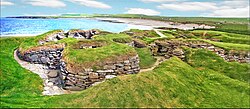
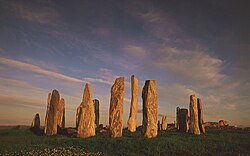
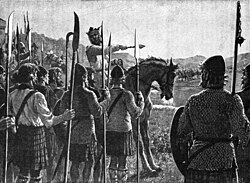
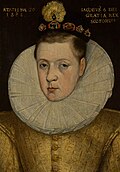
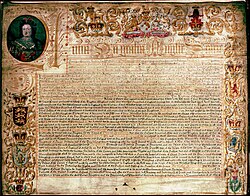
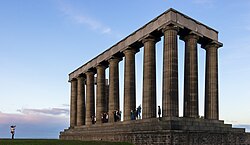
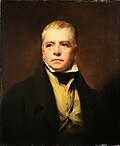
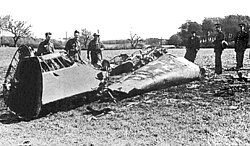
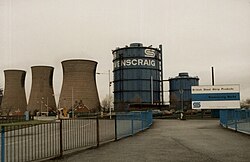
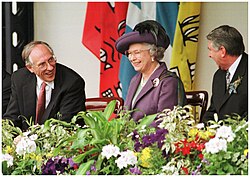
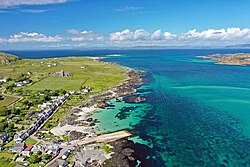
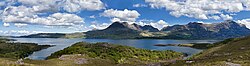
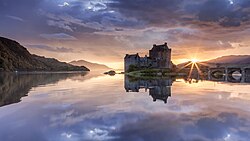
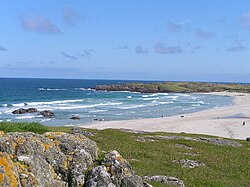
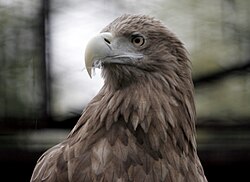
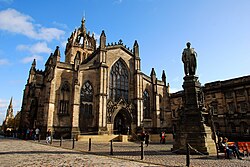
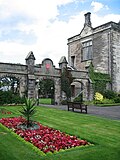
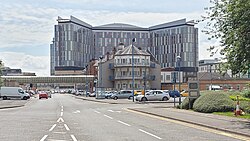
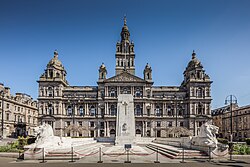
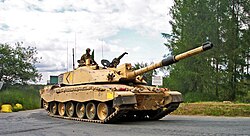
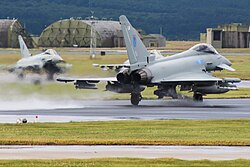
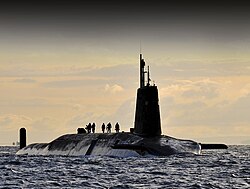
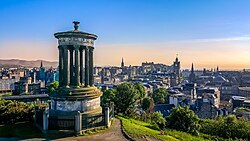

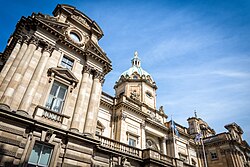

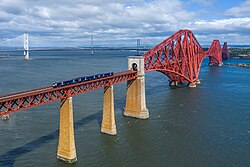
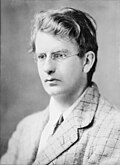
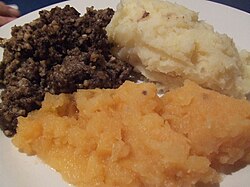

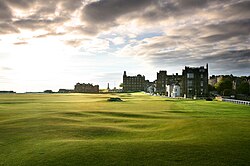


 5,463,300


 Countries, territories and dependencies of the British Crown