|
|
| Line 1: |
Line 1: |
| {{Other uses|Egypt (disambiguation)}} | | {{for|the ancient civilization|Ancient Egypt}} |
| | |
| | |
| {{short description|Country spanning the northeast corner of Africa and southwest corner of Asia}}
| |
| {{Use dmy dates|date=August 2019}}
| |
| {{coord|26|N|30|E|dim:1000km_type:country_region:EG|format=dms|display=title}}
| |
| {{Infobox country | | {{Infobox country |
| | conventional_long_name = Arab Republic of Egypt | | | conventional_long_name = Arab Republic of Egypt |
| | name = {{collapsible list | | | name = {{collapsible list |
| | titlestyle = background:transparent;text-align:center;line-height:normal;font-size:84%;
| | | titlestyle = background:transparent;text-align:center;line-height:normal;font-size:84%; |
| thr | title = {{resize|1.25em|{{lang|ar|جمهورية مصر العربية}}}} | | thr | title = {{resize|1.25em|{{lang|ar|جمهورية مصر العربية}}}} |
| | {{Infobox |subbox=yes |bodystyle=font-size:75%;font-weight:normal;
| | | {{Infobox |subbox=yes |bodystyle=font-size:75%;font-weight:normal; |
| | rowclass1 = mergedrow | label1 = [[Standard Arabic|Arabic]]: | data1 = {{transl|ar|ALA-LC|Jumhūrīyat Miṣr al-ʻArabīyah}}
| | | rowclass1 = mergedrow | label1 = [[Standard Arabic|Arabic]]: | data1 = {{transl|ar|ALA-LC|Jumhūrīyat Miṣr al-ʻArabīyah}} |
| | rowclass2 = mergedrow | label2 = [[Egyptian Arabic|Egyptian]]: | data2 = {{transl|arz|Gomhoreyyet Maṣr el-ʿArabeyya}}
| | | rowclass2 = mergedrow | label2 = [[Egyptian Arabic|Egyptian]]: | data2 = {{transl|arz|Gomhoreyyet Maṣr el-ʿArabeyya}} |
| }}
| | }} |
| }}
| | }} |
| | common_name = Egypt | | | common_name = Egypt |
| | image_flag = Flag of Egypt.svg | | | image_flag = Flag of Egypt.svg |
| | image_coat = Coat of arms of Egypt (Official).svg | | | image_coat = Coat of arms of Egypt (Official).svg |
| | image_map = EGY orthographic.svg | | | image_map = EGY orthographic.svg |
| | map_caption = | | | map_caption = |
| | national_anthem = "[[Bilady, Bilady, Bilady]]"<br />{{lang|ar|"بلادي، بلادي، بلادي"}}<br />({{Lang-en|"My country, my country, my country"}})<br /><div style="display:inline-block;margin-top:0.4em;">{{center|[[File:Bilady, Bilady, Bilady.ogg]]}}</div> | | | national_anthem = "[[Bilady, Bilady, Bilady]]"<br />{{lang|ar|"بلادي، بلادي، بلادي"}}<br />({{Lang-en|"My country, my country, my country"}})<br /><div style="display:inline-block;margin-top:0.4em;">{{center|[[File:Bilady, Bilady, Bilady.ogg]]}}</div> |
| | official_languages = [[Modern Standard Arabic|Arabic]] | | | official_languages = [[Modern Standard Arabic]] |
| | languages_type = [[National language]] | | | national_languages = [[Egyptian Arabic]]{{ref label|offlang|a}} |
| | languages = [[Egyptian Arabic]]{{ref label|offlang|a}}
| | | languages = {{hlist|English|French}} |
| | religion = See ''[[Religion in Egypt]]'' | | | religion = See ''[[Religion in Egypt]]'' |
| | demonym = Egyptian | | | demonym = Egyptian |
| | capital = [[Cairo]] | | | capital = [[Cairo]] |
| | coordinates = {{Coord|30|2|N|31|13|E|type:city}} | | | coordinates = {{Coord|30|2|N|31|13|E|type:city}} |
| | largest_city = capital | | | largest_city = capital |
| | government_type = [[Unitary state|Unitary]] [[Semi-presidential system|semi-presidential]]<br />[[republic]] | | | government_type = [[Unitary state|Unitary]] [[Semi-presidential system|semi-presidential]]<br />[[republic]] |
| | leader_title1 = [[President of Egypt|President]] | | | leader_title1 = [[President of Egypt|President]] |
| | leader_name1 = [[Abdel Fattah el-Sisi]] | | | leader_name1 = [[Abdel Fattah el-Sisi]] |
| | leader_title2 = [[Prime Minister of Egypt|Prime Minister]] | | | leader_title2 = [[Prime Minister of Egypt|Prime Minister]] |
| | leader_name2 = [[Moustafa Madbouly]] | | | leader_name2 = [[Moustafa Madbouly]] |
| | leader_title3 = [[Speaker of the House of Representatives (Egypt)|House Speaker]] | | | leader_title3 = [[Speaker of the House of Representatives (Egypt)|House Speaker]] |
| | leader_name3 = Hanafi Ali Gibali | | | leader_name3 = [[Ali Abdel Aal]] |
| | legislature = [[Parliament of Egypt|Parliament]] | | | legislature = [[House of Representatives (Egypt)|House of Representatives]] |
| | lower_house = | | | lower_house = |
| | established_event1 = Unification of [[Upper and Lower Egypt|Upper<br />and Lower Egypt]]<ref name="goldschmidt_oldest_nation">{{cite book |last1=Goldschmidt |first1=Arthur |title=Modern Egypt: The Formation of a Nation-State |url=https://www.google.com/books/edition/Modern_Egypt/YmZyAAAAMAAJ?hl=en&gbpv=1&bsq=nation-state |year=1988 |publisher=Westview Press |location=Boulder, CO |isbn=978-0-86531-182-4 |page=5 |quote=Among the peoples of the ancient Near East, only the Egyptians have stayed where they were and remained what they were, although they have changed their language once and their religion twice. In a sense, they constitute the world's oldest nation. For most of their history, Egypt has been a state, but only in recent years has it been truly a nation-state, with a government claiming the allegiance of its subjects on the basis of a common identity. |access-date=20 June 2015 |archive-url=https://web.archive.org/web/20201217150902/https://www.google.com/books/edition/Modern_Egypt/YmZyAAAAMAAJ?hl=en&gbpv=1&bsq=nation-state |archive-date=17 December 2020 |url-status=live }}</ref><ref>{{cite web |url=https://2009-2017.state.gov/r/pa/ei/bgn/5309.htm |title=Background Note: Egypt |date=10 November 2010 |publisher=[[United States Department of State]] [[Bureau of Near Eastern Affairs]] |access-date=5 March 2011 }}</ref><!--end nowrap:-->{{ref label|estevent|b|}} | | | established_event1 = Unification of [[Upper and Lower Egypt|Upper<br />and Lower Egypt]]<ref name="goldschmidt_oldest_nation">{{cite book |last1=Goldschmidt |first1=Arthur |title=Modern Egypt: The Formation of a Nation-State |url=https://www.google.com/books/edition/Modern_Egypt/YmZyAAAAMAAJ?hl=en&gbpv=1&bsq=nation-state |year=1988 |publisher=Westview Press |location=Boulder, CO |isbn=978-0-86531-182-4 |page=5 |quote=Among the peoples of the ancient Near East, only the Egyptians have stayed where they were and remained what they were, although they have changed their language once and their religion twice. In a sense, they constitute the world's oldest nation. For most of their history, Egypt has been a state, but only in recent years has it been truly a nation-state, with a government claiming the allegiance of its subjects on the basis of a common identity. |access-date=20 June 2015 |archive-url=https://web.archive.org/web/20201217150902/https://www.google.com/books/edition/Modern_Egypt/YmZyAAAAMAAJ?hl=en&gbpv=1&bsq=nation-state |archive-date=17 December 2020 |url-status=live }}</ref><ref>{{cite web |url=https://2009-2017.state.gov/r/pa/ei/bgn/5309.htm |title=Background Note: Egypt |date=10 November 2010 |publisher=[[United States Department of State]] [[Bureau of Near Eastern Affairs]] |access-date=5 March 2011 }}</ref><!--end nowrap:-->{{ref label|estevent|b|}} |
| | established_date1 = {{circa}} 3150 BC | | | established_date1 = [[Circa|c.]] 3150 BC |
| | established_event2 = [[Muhammad Ali dynasty]] inaugurated | | | established_event2 = [[Muhammad Ali dynasty]] inaugurated |
| | established_date2 = 9 July 1805<ref>{{cite book |author=Pierre Crabitès |title=Ibrahim of Egypt |url=https://books.google.com/books?id=1NbCRckI3EoC&pg=PA1 |access-date=10 February 2013 |year=1935 |publisher=Routledge |isbn=978-0-415-81121-7 |page=1 |quote=... on July 9, 1805, Constantinople conferred upon Muhammad Ali the pashalik of Cairo ... |archive-url=https://web.archive.org/web/20130509064900/http://books.google.com/books?id=1NbCRckI3EoC&pg=PA1 |archive-date=9 May 2013 |url-status=live }}</ref> | | | established_date2 = 9 July 1805<ref>{{cite book |author=Pierre Crabitès |title=Ibrahim of Egypt |url=https://books.google.com/books?id=1NbCRckI3EoC&pg=PA1 |access-date=10 February 2013 |year=1935 |publisher=Routledge |isbn=978-0-415-81121-7 |page=1 |quote=... on July 9, 1805, Constantinople conferred upon Muhammad Ali the pashalik of Cairo ... |archive-url=https://web.archive.org/web/20130509064900/http://books.google.com/books?id=1NbCRckI3EoC&pg=PA1 |archive-date=9 May 2013 |url-status=live }}</ref> |
| | established_event3 = [[Unilateral Declaration of Egyptian Independence|Independence]] from<br />[[United Kingdom of Great Britain and Ireland|United Kingdom]] | | | established_event3 = [[Unilateral Declaration of Egyptian Independence|Independence]] from<br />[[United Kingdom of Great Britain and Ireland|United Kingdom]] |
| | established_date3 = 28 February 1922 | | | established_date3 = 28 February 1922 |
| | established_event4 = [[Egyptian revolution of 1952|Revolution Day]] | | | established_event4 = [[Egyptian revolution of 1952|Revolution Day]] |
| | established_date4 = 23 July 1952 | | | established_date4 = 23 July 1952 |
| | established_event5 = Republic declared | | | established_event5 = Republic declared |
| | established_date5 = 18 June 1953 | | | established_date5 = 18 June 1953 |
| | established_event6 = [[Constitution of Egypt|Current constitution]] | | | established_event6 = [[Constitution of Egypt|Current constitution]] |
| | established_date6 = 18 January 2014 | | | established_date6 = 18 January 2014 |
| | area_rank = 29th | | | area_rank = 29th |
| | area_km2 = 1,010,408 <ref>{{cite web |url=https://www.capmas.gov.eg/Pages/StaticPages.aspx?page_id=5035 |title= Density By Governorate 1/7/2020 - Area km2 (Theme: Population - pg.14) |publisher=Capmas.gov.eg|access-date=8 July 2021|url-status=live |archive-date=March 2021}}</ref><ref>{{cite web |url=http://www.capmas.gov.eg/pdf/EgyptinFigures2015/EgyptinFigures/Tables/PDF/1-%20%D8%A7%D9%84%D8%B3%D9%83%D8%A7%D9%86/pop.pdf |title=Total area km2, pg.15 |publisher=Capmas.Gov – Arab Republic of Egypt |access-date=8 May 2015 |url-status=dead |archive-url=https://web.archive.org/web/20150321110107/http://capmas.gov.eg/pdf/EgyptinFigures2015/EgyptinFigures/Tables/PDF/1-%20%D8%A7%D9%84%D8%B3%D9%83%D8%A7%D9%86/pop.pdf |archive-date=21 March 2015 }}</ref> | | | area_km2 = 1,010,408<ref>{{cite web |url=http://www.capmas.gov.eg/pdf/EgyptinFigures2015/EgyptinFigures/Tables/PDF/1-%20%D8%A7%D9%84%D8%B3%D9%83%D8%A7%D9%86/pop.pdf |title=Total area km2, pg.15 |publisher=Capmas.Gov – Arab Republic of Egypt |access-date=8 May 2015 |url-status=dead |archive-url=https://web.archive.org/web/20150321110107/http://capmas.gov.eg/pdf/EgyptinFigures2015/EgyptinFigures/Tables/PDF/1-%20%D8%A7%D9%84%D8%B3%D9%83%D8%A7%D9%86/pop.pdf |archive-date=21 March 2015 }}</ref> |
| | area_sq_mi = 387,048 | | | area_sq_mi = 387,048 |
| | percent_water = 0.632
| | | percent_water = 0.632 |
| | population_estimate = {{IncreaseNeutral}} 101,478,581 <ref>{{cite web |url=https://www.capmas.gov.eg/Pages/StaticPages.aspx?page_id=5035 |title=Population Estimates By Sex & Governorate 1/1/2021 (Theme: Population - pg.4) |publisher=Capmas.gov.eg|access-date=8 July 2021|url-status=live |archive-date=March 2021}}</ref><ref>{{cite web |title=Population of Egypt Now (PopulationClock) |url=https://www.capmas.gov.eg/Pages/populationClock.aspx |website=www.capmas.gov.eg |access-date=8 July 2021}}</ref>
| | | population_estimate = {{increase}} 100,075,480 <ref>{{cite web |title=الجهاز المركزي للتعبئة العامة والإحصاء |url=http://www.capmas.gov.eg/ |website=www.capmas.gov.eg |access-date=12 February 2020}}</ref><ref>{{cite web |title=أقل زيادة في 10 سنوات.. رحلة الوصول إلى 100 مليون مصري (إنفوجرافيك) |url=https://www.masrawy.com/news/news_economy/details/2020/2/11/1722317/%D8%A3%D9%82%D9%84-%D8%B2%D9%8A%D8%A7%D8%AF%D8%A9-%D9%81%D9%8A-10-%D8%B3%D9%86%D9%88%D8%A7%D8%AA-%D8%B1%D8%AD%D9%84%D8%A9-%D8%A7%D9%84%D9%88%D8%B5%D9%88%D9%84-%D8%A5%D9%84%D9%89-100-%D9%85%D9%84%D9%8A%D9%88%D9%86-%D9%85%D8%B5%D8%B1%D9%8A-%D8%A5%D9%86%D9%81%D9%88%D8%AC%D8%B1%D8%A7%D9%81%D9%8A%D9%83- |website=www.masrawy.com |access-date=12 February 2020 |archive-date=12 February 2020 |archive-url=https://web.archive.org/web/20200212144159/https://www.masrawy.com/news/news_economy/details/2020/2/11/1722317/%D8%A3%D9%82%D9%84-%D8%B2%D9%8A%D8%A7%D8%AF%D8%A9-%D9%81%D9%8A-10-%D8%B3%D9%86%D9%88%D8%A7%D8%AA-%D8%B1%D8%AD%D9%84%D8%A9-%D8%A7%D9%84%D9%88%D8%B5%D9%88%D9%84-%D8%A5%D9%84%D9%89-100-%D9%85%D9%84%D9%8A%D9%88%D9%86-%D9%85%D8%B5%D8%B1%D9%8A-%D8%A5%D9%86%D9%81%D9%88%D8%AC%D8%B1%D8%A7%D9%81%D9%8A%D9%83- |url-status=dead }}</ref> |
| | population_estimate_year = 01.01.2021
| | | population_estimate_year = 2020 |
| | population_estimate_rank = 15th
| | | population_estimate_rank = 13th |
| | population_census = 94,798,827 <ref>{{cite web |url=https://www.capmas.gov.eg/Pages/StaticPages.aspx?page_id=5035 |title=Distribution Egyptians Population By Governorate - Census 2017 (Theme: Census - pg.15)|publisher=Capmas.gov.eg|access-date=8 July 2021|url-status=live |archive-date=March 2021}}</ref><ref name="capmas.gov.eg" />
| | | population_census = 94,798,827 |
| | population_census_year = [[Censuses of Egypt#2017|2017]]
| | | population_census_year = [[Censuses of Egypt#2017|2017]] |
| | population_census_rank =
| | | population_census_rank = |
| | population_density_km2 = 100
| | | population_density_km2 = 100 |
| | population_density_sq_mi = | | | population_density_sq_mi = |
| | population_density_rank = 83rd | | | population_density_rank = 83rd |
| | GDP_PPP_year = 2020 | | | GDP_PPP_year = 2019 |
| | GDP_PPP = {{increase}} $1.391 trillion<ref name="IMFWEOEG">{{cite web |url=https://www.imf.org/external/pubs/ft/weo/2019/02/weodata/weorept.aspx?pr.x=64&pr.y=17&sy=2017&ey=2024&scsm=1&ssd=1&sort=country&ds=.&br=1&c=469&s=NGDPD%2CPPPGDP%2CNGDPDPC%2CPPPPC&grp=0&a=|title=World Economic Outlook Database, October 2019 |publisher=[[International Monetary Fund]] |website=IMF.org |access-date=14 December 2019}}</ref> | | | GDP_PPP = {{increase}} $1.391 trillion<ref name="IMFWEOEG">{{cite web |url=https://www.imf.org/external/pubs/ft/weo/2019/02/weodata/weorept.aspx?pr.x=64&pr.y=17&sy=2017&ey=2024&scsm=1&ssd=1&sort=country&ds=.&br=1&c=469&s=NGDPD%2CPPPGDP%2CNGDPDPC%2CPPPPC&grp=0&a=|title=World Economic Outlook Database, October 2019 |publisher=[[International Monetary Fund]] |website=IMF.org |access-date=14 December 2019}}</ref> |
| | GDP_PPP_rank = 19th | | | GDP_PPP_rank = 19th |
| | GDP_PPP_per_capita = {{increase}} $14,023<ref name="IMFWEOEG" /> | | | GDP_PPP_per_capita = {{increase}} $14,023<ref name="IMFWEOEG" /> |
| | GDP_PPP_per_capita_rank = 92nd | | | GDP_PPP_per_capita_rank = 94th |
| | GDP_nominal = {{increase}} $362 billion<ref name="IMFWEOEG" /> | | | GDP_nominal = {{increase}} $302.256 billion<ref name="IMFWEOEG" /> |
| | GDP_nominal_rank = 34th | | | GDP_nominal_rank = 40th |
| | GDP_nominal_year = 2020 | | | GDP_nominal_year = 2019 |
| | GDP_nominal_per_capita = {{increase}} $3,561<ref name="IMFWEOEG" /> | | | GDP_nominal_per_capita = {{increase}} $3,047<ref name="IMFWEOEG" /> |
| | GDP_nominal_per_capita_rank = 114th | | | GDP_nominal_per_capita_rank = 126th |
| | Gini_year = 2015 | | | Gini_year = 2015 |
| | Gini_change = decrease<!--increase/decrease/steady--> | | | Gini_change = decrease<!--increase/decrease/steady--> |
| | Gini = 31.8 <!--number only--> | | | Gini = 31.8 <!--number only--> |
| | Gini_ref = <ref>{{cite web |url=http://data.worldbank.org/indicator/SI.POV.GINI/ |title=GINI index |publisher=World Bank |access-date=8 February 2013 |archive-url=https://web.archive.org/web/20150209003326/http://data.worldbank.org/indicator/SI.POV.GINI |archive-date=9 February 2015 |url-status=live }}</ref> | | | Gini_ref = <ref>{{cite web |url=http://data.worldbank.org/indicator/SI.POV.GINI/ |title=GINI index |publisher=World Bank |access-date=8 February 2013 |archive-url=https://web.archive.org/web/20150209003326/http://data.worldbank.org/indicator/SI.POV.GINI |archive-date=9 February 2015 |url-status=live }}</ref> |
| | Gini_rank = 51st | | | Gini_rank = 51st |
| | HDI_year = 2019<!-- Please use the year to which the data refers, not the publication year--> | | | HDI_year = 2019<!-- Please use the year to which the data refers, not the publication year--> |
| | HDI_change = increase<!--increase/decrease/steady--> | | | HDI_change = increase<!--increase/decrease/steady--> |
| | HDI = 0.707 <!--number only--> | | | HDI = 0.707 <!--number only--> |
| | HDI_ref = <ref name="HDI">{{cite book|title=Human Development Report 2020 The Next Frontier: Human Development and the Anthropocene|date=15 December 2020|publisher=United Nations Development Programme|isbn=978-92-1-126442-5|pages=343–346|url=http://hdr.undp.org/sites/default/files/hdr2020.pdf|access-date=16 December 2020}}</ref> | | | HDI_ref = <ref name="HDI">{{cite book|title=Human Development Report 2020 The Next Frontier: Human Development and the Anthropocene|date=15 December 2020|publisher=United Nations Development Programme|isbn=978-92-1-126442-5|pages=343–346|url=http://hdr.undp.org/sites/default/files/hdr2020.pdf|access-date=16 December 2020}}</ref> |
| | HDI_rank = 116th | | | HDI_rank = 116th |
| | currency = [[Egyptian pound]] (E£) | | | currency = [[Egyptian pound]] (E£) |
| | currency_code = EGP | | | currency_code = EGP |
| | time_zone = [[Egypt Standard Time|EGY]] | | | time_zone = [[Eastern European Time|EET]] |
| | utc_offset = +2{{ref label|dst|c}} | | | utc_offset = +2{{ref label|dst|c}} |
| | time_zone_DST = | | | time_zone_DST = |
| | utc_offset_DST = | | | utc_offset_DST = |
| | drives_on = right | | | drives_on = right |
| | calling_code = [[+20]] | | | calling_code = [[+20]] |
| | cctld = {{unbulleted list |[[.eg]] |{{lang|ar|[[مصر.]]}}}} | | | cctld = {{unbulleted list |[[.eg]] |{{lang|ar|[[مصر.]]}}}} |
| | footnote_a = {{note|offlang}} [[Modern Standard Arabic|Literary Arabic]] is the sole official language.<ref name="Provisional Constitution">{{cite web |url=http://www.sis.gov.eg/En/LastPage.aspx?Category_ID=1155 |title=Constitutional Declaration: A New Stage in the History of the Great Egyptian People |date=30 March 2011 |publisher=Egypt State Information Service |access-date=15 April 2011 |archive-url=https://web.archive.org/web/20110427083143/http://www.sis.gov.eg/En/LastPage.aspx?Category_ID=1155 |archive-date=27 April 2011 |url-status=live }}</ref> [[Egyptian Arabic]] is the [[spoken language]]. Other [[Languages of Egypt|dialects and minority languages]] are spoken regionally. | | | footnote_a = {{note|offlang}} [[Modern Standard Arabic|Literary Arabic]] is the sole official language.<ref name="Provisional Constitution">{{cite web |url=http://www.sis.gov.eg/En/LastPage.aspx?Category_ID=1155 |title=Constitutional Declaration: A New Stage in the History of the Great Egyptian People |date=30 March 2011 |publisher=Egypt State Information Service |access-date=15 April 2011 |archive-url=https://web.archive.org/web/20110427083143/http://www.sis.gov.eg/En/LastPage.aspx?Category_ID=1155 |archive-date=27 April 2011 |url-status=live }}</ref> [[Egyptian Arabic]] is the [[spoken language]]. Other [[Languages of Egypt|dialects and minority languages]] are spoken regionally. |
| | footnote_b = {{note|estevent}} "Among the peoples of the ancient Near East, only the Egyptians have stayed where they were and remained what they were, although they have changed their language once and their religion twice. In a sense, they constitute the world's oldest nation".<ref name="goldschmidt_oldest_nation" /> Arthur Goldschmidt Jr. | | | footnote_b = {{note|estevent}} "Among the peoples of the ancient Near East, only the Egyptians have stayed where they were and remained what they were, although they have changed their language once and their religion twice. In a sense, they constitute the world's oldest nation".<ref name="goldschmidt_oldest_nation" /> Arthur Goldschmidt Jr. |
| | footnote_c = {{note|dst}}See [[Daylight saving time in Egypt]]. | | | footnote_c = {{note|dst}}See [[Daylight saving time in Egypt]]. |
| }} | | }} |
|
| |
|
| '''Egypt''' ({{IPAc-en|ˈ|iː|dʒ|ɪ|p|t | | '''Egypt''' is a [[country]] in northeast [[Africa]], parts of the country hang on to the [[Middle East]]. Its capital city is [[Cairo]]. Egypt is famous for its [[Ancient history|ancient]] [[monument]]s, such as the [[Egyptian pyramids|Pyramids]] and the [[Sphinx]]. |
| | audio = En-us-Egypt.ogg
| |
| }} {{Respell|EE|jipt}}; {{lang-ar|مِصر|Miṣr}}), officially the '''Arab Republic of Egypt''', is a [[List of transcontinental countries|transcontinental country]] spanning the [[North Africa|northeast corner of Africa]] and [[Western Asia|southwest corner of Asia]] by a [[land bridge]] formed by the [[Sinai Peninsula]]. Egypt is a [[Mediterranean Sea|Mediterranean country]] bordered by the [[Gaza Strip]] ([[State of Palestine|Palestine]]) and [[Israel]] to [[Egypt–Israel barrier|the northeast]], the [[Gulf of Aqaba]] and the [[Red Sea]] to the east, [[Sudan]] to [[Egypt–Sudan border|the south]], and [[Libya]] to [[Egypt–Libya border|the west]]. Across the Gulf of Aqaba lies [[Jordan]], across the Red Sea lies [[Saudi Arabia]], and across the Mediterranean lie [[Greece]], [[Turkey]] and [[Cyprus]], although none share a land border with Egypt.
| |
| | |
| Egypt has one of the longest histories of any country, tracing its heritage along the [[Nile Delta]] back to the 6th–4th millennia BCE. Considered a [[cradle of civilisation]], [[Ancient Egypt]] saw some of the earliest developments of writing, agriculture, urbanisation, organised religion and central government.<ref>{{Cite book|title=The Prehistory of Egypt: From the First Egyptians to the First Kings|last=Midant-Reynes|first=Béatrix|publisher=Blackwell Publishers|location=Oxford}}</ref> Iconic monuments such as the [[Giza Necropolis]] and its [[Great Sphinx of Giza|Great Sphinx]], as well the ruins of [[Memphis, Egypt|Memphis]], [[Thebes, Egypt|Thebes]], [[Karnak]], and the [[Valley of the Kings]], reflect this legacy and remain a significant focus of scientific and popular interest. Egypt's long and rich cultural heritage is an integral part of its national identity, which reflects its unique [[List of transcontinental countries|transcontinental]] location being all [[List of Mediterranean countries|Mediterranean]], [[Middle East]]ern and [[North Africa]]n.<ref>{{Cite web|title=Egyptian Identity|url=https://www.ucl.ac.uk/3dpetriemuseum/stories/ancient-life/egyptian-life/egyptian-identity.html|access-date=2021-03-04|website=www.ucl.ac.uk}}</ref> Egypt was an early and important [[Christianity in Egypt|centre of Christianity]], but was largely [[Islamization of Egypt|Islamised]] in the seventh century and remains a predominantly [[Muslim]] country, albeit with a [[Copts in Egypt|significant Christian minority]].
| |
| | |
| Modern Egypt dates back to 1922, when it gained independence from the [[British Empire]] as a monarchy. Following the [[Egyptian revolution of 1952|1952 revolution]], Egypt declared itself a [[Republic of Egypt (1953–58)|republic]], and in 1958 it merged with [[Syrian Republic (1930–58)|Syria]] to form the [[United Arab Republic]], which dissolved in 1961. Throughout the second half of the 20th century, Egypt endured social and religious strife and political instability, fighting [[Arab–Israeli conflict|several armed conflicts]] with [[Israel]] in [[1948 Arab–Israeli War|1948]], [[Suez Crisis|1956]], [[Six-Day War|1967]] and [[Yom Kippur War|1973]], and [[Occupation of the Gaza Strip by Egypt|occupying]] the [[Gaza Strip]] intermittently until 1967. In 1978, Egypt signed the [[Camp David Accords]], officially withdrawing from the Gaza Strip and [[Egypt–Israel Peace Treaty|recognising Israel]]. The country continues to face challenges, from political unrest, including the recent [[Egyptian revolution of 2011|2011 revolution]] and [[Egyptian crisis (2011–14)|its aftermath]], to terrorism and economic underdevelopment. Egypt's current government, a [[semi-presidential republic]] has been described by a number of watchdogs as authoritarian or heading an authoritarian regime, responsible for perpetuating the country's problematic [[Human rights in Egypt|human rights record]].
| |
| | |
| [[Islam]] is the [[official religion]] of Egypt and [[Arabic]] is its official language.<ref>{{cite web|url=http://www.sis.gov.eg/Newvr/Dustor-en001.pdf|title=Constitution of The Arab Republic of Egypt 2014|website=sis.gov.eg|archive-url=https://web.archive.org/web/20150718052913/http://www.sis.gov.eg/Newvr/Dustor-en001.pdf|archive-date=18 July 2015|access-date=13 April 2017|url-status=live}}</ref> With over 100 million inhabitants, Egypt is the most populous country in [[North Africa]], the [[Middle East]], and the [[Arab world]], the [[List of African countries by population|third-most populous]] in Africa (after [[Nigeria]] and [[Ethiopia]]), and the [[List of countries and dependencies by population|thirteenth-most populous]] in the world. The great majority of its people live near the banks of the [[Nile]] River, an area of about {{convert|40000|km2|-3}}, where the only [[arable land]] is found. The large regions of the [[Sahara]] [[desert]], which constitute most of Egypt's territory, are sparsely inhabited. About half of Egypt's residents live in urban areas, with most spread across the densely populated centres of greater [[Cairo]], [[Alexandria]] and other major cities in the Nile Delta.
| |
| | |
| Egypt is considered to be a [[regional power]] in [[North Africa]], the [[Middle East]] and the [[Muslim world]], and a [[middle power]] worldwide.<ref>{{Cite journal|title=Lessons from/for BRICSAM about south–north Relations at the Start of the 21st Century: Economic Size Trumps All Else?|journal=International Studies Review|volume=9}}</ref> With one of the largest and most diversified economies in the Middle East, which is projected to become [[Jim O'Neill, Baron O'Neill of Gatley#Next Eleven|one of the largest]] in the world in the 21st century, Egypt has the [[List of African countries by GDP (nominal)|second-largest economy in Africa]], the world's [[List of countries by GDP (nominal)|33rd-largest economy by nominal GDP]], and the [[List of countries by GDP (PPP)|19-largest by PPP]]. Egypt is a founding member of the [[United Nations]], the [[Non-Aligned Movement]], the [[Arab League]], the [[African Union]], [[Organisation of Islamic Cooperation]] and the [[World Youth Forum]]. | |
| | |
| ==Names==<!--linked-->
| |
| <!--Needs to be recycled-->
| |
| <div>The English name "Egypt" is derived from the [[Ancient Greek]] "{{transl|grc|Aígyptos}}" ("{{lang|grc|Αἴγυπτος}}"), via [[Middle French]] "Egypte" and [[Latin]] "{{lang|la|Aegyptus}}". It is reflected in [[Mycenaean Greek|early Greek]] [[Linear B]] tablets as "a-ku-pi-ti-yo". The adjective "aigýpti-"/"aigýptios" was borrowed into Coptic as "{{transl|cop|gyptios}}", and from there into [[Arabic]] as "{{transl|ar|qubṭī}}", back formed into "{{lang|ar|قبط}}" ("{{Transl|ar|qubṭ}}"), whence English "[[Copt]]". The Greek forms were borrowed from [[Late Egyptian]] ''([[Amarna Period|Amarna]]) Hikuptah'' or "Memphis", a corruption of the earlier [[Egyptian language|Egyptian]] name <div style="display:inline;"><hiero>O6-t:pr-D28-Z1-p:t-H</hiero></div> ({{angbr|{{transl|egy|ḥwt-kȝ-ptḥ}}}} [[wikt:Special:Search/𓉗|𓉗]][[wikt:Special:Search/𓏏|𓏏]]𓉐𓂓𓏤[[wikt:Special:Search/𓊪|𓊪]][[wikt:Special:Search/𓏏|𓏏]][[wikt:Special:Search/𓎛|𓎛]]), meaning "home of the [[Egyptian soul|ka]] (soul) of Ptah", the name of a temple to the god [[Ptah]] at [[Memphis, Egypt|Memphis]].<ref>{{cite journal|last =Hoffmeier|first =James K|title =Rameses of the Exodus narratives is the 13th B.C. Royal Ramesside Residence|journal =[[Trinity Journal (theology)|Trinity Journal]]|page =1|date =1 October 2007|url =http://www.galaxie.com/article/13430|access-date =30 September 2012|archive-url =https://web.archive.org/web/20101124064734/http://www.galaxie.com/article/13430|archive-date =24 November 2010|url-status=live|df =dmy-all}}</ref></div>
| |
| | |
| "{{Transl|ar|Miṣr}}" ({{IPA-ar|mesˤɾ}}; "{{lang|ar|مِصر}}") is the [[Classical Arabic|Classical Quranic Arabic]] and modern official name of Egypt, while "{{transl|arz|Maṣr}}" ({{IPA-arz|mɑsˤɾ}}; {{lang|arz|مَصر}}) is the local pronunciation in [[Egyptian Arabic]].<ref>{{cite journal|journal=Il-Malti |last=Z. |first=T. |date=1928 |volume=2 |issue=1 |language=mt |publisher=Il-Ghaqda tal-Kittieba tal-Malti |title=Il-Belt (Valletta) |edition=2 |url=http://melitensiawth.com/incoming/Index/Il-Malti/Il-Malti.%20004(1928)2/01.pdf |archive-url=https://web.archive.org/web/20160417234107/http://melitensiawth.com/incoming/Index/Il-Malti/Il-Malti.%20004%281928%292/01.pdf |archive-date=17 April 2016 |page=35 |url-status=dead }}</ref> The name is of [[Semitic languages|Semitic]] origin, directly [[cognate]] with other Semitic words for Egypt such as the [[Hebrew language|Hebrew]] "{{Script/Hebrew|מִצְרַיִם}}" ("{{Transl|he|[[Mizraim|Miṣráyim/Mitzráyim/Mizráim]]}}"). The oldest attestation of this name for Egypt is the [[Akkadian language|Akkadian]] "mi-iṣ-ru" ("miṣru")<ref>The ending of the Hebrew form is either a [[Dual (grammatical number)|dual]] or an ending identical to the dual in form (perhaps a [[locative]]), and this has sometimes been taken as referring to the two kingdoms of Upper and Lower Egypt. However, the application of the (possibly) "dual" ending to some toponyms and other words, a development peculiar to Hebrew, does not in fact imply any "two-ness" about the place. The ending is found, for example, in the Hebrew words for such single entities as "water" ("מַיִם"), "noon" ("צָהֳרַיִם"), "sky/heaven" ("שָׁמַיִם"), and in the ''[[Qere and Ketiv|qere]]'' – but not the original "ketiv" – of "Jerusalem" ("ירושל[י]ם"). It should also be noted that the dual ending – which may or may not be what the ''-áyim'' in "Mitzráyim" actually represents – was available to other Semitic languages, such as Arabic, but was not applied to Egypt. See ''inter alia'' Aaron Demsky ("Hebrew Names in the Dual Form and the Toponym Yerushalayim" in Demsky (ed.) ''These Are the Names: Studies in Jewish Onomastics'', Vol. 3 (Ramat Gan, 2002), pp. 11–20), Avi Hurvitz (''A Concise Lexicon of Late Biblical Hebrew: Linguistic Innovations in the Writings of the Second Temple Period'' (Brill, 2014), [https://books.google.com/books?id=p1AMBAAAQBAJ&pg=PA128 p. 128]) and Nadav Na’aman ("Shaaraim – The Gateway to the Kingdom of Judah" in ''The Journal of Hebrew Scriptures'', Vol. 8 (2008), article [http://www.jhsonline.org/Articles/article_101.pdf no. 24] {{Webarchive|url=https://web.archive.org/web/20141017233422/http://www.jhsonline.org/Articles/article_101.pdf |date=17 October 2014 }}, pp. 2–3).</ref><ref>{{Cite journal|title = On the So-Called Ventive Morpheme in the Akkadian Texts of Amurru|url = https://www.academia.edu/371050|website = www.academia.edu|access-date = 18 November 2015|page = 84|archive-url = https://web.archive.org/web/20160118112500/http://www.academia.edu/371050/On_the_So-Called_Ventive_Morpheme_in_the_Akkadian_Texts_of_Amurru|archive-date = 18 January 2016|url-status=live|df = dmy-all|last1 = Izre'|first1 = Shlomo}}</ref> related to ''miṣru/miṣirru/miṣaru'', meaning "border" or "frontier".<ref name="akkadian">{{cite book|title = A Concise Dictionary of Akkadian|url = https://books.google.com/books?id=-qIuVCsRb98C&pg=PA212|publisher = Otto Harrassowitz Verlag|year= 2000|isbn = 978-3-447-04264-2|first1 = Jeremy A.|last1 = Black|first2 = Andrew|last2 = George|first3 = J.N.|last3 = Postgate}}</ref> The [[Neo-Assyrian Empire]] used the derived term [[File:Rassam cylinder Mu-s,ur.jpg|60px]], ''Mu-ṣur''.<ref>As in inscriptions such as the [[Rassam cylinder]] of [[Ashurbanipal]]. For transcription, the word being written Mu-s,ur [https://cdli.ucla.edu/search/archival_view.php?ObjectID=P421807]</ref>
| |
| | |
| <div>The ancient Egyptian name of the country was <div style="display:inline;"><hiero> km-m-t:O49 </hiero></div> ([[wikt:Special:Search/𓆎|𓆎]][[wikt:Special:Search/𓅓|𓅓]][[wikt:Special:Search/𓏏|𓏏]]𓊖) '''{{transl|egy|km.t}}''', which means black land, likely referring to the [[Soil fertility|fertile]] black soils of the [[Nile flood]] plains, distinct from the ''deshret'' ({{angbr|{{transl|egy|dšṛt}}}}), or "red land" of the [[desert]].<ref>{{cite book|author=Rosalie, David |title=Pyramid Builders of Ancient Egypt: A Modern Investigation of Pharaoh's Workforce |publisher=Routledge |year=1997 |page=18}}</ref><ref>{{cite book |url=https://books.google.com/books?id=gZWuVAL2GooC&pg=PA43 |title=Ancient Civilizations of Africa |author=Muḥammad Jamāl al-Dīn Mukhtār |page=43 |access-date=28 May 2016 |archive-url=https://web.archive.org/web/20170131155854/https://books.google.com/books?id=gZWuVAL2GooC&pg=PA43 |archive-date=31 January 2017 |url-status=live |isbn=978-0-85255-092-2 |year=1990 }}</ref> This name is commonly vocalised as ''Kemet'', but was probably pronounced {{IPA|[kuːmat]}} in ancient Egyptian.<ref>Antonio Loprieno, "Egyptian and Coptic Phonology", in ''Phonologies of Asia and Africa (including the Caucasus). Vol 1 of 2.'' Ed: Alan S Kaye. Winona Lake, Indiana: Eisenbrauns, 1997: p. 449</ref> The name is realised as ''{{transl|cop|kēme}}'' and ''{{transl|cop|kēmə}}'' in the [[Coptic language|Coptic]] stage of the Egyptian language, and appeared in early Greek as {{lang|grc|Χημία}} (''{{transl|grc|Khēmía}}'').<ref>{{cite web|url=http://www.chm.bris.ac.uk/webprojects2002/crabb/history.html|title=A Brief History of Alchemy|publisher=University of Bristol School of Chemistry|access-date=21 August 2008|archive-url=https://web.archive.org/web/20081005180735/http://www.chm.bris.ac.uk/webprojects2002/crabb/history.html|archive-date=5 October 2008|url-status=live}}</ref> Another name was {{angbr|{{transl|egy|tꜣ-mry}}}} "land of the riverbank".<ref>{{cite book|title=Ancient Records of Egypt |last=Breasted |first=James Henry |author2=Peter A. Piccione |year=2001 |publisher=University of Illinois Press|isbn=978-0-252-06975-8 |pages=76, 40|url=https://books.google.com/books?id=bT0q7nt1-gUC}}</ref> The names of [[Upper and Lower Egypt]] were ''Ta-Sheme'aw'' ({{angbr|{{transl|egy|tꜣ-šmꜥw}}}}) "sedgeland" and ''Ta-Mehew'' ({{angbr|{{Transl|egy|tꜣ mḥw}}}}) "northland", respectively.</div>
| |
|
| |
|
| == History == | | == History == |
| {{Main|History of Egypt}}
| | [[Ancient Egypt]] has one of the longest histories of any country in the world as it used to be ruled by [[pharaoh]]s. As a province of the [[Roman Empire]], it became Christian and some [[Coptic Church]] people are thereafter more than a thousand years of Muslim rule. The [[Fatimid Caliphate]] ruled Egypt in the tenth through twelfth centuries. [[Mamluk]]es ruled it until 1798 when [[Napoleon]] defeated them. [[Muhammad Ali Pasha]] soon took over and started a [[dynasty]] of [[Khedive]]s under the [[Ottoman Empire]]. The Empire fell apart after [[World War I]]. Egypt became an independent country in 1922 and the khedive became a king. Egypt is a member of the [[United Nations]] and the [[Arab League]]. It became a [[republic]] after the Army's [[revolution]] of 1952. |
| | |
| === Prehistory and Ancient Egypt ===
| |
| {{Main|Prehistoric Egypt|Ancient Egypt}}
| |
| [[File:Derr ( 125 miles south of Aswan, right bank). Temple dedicated to Pa - Horakhti.jpg|thumb|left|[[Temple of Derr]] ruins in 1960]]
| |
| There is evidence of [[rock carvings]] along the [[Nile]] terraces and in desert oases. In the [[10th millennium BCE]], a culture of [[hunter-gatherer]]s and [[fishing|fishers]] was replaced by a [[cereal|grain]]-grinding [[culture]]. Climate changes or [[overgrazing]] around 8000 BCE began to desiccate the pastoral lands of Egypt, forming the [[Sahara]]. Early [[tribal people]]s migrated to the Nile River where they developed a settled agricultural [[Economic system|economy]] and more centralised [[society]].<ref>Midant-Reynes, Béatrix. ''The Prehistory of Egypt: From the First Egyptians to the First Kings''. Oxford: Blackwell Publishers.</ref>
| |
| | |
| By about 6000 BCE, a [[Neolithic]] culture rooted in the Nile Valley.<ref>{{cite web|url=http://www.worldtimelines.org.uk/world/africa/nile_valley/6000-4000BC |title=The Nile Valley 6000–4000 BCE Neolithic |publisher=The British Museum |year=2005 |access-date=21 August 2008 |url-status=dead |archive-url=https://web.archive.org/web/20090214084636/http://www.worldtimelines.org.uk/world/africa/nile_valley/6000-4000BC |archive-date=14 February 2009 }}</ref> During the Neolithic era, several predynastic cultures developed independently in [[Upper and Lower Egypt]]. The [[Badarian]] culture and the successor [[Naqada]] series are generally regarded as precursors to [[Ancient Egypt|dynastic Egypt]]. The earliest known Lower Egyptian site, Merimda, predates the Badarian by about seven hundred years. Contemporaneous Lower Egyptian communities coexisted with their southern counterparts for more than two thousand years, remaining culturally distinct, but maintaining frequent contact through trade. The earliest known evidence of [[Egyptian hieroglyphs|Egyptian hieroglyphic]] inscriptions appeared during the predynastic period on Naqada III pottery vessels, dated to about 3200 BCE.<ref>{{Cite book|editor-last=Shaw|editor-first=Ian|title=The Oxford History of Ancient Egypt|location=Oxford|publisher=Oxford University Press|year=2003|isbn=0-19-280458-8|page=[https://archive.org/details/oxfordhistoryofa00shaw/page/69 69]|url=https://archive.org/details/oxfordhistoryofa00shaw/page/69}}</ref>
| |
| | |
| [[File:All Gizah Pyramids.jpg|thumb|The [[Giza Necropolis]] is the oldest of the [[Seven Wonders of the Ancient World|ancient Wonders]] and the only one still in existence.]]
| |
| A unified kingdom was founded c. 3150 BCE by King [[Menes]], leading to a [[List of Egyptian dynasties|series of dynasties]] that ruled Egypt for the next three millennia. [[Culture of Egypt|Egyptian culture]] flourished during this long period and remained distinctively Egyptian in its [[Ancient Egyptian religion|religion]], [[Art of Ancient Egypt|arts]], [[Egyptian language|language]] and customs. The [[Protodynastic Period of Egypt|first two ruling dynasties]] of a unified Egypt set the stage for the [[Old Kingdom]] period, c. 2700–2200 BCE, which constructed many [[Egyptian pyramids|pyramids]], most notably the [[Third dynasty of Egypt|Third Dynasty]] [[pyramid of Djoser]] and the [[Fourth dynasty of Egypt|Fourth Dynasty]] [[Giza Necropolis|Giza pyramids]].
| |
| | |
| The [[First Intermediate Period of Egypt|First Intermediate Period]] ushered in a time of political upheaval for about 150 years.<ref>{{cite web |url=https://www.bbc.co.uk/history/ancient/egyptians/apocalypse_egypt_01.shtml |title=The Fall of the Egyptian Old Kingdom |publisher=BBC |date=17 February 2011 |access-date=3 November 2011 |archive-url=https://web.archive.org/web/20111117133705/http://www.bbc.co.uk/history/ancient/egyptians/apocalypse_egypt_01.shtml |archive-date=17 November 2011 |url-status=live }}</ref> Stronger Nile floods and stabilisation of government, however, brought back renewed prosperity for the country in the [[Middle Kingdom of Egypt|Middle Kingdom]] c. 2040 BCE, reaching a peak during the reign of Pharaoh [[Amenemhat III]]. A [[Second Intermediate Period of Egypt|second period of disunity]] heralded the arrival of the first foreign ruling dynasty in Egypt, that of the Semitic [[Hyksos]]. The Hyksos invaders took over much of Lower Egypt around 1650 BCE and founded a new capital at [[Avaris]]. They were driven out by an Upper Egyptian force led by [[Ahmose I]], who founded the [[Eighteenth dynasty of Egypt|Eighteenth Dynasty]] and relocated the capital from [[Memphis, Egypt|Memphis]] to [[Thebes, Egypt|Thebes]].
| |
| | |
| [[File:BD Weighing of the Heart.jpg|thumb|upright=1.25|left|The Weighing of the Heart from the ''[[Papyrus of Ani|Book of the Dead of Ani]]'']]
| |
| The [[New Kingdom]] c. 1550–1070 BCE began with the Eighteenth Dynasty, marking the rise of Egypt as an [[Power in international relations|international power]] that expanded during its greatest extension to an empire as far south as [[Tombos (Nubia)|Tombos]] in [[Nubia]], and included parts of the [[Levant]] in the east. This period is noted for some of the most well known [[Pharaoh]]s, including [[Hatshepsut]], [[Thutmose III]], [[Akhenaten]] and his wife [[Nefertiti]], [[Tutankhamun]] and [[Ramesses II]]. The first historically attested expression of [[monotheism]] came during this period as [[Atenism]]. Frequent contacts with other nations brought new ideas to the New Kingdom. The country was later invaded and conquered by [[Ancient Libya|Libyans]], [[Kingdom of Kush|Nubians]] and [[Assyria]]ns, but native Egyptians eventually drove them out and regained control of their country.<ref>{{cite web |url=http://www.ancientsudan.org/history_06_nubconegypt.htm |title=The Kushite Conquest of Egypt |publisher=Ancientsudan.org |access-date=25 August 2010 |archive-url=https://web.archive.org/web/20110201014554/http://www.ancientsudan.org/history_06_nubconegypt.htm |archive-date=1 February 2011 |url-status=live }}</ref>
| |
| | |
| ==== Achaemenid Egypt ====
| |
| [[File:Xerxes I tomb Egyptian soldier circa 470 BCE.jpg|thumb|upright=0.75|Egyptian soldier of the [[Achaemenid army]], c. 480 BCE. [[Xerxes I]] tomb relief.]]
| |
| In 525 BCE, the powerful [[Achaemenid Empire|Achaemenid Persians]], led by [[Cambyses II of Persia|Cambyses II]], began their conquest of Egypt, eventually capturing the pharaoh [[Psamtik III]] at the battle of [[Pelusium]]. Cambyses II then assumed the formal title of [[pharaoh]], but ruled Egypt from his home of [[Susa]] in Persia (modern [[Iran]]), leaving Egypt under the control of a [[satrap]]y. The entire [[Twenty-seventh Dynasty of Egypt]], from 525 to 402 BCE, save for [[Petubastis III]], was an entirely Persian ruled period, with the Achaemenid Emperors all being granted the title of pharaoh. A few temporarily successful revolts against the Persians marked the fifth century BCE, but Egypt was never able to permanently overthrow the Persians.<ref>{{Cite book|editor-last=Shaw|editor-first=Ian|title=The Oxford History of Ancient Egypt|publisher=Oxford University Press|year=2003|location=Oxford|isbn=0-19-280458-8|page=[https://archive.org/details/oxfordhistoryofa00shaw/page/383 383]|url=https://archive.org/details/oxfordhistoryofa00shaw/page/383}}</ref>
| |
| | |
| The [[Thirtieth dynasty of Egypt|Thirtieth Dynasty]] was the last native ruling dynasty during the Pharaonic epoch. It [[History of Achaemenid Egypt|fell to the Persians again]] in 343 BCE after the last native Pharaoh, King [[Nectanebo II]], was defeated in battle. This [[Thirty-first Dynasty of Egypt]], however, did not last long, for the Persians were toppled several decades later by [[Alexander the Great]]. The Macedonian Greek general of Alexander, [[Ptolemy I Soter]], founded the [[Ptolemaic dynasty]].
| |
| | |
| === Ptolemaic and Roman Egypt ===
| |
| {{Main|Ptolemaic Kingdom|Egypt (Roman province)}}
| |
| | |
| [[File:Denderah3 Cleopatra Cesarion.jpg|thumb|upright=0.75|The Ptolemaic Queen [[Cleopatra VII]] and her son by Julius Caesar, [[Caesarion]], at the [[Dendera Temple complex|Temple of Dendera.]]]]
| |
| | |
| The [[Ptolemaic Kingdom]] was a powerful [[Hellenistic civilization|Hellenistic]] state, extending from southern [[Syria]] in the east, to [[Cyrene, Libya|Cyrene]] to the west, and south to the frontier with Nubia. [[Alexandria]] became the capital city and a centre of [[Hellenistic Greece|Greek]] culture and trade. To gain recognition by the native Egyptian populace, they named themselves as the successors to the Pharaohs. The later Ptolemies took on Egyptian traditions, had themselves portrayed on public monuments in Egyptian style and dress, and participated in Egyptian religious life.<ref>{{cite book |last=Bowman |first = Alan K |title= Egypt after the Pharaohs 332 BC – AD 642 |publisher=University of California Press |location=Berkeley |year=1996 |edition=2nd |pages=25–26 |isbn=0-520-20531-6}}</ref><ref>{{cite book |last=Stanwick |first = Paul Edmond |title= Portraits of the Ptolemies: Greek kings as Egyptian pharaohs |publisher=[[University of Texas Press]] |location=Austin |year=2003 |isbn=0-292-77772-8}}</ref>
| |
| | |
| The last ruler from the [[Ptolemaic dynasty|Ptolemaic]] line was [[Cleopatra VII]], who committed suicide following the burial of her lover [[Mark Antony]] who had died in her arms (from a self-inflicted stab wound), after [[Octavian]] had captured Alexandria and her mercenary forces had fled.
| |
| The Ptolemies faced rebellions of native Egyptians often caused by an unwanted regime and were involved in foreign and civil wars that led to the decline of the kingdom and its annexation by Rome. Nevertheless, [[Hellenistic culture]] continued to thrive in Egypt well after the [[Muslim conquest of Egypt|Muslim conquest]].
| |
| | |
| Christianity was brought to Egypt by [[Saint Mark the Evangelist]] in the 1st century.<ref name="georgetown">{{cite web |url=http://berkleycenter.georgetown.edu/resources/countries/egypt |title=Egypt |publisher=[[Berkley Center for Religion, Peace, and World Affairs]] |access-date=14 December 2011 |archive-url=https://web.archive.org/web/20111220145046/http://berkleycenter.georgetown.edu/resources/countries/egypt |archive-date=20 December 2011 |url-status=dead }} See drop-down essay on "Islamic Conquest and the Ottoman Empire"</ref> [[Diocletian]]'s reign (284–305 CE) marked the transition from the [[Roman Empire|Roman]] to the [[Byzantine Empire|Byzantine]] era in Egypt, when a great number of Egyptian Christians were persecuted. The [[New Testament]] had by then been translated into Egyptian. After the [[Council of Chalcedon]] in CE 451, a distinct [[Coptic Orthodox Church of Alexandria|Egyptian Coptic Church]] was firmly established.<ref>Kamil, Jill. ''Coptic Egypt: History and Guide''. Cairo: American University in Cairo, 1997. p. 39</ref>
| |
| | |
| === Middle Ages (7th century – 1517) ===
| |
| {{Main|Egypt in the Middle Ages}}
| |
| [[File:C9B5617-Pano.jpg|thumb|The [[Mosque of Amr ibn al-As|Amr ibn al-As]] mosque in Cairo, recognized as the oldest in Africa]]
| |
| The Byzantines were able to regain control of the country after a brief [[Sasanian Empire|Sasanian Persian]] invasion early in the 7th century amidst the [[Byzantine–Sasanian War of 602–628]] during which they established a new short-lived province for ten years known as [[Sasanian Egypt]], until 639–42, when Egypt was invaded and
| |
| [[Muslim conquest of Egypt|conquered by the Islamic Empire]] by the [[Muslim]] [[Arabs]]. When they defeated the Byzantine armies in Egypt, the Arabs brought [[Sunni Islam]] to the country. Early in this period, Egyptians began to blend their new faith with indigenous beliefs and practices, leading to various [[Sufism|Sufi]] orders that have flourished to this day.<ref name="georgetown" /> These earlier rites had survived the period of [[Coptic Orthodox Church of Alexandria|Coptic Christianity]].<ref>{{cite book|last=El-Daly|first=Okasha|title=Egyptology: The Missing Millennium|year=2005|publisher=UCL Press|location=London|page=140}}</ref>
| |
| | |
| In 639 an army of some 4,000 men were sent against Egypt by the second caliph, Umar, under the command of Amr ibn al-As. This army was joined by another 5,000 men in 640 and defeated a Byzantine army at the battle of Heliopolis. Amr next proceeded in the direction of Alexandria, which was surrendered to him by a treaty signed on 8 November 641. Alexandria was regained for the Byzantine Empire in 645 but was retaken by Amr in 646. In 654 an invasion fleet sent by [[Constans II]] was repulsed. From that time no serious effort was made by the Byzantines to regain possession of the country.
| |
| | |
| The Arabs founded the capital of Egypt called [[Fustat]], which was later burned down during the Crusades. Cairo was later built in the year 986 to grow to become the largest and richest city in the [[Arab Empire]], and one of the biggest and richest in the world.
| |
| | |
| ==== Abbasid period ====
| |
| [[File:ساحة مسجد احمد بن طولون.jpg|thumb|The [[Ibn Tulun Mosque]] in Cairo, of [[Ahmad Ibn Tulun]]]]
| |
| The [[Abbasid]] period was marked by new taxations, and the Copts revolted again in the fourth year of Abbasid rule. At the beginning of the 9th century the practice of ruling Egypt through a governor was resumed under [[Abdallah ibn Tahir]], who decided to reside at [[Baghdad]], sending a deputy to Egypt to govern for him. In 828 another Egyptian revolt broke out, and in 831 the Copts joined with native Muslims against the government. Eventually the power loss of the Abbasids in Baghdad has led for general upon general to take over rule of Egypt, yet being under Abbasid allegiance, the [[Tulunid dynasty]] (868–905) and [[Ikhshidid dynasty]] (935–969) were among the most successful to defy the Abbasid Caliph.
| |
| | |
| ==== The Fatimid Caliphate and the Mamluks ====
| |
| {{See also|Fatimid Caliphate|Mamluk Sultanate (Cairo)}}
| |
| [[File:مسـجد الحاكم بأمر الله 06.jpg|thumb|The [[Al-Hakim Mosque]] in Cairo, of [[Al-Hakim bi-Amr Allah]], the sixth caliph, as renovated by [[Dawoodi Bohra]] ]]
| |
| | |
| Muslim rulers nominated by the [[Caliphate]] remained in [[History of Arab Egypt|control of Egypt]] for the next six centuries, with [[Cairo]] as the seat of the [[Fatimid Caliphate]]. With the end of the [[Kurdish people|Kurdish]] [[Ayyubid dynasty]], the [[Mamluk]]s, a [[Turkic people|Turco]]-[[Circassians|Circassian]] military caste, took control about 1250. By the late 13th century, Egypt linked the Red Sea, India, Malaya, and East Indies.<ref name="Abu-Lughod">{{cite book|last=Abu-Lughod|first=Janet L.|author-link=Janet Abu-Lughod|title=Before European Hegemony: The World System A.D. 1250–1350|location=New York|publisher=Oxford University Press|year=1991|orig-year=1989|pages=[https://archive.org/details/beforeeuropeanhe00abul_1/page/243 243–244]|isbn=978-0-19-506774-3|chapter=The Mideast Heartland|chapter-url=https://books.google.com/books?id=rYlgGU2SLiQC&pg=PA244|url=https://archive.org/details/beforeeuropeanhe00abul_1/page/243}}</ref> The mid-14th-century [[Black Death]] killed about 40% of the country's population.<ref>{{cite web |url=http://countrystudies.us/egypt/57.htm |title=Egypt – Major Cities |publisher=Countrystudies.us |access-date=8 February 2013 |archive-url=https://web.archive.org/web/20130117011718/http://countrystudies.us/egypt/57.htm |archive-date=17 January 2013 |url-status=live }}</ref>
| |
| | |
| === Early modern period: Ottoman Egypt (1517–1867) ===
| |
| [[File:Louis-François Baron Lejeune 001.jpg|thumb|Napoleon defeated the [[Mamluk]] troops in the [[Battle of the Pyramids]], 21 July 1798, painted by [[Louis-François, Baron Lejeune|Lejeune]].]]
| |
| {{Main|Egypt Eyalet}}
| |
| | |
| Egypt was conquered by the [[Ottoman Turks]] in 1517, after which it became a province of the [[Ottoman Empire]]. The defensive militarisation damaged its civil society and economic institutions.<ref name="Abu-Lughod" /> The weakening of the economic system combined with the effects of plague left Egypt vulnerable to foreign invasion. Portuguese traders took over their trade.<ref name="Abu-Lughod" /> Between 1687 and 1731, Egypt experienced six famines.<ref>{{cite book|author=Donald Quataert|title=The Ottoman Empire, 1700–1922|url=https://books.google.com/books?id=T1jR39OM_hsC&pg=PA115|access-date=21 June 2013|year=2005|publisher=Cambridge University Press|isbn=978-1-139-44591-7|page=115|archive-url=https://web.archive.org/web/20140213015351/http://books.google.com/books?id=T1jR39OM_hsC&pg=PA115|archive-date=13 February 2014|url-status=live}}</ref> The 1784 [[famine]] cost it roughly one-sixth of its population.<ref>{{cite web |url=https://www.sciencedaily.com/releases/2006/11/061121232204.htm |title=Icelandic Volcano Caused Historic Famine In Egypt, Study Shows |website=ScienceDaily |date=22 November 2006 |access-date=8 February 2013 |archive-url=https://web.archive.org/web/20130117013900/http://www.sciencedaily.com/releases/2006/11/061121232204.htm |archive-date=17 January 2013 |url-status=live }}</ref>
| |
| | |
| Egypt was always a difficult province for the Ottoman [[Sultans]] to control, due in part to the continuing power and influence of the [[Mamluks]], the Egyptian military caste who had ruled the country for centuries.
| |
| | |
| Egypt remained semi-autonomous under the Mamluks until it was invaded by the [[First French Republic|French]] forces of [[Napoleon]] Bonaparte in 1798 (see [[French campaign in Egypt and Syria]]). After the French were defeated by the British, a power vacuum was created in Egypt, and a three-way power struggle ensued between the [[Ottoman Turks]], Egyptian [[Mamluk]]s who had ruled Egypt for centuries, and [[Arnauts|Albanian mercenaries]] in the service of the Ottomans.
| |
| | |
| ==== The Muhammad Ali dynasty ====
| |
| {{Main|History of Egypt under the Muhammad Ali dynasty}}
| |
| [[File:Egypt under Muhammad Ali Dynasty map en.png|thumb|upright=0.75|Egypt under Muhammad Ali dynasty]]
| |
| [[File:ModernEgypt, Muhammad Ali by Auguste Couder, BAP 17996.jpg|thumb|upright=0.75|[[Muhammad Ali of Egypt|Muhammad Ali]] was the founder of the [[Muhammad Ali dynasty]] and the first [[Khedive]] of Egypt and [[Sudan]].]]
| |
| | |
| After the French were expelled, power was seized in 1805 by [[Muhammad Ali of Egypt|Muhammad Ali Pasha]], an [[Albanians in Egypt|Albanian]] military commander of the Ottoman army in Egypt. While he carried the title of [[viceroy]] of Egypt, his subordination to the Ottoman porte was merely nominal.{{citation needed|date=July 2013}} Muhammad Ali [[Muhammad Ali's seizure of power|massacred]] the Mamluks and established a [[Muhammad Ali dynasty|dynasty]] that was to rule Egypt until the revolution of 1952.
| |
| | |
| The introduction in 1820 of long-staple [[cotton]] transformed its agriculture into a cash-crop [[monoculture]] before the end of the century, concentrating land ownership and shifting production towards international markets.<ref name="Nejla M. Abu Izzeddin 1973, p 2">{{cite book|title=Nasser of the Arabs: an Arab assessment|last=Izzeddin|first=Nejla M. Abu|publisher=Third World Centre for Research and Publishing|year=1981|isbn=978-0-86199-012-2|page=2}}</ref>
| |
| | |
| Muhammad Ali annexed [[Northern Sudan]] (1820–1824), [[Syria]] (1833), and parts of [[Arabian Peninsula|Arabia]] and [[Anatolia]]; but in 1841 the European powers, fearful lest he topple the Ottoman Empire itself, forced him to return most of his conquests to the Ottomans. His military ambition required him to modernise the country: he built industries, a system of canals for irrigation and transport, and reformed the [[civil service]].<ref name="Nejla M. Abu Izzeddin 1973, p 2" />
| |
| | |
| He constructed a military state with around four percent of the populace serving the army to raise Egypt to a powerful positioning in the Ottoman Empire in a way showing various similarities to the Soviet strategies (without communism) conducted in the 20th century.<ref name="auto">{{cite book|author=Baten, Jörg |title=A History of the Global Economy. From 1500 to the Present.|date=2016|publisher=Cambridge University Press|page=217|isbn=978-1-107-50718-0}}</ref>
| |
| | |
| Muhammad Ali Pasha evolved the military from one that convened under the tradition of the [[corvée]] to a great modernised army. He introduced conscription of the male peasantry in 19th century Egypt, and took a novel approach to create his great army, strengthening it with numbers and in skill. Education and training of the new soldiers became mandatory; the new concepts were furthermore enforced by isolation. The men were held in barracks to avoid distraction of their growth as a military unit to be reckoned with. The resentment for the military way of life eventually faded from the men and a new ideology took hold, one of nationalism and pride. It was with the help of this newly reborn martial unit that Muhammad Ali imposed his rule over Egypt.<ref>{{cite journal|last=Fahmy|first=Khaled|title=All the Pasha's Men: Mehmed Ali, his army and the making of modern Egypt|year=1997|pages=119–147}}</ref>
| |
| | |
| The policy that Mohammad Ali Pasha followed during his reign explains partly why the numeracy in Egypt compared to other North-African and Middle-Eastern countries increased only at a remarkably small rate, as investment in further education only took place in the military and industrial sector.<ref>{{cite book|author=Baten, Jörg |title=A History of the Global Economy. From 1500 to the Present|date=2016|publisher=Cambridge University Press|page=220, Figure 7.4 "Numeracy in selected Middle Eastern countries", based on Prayon and Baten (2013)|isbn=978-1-107-50718-0}}</ref>
| |
| | |
| Muhammad Ali was succeeded briefly by his son [[Ibrahim Pasha of Egypt|Ibrahim]] (in September 1848), then by a grandson [[Abbas I of Egypt|Abbas I]] (in November 1848), then by [[Sa'id of Egypt|Said]] (in 1854), and [[Isma'il Pasha|Isma'il]] (in 1863) who encouraged science and agriculture and banned slavery in Egypt.<ref name="auto" />
| |
| | |
| === Khedivate of Egypt (1867–1914) ===
| |
| {{Main|Khedivate of Egypt}}
| |
| [[History of Egypt under the Muhammad Ali dynasty|Egypt under the Muhammad Ali dynasty]] remained nominally an Ottoman province. It was granted the status of an [[Vassal and tributary states of the Ottoman Empire|autonomous vassal state]] or ''[[Khedivate of Egypt|Khedivate]]'' in 1867, a legal status which was to remain in place until 1914 although the Ottomans had no power or presence.
| |
| | |
| The [[Suez Canal]], built in partnership with the French, was completed in 1869. Its construction was financed by European banks. Large sums also went to patronage and corruption. New taxes caused popular discontent. In 1875 Isma'il avoided bankruptcy by selling all Egypt's shares in the canal to the British government. Within three years this led to the imposition of British and French [[Dual control (politics)|controllers]] who sat in the Egyptian cabinet, and, "with the financial power of the bondholders behind them, were the real power in the Government."<ref>Nejla M. Abu Izzeddin, ''Nasser of the Arabs'', p. 2.</ref>
| |
| | |
| Other circumstances like epidemic diseases (cattle disease in the 1880s), floods and wars drove the economic downturn and increased Egypt's dependency on foreign debt even further.<ref>{{cite book|author=Baten, Jörg |title=A History of the Global Economy. From 1500 to the Present.|date=2016|publisher=Cambridge University Press|pages=217, 224 Figure 7.6: "Height development in the Middle East and the world (male)" and 225|isbn=978-1-107-50718-0}}</ref>
| |
| | |
| [[File:Tel-el-Kebir.JPG|thumb|right|The [[battle of Tel el-Kebir]] in 1882 during the [[Anglo-Egyptian War]]]]
| |
| Local dissatisfaction with the Khedive and with European intrusion led to the formation of the first nationalist groupings in 1879, with [[Ahmed ʻUrabi]] a prominent figure. After increasing tensions and nationalist revolts, the United Kingdom invaded Egypt in 1882, crushing the Egyptian army at the [[Battle of Tell El Kebir]] and militarily occupying the country.<ref>Anglo French motivation: Derek Hopwood, ''Egypt: Politics and Society 1945–1981''. London, 1982, George Allen & Unwin. p. 11.</ref> Following this, the Khedivate became a ''de facto'' British protectorate under nominal Ottoman sovereignty.<ref>De facto protectorate: Joan Wucher King, ''Historical Dictionary of Egypt''. Metuchen, NJ; 1984; Scarecrow. p. 17.</ref>
| |
| | |
| In 1899 the Anglo-Egyptian Condominium Agreement was signed: the Agreement stated that Sudan would be jointly governed by the Khedivate of Egypt and the United Kingdom. However, actual control of Sudan was in British hands only.
| |
| | |
| In 1906, the [[Denshawai incident]] prompted many neutral Egyptians to join the nationalist movement.
| |
| | |
| === Sultanate of Egypt (1914–1922) ===
| |
| {{Main|Sultanate of Egypt}}
| |
| [[File:Cairo-Demonstrations1919.jpg|thumb|right|upright=0.75|Female nationalists demonstrating in [[Cairo]], 1919]]
| |
| In 1914 the [[Ottoman Empire]] entered World War I in alliance with the Central Empires; Khedive [[Abbas II of Egypt|Abbas II]] (who had grown increasingly hostile to the British in preceding years) decided to support the motherland in war. Following such decision, the British forcibly removed him from power and replaced him with his brother [[Hussein Kamel of Egypt|Hussein Kamel]].<ref>{{cite book|last=Jankowski|first=James|title=Egypt, A Short History|page=111}}</ref><ref>{{Cite web|url=https://wwi.lib.byu.edu/index.php/Treaty_of_Lausanne|title=Treaty of Lausanne – World War I Document Archive|website=wwi.lib.byu.edu|access-date=2020-01-29}}</ref>
| |
| | |
| Hussein Kamel declared Egypt's independence from the Ottoman Empire, assuming the title of [[Sultanate of Egypt|Sultan of Egypt]]. Shortly following independence, Egypt was declared a protectorate of the United Kingdom.
| |
| | |
| After [[World War I]], [[Saad Zaghlul]] and the [[Wafd Party]] led the Egyptian nationalist movement to a majority at the local [[Legislative Assembly]]. When the British exiled Zaghlul and his associates to [[Malta]] on 8 March 1919, the country arose in its [[Egyptian revolution of 1919|first modern revolution]]. The revolt led the [[United Kingdom coalition government (1916–1922)|UK government]] to issue a [[Unilateral Declaration of Egyptian Independence|unilateral declaration of Egypt's independence]] on 22 February 1922.<ref>{{cite book|last=Jankowski|first=James|title=Egypt, A Short History|page=112}}</ref>
| |
| | |
| === Kingdom of Egypt (1922–1953) ===
| |
| {{Main|Kingdom of Egypt}}
| |
| [[File:Fuad I of Egypt, Edward VIII, & Mohamed Sa'id Paşa.jpg|thumb|upright=0.75|[[Fuad I of Egypt]] with [[Edward VIII|Edward, Prince of Wales]], 1932]]
| |
| Following independence from the United Kingdom, Sultan [[Fuad I of Egypt|Fuad I]] assumed the title of [[Kingdom of Egypt|King of Egypt]]; despite being nominally independent, the Kingdom was still under British military occupation and the UK still had great influence over the state.[[File:1stAlameinBritDefense.jpg|thumb|right|upright=0.75|British infantry near [[First Battle of El Alamein|El Alamein]], 17 July 1942]]
| |
| The [[Kingdom of Egypt|new government]] drafted and implemented a [[1923 Constitution of Egypt|constitution]] in 1923 based on a [[Parliamentary system|parliamentary]] system. The nationalist Wafd Party won a landslide victory in the [[1923–24 Egyptian parliamentary election|1923–1924 election]] and [[Saad Zaghloul]] was appointed as the new Prime Minister.
| |
| | |
| In 1936, the [[Anglo-Egyptian Treaty of 1936|Anglo-Egyptian Treaty]] was concluded and British troops withdrew from Egypt, except for the Suez Canal. The treaty did not resolve the question of [[Anglo-Egyptian Sudan|Sudan]], which, under the terms of the existing Anglo-Egyptian Condominium Agreement of 1899, stated that Sudan should be jointly governed by Egypt and Britain, but with real power remaining in British hands.<ref>{{Cite book|url=https://books.google.com/books?id=-zpShVWIxwIC&q=%22Anglo-Egyptian+Condominium+Agreement%22+%221899%22&pg=PA33|title=A History of Modern Sudan|last1=Collins|first1=Robert O.|last2=Collins|first2=Professor of History Robert O.|date=2008-05-29|publisher=Cambridge University Press|isbn=978-0-521-85820-5|language=en}}</ref>
| |
| | |
| Britain used Egypt as a base for Allied operations throughout the region, especially the battles in North Africa against Italy and Germany. Its highest priorities were control of the Eastern Mediterranean, and especially keeping the Suez Canal open for merchant ships and for military connections with India and Australia. The government of Egypt, and the Egyptian population, played a minor role in the Second World War. When the war began in September 1939, Egypt declared martial law and broke off diplomatic relations with Germany. It did not declare war on Germany, but the Prime Minister associated Egypt with the British war effort. It broke diplomatic relations with Italy in 1940, but never declared war, even when the Italian army invaded Egypt. King Farouk took practically a neutral position, which accorded with elite opinion among the Egyptians. The Egyptian army did no fighting. It was apathetic about the war, with the leading officers looking on the British as occupiers and sometimes holding some private sympathy with the Axis. In June 1940 the King dismissed Prime Minister Aly Maher, who got on poorly with the British. A new coalition Government was formed with the Independent Hassan Pasha Sabri as Prime Minister.
| |
| | |
| Following a ministerial crisis in February 1942, the ambassador Sir [[Miles Lampson, 1st Baron Killearn|Miles Lampson]], pressed Farouk to have a [[Wafd Party|Wafd]] or Wafd-coalition government replace [[Hussein Sirri Pasha]]'s government. On the night of 4 February 1942, [[Abdeen Palace Incident of 1942|British troops and tanks surrounded Abdeen Palace in Cairo and Lampson presented Farouk with an ultimatum]]. Farouk capitulated, and Nahhas formed a government shortly thereafter. However, the humiliation meted out to Farouk, and the actions of the Wafd in cooperating with the British and taking power, lost support for both the British and the Wafd among both civilians and, more importantly, the [[Military of Egypt|Egyptian military]].
| |
| | |
| Most British troops were withdrawn to the Suez Canal area in 1947 (although the British army maintained a military base in the area), but nationalist, anti-British feelings continued to grow after the War. Anti-monarchy sentiments further increased following the disastrous performance of the Kingdom in the [[First Arab-Israeli War]]. The 1950 election saw a landslide victory of the nationalist [[Wafd Party]] and the King was forced to appoint [[Mostafa El-Nahas]] as new Prime Minister. In 1951 Egypt unilaterally withdrew from the [[Anglo-Egyptian treaty of 1936|Anglo-Egyptian Treaty of 1936]] and ordered all remaining British troops to leave the Suez Canal.
| |
| | |
| As the British refused to leave their base around the Suez Canal, the Egyptian government cut off the water and refused to allow food into the Suez Canal base, announced a boycott of British goods, forbade Egyptian workers from entering the base and sponsored guerrilla attacks, turning the area around the Suez Canal into a low level war zone. On 24 January 1952, Egyptian guerrillas staged a fierce attack on the British forces around the Suez Canal, during which the Egyptian Auxiliary Police were observed helping the guerrillas. In response, on 25 January, General [[George Erskine]] sent out British tanks and infantry to surround the auxiliary police station in Ismailia and gave the policemen an hour to surrender their arms on the grounds the police were arming the guerrillas. The police commander called the Interior Minister, [[Fouad Serageddin]], Nahas's right-hand man, who was smoking cigars in his bath at the time, to ask if he should surrender or fight. Serageddin ordered the police to fight "to the last man and the last bullet". The resulting battle saw the police station levelled and 43 Egyptian policemen killed together with 3 British soldiers. The Ismailia incident outraged Egypt. The next day, 26 January 1952 was [[Cairo fire|"Black Saturday"]], as the anti-British riot was known, that saw much of downtown Cairo which the Khedive Ismail the Magnificent had rebuilt in the style of Paris, burned down. Farouk blamed the Wafd for the Black Saturday riot, and dismissed Nahas as prime minister the next day. He was replaced by [[Aly Maher Pasha]].<ref name="factbook">{{cite web|title=Egypt |url=https://www.cia.gov/the-world-factbook/countries/egypt/|work=The World Factbook |publisher=CIA|access-date=2 February 2011}}</ref>
| |
| | |
| On July 22–23, 1952, the [[Free Officers Movement (Egypt)|Free Officers Movement]], led by [[Muhammad Naguib]] and [[Gamal Abdel Nasser]], launched a coup d'état ([[Egyptian Revolution of 1952]]) against the king. Farouk I abdicated the throne to his son [[Fuad II of Egypt|Fouad II]], who was, at the time, a seven month old baby. The Royal Family left Egypt some days later and the Council of Regency, led by [[Prince Muhammad Abdel Moneim]] was formed, The council, however, held only nominal authority and the real power was actually in the hands of the [[Egyptian Revolutionary Command Council|Revolutionary Command Council]], led by Naguib and Nasser.
| |
| | |
| Popular expectations for immediate reforms led to the workers' riots in [[Kafr Dawar]] on 12 August 1952, which resulted in two death sentences. Following a brief experiment with civilian rule, the Free Officers abrogated the monarchy and the 1923 constitution and declared Egypt a republic on 18 June 1953. Naguib was proclaimed as president, while Nasser was appointed as the new Prime Minister.
| |
| | |
| === Republic of Egypt (1953–1958) ===
| |
| {{Main|History of the Republic of Egypt}}
| |
| Following the [[Egyptian Revolution of 1952|1952 Revolution]] by the [[Free Officers Movement (Egypt)|Free Officers Movement]], the rule of Egypt passed to military hands and all political parties were banned. On 18 June 1953, the Egyptian Republic was declared, with General [[Muhammad Naguib]] as the first President of the Republic, serving in that capacity for a little under one and a half years.
| |
| | |
| ==== President Nasser (1956–1970) ====
| |
| [[File:Nasser in Mansoura, 1960.jpg|thumb|right|Egyptian President [[Gamal Abdel Nasser]] in Mansoura, 1960]]
| |
| | |
| Naguib was forced to resign in 1954 by [[Gamal Abdel Nasser]]{{spaced ndash}}a [[Pan-Arabist]] and the real architect of the 1952 movement{{spaced ndash}}and was later put under [[house arrest]]. After Naguib's resignation, the position of President was vacant until the election of [[Gamal Abdel Nasser]] in 1956.<ref>{{cite web|url=http://modernegypt.bibalex.org/Types/Persons/Details.aspx?type=ruler&ID=ieiMjZc32OCIOCRsXII4PA==|title=ذاكرة مصر المعاصر – السيرة الذاتية|website=modernegypt.bibalex.org|access-date=24 September 2018|archive-url=https://web.archive.org/web/20180814183612/http://modernegypt.bibalex.org/Types/Persons/Details.aspx?type=ruler&ID=ieiMjZc32OCIOCRsXII4PA==|archive-date=14 August 2018|url-status=live}}</ref>
| |
| | |
| In October 1954 Egypt and the United Kingdom agreed to abolish the [[Anglo-Egyptian Sudan|Anglo-Egyptian Condominium Agreement]] of 1899 and grant Sudan independence; the agreement came into force on 1 January 1956.
| |
| | |
| Nasser assumed [[Political power|power]] as president in June 1956. British forces completed their withdrawal from the occupied Suez Canal Zone on 13 June 1956. He [[nationalised]] the Suez Canal on 26 July 1956; his hostile approach towards Israel and economic nationalism prompted the beginning of the [[Second Arab-Israeli War]] (Suez Crisis), in which Israel (with support from France and the United Kingdom) occupied the Sinai peninsula and the Canal. The war came to an end because of US and USSR diplomatic intervention and the ''status quo'' was restored.
| |
| | |
| === United Arab Republic (1958–1971) ===
| |
| [[File:Port Said from air.jpg|thumb|Smoke rises from oil tanks beside the [[Suez Canal]] hit during the initial [[Suez Crisis|Anglo-French assault]] on Egypt, 5 November 1956]]
| |
| In 1958, Egypt and [[Syria]] formed a sovereign union known as the [[United Arab Republic]]. The union was short-lived, ending in 1961 when [[Syria]] seceded, thus ending the union. During most of its existence, the United Arab Republic was also in a loose [[confederation]] with [[Mutawakkilite Kingdom of Yemen|North Yemen]] (or the Mutawakkilite Kingdom of Yemen), known as the [[United Arab States]]. In 1959, the [[All-Palestine Government]] of the Gaza Strip, an Egyptian client state, was absorbed into the [[United Arab Republic]] under the pretext of Arab union, and was never restored. The [[Arab Socialist Union (Egypt)|Arab Socialist Union]], a new nasserist state-party was founded in 1962.
| |
| | |
| In the early 1960s, Egypt became fully involved in the [[North Yemen Civil War]]. The Egyptian President, Gamal Abdel Nasser, supported the Yemeni republicans with as many as 70,000 Egyptian troops and chemical weapons. Despite several military moves and peace conferences, the war sank into a stalemate. Egyptian commitment in Yemen was greatly undermined later.
| |
| | |
| In mid May 1967, the Soviet Union issued warnings to [[Gamal Abdel Nasser|Nasser]] of an impending Israeli attack on Syria. Although the chief of staff [[Mohamed Fawzi (general)|Mohamed Fawzi]] verified them as "baseless",<ref>{{Harvnb|Aburish|2004|p=252}}</ref><ref>{{Harvnb|Kandil|2012|p=76}}</ref> Nasser took three successive steps that made the war virtually inevitable: on 14 May he deployed his troops in Sinai near the border with Israel, on 19 May he expelled the UN peacekeepers stationed in the Sinai Peninsula border with Israel, and on 23 May he closed the [[Straits of Tiran]] to Israeli shipping.<ref>Shlaim, Rogan, 2012 pp. 7, 106</ref> On 26 May [[Gamal Abdel Nasser|Nasser]] declared, "The battle will be a general one and our basic objective will be to destroy Israel".<ref>{{cite book|author=Samir A. Mutawi|title=Jordan in the 1967 War|url=https://books.google.com/books?id=g9bBJusRJIMC&pg=PA94|year=2002|publisher=Cambridge University Press|isbn=978-0-521-52858-0|page=95|access-date=20 June 2015|archive-url=https://web.archive.org/web/20150906091253/https://books.google.com/books?id=g9bBJusRJIMC&pg=PA94|archive-date=6 September 2015|url-status=live}}</ref>
| |
| | |
| Israel re-iterated that the [[Straits of Tiran]] closure was a [[Casus belli]]. This prompted the beginning of the [[Third Arab-Israeli War|Third Arab Israeli War]] (Six-Day War) in which Israel attacked Egypt, and occupied [[Sinai Peninsula]] and the [[Gaza Strip]], which Egypt had [[Occupation of the Gaza Strip by Egypt|occupied]] since the [[1948 Arab–Israeli War]]. During the 1967 war, an [[Emergency law in Egypt|Emergency Law]] was enacted, and remained in effect until 2012, with the exception of an 18-month break in 1980/81.<ref>{{cite web|title=The Emergency Law in Egypt|url=http://www.fidh.org/THE-EMERGENCY-LAW-IN-EGYPT|work=International Federation for Human Rights|access-date=2 February 2011|archive-url=https://web.archive.org/web/20110201210318/http://fidh.org/THE-EMERGENCY-LAW-IN-EGYPT|archive-date=1 February 2011|url-status=live}}</ref> Under this law, police powers were extended, constitutional rights suspended and censorship legalised.{{citation needed|date=October 2014}}
| |
| | |
| At the time of the fall of the Egyptian monarchy in the early 1950s, less than half a million Egyptians were considered upper class and rich, four million middle class and 17 million lower class and poor.<ref name="Tarek Osman 2010, p. 120">''Egypt on the Brink'' by Tarek Osman, Yale University Press, 2010, p. 120</ref> Fewer than half of all primary-school-age children attended school, most of them being boys. Nasser's policies changed this. Land reform and distribution, the dramatic growth in university education, and government support to national industries greatly improved social mobility and flattened the social curve. From academic year 1953–54 through 1965–66, overall public school enrolments more than doubled. Millions of previously poor Egyptians, through education and jobs in the public sector, joined the middle class. Doctors, engineers, teachers, lawyers, journalists, constituted the bulk of the swelling middle class in Egypt under Nasser.<ref name="Tarek Osman 2010, p. 120" /> During the 1960s, the Egyptian economy went from sluggish to the verge of collapse, the society became less free, and Nasser's appeal waned considerably.<ref>{{cite book|author=Jesse Ferris|title=Nasser's Gamble: How Intervention in Yemen Caused the Six-Day War and the Decline of Egyptian Power|url=https://books.google.com/books?id=UC4_aVRh7MgC&pg=PA172|year=2013|publisher=Princeton University Press|isbn=978-0-691-15514-2|page=2|access-date=20 June 2015|archive-url=https://web.archive.org/web/20150906085333/https://books.google.com/books?id=UC4_aVRh7MgC&pg=PA172|archive-date=6 September 2015|url-status=live}}</ref>
| |
| | |
| === Arab Republic of Egypt (1971–present) ===
| |
| ==== President Sadat (1970–1981) ====
| |
| [[File:Egyptian Armor.jpg|thumb|Egyptian tanks advancing in the Sinai desert during the [[Yom Kippur War]], 1973]]
| |
| In 1970, President Nasser died of a heart attack and was succeeded by [[Anwar Sadat]]. Sadat switched Egypt's [[Cold War]] allegiance from the Soviet Union to the United States, expelling Soviet advisors in 1972. He launched the [[Infitah]] economic reform policy, while clamping down on religious and secular opposition. In 1973, Egypt, along with Syria, launched the [[Fourth Arab-Israeli War]] (Yom Kippur War), a surprise attack to regain part of the Sinai territory Israel had captured 6 years earlier. It presented Sadat with a victory that allowed him to regain the Sinai later in return for peace with Israel.<ref>{{cite web |title=The 1973 Arab-Israeli War: Arab Policies, Strategies, and Campaigns |url=http://www.globalsecurity.org/military/library/report/1997/Jordan.htm |author=Major Michael C. Jordan (USMC) |publisher=GlobalSecurity.org |year=1997 |access-date=20 April 2009 |archive-url=https://web.archive.org/web/20090419004646/http://www.globalsecurity.org/military/library/report/1997/Jordan.htm |archive-date=19 April 2009 |url-status=live }}</ref>
| |
| | |
| [[File:Begin, Carter and Sadat at Camp David 1978.jpg|thumb|Celebrating the signing of the 1978 [[Camp David Accords]]: [[Menachem Begin]], [[Jimmy Carter]], [[Anwar Sadat]]]]
| |
| In 1975, Sadat shifted Nasser's economic policies and sought to use his popularity to reduce government regulations and encourage foreign investment through his program of Infitah. Through this policy, incentives such as reduced taxes and import tariffs attracted some investors, but investments were mainly directed at low risk and profitable ventures like tourism and construction, abandoning Egypt's infant industries.<ref>Amin, Galal. ''Egypt's Economic Predicament: A Study in the Interaction of External Pressure, Political Folly, and Social Tension in Egypt, 1960–1990'', 1995</ref> Even though Sadat's policy was intended to modernise Egypt and assist the middle class, it mainly benefited the higher class, and, because of the elimination of subsidies on basic foodstuffs, led to the [[1977 Egyptian Bread Riots]].
| |
| | |
| In 1977, Sadat dissolved the Arab Socialist Union and replaced it with the [[National Democratic Party (Egypt)|National Democratic Party]].
| |
| | |
| Sadat made a historic visit to Israel in 1977, which led to the 1979 [[Egypt–Israel Peace Treaty|peace treaty]] in exchange for Israeli withdrawal from Sinai. Sadat's initiative sparked enormous controversy in the [[Arab world]] and led to Egypt's expulsion from the [[Arab League]], but it was supported by most Egyptians.<ref>{{cite book|last=Vatikiotis|first=P.J.|title=The History of Modern Egypt: From Muhammad Ali to Mubarak|year=1991|publisher=Weidenfeld and Nicolson|location=London|isbn=978-0-297-82034-5|page=443|edition=4.}}</ref> [[Assassination of Anwar Sadat|Sadat was assassinated]] by an Islamic extremist in October 1981.
| |
| | |
| ==== President Mubarak (1981–2011) ====
| |
| [[Hosni Mubarak]] came to power after the assassination of Sadat in a referendum in which he was the only candidate.<ref name="nytimes.com">{{cite news |last=Cambanis |first=Thanassis |url=https://www.nytimes.com/2010/09/12/world/middleeast/12egypt.html |title=Succession Gives Army a Stiff Test in Egypt |location=Egypt |work=The New York Times |date=11 September 2010 |access-date=3 November 2011 |archive-url=https://web.archive.org/web/20111027041857/http://www.nytimes.com/2010/09/12/world/middleeast/12egypt.html |archive-date=27 October 2011 |url-status=live }}</ref>
| |
| | |
| Hosni Mubarak reaffirmed Egypt's relationship with Israel yet eased the tensions with Egypt's Arab neighbours. Domestically, Mubarak faced serious problems. Even though farm and industry output expanded, the economy could not keep pace with the population boom. Mass poverty and unemployment led rural families to stream into cities like Cairo where they ended up in crowded slums, barely managing to survive.
| |
| | |
| On [[1986 Egyptian conscripts riot|25 February 1986]] Security Police started rioting, protesting against reports that their term of duty was to be extended from 3 to 4 years. Hotels, nightclubs, restaurants and casinos were attacked in Cairo and there were riots in other cities. A day time curfew was imposed. It took the army 3 days to restore order. 107 people were killed.<ref>Middle East International No 270, 7 March 1986, Publishers [[Christopher Mayhew|Lord Mayhew]], [[Dennis Walters]]. Simon Ingram p. 8, [[Per Gahrton]] p.20</ref>
| |
| | |
| In the 1980s, 1990s, and 2000s, terrorist attacks in Egypt became numerous and severe, and began to target Christian [[Copt]]s, foreign tourists and government officials.<ref>Murphy, Caryle ''Passion for Islam: Shaping the Modern Middle East: the Egyptian Experience'', Scribner, 2002, p. 4</ref> In the 1990s an [[Islamist]] group, [[Al-Gama'a al-Islamiyya]], engaged in an extended campaign of violence, from the murders and attempted murders of prominent writers and intellectuals, to the repeated targeting of tourists and foreigners. Serious damage was done to the largest sector of Egypt's economy—tourism<ref>"Solidly ahead of oil, Suez Canal revenues, and remittances, tourism is Egypt's main hard currency earner at $6.5 billion per year." (in 2005) [http://weekly.ahram.org.eg/2005/741/eg1.htm ... concerns over tourism's future] {{webarchive |url=https://web.archive.org/web/20130924131816/http://weekly.ahram.org.eg/2005/741/eg1.htm |date=24 September 2013}}. Retrieved 27 September 2007.</ref>—and in turn to the government, but it also devastated the livelihoods of many of the people on whom the group depended for support.<ref>[[Gilles Kepel]], ''Jihad'', 2002</ref>
| |
| | |
| During Mubarak's reign, the political scene was dominated by the [[National Democratic Party (Egypt)|National Democratic Party]], which was created by Sadat in 1978. It passed the 1993 Syndicates Law, 1995 Press Law, and 1999 Nongovernmental Associations Law which hampered freedoms of association and expression by imposing new regulations and draconian penalties on violations.{{citation needed|date=May 2015}} As a result, by the late 1990s parliamentary politics had become virtually irrelevant and alternative avenues for political expression were curtailed as well.<ref>Dunne, Michele (January 2006). "Evaluating Egyptian Reform". Carnegie Papers: Middle East Series (66): 4.</ref>
| |
| | |
| [[File:Cairo north.JPG|thumb|[[Cairo]] grew into a [[metropolitan area]] with a population of over 20 million]]
| |
| | |
| On 17 November 1997, [[Luxor massacre|62 people, mostly tourists, were massacred]] near [[Luxor]].
| |
| | |
| In late February 2005, Mubarak announced a reform of the presidential election law, paving the way for multi-candidate polls for the first time since the [[Free Officers Movement (Egypt)|1952 movement]].<ref>{{cite web|url=http://www.businesstodayegypt.com/article.aspx?ArticleID=4565 |archive-url=https://web.archive.org/web/20050310152506/http://www.businesstodayegypt.com/article.aspx?ArticleID=4565 |url-status=dead |archive-date=10 March 2005 |title=Mubarak throws presidential race wide open |publisher=Business Today Egypt |date=10 March 2005 |access-date=8 February 2013 }}</ref> However, the new law placed restrictions on the candidates, and led to Mubarak's easy re-election victory.<ref>{{cite web |url=http://www.weeklystandard.com/Content/Public/Articles/000/000/012/034kggwf.asp |title=Democracy on the Nile: The story of Ayman Nour and Egypt's problematic attempt at free elections |publisher=Weeklystandard.com |date=27 March 2006 |access-date=3 November 2011 |archive-url=https://web.archive.org/web/20120107135218/http://www.weeklystandard.com/Content/Public/Articles/000/000/012/034kggwf.asp |archive-date=7 January 2012 |url-status=live }}</ref> Voter turnout was less than 25%.<ref>{{cite news|url=http://www.sfgate.com/cgi-bin/article.cgi?file=/gate/archive/2005/09/13/worldviews.DTL |archive-url=https://web.archive.org/web/20050915045155/http://www.sfgate.com/cgi-bin/article.cgi?file=%2Fgate%2Farchive%2F2005%2F09%2F13%2Fworldviews.DTL |archive-date=15 September 2005 |title=Hosni Mubarak's pretend democratic election |last=Gomez |first=Edward M |newspaper=San Francisco Chronicle |date=12 September 2005 |access-date=8 February 2013 |url-status=dead }}</ref> Election observers also alleged government interference in the election process.<ref>{{cite news |url=http://www.csmonitor.com/2005/0526/p06s01-wome.html |title=Egyptian vote marred by violence |newspaper=Christian Science Monitor |date=26 May 2005 |access-date=8 February 2013 |archive-url=https://web.archive.org/web/20130208095738/http://www.csmonitor.com/2005/0526/p06s01-wome.html |archive-date=8 February 2013 |url-status=live }}</ref> After the election, Mubarak imprisoned [[Ayman Nour]], the runner-up.<ref>{{cite web|url=http://www.america.gov/st/washfile-english/2005/December/20051224115656retnuhategdirb0.6396906.html |title=United States "Deeply Troubled" by Sentencing of Egypt's Nour |publisher=U.S. Department of State |date=24 December 2005 |access-date=8 February 2013 |url-status=dead |archive-url=https://web.archive.org/web/20111021051128/http://www.america.gov/st/washfile-english/2005/December/20051224115656retnuhategdirb0.6396906.html |archive-date=21 October 2011 }}</ref>
| |
| | |
| Human Rights Watch's 2006 report on Egypt detailed serious human rights violations, including routine [[torture]], arbitrary detentions and trials before military and state security courts.<ref name="HRW">{{cite web |url=http://hrw.org/english/docs/2006/01/18/egypt12212.htm |title=Egypt: Overview of human rights issues in Egypt |publisher=Human Rights Watch |access-date=8 February 2013 |archive-url=https://web.archive.org/web/20081114115428/http://hrw.org/english/docs/2006/01/18/egypt12212.htm |archive-date=14 November 2008 |url-status=live }}</ref> In 2007, [[Amnesty International]] released a report alleging that Egypt had become an international centre for torture, where other nations send suspects for interrogation, often as part of the [[War on Terror]].<ref>{{cite news |url=http://news.bbc.co.uk/2/hi/middle_east/6544149.stm |title=Egypt torture centre, report says |work=BBC News |date=11 April 2007 |access-date=3 November 2011 |archive-url=https://web.archive.org/web/20111126031108/http://news.bbc.co.uk/2/hi/middle_east/6544149.stm |archive-date=26 November 2011 |url-status=live }}</ref> Egypt's foreign ministry quickly issued a rebuttal to this report.<ref>{{cite news |url=http://news.bbc.co.uk/2/hi/middle_east/6551401.stm |title=Egypt rejects torture criticism |work=BBC News |date=13 April 2007 |access-date=3 November 2011 |archive-url=https://web.archive.org/web/20120331143516/http://news.bbc.co.uk/2/hi/middle_east/6551401.stm |archive-date=31 March 2012 |url-status=live }}</ref>
| |
| | |
| Constitutional changes voted on 19 March 2007 prohibited parties from using religion as a basis for political activity, allowed the drafting of a new anti-terrorism law, authorised broad police powers of arrest and surveillance, and gave the president power to dissolve parliament and end judicial election monitoring.<ref>{{cite news |url=http://news.bbc.co.uk/2/hi/middle_east/6472031.stm |title=Anger over Egypt vote timetable |work=BBC News |date=20 March 2007 |access-date=3 November 2011 |archive-url=https://web.archive.org/web/20111129222423/http://news.bbc.co.uk/2/hi/middle_east/6472031.stm |archive-date=29 November 2011 |url-status=live }}</ref> In 2009, Dr. Ali El Deen Hilal Dessouki, Media Secretary of the National Democratic Party ([[National Democratic Party (Egypt)|NDP]]), described Egypt as a "[[pharaonic]]" political system, and democracy as a "long-term goal". Dessouki also stated that "the real center of power in Egypt is the military".<ref>{{cite web|url=http://www.wikileaks.ch/cable/2009/07/09CAIRO1468.html|title=NDP Insider: Military will ensure transfer of power|date=30 July 2009|publisher=US Department of State|url-status=dead|archive-url=https://web.archive.org/web/20110128234139/http://wikileaks.ch/cable/2009/07/09CAIRO1468.html|archive-date=28 January 2011}}</ref>
| |
| | |
| ==== Revolution (2011) ====
| |
| {{Main|Egyptian revolution of 2011}}
| |
| {{multiple image
| |
| |width1 = 185
| |
| |width2 = 185
| |
| |direction = vertical
| |
| |footer = '''Top:''' Celebrations in Tahrir Square after the announcement of Hosni Mubarak's resignation; '''Bottom:''' Protests in Tahrir Square against President [[Mohamed Morsi|Morsi]] on 27 November 2012.
| |
| |image1 = Tahrir Square on February11.png
| |
| |image2 = TahrirSquareAgainstMorsi.jpg
| |
| }}
| |
| | |
| On 25 January 2011, [[Egyptian revolution of 2011|widespread protests]] began against Mubarak's government. On 11 February 2011, Mubarak resigned and fled Cairo. Jubilant celebrations broke out in Cairo's [[Tahrir Square]] at the news.<ref>{{cite news |url=https://huffingtonpost.com/2011/02/11/mubarak-red-sea-egypt_n_821812.html |title=Mubarak Resigns As Egypt's President, Armed Forces To Take Control |work=Huffington Post |date=11 February 2011 |access-date=8 February 2013 |archive-url=https://web.archive.org/web/20130322095317/http://www.huffingtonpost.com/2011/02/11/mubarak-red-sea-egypt_n_821812.html |archive-date=22 March 2013 |url-status=live }}</ref> The [[Egyptian military]] then assumed the power to govern.<ref>{{cite news |url=https://www.nytimes.com/2011/02/12/world/middleeast/12egypt.html |title=Mubarak Steps Down, Ceding Power to Military |work=The New York Times |date=11 February 2010 |access-date=11 February 2011 |first=David D. |last=Kirkpatrick |archive-url=https://web.archive.org/web/20110211081712/http://www.nytimes.com/2011/02/12/world/middleeast/12egypt.html |archive-date=11 February 2011 |url-status=live }}</ref><ref>{{cite news |url=https://www.bbc.co.uk/news/world-middle-east-12433045 |title=Egypt crisis: President Hosni Mubarak resigns as leader |publisher=BBC |date=11 February 2010 |access-date=11 February 2011 |archive-url=https://web.archive.org/web/20110211192204/http://www.bbc.co.uk/news/world-middle-east-12433045 |archive-date=11 February 2011 |url-status=live }}</ref> [[Mohamed Hussein Tantawi]], chairman of the [[Supreme Council of the Armed Forces]], became the ''de facto'' interim [[head of state]].<ref>{{cite journal |last1=Hope |first1=Christopher |last2=Swinford |first2=Steven |date=15 February 2011 |title=WikiLeaks: Egypt's new man at the top 'was against reform' |journal=[[The Daily Telegraph]] |access-date=5 March 2011 |url=https://www.telegraph.co.uk/news/worldnews/wikileaks/8326225/WikiLeaks-Egypts-new-man-at-the-top-was-against-reform.html |archive-url=https://web.archive.org/web/20110310105211/http://www.telegraph.co.uk/news/worldnews/wikileaks/8326225/WikiLeaks-Egypts-new-man-at-the-top-was-against-reform.html |archive-date=10 March 2011 |url-status=live }}</ref><ref>{{cite web |url=http://www.sis.gov.eg/En/Story.aspx?sid=53709 |title=The Supreme Council of the Armed Forces: Constitutional Proclamation |date=13 February 2011 |publisher=Egypt State Information Service |access-date=5 March 2011 |quote=The Chairman of the Supreme Council of the Armed Forces shall represent it internally and externally. |archive-url=https://web.archive.org/web/20110427082524/http://www.sis.gov.eg/En/Story.aspx?sid=53709 |archive-date=27 April 2011 |url-status=live }}</ref> On 13 February 2011, the military dissolved the parliament and suspended the constitution.<ref>{{cite news|url=https://www.bbc.co.uk/news/world-middle-east-12443678|title=Egyptian Parliament dissolved, constitution suspended|publisher=BBC|date=13 February 2011|access-date=13 February 2011|archive-url=https://web.archive.org/web/20110214045727/http://www.bbc.co.uk/news/world-middle-east-12443678|archive-date=14 February 2011|url-status=live}}</ref>
| |
| | |
| A [[Egyptian constitutional referendum, 2011|constitutional referendum]] was held on 19 March 2011. On 28 November 2011, Egypt held its [[2011–12 Egyptian parliamentary election|first parliamentary election]] since the previous regime had been in power. Turnout was high and there were no reports of major irregularities or violence.<ref>{{cite web |last=Memmott |first=Mark |url=https://www.npr.org/blogs/thetwo-way/2011/11/28/142840895/egypts-historic-day-begins-peacefully-turnout-high-for-elections |title=Egypt's Historic Day Proceeds Peacefully, Turnout High For Elections |publisher=Npr.org |date=28 November 2011 |access-date=8 February 2013 |archive-url=https://web.archive.org/web/20121202183307/http://www.npr.org/blogs/thetwo-way/2011/11/28/142840895/egypts-historic-day-begins-peacefully-turnout-high-for-elections |archive-date=2 December 2012 |url-status=live }}</ref>
| |
| | |
| ==== President Morsi (2012–2013) ====
| |
| [[Mohamed Morsi]] was [[Egyptian presidential election, 2012|elected president]] on 24 June 2012.<ref>{{cite news|title=Egypt's new president moves into his offices, begins choosing a Cabinet|url=http://edition.cnn.com/2012/06/25/world/africa/egypt-politics|publisher=CNN|access-date=13 February 2013|date=25 June 2012|archive-url=https://web.archive.org/web/20130512224527/http://edition.cnn.com/2012/06/25/world/africa/egypt-politics/|archive-date=12 May 2013|url-status=live}}</ref> On 2 August 2012, Egypt's Prime Minister [[Hisham Qandil]] announced his 35-member cabinet comprising 28 newcomers, including four from the Muslim Brotherhood.<ref>{{cite news|title= Egypt unveils new cabinet, Tantawi keeps defence post |date= 3 August 2012}}</ref>
| |
| | |
| Liberal and secular groups walked out of the [[Constituent Assembly of Egypt|constituent assembly]] because they believed that it would impose strict Islamic practices, while Muslim Brotherhood backers threw their support behind Morsi.<ref>{{cite news |url=https://news.yahoo.com/rallies-against-egypt-presidents-powers-104941461.html |title=Rallies for, against Egypt president's new powers |agency=Associated Press |date=23 November 2012 |access-date=23 November 2012 |archive-url=https://web.archive.org/web/20121129033632/http://news.yahoo.com/rallies-against-egypt-presidents-powers-104941461.html |archive-date=29 November 2012 |url-status=live }}</ref> On 22 November 2012, President Morsi issued a temporary declaration immunising his decrees from challenge and seeking to protect the work of the constituent assembly.<ref>{{cite news |url=https://www.bbc.co.uk/news/world-middle-east-20451208 |title=Egypt's President Mursi assumes sweeping powers |work=BBC News |date=22 November 2012 |access-date=23 November 2012 |archive-url=https://web.archive.org/web/20121122182256/http://www.bbc.co.uk/news/world-middle-east-20451208 |archive-date=22 November 2012 |url-status=live }}</ref>
| |
| | |
| The move led to massive protests and violent action throughout Egypt.<ref>{{cite news|url=https://www.telegraph.co.uk/news/9699801/Violence-breaks-out-across-Egypt-as-protesters-decry-Mohammed-Morsis-constitutional-coup.html|first=Richard|last=Spencer|date=23 November 2012|access-date=23 November 2012|title=Violence breaks out across Egypt as protesters decry Mohammed Morsi's constitutional 'coup'|work=[[The Daily Telegraph]]|location=London|archive-url=https://web.archive.org/web/20121127191821/http://www.telegraph.co.uk/news/9699801/Violence-breaks-out-across-Egypt-as-protesters-decry-Mohammed-Morsis-constitutional-coup.html|archive-date=27 November 2012|url-status=live}}</ref> On 5 December 2012, tens of thousands of supporters and opponents of President Morsi clashed, in what was described as the largest violent battle between Islamists and their foes since the country's revolution.<ref>{{cite news |url=https://www.wsj.com/articles/SB10001424127887324640104578160902530961768 |title=Egypt Sees Largest Clash Since Revolution |newspaper=Wall Street Journal |date=6 December 2012 |access-date=8 December 2012 |archive-url=https://web.archive.org/web/20150421184804/http://www.wsj.com/articles/SB10001424127887324640104578160902530961768 |archive-date=21 April 2015 |url-status=live }}</ref> Mohamed Morsi offered a "national dialogue" with opposition leaders but refused to cancel the [[Egyptian constitutional referendum, 2012|December 2012 constitutional referendum]].<ref>{{cite news|url=https://latimes.com/news/nationworld/world/la-fg-egypt-morsi-20121207,0,2119116.story|title=Morsi refuses to cancel Egypt's vote on constitution|newspaper=Los Angeles Times|date=6 December 2012|access-date=8 December 2012|first=Jeffrey|last=Fleishman|archive-url=https://web.archive.org/web/20121208041127/http://www.latimes.com/news/nationworld/world/la-fg-egypt-morsi-20121207,0,2119116.story|archive-date=8 December 2012|url-status=live}}</ref>
| |
| | |
| ==== Political crisis (2013) ====
| |
| {{Main|2013 Egyptian coup d'état}}
| |
| On 3 July 2013, [[June 2013 Egyptian protests|after a wave of public discontent]] with autocratic excesses of Morsi's [[Muslim Brotherhood]] government,<ref name="morsi-think-again">{{cite web|url=https://foreignpolicy.com/2013/01/28/think-again-the-muslim-brotherhood/|title=Think Again: The Muslim Brotherhood|publisher=Al-Monitor|date=28 January 2013|access-date=7 December 2016|archive-url=https://web.archive.org/web/20170202110236/http://foreignpolicy.com/2013/01/28/think-again-the-muslim-brotherhood/|archive-date=2 February 2017|url-status=live}}</ref> the military [[2013 Egyptian coup d'état|removed]] Morsi from office, dissolved the Shura Council and installed a temporary interim government.<ref>{{cite news|url=https://www.nytimes.com/2013/07/04/world/middleeast/egypt.html|title=Army Ousts Egypt's President; Morsi Denounces 'Military Coup'|work=The New York Times|date=3 July 2013|access-date=3 July 2013|first=David D.|last=Kirkpatrick|archive-url=https://web.archive.org/web/20130704010457/http://www.nytimes.com//2013//07//04//world//middleeast//egypt.html|archive-date=4 July 2013|url-status=live}}</ref>
| |
| | |
| On 4 July 2013, 68-year-old Chief Justice of the [[Supreme Constitutional Court of Egypt]] [[Adly Mansour]] was sworn in as acting president over the new government following the removal of Morsi. The new Egyptian authorities cracked down on the Muslim Brotherhood and its supporters, jailing thousands and forcefully dispersing pro-Morsi and/or pro-Brotherhood protests.<ref>{{cite web|title=Egypt protests: Hundreds killed after police storm pro-Morsi camps|url=http://www.abc.net.au/news/2013-08-15/hundreds-killed-in-cairo-as-security-forces-move-in-on-proteste/4887954|publisher=Australian Broadcasting Corporation|date=15 August 2013|access-date=29 July 2014|archive-url=https://web.archive.org/web/20140804050054/http://www.abc.net.au/news/2013-08-15/hundreds-killed-in-cairo-as-security-forces-move-in-on-proteste/4887954|archive-date=4 August 2014|url-status=live}}</ref><ref>{{cite news|title=Abuse claims rife as Egypt admits jailing 16,000 Islamists in eight months|url=https://www.independent.co.uk/news/world/africa/abuse-claims-rife-as-egypt-admits-jailing-16000-islamists-in-eight-months-9195824.html|newspaper=The Independent|date=16 March 2014|access-date=29 July 2014|archive-url=https://web.archive.org/web/20140904163847/http://www.independent.co.uk/news/world/africa/abuse-claims-rife-as-egypt-admits-jailing-16000-islamists-in-eight-months-9195824.html|archive-date=4 September 2014|url-status=live}}</ref> Many of the Muslim Brotherhood leaders and activists have either been sentenced to death or life imprisonment in a series of mass trials.<ref>{{cite news|title=Egypt sentences 683 to death in latest mass trial of dissidents|url=https://www.washingtonpost.com/world/middle_east/egypt-sentences-683-to-death-in-latest-mass-trial-of-dissidents/2014/04/28/34e0ca2c-e8eb-4a85-8fa8-a7300ab11687_story.html|newspaper=The Washington Post|date=28 April 2014|access-date=29 July 2014|archive-url=https://web.archive.org/web/20140620091424/http://www.washingtonpost.com/world/middle_east/egypt-sentences-683-to-death-in-latest-mass-trial-of-dissidents/2014/04/28/34e0ca2c-e8eb-4a85-8fa8-a7300ab11687_story.html|archive-date=20 June 2014|url-status=live}}</ref><ref>{{cite news|title=Egyptian court sentences 529 people to death|url=https://www.washingtonpost.com/world/egypt-sentences-529-to-death/2014/03/24/a4f95692-6992-461e-aaf1-9bc84908a429_story.html|newspaper=The Washington Post|date=24 March 2014|access-date=29 July 2014|archive-url=https://web.archive.org/web/20140805081643/http://www.washingtonpost.com/world/egypt-sentences-529-to-death/2014/03/24/a4f95692-6992-461e-aaf1-9bc84908a429_story.html|archive-date=5 August 2014|url-status=live}}</ref><ref>{{cite news|title=Egyptian court sentences Muslim Brotherhood leader to life in prison|url=https://af.reuters.com/article/topNews/idAFKBN0FA0BL20140705|work=Reuters|date=4 July 2014|access-date=29 July 2014|archive-url=https://web.archive.org/web/20140729133559/http://af.reuters.com/article/topNews/idAFKBN0FA0BL20140705|archive-date=29 July 2014|url-status=dead}}</ref>
| |
| | |
| On 18 January 2014, the interim government instituted a [[Egyptian Constitution of 2014|new constitution]] following a referendum approved by an overwhelming majority of voters (98.1%). 38.6% of registered voters participated in the referendum<ref>{{cite web|title=Egypt constitution 'approved by 98.1 percent'|url=http://www.aljazeera.com/news/middleeast/2014/01/egypt-constitution-approved-981-percent-201411816326470532.html|publisher=Al Jazeera English|date=18 January 2014|access-date=18 January 2014|archive-url=https://web.archive.org/web/20140119234504/http://www.aljazeera.com/news/middleeast/2014/01/egypt-constitution-approved-981-percent-201411816326470532.html|archive-date=19 January 2014|url-status=live}}</ref> a higher number than the 33% who voted in a referendum during Morsi's tenure.<ref>Egypt's new constitution gets 98% 'yes' vote, First vote of post-Morsi era shows strength of support for direction country has taken since overthrow of president in July, Patrick Kingsley in Cairo, theguardian.com, Saturday 18 January 2014 18.47 GMT, https://www.theguardian.com/world/2014/jan/18/egypt-constitution-yes-vote-mohamed-morsi {{Webarchive|url=https://web.archive.org/web/20161221142145/https://www.theguardian.com/world/2014/jan/18/egypt-constitution-yes-vote-mohamed-morsi |date=21 December 2016 }}</ref>
| |
| | |
| ==== President el-Sisi (2014–present) ====
| |
| [[File:Egypt Metro Covid19.jpg|thumb|upright|Women in Cairo wear face masks during the [[COVID-19 pandemic in Egypt]] in March 2020]]
| |
| On 26 March 2014, Field Marshal [[Abdel Fattah el-Sisi]], Egyptian Defence Minister and Commander-in-Chief [[Egyptian Armed Forces]], retired from the military, announcing he would stand as a candidate in the [[Egyptian presidential election, 2014|2014 presidential election]].<ref>{{cite web|url=http://english.ahram.org.eg/NewsContent/1/64/97612/Egypt/Politics-/Egypts-ElSisi-bids-military-farewell,-says-he-will.aspx|title=Egypt's El-Sisi bids military farewell, says he will run for presidency|publisher=Ahram Online|date=26 March 2014|access-date=26 March 2014|archive-url=https://web.archive.org/web/20140327220831/http://english.ahram.org.eg/NewsContent/1/64/97612/Egypt/Politics-/Egypts-ElSisi-bids-military-farewell,-says-he-will.aspx|archive-date=27 March 2014|url-status=live}}</ref> The poll, held between 26 and 28 May 2014, resulted in a landslide victory for el-Sisi.<ref>{{cite news|title=Former army chief scores landslide victory in Egypt presidential polls|url=https://www.theguardian.com/world/2014/may/29/abdel-fatah-al-sisi-sweeps-victory-egyptian-election|access-date=29 May 2014|newspaper=The Guardian|archive-url=https://web.archive.org/web/20140529170438/http://www.theguardian.com/world/2014/may/29/abdel-fatah-al-sisi-sweeps-victory-egyptian-election|archive-date=29 May 2014|url-status=live}}</ref> Sisi was sworn into office as [[President of Egypt]] on 8 June 2014. The Muslim Brotherhood and some liberal and secular activist groups boycotted the vote.<ref>{{cite web|title=Sisi elected Egypt president by landslide|url=http://www.aljazeera.com/news/middleeast/2014/05/sisi-wins-egypt-elections-landslide-2014529134910264238.html|date=30 May 2014|access-date=29 July 2014|archive-url=https://web.archive.org/web/20140602061150/http://www.aljazeera.com/news/middleeast/2014/05/sisi-wins-egypt-elections-landslide-2014529134910264238.html|archive-date=2 June 2014|url-status=live}}</ref> Even though the interim authorities extended voting to a third day, the 46% turnout was lower than the 52% turnout in the 2012 election.<ref>{{cite web|title=Egypt election: Sisi secures landslide win|url=https://www.bbc.com/news/world-middle-east-27614776|publisher=BBC|date=29 May 2014|access-date=29 July 2014|archive-url=https://web.archive.org/web/20140722093407/http://www.bbc.com/news/world-middle-east-27614776|archive-date=22 July 2014|url-status=live}}</ref>
| |
| | |
| A new parliamentary election was held in December 2015, resulting in a landslide victory for pro-Sisi parties, which secured a strong majority in the newly formed [[House of Representatives (Egypt)|House of Representatives]].
| |
| | |
| In 2016, Egypt entered in a diplomatic crisis with Italy following the [[Murder of Giulio Regeni|murder of researcher Giulio Regeni]]: in April 2016, Prime Minister [[Matteo Renzi]] recalled the Italian ambassador from Cairo because of lack of co-operation from the Egyptian Government in the investigation. The ambassador was sent back to Egypt in 2017 by the new Prime Minister [[Paolo Gentiloni]].
| |
| | |
| El-Sisi was [[2018 Egyptian presidential election|re-elected in 2018]], facing no serious opposition. In 2019, a series of constitutional amendments were approved by the parliament, further increasing the President's and the military's power, increasing presidential terms from 4 years to 6 years and allowing El-Sisi to run for other two mandates. The proposals [[2019 Egyptian constitutional referendum|were approved in a referendum]].
| |
| | |
| The dispute between Egypt and [[Ethiopia]] over the [[Grand Ethiopian Renaissance Dam]] escalated in 2020.<ref>{{cite news |last1=Walsh |first1=Decian |title=For Thousands of Years, Egypt Controlled the Nile. A New Dam Threatens That |url=https://www.nytimes.com/interactive/2020/02/09/world/africa/nile-river-dam.html |newspaper=New York Times |date=9 February 2020 |archive-url=https://web.archive.org/web/20200210015121/https://www.nytimes.com/interactive/2020/02/09/world/africa/nile-river-dam.html |archive-date=10 February 2020 |url-status=live }}</ref><ref>{{cite news |title=An Egyptian cyber attack on Ethiopia by hackers is the latest strike over the Grand Dam |url=https://qz.com/africa/1874343/egypt-cyber-attack-on-ethiopia-is-strike-over-the-grand-dam/ |work=[[Quartz (publication)|Quartz]] |date=27 June 2020}}</ref> Egypt sees the dam as an existential threat,<ref>{{cite news |title=Are Egypt and Ethiopia heading for a water war? |url=https://www.theweek.co.uk/107468/are-egypt-and-ethiopia-heading-for-a-water-war |work=The Week |date=8 July 2020}}</ref> fearing that the dam will reduce the amount of water it receives from the [[Nile]].<ref>{{cite news |title=Row over Africa's largest dam in danger of escalating, warn scientists |url=https://www.nature.com/articles/d41586-020-02124-8 |work=Nature |date=15 July 2020}}</ref>
| |
|
| |
|
| == Geography == | | == Geography == |
| {{Main|Geography of Egypt}}
| | Egypt is a large country, but a large portion of it is [[desert]]. Most people (95% of Egypt's total people) live in areas around the coast of the [[Mediterranean Sea]] and along the [[Nile]] River. This includes the cities of [[Cairo]], [[Alexandria]], [[Aswan]], and [[Port Said]]. Not many people live in the desert. Today, Egypt has about 90 million people. |
| [[File:Crop limit, Nile Valley-2.jpg|thumb|[[Nile]] valley near [[Luxor]].]]
| |
| [[File:Qesm Marsa Alam, Red Sea Governorate, Egypt - panoramio (6).jpg|thumb|Rocky landscape in [[Marsa Alam]].]]
| |
| Egypt lies primarily between latitudes [[22nd parallel north|22°]] and [[32nd parallel north|32°N]], and longitudes [[25th meridian east|25°]] and [[35th meridian east|35°E]]. At {{convert|1001450|km2|-1}},<ref>{{cite web |url=https://www.cia.gov/library/publications/the-world-factbook/rankorder/2147rank.html |title=World Factbook area rank order |publisher=Cia.gov |access-date=1 February 2011 |archive-url=https://web.archive.org/web/20140209041128/https://www.cia.gov/library/publications/the-world-factbook/rankorder/2147rank.html |archive-date=9 February 2014 |url-status=live }}</ref> it is the world's 30th-largest country. Due to the extreme aridity of Egypt's climate, population centres are concentrated along the narrow Nile Valley and Delta, meaning that about 99% of the population uses about 5.5% of the total land area.<ref>{{cite web |url=http://iodeweb1.vliz.be/odin/bitstream/1834/383/1/Hamza.pdf |title=Land use and Coastal Management in the Third Countries: Egypt as a case |access-date=3 November 2011 |archive-url=https://web.archive.org/web/20090324233515/http://iodeweb1.vliz.be/odin/bitstream/1834/383/1/Hamza.pdf |archive-date=24 March 2009 |url-status=live }}</ref> 98% of Egyptians live on 3% of the territory.<ref>{{cite book|last1=Fouberg|first1=Erin H.|last2=Murphy|first2=Alexander B.|author3=de Blij|title=Human Geography: People, Place, and Culture|url=https://books.google.com/books?id=ThFncGxOrzEC&pg=PT91|access-date=10 February 2013|year=2009|publisher=John Wiley & Sons|isbn=978-0-470-57647-2|page=91|archive-url=https://web.archive.org/web/20130509151021/http://books.google.com/books?id=ThFncGxOrzEC&pg=PT91|archive-date=9 May 2013|url-status=live}}</ref>
| |
|
| |
|
| Egypt is bordered by Libya to the west, the Sudan to the south, and the Gaza Strip and Israel to the east. Egypt's important role in geopolitics stems from its strategic position: a [[transcontinental nation]], it possesses a land bridge (the Isthmus of Suez) between Africa and Asia, traversed by a navigable waterway (the [[Suez Canal]]) that connects the Mediterranean Sea with the Indian Ocean by way of the Red Sea. | | Egypt is divided into 29 areas, called [[Governorates of Egypt]]. |
|
| |
|
| Apart from the Nile Valley, the majority of Egypt's landscape is desert, with a few [[oasis|oases]] scattered about. Winds create prolific [[Dune|sand dunes]] that peak at more than {{convert|100|ft|m|order=flip|-1}} high. Egypt includes parts of the [[Sahara]] desert and of the [[Libyan Desert]]. These deserts protected the Kingdom of the Pharaohs from western threats and were referred to as the "red land" in ancient Egypt.
| | == Politics == |
| | Egypt is a country that has had many different rulers and many political systems. After [[World War II]], Egypt was still ruled by a king, [[Farouk of Egypt]] (11 February 1920 – 18 March 1965). He was the last ruler of the [[Muhammad Ali Pasha|Muhammad Ali]] [[dynasty]]. |
|
| |
|
| Towns and cities include [[Alexandria]], the second largest city; [[Aswan]]; [[Asyut]]; [[Cairo]], the modern Egyptian capital and largest city; [[El Mahalla El Kubra]]; [[Giza]], the site of the Pyramid of Khufu; [[Hurghada]]; [[Luxor]]; [[Kom Ombo]]; [[Port Safaga]]; [[Port Said]]; [[Sharm El Sheikh]]; [[Suez]], where the south end of the Suez Canal is located; [[Zagazig]]; and [[Minya, Egypt|Minya]]. [[Oasis|Oases]] include [[Bahariya Oasis|Bahariya]], [[Dakhla Oasis|Dakhla]], [[Farafra, Egypt|Farafra]], [[Kharga Oasis|Kharga]] and [[Siwa Oasis|Siwa]]. [[Protectorates]] include Ras Mohamed National Park, Zaranik Protectorate and Siwa.
| | Farouk was overthrown on 23 July 1952 by a military [[coup]]. The coup was led by Muhammad Naguib, and [[Gamal Abdel Nasser]]. From then on, Egypt had military rulers or rulers who had the backing of the army and many citizens. |
|
| |
|
| On 13 March 2015, plans for a [[proposed new capital of Egypt]] were announced.<ref>{{cite news|title=Egypt to build new administrative and business capital|url=https://www.bbc.co.uk/news/business-31874886|work=BBC News|date=13 March 2015|access-date=20 June 2018|archive-url=https://web.archive.org/web/20181216003921/https://www.bbc.co.uk/news/business-31874886|archive-date=16 December 2018|url-status=live}}</ref>
| | Nasser became president, from 1956 to 1970. Later rulers were [[Anwar Sadat]], and [[Hosni Mubarak]]. |
|
| |
|
| === Climate ===
| | [[Abdel Fattah el-Sisi]] became president in 2014. |
| {{Main|Climate of Egypt}}
| |
| [[File:Koppen-Geiger Map EGY present.svg|thumb|[[Köppen climate classification]] for Egypt]] | |
| [[File:Snow in St. Katherine, Sinai Egypt - March 1, 2009.jpg|thumb|[[Saint Catherine, Egypt|Saint Catherine]] in southern [[Sinai Peninsula|Sinai]], on a snowy winter morning.]]
| |
| Most of Egypt's rain falls in the winter months.<ref>Soliman, KH. ''Rainfall over Egypt''. Quarterly Journal of the Royal Meteorological Society, vol. 80, issue 343, p. 104.</ref> South of Cairo, rainfall averages only around {{convert|2|to|5|mm|in|1|abbr=on}} per year and at intervals of many years. On a very thin strip of the northern coast the rainfall can be as high as {{convert|410|mm|abbr=on|sigfig=3}},<ref>{{cite web |url=http://www.weatherbase.com/weather/weather.php3?s=60326&refer= |title=Marsa Matruh, Egypt |publisher=Weatherbase.com |access-date=3 November 2011 |archive-url=https://web.archive.org/web/20111104040540/http://www.weatherbase.com/weather/weather.php3?s=60326&refer= |archive-date=4 November 2011 |url-status=live }}</ref> mostly between October and March. [[Snow]] falls on Sinai's mountains and some of the north coastal cities such as [[Damietta]], [[Baltim]] and [[Sidi Barrani]], and rarely in Alexandria. A very small amount of snow fell on Cairo on 13 December 2013, the first time in many decades.<ref>{{cite news |title= Biblical snowstorm: Rare flakes in Cairo, Jerusalem paralyzed by over a foot |first= Jason |last= Samenow |work= The Washington Post |date= 13 December 2013 |url= https://www.washingtonpost.com/blogs/capital-weather-gang/wp/2013/12/13/rare-snow-in-cairo-jerusalem-paralyzed-in-historic-snow/ |access-date= 26 August 2017 |archive-url= https://web.archive.org/web/20150903233952/http://www.washingtonpost.com/blogs/capital-weather-gang/wp/2013/12/13/rare-snow-in-cairo-jerusalem-paralyzed-in-historic-snow/ |archive-date= 3 September 2015 |url-status=live |df= dmy-all }}</ref> [[Frost]] is also known in mid-Sinai and mid-Egypt. Egypt is the driest and the sunniest country in the world, and most of its land surface is desert.
| |
|
| |
|
| [[File:Sand Dunes (Qattara Depression).jpg|thumb|The [[Qattara Depression]] in Egypt's north west.]] | | ===[[Revolution]] of 2011 === |
| Egypt has an unusually hot, sunny and dry climate. Average high temperatures are high in the north but very to extremely high in the rest of the country during summer. The cooler Mediterranean winds consistently blow over the northern sea coast, which helps to get more moderated temperatures, especially at the height of the summertime. The [[Khamaseen]] is a hot, dry wind that originates from the vast deserts in the south and blows in the spring or in the early summer. It brings scorching sand and dust particles, and usually brings daytime temperatures over {{convert|40|°C}} and sometimes over {{convert|50|°C}} in the interior, while the relative humidity can drop to 5% or even less. The absolute highest temperatures in Egypt occur when the Khamaseen blows. The weather is always sunny and clear in Egypt, especially in cities such as [[Aswan]], [[Luxor]] and [[Asyut]]. It is one of the least cloudy and least rainy regions on Earth.
| | {{Main|2011 Egyptian revolution}} |
| | In January 2011, thousands of [[protest]]ers gathered in [[Cairo]]. They wanted [[Hosni Mubarak]] to leave office. He had been the [[President]] for almost 30 years. On February 11, 2011, [[Vice President]] [[Omar Suleiman]] made an announcement. He said that Mubarak agreed to leave office.<ref name="MebarakResignes">{{cite news |title=Mubarak Resigns as Egyptian President |first=Ahmed A |last=Namatalla |author2=Mariam Fam and Zainab Fattah |newspaper=Bloomberg |date=2011-02-11 |url=https://www.bloomberg.com/news/2011-02-11/mubarak-leaves-presidency-hands-power-to-egypt-s-military-suleiman-says.html |accessdate=2011-02-11 }}</ref> In 2012, Egypt had a democratic election for the post of President. The winner was the [[Muslim Brotherhood]] candidate, [[Mohamed Morsi]]. |
|
| |
|
| Prior to the construction of the [[Aswan Dam]], the Nile flooded annually (colloquially ''The Gift of the Nile'') replenishing Egypt's soil. This gave Egypt a consistent harvest throughout the years.
| | The events which followed are still controversial, but one aspect stands out. Morsi issued a declaration that in effect gave him unlimited powers. He had the power to legislate (make laws) without legal overview by the courts. This caused widespread protests. On 3 July 2013, he was unseated by a military coup council (a [[coup d'état]]). After an election in June 2014, [[Abdel Fattah el-Sisi]] became President of Egypt. Islamist movements, such as the Muslim Brotherhood, rejected the change of regime as a military coup, and not democratic. |
|
| |
|
| The potential rise in sea levels due to [[global warming]] could threaten Egypt's densely populated coastal strip and have grave consequences for the country's economy, agriculture and industry. Combined with growing demographic pressures, a significant rise in sea levels could turn millions of Egyptians into [[environmental refugees]] by the end of the 21st century, according to some climate experts.<ref>{{cite web |url=http://www.irinnews.org/Report.aspx?ReportId=77240 |title=Contingency planning for rising sea levels in Egypt | IRIN News, March 2008 |date=12 March 2008 |publisher=Irinnews.org |access-date=25 August 2010 |archive-url=https://web.archive.org/web/20100827210253/http://www.irinnews.org/Report.aspx?ReportId=77240 |archive-date=27 August 2010 |url-status=live }}</ref><ref>{{cite news|last=El Deeb and Keath|first=Sarah and Lee|title=Islamist claims victory in Egypt president vote|url=http://hosted.ap.org/dynamic/stories/M/ML_EGYPT?SITE=AP&SECTION=HOME&TEMPLATE=DEFAULT&CTIME=2012-06-17-23-11-03|agency=Associated Press|access-date=18 June 2012|archive-url=https://web.archive.org/web/20120620080939/http://hosted.ap.org/dynamic/stories/M/ML_EGYPT?SITE=AP&SECTION=HOME&TEMPLATE=DEFAULT&CTIME=2012-06-17-23-11-03|archive-date=20 June 2012|url-status=live}}</ref>
| | == Demographics == |
| | === Religion === |
| | Today, the people of Egypt are mostly [[Sunni Muslims]]. There are many Christians in Egypt today. Many of these belong to the [[Coptic Orthodox Church of Alexandria]]. |
|
| |
|
| === Biodiversity === | | === Languages === |
| {{Main|Wildlife of Egypt}}
| | The official language in Egypt is [[Arabic language|Arabic]]. The majority speak Egyptian Arabic but many speak other dialects. Some Egyptians still speak [[Coptic language|Coptic]]{{fact|date=September 2018}} and [[English as a second language|English]]. They also speak French and German in Egypt. These are taught in Egypt as additional languages. |
| Egypt signed the Rio [[Convention on Biological Diversity]] on 9 June 1992, and became a party to the convention on 2 June 1994.<ref>{{cite web |url=http://www.cbd.int/convention/parties/list/ |title=List of Parties |access-date=8 December 2012 |archive-url=https://web.archive.org/web/20110124005746/http://www.cbd.int/convention/parties/list/ |archive-date=24 January 2011 |url-status=live }}</ref> It has subsequently produced a [[Biodiversity Action Plan|National Biodiversity Strategy and Action Plan]], which was received by the convention on 31 July 1998.<ref>{{cite web |url=http://www.cbd.int/doc/world/eg/eg-nbsap-01-en.pdf |title=Egypt: National Strategy and Action Plan for Biodiversity Conservation |access-date=9 December 2012 |archive-url=https://web.archive.org/web/20130117012234/http://www.cbd.int/doc/world/eg/eg-nbsap-01-en.pdf |archive-date=17 January 2013 |url-status=live }}</ref> Where many [[Center for Biological Diversity|CBD]] [[Biodiversity Action Plan|National Biodiversity Strategy and Action Plans]] neglect biological kingdoms apart from animals and plants,<ref>{{cite web |url=http://www.fungal-conservation.org/micheli.htm |title=The Micheli Guide to Fungal Conservation |access-date=9 December 2012 |archive-url=https://web.archive.org/web/20150219063643/http://www.fungal-conservation.org/micheli.htm |archive-date=19 February 2015 |url-status=live }}</ref> Egypt's plan was unusual in providing balanced information about all forms of life.
| |
|
| |
|
| The plan stated that the following numbers of species of different groups had been recorded from Egypt: algae (1483 species), animals (about 15,000 species of which more than 10,000 were insects), fungi (more than 627 species), monera (319 species), plants (2426 species), protozoans (371 species). For some major groups, for example lichen-forming fungi and nematode worms, the number was not known. Apart from small and well-studied groups like amphibians, birds, fish, mammals and reptiles, the many of those numbers are likely to increase as further species are recorded from Egypt. For the fungi, including lichen-forming species, for example, subsequent work has shown that over 2200 species have been recorded from Egypt, and the final figure of all fungi actually occurring in the country is expected to be much higher.<ref>A.M. Abdel-Azeem, ''The History, Fungal Biodiversity, Conservation, and Future Perspectives for Mycology in Egypt'' IMA Fungus 1 (2): 123–142 (2010).</ref> For the grasses, 284 native and naturalised species have been identified and recorded in Egypt.<ref>{{cite book|last1=Ibrahim|first1=Kamal M.|last2=Hosni|first2=Hasnaa A.|last3=Peterson|first3=Paul M.|title=Grasses of Egypt|date=2016|publisher=Smithsonian Institution Scholarly Press|location=Washington, D.C.|url=https://purl.fdlp.gov/GPO/gpo67060|access-date=16 April 2016}}</ref>
| | ==Famous people== |
| | Many famous people are from Egypt. Some of these include [[Omar Sharif]], who was an international actor, [[Boutros Boutros-Ghali]], who was the first person from [[Africa]] to lead the [[United Nations]], and four [[Nobel Prize]] winners: [[Anwar Sadat]], who won the [[Nobel Peace Prize]] in 1978, [[Naguib Mahfouz]], who won the [[Nobel Prize in Literature]] in 1988, [[Ahmed Zewail]], who won the [[Nobel Prize in Chemistry]] in 1999, and [[Mohamed ElBaradei]], who won the Nobel Peace Prize in 2005. [[Mohamed Salah]] is a famous footballer who plays for Liverpool in England. A famous Egyptian singer is called Amr Diab. |
|
| |
|
| == Government == | | ==Governorates== |
| {{Main|Politics of Egypt}}
| | Egypt is divided into 27 [[governorates]]. The governorates are divided into regions. The regions have towns and villages. Each governorate has a capital. Sometimes capital has the same name as the governorate. |
| [[File:Abdel Fattah el-Sisi.jpg|upright=0.75|thumb|[[Abdel Fattah el-Sisi]] is the current [[President of Egypt]].]]
| |
| The [[House of Representatives (Egypt)|House of Representatives]], whose members are elected to serve five-year terms, specialises in legislation. [[Elections in Egypt|Elections]] were last held between [[2011–12 Egyptian parliamentary election|November 2011 and January 2012]] which was later dissolved. [[Egyptian parliamentary election, 2015|The next parliamentary election]] was announced to be held within 6 months of the constitution's ratification on 18 January 2014, and were held in two phases, from 17 October to 2 December 2015.<ref name=ao30aug>{{Cite news|url=http://english.ahram.org.eg/NewsContent/1/64/139288/Egypt/Politics-/Egypt-parliamentary-elections-to-start--October---.aspx|title=Timetable for Egypt's parliamentary elections announced; voting to start 17 Oct|agency=Ahram Online|date=30 August 2015|access-date=11 September 2015|archive-url=https://web.archive.org/web/20150904023424/http://english.ahram.org.eg/NewsContent/1/64/139288/Egypt/Politics-/Egypt-parliamentary-elections-to-start--October---.aspx|archive-date=4 September 2015|url-status=live}}</ref> Originally, the parliament was to be formed before the president was elected, but interim president [[Adly Mansour]] pushed the date.<ref>{{cite web|title=Egypt to Hold Presidential Polls First: Interim President|url=http://english.ahram.org.eg/News/92617.aspx|publisher=Ahram Online|access-date=2 April 2014|date=26 January 2014|archive-url=https://web.archive.org/web/20140407072629/http://english.ahram.org.eg/News/92617.aspx|archive-date=7 April 2014|url-status=live}}</ref> The [[Egyptian presidential election, 2014]], took place on 26–28 May 2014. Official figures showed a turnout of 25,578,233 or 47.5%, with [[Abdel Fattah el-Sisi]] winning with 23.78 million votes, or 96.9% compared to 757,511 (3.1%) for [[Hamdeen Sabahi]].<ref>{{cite web|title=El-Sisi wins Egypt's presidential race with 96.91%|url=http://english.ahram.org.eg/NewsContent/1/64/102841/Egypt/Politics-/BREAKING-PEC-officially-announces-AbdelFattah-ElSi.aspx|website=English.Ahram.org|publisher=Ahram Online|access-date=28 July 2014|archive-url=https://web.archive.org/web/20140731100838/http://english.ahram.org.eg/NewsContent/1/64/102841/Egypt/Politics-/BREAKING-PEC-officially-announces-AbdelFattah-ElSi.aspx|archive-date=31 July 2014|url-status=live}}</ref> | |
|
| |
|
| After a wave of public discontent with autocratic excesses of the [[Muslim Brotherhood]] government of President [[Mohamed Morsi]],<ref name="morsi-think-again" /> on 3 July 2013 then-[[Egyptian Army ranks|General]] [[Abdel Fattah el-Sisi]] announced the removal of Morsi from office and the suspension of the [[Egyptian Constitution of 2012|constitution]]. A 50-member constitution committee was formed for modifying [[Egyptian Constitution of 2014|the constitution]] which was later published for [[Egyptian constitutional referendum, 2014|public voting]] and was adopted on 18 January 2014.<ref>{{cite news|url=http://english.ahram.org.eg/News/80519.aspx|title=Who's Who: Members of Egypt's 50-member constitution committee|newspaper=Al-Ahram|access-date=1 September 2013|archive-url=https://web.archive.org/web/20130903224524/http://english.ahram.org.eg/News/80519.aspx|archive-date=3 September 2013|url-status=live}}</ref>
| | {| style="background:none; font-size:95%;" cellspacing="0" cellpadding="0" |
| | | |- valign="top" |
| In 2013, [[Freedom House]] rated [[political rights]] in Egypt at 5 (with 1 representing the most free and 7 the least), and [[civil liberties]] at 5, which gave it the freedom rating of "Partly Free".<ref>{{cite web|title=Egypt|url=http://www.freedomhouse.org/report/freedom-world/2013/egypt|work=Freedom in the World 2013|publisher=Freedom House|access-date=7 February 2013|archive-url=https://web.archive.org/web/20130204001910/http://www.freedomhouse.org/report/freedom-world/2013/egypt|archive-date=4 February 2013|url-status=live}}</ref>
| | | |
| | | {| class="wikitable" |
| [[Egyptian nationalism]] predates its Arab counterpart by many decades, having roots in the 19th century and becoming the dominant mode of expression of Egyptian anti-colonial activists and intellectuals until the early 20th century.<ref>Jankowski, James. "Egypt and Early Arab Nationalism" in Rashid Khalidi, ed. ''The Origins of Arab Nationalism''. New York: Columbia University Press, 1990, pp. 244–45</ref> The ideology espoused by [[Islamism|Islamists]] such as the [[Muslim Brotherhood]] is mostly supported by the lower-middle strata of Egyptian society.<ref>{{cite book|last=Dawisha|first=Adeed|title=Arab Nationalism in the Twentieth Century|year=2003|publisher=Princeton University Press|location=Princeton|pages=264–265, 267}}</ref> | | |- |
| | | ! Governorate !! Capital !! Location |
| Egypt has the oldest continuous parliamentary tradition in the Arab world.<ref name="pogar" /> The first popular assembly was established in 1866. It was disbanded as a result of the British occupation of 1882, and the British allowed only a consultative body to sit. In 1923, however, after the country's independence was declared, a new constitution provided for a parliamentary monarchy.<ref name="pogar">{{cite web|last=Brown|first=Nathan J.|title=Mechanisms of Accountability in Arab Governance: The Present and Future of Judiciaries and Parliaments in the Arab World|url=http://www.undp-pogar.org/publications/governance/nbrown/potential.html#foot1|publisher=Programme on Governance in the Arab Region|archive-url=https://web.archive.org/web/20120605005203/http://www.undp-pogar.org/publications/governance/nbrown/potential.html#foot1|archive-date=5 June 2012}}</ref>
| | |- |
| | | | [[Alexandria Governorate|Alexandria]] || [[Alexandria]] || Northern |
| === Military and foreign relations ===
| | |- |
| {{Main|Egyptian Armed Forces|Foreign relations of Egypt}}
| | | [[Aswan Governorate|Aswan]] || [[Aswan]] || Upper |
| [[File:Defense.gov photo essay 090421-N-0696M-106.jpg|thumb|left|Egyptian honor guard soldiers during a visit of U.S. Navy Adm. Mike Mullen]] | | |- |
| | | | [[Asyut Governorate|Asyut]] || [[Asyut]] || Upper |
| The military is influential in the political and economic life of Egypt and exempts itself from laws that apply to other sectors. It enjoys considerable power, prestige and independence within the state and has been widely considered part of the Egyptian "[[State within a state|deep state]]".<ref name="nytimes.com" /><ref>{{cite news|last=Cambanis|first=Thanassis|title=Succession Gives Army a Stiff Test in Egypt|url=https://www.nytimes.com/2010/09/12/world/middleeast/12egypt.html|access-date=11 September 2010|newspaper=[[The New York Times]]|date=11 September 2010|archive-url=https://web.archive.org/web/20110503082713/http://www.nytimes.com/2010/09/12/world/middleeast/12egypt.html|archive-date=3 May 2011|url-status=live}}</ref><ref>{{cite web |url=http://carnegie-mec.org/2015/04/15/egyptian-armed-forces-and-remaking-of-economic-empire |title=The Egyptian Armed Forces and the Remaking of an Economic Empire |publisher=[[Carnegie Endowment for International Peace]] |date=15 April 2015 |access-date=23 June 2015 |author=Marshall, Shana |archive-url=https://web.archive.org/web/20150709153851/http://carnegie-mec.org/2015/04/15/egyptian-armed-forces-and-remaking-of-economic-empire |archive-date=9 July 2015 |url-status=live }}</ref>
| | |- |
| | | | [[Beheira Governorate|Beheira]] || [[Damanhur]] || Lower |
| According to the former chair of Israel's Knesset Foreign Affairs and Defense Committee, [[Yuval Steinitz]], the [[Egyptian Air Force]] has roughly the same number of modern warplanes as the [[Israeli Air Force]] and far more Western tanks, artillery, anti-aircraft batteries and warships than the [[Israel Defense Forces|IDF]].<ref>{{cite web |url=http://www.haaretz.com/hasen/spages/795822.html |title=Not the peace we expected |last=Steinitz |first=Yuval |work=Haaretz |date=4 December 2006 |access-date=8 February 2013 |archive-url=https://web.archive.org/web/20090417084215/http://haaretz.com/hasen/spages/795822.html |archive-date=17 April 2009 |url-status=live }}</ref> Egypt is speculated by Israel to be the second country in the region with a [[spy satellite]], [[EgyptSat 1]]<ref>{{cite news |last=Katz |first=Yaacov|url=http://www.jpost.com/MiddleEast/Article.aspx?id=48099|title=Egypt to launch first spy satellite|newspaper=The Jerusalem Post|date=15 January 2007}}</ref> in addition to [[EgyptSat 2]] launched on 16 April 2014.<ref>{{cite news |url=http://spaceflightnow.com/news/n1404/16egyptsat2/ |title=Egyptian reconnaissance satellite launched by Soyuz |author=Stephen Clark |publisher=Spaceflight Now |date=16 April 2014 |access-date=18 April 2014 |archive-url=https://web.archive.org/web/20140419013018/http://spaceflightnow.com/news/n1404/16egyptsat2/ |archive-date=19 April 2014 |url-status=live }}</ref>
| | |- |
| | | | [[Beni Suef Governorate|Beni Suef]] || [[Beni Suef]] || Upper |
| {{multiple image
| | |- |
| |width1 = 185
| | | [[Cairo Governorate|Cairo]] || [[Cairo]] || Middle |
| |width2 = 185
| | |- |
| |direction = vertical
| | | [[Dakahlia Governorate|Dakahlia]] || [[Mansura]] || Lower |
| |footer = '''Top:''' Former President [[Hosni Mubarak]] with former US President [[George W. Bush]] at Camp David in 2002; '''Bottom:''' President [[Abdel Fattah el-Sisi]] and Russian President [[Vladimir Putin]] in Sochi, August 2014.
| | |- |
| |image1 = Hosni Mubarak with George W. Bush.jpg
| | | [[Damietta Governorate|Damietta]] || [[Damietta]] || Lower |
| |image2 = Sisi and Putin meeting on 16 August 2014 (1).jpg
| | |- |
| }}
| | | [[Faiyum Governorate|Faiyum]] || [[Faiyum]] || Upper |
| The [[Egypt–United States relations|United States]] provides Egypt with annual [[United States Foreign Military Financing|military assistance]], which in 2015 amounted to US$1.3 billion.<ref>{{cite web |url=https://www.theguardian.com/us-news/2015/mar/31/obama-restores-us-military-aid-to-egypt |title=Obama restores US military aid to Egypt over Islamic State concerns |date=31 March 2015 |work=[[The Guardian]] |access-date=14 December 2016 |archive-url=https://web.archive.org/web/20161214044811/https://www.theguardian.com/us-news/2015/mar/31/obama-restores-us-military-aid-to-egypt |archive-date=14 December 2016 |url-status=live }}</ref> In 1989, Egypt was designated as a [[major non-NATO ally]] of the United States.<ref>{{cite news |url=https://www.washingtonpost.com/blogs/wonkblog/wp/2013/07/09/the-u-s-gives-egypt-1-5-billion-a-year-in-aid-heres-what-it-does/ |title=The U.S. gives Egypt $1.5 billion a year in aid. Here's what it does. |work=The Washington Post |date=9 July 2013 |access-date=26 August 2017 |archive-url=https://web.archive.org/web/20150715231259/http://www.washingtonpost.com/blogs/wonkblog/wp/2013/07/09/the-u-s-gives-egypt-1-5-billion-a-year-in-aid-heres-what-it-does/ |archive-date=15 July 2015 |url-status=live }}</ref> Nevertheless, ties between the two countries have partially soured since the [[2013 Egyptian coup d'état|July 2013 overthrow]] of Islamist president [[Mohamed Morsi]],<ref>{{cite web |url=https://fas.org/sgp/crs/mideast/RL33003.pdf |title=Egypt: Background and U.S. Relations |publisher=Congressional Research Service |date=5 June 2014 |access-date=8 October 2014 |author=Sharp, Jeremy M. |archive-url=https://web.archive.org/web/20140909045135/http://fas.org/sgp/crs/mideast/RL33003.pdf |archive-date=9 September 2014 |url-status=live }}</ref> with the [[Obama administration]] denouncing Egypt over its crackdown on the Muslim Brotherhood, and cancelling future military exercises involving the two countries.<ref>{{cite news |url=https://www.reuters.com/article/us-egypt-protests-obama-idUSBRE97E0N020130816 |title=Obama cancels military exercises, condemns violence in Egypt |work=Reuters |date=15 August 2013 |access-date=8 October 2014 |author1=Holland, Steve |author2=Mason, Jeff |archive-url=https://web.archive.org/web/20141014033253/http://www.reuters.com/article/2013/08/16/us-egypt-protests-obama-idUSBRE97E0N020130816 |archive-date=14 October 2014 |url-status=live }}</ref> There have been recent attempts, however, to normalise relations between the two, with both governments frequently calling for mutual support in the [[War on Terror|fight against regional and international terrorism]].<ref>{{cite web |url=https://www.bbc.com/news/world-middle-east-32490624 |title=Business as usual for Egypt and the West |publisher=BBC |date=7 May 2015 |access-date=23 June 2015 |author=Iqbal, Jawad |archive-url=https://web.archive.org/web/20150801140720/http://www.bbc.com/news/world-middle-east-32490624 |archive-date=1 August 2015 |url-status=live }}</ref><ref>{{cite web |url=https://www.bbc.com/news/world-middle-east-29186686 |title=Egypt 'has key role' in fight against Islamic State – Kerry |publisher=BBC |date=13 September 2014 |access-date=18 October 2014 |archive-url=https://web.archive.org/web/20141004225725/http://www.bbc.com/news/world-middle-east-29186686 |archive-date=4 October 2014 |url-status=live }}</ref><ref>{{cite news |url=https://www.reuters.com/article/us-egypt-sisi-idUSBREA4E07X20140515 |title=Exclusive: Egypt's Sisi asks for U.S. help in fighting terrorism |work=Reuters |date=15 May 2014 |access-date=18 October 2014 |author1=Adler, Stephen |author2=Mably, Richard |archive-url=https://web.archive.org/web/20141023014039/http://www.reuters.com/article/2014/05/15/us-egypt-sisi-idUSBREA4E07X20140515 |archive-date=23 October 2014 |url-status=live }}</ref> However, following [[2016 United States presidential election|the election]] of [[Republican Party (United States)|Republican]] [[Donald Trump]] as the [[President of the United States]], the two countries were looking to improve the [[Egypt-United States relations|Egyptian-American relations]]. al-Sisi and Trump had met during the opening of the [[seventy-first session of the United Nations General Assembly]] in September 2016.<ref>{{cite news|title=Egypt's Sisi congratulates US President elect Donald Trump|url=http://english.ahram.org.eg/NewsContent/1/64/248648/Egypt/Politics-/Egypts-Sisi-congratulates-US-President-elect-Donal.aspx|publisher=[[Ahram Online]]|date=9 November 2016|access-date=9 November 2016|archive-url=https://web.archive.org/web/20161109221642/http://english.ahram.org.eg/NewsContent/1/64/248648/Egypt/Politics-/Egypts-Sisi-congratulates-US-President-elect-Donal.aspx|archive-date=9 November 2016|url-status=live}}</ref> The absence of Egypt in President Trump's [[Executive Order 13769|travel ban]] towards seven Muslim countries was noted in Washington although the Congress has voiced human rights concerns over the handling of dissidents.<ref>Reuters. (10 February 2017). "Analysis: Trump presidency heralds new era of US-Egypt ties ". (Jerusalem) [http://www.jpost.com/Middle-East/Analysis-Trump-presidency-heralds-new-era-of-US-Egypt-ties-481037 Jerusalem Post website] {{Webarchive|url=https://web.archive.org/web/20170415062326/http://www.jpost.com/Middle-East/Analysis-Trump-presidency-heralds-new-era-of-US-Egypt-ties-481037 |date=15 April 2017 }} Retrieved 10 February 2017.</ref> On 3 April 2017 al-Sisi met with Trump at the White House, marking the first visit of an Egyptian president to Washington in 8 years. Trump praised al-Sisi in what was reported as a public relations victory for the Egyptian president, and signaled it was time for a normalization of the relations between Egypt and the US.<ref>{{Cite news|url=https://www.nytimes.com/2017/04/03/world/middleeast/-egypt-sisi-trump-white-house.html|title=Trump Shifts Course on Egypt, Praising Its Authoritarian Leader|last1=Baker|first1=Peter|date=2017-04-03|work=The New York Times|access-date=2019-02-10|last2=Walsh|first2=Declan|language=en-US|issn=0362-4331|archive-url=https://web.archive.org/web/20190215120743/https://www.nytimes.com/2017/04/03/world/middleeast/-egypt-sisi-trump-white-house.html|archive-date=15 February 2019|url-status=live}}</ref>
| | |- |
| | | | [[Gharbia Governorate|Gharbia]] || [[Tanta]] || Lower |
| The Egyptian military has dozens of factories manufacturing weapons as well as consumer goods. The Armed Forces' inventory includes equipment from different countries around the world. Equipment from the former [[Soviet Union]] is being progressively replaced by more modern US, French, and British equipment, a significant portion of which is built under license in Egypt, such as the [[M1 Abrams]] [[tank]].{{citation needed|date=May 2015}} Relations with [[Egypt–Russia relations|Russia]] have improved significantly following Mohamed Morsi's removal<ref>{{cite web |url=http://www.al-monitor.com/pulse/originals/2014/08/russia-egypt-putin-sisi-visit-ukraine-palestine.html |title=Russia, Egypt draw closer |publisher=Al-Monitor |date=13 August 2014 |access-date=8 October 2014 |author=Naumkin, Vitaly |url-status=dead |archive-url=https://web.archive.org/web/20140817094408/http://www.al-monitor.com/pulse/originals/2014/08/russia-egypt-putin-sisi-visit-ukraine-palestine.html |archive-date=17 August 2014 }}</ref> and both countries have worked since then to strengthen military<ref>{{cite news |url=https://www.reuters.com/article/us-russia-egypt-arms-idUSKBN0HC19T20140917 |title=Russia, Egypt seal preliminary arms deal worth $3.5 billion: agency |work=Reuters |date=17 September 2014 |access-date=8 October 2014 |archive-url=https://web.archive.org/web/20141014032747/http://www.reuters.com/article/2014/09/17/us-russia-egypt-arms-idUSKBN0HC19T20140917 |archive-date=14 October 2014 |url-status=live }}</ref> and trade ties<ref>{{cite news |url=https://news.yahoo.com/russia-boost-wheat-supplies-egypt-mulls-free-trade-144820576--sector.html |title=Russia to boost trade with Egypt after Western food ban |work=Yahoo News |date=12 August 2014 |access-date=8 October 2014 |author=Anishchuk, Alexei |archive-url=https://web.archive.org/web/20141014204101/http://news.yahoo.com/russia-boost-wheat-supplies-egypt-mulls-free-trade-144820576--sector.html |archive-date=14 October 2014 |url-status=live }}</ref> among other aspects of bilateral co-operation. [[China–Egypt relations|Relations with China]] have also improved considerably. In 2014, Egypt and [[China]] established a bilateral "comprehensive strategic partnership".<ref>"[https://thediplomat.com/2014/12/chinas-egypt-opportunity/ China's Egypt Opportunity] {{Webarchive|url=https://web.archive.org/web/20150927040951/https://thediplomat.com/2014/12/chinas-egypt-opportunity/ |date=27 September 2015 }}". ''[[The Diplomat]]''. 24 December 2014</ref> In July 2019, UN ambassadors of 37 countries, including Egypt, have signed a joint letter to the UNHRC defending China's [[Xinjiang re-education camps|treatment of Uyghurs]] in the [[Xinjiang]] region.<ref>{{cite news |title=Which Countries Are For or Against China's Xinjiang Policies? |url=https://thediplomat.com/2019/07/which-countries-are-for-or-against-chinas-xinjiang-policies/ |work=[[The Diplomat]] |date=15 July 2019}}</ref>
| | |- |
| | | | [[Giza Governorate|Giza]] || [[Giza]] || Upper |
| The permanent [[headquarters of the Arab League|headquarters]] of the [[Arab League]] are located in Cairo and the body's secretary general has traditionally been Egyptian. This position is currently held by former foreign minister [[Ahmed Aboul Gheit]]. The Arab League briefly moved from Egypt to [[Tunis]] in 1978 to protest the [[Egypt–Israel Peace Treaty]], but it later returned to Cairo in 1989. Gulf monarchies, including the [[Egypt–United Arab Emirates relations|United Arab Emirates]]<ref>{{cite web |url=http://www.ibtimes.co.uk/saudi-arabia-uae-prop-egypt-5bn-aid-boost-1469781 |title=Saudi Arabia and UAE to Prop Up Egypt With $5bn Aid Boost |website=International Business Times |date=13 October 2014 |access-date=17 October 2014 |author=Wilson, Nigel |archive-url=https://web.archive.org/web/20141019104420/http://www.ibtimes.co.uk/saudi-arabia-uae-prop-egypt-5bn-aid-boost-1469781 |archive-date=19 October 2014 |url-status=live }}</ref> and [[Egypt–Saudi Arabia relations|Saudi Arabia]],<ref>{{cite web |url=https://www.wsj.com/articles/SB10001424127887323423804579020510228645356 |title=Saudi King Offers Support to Egyptian Military |work=The Wall Street Journal |date=18 August 2013 |access-date=17 October 2014 |author=Knickmeyer, Ellen |archive-url=https://web.archive.org/web/20150411064245/http://www.wsj.com/articles/SB10001424127887323423804579020510228645356 |archive-date=11 April 2015 |url-status=live }}</ref> have pledged billions of dollars to help Egypt overcome its economic difficulties since the overthrow of Morsi.<ref>"[http://www.aljazeera.com/news/middleeast/2014/06/saudi-king-abdullah-visits-egypt-sisi-2014620183031132590.html Saudi King Abdullah visits Egypt's Sisi] {{Webarchive|url=https://web.archive.org/web/20150207125944/http://www.aljazeera.com/news/middleeast/2014/06/saudi-king-abdullah-visits-egypt-sisi-2014620183031132590.html |date=7 February 2015 }}". Al-Jazeera. 20 June 2014.</ref>
| | |- |
| [[File:Donald Trump greets the President of Egypt, Abdel Fattah Al Sisi, May 2017.jpg|thumb|left|President el-Sisi with US President [[Donald Trump]], 21 May 2017]]
| | | [[Ismailia Governorate|Ismailia]] || [[Ismailia]] || Canal |
| | | |- |
| Following the [[Yom Kippur War|1973 war]] and the subsequent peace treaty, Egypt became the first Arab nation to establish [[Egypt–Israel relations|diplomatic relations]] with Israel. Despite that, Israel is still widely considered as a hostile state by the majority of Egyptians.<ref>"Massive Israel protests hit universities" (Egyptian Mail, 16 March 2010) "According to most Egyptians, almost 31 years after a peace treaty was signed between Egypt and Israel, having normal ties between the two countries is still a potent accusation and Israel is largely considered to be an enemy country"</ref> Egypt has played a historical role as a mediator in resolving various disputes in the Middle East, most notably its handling of the [[Israeli–Palestinian conflict]] and the [[Israeli–Palestinian peace process|peace process]].<ref>{{cite book |title=Middle East Contemporary Survey: 1995, Volume 19; Volume 1995 |publisher=Moshe Dayan Center |author=Maddy-Weitzmann, Bruce |year=1997 |page=265 |isbn=978-0-8133-3411-0}}</ref> Egypt's ceasefire and truce brokering efforts in [[Gaza–Israel conflict|Gaza]] have hardly been challenged following [[Israel]]'s evacuation of its settlements from the strip in 2005, despite increasing animosity towards the [[Hamas government in Gaza]] following the ouster of Mohamed Morsi,<ref>"[http://edition.cnn.com/2014/07/31/world/meast/israel-gaza-region/ This time, Gaza fighting is 'proxy war' for entire Mideast] {{Webarchive|url=https://web.archive.org/web/20141016064226/http://edition.cnn.com/2014/07/31/world/meast/israel-gaza-region/ |date=16 October 2014 }}". CNN News. 1 August 2014.</ref> and despite recent attempts by countries like Turkey and Qatar to take over this role.<ref>{{cite web |url=https://foreignpolicy.com/articles/2014/08/13/the_sisi_doctrine_egypt_policy_gaza_israel_iraq |title=The Sisi Doctrine |work=Foreign Policy |date=13 August 2014 |access-date=8 October 2014 |author=Hanna, Michael W. |archive-url=https://web.archive.org/web/20141013192647/http://www.foreignpolicy.com/articles/2014/08/13/the_sisi_doctrine_egypt_policy_gaza_israel_iraq |archive-date=13 October 2014 |url-status=live }}</ref>
| | | [[Kafr el-Sheikh Governorate|Kafr el-Sheikh]] || [[Kafr el-Sheikh]] || Lower |
| | | |- |
| Ties between Egypt and other non-Arab Middle Eastern nations, including [[Egypt–Iran relations|Iran]] and [[Egypt–Turkey relations|Turkey]], have often been strained. Tensions with Iran are mostly due to Egypt's peace treaty with Israel and Iran's rivalry with traditional Egyptian allies in the Gulf.<ref>{{cite book |title=Egyptian Foreign Policy: Against the National Interest |publisher=[[Routledge]] |author=Shama, Nael |year=2013 |pages=129–131}}</ref> Turkey's recent support for the now-banned Muslim Brotherhood in Egypt and its alleged involvement in [[Libyan Civil War (2014–present)|Libya]] also made both countries bitter regional rivals.<ref>{{cite magazine |url=https://www.foreignaffairs.com/articles/turkey/2015-03-08/turkey-and-egypts-great-game-middle-east |title=Turkey and Egypt's Great Game in the Middle East |work=[[Foreign Affairs]] |date=8 March 2015 |access-date=23 June 2015 |author1=Cagaptay, Soner |author2=Sievers, Marc |archive-url=https://web.archive.org/web/20150623024158/https://www.foreignaffairs.com/articles/turkey/2015-03-08/turkey-and-egypts-great-game-middle-east |archive-date=23 June 2015 |url-status=live }}</ref>
| | | [[Luxor Governorate|Luxor]] || [[Luxor]] || Upper |
| | | |} |
| Egypt is a founding member of the [[Non-Aligned Movement]] and the [[United Nations]]. It is also a member of the [[Organisation internationale de la francophonie]], since 1983. Former Egyptian [[Deputy Prime Minister]] [[Boutros Boutros-Ghali]] served as [[Secretary-General of the United Nations]] from 1991 to 1996.
| | | |
| | | {| class="wikitable" |
| In 2008, Egypt was estimated to have two million African refugees, including over 20,000 Sudanese nationals registered with UNHCR as refugees fleeing armed conflict or asylum seekers. Egypt adopted "harsh, sometimes lethal" methods of border control.<ref>{{cite web|title=Desperate on the Border|author=Soussi, Alasdair|work=Jerusalem Report|date=9 November 2008|url=http://www.jpost.com/JerusalemReport/Article.aspx?id=119897|access-date=30 September 2012|archive-url=https://web.archive.org/web/20121031064451/http://www.jpost.com/JerusalemReport/Article.aspx?id=119897|archive-date=31 October 2012|url-status=live}}</ref>
| | |- |
| | | ! Governorate !! Capital !! Location |
| === Law ===
| | |- |
| {{Main|Egyptian Civil Code}}
| | | [[Matruh Governorate|Matruh]] || [[Mersa Matruh]] || Western |
| [[File:Egyptian High Court of Justice.jpg|thumb|upright=1.25|The High Court of Justice in [[Downtown Cairo]].]]
| | |- |
| The legal system is based on [[Sharia law|Islamic]] and civil law (particularly [[Napoleonic code]]s); and judicial review by a Supreme Court, which accepts compulsory [[International Court of Justice]] jurisdiction only with reservations.<ref name=factbook />
| | | [[Minya Governorate|Minya]] || [[Minya, Egypt|Minya]] || Upper |
| | | |- |
| Islamic jurisprudence is the principal source of legislation. Sharia courts and qadis are run and licensed by the [[Ministry of Justice (Egypt)|Ministry of Justice]].<ref>{{cite news |url=http://news.bbc.co.uk/2/hi/7235357.stm |title=Incorporating Sharia into legal systems |work=BBC News |date=8 February 2008 |access-date=18 February 2013 |archive-url=https://web.archive.org/web/20130425031043/http://news.bbc.co.uk/2/hi/7235357.stm |archive-date=25 April 2013 |url-status=live }}</ref> The personal status law that regulates matters such as marriage, divorce and child custody is governed by Sharia. In a family court, a woman's testimony is worth half of a man's testimony.<ref>{{cite web|title=Egypt Gender Equality Profile|url=http://www.unicef.org/gender/files/Egypt-Gender-Eqaulity-Profile-2011.pdf|publisher=UNICEF|access-date=20 February 2013|archive-url=https://web.archive.org/web/20181019172446/https://www.unicef.org/gender/files/Egypt-Gender-Eqaulity-Profile-2011.pdf|archive-date=19 October 2018|url-status=live}}</ref>
| | | [[Monufia Governorate|Monufia]] || [[Shibin el-Kom]] || Lower |
| | | |- |
| On 26 December 2012, the Muslim Brotherhood attempted to institutionalise a controversial new constitution. It was approved by the public in a [[Egyptian constitutional referendum, 2012|referendum]] held 15–22 December 2012 with 64% support, but with only 33% electorate participation.<ref>{{Cite news|title=Egyptian constitution 'approved' in referendum|url=https://www.bbc.co.uk/news/world-middle-east-20829911|work=BBC News|date=23 December 2012|access-date=23 December 2012|archive-url=https://web.archive.org/web/20121223022054/http://www.bbc.co.uk/news/world-middle-east-20829911|archive-date=23 December 2012|url-status=live}}</ref> It replaced the [[2011 Provisional Constitution of Egypt]], adopted following the revolution.
| | | [[New Valley Governorate|New Valley]] || [[Kharga]] || Western |
| | | |- |
| The Penal code was unique as it contains a "[[Blasphemy law in Egypt|Blasphemy Law]]."<ref>{{cite web |url=http://www.lexadin.nl/wlg/legis/nofr/oeur/lxweegy.htm |title=Legislation Egypt |publisher=Lexadin.nl |access-date=8 February 2013 |archive-url=https://web.archive.org/web/20130117012239/http://www.lexadin.nl/wlg/legis/nofr/oeur/lxweegy.htm |archive-date=17 January 2013 |url-status=live }}</ref> The present court system allows a death penalty including against an absent individual [[tried in absentia|tried ''in absentia'']]. Several Americans and Canadians were sentenced to death in 2012.<ref>{{cite news |title=7 Egyptian Christians, Florida pastor sentenced to death for anti-Islam film |url=http://www.foxnews.com/world/2012/11/28/seven-egyptian-christians-sentenced-to-death-for-anti-islam-film/ |publisher=Fox News |date=28 November 2012 |access-date=8 February 2013 |archive-url=https://web.archive.org/web/20130131043800/http://www.foxnews.com/world/2012/11/28/seven-egyptian-christians-sentenced-to-death-for-anti-islam-film/ |archive-date=31 January 2013 |url-status=live }}</ref>
| | | [[North Sinai Governorate|North Sinai]] || [[Arish]] || Sinai |
| | | |- |
| On 18 January 2014, the interim government successfully institutionalised a more [[Egyptian Constitution of 2014|secular constitution]].<ref name="BBC">{{cite news|url=https://www.bbc.co.uk/news/world-middle-east-25796110|title=BBC News – Egypt referendum: '98% back new constitution'|last=BBC|date=18 January 2014|work=[[BBC Online]]|access-date=19 January 2014|archive-url=https://web.archive.org/web/20140118203701/http://www.bbc.co.uk/news/world-middle-east-25796110|archive-date=18 January 2014|url-status=live}}</ref> The president is elected to a four-year term and may serve 2 terms.<ref name="BBC" /> The parliament may impeach the president.<ref name="BBC" /> Under the constitution, there is a guarantee of gender equality and absolute [[Freedom of Religion|freedom of thought]].<ref name="BBC" /> The military retains the ability to appoint the national Minister of Defence for the next two full presidential terms since the constitution took effect.<ref name="BBC" /> Under the constitution, political parties may not be based on "religion, race, gender or geography".<ref name="BBC" />
| | | [[Port Said Governorate|Port Said]] || [[Port Said]] || Canal |
| | | |- |
| ==== Human rights ====
| | | [[Qalyubia Governorate|Qalyubia]] || [[Banha]] || Lower |
| {{Main|Human rights in Egypt}}
| |
| {{See also|Sudanese refugees in Egypt|August 2013 Rabaa massacre|Persecution of Copts}}
| |
| The [[Egyptian Organization for Human Rights]] is one of the longest-standing bodies for the defence of [[human rights in Egypt]].<ref>{{cite web |url=http://en.eohr.org |title=Egyptian Organization for Human Rights |publisher=En.eohr.org |access-date=25 August 2010 |archive-url=https://web.archive.org/web/20100827112245/http://en.eohr.org/ |archive-date=27 August 2010 |url-status=live }}</ref> In 2003, the government established the National Council for Human Rights.<ref>{{cite web|url=http://www.nchregypt.org/en/index.php?option=com_content&view=category&layout=blog&id=1&Itemid=3 |title=Law No. 94 of 2003 Promulgating The National Council for Human Rights |publisher=Nchregypt.org |date=16 February 2010 |access-date=8 February 2013 |url-status=dead |archive-url=https://web.archive.org/web/20130117012238/http://www.nchregypt.org/en/index.php?option=com_content&view=category&layout=blog&id=1&Itemid=3 |archive-date=17 January 2013 }}</ref> Shortly after its foundation, the council came under heavy criticism by local activists, who contend it was a propaganda tool for the government to excuse its own violations<ref>{{cite web|url=http://www.eohr.org/PRESS/2003/6-3.HTM |archive-url=https://web.archive.org/web/20030701015847/http://www.eohr.org/PRESS/2003/6-3.HTM |archive-date=1 July 2003 |title=Egyptian National Council for Human Rights Against Human Rights NGOs |publisher=EOHR |date=3 June 2003 |access-date=8 February 2013}}</ref> and to give legitimacy to repressive laws such as the Emergency Law.<ref>{{cite web |url=http://anhri.net/en/discussion/2004/ehrc.shtml |title=The Egyptian Human Rights Council: The Apple Falls Close to the Tree |publisher=ANHRI |access-date=8 February 2013 |archive-url=https://web.archive.org/web/20150105202323/http://www.anhri.net/en/discussion/2004/ehrc.shtml |archive-date=5 January 2015 |url-status=live }}</ref>
| |
| | |
| [[File:Neither Morsi nor the military - Egypt's Third Square Movement seeks an alternative vision for the future.jpg|thumb|Protesters from the Third Square movement, which supported neither the former Morsi government nor the Armed Forces, 31 July 2013]]
| |
| The [[Pew Forum on Religion & Public Life]] ranks Egypt as the fifth worst country in the world for religious freedom.<ref>{{cite web |url=http://www.ipsnorthamerica.net/news.php?idnews=2748 |title=Religion: Few States Enjoy Freedom of Faith, Report Says |publisher=Ipsnews.net |date=17 December 2009 |access-date=1 February 2011 |archive-url=https://web.archive.org/web/20120112201851/http://www.ipsnorthamerica.net/news.php?idnews=2748 |archive-date=12 January 2012 |url-status=dead }}</ref><ref>{{cite web|url=http://pewforum.org/newassets/images/reports/restrictions/restrictionsfullreport.pdf |title=Global Restrictions on Religion|publisher=Pew Forum on Religion & Public Life|date=17 December 2009 |access-date=1 February 2011 |url-status=dead |archive-url=https://web.archive.org/web/20110206073203/http://pewforum.org/newassets/images/reports/restrictions/restrictionsfullreport.pdf |archive-date= 6 February 2011 }}</ref> The [[United States Commission on International Religious Freedom]], a bipartisan independent agency of the US government, has placed Egypt on its watch list of countries that require close monitoring due to the nature and extent of violations of religious freedom engaged in or tolerated by the government.<ref>{{cite web |url=http://www.uscirf.gov/index.php?option=com_content&task=view&id=1457&Itemid=1 |title=USCIRF Watch List – USCIRF |publisher=Uscirf.gov |access-date=1 February 2011 |archive-url=https://web.archive.org/web/20101114131553/http://www.uscirf.gov/index.php?option=com_content&task=view&id=1457&Itemid=1 |archive-date=14 November 2010 |url-status=live }}</ref> According to a 2010 [[Pew Research Center|Pew]] Global Attitudes survey, 84% of Egyptians polled supported the [[Capital punishment|death penalty]] for those who [[Apostasy in Islam|leave Islam]]; 77% supported whippings and cutting off of hands for theft and robbery; and 82% support stoning a person who commits adultery.<ref>{{cite web|title=Muslim Publics Divided on Hamas and Hezbollah|date=2 December 2010|url=http://www.pewglobal.org/2010/12/02/muslims-around-the-world-divided-on-hamas-and-hezbollah/|publisher=Pew Global Attitudes Project|access-date=8 February 2013|archive-url=https://web.archive.org/web/20130513123330/http://www.pewglobal.org/2010/12/02/muslims-around-the-world-divided-on-hamas-and-hezbollah/|archive-date=13 May 2013|url-status=live}}</ref>
| |
| | |
| <!--reflects Mubarak- and Morsi-era information-->
| |
| [[Coptic Christians]] face discrimination at multiple levels of the government, ranging from underrepresentation in government ministries to laws that limit their ability to build or repair churches.<ref>{{cite web |url=https://abcnews.go.com/International/christian-martyrs-victims-radical-islam/story?id=9976549&page=4 |title=Christianity's Modern-Day Martyrs: Victims of Radical Islam – Rising Islamic Extremism Is Putting Pressure on Christians in Muslim Nations |publisher=Abcnews.go.com |date=1 March 2010 |access-date=1 February 2011 |archive-url=https://web.archive.org/web/20110430080456/https://abcnews.go.com/International/christian-martyrs-victims-radical-islam/story?id=9976549&page=4 |archive-date=30 April 2011 |url-status=live }}</ref> Intolerance towards followers of the [[Baháʼí Faith]], and those of the non-orthodox Muslim sects, such as [[Sufism|Sufis]], [[Shia Islam|Shi'a]] and [[Ahmadiyya|Ahmadis]], also remains a problem.<ref name="HRW" /> When the government moved to computerise identification cards, members of religious minorities, such as Baháʼís, could not obtain [[Egyptian identification card controversy|identification documents]].<ref name="International Religious Freedom Report 2008">{{cite web|url= https://2001-2009.state.gov/g/drl/rls/irf/2008/108481.htm|title= Egypt, International Religious Freedom Report 2008|date= 19 September 2008|publisher= [[Bureau of Democracy, Human Rights, and Labor]]|access-date= 24 June 2017|df= dmy-all}}</ref> An Egyptian court ruled in early 2008 that members of other faiths may obtain identity cards without listing their faiths, and without becoming officially recognised.<ref name="reuters">{{cite news|first=Cynthia |last=Johnston |title= Egypt Baha'is win court fight over identity papers|url=http://africa.reuters.com/wire/news/usnL29677385.html|archive-url=https://web.archive.org/web/20080215133731/http://africa.reuters.com/wire/news/usnL29677385.html|archive-date=15 February 2008 |work=Reuters |date=29 January 2008 |url-status=dead |access-date=30 January 2008}}</ref>
| |
| | |
| Clashes continued between police and supporters of former President Mohamed Morsi. During violent clashes that ensued as part of the [[August 2013 Egyptian raids|August 2013 sit-in dispersal]], 595 protesters were killed<ref>{{Cite news|author=Mohsen, Manar |url=http://www.dailynewsegypt.com/2013/08/16/health-ministry-raises-death-toll-of-wednesdays-clashes-to-638/ |title=Health Ministry raises death toll of Wednesday's clashes to 638 |newspaper=Daily News Egypt |date=16 August 2013 |access-date=19 August 2013 |archive-url=https://web.archive.org/web/20130821044205/http://www.dailynewsegypt.com/2013/08/16/health-ministry-raises-death-toll-of-wednesdays-clashes-to-638/ |archive-date=21 August 2013 |url-status=dead }}</ref> with 14 August 2013 becoming the single deadliest day in Egypt's modern history.<ref>"[https://www.nytimes.com/2013/11/14/world/middleeast/memory-egypt-mass-killing.html Memory of a Mass Killing Becomes Another Casualty of Egyptian Protests] {{Webarchive|url=https://web.archive.org/web/20170325055057/http://www.nytimes.com/2013/11/14/world/middleeast/memory-egypt-mass-killing.html |date=25 March 2017 }}". ''The New York Times.'' 13 November 2013.</ref>
| |
| | |
| Egypt actively practices [[capital punishment]]. Egypt's authorities do not release figures on death sentences and executions, despite repeated requests over the years by human rights organisations.<ref name="amnesty.org">{{cite web|url=https://www.amnesty.org/en/news/egypt-more-500-sentenced-death-grotesque-ruling-2014-03-24 |title=Egypt: More than 500 sentenced to death in 'grotesque' ruling – Amnesty International |date=24 March 2014 |work=amnesty.org |url-status=dead |archive-url=https://web.archive.org/web/20141111055849/http://www.amnesty.org/en/news/egypt-more-500-sentenced-death-grotesque-ruling-2014-03-24 |archive-date=11 November 2014 }}</ref> The United Nations human rights office<ref>{{cite news |url=https://www.nytimes.com/2014/03/26/world/middleeast/un-expresses-alarm-over-egyptian-death-sentences.html |work=The New York Times |first=Nick |last=Cumming-Bruce |title=U.N. Expresses Alarm Over Egyptian Death Sentences |date=25 March 2014 |access-date=24 February 2017 |archive-url=https://web.archive.org/web/20170718152729/https://www.nytimes.com/2014/03/26/world/middleeast/un-expresses-alarm-over-egyptian-death-sentences.html |archive-date=18 July 2017 |url-status=live }}</ref> and various [[NGO]]s<ref name="amnesty.org" /><ref>{{cite web|url=https://www.hrw.org/news/2014/03/24/egypt-shocking-death-sentences-follow-sham-trial|title=Egypt: Shocking Death Sentences Follow Sham Trial – Human Rights Watch|work=hrw.org|date=24 March 2014|access-date=4 December 2016|archive-url=https://web.archive.org/web/20170112174616/https://www.hrw.org/news/2014/03/24/egypt-shocking-death-sentences-follow-sham-trial|archive-date=12 January 2017|url-status=live}}</ref> expressed "deep alarm" after an Egyptian Minya Criminal Court sentenced 529 people to death in a single hearing on 25 March 2014. Sentenced supporters of former President [[Mohamed Morsi]] were to be executed for their alleged role in violence following his [[2013 Egyptian coup d'état|removal]] in July 2013. The judgement was condemned as a violation of [[international law]].<ref>{{cite news|title=Egyptian court sentences nearly 530 to death|url=https://www.washingtonpost.com/world/middle_east/egypt-sentences-529-morsi-supporters-to-death/2014/03/24/46b21f46-b32c-11e3-bab2-b9602293021d_story.html|archive-url=https://web.archive.org/web/20140325150616/http://www.washingtonpost.com/world/middle_east/egypt-sentences-529-morsi-supporters-to-death/2014/03/24/46b21f46-b32c-11e3-bab2-b9602293021d_story.html|archive-date=25 March 2014|newspaper=Washington Post|date=24 March 2014|url-status=dead}}</ref> By May 2014, approximately 16,000 people (and as high as more than 40,000 by one independent count, according to ''[[The Economist]]''),<ref>[https://www.economist.com/news/middle-east-and-africa/21603071-president-abdel-fattah-al-sisi-fails-bring-enough-voters-ballot-box A coronation flop: President Abdel Fattah al-Sisi fails to bring enough voters to the ballot box] {{Webarchive|url=https://web.archive.org/web/20170905233107/https://www.economist.com/news/middle-east-and-africa/21603071-president-abdel-fattah-al-sisi-fails-bring-enough-voters-ballot-box |date=5 September 2017 }}, economist.com.</ref> mostly Brotherhood members or supporters, have been imprisoned after Morsi's removal<ref>"[https://www.theguardian.com/world/2014/mar/24/egypt-death-sentence-529-morsi-supporters Egypt sentences to death 529 supporters of Mohamed Morsi] {{Webarchive|url=https://web.archive.org/web/20170225205950/https://www.theguardian.com/world/2014/mar/24/egypt-death-sentence-529-morsi-supporters |date=25 February 2017 }}". ''The Guardian''. 24 March 2014.</ref> after the [[Muslim Brotherhood]] was labelled as [[terrorist organisation]] by the post-Morsi interim Egyptian government.<ref>{{cite news|title=Egypt's interim Cabinet officially labels Muslim Brotherhood a terrorist group|url=http://edition.cnn.com/2013/12/25/world/africa/egypt-muslim-brotherhood-terrorism/|newspaper=CNN|access-date=30 July 2014|archive-url=https://web.archive.org/web/20140726123339/http://edition.cnn.com/2013/12/25/world/africa/egypt-muslim-brotherhood-terrorism/|archive-date=26 July 2014|url-status=live}}</ref> According to human rights groups there are some 60,000 political prisoners in Egypt.<ref>{{cite news |title=My brother is one of Egypt's 60,000 political prisoners – and Trump is happy to let him rot in jail |url=https://www.independent.co.uk/voices/moustafa-kassem-abdel-fattah-el-sisi-trump-egypt-us-prisoner-a9288401.html |work=The Independent |date=17 January 2020}}</ref><ref>{{cite news |title=No political prisoners freed as Egypt pardons thousands on Eid |url=https://www.aljazeera.com/news/2020/5/24/no-political-prisoners-freed-as-egypt-pardons-thousands-on-eid |work=Al-Jazeera |date=24 May 2020}}</ref>
| |
| | |
| After Morsi was ousted by the military, the judiciary system aligned itself with the new government, actively supporting the repression of Muslim Brotherhood members. This resulted in a sharp increase in mass death sentences that arose criticism from then-U.S. President Barack Obama and the General Secretary of the UN, Ban Ki Moon.
| |
| | |
| [[LGBT rights in Egypt|Homosexuality]] is illegal in Egypt.<ref>{{cite web |url=https://www.washingtonpost.com/news/worldviews/wp/2016/06/13/here-are-the-10-countries-where-homosexuality-may-be-punished-by-death-2/ |title=Here are the 10 countries where homosexuality may be punished by death |work=The Washington Post |date=16 June 2016 |access-date=13 May 2017 |archive-url=https://web.archive.org/web/20161111064457/https://www.washingtonpost.com/news/worldviews/wp/2016/06/13/here-are-the-10-countries-where-homosexuality-may-be-punished-by-death-2/ |archive-date=11 November 2016 |url-status=live }}</ref> According to a 2013 survey by the [[Pew Research Center]], 95% of Egyptians believe that [[homosexuality]] should not be accepted by society.<ref name="pewglobal.org">[http://www.pewglobal.org/2013/06/04/the-global-divide-on-homosexuality/ "The Global Divide on Homosexuality."] {{Webarchive|url=https://web.archive.org/web/20131103034522/http://www.pewglobal.org/2013/06/04/the-global-divide-on-homosexuality/ |date=3 November 2013 }} ''pewglobal''. 4 June 2013. 4 June 2013.</ref>
| |
| | |
| In 2017, Cairo was voted the most dangerous megacity for women with more than 10 million inhabitants in a poll by [[Thomson Reuters Foundation]]. Sexual harassment was described as occurring on a daily basis.<ref>{{Cite news|url=http://poll2017.trust.org/|title=The world's most dangerous megacities for women 2017|last=Foundation|first=Thomson Reuters|work=poll2017.trust.org|access-date=24 October 2017|archive-url=https://web.archive.org/web/20171025024053/http://poll2017.trust.org/|archive-date=25 October 2017|url-status=live}}</ref>
| |
| | |
| ==== Freedom of the press ====
| |
| [[Reporters Without Borders]] ranked Egypt in their 2017 [[Press Freedom Index|World Press Freedom Index]] at {{abbr|No.|Number}} 160 out of 180 nations. At least 18 journalists were imprisoned in Egypt, {{as of|2015|August|lc=y}}. A new anti-terror law was enacted in August 2015 that threatens members of the media with fines ranging from about US$25,000 to $60,000 for the distribution of wrong information on acts of terror inside the country "that differ from official declarations of the Egyptian Department of Defense".<ref>Gehlen, M. (2015) [http://www.zeit.de/politik/ausland/2015-08/aegypten-al-dschasira-journalisten-haft Al-Dschasira-Journalisten zu drei Jahren Haft verurteilt] {{Webarchive|url=https://web.archive.org/web/20150830030511/http://www.zeit.de/politik/ausland/2015-08/aegypten-al-dschasira-journalisten-haft |date=30 August 2015 }}, Zeit Online, 29 August 2015</ref>
| |
| | |
| Some critics of the government have been [[Misinformation related to the COVID-19 pandemic#Efforts to combat misinformation|arrested]] for allegedly spreading [[false information]] about the [[COVID-19 pandemic in Egypt]].<ref>{{cite news |title=Reporting on the coronavirus: Egypt muzzles critical journalists |url=https://www.dw.com/en/reporting-on-the-coronavirus-egypt-muzzles-critical-journalists/a-53009293 |work=Deutsche Welle |date=3 April 2020}}</ref><ref>{{cite news |title=Egypt is more concerned with controlling information than containing the coronavirus |url=https://www.theglobeandmail.com/opinion/article-egypt-is-more-concerned-with-controlling-information-than-containing/ |work=The Globe and Mail |date=3 April 2020}}</ref>
| |
| | |
| === Administrative divisions ===
| |
| {{Main|Governorates of Egypt|Subdivisions of Egypt}}
| |
| | |
| Egypt is divided into 27 governorates. The governorates are further divided into regions. The regions contain towns and villages. Each governorate has a capital, sometimes carrying the same name as the governorate.<ref name="Beckouche2017">{{cite book|author=Pierre Beckouche|title=Europe's Mediterranean Neighbourhood|url=https://books.google.com/books?id=tHpHDgAAQBAJ&pg=PA121|year=2017|publisher=Edward Elgar Publishing|isbn=978-1-78643-149-3|page=121}}</ref>
| |
| [[File:Egypt - Administrative Divisions - Nmbrs - colored.png|center|thumb|upright=2.5|<div style="font-size:larger">{{center| '''Governorates of Egypt'''}}
| |
| 1. [[Matrouh Governorate|Matrouh]]
| |
| 2. [[Alexandria Governorate|Alexandria]]
| |
| 3. [[Beheira Governorate|Beheira]]
| |
| 4. [[Kafr El Sheikh Governorate|Kafr El Sheikh]]
| |
| 5. [[Dakahlia Governorate|Dakahlia]]
| |
| 6. [[Damietta Governorate|Damietta]]
| |
| 7. [[Port Said Governorate|Port Said]]
| |
| 8. [[North Sinai Governorate|North Sinai]]
| |
| 9. [[Gharbia Governorate|Gharbia]]
| |
| 10. [[Monufia Governorate|Monufia]]
| |
| 11. [[Qalyubia Governorate|Qalyubia]]
| |
| 12. [[Sharqia Governorate|Sharqia]]
| |
| 13. [[Ismailia Governorate|Ismailia]]
| |
| 14. [[Giza Governorate|Giza]]
| |
| 15. [[Faiyum Governorate|Faiyum]]
| |
| 16. [[Cairo Governorate|Cairo]]
| |
| 17. [[Suez Governorate|Suez]]
| |
| 18. [[South Sinai Governorate|South Sinai]]
| |
| 19. [[Beni Suef Governorate|Beni Suef]]
| |
| 20. [[Minya Governorate|Minya]]
| |
| 21. [[New Valley Governorate|New Valley]]
| |
| 22. [[Asyut Governorate|Asyut]]
| |
| 23. [[Red Sea Governorate|Red Sea]]
| |
| 24. [[Sohag Governorate|Sohag]]
| |
| 25. [[Qena Governorate|Qena]]
| |
| 26. [[Luxor Governorate|Luxor]]
| |
| 27. [[Aswan Governorate|Aswan]]
| |
| </div>
| |
| ]]
| |
| | |
| == Economy ==
| |
| {{Main|Economy of Egypt}}
| |
| {|class="wikitable" style="float: right; margin-left: 10px"
| |
| ! style="text-align:center; background:#cfb;" colspan="2" |Share of world GDP (PPP)<ref>{{Cite web|url=https://www.imf.org/external/pubs/ft/weo/2018/01/weodata/weorept.aspx?sy=1980&ey=2023&scsm=1&ssd=1&sort=country&ds=.&br=1&c=694%2C469%2C528%2C542&s=PPPSH&grp=0&a=&pr.x=40&pr.y=13|title=Report for Selected Countries and Subjects|website=www.imf.org|language=en-US|access-date=2018-09-19|archive-url=https://web.archive.org/web/20180919211526/https://www.imf.org/external/pubs/ft/weo/2018/01/weodata/weorept.aspx?sy=1980&ey=2023&scsm=1&ssd=1&sort=country&ds=.&br=1&c=694%2C469%2C528%2C542&s=PPPSH&grp=0&a=&pr.x=40&pr.y=13|archive-date=19 September 2018|url-status=live}}</ref>
| |
| |- | | |- |
| ! style="background:#cfb;"|Year
| | | [[Qena Governorate|Qena]] || [[Qena]] || Upper |
| ! style="background:#cfb;"|Share
| |
| |- | | |- |
| |style="text-align:left;"|1980 || style="text-align:right;" |0.69% | | | [[Red Sea Governorate|Red Sea]] || [[Hurghada]] || Eastern |
| |- | | |- |
| |style="text-align:left;"|1990 || style="text-align:right;" |0.83% | | | [[Sharqia Governorate|Sharqia]] || [[Zagazig]] || Upper |
| |- | | |- |
| |2000 | | | [[Sohag Governorate|Sohag]] || [[Sohag]] || Upper |
| | style="text-align:right;"|0.86% | |
| |- | | |- |
| |2010 | | | [[South Sinai Governorate|South Sinai]] || [[el-Tor]] || Sinai |
| | style="text-align:right;"|0.96% | |
| |- | | |- |
| | style="text-align:left;" |2017 || style="text-align:right;" |0.95% | | | [[Suez Governorate|Suez]] || [[Suez]] || Canal |
| | |} |
| | |style="padding-top:8px;"| |
| |} | | |} |
| [[File:2014 Egypt Products Export Treemap.png|thumb|upright=1.5|Egypt Exports by Product (2014) from [http://atlas.cid.harvard.edu/explore/tree_map/export/egy/all/show/2014/ Harvard Atlas of Economic Complexity] ]]
| |
| Egypt's economy depends mainly on agriculture, media, petroleum imports, natural gas, and tourism; there are also more than three million Egyptians working abroad, mainly in [[Libya]], [[Saudi Arabia]], the [[Persian Gulf]] and Europe. The completion of the [[Aswan High Dam]] in 1970 and the resultant [[Lake Nasser]] have altered the time-honoured place of the Nile River in the agriculture and ecology of Egypt. A rapidly growing population, limited [[arable land]], and dependence on the Nile all continue to overtax resources and stress the economy.
| |
|
| |
| The government has invested in communications and physical infrastructure. Egypt has received [[United States foreign aid]] since 1979 (an average of $2.2 billion per year) and is the third-largest recipient of such funds from the United States following the Iraq war. Egypt's economy mainly relies on these sources of income: tourism, remittances from Egyptians working abroad and revenues from the Suez Canal.<ref>[http://www.undp.org.eg/Default.aspx?tabid=75 Egypt Country Profile] {{webarchive |url=https://web.archive.org/web/20130601071446/http://www.undp.org.eg/Default.aspx?tabid=75 |date=1 June 2013}}. Undp.org.eg (11 February 2011). Retrieved 29 July 2013.</ref>
| |
|
| |
| Egypt has a developed energy market based on coal, oil, [[natural gas]], and [[Hydropower|hydro power]]. Substantial coal deposits in the northeast Sinai are mined at the rate of about {{convert|600000|t|-4}} per year. Oil and gas are produced in the western desert regions, the [[Gulf of Suez]], and the Nile Delta. Egypt has huge reserves of gas, estimated at {{convert|2180|km3|-1}},<ref name="eia">{{cite web|title=Egypt|url=http://www.eia.gov/countries/country-data.cfm?fips=EG|website=U.S. Energy Information Administration|access-date=24 February 2015|date=14 August 2014|archive-url=https://web.archive.org/web/20150218034336/http://www.eia.gov/countries/country-data.cfm?fips=EG|archive-date=18 February 2015|url-status=live}}</ref> and [[Liquefied natural gas|LNG]] up to 2012 exported to many countries. In 2013, the Egyptian General Petroleum Co (EGPC) said the country will cut exports of natural gas and tell major industries to slow output this summer to avoid an energy crisis and stave off political unrest, Reuters has reported. Egypt is counting on top liquid natural gas (LNG) exporter Qatar to obtain additional gas volumes in summer, while encouraging factories to plan their annual maintenance for those months of peak demand, said EGPC chairman, Tarek El Barkatawy. Egypt produces its own energy, but has been a net oil importer since 2008 and is rapidly becoming a net importer of natural gas.<ref>{{cite web|url=http://www.ameinfo.com/egypt-reduce-natural-gas-exports-avoid-343607 |title=Egypt to reduce natural gas exports to avoid energy crisis |publisher=AMEinfo.com |access-date=6 July 2013 |url-status=dead |archive-url=https://web.archive.org/web/20130803013304/http://www.ameinfo.com/egypt-reduce-natural-gas-exports-avoid-343607 |archive-date= 3 August 2013 }}</ref>
| |
|
| |
| Economic conditions have started to improve considerably, after a period of stagnation, due to the adoption of more liberal economic policies by the government as well as increased revenues from tourism and a booming [[stock market]]. In its annual report, the [[International Monetary Fund]] (IMF) has rated Egypt as one of the top countries in the world undertaking economic reforms.<ref name=IMF>{{cite web|last=Enders|first=Klaus|title=Egypt: Reforms Trigger Economic Growth|url=http://www.imf.org/external/pubs/ft/survey/so/2008/car021308a.htm|work=International Monetary Fund|access-date=2 February 2011|quote=In its most recent review of Egypt's economy, the IMF has said the expansion has broadened from energy, construction, and telecommunications to labor-intensive sectors such as agriculture and manufacturing.|archive-url=https://web.archive.org/web/20110204192917/http://www.imf.org/external/pubs/ft/survey/so/2008/CAR021308A.htm|archive-date=4 February 2011|url-status=live}}</ref> Some major economic reforms undertaken by the government since 2003 include a dramatic slashing of customs and tariffs. A new [[Tax law|taxation law]] implemented in 2005 decreased corporate taxes from 40% to the current 20%, resulting in a stated 100% increase in [[tax revenue]] by the year 2006.
| |
|
| |
| [[File:Smartvillagelandscape.JPG|thumb|left|[[Smart Village, Egypt|Smart Village]], a business district established in 2001 to facilitate the growth of high-tech businesses.]]
| |
|
| |
| [[Foreign direct investment]] (FDI) in Egypt increased considerably before the removal of Hosni Mubarak, exceeding $6 billion in 2006, due to [[Liberal theory of economics|economic liberalisation]] and [[privatisation]] measures taken by minister of investment Mahmoud Mohieddin.{{citation needed|date=July 2013}} Since the fall of Hosni Mubarak in 2011, Egypt has experienced a drastic fall in both foreign investment and tourism revenues, followed by a 60% drop in foreign exchange reserves, a 3% drop in growth, and a rapid devaluation of the Egyptian pound.<ref>{{cite news |url=https://www.theguardian.com/world/2013/may/16/egypt-worst-economic-crisis-1930s |title=Egypt suffering worst economic crisis since 1930s |newspaper=Guardian |access-date=18 June 2013 |location=London |first=Patrick |last=Kingsley |date=16 May 2013 |archive-url=https://web.archive.org/web/20130730105023/http://www.theguardian.com/world/2013/may/16/egypt-worst-economic-crisis-1930s |archive-date=30 July 2013 |url-status=live }}</ref>
| |
|
| |
| Although one of the main obstacles still facing the Egyptian economy is the limited trickle down of wealth to the average population, many Egyptians criticise their government for higher prices of basic goods while their [[Standard of living|standards of living]] or purchasing power remains relatively stagnant. Corruption is often cited by Egyptians as the main impediment to further economic growth.<ref>{{cite web |url=http://www.irinnews.org/report.aspx?reportid=27105 |title=IRIN Middle East | Egypt: Corruption hampering development, says opposition report | Breaking News |date=5 July 2006 |publisher=Irinnews.org |access-date=25 August 2010 |archive-url=https://web.archive.org/web/20110514145003/http://www.irinnews.org/report.aspx?reportid=27105 |archive-date=14 May 2011 |url-status=live }}</ref><ref>{{cite web|author=Rania Al Malky |url=http://www.egypttoday.com/article.aspx?ArticleID=2978 |title=et — Full Story |publisher=Egypttoday.com |access-date=25 August 2010 |url-status=dead |archive-url=https://web.archive.org/web/20090208233152/http://www.egypttoday.com/article.aspx?ArticleID=2978 |archive-date=8 February 2009}}</ref> The government promised major reconstruction of the country's infrastructure, using money paid for the newly acquired third mobile license ($3 billion) by [[Emirates Telecommunications Corporation|Etisalat]] in 2006.<ref>{{cite web|url=http://www.businesstodayegypt.com/article.aspx?ArticleID=6902 |archive-url=https://web.archive.org/web/20060820192346/http://www.businesstodayegypt.com/article.aspx?ArticleID=6902 |url-status=dead |archive-date=20 August 2006 |title=Etisalat Wins Third License |author=Fatima El Saadani |date=August 2006 |publisher=Business Today |access-date=21 August 2008 }}</ref> In the [[Corruption Perceptions Index]] 2013, Egypt was ranked 114 out of 177.<ref>{{cite web |url=http://www.dailynewsegypt.com/2013/12/03/egypt-ranks-114th-on-corruption-scale/#dnePhoto/0/ |title=Egypt ranks 114th on corruption scale |date=3 December 2013 |access-date=8 December 2013 |archive-url=https://web.archive.org/web/20131207155652/http://www.dailynewsegypt.com/2013/12/03/egypt-ranks-114th-on-corruption-scale/#dnePhoto/0/ |archive-date=7 December 2013 |url-status=live }}</ref>
| |
|
| |
| [[File:USS America (CV-66) in the Suez canal 1981.jpg|thumb|The [[Suez Canal]].]]
| |
| Egypt's most prominent multinational companies are the [[Orascom Group]] and Raya Contact Center. The information technology (IT) sector has expanded rapidly in the past few years, with many start-ups selling outsourcing services to North America and Europe, operating with companies such as Microsoft, Oracle and other major corporations, as well as many small and medium size enterprises. Some of these companies are the Xceed Contact Center, Raya, E Group Connections and C3. The IT sector has been stimulated by new Egyptian entrepreneurs with government encouragement.{{citation needed|date=May 2015}}
| |
|
| |
| An estimated 2.7 million Egyptians abroad contribute actively to the development of their country through [[remittances]] (US$7.8 billion in 2009), as well as circulation of human and social capital and investment.<ref name="IOMEgypt" /> Remittances, money earned by Egyptians living abroad and sent home, reached a record US$21 billion in 2012, according to the World Bank.<ref>{{cite news|url=http://gulfnews.com/business/economy/global-remittance-flow-grows-10-77-to-514-billion-in-2012-world-bank-1.1172693|title=Global remittance flow grows 10.77% to $514 billion in 2012: World Bank|author=Saifur Rahman|date=April 2013|newspaper=Gulf News|access-date=18 June 2013|archive-url=https://web.archive.org/web/20130423033021/http://gulfnews.com/business/economy/global-remittance-flow-grows-10-77-to-514-billion-in-2012-world-bank-1.1172693|archive-date=23 April 2013|url-status=live}}</ref>
| |
|
| |
| Egyptian society is moderately unequal in terms of income distribution, with an estimated 35–40% of Egypt's population earning less than the equivalent of $2 a day, while only around 2–3% may be considered wealthy.<ref>{{cite web |url=https://foreignpolicy.com/articles/2011/02/08/egypt_over_the_brink?page=0,1 |title=Egypt Over the Brink, interview with Tarek Osman |author1=Lauren E. Bohn |author2=Sarah Lynch |publisher=Foreignpolicy.com |date=8 February 2011 |access-date=8 February 2013 |url-status=dead |archive-url=https://web.archive.org/web/20130522032651/http://www.foreignpolicy.com/articles/2011/02/08/egypt_over_the_brink?page=0,1 |archive-date=22 May 2013 }}</ref>
| |
|
| |
| === Tourism ===
| |
| {{Main|Tourism in Egypt}}
| |
| [[File:Camel and the pyramids.jpg|thumb|Tourists riding an [[Arabian camel]] in front of [[Pyramid of Khafre]]. The [[Giza Necropolis]] is one of Egypt's main tourist attractions.]]
| |
| Tourism is one of the most important sectors in Egypt's economy. More than 12.8 million tourists visited Egypt in 2008, providing revenues of nearly $11 billion. The tourism sector employs about 12% of Egypt's workforce.<ref>{{cite news |last=Dziadosz |first=Alexander |url=https://af.reuters.com/article/investingNews/idAFJOE59J0PG20091020 |title=Egypt tourism numbers to fall less than feared |publisher=[[Reuters]] Africa |date=20 October 2009 |access-date=8 February 2013 |archive-url=https://web.archive.org/web/20120610030616/http://af.reuters.com/article/investingNews/idAFJOE59J0PG20091020 |archive-date=10 June 2012 |url-status=dead }}</ref> Tourism Minister Hisham Zaazou told industry professionals and reporters that tourism generated some $9.4 billion in 2012, a slight increase over the $9 billion seen in 2011.<ref>{{cite web |last=Farouk |first=Dalia |url=http://english.ahram.org.eg/NewsContent/3/12/61366/Business/Economy/Egypt-tourism-shows-little-recovery-in-.aspx |title=Egypt tourism shows little recovery in 2012 |publisher=Ahram Online |date=27 December 2012 |access-date=18 June 2013 |archive-url=https://web.archive.org/web/20130713122537/http://english.ahram.org.eg/NewsContent/3/12/61366/Business/Economy/Egypt-tourism-shows-little-recovery-in-.aspx |archive-date=13 July 2013 |url-status=live }}</ref>
| |
|
| |
| [[File:Sahl hasheesh4.jpg|thumb|[[Sahl Hasheesh]], a resort town near [[Hurghada]].]]
| |
| The [[Giza Necropolis]] is one of Egypt's best-known tourist attractions; it is the only one of the [[Seven Wonders of the Ancient World]] still in existence.
| |
|
| |
| Egypt's beaches on the Mediterranean and the Red Sea, which extend to over {{convert|3,000|km|abbr=off}}, are also popular tourist destinations; the [[Gulf of Aqaba]] beaches, [[Safaga]], [[Sharm el-Sheikh]], [[Hurghada]], [[Luxor]], [[Dahab]], [[Ras Sidr]] and [[Marsa Alam]] are popular sites.
| |
|
| |
| === Energy ===
| |
| {{Main|Energy in Egypt}}
| |
| [[File:Darfeel plat.png|thumb|An offshore platform in the Darfeel Gas Field.]]
| |
| Egypt produced 691,000 [[bbl/d]] of oil and 2,141.05 Tcf of natural gas in 2013, making the country the largest non-[[OPEC]] producer of oil and the second-largest dry natural gas producer in Africa. In 2013, Egypt was the largest consumer of oil and natural gas in Africa, as more than 20% of total oil consumption and more than 40% of total dry natural gas consumption in Africa. Also, Egypt possesses the largest oil refinery capacity in Africa 726,000 bbl/d (in 2012).<ref name="eia" />
| |
|
| |
| Egypt is currently planning to build its first [[nuclear power plant]] in [[El Dabaa]], in the northern part of the country, with $25 billion in Russian financing.<ref>{{cite web|title=Russia to lend Egypt $25 billion to build nuclear power plant|work=Reuters|url=https://www.reuters.com/article/us-egypt-russia-nuclear-idUSKCN0YA1G5|date=19 May 2016|access-date=1 July 2017|archive-url=https://web.archive.org/web/20170516193807/http://www.reuters.com/article/us-egypt-russia-nuclear-idUSKCN0YA1G5|archive-date=16 May 2017|url-status=live}}</ref>
| |
|
| |
| === Transport ===
| |
| {{Main|Transport in Egypt}}
| |
|
| |
| Transport in Egypt is centred around Cairo and largely follows the pattern of settlement along the Nile. The main line of the nation's {{convert|40800|km|mi|adj=on}} railway network runs from Alexandria to Aswan and is operated by [[Egyptian National Railways]]. The vehicle road network has expanded rapidly to over {{convert|21000|mi|km|order=flip|abbr=on}}, consisting of 28 line, 796 stations, 1800 train covering the Nile Valley and Nile Delta, the Mediterranean and Red Sea coasts, the Sinai, and the Western oases.
| |
|
| |
| [[File:Metro-1-l.jpg|thumb|right|The Cairo Metro (line 2)]] The [[Cairo Metro]] in Egypt is the first of only two full-fledged metro systems in Africa and the Arab World. It is considered one of the most important recent projects in Egypt which cost around 12 billion Egyptian pounds. The system consists of three operational lines with a fourth line expected in the future.
| |
|
| |
| [[EgyptAir]], which is now the country's [[flag carrier]] and largest airline, was founded in 1932 by Egyptian industrialist [[Talaat Harb]], today owned by the Egyptian government. The airline is based at [[Cairo International Airport]], its main hub, operating scheduled passenger and freight services to more than 75 destinations in the [[Middle East]], [[Europe]], [[Africa]], [[Asia]], and [[the Americas]]. The Current [[EgyptAir]] fleet includes 80 aeroplanes.
| |
|
| |
| ==== Suez Canal ====
| |
| {{Main|Suez Canal}}
| |
| [[File:Capesize bulk carrier at Suez Canal Bridge.JPG|thumb|The [[Suez Canal Bridge]].]]
| |
| The Suez Canal is an artificial sea-level waterway in Egypt considered the most important centre of the maritime transport in the [[Middle East]], connecting the Mediterranean Sea and the Red Sea. Opened in November 1869 after 10 years of construction work, it allows ship transport between [[Europe]] and [[Asia]] without navigation around [[Africa]]. The northern terminus is Port Said and the southern terminus is Port Tawfiq at the city of Suez. Ismailia lies on its west bank, {{convert|3|km|mi|frac=8|abbr=off}} from the half-way point.
| |
|
| |
| The canal is {{convert|193.30|km|mi|frac=8|abbr=on}} long, {{convert|24|m|ft|abbr=off}} deep and {{convert|205|m|ft|abbr=on}} wide {{As of|2010|lc=y}}. It consists of the northern access channel of {{convert|22|km|mi|0|abbr=on}}, the canal itself of {{convert|162.25|km|mi|frac=8|abbr=on}} and the southern access channel of {{convert|9|km|mi|frac=2|abbr=on}}. The canal is a single lane with passing places in the Ballah By-Pass and the Great Bitter Lake. It contains no locks; seawater flows freely through the canal. In general, the canal north of the Bitter Lakes flows north in winter and south in summer. The current south of the lakes changes with the tide at Suez.
| |
|
| |
| On 26 August 2014 a proposal was made for opening a [[New Suez Canal]]. Work on the New Suez Canal was completed in July 2015.<ref>{{cite web|title=Egypt Says Work Finished on New Suez Canal|url=http://www.voanews.com/content/egypt-says-work-is-finished-on-new-suez-canal/2883548.html|publisher=Voice of America|date=29 July 2015|access-date=24 August 2015|archive-url=https://web.archive.org/web/20150803133542/http://www.voanews.com/content/egypt-says-work-is-finished-on-new-suez-canal/2883548.html|archive-date=3 August 2015|url-status=dead}}</ref><ref>{{cite web|title=Egypt's New Suez Canal to Be Completed for Aug. 6 Ceremony|url=https://www.nytimes.com/aponline/2015/06/13/world/middleeast/ap-ml-egypt-suez-canal.html|work=The New York Times|access-date=1 August 2015|date=30 June 2015|archive-url=https://web.archive.org/web/20150616163211/http://www.nytimes.com/aponline/2015/06/13/world/middleeast/ap-ml-egypt-suez-canal.html|archive-date=16 June 2015|url-status=live}}</ref> The channel was officially inaugurated with a ceremony attended by foreign leaders and featuring military flyovers on 6 August 2015, in accordance with the budgets laid out for the project.<ref>{{cite news|url=https://www.bbc.com/news/world-middle-east-33800076|title=Egypt launches Suez Canal expansion|date=6 August 2015|access-date=6 August 2015|agency=BBC News|archive-url=https://web.archive.org/web/20150806152649/http://www.bbc.com/news/world-middle-east-33800076|archive-date=6 August 2015|url-status=live}}</ref><ref>{{cite news|url=http://news.sky.com/story/1531052/egypt-opens-new-6bn-suez-canal|title=Egypt Opens New £6bn Suez Canal|first=Sherine|last=Tadros|agency=Sky News|date=6 August 2015|access-date=6 August 2015|archive-url=https://web.archive.org/web/20150806194926/http://news.sky.com/story/1531052/egypt-opens-new-6bn-suez-canal|archive-date=6 August 2015|url-status=live}}</ref>
| |
|
| |
| === Water supply and sanitation ===
| |
| {{Main|Water supply and sanitation in Egypt}}
| |
| The piped [[water supply]] in Egypt increased between 1990 and 2010 from 89% to 100% in urban areas and from 39% to 93% in rural areas despite rapid population growth. Over that period, Egypt achieved the elimination of [[open defecation]] in rural areas and invested in infrastructure. Access to an [[improved water source]] in Egypt is now practically universal with a rate of 99%. About one half of the population is connected to [[sanitary sewer]]s.<ref>As per the 2006 census</ref>
| |
|
| |
| Partly because of low sanitation coverage about 17,000 children die each year because of [[diarrhoea]].<ref name="IDRC">National Water Research Center, Ministry of Water Resources and Irrigation (2007): [https://web.archive.org/web/20160118112500/http://web.idrc.ca/en/ev-127200-201-1-DO_TOPIC.html Actualizing the Right to Water: An Egyptian Perspective for an Action Plan], Shaden Abdel-Gawad. Retrieved 30 April 2012.</ref> Another challenge is low cost recovery due to water tariffs that are among the lowest in the world. This in turn requires government subsidies even for operating costs, a situation that has been aggravated by salary increases without tariff increases after the [[Arab Spring]]. Poor operation of facilities, such as water and wastewater treatment plants, as well as limited government accountability and transparency, are also issues.
| |
| [[File:Egypt sat.png|thumb|Green irrigated land along the Nile amidst the desert and in the delta]]
| |
|
| |
| === Irrigated land and crops ===
| |
| Due to the absence of appreciable rainfall, Egypt's agriculture depends entirely on irrigation. The main source of irrigation water is the river Nile of which the flow is controlled by the high dam at Aswan. It releases, on average, 55 cubic kilometres (45,000,000 acre·ft) water per year, of which some 46 cubic kilometres (37,000,000 acre·ft) are diverted into the irrigation canals.<ref name="ewup">Egyptian Water Use Management Project (EWUP), 1984. Improving Egypt's Irrigation System in the Old Lands, Final Report. Colorado State University and Ministry of Public Works and Water Resources.</ref>
| |
|
| |
| In the Nile valley and delta, almost 33,600 square kilometres (13,000 sq mi) of land benefit from these irrigation waters producing on average 1.8 crops per year.<ref name="ewup" />
| |
|
| |
| == Demographics ==
| |
| {{Main|Demographics of Egypt|Egyptians}}
| |
|
| |
| [[File:Egypt 2010 population density1.png|thumb|Egypt's population density (people per km<sup>2</sup>).]]
| |
| {{Historical populations
| |
| |source = Population in Egypt<ref name="capmas.gov.eg">{{cite web|title=الجهاز المركزي للتعبئة العامة والإحصاء|url=http://www.capmas.gov.eg/Pages/ShowPDF.aspx?page_id=%20/Admin/Pages%20Files/2017109143840cns.pdf|website=www.capmas.gov.eg|access-date=13 October 2017|archive-url=https://web.archive.org/web/20171013224804/http://www.capmas.gov.eg/Pages/ShowPDF.aspx?page_id=%20%2FAdmin%2FPages%20Files%2F2017109143840cns.pdf|archive-date=13 October 2017|url-status=live}}</ref><ref name="pop1882-2006">{{cite web|title=Population in Censuses by Sex & Sex Ratio (1882–2006)|url=http://www.sis.gov.eg/newvr/egyptinfigures/Tables/1-%20%D8%A7%D9%84%D8%B3%D9%83%D8%A7%D9%86/9.pdf|publisher=Egypt State Information Service|access-date=10 February 2013|archive-url=https://web.archive.org/web/20160304115508/http://www.sis.gov.eg/newvr/egyptinfigures/Tables/1-%20%D8%A7%D9%84%D8%B3%D9%83%D8%A7%D9%86/9.pdf|archive-date=4 March 2016|url-status=live}}</ref>
| |
| |title = Historical populations in thousands
| |
| |percentages = pagr
| |
| |1882 |6712
| |
| |1897 |9669
| |
| |1907 |11190
| |
| |1917 |12718
| |
| |1927 |14178
| |
| |1937 |15921
| |
| |1947 |18967
| |
| |1960 |26085
| |
| |1966 |30076
| |
| |1976 |36626
| |
| |1986 |48254
| |
| |1996 |59312
| |
| |2006 |72798
| |
| |2017 |94798
| |
| }}
| |
| Egypt is the most populated country in the Arab world and the third most populous on the [[African continent]], with about 95 million inhabitants {{As of|2017|lc=y}}.<ref name="popclock">{{cite web |url=http://www.capmas.gov.eg/?lang=2 |title=Population Clock |date=27 April 2013 |publisher=[[Central Agency for Public Mobilization and Statistics]] |access-date=27 April 2013 |archive-url=https://web.archive.org/web/20130117121826/http://capmas.gov.eg/?lang=2 |archive-date=17 January 2013 |url-status=live }}</ref> Its population grew rapidly from 1970 to 2010 due to [[History of medicine#Modern medicine|medical advances]] and increases in agricultural productivity<ref>{{cite news |url=http://news.bbc.co.uk/2/hi/in_depth/6496585.stm |title=The limits of a Green Revolution? |work=BBC News |date=29 March 2007 |access-date=25 August 2010 |archive-url=https://web.archive.org/web/20110728055441/http://news.bbc.co.uk/2/hi/in_depth/6496585.stm |archive-date=28 July 2011 |url-status=live }}</ref> enabled by the [[Green Revolution]].<ref>{{cite web|author=admin |url=http://www.foodfirst.org/media/opeds/2000/4-greenrev.html |title=Food First/Institute for Food and Development Policy |publisher=Foodfirst.org |date=8 April 2000 |access-date=25 August 2010 |url-status=dead |archive-url=https://web.archive.org/web/20090714215036/http://www.foodfirst.org/media/opeds/2000/4-greenrev.html |archive-date=14 July 2009 }}</ref> Egypt's population was estimated at 3 million when [[Napoleon I of France|Napoleon]] invaded the country in 1798.<ref>{{cite web |url=http://countrystudies.us/egypt/55.htm |title=Egypt – Population |publisher=Countrystudies.us |access-date=8 February 2013 |archive-url=https://web.archive.org/web/20130117011712/http://countrystudies.us/egypt/55.htm |archive-date=17 January 2013 |url-status=live }}</ref>
| |
|
| |
| Egypt's people are highly urbanised, being concentrated along the Nile (notably Cairo and Alexandria), in the Delta and near the Suez Canal. Egyptians are divided demographically into those who live in the major urban centres and the [[fellah]]in, or farmers, that reside in rural villages. The total inhabited area constitutes [http://citypopulation.de/Egypt-Cities.html only 77,041 km²], putting the [[physiological density]] at over 1,200 people per km<sup>2</sup>, similar to [[Bangladesh]].
| |
|
| |
| While emigration was restricted under Nasser, thousands of Egyptian professionals were dispatched abroad in the context of the [[Arab Cold War]].<ref>{{Cite journal|last=Tsourapas|first=Gerasimos|date=2 July 2016|title=Nasser's Educators and Agitators across al-Watan al-'Arabi: Tracing the Foreign Policy Importance of Egyptian Regional Migration, 1952–1967|journal=British Journal of Middle Eastern Studies|volume=43|issue=3|pages=324–341|doi=10.1080/13530194.2015.1102708|s2cid=159943632|issn=1353-0194|url=https://eprints.soas.ac.uk/21822/1/s1-ln210934022089525479-1939656818Hwf-2143436348IdV150395290621093402PDF_HI0001.pdf|access-date=7 July 2019|archive-url=https://web.archive.org/web/20180720132456/http://eprints.soas.ac.uk/21822/1/s1-ln210934022089525479-1939656818Hwf-2143436348IdV150395290621093402PDF_HI0001.pdf|archive-date=20 July 2018|url-status=dead}}</ref> Egyptian emigration was liberalised in 1971, under President Sadat, reaching record numbers after the 1973 oil crisis.<ref>{{Cite journal|last=Tsourapas|first=Gerasimos|date=10 November 2015|title=Why Do States Develop Multi-tier Emigrant Policies? Evidence from Egypt|journal=Journal of Ethnic and Migration Studies|volume=41|issue=13|pages=2192–2214|doi=10.1080/1369183X.2015.1049940|s2cid=73675854|issn=1369-183X|url=https://eprints.soas.ac.uk/20161/1/CJMS_A_1049940.pdf}}{{dead link|date=December 2019 |bot=InternetArchiveBot |fix-attempted=yes }}</ref> An estimated 2.7 million Egyptians live abroad. Approximately 70% of Egyptian migrants live in Arab countries (923,600 in [[Saudi Arabia]], 332,600 in [[Libya]], 226,850 in [[Jordan]], 190,550 in [[Kuwait]] with the rest elsewhere in the region) and the remaining 30% reside mostly in Europe and North America (318,000 in the United States, 110,000 in Canada and 90,000 in Italy).<ref name="IOMEgypt">{{cite journal|url=http://www.egypt.iom.int/Doc/IOM%20Migration%20and%20Development%20in%20Egypt%20Facts%20and%20Figures%20(English).pdf|publisher=International Organization for Migration|title=Migration and Development in Egypt: Facts and Figures|year=2010|access-date=21 July 2010|archive-url=https://web.archive.org/web/20110205011709/http://www.egypt.iom.int/Doc/IOM%20Migration%20and%20Development%20in%20Egypt%20Facts%20and%20Figures%20(English).pdf|archive-date=5 February 2011|url-status=live}}</ref> The process of emigrating to non-Arab states has been ongoing since the 1950s.<ref>{{Cite book|title=From Egypt to Europe : globalisation and migration across the Mediterranean|last=Simona.|first=Talani, Leila|date=1 January 2010|publisher=Tauris Academic Studies|oclc=650606660}}</ref>
| |
|
| |
| === Ethnic groups ===
| |
| Ethnic [[Egyptians]] are by far the largest ethnic group in the country, constituting 99.7% of the total population.<ref name=factbook /> Ethnic minorities include the [[Abaza people|Abazas]], [[Turkish people|Turks]], [[Greeks]], [[Bedouin]] Arab tribes living in the eastern deserts and the [[Sinai Peninsula]], the [[Berber language|Berber]]-speaking [[Siwis]] ([[Berber people|Amazigh]]) of the [[Siwa Oasis]], and the [[Nubian people|Nubian]] communities clustered along the Nile. There are also tribal [[Beja people|Beja]] communities concentrated in the southeasternmost corner of the country, and a number of [[Dom people|Dom]] clans mostly in the Nile Delta and [[Faiyum]] who are progressively becoming assimilated as urbanisation increases.
| |
|
| |
| Some 5 million immigrants live in Egypt, mostly [[Sudan]]ese, "some of whom have lived in Egypt for generations."<ref name="Karasapan">Omer Karasapan, [https://www.brookings.edu/blog/future-development/2016/10/04/who-are-the-5-million-refugees-and-immigrants-in-egypt/ Who are the 5 million refugees and immigrants in Egypt?] {{Webarchive|url=https://web.archive.org/web/20170706130432/https://www.brookings.edu/blog/future-development/2016/10/04/who-are-the-5-million-refugees-and-immigrants-in-egypt/ |date=6 July 2017 }}, Brookings Institution (4 October 2016).</ref> Smaller numbers of immigrants come from [[Iraq]], [[Ethiopia]], [[Somalia]], [[South Sudan]], and [[Eritrea]].<ref name="Karasapan" />
| |
|
| |
| The [[Office of the United Nations High Commissioner for Refugees]] estimated that the total number of "people of concern" (refugees, asylum seekers, and [[stateless people]]) was about 250,000. In 2015, the number of registered [[Syrian refugees in Egypt]] was 117,000, a decrease from the previous year.<ref name="Karasapan" /> Egyptian government claims that a half-million Syrian refugees live in Egypt are thought to be exaggerated.<ref name="Karasapan" /> There are 28,000 registered [[Sudanese refugees in Egypt]].<ref name="Karasapan" />
| |
|
| |
| The once-vibrant and ancient [[Greeks in Egypt|Greek]] and [[History of the Jews in Egypt|Jewish communities in Egypt]] have almost [[Jewish exodus from Arab lands|disappeared]], with only a small number remaining in the country, but many Egyptian [[Jew]]s visit on religious or other occasions and tourism. Several important Jewish archaeological and historical sites are found in Cairo, Alexandria and other cities.
| |
|
| |
| === Languages ===
| |
| {{Main|Languages of Egypt}}
| |
| The [[official language]] of the Republic is [[Modern Standard Arabic|Arabic]].<ref>{{cite web|title=Constitutional Declaration 2011|url=http://www.egypt.gov.eg/english/laws/constitution/|website=Egyptian Government Services|access-date=1 December 2017|archive-url=https://web.archive.org/web/20171201095854/http://www.egypt.gov.eg/english/laws/constitution/|archive-date=1 December 2017|url-status=live}}</ref> The [[spoken language]]s are: [[Egyptian Arabic]] (68%), [[Sa'idi Arabic]] (29%), [[Bedawi Arabic|Eastern Egyptian Bedawi Arabic]]<!--don't reduce the name, there are many similar named dialects--> (1.6%), [[Sudanese Arabic]] (0.6%), [[Domari language|Domari]] (0.3%), [[Nobiin language|Nobiin]] (0.3%), [[Beja language|Beja]] (0.1%), [[Siwi language|Siwi]] and others.{{citation needed|date=October 2020}} Additionally, [[Greek language|Greek]], [[Armenian language|Armenian]] and [[Italian language|Italian]], and more recently, African languages like [[Amharic language|Amharic]] and [[Tigrinya language|Tigrigna]] are the main languages of immigrants.
| |
|
| |
| The main foreign languages taught in schools, by order of popularity, are [[English language|English]], [[French language|French]], [[German language|German]] and [[Italian language|Italian]].
| |
|
| |
| Historically [[Egyptian language|Egyptian]] was spoken, of which the latest stage is [[Coptic language|Coptic Egyptian]]. Spoken Coptic was mostly extinct by the 17th century but may have survived in isolated pockets in [[Upper Egypt]] as late as the 19th century. It remains in use as the liturgical language of the [[Coptic Orthodox Church of Alexandria]].<ref name=extinct>The language may have survived in isolated pockets in [[Upper Egypt]] as late as the 19th century, according to James Edward Quibell, "When did Coptic become extinct?" in ''Zeitschrift für ägyptische Sprache und Altertumskunde'', 39 (1901), p. 87.</ref><ref name="Daily Star Egypt">{{Cite web|url=http://www.dailystaregypt.com/article.aspx?ArticleID=106|title=Daily News Egypt - Full Article|date=21 July 2011|archive-url=https://web.archive.org/web/20110721071828/http://www.dailystaregypt.com/article.aspx?ArticleID=106|archive-date=21 July 2011}}</ref> It forms a separate branch among the family of [[Afroasiatic languages]].
| |
|
| |
| === Religion ===
| |
| {{Main|Religion in Egypt}}
| |
| Egypt has the largest Muslim population in the [[Arab world]], and the [[Islam by country|sixth world's largest Muslim population]], and home for (5%) of the world's Muslim population.<ref name="PewDec2012">{{cite web|url=http://www.pewforum.org/2012/12/18/global-religious-landscape-exec/|title=The Global Religious Landscape|date=December 2012|publisher=Pew Research Center|access-date=5 November 2018}}</ref> Egypt also has the [[Christianity in the Middle East|largest Christian population]] in the [[Middle East and North Africa]].<ref name="Global Christianity">{{cite web|author=Analysis |url=http://www.pewforum.org/Christian/Global-Christianity-exec.aspx |title=Global Christianity |publisher=Pew Research Center |date=19 December 2011 |access-date=17 August 2012}}</ref>
| |
|
| |
| Egypt is a predominantly [[Sunni]] Muslim country with [[Islam]] as its state religion. The percentage of adherents of various religions is a controversial topic in Egypt. An estimated 85–90% are identified as Muslim, 10–15% as [[Coptic Christians]], and 1% as other Christian denominations, although without a census the numbers cannot be known. Other estimates put the Christian population as high as 15–20%.{{notetag|The population of Egypt is estimated as being 90% Muslim, 9% Coptic Christian and 1% other Christian, though estimates vary.<ref>{{cite web|url=https://2009-2017.state.gov/outofdate/bgn/egypt/180843.htm|title=Background Note: Egypt|date=10 November 2010|publisher=US Department of State|access-date=5 March 2011}}</ref><ref>{{cite web|url=https://www.cia.gov/the-world-factbook/countries/egypt/|title=Egypt|date=4 September 2008|publisher=CIA|access-date=15 May 2007}}</ref><ref>{{cite web|url=http://www.fco.gov.uk/en/about-the-fco/country-profiles/middle-east-north-africa/egypt|title=Egypt|date=27 January 2008|publisher=UK Foreign and Commonwealth Office|archive-url=http://webarchive.nationalarchives.gov.uk/20121212135632/http://www.fco.gov.uk/en/about-the-fco/country-profiles/middle-east-north-africa/egypt|archive-date=12 December 2012|url-status=dead|access-date=16 February 2016}}</ref> Microsoft Encarta Online similarly estimates the Sunni population at 90% of the total.<ref>{{cite encyclopedia|title=Egypt|publisher=Microsoft Encarta Online|url=http://encarta.msn.com/text_761557408___0/Egypt.html|date=30 September 2008|archive-url=https://web.archive.org/web/20091021003619/http://encarta.msn.com/text_761557408___0/Egypt.html|archive-date=21 October 2009}}</ref> The [[Pew Research Center|Pew Forum on Religion and Public Life]] gave a higher estimate of the Muslim population, at 94.6%.<ref>{{cite web|url=http://pewforum.org/newassets/images/reports/Muslimpopulation/Muslimpopulation.pdf|title=Mapping The Global Muslim Population|publisher=Pew Forum on Religion and Public Life|page=8|archive-url=https://web.archive.org/web/20091010050756/http://pewforum.org/newassets/images/reports/Muslimpopulation/Muslimpopulation.pdf|archive-date=10 October 2009|url-status=dead|access-date=25 July 2011}}</ref> In 2017, the government-owned newspaper ''[[Al Ahram]]'' estimated the percentage of Christians at 10 to 15%.<ref>{{cite news|url=http://english.ahram.org.eg/NewsContent/1/64/281789/Egypt/Politics-/Egypts-Sisi-meets-world-Evangelical-churches-deleg.aspx|title=Egypt's Sisi meets world Evangelical churches delegation in Cairo|work=Al Ahram|date=19 November 2017|author=Alhram Online|access-date=26 April 2018|archive-url=https://web.archive.org/web/20180504020907/http://english.ahram.org.eg/NewsContent/1/64/281789/Egypt/Politics-/Egypts-Sisi-meets-world-Evangelical-churches-deleg.aspx|archive-date=4 May 2018|url-status=live}}</ref>}} [[Non-denominational Muslims]] form roughly 12% of the population.<ref>{{Cite web|url=http://english.ahram.org.eg/NewsContent/1/64/281789/Egypt/Politics-/Egypts-Sisi-meets-world-Evangelical-churches-deleg.aspx|title=Egypt's Sisi meets world Evangelical churches delegation in Cairo|website=english.ahram.org.eg|language=en|access-date=2018-04-26|archive-url=https://web.archive.org/web/20180504020907/http://english.ahram.org.eg/NewsContent/1/64/281789/Egypt/Politics-/Egypts-Sisi-meets-world-Evangelical-churches-deleg.aspx|archive-date=4 May 2018|url-status=live}}</ref><ref>[http://www.pewforum.org/2012/08/09/the-worlds-muslims-unity-and-diversity-1-religious-affiliation/#identity Chapter 1: Religious Affiliation] {{Webarchive|url=https://web.archive.org/web/20161226113158/http://www.pewforum.org/2012/08/09/the-worlds-muslims-unity-and-diversity-1-religious-affiliation/#identity |date=26 December 2016 }} retrieved 4 September 2013</ref>
| |
|
| |
| Egypt was a Christian country before the 7th century, and after Islam arrived, the country was gradually Islamised into a majority-Muslim country.<ref>{{Cite web|title = Encyclopedia Coptica: The Christian Coptic Orthodox Church Of Egypt|url = http://www.coptic.net/EncyclopediaCoptica/|website = www.coptic.net|access-date = 6 January 2016|archive-url = https://web.archive.org/web/20050831164722/http://www.coptic.net/EncyclopediaCoptica/|archive-date = 31 August 2005|url-status=live|df = dmy-all}}</ref><ref>{{Cite book|title = The Arab Conquest of Egypt|last = Butler|first = Alfred J.|publisher = Oxford University Press |year = 1978|isbn = 978-0-19-821678-0}}</ref> It is not known when Muslims reached a majority variously estimated from c. 1000 CE to as late as the 14th century. Egypt emerged as a centre of politics and culture in the [[Muslim world]]. Under [[Anwar Sadat]], Islam became the official [[state religion]] and [[Sharia]] the main source of law.<ref>{{cite web |url=http://berkleycenter.georgetown.edu/resources/countries/egypt |title=Egypt |publisher=[[Berkley Center for Religion, Peace, and World Affairs]] |access-date=14 December 2011 |archive-url=https://web.archive.org/web/20111220145046/http://berkleycenter.georgetown.edu/resources/countries/egypt |archive-date=20 December 2011 |url-status=dead }}</ref> It is estimated that 15 million Egyptians follow [[Sufism|Native Sufi]] [[Tariqah|orders]],<ref>{{cite web |url=http://www.worldaffairsjournal.org/article/sufis%E2%80%99-choice-egypt%E2%80%99s-political-wild-card |title=The Sufis' Choice: Egypt's Political Wild Card |author=Kristin Deasy |publisher=World Affairs Journal |date=October 2012 |access-date=6 July 2013 |archive-url=https://web.archive.org/web/20130724235845/http://www.worldaffairsjournal.org/article/sufis%E2%80%99-choice-egypt%E2%80%99s-political-wild-card |archive-date=24 July 2013 |url-status=dead }}</ref><ref name=HuffPost15Million>{{cite news |url=https://huffingtonpost.com/2013/06/14/sufis-in-egypt_n_3441037.html |title=Sufis In Egypt Thrive With More Than 15 Million Despite Attacks By Islamist Hardliners |author=Hassan Ammar |work=Huffington Post |date=14 June 2013 |access-date=6 July 2013 |archive-url=https://web.archive.org/web/20130708021321/http://www.huffingtonpost.com/2013/06/14/sufis-in-egypt_n_3441037.html |archive-date=8 July 2013 |url-status=live }}</ref><ref>{{cite book|last=Hoffman|first=Valerie J.|title=Sufism, Mystics, and Saints in Modern Egypt|year=1995|publisher=University of South Carolina Press}}</ref> with the Sufi leadership asserting that the numbers are much greater as many Egyptian Sufis are not officially registered with a Sufi order.<ref name=HuffPost15Million /> At least 305 people were killed during a [[2017 Sinai mosque attack|November 2017 attack]] on a Sufi mosque in Sinai.<ref>Walsh, Declan, and Youssef, Nour, ''[https://www.nytimes.com/2017/11/24/world/middleeast/mosque-attack-egypt.html Militants Kill 305 at Sufi Mosque in Egypt's Deadliest Terrorist Attack] {{Webarchive|url=https://web.archive.org/web/20171126223759/https://www.nytimes.com/2017/11/24/world/middleeast/mosque-attack-egypt.html |date=26 November 2017 }}'', The New York Times, 24 November 2017</ref>
| |
|
| |
| There is also a [[Shi'a]] minority. The [[Jerusalem Center for Public Affairs]] estimates the Shia population at 1 to 2.2 million<ref>{{cite web |author=Col. (ret.) Jacques Neriah |url=http://jcpa.org/article/egypts-shiite-minority-between-the-egyptian-hammer-and-the-iranian-anvil/ |title=Egypt's Shiite Minority: Between the Egyptian Hammer and the Iranian Anvil |publisher=[[Jerusalem Center for Public Affairs]] |date=23 September 2012 |access-date=6 July 2013 |archive-url=https://web.archive.org/web/20130909234700/http://jcpa.org/article/egypts-shiite-minority-between-the-egyptian-hammer-and-the-iranian-anvil/ |archive-date=9 September 2013 |url-status=live }}</ref> and could measure as much as 3 million.<ref>{{cite web |url=http://news.sky.com/story/1107961/egypt-attack-on-shia-comes-at-dangerous-time |title=Egypt: Attack On Shia Comes At Dangerous Time |author=Tim Marshall |publisher=Sky News |date=25 June 2013 |access-date=6 July 2013 |archive-url=https://web.archive.org/web/20130630001649/http://news.sky.com/story/1107961/egypt-attack-on-shia-comes-at-dangerous-time |archive-date=30 June 2013 |url-status=live }}</ref> The [[Ahmadiyya]] population is estimated at less than 50,000,<ref>{{cite book|url=https://books.google.com/books?id=PmgkD3Hel5IC&pg=PA297|title=Between Heaven and Hell: Islam, Salvation, and the Fate of Others|author=Mohammad Hassan Khalil|date=2013|page=297 |publisher=Oxford University Press|isbn=978-0-19-994541-2}}</ref> whereas the [[Salafi]] (ultra-conservative Sunni) population is estimated at five to six million.<ref>{{cite web |url=http://www.theweek.co.uk/politics/6073/what-salafism-and-should-we-be-worried |title=What is Salafism and should we be worried? |author=Venetia Rainey |publisher=Theweek.co.uk |date=20 April 2011 |access-date=6 July 2013 |archive-url=https://web.archive.org/web/20130711010603/http://www.theweek.co.uk/politics/6073/what-salafism-and-should-we-be-worried |archive-date=11 July 2013 |url-status=live }}</ref> [[Cairo]] is famous for its numerous [[mosque]] [[minaret]]s and has been dubbed "The City of 1,000 Minarets".<ref>{{cite news|title= Cairo: Welcome to the city of 1,000 minarets|url= https://www.independent.co.uk/travel/africa/cairo-welcome-to-the-city-of-1000-minarets-692635.html|work= [[The Independent]]|location= London|author= Robin Barton|date= 19 February 2001|access-date= 26 August 2017|archive-url= https://web.archive.org/web/20150925234721/http://www.independent.co.uk/travel/africa/cairo-welcome-to-the-city-of-1000-minarets-692635.html|archive-date= 25 September 2015|url-status=live|df= dmy-all}}</ref>
| |
|
| |
| [[File:StMarkCathAlex.jpg|thumb|left|upright=0.75|[[Saint Mark's Coptic Orthodox Cathedral (Alexandria)|St. Mark Coptic Cathedral in Alexandria]]]]
| |
|
| |
| Of the [[Christianity in Egypt|Christian population in Egypt]] over 90% belong to the native Coptic Orthodox Church of Alexandria, an [[Oriental Orthodox]] Christian Church.<ref>{{cite book|url=https://books.google.com/books?id=xrGL7o69KBIC&pg=PA145|title=Who are the Christians in the Middle East?|year=2009|publisher=Betty Jane Bailey |isbn=978-0-8028-1020-5}}</ref> Other native Egyptian Christians are adherents of the [[Coptic Catholic Church]], the [[Evangelical Church of Egypt (Synod of the Nile)|Evangelical Church of Egypt]] and various other [[Protestantism|Protestant]] denominations. Non-native Christian communities are largely found in the urban regions of Cairo and Alexandria, such as the [[Syro-Lebanese in Egypt|Syro-Lebanese]], who belong to [[Melkite Greek Catholic Church|Greek Catholic]], [[Greek Orthodox]], and [[Maronite Catholic]] denominations.<ref>{{cite magazine|title=Catholics in Egypt Reflect Church's Rich and Varied Traditions|magazine=L'Osservatore Romano|date=1 March 2000|pages=6–7|url=http://www.ewtn.com/library/CHISTORY/EGPTCATH.HTM|access-date=23 May 2013|archive-url=https://web.archive.org/web/20140125104510/http://www.ewtn.com/library/CHISTORY/EGPTCATH.HTM|archive-date=25 January 2014|url-status=dead}}</ref>
| |
|
| |
| Ethnic [[Greeks]] also made up a large [[Greek Orthodox]] population in the past. Likewise, Armenians made up the then larger [[Armenian Orthodox]] and [[Armenian Catholic|Catholic]] communities. Egypt also used to have a large [[Roman Catholicism in Egypt|Roman Catholic]] community, largely made up of [[Italian Egyptians|Italians]] and [[Maltese in Egypt|Maltese]]. These non-native communities were much larger in Egypt before the Nasser regime and the nationalisation that took place.
| |
|
| |
| Egypt hosts the [[Coptic Orthodox Church of Alexandria]]. It was founded back in the first century, considered to be the largest church in the country.
| |
|
| |
| Egypt is also the home of [[Al-Azhar University]] (founded in 969 CE, began teaching in 975 CE), which is today the world's "most influential voice of establishment Sunni Islam" and is, by some measures, the second-oldest continuously operating university in world.<ref>Indira Falk Gesink, ''Islamic Reform and Conservatism: Al-Azhar and the Evolution of Modern Sunni Islam'' (I.B.Tauris, 2014), p. 2.</ref>
| |
|
| |
| Egypt recognises only three religions: Islam, Christianity, and Judaism. Other faiths and minority Muslim sects practised by Egyptians, such as the small [[Baháʼí Faith]] and [[Ahmadiyya]] communities, are not recognised by the state and face persecution by the government, which labels these groups a threat to Egypt's national security.<ref>{{cite news |last =al-Shahat |first =Abdel Moneim |title =Shahat: Baha'is threaten Egypt's national security |newspaper =Egypt Independent |date =18 February 2012 |url =http://www.egyptindependent.com/node/666371 |access-date =25 February 2012 |archive-url =https://web.archive.org/web/20120220192155/http://www.egyptindependent.com/node/666371 |archive-date =20 February 2012 |url-status=live |df =dmy-all }}</ref><ref>{{ cite news |url=https://www.persecutionofahmadis.org/egypt-ahmadis-detained-under-emergency-law-rights-group/ |title=Egypt Ahmadis detained under emergency law: rights group |date=14 May 2010 |access-date=4 June 2014 |archive-url=https://web.archive.org/web/20140606215554/https://www.persecutionofahmadis.org/egypt-ahmadis-detained-under-emergency-law-rights-group/ |archive-date=6 June 2014 |url-status=live }}</ref> Individuals, particularly Baháʼís and atheists, wishing to include their religion (or lack thereof) on their mandatory state issued identification cards are denied this ability (see [[Egyptian identification card controversy]]), and are put in the position of either not obtaining required identification or lying about their faith. A 2008 court ruling allowed members of unrecognised faiths to obtain identification and leave the religion field blank.<ref name="International Religious Freedom Report 2008" /><ref name="reuters" />
| |
|
| |
| === Largest cities ===
| |
| {{See also|List of cities and towns in Egypt}}
| |
| {{Largest cities of Egypt}}
| |
|
| |
|
| == Culture == | | == Culture == |
| {{Main|Culture of Egypt}}
| | Egypt is a country with an immense cultural mix. Life in the countryside differs from life in large cities. There are differences between the families which are Muslim, and the smaller number which are [[Coptic Orthodox Church of Alexandria|Coptic Christians]]. There are noticeable differences in the standards of education. |
| | |
| Egypt is a recognised cultural trend-setter of the Arabic-speaking world. Contemporary Arabic and Middle-Eastern culture is heavily influenced by Egyptian literature, music, film and television. Egypt gained a regional leadership role during the 1950s and 1960s, giving a further enduring boost to the standing of Egyptian culture in the Arabic-speaking world.<ref>{{cite web|url=http://www.ipsnews.net/news.asp?idnews=49061 |title=Mideast: Egypt Makes Cultural Clout Count (IPS, Oct. 29, 2009) |publisher=Ipsnews.net |date=29 October 2009 |access-date=25 August 2010 |url-status=dead |archive-url=https://web.archive.org/web/20110427044804/http://www.ipsnews.net/news.asp?idnews=49061 |archive-date=27 April 2011 }}</ref> | |
| [[File:حديقة الأزهر ومسجد محمد على.jpg|thumbnail|left|[[Al-Azhar Park]] is listed as one of the world's sixty great public spaces by the [[Project for Public Spaces]]]]
| |
| Egyptian identity evolved in the span of a long period of occupation to accommodate [[Islam]], [[Christianity]] and Judaism; and a new language, [[Arabic language|Arabic]], and its spoken descendant, [[Egyptian Arabic]] which is also based on many Ancient Egyptian words.<ref>{{cite web|url=http://www.youregypt.com/issue3/topic.htm|title=The Egyptian Identity: Pharaohs, Moslems, Arabs, Africans, Middle Easterners or Mediterranean People?|author=Raymon Kondos|date=15 February 2004|access-date=21 August 2008|archive-url=https://web.archive.org/web/20080829005958/http://www.youregypt.com/issue3/topic.htm|archive-date=29 August 2008|url-status=live}}</ref>
| |
| | |
| The work of early 19th century scholar [[Rifa'a al-Tahtawi]] renewed interest in [[Ancient Egypt|Egyptian antiquity]] and exposed Egyptian society to [[Age of Enlightenment|Enlightenment]] principles. Tahtawi co-founded with education reformer [[Ali Mubarak]] a native [[Egyptology]] school that looked for inspiration to medieval Egyptian scholars, such as [[Suyuti]] and [[Maqrizi]], who themselves studied the [[History of ancient Egypt|history]], [[Egyptian language|language]] and [[Ancient Egyptian architecture|antiquities]] of Egypt.<ref>{{cite book|last=El-Daly|first=Okasha|title=Egyptology: The Missing Millennium|year=2005|publisher=UCL Press|location=London|page=29}}</ref>
| |
| | |
| Egypt's renaissance peaked in the late 19th and early 20th centuries through the work of people like [[Muhammad Abduh]], [[Ahmed Lutfi el-Sayed]], [[Muhammad Loutfi Goumah]], [[Tawfiq el-Hakim]], [[Louis Awad]], [[Qasim Amin]], [[Salama Moussa]], [[Taha Hussein]] and [[Mahmoud Mokhtar]]. They forged a [[liberalism|liberal]] path for Egypt expressed as a commitment to personal freedom, [[secularism]] and faith in science to bring progress.<ref>{{cite book|last=Jankowski|first=James|title=Egypt, A Short History|page=130}}</ref>
| |
| | |
| === Arts ===
| |
| [[File:The judgement of the dead in the presence of Osiris.jpg|thumb|upright=1.25|The weighing of the heart scene from the ''[[Book of the Dead]]''.]]
| |
| The Egyptians were one of the first major civilisations to codify design elements in art and [[Ancient Egyptian architecture|architecture]]. [[Egyptian blue]], also known as calcium copper silicate is a pigment used by Egyptians for thousands of years. It is considered to be the first synthetic pigment. The wall paintings done in the service of the [[Pharaoh]]s followed a rigid code of visual rules and meanings. Egyptian civilisation is renowned for its colossal [[Egyptian pyramids|pyramids]], [[Egyptian temple|temples]] and monumental tombs.
| |
| | |
| Well-known examples are the [[Pyramid of Djoser]] designed by ancient architect and engineer [[Imhotep]], the [[Sphinx]], and the temple of [[Abu Simbel]]. Modern and contemporary Egyptian art can be as diverse as any works in the world art scene, from the vernacular architecture of [[Hassan Fathy]] and [[Ramses Wissa Wassef]], to [[Mahmoud Mokhtar]]'s sculptures, to the distinctive [[Coptic art|Coptic iconography]] of [[Isaac Fanous]]. The [[Cairo Opera House]] serves as the main performing arts venue in the Egyptian capital.
| |
| | |
| === Literature ===
| |
| {{Main|Egyptian literature}}
| |
| [[File:Necip Mahfuz.jpg|thumb|upright=0.75|[[Naguib Mahfouz]], the first Arabic-language writer to win the [[Nobel Prize]] in Literature.]]
| |
| Egyptian literature traces its beginnings to [[ancient Egypt]] and is some of the earliest known literature. Indeed, the Egyptians were the first culture to develop literature as we know it today, that is, the [[book]].<ref>{{Citation |last=Edwards |first=Amelia |title=The Literature and Religion of Ancient Egypt |url=http://digital.library.upenn.edu/women/edwards/pharaohs/pharaohs-6.html |access-date=30 September 2007 |archive-url=https://web.archive.org/web/20071020082547/http://digital.library.upenn.edu/women/edwards/pharaohs/pharaohs-6.html |archive-date=20 October 2007 |url-status=live }}</ref> It is an important cultural element in the life of Egypt. Egyptian novelists and poets were among the first to experiment with modern styles of [[Arabic literature]], and the forms they developed have been widely imitated throughout the Arab world.<ref>{{cite web|url=http://www.sis.gov.eg/En/EgyptOnline/Culture/000001/0203000000000000000567.htm |title=Global influence of Egyptian culture |date=4 February 2006 |publisher=Egypt State Information Service |access-date=21 August 2008 |url-status=dead |archive-url=https://web.archive.org/web/20071124223643/http://www.sis.gov.eg/En/EgyptOnline/Culture/000001/0203000000000000000567.htm |archive-date=24 November 2007}}</ref> The first modern Egyptian novel ''[[Zaynab (novel)|Zaynab]]'' by [[Muhammad Husayn Haykal]] was published in 1913 in the [[Egyptian Arabic|Egyptian vernacular]].<ref>{{cite book|last=Vatikiotis|first=P.J.|title=The history of modern Egypt: from Muhammad Ali to Mubarak|year=1991|publisher=Weidenfeld and Nicolson|location=London|isbn=978-0-297-82034-5|page=486|edition=4}}</ref> Egyptian novelist [[Naguib Mahfouz]] was the first Arabic-language writer to win the [[Nobel Prize in Literature]]. Egyptian women writers include [[Nawal El Saadawi]], well known for her [[feminism|feminist]] [[activism]], and [[Alifa Rifaat]] who also writes about women and tradition.
| |
| | |
| Vernacular poetry is perhaps the most popular [[literary genre]] among Egyptians, represented by the works of [[Ahmed Fouad Negm]] (Fagumi), [[Salah Jaheen]] and [[Abdel Rahman el-Abnudi]].{{citation needed|date=May 2015}}
| |
| | |
| === Media ===
| |
| {{Main|Media of Egypt}}
| |
| [[Media of Egypt|Egyptian media]] are highly influential throughout the [[Arab World]], attributed to large audiences and increasing freedom from government control.<ref name=bbc>{{cite news |url=http://news.bbc.co.uk/1/hi/world/middle_east/country_profiles/737642.stm#media |title=Country profiles: Egypt |work=BBC News |date=15 January 2013 |access-date=8 February 2013 |archive-url=https://web.archive.org/web/20090421002317/http://news.bbc.co.uk/1/hi/world/middle_east/country_profiles/737642.stm#media |archive-date=21 April 2009 |url-status=live }}</ref><ref>{{cite web |url=http://www.tbsjournal.com/Archives/Fall05/Levinson.html |title=Plus ca Change: The Role of the Media in Egypt's First Contested Presidential Elections |publisher=Tbsjournal.com |access-date=8 February 2013 |archive-url=https://web.archive.org/web/20060816171126/http://tbsjournal.com/Archives/Fall05/Levinson.html |archive-date=16 August 2006 |url-status=live }}</ref> Freedom of the media is guaranteed in the constitution; however, many laws still restrict this right.<ref name=bbc /><ref>{{cite web |url=http://www.freedomhouse.org/template.cfm?page=251&year=2007 |title=Freedom House 2007 report |publisher=Freedomhouse.org |date=10 May 2004 |access-date=25 August 2010 |archive-url=https://web.archive.org/web/20101227144203/http://www.freedomhouse.org/template.cfm?page=251&year=2007 |archive-date=27 December 2010 |url-status=live }}</ref>
| |
| | |
| === Cinema ===
| |
| {{Main|Cinema of Egypt}}
| |
| [[File:Suad Husni.jpg|thumb|upright=0.75|[[Suad Husni]], film star.]]
| |
| | |
| [[Egyptian cinema]] became a regional force with the coming of sound. In 1936, [[Studio Misr]], financed by industrialist [[Talaat Pasha Harb|Talaat Harb]], emerged as the leading Egyptian studio, a role the company retained for three decades.<ref>{{cite book|last=Darwish|first=Mustafa|title=Dream Makers on the Nile: A Portrait of Egyptian Cinema|publisher=American University in Cairo Press|location=Cairo|pages=12–13|year=1998}}</ref> For over 100 years, more than 4000 films have been produced in Egypt, three quarters of the total Arab production.{{citation needed|date=February 2013}} Egypt is considered the leading country in the field of cinema in the [[Arab world]]. Actors from all over the Arab world seek to appear in the Egyptian cinema for the sake of fame. The [[Cairo International Film Festival]] has been rated as one of 11 festivals with a top class rating worldwide by the International Federation of Film Producers' Associations.<ref>{{cite web |author=Film Festivals |url=http://azam.net/ukhotmovies/film-festivals/cairo-film-festival/ |title=Cairo International Film Festival information |publisher=UKHotMovies |date=1 December 2005 |access-date=17 February 2018 |archive-url=https://web.archive.org/web/20200105193710/http://azam.net/ukhotmovies/film-festivals/cairo-film-festival/ |archive-date=5 January 2020 |url-status=live }}</ref>
| |
| | |
| === Music ===
| |
| {{Main|Music of Egypt}}
| |
| | |
| [[Music of Egypt|Egyptian music]] is a rich mixture of indigenous, Mediterranean, African and Western elements. It has been an integral part of [[culture of Egypt|Egyptian culture]] since antiquity. The ancient [[Egyptians]] credited one of their gods [[Hathor]] with the invention of [[music]], which [[Osiris]] in turn used as part of his effort to civilise the world. Egyptians used music instruments since then.<ref>[http://www.umich.edu/~kelseydb/Exhibits/MIRE/Introduction/AncientEgypt/AncientEgypt.html Music of Ancient Egypt] {{webarchive |url=https://web.archive.org/web/20151013114158/http://www.umich.edu/~kelseydb/Exhibits/MIRE/Introduction/AncientEgypt/AncientEgypt.html |date=13 October 2015}}, [[Kelsey Museum of Archaeology]], [[University of Michigan]].</ref>
| |
| | |
| Contemporary Egyptian music traces its beginnings to the creative work of people such as [[Abdu al-Hamuli]], Almaz and Mahmoud Osman, who influenced the later work of [[Sayed Darwish]], [[Umm Kulthum]], [[Mohammed Abdel Wahab]] and [[Abdel Halim Hafez]] whose age is considered the golden age of music in Egypt and the whole Arab world. Prominent contemporary Egyptian pop singers include [[Amr Diab]] and [[Mohamed Mounir]].
| |
| | |
| === Dances ===
| |
| [[File:Tanoura Dancing.jpg|thumb|[[Tanoura (dance)|Tanoura]] dancers performing in Wekalet El Ghoury, Cairo.]]
| |
| Today, Egypt is often considered the home of [[belly dance]]. Egyptian [[belly dance]] has two main styles – [[raqs baladi]] and [[raqs sharqi]]. There are also numerous folkloric and character dances that may be part of an Egyptian-style belly dancer's repertoire, as well as the modern shaabi street dance which shares some elements with [[raqs baladi]].
| |
|
| |
|
| === Museums === | | == Tourism == |
| {{Main|List of museums in Egypt}}
| | [[File:Giza Plateau - Pyramid of Menkaure.JPG|thumb|Pyramid of Menkaure|236x236px]] |
| [[File:Egyptian Museum in Cairo in May 2015.JPG|thumb|left|The [[Egyptian Museum]] of Cairo]] | | Tourism is one of the most important national incomes in Egypt. In 2008, about 12 million tourists visited Egypt providing nearly $12 billion of national income to Egypt. Tourism affects the economy of the country as a whole.<ref>[https://www.reuters.com/article/2009/10/20/ozabs-tourism-egypt-idAFJOE59J0PG20091020?sp=true "Egypt tourism numbers to fall less than feared"] {{Webarchive|url=https://web.archive.org/web/20150924143438/http://www.reuters.com/article/2009/10/20/ozabs-tourism-egypt-idAFJOE59J0PG20091020?sp=true |date=2015-09-24 }}, Reuters Africa. (2009-10-20)</ref> |
| Egypt has one of the oldest civilisations in the world. It has been in contact with many other civilisations and nations and has been through so many eras, starting from prehistoric age to the modern age, passing through so many ages such as; Pharonic, Roman, Greek, Islamic and many other ages. Because of this wide variation of ages, the continuous contact with other nations and [[List of conflicts in Egypt|the big number of conflicts]] Egypt had been through, at least 60 museums may be found in Egypt, mainly covering a wide area of these ages and conflicts.
| |
|
| |
|
| [[File:CairoEgMuseumTaaMaskMostlyPhotographed.jpg|thumb|upright=0.75|Tutankhamun's burial mask is one of the major attractions of the [[Egyptian Museum]] of Cairo]] | | [[Giza Necropolis]] is one of Egypt's iconic sites. It is a popular destination for tourists to visit. It includes the [[Great Pyramid of Giza]], one of the [[Seven Wonders of the World]]. |
|
| |
|
| The three main museums in Egypt are [[The Egyptian Museum]] which has more than 120,000 items, the [[Egyptian National Military Museum]] and the [[6th of October Panorama]].
| | == Transport == |
| | There are methods of transport in Egypt. The [[Suez Canal]] carries ships of many countries. |
|
| |
|
| The [[Grand Egyptian Museum]] (GEM), also known as the Giza Museum, is an under construction museum that will house the largest collection of ancient Egyptian artifacts in the world, it has been described as the world's largest archaeological museum.<ref>{{cite web|url=http://marketplace.publicradio.org/shows/2006/07/25/AM200607251.html |title=Marketplace: Egypt's next big thing |author=Nancy Farghalli |work=Marketplace |publisher=American Public Media |date=25 July 2006 |access-date=31 May 2011 |url-status=dead |archive-url=https://web.archive.org/web/20080515221138/http://marketplace.publicradio.org/shows/2006/07/25/AM200607251.html |archive-date=15 May 2008 }}</ref> The museum was scheduled to open in 2015 and will be sited on {{convert|50|ha|acre}} of land approximately {{convert|2|km|mi|spell=in|abbr=off}} from the Giza Necropolis and is part of a new master plan for the plateau. The Minister of Antiquities Mamdouh al-Damaty announced in May 2015 that the museum will be partially opened in May 2018.<ref>{{cite web|url=http://www.egyptindependent.com/news/great-museum-be-inaugurated-may-2018|title=Great Museum to be inaugurated in May 2018 – Egypt Independent|date=10 May 2015|access-date=14 December 2016|archive-url=https://archive.today/20150709180239/http://www.egyptindependent.com/news/great-museum-be-inaugurated-may-2018|archive-date=9 July 2015|url-status=live}}</ref>
| | [[File:Cairo Metro Sadat plathome.jpg|thumb|238x238px|Cairo Metro, Sadat Station]] |
| | [[Cairo Metro]] is one of the most important projects in Egypt. It consists of 3 lines. Metro is the most preferable transport in Egypt due to persistent major traffic jams in the streets of Cairo.<ref>[https://www.nytimes.com/2012/05/04/world/middleeast/cairos-subway-is-efficient-orderly-and-dependable.html "Underground, Everything That Life Above Is Not"], NY Times. ''Retrieved May 3, 2012''</ref><ref>[http://english.ahram.org.eg/NewsContent/1/140/55017/Egypt/The-Balance-Sheet/Egypts-traffic-The-problem-grinds-on.aspx "Egypt's traffic: The problem grinds on"], AhramOnline. ''Retrieved 8 Oct 2012''</ref> Metro line 4 is being developed to reach the New Cairo District.<ref>[http://www.railway-technology.com/projects/cairo-metro/ "Cairo Metro, Egypt"], Railway Technology.</ref> |
|
| |
|
| === Festivals ===
| | Egypt established [[EgyptAir]] in 1932. The airline is based in [[Cairo International Airport]] and is owned by the government. |
| Egypt celebrates many festivals and religious carnivals, also known as ''mulid''. They are usually associated with a particular Coptic or Sufi saint, but are often celebrated by Egyptians irrespective of creed or religion. [[Ramadan]] has a special flavour in Egypt, celebrated with sounds, lights (local lanterns known as ''fawanees'') and much flare that many Muslim tourists from the region flock to Egypt to witness during Ramadan. | |
| | |
| The ancient spring festival of [[Sham El Nessim|Sham en Nisim]] ([[Coptic language|Coptic]]: {{Coptic|Ϭⲱⲙ‘ⲛⲛⲓⲥⲓⲙ}} ''shom en nisim'') has been celebrated by Egyptians for thousands of years, typically between the [[Egyptian calendar|Egyptian months]] of [[Paremoude]] (April) and [[Pashons]] (May), following [[Easter]] Sunday. | |
| | |
| === Cuisine ===
| |
| {{Main|Egyptian cuisine}}
| |
| [[File:Egyptian food Koshary.jpg|thumb|[[Kushari]], one of Egypt's national dishes.]]
| |
| Egyptian cuisine is notably conducive to vegetarian diets, as it relies heavily on legume and vegetable dishes. Although food in Alexandria and the coast of Egypt tends to use a great deal of fish and other seafood, for the most part Egyptian cuisine is based on foods that grow out of the ground. Meat has been very expensive for most Egyptians throughout history, so a great number of vegetarian dishes have been developed.
| |
| | |
| Some consider [[kushari]] (a mixture of rice, lentils, and macaroni) to be the [[national dish]]. Fried onions can be also added to kushari. In addition, [[ful medames]] (mashed fava beans) is one of the most popular dishes. Fava bean is also used in making [[falafel]] (also known as "ta‘miya"), which may have originated in Egypt and spread to other parts of the Middle East. Garlic fried with coriander is added to [[mulukhiyya|molokhiya]], a popular green soup made from finely chopped jute leaves, sometimes with chicken or rabbit.
| |
| | |
| === Sports ===
| |
| [[File:Crowd in Cairo Stadium.jpg|thumb|A crowd at Cairo Stadium to watch the [[Egypt national football team]].]]
| |
| [[Association football|Football]] is the most popular [[national sport]] of Egypt. The [[Cairo Derby]] is one of the fiercest derbies in Africa, and the BBC picked it as one of the 7 toughest derbies in the world.<ref>{{cite news |url=http://news.bbc.co.uk/sportacademy/hi/sa/football/features/newsid_2299000/2299305.stm |title=BBC Sport Academy | Al-Ahly v Zamalek |work=BBC News |date=5 August 2002 |access-date=25 August 2010 |archive-url=https://web.archive.org/web/20110511124932/http://news.bbc.co.uk/sportacademy/hi/sa/football/features/newsid_2299000/2299305.stm |archive-date=11 May 2011 |url-status=live }}</ref> [[Al Ahly SC|Al Ahly]] is the most successful club of the 20th century in the African continent according to CAF, closely followed by their rivals [[Zamalek SC]]. They're known as the "[[CAF Clubs of the 20th Century|African Club of the Century]]". With twenty titles, Al Ahly is currently the world's most successful club in terms of international trophies, surpassing Italy's [[A.C. Milan]] and Argentina's [[Boca Juniors]], both having eighteen.<ref>{{cite news |url=http://www.dailynewsegypt.com/2014/12/11/al-ahly-master-world/ |title=Al-Ahly – master of the world |newspaper=Daily News Egypt |date=11 December 2014 |access-date=22 December 2014 |archive-url=https://web.archive.org/web/20141211115406/http://www.dailynewsegypt.com/2014/12/11/al-ahly-master-world/ |archive-date=11 December 2014 |url-status=live }}</ref>
| |
| | |
| The [[Egypt national football team|Egyptian national football team]], known as the Pharaohs, won the [[African Cup of Nations]] seven times, including three times in a row in 2006, 2008, and 2010. Considered the most successful African national team and one which has reached the top 10 of the FIFA world rankings, Egypt has qualified for the [[FIFA World Cup]] three times. Two goals from star player [[Mohamed Salah]] in their last qualifying game took Egypt through to the [[2018 FIFA World Cup]].<ref>{{cite news|url=https://www.theguardian.com/football/2017/oct/08/world-cup-round-up-egypt-poland-qualify|title=Mo Salah's late penalty gives Egypt first World Cup qualification since 1990|date=8 October 2017|work=The Guardian|access-date=22 March 2018|archive-url=https://web.archive.org/web/20171206052043/https://www.theguardian.com/football/2017/oct/08/world-cup-round-up-egypt-poland-qualify|archive-date=6 December 2017|url-status=live}}</ref> The Egyptian Youth National team Young Pharaohs won the Bronze Medal of the [[2001 FIFA World Youth Championship|2001 FIFA youth world cup]] in Argentina. Egypt was 4th place in the football tournament in the [[1928 Summer Olympics|1928]] and the [[1964 Summer Olympics|1964]] Olympics.
| |
| | |
| [[Squash (sport)|Squash]] and [[tennis]] are other popular sports in Egypt. The Egyptian squash team has been competitive in international championships since the 1930s. [[Amr Shabana]] and [[Ramy Ashour]] are Egypt's best players and both were ranked the world's number one squash player. Egypt has won the Squash World Championships four times, with the last title being in [[2017 Men's World Team Squash Championships|2017]].
| |
| | |
| In 1999, Egypt [[1999 World Men's Handball Championship|hosted]] the [[IHF World Men's Handball Championship]], and will host it again in [[2021 World Men's Handball Championship|2021]]. In 2001, the [[Egypt men's national handball team|national handball team]] achieved its best result in the tournament by reaching fourth place. Egypt has won in the [[African Men's Handball Championship]] five times, being the best team in Africa. In addition to that, it also championed the [[Egypt at the 2013 Mediterranean Games|Mediterranean Games]] in [[Handball at the 2013 Mediterranean Games|2013]], the [[Beach Handball World Championships]] in [[2004 Beach Handball World Championships|2004]] and the [[Egypt at the 2010 Summer Youth Olympics|Summer Youth Olympics]] in [[Handball at the 2010 Summer Youth Olympics – Boys' tournament|2010]].
| |
| Among all African nations, the [[Egypt national basketball team]] holds the record for best performance at the [[FIBA Basketball World Cup|Basketball World Cup]] and at the [[Basketball at the Summer Olympics|Summer Olympics]].<ref>{{cite web |url=http://archive.fiba.com/pages/eng/fa/event/p/cid//sid/2902/_/1950_FIBA_World_Championship_for_Men/index.html |title=1950 World Championship for Men |publisher=FIBA |date=9 June 2012 |access-date=9 June 2012 |archive-url=https://web.archive.org/web/20121113212042/http://archive.fiba.com/pages/eng/fa/event/p/cid//sid/2902/_/1950_FIBA_World_Championship_for_Men/index.html |archive-date=13 November 2012 |url-status=live }}</ref><ref>{{cite web |url=http://archive.fiba.com/pages/eng/fa/team/p/sid/2933/tid/276/_/1952_Olympic_Games_Tournament_for_Men/index.html |title=Egypt – 1952 Olympic Games; Tournament for Men |publisher=FIBA |date=9 June 2012 |access-date=9 June 2012 |archive-url=https://web.archive.org/web/20120811212844/http://archive.fiba.com/pages/eng/fa/team/p/sid/2933/tid/276/_/1952_Olympic_Games_Tournament_for_Men/index.html |archive-date=11 August 2012 |url-status=live }}</ref> Further, the team has won a record number of 16 medals at the [[FIBA Africa Championship|African Championship]].
| |
| | |
| [[Egypt at the Olympics|Egypt has taken part]] in the [[Summer Olympic Games]] since 1912 and has hosted [[:Category:International sports competitions hosted by Egypt|several other international competitions]] including [[1951 Mediterranean Games|the first]] [[Mediterranean Games]] in 1951, the [[1991 All-Africa Games]], the [[2009 FIFA U-20 World Cup]] and the [[1953 Pan Arab Games|1953]], [[1965 Pan Arab Games|1965]] and [[2007 Pan Arab Games|2007]] editions of the [[Pan Arab Games]].
| |
| | |
| Egypt featured a national team in [[beach volleyball]] that competed at the [[2018–2020 CAVB Beach Volleyball Continental Cup]] in both the women's and the men's section.<ref>{{cite news |title= Continental Cup Finals start in Africa|url=https://www.fivb.com/en/about/news/continental-cup-finals-start-in-africa?id=94414 |accessdate=7 August 2021 |work=[[FIVB]] |date=22 June 2021}}</ref>
| |
| | |
| == Telecommunication ==
| |
| {{Main|Telecommunications in Egypt}}
| |
| The wired and wireless telecommunication industry in Egypt started in 1854 with the launch of the country's first telegram line connecting [[Cairo]] and [[Alexandria]]. The first telephone line between the two cities was installed in 1881.<ref name=te>{{cite web|title=Historical synopsis of Telecom Egypt's developments |url=http://telecomegypt.com.eg/English/te_history.asp |url-status=dead |archive-url=https://web.archive.org/web/20131114094542/http://www.telecomegypt.com.eg/English/te_history.asp |archive-date=14 November 2013 }}</ref> In September 1999 a national project for a technological renaissance was announced reflecting the commitment of the Egyptian government to developing the country's IT-sector.
| |
| | |
| === Post ===
| |
| {{Main|Egypt Post}}
| |
| [[Egypt Post]] is the company responsible for postal service in Egypt. Established in 1865, it is one of the oldest governmental institutions in the country. Egypt is one of 21 countries that contributed to the establishment of the [[Universal Postal Union]], initially named the General Postal Union, as signatory of the [[Treaty of Bern]].
| |
| | |
| === Social media ===
| |
| In September 2018, Egypt ratified the law granting authorities the right to monitor social media users in the country as part of tightening internet controls.<ref>{{Cite web|url=https://www.themalaysianinsight.com/s/92495|title=Egypt approves law clamping down on social media {{!}} The Malaysian Insight|website=www.themalaysianinsight.com|language=en|access-date=2018-09-03|archive-url=https://web.archive.org/web/20180903182957/https://www.themalaysianinsight.com/s/92495|archive-date=3 September 2018|url-status=live}}</ref><ref>{{Cite news|url=https://www.channelnewsasia.com/news/world/egypt-president-approves-law-clamping-down-on-social-media-10676410|title=Egypt president approves law clamping down on social media|work=Channel NewsAsia|access-date=2018-09-03|language=en-US|archive-url=https://web.archive.org/web/20180903111216/https://www.channelnewsasia.com/news/world/egypt-president-approves-law-clamping-down-on-social-media-10676410|archive-date=3 September 2018|url-status=live}}</ref>
| |
| | |
| == Education ==
| |
| {{Main|Education in Egypt}}
| |
| [[File:CairoUniv.jpg|thumb|[[Cairo University]].]]
| |
| [[File:UIS Literacy Rate Egypt population plus15 1980 2015.png|thumb|Egyptian literacy rate among the population aged 15 years and older by UNESCO Institute of Statistics]]
| |
| | |
| The illiteracy rate has decreased since 1996 from 39.4 to 25.9 percent in 2013. The adult literacy rate {{as of|2014|July|lc=y}} was estimated at 73.9%.<ref>{{cite web|url=http://www.indexmundi.com/egypt/literacy.html|title=Egypt Literacy|work=indexmundi.com|access-date=24 August 2015|archive-url=https://web.archive.org/web/20150913073546/http://www.indexmundi.com/egypt/literacy.html|archive-date=13 September 2015|url-status=live}}</ref> The illiteracy rate is highest among those over 60 years of age being estimated at around 64.9%, while illiteracy among youth between 15 and 24 years of age was listed at 8.6 percent.<ref>{{cite web|url=http://egyptianstreets.com/2014/09/09/more-than-25-of-egypts-population-illiterate/|title=More than 25% of Egypt's population 'illiterate'|author=The Cairo Post|work=Egyptian Streets|date=9 September 2014|access-date=24 August 2015|archive-url=https://web.archive.org/web/20150729211442/http://egyptianstreets.com/2014/09/09/more-than-25-of-egypts-population-illiterate/|archive-date=29 July 2015|url-status=live}}</ref>
| |
| | |
| A European-style education system was first introduced in Egypt by the Ottomans in the early 19th century to nurture a class of loyal bureaucrats and army officers.<ref name=edu-chatham /> Under British occupation investment in education was curbed drastically, and secular public schools, which had previously been free, began to charge fees.<ref name=edu-chatham />
| |
| | |
| In the 1950s, President Nasser phased in free education for all Egyptians.<ref name=edu-chatham /> The Egyptian curriculum influenced other Arab education systems, which often employed Egyptian-trained teachers.<ref name=edu-chatham /> Demand soon outstripped the level of available state resources, causing the quality of public education to deteriorate.<ref name=edu-chatham /> Today this trend has culminated in poor teacher–student ratios (often around one to fifty) and persistent gender inequality.<ref name=edu-chatham>{{cite web|title=Education in Egypt: Key Challenges|url=http://www.chathamhouse.org/sites/default/files/public/Research/Middle%20East/0312egyptedu_background.pdf|publisher=Chatham House|date=March 2012|url-status=dead|archive-url=https://web.archive.org/web/20121224022844/http://www.chathamhouse.org/sites/default/files/public/Research/Middle%20East/0312egyptedu_background.pdf|archive-date=24 December 2012}}</ref>
| |
| | |
| Basic education, which includes six years of primary and three years of preparatory school, is a right for Egyptian children from the age of six.<ref name=oecd-edu>{{cite book|title=Higher education in Egypt|year=2010|publisher=OECD|isbn=978-92-64-08434-6|page=60|url=http://www.oecd-ilibrary.org/education/reviews-of-national-policies-for-education-higher-education-in-egypt-2010_9789264084346-en|edition=2010|access-date=16 February 2013|archive-url=https://web.archive.org/web/20140125141055/http://www.oecd-ilibrary.org/education/reviews-of-national-policies-for-education-higher-education-in-egypt-2010_9789264084346-en|archive-date=25 January 2014|url-status=live}}</ref> After grade 9, students are tracked into one of two strands of secondary education: general or technical schools. General secondary education prepares students for further education, and graduates of this track normally join higher education institutes based on the results of the [[Thanaweya Amma]], the leaving exam.<ref name=oecd-edu />
| |
| | |
| Technical secondary education has two strands, one lasting three years and a more advanced education lasting five. Graduates of these schools may have access to higher education based on their results on the final exam, but this is generally uncommon.<ref name=oecd-edu />
| |
| | |
| [[Cairo University]] is ranked as 401–500 according to the [[Academic Ranking of World Universities]] (Shanghai Ranking)<ref>{{cite web|url=http://www.shanghairanking.com/World-University-Rankings/Cairo-University.html|title=Cairo University – Academic Ranking of World Universities – 2015 – Shanghai Ranking – 2015|work=shanghairanking.com|access-date=24 August 2015|archive-url=https://web.archive.org/web/20150917011241/http://www.shanghairanking.com/World-University-Rankings/Cairo-University.html|archive-date=17 September 2015|url-status=live}}</ref> and 551–600 according to [[QS World University Rankings]]. [[American University in Cairo]] is ranked as 360 according to [[QS World University Rankings]] and [[Al-Azhar University]], [[Alexandria University]] and [[Ain Shams University]] fall in the 701+ range.<ref>{{cite web|url=http://www.topuniversities.com/universities/region/6/country/21|title=Universities|work=Top Universities|access-date=24 August 2015|archive-url=https://web.archive.org/web/20150811005133/http://www.topuniversities.com/universities/region/6/country/21|archive-date=11 August 2015|url-status=live}}</ref>
| |
| Egypt is currently opening new research institutes for the aim of modernising research in the nation, the most recent example of which is [[Zewail City of Science and Technology]].
| |
| | |
| == Health ==
| |
| {{Main|Health in Egypt}}
| |
| [[File:مستشفى سرطان الاطفال 57357.jpg|thumb|[[57357 Hospital]]]]
| |
| | |
| Egyptian life expectancy at birth was 73.20 years in 2011, or 71.30 years for males and 75.20 years for females. Egypt spends 3.7 percent of its gross domestic product on health including treatment costs 22 percent incurred by citizens and the rest by the state.<ref>{{cite web|title=Demography|url=http://www.sesrtcic.org/oic-member-countries-infigures.php?c_code=17&cat_code=7|publisher=SESRIC|access-date=8 February 2013|archive-url=https://web.archive.org/web/20130622090849/http://www.sesrtcic.org/oic-member-countries-infigures.php?c_code=17&cat_code=7|archive-date=22 June 2013|url-status=dead}}</ref> In 2010, spending on healthcare accounted for 4.66% of the country's GDP. In 2009, there were 16.04 physicians and 33.80 nurses per 10,000 inhabitants.<ref>{{cite web|title=Health|url=http://www.sesrtcic.org/oic-member-countries-infigures.php?c_code=17&cat_code=8|publisher=SESRIC|access-date=8 February 2013|archive-url=https://web.archive.org/web/20130622081201/http://www.sesrtcic.org/oic-member-countries-infigures.php?c_code=17&cat_code=8|archive-date=22 June 2013|url-status=dead}}</ref>
| |
| | |
| As a result of modernisation efforts over the years, Egypt's healthcare system has made great strides forward. Access to healthcare in both urban and rural areas greatly improved and immunisation programs are now able to cover 98% of the population. Life expectancy increased from 44.8 years during the 1960s to 72.12 years in 2009. There was a noticeable decline of the infant mortality rate (during the 1970s to the 1980s the infant mortality rate was 101-132/1000 live births, in 2000 the rate was 50-60/1000, and in 2008 it was 28-30/1000).<ref>{{cite web|url=http://www.globalsurance.com/health-insurance/egypt/|title=Egypt Health Insurance|work=globalsurance.com|access-date=25 August 2015|archive-url=https://web.archive.org/web/20150905232826/http://www.globalsurance.com/health-insurance/egypt/|archive-date=5 September 2015|url-status=live}}</ref>
| |
| | |
| According to the [[World Health Organization]] in 2008, an estimated 91.1% of Egypt's girls and women aged 15 to 49 have been subjected to [[Female genital mutilation|genital mutilation]],<ref>{{cite web |url=https://www.who.int/reproductivehealth/topics/fgm/prevalence/en/index.html |title=Female genital mutilation and other harmful practices |publisher=WHO |year=2011 |access-date=28 January 2011 |archive-url=https://web.archive.org/web/20110423210304/http://www.who.int/reproductivehealth/topics/fgm/prevalence/en/index.html |archive-date=23 April 2011 |url-status=live }}</ref> despite being illegal in the country. In 2016 the law was amended to impose tougher penalties on those convicted of performing the procedure, pegging the highest jail term at 15 years. Those who escort victims to the procedure can also face jail terms up to 3 years.<ref>{{cite news|title=Egypt's parliament passes bill designating FGM a felony, imposes stricter penalties|url=http://english.ahram.org.eg/NewsContent/1/64/242112/Egypt/Politics-/Egypts-parliament-passes-bill-designating-FGM-a-fe.aspx|access-date=1 December 2016|agency=Ahram Online|archive-url=https://web.archive.org/web/20161202101139/http://english.ahram.org.eg/NewsContent/1/64/242112/Egypt/Politics-/Egypts-parliament-passes-bill-designating-FGM-a-fe.aspx|archive-date=2 December 2016|url-status=live}}</ref>
| |
| | |
| The total number of Egyptians with [[health insurance]] reached 37 million in 2009, of which 11 million are minors, providing an insurance coverage of approximately 52 percent of Egypt's population.<ref>{{cite web|title=SIS|url=http://www.sis.gov.eg/En/Templates/Articles/tmpArticles.aspx?CatID=729|publisher=State Information Service|access-date=28 November 2013|archive-url=https://web.archive.org/web/20131113145429/http://www.sis.gov.eg/En/Templates/Articles/tmpArticles.aspx?CatID=729|archive-date=13 November 2013|url-status=live}}</ref>
| |
| | |
| == See also ==
| |
| {{portal|Egypt}}
| |
| * [[Index of Egypt-related articles]]
| |
| * [[Outline of ancient Egypt]]
| |
| * [[Outline of Egypt]]
| |
| * <!-- {{wikipedia books link|Egypt}} -->
| |
| | |
| == Notes ==
| |
| {{notefoot}}
| |
|
| |
|
| == References == | | == References == |
| {{Reflist}} | | {{Reflist}} |
|
| |
|
| == External links == | | ==External links== |
| {{Sister project links|Egypt|voy=Egypt}} | | * {{commonscat-inline}} |
| '''Government'''
| | * {{wikivoyage-inline}} |
| * [https://web.archive.org/web/20090330023432/http://www.eip.gov.eg/ Egypt Information Portal] (Arabic, English) | |
| * [https://web.archive.org/web/19961106111532/http://www.idsc.gov.eg/ Egypt Information and Decision Support Center] (Arabic, English)
| |
| * [http://www.sis.gov.eg/ Egypt State Information Services] (Arabic, English, French)
| |
| * [http://www.egypt.travel/ Egyptian Tourist Authority]
| |
|
| |
|
| '''General'''
| | {{Africa}} |
| * [http://news.bbc.co.uk/2/hi/world/middle_east/country_profiles/737642.stm Country Profile] from the [[BBC News]]
| | {{Middle East}} |
| * [https://www.cia.gov/the-world-factbook/countries/egypt/ Egypt]. ''[[The World Factbook]]''. [[Central Intelligence Agency]].
| |
| * [https://web.archive.org/web/20160118224906/http://www.africa.com/egypt/ Egypt] profile from [[Africa.com]]
| |
| * {{GovPubs|egypt}}
| |
| * [http://www.tahrirnews.com/ <big>Egypt news</big>]
| |
| * {{ArabDecision|coun_sel_3_14.htm}}
| |
| * {{curlie|Regional/Africa/Egypt}}
| |
| * {{Wikiatlas|Egypt}}
| |
| * {{osmrelation-inline|1473947}}
| |
| * [http://www.lib.utexas.edu/maps/egypt.html Egypt Maps] – [[Perry–Castañeda Library]] Map Collection, [[University of Texas at Austin]]
| |
|
| |
|
| '''Trade'''
| | [[Category:Egypt|*]] |
| * [http://wits.worldbank.org/CountryProfile/Country/EGY/Year/2012/Summary World Bank Summary Trade Statistics Egypt]
| | [[Category:Members of the Organisation of Islamic Cooperation]] |
| | | [[Category:1922 establishments in Africa]] |
| '''Other'''
| |
| * ''[https://www.gutenberg.org/ebooks/17321 History of Egypt, Chaldea, Syria, Babylonia, and Assyria in the Light of Recent Discovery]'' by Leonard William King, at Project Gutenberg. | |
| * [http://www.ibtada.com/ibtada.php?cur_page=main&sub=submain&mainpage=ajaib_ghar&page=qadeem_mesar&pgno=1 Egyptian History (urdu)]
| |
| * ''By Nile and Tigris'' – a narrative of journeys in Egypt and Mesopotamia on behalf of the British museum between 1886 and 1913, by Sir [[E. A. Wallis Budge]], 1920 ([https://web.archive.org/web/20070721235759/http://fax.libs.uga.edu/DS49xB8x1920/ DjVu] and [https://web.archive.org/web/20081121055457/http://fax.libs.uga.edu/DS49xB8x1920/1f layered PDF] formats)
| |
| * [https://web.archive.org/web/20080602082144/http://arthistory.about.com/od/from_exhibitions/ig/Napoleon-on-the-Nile/Joseph--1874.htm Napoleon on the Nile: Soldiers, Artists, and the Rediscovery of Egypt].
| |
| | |
| {{Egypt topics}}
| |
| {{Navboxes
| |
| |title = Related articles
| |
| |list =
| |
| {{Governorates of Egypt}}
| |
| {{Countries and territories of North Africa}}
| |
| {{Countries and territories of the Middle East}}
| |
| {{Countries and territories bordering the Mediterranean Sea}}
| |
| {{Countries bordering the Red Sea}}
| |
| {{Countries of Africa}}
| |
| {{Countries of Asia}}
| |
| {{Arab League}}
| |
| {{Non-Aligned Movement}}
| |
| {{African Union}}
| |
| {{G15 nations}}
| |
| {{Community of Sahel–Saharan States}}
| |
| {{Organization of the Islamic Conference (OIC)|state=collapsed}}
| |
| {{La Francophonie|state=collapsed}}
| |
| }}
| |
| {{Authority control}}
| |
| | |
| [[Category:Egypt| ]] | |
| [[Category:North African countries]] | | [[Category:North African countries]] |
| [[Category:Western Asian countries]]
| |
| [[Category:Saharan countries]]
| |
| [[Category:Arabic-speaking countries and territories]]
| |
| [[Category:Developing 8 Countries member states]]
| |
| [[Category:Eastern Mediterranean]]
| |
| [[Category:G15 nations]]
| |
| [[Category:Member states of the African Union]]
| |
| [[Category:Member states of the Arab League]]
| |
| [[Category:Member states of the Organisation internationale de la Francophonie]]
| |
| [[Category:Member states of the Organisation of Islamic Cooperation]]
| |
| [[Category:Member states of the Union for the Mediterranean]]
| |
| [[Category:Member states of the United Nations]]
| |
| [[Category:Middle Eastern countries]]
| |
| [[Category:Near Eastern countries]]
| |
| [[Category:States and territories established in 1922]]
| |
| [[Category:1922 establishments in Egypt]]
| |
| [[Category:1922 establishments in Africa]]
| |
| [[Category:1922 establishments in Asia]]
| |
| [[Category:Countries in Africa]]
| |
| [[Category:Countries in Asia]]
| |
| [[Category:Transcontinental countries]]
| |


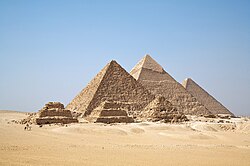


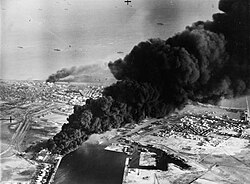


.svg)

 100,075,480 [5][6] (13th)
 31.8[8]

.svg)