



Created page with "{{short description|Japanese multinational electronics corporation founded by Kōnosuke Matsushita}} {{distinguish|Pensonic Group}} {{Use mdy dates|date=August 2021}} {{Infobo..." |
No edit summary |
||
| Line 1: | Line 1: | ||
{{ | {{Short description|Japanese multinational electronics corporation}} | ||
{{ | {{Distinguish|Pensonic Group|Pan Sonic}} | ||
{{Use mdy dates|date=August 2021}} | {{Use mdy dates|date=August 2021}} | ||
{{Infobox company | {{Infobox company | ||
| name = Panasonic Corporation | | name = Panasonic Holdings Corporation | ||
| native_name = | | native_name = パナソニック ホールディングス株式会社 | ||
| native_name_lang = ja | | native_name_lang = ja | ||
| romanized_name = Panasonikku kabushiki gaisha | | romanized_name = ''Panasonikku Hōrudingusu kabushiki gaisha'' | ||
| logo = Panasonic logo.svg | | logo = Panasonic logo.svg | ||
| image = PanasonicHeadquarters.JPG | | image = PanasonicHeadquarters.JPG | ||
| image_size = 250px | | image_size = 250px | ||
| Line 15: | Line 14: | ||
* Matsushita Electric Manufacturing Works (1918–1935) | * Matsushita Electric Manufacturing Works (1918–1935) | ||
* Matsushita Electric Industrial Co., Ltd. (1935–2008) | * Matsushita Electric Industrial Co., Ltd. (1935–2008) | ||
* "Old" Panasonic Corporation (2008–2022)<ref name="holdco">{{url|https://news.panasonic.com/global/press/data/2022/02/en220224-8/en220224-8.html}}</ref> | |||
}} | }} | ||
| type = Public company [[Kabushiki gaisha | | type = [[Public company|Public]] (''[[Kabushiki gaisha]]'') | ||
| traded_as = {{Unbulleted list|{{TYO|6752}}|{{NAG|6752}}|{{ | | traded_as = {{Unbulleted list|{{TYO|6752}}|{{NAG|6752}}|{{NYSE was|MC}} (former)|[[Nikkei 225]] component (TYO)|[[TOPIX]] Large70 component (TYO)}} | ||
| ISIN = JP3866800000 | | ISIN = JP3866800000 | ||
| industry = | | industry = [[Conglomerate (company)|Conglomerate]] | ||
| foundation = {{Start date and age|1918|03|13}}<br />[[Osaka]], Japan | | foundation = {{Start date and age|1918|03|13}}<br />[[Osaka]], Japan | ||
| founder = [[Kōnosuke Matsushita]] | | founder = [[Kōnosuke Matsushita]] | ||
| location = [[Kadoma, Osaka]], Japan<br />{{Coord|34.7438|135.5701|type:landamrk_region:JP|display=inline,title}} | | location = [[Kadoma, Osaka]], Japan<br />{{Coord|34.7438|135.5701|type:landamrk_region:JP-27|display=inline,title}} | ||
| area_served = Worldwide | | area_served = Worldwide (except Russia) | ||
| key_people = | | key_people = {{Unbulleted list|Kazuhiro Tsuga (Chairman)|Yuki Kusumi (President and CEO)}} | ||
| products = [[Electronics]] | | products = {{Unbulleted list|[[Artificial intelligence]]|[[Automation]]|[[Construction]]|[[Electrical equipment]]s|[[Electronics industry|Electronics]]|[[Entertainment]]|[[Fan (machine)|Fans]]|[[Home appliance]]s|[[Industrial equipment]]s|[[Internet of things|IoT]]|[[Lighting]]|[[Personal computer]]s|[[Real estate]]|[[Rechargeable battery|Rechargeable batteries]]|[[Robotics]]|[[Software]]}} | ||
| revenue = {{Decrease}} {{JPY| | | revenue = {{Decrease}} {{JPY|8.49 trillion|link=yes}} (2020)<ref group="*" name="report2">{{Cite press release |url=https://www.panasonic.com/global/corporate/ir/pdf/annual/2020/pana_ar2020e.pdf |title=Annual Report 2020 |publisher=Panasonic Corporation |date=September 11, 2020 |access-date=June 11, 2021}}</ref> | ||
| operating_income = {{Decrease}} {{JPY| | | operating_income = {{Decrease}} {{JPY|923.75 billion}} (2020)<ref group="*" name="report2" /> | ||
| net_income = {{Decrease}} {{JPY| | | net_income = {{Decrease}} {{JPY|200.71 billion}} (2020)<ref group="*" name="report2" /> | ||
| assets = {{Increase}} {{JPY| | | assets = {{Increase}} {{JPY|5.22 trillion}} (2020)<ref group="*" name="report2" /> | ||
| equity = {{Increase}} {{JPY| | | equity = {{Increase}} {{JPY|3.16 trillion}} (2020)<ref group="*" name="report2" /> | ||
| num_employees = | | num_employees = 279,385 (2022) | ||
| divisions = Panasonic Corporation of North America (US) | | divisions = Panasonic Corporation of North America (US) | ||
| subsid = {{Unbulleted list|[[ | | subsid = {{Unbulleted list | ||
| homepage = {{URL|https://www.panasonic.com/|panasonic.com}} | |Panasonic Corporation | ||
|''other select subsidiaries:'' | |||
|[[Anchor Electricals Pvt. Ltd.|Anchor Electricals]] | |||
|[[KDK|Panasonic Ecology Systems]] | |||
|[[Panasonic Electric Works]] | |||
|[[Panasonic Avionics Corporation]] | |||
|[[Sanyo|Sanyo Electric Co., Ltd.]] | |||
|[[Universal Lighting Technologies]] | |||
|[[Blue Yonder]]}} | |||
| homepage = {{plainlist| | |||
* {{Url|https://holdings.panasonic/|holdings.panasonic}} (Corporate) | |||
* {{URL|https://www.panasonic.com/|panasonic.com}} (consumer)}} | |||
| footnotes = <references group="*"/> | | footnotes = <references group="*"/> | ||
}} | }} | ||
{{Nihongo foot|'''Panasonic Corporation''',| | {{Nihongo foot|'''Panasonic Holdings Corporation''',|パナソニック ホールディングス株式会社|Panasonikku Hōrudingusu kabushiki gaisha|group=lower-alpha}} formerly {{Nihongo foot|'''Matsushita Electric Industrial Co., Ltd.'''|松下電器産業株式会社|Matsushita Denki Sangyō kabushiki gaisha|group=lower-alpha}} between 1935 and 2008 and the first incarnation of {{Nihongo foot|'''Panasonic Corporation'''|パナソニック株式会社|Panasonikku kabushiki gaisha|group=lower-alpha}} between 2008 and 2022,<ref name="holdco"/> is a major Japanese [[multinational corporation|multinational]] [[Conglomerate (company)|conglomerate corporation]], headquartered in [[Kadoma, Osaka|Kadoma]], [[Osaka Prefecture|Osaka]]. It was founded by [[Kōnosuke Matsushita]] in 1918 as a [[lightbulb socket]] manufacturer.<ref>"[http://panasonic.net/corporate/ Corporate Profile] {{Webarchive |url=https://web.archive.org/web/20110127104601/http://panasonic.net/corporate/ |date=27 January 2011 }}". Panasonic Corporation. Retrieved February 15, 2011. "Head Office Location 1006, Oaza Kadoma, Kadoma-shi, Osaka 571-8501, Japan" ([http://panasonic.net/corporate/pdf/map_hq_ol.pdf PDF Map] {{webarchive |url=https://web.archive.org/web/20110409130555/http://panasonic.net/corporate/pdf/map_hq_ol.pdf |date=April 9, 2011 }}, [http://panasonic.net/corporate/popup01.html GIF Map] {{Webarchive|url=https://web.archive.org/web/20120117164949/http://panasonic.net/corporate/popup01.html |date=January 17, 2012 }} ([http://panasonic.net/corporate/img/map_corporate_panasonic.gif Direct link] {{webarchive|url=https://web.archive.org/web/20101218212124/http://panasonic.net/corporate/img/map_corporate_panasonic.gif |date=December 18, 2010 }}))</ref> In addition to [[consumer electronics]], of which it was the world's largest maker in the late 20th century, Panasonic offers a wide range of products and services, including [[Rechargeable battery|rechargeable batteries]], automotive and avionic systems, industrial systems, as well as home renovation and construction.<ref>{{Cite web|date=November 19, 1991|title=MATSUSHITA PROFIT CUT|url=https://www.afr.com/companies/matsushita-profit-cut-19911119-k4nqu|access-date=July 25, 2020|website=Australian Financial Review|language=en}}</ref><ref>{{Cite web|last=Kunii|first=Irene M.|title=Matsushita: The Electronic Giant Wakes Up|url=https://www.bloomberg.com/news/articles/1998-07-12/matsushita-the-electronic-giant-wakes-up-intl-edition|access-date=July 25, 2020|website=www.bloomberg.com}}</ref><ref>{{cite news|title=Forbes Global 2000 Profile|work=Forbes|url=http://finapps.forbes.com/finapps/jsp/finance/compinfo/CIAtAGlance.jsp?sedol=6572707|url-status=dead|access-date=January 3, 2010|archive-url=https://web.archive.org/web/20100202064838/http://finapps.forbes.com/finapps/jsp/finance/compinfo/CIAtAGlance.jsp?sedol=6572707|archive-date=February 2, 2010}}</ref><ref>{{Cite news|author=Reuters Staff|date=July 8, 2016|title=Panasonic expects to double sales of electric car batteries in three years|language=en|work=Reuters|url=https://www.reuters.com/article/us-panasonic-tesla-idUSKCN0ZO0UF|access-date=April 5, 2021}}</ref><ref>{{Cite web|title=Panasonic Homes Co., Ltd. – Panasonic|url=https://homes.panasonic.com/english/|access-date=July 25, 2020|website=homes.panasonic.com}}</ref> | ||
Panasonic has a primary listing on the [[Tokyo Stock Exchange]] and is a constituent of the [[Nikkei 225]] and [[TOPIX]] indices. It has a secondary listing on the [[Nagoya Stock Exchange]]. | Panasonic has a primary listing on the [[Tokyo Stock Exchange]] and is a constituent of the [[Nikkei 225]] and [[TOPIX|TOPIX 100]] indices. It has a secondary listing on the [[Nagoya Stock Exchange]]. | ||
==Corporate name== | ==Corporate name== | ||
From 1935 to October 1, 2008, the company's corporate name was "Matsushita Electric Industrial".<ref>[http://panasonic.co.jp/corp/news/official.data/data.dir/jn081001-3/jn081001-3.html 松下電器産業株式会社が「パナソニック株式会社」に社名変更], Panasonic Corporation. October 1, 2008. Retrieved October 3, 2008.{{in lang|ja}}.</ref><ref>{{cite web|url= http://panasonic.co.jp/corp/news/official.data/data.dir/en081001-4/en081001-4.html |title=Matsushita Electric Becomes Panasonic Corporation|publisher=Panasonic Corporation|date=October 1, 2008|access-date=October 3, 2008}}</ref> On January 10, 2008, the company announced that it would change its name to "Panasonic Corporation", in effect on October 1, 2008, <!--Matsushita was rather a company name than a brand name: "the Matsushita, "--> to conform with its global brand name "Panasonic".<ref name=panasonic1>{{cite web|url=http://panasonic.co.jp/corp/news/official.data/data.dir/en080110-6/en080110-6.html|title=Matsushita Electric to Change Name to Panasonic Corporation|publisher= Panasonic Corporation|date=October 1, 2008|access-date=October 3, 2008}}</ref> The name change was approved at the shareholders' meeting on June 26, 2008, after consultation with the Matsushita family.<ref>{{cite web|url=http://www.iht.com/articles/ap/2008/06/26/business/AS-FIN-COM-Japan-Panasonic.php|title=Shareholders of Matsushita approve company name change to Panasonic|work=International Herald Tribune|date=June 26, 2008|access-date=October 3, 2008}}</ref><ref>https://reviewsca.com/best-ladies-electric-shaver/</ref><!--Some IPA letters can be properly shown ONLY UNDER peculiar PC circumstances: "The common English pronunciation is for Matsushita /ˌmɑtsuːˈʃiːtə/, while the proper Japanese pronunciation for the company is {{IPA|/matsɯɕ(i)ta/}}."--> | From 1935 to October 1, 2008, the company's corporate name was "Matsushita Electric Industrial Co." (MEI).<ref>[http://panasonic.co.jp/corp/news/official.data/data.dir/jn081001-3/jn081001-3.html 松下電器産業株式会社が「パナソニック株式会社」に社名変更], Panasonic Corporation. October 1, 2008. Retrieved October 3, 2008.{{in lang|ja}}.</ref><ref>{{cite web|url= http://panasonic.co.jp/corp/news/official.data/data.dir/en081001-4/en081001-4.html |title=Matsushita Electric Becomes Panasonic Corporation|publisher=Panasonic Corporation|date=October 1, 2008|access-date=October 3, 2008}}</ref> On January 10, 2008, the company announced that it would change its name to "Panasonic Corporation", in effect on October 1, 2008, <!--Matsushita was rather a company name than a brand name: "the Matsushita, "--> to conform with its global brand name "Panasonic".<ref name=panasonic1>{{cite web|url=http://panasonic.co.jp/corp/news/official.data/data.dir/en080110-6/en080110-6.html|title=Matsushita Electric to Change Name to Panasonic Corporation|publisher= Panasonic Corporation|date=October 1, 2008|access-date=October 3, 2008}}</ref> The name change was approved at the shareholders' meeting on June 26, 2008, after consultation with the Matsushita family.<ref>{{cite web|url=http://www.iht.com/articles/ap/2008/06/26/business/AS-FIN-COM-Japan-Panasonic.php|title=Shareholders of Matsushita approve company name change to Panasonic|work=International Herald Tribune|date=June 26, 2008|access-date=October 3, 2008}}</ref><ref>{{Cite web|url=https://reviewsca.com/best-ladies-electric-shaver/|title = Top 7 Best Ladies Electric Shaver Reviews of 2022|date = December 3, 2020}}</ref><!--Some IPA letters can be properly shown ONLY UNDER peculiar PC circumstances: "The common English pronunciation is for Matsushita /ˌmɑtsuːˈʃiːtə/, while the proper Japanese pronunciation for the company is {{IPA|/matsɯɕ(i)ta/}}."--> | ||
In 2022, Panasonic announced a reorganization plan which split the company into Panasonic Holdings Corporation (the former Panasonic Corporation) and conversion of its divisions into subsidiaries; the Lifestyle Updates Business Division being the division that took the Panasonic Corporation name after the reorganization. The reorganization took effect in 1 April 2022.<ref name="holdco"/> | |||
==Brand names== | ==Brand names== | ||
| Line 49: | Line 62: | ||
Panasonic Corporation sells virtually all of its products and services worldwide under the '''[[Panasonic (brand)|Panasonic]]''' brand, having phased out the [[Sanyo]] brand in the first quarter of 2012.<ref>[http://www.avinteractive.com/news/36654/sanyo-name-to-cease-by-april-1-2012-panasonic-tells-parters Sanyo name to cease by April 1, 2012, Panasonic tells partners | AV Interactive | Pro AV news, analysis and comment from Europe's leading Audio Visual title | AV Magazine]. AV Interactive (June 6, 2013). Retrieved July 26, 2013.</ref> The company has sold products under a number of other brand names during its history. | Panasonic Corporation sells virtually all of its products and services worldwide under the '''[[Panasonic (brand)|Panasonic]]''' brand, having phased out the [[Sanyo]] brand in the first quarter of 2012.<ref>[http://www.avinteractive.com/news/36654/sanyo-name-to-cease-by-april-1-2012-panasonic-tells-parters Sanyo name to cease by April 1, 2012, Panasonic tells partners | AV Interactive | Pro AV news, analysis and comment from Europe's leading Audio Visual title | AV Magazine]. AV Interactive (June 6, 2013). Retrieved July 26, 2013.</ref> The company has sold products under a number of other brand names during its history. | ||
In 1927, Matsushita adopted the brand name {{Nihongo foot|'''"[[National (brand)|National]]"'''|ナショナル|Nashonaru|group=lower-alpha}} for a new lamp product.<ref>{{cite web|url=http://panasonic.net/history/corporate/chronicle/1927-01.html|title=Panasonic History: 1927 – Square bicycle lamp developed and marketed|publisher=Panasonic Corporation|access-date=October 2, 2008|url-status=dead|archive-url=https://web.archive.org/web/20081006074416/http://panasonic.net/history/corporate/chronicle/1927-01.html|archive-date=October 6, 2008}}</ref> In 1955, the company began branding audio speakers and lamps for markets outside Japan as "''PanaSonic''", which was the first time it used the "Panasonic" brand name.<ref name="[email protected]"/> The company began to use the brand name {{Nihongo foot|'''"[[Technics (brand)|Technics]]"'''|テクニクス|Tekunikusu|group=lower-alpha}} in 1965 for audio equipment.<ref name="[email protected]"/> The use of multiple brands lasted for some decades.<ref name="[email protected]">{{cite web|url=http://www.panasonic.net/brand/history/|title=Brand History|publisher=Panasonic Corporation|access-date=October 2, 2008|url-status=dead|archive-url=https://web.archive.org/web/20081108061747/http://panasonic.net/brand/history/|archive-date=November 8, 2008}}</ref> While | In 1927, Matsushita adopted the brand name {{Nihongo foot|'''"[[National (brand)|National]]"'''|ナショナル|Nashonaru|group=lower-alpha}} for a new lamp product.<ref>{{cite web|url=http://panasonic.net/history/corporate/chronicle/1927-01.html|title=Panasonic History: 1927 – Square bicycle lamp developed and marketed|publisher=Panasonic Corporation|access-date=October 2, 2008|url-status=dead|archive-url=https://web.archive.org/web/20081006074416/http://panasonic.net/history/corporate/chronicle/1927-01.html|archive-date=October 6, 2008}}</ref> In 1955, the company began branding audio speakers and lamps for markets outside Japan as "''PanaSonic''", which was the first time it used the "Panasonic" brand name.<ref name="[email protected]"/> The company began to use the brand name {{Nihongo foot|'''"[[Technics (brand)|Technics]]"'''|テクニクス|Tekunikusu|group=lower-alpha}} in 1965 for audio equipment.<ref name="[email protected]"/> The use of multiple brands lasted for some decades.<ref name="[email protected]">{{cite web|url=http://www.panasonic.net/brand/history/|title=Brand History|publisher=Panasonic Corporation|access-date=October 2, 2008|url-status=dead|archive-url=https://web.archive.org/web/20081108061747/http://panasonic.net/brand/history/|archive-date=November 8, 2008}}</ref> While "National" had been the premier brand on most Matsushita products, including audio and video, "National" and "Panasonic" were combined in 1988 as '''National Panasonic''' after the worldwide success of the [[Panasonic (brand)|Panasonic]] name. | ||
In May 2003, the company announced that "Panasonic" would become its global brand, and launched the global tagline "Panasonic ideas for life."<ref name="[email protected]{{in lang|ja}}"/> The company began to unify its brands to "Panasonic" and, by March 2004 replaced "National" for products and outdoor signboards, except for those in Japan.<ref name="[email protected]{{in lang|ja}}">{{cite web|url= http://panasonic.co.jp/history/chronicle/2003-02.html|title=社史:2003年(平成15年) グローバルブランドを「Panasonic」に統一|publisher=Panasonic Corporation|access-date=October 2, 2008|language=ja}}</ref> In January 2008, the company announced that it would phase out the brand "National" in Japan, replacing it with the global brand "Panasonic" by March 2010.<ref name=panasonic1/> In September 2013, the company announced a revision of the decade-old tagline to better illustrate the company vision: "A Better Life, A Better World."<ref name="global_slogan_2013revision">{{cite web|url=http://panasonic.co.jp/corp/news/official.data/data.dir/2013/09/en130904-2/en130904-2.html|title=Panasonic Establishes "A Better Life, A Better World" as its New Brand Slogan|publisher=Panasonic Corporation|access-date=November 27, 2013}}</ref> | In May 2003, the company announced that "Panasonic" would become its global brand, and launched the global tagline "Panasonic ideas for life."<ref name="[email protected]{{in lang|ja}}"/> The company began to unify its brands to "Panasonic" and, by March 2004, replaced "National" for products and outdoor signboards, except for those in Japan.<ref name="[email protected]{{in lang|ja}}">{{cite web|url= http://panasonic.co.jp/history/chronicle/2003-02.html|title=社史:2003年(平成15年) グローバルブランドを「Panasonic」に統一|publisher=Panasonic Corporation|access-date=October 2, 2008|language=ja}}</ref> In January 2008, the company announced that it would phase out the brand "National" in Japan, replacing it with the global brand "Panasonic" by March 2010.<ref name=panasonic1/> In September 2013, the company announced a revision of the decade-old tagline to better illustrate the company vision: "A Better Life, A Better World."<ref name="global_slogan_2013revision">{{cite web|url=http://panasonic.co.jp/corp/news/official.data/data.dir/2013/09/en130904-2/en130904-2.html|title=Panasonic Establishes "A Better Life, A Better World" as its New Brand Slogan|publisher=Panasonic Corporation|access-date=November 27, 2013}}</ref> | ||
[[Rasonic]] is a brand name of Shun Hing Electric Works and Engineering Co. Ltd (信興電工工程有限公司), a company that has imported Panasonic and National branded product since Matsushita Electric Industrial era, and has also sold MEI/Panasonic products under the original brand names. In June 1994, Panasonic Shun Hing Industrial Devices Sales (Hong Kong) Co., Ltd. (松下信興機電(香港)有限公司) and Panasonic SH Industrial Sales (Shenzhen) Co., Ltd. (松下電器機電(深圳)有限公司) were established by joint venture between Matsushita Electric Industrial and Shun Hing Group respectively,<ref>{{Cite web|url=http://industrial.panasonic.com/ea/i_e/29085/psi_e/psi_e.html|archive-url=https://web.archive.org/web/20120517013631/http://industrial.panasonic.com/ea/i_e/29085/psi_e/psi_e.html|url-status=dead|title=PSIDS (China (Guangdong), Hong Kong, Macau)|archive-date=May 17, 2012}}</ref><ref>{{cite web|url=http://industrial.panasonic.com/ea/i/29085/psi/psi.html|title=PSIDS(中国(广东),香港,澳门)|access-date=December 30, 2016|url-status=dead|archive-url=https://web.archive.org/web/20140927100453/http://industrial.panasonic.com/ea/i/29085/psi/psi.html|archive-date=September 27, 2014}}</ref> making Rasonic a product brand for MEI and subsequent Panasonic Corporation. | [[Rasonic]] is a brand name of Shun Hing Electric Works and Engineering Co. Ltd (信興電工工程有限公司), a company that has imported Panasonic and National branded product since Matsushita Electric Industrial era, and has also sold MEI/Panasonic products under the original brand names. In June 1994, Panasonic Shun Hing Industrial Devices Sales (Hong Kong) Co., Ltd. (松下信興機電(香港)有限公司) and Panasonic SH Industrial Sales (Shenzhen) Co., Ltd. (松下電器機電(深圳)有限公司) were established by joint venture between Matsushita Electric Industrial and Shun Hing Group respectively,<ref>{{Cite web|url=http://industrial.panasonic.com/ea/i_e/29085/psi_e/psi_e.html|archive-url=https://web.archive.org/web/20120517013631/http://industrial.panasonic.com/ea/i_e/29085/psi_e/psi_e.html|url-status=dead|title=PSIDS (China (Guangdong), Hong Kong, Macau)|archive-date=May 17, 2012}}</ref><ref>{{cite web|url=http://industrial.panasonic.com/ea/i/29085/psi/psi.html|title=PSIDS(中国(广东),香港,澳门)|access-date=December 30, 2016|url-status=dead|archive-url=https://web.archive.org/web/20140927100453/http://industrial.panasonic.com/ea/i/29085/psi/psi.html|archive-date=September 27, 2014}}</ref> making Rasonic a product brand for MEI and subsequent Panasonic Corporation. | ||
| Line 60: | Line 73: | ||
===20th century=== | ===20th century=== | ||
Panasonic, then Matsushita Electric, was founded in 1918 by [[Kōnosuke Matsushita]] as a vendor of duplex lamp sockets.<ref>{{cite magazine|url=http://investing.businessweek.com/research/stocks/snapshot/snapshot.asp?ticker=PCRFF:US|archive-url=https://archive.today/20120711014901/http://investing.businessweek.com/research/stocks/snapshot/snapshot.asp?ticker=PCRFF:US|url-status=dead|archive-date=July 11, 2012|title=Panasonic Corp (PCRFF:OTC US)|magazine=[[Bloomberg Businessweek]]|access-date=March 14, 2012}}</ref> In the 1920s Matsushita began regularly launching products. In 1927, he produced a line of bicycle lamps that were the first to be marketed with the ''[[National (brand)|National]]'' brand name.<ref>{{Cite book|url=https://books.google.com/books?id=aoF-CwAAQBAJ&q=1927+panasonic+bicycle+lamps+named+National&pg=PA175|title=Multinational Management: A Casebook on Asia's Global Market Leaders|last=Segers|first=Rien|date=January 29, 2016|publisher=Springer|isbn=9783319230122|language=en}}</ref> During [[World War II]] the company operated factories in Japan and other parts of Asia which produced electrical components and appliances such as [[Incandescent light bulb|light fixtures]], [[Electric motor|motor]]s, [[Ironing|electric irons]], wireless equipment and its first [[vacuum tube]]s.<ref>{{cite web|url=http://panasonic.net/history/museum/product/product02.html|title=Products on Display|access-date=July 16, 2015|url-status=dead|archive-url=https://web.archive.org/web/20150205044745/http://panasonic.net/history/museum/product/product02.html|archive-date=February 5, 2015}}</ref> | Panasonic, then Matsushita Electric, was founded in 1918 by [[Kōnosuke Matsushita]] as a vendor of duplex lamp sockets.<ref>{{cite magazine|url=http://investing.businessweek.com/research/stocks/snapshot/snapshot.asp?ticker=PCRFF:US|archive-url=https://archive.today/20120711014901/http://investing.businessweek.com/research/stocks/snapshot/snapshot.asp?ticker=PCRFF:US|url-status=dead|archive-date=July 11, 2012|title=Panasonic Corp (PCRFF:OTC US)|magazine=[[Bloomberg Businessweek]]|access-date=March 14, 2012}}</ref> In the 1920s, Matsushita began regularly launching products. In 1927, he produced a line of bicycle lamps that were the first to be marketed with the ''[[National (brand)|National]]'' brand name.<ref>{{Cite book|url=https://books.google.com/books?id=aoF-CwAAQBAJ&q=1927+panasonic+bicycle+lamps+named+National&pg=PA175|title=Multinational Management: A Casebook on Asia's Global Market Leaders|last=Segers|first=Rien|date=January 29, 2016|publisher=Springer|isbn=9783319230122|language=en}}</ref> During [[World War II]], the company operated factories in Japan and other parts of Asia which produced electrical components and appliances such as [[Incandescent light bulb|light fixtures]], [[Electric motor|motor]]s, [[Ironing|electric irons]], wireless equipment and its first [[vacuum tube]]s.<ref>{{cite web|url=http://panasonic.net/history/museum/product/product02.html|title=Products on Display|access-date=July 16, 2015|url-status=dead|archive-url=https://web.archive.org/web/20150205044745/http://panasonic.net/history/museum/product/product02.html|archive-date=February 5, 2015}}</ref> | ||
After the war, the Matsushita group, largely having been split into MEI and [[Panasonic Electric Works|MEW]] by the dissolution imposed by the occupation force, imperfectly regrouped as a ''[[Keiretsu]]'' and began to supply the post-war boom in Japan with radios and appliances, as well as [[bicycles]]. Matsushita's brother-in-law, [[Toshio Iue]], founded [[Sanyo]] as a subcontractor for components after World War II. Sanyo grew to become a competitor to Matsushita, but was later acquired by Panasonic in December 2009.<ref>Eric Loveday, Green Car Reports. "[http://www.greencarreports.com/news/1039758_panasonic-approved-for-4-6-billion-to-acquire-sanyo-to-become-worlds-largest-li-ion-battery-maker Panasonic Approved For $4.6 Billion To Acquire Sanyo, To Become World's Largest Li-Ion Battery Maker]." December 8, 2009. Retrieved March 10, 2017.</ref> | After the war, the Matsushita group, largely having been split into MEI and [[Panasonic Electric Works|MEW]] by the dissolution imposed by the occupation force, imperfectly regrouped as a ''[[Keiretsu]]'' and began to supply the post-war boom in Japan with radios and appliances, as well as [[bicycles]]. Matsushita's brother-in-law, [[Toshio Iue]], founded [[Sanyo]] as a subcontractor for components after World War II. Sanyo grew to become a competitor to Matsushita, but was later acquired by Panasonic in December 2009.<ref>Eric Loveday, Green Car Reports. "[http://www.greencarreports.com/news/1039758_panasonic-approved-for-4-6-billion-to-acquire-sanyo-to-become-worlds-largest-li-ion-battery-maker Panasonic Approved For $4.6 Billion To Acquire Sanyo, To Become World's Largest Li-Ion Battery Maker]." December 8, 2009. Retrieved March 10, 2017.</ref> | ||
| Line 66: | Line 79: | ||
In 1961, Matsushita traveled to the United States and met American dealers. The company began producing television sets for the U.S. market under the ''Panasonic'' brand name, and expanded the use of the brand to Europe in 1979.<ref name="global">[http://panasonic.co.jp/corp/news/official.data/data.dir/en030422-4/en030422-4.html Panasonic expands use of Panasonic brand name globally] in April 2003. /* Introduction */ Shahid Kapoor was the brand ambassador for Panasonic India from 2005 to 2010. Now Ranbir Kapoor has taken over along with Katrina Kaif {{webarchive |url=https://web.archive.org/web/20080622183647/http://panasonic.co.jp/corp/news/official.data/data.dir/en030422-4/en030422-4.html |date=June 22, 2008 }}</ref> | In 1961, Matsushita traveled to the United States and met American dealers. The company began producing television sets for the U.S. market under the ''Panasonic'' brand name, and expanded the use of the brand to Europe in 1979.<ref name="global">[http://panasonic.co.jp/corp/news/official.data/data.dir/en030422-4/en030422-4.html Panasonic expands use of Panasonic brand name globally] in April 2003. /* Introduction */ Shahid Kapoor was the brand ambassador for Panasonic India from 2005 to 2010. Now Ranbir Kapoor has taken over along with Katrina Kaif {{webarchive |url=https://web.archive.org/web/20080622183647/http://panasonic.co.jp/corp/news/official.data/data.dir/en030422-4/en030422-4.html |date=June 22, 2008 }}</ref> | ||
The company used the National brand outside North America from the 1950s to the 1970s (the trademark could not be used in the United States because it was already in use).<ref name=":0">{{Cite web|url=https://www.thestar.com.my/tech/tech-news/2018/04/02/the-man-behind-panasonic/| | The company used the National brand outside North America from the 1950s to the 1970s (the trademark could not be used in the United States because it was already in use).<ref name=":0">{{Cite web |last=Suthakar |first=K. |title=The man behind Panasonic – Tech News {{!}} The Star Online |url=https://www.thestar.com.my/tech/tech-news/2018/04/02/the-man-behind-panasonic/ |archive-url=https://web.archive.org/web/20190105043010/https://www.thestar.com.my/tech/tech-news/2018/04/02/the-man-behind-panasonic/ |archive-date=January 5, 2019 |access-date=January 4, 2019 |website=www.thestar.com.my}}</ref> The inability to use the National brand name led to the creation of the Panasonic brand in the United States.<ref name=":0" /> Over the next several decades, Matsushita released additional products, including black and white TVs (1952), electrical blenders, fridges (1953), [[rice cooker]]s (1959), color TVs and [[microwave oven]]s (1966).<ref name=":0" /> | ||
The company debuted a high-fidelity audio speaker in Japan in 1965 with the brand ''Technics''. This line of high quality stereo components became a worldwide favorite, the most famous products being its [[turntables]], such as the [[SL-1200]] record player, known for its high-performance, precision and durability. Throughout the 1970s and early 1980s, Matsushita continued to produce high-quality specialized electronics for niche markets, such as shortwave radios, and developed its successful line of stereo receivers, CD players and other components.{{Citation needed|date=January 2019}} | The company debuted a high-fidelity audio speaker in Japan in 1965 with the brand ''Technics''. This line of high quality stereo components became a worldwide favorite, the most famous products being its [[turntables]], such as the [[SL-1200]] record player, known for its high-performance, precision and durability. Throughout the 1970s and early 1980s, Matsushita continued to produce high-quality specialized electronics for niche markets, such as shortwave radios, and developed its successful line of stereo receivers, CD players and other components.{{Citation needed|date=January 2019}} | ||
| Line 80: | Line 93: | ||
In 1984, Matsushita established the ''Panasoft'' software label, which published software for [[MSX]] computers from 1984 to 1989. The company also manufactured MSX computers of their own, such as Panasonic FS-A1.<ref>{{Cite web|url=https://www.msx.org/wiki/Panasonic_FS-A1|title=Panasonic FS-A1 – MSX Wiki}}</ref> | In 1984, Matsushita established the ''Panasoft'' software label, which published software for [[MSX]] computers from 1984 to 1989. The company also manufactured MSX computers of their own, such as Panasonic FS-A1.<ref>{{Cite web|url=https://www.msx.org/wiki/Panasonic_FS-A1|title=Panasonic FS-A1 – MSX Wiki}}</ref> | ||
In November 1990, Matsushita agreed to acquire an American media company [[MCA Inc.]], the predecessor of both [[Universal Music Group]] and [[Universal Pictures]], for US$6.59 billion. The acquisition was preceded by the takeover of [[Columbia Pictures]] by [[Sony]], the arch rival of Matsushita.<ref>{{cite news|url=http://articles.latimes.com/1990-11-26/news/mn-4086_1_mca-shareholders|title=It's a Wrap: MCA Sold : Matsushita to Pay About $6.6 Billion|access-date=April 14, 2013|work=Los Angeles Times|date=November 26, 1990}}</ref><ref>{{cite news|url=https://www.nytimes.com/1990/12/01/business/who-gets-what-from-mca-deal.html|title=Who Gets What From MCA Deal|access-date=April 14, 2013|work=The New York Times|date=December 1, 1990}}</ref> At the time, Matsushita had dominated the home video market with the company's leading position in the electronics market. It had gotten strengthened by [[VHS]], the de facto standard of consumer [[videotape]] that Matsushita and [[JVC]] co-introduced. Inspired by Sony's bold quest for Hollywood, Matsushita believed it could become a leader in the film industry as well. However, Matsushita subsequently sold 80% of MCA to [[Seagram|Seagram Company]] for US$7 billion in April 1995, demoralized by the high volatility of the film industry.<ref>{{cite news|url=https://www.nytimes.com/1995/04/07/business/seagram-heads-for-hollywood-seagram-will-buy-80-of-big-studio-from-matsushita.html|title=Seagram heads for Hollywood; Seagram will buy 80% of big studio from Matsushita|access-date=April 14, 2013|work=The New York Times|date=April 7, 1995}}</ref><ref>{{cite news|url=https://www.nytimes.com/1996/08/28/business/matsushita-freed-of-mca-reports-a-profit.html|title=Matsushita, Freed of MCA, Reports a Profit|access-date=April 14, 2013|work=The New York Times|date=August 28, 1996}}</ref> | In November 1990, Matsushita agreed to acquire an American media company, [[MCA Inc.]], the predecessor of both [[Universal Music Group]] and [[Universal Pictures]], for US$6.59 billion. The acquisition was preceded by the takeover of [[Columbia Pictures]] by [[Sony]], the arch rival of Matsushita.<ref>{{cite news|url=http://articles.latimes.com/1990-11-26/news/mn-4086_1_mca-shareholders|title=It's a Wrap: MCA Sold : Matsushita to Pay About $6.6 Billion|access-date=April 14, 2013|work=Los Angeles Times|date=November 26, 1990}}</ref><ref>{{cite news|url=https://www.nytimes.com/1990/12/01/business/who-gets-what-from-mca-deal.html|title=Who Gets What From MCA Deal|access-date=April 14, 2013|work=The New York Times|date=December 1, 1990}}</ref> At the time, Matsushita had dominated the home video market with the company's leading position in the electronics market. It had gotten strengthened by [[VHS]], the de-facto standard of consumer [[videotape]] that Matsushita and [[JVC]] co-introduced. Inspired by Sony's bold quest for Hollywood, Matsushita believed it could become a leader in the film industry as well. However, Matsushita subsequently sold 80% of MCA to [[Seagram|Seagram Company]] for US$7 billion in April 1995, demoralized by the high volatility of the film industry.<ref>{{cite news|url=https://www.nytimes.com/1995/04/07/business/seagram-heads-for-hollywood-seagram-will-buy-80-of-big-studio-from-matsushita.html|title=Seagram heads for Hollywood; Seagram will buy 80% of big studio from Matsushita|access-date=April 14, 2013|work=The New York Times|date=April 7, 1995}}</ref><ref>{{cite news|url=https://www.nytimes.com/1996/08/28/business/matsushita-freed-of-mca-reports-a-profit.html|title=Matsushita, Freed of MCA, Reports a Profit|access-date=April 14, 2013|work=The New York Times|date=August 28, 1996}}</ref> | ||
In 1992, Matsushita made Panasonic FS-A1GT, the last model of the [[MSX turbo R]] computer.<ref>{{Cite web|url=https://www.msx.org/wiki/Panasonic_FS-A1GT|title=Panasonic FS-A1GT – MSX Wiki}}</ref> | In 1992, Matsushita made the Panasonic FS-A1GT, the last model of the [[MSX turbo R]] computer.<ref>{{Cite web|url=https://www.msx.org/wiki/Panasonic_FS-A1GT|title=Panasonic FS-A1GT – MSX Wiki}}</ref> | ||
In 1998, Matsushita sold Anam National to Anam Electronics. | In 1998, Matsushita sold Anam National to Anam Electronics. | ||
| Line 89: | Line 102: | ||
On May 2, 2002, Panasonic Canada marked its 35th anniversary in that country by giving $5 million to help build a "music city" on Toronto's waterfront.<ref>{{Cite news|last=Adams |first=James |date=May 2, 2002 |title=Panasonic donates $5-million to music city |url=https://www.theglobeandmail.com/news/national/panasonic-donates-5-million-to-music-city/article4134519/ |website=The Globe and Mail |archive-url=https://web.archive.org/web/20200417065437/https://www.theglobeandmail.com/news/national/panasonic-donates-5-million-to-music-city/article4134519/ |archive-date=April 17, 2020 |url-status=live}}</ref> | On May 2, 2002, Panasonic Canada marked its 35th anniversary in that country by giving $5 million to help build a "music city" on Toronto's waterfront.<ref>{{Cite news|last=Adams |first=James |date=May 2, 2002 |title=Panasonic donates $5-million to music city |url=https://www.theglobeandmail.com/news/national/panasonic-donates-5-million-to-music-city/article4134519/ |website=The Globe and Mail |archive-url=https://web.archive.org/web/20200417065437/https://www.theglobeandmail.com/news/national/panasonic-donates-5-million-to-music-city/article4134519/ |archive-date=April 17, 2020 |url-status=live}}</ref> | ||
In 2005, Matsushita Toshiba Picture Display Co. Ltd. (a joint venture between Matsushita and [[Toshiba]] created in 2002<ref>{{Cite web|url=https://www.theengineer.co.uk/consolidating-crts/|title=Consolidating CRTs|first=System|last=Administrator|date=October 13, 2002}}</ref>) stopped production of | In 2005, Matsushita Toshiba Picture Display Co. Ltd. (a joint venture between Matsushita and [[Toshiba]] created in 2002<ref>{{Cite web|url=https://www.theengineer.co.uk/consolidating-crts/|title=Consolidating CRTs|first=System|last=Administrator|date=October 13, 2002}}</ref>) stopped production of [[Cathode-ray tube|CRT]]s at its factory in Horseheads, New York.<ref>{{Cite web|url=https://amp.smh.com.au/technology/lg-samsung-try-to-save-the-crt-20050819-gdlwh2.html|title = LG, Samsung try to save the CRT}}</ref> A year later, in 2006, it stopped production at its Malaysian factory, following heavy losses.<ref>{{Cite web|url=https://www.networkworld.com/article/2305303/panasonic-toshiba-venture-to-shut-malaysia-crt-plant.html|title=Panasonic-Toshiba venture to shut Malaysia CRT plant|first=Martyn|last=Williams|date=July 27, 2006|website=Network World}}</ref><ref>{{Cite web|url=https://www.cio.com/article/2445309/panasonic-toshiba-venture-to-shutter-malaysia-crt-plant.html|title=Panasonic-Toshiba Venture to Shutter Malaysia CRT Plant|first=C. I. O.|last=Staff|date=July 27, 2006|website=CIO}}</ref><ref>{{Cite web|url=https://www.itworld.com/article/2811895/hitachi--matsushita--toshiba-cement-lcd-venture-plan.amp.html|title=Hitachi, Matsushita, Toshiba cement LCD venture plan | ITworld|website=www.itworld.com}}</ref> In 2007, it bought the venture from Toshiba, eventually ending all production.<ref>{{Cite news|url=https://www.reuters.com/article/matsushita-toshiba-display-idUKT17170920070330|title=UPDATE 1-Matsushita buys stake in CRT venture from Toshiba|newspaper=Reuters|date=March 30, 2007|via=mobile.reuters.com}}</ref> | ||
On January 19, 2006, Matsushita announced that it would stop producing analog televisions (then 30% of its total TV business) from the next month, to concentrate on digital televisions.<ref>{{cite web|last=Perton|first=Marc|url=https://www.engadget.com/2006/01/19/panasonic-exiting-analog-tv-business/|title=Panasonic exiting analog TV business |work=Engadget|date=January 19, 2006|access-date=July 1, 2009}}</ref> | On January 19, 2006, Matsushita announced that it would stop producing analog televisions (then 30% of its total TV business) from the next month, to concentrate on digital televisions.<ref>{{cite web|last=Perton|first=Marc|url=https://www.engadget.com/2006/01/19/panasonic-exiting-analog-tv-business/|title=Panasonic exiting analog TV business |work=Engadget|date=January 19, 2006|access-date=July 1, 2009}}</ref> | ||
| Line 95: | Line 108: | ||
In 2008, all models of electric shavers from the Panasonic factory were called Panasonic shavers, and they dropped Matsushita and National from their name, regardless of worldwide or Japanese markets. | In 2008, all models of electric shavers from the Panasonic factory were called Panasonic shavers, and they dropped Matsushita and National from their name, regardless of worldwide or Japanese markets. | ||
In late 2006 Matsushita began talks with Kenwood Corporation to sell and spin off JVC.<ref>{{ | In late 2006, Matsushita began talks with Kenwood Corporation to sell and spin off JVC.<ref>{{cite web |last1=Eki |first1=Yoshinori |last2=Ujikane |first2=Keiko |title=Matsushita Says No Decision on Sale of Victor Shares to Kenwood |url=https://www.bloomberg.com/apps/news?pid=20601101&refer=japan&sid=a.FYoVTCPXMY |publisher=Bloomberg |archive-url=https://web.archive.org/web/20070930075953/https://www.bloomberg.com/apps/news?pid=20601101&refer=japan&sid=a.FYoVTCPXMY |archive-date=2007-09-30 |date=December 23, 2007 |url-status=dead}}</ref> As of October 1, 2008, JVC and Kenwood merged to create the JVCKenwood Corporation.<ref>{{cite web|title=Notice of the Establishment of JVC KENWOOD Holdings, Inc.|url=http://www.jvckenwood.com/en/press/2008/10/press_081001.pdf|website=www.jvckenwood.com|access-date=August 4, 2015}}</ref> | ||
On November 3, 2008, Panasonic and [[Sanyo]] announced that they were holding merger talks, which eventually resulted in the acquisition of Sanyo by Panasonic.<ref>{{cite news|url=http://news.bbc.co.uk/1/hi/business/7714994.stm|title=Panasonic aims to take over Sanyo|work=BBC News|date=November 7, 2008|access-date=December 16, 2012}}</ref><ref>{{cite news|url=http://news.bbc.co.uk/1/hi/business/7791292.stm|title=Panasonic set to buy rival Sanyo|access-date=December 16, 2012|work=BBC News|date=December 19, 2008}}</ref> The merger was completed in December 2009, and resulted in a corporation with revenues of over ¥11.2 trillion (around $110 billion).<ref>{{cite web|url=https://techcrunch.com/2009/12/22/panasonic-officially-owns-sanyo-and-boasts-the-worlds-largest-plasma-panel-plant-now/|title=Panasonic officially owns Sanyo and boasts the world's largest plasma panel plant now|publisher=[[Tech Crunch]]|date=December 22, 2009}}</ref> | On November 3, 2008, Panasonic and [[Sanyo]] announced that they were holding merger talks, which eventually resulted in the acquisition of Sanyo by Panasonic.<ref>{{cite news|url=http://news.bbc.co.uk/1/hi/business/7714994.stm|title=Panasonic aims to take over Sanyo|work=BBC News|date=November 7, 2008|access-date=December 16, 2012}}</ref><ref>{{cite news|url=http://news.bbc.co.uk/1/hi/business/7791292.stm|title=Panasonic set to buy rival Sanyo|access-date=December 16, 2012|work=BBC News|date=December 19, 2008}}</ref> The merger was completed in December 2009, and resulted in a corporation with revenues of over ¥11.2 trillion (around $110 billion).<ref>{{cite web|url=https://techcrunch.com/2009/12/22/panasonic-officially-owns-sanyo-and-boasts-the-worlds-largest-plasma-panel-plant-now/|title=Panasonic officially owns Sanyo and boasts the world's largest plasma panel plant now|publisher=[[Tech Crunch]]|date=December 22, 2009}}</ref> | ||
| Line 111: | Line 124: | ||
In April 2012, Panasonic spun off Sanyo DI Solutions, a digital camera [[OEM]].<ref>{{Cite web|url=https://www.engadget.com/2012-04-25-panasonic-spins-off-sanyo-di-solutions.html|title=Panasonic spins off Sanyo DI Solutions, keeps the digital camera OEMs happy|website=Engadget}}</ref> | In April 2012, Panasonic spun off Sanyo DI Solutions, a digital camera [[OEM]].<ref>{{Cite web|url=https://www.engadget.com/2012-04-25-panasonic-spins-off-sanyo-di-solutions.html|title=Panasonic spins off Sanyo DI Solutions, keeps the digital camera OEMs happy|website=Engadget}}</ref> | ||
In line with company prediction of a net loss of 765 billion yen, on November 5, 2012, the shares fell to the lowest level since February 1975 to 388 yen. In 2012, the shares plunged 41 percent.<ref>{{cite web|url=https://www.bloomberg.com/news/2012-11-05/panasonic-falls-to-37-year-low-on-wider-loss-target-tokyo-mover.html|title=Panasonic Falls to 37-Year Low on Wider Loss Target|date=November 5, 2012}}</ref> On November 14, 2012, Panasonic said it will cut 10,000 jobs and make further divestments.<ref>{{cite news|url=https://www.reuters.com/article/us-panasonic-cfo-idUSBRE8AD0D120121114|title=Panasonic prepares for 'garage sale', to axe 10,000 jobs|work= Reuters |access-date=November 14, 2012}}</ref> | In line with company prediction of a net loss of 765 billion yen, on November 5, 2012, the shares fell to the lowest level since February 1975 to 388 yen. In 2012, the shares plunged 41 percent.<ref>{{cite web|url=https://www.bloomberg.com/news/2012-11-05/panasonic-falls-to-37-year-low-on-wider-loss-target-tokyo-mover.html|title=Panasonic Falls to 37-Year Low on Wider Loss Target|website=[[Bloomberg News]]|date=November 5, 2012}}</ref> On November 14, 2012, Panasonic said it will cut 10,000 jobs and make further divestments.<ref>{{cite news|url=https://www.reuters.com/article/us-panasonic-cfo-idUSBRE8AD0D120121114|title=Panasonic prepares for 'garage sale', to axe 10,000 jobs|work= Reuters |access-date=November 14, 2012}}</ref> | ||
On May 18, 2013, Panasonic announced that it would invest $40 million in building a factory in Binh Duong, [[Vietnam]], which was completed in 2014.<ref name="investvine">{{cite web|url=http://investvine.com/big-names-ready-to-enter-vietnam/|title=Big names ready to enter Vietnam|first=Arno|last=Maierbrugger|work=Inside Investor|date=May 18, 2013|access-date=June 30, 2013}}</ref> | On May 18, 2013, Panasonic announced that it would invest $40 million in building a factory in Binh Duong, [[Vietnam]], which was completed in 2014.<ref name="investvine">{{cite web|url=http://investvine.com/big-names-ready-to-enter-vietnam/|title=Big names ready to enter Vietnam|first=Arno|last=Maierbrugger|work=Inside Investor|date=May 18, 2013|access-date=June 30, 2013}}</ref> | ||
| Line 143: | Line 156: | ||
In February 2016, Panasonic and the City of [[Denver]] formed a formal partnership to make Denver the "smartest" city in America. Joseph M. Taylor, Chairman and CEO of Panasonic Corp. of America, laid out the plans for the partnership in four key areas: smart housing and small offices, energy and utilities, transportation and city services and smart buildings.<ref>Meghan Ottolini, CRN. “[http://www.crn.com/news/networking/video/300079732/panasonic-partners-to-make-denver-smartest-city-in-america.htm Panasonic Partners to Make Denver The Smartest City in America]." February 18, 2016. February 18, 2016.</ref> | In February 2016, Panasonic and the City of [[Denver]] formed a formal partnership to make Denver the "smartest" city in America. Joseph M. Taylor, Chairman and CEO of Panasonic Corp. of America, laid out the plans for the partnership in four key areas: smart housing and small offices, energy and utilities, transportation and city services and smart buildings.<ref>Meghan Ottolini, CRN. “[http://www.crn.com/news/networking/video/300079732/panasonic-partners-to-make-denver-smartest-city-in-america.htm Panasonic Partners to Make Denver The Smartest City in America]." February 18, 2016. February 18, 2016.</ref> | ||
Due to increased competition from China, Panasonic's Li-ion automotive market share decreased from 47% in 2014 to 34% in 2015.<ref>"[http://asia.nikkei.com/Business/Trends/Nissan-s-battery-pullout-may-energize-rivals Nissan's battery pullout may energize rivals]" ''Nikkei'', August 6, 2016.</ref> In June 2016, Tesla announced that Panasonic would be the exclusive supplier of batteries for its mass market vehicle Model 3. Batteries for the higher-end Model S sedan and Model X SUV will also be supplied by Panasonic.<ref>Zacks Equity Research, Zacks. "[https://www.zacks.com/stock/news/219909/tesla-says-panasonic-exclusive-supplier-of-model-3-batteries Tesla Says Panasonic Exclusive Supplier of Model 3 Batteries]." June 9, 2016. June 9, 2016.</ref> In early 2016 Panasonic president [[Kazuhiro Tsuga]] confirmed a planned total investment of about $1.6 billion by the company to construct Gigafactory to full capacity.<ref>{{citation| url = https://www.wsj.com/articles/panasonic-will-bet-big-on-gigafactory-1452189826| title = Panasonic Will Bet Big on Gigafactory| first =Mike| last = Ramsey| date = January 7, 2016 | work = The Wall Street Journal }}</ref> However, after [[Tesla Model 3#Market|the number of Model 3 reservations]] became known in April,<ref name=verge2016-07-28>{{cite web |url=https://www.theverge.com/2016/7/28/12299202/tesla-model-3-gigafactory-tour-elon-musk-photos-nevada |title=Tesla's entire future depends on the Gigafactory |last=Golson |first=Jordan |date=July 28, 2016 |website=The Verge |access-date=August 8, 2016}}</ref> Panasonic moved production plans forward and announced a [[Bond (finance)|bond]] sale for $3.86 billion, most of it to be invested in Gigafactory.<ref>{{Cite web|url=http://finance.yahoo.com/news/panasonic-raise-3-9-billion-091120222.html|title=Panasonic to raise $3.9 billion, partly to finance Tesla plant investment|website=finance.yahoo.com}}</ref> | Due to increased competition from China, Panasonic's Li-ion automotive market share decreased from 47% in 2014 to 34% in 2015.<ref>"[http://asia.nikkei.com/Business/Trends/Nissan-s-battery-pullout-may-energize-rivals Nissan's battery pullout may energize rivals]" ''Nikkei'', August 6, 2016.</ref> In June 2016, Tesla announced that Panasonic would be the exclusive supplier of batteries for its mass market vehicle Model 3. Batteries for the higher-end Model S sedan and Model X SUV will also be supplied by Panasonic.<ref>Zacks Equity Research, Zacks. "[https://www.zacks.com/stock/news/219909/tesla-says-panasonic-exclusive-supplier-of-model-3-batteries Tesla Says Panasonic Exclusive Supplier of Model 3 Batteries]." June 9, 2016. June 9, 2016.</ref> In early 2016, Panasonic president [[Kazuhiro Tsuga]] confirmed a planned total investment of about $1.6 billion by the company to construct Gigafactory to full capacity.<ref>{{citation| url = https://www.wsj.com/articles/panasonic-will-bet-big-on-gigafactory-1452189826| title = Panasonic Will Bet Big on Gigafactory| first =Mike| last = Ramsey| date = January 7, 2016 | work = The Wall Street Journal }}</ref> However, after [[Tesla Model 3#Market|the number of Model 3 reservations]] became known in April,<ref name=verge2016-07-28>{{cite web |url=https://www.theverge.com/2016/7/28/12299202/tesla-model-3-gigafactory-tour-elon-musk-photos-nevada |title=Tesla's entire future depends on the Gigafactory |last=Golson |first=Jordan |date=July 28, 2016 |website=The Verge |access-date=August 8, 2016}}</ref> Panasonic moved production plans forward and announced a [[Bond (finance)|bond]] sale for $3.86 billion, most of it to be invested in Gigafactory.<ref>{{Cite web|url=http://finance.yahoo.com/news/panasonic-raise-3-9-billion-091120222.html|title=Panasonic to raise $3.9 billion, partly to finance Tesla plant investment|website=finance.yahoo.com}}</ref> | ||
In 2016, Panasonic debuted a transparent TV.<ref>{{cite web |url=https://www.yahoo.com/tech/this-is-an-invisible-tv-really-181044827.html |title=Panasonic releases transparent tv |access-date=October 8, 2016}}</ref> | In 2016, Panasonic debuted a transparent TV.<ref>{{cite web |url=https://www.yahoo.com/tech/this-is-an-invisible-tv-really-181044827.html |title=Panasonic releases transparent tv |access-date=October 8, 2016}}</ref> | ||
| Line 149: | Line 162: | ||
In July 2016, Panasonic unveiled its interest in making acquisitions in the artificial intelligence (AI) and machine learning space. According to a source, the company has put aside $10 million for use in either an acquisition or joint venture.<ref>Mobile World Live. "[http://www.mobileworldlive.com/devices/news-devices/panasonic-looks-to-ai-for-device-differentiation/ Panasonic looks to AI acquisitions with $10M fund]." July 6, 2016. July 8, 2016.</ref> | In July 2016, Panasonic unveiled its interest in making acquisitions in the artificial intelligence (AI) and machine learning space. According to a source, the company has put aside $10 million for use in either an acquisition or joint venture.<ref>Mobile World Live. "[http://www.mobileworldlive.com/devices/news-devices/panasonic-looks-to-ai-for-device-differentiation/ Panasonic looks to AI acquisitions with $10M fund]." July 6, 2016. July 8, 2016.</ref> | ||
In August 2018, the company announced, to avoid potential tax issues Panasonic will move its European headquarters from the UK to Amsterdam in October as Brexit approaches.<ref>{{Cite news|url=https://www.bbc.co.uk/news/business-45351288|title=Panasonic to move Europe HQ out of UK|date=August 30, 2018|work=BBC News|access-date=August 30, 2018}}</ref><ref>{{Cite news|url=https://www.telegraph.co.uk/business/2018/08/30/panasonic-move-european-hq-london-netherlands-brexit-concerns/|title=Panasonic to move European HQ in London to Netherlands over Brexit concerns|last=Staff|first=Our Foreign|date=August 30, 2018|work=The Telegraph|access-date=August 30, 2018|issn=0307-1235}}</ref> | In August 2018, the company announced, to avoid potential tax issues Panasonic will move its European headquarters from the UK to Amsterdam in October as Brexit approaches.<ref>{{Cite news|url=https://www.bbc.co.uk/news/business-45351288|title=Panasonic to move Europe HQ out of UK|date=August 30, 2018|work=BBC News|access-date=August 30, 2018}}</ref><ref>{{Cite news|url=https://www.telegraph.co.uk/business/2018/08/30/panasonic-move-european-hq-london-netherlands-brexit-concerns/ |archive-url=https://ghostarchive.org/archive/20220111/https://www.telegraph.co.uk/business/2018/08/30/panasonic-move-european-hq-london-netherlands-brexit-concerns/ |archive-date=January 11, 2022 |url-access=subscription |url-status=live|title=Panasonic to move European HQ in London to Netherlands over Brexit concerns|last=Staff|first=Our Foreign|date=August 30, 2018|work=The Telegraph|access-date=August 30, 2018|issn=0307-1235}}{{cbignore}}</ref> | ||
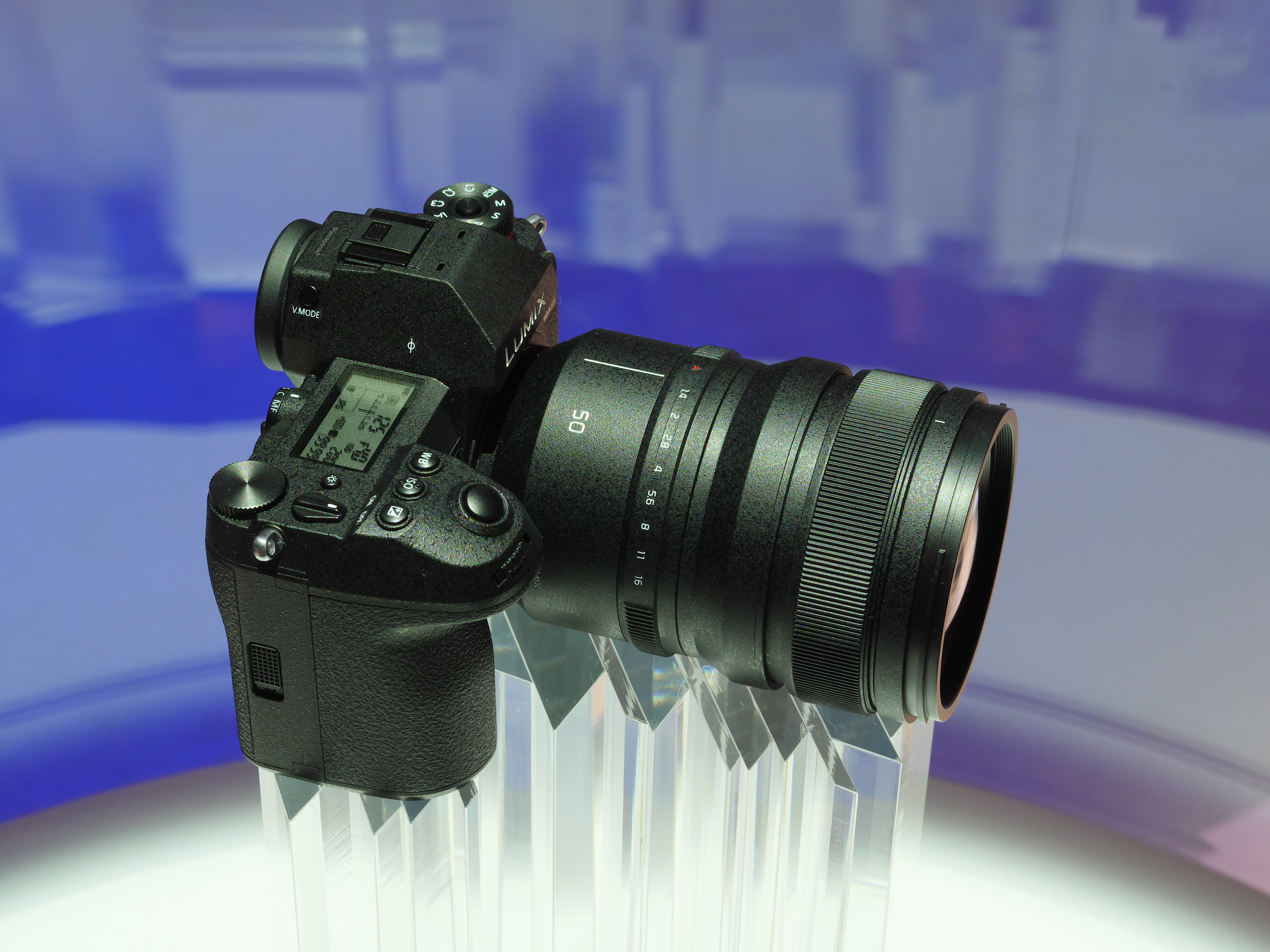
[[File:Panasonic.Lumix.S1R.50f1.4.jpg|thumb|Panasonic Lumix S1R with prime lens 50 mm f/1.4 at [[Photokina]] in September 2018]] | [[File:Panasonic.Lumix.S1R.50f1.4.jpg|thumb|Panasonic Lumix S1R with prime lens 50 mm f/1.4 at [[Photokina]] in September 2018]] | ||
| Line 155: | Line 168: | ||
On September 25, 2018, Panasonic became one of the founding members of the [[L-Mount Alliance]], and announced two full-frame mirrorless cameras and a range of [[Leica L-Mount|L-Mount]] lenses to be launched in 2019.<ref>{{Cite web|url=https://www.businesswire.com/news/home/20180925005345/en/Panasonic-Develops-Models-Full-Frame-Mirrorless-Camera|title=Panasonic Develops Two Models of Its First Full-Frame Mirrorless Camera|date=September 25, 2018|website=www.businesswire.com|language=en|access-date=December 28, 2018}}</ref> The 47-megapixel Panasonic Lumix S1R and the 24-megapixel Panasonic Lumix S1 will be the first full-frame mirrorless cameras produced by Panasonic and will offer the Lumix Pro support service for professional photographers. These cameras will also be equipped with Dual Image Stabilization technology to help photographers when shooting in low-light.<ref>{{Cite web|url=https://www.digitalcameraworld.com/news/panasonic-lumix-s1r-an-lumix-s-full-frame-mirrorless-cameras-revealed|title=Panasonic Lumix S1R and Lumix S full-frame mirrorless cameras revealed|last=News|first=Marc Chacksfield 2018-09-27T07:57:26Z|website=digitalcameraworld|date=September 27, 2018|language=en|access-date=December 28, 2018}}</ref> | On September 25, 2018, Panasonic became one of the founding members of the [[L-Mount Alliance]], and announced two full-frame mirrorless cameras and a range of [[Leica L-Mount|L-Mount]] lenses to be launched in 2019.<ref>{{Cite web|url=https://www.businesswire.com/news/home/20180925005345/en/Panasonic-Develops-Models-Full-Frame-Mirrorless-Camera|title=Panasonic Develops Two Models of Its First Full-Frame Mirrorless Camera|date=September 25, 2018|website=www.businesswire.com|language=en|access-date=December 28, 2018}}</ref> The 47-megapixel Panasonic Lumix S1R and the 24-megapixel Panasonic Lumix S1 will be the first full-frame mirrorless cameras produced by Panasonic and will offer the Lumix Pro support service for professional photographers. These cameras will also be equipped with Dual Image Stabilization technology to help photographers when shooting in low-light.<ref>{{Cite web|url=https://www.digitalcameraworld.com/news/panasonic-lumix-s1r-an-lumix-s-full-frame-mirrorless-cameras-revealed|title=Panasonic Lumix S1R and Lumix S full-frame mirrorless cameras revealed|last=News|first=Marc Chacksfield 2018-09-27T07:57:26Z|website=digitalcameraworld|date=September 27, 2018|language=en|access-date=December 28, 2018}}</ref> | ||
In 2019, Panasonic sold its semiconductors and security systems (security camera) businesses.<ref name=":1">{{Cite web | In 2019, Panasonic sold its semiconductors and security systems (security camera) businesses.<ref name=":1">{{Cite web|date=November 28, 2019|title=Panasonic to sell loss-making chip business to Taiwanese firm: source|url=https://www.japantimes.co.jp/news/2019/11/28/business/corporate-business/panasonic-sell-loss-making-chip-business-taiwanese-firm-source/|access-date=July 25, 2020|website=The Japan Times|language=en-US}}</ref><ref>{{Cite web|url=https://asia.nikkei.com/Business/Companies/Panasonic-to-spin-off-security-camera-business-as-costs-weigh|title=Panasonic to spin off security camera business as costs weigh|website=Nikkei Asian Review}}</ref><ref>{{Cite web|url=https://www.dealstreetasia.com/stories/polaris-capital-panasonic-138745/|title=Japan's Polaris Capital to acquire 80% of Panasonic's new security business}}</ref> The company also decided to completely exit from the [[liquid-crystal display]] panel business by 2021, marking the end of its display production, to focus its resources on the automotive and industrial businesses. Panasonic's LCD plant in [[Himeji]], [[Hyōgo Prefecture|Hyogo]] will be overhauled to manufacture automotive batteries.<ref>{{Cite web|last=Shilov|first=Anton|title=Panasonic to Cease LCD Production by 2021|url=https://www.anandtech.com/show/15157/panasonic-to-cease-lcd-production-by-2021|access-date=September 4, 2020|website=www.anandtech.com}}</ref> | ||
In 2020, Panasonic exited the vending machine business, as it failed to achieve profitability, lagging behind rivals [[Fuji Electric]], Sanden and Glory.<ref>{{Cite web|url=https://asia.nikkei.com/Business/Companies/Panasonic-exits-vending-machines-as-market-shrinks|title=Panasonic exits vending machines as market shrinks|website=Nikkei Asian Review}}</ref><ref>{{Cite web|url=https://www.jvma.or.jp/search/|title=会員検索(正会員)| インフォメーション館 | よくあるご質問|website=www.jvma.or.jp}}</ref><ref>{{Cite web|url=https://corporate.glory-global.com/groupinfo/at_a_glance/|title=GLORY at a Glance|website=GLORY Group}}</ref> | In 2020, Panasonic exited the vending machine business, as it failed to achieve profitability, lagging behind rivals [[Fuji Electric]], Sanden and Glory.<ref>{{Cite web|url=https://asia.nikkei.com/Business/Companies/Panasonic-exits-vending-machines-as-market-shrinks|title=Panasonic exits vending machines as market shrinks|website=Nikkei Asian Review}}</ref><ref>{{Cite web|url=https://www.jvma.or.jp/search/|title=会員検索(正会員)| インフォメーション館 | よくあるご質問|website=www.jvma.or.jp}}</ref><ref>{{Cite web|url=https://corporate.glory-global.com/groupinfo/at_a_glance/|title=GLORY at a Glance|website=GLORY Group}}</ref> | ||
Meanwhile, Panasonic has made an investment to take a 20% stake in [[Blue Yonder]], the supply-chain management software company previously known as JDA Software, deepening the integration of the former's industrial connected technology and the latter's products that has been under way since a year ago.<ref>{{Cite news|last=Smith|first=Jennifer|date=May 20, 2020|title=Panasonic Takes 20% Stake in Blue Yonder|language=en-US|work=Wall Street Journal|url=https://www.wsj.com/articles/panasonic-takes-20-stake-in-blue-yonder-11589991586|access-date=October 7, 2020|issn=0099-9660}}</ref> | Meanwhile, Panasonic has made an investment to take a 20% stake in [[Blue Yonder]], the supply-chain management software company previously known as JDA Software, deepening the integration of the former's industrial connected technology and the latter's products that has been under way since a year ago.<ref>{{Cite news|last=Smith|first=Jennifer|date=May 20, 2020|title=Panasonic Takes 20% Stake in Blue Yonder|language=en-US|work=[[The Wall Street Journal]]|url=https://www.wsj.com/articles/panasonic-takes-20-stake-in-blue-yonder-11589991586|access-date=October 7, 2020|issn=0099-9660}}</ref> | ||
On November 19, 2020, Panasonic announced a restructuring set to be completed by 2022 in which the company spins off the domain companies as wholly owned subsidiaries while transforming itself into the holding company named ''Panasonic Holdings Corporation''.<ref>{{Cite web|title=Panasonic Transitions to a Holding Company System {{!}} Headquarters News|url=http://news.panasonic.com/global/press/data/2020/11/en201113-3/en201113-3.html|access-date=November 19, 2020|website=Panasonic Newsroom Global|language=en}}</ref> Panasonic's plans are similar to that its competitor, [[Sony]], did on April 1, 2021, when Sony Corporation became Sony Group Corporation. | On November 19, 2020, Panasonic announced a restructuring set to be completed by 2022 in which the company spins off the domain companies as wholly owned subsidiaries while transforming itself into the holding company named ''Panasonic Holdings Corporation''.<ref>{{Cite web|title=Panasonic Transitions to a Holding Company System {{!}} Headquarters News|url=http://news.panasonic.com/global/press/data/2020/11/en201113-3/en201113-3.html|access-date=November 19, 2020|website=Panasonic Newsroom Global|language=en}}</ref> Panasonic's plans are similar to that its competitor, [[Sony]], did on April 1, 2021, when Sony Corporation became Sony Group Corporation. | ||
| Line 165: | Line 178: | ||
In January 2021, the company announced that it would put an end to its [[solar panel]] production.<ref>{{Cite news|author=Reuters Staff|date=January 31, 2021|title=Japan's Panasonic to end solar panel production – domestic media|language=en|work=Reuters|url=https://www.reuters.com/article/panasonic-solar-idUSL1N2K6036|access-date=February 8, 2021}}</ref> | In January 2021, the company announced that it would put an end to its [[solar panel]] production.<ref>{{Cite news|author=Reuters Staff|date=January 31, 2021|title=Japan's Panasonic to end solar panel production – domestic media|language=en|work=Reuters|url=https://www.reuters.com/article/panasonic-solar-idUSL1N2K6036|access-date=February 8, 2021}}</ref> | ||
In March 2021, it was reported that Panasonic will buy | In March 2021, it was reported that Panasonic will buy Blue Yonder for $6.45 billion after buying a 20% stake in Blue Yonder for 86 billion yen in 2020. This deal is considered one of the biggest since 2011.<ref>{{Cite news|author=Reuters Staff|date=March 8, 2021|title=Panasonic to buy Blue Yonder for $6.5 billion in biggest deal since 2011: Nikkei|language=en|work=Reuters|url=https://www.reuters.com/article/us-blueyonder-m-a-panasonic-idUSKBN2B00UU|access-date=March 8, 2021}}</ref> | ||
In June 2021, it was reported that Panasonic sold its entire stake in Tesla for $3.6 billion.<ref>{{Cite web|last=Inagaki|first=Kana|date=June 25, 2021|title=Panasonic offloads Tesla stake for $3.6bn|url=https://www.ft.com/content/8862a466-d157-4395-8f73-0f3efcb09a26|access-date=July 4, 2021|website=Financial Times}}</ref> | In June 2021, it was reported that Panasonic sold its entire stake in Tesla for $3.6 billion.<ref>{{Cite web|last=Inagaki|first=Kana|date=June 25, 2021|title=Panasonic offloads Tesla stake for $3.6bn|url=https://www.ft.com/content/8862a466-d157-4395-8f73-0f3efcb09a26|access-date=July 4, 2021|website=Financial Times}}</ref> | ||
| Line 172: | Line 185: | ||
As of March 31, 2012, Panasonic employed about 330,000 staff (reduced to around 260,000 by March 2020) and had around 580 subsidiaries.<ref name=pananrep>{{cite web|url=http://panasonic.net/ir/annual/2012/pdf/panasonic_ar2012_e.pdf|title=Annual Report for the year ended March 31, 2012|access-date=April 27, 2013|publisher=Panasonic|url-status=dead|archive-url=https://web.archive.org/web/20130522163213/http://www.panasonic.net/ir/annual/2012/pdf/panasonic_ar2012_e.pdf|archive-date=May 22, 2013}}</ref> Panasonic had total revenues of {{JPY|7,846,216 million}} in 2012, of which 53 percent were generated in Japan, 25 percent in Asia (excluding Japan), 12 percent in the Americas and 10 percent in Europe.<ref name=pananrep/> The company invested a total of {{JPY|520,216 million}} in research and development in 2012, equivalent to 6.6 percent of its revenues in that year.<ref name="pananrep" /> | As of March 31, 2012, Panasonic employed about 330,000 staff (reduced to around 260,000 by March 2020) and had around 580 subsidiaries.<ref name=pananrep>{{cite web|url=http://panasonic.net/ir/annual/2012/pdf/panasonic_ar2012_e.pdf|title=Annual Report for the year ended March 31, 2012|access-date=April 27, 2013|publisher=Panasonic|url-status=dead|archive-url=https://web.archive.org/web/20130522163213/http://www.panasonic.net/ir/annual/2012/pdf/panasonic_ar2012_e.pdf|archive-date=May 22, 2013}}</ref> Panasonic had total revenues of {{JPY|7,846,216 million}} in 2012, of which 53 percent were generated in Japan, 25 percent in Asia (excluding Japan), 12 percent in the Americas and 10 percent in Europe.<ref name=pananrep/> The company invested a total of {{JPY|520,216 million}} in research and development in 2012, equivalent to 6.6 percent of its revenues in that year.<ref name="pananrep" /> | ||
In 2012, Panasonic held a total of 140,146 patents worldwide.<ref name="pananrep" /> Panasonic was the world's top patent applicant for three decades, from the 1980s to the 2000s.<ref>{{cite web|year=2015|title=World Intellectual Property Indicators|url=https://www.wipo.int/edocs/pubdocs/en/wipo_pub_941_2015.pdf|access-date=July 8, 2019|website=[[World Intellectual Property Indicators]]|publisher=[[World Intellectual Property Organization]]}}</ref> According to a research conducted by the [[European Patent Office]] in 2020, the number of battery-related patents having been filed by Panasonic from 2000 to 2018 was the second-highest in the world.<ref>{{Cite news|date=September 28, 2020|title=Japan leads battery tech race with third of patent filings|work=FT}}</ref> In 2021, the [[World Intellectual Property Organization|WIPO]]’s annual review of the [[World Intellectual Property Indicators]] report ranked Panasonic's number of patent applications published under the [[Patent Cooperation Treaty|PCT System]] as 10th in the world, with 1,611 patent applications being published during 2020.<ref name=":3">{{Cite web|title=World Intellectual Property Indicators 2021|url=https://www.wipo.int/edocs/pubdocs/en/wipo_pub_941_2021.pdf|url-status=live|access-date=30 November 2021|website=WIPO}}</ref> This position is up from their previous ranking as 12th in 2019 with 1,567 applications.<ref name="wipo">{{Cite book|author1=World Intellectual Property Organization|url=https://www.wipo.int/publications/en/details.jsp?id=4526|title=World Intellectual Property Indicators 2020|website=www.wipo.int|publisher=World Intellectual Property Organization (WIPO)|year=2020|isbn=9789280532012|series=World IP Indicators (WIPI)|language=en|doi=10.34667/tind.42184|access-date=2021-08-26}}</ref> | |||
{{gallery | {{gallery | ||
| Line 199: | Line 212: | ||
====Panasonic Mobile Communications==== | ====Panasonic Mobile Communications==== | ||
'''Panasonic Mobile Communications''' manufactures mobile phone handsets and related equipment. As of 2012, it had around a 20 | '''Panasonic Mobile Communications''' manufactures mobile phone handsets and related equipment. As of 2012, it had around a 20 percent share of the Japanese handset market.<ref>{{cite news|date=February 21, 2012|title=Panasonic to launch waterproof Eluga phone|work=The Telegraph|url=https://www.telegraph.co.uk/technology/mobile-phones/9094824/Panasonic-to-launch-waterproof-Eluga-phone.html |archive-url=https://ghostarchive.org/archive/20220111/https://www.telegraph.co.uk/technology/mobile-phones/9094824/Panasonic-to-launch-waterproof-Eluga-phone.html |archive-date=January 11, 2022 |url-access=subscription |url-status=live|access-date=April 20, 2013}}{{cbignore}}</ref> Panasonic used to market mobile phone handsets worldwide, but in December 2005 announced its withdrawal from overseas markets due to poor sales. Panasonic returned to the overseas market in 2012, with the release of the Panasonic Eluga [[Android (operating system)|Android]]-powered smartphone. In July 2013, Panasonic announced the company will not supply a new model of [[smartphone]] to [[NTT DoCoMo]] Inc., because NTT DoCoMo will focus with Sony and Samsung products. In Q2 2013, Panasonic Mobile Communications booked a 5.4 billion yen operating loss.<ref>{{cite news|date=August 5, 2013|title=Panasonic to stop making new smartphones for NTT Docomo: Kyodo|newspaper=Reuters|url=https://www.reuters.com/article/us-panasonic-nttdocomo-idUSBRE9740RX20130805}}</ref> From July 2013 to January 2018, '''Panasonic India''' has released one more series of Android Smartphones '''Panasonic P Series''', along with Eluga Series. | ||
=== Automotive === | === Automotive === | ||
| Line 226: | Line 239: | ||
====Panasonic Europe==== | ====Panasonic Europe==== | ||
Panasonic's principal subsidiaries in Europe are '''Panasonic Europe Ltd.'''<ref>{{cite magazine|url=http://investing.businessweek.com/research/stocks/private/snapshot.asp?privcapId=5466412|title=Company Overview of Panasonic Europe Ltd.|access-date=April 14, 2013|magazine=Bloomberg Businessweek}}</ref> and '''Panasonic Marketing Europe GmbH'''.<ref>{{cite magazine|url=http://investing.businessweek.com/research/stocks/private/snapshot.asp?privcapId=6562049|title=Company Overview of Panasonic Marketing Europe Gmbh|access-date=April 14, 2013|magazine=Bloomberg Businessweek}}</ref> Panasonic Europe is headquartered in London, England, but it is moving its headquarters to [[Amsterdam]], [[Netherlands]] due to [[Brexit]].<ref>{{Cite news|url=https://www.bbc.co.uk/news/business-45351288|title=Panasonic to move Europe HQ out of UK|date=August 30, 2018|work=BBC News|access-date=September 2, 2018}}</ref> Panasonic employs around 12,000 people in Europe, and the region generates around 10 | Panasonic's principal subsidiaries in Europe are '''Panasonic Europe Ltd.'''<ref>{{cite magazine|url=http://investing.businessweek.com/research/stocks/private/snapshot.asp?privcapId=5466412|title=Company Overview of Panasonic Europe Ltd.|access-date=April 14, 2013|magazine=Bloomberg Businessweek}}</ref> and '''Panasonic Marketing Europe GmbH'''.<ref>{{cite magazine|url=http://investing.businessweek.com/research/stocks/private/snapshot.asp?privcapId=6562049|title=Company Overview of Panasonic Marketing Europe Gmbh|access-date=April 14, 2013|magazine=Bloomberg Businessweek}}</ref> Panasonic Europe is headquartered in London, England, but it is moving its headquarters to [[Amsterdam]], [[Netherlands]] due to [[Brexit]].<ref>{{Cite news|url=https://www.bbc.co.uk/news/business-45351288|title=Panasonic to move Europe HQ out of UK|date=August 30, 2018|work=BBC News|access-date=September 2, 2018}}</ref> Panasonic employs around 12,000 people in Europe, and the region generates around 10 percent of its total revenues.<ref name=reut20413>{{cite news|url=http://uk.reuters.com/article/us-panasonic-europe-idUKBRE9380UM20130409|title=Panasonic executive says Europe consumer sales hold up|access-date=April 20, 2013|work=Reuters|date=April 9, 2013}}</ref> In 2012, Panasonic had around a 10 percent share of the consumer electronics market in Europe, ranking third behind [[Samsung Electronics]] (with 26 percent) and [[LG Electronics]] (with 12 percent).<ref name=reut20413/> | ||
Panasonic operates a chain of stores in the United Kingdom and Ireland called "Panasonic Store" which exclusively sell Panasonic products. Prior to 2008 the chain was named "shop@Panasonic". | Panasonic operates a chain of stores in the United Kingdom and Ireland called "Panasonic Store" which exclusively sell Panasonic products. Prior to 2008 the chain was named "shop@Panasonic". | ||
| Line 237: | Line 250: | ||
Mr. Daizo Ito serves as Group President for Panasonic Regional Headquarters India (situated in Haryana) at Panasonic India Pvt. Ltd.<ref name="Corporate profile of Panasonic India Pvt Ltd">{{cite web|title=Corporate Profile|url=http://www.panasonic.com/in/corporate/profile.html|website=panasonic.com/in/}}</ref> Panasonic India makes washing machines, refrigerators, electric rice cookers, electric irons, mixer-grinders/blenders and other home appliances for the Indian market. | Mr. Daizo Ito serves as Group President for Panasonic Regional Headquarters India (situated in Haryana) at Panasonic India Pvt. Ltd.<ref name="Corporate profile of Panasonic India Pvt Ltd">{{cite web|title=Corporate Profile|url=http://www.panasonic.com/in/corporate/profile.html|website=panasonic.com/in/}}</ref> Panasonic India makes washing machines, refrigerators, electric rice cookers, electric irons, mixer-grinders/blenders and other home appliances for the Indian market. | ||
[[Anchor Electricals Pvt. Ltd.]], an Indian company which makes electric lamps, switches, sockets and other electrical accessories, is a wholly owned subsidiary of Panasonic Corporation. | Panasonic Life Solutions India Pvt Ltd [[formerly known as Anchor Electricals Pvt. Ltd.]], an Indian company which makes electric lamps, switches, sockets and other electrical accessories, is a wholly owned subsidiary of Panasonic Corporation. | ||
==== PT Panasonic Gobel Indonesia ==== | ==== PT Panasonic Gobel Indonesia ==== | ||
| Line 253: | Line 266: | ||
===Panasonic Healthcare=== | ===Panasonic Healthcare=== | ||
In 2014, Panasonic Healthcare was bought by outside investors and renamed as PHCHD, which stands for Panasonic HealthCare HD. It mainly makes cryogenic and | In 2014, Panasonic Healthcare was bought by outside investors and renamed as PHCHD, which stands for Panasonic HealthCare HD. It mainly makes cryogenic and ULT freezers for laboratories and sterilization equipment.<ref name="auto"/><ref name="businesswire.com"/> | ||
=== Panasonic Semiconductor Solutions === | === Panasonic Semiconductor Solutions === | ||
| Line 275: | Line 288: | ||
===Football=== | ===Football=== | ||
Panasonic sponsors the German footballer [[Marco Reus]], who plays for [[Bundesliga]] club [[Borussia Dortmund]] and [[Germany national football team|Germany]].<ref>{{Cite web|url=http://www.sportspromedia.com/news/panasonic_snaps_up_marco_reus_as_brand_ambassador|title=Panasonic snaps up Marco Reus as brand ambassador – SportsPro Media|website=www.sportspromedia.com}}</ref> | Panasonic sponsors the German footballer [[Marco Reus]], who plays for [[Bundesliga]] club [[Borussia Dortmund]] and [[Germany national football team|Germany]].<ref>{{Cite web|url=http://www.sportspromedia.com/news/panasonic_snaps_up_marco_reus_as_brand_ambassador|title=Panasonic snaps up Marco Reus as brand ambassador – SportsPro Media|website=www.sportspromedia.com|date=June 13, 2013}}</ref> | ||
Panasonic owns [[Panasonic Wild Knights]] a rugby club base in [[Gunma]] just outside of Tokyo. They compete in the highest level of rugby in Japan [[Top League]] | Panasonic owns [[Panasonic Wild Knights]] a rugby club base in [[Gunma]] just outside of Tokyo. They compete in the highest level of rugby in Japan [[Top League]] | ||
| Line 292: | Line 305: | ||
Panasonic was a primary sponsor of [[Toyota]]'s [[Formula One]] program, '''Panasonic Toyota Racing'''.<ref>{{cite news|url=http://usatoday30.usatoday.com/sports/motor/2009-01-15-3658564838_x.htm|title=Toyota goes virtual to show 2009 F1 car|access-date=April 27, 2013|work=USA Today|date=January 15, 2009}}</ref> [[Hiro Matsushita]], grandson of the company founder, is a former race car driver who ran a company overseeing sponsorship arrangements for the company. | Panasonic was a primary sponsor of [[Toyota]]'s [[Formula One]] program, '''Panasonic Toyota Racing'''.<ref>{{cite news|url=http://usatoday30.usatoday.com/sports/motor/2009-01-15-3658564838_x.htm|title=Toyota goes virtual to show 2009 F1 car|access-date=April 27, 2013|work=USA Today|date=January 15, 2009}}</ref> [[Hiro Matsushita]], grandson of the company founder, is a former race car driver who ran a company overseeing sponsorship arrangements for the company. | ||
Panasonic was also a sponsor in [[NASCAR]]'s [[Busch Series]] in [[2005 NASCAR Busch Series|2005]], sponsoring the No. 67 Smith Brothers Racing Dodge for [[Ken Schrader]],<ref>{{cite web|url=http://racing-reference.info/race/2005_Sam's_Town_300/B|title=2005 Sam's Town 300|work=Racing-Reference|access-date=June 17, 2014}}</ref> [[Bryan Reffner]],<ref>{{cite web|url=http://racing-reference.info/race/2005_SBC_250/B|title=2005 SBC 250|work=Racing-Reference|access-date=June 17, 2014}}</ref> [[C.W. Smith (racing driver)|C.W. Smith]],<ref>{{cite web|url=http://racing-reference.info/race/2005_Winn-Dixie_250_Presented_by_PepsiCo/B|title=2005 Winn-Dixie 250 Presented by PepsiCo|work=Racing-Reference|access-date=June 17, 2014}}</ref> and [[Johnny Benson, Jr.]] | Panasonic was also a sponsor in [[NASCAR]]'s [[Busch Series]] in [[2005 NASCAR Busch Series|2005]], sponsoring the No. 67 Smith Brothers Racing Dodge for [[Ken Schrader]],<ref>{{cite web|url=http://racing-reference.info/race/2005_Sam's_Town_300/B|title=2005 Sam's Town 300|work=Racing-Reference|access-date=June 17, 2014}}</ref> [[Bryan Reffner]],<ref>{{cite web|url=http://racing-reference.info/race/2005_SBC_250/B|title=2005 SBC 250|work=Racing-Reference|access-date=June 17, 2014}}</ref> [[C.W. Smith (racing driver)|C.W. Smith]],<ref>{{cite web|url=http://racing-reference.info/race/2005_Winn-Dixie_250_Presented_by_PepsiCo/B|title=2005 Winn-Dixie 250 Presented by PepsiCo|work=Racing-Reference|access-date=June 17, 2014}}</ref> and [[Johnny Benson, Jr.]]<ref>{{cite web|url=http://racing-reference.info/race/2005_Domino's_Pizza_250/B|title=2005 Domino's Pizza 250|work=Racing-Reference|access-date=June 17, 2014}}</ref> In 2007, Panasonic became a technology partner with [[Hendrick Motorsports]], and will serve as a primary sponsor of the team's No. 24 car with [[Jeff Gordon]] for two races in 2014 and through 2015 | ||
.<ref>{{cite web|last=Bruce|first=Kenny|url=http://www.nascar.com/en_us/news-media/articles/2014/6/17/jeff-gordon-adds-new-primary-sponsor-panasonic-through-2016.html|title=JEFF GORDON ADDS NEW PRIMARY SPONSOR|publisher=[[NASCAR]]|date=June 17, 2014|access-date=June 17, 2014}}</ref> | .<ref>{{cite web|last=Bruce|first=Kenny|url=http://www.nascar.com/en_us/news-media/articles/2014/6/17/jeff-gordon-adds-new-primary-sponsor-panasonic-through-2016.html|title=JEFF GORDON ADDS NEW PRIMARY SPONSOR|publisher=[[NASCAR]]|date=June 17, 2014|access-date=June 17, 2014}}</ref> | ||
| Line 310: | Line 323: | ||
However, Panasonic's score is let down by its low score on the Energy criteria, with the Guide stating it must focus on planned reductions of greenhouse gases (GHG), set targets to reduce GHG emissions by at least 30% by 2015 and increase renewable energy use by 2020.<ref name="Guide to Greener Electronics"/> | However, Panasonic's score is let down by its low score on the Energy criteria, with the Guide stating it must focus on planned reductions of greenhouse gases (GHG), set targets to reduce GHG emissions by at least 30% by 2015 and increase renewable energy use by 2020.<ref name="Guide to Greener Electronics"/> | ||
{{clear}} | {{clear}} | ||
In 2014, an article in ''[[The Guardian]]'' reported that Panasonic will compensate its expatriate workers in China a "hazard pay" as compensation for the chronic air pollution they are subjected to as they work.<ref>{{cite web|url=https://www.theguardian.com/sustainable-business/panasonic-hazard-pay-air-pollution-china|title=Will Panasonic's 'hazard pay' make a difference to air pollution in China?|work=The Guardian|date=April 14, 2014|access-date=July 16, 2015}}</ref> | |||
In | In February 2022, the Wall Street Journal reported that Panasonic got its highest-emitting Chinese factory to “virtually net zero” carbon dioxide.<ref>{{Cite news|last=Dvorak|first=Phred|date=2022-02-12|title=How One of the World's Biggest Carbon Emitters Got a Factory to Zero Emissions|language=en-US|work=Wall Street Journal|url=https://www.wsj.com/articles/how-one-of-the-worlds-biggest-carbon-emitters-got-a-factory-to-zero-emissions-11644670800|access-date=2022-02-13|issn=0099-9660}}</ref> | ||
== Senior leadership == | |||
* ''Chairman:'' [[Kazuhiro Tsuga]] (since April 2021) | |||
* ''President and CEO:'' Yuki Kusumi (since April 2021) | |||
=== List of former chairmen === | |||
# [[Kōnosuke Matsushita]] (1961–1973) | |||
# Arataro Takahashi (1973–1977) | |||
# [[Masaharu Matsushita]] (1973–2000) | |||
# Yoichi Morishita (2000–2006) | |||
# [[Kunio Nakamura]] (2006–2012) | |||
# [[Fumio Ōtsubo]] (2012–2021) | |||
=== List of former presidents and CEOs === | |||
# [[Kōnosuke Matsushita]] (1918–1961) | |||
# [[Masaharu Matsushita]] (1961–1977) | |||
# Toshihiko Yamashita (1977–1986) | |||
# Akio Tanii (1986–1993) | |||
# Yoichi Morishita (1993–2000) | |||
# [[Kunio Nakamura]] (2000–2006) | |||
# [[Fumio Ōtsubo]] (2006–2012) | |||
# [[Kazuhiro Tsuga]] (2012–2021) | |||
==Slogans== | ==Slogans== | ||
| Line 317: | Line 356: | ||
* "Even more than you expected [out of the blue]" (1970s–1996 Australia) | * "Even more than you expected [out of the blue]" (1970s–1996 Australia) | ||
* "What's on Panasonic" (1990–1996) | * "What's on Panasonic" (1990–1996) | ||
* "The quest for zero defect" (1990's-2003, South Africa)<ref>https://www.itweb.co.za/content/O2rQGMAp2mj7d1ea</ref> | * "The quest for zero defect" (1990's-2003, South Africa)<ref>{{Cite web|url=https://www.itweb.co.za/content/O2rQGMAp2mj7d1ea|title=Panasonic celebrates 21st anniversary at computer faire 2002|date=April 19, 2002}}</ref> | ||
* "Panasonic, The One That I Want" (1996–2003, USA) | * "Panasonic, The One That I Want" (1996–2003, USA) | ||
* "What's New by Panasonic" (1996–2003) | * "What's New by Panasonic" (1996–2003) | ||
* "Ideas for Life" (2003–2013, Global) <ref>https://www.panasonic.com/global/corporate/history/chronicle/2003.html</ref> | * "Ideas for Life" (2003–2013, Global) <ref>{{Cite web|url=https://www.panasonic.com/global/corporate/history/chronicle/2003.html|title = 2003 - Corporate History - History - About Us - Panasonic}}</ref> | ||
* "A Better Life, A Better World" (2013–present)<ref>{{Cite web|title=Panasonic Establishes "A Better Life, A Better World" as its New Brand Slogan {{!}} Headquarters News {{!}} Panasonic Newsroom Global|url=https://news.panasonic.com/global/press/data/2013/09/en130904-2/en130904-2.html|access-date=October 7, 2020|website=news.panasonic.com}}</ref> | * "A Better Life, A Better World" (2013–present)<ref>{{Cite web|title=Panasonic Establishes "A Better Life, A Better World" as its New Brand Slogan {{!}} Headquarters News {{!}} Panasonic Newsroom Global|url=https://news.panasonic.com/global/press/data/2013/09/en130904-2/en130904-2.html|access-date=October 7, 2020|website=news.panasonic.com}}</ref> | ||
* "Wonders!" (2014–present) | * "Wonders!" (2014–present) | ||
* "Let's Live Life Better" (2017–2018) | * "Let's Live Life Better" (2017–2018) | ||
* "Live Your Best" (2022-)<ref>{{Cite web|title=Live Your Best {{!}} About Us {{!}} Panasonic Holdings|url=https://holdings.panasonic/global/corporate/brand/live-your-best.html|access-date=April 21, 2022|website=holdings.panasonic}}</ref> | |||
==See also== | ==See also== | ||
{{Portal|Companies}} | {{Portal|Companies}} | ||
*[[List of Panasonic camcorders]] | |||
*[[List of Japanese companies]] | *[[List of Japanese companies]] | ||
*[[Konosuke Matsushita]] | *[[Konosuke Matsushita]] | ||
| Line 344: | Line 385: | ||
==External links== | ==External links== | ||
{{Commons category|Panasonic}} | {{Commons category|Panasonic}} | ||
* {{ | * {{Official website|https://holdings.panasonic/global/}} | ||
{{Panasonic}} | {{Panasonic}} | ||
{{Kōnosuke Matsushita}} | |||
<!--Navbox cat sort position--> | <!--Navbox cat sort position--> | ||
{{Navboxes|list1= | {{Navboxes|list1= | ||
| Line 367: | Line 405: | ||
[[Category:Panasonic| ]] | [[Category:Panasonic| ]] | ||
[[Category:1940s initial public offerings]] | |||
[[Category:Battery manufacturers]] | [[Category:Battery manufacturers]] | ||
[[Category:Companies based in Osaka Prefecture]] | [[Category:Companies based in Osaka Prefecture]] | ||
| Line 381: | Line 420: | ||
[[Category:Defense companies of Japan]] | [[Category:Defense companies of Japan]] | ||
[[Category:Display technology companies]] | [[Category:Display technology companies]] | ||
[[Category:Electric vehicle battery manufacturers]] | |||
[[Category:Electronics companies established in 1918]] | [[Category:Electronics companies established in 1918]] | ||
[[Category:Electronics companies of Japan]] | [[Category:Electronics companies of Japan]] | ||
| Line 411: | Line 451: | ||
[[Category:Pump manufacturers]] | [[Category:Pump manufacturers]] | ||
[[Category:Electric motor manufacturers]] | [[Category:Electric motor manufacturers]] | ||
[[Category:Radio manufacturers]] | |||
Revision as of 19:11, 30 June 2022
 | |
 Headquarters in Osaka, Japan | |
Native name | パナソニック ホールディングス株式会社 |
|---|---|
Romanized name | Panasonikku Hōrudingusu kabushiki gaisha |
Formerly |
|
| Traded as |
|
| ISIN | JP3866800000 |
| Industry | Conglomerate |
| Founded | March 13, 1918 Osaka, Japan |
| Founder(s) | Kōnosuke Matsushita |
| Headquarters | Kadoma, Osaka, Japan 34°44′38″N 135°34′12″E / 34.7438°N 135.5701°E |
Area served | Worldwide (except Russia) |
Key people |
|
| Products | |
| Revenue |  ¥8.49 trillion (2020)[* 1] ¥8.49 trillion (2020)[* 1] |
| ¥923.75 billion (2020)[* 1] | |
| ¥200.71 billion (2020)[* 1] | |
| Total assets |  ¥5.22 trillion (2020)[* 1] ¥5.22 trillion (2020)[* 1] |
| Total equity | ¥3.16 trillion (2020)[* 1] |
Number of employees | 279,385 (2022) |
| Divisions | Panasonic Corporation of North America (US) |
| Subsidiaries |
|
| Website |
|
| Footnotes / references | |
Template:Nihongo foot formerly Template:Nihongo foot between 1935 and 2008 and the first incarnation of Template:Nihongo foot between 2008 and 2022,[1] is a major Japanese multinational conglomerate corporation, headquartered in Kadoma, Osaka. It was founded by Kōnosuke Matsushita in 1918 as a lightbulb socket manufacturer.[2] In addition to consumer electronics, of which it was the world's largest maker in the late 20th century, Panasonic offers a wide range of products and services, including rechargeable batteries, automotive and avionic systems, industrial systems, as well as home renovation and construction.[3][4][5][6][7]
Panasonic has a primary listing on the Tokyo Stock Exchange and is a constituent of the Nikkei 225 and TOPIX 100 indices. It has a secondary listing on the Nagoya Stock Exchange.
Corporate name
From 1935 to October 1, 2008, the company's corporate name was "Matsushita Electric Industrial Co." (MEI).[8][9] On January 10, 2008, the company announced that it would change its name to "Panasonic Corporation", in effect on October 1, 2008, to conform with its global brand name "Panasonic".[10] The name change was approved at the shareholders' meeting on June 26, 2008, after consultation with the Matsushita family.[11][12]
In 2022, Panasonic announced a reorganization plan which split the company into Panasonic Holdings Corporation (the former Panasonic Corporation) and conversion of its divisions into subsidiaries; the Lifestyle Updates Business Division being the division that took the Panasonic Corporation name after the reorganization. The reorganization took effect in 1 April 2022.[1]
Brand names
.jpg)
Panasonic Corporation sells virtually all of its products and services worldwide under the Panasonic brand, having phased out the Sanyo brand in the first quarter of 2012.[13] The company has sold products under a number of other brand names during its history.
In 1927, Matsushita adopted the brand name Template:Nihongo foot for a new lamp product.[14] In 1955, the company began branding audio speakers and lamps for markets outside Japan as "PanaSonic", which was the first time it used the "Panasonic" brand name.[15] The company began to use the brand name Template:Nihongo foot in 1965 for audio equipment.[15] The use of multiple brands lasted for some decades.[15] While "National" had been the premier brand on most Matsushita products, including audio and video, "National" and "Panasonic" were combined in 1988 as National Panasonic after the worldwide success of the Panasonic name.
In May 2003, the company announced that "Panasonic" would become its global brand, and launched the global tagline "Panasonic ideas for life."[16] The company began to unify its brands to "Panasonic" and, by March 2004, replaced "National" for products and outdoor signboards, except for those in Japan.[16] In January 2008, the company announced that it would phase out the brand "National" in Japan, replacing it with the global brand "Panasonic" by March 2010.[10] In September 2013, the company announced a revision of the decade-old tagline to better illustrate the company vision: "A Better Life, A Better World."[17]
Rasonic is a brand name of Shun Hing Electric Works and Engineering Co. Ltd (信興電工工程有限公司), a company that has imported Panasonic and National branded product since Matsushita Electric Industrial era, and has also sold MEI/Panasonic products under the original brand names. In June 1994, Panasonic Shun Hing Industrial Devices Sales (Hong Kong) Co., Ltd. (松下信興機電(香港)有限公司) and Panasonic SH Industrial Sales (Shenzhen) Co., Ltd. (松下電器機電(深圳)有限公司) were established by joint venture between Matsushita Electric Industrial and Shun Hing Group respectively,[18][19] making Rasonic a product brand for MEI and subsequent Panasonic Corporation.
In September 2014, Panasonic announced they will revive the Technics brand.[20]
History
20th century
Panasonic, then Matsushita Electric, was founded in 1918 by Kōnosuke Matsushita as a vendor of duplex lamp sockets.[21] In the 1920s, Matsushita began regularly launching products. In 1927, he produced a line of bicycle lamps that were the first to be marketed with the National brand name.[22] During World War II, the company operated factories in Japan and other parts of Asia which produced electrical components and appliances such as light fixtures, motors, electric irons, wireless equipment and its first vacuum tubes.[23]
After the war, the Matsushita group, largely having been split into MEI and MEW by the dissolution imposed by the occupation force, imperfectly regrouped as a Keiretsu and began to supply the post-war boom in Japan with radios and appliances, as well as bicycles. Matsushita's brother-in-law, Toshio Iue, founded Sanyo as a subcontractor for components after World War II. Sanyo grew to become a competitor to Matsushita, but was later acquired by Panasonic in December 2009.[24]
In 1961, Matsushita traveled to the United States and met American dealers. The company began producing television sets for the U.S. market under the Panasonic brand name, and expanded the use of the brand to Europe in 1979.[25]
The company used the National brand outside North America from the 1950s to the 1970s (the trademark could not be used in the United States because it was already in use).[26] The inability to use the National brand name led to the creation of the Panasonic brand in the United States.[26] Over the next several decades, Matsushita released additional products, including black and white TVs (1952), electrical blenders, fridges (1953), rice cookers (1959), color TVs and microwave ovens (1966).[26]
The company debuted a high-fidelity audio speaker in Japan in 1965 with the brand Technics. This line of high quality stereo components became a worldwide favorite, the most famous products being its turntables, such as the SL-1200 record player, known for its high-performance, precision and durability. Throughout the 1970s and early 1980s, Matsushita continued to produce high-quality specialized electronics for niche markets, such as shortwave radios, and developed its successful line of stereo receivers, CD players and other components.[citation needed]
In 1968, Matsushita began to make rotary compressors for air conditioners, and, in 1971, it began to make absorption chillers, also for air-conditioning applications.
In 1972, Matsushita established its first overseas factory, in Malaysia.
In 1973, Matsushita established "Anam National", joint venture with Anam Group in South Korea.
In 1983, Matsushita launched the Panasonic Senior Partner, the first fully IBM PC compatible Japanese-made computer, and it also released inverter air conditioners.[27][28]
In 1984, Matsushita established the Panasoft software label, which published software for MSX computers from 1984 to 1989. The company also manufactured MSX computers of their own, such as Panasonic FS-A1.[29]
In November 1990, Matsushita agreed to acquire an American media company, MCA Inc., the predecessor of both Universal Music Group and Universal Pictures, for US$6.59 billion. The acquisition was preceded by the takeover of Columbia Pictures by Sony, the arch rival of Matsushita.[30][31] At the time, Matsushita had dominated the home video market with the company's leading position in the electronics market. It had gotten strengthened by VHS, the de-facto standard of consumer videotape that Matsushita and JVC co-introduced. Inspired by Sony's bold quest for Hollywood, Matsushita believed it could become a leader in the film industry as well. However, Matsushita subsequently sold 80% of MCA to Seagram Company for US$7 billion in April 1995, demoralized by the high volatility of the film industry.[32][33]
In 1992, Matsushita made the Panasonic FS-A1GT, the last model of the MSX turbo R computer.[34]
In 1998, Matsushita sold Anam National to Anam Electronics.
2000 to present
On May 2, 2002, Panasonic Canada marked its 35th anniversary in that country by giving $5 million to help build a "music city" on Toronto's waterfront.[35]
In 2005, Matsushita Toshiba Picture Display Co. Ltd. (a joint venture between Matsushita and Toshiba created in 2002[36]) stopped production of CRTs at its factory in Horseheads, New York.[37] A year later, in 2006, it stopped production at its Malaysian factory, following heavy losses.[38][39][40] In 2007, it bought the venture from Toshiba, eventually ending all production.[41]
On January 19, 2006, Matsushita announced that it would stop producing analog televisions (then 30% of its total TV business) from the next month, to concentrate on digital televisions.[42]
In 2008, all models of electric shavers from the Panasonic factory were called Panasonic shavers, and they dropped Matsushita and National from their name, regardless of worldwide or Japanese markets.
In late 2006, Matsushita began talks with Kenwood Corporation to sell and spin off JVC.[43] As of October 1, 2008, JVC and Kenwood merged to create the JVCKenwood Corporation.[44]
On November 3, 2008, Panasonic and Sanyo announced that they were holding merger talks, which eventually resulted in the acquisition of Sanyo by Panasonic.[45][46] The merger was completed in December 2009, and resulted in a corporation with revenues of over ¥11.2 trillion (around $110 billion).[47]
With the announcement that Pioneer would exit the production of its Kuro plasma HDTV displays, Panasonic purchased many of the patents and incorporated these technologies into its own plasma displays.
In April 2011, it was announced that Panasonic would cut its work force by 40,000 by the end of fiscal 2012 in a bid to streamline overlapping operations. The curtailment is about 10 percent of its group work force.[48]
In October 2011, Panasonic announced that it was going to trim its money-losing TV business by ceasing production of plasma TVs at its plant in Amagasaki, Hyogo Prefecture by March 2012, cutting 1,000 jobs in the process.[49] Also, it sold some of Sanyo's home appliances business to Haier.[50]
In January 2012, Panasonic announced that it had struck a deal with Myspace on its new venture, Myspace TV.[51] Myspace TV will allow users to watch live television while chatting with other users on a laptop, tablet or the television itself. With the partnership, Myspace TV will be integrated into Panasonic Viera televisions.[52]
On May 11, 2012, Panasonic announced plans to acquire a 76.2% stake in FirePro Systems, an India-based company in infrastructure protection and security solutions such as fire alarm, fire suppression, video surveillance and building management.[53]
In April 2012, Panasonic spun off Sanyo DI Solutions, a digital camera OEM.[54]
In line with company prediction of a net loss of 765 billion yen, on November 5, 2012, the shares fell to the lowest level since February 1975 to 388 yen. In 2012, the shares plunged 41 percent.[55] On November 14, 2012, Panasonic said it will cut 10,000 jobs and make further divestments.[56]
On May 18, 2013, Panasonic announced that it would invest $40 million in building a factory in Binh Duong, Vietnam, which was completed in 2014.[57]
In July 2013, Panasonic agreed to acquire a 13% stake in the Slovenian household appliance manufacturer Gorenje for around €10 million.[58]
In July 2013, Panasonic signed an agreement with Sony Corporation to develop Archival Disc, described as an optical disc format for long-term data archival purposes.[59]
In a press release following its announcement at IFA 2013, Panasonic announced that it had acquired the "Cameramanager video surveillance service" with the intention of expanding its reach to cloud-based solutions.[60]
In 2014, Panasonic Healthcare was bought by outside investors. Panasonic Healthcare was later renamed as PHCHD, which stands for Panasonic HealthCare HD.[61][62]
In July 2014, it was announced that Panasonic has reached a basic agreement with Tesla Motors to participate in the Gigafactory, the huge battery plant that the American electric vehicle manufacturer plans to build in the U.S.[63] In August 2014, Tesla said the plant would be built in the Southwest or Western United States by 2020. The $5 billion plant would employ 6,500 people, and reduce Tesla's battery costs by 30 percent. The company said it was looking at potential sites in Nevada, Arizona, Texas, New Mexico and California.[64]
In October 2014, Panasonic announced its initial investment in Tesla Motors’ battery factory would amount to "tens of billions" of yen, according to the firm's CEO.[65]
In November 2014, Panasonic announced its partnership with Photon Interactive to create customized and personalized digital signs in stores.[66]
In January 2015, Panasonic announced it has stopped making TVs in China and plans to liquidate its joint venture in Shandong.[67]
In March 2015, Panasonic announced plans to buy Houston-based satellite communication service provider ITC Global.[68]
In April 2015, Panasonic announced its new range of products and relaunched its brand in South Africa. The company intends to use South Africa as a springboard into Africa, with Nigeria and Egypt as its initial targets.[69]
In June 2015, Panasonic struck agreements with three Australian energy utilities (Red Energy, Ergon Energy and ActewAGL) to trial its home-based battery storage options.[70]
In November 2015, Panasonic announced that it set up a new plant in Suzhou, China, through its subsidiary, Panasonic Ecology Systems Co., Ltd, to produce a new type of catalyst-coated diesel particulate filter (DPF) that decomposes matter contained in diesel engine exhaust gas.[71]
In November 2015, Panasonic starts to retail locally harvested produce from its indoor agriculture facility salads via Veggie Life branding in Singapore, from the very first licensed indoor vegetable farm in the country using Panasonic's own technology.[72]
In February 2016, Panasonic and the City of Denver formed a formal partnership to make Denver the "smartest" city in America. Joseph M. Taylor, Chairman and CEO of Panasonic Corp. of America, laid out the plans for the partnership in four key areas: smart housing and small offices, energy and utilities, transportation and city services and smart buildings.[73]
Due to increased competition from China, Panasonic's Li-ion automotive market share decreased from 47% in 2014 to 34% in 2015.[74] In June 2016, Tesla announced that Panasonic would be the exclusive supplier of batteries for its mass market vehicle Model 3. Batteries for the higher-end Model S sedan and Model X SUV will also be supplied by Panasonic.[75] In early 2016, Panasonic president Kazuhiro Tsuga confirmed a planned total investment of about $1.6 billion by the company to construct Gigafactory to full capacity.[76] However, after the number of Model 3 reservations became known in April,[77] Panasonic moved production plans forward and announced a bond sale for $3.86 billion, most of it to be invested in Gigafactory.[78]
In 2016, Panasonic debuted a transparent TV.[79]
In July 2016, Panasonic unveiled its interest in making acquisitions in the artificial intelligence (AI) and machine learning space. According to a source, the company has put aside $10 million for use in either an acquisition or joint venture.[80]
In August 2018, the company announced, to avoid potential tax issues Panasonic will move its European headquarters from the UK to Amsterdam in October as Brexit approaches.[81][82]

On September 25, 2018, Panasonic became one of the founding members of the L-Mount Alliance, and announced two full-frame mirrorless cameras and a range of L-Mount lenses to be launched in 2019.[83] The 47-megapixel Panasonic Lumix S1R and the 24-megapixel Panasonic Lumix S1 will be the first full-frame mirrorless cameras produced by Panasonic and will offer the Lumix Pro support service for professional photographers. These cameras will also be equipped with Dual Image Stabilization technology to help photographers when shooting in low-light.[84]
In 2019, Panasonic sold its semiconductors and security systems (security camera) businesses.[85][86][87] The company also decided to completely exit from the liquid-crystal display panel business by 2021, marking the end of its display production, to focus its resources on the automotive and industrial businesses. Panasonic's LCD plant in Himeji, Hyogo will be overhauled to manufacture automotive batteries.[88]
In 2020, Panasonic exited the vending machine business, as it failed to achieve profitability, lagging behind rivals Fuji Electric, Sanden and Glory.[89][90][91]
Meanwhile, Panasonic has made an investment to take a 20% stake in Blue Yonder, the supply-chain management software company previously known as JDA Software, deepening the integration of the former's industrial connected technology and the latter's products that has been under way since a year ago.[92]
On November 19, 2020, Panasonic announced a restructuring set to be completed by 2022 in which the company spins off the domain companies as wholly owned subsidiaries while transforming itself into the holding company named Panasonic Holdings Corporation.[93] Panasonic's plans are similar to that its competitor, Sony, did on April 1, 2021, when Sony Corporation became Sony Group Corporation.
In January 2021, the company announced that it would put an end to its solar panel production.[94]
In March 2021, it was reported that Panasonic will buy Blue Yonder for $6.45 billion after buying a 20% stake in Blue Yonder for 86 billion yen in 2020. This deal is considered one of the biggest since 2011.[95]
In June 2021, it was reported that Panasonic sold its entire stake in Tesla for $3.6 billion.[96]
Current operations
As of March 31, 2012, Panasonic employed about 330,000 staff (reduced to around 260,000 by March 2020) and had around 580 subsidiaries.[97] Panasonic had total revenues of ¥7,846,216 million in 2012, of which 53 percent were generated in Japan, 25 percent in Asia (excluding Japan), 12 percent in the Americas and 10 percent in Europe.[97] The company invested a total of ¥520,216 million in research and development in 2012, equivalent to 6.6 percent of its revenues in that year.[97]
In 2012, Panasonic held a total of 140,146 patents worldwide.[97] Panasonic was the world's top patent applicant for three decades, from the 1980s to the 2000s.[98] According to a research conducted by the European Patent Office in 2020, the number of battery-related patents having been filed by Panasonic from 2000 to 2018 was the second-highest in the world.[99] In 2021, the WIPO’s annual review of the World Intellectual Property Indicators report ranked Panasonic's number of patent applications published under the PCT System as 10th in the world, with 1,611 patent applications being published during 2020.[100] This position is up from their previous ranking as 12th in 2019 with 1,567 applications.[101]
-
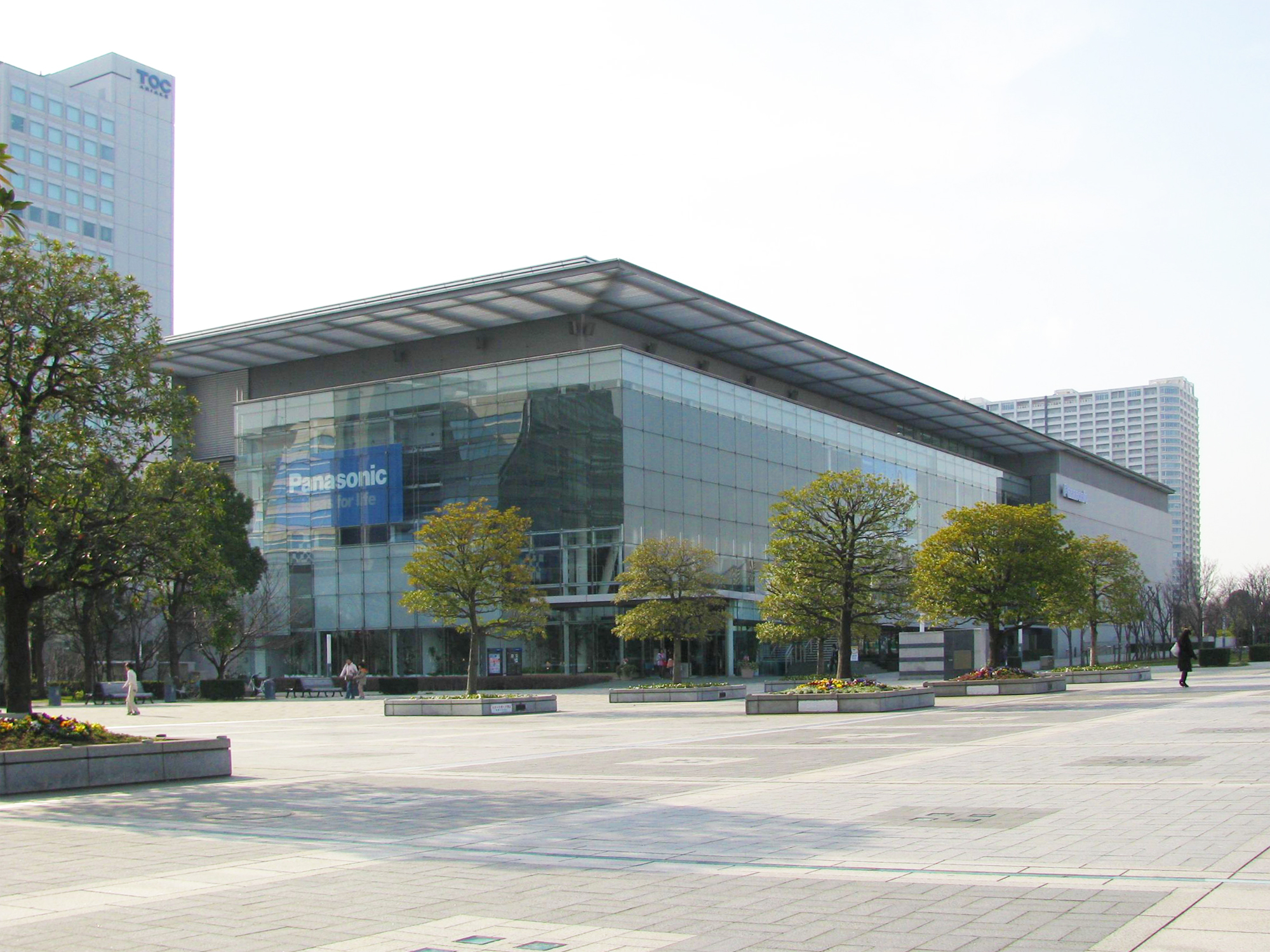 The Panasonic Center in Tokyo, Japan
 -
 The Panasonic IMP Building in Osaka, Japan
 -
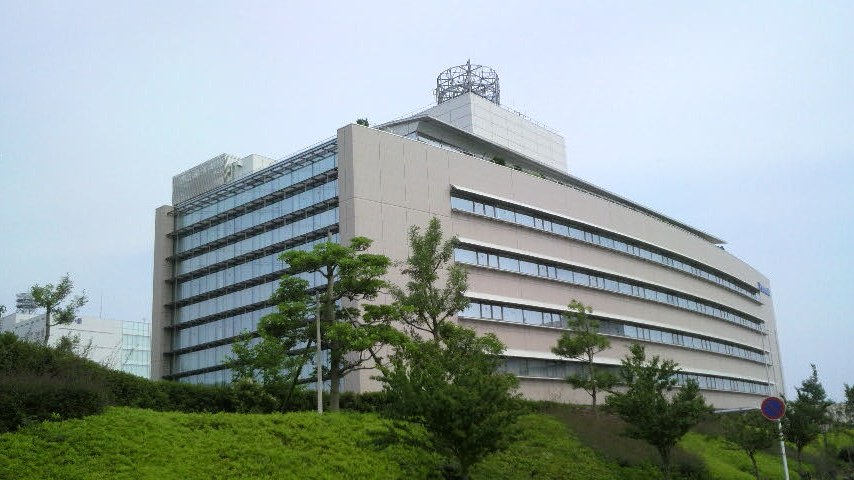 The Panasonic R&D facility at Yokosuka Research Park, Japan
 -
 Panasonic Philippines Manufacturing Corporation Taytay Rizal.


.jpg)
As of July 2020, Panasonic's operations are organised into seven "domain companies": Appliances, Life Solutions, Connected Solutions, Automotive, Industrial Solutions, and two overseas branches overseeing the businesses in the United States and Asia. Each of these companies may comprise multiple subsidiaries conducting actual operations.[102]
Appliances
![[icon]](/wiki/File:Wiki_letter_w_cropped.svg) | This section is empty. You can help by adding to it. (October 2020) |
Life Solutions
Panasonic Homes
Panasonic Homes was a Japanese real estate and construction company and a subsidiary of Life Solutions Company, Panasonic, founded as the housing unit of Matsushita Electric Works in 1963.[103] In recent years, Panasonic Homes has been involved in developing smart cities. In 2019, it was announced that Toyota and Panasonic would initiate a process to merge their housing businesses, Toyota Housing and Misawa Homes from the former and Panasonic Homes of the latter, into a joint venture scheduled to be established in January 2020 and co-controlled by the two parties, named Prime Life Technologies Corporation.[104]
Connected Solutions
Panasonic Avionics Corporation
Panasonic Avionics Corporation (PAC), a subsidiary of Panasonic Corporation of North America and a unit of Connected Solutions Company, Panasonic, is a supplier of in-flight entertainment (IFE) and communication systems.[105] Headquartered in Lake Forest, California where engineering, development and testing is performed while system installation, field engineering, major quality functions, certification and program management are performed at the Bothell, Washington facility – Panasonic Avionics Corporation employs approximately 3,300 employees based in over 70 locations worldwide, with major facilities in London, Toulouse, Hamburg, Dallas, Dubai and Singapore.[citation needed] A majority of the component manufacturing is carried out in Osaka, Japan.
In February 2017, Panasonic reported that the subsidiary was being investigated by American authorities under the FCPA.[106]
Panasonic Mobile Communications
Panasonic Mobile Communications manufactures mobile phone handsets and related equipment. As of 2012, it had around a 20 percent share of the Japanese handset market.[107] Panasonic used to market mobile phone handsets worldwide, but in December 2005 announced its withdrawal from overseas markets due to poor sales. Panasonic returned to the overseas market in 2012, with the release of the Panasonic Eluga Android-powered smartphone. In July 2013, Panasonic announced the company will not supply a new model of smartphone to NTT DoCoMo Inc., because NTT DoCoMo will focus with Sony and Samsung products. In Q2 2013, Panasonic Mobile Communications booked a 5.4 billion yen operating loss.[108] From July 2013 to January 2018, Panasonic India has released one more series of Android Smartphones Panasonic P Series, along with Eluga Series.
Automotive
Automotive Systems division
Automotive Systems Business Division, Automotive Company, Panasonic, formerly Panasonic Automotive Systems (PAS),[109] is an original equipment manufacturer of factory installed mobile audio equipment such as headunits, speakers and navigation modules. It is a subcontractor to most major auto manufacturers, supplying virtually every Japanese and American automaker, along with many European automakers. In 2015, PAS had a revenue of $12.4 billion.[110] Panasonic also purchased the assets of Sanyo Corporation in 2017.[citation needed]
Panasonic also formerly manufactured aftermarket vehicle audio products such as head units and speakers.
Giga Nevada
Panasonic is the financial/technological partner of Tesla-owned Giga Nevada (Gigafactory 1) and has invested in the factory ever since the project's conception;[111] in contrast to Tesla ever expanding its battery production to overseas, Panasonic has refrained from taking part in Tesla's ventures elsewhere; aside from Giga Nevada, it has own sites in Japan from which it has served Tesla since before the completion of the Gigafactory.[112]
Prime Planet Energy and Solutions
In 2020, Panasonic founded an electric vehicle battery joint venture with Toyota, named Prime Planet Energy & Solutions Inc. (PPES), after its status as the exclusive battery supplier to Tesla has been diminished amid the changes in market environment, such as the rises of the competitors from South Korea and China and Tesla's move to bring the development and manufacturing of battery cells in-house.[113] Panasonic owns 49% of the venture.[114] It was the first time the two companies joined hands in the realm of battery technology since Primearth EV Energy (PEVE) kicked off in 1996 to produce batteries for hybrid electric cars.
Industrial Solutions
| This section is empty. You can help by adding to it. (October 2020) |
Overseas operations
Panasonic Corporation of North America
Panasonic Corporation of North America is Panasonic's principal subsidiary in the United States. It has been headquartered in Newark, New Jersey since 2013, after being previously headquartered in Secaucus, since the 1980s;[115] both Newark and Secaucus are located within New Jersey's Gateway Region.
Founded in New York City at the MetLife Building in September 1959, it was known as Matsushita Electric Corporation of America (MECA) prior to 2005.
Panasonic Europe
Panasonic's principal subsidiaries in Europe are Panasonic Europe Ltd.[116] and Panasonic Marketing Europe GmbH.[117] Panasonic Europe is headquartered in London, England, but it is moving its headquarters to Amsterdam, Netherlands due to Brexit.[118] Panasonic employs around 12,000 people in Europe, and the region generates around 10 percent of its total revenues.[119] In 2012, Panasonic had around a 10 percent share of the consumer electronics market in Europe, ranking third behind Samsung Electronics (with 26 percent) and LG Electronics (with 12 percent).[119]
Panasonic operates a chain of stores in the United Kingdom and Ireland called "Panasonic Store" which exclusively sell Panasonic products. Prior to 2008 the chain was named "shop@Panasonic".
In November 2010, Panasonic Electric Works established Panasonic Electric Works Vossloh-Schwabe Serbia d.o.o, a new company in Svilajnac, Serbia, to manufacture energy-efficient electronic devices (ballasts) for lighting fixtures. Volume production commenced in January 2011.[120]
In May 2015, Panasonic launched its virtual solar service to UK consumers. The service allows users to run a simulation to provide an estimate of how much a rooftop solar installation would produce if it were installed in their home.[121]
Panasonic India
Mr. Daizo Ito serves as Group President for Panasonic Regional Headquarters India (situated in Haryana) at Panasonic India Pvt. Ltd.[122] Panasonic India makes washing machines, refrigerators, electric rice cookers, electric irons, mixer-grinders/blenders and other home appliances for the Indian market.
Panasonic Life Solutions India Pvt Ltd formerly known as Anchor Electricals Pvt. Ltd., an Indian company which makes electric lamps, switches, sockets and other electrical accessories, is a wholly owned subsidiary of Panasonic Corporation.
PT Panasonic Gobel Indonesia
PT Panasonic Gobel Indonesia (formerly known as PT National Gobel and PT National Panasonic Gobel) is the name of the company's Indonesia division based in Cawang, East Jakarta. Tomonobu Otsu is the current President Director and Rachmat Gobel is the current President Commissioner. It is a joint venture between Panasonic Corporation Japan and the Gobel Group of Indonesia.
Former operations
MCA Inc.
Matsushita bought American media company MCA Inc. for US$6.6 billion.[123][124] In 1995, it sold 80% of MCA's shares to Canadian drink company Seagram.[125][126][127] MCA was renamed Universal Studios Inc. in 1996,[128] after which its motion picture business has changed hands continuously, Vivendi, General Electric and Comcast in order, while the music division has become Universal Music Group, acquired and wholly owned by Vivendi up until 2019.[129]
Panasonic 3DO
Panasonic used to manufacture 3DO gaming systems alongside GoldStar and Sanyo but stopped 3 years later, as it was not a success. There were a total of 2 million systems sold from 1993 to 1996, though it is not known how many of these were sold by each manufacturer. Panasonic obtained exclusive rights to manufacture the 3DO's successor console, the M2, but ultimately backed out of releasing it due to the highly competitive state of the console gaming market at the time.
Panasonic Healthcare
In 2014, Panasonic Healthcare was bought by outside investors and renamed as PHCHD, which stands for Panasonic HealthCare HD. It mainly makes cryogenic and ULT freezers for laboratories and sterilization equipment.[61][62]
Panasonic Semiconductor Solutions
Panasonic had been in the semiconductor industry since 1957,[130] when it started the mass production of silicon transistors and bipolar ICs. From 2012 onwards the company had implemented a series of measures to boost productivity of the business, including transfers of its production facilities to a joint venture with TowerJazz,[131] and the system-on-a-chip designing unit to Panasonic/Fujitsu joint venture Socionext.[132]
In 2019, Panasonic decided to sell its remaining chip business and the stake in the joint venture with TowerJazz to Nuvoton following heavy losses.[85]
Products
Panasonic has offered a wide range of products and services, including air conditioners, refrigerators, washing machines, compressors, lighting, televisions, personal computers, mobile phones, audio equipment, cameras, broadcasting equipment, projectors, automotive electronics, aircraft in-flight entertainment systems, semiconductors, lithium batteries, electrical components, optical devices, bicycles, electronic materials and photovoltaic modules.[133] Ventilation appliances such as electric fans are manufactured under KDK and rebranded as Panasonic.
.jpg)


Sponsorships
Football
Panasonic sponsors the German footballer Marco Reus, who plays for Bundesliga club Borussia Dortmund and Germany.[134]
Panasonic owns Panasonic Wild Knights a rugby club base in Gunma just outside of Tokyo. They compete in the highest level of rugby in Japan Top League
Panasonic owns Gamba Osaka, a club from the J. League, the main Japanese Professional Football League.[135]
Panasonic is an official partner and sponsor of AFC Champions League and Major League Soccer.[136]
Between 1981 and 1983, Panasonic was the shirt sponsor of English football club Nottingham Forest F.C.[citation needed]
On January 16, 2010, Panasonic signed a three-year, ₹ 47 million (£518.5K) jersey sponsorship deal for the India national football team.[137]
Other
.PNG)

Panasonic was a primary sponsor of Toyota's Formula One program, Panasonic Toyota Racing.[138] Hiro Matsushita, grandson of the company founder, is a former race car driver who ran a company overseeing sponsorship arrangements for the company.
Panasonic was also a sponsor in NASCAR's Busch Series in 2005, sponsoring the No. 67 Smith Brothers Racing Dodge for Ken Schrader,[139] Bryan Reffner,[140] C.W. Smith,[141] and Johnny Benson, Jr.[142] In 2007, Panasonic became a technology partner with Hendrick Motorsports, and will serve as a primary sponsor of the team's No. 24 car with Jeff Gordon for two races in 2014 and through 2015 .[143]
Panasonic has been a top level sponsor of the Olympic Games since the Seoul Olympics in 1988.[144]
Panasonic was the official partner and sponsor of the Boston Celtics from 1975 to 1989, along with Technics.[145] Various Panasonic ads appeared at the old Boston Garden during the 1980s.
On September 8, 2016, Panasonic was unveiled as the title sponsor for the new Jaguar Formula E team.[146]
On February 14, 2017, Panasonic was unveiled as the main sponsor of Lega Basket Serie A, the highest professional basketball league in Italy and one of the top ranked national domestic league in Europe.[147]
Panasonic currently sponsors Japanese IndyCar Series driver Takuma Sato in his Rahal Letterman Lanigan Racing car.[148]
Environmental record
Panasonic is ranked in joint 11th place (out of 16) in Greenpeace’s Guide to Greener Electronics, which ranks electronics manufacturers on policies and practices to reduce their impact on the climate, produce greener products and make their operations more sustainable.[149] The company is one of the top scorers on the Products criteria, praised for its good product life cycles and the number of products which are free from polyvinyl chloride plastic (PVC). It also scores maximum points for the energy efficiency of its products with 100 percent of its TVs meeting the latest Energy Star standards and exceeding the standby power requirement.
However, Panasonic's score is let down by its low score on the Energy criteria, with the Guide stating it must focus on planned reductions of greenhouse gases (GHG), set targets to reduce GHG emissions by at least 30% by 2015 and increase renewable energy use by 2020.[149]
In 2014, an article in The Guardian reported that Panasonic will compensate its expatriate workers in China a "hazard pay" as compensation for the chronic air pollution they are subjected to as they work.[150]
In February 2022, the Wall Street Journal reported that Panasonic got its highest-emitting Chinese factory to “virtually net zero” carbon dioxide.[151]
Senior leadership
- Chairman: Kazuhiro Tsuga (since April 2021)
- President and CEO: Yuki Kusumi (since April 2021)
List of former chairmen
- Kōnosuke Matsushita (1961–1973)
- Arataro Takahashi (1973–1977)
- Masaharu Matsushita (1973–2000)
- Yoichi Morishita (2000–2006)
- Kunio Nakamura (2006–2012)
- Fumio Ōtsubo (2012–2021)
List of former presidents and CEOs
- Kōnosuke Matsushita (1918–1961)
- Masaharu Matsushita (1961–1977)
- Toshihiko Yamashita (1977–1986)
- Akio Tanii (1986–1993)
- Yoichi Morishita (1993–2000)
- Kunio Nakamura (2000–2006)
- Fumio Ōtsubo (2006–2012)
- Kazuhiro Tsuga (2012–2021)
Slogans
- "Just slightly ahead of our time" (1970s–1990s)[152]
- "Even more than you expected [out of the blue]" (1970s–1996 Australia)
- "What's on Panasonic" (1990–1996)
- "The quest for zero defect" (1990's-2003, South Africa)[153]
- "Panasonic, The One That I Want" (1996–2003, USA)
- "What's New by Panasonic" (1996–2003)
- "Ideas for Life" (2003–2013, Global) [154]
- "A Better Life, A Better World" (2013–present)[155]
- "Wonders!" (2014–present)
- "Let's Live Life Better" (2017–2018)
- "Live Your Best" (2022-)[156]
See also
- List of Panasonic camcorders
- List of Japanese companies
- Konosuke Matsushita
- Masaharu Matsushita
- Hiro Matsushita
Notes
References
- ↑ 1.0 1.1 1.2 news
.panasonic .com /global /press /data /2022 /02 /en220224-8 /en220224-8 .html - ↑ "Corporate Profile Archived 27 January 2011 at the Wayback Machine". Panasonic Corporation. Retrieved February 15, 2011. "Head Office Location 1006, Oaza Kadoma, Kadoma-shi, Osaka 571-8501, Japan" (PDF Map Archived April 9, 2011, at the Wayback Machine, GIF Map Archived January 17, 2012, at the Wayback Machine (Direct link Archived December 18, 2010, at the Wayback Machine))
- ↑ "MATSUSHITA PROFIT CUT". Australian Financial Review. November 19, 1991. Retrieved July 25, 2020.
- ↑ Kunii, Irene M. "Matsushita: The Electronic Giant Wakes Up". www.bloomberg.com. Retrieved July 25, 2020.
- ↑ "Forbes Global 2000 Profile". Forbes. Archived from the original on February 2, 2010. Retrieved January 3, 2010.
- ↑ Reuters Staff (July 8, 2016). "Panasonic expects to double sales of electric car batteries in three years". Reuters. Retrieved April 5, 2021.
{{cite news}}:|author=has generic name (help) - ↑ "Panasonic Homes Co., Ltd. – Panasonic". homes.panasonic.com. Retrieved July 25, 2020.
- ↑ 松下電器産業株式会社が「パナソニック株式会社」に社名変更, Panasonic Corporation. October 1, 2008. Retrieved October 3, 2008.(in Japanese).
- ↑ "Matsushita Electric Becomes Panasonic Corporation". Panasonic Corporation. October 1, 2008. Retrieved October 3, 2008.
- ↑ 10.0 10.1 "Matsushita Electric to Change Name to Panasonic Corporation". Panasonic Corporation. October 1, 2008. Retrieved October 3, 2008.
- ↑ "Shareholders of Matsushita approve company name change to Panasonic". International Herald Tribune. June 26, 2008. Retrieved October 3, 2008.
- ↑ "Top 7 Best Ladies Electric Shaver Reviews of 2022". December 3, 2020.
- ↑ Sanyo name to cease by April 1, 2012, Panasonic tells partners | AV Interactive | Pro AV news, analysis and comment from Europe's leading Audio Visual title | AV Magazine. AV Interactive (June 6, 2013). Retrieved July 26, 2013.
- ↑ "Panasonic History: 1927 – Square bicycle lamp developed and marketed". Panasonic Corporation. Archived from the original on October 6, 2008. Retrieved October 2, 2008.
- ↑ 15.0 15.1 15.2 "Brand History". Panasonic Corporation. Archived from the original on November 8, 2008. Retrieved October 2, 2008.
- ↑ 16.0 16.1 "社史:2003年(平成15年) グローバルブランドを「Panasonic」に統一" (in 日本語). Panasonic Corporation. Retrieved October 2, 2008.
- ↑ "Panasonic Establishes "A Better Life, A Better World" as its New Brand Slogan". Panasonic Corporation. Retrieved November 27, 2013.
- ↑ "PSIDS (China (Guangdong), Hong Kong, Macau)". Archived from the original on May 17, 2012.
- ↑ "PSIDS(中国(广东),香港,澳门)". Archived from the original on September 27, 2014. Retrieved December 30, 2016.
- ↑ audioXpress Staff, audioXpress. "Panasonic Confirms the Return of Technics Brand Archived 10 January 2017 at the Wayback Machine." September 6, 2014. Retrieved January 9, 2017.
- ↑ "Panasonic Corp (PCRFF:OTC US)". Bloomberg Businessweek. Retrieved March 14, 2012.
{{cite magazine}}: CS1 maint: deprecated archival service (link) - ↑ Segers, Rien (January 29, 2016). Multinational Management: A Casebook on Asia's Global Market Leaders. Springer. ISBN 9783319230122.
- ↑ "Products on Display". Archived from the original on February 5, 2015. Retrieved July 16, 2015.
- ↑ Eric Loveday, Green Car Reports. "Panasonic Approved For $4.6 Billion To Acquire Sanyo, To Become World's Largest Li-Ion Battery Maker." December 8, 2009. Retrieved March 10, 2017.
- ↑ Panasonic expands use of Panasonic brand name globally in April 2003. /* Introduction */ Shahid Kapoor was the brand ambassador for Panasonic India from 2005 to 2010. Now Ranbir Kapoor has taken over along with Katrina Kaif Archived June 22, 2008, at the Wayback Machine
- ↑ 26.0 26.1 26.2 Suthakar, K. "The man behind Panasonic – Tech News | The Star Online". www.thestar.com.my. Archived from the original on January 5, 2019. Retrieved January 4, 2019.
- ↑ "History of Panasonic AC". aircon.panasonic.com.
- ↑ "Panasonic Senior Partner". Archived from the original on June 12, 2010. Retrieved August 26, 2011.
- ↑ "Panasonic FS-A1 – MSX Wiki".
- ↑ "It's a Wrap: MCA Sold : Matsushita to Pay About $6.6 Billion". Los Angeles Times. November 26, 1990. Retrieved April 14, 2013.
- ↑ "Who Gets What From MCA Deal". The New York Times. December 1, 1990. Retrieved April 14, 2013.
- ↑ "Seagram heads for Hollywood; Seagram will buy 80% of big studio from Matsushita". The New York Times. April 7, 1995. Retrieved April 14, 2013.
- ↑ "Matsushita, Freed of MCA, Reports a Profit". The New York Times. August 28, 1996. Retrieved April 14, 2013.
- ↑ "Panasonic FS-A1GT – MSX Wiki".
- ↑ Adams, James (May 2, 2002). "Panasonic donates $5-million to music city". The Globe and Mail. Archived from the original on April 17, 2020.
- ↑ Administrator, System (October 13, 2002). "Consolidating CRTs".
- ↑ "LG, Samsung try to save the CRT".
- ↑ Williams, Martyn (July 27, 2006). "Panasonic-Toshiba venture to shut Malaysia CRT plant". Network World.
- ↑ Staff, C. I. O. (July 27, 2006). "Panasonic-Toshiba Venture to Shutter Malaysia CRT Plant". CIO.
- ↑ "Hitachi, Matsushita, Toshiba cement LCD venture plan | ITworld". www.itworld.com.
- ↑ "UPDATE 1-Matsushita buys stake in CRT venture from Toshiba". Reuters. March 30, 2007 – via mobile.reuters.com.
- ↑ Perton, Marc (January 19, 2006). "Panasonic exiting analog TV business". Engadget. Retrieved July 1, 2009.
- ↑ Eki, Yoshinori; Ujikane, Keiko (December 23, 2007). "Matsushita Says No Decision on Sale of Victor Shares to Kenwood". Bloomberg. Archived from the original on September 30, 2007.
- ↑ "Notice of the Establishment of JVC KENWOOD Holdings, Inc" (PDF). www.jvckenwood.com. Retrieved August 4, 2015.
- ↑ "Panasonic aims to take over Sanyo". BBC News. November 7, 2008. Retrieved December 16, 2012.
- ↑ "Panasonic set to buy rival Sanyo". BBC News. December 19, 2008. Retrieved December 16, 2012.
- ↑ "Panasonic officially owns Sanyo and boasts the world's largest plasma panel plant now". Tech Crunch. December 22, 2009.
- ↑ "Reports: Panasonic to cut 40,000 jobs". The Jakarta Post. April 28, 2011. Archived from the original on July 25, 2012. Retrieved May 26, 2012.
- ↑ "Panasonic to trim TV business, cut 1,000 jobs " Japan Today: Japan News and Discussion". Japan Today. October 20, 2011. Retrieved May 26, 2012.
- ↑ "Haier, Sanyo sign merger agreement – People's Daily Online". en.people.cn. Retrieved July 25, 2020.
- ↑ Junko Yoshida, EE Times. "3-D TV or Myspace TV?." January 10, 2012. Retrieved January 10, 2012.
- ↑ Dylan Tweney (January 9, 2012). "Myspace reinvents itself as an "entertainment experience," with help from Panasonic and Justin Timberlake". VentureBeat. Retrieved February 23, 2012.
- ↑ "Panasonic acquires 76% stake in Firepro-Systems". The Times of India. May 11, 2012. Retrieved May 26, 2012.
- ↑ "Panasonic spins off Sanyo DI Solutions, keeps the digital camera OEMs happy". Engadget.
- ↑ "Panasonic Falls to 37-Year Low on Wider Loss Target". Bloomberg News. November 5, 2012.
- ↑ "Panasonic prepares for 'garage sale', to axe 10,000 jobs". Reuters. Retrieved November 14, 2012.
- ↑ Maierbrugger, Arno (May 18, 2013). "Big names ready to enter Vietnam". Inside Investor. Retrieved June 30, 2013.
- ↑ Marja Novak (July 5, 2013). "Panasonic to buy stake in Slovenia's Gorenje". Reuters.
- ↑ "Sony and Panasonic sign basic agreement to jointly develop standard for professional-use next-generation optical discs" (Press release). Sony Corporation. July 29, 2013. Retrieved March 21, 2014.
- ↑ "Panasonic Europe Announce New Operating Company to Expand New Cloud Video Surveillance Service at IFA 2013". Panasonic Business. Panasonic UK & Ireland. Archived from the original on July 14, 2014. Retrieved June 11, 2014.
- ↑ 61.0 61.1 Corporation, PHC Holdings. "Announcement of Company Name Change | 2017 | News". PHC Holdings Corporation.
- ↑ 62.0 62.1 "PHC Holdings Corporation: Announcement of Company Name Change". www.businesswire.com. April 1, 2018.
- ↑ "Panasonic, Tesla agree to partnership for US car battery plant". Nikkei Inc. July 29, 2014. Archived from the original on July 31, 2014. Retrieved August 1, 2014.
- ↑ "Gigafactory battery plant planned by Tesla in tie-up with Panasonic". San Diego News.Net. Archived from the original on August 8, 2014. Retrieved August 1, 2014.
- ↑ Panasonic says initial investment in Tesla battery factory will be 'tens of billions' of yen. Reuters, October 6, 2014
- ↑ By Anothony Ha, TechCrunch. "Panasonic Partners With Photon To Build Smarter Signs In Stores." November 16, 2014. November 17, 2014.
- ↑ Ritsuko Ando and Lisa Twaronite, Reuters. "Panasonic withdraws from TV production in China: source." January 31, 2015. February 10, 2015.
- ↑ By Takashi Mochizuki, The Wall Street Journal. "Panasonic to Buy Houston-Based ITC Global." March 16, 2015. April 6, 2015.
- ↑ BizCommunity.com. "Panasonic...big plans for Africa and SA." April 21, 2015. April 21, 2015.
- ↑ Giles Parkinson, Renew Economy. "Panasonic signs battery storage deal with 3 Australian utilities." June 2, 2015. June 3, 2015.
- ↑ Energy Global. "Panasonic to produce catalyst-coated diesel particulate filter." November 16, 2015. November 17, 2015.
- ↑ "Panasonic Indoor Vegetable Farm Offers More Opportunities for Farm-To-Table Experience". Panasonic. Retrieved January 27, 2016.
- ↑ Meghan Ottolini, CRN. “Panasonic Partners to Make Denver The Smartest City in America." February 18, 2016. February 18, 2016.
- ↑ "Nissan's battery pullout may energize rivals" Nikkei, August 6, 2016.
- ↑ Zacks Equity Research, Zacks. "Tesla Says Panasonic Exclusive Supplier of Model 3 Batteries." June 9, 2016. June 9, 2016.
- ↑ Ramsey, Mike (January 7, 2016), "Panasonic Will Bet Big on Gigafactory", The Wall Street Journal
- ↑ Golson, Jordan (July 28, 2016). "Tesla's entire future depends on the Gigafactory". The Verge. Retrieved August 8, 2016.
- ↑ "Panasonic to raise $3.9 billion, partly to finance Tesla plant investment". finance.yahoo.com.
- ↑ "Panasonic releases transparent tv". Retrieved October 8, 2016.
- ↑ Mobile World Live. "Panasonic looks to AI acquisitions with $10M fund." July 6, 2016. July 8, 2016.
- ↑ "Panasonic to move Europe HQ out of UK". BBC News. August 30, 2018. Retrieved August 30, 2018.
- ↑ Staff, Our Foreign (August 30, 2018). "Panasonic to move European HQ in London to Netherlands over Brexit concerns". The Telegraph. ISSN 0307-1235. Archived from the original on January 11, 2022. Retrieved August 30, 2018.
- ↑ "Panasonic Develops Two Models of Its First Full-Frame Mirrorless Camera". www.businesswire.com. September 25, 2018. Retrieved December 28, 2018.
- ↑ News, Marc Chacksfield 2018-09-27T07:57:26Z (September 27, 2018). "Panasonic Lumix S1R and Lumix S full-frame mirrorless cameras revealed". digitalcameraworld. Retrieved December 28, 2018.
{{cite web}}:|last=has generic name (help)CS1 maint: numeric names: authors list (link) - ↑ 85.0 85.1 "Panasonic to sell loss-making chip business to Taiwanese firm: source". The Japan Times. November 28, 2019. Retrieved July 25, 2020.
- ↑ "Panasonic to spin off security camera business as costs weigh". Nikkei Asian Review.
- ↑ "Japan's Polaris Capital to acquire 80% of Panasonic's new security business".
- ↑ Shilov, Anton. "Panasonic to Cease LCD Production by 2021". www.anandtech.com. Retrieved September 4, 2020.
- ↑ "Panasonic exits vending machines as market shrinks". Nikkei Asian Review.
- ↑ "会員検索(正会員)| インフォメーション館 | よくあるご質問". www.jvma.or.jp.
- ↑ "GLORY at a Glance". GLORY Group.
- ↑ Smith, Jennifer (May 20, 2020). "Panasonic Takes 20% Stake in Blue Yonder". The Wall Street Journal. ISSN 0099-9660. Retrieved October 7, 2020.
- ↑ "Panasonic Transitions to a Holding Company System | Headquarters News". Panasonic Newsroom Global. Retrieved November 19, 2020.
- ↑ Reuters Staff (January 31, 2021). "Japan's Panasonic to end solar panel production – domestic media". Reuters. Retrieved February 8, 2021.
{{cite news}}:|author=has generic name (help) - ↑ Reuters Staff (March 8, 2021). "Panasonic to buy Blue Yonder for $6.5 billion in biggest deal since 2011: Nikkei". Reuters. Retrieved March 8, 2021.
{{cite news}}:|author=has generic name (help) - ↑ Inagaki, Kana (June 25, 2021). "Panasonic offloads Tesla stake for $3.6bn". Financial Times. Retrieved July 4, 2021.
- ↑ 97.0 97.1 97.2 97.3 "Annual Report for the year ended March 31, 2012" (PDF). Panasonic. Archived from the original (PDF) on May 22, 2013. Retrieved April 27, 2013.
- ↑ "World Intellectual Property Indicators" (PDF). World Intellectual Property Indicators. World Intellectual Property Organization. 2015. Retrieved July 8, 2019.
- ↑ "Japan leads battery tech race with third of patent filings". FT. September 28, 2020.
- ↑ "World Intellectual Property Indicators 2021" (PDF). WIPO. Retrieved November 30, 2021.
{{cite web}}: CS1 maint: url-status (link) - ↑ World Intellectual Property Organization (2020). World Intellectual Property Indicators 2020. World IP Indicators (WIPI). World Intellectual Property Organization (WIPO). doi:10.34667/tind.42184. ISBN 9789280532012. Retrieved August 26, 2021.
{{cite book}}:|website=ignored (help) - ↑ "FY 2021 Q1 Financial Results" (PDF). Panasonic.
- ↑ "Corporate Information – Panasonic Homes Co., Ltd. – Panasonic". homes.panasonic.com. Retrieved July 25, 2020.
- ↑ CORPORATION, TOYOTA MOTOR. "Panasonic and Toyota Confirm Location and Executive Structure of Town Development Joint Venture | Corporate | Global Newsroom". Toyota Motor Corporation Official Global Website. Retrieved October 8, 2020.
- ↑ "Home". www.panasonic.aero.
- ↑ "Panasonic says its avionics business being probed by U.S. authorities". Reuters. February 2, 2017. Retrieved February 2, 2017.
- ↑ "Panasonic to launch waterproof Eluga phone". The Telegraph. February 21, 2012. Archived from the original on January 11, 2022. Retrieved April 20, 2013.
- ↑ "Panasonic to stop making new smartphones for NTT Docomo: Kyodo". Reuters. August 5, 2013.
- ↑ "Outline – Automotive Company – Panasonic". www.panasonic.com. Retrieved October 7, 2020.
- ↑ "Panasonic to jump-start US battery cell output for Tesla". Nikkei Asian Review. June 21, 2016. Archived from the original on July 10, 2016. Retrieved October 23, 2016.
- ↑ Osborne, Charlie. "Panasonic to pour billions of yen in Tesla's gigafactory as initial investment". ZDNet. Retrieved October 7, 2020.
- ↑ Lambert, Fred (October 2, 2017). "Tesla's battery partner Panasonic increases production in Japan for other automakers". Electrek. Retrieved October 7, 2020.
- ↑ "Musk and Tesla shock Panasonic investors with battery ambitions". FT. October 5, 2020.
- ↑ Reuters Staff (February 3, 2020). "Toyota-Panasonic venture to start EV battery development in April". Reuters. Retrieved October 7, 2020.
{{cite news}}:|author=has generic name (help) - ↑ "About Us – Panasonic US". www.panasonic.com.
- ↑ "Company Overview of Panasonic Europe Ltd". Bloomberg Businessweek. Retrieved April 14, 2013.
- ↑ "Company Overview of Panasonic Marketing Europe Gmbh". Bloomberg Businessweek. Retrieved April 14, 2013.
- ↑ "Panasonic to move Europe HQ out of UK". BBC News. August 30, 2018. Retrieved September 2, 2018.
- ↑ 119.0 119.1 "Panasonic executive says Europe consumer sales hold up". Reuters. April 9, 2013. Retrieved April 20, 2013.
- ↑ "Panasonic". Panasonic Electric Works. Archived from the original on December 14, 2011. Retrieved May 26, 2012.
- ↑ By Liam Stoker, Solar Power Portal. "Panasonic launches virtual solar service to UK consumers." May 14, 2015. May 14, 2015.
- ↑ "Corporate Profile". panasonic.com/in/.
- ↑ "It's a Wrap: MCA Sold: Matsushita to Pay About $6.6 Billion". The Los Angeles Times. November 26, 1990. Retrieved April 14, 2013.
- ↑ "Who Gets What From MCA Deal". The New York Times. December 1, 1990. Retrieved April 14, 2013.
- ↑ "Seagram heads for Hollywood; Seagram will buy 80% of big studio from Matsushita". The New York Times. April 7, 1995. Retrieved April 14, 2013.
- ↑ "Matsushita, Freed of MCA, Reports a Profit". The New York Times. August 28, 1996. Retrieved April 14, 2013.
- ↑ BATES, JAMES (April 7, 1995). "Matsushita to Sell 80% of MCA to Seagram Co. : Business: Distiller to pay about $7.1 billion. Japanese owner and Hollywood giant clashed often over five years". Los Angeles Times. ISSN 0458-3035. Retrieved February 27, 2018.
- ↑ Reckard, E. Scott (December 9, 1996). "MCA changes name to Universal Studios Inc". Orlando Business Journal.
- ↑ "Tencent Group Buys 10% of Universal Music for $3.4 Billion". Bloomberg.com. December 31, 2019. Retrieved March 19, 2021.
- ↑ "Panasonic to Sell Semiconductor Business to Nuvoton". www.anandtech.com. Retrieved February 8, 2021.
- ↑ tkiyotaka. "TowerJazz Signs Definitive Agreement Creating Joint Venture with Panasonic Corporation to Acquire its 3 Semiconductor Factories in Japan and to Manufacture Panasonic and Additional Products". Tower Partners Semiconductor Co., Ltd. (TPSCo). Retrieved February 8, 2021.
- ↑ Manners, David (March 2, 2015). "Socionext formed from Fujitsu and Panasonic SoC businesses". Electronics Weekly. Retrieved February 8, 2021.
- ↑ "Annual Report for the year ended March 31, 2013" (PDF). Panasonic Corporation. Archived from the original (PDF) on February 23, 2014. Retrieved February 9, 2014.
- ↑ "Panasonic snaps up Marco Reus as brand ambassador – SportsPro Media". www.sportspromedia.com. June 13, 2013.
- ↑ "Panasonic Sponsored Gamba Osaka Football Club Secures Domestic Treble! | Panasonic Newsroom Global". Panasonic Newsroom Global. Retrieved February 5, 2018.
- ↑ "Panasonic renews with MLS, adds U.S. national teams". Sports Business Daily. October 10, 2011. Retrieved April 14, 2013.
- ↑ "AIFF signs Rs 4.7 crore deal with new sponsor". The Times of India. January 16, 2010. Archived from the original on May 14, 2013. Retrieved April 14, 2013.
- ↑ "Toyota goes virtual to show 2009 F1 car". USA Today. January 15, 2009. Retrieved April 27, 2013.
- ↑ "2005 Sam's Town 300". Racing-Reference. Retrieved June 17, 2014.
- ↑ "2005 SBC 250". Racing-Reference. Retrieved June 17, 2014.
- ↑ "2005 Winn-Dixie 250 Presented by PepsiCo". Racing-Reference. Retrieved June 17, 2014.
- ↑ "2005 Domino's Pizza 250". Racing-Reference. Retrieved June 17, 2014.
- ↑ Bruce, Kenny (June 17, 2014). "JEFF GORDON ADDS NEW PRIMARY SPONSOR". NASCAR. Retrieved June 17, 2014.
- ↑ "Olympic Affiliates Also Go for Gold". The New York Times. December 15, 1987. Retrieved April 14, 2013.
- ↑ "Join Us". www.panasonic.aero.
- ↑ "Jaguar names Panasonic as title sponsor of its Formula E team". September 8, 2016. Retrieved September 8, 2016.
- ↑ "Basket: Panasonic main sponsor Serie A" [Basketball: Panasonic main sponsor of Serie A] (in italiano). February 14, 2017. Archived from the original on February 16, 2017. Retrieved February 15, 2017.
- ↑ "SATO CONTINUES TO DRIVE IN ELITE INDYCAR COMPANY". www.indycar.com.
- ↑ 149.0 149.1 "Guide to Greener Electronics". Greenpeace International. Retrieved November 16, 2011.
- ↑ "Will Panasonic's 'hazard pay' make a difference to air pollution in China?". The Guardian. April 14, 2014. Retrieved July 16, 2015.
- ↑ Dvorak, Phred (February 12, 2022). "How One of the World's Biggest Carbon Emitters Got a Factory to Zero Emissions". Wall Street Journal. ISSN 0099-9660. Retrieved February 13, 2022.
- ↑ "Adslogans – A fast, efficient bespoke search service for advertisers on slogans, endlines, straplines, taglines etc. – Slogans of the 70s". Retrieved July 16, 2015.
- ↑ "Panasonic celebrates 21st anniversary at computer faire 2002". April 19, 2002.
- ↑ "2003 - Corporate History - History - About Us - Panasonic".
- ↑ "Panasonic Establishes "A Better Life, A Better World" as its New Brand Slogan | Headquarters News | Panasonic Newsroom Global". news.panasonic.com. Retrieved October 7, 2020.
- ↑ "Live Your Best | About Us | Panasonic Holdings". holdings.panasonic. Retrieved April 21, 2022.


Further reading
- Kotter, John P. (1997). Matsushita Leadership: Lessons from the 20th Century's Most Remarkable Entrepreneur. New York: The Free Press. ISBN 9780684834603. OCLC 35620432.