



small edit |
m adjusted intro per standard format |
||
| Line 1: | Line 1: | ||
{{Short description| | {{Short description|Bengali poet (1899–1954)}} | ||
{{Use British English|date=January 2026}} | {{Use British English|date=January 2026}} | ||
{{Use dmy dates|date=January 2026}} | {{Use dmy dates|date=January 2026}} | ||
| Line 41: | Line 41: | ||
}} | }} | ||
'''Jibanananda Das'''{{efn|{{IPA|bn|'dʒibonˌanondoː daʃ}}}} (17 February 1899 – 22 October 1954)<ref name="s">{{cite encyclopedia |editor1-last=Sengupta |editor1-first=Subodh Chandra |editor2-last=Basu |editor2-first=Anjali |year=1988 |orig-year=First published 1976 |script-title=bn:জীবনানন্দ দাশ |trans-title=Jibanananda Das |script-encyclopedia=bn:সংসদ বাঙালি চরিতাভিধান |encyclopedia=Saṃsada bāṅāli caritābhidhāna |trans-encyclopedia=Parliament Bengali Biographical Dictionary |url=https://archive.org/details/Samsad-Bangali-Charitabhidhan-Ed2/page/১৭৯/mode/1up |language=bn |volume=1 |edition=2nd |location=Kolkata |publisher=Sahitya Samsad |page=179}}</ref> was an Indian poet | '''Jibanananda Das'''{{efn|{{IPA|bn|'dʒibonˌanondoː daʃ}}}} (17 February 1899 – 22 October 1954)<ref name="s">{{cite encyclopedia |editor1-last=Sengupta |editor1-first=Subodh Chandra |editor2-last=Basu |editor2-first=Anjali |year=1988 |orig-year=First published 1976 |script-title=bn:জীবনানন্দ দাশ |trans-title=Jibanananda Das |script-encyclopedia=bn:সংসদ বাঙালি চরিতাভিধান |encyclopedia=Saṃsada bāṅāli caritābhidhāna |trans-encyclopedia=Parliament Bengali Biographical Dictionary |url=https://archive.org/details/Samsad-Bangali-Charitabhidhan-Ed2/page/১৭৯/mode/1up |language=bn |volume=1 |edition=2nd |location=Kolkata |publisher=Sahitya Samsad |page=179}}</ref> was an Indian poet and writer who wrote in the [[Bengali language]]. Often referred to as the ''Rupashi Banglar Kabi'' ({{lit|'Poet of Beautiful Bengal'}}),<ref>{{Cite news |url=http://www.prothomalo.com/pachmisheli/article/1154181/%E0%A6%AC%E0%A6%BE%E0%A6%82%E0%A6%B2%E0%A6%BE%E0%A6%B0-%E0%A6%AE%E0%A7%81%E0%A6%96-%E0%A6%86%E0%A6%AE%E0%A6%BF-%E0%A6%A6%E0%A7%87%E0%A6%96%E0%A6%BF%E0%A7%9F%E0%A6%BE%E0%A6%9B%E0%A6%BF |title=Banglar Mukh Ami Dekhiyachi |date=23 April 2017 |work=[[Prothom Alo]] |access-date=7 June 2018 |publisher=Transcom Group |language=bn |script-title=bn:বাংলার মুখ আমি দেখিয়াছি |trans-title=I've Seen the Face of Bengal}}</ref><ref name=":3" /> he is regarded as one of the most prominent Bengali poets after [[Rabindranath Tagore]] and [[Kazi Nazrul Islam]], although he received limited recognition during his lifetime.<ref name=":1">{{Cite book |title=Hajar Bacharer Bangali Sangskriti |last=Murshid |first=Ghulam |publisher=Abasar |year=2016 |isbn=978-984-415-190-1 |location=Dhaka |pages=316 |language=bn |script-title=bn:হাজার বছরের বাঙালি সংস্কৃতি |trans-title=Bengali Culture across the Millennia |chapter=Bangla Bhasha o Sahitya |script-chapter=bn:বাংলা ভাষা ও সাহিত্য |trans-chapter=Bengali Language and Literature |author-link=Ghulam Murshid}}</ref><ref>{{Cite news |url=http://www.prothomalo.com/entertainment/article/703870 |title=Barishale Jibanananda Mela |date=6 December 2015 |work=Prothom Alo |access-date=7 June 2018 |archive-url=https://web.archive.org/web/20180607123213/http://www.prothomalo.com/entertainment/article/703870 |archive-date=7 June 2018 |publisher=Transcom Group |location=Dhaka |language=bn |script-title=bn:বরিশালে জীবনানন্দ মেলা |trans-title=Jibanananda Fair in Barishal |quote=বাংলা সাহিত্যে রবীন্দ্রনাথ ও নজরুল ইসলামের পর শ্রেষ্ঠ কবি জীবনানন্দ দাশ। নতুন প্রজন্ম জীবনানন্দ দাশকে ভুলতে বসেছে। জীবনানন্দের প্রকৃতি প্রেম ও দর্শন নতুন প্রজন্মের মধ্যে ছড়িয়ে দিতে হবে। ... বলেন রবীন্দ্র ভারতী বিশ্ববিদ্যালয়ের সাবেক উপাচার্য পবিত্র সরকার। Jibanananda Das is the greatest poet after Rabindranath and Nazrul Islam. The young generation is forgetful of Jibanananda. We should promulgate his love and view of nature among the new generations. ... said Pabitra Sarkar, the ex-VC of Rabindra Bharati University.}}</ref><ref>{{Cite web |url=http://www.alokitobangladesh.com/online/details/14964 |script-title=bn:জীবনানন্দ দাশের কবিতার সংখ্যা কত? |website=Alokita Bangladesh |language=bn |access-date=7 June 2018}}</ref><ref>{{Cite book |title=Jibanananda Das |last=Salekeen |first=Seraj |publisher=Kathaprokash |year=2018 |series=Jibani Granthamal [Biography Series] |location=Dhaka |pages=7 |script-title=bn:জীবনানন্দ দাশ |language=bn |quote=আমৃত্যু নির্জন, অথচ মৃত্যুপরবর্তী কিছুকালের মধ্যে সমকালীন বাংলা কবিতার অন্যতম জনপ্রিয় কবিতে পরিণত হন জীবনানন্দ দাশ। Despite being desolate till death, Jibanananda Das became one of the popular poets of contemporary Bengali poems immediately after his death.}}</ref> | ||
Born in [[Barisal]] to a [[Bengali Hindu]] family, Das studied English literature at [[Presidency College, Kolkata]], and earned a master's degree from [[Calcutta University]].<ref name=":3">{{Cite book |title=[[Banglapedia: the National Encyclopedia of Bangladesh]] |publisher=[[Asiatic Society of Bangladesh]] |year=2012 |editor-last=Islam |editor-first=Sirajul |editor-link=Sirajul Islam |edition=2nd |location=Dhaka |chapter=Das, Jibanananda |chapter-url=http://en.banglapedia.org/index.php?title=Das,_Jibanananda}}</ref> He experienced persistent difficulty securing stable employment and faced financial hardship throughout his life. He taught at several colleges but never granted tenure. Following the partition of India, he permanently settled in Kolkata. Das died on 22 October 1954, eight days after being struck by a [[tramcar|tram]].<ref>{{Cite book |title=Jibanananda Das |last=Salekeen |first=Seraj |publisher=Kathaprokash |year=2018 |series=Jibani Granthamal [Biography Series] |location=Dhaka |pages=80 |script-title=bn:জীবনানন্দ দাশ |language=bn}}</ref> Witnesses had later reported that the tram had sounded its whistle, but Das did not stop and was hit. Some accounts have speculated that the incident may have been a suicide.<ref name=":2">{{cite book |title=Jibanananda Daser Prakashita-Aprakashita KabitaSamagra |date=1998 |publisher=Abasar |isbn=984-446-008-5 |editor1-last=Syed |editor1-first=Abdul Mannan |editor1-link=Abdul Mannan Syed |location=Dhaka |page=618 |language=bn |chapter=Parishishta}}</ref> | Born in [[Barisal]] to a [[Bengali Hindu]] family, Das studied English literature at [[Presidency College, Kolkata]], and earned a master's degree from [[Calcutta University]].<ref>{{Cite book |title=Name me a word: Indian writers reflect on writing |date=2018 |publisher=Yale University Press |isbn=978-0-300-22258-6 |editor-last=Alexander |editor-first=Meena |location=New Haven |pages=42-46}}</ref><ref name=":3">{{Cite book |title=[[Banglapedia: the National Encyclopedia of Bangladesh]] |publisher=[[Asiatic Society of Bangladesh]] |year=2012 |editor-last=Islam |editor-first=Sirajul |editor-link=Sirajul Islam |edition=2nd |location=Dhaka |chapter=Das, Jibanananda |chapter-url=http://en.banglapedia.org/index.php?title=Das,_Jibanananda}}</ref> He experienced persistent difficulty securing stable employment and faced financial hardship throughout his life. He taught at several colleges but never granted tenure. Following the partition of India, he permanently settled in Kolkata. Das died on 22 October 1954, eight days after being struck by a [[tramcar|tram]].<ref>{{Cite book |title=Jibanananda Das |last=Salekeen |first=Seraj |publisher=Kathaprokash |year=2018 |series=Jibani Granthamal [Biography Series] |location=Dhaka |pages=80 |script-title=bn:জীবনানন্দ দাশ |language=bn}}</ref> Witnesses had later reported that the tram had sounded its whistle, but Das did not stop and was hit. Some accounts have speculated that the incident may have been a suicide.<ref name=":2">{{cite book |title=Jibanananda Daser Prakashita-Aprakashita KabitaSamagra |date=1998 |publisher=Abasar |isbn=984-446-008-5 |editor1-last=Syed |editor1-first=Abdul Mannan |editor1-link=Abdul Mannan Syed |location=Dhaka |page=618 |language=bn |chapter=Parishishta}}</ref> | ||
Das was relatively unrecognised during his lifetime. Although he wrote profusely, he published little of his work, partly due to his introverted nature. Much of his writing remained unpublished,<ref name=":3" /> and only seven volumes of his poetry appeared during his lifetime.<ref name=":2" /> After his death, it was discovered that, in addition to poetry, Das had written 21 novels and 108 short stories. His notable works include ''[[Ruposhi Bangla]]'', ''[[Banalata Sen (book)|Banalata Sen]]'', ''Mahaprithibi'', and ''Shreshtha Kavita''.<ref name=":3" /> His early poetry reflects the influence of Kazi Nazrul Islam,<ref name=":3" /> but by the latter half of the 20th century, his own work had become a major influence on the development of modern Bengali verse.<ref>{{cite book |last=Das Gupta |first=Chidananda |year=1972 |title=Jibanananda Das |series=Makers of Indian Literature |location=New Delhi |publisher=Sahitya Akademi |page=13 |oclc=313728800 |quote=For the younger generation of Bengali poets today, he [Das] has practically come to take the place of [[Tagore]]. His influence on them is all-pervading.}}</ref> | Das was relatively unrecognised during his lifetime. Although he wrote profusely, he published little of his work, partly due to his introverted nature. Much of his writing remained unpublished,<ref name=":3" /> and only seven volumes of his poetry appeared during his lifetime.<ref name=":2" /> After his death, it was discovered that, in addition to poetry, Das had written 21 novels and 108 short stories. His notable works include ''[[Ruposhi Bangla]]'', ''[[Banalata Sen (book)|Banalata Sen]]'', ''Mahaprithibi'', and ''Shreshtha Kavita''.<ref name=":3" /> His early poetry reflects the influence of Kazi Nazrul Islam,<ref name=":3" /> but by the latter half of the 20th century, his own work had become a major influence on the development of modern Bengali verse.<ref>{{cite book |last=Das Gupta |first=Chidananda |year=1972 |title=Jibanananda Das |series=Makers of Indian Literature |location=New Delhi |publisher=Sahitya Akademi |page=13 |oclc=313728800 |quote=For the younger generation of Bengali poets today, he [Das] has practically come to take the place of [[Tagore]]. His influence on them is all-pervading.}}</ref> | ||
| Line 51: | Line 51: | ||
== Biography == | == Biography == | ||
=== Early life === | === Early life === | ||
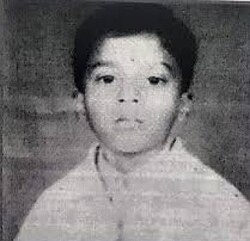
[[File:Jibanananda Das Old.jpg| | [[File:Child Jibanananda Das.jpg|thumb|left|Das in his childhood|207x207px]] | ||
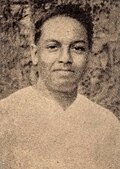
Das was born in 1899 in [[Barisal]], a district town in the [[British Raj]], into a Bengali [[Baidya]] family. His ancestors originated from the [[Bikrampur]] region (now [[Munshiganj District|Mushiganj]]) of the [[Dhaka Division]], from the now-extinct village of Gaupara in the kumarvog area of the [[Louhajang Upazila]] on the banks of the river [[Padma]].<ref name="Das,_P._2003_1">{{harvnb|Das, P.|2003|p=1}}</ref> Das' grandfather Sarbānanda Dāśagupta was the first to settle permanently in Barisal. He was an early exponent of the reformist [[Brahmo Samaj]] movement in Barisal and was highly regarded in town for his philanthropy. He erased the ''-gupta'' suffix from the family name, regarding it as a symbol of [[Vedic period|Vedic]] [[Brahmin]] excess, thus rendering the surname to ''Das''.<ref name="Das,_P._2003_2">{{harvnb|Das, P.|2003|p=2 | [[File:Jibanananda Das Old.jpg|250x250px|thumbnail|Young Jibanananda Das]] | ||
Das was born in 1899 in [[Barisal]], a district town in the [[British Raj]], into a Bengali [[Baidya]] family. His ancestors originated from the [[Bikrampur]] region (now [[Munshiganj District|Mushiganj]]) of the [[Dhaka Division]], from the now-extinct village of Gaupara in the kumarvog area of the [[Louhajang Upazila]] on the banks of the river [[Padma]].<ref name="Das,_P._2003_1">{{harvnb|Das, P.|2003|p=1}}</ref> Das' grandfather Sarbānanda Dāśagupta was the first to settle permanently in Barisal. He was an early exponent of the reformist [[Brahmo Samaj]] movement in Barisal and was highly regarded in town for his philanthropy. He erased the ''-gupta'' suffix from the family name, regarding it as a symbol of [[Vedic period|Vedic]] [[Brahmin]] excess, thus rendering the surname to ''Das''.<ref name="Das,_P._2003_2">{{harvnb|Das, P.|2003|p=2}}</ref> | |||
Jibanananda's mother [[Kusumkumari Das|Kusumakumārī Dāś]] | Jibanananda's father, Satyānanda Dāś, was a schoolmaster and publisher, and Jibanananda's mother, [[Kusumkumari Das|Kusumakumārī Dāś]], was a poet who explored social issues.<ref name="Das,_P._2003_6">{{harvnb|Das, P.|2003|p=6}}</ref>Jibanananda was the eldest son and had two siblings, Aśōkānanda and Sucharita. | ||
Jibanananda | === Education and Career === | ||
In 1919, Jibanananda received a BA Degree in English literature from [[Presidency College, Kolkata]]. He first poem appeared in the [[Boishakh]] issue of ''Brahmobadi'' journal. The poem was called ''Borsho-abahon'' (''Arrival of the New Year''). Jibanananda sometimes published his works under the pseudonyms Sri or Das Gupta.{{Citation needed|date=April 2024}} | |||
Jibanananda earned his MA Degree in English from the University of Calcutta in 1921, taught and tutored students in English, and published his first collection of poems called Jhara Palok (Fallen Feathers) in 1927.{{Citation needed|date=April 2024}} | |||
By the last year of his life, Jibanananda was acclaimed as one of the best poets of the post-Tagore era. In May 1954, he published a volume titled 'Best Poems' (Sreshttho Kobita), which won the Indian [[Sahitya Akademi]] Award in 1955.{{Citation needed|date=April 2024}} | |||
=== Life | === Personal Life === | ||
Jibanananda | In May 1930, Jibanananda married [[Labanyaprabha Das]] (née Gupta) and they had a daughter and son named Manjusree and Samarananda.{{Citation needed|date=May 2008}} Labanyaprabha was the daughter of Rohini Kumar Gupta and Sarojubala Gupta. Her paternal uncle was Acharya of the Brahmo Samaj in Dhaka.[[File:কবিতা ভবন থেকে প্রকাশিত বনলতা সেনের প্রথম সংস্করণ.jpg|thumb|First Edition of Banalata Sen published from Kavita Bhavan of [[Buddhadev Bose]]]] | ||
== Death and Legacy == | |||
During Jibanananda's evening walk on 14 October 1954, he was struck by a tram while crossing a road near Calcutta's [[Deshapriya Park]]. He was taken to Shambhunath Pundit Hospital, where he died eight days later.<sup>[''[[Wikipedia:Citation needed|citation needed]]'']</sup> | |||
[[File:কবিতা ভবন থেকে প্রকাশিত বনলতা সেনের প্রথম সংস্করণ.jpg|thumb|First Edition of Banalata Sen published from Kavita Bhavan of [[Buddhadev Bose]]]] | |||
= | |||
His body was cremated the following day at Keoratola crematorium.<ref>{{cite book |last=Das |first=Prabhatkumar |year=2003 |title=Jibanananda Das |edition=2nd |location=Calcutta |publisher=Poshchim-bongo Bangla Akademi |ref={{harvid|Das, P.|2003}}}}</ref> It has been alleged in some biographical accounts that his accident was actually an attempt at suicide.<ref>''আধুনিক বাঙলা কবিতা'' [Modern Bengali Poetry], ed. [[Humayun Azad]], {{oclc|60264629}}.</ref> | His body was cremated the following day at Keoratola crematorium.<ref>{{cite book |last=Das |first=Prabhatkumar |year=2003 |title=Jibanananda Das |edition=2nd |location=Calcutta |publisher=Poshchim-bongo Bangla Akademi |ref={{harvid|Das, P.|2003}}}}</ref> It has been alleged in some biographical accounts that his accident was actually an attempt at suicide.<ref>''আধুনিক বাঙলা কবিতা'' [Modern Bengali Poetry], ed. [[Humayun Azad]], {{oclc|60264629}}.</ref> | ||
During his lifetime he published only 269 poems in different journals and magazines, of which 162 were collected in seven anthologies, from ''Jhara Palak'' to ''Bela Obela Kalbela''.<ref>Chowdhury, Faizul Latif (editor) (1995), ''I have seen the Bengal's face – Poems from Jibanananda Das'', Creative Workshop, Chittagong (A collection of forty poems by Jibanananda Das, rendered into English by different translators).</ref> Many of his poems have been published posthumously at the initiative of his brother Asokananda Das, sister Sucharita Das and nephew Amitananda Das, and the efforts of Dr. Bhumendra Guha, who over the decades copied them from scattered manuscripts. By 2008, the total count of Jibananda's known poems stood at almost 800. In addition, numerous novels and short stories were discovered and published about the same time.<ref name="blt">''Beyond Land and Time'', ed. [[Faizul Latif Chowdhury]] and Golam Mustafa, 2008, Somoy Prokashon, Dhaka</ref> | |||
[[File:জীবনানন্দ দাশের লেখা ঝরা পালক কাব্যগ্রন্থের প্রথম সংস্করণ.jpg|thumb|Jibananda's first book 'Jhara Palak'|254x254px]] | |||
[[File:জীবনানন্দ দাশের লেখা ঝরা পালক কাব্যগ্রন্থের প্রথম সংস্করণ.jpg|thumb|Jibananda's first book 'Jhara Palak']] | |||
Jibanananda scholar [[Clinton B. Seely]] has termed Jibanananda Das as "Bengal's most cherished poet since [[Rabindranath Tagore]]".<ref>{{cite book |last=Seely |first=Clinton B. |author-link=Clinton B. Seely |year=1990 |title=A Poet Apart: A Literary Biography of the Bengali Poet Jibanananda Das (1899–1954) |location=Newark |publisher=[[University of Delaware Press]] |page=9 |isbn=9788186438138}}</ref> He was known as a [[surrealist poetry|surrealist poet]] for his spontaneous, frenzied overflow of subconscious mind in poetry and especially in diction.<ref>[https://www.thedailystar.net/news-detail-269709 Jibanananda Das, the foremost figure of surrealism. The Daily Star, Feb 20, 2013]</ref> | Jibanananda scholar [[Clinton B. Seely]] has termed Jibanananda Das as "Bengal's most cherished poet since [[Rabindranath Tagore]]".<ref>{{cite book |last=Seely |first=Clinton B. |author-link=Clinton B. Seely |year=1990 |title=A Poet Apart: A Literary Biography of the Bengali Poet Jibanananda Das (1899–1954) |location=Newark |publisher=[[University of Delaware Press]] |page=9 |isbn=9788186438138}}</ref> He was known as a [[surrealist poetry|surrealist poet]] for his spontaneous, frenzied overflow of subconscious mind in poetry and especially in diction.<ref>[https://www.thedailystar.net/news-detail-269709 Jibanananda Das, the foremost figure of surrealism. The Daily Star, Feb 20, 2013]</ref> | ||
| Line 127: | Line 83: | ||
* ''[[Banalata Sen (book)|Banalata Sen]]'', 1942. | * ''[[Banalata Sen (book)|Banalata Sen]]'', 1942. | ||
* ''Môhaprithibi'' (''Great Universe''), 1944. | * ''Môhaprithibi'' (''Great Universe''), 1944. | ||
[[File:Adobe Scan 08-Jul-2022 (1) 1.jpg|thumb|First Edition of Mahaprithibi]] | [[File:Adobe Scan 08-Jul-2022 (1) 1.jpg|thumb|First Edition of Mahaprithibi|319x319px]] | ||
* ''Shaat-ti Tarar Timir'', (''Darkness of Seven Stars''), 1948. | * ''Shaat-ti Tarar Timir'', (''Darkness of Seven Stars''), 1948. | ||
* ''Shreshtho Kobita'', (''Best Poems''), 1954: Navana, Calcutta. | * ''Shreshtho Kobita'', (''Best Poems''), 1954: Navana, Calcutta. | ||
| Line 225: | Line 181: | ||
{{DEFAULTSORT:Das, Jibanananda}} | {{DEFAULTSORT:Das, Jibanananda}} | ||
[[Category:Jibanananda Das| ]] | |||
[[Category:1899 births]] | [[Category:1899 births]] | ||
[[Category:1954 deaths]] | [[Category:1954 deaths]] | ||
| Line 247: | Line 204: | ||
[[Category:Indian male short story writers]] | [[Category:Indian male short story writers]] | ||
[[Category:20th-century Indian short story writers]] | [[Category:20th-century Indian short story writers]] | ||
[[Category:Indian male non-fiction writers]] | [[Category:Indian male non-fiction writers]] | ||
[[Category:Indian editors]] | [[Category:Indian editors]] | ||
| Line 254: | Line 210: | ||
[[Category:Brahmos]] | [[Category:Brahmos]] | ||
[[Category:Writers from Kolkata]] | [[Category:Writers from Kolkata]] | ||
[[Category:Recipients of the Sahitya Akademi Award in Bengali]] | [[Category:Recipients of the Sahitya Akademi Award in Bengali]] | ||
[[Category:Novelists from West Bengal]] | [[Category:Novelists from West Bengal]] | ||
Latest revision as of 03:12, 7 May 2026
 | This article has multiple issues. Please help improve it or discuss these issues on the talk page. (Learn how and when to remove these template messages)
|


Jibanananda Das | |
|---|---|
.jpg) Jibanananda Das | |
| Born | Jibanananda Das 17 February 1899 Bakerganj, Bengal Presidency, British Raj |
| Died | 22 October 1954 (aged 55) Calcutta, West Bengal, India |
| Occupation | Poet, writer, and professor |
| Language | Bengali |
| Nationality | British Indian (1899–1947) Indian (1947–1954) |
| Alma mater | Brajamohan College University of Calcutta |
| Genre | Poetry, novels, short stories, criticism |
| Literary movement | Bengali Modernism |
| Notable works | Banalata Sen, Rupasi Bangla, Akashlina, Banalata Sen, Campe, Bodh |
| Notable awards | Nikhil Banga Rabindra Sahitya Sammelan Award (1952) Sahitya Akademi Award (1955) |
| Spouse | Labanyaprabha Das (née Gupta) |
| Children | 2 |
| Relatives | Kusumkumari Das (mother) |
| Signature |  |
Jibanananda Das[lower-alpha 1] (17 February 1899 – 22 October 1954)[1] was an Indian poet and writer who wrote in the Bengali language. Often referred to as the Rupashi Banglar Kabi (lit. ''Poet of Beautiful Bengal''),[2][3] he is regarded as one of the most prominent Bengali poets after Rabindranath Tagore and Kazi Nazrul Islam, although he received limited recognition during his lifetime.[4][5][6][7]
Born in Barisal to a Bengali Hindu family, Das studied English literature at Presidency College, Kolkata, and earned a master's degree from Calcutta University.[8][3] He experienced persistent difficulty securing stable employment and faced financial hardship throughout his life. He taught at several colleges but never granted tenure. Following the partition of India, he permanently settled in Kolkata. Das died on 22 October 1954, eight days after being struck by a tram.[9] Witnesses had later reported that the tram had sounded its whistle, but Das did not stop and was hit. Some accounts have speculated that the incident may have been a suicide.[10]
Das was relatively unrecognised during his lifetime. Although he wrote profusely, he published little of his work, partly due to his introverted nature. Much of his writing remained unpublished,[3] and only seven volumes of his poetry appeared during his lifetime.[10] After his death, it was discovered that, in addition to poetry, Das had written 21 novels and 108 short stories. His notable works include Ruposhi Bangla, Banalata Sen, Mahaprithibi, and Shreshtha Kavita.[3] His early poetry reflects the influence of Kazi Nazrul Islam,[3] but by the latter half of the 20th century, his own work had become a major influence on the development of modern Bengali verse.[11]
Das received the Rabindra-Memorial Award for Banalata Sen in 1953 at the All Bengal Rabindra Literature Convention.[3] His collection Shrestha Kavita won the Sahitya Academy Award in 1955.[3] A film inspired by his short story Jamrultola, titled 'Sunder Jibon' and directed by Sandeep Chattopadhyay (Chatterjee), was produced by Satyajit Ray Film and Television Institute,[12][13] The film won the National Film Award for Best Short Fiction Film at the 50th National Film Awards, with Shantanu Bose in the lead role.
Biography[edit | edit source]
Early life[edit | edit source]


Das was born in 1899 in Barisal, a district town in the British Raj, into a Bengali Baidya family. His ancestors originated from the Bikrampur region (now Mushiganj) of the Dhaka Division, from the now-extinct village of Gaupara in the kumarvog area of the Louhajang Upazila on the banks of the river Padma.[14] Das' grandfather Sarbānanda Dāśagupta was the first to settle permanently in Barisal. He was an early exponent of the reformist Brahmo Samaj movement in Barisal and was highly regarded in town for his philanthropy. He erased the -gupta suffix from the family name, regarding it as a symbol of Vedic Brahmin excess, thus rendering the surname to Das.[15]
Jibanananda's father, Satyānanda Dāś, was a schoolmaster and publisher, and Jibanananda's mother, Kusumakumārī Dāś, was a poet who explored social issues.[16]Jibanananda was the eldest son and had two siblings, Aśōkānanda and Sucharita.
Education and Career[edit | edit source]
In 1919, Jibanananda received a BA Degree in English literature from Presidency College, Kolkata. He first poem appeared in the Boishakh issue of Brahmobadi journal. The poem was called Borsho-abahon (Arrival of the New Year). Jibanananda sometimes published his works under the pseudonyms Sri or Das Gupta.[citation needed]
Jibanananda earned his MA Degree in English from the University of Calcutta in 1921, taught and tutored students in English, and published his first collection of poems called Jhara Palok (Fallen Feathers) in 1927.[citation needed]
By the last year of his life, Jibanananda was acclaimed as one of the best poets of the post-Tagore era. In May 1954, he published a volume titled 'Best Poems' (Sreshttho Kobita), which won the Indian Sahitya Akademi Award in 1955.[citation needed]
Personal Life[edit | edit source]
In May 1930, Jibanananda married Labanyaprabha Das (née Gupta) and they had a daughter and son named Manjusree and Samarananda.[citation needed] Labanyaprabha was the daughter of Rohini Kumar Gupta and Sarojubala Gupta. Her paternal uncle was Acharya of the Brahmo Samaj in Dhaka.

Death and Legacy[edit | edit source]
During Jibanananda's evening walk on 14 October 1954, he was struck by a tram while crossing a road near Calcutta's Deshapriya Park. He was taken to Shambhunath Pundit Hospital, where he died eight days later.[citation needed]
His body was cremated the following day at Keoratola crematorium.[17] It has been alleged in some biographical accounts that his accident was actually an attempt at suicide.[18]
During his lifetime he published only 269 poems in different journals and magazines, of which 162 were collected in seven anthologies, from Jhara Palak to Bela Obela Kalbela.[19] Many of his poems have been published posthumously at the initiative of his brother Asokananda Das, sister Sucharita Das and nephew Amitananda Das, and the efforts of Dr. Bhumendra Guha, who over the decades copied them from scattered manuscripts. By 2008, the total count of Jibananda's known poems stood at almost 800. In addition, numerous novels and short stories were discovered and published about the same time.[20]

Jibanananda scholar Clinton B. Seely has termed Jibanananda Das as "Bengal's most cherished poet since Rabindranath Tagore".[21] He was known as a surrealist poet for his spontaneous, frenzied overflow of subconscious mind in poetry and especially in diction.[22]
Major works[edit | edit source]
Poetry[edit | edit source]
- Jhôra Palok (Fallen Feathers), 1927.
- Dhusar Pandulipi (Grey Manuscript), 1936.
- Banalata Sen, 1942.
- Môhaprithibi (Great Universe), 1944.
_1.jpg)
- Shaat-ti Tarar Timir, (Darkness of Seven Stars), 1948.
- Shreshtho Kobita, (Best Poems), 1954: Navana, Calcutta.
- Ruposhi Bangla (Bengal, the Beautiful), written in 1934, published posthumously in 1957.
- Bela Obela Kalbela (Times, Bad Times, End Times), 1961, published posthumously but the manuscript was prepared during lifetime.
- Sudorshona(The beautiful), published posthumously in 1973: Sahitya Sadan, Calcutta.
- Alo Prithibi (The World of Light), published posthumously in 1981: Granthalaya Private Ltd., Calcutta.
- Manobihangam (The Bird that is my Heart), published posthumously in 1979: Bengal Publishers Private Ltd. Calcutta.
- Oprkashitô Ekanno (Unpublished Fifty-one), published posthumously in 1999, Mawla Brothers, Dhaka.
- Krishna Dasami, Pathak Samabesh, Dhaka. published posthumously in 2015.
- Surya Osuryaloke, Suchoyoni, Dhaka. published posthumously in 2021.
Major collected texts[edit | edit source]
- Bandopdhaya, Deviprasad : Kabya Songroho − Jibanananda Das (tr. Collection of Poetry of Jibanananda Das), 1993, Bharbi, 13/1 Bankim Chatterjje Street, Kolkata-73.
- Bandopdhaya, Deviprasad : Kabya Songroho − Jibanananda Das (tr. Collection of Poetry of Jibanananda Das), 1999, Gatidhara, 38/2-KA Bangla Bazaar, Dhaka-1100, Bangladesh.
- Bandopdhaya, Deviprasad : Jibanananda Das Uttorparba (1954–1965), 2000, Pustak Bipani, Calcutta.
- Chowdhury, Faizul Latif (editor) (1990), Jibanananda Das'er Prôbôndha Sômôgrô, (tr: Complete non-fictional prose works of Jibanananda Das), First edition : Desh Prokashon, Dhaka.
- Chowdhury, Faizul Latif (editor) (1995), Jibanananda Das'er Prôbôndha Sômôgrô, (tr: Complete non-fictional prose works of Jibanananda Das), Second edition : Mowla Brothers, Dhaka.
- Chowdhury, F. L. (ed) : Oprokashito 51 (tr. Unpublished fifty one poems of Jibanananda Das), 1999, Mawla Brothers, Dhaka.
- Shahriar, Abu Hasan : Jibanananda Das-er Gronthito-Ogronthito Kabita Samagra, 2004, Agaami Prokashoni, Dhaka.
Books on Jibanananda[edit | edit source]
- (1965) 'Ekti Nakkhatro Ase', Ambuj Basu, Mousumi.
- (1970) 'Kobi Jibanananda Das', Sanjay Bhattacharya, Varbi.
- (1971) 'Jibanananda (ek khando)', Gopal Chandra Roy, Sahittya Sadan;
- 'Manus Jibanananda', Labanya Das, Bengal Publishers;
- 'Jibanananda Smriti', Debkumar Basu edited, Karuna Prokasani.
- (1972) 'Suddhatamo Kobi', Abdul Mannan Saiyad, Knowledge Home, Dhaka; 'Rupasi Banglar Kobi Jibanananda', Bijan Kanti Sarkar, Bijoy Sahitya Mandir; 'Rupasi Banglar Kobi Jibanananda', Shaymapada Sarkar, Kamini Prokasan.
- (1973) 'Jibanananda das', edited by Birendra Bhattacharya, Onnisto.
- (1975) 'Kobi Jibanananda', Suddhaswatto Basu, Sankha Prokasan.
- (1976) 'Jibanishilpi Jibanananda Das', Asadujjan, Bangladesh Book Corporation, Dhaka.
- (1979) 'Rupasi Banglar Kobi Jibanananda', Bijan Kanti Sarkar, Bijoy Sahitya Mandir; 'Rupasi Banglar Kobi Jibanananda', Shyamapada Sarkar, Kamini Prokashan.
- (1980) 'Rupasi Banglar Dui Kobi', Purnendu Patri, Ananda Publishers Ltd.
- (1983) 'Kacher Manus Jibanananda', Ajit Ghose, Bijoy Krishna Girls' College Cheap Store;'Rabindranath Najrul Jibanananda ebong aekjon Probasi Bangali', Kalyan Kumar Basu, Biswagaen;'Adhunikata, Jibanananda o Porabastob', Tapodhir Bhattacharya and Swapna Bhattacharya, Nobark;'Jibananander Chetona Jagot', Pradumno Mitra, Sahityshri;'Jibanananda Das:Jiboniponji o Granthoponji', Provat Kumar Das, Hardo;'Prosongo:Jibanananda', Shibaji Bandopadhaya, Ayon.
- (1984) 'Jibanananda', Amalendu Basu, Banishilpo,;'Uttor Probesh', Susnato Jana;'Jibanananda', edited by Abdul Manna Sayad, Charitra, Dhaka;'Jibanananda Prasongiki', Sandip Datta, Hardo,
- (1985) 'Ami sei Purohit', Sucheta Mitra, A.Mukherji and Co;'Probondhokar Jibananada', Subrata Rudro, Nath Publishing;'Jibanananda Jiggasa', edited by Tarun Mukhopadhaya, pustok Biponi.
- (2003) 'Jibananda : Kabitar Mukhamukhi', Narayan Haldar.
- (2005) 'Amar Jibanananda', Dr. Himabanta Bondopadhyay, Bangiya Sahitya Samsad.
- (2008) 'Essays on Jibanananda Das', edited by Chowdhury F. L., Pathak Samabesh, Dhaka.
- (2009) 'Etodin Kothay Chilen', Anisul Hoque.
- (2014) 'Jibananander Andhokaare', Rajib Sinha, Ubudash, Kolkata-12.
- Ekjon Komolalebu (Reincarnation as an Orange: The Story of Jibanananda), Sahaduzzaman
Awards[edit | edit source]
The Kolkata Poetry Confluence, in collaboration with Bhasha Samsad, has instituted the Jibanananda Das Award for poetry translation.[23] Jibanananda Das awards for translation were given away in ten different languages.[24]
A literary award named Jibanananda Puroshkar, also known as the Jibanananda Prize, has been instituted in Bangladesh.[25] It confers annual awards to the best works of poetry and prose by Bangladeshi authors.[26]
Footnotes[edit | edit source]
- ↑ Bengali pronunciation: ['dʒibonˌanondoː daʃ]
Citations[edit | edit source]
- ↑ Sengupta, Subodh Chandra; Basu, Anjali, eds. (1988) [First published 1976]. জীবনানন্দ দাশ [Jibanananda Das]. Saṃsada bāṅāli caritābhidhāna (in Bengali). Vol. 1 (2nd ed.). Kolkata: Sahitya Samsad. p. 179.
{{cite encyclopedia}}: Unknown parameter|script-encyclopedia=ignored (help); Unknown parameter|trans-encyclopedia=ignored (help) - ↑ "Banglar Mukh Ami Dekhiyachi" বাংলার মুখ আমি দেখিয়াছি [I've Seen the Face of Bengal]. Prothom Alo (in Bengali). Transcom Group. 23 April 2017. Retrieved 7 June 2018.
- ↑ 3.0 3.1 3.2 3.3 3.4 3.5 3.6 Islam, Sirajul, ed. (2012). "Das, Jibanananda". Banglapedia: the National Encyclopedia of Bangladesh (2nd ed.). Dhaka: Asiatic Society of Bangladesh.
- ↑ Murshid, Ghulam (2016). "Bangla Bhasha o Sahitya" বাংলা ভাষা ও সাহিত্য [Bengali Language and Literature]. Hajar Bacharer Bangali Sangskriti হাজার বছরের বাঙালি সংস্কৃতি [Bengali Culture across the Millennia] (in Bengali). Dhaka: Abasar. p. 316. ISBN 978-984-415-190-1.
- ↑ "Barishale Jibanananda Mela" বরিশালে জীবনানন্দ মেলা [Jibanananda Fair in Barishal]. Prothom Alo (in Bengali). Dhaka: Transcom Group. 6 December 2015. Archived from the original on 7 June 2018. Retrieved 7 June 2018.
বাংলা সাহিত্যে রবীন্দ্রনাথ ও নজরুল ইসলামের পর শ্রেষ্ঠ কবি জীবনানন্দ দাশ। নতুন প্রজন্ম জীবনানন্দ দাশকে ভুলতে বসেছে। জীবনানন্দের প্রকৃতি প্রেম ও দর্শন নতুন প্রজন্মের মধ্যে ছড়িয়ে দিতে হবে। ... বলেন রবীন্দ্র ভারতী বিশ্ববিদ্যালয়ের সাবেক উপাচার্য পবিত্র সরকার। Jibanananda Das is the greatest poet after Rabindranath and Nazrul Islam. The young generation is forgetful of Jibanananda. We should promulgate his love and view of nature among the new generations. ... said Pabitra Sarkar, the ex-VC of Rabindra Bharati University.
- ↑ জীবনানন্দ দাশের কবিতার সংখ্যা কত?. Alokita Bangladesh (in Bengali). Retrieved 7 June 2018.
- ↑ Salekeen, Seraj (2018). Jibanananda Das জীবনানন্দ দাশ. Jibani Granthamal [Biography Series] (in Bengali). Dhaka: Kathaprokash. p. 7.
আমৃত্যু নির্জন, অথচ মৃত্যুপরবর্তী কিছুকালের মধ্যে সমকালীন বাংলা কবিতার অন্যতম জনপ্রিয় কবিতে পরিণত হন জীবনানন্দ দাশ। Despite being desolate till death, Jibanananda Das became one of the popular poets of contemporary Bengali poems immediately after his death.
- ↑ Alexander, Meena, ed. (2018). Name me a word: Indian writers reflect on writing. New Haven: Yale University Press. pp. 42–46. ISBN 978-0-300-22258-6.
- ↑ Salekeen, Seraj (2018). Jibanananda Das জীবনানন্দ দাশ. Jibani Granthamal [Biography Series] (in Bengali). Dhaka: Kathaprokash. p. 80.
- ↑ 10.0 10.1 Syed, Abdul Mannan, ed. (1998). "Parishishta". Jibanananda Daser Prakashita-Aprakashita KabitaSamagra (in Bengali). Dhaka: Abasar. p. 618. ISBN 984-446-008-5.
- ↑ Das Gupta, Chidananda (1972). Jibanananda Das. Makers of Indian Literature. New Delhi: Sahitya Akademi. p. 13. OCLC 313728800.
For the younger generation of Bengali poets today, he [Das] has practically come to take the place of Tagore. His influence on them is all-pervading.
- ↑ Sundar Jeebon | National Award winning short film | A diploma film@SRFTI, 20 June 2017, retrieved 9 March 2021
- ↑ Chatterjee, Sandeep (3 May 2002), Sundar Jeebon (Short), Debolina Addhya, Ardhendu Banerjee, Santanu Bose, Sharmistha Chakravarty, Satyajit Ray Film and Television Institute, retrieved 9 March 2021
- ↑ Das, P. 2003, p. 1
- ↑ Das, P. 2003, p. 2
- ↑ Das, P. 2003, p. 6
- ↑ Das, Prabhatkumar (2003). Jibanananda Das (2nd ed.). Calcutta: Poshchim-bongo Bangla Akademi.
- ↑ আধুনিক বাঙলা কবিতা [Modern Bengali Poetry], ed. Humayun Azad, OCLC 60264629.
- ↑ Chowdhury, Faizul Latif (editor) (1995), I have seen the Bengal's face – Poems from Jibanananda Das, Creative Workshop, Chittagong (A collection of forty poems by Jibanananda Das, rendered into English by different translators).
- ↑ Beyond Land and Time, ed. Faizul Latif Chowdhury and Golam Mustafa, 2008, Somoy Prokashon, Dhaka
- ↑ Seely, Clinton B. (1990). A Poet Apart: A Literary Biography of the Bengali Poet Jibanananda Das (1899–1954). Newark: University of Delaware Press. p. 9. ISBN 9788186438138.
- ↑ Jibanananda Das, the foremost figure of surrealism. The Daily Star, Feb 20, 2013
- ↑ "Kolkata Poetry Confluence – Multilingual Poetry Translation Awards". Antonym Magazine. 19 February 2022. Retrieved 31 August 2022.
- ↑ "Kolkata Poetry Confluence – Translation Awards Announcement". Kolkota Poetry Confluence. Retrieved 31 August 2022.
- ↑ Sushanta Ghosh (12 October 2014). "Festival for distributing Jibanananda Prize". The Daily Star. Retrieved 2 September 2022.
- ↑ "Jewel Mazhar and Abdul Mannan get Jibanananda Puroshkar". Bangla News. 18 February 2019. Retrieved 2 September 2022.
Further reading[edit | edit source]
Biography[edit | edit source]
- Bhattacharya, Bitoshoke (2001), Jibanananda, Banishilpo Publishers, Kolkata.
- Banerjee, Deviprarad (1986), Jibanananda Das – Bikaash Protishthaar Itirbitta (tr: A chronicle of development and achievements of Jibanananda Das), Bharat Book Agency, Calcutta.
- Seely, Clinton B. : 'A Poet Apart' (A comprehensive literary biography of Jibanananda Das), 1990, Associated University Press Ltd, USA
- Ray, Gopal (1971), Jibanananda, Sahitya Sadan, Calcutta.
- Das, Prabhatkumar (2003), Jibanananda Das (2nd edition), Poshchim-bongo Bangla Akademi, Calcutta.
- Dassarma, Pradip (2009), Nil Hawar Samudre: a biographical novel on Jibanananda Das, Pratibhash Publishers, Kolkata
Literary analysis[edit | edit source]
- Bose, Ambuj (1965), Ekti Nakshetra Ashe (tr. A star arrives), Mausumi, Calcutta.
- Chowdhury, Faizul Latif (editor) (1994), Jibanananda Das'er "Aat bochor aager ekdin", Dibbyo Prokash, Dhaka.
- Chowdhury, Faizul Latif (editor) (1995), Jibanananda Das'er "Godhuli-shondhi'r Nritto", Dibbyo Prokash, Dhaka.
- Chowdhury, Faizul Latif (editor) (1999), Jibanananda Das'er "Mrityur Aage, Dibbyo Prokash, Dhaka.
- Chowdhury, Faizul Latif (editor) (1999), Jibanananda Bibechona, Anya Prokash, Dhaka.
- Chowdhury, Faizul Latif (editor) (2000), Proshôngo Jibanananda, Dibbyo Prokash, Dhaka.
- Chowdhury, Pranab (editor) (2001), Jibanananda Niye Probôndho (tr: Essays on Jibanananda), Jatiyo Grontho Prokashon, Dhaka
- Das, Prabhatkumar (1999), Jibanananda Das, Poshchim-bongo Bangla Akademi, Kolkata.
- Dutta, Birendra (2005), Jibanananda: Kobi Gôlpokar (tr: Jibanananda: Poet and Short Story Writer), Pustok Biponi, Kolkata .
- Gupta, Dr. Kshetra (2000), Jibanananda: Kobitar Shorir, Shahitto Prokash, Kolkata.
- Mukhopadhyay, Kamal (editor) (1999), Jibanananda Onnikhon, Shilindhro Prokashon, Kolkata
- Roychoudhury, Samir (editor) (2001), Postmodern Bangla Poetry, Haowa#49 Publishers, Kolkata.
- Rudro, Subrata (1985), Probôndhokar Jibanananda (tr: Jibanananda the Essayist), Nath Publishing, Kolkata
- Roychoudhury, Malay (2002), Postmodern Jibanananda, Graffiti Publishers, Kolkata.
- Shahriar, Abu Hasan (editor) (2003), Jibanananda Das: Mullayon o Patthodhhar (tr: Jibanananda Das: Assessment and Critical Readings), Shahitto Bikash, Dhaka
- Syed, Abdul Mannan (editor) and Hasnat, Abul (editor) (2001), Jibanananda Das: Jônmo-shôtobarshik Sharok-grontho, Ôboshôr Prokashona Shôngstha, Dhaka.
- Sinha, Rajib (2014),'Jibananander Andhokaare', Ubudash, Kolkata-12.ISBN 978-93-82982-10-4
- Chowdhury, Faizul Latif (editor) (2022), Jibanananda Patrabali (letters of Jibanananda Das), Pathak Samabesh, Dhaka.
External links[edit | edit source]
- Pages with Bengali IPA
- Articles needing additional references from January 2026
- Jibanananda Das
- 1899 births
- 1954 deaths
- 20th-century Bengali poets
- Bengali male poets
- Bengali-language poets
- Bengali-language novelists
- Brojomohun College alumni
- Presidency University, Kolkata alumni
- Academic staff of the University of Calcutta
- Academic staff of City College, Kolkata
- Academic staff of Government Prafulla Chandra College
- Indian male poets
- 20th-century Indian poets
- 20th-century Indian novelists
- Indian male novelists
- Bengali nationalists
- 20th-century Indian male writers
- Indian male essayists
- 20th-century Indian essayists
- Indian literary critics
- Indian male short story writers
- 20th-century Indian short story writers
- Indian male non-fiction writers
- Indian editors
- Indian magazine editors
- Indian lecturers
- Brahmos
- Writers from Kolkata
- Recipients of the Sahitya Akademi Award in Bengali
- Novelists from West Bengal
- Ramjas College alumni
- Writers from Barisal
- Academics from Barisal
- Academic staff of Government Brojomohun College
- Brojo Mohon School alumni