


Ajay Kumar (talk | contribs) Add new article Tag: self-published-blog |
brief enhanced article to improve readability additionally and corrected details |
||
| Line 1: | Line 1: | ||
{{Short description|Indian dynasty}} | |||
{{Use dmy dates|date=April 2019}} | {{Use dmy dates|date=April 2019}} | ||
{{Use Indian English|date=April 2019}} | {{Use Indian English|date=April 2019}} | ||
| Line 11: | Line 12: | ||
|flag_s1 = | |flag_s1 = | ||
|s2 = | |s2 = | ||
|capital = Mayurpuri ([[Morvi]]), [[Shrinagar, Porbandar|Shrinagar]], [[Dhank Caves|Dhank]], [[Chhaya (city)|Chhaya]], [[Ghumali|Ghumli]], [[ | |capital = Mayurpuri ([[Morvi]]), [[Shrinagar, Porbandar|Shrinagar]], [[Dhank Caves|Dhank]], [[Chhaya (city)|Chhaya]], [[Ghumali|Ghumli]], [[Ranapur, Gujarat|Ranapur]], [[Porbandar]] | ||
|common_languages = [[Sanskrit]], [[Prakrit]], [[Old Gujarati language|Old Gujarati]], | |common_languages = [[Sanskrit]], [[Prakrit]], [[Old Gujarati language|Old Gujarati]], | ||
|religion = [[Hinduism]] | |religion = [[Hinduism]] | ||
| Line 23: | Line 24: | ||
==Origin== | ==Origin== | ||
[[File:TodRoyalRaces1892.png|thumb|Tod's 1829 listing of the [[36 royal races]] mentions Jaitwa, Jethwa also as Camari | [[File:TodRoyalRaces1892.png|thumb|Tod's 1829 listing of the [[36 royal races]] mentions Jaitwa, Jethwa also as Camari]] | ||
'''Jethwa''' (or '''Jethva''', '''Jatava, Jaitwa''' | '''Jethwa''' (or '''Jethva''', '''Jatava, Jaitwa''' or '''Camari''',.<ref name=R>[http://www.gutenberg.org/files/20583/20583-h/20583-h.htm Jaitwa or Camari.—; one of the thirty-six royal races mentioned by Colonel Tod.] The Tribes and Castes of the Central Provinces of India—Volume I (of IV), by R.V. Russell</ref> | ||
The Jethwa claim their descent from [[Makardhwaja]], son of [[Hanuman]].<ref name=Z/><ref name=v>[https://books.google.com/books?id=WjtLAAAAYAAJ The annals and antiquities of Rajastʾhan: or the central and western Rajpoot states of India]</ref><ref name=c/ | The Jethwa claim their descent from [[Makardhwaja]], son of [[Hanuman]].<ref name=Z/><ref name=v>[https://books.google.com/books?id=WjtLAAAAYAAJ The annals and antiquities of Rajastʾhan: or the central and western Rajpoot states of India]</ref><ref name=c/> As per folk tales of their clan, Makardhwaja had a son named Mod-dhwaja and he had a son named Jethi-dhwaja.<ref name=Z/> Jethwas claim descent and name from Jethi-dhwaja and worship Hanuman as their [[Iṣṭa-devatā (Hinduism)|Iṣṭa-devatā]].<ref name=Z/> | ||
[[File:Drapeau Porbandar.png|thumb|Image of Merchant Navy flag of Princely State of [[Porbandar]] adopted by Jethwa rulers of the Kingdom, showing image of [[Hanuman]], from whom the Jethwas claim their descant.]] | [[File:Drapeau Porbandar.png|thumb|Image of Merchant Navy flag of Princely State of [[Porbandar]] adopted by Jethwa rulers of the Kingdom, showing image of [[Hanuman]], from whom the Jethwas claim their descant.]] | ||
| Line 32: | Line 33: | ||
Jethwa dynasty of [[Porbandar]], therefore, had image of Hanuman on the Merchant Navy Flag adapted in 1923.<ref name=Z>''Shree Kutch Gurjar Kshatriya Samaj : A brief history & glory of our Fore-fathers: Section: History of Rajput Surnames, their origin and myths : sub-section : History of Jethwas : by Raja Pawan Jethwa (2007). pp 81–82.''</ref> Also the ''Coat of Arms'' had the image of Hanuman in the centre.<ref name=Z/> | Jethwa dynasty of [[Porbandar]], therefore, had image of Hanuman on the Merchant Navy Flag adapted in 1923.<ref name=Z>''Shree Kutch Gurjar Kshatriya Samaj : A brief history & glory of our Fore-fathers: Section: History of Rajput Surnames, their origin and myths : sub-section : History of Jethwas : by Raja Pawan Jethwa (2007). pp 81–82.''</ref> Also the ''Coat of Arms'' had the image of Hanuman in the centre.<ref name=Z/> | ||
Further, it is said that Muslim governors of [[Sindh]] in 7th century repeatedly sent naval armed ships to conquer the western and southern coast of Gujarat, which were again and again repulsed by the "[[Saindhava | Further, it is said that Muslim governors of [[Sindh]] in 7th century repeatedly sent naval armed ships to conquer the western and southern coast of Gujarat, which were again and again repulsed by the "[[Saindhava]]s" who called themselves "masters of the Western sea" ''Apara Samudradhipati'' (apara-samudr-ddhipati) . It has been suggested that the Saindhava ruling family also known as Jayadrathas is now represented by the Jethwa Rajputs.<ref name=Z/><ref>[https://books.google.com/books?id=bnZDAAAAYAAJ&q=jethwa+also+called+themselves] Ancient India by Ramesh Chandra Majumdar 1964</ref> | ||
Captain Wilberforce Bell opines that their ancestors were probably [[Scythian]]s from the north. However, [[Gaurishankar Ojha]] opines Jethwas were probably a branch of [[Pratihar]]s of [[Kannauj]].<ref name=c>[https://books.google.com/books?id=NYK7ZSpPzkUC&q=JETHWA&pg=PA54] The Rajputs of Saurashtra By Virbhadra Singhji</ref> | Captain Wilberforce Bell opines that their ancestors were probably [[Scythian]]s from the north {{Citation needed|date=June 2025}}. However, [[Gaurishankar Ojha]] opines Jethwas were probably a branch of [[Pratihar]]s of [[Kannauj]].<ref name="c">[https://books.google.com/books?id=NYK7ZSpPzkUC&q=JETHWA&pg=PA54] The Rajputs of Saurashtra By Virbhadra Singhji</ref> | ||
Further, many historians are of a view that Jethwa Rajputs have deep association with [[Mer people]] since time immemorial, who are only the Senior (''Jethwa'') or ''rajakula'' (royal clan) of the Mers.<ref>{{cite | Further, many historians are of a view that Jethwa Rajputs have deep association with [[Mer people]] since time immemorial, who are only the Senior (''Jethwa'') or ''rajakula'' (royal clan) of the Mers.<ref>{{cite book | url=https://books.google.com/books?id=f1vJRjCl8HkC&q=jethwa+ | title=Journal of the Royal Asiatic Society of Great Britain and Ireland | publisher=Cambridge University Press for the Royal Asiatic Society | year=1905 | access-date=27 April 2019}}</ref><ref>The political history of the Hūṇas in India by Atreyi Biswas, 1973</ref> The Mer have always been confidential and supported Jethwas in times of war and peace. It was the custom that when a Rana of Porbandar ascended the [[throne]] or Gaddi, the leader of the Mer people would cut the tip of his little finger and make a [[Tilaka|tilak]] with his blood on the forehead of the Rana.<ref>Encyclopaedia Indica: India, Pakistan, Bangladesh, Volume 100</ref><ref>The history of Kathiawad from the earliest times by Harold Wilberforce-Bell</ref><ref name="j">Jubilee volume (1937) Anthropological society of Bombay</ref> | ||
==History== | ==History== | ||
{{ | {{Further|Porbandar State}} | ||
Ghumali, which was earlier capital of Saindhvas has been Jethwa's bastion and capital since the time dynasty was founded in early 7th Century around 620 by Shil Kumar Jethwa,<ref>{{cite book |last1=Nanavati |first1=J. M. |title=Legacy of Gujarat |date=2003 |publisher=Team Spirit (India) Pvt. Limited |isbn=978-81-7897-015-8 |pages=72–73 |url=https://books.google.com/books?id=3Y5uAAAAMAAJ&q=jethwa+SHIL+KUMAR |access-date=24 June 2023 |language=en}}</ref> who later helped Angagapala ruler of Delhi win a war. In return of the help Anagapal married her daughter with him. The area ruled by Jethwa's was traditionally today known as [[Barda Hills]] was historically known as Jyeshthukadesh, meaning land of Jethwa's.<ref>{{cite book |title=Gazetteers: Junagadh |date=1975 |publisher=Directorate of Government Print., Stationery and Publications |pages=185, 186, 187 |url=https://books.google.com/books?id=KpBuAAAAMAAJ&q=jyeshthukadesh+jethwa |access-date=24 June 2023 |language=en}}</ref> The other towns founded by them are where they shifted their capital temporarily after dislodged from [[Morvi]] in 900 AD, were with times shifting to [[Shrinagar, Porbandar|Shrinagar]], [[Dhank]], [[Chhaya (city)|Chhaya]], [[Ghumali|Ghumli]], [[Ranapur, Gujarat|Ranapur]] and lastly to [[Porbandar]] (from 1685 till 1947). They were the first rulers of the [[Saurashtra (region)|Saurashtra]] area of Western [[Gujarat]].<ref name=tv>{{cite book |title=Handbook for Travellers in India, Burma and Ceylon Including AllBritish India, the Portuguese and French Possessions, and the Indian States |date=1929 |publisher=J. Murray |pages=249 |url=https://books.google.com/books?id=2rkr3PrlyCQC&dq=srinagar+jethwa+capital&pg=PA249 |access-date=27 February 2024 |language=en}}</ref> | |||
Ghumali, which was earlier capital of Saindhvas has been Jethwa's bastion and capital since the time dynasty was founded in early 7th Century around 620 by Shil Kumar Jethwa,<ref>{{cite book |last1=Nanavati |first1=J. M. |title=Legacy of Gujarat |date=2003 |publisher=Team Spirit (India) Pvt. Limited |isbn=978-81-7897-015-8 |pages=72–73 |url=https://books.google.com/books?id=3Y5uAAAAMAAJ&q=jethwa+SHIL+KUMAR |access-date=24 June 2023 |language=en}}</ref> who later helped Angagapala ruler of Delhi win a war. In return of the help | |||
Jethwas seem to have entered from North West, that is, [[Sindh]] and [[Kutch]] to [[Saurashtra (region)|Saurashtra]] in the 9th century AD and are oldest ruling clan of Peninsula. It is accepted by almost all historians that Jethwas established their rule in Saurashtra in around 900 AD and founded the city of [[Morvi]] as their Capital. [[Morvi]] was earlier known by name of Mayurpuri, named after its founder the Jethwa ruler Mayur-dhwaja. They spread further westward and captured [[Dwarka]] from [[Chawda]]s moved further and established the towns of Nagnah, [[Ghumli]], [[Bhanvad]], Chhaya, Dhank, Laodhva, Ranpur with colonies at [[Miani, Gujarat|Miani]] and [[Shrinagar, Porbandar|Shrinagar]] on the coast. During the time of [[Mahmud of Ghazni]], the Jethwas controlled all the west and north of the [[Kathiawar]].<ref name=Z/><ref name=c/> | Jethwas seem to have entered from North West, that is, [[Sindh]] and [[Kutch]] to [[Saurashtra (region)|Saurashtra]] in the 9th century AD and are oldest ruling clan of Peninsula. It is accepted by almost all historians that Jethwas established their rule in Saurashtra in around 900 AD and founded the city of [[Morvi]] as their Capital. [[Morvi]] was earlier known by name of Mayurpuri, named after its founder the Jethwa ruler Mayur-dhwaja. They spread further westward and captured [[Dwarka]] from [[Chawda]]s moved further and established the towns of Nagnah, [[Ghumli]], [[Bhanvad]], Chhaya, Dhank, Laodhva, Ranpur with colonies at [[Miani, Gujarat|Miani]] and [[Shrinagar, Porbandar|Shrinagar]] on the coast. During the time of [[Mahmud of Ghazni]], the Jethwas controlled all the west and north of the [[Kathiawar]].<ref name=Z/><ref name=c/> | ||
Colonial ethnographer [[James Tod]] in his 1832 ''The annals and antiquities of Rajastʾhan:or the central and western Rajpoot states of India'' includes Jethwa among the [[36 royal races]] of ancient India and also names Jethwa or Jatava as Camari. | Colonial ethnographer [[James Tod]] in his 1832 ''The annals and antiquities of Rajastʾhan:or the central and western Rajpoot states of India'' includes Jethwa among the [[36 royal races]] of ancient India and also names Jethwa or Jatava as Camari. Further, Colon James Todd opines that Jethwas come from old marital races of Indian Peninsula and were called Kanwar till the 8th century. Some Jethwa rulers suffixed Kanwar after their name and hence were also known as Kanwars or Kumars.<ref name="G">[https://books.google.com/books?id=NygbAAAAIAAJ&q=+%27desh%27] Gujarat State gazetteers, Volume 11, 1975.</ref><ref name="Tod">[https://books.google.com/books?id=WjtLAAAAYAAJ] The annals and antiquities of Rajastʾhan:or the central and western Rajpoot states of India, Volume 1 by James Tod, 1899</ref> | ||
Sangaji was a Jethwa ruler from 1120 to 1150,<ref name=o>[http://www.uq.net.au/~zzhsoszy/ips/p/porbandar.html PORBANDAR STATE : RULERS : JETHWA :PREDECESSORS AND SHORT HISTORY]</ref> who defeated the army of Virdhaval Vaghela, (the founder of [[Vaghela dynasty]]) near [[Morvi]] in 1125. Virdhaval, defeated, married his daughter and surrendered his title of [[Rana (title)|Rana]] to Sangaji Jethwa. The title of Rana has been held by ''Jethwas'' rulers ever-since till last Rana died in 1979 without an heir.<ref name=Z/><ref name=l>{{cite book|title=Gujarat State Gazetteers: Junagadh District|author=Gujarat (India)|date=1975|publisher=Directorate of Government Print., Stationery and Publications, Gujarat State|url=https://books.google.com/books?id=NygbAAAAIAAJ|access-date=12 October 2014}}</ref> | Sangaji was a Jethwa ruler from 1120 to 1150,<ref name=o>[http://www.uq.net.au/~zzhsoszy/ips/p/porbandar.html PORBANDAR STATE : RULERS : JETHWA :PREDECESSORS AND SHORT HISTORY]</ref> who defeated the army of Virdhaval Vaghela, (the founder of [[Vaghela dynasty]]) near [[Morvi]] in 1125. Virdhaval, defeated, married his daughter and surrendered his title of [[Rana (title)|Rana]] to Sangaji Jethwa. The title of Rana has been held by ''Jethwas'' rulers ever-since till last Rana died in 1979 without an heir.<ref name=Z/><ref name=l>{{cite book|title=Gujarat State Gazetteers: Junagadh District|author=Gujarat (India)|date=1975|publisher=Directorate of Government Print., Stationery and Publications, Gujarat State|url=https://books.google.com/books?id=NygbAAAAIAAJ|access-date=12 October 2014}}</ref> | ||
Jethwas lost Morvi, when they were defeated by invading army of [[Qutb-ud-din Aibak]] in year 1193.<ref name=c/> Jethwas shifted to Nagnah and they later established their rule and founded [[Ghumali|Ghumli]], under Sal Kumar. The rulers of Ghumli were also called Kumarants.<ref name=d>[https://books.google.com/books?id=gP0HAQAAIAAJ&q=ghumli+] The history of Kathiawad from the earliest times by Harold Wilberforce-Bell on Scythian coins the word " Kumar " frequently appears, and from bardic legends we find that after the founding of Ghumli in the seventh century by Shil Kumar Jethwa, the rulers of Ghumli were recognized as being Kumarants]</ref> | Jethwas lost Morvi, when they were defeated by invading army of [[Qutb-ud-din Aibak]] in year 1193.<ref name=c/> Jethwas shifted to Nagnah and they later established their rule and founded [[Ghumali|Ghumli]], under Sal Kumar. The rulers of Ghumli were also called Kumarants.<ref name="d">[https://books.google.com/books?id=gP0HAQAAIAAJ&q=ghumli+] The history of Kathiawad from the earliest times by Harold Wilberforce-Bell on Scythian coins the word " Kumar " frequently appears, and from bardic legends we find that after the founding of Ghumli in the seventh century by Shil Kumar Jethwa, the rulers of Ghumli were recognized as being Kumarants]</ref> | ||
In later years Vajesinh Jethwa alias Wajosinh, who ruled from years 1220–1245,<ref name=o/> was a brave warrior, who was truly known as [[Lion|Sinh]] and held considerable influence on Vishaldeo Vaghela.<ref name=l/> | In later years Vajesinh Jethwa alias Wajosinh, who ruled from years 1220–1245,<ref name=o/> was a brave warrior, who was truly known as [[Lion|Sinh]] and held considerable influence on Vishaldeo Vaghela.<ref name=l/> | ||
Ghumli was declared as second Capital by Jethwa dynasty, in 1220 by Rana Shiyaji, who took the title of Rana of Ghumli and shifted capital from [[Shrinagar, Porbandar|Shrinagar]] | Ghumli was declared as second Capital by Jethwa dynasty, in 1220 by Rana Shiyaji, who took the title of Rana of Ghumli and shifted capital from [[Shrinagar, Porbandar|Shrinagar]]<ref name=tv/> Ghumli remained their Capital till 1313, when Rana Bhanji Jethwa, was defeated at a war, he fled Ghumli & shifted to [[Ranpur, Gujarat|Ranpur]]. It is said that Ghumli was destroyed due to curse of a [[Sati (practice)|Sati]] named ''Sone'' with whom Rana Bhanji Jethwa fell in love.<ref name="b">[https://books.google.com/books?id=c70MAAAAIAAJ&q=ghumli+jethwa] Gazetteer of the Bombay Presidency, Volume 8, 1884</ref> Jadeja Jam Unaji (Jam Unad) of [[Jadeja]] clan came from [[Sindh]] and attacked Ghumli in 1309 but was defeated later in 1313 his son Jam Barmaniyaji Jadeja (Jam Bamanioji) attacked to avenge the defeat. He defeated Rana Bhanji Jethwa, who fled and Ghumli was completely destroyed and turned it into ruins. On the same night Goddess [[Durga|Ambaji]] came in dream of Bamanioji and told him that, as she has granted the wish ("Asha") of his father to conquer Ghumli, he should make a temple in her name. So Barmaniyaji built the Temple of Ambaji on the hill in the middle of Ghumli and named it as [[Ashapura Mata]] Temple, who is Kuldevi of Jedejas.<ref name="jamnagar.org">{{cite web|url=http://www.jamnagar.org/gopgumli.htm|title=Ancient Temple Trail|publisher=jamnagar.org|access-date=12 October 2014}}</ref><ref name="webs">{{cite web|url=http://jaidurga.webs.com/matajipilgrimages.htm|title=Mataji Pilgrimages -|publisher=jaidurga.webs.com|access-date=12 October 2014|archive-date=24 March 2012|archive-url=https://web.archive.org/web/20120324054838/http://jaidurga.webs.com/matajipilgrimages.htm|url-status=dead}}</ref> | ||
In around 1525–35 [[Jam Raval]] conquered greater part of [[Halar]] from Jethwas and other Rajput rulers like [[Chawda]]s, Dedas and Vadhels. This led to further decimating the Jethwa territories in which Nagnah was lost, which [[Jam Sahib|Jams]] renamed as [[Nawanagar State|Nawanagar]]. | In around 1525–35 [[Jam Raval]] conquered greater part of [[Halar]] from Jethwas and other Rajput rulers like [[Chawda]]s, Dedas (A sub-branch of Jadejas) and Vadhels. This led to further decimating the Jethwa territories in which Nagnah was lost, which [[Jam Sahib|Jams]] renamed as [[Nawanagar State|Nawanagar]].<ref name="G"/><ref name=h/> Jam Ravalji's son, however, gave his daughter to Jethwa ruler Khimooji. But in later years, Jam Ravaljis's son Jam Sataji killed his own nephew Jethwa Ramdevji IV by a conspiracy and annexed further territory of Jethwas by force. This led to a fierce enmity between Jethwa and Jams, which continued for 300 years and there was ''[[apiya]]'' between them.<ref name=Z/><ref name=c/> During this turbulent times in history of Jethwa dynasty, the Mers again came in help of in protection of Jethwas and helped them recover their lost territories.<ref>Power, profit, and poetry:traditional society in Kathiawar, western India by [[Harald Tambs-Lyche]]</ref><ref>The Mers of Saurashtra revisited and studied in the light of socio-cultural change and cross-cousin marriage by Harshad R. Trivedi</ref> After the defeat at hands of Jams in 1525 the ruling Jethwa had to run from here to there till they found shelter at [[Chhaya (city)|Chhaya]]. Later, the late Rana Bhanji's widow Rani Kalabai, a lady of out-standing courage and foresight raised an army of the Mers and [[Rabari]]s and regained her lost territory as far as Ranpur from Jams.<ref name=G/><ref name=h>Wetland phytodiversity: a complete guide to Indian Helobieae by Ratna Guha, M. S. Mondal.</ref><ref>The Hind Rajasthan, or, The annals of the native states of India, Volume 1, Part 2</ref> | ||
Later in 1671 Rana Vikmatji Khimoji Jethwa took possession of Porbandar from [[Mughal Empire|Mughals]] and built a fort there. He also took fort of Madhavpur. Though, he died at Porbandar, the capital remained Chhaya.<ref name=c/> It was his son Rana Saratanji II, who permanently shifted the Capital to Porbandar in 1685. The Jethwas of Porbandar entered into alliance with British in 1807 and agreement was entered into year 1809 with East India Company.<ref name=Z/><ref name=c/> | Later in 1671 Rana Vikmatji Khimoji Jethwa took possession of Porbandar from [[Mughal Empire|Mughals]] and built a fort there. He also took fort of Madhavpur. Though, he died at Porbandar, the capital remained Chhaya.<ref name=c/> It was his son Rana Saratanji II, who permanently shifted the Capital to Porbandar in 1685. The Jethwas of Porbandar entered into alliance with British in 1807 and agreement was entered into year 1809 with East India Company.<ref name=Z/><ref name=c/> | ||
| Line 65: | Line 62: | ||
The [[Porbandar State|princely state of Porbandar]] was a 13-Gun Salute State of British India.{{Citation needed|date=May 2020}} The reigns of [[Bhavsinhji Madhavsinhji|Rana Bhavsinhji Madhavsinhji]] (1900–1908) and [[Natwarsinhji Bhavsinhji of Porbandar|Rana Natwarsinhji]] (1908–1979) both [[Maharaja of Porbandar]] gave the state of [[Porbandar]] first class status after many battles for the throne within the royal family in 1811, 1869 and 1886. The Porbandar remained the Capital of Jethwa dynasty till the State of Porbandar was merged into Union of India, when the last ruler of the kingdom, Rana [[Natwarsinhji Bhavsinhji]] signed the Instrument of Accession on 15 August 1947.<ref name=Z/><ref name=c/> | The [[Porbandar State|princely state of Porbandar]] was a 13-Gun Salute State of British India.{{Citation needed|date=May 2020}} The reigns of [[Bhavsinhji Madhavsinhji|Rana Bhavsinhji Madhavsinhji]] (1900–1908) and [[Natwarsinhji Bhavsinhji of Porbandar|Rana Natwarsinhji]] (1908–1979) both [[Maharaja of Porbandar]] gave the state of [[Porbandar]] first class status after many battles for the throne within the royal family in 1811, 1869 and 1886. The Porbandar remained the Capital of Jethwa dynasty till the State of Porbandar was merged into Union of India, when the last ruler of the kingdom, Rana [[Natwarsinhji Bhavsinhji]] signed the Instrument of Accession on 15 August 1947.<ref name=Z/><ref name=c/> | ||
[[File:Natwarsinhji Bhavsinhji 1932.jpg|right|thumb|Lieutenant-Colonel Maharaja Rana Shri Sir Natwarsinhji Bhavsinhji Sahib Bahadur, KCSI, Maharaja of Porbandar - the last ruler of Jethwa dynasty.]] | [[File:Natwarsinhji Bhavsinhji 1932.jpg|right|thumb|Lieutenant-Colonel Maharaja Rana Shri Sir Natwarsinhji Bhavsinhji Sahib Bahadur, KCSI, Maharaja of Porbandar - the last ruler of Jethwa dynasty.]] | ||
The last [[Rana (title)|Rana]] and ruler of Jethwa dynasty of [[Porbandar]], Shri Natwarsinhji died in 1979.{{ | The last [[Rana (title)|Rana]] and ruler of Jethwa dynasty of [[Porbandar]], Shri Natwarsinhji died in 1979.{{citation needed|date=June 2020}} Before him in 1977, the successor to his throne the crown-prince [[Udaybhansinhji Natwarsinhji Jethwa]] died,{{citation needed|date=June 2020}} leaving the throne vacant. | ||
The grandfather of [[Mohandas Karamchand Gandhi]], Uttamchand Gandhi and later his father – Karamchand Gandhi and uncle – Tulsidas Gandhi, served as [[Dewan]] to Rana of Porbandar.<ref>[https://books.google.com/books?id=hLVqHWgUVgkC&q=uttamchand&pg=PA12] Encyclopaedia of Eminent Thinkers: The political thought of Mahatma Gandhi By K. S. Bharathi</ref> | The grandfather of [[Mohandas Karamchand Gandhi]], Uttamchand Gandhi and later his father – Karamchand Gandhi and uncle – Tulsidas Gandhi, served as [[Dewan]] to Rana of Porbandar.<ref>[https://books.google.com/books?id=hLVqHWgUVgkC&q=uttamchand&pg=PA12] Encyclopaedia of Eminent Thinkers: The political thought of Mahatma Gandhi By K. S. Bharathi</ref> | ||
| Line 74: | Line 71: | ||
==Architectural heritage== | ==Architectural heritage== | ||
*''[[Navlakha Temple, Ghumli|Navlakha Temple]]'' at [[Ghumli]] built by Jethwa rulers in 12th century dedicated to Sun god is oldest sun temple of Gujarat. It has the largest base (Uagati) of the temples in Gujarat, measuring 45.72 x 30.48 m. Facing East, it had a beautiful entrance arch or Kirti Toran, that is now lost. The sanctum sanctorum (garbhagriha), covered pradakshina path, large gathering hall and its three ''shringar chokis'' are eye catching. On the surrounding walking path we find three directions with balconies. The [[mandapa]] has eight-sided pillars for support. In the small niches we find sculptures. The entrances are two storied. At the back wall of the temple we find two huge elephants fighting with their trunks. In Bhadra gavaksha is the image of Brahma-Savitri, in the west is the Shiva-Parvati, to the north is LakshmiNarayan. The Navlakha Temple built at a cost of Nine [[Lac]]s hence the name rivals the [[Somnath Temple]] in its architect and interiors.<ref name=g>Gazetteer of the Bombay Presidency: Káthiáwar</ref>{{Citation needed|date=May 2020}} The temple is built in the [[Māru-Gurjara architecture|Solanki style of architecture]] have the three entwining tusks of elephants as its trademark and is considered to be high noon of Solanki style of architect.<ref name=Z/> | [[File:Navlakha arial view 02 (cropped).jpg|thumb|right|The view of Navlakha Temple at Ghumli built by Jethwa dynasty in 12th century, after restoration work done by [[Archaeological Survey of India|ASI]].]] | ||
*''[[Navlakha Temple, Ghumli|Navlakha Temple]]'' at [[Ghumli]] built by Jethwa rulers in 12th century dedicated to Sun god is oldest sun temple of Gujarat. It has the largest base (Uagati) of the temples in Gujarat, measuring 45.72 x 30.48 m. Facing East, it had a beautiful entrance arch or Kirti Toran, that is now lost. The sanctum sanctorum (garbhagriha), covered pradakshina path, large gathering hall and its three ''shringar chokis'' are eye catching. On the surrounding walking path we find three directions with balconies. The [[mandapa]] has eight-sided pillars for support. In the small niches we find sculptures. The entrances are two storied. At the back wall of the temple we find two huge elephants fighting with their trunks. In Bhadra gavaksha is the image of Brahma-Savitri, in the west is the Shiva-Parvati, to the north is LakshmiNarayan. The Navlakha Temple built at a cost of Nine [[Lac (resin)|Lac]]s hence the name rivals the [[Somnath Temple]] in its architect and interiors.<ref name=g>Gazetteer of the Bombay Presidency: Káthiáwar</ref>{{Citation needed|date=May 2020}} The temple is built in the [[Māru-Gurjara architecture|Solanki style of architecture]] have the three entwining tusks of elephants as its trademark and is considered to be high noon of Solanki style of architect.<ref name=Z/> | |||
*''Kileshwar Mahadev'' temple built on Barda Hill near Ghumli.{{Citation needed|date=May 2020}} | *''Kileshwar Mahadev'' temple built on Barda Hill near Ghumli.{{Citation needed|date=May 2020}} | ||
*''[[Vikia Vav]]'', a stepwell is the oldest and one of the biggest stepwells of Gujarat built by Jethwa ruler Vikiaji after whom it is named. This ruined step-well is one of the largest of its kind in the state, measuring almost 60 by 40.5 sq m. The well has numerous flights of steps leading up to it and string-coursed carvings. The entrance pavilions can still be seen standing intact at three places.<ref name=g/><ref name="e">[https://books.google.com/books?id=61fSwBF4bbYC&q=jethva+ghumli+vikia+&pg=PA51] The stepwells of Gujarat: in art-historical perspective By Jutta Jain-Neubauer Page : 49</ref> | |||
*'' | |||
*''Jetha Step well'', similar to Vikia step well near Ghumali.<ref name=e/> | *''Jetha Step well'', similar to Vikia step well near Ghumali.<ref name=e/> | ||
*''Bhan Gate'' named after Bhan Jethwa near Ghumali Navlakha Temple and ''Rampol Gate'' at Ghumali.{{Citation needed|date=May 2020}} | *''Bhan Gate'' named after Bhan Jethwa near Ghumali Navlakha Temple and ''Rampol Gate'' at Ghumali.{{Citation needed|date=May 2020}} | ||
*''[[Ghumali Ganesha Temple]]'' at [[Ghumli]]<ref name="r">{{Cite web|title=combination of sculptures and monuments are suggestive of this Town was built by Sailyakumar of the Jethwa dynasty of Saurashtra region of Gujarat.|url=http://vinzoda.weebly.com/1/post/2011/4/ancient-ghumaiganesha.htmlA|url-status=dead|archive-url=https://web.archive.org/web/20120319234111/http://vinzoda.weebly.com/1/post/2011/4/ancient-ghumaiganesha.htmlA|archive-date=19 March 2012|access-date=6 April 2019}}</ref> | *''[[Ghumali Ganesha Temple]]'' at [[Ghumli]]<ref name="r">{{Cite web|title=combination of sculptures and monuments are suggestive of this Town was built by Sailyakumar of the Jethwa dynasty of Saurashtra region of Gujarat.|url=http://vinzoda.weebly.com/1/post/2011/4/ancient-ghumaiganesha.htmlA|url-status=dead|archive-url=https://web.archive.org/web/20120319234111/http://vinzoda.weebly.com/1/post/2011/4/ancient-ghumaiganesha.htmlA|archive-date=19 March 2012|access-date=6 April 2019}}</ref> | ||
*''Darbargarh'', the palace of Jethwas at [[Chhaya (city)|Chhaya]] built around 1600.{{Citation needed|date=May 2020}} | *''Darbargarh'', the palace of Jethwas at [[Chhaya (city)|Chhaya]] built around 1600.{{Citation needed|date=May 2020}} | ||
*''Darbargarh'' at [[Porbandar]] was built by Rana Sartanji Jethwa (1671–1699) in end of the 17th century. This palace has a huge carved stone entrance gate flanked by high turrets and massive wooden doors. It is a typical example of such royal enclosures situated within the town of Gujarat. The fort has several bastions, 3 small gates (baris) and 4 main gates. The main gates are Porbandar gate in the west, Kathiawar Darwaja in the east, Halar Gate in the North and Junagadh gate in the south. Darbargadh is designed to resemble a jewel box, in the architectural style of the Navlakha palace situated at Gondal.<ref name=ss>{{cite web|url=http://www.indovacation.net/Porbander_attraction.htm|title=Porbandar, Porbandar Tourist Attraction, Porbandar Tour|author=Indo Vacations Team|publisher=indovacation.net|access-date=12 October 2014|archive-date=21 September 2014|archive-url=https://web.archive.org/web/20140921072253/http://www.indovacation.net/Porbander_attraction.htm|url-status=dead}}</ref> | |||
*''Darbargarh'' at [[Porbandar]] was built by Rana Sartanji Jethwa (1671–1699) in end of the 17th century. This palace has a huge carved stone entrance gate flanked by high turrets and massive wooden doors. It is a typical example of such royal enclosures situated within the town of Gujarat. The fort has several bastions, 3 small gates (baris) and 4 main gates. The main gates are Porbandar gate in the west, Kathiawar Darwaja in the east, Halar Gate in the North and Junagadh gate in the south. Darbargadh is designed to resemble a jewel box, in the architectural style of the Navlakha palace situated at Gondal.<ref name=ss>{{cite web|url=http://www.indovacation.net/Porbander_attraction.htm|title=Porbandar, Porbandar Tourist Attraction, Porbandar Tour|author=Indo Vacations Team|publisher=indovacation.net|access-date=12 October 2014}}</ref> | |||
* ''Sartanji Choro'' at Porbandar :Rana Sartanji (1671–1699) also built Sartanji Choro, the three storied summer pavilion. This palace was built in the Rajput style as a retreat in the middle of the garden. Each side of the garden represent a different reason. It is also known as ''Grishmabhuvan''.<ref name="ss" /> | * ''Sartanji Choro'' at Porbandar :Rana Sartanji (1671–1699) also built Sartanji Choro, the three storied summer pavilion. This palace was built in the Rajput style as a retreat in the middle of the garden. Each side of the garden represent a different reason. It is also known as ''Grishmabhuvan''.<ref name="ss" /> | ||
| Line 95: | Line 85: | ||
* ''Daria Mahal Palace'' is located at the end of Marine Drive on sea shore of Porbandar city, in a huge campus. It was built in the late 19th century by Rana Bhavsinhji Madhavsinhji. Standing on the edge of the Arabian Sea the palace shows the influences of the Arabian culture. However, some parts of the palace are Italianate in style with an interesting blend of Renaissance and Gothic touch. The interiors of the palace like chandeliers, painted murals and the European furniture are eye catching. The palace has now been converted into a college.<ref name="dd">Gujarat–Daman–Diu: A Travel Guide (on line book) By Ward</ref>{{Citation needed|date=May 2020}} | * ''Daria Mahal Palace'' is located at the end of Marine Drive on sea shore of Porbandar city, in a huge campus. It was built in the late 19th century by Rana Bhavsinhji Madhavsinhji. Standing on the edge of the Arabian Sea the palace shows the influences of the Arabian culture. However, some parts of the palace are Italianate in style with an interesting blend of Renaissance and Gothic touch. The interiors of the palace like chandeliers, painted murals and the European furniture are eye catching. The palace has now been converted into a college.<ref name="dd">Gujarat–Daman–Diu: A Travel Guide (on line book) By Ward</ref>{{Citation needed|date=May 2020}} | ||
*''Huzoor Mahal Palace'' was built by Rana Natwarsinhji also on sea shore of Probandar city. This sprawling palace is built in the European style with sloping roofs, several wings and big windows, overlooking the sea.<ref name="sst">{{cite web|title=tourist places in gujarat | dharavasavada|url=https://dharavasavada.wordpress.com/tag/tourist-places-in-gujarat/|publisher=dharavasavada.wordpress.com|access-date=12 October 2014}}</ref> | *''Huzoor Mahal Palace'' was built by Rana Natwarsinhji also on sea shore of Probandar city. This sprawling palace is built in the European style with sloping roofs, several wings and big windows, overlooking the sea.<ref name="sst">{{cite web|title=tourist places in gujarat | dharavasavada|url=https://dharavasavada.wordpress.com/tag/tourist-places-in-gujarat/|publisher=dharavasavada.wordpress.com|access-date=12 October 2014}}</ref> | ||
* ''Anut Nivas'' at Khambalia, overlooking the dam, is a summer palace built on Barda hills built by last ruler of Porbandar State, Rana ShriNatawarsinhji in 1927. The interior is lavish but not ostentatious. The Rajput Room is a museum of [[Kathiawad]]'s past.<ref name="st">{{cite web|title=Khushboo Gujarat ki: Darbargadh|date=5 January 2011 |url=http://khushboogujaratki.blogspot.com/2011/01/darbargadh.html|publisher=khushboogujaratki.blogspot.com|access-date=12 October 2014}}</ref><ref name=ss/><ref name=dd/> | |||
* ''Anut Nivas'' at Khambalia, overlooking the dam, is a summer palace built on Barda hills built by last ruler of Porbandar State, Rana ShriNatawarsinhji in 1927. The interior is lavish but not ostentatious. The Rajput Room is a museum of [[Kathiawad]]'s past.<ref name="st">{{cite web|title=Khushboo Gujarat ki: Darbargadh|url=http://khushboogujaratki.blogspot.com/2011/01/darbargadh.html|publisher=khushboogujaratki.blogspot.com|access-date=12 October 2014}}</ref><ref name=ss/><ref name=dd/> | |||
*The ''Lal Mahal'' or Red Palace in Porbandar, previously official guest house of the rulers of Porbandar State, now lies closed.<ref name=dd/> | *The ''Lal Mahal'' or Red Palace in Porbandar, previously official guest house of the rulers of Porbandar State, now lies closed.<ref name=dd/> | ||
==In folklore== | ==In folklore== | ||
The bardic tales of Jethwas are immortalised in folk tales like [[Rajasthani language|Rajasthani]] folk tale of immortal love between Jethwa and Ujali<ref name=Z/> and heroic tales of Bhan Jethwa and Vijo related to defeat of [[Kathi (caste)|Kathi]]s by them, in which the names of Jethwa territories of [[Bhanvad]] and [[Lodhwa|Lodhva]] are mentioned in bardic folk-songs of Kathiawar.<ref name=Z/><ref>[https://books.google.com/books?id=ihgIAQAAIAAJ&q=jethva Bhanvad & Lodhva : The Kathiani says, wherefore, Kathis, are you going to Lodhva to lose your honour? Doubtless, another Bhan Jethwa has arisen or another hero named Vijo has been found in house of Bhola, The Jethva uproots everyone in battle...] Gazetteer of the Bombay Presidency: Káthiáwar, 1884</ref> Also the bardic songs of Bhan Jethwa, who fell in love with Son Kansari, who was in love with Rakhayata Babaria, his commander. Bhan got Rakhayat murdered by his servant Kumbha. Son became a [[Sati (practice)|Sati]] cursing that Ghumli will be destroyed in due course of time. Her prophecy came true when Ghumli was demolished by Jams in 1313. The [[Brahmin]]s who gave shelter and also died for the cause of protecting Son built a temple in | [[File:Sonkansari Bhanvad 01.JPG|right|thumb|Temple of Son Kasari, built in memory of [[Sati (practice)|Sati]] Son in early 14th Century, stands in depleted state at [[Bhanvad]].]] | ||
The bardic tales of Jethwas are immortalised in folk tales like [[Rajasthani language|Rajasthani]] folk tale of immortal love between Jethwa and Ujali<ref name=Z/> and heroic tales of Bhan Jethwa and Vijo related to defeat of [[Kathi (caste)|Kathi]]s by them, in which the names of Jethwa territories of [[Bhanvad]] and [[Lodhwa|Lodhva]] are mentioned in bardic folk-songs of Kathiawar.<ref name=Z/><ref>[https://books.google.com/books?id=ihgIAQAAIAAJ&q=jethva Bhanvad & Lodhva : The Kathiani says, wherefore, Kathis, are you going to Lodhva to lose your honour? Doubtless, another Bhan Jethwa has arisen or another hero named Vijo has been found in house of Bhola, The Jethva uproots everyone in battle...] Gazetteer of the Bombay Presidency: Káthiáwar, 1884</ref> Also the bardic songs of Bhan Jethwa, who fell in love with Son Kansari, who was in love with Rakhayata Babaria, his commander. Bhan got Rakhayat murdered by his servant Kumbha. Son became a [[Sati (practice)|Sati]] cursing that Ghumli will be destroyed in due course of time. Her prophecy came true when Ghumli was demolished by Jams in 1313. The [[Brahmin]]s of [[Baradiya]], who gave her shelter and many of whom also died for the cause of protecting Son, later built a temple in memory Sati Son, which now stands in depleted condition on a hill top.<ref name=Z/><ref>[https://books.google.com/books?id=c_NtAAAAMAAJ&q=+sati] Encyclopaedia of India, Volume 30</ref><ref>[https://books.google.com/books?id=ihgIAQAAIAAJ&q=son+sati+jethwa] Gazetteer of the Bombay Presidency</ref> | |||
==References== | ==References== | ||
| Line 110: | Line 98: | ||
[[Category:History of Gujarat]] | [[Category:History of Gujarat]] | ||
[[Category:Rajput clans of Gujarat]] | [[Category:Rajput clans of Gujarat]] | ||
[[Category:Dynasties of India]] | [[Category:Dynasties of India]] | ||
[[Category:Hindu dynasties]] | [[Category:Hindu dynasties]] | ||
[[Category: | [[Category:Rajput dynasties]] | ||
[[Category:620s establishments]] | [[Category:620s establishments]] | ||
[[Category:1950s disestablishments in India]] | [[Category:1950s disestablishments in India]] | ||
Latest revision as of 13:40, 1 January 2026
Jethwa dynasty | |||||||||
|---|---|---|---|---|---|---|---|---|---|
| 620–1948 | |||||||||
| Capital | Mayurpuri (Morvi), Shrinagar, Dhank, Chhaya, Ghumli, Ranapur, Porbandar | ||||||||
| Common languages | Sanskrit, Prakrit, Old Gujarati, | ||||||||
| Religion | Hinduism | ||||||||
| Government | Monarchy | ||||||||
| History | |||||||||
• Established | 620 | ||||||||
• Disestablished | 1948 | ||||||||
| |||||||||
| Today part of | India | ||||||||

Jethwa dynasty was a dynasty that ruled over present day Gujarat region of India from 7th century AD till middle of 20th century, when India became independent. It was a Rajput dynasty ruled by Jethwa clan of Rajputs.
Origin[edit | edit source]

Jethwa (or Jethva, Jatava, Jaitwa or Camari,.[1] The Jethwa claim their descent from Makardhwaja, son of Hanuman.[2][3][4] As per folk tales of their clan, Makardhwaja had a son named Mod-dhwaja and he had a son named Jethi-dhwaja.[2] Jethwas claim descent and name from Jethi-dhwaja and worship Hanuman as their Iṣṭa-devatā.[2]

Jethwa dynasty of Porbandar, therefore, had image of Hanuman on the Merchant Navy Flag adapted in 1923.[2] Also the Coat of Arms had the image of Hanuman in the centre.[2]
Further, it is said that Muslim governors of Sindh in 7th century repeatedly sent naval armed ships to conquer the western and southern coast of Gujarat, which were again and again repulsed by the "Saindhavas" who called themselves "masters of the Western sea" Apara Samudradhipati (apara-samudr-ddhipati) . It has been suggested that the Saindhava ruling family also known as Jayadrathas is now represented by the Jethwa Rajputs.[2][5]
Captain Wilberforce Bell opines that their ancestors were probably Scythians from the north [citation needed]. However, Gaurishankar Ojha opines Jethwas were probably a branch of Pratihars of Kannauj.[4]
Further, many historians are of a view that Jethwa Rajputs have deep association with Mer people since time immemorial, who are only the Senior (Jethwa) or rajakula (royal clan) of the Mers.[6][7] The Mer have always been confidential and supported Jethwas in times of war and peace. It was the custom that when a Rana of Porbandar ascended the throne or Gaddi, the leader of the Mer people would cut the tip of his little finger and make a tilak with his blood on the forehead of the Rana.[8][9][10]
History[edit | edit source]
Ghumali, which was earlier capital of Saindhvas has been Jethwa's bastion and capital since the time dynasty was founded in early 7th Century around 620 by Shil Kumar Jethwa,[11] who later helped Angagapala ruler of Delhi win a war. In return of the help Anagapal married her daughter with him. The area ruled by Jethwa's was traditionally today known as Barda Hills was historically known as Jyeshthukadesh, meaning land of Jethwa's.[12] The other towns founded by them are where they shifted their capital temporarily after dislodged from Morvi in 900 AD, were with times shifting to Shrinagar, Dhank, Chhaya, Ghumli, Ranapur and lastly to Porbandar (from 1685 till 1947). They were the first rulers of the Saurashtra area of Western Gujarat.[13]
Jethwas seem to have entered from North West, that is, Sindh and Kutch to Saurashtra in the 9th century AD and are oldest ruling clan of Peninsula. It is accepted by almost all historians that Jethwas established their rule in Saurashtra in around 900 AD and founded the city of Morvi as their Capital. Morvi was earlier known by name of Mayurpuri, named after its founder the Jethwa ruler Mayur-dhwaja. They spread further westward and captured Dwarka from Chawdas moved further and established the towns of Nagnah, Ghumli, Bhanvad, Chhaya, Dhank, Laodhva, Ranpur with colonies at Miani and Shrinagar on the coast. During the time of Mahmud of Ghazni, the Jethwas controlled all the west and north of the Kathiawar.[2][4]
Colonial ethnographer James Tod in his 1832 The annals and antiquities of Rajastʾhan:or the central and western Rajpoot states of India includes Jethwa among the 36 royal races of ancient India and also names Jethwa or Jatava as Camari. Further, Colon James Todd opines that Jethwas come from old marital races of Indian Peninsula and were called Kanwar till the 8th century. Some Jethwa rulers suffixed Kanwar after their name and hence were also known as Kanwars or Kumars.[14][15]
Sangaji was a Jethwa ruler from 1120 to 1150,[16] who defeated the army of Virdhaval Vaghela, (the founder of Vaghela dynasty) near Morvi in 1125. Virdhaval, defeated, married his daughter and surrendered his title of Rana to Sangaji Jethwa. The title of Rana has been held by Jethwas rulers ever-since till last Rana died in 1979 without an heir.[2][17]
Jethwas lost Morvi, when they were defeated by invading army of Qutb-ud-din Aibak in year 1193.[4] Jethwas shifted to Nagnah and they later established their rule and founded Ghumli, under Sal Kumar. The rulers of Ghumli were also called Kumarants.[18]
In later years Vajesinh Jethwa alias Wajosinh, who ruled from years 1220–1245,[16] was a brave warrior, who was truly known as Sinh and held considerable influence on Vishaldeo Vaghela.[17]
Ghumli was declared as second Capital by Jethwa dynasty, in 1220 by Rana Shiyaji, who took the title of Rana of Ghumli and shifted capital from Shrinagar[13] Ghumli remained their Capital till 1313, when Rana Bhanji Jethwa, was defeated at a war, he fled Ghumli & shifted to Ranpur. It is said that Ghumli was destroyed due to curse of a Sati named Sone with whom Rana Bhanji Jethwa fell in love.[19] Jadeja Jam Unaji (Jam Unad) of Jadeja clan came from Sindh and attacked Ghumli in 1309 but was defeated later in 1313 his son Jam Barmaniyaji Jadeja (Jam Bamanioji) attacked to avenge the defeat. He defeated Rana Bhanji Jethwa, who fled and Ghumli was completely destroyed and turned it into ruins. On the same night Goddess Ambaji came in dream of Bamanioji and told him that, as she has granted the wish ("Asha") of his father to conquer Ghumli, he should make a temple in her name. So Barmaniyaji built the Temple of Ambaji on the hill in the middle of Ghumli and named it as Ashapura Mata Temple, who is Kuldevi of Jedejas.[20][21]
In around 1525–35 Jam Raval conquered greater part of Halar from Jethwas and other Rajput rulers like Chawdas, Dedas (A sub-branch of Jadejas) and Vadhels. This led to further decimating the Jethwa territories in which Nagnah was lost, which Jams renamed as Nawanagar.[14][22] Jam Ravalji's son, however, gave his daughter to Jethwa ruler Khimooji. But in later years, Jam Ravaljis's son Jam Sataji killed his own nephew Jethwa Ramdevji IV by a conspiracy and annexed further territory of Jethwas by force. This led to a fierce enmity between Jethwa and Jams, which continued for 300 years and there was apiya between them.[2][4] During this turbulent times in history of Jethwa dynasty, the Mers again came in help of in protection of Jethwas and helped them recover their lost territories.[23][24] After the defeat at hands of Jams in 1525 the ruling Jethwa had to run from here to there till they found shelter at Chhaya. Later, the late Rana Bhanji's widow Rani Kalabai, a lady of out-standing courage and foresight raised an army of the Mers and Rabaris and regained her lost territory as far as Ranpur from Jams.[14][22][25]
Later in 1671 Rana Vikmatji Khimoji Jethwa took possession of Porbandar from Mughals and built a fort there. He also took fort of Madhavpur. Though, he died at Porbandar, the capital remained Chhaya.[4] It was his son Rana Saratanji II, who permanently shifted the Capital to Porbandar in 1685. The Jethwas of Porbandar entered into alliance with British in 1807 and agreement was entered into year 1809 with East India Company.[2][4]
The princely state of Porbandar was a 13-Gun Salute State of British India.[citation needed] The reigns of Rana Bhavsinhji Madhavsinhji (1900–1908) and Rana Natwarsinhji (1908–1979) both Maharaja of Porbandar gave the state of Porbandar first class status after many battles for the throne within the royal family in 1811, 1869 and 1886. The Porbandar remained the Capital of Jethwa dynasty till the State of Porbandar was merged into Union of India, when the last ruler of the kingdom, Rana Natwarsinhji Bhavsinhji signed the Instrument of Accession on 15 August 1947.[2][4]

The last Rana and ruler of Jethwa dynasty of Porbandar, Shri Natwarsinhji died in 1979.[citation needed] Before him in 1977, the successor to his throne the crown-prince Udaybhansinhji Natwarsinhji Jethwa died,[citation needed] leaving the throne vacant.
The grandfather of Mohandas Karamchand Gandhi, Uttamchand Gandhi and later his father – Karamchand Gandhi and uncle – Tulsidas Gandhi, served as Dewan to Rana of Porbandar.[26]
Jethwa inscriptions[edit | edit source]
Visavada inscription[edit | edit source]
The inscription dated VS 1262 (1206 CE) was found in a niche of Siddhanatha Mahadeva Temple in Visavada near Porbandar. Written by Nagar Brahmin named Vaijaka and engraved by mason Jhalhana, it says about installation of a statue of Vikramaditya in the reign of Rana Simha.[27] This Rana Simha probably belonged to Jethwa family as according to the bards the region was held by the Jethwas during that period.[28]
Architectural heritage[edit | edit source]
File:Navlakha arial view 02 (cropped).jpg
.jpg)
- Navlakha Temple at Ghumli built by Jethwa rulers in 12th century dedicated to Sun god is oldest sun temple of Gujarat. It has the largest base (Uagati) of the temples in Gujarat, measuring 45.72 x 30.48 m. Facing East, it had a beautiful entrance arch or Kirti Toran, that is now lost. The sanctum sanctorum (garbhagriha), covered pradakshina path, large gathering hall and its three shringar chokis are eye catching. On the surrounding walking path we find three directions with balconies. The mandapa has eight-sided pillars for support. In the small niches we find sculptures. The entrances are two storied. At the back wall of the temple we find two huge elephants fighting with their trunks. In Bhadra gavaksha is the image of Brahma-Savitri, in the west is the Shiva-Parvati, to the north is LakshmiNarayan. The Navlakha Temple built at a cost of Nine Lacs hence the name rivals the Somnath Temple in its architect and interiors.[29][citation needed] The temple is built in the Solanki style of architecture have the three entwining tusks of elephants as its trademark and is considered to be high noon of Solanki style of architect.[2]
- Kileshwar Mahadev temple built on Barda Hill near Ghumli.[citation needed]
- Vikia Vav, a stepwell is the oldest and one of the biggest stepwells of Gujarat built by Jethwa ruler Vikiaji after whom it is named. This ruined step-well is one of the largest of its kind in the state, measuring almost 60 by 40.5 sq m. The well has numerous flights of steps leading up to it and string-coursed carvings. The entrance pavilions can still be seen standing intact at three places.[29][30]
- Jetha Step well, similar to Vikia step well near Ghumali.[30]
- Bhan Gate named after Bhan Jethwa near Ghumali Navlakha Temple and Rampol Gate at Ghumali.[citation needed]
- Ghumali Ganesha Temple at Ghumli[31]
- Darbargarh, the palace of Jethwas at Chhaya built around 1600.[citation needed]
- Darbargarh at Porbandar was built by Rana Sartanji Jethwa (1671–1699) in end of the 17th century. This palace has a huge carved stone entrance gate flanked by high turrets and massive wooden doors. It is a typical example of such royal enclosures situated within the town of Gujarat. The fort has several bastions, 3 small gates (baris) and 4 main gates. The main gates are Porbandar gate in the west, Kathiawar Darwaja in the east, Halar Gate in the North and Junagadh gate in the south. Darbargadh is designed to resemble a jewel box, in the architectural style of the Navlakha palace situated at Gondal.[32]
- Sartanji Choro at Porbandar :Rana Sartanji (1671–1699) also built Sartanji Choro, the three storied summer pavilion. This palace was built in the Rajput style as a retreat in the middle of the garden. Each side of the garden represent a different reason. It is also known as Grishmabhuvan.[32]

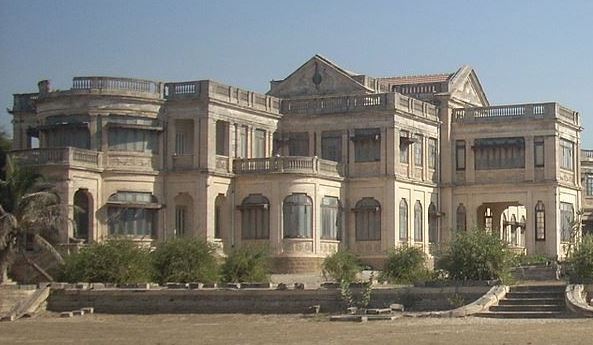
- Daria Mahal Palace is located at the end of Marine Drive on sea shore of Porbandar city, in a huge campus. It was built in the late 19th century by Rana Bhavsinhji Madhavsinhji. Standing on the edge of the Arabian Sea the palace shows the influences of the Arabian culture. However, some parts of the palace are Italianate in style with an interesting blend of Renaissance and Gothic touch. The interiors of the palace like chandeliers, painted murals and the European furniture are eye catching. The palace has now been converted into a college.[33][citation needed]
- Huzoor Mahal Palace was built by Rana Natwarsinhji also on sea shore of Probandar city. This sprawling palace is built in the European style with sloping roofs, several wings and big windows, overlooking the sea.[34]
- Anut Nivas at Khambalia, overlooking the dam, is a summer palace built on Barda hills built by last ruler of Porbandar State, Rana ShriNatawarsinhji in 1927. The interior is lavish but not ostentatious. The Rajput Room is a museum of Kathiawad's past.[35][32][33]
- The Lal Mahal or Red Palace in Porbandar, previously official guest house of the rulers of Porbandar State, now lies closed.[33]
In folklore[edit | edit source]

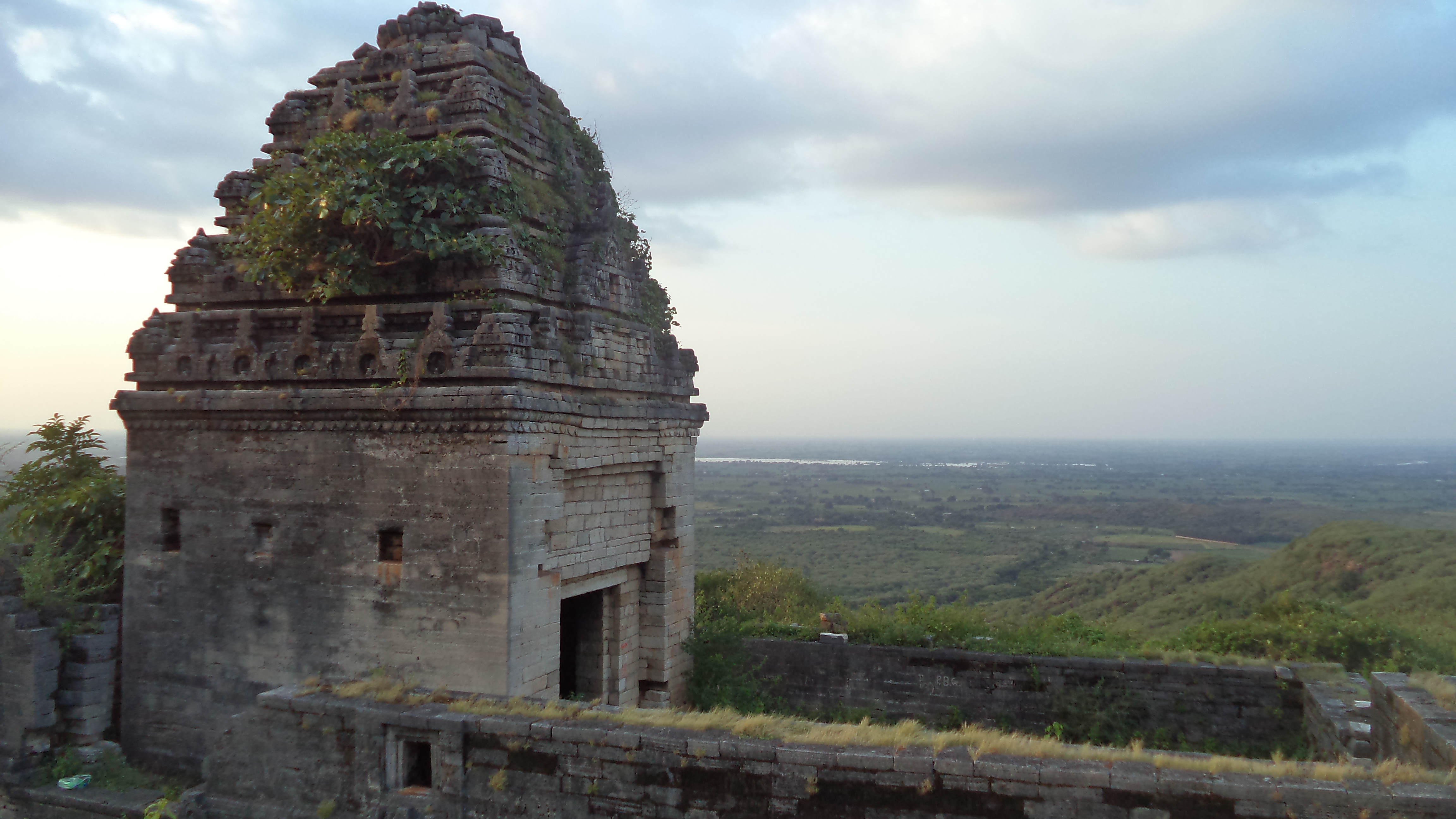
The bardic tales of Jethwas are immortalised in folk tales like Rajasthani folk tale of immortal love between Jethwa and Ujali[2] and heroic tales of Bhan Jethwa and Vijo related to defeat of Kathis by them, in which the names of Jethwa territories of Bhanvad and Lodhva are mentioned in bardic folk-songs of Kathiawar.[2][36] Also the bardic songs of Bhan Jethwa, who fell in love with Son Kansari, who was in love with Rakhayata Babaria, his commander. Bhan got Rakhayat murdered by his servant Kumbha. Son became a Sati cursing that Ghumli will be destroyed in due course of time. Her prophecy came true when Ghumli was demolished by Jams in 1313. The Brahmins of Baradiya, who gave her shelter and many of whom also died for the cause of protecting Son, later built a temple in memory Sati Son, which now stands in depleted condition on a hill top.[2][37][38]
References[edit | edit source]
- ↑ Jaitwa or Camari.—; one of the thirty-six royal races mentioned by Colonel Tod. The Tribes and Castes of the Central Provinces of India—Volume I (of IV), by R.V. Russell
- ↑ 2.00 2.01 2.02 2.03 2.04 2.05 2.06 2.07 2.08 2.09 2.10 2.11 2.12 2.13 2.14 Shree Kutch Gurjar Kshatriya Samaj : A brief history & glory of our Fore-fathers: Section: History of Rajput Surnames, their origin and myths : sub-section : History of Jethwas : by Raja Pawan Jethwa (2007). pp 81–82.
- ↑ The annals and antiquities of Rajastʾhan: or the central and western Rajpoot states of India
- ↑ 4.0 4.1 4.2 4.3 4.4 4.5 4.6 4.7 [1] The Rajputs of Saurashtra By Virbhadra Singhji
- ↑ [2] Ancient India by Ramesh Chandra Majumdar 1964
- ↑ Journal of the Royal Asiatic Society of Great Britain and Ireland. Cambridge University Press for the Royal Asiatic Society. 1905. Retrieved 27 April 2019.
- ↑ The political history of the Hūṇas in India by Atreyi Biswas, 1973
- ↑ Encyclopaedia Indica: India, Pakistan, Bangladesh, Volume 100
- ↑ The history of Kathiawad from the earliest times by Harold Wilberforce-Bell
- ↑ Jubilee volume (1937) Anthropological society of Bombay
- ↑ Nanavati, J. M. (2003). Legacy of Gujarat. Team Spirit (India) Pvt. Limited. pp. 72–73. ISBN 978-81-7897-015-8. Retrieved 24 June 2023.
- ↑ Gazetteers: Junagadh. Directorate of Government Print., Stationery and Publications. 1975. pp. 185, 186, 187. Retrieved 24 June 2023.
- ↑ 13.0 13.1 Handbook for Travellers in India, Burma and Ceylon Including AllBritish India, the Portuguese and French Possessions, and the Indian States. J. Murray. 1929. p. 249. Retrieved 27 February 2024.
- ↑ 14.0 14.1 14.2 [3] Gujarat State gazetteers, Volume 11, 1975.
- ↑ [4] The annals and antiquities of Rajastʾhan:or the central and western Rajpoot states of India, Volume 1 by James Tod, 1899
- ↑ 16.0 16.1 PORBANDAR STATE : RULERS : JETHWA :PREDECESSORS AND SHORT HISTORY
- ↑ 17.0 17.1 Gujarat (India) (1975). Gujarat State Gazetteers: Junagadh District. Directorate of Government Print., Stationery and Publications, Gujarat State. Retrieved 12 October 2014.
- ↑ [5] The history of Kathiawad from the earliest times by Harold Wilberforce-Bell on Scythian coins the word " Kumar " frequently appears, and from bardic legends we find that after the founding of Ghumli in the seventh century by Shil Kumar Jethwa, the rulers of Ghumli were recognized as being Kumarants]
- ↑ [6] Gazetteer of the Bombay Presidency, Volume 8, 1884
- ↑ "Ancient Temple Trail". jamnagar.org. Retrieved 12 October 2014.
- ↑ "Mataji Pilgrimages -". jaidurga.webs.com. Archived from the original on 24 March 2012. Retrieved 12 October 2014.
- ↑ 22.0 22.1 Wetland phytodiversity: a complete guide to Indian Helobieae by Ratna Guha, M. S. Mondal.
- ↑ Power, profit, and poetry:traditional society in Kathiawar, western India by Harald Tambs-Lyche
- ↑ The Mers of Saurashtra revisited and studied in the light of socio-cultural change and cross-cousin marriage by Harshad R. Trivedi
- ↑ The Hind Rajasthan, or, The annals of the native states of India, Volume 1, Part 2
- ↑ [7] Encyclopaedia of Eminent Thinkers: The political thought of Mahatma Gandhi By K. S. Bharathi
- ↑ Diskalkar, D. B. (February 1939). "Inscriptions Of Kathiawad". New Indian Antiquary. Vol. 1. p. 686.
- ↑ Diskalkar, D. B. (December 1938). "Inscriptions Of Kathiawad". New Indian Antiquary. Vol. 1. pp. 580.
- ↑ 29.0 29.1 Gazetteer of the Bombay Presidency: Káthiáwar
- ↑ 30.0 30.1 [8] The stepwells of Gujarat: in art-historical perspective By Jutta Jain-Neubauer Page : 49
- ↑ "combination of sculptures and monuments are suggestive of this Town was built by Sailyakumar of the Jethwa dynasty of Saurashtra region of Gujarat". Archived from the original on 19 March 2012. Retrieved 6 April 2019.
- ↑ 32.0 32.1 32.2 Indo Vacations Team. "Porbandar, Porbandar Tourist Attraction, Porbandar Tour". indovacation.net. Archived from the original on 21 September 2014. Retrieved 12 October 2014.
- ↑ 33.0 33.1 33.2 Gujarat–Daman–Diu: A Travel Guide (on line book) By Ward
- ↑ "tourist places in gujarat | dharavasavada". dharavasavada.wordpress.com. Retrieved 12 October 2014.
- ↑ "Khushboo Gujarat ki: Darbargadh". khushboogujaratki.blogspot.com. 5 January 2011. Retrieved 12 October 2014.
- ↑ Bhanvad & Lodhva : The Kathiani says, wherefore, Kathis, are you going to Lodhva to lose your honour? Doubtless, another Bhan Jethwa has arisen or another hero named Vijo has been found in house of Bhola, The Jethva uproots everyone in battle... Gazetteer of the Bombay Presidency: Káthiáwar, 1884
- ↑ [9] Encyclopaedia of India, Volume 30
- ↑ [10] Gazetteer of the Bombay Presidency