The Republicans are often called "the right" or "conservatives". The Republican Party itself is also known as the GOP, which stands for "Grand Old Party". The symbol of the Republican party is the elephant. This symbol was first used in 1874 in a political cartoon by Thomas Nast.[24]
As the Whig Party collapsed, the Republicans became one of two major political parties in the United States (the Democratic Party was the other major political party). In 1860 Abraham Lincoln, the first Republican president, was elected. For the rest of the second half of the 19th century, the country had mostly Republican presidents. From 1860 until 1912 the Republicans lost the presidential election just twice (non-consecutively to Democrat Grover Cleveland in 1884 and 1892).
Republicans believed in protectionism (the belief that raising taxes on trades with other countries would protect the economy) during the second half of the 19th century and during the early half of the 20th century.
After World War I, the 1920s had three Republican presidents: Warren Harding, Calvin Coolidge, and Herbert Hoover. It was called the Republican Decade for that reason. Harding and Coolidge made a plan for the economy which lowered taxes, made the government spend less money, and got rid of rules and laws that affected the economy.
Near the end of the 1920s, the stock market crashed and the Great Depression began. During the Great Depression, the Republican Party became less popular. No Republicans were president between 1933 and 1953, when Dwight Eisenhower began his first of two consecutive terms as president (he was re-elected in 1956). Richard Nixon lost the election in 1960, but was elected president on the Republican ticket in 1968 and again in 1972.
Ronald Reagan, an actor and conservative political activist, was elected as president in 1980. Ronald Reagan became the first Republican president who was a former member of the Democratic Party. Ronald Reagan served two terms and his successor George H.W. Bush served one term. Reagan wanted fewer laws to affect the economy, and wanted the military to be stronger.
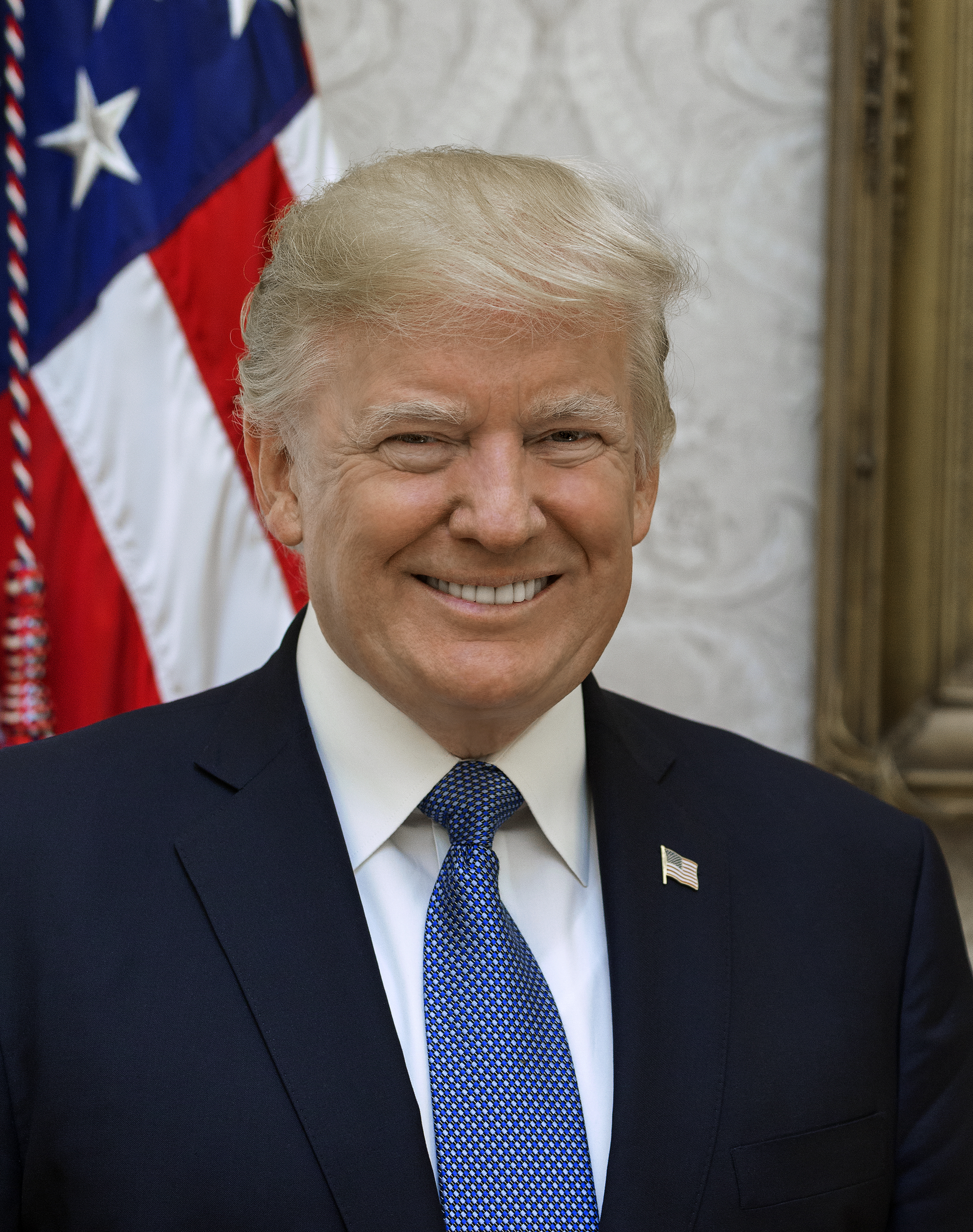
After elections held in 2006, Republicans lost control of Congress. Democrat Barack Obama was elected in 2008 and re-elected in 2012. Republican John Boehner was elected the Speaker of the House of Representatives in 2010 and re-elected in 2012. In 2014, Republicans gained control of the senate and the house. Boehner resigned in early October 2015 and was eventually succeeded by Paul Ryan of Wisconsin on October 29, 2015. On November 9, 2016, Donald Trump was elected president, defeating Democrat Hillary Clinton in the Electoral College. Trump was the first Republican to take office as president since January 20, 2001, when George W. Bush was inaugurated. The Republicans lost the House and won the Senate in 2018. Paul Ryan retired in 2019 and was succeeded by Nancy Pelosi, who is a member of the Democratic Party.
Pro-life and have a more restrictive view on Abortion.
Most supporters for the Republican Party come from states in the Southern, Deep South, parts of the Midwest, and the rural Northeast areas of the US, as well as from Montana; though they come from all over the United States, including the northern portion of California.
Thomas Dewey (Presidential candidate in 1944 and 1948)
Bob Dole (presidential candidate in 1996, former Senator from Kansas)
Elizabeth Dole (former Senator from North Carolina, former U.S. Secretary of Labor under President George Bush, former U.S. Secretary of Transportation under President Reagan)
↑Paul Gottfried, Conservatism in America: Making Sense of the American Right, p. 9, "Postwar conservatives set about creating their own synthesis of free-market capitalism, Christian morality, and the global struggle against Communism." (2009); Gottfried, Theologies and moral concern (1995) p. 12.