









robot: Update article (please report if you notice any mistake or error in this edit) |
m enhance citations additionally and improved wording |
||
| Line 1: | Line 1: | ||
{{Short description| | {{Short description|Various fibre-based materials}} | ||
{{ | {{Other uses}} | ||
{{ | {{Use Oxford spelling|date=September 2016}} | ||
[[ | {{Use dmy dates|date=December 2024}} | ||
{{Multiple image | |||
| header = Textiles | |||
[[File:Weaving_demonstrated_on_a_historic_loom_in_Leiden.webm|right|thumbtime=12|thumb|Weaving demonstration on an 1830 handloom in the [[Museum Het Leids Wevershuis|weaving museum]] in [[Leiden]]]] | | direction = horizontal | ||
| perrow = 2/2 | |||
| image_gap = 8 | |||
| width2 = 130 | |||
| image2 = Weaving_jamdani_at_BSCIC_Jamdani_palli,_Narayanganj_113.jpg | |||
| caption2 = [[Jamdani]] weaving [[Textile industry in Bangladesh |of Bangladesh]] | |||
| width3 = 230 | |||
| image3 = Urdimbre rosa.jpg | |||
| caption3 = In textile production, longitudinal yarns are referred to as warp and are interlaced with weft or filing yarns to create a woven fabric. | |||
| width4 = 240 | |||
| image4 = Flores y colores hechos a mano.jpg | |||
| caption4 = Handmade floral patterns on textiles | |||
| width7 = 120 | |||
| image7 = Tzutujil.weaving.jpg | |||
| caption7 = [[Weaving]] | |||
| footer = The production of textiles which were initially artisanal work, has grown into a vast field today that includes the production of fibres, yarns, fabrics, and various fibrous products for different domestic and industrial usages. | |||
}} | |||
[[File:Weaving_demonstrated_on_a_historic_loom_in_Leiden.webm |right|thumbtime=12|thumb|300px| Weaving demonstration on an 1830 handloom in the [[Museum Het Leids Wevershuis|weaving museum]] in [[Leiden]] ]] | |||
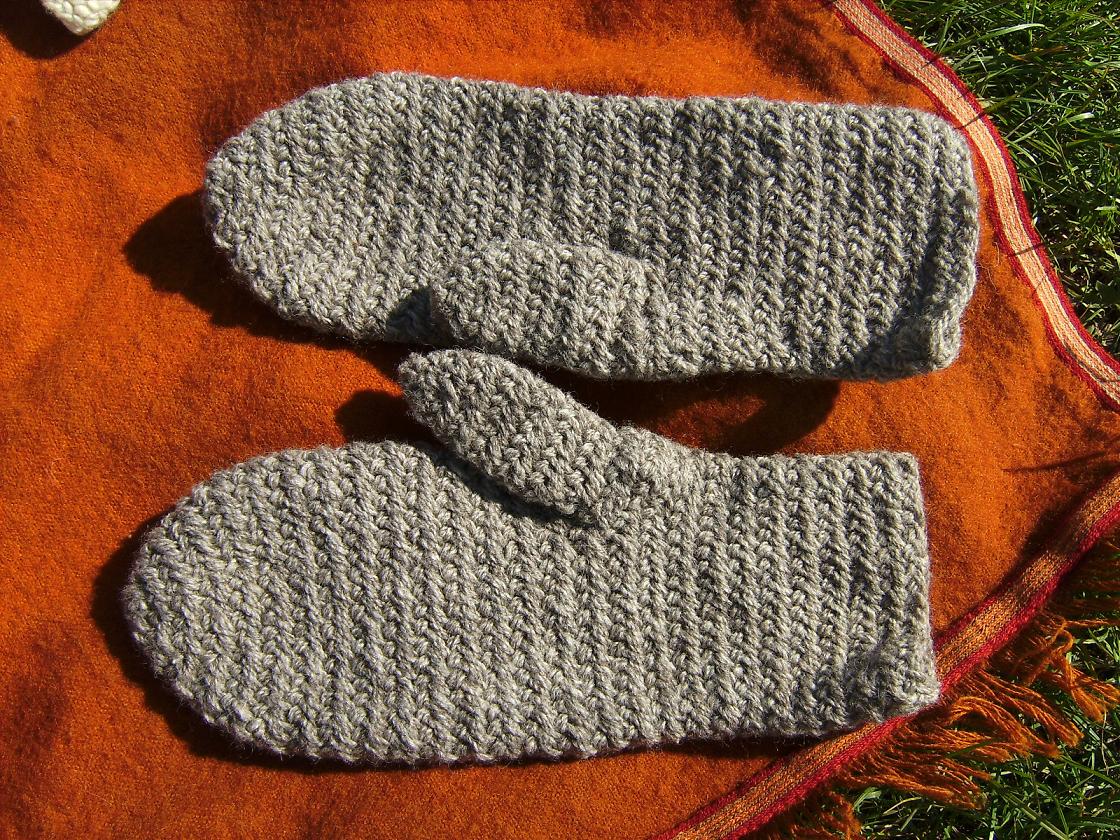
'''Textile''' is an [[Hyponymy and hypernymy|umbrella term]] that includes various [[Fiber|fibre-based]] materials, including fibres, [[yarn]]s, [[Staple (textiles)#Filament fiber|filaments]], [[Thread (yarn)|threads]], and different types of [[#Fabric|fabric]]. At first, the word "textiles" only referred to [[woven fabric]]s.{{sfn|Joseph|1977|p=3}}{{sfn|Kadolph|1998|p=5}}<ref name="EB-2015" /> However, [[weaving]] is not the only manufacturing method, and many other methods were later developed to form textile structures based on their intended use. [[Knitting]] and [[Nonwoven|non-woven]] are other popular types of fabric manufacturing.{{sfn|Elsasser|2005|p={{pn|date=January 2025}}}} In the contemporary world, textiles satisfy the [[material]] needs for versatile applications, from simple daily clothing to [[Bulletproof vest|bulletproof jackets]], [[spacesuit]]s, [[Medical gown|doctor's gowns]] and technical applications like [[Geotextile|geotextiles]].<ref name="EB-2015">{{Cite web |title=textile {{!}} Description & Facts |url=https://www.britannica.com/topic/textile |access-date=2021-08-19 |website=Encyclopedia Britannica |language=en |archive-date=2015-06-11 |archive-url=https://web.archive.org/web/20150611044816/https://www.britannica.com/EBchecked/topic/589392/textile |url-status=live }}</ref><ref name="Fairchild 1959">{{Cite book |url=http://archive.org/details/fairchildsdictio0000unse |title=Fairchild's dictionary of textiles |date=1959 |location=New York |publisher= Fairchild Publications |pages=552, 553, 211, 131}}</ref>{{sfn|Elsasser|2005|p={{pn|date=January 2025}}}} | |||
[[ | Textiles are divided into two groups: consumer textiles for domestic purposes and [[technical textile]]s. In consumer textiles, [[Aesthetics (textile)|aesthetics]] and [[Textile performance#Comfort|comfort]] are the most important factors, while in technical textiles, [[Textile performance#Properties|functional properties]] are the priority.{{sfn|Elsasser|2005|p={{pn|date=January 2025}}}}<ref name="Horrocks-2000">{{Cite book |last1=Horrocks |first1=A. R. |url=https://books.google.com/books?id=JBGkAgAAQBAJ&q=technical+textiles |title=Handbook of Technical Textiles |last2=Anand |first2=Subhash C. |date=31 October 2000 |publisher=Elsevier |isbn=978-1-85573-896-6 |pages=1 to 20 |language=en}}</ref> The durability of textiles is an important property, with common [[cotton]] or blend garments (such as t-shirts) able to last twenty years or more with regular use and care. | ||
[[Geotextile]]s, [[Indutech|industrial textiles]], [[medical textiles]], and many other areas are examples of technical textiles, whereas clothing and furnishings are examples of consumer textiles. Each component of a textile product, including fibre, yarn, fabric, processing, and [[Finishing (textiles)|finishing]], affects the final product. Components may vary among various textile products as they are selected based on their [[Textile performance|fitness for purpose]].{{sfn|Elsasser|2005|p={{pn|date=January 2025}}}}{{sfn|Chapman|2010|p={{pn|date=January 2025}}}}<ref name="Horrocks-2000" /> | |||
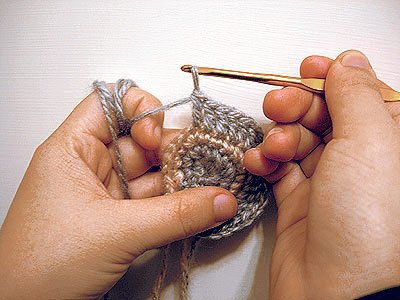
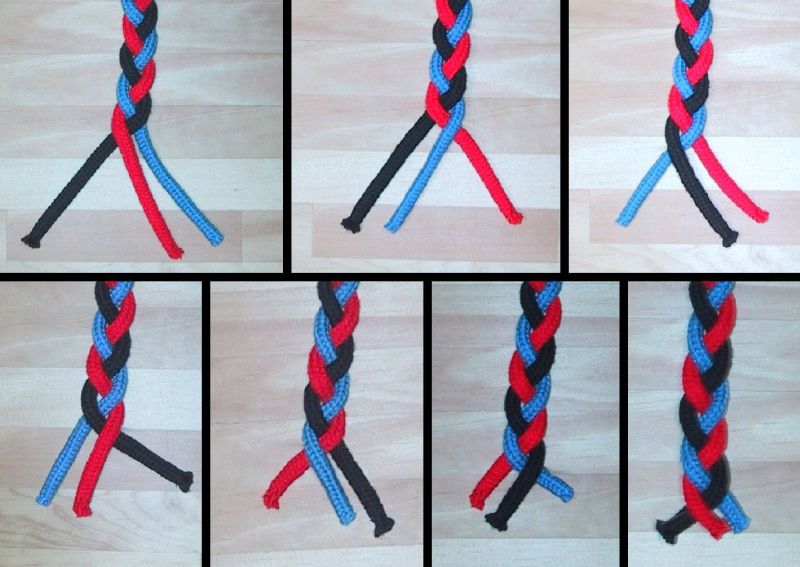
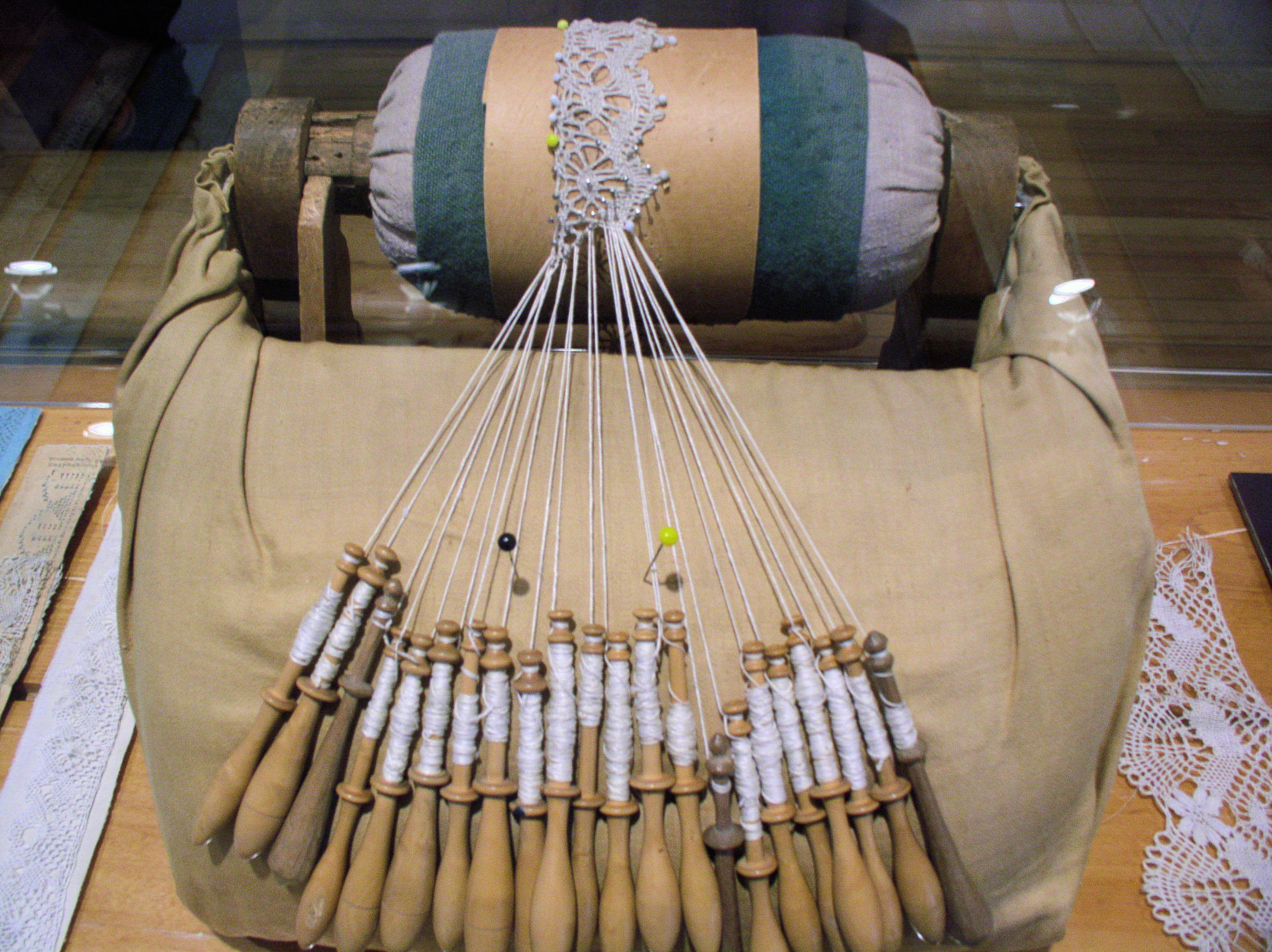
==Etymology== | Fibre is the smallest fabric component; fibres are typically spun into yarn, and yarns are used to manufacture fabrics.<ref>{{Cite book |last=Division |first=United States Department of Labor Wage and Hour |url=https://books.google.com/books?id=5Yxh19vrzd0C&dq=textile+industry+definition&pg=PP3 |title=Some Basic Information on the Textile Industry |date=1941 |publisher=U.S. Department of Labor, Wage and Hour Division. |pages=3–6 |language=en}}</ref>{{sfn|Chapman|2010|p={{pn|date=January 2025}}}} Fibre has a hair-like appearance and a higher length-to-width ratio. The sources of fibres may be [[Natural fiber|natural]], [[Synthetic fiber|synthetic]], or both. The techniques of [[felt]]ing and [[Nonwoven fabric|bonding]] directly transform fibres into fabric. In other cases, yarns are manipulated with different fabric manufacturing systems to produce various fabric constructions. The fibres are twisted or laid out to make a long, continuous strand of yarn.{{sfn|Kadolph|1998|p={{pn|date=January 2025}}}} Yarns are then used to make different kinds of fabric by weaving, knitting, [[crochet]]ing, [[Macramé|knotting]], [[tatting]], or [[braid]]ing.<ref>{{cite web |title=An Introduction to Textile Terms |url=http://www.textilemuseum.org/PDFs/TextileTerms.pdf |archive-url=https://web.archive.org/web/20060723073411/http://www.textilemuseum.org/PDFs/TextileTerms.pdf |archive-date=23 July 2006 |access-date=6 August 2006}}</ref><ref name="MW-2017">{{cite dictionary |title=fabric |dictionary=Merriam-Webster |url=https://www.merriam-webster.com/dictionary/fabric |url-status=live |archive-url=https://web.archive.org/web/20171019004250/https://www.merriam-webster.com/dictionary/fabric |archive-date=2017-10-19 |access-date=2017-10-18}}</ref><ref name="Fairchild 1959" /> After manufacturing, textile materials are processed and finished to add value, such as aesthetics, physical characteristics, and utility in certain use cases.<ref name="Choudhury-2017">{{Cite book |last=Choudhury |first=Asim Kumar Roy |url=https://books.google.com/books?id=p_9PCwAAQBAJ&q=finishing+textiles |title=Principles of Textile Finishing |date=29 April 2017 |publisher=Woodhead Publishing |isbn=978-0-08-100661-0 |pages=1–10}}</ref> The manufacturing of textiles is the oldest industrial [[Textile arts|art]].<ref>{{Cite book |url=http://archive.org/details/sim_business_1971-11_21_11 |title=Atlanta Economic Review 1971-11: Vol 21 Iss 11 |date=1971 |publisher=College of Business Administration. Georgia State University |page=6}}</ref> [[Dyeing]], [[Textile printing|printing]], and [[embroidery]] are all different decorative arts applied to textile materials.<ref name="Elsasser-2005a">{{Cite book |last=Elsasser |first=Virginia Hencken |url=http://archive.org/details/textiles00virg |title=Textiles: concepts and principles |date=2005a |location=New York |publisher= Fairchild Publications |isbn=978-1-56367-300-9 |page=9}}</ref> | ||
== Etymology == | |||
=== Textile === | === Textile === | ||
The word 'textile' comes from the [[Latin]] adjective {{lang|la|textilis}}, meaning 'woven', which itself stems from {{lang|la|textus}}, the past participle of the verb {{lang|la|texere}}, 'to weave'.<ref name=": | The word 'textile' comes from the [[Latin]] adjective {{lang|la|textilis}}, meaning 'woven', which itself stems from {{lang|la|textus}}, the past participle of the verb {{lang|la|texere}}, 'to weave'.<ref name="Farlex-2020">{{cite dictionary |title=Textile |url=http://www.thefreedictionary.com/textile |access-date=2012-05-25 |dictionary=The Free Dictionary |archive-date=2020-05-27 |archive-url=https://web.archive.org/web/20200527165616/https://www.thefreedictionary.com/textile |url-status=live }}</ref> Originally applied to [[woven fabric]]s, the term "textiles" is now used to encompass a diverse range of materials, including fibres, [[yarns]], and [[fabrics]], as well as other related items.{{sfn|Kadolph|1998|p={{pn|date=January 2025}}}}{{sfn|Joseph|1977|p={{pn|date=January 2025}}}}<ref name="EB-2015" /> | ||
=== Fabric === | === Fabric === | ||
A fabric is defined as any thin, flexible material made from yarn, directly from | {{Redirect|Fabric}} | ||
A "fabric" is defined as any thin, flexible material made from yarn, directly from fibres, polymeric film, foam, or any combination of these techniques. Fabric has a broader application than cloth.{{sfn|Smith|1982|p=207}}<ref>{{Cite book |last=Kadolph |first=Sara J. |url=http://archive.org/details/textiles0010kado |title=Textiles |date=2007 |location=Upper Saddle River, N.J. |publisher= Pearson Prentice Hall |isbn=978-0-13-118769-6 |page=469}}</ref> Fabric is synonymous with cloth, material, goods, or [[piece goods]].{{sfn|Elsasser|2005|p={{pn|date=January 2025}}}}<ref name="Fairchild 1959" /> The word 'fabric' also derives from Latin, with roots in the [[Proto-Indo-European language]]. Stemming most recently from the [[Middle French]] {{lang|fr|fabrique}}, or "building," and earlier from the Latin {{lang|la|fabrica}} ('workshop; an art, trade; a skillful production, structure, fabric'), the noun {{lang|la|fabrica}} stems from the Latin {{lang|la|faber}}" artisan who works in hard materials', which itself is derived from the Proto-Indo-European ''dhabh-'', meaning 'to fit together'.<ref>{{OEtymD|fabric|access-date=2012-12-11}}</ref> | |||
=== Cloth === | === Cloth === | ||
{{Multiple image | |||
| align = right | |||
| direction = horizontal | |||
| image_gap = 10 | |||
| width1 = 240 | |||
| image1 = Brooklyn Museum - Cloth Merchant's Shop - Basarat.jpg | |||
| caption1 = Cloth merchant's shop | |||
| width2 = 200 | |||
| image2 = Museum of Lincolnshire Life, Lincoln, England - DSCF1759.JPG | |||
| caption2 = A replica [[Draper|draper's shop]] at the [[Museum of Lincolnshire Life]], in [[Lincoln, England]]. | |||
}} | |||
Although cloth is a type of fabric, not all fabrics can be classified as cloth due to differences in their manufacturing processes, physical properties, and intended uses. Materials that are woven, knitted, [[Tufting|tufted]], or knotted from yarns are referred to as cloth, while wallpaper, plastic upholstery products, carpets, and nonwoven materials are examples of fabrics.{{sfn|Smith|1982|p=207}} | |||
Cloth is a flexible substance typically created through the processes of weaving, felting, or knitting using natural or synthetic materials.<ref name="Cloth-2012">{{cite encyclopedia |title=Cloth |dictionary=Merriam-Webster |url=http://www.merriam-webster.com/dictionary/cloth |access-date=2012-05-25 |archive-url=https://web.archive.org/web/20120606071507/http://www.merriam-webster.com/dictionary/cloth |archive-date=2012-06-06 |url-status=live}}</ref> The word 'cloth' derives from the [[Old English]] {{lang|ang|clað}}, meaning "a cloth, woven, or felted material to wrap around one's body', from the [[Proto-Germanic language|Proto-Germanic]] {{lang|gem|klaithaz}}, similar to the [[Old Frisian language|Old Frisian]] {{lang|ofs|klath}}, the [[Middle Dutch]] {{lang|dum|cleet}}, the [[Middle High German]] {{lang|gmh|kleit}} and the German {{lang|de|kleid}}, all meaning 'garment'.<ref>{{OEtymD|cloth|access-date=2012-12-11}}</ref> | |||
{{ clear }} | |||
== History == | == History == | ||
[[File:Textile machinery at Cambrian Factory, Llanwrtyd (1293828).jpg |thumb|300px| Textile machinery at the Cambrian Factory, [[Llanwrtyd]], [[Wales]] in the 1940s.]] | |||
{{Main|History of clothing and textiles}} | {{Main|History of clothing and textiles}} | ||
Textiles themselves are too fragile to survive across millennia; the tools used for [[Spinning (textiles)|spinning]] and [[weaving]] make up most of the prehistoric evidence for textile work. The earliest tool for spinning was the [[Spindle (textiles)|spindle]], to which a [[Spindle whorl|whorl]] was eventually added. The weight of the whorl improved the thickness and twist of the spun thread. Later, the [[spinning wheel]] was invented. Historians are unsure where; some say China, others India.<ref>{{cite book |last=Beaudry |first=Mary C. |title=Findings: The Material Culture of Needlework and Sewing |publisher=Yale University Press |date=2006 |page=137}}</ref> | |||
The speed and scale of textile production have been altered almost beyond recognition by industrialization and the introduction of modern | The precursors of today's textiles include leaves, barks, fur pelts, and felted cloths.{{sfn|Weibel|1952|p=27}} | ||
The Banton Burial Cloth, the oldest existing example of [[Warp (weaving)|warp]] [[ikat]] in Southeast Asia, is displayed at the [[National Museum of the Philippines]]. The cloth was most likely made by the native Asian people of northwest [[Romblon]]. | |||
The first clothes, worn at least 70,000 years ago and perhaps much earlier, were probably made of animal skins and helped protect early humans from the elements. At some point, people learned to weave plant fibres into textiles. | |||
The discovery of [[Flax|dyed flax fibres]] in a cave in the [[Georgia (country)|Republic of Georgia]] dated to 34,000 [[BCE]] suggests that textile-like materials were made as early as the Paleolithic era.<ref>{{cite journal |doi=10.1126/science.325_1329a |pmid=19745126 |title=Clothes Make the (Hu) Man |year=2009 |last1=Balter |first1=M. |journal=Science |volume=325 |issue=5946 |page=1329}}</ref><ref name="Kvavadze-2009">{{cite journal |doi=10.1126/science.1175404 |pmid=19745144 |title=30,000-Year-Old Wild Flax Fibers |year=2009 |last1=Kvavadze |first1=E. |last2=Bar-Yosef |first2=O. |last3=Belfer-Cohen |first3=A. |last4=Boaretto |first4=E. |last5=Jakeli |first5=N. |last6=Matskevich |first6=Z. |last7=Meshveliani |first7=T. |journal=Science |volume=325 |issue=5946 |page=1359 |url=http://nrs.harvard.edu/urn-3:HUL.InstRepos:4270521 |bibcode=2009Sci...325.1359K |access-date=2018-11-30 |archive-date=2020-03-04 |archive-url=https://web.archive.org/web/20200304052409/https://dash.harvard.edu/handle/1/4270521 |url-status=live |url-access=subscription }} [http://worldtextile.aimoo.com/ Supporting Online Material] {{webarchive|url=https://web.archive.org/web/20091127065045/http://worldtextile.aimoo.com/ |date=27 November 2009 }}</ref> | |||
The speed and scale of textile production have been altered almost beyond recognition by industrialization and the introduction of modern manufacturing techniques.<ref>{{Cite book|url= https://www.wiley.com/en-us/Advanced+Textile+Engineering+Materials-p-9781119487852|title= Advanced Textile Engineering Materials|publisher= Wiley|editor1-first= Shahid|editor1-last= Ul-Islam|editor2-first= B. S.|editor2-last= Butola|isbn= 978-1-119-48785-2|date= 2018|access-date= 4 September 2020|archive-date= 2020-11-09|archive-url= https://web.archive.org/web/20201109034146/https://www.wiley.com/en-us/Advanced+Textile+Engineering+Materials-p-9781119487852|url-status= live}}</ref> However, for the main types of textiles, [[plain weave]], [[twill]], or [[satin weave]], there is little difference between the ancient and modern methods. | |||
=== Textile industry === | === Textile industry === | ||
The | {{main|textile industry}} | ||
The textile industry grew out of art and craft and was kept going by [[craft guilds]]. In the 18th and 19th centuries, during the [[Industrial Revolution]], it became increasingly mechanized. In 1765, when a machine for spinning wool or cotton called the [[spinning jenny]] was invented in the United Kingdom, textile production became the first economic activity to be industrialized. In the 20th century, science and technology were driving forces.<ref>{{Cite book |last1=Hollen |first1=Norma R. |url=http://archive.org/details/isbn_9780023675300 |title=Textiles |last2=Hollen |first2=Norma R. Textiles |date=1988 |location=New York |publisher= Macmillan |isbn=978-0-02-367530-0 |pages=1, 2, 3}}</ref><ref>{{cite book |title=States and Power in Africa: Comparative Lessons in Authority and Control, 2nd ed. |doi=10.23943/princeton/9780691164137.003.0010 |date=2017 |last1=Herbst |first1=Jeffrey |volume=1 }}</ref> | |||
The textile industry exhibits inherent dynamism, influenced by a multitude of transformative changes and innovations within the domain. Textile operations can experience ramifications arising from shifts in international trade policies, evolving fashion trends, evolving customer preferences, variations in production costs and methodologies, adherence to safety and environmental regulations, as well as advancements in research and development.{{sfn|Kadolph|1998|p=4}} | |||
The textile and garment industries exert a significant impact on the economic systems of numerous countries engaged in textile production.<ref>{{cite book |doi=10.1016/B978-1-78242-232-7.00001-1 |chapter=Introduction |title=Garment Manufacturing Technology |date=2015 |last1=Nayak |first1=R. |last2=Padhye |first2=R. |pages=1–17 |isbn=978-1-78242-232-7 }}</ref> | |||
=== Naming === | === Naming === | ||
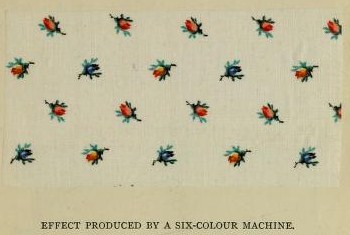
[[File:Calico sample Crum & Co..jpg|thumb|right|Sample of calico printed with a six-colour machine by Walter Crum & Co., from [[Frederick Crace Calvert]], ''Dyeing and Calico Printing'' (1878) | [[File:Calico sample Crum & Co..jpg |thumb|right| Sample of calico printed with a six-colour machine by Walter Crum & Co., from [[Frederick Crace Calvert]], ''Dyeing and Calico Printing'' (1878)]] | ||
Most textiles were called by their generic names, their place of origin, or were put into groups based loosely on manufacturing techniques, characteristics, and | |||
Most textiles were called by their base-fibre generic names, their place of origin, or were put into groups based loosely on manufacturing techniques, characteristics, and designs.<ref name="Malekandathil-2016">{{Cite book |last =Malekandathil |first =Pius |url=https://books.google.com/books?id=-WEPDQAAQBAJ&dq=Textiles+and+origin+of+their+names&pg=PT359 |title =The Indian Ocean in the Making of Early Modern India |date =13 September 2016 |publisher =Routledge |isbn =978-1-351-99745-4 |page =359 |language =en |access-date =2022-05-25 |archive-date=2022-06-02 |archive-url =https://web.archive.org/web/20220602045837/https://books.google.com/books?id=-WEPDQAAQBAJ&dq=Textiles+and+origin+of+their+names&pg=PT359 |url-status =live }}</ref><ref name="Peck-2013">{{Cite book |last =Peck |first =Amelia |url =https://books.google.com/books?id=BYjh82N63IQC&dq=Textiles+and+origin+of+their+names&pg=PA60 |title =Interwoven Globe: The Worldwide Textile Trade, 1500–1800 |date =2013 |publisher =Metropolitan Museum of Art |isbn =978-1-58839-496-5 |page =60 |language =en |access-date =2022-05-25 |archive-date =2022-06-02 |archive-url =https://web.archive.org/web/20220602055305/https://books.google.com/books?id=BYjh82N63IQC&dq=Textiles+and+origin+of+their+names&pg=PA60 |url-status =live }}</ref><ref name="Corbman-1983">{{Cite book |last =Corbman |first =Bernard P. |url=http://archive.org/details/textilesfibertof0006corb |title =Textiles: fiber to fabric |date =1983 |location=New York |publisher =Gregg Division, McGraw-Hill |isbn =978-0-07-013137-8 |pages =2 to 8}}</ref><ref name="Cerchia-2021">{{Cite book |last1 =Cerchia |first1=Rossella Esther |url =https://books.google.com/books?id=37UTEAAAQBAJ&dq=Textiles+and+origin+of+their+names&pg=PA3 |title =The New Frontiers of Fashion Law |last2 =Pozzo |first2 =Barbara |date =13 January 2021 |publisher =MDPI |isbn =978-3-03943-707-8 |pages =2, 3 |language=en |access-date=2022-05-25 |archive-date=2023-04-05 |archive-url =https://web.archive.org/web/20230405081520/https://books.google.com/books?id=37UTEAAAQBAJ&dq=Textiles+and+origin+of+their+names&pg=PA3 |url-status=live }}</ref> | |||
{| class="wikitable" | |||
{{linktext | Bearskin}}<ref> | |||
{{oed | bearskin}} | |||
</ref> | |||
(bearskin cloth) may have received its name from its "shaggy nap".<ref> | |||
{{cite book | |||
|last1 = Caulfeild | |||
|first1 = Sophia Frances Anne | |||
|author-link1 = Sophia Frances Anne Caulfeild | |||
|year = 1882 | |||
|chapter = Bearskin Cloth | |||
|title = The Dictionary of Needlework: An Encyclopædia of Artistic, Plain, and Fancy Needlework [...] | |||
|url = https://books.google.com/books?id=io87coIiELMC | |||
|publication-place = London | |||
|publisher = L. Upcott Gill | |||
|page = 25 | |||
|access-date = 16 September 2025 | |||
|quote = Bearskin Cloth.{{--}}A coarse thick woollen cloth, with a shaggy nap, manufactured for the making of [[overcoat]]s. | |||
}} | |||
</ref> | |||
"Nylon", [[Olefin fiber| "olefin"]], and [[Acrylic fiber| "acrylic"]] are generic names for some of the more commonly used synthetic fibres.{{sfn|Elsasser|2005|p=219}} | |||
{| class="wikitable" style="clear: both" | |||
|+ | |+ | ||
!Name | !Name | ||
!Product | !Product | ||
! colspan="2" |Textiles named by | ! colspan="2" |Textiles named by | ||
!Description | !Description | ||
|- | |- | ||
|[[Cashmere wool|Cashmere]] | |[[Cashmere wool|Cashmere]] | ||
|Wool | |Wool fibre obtained from [[cashmere goat]]s | ||
|Origin | |Origin | ||
|[[Kashmir]] | |[[Kashmir]] | ||
|Cashmere is synonymous with the [[Kashmir shawl]], with the term "cashmere" derived from an | |Cashmere is synonymous with the [[Kashmir shawl]], with the term "cashmere" derived from an anglicization of Kashmir.<ref name="Boulanger-1990">{{Cite book |last =Boulanger |first =Jean-Claude |url =https://books.google.com/books?id=MLChUpf_66EC&dq=Jagannath%3D+light+cotton+material&pg=PA143 |title =Actes du XVIe Congrès international des sciences onomastiques: Québec, Université Laval, 16–22 août 1987: le nom propre au carrefour des études humaines et des sciences sociales |date =1990 |publisher =Presses Université Laval |isbn =978-2-7637-7213-4 |page =143 |language =en |access-date=2022-06-07 |archive-date=2023-04-05 |archive-url =https://web.archive.org/web/20230405081522/https://books.google.com/books?id=MLChUpf_66EC&dq=Jagannath=+light+cotton+material&pg=PA143 |url-status=live }}</ref> | ||
|- | |- | ||
|[[Calico]] | |[[Calico]] | ||
| Line 68: | Line 132: | ||
|Origin | |Origin | ||
|[[Puri|Jagannath Puri]] | |[[Puri|Jagannath Puri]] | ||
|Jaconet is [[anglicisation]] of Jagannath where it was originally produced. | |Jaconet is an [[anglicisation|anglicization]] of Jagannath, where it was originally produced.{{sfn|Humphries|1996|p=15}} | ||
|- | |- | ||
|[[Jersey (fabric)|Jersey]] | |[[Jersey (fabric)|Jersey]] | ||
| Line 74: | Line 138: | ||
|Origin | |Origin | ||
|[[Jersey]], [[Channel Islands]] | |[[Jersey]], [[Channel Islands]] | ||
|Jersey fabric was produced first | |Jersey fabric was produced first on Jersey in the Channel Islands.<ref name="Boulanger-1990" /> | ||
|- | |- | ||
|[[Kersey (cloth)|Kersey]] | |[[Kersey (cloth)|Kersey]] | ||
|A coarse [[woolen]] cloth | |A coarse [[woolen|woollen]] cloth | ||
|Origin | |Origin | ||
|[[Kersey, Suffolk]] | |[[Kersey, Suffolk]] | ||
|The fabric is named after the town in the east of | |The fabric is named after the town in the east of England.<ref name="Boulanger-1990" /> | ||
|- | |- | ||
|[[Paisley (design)]] | |[[Paisley (design)]] | ||
| Line 86: | Line 150: | ||
|Design | |Design | ||
|[[Paisley, Renfrewshire]] | |[[Paisley, Renfrewshire]] | ||
|A town situated in the west [[central Lowlands]] of [[Scotland]].<ref name=": | |A town situated in the west [[central Lowlands]] of [[Scotland]].<ref name="Boulanger-1990" /> The motif originates from Iran/Persia, later moving to India with Mughals and transported by British through silk route to Scotland.<ref name=":1">{{Cite news |last=Fashion |first=Guardian |date=2011-09-26 |title=A brief history of paisley |url=https://www.theguardian.com/fashion/gallery/2011/sep/26/paisley-london-fashion-week |access-date=2025-12-06 |work=The Guardian |language=en-GB |issn=0261-3077}}</ref> | ||
|- | |- | ||
|[[Dosuti]] | |[[Dosuti]] | ||
|A handspun cotton cloth | |A handspun cotton cloth | ||
|Characteristics | |Characteristics | ||
|A coarse and thick cotton cloth | |A coarse and thick cotton cloth | ||
|In and around the 19th century [[Punjab]] and [[Gujarat]] were famous | |In and around the 19th century [[Punjab]] and [[Gujarat]] were famous for production of various handspun cloths. Dosuti was distinguished by the number of yarns (Do+Suti translates to 'two yarns') used to produce it. Eksuti was another variety using a single thread. | ||
<ref name=" | <ref name="Baden-Powell-1872">{{Cite book |last =Baden-Powell |first =Baden Henry |url =https://books.google.com/books?id=gg_JAAAAMAAJ |title =Hand-book of the Manufactures & Arts of the Punjab: With a Combined Glossary & Index of Vernacular Trades & Technical Terms ... Forming Vol. Ii to the "Hand-book of the Economic Products of the Punjab" Prepared Under the Orders of Government |date =1872 |publisher =Punjab printing Company |isbn = |location = |page =7 |language =en}}</ref><ref name="Indian Annuals Bureau-1964">{{Cite book |last = |first = |url =https://books.google.com/books?id=yVM5AQAAIAAJ |title =Supplies and Disposals Year Book |date =1964 |publisher = |isbn = |location = |pages =74, 335, 351 |language =en |access-date =2022-06-07 |archive-date =2022-06-07 |archive-url =https://web.archive.org/web/20220607041847/https://books.google.com/books?id=yVM5AQAAIAAJ |url-status =live }}</ref> | ||
|- | |- | ||
|[[Muslin|Mulmul]] types such as āb-i-ravān | |[[Muslin|Mulmul]] types such as ''āb-i-ravān'' (running water), ''Baft Hawa'' (woven air){{sfn|Weibel|1952|p=54}} | ||
|Fine muslin fabric variations from [[Dhaka|Dacca]] in [[Bengal]] | |Fine muslin fabric variations from [[Dhaka|Dacca]] in [[Bengal]] | ||
|Characteristics | |Characteristics | ||
|Delicate muslin types | |Delicate muslin types | ||
|Dacca, | |Dacca, in the eastern Indian subcontinent, produced a wide range of handwoven and spun muslins. ''Baft Hawa'', which means "woven air", ''Shabnam'', which means "evening dew", and ''ab-i-ravan'', which means "flowing water" are some poetic names for soft muslins.{{sfn|Weibel|1952|p=54}}<ref>{{Cite book |last =King |first =Brenda M. |url =https://books.google.com/books?id=vqua3eovs7kC&q=Abrawan&pg=PR16 |title =Silk and Empire |date =3 September 2005 |publisher =Manchester University Press |isbn =978-0-7190-6700-6 |pages =61, xvi |language =en}}</ref> | ||
|- | |- | ||
|[[Nainsook]] | |[[Nainsook]] | ||
| Line 105: | Line 169: | ||
|Characteristics | |Characteristics | ||
|Pleasing to the eyes | |Pleasing to the eyes | ||
|Nain + Sook translates to "eye-pleasing. | |Nain + Sook translates to "eye-pleasing".{{sfn|Humphries|1996|p=15}} | ||
|- | |- | ||
|[[Swanskin cloth|Swanskin]] | |[[Swanskin cloth|Swanskin]] | ||
|A woven [[flannel]] cloth | |A woven [[flannel]] cloth | ||
|Characteristics | |Characteristics | ||
|Appears and feels like [[ | |Appears and feels like [[swan]] skin | ||
| | |An 18th-century fabric developed at [[Shaftesbury]].<ref>{{Cite book |last =Harmuth |first =Louis |url =http://archive.org/details/dictionaryoftext00harmrich |title =Dictionary of textiles |date =1915 |publisher =New York, Fairchild publishing company |others =University of California Libraries |page =149}}</ref> | ||
|- | |- | ||
|[[Tansukh cloth|Tansukh]] | |[[Tansukh cloth|Tansukh]] | ||
| Line 117: | Line 181: | ||
|Characteristics | |Characteristics | ||
|Pleasing to the body | |Pleasing to the body | ||
|Tan + Sukh translates to "body pleasing. | |Tan + Sukh translates to "body pleasing". Tansukh was a fine, soft, and delicate textured cloth. The cloth type is mentioned in the 16th-century Mughal-time records, [[Ain-i-Akbari]].<ref>{{Cite journal |last =Sangar |first =S. P. |date =1965 |title =FEMALE COSTUMES IN THE SIXTEENTH AND SEVENTEENTH CENTURIES (as reflected in the contemporary Hindi literature) |journal =Proceedings of the Indian History Congress |volume =27 |pages =243–247 |jstor =44140630 |issn =2249-1937 }}</ref> | ||
|} | |} | ||
=== Related terms === | === Related terms === | ||
The related words "'''fabric'''"<ref name=" | The related words "'''fabric'''"<ref name="MW-2017" /> and "'''cloth'''"<ref name="Cloth-2012" /> and "'''[[material]]'''" are often used in textile assembly trades (such as tailoring and [[dressmaker|dressmaking]]) as synonyms for ''textile''. However, there are subtle differences in these terms in specialized usage. ''Material'' is an extremely broad term basically meaning consisting of [[matter]], and requires context to be useful. A textile is any material made of interlacing fibres, including carpeting and [[geotextile]]s, which may not necessarily be used in the production of further goods, such as clothing and [[upholstery]]. A ''fabric'' is a material made through [[Woven fabric|weaving]], [[Knitted fabric|knitting]], spreading, felting, stitching, crocheting or bonding that may be used in the production of further products, such as clothing and upholstery, thus requiring a further step of the production. ''Cloth'' may also be used synonymously with ''fabric'', but often specifically refers to a piece of fabric that has been processed or cut.{{Citation needed|date=May 2022}} | ||
* Greige goods: Textiles that are raw and unfinished are referred to as [[greige goods]]. After manufacturing, the materials are processed and finished.<ref>{{Cite book |last=MATHEWS |first=KOLANJIKOMBIL |url=https://books.google.com/books?id=XkqoDwAAQBAJ |title=Encyclopaedic Dictionary of Textile Terms: Four Volume Set |date=2017 |publisher=Woodhead Publishing India PVT. Limited |isbn=978-93-85059-66-7 |page=690 |language=en}}</ref><ref name="Choudhury-2017" /> | |||
* Greige goods: Textiles that are raw and unfinished are referred to as [[greige goods]]. After manufacturing, the materials are processed and finished.<ref>{{Cite book |last=MATHEWS |first=KOLANJIKOMBIL |url=https://books.google.com/books?id=XkqoDwAAQBAJ |title=Encyclopaedic Dictionary of Textile Terms: Four Volume Set |date=2017 |publisher=Woodhead Publishing India PVT. Limited |isbn=978-93-85059-66-7 | | * Piece goods: [[Piece goods]] were textile materials sold in cut pieces as specified by the buyer. Piece goods were either cut from a fabric roll or made to a specific length, also known as yard goods.<ref>{{Cite book |last=Wingate |first=Isabel Barnum |url=http://archive.org/details/fairchildsdictio00wing |title=Fairchild's dictionary of textiles |date=1979 |location=New York |publisher= Fairchild Publications |isbn=978-0-87005-198-2 |page=455}}</ref><ref>{{Cite book |last=Blanco |first=A. E. |url=https://books.google.com/books?id=WsbCDwAAQBAJ&q=wool+piecegoods+length&pg=PT14 |title=Piece Goods Manual: Fabrics described; textile, knit goods, weaving terms, etc., explained; with notes on the classification of samples |date=19 May 2021 |publisher=Good Press |language=en |access-date=2022-05-27 |archive-date=2023-04-05 |archive-url=https://web.archive.org/web/20230405094437/https://books.google.com/books?id=WsbCDwAAQBAJ&q=wool+piecegoods+length&pg=PT14 |url-status=live }}</ref> | ||
* Piece goods: [[Piece goods]] were textile materials sold in cut pieces as specified by the buyer. Piece goods were either cut from a fabric roll or made to a specific length, also known as yard goods.<ref>{{Cite book |last=Wingate |first=Isabel Barnum |url=http://archive.org/details/fairchildsdictio00wing |title=Fairchild's dictionary of textiles |date=1979 | | |||
== Types == | == Types == | ||
[[File:Well-clothed baby.jpg|thumb|upright=.85|A | [[File:Well-clothed baby.jpg|thumb|upright=.85|A baby wearing many items of soft winter clothing: headband, cap, fur-lined coat, scarf, and [[sweater]]]] | ||
Textiles are various materials made from | Textiles are various materials made from fibres and yarns. The term "textile" was originally only used to refer to woven fabrics, but today it covers a broad range of subjects.{{sfn|Joseph|1977|p={{pn|date=January 2025}}}} Textiles are classified at various levels, such as according to fibre origin (natural or synthetic), structure (woven, knitted, nonwoven), finish, etc.<ref name="Malekandathil-2016" /><ref name="Peck-2013" /><ref name="Corbman-1983" /><ref name="Cerchia-2021" /> However, there are primarily two types of textiles: | ||
=== Consumer textiles === | === Consumer textiles === | ||
Textiles have an assortment of uses, the most common of which are for | Textiles have an assortment of uses, the most common of which are for clothing and for containers such as bags and baskets. In the household, textiles are used in carpeting, upholstered furnishings, [[window shade]]s, towels, coverings for tables, beds, and other flat surfaces, and in art. Textiles are used in many traditional hand crafts such as [[sewing]], [[quilting]], and [[embroidery]].{{sfn|Elsasser|2005|p={{pn|date=January 2025}}}} | ||
=== Technical textiles === | === Technical textiles === | ||
[[File:Übung Northern Coast.jpg|thumb|right|Technical textile is a branch of textile that focuses on the protection, safety and other functional performance attributes of textiles, unlike domestic textiles, where the primary focus is aesthetics and comfort. | [[File:Übung Northern Coast.jpg|thumb|right|Technical textile is a branch of textile that focuses on the protection, safety and other functional performance attributes of textiles, unlike domestic textiles, where the primary focus is aesthetics and comfort. A technician wearing an [[Bomb suit|explosive ordnance disposal (EOD) suit]].]] | ||
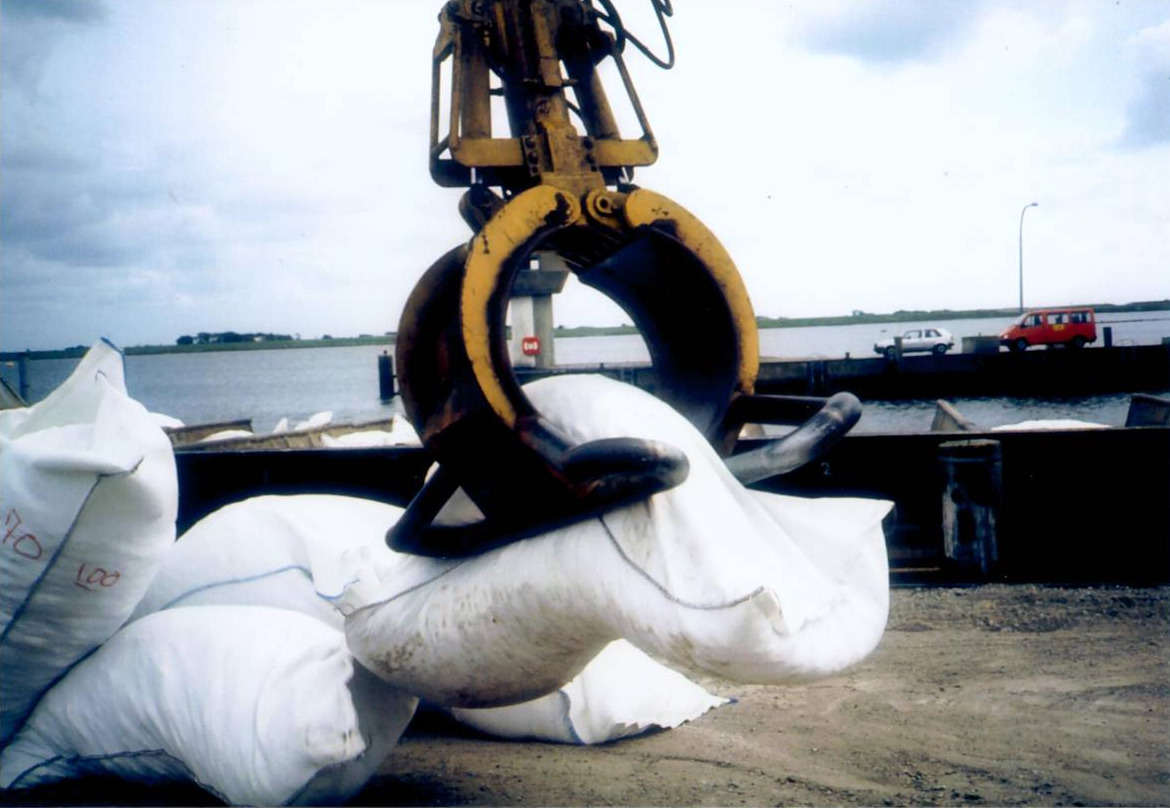
[[File:Nonwoven geotextile containers.jpg|thumb|Nonwoven [[geotextile]] bags are much more robust than woven bags of the same thickness.]] | [[File:Nonwoven geotextile containers.jpg|thumb|Nonwoven [[geotextile]] bags are much more robust than woven bags of the same thickness.]] | ||
Textiles produced for industrial purposes, and designed and chosen for technical characteristics beyond their appearance, are commonly referred to as ''[[technical textiles]].'' Technical textiles include textile structures for automotive applications, medical textiles (such as implants), [[geotextile]] (reinforcement of embankments), agrotextiles (textiles for [[crop protection]]), protective clothing (such as clothing resistant to heat | Textiles produced for industrial purposes, and designed and chosen for technical characteristics beyond their appearance, are commonly referred to as ''[[technical textiles]].'' Technical textiles include textile structures for automotive applications, medical textiles (such as implants), [[geotextile]] (used for reinforcement of embankments), agrotextiles (textiles for [[crop protection]]), and protective clothing (such as clothing resistant to heat, radiation, or molten metals, and clothing resistant to puncture (for example, stab-resistant or bulletproof clothing)). | ||
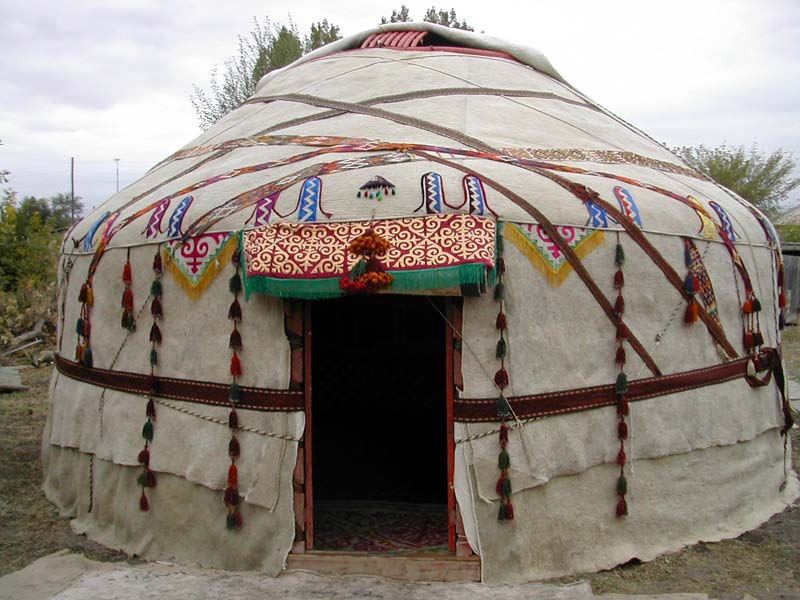
In the workplace, textiles can be used in industrial and scientific processes such as filtering. Miscellaneous uses include | In the workplace, textiles can be used in industrial and scientific processes such as filtering. Miscellaneous uses include flags, [[backpack]]s, [[tent]]s, [[Net (device)|nets]], cleaning [[wikt:rag|rags]], and transportation devices such as [[balloon]]s, [[kite flying|kites]], [[sail]]s, and parachutes; textiles are also used to provide strengthening in [[composite material]]s such as [[fiberglass|fibreglass]] and industrial [[geotextile]]s.{{sfn|Elsasser|2005|p={{pn|date=January 2025}}}}<ref name="Horrocks-2000" /> | ||
Due to the often highly technical and legal requirements of these products, these textiles are typically tested to ensure they meet stringent performance requirements. Other forms of technical textiles may be produced to experiment with their scientific qualities and to explore the possible benefits they may have in the future. For example, threads coated with [[zinc oxide]] [[nanowire]]s, when woven into fabric, have been shown capable of "self-powering nanosystems", using vibrations created by everyday actions like wind or body movements to generate energy.<ref>{{cite news |author=Keim, Brandon |title=Piezoelectric Nanowires Turn Fabric Into Power Source |url=http://blog.wired.com/wiredscience/2008/02/piezoelectric-n.html |date=13 February 2008 |work=Wired News |publisher=CondéNet |access-date=2008-02-13 |archive-url=https://web.archive.org/web/20080215001128/http://blog.wired.com/wiredscience/2008/02/piezoelectric-n.html |archive-date=15 February 2008}}</ref><ref>{{cite journal |author=Yong Qin, Xudong Wang & Zhong Lin Wang |title=Letter/abstract: Microfibre–nanowire hybrid structure for energy scavenging |journal=Nature |volume=451 |pages=809–813 |doi=10.1038/nature06601 |date=10 October 2007 |pmid=18273015 |issue=7180 |bibcode=2008Natur.451..809Q }} cited in {{cite web |title=Editor's summary: Nanomaterial: power dresser |url=http://www.nature.com/nature/journal/v451/n7180/edsumm/e080214-06.html |work=Nature |publisher=Nature Publishing Group |date=14 February 2008 |access-date=2008-02-13 |url-status=live |archive-url=https://web.archive.org/web/20080215185507/http://www.nature.com/nature/journal/v451/n7180/edsumm/e080214-06.html |archive-date=15 February 2008 |volume=451 |issue=7180}}</ref> | |||
== Significance == | == Significance == | ||
Textiles are all around us. | Textiles are all around us. The textile is a component of basic needs like food and shelter. Textiles are everywhere in our lives, from bath towels to space suits. Textiles help humans by comforting, protecting, and extending their lives. Textiles meet our clothing needs, keeping us warm in the winter and cool in the summer. There are several applications for textiles, such as medical textiles, intelligent textiles, and automotive textiles. All of them contribute to the well-being of humans.{{sfn|Kadolph|1998|p={{pn|date=January 2025}}}} | ||
=== Serviceability in textiles === | === Serviceability in textiles === | ||
The term "serviceability" refers to a textile product's ability to meet the needs of consumers. The emphasis is on knowing the target market and matching the needs of the target market to the product's serviceability. Serviceability in textiles | The term "serviceability" refers to a textile product's ability to meet the needs of consumers. The emphasis is on knowing the target market and matching the needs of the target market to the product's serviceability. Serviceability or performance in textiles is the ability of textile materials to withstand various conditions, environments, and hazards. Aesthetics, durability, comfort and safety, appearance retention, care, environmental impact, and cost are the serviceability concepts employed in structuring the material.{{clarify|'structuring' the material?|date=September 2023}}{{sfn|Kadolph|1998|pp=1–12}} | ||
=== Components === | === Components === | ||
Fibres, yarns, fabric construction, finishes and design are components of a textile product. The selection of specific components varies with the intended use, therefore the fibres, yarns, and fabric manufacturing systems are selected with consideration of the required performance.{{sfn|Kadolph|1998|pp=1–12}} | |||
== Use and applications == | == Use and applications == | ||
| Line 162: | Line 224: | ||
!End uses | !End uses | ||
|- | |- | ||
| | |Clothing | ||
|Clothing items for men, women and children. [[nightwear]], [[sportswear]], | |Clothing items for men, women and children. [[nightwear]], [[sportswear]], lingerie, [[undergarment]]s, [[swimsuit]]. Accessories such as [[cap]]s, [[umbrella]], socks, gloves, and handbags.{{sfn|Elsasser|2005|p={{pn|date=January 2025}}}}<ref name="Abisch-1975">{{Cite book |last1=Abisch |first1=Roz |url=http://archive.org/details/textiles00abis |title=Textiles |last2=Kaplan |first2=Boche |date=1975 |location=New York |publisher= Watts |isbn=978-0-531-00824-9 |pages=1, 2}}</ref> | ||
|Agro-textiles | |Agro-textiles | ||
|Agro-textiles are used in | |Agro-textiles are used in agriculture, horticulture, [[aquaculture]], landscape gardening and [[forestry]]. Mainly for [[crop protection]], in crop development for instance shade nets, [[thermal insulation]] and sunscreen materials, windshield, antibird nets, covering livestock protection, suppressing weed and insect control, etc.<ref>{{Cite book |last=Annapoorani |first=Grace S. |url=https://books.google.com/books?id=ckqoDwAAQBAJ&q=Technical+textiles+can+be+divided+into+many+categories,+depending+on+their+end+use.&pg=PA3 |title=Agro Textiles and Its Applications |date=2018 |publisher=Woodhead Publishing |isbn=978-93-85059-89-6 |language=en |access-date=2022-05-22 |archive-date=2022-05-31 |archive-url=https://web.archive.org/web/20220531180223/https://books.google.com/books?id=ckqoDwAAQBAJ&q=Technical+textiles+can+be+divided+into+many+categories,+depending+on+their+end+use.&pg=PA3 |url-status=live }}</ref> | ||
|- | |- | ||
|Furnishing | |Furnishing | ||
|[[Upholstery]], [[ | |[[Upholstery]], [[curtain]]s, [[Drapery|draperies]], [[carpet]]s, [[towel]]s.{{sfn|Elsasser|2005|p={{pn|date=January 2025}}}}<ref name="Abisch-1975" /> | ||
|Geotextile | |Geotextile | ||
|Technical textiles which are used in | |Technical textiles which are used in civil engineering, roads, [[airfield]]s, railroads, [[Embankment (transportation)|embankments]], [[retaining structure]]s, reservoirs, [[canal]]s, dams, [[Stream bed|bank]] protection, [[coastal engineering]] and construction site [[silt fence]]s, and protection of melting glaciers.<ref>{{Cite web |title=Italian glaciers tell the tale of climate change; lost 1/3rd of its volume – World News |url=https://www.wionews.com/videos/italian-glaciers-tell-the-tale-of-climate-change-lost-13rd-of-its-volume-307503/amp |access-date=2022-05-22 |website=www.wionews.com |archive-date=2022-05-31 |archive-url=https://web.archive.org/web/20220531224302/https://www.wionews.com/videos/italian-glaciers-tell-the-tale-of-climate-change-lost-13rd-of-its-volume-307503/amp |url-status=live }}</ref> | ||
|- | |- | ||
|[[Bedding]] | |[[Bedding]] | ||
|[[Bed sheet | |[[Bed sheet]]s, [[khes]], [[blanket]]s, [[pillow]]s.{{sfn|Elsasser|2005|p={{pn|date=January 2025}}}}<ref name="Abisch-1975" /> | ||
|Automotive textile | |Automotive textile | ||
|[[Airbag | |[[Airbag]]s, [[seat belt]]s, [[Headliner (material)|headliners]], [[upholstery]], car carpets, and [[door card]].<ref>{{Cite book |last=Shishoo |first=Roshan |url=https://books.google.com/books?id=6aajAgAAQBAJ |title=Textile Advances in the Automotive Industry |date=20 October 2008 |publisher=Elsevier |isbn=978-1-84569-504-0 |language=en |access-date=2022-05-24 |archive-date=2022-06-02 |archive-url=https://web.archive.org/web/20220602124140/https://books.google.com/books?id=6aajAgAAQBAJ |url-status=live }}</ref> | ||
|- | |- | ||
|Others | |Others | ||
|[[Shower|Shower curtains]] | |[[Shower|Shower curtains]].{{sfn|Elsasser|2005|p={{pn|date=January 2025}}}} | ||
|Medical textile | |Medical textile | ||
|[[Implant (medicine)| | |[[Implant (medicine)|implants]], [[Surgical suture|sutures]], [[Dressing (medical)|dressings]], [[bandage]]s, [[medical gown]]s, [[Face masks during the COVID-19 pandemic|face masks]].{{sfn|Elsasser|2005|p={{pn|date=January 2025}}}} | ||
|- | |- | ||
| | | | ||
| | | | ||
|[[Indutech]] | |[[Indutech]] | ||
|This particular sector includes [[ | |This particular sector includes [[conveyor belt]]s, [[drive belt]]s, [[rope]]s and cordages, [[filtration]] products, glass battery separators, decatising and bolting cloth, AGM (absorption glass mat) [[plasma screen]]s, coated abrasives, [[composite material]]s, printed circuit boards, [[Printer (computing)|printer]] ribbon, seals, gaskets, paper making fabrics.<ref name="Horrocks-2000" /> | ||
|} | |} | ||
=== Other uses === | === Other uses === | ||
Textiles, textile production, and clothing were necessities of life in prehistory, intertwined with the social, economic, and religious systems. Other than clothing, textile crafts produced utilitarian, symbolic, and opulent items. Archaeological artifacts from the Stone Age and the Iron Age in Central Europe are used to examine prehistoric clothing and its role in forming individual and group identities.<ref>{{cite book |doi=10.26530/oapen_604250 |title=The Art of Prehistoric Textile Making.: The development of craft traditions and clothing in Central Europe |date=2016 |last1=Grömer |first1=Karina |isbn=978-3-902421-94-4 }}</ref> | |||
==== Source of knowledge ==== | ==== Source of knowledge ==== | ||
[[Artifact (archaeology)|Artifacts]] unearthed in various [[ | [[Artifact (archaeology)|Artifacts]] unearthed in various [[archaeological excavation]]s informs us about the remains of past human life and their activities.<ref>{{Cite web |title=archaeology {{!}} Definition, History, Types, & Facts {{!}} Britannica |url=https://www.britannica.com/science/archaeology |access-date=2022-05-27 |website=www.britannica.com |language=en |archive-date=2021-07-04 |archive-url=https://web.archive.org/web/20210704002834/https://www.britannica.com/science/archaeology |url-status=live }}</ref> Dyed flax fibres discovered in the Republic of Georgia indicate that textile-like materials were developed during the [[Paleolithic|Paleolithic period]]. [[Radiocarbon dating|Radiocarbon dates]] the microscopic fibres to 36,000 years ago, when modern humans migrated from Africa.<ref name="Kvavadze-2009" /> | ||
Several textile remnants, such as the Inca Empire's textile arts remnants, which embody the Incas' aesthetics and social ideals, serve as a means for disseminating information about numerous civilizations, customs, and cultures.<ref>{{Cite book |last1=Phipps |first1=Elena |url=https://books.google.com/books?id=A6nutjzmxvkC&q=The+yacolla+was+basically+a+blanket |title=The Colonial Andes: Tapestries and Silverwork, | Several textile remnants, such as the Inca Empire's textile arts remnants, which embody the Incas' aesthetics and social ideals, serve as a means for disseminating information about numerous civilizations, customs, and cultures.<ref>{{Cite book |last1=Phipps |first1=Elena |url=https://books.google.com/books?id=A6nutjzmxvkC&q=The+yacolla+was+basically+a+blanket |title=The Colonial Andes: Tapestries and Silverwork, 1530–1830 |last2=Hecht |first2=Johanna |last3=Martín |first3=Cristina Esteras |last4=Martin |first4=Cristina Esteras |last5=N.Y.) |first5=Metropolitan Museum of Art (New York |date=2004 |publisher=Metropolitan Museum of Art |isbn=978-1-58839-131-5 |page=17 |language=en |access-date=2022-05-22 |archive-date=2022-05-31 |archive-url=https://web.archive.org/web/20220531105603/https://books.google.com/books?id=A6nutjzmxvkC&q=The+yacolla+was+basically+a+blanket |url-status=live }}</ref><ref>{{Cite book |last=D.C.) |first=Textile Museum (Washington |url=https://books.google.com/books?id=4ovWAAAAMAAJ&q=textile+remains+tell+us+history |title=Textile Museum Journal |date=2003 |publisher=Textile Museum |page=123 |language=en |access-date=2022-05-22 |archive-date=2022-05-31 |archive-url=https://web.archive.org/web/20220531233553/https://books.google.com/books?id=4ovWAAAAMAAJ&q=textile+remains+tell+us+history |url-status=live }}</ref> | ||
There are [[ | There are [[textile museum]]s that display history related to many aspects of textiles. A textile museum raises public awareness and appreciation of the artistic merits and cultural significance of the world's textiles on a local, national, and international scale. The [[George Washington University Museum and Textile Museum]] in Washington, D.C., was established in 1925.<ref>{{Cite web |date=28 April 2012 |title=The Textile Museum {{!}} Mission & History |url=http://www.textilemuseum.org/about/history.htm |access-date=2022-05-27 |archive-url=https://web.archive.org/web/20120428185646/http://www.textilemuseum.org/about/history.htm |archive-date=2012-04-28 }}</ref> | ||
==== Narrative art ==== | ==== Narrative art ==== | ||
[[Bayeux Tapestry]] is a rare example of secular [[Romanesque art]]. The art work depicts the [[Norman Conquest]] of England in 1066.<ref>{{Cite book |last=Bernstein |first=David J. |url=http://archive.org/details/mysteryofbayeuxt0000bern |title=The mystery of the Bayeux tapestry |date=1986 |publisher= | The [[Bayeux Tapestry]] is a rare example of secular [[Romanesque art]]. The art work depicts the [[Norman Conquest]] of England in 1066.<ref>{{Cite book |last=Bernstein |first=David J. |url=http://archive.org/details/mysteryofbayeuxt0000bern |title=The mystery of the Bayeux tapestry |date=1986 |location=London |publisher= Weidenfeld and Nicolson |isbn=978-0-297-78928-4 |pages=1–10}}</ref><ref>{{Cite book |url=http://archive.org/details/kingharoldiibaye0000unse |title=King Harold II and the Bayeux Tapestry |date=2005 |location=Woodbridge, Suffolk; Rochester, NY |publisher= Boydell Press |isbn=978-1-84383-124-2}}</ref> | ||
==== Decorative art ==== | ==== Decorative art ==== | ||
Textiles are also used for [[decorative arts|decorative art]]. [[Pipili appliqué work|Appliqué work of pipili]] is decorative art of [[Odisha]], a state in [[East India|eastern India]], used for [[ | {{main|Textile arts}} | ||
Textiles are also used for [[decorative arts|decorative art]]. [[Pipili appliqué work|Appliqué work of pipili]] is decorative art of [[Odisha]], a state in [[East India|eastern India]], used for [[umbrella]]s, wall hangings, lamp shades, and bags. To make a range of decorative products, coloured cloth in the shapes of animals, birds, flowers, are sewn onto a base cloth.<ref>{{Cite web |date=27 April 2015 |title=Facilitation of IPR Protection through Geographical Indications {{!}} Services {{!}} Textiles Committee (Ministry of Textiles, Government of India) |url=http://textilescommittee.nic.in/services/geographical-indications#Pipli |access-date=2022-05-24 |archive-url=https://web.archive.org/web/20150427132918/http://textilescommittee.nic.in/services/geographical-indications#Pipli |archive-date=2015-04-27 }}</ref> | |||
{{expand section|summarize article [[Textile arts]] to give indication of the range of textile arts. |date=September 2023}} | |||
==== Architextiles ==== | ==== Architextiles ==== | ||
[[Architextiles]], a combination of the words architecture and textile, are textile-based assemblages. Awnings are a basic type of architectural textile.<ref>{{Cite book |last=Garcia |first=Mark |url=https://books.google.com/books?id=WNM3AQAAIAAJ |title=Architextiles |date=2006 |publisher=Wiley |isbn=978-0-470-02634-2 | | [[Architextiles]], a combination of the words architecture and textile, are textile-based assemblages. Awnings are a basic type of architectural textile.<ref>{{Cite book |last=Garcia |first=Mark |url=https://books.google.com/books?id=WNM3AQAAIAAJ |title=Architextiles |date=2006 |publisher=Wiley |isbn=978-0-470-02634-2 |page=5 |language=en |access-date=2022-05-24 |archive-date=2022-06-02 |archive-url=https://web.archive.org/web/20220602154540/https://books.google.com/books?id=WNM3AQAAIAAJ |url-status=live }}</ref> [[Shahi Lal Dera|Mughal Shahi Lal Dera Tent]], which was a movable palace, is an example of the architextiles of the [[Mughal Empire|Mughal period]].<ref>{{Cite web |last=Willem |title=Mughal Shahi Lal Dera Tent |url=https://trc-leiden.nl/trc-needles/com-k2/individual-textiles-and-textile-types/furnishings/tent-of-shah-jahan |access-date=2022-05-24 |website=trc-leiden.nl |language=en-gb |archive-date=2022-08-11 |archive-url=https://web.archive.org/web/20220811211625/https://www.trc-leiden.nl/trc-needles/com-k2/individual-textiles-and-textile-types/furnishings/tent-of-shah-jahan |url-status=live }}</ref> | ||
== | ====Currency==== | ||
Textiles had been used as currency as well. In Africa, textiles were used as currency in addition to being used for clothing, headwear, swaddling, tents, sails, bags, sacks, carpets, rugs, curtains, etc.<ref>{{cite journal |last1=Johnson |first1=Marion |title=Cloth as Money: the Cloth Strip Currencies of Africa |journal=Textile History |date=October 1980 |volume=11 |issue=1 |pages=193–202 |doi=10.1179/004049680793691185 }}</ref> Along the east–west axis in sub-Saharan Africa, cloth strip, which was typically produced in the savannah, was used as a form of currency.<ref>{{cite book |doi=10.1007/978-3-030-18675-3_3 |chapter=Guinées in the Lower Senegal River: A Consumer-Led Trade in the Early Nineteenth Century |title=Indian Cotton Textiles in West Africa |date=2019 |last1=Kobayashi |first1=Kazuo |pages=81–125 |isbn=978-3-030-18674-6 }}</ref> | |||
=== | ==== Votive offering ==== | ||
Textiles were among the [[Votive offering|objects offered]] to the gods [votive offering] in ancient Greece for religious purposes.<ref>{{Cite book |last=Br¿ns |first=Cecilie |url=https://books.google.com/books?id=aXm7DQAAQBAJ&dq=gods+and+garments&pg=PR23 |title=Gods and Garments: Textiles in Greek Sanctuaries in the 7th to the 1st Centuries BC |date=30 November 2016 |publisher=Oxbow Books |isbn=978-1-78570-358-4 |page=51 |language=en |access-date=2022-12-03 |archive-date=2023-04-09 |archive-url=https://web.archive.org/web/20230409133722/https://books.google.com/books?id=aXm7DQAAQBAJ&dq=gods+and+garments&pg=PR23 |url-status=live }}</ref> | |||
* Synthetic or manmade | ==Fibre== | ||
* Semi-synthetic: A subset of synthetic or manmade | {{main|Fiber}} | ||
Monomers are the building blocks of polymers. Polymers in | The smallest component of a fabric is fibre; fibres are typically spun into yarn, and yarns are used to make fabrics. Fibres are very thin and hair-like structures. The sources of fibres may be [[Natural fiber|natural]], [[Synthetic fiber|synthetic]], or both.{{sfn|Kadolph|1998|p={{pn|date=January 2025}}}}{{sfn|Smith|1982|pp=64, 69}} | ||
=== Global consumption === | |||
Global fibre production per person has increased from 8.4 kilograms in 1975 to 14.3 kilograms in 2021.{{clarify|Is this per person per year?|date=September 2023}} After a modest drop due to [[COVID-19 pandemic]] in 2020, global fibre output rebounded to 113 million tons in 2021. Global fibre output roughly doubled from 58 million tons in 2000 to 113 million tons in 2021 and is anticipated to reach 149 million tons in 2030.<ref>{{Cite web |title=Preferred Fiber and Materials |url=https://textileexchange.org/knowledge-center/reports/preferred-fiber-and-materials/ |access-date=2022-11-19 |website=Textile Exchange |language=en-US |archive-date=2022-11-19 |archive-url=https://web.archive.org/web/20221119081806/https://textileexchange.org/knowledge-center/reports/preferred-fiber-and-materials/ |url-status=live }}</ref> | |||
The demand for synthetic fibres is increasing rapidly. This has numerous causes. Reasons include its low price, the demand-supply imbalance of cotton, and its [Synthetic fibres'] versatility in design and application. Synthetic fibres accounts for 70% of global fibre use, mainly polyester.<ref>{{Cite web |author=<!-- Not provided --> |date=26 September 2022 |title=Manmade Fibre Industry Outlook 2022 |url=https://textilevaluechain.in/in-depth-analysis/manmade-fibre-industry-outlook-2022/ |access-date=2022-11-19 |website=Textile Magazine, Textile News, Apparel News, Fashion News |language=en-US |archive-date=2022-11-19 |archive-url=https://web.archive.org/web/20221119075442/https://textilevaluechain.in/in-depth-analysis/manmade-fibre-industry-outlook-2022/ |url-status=live }}</ref> By 2030, the synthetic fibre market will reach 98.21 billion US dollars. From 2022 to 2030, the market is anticipated to increase by 5.1% per year.<ref>{{Cite press release |last=Markets |first=Research and |date=21 September 2022 |title=Global Synthetic Fiber Market Report 2022: Shifting Fashion Trends Coupled With the Rising Urban Population Creates Opportunities |url=https://www.globenewswire.com/en/news-release/2022/09/21/2519999/28124/en/Global-Synthetic-Fiber-Market-Report-2022-Shifting-Fashion-Trends-Coupled-With-the-Rising-Urban-Population-Creates-Opportunities.html |access-date=2022-11-19 |website=GlobeNewswire News Room |language=en |archive-date=2022-11-19 |archive-url=https://web.archive.org/web/20221119080046/https://www.globenewswire.com/en/news-release/2022/09/21/2519999/28124/en/Global-Synthetic-Fiber-Market-Report-2022-Shifting-Fashion-Trends-Coupled-With-the-Rising-Urban-Population-Creates-Opportunities.html |url-status=live }}</ref> | |||
=== Fibre sources === | |||
* Natural fibres are obtained from plants, animals and minerals.{{sfn|Kadolph|1998|p=18}} Since prehistoric times, textiles have been made from natural fibres. Natural fibres are further categorized as cellulosic, protein, and mineral.{{sfn|Smith|1982|p=70}} | |||
* Synthetic or manmade fibres are manufactured with [[chemical synthesis]].{{sfn|Kadolph|1998|p=18}} | |||
* Semi-synthetic: A subset of synthetic or manmade fibres is semi-synthetic fibre. Rayon is a classified as a semi-synthetic fibre, made with natural polymers. | |||
Monomers are the building blocks of polymers. Polymers in fibres are of two types: additive or condensation. Natural fibres, such as cotton and wool, have a condensation polymer type, whereas synthetic fibres can have either an additive or a condensation polymer type. For example, [[acrylic fiber|acrylic fibre]] and [[olefin fiber|olefin fibres]] have additive polymers, and nylon and [[polyester]] are condensation polymers.{{sfn|Smith|1982|p={{pn|date=January 2025}}}} | |||
=== Types === | === Types === | ||
{| class="wikitable" | {| class="wikitable" | ||
|+Types of | |+Types of fibres{{sfn|Smith|1982|p=68}} | ||
! colspan="3" |Natural | ! colspan="3" |Natural | ||
!Synthetic | !Synthetic | ||
!Semi-synthetic | !Semi-synthetic | ||
|- | |- | ||
!Cellulosic | !Cellulosic fibres (Vegetable or plant fibres) | ||
!Protein | !Protein fibres (Animal fibres) | ||
!Mineral | !Mineral fibres | ||
! | !Petroleum based | ||
![[Cellulose]] based | ![[Cellulose]] based | ||
|- | |- | ||
| Line 237: | Line 313: | ||
|[[Linen]] | |[[Linen]] | ||
|[[Silk]] | |[[Silk]] | ||
|[[Glass fiber]] | |[[Glass fiber|Glass fibre]] | ||
|[[Polyester]] | |[[Polyester]] | ||
|[[Acetate]] | |[[Acetate]] | ||
| Line 244: | Line 320: | ||
| | | | ||
| | | | ||
|[[Acrylic fiber]] | |[[Acrylic fiber|Acrylic fibre]] | ||
|[[Cellulose triacetate|Triacetate]] | |[[Cellulose triacetate|Triacetate]] | ||
|- | |- | ||
|[[Hemp]] | |||
| | | | ||
| | | | ||
|[[Olefin fiber|Olefin fibre]] | |||
|[[Olefin fiber]] | |||
| | | | ||
|- | |- | ||
| | |[[Bamboo textile|Bamboo Fibre]] | ||
| | | | ||
| | | | ||
| Line 266: | Line 342: | ||
|} | |} | ||
=== | === Fibre properties === | ||
Fibre properties influence textile characteristics such as aesthetics, durability, comfort, and cost.{{sfn|Smith|1982|p=69}} | |||
Fineness is one of the important characteristics of the | Fineness is one of the important characteristics of the fibres. They have a greater length-to-width ratio [100 times the diameter]. Fibres need to be strong, cohesive, and flexible. The usefulness of fibres are characterized on the basis of certain parameters such as strength, flexibility, and length to diameter ratio, and spinnability. Natural fibres are relatively short [<nowiki/>[[Staple (textiles)|staple]]] in length. Synthetic fibres are produced in longer lengths called filaments. [[Silk]] is the only natural fibre that is a filament. The classification of fibres is based on their origin, derivation, and generic types.{{sfn|Kadolph|1998|p={{pn|date=January 2025}}}}{{sfn|Smith|1982|pp=64, 69}} | ||
Certain properties of synthetic | Certain properties of synthetic fibres, such as their diameter, [[Cross section (fiber)|cross section]], and colour, can be altered during production.{{sfn|Smith|1982|p=66}} | ||
Cotton: Cotton has a long history of use in the clothing due to its | Cotton: Cotton has a long history of use in the clothing due to its favourable properties. This fibre is soft, moisture-absorbent, breathable, and is renowned for its long durability. | ||
==== Blends (blended textiles) ==== | ==== Blends (blended textiles) ==== | ||
Fabric or [[yarn]] produced with a [[combination]] of two or more types of different [[ | Fabric or [[yarn]] produced with a [[combination]] of two or more types of different [[fibre]]s, or yarns to obtain desired traits. Blending is possible at various stages of [[textile manufacturing]]. Final composition is liable for the properties of the resultant product. [[Natural fiber|Natural]] and [[synthetic fiber|synthetic fibres]] are blended to overcome disadvantage of single fibre properties and to achieve better performance characteristics and aesthetic effects such as [[devoré]], [[Heather (fabric)|heather effect, cross dyeing and stripes pattern]] etc. Clothing woven from a blend of cotton and [[polyester]] can be more durable and easier to maintain than material woven solely from cotton. Other than sharing functional properties, blending makes the products more economical.<ref>{{Cite book |last=Barnett |first=Anne |title=Examining Textiles Technology |publisher=Heinemann Educational |year=1997 |isbn=978-0-435-42104-5 |page=51}}</ref><ref>{{Cite book |last=Gulrajani |first=M. L. |url=https://books.google.com/books?id=JrgwAAAAMAAJ&q=blended+textiles+advantages |title=Blended Textiles: Papers of the 38th All India Textile Conference, an International Conference, November 18–20th ... Bombay |date=1981 |publisher=Textile Association |language=en |access-date=2020-11-22 |archive-date=2022-01-27 |archive-url=https://web.archive.org/web/20220127041052/https://books.google.com/books?id=JrgwAAAAMAAJ&q=blended+textiles+advantages |url-status=live }}</ref> | ||
Union or Union fabrics is the 19th century term for blended fabrics. While it is no longer in use.<ref>{{Cite book |last=Montgomery |first=Florence M. |url=http://archive.org/details/textilesinameric00mont |title=Textiles in America | Union or Union fabrics is the 19th century term for blended fabrics. While it is no longer in use.<ref>{{Cite book |last=Montgomery |first=Florence M. |url=http://archive.org/details/textilesinameric00mont |title=Textiles in America 1650–1870: a dictionary based on original documents, prints and paintings, commercial records, American merchants' papers, shopkeepers' advertisements, and pattern books with original swatches of cloth |date=1984 |location=New York; London |publisher= Norton |isbn=978-0-393-01703-8 |page=369}}</ref> ''Mixture'' or ''mixed cloth'' is another term used for blended cloths when different types of yarns are used in warp and weft sides.{{sfn|Kadolph|1998|p=402}}<ref>{{Cite book |url=http://archive.org/details/fairchildsdictio0000unse |title=Fairchild's dictionary of textiles |date=1959 |location=New York |publisher= Fairchild Publications |page=355}}</ref> | ||
Blended textiles are not new. | Blended textiles are not new. | ||
* [[Mashru]] was a 16th-century fabric, is one of the earliest forms of "mixed cloth, | * [[Mashru]] was a 16th-century fabric, is one of the earliest forms of "mixed cloth", a material composed of silk and cotton.<ref>{{Cite book |url=https://books.google.com/books?id=O8gnAQAAIAAJ&q=Mashru,+a+16th-century+fabric |title=Indian Journal of History of Science |date=1982 |publisher=National Institute of Sciences of India |page=120 |language=en}}</ref> | ||
* [[Siamoise]] was a 17th century cotton and linen material.<ref>{{Cite book |last=Montgomery |first=Florence M. |url=http://archive.org/details/textilesinameric00mont |title=Textiles in America | * [[Siamoise]] was a 17th-century cotton and linen material.<ref>{{Cite book |last=Montgomery |first=Florence M. |url=http://archive.org/details/textilesinameric00mont |title=Textiles in America 1650–1870: a dictionary based on original documents, prints and paintings, commercial records, American merchants' papers, shopkeepers' advertisements, and pattern books with original swatches of cloth |date=1984 |location=New York; London |publisher= Norton |isbn=978-0-393-01703-8 |page=347}}</ref> | ||
==== Composition ==== | ==== Composition ==== | ||
Fibre composition<ref>{{cite journal |last1=Kumar |first1=Raj |last2=Srivastava |first2=H.C. |title=Analysis of Fiber Blends. Part II. Determination of Blend Composition by Moisture Regain |journal=Textile Research Journal |date=June 1980 |volume=50 |issue=6 |pages=359–362 |doi=10.1177/004051758005000607 }}</ref> the fibre blend composition of mixtures of the fibres,<ref>{{Cite web |title=ASTM D629 - 15 Standard Test Methods for Quantitative Analysis of Textiles |url=https://www.astm.org/Standards/D629.htm |access-date=2021-05-24 |website=www.astm.org |archive-date=2021-05-18 |archive-url=https://web.archive.org/web/20210518084425/https://www.astm.org/Standards/D629.htm |url-status=live }}</ref> is an important criterion to analyse the behaviour, properties such as functional aspects, and commercial classification of the merchandise.<ref>{{cite book |doi=10.1533/9780857097385.2.803 |chapter=The use of biomass to produce bio-based composites and building materials |title=Advances in Biorefineries |date=2014 |last1=Rowell |first1=R.M. |pages=803–818 |isbn=978-0-85709-521-3 }}</ref><ref>{{Cite book |url=https://books.google.com/books?id=xhArAQAAMAAJ |title=Mechanical Engineering |date=1956 |publisher=American Society of Mechanical Engineers |language=en}}</ref><ref>{{Cite book |last=Franck |first=R. R. |url=https://books.google.com/books?id=GbejAgAAQBAJ&q=Fiber+properties+is+an+important+criteria+to+analyze+in+blends&pg=PA230 |title=Silk, Mohair, Cashmere and Other Luxury Fibres |date=29 October 2001 |publisher=Elsevier |isbn=978-1-85573-759-4 |page=230 |language=en |access-date=2021-05-23 |archive-date=2022-01-27 |archive-url=https://web.archive.org/web/20220127041049/https://books.google.com/books?id=GbejAgAAQBAJ&q=Fiber+properties+is+an+important+criteria+to+analyze+in+blends&pg=PA230 |url-status=live }}</ref> | |||
The most common blend is cotton and polyester. Regular blended fabric is 65% polyester and 35% cotton. It is called a ''reverse blend'' if the ratio of cotton predominates—the percentage of the fibres changes with the price and required properties. | |||
https:// | Blending adds value to the textiles; it helps in reducing the cost (artificial fibres are less expensive than natural fibres) and adding advantage in properties of the final product.<ref>{{Cite book |last=Joseph |first=Marjory L. |url=http://archive.org/details/josephsintroduct06edjose |title=Joseph's introductory textile science |date=1992 |location=Fort Worth |publisher= Harcourt Brace Jovanovich College Publishers |isbn=978-0-03-050723-6 |page=58}}</ref><ref>{{Cite book |last1=Langan |first1=John |url=https://books.google.com/books?id=20gN3AousRAC&q=frontcover |title=Improving Reading Comprehension Skills |last2=Anton |first2=Harley F. |last3=Bader |first3=Carol H. |date=1992 |publisher=Townsend Press |isbn=978-0-944210-54-3 |language=en}}</ref> For instance, a small amount of spandex adds stretch to the fabrics.<ref>{{Cite book |last=Stauffer |first=Jeanne |url=https://books.google.com/books?id=8_-NkR8TEyEC&q=blend+spandex+adds+elasticity&pg=PA139 |title=Sewing Smart with Fabric |date=2004 |publisher=DRG Wholesale |isbn=978-1-59217-018-0 |page=139 |language=en |access-date=2021-05-23 |archive-date=2022-01-27 |archive-url=https://web.archive.org/web/20220127041047/https://books.google.com/books?id=8_-NkR8TEyEC&q=blend+spandex+adds+elasticity&pg=PA139 |url-status=live }}</ref> Wool can add warmth.<ref>{{Cite book |last=Mendelson |first=Cheryl |url=https://books.google.com/books?id=xfB99Kf38MwC&q=blend+spandex+adds+elasticity&pg=PA264 |title=Home Comforts: The Art and Science of Keeping House |date=17 May 2005 |publisher=Simon and Schuster |isbn=978-0-7432-7286-5 |page=264 |language=en |access-date=2021-05-23 |archive-date=2022-01-27 |archive-url=https://web.archive.org/web/20220127041051/https://books.google.com/books?id=xfB99Kf38MwC&q=blend+spandex+adds+elasticity&pg=PA264 |url-status=live }}</ref> | ||
== Uses of different fibres == | |||
=== Natural fibres === | |||
=== Natural | |||
====Plant==== | |||
[[File:Brudekjole, 1797.jpg|thumb|Bridal gown made from nettle fibres, probably worn by Eleonora Sophie Rantzau (1779-) at her wedding to [[Preben Bille-Brahe]], [[Hvedholm Castle]]. [[National Museum of Denmark]].]] | |||
* [[Poaceae|Grass]], [[Juncaceae|rush]], [[hemp]], and [[sisal]] are all used in making [[rope]].<ref>{{Cite book |url=https://books.google.com/books?id=URbaUVdk1NwC&dq=Grass,+rush,+hemp,+and+sisal+are+all+used+in+making+rope.&pg=PR41 |title=The Atlas of the World Commerce Maps, Text and Diagrams |date=1907 |publisher=Newnes |page=xli |language=en |access-date=2023-05-28 |archive-date=2023-05-28 |archive-url=https://web.archive.org/web/20230528130716/https://books.google.com/books?id=URbaUVdk1NwC&newbks=0&printsec=frontcover&pg=PR41&dq=Grass,+rush,+hemp,+and+sisal+are+all+used+in+making+rope.&hl=en |url-status=live }}</ref> In the first two, the entire plant is used for this purpose, while in the last two, only fibres from the plant are used. [[Coir]] ([[coconut]] fibre) is used in making [[twine]], and also in floormats, [[Mat|doormats]], [[brush]]es, [[mattress]]es, floor tiles, and [[Bag|sacking]]. | |||
* [[Straw]] and [[bamboo textiles|bamboo]] are both used to make hats. Straw, a dried form of grass, is also used for stuffing, as is [[Ceiba pentandra|kapok]]. | * [[Straw]] and [[bamboo textiles|bamboo]] are both used to make hats. Straw, a dried form of grass, is also used for stuffing, as is [[Ceiba pentandra|kapok]]. | ||
* Fibres from [[pulpwood]] trees, cotton, rice, hemp, and [[Urtica dioica|nettle]] are used in making paper. | |||
* | * Cotton, [[Linen|flax]], [[jute]], [[hemp]], [[Modal (textile)|modal]], [[banana fiber|banana]], [[Bamboo textile|bamboo]], [[Lotus silk|lotus]], [[eucalyptus]], [[Morus (plant)|mulberry]], and [[sugarcane]] are all used in clothing.<ref name=TH_1>{{cite web| title=Tiare Hawaiʻi Is Making Ultra-Cute Dresses from Pineapple, Banana and Eucalyptus| author=Thalmann, B.| | ||
url=https://www.honolulumagazine.com/tiare-hawaii-is-making-ultra-cute-dresses-from-pineapple-banana-and-eucalyptus| website=[[Honolulu Magazine]]| date=30 August 2022| access-date=1 February 2024}}</ref><ref>{{cite book |last1=Hendrickx |first1=Katrien |url={{google books |plainurl=y |id=ULyu8dNqS1sC|page=188}} |title=The Origins of Banana-fibre Cloth in the Ryukyus, Japan |publisher=Leuven University Press |year=2007 |isbn=978-90-5867-614-6 |page=188 |language=en |archive-url=https://web.archive.org/web/20180327155254/https://books.google.com/books?id=ULyu8dNqS1sC&pg=PA188&dq=banana%20textile#v=onepage&q=banana%20textile |archive-date=27 March 2018 |url-status=live}}</ref><ref name=BS_1>{{cite web| title=Banana Saris, Lotus Shawls, Bamboo Jeans: How Desi Fashion Is Going Green!| author=Kadapa-Bose, S.| url=https://www.thebetterindia.com/262318/sustainable-fashion-designers-clothes-plant-fabric-banana-bamboo-cloth| website=the better india| date=15 September 2021| access-date=1 February 2024}}</ref> [[Piña]] ([[pineapple]] fibre) and [[ramie]] are also fibres used in clothing, generally with a blend of other fibres such as cotton. Nettles have also been used to make a fibre and fabric very similar to hemp or flax. The use of milkweed stalk fibre has also been reported, but it tends to be somewhat weaker than other fibres like hemp or flax. | |||
* | |||
* The inner bark of the [[Lagetta lagetto|lacebark tree]] is a fine netting that has been used to make clothing and accessories as well as utilitarian articles such as rope. | * The inner bark of the [[Lagetta lagetto|lacebark tree]] is a fine netting that has been used to make clothing and accessories as well as utilitarian articles such as rope. | ||
* [[cellulose acetate|Acetate]] is used to increase the shininess of certain fabrics such as silks, [[velvet]]s, and [[taffeta]]s. | |||
* [[Seaweed]] is used in the production of textiles: a water-soluble fibre known as [[Alginic acid|alginate]] is produced and is used as a holding fibre; when the cloth is finished, the alginate is dissolved, leaving an open area. | |||
* [[Rayon]] is a manufactured fibre derived from plant pulp.<ref>{{Cite book |last=Anstey |first=H. (Helen) |url=http://archive.org/details/ansteywestonguid0000anst |title=The Anstey Weston guide to textile terms |date=1997 |location=Great Britain |publisher= Weston |isbn=978-0-9530130-0-5}}</ref> Different types of rayon can imitate [[Hand feel|feel]] and texture of silk, cotton, wool, or linen. | |||
Fibres from the stalks of plants, such as hemp, flax, and nettles, are also known as 'bast' fibres. Hemp fibre is yellowish-brown fibre made from the hemp plant. The fibre characteristics are coarser, harsher,{{clarify|coarser and harsher than what?|date=September 2023}} strong and lightweight. Hemp fibre is used primary to make twine, rope and cordage.<ref>{{cite book |last1=Cohen |first1=Allen |title=J.J. Pizzuto's Fabric Science |date=11 November 2011 |publisher=Fairchild Books |isbn=978-1-60901-380-6 |edition=tenth |page=41}}</ref> | |||
====Animal==== | |||
Animal textiles are commonly made from hair, fur, skin, or silk (in the case of silkworms).{{clarify|Use of skin in textiles|date=September 2023}} | |||
* Wool refers to the hair of the domestic sheep or goat, which is distinguished from other types of animal hair in that the individual strands are coated with scales and tightly crimped, and the wool as a whole is coated with a [[wax]] mixture known as [[lanolin]] (sometimes called wool grease), which is waterproof and dirtproof.<ref>{{Cite book |last=Vatin Nikolai Ivanovich |first=Alexandr A. Berlin, Roman Joswik |url=https://books.google.com/books?id=Mt6YCgAAQBAJ&dq=lanolin++is+waterproof+and+dirtproof&pg=PA142 |title=Engineering Textiles |publisher=Apple Academic Press |year=2015 |isbn=978-1-4987-0603-2 |page=142 |access-date=2023-03-19 |archive-date=2023-04-05 |archive-url=https://web.archive.org/web/20230405081531/https://books.google.com/books?id=Mt6YCgAAQBAJ&dq=lanolin++is+waterproof+and+dirtproof&pg=PA142 |url-status=live }}</ref> The lanolin and other contaminants are removed from the raw wool before further processing.<ref>{{Cite book |last=Arno Cahn |first=Edward C. Leonard, Edward George Perkins |title=Proceedings of the World Conference on Palm and Coconut Oils for the 21st Century |publisher=AOCS Press |year=1999 |isbn=978-0-935315-99-8 |page=115}}</ref> [[Woollen]] refers to a yarn produced from carded, non-parallel fibre, while [[worsted]] refers to a finer yarn spun from longer fibres which have been combed to be parallel. | |||
** Other animal textiles which are made from hair or fur are [[alpaca wool]], [[vicuña wool]], [[llama wool]], [[chiengora]], [[shatoosh]], [[yak fiber|yak fibre]] and [[camel hair]], generally used in the production of coats, jackets, [[poncho]]s, blankets, and other warm coverings. | |||
** ''[[Cashmere wool|Cashmere]]'', the hair of the Indian [[cashmere goat]], and [[mohair]], the hair of the North African [[angora goat]], are types of wool known for their softness. [[Pashmina]] is a type of very fine cashmere wool. Used in the production of sweaters and scarfs. | |||
** ''[[Angora wool|Angora]]'' refers to the long, thick, soft hair of the [[angora rabbit]]. [[Qiviut]] is the fine inner wool of the [[muskox]]. | |||
==== | * [[Silk]] is an animal textile made from the fibres of the [[Cocoon (silk)|cocoon]] of the Chinese [[silkworm]] which is spun into a smooth fabric prized for its softness. There are two main types of the silk: 'mulberry silk' produced by the ''[[Bombyx mori]]'', and 'wild silk' such as [[Wild silk|Tussah silk]] (wild silk). Silkworm larvae produce the first type if cultivated in habitats with fresh mulberry leaves for consumption, while Tussah silk is produced by silkworms feeding purely on oak leaves. Around four-fifths of the world's silk production consists of cultivated silk.<ref>{{cite web |last=Trevisan |first=Adrian |title=Cocoon Silk: A Natural Silk Architecture |url=http://www.senature.com/research/publications/cocoon-silk-a-natural-architecture |archive-url=https://web.archive.org/web/20120507085636/http://www.senature.com/research/publications/cocoon-silk-a-natural-architecture |archive-date=2012-05-07 |publisher=Sense of Nature}}</ref> Silk products include pillow covers, dresses, tops, skirts, bed sheets, curtains. | ||
====Microbes==== | |||
[[Bacterial cellulose]] can be made from industrial organic and agricultural waste, and used as material for textiles and clothing.<ref>{{Cite web |url=https://stockhead.com.au/health/why-nanollose-is-on-the-verge-of-a-major-market-opportunity-with-its-fibre-conversion-technology-as-global-fashion-brands-come-knocking/ |title=Why Nanollose is on the verge of a major market opportunity with its fibre conversion technology, as global fashion brands come knocking |date=14 February 2022 |access-date=2022-09-26 |archive-date=2022-12-15 |archive-url=https://web.archive.org/web/20221215183949/https://stockhead.com.au/health/why-nanollose-is-on-the-verge-of-a-major-market-opportunity-with-its-fibre-conversion-technology-as-global-fashion-brands-come-knocking/ |url-status=live }}</ref> | |||
==== Mineral ==== | ====Mineral==== | ||
* Asbestos and [[basalt fibre]] are used for vinyl tiles, sheeting and adhesives, "transite" panels and siding, acoustical ceilings, stage curtains, and fire blankets. | * Asbestos and [[basalt fibre]] are used for vinyl tiles, sheeting and adhesives, "transite" panels and siding, acoustical ceilings, stage curtains, and fire blankets. | ||
* [[Glass fibre]] is used in the production of ironing board and mattress covers, ropes and cables, reinforcement fibre for composite materials, insect netting, flame-retardant and protective fabric, soundproof, fireproof, and insulating fibres. Glass fibres are woven and coated with [[Teflon]] to produce [[beta cloth]], a virtually fireproof fabric which replaced nylon in the outer layer of United States [[space suit]]s since 1968.{{ | * [[Glass fibre]] is used in the production of ironing board and mattress covers, ropes and cables, reinforcement fibre for composite materials, insect netting, flame-retardant and protective fabric, soundproof, fireproof, and insulating fibres. Glass fibres are woven and coated with [[Teflon]] to produce [[beta cloth]], a virtually fireproof fabric which replaced nylon in the outer layer of United States [[space suit]]s since 1968.<ref>{{Cite book |url=https://books.google.com/books?id=toeN-glF_nsC&dq=beta+cloth,+a+virtually+fireproof+fabric+which+replaced+nylon+in+the+outer+layer+of+United+States+space+suits+since+1968&pg=PA469-IA2 |title=Apollo Accident, Hearing .... |date=1968 |pages=469, 557 |language=en |access-date=2023-05-28 |archive-date=2023-05-28 |archive-url=https://web.archive.org/web/20230528133641/https://books.google.com/books?id=toeN-glF_nsC&newbks=0&printsec=frontcover&pg=PA469-IA2&dq=beta+cloth,+a+virtually+fireproof+fabric+which+replaced+nylon+in+the+outer+layer+of+United+States+space+suits+since+1968&hl=en |url-status=live }}</ref> | ||
* Metal fibre, metal foil, and metal wire have a variety of uses, including the production of [[cloth-of-gold]] and | * Metal fibre, metal foil, and metal wire have a variety of uses, including the production of [[cloth-of-gold]] and jewellery. [[Hardware cloth]] (US term only) is a coarse woven [[mesh]] of steel wire, used in construction. It is much like standard [[window screen]]ing, but heavier and with a more open weave. | ||
Minerals and natural and synthetic fabrics may be combined, as in [[emery cloth]], a layer of [[Emery (rock)|emery]] abrasive glued to a cloth backing. Also, "sand cloth" is a | Minerals and natural and synthetic fabrics may be combined, as in [[emery cloth]], a layer of [[Emery (rock)|emery]] abrasive glued to a cloth backing. Also, "sand cloth" is a US term for fine wire mesh with abrasive glued to it, employed like emery cloth or coarse [[sandpaper]]. | ||
=== Synthetic === | === Synthetic === | ||
In the 20th century, they were supplemented by artificial | In the 20th century, they were supplemented by artificial fibres made from petroleum. Textiles are made in various strengths and degrees of durability, from the finest [[microfibre]] made of strands thinner than one [[Units of textile measurement#Denier|denier]] to the sturdiest [[canvas]]. | ||
Synthetic textiles are used primarily in the production of clothing, as well as the manufacture of [[geotextile]]s. Synthetic fibres are those that are constructed by humans through chemical synthesis. | |||
* [[Polyester]] fibre is used in all types of clothing, either alone or blended with fibres such as cotton. | * [[Polyester]] fibre is used in all types of clothing, either alone or blended with fibres such as cotton. | ||
* [[Aramid]] fibre (e.g. [[Twaron]]) is used for flame-retardant clothing, cut-protection, and armour. | * [[Aramid]] fibre (e.g. [[Twaron]]) is used for flame-retardant clothing, cut-protection, and armour. | ||
* [[Acrylic fibre|Acrylic]] is a fibre used to imitate wools,<ref>{{Cite book |last1=Hammerskog |first1=Paula |url=https://archive.org/details/swedishknitsclas0000hamm |title=Swedish Knits: Classic and Modern Designs in the Scandinavian Tradition |last2=Wincent |first2=Eva |date=2009 |publisher=Skyhorse Publishing Inc. |isbn=978-1-60239-724-8 |page=[https://archive.org/details/swedishknitsclas0000hamm/page/32 32] |language=en |quote=acrylic fiber used to imitate wools. |url-access=registration}}</ref> including cashmere, and is often used in replacement of them. | * [[Acrylic fibre|Acrylic]] is a fibre used to imitate wools,<ref>{{Cite book |last1=Hammerskog |first1=Paula |url=https://archive.org/details/swedishknitsclas0000hamm |title=Swedish Knits: Classic and Modern Designs in the Scandinavian Tradition |last2=Wincent |first2=Eva |date=2009 |publisher=Skyhorse Publishing Inc. |isbn=978-1-60239-724-8 |page=[https://archive.org/details/swedishknitsclas0000hamm/page/32 32] |language=en |quote=acrylic fiber used to imitate wools. |url-access=registration}}</ref> including cashmere, and is often used in replacement of them. | ||
* | * Nylon is a fibre used to imitate silk; it is used in the production of [[pantyhose]]. Thicker nylon fibres are used in rope and outdoor clothing. | ||
* [[Spandex]] (trade name ''Lycra'') is a [[polyurethane]] product that can be made tight-fitting without impeding movement. It is used to make [[activewear]], [[Brassiere|bras]], and [[swimsuit]]s. | * [[Spandex]] (trade name ''Lycra'') is a [[polyurethane]] product that can be made tight-fitting without impeding movement. It is used to make [[activewear]], [[Brassiere|bras]], and [[swimsuit]]s. | ||
* [[Olefin fibre]] is a fibre used in activewear, linings, and warm clothing. Olefins are hydrophobic, allowing them to dry quickly. A sintered felt of olefin fibres is sold under the trade name [[Tyvek]]. | * [[Olefin fibre]] is a fibre used in activewear, linings, and warm clothing. Olefins are hydrophobic, allowing them to dry quickly. A sintered felt of olefin fibres is sold under the trade name [[Tyvek]]. | ||
* [[Ingeo]] is a [[polylactide]] fibre blended with other fibres such as cotton and used in clothing. It is more hydrophilic than most other synthetics, allowing it to wick away perspiration. | * [[Ingeo]] is a [[polylactide]] fibre blended with other fibres such as cotton and used in clothing. It is more hydrophilic than most other synthetics, allowing it to wick away perspiration. | ||
* [[Lurex (yarn)|Lurex]] is a metallic fibre used in clothing embellishment. | * [[Lurex (yarn)|Lurex]] is a metallic fibre used in clothing embellishment. | ||
* | * Milk proteins have also been used to create synthetic fabric. Milk or [[casein]] fibre cloth was developed during [[World War I]] in Germany, and further developed in Italy and America during the 1930s.<ref>Euroflax Industries Ltd. [http://euroflax.com/products_imports%20of_textiles.htm "Euroflaxx Industries (Import of Textiles)"] {{webarchive|url=https://web.archive.org/web/20100113023858/http://euroflax.com/products_imports%20of_textiles.htm|date=13 January 2010}}</ref> Milk fibre fabric is not very durable and wrinkles easily, but has a pH similar to human skin and possesses anti-bacterial properties. It is marketed as a [[biodegradation|biodegradable]], [[renewable resource|renewable]] synthetic fibre.<ref>{{cite news |author=Fonte, Diwata |date=23 August 2005 |title=Milk-fabric clothing raises a few eyebrows |work=The Orange County Register |url=http://www.textile-technology.com/2010/04/milk-fabric-clothing-raises-a-few-eyebrows/ |access-date=2009-10-21 |url-status=usurped |archive-url=https://web.archive.org/web/20150501074855/http://www.textile-technology.com/2010/04/milk-fabric-clothing-raises-a-few-eyebrows/ |archive-date=1 May 2015}}</ref> | ||
* [[Carbon fibre]] is mostly used in composite materials, together with resin, such as [[carbon fibre reinforced plastic]]. The fibres are made from polymer fibres through carbonization. | * [[Carbon fibre]] is mostly used in composite materials, together with resin, such as [[carbon fibre reinforced plastic]]. The fibres are made from polymer fibres through [[carbonization]]. | ||
== Production methods == | == Production methods == | ||
{{Main|Textile manufacturing|Textile industry}} | {{Main|Textile manufacturing|Textile industry}} | ||
Textile manufacturing has progressed from prehistoric crafts to a fully automated industry. | Textile manufacturing has progressed from prehistoric crafts to a fully automated industry.{{sfn|Smith|1982|p={{pn|date=January 2025}}}} Over the years, there have been continuous improvements in fabric structure and design.{{sfn|Birrell|1973|p={{pn|date=January 2025}}}} | ||
{| class="wikitable" | {| class="wikitable" | ||
|+Production methods | |+Production methods | ||
| Line 369: | Line 429: | ||
|-style="vertical-align: top;" | |-style="vertical-align: top;" | ||
|[[Barkcloth]] | |[[Barkcloth]] | ||
|Barkcloth is made by pounding bark until it is soft and flat.<ref>{{Cite book |last=Veys |first=Fanny Wonu |url=https://books.google.com/books?id=lCytDQAAQBAJ |title=Unwrapping Tongan Barkcloth: Encounters, Creativity and Female Agency |date=2017 | |Barkcloth is made by pounding bark until it is soft and flat.<ref>{{Cite book |last=Veys |first=Fanny Wonu |url=https://books.google.com/books?id=lCytDQAAQBAJ |title=Unwrapping Tongan Barkcloth: Encounters, Creativity and Female Agency |date=26 January 2017 |publisher=Bloomsbury Publishing |isbn=978-1-4742-8331-1 |language=en}}</ref>{{sfn|Kadolph|1998|p=245}} | ||
|Bark is an older known fabric; ancient people around the world wore bark cloth daily until woven fabrics replaced it. In [[Indonesia]], the bark cloth is associated with the [[Torajan people]], who made it from the fermentation of inner bark of certain local trees, mulberry and pandanus. The Torajans used stones and wooden beaters to produce bark cloth.<ref>{{Cite book |last=Warming |first=Wanda |url=http://archive.org/details/worldofindonesia0000warm_v5j5 |title=The world of Indonesian textiles |date=1981 | | |Bark is an older known fabric; ancient people around the world wore bark cloth daily until woven fabrics replaced it. In [[Indonesia]], the bark cloth is associated with the [[Torajan people]], who made it from the fermentation of inner bark of certain local trees, mulberry and pandanus. The Torajans used stones and wooden beaters to produce bark cloth.<ref>{{Cite book |last=Warming |first=Wanda |url=http://archive.org/details/worldofindonesia0000warm_v5j5 |title=The world of Indonesian textiles |date=1981 |location=Tokyo; New York |publisher= Kodansha International |isbn=978-0-87011-432-8 |page=56}}</ref> | ||
|[[File:Barkcloth dress of Lore Bada, Central Sulawesi.jpg|thumb|center|Barkcloth dress of Lore Bada people in Lore Valley, Poso Regency, Central Sulawesi, Indonesia. This collection of Central Sulawesi Museum was exhibited in Textile Museum Jakarta in November 2016.]] | |[[File:Barkcloth dress of Lore Bada, Central Sulawesi.jpg|thumb|center|Barkcloth dress of Lore Bada people in Lore Valley, Poso Regency, Central Sulawesi, Indonesia. This collection of Central Sulawesi Museum was exhibited in Textile Museum Jakarta in November 2016.]] | ||
|-style="vertical-align: top;" | |-style="vertical-align: top;" | ||
|[[Felt| | |[[Felt]] and other [[Nonwoven fabric|nonwoven]] fabrics | ||
|Felting is a method of manufacturing fabric directly from | |Felting is a method of manufacturing fabric directly from fibres by entangling, interlocking the fibres by mechanical action (like rubbing and pressing) and often aided by heat and moisture.{{sfn|Kadolph|1998|p=245}} | ||
| | |Felting is another old method of fabric manufacturing. While civilizations in the [[Mediterranean Sea|western Mediterranean]] improved their weaving skills, [[nomad]]s in Central Asia learned how to make felt, a non-woven material, from wool.{{sfn|Smith|1982|p=5}}{{sfn|Kadolph|1998|p=245}} Felting involves applying pressure and friction to a mat of fibres, working and rubbing them together until the fibres become interlocked and tangled, forming a nonwoven textile. A liquid, such as soapy water, is usually added to lubricate the fibres, and to open up the microscopic scales on strands of wool.{{sfn|Kadolph|1998|p=245}} More recently, additional methods have been developed to bond fibres into nonwoven fabrics, including needle punching, adhesives, and chemical binding.{{sfn|Smith|1982|p=5}}{{sfn|Kadolph|1998|p=245}}{{sfn|Chapman|2010|p={{pn|date=January 2025}}}} | ||
|[[File:Kazah jurta.jpg|thumb|center|[[Kazakhs|Kazakh]] felt [[yurt]]]] | |[[File:Kazah jurta.jpg|thumb|center|[[Kazakhs|Kazakh]] felt [[yurt]]]] [[File:Spunbond.jpg|center|thumb|Spunbond nonwoven fabric]] | ||
|-style="vertical-align: top;" | |-style="vertical-align: top;" | ||
|[[Weaving]] | |[[Weaving]] | ||
|Weaving is a textile production method which involves interlacing a set of longer [[Yarn|threads]] (called the [[warp (weaving)|warp]]) with a set of crossing threads (called the [[weft]]). This is done on a frame or machine known as a loom, of which there are a number of types. Some weaving is still done by hand, but the vast majority is mechanized. | |Weaving is a textile production method which involves interlacing a set of longer [[Yarn|threads]] (called the [[warp (weaving)|warp]]) with a set of crossing threads (called the [[weft]]). This is done on a frame or machine known as a loom, of which there are a number of types. Some weaving is still done by hand, but the vast majority is mechanized.{{sfn|Birrell|1973|pp=1–14}} | ||
|Handlooms: Early [[ | |Handlooms: Early [[loom]]s date to 5000 BC. From antiquity until the mediaeval times, the loom improved in both Asia and Europe, despite the fact that the loom's fundamental operation remained unchanged.<ref>{{Cite web |title=loom {{!}} weaving {{!}} Britannica |url=https://www.britannica.com/technology/loom |access-date=2022-06-01 |website=www.britannica.com |language=en |archive-date=2022-07-13 |archive-url=https://web.archive.org/web/20220713060703/https://www.britannica.com/technology/loom |url-status=live }}</ref> In 200 BC, the Chinese invented vertical looms and pedal looms, transforming the craft into an industry. By decreasing the worker's workload, innovative solutions improved productivity. | ||
There were harnesses and [[ | There were harnesses and [[heddle]]s to govern the movement of the warp yarn, a shuttle to transport the weft yarns, a reed to compact the cloth, and a take up roller to roll down the cloth. By the 1st century AD, all necessary components for a loom were assembled.{{sfn|Smith|1982|p=6}} | ||
Power looms: [[John Kay (flying shuttle)|John Kay]] invented the [[flying shuttle]] in 1734 in Bury, Lancashire. It was one of the first innovations in the cotton woven fabric industry.<ref>{{Cite web |title=John Kay {{!}} British engineer and inventor {{!}} Britannica |url=https://www.britannica.com/biography/John-Kay |access-date=2022-06-01 |website=www.britannica.com |language=en}}</ref> [[Samuel Crompton]] invented a [[Spinning mule|spinning machine]] | Power looms: [[John Kay (flying shuttle)|John Kay]] invented the [[flying shuttle]] in 1734 in Bury, Lancashire. It was one of the first innovations in the cotton woven fabric industry.<ref>{{Cite web |title=John Kay {{!}} British engineer and inventor {{!}} Britannica |url=https://www.britannica.com/biography/John-Kay |access-date=2022-06-01 |website=www.britannica.com |language=en |archive-date=2022-03-18 |archive-url=https://web.archive.org/web/20220318071514/https://www.britannica.com/biography/John-Kay |url-status=live }}</ref> [[Samuel Crompton]] invented a [[Spinning mule|spinning machine]] in 1779 that produced yarn faster than ever before. Then [[Edmund Cartwright]] invented the first [[power loom]] in 1785.{{sfn|Smith|1982|p=10}} | ||
Jacquard loom: [[Jacquard machine]] was a modified version of programmable loom developed in 1804. It was developed by [[Joseph Marie Jacquard]] based on earlier inventions by [[Basile Bouchon]] (1725), Jean Baptiste Falcon (1728), and [[Jacques Vaucanson]] (1740). | Jacquard loom: The [[Jacquard machine]] was a modified version of programmable loom developed in 1804. It was developed by [[Joseph Marie Jacquard]] based on earlier inventions by [[Basile Bouchon]] (1725), Jean Baptiste Falcon (1728), and [[Jacques Vaucanson]] (1740). | ||
The industrial revolution in the 18th century led to mass production of yarn and cloth, which led to the growth of the woven fabric part of the textile industry.<ref>{{Cite book |last1=Hammond |first1=J. L. (John Lawrence) |url=http://archive.org/details/skilledlabourer00hammiala |title=The skilled labourer, | The industrial revolution in the 18th century led to mass production of yarn and cloth, which led to the growth of the woven fabric part of the textile industry.<ref>{{Cite book |last1=Hammond |first1=J. L. (John Lawrence) |url=http://archive.org/details/skilledlabourer00hammiala |title=The skilled labourer, 1760–1832 |last2=Hammond |first2=Barbara Bradby |date=1919 |publisher=London, New York [etc.] : Longmans, Green and co. |others=University of California Libraries |page=51}}</ref> | ||
|[[File:Warp and weft 2.jpg|thumb|center| | |[[File:Warp and weft 2.jpg|thumb|center|Warp and weft]] | ||
|-style="vertical-align: top;" | |-style="vertical-align: top;" | ||
|[[Knitting]] | |[[Knitting]] | ||
|Knitting | |Knitting involves interlacing loops of yarn, which are formed either on a [[knitting needle]], needle, or on a [[crochet hook]], together in a line. The processes are different in that knitting has several active loops at one time, on the knitting needle waiting to interlock with another loop.<ref name="Rowe-1997">{{Cite book |last=Rowe |first=Ann Pollard |title=Looping and Knitting |publisher=The Textile Museum |year=1997 |location=Washington, D.C. |page=2}}</ref> | ||
|Hand knitting: Though knitting was developed by [[Danes]] around 900 BC it did not reach to other civilizations until 900 | |Hand knitting: Though knitting was developed by [[Danes]] around 900 BC it did not reach to other civilizations until 900 AD.{{sfn|Smith|1982|p=5}} Europe learned to knit by hand around 1400. Three to four stockings could be knit in a week by 1450. [[William Lee (inventor)|William Lee]] invented a [[stocking frame]] in 1589 that could knit one stocking per day. Acceptance of Lee's invention and subsequent modifications resulted in a wide range of fabrics in Europe.{{sfn|Smith|1982|p=8}} The machine knitting is separated into two main groups of production processes: warp knitting and weft knitting. | ||
|[[File:Knit-schematic.png|thumb|center|Loop formation | |[[File:Knit-schematic.png|thumb|center|Loop formation. Structure of stockinette stitch in a weft knitted fabric.]] | ||
|-style="vertical-align: top;" | |- | ||
| | |[[Nålebinding]] | ||
| | |Nålebinding involves the use of a needle to form loops of yarn, by passing the full length of yarn through each loop (unlike knitting and crocheting). | ||
| | |Nålebinding is a precursor of crocheting and knitting. | ||
Crocheting | |[[File:Handschuhe Nadelbindung.JPG|thumb|Mittens produced by nålebinding]] | ||
|- style="vertical-align: top;" | |||
|[[Crochet]]ing | |||
|Crocheting never involves more than one active stitch on the needle. Knitting can be performed by machine, but crochet can only be performed by hand.<ref name="Rowe-1997" /> | |||
|Crocheting was originally practised by Scottish peasants with a small, hooked needle known as a shepherd's hook.<ref>{{Cite book |last=Frances Lambert |url=http://archive.org/details/mycrochetsample00lambgoog |title=My crochet sampler |date=1844 |others=Oxford University |page=12 |language=English}}</ref> | |||
|[[File:Crochet-round.jpg|thumb|center|Most crochet uses one hook and works upon one stitch at a time. Crochet may be worked in circular rounds without any specialized tools, as shown here.]] | |[[File:Crochet-round.jpg|thumb|center|Most crochet uses one hook and works upon one stitch at a time. Crochet may be worked in circular rounds without any specialized tools, as shown here.]] | ||
|-style="vertical-align: top;" | |-style="vertical-align: top;" | ||
|[[Spread tow fabric|Spread tow]] | |[[Spread tow fabric|Spread tow]] | ||
|Spread tow is a production method where the tow | |Spread tow is a production method where the tow fibres are spread into thin tapes, and then the tapes are woven as warp and weft. This method is mostly used for composite materials; spread tow fabrics can be made in [[carbon fibers|carbon]], [[aramid]] and other fibres. | ||
| | | | ||
| | | | ||
|-style="vertical-align: top;" | |-style="vertical-align: top;" | ||
|[[Braid]]ing or plaiting | |[[Braid]]ing or plaiting | ||
|Braiding or plaiting involves intertwining threads together into cloth. | |Braiding or plaiting involves intertwining threads together into cloth. | ||
| | | | ||
|[[File:Braid StepBystep.jpg|thumb|center|Braiding]] | |[[File:Braid StepBystep.jpg|thumb|center|Braiding]] | ||
|-style="vertical-align: top;" | |- | ||
|[[Knot]]ting | |||
|[[Knot]]ting involves tying threads together and is used in making [[tatting]] and [[macrame]].<ref>{{Cite book |last=Collier |first=Billie J. |url=http://archive.org/details/understandingtex0000coll_b7k9 |title=Understanding textiles |date=2009 |location=Upper Saddle River, N.J. |publisher= Pearson Prentice Hall |isbn=978-0-13-118770-2 |page=543}}</ref>{{sfn|Birrell|1973|p=279}} | |||
| | |||
| | |||
|- style="vertical-align: top;" | |||
|[[Lace]] | |[[Lace]] | ||
|Lace is made by interlocking threads together | |Lace is made by interlocking threads together to create a fine fabric with open holes in the work. Lace can be made by either hand (e.g. [[needle lace]] or [[bobbin lace]]) or machine.<ref>{{Cite book |last=Lyle |first=Dorothy Siegert |url=http://archive.org/details/moderntextiles02edlyle |title=Modern textiles |date=1982 |location=New York |publisher= Wiley |isbn=978-0-471-07805-0 |page=474}}</ref> | ||
| | |||
|[[File:Ursuline lace 2.jpg|thumb|center|Bobbin lace in progress]] | |||
|- | |||
|3D Textiles | |||
|Complex interlacement of yarns where the final product has not plain form as flat fabrics, but 3D form. | |||
|All technologies - weft knitting, warp knitting, weaving and braiding allow production of complex products with 3D form if suitable machine configuration and pattern are used. This technologies are used for woven heart valves, composite profiles and other. | |||
| | | | ||
|- style="vertical-align: top;" | |||
|-style="vertical-align: top;" | |[[3D textiles|Additive manufactured textile like structures]] | ||
|[[3D textiles]] | |Fabric manufacturing by [[3D printing|3D printer]] employs additive manufacturing, also known as additive layer manufacturing (ALM), a [[Computer-aided design|CAD-aided]] manufacturing technique that builds the object layer by layer. The method is used in manufacturing of [[Auxetics|Auxetic]] textiles and in composite materials.<ref>{{Cite book |last1=Hu |first1=Hong |url=https://books.google.com/books?id=7_mhDwAAQBAJ&q=three+dimensional |title=Auxetic Textiles |last2=Zhang |first2=Minglonghai |last3=Liu |first3=Yanping |date=11 July 2019 |publisher=Woodhead Publishing |isbn=978-0-08-102212-2 |language=en |access-date=2022-05-27 |archive-date=2023-04-05 |archive-url=https://web.archive.org/web/20230405094440/https://books.google.com/books?id=7_mhDwAAQBAJ&q=three+dimensional |url-status=live }}</ref> | ||
|Fabric manufacturing by [[3D printing|3D printer]] employs additive manufacturing, also known as additive layer manufacturing (ALM), a [[Computer-aided design|CAD-aided]] manufacturing technique that builds the object layer by layer. The method is used in manufacturing | |||
| | | | ||
|[[File:XYZprinting inBloom Dress 3D Printed Outfit (16837487086).jpg|thumb|center|3D | |[[File:XYZprinting inBloom Dress 3D Printed Outfit (16837487086).jpg|thumb|center|3D-printed outfit]] | ||
|} | |} | ||
Important parameters in fabric selection: | Important parameters in fabric selection: | ||
The primary consideration in fabric selection is the end use. The fabric needs vary greatly depending on the application. Similar types of fabric may not be suitable for all applications. | The primary consideration in fabric selection is the end use. The fabric needs vary greatly depending on the application. Similar types of fabric may not be suitable for all applications.{{sfn|Smith|1982|p=18}} | ||
[[Units of textile measurement#Grams per square metre (GSM)|Fabric weight]] is an important criteria while producing different fabrics. A carpet requires a fabric with 1300 GSM, but a robe may be made with 160 GSM. Certainly, fabrics for clothes and carpets have distinct weights. | [[Units of textile measurement#Grams per square metre (GSM)|Fabric weight]] is an important criteria while producing different fabrics. A carpet requires a fabric with 1300 GSM, but a robe may be made with 160 GSM. Certainly, fabrics for clothes and carpets have distinct weights.{{sfn|Smith|1982|p=18}} | ||
{| class="wikitable" | {| class="wikitable" | ||
|+Range of fabric weights typically used in various textile products | |+Range of fabric weights typically used in various textile products{{sfn|Humphries|1996|p=4}} | ||
!GSM (grams per square | !GSM (grams per square metre) range | ||
!Categorization | !Categorization | ||
!Termed as | !Termed as | ||
!Suitable for the textile products | !Suitable for the textile products | ||
|- | |- | ||
| | |0–50 | ||
|[[Sheer fabric]] | |[[Sheer fabric]] | ||
| | | | ||
|Sheer curtains, | |Sheer curtains, Lingerie items, [[Wedding dress]]es, | ||
|- | |- | ||
| | |50–150 | ||
|Light weight | |Light weight | ||
|Top weight | |Top weight | ||
|[[Blouse]], [[Lining (sewing)|Lining]], | |[[Blouse]], [[Lining (sewing)|Lining]], Shirt, [[T-shirt]], Dress | ||
|- | |- | ||
| | |150–300 | ||
|Medium weight | |Medium weight | ||
|Bottom weight | |Bottom weight | ||
| | |Skirts, trousers, denims, and suits | ||
|- | |- | ||
| | |300–600 | ||
|Medium to heavy weight | |Medium to heavy weight | ||
|Bull denim | |Bull denim | ||
|[[Drapery]], | |[[Drapery]], overcoat, towel, [[slipcover]], workwear | ||
|- | |- | ||
|More than 600 | |More than 600 | ||
|Heavy | |Heavy | ||
| | | | ||
| | |Carpet, mat, [[upholstery]], winter coats | ||
|} | |} | ||
Stretchable fabrics have greater movability and are thus more comfortable than fabrics with no stretch or less stretch. | Stretchable fabrics have greater movability and are thus more comfortable than fabrics with no stretch or less stretch.{{sfn|Smith|1982|p=23}} | ||
=== Textile exports === | === Textile exports === | ||
{| class="wikitable floatright" | {{See also|List of countries by textile exports}} | ||
{| class="wikitable floatright" | |||
|- | |- | ||
! colspan=2| '''Top five exporters of textiles—2013'''<br /><small>($ billion)</small> | ! colspan=2| '''Top five exporters of textiles—2013'''<br /><small>($ billion)</small> | ||
| Line 480: | Line 550: | ||
| Bangladesh || style="text-align:right;"| 28 | | Bangladesh || style="text-align:right;"| 28 | ||
|- | |- | ||
|colspan=2 style="font-size:90%;"|''Source:''<ref name=stat>{{cite web |url=http://timesofindia.indiatimes.com/business/india-business/India-overtakes-Germany-and-Italy-is-new-world-No-2-in-textile-exports/articleshow/35973054.cms |title=India overtakes Germany and Italy, is new world No. 2 in textile exports |website=[[The Times of India]] |date=June | |colspan=2 style="font-size:90%;"|''Source:''<ref name=stat>{{cite web |url=http://timesofindia.indiatimes.com/business/india-business/India-overtakes-Germany-and-Italy-is-new-world-No-2-in-textile-exports/articleshow/35973054.cms |title=India overtakes Germany and Italy, is new world No. 2 in textile exports |website=[[The Times of India]] |date=3 June 2014 |access-date=2015-02-03 |url-status=live |archive-url=https://web.archive.org/web/20150215101537/http://timesofindia.indiatimes.com/business/india-business/India-overtakes-Germany-and-Italy-is-new-world-No-2-in-textile-exports/articleshow/35973054.cms |archive-date=2015-02-15}}</ref> | ||
|} | |} | ||
According to the | According to the UN Commodity Trade Statistics Database, the global textiles and apparel export market reached $772 billion in 2013.<ref>{{Cite news |title=India world's second largest textiles exporter: UN Comtrade |work=The Economic Times |url=https://economictimes.indiatimes.com/industry/cons-products/garments-/-textiles/india-worlds-second-largest-textiles-exporter-un-comtrade/articleshow/35958852.cms |access-date=2022-05-31 |archive-date=2022-05-31 |archive-url=https://web.archive.org/web/20220531035900/https://economictimes.indiatimes.com/industry/cons-products/garments-/-textiles/india-worlds-second-largest-textiles-exporter-un-comtrade/articleshow/35958852.cms |url-status=live }}</ref> | ||
==== Changing dynamics of the market ==== | ==== Changing dynamics of the market ==== | ||
China is the largest exporter of textile goods. | China is the largest exporter of textile goods. Most of China's exports consist of apparel, apparel accessories, textile yarns, and textile products. The competitive advantages of the China are low prices and abundant labor, lowered commercial obstacles, and a ready supply of raw materials. China, along with the United States and India, is a major producer of cotton.<ref>{{Cite web |title=Largest textile exporting countries in 2019 |url=https://www.statista.com/statistics/236397/value-of-the-leading-global-textile-exporters-by-country/ |access-date=2022-05-31 |website=Statista |language=en |archive-date=2022-05-31 |archive-url=https://web.archive.org/web/20220531042947/https://www.statista.com/statistics/236397/value-of-the-leading-global-textile-exporters-by-country/ |url-status=live }}</ref><ref>{{Cite web |title=World cotton production by country 2019 |url=https://www.statista.com/statistics/263055/cotton-production-worldwide-by-top-countries/ |access-date=2022-05-31 |website=Statista |language=en |archive-date=2020-04-17 |archive-url=https://web.archive.org/web/20200417213314/https://www.statista.com/statistics/263055/cotton-production-worldwide-by-top-countries/ |url-status=live }}</ref> | ||
China's apparel market share has declined in recent years due to various reasons and a shift toward high-end, sophisticated products. Additionally, the investors from China made stakes in Myanmar, Vietnam, and Cambodia. Last year, its market share was 36.7%, or $161 billion, a decline of 8% year-over-year. In other words, China lost $14 billion in garment work orders to other countries in a single year. In 2016, Bangladesh's apparel market share was valued at $28 billion, increasing 7.69 percent from the previous year. | |||
China | In 2016 the leading exporters of apparel were China ($161 billion), Bangladesh ($28 billion), Vietnam ($25 billion), India ($18 billion), Hong Kong ($16 billion), Turkey ($15 billion), and Indonesia ($7 billion).<ref>{{Cite web |last=Mirdha |first=Refayet Ullah |date=11 August 2017 |title=Exporters hardly grab orders diverted from China |url=https://www.thedailystar.net/business/exporters-hardly-grab-orders-diverted-china-1446907 |access-date=2022-05-31 |website=The Daily Star |language=en |archive-date=2022-05-23 |archive-url=https://web.archive.org/web/20220523144220/https://www.thedailystar.net/business/exporters-hardly-grab-orders-diverted-china-1446907 |url-status=live }}</ref> | ||
Garment exports from Bangladesh reached record high in the 2021–2022 fiscal year; China ($220,302 billion), Bangladesh ($38.70 billion), India ($8.127 billion), Pakistan ($19.33 billion).<ref>{{Cite web |last=Yusuf |first=Anik |date=12 March 2023 |title=Garment Exports in Bangladesh Reached Record High in 2021–2022 Fiscal Year |url=https://textiletuts.com/garment-exports-in-bangladesh-reached-record-high-in-2021-2022-fiscal-year/ |access-date=2023-03-15 |website=TextileTuts |language=en |archive-date=2023-03-15 |archive-url=https://web.archive.org/web/20230315141526/https://textiletuts.com/garment-exports-in-bangladesh-reached-record-high-in-2021-2022-fiscal-year/ |url-status=live }}</ref> | |||
== Finishing == | == Finishing == | ||
[[File: | [[File:Old method of Bleaching Figure 20 Appleton 1884.tif|thumb|right|Early method of bleaching cotton and linen goods on lawns]] | ||
The fabric, when it leaves a loom or knitting machine, is not readily usable. It may be rough, uneven, or have flaws like skewing. | The fabric, when it leaves a loom or knitting machine, is not readily usable. It may be rough, uneven, or have flaws like skewing. Hence, it is necessary to finish the fabric. Finishing techniques enhance the value of the treated fabrics.{{sfn|Smith|1982|p=6}} After manufacturing, textiles undergo a range of finishing procedures, including bleaching, dyeing, printing, as well as mechanical and chemical finishing.<ref name="Choudhury-2017" /> | ||
=== Coloration === | === Coloration === | ||
Textiles are often [[dyeing|dyed]], with fabrics available in almost every [[Color of clothing|colour]]. The dyeing process often requires several dozen gallons of water for each pound of clothing.<ref>Green Inc. Blog [http://greeninc.blogs.nytimes.com/2009/07/21/cutting-water-use-in-the-textile-industry/ "Cutting Water Use in the Textile Industry."] {{webarchive |url=https://web.archive.org/web/20090724170857/http://greeninc.blogs.nytimes.com/2009/07/21/cutting-water-use-in-the-textile-industry/ |date=2009 | Textiles are often [[dyeing|dyed]], with fabrics available in almost every [[Color of clothing|colour]]. The dyeing process often requires several dozen gallons of water for each pound of clothing.<ref>Green Inc. Blog [http://greeninc.blogs.nytimes.com/2009/07/21/cutting-water-use-in-the-textile-industry/ "Cutting Water Use in the Textile Industry."] {{webarchive |url=https://web.archive.org/web/20090724170857/http://greeninc.blogs.nytimes.com/2009/07/21/cutting-water-use-in-the-textile-industry/ |date=24 July 2009 }} ''[[The New York Times]]''. 21 July 2009. 28 July 2009.</ref> Coloured designs in textiles can be created by weaving together fibres of different colours ([[tartan]] or Uzbek Ikat), adding coloured stitches to finished fabric ([[embroidery]]), creating patterns by [[resist dyeing]] methods, tying off areas of cloth and dyeing the rest ([[tie-dyeing]]), drawing wax designs on cloth and dyeing in between them ([[batik]]), or using various printing processes on finished fabric. [[Woodblock printing]], still used in India and elsewhere today, is the oldest of these dating back to at least 220 CE in China. Textiles are also sometimes [[bleach]]ed, making the textile pale or white. | ||
==== Colour matching ==== | |||
In textiles, colour matching extends beyond selecting the appropriate dyestuffs or pigments and combining them in precise proportions to achieve the desired end product colour.<ref name="Becker Color Matching">{{cite book |doi=10.1016/B978-0-323-39395-9.00038-4 |chapter=Color Matching |title=Color Trends and Selection for Product Design |date=2016 |last1=Becker |first1=Doreen |pages=183–184 |isbn=978-0-323-39395-9 }}</ref> Meeting criteria for fastness, cost, and quality is also essential. This process plays a critical role in materializing a designer's concept into an actual product.<ref name="Becker Color Matching" /> | |||
=== Finishes === | === Finishes === | ||
Textile finishing is the process of converting the loomstate or raw goods into a useful product, which can be done mechanically or chemically. Finishing is a broad term that refers to a variety of physical and chemical techniques and treatments that finish one stage of textile production while also preparing for the next. Textile finishing can include aspects like improving surface feel, aesthetical enhancement, and adding advanced chemical finishes.<ref | [[Textile finishing]] is the process of converting the loomstate or raw goods into a useful product, which can be done mechanically or chemically. Finishing is a broad term that refers to a variety of physical and chemical techniques and treatments that finish one stage of textile production while also preparing for the next. Textile finishing can include aspects like improving surface feel, aesthetical enhancement, and adding advanced chemical finishes.<ref name="Choudhury-2017" /> A finish is any process that transforms [[Greige goods|unfinished products]] into finished products.<ref>{{Cite book |last1=Hollen |first1=Norma R. |url=http://archive.org/details/isbn_9780023675300 |title=Textiles |last2=Hollen |first2=Norma R. Textiles |date=1988 |location=New York |publisher= Macmillan |isbn=978-0-02-367530-0 |page=2}}</ref> This includes mechanical finishing and chemical applications which alter the composition of treated textiles (fibre, yarn or fabric.) | ||
Since the 1990s, with advances in technologies such as [[permanent press]] process, [[Finishing (textiles)|finishing]] agents have been used to strengthen fabrics and make them wrinkle free.<ref>{{cite web |url=http://ask.yahoo.com/ask/20010315.html |title=What makes fabric "wrinkle-free"? Is it the weave or a special type of fiber? |publisher=Ask.yahoo.com |date=2001 | Since the 1990s, with advances in technologies such as [[permanent press]] process, [[Finishing (textiles)|finishing]] agents have been used to strengthen fabrics and make them wrinkle free.<ref>{{cite web |url=http://ask.yahoo.com/ask/20010315.html |title=What makes fabric "wrinkle-free"? Is it the weave or a special type of fiber? |publisher=Ask.yahoo.com |date=15 March 2001 |access-date=2011-12-04 |archive-url=https://web.archive.org/web/20120117025006/http://ask.yahoo.com/ask/20010315.html |archive-date=2012-01-17}}</ref> More recently, [[nanomaterials]] research has led to additional advancements, with companies such as Nano-Tex and NanoHorizons developing permanent treatments based on metallic [[nanoparticle]]s for making textiles more resistant to things such as water, stains, wrinkles, and pathogens such as bacteria and fungi.<ref>{{cite web |url=http://www.tms.org/pubs/journals/jom/0507/byko-0507.html |title=The Materials Science and Engineering of Clothing |publisher=Tms.org |access-date=2011-12-04 |url-status=live |archive-url=https://web.archive.org/web/20120121161232/http://www.tms.org/pubs/journals/jom/0507/byko-0507.html |archive-date=2012-01-21}}</ref> | ||
Textiles receive a range of treatments before they reach the end-user. From [[formaldehyde]] finishes (to improve crease-resistance) to biocidic finishes and from flame retardants to dyeing of many types of fabric, the possibilities are almost endless. However, many of these finishes may also have detrimental effects on the end user. A number of disperse, acid and reactive dyes, for example, have been shown to be allergenic to sensitive individuals.<ref>{{cite journal |doi=10.1111/j.1468-3083.2004.00967.x |title=Textile dermatitis in patients with contact sensitization in Israel: A 4-year prospective study |year=2004 |last1=Lazarov |first1=A |journal=Journal of the European Academy of Dermatology and Venereology |volume=18 |issue=5 |pages=531–7b |pmid=15324387 | Textiles receive a range of treatments before they reach the end-user. From [[formaldehyde]] finishes (to improve crease-resistance) to biocidic finishes and from flame retardants to dyeing of many types of fabric, the possibilities are almost endless. However, many of these finishes may also have detrimental effects on the end user. A number of disperse, acid and reactive dyes, for example, have been shown to be allergenic to sensitive individuals.<ref>{{cite journal |doi=10.1111/j.1468-3083.2004.00967.x |title=Textile dermatitis in patients with contact sensitization in Israel: A 4-year prospective study |year=2004 |last1=Lazarov |first1=A |journal=Journal of the European Academy of Dermatology and Venereology |volume=18 |issue=5 |pages=531–7b |pmid=15324387 }}</ref> Further to this, specific dyes within this group have also been shown to induce purpuric contact dermatitis.<ref>{{cite journal |pmid=12952748 |year=2003 |last1=Lazarov |first1=A |last2=Cordoba |first2=M |last3=Plosk |first3=N |last4=Abraham |first4=D |title=Atypical and unusual clinical manifestations of contact dermatitis to clothing (textile contact dermatitis): Case presentation and review of the literature |volume=9 |issue=3 |page=1 |journal=Dermatology Online Journal|doi=10.5070/D30KD1D259 }}</ref> | ||
{{lang|de|[[Eisengarn]]}}, meaning "iron yarn" in English, is a light-reflecting, strong material invented in | {{lang|de|[[Eisengarn]]}}, meaning "iron yarn" in English, is a light-reflecting, strong material invented in Germany in the 19th century. It is made by soaking cotton threads in a starch and paraffin wax solution. The threads are then stretched and polished by steel rollers and brushes. The result of the process is a lustrous, tear-resistant yarn which is extremely hardwearing.<ref name="history">[http://www.wuppertal.ihk24.de/servicemarken/branchen_neu/industrie/industrie_im_bs/902782/Textilstandort_Wuppertal.html ''Industriegeschichte aus dem Bergischen land''] {{Webarchive|url=https://web.archive.org/web/20170814102306/http://www.wuppertal.ihk24.de/servicemarken/branchen_neu/industrie/industrie_im_bs/902782/Textilstandort_Wuppertal.html |date=14 August 2017 }} (in German). (Accessed: 27 November 2016)</ref><ref name="video">[http://digit.wdr.de/entries/5900?index=69&q=eyJ7aH0iOlsiezE2fSIsInsxYX0iXSwie2t9IjpbInsyMn0iXSwiezF9IjpbeyJmaWVsZCI6IiJ9XX0%3D&qt=search WDR digit project. ''Eisengarnfabrikation in Barmen''.] {{webarchive|url=https://web.archive.org/web/20161128050159/http://digit.wdr.de/entries/5900?index=69&q=eyJ7aH0iOlsiezE2fSIsInsxYX0iXSwie2t9IjpbInsyMn0iXSwiezF9IjpbeyJmaWVsZCI6IiJ9XX0%3D&qt=search|date=28 November 2016}} (Video (16 min) in German). (Accessed: 27 November 2016).</ref> | ||
{| class="wikitable" | {| class="wikitable" | ||
|+Finishing techniques | |+Finishing techniques | ||
| Line 513: | Line 588: | ||
|- | |- | ||
|[[Gig-mill|Brushing]] | |[[Gig-mill|Brushing]] | ||
| | |Carpets, rugs, velvet, [[velour]], and [[velveteen]], referred to as pile fabrics, are made by interlacing a secondary yarn through woven cloth, creating a tufted layer known as a [[nap (fabric)|nap]] or [[pile (textile)|pile]].{{sfn|Elsasser|2005|p=196}} | ||
|- | |- | ||
|[[Shearing (textiles)|Shearing]] | |[[Shearing (textiles)|Shearing]] | ||
|"Shearing machine" is a | |"Shearing machine" is a machine equipped with shearing cylinder, ledger blade, fluff exhaust, and joint seam sensors. The machine operates similarly to a lawn mower.<ref>{{Cite book |last=Choudhury |first=A. K. Roy |url=https://books.google.com/books?id=0TamObsaaPQC&dq=shearing+process+in+textile&pg=PA138 |title=Textile Preparation and Dyeing |date=9 January 2006 |publisher=Science Publishers |isbn=978-1-57808-404-3 |page=138 |language=en |access-date=2022-06-01 |archive-date=2023-04-05 |archive-url=https://web.archive.org/web/20230405081535/https://books.google.com/books?id=0TamObsaaPQC&dq=shearing+process+in+textile&pg=PA138 |url-status=live }}</ref>{{sfn|Elsasser|2005|p=197}} [[Moleskin]] and [[velvet]] are sheared materials in which pile is cut to a certain level.<ref>{{Cite book |last=Denny |first=Grace G. (Grace Goldena) |url=http://archive.org/details/fabricshowtoknow00denn |title=Fabrics and how to know them;definitions of fabrics, practical textile tests, classification of fabrics |date=1923 |publisher=Philadelphia, London, J.B. Lippincott Company |others=The Library of Congress |page=103}}</ref> | ||
|} | |} | ||
== Environmental and health impacts == | |||
After the oil industry, the fashion industry is the second biggest polluter of agricultural land, which has several harmful impacts on the environment. As the industry grows, the effect on the environment is worsening.<ref>{{cite book |doi=10.1016/B978-0-323-85403-0.00004-9 |chapter=Waste management in fashion and textile industry: Recent advances and trends, life-cycle assessment, and circular economy |title=Emerging Trends to Approaching Zero Waste |date=2022 |last1=Gupta |first1=Richa |last2=Kushwaha |first2=Anamika |last3=Dave |first3=Dushyant |last4=Mahanta |first4=Niva Rana |pages=215–242 |isbn=978-0-323-85403-0 }}</ref> Textile manufacturing is one of the oldest and most technologically complicated industries. This industry's fundamental strength stems from its solid manufacturing base of a diverse range of fibres/yarns ranging from natural fibres such as jute, silk, wool, and cotton, to synthetic or manufactured fibres that include polyester, viscose, nylon, and acrylic. | |||
Textile mills and their wastewater have grown in proportion to the increase in demand for textile products, generating a severe pollution concern around the world. Numerous textile industry chemicals pose environmental and health risks. Among the compounds in textile effluent, dyes are considered significant contaminants. Water pollution generated by the discharge of untreated wastewater and the use of toxic chemicals, particularly during processing, account for the majority of the global environmental concerns linked with the textile industry.<ref>{{cite book |doi=10.1007/978-94-007-7890-0_4 |chapter=Environmental and Health Effects of Textile Industry Wastewater |title=Environmental Deterioration and Human Health |date=2014 |last1=Khan |first1=Sana |last2=Malik |first2=Abdul |pages=55–71 |isbn=978-94-007-7889-4 }}</ref> | |||
=== Environmental impacts === | |||
Clothing is necessary to meet the fundamental needs of humans. Increased population and living standards have increased the need for clothing, enhancing the demand for textile manufacturing; wet processing needs more water consumption.<ref>{{Cite book |last=Muthu |first=Subramanian Senthilkannan |url=https://books.google.com/books?id=Pvx7DwAAQBAJ&q=water+in+textile+and+fashion |title=Water in Textiles and Fashion: Consumption, Footprint, and Life Cycle Assessment |date=26 November 2018 |publisher=Woodhead Publishing |isbn=978-0-08-102654-0 |language=en |access-date=2023-01-07 |archive-date=2023-04-05 |archive-url=https://web.archive.org/web/20230405094439/https://books.google.com/books?id=Pvx7DwAAQBAJ&q=water+in+textile+and+fashion |url-status=live }}</ref> Conventional machinery and treatment procedures use enormous quantities of water, especially for natural fibres, which require up to 150 kg of water per kg of material.<ref>{{cite journal |last1=van der Walt |first1=G. H. J. |last2=van Rensburg |first2=N. J. J. |title=Low-Liquor Dyeing and Finishing |journal=Textile Progress |date=March 1986 |volume=14 |issue=2 |pages=1–50 |doi=10.1080/00405168608688900 }}</ref> | |||
The textile sector is accountable for a substantial number of environmental impacts. However, the discharge of untreated effluents into water bodies is responsible for the majority of environmental harm produced by the textile sector.<ref>{{cite book |doi=10.1201/9781315148588 |title=Pollution Control in Textile Industry |date=2017 |last1=Bhatia |first1=S.C. |isbn=978-1-351-37306-7 |editor-first1=Sarvesh |editor-last1=Devraj }}{{pn|date=January 2025}}</ref> | |||
The textile sector is believed to use 79 trillion litres of water per year and to discharge around 20% of all industrial effluent into the environment.<ref>{{Cite journal |last1=Zhu |first1=Lisha |last2=Chen |first2=Bilin |last3=Liu |first3=Junran |last4=Chen |first4=Shuang |last5=Zhang |first5=Ying |last6=Wang |first6=Xiaopeng |last7=Wang |first7=Laili |date=19 October 2022 |title=Assessing baseline water footprints of natural fiber textile products in China |journal=Journal of Cleaner Production |volume=379 |language=en |article-number=134747 |doi=10.1016/j.jclepro.2022.134747 |bibcode=2022JCPro.37934747Z }}</ref> Reportedly, [[Aromatic compound|aromatic]] and [[heterocyclic compound]]s with colour-display and polar groups make up most of the dyes used in textile coloration processes. The structure is more complex and stable, making it more difficult to degrade printing and dyeing wastewater.<ref>{{cite book |last1=Körlü |first1=Ayşegül |title=Textile Industry and Environment |date=2019 |publisher=BoD – Books on Demand |isbn=978-1-83880-027-7 }}{{self-published inline|date=January 2025}}{{pn|date=January 2025}}</ref> | |||
In addition, textiles constitute a significant percentage of landfill waste. In 2023, [[North Carolina State University]] researchers used [[enzymes]] to separate cotton from [[polyester]] in an early step towards reducing textile waste, allowing each material to be recycled.<ref>{{cite web |last1=Oleniacz |first1=Laura |title=Researchers Separate Cotton From Polyester in Blended Fabric |date=20 March 2023 |url=https://news.ncsu.edu/2023/03/researchers-separate-cotton-from-polyester-in-blended-fabric/ |publisher=North Carolina State University |access-date=12 April 2023 |archive-date=12 April 2023 |archive-url=https://web.archive.org/web/20230412014949/https://news.ncsu.edu/2023/03/researchers-separate-cotton-from-polyester-in-blended-fabric/ |url-status=live }}</ref> | |||
Textiles containing various kinds of plastics like polyesther, [[polyamide]], [[elastan]], [[polyacrylonitrile]], [[aramid]], [[polypropylene]], etc. are also a significant source of environmental pollution and impose health risks through the emission of [[microplastic]]s.<ref name="Sajn_2019">{{cite web |author-last=Sajn |author-first=Nikolina |title=Environmental Impact of the Textile and Clothing Industry: What Consumers Need to Know |url=https://www.europarl.europa.eu/RegData/etudes/BRIE/2019/633143/EPRS_BRI(2019)633143_EN.pdf |date=2019 |website=[[European Parliament]] |publisher=European Parliamentary Research Service |access-date=2025-05-19 |url-status=live |archive-url=https://web.archive.org/web/20250827190134/https://www.europarl.europa.eu/RegData/etudes/BRIE/2019/633143/EPRS_BRI(2019)633143_EN.pdf |archive-date=2025-08-27}}</ref> | |||
=== Health impacts === | |||
Many kinds of respiratory diseases, skin problems, and allergies may be caused by dyes and pigments discharged into the water. | |||
==== | Although formaldehyde levels in clothing are unlikely to be at levels high enough to cause an allergic reaction,<ref>{{cite journal |last1=Scheman |first1=AJ |last2=Carroll |first2=PA |last3=Brown |first3=KH |last4=Osburn |first4=AH |year=1998 |title=Formaldehyde-related textile allergy: An update |journal=Contact Dermatitis |volume=38 |issue=6 |pages=332–6 |doi=10.1111/j.1600-0536.1998.tb05769.x |pmid=9687033 |doi-access=free }}</ref> due to the presence of such a chemical, quality control and testing are of utmost importance. Flame retardants (mainly in the brominated form) are also of concern where the environment, and their potential toxicity, are concerned.<ref>{{cite journal |last1=Alaee |first1=M |title=An overview of commercially used brominated flame retardants, their applications, their use patterns in different countries/regions and possible modes of release |journal=Environment International |date=September 2003 |volume=29 |issue=6 |pages=683–689 |doi=10.1016/S0160-4120(03)00121-1 |pmid=12850087 |bibcode=2003EnInt..29..683A }}</ref> | ||
==== Chemicals use, advantage and health impacts ==== | |||
Certain chemical finishes contain potential hazards to health and the environment. [[Perfluorinated compound|Perfluorinated acids]] are considered to be hazardous to human health by the [[US Environmental Protection Agency]].<ref>{{Cite web|last=US EPA|first=OCSPP|date=29 April 2015|title=Chemicals under the Toxic Substances Control Act (TSCA)|url=https://www.epa.gov/chemicals-under-tsca|access-date=2021-07-24|website=www.epa.gov|language=en|archive-date=2010-01-18|archive-url=https://web.archive.org/web/20100118092730/http://www.epa.gov/oppt/existingchemicals/pubs/actionplans/deccadbe.html|url-status=live}}</ref> | |||
{| class="wikitable" | |||
|+ | |||
!Name of the substance | |||
!Advantage in textile products | |||
!Associated health risks and environmental impacts | |||
!References | |||
|- | |||
|[[Perfluorooctanoic acid]] (PFOA), [[Polytetrafluoroethylene]] (Teflon) | |||
|[[Hydrophobic effect]] | |||
|[[Endocrine disruptor]] | |||
|<ref>{{Cite journal|last=Betts|first=Kellyn S.|date=2007|title=Perfluoroalkyl Acids: What Is the Evidence Telling Us?|journal=Environmental Health Perspectives|volume=115|issue=5|pages=A250–A256|doi=10.1289/ehp.115-a250|issn=0091-6765|pmc=1867999|pmid=17520044 |bibcode=2007EnvHP.115.a250B }}</ref><ref>{{cite web|title=Perfluorooctanoic acid (PFOA): 1. What is PFOA and what is it used for?|url=https://www.greenfacts.org/en/pfoa-cookware-waterproofing/l-2/index.htm|access-date=2021-07-01|website=www.greenfacts.org|archive-date=2021-07-09|archive-url=https://web.archive.org/web/20210709182349/https://www.greenfacts.org/en/pfoa-cookware-waterproofing/l-2/index.htm|url-status=live}}</ref> | |||
|- | |||
|[[Fluorocarbon]] (PFC) | |||
|Hydrophobic effect | |||
|May cause respiratory illness | |||
|<ref>{{Citation|last1=Hays|first1=Hannah L.|title=Fluorides and Fluorocarbons Toxicity|date=2021|url=https://www.ncbi.nlm.nih.gov/books/NBK430799/|work=StatPearls|place=Treasure Island (FL)|publisher=StatPearls Publishing|pmid=28613550|access-date=2021-07-01|last2=Mathew|first2=Dana|last3=Chapman|first3=Jennifer|archive-date=2021-08-11|archive-url=https://web.archive.org/web/20210811104636/https://www.ncbi.nlm.nih.gov/books/NBK430799/|url-status=live}}</ref> | |||
|- | |||
|[[Bromine]] | |||
|[[Brominated flame retardant]] | |||
|[[Persistent, bioaccumulative and toxic substances]] may cause [[neurobehavioral disorders]] and [[endocrine disruption]] | |||
|<ref>{{cite web|title=Brominated Flame retardants in the Environment|url=https://www.cerc.usgs.gov/pubs/center/pdfdocs/pbde.pdf|url-status=live|access-date=2021-07-01|archive-date=2021-07-09|archive-url=https://web.archive.org/web/20210709181419/https://www.cerc.usgs.gov/pubs/center/pdfdocs/pbde.pdf}}</ref> | |||
|- | |||
|Silver, [[silver nanoparticle]] | |||
|[[Antimicrobial resistance]] | |||
|[[Environmental impact of silver nanoparticles]] and toxic effects on human health | |||
|<ref>{{Cite journal|last1=Ermini|first1=Maria Laura|last2=Voliani|first2=Valerio|date=27 April 2021|title=Antimicrobial Nano-Agents: The Copper Age|journal=ACS Nano|volume=15|issue=4|pages=6008–6029|doi=10.1021/acsnano.0c10756|issn=1936-0851|pmc=8155324|pmid=33792292 |bibcode=2021ACSNa..15.6008E }}</ref><ref>{{cite journal |last1=AshaRani |first1=P. V. |last2=Low Kah Mun |first2=Grace |last3=Hande |first3=Manoor Prakash |last4=Valiyaveettil |first4=Suresh |title=Cytotoxicity and Genotoxicity of Silver Nanoparticles in Human Cells |journal=ACS Nano |date=24 February 2009 |volume=3 |issue=2 |pages=279–290 |doi=10.1021/nn800596w |pmid=19236062 |bibcode=2009ACSNa...3..279A |url=http://scholarbank.nus.edu.sg/handle/10635/93520 }}</ref> | |||
|} | |||
==== Testing ==== | ==== Testing ==== | ||
Testing for these additives is possible at a number of commercial laboratories | Testing for these additives is possible at a number of commercial laboratories. It is also possible to have textiles tested according to the [[Oeko-tex]] certification standard, which contains limits levels for the use of certain chemicals in textiles products. | ||
== Laws and regulations == | == Laws and regulations == | ||
Different countries have certain laws and regulations to protect consumers' interests. [[Textile Fiber Products Identification Act]] is a law that protects consumers in the United States. The act protects producer and consumer interests by implementing labelling (required content disclosure) and advertising requirements on textile products. The Textile Fiber Products Identification Act applies to all textile | Different countries have certain laws and regulations to protect consumers' interests. The [[Textile Fiber Products Identification Act]] is a law that protects consumers in the United States. The act protects producer and consumer interests by implementing labelling (required content disclosure) and advertising requirements on textile products. The Textile Fiber Products Identification Act applies to all textile fibre products besides wool, which is governed by the Wool Product Label Number. The law prohibits misinformation about the fibre content, misbranding, and any unfair advertising practice, as well as requires businesses to operate in a particular manner.<ref>{{Cite book |last=Kadolph |url=https://books.google.com/books?id=gIzOkQXARpsC&q=Textile+Fiber+Products+Identification+Act+(TFPIA)&pg=PA433 |title=Textiles |date=2009 |publisher=Pearson Education |isbn=978-81-317-2570-2 |page=433 |language=en |access-date=2022-05-22 |archive-date=2022-05-22 |archive-url=https://web.archive.org/web/20220522115921/https://books.google.com/books?id=gIzOkQXARpsC&q=Textile+Fiber+Products+Identification+Act+(TFPIA)&pg=PA433 |url-status=live }}</ref>{{sfn|Elsasser|2005|p={{pn|date=January 2025}}}} | ||
== Testing of textiles == | == Testing of textiles == | ||
Testing occurs at various stages of the textile manufacturing process, from raw material to finished product. The purpose of testing is to evaluate and | Testing occurs at various stages of the textile manufacturing process, from raw material to finished product. The purpose of testing is to evaluate and analyse the regulatory compliance, the product's quality and performance, as well as to measure its specifications. Textile testing encompasses a wide range of methodologies, procedures, equipment, and sophisticated [[Laboratory|laboratories]]. Local governments and authorized organization's such as [[ASTM International]], [[International Organization for Standardization]], and [[American Association of Textile Chemists and Colorists]] establish standards for testing of textiles.<ref name="Saville-1999">{{Cite book |last=Saville |first=B. P. |url=https://books.google.com/books?id=4-uiAgAAQBAJ&q=testing+of+textiles |title=Physical Testing of Textiles |date=8 January 1999 |publisher=Elsevier |isbn=978-1-84569-015-1 |pages=1 to 24 |language=en |access-date=2022-05-27 |archive-date=2023-04-09 |archive-url=https://web.archive.org/web/20230409133727/https://books.google.com/books?id=4-uiAgAAQBAJ&q=testing+of+textiles |url-status=live }}</ref><ref name="Hu-2008">{{Cite book |last=Hu |first=J. |url=https://books.google.com/books?id=ybekAgAAQBAJ&q=testing+of+textiles |title=Fabric Testing |date=9 September 2008 |publisher=Elsevier |isbn=978-1-84569-506-4 |pages=1 to 15 |language=en |access-date=2022-05-27 |archive-date=2023-04-05 |archive-url=https://web.archive.org/web/20230405081538/https://books.google.com/books?id=ybekAgAAQBAJ&q=testing+of+textiles |url-status=live }}</ref> | ||
Some examples of tests at different stages: | Some examples of tests at different stages: | ||
For | For fibre: Fibre identification is a necessary test for determining fibre content and classifying products. The labelling of items with their fibre content percentage is a regulatory requirement. Using [[Microscope|microscopy]], solubility, and burn tests, fibres are distinguished from one another.<ref>{{Cite book |last=Kadolph |first=Sara J. |url=http://archive.org/details/textiles0010kado |title=Textiles |date=2007 |location=Upper Saddle River, N.J. |publisher= Pearson Prentice Hall |isbn=978-0-13-118769-6 |pages=33, 34}}</ref> More fibre relating tests include fibre length, diameter, [[Cotton maturity|Micronaire]].<ref>{{cite book |doi=10.1533/9781845690151.44 |chapter=Fibre dimensions |title=Physical Testing of Textiles |date=1999 |last1=Saville |first1=B.P. |pages=44–76 |isbn=978-1-85573-367-1 }}</ref> | ||
For yarn: [[Units of textile measurement#Linear density|Yarn count]], [[Units of textile measurement#Denier|Denier]], Strength, evenness. | For yarn: [[Units of textile measurement#Linear density|Yarn count]], [[Units of textile measurement#Denier|Denier]], Strength, evenness. | ||
For fabric: [[Dimensional stability (fabric)|Dimensional stability]], [[ | For fabric: [[Dimensional stability (fabric)|Dimensional stability]], [[colour fastness]], [[Units of textile measurement#Thread count|thread count]], [[Units of textile measurement#Grams per square metre (GSM)|G.S.M]], [[Pill (textile)|pilling]], [[Combustibility and flammability|flammability]].<ref name="Saville-1999" /><ref name="Hu-2008" /><ref>{{Cite book |last=Houck |first=M. M. |url=https://books.google.com/books?id=xQmkAgAAQBAJ |title=Identification of Textile Fibers |date=30 January 2009 |publisher=Elsevier |isbn=978-1-84569-565-1 |language=en |access-date=2022-05-27 |archive-date=2023-03-05 |archive-url=https://web.archive.org/web/20230305221621/https://books.google.com/books?id=xQmkAgAAQBAJ |url-status=live }}</ref> | ||
== Picture gallery == | == Picture gallery == | ||
<gallery | <gallery> | ||
File:Karachi - Pakistan-market.jpg | File:Karachi - Pakistan-market.jpg|Textile market on the sidewalks of [[Karachi]], Pakistan | ||
File:Simple-textile-magnified.jpg | File:Simple-textile-magnified.jpg|Magnified view of a plain or tabby weave textile | ||
File:P1080828.JPG | File:P1080828.JPG|Fabric shop in canal town [[Mukalla]], Yemen | ||
File:DumbartonOaksTextileEuropa.jpg | File:DumbartonOaksTextileEuropa.jpg|Late antique textile, Egyptian, now in the [[Dumbarton Oaks]] collection | ||
File:Conde nast fortuny.jpg | File:Conde nast fortuny.jpg|Mrs. [[Condé Montrose Nast|Condé Nast]] wearing a silk [[Delphos gown|Fortuny tea gown]] | ||
File:Tablecloth romanian 1full view.jpg | File:Tablecloth romanian 1full view.jpg|Traditional [[tablecloth]], [[Maramureș]], Romania | ||
File:Otavalo Artisan Market - Andes Mountains - South America - photograph 001.JPG | File:Otavalo Artisan Market - Andes Mountains - South America - photograph 001.JPG|Textiles made from [[Alpaca]] wool at the [[Otavalo (city)|Otavalo]] Artisan Market in the Andes Mountains, Ecuador | ||
File:Banton Burial Cloth.JPG | File:Banton Burial Cloth.JPG|The Banton Burial Cloth, the oldest existing example of warp [[ikat]] in Southeast Asia, displayed at the [[National Museum of the Philippines]]. The cloth was most likely made by the native Asia people of northwest [[Romblon]]. | ||
File:Double ikat weaving from Sulu, Philippines, East-West Center.JPG | File:Double ikat weaving from Sulu, Philippines, East-West Center.JPG|A double [[ikat]] weaving made by the [[Tausug people]] from [[Sulu]], made of banana leaf stalk fibre ([[Abacá]]) | ||
File:1963 Zepel advertisement.jpg | File:1963 Zepel advertisement.jpg|Advertisement for Zepel, the trade name used to market [[Teflon]] as a fabric treatment | ||
File:Plevna-sali 1932.jpg | File:Plevna-sali 1932.jpg|A [[weaving shed]] of the [[Finlayson (company)|Finlayson & Co]] factory in [[Tampere]], Finland, in 1932<ref>Doria-archive of the Finnish National Library{{full citation needed|date=October 2021}}</ref> | ||
File:Textile machinery at Cambrian Factory, Llanwrtyd (1293828).jpg | File:Textile machinery at Cambrian Factory, Llanwrtyd (1293828).jpg|Textile machinery at the Cambrian Factory, [[Llanwrtyd]], Wales, in the 1940s | ||
File:BALLS OF COTTON (ANDHRA -SOUTH INDIA) READY FOR HARVEST.jpg| | File:BALLS OF COTTON (ANDHRA -SOUTH INDIA) READY FOR HARVEST.jpg|Cotton fibre | ||
File:Nylon6 and Nylon 66.png | File:Nylon6 and Nylon 66.png|Nylon | ||
File:Cloth 800.jpg | File:Cloth 800.jpg|A variety of contemporary fabrics. From the left: evenweave [[cotton]], [[velvet]], [[Textile printing|printed cotton]], [[Calico (textile)|calico]], [[felt]], [[satin]], [[silk]], [[Hessian (Cloth)|hessian]], polycotton. | ||
File:Dan Hadani collection (990044401360205171).jpg | File:Dan Hadani collection (990044401360205171).jpg|A textile factory in Israel, 1969 | ||
File:Tartan Clan Campbell.png | File:Tartan Clan Campbell.png|Woven tartan of [[Clan Campbell]], Scotland | ||
File:Embroidery-flowers-Alfaro-Nunez.jpg | File:Embroidery-flowers-Alfaro-Nunez.jpg|[[embroidery|Embroidered]] skirts by the Alfaro-Nùñez family of Cochas, [[Peru]], using traditional Peruvian embroidery methods<ref>[http://art-gourds.com/the_craft_embroideries/en Art-Gourds.com] {{webarchive|url=https://web.archive.org/web/20081013043017/http://art-gourds.com/the_craft_embroideries/en|date=2008-10-13}} Traditional Peruvian embroidery production methods</ref> | ||
File: | File:M0354 000727-005 1.jpg|alt=|A modern umbrella fabric has specific requirements for [[colour fastness]] to light, water and wet rubbing, and permeability. | ||
File:Borduurtechnieken-applique kruis-gelegde draad.jpg | File:Borduurtechnieken-applique kruis-gelegde draad.jpg|Appliqué cross. The edges are covered and stitches are hidden. It is overlaid with decorative gold thread. | ||
File:Chiang Mai, Thailand, Colorful clothing.jpg | File:Chiang Mai, Thailand, Colorful clothing.jpg|Clothing made of textiles, [[Thailand]] | ||
File:Barong Up Close.jpg | File:Barong Up Close.jpg|Close-up view of a [[barong tagalog]] made with [[piña]] fibre in the [[Philippines]] | ||
File:Scene with Fabric Tunnel - Srimangal - Sylhet Division - Bangladesh (12904860703).jpg | File:Scene with Fabric Tunnel - Srimangal - Sylhet Division - Bangladesh (12904860703).jpg|A fabric tunnel in [[Moulvibazar District]], Bangladesh | ||
File:49-QWSTION-BANANATEX-FABRIC.jpg|A modern [[Manila hemp]] made on industrial weaving machines | |||
File:Chancay - Textile Doll - Walters 83768.jpg|Textile doll (11th century), [[Chancay culture]], found near [[Lima]], [[Walters Art Museum]]. Of their small size, dolls are frequently found in ancient Peruvian tombs.<ref>{{cite web|title=Textile Doll|url=https://art.thewalters.org/detail/79394/textile-doll/|website=[[Walters Art Museum]] site}}<!-- auto-translated by Module:CS1 translator --></ref> | |||
</gallery> | </gallery> | ||
== See also == | == See also == | ||
{{div col}} | |||
{{div col| | * {{annotated link|Bamboo textile}} | ||
* | * {{annotated link|Clothing in the ancient world}} | ||
* | * {{annotated link|Green textile}} | ||
* | * {{annotated link|International Down and Feather Testing Laboratory}} | ||
* | * {{annotated link|List of textile fibres}} | ||
* | * {{annotated link|Sustainable fashion}} | ||
* | * {{annotated link|Technical textile}} | ||
* | * {{annotated link|Textile arts}} | ||
* | * {{annotated link|Textile manufacturing}} | ||
** {{annotated link|Glossary of textile manufacturing }} | |||
* {{annotated link|Textile printing}} | |||
* {{annotated link|Textile recycling}} | |||
* {{annotated link|Timeline of clothing and textiles technology}} | |||
{{div col end}} | {{div col end}} | ||
== References == | == References == | ||
{{Reflist}} | {{Reflist}} | ||
==Sources== | |||
* {{Cite book |last=Birrell |first=Verla Leone |url=http://archive.org/details/textileartshandb0000birr |title=The textile arts: a handbook of weaving, braiding, printing, and other textile techniques |date=1973 |location=New York |publisher= Schocken Books |isbn=978-0-8052-0390-5 }} | |||
* {{cite book |last1=Chapman |first1=R. |title=Applications of Nonwovens in Technical Textiles |date=2010 |publisher=Elsevier Science |isbn=978-1-84569-437-1 }} | |||
* {{Cite book |last=Smith |first=Betty F. |url=http://archive.org/details/textilesinperspe0002smit |title=Textiles in perspective |date=1982 |location=Englewood Cliffs, N.J. |publisher= Prentice-Hall |isbn=978-0-13-912808-0 }} | |||
* {{Cite book |last=Joseph |first=Marjory L. |url=http://archive.org/details/introductorytext00jose |title=Introductory textile science |date=1977 |location=New York : Holt |publisher= Rinehart and Winston |isbn=978-0-03-089970-6 }} | |||
* {{Cite book |last=Kadolph |first=Sara J. |url=http://archive.org/details/textiles0000kado |title=Textiles |date=1998 |location=Upper Saddle River, N.J. |publisher= Merrill |isbn=978-0-13-494592-7 }} | |||
* {{Cite book |last=Elsasser |first=Virginia Hencken |url=http://archive.org/details/textiles00virg |title=Textiles: concepts and principles |date=2005 |location=New York, NY |publisher= Fairchild Publications |isbn=978-1-56367-300-9 }} | |||
* {{Cite book|last=Weibel|first=Adèle Coulin|url=http://archive.org/details/twothousandyears0000unse_s3q7|title=Two thousand years of textiles; the figured textiles of Europe and the Near East|date=1952|location=New York |publisher= Pantheon Books}} | |||
* {{Cite book |last=Humphries |first=Mary |url=http://archive.org/details/fabricreference0000hump |title=Fabric reference |date=1996 |location=Upper Saddle River, N.J. |publisher= Prentice Hall |isbn=978-0-13-349671-0 }} | |||
== Further reading == | == Further reading == | ||
* Boucher, François. ''[[20,000 Years of Fashion]]: The history of costume and personal adornment''. New York: Harry N. Abrams, 1987 {{ISBN|0-8109-1693-2}}. | |||
* Conrad, James L. "'Drive That Branch': Samuel Slater, the Power Loom, and the Writing of America's Textile History". ''Technology and culture ''36.1 (1995): 1–28. [https://www.jstor.org/stable/3106339 online]. | |||
* Jenkins, David, ed.: ''The Cambridge History of Western Textiles'', Cambridge, UK: Cambridge University Press, 2003, {{ISBN|0-521-34107-8}}. | |||
* Payne, Blanche; Winakor, Geitel; Farrell-Beck Jane (1992) ''The History of Costume, from the Ancient Mesopotamia to the Twentieth Century'', 2nd Edn, HarperCollins {{ISBN|0-06-047141-7}}. | |||
* Piponnier, Françoise; Perrine Mane (1997), ''Dress in the Middle Ages''. Yale UP. {{ISBN|0-300-06906-5}}. | |||
* {{ cite book |first= Virginia |last= Postrel |author-link=Virginia Postrel |title=The Fabric of Civilization: How Textiles Made the World |date= 10 November 2020 |location= New York, NY |publisher= [[Basic Books]] |isbn= 978-1-5416-1760-5 |edition= Hardcover}} | |||
* {{Cite book | last=Fisher | first=Nora | title=Rio Grande Textiles | publisher=Museum of New Mexico Press | edition=Paperbound |date=1994 |isbn= 0-89013-266-6}} Introduction by Teresa Archuleta-Sagel. 196 pages with 125 black and white as well as colour plates. Fisher is Curator Emirta, Textiles & Costumes of the [[Museum of International Folk Art]]. | |||
* {{cite book |doi=10.1515/9780824841676-010 |chapter=Textiles as a Medium of Exchange in Third Millennium B.C.E. Western Asia |title=Contact and Exchange in the Ancient World |date=2017 |last1=Good |first1=Irene |pages=191–214 |isbn=978-0-8248-4167-6 }} | |||
* {{cite journal |last1=Arai |first1=Masanao |title=From Kitsch to Art Moderne: Popular Textiles for Women in theFirst Half of Twentieth-Century Japan |journal=Textile Society of America Symposium Proceedings |date=1998 |url=https://digitalcommons.unl.edu/tsaconf/143/ }} | |||
==External links== | |||
{{Wikiquote}} | {{Wikiquote}} | ||
{{Wiktionary|cloth}} | {{Wiktionary|cloth}} | ||
{{Commons category|Textiles}} | {{Commons category|Textiles}} | ||
{{Textile arts}} | {{Textile arts}} | ||
{{Textile tools}} | |||
{{Fabric}} | {{Fabric}} | ||
{{Clothing materials and parts}} | {{Clothing materials and parts}} | ||
Latest revision as of 17:54, 2 March 2026


File:Weaving demonstrated on a historic loom in Leiden.webm
Textile is an umbrella term that includes various fibre-based materials, including fibres, yarns, filaments, threads, and different types of fabric. At first, the word "textiles" only referred to woven fabrics.[1][2][3] However, weaving is not the only manufacturing method, and many other methods were later developed to form textile structures based on their intended use. Knitting and non-woven are other popular types of fabric manufacturing.[4] In the contemporary world, textiles satisfy the material needs for versatile applications, from simple daily clothing to bulletproof jackets, spacesuits, doctor's gowns and technical applications like geotextiles.[3][5][4]
Textiles are divided into two groups: consumer textiles for domestic purposes and technical textiles. In consumer textiles, aesthetics and comfort are the most important factors, while in technical textiles, functional properties are the priority.[4][6] The durability of textiles is an important property, with common cotton or blend garments (such as t-shirts) able to last twenty years or more with regular use and care.
Geotextiles, industrial textiles, medical textiles, and many other areas are examples of technical textiles, whereas clothing and furnishings are examples of consumer textiles. Each component of a textile product, including fibre, yarn, fabric, processing, and finishing, affects the final product. Components may vary among various textile products as they are selected based on their fitness for purpose.[4][7][6]
Fibre is the smallest fabric component; fibres are typically spun into yarn, and yarns are used to manufacture fabrics.[8][7] Fibre has a hair-like appearance and a higher length-to-width ratio. The sources of fibres may be natural, synthetic, or both. The techniques of felting and bonding directly transform fibres into fabric. In other cases, yarns are manipulated with different fabric manufacturing systems to produce various fabric constructions. The fibres are twisted or laid out to make a long, continuous strand of yarn.[9] Yarns are then used to make different kinds of fabric by weaving, knitting, crocheting, knotting, tatting, or braiding.[10][11][5] After manufacturing, textile materials are processed and finished to add value, such as aesthetics, physical characteristics, and utility in certain use cases.[12] The manufacturing of textiles is the oldest industrial art.[13] Dyeing, printing, and embroidery are all different decorative arts applied to textile materials.[14]
Etymology[edit | edit source]
Textile[edit | edit source]
The word 'textile' comes from the Latin adjective textilis, meaning 'woven', which itself stems from textus, the past participle of the verb texere, 'to weave'.[15] Originally applied to woven fabrics, the term "textiles" is now used to encompass a diverse range of materials, including fibres, yarns, and fabrics, as well as other related items.[9][16][3]
Fabric[edit | edit source]
A "fabric" is defined as any thin, flexible material made from yarn, directly from fibres, polymeric film, foam, or any combination of these techniques. Fabric has a broader application than cloth.[17][18] Fabric is synonymous with cloth, material, goods, or piece goods.[4][5] The word 'fabric' also derives from Latin, with roots in the Proto-Indo-European language. Stemming most recently from the Middle French fabrique, or "building," and earlier from the Latin fabrica ('workshop; an art, trade; a skillful production, structure, fabric'), the noun fabrica stems from the Latin faber" artisan who works in hard materials', which itself is derived from the Proto-Indo-European dhabh-, meaning 'to fit together'.[19]
Cloth[edit | edit source]


Although cloth is a type of fabric, not all fabrics can be classified as cloth due to differences in their manufacturing processes, physical properties, and intended uses. Materials that are woven, knitted, tufted, or knotted from yarns are referred to as cloth, while wallpaper, plastic upholstery products, carpets, and nonwoven materials are examples of fabrics.[17]
Cloth is a flexible substance typically created through the processes of weaving, felting, or knitting using natural or synthetic materials.[20] The word 'cloth' derives from the Old English clað, meaning "a cloth, woven, or felted material to wrap around one's body', from the Proto-Germanic klaithaz, similar to the Old Frisian klath, the Middle Dutch cleet, the Middle High German kleit and the German kleid, all meaning 'garment'.[21]
History[edit | edit source]
.jpg)
Textiles themselves are too fragile to survive across millennia; the tools used for spinning and weaving make up most of the prehistoric evidence for textile work. The earliest tool for spinning was the spindle, to which a whorl was eventually added. The weight of the whorl improved the thickness and twist of the spun thread. Later, the spinning wheel was invented. Historians are unsure where; some say China, others India.[22]
The precursors of today's textiles include leaves, barks, fur pelts, and felted cloths.[23]
The Banton Burial Cloth, the oldest existing example of warp ikat in Southeast Asia, is displayed at the National Museum of the Philippines. The cloth was most likely made by the native Asian people of northwest Romblon. The first clothes, worn at least 70,000 years ago and perhaps much earlier, were probably made of animal skins and helped protect early humans from the elements. At some point, people learned to weave plant fibres into textiles.
The discovery of dyed flax fibres in a cave in the Republic of Georgia dated to 34,000 BCE suggests that textile-like materials were made as early as the Paleolithic era.[24][25]
The speed and scale of textile production have been altered almost beyond recognition by industrialization and the introduction of modern manufacturing techniques.[26] However, for the main types of textiles, plain weave, twill, or satin weave, there is little difference between the ancient and modern methods.
Textile industry[edit | edit source]
The textile industry grew out of art and craft and was kept going by craft guilds. In the 18th and 19th centuries, during the Industrial Revolution, it became increasingly mechanized. In 1765, when a machine for spinning wool or cotton called the spinning jenny was invented in the United Kingdom, textile production became the first economic activity to be industrialized. In the 20th century, science and technology were driving forces.[27][28] The textile industry exhibits inherent dynamism, influenced by a multitude of transformative changes and innovations within the domain. Textile operations can experience ramifications arising from shifts in international trade policies, evolving fashion trends, evolving customer preferences, variations in production costs and methodologies, adherence to safety and environmental regulations, as well as advancements in research and development.[29]
The textile and garment industries exert a significant impact on the economic systems of numerous countries engaged in textile production.[30]
Naming[edit | edit source]

Most textiles were called by their base-fibre generic names, their place of origin, or were put into groups based loosely on manufacturing techniques, characteristics, and designs.[31][32][33][34]
Bearskin[35] (bearskin cloth) may have received its name from its "shaggy nap".[36]
"Nylon", "olefin", and "acrylic" are generic names for some of the more commonly used synthetic fibres.[37]
| Name | Product | Textiles named by | Description | |
|---|---|---|---|---|
| Cashmere | Wool fibre obtained from cashmere goats | Origin | Kashmir | Cashmere is synonymous with the Kashmir shawl, with the term "cashmere" derived from an anglicization of Kashmir.[38] |
| Calico | Plain weave textile material | Origin | Calicut | The fabric originated in the southwestern Indian city of Calicut. |
| Jaconet | Lightweight cotton fabric in plain weave | Origin | Jagannath Puri | Jaconet is an anglicization of Jagannath, where it was originally produced.[39] |
| Jersey | A type of Knitted fabric | Origin | Jersey, Channel Islands | Jersey fabric was produced first on Jersey in the Channel Islands.[38] |
| Kersey | A coarse woollen cloth | Origin | Kersey, Suffolk | The fabric is named after the town in the east of England.[38] |
| Paisley (design) | A type of motif | Design | Paisley, Renfrewshire | A town situated in the west central Lowlands of Scotland.[38] The motif originates from Iran/Persia, later moving to India with Mughals and transported by British through silk route to Scotland.[40] |
| Dosuti | A handspun cotton cloth | Characteristics | A coarse and thick cotton cloth | In and around the 19th century Punjab and Gujarat were famous for production of various handspun cloths. Dosuti was distinguished by the number of yarns (Do+Suti translates to 'two yarns') used to produce it. Eksuti was another variety using a single thread. |
| Mulmul types such as āb-i-ravān (running water), Baft Hawa (woven air)[43] | Fine muslin fabric variations from Dacca in Bengal | Characteristics | Delicate muslin types | Dacca, in the eastern Indian subcontinent, produced a wide range of handwoven and spun muslins. Baft Hawa, which means "woven air", Shabnam, which means "evening dew", and ab-i-ravan, which means "flowing water" are some poetic names for soft muslins.[43][44] |
| Nainsook | A plain weave fabric with soft hand | Characteristics | Pleasing to the eyes | Nain + Sook translates to "eye-pleasing".[39] |
| Swanskin | A woven flannel cloth | Characteristics | Appears and feels like swan skin | An 18th-century fabric developed at Shaftesbury.[45] |
| Tansukh | Another type of Muslin with soft and delicate texture | Characteristics | Pleasing to the body | Tan + Sukh translates to "body pleasing". Tansukh was a fine, soft, and delicate textured cloth. The cloth type is mentioned in the 16th-century Mughal-time records, Ain-i-Akbari.[46] |
Related terms[edit | edit source]
The related words "fabric"[11] and "cloth"[20] and "material" are often used in textile assembly trades (such as tailoring and dressmaking) as synonyms for textile. However, there are subtle differences in these terms in specialized usage. Material is an extremely broad term basically meaning consisting of matter, and requires context to be useful. A textile is any material made of interlacing fibres, including carpeting and geotextiles, which may not necessarily be used in the production of further goods, such as clothing and upholstery. A fabric is a material made through weaving, knitting, spreading, felting, stitching, crocheting or bonding that may be used in the production of further products, such as clothing and upholstery, thus requiring a further step of the production. Cloth may also be used synonymously with fabric, but often specifically refers to a piece of fabric that has been processed or cut.[citation needed]
- Greige goods: Textiles that are raw and unfinished are referred to as greige goods. After manufacturing, the materials are processed and finished.[47][12]
- Piece goods: Piece goods were textile materials sold in cut pieces as specified by the buyer. Piece goods were either cut from a fabric roll or made to a specific length, also known as yard goods.[48][49]
Types[edit | edit source]

Textiles are various materials made from fibres and yarns. The term "textile" was originally only used to refer to woven fabrics, but today it covers a broad range of subjects.[16] Textiles are classified at various levels, such as according to fibre origin (natural or synthetic), structure (woven, knitted, nonwoven), finish, etc.[31][32][33][34] However, there are primarily two types of textiles:
Consumer textiles[edit | edit source]
Textiles have an assortment of uses, the most common of which are for clothing and for containers such as bags and baskets. In the household, textiles are used in carpeting, upholstered furnishings, window shades, towels, coverings for tables, beds, and other flat surfaces, and in art. Textiles are used in many traditional hand crafts such as sewing, quilting, and embroidery.[4]
Technical textiles[edit | edit source]


Textiles produced for industrial purposes, and designed and chosen for technical characteristics beyond their appearance, are commonly referred to as technical textiles. Technical textiles include textile structures for automotive applications, medical textiles (such as implants), geotextile (used for reinforcement of embankments), agrotextiles (textiles for crop protection), and protective clothing (such as clothing resistant to heat, radiation, or molten metals, and clothing resistant to puncture (for example, stab-resistant or bulletproof clothing)).
In the workplace, textiles can be used in industrial and scientific processes such as filtering. Miscellaneous uses include flags, backpacks, tents, nets, cleaning rags, and transportation devices such as balloons, kites, sails, and parachutes; textiles are also used to provide strengthening in composite materials such as fibreglass and industrial geotextiles.[4][6]
Due to the often highly technical and legal requirements of these products, these textiles are typically tested to ensure they meet stringent performance requirements. Other forms of technical textiles may be produced to experiment with their scientific qualities and to explore the possible benefits they may have in the future. For example, threads coated with zinc oxide nanowires, when woven into fabric, have been shown capable of "self-powering nanosystems", using vibrations created by everyday actions like wind or body movements to generate energy.[50][51]
Significance[edit | edit source]
Textiles are all around us. The textile is a component of basic needs like food and shelter. Textiles are everywhere in our lives, from bath towels to space suits. Textiles help humans by comforting, protecting, and extending their lives. Textiles meet our clothing needs, keeping us warm in the winter and cool in the summer. There are several applications for textiles, such as medical textiles, intelligent textiles, and automotive textiles. All of them contribute to the well-being of humans.[9]
Serviceability in textiles[edit | edit source]
The term "serviceability" refers to a textile product's ability to meet the needs of consumers. The emphasis is on knowing the target market and matching the needs of the target market to the product's serviceability. Serviceability or performance in textiles is the ability of textile materials to withstand various conditions, environments, and hazards. Aesthetics, durability, comfort and safety, appearance retention, care, environmental impact, and cost are the serviceability concepts employed in structuring the material.[clarification needed][52]
Components[edit | edit source]
Fibres, yarns, fabric construction, finishes and design are components of a textile product. The selection of specific components varies with the intended use, therefore the fibres, yarns, and fabric manufacturing systems are selected with consideration of the required performance.[52]
Use and applications[edit | edit source]
| Commercial textiles/ Domestic textiles | End uses | Technical textiles/ Industrial purpose textiles | End uses |
|---|---|---|---|
| Clothing | Clothing items for men, women and children. nightwear, sportswear, lingerie, undergarments, swimsuit. Accessories such as caps, umbrella, socks, gloves, and handbags.[4][53] | Agro-textiles | Agro-textiles are used in agriculture, horticulture, aquaculture, landscape gardening and forestry. Mainly for crop protection, in crop development for instance shade nets, thermal insulation and sunscreen materials, windshield, antibird nets, covering livestock protection, suppressing weed and insect control, etc.[54] |
| Furnishing | Upholstery, curtains, draperies, carpets, towels.[4][53] | Geotextile | Technical textiles which are used in civil engineering, roads, airfields, railroads, embankments, retaining structures, reservoirs, canals, dams, bank protection, coastal engineering and construction site silt fences, and protection of melting glaciers.[55] |
| Bedding | Bed sheets, khes, blankets, pillows.[4][53] | Automotive textile | Airbags, seat belts, headliners, upholstery, car carpets, and door card.[56] |
| Others | Shower curtains.[4] | Medical textile | implants, sutures, dressings, bandages, medical gowns, face masks.[4] |
| Indutech | This particular sector includes conveyor belts, drive belts, ropes and cordages, filtration products, glass battery separators, decatising and bolting cloth, AGM (absorption glass mat) plasma screens, coated abrasives, composite materials, printed circuit boards, printer ribbon, seals, gaskets, paper making fabrics.[6] |
Other uses[edit | edit source]
Textiles, textile production, and clothing were necessities of life in prehistory, intertwined with the social, economic, and religious systems. Other than clothing, textile crafts produced utilitarian, symbolic, and opulent items. Archaeological artifacts from the Stone Age and the Iron Age in Central Europe are used to examine prehistoric clothing and its role in forming individual and group identities.[57]
Source of knowledge[edit | edit source]
Artifacts unearthed in various archaeological excavations informs us about the remains of past human life and their activities.[58] Dyed flax fibres discovered in the Republic of Georgia indicate that textile-like materials were developed during the Paleolithic period. Radiocarbon dates the microscopic fibres to 36,000 years ago, when modern humans migrated from Africa.[25]
Several textile remnants, such as the Inca Empire's textile arts remnants, which embody the Incas' aesthetics and social ideals, serve as a means for disseminating information about numerous civilizations, customs, and cultures.[59][60]
There are textile museums that display history related to many aspects of textiles. A textile museum raises public awareness and appreciation of the artistic merits and cultural significance of the world's textiles on a local, national, and international scale. The George Washington University Museum and Textile Museum in Washington, D.C., was established in 1925.[61]
Narrative art[edit | edit source]
The Bayeux Tapestry is a rare example of secular Romanesque art. The art work depicts the Norman Conquest of England in 1066.[62][63]
Decorative art[edit | edit source]
Textiles are also used for decorative art. Appliqué work of pipili is decorative art of Odisha, a state in eastern India, used for umbrellas, wall hangings, lamp shades, and bags. To make a range of decorative products, coloured cloth in the shapes of animals, birds, flowers, are sewn onto a base cloth.[64]
![[icon]](/wiki/File:Wiki_letter_w_cropped.svg) | This section needs expansion with: summarize article Textile arts to give indication of the range of textile arts.. You can help by adding to it. (September 2023) |
Architextiles[edit | edit source]
Architextiles, a combination of the words architecture and textile, are textile-based assemblages. Awnings are a basic type of architectural textile.[65] Mughal Shahi Lal Dera Tent, which was a movable palace, is an example of the architextiles of the Mughal period.[66]
Currency[edit | edit source]
Textiles had been used as currency as well. In Africa, textiles were used as currency in addition to being used for clothing, headwear, swaddling, tents, sails, bags, sacks, carpets, rugs, curtains, etc.[67] Along the east–west axis in sub-Saharan Africa, cloth strip, which was typically produced in the savannah, was used as a form of currency.[68]
Votive offering[edit | edit source]
Textiles were among the objects offered to the gods [votive offering] in ancient Greece for religious purposes.[69]
Fibre[edit | edit source]
The smallest component of a fabric is fibre; fibres are typically spun into yarn, and yarns are used to make fabrics. Fibres are very thin and hair-like structures. The sources of fibres may be natural, synthetic, or both.[9][70]
Global consumption[edit | edit source]
Global fibre production per person has increased from 8.4 kilograms in 1975 to 14.3 kilograms in 2021.[clarification needed] After a modest drop due to COVID-19 pandemic in 2020, global fibre output rebounded to 113 million tons in 2021. Global fibre output roughly doubled from 58 million tons in 2000 to 113 million tons in 2021 and is anticipated to reach 149 million tons in 2030.[71]
The demand for synthetic fibres is increasing rapidly. This has numerous causes. Reasons include its low price, the demand-supply imbalance of cotton, and its [Synthetic fibres'] versatility in design and application. Synthetic fibres accounts for 70% of global fibre use, mainly polyester.[72] By 2030, the synthetic fibre market will reach 98.21 billion US dollars. From 2022 to 2030, the market is anticipated to increase by 5.1% per year.[73]
Fibre sources[edit | edit source]
- Natural fibres are obtained from plants, animals and minerals.[74] Since prehistoric times, textiles have been made from natural fibres. Natural fibres are further categorized as cellulosic, protein, and mineral.[75]
- Synthetic or manmade fibres are manufactured with chemical synthesis.[74]
- Semi-synthetic: A subset of synthetic or manmade fibres is semi-synthetic fibre. Rayon is a classified as a semi-synthetic fibre, made with natural polymers.
Monomers are the building blocks of polymers. Polymers in fibres are of two types: additive or condensation. Natural fibres, such as cotton and wool, have a condensation polymer type, whereas synthetic fibres can have either an additive or a condensation polymer type. For example, acrylic fibre and olefin fibres have additive polymers, and nylon and polyester are condensation polymers.[76]
Types[edit | edit source]
| Natural | Synthetic | Semi-synthetic | ||
|---|---|---|---|---|
| Cellulosic fibres (Vegetable or plant fibres) | Protein fibres (Animal fibres) | Mineral fibres | Petroleum based | Cellulose based |
| Cotton | Wool | Asbestos | Nylon | Rayon |
| Linen | Silk | Glass fibre | Polyester | Acetate |
| Jute | Acrylic fibre | Triacetate | ||
| Hemp | Olefin fibre | |||
| Bamboo Fibre | Spandex | |||
| Aramid | ||||
Fibre properties[edit | edit source]
Fibre properties influence textile characteristics such as aesthetics, durability, comfort, and cost.[78] Fineness is one of the important characteristics of the fibres. They have a greater length-to-width ratio [100 times the diameter]. Fibres need to be strong, cohesive, and flexible. The usefulness of fibres are characterized on the basis of certain parameters such as strength, flexibility, and length to diameter ratio, and spinnability. Natural fibres are relatively short [staple] in length. Synthetic fibres are produced in longer lengths called filaments. Silk is the only natural fibre that is a filament. The classification of fibres is based on their origin, derivation, and generic types.[9][70]
Certain properties of synthetic fibres, such as their diameter, cross section, and colour, can be altered during production.[79]
Cotton: Cotton has a long history of use in the clothing due to its favourable properties. This fibre is soft, moisture-absorbent, breathable, and is renowned for its long durability.
Blends (blended textiles)[edit | edit source]
Fabric or yarn produced with a combination of two or more types of different fibres, or yarns to obtain desired traits. Blending is possible at various stages of textile manufacturing. Final composition is liable for the properties of the resultant product. Natural and synthetic fibres are blended to overcome disadvantage of single fibre properties and to achieve better performance characteristics and aesthetic effects such as devoré, heather effect, cross dyeing and stripes pattern etc. Clothing woven from a blend of cotton and polyester can be more durable and easier to maintain than material woven solely from cotton. Other than sharing functional properties, blending makes the products more economical.[80][81]
Union or Union fabrics is the 19th century term for blended fabrics. While it is no longer in use.[82] Mixture or mixed cloth is another term used for blended cloths when different types of yarns are used in warp and weft sides.[83][84]
Blended textiles are not new.
- Mashru was a 16th-century fabric, is one of the earliest forms of "mixed cloth", a material composed of silk and cotton.[85]
- Siamoise was a 17th-century cotton and linen material.[86]
Composition[edit | edit source]
Fibre composition[87] the fibre blend composition of mixtures of the fibres,[88] is an important criterion to analyse the behaviour, properties such as functional aspects, and commercial classification of the merchandise.[89][90][91]
The most common blend is cotton and polyester. Regular blended fabric is 65% polyester and 35% cotton. It is called a reverse blend if the ratio of cotton predominates—the percentage of the fibres changes with the price and required properties.
Blending adds value to the textiles; it helps in reducing the cost (artificial fibres are less expensive than natural fibres) and adding advantage in properties of the final product.[92][93] For instance, a small amount of spandex adds stretch to the fabrics.[94] Wool can add warmth.[95]
Uses of different fibres[edit | edit source]
Natural fibres[edit | edit source]
Plant[edit | edit source]

- Grass, rush, hemp, and sisal are all used in making rope.[96] In the first two, the entire plant is used for this purpose, while in the last two, only fibres from the plant are used. Coir (coconut fibre) is used in making twine, and also in floormats, doormats, brushes, mattresses, floor tiles, and sacking.
- Straw and bamboo are both used to make hats. Straw, a dried form of grass, is also used for stuffing, as is kapok.
- Fibres from pulpwood trees, cotton, rice, hemp, and nettle are used in making paper.
- Cotton, flax, jute, hemp, modal, banana, bamboo, lotus, eucalyptus, mulberry, and sugarcane are all used in clothing.[97][98][99] Piña (pineapple fibre) and ramie are also fibres used in clothing, generally with a blend of other fibres such as cotton. Nettles have also been used to make a fibre and fabric very similar to hemp or flax. The use of milkweed stalk fibre has also been reported, but it tends to be somewhat weaker than other fibres like hemp or flax.
- The inner bark of the lacebark tree is a fine netting that has been used to make clothing and accessories as well as utilitarian articles such as rope.
- Acetate is used to increase the shininess of certain fabrics such as silks, velvets, and taffetas.
- Seaweed is used in the production of textiles: a water-soluble fibre known as alginate is produced and is used as a holding fibre; when the cloth is finished, the alginate is dissolved, leaving an open area.
- Rayon is a manufactured fibre derived from plant pulp.[100] Different types of rayon can imitate feel and texture of silk, cotton, wool, or linen.
Fibres from the stalks of plants, such as hemp, flax, and nettles, are also known as 'bast' fibres. Hemp fibre is yellowish-brown fibre made from the hemp plant. The fibre characteristics are coarser, harsher,[clarification needed] strong and lightweight. Hemp fibre is used primary to make twine, rope and cordage.[101]
Animal[edit | edit source]
Animal textiles are commonly made from hair, fur, skin, or silk (in the case of silkworms).[clarification needed]
- Wool refers to the hair of the domestic sheep or goat, which is distinguished from other types of animal hair in that the individual strands are coated with scales and tightly crimped, and the wool as a whole is coated with a wax mixture known as lanolin (sometimes called wool grease), which is waterproof and dirtproof.[102] The lanolin and other contaminants are removed from the raw wool before further processing.[103] Woollen refers to a yarn produced from carded, non-parallel fibre, while worsted refers to a finer yarn spun from longer fibres which have been combed to be parallel.
- Other animal textiles which are made from hair or fur are alpaca wool, vicuña wool, llama wool, chiengora, shatoosh, yak fibre and camel hair, generally used in the production of coats, jackets, ponchos, blankets, and other warm coverings.
- Cashmere, the hair of the Indian cashmere goat, and mohair, the hair of the North African angora goat, are types of wool known for their softness. Pashmina is a type of very fine cashmere wool. Used in the production of sweaters and scarfs.
- Angora refers to the long, thick, soft hair of the angora rabbit. Qiviut is the fine inner wool of the muskox.
- Silk is an animal textile made from the fibres of the cocoon of the Chinese silkworm which is spun into a smooth fabric prized for its softness. There are two main types of the silk: 'mulberry silk' produced by the Bombyx mori, and 'wild silk' such as Tussah silk (wild silk). Silkworm larvae produce the first type if cultivated in habitats with fresh mulberry leaves for consumption, while Tussah silk is produced by silkworms feeding purely on oak leaves. Around four-fifths of the world's silk production consists of cultivated silk.[104] Silk products include pillow covers, dresses, tops, skirts, bed sheets, curtains.
Microbes[edit | edit source]
Bacterial cellulose can be made from industrial organic and agricultural waste, and used as material for textiles and clothing.[105]
Mineral[edit | edit source]
- Asbestos and basalt fibre are used for vinyl tiles, sheeting and adhesives, "transite" panels and siding, acoustical ceilings, stage curtains, and fire blankets.
- Glass fibre is used in the production of ironing board and mattress covers, ropes and cables, reinforcement fibre for composite materials, insect netting, flame-retardant and protective fabric, soundproof, fireproof, and insulating fibres. Glass fibres are woven and coated with Teflon to produce beta cloth, a virtually fireproof fabric which replaced nylon in the outer layer of United States space suits since 1968.[106]
- Metal fibre, metal foil, and metal wire have a variety of uses, including the production of cloth-of-gold and jewellery. Hardware cloth (US term only) is a coarse woven mesh of steel wire, used in construction. It is much like standard window screening, but heavier and with a more open weave.
Minerals and natural and synthetic fabrics may be combined, as in emery cloth, a layer of emery abrasive glued to a cloth backing. Also, "sand cloth" is a US term for fine wire mesh with abrasive glued to it, employed like emery cloth or coarse sandpaper.
Synthetic[edit | edit source]
In the 20th century, they were supplemented by artificial fibres made from petroleum. Textiles are made in various strengths and degrees of durability, from the finest microfibre made of strands thinner than one denier to the sturdiest canvas.
Synthetic textiles are used primarily in the production of clothing, as well as the manufacture of geotextiles. Synthetic fibres are those that are constructed by humans through chemical synthesis.
- Polyester fibre is used in all types of clothing, either alone or blended with fibres such as cotton.
- Aramid fibre (e.g. Twaron) is used for flame-retardant clothing, cut-protection, and armour.
- Acrylic is a fibre used to imitate wools,[107] including cashmere, and is often used in replacement of them.
- Nylon is a fibre used to imitate silk; it is used in the production of pantyhose. Thicker nylon fibres are used in rope and outdoor clothing.
- Spandex (trade name Lycra) is a polyurethane product that can be made tight-fitting without impeding movement. It is used to make activewear, bras, and swimsuits.
- Olefin fibre is a fibre used in activewear, linings, and warm clothing. Olefins are hydrophobic, allowing them to dry quickly. A sintered felt of olefin fibres is sold under the trade name Tyvek.
- Ingeo is a polylactide fibre blended with other fibres such as cotton and used in clothing. It is more hydrophilic than most other synthetics, allowing it to wick away perspiration.
- Lurex is a metallic fibre used in clothing embellishment.
- Milk proteins have also been used to create synthetic fabric. Milk or casein fibre cloth was developed during World War I in Germany, and further developed in Italy and America during the 1930s.[108] Milk fibre fabric is not very durable and wrinkles easily, but has a pH similar to human skin and possesses anti-bacterial properties. It is marketed as a biodegradable, renewable synthetic fibre.[109]
- Carbon fibre is mostly used in composite materials, together with resin, such as carbon fibre reinforced plastic. The fibres are made from polymer fibres through carbonization.
Production methods[edit | edit source]
Textile manufacturing has progressed from prehistoric crafts to a fully automated industry.[76] Over the years, there have been continuous improvements in fabric structure and design.[110]
| Production method | Description | Inventors, inventions and milestones in progression | |
|---|---|---|---|
| Barkcloth | Barkcloth is made by pounding bark until it is soft and flat.[111][112] | Bark is an older known fabric; ancient people around the world wore bark cloth daily until woven fabrics replaced it. In Indonesia, the bark cloth is associated with the Torajan people, who made it from the fermentation of inner bark of certain local trees, mulberry and pandanus. The Torajans used stones and wooden beaters to produce bark cloth.[113] |  |
| Felt and other nonwoven fabrics | Felting is a method of manufacturing fabric directly from fibres by entangling, interlocking the fibres by mechanical action (like rubbing and pressing) and often aided by heat and moisture.[112] | Felting is another old method of fabric manufacturing. While civilizations in the western Mediterranean improved their weaving skills, nomads in Central Asia learned how to make felt, a non-woven material, from wool.[114][112] Felting involves applying pressure and friction to a mat of fibres, working and rubbing them together until the fibres become interlocked and tangled, forming a nonwoven textile. A liquid, such as soapy water, is usually added to lubricate the fibres, and to open up the microscopic scales on strands of wool.[112] More recently, additional methods have been developed to bond fibres into nonwoven fabrics, including needle punching, adhesives, and chemical binding.[114][112][7] |   |
| Weaving | Weaving is a textile production method which involves interlacing a set of longer threads (called the warp) with a set of crossing threads (called the weft). This is done on a frame or machine known as a loom, of which there are a number of types. Some weaving is still done by hand, but the vast majority is mechanized.[115] | Handlooms: Early looms date to 5000 BC. From antiquity until the mediaeval times, the loom improved in both Asia and Europe, despite the fact that the loom's fundamental operation remained unchanged.[116] In 200 BC, the Chinese invented vertical looms and pedal looms, transforming the craft into an industry. By decreasing the worker's workload, innovative solutions improved productivity.
There were harnesses and heddles to govern the movement of the warp yarn, a shuttle to transport the weft yarns, a reed to compact the cloth, and a take up roller to roll down the cloth. By the 1st century AD, all necessary components for a loom were assembled.[117] Power looms: John Kay invented the flying shuttle in 1734 in Bury, Lancashire. It was one of the first innovations in the cotton woven fabric industry.[118] Samuel Crompton invented a spinning machine in 1779 that produced yarn faster than ever before. Then Edmund Cartwright invented the first power loom in 1785.[119] Jacquard loom: The Jacquard machine was a modified version of programmable loom developed in 1804. It was developed by Joseph Marie Jacquard based on earlier inventions by Basile Bouchon (1725), Jean Baptiste Falcon (1728), and Jacques Vaucanson (1740). The industrial revolution in the 18th century led to mass production of yarn and cloth, which led to the growth of the woven fabric part of the textile industry.[120] |
 |
| Knitting | Knitting involves interlacing loops of yarn, which are formed either on a knitting needle, needle, or on a crochet hook, together in a line. The processes are different in that knitting has several active loops at one time, on the knitting needle waiting to interlock with another loop.[121] | Hand knitting: Though knitting was developed by Danes around 900 BC it did not reach to other civilizations until 900 AD.[114] Europe learned to knit by hand around 1400. Three to four stockings could be knit in a week by 1450. William Lee invented a stocking frame in 1589 that could knit one stocking per day. Acceptance of Lee's invention and subsequent modifications resulted in a wide range of fabrics in Europe.[122] The machine knitting is separated into two main groups of production processes: warp knitting and weft knitting. |  |
| Nålebinding | Nålebinding involves the use of a needle to form loops of yarn, by passing the full length of yarn through each loop (unlike knitting and crocheting). | Nålebinding is a precursor of crocheting and knitting. |  |
| Crocheting | Crocheting never involves more than one active stitch on the needle. Knitting can be performed by machine, but crochet can only be performed by hand.[121] | Crocheting was originally practised by Scottish peasants with a small, hooked needle known as a shepherd's hook.[123] |  |
| Spread tow | Spread tow is a production method where the tow fibres are spread into thin tapes, and then the tapes are woven as warp and weft. This method is mostly used for composite materials; spread tow fabrics can be made in carbon, aramid and other fibres. | ||
| Braiding or plaiting | Braiding or plaiting involves intertwining threads together into cloth. |  | |
| Knotting | Knotting involves tying threads together and is used in making tatting and macrame.[124][125] | ||
| Lace | Lace is made by interlocking threads together to create a fine fabric with open holes in the work. Lace can be made by either hand (e.g. needle lace or bobbin lace) or machine.[126] |  | |
| 3D Textiles | Complex interlacement of yarns where the final product has not plain form as flat fabrics, but 3D form. | All technologies - weft knitting, warp knitting, weaving and braiding allow production of complex products with 3D form if suitable machine configuration and pattern are used. This technologies are used for woven heart valves, composite profiles and other. | |
| Additive manufactured textile like structures | Fabric manufacturing by 3D printer employs additive manufacturing, also known as additive layer manufacturing (ALM), a CAD-aided manufacturing technique that builds the object layer by layer. The method is used in manufacturing of Auxetic textiles and in composite materials.[127] | .jpg) |
Important parameters in fabric selection:
The primary consideration in fabric selection is the end use. The fabric needs vary greatly depending on the application. Similar types of fabric may not be suitable for all applications.[128]
Fabric weight is an important criteria while producing different fabrics. A carpet requires a fabric with 1300 GSM, but a robe may be made with 160 GSM. Certainly, fabrics for clothes and carpets have distinct weights.[128]
| GSM (grams per square metre) range | Categorization | Termed as | Suitable for the textile products |
|---|---|---|---|
| 0–50 | Sheer fabric | Sheer curtains, Lingerie items, Wedding dresses, | |
| 50–150 | Light weight | Top weight | Blouse, Lining, Shirt, T-shirt, Dress |
| 150–300 | Medium weight | Bottom weight | Skirts, trousers, denims, and suits |
| 300–600 | Medium to heavy weight | Bull denim | Drapery, overcoat, towel, slipcover, workwear |
| More than 600 | Heavy | Carpet, mat, upholstery, winter coats |
Stretchable fabrics have greater movability and are thus more comfortable than fabrics with no stretch or less stretch.[130]
Textile exports[edit | edit source]
| Top five exporters of textiles—2013 ($ billion) | |
|---|---|
| China | 274 |
| India | 40 |
| Italy | 36 |
| Germany | 35 |
| Bangladesh | 28 |
| Source:[131] | |
According to the UN Commodity Trade Statistics Database, the global textiles and apparel export market reached $772 billion in 2013.[132]
Changing dynamics of the market[edit | edit source]
China is the largest exporter of textile goods. Most of China's exports consist of apparel, apparel accessories, textile yarns, and textile products. The competitive advantages of the China are low prices and abundant labor, lowered commercial obstacles, and a ready supply of raw materials. China, along with the United States and India, is a major producer of cotton.[133][134]
China's apparel market share has declined in recent years due to various reasons and a shift toward high-end, sophisticated products. Additionally, the investors from China made stakes in Myanmar, Vietnam, and Cambodia. Last year, its market share was 36.7%, or $161 billion, a decline of 8% year-over-year. In other words, China lost $14 billion in garment work orders to other countries in a single year. In 2016, Bangladesh's apparel market share was valued at $28 billion, increasing 7.69 percent from the previous year.
In 2016 the leading exporters of apparel were China ($161 billion), Bangladesh ($28 billion), Vietnam ($25 billion), India ($18 billion), Hong Kong ($16 billion), Turkey ($15 billion), and Indonesia ($7 billion).[135]
Garment exports from Bangladesh reached record high in the 2021–2022 fiscal year; China ($220,302 billion), Bangladesh ($38.70 billion), India ($8.127 billion), Pakistan ($19.33 billion).[136]
Finishing[edit | edit source]
File:Old method of Bleaching Figure 20 Appleton 1884.tif The fabric, when it leaves a loom or knitting machine, is not readily usable. It may be rough, uneven, or have flaws like skewing. Hence, it is necessary to finish the fabric. Finishing techniques enhance the value of the treated fabrics.[117] After manufacturing, textiles undergo a range of finishing procedures, including bleaching, dyeing, printing, as well as mechanical and chemical finishing.[12]
Coloration[edit | edit source]
Textiles are often dyed, with fabrics available in almost every colour. The dyeing process often requires several dozen gallons of water for each pound of clothing.[137] Coloured designs in textiles can be created by weaving together fibres of different colours (tartan or Uzbek Ikat), adding coloured stitches to finished fabric (embroidery), creating patterns by resist dyeing methods, tying off areas of cloth and dyeing the rest (tie-dyeing), drawing wax designs on cloth and dyeing in between them (batik), or using various printing processes on finished fabric. Woodblock printing, still used in India and elsewhere today, is the oldest of these dating back to at least 220 CE in China. Textiles are also sometimes bleached, making the textile pale or white.
Colour matching[edit | edit source]
In textiles, colour matching extends beyond selecting the appropriate dyestuffs or pigments and combining them in precise proportions to achieve the desired end product colour.[138] Meeting criteria for fastness, cost, and quality is also essential. This process plays a critical role in materializing a designer's concept into an actual product.[138]
Finishes[edit | edit source]
Textile finishing is the process of converting the loomstate or raw goods into a useful product, which can be done mechanically or chemically. Finishing is a broad term that refers to a variety of physical and chemical techniques and treatments that finish one stage of textile production while also preparing for the next. Textile finishing can include aspects like improving surface feel, aesthetical enhancement, and adding advanced chemical finishes.[12] A finish is any process that transforms unfinished products into finished products.[139] This includes mechanical finishing and chemical applications which alter the composition of treated textiles (fibre, yarn or fabric.)
Since the 1990s, with advances in technologies such as permanent press process, finishing agents have been used to strengthen fabrics and make them wrinkle free.[140] More recently, nanomaterials research has led to additional advancements, with companies such as Nano-Tex and NanoHorizons developing permanent treatments based on metallic nanoparticles for making textiles more resistant to things such as water, stains, wrinkles, and pathogens such as bacteria and fungi.[141]
Textiles receive a range of treatments before they reach the end-user. From formaldehyde finishes (to improve crease-resistance) to biocidic finishes and from flame retardants to dyeing of many types of fabric, the possibilities are almost endless. However, many of these finishes may also have detrimental effects on the end user. A number of disperse, acid and reactive dyes, for example, have been shown to be allergenic to sensitive individuals.[142] Further to this, specific dyes within this group have also been shown to induce purpuric contact dermatitis.[143]
Eisengarn, meaning "iron yarn" in English, is a light-reflecting, strong material invented in Germany in the 19th century. It is made by soaking cotton threads in a starch and paraffin wax solution. The threads are then stretched and polished by steel rollers and brushes. The result of the process is a lustrous, tear-resistant yarn which is extremely hardwearing.[144][145]
| Finishing | Fabrics |
|---|---|
| Brushing | Carpets, rugs, velvet, velour, and velveteen, referred to as pile fabrics, are made by interlacing a secondary yarn through woven cloth, creating a tufted layer known as a nap or pile.[146] |
| Shearing | "Shearing machine" is a machine equipped with shearing cylinder, ledger blade, fluff exhaust, and joint seam sensors. The machine operates similarly to a lawn mower.[147][148] Moleskin and velvet are sheared materials in which pile is cut to a certain level.[149] |
Environmental and health impacts[edit | edit source]
After the oil industry, the fashion industry is the second biggest polluter of agricultural land, which has several harmful impacts on the environment. As the industry grows, the effect on the environment is worsening.[150] Textile manufacturing is one of the oldest and most technologically complicated industries. This industry's fundamental strength stems from its solid manufacturing base of a diverse range of fibres/yarns ranging from natural fibres such as jute, silk, wool, and cotton, to synthetic or manufactured fibres that include polyester, viscose, nylon, and acrylic.
Textile mills and their wastewater have grown in proportion to the increase in demand for textile products, generating a severe pollution concern around the world. Numerous textile industry chemicals pose environmental and health risks. Among the compounds in textile effluent, dyes are considered significant contaminants. Water pollution generated by the discharge of untreated wastewater and the use of toxic chemicals, particularly during processing, account for the majority of the global environmental concerns linked with the textile industry.[151]
Environmental impacts[edit | edit source]
Clothing is necessary to meet the fundamental needs of humans. Increased population and living standards have increased the need for clothing, enhancing the demand for textile manufacturing; wet processing needs more water consumption.[152] Conventional machinery and treatment procedures use enormous quantities of water, especially for natural fibres, which require up to 150 kg of water per kg of material.[153] The textile sector is accountable for a substantial number of environmental impacts. However, the discharge of untreated effluents into water bodies is responsible for the majority of environmental harm produced by the textile sector.[154]
The textile sector is believed to use 79 trillion litres of water per year and to discharge around 20% of all industrial effluent into the environment.[155] Reportedly, aromatic and heterocyclic compounds with colour-display and polar groups make up most of the dyes used in textile coloration processes. The structure is more complex and stable, making it more difficult to degrade printing and dyeing wastewater.[156]
In addition, textiles constitute a significant percentage of landfill waste. In 2023, North Carolina State University researchers used enzymes to separate cotton from polyester in an early step towards reducing textile waste, allowing each material to be recycled.[157]
Textiles containing various kinds of plastics like polyesther, polyamide, elastan, polyacrylonitrile, aramid, polypropylene, etc. are also a significant source of environmental pollution and impose health risks through the emission of microplastics.[158]
Health impacts[edit | edit source]
Many kinds of respiratory diseases, skin problems, and allergies may be caused by dyes and pigments discharged into the water.
Although formaldehyde levels in clothing are unlikely to be at levels high enough to cause an allergic reaction,[159] due to the presence of such a chemical, quality control and testing are of utmost importance. Flame retardants (mainly in the brominated form) are also of concern where the environment, and their potential toxicity, are concerned.[160]
Chemicals use, advantage and health impacts[edit | edit source]
Certain chemical finishes contain potential hazards to health and the environment. Perfluorinated acids are considered to be hazardous to human health by the US Environmental Protection Agency.[161]
| Name of the substance | Advantage in textile products | Associated health risks and environmental impacts | References |
|---|---|---|---|
| Perfluorooctanoic acid (PFOA), Polytetrafluoroethylene (Teflon) | Hydrophobic effect | Endocrine disruptor | [162][163] |
| Fluorocarbon (PFC) | Hydrophobic effect | May cause respiratory illness | [164] |
| Bromine | Brominated flame retardant | Persistent, bioaccumulative and toxic substances may cause neurobehavioral disorders and endocrine disruption | [165] |
| Silver, silver nanoparticle | Antimicrobial resistance | Environmental impact of silver nanoparticles and toxic effects on human health | [166][167] |
Testing[edit | edit source]
Testing for these additives is possible at a number of commercial laboratories. It is also possible to have textiles tested according to the Oeko-tex certification standard, which contains limits levels for the use of certain chemicals in textiles products.
Laws and regulations[edit | edit source]
Different countries have certain laws and regulations to protect consumers' interests. The Textile Fiber Products Identification Act is a law that protects consumers in the United States. The act protects producer and consumer interests by implementing labelling (required content disclosure) and advertising requirements on textile products. The Textile Fiber Products Identification Act applies to all textile fibre products besides wool, which is governed by the Wool Product Label Number. The law prohibits misinformation about the fibre content, misbranding, and any unfair advertising practice, as well as requires businesses to operate in a particular manner.[168][4]
Testing of textiles[edit | edit source]
Testing occurs at various stages of the textile manufacturing process, from raw material to finished product. The purpose of testing is to evaluate and analyse the regulatory compliance, the product's quality and performance, as well as to measure its specifications. Textile testing encompasses a wide range of methodologies, procedures, equipment, and sophisticated laboratories. Local governments and authorized organization's such as ASTM International, International Organization for Standardization, and American Association of Textile Chemists and Colorists establish standards for testing of textiles.[169][170]
Some examples of tests at different stages:
For fibre: Fibre identification is a necessary test for determining fibre content and classifying products. The labelling of items with their fibre content percentage is a regulatory requirement. Using microscopy, solubility, and burn tests, fibres are distinguished from one another.[171] More fibre relating tests include fibre length, diameter, Micronaire.[172]
For yarn: Yarn count, Denier, Strength, evenness.
For fabric: Dimensional stability, colour fastness, thread count, G.S.M, pilling, flammability.[169][170][173]
Picture gallery[edit | edit source]
-
 Textile market on the sidewalks of Karachi, Pakistan
 -
 Magnified view of a plain or tabby weave textile
 -
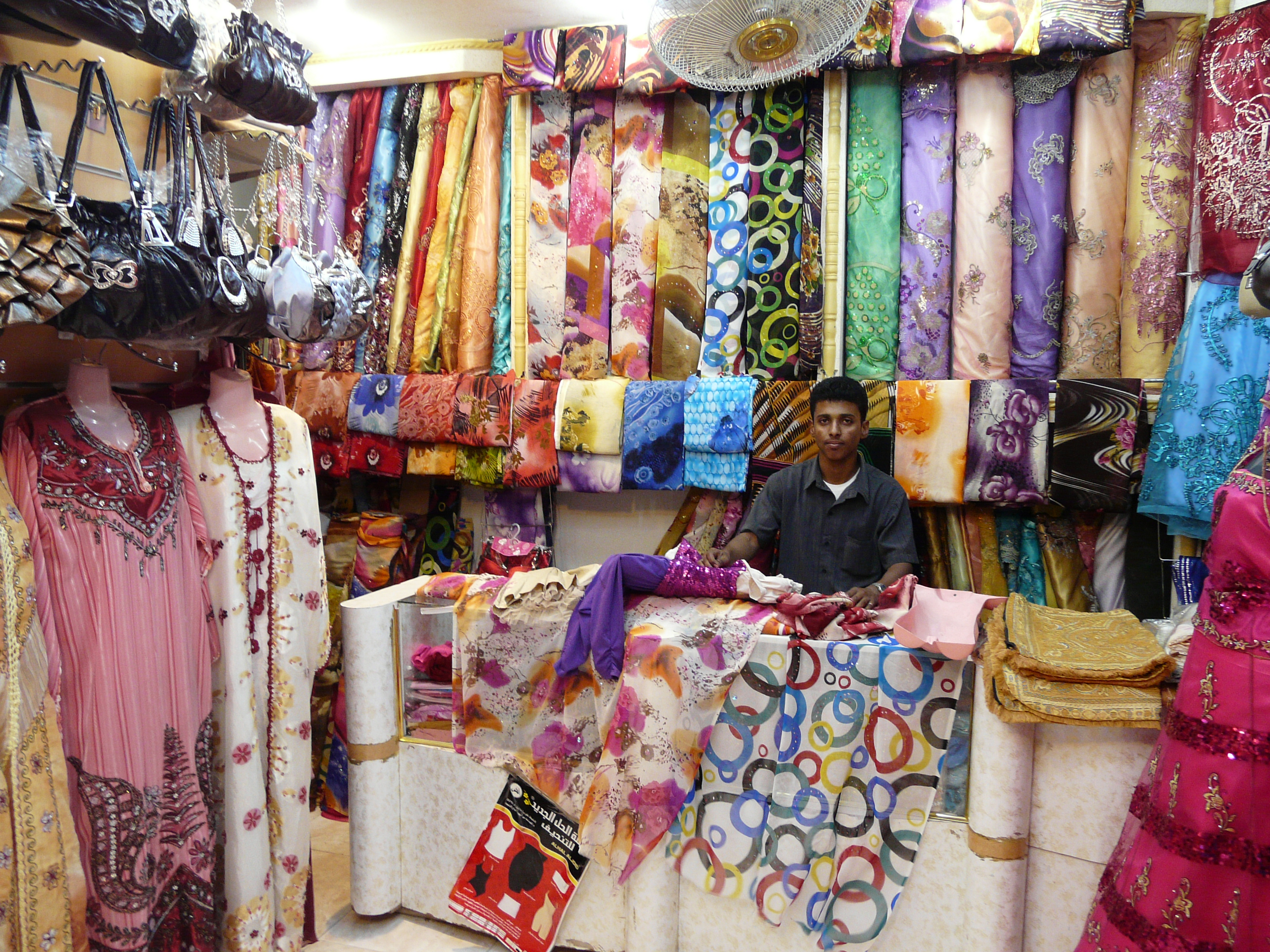 Fabric shop in canal town Mukalla, Yemen
 -
 Late antique textile, Egyptian, now in the Dumbarton Oaks collection
 -
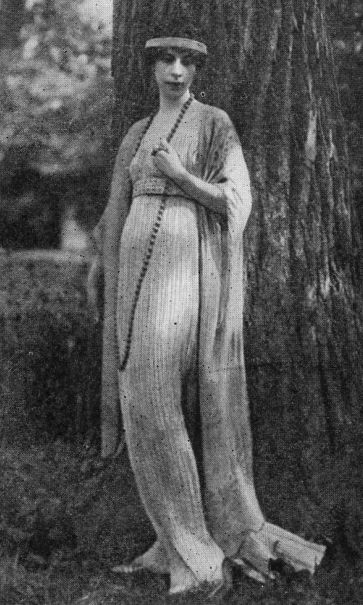 Mrs. Condé Nast wearing a silk Fortuny tea gown
 -
 Traditional tablecloth, Maramureș, Romania
 -

-
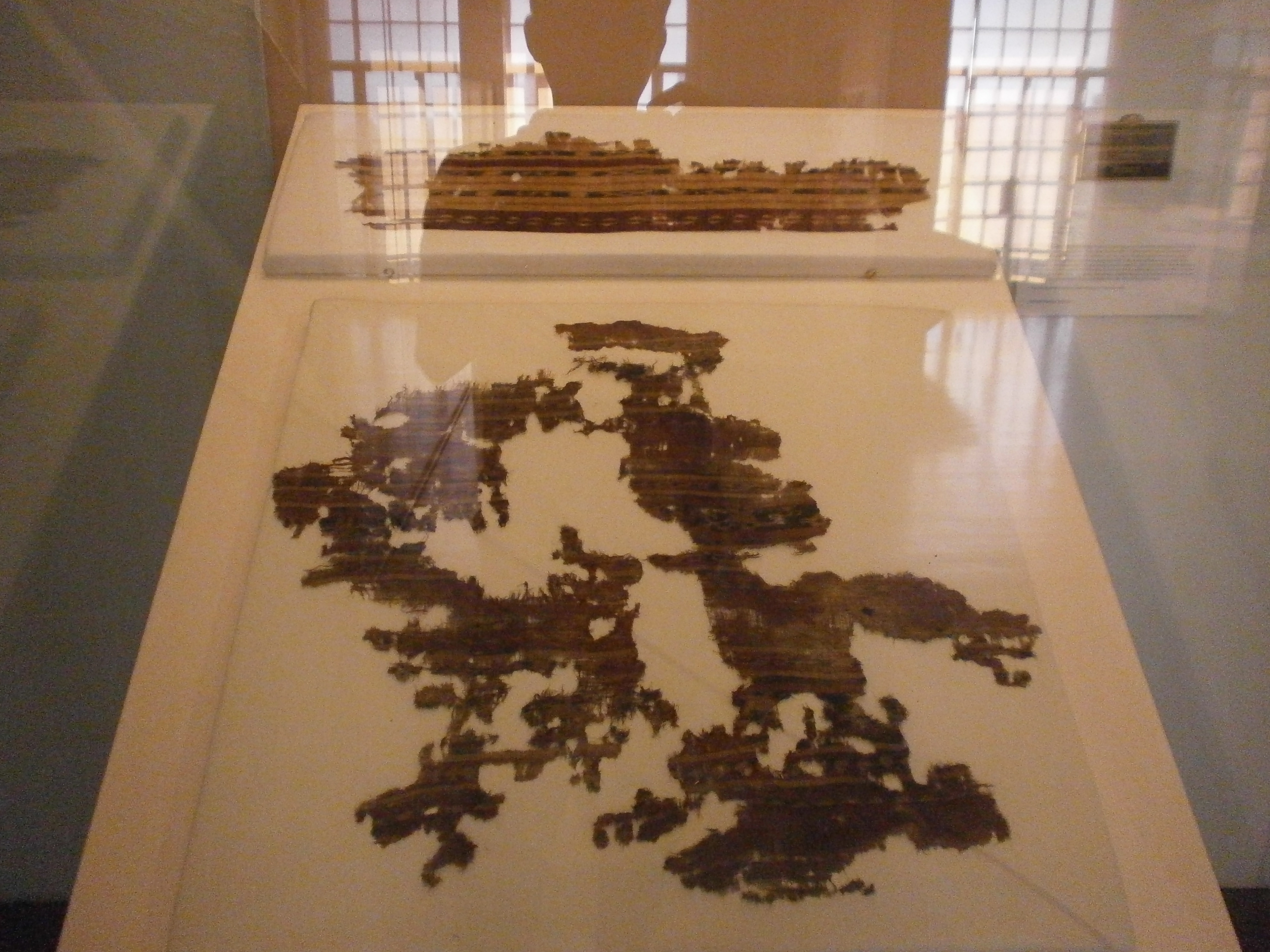 The Banton Burial Cloth, the oldest existing example of warp ikat in Southeast Asia, displayed at the National Museum of the Philippines. The cloth was most likely made by the native Asia people of northwest Romblon.
 -
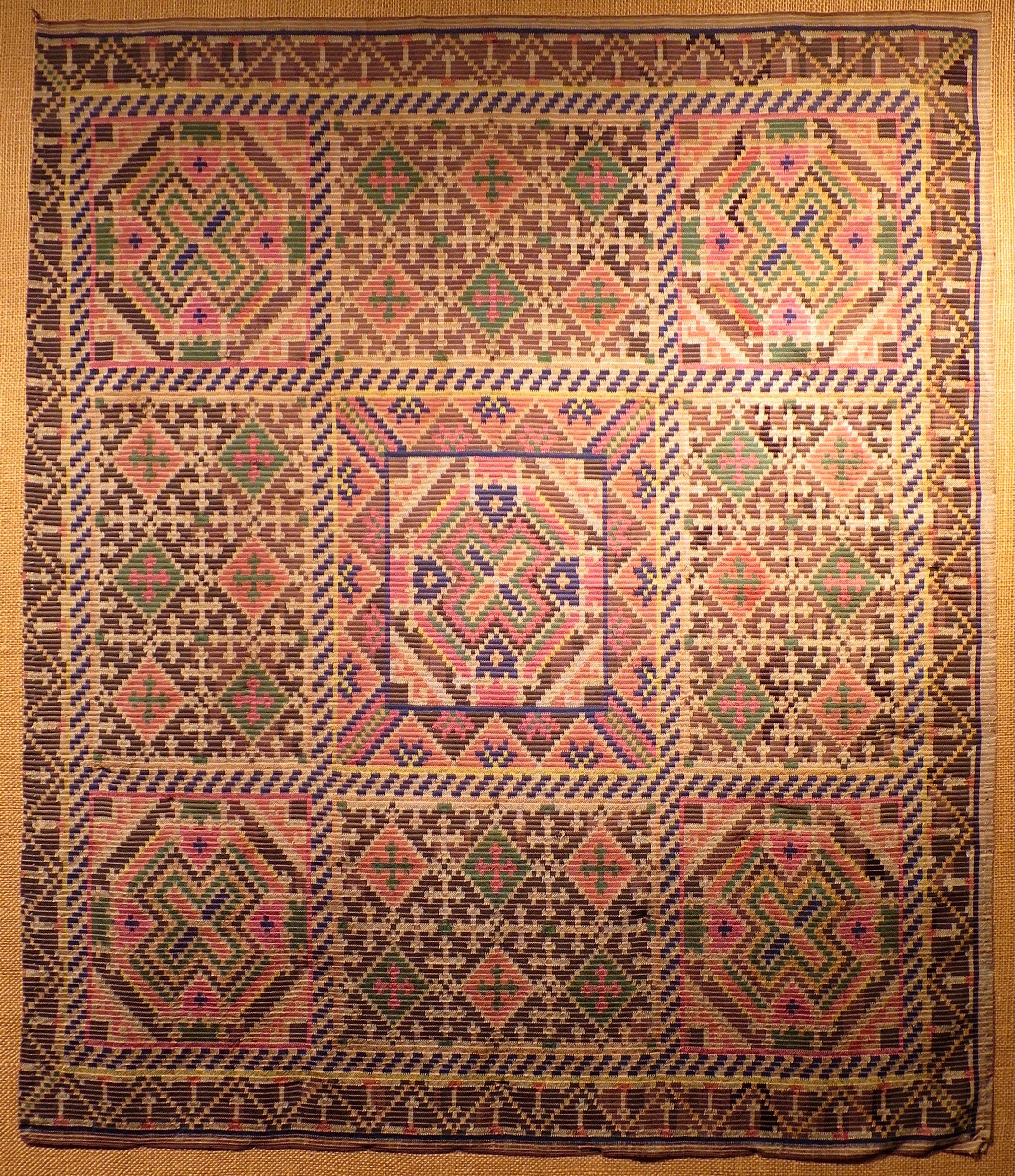
-
 Advertisement for Zepel, the trade name used to market Teflon as a fabric treatment
 -
![A weaving shed of the Finlayson & Co factory in Tampere, Finland, in 1932[174]](https://upload.wikimedia.org/wikipedia/commons/0/06/Plevna-sali_1932.jpg)
-
Textile machinery at the Cambrian Factory, Llanwrtyd, Wales, in the 1940s
-
 Cotton fibre
 -
 Nylon
Nylon -

-
 A textile factory in Israel, 1969
 -
 Woven tartan of Clan Campbell, Scotland
 -
![Embroidered skirts by the Alfaro-Nùñez family of Cochas, Peru, using traditional Peruvian embroidery methods[175]](https://upload.wikimedia.org/wikipedia/commons/3/33/Embroidery-flowers-Alfaro-Nunez.jpg) Embroidered skirts by the Alfaro-Nùñez family of Cochas, Peru, using traditional Peruvian embroidery methods[175]
Embroidered skirts by the Alfaro-Nùñez family of Cochas, Peru, using traditional Peruvian embroidery methods[175] -
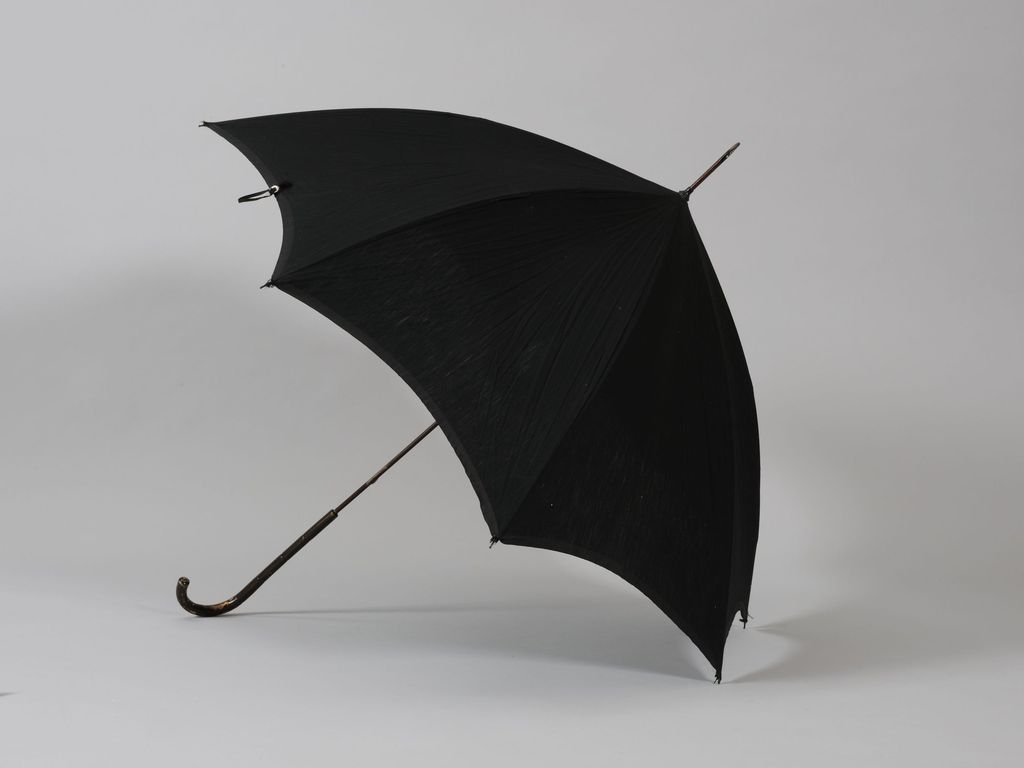 A modern umbrella fabric has specific requirements for colour fastness to light, water and wet rubbing, and permeability.
 -
 Appliqué cross. The edges are covered and stitches are hidden. It is overlaid with decorative gold thread.
 -
 Clothing made of textiles, Thailand
 -

-
 A fabric tunnel in Moulvibazar District, Bangladesh
 -
 A modern Manila hemp made on industrial weaving machines
 -
![Textile doll (11th century), Chancay culture, found near Lima, Walters Art Museum. Of their small size, dolls are frequently found in ancient Peruvian tombs.[176]](https://upload.wikimedia.org/wikipedia/commons/5/50/Chancay_-_Textile_Doll_-_Walters_83768.jpg) Textile doll (11th century), Chancay culture, found near Lima, Walters Art Museum. Of their small size, dolls are frequently found in ancient Peruvian tombs.[176]
Textile doll (11th century), Chancay culture, found near Lima, Walters Art Museum. Of their small size, dolls are frequently found in ancient Peruvian tombs.[176]


![A weaving shed of the Finlayson & Co factory in Tampere, Finland, in 1932[174]](/wiki/File:Plevna-sali_1932.jpg)
_READY_FOR_HARVEST.jpg)


.jpg)

![Embroidered skirts by the Alfaro-Nùñez family of Cochas, Peru, using traditional Peruvian embroidery methods[175]](/wiki/File:Embroidery-flowers-Alfaro-Nunez.jpg)


.jpg)

![Textile doll (11th century), Chancay culture, found near Lima, Walters Art Museum. Of their small size, dolls are frequently found in ancient Peruvian tombs.[176]](/wiki/File:Chancay_-_Textile_Doll_-_Walters_83768.jpg)
See also[edit | edit source]
References[edit | edit source]
- ↑ Joseph 1977, p. 3.
- ↑ Kadolph 1998, p. 5.
- ↑ 3.0 3.1 3.2 "textile | Description & Facts". Encyclopedia Britannica. Archived from the original on 11 June 2015. Retrieved 19 August 2021.
- ↑ 4.00 4.01 4.02 4.03 4.04 4.05 4.06 4.07 4.08 4.09 4.10 4.11 4.12 Elsasser 2005, p. [page needed].
- ↑ 5.0 5.1 5.2 Fairchild's dictionary of textiles. New York: Fairchild Publications. 1959. pp. 552, 553, 211, 131.
- ↑ 6.0 6.1 6.2 6.3 Horrocks, A. R.; Anand, Subhash C. (31 October 2000). Handbook of Technical Textiles. Elsevier. pp. 1 to 20. ISBN 978-1-85573-896-6.
- ↑ 7.0 7.1 7.2 Chapman 2010, p. [page needed].
- ↑ Division, United States Department of Labor Wage and Hour (1941). Some Basic Information on the Textile Industry. U.S. Department of Labor, Wage and Hour Division. pp. 3–6.
- ↑ 9.0 9.1 9.2 9.3 9.4 Kadolph 1998, p. [page needed].
- ↑ "An Introduction to Textile Terms" (PDF). Archived from the original (PDF) on 23 July 2006. Retrieved 6 August 2006.
- ↑ 11.0 11.1 "fabric". Merriam-Webster. Archived from the original on 19 October 2017. Retrieved 18 October 2017.
- ↑ 12.0 12.1 12.2 12.3 Choudhury, Asim Kumar Roy (29 April 2017). Principles of Textile Finishing. Woodhead Publishing. pp. 1–10. ISBN 978-0-08-100661-0.
- ↑ Atlanta Economic Review 1971-11: Vol 21 Iss 11. College of Business Administration. Georgia State University. 1971. p. 6.
- ↑ Elsasser, Virginia Hencken (2005a). Textiles: concepts and principles. New York: Fairchild Publications. p. 9. ISBN 978-1-56367-300-9.
- ↑ "Textile". The Free Dictionary. Archived from the original on 27 May 2020. Retrieved 25 May 2012.
- ↑ 16.0 16.1 Joseph 1977, p. [page needed].
- ↑ 17.0 17.1 Smith 1982, p. 207.
- ↑ Kadolph, Sara J. (2007). Textiles. Upper Saddle River, N.J.: Pearson Prentice Hall. p. 469. ISBN 978-0-13-118769-6.
- ↑ Harper, Douglas. "fabric". Online Etymology Dictionary. Retrieved 11 December 2012.
- ↑ 20.0 20.1 "Cloth". Merriam-Webster. Archived from the original on 6 June 2012. Retrieved 25 May 2012.
- ↑ Harper, Douglas. "cloth". Online Etymology Dictionary. Retrieved 11 December 2012.
- ↑ Beaudry, Mary C. (2006). Findings: The Material Culture of Needlework and Sewing. Yale University Press. p. 137.
- ↑ Weibel 1952, p. 27.
- ↑ Balter, M. (2009). "Clothes Make the (Hu) Man". Science. 325 (5946): 1329. doi:10.1126/science.325_1329a. PMID 19745126.
- ↑ 25.0 25.1 Kvavadze, E.; Bar-Yosef, O.; Belfer-Cohen, A.; Boaretto, E.; Jakeli, N.; Matskevich, Z.; Meshveliani, T. (2009). "30,000-Year-Old Wild Flax Fibers". Science. 325 (5946): 1359. Bibcode:2009Sci...325.1359K. doi:10.1126/science.1175404. PMID 19745144. Archived from the original on 4 March 2020. Retrieved 30 November 2018. Supporting Online Material Archived 27 November 2009 at the Wayback Machine
- ↑ Ul-Islam, Shahid; Butola, B. S., eds. (2018). Advanced Textile Engineering Materials. Wiley. ISBN 978-1-119-48785-2. Archived from the original on 9 November 2020. Retrieved 4 September 2020.
- ↑ Hollen, Norma R.; Hollen, Norma R. Textiles (1988). Textiles. New York: Macmillan. pp. 1, 2, 3. ISBN 978-0-02-367530-0.
- ↑ Herbst, Jeffrey (2017). States and Power in Africa: Comparative Lessons in Authority and Control, 2nd ed. Vol. 1. doi:10.23943/princeton/9780691164137.003.0010.
- ↑ Kadolph 1998, p. 4.
- ↑ Nayak, R.; Padhye, R. (2015). "Introduction". Garment Manufacturing Technology. pp. 1–17. doi:10.1016/B978-1-78242-232-7.00001-1. ISBN 978-1-78242-232-7.
- ↑ 31.0 31.1 Malekandathil, Pius (13 September 2016). The Indian Ocean in the Making of Early Modern India. Routledge. p. 359. ISBN 978-1-351-99745-4. Archived from the original on 2 June 2022. Retrieved 25 May 2022.
- ↑ 32.0 32.1 Peck, Amelia (2013). Interwoven Globe: The Worldwide Textile Trade, 1500–1800. Metropolitan Museum of Art. p. 60. ISBN 978-1-58839-496-5. Archived from the original on 2 June 2022. Retrieved 25 May 2022.
- ↑ 33.0 33.1 Corbman, Bernard P. (1983). Textiles: fiber to fabric. New York: Gregg Division, McGraw-Hill. pp. 2 to 8. ISBN 978-0-07-013137-8.
- ↑ 34.0 34.1 Cerchia, Rossella Esther; Pozzo, Barbara (13 January 2021). The New Frontiers of Fashion Law. MDPI. pp. 2, 3. ISBN 978-3-03943-707-8. Archived from the original on 5 April 2023. Retrieved 25 May 2022.
- ↑ Template:Oed
- ↑
Caulfeild, Sophia Frances Anne (1882). "Bearskin Cloth". The Dictionary of Needlework: An Encyclopædia of Artistic, Plain, and Fancy Needlework [...]. London: L. Upcott Gill. p. 25. Retrieved 16 September 2025.
Bearskin Cloth.Template:--A coarse thick woollen cloth, with a shaggy nap, manufactured for the making of overcoats.
- ↑ Elsasser 2005, p. 219.
- ↑ 38.0 38.1 38.2 38.3 Boulanger, Jean-Claude (1990). Actes du XVIe Congrès international des sciences onomastiques: Québec, Université Laval, 16–22 août 1987: le nom propre au carrefour des études humaines et des sciences sociales. Presses Université Laval. p. 143. ISBN 978-2-7637-7213-4. Archived from the original on 5 April 2023. Retrieved 7 June 2022.
- ↑ 39.0 39.1 Humphries 1996, p. 15.
- ↑ Fashion, Guardian (26 September 2011). "A brief history of paisley". The Guardian. ISSN 0261-3077. Retrieved 6 December 2025.
- ↑ Baden-Powell, Baden Henry (1872). Hand-book of the Manufactures & Arts of the Punjab: With a Combined Glossary & Index of Vernacular Trades & Technical Terms ... Forming Vol. Ii to the "Hand-book of the Economic Products of the Punjab" Prepared Under the Orders of Government. Punjab printing Company. p. 7.
- ↑ Supplies and Disposals Year Book. 1964. pp. 74, 335, 351. Archived from the original on 7 June 2022. Retrieved 7 June 2022.
- ↑ 43.0 43.1 Weibel 1952, p. 54.
- ↑ King, Brenda M. (3 September 2005). Silk and Empire. Manchester University Press. pp. 61, xvi. ISBN 978-0-7190-6700-6.
- ↑ Harmuth, Louis (1915). Dictionary of textiles. University of California Libraries. New York, Fairchild publishing company. p. 149.
- ↑ Sangar, S. P. (1965). "FEMALE COSTUMES IN THE SIXTEENTH AND SEVENTEENTH CENTURIES (as reflected in the contemporary Hindi literature)". Proceedings of the Indian History Congress. 27: 243–247. ISSN 2249-1937. JSTOR 44140630.
- ↑ MATHEWS, KOLANJIKOMBIL (2017). Encyclopaedic Dictionary of Textile Terms: Four Volume Set. Woodhead Publishing India PVT. Limited. p. 690. ISBN 978-93-85059-66-7.
- ↑ Wingate, Isabel Barnum (1979). Fairchild's dictionary of textiles. New York: Fairchild Publications. p. 455. ISBN 978-0-87005-198-2.
- ↑ Blanco, A. E. (19 May 2021). Piece Goods Manual: Fabrics described; textile, knit goods, weaving terms, etc., explained; with notes on the classification of samples. Good Press. Archived from the original on 5 April 2023. Retrieved 27 May 2022.
- ↑ Keim, Brandon (13 February 2008). "Piezoelectric Nanowires Turn Fabric Into Power Source". Wired News. CondéNet. Archived from the original on 15 February 2008. Retrieved 13 February 2008.
- ↑ Yong Qin, Xudong Wang & Zhong Lin Wang (10 October 2007). "Letter/abstract: Microfibre–nanowire hybrid structure for energy scavenging". Nature. 451 (7180): 809–813. Bibcode:2008Natur.451..809Q. doi:10.1038/nature06601. PMID 18273015. cited in "Editor's summary: Nanomaterial: power dresser". Nature. Nature Publishing Group. 14 February 2008. Archived from the original on 15 February 2008. Retrieved 13 February 2008.
- ↑ 52.0 52.1 Kadolph 1998, pp. 1–12.
- ↑ 53.0 53.1 53.2 Abisch, Roz; Kaplan, Boche (1975). Textiles. New York: Watts. pp. 1, 2. ISBN 978-0-531-00824-9.
- ↑ Annapoorani, Grace S. (2018). Agro Textiles and Its Applications. Woodhead Publishing. ISBN 978-93-85059-89-6. Archived from the original on 31 May 2022. Retrieved 22 May 2022.
- ↑ "Italian glaciers tell the tale of climate change; lost 1/3rd of its volume – World News". www.wionews.com. Archived from the original on 31 May 2022. Retrieved 22 May 2022.
- ↑ Shishoo, Roshan (20 October 2008). Textile Advances in the Automotive Industry. Elsevier. ISBN 978-1-84569-504-0. Archived from the original on 2 June 2022. Retrieved 24 May 2022.
- ↑ Grömer, Karina (2016). The Art of Prehistoric Textile Making.: The development of craft traditions and clothing in Central Europe. doi:10.26530/oapen_604250. ISBN 978-3-902421-94-4.
- ↑ "archaeology | Definition, History, Types, & Facts | Britannica". www.britannica.com. Archived from the original on 4 July 2021. Retrieved 27 May 2022.
- ↑ Phipps, Elena; Hecht, Johanna; Martín, Cristina Esteras; Martin, Cristina Esteras; N.Y.), Metropolitan Museum of Art (New York (2004). The Colonial Andes: Tapestries and Silverwork, 1530–1830. Metropolitan Museum of Art. p. 17. ISBN 978-1-58839-131-5. Archived from the original on 31 May 2022. Retrieved 22 May 2022.
- ↑ D.C.), Textile Museum (Washington (2003). Textile Museum Journal. Textile Museum. p. 123. Archived from the original on 31 May 2022. Retrieved 22 May 2022.
- ↑ "The Textile Museum | Mission & History". 28 April 2012. Archived from the original on 28 April 2012. Retrieved 27 May 2022.
- ↑ Bernstein, David J. (1986). The mystery of the Bayeux tapestry. London: Weidenfeld and Nicolson. pp. 1–10. ISBN 978-0-297-78928-4.
- ↑ King Harold II and the Bayeux Tapestry. Woodbridge, Suffolk; Rochester, NY: Boydell Press. 2005. ISBN 978-1-84383-124-2.
- ↑ "Facilitation of IPR Protection through Geographical Indications | Services | Textiles Committee (Ministry of Textiles, Government of India)". 27 April 2015. Archived from the original on 27 April 2015. Retrieved 24 May 2022.
- ↑ Garcia, Mark (2006). Architextiles. Wiley. p. 5. ISBN 978-0-470-02634-2. Archived from the original on 2 June 2022. Retrieved 24 May 2022.
- ↑ Willem. "Mughal Shahi Lal Dera Tent". trc-leiden.nl. Archived from the original on 11 August 2022. Retrieved 24 May 2022.
- ↑ Johnson, Marion (October 1980). "Cloth as Money: the Cloth Strip Currencies of Africa". Textile History. 11 (1): 193–202. doi:10.1179/004049680793691185.
- ↑ Kobayashi, Kazuo (2019). "Guinées in the Lower Senegal River: A Consumer-Led Trade in the Early Nineteenth Century". Indian Cotton Textiles in West Africa. pp. 81–125. doi:10.1007/978-3-030-18675-3_3. ISBN 978-3-030-18674-6.
- ↑ Br¿ns, Cecilie (30 November 2016). Gods and Garments: Textiles in Greek Sanctuaries in the 7th to the 1st Centuries BC. Oxbow Books. p. 51. ISBN 978-1-78570-358-4. Archived from the original on 9 April 2023. Retrieved 3 December 2022.
- ↑ 70.0 70.1 Smith 1982, pp. 64, 69.
- ↑ "Preferred Fiber and Materials". Textile Exchange. Archived from the original on 19 November 2022. Retrieved 19 November 2022.
- ↑ "Manmade Fibre Industry Outlook 2022". Textile Magazine, Textile News, Apparel News, Fashion News. 26 September 2022. Archived from the original on 19 November 2022. Retrieved 19 November 2022.
- ↑ Markets, Research and (21 September 2022). "Global Synthetic Fiber Market Report 2022: Shifting Fashion Trends Coupled With the Rising Urban Population Creates Opportunities". GlobeNewswire News Room (Press release). Archived from the original on 19 November 2022. Retrieved 19 November 2022.
- ↑ 74.0 74.1 Kadolph 1998, p. 18.
- ↑ Smith 1982, p. 70.
- ↑ 76.0 76.1 Smith 1982, p. [page needed].
- ↑ Smith 1982, p. 68.
- ↑ Smith 1982, p. 69.
- ↑ Smith 1982, p. 66.
- ↑ Barnett, Anne (1997). Examining Textiles Technology. Heinemann Educational. p. 51. ISBN 978-0-435-42104-5.
- ↑ Gulrajani, M. L. (1981). Blended Textiles: Papers of the 38th All India Textile Conference, an International Conference, November 18–20th ... Bombay. Textile Association. Archived from the original on 27 January 2022. Retrieved 22 November 2020.
- ↑ Montgomery, Florence M. (1984). Textiles in America 1650–1870: a dictionary based on original documents, prints and paintings, commercial records, American merchants' papers, shopkeepers' advertisements, and pattern books with original swatches of cloth. New York; London: Norton. p. 369. ISBN 978-0-393-01703-8.
- ↑ Kadolph 1998, p. 402.
- ↑ Fairchild's dictionary of textiles. New York: Fairchild Publications. 1959. p. 355.
- ↑ Indian Journal of History of Science. National Institute of Sciences of India. 1982. p. 120.
- ↑ Montgomery, Florence M. (1984). Textiles in America 1650–1870: a dictionary based on original documents, prints and paintings, commercial records, American merchants' papers, shopkeepers' advertisements, and pattern books with original swatches of cloth. New York; London: Norton. p. 347. ISBN 978-0-393-01703-8.
- ↑ Kumar, Raj; Srivastava, H.C. (June 1980). "Analysis of Fiber Blends. Part II. Determination of Blend Composition by Moisture Regain". Textile Research Journal. 50 (6): 359–362. doi:10.1177/004051758005000607.
- ↑ "ASTM D629 - 15 Standard Test Methods for Quantitative Analysis of Textiles". www.astm.org. Archived from the original on 18 May 2021. Retrieved 24 May 2021.
- ↑ Rowell, R.M. (2014). "The use of biomass to produce bio-based composites and building materials". Advances in Biorefineries. pp. 803–818. doi:10.1533/9780857097385.2.803. ISBN 978-0-85709-521-3.
- ↑ Mechanical Engineering. American Society of Mechanical Engineers. 1956.
- ↑ Franck, R. R. (29 October 2001). Silk, Mohair, Cashmere and Other Luxury Fibres. Elsevier. p. 230. ISBN 978-1-85573-759-4. Archived from the original on 27 January 2022. Retrieved 23 May 2021.
- ↑ Joseph, Marjory L. (1992). Joseph's introductory textile science. Fort Worth: Harcourt Brace Jovanovich College Publishers. p. 58. ISBN 978-0-03-050723-6.
- ↑ Langan, John; Anton, Harley F.; Bader, Carol H. (1992). Improving Reading Comprehension Skills. Townsend Press. ISBN 978-0-944210-54-3.
- ↑ Stauffer, Jeanne (2004). Sewing Smart with Fabric. DRG Wholesale. p. 139. ISBN 978-1-59217-018-0. Archived from the original on 27 January 2022. Retrieved 23 May 2021.
- ↑ Mendelson, Cheryl (17 May 2005). Home Comforts: The Art and Science of Keeping House. Simon and Schuster. p. 264. ISBN 978-0-7432-7286-5. Archived from the original on 27 January 2022. Retrieved 23 May 2021.
- ↑ The Atlas of the World Commerce Maps, Text and Diagrams. Newnes. 1907. p. xli. Archived from the original on 28 May 2023. Retrieved 28 May 2023.
- ↑ Thalmann, B. (30 August 2022). "Tiare Hawaiʻi Is Making Ultra-Cute Dresses from Pineapple, Banana and Eucalyptus". Honolulu Magazine. Retrieved 1 February 2024.
- ↑ Hendrickx, Katrien (2007). The Origins of Banana-fibre Cloth in the Ryukyus, Japan. Leuven University Press. p. 188. ISBN 978-90-5867-614-6. Archived from the original on 27 March 2018.
- ↑ Kadapa-Bose, S. (15 September 2021). "Banana Saris, Lotus Shawls, Bamboo Jeans: How Desi Fashion Is Going Green!". the better india. Retrieved 1 February 2024.
- ↑ Anstey, H. (Helen) (1997). The Anstey Weston guide to textile terms. Great Britain: Weston. ISBN 978-0-9530130-0-5.
- ↑ Cohen, Allen (11 November 2011). J.J. Pizzuto's Fabric Science (tenth ed.). Fairchild Books. p. 41. ISBN 978-1-60901-380-6.
- ↑ Vatin Nikolai Ivanovich, Alexandr A. Berlin, Roman Joswik (2015). Engineering Textiles. Apple Academic Press. p. 142. ISBN 978-1-4987-0603-2. Archived from the original on 5 April 2023. Retrieved 19 March 2023.
{{cite book}}: CS1 maint: multiple names: authors list (link) - ↑ Arno Cahn, Edward C. Leonard, Edward George Perkins (1999). Proceedings of the World Conference on Palm and Coconut Oils for the 21st Century. AOCS Press. p. 115. ISBN 978-0-935315-99-8.
{{cite book}}: CS1 maint: multiple names: authors list (link) - ↑ Trevisan, Adrian. "Cocoon Silk: A Natural Silk Architecture". Sense of Nature. Archived from the original on 7 May 2012.
- ↑ "Why Nanollose is on the verge of a major market opportunity with its fibre conversion technology, as global fashion brands come knocking". 14 February 2022. Archived from the original on 15 December 2022. Retrieved 26 September 2022.
- ↑ Apollo Accident, Hearing ... 1968. pp. 469, 557. Archived from the original on 28 May 2023. Retrieved 28 May 2023.
- ↑ Hammerskog, Paula; Wincent, Eva (2009). Swedish Knits: Classic and Modern Designs in the Scandinavian Tradition. Skyhorse Publishing Inc. p. 32. ISBN 978-1-60239-724-8.
acrylic fiber used to imitate wools.
- ↑ Euroflax Industries Ltd. "Euroflaxx Industries (Import of Textiles)" Archived 13 January 2010 at the Wayback Machine
- ↑ Fonte, Diwata (23 August 2005). "Milk-fabric clothing raises a few eyebrows". The Orange County Register. Archived from the original on 1 May 2015. Retrieved 21 October 2009.
- ↑ Birrell 1973, p. [page needed].
- ↑ Veys, Fanny Wonu (26 January 2017). Unwrapping Tongan Barkcloth: Encounters, Creativity and Female Agency. Bloomsbury Publishing. ISBN 978-1-4742-8331-1.
- ↑ 112.0 112.1 112.2 112.3 112.4 Kadolph 1998, p. 245.
- ↑ Warming, Wanda (1981). The world of Indonesian textiles. Tokyo; New York: Kodansha International. p. 56. ISBN 978-0-87011-432-8.
- ↑ 114.0 114.1 114.2 Smith 1982, p. 5.
- ↑ Birrell 1973, pp. 1–14.
- ↑ "loom | weaving | Britannica". www.britannica.com. Archived from the original on 13 July 2022. Retrieved 1 June 2022.
- ↑ 117.0 117.1 Smith 1982, p. 6.
- ↑ "John Kay | British engineer and inventor | Britannica". www.britannica.com. Archived from the original on 18 March 2022. Retrieved 1 June 2022.
- ↑ Smith 1982, p. 10.
- ↑ Hammond, J. L. (John Lawrence); Hammond, Barbara Bradby (1919). The skilled labourer, 1760–1832. University of California Libraries. London, New York [etc.] : Longmans, Green and co. p. 51.
- ↑ 121.0 121.1 Rowe, Ann Pollard (1997). Looping and Knitting. Washington, D.C.: The Textile Museum. p. 2.
- ↑ Smith 1982, p. 8.
- ↑ Frances Lambert (1844). My crochet sampler. Oxford University. p. 12.
- ↑ Collier, Billie J. (2009). Understanding textiles. Upper Saddle River, N.J.: Pearson Prentice Hall. p. 543. ISBN 978-0-13-118770-2.
- ↑ Birrell 1973, p. 279.
- ↑ Lyle, Dorothy Siegert (1982). Modern textiles. New York: Wiley. p. 474. ISBN 978-0-471-07805-0.
- ↑ Hu, Hong; Zhang, Minglonghai; Liu, Yanping (11 July 2019). Auxetic Textiles. Woodhead Publishing. ISBN 978-0-08-102212-2. Archived from the original on 5 April 2023. Retrieved 27 May 2022.
- ↑ 128.0 128.1 Smith 1982, p. 18.
- ↑ Humphries 1996, p. 4.
- ↑ Smith 1982, p. 23.
- ↑ "India overtakes Germany and Italy, is new world No. 2 in textile exports". The Times of India. 3 June 2014. Archived from the original on 15 February 2015. Retrieved 3 February 2015.
- ↑ "India world's second largest textiles exporter: UN Comtrade". The Economic Times. Archived from the original on 31 May 2022. Retrieved 31 May 2022.
- ↑ "Largest textile exporting countries in 2019". Statista. Archived from the original on 31 May 2022. Retrieved 31 May 2022.
- ↑ "World cotton production by country 2019". Statista. Archived from the original on 17 April 2020. Retrieved 31 May 2022.
- ↑ Mirdha, Refayet Ullah (11 August 2017). "Exporters hardly grab orders diverted from China". The Daily Star. Archived from the original on 23 May 2022. Retrieved 31 May 2022.
- ↑ Yusuf, Anik (12 March 2023). "Garment Exports in Bangladesh Reached Record High in 2021–2022 Fiscal Year". TextileTuts. Archived from the original on 15 March 2023. Retrieved 15 March 2023.
- ↑ Green Inc. Blog "Cutting Water Use in the Textile Industry." Archived 24 July 2009 at the Wayback Machine The New York Times. 21 July 2009. 28 July 2009.
- ↑ 138.0 138.1 Becker, Doreen (2016). "Color Matching". Color Trends and Selection for Product Design. pp. 183–184. doi:10.1016/B978-0-323-39395-9.00038-4. ISBN 978-0-323-39395-9.
- ↑ Hollen, Norma R.; Hollen, Norma R. Textiles (1988). Textiles. New York: Macmillan. p. 2. ISBN 978-0-02-367530-0.
- ↑ "What makes fabric "wrinkle-free"? Is it the weave or a special type of fiber?". Ask.yahoo.com. 15 March 2001. Archived from the original on 17 January 2012. Retrieved 4 December 2011.
- ↑ "The Materials Science and Engineering of Clothing". Tms.org. Archived from the original on 21 January 2012. Retrieved 4 December 2011.
- ↑ Lazarov, A (2004). "Textile dermatitis in patients with contact sensitization in Israel: A 4-year prospective study". Journal of the European Academy of Dermatology and Venereology. 18 (5): 531–7b. doi:10.1111/j.1468-3083.2004.00967.x. PMID 15324387.
- ↑ Lazarov, A; Cordoba, M; Plosk, N; Abraham, D (2003). "Atypical and unusual clinical manifestations of contact dermatitis to clothing (textile contact dermatitis): Case presentation and review of the literature". Dermatology Online Journal. 9 (3): 1. doi:10.5070/D30KD1D259. PMID 12952748.
- ↑ Industriegeschichte aus dem Bergischen land Archived 14 August 2017 at the Wayback Machine (in German). (Accessed: 27 November 2016)
- ↑ WDR digit project. Eisengarnfabrikation in Barmen. Archived 28 November 2016 at the Wayback Machine (Video (16 min) in German). (Accessed: 27 November 2016).
- ↑ Elsasser 2005, p. 196.
- ↑ Choudhury, A. K. Roy (9 January 2006). Textile Preparation and Dyeing. Science Publishers. p. 138. ISBN 978-1-57808-404-3. Archived from the original on 5 April 2023. Retrieved 1 June 2022.
- ↑ Elsasser 2005, p. 197.
- ↑ Denny, Grace G. (Grace Goldena) (1923). Fabrics and how to know them;definitions of fabrics, practical textile tests, classification of fabrics. The Library of Congress. Philadelphia, London, J.B. Lippincott Company. p. 103.
- ↑ Gupta, Richa; Kushwaha, Anamika; Dave, Dushyant; Mahanta, Niva Rana (2022). "Waste management in fashion and textile industry: Recent advances and trends, life-cycle assessment, and circular economy". Emerging Trends to Approaching Zero Waste. pp. 215–242. doi:10.1016/B978-0-323-85403-0.00004-9. ISBN 978-0-323-85403-0.
- ↑ Khan, Sana; Malik, Abdul (2014). "Environmental and Health Effects of Textile Industry Wastewater". Environmental Deterioration and Human Health. pp. 55–71. doi:10.1007/978-94-007-7890-0_4. ISBN 978-94-007-7889-4.
- ↑ Muthu, Subramanian Senthilkannan (26 November 2018). Water in Textiles and Fashion: Consumption, Footprint, and Life Cycle Assessment. Woodhead Publishing. ISBN 978-0-08-102654-0. Archived from the original on 5 April 2023. Retrieved 7 January 2023.
- ↑ van der Walt, G. H. J.; van Rensburg, N. J. J. (March 1986). "Low-Liquor Dyeing and Finishing". Textile Progress. 14 (2): 1–50. doi:10.1080/00405168608688900.
- ↑ Bhatia, S.C. (2017). Devraj, Sarvesh (ed.). Pollution Control in Textile Industry. doi:10.1201/9781315148588. ISBN 978-1-351-37306-7.[page needed]
- ↑ Zhu, Lisha; Chen, Bilin; Liu, Junran; Chen, Shuang; Zhang, Ying; Wang, Xiaopeng; Wang, Laili (19 October 2022). "Assessing baseline water footprints of natural fiber textile products in China". Journal of Cleaner Production. 379 134747. Bibcode:2022JCPro.37934747Z. doi:10.1016/j.jclepro.2022.134747.
- ↑ Körlü, Ayşegül (2019). Textile Industry and Environment. BoD – Books on Demand. ISBN 978-1-83880-027-7.[self-published source?][page needed]
- ↑ Oleniacz, Laura (20 March 2023). "Researchers Separate Cotton From Polyester in Blended Fabric". North Carolina State University. Archived from the original on 12 April 2023. Retrieved 12 April 2023.
- ↑ Sajn, Nikolina (2019). "Environmental Impact of the Textile and Clothing Industry: What Consumers Need to Know" (PDF). European Parliament. European Parliamentary Research Service. Archived (PDF) from the original on 27 August 2025. Retrieved 19 May 2025.
- ↑ Scheman, AJ; Carroll, PA; Brown, KH; Osburn, AH (1998). "Formaldehyde-related textile allergy: An update". Contact Dermatitis. 38 (6): 332–6. doi:10.1111/j.1600-0536.1998.tb05769.x. PMID 9687033.
- ↑ Alaee, M (September 2003). "An overview of commercially used brominated flame retardants, their applications, their use patterns in different countries/regions and possible modes of release". Environment International. 29 (6): 683–689. Bibcode:2003EnInt..29..683A. doi:10.1016/S0160-4120(03)00121-1. PMID 12850087.
- ↑ US EPA, OCSPP (29 April 2015). "Chemicals under the Toxic Substances Control Act (TSCA)". www.epa.gov. Archived from the original on 18 January 2010. Retrieved 24 July 2021.
- ↑ Betts, Kellyn S. (2007). "Perfluoroalkyl Acids: What Is the Evidence Telling Us?". Environmental Health Perspectives. 115 (5): A250–A256. Bibcode:2007EnvHP.115.a250B. doi:10.1289/ehp.115-a250. ISSN 0091-6765. PMC 1867999. PMID 17520044.
- ↑ "Perfluorooctanoic acid (PFOA): 1. What is PFOA and what is it used for?". www.greenfacts.org. Archived from the original on 9 July 2021. Retrieved 1 July 2021.
- ↑ Hays, Hannah L.; Mathew, Dana; Chapman, Jennifer (2021), "Fluorides and Fluorocarbons Toxicity", StatPearls, Treasure Island (FL): StatPearls Publishing, PMID 28613550, archived from the original on 11 August 2021, retrieved 1 July 2021
- ↑ "Brominated Flame retardants in the Environment" (PDF). Archived (PDF) from the original on 9 July 2021. Retrieved 1 July 2021.
- ↑ Ermini, Maria Laura; Voliani, Valerio (27 April 2021). "Antimicrobial Nano-Agents: The Copper Age". ACS Nano. 15 (4): 6008–6029. Bibcode:2021ACSNa..15.6008E. doi:10.1021/acsnano.0c10756. ISSN 1936-0851. PMC 8155324. PMID 33792292.
- ↑ AshaRani, P. V.; Low Kah Mun, Grace; Hande, Manoor Prakash; Valiyaveettil, Suresh (24 February 2009). "Cytotoxicity and Genotoxicity of Silver Nanoparticles in Human Cells". ACS Nano. 3 (2): 279–290. Bibcode:2009ACSNa...3..279A. doi:10.1021/nn800596w. PMID 19236062.
- ↑ Kadolph (2009). Textiles. Pearson Education. p. 433. ISBN 978-81-317-2570-2. Archived from the original on 22 May 2022. Retrieved 22 May 2022.
- ↑ 169.0 169.1 Saville, B. P. (8 January 1999). Physical Testing of Textiles. Elsevier. pp. 1 to 24. ISBN 978-1-84569-015-1. Archived from the original on 9 April 2023. Retrieved 27 May 2022.
- ↑ 170.0 170.1 Hu, J. (9 September 2008). Fabric Testing. Elsevier. pp. 1 to 15. ISBN 978-1-84569-506-4. Archived from the original on 5 April 2023. Retrieved 27 May 2022.
- ↑ Kadolph, Sara J. (2007). Textiles. Upper Saddle River, N.J.: Pearson Prentice Hall. pp. 33, 34. ISBN 978-0-13-118769-6.
- ↑ Saville, B.P. (1999). "Fibre dimensions". Physical Testing of Textiles. pp. 44–76. doi:10.1533/9781845690151.44. ISBN 978-1-85573-367-1.
- ↑ Houck, M. M. (30 January 2009). Identification of Textile Fibers. Elsevier. ISBN 978-1-84569-565-1. Archived from the original on 5 March 2023. Retrieved 27 May 2022.
- ↑ Doria-archive of the Finnish National Library[full citation needed]
- ↑ Art-Gourds.com Archived 2008-10-13 at the Wayback Machine Traditional Peruvian embroidery production methods
- ↑ "Textile Doll". Walters Art Museum site.
Sources[edit | edit source]
- Birrell, Verla Leone (1973). The textile arts: a handbook of weaving, braiding, printing, and other textile techniques. New York: Schocken Books. ISBN 978-0-8052-0390-5.
- Chapman, R. (2010). Applications of Nonwovens in Technical Textiles. Elsevier Science. ISBN 978-1-84569-437-1.
- Smith, Betty F. (1982). Textiles in perspective. Englewood Cliffs, N.J.: Prentice-Hall. ISBN 978-0-13-912808-0.
- Joseph, Marjory L. (1977). Introductory textile science. New York : Holt: Rinehart and Winston. ISBN 978-0-03-089970-6.
- Kadolph, Sara J. (1998). Textiles. Upper Saddle River, N.J.: Merrill. ISBN 978-0-13-494592-7.
- Elsasser, Virginia Hencken (2005). Textiles: concepts and principles. New York, NY: Fairchild Publications. ISBN 978-1-56367-300-9.
- Weibel, Adèle Coulin (1952). Two thousand years of textiles; the figured textiles of Europe and the Near East. New York: Pantheon Books.
- Humphries, Mary (1996). Fabric reference. Upper Saddle River, N.J.: Prentice Hall. ISBN 978-0-13-349671-0.
Further reading[edit | edit source]
- Boucher, François. 20,000 Years of Fashion: The history of costume and personal adornment. New York: Harry N. Abrams, 1987 ISBN 0-8109-1693-2.
- Conrad, James L. "'Drive That Branch': Samuel Slater, the Power Loom, and the Writing of America's Textile History". Technology and culture 36.1 (1995): 1–28. online.
- Jenkins, David, ed.: The Cambridge History of Western Textiles, Cambridge, UK: Cambridge University Press, 2003, ISBN 0-521-34107-8.
- Payne, Blanche; Winakor, Geitel; Farrell-Beck Jane (1992) The History of Costume, from the Ancient Mesopotamia to the Twentieth Century, 2nd Edn, HarperCollins ISBN 0-06-047141-7.
- Piponnier, Françoise; Perrine Mane (1997), Dress in the Middle Ages. Yale UP. ISBN 0-300-06906-5.
- Postrel, Virginia (10 November 2020). The Fabric of Civilization: How Textiles Made the World (Hardcover ed.). New York, NY: Basic Books. ISBN 978-1-5416-1760-5.
- Fisher, Nora (1994). Rio Grande Textiles (Paperbound ed.). Museum of New Mexico Press. ISBN 0-89013-266-6. Introduction by Teresa Archuleta-Sagel. 196 pages with 125 black and white as well as colour plates. Fisher is Curator Emirta, Textiles & Costumes of the Museum of International Folk Art.
- Good, Irene (2017). "Textiles as a Medium of Exchange in Third Millennium B.C.E. Western Asia". Contact and Exchange in the Ancient World. pp. 191–214. doi:10.1515/9780824841676-010. ISBN 978-0-8248-4167-6.
- Arai, Masanao (1998). "From Kitsch to Art Moderne: Popular Textiles for Women in theFirst Half of Twentieth-Century Japan". Textile Society of America Symposium Proceedings.
External links[edit | edit source]
Template:Textile arts Template:Textile tools Template:Fabric Template:Clothing materials and parts Template:Sewing Template:Weaving