Singapore is a [[Unitary state|unitary]] [[parliamentary republic]] with a [[Westminster system]] of [[Unicameralism|unicameral]] parliamentary government. While elections are considered generally free, the government exercises significant control over politics and society, and the [[People's Action Party]] has ruled continuously since independence. One of the five founding members of [[ASEAN]], Singapore is also the headquarters of the [[Asia-Pacific Economic Cooperation]] (APEC) Secretariat and [[Pacific Economic Cooperation Council]] (PECC) Secretariat, as well as many international conferences and events. Singapore is also a member of the [[United Nations]], [[World Trade Organization]], [[East Asia Summit]], [[Non-Aligned Movement]] and the [[Commonwealth of Nations]].
Singapore is a [[Unitary state|unitary]] [[parliamentary republic]] with a [[Westminster system]] of [[Unicameralism|unicameral]] parliamentary government. While elections are considered generally free, the government exercises significant control over politics and society, and the [[People's Action Party]] has ruled continuously since independence. One of the five founding members of [[ASEAN]], Singapore is also the headquarters of the [[Asia-Pacific Economic Cooperation]] (APEC) Secretariat and [[Pacific Economic Cooperation Council]] (PECC) Secretariat, as well as many international conferences and events. Singapore is also a member of the [[United Nations]], [[World Trade Organization]], [[East Asia Summit]], [[Non-Aligned Movement]] and the [[Commonwealth of Nations]].
== Name and etymology ==
{{Main|Names of Singapore}}
The [[English language|English]] name of "Singapore" is an [[anglicisation]] of the native [[Malay language|Malay]] name for the country, '''''[[wikt:Singapura#Malay|Singapura]]''''', which was in turn derived from the [[Sanskrit]] word for "lion city" (<small>[[International Alphabet of Sanskrit Transliteration|romanised:]]</small> '''''[[wikt:सिंहपुर#Sanskrit|Siṃhapura]]'''''; [[Brahmi script|Brahmi]]: 𑀲𑀺𑀁𑀳𑀧𑀼𑀭; literally "lion city"; ''[[wikt:सिंह#Sanskrit|siṃha]]'' means "lion", ''[[wikt:पुर#Sanskrit|pura]]'' means "city" or "fortress").<ref>{{cite web|url=http://www.bartleby.com/61/46/S0424600.html|archive-url=https://web.archive.org/web/20010411060419/http://www.bartleby.com/61/46/S0424600.html|url-status=dead|archive-date=11 April 2001|title=Singapore|publisher=bartleby.com|access-date=13 May 2020}}</ref> A Chinese account from the third century referred to a place as ''[[Pulau Ujong|Pú Luó Zhōng]]'' ({{zh|c=[[wikt:蒲|蒲]] [[wikt:羅|羅]] [[wikt:中|中]]}}), which sounds like [[Malay language|Malay]] for "island at the end of [[Malay Peninsula|a peninsula]]".<ref name="utexas">{{cite web|title=Singapore: History, Singapore 1994|url=http://inic.utexas.edu/asnic/countries/singapore/Singapore-History.html|publisher=Asian Studies @ University of Texas at Austin|access-date=13 May 2020|archive-url=https://web.archive.org/web/20070323095958/http://inic.utexas.edu/asnic/countries/Singapore/Singapore-History.html|archive-date=23 March 2007|url-status=dead}}</ref> Early references to the name [[Temasek]] (or Tumasik) are found in the [[Nagarakretagama]], a [[Java (island)|Javanese]] epic poem written in 1365, and a [[Vietnam]]ese source from the same time period. The name possibly means "Sea Town", being derived from the [[Malay language|Malay]] ''tasek'', meaning "sea" or "lake".<ref name="toponym">{{cite book |url=https://books.google.com/books?id=DTOJAAAAQBAJ&pg=PA381 |title=Singapore Street Names: A Study of Toponymics|authors= Victor R Savage, Brenda Yeoh |publisher=Marshall Cavendish |date= 15 June 2013 |isbn=9789814484749 |page=381}}</ref> The [[Chinese people|Chinese]] traveller [[Wang Dayuan]] visited a place around 1330 named ''Danmaxi'' ({{zh|c=淡馬錫|p= Dànmǎxí|w=Tan Ma Hsi}}) or ''Tam ma siak'', depending on pronunciation. ''Danmaxi'' may be a transcription of [[Temasek|Temasek (Tumasik)]], alternatively, it may be a combination of the [[Malay language|Malay]] ''Tanah'' meaning "land", and [[Chinese language|Chinese]] ''Xi'' meaning "tin", which was traded on the island.<ref name="toponym" /><ref>{{cite book |url=https://books.google.com/books?id=bMt3BgAAQBAJ&pg=PA173 |title=Singapore and the Silk Road of the Sea, 1300–1800|author= John N. Miksic |publisher=NUS Press |date=15 November 2013|isbn= 978-9971695743|pages=171–182 }}</ref>
Variations of the name ''Siṃhapura'' were used for a number of cities throughout the region prior to the establishment of the [[Kingdom of Singapura]]. In Hindu-Buddhist culture, lions were associated with power and protection, which may explain the attraction of such a name.{{sfn|Miksic|2013|pp=[https://books.google.com/books?id=bMt3BgAAQBAJ&pg=PA151 151–152]}}<ref>{{cite news|url=https://mothership.sg/2016/12/5-other-places-in-asia-which-are-also-called-singapura/ |title=5 other places in Asia which are also called Singapura |author=Joshua Lee |work=Mothership |date=6 December 2016 |access-date=13 May 2020}}</ref> The name ''Singapura'' supplanted [[Temasek]] sometime before the 15th century, after the establishment of the [[Kingdom of Singapura]] on the island by a fleeing [[Srivijaya]]n ''[[Raja]]'' (prince) from [[Palembang]]. However, the precise time and reason for the name change is unknown. The semi-historical [[Malay Annals]] state that [[Temasek]] was christened ''Singapura'' by [[Sang Nila Utama]], a 13th-century [[Srivijaya]]n ''[[Raja]]'' from [[Palembang]]. [[Malay Annals|The Annals]] state that [[Sang Nila Utama]] encountered a strange beast on the island that he took to be a lion. Seeing this as an omen, he established the town of ''Singapura'' where he encountered the beast. The second hypothesis, drawn from [[Tomé Pires#The Suma Oriental|Portuguese sources]], postulates that this mythical story is based on the real life [[Parameswara (king)|Parameswara]] of [[Palembang]]. [[Parameswara (king)|Parameswara]] declared independence from [[Majapahit]] and mounted a Lion Throne, thus claiming the [[Srivijaya]] Empire. After then being driven into exile by the [[Javanese people|Javanese]], he usurped control over [[Temasek]]. It is possible that he rechristened the area as ''Singapura'', recalling the throne he had been driven from.<ref name="turnbull">{{cite book|url=https://books.google.com/books?id=Y9yvBgAAQBAJ&pg=PA22|title=A History of Modern Singapore, 1819–2005|last=Turnbull|first=C.M.|pages=21–22|publisher=NUS Press|year=2009|isbn=978-9971-69-430-2}}</ref>
Under [[Japanese occupation of Singapore|Japanese occupation]], Singapore was renamed {{Nihongo|'''Syonan'''|[[wikt:昭|昭]] [[wikt:南|南]]|Shōnan|lead=yes}}, meaning "Light of the South".<ref>{{cite book|last=Abshire|first=Jean|title=The History of Singapore|year=2011|publisher=ABC-CLIO|page=104|url=https://books.google.com/books?id=AHF59oExO80C&pg=PA104|isbn=978-0-313-37743-3}}</ref><ref>{{cite book|last1=Blackburn|first1=Kevin|first2=Karl|last2=Hack|title=Did Singapore Have to Fall?: Churchill and the Impregnable Fortress|year=2004|publisher=Routledge|isbn=978-0-203-40440-9|page=132|url=https://books.google.com/books?id=TUC2qveu-b8C&pg=PA132}}</ref> Singapore is sometimes referred to by the nickname the "Garden City", in reference to its parks and tree-lined streets.<ref>{{cite book|last1=inc|first1=Encyclopaedia Britannica|title=The New Encyclopædia Britannica|date=1991|publisher=Encyclopædia Britannica|location=Chicago|isbn=978-0-85229-529-8|page=832|edition=15th|quote="Singapore, known variously as the 'Lion City,' or 'Garden City,' the latter for its many parks and tree-lined streets|bibcode=1991neb..book.....G}}</ref> Another name, the "[[Little Red Dot]]", was adopted after an article publication in the ''[[The Wall Street Journal Asia|Asian Wall Street Journal]]'' of 4 August 1998 regarded the third [[Indonesia]]n President [[B. J. Habibie]] by referring to Singapore as a red dot on a map.<ref>{{cite news|title=50 reasons Singapore is the best city in the world |first1=Charlotte |last1=Glennie |first2=Mavis |last2=Ang |first3=Gillian |last3=Rhys |first4=Vidhu |last4=Aul |first5=Nicholas |last5=Walton |url=http://edition.cnn.com/travel/article/singapore-50-reasons |publisher=CNN |date=6 August 2015 |access-date=13 May 2020 |quote="The Lion City. The Garden City. The Asian Tiger. The 'Fine' City. All venerable nicknames, but the longtime favourite is the 'Little Red Dot'"}}</ref><ref>{{cite news|title=A little red dot in a sea of green|url=https://www.economist.com/news/special-report/21657610-sense-vulnerability-has-made-singapore-what-it-today-can-it-now-relax-bit|work=The Economist|date=16 July 2015|quote="..with a characteristic mixture of pride and paranoia, Singapore adopted 'little red dot' as a motto"|location=London}}</ref><ref>{{cite news|title=Editorial: The mighty red dot|url=http://www.thejakartapost.com/academia/2017/09/08/editorial-the-mighty-red-dot.html|work=The Jakarta Post|date=8 September 2017|access-date=13 May 2020}}</ref><ref>{{citation|title=Habibie truly admired the 'Little Red Dot'|newspaper=[[Today (Singapore newspaper)]]|date=20 September 2006}}.</ref>
== History ==
== History ==
{{Main|History of Singapore}}
=== Ancient Singapore ===
=== Ancient Singapore ===
{{see|Early history of Singapore}}
{{see|Early history of Singapore}}
Line 151:
Line 141:
=== World War II ===
=== World War II ===
{{Main|Japanese occupation of Singapore}}
[[File:Evacuation of British POWs, Kallang Airport, Singapore - 19450908.jpg|thumb|right|British evacuation in 1945 after the [[Japanese surrender]]. [[Kallang Airport]]'s control tower near the city has been conserved.]]
[[File:Evacuation of British POWs, Kallang Airport, Singapore - 19450908.jpg|thumb|right|British evacuation in 1945 after the [[Japanese surrender]]. [[Kallang Airport]]'s control tower near the city has been conserved.]]
Line 158:
Line 146:
=== Post-war period ===
=== Post-war period ===
{{Main|Colony of Singapore}}
After the [[Surrender of Japan|Japanese surrender]] to the Allies on 15 August 1945, Singapore fell into a brief state of violence and disorder; looting and revenge-killing were widespread. British, Australian, and Indian troops led by Lord [[Louis Mountbatten]] [[Operation Tiderace|returned to Singapore]] to receive the formal surrender of Japanese forces in the region from General [[Seishirō Itagaki]] on behalf of General [[Hisaichi Terauchi]] on 12 September 1945.{{sfn|Bose|2010|pp=18–20}}<ref name="auto1" /> Meanwhile, [[Tomoyuki Yamashita]] was tried by a US military commission for war crimes, but not for crimes committed by his troops in Malaya or Singapore. He was convicted and hanged in the [[Philippines]] on 23 February 1946.{{sfn|Smith|2006|p=556–557}}<ref>{{cite news|title=Yamashita Hanged|url=http://eresources.nlb.gov.sg/newspapers/Digitised/Article/maltribune19460223-1.2.12|work=Malaya Tribune|date=23 February 1946}}</ref>
After the [[Surrender of Japan|Japanese surrender]] to the Allies on 15 August 1945, Singapore fell into a brief state of violence and disorder; looting and revenge-killing were widespread. British, Australian, and Indian troops led by Lord [[Louis Mountbatten]] [[Operation Tiderace|returned to Singapore]] to receive the formal surrender of Japanese forces in the region from General [[Seishirō Itagaki]] on behalf of General [[Hisaichi Terauchi]] on 12 September 1945.{{sfn|Bose|2010|pp=18–20}}<ref name="auto1" /> Meanwhile, [[Tomoyuki Yamashita]] was tried by a US military commission for war crimes, but not for crimes committed by his troops in Malaya or Singapore. He was convicted and hanged in the [[Philippines]] on 23 February 1946.{{sfn|Smith|2006|p=556–557}}<ref>{{cite news|title=Yamashita Hanged|url=http://eresources.nlb.gov.sg/newspapers/Digitised/Article/maltribune19460223-1.2.12|work=Malaya Tribune|date=23 February 1946}}</ref>
Line 166:
Line 153:
=== Within Malaysia ===
=== Within Malaysia ===
{{Main|Singapore in Malaysia}}
[[File:SingaporeRiver-bumboats-196009.jpg|thumb|left|Singapore thrived as an entrepôt. In the 1960s, [[bumboat]]s were used to transport cargoes and supplies between nearshore ships and Singapore River.]]
[[File:SingaporeRiver-bumboats-196009.jpg|thumb|left|Singapore thrived as an entrepôt. In the 1960s, [[bumboat]]s were used to transport cargoes and supplies between nearshore ships and Singapore River.]]
PAP leaders believed that Singapore's future lay with Malaya, due to strong ties between the two. It was thought that reuniting with Malaya would benefit the economy by creating a common market, alleviating ongoing unemployment woes in Singapore. However, a sizeable pro-communist wing of the PAP was strongly opposed to the merger, fearing a loss of influence, and hence formed the [[Barisan Sosialis]], splitting from the PAP.<ref>{{cite book|last=Lee|first=T. H|year=1996|title=The Open United Front: The Communist Struggle in Singapore, 1954–1966|publisher=Singapore: South Seas Society}}</ref><ref>{{cite book|last=Bloodworth|first=D|year=1986|title=The Tiger and the Trojan Horse|url=https://archive.org/details/tigertrojanhorse00bloo|url-access=registration|publisher=Singapore: Times Books International}}</ref> The ruling party of Malaya, [[United Malays National Organisation]] (UMNO), was staunchly anti-communist, and it was suspected UMNO would support the non-communist factions of PAP. UMNO, initially sceptical of the idea of a merger due to distrust of the PAP government and concern that the large ethnic Chinese population in Singapore would alter the racial balance in Malaya on which their political power base depended, became supportive of the idea of the merger due to joint fear of a communist takeover.<ref name="Wipe out extremists">{{cite news|title=MCA: Wipe out extremists|date=18 February 1959|newspaper=Singapore Standard}}</ref>
PAP leaders believed that Singapore's future lay with Malaya, due to strong ties between the two. It was thought that reuniting with Malaya would benefit the economy by creating a common market, alleviating ongoing unemployment woes in Singapore. However, a sizeable pro-communist wing of the PAP was strongly opposed to the merger, fearing a loss of influence, and hence formed the [[Barisan Sosialis]], splitting from the PAP.<ref>{{cite book|last=Lee|first=T. H|year=1996|title=The Open United Front: The Communist Struggle in Singapore, 1954–1966|publisher=Singapore: South Seas Society}}</ref><ref>{{cite book|last=Bloodworth|first=D|year=1986|title=The Tiger and the Trojan Horse|url=https://archive.org/details/tigertrojanhorse00bloo|url-access=registration|publisher=Singapore: Times Books International}}</ref> The ruling party of Malaya, [[United Malays National Organisation]] (UMNO), was staunchly anti-communist, and it was suspected UMNO would support the non-communist factions of PAP. UMNO, initially sceptical of the idea of a merger due to distrust of the PAP government and concern that the large ethnic Chinese population in Singapore would alter the racial balance in Malaya on which their political power base depended, became supportive of the idea of the merger due to joint fear of a communist takeover.<ref name="Wipe out extremists">{{cite news|title=MCA: Wipe out extremists|date=18 February 1959|newspaper=Singapore Standard}}</ref>
Line 177:
Line 163:
=== Republic of Singapore ===
=== Republic of Singapore ===
{{See also|Independence of Singapore Agreement 1965}}
[[File:Lee Kuan Yew.jpg|thumb|right|upright|[[Lee Kuan Yew]], the first prime minister of Singapore]]
[[File:Lee Kuan Yew.jpg|thumb|right|upright|[[Lee Kuan Yew]], the first prime minister of Singapore]]
After being expelled from Malaysia, Singapore became independent as the Republic of Singapore on 9 August 1965, with [[Lee Kuan Yew]] and [[Yusof bin Ishak]] as the first prime minister and president respectively.<ref>{{Cite web|title=Past and present leaders of Singapore {{!}} Infopedia|url=https://eresources.nlb.gov.sg/infopedia/articles/SIP_139_2005-01-19.html|website=eresources.nlb.gov.sg|access-date=28 May 2020}}</ref><ref>{{Cite web|title=Yusof to be the first President|url=https://eresources.nlb.gov.sg/newspapers/Digitised/Article/straitstimes19651215-1.2.60|website=eresources.nlb.gov.sg|access-date=28 May 2020}}</ref> In 1967, the country co-founded the [[Association of Southeast Asian Nations]] (ASEAN).<ref>{{cite wikisource|Bangkok Declaration}}</ref> Race riots [[1969 race riots of Singapore|broke out once more]] in 1969.<ref>{{cite book |last1=Sandhu |first1=Kernial Singh |last2=Wheatley |first2=Paul |title=Management of Success: The Moulding of Modern Singapore |publisher= Institute of Southeast Asian Studies |isbn=978-981-3035-42-3 |page=107|url=https://books.google.com/books?id=ldKwPQ2PyBAC&pg=PA107 |year=1989}}</ref> Lee Kuan Yew's emphasis on rapid economic growth, support for business entrepreneurship, and limitations on internal democracy shaped Singapore's policies for the next half-century.<ref>Terry McCarthy, "Lee Kuan Yew." ''Time ''154: 7–8 (1999). [https://web.archive.org/web/20150402104451/http://madeinthoughts.com/pdf/LeeKuanYew.pdf online]</ref><ref name="lky-7prin" /> Economic growth continued throughout the 1980s, with the unemployment rate falling to 3% and real GDP growth averaging at about 8% up until 1999. During the 1980s, Singapore began to shift towards high-tech industries, such as the [[wafer fabrication]] sector, in order to remain competitive as neighbouring countries began manufacturing with cheaper labour. [[Singapore Changi Airport]] was opened in 1981 and [[Singapore Airlines]] was formed.<ref>{{cite web|title=History of Changi Airport|publisher=Civil Aviation Authority of Singapore|url=http://www.changiairport.com.sg/changi/en/about_us/history_changi.html|url-status=dead|archive-url=https://web.archive.org/web/20060629014047/http://www.changiairport.com.sg/changi/en/about_us/history_changi.html|archive-date=29 June 2006}}</ref> The [[Port of Singapore]] became one of the world's busiest ports and the service and tourism industries also grew immensely during this period.<ref>{{cite web|title=LUNCH DIALOGUE ON 'SINGAPORE AS A TRANSPORT HUB'|url=https://lkyspp.nus.edu.sg/news-events/events/details/lunch-dialogue-on-singapore-as-a-transport-hub|website=Lee Kuan Yew School of Public Policy|publisher=Lee Kuan Yew School of Public Policy|access-date=17 November 2018}}</ref><ref>{{cite web|last1=Lam|first1=Yin Yin|title=Three factors that have made Singapore a global logistics hub|url=http://blogs.worldbank.org/transport/three-factors-have-made-singapore-global-logistics-hub|website=The World Bank Blogs|publisher=The World Bank|access-date=17 November 2018}}</ref>
After being expelled from Malaysia, Singapore became independent as the Republic of Singapore on 9 August 1965, with [[Lee Kuan Yew]] and [[Yusof bin Ishak]] as the first prime minister and president respectively.<ref>{{Cite web|title=Past and present leaders of Singapore {{!}} Infopedia|url=https://eresources.nlb.gov.sg/infopedia/articles/SIP_139_2005-01-19.html|website=eresources.nlb.gov.sg|access-date=28 May 2020}}</ref><ref>{{Cite web|title=Yusof to be the first President|url=https://eresources.nlb.gov.sg/newspapers/Digitised/Article/straitstimes19651215-1.2.60|website=eresources.nlb.gov.sg|access-date=28 May 2020}}</ref> In 1967, the country co-founded the [[Association of Southeast Asian Nations]] (ASEAN).<ref>{{cite wikisource|Bangkok Declaration}}</ref> Race riots [[1969 race riots of Singapore|broke out once more]] in 1969.<ref>{{cite book |last1=Sandhu |first1=Kernial Singh |last2=Wheatley |first2=Paul |title=Management of Success: The Moulding of Modern Singapore |publisher= Institute of Southeast Asian Studies |isbn=978-981-3035-42-3 |page=107|url=https://books.google.com/books?id=ldKwPQ2PyBAC&pg=PA107 |year=1989}}</ref> Lee Kuan Yew's emphasis on rapid economic growth, support for business entrepreneurship, and limitations on internal democracy shaped Singapore's policies for the next half-century.<ref>Terry McCarthy, "Lee Kuan Yew." ''Time ''154: 7–8 (1999). [https://web.archive.org/web/20150402104451/http://madeinthoughts.com/pdf/LeeKuanYew.pdf online]</ref><ref name="lky-7prin" /> Economic growth continued throughout the 1980s, with the unemployment rate falling to 3% and real GDP growth averaging at about 8% up until 1999. During the 1980s, Singapore began to shift towards high-tech industries, such as the [[wafer fabrication]] sector, in order to remain competitive as neighbouring countries began manufacturing with cheaper labour. [[Singapore Changi Airport]] was opened in 1981 and [[Singapore Airlines]] was formed.<ref>{{cite web|title=History of Changi Airport|publisher=Civil Aviation Authority of Singapore|url=http://www.changiairport.com.sg/changi/en/about_us/history_changi.html|url-status=dead|archive-url=https://web.archive.org/web/20060629014047/http://www.changiairport.com.sg/changi/en/about_us/history_changi.html|archive-date=29 June 2006}}</ref> The [[Port of Singapore]] became one of the world's busiest ports and the service and tourism industries also grew immensely during this period.<ref>{{cite web|title=LUNCH DIALOGUE ON 'SINGAPORE AS A TRANSPORT HUB'|url=https://lkyspp.nus.edu.sg/news-events/events/details/lunch-dialogue-on-singapore-as-a-transport-hub|website=Lee Kuan Yew School of Public Policy|publisher=Lee Kuan Yew School of Public Policy|access-date=17 November 2018}}</ref><ref>{{cite web|last1=Lam|first1=Yin Yin|title=Three factors that have made Singapore a global logistics hub|url=http://blogs.worldbank.org/transport/three-factors-have-made-singapore-global-logistics-hub|website=The World Bank Blogs|publisher=The World Bank|access-date=17 November 2018}}</ref>
Line 184:
Line 169:
In 1990, [[Goh Chok Tong]] succeeded Lee and became Singapore's second prime minister.<ref>{{cite book|title=Encyclopedia of Singapore|date=2006|location=Singapore|publisher=Tailsman Publishing|isbn=978-981-05-5667-9|page=82|url=http://eservice.nlb.gov.sg/item_holding_s.aspx?bid=12751459}}</ref> During Goh's tenure, the country went through the [[1997 Asian financial crisis]] and the 2003 [[Severe acute respiratory syndrome|SARS]] outbreak.<ref>{{cite news|last=Yeoh|first=En-Lai|date=9 April 2003|title=Singapore Woman Linked to 100 SARS Cases|agency=Associated Press}}</ref><ref name="Goh">{{cite web|url=http://eresources.nlb.gov.sg/infopedia/articles/SIP_860_2004-12-27.html|title=Goh Chok Tong|publisher=National Library Board|access-date=6 February 2017}}</ref> In 2004, [[Lee Hsien Loong]], the eldest son of [[Lee Kuan Yew]], became the country's third prime minister.<ref name="Goh" /> Lee Hsien Loong's tenure included the [[2008 global financial crisis]], the resolution of a [[Malaysia–Singapore Points of Agreement of 1990|dispute over land ownership]] at [[Tanjong Pagar railway station]] between Singapore and Malaysia, and the introduction of the 2 [[integrated resort]]s (IRs), located at the [[Marina Bay Sands]] and [[Resorts World Sentosa]].<ref>{{cite news|title=Country profile: Singapore|work=BBC News|url=http://news.bbc.co.uk/1/hi/world/asia-pacific/country_profiles/1143240.stm|access-date=22 April 2010|date=15 July 2009}}</ref> The [[People's Action Party]] (PAP) suffered its [[2011 Singaporean general election|worst ever electoral results]] in 2011, winning just 60% of votes, amidst debate over issues including the influx of foreign workers and the high cost of living.<ref>{{Cite news|url=https://www.straitstimes.com/politics/ge2015-a-look-back-at-the-last-5-general-elections-from-1991-to-2011|title=GE2015: A look back at the last 5 general elections from 1991 to 2011|last=hermesauto|date=28 August 2015|work=The Straits Times|access-date=7 October 2018}}</ref> On 23 March 2015, Lee Kuan Yew [[Death and state funeral of Lee Kuan Yew|died]], and a one-week period of public mourning was observed nationwide.<ref name="lky-7prin">{{cite news|url=http://www.straitstimes.com/singapore/remembering-lee-kuan-yew-our-chief-diplomat-to-the-world|title=Lee Kuan Yew: Our chief diplomat to the world|date=25 March 2015|work=The Straits Times|location=Singapore}}</ref> Subsequently, the PAP regained its dominance in Parliament through the [[2015 Singaporean general election|September general election]], receiving 69.9% of the popular vote, although this remained lower than the 2001 tally of 75.3%<ref name=STresults>{{cite news|last=Heng|first=Janice|title=For PAP, the numbers hark back to 2001 polls showing|url=http://www.straitstimes.com/politics/for-pap-the-numbers-hark-back-to-2001-polls-showing|newspaper=The Straits Times|date=12 September 2015|location=Singapore|archive-url=https://web.archive.org/web/20150912094804/http://www.straitstimes.com/politics/for-pap-the-numbers-hark-back-to-2001-polls-showing|url-status=live|archive-date=12 September 2015}}</ref> and the 1968 tally of 86.7%.<ref name="ELE">{{cite web|url=https://eresources.nlb.gov.sg/infopedia/articles/SIP_549_2004-12-28.html|title=History of general elections in Singapore|publisher=National Library Board|access-date=4 February 2020}}</ref> The [[2020 Singaporean general election|2020 election]] saw the PAP drop to 61% of the vote, while the opposition [[Workers' Party (Singapore)|Workers' Party]] took 10 of the 93 seats, the highest number ever won by an opposition party.<ref name="Economist2020election">{{cite news |url=https://www.economist.com/asia/2020/07/18/why-so-many-singaporeans-voted-for-the-opposition |title=Why so many Singaporeans voted for the opposition |work=The Economist |date=18 July 2020 |access-date=20 July 2020}}</ref>
In 1990, [[Goh Chok Tong]] succeeded Lee and became Singapore's second prime minister.<ref>{{cite book|title=Encyclopedia of Singapore|date=2006|location=Singapore|publisher=Tailsman Publishing|isbn=978-981-05-5667-9|page=82|url=http://eservice.nlb.gov.sg/item_holding_s.aspx?bid=12751459}}</ref> During Goh's tenure, the country went through the [[1997 Asian financial crisis]] and the 2003 [[Severe acute respiratory syndrome|SARS]] outbreak.<ref>{{cite news|last=Yeoh|first=En-Lai|date=9 April 2003|title=Singapore Woman Linked to 100 SARS Cases|agency=Associated Press}}</ref><ref name="Goh">{{cite web|url=http://eresources.nlb.gov.sg/infopedia/articles/SIP_860_2004-12-27.html|title=Goh Chok Tong|publisher=National Library Board|access-date=6 February 2017}}</ref> In 2004, [[Lee Hsien Loong]], the eldest son of [[Lee Kuan Yew]], became the country's third prime minister.<ref name="Goh" /> Lee Hsien Loong's tenure included the [[2008 global financial crisis]], the resolution of a [[Malaysia–Singapore Points of Agreement of 1990|dispute over land ownership]] at [[Tanjong Pagar railway station]] between Singapore and Malaysia, and the introduction of the 2 [[integrated resort]]s (IRs), located at the [[Marina Bay Sands]] and [[Resorts World Sentosa]].<ref>{{cite news|title=Country profile: Singapore|work=BBC News|url=http://news.bbc.co.uk/1/hi/world/asia-pacific/country_profiles/1143240.stm|access-date=22 April 2010|date=15 July 2009}}</ref> The [[People's Action Party]] (PAP) suffered its [[2011 Singaporean general election|worst ever electoral results]] in 2011, winning just 60% of votes, amidst debate over issues including the influx of foreign workers and the high cost of living.<ref>{{Cite news|url=https://www.straitstimes.com/politics/ge2015-a-look-back-at-the-last-5-general-elections-from-1991-to-2011|title=GE2015: A look back at the last 5 general elections from 1991 to 2011|last=hermesauto|date=28 August 2015|work=The Straits Times|access-date=7 October 2018}}</ref> On 23 March 2015, Lee Kuan Yew [[Death and state funeral of Lee Kuan Yew|died]], and a one-week period of public mourning was observed nationwide.<ref name="lky-7prin">{{cite news|url=http://www.straitstimes.com/singapore/remembering-lee-kuan-yew-our-chief-diplomat-to-the-world|title=Lee Kuan Yew: Our chief diplomat to the world|date=25 March 2015|work=The Straits Times|location=Singapore}}</ref> Subsequently, the PAP regained its dominance in Parliament through the [[2015 Singaporean general election|September general election]], receiving 69.9% of the popular vote, although this remained lower than the 2001 tally of 75.3%<ref name=STresults>{{cite news|last=Heng|first=Janice|title=For PAP, the numbers hark back to 2001 polls showing|url=http://www.straitstimes.com/politics/for-pap-the-numbers-hark-back-to-2001-polls-showing|newspaper=The Straits Times|date=12 September 2015|location=Singapore|archive-url=https://web.archive.org/web/20150912094804/http://www.straitstimes.com/politics/for-pap-the-numbers-hark-back-to-2001-polls-showing|url-status=live|archive-date=12 September 2015}}</ref> and the 1968 tally of 86.7%.<ref name="ELE">{{cite web|url=https://eresources.nlb.gov.sg/infopedia/articles/SIP_549_2004-12-28.html|title=History of general elections in Singapore|publisher=National Library Board|access-date=4 February 2020}}</ref> The [[2020 Singaporean general election|2020 election]] saw the PAP drop to 61% of the vote, while the opposition [[Workers' Party (Singapore)|Workers' Party]] took 10 of the 93 seats, the highest number ever won by an opposition party.<ref name="Economist2020election">{{cite news |url=https://www.economist.com/asia/2020/07/18/why-so-many-singaporeans-voted-for-the-opposition |title=Why so many Singaporeans voted for the opposition |work=The Economist |date=18 July 2020 |access-date=20 July 2020}}</ref>
== Government and politics ==
{{Main|Government of Singapore|Politics of Singapore|Administrative divisions of Singapore}}
[[File:Istana (Singapore).jpg|thumb|right|[[The Istana]] is the official residence and office of the President, as well as the working office of the Prime Minister.]]
Singapore is a [[Parliamentary system|parliamentary]] republic based on the [[Westminster system]]. The [[Constitution of Singapore]] is the supreme law of the country, establishing the structure and responsibility of government. The [[President of Singapore|president]] is [[head of state]] and exercises executive power on the [[Advice (constitutional)|advice]] of her ministers. The [[Prime Minister of Singapore|prime minister]] is [[head of government]] and is appointed by the president as the person most likely to command the confidence of a majority of [[Parliament of Singapore|Parliament]]. [[Cabinet of Singapore|Cabinet]] is chosen by the prime minister and formally appointed by the president.<ref>{{cite book |editor-last=Morgan |editor-first=Grace |title=A Guide to the Singapore Constitution |date=2016 |url=https://ink.library.smu.edu.sg/cgi/viewcontent.cgi?article=1006&context=studentpub |publisher=[[Singapore Management University]] |pages=33–36}}</ref>
The government is [[Separation of powers in Singapore|separated]] into three branches:
* [[Executive (government)|Executive]]: The president is [[commander-in-chief]] of the military,<ref>{{Singapore legislation |title=Singapore Armed Forces Act |cap=295}}</ref> can veto laws before they become effective (subject to parliamentary override), and holds limited [[Powers of the President of Singapore|discretionary powers]] of oversight over the government.<ref>{{cite web|url=http://www.istana.gov.sg/content/istana/thepresident.html|title=The President|publisher=Singapore Government|access-date=26 June 2011|archive-url=https://web.archive.org/web/20110611130556/http://www.istana.gov.sg/content/istana/thepresident.html|archive-date=11 June 2011|date=19 December 2010}}</ref> The prime minister and Cabinet are responsible for administering and enforcing laws and policies.<ref name="Law">{{cite web|url=http://www.singaporelaw.sg/content/LegalSyst1.html|title=The Singapore Legal System|publisher=Singapore Academy of Law|access-date=26 June 2011|url-status=dead|archive-url=https://web.archive.org/web/20110603225639/http://www.singaporelaw.sg/content/LegalSyst1.html|archive-date=3 June 2011}}</ref>
* [[Legislature|Legislative]]: The [[unicameral]] [[Parliament of Singapore|Parliament]] enacts national law, approves budgets, and provides a check on government policy.<ref>{{cite book |editor-last=Morgan |editor-first=Grace |title=A Guide to the Singapore Constitution |date=2016 |url=https://ink.library.smu.edu.sg/cgi/viewcontent.cgi?article=1006&context=studentpub |publisher=[[Singapore Management University]] |page=27}}</ref>
* [[Judiciary]]: The [[Supreme Court of Singapore|Supreme Court]] and [[State Courts of Singapore|State Courts]], whose judges are appointed by the president, interpret laws and overturn those they find unconstitutional.<ref>{{cite book |editor-last=Morgan |editor-first=Grace |title=A Guide to the Singapore Constitution |date=2016 |url=https://ink.library.smu.edu.sg/cgi/viewcontent.cgi?article=1006&context=studentpub |publisher=[[Singapore Management University]] |pages=63–67}}</ref>{{clarify|is that the full extent of the courts? If so, who presides over common trials? civil litigation? criminal cases?|date=March 2021}}
The president is directly elected by popular vote for a renewable six-year term. Requirements for this position are extremely stringent, such that no more than several thousand people qualify{{clarify|by what criteria?|date=March 2021}} for candidacy.<ref>{{cite book |last=Tan |first=Kevin Y.L. |date=2019 |chapter=Legislating Dominance: Parliament and the Making of Singapore's Governance Model |editor-last1=Rahim |editor-first1=Lily Zubaidah |editor-last2=Barr |editor-first2=Michael D. |title=The Limits of Authoritarian Governance in Singapore's Developmental State |publisher=[[Palgrave Macmillan]] |page=264 |isbn=978-981-13-1555-8 |doi=10.1007/978-981-13-1556-5 }}</ref> Presidential elections may be declared{{by whom|date=March 2021}} "[[Presidential elections in Singapore#Reserved elections|reserved]]" for a racial community if no one from that ethnic group has been elected to the presidency in the five most recent terms. Only members of that community may qualify as candidates in a reserved presidential election.<ref>{{cite news|url=http://www.aljazeera.com/news/2017/09/halimah-yacob-named-singapore-malay-president-170913073940319.html|title=Halimah Yacob named Singapore's first female president|publisher=Al Jazeera|date=13 September 2017|access-date=13 September 2017}}</ref>
Members of Parliament (MPs) are chosen to serve for a term lasting up to{{clarify|when is it less than 5 yrs? are <5yr terms common?|date=March 2021}} five years. The [[13th Parliament of Singapore|current Parliament]] has 100 members; 88 were directly elected from the [[Constituencies of Singapore|29 constituencies]], nine are nonpartisan [[Nominated Member of Parliament|nominated members]] appointed by the president, and three are [[Non-constituency Member of Parliament|non-constituency members]] from opposition parties who were not elected in the last general election but appointed to the legislature to increase opposition party representation. In [[Group representation constituency|group representation constituencies]] (GRCs), political parties assemble teams of candidates (rather than nominate individuals) to contest elections. At least one MP in a GRC must be of an ethnic minority background. All elections are held using [[first-past-the-post voting]].<ref name="parliament.gov.sg">{{cite web|url=https://www.parliament.gov.sg/about-us/structure/members-of-parliament |title=Members of Parliament |publisher=Parliament of Singapore |access-date=9 October 2019 }}</ref> The [[People's Action Party]] (PAP) occupies a dominant position in Singaporean politics, having won large parliamentary majorities in every election since [[Self-governance of Singapore|self-governance]] was granted in 1959.<ref name="freedomhouse">{{cite web|url=http://www.freedomhouse.org/template.cfm?page=22&year=2010&country=7915|title=Freedom in the World 2010 – Singapore|publisher=Freedom House|access-date=12 June 2011}}</ref> Even its candidates who lose elections are often turned to by constituency residents for assistance. The most effective opposition party is the [[Workers' Party (Singapore)|Workers' Party]].<ref name="Economist2020election"/>
The judicial system is based on [[English law|English common law]], continuing the legal tradition established during [[British Empire|British rule]] but with substantial local differences. [[Criminal law of Singapore|Criminal law]] is based on the [[Indian Penal Code]] originally intended for [[British India]], but was at the time as a crown colony also adopted by the British colonial authorities in Singapore and remains the basis of the criminal code in the country with a few exceptions, amendments and repeals since it came into force.<ref>{{cite journal |last=Peers |first=Douglas M. |date=2013 |editor-last1=Chan |editor-first1=Wing-Cheong |editor-last2=Wright |editor-first2=Barry |editor-last3=Yeo |editor-first3=Stanley |title=Codification, Macaulay and the Indian Penal Code: The Legacies and Modern Challenges of Criminal Law Reform |journal=Victorian Studies |volume=55 |issue=4 |pages=749–751 |doi=10.2979/victorianstudies.55.4.749|s2cid=144820395 }}</ref> [[Trial by jury]] was abolished in 1970,<ref>{{cite web|url=http://www.singaporelaw.sg/content/LegalSyst.html|title=The Singapore Legal System|publisher=Singapore Academy of Law|date=25 September 2007|access-date=10 June 2011|url-status=dead|archive-url=https://web.archive.org/web/20110123145140/http://www.singaporelaw.sg/content/LegalSyst.html|archive-date=23 January 2011}}</ref> and both [[Caning in Singapore|caning]]<ref>{{cite web|url=http://www.corpun.com/singfeat.htm|title=Judicial caning in Singapore, Malaysia and Brunei|publisher=World Corporal Punishment Research|date=September 2012|access-date=12 December 2015}}</ref><ref>{{cite news|last=Kuntz|first=Tom|title=Ideas & Trends; Beyond Singapore: Corporal Punishment, A to Z|url=https://www.nytimes.com/1994/06/26/weekinreview/ideas-trends-beyond-singapore-corporal-punishment-a-to-z.html?scp=29&sq=?pagewanted=1|date=26 June 1994|newspaper=The New York Times}}</ref> and [[Capital punishment in Singapore|capital punishment]] continue to be administered as penalties for severe offences.<ref>{{cite web|url=http://www.travel.state.gov/travel/cis_pa_tw/cis/cis_1017.html#crime|archive-url=https://web.archive.org/web/20041230204937/http://travel.state.gov/travel/cis_pa_tw/cis/cis_1017.html|url-status=dead|archive-date=30 December 2004|title=Singapore country specific information|publisher=U.S. Department of State|date=19 March 2010}}</ref>
=== Foreign relations ===
{{Main|Foreign relations of Singapore}}
[[File:2017 G20 Hamburg summit leaders group photo.jpg|upright=1.25|thumb|Prime Minister [[Lee Hsien Loong]] at the 2017 [[G20 meeting]] in Germany. Since 2010, Singapore has often been invited to participate in G20 processes.]]
Singapore's stated foreign policy priority is maintaining security in [[Southeast Asia]] and surrounding territories. An underlying principle is political and economic stability in the region.<ref name="DFAT">{{cite web|url=http://dfat.gov.au/geo/singapore/pages/singapore-country-brief.aspx|title=Singapore country brief|publisher=Department of Foreign Affairs and Trade|access-date=15 November 2016}}</ref> It has diplomatic relations with more than 180 sovereign states.<ref>{{cite web|url=http://www.mfa.gov.sg/content/mfa/missions/singapore_mission/mission_locator.html|title=Singapore Missions Overseas|publisher=Ministry of Foreign Affairs|access-date=27 January 2014|archive-url=https://web.archive.org/web/20180315105110/https://www.mfa.gov.sg/content/mfa/missions/singapore_mission/mission_locator.html|archive-date=15 March 2018|url-status=dead}}</ref>
As one of the five founding members of [[ASEAN]],<ref>{{cite web|url=http://www.asean.org/64.htm|archive-url=https://web.archive.org/web/20080109233326/http://www.asean.org/64.htm|url-status=dead|archive-date=9 January 2008|title=Overview|publisher=ASEAN|year=2009|access-date=18 February 2011}}</ref> Singapore is a strong supporter of the [[ASEAN Free Trade Area]] (AFTA) and the ASEAN Investment Area (AIA) as its economy is closely linked to that of the region as a whole.<ref>{{Cite web|title=Open Regionalism and Deeper Integration: The Implementation of ASEAN Investment Area (AIA) and ASEAN Free Trade Area (AFTA)|url=https://www.members.tripod.com/asialaw/articles/lawanasean6.html|access-date=16 February 2021|website=www.members.tripod.com}}</ref>{{Failed verification|date=February 2021}} Former prime minister [[Goh Chok Tong]] has proposed the formation of an ASEAN Economic Community (AEC), a step beyond the AFTA, bringing it closer to a [[common market]].<ref>{{Cite web|title=Ex-Singapore leader hopes ASEAN integration can be global model|url=https://asia.nikkei.com/Politics/Ex-Singapore-leader-hopes-ASEAN-integration-can-be-global-model|access-date=16 February 2021|website=Nikkei Asia|language=en-GB}}</ref> This was agreed to in 2007 for implementation by 2015. Other regional organisations are important to Singapore,<ref>{{Cite web|last=Amt|first=Auswärtiges|title=Regional organisations in Asia|url=https://www.auswaertiges-amt.de/en/aussenpolitik/regionaleschwerpunkte/asien/-/231346|access-date=16 February 2021|website=German Federal Foreign Office|language=en}}</ref>{{Failed verification|date=February 2021}} and it is the host of the APEC Secretariat.<ref>{{cite web|title=APEC is established|url=http://eresources.nlb.gov.sg/history/events/4ba73ec1-69e6-4951-b9ea-339878da2f6c|publisher=[[National Library Board]]|access-date=4 July 2018}}</ref> Singapore maintains membership in other regional organisations, such as [[Asia–Europe Meeting]], the [[Forum for East Asia-Latin American Cooperation]], the [[Indian Ocean Rim Association]], and the [[East Asia Summit]].<ref name="DFAT" /> It is also a member of the Non-Aligned Movement,<ref>{{cite web|url=http://www.nam.gov.za/background/members.htm|title=NAM Member States|publisher=The Non-Aligned Movement|date=23 January 2002|access-date=18 February 2011|url-status=dead|archive-url=https://web.archive.org/web/20101209233514/http://www.nam.gov.za/background/members.htm|archive-date=9 December 2010}}</ref> the [[United Nations]] and the [[Commonwealth of Nations|Commonwealth]].<ref>{{cite web|url=http://www.thecommonwealth.org/Internal/142227/members/|title=Member States|publisher=Commonwealth Secretariat|access-date=18 February 2011}}</ref><ref>{{cite web |title=Histories and Milestones |url=https://www.mfa.gov.sg/About-MFA/Histories-and-Milestones |website=MFA |access-date=5 October 2019}}</ref> While Singapore is not a formal member of the [[G20]], it has been invited to participate in G20 processes in most years since 2010.<ref>{{cite web|title=G20|url=https://www.mfa.gov.sg/content/mfa/international_organisation_initiatives/g20.html|publisher=Ministry of Foreign Affairs|access-date=26 March 2017|archive-url=https://web.archive.org/web/20180917121540/https://www.mfa.gov.sg/content/mfa/international_organisation_initiatives/g20.html|archive-date=17 September 2018|url-status=dead}}</ref> Singapore is also the location of the [[Pacific Economic Cooperation Council]] (PECC) Secretariat.<ref>{{cite web|title=PECC – PECC :: The Pacific Economic Cooperation Council – International Secretariat|url=https://www.pecc.org/about/pecc-international-secretariat|website=pecc.org}}</ref>
In general, bilateral relations with other ASEAN members are strong; however, disagreements have arisen,<ref name="govt.nz">{{cite web|url=http://www.asean.fta.govt.nz/singapore-foreign-relations|archive-url=https://web.archive.org/web/20090802111923/http://www.asean.fta.govt.nz/singapore-foreign-relations|url-status=dead|archive-date=2 August 2009|title=Australia – New Zealand Free Trade Agreement (AANZFTA)|publisher=New Zealand Government|date=4 December 2008|access-date=18 February 2011}}</ref> and relations with neighbouring [[Malaysia–Singapore relations|Malaysia]] and [[Indonesia]] have sometimes been strained.<ref name="Rocky">{{cite news|url=http://news.bbc.co.uk/2/hi/asia-pacific/174284.stm|title=Malaysia and Singapore: A rocky relationship|work=BBC News|date=18 September 1998|first=Rob|last=Gifford}}</ref> Malaysia and Singapore have clashed over the delivery of [[fresh water]] to Singapore,<ref name="Disputes">{{cite web|url=https://www.cia.gov/library/publications/the-world-factbook/fields/2070.html|title=World Factbook – Field Listing: International disputes|publisher=Central Intelligence Agency|access-date=18 February 2011}}</ref> and access by the [[Singapore Armed Forces]] to Malaysian airspace.<ref name="Rocky" /> Border issues exist with Malaysia and Indonesia, and both have banned the sale of marine sand to Singapore over disputes about Singapore's land reclamation.<ref>{{cite news|url=http://www.timesonline.co.uk/tol/news/world/asia/article1527751.ece|title=Singapore accused of land grab as islands disappear by boatload|first=Richard|last=Lloyd Parry|work=The Times|location=London|date=17 March 2007|url-access=subscription}}</ref> Some previous disputes, such as the [[Pedra Branca dispute]], have been resolved by the [[International Court of Justice]].<ref>{{cite web|url=http://news.bbc.co.uk/2/hi/asia-pacific/7416473.stm|title=Court awards islet to Singapore|work=BBC News|date=23 May 2008|access-date=6 September 2017}}</ref> Piracy in the [[Strait of Malacca]] has been a cause of concern for all three countries.<ref name="Disputes" /> Close economic ties exist with [[Brunei]], and the two share a pegged currency value, through a Currency Interchangeability Agreement between the two countries which makes both [[Brunei dollar]] and [[Singapore dollar]] banknotes and coins legal tender in either country.<ref>{{cite web|url=http://www.mas.gov.sg/currency/currency-interchangeability-agreement-with-brunei.aspx|title=Currency Interchangeability Agreement – Brunei Notes and Coins|author=Reading Room|access-date=14 October 2017|archive-url=https://web.archive.org/web/20170628004840/http://www.mas.gov.sg/Currency/Currency-Interchangeability-Agreement-with-Brunei.aspx|archive-date=28 June 2017|url-status=dead}}</ref><ref>{{cite web|url=http://www.asean.fta.govt.nz/brunei-foreign-and-trade|archive-url=https://web.archive.org/web/20090908043151/http://asean.fta.govt.nz/brunei-foreign-and-trade/|url-status=dead|archive-date=8 September 2009|title=Brunei Foreign and Trade Relations: ASEAN|publisher=New Zealand Ministry of Foreign Affairs and Trade|date=14 January 2009|access-date=18 February 2011}}</ref>
The first [[China–Singapore relations|diplomatic contact with China]] was made in the 1970s, with full diplomatic relations established in the 1990s. Since then the two countries have been major players in strengthening the ASEAN–China relationship,<ref>{{Cite web|title=ASEAN-CHINA RELATIONS (Updated in March, 2020)|url=http://www.asean-china-center.org/english/2020-03/4613.html#:~:text=China%20has%20remained%20ASEAN%27s%20top,ASEAN%20and%20China%20reached%20USD236.|access-date=16 February 2021|website=www.asean-china-center.org}}</ref>{{Failed verification|date=March 2020}} and has maintained a long-standing and greatly prioritised close relationship partly due to China's growing influence and essentiality in the Asia-Pacific region, specifying that "its common interest with China is far greater than any differences". Furthermore, Singapore has positioned itself as a strong supporter of China's constructive engagement and peaceful development in the region. In addition, China has been Singapore's largest trading partner since 2013, after surpassing Malaysia.<ref>{{cite news|title=Singapore Business Federation aims for over 100 local firms to take part in first China International Import Expo|url=http://www.straitstimes.com/business/economy/sbf-to-lead-singapore-companies-taking-part-in-first-china-international-import|work=The Straits Times|date=22 February 2018}}</ref><ref>{{cite news|title=Singapore, China leaders laud deep, growing ties|url=http://www.todayonline.com/chinaindia/china/singapore-china-leaders-laud-deep-growing-ties|work=Today|location=Singapore}}</ref><ref>{{cite news|title=Singapore and China's common interest 'greater than any occasional difference of views': DPM Teo|url=http://www.channelnewsasia.com/news/singapore/singapore-and-china-s-common-interest-greater-than-any-8878812|date=24 May 2017|publisher=Channel NewsAsia|location=Singapore}}</ref><ref>{{cite news|title=Singapore a 'strong supporter' of China's peaceful development|url=http://www.straitstimes.com/opinion/spore-a-strong-supporter-of-chinas-peaceful-development|work=The Straits Times|date=25 May 2017|location=Singapore}}</ref><ref>{{cite news|author=Zhang Xuegang|url=http://english.peopledaily.com.cn/90001/90780/91342/6306042.html|title=Opening 'window of opportunity' for China-Singapore cooperation|newspaper=People's Daily|location=Beijing|date=20 November 2007|access-date=31 July 2012}}</ref> Singapore and the [[United States]] share a long-standing close relationship, in particular in defence, the economy, health, and education. Singapore has also pushed regional counter-terrorism initiatives, with a strong resolve to deal with terrorists inside its borders. To this end, the country has stepped up co-operation with ASEAN members and China to strengthen regional security and fight terrorism, as well as participating in the organisation's first joint maritime exercise with the latter.<ref>{{cite news|title=Asean to step up terror fight, hold naval drill with China|url=http://www.straitstimes.com/asia/se-asia/asean-to-step-up-terror-fight-hold-naval-drill-with-china|work=The Straits Times|date=7 February 2018}}</ref> It has also given support to the US-led coalition to fight terrorism, with bilateral co-operation in counter-terrorism and counter-proliferation initiatives, and joint military exercises.<ref name="govt.nz" />
As Singapore has diplomatic relations with both the United States and [[North Korea]], and was one of the few countries that have relationships with both countries,<ref>{{cite web|last=Lee|first=Yen Nee|url=https://www.cnbc.com/2018/06/08/why-trump-and-kim-picked-singapore-for-meeting.html|title=White House explains why it chose Singapore to host summit with North Korea|publisher=CNBC|date=8 June 2018|access-date=12 June 2018}}</ref> on 12 June 2018, Singapore hosted [[2018 North Korea–United States summit|a historic summit]] between US President [[Donald Trump]] and [[Chairman of the State Affairs Commission|North Korean leader]] [[Kim Jong-un]], the first-ever meeting between the sitting leaders of the two nations.<ref>{{cite news|url=https://www.cnn.com/politics/live-news/trump-kim-jong-un-meeting-summit/|title=President Trump meets Kim Jong Un: Live updates|date=11 June 2018|access-date=12 June 2018|publisher=CNN}}</ref><ref>{{cite news|url=https://www.bbc.com/news/world-asia-44435035|title=Trump and Kim make history with a handshake|date=12 June 2018|work=BBC News|access-date=12 June 2018}}</ref> It has also hosted the [[Ma–Xi meeting]] on 7 November 2015, the first meeting between the political leaders of the two sides of the [[Taiwan Strait]] since the end of the [[Chinese Civil War]] in 1950.<ref>{{cite news|last1=Yin|first1=Chun-chieh|last2=Lee|first2=Mei-yu|title=Ma, Xi to split dinner bill in Singapore|url=http://focustaiwan.tw/news/acs/201511040053.aspx|access-date=7 November 2015|agency=Central News Agency|date=4 November 2015}}</ref><ref>{{cite news|last1=Lee|first1=Shu-hua|last2=Chang|first2=S.C|title=President Ma to meet China's Xi in Singapore Saturday (update)|url=http://focustaiwan.tw/news/afav/201511040001.aspx|access-date=4 November 2015|agency=Central News Agency}}</ref><ref>{{cite news|last1=Perlez|first1=Jane|last2=Ramzy|first2=Austin|title=China, Taiwan and a Meeting After 66 Years|url=https://www.nytimes.com/2015/11/04/world/asia/leaders-of-china-and-taiwan-to-meet-for-first-time-since-1949.html?_r=0|access-date=1 November 2017|work=[[The New York Times]]|date=4 November 2015}}</ref>
=== Military ===
{{Main|Singapore Armed Forces}}
The Singaporean military, arguably the most technologically advanced in Southeast Asia,<ref name=janes-20100118>{{cite news|url=http://www.janes.com/news/defence/jdw/jdw100118_2_n.shtml|archive-url=https://web.archive.org/web/20100123194946/http://www.janes.com/news/defence/jdw/jdw100118_2_n.shtml|url-status=dead|archive-date=23 January 2010|first=Trefor|last=Moss|date=18 January 2010|title=Buying an advantage|location=London|work=Jane's Defence Review}}</ref> consists of the [[Singapore Army|army]], [[Republic of Singapore Navy|navy]], and [[Republic of Singapore Air Force|the air force]]. It is seen as the guarantor of the country's independence,<ref>{{cite news|url=http://www.channelnewsasia.com/stories/singaporelocalnews/view/285586/1/.html|title=SAF remains final guarantor of Singapore's independence|publisher=Channel NewsAsia|location=Singapore|date=1 July 2007|access-date=19 February 2011}}</ref> translating into Singapore culture, involving all citizens in the country's defence.<ref name="MindefApr2005">{{cite press release|url=http://www.mindef.gov.sg/imindef/news_and_events/nr/2005/apr/21apr05_nr2.html|archive-url=https://web.archive.org/web/20071024173928/http://www.mindef.gov.sg/imindef/news_and_events/nr/2005/apr/21apr05_nr2.html|url-status=dead|archive-date=24 October 2007|title=Lunch Talk on "Defending Singapore: Strategies for a Small State" by Minister for Defence Teo Chee Hean|publisher=Ministry of Defence|date=21 April 2005|access-date=19 February 2011}}</ref> The government spends 4.9% of the country's GDP on the military—high by regional standards<ref name=janes-20100118 />—and one out of every four dollars of government spending is spent on defence.<ref>{{cite news|url=http://www.asiaone.com/News/AsiaOne+News/Singapore/Story/A1Story20080215-49929.html|title=S'pore to boost expenditure, raise defence spending|work=AsiaOne|location=Singapore|date=13 October 2011|access-date=13 October 2011|archive-url=https://web.archive.org/web/20120111061056/http://www.asiaone.com/News/AsiaOne+News/Singapore/Story/A1Story20080215-49929.html|archive-date=11 January 2012|url-status=dead}}</ref>
After its independence, Singapore had only two [[infantry]] regiments commanded by British officers. Considered too small to provide effective security for the new country, the development of its military forces became a priority.<ref name="cs.uwec">{{cite web|url=http://cs.uwec.edu/~tan/saf_israel.htm|first=Amnon|last=Barzilai|title=A Deep, Dark, Secret Love Affair|via=University of Wisconsin|publisher=[[Haaretz]]|date=July 2004|access-date=19 February 2011}}</ref> In addition, in October 1971, Britain pulled its military out of Singapore, leaving behind only a small British, Australian and New Zealand force as a token military presence.<ref>{{cite web|url=http://infopedia.nl.sg/articles/SIP_1001_2009-02-10.html|title=British withdrawal from Singapore|last1=Omar|first1=Marsita|author2=Chan Fook Weng|publisher=National Library Board|date=31 December 2007|access-date=24 August 2012|url-status=dead|archive-url=https://web.archive.org/web/20120621034333/http://infopedia.nl.sg/articles/SIP_1001_2009-02-10.html|archive-date=21 June 2012}}</ref> A great deal of initial support came from [[Israel]],<ref name="cs.uwec" /> a country unrecognised by Singapore's neighbouring [[Islamic|Muslim-majority]] nations of Malaysia and Indonesia.<ref>{{cite news|url=http://news.bbc.co.uk/2/hi/middle_east/5262490.stm|title=Israel alarm at UN force members|work=BBC News|access-date=12 October 2011|date=18 August 2006}}</ref><ref>{{cite web|url=http://geography.about.com/od/politicalgeography/a/israeldiplomacy.htm|title=Diplomatic and Foreign Relations of Israel|last=Rosenberg|first=Matt|publisher=About.com|access-date=12 October 2011|url-status=dead|archive-url=https://web.archive.org/web/20120115055734/http://geography.about.com/od/politicalgeography/a/israeldiplomacy.htm|archive-date=15 January 2012}}</ref><ref>{{cite news|url=http://news.bbc.co.uk/sport2/hi/football/14324943.stm|title=Malaysian FA apologises to Benayoun over racist abuse|work=BBC News|access-date=12 October 2011|date=29 July 2011}}</ref> The [[Israel Defense Forces|Israeli Defense Force]] (IDF) commanders were tasked by the Singapore government to create the [[Singapore Armed Forces]] (SAF) from scratch, and Israeli instructors were brought in to train Singaporean soldiers. Military courses were conducted according to the IDF's format, and Singapore adopted a system of conscription and reserve service based on [[Conscription in Israel|the Israeli]] model.<ref name="cs.uwec" /> Singapore still maintains strong security ties with Israel and is one of the biggest buyers of Israeli arms and weapons systems<ref>{{cite encyclopedia|title=Jewish Virtual History Tour: Singapore|url=https://www.jewishvirtuallibrary.org/jsource/vjw/singapore.html|encyclopedia=Jewish Virtual Library|date=n.d.|access-date=13 October 2011}}</ref> with one recent example being the [[MATADOR]] anti-tank weapon.<ref>{{cite news|url=http://www.palestine-studies.org/files/pdf/jps/10341.pdf|archive-url=https://web.archive.org/web/20110928203037/http://www.palestine-studies.org/files/pdf/jps/10341.pdf|url-status=dead|archive-date=28 September 2011|page=186|title=The Israeli Arsenal Deployed Against Gaza During Operation Cast Lead|publisher=[[Institute of Palestine Studies]]|access-date=10 July 2012}}</ref>
[[File:Flag lowering by Singapore troops, Kiwi Base, Bamyan Province, Afghanistan - 20101027.jpg|thumb|left|In 2007, Singaporean troopers were deployed in Afghanistan as part of a multinational coalition.]]
The SAF is being developed to respond to a wide range of issues in both conventional and unconventional warfare. The [[Defence Science and Technology Agency]] is responsible for procuring resources for the military.<ref name="Mindef18Feb2008">{{cite press release|url=http://www.mindef.gov.sg/imindef/resources/speeches/2008/18feb08_speech2.html|title=Speech by Minister for Manpower and Second Minister for Defence Dr Ng Eng Hen|publisher=Ministry of Defence|date=18 February 2008|access-date=19 February 2011|url-status=dead|archive-url=https://web.archive.org/web/20170706061748/https://www.mindef.gov.sg/imindef/resources/speeches/2008/18feb08_speech2.html|archive-date=6 July 2017}}</ref> The geographic restrictions of Singapore mean that the SAF must plan to fully repulse an attack, as they cannot fall back and re-group. The small size of the population has also affected the way the SAF has been designed, with a small active force but a large number of reserves.<ref name="MindefApr2005" />
Singapore has [[Conscription in Singapore|conscription]] for all able-bodied males at age 18, except those with a criminal record or who can prove that their loss would bring hardship to their families. Males who have yet to complete pre-university education or are awarded the [[Public Service Commission (Singapore)|Public Service Commission]] scholarship can opt to defer their draft.<ref>{{Cite web|url=http://www.ifaq.gov.sg/psc/apps/fcd_faqmain.aspx?qst=hRhkP9BzcBImsx2TBbssMsxu7lqt6UJK70a1wAEVmyfJ/9fD+N3Xh91Jn0PApSDm/aN8CquE8nH1geMJKOWjpzbUjH0AmXCKue8129xmykRnvPWRXqhAiqq/p2+DIk7rwqacOZ24JcT155e21ebq4c96ux0/vPsuSqtx7Jz7a2+iWlOIPE0B7hwtjPk5NBv45Vo1MFXlZX+doyOmGlWEaFaxh9f9AbES12gldHviYxg=#FAQ_34230|title=PSC – FAQs|website=ifaq.gov.sg|access-date=11 August 2018}}</ref> Though not required to perform military service, the number of women in the SAF has been increasing: since 1989 they have been allowed to fill military vocations formerly reserved for men. Before induction into a specific branch of the armed forces, recruits undergo at least 9 weeks of basic military training.<ref name="country-data">{{cite web|url=http://www.country-data.com/cgi-bin/query/r-11917.html|title=Singapore – Recruitment and Training of Personnel|publisher=Country-data.com|date=December 1989|access-date=19 February 2011}}</ref>
Because of the scarcity of open land on the main island, training involving activities such as live firing and [[amphibious warfare]] are often carried out on smaller islands, typically barred to civilian access. However, large-scale drills, considered too dangerous to be performed in the country, have been performed in Taiwan since 1975<ref name="country-data" /> and in about a dozen other countries. In general, military exercises are held with foreign forces once or twice per week.<ref name="MindefApr2005" /> Due to airspace and land constraints, the [[Republic of Singapore Air Force]] (RSAF) maintains a number of overseas bases in [[Australia]], [[United States|the United States]], and [[France]]. The RSAF's 130 Squadron is based in [[RAAF Base Pearce]], [[Western Australia]],<ref>{{cite web|url=http://www.airforce.gov.au/bases/pearce.aspx|publisher=[[Royal Australian Air Force]]|title=RAAF Base Pearce|access-date=12 October 2011|year=2011}}</ref> and its [[126 Squadron, Republic of Singapore Air Force|126 Squadron]] is based in the [[Oakey Army Aviation Centre]], [[Queensland]].<ref>{{cite press release|url=http://www.mindef.gov.sg/imindef/news_and_events/nr/1999/aug/20aug99_nr.html|archive-url=https://web.archive.org/web/20060313052830/http://www.mindef.gov.sg/imindef/news_and_events/nr/1999/aug/20aug99_nr.html|url-status=dead|archive-date=13 March 2006|title=Opening Ceremony of the RSAF Helicopter Detachment in Oakey, Australia|access-date=5 July 2013|date=20 August 1999|publisher=Ministry of Defence}}</ref> The RSAF has one squadron—the 150 Squadron—based in [[Cazaux Air Base]] in southern France.<ref>{{cite web|url=http://www.mindef.gov.sg/cyberpioneer/backissuessep1.htm|title=Beyond Limits – Jet Training in France|access-date=12 October 2011|year=2011|publisher=Ministry of Defence|url-status=dead|archive-url=https://web.archive.org/web/20070625180014/http://www.mindef.gov.sg/cyberpioneer/backissuessep1.htm|archive-date=25 June 2007}}</ref><ref>{{cite web|url=http://www.globalsecurity.org/military/world/singapore/rsaf-equipment-intro.htm|title=Equipment – Republic of Singapore Air Force|publisher=GlobalSecurity|access-date=12 October 2011|year=2011}}</ref> The RSAF's overseas detachments in the United States are: [[Luke Air Force Base]] ( [[Arizona]]), [[Marana, Arizona|Marana]] ( Arizona), [[Mountain Home Air Force Base]] ([[Idaho]]), and [[Andersen Air Force Base]] ([[Guam]]).<ref>{{cite web|url=http://www.acc.af.mil/news/story.asp?id=123178824|archive-url=https://web.archive.org/web/20121114033730/http://www.acc.af.mil/news/story.asp?id=123178824|url-status=dead|archive-date=14 November 2012|title=Singapore celebrates Peace Carvin V partnership with U.S. Air Force|access-date=5 July 2013|date=23 November 2009|last=Reif|first=Jasmine|publisher=U.S. Air Combat Command}}</ref><ref>{{cite news|url=http://160.96.2.142/content/pmosite/mediacentre/inthenews/primeminister/2010/July/pm_gets_feel_of_rsafsnewjetatusbase.html|archive-url=https://archive.today/20130705185326/http://160.96.2.142/content/pmosite/mediacentre/inthenews/primeminister/2010/July/pm_gets_feel_of_rsafsnewjetatusbase.html|url-status=dead|archive-date=5 July 2013|title=PM gets feel of RSAF's new jet at US base|access-date=5 July 2013|work=The Straits Times|location=Singapore|date=13 July 2010|author=Chua Chin Hon}}</ref><ref>{{Cite news |last=Yong |first=Charissa |date=7 December 2019 |title=Singapore and United States sign pact to set up RSAF fighter training detachment in Guam |url= https://www.straitstimes.com/singapore/singapore-and-united-states-sign-pact-to-set-up-rsaf-fighter-training-detachment-in-guam |access-date=18 February 2021 |website=The Straits Times |location= Singapore}}</ref>
The SAF has sent forces to assist in operations outside the country, in areas such as [[Iraq]]<ref>{{cite news |url= http://www.singapore-window.org/sw03/031027af.htm |title=Singapore to send 192 military personnel to Iraq| work=Singapore Window |agency=Agence France-Presse |date=7 October 2003 |access-date=19 February 2011 |archive-url= https://web.archive.org/web/20080906155446/http://www.singapore-window.org/sw03/031027af.htm |archive-date=6 September 2008 |url-status=dead}}</ref> and [[Afghanistan]],<ref>{{cite news |url= https://www.straitstimes.com/singapore/75-saf-soldiers-honoured-for-contributions-in-fight-against-isis |title=75 SAF soldiers honoured for contributions in fight against ISIS |date=9 October 2017 |work=The Straits Times |location= Singapore}}</ref><ref>{{cite news |url= http://www.channelnewsasia.com/stories/singaporelocalnews/view/276527/1/.html |title=SAF to provide medical aid, set up dental clinic in Afghanistan |publisher=Channel NewsAsia |location=Singapore |date=16 May 2007| access-date=19 February 2011}}</ref> in both military and civilian roles. In the region, they have helped to stabilise [[East Timor]] and have provided aid to [[Aceh]] in Indonesia following the [[2004 Indian Ocean earthquake and tsunami]]. Since 2009, the [[Republic of Singapore Navy]] (RSN) has deployed ships to the [[Gulf of Aden]] to aid in counter [[piracy]] efforts as part of [[Combined Task Force 151|Task Force 151]].<ref>{{cite news |last1=Chow |first1=Jermyn |title=Singapore sends 151 servicemen to join anti-piracy patrols in Gulf of Aden |url=https://www.straitstimes.com/singapore/singapore-sends-151-servicemen-to-join-anti-piracy-patrols-in-gulf-of-aden |access-date=5 December 2020 |work=The Straits Times |location= Singapore |date=17 March 2014}}</ref> The SAF also helped in relief efforts during [[Hurricane Katrina]]<ref>{{cite web |url= http://www.mindef.gov.sg/imindef/mindef_websites/topics/katrina.html |archive-url= https://web.archive.org/web/20051025202249/http://www.mindef.gov.sg/imindef/mindef_websites/topics/katrina.html |url-status=dead |archive-date=25 October 2005 |title=Katrina Relief Operations |access-date=12 October 2011 |year=2011 |publisher=Ministry of Defence}}</ref> and [[Typhoon Haiyan]].<ref>{{cite news |title=RSAF C-130 arrives in Cebu to assist relief efforts |url= https://www.todayonline.com/singapore/rsaf-c-130-arrives-cebu-assist-relief-efforts |access-date=5 December 2020 |work=Today |location= Singapore |date=14 November 2013}}</ref> Singapore is part of the [[Five Power Defence Arrangements]], a military alliance with Australia, Malaysia, New Zealand, and the United Kingdom.<ref name="MindefApr2005" /> In 2019, the nation was placed 7th most peaceful country on the [[Global Peace Index]].<ref>{{cite web |url= https://reliefweb.int/sites/reliefweb.int/files/resources/GPI-2017-Report-1.pdf |title=Global Peace Index 2017 |publisher=reliefweb.int |archive-url= https://web.archive.org/web/20171228232513/https://reliefweb.int/sites/reliefweb.int/files/resources/GPI-2017-Report-1.pdf |archive-date=28 December 2017 |url-status=live}}</ref>
=== Human rights ===
{{Main|Human rights in Singapore|LGBT rights in Singapore}}
[[File:Speakers Corner 1.jpg|thumb|[[Speakers' Corner, Singapore|Speakers' Corner]] in Chinatown provides a public demonstration and "free speech" area usually restricted in other parts of the island.]]
In 2020, Singapore was ranked 158th out of 180 nations by [[Reporters Without Borders]] in the [[Worldwide Press Freedom Index]].<ref>{{Cite web|url=https://rsf.org/en/singapore|title=An alternative way to curtail press freedom|website=RSF|language=en|access-date=23 April 2020}}</ref> Historically, the government has restricted [[freedom of speech]] and [[freedom of the press]] and has limited some [[civil rights|civil]] and political rights.<ref>{{cite news|title=The government of Singapore says it welcomes criticism, but its critics still suffer|url=https://www.economist.com/news/asia/21718571-three-protesters-get-stiff-penalties-disturbing-public-order-government-singapore-says-it|date=9 March 2017|work=The Economist|location=London}}</ref> The right to freedom of speech and association guaranteed by [[Article 14 of the Constitution of Singapore|Article 14(1) of the Constitution of Singapore]] is restricted by the subsequent subsection (2) of the same Article.<ref>{{Cite web|title=Constitution of the Republic of Singapore – Singapore Statutes Online|url=https://sso.agc.gov.sg/Act/CONS1963|website=sso.agc.gov.sg|language=en|access-date=28 May 2020}}</ref> [[Freedom House]] ranks Singapore as "partly free" in its ''[[Freedom in the World]]'' report,<ref name="freedomhouse" /> and The [[Economist Intelligence Unit]] ranks Singapore as a "flawed democracy", the second best rank of four, in its "[[Democracy Index]]".<ref>{{cite web|url=http://www.freedomhouse.org/report/freedom-world/2013/singapore|title=Singapore|publisher=Freedom House|year=2013|access-date=28 May 2014|url-status=dead|archive-url=https://web.archive.org/web/20140503011701/http://www.freedomhouse.org/report/freedom-world/2013/singapore|archive-date=3 May 2014}}</ref><ref>{{Cite web|url=https://www.eiu.com/public/topical_report.aspx?campaignid=democracy2018|title=Democracy Index 2018: Me Too?|last=The Economist Intelligence Unit|date=8 January 2019|website=The Economist Intelligence Unit|url-access=registration|access-date=13 January 2019}}</ref> In the [[2015 Singaporean general election]], the [[People's Action Party]] (PAP) won 83 of 89 seats contested with 70% of the popular vote.<ref name=BTresults>{{cite web|last1=Lee|first1=U-Wen|title=PAP racks up landslide win, takes 83 out of 89 seats|url=http://www.businesstimes.com.sg/government-economy/singapore-general-election/pap-racks-up-landslide-win-takes-83-out-of-89-seats|website=[[Business Times (Singapore)|Business Times]]|access-date=13 September 2015|archive-date=13 September 2015|archive-url=https://web.archive.org/web/20150913023301/http://www.businesstimes.com.sg/government-economy/singapore-general-election/pap-racks-up-landslide-win-takes-83-out-of-89-seats}}</ref> The latest elections [[2020 Singaporean general election|were in July 2020]], with the [[People's Action Party]] (PAP) winning 83 of 93 seats contested with 61% of the popular vote.
[[Amnesty International]] has said that some legal provisions of the Singapore system conflict with "the right to be [[Presumption of innocence|presumed innocent]] until proven guilty".<ref name="amnesty">{{cite web|url=https://www.amnesty.org/en/library/info/ASA36/001/2004&lang=e|archive-url=https://web.archive.org/web/20120113025257/http://www.amnesty.org/en/library/info/ASA36/001/2004%26lang%3De|url-status=dead|archive-date=13 January 2012|title=Singapore: The death penalty – A hidden toll of executions|publisher=Amnesty International|year=2003|access-date=1 May 2011}}</ref> The government has disputed Amnesty's claims, stating that their "position on abolition of the death penalty is by no means uncontested internationally" and that the Report contains "grave errors of facts and misrepresentations".<ref name=response>{{cite press release|title=The Singapore Government's Response To Amnesty International's Report 'Singapore – The Death Penalty: A Hidden Toll Of Executions'|publisher=[[Ministry of Home Affairs (Singapore)|Ministry of Home Affairs]]|url=http://www.mha.gov.sg/basic_content.aspx?pageid=74|archive-url=https://web.archive.org/web/20071114130039/http://www.mha.gov.sg/basic_content.aspx?pageid=74|url-status=dead|archive-date=14 November 2007|date=30 January 2004|access-date=22 April 2010}}</ref> Singapore's judicial system is considered one of the most reliable in Asia.<ref>{{cite news|agency=Agence France-Presse|url=http://www.abs-cbnnews.com/world/09/15/08/hong-kong-has-best-judicial-system-asia-business-survey|title=Hong Kong has best judicial system in Asia: business survey|work=ABS-CBN News|location=Quezon City|date=15 September 2008|access-date=24 November 2016}}</ref> [[Sex trafficking in Singapore]] is a significant problem. Singaporean and foreign women and girls have been forced into prostitution in brothels and been physically and psychologically abused.<ref>{{cite web|url=https://www.asiaone.com/singapore/how-14-year-old-girl-was-trafficked-singapore-and-locked|title=How a 14-year-old girl was trafficked to Singapore and locked up|date=2017|website=Asia One}}</ref><ref>{{cite web|url=https://www.channelnewsasia.com/news/singapore/prostitution-sex-work-human-trafficking-singapore-womens-charter-12061526|title=Sex trafficking in Singapore: How changes to the law may protect women duped into prostitution|date=10 November 2019|website=CNA}}</ref><ref>{{cite web|url=https://www.channelnewsasia.com/news/singapore/trafficking-singapore-labour-crime-boat-quay-justice-victims-12423400|title='She had lost all reason to live': Undoing the horrors of being trafficked to Singapore and seeking justice|date=15 February 2020|website=cna}}</ref> A [[Section 377A of the Penal Code (Singapore)|law dating from 1938]] bans sexual relations between men, however the law is rarely enforced. Sexual relations between women are legal.<ref>{{cite web|url=https://www.straitstimes.com/singapore/courts-crime/government-has-not-curbed-public-prosecutors-discretion-for-section-377a-ag|title=Government has not curbed public prosecutor's discretion for Section 377A: A-G Lucien Wong|work=The Straits Times|date=2 October 2018|last=Wong|first=Jonathan}}</ref>
In the [[Corruption Perceptions Index]] which ranks countries by "perceived levels of public sector corruption", Singapore has consistently ranked as one of the least corrupt.<ref>{{cite web|url=https://www.transparency.org/cpi2018|title=Corruption Perceptions Index 2018|publisher=[[Transparency International]]|website=transparency.org|access-date=27 April 2019}}</ref> Singapore's unique combination of a strong almost authoritarian government with an emphasis on [[meritocracy]] and good governance is known as the "[[Singapore model]]", and is regarded as a key factor behind Singapore's political stability, economic growth, and harmonious social order.<ref>{{cite journal|last1=Ortmann|first1=Stephan|last2=Thompson|first2=Mark R|title=China and the 'Singapore Model'|journal=Journal of Democracy|volume=27|issue=1|pages=39–48|date=January 2016|url=http://www.journalofdemocracy.org/sites/default/files/Thompson-27-1.pdf|access-date=24 November 2016|doi=10.1353/jod.2016.0004|s2cid=155860923|archive-url=https://web.archive.org/web/20161104151140/http://www.journalofdemocracy.org/sites/default/files/Thompson-27-1.pdf|archive-date=4 November 2016|url-status=dead}}</ref><ref>{{cite journal|last=Huff|first=W G|title=What is the Singapore model of economic development?|journal=Cambridge Journal of Economics|volume=19|pages=735–759|year=1995|url=http://cje.oxfordjournals.org/content/19/6/735.full.pdf+html|access-date=24 November 2016}}</ref> In 2019, the [[World Justice Project]]'s Rule of Law Index ranked Singapore as 13th overall among the world's 126 countries for adherence to the [[rule of law]]. Singapore ranked high on the factors of order and security (#1), absence of corruption (#3), regulatory enforcement (#3), civil justice (#5), and criminal justice (#6), but ranked significantly lower on factors of [[open government]] (#25), constraints on government powers (#27), and [[fundamental rights]] (#30).<ref>{{cite web|url=https://worldjusticeproject.org/sites/default/files/documents/WJP-ROLI-2019-Single%20Page%20View-Reduced_0.pdf|publisher=World Justice Project|title=Rule of Law Index|date=2019|pages=132}}</ref> All public gatherings of five or more people require police permits, and protests may legally be held only at the [[Speakers' Corner, Singapore|Speakers' Corner]].<ref>{{cite news|url=http://in.reuters.com/article/2009/01/17/idINIndia-37501620090117|title=Singapore to toughen protest laws ahead of APEC meet|work=Reuters|date=17 January 2009|access-date=31 July 2012}}</ref>
== Geography ==
{{Main|Geography of Singapore}}
{{See also|Land reclamation in Singapore}}
[[File:CIA World Factbook map of Singapore (English).png|thumb|alt=Map showing Singapore island and the territories belonging to Singapore and its neighbours|An outline of Singapore and the surrounding islands and waterways]]
Singapore consists of [[List of islands of Singapore|63 islands]], including the main island, [[Pulau Ujong]].<ref>{{cite book|first1=Victor R.|last1=Savage|first2=Brenda S.A.|last2=Yeoh|title=Toponymics: A Study of Singapore's Street Names|year=2004|publisher=Eastern Universities Press|location=Singapore|isbn=978-981-210-364-2}}</ref> There are two-man-made connections to [[Johor]], [[Malaysia]]: the [[Johor–Singapore Causeway|Woodlands 1st Link]] in the north and the [[Malaysia–Singapore Second Link|Tuas 2nd Link]] in the west. [[Jurong Island]], [[Pulau Tekong]], [[Pulau Ubin]] and [[Sentosa]] are the largest of Singapore's smaller islands. The highest natural point is [[Bukit Timah Hill]] at {{convert|163.63|m|ft|0|abbr=on}}.<ref>{{cite web|url=http://www.nhb.gov.sg/NHBPortal/faces/oracle/webcenter/portalapp/pagehierarchy/Page856.jspx?detContId=NHBSVRAPP61620001517|archive-url=https://web.archive.org/web/20150409193851/http://www.nhb.gov.sg/NHBPortal/faces/oracle/webcenter/portalapp/pagehierarchy/Page856.jspx?detContId=NHBSVRAPP61620001517|url-status=dead|archive-date=9 April 2015|publisher=National Heritage Board|access-date=11 January 2015|title=Bukit Timah Hill}}</ref> Under British rule, [[Christmas Island]] and the [[Cocos (Keeling) Islands|Cocos Islands]] were part of Singapore, but both were transferred to [[Australia]] in 1957.<ref>Commonwealth and Colonial Law by Kenneth Roberts-Wray, London, Stevens, 1966. Pgs. 133-134</ref><ref>Department of External Affairs in Australia. (16 May 1957): Report from the Australian High Commission in Singapore to the Department of External Affairs in Australia. Singapore: National Archives of Singapore. (Microfilm: NAB 447)</ref><ref>{{cite news |url= http://eresources.nlb.gov.sg/newspapers/Digitised/Article/straitstimes19580516.2.20.2.aspx |title=All set for transfer |date=16 May 1958 |newspaper=The Straits Times |page=2 |location=Singapore}}</ref> [[Pedra Branca, Singapore|Pedra Branca]] is the nation's easternmost point.<ref name="PBA">{{cite web |url= https://www.mfa.gov.sg/SINGAPORES-FOREIGN-POLICY/Key-Issues/Pedra-Branca |title=Pedra Branca |publisher= Ministry of Foreign Affairs |access-date=4 February 2020}}</ref>
[[Land reclamation]] projects have increased Singapore's land area from {{convert|580|km2|sqmi|abbr=on}} in the 1960s to {{convert|710|km2|sqmi|abbr=on}} by 2015, an increase of some 22% (130 km<sup>2</sup>).<ref name="sand1">{{cite news |url= https://www.economist.com/news/asia/21645221-asias-mania-reclaiming-land-sea-spawns-mounting-problems-such-quantities-sand |title=Such quantities of sand |date=28 February 2015 |work=The Economist |location= London}}</ref> The country is projected to reclaim another {{convert|56|km2|sqmi|-1|abbr=on}} by 2030.<ref>{{cite web |title=MND Land Use Report |url= https://www.mnd.gov.sg/landuseplan/ |publisher= Ministry of National Development |url-status=dead |archive-url= https://web.archive.org/web/20130204064610/https://www.mnd.gov.sg/landuseplan/ |archive-date=4 February 2013}}</ref> Some projects involve merging smaller islands through land reclamation to form larger, more functional and habitable islands, as has been done with Jurong Island.<ref name="earthshots.usgs.gov">{{cite web |url= http://earthshots.usgs.gov/earthshots/node/11#ad-image-20 |title=Earthshots: Satellite Images of Environmental Change: Singapore |publisher= Earthshots |access-date=14 April 2015}}</ref> The type of sand used in reclamation is found in rivers and beaches, rather than deserts, and is in great demand worldwide. In 2010 Singapore imported almost 15 million tons of sand for its projects, the demand being such that Indonesia, Malaysia, and [[Vietnam]] have all restricted or barred the export of sand to Singapore in recent years. As a result, in 2016 Singapore switched to using [[polder]]s for reclamation, in which an area is enclosed and then pumped dry.<ref>{{cite news |url= https://www.straitstimes.com/singapore/new-ideas-to-feed-a-growing-island/ |title=New ideas to feed a growing island |work=The Straits Times |location= Singapore |date=4 February 2018}}</ref>
[[File:Singapore Botanic Gardens Palm Valley.jpg|thumb|right|Singapore Botanic Gardens is a [[UNESCO World Heritage Site]] – one of three gardens in the world, and the only tropical garden, to be recognised as such.]]
=== Nature ===
{{Main|Wildlife of Singapore}}
Singapore's urbanisation means that it has lost 95% of its historical forests,<ref name="nature-extinctions">{{cite journal|last1=Brook|first1=Barry W.|last2=Sodhi|first2=Navjot S.|last3=Ng|first3=Peter K.L.|date=24 July 2003|title=Catastrophic extinctions follow deforestation in Singapore|journal=Nature|volume=424|pages=420–426|issn=0028-0836|doi=10.1038/nature01795|pmid=12879068|issue=6947|bibcode=2003Natur.424..420B|s2cid=4404246}}</ref> and now over half of the naturally occurring [[Fauna of Singapore|fauna]] and [[Flora of Singapore|flora]] in Singapore is present in nature reserves, such as the [[Bukit Timah Nature Reserve]] and the [[Sungei Buloh Wetland Reserve]], which comprise only 0.25% of Singapore's land area.<ref name="nature-extinctions" /> In 1967, to combat this decline in natural space, the government introduced the vision of making Singapore a "garden city",<ref>{{cite web|url=http://eresources.nlb.gov.sg/history/events/a7fac49f-9c96-4030-8709-ce160c58d15c|title="Garden City" vision is introduced|publisher=History SG|access-date=16 November 2016}}</ref> aiming to improve quality of life.<ref>{{cite web|url=https://www.nparks.gov.sg/cms/docs/AnnexB.pdf|archive-url=https://web.archive.org/web/20140324093917/https://www.nparks.gov.sg/cms/docs/AnnexB.pdf|url-status=dead|archive-date=24 March 2014|title=Singapore, A City in a Garden|publisher=National Parks Board}}</ref> Since then, nearly 10% of Singapore's land has been set aside for parks and [[nature reserve]]s.<ref>{{cite web|url=http://app.mnd.gov.sg/Newsroom/NewsPage.aspx?ID=5064&category=Speech&year=2014&RA1=&RA2=&RA3=|archive-url=https://web.archive.org/web/20140710090137/http://app.mnd.gov.sg/Newsroom/NewsPage.aspx?ID=5064&category=Speech&year=2014&RA1=&RA2=&RA3=|url-status=dead|archive-date=10 July 2014|title=Speech by MOS Desmond Lee at the Asia for Animals Conference Gala Dinner|publisher=National Development Ministry|access-date=17 January 2014}}</ref> The government has created [[Singapore Green Plan 2012|plans to preserve the country's remaining wildlife]].<ref>{{cite web|url=http://www.nbrcnparks.org/initiatives_nation.asp|archive-url=https://web.archive.org/web/20071005194408/http://www.nbrcnparks.org/initiatives_nation.asp|url-status=dead|archive-date=5 October 2007|title=National Initiatives|publisher=National Biodiversity Reference Center|access-date=26 September 2009}}</ref> Singapore's well known gardens include the [[Singapore Botanic Gardens]], a 161-year-old tropical garden and Singapore's first [[UNESCO]] [[World Heritage Site]].<ref>{{Cite news|url=http://www.channelnewsasia.com/news/singapore/singapore-botanic-gardens-declared-unesco-world-heritage-site-8224416|title=Singapore Botanic Gardens declared UNESCO World Heritage Site|date=4 July 2015|publisher=Channel NewsAsia|access-date=15 November 2017|archive-url=https://web.archive.org/web/20171115213851/http://www.channelnewsasia.com/news/singapore/singapore-botanic-gardens-declared-unesco-world-heritage-site-8224416|archive-date=15 November 2017|url-status=dead}}</ref>
=== Climate ===
Singapore has a [[tropical rainforest climate]] ([[Köppen climate classification|Köppen]]: ''Af'') with no distinctive seasons, uniform temperature and pressure, high humidity, and abundant rainfall.<ref>{{Cite web|title=Climate of Singapore {{!}}|url=http://www.weather.gov.sg/climate-climate-of-singapore/|website=www.weather.gov.sg|access-date=28 May 2020}}</ref><ref>{{Cite book|last1=McKnight|first1=Tom L. (Tom Lee)|url=http://archive.org/details/physicalgeographmckn|title=Physical geography : a landscape appreciation|last2=Hess|first2=Darrel|date=2000|publisher=Upper Saddle River, N.J. : Prentice Hall|others=Internet Archive |access-date=28 May 2020}}</ref> Temperatures usually range from {{convert|23|to|32|°C|°F}}. While temperature does not vary greatly throughout the year, there is a wetter [[monsoon]] season from November to February.<ref>{{cite web|url=http://www.nea.gov.sg/weather-climate/climate/weather-statistics|title=Singapore National Environment Agency Weather Statistics|access-date=24 November 2016|archive-url=https://web.archive.org/web/20161031025300/http://www.nea.gov.sg/weather-climate/climate/weather-statistics|archive-date=31 October 2016|url-status=dead}}</ref>
From July to October, there is often [[Southeast Asian haze|haze]] caused by [[bush fire]]s in neighbouring Indonesia, usually from the island of [[Sumatra]].<ref>{{cite news|url=http://www.edie.net/news/news_story.asp?id=12078|title=Singapore enveloped by Sumatran smog|last=Bond|first=Sam|work=Edie newsroom|date=2 October 2006|access-date=2 June 2011}}</ref> Singapore follows the GMT+8 time zone, one hour ahead of the typical zone for its geographical location.<ref>{{cite web|url=http://www.math.nus.edu.sg/aslaksen/teaching/timezone.html|title=Why is Singapore in the 'Wrong' Time Zone?|author=Mok Ly Yng|publisher=National University of Singapore|date=22 September 2010|access-date=5 May 2020|archive-url=https://web.archive.org/web/20100728230528/http://www.math.nus.edu.sg/aslaksen/teaching/timezone.html|archive-date=28 July 2010|url-status=dead}}</ref> This causes the sun to rise and set particularly late during February, where the sun rises at 7:15 am and sets around 7:20 pm. During July, the sun sets at around 7:15 pm. The earliest the sun rises and sets is in late October and early November when the sun rises at 6:46 am and sets at 6:50 pm.<ref>{{Cite web|title=Astronomical and Tidal Information {{!}} Monthly Data {{!}}|url=http://www.weather.gov.sg/weather-astronomical-and-tidal-information-monthly-data|website=www.weather.gov.sg|access-date=31 May 2020}}</ref>
Singapore recognises that climate change and [[sea level rise|rising sea levels]] in the decades ahead will have major implications for its low-lying coastline. It estimates that the nation will need to spend $100 billion over the course of the next century to address the issue. In its 2020 budget, the government set aside an initial $5 billion towards a Coastline and Flood Protection Fund.<ref>{{cite news |title= Singapore Budget 2020: New coastal and flood protection fund to protect Singapore against rising sea levels |date=18 February 2020 |work=The Straits Times |location= Singapore |first=Audrey |last=Tan |url= https://www.straitstimes.com/singapore/singapore-budget-2020-new-coastal-and-flood-protection-fund-to-protect-singapore-against |access-date=20 February 2020}}</ref><ref>Overland, Indra et al. (2017) ''[https://www.researchgate.net/publication/320622312 Impact of Climate Change on ASEAN International Affairs: Risk and Opportunity Multiplier]'', Norwegian Institute of International Affairs (NUPI) and Myanmar Institute of International and Strategic Studies (MISIS).</ref> Singapore is the first country in Southeast Asia to levy a [[carbon tax]] on its largest carbon-emitting corporations producing more than 25,000 tons of carbon dioxide per year, at $5 per ton.<ref>{{cite news |title=Singapore Budget 2018: Carbon tax of $5 per tonne of greenhouse gas emissions to be levied |url= https://www.straitstimes.com/singapore/singapore-budget-2018-carbon-tax-of-5-per-tonne-of-greenhouse-gas-emissions-to-be-levied |work=The Straits Times |date=19 February 2018 |location= Singapore}}</ref>
To reduce the country's dependence on fossil fuels, it has ramped up deployment of solar panels on rooftops and vertical surfaces of buildings, and other initiatives like building one of the world's largest floating solar farms at [[Tengeh reservoir|Tengeh Reservoir]] in [[Tuas]].<ref>{{cite news |title=One of world's largest floating solar farms coming up in Tuas |url= https://www.straitstimes.com/singapore/environment/one-of-worlds-largest-floating-solar-farms-coming-up-in-tuas |work=The Straits Times |location= Singapore|date=19 August 2020}}</ref>
{{Singapore weatherbox}}
== Economy ==
{{Main|Economy of Singapore}}
[[File:Singapore Airlines, Airbus A380-800 9V-SKI '50th anniversary of Singapore' NRT (20786371995).jpg|thumb|alt=Singapore Airlines celebrated the nation's Golden Jubilee with a flag livery on its Airbus A380|[[Singapore Airlines]], the country's [[flag carrier]], celebrated the nation's 2015 [[Golden Jubilee]] with a flag [[livery]] on its [[Airbus A380]].]]
Singapore has a highly developed [[market economy]], based historically on extended [[entrepôt]] trade. Along with [[Hong Kong]], [[South Korea]], and [[Taiwan]], Singapore is one of the [[Four Asian Tigers]], but has surpassed its peers in terms of [[Gross domestic product|Gross Domestic Product]] (GDP) per capita. Between 1965 and 1995, growth rates averaged around 6 per cent per annum, transforming the living standards of the population.<ref>{{cite book|last=Baten|first=Jörg|title=A History of the Global Economy. From 1500 to the Present|date=2016|publisher=Cambridge University Press|page=292|isbn=978-1-107-50718-0}}</ref>
The Singaporean economy is regarded as free,<ref>{{cite news|last=Li|first=Dickson|url=http://www.asiaone.com/Business/News/My+Money/Story/A1Story20100201-195831.html|title=Singapore is most open economy: Report|work=Asiaone|location=Singapore|date=1 February 2010|access-date=10 May 2011|url-status=dead|archive-url=https://web.archive.org/web/20100207003624/http://www.asiaone.com/Business/News/My%2BMoney/Story/A1Story20100201-195831.html|archive-date=7 February 2010}}</ref> innovative,<ref>{{cite news|url=http://eurocham.org.sg/index.php?option=com_eurochammobile&view=news&id=289&template=ccmobile|title=Singapore ranked 7th in the world for innovation|newspaper=The Straits Times|location=Singapore|date=5 March 2010|access-date=23 August 2010}}</ref>
dynamic<ref>{{cite news|url=http://www.straitstimes.com/business/economy/singapore-jumps-to-top-of-global-dynamism-index|title=Singapore jumps to top of Global Dynamism Index|date=29 October 2015|work=The Straits Times|location=Singapore}}</ref> and business-friendly.<ref>{{cite news|title=Singapore top paradise for business: World Bank|url=http://business.asiaone.com/Business/News/SME%2BCentral/Story/A1Story20070926-27084.html|agency=Agence France-Presse|location=Singapore|work=AsiaOne|date=26 September 2007|access-date=22 April 2010|quote=For the second year running, Singapore tops the aggregate rankings on the ease of doing business in 2006 to 2007.|url-status=dead|archive-url=https://web.archive.org/web/20090707002844/http://business.asiaone.com/Business/News/SME%2BCentral/Story/A1Story20070926-27084.html|archive-date=7 July 2009}}</ref> For several years, Singapore has been one of the few<ref>{{cite news|url=https://www.theguardian.com/business/economics-blog/2014/oct/15/the-aaa-rated-club-which-countries-still-make-the-grade|title=The AAA-rated club: which countries still make the grade?|date=15 October 2014|newspaper=The Guardian|location=London}}</ref> countries with a [[Bond credit rating|AAA credit rating]] from the [[Big Three (credit rating agencies)|big three]], and the only Asian country to achieve this rating.<ref>{{cite news|last=Ogg|first=Jon C.|url=https://www.nbcnews.com/id/44020687|title=Remaining countries with AAA credit ratings|access-date=12 October 2011|date=8 August 2011|work=[[NBC News]]}}</ref> Singapore attracts a large amount of foreign investment as a result of its location, skilled workforce, low tax rates, advanced infrastructure and zero-tolerance against corruption.<ref>{{cite web|url=https://www.cpib.gov.sg/sites/default/files/publication-documents/CPIB%20Corruption%20Statistics_0.pdf|title=CPIB Corruption Statistics 2015|date=2 April 2015|publisher=World Bank|url-status=dead|archive-url=https://web.archive.org/web/20160322233426/https://www.cpib.gov.sg/sites/default/files/publication-documents/CPIB%20Corruption%20Statistics_0.pdf|archive-date=22 March 2016}}</ref> It is the world's most competitive economy, according to the [[World Economic Forum]]'s ranking of 141 countries,<ref>{{cite news |title=Singapore is world's most competitive economy: World Economic Forum |url=https://www.straitstimes.com/business/economy/singapore-is-worlds-most-competitive-economy-world-economic-forum|work=Straits Times|date=9 October 2019}}</ref> with the 2nd [[List of countries by GDP (PPP) per capita|highest GDP per capita]].<ref>{{Cite web|url=https://www.imf.org/external/pubs/ft/weo/2019/01/weodata/weorept.aspx?sy=2017&ey=2024&scsm=1&ssd=1&sort=country&ds=.&br=1&pr1.x=60&pr1.y=11&c=137,516,453,576,178&s=NGDPD,PPPGDP,NGDPDPC,PPPPC&grp=0&a=|title=Report for Selected Countries and Subjects|website=www.imf.org|access-date=7 October 2019}}</ref><ref>{{Cite web|url=https://www.imf.org/external/pubs/ft/weo/2019/01/weodata/weorept.aspx?sy=2018&ey=2018&scsm=1&ssd=1&sort=country&ds=.&br=1&pr1.x=55&pr1.y=9&c=512,946,914,137,612,546,614,962,311,674,213,676,911,548,193,556,122,678,912,181,313,867,419,682,513,684,316,273,913,868,124,921,339,948,638,943,514,686,218,688,963,518,616,728,223,836,516,558,918,138,748,196,618,278,624,692,522,694,622,142,156,449,626,564,628,565,228,283,924,853,233,288,632,293,636,566,634,964,238,182,662,359,960,453,423,968,935,922,128,714,611,862,321,135,243,716,248,456,469,722,253,942,642,718,643,724,939,576,644,936,819,961,172,813,132,726,646,199,648,733,915,184,134,524,652,361,174,362,328,364,258,732,656,366,654,734,336,144,263,146,268,463,532,528,944,923,176,738,534,578,536,537,429,742,433,866,178,369,436,744,136,186,343,925,158,869,439,746,916,926,664,466,826,112,542,111,967,298,443,927,917,846,544,299,941,582,446,474,666,754,668,698,672&s=PPPPC&grp=0&a=|title=Report for Selected Countries and Subjects|website=www.imf.org|access-date=7 October 2019}}</ref> There are more than 7,000 [[multinational corporation]]s from the United States, Japan, and Europe in Singapore.{{Citation needed|date=October 2020}} Roughly 44 percent of the Singaporean workforce is made up of non-Singaporeans.<ref>{{cite web|url=http://www.salary.sg/2010/44-percent-of-workforce-are-non-citizens/|title=44 Percent of Workforce Are Non-Citizens" (our estimate)|archive-url=https://web.archive.org/web/20160221140252/http://www.salary.sg/2010/44-percent-of-workforce-are-non-citizens/|archive-date=21 February 2016|work=Your Salary in Singapore}}</ref> Despite market freedom, Singapore's government operations have a significant stake in the economy, contributing 22% of the GDP.<ref>{{cite news|author=Seung-yoon Lee|url=https://www.huffingtonpost.com/2014/04/09/ha-joon-chang-economics_n_5120030.html|title=Ha-Joon Chang: Economics Is A Political Argument|work=HuffPost|date=9 April 2014|access-date=18 July 2014}}</ref> The city is a popular location for conferences and events.<ref>{{cite news|title=Singapore remains top Asian city for meetings|url=https://www.straitstimes.com/singapore/singapore-remains-top-asian-city-for-meetings|work=The Straits Times|date=9 September 2015|location=Singapore}}</ref>
The currency of Singapore is the [[Singapore dollar]] (SGD or S$), issued by the [[Monetary Authority of Singapore]] (MAS).<ref>{{cite book|author=Low Siang Kok|title=The Future of Money|publisher=Organisation for Economic Co-operation and Development|location=Paris|chapter-url=http://www.oecd.org/dataoecd/40/31/35391062.pdf <!-- backup url=http://213.253.134.43/oecd/pdfs/browseit/0302011E.PDF --> <!-- backup url=http://www.oecdbookshop.org/oecd/get-it.asp?REF=0302011E.PDF&TYPE=browse -->|access-date=28 December 2007|isbn=978-92-64-19672-8|page=147|chapter=Chapter 6: Singapore Electronic Legal Tender (SELT) – A Proposed Concept|year=2002 <!-- http://www.oecd.org/bookshop?pub=032002011P1 -->}}</ref> It is interchangeable with the [[Brunei dollar]] at [[par value]] since 1967.<ref name="Currency History">{{cite press release|url=http://www.mas.gov.sg/currency/currency_info/Heritage_Collection.html|title=The Currency History of Singapore|access-date=22 April 2010|date=9 April 2007|publisher=Monetary Authority of Singapore|url-status=dead|archive-url=https://web.archive.org/web/20100202075742/http://www.mas.gov.sg/currency/currency_info/Heritage_Collection.html|archive-date=2 February 2010}}</ref> MAS manages its [[monetary policy]] by allowing the Singapore dollar [[exchange rate]] to rise or fall within an undisclosed trading band. This is different from most [[central banks]], which use [[interest rates]] to manage policy.<ref>{{cite news|url=https://www.bloomberg.com/news/articles/2015-04-13/this-central-bank-doesn-t-set-interest-rates|title=This Central Bank Doesn't Set Interest Rates|date=13 April 2015|work=Bloomberg}}</ref> Singapore has the world's eleventh [[List of countries by foreign exchange reserves|largest foreign reserves]],<ref>{{Cite web|url=https://www.mas.gov.sg/statistics/reserve-statistics/official-foreign-reserves|title=Official Foreign Reserves|website=www.mas.gov.sg|language=en|access-date=28 August 2019}}</ref> and one of the highest [[List of creditor nations by net international investment position per capita|net international investment position per capita]].<ref>{{cite web|url=http://www.singstat.gov.sg/SDDS/data.html#ext|title=Statistics Singapore -IMF SDDS – Economic and Financial|publisher=Singstat.gov.sg|access-date=14 October 2013|url-status=dead|archive-url=https://web.archive.org/web/20131009010622/http://www.singstat.gov.sg/SDDS/data.html|archive-date=9 October 2013}}</ref><ref>{{cite web|url=http://www.xe.com/ucc/convert/?Amount=1&From=USD&To=SGD|title=Based on USD/SGD rate of 1.221|publisher=Xe.com|access-date=14 October 2013}}</ref>
In recent years, the country has been identified as an increasingly popular [[tax haven]]<ref>{{cite web|url=https://www.todayonline.com/business/singapore-fifth-worst-tax-haven-world-oxfam|title=Singapore fifth worst tax haven in the world: Oxfam|last=Lee|first=Yen Nee|access-date=28 August 2019}}</ref> for the wealthy due to the low tax rate on personal income and tax exemptions on foreign-based income and capital gains. Australian millionaire retailer [[Brett Blundy]] and multi-billionaire Facebook co-founder [[Eduardo Saverin]] are two examples of wealthy individuals who have settled in Singapore (Blundy in 2013 and Saverin in 2012).<ref>{{cite web|title=Tax havens: Brett Blundy latest to join the Singapore set|url=http://www.brw.com.au/p/brw-lounge/tax_havens_brett_blundy_latest_to_6FkTiljzKasO6SyVSMRWpM|archive-url=https://web.archive.org/web/20130414232445/http://www.brw.com.au/p/brw-lounge/tax_havens_brett_blundy_latest_to_6FkTiljzKasO6SyVSMRWpM|url-status=dead|archive-date=14 April 2013|website=Business Review Weekly|access-date=18 April 2013|author=Andrew Heathcote|date=15 April 2013}}</ref> In 2009, Singapore was removed from the [[OECD|Organisation for Economic Co-operation and Development]] (OECD) "liste grise" of tax havens,<ref>{{cite web|last1=Nooten|first1=Carrie|title=Pourquoi Cahuzac a-t-il placé son argent à Singapour?|url=http://www.slate.fr/story/70305/singapour-paradis-fiscal|website=Slate|access-date=13 November 2016|language=fr|date=4 April 2013|url-status=dead|archive-url=https://web.archive.org/web/20161114005811/http://www.slate.fr/story/70305/singapour-paradis-fiscal|archive-date=14 November 2016}}</ref> but ranked fourth on the [[Tax Justice Network]]'s 2015 [[Financial Secrecy Index]] of the world's off-shore financial service providers, banking one-eighth of the world's offshore capital, while "providing numerous tax avoidance and evasion opportunities".<ref name="FSI">{{cite web|title=Financial Secrecy Index – 2015 Results: Narrative Report on Singapore|publisher=Tax Justice Network|url=http://www.financialsecrecyindex.com/PDF/Singapore.pdf|year=2015|access-date=23 November 2016|url-status=dead|archive-url=https://web.archive.org/web/20161001155132/http://www.financialsecrecyindex.com/PDF/Singapore.pdf|archive-date=1 October 2016}}</ref> In August 2016, ''[[The Straits Times]]'' reported that Indonesia had decided to create tax havens on two islands near Singapore to bring Indonesian capital back into the tax base.<ref>{{cite web|title=Jakarta plans tax haven on two islands near Singapore|url=http://www.straitstimes.com/asia/jakarta-plans-tax-haven-on-two-islands-near-singapore|website=The Straits Times|access-date=13 November 2016|date=14 August 2016}}</ref> In October 2016, the Monetary Authority of Singapore admonished and fined [[UBS]] and [[DBS Bank|DBS]] and withdrew [[:de:Falcon Private Bank|Falcon Private Bank]]'s banking licence for their alleged role in the Malaysian Sovereign Fund scandal.<ref>{{cite news|author1=Anshuman Daga|author2=Joshua Franklin|title=Singapore shuts Falcon bank unit, fines DBS and UBS over 1MDB|url=https://www.reuters.com/article/us-malaysia-scandal-falcon-idUSKCN12B03Y|agency=Reuters|access-date=13 November 2016|date=11 October 2016|newspaper=Reuters}}</ref><ref>{{cite web|title=UBS et Falcon sanctionnés à Singapour dans le scandale 1MBD|url=http://www.bilan.ch/argent-finances/ubs-falcon-sanctionnes-a-singapour-scandale-1mbd|website=Bilan.ch|access-date=13 November 2016|language=fr|date=11 October 2016}}</ref>
{{Wide image|Marina Bay, Financial District and Singapore River (35622190292).jpg|1000px|Panoramic view of the [[Central Area, Singapore|Central Business District]]}}
Singapore has the world's highest percentage of millionaires, with one out of every six households having at least one million US dollars in disposable wealth. This excludes property, businesses, and luxury goods, which if included would increase the number of millionaires, especially as property in Singapore is among the world's most expensive.<ref>{{cite news|author=Mahtani, Shibani|url=https://blogs.wsj.com/searealtime/2012/06/01/singapore-no-1-for-millionaires-again/|date=1 June 2012|title=Singapore No. 1 For Millionaires – Again|work=[[The Wall Street Journal]] Southeast Asia blog|location=New York}}</ref> In 2016, Singapore was rated the world's most expensive city for the third consecutive year by the [[Economist Intelligence Unit]],<ref>{{cite news|last1=Ungku|first1=Fathin|last2=Teo|first2=Hillary|title=Water price hike sparks rare public protest in Singapore|url=http://uk.reuters.com/article/uk-singapore-protest-idUKKBN16I0GP?il=0|access-date=11 March 2017|work=Reuters|date=11 March 2017}}</ref><ref>{{cite news|author=Lee Yen Nee|title=Singapore ranked world's most expensive city for 3rd year running|url=http://www.todayonline.com/singapore/singapore-worlds-most-expensive-city-third-year-row-says-eiu-report|access-date=11 March 2017|work=Today|location=Singapore|date=10 March 2016}}</ref> and this remained true in 2018.<ref>{{cite news|url=https://www.economist.com/blogs/graphicdetail/2018/03/daily-chart-9|title=Asian and European cities compete for the title of most expensive city|date=15 March 2018|newspaper=The Economist|access-date=21 April 2018|location=London}}</ref> The government provides numerous assistance programmes to the homeless and needy through the [[Ministry of Social and Family Development]], so acute poverty is rare. Some of the programmes include providing between S$400 and S$1000 of financial assistance per month to needy households, providing free medical care at government hospitals, and paying for children's tuition.<ref>{{cite web|title=Assistance|date=26 October 2014|url=http://app.msf.gov.sg/Assistance|publisher=Ministry of Social and Family Development|url-status=dead|archive-url=https://web.archive.org/web/20141026061435/http://app.msf.gov.sg/Assistance|archive-date=26 October 2014}}</ref><ref>{{cite news|title=The stingy nanny|date=16 October 2009|url=http://www.economist.com/node/15524092|work=The Economist|location=London}}</ref><ref>{{cite news|title=Welfare in Singapore: Singapore government response|date=17 February 2010|url=http://www.economist.com/node/15541423|work=The Economist|location=London}}</ref> Other benefits include compensation for gym fees to encourage citizens to exercise,<ref>{{cite news|url=http://www.todayonline.com/print/475546|title=ActiveSG$100 for Singaporeans to play sport|newspaper=Today|location=Singapore|date=26 April 2014|access-date=13 July 2016|url-status=dead|archive-url=https://web.archive.org/web/20160623023323/http://www.todayonline.com/print/475546|archive-date=23 June 2016}}</ref> up to S$166,000 as a [[baby bonus]] for each citizen,<ref>{{cite web|url=http://www.babybonus.msf.gov.sg/parent|title=Baby Bonus|publisher=Ministry of Social & Family Development|access-date=13 July 2016}}</ref> heavily subsidised healthcare, financial aid for the disabled, the provision of reduced-cost laptops for poor students,<ref>{{cite web|url=http://www.ida.gov.sg/Learning/Community-Development/NEU-PC-Plus-Programme/Schemes/NEU-PC-Plus-Programme-PC-Bundle-scheme|title=NEU PC Plus Programme|publisher=Infocomm Development Authority of Singapore|access-date=13 July 2016|archive-url=https://web.archive.org/web/20160119040025/https://www.ida.gov.sg/Learning/Community-Development/NEU-PC-Plus-Programme/Schemes/NEU-PC-Plus-Programme-PC-Bundle-scheme|archive-date=19 January 2016|url-status=dead}}</ref> rebates for costs such as public transport<ref>{{cite web|url=http://www.mot.gov.sg/News-Centre/News/2015/250,000-Public-Transport-Vouchers-to-Help-Needy-Families-Cope-with-Fare-Adjustment|title=250,000 Public Transport Vouchers to Help Needy Families Cope with Fare Adjustment|publisher=Ministry of Transport|date=21 January 2015|access-date=13 July 2016|archive-url=https://web.archive.org/web/20160529210225/http://www.mot.gov.sg/News-Centre/News/2015/250,000-Public-Transport-Vouchers-to-Help-Needy-Families-Cope-with-Fare-Adjustment/|archive-date=29 May 2016|url-status=dead}}</ref> and utility bills, and more.<ref>{{cite web|url=http://app.msf.gov.sg/Press-Room/Numbers-and-profile-of-homeless-persons|title=Numbers and profile of homeless persons|publisher=Ministry of Social and Family Development|date=13 August 2012|access-date=13 July 2016|url-status=dead|archive-url=https://web.archive.org/web/20160513223221/http://app.msf.gov.sg/Press-Room/Numbers-and-profile-of-homeless-persons|archive-date=13 May 2016}}</ref><ref>{{cite web|url=http://www.singaporebudget.gov.sg/budget_2014/families1.aspx|title=Singapore Budget 2014 – Measures For Households|publisher=Government of Singapore|access-date=13 July 2016}}</ref> As of 2018 Singapore's ranking in the [[Human Development Index]] is 9th in the world, with an HDI value of 0.935.<ref>{{cite web |url=http://hdr.undp.org/sites/all/themes/hdr_theme/country-notes/SGP.pdf |title=Human Development Report 2019 |publisher=UNDP |year=2019 |access-date=20 June 2020}}</ref>
{| class="wikitable" style="text-align:center;"
|+ '''Economy Statistics (Recent Years) : Year 2014 To Year 2018'''<br />Sources:<ref>{{cite web|title=Gross Domestic Product Per Capita (S$)|url=http://www.singstat.gov.sg/docs/default-source/default-document-library/statistics/browse_by_theme/economy/time_series/gdp.xls|publisher=Department of Statistics, Singapore|access-date=18 September 2015|url-status=dead|archive-url=https://web.archive.org/web/20150807162709/http://www.singstat.gov.sg/docs/default-source/default-document-library/statistics/browse_by_theme/economy/time_series/gdp.xls|archive-date=7 August 2015}}</ref><ref>{{Cite web|url=https://data.worldbank.org/indicator/NY.GDP.PCAP.CN?end=2018&locations=SG&start=2014|title=GDP per capita (current LCU) {{!}} Data|website=data.worldbank.org|access-date=1 September 2019}}</ref><ref>{{Cite web|url=https://www.tablebuilder.singstat.gov.sg/publicfacing/createDataTable.action?refId=16034|title=Singapore Department Of Statistics {{!}} SingStat Table Builder – Gross Domestic Product In Chained (2015) Dollars, By Industry (SSIC 2015), Annual|website=www.tablebuilder.singstat.gov.sg|access-date=1 September 2019}}</ref><ref>{{cite web|url=https://www.tablebuilder.singstat.gov.sg/publicfacing/createDataTable.action?refId=11940|title=Singapore Department Of Statistics {{!}} SingStat Table Builder – Exchange Rates (Average For The Year), Annual|publisher=Singapore Department Of Statistics|access-date=2 September 2019}}</ref><ref>{{cite web|title=Real Gross Domestic Product (S$), Gross National Income (S$), GNI Per Capita (S$)|url=http://www.singstat.gov.sg/docs/default-source/default-document-library/publications/publications_and_papers/reference/sif2015.pdf|archive-url=https://web.archive.org/web/20150701141036/http://www.singstat.gov.sg/docs/default-source/default-document-library/publications/publications_and_papers/reference/sif2015.pdf|url-status=dead|archive-date=1 July 2015|publisher=Department of Statistics Singapore|access-date=18 September 2015}}</ref><ref>{{Cite web|url=https://www.tablebuilder.singstat.gov.sg/publicfacing/createDataTable.action?refId=16035|title=Singapore Department Of Statistics {{!}} SingStat Table Builder – Gross Domestic Product At Current Prices, By Industry (SSIC 2015), Annual|website=www.tablebuilder.singstat.gov.sg|access-date=2 September 2019}}</ref><ref>{{Cite web|url=https://www.mas.gov.sg/statistics/reserve-statistics/official-foreign-reserves|title=Official Foreign Reserves|website=www.mas.gov.sg|language=en|access-date=1 September 2019}}</ref><ref>{{Cite web|url=https://data.gov.sg/dataset/per-capita-gni-and-per-capita-gdp-at-current-market-prices-annual?view_id%3Dfbe9781f-7a5c-4372-a6ec-1c122edf4d65%26resource_id%3D0ba721b8-d290-44f0-a3a6-748f5fd74dc5|title=Per Capita GNI And Per Capita GDP At Current Prices, Annual|website=Data.gov.sg|language=en-GB|access-date=1 September 2019}}</ref><ref>{{Cite web|url=https://www.tablebuilder.singstat.gov.sg/publicfacing/createDataTable.action?refId=16090|title=Singapore Department Of Statistics {{!}} SingStat Table Builder – Output, Saving & Investment At Current Prices, Annual|website=tablebuilder.singstat.gov.sg|access-date=1 September 2019}}</ref>
Singapore has a [[List of countries by unemployment rate|low unemployment rate]] for a developed country, with the rate not exceeding 4% from 2005 to 2014, and reaching highs of 3.1% in 2005 and 3% during the [[Late-2000s financial crisis|2009 global financial crisis]]; it fell to 1.8% in the first quarter of 2015.<ref>{{cite web|url=http://stats.mom.gov.sg/Pages/Unemployment-Summary-Table.aspx|title=Unemployment|publisher=Ministry of Manpower|year=2015|access-date=25 December 2015}}</ref> Singapore does not have a [[minimum wage]], believing that it would lower its competitiveness. It also has one of the [[List of countries by income equality|highest income inequalities]] among [[developed countries]].<ref>{{cite news|title=Minimum wage not a solution|work=MyPaper|date=12 January 2011|location=Singapore|url=http://www.asiaone.com/Business/News/Story/A1Story20110113-257928.html|url-status=dead|archive-url=https://web.archive.org/web/20130120030941/http://www.asiaone.com/Business/News/Story/A1Story20110113-257928.html|archive-date=20 January 2013}}</ref><ref>{{cite news|title=Countries with the Biggest Gaps Between Rich and Poor|work=Yahoo|date=16 October 2009|url=https://finance.yahoo.com/banking-budgeting/article/107980/countries-with-the-biggest-gaps-between-rich-and-poor|url-status=dead|archive-url=https://web.archive.org/web/20111008055647/http://finance.yahoo.com/banking-budgeting/article/107980/countries-with-the-biggest-gaps-between-rich-and-poor|archive-date=8 October 2011}}</ref> Although recognising that foreign workers are crucial to the country's economy, the government has considered placing limits on inflows of these workers,<ref>{{cite news|url=http://tvnz.co.nz/business-news/singapore-may-cap-low-skilled-foreign-workers-3346985|archive-url=https://web.archive.org/web/20100204204744/http://tvnz.co.nz/business-news/singapore-may-cap-low-skilled-foreign-workers-3346985|url-status=dead|archive-date=4 February 2010|title=Singapore may cap low-skilled foreign workers|work=TV New Zealand|date=2 February 2010|access-date=11 April 2011}}</ref> as foreign workers make up 80% of the construction industry and up to 50% of the service industry.<ref>{{cite web|url=http://www.bca.gov.sg/publications/BuildabilitySeries/others/rscp_es.PDF|title=Executive summary|publisher=[[Building and Construction Authority]]|access-date=11 April 2011}}</ref><ref>{{cite news|url=http://www.asiaone.com/Business/News/Office/Story/A1Story20090222-123635.html|title=Singapore's phantom workers|last=Sudderuddin|first=Shuli|newspaper=The Straits Times|location=Singapore|date=22 February 2009|access-date=11 April 2011|url-status=dead|archive-url=https://web.archive.org/web/20090225121552/http://www.asiaone.com/Business/News/Office/Story/A1Story20090222-123635.html|archive-date=25 February 2009}}</ref>
=== Industry sectors ===
[[File:2014 Singapore Products Export Treemap.png|thumb|upright=1.25|Singaporean exports by product (2014)<ref>{{cite web|url=http://atlas.cid.harvard.edu/explore/tree_map/export/sgp/all/show/2014/|title=What did Singapore export in 2014? – The Atlas of Economic Complexity|website=atlas.cid.harvard.edu}}</ref>]]
Singapore is the world's 3rd-largest [[foreign exchange market|foreign exchange]] centre, 6th-largest [[financial centre]],<ref name="GFCI">{{cite web|date=September 2020|title=The Global Financial Centres Index 28|url=https://www.longfinance.net/media/documents/GFCI_28_Full_Report_2020.09.25_v1.1.pdf|access-date=26 September 2020|publisher=Long Finance}}</ref> 2nd-largest casino gambling market,<ref name="edmontonjournal.com">{{cite news|url=https://www.bloomberg.com/news/2011-08-10/singapore-miracle-dimming-as-income-gap-widens-squeeze-by-rich.html|archive-url=https://web.archive.org/web/20110816092048/http://www.bloomberg.com/news/2011-08-10/singapore-miracle-dimming-as-income-gap-widens-squeeze-by-rich.html|url-status=dead|archive-date=16 August 2011|date=10 August 2011|work=Bloomberg|location=New York|last=Adam|first=Shamim|title=Singapore Miracle Dimming as Income Gap Widens Squeeze by Rich}}</ref> 3rd-largest oil-refining and trading centre, largest oil-rig producer and hub for ship repair services,<ref>[http://www.edb.gov.sg/edb/sg/en_uk/index/industry_sectors/energy/facts_and_figures.html Facts and Figures – Singapore Economic Development Board]. {{webarchive|url=https://web.archive.org/web/20120720070516/http://www.edb.gov.sg/edb/sg/en_uk/index/industry_sectors/energy/facts_and_figures.html|date=20 July 2012}}</ref><ref>{{cite news|url=http://www.ft.com/cms/s/0/8b9d7d1e-c837-11da-a377-0000779e2340.html|work=Financial Times|location=London|date=10 April 2006|last=Burton|first=John|title=Singapore economy grows 9.1% in first quarter}}</ref><ref>{{cite web|url=http://www.edb.gov.sg/edb/sg/en_uk/index/industry_sectors/marine___offshore/facts_and_figures.html|title=Facts and Figures|publisher=Singapore Economic Development Board|date=30 January 2012|access-date=21 April 2012|url-status=dead|archive-url=https://web.archive.org/web/20120418084237/http://www.edb.gov.sg/edb/sg/en_uk/index/industry_sectors/marine___offshore/facts_and_figures.html|archive-date=18 April 2012}}</ref> and largest logistics hub.<ref>{{cite news|newspaper=The Straits Times|date=7 November 2007|location=Singapore|author=Yang Huiwen|title=Singapore ranked No. 1 logistics hub by World Bank|page=69}}</ref> The economy is diversified, with its top contributors being financial services, manufacturing, and oil-refining. Its main exports are refined petroleum, integrated circuits, and computers,<ref>{{cite web|url=http://www.singstat.gov.sg/stats/themes/economy/ess/essa11.pdf|archive-url=https://web.archive.org/web/20080624200246/http://www.singstat.gov.sg/stats/themes/economy/ess/essa11.pdf|archive-date=24 June 2008|title=Gross Domestic Product by Industry|access-date=22 April 2010|year=2007|publisher=Singapore Statistics}}</ref> which constituted 27% of the country's GDP in 2010. Other significant sectors include electronics, chemicals, mechanical engineering, and biomedical sciences. In 2019, there were more than 60 semiconductor companies in Singapore, which together constituted 11% of the global market share. The semiconductor industry alone contributes around 7% of Singapore's GDP.<ref>{{cite news|title=Heng upbeat about semiconductor industry's prospects|url=https://www.straitstimes.com/business/companies-markets/heng-upbeat-about-semiconductor-industrys-prospects|work=Straits Times|date=18 September 2019|language=en}}</ref>
Singapore's largest companies are in the telecommunications, banking, transportation, and manufacturing sectors, many of which started as state-run [[statutory corporation]]s but have since been publicly listed on the [[Singapore Exchange]]. Such companies include [[Singapore Telecommunications]] (Singtel), [[Singapore Technologies Engineering]], [[Keppel Corporation]], [[Oversea-Chinese Banking Corporation]] (OCBC), [[Development Bank of Singapore]] (DBS), and [[United Overseas Bank]] (UOB). In 2011, amidst the global financial crisis, OCBC, DBS and UOB were ranked by ''[[Bloomberg Businessweek]]'' as the world's 1st, 5th, and 6th strongest banks in the world, respectively.<ref>{{cite news|url=https://www.bloomberg.com/news/articles/2011-05-09/ocbc-world-s-strongest-bank-in-singapore-with-canadians-dominating-ranking|archive-url=https://web.archive.org/web/20151016034143/http://www.bloomberg.com/news/articles/2011-05-09/ocbc-world-s-strongest-bank-in-singapore-with-canadians-dominating-ranking|url-status=dead|archive-date=16 October 2015|title=Singapore's OCBC Strongest Bank as Canadians Dominate|date=10 May 2011|work=Bloomberg Business|location=New York}}</ref> It is home to the headquarters of 3 [[Fortune Global 500|''Fortune'' Global 500]] companies, the highest in the region.<ref>{{Cite web|title=Global 500|url=https://fortune.com/global500/2020/|access-date=23 October 2020|website=[[Fortune (magazine)]]|language=en}}</ref>
The nation's best known global companies include [[Singapore Airlines]], [[Changi Airport]], and the [[Port of Singapore]], all of which are among the most-awarded in their respective fields. Singapore Airlines was ranked as Asia's most-admired company, and the world's 19th most-admired company in 2015 by ''[[Fortune (magazine)|Fortune]]''’s annual "50 most admired companies in the world" industry surveys. Other awards it has received include the US-based ''[[Travel + Leisure]]''’s Best International Airline award, which it has won for 20 consecutive years.<ref>{{cite news|url=http://business.asiaone.com/news/sia-tops-asian-list-among-50-most-admired-global-firms|title=SIA tops Asian list among 50 most admired global firms|date=26 February 2015|work=The Straits Times|location=Singapore|url-status=dead|archive-url=http://archive.wikiwix.com/cache/20150922111020/http://business.asiaone.com/news/sia-tops-asian-list-among-50-most-admired-global-firms|archive-date=22 September 2015}}</ref><ref>{{cite news|url=http://fortune.com/2015/07/07/worlds-best-airlines/|title=The world's best airlines|date=7 July 2015|work=Fortune|location=New York}}</ref> Changi Airport connects over 100 airlines to more than 300 cities. The strategic international air hub has more than 480 World's Best Airport awards {{As of|2015|lc=y}}, and is known as the most-awarded airport in the world.<ref>{{cite news|url=http://www.businesstimes.com.sg/opinion/lee-kuan-yew-dies/lee-kuan-yew-truly-the-father-of-changi-airport|title=Lee Kuan Yew, truly the father of Changi airport|date=12 September 2015|work=The Business Times|location=Singapore}}</ref> Over ten [[free-trade agreement]]s have been signed with other countries and regions.<ref name="govt.nz" /> Singapore is the second-largest foreign investor in India.<ref>{{cite news|url=http://www.channelnewsasia.com/stories/singaporebusinessnews/view/1104667/1/.html|archive-url=https://archive.today/20120722162407/http://www.channelnewsasia.com/stories/singaporebusinessnews/view/1104667/1/.html|url-status=dead|archive-date=22 July 2012|title=S'pore is India's second-largest foreign investor|publisher=Channel NewsAsia|location=Singapore|date=14 January 2011|author=Ramesh, S.}}</ref> It is the 14th largest exporter and the 15th largest importer in the world.<ref>{{cite web|url=http://exportbritain.org.uk/market-snapshots/singapore.html|title=Singapore|website=Export Britain|access-date=7 November 2017|archive-url=https://web.archive.org/web/20170820040124/http://exportbritain.org.uk/market-snapshots/singapore.html|archive-date=20 August 2017|url-status=dead}}</ref><ref>{{cite book|title=Perspectives on the Security of Singapore: The First 50 Years|isbn=978-981-4689-33-5|page=128|last1=Desker|first1=Barry|last2=Ang|first2=Cheng Guan|date=22 July 2015}}</ref>
=== Tourism ===
{{Main|Tourism in Singapore}}
[[File:Marina Bay Sands from Gardens By The Bay.jpg|thumb|right|A view of the Supertrees at [[Gardens by the Bay]]]]
Tourism is a major industry and contributor to the [[Economy of Singapore|Singaporean economy]], attracting 18.5 million international tourists in 2018, more than three times Singapore's total population.<ref>{{cite news |url= https://www.channelnewsasia.com/news/singapore/visitor-arrivals-to-singapore-rise-6-2-to-hit-new-high-in-2018-11237564 |title=Visitor arrivals to Singapore rise 6.2% to hit new high in 2018: STB |work=Channel NewsAsia |location= Singapore |access-date=27 August 2019 |date=13 February 2019}}</ref> Singapore is the 5th most visited city in the world, and 2nd in the Asia-Pacific.<ref>{{cite news|title=Singapore is 2nd most visited city in Asia-Pacific, 5th in the world: Mastercard|url=https://www.straitstimes.com/singapore/singapore-is-2nd-most-visited-city-in-asia-pacific-5th-in-the-world-mastercard|work=The Straits Times |location=Singapore |date=26 September 2018 |access-date=1 October 2018|archive-url= https://web.archive.org/web/20181001220526/https://www.straitstimes.com/singapore/singapore-is-2nd-most-visited-city-in-asia-pacific-5th-in-the-world-mastercard |archive-date=1 October 2018|url-status=live}}</ref> In 2019 tourism contributed directly to about 4% of Singapore's GDP,<ref name = STB>{{cite web|title= STB Overview| url= https://www.stb.gov.sg/content/stb/en/about-stb/overview.html| publisher = [[Singapore Tourism Board]] |access-date = 23 October 2019}}</ref> down from 2016, when tourism contributed, directly and indirectly, to around 9.9% of Singapore's GDP.<ref name = WTTCreport2017>{{cite web|title= World Travel and Tourism Council 2017 Singapore report| url= https://www.wttc.org/-/media/files/reports/benchmark-reports/country-reports-2017/singapore.pdf| publisher= [[World Travel and Tourism Council]] |access-date=23 October 2019}}</ref> Altogether, the sector generated approximately 8.6% of Singapore's employment in 2016.<ref name = WTTCreport2017 />
The [[Singapore Tourism Board]] (STB) is the [[statutory boards of the Singapore Government|statutory board]] under the [[Ministry of Trade and Industry (Singapore)|Ministry of Trade and Industry]] which is tasked with the promotion of the country's tourism industry. In August 2017 the STB and the Economic Development Board (EDB) unveiled a unified brand, Singapore – [[Passion Made Possible]], to market Singapore internationally for tourism and business purposes.<ref>{{Cite press release |url= https://www.stb.gov.sg/news-and-publications/lists/newsroom/dispform.aspx?ID=713 |title=Singapore Tourism Board and Singapore Economic Development Board launch Passion Made Possible Brand for Singapore |date=24 August 2017 |archive-url= https://web.archive.org/web/20181214201902/https://www.stb.gov.sg/news-and-publications/lists/newsroom/dispform.aspx?ID=713 |archive-date=14 December 2018|url-status=dead}}</ref> The [[Orchard Road]] district, which contains multi-storey shopping centres and hotels, can be considered the centre of shopping and tourism in Singapore.<ref name="Orchard">{{cite web|url=https://www.visitsingapore.com/see-do-singapore/places-to-see/orchard/|title=Orchard Road: A shopping paradise|publisher=Singapore Tourism Board|access-date=27 August 2019}}</ref> Other popular tourist attractions include the [[Singapore Zoo]], [[River Safari]] and [[Night Safari, Singapore|Night Safari]]. The Singapore Zoo has embraced the open zoo concept whereby animals are kept in enclosures, separated from visitors by hidden dry or wet moats, instead of caging the animals, and the River Safari has 300 species of animals, including numerous endangered species.<ref>{{cite web|url=http://eresources.nlb.gov.sg/infopedia/articles/SIP_403_2005-01-19.html|title=Singapore Zoo|publisher=National Library Board|access-date=27 August 2019|date=22 July 2014}}</ref> Singapore promotes itself as a [[medical tourism]] hub, with about 200,000 foreigners seeking medical care there each year. Singapore medical services aim to serve at least one million foreign patients annually and generate US$3 billion in revenue.<ref>{{cite news|last=Dogra|first=Sapna|archive-url=https://web.archive.org/web/20051026013526/http://www.expresshealthcaremgmt.com/20050731/medicaltourism01.shtml|archive-date=26 October 2005|url=http://www.expresshealthcaremgmt.com/20050731/medicaltourism01.shtml|date=16 July 2005|location=Mumbai|title=Medical tourism boom takes Singapore by storm|newspaper=Express Healthcare Management}}</ref> In 2015, [[Lonely Planet]] and [[The New York Times]] listed Singapore as their top and 6th-best world destinations to visit, respectively.<ref>{{cite news|title=52 Places to Visit in 2015|date=1 January 2015|newspaper=The New York Times|url=https://www.nytimes.com/interactive/2015/01/11/travel/52-places-to-go-in-2015.html|access-date=11 December 2015}}</ref>
Well-known landmarks include the [[Merlion]],<ref>{{Cite web|title=Merlion {{!}} Infopedia|url=https://eresources.nlb.gov.sg/infopedia/articles/SIP_938_2004-12-27.html|website=eresources.nlb.gov.sg|access-date=31 May 2020}}</ref> [[Marina Bay Sands]],<ref>{{Cite web|title=Marina Bay Sands®|url=https://www.visitsingapore.com/see-do-singapore/recreation-leisure/resorts/marina-bay-sands/|website=www.visitsingapore.com|language=en|access-date=31 May 2020}}</ref> [[Gardens by the Bay]],<ref>{{Cite web|title=Gardens by the Bay|url=https://www.visitsingapore.com/see-do-singapore/architecture/modern/gardens-by-the-bay/|website=www.visitsingapore.com|language=en|access-date=31 May 2020}}</ref> the [[Jewel Changi Airport|Jewel]],<ref>{{Cite web|title=Jewel Changi Airport|url=https://www.visitsingapore.com/travel-guide-tips/travelling-to-singapore/changi-airport-singapore/jewel-changi-airport/|website=www.visitsingapore.com|language=en|access-date=31 May 2020}}</ref> the [[Orchard Road]] shopping belt,<ref name="Orchard" /> the resort island of [[Sentosa]],<ref>{{Cite web|title=Overview|url=https://www.sentosa.gov.sg/who-we-are/overview/|website=www.sentosa.gov.sg|language=en|access-date=28 May 2020}}</ref> and the [[Singapore Botanic Gardens]], Singapore's first [[UNESCO World Heritage Site]].<ref>{{cite news |url= http://www.straitstimes.com/singapore/singapore-botanic-gardens-clinches-prestigious-unesco-world-heritage-site-status |newspaper=The Straits Times |location= Singapore |title= Singapore Botanic Gardens clinches prestigious Unesco World Heritage site status |date=4 July 2015 |access-date=25 May 2020}}</ref>
== Infrastructure ==
=== Transport ===
{{Main|Transport in Singapore}}
[[File:ERP in Singapore.jpg|thumb|right|The world's first urban [[Congestion charge|congestion-pricing]] scheme [[Singapore Area Licensing Scheme|started in the city centre in 1975]] and was fully automated by [[Electronic Road Pricing]] in 1998. ]]
Singapore has a [[road transport in Singapore|road system]] covering {{convert|3356|km|mi|0}}, which includes {{convert|161|km|mi|0}} [[expressways of Singapore|of expressways]].<ref>{{cite web|url=http://www.lta.gov.sg/corp_info/doc/Average_Daily_Public_Transport_Ridership.pdf|archive-url=https://web.archive.org/web/20100401014335/http://www.lta.gov.sg/corp_info/doc/Average_Daily_Public_Transport_Ridership.pdf|archive-date=1 April 2010|url-status=dead|title=Public transport ridership|publisher=Land Transport Authority|access-date=2 July 2011}}</ref><ref>{{cite web|url=http://www.lta.gov.sg/public_transport/pt_rail_tracing.htm|title=Tracing our steps|publisher=Land Transport Authority|access-date=2 July 2011|url-status=dead|archive-url=https://web.archive.org/web/20110605104816/http://www.lta.gov.sg/public_transport/pt_rail_tracing.htm|archive-date=5 June 2011}}</ref> The [[Singapore Area Licensing Scheme]], implemented in 1975, became the world's first [[congestion pricing]] scheme, and included other complementary measures such as stringent car ownership quotas and improvements in mass transit.<ref>{{cite book|last1=Small|first1=Kenneth A.|last2=Verhoef|first2=Erik T.|year=2007|title=The Economics of Urban Transportation|url=https://archive.org/details/economicsurbantr00smal|url-access=limited|publisher=Routledge|location=London|isbn=978-0-415-28515-5|page=[https://archive.org/details/economicsurbantr00smal/page/n164 148]}}</ref><ref>{{cite book|last=Cervero|first=Robert|author-link=Robert Cervero|year=1998|title=The Transit Metropolis|page=169|publisher=Island Press|location=Washington DC|id=Chapter 6/The Master Planned Transit Metropolis: Singapore|isbn=978-1-55963-591-2}}</ref> Upgraded in 1998 and renamed [[Electronic Road Pricing]], the system introduced [[electronic toll collection]], electronic detection, and video surveillance technology.<ref>{{cite web|url=http://www.lta.gov.sg/motoring_matters/index_motoring_erp.htm|title=Electronic Road Pricing|publisher=Land Transport Authority|access-date=16 April 2008|archive-url=https://web.archive.org/web/20080410143342/http://www.lta.gov.sg/motoring_matters/index_motoring_erp.htm <!--Added by H3llBot-->|archive-date=10 April 2008}}</ref> A [[Global Navigation Satellite System]] will replace the physical gantries by 2020.<ref>{{cite news|url=https://www.channelnewsasia.com/news/singapore/satellite-based-erp-to-be-ready-by-2020-with-s-556m-contract-awa-8182754|title=Satellite-based ERP to be ready by 2020, with S$556m contract awarded|date=25 February 2016|work=Channel NewsAsia}}</ref> As Singapore is a small island with a high population density, the number of private cars on the road is restricted to curb pollution and congestion. Car buyers must pay for duties one-and-a-half times the vehicle's market value, and bid for a Singaporean [[Certificate of Entitlement]] (COE), which allows the car to run on the road for a decade. Car prices are generally significantly higher in Singapore than in other English-speaking countries.<ref name="BloombergBMW">{{cite news|url=https://www.bloomberg.com/news/2011-02-16/bmw-3-series-costs-260-000-as-singapore-tax-keeps-cars-for-rich.html|archive-url=https://web.archive.org/web/20110220044725/http://www.bloomberg.com/news/2011-02-16/bmw-3-series-costs-260-000-as-singapore-tax-keeps-cars-for-rich.html|url-status=dead|archive-date=20 February 2011|title=BMW Costing $260,000 Means Cars Only for Rich in Singapore as Taxes Climb|publisher=Bloomberg L.P.|location=New York|access-date=2 July 2011|first=Kristine|last=Aquino|date=17 February 2011}}</ref> As with most Commonwealth countries, vehicles on the road and people walking on the streets keep to the left.<ref>{{cite web|url=http://www.expatsingapore.com/content/view/1147|title=Once you're here: Basic Road Rules and Regulations|publisher=Expat Singapore|date=16 August 2009|access-date=27 February 2011|archive-url=https://web.archive.org/web/20141215023246/http://www.expatsingapore.com/content/view/1147|archive-date=15 December 2014|url-status=dead}}</ref>
Common alternatives to private vehicles include bicycles, [[Bus transport in Singapore|bus]], [[taxicab|taxis]] and train ([[Mass Rapid Transit (Singapore)|MRT]] or [[Light Rail Transit (Singapore)|LRT]]). Two companies run the train transport system—[[SBS Transit]] and [[SMRT Corporation]]. Four companies, Go-Ahead, Tower-Transit, SBS Transit and [[SMRT Corporation]] run the public buses under a 'Bus Contracting Model' where operators bid for routes. There are six [[Taxicabs of Singapore|taxi companies]], who together put out over 28,000 taxis on the road.<ref>{{cite web|url=http://www.lta.gov.sg/content/dam/ltaweb/corp/PublicationsResearch/files/FactsandFigures/taxi_info_2015.pdf|title=Taxi info|publisher=Land Transport Authority|year=2015|access-date=24 May 2015|archive-url=https://web.archive.org/web/20150605115848/http://www.lta.gov.sg/content/dam/ltaweb/corp/PublicationsResearch/files/FactsandFigures/taxi_info_2015.pdf|archive-date=5 June 2015|url-status=dead}}</ref> Taxis are a popular form of public transport as the fares are relatively cheap compared to many other developed countries.<ref>{{cite web|url=http://www.lta.gov.sg/content/ltaweb/en/public-transport/taxis/getting-a-taxi.html|title=Getting A Taxi|publisher=Land Transport Authority|access-date=13 July 2016|url-status=dead|archive-url=https://web.archive.org/web/20160527192902/http://www.lta.gov.sg/content/ltaweb/en/public-transport/taxis/getting-a-taxi.html|archive-date=27 May 2016}}</ref>
Singapore is a major international [[transport hub]] in Asia, serving some of the busiest sea and air trade routes. [[Changi Airport]] is an aviation centre for Southeast Asia and a stopover on the [[Kangaroo Route]] between Sydney and London.<ref>{{cite news|url=https://www.independent.co.uk/news/world/australasia/qantas-celebrates-60-years-of-the-kangaroo-route-761078.html|title=Qantas celebrates 60 years of the 'Kangaroo Route'|first=Kathy|last=Marks|newspaper=The Independent|location=London|date=30 November 2007}}</ref> There are three civilian airports in Singapore, [[Singapore Changi Airport]], [[Seletar Airport]]<ref>{{Cite web|url=https://www.thestar.com.my/news/nation/2019/04/06/firefly-to-resume-flights-to-seletar-airport-after-malaysia-singapore-resolve-airspace-issue|title=Malaysia and Singapore resolve airspace issue, Firefly to resume flights to Seletar airport|date=6 April 2019|website=The Star Online}}</ref><ref>{{Cite web|url=https://www.channelnewsasia.com/news/singapore/malaysian-firefly-resume-singapore-flights-twice-daily-seletar-11439066|title=Malaysian carrier Firefly to resume Singapore flights with twice-daily trips|website=CNA}}</ref> and [[Kallang Airport]] (which is not open to public). Singapore Changi Airport hosts a network of over 100 airlines connecting Singapore to some 300 cities in about 70 countries and territories worldwide.<ref>{{cite web|url=http://www.changiairport.com/our-business/about-changi-airport|title=About Changi Airport|publisher=Changiairport.com|access-date=13 July 2016|archive-url=https://web.archive.org/web/20141121013212/http://www.changiairport.com/our-business/about-changi-airport|archive-date=21 November 2014|url-status=dead}}</ref> It has been rated one of the best international airports by international travel magazines, including being rated as the world's best airport for the first time in 2006 by [[Skytrax]].<ref>{{cite web|title=2006 Airport of the Year result|access-date=1 June 2006|url=http://www.worldairportawards.com/Awards-2006/AirportYear-2006.htm|archive-url=https://web.archive.org/web/20061231160516/http://www.worldairportawards.com/Awards-2006/AirportYear-2006.htm|publisher=World Airport Awards|archive-date=31 December 2006}}</ref> The [[Flag carrier|national airline]] is [[Singapore Airlines]].<ref>{{cite news|url=http://www.brandrepublic.com/news/201303/BRAND-HEALTH-CHECK-Singapore-airlines---Turbulence-ahead-Singapore-flag-carrier/|title=Turbulence ahead for Singapore flag carrier|first=Jimmy|last=Yap|date=30 January 2004|work=Brand Republic|publisher=Haymarket Business Media|location=London}}</ref> The [[Port of Singapore]], managed by port operators [[PSA International]] and [[Jurong Port]], was the world's second-busiest port in 2019 in terms of shipping tonnage handled, at 2.85 billion [[gross ton]]s (GT), and in terms of [[container (cargo)|containerised]] traffic, at 37.2 million [[twenty-foot equivalent unit]]s (TEUs).<ref name="MPA">{{Cite web|url=https://www.mpa.gov.sg/web/portal/home/media-centre/news-releases/detail/38b82bb6-2f92-418c-a98d-c4c9e56f9232|title=Singapore's 2019 Maritime Performance}}</ref> It is also the world's second-busiest, behind Shanghai, in terms of cargo tonnage with 626 million tons handled. In addition, the port is the world's busiest for [[transshipment]] traffic and the world's biggest ship refuelling centre.<ref name="BTP">{{Cite web|url=https://www.businesstimes.com.sg/government-economy/singapore-port-container-throughput-hits-record-high-in-2019-mpa|title=Singapore port container throughput hits record high in 2019: MPA|first=Sharanya|last=Pillai|date=13 January 2020|website=The Business Times}}</ref>
=== Fresh water ===
{{Main|Water supply and sanitation in Singapore}}
Singapore considers water a national security issue and the government has sought to emphasise conservation.<ref>{{cite news |last1=Nur Asyiqin |first1=Mohamad Salleh |title=Parliament: Water an issue of national security and must be priced fully, Masagos says |url=https://www.straitstimes.com/politics/singapolitics/parliament-water-an-issue-of-national-security-and-must-be-priced-fully |access-date=6 December 2020 |agency=The Straits Times |date=1 March 2017}}</ref> Water access is universal and of high quality, though the country is projected to face significant water-stress by 2040.<ref>{{cite web |title=Water Action Decade - Singapore |url=https://wateractiondecade.org/country/singapore/ |website=Water Action Decade |access-date=6 December 2020}}</ref><ref>{{cite news |title=S'pore 'most at risk of facing high water stress' |url=https://www.straitstimes.com/world/united-states/spore-most-at-risk-of-facing-high-water-stress |access-date=6 December 2020 |agency=The Straits Times |date=29 August 2015}}</ref> To circumvent this, the Public Utilities Board has implemented the [[Water supply and sanitation in Singapore#Water sources and integrated management|"four national taps"]] strategy – water imported from neighbouring Malaysia, urban rainwater catchments, reclaimed water (NEWater) and seawater desalination.<ref>{{cite web|url=https://www.pub.gov.sg/watersupply/singaporewaterstory|title=Singapore Water Story|publisher=Public Utilities Board|year=2018|access-date=17 March 2018}}</ref> Singapore's approach does not rely only on physical infrastructure, but it also emphasises proper legislation and enforcement, water pricing, public education as well as research and development.<ref name="Luan">{{cite journal|author=Ivy Ong Bee Luan|title=Singapore Water Management Policies and Practices|journal=International Journal of Water Resources Development|year=2010|volume=26|issue=1|pages=65–80|doi=10.1080/07900620903392190|s2cid=154813810}}</ref> Singapore has declared that it will be water self-sufficient by the time its 1961 long-term water supply agreement with Malaysia expires in 2061. However, according to official forecasts, water demand in Singapore is expected to double from 380 to 760 million US gallons (1.4 to 2.8 billion litres; 1.4 to 2.8 million cubic meters) per day between 2010 and 2060. The increase is expected to come primarily from non-domestic water use, which accounted for 55% of water demand in 2010 and is expected to account for 70% of demand in 2060. By that time, water demand is expected to be met by reclaimed water at the tune of 50% and by desalination accounting for 30%, compared to only 20% supplied by internal catchments.<ref>{{cite web|last=Bloomberg interview with Chew Men Leong, chief executive of PUB|title=Singapore To Meet Water Target Before Deadline: Southeast Asia|url=https://www.bloomberg.com/news/2012-07-29/singapore-to-meet-water-target-before-deadline-southeast-asia.html|access-date=9 August 2012|date=30 July 2012|archive-url=https://web.archive.org/web/20120805212635/http://www.bloomberg.com/news/2012-07-29/singapore-to-meet-water-target-before-deadline-southeast-asia.html|archive-date=5 August 2012|url-status=live}}</ref><ref>{{cite web|last=PUB|title=Four National Taps Provide Water for All|url=http://www.pub.gov.sg/water/Pages/default.aspx|access-date=10 August 2012|archive-url=https://web.archive.org/web/20120730063932/http://www.pub.gov.sg/water/Pages/default.aspx|archive-date=30 July 2012|url-status=dead}}</ref>
== Demographics ==
{{Main|Demographics of Singapore|Singaporeans}}
{{See also|Race in Singapore}}
[[File:KITLV - 103763 - Chinese and Malaysian women at Singapore - circa 1890.tif|upright|thumb|Chinese ([[East Asian people|East Asian]]), Malay ([[Indigenous peoples of Southeast Asia|Southeast Asian]]), and Indian ([[South Asian ethnic groups|South Asian]]) women in Singapore, circa 1890. To promote racial harmony among the three races, a unique [[Racial Harmony Day]] is celebrated on 21 July every year.]]
As of mid-2018, the estimated population of Singapore was 5,638,700 people, 3,471,900 (61.6%) of whom were [[Singaporean nationality law|citizens]], while the remaining 2,166,800 (38.4%) were [[permanent residency in Singapore|permanent residents]] (522,300) or [[international student]]s, [[foreign worker]]s, or [[dependant]]s (1,644,500).<ref name="Population and Population Structure" /> According to the country's most recent census in 2010, nearly 23% of Singaporean residents (i.e. citizens and permanent residents) were [[foreign born]]; if non-residents were counted, nearly 43% of the total population were foreign born.<ref name=2010census>{{cite report|url=http://www.singstat.gov.sg/pubn/popn/c2010acr.pdf|title=Census of Population 2010 Advance Census Release|pages=13–16|isbn=978-981-08-6819-2|archive-url=https://web.archive.org/web/20120327064912/http://www.singstat.gov.sg/pubn/popn/c2010acr.pdf|archive-date=27 March 2012|url-status=dead|publisher=Singapore Department of Statistics|year=2010|access-date=2 July 2011}}</ref><ref name="un.org">[https://www.un.org/esa/population/publications/migration/UN_MigStock_2008.pdf "Trends in international migrant stock: The 2008 revision"], United Nations, Department of Economic and Social Affairs, Population Division (2009).</ref>
The same census also reports that about 74.1% of residents were of Chinese descent, 13.4% of Malay descent, 9.2% of Indian descent, and 3.3% of other (including [[Eurasians in Singapore|Eurasian]]) descent.<ref name=2010census /> Prior to 2010, each person could register as a member of only one race, by default that of his or her father, therefore mixed-race persons were solely grouped under their father's race in government censuses. From 2010 onward, people may register using a multi-racial classification, in which they may choose one primary race and one secondary race, but no more than two.<ref>{{cite news|url=http://www.channelnewsasia.com/stories/singaporelocalnews/view/1030142/1/.html|title=Singaporeans of mixed race allowed to 'double barrel' race in IC|publisher=Channel NewsAsia|location=Singapore|author=Hoe Yeen Nie|date=12 January 2010|access-date=18 February 2011}}</ref>
The median age of Singaporean residents was 40.5 in 2017,<ref name=singstat2014respoppro>{{cite web|url=https://www.singstat.gov.sg/statistics/latest-data#17|title=Statistics Singapore Latest Data – Resident Population Profile|publisher=Statistics Singapore|access-date=15 March 2018|archive-url=https://web.archive.org/web/20050303000939/http://www.singstat.gov.sg/keystats/annual/indicators.html#17|archive-date=3 March 2005|url-status=dead}}</ref> and the [[total fertility rate]] is estimated to be 0.80 children per woman in 2014, the lowest in the world and well below the 2.1 needed to replace the population.<ref>{{cite web|url=https://www.cia.gov/library/publications/the-world-factbook/rankorder/2127rank.html|title=The World Factbook|publisher=[[Central Intelligence Agency]]|access-date=24 October 2014}}</ref> To overcome this problem, the Singapore government has been encouraging foreigners to immigrate to Singapore for the past few decades. The large number of immigrants has kept Singapore's population from declining.<ref>{{cite news|url=http://www.channelnewsasia.com/stories/singaporelocalnews/view/257208/1/.html|title=Singapore's birth trend outlook remains dismal|publisher=Channel NewsAsia|location=Singapore|date=7 February 2007|first=Julia|last=Ng|access-date=22 April 2010}}</ref>
91% of resident households (i.e. households headed by a Singapore citizen or permanent resident) own the homes they live in, and the average household size is 3.43 persons (which include dependants who are neither citizens nor permanent residents).<ref>{{cite web|url=https://www.singstat.gov.sg/find-data/search-by-theme/households/households/latest-data|title=Statistics Singapore – Latest Data – Households & Housing|access-date=27 February 2015}}</ref><ref name=singstat2014h&h>{{cite web|url=http://www.singstat.gov.sg/statistics/latest-data#20|title=Statistics Singapore – Latest Data – Households & Housing|year=2014|publisher=Statistics Singapore|access-date=20 April 2015|archive-url=https://web.archive.org/web/20151129094649/http://www.singstat.gov.sg/statistics/latest-data#20|archive-date=29 November 2015|url-status=dead}}</ref> However, due to scarcity of land, 78.7% of resident households live in [[Public housing in Singapore|subsidised, high-rise, public housing apartments]] developed by the [[Housing and Development Board]] (HDB). Also, 75.9% of resident households live in properties that are equal to, or larger than, a four-room (i.e. three bedrooms plus one living room) HDB flat or in private housing.<ref>{{cite web|title=Singapore Resident Households by dwellings|url=https://www.singstat.gov.sg/modules/infographics/-/media/Files/visualising_data/infographics/Population/singapore-population13022019|access-date=15 February 2015}}</ref><ref name="hdb">{{cite web|url=http://www.hdb.gov.sg/fi10/fi10320p.nsf/w/HDBWinsUNAward?OpenDocument|archive-url=https://web.archive.org/web/20111211145036/http://www.hdb.gov.sg/fi10/fi10320p.nsf/w/HDBWinsUNAward?OpenDocument|url-status=dead|archive-date=11 December 2011|title=HDB InfoWEB: HDB Wins the 2010 UN-HABITAT Scroll of Honour Award|publisher=Hdb.gov.sg|access-date=14 October 2013}}</ref> Live-in foreign [[domestic worker]]s are quite common in Singapore, with about 224,500 foreign domestic workers there, as of December 2013.<ref>{{cite news|url=http://www.channelnewsasia.com/news/singapore/more-than-1-3-million/1297688.html|title=More than 1.3 million foreigners working in Singapore: Tan Chuan-Jin|publisher=Channel NewsAsia|location=Singapore|date=5 August 2014|access-date=26 October 2014|url-status=dead|archive-url=https://web.archive.org/web/20140914232514/http://www.channelnewsasia.com/news/singapore/more-than-1-3-million/1297688.html|archive-date=14 September 2014}}</ref>
{{Largest planning areas of Singapore}}
=== Religion ===
{{Main|Religion in Singapore}}
{{bar box
|title=Religion in Singapore, 2015<ref name="Singapore Census 2015">Statistics Singapore:
* {{cite web|url=http://www.singstat.gov.sg/docs/default-source/default-document-library/publications/publications_and_papers/GHS/ghs2015/excel/t43-48.xls|title=Religion data|url-status=dead|archive-url=https://web.archive.org/web/20160409100146/http://www.singstat.gov.sg/docs/default-source/default-document-library/publications/publications_and_papers/GHS/ghs2015/excel/t43-48.xls|archive-date=9 April 2016}}</ref>
|titlebar=#ddd
|left1=Religion
|right1=Percent
|float=right
|bars=
{{bar percent|[[Buddhism in Singapore|Buddhism]]|gold|33.2}}
{{bar percent|[[Christianity in Singapore|Christianity]]|purple|18.8}}
{{bar percent|[[Irreligion in Singapore|No religion]]|grey|18.5}}
{{bar percent|[[Islam in Singapore|Islam]]|green|14.0}}
{{bar percent|[[Taoism in Singapore|Taoism and folk religion]]|red|10.0}}
{{bar percent|[[Hinduism in Singapore|Hinduism]]|orange|5.0}}
{{bar percent|Other religions|blue|0.6}}
}}
[[Buddhism in Singapore|Buddhism]] is the most widely practised religion in Singapore: 33% of the resident population declared themselves adherents at the most recent census. The next-most practised religion is [[Christianity in Singapore|Christianity]], followed by [[Islam in Singapore|Islam]], [[Taoism in Singapore|Taoism]], and [[Hinduism in Singapore|Hinduism]]. 17% of the population did not have a religious affiliation. The proportion of Christians, Taoists, and non-religious people increased between 2000 and 2010 by about 3 percentage points each, while the proportion of Buddhists decreased. Other faiths remained largely stable in their share of the population.<ref name=2010censuspercentage>{{cite press release |url= http://www.singstat.gov.sg/news/news/press12012011.pdf |title=Census of population 2010: Statistical Release 1 on Demographic Characteristics, Education, Language and Religion |publisher= Singapore Department of Statistics |date=12 January 2011 |access-date=16 January 2011 |url-status=dead |archive-url= https://web.archive.org/web/20110124160522/http://www.singstat.gov.sg/news/news/press12012011.pdf |archive-date=24 January 2011}}</ref>
There are monasteries and [[Dharma]] centres from all three major traditions of Buddhism in Singapore: [[Theravada]], [[Mahayana]], and [[Vajrayana]]. Most Buddhists in Singapore are Chinese and are of the Mahayana tradition,<ref>{{cite book |url= https://books.google.com/books?id=GBdX2ELnkXQC&pg=PR8 |title=State, society, and religious engineering: toward a reformist Buddhism in Singapore |author=Khun Eng Kuah |publisher=Institute of Southeast Asian Studies |location=Singapore |access-date=1 November 2010 |isbn=978-981-230-865-8 |year=2009}}</ref> missionaries having come into the country from China for several decades. However, [[Buddhism in Thailand|Thailand's Theravada Buddhism]] has seen growing popularity among the populace (not only the Chinese) during the past decade. The religion of [[Soka Gakkai International]], a Japanese Buddhist organisation, is practised by many people in Singapore, but mostly by those of Chinese descent. [[Tibetan Buddhism]] has also made slow inroads into the country in recent years.<ref>{{cite news |title=Modernity in south-east Asia |publisher= Informaworld |date=2 December 1995}}</ref>
=== Languages ===
{{Main|Languages of Singapore}}
Singapore has four official languages: [[English language|English]], [[Malay language|Malay]], [[Standard Chinese|Mandarin]], and [[Tamil language|Tamil]].<ref name="statutes.agc.gov.sg">{{Singapore legislation|title=Republic of Singapore Independence Act|ed=1985}}, s7.</ref>
{{bar box
|title=Language used most frequently at home<ref name="singstat1" /><ref>{{cite web|url=http://www.straitstimes.com/singapore/english-most-common-home-language-in-singapore-bilingualism-also-up-government-survey|title=English most common home language in Singapore, bilingualism also up: Government survey|last=hermes|date=10 March 2016}}</ref>
|titlebar=#ddd
|left1=Language
|right1=Percent
|float=right
|bars=
{{bar percent|English|blue|36.9}}
{{bar percent|Mandarin|yellow|34.9}}
{{bar percent|Malay|red|10.7}}
{{bar percent|Tamil|green|3.3}}
{{bar percent|Others|grey|14.2}}
}}
English is the lingua franca<ref name="Gupta 244–263">{{cite journal|url=http://www.leeds.ac.uk/english/staff/afg/pragp3.doc|title=Epistemic modalities and the discourse particles of Singapore|first=A.F.|last=Gupta|editor=Fischer, K.|format=DOC|journal=Approaches to Discourse Particles|publisher=Elsevier|location=Amsterdam|pages=244–263|access-date=2 February 2011|archive-url=https://web.archive.org/web/20110205010214/http://www.leeds.ac.uk/english/staff/afg/pragp3.doc|archive-date=5 February 2011|url-status=dead}}</ref><ref name="Dixon, L. Quentin 2005 p. 625-635" /><ref name=autogenerated1>{{cite press release |url= http://www.moe.gov.sg/media/speeches/2000/sp31032000a.htm |date=31 March 2000 |title= Global Literacy: The advantage of speaking good English |publisher=Ministry of Education |access-date=27 January 2011|archive-url=https://web.archive.org/web/20120306034004/http://www.moe.gov.sg/media/speeches/2000/sp31032000a.htm|archive-date=6 March 2012|url-status=dead}}</ref><ref name=TanShermanp340-341>Tan, Sherman, p. 340-341. "The four recognised official languages are English, Mandarin, Tamil, and Malay, but in practice, English is Singapore's default lingua franca."</ref> and the main language used in business, government, law and education.<ref name="Britishcouncil">{{cite web|url=http://www.britishcouncil.org/eumd-partnership-webzine-october-2010-country-focus.htm#singapore|archive-url=https://web.archive.org/web/20110402172957/http://www.britishcouncil.org/eumd-partnership-webzine-october-2010-country-focus.htm|url-status=dead|archive-date=2 April 2011|title=Education UK Partnership – Country focus|date=October 2010|publisher=[[British Council]]|access-date=27 February 2011}}</ref><ref>{{cite web|url=http://www.moe.gov.sg/media/speeches/2010/04/19/speech-by-mr-s-iswaran-at-the-apec-relc-int-seminar-opening-ceremony.php|archive-url=https://web.archive.org/web/20110519070557/http://www.moe.gov.sg/media/speeches/2010/04/19/speech-by-mr-s-iswaran-at-the-apec-relc-int-seminar-opening-ceremony.php|url-status=dead|archive-date=19 May 2011|title=Speech by Mr S. Iswaran, Senior Minister of State, Ministry of Trade and Industry and Ministry of Education|date=19 April 2010|publisher=Ministry of Education}}</ref> The [[Constitution of Singapore]] and all government legislations are written in English, and [[Language interpretation|interpreters]] are required if a language other than English is used in the [[Judicial system of Singapore|Singaporean courts]].<ref>{{cite web|title=What do I do if I can't speak English?|url=http://app.subcourts.gov.sg/criminal/page.aspx?pageid=64541#faq13-9|access-date=11 October 2011|publisher=Singapore Subordinate Courts|archive-url=https://web.archive.org/web/20100709074333/http://app.subcourts.gov.sg/criminal/page.aspx?pageid=64541|archive-date=9 July 2010}}</ref><ref>{{Singapore legislation|title=Constitution}}</ref> [[Statutory corporation]]s conduct their businesses in English, while any official documents written in a non-English official language such as Malay, Mandarin, or Tamil are typically translated into English to be accepted for use.<ref name="Dixon, L. Quentin 2005 p. 625-635">Dixon, L. Quentin. (2005). The Bilingual Education Policy in Singapore: Implications for Second Language Acquisition. In James Cohen, J., McAlister, K. T., Rolstad, K., and MacSwan, J (Eds.), ''ISB4: Proceedings of the 4th International Symposium on Bilingualism''. p. 625-635, Cascadilla Press, Somerville, MA.</ref><ref>{{cite web|url=http://www.careers.gov.sg/the-singapore-public-service/public-agencies|archive-url=https://web.archive.org/web/20150106063743/http://www.careers.gov.sg/the-singapore-public-service/public-agencies|url-status=dead|archive-date=6 January 2015|title=Public Agencies|date=6 January 2015|access-date=21 September 2018}}</ref><ref>{{cite web|url=http://www.moe.gov.sg/media/speeches/2000/sp31032000a.htm|title=31 March 2000|publisher=Moe.gov.sg|access-date=27 January 2011|archive-url=https://web.archive.org/web/20120306034004/http://www.moe.gov.sg/media/speeches/2000/sp31032000a.htm|archive-date=6 March 2012|url-status=dead}}</ref>
[[Malay language|Malay]] was designated as a national language by the Singaporean government after independence from Britain in the 1960s to avoid friction with Singapore's Malay-speaking neighbours of Malaysia and Indonesia.<ref name=fromthirdworldtofirst>{{cite book|title=From Third World to First|author=Lee Kuan Yew|year=2000|publisher=[[Marshall Cavendish]]|location=Singapore}}</ref> It has a symbolic, rather than functional purpose.<ref name="statutes.agc.gov.sg" /><ref>{{cite book|url=https://books.google.com/books?id=CQgjrpgdU6gC&pg=PA42|title=Language and society in Singapore|publisher=Singapore University Press|first1=Evangelos A.|last1=Afendras|first2=Eddie C.Y.|last2=Kuo|year=1980|isbn=978-9971-69-016-8|access-date=27 February 2011}}</ref><ref>{{cite book|url=https://books.google.com/books?id=LMZm0w0k1c4C&pg=PA2018|title=Sociolinguistics: An international handbook of the science of language and society|publisher=Walter de Gruyter|location=Berlin|first1=Ulrich|last1=Ammon|first2=Norbert|last2=Dittmar|first3=Klaus J.|last3=Mattheier|volume=3|year=2006|isbn=978-3-11-018418-1|access-date=27 February 2011}}</ref> It is used in the national anthem ‘’[[Majulah Singapura]]’’,<ref>{{Singapore legislation|title=Singapore Arms and Flag and National Anthem Act|cap=296|ed=1985}}</ref> in citations of [[Singaporean orders and decorations]] and in military commands.<ref name="singstat1" /><ref>{{cite web|url=http://www.singstat.gov.sg/pubn/papers/people/c2000adr-literacy.pdf|archive-url=https://web.archive.org/web/20091113162718/http://www.singstat.gov.sg/pubn/papers/people/c2000adr-literacy.pdf|archive-date=13 November 2009|url-status=dead|title=Literacy and Language|publisher=Singapore Statistics|access-date=27 February 2011}}</ref> Singaporean Malay is officially written in the Latin-based [[Rumi script]], though some Singaporean Malays also learn the Arabic-based [[Jawi alphabet|Jawi script]].<ref>{{cite book|last1=Cook|first1=Vivian|last2=Bassetti|first2=Benedetta|title=Second Language Writing Systems|date=2005|publisher=Multilingual Matters|isbn=978-1-85359-793-0|page=359|url=https://books.google.com/books?id=yDLVaYJkyHUC}}</ref> Jawi is considered an ethnic script for use on Singaporean identity cards.<ref>{{cite web|url=https://www.ica.gov.sg/page.aspx?pageid=140|title=Update Change of Name in IC|publisher=Immigration and Checkpoints Authority|access-date=29 January 2017|url-status=dead|archive-url=https://web.archive.org/web/20170202101218/https://www.ica.gov.sg/page.aspx?pageid=140|archive-date=2 February 2017}}</ref>
Singaporeans are mostly [[bilingual]], typically with English as their common language and their [[mother-tongue]] as a second language taught in schools, in order to preserve each individual's ethnic identity and values. English is the most spoken language at home at 36.9% of the population, just ahead of Mandarin.<ref name="singstat1">{{cite web|url=https://www.singstat.gov.sg/docs/default-source/default-document-library/publications/publications_and_papers/GHS/ghs2015/findings.pdf|title=General Household Survey 2015|year=2015|access-date=15 November 2016|archive-url=https://web.archive.org/web/20171215063843/http://www.singstat.gov.sg/docs/default-source/default-document-library/publications/publications_and_papers/GHS/ghs2015/findings.pdf|archive-date=15 December 2017|url-status=dead}}</ref><ref name="BBC">{{cite news|last=Oi|first=Mariko|url=https://www.bbc.co.uk/news/business-11468401|title=Singapore's booming appetite to study Mandarin|work=BBC News|date=5 October 2010|access-date=27 February 2011}}</ref> Nearly half a million speak other [[varieties of Chinese]], mainly [[Hokkien]], [[Teochew dialect|Teochew]], and [[Cantonese]], as their home language, although the use of these is declining in favour of Mandarin or just English.<ref name="singstat.gov.sg">{{cite web|title=Chapter 2 Education and Language|url=http://www.singstat.gov.sg/pubn/popn/ghsr1/chap2.pdf|archive-url=https://web.archive.org/web/20120326052305/http://www.singstat.gov.sg/pubn/popn/ghsr1/chap2.pdf|archive-date=26 March 2012|url-status=dead|year=2005|website=General Household Survey 2005, Statistical Release 1: Socio-Demographic and Economic Characteristics|publisher=Singapore Statistics|access-date=11 November 2010}}</ref> [[Singapore Chinese characters]] are written using [[simplified Chinese characters]].<ref>{{cite book|last1=Fagao Zhou|title=Papers in Chinese Linguistics and Epigraphy|date=1986|publisher=Chinese University Press|isbn=978-962-201-317-9|page=56|url=https://books.google.com/books?id=NEzEo5Y8B3oC|access-date=31 January 2017}}</ref>
[[Singapore English|Singaporean English]] is largely based on [[British English]], owing to the country's status as a former [[Colony of Singapore|crown colony]].<ref>{{cite web|url=http://blogs.nlb.gov.sg/ask/children/481|title=What are some commonly misspelled English words?<nowiki>|</nowiki>ASK!ASK!|archive-url=https://web.archive.org/web/20120303222846/https://blogs.nlb.gov.sg/ask/children/481|archive-date=3 March 2012|url-status=dead}}</ref><ref>{{cite web|url=http://blogs.nlb.gov.sg/ask/children/481|title=What are some commonly misspelled English words?|publisher=National Library Board|location=Singapore|date=18 April 2008|access-date=18 February 2011|url-status=dead|archive-url=https://web.archive.org/web/20120303222846/https://blogs.nlb.gov.sg/ask/children/481|archive-date=3 March 2012}}</ref> However, forms of English spoken in Singapore range from [[Singapore Standard English|Standard Singapore English]] to a colloquial form known as [[Singlish]], which is discouraged by the government as it claims it to be a substandard [[English-based creole language|English creole]] that handicaps Singaporeans, presenting an obstacle to learning standard English and rendering the speaker incomprehensible to everyone except to another Singlish speaker.<ref>{{cite news|author=Tan Hwee Hwee|url=http://www.time.com/time/magazine/article/0,9171,501020729-322685,00.html|title=A war of words is brewing over Singlish|newspaper=Time|location=New York|date=22 July 2002|access-date=18 February 2011}}</ref>
== Education ==
{{Main|Education in Singapore}}
[[File:Singapore Management University 17, Aug 06.JPG|thumb|right|[[Singapore Management University]] is one of six [[List of universities in Singapore|autonomous universities]] in the city-state]]
Education for primary, secondary, and tertiary levels is mostly supported by the state. All institutions, private and public, must be registered with the [[Ministry of Education (Singapore)|Ministry of Education]].<ref>{{cite web|url=http://www.moe.gov.sg/education/private-education/|title=Private Education in Singapore|publisher=Ministry of Education|year=2011|access-date=2 July 2011}}</ref> English is the language of instruction in all public schools,<ref>{{cite web|url=http://www.moe.gov.sg/education/admissions/international-students/general-info/|title=International Student Admissions: General Information on Studying in Singapore|publisher=Ministry of Education|access-date=27 February 2011|url-status=dead|archive-url=https://web.archive.org/web/20110304134017/http://www.moe.gov.sg/education/admissions/international-students/general-info/|archive-date=4 March 2011}}</ref> and all subjects are taught and examined in English except for the "[[mother tongue]]" language paper.<ref>{{cite web|url=http://www.moe.gov.sg/education/scholarships/asean/faq/|archive-url=https://web.archive.org/web/20080406231811/http://www.moe.gov.sg/education/scholarships/asean/faq/|url-status=dead|archive-date=6 April 2008|title=ASEAN Scholarships: Frequently Asked Questions|publisher=Ministry of Education|access-date=27 February 2011}}</ref> While the term "mother tongue" in general refers to the first language internationally, in Singapore's education system, it is used to refer to the second language, as English is the first language.<ref>{{cite press release|url=http://www.moe.gov.sg/media/speeches/2003/sp20030215a.htm|title=Speech by Tharman Shanmugaratnam, Senior Minister of State for Trade & Industry and Education at the Seminar on "The Significance of Speaking Skills For Language Development", organised by the Tamil Language and Culture Division of Nie on 15 February 2003|publisher=Ministry of Education|date=2 January 2008|access-date=27 February 2011|url-status=dead|archive-url=https://web.archive.org/web/20110515193809/http://www.moe.gov.sg/media/speeches/2003/sp20030215a.htm|archive-date=15 May 2011}}</ref><ref>{{cite news|url=http://www.channelnewsasia.com/stories/singaporelocalnews/view/1065927/1/.html|title=Mandarin is important but remains a second language in S'pore MM Lee|publisher=Channel NewsAsia|location=Singapore|date=26 June 2010|access-date=27 February 2011}}</ref> Students who have been abroad for a while, or who struggle with their "Mother Tongue" language, are allowed to take a simpler syllabus or drop the subject.<ref>{{cite web|url=http://www.moe.gov.sg/education/admissions/returning-singaporeans/mother-tongue-policy/|archive-url=https://web.archive.org/web/20080408195106/http://www.moe.gov.sg/education/admissions/returning-singaporeans/mother-tongue-policy/|url-status=dead|archive-date=8 April 2008|title=Returning Singaporeans – Mother-Tongue Language Policy|publisher=Ministry of Education|access-date=27 February 2011}}</ref><ref>{{cite press release|url=http://www.moe.gov.sg/media/press/2004/pr20040109.htm|title=Refinements to Mother Tongue Language Policy|publisher=Ministry of Education|access-date=27 February 2011|url-status=dead|archive-url=https://web.archive.org/web/20110224021851/http://www.moe.gov.sg/media/press/2004/pr20040109.htm|archive-date=24 February 2011}}</ref>
Education takes place in three stages: primary, secondary, and pre-university education. Only the primary level is compulsory. Students begin with six years of primary school, which is made up of a four-year foundation course and a two-year orientation stage. The curriculum is focused on the development of English, the mother tongue, [[mathematics]], and [[natural science|science]].<ref name="Primary">{{cite web|url=http://www.moe.gov.sg/education/primary/|title=Primary Education|publisher=Ministry of Education|year=2011|access-date=2 July 2011}}</ref><ref>{{cite web|url=http://www.moe.gov.sg/education/primary/curriculum/|archive-url=https://web.archive.org/web/20080407095703/http://www.moe.gov.sg/education/primary/curriculum/|url-status=dead|archive-date=7 April 2008|title=Primary School Curriculum|publisher=Ministry of Education|year=2011|access-date=2 July 2011}}</ref> Secondary school lasts from four to five years, and is divided between Special, Express, Normal (Academic), and Normal (Technical) streams in each school, depending on a student's ability level.<ref name="Secondary">{{cite web|url=http://www.moe.gov.sg/education/secondary/|title=Secondary Education|publisher=Ministry of Education|year=2011|access-date=2 July 2011}}</ref> The basic coursework breakdown is the same as in the primary level, although classes are much more specialised.<ref>{{cite web|url=http://www.moe.gov.sg/education/secondary/express/|archive-url=https://web.archive.org/web/20080407202048/http://www.moe.gov.sg/education/secondary/express/|url-status=dead|archive-date=7 April 2008|title=Special/Express Courses Curriculum|publisher=Ministry of Education|year=2011|access-date=2 July 2011}}</ref> Pre-university education takes place over two to three years at senior schools, mostly called [[Junior college (Singapore)|Junior Colleges]].<ref name="Pre-university">{{cite web|url=http://www.moe.gov.sg/education/pre-u/|archive-url=https://web.archive.org/web/20080405194544/http://www.moe.gov.sg/education/pre-u/|url-status=dead|archive-date=5 April 2008|title=Pre-University Education|publisher=Ministry of Education|year=2011|access-date=2 July 2011}}</ref> As alternatives to Pre-U education, however, courses are offered in other post-secondary education institutions, including 5 polytechnics and the [[Institute of Technical Education|Institutes of Technical Education]] (ITEs). Singapore has six public universities<ref>{{cite web|url=http://www.straitstimes.com/singapore/education/how-singapores-six-public-universities-differ|title=How Singapore's six public universities differ|date=3 March 2015|newspaper=The Straits Times|location=Singapore|access-date=23 September 2016}}</ref> of which the [[National University of Singapore]] and [[Nanyang Technological University]] are among the top 20 universities in the world.<ref>{{cite web|url=http://www.topuniversities.com/university-rankings/world-university-rankings/2015|title=QS World University Rankings 2015/16|publisher=QS|access-date=15 November 2016|date=11 September 2015}}</ref>
National examinations are standardised across all schools, with a test taken after each stage. After the first six years of education, students take the [[Primary School Leaving Examination]] (PSLE),<ref name="Primary" /> which determines their placement at secondary school. At the end of the secondary stage, GCE [[Singapore-Cambridge GCE Ordinary Level|O-Level]] or N-level exams are taken;<ref>{{cite web|url=https://www.moe.gov.sg/education/secondary|title=Secondary|publisher=Ministry of Education|access-date=2 December 2016}}</ref> at the end of the following pre-university stage, the [[Singapore-Cambridge GCE Advanced Level|GCE A-Level]] exams are taken.<ref>{{cite web|url=https://www.moe.gov.sg/images/default-source/default-album/sg-education-landscape-print9e3a5a33f22f6eceb9b0ff0000fcc945.jpg|title=Singapore's Education System: An Overview|publisher=Ministry of Education|access-date=6 December 2016}}</ref> Some schools have a degree of freedom in their curriculum and are known as autonomous schools, for [[Secondary education in Singapore|secondary education]] level and above.<ref name="Secondary" />
Singapore is also an education hub, with more than 80,000 international students in 2006.<ref>{{cite web|url=http://www.eahep.org/asiahigher-education/asian-policy-drivers/127-developing-asian-education-hubs.html|title=Developing Asian education hubs|year=2011|publisher=EU-Asia Higher Education Platform|url-status=dead|archive-url=https://web.archive.org/web/20111023215241/http://www.eahep.org/asiahigher-education/asian-policy-drivers/127-developing-asian-education-hubs.html|archive-date=23 October 2011|access-date=12 October 2011}}</ref> 5,000 Malaysian students cross the [[Johor–Singapore Causeway]] daily to attend schools in Singapore.<ref>{{cite news|url=http://findarticles.com/p/news-articles/new-straits-times/mi_8016/is_20060507/ride/ai_n44321524/|title=The long, long ride|date=7 May 2006|work=New Straits Times|access-date=12 October 2011|url-status=dead|archive-url=https://web.archive.org/web/20130615140344/http://findarticles.com/p/news-articles/new-straits-times/mi_8016/is_20060507/ride/ai_n44321524/|archive-date=15 June 2013|location=Kuala Lumpur}} [http://jaring.general.narkive.com/l1ulIlar/the-long-long-ride Alt URL]</ref> In 2009, 20% of all students in Singaporean universities were international students—the maximum cap allowed, a majority from ASEAN, China and India.<ref>{{cite web|url=http://www.moe.gov.sg/media/parliamentary-replies/2009/03/foreign-students-in-singapore.php|title=Foreign Students in Singapore|year=2011|publisher=Ministry of Education|url-status=dead|archive-url=https://web.archive.org/web/20090409150704/http://www.moe.gov.sg/media/parliamentary-replies/2009/03/foreign-students-in-singapore.php|archive-date=9 April 2009|access-date=12 October 2011}}</ref>
Singapore students have excelled in many of the world education benchmarks in maths, science and reading. In 2015, both its primary and secondary students rank first in [[Organisation for Economic Co-operation and Development|OECD's]] global school performance rankings across 76 countries—described as the most comprehensive map of education standards.<ref>{{cite news|url=https://www.cnbc.com/2015/05/13/singapore-tops-oecds-global-school-ranking-us-placed-28th.html|title=Singapore tops OECD's global school ranking, US placed 28th|date=13 May 2015|publisher=CNBC}}</ref><ref>{{cite news|url=http://www.straitstimes.com/singapore/education/singapore-tops-biggest-global-education-rankings-published-by-oecd|title=Singapore tops biggest global education rankings published by OECD|date=13 May 2015|newspaper=The Straits Times|location=Singapore}}</ref> In 2016, Singapore students topped both the [[Program International Student Assessment]] (PISA)<ref>{{cite news|url=https://www.bbc.com/news/education-38212070|title=Pisa tests: Singapore top in global education rankings|date=7 December 2016|work=BBC News}}</ref><ref>{{cite news|url=http://edition.cnn.com/2016/12/06/world/pisa-global-education-rankings/|title=PISA: Singapore teens top global education ranking|date=6 December 2016|publisher=CNN}}</ref><ref>{{cite news|url=https://www.ft.com/content/2e4c61f2-4ec8-11e6-8172-e39ecd3b86fc|title=Why Singapore's kids are so good at maths|date=22 July 2016|work=Financial Times|location=London}}</ref><ref>{{cite news|url=http://www.todayonline.com/singapore/spore-teens-top-second-global-test-maths-science-reading|title=S'pore students top in science, maths and reading in Pisa test|newspaper=Today|location=Singapore|date=6 December 2016}}</ref> and the [[Trends in International Mathematics and Science Study]] (TIMSS).<ref>{{cite news|url=http://www.straitstimes.com/singapore/education/singapore-students-top-in-maths-science-and-reading-in-international|title=Singapore students top in maths, science and reading in Pisa international benchmarking test|date=6 December 2016|work=The Straits Times|location=Singapore}}</ref><ref>{{cite news|url=https://www.wsj.com/articles/u-s-teenagers-lose-ground-in-international-math-exam-raising-competitiveness-concerns-1481018401|title=U.S. Teenagers Lose Ground in International Math Exam, Raising Competitiveness Concerns|date=6 December 2016|work=The Wall Street Journal|location=New York}}</ref><ref>{{cite news|url=https://www.theguardian.com/education/2016/dec/06/english-schools-core-subject-test-results-international-oecd-pisa|title=UK Schools climb international league table|date=6 December 2016|work=The Guardian|location=London}}</ref> In the 2016 EF English Proficiency Index taken in 72 countries, Singapore place 6th and has been the only Asian country in the top ten.<ref>{{Cite web|url=https://asiatimes.com/article/singaporeans-among-top-english-speakers-hong-kong-slides/|title=Singaporeans among top English speakers; Hong Kong slides|last=Nylander|first=Johan|date=14 November 2016|newspaper=Asia Times Online|location=Hong Kong|access-date=16 November 2016}}</ref><ref>{{cite news|url=http://finance.yahoo.com/news/dutch-pass-danes-become-worlds-080000181.html|title=Dutch Pass Danes to Become World's Best English Speakers|date=15 November 2016|work=Yahoo News|url-status=dead|archive-url=https://web.archive.org/web/20170808041145/https://finance.yahoo.com/news/dutch-pass-danes-become-worlds-080000181.html|archive-date=8 August 2017}}</ref><ref>{{cite news|url=http://nordic.businessinsider.com/the-nordics-have-the-highest-english-proficiency-in-the-world---and-its-boosting-their-tech-and-innovation-2016-11|title=The Nordics have the highest English proficiency in the world – and it's boosting their tech and innovation|date=16 November 2016|work=Business Insider|access-date=6 July 2017|archive-url=https://web.archive.org/web/20170713204753/http://nordic.businessinsider.com/the-nordics-have-the-highest-english-proficiency-in-the-world---and-its-boosting-their-tech-and-innovation-2016-11|archive-date=13 July 2017|url-status=dead}}</ref><ref>{{cite news|url=http://learningenglish.voanews.com/a/how-well-is-english-spoken-worldwide/3597100.html|title=How Well is English Spoken Worldwide?|date=15 November 2016|work=Voice of America News}}</ref>
== Healthcare ==
{{Main|Healthcare in Singapore}}
[[File:KRW Facade2 final.jpg|thumb|left|[[National University Hospital]] is the second largest hospital in the city, serving one million patients yearly.]]
Singapore has a generally efficient healthcare system, even though health expenditures are relatively low for developed countries.<ref name="Wyatt">{{cite web|year=2010|url=http://www.watsonwyatt.com/europe/pubs/healthcare/render2.asp?ID=13850|archive-url=https://archive.today/20121210052940/http://www.watsonwyatt.com/europe/pubs/healthcare/render2.asp?ID=13850|url-status=dead|archive-date=10 December 2012|title=The Singapore health system – achieving positive health outcomes with low expenditure|last=Tucci|first=John|publisher=[[Towers Watson]]|access-date=16 March 2011}}</ref> The [[World Health Organization|World Health Organisation]] ranks Singapore's healthcare system as 6th overall in the world in its [[World Health Report]].<ref name="WHO">{{cite press release|url=https://www.who.int/whr/2000/media_centre/press_release/en/index.html|title=World Health Organization Assesses the World's Health Systems|date=21 June 2000|publisher=World Health Organization|location=Geneva|access-date=2 November 2011}}</ref> In general, Singapore has had the [[List of countries by infant mortality rate|lowest infant mortality rates in the world]] for the past two decades.<ref name="singstat2014births&deaths">{{cite web |url= http://www.singstat.gov.sg/statistics/latest-data#16| title=Latest Data – Births & Deaths |publisher=Department of Statistics |year=2014 |access-date=26 April 2015|archive-url= https://web.archive.org/web/20151129094649/http://www.singstat.gov.sg/statistics/latest-data#16 |archive-date=29 November 2015|url-status=dead}}</ref> In 2019, Singaporeans have the longest life expectancy of any country at 84.8 years. Females can expect to live an average of 87.6 years with 75.8 years in good health. The averages are lower for men.<ref>{{cite news|url=https://www.straitstimes.com/singapore/health/singapore-tops-in-life-expectancy-at-848-years|title=Singaporeans have world's longest life expectancy at 84.8 years|date=20 June 2019|work=Straits Times}}</ref> Singapore is ranked 1st on the [[Global Food Security Index]].<ref>{{cite web |url=https://www.worldatlas.com/articles/the-world-s-best-countries-for-food-security.html |title=The World's Best Countries For Food Security |website=worldatlas.com}}</ref>
As of December 2011 and January 2013, 8,800 foreigners and 5,400 Singaporeans were respectively diagnosed with HIV,<ref>{{cite news |url= https://www.businesstimes.com.sg/government-economy/data-of-14200-people-with-hiv-leaked-online-by-american-fraudstermoh |title=Data of 14,200 people with HIV leaked online by American fraudster: MOH |work=Business Times |location=Singapore |date=28 January 2019}}</ref> but there are fewer than 10 annual deaths from HIV per 100,000 people. There is a high level of [[immunisation]].<ref>{{cite web |url= https://www.unicef.org/infobycountry/singapore.html |publisher=Unicef |title=At a glance: Singapore |access-date=27 August 2019}}</ref> Adult obesity is below 10%.<ref name=autogenerated2>{{cite web |url=https://www.who.int/gho/countries/sgp.pdf |title=Singapore: Health Profile |publisher=World Health Organization |location=Geneva |date=13 August 2010|access-date=16 March 2011}}</ref> The [[Economist Intelligence Unit]], in its 2013 [[Where-to-be-born Index#2013 rankings|Where-to-be-born Index]], ranked Singapore as having the best quality of life in Asia and sixth overall in the world.<ref>[https://www.economist.com/news/21566430-where-be-born-2013-lottery-life "The lottery of life"]. ''The Economist''. London. 21 November 2012.</ref>
The government's healthcare system is based upon the "3M" framework. This has three components: Medifund, which provides a safety net for those not able to otherwise afford healthcare, [[Medisave]], a compulsory national [[medical savings account]] system covering about 85% of the population, and Medishield, a government-funded health insurance program. Public hospitals in Singapore have a considerable autonomy in their management decisions, and notionally compete for patients, however they remain in government ownership and government appoints their boards and Chief Executive Officers and management reports and is responsible to these boards.<ref>{{cite journal |last1=Ramesh |first1=M. |title= Autonomy and Control in Public Hospital Reforms in Singapore |journal=The American Review of Public Administration |date=2008 |volume=38 |issue=1 |page=18 |doi=10.1177/0275074007301041|s2cid=154781227 }}</ref> A subsidy scheme exists for those on low income.<ref>{{cite web|url=https://www.who.int/whr/2000/en/whr00_en.pdf|title=The World Health Report|publisher=World Health Organization|page=66|year=2000|access-date=16 March 2011}}</ref> In 2008, 32% of healthcare was funded by the government. It accounts for approximately 3.5% of Singapore's GDP.<ref>{{cite web|url=http://apps.who.int/whosis/database/core/core_select_process.cfm|title=Core Health Indicators Singapore|publisher=World Health Organization|date=May 2008|access-date=16 March 2011}}</ref>
== Culture ==
{{Main|Culture of Singapore}}
[[File:Sri Mariamman Temple Singapore 3 amk.jpg|upright|thumb|Ornate details on top of Sri Mariamman Temple in [[Chinatown, Singapore|Chinatown]] district, Singapore's oldest Hindu temple since 1827]]
Despite its small size, Singapore has a diversity of languages, religions, and cultures.<ref name="singapore21">{{cite web|url=http://www.singapore21.org.sg/speeches_050599.html|archive-url=https://web.archive.org/web/20010210223621/http://www.singapore21.org.sg/speeches_050599.html|url-status=dead|archive-date=10 February 2001|title=Speech by Prime Minister Goh Chok Tong on Singapore 21 Debate in Parliament|publisher=singapore21|date=5 May 1999|access-date=27 October 2011}}</ref> Former prime ministers of Singapore, Lee Kuan Yew and Goh Chok Tong, have stated that Singapore does not fit the traditional description of a nation, calling it a society-in-transition, pointing out the fact that Singaporeans do not all speak the same language, share the same religion, or have the same customs.<ref name="singapore21" /><ref>{{cite news|url=http://www.channelnewsasia.com/stories/singaporelocalnews/view/443304/1/.html|title=MM Lee says Singapore needs to do more to achieve nationhood|publisher=Channel NewsAsia|location=Singapore|date=5 May 2009|access-date=27 October 2011}}</ref> Each Singaporean's behaviours and attitudes are influenced by, among other things, his or her home [[language]] and his religion. Singaporeans who speak English as their native language tend to lean toward [[Western culture]] and [[Christian culture]],<ref>{{cite journal|last1= B. H. Goh|first1=Robbie|title=Christian identities in Singapore: religion, race and culture between state controls and transnational flows|url=https://www.tandfonline.com/doi/pdf/10.1080/08873630802617135 |journal=Journal of Cultural Geography|year=2009|volume=26|pages=1–23|publisher= routledge|doi=10.1080/08873630802617135|s2cid=144728013|access-date=4 February 2009|doi-access=free}}</ref> while those who speak Chinese as their native language tend to lean toward [[Chinese culture]] and [[Confucianism]]. Malay-speaking Singaporeans tend to lean toward [[Ethnic Malays|Malay culture]], which itself is closely linked to [[Islamic culture]].<ref>{{cite journal|last1=Siddique|first1=Sharon|title=Some Aspects of Malay-Muslim Ethnicity in Peninsular Malaysia|journal=Contemporary Southeast Asia|year=1981|volume=3|issue=1|pages=76–87|jstor=25797648|doi=10.1355/CS3-1E}}</ref><ref>{{cite web|last1=Prystay|first1=Chris|title=Bit of Malay Culture Is Now Vanishing Under Muslim Rules|url=https://yaleglobal.yale.edu/content/bit-malay-culture-now-vanishing-under-muslim-rules|website=Yale GlobalOnline|publisher=Yale University|access-date=17 November 2018}}</ref> Racial and religious harmony is regarded by Singaporeans as a crucial part of Singapore's success, and played a part in building a Singaporean identity.<ref>{{cite web|url=http://www.singaporeunited.sg/cep/index.php/web/Our-News/PM-Lee-on-racial-and-religious-issues-National-Day-Rally-2009|archive-url=https://web.archive.org/web/20100220195750/http://www.singaporeunited.sg/cep/index.php/web/Our-News/PM-Lee-on-racial-and-religious-issues-National-Day-Rally-2009|url-status=dead|archive-date=20 February 2010|title=PM Lee on racial and religious issues (National Day Rally 2009)|publisher=Singapore United|date=16 August 2009|access-date=27 February 2011}}</ref><ref>{{cite web|last1=Prystay|first1=Chris|title=Bit of Malay Culture Is Now Vanishing Under Muslim Rules|url=https://yaleglobal.yale.edu/content/bit-malay-culture-now-vanishing-under-muslim-rules|website=YaleGlobal Online|publisher=Yale Universal|access-date=17 November 2018}}</ref>
When Singapore became independent from the United Kingdom in 1963, most Singaporean citizens were transient labourers who had no intention of staying permanently.<ref name=":0">{{Cite book|title=Singapore : the making of a nation-state 1300–1975. Secondary Two, [Textbook]|author=<nowiki>Singapore, Curriculum Planning & Development Division</nowiki>|isbn=978-981-4448-45-1|location=Singapore|oclc=903000193|year=2015}}</ref> There was also a sizeable minority of middle-class, locally born people—known as [[Peranakan]]s or Baba-Nyonya—descendants of 15th- and 16th-century Chinese immigrants. With the exception of the Peranakans who pledged their loyalties to Singapore, most of the labourers' loyalties lay with their respective homelands of Malaysia, China and India. After independence, the government began a deliberate process of crafting a Singaporean identity and culture.<ref name=":0" /> Singapore has a reputation as a [[nanny state]].<ref>{{cite news|url=http://news.bbc.co.uk/2/hi/programmes/from_our_own_correspondent/3861209.stm|title=Singapore slings a little caution to the wind|work=BBC News|date=16 August 2004|access-date=27 February 2011|first=Andrew|last=Harding}}</ref><ref>{{cite news|url=https://www.nytimes.com/2006/05/23/business/worldbusiness/23casino.html?pagewanted=all|title=The Nanny State Places a Bet|work=The New York Times|date=16 August 2004|access-date=27 February 2011|first=Wayne|last=Arnold}}</ref> The government also places heavy emphasis on [[meritocracy]], where one is judged based on one's ability.<ref>{{cite press release|url=http://www.pmo.gov.sg/content/pmosite/mediacentre/inthenews/ministermentor/2009/April/old_and_new_citizensgetequalchancesaysmmlee.html|title=Old and new citizens get equal chance, says MM Lee|publisher=Prime Minister's Office|date=5 May 2010|access-date=27 October 2011|url-status=dead|archive-url=https://web.archive.org/web/20110812071843/http://www.pmo.gov.sg/content/pmosite/mediacentre/inthenews/ministermentor/2009/April/old_and_new_citizensgetequalchancesaysmmlee.html|archive-date=12 August 2011}}</ref>
The national flower of Singapore is the [[Hybrid plant|hybrid]] [[orchid]], [[Vanda 'Miss Joaquim']], named in memory of a Singapore-born [[Armenians|Armenian]] woman, who crossbred the flower in her garden at [[Tanjong Pagar]] in 1893.<ref>{{cite web|title=National Flower|url=https://www.nhb.gov.sg/what-we-do/our-work/community-engagement/education/resources/national-symbols/national-flower|website=www.nhb.gov.sg|publisher=National Heritage Board|language=en}}</ref> Many national symbols such as the [[Coat of arms of Singapore]] and the [[Lion head symbol of Singapore]] make use of the lion, as Singapore is known as the ''Lion City''. Major religious festivals are [[Public holidays in Singapore|public holidays]].<ref>{{cite news|title=Ministry of Manpower issues response on debate over Thaipusam public holiday|url=https://www.straitstimes.com/singapore/ministry-of-manpower-issues-response-on-debate-over-thaipusam-public-holiday|access-date=4 July 2018|newspaper=The Straits Times|location=Singapore|date=13 February 2015}}</ref>
=== Arts ===
{{Further|Dance in Singapore|Singaporean literature|Music of Singapore}}
[[File:National Gallery 2 (31322988764).jpg|thumb|left|alt=The National Gallery Singapore oversees the world's largest public collection of Southeast Asian and Singapore art|The [[National Gallery Singapore]] oversees the world's largest public collection of Singapore and Southeast Asian art]]
During the 1990s when the [[National Arts Council (Singapore)|National Arts Council]] was created to spearhead the development of performing arts, along with visual and literary art forms.<ref>{{cite web|url=http://www.mica.gov.sg/renaissance/FinalRen.pdf|title=Culture and the Arts in Renaissance Singapore|publisher=[[Ministry of Information, Communications and the Arts]]|access-date=1 May 2006|archive-url=https://web.archive.org/web/20060524013952/http://www.mica.gov.sg/renaissance/FinalRen.pdf|archive-date=24 May 2006}}</ref> The [[National Gallery Singapore]] is the nation's flagship museum with some 8,000 works from Singaporean and other Southeast Asian artists. The [[Singapore Art Museum]] focuses on contemporary art. The [[Red Dot]] Design Museum celebrates exceptional art and design of objects for everyday life, hosting more than 1,000 items from 50 countries. The lotus-shaped [[ArtScience Museum]] hosts touring exhibitions that combine art with the sciences. Other major museums include the [[Asian Civilisations Museum]], the [[Peranakan Museum]], and [[The Arts House]].<ref>{{cite news|last1=NN|first1=Soorya Kiran|title=Painting our own canvas|url=https://www.straitstimes.com/politics/painting-our-own-canvas|access-date=17 August 2018|work=The Straits Times|date=29 November 2015}}</ref> [[Esplanade – Theatres on the Bay|The Esplanade]] is Singapore's largest performing arts centre. In 2016 alone, it was the site of 5,900 free art and culture events.<ref>{{cite web|url=http://eresources.nlb.gov.sg/infopedia/articles/SIP_1827_2011-08-05.html|title=Esplanade-Theatres on the bay|date=7 July 2016|author=Faizah bte Zakaria|access-date=16 March 2018}}</ref><ref name="CNA1">{{cite news|last1=Wintle|first1=Angela|title=Singlish, cultural diversity and hawker food essential in forging a national identity, say celebs|url=https://www.channelnewsasia.com/news/singapore/singlish-cultural-diversity-and-hawker-food-essential-in-forging-8226060|publisher=Channel NewsAsia|date=5 February 2016}}</ref>
Literature of Singapore, or "SingLit", comprises a collection of literary works by Singaporeans written chiefly in the country's four official languages: English, Malay, Mandarin, and Tamil. Singapore is increasingly regarded as having four sub-literatures instead of one. Many significant works have been translated and showcased in publications such as the literary journal ''Singa'', published in the 1980s and 1990s with editors including [[Edwin Thumboo]] and [[Koh Buck Song]], as well as in multilingual anthologies such as ''Rhythms: A Singaporean Millennial Anthology Of Poetry'' (2000), in which the poems were all translated three times each. A number of Singaporean writers such as [[Tan Swie Hian]] and [[Kuo Pao Kun]] have contributed work in more than one language.<ref>{{cite web|url=https://www.straitstimes.com/lifestyle/arts/poet-feature-singapores-unique-language-in-literature|title=Singapore Writers Festival: Feature Singapore's unique language in literature, says poet|publisher=[[The Straits Times]]|access-date=27 August 2019|date=5 November 2018}}</ref><ref>{{cite web|url=https://www3.ntu.edu.sg/home/kbolton/pdf/(2014)%20Bolton%20and%20Ng.pdf|title=The dynamics of multilingualism in contemporary Singapore|publisher=[[Wiley-Blackwell]]|access-date=27 August 2019}}</ref>
Singapore has a diverse music culture that ranges from pop and rock, to folk and classical. Western classical music plays a significant role in the cultural life in Singapore, with the [[Singapore Symphony Orchestra]] (SSO) instituted in 1979. Other notable western orchestras in Singapore include [[Singapore National Youth Orchestra]] which is funded by the Ministry of Education<ref>{{cite web|url=http://www.moe.gov.sg/snyo/|title=Singapore National Youth Orchestra|website=Ministry of Education|access-date=5 October 2014|archive-url=https://web.archive.org/web/20141009101537/http://www.moe.gov.sg/snyo/|archive-date=9 October 2014|url-status=live}}</ref> and the community-based [[Braddell Heights Symphony Orchestra]].<ref>{{cite web|url=http://www.timeoutsingapore.com/music/feature/adrian-tan-new-music-director-braddell-heights-symphony-orchestra|title=Music director Adrian Tan ushers in new era for Braddell Heights Symphony Orchestra|last=Ang|first=Steven|website=Time Out Singapore|access-date=5 October 2014|archive-url=https://web.archive.org/web/20141006150746/http://www.timeoutsingapore.com/music/feature/adrian-tan-new-music-director-braddell-heights-symphony-orchestra|archive-date=6 October 2014|url-status=live}}</ref> Many orchestras and ensembles are also found in secondary schools and junior colleges. Various communities have their own distinct ethnic musical traditions: Chinese, Malays, Indians, and Eurasians. With their traditional forms of music and various modern musical styles, the fusion of different forms account for the musical diversity in the country.<ref name="garland">{{cite book|title=The Garland Handbook of Southeast Asian Music|editor1=Terry Miller|editor2=Sean Williams|chapter=Singapore|author=Lee Tong Soon|publisher=Routledge|isbn=978-0-415-96075-5|year=2008}}</ref> The nation's lively urban musical scene has made it a centre for international performances and festivals in the region. Some of Singapore's best known pop singers includes [[Stefanie Sun]], [[JJ Lin]], [[Liang Wern Fook]], [[Taufik Batisah]] and [[Dick Lee]], who is famous for composing National Day theme songs, including ''Home''.<ref>{{Cite news|title=An A-Z of the nation's iconic talents|date=17 February 2019|work=The Sunday Times}}</ref><ref>{{cite news|last1=NN|first1=Soorya Kiran|title=Here's why Stefanie Sun's a Singapore icon|url=http://www.asiaone.com/entertainment/heres-why-stefanie-suns-singapore-icon|access-date=17 August 2018|work=AsiaOne|date=20 August 2017}}</ref>
=== Cuisine ===
{{Main|Singaporean cuisine}}
[[File:Satay stalls along Boon Tat Street next to Telok Ayer Market, Singapore - 20120629-02.jpg|left|thumb|alt=Satay stalls along Boon Tat Street next to Telok Ayer Market, better known as Lau Pa Sat|[[Lau Pa Sat]] hawker centre in the financial district. [[Satay]] cart-stalls roll in after dusk, on a side street.]]
Singapore's diversity of cuisine is touted as a reason to visit the country, due to its combination of convenience, variety, quality, and price.<ref name="Foodways">{{cite book|url=https://www.google.com/books?hl=en&lr=&id=p5Mw_WTLhiYC&oi=fnd&pg=PA161&dq=singapore*+cuisine|title=Changing Chinese foodways in Asia|last1=Wu|first1=David Y.H.|author2=Chee Beng Tan|pages=161 ff|publisher=Chinese University Press|location=Hong Kong|isbn=978-962-201-914-0|year=2001|access-date=27 February 2011}}</ref> Local food items generally relate to a particular ethnicity – Chinese, Malay and Indian; but the diversity of cuisine has increased further by the hybridisation of different styles (e.g., the [[Peranakan cuisine]], a mix of Chinese and Malay cuisine). In hawker centres, cultural diffusion is exemplified by traditionally Malay hawker stalls also selling Tamil food. Chinese stalls may introduce Malay ingredients, cooking techniques, or entire dishes into their range of catering.<ref name="Foodways" /> [[Hainanese chicken rice]], based on the Hainanese dish [[Wenchang chicken]], is considered Singapore's national dish.<ref name="farleyBBC6nov2015">{{cite web|last1=Farley|first1=David|title=The Dish Worth the 15-Hour Flight|url=http://www.bbc.com/travel/story/20151105-the-singapore-dish-worth-a-15-hour-flight|publisher=BBC}}</ref><ref name="lingCNN14apr2010">{{cite web|last1=Ling|first1=Catherine|title=40 Singapore foods we can't live without|url=http://travel.cnn.com/singapore/none/40-singapore-foods-we-cant-live-without-810208/|publisher=CNN|access-date=13 January 2019}}</ref>
The city-state has a burgeoning food scene ranging from hawker centres (open-air), food courts (air-conditioned), coffee shops (open-air with up to a dozen hawker stalls), cafes, fast food, simple kitchens, casual, celebrity and high-end restaurants.<ref name=streetfood /> [[Cloud kitchen]]s and food delivery are also on the rise, with 70% of residents ordering from delivery apps at least once a month.<ref>{{cite news|last1=Woo|first1=Jacqueline|title=Food fight! The battle for the food delivery market|url=https://www.businesstimes.com.sg/brunch/food-fight-the-battle-for-the-food-delivery-market|work=The Business Times|date=8 September 2018|language=en}}</ref><ref>{{cite news|title=70% of Singapore consumers order from food delivery apps at least once a month – and most are spending more money in recent years|url=https://www.businessinsider.sg/70-of-singapore-consumers-order-from-food-delivery-apps-at-least-once-a-month-and-most-are-spending-more-money-in-recent-years/|work=Business Insider Singapore|date=21 March 2019}}</ref> Many international [[celebrity chef]] restaurants are located within the [[integrated resort]]s.<ref>{{cite web|title=The top celebrity chef restaurants to visit in Singapore|url=https://www.straitstimes.com/lifestyle/food/celebrity-chefs-opening-restaurants-in-singapore-three-more-to-look-out-for|website=sg.asia-city.com|location=Singapore|date=23 June 2015}}</ref> Religious dietary strictures exist (Muslims do not eat pork and Hindus do not eat beef), and there is also a significant group of vegetarians. The [[Singapore Food Festival]] which celebrates Singapore's cuisine is held annually in July.<ref name="SFF">{{cite web|url=https://www.visitsingapore.com/festivals-events-singapore/annual-highlights/singapore-food-festival/|title=Singapore Food Festival|publisher=Singapore Tourism Board|access-date=4 February 2020}}</ref>
Prior to the 1980s, [[street food]] was sold mainly by immigrants from China, India, and Malaysia to other immigrants seeking a familiar taste. In Singapore, street food has long been associated with [[hawker centre]]s with communal seating areas. Typically, these centres have a few dozen to hundreds of food stalls, with each specialising in one or more related dishes.<ref name=streetfood>{{cite news|last=Michaels|first=Rowena|title=Singapore's best street food ... just don't order frog porridge|url=https://www.telegraph.co.uk/expat/expatlife/10204790/Singapores-best-street-food-...-just-dont-order-frog-porridge.html|access-date=21 October 2013|newspaper=The Daily Telegraph|location=London|date=20 July 2013}}</ref><ref name=fodor>{{cite news|last=Fieldmar|first=James|title=Singapore's Street Food 101|url=http://www.fodors.com/news/street-food-in-singapore-6276.html|access-date=21 October 2013|newspaper=Fodor's|date=19 December 2012}}</ref> While street food can be found in many countries, the variety and reach of centralised hawker centres that serve heritage street food in Singapore is unique.<ref name="Hawker2007">{{cite book|last1=Kong|first1=Lily|title=Singapore Hawker Centres : People, Places, Food|date=2007|publisher=SNP|location=Singapore|isbn=978-981-248-149-8}}</ref> In 2018, there were 114 hawker centres spread across the city centre and heartland housing estates. They are maintained by the [[National Environment Agency]], which also grade each food stall for hygiene. The largest hawker centre is located on the second floor of Chinatown Complex, and contains over 200 stalls.<ref name="Hawker2007" /> The complex is also home to the cheapest Michelin-starred meal in the world – a plate of soya-sauce chicken rice or noodles for S$2 (US$1.50). Two street food stalls in the city are the first in the world to be awarded a Michelin star, obtaining a single star each.<ref>{{cite news|last=Han|first=Kirsten|title=Michelin star for Singapore noodle stall where lunch is half the price of a Big Mac|url=https://www.theguardian.com/lifeandstyle/2016/aug/04/michelin-star-for-singapore-noodle-stall-where-lunch-is-half-the-price-of-a-big-mac|work=The Guardian|date=4 August 2016|location=London}}</ref>
=== Sport and recreation ===
{{Main|Sport in Singapore}}
[[File:Joseph Schooling Kazan 2015.jpg|upright|thumb|[[Joseph Schooling]] is a gold medalist and Olympic record holder at the [[Swimming at the 2016 Summer Olympics – Men's 100 metre butterfly|Rio 2016 Games – 100 m butterfly]].<ref name="Schooling-Rio" />]]
The development of private sports and recreation clubs began in the 19th century colonial Singapore, with clubs founded during this time including the Cricket Club, the Singapore Recreation Club, the Singapore Swimming Club, and the Hollandse Club.<ref>{{Cite web|url=https://www.sportsingapore.gov.sg/sports-education/history-of-singapore-sports|title=History of Singapore Sports|website=Sport Singapore|access-date=6 July 2018}}</ref>
Water sports are some of the most popular in Singapore. At the 2016 Rio Olympics, [[Joseph Schooling]] won Singapore's first Olympic gold medal, claiming the 100-metre butterfly in a new Olympic record time of 50.39 seconds.<ref name="Schooling-Rio">{{cite news|title=Michael Phelps taught a lesson for once – by Joseph Schooling {{!}} Andy Bull|url=https://www.theguardian.com/sport/2016/aug/13/michael-phelps-taught-a-lesson-for-once-by-singapores-joseph-schooling|access-date=17 August 2018|work=The Guardian|date=13 August 2016|ref=London}}</ref> Singapore sailors have had success on the international stage, with their [[Optimist (dinghy)|Optimist]] team being considered among the best in the world.<ref>{{cite web|url=https://www.asiaone.com/singapore/sailing-spore-retain-world-team-title|title=Sailing: S'pore retain world team title|access-date=28 August 2019|date=24 July 2013}}</ref><ref>{{cite web|url=https://www.tnp.sg/sports/team-singapore/singapore-sailing-needs-trailblazer|title=Singapore sailing needs a trailblazer|access-date=28 August 2019|date=8 May 2017}}</ref> Despite its size, the country has dominated swim meets in the [[Southeast Asia Games]]. Its men's water polo team won the SEA Games gold medal for the 27th time in 2017, continuing Singapore sport's longest winning streak.<ref>{{cite news|last=Chia|first=Nicole|title=SEA Games: Singapore capture men's 27th water polo gold to keep country's longest sports winning streak alive|url=https://www.straitstimes.com/sport/sea-games-singapore-win-mens-27th-water-polo-gold-to-keep-countrys-longest-sporting-streak|access-date=17 August 2018|work=The Straits Times|date=20 August 2017}}</ref> Singapore hosted the inaugural [[2010 Summer Youth Olympics]], in which 3,600 athletes from 204 nations competed in 26 sports.<ref name="Singapore to host first edition of the Youth Olympic Games in 2010">{{cite press release|url=http://www.olympic.org/uk/news/media_centre/press_release_uk.asp?release=2492|publisher=[[International Olympic Committee]]|archive-url=https://web.archive.org/web/20090311003132/http://www.olympic.org/uk/news/media_centre/press_release_uk.asp?release=2492|archive-date=11 March 2009|date=21 February 2008|title=Singapore to host first edition of the Youth Olympic Games in 2010|access-date=16 March 2011}}</ref> The island is home to [[ONE Championship]], the biggest [[Mixed Martial Arts]] promotion in Asia.<ref>{{Cite web|url=https://www.chicagotribune.com/news/ct-xpm-2013-03-11-sns-rt-mixed-martial-artsonefc-pixl3n0c308o-20130310-story.html|title=Mixed martial arts-ONE FC returning to Manila in May|website=chicagotribune.com}}</ref> Singapore's women's table tennis team were silver medalists at the 2008 Beijing Olympics.<ref>{{cite news|author=ir|url=http://www.channelnewsasia.com/stories/singaporelocalnews/view/368387/1/.html|title=Olympics: First medal in 48 years for Singapore|publisher=[[Channel NewsAsia]]|access-date=15 August 2008}}</ref><ref>{{cite web|url=https://www.straitstimes.com/sport/table-tennis-end-of-era-for-singapore-women-paddlers|title=Table tennis: End of era for Singapore women paddlers|access-date=28 August 2019|date=5 March 2016}}</ref> They became world champions in 2010 when they beat China at the World Team Table Tennis Championships in Russia, breaking China's 19-year winning streak.<ref>{{citation|title=World champs!: S'pore beat favourites China in World Team Table Tennis C'ships|url=http://www.todayonline.com/Hotnews/EDC100531-0000074/World-champs!|archive-url=https://www.webcitation.org/5q8hSeqKI?url=http://www.todayonline.com/Hotnews/EDC100531-0000074/World-champs!|archive-date=31 May 2010|newspaper=Today|date=31 May 2010|page=1|url-status=dead}}</ref> Weightlifter [[Tan Howe Liang]] was Singapore's first Olympic medalist, winning a silver at the 1960 Rome Games.<ref>{{cite web|url=http://eresources.nlb.gov.sg/infopedia/articles/SIP_635_2005-01-10.html|title=Tan Howe Liang|publisher=[[National Library Board]]|access-date=28 August 2019}}</ref>
Singapore's [[association football|football]] league, the [[Singapore Premier League]], was launched in 1996 as the S.League and comprises nine clubs, including two foreign teams.<ref>{{cite web|url=http://www.sleague.com/competitions/s-league/overview|title=S.League.com – Overview|publisher=S.League|year=2016|access-date=5 January 2016}}</ref><ref>[http://www.straitstimes.com/sport/football/football-goodbye-s-league-welcome-singapore-premier-league Football: Goodbye S-League, welcome Singapore Premier League] ''The Straits Times'', 21 March 2018</ref> The [[Singapore Slingers]], formerly the Hunter Pirates in the [[Australian National Basketball League]], is one of the inaugural teams in the [[ASEAN Basketball League]], which was founded in October 2009.<ref>{{cite news|url=http://www.fiba.com/pages/eng/fc/news/lateNews/arti.asp?newsid=29263|title=ASEAN Basketball League takes off|date=20 January 2009|work=FIBA Asia}}</ref> [[Kranji Racecourse]] is run by the [[Singapore Turf Club]] and hosts several meetings per week, including international races—notably the [[Singapore Airlines International Cup]].<ref>{{cite web|url=http://eresources.nlb.gov.sg/INFOPEDIA/articles/SIP_136_2004-12-30.html|title=Singapore Turf Club|publisher=[[National Library Board]]|access-date=28 August 2019}}</ref>
Singapore began hosting a round of the [[Formula One World Championship]], the [[Singapore Grand Prix]] at the [[Marina Bay Street Circuit]] in 2008. It was the inaugural F1 night race,<ref name="News – Singapore confirms 2008 night race">{{cite press release|title=Singapore confirms 2008 night race|publisher=[[Formula One]]|url=http://www.formula1.com/news/6063.html|archive-url=https://web.archive.org/web/20070613015932/http://www.formula1.com/news/6063.html|date=11 May 2007|archive-date=13 June 2007|access-date=18 May 2007}}</ref> and the first F1 street race in Asia.<ref name="1stStreet">{{cite press release|title=SingTel to sponsor first Singapore Grand Prix|publisher=[[Formula One]]|url=http://www.formula1.com/news/headlines/2007/11/7101.html|archive-url=https://web.archive.org/web/20071118105330/http://www.formula1.com/news/headlines/2007/11/7101.html|url-status=dead|archive-date=18 November 2007|access-date=10 December 2007|date=16 November 2007}}</ref> It is considered a signature event on the F1 calendar.<ref>{{cite news|last1=Oi|first1=Mariko|title=The Big Read: To keep roaring for S'pore, F1 needs to raise its game|url=https://www.todayonline.com/sports/big-read-keep-roaring-spore-f1-needs-raise-its-game|work=TODAYonline|date=23 April 2013|location=Singapore}}</ref>
=== Media ===
{{Main|Media of Singapore}}
{{See also|Telecommunications in Singapore}}
[[File:Singapore Former-Hill-Street-Police-Station-02.jpg|thumb|The [[Ministry of Communications and Information]] oversees the development of [[Infocomm]], Media and [[the arts]].]]
Companies linked to the government control much of the domestic media in Singapore.<ref name="freedomhouse_a">{{cite web|url=http://www.freedomhouse.org/template.cfm?page=22&country=7915&year=2010|title=Country Report 2010 Edition|publisher=Freedom House|year=2010|access-date=7 May 2011}}</ref> [[MediaCorp]] operates most [[Television in Singapore|free-to-air television channels]] and [[List of radio stations in Singapore|free-to-air radio stations]] in Singapore. There are a total of seven free-to-air TV channels offered by Mediacorp.<ref>{{cite web|url=http://www.mda.gov.sg/POLICIES/POLICIESANDCONTENTGUIDELINES/TV/Pages/FreetoAirTV.aspx|archive-url=https://web.archive.org/web/20101125152103/http://www.mda.gov.sg/Policies/PoliciesandContentGuidelines/TV/Pages/FreetoAirTV.aspx|url-status=dead|archive-date=25 November 2010|title=Free-to-Air Television|year=2011|publisher=MDA|access-date=17 October 2011}}</ref><ref>{{cite web|url=http://entertainment.xin.msn.com/en/tv/silverlight-tv-guide.aspx|archive-url=https://web.archive.org/web/20101009125256/http://entertainment.xin.msn.com/en/tv/silverlight-tv-guide.aspx|url-status=dead|archive-date=9 October 2010|title=TV listings|year=2011|publisher=XIN MSN|access-date=17 October 2011}}</ref> [[Starhub]] Cable Vision (SCV) also offers cable television with channels from all around the world,<ref>{{cite web|url=http://www.mda.gov.sg/POLICIES/POLICIESANDCONTENTGUIDELINES/TV/Pages/CableTV.aspx|archive-url=https://web.archive.org/web/20100714155808/http://www.mda.gov.sg/Policies/PoliciesandContentGuidelines/TV/Pages/CableTV.aspx|url-status=dead|archive-date=14 July 2010|title=Cable Television|year=2011|publisher=XIN MSN|access-date=17 October 2011}}</ref> and [[Singtel]]'s [[Mio TV]] provides an [[IPTV]] service.<ref>{{cite web|url=http://www.mda.gov.sg/POLICIES/POLICIESANDCONTENTGUIDELINES/TV/Pages/IPTV.aspx|archive-url=https://web.archive.org/web/20100714144133/http://www.mda.gov.sg/Policies/PoliciesandContentGuidelines/TV/Pages/IPTV.aspx|url-status=dead|archive-date=14 July 2010|title=Internet Protocol Television (IPTV)|year=2011|publisher=XIN MSN|access-date=17 October 2011}}</ref> [[Singapore Press Holdings]], a body with close links to the government, controls most of the newspaper industry in Singapore.<ref name="BBC Media">{{cite news|url=http://news.bbc.co.uk/2/hi/americas/country_profiles/1143240.stm|title=Singapore country profile|work=BBC News|date=16 November 2010|access-date=27 February 2011}}</ref>
Singapore's media industry has sometimes been criticised for being overly regulated and lacking in freedom by human rights groups such as [[Freedom House]].<ref name="freedomhouse_a" /> Self-censorship among journalists is said to be common.<ref name="BBC Media" /> In 2014, Singapore dipped to its lowest ranking ever (153rd of 180 nations) on the [[Press Freedom Index]] published by the French [[Reporters Without Borders]].<ref>{{cite web|url=http://index.rsf.org/#!/index-details|title=2015 World Press Freedom Index|year=2015|publisher=Reporters Without Borders|access-date=5 January 2016}}</ref> The [[Media Development Authority]] regulates Singaporean media, claiming to balance the demand for choice and protection against offensive and harmful material.<ref name="Mica">{{cite web|url=http://www.mica.gov.sg/mica_business/b_media.html|archive-url=https://web.archive.org/web/20060910233826/http://www.mica.gov.sg/mica_business/b_media.html|archive-date=10 September 2006|title=Media: Overview|date=16 March 2005|publisher=Ministry of Information, Communications and the Arts|access-date=27 February 2011}}</ref> Private ownership of TV satellite dishes is banned.<ref name="BBC Media" />
[[Internet in Singapore]] is provided by state owned [[Singtel]], partially state owned [[Starhub]] and [[M1 Limited]] as well as some other business [[internet service provider]]s (ISPs) that offer residential service plans of speeds up to 2 [[Gbit/s]] as of spring 2015.<ref>{{cite web|title=ViewQwest 2Gbps FAQ|url=http://www.viewqwest.com/vqlp/2gbps-faq/|access-date=2 November 2015|url-status=dead|archive-url=https://web.archive.org/web/20151021051852/http://www.viewqwest.com/vqlp/2gbps-faq/|archive-date=21 October 2015}}</ref> [[Equinix]] (332 participants) and also its smaller brother [[Singapore Internet Exchange]] (70 participants) are [[Internet exchange point]]s where [[Internet service provider]]s and [[Content delivery network]]s exchange Internet traffic between their networks ([[Autonomous system (Internet)|autonomous systems]]) in various locations in Singapore.<ref>{{cite web|title=Equinix further expands SG2 IBX data center in Singapore|url=https://www.networksasia.net/article/equinix-further-expands-sg2-ibx-data-center-singapore.1499915580|website=Networks Asia|publisher=Networks Asia|access-date=4 July 2018|archive-url=https://web.archive.org/web/20180704123248/https://www.networksasia.net/article/equinix-further-expands-sg2-ibx-data-center-singapore.1499915580|archive-date=4 July 2018|url-status=dead}}</ref><ref>{{cite web|title=Singapore Internet Exchange|url=https://www.imda.gov.sg/industry-development/infrastructure/next-gen-national-infocomm-infrastructure/singapore-internet-exchange|publisher=[[Info-communications Media Development Authority]]|access-date=4 July 2018}}</ref> In the mid-1980s to 1990s, Singaporeans could also use the locally based videotext service [[Singapore Teleview]] to communicate with one another.<ref name="sandfort" /> The phrase ''Intelligent Island'' arose in the 1990s in reference to the island nation's early adaptive relationship with the internet.<ref name="sandfort">{{cite magazine|magazine=Wired|url=https://www.wired.com/1993/04/sandfort/|title=The Intelligent Island|first=Sandy|last=Sandfort|date=April 1993}}</ref><ref>{{cite magazine|magazine=Wired|url=https://www.wired.com/1993/04/gibson-2/|title=Disneyland with the Death Penalty|first=William|last=Gibson|date=April 1993}}</ref>
In 2016, there were an estimated 4.7 million internet users in Singapore, representing 82.5% of the population.<ref>{{cite web|title=Internet Users by Country (July 2016 estimate)|url=http://www.internetlivestats.com/internet-users-by-country/|website=Internet Live States|access-date=23 November 2016|date=July 2016|quote=Elaboration of data by International Telecommunication Union (ITU), United Nations Population Division, Internet & Mobile Association of India (IAMAI), World Bank.}}</ref> The Singapore government does not engage in widespread censoring of the internet,<ref>{{cite web|url=http://opennet.net/research/profiles/singapore|title=Singapore|publisher=OpenNet Initiative|access-date=7 May 2011}}</ref> but it maintains a list of one hundred websites—mostly pornographic—that it blocks as a "symbolic statement of the Singaporean community's stand on harmful and undesirable content on the Internet".<ref>{{cite news|url=http://www.straitstimes.com/BreakingNews/Singapore/Story/STIStory_622871.html|archive-url=https://web.archive.org/web/20110119042223/http://www.straitstimes.com/BreakingNews/Singapore/Story/STIStory_622871.html|archive-date=19 January 2011|title=Impossible for S'pore to block all undesirable sites|last=Wong|first=Tessa|work=[[The Straits Times]]|location=Singapore|publisher=[[Singapore Press Holdings]]|date=11 January 2011|access-date=17 August 2011}}</ref> As the block covers only home internet access, users may still visit the blocked websites from their office computers.<ref>{{cite news|url=http://www.asiaone.com/Digital/News/Story/A1Story20080523-66562.html|title=MDA bans two video-sharing porn sites|date=23 May 2008|author=Chua Hian Hou|work=The Straits Times|location=Singapore|archive-url=https://web.archive.org/web/20080524215638/http://www.asiaone.com/Digital/News/Story/A1Story20080523-66562.html|archive-date=24 May 2008}}</ref> Singapore has the world's highest [[smartphone]] penetration rates, in surveys by [[Deloitte]]<ref>{{cite news|url=http://www.todayonline.com/singapore/smartphone-penetration-singapore-highest-globally-survey|title=Smartphone penetration in Singapore the highest globally: Survey|date=11 February 2015|work=TODAYonline}}</ref><ref>{{cite news|url=http://www2.deloitte.com/au/en/pages/media-releases/articles/our-mobile-world-always-on-FOMO-or-necessity-251114.html|title=Deloitte Mobile Consumer 2014|date=25 November 2014|publisher=Deloitte Australia}}</ref> and Google Consumer Barometer – at 89% and 85% of the population respectively in 2014.<ref>{{cite news|url=http://digital.asiaone.com/digital/news/6-top-things-singaporeans-do-when-using-their-smartphones|title=6 top things that Singaporeans do when using their smartphones|date=6 November 2014|work=Asiaone|access-date=13 January 2016|archive-url=https://web.archive.org/web/20160126050015/http://digital.asiaone.com/digital/news/6-top-things-singaporeans-do-when-using-their-smartphones|archive-date=26 January 2016|url-status=dead}}</ref> Overall mobile phone penetration rate is at 148 mobile phone subscribers per 100 people.<ref name="singstat2014mobile">{{cite web|url=http://www.singstat.gov.sg/statistics/latest-data#19|title=Statistics Singapore – Latest Data – Social Indicators|publisher=Singapore Department of Statistics|year=2014|access-date=26 April 2015|archive-url=https://web.archive.org/web/20151129094649/http://www.singstat.gov.sg/statistics/latest-data#19|archive-date=29 November 2015|url-status=dead}}</ref>
== See also ==
{{Portal|Singapore|Asia|Islands}}
* [[Index of Singapore-related articles]]
* [[Outline of Singapore]]
== Notes ==
== Notes ==
Line 560:
Line 216:
* {{curlie|Regional/Asia/Singapore}}
* {{curlie|Regional/Asia/Singapore}}
* [https://www.bbc.co.uk/news/world-asia-15961759 Singapore profile] from the [[BBC News]]
* [https://www.bbc.co.uk/news/world-asia-15961759 Singapore profile] from the [[BBC News]]
* {{Britannica|545725}}
* {{wikiatlas|Singapore}}
* {{OSM relation|536780}}
* [http://www.wikimapia.org/#y=1345015&x=103819427&z=11&l=0&m=a WikiSatellite view of Singapore at WikiMapia]
In 1299, according to the Malay Annals, the Kingdom of Singapura was founded on the island by Sang Nila Utama.[9] Although the historicity of the accounts as given in the Malay Annals is the subject of academic debates,[10] it is nevertheless known from various documents that Singapore in the 14th century, then known as Temasek, was a trading port under the influence of both the Majapahit Empire and the Siamese kingdoms,[11] and was a part of the Indosphere.[12][13][14][15][16] These Indianised kingdoms were characterised by surprising resilience, political integrity and administrative stability.[17] Historical sources also indicate that around the end of the 14th century, its ruler Parameswara was attacked by either the Majapahit or the Siamese, forcing him to move to Malacca where he founded the Sultanate of Malacca.[18] Archaeological evidence suggests that the main settlement on Fort Canning was abandoned around this time, although a small trading settlement continued in Singapore for some time afterwards.[19] In 1613, Portuguese raiders burned down the settlement, and the island faded into obscurity for the next two centuries.[20] By then Singapore was nominally part of the Johor Sultanate.[21] The wider maritime region and much trade was under Dutch control for the following period after the Dutch conquest of Malacca.[22]
The British governor Stamford Raffles arrived in Singapore on 28 January 1819 and soon recognised the island as a natural choice for the new port.[23] The island was then nominally ruled by Tengku Abdul Rahman, the Sultan of Johor, who was controlled by the Dutch and the Bugis.[24] However, the Sultanate was weakened by factional division: the Temenggong (Chief Minister) of Tengku Abdul Rahman, as well as his officials, were loyal to the Sultan's elder brother Tengku Long, who was living in exile in Riau. With the Temenggong's help, Raffles managed to smuggle Tengku Long back into Singapore. Raffles offered to recognise Tengku Long as the rightful Sultan of Johor, under the title of Sultan Hussein, as well as provide him with a yearly payment of $5000 and another $3000 to the Temenggong; in return, Sultan Hussein would grant the British the right to establish a trading post on Singapore.[25] A formal treaty was signed on 6 February 1819.[26][27]
1825 survey map. Singapore's free port trade was at Singapore River for 150 years. Fort Canning hill (centre) was home to its ancient and early colonial rulers.
In 1824, a further treaty with the Sultan led to the entire island becoming a British possession.[28] In 1826, Singapore became part of the Straits Settlements, then under the jurisdiction of British India. Singapore became the regional capital in 1836.[29] Prior to Raffles' arrival, there were only about a thousand people living on the island, mostly indigenous Malays along with a handful of Chinese.[30] By 1860 the population had swelled to over 80,000, more than half being Chinese.[28] Many of these early immigrants came to work on the pepper and gambier plantations.[31] In 1867, the Straits Settlements were separated from British India, coming under the direct control of Britain.[32] Later, in the 1890s, when the rubber industry became established in Malaya and Singapore,[33] the island became a global centre for rubber sorting and export.[28]
Singapore was not greatly affected by the First World War (1914–18), as the conflict did not spread to Southeast Asia. The only significant event during the war was the 1915 Singapore Mutiny by Muslimsepoys from British India, who were garrisoned in Singapore.[34] After hearing rumours that they were to be sent to fight the Ottoman Empire, a Muslim state, the soldiers rebelled, killing their officers and several British civilians before the mutiny was suppressed by non-Muslim troops arriving from Johore and Burma.[35]
After the World War I, the British built the large Singapore Naval Base as part of the defensive Singapore strategy.[36] Originally announced in 1921, the construction of the base proceeded at a slow pace until the Japanese invasion of Manchuria in 1931. Costing $60 million and not fully completed in 1938, it was nonetheless the largest dry dock in the world, the third-largest floating dock, and had enough fuel tanks to support the entire British navy for six months.[36][37][38] The base was defended by heavy 15-inch naval guns stationed at Fort Siloso, Fort Canning and Labrador, as well as a Royal Air Force airfield at Tengah Air Base. Winston Churchill touted it as the "Gibraltar of the East", and military discussions often referred to the base as simply "East of Suez". However, the British Home Fleet was stationed in Europe, and the British could not afford to build a second fleet to protect their interests in Asia. The plan was for the Home Fleet to sail quickly to Singapore in the event of an emergency. As a consequence, after World War II broke out in 1939, the fleet was fully occupied with defending Britain, leaving Singapore vulnerable to Japanese invasion.[39][40]
During the Pacific War, the Japanese invasion of Malaya culminated in the Battle of Singapore. When the British force of 60,000 troops surrendered on 15 February 1942, British prime minister Winston Churchill called the defeat "the worst disaster and largest capitulation in British history".[41] British and Empire losses during the fighting for Singapore were heavy, with a total of nearly 85,000 personnel captured.[42] About 5,000 were killed or wounded,[43] of which Australians made up the majority.[44][45][46] Japanese casualties during the fighting in Singapore amounted to 1,714 killed and 3,378 wounded.[42][lower-alpha 3] The occupation was to become a major turning point in the histories of several nations, including those of Japan, Britain, and Singapore. Japanese newspapers triumphantly declared the victory as deciding the general situation of the war.[47][48] Between 5,000 and 25,000 ethnic Chinese people were killed in the subsequent Sook Ching massacre.[49] British forces had planned to liberate Singapore in 1945; however, the war ended before these operations could be carried out.[50][51]
Post-war period
After the Japanese surrender to the Allies on 15 August 1945, Singapore fell into a brief state of violence and disorder; looting and revenge-killing were widespread. British, Australian, and Indian troops led by Lord Louis Mountbattenreturned to Singapore to receive the formal surrender of Japanese forces in the region from General Seishirō Itagaki on behalf of General Hisaichi Terauchi on 12 September 1945.[50][51] Meanwhile, Tomoyuki Yamashita was tried by a US military commission for war crimes, but not for crimes committed by his troops in Malaya or Singapore. He was convicted and hanged in the Philippines on 23 February 1946.[52][53]
Much of Singapore's infrastructure had been destroyed during the war, including those needed to supply utilities. A shortage of food led to malnutrition, disease, and rampant crime and violence. A series of strikes in 1947 caused massive stoppages in public transport and other services. However, by late 1947 the economy began to recover, facilitated by a growing international demand for tin and rubber.[54] The failure of Britain to successfully defend its colony against the Japanese changed its image in the eyes of Singaporeans. British Military Administration ended on 1 April 1946, with Singapore becoming a separate Crown Colony.[54] In July 1947, separate Executive and Legislative Councils were established and the election of six members of the Legislative Council was scheduled in the following year.[55]
Singapore thrived as an entrepôt. In the 1960s, bumboats were used to transport cargoes and supplies between nearshore ships and Singapore River.
PAP leaders believed that Singapore's future lay with Malaya, due to strong ties between the two. It was thought that reuniting with Malaya would benefit the economy by creating a common market, alleviating ongoing unemployment woes in Singapore. However, a sizeable pro-communist wing of the PAP was strongly opposed to the merger, fearing a loss of influence, and hence formed the Barisan Sosialis, splitting from the PAP.[61][62] The ruling party of Malaya, United Malays National Organisation (UMNO), was staunchly anti-communist, and it was suspected UMNO would support the non-communist factions of PAP. UMNO, initially sceptical of the idea of a merger due to distrust of the PAP government and concern that the large ethnic Chinese population in Singapore would alter the racial balance in Malaya on which their political power base depended, became supportive of the idea of the merger due to joint fear of a communist takeover.[63]
On 27 May 1961, Malaya's prime minister, Tunku Abdul Rahman, made a surprise proposal for a new Federation called Malaysia, which would unite the current and former British possessions in the region: the Federation of Malaya, Singapore, Brunei, North Borneo, and Sarawak.[63] UMNO leaders believed that the additional Malay population in the Bornean territories would balance Singapore's Chinese population.[58] The British government, for its part, believed that the merger would prevent Singapore from becoming a haven for communism.[64] To obtain a mandate for a merger, the PAP held a referendum on the merger. This referendum included a choice of different terms for a merger with Malaysia but had no option for avoiding merger altogether. On 16 September 1963, Singapore joined with Malaya, the North Borneo, and Sarawak to form the new Federation of Malaysia under the terms of the Malaysia Agreement. Under this Agreement, Singapore had a relatively high level of autonomy compared to the other states of Malaysia.[65]
Indonesia opposed the formation of Malaysia due to its own claims over Borneo and launched konfrontasi (Confrontation in Indonesian) in response to the formation of Malaysia.[66] On 10 March 1965, a bomb planted by Indonesian saboteurs on a mezzanine floor of MacDonald House exploded, killing three people and injuring 33 others. It was the deadliest of at least 42 bomb incidents which occurred during the confrontation.[67] Two members of the Indonesian Marine Corps, Osman bin Haji Mohamed Ali and Harun bin Said, were eventually convicted and executed for the crime.[68] The explosion caused US$250,000 (equivalent to US$Error when using {{Inflation}}: NaN/calculation error, please notify Template talk:Inflation. in 2019) in damages to MacDonald House.[69][70]
Even after the merger, the Singaporean government and the Malaysian central government disagreed on many political and economic issues. Despite an agreement to establish a common market, Singapore continued to face restrictions when trading with the rest of Malaysia. In retaliation, Singapore did not extend to Sabah and Sarawak the full extent of the loans agreed to for economic development of the two eastern states. Talks soon broke down, and abusive speeches and writing became rife on both sides. This led to communal strife in Singapore, culminating in the 1964 race riots.[71] On 7 August 1965, Malaysian prime minister Tunku Abdul Rahman, seeing no alternative to avoid further bloodshed, advised the Parliament of Malaysia that it should vote to expel Singapore from Malaysia.[72] On 9 August 1965, the Malaysian Parliament voted 126 to 0 to move a bill to amend the constitution, expelling Singapore from Malaysia, which left Singapore as a newly independent country.[58][73][74][75]
Republic of Singapore
Lee Kuan Yew, the first prime minister of Singapore
After being expelled from Malaysia, Singapore became independent as the Republic of Singapore on 9 August 1965, with Lee Kuan Yew and Yusof bin Ishak as the first prime minister and president respectively.[76][77] In 1967, the country co-founded the Association of Southeast Asian Nations (ASEAN).[78] Race riots broke out once more in 1969.[79] Lee Kuan Yew's emphasis on rapid economic growth, support for business entrepreneurship, and limitations on internal democracy shaped Singapore's policies for the next half-century.[80][81] Economic growth continued throughout the 1980s, with the unemployment rate falling to 3% and real GDP growth averaging at about 8% up until 1999. During the 1980s, Singapore began to shift towards high-tech industries, such as the wafer fabrication sector, in order to remain competitive as neighbouring countries began manufacturing with cheaper labour. Singapore Changi Airport was opened in 1981 and Singapore Airlines was formed.[82] The Port of Singapore became one of the world's busiest ports and the service and tourism industries also grew immensely during this period.[83][84]
The PAP, which has remained in power since independence, is believed to rule in an authoritarian manner by some activists and opposition politicians who see the strict regulation of political and media activities by the government as an infringement on political rights.[85] In response, Singapore has seen several significant political changes, such as the introduction of the Non-Constituency members of parliament in 1984 to allow up to three losing candidates from opposition parties to be appointed as MPs. Group Representation Constituencies (GRCs) were introduced in 1988 to create multi-seat electoral divisions, intended to ensure minority representation in parliament.[86] Nominated members of parliament were introduced in 1990 to allow non-elected non-partisan MPs.[87] The Constitution was amended in 1991 to provide for an Elected President who has veto power in the use of national reserves and appointments to public office.[88]
↑The break down of British Empire losses included 38,496 United Kingdom, 18,490 Australian, 67,340 Indian and 14,382 local volunteer troops. Total Australian casualties included 1,789 killed and 1,306 wounded.[42]
References
Citations
↑"Singapore". Encyclopaedia Britannica. Retrieved 29 August 2019. The city, once a distinct entity, so came to dominate the island that the Republic of Singapore essentially became a city-state.
↑Pierre-Yves Manguin, "From Funan to Sriwijaya: Cultural continuities and discontinuities in the Early Historical maritime states of Southeast Asia", in 25 tahun kerjasama Pusat Penelitian Arkeologi dan Ecole française d'Extrême-Orient, Jakarta, Pusat Penelitian Arkeologi / EFEO, 2002, p. 59-82.
↑Cite error: Invalid <ref> tag; no text was provided for refs named turnbull
↑Borschberg, P. (2010). The Singapore and Melaka Straits. Violence, Security and Diplomacy in the 17th century. Singapore: NUS Press. pp. 157–158. ISBN978-9971-69-464-7.
↑"Towards Self-government". Ministry of Information, Communications and the Arts, Singapore. Archived from the original on 13 July 2006. Retrieved 18 June 2006.
↑"Communism". Thinkquest. Archived from the original on 9 April 2000. Retrieved 29 January 2012.
↑Cite error: Invalid <ref> tag; no text was provided for refs named Law
↑Lee, T. H (1996). The Open United Front: The Communist Struggle in Singapore, 1954–1966. Singapore: South Seas Society.{{cite book}}: CS1 maint: publisher location (link)
↑James, Harold; Sheil-Small, Denis (1971). The Undeclared War: The Story of the Indonesian Confrontation 1962–1966. Totowa: Rowman and Littlefield. ISBN978-0-87471-074-8.Mackie, J.A.C. (1974). Konfrontasi: The Indonesia-Malaysia Dispute 1963–1966. Kuala Lumpur: Oxford University Press. ISBN978-0-19-638247-0.
↑Leitch Lepoer, Barbara (1989). "Singapore as Part of Malaysia". Library of Congress Country Studies. Washington, DC: Government Printing Office. Retrieved 29 January 2011.
↑"Singapore separates from Malaysia and becomes independent – Singapore History". National Library Board. Retrieved 12 May 2017. Negotiations were, however, done in complete secrecy... (Tunku moved) a bill to amend the constitution that would provide for Singapore's departure from the Federation. Razak was also waiting for the fully signed separation agreement from Singapore to allay possible suggestions that Singapore was expelled from Malaysia.
Lee Kuan Yew (2000). From Third World To First: The Singapore Story: 1965–2000. New York: HarperCollins. ISBN0-06-019776-5.
Wigmore, Lionel (1957). The Japanese Thrust. Australia in the War of 1939–1945. Series 1 – Army. Vol. Volume 4. Canberra, Australian Capital Territory: Australian War Memorial. OCLC3134219. {{cite book}}: |volume= has extra text (help)
Worthington, Ross (2002). Governance in Singapore. Routledge/Curzon. ISBN978-0-7007-1474-2.


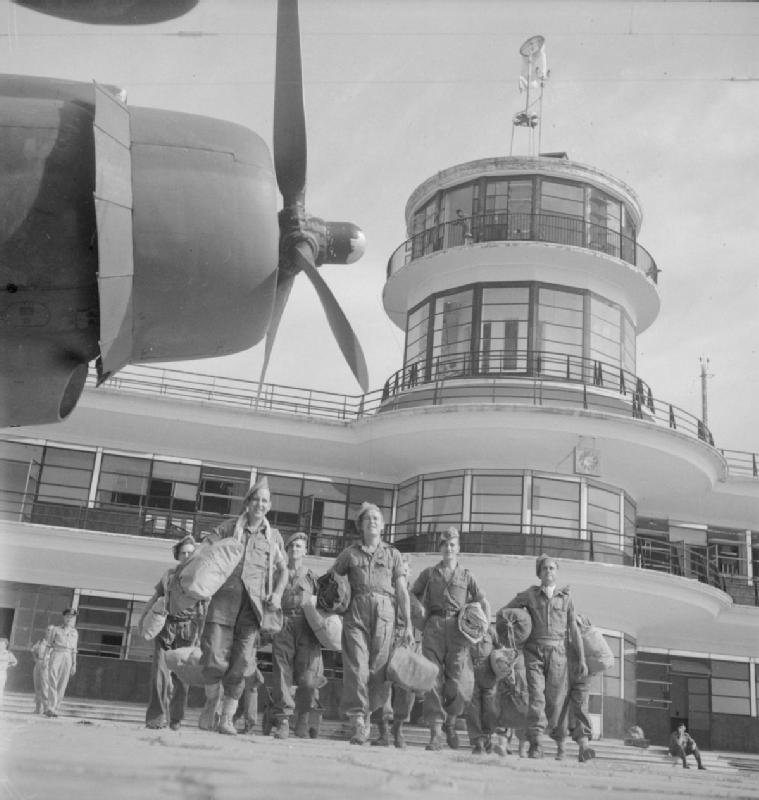


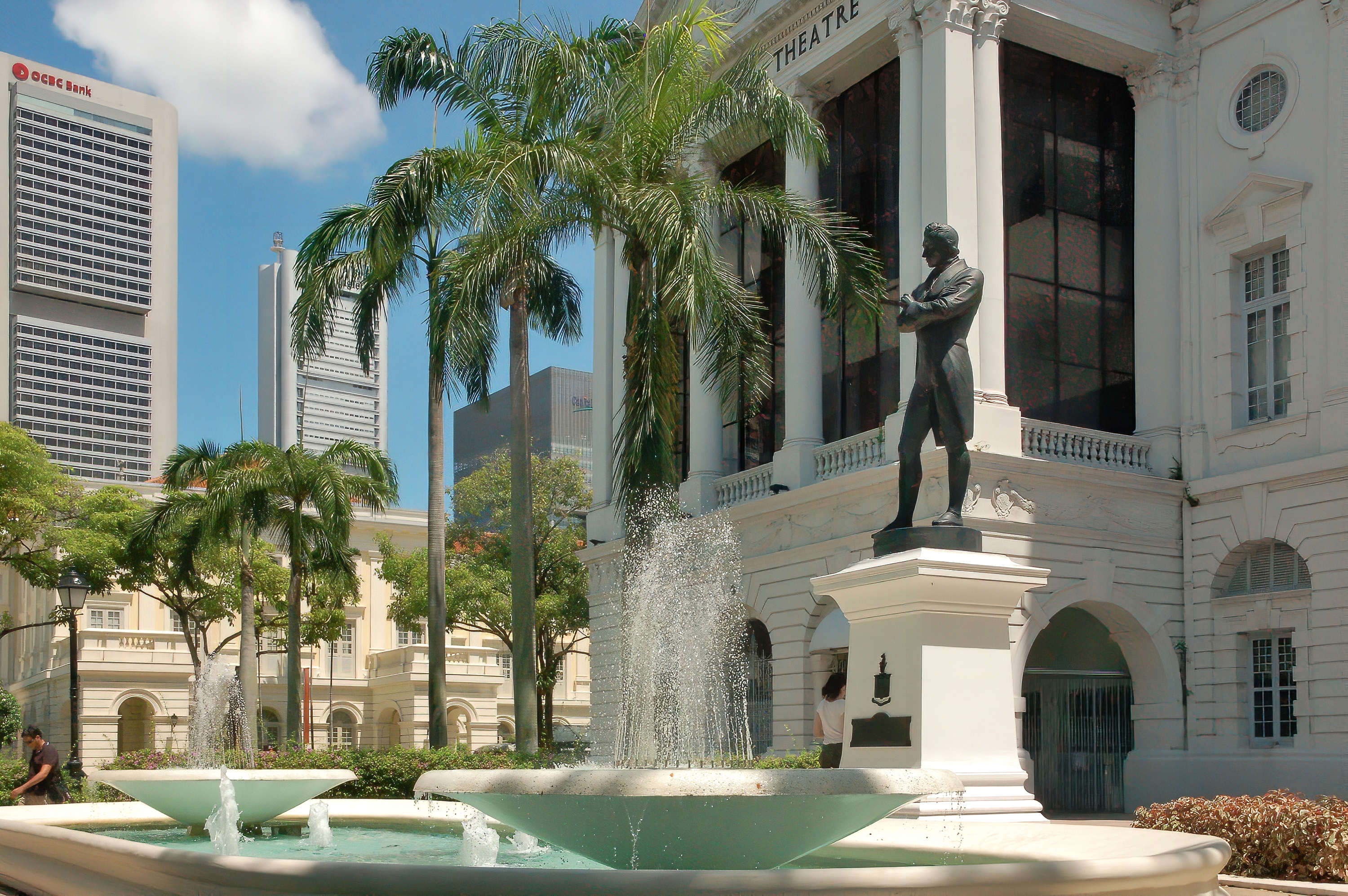



_zoom.svg)
 5,703,600[lower-alpha 2] (115th)
 45.9[7]
 listen)), officially the Republic of Singapore, is a sovereign island city-state in maritime Southeast Asia. It lies about one degree of latitude (137 kilometres or 85 miles) north of the equator, off the southern tip of the Malay Peninsula, bordering the Straits of Malacca to the west, the Riau Islands (Indonesia) to the south, and the South China Sea to the east. The country's territory is composed of one main island, 63 satellite islands and islets, and one outlying islet, the combined area of which has increased by 25% since the country's independence as a result of extensive land reclamation projects. It has the second greatest population density in the world. The country has almost 5.7 million residents, 61% (3.4 million) of whom are Singaporean citizens. There are four official languages of Singapore: English, Malay, Chinese and Tamil. English is the lingua franca. Multiracialism is enshrined in the constitution, and continues to shape national policies in education, housing, and politics.
.jpg)


