|
|
| Line 1: |
Line 1: |
| {{About|Ali ibn Abi Talib|other people named Ali|Ali (name)|other uses|Ali (disambiguation)}} | | {{infobox |
| {{short description|Member of Muhammad's Household, first of the Shia Imams, and fourth Sunni Caliph (601-661)}}
| | | bodyclass = vcard |
| {{Use dmy dates|date=August 2020}}
| | | bodystyle = background: #F4F0EC; border: 2px solid #F0F8FF; |
| {{Infobox royalty
| | | abovestyle = background-color:#233632;font-size:100%; |
| | name = Ali ibn Abi Talib<br/>{{lang|ar|عَلِيّ ٱبْن أَبِي طَالِب}}
| | | above = <span style="color:#F4F0EC">Ali</span> |
| | title = [[Haydar]]<br/>[[Abu Turab]]<br/>[[Murtadha|Al-Murtadha]]<br/> [[Amir al-Mu'minin]] | | | image = |
| | image = Rashidun Caliph Ali ibn Abi Talib - علي بن أبي طالب.svg | | | headerstyle = background-color:#233632; |
| | image_size = 260 | | | header2 = <span style="color:#F4F0EC">Islamic Empire During The Reign</span> <br /> |
| | alt = | | [[File:Mohammad adil rais-Caliph Ali's empire 661.PNG|226px|center]] |
| | caption = [[Islamic calligraphy|Calligraphic]] representation of Ali's name in Rashidun form | | | labelstyle = white-space:nowrap; background: transparent; border: none; |
| | succession = 4th [[Caliphate|Caliph]] of the [[Rashidun Caliphate]]<br/>([[Sunni Islam|Sunni]] View) | | | header3 = <span style="color:#F4F0EC">Commander of the Faithful<br />(Amir al-Mu'minin)</span> |
| | reign = 656–661<ref name="Britannica"/> | | |label4= Full Name |
| | predecessor = [[Uthman|Uthman ibn Affan]] | | |data4= Alī ibn Abī Ṭālib <br /> (علي بن أبي طالب) |
| | successor = [[Hasan ibn Ali]] | | |label5= Reign |
| | succession1 = 1st [[Imamah (Shia doctrine)|Imam]] ([[Shia Islam|Shia]] View) | | |data5= 656–661 <includeonly><ref name="Britannica"/></includeonly> |
| | reign1 = 632–661
| | |label6= Born |
| | successor1 = [[Hasan ibn Ali]] | | |data6= {{birth date|598|10|23|mf=y}} <includeonly><ref name="Khashayar"/></includeonly> <br /> {{birth date|599|3|17|mf=y}} <includeonly><ref name="Britannica"/></includeonly> <br /> {{birth date|600|3|17|mf=y}} <includeonly><ref name="Britannica"/></includeonly> |
| | birth_date = 15 September 601 (13 [[Rajab]] [[Islamic calendar#Numbering the years|21 BH]])<ref name="Britannica"/><ref name="Iranica"/><ref name="Al-Islam"/>{{failed verification|date=June 2020}} | | |label7= Birthplace |
| | birth_place = [[Mecca]], [[Hejaz]], [[Arabia]]<ref name="Britannica"/><ref name="Guidance">{{cite book|last1=Rahim|first1=Husein A.|last2=Sheriff|first2=Ali Mohamedjaffer|title=Guidance From Qur'an|publisher=Khoja Shia Ithna-asheri Supreme Council|url=https://books.google.com/books?id=9v2qAgAAQBAJ&q=ali+was+born+in+kaaba&pg=PA52|access-date=11 April 2017|language=en|year=1993}}</ref> | | |data7= [[kaaba_Mecca]] <includeonly><ref name="Britannica"/></includeonly> |
| | death_date = 28 January 661 (21 [[Ramadan]] AH 40)<br /> (aged {{age|601|9|15|661|1|28}})<ref name="Islamica"/> | | |label8= Died |
| | death_place = [[Kufa]], [[Rashidun Caliphate]] <br/> | | |data8= {{death date and age|661|1|28|598|10|23|mf = y}} |
| | burial_place = [[Imam Ali Mosque]], [[Najaf]], [[Iraq]] | | |label9= Deathplace |
| | spouse = {{unbulleted list|[[Fatimah]]|[[Umamah bint Zainab]]|[[Umm ul-Banin]]|Leila bint Masoud|[[Asma bint Umays]]|[[Khawlah bint Ja'far]]|Al Sahba' bint Rabi'ah}} | | |data9= [[Kufa]] |
| | spouse-type = Spouses | | |label10= Place of Burial |
| | issue = {{unbulleted list | '''[[Descendants of Ali ibn Abi Talib|Descendants of Ali]]''' |[[Hasan ibn Ali|Al-Hasan]]|[[Husayn ibn Ali|Al-Husayn]]|[[Zaynab bint Ali|Zaynab]]|[[Umm Kulthum bint Ali|Umm Kulthum]]|[[Muhsin ibn Ali|Muhsin]]|[[Muhammad ibn al Hanafiyyah ibn Ali|Muhammad]]|[[Abbas ibn Ali|Abbas]]|[[Sayyida Ruqayya bint Ali|Ruqayya]]|[[Abdullah ibn Ali ibn Abi Talib|Abdullah]]|[[Hilal ibn Ali|Hilal]]|'Awn|[[Muhammad ibn Abu Bakr]] (stepson)}} | | |data10= [[Imam Ali Mosque]], [[Najaf]], [[Iraq]] |
| | full name = ʿAlī ibn ʾAbī Ṭālib | | |label11= Predecessor |
| {{lang-ar|عَلِيّ ٱبْن أَبِي طَالِب}}
| | |data11= [[Uthman]] |
| | house = [[Quraysh]] ([[Banu Hashim]]) | | |label12= Successor |
| | house-type = Tribe | | |data12= [[Hasan ibn Ali|Hasan]] |
| | father = [[Abu Talib ibn 'Abd al-Muttalib]] | | |label13= Father |
| | mother = [[Fatimah bint Asad]]
| | |data13= [[Abu Talib ibn ‘Abd al-Muttalib]] |
| | religion = [[Islam]] | | |label14= Mother |
| | |data14= [[Fatima bint Asad]] |
| | |label15= Brother(s) |
| | |data15= • [[Ja`far ibn Abī Tālib]]<br />• [[Aqeel ibn Abi Talib]]<br />• Talib ibn Abu Talib |
| | |label16= Sister(s) |
| | |data16= • [[Fakhitah bint Abi Talib]]<br/>• [[Jumanah bint Abi Talib]] |
| | |label17= Spouse(s) |
| | |data17= • [[Fatimah]]<br/>• [[Umamah bint Zainab]]<br/>• [[Umm ul-Banin]]<br/>• Leila bint Masoud<br />• [[Khawlah bint Ja'far]]<br />• Al Sahba'bint Rabi'ah |
| | |label18= Son(s) |
| | |data18= • [[Muhsin ibn Ali]]<br />• [[Hasan ibn Ali]]<br />• [[Husayn ibn Ali]]<br />• [[Hilal ibn Ali]]<br />• [[Al-Abbas ibn Ali]]<br />• [[Abdullah ibn Ali]]<br />• [[Jafar ibn Ali]]<br />• [[Uthman ibn Ali]]<br />• Ubaid Allah bin Ali <br />• Abi Bakr bin Ali<br />• [[Muhammad ibn al-Hanafiyyah]]<br />• Umar bin Ali |
| | |label19= Daughter(s) |
| | |data19= • [[Zaynab bint Ali]]<br />• [[Umm Kulthum bint Ali]] |
| | |label20= Descendants |
| | |data20= |
| | |label21= Other Titles |
| | |data21= <small>• '''Abu Al-Hasan'''<br />("Father of Hasan")<br /> • '''[[Abu Turab]]'''<br />("Father of Dust/Soil)<br />• '''Murtadha'''<br />("One Who Is Chosen and Contented")<br />• '''[[Asad (name)|Asad]]'''<br />("Lion of God")<br />• '''Haydar'''<br />("Lion") <includeonly><ref name="Britannica"/></includeonly><br />• '''First Alī'''</small> |
| | |data22= |
| }} | | }} |
| {{Ali}}
| | '''Ali ibn Abi Talib''' ('''‘Alī ibn Abī Tālib''') ('''{{lang|ar|علي بن أﺑﻲ طالب}}''') (Approximately [[March 17]], [[599]]- [[January 28]], [[661]])<ref>{{cite web|url=http://www.shaheedfoundation.org/2.htm|title=Shaheed Foundation|access-date=2007-07-17|archive-date=2007-07-05|archive-url=https://web.archive.org/web/20070705172547/http://www.shaheedfoundation.org/2.htm|url-status=dead}}</ref> was an early Islamic leader. He was the fourth [[Sunni]] [[caliph]] and the first [[Shia]] imam. |
| {{Shia Islam|Ahl al-Kisa}}
| |
| {{Sunni Islam|Rightly-Guided Caliphs}}
| |
| '''Ali ibn Abi Talib''' ({{lang-ar|عَلِيّ ٱبْن أَبِي طَالِب}}, {{transl|ar|ALA-LC|ʿAlīy ibn ʾAbī Ṭālib}}; 13 September 601 – 29 January 661)<ref name="Iranica" /> was a cousin, son-in-law and companion of the [[Prophets and messengers in Islam|Islamic prophet]] [[Muhammad in Islam|Muhammad]], who ruled as the fourth [[caliph]] from 656 until his assassination in 661. He is one of the central figures in [[Shia Islam]] and is regarded as the rightful immediate [[Succession to Muhammad|successor to Muhammad]] as an [[The Twelve Imams|Imam]] by Shia Muslims. | |
|
| |
|
| Ali was born inside the [[Kaaba]] in [[Mecca]], the [[Holiest sites in Islam|holiest place in Islam]], to [[Abu Talib ibn Abd al-Muttalib|Abu Talib]]<ref name="Landau_Tasseron">Biographies of the Prophet's companions and their successors, Ṭabarī, translated by Ella Landau-Tasseron, pp. 37–40, Vol:XXXIX.</ref> and [[Fatimah bint Asad]].<ref name="Britannica"/><ref>{{cite book|url=https://archive.org/details/aliIbnAbiTalibr2Vol.Set|last=Sallabi|first=Dr Ali M|title=Ali ibn Abi Talib (volume 1)|date=2011|pages=52–53}}</ref> He was the first male who accepted Islam under Muhammad's watch.<ref>{{Harvnb|Kelen|2001|p=29}}.</ref><ref name="watt">{{Harvnb|Watt|1953|p=xii}}.</ref> Ali protected Muhammad from an early age,<ref>{{cite book|last1=Razwy|first1=Sayed Ali Asgher|title=A Restatement of the History of Islam & Muslims|page=72}}</ref> and took part in almost all the battles fought by the nascent Muslim community. After [[Hegira|migrating to Medina]], he married Muhammad's youngest daughter [[Fatimah]],<ref name="Britannica"/> and after her death, he had other wives, including Muhammad's granddaughter [[Umamah bint Zaynab]].<ref name="Helal">{{cite web |website=www.helal.ir |url=http://www.helal.ir/helal/modules.php?name=Content&pa=showpage&pid=69 |title=Mohammad Hilal Ibn Ali |archive-url=https://web.archive.org/web/20110720172849/http://www.helal.ir/helal/modules.php?name=Content&pa=showpage&pid=69 |archive-date=20 July 2011}}</ref><ref name="Ezsoftech">{{cite web |title=Fatima Zehra (sa) and the Future of History / Shahadat Fatimah Zehra (sa) |url=http://www.ezsoftech.com/stories/fatima_zehra.asp |website=Islamic Moral Stories |access-date=17 March 2019 |quote=Fatima Zehra (sa) said: "May Allah (SWT) reward you with the best of goodness. Cousin, firstly I ask you to marry anybody you like after my death, but you must marry my niece Umamah; surely she will be to my children as I was. Besides, men cannot do without women. She loves my children and Hussain is very much attached to her. Let Fizza remain with you even after her marriage, if she so desires, she was more than a mere servant to me. I loved her like my daughter." Fatima Zehra (sa) then added: "I ask you not to let anyone who did injustice to me to witness my funeral, for they certainly are enemies of mine, and the enemy of Messenger of Allah, Muhammad (saw). Also don't give them the chance to pray over me, nor to any of their followers. I want you to wash me at night, put the shroud on me, perform the prayer upon my body, and bury me at night when eyes are rested and sight is put to sleep. And after my burial, sit beside my grave and recite Noble Qur'an for me."}}</ref> He was appointed ''caliph'' by [[Sahaba|Muhammad's companions]] in 656, after Caliph [[Uthman ibn Affan]] was assassinated.<ref name="Ashraf (2005), pp. 119-120"/><ref name="Madelung (1997), pp. 141-145" /> Ali's reign saw [[First Fitna|civil wars]] and on 27 January 661, he was attacked and [[Assassination of Ali|assassinated]] by a [[Kharijite]] while praying in the [[Great Mosque of Kufa]], dying two days later on 29 January.<ref>{{Harvnb|Lapidus|2002|p=47}}.</ref><ref>{{Harvnb|Holt|Lambton|Lewis|1970|pp=70–72}}.</ref><ref>{{Harvnb|Tabatabaei|1979|pp=50–75 and 192}}.</ref> | | Since Ali stated that his body should remain a secret, his followers tied his body on a white camel, and went towards northern Afghanistan.{{sfn|Johnson|2021|p=327}} Before being assassinated, Ali had reportedly given instructions to bury his body at the spot where the camel would die. At this location in Balkh, the white camel expired and Ali was buried secretly. In the 15th century, Abd al-Ghafur Lari is believed to discover Ali's tomb.{{sfn|Azad|2013|p=110}} |
|
| |
|
| Ali is important to both [[Shia]]s and [[Sunni Islam|Sunnis]], politically and spiritually.<ref name="EOAli3"/> The numerous biographical sources about Ali are often biased according to sectarian lines, but they agree that he was a pious Muslim, devoted to the cause of Islam and a just ruler in accordance with the [[Qur'an]] and the [[Sunnah]].<ref name="Iranica"/> While Sunnis consider Ali the fourth ''[[Rashidun|Rashidun Caliph]]'', Shia Muslims regard Ali as the first ''[[Caliph]]'' and [[Imamah (Shia doctrine)|Imam]] after Muhammad. Shia Muslims also believe that Ali and the other [[The Twelve Imams|Shia Imams]], all of whom are from the House of Muhammad, known as the ''[[Ahl al-Bayt]]'', are the rightful successors to Muhammad.
| | * {{Cite book|url=https://books.google.com/books?id=TdgnEAAAQBAJ|title=Historical Dictionary of Afghanistan|last=Johnson|first=Thomas|publisher=Rowman & Littlefield|year=2021|isbn=9781538149294}} |
| | * {{Cite book|url=https://books.google.com/books?id=5rZGAgAAQBAJ|title=Sacred Landscape in Medieval Afghanistan: Revisiting the Faḍāʾil-i Balkh|last=Azad|first=Arezou|publisher=OUP Oxford|year=2013|isbn=9780199687053}} |
|
| |
|
| ==Life in Mecca== | | == External links == |
| [[File:'Alî mounted on his blue mule.jpg|thumb|'Ali, mounted on a blue mule, is approached by a delegation from the [[Quraysh tribe]].]] | | === Sunni biography === |
| | * [http://www.usc.edu/dept/MSA/politics/firstfourcaliphs.html#ali Biography from USC's MSA website] {{Webarchive|url=https://web.archive.org/web/20081216034025/http://www.usc.edu/dept/MSA/politics/firstfourcaliphs.html#ali |date=2008-12-16 }} |
|
| |
|
| ===Early years=== | | === Shi'a biography === |
| {{Main|Family tree of Ali|Birthplace of Ali ibn Abi Talib}} | | * [http://iiny.org/1stImam.htm Brief Biography] {{Webarchive|url=https://web.archive.org/web/19980204220156/http://iiny.org/1stImam.htm |date=1998-02-04 }} |
| | * [http://www.basma.us/site/true_islam/kaaba/yemeni_corner_of_kaaba.php Ali's Birth in the Kaaba] {{Webarchive|url=https://web.archive.org/web/20060206121049/http://www.basma.us/site/true_islam/kaaba/yemeni_corner_of_kaaba.php |date=2006-02-06 }} |
| | * [http://www.imamalinet.net/ Website devoted to the Life of Imam Ali ibn Abi Talib] |
| | * [http://al-islam.org/nahj/ Sayings of Imam Ali ibn Abi Talib] |
| | * [https://razaiv.com/category/imam-ali-quotes/ Imam Ali Quotes on various topics]{{Dead link|date=January 2021 |bot=InternetArchiveBot |fix-attempted=yes }} |
| | * [http://www.aljaafaria.com/aljaafaria-old/imamali.html Imam Ali ibn Abi Talib] {{Webarchive|url=https://web.archive.org/web/20070701140613/http://www.aljaafaria.com/aljaafaria-old/imamali.html |date=2007-07-01 }} |
| | * [http://members.ozemail.com.au/~azma/ImamALI.htm Imam Ali ibn Abi Talib] {{Webarchive|url=https://web.archive.org/web/20020923102918/http://members.ozemail.com.au/~azma/ImamALI.htm |date=2002-09-23 }} The Commander of the Faithfull |
| | * [http://www.najaf.org/english/ Imam Ali foundation] |
| | * [http://www.al-islam.org/nahjul/index.htm Imam Ali ibn Abi Talib] Nahjul Balagha |
| | * [http://www.islamfrominside.com/Pages/Articles/ImamAliWiladat.html Imam Ali ibn Abi Talib's status] |
| | * [http://www.askshia.com/ Imam Ali] |
| | * [http://www.al-shia.com/html/eng/books/last-will-of-ali-ibn-abi-talib/last-will-of-ali-ibn-abi-talib.htm Last will] {{Webarchive|url=https://web.archive.org/web/20080327054248/http://www.al-shia.com/html/eng/books/last-will-of-ali-ibn-abi-talib/last-will-of-ali-ibn-abi-talib.htm |date=2008-03-27 }} |
|
| |
|
| Ali's father, [[Abu Talib ibn Abd al-Muttalib]], was the custodian of the Ka'bah and a [[sheikh]] of [[Banu Hashim]], an important branch of the powerful [[Quraysh (tribe)|Quraysh]] tribe. He was also an uncle of Muhammad, and had raised Muhammad after [[Abd al-Muttalib]], Abu Talib's father and Muhammad's grandfather, died.<ref>{{cite book|last1=Razwy|first1=Sayed Ali Asgher|title=A Restatement of the History of Islam & Muslims|pages=35–36}}</ref><ref>{{cite book|last1=Glubb|first1=Sir John|title=The Life and Times of Mohammed|date=1970}}</ref> Ali's mother, [[Fatima bint Asad]], also belonged to Banu Hashim, making Ali a descendant of [[Ishmael in Islam|Isma'īl]] ([[Ishmael]]), the firstborn son of [[Abraham in Islam|Ibrahim]] ([[Abraham]]).<ref>{{Harvnb|Ashraf|2005|p=5}}.</ref> Many sources, especially Shia ones, attest that Ali was born inside the [[Kaaba|Ka'bah]] in the city of [[Mecca]],<ref name="Britannica"/><ref>{{cite book|title=Illustrated Dictionary of the Muslim World|publisher=Marshall Cavendish Reference|isbn=978-0-7614-7929-1|url=https://archive.org/details/illustrateddicti0000unse|url-access=registration|page=[https://archive.org/details/illustrateddicti0000unse/page/86 86]|quote=ali was born in kaaba.|access-date=11 April 2017|language=en|year=2011}}</ref> where he stayed with his mother for three days.<ref name="Britannica"/><ref name="auto">Sahih Muslim, Book 21, Hadith 57.</ref> His mother reportedly felt the beginning of her labour pain while visiting the Kaaba and entered it where her son was born. Some Shia sources contain miraculous descriptions of the entrance of Ali's mother into the Kaaba. Ali's birth in the Kaaba is regarded as a unique event proving his "high spiritual station" among Shia, while Sunni scholars consider it a great, if not unique, distinction.<ref name="Islamica">{{cite encyclopedia|last1=Faramarz Haj|first1=Manouchehri|last2=Matthew|first2=Melvin-Koushki|last3=Shah-Kazemi|first3=Reza|last4=Bahramian|first4=Ali|last5=Pakatchi|first5=Ahmad|last6=Muhammad Isa|first6=Waley|last7=Daryoush|first7=Mohammad|last8=Tareh|first8=Masoud|last9=Brown|first9=Keven|last10=Jozi|first10=Mohammad Reza|last11=Sajjadi|first11=Sadeq|last12=Gholami|first12=Rahim|last13=Bulookbashi|first13=Ali A.|last14=Negahban|first14=Farzin|last15=Alizadeh|first15=Mahbanoo|last16=Gholami|first16=Yadollah|title=ʿAlī b. Abī Ṭālib|encyclopedia=Encyclopaedia Islamica|date=11 September 2008|url=http://referenceworks.brillonline.com/entries/encyclopaedia-islamica/ali-b-abi-talib-COM_0252|publisher=[[Brill Publishers|Brill]]|url-status=live|archive-url=https://web.archive.org/web/20160630063854/http://referenceworks.brillonline.com/entries/encyclopaedia-islamica/ali-b-abi-talib-COM_0252|archive-date=30 June 2016}}</ref>
| | == References == |
| | {{reflist}} |
|
| |
|
| According to a tradition, Muhammad was the first person whom Ali saw as he took the newborn in his hands and Muhammad named him Ali, [[Ali (name)|meaning "the exalted one"]]. Muhammad had a close relationship with Ali's parents. When Muhammad was orphaned and later lost his grandfather [[Abd al-Muttalib]], Ali's father took him into his house.<ref name="Britannica"/> Ali was born two or three years after Muhammad married [[Khadijah bint Khuwaylid]].<ref>{{Harvnb|Ashraf|2005|p=6 and 7}}.</ref> When Ali was five years old, Muhammad took Ali into his home to raise him. Some historians say that this was because there was a famine in Mecca at the time and that Ali's father had a large family to support; however, others point out that feeding Ali would not have been a burden on his father, as Ali was five years old at the time and, despite the famine, Ali's father, who was financially well-off, was known for giving food to strangers if they were hungry.<ref>{{cite book|last1=Razwy|first1=Sayed Ali Asgher|title=A Restatement of the History of Islam & Muslims|page=43}}</ref> While it is not disputed that Muhammad raised Ali, it was not due to any financial stress that Ali's father was going through.
| |
|
| |
|
| ===Acceptance of Islam===
| | {{Bio-stub}} |
| {{See also|Identity of the first male Muslim|Hijra (Islam)}} | |
|
| |
|
| Ali had been living with Muhammad and his wife [[Khadija bint Khuwaylid|Khadija]] since he was five years old. When Ali was nine, Muhammad announced himself as the Prophet of Islam, and Ali became the first male to accept Islam in Muhammad's presence, and the second person after Khadija. According to Sayed Ali Asgher Razwy in ''A Restatement of the History of Islam & Muslims,'' "Ali and [the] Qur'an 'grew up' together as 'twins' in the house of Muhammad Mustafa and Khadija-tul-Kubra."<ref>{{cite book|last1=Razwy|first1=Sayed Ali Asgher|title=A Restatement of the History of Islam & Muslims|page=52}}</ref>
| | [[Category:599 births]] |
| | |
| The second period of Ali's life began in 610 when he declared Islam at the age of 9, and ended with the [[Hijra (Islam)|Hijra]] of Muhammad to Medina in 622.<ref name="Britannica"/> When Muhammad reported that he had received a [[Wahy|divine revelation]], Ali, then only about nine years old, believed him and professed to Islam.<ref name="Britannica"/><ref name="Iranica"/><ref name="Tabatabae191">{{Harvnb|Tabatabaei|1979|p=191}}.</ref><ref name="Ashraf 2005 p=14">{{Harvnb|Ashraf|2005|p=14}}.</ref><ref name="Islam">{{cite encyclopedia|encyclopedia = Encyclopaedia of Islam and the Muslim world; vol.1|last = Steigerwald|first = Diana|title = Alī ibn Abu Talib|publisher = Macmillan|isbn = 978-0-02-865604-5|year = 2004}}</ref> Ali became the first male to [[Religious conversion#Conversion to Islam|embrace Islam]].<ref>{{harvnb|Gleave|2015}}.</ref><ref>{{cite book|title=A Restatement of the History of Islam & Muslims|last1=Razwy|first1=Sayed Ali Asgher|pages=50–52}}</ref><ref>{{cite book|title=Introduction to the Translation of Holy Qur'an|last1=Pickhtall|first1=Marmaduke|date=1975|location=Lahore}}</ref><ref>{{cite book|title=Mohammed, the Man and his Faith|last1=Andre|first1=Tor|date=1960}}</ref> Shia doctrine asserts that in keeping with Ali's divine mission, he accepted Islam before he took part in any [[Pre-Islamic Arabia|old Meccan]] [[Arabian mythology|traditional religious]] rites, regarded by Muslims as [[polytheism|polytheistic]] (see [[Shirk (Islam)|shirk]]) or [[paganism|paganistic]]. Hence the Shia say of Ali that his face is honoured, as it was never sullied by prostrations before idols.<ref name="Tabatabae191"/> The Sunnis also use the honorific ''Karam Allahu Wajhahu'', which means "God's Favour upon his Face." The reason his acceptance is often not called a conversion is because he was never an idol worshipper like the people of Mecca. He was known to have broken idols in the mould of Abraham and asked people why they worshipped something they made themselves.<ref>{{cite web|title=Ali|url=http://imamali.net/old/?part=350|publisher=Imamali|access-date=20 March 2015|url-status=dead|archive-url=https://web.archive.org/web/20150320075858/http://imamali.net/old/?part=350|archive-date=20 March 2015}}</ref> [[Abd al-Muttalib|Ali's grandfather]], along with some members of the Bani Hashim clan, were ''[[Hanif]]s'', or followers of a monotheistic belief system prior to the emergence of Islam in Mecca.
| |
| | |
| ===Feast of Dhul-Asheera===
| |
| {{main|Da'wat dhul-Ashira}}
| |
| | |
| Muhammad invited people to Islam in secret for three years before he started inviting them publicly. In the fourth year of his preaching, when Muhammad was commanded to invite his close relatives to come to Islam,<ref>{{cite quran|26|214|style = ref}}.</ref> he gathered the Banu Hashim clan in a ceremony. At the banquet, he was about to invite them to Islam when [[Abu Lahab]] interrupted him, after which everyone left the banquet. The Prophet ordered Ali to invite the 40 people again. The second time, Muhammad announced Islam to them and invited them to join.<ref>{{cite book|last1=Razwy|first1=Sayed Ali Asgher|title=A Restatement of the History of Islam & Muslims|page=54}}</ref> He said to them:
| |
| {{quote|I offer thanks to Allah for His mercies. I praise Allah, and I seek His guidance. I believe in Him and I put my trust in Him. I bear witness that there is no god except Allah; He has no partners; and I am His messenger. Allah has commanded me to invite you to His religion by saying: And warn thy nearest kinsfolk. I, therefore, warn you, and call upon you to testify that there is no god but Allah, and that I am His messenger. O ye sons of Abdul Muttalib, no one ever came to you before with anything better than what I have brought to you. By accepting it, your welfare will be assured in this world and in the Hereafter. Who among you will support me in carrying out this momentous duty? Who will share the burden of this work with me? Who will respond to my call? Who will become my vicegerent, my deputy and my wazir?<ref>{{cite book|last1=Razwy|first1=Sayed Ali Asgher|title=A Restatement of the History of Islam & Muslims|pages=54–55}}</ref>}}
| |
| | |
| Ali was the only one to answer Muhammad's call. Muhammad told him to sit down, saying, "Wait! Perhaps someone older than you might respond to my call." Muhammad then asked the members of Banu Hashim a second time. Once again, Ali was the only one to respond, and again, Muhammad told him to wait. Muhammad then asked the members of Banu Hashim a third time; Ali was still the only volunteer. This time, Ali's offer was accepted by Muhammad. Muhammad "drew [Ali] close, pressed him to his heart, and said to the assembly: 'This is my wazir, my successor and my vicegerent. Listen to him and obey his commands.'"<ref>{{cite book|last1=Razwy|first1=Sayed Ali Asgher|title=A Restatement of the History of Islam & Muslims|page=55}}</ref> In another narration, when Muhammad accepted Ali's eager offer, Muhammad "threw up his arms around the generous youth, and pressed him to his bosom" and said, "Behold my brother, my vizir, my vicegerent...Let all listen to his words, and obey him."<ref>{{cite book|last1=Irving|first1=Washington|title=The Life of Mohammed}}</ref> Upon hearing this, the sons of [[Abd al-Muttalib]] departed from the feast, mocking Muhammad's words, as they scoffed at [[Abu Talib ibn Abd al-Muttalib]], "He has ordered you to listen and obey your son!".<ref name = "Al Abbas">{{cite book |last1=Shahin |first1=Badr |title=Al-Abbas |date=2015 |publisher=CreateSpace Independent Publishing Platform |location=CA |isbn=978-1-5193-0811-5 }}</ref>{{rp|17}} In Tarikh ut-Tabari and as-Seerat ul Halabiyya, it has been recorded that Abu Talib asks his son Ali, "What is this belief you are following?" to which Ali replies, "Father, I have believed in Allah and His Messenger, and have given credence to him, kept to him, and followed him."<ref name="Al Abbas" />
| |
| | |
| [[Richard Francis Burton|Sir Richard Burton]] writes about the banquet in his 1898 book, saying, "It won for [Muhammad] a proselyte worth a thousand sabers in the person of Ali, son of Abu Talib."<ref>{{cite book|last1=Burton|first1=Sir Richard|title=(The Jew the Gypsy and El Islam|date=1898|location=San Francisco}}</ref>
| |
| | |
| ===During the oppression of Muslims===
| |
| During the [[Persecution of Muslims by the Meccans|persecution of Muslims]] and [[Meccan boycott of the Hashemites|boycott of the Banu Hashim]] in Mecca, Ali stood firmly in support of Muhammad.<ref>{{Harvnb|Ashraf|2005|pp=16–26}}.</ref>
| |
| | |
| ===Migration to Medina===
| |
| {{See also|Hijra (Islam)}}
| |
| | |
| In 622, the year of Muhammad's migration to Yathrib (now Medina), Ali risked his life by sleeping in Muhammad's bed to impersonate him, thereby thwarting an assassination attempt and ensuring Muhammad's escape.<ref name="Britannica"/><ref name="Tabatabae191"/><ref>{{Harvnb|Ashraf|2005|p=28 and 29}}.</ref> This night is called ''[[Laylat al-Mabit]]''. According to some ''a[[hadith]]'', a verse was revealed about Ali concerning his sacrifice on the night of Hijra which says "And among men is he who sells his ''[[nafs]]'' (self) in exchange for the pleasure of [[Allah]]."<ref>{{cite quran|2|207|style = ref}}.</ref><ref>{{cite web |url=http://www.almizan.org/ |title=Tafsir al-Mizan, Volume 3: Surah Baqarah, Verses 204–207 |first=Sayyid Mohammad Hosayn |last=Tabatabaei |publisher=almizan.org |access-date=25 November 2010 |url-status=live |archive-url=https://web.archive.org/web/20090617232037/http://almizan.org/ |archive-date=17 June 2009 }}</ref>
| |
| | |
| Ali survived the plot, but risked his life again by staying in Mecca to carry out Muhammad's instructions: to restore to their owners all the goods and properties that had been entrusted to Muhammad for safekeeping. Ali then went to Medina with Fatimah bint Asad (his mother), Fatimah bint Muhammad (Muhammad's daughter), and two other women.<ref name="Iranica" /><ref name="Tabatabae191" />
| |
| | |
| ==Life in Medina==
| |
| | |
| ===Muhammad's era===
| |
| {{See also|Muhammad in Medina|Military career of Ali}}
| |
| | |
| Ali was 22 or 23 years old when he migrated to Medina. When Muhammad was creating bonds of [[Brotherhood among the Sahaba|brotherhood among his companions]], he selected Ali as his brother, claiming that "Ali and I belong to the same tree, while people belong to different trees."<ref name="Iranica"/><ref name="Tabatabae191"/><ref name="Al Abbas" /><ref>{{Harvnb|Ashraf|2005|pp=30–32}}.</ref> For the ten years that Muhammad led the community in Medina, Ali was extremely active in his service as his secretary and deputy, serving in his armies, the bearer of his banner in every battle, leading parties of warriors on raids, and carrying messages and orders.<ref>See:
| |
| * {{Harvnb|Momen|1985|p=13 and 14}}
| |
| * {{Harvnb|Ashraf|2005|pp=28–118}}.</ref> As one of Muhammad's lieutenants, and later his son-in-law, Ali was a person of authority and standing in the Muslim community.<ref>{{cite book|author1=Mehboob Desia|title=Islam and non-violence|publisher=Gyan Book Pvt Ltd|isbn=978-81-212-1026-3|page=150|year=2009}}</ref>
| |
| | |
| ====Military career====
| |
| {{Campaignbox Campaigns of Ali}}
| |
| {{Main|Military career of Ali|List of expeditions of Muhammad}}
| |
| | |
| With the exception of the [[Battle of Tabouk]], Ali took part in all battles and expeditions fought for Islam.<ref name="Tabatabae191"/> As well as being the [[standard-bearer]] in those battles, Ali led parties of warriors on raids into enemy lands.
| |
| | |
| Ali first distinguished himself as a warrior in 624 at the [[Battle of Badr]]. The battle began with Ali defeating the Meccan champion [[Walid ibn Utba]]; one historian described Ali's opening victory at the battle as "the signal of the triumph of Islam."<ref>{{cite book|last1=Razwy|first1=Sayed Ali Asgher|title=A Restatement of the History of Islam & Muslims|pages=136–137}}</ref> Ali also killed many other Meccan soldiers in the battle—according to Muslim tradition, between twenty and thirty-five, with most agreeing on twenty-seven,<ref>See:
| |
| * {{Harvnb|Ashraf|2005|p=36}}
| |
| * {{Harvnb|Merrick|2005|p=247}}.
| |
| </ref> while all the other Muslims combined killed another twenty-seven.<ref>{{cite book|last1=Razwy|first1=Sayed Ali Asgher|title=A Restatement of the History of Islam & Muslims|page=139}}</ref>
| |
| | |
| Ali played a major role in the [[Battle of Uhud]], as well as many other battles, where he wielded a bifurcated sword known as [[Zulfiqar]].<ref name="Battles-of-Badr-and-Uhud">{{cite book
| |
| |last=Khatab |first=Amal |title=Battles of Badr and Uhud |publisher=Ta-Ha Publishers |date=1 May 1996 |isbn=978-1-897940-39-6}}</ref> He had the special role of protecting Muhammad when most of the Muslim army fled from the battle of Uhud,<ref name="Britannica"/> and it was said ''Lā fitā illā ʿAliyy, lā sayfa illā Dhul-Fiqār'' ({{lang|ar|لَا فِتَی إِلَّا عَلِيّ، لَا سَيْفَ إِلَّا ذُو ٱلْفِقَار}}, (There is) no brave youth except Ali, there is no sword (which renders service) except Zulfiqar).<ref>Ibn Al Atheer, in his Biography, vol 2 p 107 "لا فتی الا علي لا سيف الا ذوالفقار"</ref> He commanded the Muslim army in the [[Battle of the Trench]], where he defeated the legendary Arab warrior [[Amr ibn Abd al-Wud]].<ref>See:
| |
| * {{Harvnb|Ashraf|2005|pp=66–68}}
| |
| * {{Harvnb|Zeitlin|2007|p=134}}</ref> Muhammad made Ali commander at this battle, claiming that "I will hand the standard to a man who loves Allah and His Messenger and is loved by Allah and His Messenger. He will come back with conquest."<ref name="Al Abbas" /> Following this battle Muhammad gave Ali the name ''[[Lions in Islam|Asadullāh]]'' (which means "Lion of God") and reportedly praised him, saying "Ali's strike on Amr ibn Abd al-Wud is greater than the worship of both mankind and jinn until the Day of Judgement."<ref name="Al Abbas" /> Ali also defended Muhammad in the [[Battle of Hunayn]] in 630.<ref name="Britannica"/>
| |
| | |
| [[Sherira Gaon]] (c. 906–c. 1006) describes in a [[responsum]] how that the head of the Jewish community in [[Peroz-Shapur]] (now al-ʾAnbār), a community numbering some 90,000, warmly welcomed Ali ibn Abi Talib when he marched with his army into the country and conquered it, and how that he received them with a friendly disposition.<ref>{{Harvnb|Gaon|1988|p=125}}</ref>
| |
| | |
| ====Missions for Islam====
| |
| [[File:Levha (panel) in honor of Imam 'Ali.jpg|thumb|[[Islamic calligraphy|Arabic calligraphy]] which means "There is no brave youth except Ali and there is no sword which renders service except [[Zulfiqar]]"]]
| |
| | |
| Muhammad designated Ali as one of the scribes who would write down the text of the Quran, which had been revealed to Muhammad during the previous two decades. As Islam began to spread throughout Arabia, Ali helped establish the new Islamic order. He was instructed to write down the [[Treaty of Hudaybiyyah]], the peace treaty between Muhammad and the Quraysh, in 628. Ali was so trustworthy that Muhammad asked him to carry the messages and declare the orders. In 630, Ali recited to a large gathering of pilgrims in Mecca [[At-Tawba|a portion of the Quran]] that declared Muhammad and the Islamic community no longer bound by agreements made earlier with Arab [[polytheist]]s. During the [[Conquest of Mecca]] in 630, Muhammad asked Ali to guarantee that the conquest would be bloodless. He ordered Ali to break all the idols worshiped by the [[Banu Aus]], [[Banu Khazraj]], [[Tayy]], and those in the Kaaba to purify it after its defilement by the polytheism of [[Jahiliyah|old times]]. Ali was sent to [[Yemen]] one year later to spread the teachings of Islam. He was also known for settling several disputes and putting down the uprisings of various tribes.<ref name="Britannica"/><ref name="Iranica"/>
| |
| | |
| ====Event of ''Mubahalah''====
| |
| {{Main|Event of Mubahala}}
| |
| {{See also|Ahl al-Bayt}}
| |
| | |
| According to hadith collections, in 631, an [[Arab Christians|Arab Christian]] envoy from [[Najran]] (currently in northern Yemen and partly in [[Saudi Arabia]]) came to Muhammad to argue which of the two parties erred in its doctrine concerning [[Jesus in Islam|'Isa]] ([[Jesus]]). After likening Jesus' miraculous birth to [[Adam in Islam|Adam]]'s creation,<ref>{{cite quran|3|59|style = ref}}.</ref> Muhammad called them to ''[[mubahala]]'' (conversation), where each party should bring their knowledgeable men, women and children, and ask God to curse the lying party and their followers.<ref name="cite quran|3|61|style = ref">{{cite quran|3|61|style = ref}}.</ref> Muhammad, to prove to them that he was a prophet, brought his daughter Fatimah, 'Ali and his grandchildren Hasan and Husayn. He went to the Christians and said "this is my family" and covered himself and his family with a cloak.<ref>See:
| |
| * [[Sahih Muslim]], Chapter of virtues of companions, section of virtues of Ali, 1980 Edition Pub. in Saudi Arabia, Arabic version, v4, p1871, the end of tradition No. 32
| |
| * [[Sahih al-Tirmidhi]], v5, p654
| |
| * {{Harvnb|Madelung|1997|p=15 and 16}}.
| |
| </ref> According to Muslim sources, when one of the Christian monks saw their faces, he advised his companions to withdraw from Mubahala for the sake of their lives and families. Thus the Christian monks vanished from Mubahala. According to [[Allameh Tabatabaei]]'s ''[[Tafsir al-Mizan]]'', the word "Our selves" in this verse<ref name="cite quran|3|61|style = ref"/> refers to Muhammad and Ali. Then he narrates that [[Imam Ali al-Rida]], eighth [[Twelve Imams|Shia Imam]], in discussion with [[Al-Ma'mun]], [[Abbasid]] caliph, referred to this verse to prove the superiority of Muhammad's progeny over the rest of the Muslim community, and considered it proof of Ali's right to the caliphate due to God having made Ali like the self of Muhammad.<ref>{{cite web |url=http://www.almizan.org/ |title=Tafsir al-Mizan, v.6, Al Imran, verses 61–63 |first=Sayyid Mohammad Hosayn |last=Tabatabaei |publisher=almizan.org |access-date=25 November 2010 |url-status=live |archive-url=https://web.archive.org/web/20090617232037/http://almizan.org/ |archive-date=17 June 2009 }}</ref>
| |
| | |
| ====Ghadir Khumm====
| |
| {{Main|The event of Ghadir Khumm|Hadith of the two weighty things}}
| |
| [[File:Investiture of Ali Edinburgh codex.jpg|thumb|The Investiture of Ali, at [[Rabigh#Ghadir Al-Khumm|Ghadir Khumm]] ([[MS Arab 161]], fol. 162r, 1307/8 [[Ilkhanid]] manuscript illustration)]]
| |
| | |
| As Muhammad was returning from [[The Farewell Pilgrimage|his last pilgrimage]] in 632, he made statements about Ali that are interpreted very differently by Sunnis and Shias.<ref name="Britannica"/> He halted the caravan at [[Rabigh#Ghadir Al-Khumm|Ghadir Khumm]], gathered the returning pilgrims for communal prayer and began to address them.<ref name="Khumm">{{Harvnb|Dakake|2008|pp=34–39}}.</ref>
| |
| | |
| According to the ''[[Encyclopedia of Islam]]'':
| |
| {{quote|text=Taking Ali by the hand, he asked of his faithful followers whether he, Muhammad, was not closer (awlā) to the Believers than they were to themselves; the crowd cried out: "It is so, O Apostle of God!"; he then declared: "He of whom I am the [[mawla]], of him Ali is also the mawla (man kuntu mawlāhu fa-ʿAlī mawlāhu)".<ref name="EncyclopediaIslam">{{cite encyclopedia |last=Veccia Vaglieri |first=Laura |author-link=Laura Veccia Vaglieri |title=G̲h̲adīr K̲h̲umm |encyclopedia=Encyclopædia of Islam, Second Edition |date=24 April 2012 |access-date=2013-03-28 |publisher=Brill Online |url=http://referenceworks.brillonline.com/entries/encyclopaedia-of-islam-2/ghadir-khumm-SIM_2439 |archive-url=https://web.archive.org/web/20130331002156/http://referenceworks.brillonline.com/entries/encyclopaedia-of-islam-2/ghadir-khumm-SIM_2439 |archive-date=March 31, 2013 |url-status=live |df=mdy-all }}</ref><ref>See:
| |
| * {{Harvnb|Dakake|2008|pp=34–37}}
| |
| * Ibn Taymiyyah, Minhaaj as-Sunnah 7/319
| |
| "من كنت مولاه فهذا علي مولاه"</ref>}}
| |
| Shias regard these statements as constituting the designation of Ali as the [[succession to Muhammad|successor of Muhammad]] and as the first [[Imamah (Shia doctrine)|Imam]]; by contrast, Sunnis take them only as an expression of close spiritual relationship between Muhammad and Ali, and of his wish that Ali, as his cousin and son-in-law, inherit his family responsibilities upon his death, but not necessarily a designation of political authority.
| |
| <ref name="EOAli3">{{cite encyclopedia |last=Gleave |first=Robert M. |title=Ali ibn Abi Talib |encyclopedia=Encyclopaedia of Islam, THREE |date=December 2008 |access-date=29 March 2013 |publisher=Brill Online |url=http://referenceworks.brillonline.com/entries/encyclopaedia-of-islam-3/ali-b-abi-talib-COM_26324 |archive-url=https://web.archive.org/web/20130402034949/http://referenceworks.brillonline.com/entries/encyclopaedia-of-islam-3/ali-b-abi-talib-COM_26324 |archive-date=2 April 2013 |url-status=live }}</ref>
| |
| <ref>See also:
| |
| * {{Harvnb|Dakake|2008|pp=43–48}}
| |
| * {{Harvnb|Tabatabaei|1979|p=40}}.</ref> Many Sufis also interpret the episode as the transfer of Muhammad's spiritual power and authority to Ali, whom they regard as the [[wali]] ''par excellence''.<ref name="Britannica"/><ref>{{Harvnb|Dakake|2008|pp=33–35}}.
| |
| </ref>
| |
| | |
| Sources, among them both Shia and Sunni, state that, after the sermon, [[Abu Bakr]], [[Umar]], and [[Uthman]] pledged allegiance to Ali.<ref>{{cite web|title=A Shi'ite Encyclopedia|url=https://www.al-islam.org/shiite-encyclopedia-ahlul-bayt-dilp-team|website=Al-Islam.org|date=12 November 2013|publisher=Ahlul Bayt Digital Islamic Library Project|access-date=27 February 2018}}</ref><ref>{{cite book|title=Musnad Ahmad Ibn Hanbal, Volume 4|page=281}}</ref><ref>{{cite book|last1=al-Razi|first1=Fakhr|title=Tafsir al-Kabir, Volume 12|pages=49–50}}</ref> However, there have been doubts regarding the veracity of the tradition due to evidence that Ali may not have been present during the sermon, instead being in [[Yemen]] at the time—a view held by the historian [[Ibn Kathir]].<ref name=WainKamaliP12>Alexander Wain, Mohammad Hashim Kamali, ''The Architects of Islamic Civilisation'' (2017), p. 12</ref>
| |
| | |
| ===After Muhammad===
| |
| | |
| ====Succession to Muhammad====
| |
| {{See also|Origin and development of the Quran|Succession to Muhammad|Saqifah|Rashidun|Hadith of position}}
| |
| | |
| The next phase of Ali's life started in 632, after the death of Muhammad, and lasted until the assassination of Uthman ibn Affan, the third caliph, in 656. During those 24 years, Ali took no part in battle or [[Muslim conquests|conquest]],<ref name="Iranica"/> nor did he assume any executive position, instead withdrawing from political affairs, especially after the death of his wife, Fatimah Zahra. He used his time to serve his family and worked as a farmer. Ali dug a lot of wells and planted gardens near Medina and endowed them for public use. These wells are known today as ''[[Abar Ali]]'' ("Ali's wells").<ref>{{cite web|title=Abar Ali mosque|url=http://www.ircicaarchdata.org/ircica/level1.php?id=750|publisher=IRCICAARCH data|access-date=23 May 2015|url-status=dead|archive-url=https://web.archive.org/web/20150402091323/http://www.ircicaarchdata.org/ircica/level1.php?id=750|archive-date=2 April 2015}}</ref>
| |
| | |
| Ali compiled a complete version of the Quran, ''[[mus'haf]]'',<ref>{{cite encyclopedia|last = Nasr |first = Seyyed Hossein|author-link = Seyyed Hossein Nasr|title = Quran |year = 2007| encyclopedia = Encyclopædia Britannica Online|access-date = 4 November 2007|url=http://www.britannica.com/eb/article-68890/Quran| archive-url= https://web.archive.org/web/20071016200056/http://www.britannica.com/eb/article-68890/Quran| archive-date= 16 October 2007 | url-status=live}}</ref> six months after the death of Muhammad. The volume was completed and carried by camel to show to other people in Medina. The order of this ''mus'haf'' differed from that which was gathered later during the [[Uthman Ibn Affan|Uthmanic]] era. This book was rejected by several people when he showed it to them. Despite this, Ali made no resistance against the [[Origin and development of the Quran#Standardization|standardised ''mus'haf'']].<ref>See:
| |
| * {{Harvnb|Tabatabaei|1987|p=chapter 5}}
| |
| * Observations on Early Quran Manuscripts in San'a
| |
| * ''The Quran as Text'', ed. Wild, Brill, 1996 {{ISBN|978-90-04-10344-3}}</ref>
| |
| | |
| ====Ali and the Rashidun caliphs====
| |
| {{See also|Saqifah|The election of Uthman|Siege of Uthman}}
| |
| [[File:Ambigram - Muhammad and Ali2.svg|thumb|[[Ambigram]] depicting Muhammad (right) and Ali (left) written in a single word. The 180-degree inverted form shows both words.]]
| |
| | |
| While Ali was preparing Muhammad's body for burial and performing his funeral rites, a small group of approximately fourteen Muslims<ref>{{cite book |last1=Suhufi |title=Stories from the Qur'an |date=2003 |publisher=Islamic Seminary Publications |page=312}}</ref> met at [[Saqifah]]. There, Umar ibn al-Khattab pledged allegiance to Abu Bakr, who subsequently assumed political power. The gathering at Saqifah was disputed by some of Muhammad's companions, who held that Ali had been designated his successor by Muhammad himself.<ref name="Islam"/><ref>See:
| |
| * {{Harvnb|Holt|Lambton|Lewis|1970|p=57}}
| |
| * {{Harvnb|Madelung|1997|pp=26–27, 30–43 and 356–360}}
| |
| </ref>
| |
| | |
| Relations between Abu Bakr and Ali may have become strained after this.{{sfn|Fitzpatrick|Walker|2014|p=4}} Following the gathering at Saqifa, Umar and his supporters were allegedly [[Umar at Fatimah's house|sent by the new Caliph to Ali's house]] where Ali, [[Fatimah]], and some of their allies were gathered.<ref>{{cite book |title=Sahih Bukhari, Arabic-English, Volume 8, Tradition 817 |quote=Umar said: "And no doubt after the death of the Prophet we were informed that the Ansar disagreed with us and gathered in the shed of Bani Sa'da. 'Ali and Zubair and whoever was with them, opposed us, while the emigrants gathered with Abu Bakr."}}</ref> Several scholars, such as [[Al-Tabari]] and [[Ibn Qutaybah]], relate that Umar threatened to burn the building down if Ali refused to acknowledge Abu Bakr's authority.<ref name=TabariP1118-1120>{{cite book|title=History of Tabari, Volume 1|pages=1118–1120}}</ref><ref>{{cite book|last1=Ibn Qutaybah|title=al-Imamah wa al-Siyasah, Volume 1|page=3}}</ref><ref name= "Shayba">{{cite book |author=[[Ibn Abi Shayba]] (235 AH / 849 CE) |title=al-Musanaf |volume=7 |place=Beirut |publisher=Dar al-Taj |year=1989 |page=432 |quote=Umar came to the house of Fatima and said: "O' Daughter of the Prophet of God! I swear by God that we love no one more than your father, and after him we love no one more than you. Yet I swear by God that that won't stop me from gathering these people and commanding them to burn this house down!}}</ref> While the historian [[Al-Baladhuri]] states that the altercation never became violent and ended with Ali's compliance,{{sfn|Khetia|2013|p=32}} some traditions add that Umar and his supporters forcibly entered the house, resulting in Fatimah's miscarriage of their unborn son [[Muhsin ibn Ali|Muhsin]].{{sfn|Fitzpatrick|Walker|2014|p=186}} The [[The Book of Sulaym ibn Qays|Kitab Sulaym ibn Qays]] (attributed to [[Sulaym ibn Qays]], but possibly a much later creation)<ref>{{harvtxt|Khetia|2013|p=60}}</ref> concludes the incident with Ali being dragged out of the house with a rope tied around his neck.<ref>{{cite book |last1=Ibn Qays |first1=Sulaym|title=Kitab Sulaym Ibn Qays al-Hilali|page=74}}</ref> These events have been disputed, with several early historical sources arguing that Fatimah's child Muhsin had died in early childhood rather than being miscarried. Other sources add that Ali later willingly offered Abu Bakr his oath of allegiance and gave a praise-filled oration during his funeral.<ref>Masudul Hasan, ''Hadrat Ali Murtada'' (1988), p. 133</ref><ref>See:
| |
| * {{Harvnb|Ashraf|2005|p=100 and 101}}
| |
| * {{Harvnb|Madelung|1997|p=141}}
| |
| * {{Hadith-usc|Bukhari|usc=yes|5|59|546}}
| |
| * {{Hadith-usc|Bukhari|usc=yes|8|82|817}}
| |
| * {{hadith-usc|usc=yes|muslim|19|4352}}
| |
| * {{Harvnb|Rizvi|Saeed|1988|p=24}}
| |
| * [[The History of the Decline and Fall of the Roman Empire]] by [[Edward Gibbon]], section [http://www.ccel.org/g/gibbon/decline/volume2/chap50.htm Reign of Abubeker; A.D. 632, June 7.] {{Webarchive|url=https://web.archive.org/web/20180917181736/http://www.ccel.org/g/gibbon/decline/volume2/chap50.htm |date=17 September 2018 }}</ref> Professor Coeli Fitzpatrick surmises that the story of the altercation reflects the political agendas of the period and should therefore be treated with caution.{{sfn|Fitzpatrick|Walker|2014|p=22}}
| |
| | |
| [[File:Mirror writing2.jpg|thumb|18th century [[mirror writing]] in [[Ottoman Empire|Ottoman]] [[calligraphy]]. Depicts the phrase 'Ali is the vicegerent of God' in both directions.]]
| |
| | |
| Nevertheless, the issue of succession to Muhammad caused the Muslims to split into two groups, Sunni and Shia. Sunnis assert that even though Muhammad never appointed a successor, Abu Bakr was elected first caliph by the Muslim community. The Sunnis recognize the first four caliphs as [[Rashidun|Muhammad's rightful successors]]. Shias believe that Muhammad explicitly named Ali as his successor at Ghadir Khumm and Muslim leadership belonged to him by dint of divine order.<ref name="Islam"/>
| |
| | |
| According to [[Wilferd Madelung]], Ali himself was firmly convinced of his legitimacy for the [[caliphate]] based on his close kinship with Muhammad, his knowledge of Islam, and his merits in serving its cause. He told Abu Bakr that his delay in pledging allegiance (''[[bay'ah]]'') to him was based on his belief in his own claim to the caliphate. Ali did not change his mind when he finally pledged allegiance to Abu Bakr and then to Umar and to Uthman but had done so for the sake of the unity of Islam, at a time when it was clear that the Muslims had turned away from him.<ref name="Islam"/><ref>See:
| |
| * {{Harvnb|Madelung|1997|p=141 and 270}}
| |
| * {{Harvnb|Ashraf|2005|p=99 and 100}}
| |
| </ref> Ali also believed that he could fulfill the role of Imam without fighting.<ref>{{Harvnb|Chirri|1982|p=}}</ref>
| |
|
| |
| At the beginning of Abu Bakr's caliphate, there was a controversy about Muhammad's endowment to his daughter, especially the oasis of [[Fadak]], between Fatimah and Ali on one side and Abu Bakr on the other side. Fatimah asked Abu Bakr to turn over their property, the lands of Fadak and [[Khaybar]], but Abu Bakr refused and told her that [[Prophets of Islam|prophets]] did not have any legacy and that Fadak belonged to the Muslim community. Abu Bakr said to her, "Allah's Apostle said, we do not have heirs, whatever we leave is [[Sadaqa]]." Together with [[Umm Ayman]], Ali testified to the fact that Muhammad granted it to Fatimah Zahra, when Abu Bakr requested her to summon witnesses for her claim. Fatimah became angry and stopped speaking to Abu Bakr, and continued assuming that attitude until she died.<ref>See:
| |
| * {{Harvnb|Madelung|1997|p=50 and 51}}
| |
| * {{Harvnb|Qazwini|Ordoni|1992|p=211}}
| |
| * {{cite quran|27|16}}
| |
| * {{cite quran|21|89}}
| |
| * {{Hadith-usc|Bukhari|usc=yes|4|53|325}}
| |
| * {{Hadith-usc|Bukhari|usc=yes|5|59|546}}
| |
| * {{Hadith-usc|Bukhari|usc=yes|5|57|60}}
| |
| * {{hadith-usc|usc=yes|muslim|19|4352}}</ref> According to some sources, 'Ali did not give his oath of allegiance to Abu Bakr until some time after the death of his wife, Fatimah, in the year 633.<ref name="Iranica"/>
| |
| | |
| He pledged allegiance to the second caliph, '[[Umar ibn Khattab]], and helped him as a trusted advisor. 'Umar particularly relied upon Ali as the chief judge of Medina. He also advised Umar to set Hijra as the beginning of the [[Islamic calendar]]. 'Umar followed 'Ali's suggestions in political matters as well as religious ones.<ref>{{Harvnb|Ashraf|2005|pp=107–110}}</ref>
| |
| | |
| 'Ali was one of [[The election of Uthman|the electoral council to choose the third caliph]] which was appointed by 'Umar. Although 'Ali was one of the two major candidates, the council was inclined against him. [[Sa'd ibn Abi Waqqas]] and [[Abdur Rahman bin Awf]], who were cousins, were naturally inclined to support Uthman, who was Abdur Rahman's brother-in-law. In addition, Umar gave the deciding vote to Abdur Rahman, who offered the caliphate to Ali on the condition that he should rule in accordance with the Quran, the [[Sunnah|example set by Muhammad]], and the precedents established by the first two caliphs. Ali rejected the third condition while Uthman accepted it. According to [[Comments on the Peak of Eloquence (Ibn Abi al-Hadid)|Ibn Abi al-Hadid's Comments on the Peak of Eloquence]] Ali insisted on his prominence there, but most of the electors supported Uthman and Ali was reluctantly urged to accept him.<ref>See:
| |
| * {{Harvnb|Madelung|1997|pp=70–72}}
| |
| * {{Harvnb|Dakake|2008|p=41}}
| |
| * {{Harvnb|Momen|1985|p=21}}
| |
| </ref>
| |
| | |
| 'Uthman ibn 'Affan expressed generosity toward his kin, [[Banu Abd-Shams]], who seemed to dominate him, and his supposed arrogant mistreatment toward several of the earliest companions such as [[Abu Dharr al-Ghifari]], [[Abd-Allah ibn Mas'ud]] and [[Ammar ibn Yasir]] provoked outrage among some groups of people. Overt resistance arose in 650–651 throughout most of the empire.<ref>{{Harvnb|Madelung|1997|p=87 and 88}}</ref> The dissatisfaction with his rule and the governments appointed by him was not restricted to the provinces outside [[Arabia]].<ref>{{Harvnb|Madelung|1997|p=90}}</ref> When Uthman's kin, especially [[Marwan I|Marwan]], gained control over him, the noble companions, including most of [[The election of Uthman|the members of elector council]], turned against him or at least withdrew their support, putting pressure on the caliph to mend his ways and reduce the influence of his assertive kin.<ref>{{Harvnb|Madelung|1997|pp=92–107}}</ref>
| |
| | |
| At this time, 'Ali had acted as a restraining influence on Uthman without directly opposing him. On several occasions Ali disagreed with Uthman in the application of the [[Hudud]]; he had publicly shown sympathy for Abu Dharr al-Ghifari and had spoken strongly in the defence of Ammar ibn Yasir. He conveyed to Uthman the criticisms of other Companions and acted on Uthman's behalf as negotiator with the provincial opposition who had come to Medina; because of this some mistrust between Ali and Uthman's family seems to have arisen. Finally, he tried to mitigate the severity of [[Siege of Uthman|the siege]] by his insistence that Uthman should be allowed water.<ref name="Iranica"/>
| |
| | |
| There is controversy among historians about the relationship between Ali and Uthman. Although pledging allegiance to Uthman, Ali disagreed with some of his policies. In particular, he clashed with Uthman on the question of religious law. He insisted that [[Hudud|religious punishment]] had to be meted out in several cases, such as those of [[Ubayd Allah ibn Umar]] and [[Walid ibn Uqba]]. In 650, during the [[Hajj|pilgrimage]], he reproached Uthman for his change of the prayer ritual. When Uthman declared that he would take whatever he needed from the fey', Ali exclaimed that in that case the caliph would be prevented by force. Ali endeavoured to protect companions such as [[Ibn Mas'ud]] from maltreatment by the caliph.<ref>{{Harvnb|Madelung|1997|p=109 and 110}}</ref> Therefore, some historians consider Ali one of the leading members of Uthman's opposition, if not the main one. But [[Wilferd Madelung]] rejects their judgment due to the fact that Ali did not have the Quraysh's support to be elected as a caliph. According to him, there is not even evidence that Ali had close relations with rebels who supported his caliphate, much less directed their actions.
| |
| <ref>See:
| |
| * {{Harvnb|Holt|Lambton|Lewis|1970|p=67 and 68}}
| |
| * {{Harvnb|Madelung|1997|p=107 and 111}}
| |
| </ref> Some other sources say Ali had acted as a restraining influence on Uthman without directly opposing him.<ref name="Iranica"/> However, Madelung relates that [[Marwan I|Marwan]] told [[Zayn al-Abidin]], the grandson of Ali, that "No one [among the Islamic nobility] was more temperate toward our master than your master."<ref name="Madelung 1997 334">{{Harvnb|Madelung|1997|p=334}}</ref>
| |
| | |
| ==Caliphate==
| |
| {{caliphate}}
| |
| {{See also|Rashidun Empire|Ali as caliph}}
| |
| [[File:First Fitna Map, Ali-Muawiya Phase.png|thumb|upright=1.5|Map of the [[First Fitna]]. The areas shaded in green and pink respectively represent the territories under Caliph Ali's and Mu'awiya's control in 658.]]
| |
| | |
| Ali was caliph between 656 and 661 during the First Fitna, one of the most turbulent periods in Muslim history. Since the conflicts in which Ali was involved were perpetuated in polemical sectarian historiography, biographical material is often biased. However, the sources agree that he was a profoundly religious man, devoted to the cause of Islam and the rule of justice in accordance with the Quran and the [[Sunnah]]. The sources abound in notices on his austerity, rigorous observance of religious duties, and detachment from worldly goods. Authors have noted that Ali stood firmly by his principles and would not compromise them for political self-gain.<ref>{{cite book |last1=Madelung |first1=Wilferd |title=The Succession to Muhammad |date=1998 |publisher=Cambridge University Press |page=149 |quote='Ali, deeply convinced of his right and his religious mission, unwilling to compromise his principles for the sake of political expediency, ready to fight against overwhelming odds.}}</ref>
| |
| | |
| ===Election===
| |
| Uthman's assassination meant that rebels had to select a new caliph. This met with difficulties since the rebels were divided into several groups: the ''[[Muhajirun]]'', ''[[Ansar (Islam)|Ansar]]'', [[Egypt]]ians, Kufans and [[Bassorah|Basrites]]. There were three candidates: Ali, [[Talha]]h and [[Zubayr ibn al-Awam|Al-Zubayr]]. First the rebels approached Ali and offered him the caliphate. Some of Muhammad's companions tried to persuade Ali to accept the office,<ref name="Sermon 3">
| |
| * [[Nahj Al-Balagha]] [http://www.nahjulbalagha.org/SermonDetail.php?Sermon=3 Nahj Al-Balagha Sermon 3] {{webarchive|url=https://web.archive.org/web/20090923213833/http://www.nahjulbalagha.org/SermonDetail.php?Sermon=3 |date=23 September 2009 }}
| |
| * For Isnad of this sermon and the names of scholars who narrate it see [https://books.google.com/books?id=zQjKHj0vA1IC&pg=PA112&dq=Ali+axis++hand-mill&ei=GEPmR5jmDZG0yQSY9InCAg&sig=LitcBMh39oXValrXDMsMwnFTXKA#PPA108,M1 Nahjul Balagha, Mohammad Askari Jafery (1984), pp. 108–112]</ref><ref>{{Harvnb|Ashraf|2005|p=119}}</ref><ref>{{Harvnb|Madelung|1997|pp=141–143}}</ref> but he turned down the offer, requesting he be made a counsellor instead of a chief.<ref>{{Harvnb|Hamidullah|1988|p=126}}</ref>
| |
| Talhah, Zubayr and other companions also refused the rebels' offer as well. Therefore, the rebels warned the inhabitants of Medina to select a caliph within one day, or they would take drastic action. In order to resolve the deadlock, the Muslims gathered in the [[Al-Masjid an-Nabawi|Prophet's Mosque]] on 18 June 656, to appoint the caliph. Initially, 'Ali refused to accept the office, simply because his most vigorous supporters were rebels. However, when some notable companions of Muhammad, in addition to the residents of Medina, urged him to accept the offer, he finally agreed. According to [[Abu Mekhnaf]]'s narration, Talhah was the first prominent companion who gave his pledge to 'Ali, but other accounts claimed otherwise, stating they were forced to give their pledge. Also, Talhah and Al-Zubayr later claimed they supported him only reluctantly. Regardless, Ali refuted these claims, insisting they recognised him as caliph voluntarily. [[Wilferd Madelung]] believes that coercion was not a factor and that they pledged publicly in the mosque.<ref name="Ashraf (2005), pp. 119-120">{{Harvnb|Ashraf|2005|p=119 and 120}}</ref><ref name="Madelung (1997), pp. 141-145">{{Harvnb|Madelung|1997|pp=141–145}}</ref> While the overwhelming majority of Medina's population as well as many of the rebels gave their pledge, some important figures or tribes did not do so. The Umayyads, kinsmen of Uthman, fled to the [[Levant]], or remained in their houses, later refusing 'Ali's legitimacy. [[Sa'ad ibn Abi Waqqas]] was absent and [[Abdullah ibn Umar|'Abdullah ibn 'Umar]] abstained from offering his allegiance, but both of them assured 'Ali that they would not act against him.<ref name="Ashraf (2005), pp. 119-120"/><ref name="Madelung (1997), pp. 141-145"/> Ali thus inherited the Rashidun caliphate – which extended from Egypt in the west to the [[Iranian Plateau|Iranian highlands]] in the east—while the situation in the [[Hejaz]] and the other provinces on the eve of his election was unsettled.
| |
| | |
| Uthman had appointed his family members as governors and in other positions of power, and public dissatisfaction with this nepotism was one of the factors that had caused a rebellion against him.<ref>{{cite book |last1=Madelung |first1=Wilferd |title=The Succession to Muhammad: A Study of the Early Caliphate |url=https://archive.org/details/successiontomuha00made_045 |url-access=limited |date=1998 |publisher=Cambridge University Press |page=[https://archive.org/details/successiontomuha00made_045/page/n106 87]}}</ref> In addition, Uthman's governors were widely known for their corruption and plundering. Soon after Ali became caliph, he dismissed Uthman's governors immediately, against the counsel of his advisers that it would not be politically wise to do so, as he refused to be complicit in their injustice and corruption.<ref>{{cite book |last1=Razwy |first1=Sayed Ali Asgher |title=A Restatement of the History of Islam & Muslims |pages=561–562}}</ref><ref>{{cite web |title=Full text of "Address delivered at the dedication of the hall of the Boston medical library association, on December III, MDCCCLXXVIII" |url=https://archive.org/stream/addressdelivered00holmrich/addressdelivered00holmrich_djvu.txt |website=Internet Archive |access-date=31 March 2019 |quote=Ali had been advised by several of his councillors to defer the dismissal of the corrupt governors appointed by the late Cahph until he himself was secure against all enemies." The Bayard of Islam, the hero, without fear and without reproach," ^ refused to be guilty of any duplicity or compromise with injustice.}}</ref><ref>{{cite book |last1=Dungersi |first1=Mohamed Raza |title=A Brief Biography of Imam Ali (a.s.) |date=1994 |publisher=Bilal Muslim Mission of Tanzania |page=55}}</ref>{{sfn|Shah-Kazemi|2007|pages=[https://archive.org/details/justiceremembran00shah/page/n93 83]–84}} According to Madelung, Ali was deeply convinced of his right and his religious mission, unwilling to compromise his principles for the sake of political expediency, and ready to fight against overwhelming odds.<ref>{{Harvnb|Madelung|1997|p=148 and 149}}</ref> Some of Uthman's governors were replaced, but others, such as Muawiyah I (a relative of Uthman and governor of the Levant), refused to submit to Ali's orders.<ref name="Iranica"/>
| |
| | |
| ===Inaugural address in Medina===
| |
| When he was appointed caliph, Ali stated to the citizens of Medina that Muslim polity had come to be plagued by dissension and discord; he desired to purge Islam of any evil. He advised the populace to behave as true Muslims, warning that he would tolerate no sedition and those who were found guilty of subversive activities would be dealt with harshly.<ref name="Ashraf (2005), p. 121">{{Harvnb|Ashraf|2005|p=121}}</ref>
| |
| | |
| ===First Fitna===
| |
| {{Campaignbox First Fitna}}
| |
| {{See also|First Fitna}}
| |
| | |
| [[A'isha]]h, [[Talhah]], [[Zubayr ibn al-Awam|Al-Zubayr]] and the Umayyads, especially [[Muawiyah I]] and [[Marwan I]], wanted 'Ali to punish the rioters who had killed [[Uthman]].<ref name="Nahj al Balagha Sermon 72">[http://www.nahjulbalagha.org/SermonDetail.php?Sermon=72 Nahj al Balagha Sermon 72] {{webarchive|url=https://web.archive.org/web/20130507092829/http://www.nahjulbalagha.org/SermonDetail.php?Sermon=72 |date=7 May 2013 }}</ref><ref>{{cite book|url=https://books.google.com/books?id=H-k9oc9xsuAC&q=battle+of+the+camel,+Muawiya+and+marwan&pg=PA131|title=Medieval Islamic Civilization|isbn=978-0-415-96690-0|last1=Meri|first1=Josef W.|year=2006}}</ref> They encamped close to Basra. The talks lasted for many days and the subsequent heated exchange and protests during the parley turned from words to blows, leading to loss of life on both sides. In the confusion the [[Battle of the Camel]] started in 656, where Ali emerged victorious.<ref>See:
| |
| * Lapidus (2002), p.47
| |
| * Holt (1977a), p. 70–72
| |
| * Tabatabaei (1979), p. 50–53
| |
| * [[Nahj Al-Balagha]] [http://www.nahjulbalagha.org/sermons.php Sermons 8, 31, 171, 173], {{webarchive|url=https://web.archive.org/web/20070927212719/http://www.nahjulbalagha.org/sermons.php |date=27 September 2007 }}
| |
| </ref>
| |
| Some historians{{who|date=December 2017}} believe that they used this issue to seek their political ambitions because they found Ali's caliphate against their own benefit. The rebels maintained that Uthman had been justly killed, for not governing according to the Quran and Sunnah; hence, no vengeance was to be invoked.<ref name="Iranica"/><ref name="Tabatabae191"/><ref>See:
| |
| * {{Harvnb|Madelung|1997|p=147 and 148}}
| |
| * {{Harvnb|Lewis|1991|p=214}}</ref>
| |
| Some say the caliphate was a gift of the rebels and Ali did not have enough force to control or punish them,<ref name="Ashraf (2005), p. 121"/> while others say Ali accepted the rebels' argument or at least did not consider Uthman a just ruler.<ref>{{Harvnb|Lewis|1991|p=214}}</ref> Ali himself writes, in the ''[[Nahj al-Balagha]]'', that he was blamed by the Umayyads for the assassination of Uthman.<ref name=":1">{{Cite book|title=Nahj al-Balagha: Sermons, letters, and sayings of Hazrat Ali|last=ibn al-Ḥusayn Sharīf al-Radi|first=Muhammad|publisher=Tahrike Tarsile Qurʼan; 2nd edition|year=1981|isbn=978-0-940368-00-2|location=NY|pages=Sermon 75}}</ref><blockquote>The Umayyads knowledge of me did not restrain them from accusing me, nor did my precedence in accepting Islam keep these ignorant people from blaming me. Allah's admonitions are more eloquent than my tongue. I am the contester against those who break away from Faith and the opposer of those who entertain doubts. Uncertainties should be placed before Qur'an, the Book of Allah (for clarification). Certainly, people will be recompensed according to what they have in their hearts. – ''Nahj al-Balagha: Sermon 75''<ref name=":1" /></blockquote>Under such circumstances, a schism took place which led to the first civil war in Muslim history. Some Muslims, known as Uthmanis, considered Uthman a rightful and just [[caliph]] till the end, who had been unlawfully killed. Some others, known as the party of Ali, believed Uthman had fallen into error, had forfeited the caliphate, and been lawfully executed for his refusal to mend his ways or step down; thus, Ali was the just and true Imam and his opponents were infidels. This was not the position of Ali himself. This civil war created permanent divisions within the Muslim community regarding who had the legitimate right to occupy the caliphate.<ref>See:
| |
| * {{Harvnb|Lapidus|2002|p=47}}
| |
| * {{Harvnb|Holt|Lambton|Lewis|1970|p=72}}
| |
| * {{Harvnb|Tabatabaei|1979|p=57}}</ref>
| |
| The First Fitna, 656–661, followed the assassination of [[Uthman]], continued during the caliphate of Ali, and was ended by Muawiyah's assumption of the caliphate. This [[Fitna (word)|civil war]] is regretted as the end of the early unity of the Islamic ummah (nation).<ref>See:
| |
| * {{Harvnb|Lapidus|2002|p=47}}
| |
| * {{Harvnb|Holt|Lambton|Lewis|1970|pp=70–72}}
| |
| * {{Harvnb|Tabatabaei|1979|pp=50–53}}
| |
| </ref>
| |
| | |
| Ali appointed [['Abd Allah ibn al'-Abbas]]<ref>{{cite encyclopedia|encyclopedia=Encyclopædia Britannica|title='Abd Allah ibn al-'Abbas|edition=15th|year=2010|publisher=Encyclopædia Britannica, Inc.|volume=I: A-Ak – Bayes|location=Chicago, Illinois|isbn=978-1-59339-837-8|pages=[https://archive.org/details/newencyclopaedia2009ency/page/16 16]|url=https://archive.org/details/newencyclopaedia2009ency/page/16}}</ref> governor of Basra. Later, Muawiyah I, governor of the Levant and cousin of [[Uthman]], refused Ali's demands for allegiance. Ali opened negotiations, but Muawiyah insisted on Levantine autonomy under his rule. Muawiyah mobilised an army and refused to pay homage to Ali on the pretext that his contingent had not participated in the election. Ali then moved his armies north and the two sides encamped at [[Siffin]] for more than one hundred days, most of the time being spent in negotiations. Although Ali exchanged several letters with Muawiyah, he was unable to dismiss the latter, nor persuade him to pledge allegiance. Skirmishes between the parties led to the [[Battle of Siffin]] in 657.<ref name="Iranica"/><ref name="lapidus47">See:
| |
| * {{Harvnb|Lapidus|2002|p=47}}
| |
| * {{Harvnb|Holt|Lambton|Lewis|1970|pp=70–72}}
| |
| * {{Harvnb|Tabatabaei|1979|p=53 and 54}}</ref>
| |
| | |
| A week of combat was followed by a violent battle known as ''laylat al-harir'' (the night of clamour). Muawiyah's army was on the point of being routed when [[Amr ibn al-As]] advised Muawiyah to have his soldiers hoist ''[[mus'haf]]'' (either parchments inscribed with verses of the Quran, or complete copies of it) on their spearheads in order to cause disagreement and confusion in Ali's army.<ref name="Iranica"/><ref name="lapidus47"/> Ali saw through the stratagem, but only a minority wanted to pursue the fight.<ref name="Islam"/>
| |
| The two armies finally agreed to settle the matter of who should be caliph by arbitration. The refusal of the largest bloc in Ali's army to fight was the decisive factor in his acceptance of the arbitration. The question as to whether the arbiter would represent Ali or the Kufans caused a further split in Ali's army. [[Ash'ath ibn Qays]] and some others rejected Ali's nominees, [['Abd Allah ibn 'Abbas]] and [[Malik al-Ashtar]], and insisted on [[Abu Musa Ash'ari]], for his neutrality. Finally, Ali was urged to accept Abu Musa. [[Amr ibn al-As]] was appointed by Muawiyah as an arbitrator. Seven months after the battle, in February 658, the two arbitrators met at [[Udhruh|Adhruh]] about 10 miles northwest of Maan in Jordan. [[Amr ibn al-As]] convinced [[Abu Musa Ash'ari]] that both Ali and Muawiyah should step down and a new caliph be elected. Ali and his supporters were stunned by the decision, which had lowered the caliph to the status of the rebellious Muawiyah. Ali was therefore outwitted by Muawiyah and [[Amr ibn al-As]].<ref>{{cite book|title=Conflict and Conquest in the Islamic World: A Historical Encyclopedia |first=Alexander |last=Mikaberidze|author-link=Alexander Mikaberidze|page= 836 |url=https://books.google.com/books?id=jBBYD2J2oE4C&q=Muawiyah+ali+at+Siffin&pg=PA836|isbn=978-1-59884-337-8 |date=22 July 2011 }}</ref><ref>{{cite book|url=https://books.google.com/books?id=L_xxOM85bD8C&q=Muawiyah+ali+at+Siffin&pg=PA602|title=Ground Warfare|isbn=978-1-57607-344-5|last1=Sandler|first1=Stanley|year=2002}}</ref>
| |
| When the arbitrators assembled at [[Daumet-ul-Jandal]], a series of daily meetings were arranged for them to discuss the matters in hand. When the time arrived for making a decision about the [[caliphate]], Amr bin al-As convinced [[Abu Musa al-Ashari]] that they should deprive both Ali and Muawiya of the caliphate, and give the Muslims the right to elect the caliph. Abu Musa al-Ashari also concurred.<ref name="autogenerated16">A Chronology of Islamic History 570–1000 CE By H U Rahman Page 59</ref> According to Poonawala, it seems that the arbiters and other eminent persons, with the exclusion of Ali's representatives, met in January 659 to discuss the selection of the new caliph. Amr supported Muawiyah, while Abu Musa preferred his son-in-law, [[Abdullah ibn Umar]], but the latter refused to stand for election in default of unanimity. Abu Musa then proposed, and Amr agreed, to depose both Ali and Muawiyah and submit the selection of the new caliph to a [[Shura]]. In the public declaration that followed Abu Musa observed his part of the agreement, but Amr declared Ali deposed and confirmed Muawiya as caliph.<ref name="Iranica"/>
| |
| | |
| Ali refused to accept this state of affairs and found himself technically in breach of his pledge to abide by the arbitration.<ref name="autogenerated17">A Chronology of Islamic History 570–1000 CE By H U Rahman Page 60</ref><ref>{{cite book| last = Mikaberidze| first = Alexander| title = Conflict and Conquest in the Islamic World A Historical Encyclopedia [2 volumes] A Historical Encyclopedia| url = https://books.google.com/books?id=jBBYD2J2oE4C&pg=PA836| year = 2011| publisher = ABC-CLIO| isbn = 978-1-59884-337-8| page = 836 }}</ref><ref>{{cite book| last = Sandler| first = Stanley| title = Ground Warfare An International Encyclopedia| url = https://books.google.com/books?id=L_xxOM85bD8C&pg=PA602| access-date = 30 April 2013| year = 2002| publisher = ABC-CLIO| isbn = 978-1-57607-344-5 }}</ref> 'Ali protested that it was contrary to the Qur'an and the [[Sunnah]] and hence not binding. Then he tried to organise a new army, but only the [[Ansar (Islam)|Ansar]], the remnants of the Qurra led by [[Malik Ashtar]], and a few of their clansmen remained loyal.<ref name="Iranica"/> This put Ali in a weak position even amongst his own supporters.<ref name="autogenerated17"/> The arbitration resulted in the dissolution of 'Ali's coalition, and some have opined that this was Muawiyah's intention.<ref name="Iranica"/><ref>See:
| |
| * {{Harvnb|Madelung|1997|pp=241–259}}
| |
| * {{Harvnb|Lapidus|2002|p=47}}
| |
| * {{Harvnb|Holt|Lambton|Lewis|1970|pp=70–72}}
| |
| * {{Harvnb|Tabatabaei|1979|p=53 and 54}}</ref>
| |
| | |
| The most vociferous opponents in Ali's camp were the very same people who had forced Ali into the ceasefire. They broke away from Ali's force, rallying under the slogan "arbitration belongs to God alone." This group came to be known as the [[Kharijites]] ("those who leave"). They considered everyone to be their enemy. In 659 Ali's forces and the [[Kharijites]] met in the [[Battle of Nahrawan]].<ref name="autogenerated16"/><ref>Timani, Hussam S. (2008). Modern Intellectual Readings of the Kharijites. Peter Lang. p. 62. {{ISBN|978-0-8204-9701-3}}.</ref><ref name="google62">{{cite book| last = Timani| first = Hussam S.| title = Modern Intellectual Readings of the Kharijites| url = https://books.google.com/books?id=F2F92guvrgAC&pg=PA62| year = 2008| publisher = Peter Lang| isbn = 978-0-8204-9701-3| page = 62 }}</ref> The Qurra then became known as the [[Kharijites]]. The Kharijites then started killing Ali's supporters and other Muslims. They considered anyone who was not part of their group as an unbeliever.<ref name="google62"/> Although 'Ali won the battle by a huge margin, the constant conflict had begun to affect his standing.<ref name="autogenerated16"/> While dealing with the Iraqis, 'Ali found it hard to build a disciplined army and effective state institutions. He also spent a lot of time fighting the [[Kharijites]]. As a result, 'Ali found it hard to expand the state on its eastern front.<ref name="autogenerated1">A Chronology of Islamic History 570–1000 By H. U. Rahman</ref>
| |
| | |
| At about the same time, unrest was brewing in Egypt. The governor of Egypt, Qais, was recalled, and Ali had him replaced with [[Muhammad ibn Abi Bakr]] (the brother of Aisha and the son of Islam's first caliph Abu Bakr). Muawiyah allowed [['Amr ibn al-'As]] to move against Egypt and 'Amr eventually conquered it for the second time in his career.<ref name="autogenerated18">A Chronology of Islamic History 570–1000 By H. U. Rahman Page 62</ref> Amr had first taken Egypt eighteen years earlier from the Romans but had been dismissed by Uthman.<ref name="autogenerated18"/> [[Muhammad ibn Abi Bakr]] had no popular support in Egypt and managed to muster 2000 men but they dispersed without a fight.<ref name="autogenerated18"/>
| |
| | |
| In the following years, Muawiyah's army occupied many cities of Iraq, which Ali's governors could not prevent, and the people offered no support for a defense. Muawiyah overpowered Egypt, Hijaz, Yemen and other areas.<ref>{{Harvnb|Madelung|1997|pp=267–269 and 293–307}}</ref> In the last year of Ali's caliphate, the mood in Kufa and Basra changed in his favour as the people became disillusioned with Muawiyah's reign and policies. However, the people's attitude toward Ali differed deeply. Just a small minority of them believed that Ali was the best Muslim after Muhammad and the only one entitled to rule them, while the majority supported him due to their distrust and opposition to Muawiyah.<ref name="Madelung 1997 p=309">{{Harvnb|Madelung|1997|p=309}}</ref>
| |
| | |
| ===Influence in Indian Subcontinent===
| |
| The connection between the [[Indus Valley]] and [[Shia Islam]] was established by the initial Muslim missions. According to Derryl N. Maclean, a link between Sindh and Shias or proto-Shias can be traced to Hakim ibn Jabalah al-Abdi, a [[Companions of the Prophet|companion of the Islamic Prophet Muhammad]], who traveled across Sind to [[Makran]] in the year 649AD and presented a report on the area to the Caliph. He supported Ali, and died in the [[Battle of the Camel]] alongside Sindhi [[Jats]].<ref>M. Ishaq, "Hakim Bin Jabala - An Heroic Personality of Early Islam", Journal of the Pakistan Historical Society, pp. 145-50, (April 1955).</ref> He was also a poet and few couplets of his poem in praise of Ali ibn Abu Talib have survived, as reported in Chachnama:<ref>Derryl N. Maclean," '''Religion and Society in Arab Sind'''", p. 126, BRILL, (1989) {{ISBN|90-04-08551-3}}.</ref>
| |
| | |
| {{Quote|text=({{lang-ar|
| |
| | |
| ليس الرزيه بالدينار نفقدة
| |
| | |
| ان الرزيه فقد العلم والحكم
| |
| | |
| وأن أشرف من اودي الزمان به
| |
| | |
| أهل العفاف و أهل الجود والكريم
| |
| <ref>چچ نامہ، سندھی ادبی بورڈ، صفحہ 102، جامشورو، (2018)</ref>
| |
| }}
| |
| | |
| "Oh Ali, owing to your alliance (with the prophet) you are truly of high birth, and your example is great, and you are wise and excellent, and your advent has made your age an age of generosity and kindness and brotherly love".<ref>Mirza Kalichbeg Fredunbeg, "The Chachnama", p. 43, The Commissioner's Press, Karachi (1900).</ref> |sign=|source=|title=}}
| |
| | |
| During the reign of Ali, many Jats came under the influence of Shi'ism.<ref>Ibn Athir, Vol. 3, pp. 45–46, 381, as cited in: S. A. N. Rezavi, "'''The Shia Muslims'''", in History of Science, Philosophy and Culture in Indian Civilization, Vol. 2, Part. 2: "Religious Movements and Institutions in Medieval India", Chapter 13, Oxford University Press (2006).</ref> Harith ibn Murrah Al-abdi and Sayfi ibn Fil' al-Shaybani, both officers of Ali's army, attacked Sindhi bandits and chased them to Al-Qiqan (present-day [[Quetta]]) in the year 658.<ref>Ibn Sa'd, 8:346. The raid is noted by Baâdhurî, "fatooh al-Baldan" p. 432, and Ibn Khayyât, Ta'rîkh, 1:173, 183–84, as cited in: Derryl N. Maclean," '''Religion and Society in Arab Sind'''", p. 126, BRILL, (1989) {{ISBN|90-04-08551-3}}.</ref> Sayfi was one of the seven Shias who were beheaded alongside [[Hujr ibn 'Adi|Hujr ibn Adi al-Kindi]]<ref>Tabarî, 2:129, 143, 147, as cited in: Derryl N. Maclean," '''Religion and Society in Arab Sind'''", p. 126, Brill, (1989) {{ISBN|90-04-08551-3}}.</ref> in 660AD, near Damascus.
| |
| | |
| ===Policies===
| |
| [[File:Islamic coin, Time of the Rashidun. Khosrau type. AH 31-41 AD 651-661.jpg|thumb|Coin minted under Ali's Caliphate in Bishapur, 36 AH/656CE]]
| |
| | |
| ====Anti-corruption campaign and egalitarian policies====
| |
| Ali is said to have vowed an uncompromising campaign against financial corruption and unfair privileges after he assumed the caliphate following [[Siege of Uthman|the death of Uthman]]. Shias argue that his determination in pushing these reforms aroused the ire of the wealthy and the privileged former companions of the Prophet.<ref>{{Cite web|url=https://www.al-islam.org/imam-ali-s-book-government-ayatullah-muhammadi-rayshahri/politics-two-schools#alawi-politics|title=Politics in two Schools|website=Al-Islam.org|language=en|access-date=11 April 2017}}</ref><ref name=":0">{{Cite web|url=https://www.imamreza.net/eng/imamreza.php?id=10495|title=Hazrat Ali (A.S.): His Poor Subjects and Pro-Poor Government {{!}}{{!}} Imam Reza (A.S.) Network|website=www.imamreza.net|access-date=11 April 2017|url-status=dead|archive-url=https://web.archive.org/web/20170412061350/https://www.imamreza.net/eng/imamreza.php?id=10495|archive-date=12 April 2017}}</ref> In a well-known letter to one of his governors, [[Malik al-Ashtar]], he articulates his pro-poor, anti-elitist approach:
| |
| <blockquote>Remember that displeasure and disapproval of common men, have-nots and depressed persons more than overbalances the approval of important persons and displeasure of a few big will be excused by the Lord if the general public and masses of your subjects are happy with you. The common men, the poor, apparently less important sections of your subjects are the pillars of Islam….be more friendly with them and secure their confidence and sympathy.<ref name=":0" /></blockquote>
| |
| 'Ali recovered the land granted by 'Uthman and swore to recover anything that elites had acquired before his election. Ali opposed the centralisation of capital control over provincial revenues, favouring an equal distribution of [[Islamic tax|taxes]] and booty amongst the Muslim citizens; he distributed the entire revenue of the [[Bayt al-mal|treasury]] among them. 'Ali refrained from [[nepotism]], including with his brother '[[Aqeel ibn Abu Talib]]. This reflected his policy of offering equality to Muslims who served Islam in its early years and to those Muslims who played a role in the later [[Muslim conquests|conquests]].<ref name="Iranica" /><ref>See:
| |
| * {{Harvnb|Lapidus|2002|p=46}}
| |
| * {{Harvnb|Madelung|1997|p=150 and 264}}
| |
| </ref>
| |
| | |
| ====Forming coalitions====
| |
| Ali succeeded in forming a broad coalition, especially after the [[Battle of the Camel]]. His policy of equal distribution of taxes and booty gained the support of Muhammad's companions, especially the Ansar who were subordinated by the Quraysh leadership after Muhammad, the traditional tribal leaders, and the [[Qari|Qurra]] or Qur'anic reciters that sought pious Islamic leadership. The successful formation of this diverse coalition seems to be due to Ali's charisma.<ref name="Iranica" /><ref>{{Harvnb|Shaban|1971|p=72}}</ref> This diverse coalition became known as ''Shia Ali'', "adherents of Ali" or "followers of Ali". However, according to Shia, as well as non-Shia reports, the majority of those who supported 'Ali after his election as caliph were Shia politically, not religiously. Although at this time there were many who were counted as political Shia, few of them believed in Ali's religious leadership.<ref>{{Harvnb|Momen|1985|p=63}}</ref>
| |
| | |
| ====Governance doctrine====
| |
| {{See also|Letter of Ali ibn Abi Talib to Malik al-Ashtar}}
| |
| His policies and ideas of governing are manifested in the letter he sent to [[Malik al-Ashtar]] after appointing him governor of Egypt. This instruction, which has historically been viewed as the ideal constitution for Islamic governance, alongside the [[Constitution of Medina]], involved detailed descriptions of the duties and rights of the ruler, the various functionaries of the state, and the main classes of society at that time.<ref>{{Harvnb|Shah-Kazemi|2007|p=81}}</ref><ref>United Nations Development Program, Arab human development report, (2002), p. 107</ref>
| |
| Ali wrote:
| |
| | |
| {{quote|text=Infuse your heart with mercy, love and kindness for your subjects. Be not in face of them a voracious animal, counting them as easy prey, for they are of two kinds: either they are your brothers in faith or in creation. Error catches them unaware, deficiencies overcome them, (evil deeds) are committed by them intentionally and by mistake. So grant them your pardon and your forgiveness to the same extent that you hope God will grant you His pardon and His forgiveness. For you are above them, and he who appointed you is above you, and God is above him who appointed you. God has sought from you the fulfillment of their requirements and He is trying you with them.<ref>{{Harvnb|Nasr|Dabashi|Nasr|1989|p=75}}</ref>}}
| |
| | |
| Since the majority of 'Ali's subjects were nomads and peasants, he was concerned with agriculture. He instructed Malik to give more attention to land development than to the tax collection, because tax can only be obtained by the development of the land and whoever demands tax without developing the land ruins the country and destroys the people.<ref>{{Harvnb|Lambton|1991|p=xix and xx}}</ref>
| |
| | |
| ===Assassination in Kufa===
| |
| [[File:Kufa Mosque 1.jpg|thumb|The [[Great Mosque of Kufa]], where Ali was fatally attacked]]
| |
| {{main|Assassination of Ali}}
| |
| | |
| On 19 Ramadan AH 40, which would correspond to 26 January 661,<ref name="Brill-ali">{{Cite encyclopedia |title=ʿAlī b. Abī Ṭālib. |encyclopedia=[[Encyclopaedia of Islam#2nd edition, EI2|Encyclopædia of Islam, Second Edition]] |publisher=Brill Online |last=Veccia Vaglieri |first=Laura |author-link=Laura Veccia Vaglieri |doi=10.1163/1573-3912_islam_COM_0046 }}</ref> while praying in the Great Mosque of Kufa, Ali was attacked by the [[Kharijite]] [[Abd-al-Rahman ibn Muljam]]. He was wounded by ibn Muljam's poison-coated sword while prostrating in the Fajr prayer.<ref name="Tabatabaei 1979 192">{{Harvnb|Tabatabaei|1979|p=192}}</ref> 'Ali ordered his sons not to attack the Kharijites, instead stipulating that if he survived, ibn Muljam would be pardoned whereas if he died, ibn Muljam should be given only one equal hit (regardless of whether or not he died from the hit).<ref>{{Harvnb|Kelsay|1993|p=92}}</ref> 'Ali died two days later on 29 January 661 (21 Ramadan AH 40).<ref name="Iranica" /><ref name="Tabatabaei 1979 192" /> Al-Hasan fulfilled [[Qisas]] and gave equal punishment to ibn Muljam upon Ali's death.<ref name="Madelung 1997 p=309" />
| |
| | |
| ==Aftermath==
| |
| {{See also|Umayyad dynasty|Umayyad tradition of cursing Ali}}
| |
| {{multiple image |align=right |direction=vertical |width=
| |
| |image1=Meshed ali usnavy (PD).jpg |caption1=Outside view of [[Imam Ali Mosque|Imām Alī Shrine]] in [[Najaf]], [[Iraq]]
| |
| |image2=InsideImamAliMosqueNajafIraq.JPG |caption2=Inside view of the mosque in Najaf, before the renovations in 2008
| |
| |image3=روضه شریف.jpeg |caption3=[[Rawze-e-Sharif]], the Blue Mosque, in [[Mazari Sharif]], [[Afghanistan]] – where a minority of Muslims believe Ali ibn [[Abu Talib ibn Abd al-Muttalib|Abu Talib]] is buried
| |
| }}
| |
| | |
| After Ali's death, Kufi Muslims pledged allegiance to his eldest son Hasan without dispute, as Ali on many occasions had declared that just [[Ahl al-Bayt|People of the House]] of Muhammad were entitled to rule the Muslim community.<ref>{{Harvnb|Madelung|1997|p=313 and 314}}</ref>
| |
| At this time, Muawiyah held both the Levant and Egypt and, as commander of the largest force in the Muslim Empire, had declared himself caliph and marched his army into Iraq, the seat of Hasan's caliphate.
| |
| | |
| War ensued during which Muawiyah gradually subverted the generals and commanders of Hasan's army with large sums of money and deceptive promises until the army rebelled against him. Finally, Hasan was forced to make peace and yield the caliphate to Muawiyah. Muawiyah increasingly transformed the caliphate into a secular kingdom ([[Sultanate]]). The Umayyad caliphate later became a centralised monarchy under [[Abd al-Malik ibn Marwan]].<ref>{{Harvnb|Madelung|1997|pp=319–325}}
| |
| * {{Harvnb|Holt|Lambton|Lewis|1970|pp=74–76}}
| |
| </ref>
| |
| | |
| Umayyads placed extreme pressure upon Ali's family and his [[Shia]]. Regular public cursing of Imam Ali in the [[Salat#Prayer in congregation|congregational prayers]] remained a vital institution until [[Umar ibn Abd al-Aziz]] abolished the practice, 60 years later.<ref name="Madelung 1997 334"/>
| |
| | |
| Madelung writes:
| |
| <blockquote>Umayyad highhandedness, misrule and repression were gradually to turn the minority of Ali's admirers into a majority. In the memory of later generations Ali became the ideal [[Commander of the Faithful]]. In face of the fake Umayyad claim to legitimate sovereignty in Islam as God's Vice-regents on earth, and in view of Umayyad treachery, arbitrary and divisive government, and vindictive retribution, they came to appreciate his [Ali's] honesty, his unbending devotion to the reign of Islam, his deep personal loyalties, his equal treatment of all his supporters, and his generosity in forgiving his defeated enemies.<ref name="Madelung 1997 p=309 and 310"/></blockquote>
| |
| | |
| [[Ibn Abi'l-Hadid]] narrates the following about the Umayyad treatment of Ali and his followers:
| |
| <blockquote>"Everybody knows that when the Umayyads held the reins of the Islamic world, they spared no single effort for extinguishing the light of Ali and inventing flaws against him. Moreover, they issued the decisions of cursing him openly from the mimbars of their mosques and sentenced to death anyone who would mention any of his incalculable merits. They also prevented people from reporting any narration that might refer to any of his accolades. Finally, they even prevented people from calling their newborns by his name."<ref name= "Al Abbas"/>{{rp|6}}</blockquote>
| |
| | |
| ===Burial===
| |
| According to [[Al-Shaykh Al-Mufid]], Ali did not want his grave to be desecrated by his enemies and consequently asked his friends and family to bury him secretly. This secret gravesite was revealed later during the Abbasid caliphate by [[Imam Ja'far al-Sadiq]], his descendant and the sixth Shia Imam.<ref>{{Harvnb|Al-Shaykh Al-Mufid|1986|p=}}</ref> Most Shias accept that Ali is buried at the Tomb of Imam Ali in the [[Imam Ali Mosque]] at what is now the city of [[Najaf]], which grew around the mosque and shrine called Masjid Ali.<ref name="Imam Ali Ibn Abu Talib">{{Harvnb|Redha|1999|p=}}</ref><ref name="Medieval"/>
| |
| | |
| However, another story, usually maintained by some Afghans, notes that his body was taken and buried in the Afghan city of [[Mazar-E-Sharif]] at the famous Blue Mosque or [[Rawze-e-Sharif]].<ref>{{cite web|url=http://depts.washington.edu/silkroad/cities/afghanistan/balkh.html|title=Silk Road Seattle – Balkh|url-status=live|archive-url=https://web.archive.org/web/20160303175438/http://depts.washington.edu/silkroad/cities/afghanistan/balkh.html|archive-date=3 March 2016}}</ref>
| |
| | |
| ==Impact on the faith==
| |
| {{See also|Nahj al-Balagha}}
| |
| | |
| Ali is respected not only as a warrior and leader, but as a writer and religious authority. A wide range of disciplines from [[Kalam|theology]] and [[Tafsir|exegesis]] to [[Calligraphy#Islamic|calligraphy]] and [[numerology]], from [[Shariah|law]] and mysticism to [[Arabic grammar]] and [[rhetoric]] are regarded as having been first adumbrated by Ali.<ref name="Medieval">{{cite encyclopedia|year=2006|title='Ali ibn Abu Talib|encyclopedia=Medieval Islamic Civilization: An Encyclopedia|publisher=Taylor & Francis|last=Shah-Kazemi|first=Reza|isbn=978-0-415-96691-7}}<!--|access-date=2 April 2008 -->, Pages 36 and 37</ref>
| |
| | |
| ===Prophetic knowledge===
| |
| According to a ''hadith'' which is narrated by Shia and Sufis, Muhammad said "I'm the city of knowledge and Ali is its gate ..."<ref name="Medieval" /><ref>{{Harvnb|Momen|1985|p=14}}</ref><ref>{{cite web|url=http://www.spiritualfoundation.net/sayingsofhadratali.htm|title=Spiritual Foundation|website=www.spiritualfoundation.net|url-status=dead|archive-url=https://web.archive.org/web/20070216201058/http://www.spiritualfoundation.net/sayingsofhadratali.htm|archive-date=16 February 2007}}</ref> Muslims regard Ali as a major authority on Islam. According to the Shia, Ali himself gave this testimony:
| |
| <blockquote>Not a single [[Ayah|verse]] of the Quran [[Wahy|descended]] upon (was revealed to) the Messenger of God which he did not proceed to dictate to me and make me [[Qira'at|recite]]. I would [[Mushaf|write it with my own hand]], and he would instruct me as to its ''tafsir'' (the literal explanation) and the ''[[ta'wil]]'' (the spiritual exegesis), the ''[[Naskh (tafsir)|nasikh]]'' (the verse which abrogates) and the ''[[mansukh]]'' (the abrogated verse), the ''[[Muhkam (tafsir)|muhkam]]'' and the ''[[mutashabih]]'' (the fixed and the ambiguous), the particular and the general ...<ref>{{Harvnb|Corbin|1993|p=46}}
| |
| </ref></blockquote>It has been narrated that when [[Abbas ibn Ali|Abbas]] was a baby, Ali placed him on his lap, kissed his hands and began to weep. He foretold the tragedy of Abbas and the inevitable fate of his hands which caused his wife, [[Umm ul-Banin]], to also weep. However, he goes on to describe Abbas's future position and great status with God, and this relieves her.<ref name="Al Abbas" />
| |
| | |
| ===Theosophy===
| |
| According to [[Seyyed Hossein Nasr]], Ali is credited with having established [[Kalam|Islamic theology]], and his quotations contain the first rational proofs among Muslims of the [[Tawhid|Unity of God]].<ref>{{Harvnb|Nasr|2006|p=120}}</ref> [[Ibn Abi al-Hadid]] has quoted
| |
| <blockquote>As for theosophy and dealing with matters of divinity, it was not an Arab art. Nothing of the sort had been circulated among their distinguished figures or those of lower ranks. This art was the exclusive preserve of Greece, whose sages were its only expounders. The first one among Arabs to deal with it was Ali.<ref>{{Harvnb|Nasr|Dabashi|Nasr|1989|p=136}}</ref></blockquote>
| |
| | |
| In later [[Islamic philosophy]], especially in the teachings of [[Mulla Sadra]] and his followers, like Allameh Tabatabaei, Ali's sayings and sermons were increasingly regarded as central sources of metaphysical knowledge, or divine philosophy. Members of [[Transcendent Theosophy|Sadra's school]] regard Ali as the supreme [[metaphysician]] of Islam.<ref name="Britannica"/> According to Henry Corbin, the ''[[Nahj al-Balagha]]'' may be regarded as one of the most important sources of doctrines professed by Shia thinkers, especially after 1500. Its influence can be sensed in the logical co-ordination of terms, the deduction of correct conclusions, and the creation of certain technical terms in [[Arabic language|Arabic]] which entered the literary and [[Philosophy|philosophical language]] independently of the translation into Arabic of [[Greek language|Greek]] texts.<ref>{{Harvnb|Corbin|1993|p=35}}</ref>
| |
| | |
| In addition, some hidden or occult sciences such as ''[[Al-Jafr (book)|jafr]]'', Islamic [[numerology]], and the science of the symbolic significance of the letters of the [[Arabic alphabet]], are said to have been established by Ali<ref name="Britannica"/> through his having studied the texts of [[Al-Jafr (book)|al-Jafr]] and [[al-Jamia]].
| |
| | |
| ===Eloquence===
| |
| Ali was also a great scholar of [[Arabic literature]] and pioneered in the field of Arabic grammar and rhetoric. Numerous short sayings of Ali have become part of general Islamic culture and are quoted as aphorisms and proverbs in daily life. They have also become the basis of literary works or have been integrated into poetic verse in many languages. Already in the 8th century, literary authorities such as [['Abd al-Hamid ibn Yahya al-'Amiri]] pointed to the unparalleled eloquence of Ali's sermons and sayings, as did [[al-Jahiz]] in the following century.<ref name="Britannica"/> Even staffs in the [[Divan]] of Umayyad recited Ali's sermons to improve their eloquence.<ref>"حفظت سبعين خطبة من خطب الاصلع ففاضت ثم فاضت ) ويعني بالاصلع أمير المؤمنين عليا عليه السلام " [http://books.rafed.net/turathona/5/ts2.html مقدمة في مصادر نهج البلاغة] {{webarchive|url=https://web.archive.org/web/20150617233159/http://books.rafed.net/turathona/5/ts2.html |date=17 June 2015 }}</ref> The most famous selection of Ali's utterances and writings has been gathered in a book called ''[[Nahj al-Balagha]]'' (''Peak of Eloquence'') by a 10th-century Shia scholar, [[Al-Sharif al-Radi]], who selected them for their singular rhetorical beauty.<ref>{{Cite web|url=http://www.islamology.com/Resources/Nahj_Imam/Sermons/bookE/sources.htm|archive-url=https://web.archive.org/web/20121123072458/http://www.islamology.com/Resources/Nahj_Imam/Sermons/bookE/sources.htm|title=Sources of Nahj Al-Balagha|archive-date=23 November 2012}}</ref>
| |
| | |
| ====The sermons without dots and alephs====
| |
| Of note among sermons quoted in the book is the undotted sermon as well as the sermon without [[Aleph]].<ref>{{cite news|title=Sermons without 'dot's and 'Alef'|url=https://www.tasnimnews.com/fa/news/1396/01/16/1370272/%D8%AE%D8%B7%D8%A8%D9%87-%D8%A8%D8%AF%D9%88%D9%86-%D9%86%D9%82%D8%B7%D9%87-%D8%A7%D9%85%DB%8C%D8%B1%D8%A7%D9%84%D9%85%D8%A4%D9%85%D9%86%DB%8C%D9%86-%D8%B9?ref=shahrekhabar|access-date=6 April 2017|language=fa|url-status=live|archive-url=https://web.archive.org/web/20170406202149/https://www.tasnimnews.com/fa/news/1396/01/16/1370272/%D8%AE%D8%B7%D8%A8%D9%87-%D8%A8%D8%AF%D9%88%D9%86-%D9%86%D9%82%D8%B7%D9%87-%D8%A7%D9%85%DB%8C%D8%B1%D8%A7%D9%84%D9%85%D8%A4%D9%85%D9%86%DB%8C%D9%86-%D8%B9?ref=shahrekhabar|archive-date=6 April 2017}}</ref> According to narrations, some companions of [[Muhammad]] had gathered somewhere discussing the role of [[Letter (alphabet)|letters]] in speaking. They concluded that Aleph had the greatest contribution in speaking and that dotted letters were also important. Meanwhile, Ali read two long impromptu sermons, one without using Aleph and the other without dotted letters, containing deep and eloquent concepts, according to Langroudi, a Shia author.<ref name="EhsaniFar">{{cite journal|last1=Ehsani far langroudi|first1=Mohammad|title=Two masterpieces by Ali|journal=Hadith Sciences|date=2003|issue=29|url=http://www.hadith.net/post/4174/%D8%AF%D9%88-%D8%B4%D8%A7%D9%87%D9%83%D8%A7%D8%B1-%D8%B9%D9%84%D9%88%D9%8A/|access-date=9 April 2017|url-status=live|archive-url=https://web.archive.org/web/20170410052212/http://www.hadith.net/post/4174/%D8%AF%D9%88-%D8%B4%D8%A7%D9%87%D9%83%D8%A7%D8%B1-%D8%B9%D9%84%D9%88%D9%8A/|archive-date=10 April 2017}}</ref> [[George Jordac]], a [[Christians|Christian]] author, said that sermons without Aleph and dot had to be regarded as literary masterpieces.<ref>{{cite web|title=Sermons without dot/ Christian George Jordac: This sermon is a masterpiece|url=http://www.khabaronline.ir/detail/218098/culture/religion|website=www.khabaronline.ir|access-date=9 April 2017|language=fa|url-status=live|archive-url=https://web.archive.org/web/20160428100751/http://www.khabaronline.ir/detail/218098/culture/religion|archive-date=28 April 2016}}</ref>
| |
| | |
| ===Compassion===
| |
| Ali is revered for the deep sympathy and support he showed for the poor and orphans, and the egalitarian policies he pursued during his caliphate with the aim of achieving social justice. He is quoted as saying:
| |
| <blockquote>If God grants wealth and prosperity to any person, he should show kindness to his deserving kith and kin, should provide for the poor, should come the assistance of those are oppressed with calamities, misfortunes and reverses, should help the poor and have-nots and should assist honest people to liquidate their loans...<ref name=":0" /></blockquote>
| |
| | |
| It is narrated in [[Kitab al-Kafi]] that [[Amir al-Mu'minin]] Ali ibn Abi Talib was presented with honey and figs from locations near [[Baghdad]]. Upon receiving the gifts, he ordered his officers to bring the orphans so that they could lick the honey from the containers while he distributed the rest himself among the people.<ref name="Kulayni"/>
| |
| | |
| ===Works===
| |
| [[File:Quran by Imam ali.JPG|thumb|One of the first copies of the [[Qur'an]] ever transcribed in the Islamic world by 'Ali ibn Abi Talib.]]
| |
| | |
| The sermons, lectures and quotations attributed to Ali are compiled in several books:
| |
| * ''[[Nahj al-Balagha]]'' (The Peak of Eloquence) contains eloquent sermons, letters and quotations attributed to Ali, compiled by [[Sharif Razi|ash-Sharif ar-Radi]] (d. 1015). Reza Shah Kazemi states: "Despite ongoing questions about the authenticity of the text, recent scholarship suggests that most of the material in it can in fact be attributed to Ali" and in support of this he makes reference to an article by Mokhtar Jebli.<ref name="Medieval"/> This book has a prominent position in [[Arabic literature]]. It is also considered an important intellectual, political and religious work in Islam.<ref name="Britannica"/><ref name="Muta97">Mutahhari, 1997 [http://www.al-islam.org/al-tawhid/general-al-tawhid/selection-glimpses-nahj-al-balaghah-mutahhari/introduction The Glimpses of Nahj al Balaghah Part I – Introduction]</ref><ref>{{Harvnb|Shah-Kazemi|2007|p=3}}</ref> The [[Urdu]] translator of Nahjul Balagha [[Allama Syed Zeeshan Haider Jawadi]]<ref>{{cite book| title = Nahj al-Balagha| publisher = Tanzeem-ul-Makatib, Lucknow and Mahfooz Book Agency Karachi | edition = Second April 2000 | location = Karachi | pages =9–12 | language =ur, ar | title-link =Nahj al-Balagha}}</ref> has compiled a list of 61 books and name of their writers from [[Hijri year|AH]] 204 to 488, and provided the sources in which compilation work of Sharif Razi can be traced out. ''Masadir Nahj al-Balagha wa asaniduh'', written by [[al-Sayyid 'Abd al-Zahra' al-Husayni al-Khatib]], introduces some of these sources.<ref>{{Cite web|url=http://www.islamology.com/Resources/Nahj_Imam/Sermons/bookE/altsourc.htm|archive-url=https://web.archive.org/web/20140103221459/http://www.islamology.com/Resources/Nahj_Imam/Sermons/bookE/altsourc.htm|title=Quarterly Journal of Islamic Thought and Culture, Vol. VII, No. 1 issue of Al-Tawhid|archive-date=3 January 2014}}</ref> Also, ''Nahj al-sa'adah fi mustadrak Nahj al-balaghah'' by [[Muhammad Baqir al-Mahmudi]] represents all of Ali's extant speeches, sermons, decrees, epistles, prayers, and sayings that have been collected. It includes the Nahj al-balagha and other discourses which were not incorporated by ash-Sharif ar-Radi or were not available to him. Apparently, except for some of the aphorisms, the original sources of all the contents of the Nahj al-balagha have been determined.<ref name="Muta97"/> There are several ''Comments on the Peak of Eloquence'' by Sunnis and Shias such as [[Comments on the Peak of Eloquence (Ibn Abu al-Hadid)|Comments of Ibn Abi al-Hadid]] and [[Peak of Eloquence with comments (Muhammad Abduh)|comments of Muhammad Abduh]].
| |
| * ''Supplications ([[Du'a]])'', translated by [[William Chittick]].<ref>{{cite book|year=1990|title=Supplications (Du'a)|publisher=Muhammadi Trust|page=42| isbn=978-0-9506986-4-9 |author=Ali ibn Abi Talib}}</ref>
| |
| * ''[[Ghurar al-Hikam wa Durar al-Kalim]]'' (Exalted aphorisms and Pearls of Speech) which is compiled by [[Abd al-Wahid Amidi]] (d. 1116) consists of over ten thousand short sayings of Ali.<ref>{{Harvnb|Shah-Kazemi|2007|p=4}}</ref>
| |
| * ''Divan-i Ali ibn Abu Talib'' (poems which are attributed to Ali ibn Abu Talib).<ref name="Iranica"/>
| |
| | |
| ==Family life==
| |
| {{See also|Ahl al-Bayt|Hadith of the Event of the Cloak|The verse of purification}}
| |
| In 623, Muhammad told Ali that God ordered him to give his daughter Fatimah Zahra to Ali in marriage.<ref name="Britannica"/> Muhammad said to Fatimah: "I have married you to the dearest of my family to me."<ref>{{Harvnb|Singh|2003|p=175}}.</ref> This family is glorified by Muhammad frequently and he declared them as his ''Ahl al-Bayt'' in events such as [[Mubahala]] and hadith like the [[Hadith of the Event of the Cloak]]. They were also glorified in the Qur'an in several cases such as "[[the verse of purification]]".<ref>{{cite quran|33|33|style = ref}}.</ref><ref>{{Harvnb|Madelung|1997|p=14 and 15}}.</ref>
| |
| | |
| Ali had four [[#Descendants|children]] born to Fatimah, the only child of Muhammad to have surviving progeny. Their two sons, [[Hasan ibn Ali|Hasan]] and [[Husain ibn Ali|Husain]], were cited by Muhammad to be his own sons, honoured numerous times in his lifetime and titled "the leaders of the youth of ''Jannah'' (Heaven)."<ref>See:
| |
| * {{Hadith-usc|Bukhari|usc=yes|5|57|89}}
| |
| * {{Hadith-usc|Bukhari|usc=yes|5|57|96}}
| |
| * {{Hadith-usc|Bukhari|usc=yes|5|57|89}}
| |
| * {{Hadith-usc|Bukhari|usc=yes|9|88|220}}
| |
| * {{hadith-usc|usc=yes|Muslim|31|5915|}}.</ref><ref>{{cite encyclopedia|title = Hasan ibn Ali|encyclopedia = Encyclopædia Iranica|access-date = 1 January 2014|url = http://www.iranicaonline.org/articles/hasan-b-ali|url-status=live|archive-url = https://web.archive.org/web/20140101025819/http://www.iranicaonline.org/articles/hasan-b-ali|archive-date = 1 January 2014|df = mdy-all}}</ref> Ali and Fatimah also had a third son, [[Muhsin ibn Ali|Muhsin]]; however, he died as a result of a miscarriage when [[Umar at Fatimah's house|Ali and Fatimah were attacked]] after Muhammad's death. Fatimah died shortly after the attack as well.<ref>{{cite web |title=Hazrat Mohsin Ibn Ali (a.s.): A Victim of Oppression and Terrorism |url=https://www.seratonline.com/8668/hazrat-mohsin-ibn-ali-a-s-a-victim-of-oppression-and-terrorism/#p4 |website=Serat Online |publisher=SeratOnline |access-date=17 June 2018}}</ref><ref>{{cite book |title=Behaar al-Anwaar, Volume 43 |page=171 |quote=Fatimah's (s.a.) death resulted from being pierced by the sword which claimed (the unborn) Mohsin's life. The perpetrator of this crime was Qunfuz, who was acting on his master – Umar's explicit command}}</ref><ref>{{cite book |last1=Masoodi |title=Isbaat al-Wilaayah |page=142 |quote=They attacked Fatimah's (s.a.) house. They crushed the Chief of All Women behind the door so violently that it resulted in the miscarriage of Mohsin.}}</ref>
| |
| | |
| At the beginning they were extremely poor. Ali would often help Fatimah with the household affairs. According to some sources, Ali performed the work outside the house and Fatimah performed the work inside the house, a setup that Muhammad had determined.<ref>{{cite book |last1=al-Qurashi |first1=Baqir Shareef |title=The Life of Fatimah Az- Zahra', The Principal of all Women: Study and Analysis |date=2006 |location=Qum |edition=First |quote=Imam Ali (a.s.) often helped Fatimah (s.a.) in the house affairs.}}</ref> When the economic situations of the Muslims became better, Fatimah gained some maids but treated them like her family and performed the house duties with them.<ref name=EoI>{{cite encyclopedia|last=Vaglieri |first=Veccia|title=Fatima|encyclopedia=Encyclopedia of Islam|page= Vol. 2 844–850 |location=Leiden, The Netherlands |publisher=Brill |issn=1573-3912}}</ref>
| |
| | |
| Their marriage lasted until Fatimah's death ten years later and was said to be full of love and friendliness.<ref>{{cite book |last1=al-Qurashi |first1=Baqir Shareef |title=The Life of Fatimah Az- Zahra', The Principal of all Women: Study and Analysis |date=2006 |publisher=Ansariyan Publications |location=Qum |edition=First |quote=The life of Imam Ali (a.s.) and Fatimah (s.a.) was full of love and friendliness.}}</ref> Ali is reported to have said about Fatimah, "By Allah, I did never anger her or force her to do something (unwillingly) until Allah took her to the better world. She also did never anger me nor did she disobey me in anything at all. When I looked at her, my griefs and sorrows were relieved."<ref>{{cite book |last1=al-Qurashi |first1=Baqir Shareef |title=The Life of Fatimah Az- Zahra', The Principal of all Women: Study and Analysis |date=2006 |publisher=Ansariyan Publications |location=Qum}}</ref><ref>{{cite book |title=Bihar al-Anwar, Volume 43 |page=133}}</ref> Although [[polygamy]] was permitted, Ali did not marry another woman while Fatimah was alive, and his marriage to her possesses a special spiritual significance for all Muslims because it is seen as the marriage between two great figures surrounding Muhammad.
| |
| | |
| After Fatimah's death, Ali remarried and had several other children.<ref name="Britannica"/> Among his wives after Fatimah was Umamah; Fatimah had told Ali to marry her after her death, as Fatimah knew that Umamah loved and would take good care of their children.<ref name="Ezsoftech" />
| |
| | |
| ===Descendants===
| |
| {{Main|Descendants of Ali ibn Abi Talib}}
| |
| | |
| Ali had four children with Muhammad's youngest daughter [[Fatimah]]: [[Hasan ibn Ali|Al-Hasan]], [[Husayn ibn Ali|Al-Husayn]], [[Zaynab bint Ali|Zaynab]]<ref name="Britannica"/> and [[Umm Kulthum bint Ali|Umm Kulthum]]. After Fatimah's death, he married Umamah the daughter of Zaynab the elder daughter of Muhammad, and had two sons with her: [[Hilal ibn Ali|Hilal]] (also known as "[[Muhammad Al Awsat bin Ali|Muhammad al-Awsat or Muhammad the Middle]]"), and 'Awn.<ref name="Helal" /> His other well-known sons were [[Al-Abbas ibn Ali]], born to ''[[Umm al-Banin]]'' Fatimah binte Hizam, and [[Muhammad ibn al-Hanafiyyah]],<ref>{{Harvnb|Stearns|Langer|2001|p=1178}}</ref> from [[Khawlah bint Ja'far]], another wife from the central Arabian tribe of [[Banu Hanifa]]h, whom Ali had also married after Fatimah's death.
| |
| | |
| Hasan, born in 625, was the second Shia Imam and he also assumed the role of caliph for several months after Ali's death. In the year AH 50 he died after being poisoned by a member of his own household who, according to historians, had been motivated by Mu'awiyah.<ref>{{Harvnb|Tabatabaei|1979|p=194}}</ref> Husayn, born in 626, was the third Shia Imam, whom Mu'awiyah persecuted severely. On the tenth day of [[Muharram]], of the year 680, Husayn lined up before the army of the caliph with his small band of followers and nearly all of them were killed in the [[Battle of Karbala]]. The anniversary of his death is called the [[Day of Ashura]] and it is a day of mourning and religious observance for Shia Muslims.<ref>{{Harvnb|Tabatabaei|1979|pp=196–201}}</ref> In this battle some of Ali's other sons were killed. [[Muhammad ibn Jarir al-Tabari|Al-Tabari]] has mentioned their names in his history: Al-Abbas ibn Ali, the holder of Husayn's standard, Ja'far, Abdallah and Uthman, the four sons born to Fatima binte Hizam; Muhammad and Abu Bakr. There is, however, some doubt as to whether the last died in the battle.<ref>{{Harvnb|Al-Tabari|1990|pp=vol.XIX pp. 178–179}}</ref> Some historians have added the names of Ali's other sons who were killed at Karbala, including Ibrahim, Umar and Abdallah ibn Al-Asqar.<ref>{{cite web|url=http://aashura.tripod.com/martyrs.htm|title=Karbala's Martyrs|url-status=dead|archive-url=https://web.archive.org/web/20090104202432/http://aashura.tripod.com/martyrs.htm|archive-date=4 January 2009|access-date=17 September 2007}}</ref><ref>[http://www.velaiat.com/shshow.asp?rsabs=43&id=kash List of Martyrs of Karbala] {{webarchive|url=https://web.archive.org/web/20120629162138/http://www.velaiat.com/shshow.asp?rsabs=43&id=kash |date=29 June 2012 }} by Khansari "فرزندان اميراالمؤمنين(ع):
| |
| 1-ابوبكربن علي(شهادت او مشكوك است). 2-جعفربن علي. 3-عباس بن علي(ابولفضل) 4-عبدالله بن علي. 5-عبدالله بن علي العباس بن علي. 6-عبدالله بن الاصغر. 7-عثمان بن علي. 8-عمر بن علي. 9-محمد الاصغر بن علي. 10-محمدبن العباس بن علي."</ref> His daughter Zaynab—who was in Karbala—was captured by Yazid's army and later played a great role in revealing what happened to Husayn and his followers.<ref>{{cite encyclopedia|title=Zaynab Bint ʿAlĪ|year=2004|encyclopedia=Encyclopedia of Religion|access-date=10 April 2008|publisher=Gale Group|url=http://www.bookrags.com/research/zaynab-bint-al-eorl-14/|url-status=live|archive-url=https://web.archive.org/web/20081224023158/http://www.bookrags.com/research/zaynab-bint-al-eorl-14/|archive-date=24 December 2008}}</ref> Ali's descendants by Fatimah are known as ''[[sharif]]s'', ''sayeds'' or ''[[sayyid]]s''. These are honorific titles in Arabic, ''sharif'' meaning 'noble' and ''sayed'' or ''sayyid'' meaning 'lord' or 'sir'. As Muhammad's descendants, they are respected by both Sunnis and Shi'ites.<ref name="Britannica"/>
| |
| | |
| Both of his sons by Umamah bint Zaynab, that is Hilal and 'Awn, died in [[Iran]], with the latter having been [[Martyrdom in Islam|martyred]] in a battle against Qays ibn Murrah (the governor of [[Greater Khorasan|Khorasan]]), and the former dying naturally.<ref name="Helal" />
| |
| | |
| Ali's descendants through [[Abbas ibn Ali|his son Abbas]] are known as ''[[Awan (tribe)|Awan]]s'' or ''Alvis''. Today, most of them reside in modern-day [[Pakistan]]. They are descendants of [[Qutb Shah]] who is a direct descendant of Ali, and his lineage is traced as Qutb Shah (Aawn) ibn Yaala ibn Hamza ibn Qasim ibn Tayyar ibn Qasim ibn Ali ibn Jaffar ibn Humza ibn al-Hassan ibn Ubaidullah ibn Abbas ibn Ali ibn Abu Talib.<ref>{{cite book |title=Kihalastah al-Nisab |first=Allamah |last=Al Hilli |author-link=Allamah Al-Hilli}}</ref><ref>{{cite book |title=A Glossary of the Tribes and Castes of the Punjab and North-West Frontier Province |first=Horace |last=Arthur Rose |author-link=Horace Arthur Rose |publisher=1st ed. was printed by Government Printing Press Lahore |year=1911 |url=https://archive.org/details/glossaryoftribes03rose/page/n65/mode/2up}}</ref><ref>{{cite book |title=A History of Pakistan and Its Origins |first=Christophe |last=Jaffrelot |author-link=Christophe Jaffrelot |edition=Reprinted |publisher=Anthem Press |year=2004 |page=205 |isbn=978-1-84331-149-2 |url=https://books.google.com/books?id=Q9sI_Y2CKAcC}}</ref><ref>Researched By Dr Muhammad Iqbal Awan and Jalhari Moazzam Shah</ref><ref>{{cite book |title=Tohfat Al Awam | first=Maulana Syed | last=Manzoor Hussain Naqvi | chapter=Naik Wiladat-e-Ghazi Abbas (A.S) [Different page no. in different editions]}}</ref><ref>{{Cite web|url=https://www.youtube.com/watch?v=YKcsOhBw6dE|title=History of Awan Lecture by Naseeruddin Naseer Gilani}}</ref><ref>{{cite book |title=Kitab Ul Bayah | author=Molana Abdul Tahyi Ansari Lakhnavi |url=https://www.awans.com.pk/Article-52}}</ref><ref>{{cite book |title=Shajra-e-Awan | author=Gul Muhammad Madhwal of Khabeki |url=https://www.awans.com.pk/Article-45}}</ref><ref>{{cite book|title=Munaqab-e-Sultani|author=Sultan Hamid bin Sultan Bahu|publisher=Shabeer Brothers (Lahore)|date=Jan 2007|url=https://www.scribd.com/document/105319007/Munaqab-e-Sultani-by-Hazrat-Sultan-Hamid-Bin-Hazrat-Shaikh-Bahoo}}</ref>
| |
| | |
| The [[Isaaq]] clan-family in [[Somaliland]] and [[Ethiopia]] claims descendant to Ali through its forefather [[Ishaaq bin Ahmed|Sheikh Ishaaq]].<ref name="McGown">Rima Berns McGown, ''Muslims in the diaspora'', (University of Toronto Press: 1999), pp. 27–28</ref><ref name="Lewis">I.M. Lewis, ''A Modern History of the Somali'', fourth edition (Oxford: James Currey, 2002), p. 22</ref><ref name="Lewis3">I.M. Lewis, ''A Modern History of the Somali'', fourth edition (Oxford: James Currey, 2002), pp. 31 & 42</ref>
| |
| | |
| ==Views==
| |
| [[File:Arabic caligraphic seal in Hagia Sophia.jpg|thumb|The name of ''Ali with [[Islamic calligraphy]]'' in [[Hagia Sophia]], {{smaller|(present-day [[Turkey]])}}]]
| |
| | |
| ===Muslim views===
| |
| {{Main|Ali in Muslim culture}}
| |
|
| |
| Except for Muhammad, there is no one in Islamic history about whom as much has been written in Islamic languages as Ali.<ref name="Britannica"/> In [[Islamic culture|Muslim culture]], Ali is respected for his courage, knowledge, belief, honesty, unbending devotion to Islam, deep loyalty to Muhammad, equal treatment of all Muslims and generosity in forgiving his defeated enemies, and therefore is central to mystical traditions in Islam such as [[Sufism]]. Ali retains his stature as an authority on [[Tafsir|Quranic exegesis]], [[Fiqh|Islamic jurisprudence]] and religious thought.<ref name="Madelung 1997 p=309 and 310">{{Harvnb|Madelung|1997|p=309 and 310}}</ref> Ali holds a high position in almost all Sufi orders which trace their lineage through him to Muhammad. Ali's influence has been important throughout [[Muslim history|Islamic history]].<ref name="Britannica"/> [[Sunni]] and [[Shia]] scholars agree that [[The Verse of Wilayah]] was narrated in honour of Ali, but there are differing interpretations of ''[[wilayah]]'' and the ''[[Imamate]]''.{{sfnp|Rizvi|Saeed|1988|p=24}} The Sunni scholars believe that the verse is about Ali but does not recognise him as an [[Imam]] while, in the Shia Muslim view, Ali had been chosen by God as successor of Muhammad.<ref>{{cite book|date=2008|author=Steigerwald|editor1-first=Andrew|editor1-last=Rippin|url=https://books.google.com/books?id=xUu04ozMXOcC&pg=PA375| page=375|title=The Blackwell Companion to the Qur'an |publisher=John Wiley & Sons |isbn=978-1-4051-7844-0}}</ref>
| |
| | |
| ====Ali in the Quran====
| |
| {{main|Ali in the Quran}}
| |
| | |
| There are many verses interpreted by Shia scholars as referring to Ali or other [[The Twelve Imams|Shia Imams]]. In answering question of why the names of the Imams are not expressly mentioned in the Quran [[Muhammad al-Baqir]] responds:{{efn|Note that Al-Baqir is also regarded as an Imam by the [[Isma'ilism|Isma'ili]] Shia, who believe in different Imams to the [[Twelvers]]}} "Allah revealed [[Salat]] to his Prophet but never said of three or four [[Rakat]]s, revealed [[Zakat]] but did not mention to its details, revealed [[Hajj]] but did not count its [[Tawaf]] and the Prophet interpreted their details. Allah revealed this verse and Prophet said this verse is about Ali, Hasan, Husayn and the other twelve Imams."<ref>{{cite book|last1=Naseri|first1=AliAkbar|title=Imamat and Shifa'at|pages=203–204}}</ref><ref>{{cite journal|last1=Feyrahi|first1=Davoud|title=General coordinates of Imaamat|journal=Shia Studies Quarterly|issue=3 and 4|url=http://farsnews.com/newstext.php?nn=8406130237|url-status=live|archive-url=https://web.archive.org/web/20151210181250/http://www.farsnews.com/newstext.php?nn=8406130237|archive-date=10 December 2015}}</ref>
| |
| According to Ali, one quarter of Qur'anic verses are stating the station of Imams.{{clarify|date=December 2018}} Momen has listed many of these verses in his ''An Introduction to Shi'i Islam''.<ref name="Leaman"/><ref>{{Harvnb|Momen|1985|pp=150–151}}</ref> However, there are few verses that some Sunni commentators interpret as referring to Ali, among which are [[The verse of Wilayah]] (Quran, 5:55) that Sunni and Shia scholars{{efn|See at-Tabari: at-Tarikh, vol.6, p.186; as-Suyuti: ad-Durru 'lmanthur, vol.2, pp. 293–4; ar-Razi: at-Tafsiru 'l Kabir, vol.12, p.26: az-Zamakhshari: at-Tafsir al-Kashshaf, vol.1, p.469; al-Jassas:Ahkamu 'l-Quran, vol.2, pp. 542–3; al-khazin: at-Tafsir, vol.2, p.68 Imamate: The vicegerency of the Holy Prophet By Sayyid Saeed Akhtar Rizv p24 }} believe refers to the incident where Ali gave his ring to a beggar who asked for [[alms]] while performing [[Salat|ritual prayers]] in the [[mosque]].{{sfnp|Rizvi|Saeed|1988|p=24}}<ref name="CornilleConway2010">{{cite book|author1=Cornille, Catherine|author2=Conway, Christopher|title=Interreligious Hermeneutics|url=https://books.google.com/books?id=ZpcNBQAAQBAJ&pg=PT124|date=1 July 2010|publisher=Wipf and Stock Publishers|isbn=978-1-63087-425-4|pages=124–}}</ref>
| |
| [[The verse of Mawadda]] (Quran, 42:23) is another verse in which Shia scholars, along with Sunni ones like [[Al-Baydawi]] and [[Al-Zamakhshari]] and [[Fakhr ad-Din ar-Razi]], believe that the phrase Kinship refers to Ali, [[Fatimah]] and their sons, [[Hasan ibn Ali|Hasan]] and [[Husayn ibn Ali|Husayn]].<ref>{{Harvnb|Momen|1985|p=152}}</ref><ref name="mavani">{{cite book|last1=Hamid|first1=Mavani|title=Religious Authority and Political Thought in Twelver Shi'ism|pages=68–73|date=2013|publisher=New York and London: Routledge|isbn=978-0-415-62440-4}}</ref><ref>{{cite book | title=Al-Bidāya wa-n-nihāya | publisher=Dar al-kotob al-Elmie | author=Ibn Kathir | volume=5 | page=245| author-link=Ibn Kathir }}</ref><ref>{{cite book | title=Tafsir al-Tabari | publisher=Dar al-fekr Publication | author=Muhammad ibn Jarir al-Tabari | volume=13 | page=27| title-link=Tafsir al-Tabari | author-link=Muhammad ibn Jarir al-Tabari }}</ref>
| |
| | |
| [[The verse of purification]] (Quran, 33:33) is also among the verses in which both Sunnis and Shia conjoined the name of Ali along with some other names.{{efn|see al-Bahrani, Ghayat al-Marum, p. 126:al-Suyuti, al-Durr al-Manthur, Vol. V, p.199; Ahmad ibn Hanbal, al Musnad, Vol. I, p.331; Fakhr al-Din al-Razi, al-Tafsir al-Kabir, Vol. I, p.783; Ibn Hajar, al-Sawa'iq p.85 }}<ref name="Leaman"/><ref name="mavani" /><ref>Sahih Muslim, ''Chapter of virtues of companions, section of the virtues of the Ahlul-Bayt of the Prophet'', 1980 Edition Pub. in Saudi Arabia, Arabic version, v4, p1883, Tradition No. 61</ref><ref>Muhammad ibn Jarir al-Tabari. Tafsir al-Tabari vol. XXII. pp. 5–7.</ref><ref name="iranicaonline">{{cite web|url=http://www.iranicaonline.org/articles/al-e-aba-the-family-of-the-cloak-i|title=ĀL-E ʿABĀ|url-status=live|archive-url=https://web.archive.org/web/20141018173246/http://www.iranicaonline.org/articles/al-e-aba-the-family-of-the-cloak-i|archive-date=18 October 2014}}</ref><ref>"Fāṭima." Encyclopaedia of Islam, Second Edition. Edited by: P. Bearman, Th. Bianquis, C.E. Bosworth, E. van Donzel, W.P. Heinrichs. Brill Online, 2014. Reference. 8 April 2014</ref>
| |
| The aforementioned [[Event of Mubahala|verse of Mubahala]], and also Quran 2:269, in which Ali is honoured with unique wisdom by both Shia and Sunni commentators, are other verses of this kind.<ref name="Leaman">{{cite book|last1=Leaman|first1=Oliver|title=The Quran: an Encyclopedia|date=2006|publisher=Taylor & Francis e-Library|isbn=978-0-415-32639-1|pages=[https://archive.org/details/quranencyclopedi2006unse/page/28 28–31]|url=https://archive.org/details/quranencyclopedi2006unse/page/28}}</ref><ref name="mavani"/><ref>{{Harvnb|Momen|1985|p=16}}</ref>
| |
| | |
| ====Shia====
| |
| {{Main|Shia view of Ali}}
| |
| [[File:Sword and shield reproduction from Bab al Nasr gate Cairo Egypt.jpg|thumb|right|[[Zulfiqar]] with, and without the shield. The Fatimid depiction of Ali's sword as carved on the Gates of Old [[Islamic Cairo]], namely [[Bab al-Nasr (Cairo)|Bab al-Nasr]]]]
| |
| [[File:Bab al-Nasr in 2017, photo by Hatem Moushir 26.jpg|thumb|Ali's Sword and shield carved on Bab al-Nasr gate wall, Cairo]]
| |
| | |
| The Shia regard Ali as the most important figure after Muhammad<ref name="TIO20110610">{{cite web| title = Yawm-e Ali| publisher = TheIsmaili.org| date = 10 June 2011| url = http://www.theismaili.org/festival/yawm-e-ali| archive-url = https://archive.today/20130415225759/http://www.theismaili.org/festival/yawm-e-ali| url-status=dead| archive-date = 15 April 2013| access-date = 10 June 2011}}</ref> and he represents a complex, legendary figure in their memory. He is a paragon of virtues, such as courage, magnanimity, sincerity, straightforwardness, eloquence and profound knowledge. Ali was righteous but suffered injustice, he was authoritative but also compassionate and humble, vigorous but also patient, learned but also a man of labor.<ref>{{Cite book|url=https://books.google.com/books?id=fH1pvM0AdNIC&pg=PA38|title=Visualizing Belief and Piety in Iranian Shiism|last=Flaskerud|first=Ingvild|date=2 December 2010|publisher=A&C Black|isbn=978-1-4411-4907-7|language=en}}</ref> According to Shia, Muhammad suggested on various occasions during his lifetime that Ali should be the leader of Muslims after his death. This is supported by numerous hadiths which have been narrated by Shias, including [[Hadith of the pond of Khumm]], [[Hadith of the two weighty things]], [[Hadith of the pen and paper]], [[Hadith of the Cloak]], [[Hadith of position]], [[Hadith of the invitation of the close families]], and [[Hadith of the Twelve Successors]].
| |
| | |
| [[Ja'far al-Sadiq]] narrates in hadith that whatever virtue found in [[Muhammad]] was found in Ali, and that turning away from his guidance would be akin to turning away from Allah and his Prophet. Ali himself narrates that he is the gateway and supervisor to reach Allah.<ref name="Kulayni">{{cite book |last1=Al-Kulayni |first1=Abu Ja’far Muhammad ibn Ya’qub |title=Kitab al-Kafi |date=2015 |publisher=The Islamic Seminary Inc. |location=South Huntington, NY |isbn=978-0-9914308-6-4 }}</ref>
| |
|
| |
| According to this view, Ali as the successor of Muhammad not only ruled over the community in justice, but also interpreted the [[Sharia]] Law and its [[Esoteric interpretation of the Quran|esoteric meaning]]. Hence he was regarded as being free from error and sin ([[Infallible#Islamic Beliefs|infallible]]), and appointed by God by divine decree ([[Nass (Islam)|nass]]) through Muhammad.{{fact|date=January 2021}} It is believed in Twelver and [[Ismaili]] Shaa Islam that [[Aql (Shiasm)|'aql]], divine wisdom, was the source of the souls of the Prophets and Imams and gave them esoteric knowledge called ''ḥikmah'' and that their sufferings were a means of divine grace to their devotees.<ref name="Britannica"/><ref>{{Harvnb|Corbin|1993|pp=45–51}}</ref> Although the Imam was not the recipient of a [[wahy|divine revelation]], he had a close relationship with God, through which God guides him, and the Imam in turn guides the people. His [[Sunnah|words and deeds]] are a guide and model for the community to follow; as a result it is a [[Sources of sharia law|source of sharia law]].<ref name="Imamat">{{cite encyclopedia|encyclopedia = Encyclopaedia of Islam and the Muslim world; vol.1 |last = Gleave|first = Robert|title=Imamate|publisher = MacMillan|isbn = 0-02-865604-0|year = 2004}}</ref><ref>{{Harvnb|Momen|1985|p=174}} preface</ref>
| |
|
| |
| Shia pilgrims usually go to [[Mashad Ali]] in Najaf for [[Ziyarat]], pray there and read "[[Ziyarat Amin Allah]]"<ref>Trust, p. 695</ref> or other ''Ziyaratnamehs''.<ref>Trust, p. 681</ref> Under the [[Safavid Empire]], his grave became the focus of much devoted attention, exemplified in the pilgrimage made by [[Shah Ismail I]] to [[Najaf]] and [[Karbala]].<ref name="Islam"/>
| |
| [[File:Imam Ali ibn Abi Talib (A.S.).png|thumb|Ali's name representation as Imam]]
| |
| Many Shia Muslims also celebrate Imam Ali's birth anniversary (13th day of [[Rajab]]) as [[Father's Day]] in Iran.<ref>{{cite web|title= Iranians to celebrate Father's Day|url=http://www.iran-daily.com/News/190550.html|date=9 April 2017}}</ref> The [[Gregorian calendar|Gregorian date]] for this changes every year:
| |
| | |
| {|class="wikitable"
| |
| |-
| |
| !Year
| |
| !Gregorian date
| |
| |-
| |
| |2019
| |
| |21 March<ref>{{cite web |title=تقویم ژیو فیزیک ایران |url=https://calendar.ut.ac.ir/Fa/News/Data/Doc/Calendar%201397-Full.pdf |website=calendar.ut.ac |access-date=25 February 2019 |archive-url=https://web.archive.org/web/20190121010734/https://calendar.ut.ac.ir/Fa/News/Data/Doc/Calendar%201397-Full.pdf |archive-date=21 January 2019 |url-status=dead }}</ref>
| |
| |-
| |
| |2020
| |
| |8 March<ref>{{cite web |url=https://www.islamicfinder.org/islamic-calendar/2020/ |title=Yearly Islamic Hijri Calendar 2020 |website=IslamicFinder |access-date=25 January 2020 }}</ref>
| |
| |-
| |
| |2021
| |
| |25 February<ref>{{cite web |url=https://www.islamicfinder.org/islamic-calendar/2021/ |title=Yearly Islamic Hijri Calendar 2021 |website=IslamicFinder |access-date=25 January 2020 }}</ref>
| |
| |}
| |
| | |
| | |
| | |
| | |
| ====Sunni====
| |
| {{Main|Sunni view of Ali}}
| |
| | |
| Sunnis view Ali as the fourth [[caliph]]. Ali is also known as one of the greatest warrior champions of Islam. Examples include taking on the Quraish champion at the [[Battle of the Trench]] when nobody else dared. After multiple failed attempts to break the fort in the [[Battle of Khaybar]], Ali was summoned, miraculously healed, and he captured the fort.<ref>{{cite web|title=Ali|url=http://www.sunnah.org/publication/khulafa_rashideen/caliph4.htm|publisher=Sunnah|access-date=14 May 2015|url-status=live|archive-url=https://web.archive.org/web/20150403090029/http://sunnah.org/publication/khulafa_rashideen/caliph4.htm|archive-date=3 April 2015}}</ref>
| |
| | |
| Muhammad ibn Idris [[Al-Shafi‘i]], founder of the [[Shafi‘i]] school of [[fiqh]], stated the following when asked his opinion on Ali:
| |
| <blockquote> "What can we say about a person whose partisans have had to hide his merits because of fear, and enemies have hidden his merits out of envy? Nevertheless between these two, his merits that have become widely known are too numerous to be counted."<ref name = "Al Abbas"/>{{rp|6}}</blockquote>
| |
| | |
| ====Sufism====
| |
| Almost all Sufi orders trace their lineage to Muhammad through Ali,an exception being [[Naqshbandi]], who go through [[Abu Bakr]]. Even in this order, there is [[Ja'far al-Sadiq]], the great great grandson of Ali. Sufis believe that Ali inherited from Muhammad the saintly power ''[[Wali|wilayah]]'' that makes the [[Sulook|spiritual journey]] to God possible.<ref name="Britannica"/>
| |
|
| |
| Early Sufi [[Hasan Al Basri]] was disciple of Ali.Eminent Sufis such as [[Ali Hujwiri]] claim that the tradition began with Ali and [[Junayd of Baghdad]] regarded Ali as the [[Sheikh]] of the principles and practices of Sufism.<ref>{{cite web |url=http://www.alim.org/library/biography/khalifa/content/KAL/79/1 |title=Khalifa Ali bin Abu Talib – Ali, The Father of Sufism |publisher=Alim.org |access-date=31 December 2013 |url-status=live |archive-url=https://web.archive.org/web/20131113035327/http://www.alim.org/library/biography/khalifa/content/KAL/79/1 |archive-date=13 November 2013 }}</ref>
| |
|
| |
| Sufis recite ''[[Manqabat]]'' Ali in the praise of Ali.
| |
| | |
| ===== Titles =====
| |
| Ali is known by various titles, some given due to his personal qualities and others due to events in his life:<ref name="Britannica"/>
| |
| *''[[Murtaza|Al-Murtaza]]'' ({{lang-ar|ٱلْمُرْتَضَىٰ}}, "The Chosen One")
| |
| *''Amir al-Mu'minin'' ({{lang-ar|أَمِير ٱلْمُؤْمِنِين}}, "Commander of the Faithful Ones")
| |
| *''Bab-e Madinatul-'Ilm'' ({{lang-ar|بَابِ مَديْنَةُ ٱلْعِلْم}}, "Door of City of the Knowledge")
| |
| *''[[Abu Turab]]'' ({{lang-ar|أَبُو تُرَاب}}, "Father of the Soil")
| |
| *''Asad Allah'' ({{lang-ar|أَسَد ٱلله}}, "Lion of [[God]]")
| |
| *''[[Haydar]]'' ({{lang-ar|حَيْدَر}}, "Braveheart" or "Lion")
| |
| *''Walad al-Kaʿbah'' ({{lang-ar|وَلَد ٱلْکَعْبَة}}, "Son of the Kaaba")<ref name="Piety">{{cite book|last1=Flaskerud|first1=Ingvild|title=Visualizing Belief and Piety in Iranian Shiism|publisher=A&C Black|isbn=978-1-4411-4907-7|url=https://books.google.com/books?id=fH1pvM0AdNIC&q=ali%27s+birth+ka%27ba&pg=PA3|access-date=11 April 2017|language=en|date=2 December 2010}}</ref>
| |
| | |
| =====As a "deity"=====
| |
| {{Main|Ghulat}}
| |
|
| |
| Ali is recorded in some traditions as having forbidden those who sought to worship him in his own lifetime.<ref name="Peters 2003 320–321">See:
| |
| * {{Harvnb|Peters|2003|pp=320–321}}
| |
| * {{Harvnb|Halm|2004|pp=154–159}}</ref>
| |
| | |
| ======Alawites======
| |
| Some groups such as the [[Alawites]] are claimed to believe that Ali was God [[Incarnation|incarnate]]. They are described as ''ghulat'' ({{lang-ar|غُلَاة}}, "exaggerators") by the majority of Islamic scholars. These groups have, according to traditionalist Muslims, left Islam due to their exaggeration of a human being's praiseworthy traits.<ref name="Peters 2003 320–321"/> Studies carried out by Aryeh Kofsky and Meir M.Bar Asher support the claim that the Alawites do not deify Ali but rather identify him as the unique "[[Walayah|wasīī]]", meaning a "guard of Islam" chosen by God <ref>{{cite book|author1=Me'ir Mikha'el Bar-Asher|author2=Gauke de Kootstra|author3=Arieh Kofsky|title=The Nuṣayr−i-ʻalaw−i Religion: An Enquiry into Its Theology and Liturgy|url=https://books.google.com/books?id=2bli4DyuHRIC&pg=RA1-PA153|year=2002|publisher=BRILL|isbn=978-90-04-12552-0|pages=1}}</ref>
| |
| | |
| ======Ali-Illahism======
| |
| [[Ali-Illahism]], a [[syncretism|syncretic]] religion, centres on the belief that there have been successive [[incarnations]] of their [[Deity]] throughout history, and reserves particular reverence for 'Ali, the son-in-law of Muhammad, who is considered one such incarnation.<ref>Layard, Austen Henry, Discoveries in the Ruins of Nineveh and Babylon, Page 216</ref>
| |
| | |
| ======Druze======
| |
| The [[Druze]] faith, a syncretic religion, holds that God was [[incarnation|incarnated]] in human beings, especially [[Al-Hakim bi-Amr Allah]] a descendant of Ali.
| |
| | |
| ==Historiography==
| |
| {{See also|Historiography of early Islam}}
| |
| | |
| The [[primary sources]] for scholarship on the life of Ali are the Qur'an and ''ahadith'', as well as other [[Historiography of early Islam|texts of early Islamic history]]. The extensive [[secondary source]]s include, in addition to works by Sunni and Shia Muslims, writings by [[Christian Arabs]], [[Hindus]], and other non-Muslims from the Middle East and Asia and a few works by modern western scholars. However, many of the early Islamic sources are coloured to some extent by a positive or negative bias towards Ali.<ref name="Britannica"/>
| |
| | |
| There had been a common tendency among the earlier western scholars to consider narrations and reports gathered in later periods as fabrications, due to their tendency towards later Sunni and Shia partisan positions. This led these scholars to regard certain reported events as inauthentic or irrelevant. For example, [[Leone Caetani]] considered the attribution of historical reports to [['Abd Allah ibn 'Abbas|Ibn Abbas]] and Aisha as mostly fictitious while proffering accounts reported without ''[[isnad]]'' by the early compilers of history like Ibn Ishaq. Wilferd Madelung has rejected the stance of indiscriminately dismissing everything not included in "early sources" and in this approach tendentiousness alone is no evidence for late origin. According to him, Caetani's approach is inconsistent. Madelung and some later historians do not reject the narrations which have been compiled in later periods and try to judge them in the context of history and on the basis of their compatibility with the events and figures.<ref>{{Harvnb|Madelung|1997|p=xi, 19 and 20}}</ref>
| |
| | |
| Until the rise of the [[Abbasid Caliphate]], few books were written and most of the reports had been oral. The most notable work prior to this period is ''[[The Book of Sulaym ibn Qays]]'', written by [[Sulaym ibn Qays]], a companion of Ali who lived before the Abbasids.<ref>{{Harvnb|Lawson|2005|p=59}}</ref> When paper was introduced to Muslim society, numerous monographs were written between 750 and 950. According to Robinson, at least twenty-one separate monographs have been composed on the Battle of Siffin. [[Abi Mikhnaf]] is one of the most renowned writers of this period who tried to gather all of the reports. Ninth- and tenth-century historians collected, selected and arranged the available narrations. However, most of these monographs do not exist any more except for a few which have been used in later works such as [[History of the Prophets and Kings]] by [[Muhammad ibn Jarir al-Tabari]] (d.923).<ref>{{Harvnb|Robinson|2003|p=28 and 34}}</ref>
| |
| | |
| Shia of Iraq actively participated in writing monographs but most of those works have been lost. On the other hand, in the 8th and 9th century Ali's descendants such as [[Muhammad al-Baqir]] and [[Jafar al-Sadiq]] narrated his quotations and reports which have been gathered in Shia hadith books. The later Shia works written after the 10th century are about biographies of [[The Fourteen Infallibles]] and [[Twelve Imams]]. The earliest surviving work and one of the most important works in this field is ''[[Kitab al-Irshad]]'' by [[Shaykh Mufid]] (d. 1022). The author has dedicated the first part of his book to a detailed account of Ali. There are also some books known as ''Manāqib'' which describe Ali's character from a religious viewpoint. Such works also constitute a kind of historiography.<ref>{{cite web|url=http://www.al-islam.org/message-thaqalayn/general-message-thaqalayn/glance-historiography-shiite-culture-rasul-jafariyan|title=A Glance at Historiography in Shiite Culture|work=Al-Islam.org}}</ref>
| |
| | |
| ==See also==
| |
| {{Portal|Islam|Shia Islam}}
| |
| * [[Outline of Islam]]
| |
| * [[Glossary of Islam]]
| |
| * [[Index of Islam-related articles]]
| |
| | |
| <!-- PLEASE RESPECT ALPHABETICAL ORDER -->
| |
| * [[Alevism]]
| |
| * [[Ali in Muslim culture]]
| |
| * [[Al-Farooq (title)]]
| |
| * [[Hashemites]] Royal Family of Jordan
| |
| * [[Idris I]] The First King of Morocco Founded 788
| |
| * [[List of expeditions of Muhammad|List of expeditions of Ali during Muhammad's era]]
| |
| | |
| ==Footnotes==
| |
| {{notelist|2}}
| |
| | |
| ==References==
| |
| {{Reflist|colwidth=20em|refs=
| |
| <ref name="Al-Islam">{{cite web|url=http://www.al-islam.org/articles/life-commander-faithful-ali-ibn-abu-talib|last=Al-Islam|title=The Life of the Commander of the Faithful Ali Ibn Abu Talib (as)|access-date=6 December 2015}}</ref>
| |
| <ref name="Iranica">{{cite encyclopedia|title = Alī ibn Abu Talib|encyclopedia = Encyclopædia Iranica|access-date = 16 December 2010|url = http://www.iranicaonline.org/articles/ali-b-abi-taleb|archive-url = https://web.archive.org/web/20110429163734/http://www.iranicaonline.org/articles/ali-b-abi-taleb|archive-date = 29 April 2011|url-status=live|df = mdy-all}}</ref>
| |
| <ref name="Britannica">{{cite encyclopedia|last=Nasr |first=Seyyed Hossein |author-link=Seyyed Hossein Nasr |title=Ali |encyclopedia=Encyclopædia Britannica Online |access-date=12 October 2007 |publisher=Encyclopædia Britannica, Inc. |url=http://www.britannica.com/eb/article-9005712/Ali |archive-url=https://web.archive.org/web/20071018014146/http://www.britannica.com/eb/article-9005712/Ali |archive-date=18 October 2007 | url-status=live}}</ref>
| |
| }}
| |
| | |
| ==Bibliography==
| |
| {{Refbegin|colwidth=30em}}
| |
| | |
| ===Original sources===
| |
| * {{cite book|last = Al-Bukhari |first = Muhammad |title = Sahih Bukhari, Book 4, 5, 8 |author-link = Muhammad al-Bukhari }}
| |
| * {{cite book|last = Ali ibn Abi Talib | title = Nahj al-Balagha (Peak of Eloquence), compiled by ash-Sharif ar-Radi | year = 1984 | publisher = Alhoda UK |isbn = 978-0-940368-43-9}}
| |
| * {{cite book|last = [[Ali ibn al-Athir]]|title = In his Biography, vol 2 }}
| |
| * {{cite book|last = [[Ibn Taymiyyah]]|first = Taqi ad-Din Ahmad|title = Minhaj as-Sunnah an-Nabawiyyah|title-link = Minhaj as-Sunnah an-Nabawiyyah}} (In Arabic)
| |
| * {{cite book|last = [[Muslim ibn al-Hajjaj]]|title = Sahih Muslim, Book 19, 31}}
| |
| * {{cite web|first1=Vinay|last1=Khetia |title=Fatima as a Motif of Contention and Suffering in Islamic Sources |url=https://spectrum.library.concordia.ca/976817/ |date=2013|accessdate=2021-02-03}}
| |
| | |
| ===Secondary sources===
| |
| ; Books
| |
| * {{cite book| last = Abdul Rauf | first = Muhammad |
| |
| title = Imam 'Ali ibn Abi Talib: The First Intellectual Muslim Thinker | author2 = Seyyed Hossein Nasr | publisher = Al Saadawi Publications | year = 1996 |isbn = 978-1-881963-49-3}}
| |
| * {{cite book| last = Al-Tabari | first = Muhammad ibn Jarir |
| |
| title = History of the Prophets and Kings, translation and commentary issued in multiple volumes 1987 to 1996 | publisher = SUNY Press | author-link = Muhammad ibn Jarir al-Tabari }} volumes 6–17 are relevant.
| |
| * {{cite book|last = Cleary|first = Thomas|title = Living and Dying with Grace: Counsels of Hadrat Ali| publisher=Shambhala Publications, Incorporated|year = 1996|isbn = 978-1-57062-211-3 }}
| |
| * {{cite book|last = Corn|first = Patricia|title = Medieval Islamic Political Thought|publisher = Edinburgh University Press|year = 2005|isbn = 978-0-7486-2194-1}}
| |
| * {{cite book|last = Gordagh| first = George|title = Ali, The Voice of Human Justice|year = 1956|isbn = 978-0-941724-24-1}}(in Arabic)
| |
| * {{cite book| last = Kattani | first = Sulayman |
| |
| title = Imam 'Ali: Source of Light, Wisdom and Might, translation by I.K.A. Howard | publisher = Muhammadi Trust of Great Britain and Northern Ireland | year = 1983 |isbn = 978-0-9506986-6-3}}
| |
| * {{cite book|last = Khatab| first = Amal|title = Battles of Badr and Uhud|publisher = Ta-Ha Publishers|year = 1996|isbn = 978-1-897940-39-6}}
| |
| * {{cite book| last = Lakhani | first = M. Ali | author2 = Reza Shah-Kazemi | author3 = Leonard Lewisohn |
| |
| title = The Sacred Foundations of Justice in Islam: The Teachings of Ali Ibn Abi Talib, Contributor Dr Seyyed Hossein Nasr | publisher = World Wisdom, Inc | year = 2007 |isbn = 978-1-933316-26-0 | author2-link = Reza Shah-Kazemi }}
| |
| * {{citation |author=Wilferd Madelung|url=https://books.google.com/books?id=2QKBUwBUWWkC|title=The Succession to Muhammad: A Study of the Early Caliphate|date=15 October 1998|publisher=Cambridge University Press|isbn=978-0-521-64696-3|ref={{sfnref|Wilferd Madelung|1998}}}}
| |
| * {{cite book| last = Motahhari | first = Morteza | author-link = Morteza Motahhari | title = Glimpses of the Nahj Al-Balaghah, translated by Ali Quli Qara'i | publisher = Islamic Culture and Relations Organisation | year = 1997 |isbn = 978-964-472-071-0}}
| |
| * {{cite book| last = Motahhari| first = Morteza| title = Polarization Around the Character of 'Ali ibn Abi Talib| publisher = World Organization for Islamic Services, Tehran| year = 1981| url = http://www.alseraj.net/maktaba/kotob/english/FourteenInfallibles/Polarization/polarization/| author-link = Morteza Motahhari| url-status=dead| archive-url = https://web.archive.org/web/20071011211327/http://alseraj.net/maktaba/kotob/english/FourteenInfallibles/Polarization/polarization/| archive-date = 11 October 2007| df = dmy-all}}
| |
| * {{citation |first=Barnaby |last=Rogerson|url=https://books.google.com/books?id=ExbdVf5fFmUC|title=The Heirs of the Prophet Muhammad: And the Roots of the Sunni-Shia Schism|date=4 November 2010|publisher=Little, Brown Book Group|isbn=978-0-7481-2470-1|ref={{sfnref|Barnaby Rogerson|2010}}|author-link = Barnaby Rogerson}}
| |
| * {{citation |first=Barnaby |last=Rogerson|url=https://books.google.com/books?id=qzyBPwAACAAJ|title=The Heirs of Muhammad: Islam's First Century and the Origins of the Sunni-Shia Split|date=2008|publisher=Overlook|isbn=978-1-59020-022-3|ref={{sfnref|Barnaby Rogerson|2008}}}}
| |
| * {{cite book|last = Shah-Kazemi |first = Reza | title = Justice and Remembrance: Introducing the Spirituality of Imam Ali | publisher = I.B.Tauris |year = 2007 |isbn = 978-1-84511-526-5}}
| |
| | |
| ;Encyclopedia
| |
| * {{Cite book|url=https://books.google.com/books?id=2AtvBAAAQBAJ&pg=PA186|title=Muhammad in History, Thought, and Culture: An Encyclopedia of the Prophet of God [2 volumes]|first1=Coeli|last1=Fitzpatrick|first2=Adam Hani|last2=Walker|date=25 April 2014|publisher=ABC-CLIO|isbn=978-1-61069-178-9|via=Google Books}}
| |
| * {{cite encyclopedia|encyclopedia = [[Encyclopaedia of Islam|Encyclopaedia of Islam Online]]|publisher = Brill|year = 2004|id = E-|issn=1573-3912}}
| |
| * {{cite encyclopedia|encyclopedia = [[Encyclopædia Britannica Online]]|publisher=Encyclopædia Britannica, Inc.}}
| |
| * {{cite encyclopedia|encyclopedia = Encyclopaedia of Islam and the Muslim world; vol.1|last = Martin|first = Richard C.|publisher = Macmillan|isbn = 978-0-02-865604-5|title = Encyclopedia of Islam and the Muslim World: A-L|year = 2004}}
| |
| * {{cite encyclopedia| encyclopedia = [[Encyclopædia Iranica]]| publisher = Center for Iranian Studies, Columbia University| isbn = 978-1-56859-050-9}}
| |
| * {{cite encyclopedia|last=Meri |first=Josef W. |author2=Jere L. Bacharach |encyclopedia=Medieval Islamic Civilization: An Encyclopedia |year=2006 |publisher=Taylor & Francis |isbn=978-0-415-96691-7 |title=Medieval Islamic Civilization: A-K, index }}
| |
| * {{cite encyclopedia |last = Jones |first = Lindsay |encyclopedia = Encyclopedia of Religion |year = 2004 |publisher = Gale Group |isbn = 978-0-02-865733-2 |url = https://archive.org/details/encyclopediaofre0000unse_v8f2 }}
| |
| {{Refend}}
| |
| | |
| ==Further reading==
| |
| {{Refbegin|colwidth=30em}}
| |
| * {{cite book| last = Ahmed| first = M. Mukarram| title = Encyclopaedia of Islam| publisher = Anmol Publications PVT. LTD.| year = 2005|isbn = 978-81-261-2339-1 }}
| |
| * {{cite book|author = Al-Shaykh Al-Mufid |author-link = Al-Shaykh Al-Mufid |title = Kitab Al-Irshad: The Book of Guidance into the Lives of the Twelve Imams |year = 1986 |publisher = Routledge Kegan & Paul |isbn = 978-0-7103-0151-2}}
| |
| * {{cite book| last = Al-Tabari| first = Muhammad ibn Jarir| author-link = Muhammad ibn Jarir al-Tabari| title = History of the Prophets and Kings, translation and commentary issued by R. Stephen Humphreys| publisher = SUNY Press| year = 1990|isbn = 978-0-7914-0154-5}} (volume XV.)
| |
| * {{cite book|last = Ashraf|first = Shahid|title = Encyclopedia of Holy Prophet and Companions|year = 2005|publisher=Anmol Publications PVT. LTD.|isbn = 978-81-261-1940-0}}
| |
| * {{cite book|last = Chirri|first = Mohammad|title = The Brother of the Prophet Mohammad|year = 1982|publisher = Islamic Center of America, Detroit, Michigan. Alibris|isbn =978-0-942778-00-7}}
| |
| * {{cite book|last = Corbin |first = Henry |author-link = Henry Corbin |title = History of Islamic Philosophy |location = London |publisher = Kegan Paul International in association with Islamic Publications for The Institute of Ismaili Studies |year = 1993 |orig-year = 1964 |isbn = 978-0-7103-0416-2}} Translated by Liadain Sherrard, Philip Sherrard.
| |
| * {{cite book|last = Dakake|first = Maria Massi|title = The Charismatic Community: Shi'ite Identity in Early Islam|publisher = SUNY Press|year = 2008|isbn = 978-0-7914-7033-6}}
| |
| *{{cite book | last = Gaon |first = Sherira |author-link=Sherira Gaon |title=The Iggeres of Rav Sherira Gaon |translator=[[Nosson Dovid Rabinowich]] | publisher=Rabbi Jacob Joseph School Press - Ahavath Torah Institute Moznaim|date=1988 |location=Jerusalem|language=en|oclc=923562173 |title-link=Iggeret of Rabbi Sherira Gaon}}
| |
| * {{cite journal| last = Gleave| first = Robert M.| title = Encyclopaedia of Islam, THREE| journal = Encyclopaedia of Islam Online| publisher = Brill| year = 2015|issn = 1573-3912}}
| |
| * {{cite book|last = Halm|first = Heinz|title = Shi'ism|publisher = Edinburgh University Press|year = 2004|isbn = 978-0-7486-1888-0|url-access = registration|url = https://archive.org/details/shiism0000halm}}
| |
| * {{cite book|last = Hamidullah|first = Muhammad|title = The Prophet's Establishing a State and His Succession|year = 1988|publisher = University of California|isbn = 978-969-8016-22-7}}
| |
| * {{cite book|editor1-last = Holt |editor1-first = P.M. |editor2-last = Lambton |editor2-first = Ann K.S. |editor3-last = Lewis |editor3-first = Bernard |editor3-link = Bernard Lewis |title = Cambridge History of Islam |year = 1970 |publisher = Cambridge University Press |isbn = 978-0-521-29135-4}}
| |
| * {{cite book|last = Kelen|first = Betty|title = Muhammad: The Messenger of God|year = 2001|publisher = Taylor Production|isbn = 978-0-929093-12-3}}
| |
| * {{cite book|last = Kelsay|first = John|title = Islam and War: A Study in Comparative Ethics|year = 1993|publisher = Westminster John Knox Press|isbn =978-0-664-25302-8}}
| |
| * {{cite book| last = Lambton| first = Ann K. S.| title = Landlord and Peasant in Persia | publisher=I.B.Tauris| year = 1991|isbn = 978-1-85043-293-7}}
| |
| * {{cite book| last = Lapidus| first = Ira| title = A History of Islamic Societies| publisher = Cambridge University Press| year = 2002| edition = 2nd|isbn = 978-0-521-77933-3}}
| |
| * {{cite book |editor1-last = Lawson |editor1-first = Todd |title = Reason and Inspiration in Islam: Theology, Philosophy and Mysticism in Muslim Thought |publisher = I.B.Tauris |year = 2005 |isbn = 978-1-85043-470-2}}
| |
| * {{cite book|last = Lewis|first = Bernard|author-link = Bernard Lewis|title = The Political Language of Islam|publisher = University of Chicago Press|year = 1991|isbn = 978-0-226-47693-3}}
| |
| * {{cite book|last = Madelung|first = Wilferd|author-link = Wilferd Madelung|title = The Succession to Muhammad: A Study of the Early Caliphate|publisher = Cambridge University Press|year = 1997|isbn = 978-0-521-64696-3}}
| |
| * {{cite book|last = Merrick|first = James L.|title = The Life and Religion of Mohammed as Contained in the Sheeah Traditions|publisher = Kessinger Publishing|year = 2005|isbn = 978-1-4179-5536-7}}
| |
| * {{cite book|last= Momen|first= Moojan|title= An Introduction to Shi'i Islam: The History and Doctrines of Twelver Shi'ism| publisher= Yale University Press|year= 1985|isbn=978-0-300-03531-5}}
| |
| * {{cite book|last1 = Nasr |first1 = Seyyed Hossein |last2 = Dabashi |first2 = Hamid |last3 = Nasr |first3 = Vali |author3-link = Vali Nasr |author-link = Seyyed Hossein Nasr |title = Expectation of the Millennium |publisher = Suny Press | year = 1989 |isbn=978-0-88706-843-0}}
| |
| * {{cite book| last1 = Nasr | first1 = Seyyed Hossein | last2 = Leaman | first2 = Oliver | author2-link = Oliver Leaman | title = History of Islamic Philosophy | publisher = Routledge | year = 1996|isbn = 978-0-415-13159-9}}
| |
| * {{cite book|last = Nasr|first = Seyyed Hossein|title = Islamic Philosophy from Its Origin to the Present|publisher = SUNY Press| year = 2006|isbn = 978-0-7914-6799-2}}
| |
| * {{cite book|last2=Ordoni |first2=Abu Muhammad |first1=Muhammad Kazim |last1=Qazwini |title=Fatima the Gracious |publisher=Ansariyan Publications |year=1992 | oclc=61565460|title-link=Fatima the Gracious }}
| |
| * {{cite book|last = Peters|first = F. E.|title = The Monotheists: Jews, Christians, and Muslims in Conflict and Competition|url = https://archive.org/details/monotheistsjewsc00pete_0|url-access = registration|publisher = Princeton University Press|year = 2003|isbn = 978-0-691-11461-3}}
| |
| * {{cite book| last = Redha| first = Mohammad| title = Imam Ali Ibn Abi Taleb (Imam Ali the Fourth Caliph, 1/1 Volume)| publisher = Dar Al Kotob Al ilmiyah| year = 1999|isbn = 978-2-7451-2532-3}}
| |
| * {{cite book|last1=Rizvi|first1=Akhtar|last2=Saeed|first2=Sayyid|title=Imamate: The vicegerency of the Holy Prophet|url=https://books.google.com/books?id=0f2qAgAAQBAJ&pg=PA24|year=1988|publisher=Bilal Muslim Mission of Tanzania|isbn=978-9976-956-13-9|pages=24–|url-status=live|archive-url=https://web.archive.org/web/20160617094546/https://books.google.com/books?id=0f2qAgAAQBAJ&pg=PA24|archive-date=17 June 2016}}
| |
| * {{cite book|last = Robinson|first = Chase F.|title = Islamic Historiography|publisher = Cambridge University Press|year = 2003|isbn = 978-0-521-62936-2}}
| |
| * {{cite book|last = Shaban|first = Muḥammad ʻAbd al-Ḥayy|title = Islamic History|url = https://archive.org/details/islamichistoryne00shab|url-access = registration|publisher = Cambridge University Press|year = 1971|isbn = 978-0-521-29131-6}}
| |
| * {{cite book | last = Singh | first = N.K. |
| |
| title = Prophet Muhammad and His Companions | publisher = Global Vision Publishing Ho | year = 2003 | isbn = 978-81-87746-46-1 }}
| |
| * {{cite book|last1 = Stearns |first1 = Peter N. |first2 = William Leonard |last2 = Langer |title = The Encyclopedia of World History: Ancient, Medieval, and Modern |publisher = Houghton Mifflin Books |year = 2001|isbn = 978-0-395-65237-4}}
| |
| * {{cite book| last = Tabatabaei | first = Sayyid Mohammad Hosayn |author-link = Allameh Tabatabaei | title = Shi'ite Islam | publisher=Suny press | year = 1979 |isbn = 978-0-87395-272-9}}| Translated by [[Seyyed Hossein Nasr]].
| |
| * {{cite book| last = Tabatabaei| first = Sayyid Mohammad Hosayn| title = The Quran in Islam: Its Impact and Influence on the Life of Muslims| publisher = Zahra| year = 1987| isbn = 978-0-7103-0265-6| url = https://archive.org/details/quraninislamitsi0000taba| df = dmy-all| url-access = registration}}
| |
| * {{cite book|last = Watt |first = William Montgomery |author-link = William Montgomery Watt |
| |
| title = Muhammad at Mecca | publisher = Oxford University Press |year = 1953 |title-link = Muhammad at Mecca (book) }}
| |
| * {{cite book|last = Zeitlin|first = Irving M.|title = The Historical Muhammad|publisher = Polity|year = 2007|isbn = 978-0-7456-3998-7}}
| |
| {{Refend}}
| |
| | |
| ==External links==
| |
| {{Sister project links}}
| |
| | |
| ===Shia biography===
| |
| * [http://www.al-islam.com/articles/life-commander-faithful-ali-ibn-abu-talib The Life of the Commander of the Faithful Ali Ibn Abu Talib (as) ]{{Dead link|date=February 2019 |bot=InternetArchiveBot |fix-attempted=yes }} by [[Shaykh Mufid]] in Kitab al-Irshad
| |
| * [https://web.archive.org/web/20071205021213/http://www.imamalinet.net/en/indexe.htm Website devoted to the Life of Imam Ali ibn Abi Talib]
| |
| * [http://www.alseraj.net/maktaba/kotob/english/FourteenInfallibles/ABiographical/ahlulbayt14/imam-ali.html A Biographical Profile of Imam Ali] by Syed Muhammad Askari Jafari
| |
| * [http://www.witness-pioneer.org/vil/Articles/companion/00_ali_bin_talib.htm Online Biography by Witness-Pioneer]
| |
| | |
| ===Quotes===
| |
| * [https://web.archive.org/web/20160105111729/http://www.think-deep.org/ A Website featuring validated/referenced quotes of Imam Ali ibn Abi Talib]
| |
| * [http://en.abna24.com/service/iran/archive/2016/04/17/747949/story.html "Shadow of the Sun" published on first Shia Imam, a collection of 110 hadiths from Prophet (s) concerning the character of Ali.]
| |
| | |
| {{S-start}}
| |
| {{S-hou|[[Banu Hashim]]|15 September|601|29 January|661|[[Quraysh]]|name=Ali}}
| |
| {{s-rel|su}}
| |
| {{s-bef|before = [[Uthman ibn Affan]]}}
| |
| {{s-ttl|title = [[List of Caliphs|Caliph of Islam]]<br />4th Rashidun|years = 656}}
| |
| {{s-aft|after = [[Hasan ibn Ali]]}}
| |
| {{S-rel|sh}}
| |
| {{S-bef|before=[[Muhammad]]|as=[[Khatam an-Nabiyyin|Final prophet]]|rows=4}}
| |
| {{S-ttl|title=[[The Twelve Imams|Twelver Imam]]{{-}}[[Zaidiyyah|Zaidi]] [[Imam]]{{-}}[[Kaysanites|Kaysanite]] [[Imam]]{{-}}[[Batiniyya|Batini]] [[List of Isma'ili imams|Isma'ili Imam]]|years=632–661}}
| |
| {{S-aft|after=[[Hasan ibn Ali]]|as=Imam|rows=2}}
| |
| {{S-ttl|title=Asās/Wāsih{{-}}in [[Musta'li]] [[Isma'ilism]]|years=632–661}}
| |
| {{S-break}}
| |
| {{S-ttl|title=[[Nizari]] [[List of Isma'ili imams|Isma'ili Imam]]|years=632–661|rows=2}}
| |
| {{S-aft|after=[[Hasan ibn Ali]]|as=Mustawda}}
| |
| {{S-aft|after=[[Husayn ibn Ali]]|as=Imam}}
| |
| {{S-off}}
| |
| {{S-bef|before=[[Muhammad]]}}
| |
| {{S-tul|title=[[Succession to Muhammad|Successor to Muhammad]]|years=632–656}}
| |
| {{S-non|reason=Election to Caliphate}}
| |
| {{S-bef|before=[[Uthman|Uthman ibn Affan]]}}
| |
| {{S-ttl|title=[[Rashidun|Rashidun Caliph]]|years=656–661}}
| |
| {{S-aft|after=[[Hasan ibn Ali]]}}
| |
| {{S-other|Tribal titles}}
| |
| {{S-bef|before=[[Abbas ibn Abd al-Muttalib]]}}
| |
| {{S-ttl|title=Chief of [[Banu Hashim]]|years=653–661}}
| |
| {{S-aft|after=?}}
| |
| {{S-end}}
| |
| | |
| {{Rashidun Caliphs}}
| |
| {{Shia Imams}}
| |
| | |
| {{Ten companions of Muhammad}}
| |
| {{Ali's companions}}
| |
| {{Islam topics|state = collapsed}}
| |
| | |
| {{Authority control}}
| |
| | |
| {{DEFAULTSORT:Ali}}
| |
| [[Category:Ali| ]]
| |
| [[Category:601 births]] | |
| [[Category:661 deaths]] | | [[Category:661 deaths]] |
| [[Category:7th-century caliphs]] | | [[Category:Caliphs]] |
| [[Category:7th-century judges]] | | [[Category:Imams]] |
| [[Category:7th-century rulers in Asia]]
| | [[Category:Shia Islam]] |
| [[Category:Arab generals]]
| |
| [[Category:Arab politicians]]
| |
| [[Category:Assassinated caliphs]]
| |
| [[Category:Assassinated Shia imams]]
| |
| [[Category:Deified people]]
| |
| [[Category:Family of Muhammad]]
| |
| [[Category:Arab Muslims]]
| |
| [[Category:Deaths by blade weapons]]
| |
| [[Category:Horticulturists and gardeners]]
| |
| [[Category:Islamic philosophers]]
| |
| [[Category:Muslim writers]]
| |
| [[Category:People of the First Fitna]]
| |
| [[Category:People from Mecca]]
| |
| [[Category:Philanthropists]]
| |
| [[Category:Rashidun caliphs]]
| |
| [[Category:Sahabah martyrs]]
| |
| [[Category:Sahabah who participated in the battle of Uhud]]
| |
| [[Category:Sahabah who participated in the battle of Badr]]
| |
| [[Category:Shia imams]] | |
| [[Category:Zaidi imams]]
| |
| [[Category:Twelver imams]]
| |


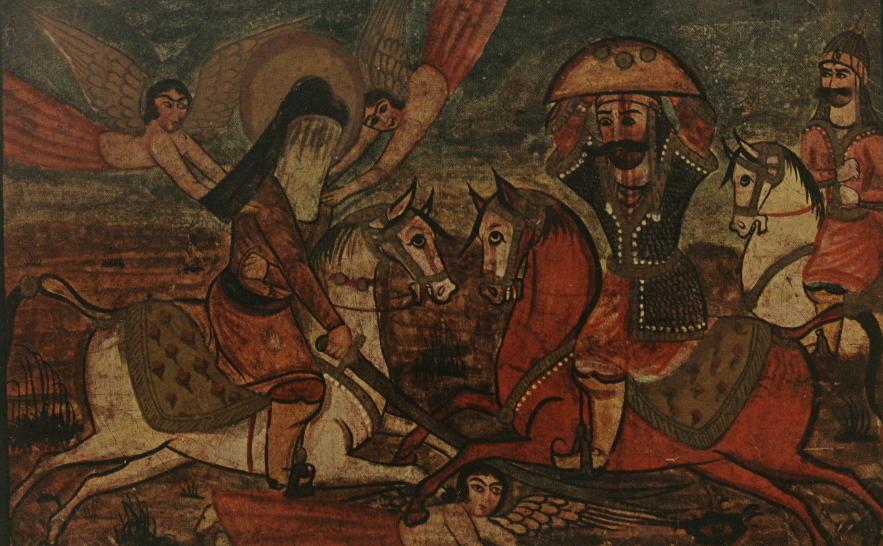


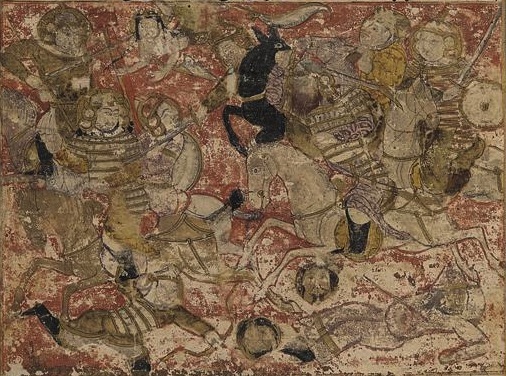
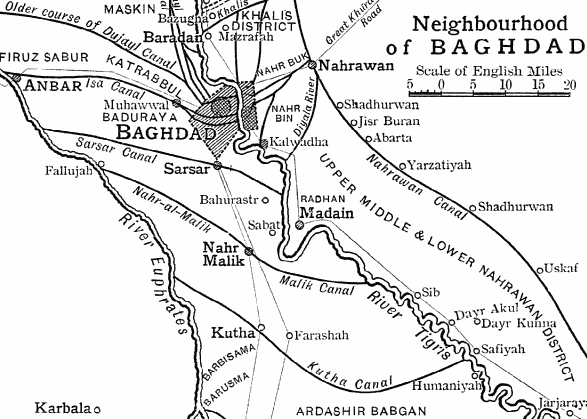


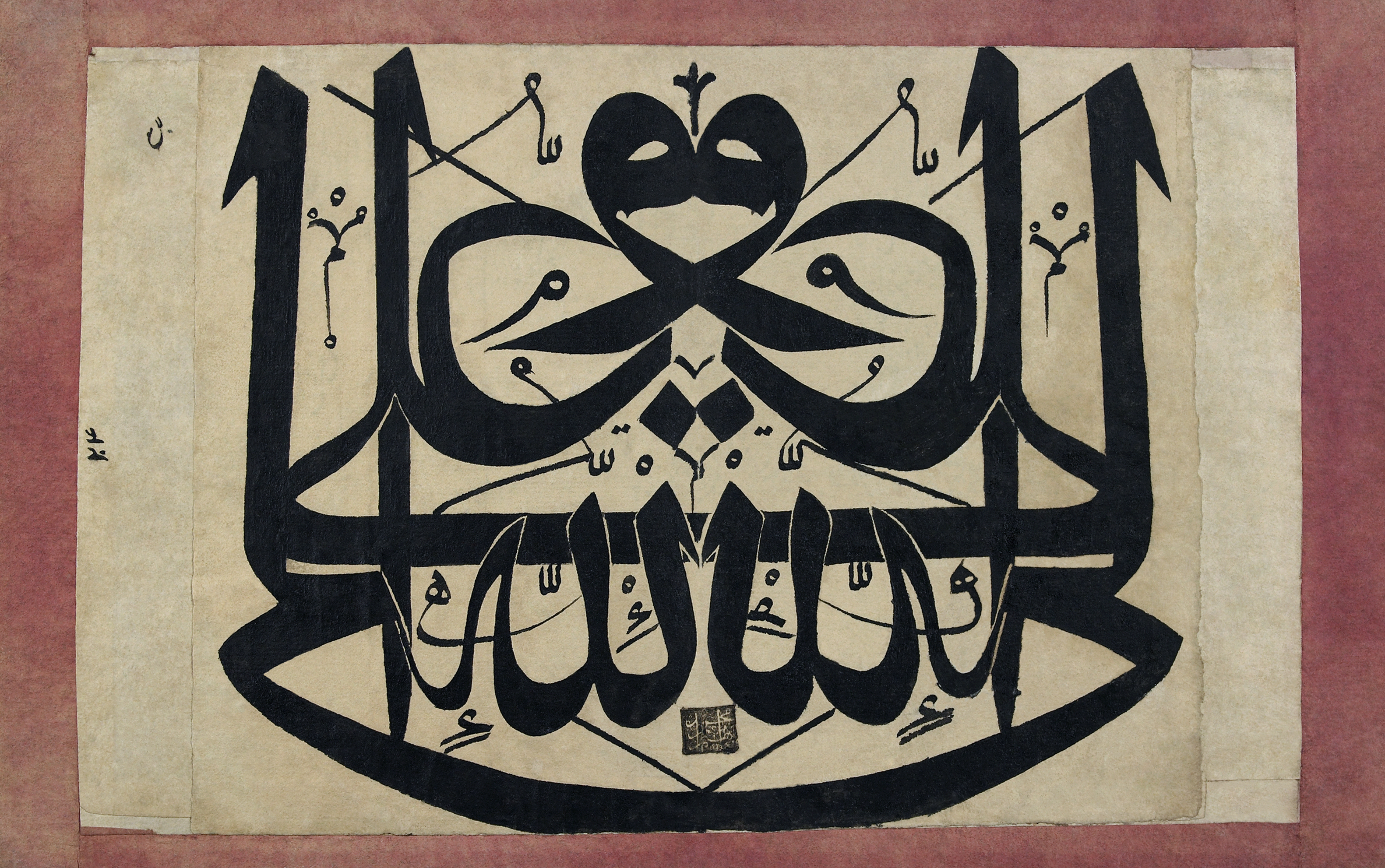


 This short article about a person or group of people can be made longer. You can help Bharatpedia by adding to it.