





Flying Bee (talk | contribs) Created page with "{{redirect-several|dab=off|Harmonium (disambiguation)|Melodeon (disambiguation)}} thumb|John Church and Co. pump organ File:Lisa..." |
m added references after review based on references |
||
| (One intermediate revision by one other user not shown) | |||
| Line 1: | Line 1: | ||
{{Short description|Free-reed organ musical instrument}} | |||
{{redirect-several|dab=off|Harmonium (disambiguation)|Melodeon (disambiguation)}} | {{redirect-several|dab=off|Harmonium (disambiguation)|Melodeon (disambiguation)}} | ||
{{Infobox instrument | |||
[[File:Lisa Alvarado Kongsberg Jazzfestival 2019 (194515).jpg|thumb | | | names = {{Flatlist| | ||
The '''pump organ''' is a type of [[free reed aerophone|free | *Reed organ | ||
*Harmonium | |||
}} | |||
| image = John Church and Co. reed organ.jpg | |||
| image_size = 230px | |||
| image_capt = John Church and Co. pump organ | |||
| background = keyboard | |||
| classification = [[Aerophone]] | |||
| hornbostel_sachs = 412.132 | |||
| hornbostel_sachs_desc = [[Free reed aerophone]] | |||
| inventors = {{Ill|Gabriel-Joseph Grenié|fr|Gabriel-Joseph Grenié}} | |||
| developed = 19th century | |||
| range = Usually 10 [[octave]]s | |||
| related = '''Hand-pumped:''' [[Regal (instrument)|Regal]], [[Indian harmonium]], [[accordion]] | |||
'''Mouth-blown:''' [[Claviola]], [[melodica]], harmonica, Asian [[mouth organ]]s | |||
| musicians = see [[List of harmonium players]] | |||
| builders = see [[:Category:Pump organ manufacturers]] | |||
| sound sample = {{Listen | |||
| filename = César Franck-Harmonium-5e pièce en do.ogg | |||
| title= César Franck-Harmonium | |||
| description = [[César Franck]]: 5th part taken from "L'organiste", played on a Debain pump organ (1878) | |||
| embed = yes | |||
}} | |||
}} | |||
[[File:Lisa Alvarado Kongsberg Jazzfestival 2019 (194515).jpg|thumb|A hand-pumped [[Indian harmonium]], of the type used in South Asia, here used at a European jazz festival.]] | |||
The '''pump organ''' or '''reed organ''' is a type of organ that uses [[free reed aerophone|free reeds]] to generate sound, with air passing over vibrating thin metal strips mounted in a frame. Types include the pressure-based harmonium, the suction reed organ (which employs a vacuum system), and the [[Indian harmonium]]. Historical examples include the ''Kunstharmonium'' and the [[#Suction_reed_organs|American reed organ]], while earlier forms include the [[physharmonica]] and the [[Seraphine (instrument)|seraphine]].<ref>Brahaspati, S.V. (2023). ''How to Play Harmonium,'' p. 4. Abhishek Publications.</ref> | |||
More portable than [[pipe organ]]s, free-reed organs | More portable than [[pipe organ]]s, free-reed organs became widespread in smaller churches and private homes during the 19th century, although their volume and tonal range were limited. They generally featured one, or occasionally two, [[Manual (music)|manuals]], while [[pedal keyboard|pedal-boards]] were rare. Higher-end pump organs offered a broader range of tones, and models intended for churches or affluent households were often housed in finely crafted [[Cabinet (furniture)|cabinets]]. | ||
Between the 1850s and the 1920s, several million reed organs and [[Melodeon (disambiguation)|melodeons]] were manufactured in the United States and Canada, with some exported abroad.<ref>{{Cite news |date=1899-09-01 |title=Carpenter Organ Company (1899) |pages=4 |work=Vermont Phoenix |url=https://www.newspapers.com/clip/64159549/carpenter-organ-company-1899/ |access-date=2020-11-29}}</ref> Major manufacturers included the [[Cable Piano Company]], [[Estey Organ]], and [[Mason & Hamlin]]. | |||
In addition to the larger, furniture-sized instruments popular in the West, more compact designs also developed. The portable, hand-pumped Indian harmonium, adapted from Western designs such as the [[guide-chant]] in the 19th century, became a central instrument across the [[Indian Subcontinent|Indian subcontinent]]. Today, the Indian harmonium is widely employed by Sikhs, Hindus, and Muslims for devotional music such as [[qawwali]], [[ghazal]], [[kirtan]], and [[bhajan]]. It is also commonly used in [[Indian classical music]] and within Western [[Western yoga|yoga]] and kirtan [[subculture]]s. | |||
==History== | ==History== | ||
| Line 13: | Line 41: | ||
| image1 = Sheng MET DP216617.jpg | | image1 = Sheng MET DP216617.jpg | ||
| width1 = 110 | | width1 = 110 | ||
| alt1 = Chinese [[Sheng (instrument)| | | alt1 = Chinese [[Sheng (instrument)|sheng]] mouth organ, using oriental free reeds. | ||
| caption1 = Chinese [[Sheng (instrument)| | | caption1 = Chinese [[Sheng (instrument)|sheng]] mouth organ. | ||
| image2 = Melodeon MET 219840.jpg | | image2 = Melodeon MET 219840.jpg | ||
| width2 = 123 | | width2 = 123 | ||
| alt2 = Free reed tongue | | alt2 = Free reed tongue | ||
| caption2 | | caption2 = [[Free reed aerophone|Free reed]] from an 1860s melodeon. | ||
}} | |||
During the first half of the 18th century, a [[Free reed aerophone|free-reed]] [[mouth organ]] called a ''sheng'' was brought to Russia.<ref name="sachs1">{{cite book |last=Sachs |first=Curt |title=The History of Musical Instruments |date=1940 |publisher=W. W. Norton & Company |place=New York |pages=184, 406–407}}</ref> The instrument attracted attention through its use by [[Johann Wilde]].<ref name=sachs1/> At the time, the free-reed mechanism was unknown in Europe, and the concept quickly spread westward from Russia.<ref name=sachs1/> | |||
[[Christian Gottlieb Kratzenstein]] (1723–1795), a professor of physiology at the [[University of Copenhagen]], is credited with the creation of the first free-reed instrument in the Western world, having won the annual prize in 1780 from the Imperial Academy of St. Petersburg.<ref name="Kratzenstein">{{cite web |last=Missin |first=P. R. |title=Western Free Reed Instruments |url=http://www.patmissin.com/history/western.html |access-date=2010-08-06}}</ref> | |||
The first free-reed organ was built by [[Abbé Georg Joseph Vogler]] in [[Darmstadt]] after a concept suggested by Kratzenstein.<ref name="sachs1" /> The design of the harmonium, employing free reeds, derives from the earlier [[Regal (instrument)|regal]]. A harmonium-like instrument was exhibited by Gabriel-Joseph Grenié (1756–1837) in 1810, which he named the ''orgue expressif'' ("expressive organ") due to its capability for greater expression, including [[crescendo]]s and [[Dynamics (music)#Gradual changes|diminuendo]]s. | |||
[[Alexandre Debain]] improved Grenié's design and patented his version under the name harmonium in 1840.<ref name="nie">{{Cite NIE|wstitle=Harmonium|year=1905}}</ref> There was concurrent development of similar instruments.<ref>{{cite web |url=http://www.harmoniums.com/hist_en.htm |title=History of the reed organ |access-date=2010-08-06}}</ref> Jacob Alexandre and his son Édouard introduced the ''orgue mélodium'' in 1844. [[Hector Berlioz]] discussed it in his ''Grand traité d'instrumentation et d'orchestration modernes'', published in Paris in [1843?] or [1844?], and reprinted in 1856 (critical edition by Peter Bloom, 2003, Bärenreiter, Vol.24). Berlioz also wrote about it in later journals (Bloom, p.472, nn. 1 & 2) and incorporated it into ''L'enfance du Christ'', Part 1, Scene vi, where it was played off-stage. [[Franz Liszt]] performed the part during a concert conducted by Berlioz in Weimar on 21 February 1855 (Bloom, p.474, n.3). | |||
A mechanic who had worked at Alexandre's factory emigrated to the United States and conceived the idea of a suction bellows, replacing the outward-blowing bellows. After 1885, the firm of [[Mason & Hamlin]] of [[Boston]] adopted the suction bellows, which soon became the standard construction technique in America.<ref name="nie" /> | |||
[[File:Beatty's Parlor Organ ad 1882.jpg|thumb|left|Beatty's Parlor Organ, 1882]] | [[File:Beatty's Parlor Organ ad 1882.jpg|thumb|left|Beatty's Parlor Organ, 1882]] | ||
The term melodeon | The term ''melodeon'' came to be associated with concert saloons in Victorian-era America, named after the reed instrument. The word later became a general term for entertainment venues catering to men.<ref>Asbury, Herbert, ''The Barbary Coast'' (Alfred Knopf, 1933), p.105</ref> | ||
Harmoniums reached the height of their popularity in the West during the late 19th and early 20th centuries. They were especially favoured in small churches and chapels where a [[pipe organ]] was impractical. In the funeral ''in absentia'' scene of [[Mark Twain]]'s ''[[Adventures of Huckleberry Finn]]'', Chapter XXVII, a "melodeum" (likely a satirical conflation of melodeon and harmonium) is mentioned. | |||
Harmoniums, generally lighter and more resilient than similarly sized pianos, were ideal for export to colonies where transport infrastructure was limited. Moreover, the harmonium maintained its tuning stability despite heat and humidity, unlike the piano. Special models impregnated with chemicals to deter [[woodworm]] and tropical pests were manufactured for export markets.{{citation needed|date=August 2020}} | |||
[[Image:Harmonium 20151009 (23914086965).jpg|thumb|right|Modern Indian harmonium with nine [[organ stop|air stop]] knobs (stops 2, 4, 6, 8 are drones).]] | |||
At the peak of the instrument's popularity circa 1900, harmoniums ranged from simple models with minimal stops to elaborate ones featuring ornate cases, multiple stops, and faux pipe displays.{{citation needed|date=August 2020}} Some harmoniums were built with two manuals or even pedalboards, although these larger models required either an assistant to operate the bellows or electric blowers. Compact, folding reed organs were also made for missionaries and traveling evangelists.<ref>{{Cite web|title=DRAFT Folding Organ JJ|url=https://www.esteyorganmuseum.org/engine-room-tour/draft-folding-organ-jj/|website=Estey Organ Museum|access-date=2025-11-28|language=en-US}}</ref><ref>{{Cite web|url=https://emuseum.nmmusd.org/objects/13206/folding-reed-organ|website=emuseum.nmmusd.org|access-date=2025-11-28|title=Folding reed organ|publisher=National Music Museum|place=Brattleboro, Vermont, United States}}</ref> | |||
The invention of the electronic organ in the 1930s marked the beginning of the harmonium's decline in the West, although its popularity as a household instrument had already waned in the 1920s.{{citation needed|date=August 2020}} The [[Hammond organ]] offered greater tonal versatility, reduced maintenance, and compactness, making it an attractive successor. Additionally, harmoniums had become increasingly complex mechanically, with intricate networks of levers and rods owing to diverse patent-driven designs.{{citation needed|date=January 2021}} | |||
The [[Estey Piano Corp|Estey]] company was the last major North American manufacturer, ceasing production in the mid-1950s. A few Italian firms continued manufacturing into the 1970s. As harmoniums aged and spare parts became scarce, many were scrapped or modified, with electric blowers frequently retrofitted, often in an unsympathetic manner.{{citation needed|date=August 2020}} | |||
Today, most Western-style harmoniums are preserved by enthusiasts, while the Indian harmonium remains widely used across South Asia.{{citation needed|date=August 2020}} | |||
Modern [[electronic keyboard]]s are capable of emulating the sound of the traditional pump organ. | |||
[[ | ===Reed organ in Japan=== | ||
[[File:1887-Japanese-women-Western-Bustled-fashions.jpg|thumb|Painting from 1887, depicting that playing the pump organ was one of the western bustled fashions for Japanese women of the time]] | |||
The '''foot pump organ''' (足踏みオルガン, ''ashibumi organ'') was first introduced to Japan during the early Meiji period, brought by foreign Christian missionaries as part of their evangelisation efforts. Initially used in churches and schools, the reed organ quickly became an important tool for music education, offering Japanese people their first widespread exposure to Western musical instruments. | |||
The | The first domestically manufactured reed organs were produced by Nishikawa Organ Company in Yokohama. Shortly thereafter, Yamaha founder Torakusu Yamaha, originally a medical equipment repairman, began manufacturing reed organs in Hamamatsu following his successful repair of an imported American model. These efforts helped establish Hamamatsu as a major centre for musical instrument production in Japan. | ||
Throughout the late 19th and early 20th centuries, reed organs were installed in schools nationwide and became central to public singing education. Their affordability, durability, and relatively simple maintenance compared to pianos made them ideal for widespread use. By the early Shōwa period, reed organs were a familiar fixture in most Japanese elementary schools, contributing significantly to the spread of Western music literacy. | |||
Domestically produced reed organs ranged from simple, affordable models with 39 or 49 keys to larger, more elaborate designs with multiple stops, swells, and even pedalboards, primarily intended for teacher training colleges and music schools. | |||
Although the popularity of reed organs declined after the mid-20th century with the rise of more accessible pianos and electronic instruments, they remain fondly remembered by generations who grew up with them. Today, institutions such as the Hamamatsu Museum of Musical Instruments preserve and exhibit historical reed organs, celebrating their cultural and educational significance in Japan's modernisation and musical history.<ref>{{cite web | |||
|title=音楽の街・静岡県浜松市にある「浜松市楽器博物館」で、リードオルガンについて学ぼう! | |||
|url=https://www.meijimura.com/meiji-note/post/reed-organ-gakkihaku/ | |||
|website=メイジノオト | |||
|publisher=博物館明治村 | |||
|language=ja | |||
|access-date=2025-04-27 | |||
}}</ref> | |||
In several Asian countries, particularly former Japanese colonies such as Taiwan and South Korea, the use of treadle-operated reed organs became widespread under Japanese influence. | |||
===Reed organ in China=== | |||
[[File:Chinese Teacher Reed Organ.jpg|thumb|Chinese School teacher playing reed organ]] | |||
In China, the reed organ was introduced around 1897. Following the Opium Wars, the spread of Christianity and the increasing presence of European expatriates contributed to the broader dissemination of Western music. Church schools, in particular, played a major role in introducing European musical forms, such as hymns, salon music, and elementary piano pieces. | |||
In 1872, Christian missionary J. D. Collins published the ''Hymn Book'' through the American Presbyterian Mission Press in Shanghai, featuring over 360 religious hymns with musical notation, alongside an introduction to Western musical theory, all employing the five-line staff notation system. In 1883, British missionary Timothy Richard published the ''Supplement to Hymns'', which incorporated familiar Chinese folk melodies to facilitate religious outreach. | |||
The activities of these missionaries contributed positively to the early development of Western music education in China. | |||
It is beyond doubt that, at one point, the People's Republic of China was very likely the country where the pump organ was most widely used. Following the establishment of the People's Republic of China, treadle-operated reed organs gained renewed popularity as affordable tools for mass music education. Factories were established in various cities to produce reed organs, such as the "Danfeng" Organ Factory in Shanghai and the "Baihua" Organ Factory in Sichuan. It became common for primary school teachers, particularly female teachers, to be trained in reed organ playing to support classroom music education. | |||
By the 1990s, however, reed organs were gradually supplanted by pianos in Chinese primary and secondary schools as the primary instrument for music instruction. Today, many treadle-operated reed organs in mainland China have been dismantled, although a small number of artisanal workshops continue to produce new instruments, primarily for enthusiasts who collect and perform with them. | |||
===In the Indian subcontinent=== | |||
{{further|Indian harmonium}} | |||
{{more citations needed section|date=November 2016}} | |||
{{multiple image|caption_align=center|header_align=center | |||
| align = right | |||
| image1 = Ustad Farrukh Fateh Ali Khan Saheb.jpg | |||
| width1 = 120 | |||
| alt1 = Musician Ustad Farrukh Fateh Ali Khan Saheb with a harmonium | |||
| caption1 =[[Farrukh Fateh Ali Khan]], a well-known harmonium player. | |||
| image2 = Kathmandu-21.JPG | |||
| width2 = 180 | |||
| alt2 = tabla and harmonium together | |||
| caption2 = Musicians in Kathmandu, Nepal, playing the [[tabla]] and harmonium. | |||
}} | |||
The '''[[Indian harmonium]]''', also known as the hand harmonium or ''vaja'', is a small, portable, hand-pumped reed organ that gained popularity across the Indian subcontinent. It arrived in India during the mid-19th century, potentially introduced by missionaries or traders. Adapted by Indian craftsmen, the harmonium was modified to be played on the floor, in keeping with traditional Indian musical practices, and made more compact and portable.<ref name="Ghose">{{cite web |title=The Invention of Hand Harmonium |url=http://www.dwarkin.com/dwarkinaboutus.htm |archive-url=https://web.archive.org/web/20070409051040/http://dwarkin.com/dwarkinaboutus.htm |archive-date=2007-04-09 |access-date=2007-04-24 |publisher=Dwarkin & Sons (P) Ltd.}}</ref> | |||
Throughout the 19th and 20th centuries, the Indian harmonium became integral to Indian music, widely used in devotional genres such as [[qawwali]], [[ghazal]], [[kirtan]], and [[bhajan]]. Its lightweight design, portability, and ease of learning contributed to its widespread adoption among Sikhs, Hindus, and Muslims for devotional purposes. Notably, it also gained popularity within the Western yoga subculture, thanks to figures such as Krishna Das and Jai Uttal. | |||
During the 20th century, the harmonium faced controversy within Indian classical music due to technical limitations, such as the inability to produce [[Slur (music)|slurs]], [[Gamaka (music)|gamaka]], and [[meend]].<ref name="Kasliwal">{{cite web |title=Small encyclopedia with Indian instruments |url=https://www.india-instruments.com/encyclopedia-harmonium.html#:~:text=It%20is%20probably%20the%20most,spread%20all%20over%20the%20country |website=india-instruments.com |quote=excerpt of Suneera Kasliwal, Classical Musical Instruments, Delhi 2001}}</ref> Despite these challenges, it became the instrument of choice for North Indian classical vocal genres, supported by its ease of learning and suitability for group singing. The harmonium's fixed pitches and other limitations led to its ban from [[All India Radio]] from 1940 to 1971. Nevertheless, it remained favoured in the reformed classical music of the early 20th century. | |||
The harmonium remains popular to the present day, serving as an important instrument across many genres of [[Music of India|Indian]], [[Music of Pakistan|Pakistani]], and [[Music of Bangladesh|Bangladeshi music]]. For example, it is a staple of North Indian classical vocal music and [[Sufism|Sufi Muslim]] [[qawwali]] performances.<ref>{{Cite journal |last=Jones |first=L. JaFran |date=1990 |title=Review of Sufi Music of India and Pakistan: Sound, Context and Meaning in Qawwali |url=https://www.jstor.org/stable/834116 |journal=Asian Music |volume=21 |issue=2 |pages=151-5 |doi=10.2307/834116 |issn=0044-9202 |jstor=834116|url-access=subscription }}</ref> From there, it even made its way to the [[ghazal]] sung among the [[Malays (ethnic group)|Malays]] of [[Johor]] on the tip of the [[Malay Peninsula]].<ref>{{cite book |last1=Meddegoda |first1=Chintaka Prageeth |last2=Jähnuchen |first2=Gisa |chapter-url=https://www.google.com.my/books/edition/Hindustani_Traces_in_Malay_Ghazal/21gkDQAAQBAJ|title=Hindustan Traces in Malay Ghazal |date=2016 |publisher=Cambridge Scholars Publishing |isbn=978-1-4438-9759-4 |pages=201-67 |chapter=Musical Instruments in the Malay Ghazal}}</ref> | |||
==Acoustics== | ==Acoustics== | ||
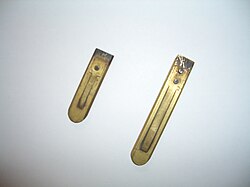
[[Image:4ft+8ftReeds.JPG|thumb|Two reeds from a Mason & Hamlin reed organ.]] | [[Image:4ft+8ftReeds.JPG|thumb|Two reeds from a Mason & Hamlin reed organ.]] | ||
The acoustical effects described below | |||
The acoustical effects described below arise from the free-reed mechanism, and are therefore essentially identical for Western and Indian harmoniums as well as reed organs. In 1875, [[Hermann von Helmholtz]] published his seminal book, ''On the Sensations of Tone'', in which he used the harmonium extensively to study different tuning systems:<ref>Helmholtz, L. F., and Ellis, A., ''On the Sensations of Tone'', London: Longmans, Green, and Co., 1875.</ref> | |||
<blockquote>"Among musical instruments, the harmonium, on account of its uniformly sustained tone, the piercing character of its quality of tone, and its tolerably distinct [[Combination tone|combinational tones]], is particularly sensitive to inaccuracies of intonation. And as its vibrators also admit of a delicate and durable tuning, it appeared to me peculiarly suitable for experiments on a more perfect system of tones."<ref>Helmholtz, H. L. F., 1875, p. 492, Part III, Justly-Intoned Harmonium.</ref></blockquote> | <blockquote>"Among musical instruments, the harmonium, on account of its uniformly sustained tone, the piercing character of its quality of tone, and its tolerably distinct [[Combination tone|combinational tones]], is particularly sensitive to inaccuracies of intonation. And as its vibrators also admit of a delicate and durable tuning, it appeared to me peculiarly suitable for experiments on a more perfect system of tones."<ref>Helmholtz, H. L. F., 1875, p. 492, Part III, Justly-Intoned Harmonium.</ref></blockquote> | ||
Using two manuals and two differently tuned stop sets, | Using two manuals and two differently tuned stop sets, Helmholtz was able to compare [[Pythagorean tuning|Pythagorean]], [[Just intonation|just]], and [[equal temperament]] tunings simultaneously, and observe the varying degrees of [[inharmonicity]] inherent in different [[Musical temperament|temperaments]]. He subdivided the octave into 28 tones, allowing modulation in just intonation across 12 minor and 17 major keys without encountering the harsh [[Consonance and dissonance|dissonances]] typically caused by standard octave divisions.<ref>Helmholtz, H. L. F., 1875, p. 634, Appendix XVII.</ref> This system, however, proved difficult to play.<ref>Helmholtz, H. L. F., 1875, p. 682, Appendix XIX.</ref> Additional modified instruments were constructed for experimental use, notably [[Robert Holford Macdowall Bosanquet|Bosanquet]]'s ''[[Generalised keyboard]]'' (1873) for a [[53 equal temperament|53-tone scale]], employing 84 keys for easier [[Fingering (music)|fingering]]. Another notable experimental reed organ was built by [[Henry Ward Poole|Poole]].<ref>Helmholtz, H. L. F., 1875, p. 677, Appendix XIX.</ref> | ||
[[John William Strutt, 3rd Baron Rayleigh|Lord Rayleigh]] also used the harmonium to devise a method of indirectly measuring frequencies, using approximated equal temperament intervals and their [[overtone]] [[Beat (acoustics)|beats]].<ref>{{cite journal |author=Rayleigh |date=Jan 1879 |title=On the determination of absolute pitch by the common harmonium |journal=Nature |volume=19 |pages=275–276 |issue=482 |doi=10.1038/019275c0 |bibcode=1879Natur..19R.275. |doi-access=free}}</ref> The harmonium's clear overtones enabled reliable beat counting by two listeners, although Rayleigh acknowledged that maintaining constant pressure in the bellows was difficult and could cause pitch fluctuation. | |||
[[File:Sunday School Organ in Barratt's Chapel Museum, Frederica, Delaware.jpg|thumb|right|Portable 19th-century reed organ with one rank of reeds.]] | |||
In tone generation, a reed organ is similar to an [[accordion]] or [[concertina]], but differs in installation; while accordions are hand-held, reed organs are typically placed on the floor within a wooden casing (which may initially resemble a piano). Reed organs are operated using either pressure or suction bellows. Pressure bellows allow greater dynamic control through varying pedalling speed. In North America and Britain, pressure-bellows organs are termed harmoniums, while in continental Europe, any reed organ is generally referred to as a harmonium, regardless of its bellows type. Because pressure-bellows instruments were more complex and expensive to produce, most North American and British reed organs and melodeons employed suction bellows. | |||
[[ | The frequencies produced by reed organs are influenced by the blowing pressure: the [[fundamental frequency]] slightly ''decreases'' under medium pressure compared to low pressure, but ''increases'' again at high pressures, particularly for bass notes.<ref>{{cite conference |author=Cottingham, J. P., Reed, C. H. & Busha, M. |date=Mar 1999 |url=http://www.public.coe.edu/~jcotting/BERLIN2.PDF |title=Variation of frequency with blowing pressure for an air-driven free reed |conference=Forum Acusticum, Berlin |volume=105 |issue=2 |page=1001 |doi=10.1121/1.425800 |bibcode=1999ASAJ..105R1001C |access-date=2012-12-18 |archive-url=https://web.archive.org/web/20120326071056/http://www.public.coe.edu/~jcotting/BERLIN2.PDF |archive-date=2012-03-26}}</ref> Measurements have shown sinusoidal oscillations of the reed with sharp transitions when it bends through its frame.<ref name="Cott07">{{cite journal |author=Cottingham, J. P. |date=Sep 2007 |url=http://www.public.coe.edu/~jcotting/ICA2007%20Free%20Reed.pdf |title=Reed Vibration in Western Free-Reed Instruments |journal=Proceedings of the International Congress on Acoustics (ICA2007), Madrid |access-date=2012-12-18 |archive-url=https://web.archive.org/web/20120326071139/http://www.public.coe.edu/~jcotting/ICA2007%20Free%20Reed.pdf |archive-date=2012-03-26}}</ref> | ||
The fundamental frequency is close to the reed's [[mechanical resonance]] frequency.<ref>{{cite book |author1=Fletcher, N. H. |author2=Rossing, T. D. |name-list-style=amp |year=1998 |title=The Physics of Musical Instruments, 2nd ed. |page=414 |publisher=Springer Science+Media Inc.}}</ref> The overtones generated are primarily [[harmonics]] rather than inharmonics,<ref name="hilaire76">{{cite journal |author1=St. Hilaire |author2=A. O. |year=1976 |title=Analytical prediction of the non-linear response of a self-excited structure |journal=Journal of Sound and Vibration |volume=47 |issue=2 |pages=185–205 |doi=10.1016/0022-460x(76)90717-3 |bibcode=1976JSV....47..185S}}</ref> although a weak inharmonic overtone at approximately 6.27''f'' has been observed.<ref name="Cott99">{{cite conference |author=Cottingham, J. P., Lilly, J. & Reed, C. H. |date=Mar 1999 |url=http://www.public.coe.edu/~jcotting/BERLIN1.PDF |title=The Motion of Air-Driven Free Reeds |conference=Forum Acusticum, Berlin |volume=105 |issue=2 |page=940 |doi=10.1121/1.426334 |bibcode=1999ASAJ..105..940C |access-date=2012-12-18 |archive-url=https://web.archive.org/web/20120326071205/http://www.public.coe.edu/~jcotting/BERLIN1.PDF |archive-date=2012-03-26}}</ref> | |||
In addition to the main transverse vibration mode, weaker higher transverse and [[torsional]] modes have been measured.<ref name="Paquette">{{cite conference |author1=Paquette, A. |author2=Cottingham, J. P. |name-list-style=amp |date=Nov 2003 |url=http://www.public.coe.edu/~jcotting/Ammon-2003.pdf |title=Modes of Vibration of Air-driven Free Reeds in Steady State and Transient Oscillation |conference=137th Meeting of the Acoustical Society of America, Austin, Texas |doi=10.1121/1.4781137 |access-date=2012-12-18 |archive-url=https://web.archive.org/web/20120326071319/http://www.public.coe.edu/~jcotting/Ammon-2003.pdf |archive-date=2012-03-26}}</ref> Torsional modes arise due to slight asymmetries in reed construction. During the attack phase, the fundamental and a secondary transverse or torsional mode are predominantly excited.<ref name="Paquette" /> | |||
}}</ref> | |||
To date, radiation patterns and coupling effects between the soundbox and the reeds have not been extensively studied. | |||
The unusual | The unusual vibration physics of the free reed directly impact the performance of the harmonium, restricting the dynamic range and requiring subtle control. The reed, riveted into a metal frame, vibrates in self-excited oscillation as air is pumped through the bellows and reservoir.<ref name="Cott07" /> This aerodynamic system is [[Nonlinear system|nonlinear]], with the reed's maximum displacement limited by damping forces, resulting in relatively stable sound pressure.<ref name="hilaire76" /> A threshold pumping pressure exists below which reed vibration remains minimal.<ref name="Cott99" /> Within these thresholds, reed amplitude exhibits [[exponential growth]] and [[exponential decay]].<ref>{{cite journal |author=St. Hilaire, A. O., Wilson, T. A. & Beavers, G. B. |year=1971 |title=Aerodynamic excitation of the harmonium reed |journal=Journal of Fluid Mechanics |volume=49 |issue=4 |pages=803–816 |doi=10.1017/S0022112071002374 |bibcode=1971JFM....49..803H |s2cid=121955334}}</ref> | ||
|author= St. Hilaire, A. O., Wilson, T. A. & Beavers, G. B. | |||
|year= 1971 | |||
|title= Aerodynamic excitation of the harmonium reed | |||
|journal= Journal of Fluid Mechanics | |||
|volume= 49 | |||
|issue= 4 | |||
|pages= 803–816 | |||
|doi=10.1017/ | |||
}}</ref> | |||
==Repertory== | ==Repertory== | ||
| Line 147: | Line 167: | ||
[[Image:Footpropelled organ.jpg|thumb|A pump organ]] | [[Image:Footpropelled organ.jpg|thumb|A pump organ]] | ||
The harmonium was considered by [[Curt Sachs]] to be an important instrument for music of [[Romanticism#Music|Romanticism]] ( | The harmonium was considered by [[Curt Sachs]] to be an important instrument for music of [[Romanticism#Music|Romanticism]] (1750s–1900), which "vibrated between two poles of expression" and "required the overwhelming power and strong accents of wind instruments".<ref name=sachs1/> | ||
Harmonium compositions are available by European and American composers of classical music. It was also used often in the folk music of the Appalachians and South of the United States.{{ | Harmonium compositions are available by European and American composers of classical music. It was also used often in the folk music of the Appalachians and South of the United States.{{citation needed|date=August 2020}} | ||
Harmoniums played a significant part in the new rise of Nordic folk music, especially in Finland. In the late 1970s, a harmonium could be found in most schools where the bands met, and it became natural for the bands to include a harmonium in their setup. A typical folk band then—particularly in Western Finland—consisted of violin(s), double bass and harmonium. There was a practical limitation that prevented playing harmonium and accordion in the same band: harmoniums were tuned to 438 Hz, while accordions were tuned to 442 Hz.<ref>{{cite web |url=http://www.pelimanni.net/materiaali/harmooni.htm |title= | Harmoniums played a significant part in the new rise of Nordic folk music, especially in Finland. In the late 1970s, a harmonium could be found in most schools where the bands met, and it became natural for the bands to include a harmonium in their setup. A typical folk band then—particularly in Western Finland—consisted of violin(s), double bass and harmonium. There was a practical limitation that prevented playing harmonium and accordion in the same band: harmoniums were tuned to 438 Hz, while accordions were tuned to 442 Hz.<ref>{{cite web |url=http://www.pelimanni.net/materiaali/harmooni.htm |title=Harmooni |access-date=2012-12-18 |url-status=dead |archive-url=https://web.archive.org/web/20110724003133/http://www.pelimanni.net/materiaali/harmooni.htm |archive-date=2011-07-24 |language=fi}}</ref> Some key harmonium players in the new rise of Nordic folk have been [[Timo Alakotila]] and [[Milla Viljamaa]]. | ||
In the Netherlands, the introduction of the harmonium triggered a boom in religious house music. Its organ-like sound quality allowed Reformed families to sing psalms and hymns at home. | In the Netherlands, the introduction of the harmonium triggered a boom in religious house music. Its organ-like sound quality allowed Reformed families to sing psalms and hymns at home. Many new hymns were composed expressly for voice and harmonium, notably those by [[Johannes de Heer]].<ref>Jan Smelik, "Stichtelijke zang rond het harmonium" in: Louis Grijp c.s., ''Een muziekgeschiedenis der Nederlanden.'' Amsterdam University Press/Salome, Amsterdam, 2001: pp. 547–552.</ref> | ||
===Western classical=== | ===Western classical=== | ||
The harmonium repertoire includes many pieces written originally for the [[Organ (music)|church organ]], which may be played on a harmonium as well, because they have a small enough range and use fewer stops. For example, [[Johann Sebastian Bach|Bach]]'s Fantasia in C major for organ BWV 570 <ref>{{cite web|url=http://imslp.org/wiki/Fantasia_in_C_major,_BWV_570_%28Bach,_Johann_Sebastian%29 |title=Fantasia in C major, BWV 570 (Bach, Johann Sebastian) | The harmonium repertoire includes many pieces written originally for the [[Organ (music)|church organ]], which may be played on a harmonium as well, because they have a small enough range and use fewer stops. For example, [[Johann Sebastian Bach|Bach]]'s Fantasia in C major for organ BWV 570<ref>{{cite web|url=http://imslp.org/wiki/Fantasia_in_C_major,_BWV_570_%28Bach,_Johann_Sebastian%29 |title=Fantasia in C major, BWV 570 (Bach, Johann Sebastian) – IMSLP/Petrucci Music Library: Free Public Domain Sheet Music |publisher=Imslp.org |access-date=2012-07-08}}</ref> is suitable for a four-octave harmonium. | ||
Other examples include: | Other examples include: | ||
*[[Alban Berg]]. ''[[Altenberg Lieder]]'' | *[[Alban Berg]]. ''[[Altenberg Lieder]]'' | ||
*[[William Bergsma]]. ''Dances from a New England Album, 1856'' for | *[[William Bergsma]]. ''Dances from a New England Album, 1856'' for orchestra. It includes parts for [[Melodeon (organ)|melodeon]] (movements I–III) and harmonium (movement IV). | ||
*[[William Bolcom]]. ''Songs of Innocence and of Experience'' for orchestra, choirs, and soloists, includes parts for [[Melodeon (organ)|melodeon]], | *[[William Bolcom]]. ''Songs of Innocence and of Experience'' for orchestra, choirs, and soloists, includes parts for [[Melodeon (organ)|melodeon]], harmonica, and harmonium. | ||
*[[Anton Bruckner]]. ''[[Symphony No. 7 (Bruckner)|Symphony no. 7]]'', an arrangement for chamber ensemble, prepared in 1921 by students and associates of [[Arnold Schoenberg]] for the Viennese [[Society for Private Musical Performances]], was scored for two | *[[Anton Bruckner]]. ''[[Symphony No. 7 (Bruckner)|Symphony no. 7]]'', an arrangement for chamber ensemble, prepared in 1921 by students and associates of [[Arnold Schoenberg]] for the Viennese [[Society for Private Musical Performances]], was scored for two violins, viola, cello, bass, clarinet, [[French horn|horn]], piano 4-hands, and harmonium. The Society folded before the arrangement could be performed, and it went without premiere for more than 60 years. | ||
*[[Frederic Clay]]. ''[[Ages Ago]]'', an early work that features a harmonium part (libretto by [[W. S. Gilbert]]). | *[[Frederic Clay]]. ''[[Ages Ago]]'', an early work that features a harmonium part (libretto by [[W. S. Gilbert]]). | ||
*[[Claude Debussy]]. ''[[Prélude à l'après-midi d'un faune]]'', a chamber ensemble arrangement by [[Arnold Schoenberg]]. | *[[Claude Debussy]]. ''[[Prélude à l'après-midi d'un faune]]'', a chamber ensemble arrangement by [[Arnold Schoenberg]]. | ||
| Line 179: | Line 199: | ||
*[[Gustav Mahler]]. ''[[Symphony No. 8 (Mahler)|Symphony No. 8]]'' | *[[Gustav Mahler]]. ''[[Symphony No. 8 (Mahler)|Symphony No. 8]]'' | ||
*[[George Frederick McKay]]. ''Sonata for Clarinet and Harmonium'' (1929) (also adaptable to piano or violin) | *[[George Frederick McKay]]. ''Sonata for Clarinet and Harmonium'' (1929) (also adaptable to piano or violin) | ||
*[[Martijn Padding]]. ''First Harmonium Concerto'' (2008) for harmonium and ensemble <ref>{{cite web |url=http://www.martijnpadding.nl/compositions/uitgebreid.php?id=84 |title=Martijn Padding |publisher=Martijnpadding.nl |access-date=2012-07-08 |url-status=dead |archive-url=https://archive. | *[[Martijn Padding]]. ''First Harmonium Concerto'' (2008) for harmonium and ensemble<ref>{{cite web |url=http://www.martijnpadding.nl/compositions/uitgebreid.php?id=84 |title=Martijn Padding |publisher=Martijnpadding.nl |access-date=2012-07-08 |url-status=dead |archive-url=https://archive.today/20130222174919/http://www.martijnpadding.nl/compositions/uitgebreid.php?id=84 |archive-date=2013-02-22 }}</ref> | ||
*[[Elise Rondonneau]] ( active 1827-1860s) composed many works specifically for harmonium<ref>{{Cite book |last=Cohen |first=Aaron I. |title=International Encyclopedia of Women Composers |date=1987 |publisher=Books & Music (USA) |isbn=978-0-9617485-0-0 |pages=599 |language=en}}</ref> | |||
*[[Gioachino Rossini]]. ''[[Petite messe solennelle]]'' is scored for twelve voices, two pianos and harmonium. | *[[Gioachino Rossini]]. ''[[Petite messe solennelle]]'' is scored for twelve voices, two pianos and harmonium. | ||
*[[Camille Saint-Saëns]]. The ''[[Barcarolle in F major (Saint-Saëns)|Barcarolle, Op. 108]]'' is scored for piano, harmonium, violin and cello. | *[[Camille Saint-Saëns]]. The ''[[Barcarolle in F major (Saint-Saëns)|Barcarolle, Op. 108]]'' is scored for piano, harmonium, violin and cello. | ||
*[[Arnold Schoenberg]] | *[[Arnold Schoenberg]] | ||
**''Herzgewächse'', Op. 20, for high soprano, [[celesta]], | **''Herzgewächse'', Op. 20, for high soprano, [[celesta]], harp and harmonium. | ||
**''Weihnachtsmusik'', for two violins, cello, harmonium and piano. | **''Weihnachtsmusik'', for two violins, cello, harmonium and piano. | ||
*[[Franz Schreker]] | *[[Franz Schreker]] | ||
| Line 189: | Line 210: | ||
** ''Vom ewigen Leben'' | ** ''Vom ewigen Leben'' | ||
*[[Richard Strauss]]. ''[[Ariadne auf Naxos]]'' an opera (libretto by [[Hugo von Hofmannsthal]]) that employs a harmonium in the orchestration of each of its versions. It requires an instrument with many stops, which are specified in the score. | *[[Richard Strauss]]. ''[[Ariadne auf Naxos]]'' an opera (libretto by [[Hugo von Hofmannsthal]]) that employs a harmonium in the orchestration of each of its versions. It requires an instrument with many stops, which are specified in the score. | ||
*[[Pyotr Ilyich Tchaikovsky]]. "[[Manfred Symphony]]", fourth movement | |||
*[[Louis Vierne]]. 24 Pièces en style libre pour orgue ou harmonium, Op. 31 (1913) | *[[Louis Vierne]]. 24 Pièces en style libre pour orgue ou harmonium, Op. 31 (1913) | ||
*[[Anton Webern]]. ''Five Pieces for Orchestra op.10'' | *[[Anton Webern]]. ''Five Pieces for Orchestra op. 10'' | ||
*[[Alexander Zemlinsky]] | *[[Alexander Zemlinsky]] | ||
** ''Six Maeterlinck Songs'' | ** ''Six Maeterlinck Songs'' | ||
| Line 198: | Line 220: | ||
[[File:Mariana Sadovska - Borderland (1384).jpg|thumb|upright|Singer Mariana Sadovska using a hand-pumped organ, Cologne, Germany]] | [[File:Mariana Sadovska - Borderland (1384).jpg|thumb|upright|Singer Mariana Sadovska using a hand-pumped organ, Cologne, Germany]] | ||
*[[Ivor Cutler]], Scottish humorist and musician | |||
*[[Krishna Das (singer)|Krishna Das]], American [[kirtan]] singer, composer and recording artist | *[[Krishna Das (singer)|Krishna Das]], American [[kirtan]] singer, composer and recording artist | ||
*[[Farrukh Fateh Ali Khan]], Pakistani [[qawali]] performer, composer and recording artist | *[[Farrukh Fateh Ali Khan]], Pakistani [[qawali]] performer, composer and recording artist | ||
*[[Mariana Sadovska]], Ukrainian singer, composer and recording artist | *[[Mariana Sadovska]], Ukrainian singer, composer and recording artist | ||
*Radie Peat, singer and musician of [[Lankum]] | *Radie Peat, singer and musician of [[Lankum]] | ||
*[[Nico (German singer)|Nico]], German singer, songwriter, actress, model and recording artist | |||
==Western popular music== | ==Western popular music== | ||
[[Image:KDBhaktiFestWest 20150913 (22155426016).jpg|thumb|right|[[Krishna Das (singer)|Krishna Das]] playing a harmonium at [[Bhakti Fest|Bhaktifest West]], 2015]] | [[Image:KDBhaktiFestWest 20150913 (22155426016).jpg|thumb|right|[[Krishna Das (singer)|Krishna Das]] playing a harmonium at [[Bhakti Fest|Bhaktifest West]], 2015]] | ||
Harmoniums have been used in western popular music since at least the 1960s. [[John Lennon]] played a Mannborg harmonium<ref>{{cite web|url=http://www.harmonycentral.com/articles/keyboards-of-the-beatles-era |first=Phil |last=O'Keefe|title=Keyboards of the Beatles Era|publisher=[[Harmony Central]]|date=7 February 2014|access-date=7 June 2017}}</ref> on [[the Beatles]]' hit single "[[We Can Work It Out]]", released in December 1965, and the band used the instrument on other songs recorded during the sessions for their ''[[Rubber Soul]]'' album.<ref>{{cite book| last=Everett| first=Walter| title=The Beatles as Musicians: The Quarry Men through Rubber Soul| year=2001| publisher=Oxford University Press| location=New York, NY| isbn=0-19-514105-9| pages=[https://archive.org/details/beatlesasmusicia00ever/page/321 321–22]| url=https://archive.org/details/beatlesasmusicia00ever/page/321}}</ref> They also used the instrument on the famous "final chord" of "[[A Day in the Life]]", and on the song "[[Being for the Benefit of Mr. Kite!]]", both released on the 1967 album ''[[Sgt. Pepper's Lonely Hearts Club Band]]''.<ref>{{cite book|title=Here, There and Everywhere: My Life Recording the Music of the Beatles|last1=Emerick|first1=Geoff|last2=Massey|first2=Howard|publisher=Gotham Books|location=New York, New York|year=2006|url=https://books.google.com/books?isbn=0738537772|pages=162–167|isbn=978-1-592-40269-4}}</ref> The group's hit single "[[Hello, Goodbye]]" and the track "[[Your Mother Should Know]]" were both written using a harmonium.<ref>{{cite web|url=http://www.beatlesbible.com/songs/hello-goodbye/|title=Hello, Goodbye|access-date=December 24, 2015|publisher=The Beatles Bible}}</ref><ref>{{cite journal|title=Music Icons | Harmoniums have been used in western popular music since at least the 1960s. [[John Lennon]] played a Mannborg harmonium<ref>{{cite web|url=http://www.harmonycentral.com/articles/keyboards-of-the-beatles-era |first=Phil |last=O'Keefe|title=Keyboards of the Beatles Era|publisher=[[Harmony Central]]|date=7 February 2014|access-date=7 June 2017}}</ref> on [[the Beatles]]' hit single "[[We Can Work It Out]]", released in December 1965, and the band used the instrument on other songs recorded during the sessions for their ''[[Rubber Soul]]'' album.<ref>{{cite book| last=Everett| first=Walter| title=The Beatles as Musicians: The Quarry Men through Rubber Soul| year=2001| publisher=Oxford University Press| location=New York, NY| isbn=0-19-514105-9| pages=[https://archive.org/details/beatlesasmusicia00ever/page/321 321–22]| url=https://archive.org/details/beatlesasmusicia00ever/page/321}}</ref> They also used the instrument on the famous "final chord" of "[[A Day in the Life]]", and on the song "[[Being for the Benefit of Mr. Kite!]]", both released on the 1967 album ''[[Sgt. Pepper's Lonely Hearts Club Band]]''.<ref>{{cite book|title=Here, There and Everywhere: My Life Recording the Music of the Beatles|last1=Emerick|first1=Geoff|last2=Massey|first2=Howard|publisher=Gotham Books|location=New York, New York|year=2006|url=https://books.google.com/books?isbn=0738537772|pages=162–167|isbn=978-1-592-40269-4}}</ref> The group's hit single "[[Hello, Goodbye]]" and the track "[[Your Mother Should Know]]" were both written using a harmonium.<ref>{{cite web|url=http://www.beatlesbible.com/songs/hello-goodbye/|title=Hello, Goodbye|date=15 March 2008 |access-date=December 24, 2015|publisher=The Beatles Bible}}</ref><ref>{{cite journal |author1=Scapelliti|first=Christopher|date=2016|title=Music Icons – The Beatles: The Story Behind Every Album & Song|journal=Music Icons|location=New York, NY|publisher=Athlon Sports Communications, Inc.|page=84|issue=2}}</ref> | ||
Many other artists soon employed the instrument in their music, including; [[Pink Floyd]] on the title song "[[Chapter 24]]" of their first album ''[[The Piper at the Gates of Dawn]]'' in 1967{{ | Many other artists soon employed the instrument in their music, including; [[Pink Floyd]] on the title song "[[Chapter 24 (song)|Chapter 24]]" of their first album ''[[The Piper at the Gates of Dawn]]'' in 1967{{citation needed|date=August 2020}}, [[Elton John]] on his 1973 album ''[[Don't Shoot Me I'm Only the Piano Player]]'', 1976's ''[[Blue Moves]]'', the 1978 album ''[[A Single Man (album)|A Single Man]]'', and 1995's ''[[Made in England (Elton John album)|Made in England]]''{{citation needed|date=August 2020}}. German singer [[Nico (German singer)|Nico]] was closely associated with the harmonium, using it as her main instrument, during the late 60s and 70s, on albums such as ''[[The Marble Index]]'', ''[[Desertshore]]'' and ''[[The End...]]''.<ref>{{Cite web |url= https://www.allmusic.com/album/desertshore-mw0000110647 |title=Desertshore – Nico {{!}} Songs, Reviews, Credits {{!}} AllMusic |website= AllMusic |access-date= 2018-03-09}}</ref> | ||
[[Donovan]] employed the harmonium on his 1968 album ''[[The Hurdy Gurdy Man]]'' where he played it in droning accompaniment on the song "Peregrine", and where it was also played on his song "Poor Cow" by [[John Cameron (musician)|John Cameron]].<ref>{{cite web |url= http://donovan-unofficial.com/music/albums/the_hurdy_gurdy_man.html|title=The Hurdy Gurdy Man|date=2009|access-date=May 24, 2017|publisher=Donovan Unofficial}}</ref> | [[Donovan]] employed the harmonium on his 1968 album ''[[The Hurdy Gurdy Man]]'' where he played it in droning accompaniment on the song "Peregrine", and where it was also played on his song "Poor Cow" by [[John Cameron (musician)|John Cameron]].<ref>{{cite web |url= http://donovan-unofficial.com/music/albums/the_hurdy_gurdy_man.html|title=The Hurdy Gurdy Man|date=2009|access-date=May 24, 2017|publisher=Donovan Unofficial}}</ref> | ||
[[Robert Fripp]] of [[King Crimson]] played a pedal harmonium borrowed from lyricist [[Peter Sinfield]] on the title track | [[Robert Fripp]] of [[King Crimson]] played a pedal harmonium borrowed from lyricist [[Peter Sinfield]] on the title track of the progressive rock band's 1971 album ''[[Islands (King Crimson album)|Islands]]''. | ||
More recently [[Roger Hodgson]] from [[Supertramp]] used his harmonium on many of the group's songs including "Two of Us" from ''[[Crisis? What Crisis?]]'', "Fool's Overture" from ''[[Even in the Quietest Moments...]]'', [[Breakfast in America (song)|the title track]] to their 1979 album ''[[Breakfast in America]]'' and "Lord Is It Mine". Hodgson also used a harmonium on "The Garden" from his 2000 solo album ''[[Open the Door (Roger Hodgson album)|Open the Door]]''.{{ | More recently [[Roger Hodgson]] from [[Supertramp]] used his harmonium on many of the group's songs including "Two of Us" from ''[[Crisis? What Crisis?]]'', "Fool's Overture" from ''[[Even in the Quietest Moments...]]'', [[Breakfast in America (song)|the title track]] to their 1979 album ''[[Breakfast in America]]'' and "Lord Is It Mine". Hodgson also used a harmonium on "The Garden" from his 2000 solo album ''[[Open the Door (Roger Hodgson album)|Open the Door]]''.{{citation needed|date=August 2020}} [[Greg Weeks]] and [[Tori Amos]] have both used the instrument on their recordings and live performances.{{citation needed|date=August 2020}} | ||
[[The Damned (band)|The Damned]] singer [[Dave Vanian]] bought a harmonium for £49 and used it to compose | [[The Damned (band)|The Damned]] singer [[Dave Vanian]] bought a harmonium for £49 and used it to compose "Curtain Call", the 17-minute closing track from their 1980 double LP ''[[The Black Album (The Damned album)|The Black Album]]''{{citation needed|date=August 2020}}. In 1990, [[Depeche Mode]] used a harmonium on a version of their song "[[Enjoy the Silence]]".{{citation needed|date=August 2020}} [[The Divine Comedy (band)|The Divine Comedy]] used a harmonium on "Neptune's Daughter" from their 1994 album ''[[Promenade (The Divine Comedy album)|Promenade]]''{{citation needed|date=August 2020}}. [[Sara Bareilles]] used the harmonium on her 2012 song "Once Upon Another Time".<ref>{{cite web|url=https://www.youtube.com/watch?v=GNDtO5MRwgc| archive-url=https://ghostarchive.org/varchive/youtube/20211107/GNDtO5MRwgc| archive-date=2021-11-07 | url-status=live|title=Sara Bareilles – Once Upon Another Time (Live at the El Rey – 5/14/2013)|last=Goosee9|date=15 May 2013|via=YouTube}}{{cbignore}}</ref> [[Motion Picture Soundtrack]], the closing track to [[Radiohead]]'s 2000 album [[Kid A]], makes heavy use of a harmonium pedal organ in a stark contrast to many other tracks on the album that are almost entirely electronic.<ref>{{cite web | url=https://www.citizeninsane.eu/music/kida/mps.html#:~:text=Thom%20worked%20out,added%20by%20Jonny. | title=Motion Picture Soundtrack }}</ref> | ||
During the 1990s the Hindu and Sikh-based devotional music known as [[kirtan]], a | During the 1990s the Hindu and Sikh-based devotional music known as [[kirtan]], a 7th–8th century Indian music, popularly emerged in the West.<ref name="YogaJournal">{{cite news|title=Sing the Soul Electric|url=http://www.yogajournal.com/article/yoga-trends/sing-soul-electric/|newspaper=Yoga Journal|author1=Shannon Sexton|author2=Anna Dubrovsky|date=December 16, 2011}}</ref><ref>{{cite news|title=Kirtans East and West|url=https://www.indiacurrents.com/articles/2011/11/14/kirtans-east-and-west|newspaper=India Currents|last=Rockwell|first=Teed|date=November 14, 2011|url-status=dead|archive-url=https://web.archive.org/web/20151224103822/https://www.indiacurrents.com/articles/2011/11/14/kirtans-east-and-west|archive-date=December 24, 2015}}</ref> The harmonium is often played as the lead instrument by kirtan artists; notably [[Jai Uttal]] who was nominated for a Grammy award for [[new-age music]] in 2004,<ref name="YogaJournal" /> [[Snatam Kaur]], and [[Krishna Das (singer)|Krishna Das]] who was nominated for a Grammy award for new age music in 2012.<ref>{{cite news|title=Krishna Das' "Live Ananda" Earns Grammy Nomination; Kirtan Grammy Would Be A First|url=http://thebhaktibeat.com/krishna-das-live-ananda-earns-grammy-nomination-kirtan-grammy-would-be-a-first-breaking-news/|newspaper=The Bhakti Beat|first=Brenda|last=Patoine|date=December 6, 2012}}</ref> | ||
== | ==Types== | ||
{{ | {{Expand section|date=February 2015}} | ||
}} | |||
In the view points of preservation of cultural properties, maintenance and restoration, the pump organs are often categorized into several types.<ref name="fudge">{{Cite web |last=Fudge |first=Rod |title=Twelve Different Types of Pump Organs (Types of Reed Organs) |url=http://www.pumporganrestorations.com/types_of_reed_organs.htm |website=PumpOrganRestorations.com}}</ref><ref name="estey">{{Cite web |title=How To Find Serial Numbers In Estey Reed Organs |url=http://www.esteyorganmuseum.org/organs/EsteySerialNumbers.htm |url-status=dead |archive-url=https://web.archive.org/web/20150101202024/http://www.esteyorganmuseum.org/organs/EsteySerialNumbers.htm |archive-date=2015-01-01 |publisher=Estey Organ Museum}}</ref><ref name="MDLC2020">{{Cite book |url=https://www.culture.gouv.fr/content/download/277299/pdf_file/GUI_MH_HarmoniumsRepererProteger_20201006.pdf?version=1 |title=Guide – Harmoniums : Repérage et protection au titre des monuments historique |date=2020 |publisher=[[Ministère de la Culture et de la Communication|Ministère de la Culture]] |isbn=978-2-11-162589-1 |series=Direction générale des patrimoines [Directorate General of Heritage] |location=Paris, France |pages=21–26 |language=French |trans-title=Guide - Harmoniums : Identification and protection as historical monuments |chapter=6.Annexes. A.Typologie}}</ref> | |||
===Historical instruments=== | |||
Historically the ''ancestor of pump organs'' began as the types of [[pipe organ]]s ([[positive organ|positive]], [[portative organ|portative]]) using the [[Acoustic resonance#Resonance of a tube of air|resonance-pipes]] powered by the [[bellows]] (''i.e.'' pumped pipe organs). | |||
[[ | In the 17th century on the small reed-pipe organs called [[Regal (instrument)|regal]], these [[reed pipe|reed-pipe]]s were replaced by the beating-[[reed (instrument)|reed]]s, and its form is closer to the later [[rocking melodeon]], the early small pump organs or the early accordions. | ||
| | |||
In the early 19th century when the [[free reed]]s became factory-manufacturable, various [[free reed aerophone|free reed instrument]]s were invented one after another, including: early [[#Early instruments|pump organ]]s ({{circa|1810}}), [[accordion]]s ({{circa|1822/1829}}), and [[Symphonium]] ({{circa|1829}}) as an early harmonica. | |||
<gallery> | |||
File:横浜みなとみらいポジティフオルガン「スージー」全体.JPG|''cf. [[Positive organ]]<br />(small [[pipe organ]] with [[bellows]])'' | |||
File:Portative.jpg|''cf. [[Portative organ]]<br />(portable [[pipe organ]] with bellows)'' | |||
File:Bibelregal1988ME I.JPG|'''''[[Regal (instrument)|Regal]]''''' without pipes circa 1600<br />(beating [[reed (instrument)|reed]] organ, without pipes after the 17th century) | |||
File:8 key accordion.JPG|''cf. [[Accordion]] circa 1830''<br />([[Accordion#History|invented c.1822/1829]]) | |||
File:Mouth organ (or symphonium) (c.1830, London) by Charles Wheatstone, Museum of Fine Arts, Boston.jpg|''cf. {{Ill|Symphonium|de}} circa 1830''<br />([[w:de:Symphonium|invented c.1829]]) | |||
</gallery> | |||
=== Early instruments=== | |||
{{See also|Physharmonica|fr:Poïkilorgue|Seraphine (instrument)|fr:Harmoniflûte|de:Aeoline (Musikinstrument)|fr:Piano-melodium|Melodeons and seraphines|#Melodeons and seraphines}}{{Anchor|Poïkilorgue}}{{Anchor|Seraphine}}{{Anchor|Harmoniflûte}}{{Anchor|Aeoline}}{{Anchor|Mélodium}} | |||
'''Note''': the term "melodium" seems to be interchangeable with the terms "melodion" and "melodeon".<ref name=KohlerLambeck1892>{{Cite book |last1=Köhler |first1=Friedrich |url=https://books.google.com/books?id=ZhUtAAAAYAAJ |title=Dictionary of the English and German Languages |last2=Lambeck |first2=Hermann |date=1892 |publisher=P. Reclam jun. |editor-last=Lambeck |editor-first=Hermann |page=[https://books.google.com/books?id=ZhUtAAAAYAAJ&dq=Melodium+dictionary&pg=PA307 307]}}<br />{{Smaller|1="'''''melodeon''' [me-lō'di-on] '''s.''' ♪ Ziehharmonica f. Melodion '''n''' (=melodium).<br /> '''melodium''' [me-lō'di-um] '''s.''' Melodion '''n''' (=melodeon).''"}}</ref><ref name=CenturyDictionary1890>{{Cite book |url=https://books.google.com/books?id=a7kCAAAAIAAJ |title=The Century Dictionary |date=1890 |publisher=Century Company |series=An Encyclopedic Lexicon of the English Language |volume=13 |page=[https://books.google.com/books?id=a7kCAAAAIAAJ&dq=Melodium+Melodeon&pg=PA37%30%30 3700]}}<br />{{Smaller|1="'''''melodeon''' (me-ˈlō'di-on). '''n'''. [Also ''melodium;'' < '''L'''. ''melodia'', < '''Gr'''. ''μελωδία'', a singing: see ''melody''. ''Cf''. ''melodion''.] A reed-organ or harmonium.<br /> '''melodium''' (me-lō'di-um). '''n'''. See ''melodeon''.''"}}</ref> | |||
{{Anchor| | |||
= | |||
{{ | |||
}} | |||
</ref> | |||
<gallery> | <gallery> | ||
File: | File:Musee des Ursulines de Quebec 010.jpg| {{Ill|Poïkilorgue|lt='''Orgue-expressif'''|fr}}<ref name=MDLC2020/> (invented in 1810 by {{Ill|Gabriel-Joseph Grenié|lt=Gabriel-Joseph Grenié |fr}}, Paris) or Mélodium | ||
File: | File:Reed Organ (Physharmonica) MET DP227017.jpg|Portable or folding:<ref name="fudge"/> '''[[Physharmonica]]'''<ref name=MDLC2020/> (invented in 1818 by [[Anton Haeckl]], Vienna) | ||
File:Seraphine MET 225316.jpg|'''[[Seraphine (instrument)|Seraphine]]''' (invented in 1833 by John Green, London) | |||
File: | File:Harmoniflute, Technisches Museum Wien.jpg|Portable or folding:<ref name="fudge"/> {{Ill|Harmoniflûte|lt='''Harmoniflûte'''|fr}}<ref name=MDLC2020/><ref>{{Cite AV media |url=https://www.youtube.com/watch?v=Zbl3wkvZL7U |title=Harmoniflûte de Mayermatrix [1850] |date=2018-03-18 |type=video |publisher=YouTube |archive-url=https://ghostarchive.org/varchive/youtube/20211107/Zbl3wkvZL7U |archive-date=2021-11-07 |url-status=live |people=Gilbert Hirsch}}{{Cbignore}} — an example of harmoniflûte play. The bellow on rear-side is pumped by a foot pedal located between a stand.</ref><br />(introduced in 1855) | ||
</gallery> | </gallery> | ||
=== Harmonium === | ===Harmonium=== | ||
{{Anchor|Player harmonium}} | |||
{{See also|List of harmonium players}} | |||
Harmoniums are pressure system free-reed organs. | Harmoniums are pressure system free-reed organs. | ||
<gallery> | <gallery> | ||
File: | File:Harmonium Debain - c.1865.jpg|Flattop harmonium ({{Circa|1865}}) by [[Alexandre Debain]], a French inventor of the harmonium (patented in 1842)<ref>{{Cite book |last=Stichwort |title=[[Die Musik in Geschichte und Gegenwart|Die Musik in Geschichte und Gegenwart (MGG)]] |volume=5 |page=1708 |chapter=Harmonium}}</ref> | ||
File: | File:Orgue-Célesta.gif|{{Ill|Kunstharmonium|lt='''''Kunstharmonium'''''|de}} {{Resize|90%|(French: ''harmoniums d'art'')}} with [[Celesta]],<ref name="MDLC2020"/> by {{Ill|Auguste Victor Mustel|fr}}, Paris (1890) | ||
File: | File:Orgues-mélodium d'Alexandre père et fils.jpg|{{Ill|Piano-melodium|lt='''Piano-mélodium'''|fr}} and '''Orgue-mélodium''' (invented in mid-19th c. by {{Ill|Alexandre Père et Fils|fr}})<ref name="MDLC2020"/> | ||
File:Lyon 8e - Rue du Général André - Classe-musée de la Plaine - Guide-chant.jpeg|[[Guide-chant]] | |||
File:Harmonium | File:Harmonium (Varanasi, India. 19th century. Inv.2000.015) - MIM Brussels (2018-05-26 10.44.51 by Miguel Discart @Flickr 44507244450).jpg|[[Indian harmonium]],<ref name="MDLC2020"/> which remains influential in [[Music of India|Indian music]] | ||
File:Organeum Harmonium.jpg| | File:Organeum Harmonium.jpg|Chapel harmonium | ||
File: | File:Organeum, Weener - 15.JPG|Two manual with pedal harmonium<ref name="fudge"/> by {{Ill|Theodor Mannborg|de}} (1911) | ||
File:MIM Orthotonophonium Schiedmayer.jpg| {{ | File:MIM Orthotonophonium Schiedmayer.jpg|{{Resize|90%|[[Enharmonic keyboard|Enharmonic]] harmonium: }}'''[[Orthotonophonium]]''' (1870s/1914) | ||
File:CIMA mg 8380.jpg|Player harmonium<ref name="fudge"/><ref name="MDLC2020"/> (1888–1903, disc-type)<ref name="Iakobachvili">{{Cite web |last=Давида ЯКОБАШВИЛИ [David Iakobachvili] |title=Harmonium "Reform-orgel" (1888–1903, Sweden, Karlstad) by J.P. Nyströms Orgel & Pianofabrik [Inv. 101/MMP] |url=https://mus-col.com/en/collection/mmp/wind-instruments/harmonium/24709/ |website=Музей "Собрание" [Muzey "Sobraniye" / Museum COLLECTION] |quote=Mechanical harmonium in piano shaped wooden case ... The inscription “I.P. Nyström” is on the left side, ‘Reform-Orgel Patent” – is in the center, “Karlstad” is on the right side. Framed text “Jnnehar sjutton (17) Patenter å egna Uppfinningar inom orgelbranchen” (17 patents for original inventions in the organ industry) is beneath the central inscription. ...}}</ref> | |||
</gallery> | </gallery> | ||
==={{ | ==={{Vanchor|Suction reed organs}}=== | ||
===={{ | Suction reed organs are vacuum system free-reed organs. | ||
{{ | |||
====Melodeons and seraphines==== | |||
{{Anchor|Melodeon}}{{Anchor|Rocking melodeon}}{{Anchor|American reed organ}}{{Anchor|Seraphine}} | |||
'''Note''': The term "melodeon" seems to be interchangeable with the terms "melodion" and "melodium".<ref name=KohlerLambeck1892/><ref name=CenturyDictionary1890/><br />   For the "melodeon" as a type of accordion, see {{Section link|Diatonic button accordion|Nomenclature}}. | |||
<gallery> | <gallery> | ||
File:Rocking Melodeon MET D3198 89.4.1194.jpg| | File:Rocking Melodeon MET D3198 89.4.1194.jpg|{{Nowrap|''Rocking '''melodeon'''''}}<ref name="Waring2002p11">{{Cite book |last=Waring |first=Dennis G. |title=Manufacturing the Muse: Estey Organs and Consumer Culture in Victorian America |date=29 July 2002 |publisher=Wesleyan University Press |isbn=978-0-8195-6508-2 |publication-date=2002 |pages=[https://books.google.com/books?id=60elWdTssmwC&dq=Rocking%20melodeon&pg=PR11 11]–12 |chapter=American Reed Organ Manufacture |chapter-url=https://books.google.com/books?id=60elWdTssmwC&q=Rocking%20melodeon&pg=PR11}}</ref><ref name="BushKassel2006p441">{{Cite book |last1=Bush |first1=Douglas Earl |title=The Organ: An Encyclopedia |last2=Kassel |first2=Richard |publisher=Psychology Press |year=2006 |isbn=9780415941747 |series=Encyclopedia of keyboard instruments |volume=3 |publication-date=2006 |page=[https://books.google.com/books?id=cgDJaeFFUPoC&dq=Rocking%20melodeon&pg=PA441 441] |chapter=Prescott, Abraham (1789–1858)}}</ref><ref name=MDLC2020/> or ''lap organ''<ref name=fudge/> {{Nowrap|(1825)}}<ref name="MET89.4.1194">{{Citation |last=Prescott |first=Abraham |title=Rocking Melodeon |date=1825 |url=https://www.metmuseum.org/art/collection/search/501765 |id={{Smaller|[[Metropolitan Museum of Art|MET]] Accession Number:}} 89.4.1194|quote='''Maker''':'' Abraham Prescott (American, Deerfield, New Hampshire 1789–1858 Concord, New Hampshire)''}}</ref><ref name="MET1989">{{Cite journal |last=Laurence Libin |date=Summer 1989 |title=Keyboard Instruments |url=https://www.metmuseum.org/art/metpublications/Keyboard_Instruments_The_Metropolitan_Museum_of_Art_Bulletin_v_47_no_1_Summer_1989 |format=PDF |journal=The Metropolitan Museum of Art Bulletin |volume=47 |issue=1 |page=[http://resources.metmuseum.org/resources/metpublications/pdf/Keyboard_Instruments_The_Metropolitan_Museum_of_Art_Bulletin_v_47_no_1_Summer_1989.pdf#page=54 52]}} (available as [http://resources.metmuseum.org/resources/metpublications/pdf/Keyboard_Instruments_The_Metropolitan_Museum_of_Art_Bulletin_v_47_no_1_Summer_1989.pdf PDF])</ref> | ||
File: | File:Seraphine reed organ, by James A. Bazin, Canton MA, 1835, bird's eye maple, rosewood - Old Colony History Museum - Taunton, Massachusetts - DSC03905.jpg|'''Seraphine'''<ref name=MDLC2020/> of the United States (ca.1835 by James A. Bazin, MA) | ||
File:New Haven Melodeon, Mission Mill Museum.jpg|''Piano-style '''melodeon'''''<br/><ref name=fudge/><ref name=estey/> (c.1867)<ref name=AntiquePianoShop.com_NewHavenMelodeon1865>{{ | File:Melodium (23986253000).jpg|''Portable '''melodeon'''''<ref name=estey/> or ''lyre-leg melodeon''<ref name=fudge/> | ||
File:New Haven Melodeon, Mission Mill Museum.jpg|''Piano-style '''melodeon'''''<br /><ref name=fudge/><ref name=estey/><ref name=MDLC2020/> (c.1867)<ref name=AntiquePianoShop.com_NewHavenMelodeon1865>{{Cite web |date=26 August 2017 |title=New Haven Melodeon (1865) |url=http://antiquepianoshop.com/product/new-haven-melodeon/ |website=AntiquePianoShop.com |quote={{Smaller|1=''This is a beautiful melodeon built by The New Haven Melodeon Company circa about 1865. These instruments are small reed organs that are operated by pumping the large iron right pedal…the left pedal is volume control and operates a swell shutter. During the mid 19th Century, these little melodeons were often the only form of musical entertainment in Rural America. This style of melodeon is known as a "Portable Melodeon" and its legs are designed to fold up under the instrument for easy transport. ...''}}}}<br />See images: [http://antiquepianoshop.com/wp-content/uploads/2017/08/6744_-tmp-jpgnptcfy_884_9999_fill.jpg 1], [http://antiquepianoshop.com/wp-content/uploads/2017/08/6745_-tmp-jpgo54ub1_884_9999_fill.jpg 2], [http://antiquepianoshop.com/wp-content/uploads/2017/08/6746_-tmp-jpgcwefs6_884_9999_fill.jpg 3], [http://antiquepianoshop.com/wp-content/uploads/2017/08/6747_-tmp-jpgvwlm9z_884_9999_fill.jpg 4], [http://antiquepianoshop.com/wp-content/uploads/2017/08/6748_-tmp-jpgo1lstf_884_9999_fill.jpg 5], [http://antiquepianoshop.com/wp-content/uploads/2017/08/6750_-tmp-jpgot3nnx_884_9999_fill.jpg 6].</ref><ref name=AntiquePianoShop.com_NewHavenMelodeonCompany>{{Cite web |date=September 2017 |title=New Haven Melodeon Company |url=http://www.antiquepianoshop.com/online-museum/new-haven-melodeon-company/ |website=AntiquePianoShop.com |quote={{Smaller|1=''The New Haven Melodeon Company was organized on April 10th, 1867 in New Haven, CT. John L. Treat of Treat & Linsley was listed as superintendent of the firm. The firm built several models of organs and melodeons and enjoyed a great deal of success. By 1872 the firm is listed as having operating capital in the amount of $40,000. By the late 1870s, the popularity of the melodeon began to wain in favor of the parlor organ. The firm reorganized as "The New Haven Organ Company" from 1881 to 1883, and there is no mention of the firm after about 1883.''}}}}<br />See also: [http://antiquepianoshop.com/online-museum/treat-linsley/ Treat & Linsley].</ref> | |||
</gallery> | </gallery> | ||
===={{ | ===={{Vanchor|Reed organ}}s==== | ||
{{ | {{Anchor|Parlor organ}}{{Anchor|Player reed organ}} | ||
<gallery> | <gallery> | ||
File:Sunday School Organ in Barratt's Chapel Museum, Frederica, Delaware.jpg|Folding reed organ<ref name=estey/><ref name=MDLC2020/> (19th century) | |||
File: | File:Geo. Woods Melodeon.JPG|Flattop reed organ:<ref name=fudge/><ref name=estey/><ref name=MDLC2020/><ref name="harmoniumnet">{{Cite web |title=The Olthof Collection - Exhibited in 1981 |url=http://www.harmoniumnet.nl/musea-olthof-ENG.html |website=harmoniumnet.nl |quote=''17. Flat top reed organ by George Woods & Co. This firms is known for its high quality Melodeons (early type of reed organ, in fact the suction variety of the physharmonica)''}}</ref> ''melodeon'' or<br />'''''American reed organ''''' | ||
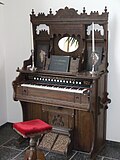
File:Harmonium in St Peter's Church, Normanby by Spittle (geography.org.uk 2622275 2ed0d039).jpg| Chapel organ<ref name=estey/> | File:American Organ Odilienberg 1.jpg|Parlor organ:<ref name=fudge/><ref name=estey/><ref name=MDLC2020/> ''melodeon'' or<br />'''''American reed organ''''' {{Smaller|by American Reed Organ Co., Rotterdam}}<ref name=MDLC2020/> | ||
File:Estey Phonorium. (front).jpg| | File:Harmonium in St Peter's Church, Normanby by Spittle (geography.org.uk 2622275 2ed0d039).jpg|Chapel organ<ref name=estey/><ref name=MDLC2020/> | ||
File:Alleyorgan.jpg| | File:Piano case reed organ, removed a front panel, preparing for Noise Boundary music ensemble.jpg|Piano case reed organ<br /><ref name=fudge/><ref name=MDLC2020/> | ||
File: | File:Estey Phonorium. (front).jpg|Two manual with pedal reed organ<ref name=estey/><ref name=MDLC2020/> (pipe-top) | ||
File:Alleyorgan.jpg|'''''[[enharmonic keyboard|Enharmonic]] reed organ''''' (1868/1871)<br />by Joseph Alley | |||
File:"Autophone" Organette MET MUS483A.jpg| ''cf.'' mechanical {{Nowrap|free-reed}} instrument, [[Organette]] in 1878<ref name="MET07.195">{{Citation |last=Autophone |title="Autophone" Organette |date=1878 |url=https://www.metmuseum.org/art/collection/search/504965 |others=Henry Bishop Horton (inventor) |id={{Smaller|[[Metropolitan Museum of Art|MET]] Accession Number:}} 07.195a, b|quote='''Manufacturer''': Autophone / '''Inventor''': Henry Bishop Horton (American, Winchester, Connecticut 1819–1885)}}</ref> | |||
</gallery> | </gallery> | ||
==={{ | ==={{Vanchor|Later instruments}} (electric-blower driven / electronic organs)=== | ||
{{ | {{Anchor|Electrically blown reed organ}} | ||
<gallery> | <gallery> | ||
File:Harmophon koestler 2.jpg| | File:Harmophon koestler 2.jpg|Electric-blower driven reed organ | ||
File:Magnus electric chord organ (free stand, wood, 3oct, 6maj, 6min, 3stop, vib).jpg| | File:Magnus electric chord organ (free stand, wood, 3oct, 6maj, 6min, 3stop, vib).jpg|Electric-blower driven reed [[chord organ]] (1960s) | ||
File:Wurlitzer Model 44 Electrostatic Reed Organ.png| [[Electrostatic reed organ|Electrostatic-pickup reed organ]] ( | File:Wurlitzer Model 44 Electrostatic Reed Organ.png|[[Electrostatic reed organ|Electrostatic-pickup reed organ]] (1930s–1960s) | ||
File:Gulbransen Organ, Museum of Making Music.jpg|''cf. Electronic organ (1939–)'' | |||
File:Gulbransen Organ, Museum of Making Music.jpg| ''cf. | |||
</gallery> | </gallery> | ||
| Line 351: | Line 328: | ||
* [[Harmonica]] | * [[Harmonica]] | ||
* [[Shruti box]] | * [[Shruti box]] | ||
* [[Pipe | * [[Pipe organ]] | ||
==References== | ==References== | ||
| Line 361: | Line 338: | ||
*[https://web.archive.org/web/20130618065956/http://eccs.onu.edu/~estell/organs/ The Reed Organ Home Page] of John K. Estell, Ohio Northern University | *[https://web.archive.org/web/20130618065956/http://eccs.onu.edu/~estell/organs/ The Reed Organ Home Page] of John K. Estell, Ohio Northern University | ||
*[https://learnharmonium.com Top Harmonium Makers] | *[https://learnharmonium.com Top Harmonium Makers] | ||
{{Reed aerophones}} | {{Reed aerophones}} | ||
Latest revision as of 07:58, 20 February 2026
 John Church and Co. pump organ | |
| Keyboard instrument | |
|---|---|
| Other names |
|
| Classification | Aerophone |
| Hornbostel–Sachs classification | 412.132 (Free reed aerophone) |
| Inventor(s) | Gabriel-Joseph Grenié |
| Developed | 19th century |
| Playing range | |
| Usually 10 octaves | |
| Related instruments | |
|
Hand-pumped: Regal, Indian harmonium, accordion Mouth-blown: Claviola, melodica, harmonica, Asian mouth organs | |
| Musicians | |
| see List of harmonium players | |
| Builders | |
| see Category:Pump organ manufacturers | |
| Sound sample | |
.jpg)
The pump organ or reed organ is a type of organ that uses free reeds to generate sound, with air passing over vibrating thin metal strips mounted in a frame. Types include the pressure-based harmonium, the suction reed organ (which employs a vacuum system), and the Indian harmonium. Historical examples include the Kunstharmonium and the American reed organ, while earlier forms include the physharmonica and the seraphine.[1]
More portable than pipe organs, free-reed organs became widespread in smaller churches and private homes during the 19th century, although their volume and tonal range were limited. They generally featured one, or occasionally two, manuals, while pedal-boards were rare. Higher-end pump organs offered a broader range of tones, and models intended for churches or affluent households were often housed in finely crafted cabinets.
Between the 1850s and the 1920s, several million reed organs and melodeons were manufactured in the United States and Canada, with some exported abroad.[2] Major manufacturers included the Cable Piano Company, Estey Organ, and Mason & Hamlin.
In addition to the larger, furniture-sized instruments popular in the West, more compact designs also developed. The portable, hand-pumped Indian harmonium, adapted from Western designs such as the guide-chant in the 19th century, became a central instrument across the Indian subcontinent. Today, the Indian harmonium is widely employed by Sikhs, Hindus, and Muslims for devotional music such as qawwali, ghazal, kirtan, and bhajan. It is also commonly used in Indian classical music and within Western yoga and kirtan subcultures.
History[edit | edit source]


During the first half of the 18th century, a free-reed mouth organ called a sheng was brought to Russia.[3] The instrument attracted attention through its use by Johann Wilde.[3] At the time, the free-reed mechanism was unknown in Europe, and the concept quickly spread westward from Russia.[3]
Christian Gottlieb Kratzenstein (1723–1795), a professor of physiology at the University of Copenhagen, is credited with the creation of the first free-reed instrument in the Western world, having won the annual prize in 1780 from the Imperial Academy of St. Petersburg.[4]
The first free-reed organ was built by Abbé Georg Joseph Vogler in Darmstadt after a concept suggested by Kratzenstein.[3] The design of the harmonium, employing free reeds, derives from the earlier regal. A harmonium-like instrument was exhibited by Gabriel-Joseph Grenié (1756–1837) in 1810, which he named the orgue expressif ("expressive organ") due to its capability for greater expression, including crescendos and diminuendos.
Alexandre Debain improved Grenié's design and patented his version under the name harmonium in 1840.[5] There was concurrent development of similar instruments.[6] Jacob Alexandre and his son Édouard introduced the orgue mélodium in 1844. Hector Berlioz discussed it in his Grand traité d'instrumentation et d'orchestration modernes, published in Paris in [1843?] or [1844?], and reprinted in 1856 (critical edition by Peter Bloom, 2003, Bärenreiter, Vol.24). Berlioz also wrote about it in later journals (Bloom, p.472, nn. 1 & 2) and incorporated it into L'enfance du Christ, Part 1, Scene vi, where it was played off-stage. Franz Liszt performed the part during a concert conducted by Berlioz in Weimar on 21 February 1855 (Bloom, p.474, n.3).
A mechanic who had worked at Alexandre's factory emigrated to the United States and conceived the idea of a suction bellows, replacing the outward-blowing bellows. After 1885, the firm of Mason & Hamlin of Boston adopted the suction bellows, which soon became the standard construction technique in America.[5]

The term melodeon came to be associated with concert saloons in Victorian-era America, named after the reed instrument. The word later became a general term for entertainment venues catering to men.[7]
Harmoniums reached the height of their popularity in the West during the late 19th and early 20th centuries. They were especially favoured in small churches and chapels where a pipe organ was impractical. In the funeral in absentia scene of Mark Twain's Adventures of Huckleberry Finn, Chapter XXVII, a "melodeum" (likely a satirical conflation of melodeon and harmonium) is mentioned.
Harmoniums, generally lighter and more resilient than similarly sized pianos, were ideal for export to colonies where transport infrastructure was limited. Moreover, the harmonium maintained its tuning stability despite heat and humidity, unlike the piano. Special models impregnated with chemicals to deter woodworm and tropical pests were manufactured for export markets.[citation needed]
.jpg)
At the peak of the instrument's popularity circa 1900, harmoniums ranged from simple models with minimal stops to elaborate ones featuring ornate cases, multiple stops, and faux pipe displays.[citation needed] Some harmoniums were built with two manuals or even pedalboards, although these larger models required either an assistant to operate the bellows or electric blowers. Compact, folding reed organs were also made for missionaries and traveling evangelists.[8][9]
The invention of the electronic organ in the 1930s marked the beginning of the harmonium's decline in the West, although its popularity as a household instrument had already waned in the 1920s.[citation needed] The Hammond organ offered greater tonal versatility, reduced maintenance, and compactness, making it an attractive successor. Additionally, harmoniums had become increasingly complex mechanically, with intricate networks of levers and rods owing to diverse patent-driven designs.[citation needed]
The Estey company was the last major North American manufacturer, ceasing production in the mid-1950s. A few Italian firms continued manufacturing into the 1970s. As harmoniums aged and spare parts became scarce, many were scrapped or modified, with electric blowers frequently retrofitted, often in an unsympathetic manner.[citation needed]
Today, most Western-style harmoniums are preserved by enthusiasts, while the Indian harmonium remains widely used across South Asia.[citation needed]
Modern electronic keyboards are capable of emulating the sound of the traditional pump organ.
Reed organ in Japan[edit | edit source]

The foot pump organ (足踏みオルガン, ashibumi organ) was first introduced to Japan during the early Meiji period, brought by foreign Christian missionaries as part of their evangelisation efforts. Initially used in churches and schools, the reed organ quickly became an important tool for music education, offering Japanese people their first widespread exposure to Western musical instruments.
The first domestically manufactured reed organs were produced by Nishikawa Organ Company in Yokohama. Shortly thereafter, Yamaha founder Torakusu Yamaha, originally a medical equipment repairman, began manufacturing reed organs in Hamamatsu following his successful repair of an imported American model. These efforts helped establish Hamamatsu as a major centre for musical instrument production in Japan.
Throughout the late 19th and early 20th centuries, reed organs were installed in schools nationwide and became central to public singing education. Their affordability, durability, and relatively simple maintenance compared to pianos made them ideal for widespread use. By the early Shōwa period, reed organs were a familiar fixture in most Japanese elementary schools, contributing significantly to the spread of Western music literacy.
Domestically produced reed organs ranged from simple, affordable models with 39 or 49 keys to larger, more elaborate designs with multiple stops, swells, and even pedalboards, primarily intended for teacher training colleges and music schools.
Although the popularity of reed organs declined after the mid-20th century with the rise of more accessible pianos and electronic instruments, they remain fondly remembered by generations who grew up with them. Today, institutions such as the Hamamatsu Museum of Musical Instruments preserve and exhibit historical reed organs, celebrating their cultural and educational significance in Japan's modernisation and musical history.[10]
In several Asian countries, particularly former Japanese colonies such as Taiwan and South Korea, the use of treadle-operated reed organs became widespread under Japanese influence.
Reed organ in China[edit | edit source]

In China, the reed organ was introduced around 1897. Following the Opium Wars, the spread of Christianity and the increasing presence of European expatriates contributed to the broader dissemination of Western music. Church schools, in particular, played a major role in introducing European musical forms, such as hymns, salon music, and elementary piano pieces.
In 1872, Christian missionary J. D. Collins published the Hymn Book through the American Presbyterian Mission Press in Shanghai, featuring over 360 religious hymns with musical notation, alongside an introduction to Western musical theory, all employing the five-line staff notation system. In 1883, British missionary Timothy Richard published the Supplement to Hymns, which incorporated familiar Chinese folk melodies to facilitate religious outreach.
The activities of these missionaries contributed positively to the early development of Western music education in China.
It is beyond doubt that, at one point, the People's Republic of China was very likely the country where the pump organ was most widely used. Following the establishment of the People's Republic of China, treadle-operated reed organs gained renewed popularity as affordable tools for mass music education. Factories were established in various cities to produce reed organs, such as the "Danfeng" Organ Factory in Shanghai and the "Baihua" Organ Factory in Sichuan. It became common for primary school teachers, particularly female teachers, to be trained in reed organ playing to support classroom music education.
By the 1990s, however, reed organs were gradually supplanted by pianos in Chinese primary and secondary schools as the primary instrument for music instruction. Today, many treadle-operated reed organs in mainland China have been dismantled, although a small number of artisanal workshops continue to produce new instruments, primarily for enthusiasts who collect and perform with them.
In the Indian subcontinent[edit | edit source]
 | This section needs more citations. (November 2016) |


The Indian harmonium, also known as the hand harmonium or vaja, is a small, portable, hand-pumped reed organ that gained popularity across the Indian subcontinent. It arrived in India during the mid-19th century, potentially introduced by missionaries or traders. Adapted by Indian craftsmen, the harmonium was modified to be played on the floor, in keeping with traditional Indian musical practices, and made more compact and portable.[11]
Throughout the 19th and 20th centuries, the Indian harmonium became integral to Indian music, widely used in devotional genres such as qawwali, ghazal, kirtan, and bhajan. Its lightweight design, portability, and ease of learning contributed to its widespread adoption among Sikhs, Hindus, and Muslims for devotional purposes. Notably, it also gained popularity within the Western yoga subculture, thanks to figures such as Krishna Das and Jai Uttal.
During the 20th century, the harmonium faced controversy within Indian classical music due to technical limitations, such as the inability to produce slurs, gamaka, and meend.[12] Despite these challenges, it became the instrument of choice for North Indian classical vocal genres, supported by its ease of learning and suitability for group singing. The harmonium's fixed pitches and other limitations led to its ban from All India Radio from 1940 to 1971. Nevertheless, it remained favoured in the reformed classical music of the early 20th century.
The harmonium remains popular to the present day, serving as an important instrument across many genres of Indian, Pakistani, and Bangladeshi music. For example, it is a staple of North Indian classical vocal music and Sufi Muslim qawwali performances.[13] From there, it even made its way to the ghazal sung among the Malays of Johor on the tip of the Malay Peninsula.[14]
Acoustics[edit | edit source]

The acoustical effects described below arise from the free-reed mechanism, and are therefore essentially identical for Western and Indian harmoniums as well as reed organs. In 1875, Hermann von Helmholtz published his seminal book, On the Sensations of Tone, in which he used the harmonium extensively to study different tuning systems:[15]
"Among musical instruments, the harmonium, on account of its uniformly sustained tone, the piercing character of its quality of tone, and its tolerably distinct combinational tones, is particularly sensitive to inaccuracies of intonation. And as its vibrators also admit of a delicate and durable tuning, it appeared to me peculiarly suitable for experiments on a more perfect system of tones."[16]
Using two manuals and two differently tuned stop sets, Helmholtz was able to compare Pythagorean, just, and equal temperament tunings simultaneously, and observe the varying degrees of inharmonicity inherent in different temperaments. He subdivided the octave into 28 tones, allowing modulation in just intonation across 12 minor and 17 major keys without encountering the harsh dissonances typically caused by standard octave divisions.[17] This system, however, proved difficult to play.[18] Additional modified instruments were constructed for experimental use, notably Bosanquet's Generalised keyboard (1873) for a 53-tone scale, employing 84 keys for easier fingering. Another notable experimental reed organ was built by Poole.[19]
Lord Rayleigh also used the harmonium to devise a method of indirectly measuring frequencies, using approximated equal temperament intervals and their overtone beats.[20] The harmonium's clear overtones enabled reliable beat counting by two listeners, although Rayleigh acknowledged that maintaining constant pressure in the bellows was difficult and could cause pitch fluctuation.

In tone generation, a reed organ is similar to an accordion or concertina, but differs in installation; while accordions are hand-held, reed organs are typically placed on the floor within a wooden casing (which may initially resemble a piano). Reed organs are operated using either pressure or suction bellows. Pressure bellows allow greater dynamic control through varying pedalling speed. In North America and Britain, pressure-bellows organs are termed harmoniums, while in continental Europe, any reed organ is generally referred to as a harmonium, regardless of its bellows type. Because pressure-bellows instruments were more complex and expensive to produce, most North American and British reed organs and melodeons employed suction bellows.
The frequencies produced by reed organs are influenced by the blowing pressure: the fundamental frequency slightly decreases under medium pressure compared to low pressure, but increases again at high pressures, particularly for bass notes.[21] Measurements have shown sinusoidal oscillations of the reed with sharp transitions when it bends through its frame.[22]
The fundamental frequency is close to the reed's mechanical resonance frequency.[23] The overtones generated are primarily harmonics rather than inharmonics,[24] although a weak inharmonic overtone at approximately 6.27f has been observed.[25]
In addition to the main transverse vibration mode, weaker higher transverse and torsional modes have been measured.[26] Torsional modes arise due to slight asymmetries in reed construction. During the attack phase, the fundamental and a secondary transverse or torsional mode are predominantly excited.[26]
To date, radiation patterns and coupling effects between the soundbox and the reeds have not been extensively studied.
The unusual vibration physics of the free reed directly impact the performance of the harmonium, restricting the dynamic range and requiring subtle control. The reed, riveted into a metal frame, vibrates in self-excited oscillation as air is pumped through the bellows and reservoir.[22] This aerodynamic system is nonlinear, with the reed's maximum displacement limited by damping forces, resulting in relatively stable sound pressure.[24] A threshold pumping pressure exists below which reed vibration remains minimal.[25] Within these thresholds, reed amplitude exhibits exponential growth and exponential decay.[27]
Repertory[edit | edit source]


The harmonium was considered by Curt Sachs to be an important instrument for music of Romanticism (1750s–1900), which "vibrated between two poles of expression" and "required the overwhelming power and strong accents of wind instruments".[3]
Harmonium compositions are available by European and American composers of classical music. It was also used often in the folk music of the Appalachians and South of the United States.[citation needed]
Harmoniums played a significant part in the new rise of Nordic folk music, especially in Finland. In the late 1970s, a harmonium could be found in most schools where the bands met, and it became natural for the bands to include a harmonium in their setup. A typical folk band then—particularly in Western Finland—consisted of violin(s), double bass and harmonium. There was a practical limitation that prevented playing harmonium and accordion in the same band: harmoniums were tuned to 438 Hz, while accordions were tuned to 442 Hz.[28] Some key harmonium players in the new rise of Nordic folk have been Timo Alakotila and Milla Viljamaa.
In the Netherlands, the introduction of the harmonium triggered a boom in religious house music. Its organ-like sound quality allowed Reformed families to sing psalms and hymns at home. Many new hymns were composed expressly for voice and harmonium, notably those by Johannes de Heer.[29]
Western classical[edit | edit source]
The harmonium repertoire includes many pieces written originally for the church organ, which may be played on a harmonium as well, because they have a small enough range and use fewer stops. For example, Bach's Fantasia in C major for organ BWV 570[30] is suitable for a four-octave harmonium.
Other examples include:
- Alban Berg. Altenberg Lieder
- William Bergsma. Dances from a New England Album, 1856 for orchestra. It includes parts for melodeon (movements I–III) and harmonium (movement IV).
- William Bolcom. Songs of Innocence and of Experience for orchestra, choirs, and soloists, includes parts for melodeon, harmonica, and harmonium.
- Anton Bruckner. Symphony no. 7, an arrangement for chamber ensemble, prepared in 1921 by students and associates of Arnold Schoenberg for the Viennese Society for Private Musical Performances, was scored for two violins, viola, cello, bass, clarinet, horn, piano 4-hands, and harmonium. The Society folded before the arrangement could be performed, and it went without premiere for more than 60 years.
- Frederic Clay. Ages Ago, an early work that features a harmonium part (libretto by W. S. Gilbert).
- Claude Debussy. Prélude à l'après-midi d'un faune, a chamber ensemble arrangement by Arnold Schoenberg.
- Antonín Dvořák. Five Bagatelles for two violins, cello and harmonium, Op. 47 (B.79).
- Edward Elgar. Sospiri, Adagio for String Orchestra, Op. 70 (scored for harp or piano and harmonium or organ). Vesper Preludes.
- César Franck. The final collection of pieces popularly known as L'Organiste (1889–1890) was actually written for harmonium, with some pieces with piano accompaniment.
- Alexandre Guilmant, author of many duos for piano and harmonium, including:
- Symphonie tirée de la Symphonie-Cantate "Ariane" (Op. 53)
- Pastorale A-Dur (Op. 26)
- Finale alla Schumann sur un noël languedocien (Op. 83)
- Paul Hindemith. Hin und zurück (There and Back), an operatic sketch that uses a harmonium for its stage music.
- Sigfrid Karg-Elert. Various works for solo harmonium.
- Kronos Quartet. Early Music, an album that has several pieces featuring harmonium.
- Henri Letocart (1866–1945). 25 pieces for harmonium, Premier cahier.
- Franz Liszt. Symphonie zu Dantes Divina Commedia, Movement II: Purgatorio
- Gustav Mahler. Symphony No. 8
- George Frederick McKay. Sonata for Clarinet and Harmonium (1929) (also adaptable to piano or violin)
- Martijn Padding. First Harmonium Concerto (2008) for harmonium and ensemble[31]
- Elise Rondonneau ( active 1827-1860s) composed many works specifically for harmonium[32]
- Gioachino Rossini. Petite messe solennelle is scored for twelve voices, two pianos and harmonium.
- Camille Saint-Saëns. The Barcarolle, Op. 108 is scored for piano, harmonium, violin and cello.
- Arnold Schoenberg
- Herzgewächse, Op. 20, for high soprano, celesta, harp and harmonium.
- Weihnachtsmusik, for two violins, cello, harmonium and piano.
- Franz Schreker
- Chamber Symphony
- Vom ewigen Leben
- Richard Strauss. Ariadne auf Naxos an opera (libretto by Hugo von Hofmannsthal) that employs a harmonium in the orchestration of each of its versions. It requires an instrument with many stops, which are specified in the score.
- Pyotr Ilyich Tchaikovsky. "Manfred Symphony", fourth movement
- Louis Vierne. 24 Pièces en style libre pour orgue ou harmonium, Op. 31 (1913)
- Anton Webern. Five Pieces for Orchestra op. 10
- Alexander Zemlinsky
- Six Maeterlinck Songs
- Lyric Symphony
Artists[edit | edit source]
.jpg)
- Ivor Cutler, Scottish humorist and musician
- Krishna Das, American kirtan singer, composer and recording artist
- Farrukh Fateh Ali Khan, Pakistani qawali performer, composer and recording artist
- Mariana Sadovska, Ukrainian singer, composer and recording artist
- Radie Peat, singer and musician of Lankum
- Nico, German singer, songwriter, actress, model and recording artist
Western popular music[edit | edit source]
.jpg)
Harmoniums have been used in western popular music since at least the 1960s. John Lennon played a Mannborg harmonium[33] on the Beatles' hit single "We Can Work It Out", released in December 1965, and the band used the instrument on other songs recorded during the sessions for their Rubber Soul album.[34] They also used the instrument on the famous "final chord" of "A Day in the Life", and on the song "Being for the Benefit of Mr. Kite!", both released on the 1967 album Sgt. Pepper's Lonely Hearts Club Band.[35] The group's hit single "Hello, Goodbye" and the track "Your Mother Should Know" were both written using a harmonium.[36][37]
Many other artists soon employed the instrument in their music, including; Pink Floyd on the title song "Chapter 24" of their first album The Piper at the Gates of Dawn in 1967[citation needed], Elton John on his 1973 album Don't Shoot Me I'm Only the Piano Player, 1976's Blue Moves, the 1978 album A Single Man, and 1995's Made in England[citation needed]. German singer Nico was closely associated with the harmonium, using it as her main instrument, during the late 60s and 70s, on albums such as The Marble Index, Desertshore and The End....[38]
Donovan employed the harmonium on his 1968 album The Hurdy Gurdy Man where he played it in droning accompaniment on the song "Peregrine", and where it was also played on his song "Poor Cow" by John Cameron.[39]
Robert Fripp of King Crimson played a pedal harmonium borrowed from lyricist Peter Sinfield on the title track of the progressive rock band's 1971 album Islands.
More recently Roger Hodgson from Supertramp used his harmonium on many of the group's songs including "Two of Us" from Crisis? What Crisis?, "Fool's Overture" from Even in the Quietest Moments..., the title track to their 1979 album Breakfast in America and "Lord Is It Mine". Hodgson also used a harmonium on "The Garden" from his 2000 solo album Open the Door.[citation needed] Greg Weeks and Tori Amos have both used the instrument on their recordings and live performances.[citation needed]
The Damned singer Dave Vanian bought a harmonium for £49 and used it to compose "Curtain Call", the 17-minute closing track from their 1980 double LP The Black Album[citation needed]. In 1990, Depeche Mode used a harmonium on a version of their song "Enjoy the Silence".[citation needed] The Divine Comedy used a harmonium on "Neptune's Daughter" from their 1994 album Promenade[citation needed]. Sara Bareilles used the harmonium on her 2012 song "Once Upon Another Time".[40] Motion Picture Soundtrack, the closing track to Radiohead's 2000 album Kid A, makes heavy use of a harmonium pedal organ in a stark contrast to many other tracks on the album that are almost entirely electronic.[41]
During the 1990s the Hindu and Sikh-based devotional music known as kirtan, a 7th–8th century Indian music, popularly emerged in the West.[42][43] The harmonium is often played as the lead instrument by kirtan artists; notably Jai Uttal who was nominated for a Grammy award for new-age music in 2004,[42] Snatam Kaur, and Krishna Das who was nominated for a Grammy award for new age music in 2012.[44]
Types[edit | edit source]
![[icon]](/wiki/File:Wiki_letter_w_cropped.svg) | This section needs expansion. You can help by adding to it. (February 2015) |
In the view points of preservation of cultural properties, maintenance and restoration, the pump organs are often categorized into several types.[45][46][47]
Historical instruments[edit | edit source]
Historically the ancestor of pump organs began as the types of pipe organs (positive, portative) using the resonance-pipes powered by the bellows (i.e. pumped pipe organs).
In the 17th century on the small reed-pipe organs called regal, these reed-pipes were replaced by the beating-reeds, and its form is closer to the later rocking melodeon, the early small pump organs or the early accordions.
In the early 19th century when the free reeds became factory-manufacturable, various free reed instruments were invented one after another, including: early pump organs (c. 1810), accordions (c. 1822/1829), and Symphonium (c. 1829) as an early harmonica.


![cf. Symphonium [de] circa 1830 (invented c.1829)](/wiki/File:Mouth_organ_(or_symphonium)_(c.1830,_London)_by_Charles_Wheatstone,_Museum_of_Fine_Arts,_Boston.jpg)
Early instruments[edit | edit source]
Note: the term "melodium" seems to be interchangeable with the terms "melodion" and "melodeon".[48][49]
-
![Orgue-expressif [fr][47] (invented in 1810 by Gabriel-Joseph Grenié [fr], Paris) or Mélodium](/w/images/smartcommons/thumbs/commons/6/65/Musee_des_Ursulines_de_Quebec_010.jpg/120px-Musee_des_Ursulines_de_Quebec_010.jpg)
-
![Portable or folding:[45] Physharmonica[47] (invented in 1818 by Anton Haeckl, Vienna)](/w/images/smartcommons/thumbs/commons/3/3f/Reed_Organ_%28Physharmonica%29_MET_DP227017.jpg/87px-Reed_Organ_%28Physharmonica%29_MET_DP227017.jpg)
-
 Seraphine (invented in 1833 by John Green, London)
 -
![Portable or folding:[45] Harmoniflûte [fr][47][50] (introduced in 1855)](/w/images/smartcommons/thumbs/commons/3/35/Harmoniflute%2C_Technisches_Museum_Wien.jpg/120px-Harmoniflute%2C_Technisches_Museum_Wien.jpg)
![Orgue-expressif [fr][47] (invented in 1810 by Gabriel-Joseph Grenié [fr], Paris) or Mélodium](/wiki/File:Musee_des_Ursulines_de_Quebec_010.jpg)
![Portable or folding:[45] Physharmonica[47] (invented in 1818 by Anton Haeckl, Vienna)](/wiki/File:Reed_Organ_(Physharmonica)_MET_DP227017.jpg)

![Portable or folding:[45] Harmoniflûte [fr][47][50] (introduced in 1855)](/wiki/File:Harmoniflute,_Technisches_Museum_Wien.jpg)
Harmonium[edit | edit source]
Harmoniums are pressure system free-reed organs.
-
![Flattop harmonium (c. 1865) by Alexandre Debain, a French inventor of the harmonium (patented in 1842)[51]](/w/images/smartcommons/thumbs/commons/0/01/Harmonium_Debain_-_c.1865.jpg/113px-Harmonium_Debain_-_c.1865.jpg) Flattop harmonium (c. 1865) by Alexandre Debain, a French inventor of the harmonium (patented in 1842)[51]
Flattop harmonium (c. 1865) by Alexandre Debain, a French inventor of the harmonium (patented in 1842)[51] -
![Kunstharmonium [de] (French: harmoniums d'art) with Celesta,[47] by Auguste Victor Mustel [fr], Paris (1890)](/w/images/smartcommons/thumbs/commons/c/cd/Orgue-C%C3%A9lesta.gif/105px-Orgue-C%C3%A9lesta.gif)
-
![Piano-mélodium [fr] and Orgue-mélodium (invented in mid-19th c. by Alexandre Père et Fils [fr])[47]](/w/images/smartcommons/thumbs/commons/0/0a/Orgues-m%C3%A9lodium_d%27Alexandre_p%C3%A8re_et_fils.jpg/120px-Orgues-m%C3%A9lodium_d%27Alexandre_p%C3%A8re_et_fils.jpg)
-

-
![Indian harmonium,[47] which remains influential in Indian music](/w/images/smartcommons/thumbs/commons/7/7c/Harmonium_%28Varanasi%2C_India._19th_century._Inv.2000.015%29_-_MIM_Brussels_%282018-05-26_10.44.51_by_Miguel_Discart_%40Flickr_44507244450%29.jpg/120px-Harmonium_%28Varanasi%2C_India._19th_century._Inv.2000.015%29_-_MIM_Brussels_%282018-05-26_10.44.51_by_Miguel_Discart_%40Flickr_44507244450%29.jpg)
-
 Chapel harmonium
 -
![Two manual with pedal harmonium[45] by Theodor Mannborg [de] (1911)](/w/images/smartcommons/thumbs/commons/5/53/Organeum%2C_Weener_-_15.JPG/120px-Organeum%2C_Weener_-_15.JPG) Two manual with pedal harmonium[45] by Theodor Mannborg (1911)
Two manual with pedal harmonium[45] by Theodor Mannborg (1911) -
 Enharmonic harmonium: Orthotonophonium (1870s/1914)
 -
![Player harmonium[45][47] (1888–1903, disc-type)[52]](/w/images/smartcommons/thumbs/commons/0/09/CIMA_mg_8380.jpg/120px-CIMA_mg_8380.jpg)
![Flattop harmonium (c. 1865) by Alexandre Debain, a French inventor of the harmonium (patented in 1842)[51]](/wiki/File:Harmonium_Debain_-_c.1865.jpg)
![Kunstharmonium [de] (French: harmoniums d'art) with Celesta,[47] by Auguste Victor Mustel [fr], Paris (1890)](/wiki/File:Orgue-C%C3%A9lesta.gif)
![Piano-mélodium [fr] and Orgue-mélodium (invented in mid-19th c. by Alexandre Père et Fils [fr])[47]](/wiki/File:Orgues-m%C3%A9lodium_d%27Alexandre_p%C3%A8re_et_fils.jpg)

![Indian harmonium,[47] which remains influential in Indian music](/wiki/File:Harmonium_(Varanasi,_India._19th_century._Inv.2000.015)_-_MIM_Brussels_(2018-05-26_10.44.51_by_Miguel_Discart_@Flickr_44507244450).jpg)

![Two manual with pedal harmonium[45] by Theodor Mannborg [de] (1911)](/wiki/File:Organeum,_Weener_-_15.JPG)

![Player harmonium[45][47] (1888–1903, disc-type)[52]](/wiki/File:CIMA_mg_8380.jpg)
Suction reed organs[edit | edit source]
Suction reed organs are vacuum system free-reed organs.
Melodeons and seraphines[edit | edit source]
Note: The term "melodeon" seems to be interchangeable with the terms "melodion" and "melodium".[48][49]
For the "melodeon" as a type of accordion, see Diatonic button accordion § Nomenclature.
-
![Rocking melodeon[53][54][47] or lap organ[45] (1825)[55][56]](/w/images/smartcommons/thumbs/commons/8/82/Rocking_Melodeon_MET_D3198_89.4.1194.jpg/80px-Rocking_Melodeon_MET_D3198_89.4.1194.jpg)
-
![Seraphine[47] of the United States (ca.1835 by James A. Bazin, MA)](/w/images/smartcommons/thumbs/commons/9/9c/Seraphine_reed_organ%2C_by_James_A._Bazin%2C_Canton_MA%2C_1835%2C_bird%27s_eye_maple%2C_rosewood_-_Old_Colony_History_Museum_-_Taunton%2C_Massachusetts_-_DSC03905.jpg/118px-Seraphine_reed_organ%2C_by_James_A._Bazin%2C_Canton_MA%2C_1835%2C_bird%27s_eye_maple%2C_rosewood_-_Old_Colony_History_Museum_-_Taunton%2C_Massachusetts_-_DSC03905.jpg) Seraphine[47] of the United States (ca.1835 by James A. Bazin, MA)
Seraphine[47] of the United States (ca.1835 by James A. Bazin, MA) -
![Portable melodeon[46] or lyre-leg melodeon[45]](/w/images/smartcommons/thumbs/commons/d/d4/Melodium_%2823986253000%29.jpg/120px-Melodium_%2823986253000%29.jpg)
-
![Piano-style melodeon [45][46][47] (c.1867)[57][58]](/w/images/smartcommons/thumbs/commons/7/7f/New_Haven_Melodeon%2C_Mission_Mill_Museum.jpg/120px-New_Haven_Melodeon%2C_Mission_Mill_Museum.jpg)
![Rocking melodeon[53][54][47] or lap organ[45] (1825)[55][56]](/wiki/File:Rocking_Melodeon_MET_D3198_89.4.1194.jpg)
![Seraphine[47] of the United States (ca.1835 by James A. Bazin, MA)](/wiki/File:Seraphine_reed_organ,_by_James_A._Bazin,_Canton_MA,_1835,_bird%27s_eye_maple,_rosewood_-_Old_Colony_History_Museum_-_Taunton,_Massachusetts_-_DSC03905.jpg)
![Portable melodeon[46] or lyre-leg melodeon[45]](/wiki/File:Melodium_(23986253000).jpg)
![Piano-style melodeon [45][46][47] (c.1867)[57][58]](/wiki/File:New_Haven_Melodeon,_Mission_Mill_Museum.jpg)
Reed organs[edit | edit source]
-
![Folding reed organ[46][47] (19th century)](/w/images/smartcommons/thumbs/commons/e/ea/Sunday_School_Organ_in_Barratt%27s_Chapel_Museum%2C_Frederica%2C_Delaware.jpg/120px-Sunday_School_Organ_in_Barratt%27s_Chapel_Museum%2C_Frederica%2C_Delaware.jpg)
-
![Flattop reed organ:[45][46][47][59] melodeon or American reed organ](/w/images/smartcommons/thumbs/commons/1/14/Geo._Woods_Melodeon.JPG/120px-Geo._Woods_Melodeon.JPG)
-
![Parlor organ:[45][46][47] melodeon or American reed organ by American Reed Organ Co., Rotterdam[47]](/w/images/smartcommons/thumbs/commons/9/92/American_Organ_Odilienberg_1.jpg/76px-American_Organ_Odilienberg_1.jpg)
-
![Chapel organ[46][47]](/w/images/smartcommons/thumbs/commons/e/e0/Harmonium_in_St_Peter%27s_Church%2C_Normanby_by_Spittle_%28geography.org.uk_2622275_2ed0d039%29.jpg/120px-Harmonium_in_St_Peter%27s_Church%2C_Normanby_by_Spittle_%28geography.org.uk_2622275_2ed0d039%29.jpg)
-
![Piano case reed organ [45][47]](/w/images/smartcommons/thumbs/commons/6/6c/Piano_case_reed_organ%2C_removed_a_front_panel%2C_preparing_for_Noise_Boundary_music_ensemble.jpg/120px-Piano_case_reed_organ%2C_removed_a_front_panel%2C_preparing_for_Noise_Boundary_music_ensemble.jpg)
-
![Two manual with pedal reed organ[46][47] (pipe-top)](/w/images/smartcommons/thumbs/commons/2/29/Estey_Phonorium._%28front%29.jpg/72px-Estey_Phonorium._%28front%29.jpg)
-
 Enharmonic reed organ (1868/1871)
by Joseph Alley -
![cf. mechanical free-reed instrument, Organette in 1878[60]](/w/images/smartcommons/thumbs/commons/c/ce/%22Autophone%22_Organette_MET_MUS483A.jpg/120px-%22Autophone%22_Organette_MET_MUS483A.jpg)
![Flattop reed organ:[45][46][47][59] melodeon or American reed organ](/wiki/File:Geo._Woods_Melodeon.JPG)
![Parlor organ:[45][46][47] melodeon or American reed organ by American Reed Organ Co., Rotterdam[47]](/wiki/File:American_Organ_Odilienberg_1.jpg)
![Chapel organ[46][47]](/wiki/File:Harmonium_in_St_Peter%27s_Church,_Normanby_by_Spittle_(geography.org.uk_2622275_2ed0d039).jpg)
![Piano case reed organ [45][47]](/wiki/File:Piano_case_reed_organ,_removed_a_front_panel,_preparing_for_Noise_Boundary_music_ensemble.jpg)
![Two manual with pedal reed organ[46][47] (pipe-top)](/wiki/File:Estey_Phonorium._(front).jpg)

![cf. mechanical free-reed instrument, Organette in 1878[60]](/wiki/File:%22Autophone%22_Organette_MET_MUS483A.jpg)
Later instruments (electric-blower driven / electronic organs)[edit | edit source]
-
 Electric-blower driven reed organ
 -
 Electric-blower driven reed chord organ (1960s)
 -
 Electrostatic-pickup reed organ (1930s–1960s)
 -
 cf. Electronic organ (1939–)

.jpg)


Related instruments[edit | edit source]
References[edit | edit source]
- ↑ Brahaspati, S.V. (2023). How to Play Harmonium, p. 4. Abhishek Publications.
- ↑ "Carpenter Organ Company (1899)". Vermont Phoenix. 1899-09-01. p. 4. Retrieved 2020-11-29.
- ↑ 3.0 3.1 3.2 3.3 3.4 Sachs, Curt (1940). The History of Musical Instruments. New York: W. W. Norton & Company. pp. 184, 406–407.
- ↑ Missin, P. R. "Western Free Reed Instruments". Retrieved 2010-08-06.
- ↑ 5.0 5.1 Gilman, D. C.; Peck, H. T.; Colby, F. M., eds. (1905). . New International Encyclopedia (1st ed.). New York: Dodd, Mead.
- ↑ "History of the reed organ". Retrieved 2010-08-06.
- ↑ Asbury, Herbert, The Barbary Coast (Alfred Knopf, 1933), p.105
- ↑ "DRAFT Folding Organ JJ". Estey Organ Museum. Retrieved 2025-11-28.
- ↑ "Folding reed organ". emuseum.nmmusd.org. Brattleboro, Vermont, United States: National Music Museum. Retrieved 2025-11-28.
- ↑ "音楽の街・静岡県浜松市にある「浜松市楽器博物館」で、リードオルガンについて学ぼう!". メイジノオト (in 日本語). 博物館明治村. Retrieved 2025-04-27.
- ↑ "The Invention of Hand Harmonium". Dwarkin & Sons (P) Ltd. Archived from the original on 2007-04-09. Retrieved 2007-04-24.
- ↑ "Small encyclopedia with Indian instruments". india-instruments.com.
excerpt of Suneera Kasliwal, Classical Musical Instruments, Delhi 2001
- ↑ Jones, L. JaFran (1990). "Review of Sufi Music of India and Pakistan: Sound, Context and Meaning in Qawwali". Asian Music. 21 (2): 151–5. doi:10.2307/834116. ISSN 0044-9202. JSTOR 834116.
- ↑ Meddegoda, Chintaka Prageeth; Jähnuchen, Gisa (2016). "Musical Instruments in the Malay Ghazal". Hindustan Traces in Malay Ghazal. Cambridge Scholars Publishing. pp. 201–67. ISBN 978-1-4438-9759-4.
- ↑ Helmholtz, L. F., and Ellis, A., On the Sensations of Tone, London: Longmans, Green, and Co., 1875.
- ↑ Helmholtz, H. L. F., 1875, p. 492, Part III, Justly-Intoned Harmonium.
- ↑ Helmholtz, H. L. F., 1875, p. 634, Appendix XVII.
- ↑ Helmholtz, H. L. F., 1875, p. 682, Appendix XIX.
- ↑ Helmholtz, H. L. F., 1875, p. 677, Appendix XIX.
- ↑ Rayleigh (Jan 1879). "On the determination of absolute pitch by the common harmonium". Nature. 19 (482): 275–276. Bibcode:1879Natur..19R.275.. doi:10.1038/019275c0.
- ↑ Cottingham, J. P., Reed, C. H. & Busha, M. (Mar 1999). Variation of frequency with blowing pressure for an air-driven free reed (PDF). Forum Acusticum, Berlin. Vol. 105. p. 1001. Bibcode:1999ASAJ..105R1001C. doi:10.1121/1.425800. Archived from the original (PDF) on 2012-03-26. Retrieved 2012-12-18.
{{cite conference}}: CS1 maint: multiple names: authors list (link) - ↑ 22.0 22.1 Cottingham, J. P. (Sep 2007). "Reed Vibration in Western Free-Reed Instruments" (PDF). Proceedings of the International Congress on Acoustics (ICA2007), Madrid. Archived from the original (PDF) on 2012-03-26. Retrieved 2012-12-18.
- ↑ Fletcher, N. H. & Rossing, T. D. (1998). The Physics of Musical Instruments, 2nd ed. Springer Science+Media Inc. p. 414.
- ↑ 24.0 24.1 St. Hilaire; A. O. (1976). "Analytical prediction of the non-linear response of a self-excited structure". Journal of Sound and Vibration. 47 (2): 185–205. Bibcode:1976JSV....47..185S. doi:10.1016/0022-460x(76)90717-3.
- ↑ 25.0 25.1 Cottingham, J. P., Lilly, J. & Reed, C. H. (Mar 1999). The Motion of Air-Driven Free Reeds (PDF). Forum Acusticum, Berlin. Vol. 105. p. 940. Bibcode:1999ASAJ..105..940C. doi:10.1121/1.426334. Archived from the original (PDF) on 2012-03-26. Retrieved 2012-12-18.
{{cite conference}}: CS1 maint: multiple names: authors list (link) - ↑ 26.0 26.1 Paquette, A. & Cottingham, J. P. (Nov 2003). Modes of Vibration of Air-driven Free Reeds in Steady State and Transient Oscillation (PDF). 137th Meeting of the Acoustical Society of America, Austin, Texas. doi:10.1121/1.4781137. Archived from the original (PDF) on 2012-03-26. Retrieved 2012-12-18.
- ↑ St. Hilaire, A. O., Wilson, T. A. & Beavers, G. B. (1971). "Aerodynamic excitation of the harmonium reed". Journal of Fluid Mechanics. 49 (4): 803–816. Bibcode:1971JFM....49..803H. doi:10.1017/S0022112071002374. S2CID 121955334.
{{cite journal}}: CS1 maint: multiple names: authors list (link) - ↑ "Harmooni" (in suomi). Archived from the original on 2011-07-24. Retrieved 2012-12-18.
- ↑ Jan Smelik, "Stichtelijke zang rond het harmonium" in: Louis Grijp c.s., Een muziekgeschiedenis der Nederlanden. Amsterdam University Press/Salome, Amsterdam, 2001: pp. 547–552.
- ↑ "Fantasia in C major, BWV 570 (Bach, Johann Sebastian) – IMSLP/Petrucci Music Library: Free Public Domain Sheet Music". Imslp.org. Retrieved 2012-07-08.
- ↑ "Martijn Padding". Martijnpadding.nl. Retrieved 2012-07-08.
{{cite web}}: CS1 maint: deprecated archival service (link) - ↑ Cohen, Aaron I. (1987). International Encyclopedia of Women Composers. Books & Music (USA). p. 599. ISBN 978-0-9617485-0-0.
- ↑ O'Keefe, Phil (7 February 2014). "Keyboards of the Beatles Era". Harmony Central. Retrieved 7 June 2017.
- ↑ Everett, Walter (2001). The Beatles as Musicians: The Quarry Men through Rubber Soul. New York, NY: Oxford University Press. pp. 321–22. ISBN 0-19-514105-9.
- ↑ Emerick, Geoff; Massey, Howard (2006). Here, There and Everywhere: My Life Recording the Music of the Beatles. New York, New York: Gotham Books. pp. 162–167. ISBN 978-1-592-40269-4.
- ↑ "Hello, Goodbye". The Beatles Bible. 15 March 2008. Retrieved December 24, 2015.
- ↑ Scapelliti, Christopher (2016). "Music Icons – The Beatles: The Story Behind Every Album & Song". Music Icons (2). New York, NY: Athlon Sports Communications, Inc.: 84.
- ↑ "Desertshore – Nico | Songs, Reviews, Credits | AllMusic". AllMusic. Retrieved 2018-03-09.
- ↑ "The Hurdy Gurdy Man". Donovan Unofficial. 2009. Retrieved May 24, 2017.
- ↑ Goosee9 (15 May 2013). "Sara Bareilles – Once Upon Another Time (Live at the El Rey – 5/14/2013)". Archived from the original on 2021-11-07 – via YouTube.
{{cite web}}: CS1 maint: numeric names: authors list (link) - ↑ "Motion Picture Soundtrack".
- ↑ 42.0 42.1 Shannon Sexton; Anna Dubrovsky (December 16, 2011). "Sing the Soul Electric". Yoga Journal.
- ↑ Rockwell, Teed (November 14, 2011). "Kirtans East and West". India Currents. Archived from the original on December 24, 2015.
- ↑ Patoine, Brenda (December 6, 2012). "Krishna Das' "Live Ananda" Earns Grammy Nomination; Kirtan Grammy Would Be A First". The Bhakti Beat.
- ↑ 45.00 45.01 45.02 45.03 45.04 45.05 45.06 45.07 45.08 45.09 45.10 Fudge, Rod. "Twelve Different Types of Pump Organs (Types of Reed Organs)". PumpOrganRestorations.com.
- ↑ 46.0 46.1 46.2 46.3 46.4 46.5 46.6 46.7 "How To Find Serial Numbers In Estey Reed Organs". Estey Organ Museum. Archived from the original on 2015-01-01.
- ↑ 47.00 47.01 47.02 47.03 47.04 47.05 47.06 47.07 47.08 47.09 47.10 47.11 47.12 47.13 47.14 47.15 47.16 47.17 "6.Annexes. A.Typologie". Guide – Harmoniums : Repérage et protection au titre des monuments historique [Guide - Harmoniums : Identification and protection as historical monuments] (PDF). Direction générale des patrimoines [Directorate General of Heritage] (in French). Paris, France: Ministère de la Culture. 2020. pp. 21–26. ISBN 978-2-11-162589-1.
{{cite book}}: CS1 maint: unrecognized language (link) - ↑ 48.0 48.1 Köhler, Friedrich; Lambeck, Hermann (1892). Lambeck, Hermann (ed.). Dictionary of the English and German Languages. P. Reclam jun. p. 307.
"melodeon [me-lō'di-on] s. ♪ Ziehharmonica f. Melodion n (=melodium).
melodium [me-lō'di-um] s. Melodion n (=melodeon)." - ↑ 49.0 49.1 The Century Dictionary. An Encyclopedic Lexicon of the English Language. Vol. 13. Century Company. 1890. p. 3700.
"melodeon (me-ˈlō'di-on). n. [Also melodium; < L. melodia, < Gr. μελωδία, a singing: see melody. Cf. melodion.] A reed-organ or harmonium.
melodium (me-lō'di-um). n. See melodeon." - ↑ Gilbert Hirsch (2018-03-18). Harmoniflûte de Mayermatrix [1850] (video). YouTube. Archived from the original on 2021-11-07. — an example of harmoniflûte play. The bellow on rear-side is pumped by a foot pedal located between a stand.
- ↑ Stichwort. "Harmonium". Die Musik in Geschichte und Gegenwart (MGG). Vol. 5. p. 1708.
- ↑ Давида ЯКОБАШВИЛИ [David Iakobachvili]. "Harmonium "Reform-orgel" (1888–1903, Sweden, Karlstad) by J.P. Nyströms Orgel & Pianofabrik [Inv. 101/MMP]". Музей "Собрание" [Muzey "Sobraniye" / Museum COLLECTION].
Mechanical harmonium in piano shaped wooden case ... The inscription "I.P. Nyström" is on the left side, 'Reform-Orgel Patent" – is in the center, "Karlstad" is on the right side. Framed text "Jnnehar sjutton (17) Patenter å egna Uppfinningar inom orgelbranchen" (17 patents for original inventions in the organ industry) is beneath the central inscription. ...
- ↑ Waring, Dennis G. (29 July 2002). "American Reed Organ Manufacture". Manufacturing the Muse: Estey Organs and Consumer Culture in Victorian America. Wesleyan University Press (published 2002). pp. 11–12. ISBN 978-0-8195-6508-2.
- ↑ Bush, Douglas Earl; Kassel, Richard (2006). "Prescott, Abraham (1789–1858)". The Organ: An Encyclopedia. Encyclopedia of keyboard instruments. Vol. 3. Psychology Press. p. 441. ISBN 9780415941747.
- ↑ Prescott, Abraham (1825), Rocking Melodeon, MET Accession Number: 89.4.1194,
Maker: Abraham Prescott (American, Deerfield, New Hampshire 1789–1858 Concord, New Hampshire)
- ↑ Laurence Libin (Summer 1989). "Keyboard Instruments" (PDF). The Metropolitan Museum of Art Bulletin. 47 (1): 52. (available as PDF)
- ↑ "New Haven Melodeon (1865)". AntiquePianoShop.com. 26 August 2017.
This is a beautiful melodeon built by The New Haven Melodeon Company circa about 1865. These instruments are small reed organs that are operated by pumping the large iron right pedal…the left pedal is volume control and operates a swell shutter. During the mid 19th Century, these little melodeons were often the only form of musical entertainment in Rural America. This style of melodeon is known as a "Portable Melodeon" and its legs are designed to fold up under the instrument for easy transport. ...
See images: 1, 2, 3, 4, 5, 6. - ↑ "New Haven Melodeon Company". AntiquePianoShop.com. September 2017.
The New Haven Melodeon Company was organized on April 10th, 1867 in New Haven, CT. John L. Treat of Treat & Linsley was listed as superintendent of the firm. The firm built several models of organs and melodeons and enjoyed a great deal of success. By 1872 the firm is listed as having operating capital in the amount of $40,000. By the late 1870s, the popularity of the melodeon began to wain in favor of the parlor organ. The firm reorganized as "The New Haven Organ Company" from 1881 to 1883, and there is no mention of the firm after about 1883.
See also: Treat & Linsley. - ↑ "The Olthof Collection - Exhibited in 1981". harmoniumnet.nl.
17. Flat top reed organ by George Woods & Co. This firms is known for its high quality Melodeons (early type of reed organ, in fact the suction variety of the physharmonica)
- ↑ Autophone (1878), "Autophone" Organette, Henry Bishop Horton (inventor), MET Accession Number: 07.195a, b,
Manufacturer: Autophone / Inventor: Henry Bishop Horton (American, Winchester, Connecticut 1819–1885)
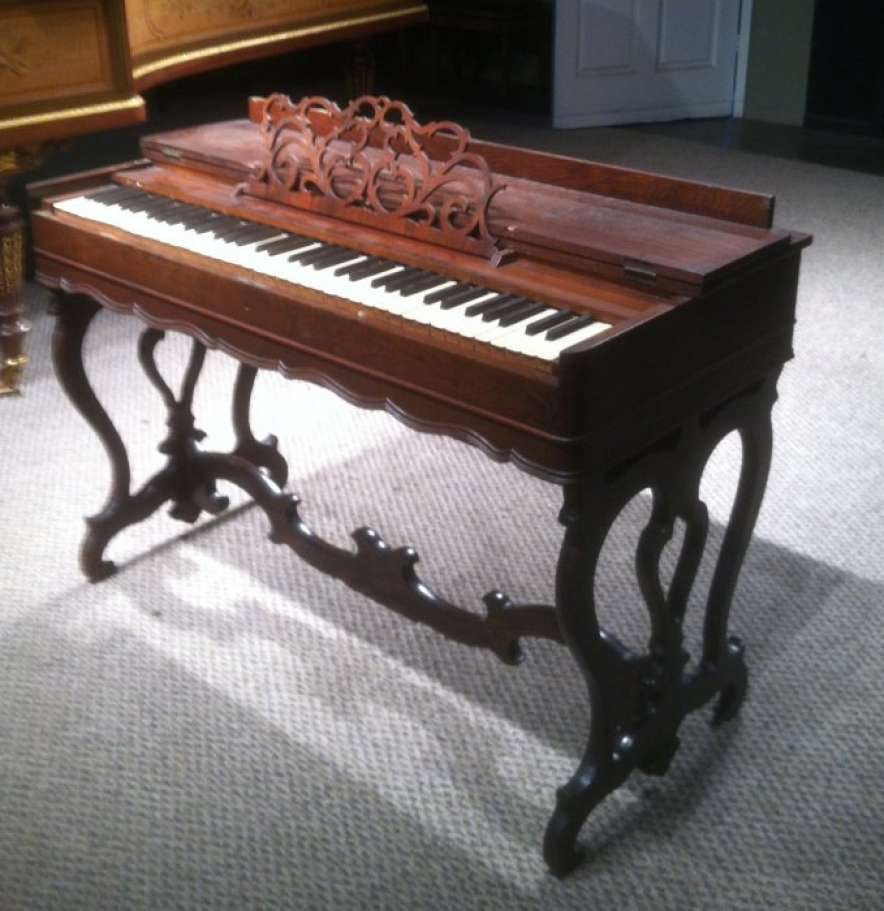
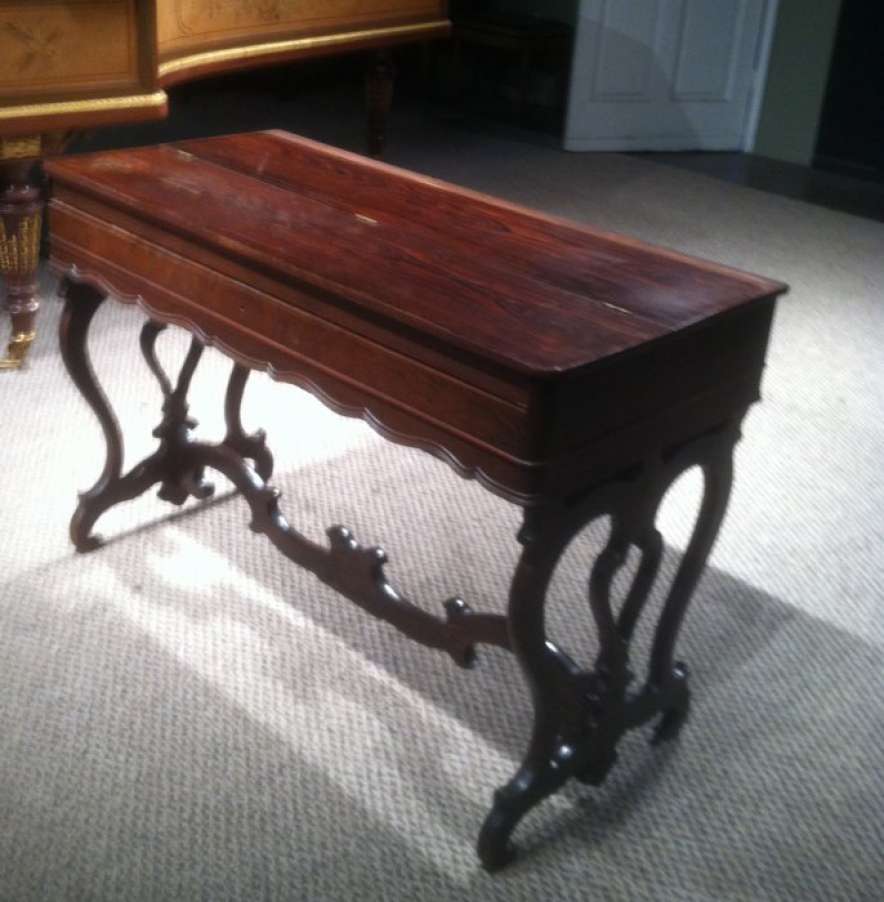
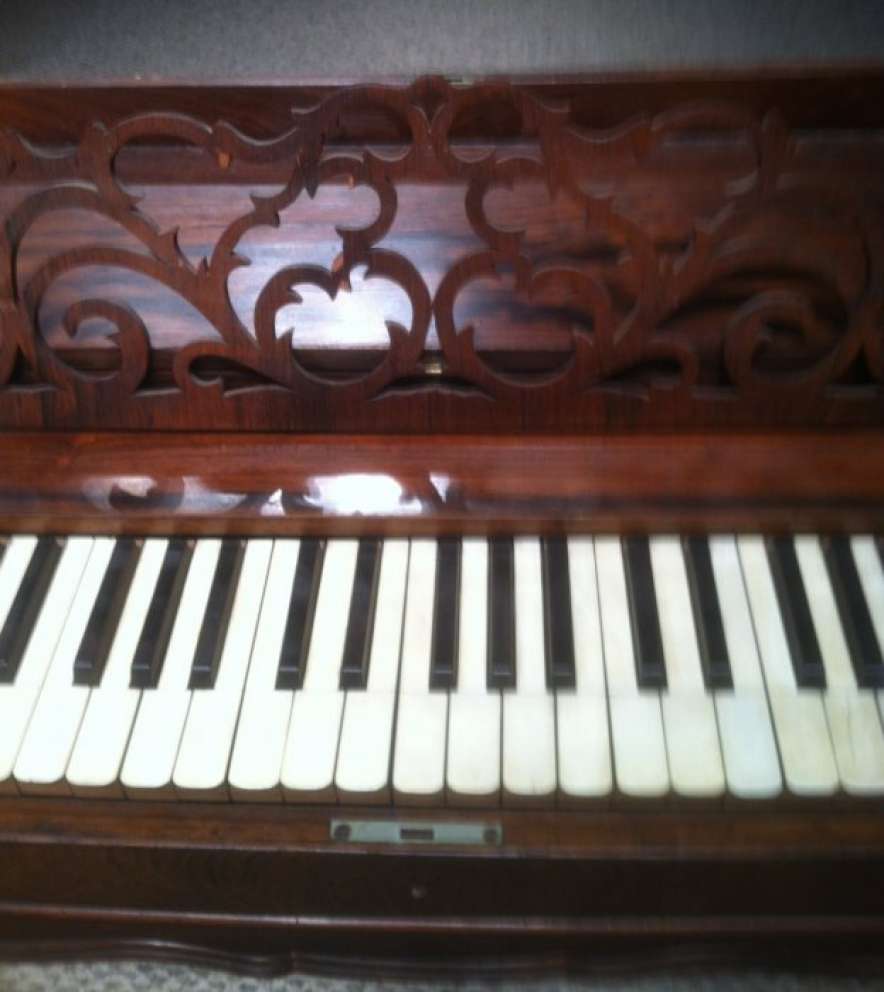

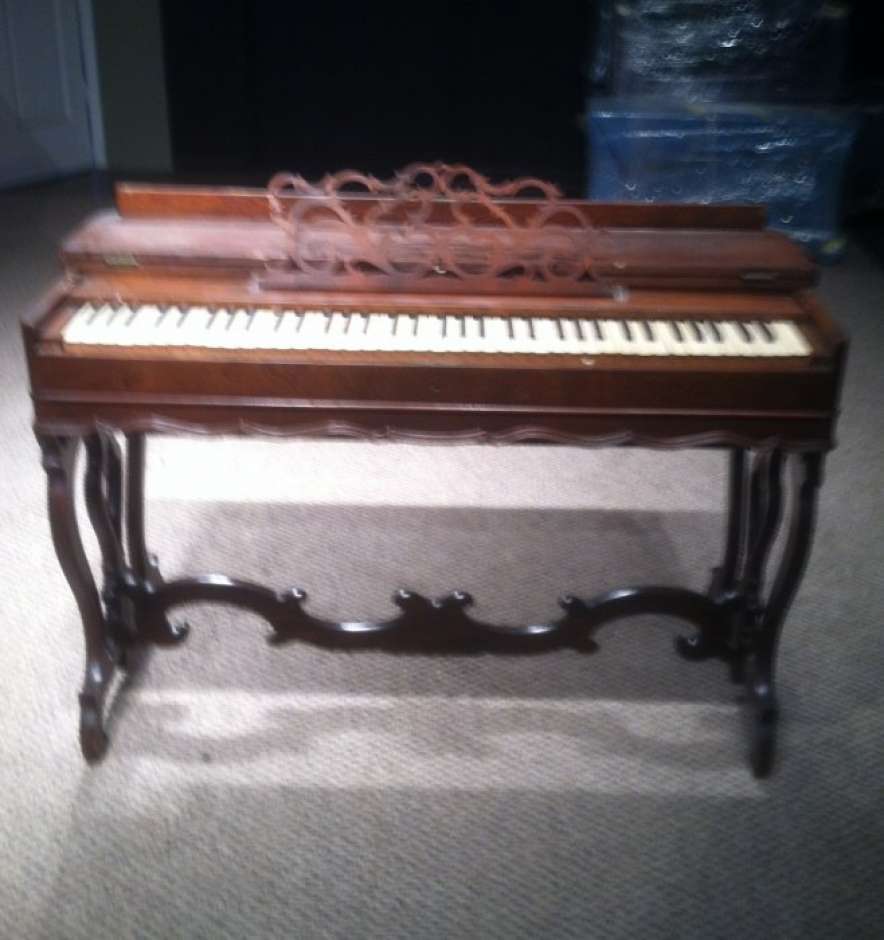
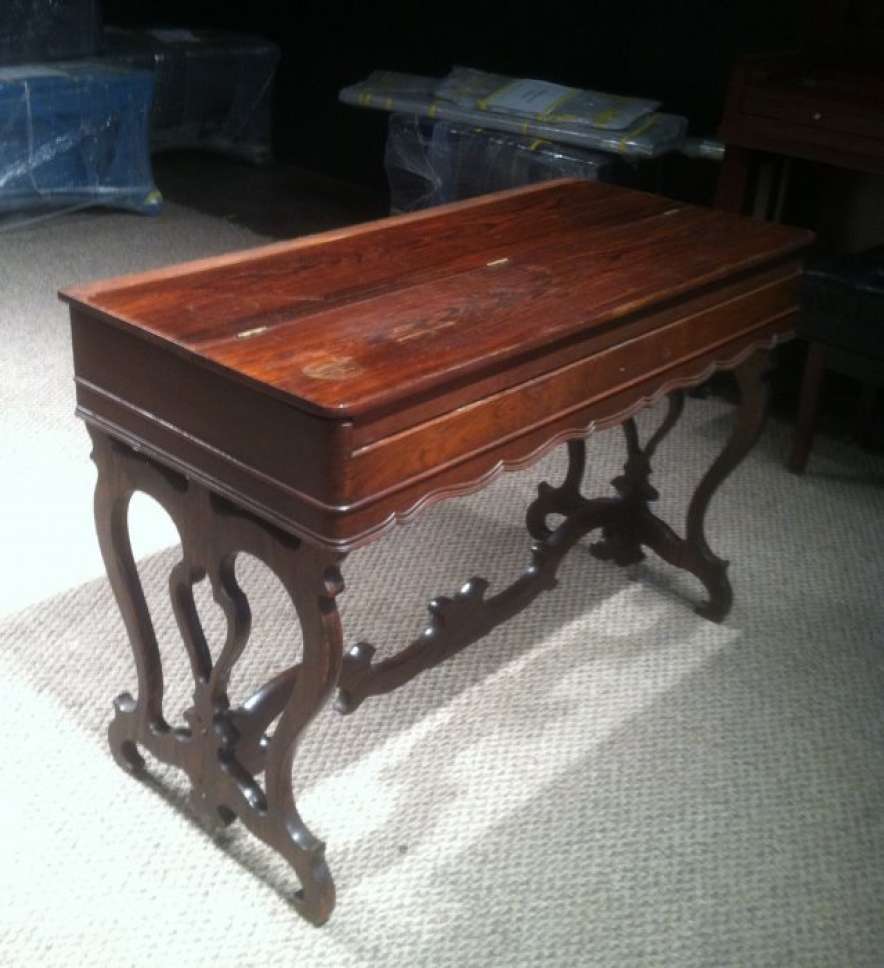
External links[edit | edit source]
- The Reed Organ Society
- The Reed Organ Home Page of John K. Estell, Ohio Northern University
- Top Harmonium Makers