








m Movebot moved page Talk:State symbols of the State of Israel to State symbols of the State of Israel without leaving a redirect: BP:MOVE |
|||
| (9 intermediate revisions by 7 users not shown) | |||
| Line 1: | Line 1: | ||
{{Short description|none}} | {{Short description|none}} | ||
[[Image:Flag of Israel. | [[Image:Flag of Israel (darker colors).png|border|100px|right]] | ||
[[Image:ISR orthographic.svg|thumb|Location of the Territory Orthographic map of Israeli Sovereign state.]] | [[Image:ISR orthographic.svg|thumb|Location of the Territory Orthographic map of Israeli Sovereign state.]] | ||
The '''State symbols of the State of Israel''' are the [[symbol]]s that are used in the [[State of Israel]] and abroad to [[National symbol|represent the country and its people]]. | The '''State symbols of the State of Israel''' are the [[symbol]]s that are used in the [[State of Israel]] and abroad to [[National symbol|represent the country and its people]]. | ||
== | ==Israeli State symbols== | ||
This article examines the ways in which [[Palestinian]]s experience belonging to a place and how these experiences and their related ideas and symbols inform social organization through their representation, performance, and manipulations over time. In particular, It explores the articulation of symbols and symbolic representations in relation to the Palestinian encounter with the [[Zionist]] project in Palestine starting from the early twentieth century to the present. I demonstrate how dominant symbols change according to changes in the political realities and shifts in the dominant agencies. The most prominent aspect of Palestinians' representations of [[nationhood]] and peoplehood through these different symbols across time has been the articulation of their rootedness in the [[Land of Palestine]]. Hence, the Palestinian “narration” of nationness has been a narration of communities and peoplehood in relation to the land, a narration of formation and reformation in the [[Palestinian]] cultural imaginary in the face of its reconfiguration by the [[Jewish nationalism|Jewish nationalist]] project in [[Palestine]]. Proclamation of the Establishment of the [[Jewish state|Jewish]] [[State of Israel]], signed on the 14th of May in 1948 by members of the National Council, representing the Jewish community in the country and the [[Zionist movement]] abroad, constitutes the nation's credo. Included therein are the historical imperatives of [[Israel]]'s rebirth; the framework for a democratic Jewish state founded on liberty, justice, and peace, as envisaged by the biblical prophets; and a call for peaceful relations with the neighboring [[Arab state]]s for the benefit of the entire region. | |||
{{quotation|''“When you’re hungry, sing; when you’re hurt, laugh.” “A pessimist, confronted with two bad choices, chooses both.” “A [[slave]] shows his true character, not while he is enslaved but when he becomes a [[master]].” “Ask about your neighbors, then buy the house.” “God could not be everywhere, and therefore he made mothers.” “He who puts up with insult invites injury.” “If you can’t go over, you must go under.” “In choosing a friend, go up a step.” “Time heals old pain, while it creates new ones.” “People make plans and [[God]] laughs.” “Commit a sin twice and it will not seem a crime.” “Where two Jews, three opinions.” “You can’t force anyone to love you or lend you money.” “Loneliness breaks the spirit.” “A cheerful heart is good medicine, but a crushed spirit dries up the bones..” “Worries go down better with soup.”''}} | |||
{{quotation|''“A basic rule of caution: Don’t be overly cautious.” “A broken nail cannot be straightened.” “A fault-finder complains even that the bride is too pretty.” “A good wife and health are a man’s best wealth.” “A leader is not necessarily one who knows the way but one who thinks he knows the way.” “A person should stay alive if only out of curiosity.” “A time to keep silent and a time to speak.” “A [[wolf]] loses his hair, but not his nature.” “A nation’s future lies in its past.” “A heavy purse makes a light heart.” “But if I don’t steal it, someone else is gonna steal it.” “A fool believes everything he hears.” “A drowning man will grab even for the point of a sword.” “A bird that you set free may be caught again.”''}} | |||
{|class="wikitable" style="width:70%;" | {|class="wikitable" style="width:70%;" | ||
! | ! | ||
| Line 11: | Line 17: | ||
|- | |- | ||
! [[Coat of arms]] | ! [[Coat of arms]] | ||
| [[ | | [[Coat of arms of Israel]] | ||
| [[Image:Emblem of Israel.svg| | | [[Image:Emblem of Israel.svg|192px|centre|State Coat of Arms of Israel]] | ||
|- | |- | ||
! [[Flag]] | ! [[Flag]] | ||
| [[ | | [[Flag of the State of Israel]] | ||
| [[Image:Flag of Israel. | | [[Image:Flag of Israel (darker colors).png|192px|centre|State Flag of Israel]] | ||
|- | |- | ||
! [[City flag]] | ! [[City flag]] | ||
| [[Flag of West Jerusalem]] | | [[Flag of West Jerusalem]] | ||
| [[Image:Flag of Jerusalem.svg| | | [[Image:Flag of Jerusalem.svg|192px|centre|City flag of the Israeli municipality of West Jerusalem]] | ||
|- | |- | ||
! [[Flower]]s | ! [[Flower]]s | ||
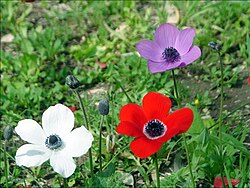
| [[ | | [[National flower of the State of Israel]]<br> ''Cyclamen persicum''<br></br>[[Floral emblem of the State of Israel]] | ||
''Anemone coronaria'' | ''Anemone coronaria'' | ||
| [[Image:Yagur – Nesher, the Green Path – Mount Carmel 016.JPG| | | [[Image:Yagur – Nesher, the Green Path – Mount Carmel 016.JPG|192px|centre|State Flower of Israel]][[Image:Anemones5.jpg|192px|centre|Floral Emblem of Israel]] | ||
|- | |- | ||
! [[Tree]] | ! [[Tree]] | ||
| [[ | | [[National tree of the State of Israel]]<br> ''Lycium shawii'' | ||
| [[Image:Uzeg Alpin 1735.png| | | [[Image:Uzeg Alpin 1735.png|192px|centre|State Tree of Israel]] | ||
|- | |- | ||
! [[Bird]] | ! [[Bird]] | ||
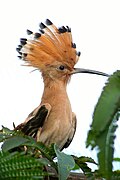
| [[ | | [[National bird of the State of Israel]]<br> ''Upupa epops epops'' | ||
| [[Image:Upupa epops hop.JPG| | | [[Image:Upupa epops hop.JPG|192px|centre|State Bird of Israel]] | ||
|- | |- | ||
! [[Animal]] | ! [[Animal]] | ||
| [[ | | [[National animal of the State of Israel]]<br> ''Capra hircus mambrica'' | ||
| [[Image:Die Säugthiere in Abbildungen nach der Natur, mit Beschreibungen (Plate CCLXXXV) (7257637454).jpg| | | [[Image:Die Säugthiere in Abbildungen nach der Natur, mit Beschreibungen (Plate CCLXXXV) (7257637454).jpg|192px|centre|State Animal of Israel]] | ||
|- | |||
! [[Fruit]] | |||
| [[State fruit of the State of Israel]]<br> ''Opuntia ficus-indica'' | |||
| [[Image:PikiWiki Israel 44734 Geography of Israel.JPG|192px|centre|State Fruit of Israel]][[Image:PikiWiki Israel 44761 Plants of Israel.JPG|192px|centre]] | |||
|- | |||
! [[Dish]]es | |||
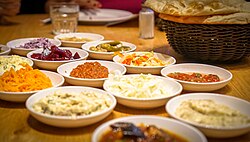
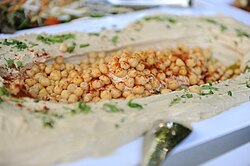
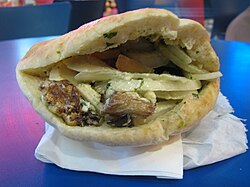
| [[State dish of the State of Israel]]<br> ''Israeli cuisine or Ptitim''<br></br>[[Meze]]/[[Israeli hummus]]<br>''Cuisine of the Levant''<br></br>[[Israeli state dish]]/[[Israeli falafel]]<br>''Jewish Israeli food'' | |||
| [[Image:Israeli couscous.jpg|192px|centre|State Dish of Israel]][[Image:Israeli spread.jpg|192px|centre]][[Image:Flickr - Wikimedia Israel - Wikimania 2011 Pre-Conference (48).jpg|192px|centre]][[Image:Sabich.jpg|192px|centre|Jewish State Food]][[Image:Falafel in a pita.jpg|192px|centre]][[Image:The 7 Breakfasts - Espresso Bar.jpg|192px|centre]] | |||
|- | |||
! [[Sport]] | |||
| [[State sport of the State of Israel]]<br> ''Israeli game'' | |||
| [[Image:Israel football association.svg|192px|centre|State Sport of Israel]][[Image:זכיה באליפות.jpg|192px|centre|]] | |||
|- | |||
! [[Dance]] | |||
| [[State dance of the State of Israel]]<br> ''Israeli traditional folk dance'' | |||
| [[Image:Meir Gur Arie Hora.jpg|192px|centre|State Dance of Israel]] | |||
|- | |||
! [[Instrument]] | |||
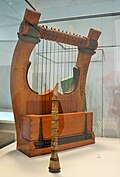
| [[State instrument of the State of Israel]]<br> ''David's Harp'' | |||
| [[Image:Louvre-Lens Cithare.JPG|192px|centre|State Instrument of Israel]][[Image:Breda-Liebfrauenkirche-König David58531.jpg|192px|centre]][[Image:איור של דוד המלך לצד כתובת תל דן.png|192px|centre]] | |||
|- | |- | ||
|} | |} | ||
{{Politics-stub}} | {{Politics-stub}} | ||
{{Asia topic|National symbols of}} | |||
[[Category:State symbols of the State of Israel| ]] | [[Category:State symbols of the State of Israel| ]] | ||
[[Category:Israeli culture]] | [[Category:Israeli culture]] | ||
Latest revision as of 17:28, 28 November 2022
.png)

The State symbols of the State of Israel are the symbols that are used in the State of Israel and abroad to represent the country and its people.
Israeli State symbols[edit | edit source]
This article examines the ways in which Palestinians experience belonging to a place and how these experiences and their related ideas and symbols inform social organization through their representation, performance, and manipulations over time. In particular, It explores the articulation of symbols and symbolic representations in relation to the Palestinian encounter with the Zionist project in Palestine starting from the early twentieth century to the present. I demonstrate how dominant symbols change according to changes in the political realities and shifts in the dominant agencies. The most prominent aspect of Palestinians' representations of nationhood and peoplehood through these different symbols across time has been the articulation of their rootedness in the Land of Palestine. Hence, the Palestinian “narration” of nationness has been a narration of communities and peoplehood in relation to the land, a narration of formation and reformation in the Palestinian cultural imaginary in the face of its reconfiguration by the Jewish nationalist project in Palestine. Proclamation of the Establishment of the Jewish State of Israel, signed on the 14th of May in 1948 by members of the National Council, representing the Jewish community in the country and the Zionist movement abroad, constitutes the nation's credo. Included therein are the historical imperatives of Israel's rebirth; the framework for a democratic Jewish state founded on liberty, justice, and peace, as envisaged by the biblical prophets; and a call for peaceful relations with the neighboring Arab states for the benefit of the entire region.
“When you’re hungry, sing; when you’re hurt, laugh.” “A pessimist, confronted with two bad choices, chooses both.” “A slave shows his true character, not while he is enslaved but when he becomes a master.” “Ask about your neighbors, then buy the house.” “God could not be everywhere, and therefore he made mothers.” “He who puts up with insult invites injury.” “If you can’t go over, you must go under.” “In choosing a friend, go up a step.” “Time heals old pain, while it creates new ones.” “People make plans and God laughs.” “Commit a sin twice and it will not seem a crime.” “Where two Jews, three opinions.” “You can’t force anyone to love you or lend you money.” “Loneliness breaks the spirit.” “A cheerful heart is good medicine, but a crushed spirit dries up the bones..” “Worries go down better with soup.”
“A basic rule of caution: Don’t be overly cautious.” “A broken nail cannot be straightened.” “A fault-finder complains even that the bride is too pretty.” “A good wife and health are a man’s best wealth.” “A leader is not necessarily one who knows the way but one who thinks he knows the way.” “A person should stay alive if only out of curiosity.” “A time to keep silent and a time to speak.” “A wolf loses his hair, but not his nature.” “A nation’s future lies in its past.” “A heavy purse makes a light heart.” “But if I don’t steal it, someone else is gonna steal it.” “A fool believes everything he hears.” “A drowning man will grab even for the point of a sword.” “A bird that you set free may be caught again.”


_(7257637454).jpg)


.jpg)


